Topics / Writing & development
The screenplay
141 commentaries in the archive discuss this, with 1,140 total mentions and 400 sampled passages below.
By decade
-
1930s
1
-
1940s
1
-
1950s
4
-
1960s
4
-
1970s
12
-
1980s
33
-
1990s
27
-
2000s
37
-
2010s
14
-
2020s
8
Across the archive
ranked by mentions · click any passage for the moment in the transcript
-
-
working out how you came to work with the group of people that this film involves, particularly with Clive Barker, the writer of the film. Yes, so I met Clive in around 1981, 82. A friend of his that had been to university introduced me to him. And we both had a keen interest in films. He was a writer. His books hadn't been published at that time.
0:24 · jump to transcript →
-
decided, let's work together. And he wrote Underworld, 10 pages. I understand that when you read the Books of Blood, you saw them in galleys before they were even published. Correct. But Underworld isn't actually a story from the Books of Blood, is it? This is an original screenplay. So how did that decision to go with a new original screenplay come about? Well, I guess the reason for that was, you know, he wanted to write something new, but also maybe those stories had already been
1:24 · jump to transcript →
-
know committed for publishing to a publisher and um i guess it would have been more difficult to uh extract one of those stories with the rights issues and all that oh i see yes so having an original uh screenplay was was a clearer path to production than having to get the rights to one of the stories at the time i think so yeah i think so
1:54 · jump to transcript →
-
-
director · 1h 45m 25 mentions
-
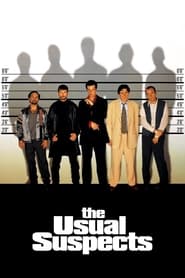
My name is Brian Singer. And I'm Christopher McQuarrie, the writer. I'm the director. And this is the usual suspects. These are the credits. That's my production company, Bad Hat Harry, named after a line in Jaws.
0:04 · jump to transcript →
-
the foreboding porthole music, is, okay, this was shot in my backyard, not this. This, that's John Ottman's hand and my foot. And we built that little bit in my backyard. Not the ropes, but those two shots. Yeah, and Verbal's supposed to be hiding behind the ropes. That's the idea of the ropes. Some people seem to be confused by that. These ropes are to replace the base of the crane, which is cut out of the script.
4:23 · jump to transcript →
-
That was cool. Are you sure you brought enough guys? My favorite of the arrests, Benicio del Toro. Yeah, with the little steel drum in there. I was actually adamantly against the casting of Benicio in this film. And if you ever read the script and see the changes that we made because of the character that he created completely from thin air, you'll see that I was totally wrong in my instincts. No, but, uh...
5:49 · jump to transcript →
-
-
director · 1h 59m 25 mentions
-
run into the crowd as they're coming towards us and start punching the women as hard as you can. And he said, well, they'll kill us if we do that. And I said, well, they're going to kill us anyway, but they're going to have to go home with the women and we're just going to have to go to the hospital. And at least you'll steal their victory. You're going to lose, but you can take away their victory. Right. Let me ask you, with the first draft of the script, where the whole thing had that other, the meaning of the scene is different.
1:47 · jump to transcript →
-
I mean, part of it is that she's sort of hinting. I'm going to assume that people who are listening to this have seen the movie already. And she's sort of hinting at her pregnancy much earlier and much more blatantly than ended up in the film. Yes. And she sort of comes off more, I think, more sort of in a Hollywood way twisted. And I wondered, did that change in the writing or when you started working with Francesca? It changed. Well, it was there in the writing sort of to convey to the reader that she was a horrible woman.
9:25 · jump to transcript →
-
Mother. Candidate for motherhood. Yeah, that when she says the last line in the film, I want the audience to feel like, oh, that's a happy, oh, that's horrible. And I knew that once a character or an actor came to give that character life, that those things would become unnecessary. She was also much older in the script and the notion of a much younger wife and this sort of strange distance between the two characters started to...
9:54 · jump to transcript →
-
-
-
Tom Tykwer
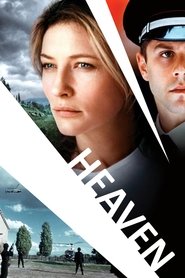
Hello, my name is Tom Tikva. I'm the director of Heaven, the movie you're about to see. And I will try to guide or lead you a little bit through the making of this film, which has become quite an adventure in my filmmaking career. The screenplay of Heaven reached
0:39 · jump to transcript →
-
Tom Tykwer
X-Film, the production company that I'm part of in Berlin, in the year 2000, in early 2000. And it was offered to us as a co-production offer by Miramax, who had obtained the rights, I guess, a couple of years earlier. It was a Polish screenplay written by the late filmmaker, famous filmmaker, Krzysztof
1:06 · jump to transcript →
-
Tom Tykwer
I had been a great fan of Kieslowski's film work for, let's say, half of my life. And I was really surprised to be connected in this way with a project that still was there, although he wasn't among us anymore because he died surprisingly in 1996, aged only 54. And the screenplay, Heaven, was something like
2:04 · jump to transcript →
-
-
-
Ted Tally
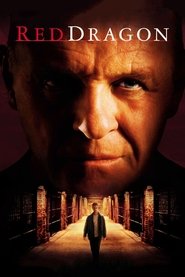
And I'm Ted Tally, the screenwriter of this motion picture. Thanks for watching our DVD. I got a call from my agent who said Stacey Snider wanted to send me a script. Stacey called me directly. Stacey is the chairman of Universal for those of you who don't know. It said Red Dragon, and I said, "Red Dragon. Is this "the prequel to Silence of the Lambs?" I was familiar with the book but hadn't read it. At first, I was very insecure and said, "Am I like the 'Go-to' guy on sequels? "Why is she sending this to me? 'Cause no one can mess this one up?" And then, I saw Ted's name on it and said, "This is the guy who wrote Silence of the Lambs, "but didn't write Hannibal. "So, this must be special. "Why are they sending this to me? I'm not a dark guy. "I don't make dark movies. I do comedy." -/ think they sent it because you're cheap. - Exactly. So I read it, and I was completely blown away. Not to blow any smoke up anybody's butt in my presence, but the truth is the script was amazing. I called up Stacey and I said, "I want to do this." She said, "Now you get to meet Dino De Laurentiis." And I said, "Dino De Laurentiis "of Fellini fame?" - Scary thought! So I went to his house and first thing he says to me is, "Why do they like you? Who are you? "I never heard of you. What is Family Man, Rush Hour? I don't know these movies." I said, "Dino, I'm a talented guy. Trust me." And thank God, Ted had seen Family Man and Rush Hour, and his kids or someone in his family was a fan. Brett might not have been an obvious choice but Brett is an incredibly talented director and clearly ready to try something new that he'd never done before. He is a great fan of Hitchcock and of thrillers, and brings a tremendous energy and confidence to his work. I was such a big fan of Silence of the Lambs. You know what I was excited about? Most people asked, "Weren't you scared "of following in those footsteps?" First of all, I had three brilliant directors Michael Mann, Jonathan Demme, and Ridley Scott, who made three movies in the exact genre, but completely different. I was excited about it because, by watching those films, I knew what not to do or what I didn't want to do. I was able to decide on the type of movie that I wanted to make. And it helped me choose the tone of the movie. I realized I wanted to make a movie more like Silence of the Lambs. More Hitchcock-inspired. A movie that scared you by what you didn't see more than what you did see. I've read that the most important single decision you make in directing a movie is tone. - Absolutely. Because it's the direction of the film. It helps you with every choice that you make as far as the wardrobe, the production design, the music. The tone, to me, is really everything. Dante calls it, "The language of the film." We have to integrate what we're seeing now, Kristi Zea's set design with its dark, rich color in Dante's cinematography. The choice is even of the props. The integration of all of that, the wardrobe. It's sort of overlooked by people and it should be something that doesn't call attention to itself. But when all of those elements are integrated... Look at this moment here. You get a much more powerful movie if nothing sticks out. If everything is consistent in tone. Special Agent Graham. What an unexpected pleasure. I'm sorry to bother you again... If you see on the left-hand side over there, a little detail, I found this book of Sigmund Freud's office in, was it Vienna? That's where I kind of modeled Hannibal's office. I modeled the tchotchkes, the details.
0:08 · jump to transcript →
-
Ted Tally
If you had to design the office of Hannibal Lecter, V.D., what kinds of things were on his desk and on his bookshelf? What curios does he collect? The script suggested some of them. But a great designer like Kristi Zea has a field day with this kind of opportunity. I was very lucky. Once I got the movie officially and I started going after the people who created Silence, I went after Kristi who I'd worked with in Family Man, so I had a prior relationship. I felt I was born to make this movie because ironically, I'd worked with Dante before. Even though he'd done Manhunter, I said, "I'm gonna send you the script. "I know you'll not wanna do it because you've done it before." Dante read it and said, "I want to do this." I said, "Come on, you've done this movie before." He said, "Monet painted the cathedral 13 times, what's the difference? "And this is a totally different movie." I also wanted to help myself with some of the credibility. Get some Academy Award-winning or nominated people aside from Ted who can be a part of this. The script to me, honestly, I'm not saying this 'cause Ted's here, but the script is everything. It allowed me to get the crew that I wanted because of the material, and especially the actors. I basically went after all the actors that everybody said I couldn't get. The first actor I had to get was Anthony Hopkins, and I didn't know this. I thought I was signing on to a Ted Tally script with Anthony Hopkins as Hannibal Lecter. But Dino, after he says, "You got the job, Brett," he said, "Go to New York and convince Anthony Hopkins to do the movie." After having already played the part twice, Tony needed a little bit of coaxing to do it the third time. He wanted to be convinced that he could find something new and different in this.
4:10 · jump to transcript →
-
Ted Tally
I went to New York with Dino, and I was very nervous. This was Tony, Anthony Hopkins. The thing I did know and what I was confident about was the type of movie I wanted to make. Like I said, I went in there knowing the tone of the movie, my approach to the movie, how I wanted to not show any of the gore. I didn't want to make a horror film. I wanted to make a film that was psychological, emotional, and smart. That was what was on the page. And the only scene that Tony had a concern with when I sat with him was this scene right here. Tony was concerned that as originally written, his attack on Graham here was too graphic. By the way, it's an interpretation because 10 directors would direct a scene in 10 different ways and show various degrees of violence. It's about showing the details of the guts falling out of his stomach, or the blood, how much blood to show. And I chose to play it mostly on their faces. Once the attack happens... Here's my little homage to Silence. You see the... - I see the bug. You like that. So I chose to play the violence part of this scene on their faces. I love this book. This is an original. My prop guy, Brad, found this original book from France, Larousse... When I read it, I had no idea what the hell it was. It's the bible of cookbooks. - Yes, I learned that quickly. He found this real old French cookbook. There was a lot of dialogue about how do we sell his moment? It's really just a subliminal thing. It wasn't really supposed to be so pointed where it was like, "Oh, sweetbreads." I thought sweetbreads was brains but it's not. It's actually... Thyroid. -... thymus. I learned so much about anatomy on this film. If you work on a Lecter movie, you learn a lot about cooking. I thought Edward was fantastic. There is a tremendous intensity of performances in this movie. And really a dream cast as Brett already said. If you could have anybody in the world for these parts and be lucky enough to get them. It's pretty much what happened to us. Great actors want to play good characters. They want to play great characters and all of these characters, down to Freddy Lounds, and other smaller roles, were just written so well. They were interesting and dynamic. And these actors were interested in playing this. To convince these actors to do a third in the series, all that went out the window when they read the script. Certainly once they started working. There's our cold opening. I'm very proud of this title sequence because it was actually done two days before we had to lock picture. My editor, Mark Helfrich actually was the brainchild behind this because... You re-shot the journal here in a very interesting way. Initially, this was done in a much more straightforward way with the images very flat against the screen. Yes, a lot of times. Mark is kind of... Everybody on my team, from my AD to my production designer, are filmmakers. Mark is a filmmaker in his own right and he just understands the visuals and storytelling. I love how, you know... But this was written. - Yes, it was. But the way that the camera roams over these pages and when we go in very close and it gets grainy, the camera movement left to right, up and down, is all not scripted, of course. This is something I don't really have the patience for. Mark kind of took this book that he was fascinated by. I think he has a copy of it in his closet at home. He just knew every page, every frame and went with Dante and literally just shot. This is a wonderful opportunity. This kind of title sequence is sort of old-fashioned in a way. But it's a wonderful opportunity for a screenwriter to get information in quickly to cover a lot of ground between the arrest of Lecter and where we are when the movie is going to start. Covering a period of several years, you are doing that without any dialogue just by these images. It's a very useful shorthand. Danny did the same thing that Ted did with the script in this sequence that Mark did with the visuals in this sequence. Danny did the same thing with the music. I think the music here is so fantastic. It's very much like a Bernard Hermann score, which I knew was a big inspiration for Danny. Danny is a big fan of Bernard, and this was his chance. He's done darker scores, but they've had a kind of lightness, or comedic darkness to it. Danny did something here that kind of made people's skin crawl in the theater, like, "You're in for it. "If you're gonna sit through this movie, you'll experience some stuff. "Shit's gonna go down."
6:02 · jump to transcript →
-
-
-
films? One of them was Beast from Haunted Cave that I had made. And one was the picture that was shot back to back with that that Roger had directed called Ski Troop Attack. And then two films that he had done in Puerto Rico, Creature from the Haunted Sea, which was a remake of Beast from Haunted Cave, and The Last Woman on Earth, which was Robert Towne's first screenplay. And also he starred in it.
5:25 · jump to transcript →
-
I'm thinking about you taking the script to the studio with so little dialogue. How did that whole process happen? Well, there was another script by Will Corey, which they bought. Not Universal, by the way. We were at another studio before. And then I was permitted to, quote, hire somebody to do...
14:48 · jump to transcript →
-
a slight rewrite, and we wound up writing a new script. Rudy Wurlitzer wrote a completely new script. And so, you know, the gears were in motion, and the thing kept moving on and moving on, and got to the point where we did screen tests and cast actors.
15:18 · jump to transcript →
-
-
director · 3h 16m 18 mentions
-
did the same thing to me, essentially, that they had done to Al Pacino or Marlon Brando. Charlie kept saying, listen, you've got to do it. Give me any terms you want. If you'll do a second Godfather, anything you want. I said, one, no studio involvement, no Bob Evans, nothing to do with it whatsoever, to know what it is or read the script or have any say about anything. Number two, you know, I want a million dollars or whatever the number was. I don't remember now. Whatever was considered a wonderful...
1:08 · jump to transcript →
-
So we conceived in the script to start in the very old days when there were family feuds and hills and massacres in the land of Sicily. Much of that was based on real stories, and even the death of the boy is from an actual famous photograph of, I think his name was Paolo Ricobono, who was killed and his body was found in exactly that position in a...
2:54 · jump to transcript →
-
The Godfather Part II, it was a very smooth production. And so unlike the first Godfather, I found that writing the script and producing and then directing a film that was to take place in a Lake Tahoe setting on their estate, LA, Las Vegas, New York, Sicily, Cuba, a tremendous amount of ambitious filmmaking moving and what have you.
5:46 · jump to transcript →
-
-
-
Marco Brambilla Daniel Waters
My name is Mark Obrambila, the director of Demolition Man, and welcome to the 4K restoration of the film originally made in 1993. And hey, I'm Daniel Waters, one of the writers, the writer who took an action movie and made it into a silly movie. But I think me and Mark are the people that upheaved the Joe Silver boilerplate. We made it into something very unusual and bizarre, but... With a lot of resistance, actually, as I recall.
0:03 · jump to transcript →
-
Marco Brambilla Daniel Waters
which was in the future, obviously, and it's in San Angeles. So San Diego and Los Angeles merged into one giant metropolis. And Sylvester Stallone is the old school police officer who's in charge of taking down the crime lord, Simon Phoenix, played by Wesley Snipes. Yeah, I think it was the original script was by Peter Lenkoff and it was definitely a solid.
0:59 · jump to transcript →
-
Marco Brambilla Daniel Waters
action futuristic thriller, and this opening scene is definitely of the mold that the original screenplay was in. As you'll see, I kind of came in like green pepper, only three weeks of work, but I made it into something else that I think people enjoy, but this is the pure action part of the movie.
1:28 · jump to transcript →
-
-
director · 3h 29m 17 mentions
The Lord of the Rings The Fellowship of the Ring (2001)
Peter Jackson Fran Walsh Philippa Boyens
-
Peter Jackson Fran Walsh Philippa Boyens
I think the beginning of the movie was probably the hardest thing, both in terms of conceiving it and writing it, and then when we edited the film, it was really difficult. But everything else seemed simple in comparison. Very early on, though, you knew you wanted something quite lyrical as the very, very opening thing, and you knew very early on that you wanted to open in black. When we did early drafts of the script, we attempted to write the prologue.
0:29 · jump to transcript →
-
Peter Jackson Fran Walsh Philippa Boyens
One of the most significant changes from the theatrical version into this extended cut is the way that we introduced the Hobbits and particularly Bilbo Baggins. At the time that we thought, we didn't think we were going to have a prologue and we were going to open the movie with the writing of Bilbo's book and hearing his voice describing Hobbits. Once we decided to go back to the concept of including the prologue and the prologue became seven minutes long,
8:32 · jump to transcript →
-
Peter Jackson Fran Walsh Philippa Boyens
It was just a situation where if we did a few of these complicated shots, time-consuming, difficult shots, I thought it would sell the concept of scale for the rest of the film. Now, when Gandalf bangs his head here, that was actually a mistake, that Ian didn't intend to do that. It wasn't in our script. It was something that he did accidentally, and we decided to keep it in the film. Fortunately, he kept acting. He didn't stop. He sold it really well. He never stops. He always keeps going.
16:43 · jump to transcript →
-
-
director · 1h 53m 17 mentions
-
re-edited the sequence because in the original in the book and in the script the tormentors come into the to the toilet and they bully him in there but we thought that when we had edited the film too much violence came too early so it sort of punctured the pressure so we wanted to wait a little
15:19 · jump to transcript →
-
Yeah. When I wrote the book, this is the starting scene of the book. I'm more like, when I wrote the book, I wanted to kickstart the violence, the violent part of it. So that's actually the first scene in the book. And one of the things we discussed very early on and decided upon as transferring the book into a script was that we would concentrate completely on the love story between Oskar and Eli, and everything that didn't have anything to do with that story would go. And also...
15:48 · jump to transcript →
-
I could say that. And also, I really love this shot, what happens in the end when Eli sinks down onto his back. It comes later anyway. But because Eli, in my original story, Eli doesn't really feel that kind of remorse. Eli is a more, not evil, but less light character in the written story. But still, when I saw this, because this isn't in the script, Eli sinking down afterwards, I really, really liked it, the way it was portrayed.
24:40 · jump to transcript →
-
-
director · 1h 23m 17 mentions
-
Hey, I'm Fede Alvarez. I'm the director and the writer of this film. Hello, this is Rodos Haguez. I'm the writer. And this is Stephen Lang, and I play the blind man in this film. And we've gathered to a screening of the film with our commentary. It's a bunch of logos, but there's definitely something that I think it's...
0:18 · jump to transcript →
-
As you get closer to the characters, you realize there's a lot more, you know. Totally. You see it. Don't breathe. I've come to really like the title of this film. Cool. It used to be called Men in the Dark. At the time, I was so wedded to that title. Me too. I mean, Rhoda and I, we love Men in the Dark because it's a name that we stamp on the script when we finish it, but...
2:06 · jump to transcript →
-
But I guess, you know, I'd like one. If we can pull it off, I think it's good. Yeah, make it more classy. But that was the whole approach of this movie. Like, since day one, it's trying to do this, you know, in a very classy way, not doing anything that was, you know, top-of-the-line CG or visual effects or anything like that, because stuff like that gets old, and a good story, I think, will never get old. Was this script inspired by...
5:21 · jump to transcript →
-
-
director · 1h 29m 16 mentions
Jeff Kanew, Robert Carradine, Timothy Busfield, Curtis Armstrong
-
It gets a laugh. Oh, I never thought it was that funny. I kind of resisted that. I thought it was kind of stupid, but it was in the script, so I shot it. What was great about this movie is that a lot of what you see is the contribution of a lot of different people, not just the screenplay, not just the director, but the actors were instrumental in the way they looked and the way they laughed. Bobby's honking laugh, I believe, started with Jamie Cromwell, who plays his dad.
1:34 · jump to transcript →
-
Stair diving. It was in the script, but nobody really knew what it was, so we kind of made it up as we went along, and now I feel like it's something that's always existed. And I wonder if in any real college context they do this or have done this ever since, but it looks like fun. What's missing from this scene is when Gable gets a phone call from his secret nerd brother. Well, Gilbert, here's our new home. Can't believe we finally made it.
9:03 · jump to transcript →
-
and things. Are you kidding, Gilbert? We can put a fridge and a microwave right there. I never noticed Gilbert actually has one of the Skolnick pocket protectors. Well, yeah, because, you know, we both work for my dad. Ah, yeah. Many people don't know this, but Gilbert's original name was Pinsky in the screenplay, but it was changed because there were too many Jewish nerds. The women, too.
10:12 · jump to transcript →
-
-
-
Fred Dekker
I was thrown a life raft by Robert Zemeckis and Dick Donner and Walter Hill and David Giler to do Tales from the Crypt. So I did that for about a year. I wrote a bunch of them and I directed one. But I really wanted to make a feature. And Michelle had taken over at Orion and she thought that this would be a good fit for me. And she initially asked Shane Black and I to write the screenplay.
1:59 · jump to transcript →
-
Fred Dekker
essentially, you know, homeless people and rebelling at the big corporation. We don't really know them, so I don't know that we're invested in them, and I think that's a mistake that I made. Bringing back ED-209 was not a mistake. That was kind of... No, well, yeah. We kind of had to do that. Now, in terms of the script by Frank Miller, had that already been completed before you came on, and how much involvement...
8:45 · jump to transcript →
-
Fred Dekker
did you have with Frank at all during the process here? Well, this has to be said because it really affected what this movie was. I was a huge fan of Frank's work in comics at that time, especially The Dark Knight Returns and Batman Year One and Ronan and Hard Boiled. I was just an enormous fan. So the fact that there was an existing script by Frank Miller, I was just thrilled. A lot of people have problems with the cute little...
9:13 · jump to transcript →
-
-
scholar · 1h 32m 14 mentions
The Night of the Hunter (1955)
Second-Unit Terry Sanders, Film Archivist Robert Gitt, F. X. Feeney, Preston Neal Jones + 2
-
I remember Lawton sent a memo to Agee during the script writing stage saying, I know that Mitchum's uneasy about talking to God there in the car, but frankly, I don't know how else to really introduce the character cinematically. Because there never had been a character quite like this in movies. Yeah. And Mitchum's low-key delivery is so perfect because you could read the words as very overheated on the page and he just delivers them cold.
3:09 · jump to transcript →
-
Now, there's been a lot of controversy about the screenplay, you know, that James Agee, a legend grew, you know, that Agee had turned in a screenplay that was about 400 pages and that it was full of all kinds of incoherent rambles. But fortunately, in recent years, the Agee family has found the actual first draft, which was 293 pages, exactly twice the number of pages of the shooting script, which was 148. Oh, yes.
5:31 · jump to transcript →
-
Well, before we get away from what you started to say about Agee's script, I wanted to say that we've talked about this, and I think you agree with me. On the one hand, the legend is true that the script was incredibly overlong at 293 pages, but it turns out that it is faithful in spirit and letter to Grubb's novel. It's as if he was writing the world's first miniseries before there was such a thing. Because even the things that he added that weren't in the
10:18 · jump to transcript →
-
-
-
Filmmaker Paul Davis
And then when they came back to the States, Jim actually produced John's first movie, Schlock. And they stayed great friends. And Jim was a great champion for John and for An American Wealth in London because John had already written the script at that point. He wrote it when he was 18 years old while they were making Kelly's Heroes. And sadly, Jim passed away from lung cancer right before An American Wealth in London came out.
1:18 · jump to transcript →
-
Filmmaker Paul Davis
It's a beautiful score of Elmer Bernstein. There's very little music, scored music, in an American world from London, because it's probably most notable for the use of songs that all have moon in the title. Not something that was anything significant on John Landis' part. He just says that it was a stupid thing that an 18-year-old writing a screenplay does.
5:56 · jump to transcript →
-
Filmmaker Paul Davis
American wealth in London to Jenny Agata saying that he wanted her to play Nurse Alex Price. But he didn't actually give her the script until he had the money to make it. So I think it was probably around November 1980 that she finally got the script. And she is admittedly not a huge horror fan. And had the script come from somebody else, she would have thought twice about it. Can I be of service, Nurse Price? Dr. Hush? Go about your duties.
18:08 · jump to transcript →
-
-
-
So it was a cross-pollination between the two companies. Now, do you remember how the film was pitched? Because at the time this came out, there were a lot of sort of teen-oriented kind of supernatural movies. You had things like Teen Wolf and My Demon Lover and Teen Witch. Do you remember what the concept was when you came on? It was just a script was just handed to me. There was no pitch. So I read it and liked it.
1:06 · jump to transcript →
-
And the limo was waiting to take him to the airport as we rushed into his hotel room. And we did a very, very quick audition in which it turned out the two scripts that we had didn't match. They were different versions. And so as the producer was reading, was feeding lines to Bobby, Bobby had to figure out how to adjust them for the script that he had on the run. And it was pretty impressive how effortlessly he did it.
2:34 · jump to transcript →
-
Now, one of the more interesting things about this cast, not at the time it came out, but later, is the fact the two moms in this movie have a really great connection together. You've got Fanny Flagg, who wrote the novel Fried Green Tomatoes at the Whistlestop Cafe, and then you've got Kathy Bates, who starred in the movie version of it. And, of course, Fanny was also one of the people who adapted the screenplay. So just kind of a funny coincidence that they had a huge hit after this together. Yeah, well, oddly enough, Kathy had been our original choice.
5:26 · jump to transcript →
-
-
director · 2h 19m 14 mentions
-
The big daddy, he had all the pieces. He put all the pieces together. And so, you know, he made it whole. And without Erwin, I don't know, you know, well, Marty and I would have done it, but eventually, but who knows. But Erwin really made it comfortable and easy for everybody to do. And as soon as Marty finished The Color of Money, he and I started writing the script. In March, you think this is fun?
5:51 · jump to transcript →
-
Right around that time, I think it was, 86, all the way through 86 and 87, Nick and I were working on the script. And basically I went through the book, along with Nick, but primarily I started choosing sections. I mean, the book was the book, but now the movie was an entirely different thing, and you have to begin to cull the book for the structure that would make a movie, which is what we did. We both took the book, and he said, come back with a structure of the movie. What's the structure of the movie?
12:19 · jump to transcript →
-
getting coffee from Marty. They just wanted to be in that world. But I didn't know enough. I just didn't know enough. I didn't know anything. Executive producer, Barbara DeFina. I think the writing of Goodfellas came at a time when he felt that he was going to make a huge contribution and wanted to finally be credited for his work. And in fact, Nick and Marty did write together and would share pages and basically they were a team on that one.
14:08 · jump to transcript →
-
-
-
Commentary With Author CG Paul M. Sammon
And as you'll see, in this futuristic Detroit, it's not a good idea to jack a car. RoboCop 2 was written by Frank Miller. It was his first produced script. And here we have a little taste of the ultraviolence that Frank had done in his very famous mid-'80s comic book, Batman, The Dark Knight Returns.
0:56 · jump to transcript →
-
Commentary With Author CG Paul M. Sammon
As is the violence. Now, what I find a little disturbing about RoboCop 2 is that Robo 1, with Paul Verhoeven and Ed Neumeier and Michael Miner, who wrote the script, and John Davison, who was the producer of both Robo 1 and Robo 2, had a much sharper take on their satire of then-contemporary society. Robo 2 is a little sloppier in that respect, but again, it was a rushed production. Now, this is an actual Taurus cruiser that...
5:59 · jump to transcript →
-
Commentary With Author CG Paul M. Sammon
Now, Tommy Noonan goes through a lot of changes in this film's costumes, and interestingly enough, they didn't develop this in the final shooting script, but the idea was that he was not only a very powerful drug dealer, but he was a religious figure. In fact, that first shot you saw him sitting in the dark surrounded by the wall, the actual scripted version had him in a priest costume in an auditorium with 2,000 followers who were on their knees singing hallelujah.
11:30 · jump to transcript →
-
-
director · 2h 17m 14 mentions
-
when I read the screenplay, the very first draft of the screenplay, and this is the Eric Roth screenplay, because there were many screenplays prior to that that were done over many years. I just kept turning the page to see what was gonna happen next. I mean, I had no real desire or compulsion to make a movie about a guy with a low IQ. It seemed to be the right character, and I kept wanting to know what was gonna happen to this character.
0:28 · jump to transcript →
-
And this strange story, you know, just kept wanting to know what was going to happen. How's this going to end? What was going to happen? And whenever you get a screenplay and that happens, as crippled as it was very early on, you know, that's always a good sign. The Feather always started the movie in the screenplay. It wasn't at the end, though. That we put in later. I mean, in later drafts of the script.
0:58 · jump to transcript →
-
I always saw Sally in this part. I don't know why. You know, Wendy Feinerman, the producer, suggested her in, like, the first day or first week that I, you know, signed on to do the movie. And it's just like, wow, yeah, Sally. And I sent Sally the script, and I was very worried about it because, you know, she has to play, you know, ultimately Tom. I mean, when you say it, it's not really that way. Say, Sally, why don't you play Tom Hanks' mother?
6:05 · jump to transcript →
-
-
director · 2h 52m 13 mentions
-
I believe in America. America has made my fortune. And I raised my daughter in the American fashion. I gave her freedom, but I taught her neighbor to dishonor her family. The Godfather opening is an interesting situation. I had, of course, written the screenplay of Patton before this movie. And Patton had a very famous, striking opening.
0:51 · jump to transcript →
-
I was once out in a little cottage I had in Mill Valley writing the opening of The Godfather, working on the script just in the earliest phases. And I wrote maybe three or four pages. And a friend of mine came by, and I asked him to read them. And they started with the wedding and introducing all the characters. And he said to me, gee, Francis, you had such a terrific beginning.
1:20 · jump to transcript →
-
In contrast to the darkness of the private office was the exterior of the wedding and of course this exterior is where my script originally had begun with a big high shot of the people dancing and coming to the party so really this would have been
6:50 · jump to transcript →
-
-
director · 1h 42m 13 mentions
-
This is Robocop. I'm the director, Paul Verhoeven. This is a stock shot, and I'm the producer, John Davison. And I didn't write anything on this. My name's Ed Neumeier. I'm the writer, along with Michael Miner, who isn't here, so I'll try to represent him. This shot was asked for by Mike Medavoy because he felt that the film needed a little bit establishing in the beginning, so that we added that shot very, very late. It's not in the script, but Medavoy insisted that there had to be something like that.
0:32 · jump to transcript →
-
although seriously wounded. This whole situation that you see now was based originally, and Ed can tell something about that, about the scene, a massacre that happened in a donut shop, but that we never shot, that we took out of the script, in fact, at a certain moment. Yeah, in the 80s, you had to start action movies with action scenes, so we wanted to shock everybody and have a really awful scene of terror and viciousness, but in the end, we decided to start on a joke.
2:35 · jump to transcript →
-
I mean, we have to thank really my wife, Martine, who picked up the script from the floor and started to read it and then told me that I was a fucking idiot not to see what was hidden under the surface and what kind of layers were all there that we could use. Actually, I think what she said was, you know, there's a scene where they shoot the guy's arm off and they blow his hand up and Paul immediately got really excited and read the script.
11:46 · jump to transcript →
-
-
cast · 1h 36m 13 mentions
The Garbage Pail Kids Movie (1987)
Lead Mackenzie Astin, Katie Barberi, Film Programmer William Morris
-
Buckle aboard, everyone. Buckle up. Spark them up. Drain the glass. Buckle in. Here we go. There are cards. Mm-hmm. On the way. Oh, go ahead. Katie, do you... Go ahead. Katie, do you remember the spaceship in the script?
0:53 · jump to transcript →
-
Cause I feel like when the movie came out, like suddenly there was a spaceship, a Garbage Pail spaceship. And I was like, what is that? I actually don't remember. I'm gonna have a lot to say about the script versus what came on the screen throughout this process. Like I feel kind of bad for Will because I feel like we're just gonna like take off and he's gonna be trying to get a word in edgewise. But I do not remember a spaceship. And that is not how the script, the script was written by Melinda Palmer.
1:12 · jump to transcript →
-
And the script was actually, yes, it was about the Garbage Pail Kids and these very, very famous tops-chewing dumb cards that just became like this phenomenon. But it was a very sweet story, actually. And that is what we both signed on to. And there are some parts of that script that unfortunately didn't make it into the final edit, but also didn't make it into the filming process. And I remember that that was a big concern for us at the time.
1:40 · jump to transcript →
-
-
-
This is the Lionsgate logo. I was waiting for the Trimark logo. This is Mark Jones. I'm the writer-director of the first Leprechaun, which I think we're watching. And next to me is... Gabe Barteles. I did the special makeup effects on Leprechaun. And he did a great job, and you're going to see his work, or at least part of his work, through the shadows. Do you remember where this...
0:07 · jump to transcript →
-
And as you can see, I really didn't want to take ourselves too serious. I really wanted to have not a straight-ahead horror movie, which my first draft of the script that Trimark bought, that was very horrific and no personality in a leprechaun. He was just kind of a killing... There's Gabe's credit. He was just a killing machine that became a monster, and then through rewrites and prepping this thing,
6:54 · jump to transcript →
-
At a party, after a few drinks, I told him I'm gonna direct a movie and you're gonna do the music and he said, sure, how many times have I heard that? And by next year, I made the movie and I called Kevin and I think his music is terrific and he still works and does great stuff. And those gunshots were not CGI as we do now. Well, there's Michael Prescott, my producing partner who came with me with the script and David Price.
7:46 · jump to transcript →
-
-
director · 2h 12m 13 mentions
-
Because they're selling an image. They're selling it through movies, radio, and television. In the hit show Badge of Honor, the L.A. cops walk on water... I really believe the best way to get the movie greenlit was not to have Arnon read the script. The best way was for us to describe this movie, and most important was to have Curtis describe it, because Curtis was the movie, the movie was Curtis. ...color to the nth degree, and his number one bodyguard...
0:55 · jump to transcript →
-
original and independent as you could want. I didn't think he wanted an imbalance. For instance, if one of the detectives was George Clooney, the writing would be tilted toward the George Clooney character. But by using these three virtually anonymous actors, he was free.
10:40 · jump to transcript →
-
that he plays, his persona, really well. So he sort of upped it a little, to my mind. He sort of blew it up a little, but it was right for the guy, you know? It was, hey, here's one of these kind of guys, you know what I mean? Like this. So. The movie premier, Pat Busk. Take care of them right down at Hollywood Station. I'll get the evidence. I first heard about L.A. Confidential through Curtis Hanson, the director. I read the script.
11:58 · jump to transcript →
-
-
director · 1h 56m 13 mentions
-
Hi, this is Stephen Summers, the writer-director of The Mummy. Actually, Steve Summers, but my mother makes me use Stephen professionally. And with me is Bob Doucet, who's been editing every one of my movies since we were in film school. We've been together for 12 years. 12 long years. Don't make it sound that long, Bob. It's mainly been enjoyable. Mainly. So what do you think of this logo? We're not big fans of the new logo. We like the old logos, but maybe we shouldn't say that here. Anyway, this shot...
0:03 · jump to transcript →
-
Her petting the cat was my idea, I have to say. That was a nice touch. She was good. By the way, all the ancient Egyptian spoken is as close as we could get to ancient Egyptian. The language hasn't been spoken in over 3,000 years or 2,000 years, but we had a professor of Egyptology go over the script and phonetically write out how he thought the ancient Egyptian would sound, and then he put it on cassette tapes for all the actors so that it wouldn't just be...
2:37 · jump to transcript →
-
it's very well executed too it's interesting because i mean it's it's one of the the cheapest gags in the right in the book i mean it's it's a really it's it's shameless in fact but but it works it's it's fun to be in a preview audience or or even better with a paying audience and sitting there watching them all jump when he uh pushes that mummy out now i shot this scene in this in the script i told john hannah that he was going to be drunk
16:20 · jump to transcript →
-
-
director · 2h 3m 13 mentions
-
Hi, I'm Steve Summers, the writer-director of this thing. And to my left is Bob Doucet, the executive producer and editor. Hello, everybody. Here we go. Didn't we just finish this movie? So, as we sit here in ADR 6 on the Universal lot a couple months after this movie is open, the picture is closing in on about $200 million at the domestic box office, and
0:01 · jump to transcript →
-
What I love about this, and I love this in the screenplay, is these guys came prepared. You know, they knew that the potential was there for these nasty little bugs to show up, and they had a plan. Those giant flamethrowers did the job. I just love this whole set.
19:36 · jump to transcript →
-
Well, it's a really great movie house because, I mean, it's just so excessive and so much fun. It's interesting, in the development of the script, this fight sequence that you're going to see in a few minutes was originally staged... Jonathan was going to have a casino, and that was one of the few concessions that was made to get the budget down a little bit.
24:39 · jump to transcript →
-
-
multi · 1h 33m 13 mentions
Wes Anderson, Peter Becker, Roman Coppola, Jake Ryan + 3
-
Peter Becker
So when you start a film, and I mean, the opening of a film, in the script and all that, what are you thinking about when you establish a scene?
2:53 · jump to transcript →
-
Wes Anderson
With this movie, I didn't have any actors in mind. I only thought about the characters. It was only once we had a script that I started thinking, "Okay, who are these guys?" But Edward was certainly the top of the list for our character that he played. What I'm curious about is when I read Moonrise Kingdom, I was really... I loved it, and I was delighted by Scoutmaster Ward because I... I loved being a camp counselor, and the pleasant surprise to me was that Wes somehow saw that quality in me. 'Cause we had met, I guess, but it's not like we had hung out and spent a lot of time talking, and it's not as though a lot of what I had done up to that point would have led a person to see the inner Scoutmaster Ward in me. So I was sort of curious why-- Is it American History X?
11:37 · jump to transcript →
-
Wes Anderson
No. No, it's just not the right blend. But there's also certain things that when you read a script, I always find-- Sometimes I have the experience you're reading something, you like it, it's good, and then you read a single line by a character and you say-- I can't explain it. There was a couple of things in Moonrise, like, you were reading along, it was cute, it was whimsical, it was things-- And I remember being really struck by the scene where Bill and Frances are in the bed, and they say, "We're all they've got," and the father says, "It's not enough." And when you're reading a script, like, those are very small lines and it's very easy reading things fast to go past things like that. And I remember flipping back and going: "Wait a second, that's a really different color underneath this." And then once you realize that there's an emotion underneath the surface of something like that, it changes the way you look at the whole piece because you realize there's something cooking under here that's actually, you know, deeper than the kind of fun of the surfaces of it. And I like it when you hit something like that and it all comes together in one line. And I had that experience on reading that one.
13:30 · jump to transcript →
-
-
-
My name is Barry Sandler. I am sitting here with Ken Russell, the director of Crimes of Passion. I wrote the screenplay, and we were here to discuss the genesis of the film and how Ken perceived many of the scenes and how we worked together. And we're just going to take a look at the movie now. We started out with a group therapy session in which the hero of the movie, Bobby Grady,
0:11 · jump to transcript →
-
It's all part of her fantasy now. We worked on the script for some time, and as new ideas came, we fed them into the... Yeah. And, uh... Barry's found a computer brain.
14:44 · jump to transcript →
-
Yeah, and it was a great experience. Directors don't respect the written word as much as you do, most directors. Yeah, but most writers don't write the written word as well. The dialogue's brilliant in this. I think it's some of the most brilliant dialogue of any film of its type. It's absolutely fabulous. And the actors were pretty good about keeping to the script. They did. I don't think there was any ad-libbing at all.
15:13 · jump to transcript →
-
-
-
Macaulay Culkin
That's also the reason I got the part. I'm such a ham. You are such a ham. - I'm such a ham. But what's amazing is, at the time... ...I was only the father of an infant, really. My daughter... - It was Rory's age. They were both born same month. Yeah, and, uh.... So I was, uh.... I thought, "Well, he's-- This kid is really kind of over-the-top... ...In terms of the way he treats his family. He's kind of a brat." Little did I realize then, after four children later, that this is kind of par for the course. This is the way kids just treat their parents. John knew what he was talking about. - Oh, yeah. He had lived through it. John-- The meetings on this film... We would be in preproduction before we'd shoot... ... then I'd have to go to... John was a night owl, so I'd have to go to John with a... John Hughes' house from about 9 at night to 5 in the morning. I would get home and get in a half-hour's sleep and go back to the set. It was just insane, and he liked to work those hours, and we'd... That's how we basically worked on the script... ...and worked on the production design. It was literally a 24-hour-a-day job. Now, oddly enough, you know, which is gonna sound odd to some people... .all of this sort of imagery... ...Was inspired by David Lean's Great Expectations. So I was-- Obviously, we didn't fully get to that point... ...but some of the black-and-white photography in that film... ... really inspired this sequence for me.
11:55 · jump to transcript →
-
Macaulay Culkin
This is a good place to bring up the score. John Williams was not the original composer. If you have one of the early posters of Home Alone in your attic somewhere... ...It says "Composer Bruce Broughton." And Bruce Broughton was the original composer... ...on a film that I wrote called Young Sherlock Holmes. And I loved his score for that film, so I met with him and hired him for this. He was not available to do this... ...and he essentially was doing The Rescuers Down Under. I think that's what it was. So we lost him. So we had no composer while we were shooting... ...the second half of this film. And we went to John Williams thinking, "He'll never do a film like this." But he saw the film, loved it and decided... Amazing what he did. - His score is unbelievable. The score is beautiful. No. - He doesn't miss. Well, the thing is, comedy's very difficult to score... ...because it can always sound stupid or goofy. And John never really let that happen. I think one of the great things about John Hughes' screenplay here... .IS that John really filled in every possible... ...logic hole here. - Yeah. Little loophole. Any-- You know, in other words, by putting this kid into the back of the van... ...he took care of the fact that you would be counted... The head count worked. Also adding Buzz here, confusing her... ... Just added to the... I don't wanna say the reality... ...because the film has a heightened reality, but the reality of what's going on. Yeah, and how it all happened. - And the audience always bought it. They bought the fact-- Particularly, we were concerned about mothers... ...because mothers would say, "How can you leave your kid alone?"
14:15 · jump to transcript →
-
Macaulay Culkin
Didn't you shoot at Midway? Yeah, we shot at Mid-- I think we shot... There is my daughter, Eleanor. And my mother-in-law, right there. Eleanor just started high school today, so there you go. Oh, wow. - Yeah, so.... I'm getting old. - Time has passed. And there's my wife, Monica, as the stewardess, so it's a family affair. You're in the second one with your daughter. I'm in the second one. - In the toy shop. Yes, having looked as if I'd eaten most of New York City at the time. Yeah, yeah. - I was enjoying myself. Uh.... - Welcome to my world. Uh, this was one of the funniest shots, I remember. When people first saw you open that door, and your hair was all sort of... Because usually in movies people don't think: "We're gonna mess up his hair to look like he had a night's sleep." People wake up and they look like... - The Lindas. Hair and Makeup. Scratch my butt. - That was in the script, actually. That was a John Hughes-ism. That was very-- John was very perceptive, and the script read wonderfully, you know? It was like... It was a movie on paper, essentially... ...and you realized that this had a lot of potential.
17:07 · jump to transcript →
-
-
-
James Mangold
One of the first tasks in terms of adapting and updating this story by Elmore Leonard was figuring out what we wanted and what we didn't in terms of how we were going to attack it and what story elements we were going to emphasize differently than the original film and what we thought they really got 100% right in the original film. One of the reasons that Halstead Wells is the first credited writer on the screenplay of this film
2:46 · jump to transcript →
-
James Mangold
is because we felt an awful lot that Halstead did in his screenplay in 1957 for the original 310 in Yuma was really right, was dead on right, and there's some great writing in that film that, out of ego, I wasn't gonna just dispose with. I thought these actors, Russell, Christian, Ben Foster, Gretchen Moll, et cetera, would have a great time doing this stuff and playing these words anew.
3:13 · jump to transcript →
-
James Mangold
The very act of marching him to that train was a struggle. Boys, we're going to round up the herd, and then I'm going into town. What are you going to do in town? The other aspect that I think we really wanted to accentuate in our script for this film was Dan's relationship with his children. Maybe we should just shoot him like Will says. One of the things that I felt would motivate any man to do almost the irrational and the impossible is sensing that his own family has stopped believing in him.
5:07 · jump to transcript →
-
-
director · 2h 41m 11 mentions
-
and its guitar soloist is Bruno Battisti di Mario. The character of Angel Eyes, played by Lee Van Cleef, is introduced with a long ride into close-up, much like Omar Sharif in David Lean's Lawrence of Arabia, a film that, like The Good, the Bad, and the Ugly, was largely shot in Almeria, Spain. In the original script by Luciano Vincenzoni, Angel Eyes is referred to as Banjo, possibly in response to the popularity of the baleful Italian western hero Django, introduced in 1965.
6:34 · jump to transcript →
-
Topkeeper, who in the original script is named Mr. Jackson, is played by Enzo Petito, born Vincenzo Squatitri in Naples in June 1897. His other films include Dino Risi's Il Vidovo, The Widower, 1959, and Il Matatore, Love and Larceny, 1960, Sergio Corbucci's Toto Comedy, Chi se ferme e perduto, 1960, and Vittorio De Sica's Il Judizio Universale, The Last Judgment, 1961.
32:40 · jump to transcript →
-
It's an interesting recurring feature of this script's construction that we are presented with one interesting scene only to discover that it is wrapped inside another, so to speak. Another interesting story or a breathtaking vista that is unfolding just off to the side of a scene we initially consider to be enclosed and finite. That's very good.
43:48 · jump to transcript →
-
-
director · 1h 59m 11 mentions
-
Mankiewicz was hired after Richard Maybaum had completed a first draft script. Director Guy Hamilton remembers working with the writer. Tom Mankiewicz came out to Universal, and we sat down and we started to write the script, and we had a lot of fun writing it. Here's Tom Mankiewicz's memories of writing the script. When I was hired to rewrite Diamonds Are Forever,
5:15 · jump to transcript →
-
And I think Guy really helped to set that up, that irritated relationship. Stuntman Joe Robinson, who portrays Peter Franks, made his film debut as Sam in 1955's A Kid for Two Farthings, which was directed by Carol Reid from a screenplay by Wolf Mankiewicz. It was Wolf Mankiewicz, no relation to Tom Mankiewicz, who introduced Cubby Broccoli to Harry Saltzman.
21:27 · jump to transcript →
-
In the Richard Maybaum script, the primary villain was to be Goldfinger's twin brother, back for revenge. When Tom Mankiewicz came on board, the storyline changed, influenced by a dream of Cubby Broccoli's. Broccoli dreamt that he'd gone to visit his old friend Howard Hughes, but when he called out Hughes's name, the man who turned around was a total stranger. Using that idea as a launching point, the producers decided to bring back Bond's arch-nemesis, Ernst Stavro Blofeld, who is impersonating a Howard Hughes-type industrialist.
35:15 · jump to transcript →
-
-
director · 1h 54m 11 mentions
-
According to him, a number of the incidents in the book were based on his experiences which he had fictionalized. And I acquired the rights to the book myself. And I wrote the screenplay. I wrote a draft of the screenplay myself. And then I found myself calling Jerry from time to time.
10:57 · jump to transcript →
-
This is a new scene. It's not in the book. I have an idea for something else. Why don't you write it and send it back to me and I'll change it or maybe it'll be fine. So I initiated a collaboration with him. And when it was finished, I decided to put his name on the screenplay because I thought it was a genuine collaboration. Although it didn't set out to be that way.
11:49 · jump to transcript →
-
My feeling at the time was I was going to buy the rights to this book and then do the screenplay alone and that would have been that. Now I felt that it would be good to show the audience how counterfeit money is actually made. And so Jerry Petovich
12:17 · jump to transcript →
-
-
-
When you read the script? Or did you... What was your... Um... No, it's just... I mean, it's heartbreaking to find out what he's like, but... And then everything looking back becomes so dark all of a sudden, because you think of how involved he got with my relationship. It just... Then it becomes just sick. Mm-hmm. And gross. There's always that great undercurrent in the film. And everybody you... Everybody that was...
3:00 · jump to transcript →
-
which was very important to the finished movie. But in the script, I saw him a little more as a blatant optimist. And I remember talking to Johnny on this day and saying, can you smile more? And it was the beginning of a conversation that became very important to me, where you basically said, I can do that. But I also can play that in a different way.
8:49 · jump to transcript →
-
Just great little notes like that. Look, Dan, I'm sorry, but I can't allow you to leave the country without attending the leader's graduation event. This gentleman is 22. I love the way... This gentleman is 22. Now, that's collaboration. That's Johnny bringing that. This gentleman is 22. No, that was in the script, wasn't it? No, it's... You know, and you're not in England yet. You know that, of course. But by the way, I wanted to just tell you that I lived... Gentleman is you. ...in England. And Jeremy and I can give you an enormous amount of tips. English tips.
17:46 · jump to transcript →
-
-
-
on his prison were going to be chased by this alien and killed. And yeah, I didn't have that much of an issue with it. It was only kind of later on you kind of see the sort of the failings of the studio manipulating the film and changing it and not knowing what they wanted. David Fincher making a movie without a finished script.
1:20 · jump to transcript →
-
which is one of the most ridiculous movies you will ever see. John Fasano wrote that script. I mean, my God, he must have had a brief moment where people were taking him seriously and they jumped on him, but that didn't last long. But you can see, like, during the course of this movie, where Vincent Ward's ideas are still kind of embedded in the film, because he's still credited as, you know, the story...
7:10 · jump to transcript →
-
explored in the first two. William Gibson's script, which was then turned into a radio drama a couple of years ago, which people seem to gush over. I think it was a terrible script. Well, terrible is a harsh word, but it just didn't do anything really exciting for me. And it does bring over, obviously, Newt and Hicks stay alive, but Ripley's in a coma for most of it. So she's out of the movie and you've got like...
12:13 · jump to transcript →
-
-
director · 1h 58m 11 mentions
-
they did it originally for Kevin Costner. And then it happened that Kevin was not available when the script was ready to go, and he was, I think, gentleman enough to say, okay, I know you want to go forward. Why don't you go with Harrison Ford instead of myself? And that's how it happened. And here we are already. So you see, this is... I'm pretty proud of this because we... First of all, I must confess, you know, the whole thing, the beginning here, it's all...
2:17 · jump to transcript →
-
Did you work with the writer on the script of this? Yes, I mean, Andrew Marlowe is the writer, and we worked a lot in this month before we started shooting. And even into the production, we constantly, we always do it like that. It's never really like that. You have a script, and then you shoot it, and that's it. You constantly, film is always sort of things in development to the very end. And so we work, yes, on a daily basis with the writer. And then we had also Paul Atanasio,
7:30 · jump to transcript →
-
another writer who helped us with some dialogue work, especially in all these political scenes with the White House and for Gary Oldman, some scenes and so. So, yeah, it was constant work with the script. And again, here Harrison Ford with a great speech. And I think it's a great introduction here for a movie star. Don't you think when you say he is my friend, the President of the United States, and then
7:59 · jump to transcript →
-
-
-
Jonathan Lynn
And I also had talked to Randy Edelman a lot about Charlie Mingus's band Blues and Roots. We use a bit of their music later. Mitchell Capner, the writer, had suggested this in an early draft of the script. And we talked a lot about Gerry Mulligan and the baritone saxophone and all of those things come up in the score later. Thousand? For what? You know what your father would be proud?
1:59 · jump to transcript →
-
Jonathan Lynn
the outburst here with the wheel in his car, banging on the wheel and the mirror and everything. This was in the script. But what gets a bigger laugh with the audience is when he starts up the car, drives away, stops and does it again, which was a wonderful idea that Matthew brought in that morning. Here we go.
2:56 · jump to transcript →
-
Jonathan Lynn
In this scene, the dog belongs actually to our hairdresser, Peggy Semtop. The dog was not in the script, but Rosanna saw the dog in the makeup trailer of her day and thought it would be just the kind of dog that her character would have. I thought it was a very welcome addition to the scene. And he acted pretty well.
9:50 · jump to transcript →
-
-
director · 1h 34m 11 mentions
Scott Stewart Jason Blum Brian Kavanaugh-Jones Peter Gvozdas
-
Scott Stewart Jason Blum Brian Kavanaugh-Jones Peter Gvozdas
Hi, I'm Scott Stewart. I'm the writer and director of Dark Skies. I'm Jason Blum. I'm the producer. I'm Brian Cavanaugh-Jones. I'm the executive producer. And I'm Peter Gavazdis, the picture editor. You know, I came to Jason and Brian with this idea of a story. I knew that they were making these films, these scary movies where they were letting directors, you know, kind of make some scary movies outside of the studio system
0:03 · jump to transcript →
-
Scott Stewart Jason Blum Brian Kavanaugh-Jones Peter Gvozdas
Yeah, well, what it ended up doing is it ended up requiring me to write a real script. So I went off for a summer and indulged my fantasy of writing a suburban drama that was scary as well. And we did. It was very fast. We shot in August 2012 and were in theaters in February 2013, so six months.
2:35 · jump to transcript →
-
Scott Stewart Jason Blum Brian Kavanaugh-Jones Peter Gvozdas
up to that point. He was, you know, just a little rain man. He knew the script by heart. Literally on our first day of rehearsal, you know, Josh and Carrie, you know, years have been acting since they were his age. And they were laughing when, you know, I would say, let's work on this particular scene. And Caden would already say the first line and they would flip through their scripts going, what scene is that? I don't even know my lines yet for this. And there is our six-year-old who already knows all of his lines by heart. But it was really important not to make him
7:25 · jump to transcript →
-
-
-
Francis Lawrence
This is actually something that Justin and I, Justin, the writer, Justin Haythe and I debated quite a bit. We spent a lot of time thinking about Dominika"s living conditions. And part of it was from research that even though it seems like quite a glamorous job to be a principal ballerina with, you know, a real high-end ballet company in Moscow, that the living conditions would be quite modest. And I also thought it was important that they remain modest, because as she's fighting for survival, when she needs help from her uncle to survive, it's not about material things. It's not about getting a nicer place to live in, or keeping a nice place to live in, or keeping a nice car or anything like that. It's just keeping things as they are, in terms of the simple life that she actually has with her mother. And her mother is played by the great Joely Richardson, who was I think one of the last people we cast for no real reason. I think it was the last role that we got to. But she came in, and it was a bit tricky for her, and she was a trooper, because I think we cast her maybe 10 days or so before she started shooting, and she had a lot to do, you know? We had decided that her character, although you never hear it, had MS, and so we wanted her to meet with experts about MS, so she would know how to move, and how to make it look like she had trouble using her hands and trouble getting up. And she had to learn the subtle Russian accent that everybody had been training for, and she also had to learn how to play the violin. It's now a scene. I'm sure she's not happy about it, but we ended up cutting it 'cause she spent a bunch of time learning a song on the violin while giving a speech to Dominika. But she was a real trooper. She also did something interesting that I had never seen an actor do before, which was that she was really curious about the tone of the movie as she came in, and wanted to immerse herself in it. And so she came to Budapest a few weeks early, and she would come to set on days we were shooting other things, and she would just, kind of, watch and see what other people were doing, and see what I was doing, to get into the tone of the world a little bit. And I think it's honestly gonna be something that I carry into other movies that I do now, and inviting actors as they come in, so that nobody really starts completely cold again. Sonya? Hey. How are you? What is it? /'m scared. I went to see her at the hospital. The way she looked at me, she knows. She doesn't know. What we have done is a sin. They've always favored her. No one else ever got a chance. Is that fair? This was a fun sequence. This is another one of the dynamic sequences in the movie that really sets up the tone, and really specifically sets up how Dominika is truly an unlikely hero. I think without this, and this is something that we, you know, the producers and the studio and the writer and I debated about a fair amount, just in terms of how violent this sequence gets. Really sets up what Dominika's capable of. We shot this in a basement of an art school in Budapest, and Maria brilliantly changed this empty basement room, series of rooms, into a steam room, and locker room, as if it was at the bottom of a ballet company. And I think it looks really beautiful.
11:19 · jump to transcript →
-
Francis Lawrence
This was one of the tougher sequences to shoot. You know, leading up to this movie, quite honestly, I was afraid, even though I wanted Jen to do it, I was really afraid she wasn't going to want to do it. Because she really just had never done anything that had this kind of content before. So, before she had read the script, I started... We were going on a lot of press tours, and spending a fair amount of time together, promoting the Hunger Games, the last Hunger Games film. And so I would dole out information bit by bit. But really, she didn't know the full extent of what was gonna be in the movie, content-wise, until she read the script. And she read the script, and she thought about it for a little while, and then she said that she was ready to do it, and she wanted to do it. And we Started to have really lengthy conversations because I wanted to make sure that we got all these moments really tonally correct. And that she was prepared for what it was gonna be like to shoot these kinds of days. And I would talk a lot about how we would handle the days, and handle the content, both practically on the day, but also in the movie. I wanted to make sure that it was always really narratively important. The idea was never for the movie to be erotic in any way. But that it would become part of her survival story, and that there was always something tough about it. There was always a very specific emotional value to it. The scenes were always moving the story forward, and it was part of her struggle to survive. This idea of getting pulled into this horrible world of espionage from her uncle, and she was gonna have to do things that she didn't want to do to survive. One of the things that she and I spoke about was that I promised her that she would be the first person to see the movie. That Alan Bell, the editor, and I, and I think two of his assistants that were obviously gonna have to handle the footage and help organize things were gonna be the only ones to see all of the footage. So, you know, dailies like this scene were always held back from the producers and even from the studio, so that when we came up with our cut, which I think was about six weeks after we had wrapped production, I went to New York and I showed Jen the movie first, so that she had the first chance to Say, "Yes, this can be in," or "No, I want that to be out." So that she had the power to make those decisions before anybody saw anything. And she saw the movie, and she loved the movie. I think it was a fair amount longer than it is now. I think it was two hours and 35 minutes or something. But that's kind of the way we worked.
22:28 · jump to transcript →
-
Francis Lawrence
And off to the side, in some side room, was this broken down bathroom that had this really strange tile. And you can see the tile here. We duplicated it. But it's based on a tile that was actually used in a bathroom. And it was this green, splotchy tile. And if you were to see the detail of it it actually looks wet, which I thought was really strange, because it basically makes it look like the bathroom is wet and moldy. And Maria and I really fell in love with it. And she did a mock-up of it. And at first, this is the only set that she and I went back and forth on a little bit. The rest we were in complete agreement right away. But this one, for a while, I was worried was too striped. It wasn't the color that bothered me, and it wasn't the tile specifically, but it was once you put all the tile together, it felt a little too designed for me. And what we ended up doing, and Maria ended up doing, was working on the contrast between the dark green stripes and the lighter stripes in the middle, so that it didn't become sort of too hypnotizing. It was almost gonna be too distracting before. I'll be able to take care of us now. You don't have to do this. Sparrow School. It was so well-described in Jason's book as being this place out in the middle of nowhere. And I think in the book, you actually have to take a hydrofoil over some sort of water to get there. But here we didn't do that. We just had that big snowy landscape with that drone shot of the car driving. But we found this place about an hour and a half away from central Budapest called Castle Dég that was a private estate at one point. And then I think, post-war, it became an orphanage. And oddly, I think an orphanage for Greek boys or something, which was really strange. But now it's, kind of, a museum and empty, and they really let us use it a bunch. And this was toward the beginning of our schedule. It was quite cold, and everybody was really sick. Pretty much people were sick from the first day we started shooting, but by the time we got here, which was about three weeks in, it had really spread like wildfire, and everybody was really sick. Which of course had to marry up with primarily shooting outside in sub-zero temperatures, which was pretty brutal. But I loved this location. And of course, this was the beginning of our work with Charlotte. I'm a huge fan of Charlotte's work, always have been. Loved her movies, think she's a fantastic actress. But the idea to cast her as Matron came when Justin Haythe and I were working on the script, and he had seen 45 Years, which had come out recently, and suggested I see it. And I did, and just fell in love with it, and just started to think about her. I mean, it's completely a different character, but just started to think about her for this role. And so we sent her the script, and at first she was interested and she was intrigued, but she thought that her character was a little thin. And Justin and I had some ideas, and so we ended up flying out to Paris where she lives and meeting her in an apartment that she uses to paint in. And we had a great little meeting. And I think sat with her for maybe an hour, hour and a half, and pitched her the take that we had on her, and some of the secrets that I have about her. So that if we get to make another one of these, that we can carry on into new stories. And then she said yes. And we got very lucky. And it ended up being really good for Jen, because she was there for one of Jen's, probably Jen's hardest scene to shoot in this movie, which was something that's coming up in, I don't know, 15 minutes or so. But it was great for Charlotte to be there for Jen.
28:11 · jump to transcript →
-
-
director · 1h 49m 10 mentions
-
The window breaking is very exaggerated. All of that was exaggerated, but it made it exciting. It made it tension. Sound editor Norman Wanstall recalls Hunt's editing. When Peter started to see the rushes of Dr. No and had read the script, he began to get an immediate picture of the sort of film we were making. And I remember him saying, if this film's going to work, we've got to move it along very, very quickly so that people don't analyze things. Production buyer Ron Quelch.
5:14 · jump to transcript →
-
My sets on that picture came to just over 20,000 pounds, 21,000 pounds. To convert Ian Fleming's novel into a workable screenplay, Cubby Broccoli hired a writer he'd worked with often before, Richard Maybaum. Jerry Durow remembers this remarkable writer.
14:11 · jump to transcript →
-
in the Cold War drama, Action of the Tiger, as Terrence Young's daughter, Juliet Neeson, recalls. He'd worked with Sean before, Action of the Tiger, and Sean played a tiny little part in that. And apparently he came to him and said, you know, I think he'd read the script of Terrence's next film, which I can't remember what it was going to be in. Sean said, you know, can I be in it now?
23:42 · jump to transcript →
-
-
director · 1h 54m 10 mentions
-
Cimino had contributed to the script for 1971's Silent Running, the directorial debut of special effects maestro Douglas Trumbull, and there he had his first feature credit. Let's take a moment just to appreciate this very lovely scene, strolling along the riverfront, cracking open a sixer of Olympia beers as we look out at the water. We are now in Fort Benton, Montana,
39:52 · jump to transcript →
-
and also stage productions at the Bowery Theater and National Theater. So at the heart of this very 20th century script, a 19th century romanticization of the criminal life, a capital R 19th century romanticism that in Cimino's film is placed against the very quotidian and unromantic backdrop of the contemporary West. We are now at Meadowlark Elementary School 2204,
42:50 · jump to transcript →
-
This particular package began with Stan Kamen at William Morris Agency, head of the motion picture department, whose client, Cimino, had written a script with Eastwood in mind, written it in six weeks to be polished over the next couple of months. Eastwood was always the intended thunderbolt, but the other role, that of Lightfoot, wasn't custom-built for anyone.
44:58 · jump to transcript →
-
-
-
Lea Thompson
Was this in the script like this? - Yes. It was designed like this in the script? I don't remember. Yes. This is called Do Anything. - The music? Do Anything.
1:24 · jump to transcript →
-
Lea Thompson
It was an amazing thing the way John took teenagers' lives so seriously, you know. It's an amazing thing. And that's why these... I think his stories hold up and endure over time because these characters are real personal to him and they're real. They are not characters he wrote for business, to make a script and make money. He did it because he needs to write them. They live for him. When he writes them, I watched him. He would laugh and cry as he wrote.
14:50 · jump to transcript →
-
Lea Thompson
This script went through big changes, too. Yeah. From the first time you offered it to me. I remember there were planes, and it was a completely different movie. Remember? There was the planes flying over the restaurant. I mean, the idea was kind of the same about a perfect date. And that love triangle, but... - I always loved this line, by the way. "
15:21 · jump to transcript →
-
-
-
Originally, the script had us chasing a Cabbage Patch doll. And then the Cabbage Patch people thought this was a dumb idea, and so they took the Cabbage Patch away. But in the meantime, they had trained this dog to chase a Cabbage Patch. Oh, I didn't know that. Yeah, and so we decided to call the little figure he's chasing Bob. So Bob became what this movie was about, and that's what Wondermutt chased. Thank you, Principal Kelban.
2:25 · jump to transcript →
-
You're good, Carl. Yes. Yeah, I used to be an actor. Still are. That guy's in Oceans 12 and Oceans 13. Now, Jeff Franklin wrote a really wonderful screenplay. When a director gets a screenplay that good, it's so easy to make a picture funny. You just stay with the script, and then whatever additions the actors bring is gold.
3:52 · jump to transcript →
-
Well, I thought you made it better than the script was, Carl. I really did. Well, I think you're supposed to if you're directing. If you make it worse, you shouldn't be there. I can name a lot of them who do. I love the little kick you do on the way out the door.
4:24 · jump to transcript →
-
-
director · 1h 35m 10 mentions
-
We always had in mind, uh... we are huge fans of submarine films. You know these films where everybody is locked in a very small, tiny place? And we love the idea to start a film doing something... trying to keep the detail of everything. People is... Watching, it's very interesting watching. Where are these people? This scene wasn't in the original script by Rowan Joffe. It's a very strange sequence about surviving. Critics and audience love these scenes. We also love these scenes. In the process of writing, we always thought that was... We wanted to make the film... all the film about this scene. And, uh... it was really a real challenge to... to make the rest of the film better than this. It was, from the very beginning, a real challenge. Especially because, I think, in this moment, we build the movie from probably, to me, the heart of the story which is the family. And how this family, how this husband and wife, are talking naturally about their children, and then we, as we see, we introduce other characters in this house. The story begins with them talking about their children and then we see how now they are not alone, they are living with more people in the house. And these characters now are introduced step by step. We are adding these elements of weirdness and strangeness. We think, at the very beginning, that this couple is alone, then we are introducing all the characters around the table. It's very... We love, Juan Carlos and l, we love, particularly, Luis Bunuel and his sense of humour and surrealism. Obviously, that wasn't about that, but we tried to bring to the horror movie some kind of weirdness in this moment. For example, in the moment when Shahid is reading the newspaper, it would be very, very easy to put a close shot of the windows locked. We prefer the audience notice this naturally, instead of working with them in this... in the sense of trying to give them the elements directly. Especially in this sequence, we can feel somebody who is not in the cottage - the boyfriend of Karen. And then through this conflict about if he's coming or not to the cottage, we see how now somebody is knocking at the door, it's a kid, and then we realise that there is something, something in the exterior, which is a kind of menace.
1:38 · jump to transcript →
-
This sequence was one of the ones we loved the most during the writing process. The first moment that the father confesses, in a way, his betrayal. But we see this in two different angles because we know the truth. We assist, in the first sequence, to the truth. In a way, in terms of the story, we put the finger on the big issue for this character, for Don, which is when he abandoned his wife in the cottage. Now he's with their kids and he needs to tell them what happened in the cottage, which is something really hard for him. And this is one of the moments, in terms of visuals, that the style of the movie, again, is changed because it's a confession. And I thought it's good to change from the handheld stuff to something static, which delivers, you know, the importance of the moment.
21:26 · jump to transcript →
-
To me, it's the best way to penetrate in the mind of this character, to feel and to notice what a difficulty it is to tell the truth. Robert Carlyle is amazing in this sequence and the whole film. He made something very difficult easy - to believe that the infected is a human being. But, precisely in this sequence, all his character is built from the ambiguity. And this guy is something... You sympathise with him, even if he made his surviving act, which is to escape from the house leaving his wife there. I think you really... It's sympathetic to you. - Yeah. And I think it's funny, but I remember we shot four takes for this moment and the take that we used in this editing is the first one, because from the first moment, I think Robert understood very well the essence of the character, which is a kind of mix between weakness and survivor feeling, as well. In a way, the dilemma of the character, which is in that terrible moment he decided to follow his survivor instinct, I think everybody could do the same. That's why I think we feel this sympathy that we are talking about. It's an immediate identification with the character. I think that's also the reason he decided to do this movie, which is a genre movie. It's not the kind of films he made, but he decided to accept this as a challenge. And this sequence was, in the script, one of the ones he likes the most. On the other hand, this shows one of the concepts we developed, which is from something really microscopic, which is the guilt, we build something bigger later on. And, in a way, it's a kind of metaphor between the infection and then the human feelings in this movie. The infection, as well, is a microscopic thing who can destroy your world, and, in this sequence particularly, we see how the guilt of this character is something destructive and dark that can destroy this family, as well.
22:30 · jump to transcript →
-
-
-
Alan K. Rode
One of the many character alterations made in The Killing Script from White's novel was J.C. Flippen's Marvin Unker. Lionel White's Unker was kind of a dyspeptic nebbish who hoarded his money and is alternately suspicious and resentful. Instead, Kubrick and Thompson turn Unker into a gentle, sad, lonely old man whose affection for Johnny Clay, as played by Sterling Hayden, has an interesting gay subtext to it.
3:34 · jump to transcript →
-
Alan K. Rode
Problem-solving stimulated him. Particularly in his later post-Spartacus films, when he had total control, Kubrick spared no one in his quest for perfection, least of all himself. Novelist Terry Southern, who worked on the Dr. Strangelove script with Kubrick, said the director, quote, "...scarcely let as much as a trouser pleat go unsupervised. No detail was too mundane, all the way down to stationary and paperclips."
21:36 · jump to transcript →
-
Alan K. Rode
Jim Thompson's angst over being denied a shared writing credit with Kubrick for the killing became a grudge he nursed with great care for the rest of his life. For his part, the director never promised any such thing, so it was not an instance of him reneging. An apology or even an acknowledgement of Thompson's gripe was not forthcoming from Stanley Kubrick. Thompson's wife claimed her husband filed a grievance over the matter with the Writers Guild and won the arbitration.
26:58 · jump to transcript →
-
-
director · 1h 30m 9 mentions
Ed Wood Biographer Rudolph Grey, Exploitation Filmmaker Frank Henenlotter
-
It was filmed using a widescreen process and exciting color. I love that word, exciting color. It could well become a classic in its field. As well as enjoying the film, you might like to read my novel from which the screenplay was written. It too is entitled Orgy of the Dead. And, you know, he said it's a classic and he's kind of right about that because this film was really, really, really out of step.
7:01 · jump to transcript →
-
sexy side to it. And he mentioned a screenplay he'd already written called Nudie Ghoulies. And he gave me a very, very brief synopsis of what was eventually became Orgy of the Dead. And I said, that sounds good. Now you, you brought the, you have the script here. Yeah. I got it. Yeah. And is there anything more than, I mean, how many pages is it? Well, it's obviously, you know, the first incarnation of the film.
21:05 · jump to transcript →
-
The guy who distributed Orgy was Fred O. Gephardt. May he rest in peace. So his initials were F-O-G, Fog. I should have known something. So Freddy gave me three checks for $5,000 each in advance. And what do I do when I have the money? I make a picture. So I had Eddie Wood write a script about a transvestite detective. Transvestite detective. Now, who else, right? Who else? About a transvestite detective in Paris called Seven...
1:00:20 · jump to transcript →
-
-
director · 1h 28m 9 mentions
-
It's also the red of the video drum set on the television screen, so they are literally being bathed in the signal. Just before this film was cast in July 1981, Debbie Harry released her first solo album, Cuckoo, whose cover, designed by the Swiss artist H.R. Giger, showed her face being horizontally penetrated by four skewers. That cover may well have influenced Debbie's casting and the directions taken by Cronenberg's screenplay.
16:31 · jump to transcript →
-
You know, every shot of Debbie that was included in Universal's official still set was from a scene that had been cut from the picture. It was not her fault. The real problem was that the film had to go before the camera before there was a finished script. And as David and Ron Sanders rewrote the picture in the editing room, Debbie's scenes tended to be those that pointed the way to narrative directions no longer taken. But she figures in a number of Videodrome's most memorable scenes.
22:47 · jump to transcript →
-
He was actually nominated for a Genie Award for Best Actor in a Supporting Role for Videodrome, as was his partner in crime, Peter Dvorsky, but they both lost out to Michael Zelnicker in that cult film to end all cult films, The Terry Fox Story. The Akumacon helmet was described in Cronenberg's script as being bizarrely beautiful, like a modern techno-interpretation of a medieval piece of armor.
51:59 · jump to transcript →
-
-
-
Richard Donner
Is she a beautiful woman or is she a beautiful woman? What a wonderful actress too. That was a funny story. I read the script and... My agent sent it to me and...
10:33 · jump to transcript →
-
Richard Donner
My agent sent me the script, and I liked it a lot, and I didn't Know who was gonna be in it.
11:20 · jump to transcript →
-
Richard Donner
Anyway, six o'clock, Bill didn't show up. Seven o'clock, Bill didn't show up. Eight o'clock, Bill didn't show up. Nine o'clock, Bill didn't show up. Ten o'clock, my wonderful wife, producer Lauren Shuler Donner, who you all know and respect and love her work... We got in bed. The doorbell rings. It's Bill Murray, twelve o'clock. I said, "Bill, I'm going to bed." He said, "I just gotta come in and talk to you a minute." I said, "But..." I said, "Okay." So I went downstairs... and charming Bill came in, and I mean charming. And we had this really funny conversation, had a couple of belts, had a couple of more belts. Feeling no pain whatsoever. It's one o'clock in the morning, and Bill said, "Where's your wife?" I said, "She's asleep." He said, "I gotta tell her about this script." And at one o'clock in the morning, he walked upstairs to our bedroom, woke Lauren, said, "Talk this guy into it," which she just said, "Go do it so I can sleep." And I ended up making the movie, and dear Bill became a good friend. Don't see much of him anymore, because he became a big star. But, that's Hollywood.
12:24 · jump to transcript →
-
-
director · 1h 56m 9 mentions
-
My last note on the music, I think, more than anything, perfectly captures Patricia's character, Alabama, because she's got this childish innocence. And really, the movie is the movie seen from her point of view as we open with her voiceover. It is Patricia's movie. You know, what was unique for this script with me was that I went out to...
5:50 · jump to transcript →
-
And I couldn't, in the end, I couldn't understand why I was looking elsewhere, because Guy was so perfect for the role. He was actually, when I talked to him about the role of Drexel and he read the script, he said, fuck, this character's great. And he was actually in the middle of shooting Romeo's Bleeding, which is a very different character to the Drexel character. So I said, Guy, you know, I've got some ideas about Drexel, and he said, okay.
19:39 · jump to transcript →
-
...and part of the story. And, you know, Taxi Driver is again... Taxi Driver and Badlands are two of my all-time favorite movies... ...and they're both very one, strange... ...has a bittersweet quality and a violent quality... ...and Taxi Driver is very dark and very violent and very unforgiving. And I think that's what I was wanting to do here... ...and I think, you know, that's what Quentin had in mind... ...when he wrote the script.
31:39 · jump to transcript →
-
-
director · 3h 43m 9 mentions
The Lord of the Rings The Two Towers (2002)
Peter Jackson Fran Walsh Philippa Boyens
-
Peter Jackson Fran Walsh Philippa Boyens
This particular script is credited to Philippa Fran and myself, and in addition there's Stephen Sinclair. Stephen was involved back in the Miramax days when it was two scripts. We felt it was obviously fair to credit him, though he wasn't really involved in the screenplays over the last three or four years. This is quite a big miniature, the Baradua Tower. It's something like 20 feet tall, and even just to do a shot where we're rotating and going right up to the summit of it is quite a big move for the miniature team to do.
19:47 · jump to transcript →
-
Peter Jackson Fran Walsh Philippa Boyens
I love the idea, way back when we were writing the screenplay about, you know, us, the audience, thinking that Mary and Pippin might be dead. I thought that was just really cool. And we wanted to stretch that out a bit and, you know, make people who were unfamiliar with the books, obviously, really wonder and believe that they might be dead. Amazing shot. Yeah, this shot was done by Geoff Murphy, again, down in Alexandra.
31:30 · jump to transcript →
-
Peter Jackson Fran Walsh Philippa Boyens
We had no idea really how to visualise this moment. In the script it said something like death, birth, cosmic, weird, and that was all that we ever wrote in the screenplay. But rather than have it just dialogue, I thought of some visuals to add support to this transformation. And so you see the death of the balrog and then you see this kind of weird metaphysical kind of transformation that he does. I had a whole other version in my mind of this sequence which I took in a literal way from the book because it talks about him being naked in the snow
54:46 · jump to transcript →
-
-
director · 1h 45m 9 mentions
-
so we should introduce ourselves, Charlie. Okay. You want to go first? Okay. The person with the French accent, it's me. I'm Michel Gondry, the director of the movie. And I'm Charlie Kaufman, the writer of the movie.
0:24 · jump to transcript →
-
And that's all the job I did. The pitch was pretty short, though. It was like five minutes. It went surprisingly well. Yeah, it was great. Maybe we can talk about the image. We wanted to have snow. You had written a lot of snow in the script. I wrote snow many, many times. But we found out really quick that we could never afford it. So you wrote again without the snow. I just...
1:58 · jump to transcript →
-
It's so great to watch actors make the characters come alive and to see all these new things that you didn't anticipate when you're writing it. I wrote a script I'm going to direct and I cannot believe how painful it is when you give the paper to somebody and they just cross his line and stuff. I started to realize how
10:14 · jump to transcript →
-
-
-
John Cameron Mitchell
It's a secret. Or oysters, which is a natural source of both. PJ, coming in, wondering why his four orgasms that were in the original script were completely eradicated throughout time, and now I'm forever blue-balled. Is that a Neil Diamond song? That's a blue-ball face right there. Aww. This is my favorite moment of Raf's right here, is when he...
7:34 · jump to transcript →
-
John Cameron Mitchell
Seeing the chip wagon annoying, uh-oh, here it goes. There's the long bus. Yeah. But remember, we shot so much footage because we were just learning how to work in this improvisational way where the script was set, but I encourage you to paraphrase. Is that Central Park West? Yes, that's around 110th Street. Okay. I love your reaction there, Suki. I want to see when it goes monogamy is for straight people.
10:53 · jump to transcript →
-
John Cameron Mitchell
going underwater. There's no stuntmen there. Covered in red makeup. There he is. Okay, he's not even, there's not even a trouble. He's dead. And in the script I said he has to be benignly and benevolently dead. And look at that. He had that beautiful expression on his face that helps James go where he wants to go or he thinks he should go. This was a, remember every time we had to do the flicker of the light was always a problem and we'd lose power and everything would fall apart. Yeah.
13:11 · jump to transcript →
-
-
director · 2h 32m 9 mentions
-
That's pretty much it for the film. At this moment, I was originally inspired by this first draft of the screenplay that William Nicholson wrote, where he immediately saw...
3:21 · jump to transcript →
-
Say what you must, don't leave it there. Forgive me, sir, I would not dare. I mean, it might be worth talking about why I chose to do the musical sung through. I mean, first of all, it's to honor the musical itself, which is sung through form. But Bill Nicholson's first screenplay draft was actually dialogue interspersed with songs. But I worried that
22:12 · jump to transcript →
-
You know, I remember for the very first time I met Russell, we went for a walk in Hyde Park in London, and he'd just seen the musical, and he talked about his major obligation, his major responsibility, being how to set up the suicide of Javert as effectively as possible. And I was very happy to share with him this script inclusion I wanted to make from the book. And Claude Buchel and Alain and Herbie helped us work it into the existing music. In fact, I believe it's the music that follows the car crash
37:12 · jump to transcript →
-
-
-
Eng Commentary
is a theme that echoes not only throughout this film, but throughout Truffaut's career as well. The camera, by tracking the girly picture's course, lets us in on the secret, so that when young Antoine Douanel is caught red-handed, we are, in a sense, caught with him. From this moment on, Truffaut's script, Henri Deca's camerawork, Marie-Joseph Yoyot's editing, and Jean-Pierre Léo's performance will all encourage us to identify with the feelings and the experiences of Antoine.
3:31 · jump to transcript →
-
Eng Commentary
As a passionate moviegoer all his life, Truffaut is more saturated than most directors with the films that preceded him. We are not far removed in this scene, for instance, from the classroom scenes in Josef von Sternberg's classic film The Blue Angel, where a girly postcard gets some other boys in trouble with the teacher. This teacher, called Little Quiz in the script, humiliates Antoine publicly by assigning the class a sentence to conjugate based on Antoine's clumsy graffiti.
6:48 · jump to transcript →
-
Eng Commentary
After reading Hot Blood and your TV script, I'm convinced that you can be of immense help to this film which I'm confident I'm going to shoot in September. I know that you are a fast worker and that you have a sense of construction which I sorely like. On the other hand, I think I really know the universe of 12-year-old kids that I want to film.
26:04 · jump to transcript →
-
-
director · 1h 29m 8 mentions
-
Logan's Run from the George Clayton Johnson, William Nolan novel. Even a little later, there was a TV miniseries of The Martian Chronicles from Ray Bradbury. Not a very good series. And these are all around this time. What's the thing that's different about this film from those movies? Go ahead. I've just told you, this isn't based on a novel. It's an original screenplay. And the thing about those other films is...
11:42 · jump to transcript →
-
the thing that runs throughout his films. And it's odd that we were talking earlier about how the science fiction aspect of this film, the background, the world building, is very poor. But on a micro level, the technology is very good. It's very credible. And it's almost like that was what he was interested in. I mean, the writers of this script, who are a very...
41:23 · jump to transcript →
-
mixed bag isn't it it's a technique it's Derek Washburn ampersand Michael Cimino so the team of Derek Washburn who is obviously the least known of the writers of this film but he co-wrote The Deer Hunter with Cimino or in Mike Cimino he's built as he is but then
41:49 · jump to transcript →
-
-
-
John McTiernan
John Davis had developed this script,
0:22 · jump to transcript →
-
John McTiernan
They shot in the, in the front... The spaceship arriving wasn't post-production but it was just one of those things that's always in the script but never showed up until about an hour before the movie was opened. All right, here we are. This is a sort of credit sequence that we made up in Puerto Vallarta.
1:22 · jump to transcript →
-
John McTiernan
I made up this thing about the generator going across... You should be careful, I am sure loads of people will claim they did it. But in order to break up... It used to be... In the script, it was, I don't know, they just charge in and attack, or something like that.
24:05 · jump to transcript →
-
-
director · 1h 43m 8 mentions
-
this young woman that has a very, very significant place in his past and certainly he does in her past as well. And the two of them form this very odd relationship that's quite toxic and which is going to extend their respective grief. So it's a very complex idea. And from the very beginning, I knew that the script was sparse, that there were going to be these very strong images, these very strong...
5:59 · jump to transcript →
-
visual motifs, but we needed an amazing score. And what was so beautiful about this is that Michael and I had been working already together for 10 years, really, since Family Viewing. And from that very first film, we developed this language, this ability for me to write a certain type of script, knowing that Michael's collaboration and artistic understanding
6:28 · jump to transcript →
-
You are drawn to certain characters and moments. I mean, you know, things develop unexpectedly. I mean, in this case, obviously, you know, Arseny got pregnant with our son, Arshil. So the whole notion of pregnancy became something that I had to work into the script, you know, very quickly as I realized that, you know, a few months after the shoot, we'd be giving birth to our son. And so there are a lot of things that are just quite intuitive and are dealing with
18:30 · jump to transcript →
-
-
director · 1h 57m 8 mentions
-
Hi, I'm Ang Lee. I'm the director of this crazy film. And my name is James Shamus. I served as executive producer and as one of the writers on this movie. Which one is this? Crouching Tiger, Hidden Dragon. That's a lot of music for one little title there. I tend to like to make music, the modern music, that shock people. Bang! I like to do those bangs.
0:21 · jump to transcript →
-
was the layering after layering of Wu Xiaopian tradition, the kind of generic tradition. They don't say things like that. They don't talk like this. So it was, I remember after the first draft. I don't know why they don't talk like that, or the writer never wrote it. But when you're facing not only Western audience, but the modern Chinese audience, that's not sufficient, what it used to be. But it's hard. I remember after the first draft, and people would say things like, well, this is great, except he just wouldn't
32:16 · jump to transcript →
-
But here's an introduction of a theme that was nowhere near the first draft of the script, which is so central to the movie and obviously to the tradition, which is, of course, the question he's just about to ask her. Which is coming up. Who is your master? Where did you learn that? This whole theme of mastery and disciple...
37:29 · jump to transcript →
-
-
director · 1h 58m 8 mentions
-
And Tom, he likes the idea, and he totally agreed with me. And then he and the writers and Robert Hunt came up with a triangle love story, which really interests me. You can carry them together? Safely? Yes. And so that's why I accept this project.
2:33 · jump to transcript →
-
For the traditional Mission Impossible, Ethan Hunt usually gets the message from the tape recorder. And then for the tape recorder, it seems to be so old and it's not interesting. And then also, I must say, I don't remember if it was the writer's idea or Tom's idea, they were suggesting using a sunglass. You know, that makes it feel a little more high-tech and more modern, you know.
10:09 · jump to transcript →
-
During concerts, we also using the flamingo dance, guitar music, and the sound of a footstep. And the footstep, and getting stronger and stronger, and the concerts are getting much more crazier, and it feels so much of an energy and romantic, you know? And then I came up with the ideas, you know, of the flamingo dance, and also to make Tendie's character as a thief. In the original script, she was one of the spies or something like that. I think a spy is not interesting.
12:51 · jump to transcript →
-
-
director · 2h 8m 8 mentions
Commentary With Kathryn Bigelow And Jeff Cronenweth
-
Commentary With Kathryn Bigelow And Jeff Cronenweth
dealt with on a daily basis and it was virtually unimaginable the kind of environment in which they lived in and worked in and fought in and so that really helped me shape the work in the script and then finally the work on the set and so when we were leaving the naval base again back in the
11:49 · jump to transcript →
-
Commentary With Kathryn Bigelow And Jeff Cronenweth
on multiple occasions, arriving at the set at call time or before call and meeting Jeff there. And we would look at each other and say, how are we going to not repeat ourselves? And I mean, because in some cases, certainly in the command center, there's probably almost three quarters of the script takes place there.
22:08 · jump to transcript →
-
Commentary With Kathryn Bigelow And Jeff Cronenweth
I was out in the galley capturing one. Initially, when I was invited to read the script and met with Catherine and Stephen Jaffe, one of the producers of the picture, it was a wonderful, wonderful script. And instantly, I became enthralled with it. And the opportunities to do a period movie and to do a period movie on the submarine
27:31 · jump to transcript →
-
-
director · 4h 13m 8 mentions
The Lord of the Rings The Return of the King (2003)
Peter Jackson Fran Walsh Philippa Boyens
-
Peter Jackson Fran Walsh Philippa Boyens
that we wanted to use the blinking one, so we had Weta, the CG guys at Weta freeze his eyes, so we removed the blink from his eyes. This was a sequence that Freya directed. We built the set very quickly, because it was an idea that you had that wasn't really part of the script to show this deterioration.
4:36 · jump to transcript →
-
Peter Jackson Fran Walsh Philippa Boyens
But when we put it in the movie where it was, we thought it had to push in, otherwise it wasn't really working properly. To take you into the hall. She was watching them leave in one and then watching them arrive in this film. This was actually a rebuilt Edoras because this entire party, or the banquet scene as we call it, didn't actually exist in our original script and we'd never shot it. And we had this giant big set of this golden hall that we'd built. Fortunately, when we were done with shooting, we put it in storage.
18:43 · jump to transcript →
-
Peter Jackson Fran Walsh Philippa Boyens
It was these little obstacles that Tolkien's book kind of presented in terms of, as you say, if you were doing this as an original screenplay, some of these things you would actually not do. You'd change the storyline. But Dunharrow was something that we needed because it's the entrance to the Path of the Dead and that's ultimately why we had to go there.
1:08:36 · jump to transcript →
-
-
-
Noah Baumbach
And I'm Noah Baumbach. We're the co-writers, and I'm the director of The Life Aquatic. This is the Criterion Collection edition of the movie, which I think is the only one. Right. And we are at Bar Pitti in New York, sitting at a table where we wrote the film. Right, we actually came here every day from-- Usually for lunchtime around 1:00, sometimes 1:30, sometimes 2, depending what-- It was later. When we got up or when we went to bed the night before, and we would write together all day and into the evening. And have two meals. - Yeah. The films within the film, maybe we could say something about... Right. - Steve Zissou, his documentaries are sort of inspired by... Jacques Cousteau's films, and are more than a little... And we shot these on Ektachrome stock, a reversal stock, to get this highly saturated, dated feeling. To feel like a 16 millimeter. A number of the parts were written for the people who play them. Bill Murray's role and Owen Wilson's... Anjelica Huston's, Bud Cort... - Right. The Bond Company stooge was always Bud. - Yes, the Bond Company stooge. And then also on Team Zissou we have a favorite actor of ours, Noah Taylor, who plays Wolodarsky. Robyn Cohen, came out of Jeff Goldblum's acting class. Right. - She plays Anne-Marie Sakowitz, the topless script girl. It's not all science.
0:35 · jump to transcript →
-
Noah Baumbach
This is his ship, the Belafonte. We bought this ship in South Africa and sailed it up to the Mediterranean and renovated it and made it into this research vessel. It never ran that well, but we really did fall in love with this ship. The crew of the film was always very sort of loyal to it. Now, we have Michael Gambon, who plays Oseary Drakoulias, the producer, a sort of Carlo Ponti, Dino De Laurentiis-style mogul, although he does produce these documentaries. He has the longest fingers that I think I've ever seen in real life. He understands. Amin needs to make a projection of the world grosses to see if he can get a tax break and run it through his output deal. I think that Zissou sees himself and wants to be the kind of person who gives kids secret messages in the cereal boxes. Right. That's an inspiration for him. And the movie is about this, theoretically, a real person, but he's inspired by a sort of fantasy version of himself. And there's things sort of peppered throughout the movie, but this whole red caps and the uniforms and the whole thing. And Owen, in some ways, is our stand-in, I mean, of the child who looks up to this person. And I think another layer of that that we were always dealing with was how our cinematic idols in some ways were like surrogate fathers for us. Movies we loved that sort of took the role of things we looked up to, things we sort of wanted to live vicariously through. And I think Owen and Ned's character sort of stands in for that. This is a kind of an unusual role for Owen Wilson, I think. Right. He has a sort of recognizable comic persona that he's developed. And this is, I think, very different from that. I think when we were writing it, we often talked about that even though Ned was, as written, very naïve and kind of an innocent, I think there's always a kind of somewhat devilish nature to Owen. You can see the light is on behind his eyes all the time. There's some Zissou in him. Yeah, that's interesting. And I think also it made us feel more comfortable writing such a naïve character because I think if it was played too much that way, it would kind of wash out. Yes, and I think Owen's concern was, he was like, "What am I gonna do?" Because he felt like the character is so innocent and so sincere that he's not used to playing someone who's that sincere. He usually plays somebody who's a little bit wily on some level, or something like that anyway. And I think for him, when he really became comfortable with it was because we were sitting on the roof of this hotel in Rome, and he told me this funny story about Will Patton on the set of Armageddon, and he did Will Patton's voice, this southern accent. And I asked him, "Do you think you could do this whole movie in that voice?" And what he ended up doing-- He liked it. We read through the whole script reading all his lines with that, and it was funny and it gave him a sort of genteel feeling and something a little bit not quite real. And the accent's certainly not real. The accent hasn't existed certainly since the Civil War. Right. - Even if then.
9:42 · jump to transcript →
-
Noah Baumbach
Script girl uses these for continuity. Here. Oh, no, no, no. - No exceptions. Everyone gets one. Anne-Marie, do the interns get Glocks? Glocks. Glocks were inspired by Anjelica's husband who had... Anjelica's husband's a sculptor. I relate him to-- Ciao, Simone. I relate him to Zissou somewhat. Yeah, when we first started writing, you were telling me about the Glocks and, you know, didn't they fry a turkey? Yes, in a vat of boiling oil. And there's something-- He's drawn to making something in a very dangerous circumstance, and he has some of the sort of size of Zissou's personality, and he's a great guy. He appears in the film very briefly. He's the Venezuelan general near the beginning of the film who's standing on the deck of the ship. I don't know, but I just inherited $275,000. Would that amount make any difference? What sort of expression is the lad wearing on his face? Can you fly a chopper? Now, we had-- We crashed one of these helicopters. Later, you see-- I'll point it out. There's a place where we see a little tag on this. These helicopters had a thing on them that said, "This is a home-built helicopter, not approved for any official kind of navigability," something like that. Basically, it just said that don't count on this helicopter. And in fact, one of them crashed, and we had to get another one just like it.
32:54 · jump to transcript →
-
-
director · 1h 36m 8 mentions
-
extensive cost to do a feature film, but to be able to actually do the sequel to Alien vs. Predator and to have the writer from the first Alien vs. Predator join us, one of the writers, which was Shane Salerno. Unfortunately, Shane can't be here today. He was going to join the commentary, but the writer's strike in Hollywood has prevented him from coming in and actually doing video commentary, so we're going to have to thank him for his script and all of his hard work without him being here. He's here in spirit, I guess.
3:42 · jump to transcript →
-
You know, it could have been easily interpreted in the first runs of the script that he was a little bit more of the dorkier kid getting kind of picked on, and we wanted him to be a little bit more kind of a... not a jerk himself, but he's basically trying to be what his older brother is, which is a little bit of a kind of a fuck-up. So, you know, we wanted to make sure the kid had enough of an edge to himself that, you know, it's like when you see him, even though he's getting kind of roughed up by three guys here, he also will, you know, he doesn't have a problem talking shit back to these guys or...
12:42 · jump to transcript →
-
look into the chest cavities of people before he implanted the embryos. And it was something that was originally in the script, and then, you know, as we started designing out in the movie, we were just, you know, I don't know, we didn't want to... It became too much of a demystifying thing, so we decided just to, you know, we wanted all those out of the movie to keep it more mysterious. Yeah, but we had that slime dripping down on her in no takes without it, so in order to get the dialogue line, there was no way to cut around that. So, uh...
43:03 · jump to transcript →
-
-
technical · 1h 22m 8 mentions
Gary Lucchesi, Richard Wright, James McQuaide
-
Richard Wright, producer. Mans, director. Bjorn Stein, director. Gary Lucchesi, producer. James McQuaide, executive producer and visual effects supervisor. What, you get two titles? - Well, you know. Big shot. So here we are... ...at the beginning of the fourth Underworld movie. That's right. Been a lot of them. The first appearance of Len Wiseman's... ...new logo. - New logo. The world premiere. - In 3D, no less. Oh, my God. It's like our life flashing before our eyes. Yeah. We've lived through these. Exactly. I think it's fun to say that... ...I think we cut the... Edited the whole film for eight weeks... ...and then we spent three weeks editing the first three minutes. That's exactly right. - It was crazy how to get it... And it was, "Shall we do a recap or shall we not? Does it feel cheesy with a recap or is it good?" But I think that everybody agreed in the end... ... that we have this wonderful library or cupboard of wonderful images... ...SO let's use it. And it's a wonderful way to get into the mood... ...and this is the world. lt has been a while too, since Underworld 2... ...where this one picks up from. We're reminding ourselves of all the characters. It's not cool, but in the end it... Wow, it really works. Yeah, I had a friend-- We had a premiere yesterday, actually... ...and I had a friend who hasn't seen the prior ones... ...and she said it was helpful... ...to just get into the soul of what this is, so.... And it's so nice to see Michael Sheen... ...and Scott Speedman and Bill Nighy. Yeah. - Losing their heads. killed the elders.... Yeah. One of the things we really liked when we got the script... ...was that number four... That it was the beginning of something new. That it was not just number 17 or something. It was.... The trilogy was done... ...and now we got into something new... ...which is exactly what we're watching right now. And this was a big thing how... That we wanted it to be brutal... ...and hand-held and gritty, using a camera language... ... that hasn't been used in Underworld before. Yeah. To turn everything upside down. This is another part of the film where we did... ...a tremendous amount of work trying to figure out... ... how to frame the fact that we're 15 years in the future... ...and the world has changed... ...and how you do that economically... ...In a different camera style than the rest of the film. Because this is in 2D, not in 3D as the rest of the film is. One of the biggest inspirations for this intro... ...Was actually the Gavras video, the M.I.A. video. What's the name of that? "Born Free." - "Born Free." Oh, that guy. - He's great. This guy, he's just at casting... ...and we realized that we need something... ...and we cut this rollout and then suddenly we needed him... ...SO this is his casting tape. - His audition tape, yeah. Yeah. - Yep. Used it in the film. I love that head shot. James really enhanced this with the visual effects he put into it. These creatures, yeah. The creature shots. Because they weren't shot that way. Yes. They're hard to come by, these creatures. That one was a real one. That's a real one. - Yeah. A real Werewolf. Yeah, we had a few. - Yeah. We can cast them in the forests of Vancouver. What we just saw... That girl on the wall... ...IS Kate's stunt double. - Yeah. She did... - Alicia. Alicia Vela-Bailey, yeah. She took iPhotos of her body for each bruise she got. She was black and blue, this girl... ...and she's the toughest girl I've ever met. Went to the hospital more than once too. Yeah. - Yeah. But as he said, the toughest girl I ever met. Yeah, always with a smile. Always with a smile. And you will see her getting thrown around a lot in this one. All of those flying-into-the-wall sort of things... . It's actually a person, Alicia, getting thrown in. Or Kate sometimes, as well. - Yeah. So we wanted to start off in 2D, gritty... ...and then since this is 3D movie... ...we wanted it to... Really make it big... ...when we see Kate for the first time, and that's when we switch to 3D. This shot was actually planned to start inside the fire... .In the beginning, inside a skull... ...and then going through the flames... ...a Vampire skull, but it became too tedious. That was the four-hour version. Yeah, this... We're very European. European version. Very... It was also a shot that we fought to keep in... ...and there was some obstacle to that... ...but we succeeded in keeping it in. Obstacle being money. - I love the way you say that. We ran out of money. And you see the surroundings here is-- We tried to create... Since this is the first time we introduce a man really... ...In the Underworld franchise... ...we wanted to find architecture... ... for the city that wasn't, you know, just another city. And after a lot of thinking and looking.... You know, we were thinking the first film was shot in Budapest... ...and it had that gothic feel to it and... By the way, great blood splatter there. - I love it. That was beautiful. And then we found something-- If you haven't been to Eastern Europe... ... you see all these beautiful houses... ...but next to them you have these concrete, hard, depressing buildings. And there's something called brutalism. You mean brutalism? - Brutalism, yes. A word we've heard 700,000 times during the making of this film. You were insanely annoying by just trying to put brutalism in... ...brutalism in, put brutalism in... ...to find what we call neo-Goth. Which is a new Goth. - Neo-Goth, yeah. This plate's actually from Underworld 2. This was.... We were doing tests for that boat that exploded... ...and we went back and found the footage... ...and stole that plate and revamped it here for what you see. Yeah. The secret of every great artist is knowing where to steal. Where stuff is hidden, in this case. - Yeah. It was one of the biggest challenges that we didn't have Scott Speedman. So that was a face replacement of a stuntman... ...and I think that was the trickiest part to pull off, I think, in the movie... ...because we're setting up this love story. She's running for her love and we don't have the real guy. Yeah. - But I think because of the recap... ...we do get that.... Do you see that city in--? That city is all CG behind her that's burning. And I remember James had said, "What do you think?" And I remember we asked about that, like, months ago... ...or half a year ago, and I forgot about it... ...and then you just come up with this. It was like a birthday present. I was so happy. All these backgrounds in it... ...makes It so much richer. And remember this next shot coming up too of Kate swimming... ...was really the last footage that we shot on the movie. Yeah. In the tank. We all had this great concern that, you know... ...can Kate swim or not? She ended up being a fantastic swimmer. She was great. She was.... This is more than swimming. It's performing underwater. She held her breath so well. lt was unbelievable. We were.... - Yeah. Well, that's typical Kate, you know. Everything she does, when she does it is, like, perfect. Yeah. - Yeah. But filmmaking's about being afraid... ...things aren't gonna work. - Right. We had anticipated the worst and we were wrong. And this is-- Originally the Underworld title was here. This is our homage to Tree of Life. - Yes. We had the title here at one point... ...and this is a transition... ...which is very abstract and weird, actually. But I'm happy with it. These were the things... ...that I remember it was hard to describe. We were very sure exactly how we wanted it... ...but we couldn't really say "this is how to do it"... ...because we'd never seen it before. But now when I see it... James, who did this? - Celluloid. Fucking great. - It's great. Yeah. It's great too, because we added the spin... ... sort of late in the equation. This may be an intellectual idea. Hopefully it works. To sort of make the audience... ...particularly when you see it in 3D, disoriented. Kind of like Kate was as a result of being underwater... ...being Knocked out and waking up 12 years later. There's something about spinning... ... that sort of makes you visually confused. Also, not only the spinning, but also the kind of... ...stop and motion feel to it, that it's... - Time passing? lt has a time-lapse feel to it... ...which, you know, was a subtle way of saying time has passed... ...actually, 12 years. - It's one of my favorite shots. Yes. - This is beautiful. Another very disorienting shot, though. So this is actually Alicia hanging here... ...and it's Kate's face replacement on her. Yeah. And the ice is CG. - Yeah. Smoke is CG. I am glad that we put the name on the glass there, "Subject 1." Yeah. So nobody would get into the wrong tank. No, but the thing is, I don't think it's just for like: "Oh, it's for the idiots." But I think it looks good. Subject 1 sounds brutal, I think, in a very good way. There's that word again. - Yeah. And remember that set initially... ...when we first saw it, had all these shower curtains in front of it... ...and we asked Claude to remove them. Yeah. - Oh, right, yeah. One thing that we really wanted to do in this movie was that... And we told Brad, who was the excellent second-unit director... ...and stunt coordinator, we said that we very.... We want to hurt Selene a lot. "Could you find somebody we can do that to?" Yeah. Because she wasn't that hurt in the other movies. We said, "We really want to--" Do you think anybody's listening to you right now? The naked girl, I'm watching that instead. Everybody's so nervous when you shoot something like this... ...but Kate was so cool. She was. Yeah. - Yeah. It was nothing. - Here we have Stephen Rea. Yep, there he is. Our Irish. - Yeah. I think, yeah... I really liked working with him. He was... Stephen is a handful, but he's also.... He gives you what you need. Is there anybody in this film that ended up doing their native accent? The North Americans were doing English... Kate. - Yeah, Kate, that's true. Everybody else was doing a different accent. Sandrine Holt there. - Sandrine Holt. Hurry. Releasing... ...maximum dose of fentanyl.
0:10 · jump to transcript →
-
By the way, there's my daughter, I should say. In the car. Ashley McQuaide, her big cameo. She's great. She's gonna go do good. She's very sought after in Hollywood. The one thing I can say is this. This crash coming up was a bit of a fuckup. The taxi was supposed to fly over the other car. SO we were disappointed... ...but I think that the shot still looks pretty bitchen. It looks fantastic. Your eye is drawn to the Lycan. Which is what it should.... - Could have been better. And here-- You know, Paul Haslinger did the music here. I love this, you know, how we changed into this new... ...Style in the music exactly when we get into close combat here. Paul, being an old hand... ...having done the score for Underworlds 7 and 3. He did an amazing job. - Amazing job. Yeah. - Yeah. Every-- All these Lycans are CG Lycans... ...but they mostly are.... There were guys dressed in blue with funny heads. So they look like really big... - Suits kind of looking like... This was a big moment. - Looks great. And India's face.... We really didn't do anything to it. She was able to scrinch up her face. - Yeah, she's a badass. Well, there's a bit of CG going on. We changed her eye shape and the color of her skin, obviously. But she was good. - This is an old trick, you know. The guy dry his fist across his mouth. I told Theo to do that. But it really always looks good, I think. It's the moment too, where Selene realizes... ...that this creature back there has... ls connected to her. - ls connected to her. She saw a level of power in there she hadn't imagined. Here's the Kris Holden-Ried introduction. Yeah. Here's where he comes in. Might have... And it's not even the last new character. In the script, this is the third time we see Kris... ...or Quint. - Quint. And here, we talked about that scene... In the apartment when she throws the guy out of the window. If you look at the monitor, there's actually a shot from... ...coming out of the club... ...which was Prey. So we used footage for that as well. lt was not a waste of time shooting there. Very expensive stills. - Those two days... ...that we spent shooting there. - That town is all CG, and then we.... Somebody gave us that in the last... There were so many people working so hard... ...for no money for this one. I love it. - Yep. How did you find me? Now we have an actual conversation. An actual dramatic scene. Yeah. - The first of the entire film. There's not a lot of talking. - Yeah. I think Michael Babcock, who did the sound design... Which is so beautiful, I almost cry when I think about it. When we heard about... "What did you do, Michael?" "I did Inception and Dark Knight." We're like, "Okay, good." And I think when he showed us the first reel... ...we had, like, no notes. lt was perfect. Anyway, he said... ... after we'd done this, "I really enjoyed working with this. ll even do a talkie with you guys." That's nice. - Yeah. I remember at the end of this scene, when we did India's side... ... that Kate went up to her and complimented her and said: "You did a really great job." - Yeah. And it was a.... It shows Kate's consideration... ...for other actors, and really the.... The person that Kate is. You know, because here's this young girl... ...who was clearly a little bit nervous acting... ... against a movie star, and an actress of Kate Beckinsale's quality. Yet Kate was very generous with her. The funniest thing-- Not funny, but extraordinary thing about India... .IS that she is like a very old soul in a young body. Oh, my God, yeah. She's 17 when we shot this movie. But she's incredibly mature. - Yeah. Incredibly. And sometimes when I talk to her, I feel very like a kid... ...and she's the old-- Yeah. Yeah. - She's the grownup. But she knew this character. And so many times, "No, let's do it like this." And she always stood her ground, saying, "No, she wouldn't do that." And I love being told that... ...because that means the actor knows. Are your fingers crossed? - No. No. No. Okay. All right. Okay. No, I like it when the actors know their characters, so they... Yeah. This is also our first day shooting. I loved shooting this scene. Oh, God. This scene. "Blight of nature." That's, you know, epic Underworld dialogue. It's one of those scenes that in 2D doesn't look great. In 3D, it looks spectacular. - Yeah. Why is it raining? Because it looks nice. Why is it thunderstorms? - Because it sounds nice. Theo James, stunt driver. - Yes. You can actually see that a bit. Yeah, and if you look at the van, I mean.... All the.... We wanted everything to be low-tech... ...as all the other movies. The low-tech is very important. That combined with the Vampire aesthetics that you see. The Celtic signs of Kate's corset... ... the weaponry and stuff like that. This area here is actually shot in that dam. In the actual hydroelectric dam. What's the name of that dam, Richard? I can't remember. Spencer Dam or something? - I don't know. It's outside... Up above Vancouver. - Up above Vancouver. Nobody shot there. Like, 20 years ago... ...someone shot there. I can't remember what film. It's been closed down, so.... We were the first to... - Part of the water supply. Amazing location. - Yeah. Absolutely beautiful. And brutal. - And remember how it--? Brutal as well? - Brutalism. But it also rained... ...torrentially before we shot. We thought we'd get two streams of water... ...and we got the whole megillah. lt was fantastic. This is one of the things I love about Underworld. These, you know.... The looks. And it feels... It makes me believe that this world exists. Now we're also back in... This is Underworld. We've been in brutalism. - Yeah. Now we're back in-- Oh, yeah. This is a wonderful set that Claude Pare designed. Our production designer. Wonderful production designer. Award-winning production designer, might I point out. And this, actually, was fun... ...ecause I was walking the streets and suddenly: Here in L.A. before we started shooting. I started talking to Kate and Len, and Len... And Kate says-- I don't know how she came up with it... ...but she says, "I know Russian." So I said, "We must get some Russian in, then." So.... Because I think it's so sexy. - Yeah. Of course that means Charles Dance... ...as to Know Russian too. Yes, and Theo James. That's Kate's mother, by the way. The Sony people, when they heard that, were excited. Because internationally, Russia is now a big territory. So.... At a certain point, they said, "Can you have more Russian in the movie?" This, again, being Charles Dance... ...a well-known British actor. Charles Dance is one of those fantastic old-school actors who... ...when you give him direction, he looks at you and he says: "Thank you, sir." Then he does exactly what you asked him to. He does exactly what you ask for... ...and It's such a pleasure to work with him. Listen to me. I start speaking British. And the actress here playing the doctor is... Her character's name is Olivia. Is Catlin Adams... ...who is Kate's.... Acting coach? - Occasionally. Kate recommended her. - Happy family. That's how Underworld is. - Yeah. Or SCars. I've never seen a child... We should have had more Swedish in the film. We have a little. Underworld 5, actually, I've heard that there's a big Swedish subplot. I had Kate say: Which all Swedes will understand, but she said it. It's very cute and.... So she, you know.... Because she's.... The musicality of it here. Her Russian is perfect and it... She speaks, I don't know, how many languages? Five languages. - A lot. Yeah. And she could just start speaking Swedish. That was insanely fun. I love this sequence... ...because it's so many things at the same time. I think it's terrifying, but I also think... ... It's, you know, touching, but also sexy. I think it's one of the most disturbing scenes in the movie though. Where you realize that this girl... ...who you thought was this innocent child... ...now has this voracious taste for blood... ...and has now gone to a different place. She is a creature of the night. - Yep. The blood on her face was great. You added that afterwards, James? - It was all CG, yeah. Good.
25:58 · jump to transcript →
-
"You could talk about pebbles, Charles, and I would be listening... ...going, 'Really?" - Mesmerized. "Wow, pebbles. You can put them next to each other?" - Look at this. There's a girl in shiny trousers here, and you don't think about it. It's crazy how well it works... ...how completely you buy this mythology. Yeah. - I never really understood... ...why she has the latex, but... Because that's what one wears... ...when one's a Death Dealer. - Kill with style. Well, it also protects her against the sun, doesn't it? It's, like, SPF 200, that thing. But Alexander Corvinus gave her a gift, so she.... Protect them? They leave tonight. So there's.... "Is cowardice, plain and simple." This is-- I love this kind of dialogue. - Well, this is also... ...the father-son conflict. - Yeah. Yeah, you go, Theo. This was made up on the day, I think. - Yeah. This was Kate's suggestion, actually. Yeah. We had such a hard time. The entrance of the movie. - The entrance of her coming in... . Just felt clumsy. And what is she doing? She's just sitting there. And then Kate suggested, "What about if she cuts herself... ...ecause she's just realized that she, you know, can self-heal. She's drunk blood." - There was always this contemporary... This is like a contemporary version of a teenage-angst scene, I think. That's why it's so great. But it's not just that. But it's also about seeing actual physical cutting... ... looking at It heal, seeing the blood. lt works both as a teenage-angst thing, and as a just... A "who am I, what am I" kind of thing. And this scene-- This is actually one of the things that I really miss. And if we're ever gonna do a director's cut... ... this scene will be longer, because in the end.... The whole film would be a bit longer. Yeah, two minutes. But when the little girl... Kate gives the blood to her daughter here... ... later on, in the original version.... And it's my favorite shot of the movie because it's so beautiful. When she pulls the hand away and you saw her. And it's that perfect combination of beautiful and sexy and touching... ...at the same time. But it had to go. I'm not bitter. Just pissed. - I am. Very bitter. No, but and also Kate here. Seeing Selene like this is truly wonderful, I think. That was one of the things we talked about when we got the script... ...and we read it. So what we have here is Selene being a mother... ...which means she's more vulnerable... ...and emotional than before. She's also more ferocious and, you know, protecting her cub kind of thing. So she kills more uncontrolled, you know. She's not in control. That was one of the things we wanted. We don't-- We want to bring her out of her safety zone... ...was one of the things I remember saying in our pitch for the movie. I remember shooting that scene we just saw... ...and I'd say, "This is ultimate Goth." These girls in this room, talking about what to do. It's so Goth. That's why you guys took the movie. - Yeah. Actually it was. I just must say-- "
39:05 · jump to transcript →
-
-
-
Nia DaCosta
So, starting out, we did this sort of soundscape over the credits or over the main titles because we wanted to have a reason for the 28 Years Later chyron to pop up. In every other film, you see a scene from a point in time, and then you have the chyron, whether it's 28 Days Later or Weeks Later or Years Later. And it wasn't built into the script that that would exist, so instead of shooting a scene that was sort of in the past, we decided to do... Hello? ... that. And have Jim's voice, and then, 28 Years Later. And that's Jim's voice from 28 Days Later, when he's holding his little plastic bag, looking for people on the streets of London. Now this... So this sign did not originally say "no children beyond this point." It was something else, like, "no floaties or something beyond this point." But we thought it would be funny, at the top of this film, just to let maybe parents know, and children, you know, it's not for you.
0:45 · jump to transcript →
-
Nia DaCosta
This is why Kelson wanted a friend. He was like, "I want to get high and dance and sing at you." Which I guess is all of us, isn't it? We all just want an audience for whatever we're doing. I loved reading this scene in the script. I was just like, "Alex, what are you talking about, babe?" But this is what he was talking about, and it's really fun to see in a movie like this, something so strange happening that has nothing to do with violence. It's just like this is the other side of the human experience. It's like this is how far we're gonna go on this side, just... loopy and dancing. And then what we're doing with the sound here is, like, the ghost of the actual song with the beat and everything kind of comes into it. And does that belong to Kelson? Or is that also Samson having moments of memory from his own past? So, this bit where Kelson and Samson start literally dancing together and Kelson is like, "What's going on?" was another great ad-lib from Ralph and Chi that I think is so important to kind of connect where we end up going, not just with how the Jimmies and... Jimmy Ink in this moment sees them, but also where Kelson goes as a character.
31:52 · jump to transcript →
-
Nia DaCosta
So, look how long this child's legs are in this scene. Like, the way that Alfie Williams, who plays Spike, was growing throughout Danny's film and this film is so funny. And there's so many ways in which I was like, "We have to make him feel smaller because he's supposed to be." I mean, in the script, he was 10. And then aged him up because Alfie was the right person, and I think he's meant to be 12, but when we shot this, he went from ages 13 to 14. And his dad is, like, 1,000 feet tall, and he's gonna be 1,000 feet tall. So it was just a really funny problem to have, trying to figure out how to make this teenager look two years younger and sort of pre-puberty. So now we're going back to the peace of the Bone Temple. The theme comes back in.
36:23 · jump to transcript →
-
-
director · 1h 59m 7 mentions
-
One was a book by Mrs. Fremont Older. That was the way she signed her name. It was the authorized biography, and it was called William Randolph Hearst, American. And you just saw in the newsreel here, I am only one thing, an American. And the original screenplay for this, the first draft of it, was called American. And the other book was Ferdinand Lundberg's Imperial Hearst, which was a left-wing attack, and that became a foolish lawsuit that Lundberg claimed that they had somehow plagiarized his book.
7:57 · jump to transcript →
-
Whatever her gifts as a writer was not a scholar. And what she had to say about the authorship of the script and everything was not based on any real research. ...attempted to sway, as he once did, the destinies of a nation that had ceased to listen to him, ceased to trust him. Then, last week, as it must to all men, death came to Charles Foster Kane. Use!
12:09 · jump to transcript →
-
because it seems to me that you reach very different conclusions. And the scholars are all on the side of the independent, I have to say, too, because, you know, the whole idea that Wells didn't write any part of the Citizen Kane script has been definitively and authoritatively disproven. He actually had a very active and creative role in much of the script. There were seven drafts.
24:22 · jump to transcript →
-
-
-
Novelist Tim Lucas
Just stop and listen. Those sounds that we hear are not being made by the writer in the distance. The whistle, the striking of a match, the sounds of something being assembled. That whistle, by the way, was provided by Sergio Leone himself. But these collective sounds amount to a personal portrait and trumpet the arrival of new technology in the Old West.
0:31 · jump to transcript →
-
Novelist Tim Lucas
Whereas the previous film told a story cribbed from Akira Kurosawa's Yojimbo, which required at least as much fidelity to Kurosawa as to Leone, this was an original script by Luciano Vincenzoni, which he boasted of writing in only nine days, but further embellished by several different hands, notably those of Sergio Donati, the later author of Once Upon a Time in the West, The Big Gundown, and Duck You Sucker. This is an Italian Western at its most Italian.
2:24 · jump to transcript →
-
Novelist Tim Lucas
so changes were made to make him an arguably different character. The cigar-smoking man in this poker game is screenwriter and future film director Fernando de Leo, who worked on the script, uncredited, and wrote dozens of well-known Italian westerns before the times demanded he modernize his stories, which then became classics of the contemporary urban crime genre known as Polizioteschi. It should come as no surprise to us that Baby Red Kavanaugh looks nothing like his wanted poster either.
14:32 · jump to transcript →
-
-
director · 1h 43m 7 mentions
-
Part of the narrative doesn't quite get the play in the film. One of the things that's so nice about this screenplay is Peter Stone wound up taking a book that was a natural for a feature film. And then ultimately what he did was just say, all right, I got to stay with the good parts and stay with the part of the story that propels.
5:34 · jump to transcript →
-
And I just told him, I said, listen, Mr. Stone, I'm a big fan of yours. He had also written charade. I think he got nominated or won an Oscar for father goose. And he was like a major screenwriter in the sixties. And, but I said to him, I said, but Mr. Stone, I just loved your screenplay for the taking of Pelham one, two, three, you took a great book and you turned it into an even better movie. And he thought about, he smiled. He said, thank you. And he said, well,
6:21 · jump to transcript →
-
I added a little humor to it. And one of the things that this movie has is it has a lot of humor, but it's all character based. And, you know, again, I've watched this movie a gazillion times and I never get tired of the quality of the writing and the screenplay. That's James Broderick, who is not a real motorman, but they're letting him drive a subway train, which I thought was kind of cool.
6:47 · jump to transcript →
-
-
-
Roger Moore
This script was written by Christopher Wood. It wasn't the first time he had been associated with Bond. He had also co-written the script for The Spy Who Loved Me. He was a good friend of Lewis. He had.... Of Lewis Gilbert, the director, and he had... ...made his-- Sort of first name was with Confessions of a Window Cleaner.
12:45 · jump to transcript →
-
Roger Moore
Two days later, Lewis had an appointment... ...a script conference, with Sir Alexander Korda. And he called the secretary just to confirm the time. He said, "I'd like to speak to Sir Alex." And she said, "I'm afraid you can't." He said, "But I'm supposed to be meeting him this morning." She said, "I'm afraid you won't be. He died last night." You know, "I was always glad that I could say
29:52 · jump to transcript →
-
Roger Moore
This was not the first time I had been in Venice. I remember distinctly the first time I was in Venice... ...Was in 1961. And I had been offered by Lew Grade a series called The Saint... ...and had read the script out there. My agent came out to talk to me about it. And I said that I thought it was just a little long... ...for a half-hour series. I said, "It is a half-hour series?" He said, "Oh, yes." I said, "Well, let's find out." He checked back with an assistant... ...wWho no longer.... Who shortly after that was not an assistant. Because when it came to... All my contract was built on... Based on it being... ...a 30-minute series. And, in fact, it was an hour. Then I came out of the press conference... ...We did a little readjustment, Lew Grade and I. I remember Venice very well for that. But it is the most beautiful city. It has this extraordinary history. It's a wonderful place to work if you like boats. Not if you like swimming. And I went in the canal a couple of times... ...Which is not quite as bad as falling in the klongs in Bangkok.
34:00 · jump to transcript →
-
-
director · 1h 39m 7 mentions
-
Hi, I'm Eleanor Bergstein, and I'm the writer and co-producer of Dirty Dancing. I'm making the assumption that everybody listening to this has seen the movie probably at least a few times. So if I just refer to scenes, I assume that you'll be able to flesh out what they are. We're starting with Be My Baby, and the music is actually what I started with before I wrote. I went to my old 33s and 45s, and I
0:19 · jump to transcript →
-
put together the track of old songs, which is pretty well the track that exists now, and dreamed my way through it and wrote the story against it. And one of the little-known stories is that I sent, it took about 10 years to get the film made, and I would send these cassettes around with the script, and people would say, nobody likes this music, nobody will want to make this, in addition to turning down the film. But then executives would call me years later and say, you know,
0:49 · jump to transcript →
-
very sadly dead, my beloved friend and collaborator, and when we finally found somebody to make the film at very little money, years and years and years after I had been taking it around with no success at all, we had been taking it around with no success, I saw He Makes Me Feel Like Dancing, which was Emil's Oscar-winning short, and it was so wonderful, and we met Emil, actually we didn't meet Emil, Emil was on jury duty, and we sent him the script, and he sent
7:09 · jump to transcript →
-
-
director · 1h 24m 7 mentions
The Naked Gun From the Files of Police Squad! (1988)
David Zucker, Robert Weiss, Peter Tilden
-
And that's important to future writers? It is. Fluker dialogue? Know your Fluker. How many pages of Fluker dialogue is in a good script? Most of it. That's right, we have the whole glossary of terms. I know. Well, we might talk about some of those. Terms, rules, well, nothing worked. And here comes the joke from the set-up. This actually happened to our rabbi. Was it based on that story or did it happen after the fact? He was with the mayor guarding the queen. Life imitating art.
14:33 · jump to transcript →
-
You know, it's a nice script, but no matter which way you slice it, you got a dead guy at the end. I believe your words were you're walking into an ambush. Yeah, you're walking into an ambush. So we... How many times after that? ...equally dissuaded us from doing our most successful project. Well, yeah, thereafter, anything David hated was immediately put into production. Did Peter call you on this? Oh, this is way before Peter.
19:55 · jump to transcript →
-
There was that possibility. There was that distinct possibility. When there's a huge pause after something I say, I kind of know. No. Didn't he have a bad back, too? Isn't he in pain? On painkillers because of his back? It was the script that put him on painkillers. He had a bad back that day, yes. So you see when he's walking, he's... Ah, Priscilla Presley.
21:10 · jump to transcript →
-
-
director · 2h 49m 7 mentions
-
The good thing about Randall Wallace's script is he had scenes like this in it that were kind of fun, and they actually made a point about the difference between strength and brains and were entertaining at the same time. See, he had a lot of whimsy in the writing of this, although it's a pretty hard story. It needed that kind of levity from time to time. Welcome home.
25:18 · jump to transcript →
-
huge pitch battle but I knew that the you know the set piece was yet to come and I didn't want to overdo it here so we found a shortcut we managed to shoot this entire sequence in a day and wherever we got the opportunity to burn a set we simply burnt it whether it was in the script or not
58:20 · jump to transcript →
-
Really good actor, great guy. And this character in particular really tickles me. Randall brought him into the script at this point, I think, really well, to sort of add levity and like a new face and kind of keep things moving along. Insane Irish. Smart enough to get a dagger past your guards, old man.
1:09:03 · jump to transcript →
-
-
-
Hi, my name's Jim Hemphill. I am a filmmaker and film historian, and I'm here with... Screenwriter and author Kelly Goodner. And we're here to talk you through Congo, which Paramount released in 1995. It was directed by Frank Marshall, produced by Kathleen Kennedy and Sam Mercer, from a screenplay by John Patrick Shanley, based on a novel by Michael Crichton, all of whom we will talk about in great detail, I'm sure, as this movie progresses. Um...
0:17 · jump to transcript →
-
for a while. And anyway, so he got back to Michael Crichton in a couple of weeks and said, hey, I sold it. And here's a million and a half dollar advance. And Crichton was like, you sold what? You know, I don't have an idea. And he's like, well, I sold it. So that was all he had. And Michael Crichton, he said he had never done a deal like that before. He had always written the book or the script or whatever and then sold it. He had never written for hire before. And it completely froze him up. He
35:04 · jump to transcript →
-
the screenplay and directing the movie got it so it was a love story right it was a whole big um thing but it didn't end up happening because well initially they offered the role um of amy to coco the gorilla that had inspired the whole idea the gorilla who spoke sign language and um her trainer was like she can't be in a movie you know like gorillas don't
36:26 · jump to transcript →
-
-
director · 1h 54m 7 mentions
-
This is an idea of myself. A stupid idea, you know, to open the door. But I am pretty proud about this stupid humor. Jean-Pierre loves little gags and tidbits of funny ideas. I think he dropped quite a lot of them. This was definitely one of his. We will discover the queen. For the queen, I remember, we didn't build the queen. We used the old queen from the second film, and we had to find it. A fan kept it - the queen - in a garage, and we had to bring it to use it. We had borrowed it from Bob Burns. Jim Cameron had given it to Bob Burns - a famous movie memorabilia collector - and Bob was gracious enough to loan it back to Fox. We repainted it, put some iridescence and interesting colors going on in it, and rebuilt it and refurbished it for him. But thank God for Bob Burns. It really saved the day. I love this shot. I love the sound. The sound effects are amazing. Leslie Shatz made the sound of the aliens with sounds of monkeys and lions and something like this. And pigs? - Maybe, yeah. All the crew were French, almost. It is a French film. - It was. Made with American money, but French. - Absolutely. Everybody spoke English except me. Your main worry on the film was not to understand every word that the actor was saying. You were very preoccupied by that. To be sure that... You were happy when you saw the film with subtitles. When I saw it on DVD, at the end, I understood the story. I thought "Oh, it's pretty good." It's a joke but - you remember, Herve - sometimes I asked you: "What does he say?" in the editing. I think that whole kitchen set, if I'm not mistaken, at some point doubles as a basketball court. So in the tradition of good English movies, basically, a lot of stuff is being reutilized. Which is a terrific way to expand your sets. I used, like all my films, very short lens. I love the short lens. And I love to put the camera very close to the floor. Sigourney is a great actress. I remember, when I met her for the first time, I did a stupid suggestion: "Maybe you could act like this." She looked at me and she said "No, Jean-Pierre, I'm going to act like this." She showed me, and I thought "OK. I have to follow her." And all the time I modified the script to help her. It was a good relationship. She helped me all along the shooting. Obviously, she knows Alien by heart, she knows Ripley by heart, because she made the four. I saw JE Freeman, this guy, in a Coen brothers movie, too. I think he was in Miller's Crossing. Before the shooting, we made together a reading, and it was the best lesson in my life. He was so professional. I would like to have a tape today of the reading. He was perfect. The thing about this film, which I found staggering, is the premise - I'm not sure what the point is - the premise is that this is 200 years after we last saw Ripley.
10:53 · jump to transcript →
-
My Question Initially To Jean-pierre Was
Funny thing about Jean-Pierre is - a lot of directors storyboard - but what struck me about the way he approaches filmmaking, and this was set up right from the beginning, is he storyboards absolutely everything. At the end of the storyboard, Jean-Pierre binds the script into a comic book, where all of the dialogue from the script is lined up with every frame. The storyboard becomes drawings and text, and that's what he gives everybody. Everybody on the set had this document, and that was the script. In the beginning, Jean-Pierre said: "This storyboard is everything that I need to shoot in order to know that I have my film." "If I can't get anything else, these shots are what I must have in order to cut my film." This is with the understanding that on top of that are "B" cameras and pick-ups, little details of... The cameraman basically picking up whatever he can as a scene is being shot. I find that unique, because a lot of directors don't like to be bound by the storyboard. They do it to think about what they'll do, and then on the day they do something entirely or somewhat different. Whereas, I think, Jean-Pierre is very religious about first boarding and then filming. And it's that simple. He would come to meetings with very very crude little sketches and say: "This is how I see it. This is how I want it broken down." As storyboard artists, we took his thumbnails and turned them into more solid drawings, so that the crew would have no trouble seeing what was going on. But, basically, he was very determined. He knew pretty much how the scene unfolded, and there were few corrections. Once he'd decided "This is how I'm gonna do the scene", he just did it, and that was it. So, shot by shot, if you take the storyboard of Alien Resurrection, every take is something that Jean-Pierre intended to direct from the beginning. I don't remember him doing a scene that was storyboarded and saying "Do it differently." We are going to arrive to the clones scene. I remember, Sigourney told me: "I accepted this film because of this scene when she looks at the clones." Tom and Alec made a lot of sketches for these clones, and they built it. You can see on the eyes of Sigourney Weaver some small light points on the eyes. In fact, it was a ringlight we used for the beauty of the skin for Sigourney. That was beautiful, the effect in the eye. It's like a special effect. Some people asked me: "Is it because she is an alien? Is it because she is a little bit like a robot?" No. It was just for the beauty of the skin.
54:27 · jump to transcript →
-
My Question Initially To Jean-pierre Was
Almost everything was designed to be four, five times bigger than what it ends up being in the film. As budgetary bad news came in everything shrank. Pretty much every set invented in the script is in, with the exception of one or two. But everything is a lot smaller than was intended. What's in-fucking-side me?! A parasite! I love this sentence. It was in the trailer. I worked with Darius on City Of Lost Children. Then he went and did Se7en, which was just spectacular from a cinematographic... How would you say that? - I'd say, uh... "A good picture". Yeah, it was nice to look at. Beautiful film. And then he came and did this with Jean-Pierre again. You were in Alien because you did City of the Lost Children with Jean-Pierre. Correct? - Yeah, probably. I worked with Darius on Se7en. - You worked on Se/7en. You were spectacular in that film. - Thank you.
1:05:40 · jump to transcript →
-
-
director · 1h 31m 7 mentions
David Steinberg, Dave Foley, David Higgins, Jay Kogen
-
Hello, and welcome to... Oh, this is the Hollywood Pictures. Yes. Hollywood Pictures. Hello, and welcome to the Wrong Guy Commentary. Oh, yes. 20th anniversary edition. Yes. You're sitting here with Dave Higgins. Hi. One of the stars and one of the writers. Yeah, that's me. David Steinberg.
0:01 · jump to transcript →
-
The director, David Foley, one of the stars and one of the writers, and Jake Hogan, one of the writers. And a big player. And he does play a very important role in the film. And so does David, by the way. I do. No spoilers. Oh, that's Dave's name. That's your name, Dave. Can we get any of the sound in the headsets? Softly. Do you want it brought up a little bit? This is our Lawrence Schrag. Right, Lawrence Schrag's soundtrack and the great sort of...
0:21 · jump to transcript →
-
Now, the level of blood that you have there, quite a reasonable little bit level of blood. Not that bad. Not Hitchcockian by any stretch of the imagination. But much later somehow it becomes much more bloody. Well, it's quite possible. Look how strong he was. He could pull himself up. Well, that becomes a point in the script as well. But even when we were writing it, you and I were saying, like, we couldn't pull ourselves up in this thing.
10:20 · jump to transcript →
-
-
director · 2h 10m 7 mentions
-
immediately presents one of the decisions we made later rather than in the screenplay and that Pietro Scali, my editor, was actually rethinking certain order of things when he was editing and suggested that it actually might be a perfect way to begin the movie was to show
0:47 · jump to transcript →
-
The fish market sequence, whilst it reads great in the book... ...and finally reads well in the screenplay... ...and I think comes off very well in the film... ...is kind of really a part of the film that's... I kept asking myself, is it necessary to have this? Why do we have to have a shootout? It doesn't matter how good it is, albeit it's conventional.
6:38 · jump to transcript →
-
to have these big shootouts today, which are much overused, much overexposed and essentially become less interesting. But I try to work out in the screenplay form, how could we actually begin the film without having to do this? And we couldn't, we really needed, first of all, it was a great opportunity to see where she is now. She's on the street, she's functioning on the street instead of now after 10 years working
7:07 · jump to transcript →
-
-
-
Danny Boyle and Alex Garland
The other thing I remember, it's always useful to remember the very first time you ever read a script, because that's the last time you're as close to it, you have as close an experience as the audience are going to have, seeing it fresh. And this was the thing that stuck in my mind, the use of the title as a subtitle. There was no title, if you like, I thought was brilliant. I loved that. And so we were determined not to have any names up front or things like that. It's also that that's our Tootsie cut, where I think in Tootsie,
5:25 · jump to transcript →
-
Danny Boyle and Alex Garland
The prosthetics, those two bodies are prosthetics, which are just dazzling. The prosthetic guys, what they're capable of now is incredible, really. They're very unnerving things to be with when you're in the same room as them. They're so real. This was something we invented later. This wasn't in the original script, and Alex wrote this when we inserted it. We wanted to kind of connect with him more emotionally at that point, to feel his loss more, really, so that you're more...
23:56 · jump to transcript →
-
Danny Boyle and Alex Garland
But you just kind of carry on really, you'd never know would you look at them as actors for you. The world was turned upside down but you kind of get on and do the script really. So this is life without water really.
36:32 · jump to transcript →
-
-
director · 1h 55m 7 mentions
-
four months after the main unit was completed, and after we'd already cut the film together. It was always in the script, but I'd run out of money, and I couldn't afford to do it with the main unit. I had to beg my French producer to let me go back to South Africa and do it. To his credit, he eventually agreed. It still had to be done very cheaply, and I had to call in a lot of favors.
1:39 · jump to transcript →
-
I mean, one thing is getting the idea, but executing it's another. Shot required placing a 100-foot crane on a very rickety wooden pier. In the original script, we got to see Yuri's childhood in Ukraine. Ten-year-old Yuri comes up with the idea to pretend to be Jewish to escape the Soviet Union. But that part of the story had to be cut for budget reasons.
4:37 · jump to transcript →
-
The unifying element is actually Donald Sutherland, who provides the Colonel's voice. Originally, I hoped to get Donald to play a role on screen, but the shooting schedule just didn't work out. However, he liked the script, so he wanted to participate in some way, and he generously agreed to lend his voice.
15:35 · jump to transcript →
-
-
director · 1h 26m 7 mentions
Underworld Rise of the Lycans (2009)
Patrick Tatopoulos, Len Wiseman, James McQuaide, Richard Wright + 1
-
Patrick Tatopoulos
That's one of my favourite shots of the film right there. Really beautiful. Steven Mackintosh was in the second film as well... ...playing Tannis, so he reprised his role. I Keep saying I wish Steven had more, more... There was more of him in the movie. Such an incre... I mean, really, I felt that every day. I totally agree with you. I was saying the same thing on Underworld 2. That I didn't have him in enough. And we had a pretty long scene with him on 2, remember? The scene was like.... - Yeah, I Know he's got... And a lot of people don't recognise he's the same character... ...because his look was so different. - True. That's a shot that came at the end, last minute. It would be nice to see the presence of the wolf... ...outside the castle so it's not always disconnected. Thank you, Clint, for coughing up that extra dough for us. And this is one shot, I gotta say, you know... ...when you have, like, a big bad-ass day, and you can't... You just-- One camera and you ba... You know, this is really.... When you feel a little cornered sometime... ...and you're like, "Okay, guys, we have to shoot this." You know, I remember this. This one, and then the scene against the fire... ... Where Rhona's talking to Bill. At the end, there's no time... ...had to kind of stack them up soap-opera style. And actually, it's great. - It worked very well. That scene is great. I love how she never really turns around to see him. That's cool. - Sometimes that works out. I gotta say that people are gonna think this is a set a la Sleepy Hollow thing. This is actually a real forest there. And really weird. The trees look like they're dead. All the foliage is really high in the tree. And we're, like, 200 feet from the water, from the sea. Yeah, there's people surfing 200 yards from... Incredible-looking forest. - Where we're shooting. And that was one of our key locations. All the forest scenes were shot there. I really love that place. It was very cool. lt was strange when we walked in there for the first time, remember? We all sort of looked at each other like, "Whoa, do we have to shoot here?" We're walking there with Richard. And we're looking at the trees, and then we started losing our minds. And we Say, "What if we use the tree?" We will make little miniature... We shoot them green screen people. Horses running through the trees, but the trees would be 50... Giant trees. Because that forest got a weird quality... ... almost like a gigantic forest. lf you're shooting miniature stuff in there.... We were losing-- We were a little... Well, it got to the point about New Zealand too... ...because when we first got the script... ...We Initially thought we were gonna shoot the movie in Romania. And then the idea of shooting a winter film in Romania... ...1S a little bit... - Exteriors. Exteriors was a little daunting. And one day, I had actually seen the making of The Lord of the Rings... ...and I said to Richard, "What about New Zealand?" And he kind of looked at me. "New Zealand?" And then we met this woman, Beth DePatie, who had worked... ... for us before, and she worked on Narnia. She came back with a budget that showed that New Zealand... ...WaS as inexpensive, if not less expensive... ...than Romania. And everybody wanted to go to New Zealand. We were on the plane two days later. I remember calling up Len. I said, "Is there a chance that--?" "What are the chances of you getting to Romania?" A pause. "But what are the chances of you going to New Zealand?" It was a big yes, So.... Have you been to Romania? - Yeah, I have. There was always the Romania discussion... ...and we've gone out there, and.... For the first one, we were almost set on shooting there, weren't we? We were very close, yeah. - Well, there were castles, and.... Transylvania and that. Hungary was a little bit more expensive. You were in love with how Budapest looked that we said the hell with it. We'll figure out some other way to save that money. We shot in Hungary instead. I was the only one that really wanted Romania in the first place on this... ...because I was worried New Zealand would be too pretty for us. I remember... - That was very... I was thinking... - Too green. Yeah, it's too green, it's too beautiful, and then we went there in the forest. But the other key thing was that we had to shoot... .1n January, February and March. And in Romania, that would have been minus 20 degrees. And we thought at that time we'd have to build the castle outside. So 40 pages of the script would have been outside... ...at night, in Romania, freezing to death.
16:25 · jump to transcript →
-
Patrick Tatopoulos
So this is work... I mean, we had two companies doing the CGI werewolf on this movie. I need to mention that. The very first section of the movie, Sonja attacked... ...coming to the castle we saw before and this... ...was done by a French company called Duboi. And later on, the other part of the movie... ... you'll see werewolves again, the same one... ...done by another company called Luma. I need to say something about those guys. When the French started to do the first werewolf... ... they had a way of making those guys look quite elegant and sexy... ...but they were lacking a bit of weight, we felt. So we talked about that. The opposite came from Luma, giving them a lot of weight... ...but they were a little bit too brutal in some ways. And that's a typical example. When we met those guys, we had them looking at each other's work. And at the end, it sort of, like, you know, got better by looking at... Each other's work. - Yeah, covertly, and that really helped. There's a lot of practical wolf there as well, like, this is practical stuff. But there are probably 35 CG wolves in this sequence. Yeah. How many CG shots were in the whole movie, James? About 400. - Four hundred. But not just for the wolf. Everything. There's, like, 80 CG wolves. But this scene in particular, it's mixed from shot to shot to shot. And you really have to look closely now to tell the difference. Yeah, - Even in here, these three, four shots... ... they're back and forth, back and forth. That's a suit. And.... That one's CG. - Yeah. Sonja! Remember it took us, like, three different days to shoot that tunnel? That was such a nuisance, that thing. It was incredible. We really tried to prep ourselves, like great storyboard laid out. It was still a difficult scene to shoot. We're also talking over the appearance of Kevin Grevioux, and.... Fire. Who was obviously Raze in the first film... ...and, you know, a big part of the creation... ...of the writing of the first script. That's a Luma transformation. It was a great transformation. - It looks really good. And Luma's the only visual effects company that has worked in all three. That right? - True. How many visual effects companies ended up on Underworld? Is that 11, was it? Ten. - Ten. There's tons of them. This is one of the latest... - This is Kevin, guys. additions in the script of having Michael... ... actually do this roar that has the others back off. And it kind of.... It really opened up his character, and.... Yeah. Michael was really specific at the beginning. He asked if he could actually be doing the entire transformation... ...and being shot all the way to the end to bring his language. And I thought that helped everybody. CGI looking at him. He basically kept screaming almost like at the end of the transformation. And then he was replaced, but they got a good guideline. I wished we could have done a transformation back-to-human shot. Am I not master of this house? There's another shackle add-on right here. you are forbidden to remove your shackle. lt was added in later. you break my law after I gave you your life. Your days of plush living are over... We were lucky to have Bill Nighy on this movie. I mean, he's just a wonderful actor. He really is. He's fanta... And just a really, really great guy as well. He's always fun to work with and have on set. You couldn't have an Underworld without Viktor, Bill? I doubt it. - God, I don't know. It's tough because, like, you know, you kill these people off. And, you know, we'd always intended to do, you know, kind of a... In hopes and fantasize about doing a trilogy... ...which we've been able to be very lucky to do so now. And then you kill a lot of these great actors off. And, you know, I don't know. Don't know if it would feel the same without him. I mean, he wasn't... You know, it was great that we had him start in Underworld 2. You know, he wasn't in Underworld 2 for the beginning part of the film. Okay, that of... This is the best shot in the movie to see the size of the set. So now, we're in CG world. And we're entering now the practical set. So that's actually the set that Dan Hennah built for us... ...the last 20 feet of that, if you may. And there was this wall across to try to separate.... ...on the different flavours on both side. Yeah, this is one of my favourite shots. When I saw this, I was just... - Gorgeous. That's beautiful. - Thrilled. It looks fantastic. I was worried about that too. When we showed up... ...the sets were amazing, but they weren't very tall... in terms of how grand the space is. You know, to actually capture that on film... ... you're gonna have to see that it stops pretty short. Shoot off the edge. - And so it just meant... Every time you see that, it's a visual effects shot. It was basically the choice for that. Either wide or a little taller. But I felt the wise choice was to be wider for what we... The only other way to build it taller would've been to build it outside. Which would have been a disaster.
20:49 · jump to transcript →
-
Patrick Tatopoulos
In the original draft for this thing, the script... ...Kevin wasn't been bitten in this scene. That's right. Yeah. And would turn into werewolf much later. I mean, would be bitten much later in the movie. So this part of the what you do with ADR... ...changing the moment of camera having him saying... ...basically changing his word and saying: "What happened to them?" to, "What happened to us?" And just realise it would help because people had a hard time... ...understanding when... It just didn't quite work, and if that scene just seems a little odd... . It's because it is. It just a little bit of patchwork to mend something... ... that just wasn't working. This one's gonna be pretty clear scene, though.
42:15 · jump to transcript →
-
-
director · 1h 52m 7 mentions
-
We did a DI grade, which film can't quite cope with, but HD can, the way of the future. Clark and Evan, who are Marty and Todd, they were in the first ever read-through. Before I go out to the public with a script, when I say the public, Hollywood, I like to do one read-through with the actors. So I actually flew to LA and I said to the casting director, just get me some,
2:48 · jump to transcript →
-
kids, you know, some American actors, so I wanted to make sure it feels American, so I didn't look like an idiot putting the script into the system. And we ended up casting Clark Duke and Evan as Todd and Marty, Lindsay as Katie, and Amari as Marcus, and Garrett Brown as the father of Dave, otherwise known as Kick-Ass. So, yeah, so that was...
3:18 · jump to transcript →
-
I think, a sign. Everything seemed always to fall into place, but then I sent the script to Hollywood and everyone said no, which wasn't part of the plan, but turned out to be a blessing in disguise, because I could promise you this movie would not be as... be as original and as fun and risqué as it is if Hollywood had their wicked way. Just Mrs. Z. Sorry. But don't get me wrong. I like girls my own age, too.
3:47 · jump to transcript →
-
-
writer · 1h 35m 7 mentions
Simon Barrett, Adam Wingard, Greg Hale, Timo Tjahjanto + 4
-
directing her shoulders while Larry stands behind us reading his lines that Kelsey has something to respond to. So that was much more of a technical challenge than I think I'd anticipated when I wrote this script. So you can see those pictures are of Frank Stack, who's the old man from the first VHS and also has a brief but memorable role in A Horrible Way to Die.
4:20 · jump to transcript →
-
we came to it. Yeah, I mean, it was literally like two days after Simon had delivered the script, and Tom, the production designer, and myself had read it, and we were actually going to just be planning on talking about it while we were at this party, and as soon as we walked into the place, Tom was like,
12:18 · jump to transcript →
-
Why don't we just set it here? And I was like, that's a good point. I mean, even though the script was kind of written as more of a classic kind of older haunted house, when we saw this really cool mansion, basically, that we're in, we were like, this could actually just be more interesting because it's not what you expect in a haunted story situation. And then we were like, wait, how much is this place costing you a night? Like, whoa. Yeah, we got a deal on it. Real quick, let me talk about this effect. The way we did this is there's a hollowed out mattress right there.
12:35 · jump to transcript →
-
-
-
Now, speaking of best idea wins, this little montage that you just saw was completely packaged, not written into the script. We did want a character who was a bit numb from suburban life, from being a dad, and working a steady and difficult job, kind of hiding out in the suburbs, this fellow. So we wanted to start there. But we really just wanted to start with this sequence where there's a break-in in his suburban house, which is the part of this story, one part of this story, that comes from my real life. I have had two break-ins in my house, with people in my house, one of which, I won't go into the details, but was extremely traumatic for my family, and remains that way and will for the rest of our lives. So I had that inside me, and the feelings of... The complicated and difficult feelings that it conjured up inside me are still with me, and were some of the inspiration for even creating this story in the first place. Although, again, I have to give credit for the story to Derek Kolstad. I did share with Derek when we met that I wanted to do an action movie, and I shared that I felt that my time on Better Call Saul, a TV show, had set me up for a potential audience around the world who understood me as an earnest character who was a Striver, maybe willing to reach above his talents and able to get knocked down and get back up. And so this starts with a simple home break-in, and we can see these two criminals are very nervous and seem to be out of their element as well, but also can't quite tell what they're up to. But this character says no to them taking the wedding ring. So there's something more to him. Do you remember the wedding, if I may interject? Yes. - That it was only the watch... I think it was on set that once we put a light, the flashlight onto the ring, it was kind of like, "Wait a minute." Yes. They were just gonna take the watch, which he says "means something to me." But then I think it was Kelly who said, "What about the ring?" I mean, it's gold and it's gleaming in the flashlight. You have to say something about it. And then for the character to push back on that while he's got a gun in his face tells you there's maybe more to this guy besides for the fact that he wants his marriage to work and has committed his full life to being honest and stay married. It tells you maybe there's more to him than he looks like. What the fuck, Dad? The son rejects him for not fighting back when he could have. And, boy, oh, boy. - Perfect opportunity... There's a lot of feelings in here for me personally, as I shared with you, having had a break-in or two. It's not a good situation to be in. You don't quite know what to do and you wish you'd done more. You always wish you'd done more. But you also want to keep the damage to a minimum, as the character says here in the movie in a few minutes. Yeah. - And the golf club? I also have experienced this moment where the policeman sort of says, "I would have done something." And you're like, "Really? "I thought I was supposed to keep things cool." Anyway... Well, yeah, 'cause society teaches you not to get violent. I mean, you'd think a policeman, of all people, would say, "Thank you for not pulling a gun "and making a bloody mess for us to show up to." Instead, I've had the experience of... Not all the police who showed up, but one of them saying, you know, "That's not what I would have done." Which is an absolutely useless comment and all it did was... I mean, look, it's not a useless comment because all these things... It's great that you were able to take a traumatic experience and have that as a Starting point for this film. At least you got something good out of... -/ agree. -... what must have been pretty terrible. And I have not always been a person who believes that films or games, video games, are places where people get their rage out. I can see, too, where movies and video games sort of engender anger and rage.
3:18 · jump to transcript →
-
Look at this guy. He's not even gonna eat his frigging eggs, he's so frustrated and blue. One of the additions that we wanted in the script is that Hutch doesn't eat until the morning after the fight, when he becomes himself again, the real Hutch. Yeah. Whereas Yulian eats before and doesn' eat after. And we kind of re-cut some of the Yulian stuff, so that doesn't land. But I've always enjoyed the juxtaposition of you chucking the eggs out in the bin here compared to the second act which starts with you biting into a pancake with bacon. That's right. He's got his mojo back. - Which was my everyday breakfast on set. Gotta go. I'm sorry for your loss. Now, who is this neighbor? Paul Essiembre. - Paul Essiembre. Isn't he great? He's a real dick. He's not a dick, but his character is a dick to me. Single guy, no doubt. Maybe divorced. Having a great time in his dad's old speedy car and laughing at the married guy next door who... What was he supposed to do? Take out a gun and shoot the bad guys? Come on. Meanwhile, Hutch has taken the bus to his blasé job.
10:52 · jump to transcript →
-
What do we got, a rat or a possum? - Don't know. I hope you'll notice... I hope everyone noticed that the employee of the month mostly is Charlie, played by Billy MacLellan. But go ahead. Sharon is the... Go ahead, Ilya. So the cat lady, the receptionist, that was Sharon. We had a bit of a faux pas where we were supposed to shoot her scene right here in this reception where Charlie is standing. And we arrived and we painted it the wrong color. And it's the only time during the production where Pawel, the DP, and I were like, "Nope, can't shoot it here. "We gotta repaint these walls. Let's go..." We found that spot, and while we were shooting, Bob, remember, on one of the takes, she hit... She was so into beating the crap out of the ceiling, the tile fellon you guys as you walked past. Yeah. Safety's on. And how about this guy? Billy MacLellan was great. Isn't he great? Charlie, my brother-in-law, who's a huge jerk to me, waving a gun in my face. And he doesn't even know the safety is not on. So, take it. And he's such a tough guy. Billy's a good guy. What a great cast we had. So, keep my sister safe, bro. "This is a matter of need, principle of need." Tough guy. And I don't think the slap was written. I think he came up to me between the takes, said, "Ilya, what do you think of... "It feels like Charlie should be more of an asshole and buddy slap on..." Such a condescending slap. But he was so afraid to suggest it to you. And now you look at him and you go, "This guy's messed with guns before, "and he's not sure he wants one in his life again." But look out. Well, hide it in the fridge. That's always a good place for your extra guns. It's almost like he knew it might come in handy in act three. Yeah. - It's Chekhov's ridge, pretty much. What's that? - Chekhov's ridge. You know, the Chekhov's rifle? Chekhov's gun? If you see it on the wall in the first act, and it fires in the third, well, that's our fridge. Yes, that's right. Michael Ironside. - Yay, Michael Ironside. A great, great actor. - The man, the legend. And he's really good in this role. Kind of supportive, kind of friendly, but also hard on Hutch. Everybody's hard on Hutch. Bunch of hard-ons around him. If I'm gonna sell it, I want it to be... But he's a great actor and he delivers here, big time. Ilya, you put together a hell of a cast around me. Boy, the best. The best. I do. Well, it's pretty easy to get a great cast when you say that Bob is the lead. SO... You know, one thing that was concerning to me, and I love seeing Charlie and I love seeing the father-in-law here, and I love seeing Charlie and I love seeing the father-in-law here, is my character is so down for such a huge chunk of this movie. There's a... I mean, he starts to smile when he starts to cut loose and let out all his rage and frustration. But that's a long time in, and we talked a lot about this. This movie has always been... Has an offbeat construction with this long prelude, longer than most, with a lot of hard feeling and kind of... This guy's got an internal struggle that takes over this whole first 40 minutes, half-hour, 40 minutes. I think in the script, the bus fight used to happen around page 30. And I remember we saying, "Whenever... We'll get to it quicker. "It'll be like minute 25 at most." 'Cause I remember looking at several films as examples, and I think my favorite example was Oldboy, where the first real fight happens on minute 41. But there is a little pre-fight around 27. But it's also a much longer film than this was ever intended to be. Right. So it was that balance of, "Yeah, we want to set up the pins "before we shoot the ball," but at the same time, you're also releasing a film in 2020. Well, now it's 2027. But there's a certain expectation, a certain pace that you can't really rely on as a comfortable pace for a bigger audience. Hopefully, we'll have a bigger audience when it does come out. We are recording this six months before the film hits theaters, which is a little early. But you're absolutely right. There was a lot of discussions on how long and what we should spend time on before we hit what everybody paid to see. It's a different kind of action movie. It's trying to be... Just have more story, more character, more complexity, and I think a more delicate kind of complexity to these family relationships. The son's annoyed with the dad, the wife and the husband love each other but are estranged, but in the house, you know, together, they have a past. We don't quite know what it is. The little girl's oblivious and bringing nothing but sunshine into their lives. And then there's a feeling that this guy just has his own issues, his own challenge of being who he is. And all that turns out to be true and comes clearer as the story goes.
12:09 · jump to transcript →
-
-
director · 2h 19m 7 mentions
-
Hi, I'm Edward Berger, the writer, director and producer with my friend Malte Grunert on this movie, All Quiet on the Western Front. I'm so happy that you decided to listen to my commentary of this DVD. I've never done it before, so this is my first DVD commentary, so please bear with me if I make some mistakes or I correct myself.
0:14 · jump to transcript →
-
give themselves courage, but I'm sure they froze. And Aaron here hurt his finger on the left and really had a hard time, you know, bailing water out of the trench because of his hurt finger. And I love this, by the way. This was in the script. They put their hands down their trousers to keep their hands warm. And you'll notice later, I'll tell you about it, Kat, the actor, Albrecht Schuch, the oldest guy,
20:43 · jump to transcript →
-
he invented something that I'll show you later that wasn't in the script, but that gave a perfect closure to this, to this theme of keeping your hands warm. This was another miserable night.
21:13 · jump to transcript →
-
-
director · 1h 28m 6 mentions
Don Coscarelli, Cast Members Michael Baldwin, Angus Scrimm, Bill Thornbury
-
Welcome to our commentary track. I'm Don Coscarelli. I'm the writer-director of Phantasm. And we'll be together for the next 90 minutes. Now, I'd like to welcome a few of my other collaborators and friends in the making of this picture. Michael Baldwin. Hiya, Don. And Angus Scrimm. Hello, Don. Now, let's be quiet. I think it's rude to talk when people are trying to watch a movie. And Bill Thornberry, who played Jody. Hi, Don. How you doing? Well, anyway,
0:46 · jump to transcript →
-
Sphere sequence. I've never spoken with him since. This was a moment that was a little more expanded than the original screenplay about Mike chasing after his brother. It was kind of a subplot, which a lot of people really responded to about these brothers living alone. Well, that's what I meant before when I said that that's the subplot that I always really liked. About the two brothers. When Mike goes to the fortune teller, he goes there to talk to her about his brother leaving. I just always thought that was a pretty interesting...
12:50 · jump to transcript →
-
Here we've got our crew led by Paul Peppermint and S. Tai, our production designer, and they're actually puppeting those fingers from below the landing. Here's another set of warped creatures. And this was another motion just from the outset that I had in writing the script, because I wanted Mike to go up there and have all these adventures and really escape
38:46 · jump to transcript →
-
-
-
John Mackenzie
Incidentally, talking about the gangster, one of the other great reasons, main reason why I wanted to make this film was that central character. The way it was written, the way it was eventually played was magnificent by Bob Hoskins, and he was the one person I always saw should play the part. But it was the way that character was constructed was the great central bit of the original script. Although we changed many, many things, but that was the core.
3:03 · jump to transcript →
-
John Mackenzie
this character who was leapt from the page. Barry Kiefernau, who was the writer, we worked through many drafts of this film. In fact, we did eight drafts before we even started filming. There was a lot of stuff there that I wanted to
3:30 · jump to transcript →
-
John Mackenzie
knew how to deal with all these situations. I think I've said, I'll probably say again, you know, Bob was central to this film. He was the only guy I ever saw as Harold Shand. I mean, from the moment I read the script, I said, that's Bob. That must be Bob Hoskinson. He wasn't very well known, but I knew him quite well. And he had done a great Dennis Potter thing on television. He'd done quite a lot of stuff, but he had never done a major movie. But it was like...
38:05 · jump to transcript →
-
-
-
when she read the book and the script of Fast Times that we should consolidate the action in the mall and that the mall should be the centerpiece of the movie. And I have to say thank you, Amy. You're welcome, Ken. Actually, I'm an agoraphobic. I don't like going outside. So the idea of a bunch of fast food places on a strip outside in fresh air was frightening to me. I was just waiting for malls to be invented.
0:48 · jump to transcript →
-
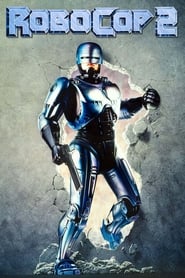
We had to shoot it during the daytime, but we had to shoot the mall overnight, so we had, like, about ten minutes where the mall was still closed, but the kids were allowed to work. You remember this? I do. And the reason I do is because you said, I want the writer on the set, and he should be able to be on the set as much as he wants, so I took you up on that. I was around all the time. You were. We didn't know that writers could sometimes disappear, but...
3:04 · jump to transcript →
-
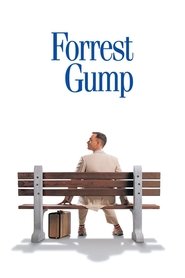
just like you wouldn't want me to come to your house some evening and discuss U.S. history on your time, understand? Yes, sir. You originally wanted Fred Gwynn, didn't you, for the part of Mr. Hand, and he didn't want to do the script because there was too much nasty stuff? Well, I forgot all about that, but as it was in the book, he was a big, heavy guy, sort of like the Hawaii Five-0 character. And then when we all met Ray Walston, who everybody loves from something, and...
10:37 · jump to transcript →
-
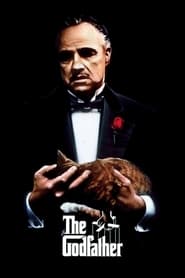
-
-
Peter Greenaway
And since my background had been very much about documentary filmmaking, where essentially the address is made from the film directly to an audience, that I should consider probably film narrative conventions, and instead of getting people talking to the microphone, get people to talk to one another. So I went away, and after about six or eight weeks, I came up with a script called The Draftsman's Contract.
1:08 · jump to transcript →
-
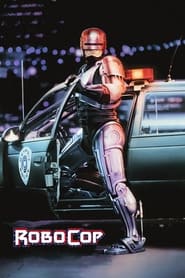
Peter Greenaway
since I have lots and lots of, I suppose, ethical problems about the notion of the document or the documentary, that I wanted to put these ideas into a feature film. And I came up and developed the script about a draftsman, and we're talking about the late 17th century, so this would have been possible, who was employed by country house owners in England to draw or paint
3:54 · jump to transcript →
-
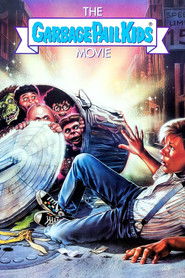
Peter Greenaway
Originally, the script was to take place in a completely different milieu and in different circumstances to where it's ended up in southern England in 1694. It actually began because of my enthusiasms for a small village called Wardour, which wasn't very far away from a big...
12:37 · jump to transcript →
-
-
multi · 2h 34m 6 mentions
James Cameron, Gale Anne Hurd, Stan Winston, Robert Skotak + 8
-
James Cameron
This is Jim Cameron. I wrote and directed this film back in '83, and directed it in '85 through '86. It was released in the summer of '86. July 17th, if I'm not mistaken. It started as a treatment. I was having a meeting with David Giler and Walter Hill, talking about another project, and that pitch was not going very well. I could tell by their sagging expressions that they didn't like any of my ideas. But they had read my 7erminator script and wanted to work with me on something. I was getting up and making my way toward the door and David Giler, one of the producers of the first film, said "We do have this other thing", and I said "What's that?" He said "Alien 2." And all the pinball machine lights and bells went off inside my head but I maintained a straight face and said "That could be interesting." And I suggested that I write a quick treatment, a quick outline, just to give them an idea of what I might do with it. So I raced home and stayed up for three days straight, drank about eight pots of coffee and wrote a 40- or 50-page treatment. Really what I did was I adapted a story I had already written, which was called Mother, which was an "alien on a space station" kind of story. It had the power loader machine in it. I had written this treatment a few months earlier. So I adapted it, dropped Sigourney's character and a bunch of marines into it, and in that one quick stroke created all the character names - Gorman and Hicks and Vasquez and all those folks - and dropped it on them a couple of days later. I think they felt like they'd hit the jackpot. That was the film they wanted to make. So they authorized me to go ahead and start writing the script. The problem was, that day I landed the job to write the script for the second Rambo film. So I called them up and asked David Giler what I should do. And he said "Don't be stupid. Take both jobs." So I took both jobs. I also had to do a rewrite of my 7erminator script to start production in February, so I had a three-month period where I had to write three scripts. So I decided that each script was gonna be two hours long, so it'd be 120 pages. So I figured out the total page count, whatever that is - I guess 360 pages. I divided the total number of waking hours I had during that three-month period by 360 and figured out how many pages per hour I had to write, and then I just wrote that many pages per hour.
0:04 · jump to transcript →
-
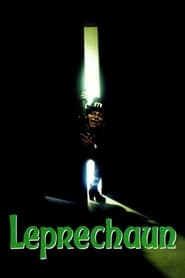
Pat McClung
This is Pat McClung. I was the model-shop supervisor on the film. They're wearing modified costumes from Outland, or the basic suit is from Outland and it's been redesigned and they put some stencils on it. This is microglitter and fuller's earth blown on there. I remember in this scene the batteries in the flashlights kept going out. You would think this would be an easy scene to do, but, as with everything in this movie, it was harder than it looked. There are no easy scenes with Jim. There's that nice dissolve, the contour of the earth matching her face. When we shot this, a matte painting combined with miniature and perspective, there are some perspective gags going on there. We used a clip of Sigourney's face in the viewfinder to line up the curvature of the earth, so we had a nice match. I wrote the piece obviously with Sigourney in mind for the character. I was told she was on board and I should just toddle off and write the film when in fact no deal had been made with her whatsoever. So here was a script that was written that everybody wanted to make, in which she was in every scene, and they hadn't made a deal with her yet. That's why she got her first big payday of her acting career. She got a million bucks, which was a big deal. She might have been the first actress to get a million dollars for a movie in movie history. It was all because it was mishandled by the producers. She was the main character and they hadn't made the deal. She was worth every penny of it and more. When people saw the film, they realized that. I Knew what a phenomenal actress she was. I'd never met her. I had her picture up while I was writing the script. I went off the character that had been created in the first film, took her much further. Of course, this is Paul Reiser. I certainly had no idea what a great comic actor he would prove to be, and certainly that's how people think of him, not as a dramatic actor. I just read him in a lineup of actors in the normal casting methodology, and I thought he was really interesting, that he could play this really sincere but slightly smarmy guy who could then turn evil. This is a dream sequence, but you don't know that yet. I remember from the premiere screening of the film that the incomplete chestburster scene here really got people cranked up and on edge, set the tone for the whole movie, that you were here to be messed with, which is a good way to start off, I think. The way you get a cat to hiss like that is you put another cat close to it. I had no idea. I didn't know what you did to make a cat do that. But that's standard procedure. Bring a cat it doesn't know close to it and it'll do that.
4:32 · jump to transcript →
-
Bill Paxton
Bill, isn't there dialogue that you have on this that people have used in video games? Yeah, I think so. "Game over, man" and things like that. You get anything for that? - I don't think so. I'm not even getting anything to sit here and do this commentary. They expect us to do it for no money. You got a beer out of it, though. No, it's just fun. I got a beer out of it, so that's cool. This was an amazing set, this concourse A. And it was long. And later on when all hell's breaking loose, Jim had that little video camera. He had everybody on the crew having coffee while we would run at him and do different things. It was SO amazing to see this gigantic set, one of the biggest sets I'd ever seen, and there's Jim by himself with this little camera. When did the bust-out almost happen? He was gonna move the movie. When did that happen? I remember there were some problems. There were some union problems. The crew weren't used to working the same way. With Jim. They weren't used to working. That's unfair. They were craftsmen, but they had an indentured way of doing everything. Jim needs something, he just grabs it. If he needs a light moved, he'll grab it himself. We punched a hole through somewhere cos he needed to run a line. He didn't wanna wait around. He just said "Give me a hammer." But this was an ambitious schedule. Jim was running from stage to stage. I think we had about three big sound stages with giant sets. And then there were two sound stages with miniatures. And then there was a stage with all those tunnels. I remember them putting you in that damn tunnel. That pipe. We had gone to the power station to shoot the atmosphere-processor scenes and come back to the set after it had been wrecked. So we're into Adrian Biddle's photography here. He was the second DP. I encouraged Adrian, to save time, to use as much built-in lighting as possible. This is lit by the fluorescents in the set, with just a little additional lighting. Adrian liked to work on a raw and edgy look and work with the practical lights a lot more. This is another thing that is important. With a lot of science fiction movies that are all interior, you often lose track geographically of where you are and it becomes incredibly confusing and it's hard to build the tension and the suspense. Jim was aware of this from the script stage and made sure that we established through the helmet cams, through the motion trackers, where they are, and then ultimately, later on, where the aliens are. Even in this version, you're left to fill in what happened. We don't see the baittle. We'll see plenty of battles later and this is promising you that. We have a shot coming up here where there were acid holes - acid... holes... eaten into the floor by these so far unseen aliens. And, of course, these sets were not double-deck sets. Jim wanted a scene where a character looks down through one of these holes. I think Bill spits down into it to give some perspective. So this down-view we shot on our miniature stage. We layered the set and photographed that. This is where you spit and they did it in miniature. They even did a miniature spit. - Is that what that is? To get that spitting effect, it was actually not spit. It didn't work very well, so it was a combination of milk... Milk and water in an eyedropper right underneath the lens. The complaint from the studio was that the film went on too long without anything really happening. I was winding the suspense tighter before you actually saw anything. The studio said we were just jerking around. Too many movies that I see now, it's all upfront. You start seeing stuff right away and there's no sense of a build. So this is the miniature APC that was built by Bob and Denny Skotak. Pretty good size. I remember it being five or six feet long. Most people don't twig that as a miniature. That's the real APC pulling in. They matched the lighting pretty nicely. I think Jim did some of his live-action stuff undercranked. He ran the camera slightly slower on the APC so that it felt slightly more as if it were a miniature but you knew it was real because you could see people interacting with it. So if any of the miniature stuff didn't quite work for whatever reason, it took the curse off that cos it felt that the two were blended together. I think he wound up undercranking because the APC, the full-size one, didn't move as fast as he wanted it. I think it could only go eight or ten miles an hour. One difficult thing about making this movie was 7erminator wasn't out in England and the perception of Jim Cameron, who looked about 20 when he directed this movie, and myself as the directing-producing team was met with a great deal of resistance because back then the system in England was that you had to put in years and years to rise up to the level of being a producer or a director. And we were simply not treated with a great deal of respect and it was very hard every day of the shoot. We were being second-guessed and every decision we made was questioned and the tremendous thing, of course, having Stan on the film was that... I was old. - No. ...was that you were a cheerleader for both of us. By demonstrating the respect and enthusiasm that you did, I think other people gradually relented. I knew it was the best thing for me and for everybody on that set. There are people that you know, no matter how they do it, what they're doing is special. This particular directing-producing team had been a win for me in my career and stayed that way. I never thought our facehuggers looked as good as the one in A/en. We had to make lots of 'em and they had to run around and do things, but, texturally, the one in the first film looked great. It really held up. The bits of oysters and stuff inside it looked great. But I did wanna see the disgusting thing that had been down the inside of Kane's throat in the first film. You never see it in the movie, in A/en, so I figured we'd gross everybody out. All of Giger's designs have a real sexual undercurrent to them. And that's what horrified people about the alien as much as anything, is it worked on a kind of Freudian subconscious level. And Ridley and Giger knew that and they went for that. This film was never intended to be as much of a horror film as the first one. It was working on a different thematic level but I still wanted to be true to some of those ideas, some of those design concepts. It would be natural to assume I'd wanna work with Giger, but it just didn't occur to me at the time. Maybe it was because we really only needed to design one new creature and I had already designed her by the time I wrote the script. The alien queen. I guess maybe it was my own ego as an artist. I just felt like he'd made his stamp and I knew from what I'd read that he had to do everything his way and I had a very specific idea for the alien queen to extrapolate beyond what had been done before. I got the impression from what I read that I wasn't gonna get the dynamic character that I wanted. In a funny way, part of what attracted me to doing this film was the opportunity to do cool design stuff. So maybe I was just a little bit too in love with the idea of designing the creatures and the weapons and doing all that stuff.
47:57 · jump to transcript →
-
-
-
But basically my approach to editing is always to try and interpret the film as the script directs me to. And certainly that's how I approach this. I actually don't like going to set because I sort of don't want to see what's going on. I kind of like the idea of seeing dailies fresh and not having...
40:18 · jump to transcript →
-
in the writing process or in the beginning of the film when you're laying out the film for shooting, if you can anticipate what you're gonna lose, I think that's really not true. Network news, Washington. I love it. What do you do when your real life exceeds your dreams? Keep it to yourself. I think these guys were so amazing in producing a relationship not unlike friendship.
1:03:36 · jump to transcript →
-
about it in a magazine. That's how you can make sure you don't put on too much perfume. You know what's great? One of the best things when you're working on a screenplay, there's no such thing as an empty fact. No matter what you read, automatically it's like you're supposed to have read it because of the movie you're working on. And it was that way with that perfume piece. I hate missing it. I wish I could be there. Me too.
1:19:08 · jump to transcript →
-
-
director · 1h 34m 6 mentions
-
Ghost Town USA to having a huge football event, like, that was designed in the script? Oh yeah, that's from the script. The whole town is at the game. It didn't, it helped the extras budget though. I didn't have to populate the town at that point. This is a lot, this is really inspired by my life in Park Ridge, Illinois and some of my crazy friends. Honestly, some of these stories are true. Some of the interactions with the kids and all this.
3:43 · jump to transcript →
-
You've already set up that there's a small town, the inhabitants of the small town are all gathered together. Then we're intercutting between that and Brian Flagg, who's gonna be jumping this bridge, which is a nice setup for later on. Was that also installed in the script, that there would be this intercutting back and forth? There's a number of structural things I'd already learned at this point that Frank and I were able to incorporate and have fun with it at the same time. You know, it's a horror film
6:28 · jump to transcript →
-
Chuck, when you and Frank and possibly the rest of the team were coming up with the kind of dynamics of the blob and the rules of the blob, who came up with those? Like the acid for whatever was dripping off of it. I think we all kind of riffed off the script. The script had many of these details. The ones that didn't work, we didn't do. And the ones that did work, we played into.
28:03 · jump to transcript →
-
-
director · 2h 10m 6 mentions
Richard Curtis, Hugh Grant, Bill Nighy, Thomas Sangster
-
Richard Curtis
In your head as the writer, who do you think she really prefers? Her husband or this bloke, now? No, she's got no time at all. I mean, she likes this guy as a friend. But when she runs out later and kisses him. - That's just being nice. That's my favorite bit of acting. - Well, that's interesting. That wasn't my reading. I thought, "Dirty bitch, she wants them both." Keira looks like to me like a girl who's done that, who's just found a way of being kind to men like Bill who, you know, want more to do with her than that. - But she kisses him on the lips. I never kiss anyone anywhere else except the lips. God. I think Andrew cannot believe this was the take we used. This was like a joke take. I couldn't believe he was gonna go for it the third time. No! Yep, he's done it. Good heavens. - More times than... He Zips... This is the fantastic Dido. She sent us her new aloum and there was one so beautiful, sort of hidden track on it that we wanted to put in the movie. But it's weird how a movie will demand its own songs and you cant just put stuff you adore on it. There was a song by Ron Sexsmith, Gold in Them Hills, I just spent days trying to fit into the film. Just couldn't. Wow. - That's great. He's doing a very good job of walking. Bill, do you find walking very difficult on camera? -/ do. Yeah. - Particularly if you haven't got a prop? Something to do with your hands? - Yeah. Well, that's why he did that thing of scraping along the wall. Yeah, I could see all the tricks. Hands in pockets. She had a little problem there, walking across the room. Colin's a very good walker. Yeah. She was so good. She didn't make a single mistake. Sweet girl. - Attractive, too.
55:33 · jump to transcript →
-
Richard Curtis
There we go. There's the Four Tops again. The original scene that we did here had those guys the other way round So you could see their penises. - I remember from the script. The head of Universal said she found it distracting in the preview and couldn't concentrate on the scene.
1:04:30 · jump to transcript →
-
Richard Curtis
Right. So that's the bit where we were So... The audience were so unhappy. People were? - When that happened. Well, I'm not surprised. - High hopes. We had a really strange thing with this, which is that, when we tested the film... I'm a great believer in testing. I come from normal comedy tradition and when you did a sitcom you performed it live, and bits the audience didn't laugh at you cut out. It's the same on stage, you just change things around. But the audience so wanted this to turn out well and kept saying on the cards, "Can't you please write an extra scene "where everything goes okay?" And, "It's not clear what happens." They were saying, "It's not clear what happens" because they wanted something different to happen. So we in fact wrote another scene where it became perfectly clear that it didn't turn out okay. It was one of those "be careful what you wish for 'cause you might get it" ones. But I think it's down to Rodrigo, who's so touching that you instantly want it to go well for the pair of them. It's a case where the acting's better than the writing.
1:11:23 · jump to transcript →
-
-
multi · 1h 39m 6 mentions
The Grand Budapest Hotel (2014)
Wes Anderson, Roman Coppola, Jeff Goldblum, Kent Jones
-
Wes Anderson
Well, I haven't seen this movie in quite a long time, but I'm not really getting a good glimpse of it because I keep looking around the room here and talking to everybody else. Now, this dog... I remember walking in the street and seeing this St. Bernard while we were scouting in Görlitz. We've got a St. Bernard in the script. - [Jones] "I want you for my movie"?
6:06 · jump to transcript →
-
Wes Anderson
I was gonna say, both Jeff and Roman, you-- We-- It had an effect on how we made this movie, Grand Budapest Hotel, because, Jeff, you know, you and Willem both-- I saw that you would stay on the set and you were always watching what's going on. By the time we got to where we're gonna figure out what we're doing next, you already always know everything. You've seen anything that would be happening while other people might be off in a trailer. And on Life Aquatic, there were like 1 1 of them. And starting then, I thought: "I want everybody to stay on the set all the time now as much as we possibly can." And if there's a place to go, it needs to be within range that I can shout to it. If there's some chairs and a thing behind a screen or a greenroom or something, it can't be too far that we can't just shout to it. When we did Darjeeling Limited, as Roman was talking about, Roman in particular had some thoughts such as: "Let's not have... Let's have everyone do their makeup themselves, like a play. Everyone can be responsible for their makeup." In fact, we had then-- We wrote a script where there are different makeups. Owen Wilson's face has been damaged by a motorcycle accident. He's covered with bandages. We needed some makeup. In fact, we have a great makeup artist, Frances Hannon, who was with us. But nevertheless, it was part of our-- Of a new system where we say, "We're gonna keep everything very contained." And especially this thing where we started all living together when we do the movie, and we have-- Someone's gonna cook for us, and when we finish the shooting day, we're all gonna go to the same place. And at the end of the movie, everybody can go off where they would like to go again. But during the movie, let's just stay in this little bubble until we finish the thing. And I have to say, not only has that been wildly more efficient for us in so many different ways, but I find it to be a more fun way to make a movie.
16:30 · jump to transcript →
-
Wes Anderson
You know, this one I remember, Hugo Guinness and I-- So we were working on this script for quite some time.
1:05:33 · jump to transcript →
-
-
director · 1h 30m 5 mentions
A Nightmare on Elm Street (1984)
Wes Craven, Heather Langenkamp, John Saxon, Jacques Haitkin
-
especially kids that have come out of relocation camps in the wars. Yeah, I guess it worked, huh? You know, the script itself, the other interesting sidelight is that it went around Hollywood for three years and nobody thought it was scary or worth doing. And Bob Shea and New Line Cinema were the only ones that really thought that it had something.
21:10 · jump to transcript →
-
she could bring something out. Then she could bring him out before she had to sleep. This scene was, I looked at my script and it was very tightly choreographed. Wes and Ronnie and I really had to work out the movements here. And Ronnie kept slapping me with a ringed finger. How many times? I don't know, 25. It's because you paid me a lot of money to allow that. You'd gotten on her nerves by that time.
51:51 · jump to transcript →
-
famous line right there. There it is, right there. When you write lines like that, Wes, do you even, like, think to yourself, oh, that's a defining line of the script? Yeah, it is. It is the defining line of the script, don't fall asleep. Whatever you do, don't fall asleep. You know, you can take it politically, you can take it philosophically, spiritually, you can take it, you know, just very locally or simply, too.
1:00:51 · jump to transcript →
-
-
director · 2h 10m 5 mentions
-
technical jargon. And I would go with the script lady and rewrite the whole paragraphs and get her to type it up and then get the director to give it to him just before the take and say, oh, we have these changes. And watch Desmond. So the panic would come into his face. And then we'd have to say quickly, no, no, it's a joke.
14:47 · jump to transcript →
-
For continuity, which we had a wonderful lady, June Randall, who was continuity lady on this, or this script lady, I think they call them now. Used to be continuity girl. And she was wonderful. And, of course, they have to know where everybody, where everything is, so that you can match when you're cross-cutting. Enjoying our little party, Monsieur...
29:50 · jump to transcript →
-
I think that you have to have an attitude, you have to set an attitude towards people that sort of amused superiority. And as I've read the script, and I know that I'm going to win, I have to be very amused by it all. I worry sometimes that explosions are going to be a little too close.
37:25 · jump to transcript →
-
-
director · 1h 30m 5 mentions
-
short film, yeah, Song Your Dream. And this is actually the director of that short film presented and in a way produced by Brass. Nicolai Penestri is also one of the writers, one of the many writers, it should be noted, of Cheeky. So he obviously managed to slip into the Brass entourage. The other...
23:52 · jump to transcript →
-
Carla Cipriani and we commented obviously on the fact that as most people know she was most often than not this continuity or script supervisor for her husband although we we know that she she was also very much involved in the casting in the pre-production and even in the locations but it is first with the frivolous Lola
24:48 · jump to transcript →
-
It's a comedy, it's light, but it has very different colour scheme compared to previous films. And even the writing is very different. It feels much more like episodes put together. There is something episodic about Cheeky compared to other films where sometimes not exactly narrative heavy, but
25:48 · jump to transcript →
-
-
director · 1h 43m 5 mentions
-
And I had some cartoon animators come in and do the storyboarding alongside some of the traditional Hollywood storyboard artists. And they came up with a lot of gags. There were many days when I would wander in there and we'd be going over the storyboards and the script would get funnier because of just wisecracks that the storyboard artists were throwing out or visual ideas that were being presented. Very creative, again, a kind of a throwback to old school animation.
5:28 · jump to transcript →
-
She just seemed to thoroughly enjoy the experience every day that we were filming, and it was a pleasure. I can't underline or emphasize enough Jim Carrey's contribution to the overall tone of the movie and certainly the creation of the Grinch character. I spent one of the most exciting creative weeks of my life sitting with the writers and Jim in an office
11:00 · jump to transcript →
-
Hold still! Max, pick out a bow! Can I use your finger for a second? Great ad libs from Jim Carrey. Of course, you know, you'd get the script sort of shot and done in about four or five takes, and then you'd want to do another eight or nine, or Jim would, just to keep trying variations. And I felt like it was sort of like working with a great, great...
12:57 · jump to transcript →
-
-
-
E. Elias Merhige
I don't think we need the writer any longer. And here I wanted John to really pause and say, well, okay, you can have the writer, but just don't touch anybody else. There's a few shots, a few takes that I did where you have John actually considering serving up the writer to Max Schreck, and I just thought that was, let's just put it this way, I got a big kick out of it.
44:25 · jump to transcript →
-
E. Elias Merhige
This is something that I modified from the original script because there isn't an ocean that's anywhere near Luxembourg and there isn't a large enough body of water to put a boat so basically I changed the script and modified it to make him this difficult actor that just doesn't like the water and doesn't want and vampires don't like the water so I had it so Murnau ordered to have the
48:39 · jump to transcript →
-
E. Elias Merhige
What was for you the most wondrous thing you ever saw? I once saw Greta Schroeder naked. No. That beats ectoplasm. Jesus, Max. And this is a scene when I first read Stephen Katz's script that I just thought was absolutely something so special and so wonderful that I really wanted to
49:35 · jump to transcript →
-
-
director · 1h 31m 5 mentions
-
I guess we should introduce ourselves, right? Sure. - That seems like a way to start. l'm Jeff Schaffer. - David Mandel. Hi. I'm Alec Berg and this is our commentary. This is actually... If you have the unrated DVD, this is the first of two commentaries. This is a sober commentary. And the second commentary is what we're calling the "Party Along" commentary, which I'm assuming will prove to be considerably sloppier. Which will be more informative is up to you. Here we go. By the way, this excellent title sequence was done by Kyle Cooper and his company Prologue. They did a really great job on this. I think they did the credits to Se7en. That was his, sort of, big... And Panic Room. - Panic Room. He did the Oscars this year. Yeah, really good. So, should we talk about the title? - I suppose we should. First, for all the people who saw the movie in the theaters, thank you. I guess that's our parents. But the original title of this movie was always Ug/y Americans. Yeah, we sold the movie as a spec script, and that was the title, Ug/y Americans, which I guess we... and I guess everyone we know... thought was a great title. Well, it was like the phrase, you know, the phrase "the ugly American," which is what every American tourist who goes to Europe is called by every European who suffers through every American tourist. But I guess there was some concern that people would think that the movie was either about ugly people or that it was a bad time to be ironic about patriotism and the title wouldn't go over so well. So ultimately it was decided that the movie would be called Euro/7rip. And Euro/Trip is a fine title, but I guess we always... We always kind of liked Ugly Americans better and... Yeah, I guess we still think of it as Ugly Americans.
0:14 · jump to transcript →
-
One other interesting note about this scene, that is a real keg with real beer, and Jacob Pitts, our delightful Cooper, really liked these scenes a lot. It's what we like to call method acting. That's one of the things we learned. Or simply drinking. - Aren't they the same? I guess we should introduce our cast, now that you've been watching for ten minutes. Scotty Mechlowicz as Scott Thomas. - Which is why we cast him. Make it very easy on ourselves. The beautiful and talented Michelle Trachtenberg as Jenny. And Travis Wester is her twin, Jamie. And that's Jacob Pitts going off to take a leak. And this was another one of our delightful cameos that we got because we were in Prague. Yep, that's Matt Damon, which... Everyone in the theater sort of goes, "It can't be. Is it? Is it really?" Why is his head shaved? He was actually in Prague shooting Brothers Grimm for Terry Gilliam at the time. And we actually went to college with Matt years ago. So we've been sort of friendly ever since. And he was in Prague and we asked him to do a day of work for us, and he agreed. The biggest favor ever. - Thank you, thank you, thank you, Matt. Yeah, Matt's just hilarious here. Matt's not watching this DVD. We're going to make him watch it. That'll be another commentary. That would be the biggest favor he's ever done. But the band was actually started by some other friends of ours from college. I guess this is as good a time as any... A couple of them were of Matt Damon's roommates in college. The band Lustra... - One of them. The band Lustra, good guys. And they wrote the song, which is really fun. We've known each other since college. I'm going to just talk now 'cause no one's listening to what I'm saying, because there's a naked girl on the screen. I wasn't listening. What were you talking about? Now this, in the unrated version that we're watching, she started off topless. In the theatrical release, if you saw it, we actually cut a different version where she started off with her top on and Cooper talks her out of her top. - He convinced her to take it off. And it was very strange, sort of, when you get into this whole nudity thing. Obviously, it's a hot tub scene, but somehow when her top was on and he talked her out of it, while it was a very exciting moment that he talked her out of it, it oddly made her dumber, even though she is sort of a stereotypical dumb blonde. - Right. And we always liked it this way, the way you're seeing it. We liked the scene to answer the question, "What is beyond gratuitous?" That's the answer. - There it is. And there they are. The answers. The other stuff we added back into the scene is just more of him screwing around with her. Because, to us, once you're at the nudity, it's how far he goes. This scene... - It's not about nudity. No, this scene was always about the crazy extent to which he got her to play with herself, as opposed to just getting her to take her top off. By the way, the banner in the background originally... This is what happens when you work in Prague. It's a big congratulations banner. The first day when we got there, it just said "congratulation," like one singular congratulation, which is a word we didn't know existed. Sort of a funny story about this scene, which, hopefully, we can tell. We were actually rewriting another movie, which I guess we'll leave nameless, that had a hot tub scene in it and we came up with this idea, which was the fact that a guy saying, "You have a smudge. You've got something on you." And we were really enjoying what we were doing so much that we didn't put it in that script. And we're like, "We'll use it one day." And here it is. Screw it. The movie was called Out Co/d, I think. Yeah, exactly.
7:55 · jump to transcript →
-
The other thing I was gonna mention... We're constantly behind in the mentioning. Part of the reason we ended up in Prague and actually ended up with Allan was because of Neno. - Yeah. Neno Pecur, who was Croatian. We hired him as an art director to scout Prague and to scout the real European locales before we knew we were going to Prague. Basically, he would go to Paris and go, "This is what it really does look like." Then he went to Prague and said, "We could do something like this here." And from his pictures, we used some of his actual locations that he took photos of and made the decision to go to Prague. And then Neno has worked with Allan for many years as his art director, and he helped us get Allan. The two of them, their team... They brought Bill... Cimino. Our set decorator. - Cimino. That's right. Just fantastic and along with the guys from Prague. I think it's now time to mention, though, at the robot scene, which was the first time... We've been writers for a long time and you sort of go, "Look, I think we know what this is gonna be. This is gonna be really funny. It's gonna be a slow-motion kung fu fight scene between two people being robots." You write it and it seems funny. There's the old joke about the writer writes "Rome burns," and the director has to realize that. We were on the spot here because it was easy when we wrote it to just hand it off, but now we handed it off to ourselves. Actually, this is one of the things... - At one point, we cut this, actually. At one point... - We cut it from the script. We talked about cutting it. We were afraid we didn't know how to realize it. We just were like, "What is this? This could be bad." Left it in for a table read. - We left it in for the table read. And it got such huge laughs at the table read that we realized, "We gotta at least try and shoot it." We then initiated a worldwide search for a robot man. This is J.P. Manoux, who's an incredibly talented actor. We found him here in Los Angeles. Yeah. We looked at all these mimes... We looked at real French guys. - ...weird acrobats, and French guys whatever, and, of course, a guy from LA who was actually a friend of a friend and was in the Groundlings, of course, ended up being a really good guy. He is just outstanding. - And he came in with this ability... I mean, a lot of what you're seeing, like him laughing and just his attitude as a French guy, was in his audition. We were also very lucky that Scott... - Scott, exactly. ...knew how to robot. I guess Scott grew up watching Shields and Yarnell... No, no. J.P. - Was that J.P.? Scott had an acting teacher... - Who was in the Barney costume. Yeah. - Okay. And we went there on a Saturday to basically work it out. And we had blocked off an entire Saturday. We choreographed the fight with little bits of Enter the Dragon and some Matrix in about... Twenty minutes. - Yeah, like, 20 minutes. And the first time we did it in Our crazy wide shot... because we knew to get a master... the crew laughed, and we were like, "Oh, okay." It was also-- This was pretty early in the schedule. And I think it was maybe the first time the crew thought, "Okay, these guys actually know what they're doing." Like, "This is something we haven't seen." Wrongly, but they thought that. - But they assumed it.
29:59 · jump to transcript →
-
-
director · 1h 51m 5 mentions
-
you know, just analyzing his whole trip and what he was going to go through. And I felt it was also so much like the original. It wasn't the same dialogue, but it was just kind of the same idea of here's what you're going to do on your mission. You're going to, you know, X, Y, Z. You're going to save the girl. You're going to do this. And it kind of maps out what is going to happen. I just was never really into even in the script. I shot it. We're there. You know, it's a great thing about dialogue is that it's unlike, I guess, action set pieces where...
23:00 · jump to transcript →
-
Team one, have you secured the suspect? Team one, advise, let me know what's going on in there. This is a scene, I will admit, that I completely stole from myself. This whole idea of being trapped in a room and then these shrapnel cameras that get released into the room. I wrote it into a script that I was developing about four years ago. Similar moment. I thought it would work great in Total Recall as well, to see if he's alone or... And I just love this idea of these shrapnel cameras.
25:29 · jump to transcript →
-
director of Total Recall, and we are watching the director's cut, which I'm... Yeah, it's a lot to take. As things actually develop, there are other sides of it that are, that become problematic. And I wondered about it with even in the script phase and when we were shooting it, that will people be able to, will it be too distracting that Jessica Biel's character is, you know, is becoming drawn to and attracted to
59:55 · jump to transcript →
-
-
-
Commentary With David Kalat
Tsuburaya's monster movie proposal involved a giant octopus, which, of course, he planned to animate with King Kong-style stop motion. Tanaka wasn't so sure and felt it was a better idea to let a professional writer like Shigeru Kayama cook up the script, so Tsuburaya's octopus idea was shelved.
11:42 · jump to transcript →
-
Commentary With David Kalat
This sequence is as fabulous as it is because Honda and Murata worked so closely with Tsuburaya during the initial planning stages of the project, running script ideas by the special effects team so that they could weed out anything that would have been impossible or just too expensive. Honda and Murata only put in the script things Tsuburaya said he could pull off. Well, in the very earliest stages of that collaboration, when Tsuburaya was first brought on board, before Honda was even a part of this,
44:46 · jump to transcript →
-
Commentary With David Kalat
Japanese is written using a script of characters that represent phonetic chunks. The problem is those phonetic chunks in Japanese involve sounds so unfamiliar in English they don't have obvious, unambiguous Roman letter equivalents. The process of converting Japanese characters into Roman letters is called transliteration. And there are a number...
1:06:17 · jump to transcript →
-
-
-
as a writer, I just work for the director. And if the director really wants me to say that, unless it is hopelessly ungrammatical or lacking in any form of coherent syntax, and the character I'm playing seems possibly to have gone to college, I won't argue about it. But there are a few places where I or Nick and I played around with some words. But for the most part, I think it's all from the script.
37:01 · jump to transcript →
-
I think there's very little in this that's startling in its material sense. I remember when Paul Mylesburg and I were working on the script, we thought he would be dealing in software to keep undercover, not come up with laser beam eyeballs or some extraordinary way of converting grass into gold, but something that was only a little bit ahead of its time. I remember when they talked about the camera,
1:10:08 · jump to transcript →
-
a period where commercials in England used to be two minutes and a minute and a half. The idea of a 30-second commercial, a tension span in time, has changed. But it's still very much in our life. We have our human clock. So in talking to the artists when Paul and I were working on the script, with that in mind, it was astounding how often mentioning time came up, and I wanted to eliminate that.
1:52:41 · jump to transcript →
-
-
director · 1h 31m 4 mentions
Alex Cox, Michael Nesmith, Casting Victoria Thomas, Sy Richardson + 2
-
This is going to be terrible for the people listening to this DVD because all they're going to hear is us cackling and watching the John Wayne sequence. That doesn't mean he was a homo, Miller. Oh, I thought that was Ferrangi that said that line, but it wasn't. It was... Oh, yeah, Ferrangi says greatest American that ever lived. Yeah. Yeah, it's Oli that says he likes to watch this. Yeah. Remember, you were supposed to, in the script, you were supposed to get a cigar behind the ear.
54:02 · jump to transcript →
-
He does actually have a cigar, but he doesn't actually stamp it on his head. Yeah, he's supposed to stamp out lit cigar on his ear. Is that like a Repo thing? Well, that's actually in the Repo Man song. Using my head for a trash can. That's right. It's interesting that Iggy Pop actually had read the script before he wrote the song and had actually incorporated bits of it into the lyrics.
54:32 · jump to transcript →
-
And I remember in the audition with Fox also, Dick Root, he had a broken wrist, if you remember in the audition. He told us, be careful with him because he has a broken wrist. And the first thing Dick Root does is go over there and just body slam him. And you could see him go, like he really hurt, but then he just kept going. I just thought, wow, this guy's great. That's amazing. I particularly like any script that has the word pernicious in it. Pernicious is a good...
1:08:25 · jump to transcript →
-
-
-
Gary Goddard
the tail end of the schedule, we didn't get everything we wanted, but we did get a lot of use out of it, not as much as I'd wanted, but that's why you see so many levels there. They were designed for what the final battle would be. The eye in the back also, that was a last add in the original script that David O'Dell wrote. There really wasn't a ticking clock. I felt a need to put a ticking clock on this, and we came up with this kind of eye, this door on the universe. The eye opens on the universe. They're coming. Get back there. Keep working.
12:27 · jump to transcript →
-
Gary Goddard
It's a funny way. This was David O'Dell. This wasn't David's script. Of all the complicated things you can do in a movie... Believe it or not, this next shot is one of the toughest. Something's coming. What is it? Big reveal. They don't know what it is. We do. Now, that cow did nothing for about...
18:52 · jump to transcript →
-
Gary Goddard
Behind the scenes, we had Canon Films. And Canon had never done a movie this expensive before, $17 million. We had Mattel. Mattel had to sign off on the script and on the casting, on just about everything we did. And Mattel, I think they were actually fairly workable. But we did have a lot of issues, because they had the ultimate right to approve things. And then we had all the normal involvement of the producer and studio.
1:20:51 · jump to transcript →
-
-
director · 2h 9m 4 mentions
-
Originally, in the script, Tom Cruise, I think, had a little boiler room where people made a lot of phone calls and tried to sell things. And I had done a movie called Tin Man, which kind of touched on very the same thing about, you know, canvassing for calls. So I thought we needed to move it into something slightly different. And I thought about, you know, cars and the kind of the gray market of selling them and then try to put Cruise into a situation where he is now...
2:59 · jump to transcript →
-
The crossing the desert here to go to Palm Springs, actually we passed these windmills, which will come up in a second. I was actually having a conversation with my wife in the car. I had read the script, not to direct, but actually to offer some suggestions.
5:52 · jump to transcript →
-
It had a number of problems that had to be resolved, and the whole autistic issue was very important because Dustin had done a lot of research and really understood what that was all about and the problems of that, and I think we needed to integrate it into the script as much as possible. This scene now, we had to shoot just as the sun was going to hit a certain point on the horizon. Every time I watch it now, I think about the kind of racing across the desert trying to get the cameras in position while you still got the light.
6:45 · jump to transcript →
-
-
director · 2h 24m 4 mentions
-
You notice in these sequences, the camera is near the ground so the ceiling becomes more important than the floor and one is shooting up people's nostrils. This was an approach David Fincher wanted, which I think is terribly effective indeed and makes it more distinctive than the other three, rather, in my opinion. I tried to keep it fairly shadowy, so that it looks moody. Where I could, I brought the light from the top because it's unusual for the light to come from the floor, but one had to be careful about it obviously. The difficulty was getting light into the eyes SO we could see what the actors were thinking but not at the expense of the mood. I remember at Pinewood Studios when the sets were going up, Fincher would have us walk through the sets just looking at the scope of them. It was truly amazing to see these things go up. Norman Reynolds is a great production designer. He builds the world. It's very difficult to control him cos George would tell him on Star Wars "Don't build that. We're gonna paint it", and the next day - "It's too late. It's built." When they sent us over, we said "Why are we going to London?" They said "It's the sets, the set design, the artistry and the craftsmanship." And it really was very true. British actors is another good reason to go there. Somehow the British accent does a lot for these movies, I think. Vincent has had a deep, abiding interest in Luddite monks, and had done a great movie called The Navigator, where these monks dig their way through the earth, coming out into the 20th Century. It was a great movie. But, anyway, the original idea was that this was a wooden planet built by the Luddites and in the bottom of the planet, symbolically, the reactor was kind of hell. The technology that kept this thing going was emanating from the bowels of Lucifer. What drew me to the project first was that it wasn't a retread kind of sequel. It was a completely new idea, and some of it survived in the final script. David was entirely in control from the beginning. He put his stamp on it. He was the director and nobody ever questioned it. He was completely in control of the set and everybody hung on his words. He was definitely doing it. There was no weakness in it at alll. He was very, very confident in what he was doing and wouldn't be swayed. He had this vision and that was what he was going to do. He came under quite a lot of pressure from 20th Century Fox to hurry up or do it the quickest way or the most expedient way, but he wouldn't listen. He would do what he wanted to do, quite rightly, in my opinion. As I say, his compositions are marvelous and the use of the frame, and so on. David had been a cinematographer before he became a director, so he knew lighting. He knew what was good and what was bad. That's not to take away from David Worley, the operator. His contribution was enormous as well.
10:16 · jump to transcript →
-
And the warden - was that Brian Glover? Is that who that is? - was a wrestler or something? Cos I know all the British guys on the crew were very excited to see him. They loved him cos he was a wrestler. And everybody was excited from him being in American Werewolf in London, and doing his lines over and over. That's right. - "That's enough." "That's enuff." I think by this time I'd said "Why can't we see the lamp, guys?" And we pulled it into the shot. It had a sort of curious bluey-green feel to it, which I kind of re-echoed in the close shots. This is Lance Henriksen. I bought the big winding staircase from this movie. I had it shipped home and I put it in my house. That big cast-iron staircase. That big cast-iron staircase. The decision to go away from the ox as a vehicle for the birth of the alien was, as I recall, in our postproduction phase, because generally it was felt that an ox is sort of a cumbersome, slow, non-threatening animal. And that a faster-moving four-legged animal, more aggressive animal would be a more interesting host for the alien and that if it had picked up any of its host's characteristics it would be better if it came, for instance, from a Rottweiler than from a beast of burden, which was probably a good move. Although all of this stuff with the ox has much more scope to it, which I love. And there's always something about the... When you go back in and retroactively change a script, it's like a house of cards. If you can keep the whole thing from collapsing that's great. But somehow, sometimes little changes make it a difference. And not always for the better. But it's understandable. I think that the creature... You know, an ox... An ox alien... Eh, you know. Not very interesting. But it's actually quite a nice thing and it was weighted very... We built it so that it had an armature in it that we could just add more weight to it. Sandbags and what have you. It really was weighing at probably about 300 pounds for this scene, because it had to... This actor's kicking it. It can't just bounce around like a foam teddy bear.
23:29 · jump to transcript →
-
I liked Sigourney Weaver. She was clever, charming, intelligent. She seemed, um... I even liked the impression that she was, in fact, rather more for theater in New York and literature, than this particular lark. She never said as much, but I always got the impression it was all, not beneath her, but, you know... Movies are OK, but theater's where it's at. I liked that. We had some good conversations and she gave as good as she got, as is well known. She palpably had power, control, but never wielded it or made you feel uncomfortable. No, she seemed charming and good to work with. A fine actor. If she didn't like you, you'd soon find out about it, but then this is a professional scene, a professional outfit. I liked her. She demanded respect, and she got it. And these changes'd come by, these script changes, and we'd hear news from the front, and you'd take it in your stride. Where my character was concerned, Golic, there was this whole other subplot of the story for people who may not have seen it. When we shot the footage, Golic escapes from the sanatorium, from the hospital wing. He kills somebody, breaks out of there and he goes to where the monster is incarcerated and manages to free the monster in order to appeal to the monster, to join forces. A "You and me, monster, can go and kill them all, they all deserve to die" kind of scene. We shot this scene. Again, this is nothing unusual for a picture of this scale. We shot two or three different endings. If you were undecided, you would decide later. This is fairly standard, but it kept you on your toes. And also you could run a sweep as to which ending they were going to use. If you were lucky, it might be yours! It was like a multiple-choice thing. I worked on a Spielberg picture once, and it was exactly the same circumstance. Spielberg is good enough to call on the telephone and say "You know I told you I shoot three pictures at once? You ain't in the final picture." But what can you say? You enjoy the experience. You put it down to experience.
42:46 · jump to transcript →
-
-
-
Richard Schiff. So, Laurie, did you ever audition? Oh, yeah. Oh, I have a really good, I have a really great audition story. Because I read the script and I, you've probably heard this story before. I read the script and I said, oh no, I'm Tank Girl, that's it.
15:47 · jump to transcript →
-
And this was actually written in the script that she scrubs her body and it was very abrasive and very hard. And we went against, you and I decided to go against type and make it actually quite romantic and sensual that she could handle this abrasive material and actually turn it into something. And it turned out to me to be one of my favorite scenes as well that managed to make this awful situation into something.
24:27 · jump to transcript →
-
This was everybody's favorite scene before you cut it back. And I put it back, and they said no. So it's one of those lost scenes that I'm sad about. Because there's a lot of really great jokes in it. It's an okay scene now, but it could have been great. That's so sad. When you've got the writers and directors and producers and actors...
32:52 · jump to transcript →
-
-
-
Taylor Hackford
Hello. My name is Taylor Hackford. I'm the director of Devil's Advocate. And. I thought that you might find it interesting for me to give you a little... ...commentary about what went into making this film. The opening credits were particularly important to me... ...because I was not going to have a normal credit sequence... ...meaning two minutes of listing everybody who worked on the film. I wanted to get right into the action, and I asked Richard Greenberg... ...and Lauren Schluter, who are fabulous title designers... ...to come up with something very unique that could speak to the fact that... ...this film is a little extraordinary. It's going to have a little something... ...let's call "supernatural" to it, because we immediately go right into the film... ...which is extremely realistic. It's a courtroom scene. The actress you see in full close-up... ...is named Heather Matarazzo. She is probably known to a general audience as the star of... ...Welcome to the Doll's House. You now see Kevin Lomax, who is the star of the movie played by Keanu Reeves. But you see his boots. I wanted to say, this guy dressed in a wash-and-wear Southern suit... ...has something a little bit wild about him. Tony Gilroy, who is the writer with... ...my collaborator on this piece, we wanted to basically say this guy... ...may look straight on the upper half of his body. But look at those boots! They're $500 boots. They show that he's got a little flair... ...a little wildness to him, and those are little characteristics that one wants to use. You see him just basically doing his job, supporting his client... ...and then, all of a sudden, you want to feel that this man believes in his client. He's there. He's confident. He's about to take this girl apart. And then he discovers something that completely changes the course... ...of one, this trial and two, his life. He realizes that the man next to him, who he thought was innocent is guilty. That revelation, right now, and this moment of decision... ...is what the film is all about, because this is a moral tale. One has to make these choices, professional choices, in your life... ...where you realize your job says: "I must go forward. In this instance, as a lawyer, I have a professional oath." But on the other hand, you have a personal code of morals and ethics. What the entire film is about is this moment of decision, right now... ...where Kevin Lomax has to decide: "Do I go forward? "Do I take this girl apart on the stand, and do I win the case for my client... "...or do I do the right thing?" And he takes a break, and he takes a moment to think. At this point, we go into what the film is truly about... ...which is moral choices. Kevin's client, Lloyd Gettys, is a math teacher at the local high school. He's played by Chris Bauer, who's a fabulous, young actor... ...I discovered in New York. I didn't discover him... ...but I found him in the casting process. He had gone to Yale. He doesn't look like this. It just shows the chameleon quality... ...of what an actor can do. But at this point, you can really see the passion and the anger in Keanu here. I wanted to establish: here is a guy who thought he was on top of the world... ...who had it all basically lined up. He sat there calm and collected at the table. You can tell he's not at all upset. Everyone in the room thinks: "Oh my God, this girl is gonna take him apart." But right here, he's got to look at himself in the mirror... ...and realize, "My God, what do I do? "I've never had to make this choice before." I think that maybe some lawyers never have to make it. But I think this is a moment of truth, where you realize: "What do I do, my professional ethics or my personal ethics?" At this moment of choice, in the bathroom enters a character... ...that you will see later in the film. He's the Southern reporter, newspaper reporter... ...a friend of Kevin Lomax's, a drinking buddy. He's played by Neal Jones... ...who's a wonderful New York actor. You want to feel a sense of familiarity here. These are a couple of cynics who like to get together and drink... ...and laugh about life in the courthouse. But basically, right now, he's setting up the fact that this character, Kevin Lomax... ...is unbeaten, he's a hotshot, he doesn't really take anything too seriously... ...because he's got great confidence. But right now, he's about to lose his first case. While looking in the mirror... ...Keanu has to decide, "What am I gonna do?" I thought particularly interesting, and it was an actor's choice... ...Keanu goes through that whole thing. He has his moment of seriousness. He's looking at himself. And then he checked his teeth. It looks like a smile. It's not a smile. It's a smirk. It basically is saying, and is in the best kind of cynical sense: "Hey, I'm going to do my job. I'm a tough son of a bitch. "And I'm gonna go in that courtroom and I'm gonna take this little girl apart. "Because that's what I do. I'm a lawyer and I'm a winner. "And I'm not about to become a loser here." And I think that choice that Keanu made, it was the only time he did it in a take... ...and I included it in the film. He comes in this courtroom and he starts very nice, very sweet to her... ...and appears to be... You know, she's been warned by the opposition that he's a killer, so be careful. You can tell that Heather is being very wary of him. But she's a little arrogant herself. She tends to feel that she's pretty confident. She's supposed to play a character who's very bright... ...and kind of the leader of her group. I think she feels that she's righteous... ...and in a good position right now. So she challenges him a little bit... ...and then Kevin springs a trap. He has this piece of evidence... ...which is a piece of her homework... ...where she's doodled and made a derogatory comment about Mr. Gettys. The fact is, however, that this is an unscrupulous bit of professional behavior. If you notice at the beginning of the scene, Kevin Lomax goes over. He doesn't know whether the judge will admit this or not. He turns his back to the jury, holds the piece up so that they can see it. If the judge doesn't admit it as evidence, he's already shown it to the jury. And this, actually, is a lawyer's trick. It is a bit of an unscrupulous trick... ...but it shows how far Kevin Lomax will go and how tricky he is... ...in terms of getting what he wants. He does, at the same time, get it in place, because he is also a very good lawyer. He's able to, as you see, he starts very nice and then he gets progressively tougher... ...and he's nice, kind of nice to her for a while. When the attorney objects, immediately you could see... ...Keanu Reeves jump like a cat... ...in terms of qualifying why he wants the objection sustained... ...and why he wants to win over the objection. Pardon me. And in this instance, he starts getting tougher and tougher and tougher... ...with Heather. Barbara is the character's name. He is going to take her apart, and slowly the opposition and everyone... ...in the courtroom starts to realize that this guy is not gonna be Mr. Nice Guy. He is perfectly capable of destroying a 13, 14-year old girl.
0:04 · jump to transcript →
-
Taylor Hackford
At this point, seeing a guy walk up to him in the bar, Keanu is completely convinced... ...that one of his friends has put this guy up to it. And this actor, who is Ruben Santiago Hudson... ...is a fabulous actor. He won the Tony for an August Wilson play, Seven Guitars. I saw him on stage and just felt, "I want to work with this guy." So when the role of Leamon Heath came up, you know, I had Tony Gilroy... ...kind of tailor the role to fit Ruben, and then convinced Ruben to do the film... ...because he has a very unique quality. He's not your totally assimilated black character. He may have gone to Harvard, he may have gone to Yale... ...but he's maintained a lot of his own roots and integrity, and at the same time... ...he's smart like a whip and he knows he's got Kevin hooked. The next scene that you're about to see hot cut to Kevin's roots: A Southern church, and this congregation is real. Judith Ivey, who is being introduced here as Kevin's mother. You know Kevin was raised in this church, he's coming... ...and taking a look back at his past, was totally fundamentalist... ...and deeply, deeply rooted in Jesus and God. Judith Ivey is part of this group. I had to spend a lot of effort convincing Pastor Lovell and his church... ...in Gainesville, Florida to participate in this film, because I feel that... ...you know, the things that they believe in, the things they're after... ...have everything to do with establishing good and evil in the world... ...and fighting the devil, and that's what this film is about. But they were fabulous, and they really got the spirit of God in them. And I thought it was important to see that Judith Ivey is a believer. She is one with her God, she loves Him. And, you know, she's a formidable presence for good in this film. At the same time, she's a tough mother, and you can see that... ...she has raised him in a certain way and she doesn't particularly approve... ...of what he's done with his life. He's a lawyer, and you establish his wife... ...over at the car, Mary Ann, who obviously is a party girl, a liver, and not... Neither one of them are in church this morning, and Mother is not that happy. This sequence is important to understand that Kevin Lomax understands scripture. He may have made a choice at this point to stay outside the church. If you notice, he's half in, half out of the light. Tony Gilroy wrote this in the script. Kevin Lomax stands outside the congregation. He's half in, half out of the light. He is part of it and at the same time... ...he can't bring himself to walk in. There's a dichotomy in him, which you'll discover later. But in this instance, when his mother calls up and says: "Quote the Bible to me and mention scripture," he can quote it back to her. He knows what he's talking about. He was in that church and a devout member at one point. Now you get a sense of Mary Ann. She is a good person. She's trying to help this character. She doesn't want to get the company to repossess her car. But she's tough, and she's a businesswoman. You also have a sense, right here, of the fun that these two people have. Keanu, you know, biting off her earring and handing it back to her... ...that was totally spontaneous. He came in, did that. It was quite wonderful. Now you have a sense of the married couple. They've got Mother-in-law... ...and Mary Ann's no dummy... ...she knows exactly that she's persona non grata in that household. It isn't that she doesn't like her mother-in-law, but she understands... ...what she needs to do, like have a child. And right now you establish another theme of the film: "Let's give her a grandchild and everything will be all right." Mary Ann is ready. She's working. She's professional. But she's ready to start to have a family. But you hot cut to Kevin Lomax who's taken the deal. He's in New York. At the beginning it's just a vacation. He's going to consult on the selection of a jury. You see Foley Square, the seat of judicial power in New York... ...all the Federal buildings, the State buildings, the local... Everything is right there in one space. It's a very, very sobering look at the power of the legal community in New York City. And at the same time, for a guy from Gainesville, Florida, it's very impressive. Kevin's here. He's excited. He is working as a consultant... ...to one of Manhattan's best and most famous criminal trial attorneys. His name is Meisel, played by George Wyner. And in this moment I wanted people to see that Kevin Lomax truly has a talent. When you talk to criminal attorneys, you realize that they say... ...that between So to 95 percent of winning a case is selecting a jury. This is a scene that I think talks about the inside of lawyering... ...and the reality of how you win. You win by psyching-out everyone that's gonna be on that jury. Those are the people that are gonna make the decision of whether you win or lose. This is where Kevin Lomax shines. He has an intuitive spirit. At the end of the scene, you realize he's got something else. He's got a sixth sense. Now, it's important, when we see this courtroom, to understand... ...that I wanted authenticity in this film. You're in New York. You have some of the best looking courtrooms in, I think, the United States. At the beginning, Warner Bros. wanted me to go to Canada and shoot in Toronto... ...which is an entirely different judicial system and the courtrooms... ...don't look the same at all. I fought to shoot this film in New York... ...not only for the fantastic exteriors, but also for these interiors. This is a film about big-time lawyering, and you want to feel, when you see the sets... ...and these aren't sets, they're locations. You want to feel that this guy is in the big time. He's gone from Gainesville, Florida to the top of the food chain. We shot in probably seven or eight of the best courtrooms... ...you could find anywhere in the world. Look at these paintings up on the wall here in New York. You feel that this is the justice system. Now Kevin is exhilarated. He comes out of his first day... ...in the New York courtroom and he knows he's done well. He didn't know how he would measure up, and how he measures up is... ...he's smarter than they are. I mean, he has to feel great. He's walking down the street. He's saying I'm a guy from the hicks, and someone's watching him. This is the introduction of John Milton, who's played by Al Pacino. It was important to me to establish a very nice introduction to him. One thing that Al did, and you'll start to see into this... ...he chews on licorice all the way through this film. You don't explain it. You know he's doing something. And instead of just walking away, getting in a limousine, he goes downstairs... ...into the subway. Why would he do that? He's well dressed. That's it. But immediately I go into a time lapse sequence... ...and I wanted to see day and night change. I wanted it to also say that this trial's been going on for a long time. When Kevin walks in, Mary Ann says, "You're home early for a change." Time has passed here. You've seen it pass. But more importantly, you see Al Pacino going down into the subway... ...and you see that the next images are not real. There is a certain kind of power that this person... ...we don't even know who he is yet, exudes. I thought that the time lapse would be both unique in terms of time passage... ...and, at the same time, extraordinary in terms of the potential power... ...that this man has. Now you've got Wife and Husband in... Mary Ann's got room service all over the room. Clearly, they've been there for a long time. She's watching TV. She's having a good time. She's been shopping. She's been to a lot of things, but her husband's been gone every day. And now you see the way they play. Kevin looks like he's defeated. It looks like he's lost the case. She feels badly for him. You can really see how she would, you know, how warm and wonderful... ...and sweet she is. But he's kidding her. You can really see the slyness, I think, in Keanu Reeves here. And, at the same time, he killed 'em. He actually chose the jury... ...and won the case, almost an impossible case. It was like a savings-and-loan fraud. This is white-collar crime. The guy sitting there in the trial, with his white hair... ...looks extremely legit. But the fact is that, you know, he's like Charles Keating. You know, he stole not millions, but tens of millions of dollars. And in this instance, the next shot is, they are in John Milton's domain. This is Milton, Chadwick and Waters, and I wanted a location that immediately... ...established the power of this law firm. This is a real building. It's the Continental Plaza in Wall Street, in the financial district, Downtown... ...and you see what New York power is all about. That view is a three-bridge view. You're gonna see all the way up the island of Manhattan. But the important thing here was, this location was used before in other films. I didn't want to use that same look. There's a unique design look here. Bruno Rubeo, who is my production designer and my collaborator... ...on the last three films I've done... ...we spent probably six to eight months before this film began... ...talking about what we wanted from this film and the look. Right now you're looking at Christabella, the first time we see her... ...and if you notice as she walks forward, I slowed down. It goes in real time. There's no cut there. We ramped so she starts in real time... ...she slows down... ...and comes back out in real time. And Kevin Lomax, he doesn't know why he's fascinated by her. We'll find out later. But look at the design in this. It's ultra modern. We used both an Italian architect and a Japanese architect. This is the Italian. He used prefab concrete in the walls. Milton's office. You know, the rest of the building is very impressive... ...but this office is something else again. It's cold, it's austere, and it's incredibly impressive. Look at that fireplace in the background. It's set up off the floor. Bruno had a design in mind. The furniture in this place is... You have a big, massive place. But look at the furniture. That little settee in front of the fire: it's delicate, it's small. This whole room exudes taste and a certain stylistic quotient. John Milton, you know, it's a huge room, devoid of furniture, very minimal... ...this is a man who has real taste and real choices that he's made. At the same time, this whole law firm is very, very modern. For the design quotient of this film, I want you to be able to see this sequence... ...and then later on, when you see where Milton lives, see the dichotomy... ...the difference. This is cutting-edge modern architecture to the nth degree. What Bruno wanted to do, and I wanted to do in this instance... ...is establish Milton's environment. Here it's cold, corporate, but, at the same time, undeniably impressive... ...austere, ultra-designed. Milton is very smooth. You know, Al Pacino always gets this rap: "Oh, gee, he's over the top." He's not. Al Pacino can play everything. And everything he did in this film was calculated. I mean, it was one of the great experiences in my life to work with an actor of... ...his deep, deep ability, his deep, deep talent... ...and his uncompromising attitude towards all his work. At the same time, Keanu, who had this... I'm saying this because here's these... ...two actors meeting for the first time. Keanu, who had done a lot of young-man roles, a lot of teenage slackers... ...in this film is anything but that. Kevin Lomax is precise. He is not a Harvard educated, a Yale educated guy. He came from a small school in Florida, went to a small law school. But all criminal attorneys that are really great usually did that. They come from the street. He's street smart. He thinks on his feet. And he's up against a guy, for the first time, that seems to have a little bit more... ...on the ball than even he does. He's never met anybody before that is his equal. And Milton keeps blowing his mind, like he does right now. You see this office. All of a sudden, he goes and taps on the door... ...opens up, and I wanted this sequence to truly be a moment... ...that would blow everybody's mind, not only Kevin Lomax's. He walks out on a roof terrace and, effectively, I'm using... Again, this is from a Japanese design. Bruno and I saw an architect... ...that had a pond on the roof in Japan, and I said that is a perfect idea... ...for what we want to do here. Here is a man who has such a sense of design and such a sense of grandeur... ...that he has created for himself a balcony, if you will, a terrace, a park on top. But does it have greenery on it? No. It has water. He calls it calming, placid. And at the same time, he's going to take Keanu out there... ...and he's going to talk about his past. He's going to find out a little bit more about him. He asks about his father. Keanu says, "I never had one." He asks about his mother. And in this instance he's, you know, if you look at Al's reactions here... ...this is a long, talky sequence. This is what you do sometimes. By the way, this is real. This is not blue screen. We didn't put the artists in a studio. I fought to get this scene. I fought everyone, including Warner Bros. Nobody wanted me to go up and get this shot. It's on the roof of the Continental Tower. They had re-roofed the place. The building didn't want us up there. I just knew that this sequence was going to define this initial relationship... ...between Kevin Lomax and John Milton. And the two actors are basically 50 stories in the air right now. They're standing on an eight-foot platform. No, it's not right on the edge. It's about eight feet from the edge. But the fact is that they're standing there. We had to get this whole thing in one day, and they have to do... ...a very personal scene while they're perched on the top of this building. You can see Al, at that moment, trying to let us know a little bit how precarious it is. But do you notice any kind of nervousness from Pacino? Not at all. He's easy. And the whole essence here is that Keanu's sitting out there. One, his mind is blown... ...at the beginning, and then somehow he finds himself getting into it. And at the same time, he looks right here and says: "My God, John Milton's standing like a foot from the edge of a 50-story precipice. "What kind of guy is this?" He also wears elevator shoes, which I think is interesting. But the fact is, right here is what the film also is about. It's about pressure. It's about professionalism. And what John Milton has done is taken Keanu Reeves... ...or Kevin Lomax, in this case, up to the precipice. He's showing him: "All this can be yours." And what is it? It's Wall Street. It's the seat of capitalistic power in the world. And he's basically saying, you know, I know you're a hotshot... ...but can you take the pressure? Can you sleep at night? That little speech that Tony Gilroy wrote, I think, fits all professionals in this instance. When you have to deliver on a deadline, you know what he's talking about. Basically, Kevin is there. He's ready. He said, "What about money?" Milton laughs. "Money? That's the easy part." Kevin doesn't have any problem. He can sleep at night. He's a lawyer. He knows how to do it. We cut from that to Carnegie Hill, which is Fifth Avenue in the Nineties in New York. It's probably the most exclusive address in New York. Central Park is on one side. You have these beautiful, beautiful buildings with fantastic apartments inside. And the Heaths. You're meeting Jackie Heath for the first time. I reveal her with that wipe from the elevator, you see her in close-up. Leamon Heath and Jackie Heath, they are absolutely New Yorkers. They've maintained their integrity as black people, but at the same time... ...they are not about to resist the temptations of the city. They want it. They know how to deal with it. They're very sophisticated. Look at the clothes that Jackie's wearing. Leamon makes the money and she knows how to spend it... ...and she doesn't have any qualms about it. This apartment, I wanted to basically establish the sense of awe. You know, John Milton owns this building. He has it for his employees. Although it's usually for partners, and for Kevin Lomax to get an apartment first up... ...shows that he's a little special, and you can feel, right here... ...that they're a little jealous. "Took us six years to get in here." Every New Yorker will understand that when they really want to get into... ...a big building. This is a film about New York. Tony Gilroy, who lives in New York and understands it incredibly well... ...is able to put these nuances in here that are maybe not aimed at everyone. But certainly, you know, you make a film in New York... ...it was important to me that you do something real. Now, you know, Kevin has basically been offered the job. He's got to now sell his wife on it. And this is a big test. If she, you know... He says, "I'll take you home if you want." Of course, if she did, God knows what he'd think. She knows him. She knows what he wants. And at the same time, how could you turn this down? It's very important right now, at this moment... ...to understand that Mary Ann wants this as badly as Kevin does. I mean, who would resist? Come on. They're too big for a small pond. They both want this and, my God, she's looking at this and saying: "Hey, I want to have a family." She says right now, you know, she mentioned kids again. She's mentioned it in the back of the apartment... ...and she mentions it again right now, and she's saying, "I'm in. Let's go for it." And that moment is one of the last moments of true happiness... ...you're going to ever see them have. Now you're at the law firm, and I want to be able to show... ...what big time lawyering is about. These are all partners. It's an international law firm. John Milton has called a meeting. From all over the world, these partners have come. There's Eddie Barzoon, played by Jeffrey Jones, who is Milton's chief lieutenant. He's the managing partner of the firm. There are affiliate offices in major capitals all over the world... ...and you get a sense of what law is all about. It's about copyrights. It's about real estate. It's about EEC and EUC and those kinds of relationships.
11:08 · jump to transcript →
-
Taylor Hackford
We rehearsed this scene for about a week. It was the one, I must say... ...for Warner Bros., a great thing they did for me. And although we had our differences, I was able to get my vision on the screen. I have no excuses. So, I do thank them. There was a great thing here in that Warner Bros. allowed us... ...to come back from New York. We built this set in Los Angeles. I had a week to prepare the set, to light it and to rehearse with the actors. Al, Keanu and Connie and myself, worked there alone... ...and really kind of built this scene. Tony Gilroy was there also, pardon me. It is not an easy scene to do when you realize it's basically a monologue. How do you keep it moving? How do you keep it visual? And it's basically a confrontation. And again, as I said... ...I want the devil to be confronting us. We all take credit for the things that we do in life that are good. When it's a good decision, "I made that decision. I'll take credit for that." But when they're wrong, we look for people to blame. That's exactly what Keanu is doing here, and Al won't have any of it. Milton is basically saying to him, "Hey. You made every decision yourself. "In fact, I told you not to. I said take care of your wife." I mean, I love the argument. And this is what we were trying to do. I give a lot of credit to my collaborative partner, Tony Gilroy, on this project... ...because this piece was a script that existed with a lot of special effects... ...and not many ideas, and it wasn't worth making. And every Hollywood star turned it down. Al Pacino turned it down five times. What we did with this script, from a page one rewrite... ...is try to give it some ideas, try to make it about free will. Not make it a special effects piece, a ghoul piece, a monster piece... ...but make it about something. Not just about lawyers... ...because lawyers are convenient and they happen to be a major target... ...and I think are the most pragmatic of all professions. However, all professionals find themselves in a position to blame... ...or be able to use their corporate entity, their boss, their organization... ...their professional oath as a screen against having to confront... ...moral realities, personal choices. If you can say "My personal, professional oath," pardon me, not my... "My professional oath says that I'm absolved from responsibility... "...because I have to represent my client to the best of my ability." Or, "My corporation says I need to do this, pollute this lake, and I'm doing it." It absolves you of your personal, moral responsibility. What this whole scene is about is confronting your own hypocrisy... ...and saying your ambition, your own vanity, in a world that's fiber-optically... ...interconnected to satisfy our every eager impulse, "You," meaning, "You humans"... ...as Milton says, "are exactly... "I've succeeded beyond my wildest dreams just by letting you do what you want. "You're so selfish. You're so self-involved." So that's what this scene is about. Kevin realizes that it's true... ...he was responsible for Mary Ann's demise... ...and when he does, he falls apart. Now watch Milton. He starts picking him up. He starts trying to say: "Hey, you know, think of it in a positive way. You have to think of yourself. "She wasn't up to you. Here's a woman who is. She's fantastic. "She happens to be your sister, but so what? She's beautiful. "She's smart. She's intelligent. You know, there's something more for you." And I think at this point, when confronted with the fact that he knows it's the devil... ...and now what Milton is gonna do, is talk about... You know, remember, Keanu is half and half. He's half Judy Ivey. He's half Al Pacino. He's half Alice Lomax. He's half John Milton. He's half God and half the devil, and this is relating to a lot of us. We all have our good side, our bad side. In this particular instance, this next sequence is, I think, really interesting... ...because Al Pacino is basically talking about his father. He's talking about his former boss. He's his own boss now. But if you think of Lucifer, the fallen angel... ...the brightest, the most honored and the most... ...you know, he was God's favorite... ...being thrown out of heaven because of ego, because he didn't want to take orders. That's what Pacino's doing here. Look. He's angry. He's losing control.
2:00:18 · jump to transcript →
-
-
-
Darren Aronofsky
Hi, my name is Darren Aronofsky and I'm the writer and director of this film. These titles were created by one of my really good friends from undergraduate college, Jeremy Dawson. He did them for about $2,000 on his Macintosh with some simple software.
0:21 · jump to transcript →
-
Darren Aronofsky
We called him the mustache-less man. In fact, I think in the script it was the mustache man, but then I cast Stanley Herman and made it into the mustache-less man. He's always singing in my films also, so. This scene is supposed to be funny, but I think most people just get creeped out.
13:39 · jump to transcript →
-
Darren Aronofsky
remember the ants were one of the last sort of contributions to the script and I think I don't know where the idea came from I was just thinking and one day I walked into the office and I was like Eric Eric he's the producer I was like Eric we need ants we need ants and he was like what are you talking about I was like ants there has to be ants all over Max's apartment he was like well if you deal with it you can have the ants so I went and
20:47 · jump to transcript →
-
-
-
Len Wiseman
There should have been a sinister laugh there. I love evil, sinister laughs. Those are the best. They're so funny, man. Michael should have belted one out. - If anyone could, it's him. He definitely can. See, we just bashed open one door. I was quite feeble in this one. It took a wee bit. Well, remember you kept locking your wrists? Like a ballerina? - Yeah. Those days are gone. - Gone. What's that? - No idea. Where are we? - This is a movie called Underworld. It's about vampires fighting... I'm glad you didn't make me blow dust off it. Wasn't there a movie we saw where... ...someone blew dust off five things? It irritated me. No, don't say what it was. - Yeah, I won't say the movie. What was it? - I'm not telling. Screw it. It was poor. - It was a poor movie. There was a lot of... - Dust blowing. Dust blowing. - Yeah, that sucks. Did you draw these, babe? - I didn't draw these. No, I didn't. - You can draw? I try. This is an extended scene. Let me talk about this. Okay. I'm not in it, so... - No, this is actually... ... Just goes into depth a little bit more about... ... how the Lycans were taken as slaves, and you see the branding here... ...and how they were all... - Why wasn't this in? It's cool. It's pacing. It was just taking too long... Who's Korgel? - Yeah, who is Korgel? I think he was, like, one of the transportation guys. And it shows that everybody-- Like, with the actual brands that, you know... ...Lucian has the brand of... With a V in it, so he was kind of... as a... Like Viktor's cattle, of sorts, so... I think this should have been in. This is cool. I agree with you. - Yeah. That's helpful. This is an extended version, ithas some stuff... ...that would have been in a director's cut... ...but then also some stuff that's in here that... ...was taken out for good reason. - I really like this. It looks thick for skin. It is, and looks like Play-doh when it's ripped off. Now, who's that? That is Lucian, who's in this movie called Underworld that.... I didn't see his head, man. Did you get a script? - Yeah, I read it. We don't know Lucian, even though we've seen him. It's him. He's got that necklace. So I'm just wondering... I mean, I know... lf you were asking me, I would have said Lucian, but I wanted to know. We're coming out with an animated version for children. You can get that. He only read his bit. You know that. - They only sent me my scenes. This is good. I like this. - This movie? Yeah, it's good. - You should maybe rent it. I should rent it. It's funny now. I get really... - Protective? In Blockbuster, some guy next to me was deciding whether or not he was... ...going to buy Underworld or Pirates of the Caribbean. And it really makes me quite nervous now when I see stuff like that. What did he buy? - I actually had... Pirates of the Caribbean. - I actually had to-- The good thing is... I said, "Oh, I would kind of go for that one right there. That's a good one." You did? - I did. And he said, "You know, I would have bought it... ...but I've rented it three times, and I should've bought it the first time." So that was good. - That's cool. Look at you exposing yourself. There's Forrest going in for the kill. Look, there's, again, there's close, close talking. This is the very first day for me. For everybody. Do you remember the conversation about repeating the lines? Me? - No, just with anybody. Oh, yeah. Yeah. Yeah. And then I did it. Did I do it? You did it once, and I said I liked that. When I do it, it's great. - You can pull it off. No, but I actually like this scene. I actually... No, I think this worked well. It's because I wasn't there. - You can tell it's, like, our first day. We don't look tired and... - I was really stressed. That was stressful. - It was the first scene I've done. lt was a really small set. Everybody was, like, crammed in. lt was a tense day. Everybody was there. That's always a tense day, but, for whatever reason, it was extra tense. Between reels, we were talking a bit about the Internet. And apparently, Kate found a site where it's discussed in a forum... ... that's discussing whether or not Len Wiseman... ...iS the worst person on the planet. - What? Based on what? And I say, "Yes." - Based on what? "He's a liar, a thief, a coward, a highwayman, something." How does he know you so well? Who is it? They're talking about whether-- It's, like, listing about, "He's a coward." Why would they call you a coward? - Because he's a big, old fraidy pants. But no, seriously. Did you read on or just turn it off? We read on. It's actually a bunch of... - They said he poses like a gangster. I pose like a gangster. - That is quite humourous. Sounds like a lot of jealousy to me. - It's a lot of jealous 16, 17 year olds. I thought it was all true. - Did you? This was the day you were mean to me, babe. Why were you mean? Because she was slowing down our day. I was not. - No, I don't even... You slow down your own damn day. - I don't even remember. I think there's a few witnesses to that. - Well, that's true. That's true. I know what it was. - What was it? I had arrived at 6 in the morning, and you wanted me to work through... ... Without lunch until 4, because it was convenient to you. But my child arrived three hours before, and I was... ... feeling a little bit like, you know, "Could I please go see my child... ...for the half-hour I'm promised?" - No, it actually... That's what it was. - I was not aware of that. You may not have been aware, but you were still an asshole about it. Crap. - There's a certain way that a movie... I feel like the child of divorced parents, I really do. I'm not aware when people eat lunch. That's the AD's thing. I wasn't talking about lunch but about parenting. Sometime, I'll take you through how a movie set operates. Oh, like you know, Mr. One-Movie. Oh, crap. This does not fare well.
41:53 · jump to transcript →
-
Len Wiseman
I remember, this was... You know, stare at this and watch it do absolutely nothing. Yeah. - I think it's cool. Was that when we were up high, and I was gonna push--? Yeah, this was all... Because this had to be... ...eight feet below the ground. This was built up on a stage. I think we were about 17 feet up. - There's always people going: "Only six people are allowed on," making it sound really scary. Yeah, shouting, making everybody really nervous. And you loved your hair this day. lt was a Nancy Reagan do. No, I know what it was. It was the Butterfield 8 head. - Yes. What's Butterfield 8? - I have no idea, but it sounds funny. What is it? - Isn't it that Liz Taylor movie? I don't know. - I don't Know either. Yeah. The man in the booth is saying yes. Thumbs up. Thank God. - Thank God. My gay friends will still soeak to me. To my knowledge, an Awakening has never been attempted.... Looks a bit like a baby crib. Don't really like that shot. - Who is that? Me. - No, I Know that's you. Yeah, she plays Selene in this movie called Underworld. Who's in there? That's-- That would be... Viktor. - Viktor, right. I thought he was in a cage or something. Like, in the glass thing. No? - That's some other film. No, isn't he behind something...? I'm wondering. Right? Your script page had numbers on it? I'm being serious. He goes into the glass thing, right? Yes, eventually. Once he's woken up, then he goes behind the glass cage. I've watched the movie. I Know what's going on. I'm not saying I don't know. - Which is quite clear. I do Know what's going on. I just want to talk about stuff, and what exactly... Remember, this was a... You actually could not stop laughing... ...because they loaded you up with blood.
47:54 · jump to transcript →
-
Len Wiseman
I really liked that shot for some reason. l've always liked it. I like it too. I think it's just, because It all stays in one... ...and just, the decision is made, and the gun comes out. It's a cool shot. What people don't know is that, I mean, like on this day... ... you guys can barely be able to keep a straight face. Because I had to shout, "Get down!" I expected him to dance. This is when you guys were doing the whole Charlie's Angels business... ...and really taking the day seriously, which I appreciate. I took everything seriously except Speedman. There goes Brad. We thought he was gonna die doing that one... ... falling into those cardboard boxes. That was a dangerous stunt. Yeah, it was, and because the alley was so narrow... ... there was a lot of talk about... I guess there was a fatal accident... ...on Vampire in Brooklyn, where someone did a similar stunt... ...and had more space than what we had there. And slammed into a wall or something. - And hit the other building. This is where Speedman decks Mike. He really punched him right there. That Mike can fall like that... And I would talk to Mike. He wasn't telling Speedman. I don't Know why. I don't know what was going on there. But he said, "He keeps hitting me in the nose." Speedman had already broken one nose so far. That's when I hurt myself the most in the movie. That was my worst injury in the movie. Running to the window. - You hated the two-hand thing. I didn't like it either. - What's it called? Weaver. Yeah. For we had established it in what Nicole had done with the stunt. And so we had to match to that. - I felt a little cheesy, like a Miami cop. But it really hurt. I slammed into the window. I had a huge bruise. You wouldn't believe me. And then I mentioned it to Shane. There's Danny, the writer.
1:19:49 · jump to transcript →
-
-
-
James McTeigue
I was really excited by the idea... ...of having this big, sort of, Hollywood movie... ...with some very provocative political ideas... ...and things that just continually... ... you know, stimulate you. Guy Fawkes was a character... ... who was caught underneath Parliament in 1604... ... trying to blow up Parliament. A thinly, sort of, veiled Catholic plot against the king and the government of the day. He is now a folkloric hero in England. So, even though he tried to blow up the king and the queen and the government... ... he's now celebrated by burning his effigy every November the fifth. It's, I suppose it's... ...a kind of revisionist approach to the Guy Fawkes story... ... which largely, in England, he would be considered an enemy and a devil. And it's interesting to approach it in that way, you know. To look at things from the point of view of the oppressed... ... father than the oppressor. I suppose that's the history of a big empire... ... 1S the story of the victorious. The graphic novel was, like, really rich material... ...written by Alan Moore and David Lloyd. When, you know, the Wachowski's did, like, another version of the script... . like, in the mid-nineties, and then... ... towards the end of the second and third Matrixes... ...we decided to pull it out of the drawer because we thought it was really relevant... ...but we also thought it could be made more relevant by updating the material.
0:31 · jump to transcript →
-
James McTeigue
I'm not a character who is interested... ...in the company of young, pretty ladies. I'd be one of the few people who wouldn't give their eyeteeth... ...to have dinner with Natalie Portman. Though, I like her very much as a person. But that's another thing I have to hide. My character can't parade his sexuality in this brave new Britain... ...because that's outlawed. And so, what with my art and my sexuality... ... that's my little secret world. But I invite women from time to time... ...because that's expected of a successful man. And I've invited her, but she never makes it. But she trusts me. Um, and.... And after a few adventures on her part... ...she ends up at my house and I come out to her... ...in every sense. As an art-lover and as a gay man and everything else. And her bravery, I think, is what pushes me over... ...and makes me think, okay, I'm going to make a stand now and l... ...fip up the censor-approved script of my nightly show... ...and write one which makes vicious fun of the chancellor. The Deitrich show was the homage to Benny Hill, in a lot of ways. And it was also something that would really piss of Sutler... ... you know, in a very short amount of time. Because it was an attack on his personality in a lot of ways. And he's hailed as this icon in the government. And I thought it was a really good way for the audience... ...to see how Deitrich really got underneath his skin. This is Gordon's swan song. I mean, a part of him seems to believe... ... if we're to take him on trust... ... that he's gonna get away with it. That he'll be made to apologize in public... ...and have to sort of work in the salt mines of television for a while... ...before being reinstated. But actually what happens is he that he's beaten to a pulp by... ...oy the brute squad. - To be fair... ...that was one of John Hurt's ideas. I was gonna face-mold him, actually. And I got to talking to him about it one day... ...and he just said, "What about if I did that?" "I'll just play both guys. You know, we'll split them down the middle... ...and we'll see how it goes." I talked to Paul Engelen... ...the makeup designer... ...and he said, "Yeah, I could put, like, big pancake makeup on him"... ...and it looked like he had a mask, almost. And I like that idea that you kind of, "Is it him? Is it not him?" The little glasses girl, she's going, "Oh, it's him! Oh, it's the Chancellor." And he did a great job. And he really has a great physicality too. That's a lot of him rolling around on the floor... ...and falling over and tripping over. Faker! - Fraud! Ready! - Aim! Fire! - Fire!
1:04:47 · jump to transcript →
-
James McTeigue
I know there's no way I can convince you... ... this is not one of their tricks, but I don't care. lam me. My name is Valerie. I don't think I'll lve much longer. I wanted to tell someone about my life. This is the only autobiography that I will ever write and, God... .../'m writing it on toilet paper. There is always that great history of the first people... ...picked on or imprisoned are minorities. And it was important to, you know, show the Valerie character... ...and where she starts off with... ...and where, you know, where her life leads her... ...and then, you know, how the government come in... ...and they sweep up all those people... ...and then... ...and then how it affects Evey... ...and how Evey comes to, like, understand what has happened to those people... ...and how it, I guess it really sparks her political consciousness after her parents. Natasha, who plays Valerie is really, really lovely. And she, I mean, incredible actress. And James had her on set so that when I was reading the letter... ... that she would be reading it live for me... ...Which made it so much more human, instead of... I mean, not to disparage script Supervisors in any way... ...but a lot of times when there's voiceovers that you hear... ...the script supervisor will just read it from the script. And obviously they shouldn't be trying to act it out or anything... ...but that can be a very cold feeling. When you have the actual actor there, that's pretty amazing. For me, it's a point in the film where you're both propelled on... ...and also you're propelled backwards. And so you're going down this fantastic rabbit hole... ...at a point in the film where it expands the film... ...and it expands your mind. And you have to stay on the train you're on, but also at the same time... ...get onto another train. And I love it when films do that. So It's a fantastic thing to do at that point in time. It also is a very important back-story for V as well. Because it's to that note... ...1S something that links all three characters. And, you know, I love that all that... The thing that changes them... ... IS written on a piece of toilet paper. I think that is, like, totally fantastic. You would. I'd always known what I wanted to do with my life... ...and in 2015 I starred in my first film, The Salt Flats. lt was the most important role of my life. Not because of my career... ... but because that was how I met Ruth. The first time we kissed... ...I knew I never wanted to kiss any other lips but hers again.
1:12:51 · jump to transcript →
-
-
-
Joss Whedon
But I think the most important thing about the movie is that it's mine. That it's all me, and that really because I'm the director and the writer, I really created it all myself. I think that's important to bear in mind. Especially because, while I've been talking, you've already seen the work of two other directors, not to mention the insanely large village, possibly a metropolitan area, full of people who are working in every frame to fulfil whatever vision it was I thought I had. One thing about this movie that you're gonna hear a lot is how extraordinary the crew, the post, the pre, uh, the production people, how they not just carried or fulfilled, but inspired this movie, which begins with this rather iconic image. Um... A very deliberate decision on my part was to start off with the hardest thing in the movie from the first one, what we refer to as the "tie-in shot." Rather than getting the Avengers back together, I wanted to say right up front, "No, they're in it. "And here's the very climax of the first film. "Here's the very thing you always showed up for, "all of these guys in one enormous shot "with a big slow-mo, kind of, uh, comic book panel moment." And my original concept had been that the very first frame would be the slow-motion part. Kevin Feige very rightly argued that without some context, people just wouldn't know what they were seeing, um, and wouldn't appreciate it as much as they would at the end of the shot. Which, um, turned out to be very true. When I talk about the other directors... There was a short shot of people running up the stairs that my producer, Jeremy Latcham, went ahead and got with our "C" cameraman, Sam, while we were in Dover Castle, which is right here and played as the interior of the fortress. Um... We were mostly stuck in big, beautiful rooms filled with equipment, and there are so many lovely little spaces. He said, "Shouldn't we go and get soldiers running about, "and show some of the stairwells and the halls, "and all the things that make this space more than just big rooms?" And we ended up using a lot of that footage. It was just grand. And, of course, the other director I'm referring to is John Mahaffie, who is an actual director, um, the second-unit director, who shot so much great footage for this movie. I shot about 100 days, he shot over 50. And some of them are elaborate. That's another, what I was referring to before. Some of the more elaborate stuff inevitably gets shot by second unit because the characters in it are CG, and requires camera setups that take hours and hours. And so on the one hand, I, being the most important director, the director of the first unit, I'm busy getting really the heart of the piece, and he's getting these secondary shots. Except that the "secondary shots" he was getting, I just used air quotes, you cant tell, but I did, were very much some of the most beautiful footage that was shot in the film. And I started to feel like Reaction-Shot Joe. I would just see these glorious things he'd stitch together, and then I'd... There'd be a close-up of somebody reacting to it. I was like, "That's me! I did that. I'm also a part of the team." Um... Because the team is how this gets done. You're gonna find that's also part of what we have to say in the movie. But in the making of the movie, it's very much the same thing. Both of these guys, Thomas Kretschmann and Henry Goodman, extraordinary thespians, who would come in to do smaller roles. I actually said, "If we made a movie with only the day players..." They worked more than that, but just literally people who were there for just a day. "we'd have the most star-studded cast you could work with." It's wonderful. It's probably a terrible thing about the industry that you can get amazing actors to play these smaller roles in franchise films, but it works for me.
0:42 · jump to transcript →
-
Joss Whedon
It was a big decision whether to go off on her smile or this grab. Ultimately, the grab very specifically said, "We have a problem, and the problem is Tony." And, um, one of the things that also sort of hit me late in the game is that you can really look at this film and just straight-up Say, "Tony Stark is the villain." It's not just the beard. He's a good man who is corrupted by his own anxiety, by this vision of a disaster, and makes what is obviously a really bad decision. And I spent so much time in the writing process and during filming trying to protect Tony Stark. Trying to make sure that he was still a heroic figure. And at one point I watched the movie, and I went, "You can just go ahead and lean into this, "that he's now evolved into a villain." Obviously, he's not just that. He's redeemed, and he is a hero in so many ways. But it was very freeing to be able... And I think it's not something you get to do a lot in something like this, narratively. To just go ahead and Say, "Your guy just might not be okay." And again, that's something that, thematically, the entire movie is about. It's been commented on, and it's not by accident that the word "monster" is used by most of the team about either themselves or each other. Feels good, yeah? I have a "Jarvis is my co-pilot" sticker on my laptop. Because how could you not? That's one of those things that I thought of and asked for while we were shooting. "Can we just throw that in?" And the prop guys just disappeared and came back with the perfect one. And, of course, it comes right after he says, "Jarvis, take the wheel," so clearly we're already leaning into the Jesus thing. And that's, um, again, not by accident. We're not saying anything specific about religion, but we are playing on Christian iconography a great deal, partially because both Tony Stark and Ultron have god complexes, and partially because the Vision himself does represent an ideal. And when he picks up the hammer, it's... I don't want to say a miracle, but it's playing on that idea of... When we think of that kind of religious figure, we are thinking of the best idea of ourselves. Of what we wish we could be. And this play is so much about the best and worst. This little bit's a bit of embellishment that Robert and I came up with on the day. The two Enhanced? It's always nice to be able to have people who know their character so well that they can give you what you've asked for, but then make it feel lived in. I love this shot. It is very much of the idiom of the first movie, in the sense of, "Look at this big, expensive space. Isn't it grand?"
12:11 · jump to transcript →
-
Joss Whedon
It's just that I don't understand. I can't say enough about that moment. I was sitting next to Paula, the script supervisor, Paula Casarin, who's the best in the biz, and I looked at her, I was like, "Did he just say 'oh'? "Do you think he'll do that again? "Do you think he'll do it again?" Because James learns everything word-for-word. That's his M.O., like it's a play. And I was like, "You gotta do the 'oh.' You gotta do the 'oh. And then he did it when we rolled. And I went up to him, and the first thing he said was, "I added an 'oh.'I hope that's okay. "Il can do it again without, if you like." I'm like, "No, I love you." I don't think I said that, but you could see it in my eyes. The idea that Ultron is emotionally so capricious is just something I hadn't really seen in an Al movie, particularly one where the robots are going to decide that all humanity must be killed. For him to be the most human, the most temperamental, was very important. And it's why Spader's the only guy. Because he can do that sort of classic Keith David, "You want me to do voiceover "because I make the subwoofer explode "with the gravitas of my basso profundo." But then he can become completely goofy.
45:45 · jump to transcript →
-
-
director · 2h 10m 4 mentions
-
But it was a little bridge that allowed us to cut a 10-minute chunk out of the movie. Scenes that we really loved. And then here's the entrance of Simon McBurney. Simon's character was not in the script until very late. And what happened was, originally you were chasing the villain in the motorcycle chase. And we had the idea it would be so much more interesting if you were chasing Ilsa.
1:21:46 · jump to transcript →
-
and replace him with Jeremy. Yes. Saying those lines. Saying those lines. So there's actually a really subtle but a very beautiful use of visual effects. I do have to say, look, you have to understand the kind of writing to get this story across. Keep the characters moving and have wit. That's why it's like your casting choices and the writing of this scene. I love this scene. I love reading this scene and all of us acting it. I mean, it's so much fun. And having an audience...
1:42:23 · jump to transcript →
-
And in the middle of a script meeting, just Tom and I, Tom turned to me and he said, you should direct the next Mission Impossible. And I thought, okay. And I thought, we'll talk about this later. I said, you want to do it? Would you do it? And you were like, would you do it? And I was like, I guess so. And the whole time I'm thinking, I hope this is not a serious conversation because that's going to be a really intense job. I've seen other people direct these movies and I don't know if I can handle that.
2:06:06 · jump to transcript →
-
-
director · 2h 27m 4 mentions
-
You did a brilliant job on this mix, McHugh. It just keeps it. And you feel the team I love. Simon did this. It's like looking at him, it's like, okay, he's good. That's Walker. It's all the communication. And a whole thing of the team has been introduced with no waste of time. And this is Alex Benachek, who is just this phenomenal, phenomenal actor. This scene was originally written as you and a man. And you read the script and said, make it a woman. It'll be a lot more impactful if it's a woman. And he made her, she's just a traffic, doing traffic.
1:00:56 · jump to transcript →
-
So we still got the jump, but we got it with character and not spectacle. And not spectacle. And seeing something that... His performance here. Performance is wonderful. And then this, remember, we originally... Dude, I love your design, though. Always, you write it, you're like, okay, no, he's staring at me when I get there. And it's just so funny. Every time, we get a laugh. And I was totally inspired by that, just in the writing of the scene.
1:37:24 · jump to transcript →
-
Yeah. They're so good. And this moment of, what do we do? McHugh, elegant. Thank you. Elegant. Necessity. This is in the script, but it's elegant. But it's necessity. You don't need to see me take the thing. It's cut to the white. Yeah. Well, there was no dramatic way to do it. There wasn't a cliffhanger way of you pulling that out with your teeth. Now, here's where we got lucky. We knew all of this in the script. One of the few things we did know in the script.
2:13:52 · jump to transcript →
-
-
director · 2h 9m 4 mentions
-
breaks into the burial mound to get his weapon, like immediately they're affected by the smell. And it's in the script and I totally forgot to mention it. And it really bugs me that I omitted that moment. And it would have been very easy to play physically in that wide shot. This was the first action sequence that we shot in the movie and was good to start with just this duet.
58:34 · jump to transcript →
-
None but me knows who you are. Because a lot of this kind of blocking, like her going on her knees, I think that's probably in the script. And if it wasn't in the script, it was something that I certainly had in my mind. But this stuff was all Nicole. And really, I mean, the strangling him while she's saying this stuff is really smart. She's incredibly smart, I gotta say. Someone tamed us to kill Molly Garner. You would be my new kingdom.
1:32:52 · jump to transcript →
-
That loom gets a lot of play. There is actually a scene that was cut from the movie with a different weaving on there. And, yeah, it was written into the script that, you know, that Fjellner carries the bodies of Gudrun and Gunnar out.
1:59:16 · jump to transcript →
-
-
-
Tim Burton
The Wolf Jackson character, you know, was written in the script as sort of, you know, because everybody that dies, they become something else in the afterlife. So, you know, he's a cop, but, you know, he used to be an actor or TV show or movie, whatever. So it was just great to work with Willem. I always admired, I always wanted to work with him, but this was a strange one. And I think it was interesting for him to kind of come into this work because it's like...
20:53 · jump to transcript →
-
Tim Burton
Actually, there wasn't that much of him in the original script, but having certain religious experiences growing up in certain types of people is just something I could recognize in a certain kind of talking about something, but not really understanding what they're talking about. But it sounds all very good and spiritual. But then when you analyze it, it's like, what the are you talking about?
22:37 · jump to transcript →
-
Tim Burton
We cannot sincerely celebrate all that was good about our dearly departed, not until we release the horror that they inflicted upon us. When I made Beetlejuice, it was my second film after Pee-Wee's Big Adventure. And I recall it being very special because I remember when I read the script, I thought, well, this is a strange project for a studio to want to make because I'd gotten a lot of scripts for after Pee-Wee's Big Adventure, comedies and...
39:44 · jump to transcript →
-
-
-
as it were, the two credited writers and the three uncredited writers, and the three writers who worked on London After Midnight have kind of lost the plot between them. Let's talk a little about the writers, because, of course, this is co-written by Guy Endor, the respected novelist of Werewolf of Paris. And I think he was MGM's go-to guy for horror in the 30s, because he worked on Mad Love... Which preceded this film, of course. ..and The Devil Doll...
29:37 · jump to transcript →
-
Now, let's talk about also the uncredited contributing writers, because obviously there's one very interesting credit in there, which is John L. Balderston. Yeah, allegedly a rewrite man on this. He was Dracula, Frankenstein, The Mummy, Bride of Frankenstein, Madeline. It may well have been that it didn't count as a horror script in 1935 unless John L. Balderston had shoved it through his typewriter. But we know that he was a dialogue man very much, and so maybe he came in to fix some of this dialogue. That's possible. Because obviously the script already existed as London After Midnight, anyway.
31:32 · jump to transcript →
-
film, a real horror film, and did not know about the twist ending. I think that's a press release thing. Apart from everything else, it's a remake of a film, isn't it? You think they would just go and watch that or even read the script. He's that guy again. We don't know who he is laying down. Yes, he is the sidekick. He's got a good creepy look.
41:47 · jump to transcript →
-
-
-
Gerhard
And she became aware of him and said to him, come here, I want to write a screenplay.
48:01 · jump to transcript →
-
Gerhard
And the screenplay for it, so there must have been some kind of script, both worked together.
48:48 · jump to transcript →
-
Robert
So to speak, from the script to the direction, so basically everything she did.
49:06 · jump to transcript →
-
-
-
Now, sex. I remember when John Graham read this script out, this scene out, I just thought it was the funniest thing. Well, had I got as far as the penis entering the vagina? No, sir. Well, had I done foreplay?
38:46 · jump to transcript →
-
which for some reason we didn't use. But again, you can see that clip on the DVD. This scene just started. I wrote on a piece of paper, a scene in the worst possible taste. I didn't know where it was going to go. And then it sort of went to a better, how are you feeling better, better get a bucket. And then it went on from there. And in fact, when Mike read the scene out to the script reading, nobody laughed. Nobody thought it was funny. And it got put on the rejects pile. No, we weren't going to do it.
1:19:17 · jump to transcript →
-
which wasn't in the script it's one of the few bits of improvisation a strange looking house i'm not sure what it was meant to be it's on the yorkshire moors idea of the death party getting into their cars
1:39:16 · jump to transcript →
-
-
-
Film Stephen Prince
Hi, I'm Steven Prince. Kurosawa wrote the script for Dreams right after he finished Ron, but he was having trouble getting financing. This had been a problem for some time. He'd made only four films in the past 20 years. But now things were about to turn around. Dreams became the first of three films that he made in quick succession right at the end of his career. Kurosawa's admirers, Steven Spielberg and George Lucas, helped to make Dreams possible.
0:07 · jump to transcript →
-
Film Stephen Prince
The house is a replica of the one that Kurosawa lived in when his family moved to Tokyo's Koishikawa district when he was in primary school. And the first edit is an axial cut to a closer view on the camera's line of sight established in the previous image. It's a very characteristic kind of Kurosawa edit. In his screenplay, Kurosawa describes this boy as being himself at a young age. And the mother here corresponds with Kurosawa's mother,
2:43 · jump to transcript →
-
Film Stephen Prince
Honda's movies, like this episode, climax with frenzied crowds running from the monsters, clogging the highways in their efforts to get to safety. Honda assisted Kurosawa on Dreams and is credited as directorial consultant. He'd been working with Kurosawa in this role since 1980 in Kagemusha. He did a number of things for Kurosawa on these later films, adding or revising ideas in the script, serving as a second unit director,
1:14:31 · jump to transcript →
-
-
-
Alexander Payne
Another visual theme that's in the script and that I wanted to bring out a lot in directing is trash and throwing things away, since that's, in fact, later in the film, the climax of the film or the big turning point. So we establish it early on. And if you watch the film, there's kind of an obsessive use of garbage cans and the theme of people throwing things away. This guy, the janitor, actually was the janitor at our offices in Omaha.
3:06 · jump to transcript →
-
Alexander Payne
The me that nobody else knows. Okay, here, get down. Get down. This was in the script that Dave would drive a Mustang. Jim Taylor and I thought that he would think it's really cool to have an old Mustang. Three times a lady
11:01 · jump to transcript →
-
Alexander Payne
This bee sting is not in the novel. When Jim Taylor and I were writing the script, we kind of thought, well, he's back there and calling out for Lyndon. Somehow we just thought something new has to happen. There's got to be some new element. We thought, almost as a joke. Well, it was a joke. How about if he gets stunned by a bee? That kind of the most ridiculous thing that happens out of the blue. And sure enough, it stuck. And it gave us something to work with and embroider with as the end.
1:02:27 · jump to transcript →
-
-
-
Wes Anderson
The movie was always meant to be a New York movie, but somewhere along the way it became, like, as I feel, basically everything that I've done kind of became sort of a fable. I didn't want to call it New York, and I didn't want it to be a familiar New York. So we sort of avoid all the landmarks, but we also kind of avoid... We kind of find some kind of stranger parts of New York. This neighborhood where this house is, which finding this house was a big deal for us. I mean, we found it a year before we started shooting and I'd just been working on the script for two years by then. And, you know, it was already kind of set, but this house had everything in it. It was really surprising to find a house that just had everything waiting to sort of be converted into the movie. You know, it was-- All the rooms were there, and it-- Immediately, it was apparent which room belonged to which character and which scenes were gonna go where, and all that stuff. It was there.
16:43 · jump to transcript →
-
Wes Anderson
Often there's music that inspires ideas in the script. It also, the music, can sort of suggest the tenor of the movie in a way.
25:57 · jump to transcript →
-
Wes Anderson
The text of these chapters is taken from the script, which I thought was right because I didn't think that... I thought the movie and the book should be the same thing, in a way. It's based on a fake book, but the book should only exist kind of as the movie. That's why, like, the words, "chapter one," "chapter two," aren't written on the pages. They're superimposed on it, so it can kind of only exist as a movie. A weird abstract idea, really, to no end, but that's sort of what I was trying to accomplish.
1:21:37 · jump to transcript →
-
-
director · 1h 42m 3 mentions
Len Wiseman, Brad Tatapolous, Brad Martin, Nicolas De Toth
-
Well, there's the original original one, which was Selene as a child running into the barn, and then the medieval sequence, and then the eye. Yeah, the script went through many revisions. And Kate and Scott. I wish Kate and Scott were with us. Yeah. That's a big bummer. We had a really good time with them, and they're both... Kate's in Nova Scotia shooting a movie right now, and Scott, I believe, is...
9:55 · jump to transcript →
-
They've done such an amazing job on this one. No, they really did. Yeah, no kidding. So what is the writing there? It's Greek. You know, it's funny. On pages, people don't always think. You have to draw every page, basically. So you have graphic artists that really step in. And you can come up with a little concept, but those guys know how to write. That's what they do. We had people that just do handwriting, especially. Do they actually write a story?
54:41 · jump to transcript →
-
After the destruction and everything and the snow started coming in, that was my favorite look that the set had. This shot coming up. This one. That's a great shot. Early on in the writing phase, I wanted to find a way to bring the elements of having this snowfall in that setting. And I thought, why not bring it after the explosion? Let's just...
1:29:09 · jump to transcript →
-
-
writer · 1h 31m 3 mentions
Wes Anderson, Roman Coppola, Jason Schwartzman
-
Roman Coppola
I really liked this temple. We went many times to this temple in the center of Jodhpur. I think we brought the cows ourselves. Okay. Spray in face. - Spray in face. This was shot much later, as I recall, actually at the location where we had the final convent, if I remember correctly. Yeah. - Yeah, outside of Udaipur. I remember when we were scouting, there was a day when it looked like this. It was all women. And I don't remember what the occasion was, but we recreated what we saw there. We invited back all the people who had been there on this day that we had scouted at the location and this ceremony was happening. This is a scene I remember we rehearsed in the temple itself and really kind of found the scene, the three of us sort of improvising it and acting it out. And we had a little text we were reading from, but sort of, you know, realizing it just the three of us. Yeah. When we were writing the script and we went to India on our reconnaissance mission, it was like a writing session and it ended up being a location session. And we found this temple and went back and shot there many months later. But as Roman said, this is-- We were walking around, we found this, we went in, we took our little micro scripts out, we rehearsed the scene to see if it was working and saw what worked and what didn't. And then we actually became so attached to this place that we went back and shot the real scene there.
23:08 · jump to transcript →
-
Roman Coppola
This, of course-- You know, in our travels in India, we had so many occasions to be in little airports. And this makes me think of all those times and particularly that one airport that was kind of like a military base was bombed out and there are people with weapons and... - Mm-hm. Shimla. - Yes. Yes, where we actually... Well, remember, we flew in that-- We went in that small airplane. I just remember we'd had a few flights that were-- Where we felt not that comfortable on them, and we decide-- We had had one bumpy flight that was very-- That was a bit unnerving. And I remember we had decided, Roman, Jason, me and also Alice, our friend Alice, who was traveling with us, and Waris, that if we ended up on a flight we weren't comfortable with it, if any one of us was not comfortable with it, we'd just go another way. We'd have another way to travel. We were getting ready to fly to near Dharamshala. Remember? - Mm-hm. And we'd heard the plane only held like 15 people and it was gonna be a smaller plane, and we just weren't quite sure. So we went on the plane, and it looked like it was maybe built in the '50s, I'd say, and had-- You know, it was the kind of plane where you can see all the rivets on it. And we went on it. It was tattered, and I remember one of the-- I leaned against one of the seats, and it collapsed. And Alice and Jason and I looked at each other, and we were like... ..."No, I don't think so." "No, I don't think..." "I definitely don't think so." And then we turned to Roman, who said, "Well, look, you know, we can take a train or we can drive. It would take longer, but it's fine, and I'm happy to do it, but just so you all-- Just so you know what I think, this-- It's a fairly old aircraft. It looks like it's been well maintained to me, quite well maintained. The interior hasn't been renovated in quite a long time, but I think that it's very safe, and I feel very safe on this plane. I've flown on planes that I felt much less safe than this. So, to me, it seems very safe." At which point we said, "Let's go"... - Yeah. ...and it was actually a nice flight. - It was a great flight. Yeah. - The kind of flight where you never really get that high off the ground anyway. We flew into some strange valley. But then we took the helicopter. Yeah. Yeah, tell about the helicopter. Well, we finished writing the script. Or had we finished writing the script? We finished it at an altitude of 5000 meters. What would that be, like a 17,000-foot elevation or something? I don't know what it is. We finished it at this hotel in the Himalayas. Shimla. - In Shimla. In Shimla. - And I remember the morning waking up there and looking out of our hotel room, and we were very, very-- Not only was the hotel at a high elevation, but our room was very high up for some reason and looked over this incredible valley, and when we woke up, don't you remember, there were just hundreds of butterflies flying around our hotel room outside? And then we took-- Anyway, we did the math. Above the trees, remember? - Well above the trees. There were-- Yeah. - Yellow butterflies. Thousands. - Thousands. And we did the math, and it would take like almost an entire day in kind of dangerous terrain to get off of the hill we were on. Or we could just take this helicopter. And, I mean, it wasn't a crazy-fancy helicopter or anything, but we sourced it out, got this helicopter, and I remember we took off right off of this military... like, army-base-style airport, a broken-- I mean, not broken, but not a-- It didn't seem like a functioning airport, if I'm right. You know what I mean. We were the only people there. There were no other flights going in or out of it, and it had been-- It looked like it'd been bombed. I don't know how that's possible. I think it was being renovated. It was like a military airport... - Yeah. ...being renovated, but the impression was pretty-- Like, the buildings had been knocked-- Like they were-- They had begun the demolition and abandoned the works... - Yeah, right. ...is what it felt like. - And I remember we took off in this helicopter, and I was really scared. And, you know, I've gone in and out of having different fears of flying. And I was at-- I was in a phase where I was very afraid of flying. And I had never really been in a helicopter like that. And I was scared, but I had remembered that there was, like-- I had read something somewhere that the mind will follow the body sometimes. And so if you're feeling down or whatever, just smile, and, you know, if you just force smiling, at a certain point, maybe your brain-- You'll just start to feel happy. So I tried to just smile the entire helicopter ride and, you know, hope that my mind and my nervous system would follow my smiling. And it did. Yeah. I remember what was great about the way we took off in that is-- Sometimes when you go in a helicopter, you lift up and then you go down a sort of runway pattern, anyway. This one, we took off and it went down the runway, but the runway ended on a cliff and with a drop that was just thousands and thousands of feet. So it was-- You went very slow. We went very slowly down the runway, and suddenly the ground was gone. - Yeah. And it was a kind of incredible way to leave this place after we finished our script. Here we are outside of Udaipur, which is sort of-- We're meant to be shooting that for the foothills of the Himalayas, where we had originally planned to shoot. We had found a location near a place called Mussoorie. In fact, it was a... It was the former house of Sir George Everest, who had surveyed Mount Everest and had originally determined that it was the highest mountain in the world. I'm also recalling-- I don't know how much we wanna put it on the commentary, but some of the wrong turns or the episodes that we wrote, like the train-wreck sequence... Yes. Gosh. And there were other kind of sidetracks that we knew weren't right or didn't feel right, but, you know, kind of occupied us for a couple weeks or stretches of time. And it's interesting, that sensation of kind of having something and working through something and then knowing that something was wrong and... Yeah. - You know, how much that would-- What was the uncle's name? - The which? The gay uncle? We had a gay uncle. Earl? - Huh? Earl? - Was it Earl? Roman, do you remember? I vaguely remember, but now I can't place it. I just remember, you know, the scene where the train wrecked. And also the fight in the bathroom. We had the sort of, you know-- Scraping below the bottom of the barrel. Exactly. And-- I remember because we had-- - What did we have? In the airport scene, we had had them-- A scene that I think we would have made a good scene of, in fact, but we had them getting into a fight with a-- The cricket team. - Oh, yeah, yeah. In a way-- They ran into a group of Australian cricket players who were drunk and a bit out of control. And in some way, they were a bit not wildly dissimilar from how the brothers are when we first meet them. And they're coming from a totally different point of view now, with what they've experienced, and they clashed. And I think our inspiration was that scene in The Last Detail when they get in the fight in the train station. But I remember we showed it to Scott Rudin, and he said we're "scraping below the bottom of the barrel with this one." He hated the scene. And then I remember our response was we used that in our dialogue. We had Francis say, "We're scraping below the bottom of the barrel here. We've got to turn this around." It seemed very appropriate to our character. And might I add here, I'm just thinking of something, which is that we shot this movie not like totally chronologically, like scene after scene after scene, but didn't we shoot it for the most part like train first, then off the train, then Anjelica Huston. You know what I mean? Didn't we shoot it, like, sequentially... - Yeah. ...chronologically? - Uh-huh. I remember by the time Anjelica had come to join us on this movie, we had really been on this journey, and we were all very-- You know, we'd started off the movie, I didn't really know Owen and Adrien that well. And it felt like by the time Anjelica got to the project, we were much closer, you know? We had been through something. I agree. - Yeah. Also, I remember in the-- Initially, when we first started talking about what this story might be, that, you know, Wes showed us the opening with the businessman character missing the train, and then there was also the notion that these three brothers had a mother who was in a convent in India. I think that was always part of the very, very beginning. And so, in a way, there was a sort of inevitability that we're gonna get to the mother one way or another. That was sort of comforting, to know where we were headed, or it was just a fact. But it's over, isn't it? Not for us.
1:06:46 · jump to transcript →
-
Roman Coppola
This is a scene where I remember Roman sug-- This was Roman's suggestion. We were trying to write this big scene between the mother and her children and, you know, where they're really getting things off of their chest. And we were struggling to write it. And Roman said, "You know, there is this acting exercise where you don't say anything. You just say the lines with your eyes." And we tried to do that. We, like, tried to just act out the scene with our eyes, and then we said, "Why don't we just put that in the script?" And that's how that scene got in the script and in the movie. That's right.
1:17:24 · jump to transcript →
-
-
director · 1h 43m 3 mentions
-
The book that's coming up... ...is actually a scroll called The Oracle Bones in the movie. And if you look to the left... ...those bones with the writing on it are the true Oracle Bones. I had to give a form of concentrated knowledge... ...but the real Oracle Bones were discovered... ...in the early to mid 20th century...
6:07 · jump to transcript →
-
But a thousand visual effects is no small order, and you'll see many of them in this chase sequence. When I read the script by our veteran and very witty writers, Al Goff and Miles Millar, they had a form of this chase in there, and I went, there is, I've been to China many times, there is no Shanghai 1946 or 47 era left. The Bund is,
43:33 · jump to transcript →
-
As Napoleon said, the plan rarely outlives the first shot of a battle. Here, John Hanna improvising like mad. You know, I would give him situations, I'd give him the essence... ...but I wouldn't let him have a script, so...
1:05:36 · jump to transcript →
-
-
-
SFX Maestro Christien Tinsley
every little gag and her scars every day that she's working and the Arthclown and the Victorias and their evolutions and all the effects and all the kills. And, you know, look, we still got another 30 minutes in this movie or something. So it's not over yet. When I got the official final script from Damien, I read about that sequence in Hell, that vision there. And I said, well, what about these two characters?
1:35:30 · jump to transcript →
-
SFX Maestro Christien Tinsley
Like, where'd this come from? He was like, yeah, yeah, yeah. Well, you know, I might just end up dividing the work thing because you already got a lot on your plate. And I go, yeah, I do. And of course, it's described, you know, whenever you read the script, this is where conversations have to take place because what I imagine and what he imagines and what other people imagine are all going to be different. And so, you know, I'm imagining this. Oh, yeah, there she is.
1:36:00 · jump to transcript →
-
SFX Maestro Christien Tinsley
Terrifier 3 Christmas Topper. Now this entire sequence, nobody's going to know this, but I'm going to rat it out anyways. No pun intended there, but it was entirely different in the original script that Damien and I spoke about. The uncle's head, who is the Christmas tree topper, and his body there,
1:40:31 · jump to transcript →
-
-
-
Michael's script to that dance form and its simplicity in that this story is a story of a guy who has lost his time, who, like in this scene, he says he doesn't work with partners. He's a burnt-out freak, you know, meaning that, you know, if you're prepared, if you're going to go with him, you're better prepared to go all the way. He doesn't care about anything. Doesn't care about anything.
29:55 · jump to transcript →
-
There's been six movies I've never even watched that I did, but that's true. So what was it like? And the writing of this is brilliant. You know, a lot of money, Tucson, Mexico City, Bogota, drifting, you know? Okay? Okay. It got twisted and ugly and empty. It was over already, but we kept moving through the moves. It ended very badly.
35:45 · jump to transcript →
-
-
-
Frank Morriss
The script development process on this particular movie... ...was quite complicated and protracted. I guess they always are. Because Dan O'Bannon and Don Jakoby... ...had written a very exciting adventure... ...and it was quite thrilling. But there were all kinds of possibilities. And people at Columbia Pictures, at the time... ...kept saying, "Well, we need more of this kind of an adventure." Or, "Maybe this doesn't work as well. Try something different." So right as that happened, there was a big writers strike... ...that went on for several months, as I remember. And so we were stymied because Dan O'Bannon and Don Jakoby... ...weren't allowed to write. I don't know whether a postcard from Laguna means we're speaking again... ...
18:35 · jump to transcript →
-
Frank Morriss
Lots of extras and our actors... ...none of whom were real happy to have this helicopter... ...flying over their head with all of those explosions going off. And I've always been so grateful to Jim Gavin... ...for being so tough on us and making sure that we were safe... ...and that we did not have any problems, as other people have had. I just saw the script supervisor in there. As many times as I've looked at this movie... ...I didn't realise that there was the script supervisor, standing-- Writing her notes, right in the shot. - Oh, yeah, right behind. Yeah, right behind him.
33:02 · jump to transcript →
-
-
cast · 1h 36m 2 mentions
Anthony Michael Hall, Judd Nelson, Jason Hillhouse
-
Judd Nelson
See, this is where it was cool where we had John. He was definitely a collaborative director and sought to get the best out of us all, and was looking for behavior, you know. So, I think, the wisdom of he and Dede Allen and their choices in making this all work, 'cause we had so much footage, it was great to see. All these years later, we take it for granted, what we see the final cut to be. But the truth is that, like we were talking about, Dede would come to the set and she would closely work with John. And also, he gave us the freedom to play and just have fun. And certain things, like the stuff you're seeing with Judd spinning around. I'm sticking a pen in my mouth, stupid stuff. We had no idea whether it would arrive in the film or be a part of it. I didn't. We were just having fun. But once we knew what the space was, we had the parameters. Rehearsal was key. - Yeah, it was like shooting a play. That's how I recollect and look back at it. We shot this play for 35 days and we were... Mostly in sequence. - Yeah. Yeah, we were fortunate to be extracted from Hollywood, and all of a sudden in this suburban gym of Illinois, not far from where John had grown up. So, it was a fortunate thing that we felt like we were shooting a play, 'cause we also had a week of rehearsal, which was... No, we had more than a week. - Was it more? We had more than a week. In fact, we weren't done with our rehearsal time when Hughes went, "We're ready. Let's go." All the work we've done keeping our faces in the industry since and maintaining our careers, it's still... To this day, I don't think I've ever had that since. So, it was a real... A real rehearsal. - Yeah, it was a real luxury. It was also a lot of fun, 'cause it really bonded us and gave us a chance to get a sense of where we were all at, and also made the work better, yeah. And we built real history, as opposed to that you believe you've made up a history. We actually had real experiences. Even if it's something as simple as dinner four nights in a row, you at least have some real past and things will reveal themselves to you further along in the work. And Hughes really wanted it to sound authentic. So, he never limited us. If you came up with something, you never felt like, "Oh, wow, "we took it beyond the text." Big deal. And he was always looking for it to get to that point, anyway. The freedom that he gave us, the idea that he would trust us like that, which is the point of the film. Just because they are 17 years old doesn't mean they are 17 years dumb. There's a weird thing, though, about rehearsals and stuff like that, where you think... You even said, "I've never done that before or since." It always seems to work out when actors and stuff get those chances. You hear those stories over and over. But, for the most part, people, they just don't do it. Yeah, in terms of genre, too, this is something that broke a mold, in a way, 'cause it was, in the industry talk, a talking heads film. It's really about a bunch of people sitting around, talking. So again, the play analogy comes into play. We really felt like... I remember rehearsing, and we were in these positions. I remember walking into that space, and John going, "Okay, you sit over here." We would rehearse these scenes. So, by the time we shot them, we all had a good sense of each other. We were a solid group, and we also knew where we were going with it. Now it looks like a luxury, but to this day, I've often looked back and thought about that, that it was great intelligence in just doing that, putting us in together. We sat in a room... - I thought they were all gonna be like that. I really did. I look back on that and that is a high-water mark in terms of the importance of having everyone being on the same page. Right. If you get rehearsal time and if you shoot in sequence, it's not like you are trusting the other actor to know that in the scene before this they actually threatened to kill me. So, it's a little bit heavier. You don't have to do that because before we shot this scene, we shot the scene where he threatened to kill me, so we know that. It's a great collaboration. You don't realize it till you're blessed enough to work in the business. When you're on the set, you see that there's... You know, sometimes the best idea will come from the script supervisor, or sometimes it's the guy at the crafts service table. It's a great collaboration, even though it's a director's medium. I think that sense of support was instilled in us with John, 'cause he gave us these roles and we all knew what we were doing, but he always was collaborative that way. I think that was his intelligence, too, that he allowed his scripts to transcend even the beauty that they had, because he hired people that he believed in. But there's a great collaboration, always. When you're talking about rehearsal, you're talking about the five of you guys. Were Paul and Kapelos kept away a little bit, to let you guys have your thing, a little "us vs. them" a little bit for that? Well, that was happening right away. Also, 'cause Paul wanted to hang with us, so that was perfect, 'cause it gave us the power to say, "No." So, we could. But you guys rehearsed those scenes, right, with you and Paul? But he wouldn't necessarily be sitting there on a day when... Just the five of us. - ...it was the five of us in that rehearsal, if we were gonna get to that stuff. We wouldn't do necessarily whole read-through of it. We would be taking it from the first scene and rehearsing it till it made some sense to us, and John knew, basically, how he wanted to see it and how he wanted to shoot it. It's a business, at the end of the day, like anything else, so there's always such a sense of the clock and rushing, so, as Judd said, a high water mark in our careers to start with this great project, and we had these great roles and a well-developed script. But he was smart enough to sit us all down and get our input and let us work through it. So, once we got on our feet with this and we were shooting the scenes, we had a closeness and a vibe already flowing between us. But it's funny you said that, 'cause I thought the same, too. I thought it would be like this after, and usually the director is the most stressed-out, doesn't know what the next shot is. It's like the world changed after this. But part of it was the good fortune we had to be in Chicago and do this. It was at the beginning of his career, after Sixteen Candles did pretty well, even though it was a small film. I think I remember him telling us that his intent was to do this first. I think the studio was gonna make this film first and they flipped them. So, we were fortunate to be away from everything and... Flipped it and Sixteen Candles, you mean? Yeah, exactly, in terms of the making of the films. So then we did this project second, and then we were, again, just in Chicago, and that sort of remote quality helps it, too. It's a lot of the fun of it. 'Cause then you came back here to do Weird Science, right? Yeah, that was fun. There is something about that, pulling it out of Hollywood. That's clichéd, "Hollywood's bad and you can't get anything done." But there is something to be said about that. Well, the story takes place there, and that's where he lives. Why not put it there? It's easier, it makes the most sense, and for the actors, it's one less thing you have to imagine, and hope everyone else is imagining the same thing. In fact, it is the same room where we're gonna go every day. It's a school. - Right. I remember, I went to some local schools, too, in that area at the time. It was fun just to get a sense of what... 'Cause I hadn't had that kind of upbringing. I grew up in New York City at a liberal arts high school. It was a different experience. It was a boys' reformatory, wasn't it? I was away a lot and... Very religious, wasn't it? - That's part of the fun, actually, just to get out of the mix, to be somewhere else. As an actor, the gift is getting the job, and then the sense of exploration is enhanced, I think, by being somewhere on location. It's fun. Makes it part of joining the circus, I guess. So, what, you guys went to an actual school, went in, mixed with the kids, did that whole... Yeah. Yeah. - I did some of that, yeah. Yeah, Hughes arranged it for us to go. I know that Ally, Emilio and I went to this high school, and the principal knew, but most of the teachers didn't, and it worked out perfectly. It was a school that had two halls, one called Jock Hall and one called Freak Hall. And I was like, "Are you kidding me? That's perfect." I just waved to Emilio, "See you at the end of the day," and then went over to the other side. It's great 'cause I was over 18, so I met some guys and I could buy them beer. I was like, "Yeah, I got an ID that'll work. Come on, let's go get some beer." Just treating it so poorly, it was perfect. You didn't get put in detention at that school, did you? No, but I did get sent to the principal's office, the one guy who knew that it was okay for me to be there, so it was perfect. I hadn't found my classroom yet, out of Freak Hall, and I didn't have a classroom, so I was always going to be found out there. Bender, that's school property there, and it doesn't belong to us. It's something not to be toyed with. That's very funny. Fix it. You should really fix that. - Am I a genius? No, you're an asshole. - What a funny guy. Fix the door, Bender. Everyone, just... I've been here before. I know what I'm doing. No. Fix the door! - Shut up! God damn it!
8:42 · jump to transcript →
-
Judd Nelson
I never did it, either. At this point, too, just where the industry was, there was no video village, so one of my best memories is of John being there. He would just sit behind the camera. He would be sitting on the floor with us, just like the camera operator would be on the floor to get these low angles. He was really there, part of it all. It was great. Was he a good audience? - He definitely was. Yeah. And he was a real audience. He wanted to be moved. In fact, that was a great lesson, to see a director lens his project like that, to be that invested in it. It was cool. It's a tricky thing where you have a director and sometimes it can be, everything you do is great. Like they want you to feel comfortable and they want you to feel like, "Everything you do is great!" But there's a bullshit meter that I think you get as an actor, where you go, "No, it wasn't." And you gotta get that level of trust, where if John says it's good, it's good. Yeah. - That kind of thing. Was he pretty good about that, too? Without telling you, you suck or something. No, that's the thing, you have to be very pragmatic as a director, always aware of the clock, so in lieu of all that, I never felt like he was rushing us. It was just the opposite. I think he would work on your performance with you. It was cool. And he would give us the freedom to try things. He would allow us to know that we maybe tried something that was no good, too. If you did something that was no good, he wouldn't say, "That's not very good." He would look at us and be like, "Yeah, I guess that one wasn't so good." You know what I mean? He would let us find it for ourselves. There's a paternal instinct, I think, that directors need to have. But with him, he felt more like a big brother. He wanted us to shine. He wanted to see us get the best out of it. So, he was never really precious about his words or anything, which I found to be really cool. - It was cool that even after all that rehearsal, even once you get on set, the crew's around, the pressure is on a little bit, like you said, time is a factor, trying to get the day. And he still gave you time, even after all that. You know that classic image of... It was a saying of, I guess, Jack Lemmon's, where he talked about "magic time." John was a director that appreciated that. When the camera's rolling, he was the first audience. He was the guy right there with you, watching as if it was one of your parents in the bleachers or something. So, that was a really cool thing because he was the writer, and, of course, in that sort of paternal spirit, we wanted to impress him, him to be happy with what we were doing. At the same time, it was never any finger pointing. He just guided you through the performance. And he had a great way of, I think, empowering all of us to put our best foot forward. It was cool. His scripts have a lot of heart, and Hughes has a lot of heart. He can hear the truth, I think, and if we did something that had strayed that sounded like that color of truth that he wanted, then it would stay. He also was... I just found him very encouraging. Yeah. - As a person and as a director. And that's like a captain. If the director is the captain of the ship, I would like the captain to be encouraging if we're gonna come upon some high seas or dangerous times. Crunch time, you want the captain to not be treating you like you're something he wants rubbed off the bottom of your shoe. Because I think we would have done anything for him. I think we probably still would. It's interesting, too, because in the structure of the film, it all leads back to these scenes. I guess for everybody it becomes therapy at the end here, where we're all sitting around literally like a group therapy, as is the image of the wide shot. - Yeah, that trust is important. You want your other actors to be alive in the scene. And because this, in real time, came later for us, as it does in the movie, shooting in sequence, you don't have to earn the respect from the people around you. Right. - It's already done. Suddenly, the only redemption that we can find is with each other, and that's the surprise, I think, at this point. Where everyone is peeling away, becoming naked to each other. I think that's part of the reason why it's so important, too, the way they cut this. Emilio is doing the thing, and the camera pans around him, right? And then we go and we get everybody's reaction shot while he's still talking because you guys are going through it, too. - Yeah. He's like this... He's like this mindless machine that I can't even relate to anymore. "Andrew! You've got to be number one! "I won't tolerate any losers in this family. "Your intensity is for shit! Win! Win! Win!" You son of a bitch.
1:10:08 · jump to transcript →
-
-
-
Peter Hyams
They had given us the design for the new 2000 ball in time for us to build it. Now, I will say that when I first read the script, my initial reaction was that Arnold must die. In the original script, he didn't die.
1:52:27 · jump to transcript →
-
Peter Hyams
Arnold, being Arnold, said, OK, if you really think so, let's, you know, I'll try it. And Armie Bernstein, producer, who I just think is the greatest in the world, said, OK, if you really think so, just let's do it both ways. So we did it both ways. We did it the way it was in the script and we did it this way. I felt passionately that it shouldn't be that way. Armie agreed and then Arnold agreed as soon as we saw it together.
1:52:57 · jump to transcript →
-
-
-
Simon West
I don't think anyone can really tell the difference. The matching in the lighting is brilliant, and also the set builders and art directors did a great job matching as well. This scene was quite a bit more surreal in the original concept in the script, and the monk actually metamorphosized into her father, and they both levitated and moved around the temple before going back to reality. But again, this was...
1:03:10 · jump to transcript →
-
Simon West
This scene was originally a little longer. The idea was that Lara was keeping Alex alive underwater by breathing into his mouth. Powell laid out his deal up top in the short moments that Lara came up to fill her lungs. In the script stage, I had notes from people saying that this was impossible as she would be breathing carbon dioxide into him. I tried to explain that this would mean an end to the CPR business or the kiss of life.
1:21:10 · jump to transcript →
-
-
director · 2h 5m 2 mentions
-
Yeah, with that helicopter that he's got. Isn't that nice? Ethan, get in. We don't want to use force here. You know we will. Ethan, get in. Tell me you came here. I just like how your structure, you know. Just when this thing is happening, it's like, you know. And reading the script, it was a real page turner. That's where it is. Again, I love your running here. It became this sort of theme in the movie, inadvertently, that Ethan, you know...
1:12:37 · jump to transcript →
-
And this is a reveal. I remember we were trying to figure out how to shoot this on the day, and we came up with this, which I loved as a way to reveal, look what you've done. There used to be in the script a whole sequence. This is Michelle Arthur. She's a terrific actress. I also realized Kate was actually pregnant during this day. Are you kidding? Yeah, I didn't know until afterwards. Ladies and gentlemen, I had no idea. Fantastic. Yeah. Okay. Okay, now this bird is very...
1:18:24 · jump to transcript →
-
-
-
Francis Lawrence and Akiva Goldsman
It's an impossible thing to have to imagine. And that's really the shot, by the way, that saves the whole sequence, which is you need to know that Sam is no longer Sam, that Sam has turned. And it's very funny. In very early drafts of the script, Sam used to come back, and Francis and I were kind of like, nah, not so much. But so strong were the instincts. Yeah, we had to convince some people at Warner Brothers that no, Sam cannot come back. That would be a little too ridiculous.
55:52 · jump to transcript →
-
Francis Lawrence and Akiva Goldsman
This was the Bob Marley virologist philosophy, which is something that we sort of came up with as we were working through sort of character and theme and early version of the screenplay and then in rehearsals. Yeah, and we're all big Bob Marley fans. And I remember, I think, I think Will came up with starting the use of it, just he was looking up Legend, I Am Legend, and came up with, saw Legend on the internet and Bob Marley's album, you know, Bob Marley's album, and brought it up and started thinking about it and
1:16:53 · jump to transcript →
-
-
-
Jake Szymanski
I'm Jake Szymanski. I had the pleasure of directing this film. And I think I may have just ruined my mic, hold on. Is this... Did I ruin it? - Hey, hi. Is the mic okay? - Yeah, the mic's great. Just don't touch it like that. Okay, /'m sorry. - Yeah, that's okay. I was worried I might have turned it off accidentally. No, no, no, you're fine. Do you need water or coffee or anything like that? No, I'm so good. I've got water right here. - Do you... Okay. - What's your name again? I'm Margie. - Margie, thank you so much. Of course. All right. - Appreciate it. Let me know if you need anything. Okay. Will do. Thank you. Okay, oh, and please don't press any of those buttons. Okay, yeah, yeah, yeah, no, I'm sorry about that. Okay, that's okay. - Okay. Um... As you can hear, we are here on the Fox lot in the ADR room. This is where the magic of DVD commentary happens. So, into the movie. Mike and Dave. They need wedding dates. Here we go. Well, this is a fun little scene. We actually... The whole beginning of the movie takes place in New York City. But we shot all of this in Hawai. Fun fact. Downtown Honolulu. We doubled for New York. Which, I literally didn't think could be done. But, um, there were four angles. There are four angles and two locations that you can shoot in Honolulu and it looks like New York. Um, there's Zac, there's those beautiful, blue eyes just shining through. Um, this is a fun little scene. We got Marc Maron to come out to the island and shoot with us, kind of our intro to the boys here. Adam Devine, Zac Efron, playing Mike and Dave Stangle. And we almost cut this scene. We almost lost this. At some point there was a worry if we needed it, but I think it's really a fun way to set up that these guys, right what Marc says right there, they're funny, they're weird. We give them a win early on. We let them know they think they're awesome. And before their family kind of puts them in their place. Was it the hat? - I just found this over there. And here we go. At the opening credits. This was a fun journey, finding the song for this. We ended up finding this great song that we kind of remixed a little bit and redid some of the lyrics even before this opening montage here. This montage was great. Doing our Fourth of July, a family wedding and a 50th anniversary party here, shooting this. We shot all this, uh... The anniversary party and the outside wedding are the same location, actually. We shot all this down in Hawaii. Got all of our stunt guys in. A little secret about Zac Efron, very good at the trampoline. He did not need a stuntman or wires. He got on that trampoline and started doing flips immediately for camera. And Adam Devine was like, uh, "You need to strap me up "and swing me around with some wires here. "I can't do this." Um... Very uncomfortable, I remember, also, the straps on that trampoline. Um, we shot this right across from the hotel we were shooting at. This is, uh, the fireworks stuff there. Our wonderful crew here. Let's just talk about, uh, the Chernin company real quick. You see our producers here. Produced by Chernin, Peter Chernin. Jenno Topping, David Ready. Our excellent team of producers, who were with us on the whole movie. It was fantastic. Here's downtown Honolulu. We're trying to hide the palm trees. You put some stickers up on light poles, looks like New York. If you wear two, they break. It's an urban legend... - No, it's not. And here we go. Let's meet the family. Putting this together, it... First of all this is actually based on a true story, which is fun. The Stangle brothers are real and they really did get told they had to bring dates to a family wedding. God, look at this, look at this family we got here. Just the best cast we could have asked for. We got Mom and Dad here. We got Stephen Root and Steph Faracy. Stephen Root, man. How lucky are we to get these guys as Mom and Dad here. Stephen Root was, uh... We were already down in Hawaii and we were about to shoot and we still hadn't cast Dad. And we talked with a bunch of great people. And, um, I had to do a little Skype session to meet Stephen Root who I had never met. And, uh, we were just like, "You know what? If you can ever cast someone "who you think is, one day, gonna win an Oscar, cast that guy." And we were lucky enough that Stephen Root said yes to doing it. Here we go. Um, hey, Jake... - Mmm-hmm. I just want to interject here. Um... - Oh, yeah? Be careful of the heavy breathing. - Oh, Yeah, yeah, yeah. Yeah, I just want to make sure. I mean, it's not an issue yet, but... I was gonna Say, is it coming through or... Not really. - Okay. But I can sense that it might. - Okay. So just be careful. - Okay. No, fair... Yeah, okay. No worries. - You're doing great. Should we... So did we cut or how does this... No, we're not cutting, no, no, no. 'Cause we're still... - Oh, okay. Keep going. I can't cut. - Should we go... Oh, so this is a one... Continuous, got it. - This is a one, yeah. Yeah. Okay. Thank you. I'll watch the, uh... Watch the breathing. Um... Where are we here? Oh, well, we're doing our little reveal. Kind of the big idea here of our grandiose opening montage where the guys are kings of the world. We see the reality of those situations. Oh, this poor guy. Our grandpa. When we were shooting this, we were dancing... And I kept thinking that he was acting out the death scene too early. And I kept yelling from behind the camera, "No, no, no, don't stop yet. "You're still having fun, you're still having fun. "You're not dying yet." But he wasn't acting. He was, for real, getting too tired and almost having a heart attack. And I was yelling at this poor man. "No, no, no! Smile, smile! Be happy! Dance, dance!" And everyone was like, "Jake, this is real. He's actually having trouble." And I felt so horrible about that. But he made it. You know what? He made it and I can't wait for him to see the film. You can each talk to one girl. Um, uh-oh, guys. Here's the idea for the movie. Two dates. Um... By the way, we also have not talked about... Look at these two handsome gentlemen who you believe are brothers somehow. Are you insane? - Oh, you're kidding. I love these guys together. Adam and Zac had a really, really fun time. Um, I mean, when we went to Hawaii to film this, we filmed in Hawaii, and they were just... We were trapped on that island together. So even when we shot all day together we just had each other to hang out with at night. And, um, I think Zac and Adam got really, really close. Which helped the chemistry and the brother relationship stuff. Everyone got along really, really well. It was a lot of fun. By the way, let's talk about the wonderful Sugar Lyn Beard playing our sister Jeanie here. And also the equally excellent Sam Richardson playing Eric here. Um, God, she's so great in this. Sugar... First of all, her name's Sugar. And we shouldn't overlook that. That's an important factor when you're casting someone. Look for the most interesting name to be written somewhere. Um, she was one of the last people we saw in auditions. And, um, we weren't sure who we were gonna cast yet for the sister. And we didn't feel like we quite had it yet. And then she, literally, was maybe the last person that came in. And she came in to the casting office and just nailed it. Just... We were all laughing so hard. She completely became the sister. I think we did the audition with the Ecstasy scene and the horses scene. And, uh, she was just so, so funny. She walked out of that room and we immediately went, "Wow, well, that's Jeanie right there." Same thing happened with Sam for Eric, by the way. He was just so, so funny in that role. That's the kind of guy Mike is. So, think on that... This is one of my favorite Zac jokes of the whole movie here. "Think on that, Dad." Having us laugh. You can see Dave's little... Dave's at his little art station there in the apartment. And that's a little thing that comes back Iater that, uh, isn't... We're not really showing you very clearly there. And then here we have the ladies. Tatiana and Alice. Aubrey Plaza and Anna Kendrick. These two, who are actually very good friends in real life and had taken random trips together to islands and to beaches in Mexico, it was really fun to put these two together. And, uh... And have that kind of built-in chemistry going in here. He's already paid. God damn it! But a lot of green screen taxi shoot that we did. You should kick us out! - You should kick us out of this cab. Little bit of a hustle on the cab driver here. Three more blocks up on the right... and then kick us out! The Apple Pay bit I really, really liked. We came up with that on set. I think that was a pitch from Andrew Cohen, one of our writers. Andrew Cohen and Brendan O'Brien... I got a good idea. ...gave us a wonderful script to start with here. The writers of Neighbors, Neighbors 2 and upcoming, The House. Um, very lucky and happy to meet and work with those guys on this. Really funny stuff. And, uh, they would also just send in new jokes every day. That's kind of the way we did things, is we had the script and then me and the writers and other on-set writers would just bring a bunch of new jokes every day to pitch and to try. And so we would always play around a little bit on-set. Jake Johnson. Your little buddy is shit-faced. Jake Johnson, who we said, "Why don't you just come to Hawaii for a couple days? "And to do that you have to be in a scene in the movie." And he said, "That sounds pretty good, man. "That's... All right, yeah. I could do Hawaii." Um, and that's literally how we got him out here. We said, "I know Jake a little bit." I said, "Hey, if I could bring you out to Hawaii for a week "would you shoot for one night?" Boom. Done. Because it's my right. Playing Ronnie the boss here. Look at these, look at these, just New York rat women here that they're playing. The hair, that's a wig we have on Anna, which was really fun. Hey, Jake. - Yeah? Um, I just want to say if you don't have anything to Say... Mmm-hmm. - ...then you don't have to say anything. You... - Does it sound like I'm... Oh, just calling this "rat women" is a little... Oh, I wasn't... Okay. - Just... I didn't think I was stretching... - Yeah, no, it's fine. -/ just want to... I just want... - Are we still recording? You're doing great. What's that? - Are we recording right now? Yeah, yeah, all this is... Yeah. - Okay. Yeah, that's what we're doing. All right. I just... - Right? Yeah, I just didn't... Okay, yeah, I just... Yeah, I'm just... It's very clearly your first time and it's... It is. - /'m just trying to help you out. Okay. No, I appreciate... I definitely want... - Okay. If you have any tips or... - Great. I just feel like I'm not doing the comments here... Okay. Okay, sure. So I should get back to this. - Of course. Yeah, yeah. Just keep breathing, and move through it. Okay, I think... Okay. - Okay. I didn't... 1... Thank you. I appreciate it. Okay. - Thank you. Okay. Um, we're in the apartment. I'm tired of living like this. I don't know if I have anything to say about this. We've got a great little package we're selling here, man. A week in a tropical paradise... with two fun-loving, yet surprisingly well-read bros? I'm just gonna talk. Um... We got the boys here. So the ladies in the apartment, first of all. These were both sets that were built in real locations, downtown Honolulu. Um... We found spaces for the boys' apartment, girls' apartment right around the corner from each other. And then we built these kind of walls up against the real windows and built out our little apartments here. We met this couch on Craigslist. This was actually the scene, this scene right here, was one of the earliest scenes that we had worked with and that we shot for the chemistry read. We did a little chemistry read early on before we ever got into production with Adam Devine and Zac Efron. I think Zac was shooting a movie in Atlanta. We all flew out there and did a chemistry read and this was one of the scenes we did to see the brothers together. And, uh, obviously it was great. And we loved seeing Adam and Zac together. And, uh, so this is one that had kind of... We actually shot this... One of the last things we shot in the movie. Um, but they had had it in their mind for six, seven months by that point. I love the... We got these girls together, really, really fun. This was a last-second shoot we did just to get a little sense of the ad going viral and going around the world. And we got all these great performers, all these great actresses to just come in and do little cameos for that little thing here. You guys want to go to a wedding? Got a little classic date montage here. All the dates here we cast out of Hawai. This was all local casting and we found some great, great people. Those twins are actual professional gymnasts in training. And they're twin gymnasts who are very good. And luckily they were also great at acting. We got them in there. We found all these... Met all these great people. This is my buddy Bob Turton. Um, who, uh... We go way back. And, actually, we did not... Again, we did local Hawaii casting and I said, "Man, I got this bit I really want you to do. "But we're casting locally." And he just hopped on a plane and came on out. And said, "Let's do it." And Bob is one of the funniest, funniest guys. Uh, I went to college with him back in the day. And we've done some videos and shorts together. And I was so glad he could come out and be Lauralie, as I believed, what we named his persona of this guy who's in such a bad period of time in his life. He decides to try to pretend he's a girl to get this date from these boys. What did you say? - Nothing. Sounded like you said... None of this... Do you wanna fuck? None of this was scripted. None of the entire date sequence was scripted. I think the script just said they go on a bunch of dates. So we really had a lot of fun playing with this entire sequence with everyone who came in. I think, in real life the Stangle brothers ended up on... What was it, Ricki Lake? I know they ended up on, uh, the Today show. And maybe also Ricki Lake. And we got... The ad went viral. We wanted to make it a little more current. We got Wendy Williams. We got her to come out to Hawaii. We actually filmed... Even her set, we faked in Hawai. So we really did everything out there. Got to thank the Hawaii Film Board. Getting to shoot out there. It was fun. ...fo go with us to Hawaii for our sister's wedding. And I just want to reiterate... we're footing the bill for this because we're gentlemen. Free trip to Hawaii? I'm awake! Come on. Craigslist. - What's up? That's where you go to buy old patio furniture. Is there any, um... Excuse me. Is there any... ls there any water? - What's that? Is there water in here? -/s there water? - Yeah, there's... Yeah, we have water. - Is there any... Can I get a water? ls there any way to get a water? - OA, sure. /'Il... I asked you at the beginning. You didn't... You said... I know. I didn't realize. I'm sorry. I'm just... Now I'm thinking about whether I'm talking too much, based on what you said earlier, and I'm getting nervous. I think it's just drying my throat out a little bit. Okay, yeah. No, that's fine. I'll go get you water. I don't need you to get it if you can't... /'m the one working here. So... Okay. I... You can tell me where it is, I can get it. No, you have to... You're the director. And you have to do the commentary. Um, okay, I'll be right back. All right. Sorry about that. - It's fine. Thank you. You need to get over that, once and for all. Oh, man, I feel really bad asking for that water now. Oh, there is a water here. Hold on. There's a water on the floor here next to my desk. Okay, here's your... I actually found one. There was a water... There was a water down here by the desk. -/ found... - Yeah. I think I brought this... - Did you not look around you when you... We gonna go to Hawaii! Um, sorry, I just found... I think I brought it in at the... When I first walked in earlier and I forgot. Right. Okay, well, here's another one. We don't look like nice girls. Thank you. Yeah, I guess I haven't showered in a while. Oh, man. Thank you very much. I really do appreciate it. Yeah, of course. - Okay. We're gonna look respectable as fuck. Like nice girls. "Like nice girls. Like nice girls." This was actually, um... It's like that Jesus rag! "Jesus rag," one of my favorite bits. Nice girls was actually, um, an early studio note. I remember the studio coming in and saying like, "We feel like we just need to say, like, 'Let's push the nice girls angle.' "We should have the boys get told they need to bring nice girls. "And the girls need to look like nice girls." And it really worked. We ended up taking that and hitting that. And it's one of those great notes that really helps simplify and clarify a thing and everyone gets exactly what we're doing. So that's why you hear "nice girls" a couple of times. That was actually one of the earlier studio notes that I thought was a great note. That worked out a Iot. Ultimatum. - Well, we gotta figure something out... The old tomato joke is a joke that early on I was told, "You know, you can cut this joke. You don't need that joke." And I said, "No. This joke is what the movie's about." Not really what it's about. But the vibe of the movie. I fell way too in love with the old tomato joke. And I think our first cut of this movie, the editor assembly of this, was about five hours long. Because we had done so many alts and so much improv. And they just put everything in. And, I think, when I showed my producers one of the three-and-a-half-hour cuts that I was like, "You know, this isn't a real cut. "This is just kind of everything we're working with." They were like, "I mean, you can lose so much. "You can lose this. You can lose that. You can lose the old tomato joke." And I was like, "No, no, no, not... All those other things, sure, "but the old tomato joke we keep." So you can imagine that joke in a three-hour thing that's way too long. And, uh, well, it ended up in the movie. As I predicted. Anna had a really fun, uh... We had a lot of fun with this. There's a lot of stuff on the DVD, deleted scenes and bit runs about other lies she does here. This is a really fun reveal. See these girls in these nice dresses here. And coming up, we've got one of our first big stunts of the movie. This was always really fun. We had a great, great stunt coordinator, Gary Hymes, who did all of our stunts on this movie. He did the stunts for Terminator and Terminator 2 and Jurassic Park. And he was great. So any time we had something like this, with getting hit by a car... That's a big stunt, but it's always really fun watching the audience watch this. And this is like one of those moments early on where I think it clicks in like, "We're doing this kind of movie. We're doing, like, a giant car hit. "And she's perfectly okay." It just sucks you right in. This was really fun to shoot. This is, again, downtown Honolulu. Outside of the one bar we could fake as New York. And if you look very closely, I shouldn't even say it, people will hate that I say this, the effects guys, there's a split second shot when Tatiana hits the car from inside the car looking out the windshield at her body. And in that shot, it only lasts a couple frames, and it's a blur, but there is a palm tree. That is the one palm tree that's in our New York footage. Um, but obviously it's so fast no one sees it. Are you okay? I am now. I saved her life! - She's okay! She's okay? - I saved her life! Thank you! I think, I'm pretty sure a lot of this, the just yelling, "I saved her life," and a lot of the yells, that was... Adam can go very hot. And Adam just added a lot of that in and it was so perfect. It's really fun to just tell Adam like, "Hey, go nuts on this one. Get excited." And he will. He can just go at 100% all day long. And it is the most fun thing to watch. So hard! This is always a really fun scene for me. This is like, when we did the editing, it was kind of always like, "Let's get to here faster. How do we get to here faster?" 'Cause it's really just seeing our four leads all together for the first time. And see it play out. See the con of the girls play out. See the boys falling right into it. So this was always kind of like, especially in editing we realized, "This is where it starts to feel so fun. "Let's just get here as fast as we can. "Let's get through all that other stuff." Got two waters now. It's actually quite nice. We can hear all of that. - Hmm? You drinking. Oh, I'm sorry. SO sip quieter? "How's the hedging coming? You been hedging? You hedged much?" Yeah, we're picking that up. - Picking that up still. Corporate greed, bailouts. Should I, should I cover... Does this help? On the floor of the NASDAQ and the U.N. Um... If I cover the microphone with my hand, does this help? That makes it worse. - Okay. Sorry. Um, just try not to drink anything. "But what I do have..." Just my mouth gets a little dry, so... It's not important. Uh, anyway. Um... "Skills that make me a nightmare..." Zac nailing the Liam Neeson impression in this. You may notice Zac Efron throws out a couple great accents in this movie. He's got the Australian at the bar at the top. He's got Liam Neeson here. He's about to have all of this different liquor bottle drawings which all have a different accent. And he added a lot of that in in a great way. He does a little research for each one. And he nails each one of those accents. That's a little post joke we put in. Little post image. Little ADR joke from Zac right there. A lot of dick jokes in this movie. Not gonna say I'm proud of it. Not gonna say I'm ashamed of it. Just gonna say there's a lot of dick jokes in this movie. And it is what it is. Done. Some of them are kind of smart. Maybe a couple smart dick jokes, maybe not. Maybe I just tell myself that to make myself fee! better. I don't know. What's the hardest thing about being a teacher? I don't know. Oh, um... The hardest thing... I think this was the whole... We did a whole run here with Adam and Aubrey that was just kind of, none of that, was not in the script, either. We're just like, "Let's check in with these two." And we Set up two cameras. We did a lot of cross-shooting on this movie. And we just let people go through 10 different ideas. And try a bunch of jokes. God, Anna's so, so funny here. Matt Clark, our wonderful DP on this, who... I know! I said, "I got to warn you, I want to cross-shoot a lot of this movie." And cross-shooting's where you have two cameras pointing opposite directions, so you can capture both people talking to each other at once. And some DPs won't do it 'cause some DPs, they just want to perfect the light facing one direction, 'cause it's the lighting that, really, you have to tweak. And you start worrying about compromises if you cross-shoot. But Matthew Clark took that challenge and ran with it. And we cross-shot so much on this movie. Um, probably even more than I needed to, I had him do. And he just did a great job with it. I love the look of it, that it doesn't look too Photoshop, airbrushed, perfectly shiny and bright on everything. I like that it kind of feels a little real world-y. I think Matt did a great job on that. ... like we're talking it over... like we're not sure if we wanna go or not. Oh, like... So fun to see Anna do these big jokes. I feel like... This was the fun part for me. I feel like I've never got to see Anna Kendrick do this kind of stuff before in a movie, ina hard R movie. Yes! And, God, I just think she really nailed it and knocked it out of the park. I think, Aubrey, who's so great, and you kind of expect that she can do it. And I think it was a little more like, I think, for the audience it's a little more of seeing her in a new kind of movie. Which I think is really, really fun. Here we are, shooting at the wonderful Turtle Bay Resorts. Um, on the north shore of Oahu, Hawaii. We turned into our little fake resort. A funny story about this hotel, this is the exact hotel that they shot Forgetting Sarah Marshall at. And that movie takes place almost, the whole thing in that hotel as well. So, first of all, we did a lot, me and my DP, we did a lot of like, "Let's make sure things look different. "We're not copying the same locations and shots of Forgetting Sarah Marshall." The other funny thing is, in the movie Forgetting Sarah Marshall, I'm pretty sure they call the resort Turtle Bay. Say, "Welcome to Turtle Bay." And it was an advertisement for Turtle Bay in a way. Turtle Bay was like, "Yeah, we'll give you a better rate on the room if you mention our name." So, when we started scouting and decided to shoot the movie in Hawaii, we were like, "We can do it at Turtle Bay. "We'll get a little discount on the locations." And the management for Turtle Bay read our rated R script and they were like, "Absolutely you cannot say this takes place at Turtle Bay. "Please, please don't show any of our Turtle Bay signage. "We don't want any of our guests to think our masseuses would do this at Turtle Bay. "We don't want to think we condone..." And we were like, "Oh, my God, can we shoot it?" They were like, "Yeah, please shoot here. You just have no discount." And, no, I mean, they were a lot of help. But we had to cover every sign that said "Turtle Bay" and make our own. And make our own logos and hotel names. And I always thought that was pretty great. And, you know, there's some stuff in Sarah Marshall, I think that's rated R. I mean, there's a penis flopping around in that movie. Hey, Jake. - Yeah. I just want to say you're doing great. Okay. Just calm down. - Okay. You've said "penis" and "dick..." - And, again, I'm just... About 10 or 15 times... - Yeah, yeah, yeah. In the Iast, like, five minutes, so. I don't think... I think it was just, kind of, the once. Oh, no. It was many, many times. Okay. And just, Margie, I'm sorry, but... And, again, is there any way to go back now to where you cut in and rerecord from there on out? Um, oh, you know, that's a great idea. Why don't I just forget that this is my job and that I know what's going on. And why don't you come in here and you take care of all of that. No, obviously I'm not... I just presumed that if you... Can only I hear you? 'Cause I'm... We're recording right now, right? Yeah, we're recording. But, you know, what you do when you presume, you make a... I think that's the wrong word for that phrase. So anyway, I just want to let you know that you're doing great. And this is really good stuff. Just remember to breathe and relax, and just enjoy it. Okay. I just want to do the commentary. Just kind of run it through and... Sure. - I just feel like I've heard a lot of... I've listened to a lot of commentaries. Have you? - Yeah. I think... Yeah, what do you mean, have I? That surprises me. Why does that surprise you? I mean, it's just, you know, you're doing great. ...With Alice. Well, I just don't think I've ever heard the sound engineers coming in during a DVD commentary. So I'll say that, as well. Well, you know, normally we don't. But if it's someone who's just kind of aimless, we'll try to help out a little bit. Um... So, my commentary has been aimless? It's been... No, it's great. It's so exciting. I mean, I don't even see how... Even if it was aimless, I don't see how telling someone that helps them. 'Cause now all I'm doing is thinking about if this commentary's aimless or not. Okay, so we're in a new scene, so if you want to... I am a teacher, yeah. Uh... The key to teaching children is repetition. Uh, okay. Uh... The meet and greet. Uh... I think I missed talking about the whisper scene. Another good dick joke in there. And, uh, this meet and greet, very colorful, very poppy. This, uh... sorry, I'm just really in my head now about this aimless thing. And I feel like it makes me sound more aimless. No, no, no. You're doing great. That was just constructive criticism, you know. Aimless rambling is what you're doing. And that's constructive, honestly. It doesn't. I'm trying to find the constructive part of that criticism. Um, the part where I said, "Aimless rambling is..." Right. So, okay. Like, build off that. You know, I'm good. I'll take, I'll do... I'm okay if it's aimless. -/'m good from here on out. - Are you sure? Yeah, I'll just be good from here on out, okay? All right. I'll just keep him on a leash. And there's no way we can Start over or go back? Unfortunately there is no way. This is set in stone. Okay, Sure, sure, sure. Uh, all right. So, listen. This was our first day of filming. And, uh, filming this meet and greet here. And, uh, there was a lot of very specific things that happened in this scene. And, uh, uh... God, this is so fucking aimless now. Jesus. Talk about the lady in yellow. If this is bad news, I'm gonna eat your ass. Sorry. - Okay. The bridesmaid, Becky. That was our horrible bridesmaid, Becky, played by the wonderful Mary Holland. Um, yeah, I should talk about everyone in the scene. Mary was great as a bridesmaid. Mary actually... I know Mary from the UCB world out in Los Angeles. And I think I had her come out and audition for, like, five different roles in the movie. I think it was kind of like, "I don't know how, where you're gonna be in this movie. "I just know I want you in the movie." And, um, we were lucky enough to get her. This whole scene, this whole sequence, by the way, of the meet and greet was our first day filming. And if there's any tip I can give to a first-time filmmaker, it is this. This was one of the biggest mistakes I made on the movie. Don't have your first day of shooting on your first studio movie be a giant meet and greet scene with 100 extras and seven main characters all in the same scene. And all of the actors on their first day. And everyone feeling each other out. And also, outdoors in Hawaii, where the weather changes every five minutes. lt was sunny. It was cloudy. The wind's going crazy all day. It was a real trial by fire at the top of this shoot. We spent our first two or three days out in this location with so many people. So, if you're out there making something and you want any tips, ask for the schedule, first day, first day you're shooting, to be indoors, two guys eating pizza. That's really the best you can hope for. Just two people sitting at a table talking back and forth. Maybe one person. If you have any scenes with just one of your actors in there, get going that way. Everyone's getting to know each other. You're feeling each other out. You're figuring out how to work with the crew. The actors are warming up to the characters. You don't need 100... You don't need to figure out where to put 100 people and how to get seven of your leads in there. That's crazy. You can do that week two. You can do that week two on a movie. That was the one crazy thing. But I will say, after we did that day one and two, we were kind of ready for anything for the rest of the shoot. Where are you going? Hi! So you know what? I guess, do it. I guess, do do it. I guess, do shoot with as many people as you can. 'Cause it kind of all felt downhill from here. Um... I'm fine. Yeah! Let's just forget about the past... God, yeah, we were out here for a couple days. This is, again, at the wonderful Turtle Bay, which I highly recommend to go out and stay there with you, your loved ones, your family. Um... I mean, we're drinking 'em like they're shots... but I don't think... But the wind, I mean, I hate to even bring it up, but if you just watch these scenes and watch people's hair or the backgrounds, you will see that the wind was just going crazy. So many takes where just the wind went in front of people's faces that we're trying to cut around here. So many shots, some shots are in the sun, some shots are cloudy, that we've spent days in our color correction, trying to even out. It was great. This is the wonderful Alice Wetterlund who plays cousin Terry here. You may recognize Alice from Girl Code and Silicon Valley. I swear I was watching Season 1 of Silicon Valley right when we were casting this, and saw Alice. And then she came in and read for us for this. And, oh, my God, she's so funny. Her and Adam in the scene, we have... There was just a ton of footage on the floor of these guys playing back and forth here. And she really became cousin Terry a little bit. Anytime the camera was on, she would end up being a very method actress, which I really liked. She really scarily became this crazy, rich asshole of cousin Terry. Very aggressive here. I like this little offensive sex song here. By the way, the real Mike and Dave Stangle right here. This is their cameo. They came in, they came down to visit the set. We wanted to try to work them in. And got one of the better jokes in the movie there. The old chlamydia joke comes out of those guys. And why do you think you're such a hotshot? Um, the real Mike and Dave came to set and you think maybe the antics that these guys are known for in their book or the story of this movie is a little overdone. They, pretty sure, showed up drunk to the set. They had already been drinking that whole morning. And then after we shot a couple takes, I was like, "Hey, you guys, if you could try to stand here more "and look this way more... "Try this." And they were like, "Hey, yeah, sorry if we're screwing this up. "We are just gone right now. "We've been drinking a lot of the wine, too, "In these cups that are being passed around." And that's not real wine. Like, the trays that the waitresses have in the background of that scene are filled with either rancid wine or just dark liquids to look like wine. And the Stangle brothers immediately got on set and started grabbing everything that they thought was a real alcoholic drink and downing it. So, they're the real deal. That is a true story. From the meet and greet. Well, from before that. One second. Um, Tatiana and Alice here kind of letting loose, letting their guard down a little bit after a long day of pretending to be nice girls. And then poor Mike just still trying to push it way too hard here. ...do whatever you wanna do. Being a little bit inappropriate. 'Cause that's what we were doing before. They've got Cockbusters. We had a fun run there of different porn names for Anna to try while we were shooting that scene. Which was very fun. She says the craziest stuff in her sleep. It looks like his dick is gonna pop. It's So veiny and hard. This is also... My student. I'm doing a Skype class session... This is one of the scenes, I think we have an extended version of this scene on the DVD. There's a lot of... He walks, if you notice, Adam walks up to the door with a bucket of ice and we used to have a lot of dialogue about that ice that is no longer in the movie. It's fun when you're shooting, and especially for me, I think, first studio feature, ... you are getting an A plus. I just wanted to make sure I got all the possibilities. Try a bunch of different lines. Try a bunch of jokes. And then you get into that edit room, and you are just lifting as much as you Can away as possible. Just trying to make it go like, find the joke, find the one that works best. Boom, move on. Boom, move on. Keep the story moving. This actually, this whole sequence of the girls here is from a cut scene in the movie. It's from the bocce ball sequence, which they even used in our trailer a little bit. And it's a great sequence that's on the DVD. And this is actually from them walking up to the bocce game. And that sequence is cut. But we still had to somehow capture the vibe that these girls were in their own element. And being themselves a little more and deciding to have fun. And so we ended up using that shot of them walking up the beach and stealing drinks by themselves before they join the group to kind of get that idea across a little bit. But it's part of this whole other sequence that's now just a DVD special feature. Much like this commentary. Jake, this is the DVD. "Welcome..." What? "...to Jurassic Park." Um, you just keep saying "on the DVD." This is a DVD special feature. But you could just say "on here." - Right. On here. Well, yeah, but it's not on here, the commentary track, it's... Do you currently know what this is for? Why do you need to tell me that, though? Why are you even telling me that? l'm sorry, Margie. - You're fine. I just want to make sure you know what's going on. I mean, does it really matter if I say "on the DVD" or "on here"? If people are watching it, the worst that happens is it's a little redundant to say "the DVD." Okay, if you don't care about maintaining any reality or like... What are you talking about, "maintaining reality"? Why are we having this discussion right now? Look, you know what? You're right. I'm just, I'm... What am I talking about? I've just done a million of these and... No, that's not... I know you've done this a lot. That's not what I'm trying to say. Okay. Look. I forgive you. Okay? I forgive you. This is great. I'm having a lot of fun. You're doing so well. This is where the dinos ran in the prairie! Really? Yeah. I'm a T-Rex. I'm coming to get you! Okay, thank you. Are you crying? - No. I'm not crying. What? Just, thank you. Wasn't this where Jurassic Park was filmed? This scene right here? Yeah, this is actually where they shot Jurassic... Yeah, how did you know that? Yeah, this is where they shot Jurassic Park. Yeah, I can tell. This was the real location where... And I think they shot some of Jurassic World here, too. And by the way, so fun to get to go shoot where they shot Jurassic Park. That's like a little kid dream, to go shoot in that location for the joke of ATV-ing where they shot Jurassic Park. This is also, this ranch, by the way, Kualoa, is where they not only shot Jurassic Park and Jurassic World, it's where they shot... They have signs up all over for movie tours. It's where they shot Godzilla. It's where they shot 50 First Dates, part of it. The most excited I was by a sign was there's an area that's apparently where they shot part of the movie You, Me and Dupree. So, we join a pretty special lineage of movies, all the way from Jurassic Park to You, Me and Dupree that have shot in this beautiful location, when shooting in Hawai. I still think we should go around. She just got some serious air, bro! Um, this sequence was a blast to shoot. And, again, the stunts and stunt drivers that we brought in on this were great. And we had to find the smallest, the best smallest ATV stunt riders in the country. Yeah, baby! To match, to body-double match the girls who are the ones who are obviously good at this and doing the tricks. So, that is a male ATV stunt driver. And one of the smallest male stunt drivers we could find to double for Aubrey Plaza. And same goes with Anna Kendrick. Um... And I think there was, we initially had a female ATV stunt rider coming in and I feel like something happened with her schedule. She had a show to do, she had an X-Games-type event to go do. And then, so she dropped out, and so we had to find, um, small men. Small men with... Your turn, Mike! Don't be a pussy! ... with, uh, adrenaline junkies, basically. I'm not gonna do it. Um... Mike, it'll turn me on... I think the only disappointing part of this scene was for Zac. He just wanted to ride that ATV so bad. Zac is a guy who already knows how to ride ATVs. And was so into being on that ATV. Like, every time I said, "Cut," he'd be off zipping around, driving around, going up the mountains on ATVs. And, literally, it's like Aubrey and Anna get to drive this ATV, and look like they're jumping it and have little shots like this. Where they're all actually on it and driving it. Adam and then Aubrey did this. And poor Zac is the only guy, because Dave is the character with enough common sense to not do this jump, that couldn't go zipping around on this while we filmed. And that was, I think, the only, only bummer of shooting this scene, was for him. Oh, boy. Oh, no, God! God, this sequence was originally... A lot of people comment on how long this jump is, how long he's in the air, how long I stretch this sequence out for. And I just want you to know, originally, it was another 25 seconds longer, that Adam was just screaming, floating down on her. We originally had it so long. But this is actually one of the scenes that changed the least from our rough cut of the movie that was three hours long to the final version. That ATV sequence was kind of always in that form. Our little transition here inside, off the blackness, onto Mary's wonderful, horrified face. Your face is making me think it's gonna be bad. This is one of those scenes that where if I'm really analyzing the movie, it doesn't make sense if you think about it. But you're having so much fun after that surprising ATV hit and watching her face and seeing everyone make jokes, that no one thinks about it. But if I actually looked critically at it, I'm going, "So she got hit in the face. She should be dead." Right? She's not dead. She should be dead. And then we cut to the next room and she's just standing up in the middle of a room with an ice bag on her face. She's not sitting down. And I was looking at her. And everyone's standing staring at her to wait to see what the face looks like. I have little rationalities I can tell myself to get around this and how it can work. "Maybe it swelled up. "The bruising got worse under the ice bag." Blah, blah, blah. But if you really think about it, it probably wouldn't go like this. That's what they call suspension of disbelief, guys. Welcome to movie making 107. Enough dancing! You and you... outside, now! God, this was So fun. Just telling, letting Stephen Root get mad at these guys. Calm down. Do you understand they've deformed our little girl... We were really worried this joke wouldn't work. She looks like Seal, for Christ's sake! "Looks like Seal." And we were kind of like, "Is that too dated? Do kids today..." And it kills. Everyone always loved that joke. I always thought... I had like three alts for that joke. I always thought we'd change it. Never had to. This was great, coming up with this on the day. Which actually is based on my own life. If I'm ever too tired and run into one of those doors, I can never figure out how to close them. And I asked Stephen Root if he could try trying to close it with the door that won't go all the way 'cause the other one's open. And, God, he's so funny. He's so great at just boiling over at these guys. There was another door, though. He can just close the other door. What? Well, he didn't see the other door. He just closed the one. But he was trying to close one but it was the other door that was open. Yeah, Margie, that's the joke. That he kept trying to close the door but there was another one to close. But he kept trying to close the other one. Did he not see the other door? I can't, I can't get into this with you right now, Margie. Okay. Everyone gets the joke. And this is not, I don't think this is... I mean, you said you've been doing this for a while. But I cannot believe that you think this is the right time to get into this. When there's a room, and there's usually one door, but sometimes there are two. And if there's two, I don't know why you wouldn't be aware of that. Well, to each his own, I guess. Agree to disagree. - Um... It's all fucked now. It's all fucked. Yeah. Yeah, okay. So, yeah, you agree to disagree. Great. Okay, well, yeah, I agree to disagree. Sounded like you wanted to say no. Sounded like you wanted to say you don't agree to disagree. I don't want to make this any harder than it already is. Do all the booths in the building have the mic inside your room like that? The mic to... - No, it's just this one. Yeah, sure. That's what I thought. Perfect. Um, let's get back to the old movie here. Thanks again for letting me join your spa day, ladies. I'm getting a little feedback in my mic here. Um... This is a fun little run here. Spa day. This is, so Alice now is trying to... Feels really bad about ruining the bride's day here, since she was a bride herself. And understands how big of a deal that would be. She's really trying to make it up to Jeanie. But poor Alice. She just, her heart's in the right place, the right intentions but she's gonna go a little crazy here. I didn't actually end up having one, So... Why? Every bride needs a bachelorette party. I'm sorry... By the way, Anna did great with that run, that giant run about dressing up like a prostitute. I'm pretty sure I threw that on her. She had never seen that written down. lt was maybe the third or fourth take where we tried something new. And I said, "Hey, try this really long run about your..." And just instantly, the next take, had it memorized. Had it better than I told it to her with perfect timing, perfect jokes. She just nailed it. She's awesome. Anna Kendrick might be the most professional person I've ever worked with. Little facts about working with her that you might want to know. She is always, always has her lines ready. Always on set ready to go. When you're filming a movie, you kind of have your actors, they take a break, they sit down between takes. You have, what's called, a second team of stand-ins to come in and adjust the lighting on... And then, when you Say, "Second team out, first team in," that's when your actors come back to set to start filming. Anna was always, you'd Say, "Second team out, first team..." Anna would be there. Waiting for everyone, Anna was always the first person back on set. Another fun thing about Anna, she's a woman of the world. She's a very knowledgeable person. She was always reading when she was in between takes, off set. Which is great. She's always got a book of new subject that she's into. And there was about three weeks on this movie where she was reading a book on the rise of Nazism in 1930s and '40s, Germany. The Rise and Fall of the Third Reich. The Rise and Fall of the Third Reich. How did you know that? It's one of my favorite books. Physically, no penetration. Why? /'m a history buff. All right. All right. Well, I hope so. Anyway, that's what Anna was reading as well on set. But the funny image would be, every now and then between takes, you'd look over at her sitting in her chair and she was just... You just saw her eyes popping over this giant book with a swastika on it. And we were like, "Anna, you got to... Let's put a different cover on that thing. "It just does not look right, that you're reading that book." Poor, sweet little Anna Kendrick with a giant swastika in front of her face. Oh, my God. How have I not Started talking about Kumail yet? When we had to cast this scene for the masseuse, whose name is Keanu, I don't think that's in the movie anymore, but in the script his name is Keanu, I wanted Kumail to do this and he... I think we went out to him and we asked him to do this scene. Said, "Would you come in and do a cameo and be this crazy masseuse?" And immediately he said yes. We got the word, he said, yes, he's in. And then he read the scene. And three hours later it was, "He needs to talk to the director before he'll agree to do this." And we actually... That was our problem with this scene is how do we explain that the scene of two naked people rubbing butts on each other for a happy ending massage, that this will be funny and not crazy and weird and something you'll regret doing. So, I think Kumail was actually in Greece with his wife on a vacation. Like, the first vacation they had had in a couple years. And he took a break from it to Skype-call me. I was in Hawaii, prepping. And he was just like, "Listen, man, I just got to know. "What are we gonna be showing here? And what kind of scene?" Like, "I'd love to do it, but are you gonna screw me on this?" Basically, he was saying, "Are you gonna screw me on this?" And I showed him some storyboards I had made up for this scene that had some of the crazy positions they were in. And I just sent him a picture of one or two of those. Said, "This is what I'm thinking." And he instantly was like, "Oh, I get it. It's a full comedy scene. "It's full weird-position comedy scene. I'm in." And then, also, three weeks later he shows up buff as hell. I did not know he was packing muscles like that. And he said he was worried about doing the nude scene. So he started hitting the weights even more. I mean, we're alone. How's Mike? Um, this scene we shot in an actual sauna. We did almost no set work on this entire movie. Everything was real, which is great for the production value of the background of Hawaii. But, God, this was a tight, this was maybe an 8'x6' sauna that we just actually shot in. So it was real tight to get in here and try to get these shots. And obviously, this scene, even from the early stage of the script, this was kind of the question of like, "And, uh, are we keeping the sauna scene in the movie? "What do you think of the sauna scene?" That was always the biggest question about this movie, is that, "Do you think this is the kind of movie "that keeps the sauna scene or loses it?" And I always thought you kept it. Originally in the script, cousin Terry was a man. It was a man. And we came upon the idea, someone had suggested during the prep of this movie, of, "What if you make it a woman?" And it's kind of a woman who's really forward and kind of almost a predator-ish, just a bisexual. It's not that she's straight, it's not that she's gay. It's just that she is down for anything, is her vibe. And so we decided to... We changed the role maybe a week or two out from production. Changed that role to a woman. Which I think adds a fun layer that you haven't really seen before in a movie. I love these little cut-ins here on Mike's face here and the sound she's making. Mike, I'm coming. - No! Oh, my God! I think that was, we were on set. And besides Adam screaming, we just said, "What's the worst thing that could happen "If you've already walked in and see your sister in the middle of a happy ending? "What's the worst possible thing that the sister could say to you?" And the answer was, just looking you dead in the eyes and saying, "Mike, I'm coming." And that's where that came from on the day, I believe. Terry! Poor Mike, just falling apart here. Shut the fuck up, Mike. Ugh. From one to the next. Cannot handle it. I'm gonna kick your ass. Adam Devine at 100% again, wonderfully. Poor, poor Mike. Mike's... This is where, I think, actually, you go from Mike being like an overly sex-crazed, like, "Who is this guy," to like, "I actually start to feel a little bad for him here." Here and in the next scene in the lobby with Tatiana. Um... God, so funny. And here we go. Back to Kumail again. Kumail is great. Kumail and Sugar were great together here. Just playful. And it was so fun having Kumail in to shoot because we would do the scene and then he would just come over to me and Say, "Hey, what other jokes do you want to try? "What should we... Should we try this, should we try that?" And he was so fun and great about just, "Let's keep thinking. "What else could be fun here? "What other jokes should we try?" And we would just sit on the side of the set for five, 10 minutes before each setup and just come up with more stuff for them to play with. And this is a perfect example of Kumail. You could develop cancer. Going off on his own, "Develop cancer." It's great. Um... Wait, you did that? These two. It's so funny. And that was another thing in the script is that we had to try to balance, and it's interesting. You'll see in the deleted scenes, there's a lot of scenes that got cut. But it was making this a true four-hander and balancing Alice and Tatiana and Mike and Dave throughout this movie, and having four leads is like... We shot a lot of stuff to make sure we could put it together in different ways. 'Cause when you're trying to balance that many people, I just wanted to make sure we didn't get back to the edit room and go like, "Oh, we wish we had this." Or, "We need this moment." And in truth, we had so much. We had too much stuff that we couldn't fit it all. The movie would have been two-and-a-half hours long. And I kind of think you don't want it to go that long if you're doing a comedy. You want to get people in the theater. Make them laugh. Make the story work. Feel for the characters a little bit. Send them on their way. But I think there's a lot of deleted scenes and extra jokes and bits on this that we put on the disc here. God, this, the banyan trees, by the way, so pretty to shoot in. And this is one of those scenes, these emotional connection scenes that I remember shooting and going, "You know what? We'll probably cut this way down in post "because we've got so much crazy, funny stuff going on. "We'll probably want to get back fo it." And the opposite is true. We got into the edit room, and you put this together and it's like, "Yeah." What a great reminder to check back in with the characters and where they are and what they want out of things. And we just were like, "What else do we have? What other lines did we try? "Let's put everything in this scene." Um, and it's so nice to take a break for a second with these two. And just re-establish the stakes and where we are. And I think it helps. I think those scenes with Anna and Zac in the movie help drive the whole movie and help reset for the comedy in the next scenes after that. And that was... Yeah, that was fun to see working as we put it together. Yeah, I'm totally overreacting. God, this is another, one of the ones from the first time I read the script. Tatiana's little run here about what she did and what it's like. lt was one of those things in the script where it was like, "Yeah, we got to do this in the movie. I haven't seen this scene before." It's just like Tinder. We did, we probably tried about 50 different things that we made poor Aubrey do and describe here before we got it down to three things for the movie. ...contracting them. Are you deliberately trying to hurt me? Is that what you're doing? What? No! I was just trying to get RiRi tickets... to make my best friend feel better, okay? We're on vacay. By the way, Adam Devine. Have we talked about him yet? What a great dude. We were lucky on this movie. Literally, everyone we... I'm so happy with our cast. Not only our main cast, our main four, but our secondary cast. I mean, just literally couldn't have asked for a better group of people. Not only with how funny and talented they are, but just great dudes. I didn't really know Adam very much before this movie. We had met a couple times about various things that we never really worked together. And then, I mean, when we first met about this movie, he was like, "I feel like I am Mike. "Like I know how to do this role more than any other role I've read." And I think he was right. He just really put everything into it. And always, he was always the best about, "Do we need another take? "Do you want me to try this?" He'll do it. No complaints. Always full of energy. And so funny, man. God, I just want fo... Hey, Jake. You coughed a second ago. ls there a bug in the room? Not that I know of. Did I cough? So you didn't choke on a bug? Made it up. All of it. No. What do you mean? I don't think I did. Why? Has that happened? You just coughed and it sounded like... I just assumed you choked on a bug. Well, I don't think that's a reasonable assumption, Margie. I mean, unless you know something I don't about the bugs in this room. I don't think I choked on a bug. That's the thing about a sound booth. It's always bugged. Oh, come on, man. Is that a pun? ls that what you're doing? Did you just try to put a joke on the DVD commentary? I don't... That was just a fact. I don't joke. I don't understand humor. Mmm-hmm. - So, I don't... Is that what you do when you work in the booth for this long? Do you just sit on something like that for, like, 10 years and just Say, "One of these days I'm gonna put the bug joke in. "I'm just gonna hit the mic button and pop on in"? Um, I will be telling my family and friends about this commentary and the fact that I'm a part of it, if that's okay. - Oh, my God. Yeah, I guess. I mean, I think that's clearly what's going on here. You lied? By the way, I think there is a way to stop and go back and rerecord sections. I know earlier you told... I mean, it's too late now. We're an hour into the movie. But I think... Yeah, there's no way we can go back now. There was a couple points at the beginning where we could've. We could've, right? I knew it. We're too deep, we're in too deep, as they Say. Well, for the first time, I agree with you. This is just what it is by this point. And I've got way too busy of a day to redo this. So it is what it is. You got any thoughts on this scene here? "Love hurts." How did they get up in that tree? "Love wounds..." We just had... We just stepped them. We had a ladder. They just crawled up in the tree. Climbing trees is dangerous. I don't have children, but if I did, I would say, "Please, avoid climbing trees because when you fall you could hurt yourself." I mean, I guess in a way that's reasonable. But, also, kids love climbing. I mean, you got to climb a tree. Kids love climbing trees. You got to let your kids climb trees. Well, I'll never have children anyway, so it doesn't matter. That's not... I don't want to open that door with you, Margie. I'd actually love to talk about it if you are... Yeah, no, I had a feeling you might. And I don't, let's not make that... Let's do that... That's another disc, okay? I just, I'm not sure if I'm firm on that decision to not have kids, or if I should consider... Should I freeze my eggs? A clear line in the sand. Well, all 1 can say is I would support you if you did. l'm gonna support anyone who wants to take that route. And it's a decision you got to make for you. All right, but let's really not go farther than that into this discussion. If/ freeze my eggs, will you go in on it with me? They're liars! No, I won't go in on it with you. It costs a lot of money to do that. /'m sure it does. But that's not my problem, Margie. I mean, you can decide to freeze those eggs or not, that's up... You said you'd support me, though. You got... I know you work, Margie. I know you work. I'm looking at you do your job right now. If you want to save up... Well, no... I mean, how much do you need? Uh... Tatiana was jerking off our cousin Terry. Are you crying? Cousin Terry has a dick? No. It's hard to see you through the glass. /'m fine. Let's just... - Oh, my God, I'm so sorry. We can talk about it later. Listen, if you need help, let's talk. No, no, no. I'm fine, I'm fine, I'm fine. I can't do that, David. Oh, boy. What? I mean, just... I just had a kid. And I love having a kid. And I get it if you need... I mean... I would love to know what that feels like. She really had to pee? Anyway it's... Let's talk... Let's seriously... Let's, you and me, let's talk afterwards. /... Okay. - Okay. That'd be great. I can't believe what's happening here. I do want to remind you, though, about the heavy breathing. Thank you, thank you. Appreciate that. I'm gonna walk in on Mom... I ama heavy breather. I'm kind of worried about breathing heavily in this thing. Careful, when you scratch your face it brushes the mic and then it fucks me up. But have you seen this Push Pop scene? I forgot to talk about this Push Pop scene. Um, love the... Zac went full Brad Pitt in Se7en here. He did a full what's-in-the-box on what's-the-Push-Pop. Also, a little thank you to my good friend, Lauryn Kahn. A hilarious writer who I know from back when I started at Funny Or Die, and she started at Gary Sanchez Productions, who we're out of the same office. And we've been friends ever since that website launched. And she was one of our on-set writers. She came out for two or three weeks pitching jokes. And, um, she pitched that phrase Push Pop. I think, initially, we had a different phrase in there and she's like, "Let's try 'Push Pop." It was great. You're out of control! By the way, we cut right out of this shot before Tatiana's about to throw a drink in Becky's lap. Which you can see all about it on the deleted scenes. There's a really funny runner of Tatiana continues to throw her champagne glass into Becky's lap and make it seem like she peed her pants. And that was one of the things I hated losing in this movie as we got it down to time. It was a really funny runner throughout the movie. Talk about the centipedes. Oh, there were centipedes that... Yes, I forgot. We shot... We're back at the banyan trees here, shooting at night. We shot for three nights out here. Like The Truman Show. And centipedes were falling from the tree on all the crew and actors. And they were the biggest centipedes you've ever seen. They were six, seven inches long, a centimeter thick. They were nightmare centipedes. And apparently what had happened was, people were so worried about how many bugs there were gonna be in the forest at night that they had sprayed for mosquitos the day before we shooted. And it... "Before we shooted," before we shot. And it got rid of a lot of all the mosquitoes and small bugs. But apparently it just kind of slowly stunned the centipedes 'cause they were so much bigger than the other bugs that it didn't kill them. And so, six hours later after they sprayed as it was shooting, the centipedes finally started dropping from the trees in a daze 'cause they couldn't hold on to the branches anymore. And it was raining centipedes as we shot. That is terrifying and the stuff of nightmares. And it is true. That is absolutely what happened. And then one of the crew guys took one of the centipedes and put it into a cup. And started walking around showing it to everyone while it would crawl in and out of the cup on his hand. Ugh! Did you guys eat them? No, no one ate them. That would be... You could, though. If you were trapped, that's exactly what you would eat for the protein. I would eat them without being trapped. What, why? What? Why on Earth would you do that? Well, if you want... Can we have that conversation about freezing my eggs again? I'd like to... I think we should wait. And honestly, not even for me or the commentary's sake at this point. I think for you we should wait till after this. Well, you're the director. I deserve to have a little fun. What is that? Is that... Are you mad at me? Do you agree with me? I have no idea now, Margie. This is gonna be so much fun! I just... Yeah, this is... It's gotten out of control. I apologize. I feel like I'm... I'm sorry. I feel like this is too much. It's... No, no, no. - It's... You're... You're fine. Please, don't. This is how we do it, baby. Come on. Let's just try to get through this commentary. Absolutely. Let's both do our jobs here. Right? - Absolutely, let's do that. We'll just get this thing done. - Please, Iet's do that. Um, You love that movie. We were shooting on... How's it a bad idea if you love the movie? We were shooting on a prime lens here. Probably about 40 millimeters. Oh, my God, commentaries are So... -... boring. - And we were... It's, like, what is this? - Margie. /'m just... You're talking about... -... hearing him and sitting in here. I'm listening to this guy... - Can she hear me? ...ramble on about things he thinks about. Oh, my... Do you know you put the mic on? - It's just, when... What the fuck are... What... What am I even... What is my life? She doesn't even know she put the mic on. - What is my life? I just can't believe it. I can't believe... It's just a waste of his time and my time and everybody's time. Jesus. This makes me feel really shitty about the commentary. Oh, shit. Yeah, you got the... Your elbow"s on the button! What's that? Your elbow"s on the mic button. - Did you... Hello, everyone. Oh, no, I know, I wanted that. Um, I'm just gonna adjust a couple of levels. And I'll be right back. They're two of the sweetest... Where'd she go? She's running out of the booth. All right. Our first soeaker tonight... Where... Oh, my God. Well, God, I don't know what she's doing or where she went. Fricking Margie. My eyes are dry. Just give it to me. Uh, all right, listen, let's... I'm sorry. Uh, let's get back into this. "...my speech." Doing a little Chris Rock here. God, I'm sorry. I'm just thinking about, I don't know what's going on with her right now. She's talking about these eggs. She's talking about how boring commentaries are. I don't think she's happy. I don't know where she went. I'm starting to get a little scared. I feel like I should try to lock the door to this room. I don't know what's going on. Um... Why aren't you on my side, Dave? All right. Let's talk about, let's talk about this movie again right here. Fucking Zac Efron bringing it strong and hard right here. Boom. We thought this was so funny of Zac being such a good actor and just straight up yelling as seriously as he could, "I'm gonna draw. Like an artist." We even used that phrase. By the way, Lavell, our Keith. I haven't had a chance to talk about Lavell yet. So funny. Such a funny guy. Loved him on Breaking Bad. And we were able to steal him out. And, God, there's another... There's a great whole runner with him that got cut that's on the DVD that in every scene he just talks about how he's on vacation and he still hasn't been in the pool yet. That he's living in paradise and he just wants to get in that pool. But he's been so busy getting the wedding ready. That couldn't make it on. But, man, he was so funny. Um... The mics are on! - You're just fucking pissed off... Here we go, guys. ... because Tatiana finger diddled Terry. There it is! By the way, great pitch coming up here from Mary Holland who a little later here, where I was like, "If you have any ideas for this scene let me know." I told all the actors on this movie, "Anything you want to try or any ideas you have, "or jokes you want to pitch, let me know." I'm always down to try stuff 'cause that's how I run it and I want them to try things I say, so if they got things, let's try it. And that's why Mary's holding that champagne glass there. When she snaps it and breaks it in her hand, that was her pitch. That just, she said, "Can I please, please, have a glass "that I just shatter in shock and ruin my hand with?" And I said, "Absolutely. Call props." Said, "Please get breakable champagne glasses for her." And we did it. There we go. Love it, love it. And we actually had to remove it from her hand, digitally, in the next shot 'cause we're using a take where she hadn't broken it yet behind Eric there. And so, then, uh, we digitally removed it from the shot after she breaks it. They got so... This was one of those nights where it was raining. Kind of every 25 minutes we'd have to break while it rained for five minutes. And it was very hot and very humid. And Zac and Adam doing that fight was really hard on them, actually. And they got so sweaty by the end of it when they were lifting each other up. I think Adam literally almost hyperventilated at one point. When we finally cut for lunch there, um... Adam just stripped off every piece, Stripped all the way down to his underwear. Took the suit off, took the shoes off, took the socks off. He was just so hot and the air was so thick and humid that he was having trouble breathing after that. It's 'cause these guys give it their all. They're pros. By the way, you will notice that we are doing night scenes here. And we shot so many nights. It's actually rare for a comedy. I think we shot three or four weeks of nights on this movie. And it's tough. You do one week in the day then you got to switch your clock and get up where you're shooting from 8:00 p.m. to 8:00 a.m. all day. And we were also shooting in Hawaii in the summer. Which meant the days were really long and the nights were short. And it can really mess with your schedule and the actors' schedule getting used to shooting all through the night for weeks at a time. They usually don't do it that much on a comedy. I think we shot a lot of nights for a comedy. Drama you might see it. People just change their schedules. They're up all night for a month while they're shooting. And I think we started doing, or at least once we did, we had nightcap drinks after shooting.
0:13 · jump to transcript →
-
So It Meant We Had Bloody Marys At 5
What did you say? I said, "/ can't swim." What does that have to do with anything? This is a beautiful wedding. Uh, thank you. Uh, yeah, it is. They really... Shooting in Hawaii has got its benefits. Am I right? By the power vested in me... I really want to know what in your brain makes swimming have anything to do with the gambling and the kid, but I don't want to get into it here. I just want you to know I'll be thinking about it for at least a month. That's great to hear. Where are you from, Margie? Ohio. That's a fake accent. Why did you just put on that accent that you haven't had the whole time? That... - Go, Cavs! All right, let's... All right. I don't trust anything you said anymore. "Go... Go, Cavs!" Is that how they even talk in Ohio? In fact, it's definitely not. I'm from Wisconsin. That's definitely not how they talk in Ohio. Can I come live with you? - No! Where? Why? No. I'm drawing the line. I got to go to the bathroom again! There she goes. What do you know about liquor? Man, I'm starting to hear it again through the door. Just a very... Great. When do I start? I mean, I mean, I mean... I mean... I can see you through the glass, now that you're back, Margie. You're just making pee sounds into the microphone. No, that was pee. I peed. Okay. - Okay. Well, it was a very short time to be gone peeing. I will say that. I think it was too short. What'd you say? - What? And, you know, to be honest, making this DVD commentary with Margie in away, you know, if I really think about it, is a lot like making a movie. There's adversity. There's things you don't expect that come up that you have to deal with. And you just have to get through it. And as we approach, you know, the end of our film here, it makes me realize maybe... 'Cause I'll be honest. You know, Margie, I was cursing you in my head a lot. And I was planning to immediately get out of here and call the producer and call the studio execs and ask for another voice-over session without you. And to do this over and... But, you know, I get to the end now and Igo, "You know what?" This is as, the most authentic commentary we probably could have done is showing the crazy shit you end up running against when you try to make a movie. We made a movie? No, we didn't... Yes, Margie, we made a movie. So you're part of that now. I just want to say, like, you know, guys, life is messy. Uh, it's never... Things don't go perfectly in life. And, uh, it's really how you get through the non-perfect things that make you who you are. I guess that's a good thing to get out of this. Just like Mike and Dave. And Alice and Tatiana. Just like Mike and Dave and Alice and Tatiana. Exactly. It didn't go perfectly. They didn't do all the right things. But at the end of the day, they pulled it together and got through it. And I think the family, the fictional Stangle family, is probably closer because of how much things went wrong and what they got through. But we just wanted everybody here to know... Wouldn't you say? Uh, yeah. Okay, suddenly not on board. Whatever. Um... We had some fun songs coming up here at the end of the movie. This, actually, also was added in halfway through production. I don't think these songs were in the script. We started wanting to do a fun little musical number at the end of the movie that also, hopefully, didn't feel too much just like tagging a musical number on the end of the movie, that we could get a couple jokes out of here. 7o me... Um, shooting at the barn here. We had to record these guys, we recorded these guys singing in the ballroom of the hotel we were Staying at. About two days, maybe the week before, we actually shot this scene. And, again, Zac's pitch to sing super-high like that, which was so funny. And it's like, the guys, they put the wedding together, all is forgiven. They're actually doing it here. They actually get a sweet little song out to their sister. Singing a very romantic song to their sister, which we'll overlook. They make it about the fact that she's their sister, so that's fine. And to you. To all of us. And then they just, they could taste it and they just had to go too far. They just have to go too far after this. Love you! So sweet. Thought they were gonna blow it. They did not. That's good. This is how we do itt... Also using one of my favorite middle school, high school dance songs to officially end the movie now, which makes me very happy. It's Friday night Oh, you don't throw... Throw it right in her face.
1:26:50 · jump to transcript →
-
-
director · 2h 43m 2 mentions
-
All the faces are great. And I remember what Chris likes to do when he's editing is work on a scene almost completely silent. And when I sketched out an assembly of this scene, I remember we used to watch it silent just to enjoy the feeling of pressure that we were getting from the cast. You should talk about the sweat con levels as well. Yeah, talk about the sweat con levels. So throughout the script of this scene,
4:14 · jump to transcript →
-
Is overlooked for her sensational performance. Exactly. Because you're thinking about another actor the entire time you're doing it. Exactly, you think it's Hayatwal in there. It's very, very generous. This is always a great payoff. I remember reading this in the script and thinking this was a terrific. This was really fun the first time the audience saw it. Yeah. And again, you've managed to transition past an emotion, but Tom hangs on to it. Yeah. The whole idea is that Ethan is hanging on to that emotion because again, we don't,
1:45:03 · jump to transcript →
-
-
-
technical · 1h 35m 1 mention
Steven Lisberger, Donald Kushner, Harrison Ellenshaw, Richard Taylor
-
-
-
director · 1h 21m 1 mention
-
-
director · 1h 25m 1 mention
Related topics
Other topics that frequently come up in the same commentaries.