Topics / Writing & development
Adaptation & source material
134 commentaries in the archive discuss this, with 1,280 total mentions and 356 sampled passages below.
By decade
-
1930s
1
-
1940s
1
-
1950s
4
-
1960s
4
-
1970s
13
-
1980s
29
-
1990s
24
-
2000s
36
-
2010s
15
-
2020s
7
Across the archive
ranked by mentions · click any passage for the moment in the transcript
-
director · 3h 29m 99 mentions
The Lord of the Rings The Fellowship of the Ring (2001)
Peter Jackson Fran Walsh Philippa Boyens
-
Peter Jackson Fran Walsh Philippa Boyens
And it became so overstuffed with information and so sort of overburdened with its own enormity that we eventually decided we didn't need one. And we shot, obviously, everything for the prologue when we were doing the original photography. But then I remember that as we got into post-production and cutting, we felt that the prologue was possibly redundant and we developed an entirely different opening, which was more revolving around hobbits and what hobbits are.
0:59 · jump to transcript →
-
Peter Jackson Fran Walsh Philippa Boyens
then this sequence started to feel like there was just too much narration. To some degree, that's probably true, but it is such a delightful sequence that I just felt that it deserved to be seen. And so, you know, for good or bad, here it is on this extended cut. Obviously, it establishes the book that Bilbo is writing, which we now see later in Rivendell.
9:01 · jump to transcript →
-
Peter Jackson Fran Walsh Philippa Boyens
but it's possibly not the best way to introduce the character by seeing him in this manner first. The shots here of Gandalf and Frodo talking were done after the original Hobbiton scenes were shot. One of the difficult things with the beginning of the film was the fact that we have to talk about Bilbo
13:24 · jump to transcript →
-
-
director · 4h 13m 83 mentions
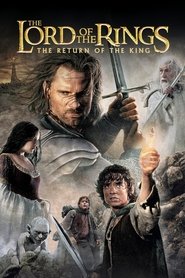
The Lord of the Rings The Return of the King (2003)
Peter Jackson Fran Walsh Philippa Boyens
-
Peter Jackson Fran Walsh Philippa Boyens
A little peckish. Just when you're waiting for the lunch break to happen and you look around and see if there's any nibbles and the craft services table's a bit far away, but there's always a lambus bread lying there in the prop department. Pete, that's desperate. Yeah, no, that's where it all went when the props people were complaining that somebody was stealing it. It was me. It wasn't Gollum after all. There should be enough. So these are the pick-ups. This stuff here that we're looking at, these close-ups, were done four years after the original shots. The journey home.
8:15 · jump to transcript →
-
Peter Jackson Fran Walsh Philippa Boyens
It was very windy that day. It was very windy and the wind kind of dictated the look of the scene to some degree. You know, it was creating problems for Christopher. His hair was blowing into his mouth while he was talking and his beard and robes were blowing around. But I kind of like the look of it. It has an organic kind of reality to it. And it was interesting because the original shooting of that scene back in 2000 was done with the wind and the look and the feel. And when we wrote some extra lines for him to do last year...
13:26 · jump to transcript →
-
Peter Jackson Fran Walsh Philippa Boyens
We did those pickups three years after the original shoot in a studio this time. We weren't out in the parking lot. So we had enormous trouble getting all these wind machines in and we had to blow his hair to the same degree because it had to match perfectly. And so Christopher was now in the studio delivering lines, battling against this enormous wind machine that we had blowing into his face.
13:54 · jump to transcript →
-
-
director · 3h 43m 82 mentions
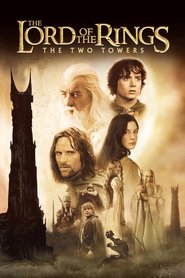
The Lord of the Rings The Two Towers (2002)
Peter Jackson Fran Walsh Philippa Boyens
-
Peter Jackson Fran Walsh Philippa Boyens
about a million different ways to get the elvish rope into the... I know. Because it was just such an iconic moment. It's a lovely part of the book, and it was always tough to fit it in. It didn't have a story imperative, unfortunately. Well, you realise it's become a DVD special edition kind of thing now because the giving of the elvish rope to Sam was in the Fellowship extended cut, and then the using of it is in the Two Towers extended cut. If you look at the movie version, it doesn't exist. It's kind of cute.
4:24 · jump to transcript →
-
Peter Jackson Fran Walsh Philippa Boyens
The Frodo that we see here at the beginning of the film... ...is more similar to how Frodo ends up at the end of the film... ...after he's travelled the journey that he's about to go on. Fran and I went hunting for something that could remind Frodo of the Shire. Sure enough, there it was in the book... ...and the salt is actually something that Sam does carry all the way. We can't leave this here for someone to follow us down. Who's going to follow us down here, Mr Frodo? The little prefiguring of Gollum is quite nice too...
5:20 · jump to transcript →
-
Peter Jackson Fran Walsh Philippa Boyens
It's sort of the one place we could find with all these jagged rocks and mountain peaks. Because the Emmen Muell scene is something that I love in the book as well, the idea of just walking around this misshrouded mountainous countryside and getting lost, going around in circles. Let's face it, Mr Frodo, we're lost. And the wider shots were shot about two years earlier, weren't they? Well, the wide shots were done in the original shoot, yeah, the wide location shots and the close-ups that we're looking at now
6:16 · jump to transcript →
-
-
director · 1h 43m 46 mentions
-
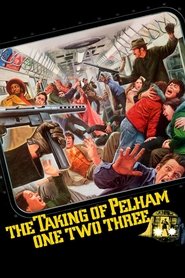
You know, New York's the all-pissed-off city. And I said, yeah, watch The Taking of Pelham 1, 2, 3. It's probably the most accurate movie about what people are like in New York City. And, you know, when you see Pelham, you know what New Yorkers are like. And you get a sense of the rest of the city, of course. But this movie is based on a novel by a guy named John Godet or Godi. His real name is Morton Freedgood.
1:02 · jump to transcript →
-
and uh it was a great device because it pays off towards the end and it was not in the book one of the things that's interesting about having revisited the book is that john goatee or morton friedgood uh wrote a novel that you you know was destined to be a movie it's so uh crisp and cinematic in fact it's written in an interesting style where the narrative propels forward but
2:46 · jump to transcript →
-
as the motorman or the conductor. In the book, Joe Welcome is also as interested in the opposite sex, and they make a whole lot more about that. In fact, there is a hooker character in the car, the hostage car, which has more page time, let's say, in the book. But since it's a character that's more textural and not
5:07 · jump to transcript →
-
-
director · 2h 32m 38 mentions
-
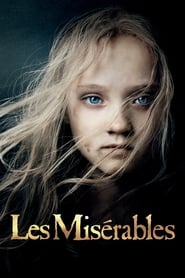
The whole opening was, I suppose, really inspired by the book. There's a wonderful description of how the convicts in this era were used to refit, build, maintain the warships in Toulon. And so they were kind of used as slave labor. And so this idea of the convicts effectively doing a chain-gang song, pulling in this wounded warship, I found very interesting because the warship is both an image, a symbol of state power,
1:08 · jump to transcript →
-
And the boat, although it's CGI, is based on HMS Victory, which sits down at Portsmouth. And we took every conceivable angle of photo on it and did a LIDAR scan of the exact design of the hull and then reprojected still images of the Victory.
2:07 · jump to transcript →
-
This is Colm Wilkinson. Fans of the musical will know exactly who he is. He invented the role of Jean Valjean at the beginning in The Royal Shakespeare Company, and it's an absolute delight to have him coming back to play the bishop. There's something very moving about the original Jean Valjean inspiring this Jean Valjean, Hugh Jackman Jean Valjean, on his way.
7:37 · jump to transcript →
-
-
director · 1h 53m 34 mentions
-
And the only thing I knew when I started writing the book was that I was to portray Blackie Berg and something horrible would come there. I didn't know where it was from the beginning. I didn't know it was going to be a vampire. But then as the story went on and I knew it was going to be a love story about young people, I came up with that a vampire would be the best horrible thing to come there. And this is also very typical 80s. The policeman coming to visit your class talking about drugs.
5:12 · jump to transcript →
-
And Walken was a character in the book that I had a lot of trouble with, because I didn't want him to be just a monster. It would have to be someone that you could feel empathy for. And I used a lot of space in the book to describe him in such a way that you could feel some sort of empathy. And amazingly enough, I think this goes through, even though he's only got a short role in the movie. Per Ragnar, who plays this character, does an amazing job, and
9:55 · jump to transcript →
-
re-edited the sequence because in the original in the book and in the script the tormentors come into the to the toilet and they bully him in there but we thought that when we had edited the film too much violence came too early so it sort of punctured the pressure so we wanted to wait a little
15:19 · jump to transcript →
-
-
director · 1h 51m 33 mentions
-
Hello, I'm Len Wiseman, director of Total Recall, and we are watching the director's cut, which I'm very excited about. I'm really happy with the theatrical cut. There's just things that, as a filmmaker, that you put a lot of time into that you really start to miss from the original cut, and so it's great for me to be able to work together with Sony. They were very supportive of putting out a director's cut.
0:02 · jump to transcript →
-
I'm Len Wiseman, director of Total Recall, and we are watching the director's cut, which I'm very excited about. I'm really happy with the theatrical cut. There's just things that, as a filmmaker, that you put a lot of time into that you really start to miss from the original cut, and so it's great for me to be able to work together with Sony. They were very supportive of putting out a director's cut.
3:00 · jump to transcript →
-
very excited about. I'm really happy with the theatrical cut. There's just things that as a filmmaker that you put a lot of time into that you really start to miss from the original cut and so it's great for me to be able to work together with Sony. They were very supportive of putting out a director's cut and be able to just have that still be alive in some form.
7:42 · jump to transcript →
-
-
director · 2h 52m 29 mentions
-
It's funny, I was always proud of the fact that on my films I always asked that the author's name be put ahead of the title. This started way back on the first Godfather movie. Mario Puzo, who wrote the novel, did not have that right, but I insisted on it. And then that went on with other projects, Bram Stoker's Dracula or John Grisham's The Rainmaker. I've always been proud of the fact that I always gave the author the premier position in the credits.
0:21 · jump to transcript →
-
patent, why can't you come up with something a little unusual for the godfather, something other than just cutting right to the wedding? And when he left, I thought about it and thought about it. And in the book, the part that was the most significant to me, I thought, was the notion that, of course, on the wedding day of the Don, the different people come
1:45 · jump to transcript →
-
shot in new york in the stage where we worked an empty stage where we had our sets the don's office and stuff and we shot the party where bobby duvall actually meets jack waltz there and just shot that second unit leading up to it before this was sort of the first test of power uh in the book you you learned that uh
27:40 · jump to transcript →
-
-
director · 2h 19m 29 mentions
-
and the uniforms become actually more important, a more important resource than the kids. And we wanted to, what the book is really about for me is there are a bunch of kids who go to the front, you know, are basically lied to by demagogues and populists, and they go with enthusiasm and youth, and very quickly they realize that
5:50 · jump to transcript →
-
and so that's the montage we came up with and that became sort of uh we did it was it was basically an idea the idea was to create uh to a sequence that encompasses that capsulates the meaning of the book for us very subjective interpretation you know everyone probably has a different one but for us this was the interpretation of the book and we wanted to create a sequence that encapsulates that
6:49 · jump to transcript →
-
and as a childhood memory also because that's the time when I read the book first, when I was 15, 16 in high school and my friend lived around the corner from us. So the sequence comes to an end with the uniforms, you know, the war machine, the recycled uniforms and here you see the end of that and the name tag
12:14 · jump to transcript →
-
-
-
Hi, my name's Jim Hemphill. I am a filmmaker and film historian, and I'm here with... Screenwriter and author Kelly Goodner. And we're here to talk you through Congo, which Paramount released in 1995. It was directed by Frank Marshall, produced by Kathleen Kennedy and Sam Mercer, from a screenplay by John Patrick Shanley, based on a novel by Michael Crichton, all of whom we will talk about in great detail, I'm sure, as this movie progresses. Um...
0:17 · jump to transcript →
-
We're about to get here also into Laura Linney. We've seen her previously. But this whole thing between her and Bruce Campbell was actually added. It's not in the book. It's one of the main changes. I think it works really well. I like the ending where she blows up the satellite and everything. Anyway, in the...
6:36 · jump to transcript →
-
In the book, she was much more mercenary and she wanted the diamonds. And it was purely like to get ahead, to show she was ruthless, like I'll take the expedition. And there was no kind of human element to her at all, like what she does in her free time. There's no love interest whatsoever. But they, you know, it's a movie and you have to kind of identify with somebody. So they created that for her.
6:59 · jump to transcript →
-
-
scholar · 1h 32m 23 mentions
The Night of the Hunter (1955)
Second-Unit Terry Sanders, Film Archivist Robert Gitt, F. X. Feeney, Preston Neal Jones + 2
-
book very much are in keeping with the book and some of them made their way into the final script you know isn't it true that lawton kept a lot of ag's lines and the lines from exactly he was an editor really exactly what i mean and the documentation that has turned up at the paul koner archive indicates that you know contrary to the accounts that ag was fired after 10 weeks he actually was hired for the final five weeks and so he under lawton's close direction cut the script
10:48 · jump to transcript →
-
Somewhere in the papers that I saw on this film, Lawton was quoted as saying he didn't want to be thought of as a credit hog and so forth, and that's why he didn't want to do that. And he did acknowledge, he said, sometimes I think you should get all the credit, but Lawton didn't want any of the credit. And Lawton remembered Orson Welles and how he was treated by everybody when he took all the credit for everything on Citizen Kane. Excuse me just a second. This gentleman uncredited is Paul Breyer, and this whole business with the hangman is one of the important elements that Lawton zeroed in on in the book that was emphasized. And again, there's a duality.
11:50 · jump to transcript →
-
The story of good and evil. H-A-T-E. The first time Lawton met with Mitchum after Mitchum read the book, Mitchum immediately started demonstrating what his ideas were for doing this love-hate business. Mitchum caught fire from the book as soon as he read it. And when I interviewed him in the 70s, he still remembered tiny details from the novel, even though he hadn't probably read it since 54. Now watch him.
18:51 · jump to transcript →
-
-
director · 3h 16m 20 mentions
-
American movie that really used Part II or Rocky VII or that tradition was begun with The Godfather Part II. Now one handle I had on making a second Godfather would be to use the material from the original Godfather book that dealt with the story of Vito Corleone.
2:06 · jump to transcript →
-
from his days in Sicily through him coming to America and becoming the character who we remember as Marlon Brando in the first Godfather film. And that was all taken from the book, and I did research looking for photographs of real so-called mafia incidents in Sicily and thought it would be wonderful to go back to those same towns that we had seen in the first Godfather.
2:26 · jump to transcript →
-
So we conceived in the script to start in the very old days when there were family feuds and hills and massacres in the land of Sicily. Much of that was based on real stories, and even the death of the boy is from an actual famous photograph of, I think his name was Paolo Ricobono, who was killed and his body was found in exactly that position in a...
2:54 · jump to transcript →
-
-
-
Ted Tally
And I'm Ted Tally, the screenwriter of this motion picture. Thanks for watching our DVD. I got a call from my agent who said Stacey Snider wanted to send me a script. Stacey called me directly. Stacey is the chairman of Universal for those of you who don't know. It said Red Dragon, and I said, "Red Dragon. Is this "the prequel to Silence of the Lambs?" I was familiar with the book but hadn't read it. At first, I was very insecure and said, "Am I like the 'Go-to' guy on sequels? "Why is she sending this to me? 'Cause no one can mess this one up?" And then, I saw Ted's name on it and said, "This is the guy who wrote Silence of the Lambs, "but didn't write Hannibal. "So, this must be special. "Why are they sending this to me? I'm not a dark guy. "I don't make dark movies. I do comedy." -/ think they sent it because you're cheap. - Exactly. So I read it, and I was completely blown away. Not to blow any smoke up anybody's butt in my presence, but the truth is the script was amazing. I called up Stacey and I said, "I want to do this." She said, "Now you get to meet Dino De Laurentiis." And I said, "Dino De Laurentiis "of Fellini fame?" - Scary thought! So I went to his house and first thing he says to me is, "Why do they like you? Who are you? "I never heard of you. What is Family Man, Rush Hour? I don't know these movies." I said, "Dino, I'm a talented guy. Trust me." And thank God, Ted had seen Family Man and Rush Hour, and his kids or someone in his family was a fan. Brett might not have been an obvious choice but Brett is an incredibly talented director and clearly ready to try something new that he'd never done before. He is a great fan of Hitchcock and of thrillers, and brings a tremendous energy and confidence to his work. I was such a big fan of Silence of the Lambs. You know what I was excited about? Most people asked, "Weren't you scared "of following in those footsteps?" First of all, I had three brilliant directors Michael Mann, Jonathan Demme, and Ridley Scott, who made three movies in the exact genre, but completely different. I was excited about it because, by watching those films, I knew what not to do or what I didn't want to do. I was able to decide on the type of movie that I wanted to make. And it helped me choose the tone of the movie. I realized I wanted to make a movie more like Silence of the Lambs. More Hitchcock-inspired. A movie that scared you by what you didn't see more than what you did see. I've read that the most important single decision you make in directing a movie is tone. - Absolutely. Because it's the direction of the film. It helps you with every choice that you make as far as the wardrobe, the production design, the music. The tone, to me, is really everything. Dante calls it, "The language of the film." We have to integrate what we're seeing now, Kristi Zea's set design with its dark, rich color in Dante's cinematography. The choice is even of the props. The integration of all of that, the wardrobe. It's sort of overlooked by people and it should be something that doesn't call attention to itself. But when all of those elements are integrated... Look at this moment here. You get a much more powerful movie if nothing sticks out. If everything is consistent in tone. Special Agent Graham. What an unexpected pleasure. I'm sorry to bother you again... If you see on the left-hand side over there, a little detail, I found this book of Sigmund Freud's office in, was it Vienna? That's where I kind of modeled Hannibal's office. I modeled the tchotchkes, the details.
0:08 · jump to transcript →
-
Ted Tally
So that sequence, those two minutes of the movie, which could have been a very boring, dull sequence. I had a long conversation with Kristi Zea. It was wonderful. She called me up and said, "This book of Dolarhyde's. "What does it look like? What's in it? "How is the handwriting? What kind of photograph?" We had a long conversation which for a screenwriter... You don't often get a call from the production designer to talk about a prop. It was a wonderful opportunity to be part of the design of the movie in that little section. You've got a beautiful setup here, Will. This was actually in the Florida Keys. You know why I'm here? Was it Marathon? Yeah, I can guess. The location is meant to be Marathon, Florida. Dino wanted us to shoot in North Carolina because he had studios there and a house on the beach or Malibu because it's close to his house in Beverly Hills. But the truth is, I wanted to stay true. When I said I chose the tone, I'd really chosen the tone of the book, going back to the book. Everybody here was honoring the book. We really gave a lot of respect to Thomas' book. Tom Harris is a wonderful writer. When you're doing an adaptation like this, it's a great resource to everybody to be able to pick up the book, as you can go into more details than the screenplay. It's a help to both the production design and the actors, who can go back and find out details of motivation. It's helpful to everybody to have that bible to refer to. So when it said Marathon, Florida, I tried to stay true to that and actually go to the location in Marathon, Florida. It just felt like it was the tone and even the location, like Grandma's house in the same description of the rural area where it was, and the type of house it was. It was an old-age home once, which is really back-story, but Kristi incorporated that into the design. I was so happy that she and Ted really stayed true to the tone of the book visually as well when it described the locations. This was so much fun being down here, by the way. It was the end of the shoot, and we were just down there on the beach. This was probably the hardest scene I shot with these two guys. In what way? Because it's exposition? Anything with exposition... -/s tough. It's tough to make it sound like real conversation. But honestly, there's not a line in this movie that I'm not proud of. I mean I can't say there's a line... It was a tight script. We did cut a few lines and a few parts from scenes but Brett and I actually worked quite a bit on the script before the production started, and we had it pretty tight. And the shooting stayed quite faithful to the script. I have to say that every scene was hard for me because I'm used to scenes with not much dialogue. I, unfortunately, am a very talky screenwriter. So it was a clash of cultures. Coming from being a playwright, I guess. There is a lot of dialogue in this movie, I tell you. And it was not a single-spaced script. It's a long script, and I kept saying, "Make them talk faster. "Don't cut the thing, just make them talk faster." Ted's advice to me was, "Brett, when you're happy, "ask the actors for a take where they talk double speed." And I did that. Probably that's all the takes that Mark ended up using in the editor's room. He kept calling me, saying, "This movie will be four hours long "If you do not get them to speak faster." The thing you run into as a screenwriter, even with the best actors, is that you try to pace a scene to fit within an act structure and fit within the entire screenplay. But then actors wanna take very long, dramatic pauses. Actors want to look down and up, across the room, at each other, and finally say the line. - A lot of pausing. And that's what you're up against when trying to time out the length of the scene or act. I wanna say something about these actors. Once I got Edward Norton, I used Edward to get another actor. Once I got Ralph Fiennes, I used him, I got Emily Watson. - You parlayed them into each other. I said, "Philip Seymour Hoffman, I'm getting Mary-Louise Parker." I knew each one, who they were a fan of. I used them against each other to get them in the movie. I literally thought I'd be able to walk onto the set, and it would be the easiest movie I'd ever made because I had these brilliant actors. I could just say, "Action." I read one article or something about this movie that said this was the most distinguished cast that's been assembled in any movie in the last 20 years. But the truth is, it was probably the hardest movie I'd ever made because the smarter the actor, the more experience they have. It's a myth that these great actors don't need direction. They want direction more than any other actor. They want direction, but they have ideas of their own because in the end, it's up to them. They are the ones whose face is filling that whole screen. And they have to absolutely believe what they are doing, or they can't convince an audience of it. What I'm trying to say is, there was a lot of dialogue going on. A lot of intellectual discussions. And each of these actors are not only smart actors, but they're highly intelligent, all smarter than myself and... A lot of them have also directed or even written as well. They all had an opinion. And my job, I felt like it was my job to save the script. This was a script that worked to me. We had a table reading of it. It was fantastic. And Ted was
11:13 · jump to transcript →
-
Ted Tally
whispering in my ear, "Dude, don't let these actors do this." He was right. The truth is, the words, the scenes, and the story work, which is why I was able to concentrate on my storytelling, my craft as a storyteller. If I had these great actors saying what was on the page, then I could work on telling the story, moving the camera, picking the lenses, and a lot of other aspects which I don't really get the time to focus on when I'm doing a movie like Rush Hour, which has 10,000 times more shots. The kind of scene that we're watching right now with Edward Norton investigating the home where the family was murdered. Is this a harder scene to do than other kinds of scenes? There's no dialogue here, so that the storytelling is purely visual. -/s that harder or easier for you? - I think it's easier for me. When there's a lot of dialogue, I'm used to Jackie and Chris who, God bless them, are so much fun to work with. They do two or three words at a time and then I cut. And then I pick up like one sentence. These actors can do five pages without stopping. So I have to remember all the... Any notes that I want, I have to remember. It's a huge amount of thinking. I was physically exhausted making a movie like Rush Hour at the end of every day. In this movie, I was mentally exhausted, which is more exhausting. And these actors demand my attention, my focus, and they want to have dialogue, sometimes after every take about, you know, what they did. "Why would I say that?" - "Why would they do that?" It's always "why?" That is the big question. Sometimes I'd say, "I really don't know. "Can you just say what's on the page? "Because it's gonna sound good if what you Say is on the page." I allowed the actors to experiment with stuff, but the truth is, I always got them to do exactly as it was on the page. And 97 percent of the stuff that's in the movie was on the page. Maybe even more. There were little moments like this added line here that Edward added about the way the kids were shot and stuff. Which indicated he might have used a silencer. I think it's probably in the book. Edward does a Iot of research and has a photographic... Is it "-graphic" or "-genic"? Photographic memory. He memorizes not only his lines but everybody else's lines. So he is very well-prepared, and really puts a lot of thought, like all the actors into what he is saying in every moment. It's very striking with Edward, as with other great actors, how much they can achieve while appearing to do little. It's very internalized. I think Edward is very concerned to not have a single false moment. And I respect that integrity in him.
17:12 · jump to transcript →
-
-
director · 2h 9m 19 mentions
-
His outfit and his red leather phallus is very much based on the work of Terry Adrian Gunnell, who is interested in mumming and fools and sort of theater in the Viking Age. Performance is maybe a better word. I keep him as a deep sworn friend. Come, brother.
6:15 · jump to transcript →
-
And this underground ritual chamber is actually based on a burial chamber in Orkney that's from a much earlier period than the Viking Age. The idea being that this was a place of religious importance to people who were here before the Vikings. And so they felt its significance and built a temple on top of it. But then underground, they're doing some more secretive rituals.
10:53 · jump to transcript →
-
So this, which we're about to see, which Ethan calls the Tree of Kings, is based on a tree from the Osseberg Tapestry, which is...
14:37 · jump to transcript →
-
-
director · 2h 19m 18 mentions
-
But when I saw the review of the book that Nick Pelleggi did, it was interesting to me because the character of Henry Hill was, very simply, he was a foot soldier, and therefore he was privy to the nature of his character, the nature of his character, the kind of person he is, or was at the time, made him trustworthy to many different people on different levels. So he was privy then to all sort of a cross-section of that whole world.
1:10 · jump to transcript →
-
from the very minuscule to the top of the line in that world. I mean, later in Casino, we explored it even further, where it went bigger. I'm Nicholas Pileggi. I wrote the book Wiseguy, and I also wrote the movie with Martin Scorsese, Goodfellas. When the book came out, it was successful. It was a bestseller. And the Times was very good and generous, and there was a review of it in the Times, and Marty called.
1:39 · jump to transcript →
-
So I got as much of it in the book as possible. That, of course, was exactly what Marty was looking for for a film. Because that particular book, you can go and you can make about an infinite number of films because there are many other stories in the book and that sort of thing. But I chose it to go a certain way. And it was all based on the rhythm of Henry Hill's language. That is a part of the whole mob world, the way these guys tell stories about themselves.
6:50 · jump to transcript →
-
-
director · 2h 10m 18 mentions
-
The fish market sequence, whilst it reads great in the book... ...and finally reads well in the screenplay... ...and I think comes off very well in the film... ...is kind of really a part of the film that's... I kept asking myself, is it necessary to have this? Why do we have to have a shootout? It doesn't matter how good it is, albeit it's conventional.
6:38 · jump to transcript →
-
one of the Vanderbilt houses that was one of his favorite houses. It's an extraordinary house that I decided, you know, had to really ask the question. All these are decisions when you're planning. I was reading the book and then in preparing the screenplay, how wealthy was Mason Verger? And so I figured that I had to make him really Vanderbilt wealthy, and being the black sheep, the son who strayed,
16:24 · jump to transcript →
-
He loves to, I think, visit certain films provided he's actually got... As he said, I don't mind the shortness of the part. He said, what I mind, it's about quality, not quantity. And he was very amused by the character. And as we can see and as we witness, he obviously had a very amusing time doing him because he creates humor out of this character that, you know, in the book is...
17:23 · jump to transcript →
-
-
-
when she read the book and the script of Fast Times that we should consolidate the action in the mall and that the mall should be the centerpiece of the movie. And I have to say thank you, Amy. You're welcome, Ken. Actually, I'm an agoraphobic. I don't like going outside. So the idea of a bunch of fast food places on a strip outside in fresh air was frightening to me. I was just waiting for malls to be invented.
0:48 · jump to transcript →
-
just like you wouldn't want me to come to your house some evening and discuss U.S. history on your time, understand? Yes, sir. You originally wanted Fred Gwynn, didn't you, for the part of Mr. Hand, and he didn't want to do the script because there was too much nasty stuff? Well, I forgot all about that, but as it was in the book, he was a big, heavy guy, sort of like the Hawaii Five-0 character. And then when we all met Ray Walston, who everybody loves from something, and...
10:37 · jump to transcript →
-
I just thought it was kind of matter of fact for these girls. It's fantastic. And it's so real. Which was the point of the book and what you were a real cop about on the movie. Well, the book was... The whole thing was like fast times. It's like too fast. They're too young for all of this. They have to look like little kids. Right. Real. Because all the teenagers on TV looked like 40. Yeah, and Grease, where they were...
13:35 · jump to transcript →
-
-
-
that upset about if you look at the original concept and to this but i think it does kind of reek of let's play a bit safe let's kind of keep it i suppose continuity wise with aliens because once you see like um the mess hall or whatever the kitchen whatever it is you've got that kind of similar sort of hadley's hope design to some of the rooms um so they are carrying over some sort of elements of production look to this film um
8:00 · jump to transcript →
-
relating to the movie, and I made a Withnail and I 2 poster, which is some artwork of Withnail and I with the alien attacking them. Because it turns out that that really is what David Fincher was going for as well, because he's a massive Withnail and I fan. Now, this shot here, when she wipes off the moisture, the condensation, sorry, of the... Oh, that's the original photographer's work. Is it Jordan Cronenworth? Yeah, yeah. I'm getting names wrong today. Yeah, Jordan's something unpronounceable. I've always thought of him as...
29:36 · jump to transcript →
-
in the later part of the 90s, in terms of progression of photography and style. And he's already doing it in 91. So he's like, that's what I've got him. Because this is what the 90s is in terms of filmmaking. That's it, isn't it? Yeah. I often find myself thinking, why hire a director based on their visuals alone? Hire someone who can actually direct actors and...
41:25 · jump to transcript →
-
-
director · 1h 56m 14 mentions
-
It really grosses the audience out, which I think is interesting. Yeah, they actually think they see his tongue being cut off. They don't see a thing. Now this, Arnold really, he was such a trooper, but it's really creepy being mummified like this because you can't move very much, you can't really breathe. It kind of freaked him out a bit. Here we have a little ILM work here, CG scarabs. If you see the original plate for this shot, the guy who walks in there dumps out about half a dozen plastic...
5:53 · jump to transcript →
-
scarabs just as place markers. ILM did a great job on that shot. Now this next shot's a combination of every trick in the book, first unit photography, second unit photography, ILM, so you went from here to miniatures, models, matte paintings, the whole thing. And then a main title by Kyle Cooper,
6:23 · jump to transcript →
-
it's very well executed too it's interesting because i mean it's it's one of the the cheapest gags in the right in the book i mean it's it's a really it's it's shameless in fact but but it works it's it's fun to be in a preview audience or or even better with a paying audience and sitting there watching them all jump when he uh pushes that mummy out now i shot this scene in this in the script i told john hannah that he was going to be drunk
16:20 · jump to transcript →
-
-
-
Kat Ellinger
Hello and welcome. My name's Kat Linger and I'm an author, editor and critic. And welcome to my commentary for 2000's Bes Moi, co-directed by Coralie Trin-Thy and the original novelist of the controversial novel published in 1994, Bes Moi, Virginie Dupont.
0:00 · jump to transcript →
-
Kat Ellinger
the womanhood in general and how we treat rape and how it can often define us. Based on DuPont's experience, she was actually raped by three men at gunpoint when she was 17 years old, her and a friend. And so not only do I find it an incredibly cathartic film, but from a feminist point of view,
0:50 · jump to transcript →
-
Kat Ellinger
what a powerful political statement that can become. There is this sense of porn always being somehow lesser. And one of the things I love about the character of Nadine, played by Karen McComb, or a.k.a. Karen Back, and it's used in the book much more, is she's a porn junkie.
15:55 · jump to transcript →
-
-
-
E. Elias Merhige
We begin on the next frame with Saturn Films. Interestingly enough, the name that Nicolas Cage chose for his company, Saturn Films, is a name that Albin Grau, the original producer on the 1922 Nosferatu, chose for his journal, a journal that went through six years of editions. The journal was about esotericism and theosophy and anthroposophy.
0:30 · jump to transcript →
-
E. Elias Merhige
this Promethean fire of genius, of pure creativity, wanting nothing more than to spread itself like a disease out into the world and to transform and change the world through art. You will see this Promethean figure embodied in John Malkovich, and we worked very hard together to create, you know, who this Murnau is, who our Murnau is, because our Murnau obviously is, though based on some actual facts, you know, from history, is
5:18 · jump to transcript →
-
E. Elias Merhige
Take a look at the original Nosferatu and compare it with the scene. It's just a stunning comparison. And then you have these guys outside of the inn. They've turned this old inn into this movie studio.
19:55 · jump to transcript →
-
-
director · 2h 41m 13 mentions
-
and its guitar soloist is Bruno Battisti di Mario. The character of Angel Eyes, played by Lee Van Cleef, is introduced with a long ride into close-up, much like Omar Sharif in David Lean's Lawrence of Arabia, a film that, like The Good, the Bad, and the Ugly, was largely shot in Almeria, Spain. In the original script by Luciano Vincenzoni, Angel Eyes is referred to as Banjo, possibly in response to the popularity of the baleful Italian western hero Django, introduced in 1965.
6:34 · jump to transcript →
-
and he went on to make A Pistol for Ringo, The Return of Ringo, Left-Handed Fate, and The Big Gun Down, to name a few. Like Saturno Cera, he was later featured in Luis Buñuel's Tristana. He died at age 70 in 1982. In the original trailers for this film, it was Angel Eyes rather than Tuco who was designated as the ugly, perhaps because Lee Van Cleef was the third name down on the billing. But is Angel Eyes really ugly?
10:28 · jump to transcript →
-
Tuco Benedicto Pacifico Juan Maria Ramirez, and any other aliases he might have to hang by the neck until dead. May God have mercy on his soul. Proceed. This dialogue doesn't exactly jibe with what is heard on screen, but it comes directly from the original dubbing continuity sheets, scripted by Mickey Knox. That one's pretty good, but wait till you hear the second one.
22:11 · jump to transcript →
-
-
-
James Mangold
In this case, very few people except film buffs know of the original 310 Iyuma, so we weren't really motivated by greed as much as we were the power of the story. And I always look at it more like a revival, like they'd make on Broadway, where you do another production of, you know, Death of a Salesman with great esteem for the original, but trying to remount the story and see how it plays.
1:25 · jump to transcript →
-
James Mangold
One of the first tasks in terms of adapting and updating this story by Elmore Leonard was figuring out what we wanted and what we didn't in terms of how we were going to attack it and what story elements we were going to emphasize differently than the original film and what we thought they really got 100% right in the original film. One of the reasons that Halstead Wells is the first credited writer on the screenplay of this film
2:46 · jump to transcript →
-
James Mangold
is because we felt an awful lot that Halstead did in his screenplay in 1957 for the original 310 in Yuma was really right, was dead on right, and there's some great writing in that film that, out of ego, I wasn't gonna just dispose with. I thought these actors, Russell, Christian, Ben Foster, Gretchen Moll, et cetera, would have a great time doing this stuff and playing these words anew.
3:13 · jump to transcript →
-
-
director · 1h 29m 12 mentions
-
No, I always think that this is almost a film that people who saw at a very young age, my good friend Mark Kermode, who literally wrote the book about silent running, saw this when he was like 10 or 11, and to this day it's like his favourite science fiction film. And I think it's a film that...
2:49 · jump to transcript →
-
Logan's Run from the George Clayton Johnson, William Nolan novel. Even a little later, there was a TV miniseries of The Martian Chronicles from Ray Bradbury. Not a very good series. And these are all around this time. What's the thing that's different about this film from those movies? Go ahead. I've just told you, this isn't based on a novel. It's an original screenplay. And the thing about those other films is...
11:42 · jump to transcript →
-
Some of them are kind of what you might say dumbed down in the adaptation. We knew Harry Harrison, and he would always sort of complain about the Soylent Green is people and the murder mystery stuff. He said that that wasn't the point of the book. But in fact, the point of the book is to show overpopulation, which Soylent Green, the film, does absolutely brilliantly. The thing is, all those films, because they have this kind of...
12:12 · jump to transcript →
-
-
director · 1h 42m 12 mentions
-
And so this is really about the kind of the buildup of the military industrial complex. And in fact, coming up here, we're going to have Dr. McNamara, who is based on Robert McNamara, the Secretary of Defense during Vietnam era. And ED-209 coming up here is based on kind of a Huey gunship idea, although obviously Phil Tippett and Craig Hayes, who designed it, actually made it work. This is still a big prop.
9:41 · jump to transcript →
-
Well, you get the laugh, but less so than when we saw it the first time in the preview, when it was still the original version. And I realized that without, I mean, without taking a backseat here, me, that really the gruesome, bloody scene where the guy on the table is killed by a 209 was mostly directed by John Davidson, who added so much blood to that scene that it is merely disgusting.
12:47 · jump to transcript →
-
Mostly based on the fact that the Brazilian steel got so cheap, isn't it? Yep. So that the Americans couldn't compete anymore. Well, of course, you know, we have a labor force by now that won't do things for nothing. Right. You know, we have entitlements and everything. Now, this is an interesting thing here. This is Pittsburgh. But by the time they go downstairs to that bottom area there, we will be in Long Beach in another industrial space where we shot the special effects sequences involving Peter or Murphy's death.
17:47 · jump to transcript →
-
-
director · 1h 43m 12 mentions
-
that Seuss's book give us. And so our idea was to do the pre-story, to kind of let the first half or so of the movie be the prequel to the book. In doing so, we had to take a lot of creative license, including creating the myth of how the Grinch came to live on the mountain. It was fun and interesting in the writing, and also I was always very proud of the way audiences responded to this particular sequence that deals with the young Grinch.
24:12 · jump to transcript →
-
for the Grinch. One of my favorite characters also is Mary Stein here playing Miss Ruhu, the schoolteacher, who means well but, you know, can't help but sort of heighten the young Grinch's feeling of isolation and embarrassment. Put the book down.
29:38 · jump to transcript →
-
trying to sort of weave the book together with the new material that we were going to be developing to try to expand the story, and to really keep working on Seuss's original theme. In analyzing all of Theodor Geisel's children's stories, what you begin to see is that they're all fables, and one thing that he often did was work through an innocent character, in this case, Cindy Lou Who. So even though the book, How the Grinch Stole Christmas, does not use that device,
32:50 · jump to transcript →
-
-
director · 1h 36m 12 mentions
-
Especially down in this scene when we murder children. Yes, this is one of the better parts. Exactly. Now, this is my favorite scene in the movie right now. I love this, and I love what's about to happen with the kid also. To me, it just reminds me of all the original Alien movies. It's my favorite part of the original Alien movies. And pop. Exactly. And a lot of this we did...
14:52 · jump to transcript →
-
our nickname for the Predalien. And he's establishing his dominance over the little newly shedding warriors. Bitch-smacked the warrior around and then gets to have his way with the homeless lady. And this is one of the homage shots, the original Predator. It's very, you know, the whole layout and composition of the shot was very similar to the opening of the original film. And again, obviously, this is a visual effects. You want to talk about hydraulics a second, guys?
19:22 · jump to transcript →
-
So you get the interesting look to the optical distortion when he's cloaked. These here were a couple of these are green screenshots actually shot on a stage, and then we put in the matte paintings of the lake location. Right, and by the way, both the aliens and the predators went back to the original house that had done AVP1. Yep, and Alien 3 and Alien Resurrection. Yeah, Amalgamated Dynamics. And those guys were just kick-ass as well. I mean, Tom and Alec are like...
20:18 · jump to transcript →
-
-
director · 1h 54m 11 mentions
-
the Iranian terrorist on the roof at the beginning of the film, that's something that I don't recall being in the book at all. It was something that came out of my discussions with Jerry Petovich, who was a Secret Service agent and did write the book. I remember asking Jerry what were sort of the typical
4:10 · jump to transcript →
-
Obviously, the Secret Service doesn't want to give people any ideas. But this was based on a threat to the president, one of many that occur every time the president goes out and makes a speech somewhere. And the Secret Service is alert to these guys, and they're very good at spotting things that seem to be out of kilter in what would otherwise look like a normal operation, say, of a hotel.
5:06 · jump to transcript →
-
to set up and manipulate on location than the original cranes were. A studio crane is too bulky and too unwieldy to take to a place like a bridge. It was only possible to do a shot like that because of this portable, lightweight crane that was originated in France and that they had a very few copies of
9:27 · jump to transcript →
-
-
-
I assume he was auditioning for Empire of the Sun before this. I don't know what it was. And, of course, this is before he really hit it big with Dead Poets Society, so it must have been cool to see him make it, you know, suddenly have a big hit not too long after this came out. Right. And he really carries this whole film. I mean, he's in virtually every scene in the movie, you know, so it's kind of a make or break based on his performance. Well, yes, and that became a problem because during the movie he came down with mononucleosis. Oh. And...
3:32 · jump to transcript →
-
Now, one of the more interesting things about this cast, not at the time it came out, but later, is the fact the two moms in this movie have a really great connection together. You've got Fanny Flagg, who wrote the novel Fried Green Tomatoes at the Whistlestop Cafe, and then you've got Kathy Bates, who starred in the movie version of it. And, of course, Fanny was also one of the people who adapted the screenplay. So just kind of a funny coincidence that they had a huge hit after this together. Yeah, well, oddly enough, Kathy had been our original choice.
5:26 · jump to transcript →
-
to see her and she was quite a talent and she was actually writing um her book on while we were doing well she's written a series of books uh but fried green tomatoes she was writing uh while she was doing this and there's actually a story that i had told her that she included in the book which i thought was kind of fun really yeah and uh
7:22 · jump to transcript →
-
-
director · 1h 24m 11 mentions
The Naked Gun From the Files of Police Squad! (1988)
David Zucker, Robert Weiss, Peter Tilden
-
He did all this. There he goes. He wiped that guy's forehead himself. Here's our homage to the Three Stooges. Not many people realize this movie's based on Shakespeare's The Tempest. Yeah. Which started the same way.
2:20 · jump to transcript →
-
Can we cut that answer out? I'm not at liberty to say it. Actually, Leslie was in the television show that these movies are based on. I believe there may be a couple people who don't know that Naked Gun is based on the failed TV series Police Squad, of which six... Now, I love this joke. Is it safe to say I filmed that part? Did you go out and do that second unit? That was second unit. Bob directed that part. I couldn't convince you to do that. You know how long that was? 45-minute trip. I know. Bob did all the breast jokes.
9:11 · jump to transcript →
-
And that's important to future writers? It is. Fluker dialogue? Know your Fluker. How many pages of Fluker dialogue is in a good script? Most of it. That's right, we have the whole glossary of terms. I know. Well, we might talk about some of those. Terms, rules, well, nothing worked. And here comes the joke from the set-up. This actually happened to our rabbi. Was it based on that story or did it happen after the fact? He was with the mayor guarding the queen. Life imitating art.
14:33 · jump to transcript →
-
-
-
Marco Brambilla Daniel Waters
Now they're not resisting. No. When I'm drunk, I like to Google Demolition Man underrated and all these great things happen because I think the movie is getting more appreciated now than it ever was. Absolutely. It's become something of a cult film, especially in the UK. So the opening was actually based on this kind of post-riot apocalyptic present day.
0:33 · jump to transcript →
-
Marco Brambilla Daniel Waters
which was in the future, obviously, and it's in San Angeles. So San Diego and Los Angeles merged into one giant metropolis. And Sylvester Stallone is the old school police officer who's in charge of taking down the crime lord, Simon Phoenix, played by Wesley Snipes. Yeah, I think it was the original script was by Peter Lenkoff and it was definitely a solid.
0:59 · jump to transcript →
-
Marco Brambilla Daniel Waters
action futuristic thriller, and this opening scene is definitely of the mold that the original screenplay was in. As you'll see, I kind of came in like green pepper, only three weeks of work, but I made it into something else that I think people enjoy, but this is the pure action part of the movie.
1:28 · jump to transcript →
-
-
director · 1h 30m 10 mentions
Ed Wood Biographer Rudolph Grey, Exploitation Filmmaker Frank Henenlotter
-
Hi, everybody. This is Frank Henelarder, director of Brain Damage and Frankenhooker. And we're here watching Orgy of the Dead with the man who wrote the book on Ed Wood. And here we are with the star of the film, so to speak. He gets top billing. And it is Criswell. Now, I guess most of you people watching this probably only know Criswell from Plan 9 from Outer Space.
0:12 · jump to transcript →
-
Well, this is, wait a minute, let me interrupt this for a minute. This is Pat Barrington now here. Yeah, okay. Doing the Golden Girls sequence, which Apostle said was done, you know, obviously based on Goldfinger. I'll get back to what he was talking about. With John Andrews as one of the giants, and I think John Bailey is the other guy. Yeah, and let me just... Well, you mentioned that John Andrews, of course, plays the wolf man. Yeah. Yeah, now Pat, I think this is her first film.
24:50 · jump to transcript →
-
This is an apostle of saying from Rainey's interview. He said, on the last day I shot the scene with the Golden Girl, which of course was based on the scene in Goldfinger. Somebody, I don't remember who the son of a bitch was, but somebody said that if you paint a body with gold paint, the person will suffocate because their skin can't breathe. He calls her Barringer. Let me change it to Barrington. He said, Pat Barrington, who played the Golden Girl, started getting real nervous. Well, yeah.
29:45 · jump to transcript →
-
-
-
Macaulay Culkin
Hey, that's you. - That's me. So this was, uh-- I guess we... We could start about... Talking about the beginning of how this whole movie came about, really. I was in dire straits at the time, in terms of my career. I had just come off of a complete disaster, a big bomb. I didn't know if I was gonna direct again. I thought I'd have to go back to writing. So I was in Chicago staying at my in-laws' house... ...and my first daughter was just born... ...and John Hughes sent me, out of the kindness of his heart, two scripts. One was called Reach the Rock and the other was called Home Alone. One of them, it was rumored... I think it was this one. was written over a weekend... ...which some critics would probably jump on the bandwagon... ...and say, "Well, we always knew that." - Exactly. Ha, ha. So I read Home Alone and immediately responded to it. I thought it was just a great, great piece of material. And it talked about some of the things that I was interested in making a film about. Now, we had a meeting, I remember, in New York. I just-- It was-- You and my father were talking most of the time... ...and I was just imitating everything you were doing. Everything I was doing. - Yeah. You'd drink your water, I drank my water. Like that. I think I did that... I think I way overdid it. I think I just kept doing it the whole, like, hour. Well, you know, the interesting thing is we... Again, it was the kind of situation where we looked at hundreds of kids, again. And I was like-- Even though I didn't know if I'd ever direct a film again... ...I was like, "Well, you know, Macaulay was in Uncle Buck... ...and I don't wanna just cast him based on John Hughes producing the movie... ...because then it looks like I'm gonna give in to John Hughes and be a wimp." And I met all these... I met hundreds of kids. And when I met Macaulay, there was just no one else who came close... ...to what we needed for this film. I mean, really, in terms of an actor... ...a Child actor, at the time, you were the most unique, original kid I'd ever seen. So that was pretty... - Oh, thank you. I mean, I totally agree with you, but thank you anyway. But it really is-- It's sort of, uh... Because it was the fact that you, um... The camera loved you, obviously. You see the shots from the film. The camera loves you, but at the same time, uh... ... you were relatable to every kid in America... ...because you weren't an idealized version of a kid. Kids are used to-- Accustomed to seeing this ridiculously... Shirley Temple, and the curls and the whole thing, you know. And there was just something enormously real about you. That, and I could remember my lines and I had a lot of energy. That is true. You did have a lot of energy. Almost a sad amount of energy. It was, I mean.... Still do too. Uh, now, do you remem--? Like, this particular scene. We're starting from the beginning of the film. And I'm curious, because there were so many scenes in the film... We were talking before we started. where we would shoot your coverage first and then send you home... ...or I'd still be in jail. - Child labor laws. Yes, I'm still well-versed in the child labor laws. So there are obviously certain elements of the film-- Like this. Do you remember this being shot? - No. Because you weren't here. - I remember we did the whole... There was a whole sequence with, you know... ...people coming up the stairs, down. - Right. He's there, and the pizza guy's there. I remember that, and just like, you know, trying to coordinate that whole thing. But, no, in general, there's a lot of stuff... There's a lot of holes in it... In my memory. And this guy went on to do something on Nickelodeon. My kids know him. Yeah, Pete & Pete. - Yeah, Pete & Pete. Is it still on the air? - No, no. It lasted a couple years. It was actually a really kind of neat show. Yeah, my kids loved that show. But what was interesting about the whole look of this film... I guess we could talk about it a little bit. You'll even notice... Some people will think, "Well, this wasn't intentional." But we intended the film to feel like Christmas sort of. I wanted the house to feel very warm. You look at... - Greens, reds. Macaulay's wearing greens, a green and red shirt. There's a green and red jumper sweater on this guy back here. The wallpaper is all... - That's very clever. All conveying a warmth of Christmas and something that, uh... It just was interesting to us. So it wouldn't be over-the-top, but it'd feel warm. I wanted the house to feel like a warm place. Joe Pesci. What do you remember about Joe Pesci? What is, like, your first--? My first-- Gosh, I don't even... I have-- I still show this. I have a scar on my finger. - Uh-huh. We'll get to that part near the end... - Ha-ha-ha. ...when, you Know, he says, you know: - Okay. "I'm gonna bite each one of your fingers off, one at a time." During rehearsal, he actually bit my finger a little harder than I think he thought. I still have a little scar on my finger. It's my little Joe Pesci tooth mark. I'm telling you something, I believe... And I know Joe would probably get a little upset with me about this... ...but there was a little professional jealousy from a lot of the actors on set... ...because you were the star. There's this little kid who was the star, who we were all paying attention to... ...who was carrying the film. And there was a lot of passive-aggressive stuff going on. And I don't think Joe meant to bite through your finger... But, heck, you know, you never know. He was not particularly happy during the course of making this film. And I don't-- I think he would probably say the same thing. He had just come off of Goodfellas and Raging Bull, and he was... I don't know, did he win the Academy Award? He won for Goodfellas. His acceptance speech was, "Thanks," and that was it. Okay. Well, there you go, so, um.... And when he... I remember I was such a fan of his. Asking him to do the Goodfellas... The clown speech, you know. "Make me laugh," you know? "What do--? Am I funny to you like a clown?" And he would do that every day, and it was great. But at the same time, I could feel it from the actors. Because there's always a sense of rivalry between actors. There was this feeling of, you were the star of this movie, and that was un... That was not really common at the time. - Yeah, yeah. It created an interesting tension on the set, I have to say. Yeah, see, I never really felt that, but I was 9. Everyone around here knows he did it. It'll just be a matter of time... ...before he does it again. What's he doing? He walks up and down the streets every night... ... Salting the sidewalks. Maybe he's just trying to be nice. No way. See that garbage can full of salt? That's where he keeps his victims. The salt turns the bodies... ... Into mummies. Wow. - Mummies!
0:21 · jump to transcript →
-
Macaulay Culkin
This is a good place to bring up the score. John Williams was not the original composer. If you have one of the early posters of Home Alone in your attic somewhere... ...It says "Composer Bruce Broughton." And Bruce Broughton was the original composer... ...on a film that I wrote called Young Sherlock Holmes. And I loved his score for that film, so I met with him and hired him for this. He was not available to do this... ...and he essentially was doing The Rescuers Down Under. I think that's what it was. So we lost him. So we had no composer while we were shooting... ...the second half of this film. And we went to John Williams thinking, "He'll never do a film like this." But he saw the film, loved it and decided... Amazing what he did. - His score is unbelievable. The score is beautiful. No. - He doesn't miss. Well, the thing is, comedy's very difficult to score... ...because it can always sound stupid or goofy. And John never really let that happen. I think one of the great things about John Hughes' screenplay here... .IS that John really filled in every possible... ...logic hole here. - Yeah. Little loophole. Any-- You know, in other words, by putting this kid into the back of the van... ...he took care of the fact that you would be counted... The head count worked. Also adding Buzz here, confusing her... ... Just added to the... I don't wanna say the reality... ...because the film has a heightened reality, but the reality of what's going on. Yeah, and how it all happened. - And the audience always bought it. They bought the fact-- Particularly, we were concerned about mothers... ...because mothers would say, "How can you leave your kid alone?"
14:15 · jump to transcript →
-
Macaulay Culkin
Now, this is the situation, John Heard was reading this book... ...and he said, "I'd like to be reading on-screen." We had no rights for the book, and we were... Of course, I got a call from Legal at Twentieth Century Fox the next day. We didn't clear the book, but luckily it was... It was okay. - It was all right.
25:19 · jump to transcript →
-
-
director · 1h 55m 10 mentions
-
I mean, one thing is getting the idea, but executing it's another. Shot required placing a 100-foot crane on a very rickety wooden pier. In the original script, we got to see Yuri's childhood in Ukraine. Ten-year-old Yuri comes up with the idea to pretend to be Jewish to escape the Soviet Union. But that part of the story had to be cut for budget reasons.
4:37 · jump to transcript →
-
And potatoes, they seem bizarre, but it's actually based on the real precedent. South Africa, but it's supposed to be in Colombia, of course.
22:59 · jump to transcript →
-
But the days were so short. Successful relationships are based on lies and deceit. Since that's where they usually end up anyway, it's a logical place to start. Right there, right there. Hold it. Oh, my God. Nick is very charming here. We always said the devil is charming. I knew Ava was not the kind of woman to be seduced by a ride in a private jet unless you own the jet. This is your plane?
30:38 · jump to transcript →
-
-
-
Francis Lawrence and Akiva Goldsman
He had shown me some pictures and I didn't like the original pictures he showed me of some of the choices because the faces, the dogs didn't look warm and nice enough. And I wanted a German Shepherd with a lighter face and lighter eyes and that had a warmth. And then he found her. And I think he had about a month and a half to work with her and with Will to, you know, she didn't even know her name when she started. It's just amazing how great she was to work with.
19:32 · jump to transcript →
-
Francis Lawrence and Akiva Goldsman
You know, we had a rule on set that she wasn't allowed to deal with anybody except Will and the trainer, so she could keep her focus. But man, she was so, so easy to work with. This is a scene that's inspired really by the original Omega Man that we took as our source material, both the Matheson novel and the second adaptation.
19:56 · jump to transcript →
-
Francis Lawrence and Akiva Goldsman
this we actually our dog trainer had these Mexican hairless dogs that were pretty frightening looking and so we based these off of the Mexican hairless dogs and me and the visual effects supervisor went up to his ranch and we videotaped this dog being sort of taunted by this bone and snarling and hopping around and that's what the movement of these dogs was based on which is uh
52:09 · jump to transcript →
-
-
director · 1h 43m 10 mentions
-
the boundaries of the Han Chinese Empire were at constant civil war. And ultimately, each king tried to become the emperor and rule the other six. And here, based on some true history, assassins were sent out to murder the one king that would be able to
1:52 · jump to transcript →
-
...unite the country and dominate the entire political system... ...which is the character Jet Li plays. And, by the way, the assassination attempt was the subject of Jet's movie Hero... ...which was also loosely based on the history of the Qin dynasty and that emperor. Here, in short strokes, I was trying to show the misery and ruthlessness...
2:20 · jump to transcript →
-
The book that's coming up... ...is actually a scroll called The Oracle Bones in the movie. And if you look to the left... ...those bones with the writing on it are the true Oracle Bones. I had to give a form of concentrated knowledge... ...but the real Oracle Bones were discovered... ...in the early to mid 20th century...
6:07 · jump to transcript →
-
-
-
Francis Lawrence
Red Sparrow was a novel by Jason Matthews, and it was sent to me by Fox as I was finishing working on the Hunger Games movies. I think we were actually in post-production on the final Mockingjay, and had actually started to promote the final Mockingjay film when the book landed on my desk. I took a look at it and immediately fell in love with it. I've always loved spy movies. And this spy story I thought was quite unique. It's by far I think the most genre-specific story that I've ever done. But I just found the character of Dominika, as you can see here, played by Jen Lawrence, to be quite a unique and unlikely hero, and a really unique way in to a spy Story. It becomes a much more personal spy story with her in the lead. I actually, even while reading the book, Started to think of Jen immediately for the part. You know, she and I had done three Hunger Games films together over the course of five years. I thought she was a fantastic actress, and we had a great time working together. So I thought it would be fun to find something new to do together. And specifically, because we had done this... We'd been working together with the same character over the course of five years it would be really fun to do something totally different, use different muscles. And I thought she could also look Russian, but thought it would be fun for her to look different and speak differently and move differently, and push herself into new territory. So when I had read the book, and I was gonna go pitch the studio, I actually called her first, and said, "Hey, hypothetically, would you be into doing a Story like this?" And she said yes, and, you know, I just pitched it very briefly. And then made my pitch to Fox about my approach in the story, which was to make Dominika the kind of heart and soul of the story, and to follow her story, and I had a couple of tweaks that I wanted to do to the last act of the book. And also spoke a lot about the tone, and the kind of hard-R quality that the movie... I thought the movie was gonna need. And everybody agreed. We got cracking, and I went to work with Justin Haythe, who is a writer that I've known for a long time, and we had developed something together before that had never been made. But we had a great time working together. And he also saw eye to eye with me in terms of the tone and the point of view of the story. And so we got working and it came together really quickly. So that by the time we had finished and released the final Mockingjay film in the Hunger Games series, we were pretty ready to go, and we were almost ready to start prepping this. We ended up bringing a bunch of people from the Hunger Games film with us. Jo Willems, the cinematographer that did my three films came with us, and our camera operator, who's worked with me since I Am Legend, and has also done numerous other films with Jen, 'cause he does the David O. Russell movies, came with us, and Trish Summerville, who did costumes. The new big addition for me, in terms of crew here, is Maria Djurkovic, the production designer. She had done Tinker Tailor and many other great films, and I just really enjoyed her work. And we really bonded over the references that we had found, and the kind of color palette that we both thought that the movie should follow. And she joined us, and we shot the film in Budapest. And primarily all practical locations. Some little set builds within locations, but primarily all practical locations.
0:22 · jump to transcript →
-
Francis Lawrence
One of the fun things for me about this whole sequence is the intercut. I just thought that it could be a great introduction to the two characters and to the two worlds. And one of the things that I played with throughout the sequence is screen direction. So if you notice even from the very beginning, I typically have Jennifer facing left to right, and Joel facing right to left, as you can see here. It was a trick that I learned. I remember watching old Hitchcock movies, and watching Strangers on a Train, and there's... In the opening sequence, you see the two men who are moving toward one another, and eventually gonna meet. And it's something that I've employed a lot, I think, that screen direction is actually a huge benefit in storytelling. But especially in a sequence like this where you feel like these two characters are gonna end up on a collision course with one another, that narratively, you know that at some point, that they're gonna come together. American! Most of this ballet sequence here was shot in the Budapest opera house. And we had support of the Budapest opera, and the Budapest ballet company. And most of the other dancers there are all dancers with the Budapest company, and from a variety of places. There's some Americans, actually, and some Hungarians. Great group of people. And there was our nice leg break, one of the first specific, kind of, tonal hits in the movie. It was something I wanted to do with the movie, was to not hold back too much in terms of some of the shock, and audacity of some of the moments that take place within the story. And so to see the real damage done to her leg there... I just remember seeing, you know, there's been sports injuries over the years. And not too long before we shot this, there was a French athlete in some, I want to say some Olympic games or something, who had done some vaulting, and just kind of landed slightly wrong and bent his leg at this really horrible angle. And it was really difficult to look at, but we basically modeled the bend in her leg based on the images of this French Olympian. Word is they were vice cops, looking for Chechen dealers... or some family guy getting a blow job in the bushes. They weren't there for Marble. They just got lucky. Chances are they would have questioned you, and let you go. You can see here, one of our really cool locations. Maria, my production designer, was just really fantastic at looking for locations and scouting. And I think she had gone out to Budapest a few months before me. And we had also hired Klaus, who was our location manager for the Berlin portion of the Hunger Games films, and we liked him a lot. And he was nearby, and so he came down to Budapest and they worked together, and they found these fantastic places. These old abandoned hospitals, where the surgery Is, and where she's about to wake up, was this old, abandoned maternity hospital. And this fantastic space is part of a library in the seventh district of Budapest. Undercover narcotics agents saw what they thought... was a drug deal in process. You can see outside of Jen, too, that we really put together a fantastic cast for this movie. Jeremy Irons, who's an icon and a fantastic guy, and I think one of the best actors to have ever existed, was my first choice to play Korchnoi. And luckily he said yes. And Matthias, we brought in. I'd been a fan of his since seeing him in Bullhead and Rust and Bone and things like that. And he's so versatile. But he became a choice when we actually decided to skew the age of Dominika's uncle down a little bit. I wanted to add a little bit of creepiness to their relationship. And so the idea that, you know, maybe her father had a much younger brother, so that, as she was growing up, there was this, you know, charming, handsome, much younger uncle, you know, somebody that she might have even been attracted to, and he might have been attracted to her, was something that I wanted to play with in the course of this. And I thought he was just perfect for it. He's such a fantastic actor.
6:35 · jump to transcript →
-
Francis Lawrence
And off to the side, in some side room, was this broken down bathroom that had this really strange tile. And you can see the tile here. We duplicated it. But it's based on a tile that was actually used in a bathroom. And it was this green, splotchy tile. And if you were to see the detail of it it actually looks wet, which I thought was really strange, because it basically makes it look like the bathroom is wet and moldy. And Maria and I really fell in love with it. And she did a mock-up of it. And at first, this is the only set that she and I went back and forth on a little bit. The rest we were in complete agreement right away. But this one, for a while, I was worried was too striped. It wasn't the color that bothered me, and it wasn't the tile specifically, but it was once you put all the tile together, it felt a little too designed for me. And what we ended up doing, and Maria ended up doing, was working on the contrast between the dark green stripes and the lighter stripes in the middle, so that it didn't become sort of too hypnotizing. It was almost gonna be too distracting before. I'll be able to take care of us now. You don't have to do this. Sparrow School. It was so well-described in Jason's book as being this place out in the middle of nowhere. And I think in the book, you actually have to take a hydrofoil over some sort of water to get there. But here we didn't do that. We just had that big snowy landscape with that drone shot of the car driving. But we found this place about an hour and a half away from central Budapest called Castle Dég that was a private estate at one point. And then I think, post-war, it became an orphanage. And oddly, I think an orphanage for Greek boys or something, which was really strange. But now it's, kind of, a museum and empty, and they really let us use it a bunch. And this was toward the beginning of our schedule. It was quite cold, and everybody was really sick. Pretty much people were sick from the first day we started shooting, but by the time we got here, which was about three weeks in, it had really spread like wildfire, and everybody was really sick. Which of course had to marry up with primarily shooting outside in sub-zero temperatures, which was pretty brutal. But I loved this location. And of course, this was the beginning of our work with Charlotte. I'm a huge fan of Charlotte's work, always have been. Loved her movies, think she's a fantastic actress. But the idea to cast her as Matron came when Justin Haythe and I were working on the script, and he had seen 45 Years, which had come out recently, and suggested I see it. And I did, and just fell in love with it, and just started to think about her. I mean, it's completely a different character, but just started to think about her for this role. And so we sent her the script, and at first she was interested and she was intrigued, but she thought that her character was a little thin. And Justin and I had some ideas, and so we ended up flying out to Paris where she lives and meeting her in an apartment that she uses to paint in. And we had a great little meeting. And I think sat with her for maybe an hour, hour and a half, and pitched her the take that we had on her, and some of the secrets that I have about her. So that if we get to make another one of these, that we can carry on into new stories. And then she said yes. And we got very lucky. And it ended up being really good for Jen, because she was there for one of Jen's, probably Jen's hardest scene to shoot in this movie, which was something that's coming up in, I don't know, 15 minutes or so. But it was great for Charlotte to be there for Jen.
28:11 · jump to transcript →
-
-
-
Alan K. Rode
Cook remembered Barbara Stanwyck in a scene from the play Noose in 1926, where the governor was going to electrocute her husband. Cook said Stanwyck was so good, quote, I went down to the bathroom and vomited. She was just so great in this scene. I'll never forget it. If anyone influenced me, she did. Marie plays Cook like the proverbial violin. Of course, Cook was nothing like his Casper Milquetoast screen image.
13:30 · jump to transcript →
-
Alan K. Rode
In the book, the guy that Sherry's involved with is also manipulating her and won't have much to do with her until she leaves her husband George, at least initially. Vincenzo Eduardo Zoino, i.e. Vince Edwards, was cast by James Harris, who knew him from New York. Edwards came out of the tough neighborhood of Brownsville, Brooklyn, and had that dark ambience so suited for playing gangsters as he does here.
15:21 · jump to transcript →
-
Alan K. Rode
In the book, Johnny Clay questions Sherry and she seduces him into some hurried sex. Lionel White felt that Johnny's fidelity to Fay had been apparently weakened after all the years behind bars. A piece of fudge, I love it. Jim Thompson had an unusual career in that his best work, his greatest books, for the most part,
24:52 · jump to transcript →
-
-
-
Eng Commentary
Truffaut, who was 27 years old when he directed this, his first feature-length film, takes credit for the original story of The 400 Blows, and fairly enough since it retells in fictional form the story of his own childhood. But then he gives an adaptation and dialogue credit to Marcel Moussy.
1:53 · jump to transcript →
-
Eng Commentary
As a passionate moviegoer all his life, Truffaut is more saturated than most directors with the films that preceded him. We are not far removed in this scene, for instance, from the classroom scenes in Josef von Sternberg's classic film The Blue Angel, where a girly postcard gets some other boys in trouble with the teacher. This teacher, called Little Quiz in the script, humiliates Antoine publicly by assigning the class a sentence to conjugate based on Antoine's clumsy graffiti.
6:48 · jump to transcript →
-
Eng Commentary
In the summer of 1992, we located Robert Lacheney at his country house in the Oise district of France and talked at length with him about the origins of this film. You can hear translated portions of that interview later in this commentary, as well as in the original French elsewhere on this disc. After stoking the coal fire, central heating is still a thing of the future in post-war France, Antoine gives a comic demonstration of bad manners in wiping his hands on the curtains.
11:53 · jump to transcript →
-
-
director · 1h 59m 9 mentions
-
So we started this, to lay this in for later on in the picture. As Tom Mankiewicz explains, plastic surgery was a topical subject. Everybody was into plastic surgery then. It was really starting to become a huge deal. Most of what's here is not in the book, Diamonds Are Forever. By this point, Cubby and Harry had already started the tradition of taking the title and maybe the spine of the story or the setting
3:47 · jump to transcript →
-
They wanted a young writer. I was only 27 years old. And I had written the book for a Broadway musical of Georgie Girl. And they wanted someone who was American, who could write in the British idiom. And I was signed on a two-week guarantee. And it worked out. So I was thrilled.
5:42 · jump to transcript →
-
And Sean says, I was referring to the original vintage on which the sherry was based, sir. 1853, unmistakable. Lots of people in Bond trivia books and so on have pointed this scene out and given me tremendous credit for one of the great little sort of sophisticated Bond touches, which really only came about because I was totally unaware that there wasn't a year on a sherry bottle. And if it hadn't been for Cubby's lawyer, I never would have.
9:17 · jump to transcript →
-
-
director · 1h 28m 9 mentions
Don Coscarelli, Cast Members Michael Baldwin, Angus Scrimm, Bill Thornbury
-
Sphere sequence. I've never spoken with him since. This was a moment that was a little more expanded than the original screenplay about Mike chasing after his brother. It was kind of a subplot, which a lot of people really responded to about these brothers living alone. Well, that's what I meant before when I said that that's the subplot that I always really liked. About the two brothers. When Mike goes to the fortune teller, he goes there to talk to her about his brother leaving. I just always thought that was a pretty interesting...
12:50 · jump to transcript →
-
Trying to sort of distort reality and having this kid having these nightmares, you know, waking up in the middle of a graveyard and really deluding the audience and thinking they're still in his bedroom. And you pull back and you find out Rory has great pains to try to match everything. There's a couple of crew members of them. And there's Rory's posture from the poster. That's right. Yeah, they used that for the original key art in the domestic release.
25:12 · jump to transcript →
-
A lot of bell bottoms in this film. A lot of bell bottoms, yeah. Now we're coming up on another sequence, which is, in my mind, one of my favorites. And it was also one from the original conception, was of this kid wandering down Main Street. You know, and I really got to compliment Mike on his acting, because just the little
25:45 · jump to transcript →
-
-
cast · 1h 36m 9 mentions
The Garbage Pail Kids Movie (1987)
Lead Mackenzie Astin, Katie Barberi, Film Programmer William Morris
-
So, you know how the book is always better than the movie? Yeah. My contention is that that's because the human imagination is the most powerful supercomputer that exists. And...
2:10 · jump to transcript →
-
They were so supportive of us, I think, because the whole cast, I think, just really felt very supportive of the young actors. You know, that was Mac and myself. Just like to point out, I think that's the first act of overt violence, the Garbage Pail Kids. Okay, now it's important to say this, and I'm going to say it. In the original script, all of this stuff that they do,
29:39 · jump to transcript →
-
with everything that had happened to them throughout the film. But in the editing, they decided to put these little pranks in the middle because they felt like the kids might get bored. And to this day, kids, I mean, child viewing audience. To this day, it concerns me when studios come in and the editing department or the marketing department says, no, the original story isn't going to fly. Well, we don't know that. You know, it's narrative. And when we sign on to a project...
30:25 · jump to transcript →
-
-
director · 1h 59m 9 mentions
-
Been through so many people for Dr. Painter. Here's Joe Sarno picking up the trail. Yeah. People miss that. People miss it. Oh, believe me. People miss a lot of stuff in this movie. People miss the movie. Now, here's, talk about. Timing? Well, talk about Benicio and writing. Those three lines were the last three lines of a three-page scene. Right. That I wrote based on a discussion with Benicio. Is he saying how can you kidnap someone with honor?
26:44 · jump to transcript →
-
purpose of of calling for the doctor and it was it went on forever it was this big argument but i wrote it based on benicio's need to have clarity for this character right and when when i finished it and handed it to him he says you know this whole scene is about these three lines you can cut out the rest of the scene yeah let's talk about that for a second or go ahead great benicio great touch with the wallet yeah it's really nice well he's really got the body language of parker down
27:38 · jump to transcript →
-
further than you did as a writer. Well, I mean, the original rough cut of this film was one hour and 45 minutes long. No, no, no, it was much longer than that. I'm sorry, two hours and 45 minutes long. One hour. We went out and shot more. Only Peckinpah shoots movies that take longer to watch than they do to shoot. Oh, yeah, and by the way, my apologies to Sam Peckinpah and his estate for making any comparison. I think it's completely unfair to Sam Peckinpah that this be called a Peckinpah film. Right.
30:41 · jump to transcript →
-
-
-
This shot itself was shot about 1,000 miles away from the actual location because the original shot was damaged and we had to do it again. And this is the moment where James... Oh, okay. Now, his reaction was at the original location, so that's cutting back to Flagstaff.
10:24 · jump to transcript →
-
I've tried to do as much as possible ever since. Here it was necessary because we had overlapping dialogue. Oh, yeah. So that's Alan Vint. Yes, yeah. That's the best poor state I've ever seen. Sir, I work for these boys. I'm their manager. So the original script was...
1:09:48 · jump to transcript →
-
was taken from a short story. Is that correct? No, it was taken from a screenplay. Oh, it was taken from a screenplay. There was a screenplay by Will Corey, and we got Rudy Wurlitzer to rewrite it, but in essence, he never even read the screenplay. He wrote a new screenplay just based on the concept of a cross-country race. How did you get inside how this would go down in a town?
1:10:12 · jump to transcript →
-
-
-
Filmmaker Paul Davis
Hi there, I'm Paul Davis, and I'm the director, producer, and writer of the Beware the Moon documentary, which is also on the Blu-ray release, and the author of the book of the same title, which followed a few years later, which was a limited edition, so if you managed to get one, I hope you enjoyed it. If you didn't, sorry, they're about 800 quid on eBay now.
0:03 · jump to transcript →
-
Filmmaker Paul Davis
the book and the documentary, I found out that it was actually minus, it was recorded as minus 11 degrees on the 28th of February in London, where they filmed that night. So it was cold. And those poor guys, they were the only two that had to get wet under those, under the rain trees. And the scene was lit by the DP Bob Painter,
13:38 · jump to transcript →
-
Filmmaker Paul Davis
Now this kid was called Colin Fernandez. I did actually find him. It was one of the creepier reveals while making the... I think it was when I got to the book. I found him on Facebook and I sent him a message, but he never read it. This moment's wonderful.
58:20 · jump to transcript →
-
-
director · 1h 30m 8 mentions
A Nightmare on Elm Street (1984)
Wes Craven, Heather Langenkamp, John Saxon, Jacques Haitkin
-
Um, it probably looked really cheesy and stiff. No sugar coating. I'd never really done an on-screen kiss with Johnny Depp before and probably never will. Oh, that's right. You tore your clothes off or something like that? That's right. This is based on a real incident in my life when I just, uh, the first time I ever sort of was away from home, I slept in an artist's studio in Chicago, and I heard...
10:58 · jump to transcript →
-
the couple who were in my house making love nicely in the next room when I was a complete virgin. It was like the most miserable night of my life. This sequence is, of course, one of the scariest, I think, that had been... A lot of people told me that they either were not able to stay in the theater for this or they just haunted them for a long, long time. And it was based on the theory that
11:26 · jump to transcript →
-
Oh, the close-ups, yeah. Yeah, the close-ups. That's right. Because we didn't have time to get the close-ups back. In Venice on the... This is an actual Army manual, too. Here we go. What are you reading that for? I'm into survival. I guess it was cut out, but it was in the original. I found it at this great survivalist bookstore. Booby traps and anti-personnel devices.
55:24 · jump to transcript →
-
-
director · 2h 24m 8 mentions
-
My name is Alec Gillis. I am the codesigner of the creature effects for Alien 3 of Amalgamated Dynamics Incorporated. I'm Tom Woodruff, Jr. I'm Alec's partner in Amalgamated Dynamics, cocreator of the Alien effects, and I was in the rubber monster suit. I'm Richard Edlund. I was the visual-effects supervisor on the show. It's the last movie we ever did totally photochemically, actually. Right. This was on the cusp of the digital age. We did have some digital elements. When the alien's head cracks at the end it was a digital shot. That was the only one. Styrofoam floor. - Yes. We had a better Styrofoam floor for that where we'd covered it with metallic dust. It made a more interesting effect. I've always been a little self-conscious of those Styrofoam floors. Plus, that alien juice is pretty mean stuff. I think it's interesting that you can fly through space in a Styrofoam ship! Hey, there's a glimpse... Was that it? That scan, that was a fun scan. There it is - the multilayered sculpture. Are those your star fields too, Richard? - Yeah. I'm Alex Thomson. I was the director of photography on this movie, Alien 3. I actually got involved because the original cameraman was Jordan Scott Cronenweth, who did Blade Runner for Ridley Scott, beautifully in my opinion. But Jordan became ill in the first four days of shooting and had to leave the production. I was asked to take over, and I was honored to be able to try and match to his lighting. All I heard, and I wouldn't know if there was any other reason whatsoever, was the fact that Jordan wasn't well. We knew he had got Parkinson's. We knew he had that. You could see he wasn't a fit man obviously when I used to go and talk to him. He was a great character. I liked him very much. I knew him from Blade Runner. I'd met him on Altered States, too, cos Stuart cut that, didn't he? But I'm convinced it was the fact that he wasn't well enough to continue. I Know it was a sad loss, but at the same time, I love Alex's work. I did Legend with him. I did Legend with him. Yeah, and I love him anyway. And I did The Saint with him. I love this shot, and I love the fact that it's a model. I just still feel that these miniatures have a quality that CGI spaceships just don't have. Do you think that, Richard, or is that just me? Am I being old-fashioned? Well, it can and it can't. I mean, it depends. On Air Force One I would never have made any models now. It depends on the kind of stuff. This is obviously special effects. These are models shot by the second unit, by Tony Spratling, up in the north of England.
0:59 · jump to transcript →
-
So, yes, this is the footage of Charles Dance's character approaching, finding the Ripley character on the beach. For this scene, we at Amalgamated, with our U.S. and British crew, had to build a replica of Sigourney Weaver. And it was based on a life cast of her, a head cast only. She had just had a baby when we had a chance to do it. That's actually-- I believe that that is an actress, although I can't tell if that's a stand-in or our dummy. But that, of course, is Sigourney Weaver. But she had told us that she would be losing weight, so we had to... She had just had the baby and we had to extrapolate what her body would look like, and so you can see how accurate it looks in these shots. There it is. There. That looks just like Sigourney. It's funny, because we really labor over a lot of these things and that's the real Sigourney. So I think that's about it for the dummy. But it was a beautiful sculpture. Gary Pollard, who is a very talented British sculptor, sculpted that and it was used to save Charles Dance's back. So that he could carry Sigourney. Those are all the little lice. They're actually crickets, I believe, that ended up in Tom's suit. Because the crickets were all over the place and when Tom was wearing the alien suit, he had them crawling down his neck and into his briefs and all that. And in fact, there's a fake ox here, coming up, that was covered with the crickets as well. And even when we shipped all of our stuff back to LA months later, we opened the crate and there were full-grown crickets in the ox's body. So they're very hardy and tenacious little-- Just like the alien, I guess.
5:04 · jump to transcript →
-
You notice in these sequences, the camera is near the ground so the ceiling becomes more important than the floor and one is shooting up people's nostrils. This was an approach David Fincher wanted, which I think is terribly effective indeed and makes it more distinctive than the other three, rather, in my opinion. I tried to keep it fairly shadowy, so that it looks moody. Where I could, I brought the light from the top because it's unusual for the light to come from the floor, but one had to be careful about it obviously. The difficulty was getting light into the eyes SO we could see what the actors were thinking but not at the expense of the mood. I remember at Pinewood Studios when the sets were going up, Fincher would have us walk through the sets just looking at the scope of them. It was truly amazing to see these things go up. Norman Reynolds is a great production designer. He builds the world. It's very difficult to control him cos George would tell him on Star Wars "Don't build that. We're gonna paint it", and the next day - "It's too late. It's built." When they sent us over, we said "Why are we going to London?" They said "It's the sets, the set design, the artistry and the craftsmanship." And it really was very true. British actors is another good reason to go there. Somehow the British accent does a lot for these movies, I think. Vincent has had a deep, abiding interest in Luddite monks, and had done a great movie called The Navigator, where these monks dig their way through the earth, coming out into the 20th Century. It was a great movie. But, anyway, the original idea was that this was a wooden planet built by the Luddites and in the bottom of the planet, symbolically, the reactor was kind of hell. The technology that kept this thing going was emanating from the bowels of Lucifer. What drew me to the project first was that it wasn't a retread kind of sequel. It was a completely new idea, and some of it survived in the final script. David was entirely in control from the beginning. He put his stamp on it. He was the director and nobody ever questioned it. He was completely in control of the set and everybody hung on his words. He was definitely doing it. There was no weakness in it at alll. He was very, very confident in what he was doing and wouldn't be swayed. He had this vision and that was what he was going to do. He came under quite a lot of pressure from 20th Century Fox to hurry up or do it the quickest way or the most expedient way, but he wouldn't listen. He would do what he wanted to do, quite rightly, in my opinion. As I say, his compositions are marvelous and the use of the frame, and so on. David had been a cinematographer before he became a director, so he knew lighting. He knew what was good and what was bad. That's not to take away from David Worley, the operator. His contribution was enormous as well.
10:16 · jump to transcript →
-
-
director · 1h 45m 8 mentions
-
And this is Bryan Singer's film, as you might have noticed there. That was Chris's idea. The impetus of this film, the original idea behind The Usual Suspects, came from a discussion with a friend of mine, an actor named Dylan Cussman, in the lobby of a movie theater. And he asked me what our next film was after our first film. And I said that I had read an article... Our first film being Public Access. Probably not seen.
0:23 · jump to transcript →
-
Yes. And he asked me what the next film was going to be, and I said that I had been reading a magazine, and the title of the article in this magazine was called The Usual Suspects, and I thought that would be an interesting title for a movie. And from there, it became sort of the natural progression. When he asked me what the film would be about, I said, well, naturally, I assume it's about five criminals who are usually arrested for the same crime, and they're put in a lineup together. And...
0:52 · jump to transcript →
-
Gave you an image to go back to with him making his statement. There's my voice. That's Chris's voice as the arresting officer. The tattoos are here. And a paint can, one of the few shots from the original visual concept. A beloved paint can. Yeah. And this is Kevin Pollack. In his very pink garage. Yes. Which I tried to time as much pink out of as I could, but it was... And, uh...
5:17 · jump to transcript →
-
-
director · 2h 12m 8 mentions
-
I read the book shortly after I saw the movie. I marveled at the astuteness of the adaptation. I liked the book. The book was a real page-turner. It dealt with a world that I had only experienced secondhand, and I felt the book captured a great deal of this psychological complexity. It dealt very much with the choices
6:04 · jump to transcript →
-
and then we met at the Formosa Cafe. I found it such an extraordinary screenplay. I hadn't read the novel yet, but I would later read the novel and actually be quite amazed at what they had done structurally to it and how many storylines they had cut out of the book and still made it retain its heart and that incredible noir, complicated storylines, you know, characters coming in and out. Yeah, subtle.
12:27 · jump to transcript →
-
and the whole scandal. James Elroy wrote the book on which this is based. He doesn't pretend that he's exaggerating for effect. He says this is...
14:50 · jump to transcript →
-
-
-
James McTeigue
I wanted it to be like a fascist state but more about... ... how people live now. About more how... ... society is, and politic is... ...and people are controlled by capitalism. It's not about beating people into submission anymore. I think everyone's worked out that those manifestos don't work. Today, I think a dystopic vision... ...lncludes something more like, you know... ...material comfort, sort of, you know... ...quelling your desire to speak out against injustice, or something. It's more like an Iran totalitarian society... ... than a Soviet Union totalitarian society. You do have the creature comforts. Maybe your choice is limited. But it's not about being beaten into submission. It's about being complicit. He should conclude that the New Bailey will become the symbol of our time... ...and the future that our conviction has rewarded us. Mr. Heyer. Our surveillance cameras captured several images of the terrorist... ... though the mask obviously makes retinal identification impossible. We also managed to get a picture of the girl that Creedy's men were detaining. Who is she, Mr. Finch? - Not sure yet, sir. But we're working on several leads. - Anything else? We located the fireworks launch... ...and found traces of the explosives used at both sites. Unfortunately it appears that despite the heavy level of sophistication... ... these devices were homemade with over-the-counter chemicals... ...making them very difficult to trace. Whoever he is, chancellor, he's very good. Spare us your professional annotations, Mr. Finch. They are irrelevant. Apologies, chancellor. Gentlemen, this is a test. Moments such as these are matters of faith. To fail is to invite doubt into everything we believe... ...everything we have fought for. Doubt will plunge this country back into chaos, and I will not let that happen. Gentlemen, I want this terrorist found... ...and I want him to understand what terror really means. England prevails. England prevails. TV is so ubiquitous, you know. I mean, it's everywhere. You can't escape it. Part of it is a bastardization of what happened in the novel. There is, like, a TV station siege. Then, I think it's pretty obvious... ... that, you know, capitalism has won out, everywhere. Part of your social strata in some countries... ... 1S how big your TV is and how many TVs you've got. That's a way of disseminating information. And whether that information is right or wrong or it's bad or it's good... .or it's true or it's untrue. I think that's what I was trying to get at. It's also a part of the, obviously, part of the system of control. You have a government broadcasting station and it seems to be the only one. I mean, I can't remember. I might be wrong. But it seems like it's the only station that everyone.... And then you see everyone watching that very station... ...and Evey's working at it. And Deitrich is ready for his tea. I don't get it. Why does he wear a Guy Fawkes mask? Didn't Fawkes try to blow up Parliament? It's not too late. He's still got another 16 hours. Maybe he's just getting started. Yeah? Okay. A lead on the girl. Look, don't get me wrong, I love it. A cow getting crucified. It's hysterical. But you'll never get it approved. You've got to rewrite it, okay? Gotta go. I don't recall getting stood up by a more attractive woman. Mr. Deitrich... - Gordon, please. I don't need "mister" to make this body feel any older. Gordon... ...I was on my way last night, but there were Fingermen... ...and I got scared and went home. Sadly, after last night, I think our curfew will only get worse.
11:00 · jump to transcript →
-
James McTeigue
Right there. What's he thinking? Is he considering leaving her? After she just saved him? He's a terrorist. You can't expect him to act like you or me. Some part of him's human. And, for better or worse, she's stuck with him. I wanted the mood to almost stop, like she's being stopped. Or she's being trapped. And so I thought it was, like, good that she wakes up... ...she hears the music and then she comes out and, you know... ... she discovers the reality of her situation. And in some ways, you know, I wanted the music to draw her out. Because that was gonna be used as a recurring motif for later on. I think the Shadow Gallery is a, um.... And V is a custodian of many, many, um... ...art forms that have been either banned, that have been banned by the government. And so he's collected all these things together in this one space. So it's a place of refuge. And it's, in a way, it's a place of refuge for the viewer as well. As a result, because there are only two characters you see in the Shadow Gallery... . It's a place of intimacy. And it's where Evey and V start to connect as human beings, rather than.... You don't see the masked man, although, of course, he's still in a mask. You start to find out about the human being. It's also something that makes her.... It's a place that makes her understand the cause, I think. Because all of this art and literature and music and everything is there. You know, it's like the Churchill thing that he said during World War Il... ...when they asked him to cut arts spending... ...he said, "Well, then what are we fighting this war for?" It's like, you can't sacrifice... ... the very things you're fighting for. My favorite line in the movie... ... which obviously comes later in your chronology. But my favorite line is when V says... ...a revolution without dancing is a revolution not worth, you know, fighting. I think the other thing about the Shadow Gallery that I really liked... ...and it was a really nice part of the book, is... ... the art that they had in there. The books that they chose. The music that they had. And the things that they thought were gonna be banned. Which I thought were very interesting, you know, choices in the graphic novel. And then I just used an extension of that, almost. And it was a really good chance to put a lot of stuff in there that I like. And James won't brag about this, but, like... ... the jukebox... ... had, like, 300 handpicked songs... ...by James of, like, what he would save. It was all written out, like, very specifically. You were unconscious and I had to make a decision. I did have this crazy idea, at one point. I was gonna light the day scenes different to the night scenes. Just because I thought that V wouldn't perpetually live on, like, a... ...some sort of 24-hour clock. So I was gonna do this blue hue at one point... ...and then this, sort of, like, golden hue. But I went for the golden hue in the end. Because I thought the blue thing was a little cold.
25:55 · jump to transcript →
-
James McTeigue
It appears that the original electronic records have all been lost. Probably during the Reclamation. A lot of things went missing back then. But I found this hard copy filed in the cold vault. Everything we've got on Larkhill is In there. Thanks. This is a great help.
43:32 · jump to transcript →
-
-
-
John Cameron Mitchell
It's a secret. Or oysters, which is a natural source of both. PJ, coming in, wondering why his four orgasms that were in the original script were completely eradicated throughout time, and now I'm forever blue-balled. Is that a Neil Diamond song? That's a blue-ball face right there. Aww. This is my favorite moment of Raf's right here, is when he...
7:34 · jump to transcript →
-
John Cameron Mitchell
It's totally stolen from another part of the scene. Yeah, it looks like it to me. I thought there was some handiwork in the editing. In some ways, this scene had the most editing work on it than any other scene. You're kidding. Because it was our first day, we really didn't quite have our rhythm yet. You guys were nervous. I was nervous. Frank was nervous. And the scene was very long. The original scene was 14 minutes. A lot of the scenes were a lot longer.
11:17 · jump to transcript →
-
John Cameron Mitchell
So he was the creator of the Real Life Salon. The Real Salon that this was based on, he would show 60mm films. There's Jonathan Couette. Jonathan Couette, who directed Tarnation. He auditioned for Shortbus, and that's how we met him. And he had elements of his film Tarnation in his audition tape for Shortbus, which is how I became aware of it and tried to help him out.
21:27 · jump to transcript →
-
-
director · 1h 59m 7 mentions
-
One was a book by Mrs. Fremont Older. That was the way she signed her name. It was the authorized biography, and it was called William Randolph Hearst, American. And you just saw in the newsreel here, I am only one thing, an American. And the original screenplay for this, the first draft of it, was called American. And the other book was Ferdinand Lundberg's Imperial Hearst, which was a left-wing attack, and that became a foolish lawsuit that Lundberg claimed that they had somehow plagiarized his book.
7:57 · jump to transcript →
-
Whatever her gifts as a writer was not a scholar. And what she had to say about the authorship of the script and everything was not based on any real research. ...attempted to sway, as he once did, the destinies of a nation that had ceased to listen to him, ceased to trust him. Then, last week, as it must to all men, death came to Charles Foster Kane. Use!
12:09 · jump to transcript →
-
At this time, Joseph Breen was in charge of the censorship agency, and I believe, Jonathan, in the book you edited, this is Orson Welles, Welles says, when I was talking to Joe Breen, I accidentally dropped a rosary out of my pocket. Yes, that's when they were talking about possibly burning all the negatives. Yeah, right, right, right, because Breen was a Catholic. But anyway, a lot of filmmakers at this time, and Welles certainly did this, I think the brothel scene was shot in order to give people
43:20 · jump to transcript →
-
-
-
And the interplay of light and shadow, the play betwixt them here, as you see only in movies photographed with distinction. This is the cinematographer's art. Cold light and then warm light. We don't usually mix them, not to this extent, but I don't think we want to quibble, do we? We seem to have settled, I think, here on darkness.
20:59 · jump to transcript →
-
replaced the original shot where the engraved lighter had said Todor. So it begins, you see, to make some sense. It's the father's lighter. It's dad's lighter. A family heirloom, presumably. Todor Zivkov, of course, being the name of the post-war Bulgarian strongman. Not circus strongman, the Bulgarian dictator. Todor Zivkov. Well, so the plot thickened then. I mean, one was thinking, who is this character, this gruff...
31:44 · jump to transcript →
-
Sticking gun, as they say, when you see a gun. And there's the lighter, which, as you know, is engraved Todor, his father's lighter. So in the original version at this point, once again, we're thinking, why is this Bulgarian here in Texas flicking on and off his father's cigarette lighter? And do watch these footsteps, because these are not the actor's feet, if you'll permit me a technical aside about the filming. Oh, rather, excuse me.
34:50 · jump to transcript →
-
-
-
English Commentary
and one of the films that I saw at a very early and highly impressionable age was the original The Last of the Mohicans from 1936. When I think back on it, it was a black and white print, probably 16 millimeter, and it made a lasting impression on me and kind of occupied some space in very early memories about movement, certain kinds of images, things almost like dreams.
0:43 · jump to transcript →
-
English Commentary
the British imposed compulsory militias among the colonials to fight in their war against the French. Hawkeye and Shingusko Kononkas are heading to a place called Kentucky, which is the original Indian pronunciation for Kentucky. The colonials, prior to the Revolution, such as the Cameron family here, are living on the frontier. The frontier is the equivalent of the Lower East Side of New York within the 1920s.
5:29 · jump to transcript →
-
English Commentary
The reason the Iroquois are important is because much of the culture that Hawkeye was raised in, that then created the man he is as we encounter him, is based on Iroquois culture, not Mohican culture. Mohicans lived just east of the Hesitonic River and were an Algonquin-speaking people, and there's almost nothing known about them. So we borrowed the forms of the Iroquois. By the forms, I mean the value system, their mores.
16:42 · jump to transcript →
-
-
director · 1h 58m 7 mentions
-
And then he also had been talking about he wanted every episode to have a different style from a different director. That made me feel relaxed. And then he said that this is a completely new story. There's no need to connect with the first one and no need to worry about the original TV series. So I had no worry. I could see it as my own movie. You keep staring at that watch as if your life depended on it, Doctor. Oh, yes.
1:33 · jump to transcript →
-
During concerts, we also using the flamingo dance, guitar music, and the sound of a footstep. And the footstep, and getting stronger and stronger, and the concerts are getting much more crazier, and it feels so much of an energy and romantic, you know? And then I came up with the ideas, you know, of the flamingo dance, and also to make Tendie's character as a thief. In the original script, she was one of the spies or something like that. I think a spy is not interesting.
12:51 · jump to transcript →
-
Whatever it is you're talking about, you couldn't possibly want me off tonight's performance. You didn't do that, Ben. After the party scene, you know, that Tom tried to convince Taney, in the original script, you know, there were only both of them talking in the room. But I just feel it's pretty boring.
17:26 · jump to transcript →
-
-
director · 2h 10m 7 mentions
Richard Curtis, Hugh Grant, Bill Nighy, Thomas Sangster
-
Richard Curtis
Trouble is, once you've done car scenes, you always know that they're sitting on a trailer. Yeah, I know. - You always think, "Why is the car so high?" I know. And there's a slightly odd squeak and things. We've tried to cover it, but... Clever guys, although I think the original version was by Frankie Valli & the Four Seasons. I think this bit of conversation's a bit obscure for people, apart from you and me. I slightly worry about it. Where do you stand on the Tremeloes? Where do I stand... I could never quite relax around the Tremeloes, but they were... On the other hand, Frankie Valli and the Four Seasons, I think, are... More serious, yeah. - ...a fantastic band. And now Billy Bob Thornton. - Yeah, take a look. Extraordinary human being.
39:17 · jump to transcript →
-
Richard Curtis
Come on through. I'm sorry your wife couldn't make it, by the way. Billy took the part based on the letter that we sent him. He thought we sounded like a nice bunch of guys. Well... - And he fancied a trip to England. So... And I love him for that. Yeah, well, the difference is you're still sickeningly handsome, Did you feel... - But he does have particular demands. He's a wonderful actor with particular demands. Like the one that he can't be around antique furniture. This scene must have been torture to him. There. - And there on the wall, incredibly, is a picture of Benjamin Disraeli and his biggest phobia of all in life is Benjamin Disraeli, so he's actually being very brave. - It's true. Very sensitive about this. - I know. And I said to him, "You're frightened of Benjamin Disraeli?" He said, "Don't be ridiculous. Who would be frightened of Benjamin Disraeli? "But, on the other hand, his facial hair, terrifying." ls it particularly Benjamin Disraeli? - Yes. Yes, it is. Before he came here to make this film and saw Ben... Absolutely. - He walks around... And in this scene here, just when he's about to do an important close-up, I slipped that picture of Benjamin Disraeli in front of him. And that's why he's looking so distressed. Well, it worked. Wow. Golly. Now he hates you. Yeah. Now he's gonna punish you. There's no point in tiptoeing around today. Glamour. Look at that tie. It's actually made of sheer gold. The costumes were done by Joanna Johnston, and I won't talk about her for 40 minutes, but she was fantastic and did this great thing of always trying to push me a bit further than I wanted to be pushed, particularly with your clothes, Bill. - Well, quite. Yeah. Bit further than I wanted to. -[t made it so much more interesting. She always wanted that third button undone. She also followed the golden rule, which is to spend much more on my suits than Colin Firth. Which is very good. - Yeah.
40:08 · jump to transcript →
-
Richard Curtis
a relationship based on the President taking exactly what he wants and casually ignoring all those things... Do you know, when I watch this, I feel such deep respect for you as a human being, Hugh. We had a difficult day, this day, because of this moment here, wasn't it? There was an extra thing in the list. Well, you rewrote it at the last moment. - Adding the words... Adding the words, "Catherine Zeta-Jones's breasts." That's right, and Hugh couldn't deliver them. And he kept on breaking and saying, "No
43:17 · jump to transcript →
-
-
-
The original. I mean, that did happen quite a lot. Usually, MGM, when they did Dr. Jekyll and Mr. Hyde in 1941, bought up the Frederick March earlier version and essentially buried it for a couple of decades. Here, they didn't even have to buy up the earlier version. Okay, so Metro-Goldwyn-Mayer made London After Midnight anyway, so they already owned the rights. And there's no sense... In 1935, silent movies must have seemed so old that there would be no commercial value in them ever.
1:08 · jump to transcript →
-
So, I mean, I think it's interesting how they're almost like leapfrogging each other at this point. Yeah, and this is obviously MGM's shot at Dracula. I mean, it's... In all but name. In all but name. I mean, they try and get as many things back. I mean, there are elements from Dracula just tipped back in. But it may be that London After Midnight was originally conceived as an attempt to basically do Dracula without buying the rights to the stage play from Hamilton Dean. So there are elements from the play that are in...
7:26 · jump to transcript →
-
Well, I mean, the interesting thing also, as you know, is that in the original London After Midnight, of course, Cheney played the dual role of both the police inspector and the vampire haunting the Moors. Whereas when it came to this version, the role was split into three, between three actors, between Barry Moore, Lionel Atwell and Bela Lugosi. So it's almost like it took three actors to step into Lon Cheney's senior's shoes, as it were. Yeah, it is even actually, it's even more complicated than that because there is a mystery second actor who in
8:06 · jump to transcript →
-
-
-
Commentary With David Kalat
grow up, learn their craft, and eventually settle into the film business where they could be exploited to make Kong-alikes a generation later. So you would expect to see Kong knockoff starting to show up in the early 1950s, which is indeed what we find. In 1952, the original King Kong was re-released in the United States. This was back before anything like home video, so all the people who'd thrilled to Kong in 1933
8:04 · jump to transcript →
-
Commentary With David Kalat
they hadn't had another chance to see the movie for 20 years. That's 20 years of pent-up nostalgia and accumulated word of mouth. An entire generation of kids had arrived and grown accustomed to hearing their parents rave about this awesome movie they'd seen in their youth. So the re-released Kong went absolute gangbusters. It beat the original release's box office figures and finished as one of the top grossing films of 1952. If it had been hard for producers to pass
8:32 · jump to transcript →
-
Commentary With David Kalat
He was the sole survivor of the second fishing boat destroyed by Godzilla. It's more than a mere ironic death. It's a sign that once you've come into contact with Godzilla, you're doomed. Just like people exposed to radiation, the death sentence follows you even if you appear to survive the original incident. It's akin to Japanese ghost stories where a person becomes cursed by a supernatural contact and can't outrun the avenging spirit.
13:42 · jump to transcript →
-
-
director · 1h 34m 6 mentions
-
Now we're getting into some of Tony's favorite moments of the movie, or possibly least favorite moments if you're having any knee-jerk reactions off of set. Now, the blob was, at least by this point, I remember when Fango started doing like, what, seven or eight articles about this movie, getting people excited about the film, which I was definitely one of them. You know, one of the common jokes about the original blob was, oh, here comes the grape jelly coming out of the strawberry jam. Here it comes after us. That's pretty grody looking right there. How did you guys come up with...
15:37 · jump to transcript →
-
between me and anybody doing marketing. Yeah, the advertising department doesn't listen to filmmakers. They just get some juicy shots, cut them together. And what follows later, well, that's not up to them. Another fun anecdote that no one but my mom will enjoy. I made my mom... I agreed to go see Chorus Line, the Chorus Line, the play in Broadway around this time, right before the movie came out. Because if you remember, or they still do it in L.A., you know, they put...
39:43 · jump to transcript →
-
That's kind of a callback to the original blob where it was massive in scale. Then the tentacles were just that much better. The matte paintings, the fast blob when it's large scale like this, didn't look at that. This is one of those films that you wish that we had all the elements of it so that you could do a true fix-up because...
43:55 · jump to transcript →
-
-
director · 1h 43m 6 mentions
-
the book, the Bible of the film. He's got all the scoring notes. He's got a lot of information. So I'm a little daunted by that. Yeah, it's kind of fun. I keep a binder of every project with everything to do with it, and I throw it in. And I've got my bill from Digital Domain Studios in Bombay here, which looks like it costs 600 rupees per hour.
13:46 · jump to transcript →
-
is based on a response to what you're seeing visually. And it's very specific what you're doing at this point. Parrot. A parrot. That is a parrot, right? Okay, I'll tell you what the parrot is. Is that a budgie? Okay, do you want to know what the parrot idea is? Yeah, can you tell me? Okay, I'll tell you very soon. It's this idea of an animal.
20:28 · jump to transcript →
-
with me presently, but it doesn't mean I can't get them. So here, Thomas' world is falling apart. Suddenly, the... And this is... What I really like about this scene is that it's just a comic little piece of misunderstanding. Look what happens with the coffee. He's brought something to be generous. Oh, I fell down the stairs. It's very Egoyan dialogue. It's just so funny. Like, I just love the play here, where...
1:01:38 · jump to transcript →
-
-
director · 2h 17m 6 mentions
-
The way this movie came about was Wendy Finerman saw an idea in this book that she bought back in the 80s. And whatever that was, that I don't know, but when Eric Roth took the assignment to adapt the book, and he was like the last one in a string of writers, and I don't even know how many went before him who weren't able to crack it, he saw that the glue to the story was this
9:24 · jump to transcript →
-
The glue to the movie was this love story. So basically, it's Eric Roth's adaption of the book is what made this movie what it is. That's like the tone. And of course, tone is the key thing. And that's what you do as the director. I don't know. There's no way that you can explain it other than you just know it. It's like the famous definition of pornography. I know it when I see it.
9:53 · jump to transcript →
-
Two weeks later, I left Vietnam. The ceremony was kicked off with... Tinkering with historical footage is just an extension of, you know, tinkering with history, whether it's written or recorded or whatever. I mean, we didn't suggest that the original footage that we used is no longer intact. But, you know, I made a feature movie, which is...
1:02:46 · jump to transcript →
-
-
-
Alexander Payne
So, hi, this is Alexander Payne. I co-wrote and directed this film, and I'm here to talk to you a little bit about it. I had finished making Citizen Ruth and was sent the novel of this book, Election, by two of the producers, Albert Berger and Ron Yerxa. And I actually didn't read it for a while because it was set in a high school. I wasn't too interested in high school stories.
0:45 · jump to transcript →
-
Alexander Payne
who's so sweet in this scene, it's funny, people have seen the film and say, oh, you just, she's the actress you love to hate, and Tracy Flick, oh, she just is so irritating and wonderful as an actress, but irritating as a character. You see a scene like this, and she's just so sweet and innocent. She's much more sexual in the novel, actually. I thought that would not be an interesting choice for the film. I thought it would be more interesting to emphasize her youth and her
10:03 · jump to transcript →
-
Alexander Payne
We put it in as what we thought would be just as a temporary thing, but nothing ever came close, and audiences liked it so much that we just bought it. It's funny what things come from the novel. The fact that she stars her eye with a star instead of a dot comes from the novel. I had to work a little harder, that's all. You see, I believe in the voters. They understand that elections aren't just popularity contests.
24:48 · jump to transcript →
-
-
-
Simon West
I have no explanation. Certainly no excuses. Except to once again respectfully remind the Council that we are working from clues based on ancient cosmological models. Predating Aristotle. But I'm happy to announce that we are almost ready. And I am supremely confident that we will have our answer in time for the relevant planetary alliance.
8:04 · jump to transcript →
-
Simon West
The original starting point for the story came to me as I was reading a short article in a science magazine about a true life planetary alignment that was due the following year. One of the previous times this had happened was over 4,000 years ago and was such a world-shaking event that the Chinese started their calendar from that day. There was some debate as to whether this new one would cause all manner of natural disasters. This fitted in with my desire for the film to contain ideas of nature still not being tamed, even in our age of technology.
11:10 · jump to transcript →
-
Simon West
This of course is one of the oldest jokes in the book but it always got a great reaction and I did cut it out at one point because I thought it was too cheap a joke but when I put it back in and tried it in front of an audience they liked it so I put it back in because it's just a great old joke about getting caught at an auction buying something. This is Daniel Craig who plays Alec West in the film and he's originally...
18:48 · jump to transcript →
-
-
-
Len Wiseman
My name is Len Wiseman. I'm the director of the film. I'm sitting here with Kate Beckinsale and Scott Speedman. And Kate plays Selene, obviously. And Speedman, I think you were one of the set PAs. Yeah, set PA. I got promoted. That's Speedman right there. - That's me. That's me. Or Michael. Michael. - Yeah, it's Michael. You've got a lovely young back. - I do, really nice little back. So we're watching... This is an extended cut. This is not a director's cut. What it is, It's a version that's put together... ...to show you what's missing from the original film... ...and what had been cut out and what's been changed. And I'll go into some detail, not too boring... ... about why that happened. I like that type of thing. Do you? - That was Nate, right? That was Nate. That was Nate Robinson.
0:06 · jump to transcript →
-
Len Wiseman
There should have been a sinister laugh there. I love evil, sinister laughs. Those are the best. They're so funny, man. Michael should have belted one out. - If anyone could, it's him. He definitely can. See, we just bashed open one door. I was quite feeble in this one. It took a wee bit. Well, remember you kept locking your wrists? Like a ballerina? - Yeah. Those days are gone. - Gone. What's that? - No idea. Where are we? - This is a movie called Underworld. It's about vampires fighting... I'm glad you didn't make me blow dust off it. Wasn't there a movie we saw where... ...someone blew dust off five things? It irritated me. No, don't say what it was. - Yeah, I won't say the movie. What was it? - I'm not telling. Screw it. It was poor. - It was a poor movie. There was a lot of... - Dust blowing. Dust blowing. - Yeah, that sucks. Did you draw these, babe? - I didn't draw these. No, I didn't. - You can draw? I try. This is an extended scene. Let me talk about this. Okay. I'm not in it, so... - No, this is actually... ... Just goes into depth a little bit more about... ... how the Lycans were taken as slaves, and you see the branding here... ...and how they were all... - Why wasn't this in? It's cool. It's pacing. It was just taking too long... Who's Korgel? - Yeah, who is Korgel? I think he was, like, one of the transportation guys. And it shows that everybody-- Like, with the actual brands that, you know... ...Lucian has the brand of... With a V in it, so he was kind of... as a... Like Viktor's cattle, of sorts, so... I think this should have been in. This is cool. I agree with you. - Yeah. That's helpful. This is an extended version, ithas some stuff... ...that would have been in a director's cut... ...but then also some stuff that's in here that... ...was taken out for good reason. - I really like this. It looks thick for skin. It is, and looks like Play-doh when it's ripped off. Now, who's that? That is Lucian, who's in this movie called Underworld that.... I didn't see his head, man. Did you get a script? - Yeah, I read it. We don't know Lucian, even though we've seen him. It's him. He's got that necklace. So I'm just wondering... I mean, I know... lf you were asking me, I would have said Lucian, but I wanted to know. We're coming out with an animated version for children. You can get that. He only read his bit. You know that. - They only sent me my scenes. This is good. I like this. - This movie? Yeah, it's good. - You should maybe rent it. I should rent it. It's funny now. I get really... - Protective? In Blockbuster, some guy next to me was deciding whether or not he was... ...going to buy Underworld or Pirates of the Caribbean. And it really makes me quite nervous now when I see stuff like that. What did he buy? - I actually had... Pirates of the Caribbean. - I actually had to-- The good thing is... I said, "Oh, I would kind of go for that one right there. That's a good one." You did? - I did. And he said, "You know, I would have bought it... ...but I've rented it three times, and I should've bought it the first time." So that was good. - That's cool. Look at you exposing yourself. There's Forrest going in for the kill. Look, there's, again, there's close, close talking. This is the very first day for me. For everybody. Do you remember the conversation about repeating the lines? Me? - No, just with anybody. Oh, yeah. Yeah. Yeah. And then I did it. Did I do it? You did it once, and I said I liked that. When I do it, it's great. - You can pull it off. No, but I actually like this scene. I actually... No, I think this worked well. It's because I wasn't there. - You can tell it's, like, our first day. We don't look tired and... - I was really stressed. That was stressful. - It was the first scene I've done. lt was a really small set. Everybody was, like, crammed in. lt was a tense day. Everybody was there. That's always a tense day, but, for whatever reason, it was extra tense. Between reels, we were talking a bit about the Internet. And apparently, Kate found a site where it's discussed in a forum... ... that's discussing whether or not Len Wiseman... ...iS the worst person on the planet. - What? Based on what? And I say, "Yes." - Based on what? "He's a liar, a thief, a coward, a highwayman, something." How does he know you so well? Who is it? They're talking about whether-- It's, like, listing about, "He's a coward." Why would they call you a coward? - Because he's a big, old fraidy pants. But no, seriously. Did you read on or just turn it off? We read on. It's actually a bunch of... - They said he poses like a gangster. I pose like a gangster. - That is quite humourous. Sounds like a lot of jealousy to me. - It's a lot of jealous 16, 17 year olds. I thought it was all true. - Did you? This was the day you were mean to me, babe. Why were you mean? Because she was slowing down our day. I was not. - No, I don't even... You slow down your own damn day. - I don't even remember. I think there's a few witnesses to that. - Well, that's true. That's true. I know what it was. - What was it? I had arrived at 6 in the morning, and you wanted me to work through... ... Without lunch until 4, because it was convenient to you. But my child arrived three hours before, and I was... ... feeling a little bit like, you know, "Could I please go see my child... ...for the half-hour I'm promised?" - No, it actually... That's what it was. - I was not aware of that. You may not have been aware, but you were still an asshole about it. Crap. - There's a certain way that a movie... I feel like the child of divorced parents, I really do. I'm not aware when people eat lunch. That's the AD's thing. I wasn't talking about lunch but about parenting. Sometime, I'll take you through how a movie set operates. Oh, like you know, Mr. One-Movie. Oh, crap. This does not fare well.
41:53 · jump to transcript →
-
Len Wiseman
Oh, and you weren't here for this whole... Were you very glad, because the other babe was there? Yeah. That helped take some of the pressure off... ...but the-- Well, actually, this whole costume, we had a "wardrobe flaw"... Her whole boob escaping. - ...aS Janet Jackson would say. Poor you. Poor baby. - I rushed in as soon as I heard. Yeah, you're really good like that. How have you done that? That's CG, right? That's CG, which I don't think you've even seen yet. We shot that practically, and it just looked horrendous. It looked like three blind mice kind of popping up. And this was all a reshoot that we did. - Oh, really? Yeah, this was all back in L.A. We had a good time. It was just blood and guts. That's me throwing the paint across the window. Oh, is that you? - Yeah. Can you do a bit, like, when my coat flaps around, you're flapping it? That's the prop guy. - Very hands on. Yeah. What were you thinking right here? - "Is it nearly lunchtime? Should I buff my bottom? Am I gonna worry about my camel toe?" Remember how many people were on camel-toe watch because of that suit? No, it became "CT." I would just yell out, "CT," and, "Okay!" There were four people who made it their mission. This is new. This is a new shot here that's just showing Speedman... ...dreaming about the Olsen twins. And so we had some flashes that were supposed to happen right there. This is in the original. Coming up, there's a section where Viktor takes out some of the implants... ...and you see him unhooking himself from that stuff... ... that we had cut out of the original. This isn't it, right? - Yeah, this is. These shots, though.... These, I did all those in post. None of those shots... We didn't take any of the lights down. lt was something we did as an afterthought... ...and just darkened it to make it look like all the lights went down. It actually worked okay. I was worried I wouldn't catch it. I didn't have my glasses on. I couldn't find the takes to put on the outtake reel, but... There weren't that many, because I'd been practising like crazy. Oh, it didn't show. - Oh, really? Look at that. Yeah, look at that. Look at that now. - I was so proud of that. lf someone throws something at me, I tend to duck and wince. The amount of windowpanes we had to replace in the background.
1:14:38 · jump to transcript →
-
-
-
SFX Maestro Christien Tinsley
delivered to New York, brought to set, you know, Damien making adjustments. So for example, even that head being torn apart, Damien and I had discussed many times how we, you know, were planning on seeing it happen and what she was doing. And when the original head showed up, you know, he wanted some adjustments. He wanted it to be bigger. He wanted it to be, you know,
17:33 · jump to transcript →
-
SFX Maestro Christien Tinsley
Again, a new prosthetic, because it hadn't been done in the first two films. You know, another thing we had to do in this new one was sort of recreate all the molds and the tools for Art and Victoria and everybody, because Damien, God bless him, made the original molds five years earlier.
18:55 · jump to transcript →
-
SFX Maestro Christien Tinsley
something like that, and had used them for both movies time and time again, obviously hundreds of times, and running them for conventions and everything else that they do. And so by the time we got to this movie, I had asked him for the original molds, and he sent them along. And I said, yeah, I don't think we're going to make it through a third movie. So we re-sculpted.
19:21 · jump to transcript →
-
-
director · 1h 49m 5 mentions
-
It was only at actor Kirk Douglas' urging that she accepted the role of Honey Rider in Dr. No. It was Ursula's first major film role, and she proved to be perfect for the part. In the novel, Honey Rider's emergence from the sea, nude save for a belt and sheathed knife, is compared to Botticelli's Venus. Ursula Andress was able to create an equally memorable image as she walked onto the beach. Even clothed in a white bikini,
1:01:21 · jump to transcript →
-
fairly affluent past. And as James Bond, as Dr. No was obviously the very first one, and he was the first director, we felt the whole thing was falling into place, quite frankly. The image of James Bond, as in the book, seemed to fit Terrence. And he was fairly cavalier, too. He didn't seem to get uptight. He didn't seem a very intense gentleman. He shot the film, simple as that.
1:30:23 · jump to transcript →
-
When I say rough, I mean he hadn't got the polish that he had now. And it was Terrence Young who spotted his potential. And without Terrence Young spotting that potential and basically giving it to Sean, I don't think there would have been the success of all the Bond films which have followed. So I do think the two people who set it alight were Terrence Young, the original director, and Sean Connery, the original Bond. Spectre?
1:31:20 · jump to transcript →
-
-
-
If you pay attention, you notice that the film gives this shot a lot of time. Normally you would cut away from this much sooner. Especially nowadays. Especially nowadays. But even back then it was unusual. I always thought that it had to grow out of the music and a certain type of gloominess. This is also the point where the movie changes. One could say this is the mountain pass. A very popular image. - Yes. This is at the height of the mountain pass, the Bârgau Pass. I think now we will hear Wagner. This will continue for a long time, and the way we use time is extraordinary. The passing of time is very atypical here. Our sense of time is rearticulated. This is important for the movie. It is very difficult for me to express why that is the case. But nevertheless, this is a crucial moment. This is the tipping point of the movie, and we enter a new sphere. The land of dreams and the castle. Somewhere completely different. This is one of the very long shots. A question about the historical context. When did Stoker write the novel? Shortly before the turn of the century... To the 20th century? Yes, sorry, to the 20th century. What is also important is that in his book Bram Stoker often wrote about technical progress. Telephones, the first records... No, not records, but they used cylinders to record messages and send telegrams. He anticipated an era of communication. This is Wagner. When did Wagner write this piece? 1790? No, no, that was approximately in 1860. Yes, of course.
22:34 · jump to transcript →
-
This only works because it was done with extreme focus and calmness. Did the audience react differently in different countries? Yes, that is always the case. The DVD we are watching was released in the U.S. three years ago, and it was a huge success. I think 300,000 were sold within a few weeks. It was a surprise that a foreign film which usually doesn't stand a chance in the U.S. was suddenly accepted by the audience, by very young people, too. That was a huge surprise for me. Now we see... Wonderful. - This is the clock. All of this is a mechanism built by Cornelius Siegel. What you hear is the original sound. Now a Grim Reaper comes out, moves the scythe, and disappears again. Well, you can't really see how he moves the scythe. On the right hangs a live bat. The movie was shown in relatively large theaters on big screens? This is a large format, correct? I have to interrupt. This is a vampire movie without blood. This is the only drop of blood in the entire movie. The vampire can't take it. Now you have to watch what Kinski does, how he approaches him. He wants to drink the blood but manages to control himself. Here comes his outburst.
30:03 · jump to transcript →
-
Here the foreshadowing, of course. Everybody knows what will happen and where he has to go next. I think... - Many people laugh at this point. What I find interesting is the connection between Mephisto/Faust that also plays some role in a strange way. Not for me. I ask myself how the kids in the U.S. saw this when it was re-released there three years ago. They laughed during this scene. They recognized the genre and the rules it follows which makes them laugh. We were so successful with this movie that we won out over the two week number one, "Armageddon". We actually made it to the number one in the U.S. charts. That never happened to me again, and to this day, I can hardly believe it. It doesn't surprise me because in contrary to the setting, this is a serious attempt at authenticity... It is based on culture. Yes, and it is also more full of life, if you like, than many things that were produced during that time. This movie was made in 1978. At that point, the German and the European cinema in general was still reminiscent of 1968. They wanted to make message movies. I stuck out like a sore thumb. This was different. Surprisingly, in hindsight, that's recognized today. Did the kids get this Bresson-like pace? I hardly know Bresson. So I don't know whether this is a Bresson-like pace. I believe in this specific movie, it results from a necessary type of storytelling. D'accord, yes.
43:01 · jump to transcript →
-
-
-
Peter Greenaway
with enthusiasms for the French Revolution in France's greatest enemy, which had been Great Britain. And William Beckford created this large estate called Fonthill Abbey, which on the opening night he invited Lord Nelson and his mistress Emma Hamilton to come and be the master and mistress of ceremonies. And the original intention was to create a scenario which was very much related to this place,
13:24 · jump to transcript →
-
Peter Greenaway
The front of the house that faces west... We were very lucky to find a Jacobean country house, which already would have been at least 60 or 70 years old in 1694, at a place called Groombridge in Kent. The layout of the house, the original fabric, probably made in the 1650s, maybe even earlier, certainly still exists right at the time of filming in the early 1980s.
16:46 · jump to transcript →
-
Peter Greenaway
creation of picture and creation of music should work together as a very happy balance. And the original proposition was simply rather like the draftsman himself was commissioned to make 12 drawings, so Michael Nyman was commissioned to make 12 pieces of music. The actual correspondence that would exist between each site of the garden and each piece of music was always left a little fluid so that we could manipulate.
42:37 · jump to transcript →
-
-
technical · 1h 35m 5 mentions
Steven Lisberger, Donald Kushner, Harrison Ellenshaw, Richard Taylor
-
Computer Simulation Division Richard Taylor
This is Richard Taylor, I was one of the special effects directors on Tron, and I was the director of the computer simulation division on Tron. And we're here to provide you with some audio commentary on Tron. The origin of Tron dates back to early work we did in animation experimenting with characters, animated characters who would be made out of light, who would be not rendered in ink and paint and put on cels, but actually only exist as light imagery. And we were looking for a place where characters like that could be part of a Story. And I saw a Pong game, and it reminded me of gladiatorial games. And at the time, I had been trying to keep up to date on what was happening with early computer graphics, 'cause it was part of animation. And so, all of those things came together very nicely, the Pong game, the characters made of light, and the computer animation was the environment. And through computer animation, we got to know computer people and programmers and computer technicians. And the more I got to know them, the more the story accommodated their personas in the electronic world. I think one of the original guys was one of the guys who created... Or one of the creators of the PowerBook, that was... Yeah. - Yeah, Alan Kay. And Alan, the alter ego for the Tron character was called Alan, named after Alan Kay. And what impressed me about these guys was that they were pioneering this new reality. And that with pioneering that world, certain frustrations had taken them over. They felt that they were fighting a losing battle in certain areas. Alan Kay was trying to convince the world that people were going to have small, portable computers that they were going to carry around, and no one would believe him. Other computer programmers I worked with were doing computer graphics, and they thought that their stuff was going to be in movies one day and hold up, and nobody would believe them either. So, I looked upon them as a group of warriors and believers in their own abilities, and fighting and... Characters who were fighting a good fight, and... It's a little difficult for the audience because I think the audience doesn't necessarily relate, didn't relate then, it relates a little more now, to a group of people who speak computer talk, who are interested in computers, and who are fighting to make cyberspace, or the electronic world as we called it, a good place. Basically, Steve and I had worked in developing it for over a year. We had developed the script, and we had done a promo reel for the film of certain computer effects and certain kinds of digitized effects of what the electronic world would look like. And we put together a little booklet, I think, of storyboards, and also photographs, and then went to see Tom Wilhite, who was head of the studio at the time. And in our first pitch meeting, he really got it. You know, say that... When we first pitched it to him, he got the idea right away. We developed this movie before he went to Disney. I think in the back of our minds, we always Said to ourselves, "This would be the perfect Disney movie, "so, therefore, they won't buy it." But I think they got it right away. Yeah, originally it was our dream to try to make this film as our independent film. But it got too big for us and... I think at that time we invested every nickel we had developing the script, the effects techniques... And a couple nickels we borrowed, too. Don't remind me of that. You have in... If I may, a commentary about Donald's influence on the film was that as producer, he and Steven came to the studio. I was brought onto the show because I had been at the studio at Disney before and was, kind of, to be the connection between... To help be the connection between the studio and this new type of filmmaking that was going to take place. And so, a great deal of Donald's input was bridging the gap, and the gap was quite large between a traditional studio used to making either pure animation or live-action films, and doing this film that was... You couldn't describe. It was not a typical film by any means. And everything from the hiring of the people and moving them through a traditional studio system became something that Donald had to deal with on a daily basis. And the producer is as much an enabler as anything. I can remember... I can remember Tom Wilhite calling me into his office and describing this project, this was before I met Steven and Donald, and said that he was going ahead with a film about a video game, about players in the video game, and I thought, "Well, that's going to be great, but how are you going to do it?" And he said, "/ don't know, "I thought you were going to tell me how we were going to do it." And it went from there. And I... You know, we had an idea, and Steven brought the concept of how it would be done, how it would be inked and painted. But we really never sat down and faced the reality of it. And I think if we had, we never would have started it. Now, here we're really getting into the mind of a hacker, of a computer type in the early '80s. He's communicating with the computer, which in this case is anthropomorphisized as an alter ego. What's happened here is that he has an agent program, and agent programs are a technology that's only now really being discussed about, in terms of whether it's going to be used in a mainstream way. And he sent his program in to get information to prove that Dillinger has been stealing things from him through the computer system. So, as a hacker, he's breaking in and trying to prove this in the computer world. And he got caught. The Recognizers are the cops.
0:16 · jump to transcript →
-
Computer Simulation Division Richard Taylor
When we came to make a decision about what film format to use for Tron, we felt very strongly that we needed to shoot it on a larger negative than traditionally done. And it came down to a choice between 65 millimeter and VistaVision for the whole show. But the availability of 65-millimeter cameras was far better than the availability of VistaVision cameras, so we made the decision to shoot the entire show in 65 millimeter. And to keep a certain consistency, and as long as we had rented the cameras, we felt that we might as well go ahead and shoot the real world in 65 millimeter and not in 35 millimeter. It was kind of one of those nice to have things, and nobody objected strenuously to it, and also it would be the first time since Ryan's Daughter that a film had been shot entirely in 65 millimeter. And I think you can see the results. I mean, it looks wonderful. In the monitors in Lawrence Livermore, one of the things that Triple-/ had to do was create lots of imagery that appeared on monitors, and that imagery had to be shot and created long before we got to production. So, there was a lot of planning in creating all of the monitor imagery, and Triple-I did a great job on that. Spent a Iot of time on this shot. To accomplish the effect, what we did was get a 4-by-5 still camera and photograph Jeff Bridges in his position after he's been zapped, and then immediately moved him out and took another photograph, which was the background by itself. So, as you pull away chunks of Jeff, you see the background behind him, and then to put the laser and the grid and all that on top of him was basically the effects animation of John Van Vliet. When Flynn is de-rezzed and pulled into the computer, we go through one of the most interesting sequences in Tron, which is the real world to electronic world transition. This sequence was created by Robert Abel & Associates, primarily under the direction of Kenny Merman. It was a sequence which I had designed, knowing that the way that Robert Abel & Associates was making these computer graphic images with the Evans & Sutherland computers, and, really, using vector graphics to create this particular look, would give us a look that would be unique just for this transition. The three-space transition, the movement through all these binary bit patterns and this polygonal landscape, was done by making multiple passes through a traditional animation camera that was pointed at a high-resolution, vector graphic, Evans & Sutherland computer screen, and making multiple passes, frame by frame, using different colored filters, coming back, making multiple passes of rewinding other filters, until you finally end up with this, which seems to be solid objects. But it's really made out of lots of tiny, tiny lines put together to make solid blocks of color or objects. Oh, man, this isn't happening. It only thinks it's happening. When Flynn says, "This isn't happening, it just thinks it's happening," it's a key line, because it means that the reality that he finds himself in now, not even he can fully believe exists. And if anyone should appreciate and understand this alternate reality, it's him, and now he finds himself trapped in it. All right, now we see Sark standing on the bridge, and all of a sudden, he is enclosed with these shrouds of light as he begins to have his conversation with the MCP. The database for the MCP was a human figure that we had created at Triple-/ called Adam Powers and was originally on the Information International sample reel. And if you look at that sample reel, you'll see a juggler character who was juggling balls. Well, that face of that character is the face of the MCP. So, the first time that you see him, he is a polygonal drawing of a face. And that's basically the underlying database of the face. So, it's made of polygons. And those polygons, we play them out on the Triple-I computers as the line-drawing polygons, and made 12-and-a-half by 20-inch stills, high-con stills of those. But we created the mouth positions for the vowels and the syllables so that you could take these interchangeable transparencies and lay them down and make him Say, by whatever order you put them in, whatever you wanted him to say. 'Cause he was voicing a lot of different dialogue. Then those were backlit, and then we applied an effect to those line drawings of putting a steel mesh screen over the taking camera, and it made it have that much more, kind of, complex look. And then we also animated the exposure occasionally. Early on in the film when I started working with Steven, we did a lot of experiments to work out how these characters were created. The thing that we finally decided was that the characters needed to have this energy inside themselves. They are obviously in this electronic world. Now, these costumes were unlike any costumes anyone had ever created for a picture before, in that they were costumes designed to have effects treatments done to them. They were white with black drawing or black lines over them. All of the black elements on the costume were turned into circuitry which could be backlit and light could be pushed through there. We originally shot a 65-millimeter image of these people, live-action photography of them on these black sets. Then from that 65-millimeter film, we created some photo-rotoscope machines, which basically could project the 65-millimeter film down to large pieces of film, which were pre-punched with animation punches. This film was created by Kodak for us, and we would project down with these photo-rotoscope machines, which would hold this film into a vacuum frame and make a continuous tone positive print of each frame of the film. Then these continuous tone prints were taken to a light table, it was a vacuum light table, where they were contact printed to high-con film to make a number of high-con positive and negative images. So that you basically have for every character a large cel and you have high-con positives, negatives, and a continuous tone positive. Then these high-con elements were hand-inked and painted to isolate the circuits on the body, the whites of the eyes, the whites of the teeth and any other circuits that we wanted to treat as a separate exposure. The characters are more often than not... The live-action characters are shot on an all black stage. When there is a set, the set is also black, but is measured out to conform with what we're seeing in this artwork. So that if a character appears elevated in a shot, like this shot, there was an elevated platform for him to walk on, but it didn't look at all like the set. Then we would composite these actors over paintings, transparencies, and once that was done, we would add the light and the color separately. And to simplify it, you can describe it as a sort of perfect blend between live action and animation in that we took live-action film, photographed it in a way that we could break it down to individual frames, then blow up those frames into large slides or transparencies. And we had 75,000 of these, which seems like an appallingly large number, but it really isn't if you compare it to an animation film. And because we were at Disney, they were not overly swamped. That's an actual Frisbee, by the way, and those are actual Frisbees on their backs. We had a excellent Frisbee coach, Sam Schaiz. I like the fact that the deadliest weapon in Tron is a Frisbee. A Iot of effects animation in this sequence and in the film. And that is the animation that makes the glows, and as the Frisbee gets brighter, and you see the reflections of it on their costumes, all that has to be done frame by frame. This is hand-drawn animation that, although it is drawn, a negative is made of that, and it is placed over a light source and then re-photographed, and the ability of the effects animators was such that we were never waiting on the effects animation on the show. They always performed very well. It was never a problem. They did very few redos, and that's because they had had experience doing this beforehand, whereas everything else that we were doing, outside of the effects animation, was the first time through. So, that had a much tougher and steeper learning curve. In the holding cells for the game grid, those are backgrounds that are entirely hand-drawn by the background department, again using Rapidographs and line drawing and airbrushing and then turning those into high-cons. But those drawings are all drawn to match the actual physical sets, which were built so that when someone passes behind something, or leans on something, those are actual physical sets that were built. But again, the sets were just black on black. They're as if they were made of black velvet. Part of the interesting thing as a cinemagraphic problem that was presented to Bruce Logan was that he had to shoot, unlike anybody had ever shot before, sets that were entirely black with white line drawings and white characters running around on these sets. Bruce Logan's job in photographing these people was very difficult because, unlike most photography for most films, you try and get as much chiaroscuro in the picture as you can. You let there be a lot of dark and you create shadows and you create this moodiness, which a cinematographer takes great pride in. In this film, during the sequences in the electronic world, basically, he had to light them so that we could see as much of the costume as possible with as little shading as possible because all of the shading and all of that were done by hand by making different masks and airbrush elements that were used under these costumes in post. The ring game was an interesting technical exercise. The set itself, again, was black flock paper with the rings drawn on this paper with tape. The actors had to realize which rings were there and which ones were not as they acted out the sequence, imagining that they were hundreds of feet above the ground. One of the inspirations of Tron is the movie Spartacus. And there's quite a few similarities to the persecuted people who had to fight in the gladiatorial games. This game, of course, was inspired by Pong and jai alai. I think one of the interesting parts of Tron was the synthesis of new games that were created. The design, for example, of the glove that's being worn here, we took a traditional jai alai glove and then rebuilt it and made it out of foam, added other elements to it to give it a more technological quality, and then again, I put the designs over the outside of that to make it blend with the rest of the costumes. Shooting in 65 millimeter, from a director's standpoint, is a lot of trouble. The cameras are huge and bulky. The format requires an enormous amount of light to fill that negative, so if you are shooting Lawrence of Arabia or Doctor Zhivago and you've got lots of snow and big exteriors, it's fine, but in low-light-level situations, it's very troublesome. The depth of field is sometimes as little as a half an inch, and you find your cameraman is asking you, "Now, which part of the eye do you want in focus? "Do you want the front of the eye or the back of the eye in focus?" Or if the head of the actor is not square to the camera, they ask you the really insane question of, "Which eye do you want in focus? "I can give you the front eye in focus or the back, "but the other one's gonna be blurry." Now a lot of these shots where you see actors talking to each other and we're doing over-the-shoulders, the camera couldn't hold focus for the blow-ups to be made, and I had to shoot the actors on separate passes. So, in a shot like this, where you see all three actors talking to each other, it wasnt filmed that way. I filmed them separately and they were composited. And there's quite a few shots like this. Whenever you see them walking around and they're separated by more than a couple feet, those are all separate shots, and then the actors are composited. So, it's very difficult for the actors because not only do they not see the environment they're in when we're filming, all they see is an all black stage, but they don't even see the actor they're talking to. Forming of the Lightcycles, again, is almost entirely done by hand-done animation done by the effects animation department in creating the way that these cycles form around these characters. We built an object that the actor could sit upon, and it was literally a mechanical shape that was the seat and the handlebars, so he could sit down and it would thrust his arms forward and pull him down into that locked position. So that everything that he sits upon and touches, it was, again, drawn by the animation department, and not until you see the final completed cycle, which is actually a CG/ rendering of the cycle, is any of it done by computer. The Lightcycle sequence was done by MAGI. Their way of creating an object were to take basic geometric shapes, cones, cubes, spheres, cylinders, and make an object by collaging those particular pieces together and creating an object. And that's how the Lightcycle was created. All wide shots that you see are computer-simulated. All of the shots, other than the very tight shots of the figures inside the canopies, are computer-simulated. The shots inside the canopies are actually hand-drawn artwork of parts of the Lightcycles, and the animation that's happening over the Lightcycle windshields is hand-done animation to give them a sense of speed. But virtually every scene that you see of the Lightcycles is entirely computer-generated. And there's not even effects animation in those scenes. If there's an explosion when a Lightcycle hits the wall and a tire bounces across, I think those were basically all CGI. Syd Mead worked really hard on designing these motorcycles so that they would incorporate the characters. But if you look closely at them, you'll see that the second half of the bike is flattened and sort of two-dimensional, and that was done because the computers couldn't handle too many compound curved surfaces. So, we restricted those curves to the wheels and the windscreens, and then the rest of the bike was simplified. The ability to move the camera through 3D space with these computer-graphic-looking landscapes is just great. The Recognizers are a sort of King Kong. There's a little head on top of that gate structure... Suggestion of a face, but it, sort of, got lost. The Recognizers were created by MAGI-Synthavision. As I mentioned, there are graphic vector lines, red lines outlining all of these objects, the same way with the tank. The tank was another unique design of Syd Mead, who is a futurist, a fabulous designer. Once Ram, Tron and Flynn have escaped the Lightcycle grid and are off through the canyons being pursued by the tanks, we cut inside the tanks and see another example of a Syd Mead set that was built as a three-dimensional set, again with black background, and all of the elements on there graphically put on so they could later be treated. So the camera, you can see, is moving through scenes in ways that no physical camera or no model shot could possibly do. The animators that I worked with to create the choreography for all of the CG/ sequences were Bill Kroyer and Jerry Rees. But to communicate all this information to the computer technologists, the people that are sitting at monitors at that time, took a new language which we had to create. So, what we did was, first of all, we had to think of each sequence as a real physical reality. Not only would they draw the point of view that they saw as an animator that we would work out together, that was the story point that Steven wanted to make, and also the point of view that we wanted to take. But after we would draw the original storyboards in a traditional, kind of, storyboard manner, we would have to go back and draw a top view, side view and front view of the objects, where they were in time, where the camera was in time, and what the camera's point of view was. So, we really had to define everything to the CG/ technologist in a three-world, three-dimensional space. And that was the first time that that had ever been done. They must've gone right past us. We made it...this far. Now, all of this, this revolt, it's all being led by the user who's gone in the system, Flynn. The Tron character and Ram character, they would have toed the line and gone through the software the way they're supposed to. We'd better, Null Unit. Null Unit. Get the computer dictionary out. Look up "Null Unit." What does that mean? In this sequence, you can really see some of the flaws. I don't really mean the flaws, but the imperfections in the cels, little bits of dirt that pop on and off. Yeah, but they're few and far between considering. Yeah. Come on, you little bugger. Come on. Look at that. A lot of pops and a lot of glitches in there that we would always Say, "Well, that's what happens in an electronic world." When we started there were going to be no differentiations between the flesh tones and the rest of their uniform. But at a certain point they looked, well, not very good. So as a result, that added, approximately, 120,000 extra frames, extra elements to the shot, so it did grow in many aspects. The cave sequence where Flynn, Tron and Ram finally re-energize their selves with this liquid energy was a very interesting technical problem to solve here. In the sequence in the cave when the water is being handled by the actors, literally, frame per frame, rotoscope animation is isolating the water from the body so that it can be treated with a different filter and a different exposure. And again, this is an example of how light is used to portray motion or energy, as Tron drinks and you see his circuits light up and they become energized. The set itself was a complex geometric shape, which was designed by Peter Lloyd, and we built into this set, basically, water channels, and the water itself was reflecting light sources that we put in angle so they would reflect to the camera, and the water was in black tanks so that all we're really seeing are the highlights on the water. Yeah, but the biggest problem at that time was do we fill this with colored water or clear water? Had to do tests, you know. - Right. That was your problem. Do we put milk in there and make it purple? I think that what Flynn is surprised now, ironically, to see that there's parts of this mirror world that are more alive than he anticipated. So, it's not just the harsh computer reality, there's something living about it. It's a very complex shot, again, with all the elements. Probably about 30 different elements, 30 different separate exposures for each frame. Normally in a special effects movie, you get a very bad bottleneck effect in that all these things have to be composited through one or two optical printers. Now we have digital compositing machines. But by putting it into a manufacturing system like this, where it became like an animated film, we could use 14 or 15 animation stands, and we could use a slew of effects animators and ink and paint people to do all of this work simultaneously. As far as I know, we still have more shots with human beings composited into an artificial environment than any other movie. I believe there's 1,100 special effect shots in the film and 900 of which have human beings composited in them. And that number is just very, very large. Just the organizational task alone was monumental, not even considering the creative side of it. For every frame you would have an additional five to 15 cels that isolated the different colors and the different... We had body mattes, we had face masks, continuous tones. You made print backs on top of print backs. So, those 75,000 original cels grew to over half a million. I think we ended up with something like 600,000 cels, all of which had to be kept in order. We had to pull trailers, literally these large house trailers, kind of, industrial trailers onto the lot. We ran out of space and we ended up with 10 trailers that would house all these cels and had to be organized and sent over... 80% of them were sent overseas and had to be numbered and then painted and kept in order. At one point we thought if we had 1,000 scenes, and this was around Christmas time, the film was going to come out later that summer, and we had no idea of how we were going to get it all done in that short a period of time. And we thought, "Well, it's summer vacation. We have two weeks. "We'll get college students, 500 college students in a room." We really believed this might happen. We discussed this for about an hour and we Said, "You'd have 500 students in a room. "We'll teach them how to do inking and painting and rotoscoping, "and they only have to do two scenes each. "And so they do one scene a week. "At the end of that time, we'll be done, "and we'll just go and shoot them on the animation stands." It didn't work out. So, we brought on Arnie Wong, who was an animator. We put him in charge of supervising Cuckoo's Nest, which is a ink and paint service that was in Taiwan. Approximately 80-some employees in a single room. And what we did is we went through and we made a videotape of every situation and what to do in that situation. So that if an inker over there, who didn't even have to understand English to do this, could go to a TV monitor, roll to this particular problem and see exactly what you'd do in that situation. And then he was there to answer questions that were unusual. And the most interesting thing, and one of the things that I'm particularly proud of with this technique is that in spite of what a pyramid it was to build, we managed to get all of this post-production done in six to nine months. And that is using a technology that we had developed. It had never been done before and we developed it and used it on this picture and delivered on time. And that was only possible because of this manufacturing technique. It's interesting the computer animation iS the simpler part of the set. - Yes. Ironically, one of the things that was a creative philosophy that we enjoyed and were proud of was that we were taking computer animation and letting it stand on its own. We weren't trying to make computer animation mimic reality. And the job was then to make reality, the actors and the sets, look like the computer animation. We used to say, "Well, if you've got lemons, make lemonade." Everybody else, and certainly since this point, has been going nuts trying to make computer animation mimic reality perfectly. And I found that the limitations of computer graphics at the time were the most exciting thing. If computer graphics... If computer animation is no longer different from reality, maybe we've lost something in that. Certainly you gain special effects technology and you can do certain things, but it's the limitations, I find, to be the creative challenge. I think at the time we were using four computer animation companies... Yes. -... which were probably the only animation companies that existed in the country at the time. Yeah, I had been visiting some of these companies for two years before we started making the movie. Maybe even longer than that. And I used to show up at their doorstep and Say, "One day I'm gonna make this movie. "You know, we're gonna do this and this is gonna be great." And they'd say, "Yeah, yeah, yeah." I'd come by every six months and say this is really gonna happen, and I think they were more surprised than anybody else when we really did this movie. And they got to show their stuff. The way the de-rezzing effect was created, for example, when Ram passes away and he's in the cabin of the Recognizer, there's a combination of the original photography of the character, and then that is overdrawn with literally hand-done, line-drawing animation done by the animation department. And between that animation and light exposures, you can make it just, basically, run off, dissipate and fade away. Also, upon viewing this again, for so many years, you tend to kind of lump it all together visually in your memory and we forget, I forget, how much detail, how much layering of texture was put into this film. - Mmm-hmm. Ai! these shots are all completely storyboarded. Even the electronic world and all the simulated shots were all on storyboards. There must have been thousands of storyboards. Yeah, it was very detailed. Because rendering times in computer graphic imagery, the time it takes for the computer to draw each frame, are high. They're even high by today's standards. It takes sometimes as long as an hour or more for each frame of film. Probably the most complicated CGI images that were in Tron were done by Information International. The Solar Sailer hangar, the Solar Sailer, its formation, the walls of that environment, that's all CGI. As far as Cindy Morgan's involvement, she was very brave to get involved because a lot of actresses Said, "What am I going to wear? "You're going to put what on my head? "I've got to have a helmet and headgear "and wear all this spandex?" And that scared a lot of actresses away. Yeah, it was very hard to get anyone to take us seriously. You'd call people up, they'd come in for casting sessions, and Steven would do his best to present the film, and they'd look at you askance, think you were crazy. You'd run some video on them, and they just didn't believe it was going to happen. And as a result, it was very, very difficult. And I think that was one of the last major parts that was cast. Yes, it was two or three days before the first shot or something. Yes. - It was very close. And one of the people we tried was Deborah Harry. Right. We screen-tested Deborah Harry. The Bit was created by Digital Effects Incorporated, and we didn't have the time to choreograph a CGI Bit for every scene. So, what we did was created a series of stills that could be cell flopped, and these transparencies were created by Digital Effects so that the Bit could be rotating and have these different pulses in it, and then when it wanted to express itself, we flipped to the next sequence of stills, which would make it become more spiky or change its shape, and literally those were cell flopped and then flown around by moving the animation camera on the object to give it its motion from left to right or up or down or wherever it moved, we got it closer to you. That was all put in by moves on the animation camera, on these stills that were being cell flopped. These characters were very interesting. I especially liked the one that looked like a vacuum tube. Other programs... - Other programs and... ...in the system. The Recognizer sequence is another set that was built based on designs by Syd Mead. The interior of the Recognizer, as the interior of the tanks, was all a physically complex shape that the actors moved around on with white line-drawing vector material over the surface of it, and isolated animation coming back and colorizing and animating those elements. I think one of the most successful pieces of computer choreography in Tron is the whole Recognizer sequence, when the Recognizer hits a bridge and becomes multiple pieces and Flynn pulls them all back together with his energy and the choreography of the way those parts all fall back into place and tumble. The thing that people don't realize about computer simulation, especially at this time, is there were no programs that imitated the effects of nature on choreography. Every piece and every part of every computer-simulated object had to literally be choreographed frame per frame by an animator. When the Recognizer moves along and bounces off the ground floor and the pieces separate and then come closer together and have that real, elastic, rubber-banding kind of quality to them... Simple things in choreography... I mean, when an object goes around a corner, does it just swing around the corner or does it have back animation? Does it weave left and right? Does it back animate before it moves forward? Those are the things that the animators brought to this and that the computer-simulation people did a terrific job of interpreting.
28:30 · jump to transcript →
-
Computer Simulation Division Richard Taylor
Then the transfer from beam to beam, that's straight CGI, and then we go back to Flynn, who's matted into a CGI transparency. All these pictures of the Solar Sailer you're seeing here were created by the computer as large stills and then augmented with effects animation. The interactive light in this scene is really terrific. The beam itself has that pulse in it. And the beam is not just a single pass to make it one particular color. There's probably four exposures creating that beam. Now, when we go into this rainbow tunnel, that was a idea I had based on some tests we had done at Information International for a commercial we had done years before where we had color fringing radiating through an object. And we thought that would be a really neat transition through that tunnel to create that rainbow effect rolling down the walls. I was very fortunate in that the people that we admired and dreamed of working with wanted to work on the picture. And it was a coup to have, particularly, the juxtaposition of Syd Mead's powerful technical work in opposition to Moebius' soulful, lyrical design work. And Peter Lloyd had worked with Richard and was very familiar with the neon look and the electronic look. He specialized in that. So, I find that what excites artists is the ability to get into an arena that hasn't been handled yet. I think the most complex bit of choreography and animation done by Information International is the whole collision between the Solar Sailer and Sark's carrier. The camera dynamics, moves here, and then just coming up with choreography that really worked, and the way that the Solar Sailer is broken into pieces, sucked down through the carrier, and the scale differences, the camera moves swinging totally around as these two things collide was really unique. This was a tricky one because when he falls, he's hard to see. Right. And, again, this was one of the last sequences that was done.
1:15:57 · jump to transcript →
-
-
multi · 2h 34m 5 mentions
James Cameron, Gale Anne Hurd, Stan Winston, Robert Skotak + 8
-
Pat McClung
This derelict ship had been in Bob Burns' driveway. He'd been given it by Fox and it was starting to fall apart. We had to put it back together and fix it up. Fortunately, though, it existed, so it saved us a lot of model work because it was there and mostly intact, rather than building from scratch. My name's Carrie Henn and I was Newt. My name's Chris Henn and I was Tim Jordan. It's cool to see what James Cameron had in mind, cos at the time we didn't really know what was going on. Little did we know at this time that our life would change when they came back from inside. That was the first time we saw the facehugger, when we opened the door and we saw it on Jay's - who played our dad - neck. I was really sad for my brother that this got cut out, and for everyone watching it, because it shows everyone why I can't stand the aliens, pretty obvious anyway, but you find out that my dad was the one who brought it back to the colony. It shows how Sigourney and Newt get the connection, too, as mother-daughter, and they have the same enemy. This was interesting, cos it wasn't something we saw filmed. When it happened, they just got out of the car and that was it. It ties it to the first one. It's the same place they went in the first movie. We have another one of our first creature effects that is like the introduction of the facehugger. All of these things were so daunting to me psychologically, because these had now become iconic characters, the facehugger and the chestburster and the warrior aliens. Of course, the queen was brand-new, but we also wanted each of these to have their own life in this movie and at the same time be legitimate to the original. So, to the very discerning eye, if you look at the facehugger from the original, from A/en, and you look at the facehugger in Aliens, there are subtle differences in the detail, more attention to detail as far as the creature itself.
18:16 · jump to transcript →
-
Pat McClung
The Sulaco. This was a Syd Mead design that was fiberglass body. Some of the detailing was based on that Syd Mead sketch and then Pat and Dennis and myself did a lot of the fine detailing for the front, the side, the top, all the microscopic detailing. This was not a particularly large model. It was about five or six feet long. The detailing we would do after hours because we had to be on the stage to shoot all this stuff, get everything organized, and once everybody went home, we'd go up to our little effects office and start another shift of microdetailing. It was so cold, we were wearing our winter coats. It was hard to move around and use these tiny little Exacto knives, and these pieces of plastic that were maybe half the size of acomma on a textbook, sticking them on meticulously, one after the other. So this was our biggest set, I guess. Or the biggest volume, I guess. The hanging chains, these little widgets and things, this was all inspired by the tone and feel of the opening scenes of Ridley's film. We were trying to create that same sense of the ship having its own life and being an eerie, interesting place.
25:57 · jump to transcript →
-
Bill Paxton
James Horner came up with this music sting here and I always thought it was totally over the top. When I saw the whole film put together with the score, I thought "No, that's what we need." I thought "How can you sting somebody opening their eyes?" But it works. Oh! Mm-hm. She shouldn't have had the bangers and mash. Kill it. Fry it. Come on. What are you doing, Hicks? Bad-ass nasty shot. That's a nasty shot of that thing. That's a good shot of it there getting fried. Gosh. Here they come. I think our chestburster looks a little cooler than the one in the first film. Stan Winston's guys really did a good job on it. John Rosengrant and Shane Mahan. Look who's back. Another one of our problems to solve for this movie was creating the whole army of warrior aliens and being legitimate to the original movie but having to improve on it for movement and for the look of being able to study them. In the original A/ien they were rubber suits and very difficult for the actor to move around in. And yet he was very tall and very skinny. And Jim wanted to do a lot of very interesting moves with the warrior aliens, so we came up with a technique to create the suit that really involved a lot of spandex and pieces on it. And then we designed the set pieces for the aliens to fit into the walls, like the one that is behind him there, so that the camouflage would work. An enormous amount of wirework for all of these stunt alien performers, which required that the alien costumes be extremely user-friendly. This was inspired by the scene in the first film where Dallas is in the air vents and they see the signal moving and get a little freaked, and Veronica Cartwright says "Get outta there" and he makes the wrong move and gets killed. That's one of the most suspenseful scenes in the first film. I took that idea that they're getting these readings that are getting them spooked and then they make some bad moves. Form follows function. This is a perfect example of it. You start with what it is you wanna achieve, and once you have that, you can design it, so the actions and the performance is consistent with what you want in the finished film. Believe it or not, very few people work that way. They just wanna come up with something that's cool, and then you spend hours and hours trying to get it to work for the ultimate film. I happen to agree with Gale. My background is as an actor. I really come from a place where the creatures and the characters are wonderful to look at, but it's always about their performance. We have to figure out how they're gonna be able to act, and create a good performance, or it's a waste. And so that's really always at the top of the priority list when we're creating any creature - what is it gonna do and how is it gonna do it? What he does is create a character, and that's why I think his work is So unique. When you look at a film, you can always tell who's done the creatures, if they actually have a character. Because he creates a character that can act and perform. The whole film builds to this moment, where the power transfers from the authoritarian structure to the individual who takes action. Ripley's not supposed to do anything. She's just there as an observer. We're coming up to a sequence where Sigourney takes control of the APC and this sequence is comprised of live-action shots, but as it comes down this hallway and is banging into pipes and walls and sparking, that's all done in miniature. In some cases, the cameraman - cos the set was mounted at an angle - was on a cart, a wheeled cart, and was rolling backwards as the radio-controlled APC was coming at camera. There was a point when he was just put into free fall, rolling backwards downhill, photographing what was in front of him as he went backwards. Here we go. - This is the shot. This is also miniatures. There was a shot with the full-size when the brakes didn't work, and took out the camera, and luckily it was a remote-operated camera. It was the shot where we were actually crushing an alien warrior, when it broke through. This is the shot, actually, when it took the camera out. Then there's another shot where it takes down an alien.
1:12:00 · jump to transcript →
-
-
director · 1h 39m 5 mentions
-
and now we're going to see it right now, this set of shots. This, as you will see, is a sequence built from our Dirty Dancers, from our people who we took from place to place, who play chambermaids, who are always there, who play pool boys. We see them every place, so they become people we're used to. That's Heather, that's Amar. And so this opening sequence of what she sees is actually, that's Dory and Amar, who I love, is based on those people.
14:53 · jump to transcript →
-
ice so that in the morning I wouldn't have red eyes and upset everybody and I came out in the morning to meet Emil as I did and the first thing he said to me is your eyes are all red but it's okay I can fix it and we dropped some scenes and he said I'll build a sequence and I didn't know what that meant because I was not experienced in dance shooting the way Emil was and so what we did was is we spent all day shooting our eight couples and we built the sequence based on them
15:52 · jump to transcript →
-
why this happened, and that's a scene that we'll be coming up with. And so we wrote a new scene for her, which I think was very important and had not been in the original script. And here is Baby, and this is when they wanted to lose the sweater, which, again, I can understand, though I thought it was a good point. And I think Neil Jones, who plays Billy, does such a good job here. We gave him, I'm afraid, so many expositional lines, I really had to apologize to him. He was always moving the plot forward for scenes that we had to cut.
27:15 · jump to transcript →
-
-
-
And he was right, too. Oh, no, it was perfect. He designed his character. It was interesting, though, because as we were designing the Rippers, I mean, you know, they designed all their look based on the looks of the actors, obviously. So they weren't just, I mean, it was not Teenage Mutant Ninja Turtles where you only couldn't tell the difference and all they had, you know, except for what color they're... Right. Oh, yeah. Yeah.
40:54 · jump to transcript →
-
The awesomely famous, amazing Adam Shankman, who directed The New Hairspray, which comes around in my whole world since I produced the original. And he used, the interesting thing about the Liquid Silver dancers is he used two men among the women. And Sharon Stone, who was visiting because she was going out with one of the crew members, came up to me and said...
49:30 · jump to transcript →
-
Yeah. It's huge. It's from one of the parties. I have it in storage somewhere. Wow. So you've got stuff that I haven't seen in 18 years. Catherine, though, showed me, she showed me some of the, I sent over some of the original designs she did for some of the stuff, and stuff that ended up cutting out. I remember that in Liquid Silver she designed this see-through waterbed which had breasts inside, totally clockwork orange.
1:21:17 · jump to transcript →
-
-
-
Danny Boyle and Alex Garland
This is based on... When we first started this, Alex wrote all these images for the beginning, a lot of which were based on Soria Samora's footage from Sierra Leone, and we debated at one point about using the real footage of terrible civil unrest and death and violence, and we decided rightly, I think, that we wouldn't use anything that involved any real deaths, and the footage that is in there...
0:39 · jump to transcript →
-
Danny Boyle and Alex Garland
And we'll be out of there by 7.30 or 8 o'clock in the morning. And they're used to, I think, the bullshit that film people are full of, you know, where actually they end up taking 18 hours to shoot it. But actually we did each day, we kept to our word. This stuff is based on a photograph out of Cambodia after Pol Pot was driven out of Phnom Penh. And there was money all in the streets because it was useless. And there's various kind of...
10:33 · jump to transcript →
-
Danny Boyle and Alex Garland
to make the best of our limited resources always. That's based on a photograph, a famous photograph from Northern Ireland of some people escaping from a bomb blast by just happening to be in the gaps between windows as the bomb goes off inside. This is Canary Wharf tube station on the Docklands Light Railway, which is one of the modern pieces of infrastructure in London.
17:16 · jump to transcript →
-
-
director · 1h 31m 5 mentions
-
I guess we should introduce ourselves, right? Sure. - That seems like a way to start. l'm Jeff Schaffer. - David Mandel. Hi. I'm Alec Berg and this is our commentary. This is actually... If you have the unrated DVD, this is the first of two commentaries. This is a sober commentary. And the second commentary is what we're calling the "Party Along" commentary, which I'm assuming will prove to be considerably sloppier. Which will be more informative is up to you. Here we go. By the way, this excellent title sequence was done by Kyle Cooper and his company Prologue. They did a really great job on this. I think they did the credits to Se7en. That was his, sort of, big... And Panic Room. - Panic Room. He did the Oscars this year. Yeah, really good. So, should we talk about the title? - I suppose we should. First, for all the people who saw the movie in the theaters, thank you. I guess that's our parents. But the original title of this movie was always Ug/y Americans. Yeah, we sold the movie as a spec script, and that was the title, Ug/y Americans, which I guess we... and I guess everyone we know... thought was a great title. Well, it was like the phrase, you know, the phrase "the ugly American," which is what every American tourist who goes to Europe is called by every European who suffers through every American tourist. But I guess there was some concern that people would think that the movie was either about ugly people or that it was a bad time to be ironic about patriotism and the title wouldn't go over so well. So ultimately it was decided that the movie would be called Euro/7rip. And Euro/Trip is a fine title, but I guess we always... We always kind of liked Ugly Americans better and... Yeah, I guess we still think of it as Ugly Americans.
0:14 · jump to transcript →
-
We're in the French restaurant. You cannot tell by looking at everybody, but it is over 100 degrees in there. They turned off the air conditioning at this restaurant. No one told them to, but they thought they would help us by turning off the air conditioning. And the kids are just sweating. I mean, you can't even... If a take went wrong, we'd have to stop. You couldn't just keep rolling because they're dripping. And we actually had a guy, this poor English actor that we cast, who was actually really funny, who came in and was so hot and sweating so badly that he just couldn't focus. It's in the deleted scenes. You'll see some very funny scenes with a French waiter and some funny French waiter flashbacks. We just had to cut it, 'cause it wasn't... Featuring Jim Morrison and General Patton. The other thing... It'll come up again later, but them putting the food down leads to the food map joke, which will be coming. I'll tell that story later. It's good to-- We'll earmark it. - A little preview. This is the main Prague train station. And our production... - Again Allan and... Allan and Neno dressed it, so that people actually got off the train, a couple of people, and thought they were in Paris 'cause they saw the signs and they were very weirded out 'cause they had gotten on a train in, like, Hungary somewhere and they thought they were in Paris mistakenly. Michelle being a fantastic sport. The first of many indignities that she was forced to suffer. And Coca-Cola being a great sport. This is what shooting in a train station is about. Another one of these, "We are idiots, we don't know, so we'll set a scene in a train station." If you notice in the background... This is a game Alec likes to play: train, no train. Okay. This is my little game in this scene. Behind him, green train. That train is gone in the next shot. - Okay. No train. But who cares about the train, I mean... Train. - Again, the lesson learned... It's my game, I'll play it. - I know, but look at these backgrounds. No train. - These great, deep backgrounds. We are in a train station in Europe. We are not in Vancouver. No train. Train. - Michelle's scream turn is one that... She's just... - She did it fantastically. Different train. - We caught that attitude a little bit from our own little Se/nfe/d experience. It's what we like to call a Julia Louis-Dreyfus, Elaine move. The sort of being sweet, screaming and then going back to sweet. And Buffy was a hilarious show. - Can't say enough about Michelle. And I don't know if Michelle always got a chance... You know, she was sort of a supporting character on that show. And on this, she got to really shine with her comedy. Anyway, here's the maps. What I wanted to say is this is a Raiders of the Lost Ark map parody, which is a joke that is about, I don't know, ten years old. It's something we wanted to do a million years ago and again something we saved. There's the Jackie Collins book again. And the headline, "Merde Alors! L'Hooligan! I actually-- I don't know if I even told you guys this, but I was at an Iron Maiden concert about six months ago and I saw a guy wearing that Deep South Monster Truck 1987 shirt. Was that guy you? - Or whatever it is-- Rally '79. No, it wasn't me, but I envied him. Fred Armisen. - As what we... In the script, he's called the Creepy Italian Guy. Not, as some people wrote down in the test screenings, the Train Homo. We actually call him Creepy Italian Guy. And, again, just production-wise, we're shooting on a moving train here, which is yet another of our naive mistakes. - Do not shoot on a moving train. We thought, "Just put them on a train. It'll be easy." Just the most cramped quarters, limited angles. We actually shot this one scene in three different compartments. We had a compartment where we could look one way, a compartment where we could look another way... We pulled out walls so we could shoot different ways. And then we had one compartment where we were shooting in, one that we were shooting out. It was madness. - Plus... Fred, by the way, is just so funny in this. We, last minute... - We also... I'm sorry. I do wanna say that we also then shot it both moving and then did other shots not moving so that we could do the light effects of the tunnel. Which is a poor man's process, because there's no tunnel. This is obviously on a moving train. - 'Cause you can see the window. And then when we do the shots where it goes from light to dark or from dark to light, we pulled the train inside a barn and blacked it all out and then did the lighting effect by hand. So, the Creepy Italian Guy, Fred Armisen from Saturday Night Live... This was another thing where we originally went into this thinking we will find a genuine Italian guy. And, again, we searched the world for a real Italian guy. A lot of Europeans are not funny. They just didn't get the joke. - It's a language problem. They were simply performing the words of the script, but didn't necessarily have any idea what they actually meant. And Fred is someone who's just fantastic on SNL. That little shrug is awesome. So, that shot, for instance, is inside. I think we hired him... - And that's inside. We hired him on a Sunday and he was out there on Tuesday. Yeah. - So, really amazing. And, again, these are all these little touches that he added. I think Travis, who plays Jamie, is fantastic with him. They were a great pair. This was something we never landed on. - I don't think we ever got this right. We had a bunch of different things we shot for this darkness sequence. We had a lot of flashing lights and weird little things of Fred in various stages of undress. - What was going on in the dark. In the end, it was just undercutting... - This end reveal. Which, again... - And, I think, for the unrated version, we put this back. For the theatrical release, we kind of cut right here somewhere. No, exactly. - And then, for this one, we decided to let it roll. - This is something we just enjoyed. It's just that a guy with no pants sees more people and goes in. Actually, that's where we're sitting. That's the compartment where we are sitting with the monitor. To do it all over again, one thing that might've been enjoyable was had we come running out of the compartment. Just, the idea that the man with no pants... This is the very first thing we shot. - First shot ever. It's actually an interesting way to see our cast. The train revealing our cast and us seeing them for the first time. It was a neat experience. - A horrible-looking little train station. The first time we visited it was in winter and just looked awful. And, again, Allan and his guys just came in there... And I think, actually, the manager of the train station asked them to leave everything. Left it all, those flower boxes and the shutters, and just turning it into this beautiful, little French countryside place. That was always a fun shot, where he lays down and jumps back into it. You know, and again, day one, we must've done 30 takes on everything on day one. One of the things about comedy... - We also shot close-ups of everything. Every angle. Everything. - This is more toward the end. This is one of the two days we shot outside of Prague. This is not a great example, because this is more towards the end, but I also think we screwed up here. That's the thing, you look back... - We did it all in one shot. Which I think is the way to do this. We did do it all in one shot, but... One of the things, I think... When I look back at the movie, a lot of our starts of scenes, I find we... Definitely something we were never thinking enough about. So that you're kind of going, "We're going to this beach." And then they're just sort of walking. And maybe had we come off a sign... - That was one of my favorite things. Definitely a fun joke. - Also, it was freezing. You can see Scott... - It's freezing. The gray sky. Wish we'd gone in and maybe colored the sky blue a little more. 'Cause the sun does come out. But just something that maybe... If the camera had moved or something to kind of say "beach," as opposed to that weird stock shot of nothing and then this. And this scene seems to get a lot of people in an uproar. Everyone sort of sees it-- and people... There we are. - Right. This is one of the two days we shot outside of Prague. This is in Rostock, in former East Germany. This was apparently one of Hitler's favorite beach resorts. It's very close to where Wernher von Braun used to develop the V-2 rocket. Wall of cock. - Speaking of V-2 rockets... Everyone seems to laugh at this scene and also go... It is everyone's favorite and least favorite. In all the test screenings we did, it was the most favorite scene and also the least favorite scene. And I think a lot of it had to do with... There were a lot of, like, 18, 19-year-old guys who felt obliged to put it down because they needed to state that they weren't gay. We originally started off shooting it with sort of an idea towards an Austin Powers kind of a thing. You know, you could even see a couple of guys with ridiculously long cameras and stuff trying to cover penises. - Kind of strategically... And once we were there, it just looked dumb and we realized, to some extent... I mean, to us, the only rule is ever: "What's the funniest thing?" And, ultimately, 50 penises was the funniest thing. Everyone goes, "How did you get those guys to take their clothes off?" It's like, "This is Germany. We showed up with a camera. They were already naked." The most surprised people on the set were those 50 naked German guys when they found out they got paid. It was really weird. Like, we'd take a ten-minute break and usually if there's any nudity on an American set, people dive into their robes. These guys were just letting it hang out. If these guys could've taken more clothing off, they would've. We had this amazing German AD that day. Andreas. - Andreas. Who just yelled at them and yelled at their penises. By the way, Michelle, who was very nervous about the bikini scene, couldn't look more beautiful. She was, you know, "The bikini scene, the bikini scene." And it was sort of this big thing in her mind, which... She was nervous about it for no reason 'cause she... But I think also David went out of his way to make her feel comfortable, and also to light her beautifully. Also, again, this was very near the end of the shoot. And I think there was more of a comfort level with the crew, too, and the main camera team. The comfort level was bothered a lot by the fact that Jacob, once he took his pants off for that first naked shot, wouldn't put them back on 'cause he knew it bothered everybody. I think he really enjoyed how nervous he made everyone. And poor Eggby. Poor Eggby had to go up there with the light meter. That guy-- There was a lot of protest, a lot of discussion about the old man yelling, "Chica, chica." Which... For whatever reason, it's one of our favorite things. You get a shot of him. There he is again. "Chica, chica." Which always gets a nice rise out of the crowd. This is the most beautiful shot in the movie. Not shot by us. Shot by... - Gary Wordham. ...Gary Wordham and his unit, his second unit. And it's just absolutely beautiful. And here we are on another train. But, again, we are... Because it's a night shot, we are faking this. It's a poor man's process. Occasional lights moving on the side. Because we could not do a moving train at night. So, we are inside for all of this. SO, this is, like, our fourth version of a train car. And, originally, there was... You'll see in the original script. There was another train in the deleted scene. There was another train scene of them running onto a train. This had happened earlier. It was just too many train scenes and the movie just not moving. That, again, was another one of the lessons we learned. As a writer and then a director, there are lots of things on the page that are really funny, but sometimes, when you're actually then watching the movie, "Why are they still in Paris? Why is it taking so long? Why have they not gotten to the next place?" There were too many train scenes. That one flew out, this one was in. Even if the individual scenes are funny, sometimes the cumulative effect of all these funny things makes it worse. - That's exactly it. This is a joke we created after we had shot what we did. Thanks to our music supervisors extraordinaire, John and Patrick Houlihan, who found this amazing music that was playing under this fantasy. They found this piece of music and said, "What do you think of this?" We thought it was hilarious. We said, "What is it?" And they said, "Well, it's David Hasselhoff." We thought it was so much funnier if you knew that it was David Hasselhoff. So we were like, "Is there a video?" "Yes, there is." And not only is there a video, but this is the video. And it looks something like this. Which is incredible. - That is a real David Hasselhoff video. We're still not sure whether David Hasselhoff knows that his likeness appears in this movie. I think we licensed this... - David Hasselhoff, if you're watching this with Matt Damon, thank you. Thank you both. If the two of you are just hanging out and watching this, you were fantastic. But, yeah, the German company licensed it to us and he may or may not know. And Fred back again. Which makes everybody very happy. When we were cutting the TV spots and stuff, we tried to use this lick. It's one of the things that people felt we couldn't put in television spots. We had a really hard time cutting spots that... Even though it's an R movie, I guess spots for TV need to meet both... They have to be G. - They have to be G. 'Cause trailers need to be G. You can't have anything in the commercial that isn't in the trailer. Plus, you also have to meet network standards. So, we had a really hard time putting things in the commercial. - Showing people what's in the movie. Yeah, telling people this is a good movie. Now we're in Amsterdam. This is interesting... Except we are in Prague. - We're still in Prague. This is... Yeah, it's the Kampa section of Prague. Again, one of these early locations, they found this little canal from the original scouting photos. "My God, we can even do Amsterdam there." This is also-- In Prague, there's a very famous bridge called the Charles Bridge, which is basically right above the kids. There are just hordes and hordes of tourists lined up watching this. Yeah, it was like shooting with bleachers there. This was spring, when it was packed with tourists. And this is an example where on the deleted scenes, originally when they arrive, they go to a youth hostel for a very funny scene that we ended up cutting out because, basically, there was too much Amsterdam. They had an adventure and then they had these separate adventures. It's another one of these tough things, where the scene itself was funny, but its overall effect on the movie was negative. And then actually, oddly, if you go back, originally, Amsterdam was actually very different. Originally, in the script we sold, there was a scene where, instead of going to this sex club... - With Cooper. Instead of going to the sex club with Cooper, there was this whole nother scene. Actually, everything was completely different. The original spec script we sold is on the DVD, so you have to go back and check that out. Definitely worth checking out. - By the way, we should mention her. Lucy Lawless. - Lucy Lawless. Just funny, just hilarious, obviously, and gorgeous. The entire crew was just in love with her. So we shot long on these two days. By the way, when we were shooting on these days, you've never seen more grips and crew members holding lights that used to be held by stands and holding fans that used to be hung. Everyone needed to be in this room at this time for some reason. And she also-- She, being from New Zealand, knew our A camera operator, who we should also mention. - Peter McCaffrey. Peter McCaffrey, who is absolutely fantastic. The whole A camera team, our main guys, were just incredible. Just never a problem, and just really patient and wonderful with us. The brownies. I remember these brownies... Michal, our Czech prop man, would always come in and say, "I've got more brownies for you." He'd show up with these piles of different kinds of brownies from every bakery in Prague. Which, oddly, social decorum dictated that we eat. We didn't want to be rude. So we'd start these meetings looking at all these props with all these brownies and by the end, you had chosen a brownie and also eaten it. You weren't sure which one you actually liked. You were sick to your stomach because of the meeting and how badly it went and also because we'd eaten 50 pounds of Czech brownies. This is the lovely and talented Jana Pallaske who we found in Germany. We did casting in... - London. Here. We started in LA. We did casting in New York. We did casting in Chicago, Vancouver, Atlanta, I believe, Miami, and then we went to London, Munich, Berlin, Prague. We had people in Paris. We had people in Italy. - Rome, Paris. She came out of this, and again, this was another area where things moved around in the script. Originally, this was in London. - In the original script, this was Cooper... This was Cooper in London before they met the hooligans. When Scott and Cooper first got to London, they went to a pub and they met these girls, and this was a Cooper scene. Cooper went out in the alley and was getting blown and got robbed. Which happened to a friend of ours, by the way. And we just decided that there was... - Named Out Cold. There was too much... There was too much stuff going on in London, so we moved it to... You wanted to get to the hooligans. And originally in our script, Jamie was with Scott and Jenny at the brownie bar. While Jacob was at the Anne Frank House. We just decided that they should all split up and have their own stories here. And also, what if Jamie has all their money and all their stuff and he's the one who gets robbed... - It seemed like a good plot point. I mean, it is sort of traditional, but with Jamie playing... I'm sorry, with Travis playing Jamie as sort of the somewhat traditional, you know, stick-in-the-mud, him having a little bit of a sexual escapade as opposed to Cooper, who's more lascivious, it became a funnier scene. It also helped Cooper out because Cooper wants sex and he keeps getting... He gets a version of it in this scene, but not what he wanted. Not quite the version that he wanted. - Not what he was expecting. As opposed to going to London immediately, hooking up with a girl. It oddly felt a little strange that we were going to get him together with Jenny at the end of the movie after he had gotten blown in an alley. Also, he's looking for crazy European sex and he got it right off the boat. That is a crazy outfit. - Yeah, that's the sex superhero. She is the sex superhero. As are these guys. - One of these guys is a Czech policeman. Vilem. Guy on the left. - I can't remember what the other guy does. The other guy is a large Czech clown. They were just sweaty and having a ball. Their names are Hans and Gruber, which is a small inside joke, the name of Alan Rickman's character in Die Hard. Hans Gruber. And this is a very odd scene. Anytime you're not actually seeing our two main actors, a lot of this was done second unit. - Like the shot of his ass, the shot of him with the clamps was second unit. We had a limited amount of time with Lucy. We had two days. - That's second unit, not Jacob's hand. So everything that we had to get done with her and him, we did, and then what was really helpful was we edited it... Not we, our editor edited it. - Roger. Oh, yeah, mention him. The whole editing staff, actually. We had them over in Prague with us for reasons like this. Roger Bondelli and his assistant. Marty Heselov. - Marty Heselov and Davis. Davis Reynolds. And basically, he edited what we shot and it allowed us to go... "We need this, we need that." This is things we're missing which we could instruct the second unit to get, such as guy wheeling in cart, close-up of guy doing the shocking. And it did help having the editor there, which was something originally... The editor was not going to be with us in Prague. Very helpful to have the editor there to be able to look at scenes to know what we wanted to change. That-- We're a little behind. That was Diedrich Bader from The Drew Carey Show, who was hilarious. Really funny in Office Space and in 7he Drew Carey Show. And flew all the way out to Prague to help us out and did a day of work. He said the last time he was there, he'd actually been here in '89. He'd gotten drunk, climbed up a statue, fallen down and broken his arm, so he was happy to come back. The pot brownie scene-- It's so funny. When you show them in front of an audience, all the sort of younger kids, just the very fact... The mention of Amsterdam got people to go... And then the fact that they're actually doing pot makes them laugh. This, we were writing on the fly. We realized the scene needed something. He needed to say something embarrassing. So he came up with the gay porno stuff. But we tried, like, three or four things. When he was a little kid, he ate dog poo. "They told me it was a candy bar!" - Really high-class stuff. But this guy, who plays the Rasta guy... - Go Go Jean Michel. ...I think we did probably ten takes with him and he got each line right one time and we ended up using it. But he cuts together great. I'm not sure, when we were doing it, I ever actually thought the microphone was picking up a word he said. Yet, oddly, it was there when we got to the edit room. Helder with his walk-off home run right there. "These are not hash branches." Because I think he had been eating hash branches earlier. Yeah, he was not an actor as much as a man who had smoked a lot of pot. And again, ultimately, this was a longer scene. There was more to do about not being able to name the safe word and the monkey was originally brought out and you just start trimming 'cause, again, you're just in Amsterdam too long. We went into this scene... There was another beat where she brought out golf shoes with big spikes and was hitting him in the ass. - We cut that almost immediately. That we cut on the day we never filmed, because we were way over time. And we ended up shooting... - This actually cuts together great. These few moments. It's a huge charge to see this thing. That is a huge charge. - Then to the f#ugelkenhaimler. The flugelkenhaimler. Gotta mention Jeff Jingle real quick. Jeff created that. - Jeff designed and built that and then came over to Prague with it, traveled with it. How he was not arrested and thrown into jail by the customs people, I don't know. - Just did an amazing job on that. There you can see the Charles Bridge. - Yeah, the Charles Bridge is behind him. We lost out. We should be making these Vandersexxx T-shirts. Someone is selling them on eBay, but they're one color. They're wrong. If you're the person who's making them on eBay, just make them the same way. But it's a fun shirt. You can see all the bugs that are flying around there. We did it as a crew shirt, actually. We gave it out to the crew. Well, this is dawn. We shot all night. This is dawn for dawn. No, no. We shot this... This is dusk for dawn? - This is dusk for dawn. This is the first shot. We were shooting nights on the bridge, and that was the first thing we did, because we were shooting that Jamie thing and we ran out of time 'cause It was getting too dark. If you go to your deleted scenes, you will see a scene that sort of happens right about now, which is Jenny... Michelle Trachtenberg-- saying, "Look, boys, I'll take care of it," and she tries to sort of strip to get them to hitchhike on the autobahn, which is impossible. Again, we were out here on this highway way too long. This is the same deserted highway where we shot the bus driving around. Also, it was freezing. - We were here way too long. It was 30 degrees and drizzling. - This was, again, continuing the rule of every time we tried to do a close-up on Michelle, it rained or hailed. She was such a trouper. Cooper's shirt, by the way, says, "I Love Ping-Pong." This phone joke was interesting. We originally had the first one which took place on the bridge in London, and that always got a good laugh. And this one never really gets that good a laugh. But there's a third one later, the comedy rule of threes, that only really works as good as it does because the second one sort of exists. And so we left it in, even though we never loved it. This is Dominic Raacke, who is basically like the Dennis Franz of Germany. He's a big cop show star in Germany. Our casting woman-- What was her name? Risa Kes found him. And actually, there's another... We were talking about the clearance stuff earlier. God, yeah. - We shot about eight takes of this guy and you can see that thing hanging from his rearview mirror. Originally there was a Tweety Bird, a Warner Brothers property, hanging from that thing and we shot about eight takes and we moved on to a different shot and somebody was looking at playback and said, "Is that Tweety?" And we looked at the playback. "We'll never clear that." - And we just decided we'll never clear. So we had to go back and reshoot everything we had done. And the camera guys thought it was so funny that we had screwed up that it became a running joke. They kept the Tweety Bird and they began adding it. Every time we would set up to do a shot, they would roll a little film before we ended up doing the shot and they would put the Tweety Bird in front of the camera, so we have a reel somewhere of that Tweety Bird in every location that we shot. - And it's fantastic. He's wearing a pope hat. He's in the hot tub. We'd love to show it to you, but Tweety doesn't clear, so we can't. So just imagine every shot in the movie with a Tweety in it.
33:13 · jump to transcript →
-
This, by the way, we did not build, we did not dress. I mean, we put some clothes in. There's a little bit we did, but when we showed up, we showed up in winter to scout this location and the trees were all barren and there was dirt and stuff everywhere. Basically looked exactly like this and we said, "This is absolutely perfect." I do think Allan added some of the garbage and some of the cool graffiti. - Yeah, garbage, trees and stuff. But what's funny is our location people didn't quite understand what we were going for, and at one point they cleaned the whole place up. It was like, "No, no, no." They told us, "It's clean." We said, "No, put it back." So they had to spend the money to put all the dirt back. Also, the trees were growing leaves and we had to kill the trees. We basically paid some sort of fee to the government to kill the trees. The dog with the hand we should throw in there. Yeah, that's a highfalutin allusion to Akira Kurosawa's Yojimbo. For those of you who have seen Yojimbo and this movie, all six of you. And there was also another shot that showed the desolation of Eastern Europe. As they're walking, they see the dog. They see the guy bathing. - Horrified. And there was a girl, a little girl who they smile at and wave to who then basically cops a squat and starts peeing, which is in the end credits of the movie, as sort of a little joke, and basically people were just sort of... I don't know. It's one of these things where in the movie... You love it or you hate it. - Yeah. We love it. And apparently more powerful people than us hated it. We wanted it to be in the body of the movie, especially in this unrated cut, and it is not. And I guess we'll just leave it there. I guess we should mention, also, Tibor who you just saw. - Yeah, Rade Sherbedgia. All of our casting in this movie is based on the works of Guy Ritchie, so having cast Vinnie and then needing someone to play Tibor... By the way, that money, $1.83, we actually didn't have... We forgot. - ...61.83 in American money on the day. We had to scrounge up... It ended up being $1.46. I think I had a quarter in my backpack. Just what people had. We didn't have the money. We'd been in Prague for so long. - This, I think, was our second day. Yeah. - No, this was our first day. We shot the train station in the morning. - This was day one. Or at least bits and pieces of it. - And this... This was actually the first thing we ever, ever shot, which we've now added back. - Yeah. Originally, when they're on the side of the road and Michelle is trying to get the cars to stop, Scott mentions that you can't... No one's pulling over 'cause she's showing her bra. - He says, "This is Europe. They have orange juice ads with lesbians and dildos. You gotta give them something they haven't seen before." Then later in Eastern Europe... You see the orange juice ad with lesbians and dildos. And in the theatrical version, we actually cut the orange juice ad completely because it just felt like the joke of the opulent hotel was better if it was just shorter. So we got to this stuff quicker. The guy who just ran out, the waiter, is like... Dustin Hoffman. - ...Jim Carrey. Miroslav Taborsky. - He's like the Jim Carrey of Prague, and he's really funny. I'm not sure he ever... He never trusted us. No. We had to explain. He didn't want to slap with the backhand and we had to explain that in America... - We had to lie to him... "In America, it's called a bitch slap, the most degrading thing you can do." - We made up this crazy excuse to get him to do what we wanted to do. He just didn't trust us. Nothing you can do about that. That was something we wanted designed, which was the keyboard in the radioactive box played with gloves. Didn't quite work. - No, I'm not sure anyone cares. But we know it's there. This was a factory... It's a high-voltage testing facility. It's a real, working, high-voltage testing facility. And they have it in the movie XXX, but we shot it very differently. And David really went all out here. I mean, especially those sort of finger lights that you see, he put into the background of every shot and Allan gave a lot of neon. And this is some of the best-looking stuff in the entire film. Michelle does look beautiful. - Michelle looks incredible. Of course, the only problem is this place has a horrible, cavernous echo, and there are things in here we just had to sort of loop. We had no choice. The stuff in that bottle, by the way, is SO toxic... Poisonous chemical. ...that when they were dancing with the bottles later and two bottles met and broke, they literally had to clear the floor, scrub it down, decontaminate before we could go again. Anyway, our actors are hovering over the fumes right now. It's fine. Again, look at the lights in the back of all this. That big piece of equipment, that's really there. Michelle's close-up here... That is such a gorgeous shot. - That's incredible. That stupid VIP sign behind him was awful. That was there for all day and we never saw it until too late. Well, you can't, you know... You look at a tiny monitor on the set and you can't see everything that the camera picks up. And then you get in the editing room, you go, "Oh, my God, you can see all that stuff." But also, I don't know if it was us being first-time directors or what. On any given day, there are two or three things you're really obsessing on because you feel that those are the most important things, and you solve those only to realize later that there was one minor thing, like that stupid VIP sign, and there's one of those in every scene where you just go, "What was I thinking?" - Sometimes you're obsessing on something that ultimately turns out to be insanely unimportant, and the massively important thing is sitting right in front of you and you screw it up. - In that scene, we were obsessing on a line when they were flirting. That we ended up just cutting. Yeah, he said he was the black sheep of the family and then she was trying to be witty and she was sort of saying, "That's okay. I have an uncle who 'blank. And we must have done take after take after take. "You think you're the black sheep of the family. My aunt's a female bodybuilder." Just take after take after take of stuff, nothing that was ever used, and it makes the VIP sign all the more, sort of, laughing at us. By the way, the Green Fairy is played by Steve Hytner... So great. - ...who played Bania on Seinfe/d. We worked with him also. - A real good friend too. He really did us a huge favor. - Yeah. He was going to a wedding in Italy, I think, and he stopped into Prague on his way to... Here's a little added extra. Yeah, this was just a little something we cooked up. Jacob was really funny doing this. In the theatrical version, we cut it. There's no time for this in the theatrical version, but we felt we'd subject you to it. And he just... He got it, you know, that he was... Again, we're into the production at this point, and his Cooper had become a character. - He was dialed in. Exactly. And here we go. - On the day this happened, Travis comes up to me and says, "I have a cold." I say, "You're not going to tell Michelle you have a cold because your tongue is going to be down her throat." Also on that day, Michelle's mother, sister, and sister's boyfriend... Decided to show up. - ...came to visit. And it was just like, "Oh, God." But ultimately, they went for it. They went for it, and it's all about the tongue. Yeah.
58:03 · jump to transcript →
-
-
-
Noah Baumbach
Let me tell you about my boat. This is something when you first brought the idea of the character and the story to me, this was something you always wanted to include. I remember you said, you know, idea of this character, originally named Steve Cousteau. We later made him Steve Zissou. Oceanographer. He has this show. And then you said, "I want to do this--" Visual. - This visual. So this set, this is sort of inspired by, you know, World Book Encyclopedia, and Time-Life books, and, you know... elementary school books with fold-outs. And so that's kind of where it comes from, but making it in three dimensions. And for me, it was just something that I was inspired by. And it was years and years ago that I was planning to do this. And it was very kind of thrilling to be able to build this set because it was such an unusual one. And so many people-- For us, the movie is about all these characters who we made up, but they relate to people we know and they're characters we really love. We don't really have a lot of bad guys or anything. We just have these people we connect with. And the idea of having them all in there at once in this environment, that sort of encapsulates something about the movie. I think it goes back to what you were saying about your-- That this is also about what you love about making movies, and how you feel, you know, sort of lucky and privileged to be able to do it. And here, you know, in a way, this is like your dream of, "If I could make a movie, I want to do this." I mean, you've had this for so long. - Yes. And we shot it... It was like shooting a play. Explorers Club? - Right. You were on the set. - Yeah. This is-- Yeah, I spilled an entire espresso on my shirt. During the filming of this scene? Yeah. I was so jet-lagged. I was listening with a headset and it somehow disconnected from the headphones, the little mic part, and it knocked the espresso out of my hand and all over my shirt. Yes. You know, I always like paintings. - You do have a lot of paintings in your movies. - Yeah. And those tell about the character of his mentor, Lord Mandrake, and then we have Zissou, and then we have... And this story was actually based on something a friend of ours had been talking loudly in L.A... Chris Eigeman. Chris Eigeman had been talking loudly at an Indian restaurant in L.A. He thought that there was somebody who looked like a famous action hero, and he was talking very loudly about what happened to this guy, and it turned out to actually be the guy, and Chris was humiliated. And we lifted it wholesale and dropped it right into the film. And at one point you were going to have Chris play the guy until then you decided to make him Italian. It seemed nice to be able to put it all in subtitles. The Explorers Club is also-- This place is inspired by a club in New York who actually let us use their flag, which you can see in the background. And it's the Explorers Club on 70th Street, a block away from where I used to live.
14:59 · jump to transcript →
-
Noah Baumbach
Okay, now we'd like to talk a little bit about how Noah and I came to write this movie together. I'd written my previous films working with Owen Wilson, but he was working more as an actor and less and less available. And then how was it that we came to work together on this project? Well, I guess I had shown you a draft of a script I'd written called The Squid and the Whale. I'd shown you a very early draft of it when you were just about to do Tenenbaums. And you gave me Tenenbaums, and I gave you Squid and the Whale. And you were... It was based on a lot of stuff from my real life that you had heard me sort of tell as stories, and you were very encouraging and, you know, offered to become sort of more officially involved as a producer, and sort of help me shape the script and get it made. And I think, you know, working here in Bar Pitti, we sort of discovered we really liked working together. Yeah, the other thing was we had a movie that we sort of started spontaneously inventing together, which we haven't even written. We've just kept it as notes for the moment. But it happened so naturally that I then asked you to work with me on the script for this, and then we began to meet and work on it each day. Yeah, and then, you know, I think what was nice about it is it was... You know, it really came very much out of our social interaction, which is probably why we work in a restaurant. It's a way to kind of pretend we're still just socializing, but call it work. - Right. And it makes it-- It makes it-- Then it makes it fun to-- You know, then we're gonna entertain each other as we're doing this. Right. - And we also feel inspired. It's a really hard thing to come up with a writing partner. I've only had one other writing partner, and that was like, you know, very kind of formative experience for me, for Owen and I to work together. - You grew up together. We grew up together, we learned to be writers together. That's also part of why, even though Owen's not working on the script with us in this, it's very important to me that he's in the movie because... Yeah, we always knew he was gonna be part of it, so he was always a presence. - Yeah, yeah.
49:52 · jump to transcript →
-
Noah Baumbach
We had-- This was actually something we did a little research on was sort of the more modern-day pirate situation, sort of inspired at least the sort of design of these pirates and the vibe that we get from these pirates. Yeah, I know we talked about the pirates being kind of-- Trying to make them feel like documentary style and that the movie would suddenly snap into kind of a William Friedkin-type of very real, very energetic. In the end, however, the pirates arrive while a guy's playing a David Bowie song on the deck of the ship, and Bill's sitting here in a blue-tiled-- There's so many things to undermine it, and it ends up being some-- And also, by the way, my idea of what the pirates would look like is not reflected in the film. This is what we kind of-- This was trying to do, but somehow it ends up being much-- They end up being funny and... We cast people who we had in Rome. They're not real pirates. They're-- And they brought-- You know, there's more about these-- You know, they brought themselves to it and the feeling on the set. And it ends up, I think, being different from what I envisioned and being more like the rest of the movie. I don't know. I think it affects different people in different ways. You're talking about... the editing style of the movie. I was thinking about it there with the quick cuts as the pirates come rushing in. Sort of... Another thing I've sort of thought about, which I didn't mention, is like when he opens the correspondence stock, and then suddenly we just cut right to the-- You know, rather than take the time to show him opening the-- Yeah. - You know, and-- You know, but at the same time, you like to do a lot of long takes and a lot of, you know, let the actors really kind of behave in scenes, and I think it's a-- We've talked about sort of a French New Wave style of editing... Yeah. - ...that we respond to, sort of, you know, just getting the boring parts out of the way, but taking time with the stuff you think needs to take time. And I feel for some people-- A movie like this, for a lot of people, I think it plays as deliberately paced. And then for other people, it seems like breakneck. But I think for a larger number of people, it's slow. But, you know, it's just sort of-- Now, here's something we do here. We go to a very... Very cool timing, in blue, for this section of the film. During this pirate attack thing here. And then it comes back to the warm, because most of the movie's time, very warm, very yellow, a lot of red. And... And in the end, I think the way the movie looks, it's also very saturated colors. The way most of the movie looks is sort of inspired by the way the Ektachrome stuff looks, which was not the original idea. It's just sort of what felt right as we went along. Although this sequence, to me, looks more like... Like Bud Cort looks like the way the photographs look, the way they're printed on the front page of The New York Times. - Right. The way that has some documentary kind of feeling. Yeah, there is that Friedkin feeling of sort of '70s color, or at least '70s color as we now experience it on television. Yeah. These things are filtered through things like that... I like how Bud does the Portuguese. Yes, Bud studied very carefully how to get his dialogue in Tagalog, I think, it's Filipino. He'd originally learned it in Indonesian, but then he had to switch. And he had it very precisely figured out, although we also had his Filipino translator on the set with us, who Bud ruled over and... ...is his sidekick.
59:21 · jump to transcript →
-
-
director · 1h 35m 5 mentions
-
We always had in mind, uh... we are huge fans of submarine films. You know these films where everybody is locked in a very small, tiny place? And we love the idea to start a film doing something... trying to keep the detail of everything. People is... Watching, it's very interesting watching. Where are these people? This scene wasn't in the original script by Rowan Joffe. It's a very strange sequence about surviving. Critics and audience love these scenes. We also love these scenes. In the process of writing, we always thought that was... We wanted to make the film... all the film about this scene. And, uh... it was really a real challenge to... to make the rest of the film better than this. It was, from the very beginning, a real challenge. Especially because, I think, in this moment, we build the movie from probably, to me, the heart of the story which is the family. And how this family, how this husband and wife, are talking naturally about their children, and then we, as we see, we introduce other characters in this house. The story begins with them talking about their children and then we see how now they are not alone, they are living with more people in the house. And these characters now are introduced step by step. We are adding these elements of weirdness and strangeness. We think, at the very beginning, that this couple is alone, then we are introducing all the characters around the table. It's very... We love, Juan Carlos and l, we love, particularly, Luis Bunuel and his sense of humour and surrealism. Obviously, that wasn't about that, but we tried to bring to the horror movie some kind of weirdness in this moment. For example, in the moment when Shahid is reading the newspaper, it would be very, very easy to put a close shot of the windows locked. We prefer the audience notice this naturally, instead of working with them in this... in the sense of trying to give them the elements directly. Especially in this sequence, we can feel somebody who is not in the cottage - the boyfriend of Karen. And then through this conflict about if he's coming or not to the cottage, we see how now somebody is knocking at the door, it's a kid, and then we realise that there is something, something in the exterior, which is a kind of menace.
1:38 · jump to transcript →
-
In this part of the movie, we see London devastated and how now militaries are in control of the city. We introduce the character of Doyle, the sniper. In a way, I think that this beginning with the city, in terms of how we presented the city, we Start from the air with an aerial shot and then we landed on the rooftops with these snipers. And then, later on, we're going to see the city from the ground. This is a kind of trip from the air to the ground to see the effects of the infection, and how now the militaries are trying to rebuild and repopulate the area. This stuff with the militaries talking is inspired from the reality, because we made fantastic research with Alex, Alex Garland, about how soldiers speak in these situations and how the process... how the rebuilding process is absolutely based on real stuff. Yeah. It was really important to imply everything from reality, to move... forward in a situation that never happened, but has something in common with all the situations that happen in wars. In these shots of the airport, I think the work of Sean Mathiesen, the visual effects supervisor, is fantastic because we don't see anything in this airport. Everything is removed from the original shots because, in those shots, the airport was very busy with a lot of planes. And then in these shots, we see how now there is nothing in this airport. In this movie, it is particularly clear that the special effects is something crucial to get this feeling, to get this flavour of the emptiness of London. Yeah, the work of Sean Mathiesen is really notorious in this film. It's probably more difficult to remove than to add, and Sean made a fantastic work in these two ways, in these two senses. Most of the military presence is added visually by Sean and his crew.
12:25 · jump to transcript →
-
And this one was the original idea to show the iconic London through the eyes of the kids in this travel. I think it was important to find the right locations to show this abandoned London, but always from the point of view of the kids, which is a more character-driven style, which is something that we love. And, on the other hand, we can see this fantastic city which is London in an unnatural way. I mean without life, without anybody, which is, I think, one of the big images of this movie. Yeah, Tower of London is always dreamy, no? It reminds us of Peter Pan... Charles Dickens. This cemetery here is absolutely amazing.
32:12 · jump to transcript →
-
-
director · 1h 26m 5 mentions
Underworld Rise of the Lycans (2009)
Patrick Tatopoulos, Len Wiseman, James McQuaide, Richard Wright + 1
-
Patrick Tatopoulos
My name is Patrick Tatopoulos. I'm the director, this one. And I have something to do with the two other ones as well. Hi, Richard Wright, producer of all three. Gary Lucchesi, producer of all three. James McQuaide, VFX supervisor of all three... ...and executive producer of all three. See, we don't stray far from the family. We like to keep this in-house. - That's right. This is the first time you're gonna see a Sketch Films logo. I just want you to know that. - Won't be the last. My family and friends all cheered in the premiere at that. Viktor increased his army, creating... So, Patrick, do you remember the original concept... ... for how far we were gonna start, how far back we were gonna go? We were gonna go to the beginning of the story. I mean, the plague, with Corvinus and everything. But the thing is, we had a plan to actually shoot... ...some little elements of that and get to the little sequence at the beginning. So we'd see actually part of the plague... ...part of the first bite, you know, William. And, yeah, ultimately, we had to concentrate this... ...on something a little tighter, and that's what we got. You know, just ran out of money. And you know, when I first saw that baby right there... ...when I saw the dailies, I thought it was animatronic. When it was next to the werewolf. - It is. Actually, we were watching and... Real werewolf, though. - Yeah. I thought there's no way they're putting a real baby... ...next to a terrifying creature. What price stardom?
0:20 · jump to transcript →
-
Patrick Tatopoulos
Now, there's a very Underworld prop. Yeah, it shows up all over the place. - You know, this was something that.... There's many things to.... Actually, that I can actually address now. I'm hearing questions that are asked, and I don't really get to answer them. The.... The Sonja back-story... You know, Sonja was always the one that.... Well, Selene reminded Viktor of his daughter... ...and there was a similarity between them. And when we actually shot the death scene of Sonja... ... ln Underworld 1, we actually... People talking about, "Why is she blond?" "And now you've got Rhona Mitra, and she's got dark hair." "And couldn't the filmmakers just go back and watch the first film?" Of course we watched the first film. And it really just came down to a budget in the first one. And, Richard, you'd probably remember... ... that we literally, we had... We were given the okay to actually shoot that. One day. We got one day. - That back-story. One day, and no money, and one actress... ... that even remotely had an interesting look, but had blond hair. And at the time... Then we had, like, a day to find her too. And it bugged me at the time, I'm thinking: But it's supposed to be Sonja who reminded... Viktor. - Viktor. And so she has to have dark hair. And we asked the actress to dye her hair... ...she wanted more money. It was one of those things that you just think... And it just couldn't happen. We literally did not have the money to pay to dye her hair... ...and then have it coloured back again. And we didn't have time to build a wig that looked appropriate in one day. And so there we have it. And Sonja was more of a blond girl. And so that's.... I would actually now love to, in some version... ...take the death scene that we have now... ...and put it in Underworld 7. Funny you should say that. That's what I was doing all day today. - What do you mean? Recutting the genetic memories using footage from 3... For fun? - Yeah. For who? For a future... Exactly, just to have it in the bank. Cool. - Yeah. You know, there's a.... You know, I'd love to see this whole series all put together... ...because I think, unlike a lot of series... ... this actually does tie in fairly well, hopefully, to the other films... ...and actually arrange them in a proper timeline. With this one first. - Yeah, it really does. And therefore, kind of swap out... And also, just money-wise, we didn't have the ability... ...to do the kind of set and setting for her death scene in the original one. We had to revamp the crypt, which I never think really sold... There was an interesting thing when I watched it again... ...While we're doing this one, that there was actually Lycans... ...people standing around the room. Yeah. It was interesting. Actually, when you first talked to me about directing this one... ...I was thinking she was gonna be blond... ...because of that, because you had established that. I was not thinking. When I was starting to think about casting... ... I was like, "Oh, so she's Eastern European blond. That's what she's gonna be." - No, not at all. I was actually.... I was amazed at how many people actually, for a scene... ...that shows up for, you know, maybe 30 seconds... ...1n the original film, how much everybody really remembered... ... that she had, you know, blond hair, and.... I guess of course they're going to. For me, it's just... To do an entire film where the whole basis... ...of Viktor saving Selene is that there was such a parallel... ...to his own daughter that she had to be dark hair.
36:47 · jump to transcript →
-
Patrick Tatopoulos
Well, one of the things that makes Underworld so unique... ...1S that it's based on original material. There haven't been that many movies in the last few years... ...that have had two sequels to the original product... ... that weren't based on books or adapted material, you know. This isn't The Lord of the Rings. This is something that Len and, you know, Kevin Grevioux... ... sort of created out of their brains. And Len always had this great desire to make three movies... ...and son of a gun, we were able to. I love this wall. Today, I still get people, you know, say, "I don't get it. How did you go from being a prop guy doing, like, set dressing... ...to somebody handing you a comic book to direct? Like giving you the rights to a book, or giving you rights to a comic book." And I think a lot people just assume that it is developed... ...Off of a comic book already and it was already existing material. I think in fact the only reason I was able to direct it... ...1S because I had written it. Otherwise, I would not be here at all. - Yeah. lt would've gone to some other guy. We all had a good feeling about Len Wiseman when we first met him. I don't know what it was. I think it had a lot to do with your personality and your character. Well, being able to draw certainly helps too. You could show people what it is you wanna do. You'll find out soon enough.
40:45 · jump to transcript →
-
-
director · 2h 1m 5 mentions
-
It's not about perfection. It's about feeling that moment and feeling like you're in there with someone and real. It doesn't matter technically if the stuff's not perfect. It's just there was only one moment when someone captured it and that's what makes it special. Whereas with fiction, often people get obsessed with everything looking and sounding perfect. But it doesn't emotionally engage in a certain way. I love this performance, but I know when we were grading it, the grader, Paul Lensby, wasn't happy with the colour because it was just crazy. The original footage looked a crazy colour, but I love the performance.
15:46 · jump to transcript →
-
Brits I think in 2004 even though she hadn't won so her face had been out there and she'd been mouthy enough in the press to kind of make a few enemies and to kind of attract a bit of attention to herself so yeah she was just snapped but they didn't know anything about Blake or what was going on but I always thought that was a very nice sequence to understand the depth of their relationship that they had a genuine bond and it was a bond based on a sort of mutual sense of loss and damage but it was a real one anyway and it wasn't
34:56 · jump to transcript →
-
wrote the events as they happened down and turned it into a song, and it became her biggest hit. But it was all based on truth and fact, and it's almost reportage. She turned into a seven-year-old child, sat on her father's lap and put her arm round him. Yeah, I mean, I felt like there was only so much time that we could spend on this first incident, but we had to make it clear that it wasn't just a bit of drinking. It was...
40:19 · jump to transcript →
-
-
director · 2h 43m 5 mentions
-
was done in the air in Abu Dhabi. So everything you're looking at is, that's all practical. This is like one of the best speeches. It's a classic Macquarie speech. You know, do not consider him secure until you have driven a wooden stake through his open heart. And Shea Whigham delivered it. Oh, it's so good. And here's our introduction to Benji, Simon Pegg, which we did try a version of this scene where we started with Ethan literally holding the key up and getting straight. So what's the play? So what's the play? And it dramatically affected...
29:53 · jump to transcript →
-
was actually not in the original assembly of the film. That was added later. Correct. It was another line. There were a couple of moments in the scene that were off-putting. How I had written Simon, they were lines that were humorous, but they had a negative connotation. Yes. And it was very interesting, the balance of humor, and something I see in a lot of movies, is humor presented in a...
42:38 · jump to transcript →
-
that the actors, that the characters were making it about them and not the mission. Yeah, and the audience is going, the key. Yeah, exactly. You could only spend so much time there before you felt yourself losing the audience. This was a reshoot for Geography. Yeah, we had to explain that. The original was so great, I didn't want to reshoot it. And then we reshot it, and it was so much better. I continually ribbed Tom and said, thank God I had the idea to reshoot this.
2:14:52 · jump to transcript →
-
-
-
Tim Burton
Hello, everybody. I'm Tim Burton, the director of Beetlejuice Beetlejuice. There was a lot of talk about what to call Beetlejuice, and one idea was Beetlejuice Rises Again. That was based on Dr. Five's Rises Again. And then I thought of Beetlejuice A.D., which is a reference to Dracula 72 A.D., which I love, which is in there a little bit. But then so the thought of just Beetlejuice Beetlejuice sounded just sort of mirror-like and simple. So I thought,
0:21 · jump to transcript →
-
Tim Burton
in stop motion on and off over the years. It's a format I always love. So anytime, you know, if it makes sense to do it in stop motion, that's what we do. So it just felt like that that was the right way to go. And, you know, like I said, going back into the original, where the effects are a bit more handmade, including the stop motion, it's just, again, part of the DNA of the project. So...
9:10 · jump to transcript →
-
Tim Burton
I know I usually find it funny and only fair after the way she treated me when she was your age. The sculptures were a lot based on the ones that we had in the first one. So those were Delia's original sculptures, which were designed by, I don't know what ever happened, a friend of mine, Ed Nunnery, who designed these sculptures, and I designed a couple. So we kind of coexisted that, but those were based on her early work. I can't believe Grandpa is dead.
16:07 · jump to transcript →
-
-
-
Gerhard
In my opinion, this is based on a biography.
8:01 · jump to transcript →
-
Robert
I mean, there are films, which are based on books and screenplays.
47:34 · jump to transcript →
-
Gerhard
In my opinion, it would be enough to let the original Sophie Scholl come to the fore in words and pictures, with original quotes.
1:05:04 · jump to transcript →
-
-
director · 1h 54m 4 mentions
-
It's based on an essay by Tom Wolfe, originally published in 1965 in Esquire magazine. Earlier, when Clint tells him, Lightfoot, that he's got the makings of a great race car driver, you might even say there's a bit of a nudge nudge there. At any rate, he looks pretty good taking the curves here.
26:40 · jump to transcript →
-
homage, Douglas Sirk's 1955 film Captain Lightfoot, an adventure movie concerning early 19th century highwaymen in the foothills near Dublin, Ireland, starring Rock Hudson as Michael Martin, a.k.a. Lightfoot, and Jeff Morrow as John Doherty, same name as the Eastwood character here, a.k.a. Captain Thunderbolt. The source material was a book by W.R. Burnett, though Martin lore had a real historical basis. Michael Martin
41:12 · jump to transcript →
-
is merged with a tearful tribute to lost innocence and youth. The three older men live in the shadow of the past of meaningful actions, the Korean War, the first Montana armored job, which occurred years ago. Thunderbolt tells Lightfoot he appeared 10 years too late. The second Montana armored robbery is a pale copy of the first one. Two of the original gang members have been killed.
1:24:50 · jump to transcript →
-
-
-
It was a surprise, and so we at Embassy... You want copy? Yes, all 15. Everybody you see in the newsroom now was carefully cast. Dissolve to the rifle. Now, should I... Just a two-second dissolve! During the research, I was at the NBC station, and I actually saw somebody run, and I said, thank God, they're still running against deadline. And that's what this was based on. ...well's enduring portrait.
22:10 · jump to transcript →
-
And, you know, we're friends, and we're just thinking about how we're going. By the way, I mean, okay, this is a comic genius of sorts, but look at the actor he is. So this amazing thing happened. I think Sean Connery was picked as the sexiest man of the year by People magazine that year. And in the article, he referred in sort of a positive way to occasionally hitting a woman.
56:11 · jump to transcript →
-
It's a pleasure to read, really. There's water on the set in case I get an attack of cottonmouth. Yeah, sure. You'll be fine. It's really important for me to use all the research, so a lot of the background conversations you hear is sort of based on an enormous time at research. Best severance pay in the business. He was lecturing me. Finally, I just said, I'm sorry. I refuse to look at it as a negative. I'm young, and my news appeals to people my age. And it isn't as if he just didn't hire a 26-year-old producer himself.
1:21:29 · jump to transcript →
-
-
-
John McTiernan
This joke, is Shane's joke. It's entirely Shane's joke. Shane didn't write in an official way but he wrote in an unofficial way like the joke, the pussy joke. He was just there, and he would come up with stuff. Now, the heat vision here, when we first did the heat vision, they had a real heat vision. From the folks in New York City that did the effects stuff. And it was this enormous thing with the umbilical that was six-inches thick and it would, could only get maybe four-feet from the truck. And it really would see someone based on temperature. But there was this little tiny problem, which was the ambient temperature in Mexico was in the 90s. Consequently... People were the same temperatures as the background and they were perfectly camouflaged. So in order to deal with that, the splendid folks in the special effects field said, "Well, it's no problem. "We will put ice water on the jungle. "And we will have the actors stand next to a fire just before their, "the shot," So, they literally were doing that, and they spent about, I don't know, a week getting one shot, maybe two shots. It was just a nightmare, it cost a... Every shot cost a fortune. So, finally, I went off to a video special effects house. They did commercials and things. And I sat down for about three hours, we had to do this in secret. One of the studio...
32:42 · jump to transcript →
-
John McTiernan
We knew we had to rework things the moment the original predator came out of the box. It was clearly ridiculous.
1:16:17 · jump to transcript →
-
John McTiernan
Now this sequence was not in the original script.
1:21:53 · jump to transcript →
-
-
-
Commentary With Author CG Paul M. Sammon
Now watch the film. You never actually see him get in or out of a car. He's always halfway through. The reason why, it was too complicated. Here comes the RoboGun, which was based on a Beretta. I think it's an A93R. And what was interesting about it was it had a three shot capability and a one shot capability. Now RoboVision here, when you see those lines,
7:21 · jump to transcript →
-
Commentary With Author CG Paul M. Sammon
It went through various changes in the original scripts. Let me give you quickly an idea of what happened with the evolution of Robo. As I said earlier, it started with Paul Verhoeven, Michael Miner, Ed Neumeier. Orion was in trouble. It wanted to film out quickly. They didn't feel that Neumeier and Paul Verhoeven were working quickly enough. So Neumeier and Miner bailed to do the project. And then there was a writer's strike.
38:23 · jump to transcript →
-
Commentary With Author CG Paul M. Sammon
And then they digitized that and put it into a computer and then started to manipulate it. And that was one of the very first what we would now call motion capture type of moments in cinema. And it really was cutting edge. The cartoonish look, by the way, was intentional with all the different colored lights. And incidentally, in the original script of RoboCop 2, there was a character very similar to Dr. Fax called Love.
1:17:15 · jump to transcript →
-
-
-
Tom Tykwer
Kieslowski and his co-writing partner Krzysztof Piasewicz. Both of them had written an amazing body of work before that. The famous series called Decalogue, based on the Ten Commandments. The trilogy of three colors, blue, white and red. And among others, a film called The Double Life of Veronique.
1:34 · jump to transcript →
-
Tom Tykwer
to say no. Well, I'm really curious to read this, but I'm definitely not the director, the right director for this project because I don't want to mess up the testimony of one of Europe's most amazing filmmaking heroes or legends. So having gotten rid of that pressure, I opened the book and I started to read it.
3:03 · jump to transcript →
-
Tom Tykwer
And actually the book, the screenplay started with the scene we're right now seeing. The very first page opened with this woman who looks pretty tense and obviously creates something that we very easily identify as a bomb. There is an atmosphere of danger and also of despair, but more an aggressive tension in the room that immediately
3:32 · jump to transcript →
-
-
director · 1h 34m 4 mentions
Scott Stewart Jason Blum Brian Kavanaugh-Jones Peter Gvozdas
-
Scott Stewart Jason Blum Brian Kavanaugh-Jones Peter Gvozdas
You know, we both really responded to it. I think we were shooting it within, like, what, six months or nine months after that? It was pretty fast. Yeah, I mean, I ended up, you know, we had discussed the concept. I went off and, you know, initially we discussed it as a found footage movie, actually. And, you know, I had developed a treatment based on the found footage idea that, you know, but then at the time, you guys were just about to release Insidious and had a good feeling that the film was going to work and a feeling that...
1:23 · jump to transcript →
-
Scott Stewart Jason Blum Brian Kavanaugh-Jones Peter Gvozdas
This was an idea, you know, I'd originally written it that he would walk through the hallway and put this to the wall, and J.K. wanted to. He had made the choice to stand up on that box and pin it to the top. And as soon as I saw it, I just thought, oh, no, no, we should just, it was just such a nice cut to go from scissors to him, you know? And then this is an ending, a second ending that we shot, and you'll see the original ending.
1:29:38 · jump to transcript →
-
Scott Stewart Jason Blum Brian Kavanaugh-Jones Peter Gvozdas
probably things haven't gone well financially. But here they are, and she's having this moment of reflection. And this aspect, where she finds the drawings, was the original ending of the movie. But we wanted to continue things just a little bit more than what we did before. And there was a lot of discussion about it. And one day, Pete walked into the cutting room and said. And said? I said, I just spoke to my wife, Olivia, and she had this
1:31:07 · jump to transcript →
-
-
-
Yes, quite, quite, absolutely. Oh, yes, I can see that. And so I'm bluffing my way through. But it was probably the best decision based on absolutely nothing other than a man's previous work that I've probably ever made. It's a wonderful experience. I'm very, very proud of that film.
6:18 · jump to transcript →
-
juvenile to say that, but people do confuse the idea because it's a drama. They have similarities. In fact, they have emotionally completely different effects, basically, because the theater is a state where you have a fixed audience, and the artist and the play is unfolding in front of his fixed audience, and in the cinema, it's a movable audience. You rush the audience outside.
2:04:32 · jump to transcript →
-
I think Paul and I were working on something else at the time when I read the book, and it wasn't as though reading a book and thinking, oh, this is a great job. It touched off, and it seemed to me a great shell for thoughts or attitudes that I held at the time towards so many aspects of life in this film about being, as I say, not necessarily only science fiction, but he's a man away from his family. I mean, there are many things that...
2:05:31 · jump to transcript →
-
-
-
John Mackenzie
Incidentally, talking about the gangster, one of the other great reasons, main reason why I wanted to make this film was that central character. The way it was written, the way it was eventually played was magnificent by Bob Hoskins, and he was the one person I always saw should play the part. But it was the way that character was constructed was the great central bit of the original script. Although we changed many, many things, but that was the core.
3:03 · jump to transcript →
-
John Mackenzie
brought out more than was in the original script. The original script, the IRA were there, but they were sort of in the background.
1:19:18 · jump to transcript →
-
John Mackenzie
Here we are back in Canary Wharf without the skyscraper, just with our little boat. At this point in the original script, there was a very short scene between Bob and Jeff on the boat where he got the information out of Jeff very quickly. And they went to try and search for an IRA guy who had been a contact. This was all written out. And then proceeded with a car chase, the inevitable car chase, which is in every film at that time.
1:26:02 · jump to transcript →
-
-
-
How many times did you have to recut the film to get it down to an hour? Like about five or six times? Yeah, and then it was taken away finally and cut by the projectionist and the company lawyer, as far as I remember. It looked like it, too. So this is the original? This is the original. This is your cut. Gosh, that lighting is good. I'd forgotten how good it was.
14:16 · jump to transcript →
-
The original script, I remember they try to get it on here, and it doesn't work. She just can't bring herself to do it. And then they split up, and they come back, and then the next time they try it. But Ken felt, and I think correctly, that this is where they needed... He just felt instinctively that this is where they...
1:30:43 · jump to transcript →
-
his attitude and his action. Closing the book on the past. Ah, and about to have the final confrontation where these characters rip their souls wide open
1:40:14 · jump to transcript →
-
-
-
Now here in this scene, Bane is brandishing the drug to Motherskill. I think in the original drafts, and I think even into the Kaplan draft, there was more emphasis placed on the hypodermic, and that was going to pay off later on, wasn't it? That's correct, yeah. So in Clive's screenplay, which we'll come to later at the end,
44:57 · jump to transcript →
-
the mutational effects of the drug and helping us to put together some of the pieces of what we've learned so far. There was a change in the script, which in the original, in Clive's draft, used a phrase called plastic dreaming, a very interesting phrase, plastic dreaming, which I think seems to have disappeared from the screen version. Do you remember anything about that? I think it was Clive's term for...
49:12 · jump to transcript →
-
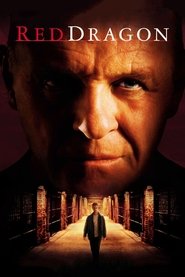
I quite honestly don't know how he achieved it. He did the same on Rawhead, you know, a very underfunded art department, and creating miracles as far as I could see. Even Jeff, Jeff Sharp, the costume designer, I mean, most of these clothes were specially made in a 40s, 50s noir style, you know, based on the old...
1:01:40 · jump to transcript →
-
-
-
Gary Goddard
And the role of Gwildor was one of the original characters we created for this. To some degree, Gwildor was created to replace the character of Orko. And if I took any heat as a director from die-hard animation fans, it was like, where's Orko? Where's Orko? Orko is an animated character, floated around, was very comical, and would have been hard to adapt into live action at the time, and also would have been prohibitively expensive on our budget because essentially every time you appear, you have to fly around. And on top of that...
7:27 · jump to transcript →
-
Gary Goddard
the tail end of the schedule, we didn't get everything we wanted, but we did get a lot of use out of it, not as much as I'd wanted, but that's why you see so many levels there. They were designed for what the final battle would be. The eye in the back also, that was a last add in the original script that David O'Dell wrote. There really wasn't a ticking clock. I felt a need to put a ticking clock on this, and we came up with this kind of eye, this door on the universe. The eye opens on the universe. They're coming. Get back there. Keep working.
12:27 · jump to transcript →
-
Gary Goddard
So I'd like to thank everyone for watching this and for listening to me as I reminisce. One thing the movie was always known for is at the very end, as you're going to see here in a little bit, there was, if you stuck around until after the credits, there was one final moment. And it really worked because everyone always said, stay for the movie. There's my original band, the original Illusions. That was my band in high school. Anyway, here it comes.
1:44:47 · jump to transcript →
-
-
director · 2h 9m 3 mentions
-
We went back to Cincinnati at the conclusion of principal photography and spent a day picking up a couple of scenes. This was one of the scenes that we can improve upon from the original version. Dustin always said that we reshot the first three weeks of the movie. I kept telling him, actually, we only reshot about, all told, probably about two days.
19:42 · jump to transcript →
-
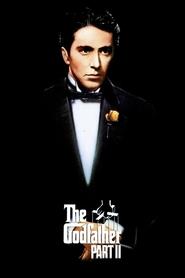
Legally, Bruner never established a conservatorship of Raymond? Oh, he didn't figure anyone would show up to contest his authority. Well, hey, if that's the case, I definitely will get custody. And the $3 million, right? And you set up a date. Yeah, you set up a date for the custody hearing. Stu, I want a firm date, and I want it early. I found that it was an original record because the original song had two verses. Lenny, she hasn't come in? She hasn't called? Mm-hmm.
53:55 · jump to transcript →
-
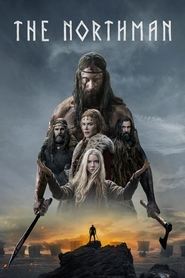
based on some discussions that I had with the actors. One of which, it came up, they said, well, what about Raymond? Does he ever change his clothes, his underwear, or whatever? And you want to at least present the idea that Charlie is somewhat concerned about him. So we talked about the fact that he gave him some underwear as an idea that began to stimulate this...
54:52 · jump to transcript →
-
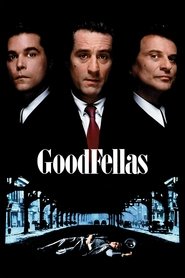
-
-
Film Stephen Prince
And so if you build your environment rather than going on some location and shooting, you can often get results that are stylistically very close to hyper-reality. One of these other characters is played by the actor Masayuki Yui, who played Tango, the loyal retainer in Ron. But it's really impossible to pick him out because you just can't tell based on the costuming.
42:19 · jump to transcript →
-
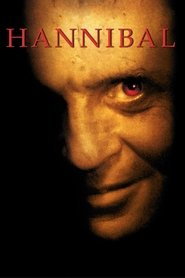
Film Stephen Prince
Based on what he wrote in his autobiography, he seems not to have had strong feelings about the war or the nation's long slide into it. He described it as a dark time, and for a brief period he affiliated with a left-wing group and its illegal anti-government activities. But his motivations seem not to have been strongly ideological. In comparison, the director Masaaki Kobayashi, who made trenchant anti-war films that included The Human Condition,
55:27 · jump to transcript →
-
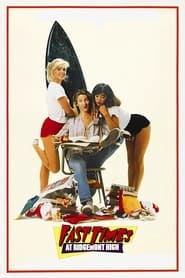
Film Stephen Prince
Streams has been a very personal work throughout, and this last episode is no exception. The village and its stream are based on memories Kurosawa held from a period when he was in middle school and visited the village where his father grew up. Toyokawa Village was in Akita Prefecture, and as Kurosawa describes it, it was rural and remote and had a simple beauty to it. A brook flowed through the center of the village, as we have in this episode.
1:52:12 · jump to transcript →
-
-
director · 1h 54m 3 mentions
-
Pitof, was that making fun of Americans, the way those soldiers are chewing gum? Yes, sort of. It's very Jeunet. And they're chewing in sync. And it's... Yes, it's... - Making fun of Americans. Tom Woodruff and Alec Gillis made this fake Sigourney. It was a real pleasure to work with this guy. Here's our first shot. The body of this little girl was based on photographs of Sigourney as a child. Then we worked them into a sculpture based on a life cast of an actress that the casting agent got for us. Look at this beautiful morph. Oh, yes, indeed. We morphed to Sigourney as an adult. That face looks an awful lot like the way she looked in Alien 3, when we took a life cast of her. That's right. And we used a body double to cast the body, didn't we? That's right. And we used a body double to cast the body, didn't we? This is the surgery scene. That was a nice little mechanical chest I made with some digital help there. The laser beam is digital. So it's part of my stuff as a second unit director. That's right. This was a fun little surgery scene, with some of the interactive tissue. Silicone chest that was laid on top of Sigourney. I love the look of this. Darius Khondji did a great job. The way the slime looks is almost metallic-looking. It's got such a beautiful reflectivity. Isn't that great? I love this. It's really disgusting. How it's... Then pop! The head pops.
3:31 · jump to transcript →
-
My Question Initially To Jean-pierre Was
This idea about the bullet on the roof - it's a little bit later - it was an idea from the first version of The City of Lost Children. We didn't use it. I don't remember. In fact, it was a very good pool player, and he used a gun to kill the people, shooting on the roof exactly like this. I used this idea on this film. Yeah, but you didn't shoot it. No. It was in the first draft. Suddenly I thought I was going crazy. The weapons were based on existing ones. I remember leafing through encyclopedias of guns, which were given to me by Steve Cooper, art director. I guess somebody thought "We'll get around to the weapons." Actually, I jumped off the storyboard on to the weapons because panic was setting in. People were saying we needed to get them going. So Steve Cooper brought in all these volumes of books on handguns, rifles, whatnot. I started doing little sketches one afternoon. I think I did one page with eight or nine guns, and out of that one page almost everything came out. We showed them to Nigel and he said "Why don't you expand that one?" Then we started detailing them, and then finding ways to stick them into the wheelchair wherever possible. This was great, cos Tom would always play the hero alien. We had Mark Viniello in one of the other suits, and David Prior was in another one, but Jean-Pierre wanted to keep Tom as the main performer. That was that torso we made with all the guts and the... That's self-explanatory, isn't it? This was a neat effect. This was a prerigged floor with an elevator that would lower all the guts and so on. It would appear as if the thing was melting, but it was a simple little rig. See? They never learn in these movies, do they?
38:37 · jump to transcript →
-
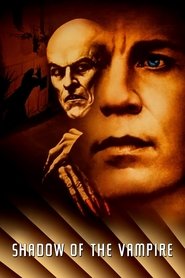
My Question Initially To Jean-pierre Was
I was thrilled when I watched this scene, because Ripley was carrying my gun. I can't tell you what a charge that was. It was great. I was, one night, looking at Sigourney Weaver and she was harnessing this gun, and I thought "I designed this." I was back to being a kid watching the first Alien movie, and thinking about Ripley running down the corridors, dreaming about what that meant. Many years later, here I was in Los Angeles, and Sigourney Weaver was playing Ripley, and she was harnessing my gun. It's hard to explain, but it's such a high. This is like traveling through time and grabbing the kid inside of you and saying: "Here's what you've been missing." "Here's something for you and for years of frustration - wishing to make something out of your life that's very specific, and the obstacles." And suddenly there's this woman - she doesn't know I exist and couldn't care less - but she's got a prop, and it can mean the world to somebody. Nigel Phelps, the production designer, designed chunks of corridors, and this was really the essence of what the set of The Auriga was about. Some chunks of it were actually reusable. The whole idea about this set was that you can make it go on endlessly - there's different layers and levels. One of the original design ideas that Nigel had, which he explored with Darius Khondji, was that as the story progresses and as the characters go through the ship the walls change colors and become more and more ominous. Since Darius uses a very specific lighting and processing technique for his film - by which he extracts the blacks and reprints them later to get that very very crisp, sharp contrast - the idea was that the walls would be painted and the paint change as the film progressed. They actually tested this and Darius shot plates, and we experimented with the exposure, etc. They collaborated closely. Ideas that one had were integrated by the other. Frequently, Darius would come down to the set as it was being built, and Nigel would explain some of his intentions. Darius would make suggestions and they would create opportunities for lighting. It works extremely well, actually. You could walk through that set and it was prelit. You could have taken a home movie and it would look like a million dollars. It was unbelievable. I remember, Sigourney laughed at this time because I misspelled a word. Instead of saying "Easter bunny", I said, for two or three takes, "Eastern bunny".
51:13 · jump to transcript →
-
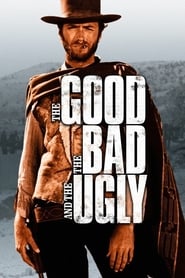
-
director · 1h 42m 3 mentions
Len Wiseman, Brad Tatapolous, Brad Martin, Nicolas De Toth
-
um tony in the medieval village right yeah that was the original beginning right and the problem is there there's you know screened it and with uh there's you know a lot of people not knowing who singe was if singe was a lichen and just the a little bit more of the background of of underworld one needed to be stated first the human descendant of corvinus yes all of this was created way after the fact because we shot it i mean you shot it
8:59 · jump to transcript →
-
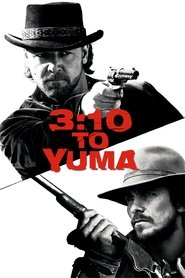
with that original transition in mind. Yeah, what the original plan was, there was a sequence where we just held off on this. It was going to be the Underworld wrap-up, where Marcus, when he awakens, he bites Kraven's neck. Through those genetic memories of biting Kraven, he ends up getting what is basically the Underworld 1 wrap-up, and kind of last time on Underworld so that everybody gets to speed. And it just, it was a bit too long to wait for that to happen at that point.
9:27 · jump to transcript →
-
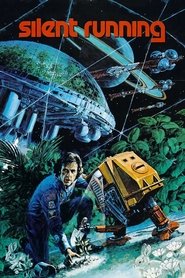
Well, there's the original original one, which was Selene as a child running into the barn, and then the medieval sequence, and then the eye. Yeah, the script went through many revisions. And Kate and Scott. I wish Kate and Scott were with us. Yeah. That's a big bummer. We had a really good time with them, and they're both... Kate's in Nova Scotia shooting a movie right now, and Scott, I believe, is...
9:55 · jump to transcript →
-
-
-
Joss Whedon
It became apparent that the two of them walking into a dark room, looking for something, and then talking to someone who had clearly called them there, gave us the information that we needed, and also kept them a little more mysterious. The scene was so mundane, and they were So... Just such normal bickering siblings, that it didn't... Didn't really add to their grandeur. This is the first time we see Ultron. And I look back, and I'm... The fact of him sitting in that chair is very, sort of, based on the great, sort of, John Buscema kind of... "The tortured king and the weight of the throne" kind of thing. But then he stands up, and that's how he's revealed. And I thought, "That's less cinematic than it could have been," after the fact. Children... This little bit that he says here is also really important in the theme. Simply because one of the first things I ever wrote when sort of just freestyling about Ultron in my head, was that children all kill their parents, because once you have them, you no longer care as much about yourself. You accept your place in the cycle of the world, and you know that you'll die, but there's something more important to you than that. And then, in parenthesis, I wrote, 'cause I was sending this out as a memo, "Don't worry, nothing like that will ever appear in the film." And then it actually did. But I do think that a connection that even I didn't make is because so much of this is about power... Yet also, so much of it is about family, and the responsibility we have not just as leaders or as heroes, but as parents. There is no time when anybody in the world understands what the truly powerful can do and go through, unless they're parents. Until the moment they're parents. And then, suddenly, they have complete mastery over somebody's mind. Not forever. In the case of my kids, not even for that long. But there is the ability to uplift or destroy. It is a perfect connection between what is going on in this movie, politically and thematically, and what is going on personally. This shot here is one of my favourite shots in the film, just the way Ultron listens. Again, ILM, they had James Spader's performance to work off of. They had face-capture on him, so he wore cameras on his face the whole time. But they really took it and used it, and managed to make a man who's made out of metal not just sound, but move like Spader and give the performance. When James took the gig, he said, "I don't wanna do voiceover work. "I wanna be able to give a performance." And, my God, he did. And they did such an extraordinary job of capturing it, so much so that when he is standing there doing nothing, I cannot stop looking at him. I developed a huge... Not even a man-crush, like a teenage girl-crush on Ultron. Like, I want a picture of him over my bed, and I wanna write about him in my diary, and I wonder if he's thinking about me. He's just gorgeous. 'Course, there's a lot of gorgeous to go around. This bit, there was a lot more of. We played the mystery of "What's up with Barton?" a lot. Is he still possessed? Is he villainous? Is he something terrible? Ultimately, we just kept the fact that he says, "I don't have a girlfriend," and then later says, "Girlfriend." My issue with it was simply... I mean, people felt, "Can we get some time out of here?" My issue was, I've just felt that people would only think that he was talking to Fury. Since he had been a S.H.1.E.L.D. agent, and we've never seen Fury, and we know that S.H./.E.L.D. is gone, that they wouldn't think that he was up to something dire. They would just think, "Oh, he's listening to his old boss." And the dancing I would have to have gone through to make that clear that he wasn't just didn't seem worth the effort. So we kept just a little bit of it. I miss it. I miss the idea of, "What's his dark secret? "What's his dark secret?" 'Cause I think it's important. His dark secret is obviously the crux of the film. And, I mean, the fulcrum, the thing upon which the entire film revolves, um, changes.
36:29 · jump to transcript →
-
Joss Whedon
I wrote him before as, I would say, polite. And here, he has his own thing, his own agenda that goes beyond humanity. And later on has what is, for me, the most important moment in the movie, based on his understanding of life beyond us and our agenda.
1:35:47 · jump to transcript →
-
Joss Whedon
This was exactly what I pitched, again, before the movie. Loki failed, Red Skull failed. Ronan failed. So, it's time. Third movie, it's time, which is somebody else's problem. There is one more thing I have to say. I'm not going to speak through 48 minutes of credits, though you should watch them all because every person listed in them did extraordinary work, and I'm enormously grateful. And I apologise to all the people I didn't mention because I should've. But I did promise that I would say something about an Easter egg. I dont... Usually, I try not to be self-indulgent. I just had a feeling there was a connection between the evils of this world and the evils of all worlds. And there is that one shot in Thor's dream of three guys in an archway, wearing three masks, and the masks are very expressionistic, so it might be hard to see exactly what they are, and we only held on them for a moment. And they were originally seen over a line of Thor's that was taken out, where he says, "It's been a long journey, and dark forces followed me." And the idea that there is something bigger at stake, which we hit in his revelation of the jewels, but "dark forces" was when you cut to those guys. Basically, though expressionistic, they are based on three animals, a wolf, a ram, and a hart. And some of you might know what that means to me. Thank you for listening. We're done.
2:13:24 · jump to transcript →
-
-
director · 1h 25m 3 mentions
-
Nothing was gross. It just was textured. Wow. I love these spiders. I do, too. Yeah. They're great. I remember getting a photo from you, like, four years ago of a jumping spider and being like, this is so cute. Yeah. That being the origin of that. Yeah, totally. I think that was, like, six years ago now. Okay. These are all, these little tree houses, or many of them, are either built by or based on the art of an artist named Jed Volz. Jedediah Volz.
3:39 · jump to transcript →
-
Yeah, I know. One of my favorite things about the process is that I don't think any of us could possibly tell you, well, not with any reliability, what parts were fully written, what was improv, what was written based on improv. And, you know, it's cool. I think we did a great job of blending that.
18:24 · jump to transcript →
-
This is in Liz's apartment, but I think it was based on a whiff we'd done earlier. Because I remember Caroline congratulating me, being like, wow, you know it's really hard to sing flat. And I was like, that's the best I can do. Well, you're really not singing a note at all. You can't sing any notes. I can hear myself trying not to laugh. Is this song from Summer Camp? Yeah. Yeah.
1:06:17 · jump to transcript →
-
-
-
Thank you. Bob, one of the things you said that I want to bring up... I think one of the earliest phone calls, maybe even the first phone call, you said, "You could end the film "right with him riding the bus, defeated, deflated, "and that could be a great short film about a day where nothing went right." Yeah. And that's the attitude that stayed with me throughout. The idea that this is a godsend. This moment of these guys... I think the original plan was to have Ave Maria playing in the background for this moment 'cause it was literally a godsend. It was amazing. That person yelling "bus," the character's Teddy Kuznetsov, played by... Sasha Pal. - Sasha Pal. And that man right there is Daniel Bernhardt. Daniel Bernhardt is the man who trained me to fight for two years. That guy right there. He's one of the... He's the greatest. He's maybe the best stunt actor working for the last 10 years. Man, he's great. And you might know him from the TV show Barry. And you might know him from the big fight in Atomic Blonde. And you would know him from John Wick movies and Hobbs & Shaw and every other great action movie of the last 20 years, 'cause he's the best, and he's a great actor too. Bringing a lot of character to this whole sequence. But from the moment things got real with the possibility of me doing an action movie, I started to train, 'cause I was a comedy writer for 25 years, and I did a normal workout of any suburban dad. I hope these assholes like hospital food. "That girl's gonna get home safe."
25:14 · jump to transcript →
-
Hutch here. Last night, that was you, huh? And then here, we got a great phone call with RZA calling his brother from who knows where and... I think, originally, he was supposed to be on an island. That's what we had in one of the lines. But then we kind of thought, "Well, how does he get there from an island so quick?" So it was changed to a nondescript location. I always like how you step into the shadow when you take this call. Yeah. - Hopetully it's not too on the nose, but I kind of like that the family's light in the back, and then here you are in a little bit of darkness. And he mentions The Barber. - The Barber. And that was not what he said in the original script. No. This is where... So this is act two and act two was very, very different. And I don't know how much in detail we should go, 'cause there's a lot of them. But the idea is that now Hutch gets the call, gets the message to go see The Barber, gets the message to go see The Barber, he gets the phone message, a text message, he goes, and basically what we used to have Is... What we have now is a compact montage of a much bigger act two than we originally had shot and envisioned, which makes the film much, much better. And that was something that David Leitch set down with Evan Schiff, our second editor. I finished... This is right as Corona was hitting the US, and we all had to go home, and I flew home. And David spent time working with Evan over Zoom to put the sequence together. By the way, if you pay close attention to the clothes on Hutch's character, you'll see that it's very lucky that he's always wearing blue. And may I say the reason why you're wearing blue, Bob? Yeah. So, early in preproduction Bob said that, "Guys, I think we should get some blue stuff on me." I'm like, "Why?" He's like, "Well..." I think you said your mother saw you wearing blue... - In the Spielberg film The Post. She saw The Post, she liked it. And she goes, "Your eyes aren't that blue." And I go, "Actually, yes, they are. They pop blue more if I wear blue." You see the blue in my eyes if I wear blue. They're kind of a blue-green, I think. SO anyway... So your mother... We have to thank your mother for putting us in this direction because it saved us in the cut. She will not be seeing this movie. Really? - No. Can we do a cut-down version without... She's 84 and does not watch violent films at all. ...to the tune of eight and nine figures. Anything good? - Fuck if I know. But what I do know is, if he doesn't know who you are yet, he will soon. Now, Colin is amazing. Colin Salmon. Oh, my God, what a great actor. And there's your wife. That's not much. There's my wife. Ten-year anniversary today. Dasha. - That's right. She's a filmmaker herself. - She is now. I have competition in my own household. Good luck with that. - Yeah. I have the same situation. My wife is a manager, but also a producer and a creative, and it's great. You gotta figure it out. It might take you awhile. Now, you guys have 10 years, so you're probably doing pretty good. We're all right. - But it can be hard. Yep. What the fuck? This guy's like, "Wait. Some of these pictures are me. "Who's got them?" - This is J.P. Manoux. He was actually... Bob, he was the second person cast in this film. Obviously, you were first and J.P. was the second. Well, he's great. He's freaked out, working at the Pentagon, and Colin's telling me who Yulian is, and who I've just gotten myself involved with, and about the Obshak. And how Yulian's men are overseeing the Obshak, which is obviously something that's causing him a great deal of stress, but also, he takes a certain amount of pride in protecting it. Goddamn Obshak. He's kind of like, I think, the... Not kind of... For me, the goal was to have Hutch be the quiet guy that's hiding a storm inside himself. Whereas Yulian is living the storm but doesn't really want to. Yeah. - So their trajectories are clashing. There's not a goddamn thing about Hutch in all the documents he can find. It's all blacked out, except for some awesome pictures of the people he's killed. And Dasha decides, "Fuck this. I'm not part of this." And now he realizes what he already knew because that character's smart. My brother tangled with a bad guy. I
42:46 · jump to transcript →
-
Can we just talk for one second about our black Russian? Araya. Araya is a great actor, Araya Mengesha. Yep. And he has a great part in here, and he plays it so well. Now, is he a stuntman? - No. He is an actor from Toronto. Yeah. - A great guy. And I give him a lot of credit because he... When I talked to him, I said, "Look, I want him to be... "I want Pavel, the black Russian, to be speaking Russian "and to sound as Russian as possible." Yeah. - 'Cause he's based on... I don't know how to pronounce it. "Amalgamation"? Yeah. - Of a few Russian black guys that I know. 'Cause, obviously, we don't... You know, we're mostly predominantly a white nation. Right. But the story that Pavel, or Araya, the character talks about how he's the son of an Ethiopian Olympian from the Moscow Olympics. That's all... There's a certain group of people in Moscow or in Russia who were the result of the Olympics. Just people came over, had sex and left. And so these hyper-athletic kids from Olympian fathers or mothers, fathers, they grew up with a very different skin color in a country which... People were not used to that in the slightest. So they had a very, sort of, in a way, great experience 'cause they were getting the right kind of attention. But obviously, with the right kind of attention also comes, usually, the wrong kind of attention. So he is based on a real concept. Yeah, yeah, yeah. So I said, "Araya, it'd be great if you can, you know, spend some time "and I'll coach you a little bit and let's get the Russian right." And he did. Like, we spent, before recording, you know... Yeah. Twenty minutes a day just going over... - He's fantastic in this. Such a great guy. A joy to work with too. As were all these guys, but... This is a team of people, mostly Canadian stunt people, but overseen by Greg Rementer and Daniel Bernhardt, who did some of the fight choreography, all the fight choreography. Well... -[t was Daniel and Kirk together. Yep. - Well, together. I mean, Greg Rementer is this... What is his title here? -/ think he's both... He's the stunt choreographer and the second unit director. Yes. Anyway, it was a team effort.
48:18 · jump to transcript →
-
-
-
Novelist Tim Lucas
$50,000, a pay increase of $35,000. In today's money, that's roughly half a million dollars, making the title of this film fairly literal. It was at this point that the original Italian version placed its intermission between the two halves of the film, identified as primo tempo and secondo tempo.
1:08:04 · jump to transcript →
-
Novelist Tim Lucas
Bianco's challenge starts out looking like pretty even odds, but the odds change as he advances. Strangely enough, of all the possible images that could have been used from this film, the original Italian poster art by Franco Fiorenzi, arguably the most beautiful issued on this film, pictured these three men in the distance behind a foregrounded portrait of Eastwood.
1:28:18 · jump to transcript →
-
-
cast · 1h 39m 2 mentions
The Rocky Horror Picture Show (1975)
Richard O'Brien, Riff Raff, Patricia Quinn
-
Oh, look. Nice car, that, that woodie. Yes, and what was the tape playing? Was it Nixon? Nixon's-- which I... I don't like that speech being played, actually because it locks the movie into a time frame. I thought it was terribly clever. And that late November evening wasn't in time with Nixon's speech. Speech. And, you know, there's lots of things. Now we see this motorcyclist here. Those people who played Transylvanians were on the back of those motorbikes. They would have to go to the studio this very night, dress up, put all their Transylvanian gear on, and then put motorbike leathers on as well. Yeah. - And then go out on these motorbikes. They didn't drive them themselves. No, no. They had motorcyclists. They paid pillion passengers. Yeah. And, as Ramon Gow said, you know, I said, "Why are they coming in to do this? It could be anybody wet in the dark. And he said, "Could be a gorilla with a pipe, luv." Gorilla with a pipe? But I'll never forget the first day I saw the Transylvanians, 'cause they were rehearsing in a room in the house. And we didn't have Transylvanians in the play, and suddenly this door was open, and I don't want politically noncorrect, but it was so freaky because they were freaks. Sorry. - As indeed we all are. No, speak for yourself. And in the amazement of tall, small, fat, thin, you Know... You lost a sense of norms, you do. Sense of center. Yes, and I saw all these people dancing doing the "Time Warp," and I almost collapsed. I couldn't believe it. I thought... Because I didn't know they were going to be in this. I didn't know there was a cast of Transylvanians. No. - No. Well, when I went into the room and David Toguri was rehearsing them, Well, when I went into the room and David Toguri was rehearsing them, Well, when I went into the room and David Toguri was rehearsing them, and Barry Bostwick and Susan Sarandon was standing amongst these people, with hugely different, physically, SO very... I'll never work again for using the word "freak." It seemed to me that Susan and Barry, who most people would say are relatively good-looking human beings, seemed just as freakish. There was no standard. The standards had disappeared. Yes, that's what freakish-- yes, right. And that was interesting.
12:03 · jump to transcript →
-
And this was cut from a lot of the original versions. This song was cult. 2 Toftind the truth ? And we cut straight to the narrator's verse. He says to tell the truth and never lied. We cut Brad and Janet's verses in this song and went straight to the narrator's verse on the original movie. And it made no sense whatsoever. - I see. 'Cause we needed this. There was a very long intro that Richard Hartley had devised for this song. And I suggested they cut straight to Brad's verse. And they cut straight to the narrator's verse, which was cutting both Brad and Janet's verse, which was rather stupid because it's kind of nice to have these two verses. Make the whole thing tie up, the whole song tie up.
1:34:35 · jump to transcript →
-
-
-
Roger Moore
This was not the first time I had been in Venice. I remember distinctly the first time I was in Venice... ...Was in 1961. And I had been offered by Lew Grade a series called The Saint... ...and had read the script out there. My agent came out to talk to me about it. And I said that I thought it was just a little long... ...for a half-hour series. I said, "It is a half-hour series?" He said, "Oh, yes." I said, "Well, let's find out." He checked back with an assistant... ...wWho no longer.... Who shortly after that was not an assistant. Because when it came to... All my contract was built on... Based on it being... ...a 30-minute series. And, in fact, it was an hour. Then I came out of the press conference... ...We did a little readjustment, Lew Grade and I. I remember Venice very well for that. But it is the most beautiful city. It has this extraordinary history. It's a wonderful place to work if you like boats. Not if you like swimming. And I went in the canal a couple of times... ...Which is not quite as bad as falling in the klongs in Bangkok.
34:00 · jump to transcript →
-
Roger Moore
In 1950, we were in a production of Mister Roberts... ...with Tyrone Power and Jackie Cooper... ...at the Coliseum theater in London. People who know the play, they probably know the film. Mister Roberts was wonderful with Henry Fonda and James Cagney... ...and Jack Lemmon.
1:41:20 · jump to transcript →
-
-
-
It's actually based on a friend I grew up with, my friend's grandfather, who was in the scrap business, who said exactly those lines. And he was able to just pick the stuff up and smell it and taste it and tell you what the metal was composed of.
49:36 · jump to transcript →
-
By the way, Leo's character is based on two Chicago organized crime figures who are now dead who were fences and ran crews of thieves and were certainly no less vicious than Leo's characterized here. They're Milwaukee Phil Alderizio and Leo Rugendorf. Milwaukee Phil.
1:51:11 · jump to transcript →
-
-
-
desks, gathering the old gear. And then ticker tape, of course, became a really handy way of dealing with these people. And then we had no shame about doing cheap jokes of heads bonking into windows and blah, blah, blah. The music which John Dupre did is based on Eric Korngold's work. Korngold did the Seahawk and many of the great epics with Errol Flynn in them.
3:39 · jump to transcript →
-
They're harder to do than you can imagine. I forgot, we had another set here. We had this bit here, the modern building. Now that I'm looking at this thing, I realize why it costs so much. It just keeps expanding. It goes on and on, endless shots. The good thing on this DVD is the soundtrack is much better than it was in the original film.
10:00 · jump to transcript →
-
-
director · 1h 28m 2 mentions
-
Civic TV was inspired by Toronto City TV, launched there in 1971 on UHF Channel 79, very much a progressive maverick station. One of their early distinctions was a Friday night broadcast called Baby Blue Movies, which ran softcore erotic features after midnight. Because of the City TV connection, it's often said that Max Renn was based on its founder, Moses Neimer, but that's not really true. Max's partners, Moses and Raphael, are played by Reiner Schwartz and David Bolt.
4:48 · jump to transcript →
-
Tales of Ordinary Madness, also released in 1981, making it ripe as a source of influence. Based on the book by Charles Bukowski, it shares some of this film's fascination with the protagonist as derelict, and Ornella Muti's character of the self-destructive hooker Cass has a lot in common with Nicky Brand. Also like this film, it ends by the seaside. On the set, Debbie Harry was considerably less accessible than James Woods. She didn't really pal around with the crew.
21:02 · jump to transcript →
-
-
director · 1h 31m 2 mentions
Alex Cox, Michael Nesmith, Casting Victoria Thomas, Sy Richardson + 2
-
riding bob richardson's motor guzzi and i'm doubling fox and now now robbie muller is shooting the original part of repo man with fox in the car varnum behind because this opening sequence is a composite of two different days of shooting the first shot by robbie muller who did this shot and the second day done months later by bob richardson
3:00 · jump to transcript →
-
But this is based on those experiments they would do with people where they would pretend to be torturing people in experiments and pump up the juice and stuff like that. And they found that nine out of ten people will just keep on turning up the electricity until the alleged subject is dead. And there were experiments done at universities with actors pretending that they were being given electric shocks. Wow. That's a good fireman's carry, Del. Yeah, Del. See, he didn't need to worry.
1:18:05 · jump to transcript →
-
-
director · 1h 29m 2 mentions
Jeff Kanew, Robert Carradine, Timothy Busfield, Curtis Armstrong
-
Get your father's good looks. OK, profiles, profiles. They have the same nose. And that was kind of a gift in the casting process. We didn't cast based on the nose, but it was a plus. Little sound effect coming up here. Not believable, but got a laugh. I remember I didn't like that sound effect.
5:34 · jump to transcript →
-
into the frat house. Bobby still has the original pen holder that he swiped from the costume department. Hi, girls. Bobby has got the full nerd pack, which if you look in the nerd manual, he's got a slide rule. He's got the pen holder. He's got the belt installed, calculator, everything a nerd would need.
18:00 · jump to transcript →
-
-
-
Sweet Bird of Youth, I don't know. What was the play? Yeah, she had done that at the Taper. Yeah, Sweet Bird of Youth. Maggie the Cat. She hadn't done anything big before and back home. She came and auditioned and got the job. Yeah. I mean, that's an extraordinary talent. I saw her in that. She was wonderful. For someone to reach on down through the sleaze and the slime, pick him up and hose him off. I mean, who knows? If we fail with even one shot, we might be losing the next Ted Koppel.
8:40 · jump to transcript →
-
He saw Old Bob. That's the original Old Bob, which came back. You can see the filament hanging off the end of it. Now he went and got it, brought it to you. Now this, he decided to do. Why? I don't know. Well, we started licking each other here at the end. I know, but why did he decide to get in there? That was an ad lib. We didn't expect him to do that. And we didn't expect you to do that either. That's as good an ending to a comedy as I've ever seen.
1:33:41 · jump to transcript →
-
-
-
Fred Dekker
real New York voice. It was very funny. I said, oh, he's pissed now because he's doing his New York voice. Well, we have James Lawrence from Street Trash there. Exactly. Wonderful actor. I cast him just based on that. And Frankenhooker, I said, this guy's got to be in the movie. Great choice. So, yeah, if we want to talk a little bit about Remy Ryan there and her character, because I have to admit, when I first saw the movie,
16:26 · jump to transcript →
-
Fred Dekker
I wasn't crazy about her being in the film either. It felt like it was a deliberate attempt to get kids to relate to somebody in the picture. Well, in fact, that's not true. Really? The original script, her name was Keiko, and she was, I think, full Japanese and should have been younger. I mean, when I was thinking about this character, I was thinking of Frank's drawings. And I was really...
16:54 · jump to transcript →
-
-
director · 1h 56m 2 mentions
-
You know, it's funny that the script is almost verbatim, word for word, from the original script that I read in Italy, you know, after I finished Last Boy Scout. Other than the very end of the movie, the end of the movie, I'm a romantic, I think, in the end of the movie. I struggle with, because in Quentin's end, Christian dies, or the clown's character dies, and...
37:15 · jump to transcript →
-
except it's more deluded, you know, it's better. Again, I constructed the set. The set was based on that set, the Sahara Motel, which was the real motel down off Van Nuys in the valley. But then I put the Hawaiian motif on the walls and put mirror on the ceiling because I knew that when I was storyboarding the sequence ahead of time, I knew that I wanted Patricia, who'd been badly beaten, to be able to see the elements in the room.
1:19:28 · jump to transcript →
-
-
director · 1h 31m 2 mentions
David Steinberg, Dave Foley, David Higgins, Jay Kogen
-
I always like that line. And there's the other album. Right. Well, I believe... Does this take place in Texas? Is that what's the idea at this point, right? Yeah. So we're almost in Mexico. There's a tunnel. Right. Well, this was the idea in the original as well that we'd make our way to Mexico. It was also funny because you're on the Canadian border and then he makes his way to Mexico. Yeah. Which we thought was...
1:19:38 · jump to transcript →
-
We did a sketch where we copied Reservoir Dogs, and I had dinner with him once, and he was very excited that that was based on it. The Fell on My Keys, of course, was an homage to the producers. Sure. Just doing my job. I do, however, have a few questions. Gene Wilder falls, and then I fell on my keys. Spent some time in New York City. Yes. Well, Bob and I are going up there next week, and I was wondering if you could suggest a show. Of course. Moby the Musical, a must-see.
1:26:19 · jump to transcript →
-
-
director · 1h 57m 2 mentions
-
The acupressure. I don't know how that works, but it's always in the novel, always in the movies. This is the standard. If this were set in New York, it would just be focused on their sinuses. Take your death. I shall revenge my master's death. She's got a good comeback.
35:36 · jump to transcript →
-
No, in the book, Yu Jialong, Jane's character is a tomboy. It's very male-ish, kind of very boyish, aristocrat woman. And I realized shooting in the desert, even if I beat her to death, I couldn't make her that way. And this is the scene I realized she is sexy, very feminine. So it sort of gives you bad ideas. It took you that long to figure it out, huh? Okay.
1:04:18 · jump to transcript →
-
-
-
Jonathan Lynn
This is the only scene in which we made substantial changes after our first test screening. In the original script, Oz, towards the end of the scene, made a long declaration of love to Cynthia. We had never questioned this, but when we saw it with an audience, we realized that it happened too soon. It was only his second meeting with her.
33:41 · jump to transcript →
-
Jonathan Lynn
It's in the same key as the original Max Steiner score. So we've got the old Max Steiner music and the Randy Edelman score playing together here and intertwining with each other. Looking for a new way to have a shootout, I thought it would be really good if Bruce shot in silhouette. Of course, the script called for this
1:06:17 · jump to transcript →
-
-
director · 2h 3m 2 mentions
-
To me, I think that shot could have even been more effective. But you live and you learn, and it worked. This next sequence coming up is very interesting because it employs some photography from the first picture. This is new photography. When Steve conceived of this sequence, he always wanted to use photography from the original movie so that it would rhyme with it exactly. And you'll see that it does.
1:10:13 · jump to transcript →
-
you see how Oded has really learned how to ride the horse. He does a fantastic job in this sequence. And once again, when we get into the battle here, he's fighting things, and all these men are fighting things that aren't really there, which makes it very, very difficult. In this wide shot that's coming up here, if you were to see the original plate, there's all these guys in blue suits that are standing there
1:44:47 · jump to transcript →
-
-
-
Wes Anderson
And all the taxis in the movie are gypsy cabs, which is, you know, in New York, you have these gypsy cabs uptown, which they aren't actually officially called gypsy cabs, but that's what everybody calls them. We just decided to institutionalize it for the movie. These dalmatian mice are made with a-- You just-- Probably shouldn't say, it's probably-- They're made with a Sharpie, but I don't know if that's legal. That's supposed to be Royal's mother. And, uh, we had a couple of runs of trying to find one and make one. And eventually we had to just cast a nurse, dress the whole thing. We had to find the right painter. And it was a whole production just to make that portrait of the nurse, which you just see for a second there, but I really liked it. A lot of stuff that should be easy, like, you know, dressing somebody in a red Adidas warm-up, that should be a breeze. You should just go to the store. But then it turns out they don't make the right color. And the red is different than the one they used to make. The cut of them is different. It doesn't-- You know, you end up having to make everything if you want it to be right. Like, for example, there's stained glass windows behind them here. We had to make those stained glass windows because the windows in the house, which they're based on, are six feet up above. They're at the top of the windows, as a result of which we never would see them in the entire movie. So we had to make another set and lower them down, so you'd actually be able to see them.
27:08 · jump to transcript →
-
Wes Anderson
The text of these chapters is taken from the script, which I thought was right because I didn't think that... I thought the movie and the book should be the same thing, in a way. It's based on a fake book, but the book should only exist kind of as the movie. That's why, like, the words, "chapter one," "chapter two," aren't written on the pages. They're superimposed on it, so it can kind of only exist as a movie. A weird abstract idea, really, to no end, but that's sort of what I was trying to accomplish.
1:21:37 · jump to transcript →
-
-
director · 2h 8m 2 mentions
Commentary With Kathryn Bigelow And Jeff Cronenweth
-
Commentary With Kathryn Bigelow And Jeff Cronenweth
filled the tank with powdered quinine and used our UV lights. And on the day of the shoot, got about 10% of the original effect and panicked and realized that for some reason it was only the tonic water that gave off that hue. And so I had every PA run out to every Costco in Toronto and came back with 800 bottles of tonic water and shot the scene. And I think it's quite effective. It's magnificent. When...
33:12 · jump to transcript →
-
Commentary With Kathryn Bigelow And Jeff Cronenweth
We had to go another way because of some technical problems, but one of which arrived out of the original format we decided to shoot on. Going into the movie, we had always planned on doing it anamorphic, and although we weren't going to be the first submarine movie to be shot anamorphically, certainly I think Crimson Tide was shot anamorphically, which is a format.
1:21:25 · jump to transcript →
-
-
-
Barry Sonnenfeld
This is one of my favourite scenes. Tommy is just wonderful in this scene, and he doesn't have any dialogue. There are my favourite bike guys again. Rick Baker designed this little guy with those little hands. We've got the nitrogen tanks that you'll see all over New York City... ...that I'm pretending transport Men in Black throughout New York. That's part of their secret transit authority. Remember the use of cockroaches at the end of the first movie? Now it's all coming back to Tommy. He's rebooting. Danny's score here is beautiful. That's the original theme... ... from the first movie, where Tommy's old partner... ...asked him to neuralyze him on the rock in Arizona. And now Tommy's back, just with that smile. It's a wonderful moment. Fellas, I think he's telling the truth. - Then he's no good to us. Didn't I teach you anything, kid? - Pineal eye!
43:05 · jump to transcript →
-
Barry Sonnenfeld
What's the book say? - We're off book. I say split some wigs. Now, coming up is my cameo. We're watching Martha Stewart, of course. That's me. This is Tommy Lee Jones' daughter, Victoria... ...and on the right is Stephanie Kemp, the associate producer. Now, the problem right here is, until this shot... ...I did not know that I was losing my hair back there. So I said to ILM, since they're adding all those worm guys anyway... ...which are like $90,000 a piece... Here you go again. Why not give me some hair? But they wouldn't do it. And I begged them to do it. I think they wanted to charge me more money. This is a real wall that was able to go up and down like that. And I love that there's this tiny, little room... ... with this huge closet of special weapons in the background. And she can stay up as late as she want... Which is every kid's dream. This was a new set we bullt. We called it the impound set. It was the same set where we parked all the cars... ... where Will and Frank were walking towards his new Mercedes.
1:02:17 · jump to transcript →
-
-
-
It's definitely one of the first things that grabs you when you watch the animated series. It's very unusual, very well done. This was always very interesting to me, to create a world that wasn't a futuristic world that felt like this kind of dreamt-up world, but something that had some kind of reality based on the issues that we're dealing with today. So I always liked that little write-up and that this world of Bragna with this voiceover that
1:07 · jump to transcript →
-
It would be impossible to do that. And I thought that Enzo Angeleri, who designed and cut this hair, thought that he did such a great, it was such a great throwback and homage to the original and yet something that we could work with. I just thought he did such a brilliant job. And it was also one of the first things that Peter Chung said when he came to the set was that he loved the hair, which was really great.
40:29 · jump to transcript →
-
-
writer · 1h 31m 2 mentions
Wes Anderson, Roman Coppola, Jason Schwartzman
-
Roman Coppola
I remember doing this scene was-- That driver? No, I don't remember the driver. Because he was-- That was a driver with henna hair who we always would see at the place where all the auto-rick drivers wait there. We would always see that same driver. He was our stunt driver for this shot. I remember this sequence, with the dialogue scene with the short story... Yeah. - ...we found a little hill so we could roll the rickshaw down the hill without having the motor on ruining the sound. Yes, that's right. We rumbled down the hill. And what's the name of that--? Of the boy on the bicycle? He was a... - Spot boy? He was a spot boy for us. He brought tea, chai, onto the set, and he was very bright. I'm trying to think of his name. One thing about Brendan's character, I just wanna-- Would just mention just as an homage is his hat-- There's a logo on his hat for Francis Whitman Industries, which is actually my father's business. I mean, he's retired now, but it was-- His business was called Mel Anderson Communications. That symbol was his-- It's his-- It's based on his logo. In this part of the train, we have Brendan's living quarters. I think this is the non-a.c. section. These cars on the Indian trains usually don't have windows. The engine, as you can see there, is-- The paint job on it is based on the Tata trucks that you see on the roads in India, hand-painted by the drivers.
27:32 · jump to transcript →
-
Roman Coppola
And that goes straight into this scene with-- This scene where we visit all our characters in the story while we're on this moving train, which, we built this set on the train. That's a door, actually, that you can see out. So this is actually where you are now, Jason. This is based on my apartment in New York. And, anyway, these-- - Yeah. All these rooms are built on this train with this dolly track in it.
1:18:31 · jump to transcript →
-
-
multi · 1h 39m 2 mentions
The Grand Budapest Hotel (2014)
Wes Anderson, Roman Coppola, Jeff Goldblum, Kent Jones
-
Wes Anderson
We have-- We had so many great people to be around here. But, you know, also, by the way, with this scene here, I mean, a couple of funny things. We could talk about-- You know, the shot where they come driving up on the train there, where we're looking through the window, is shot on a little section of window and chairs that are on a dolly out in this snowy place. Then, in the wider shot, we have front projection that we've shot in this auditorium that we're using as a soundstage. Front projection based on-- Which-- Inspired by 2001. Using this old technique of front projection, which is not my idea.
19:43 · jump to transcript →
-
Wes Anderson
Yes, we shot all these full-scale shots, and then the whole-- Everything else-- I mean, we built miniature landscapes-- Like what you're looking at there, it's all misty like that, but there actually is a miniature that was built, and these are based on reference of real locations, a bit modified, but they're miniatures. But this, on the other hand, is across the street from the hotel.
1:15:01 · jump to transcript →
-
-
director · 2h 10m 2 mentions
-
And that whole sequence, by the way, before we move on to the title sequence now, we shot in a total of four days, short winter days. So we really had 24 hours to accomplish all that A400 material, which is pretty great work by the team. This title sequence, these guys who designed the sequence did an absolutely bang-up job. Thank you, guys. Beautiful bit of foreshadowing throughout the entire sequence, and also the Mission Impossible folder from the original TV series. Bit of an homage.
5:26 · jump to transcript →
-
I think Renner's fantastic. And so is Ving. Oh, everybody. You look at Ving. Yeah. And remember, this is another one of those places we had all this business. We had a day to shoot it. Yep. Now, here's a scene that we shot on the very last day of first unit. And we were debating whether it should be in the movie or not. I remember. We were for running time. And there was actually dialogue in the original scene. And we just cut out all the dialogue and made it this moment.
1:37:39 · jump to transcript →
-
-
director · 1h 23m 2 mentions
-
we all collectively in theaters and everybody watching the scenes, as soon as they cross that line they shoot in and they walk into space that is not theirs, it puts everybody in a very, very tense mode. And that's something that we knew and that's actually what started the conversation when we started talking about this movie, when we were thinking about what we're going to write next after Evil Dead. And based on that feeling is that we thought, okay, what will be a story
16:31 · jump to transcript →
-
That's what is strange and fascinating about the film as well. And so far, you know, today we're doing this commentary and the movie hasn't come out yet, but it's so far just a reaction of the world based on trailers and what the concept of the movie is. It's very interesting to see how much debate it caused exactly based on what you were saying. Like, they're going to get what they deserve and a lot of people see the trailer and they go like, well, they get what they deserve. And now the people said, well, but...
17:59 · jump to transcript →
-
-
-
Jake Szymanski
I'm Jake Szymanski. I had the pleasure of directing this film. And I think I may have just ruined my mic, hold on. Is this... Did I ruin it? - Hey, hi. Is the mic okay? - Yeah, the mic's great. Just don't touch it like that. Okay, /'m sorry. - Yeah, that's okay. I was worried I might have turned it off accidentally. No, no, no, you're fine. Do you need water or coffee or anything like that? No, I'm so good. I've got water right here. - Do you... Okay. - What's your name again? I'm Margie. - Margie, thank you so much. Of course. All right. - Appreciate it. Let me know if you need anything. Okay. Will do. Thank you. Okay, oh, and please don't press any of those buttons. Okay, yeah, yeah, yeah, no, I'm sorry about that. Okay, that's okay. - Okay. Um... As you can hear, we are here on the Fox lot in the ADR room. This is where the magic of DVD commentary happens. So, into the movie. Mike and Dave. They need wedding dates. Here we go. Well, this is a fun little scene. We actually... The whole beginning of the movie takes place in New York City. But we shot all of this in Hawai. Fun fact. Downtown Honolulu. We doubled for New York. Which, I literally didn't think could be done. But, um, there were four angles. There are four angles and two locations that you can shoot in Honolulu and it looks like New York. Um, there's Zac, there's those beautiful, blue eyes just shining through. Um, this is a fun little scene. We got Marc Maron to come out to the island and shoot with us, kind of our intro to the boys here. Adam Devine, Zac Efron, playing Mike and Dave Stangle. And we almost cut this scene. We almost lost this. At some point there was a worry if we needed it, but I think it's really a fun way to set up that these guys, right what Marc says right there, they're funny, they're weird. We give them a win early on. We let them know they think they're awesome. And before their family kind of puts them in their place. Was it the hat? - I just found this over there. And here we go. At the opening credits. This was a fun journey, finding the song for this. We ended up finding this great song that we kind of remixed a little bit and redid some of the lyrics even before this opening montage here. This montage was great. Doing our Fourth of July, a family wedding and a 50th anniversary party here, shooting this. We shot all this, uh... The anniversary party and the outside wedding are the same location, actually. We shot all this down in Hawaii. Got all of our stunt guys in. A little secret about Zac Efron, very good at the trampoline. He did not need a stuntman or wires. He got on that trampoline and started doing flips immediately for camera. And Adam Devine was like, uh, "You need to strap me up "and swing me around with some wires here. "I can't do this." Um... Very uncomfortable, I remember, also, the straps on that trampoline. Um, we shot this right across from the hotel we were shooting at. This is, uh, the fireworks stuff there. Our wonderful crew here. Let's just talk about, uh, the Chernin company real quick. You see our producers here. Produced by Chernin, Peter Chernin. Jenno Topping, David Ready. Our excellent team of producers, who were with us on the whole movie. It was fantastic. Here's downtown Honolulu. We're trying to hide the palm trees. You put some stickers up on light poles, looks like New York. If you wear two, they break. It's an urban legend... - No, it's not. And here we go. Let's meet the family. Putting this together, it... First of all this is actually based on a true story, which is fun. The Stangle brothers are real and they really did get told they had to bring dates to a family wedding. God, look at this, look at this family we got here. Just the best cast we could have asked for. We got Mom and Dad here. We got Stephen Root and Steph Faracy. Stephen Root, man. How lucky are we to get these guys as Mom and Dad here. Stephen Root was, uh... We were already down in Hawaii and we were about to shoot and we still hadn't cast Dad. And we talked with a bunch of great people. And, um, I had to do a little Skype session to meet Stephen Root who I had never met. And, uh, we were just like, "You know what? If you can ever cast someone "who you think is, one day, gonna win an Oscar, cast that guy." And we were lucky enough that Stephen Root said yes to doing it. Here we go. Um, hey, Jake... - Mmm-hmm. I just want to interject here. Um... - Oh, yeah? Be careful of the heavy breathing. - Oh, Yeah, yeah, yeah. Yeah, I just want to make sure. I mean, it's not an issue yet, but... I was gonna Say, is it coming through or... Not really. - Okay. But I can sense that it might. - Okay. So just be careful. - Okay. No, fair... Yeah, okay. No worries. - You're doing great. Should we... So did we cut or how does this... No, we're not cutting, no, no, no. 'Cause we're still... - Oh, okay. Keep going. I can't cut. - Should we go... Oh, so this is a one... Continuous, got it. - This is a one, yeah. Yeah. Okay. Thank you. I'll watch the, uh... Watch the breathing. Um... Where are we here? Oh, well, we're doing our little reveal. Kind of the big idea here of our grandiose opening montage where the guys are kings of the world. We see the reality of those situations. Oh, this poor guy. Our grandpa. When we were shooting this, we were dancing... And I kept thinking that he was acting out the death scene too early. And I kept yelling from behind the camera, "No, no, no, don't stop yet. "You're still having fun, you're still having fun. "You're not dying yet." But he wasn't acting. He was, for real, getting too tired and almost having a heart attack. And I was yelling at this poor man. "No, no, no! Smile, smile! Be happy! Dance, dance!" And everyone was like, "Jake, this is real. He's actually having trouble." And I felt so horrible about that. But he made it. You know what? He made it and I can't wait for him to see the film. You can each talk to one girl. Um, uh-oh, guys. Here's the idea for the movie. Two dates. Um... By the way, we also have not talked about... Look at these two handsome gentlemen who you believe are brothers somehow. Are you insane? - Oh, you're kidding. I love these guys together. Adam and Zac had a really, really fun time. Um, I mean, when we went to Hawaii to film this, we filmed in Hawaii, and they were just... We were trapped on that island together. So even when we shot all day together we just had each other to hang out with at night. And, um, I think Zac and Adam got really, really close. Which helped the chemistry and the brother relationship stuff. Everyone got along really, really well. It was a lot of fun. By the way, let's talk about the wonderful Sugar Lyn Beard playing our sister Jeanie here. And also the equally excellent Sam Richardson playing Eric here. Um, God, she's so great in this. Sugar... First of all, her name's Sugar. And we shouldn't overlook that. That's an important factor when you're casting someone. Look for the most interesting name to be written somewhere. Um, she was one of the last people we saw in auditions. And, um, we weren't sure who we were gonna cast yet for the sister. And we didn't feel like we quite had it yet. And then she, literally, was maybe the last person that came in. And she came in to the casting office and just nailed it. Just... We were all laughing so hard. She completely became the sister. I think we did the audition with the Ecstasy scene and the horses scene. And, uh, she was just so, so funny. She walked out of that room and we immediately went, "Wow, well, that's Jeanie right there." Same thing happened with Sam for Eric, by the way. He was just so, so funny in that role. That's the kind of guy Mike is. So, think on that... This is one of my favorite Zac jokes of the whole movie here. "Think on that, Dad." Having us laugh. You can see Dave's little... Dave's at his little art station there in the apartment. And that's a little thing that comes back Iater that, uh, isn't... We're not really showing you very clearly there. And then here we have the ladies. Tatiana and Alice. Aubrey Plaza and Anna Kendrick. These two, who are actually very good friends in real life and had taken random trips together to islands and to beaches in Mexico, it was really fun to put these two together. And, uh... And have that kind of built-in chemistry going in here. He's already paid. God damn it! But a lot of green screen taxi shoot that we did. You should kick us out! - You should kick us out of this cab. Little bit of a hustle on the cab driver here. Three more blocks up on the right... and then kick us out! The Apple Pay bit I really, really liked. We came up with that on set. I think that was a pitch from Andrew Cohen, one of our writers. Andrew Cohen and Brendan O'Brien... I got a good idea. ...gave us a wonderful script to start with here. The writers of Neighbors, Neighbors 2 and upcoming, The House. Um, very lucky and happy to meet and work with those guys on this. Really funny stuff. And, uh, they would also just send in new jokes every day. That's kind of the way we did things, is we had the script and then me and the writers and other on-set writers would just bring a bunch of new jokes every day to pitch and to try. And so we would always play around a little bit on-set. Jake Johnson. Your little buddy is shit-faced. Jake Johnson, who we said, "Why don't you just come to Hawaii for a couple days? "And to do that you have to be in a scene in the movie." And he said, "That sounds pretty good, man. "That's... All right, yeah. I could do Hawaii." Um, and that's literally how we got him out here. We said, "I know Jake a little bit." I said, "Hey, if I could bring you out to Hawaii for a week "would you shoot for one night?" Boom. Done. Because it's my right. Playing Ronnie the boss here. Look at these, look at these, just New York rat women here that they're playing. The hair, that's a wig we have on Anna, which was really fun. Hey, Jake. - Yeah? Um, I just want to say if you don't have anything to Say... Mmm-hmm. - ...then you don't have to say anything. You... - Does it sound like I'm... Oh, just calling this "rat women" is a little... Oh, I wasn't... Okay. - Just... I didn't think I was stretching... - Yeah, no, it's fine. -/ just want to... I just want... - Are we still recording? You're doing great. What's that? - Are we recording right now? Yeah, yeah, all this is... Yeah. - Okay. Yeah, that's what we're doing. All right. I just... - Right? Yeah, I just didn't... Okay, yeah, I just... Yeah, I'm just... It's very clearly your first time and it's... It is. - /'m just trying to help you out. Okay. No, I appreciate... I definitely want... - Okay. If you have any tips or... - Great. I just feel like I'm not doing the comments here... Okay. Okay, sure. So I should get back to this. - Of course. Yeah, yeah. Just keep breathing, and move through it. Okay, I think... Okay. - Okay. I didn't... 1... Thank you. I appreciate it. Okay. - Thank you. Okay. Um, we're in the apartment. I'm tired of living like this. I don't know if I have anything to say about this. We've got a great little package we're selling here, man. A week in a tropical paradise... with two fun-loving, yet surprisingly well-read bros? I'm just gonna talk. Um... We got the boys here. So the ladies in the apartment, first of all. These were both sets that were built in real locations, downtown Honolulu. Um... We found spaces for the boys' apartment, girls' apartment right around the corner from each other. And then we built these kind of walls up against the real windows and built out our little apartments here. We met this couch on Craigslist. This was actually the scene, this scene right here, was one of the earliest scenes that we had worked with and that we shot for the chemistry read. We did a little chemistry read early on before we ever got into production with Adam Devine and Zac Efron. I think Zac was shooting a movie in Atlanta. We all flew out there and did a chemistry read and this was one of the scenes we did to see the brothers together. And, uh, obviously it was great. And we loved seeing Adam and Zac together. And, uh, so this is one that had kind of... We actually shot this... One of the last things we shot in the movie. Um, but they had had it in their mind for six, seven months by that point. I love the... We got these girls together, really, really fun. This was a last-second shoot we did just to get a little sense of the ad going viral and going around the world. And we got all these great performers, all these great actresses to just come in and do little cameos for that little thing here. You guys want to go to a wedding? Got a little classic date montage here. All the dates here we cast out of Hawai. This was all local casting and we found some great, great people. Those twins are actual professional gymnasts in training. And they're twin gymnasts who are very good. And luckily they were also great at acting. We got them in there. We found all these... Met all these great people. This is my buddy Bob Turton. Um, who, uh... We go way back. And, actually, we did not... Again, we did local Hawaii casting and I said, "Man, I got this bit I really want you to do. "But we're casting locally." And he just hopped on a plane and came on out. And said, "Let's do it." And Bob is one of the funniest, funniest guys. Uh, I went to college with him back in the day. And we've done some videos and shorts together. And I was so glad he could come out and be Lauralie, as I believed, what we named his persona of this guy who's in such a bad period of time in his life. He decides to try to pretend he's a girl to get this date from these boys. What did you say? - Nothing. Sounded like you said... None of this... Do you wanna fuck? None of this was scripted. None of the entire date sequence was scripted. I think the script just said they go on a bunch of dates. So we really had a lot of fun playing with this entire sequence with everyone who came in. I think, in real life the Stangle brothers ended up on... What was it, Ricki Lake? I know they ended up on, uh, the Today show. And maybe also Ricki Lake. And we got... The ad went viral. We wanted to make it a little more current. We got Wendy Williams. We got her to come out to Hawaii. We actually filmed... Even her set, we faked in Hawai. So we really did everything out there. Got to thank the Hawaii Film Board. Getting to shoot out there. It was fun. ...fo go with us to Hawaii for our sister's wedding. And I just want to reiterate... we're footing the bill for this because we're gentlemen. Free trip to Hawaii? I'm awake! Come on. Craigslist. - What's up? That's where you go to buy old patio furniture. Is there any, um... Excuse me. Is there any... ls there any water? - What's that? Is there water in here? -/s there water? - Yeah, there's... Yeah, we have water. - Is there any... Can I get a water? ls there any way to get a water? - OA, sure. /'Il... I asked you at the beginning. You didn't... You said... I know. I didn't realize. I'm sorry. I'm just... Now I'm thinking about whether I'm talking too much, based on what you said earlier, and I'm getting nervous. I think it's just drying my throat out a little bit. Okay, yeah. No, that's fine. I'll go get you water. I don't need you to get it if you can't... /'m the one working here. So... Okay. I... You can tell me where it is, I can get it. No, you have to... You're the director. And you have to do the commentary. Um, okay, I'll be right back. All right. Sorry about that. - It's fine. Thank you. You need to get over that, once and for all. Oh, man, I feel really bad asking for that water now. Oh, there is a water here. Hold on. There's a water on the floor here next to my desk. Okay, here's your... I actually found one. There was a water... There was a water down here by the desk. -/ found... - Yeah. I think I brought this... - Did you not look around you when you... We gonna go to Hawaii! Um, sorry, I just found... I think I brought it in at the... When I first walked in earlier and I forgot. Right. Okay, well, here's another one. We don't look like nice girls. Thank you. Yeah, I guess I haven't showered in a while. Oh, man. Thank you very much. I really do appreciate it. Yeah, of course. - Okay. We're gonna look respectable as fuck. Like nice girls. "Like nice girls. Like nice girls." This was actually, um... It's like that Jesus rag! "Jesus rag," one of my favorite bits. Nice girls was actually, um, an early studio note. I remember the studio coming in and saying like, "We feel like we just need to say, like, 'Let's push the nice girls angle.' "We should have the boys get told they need to bring nice girls. "And the girls need to look like nice girls." And it really worked. We ended up taking that and hitting that. And it's one of those great notes that really helps simplify and clarify a thing and everyone gets exactly what we're doing. So that's why you hear "nice girls" a couple of times. That was actually one of the earlier studio notes that I thought was a great note. That worked out a Iot. Ultimatum. - Well, we gotta figure something out... The old tomato joke is a joke that early on I was told, "You know, you can cut this joke. You don't need that joke." And I said, "No. This joke is what the movie's about." Not really what it's about. But the vibe of the movie. I fell way too in love with the old tomato joke. And I think our first cut of this movie, the editor assembly of this, was about five hours long. Because we had done so many alts and so much improv. And they just put everything in. And, I think, when I showed my producers one of the three-and-a-half-hour cuts that I was like, "You know, this isn't a real cut. "This is just kind of everything we're working with." They were like, "I mean, you can lose so much. "You can lose this. You can lose that. You can lose the old tomato joke." And I was like, "No, no, no, not... All those other things, sure, "but the old tomato joke we keep." So you can imagine that joke in a three-hour thing that's way too long. And, uh, well, it ended up in the movie. As I predicted. Anna had a really fun, uh... We had a lot of fun with this. There's a lot of stuff on the DVD, deleted scenes and bit runs about other lies she does here. This is a really fun reveal. See these girls in these nice dresses here. And coming up, we've got one of our first big stunts of the movie. This was always really fun. We had a great, great stunt coordinator, Gary Hymes, who did all of our stunts on this movie. He did the stunts for Terminator and Terminator 2 and Jurassic Park. And he was great. So any time we had something like this, with getting hit by a car... That's a big stunt, but it's always really fun watching the audience watch this. And this is like one of those moments early on where I think it clicks in like, "We're doing this kind of movie. We're doing, like, a giant car hit. "And she's perfectly okay." It just sucks you right in. This was really fun to shoot. This is, again, downtown Honolulu. Outside of the one bar we could fake as New York. And if you look very closely, I shouldn't even say it, people will hate that I say this, the effects guys, there's a split second shot when Tatiana hits the car from inside the car looking out the windshield at her body. And in that shot, it only lasts a couple frames, and it's a blur, but there is a palm tree. That is the one palm tree that's in our New York footage. Um, but obviously it's so fast no one sees it. Are you okay? I am now. I saved her life! - She's okay! She's okay? - I saved her life! Thank you! I think, I'm pretty sure a lot of this, the just yelling, "I saved her life," and a lot of the yells, that was... Adam can go very hot. And Adam just added a lot of that in and it was so perfect. It's really fun to just tell Adam like, "Hey, go nuts on this one. Get excited." And he will. He can just go at 100% all day long. And it is the most fun thing to watch. So hard! This is always a really fun scene for me. This is like, when we did the editing, it was kind of always like, "Let's get to here faster. How do we get to here faster?" 'Cause it's really just seeing our four leads all together for the first time. And see it play out. See the con of the girls play out. See the boys falling right into it. So this was always kind of like, especially in editing we realized, "This is where it starts to feel so fun. "Let's just get here as fast as we can. "Let's get through all that other stuff." Got two waters now. It's actually quite nice. We can hear all of that. - Hmm? You drinking. Oh, I'm sorry. SO sip quieter? "How's the hedging coming? You been hedging? You hedged much?" Yeah, we're picking that up. - Picking that up still. Corporate greed, bailouts. Should I, should I cover... Does this help? On the floor of the NASDAQ and the U.N. Um... If I cover the microphone with my hand, does this help? That makes it worse. - Okay. Sorry. Um, just try not to drink anything. "But what I do have..." Just my mouth gets a little dry, so... It's not important. Uh, anyway. Um... "Skills that make me a nightmare..." Zac nailing the Liam Neeson impression in this. You may notice Zac Efron throws out a couple great accents in this movie. He's got the Australian at the bar at the top. He's got Liam Neeson here. He's about to have all of this different liquor bottle drawings which all have a different accent. And he added a lot of that in in a great way. He does a little research for each one. And he nails each one of those accents. That's a little post joke we put in. Little post image. Little ADR joke from Zac right there. A lot of dick jokes in this movie. Not gonna say I'm proud of it. Not gonna say I'm ashamed of it. Just gonna say there's a lot of dick jokes in this movie. And it is what it is. Done. Some of them are kind of smart. Maybe a couple smart dick jokes, maybe not. Maybe I just tell myself that to make myself fee! better. I don't know. What's the hardest thing about being a teacher? I don't know. Oh, um... The hardest thing... I think this was the whole... We did a whole run here with Adam and Aubrey that was just kind of, none of that, was not in the script, either. We're just like, "Let's check in with these two." And we Set up two cameras. We did a lot of cross-shooting on this movie. And we just let people go through 10 different ideas. And try a bunch of jokes. God, Anna's so, so funny here. Matt Clark, our wonderful DP on this, who... I know! I said, "I got to warn you, I want to cross-shoot a lot of this movie." And cross-shooting's where you have two cameras pointing opposite directions, so you can capture both people talking to each other at once. And some DPs won't do it 'cause some DPs, they just want to perfect the light facing one direction, 'cause it's the lighting that, really, you have to tweak. And you start worrying about compromises if you cross-shoot. But Matthew Clark took that challenge and ran with it. And we cross-shot so much on this movie. Um, probably even more than I needed to, I had him do. And he just did a great job with it. I love the look of it, that it doesn't look too Photoshop, airbrushed, perfectly shiny and bright on everything. I like that it kind of feels a little real world-y. I think Matt did a great job on that. ... like we're talking it over... like we're not sure if we wanna go or not. Oh, like... So fun to see Anna do these big jokes. I feel like... This was the fun part for me. I feel like I've never got to see Anna Kendrick do this kind of stuff before in a movie, ina hard R movie. Yes! And, God, I just think she really nailed it and knocked it out of the park. I think, Aubrey, who's so great, and you kind of expect that she can do it. And I think it was a little more like, I think, for the audience it's a little more of seeing her in a new kind of movie. Which I think is really, really fun. Here we are, shooting at the wonderful Turtle Bay Resorts. Um, on the north shore of Oahu, Hawaii. We turned into our little fake resort. A funny story about this hotel, this is the exact hotel that they shot Forgetting Sarah Marshall at. And that movie takes place almost, the whole thing in that hotel as well. So, first of all, we did a lot, me and my DP, we did a lot of like, "Let's make sure things look different. "We're not copying the same locations and shots of Forgetting Sarah Marshall." The other funny thing is, in the movie Forgetting Sarah Marshall, I'm pretty sure they call the resort Turtle Bay. Say, "Welcome to Turtle Bay." And it was an advertisement for Turtle Bay in a way. Turtle Bay was like, "Yeah, we'll give you a better rate on the room if you mention our name." So, when we started scouting and decided to shoot the movie in Hawaii, we were like, "We can do it at Turtle Bay. "We'll get a little discount on the locations." And the management for Turtle Bay read our rated R script and they were like, "Absolutely you cannot say this takes place at Turtle Bay. "Please, please don't show any of our Turtle Bay signage. "We don't want any of our guests to think our masseuses would do this at Turtle Bay. "We don't want to think we condone..." And we were like, "Oh, my God, can we shoot it?" They were like, "Yeah, please shoot here. You just have no discount." And, no, I mean, they were a lot of help. But we had to cover every sign that said "Turtle Bay" and make our own. And make our own logos and hotel names. And I always thought that was pretty great. And, you know, there's some stuff in Sarah Marshall, I think that's rated R. I mean, there's a penis flopping around in that movie. Hey, Jake. - Yeah. I just want to say you're doing great. Okay. Just calm down. - Okay. You've said "penis" and "dick..." - And, again, I'm just... About 10 or 15 times... - Yeah, yeah, yeah. In the Iast, like, five minutes, so. I don't think... I think it was just, kind of, the once. Oh, no. It was many, many times. Okay. And just, Margie, I'm sorry, but... And, again, is there any way to go back now to where you cut in and rerecord from there on out? Um, oh, you know, that's a great idea. Why don't I just forget that this is my job and that I know what's going on. And why don't you come in here and you take care of all of that. No, obviously I'm not... I just presumed that if you... Can only I hear you? 'Cause I'm... We're recording right now, right? Yeah, we're recording. But, you know, what you do when you presume, you make a... I think that's the wrong word for that phrase. So anyway, I just want to let you know that you're doing great. And this is really good stuff. Just remember to breathe and relax, and just enjoy it. Okay. I just want to do the commentary. Just kind of run it through and... Sure. - I just feel like I've heard a lot of... I've listened to a lot of commentaries. Have you? - Yeah. I think... Yeah, what do you mean, have I? That surprises me. Why does that surprise you? I mean, it's just, you know, you're doing great. ...With Alice. Well, I just don't think I've ever heard the sound engineers coming in during a DVD commentary. So I'll say that, as well. Well, you know, normally we don't. But if it's someone who's just kind of aimless, we'll try to help out a little bit. Um... So, my commentary has been aimless? It's been... No, it's great. It's so exciting. I mean, I don't even see how... Even if it was aimless, I don't see how telling someone that helps them. 'Cause now all I'm doing is thinking about if this commentary's aimless or not. Okay, so we're in a new scene, so if you want to... I am a teacher, yeah. Uh... The key to teaching children is repetition. Uh, okay. Uh... The meet and greet. Uh... I think I missed talking about the whisper scene. Another good dick joke in there. And, uh, this meet and greet, very colorful, very poppy. This, uh... sorry, I'm just really in my head now about this aimless thing. And I feel like it makes me sound more aimless. No, no, no. You're doing great. That was just constructive criticism, you know. Aimless rambling is what you're doing. And that's constructive, honestly. It doesn't. I'm trying to find the constructive part of that criticism. Um, the part where I said, "Aimless rambling is..." Right. So, okay. Like, build off that. You know, I'm good. I'll take, I'll do... I'm okay if it's aimless. -/'m good from here on out. - Are you sure? Yeah, I'll just be good from here on out, okay? All right. I'll just keep him on a leash. And there's no way we can Start over or go back? Unfortunately there is no way. This is set in stone. Okay, Sure, sure, sure. Uh, all right. So, listen. This was our first day of filming. And, uh, filming this meet and greet here. And, uh, there was a lot of very specific things that happened in this scene. And, uh, uh... God, this is so fucking aimless now. Jesus. Talk about the lady in yellow. If this is bad news, I'm gonna eat your ass. Sorry. - Okay. The bridesmaid, Becky. That was our horrible bridesmaid, Becky, played by the wonderful Mary Holland. Um, yeah, I should talk about everyone in the scene. Mary was great as a bridesmaid. Mary actually... I know Mary from the UCB world out in Los Angeles. And I think I had her come out and audition for, like, five different roles in the movie. I think it was kind of like, "I don't know how, where you're gonna be in this movie. "I just know I want you in the movie." And, um, we were lucky enough to get her. This whole scene, this whole sequence, by the way, of the meet and greet was our first day filming. And if there's any tip I can give to a first-time filmmaker, it is this. This was one of the biggest mistakes I made on the movie. Don't have your first day of shooting on your first studio movie be a giant meet and greet scene with 100 extras and seven main characters all in the same scene. And all of the actors on their first day. And everyone feeling each other out. And also, outdoors in Hawaii, where the weather changes every five minutes. lt was sunny. It was cloudy. The wind's going crazy all day. It was a real trial by fire at the top of this shoot. We spent our first two or three days out in this location with so many people. So, if you're out there making something and you want any tips, ask for the schedule, first day, first day you're shooting, to be indoors, two guys eating pizza. That's really the best you can hope for. Just two people sitting at a table talking back and forth. Maybe one person. If you have any scenes with just one of your actors in there, get going that way. Everyone's getting to know each other. You're feeling each other out. You're figuring out how to work with the crew. The actors are warming up to the characters. You don't need 100... You don't need to figure out where to put 100 people and how to get seven of your leads in there. That's crazy. You can do that week two. You can do that week two on a movie. That was the one crazy thing. But I will say, after we did that day one and two, we were kind of ready for anything for the rest of the shoot. Where are you going? Hi! So you know what? I guess, do it. I guess, do do it. I guess, do shoot with as many people as you can. 'Cause it kind of all felt downhill from here. Um... I'm fine. Yeah! Let's just forget about the past... God, yeah, we were out here for a couple days. This is, again, at the wonderful Turtle Bay, which I highly recommend to go out and stay there with you, your loved ones, your family. Um... I mean, we're drinking 'em like they're shots... but I don't think... But the wind, I mean, I hate to even bring it up, but if you just watch these scenes and watch people's hair or the backgrounds, you will see that the wind was just going crazy. So many takes where just the wind went in front of people's faces that we're trying to cut around here. So many shots, some shots are in the sun, some shots are cloudy, that we've spent days in our color correction, trying to even out. It was great. This is the wonderful Alice Wetterlund who plays cousin Terry here. You may recognize Alice from Girl Code and Silicon Valley. I swear I was watching Season 1 of Silicon Valley right when we were casting this, and saw Alice. And then she came in and read for us for this. And, oh, my God, she's so funny. Her and Adam in the scene, we have... There was just a ton of footage on the floor of these guys playing back and forth here. And she really became cousin Terry a little bit. Anytime the camera was on, she would end up being a very method actress, which I really liked. She really scarily became this crazy, rich asshole of cousin Terry. Very aggressive here. I like this little offensive sex song here. By the way, the real Mike and Dave Stangle right here. This is their cameo. They came in, they came down to visit the set. We wanted to try to work them in. And got one of the better jokes in the movie there. The old chlamydia joke comes out of those guys. And why do you think you're such a hotshot? Um, the real Mike and Dave came to set and you think maybe the antics that these guys are known for in their book or the story of this movie is a little overdone. They, pretty sure, showed up drunk to the set. They had already been drinking that whole morning. And then after we shot a couple takes, I was like, "Hey, you guys, if you could try to stand here more "and look this way more... "Try this." And they were like, "Hey, yeah, sorry if we're screwing this up. "We are just gone right now. "We've been drinking a lot of the wine, too, "In these cups that are being passed around." And that's not real wine. Like, the trays that the waitresses have in the background of that scene are filled with either rancid wine or just dark liquids to look like wine. And the Stangle brothers immediately got on set and started grabbing everything that they thought was a real alcoholic drink and downing it. So, they're the real deal. That is a true story. From the meet and greet. Well, from before that. One second. Um, Tatiana and Alice here kind of letting loose, letting their guard down a little bit after a long day of pretending to be nice girls. And then poor Mike just still trying to push it way too hard here. ...do whatever you wanna do. Being a little bit inappropriate. 'Cause that's what we were doing before. They've got Cockbusters. We had a fun run there of different porn names for Anna to try while we were shooting that scene. Which was very fun. She says the craziest stuff in her sleep. It looks like his dick is gonna pop. It's So veiny and hard. This is also... My student. I'm doing a Skype class session... This is one of the scenes, I think we have an extended version of this scene on the DVD. There's a lot of... He walks, if you notice, Adam walks up to the door with a bucket of ice and we used to have a lot of dialogue about that ice that is no longer in the movie. It's fun when you're shooting, and especially for me, I think, first studio feature, ... you are getting an A plus. I just wanted to make sure I got all the possibilities. Try a bunch of different lines. Try a bunch of jokes. And then you get into that edit room, and you are just lifting as much as you Can away as possible. Just trying to make it go like, find the joke, find the one that works best. Boom, move on. Boom, move on. Keep the story moving. This actually, this whole sequence of the girls here is from a cut scene in the movie. It's from the bocce ball sequence, which they even used in our trailer a little bit. And it's a great sequence that's on the DVD. And this is actually from them walking up to the bocce game. And that sequence is cut. But we still had to somehow capture the vibe that these girls were in their own element. And being themselves a little more and deciding to have fun. And so we ended up using that shot of them walking up the beach and stealing drinks by themselves before they join the group to kind of get that idea across a little bit. But it's part of this whole other sequence that's now just a DVD special feature. Much like this commentary. Jake, this is the DVD. "Welcome..." What? "...to Jurassic Park." Um, you just keep saying "on the DVD." This is a DVD special feature. But you could just say "on here." - Right. On here. Well, yeah, but it's not on here, the commentary track, it's... Do you currently know what this is for? Why do you need to tell me that, though? Why are you even telling me that? l'm sorry, Margie. - You're fine. I just want to make sure you know what's going on. I mean, does it really matter if I say "on the DVD" or "on here"? If people are watching it, the worst that happens is it's a little redundant to say "the DVD." Okay, if you don't care about maintaining any reality or like... What are you talking about, "maintaining reality"? Why are we having this discussion right now? Look, you know what? You're right. I'm just, I'm... What am I talking about? I've just done a million of these and... No, that's not... I know you've done this a lot. That's not what I'm trying to say. Okay. Look. I forgive you. Okay? I forgive you. This is great. I'm having a lot of fun. You're doing so well. This is where the dinos ran in the prairie! Really? Yeah. I'm a T-Rex. I'm coming to get you! Okay, thank you. Are you crying? - No. I'm not crying. What? Just, thank you. Wasn't this where Jurassic Park was filmed? This scene right here? Yeah, this is actually where they shot Jurassic... Yeah, how did you know that? Yeah, this is where they shot Jurassic Park. Yeah, I can tell. This was the real location where... And I think they shot some of Jurassic World here, too. And by the way, so fun to get to go shoot where they shot Jurassic Park. That's like a little kid dream, to go shoot in that location for the joke of ATV-ing where they shot Jurassic Park. This is also, this ranch, by the way, Kualoa, is where they not only shot Jurassic Park and Jurassic World, it's where they shot... They have signs up all over for movie tours. It's where they shot Godzilla. It's where they shot 50 First Dates, part of it. The most excited I was by a sign was there's an area that's apparently where they shot part of the movie You, Me and Dupree. So, we join a pretty special lineage of movies, all the way from Jurassic Park to You, Me and Dupree that have shot in this beautiful location, when shooting in Hawai. I still think we should go around. She just got some serious air, bro! Um, this sequence was a blast to shoot. And, again, the stunts and stunt drivers that we brought in on this were great. And we had to find the smallest, the best smallest ATV stunt riders in the country. Yeah, baby! To match, to body-double match the girls who are the ones who are obviously good at this and doing the tricks. So, that is a male ATV stunt driver. And one of the smallest male stunt drivers we could find to double for Aubrey Plaza. And same goes with Anna Kendrick. Um... And I think there was, we initially had a female ATV stunt rider coming in and I feel like something happened with her schedule. She had a show to do, she had an X-Games-type event to go do. And then, so she dropped out, and so we had to find, um, small men. Small men with... Your turn, Mike! Don't be a pussy! ... with, uh, adrenaline junkies, basically. I'm not gonna do it. Um... Mike, it'll turn me on... I think the only disappointing part of this scene was for Zac. He just wanted to ride that ATV so bad. Zac is a guy who already knows how to ride ATVs. And was so into being on that ATV. Like, every time I said, "Cut," he'd be off zipping around, driving around, going up the mountains on ATVs. And, literally, it's like Aubrey and Anna get to drive this ATV, and look like they're jumping it and have little shots like this. Where they're all actually on it and driving it. Adam and then Aubrey did this. And poor Zac is the only guy, because Dave is the character with enough common sense to not do this jump, that couldn't go zipping around on this while we filmed. And that was, I think, the only, only bummer of shooting this scene, was for him. Oh, boy. Oh, no, God! God, this sequence was originally... A lot of people comment on how long this jump is, how long he's in the air, how long I stretch this sequence out for. And I just want you to know, originally, it was another 25 seconds longer, that Adam was just screaming, floating down on her. We originally had it so long. But this is actually one of the scenes that changed the least from our rough cut of the movie that was three hours long to the final version. That ATV sequence was kind of always in that form. Our little transition here inside, off the blackness, onto Mary's wonderful, horrified face. Your face is making me think it's gonna be bad. This is one of those scenes that where if I'm really analyzing the movie, it doesn't make sense if you think about it. But you're having so much fun after that surprising ATV hit and watching her face and seeing everyone make jokes, that no one thinks about it. But if I actually looked critically at it, I'm going, "So she got hit in the face. She should be dead." Right? She's not dead. She should be dead. And then we cut to the next room and she's just standing up in the middle of a room with an ice bag on her face. She's not sitting down. And I was looking at her. And everyone's standing staring at her to wait to see what the face looks like. I have little rationalities I can tell myself to get around this and how it can work. "Maybe it swelled up. "The bruising got worse under the ice bag." Blah, blah, blah. But if you really think about it, it probably wouldn't go like this. That's what they call suspension of disbelief, guys. Welcome to movie making 107. Enough dancing! You and you... outside, now! God, this was So fun. Just telling, letting Stephen Root get mad at these guys. Calm down. Do you understand they've deformed our little girl... We were really worried this joke wouldn't work. She looks like Seal, for Christ's sake! "Looks like Seal." And we were kind of like, "Is that too dated? Do kids today..." And it kills. Everyone always loved that joke. I always thought... I had like three alts for that joke. I always thought we'd change it. Never had to. This was great, coming up with this on the day. Which actually is based on my own life. If I'm ever too tired and run into one of those doors, I can never figure out how to close them. And I asked Stephen Root if he could try trying to close it with the door that won't go all the way 'cause the other one's open. And, God, he's so funny. He's so great at just boiling over at these guys. There was another door, though. He can just close the other door. What? Well, he didn't see the other door. He just closed the one. But he was trying to close one but it was the other door that was open. Yeah, Margie, that's the joke. That he kept trying to close the door but there was another one to close. But he kept trying to close the other one. Did he not see the other door? I can't, I can't get into this with you right now, Margie. Okay. Everyone gets the joke. And this is not, I don't think this is... I mean, you said you've been doing this for a while. But I cannot believe that you think this is the right time to get into this. When there's a room, and there's usually one door, but sometimes there are two. And if there's two, I don't know why you wouldn't be aware of that. Well, to each his own, I guess. Agree to disagree. - Um... It's all fucked now. It's all fucked. Yeah. Yeah, okay. So, yeah, you agree to disagree. Great. Okay, well, yeah, I agree to disagree. Sounded like you wanted to say no. Sounded like you wanted to say you don't agree to disagree. I don't want to make this any harder than it already is. Do all the booths in the building have the mic inside your room like that? The mic to... - No, it's just this one. Yeah, sure. That's what I thought. Perfect. Um, let's get back to the old movie here. Thanks again for letting me join your spa day, ladies. I'm getting a little feedback in my mic here. Um... This is a fun little run here. Spa day. This is, so Alice now is trying to... Feels really bad about ruining the bride's day here, since she was a bride herself. And understands how big of a deal that would be. She's really trying to make it up to Jeanie. But poor Alice. She just, her heart's in the right place, the right intentions but she's gonna go a little crazy here. I didn't actually end up having one, So... Why? Every bride needs a bachelorette party. I'm sorry... By the way, Anna did great with that run, that giant run about dressing up like a prostitute. I'm pretty sure I threw that on her. She had never seen that written down. lt was maybe the third or fourth take where we tried something new. And I said, "Hey, try this really long run about your..." And just instantly, the next take, had it memorized. Had it better than I told it to her with perfect timing, perfect jokes. She just nailed it. She's awesome. Anna Kendrick might be the most professional person I've ever worked with. Little facts about working with her that you might want to know. She is always, always has her lines ready. Always on set ready to go. When you're filming a movie, you kind of have your actors, they take a break, they sit down between takes. You have, what's called, a second team of stand-ins to come in and adjust the lighting on... And then, when you Say, "Second team out, first team in," that's when your actors come back to set to start filming. Anna was always, you'd Say, "Second team out, first team..." Anna would be there. Waiting for everyone, Anna was always the first person back on set. Another fun thing about Anna, she's a woman of the world. She's a very knowledgeable person. She was always reading when she was in between takes, off set. Which is great. She's always got a book of new subject that she's into. And there was about three weeks on this movie where she was reading a book on the rise of Nazism in 1930s and '40s, Germany. The Rise and Fall of the Third Reich. The Rise and Fall of the Third Reich. How did you know that? It's one of my favorite books. Physically, no penetration. Why? /'m a history buff. All right. All right. Well, I hope so. Anyway, that's what Anna was reading as well on set. But the funny image would be, every now and then between takes, you'd look over at her sitting in her chair and she was just... You just saw her eyes popping over this giant book with a swastika on it. And we were like, "Anna, you got to... Let's put a different cover on that thing. "It just does not look right, that you're reading that book." Poor, sweet little Anna Kendrick with a giant swastika in front of her face. Oh, my God. How have I not Started talking about Kumail yet? When we had to cast this scene for the masseuse, whose name is Keanu, I don't think that's in the movie anymore, but in the script his name is Keanu, I wanted Kumail to do this and he... I think we went out to him and we asked him to do this scene. Said, "Would you come in and do a cameo and be this crazy masseuse?" And immediately he said yes. We got the word, he said, yes, he's in. And then he read the scene. And three hours later it was, "He needs to talk to the director before he'll agree to do this." And we actually... That was our problem with this scene is how do we explain that the scene of two naked people rubbing butts on each other for a happy ending massage, that this will be funny and not crazy and weird and something you'll regret doing. So, I think Kumail was actually in Greece with his wife on a vacation. Like, the first vacation they had had in a couple years. And he took a break from it to Skype-call me. I was in Hawaii, prepping. And he was just like, "Listen, man, I just got to know. "What are we gonna be showing here? And what kind of scene?" Like, "I'd love to do it, but are you gonna screw me on this?" Basically, he was saying, "Are you gonna screw me on this?" And I showed him some storyboards I had made up for this scene that had some of the crazy positions they were in. And I just sent him a picture of one or two of those. Said, "This is what I'm thinking." And he instantly was like, "Oh, I get it. It's a full comedy scene. "It's full weird-position comedy scene. I'm in." And then, also, three weeks later he shows up buff as hell. I did not know he was packing muscles like that. And he said he was worried about doing the nude scene. So he started hitting the weights even more. I mean, we're alone. How's Mike? Um, this scene we shot in an actual sauna. We did almost no set work on this entire movie. Everything was real, which is great for the production value of the background of Hawaii. But, God, this was a tight, this was maybe an 8'x6' sauna that we just actually shot in. So it was real tight to get in here and try to get these shots. And obviously, this scene, even from the early stage of the script, this was kind of the question of like, "And, uh, are we keeping the sauna scene in the movie? "What do you think of the sauna scene?" That was always the biggest question about this movie, is that, "Do you think this is the kind of movie "that keeps the sauna scene or loses it?" And I always thought you kept it. Originally in the script, cousin Terry was a man. It was a man. And we came upon the idea, someone had suggested during the prep of this movie, of, "What if you make it a woman?" And it's kind of a woman who's really forward and kind of almost a predator-ish, just a bisexual. It's not that she's straight, it's not that she's gay. It's just that she is down for anything, is her vibe. And so we decided to... We changed the role maybe a week or two out from production. Changed that role to a woman. Which I think adds a fun layer that you haven't really seen before in a movie. I love these little cut-ins here on Mike's face here and the sound she's making. Mike, I'm coming. - No! Oh, my God! I think that was, we were on set. And besides Adam screaming, we just said, "What's the worst thing that could happen "If you've already walked in and see your sister in the middle of a happy ending? "What's the worst possible thing that the sister could say to you?" And the answer was, just looking you dead in the eyes and saying, "Mike, I'm coming." And that's where that came from on the day, I believe. Terry! Poor Mike, just falling apart here. Shut the fuck up, Mike. Ugh. From one to the next. Cannot handle it. I'm gonna kick your ass. Adam Devine at 100% again, wonderfully. Poor, poor Mike. Mike's... This is where, I think, actually, you go from Mike being like an overly sex-crazed, like, "Who is this guy," to like, "I actually start to feel a little bad for him here." Here and in the next scene in the lobby with Tatiana. Um... God, so funny. And here we go. Back to Kumail again. Kumail is great. Kumail and Sugar were great together here. Just playful. And it was so fun having Kumail in to shoot because we would do the scene and then he would just come over to me and Say, "Hey, what other jokes do you want to try? "What should we... Should we try this, should we try that?" And he was so fun and great about just, "Let's keep thinking. "What else could be fun here? "What other jokes should we try?" And we would just sit on the side of the set for five, 10 minutes before each setup and just come up with more stuff for them to play with. And this is a perfect example of Kumail. You could develop cancer. Going off on his own, "Develop cancer." It's great. Um... Wait, you did that? These two. It's so funny. And that was another thing in the script is that we had to try to balance, and it's interesting. You'll see in the deleted scenes, there's a lot of scenes that got cut. But it was making this a true four-hander and balancing Alice and Tatiana and Mike and Dave throughout this movie, and having four leads is like... We shot a lot of stuff to make sure we could put it together in different ways. 'Cause when you're trying to balance that many people, I just wanted to make sure we didn't get back to the edit room and go like, "Oh, we wish we had this." Or, "We need this moment." And in truth, we had so much. We had too much stuff that we couldn't fit it all. The movie would have been two-and-a-half hours long. And I kind of think you don't want it to go that long if you're doing a comedy. You want to get people in the theater. Make them laugh. Make the story work. Feel for the characters a little bit. Send them on their way. But I think there's a lot of deleted scenes and extra jokes and bits on this that we put on the disc here. God, this, the banyan trees, by the way, so pretty to shoot in. And this is one of those scenes, these emotional connection scenes that I remember shooting and going, "You know what? We'll probably cut this way down in post "because we've got so much crazy, funny stuff going on. "We'll probably want to get back fo it." And the opposite is true. We got into the edit room, and you put this together and it's like, "Yeah." What a great reminder to check back in with the characters and where they are and what they want out of things. And we just were like, "What else do we have? What other lines did we try? "Let's put everything in this scene." Um, and it's so nice to take a break for a second with these two. And just re-establish the stakes and where we are. And I think it helps. I think those scenes with Anna and Zac in the movie help drive the whole movie and help reset for the comedy in the next scenes after that. And that was... Yeah, that was fun to see working as we put it together. Yeah, I'm totally overreacting. God, this is another, one of the ones from the first time I read the script. Tatiana's little run here about what she did and what it's like. lt was one of those things in the script where it was like, "Yeah, we got to do this in the movie. I haven't seen this scene before." It's just like Tinder. We did, we probably tried about 50 different things that we made poor Aubrey do and describe here before we got it down to three things for the movie. ...contracting them. Are you deliberately trying to hurt me? Is that what you're doing? What? No! I was just trying to get RiRi tickets... to make my best friend feel better, okay? We're on vacay. By the way, Adam Devine. Have we talked about him yet? What a great dude. We were lucky on this movie. Literally, everyone we... I'm so happy with our cast. Not only our main cast, our main four, but our secondary cast. I mean, just literally couldn't have asked for a better group of people. Not only with how funny and talented they are, but just great dudes. I didn't really know Adam very much before this movie. We had met a couple times about various things that we never really worked together. And then, I mean, when we first met about this movie, he was like, "I feel like I am Mike. "Like I know how to do this role more than any other role I've read." And I think he was right. He just really put everything into it. And always, he was always the best about, "Do we need another take? "Do you want me to try this?" He'll do it. No complaints. Always full of energy. And so funny, man. God, I just want fo... Hey, Jake. You coughed a second ago. ls there a bug in the room? Not that I know of. Did I cough? So you didn't choke on a bug? Made it up. All of it. No. What do you mean? I don't think I did. Why? Has that happened? You just coughed and it sounded like... I just assumed you choked on a bug. Well, I don't think that's a reasonable assumption, Margie. I mean, unless you know something I don't about the bugs in this room. I don't think I choked on a bug. That's the thing about a sound booth. It's always bugged. Oh, come on, man. Is that a pun? ls that what you're doing? Did you just try to put a joke on the DVD commentary? I don't... That was just a fact. I don't joke. I don't understand humor. Mmm-hmm. - So, I don't... Is that what you do when you work in the booth for this long? Do you just sit on something like that for, like, 10 years and just Say, "One of these days I'm gonna put the bug joke in. "I'm just gonna hit the mic button and pop on in"? Um, I will be telling my family and friends about this commentary and the fact that I'm a part of it, if that's okay. - Oh, my God. Yeah, I guess. I mean, I think that's clearly what's going on here. You lied? By the way, I think there is a way to stop and go back and rerecord sections. I know earlier you told... I mean, it's too late now. We're an hour into the movie. But I think... Yeah, there's no way we can go back now. There was a couple points at the beginning where we could've. We could've, right? I knew it. We're too deep, we're in too deep, as they Say. Well, for the first time, I agree with you. This is just what it is by this point. And I've got way too busy of a day to redo this. So it is what it is. You got any thoughts on this scene here? "Love hurts." How did they get up in that tree? "Love wounds..." We just had... We just stepped them. We had a ladder. They just crawled up in the tree. Climbing trees is dangerous. I don't have children, but if I did, I would say, "Please, avoid climbing trees because when you fall you could hurt yourself." I mean, I guess in a way that's reasonable. But, also, kids love climbing. I mean, you got to climb a tree. Kids love climbing trees. You got to let your kids climb trees. Well, I'll never have children anyway, so it doesn't matter. That's not... I don't want to open that door with you, Margie. I'd actually love to talk about it if you are... Yeah, no, I had a feeling you might. And I don't, let's not make that... Let's do that... That's another disc, okay? I just, I'm not sure if I'm firm on that decision to not have kids, or if I should consider... Should I freeze my eggs? A clear line in the sand. Well, all 1 can say is I would support you if you did. l'm gonna support anyone who wants to take that route. And it's a decision you got to make for you. All right, but let's really not go farther than that into this discussion. If/ freeze my eggs, will you go in on it with me? They're liars! No, I won't go in on it with you. It costs a lot of money to do that. /'m sure it does. But that's not my problem, Margie. I mean, you can decide to freeze those eggs or not, that's up... You said you'd support me, though. You got... I know you work, Margie. I know you work. I'm looking at you do your job right now. If you want to save up... Well, no... I mean, how much do you need? Uh... Tatiana was jerking off our cousin Terry. Are you crying? Cousin Terry has a dick? No. It's hard to see you through the glass. /'m fine. Let's just... - Oh, my God, I'm so sorry. We can talk about it later. Listen, if you need help, let's talk. No, no, no. I'm fine, I'm fine, I'm fine. I can't do that, David. Oh, boy. What? I mean, just... I just had a kid. And I love having a kid. And I get it if you need... I mean... I would love to know what that feels like. She really had to pee? Anyway it's... Let's talk... Let's seriously... Let's, you and me, let's talk afterwards. /... Okay. - Okay. That'd be great. I can't believe what's happening here. I do want to remind you, though, about the heavy breathing. Thank you, thank you. Appreciate that. I'm gonna walk in on Mom... I ama heavy breather. I'm kind of worried about breathing heavily in this thing. Careful, when you scratch your face it brushes the mic and then it fucks me up. But have you seen this Push Pop scene? I forgot to talk about this Push Pop scene. Um, love the... Zac went full Brad Pitt in Se7en here. He did a full what's-in-the-box on what's-the-Push-Pop. Also, a little thank you to my good friend, Lauryn Kahn. A hilarious writer who I know from back when I started at Funny Or Die, and she started at Gary Sanchez Productions, who we're out of the same office. And we've been friends ever since that website launched. And she was one of our on-set writers. She came out for two or three weeks pitching jokes. And, um, she pitched that phrase Push Pop. I think, initially, we had a different phrase in there and she's like, "Let's try 'Push Pop." It was great. You're out of control! By the way, we cut right out of this shot before Tatiana's about to throw a drink in Becky's lap. Which you can see all about it on the deleted scenes. There's a really funny runner of Tatiana continues to throw her champagne glass into Becky's lap and make it seem like she peed her pants. And that was one of the things I hated losing in this movie as we got it down to time. It was a really funny runner throughout the movie. Talk about the centipedes. Oh, there were centipedes that... Yes, I forgot. We shot... We're back at the banyan trees here, shooting at night. We shot for three nights out here. Like The Truman Show. And centipedes were falling from the tree on all the crew and actors. And they were the biggest centipedes you've ever seen. They were six, seven inches long, a centimeter thick. They were nightmare centipedes. And apparently what had happened was, people were so worried about how many bugs there were gonna be in the forest at night that they had sprayed for mosquitos the day before we shooted. And it... "Before we shooted," before we shot. And it got rid of a lot of all the mosquitoes and small bugs. But apparently it just kind of slowly stunned the centipedes 'cause they were so much bigger than the other bugs that it didn't kill them. And so, six hours later after they sprayed as it was shooting, the centipedes finally started dropping from the trees in a daze 'cause they couldn't hold on to the branches anymore. And it was raining centipedes as we shot. That is terrifying and the stuff of nightmares. And it is true. That is absolutely what happened. And then one of the crew guys took one of the centipedes and put it into a cup. And started walking around showing it to everyone while it would crawl in and out of the cup on his hand. Ugh! Did you guys eat them? No, no one ate them. That would be... You could, though. If you were trapped, that's exactly what you would eat for the protein. I would eat them without being trapped. What, why? What? Why on Earth would you do that? Well, if you want... Can we have that conversation about freezing my eggs again? I'd like to... I think we should wait. And honestly, not even for me or the commentary's sake at this point. I think for you we should wait till after this. Well, you're the director. I deserve to have a little fun. What is that? Is that... Are you mad at me? Do you agree with me? I have no idea now, Margie. This is gonna be so much fun! I just... Yeah, this is... It's gotten out of control. I apologize. I feel like I'm... I'm sorry. I feel like this is too much. It's... No, no, no. - It's... You're... You're fine. Please, don't. This is how we do it, baby. Come on. Let's just try to get through this commentary. Absolutely. Let's both do our jobs here. Right? - Absolutely, let's do that. We'll just get this thing done. - Please, Iet's do that. Um, You love that movie. We were shooting on... How's it a bad idea if you love the movie? We were shooting on a prime lens here. Probably about 40 millimeters. Oh, my God, commentaries are So... -... boring. - And we were... It's, like, what is this? - Margie. /'m just... You're talking about... -... hearing him and sitting in here. I'm listening to this guy... - Can she hear me? ...ramble on about things he thinks about. Oh, my... Do you know you put the mic on? - It's just, when... What the fuck are... What... What am I even... What is my life? She doesn't even know she put the mic on. - What is my life? I just can't believe it. I can't believe... It's just a waste of his time and my time and everybody's time. Jesus. This makes me feel really shitty about the commentary. Oh, shit. Yeah, you got the... Your elbow"s on the button! What's that? Your elbow"s on the mic button. - Did you... Hello, everyone. Oh, no, I know, I wanted that. Um, I'm just gonna adjust a couple of levels. And I'll be right back. They're two of the sweetest... Where'd she go? She's running out of the booth. All right. Our first soeaker tonight... Where... Oh, my God. Well, God, I don't know what she's doing or where she went. Fricking Margie. My eyes are dry. Just give it to me. Uh, all right, listen, let's... I'm sorry. Uh, let's get back into this. "...my speech." Doing a little Chris Rock here. God, I'm sorry. I'm just thinking about, I don't know what's going on with her right now. She's talking about these eggs. She's talking about how boring commentaries are. I don't think she's happy. I don't know where she went. I'm starting to get a little scared. I feel like I should try to lock the door to this room. I don't know what's going on. Um... Why aren't you on my side, Dave? All right. Let's talk about, let's talk about this movie again right here. Fucking Zac Efron bringing it strong and hard right here. Boom. We thought this was so funny of Zac being such a good actor and just straight up yelling as seriously as he could, "I'm gonna draw. Like an artist." We even used that phrase. By the way, Lavell, our Keith. I haven't had a chance to talk about Lavell yet. So funny. Such a funny guy. Loved him on Breaking Bad. And we were able to steal him out. And, God, there's another... There's a great whole runner with him that got cut that's on the DVD that in every scene he just talks about how he's on vacation and he still hasn't been in the pool yet. That he's living in paradise and he just wants to get in that pool. But he's been so busy getting the wedding ready. That couldn't make it on. But, man, he was so funny. Um... The mics are on! - You're just fucking pissed off... Here we go, guys. ... because Tatiana finger diddled Terry. There it is! By the way, great pitch coming up here from Mary Holland who a little later here, where I was like, "If you have any ideas for this scene let me know." I told all the actors on this movie, "Anything you want to try or any ideas you have, "or jokes you want to pitch, let me know." I'm always down to try stuff 'cause that's how I run it and I want them to try things I say, so if they got things, let's try it. And that's why Mary's holding that champagne glass there. When she snaps it and breaks it in her hand, that was her pitch. That just, she said, "Can I please, please, have a glass "that I just shatter in shock and ruin my hand with?" And I said, "Absolutely. Call props." Said, "Please get breakable champagne glasses for her." And we did it. There we go. Love it, love it. And we actually had to remove it from her hand, digitally, in the next shot 'cause we're using a take where she hadn't broken it yet behind Eric there. And so, then, uh, we digitally removed it from the shot after she breaks it. They got so... This was one of those nights where it was raining. Kind of every 25 minutes we'd have to break while it rained for five minutes. And it was very hot and very humid. And Zac and Adam doing that fight was really hard on them, actually. And they got so sweaty by the end of it when they were lifting each other up. I think Adam literally almost hyperventilated at one point. When we finally cut for lunch there, um... Adam just stripped off every piece, Stripped all the way down to his underwear. Took the suit off, took the shoes off, took the socks off. He was just so hot and the air was so thick and humid that he was having trouble breathing after that. It's 'cause these guys give it their all. They're pros. By the way, you will notice that we are doing night scenes here. And we shot so many nights. It's actually rare for a comedy. I think we shot three or four weeks of nights on this movie. And it's tough. You do one week in the day then you got to switch your clock and get up where you're shooting from 8:00 p.m. to 8:00 a.m. all day. And we were also shooting in Hawaii in the summer. Which meant the days were really long and the nights were short. And it can really mess with your schedule and the actors' schedule getting used to shooting all through the night for weeks at a time. They usually don't do it that much on a comedy. I think we shot a lot of nights for a comedy. Drama you might see it. People just change their schedules. They're up all night for a month while they're shooting. And I think we started doing, or at least once we did, we had nightcap drinks after shooting.
0:13 · jump to transcript →
-
So It Meant We Had Bloody Marys At 5
And I think I like that we did this a lot. And I'm thinking a lot of other movies we may have... They may have celebrated this a little more. And I kind of love that the audience is not into this song. And they are going way too far. Didn't Aubrey have an ear infection during this? Yeah, that's weird that you know that, Margie. But she did. She actually showed up very sick. It was very hard for her to physically hold that pose. And she was miserable between takes. And then just putting on that smile. Ooh, here we go. Real fireworks, by the way. We got to go out there and shoot and film, which was great. You know, there's also a great deleted scene I recommend looking at before the fireworks go wrong here of our masseuse Keanu and our bridesmaid Becky having a little moment in the crowd there. That's very funny, that didn't make it in the movie. And then, of course... And this whole, this entire ending was not the original ending. We actually... This was like an alt that, halfway through filming the scene, I was like, "Wait a minute. What if the fireworks go wrong?" And it's kind of crazy 'cause it feels like such the end of the movie to me, and it was something we just tried on the day, and so then we had to do all the fireworks in post. We didn't have any of it ready to go wrong. I didn't know you could do it this way. And then, of course, the reversal here, which I really wanted to see. Felt like I had never seen this joke in a movie before. I'm sure, immediately, now that I've said that, people will tell me it's been done a thousand times. But I really was excited about trying it here. And, guys, that's it. That's Mike and Dave Need Wedding Dates. We got some bloops. We got some fun bloops here at the end. And I really don't know where the time went on this. Um... Okay. Well he's dead, and so is Jon Snow. I think Margie ate up a lot of it, frankly. Um, and I'm just gonna Say it, Margie. Yeah. I take back the nice things I said at the... A moment ago. You kind of ruined my first DVD commentary. Oh, Interesting. - So, thanks for that. Um, but you know what? This is... By the time you are done making a movie and going through the editing process, you've probably seen the movie about 200 times. So when I watch this now, I'm so used to everything in the movie. It's... It can be... It just flies right by. It's hard to remember what to talk about. I hope there was one shred of something that was interesting to someone in this. And I want to thank my editors very quick. Jon and Lee, and Jon who did great work dealing with all the footage I gave them. I think they counted it, they said... We shot digitally on this movie, but they said we had shot the equivalent of 1.4 million feet of film on this movie. Which they said was more than Apocalypse Now. And I don't know how we did that for a 90-minute comedy. But thank you, guys, for going through that. I think you're forgetting to thank someone. What are we doing? Oh, yeah, well, our costume designer, Deb McGuire, who's great with all that. I mean, there's so many people to thank. I mean, really everyone on the crew was fantastic. Nan, my first AD, Lisa. I mean, we really had a really, really good strong crew. Someone in the... Someone who is here right now, talking right now. Well, Zac and Adam are on there right now and I... Maybe I didn't thank them immediately. But, obviously, our whole cast's... No, I mean, Margie. Oh, yeah. Well, first of all, again, I feel like you're faking an accent, randomly, Margie. And you don't need to. You've got enough going on with you. I'm Margie from Ohio. I can't swim and I need my eggs frozen. Zac Efron, call me. Margie, what is going on? You know what? I will thank you, Margie. By the way, got this little gem in here. Which I do want everyone to know, Zac Efron freestyled this rap. This was after we recorded, this was after we recorded them doing tracks for the songs at the end of the movie, at the wedding. Doing This Is How We Do It and You Are So Beautiful. And Zac was just in the booth and he was like, "Yeah, you know, I'd kind of like to try to freestyle." And we were like, "Let's hear it." And we just gave him a beat and this is what he did. And it's amazing. He did a little freestyling and I said, "Let's try it as Dave. "Let's freestyle in character." And then he started doing this. And we mixed it into a song and put it at the end of the movie. I can do that, too. - I done... Hey, ya'll, ['m Margie I'm real tall I like monkeys and I like the... And I like books It's not even hard to rhyme "tall," Margie. All, mall, fall. But it's... You went with "books"? My name is Margie and I am a mall Oh, my God. It's like, if I weren't in this situation, if I were watching from the outside, I'd be fascinated. I'd love what's happening here. But because I'm one of the people involved, it just, it's too much. My name is Margie and I play basketball I like it a lot because it's fun The worst, maybe the worst freestyle rapping I've ever heard. And you've had, you've given yourself three... I see you writing on paper. So it's not even freestyle, first of all. I know you're trying to come up with rhymes. And then they're not rhymes! But you know what? We came back from that... Anyway, Zac is very good at it and I was very happy he let us put this at the end of the movie ina... I like to say, it's, this is the Wild Wild West of our movie. This, the Wild Wild West song of our movie. Which I'm very happy to have. By the way, Snappers Bar & Grill in the special thanks. It was right across from our, where we stayed in the hotel. And they were a Packers bar that I found in Honolulu and they served cheese curds. And I was in. We had a lot of meetings there. Thanks, guys. All right, thanks, and, Margie, thank you. My pleasure, thank you.
1:32:15 · jump to transcript →
-
-
cast · 1h 36m 1 mention
Anthony Michael Hall, Judd Nelson, Jason Hillhouse
-
-
-
-
-
-
director · 1h 52m 1 mention
-
multi · 1h 33m 1 mention
Wes Anderson, Peter Becker, Roman Coppola, Jake Ryan + 3
-
technical · 1h 22m 1 mention
Gary Lucchesi, Richard Wright, James McQuaide
-
writer · 1h 35m 1 mention
Simon Barrett, Adam Wingard, Greg Hale, Timo Tjahjanto + 4
-
director · 2h 27m 1 mention
Related topics
Other topics that frequently come up in the same commentaries.