director
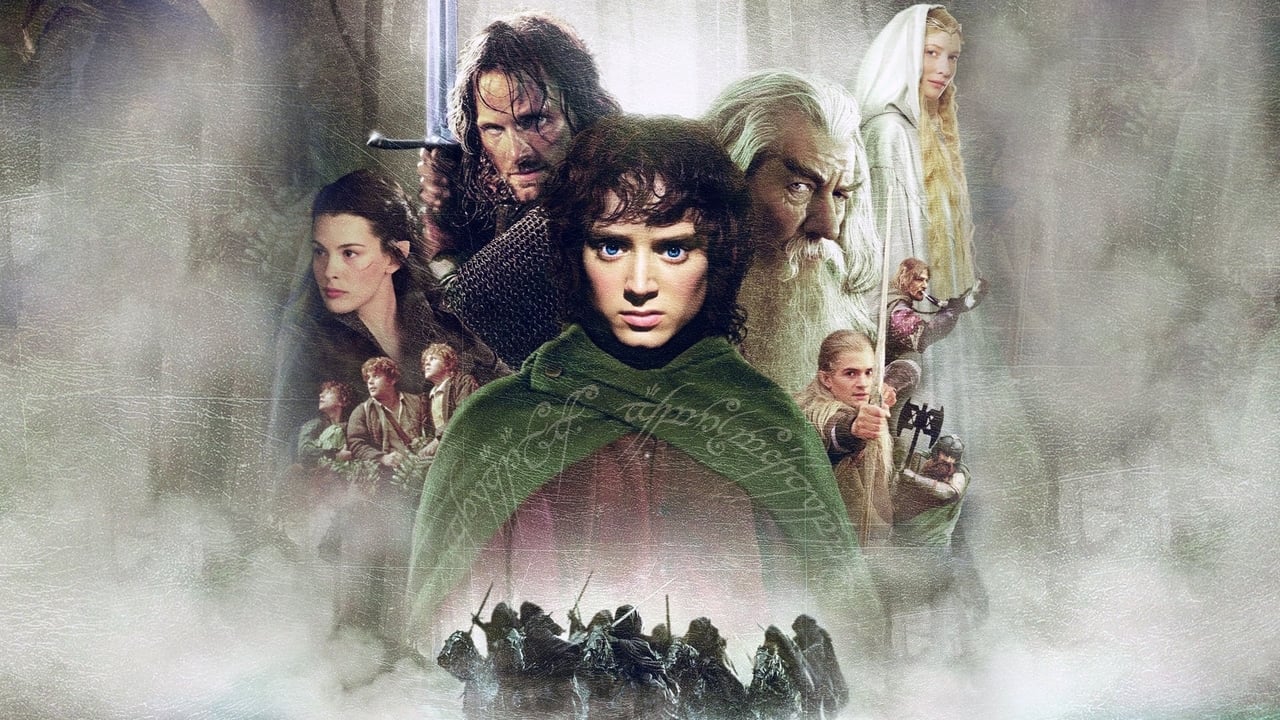
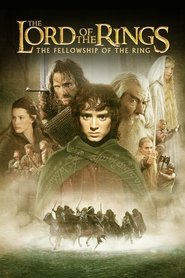
The Lord of the Rings The Fellowship of the Ring (2001)
Jackson, Walsh, and Boyens discuss condensing Tolkien's opening, introducing the Ring and fellowship, and restoring character scenes for the extended cut. They explain how New Zealand locations, forced perspective, sets at different scales, miniatures, pickups, and digital effects were combined to create Hobbiton, Rivendell, Moria, and Lothlórien.
- Duration
- 3h 29m
- Talk coverage
- 96%
- Words
- 35,396
- Speakers
- 3
Guided collection
The Lord of the Rings director commentaries
Peter Jackson, Fran Walsh, and Philippa Boyens discuss adaptation, production, and editing across the trilogy's extended editions. Read the tracks from The Fellowship of the Ring through The Return of the King.
Part 1 of 3
- 01 The Fellowship of the Ring Now reading
- 02 The Two Towers 2002
- 03 The Return of the King 2003
Commentary density
Highlights
Featured in
Topics
People mentioned
The film
- Director
- Peter Jackson
- Cinematographer
- Andrew Lesnie
- Writer
- Fran Walsh , Philippa Boyens , Peter Jackson
- Editor
- John Gilbert
- Runtime
- 179 min
- Also on
- OneSheet ↗ OverBlack ↗
- External
- IMDb ↗ TMDB ↗ Find on Amazon ↗
Transcript
35,396 words
Hi, I'm Peter Jackson, the director and co-writer and producer of The Lord of the Rings. Hi, I'm Fran. I have a writing credit on the film and a producing credit. Hi, I'm Philippa Boyens. I only have a writing credit on the film. And we're up here in our office in Miramar, New Zealand, having a look at this movie. A little bit of a different version of the film than what you're used to seeing in the theatres. This is the extended cut version. Got a few new scenes that none of you have seen before, so it'll be fun to talk about those. I think the beginning of the movie was probably the hardest thing, both in terms of conceiving it and writing it, and then when we edited the film, it was really difficult. But everything else seemed simple in comparison. Very early on, though, you knew you wanted something quite lyrical as the very, very opening thing, and you knew very early on that you wanted to open in black. When we did early drafts of the script, we attempted to write the prologue.
And it became so overstuffed with information and so sort of overburdened with its own enormity that we eventually decided we didn't need one. And we shot, obviously, everything for the prologue when we were doing the original photography. But then I remember that as we got into post-production and cutting, we felt that the prologue was possibly redundant and we developed an entirely different opening, which was more revolving around hobbits and what hobbits are. And so we left the prologue behind and we thought whatever information we haven't got, it can come out in Bag End with Gandalf and Frodo and he can speak to that. And we wrote several different kitchen scenes in Bag End with Gandalf throwing light on the events of the past. And I remember the decision to go back and revisit the idea of the prologue and to put the prologue back in happened when we were about to leave New Zealand to fly to London to do the scoring. What happened was we screened the movie for New Line
And one of their key and mandatory notes was, you must have a prologue, which was for us sort of like, oh, God, we're back there again. It had become a sort of hell for us. And so we found ourselves in England recording the score with an Avid machine jammed into one of the rooms in the house. Our editor, John Gilbert, came over with a bunch of footage. And it was up to us at that point to construct the prologue. And this had to happen sort of during the time we were also doing the score. It was a big strain. It was quite a hard thing. And basically the exact cut that's in the movie now is what got done in London during that period of time.
I always had the idea of doing a big battle in the prologue. That was really one of the attractions. And I looked at it in the sense of the opening of a James Bond film, where they always have their prologue with some real balls-to-the-wall kind of action scene. And I've always loved that as a concept in film, because as a device, it plucks you out of the world that you've been in that day. You're now in a cinema in the hands of the filmmakers, and suddenly you're being put into this incredible action sequence. You are given no time to think. You've only just sat down to watch the film, and there's all this stuff going on. And then by the time a prologue like that finishes, you're sort of totally in the hands of the filmmaker. And I wanted to do something similar. Obviously, we're telling the story of the ring, but I thought a battle would be a great way to start. And the story obviously gives us the battle, the last alliance where Sauron's destroyed.
He was the place, the one place that we were going to demonstrate the depth of his power. And if we failed to do that, then he really wasn't going to be very credible for three whole movies. So we knew it was very important that we sell him as this terrible and omnipotent, all-powerful force. A lot of these images you had in your mind right from the treatment, I remember the 90-page treatment, nothing changed, not over the five years. Isildur is played by Harry Sinclair, who's a long... term friend of ours. We've known Harry for about 10 or 12 years. Harry himself is a director. He has directed three feature films. I think if I remember rightly, you and Fran were trying to find the most corrupt and venal person you knew, wasn't it, Pete? And you thought about Harry. Well, yes. We'll go there in a second. The other thing that was really hard about the prologue was from what point of view do you tell this story? And I think in past attempts we'd told it through the point of view of Isildur.
solely or we tried to tell it from a kind of God's eye point of view we tried all these different points of view but in the end it wasn't until we came to understand that the ring is in fact a protagonist in this story in many ways it's an antagonist and that what we should do is tell the prologue from the ring's point of view it's who makes it for what purpose how they lose it who it comes to and who it then passes to that's the story of the prologue And when that became clear to us, it was a much easier thing to do. The footage we've added here does show the process of how the ring ultimately caused Isildur's death, and much clearer than what was in the theatrical version. The length of the prologue was always a little bit of a debate. Once we got to the point that we knew a prologue was going to be in the film, it was the very last stages of post-production.
Now, New Line started to impose rules on us, which they'd never done before. They started to say, well, you can have a prologue, but it's got to be no longer than two minutes. And our prologue's actually seven and a half minutes. And it was really, in a way, it was one of the biggest fights we ever had with the studio. And it was strange because it was the very last thing that happened before the film was finished. We'd been making this movie for three or four years with a very good relationship. And needless to say, we won the battle because we just felt... You can't make a prologue like this with all this information in a two-minute length of time. And what we did find in the process of writing the prologue, which was really valuable, is you can overload, of course. And one of those things that went into overload in earlier drafts of the prologue was the excessive use of proper names straight from Tolkien, such as naming Narsil and such as naming the lance of...
of Gil-galad. In fact, even naming Gil-galad himself, it just was too much information and it wasn't really until Pete got in there in post that you could feel the weight of just excessive information. Nida Dixon, our costume designer, worked very hard. Wherever there were descriptions of clothing, made by Professor Tolkien in any of his works, they were followed almost to the letter T. If you look closely, you'll see that Bilbo's vest does indeed have brass buttons. These are the brass buttons that famously pop off when he tries to escape, as told in The Hobbit. Oh yes, the red waistcoat with brass buttons. To make Ian Holm look younger, we glued some tabs to the side of his cheeks and pulled his skin back underneath his wig.
to pull the wrinkles out, because obviously Bilbo Baggins, as seen in the prologue, is 60 years younger than we see him later on in Bag End. Initially, we recorded the prologue, an early version, with Elijah, who was reading it as Frodo at the end of the journey. But when we heard it back, we really felt that it didn't seem to be part of Frodo's story. It was reflecting on things that he could not have known about. And then we thought possibly Gandalf would be a good person, and I think we actually did a recording with him. But we came to Kate in the end because of the agelessness of elves and the fact that Elrond appears in the prologue. He also speaks to it later in the film. It felt appropriate to us that she would almost bookmark this trilogy by opening it and closing it, as she does at the end of part three. We also liked the idea of using a female voice. She's got such a great voice, a strong and powerful voice. And we knew that she would use the language well.
One of the most significant changes from the theatrical version into this extended cut is the way that we introduced the Hobbits and particularly Bilbo Baggins. At the time that we thought, we didn't think we were going to have a prologue and we were going to open the movie with the writing of Bilbo's book and hearing his voice describing Hobbits. Once we decided to go back to the concept of including the prologue and the prologue became seven minutes long, then this sequence started to feel like there was just too much narration. To some degree, that's probably true, but it is such a delightful sequence that I just felt that it deserved to be seen. And so, you know, for good or bad, here it is on this extended cut. Obviously, it establishes the book that Bilbo is writing, which we now see later in Rivendell.
And it makes some sense of dialogue between Gandalf and Bilbo that happens later in the kitchen where Bilbo says, I want to find somewhere quiet to finish my book because we would have obviously seen him writing his book here. The Hobbit extras were a bunch of people from near Matamata in the North Island of New Zealand. We chose them for their looks, for their faces, for their sort of Hobbit-y qualities. And obviously here we get to see a little bit more of the Hobbiton set that we built. Here's Sean Astin's introduction. It's really the only time that we ever see him gardening, which is strange because obviously Sam Gamgee is a gardener. One of the things I guess we missed a little bit was the concept of the fact that he's a gardener. But we did have that shot originally in this early version of the opening. I like the way in which the hobbits and the society of Hobbiton and the essence of hobbits is set up. We were able to take the time to do that
whereas in the theatrical version of the film, we have to sort of jump straight in it. Sticklebacks, where is that boy? Frodo! This was a shot we did when we were doing pickups. We felt we hadn't really got the ideal introduction for Frodo, and we found this really pretty forest about an hour's drive north of where we're based, and we thought that Just this moment of Frodo reading a book under a tree would be a really great way to introduce his character. It was funny seeing him standing there after four months or so. And he was standing there with his feet on, in costume, with the hair on, just laughing and laughing that he was back being Frodo again. This was a very important scene because it's the first time we see the size of hobbits compared to a human, or in this case, a wizard, Gandalf. And we used very simple techniques
tricks for the scene there's no computer special effects at all we simply used a big Gandalf about eight foot tall person called Paul and a very small Frodo a four foot high person called Kiran that's Paul catching that's Kiran being cuddled by Ian that's Paul cuddling Elijah and so just between cutting between the big and small stand-ins if you like big and small doubles we were able to create the illusion without any complicated tricks at all I hear it's going to be a party of special magnificence In this version of the opening, the dialogue on the cart between Gandalf and Frodo is a little different. We just use different pieces of dialogue. And, you know, we were able to establish the mystery of the ring a little bit more. Not so much the ring, because we don't know it's the ring yet, but the fact that Bilbo Baggins has been acting kind of strange. That was something that we wanted to get a sense of the fact that he's...
He's got an unusual behavior going on that we ultimately later find as the ring, but at this moment it's concerning Frodo. I know one of the concerns that Fran had when we were contemplating this version for the theatrical release of the film was that she was worried that it would establish Bilbo as a slightly darker character. Bilbo is obviously a very lovable, cute hobbit, but the fact that we would first see him introduced in this way, being a little bit weird, acting in a slightly compulsive, unusual way, I know Fran was concerned that it would just, it would not really, it would lead to expectations of who Bilbo was that is not really true, that obviously he's just having a strange little episode here because of the way that this ring is affecting him, but he is basically, obviously, his usual lovable self. but it's possibly not the best way to introduce the character by seeing him in this manner first. The shots here of Gandalf and Frodo talking were done after the original Hobbiton scenes were shot. One of the difficult things with the beginning of the film was the fact that we have to talk about Bilbo
a character we don't really know, we have to talk about the fact that he's leaving and there's something strange going on. And just the concept of setting all that stuff up was a little bit tricky. We didn't want to be too dark and too ominous too early because there's so much of that in the film. We wanted to show Frodo, especially this, part of what we're trying to do here is show this young boy who has a very carefree life. We worked quite hard to do that. Hobbiton is a location in Matamata in the North Island of New Zealand. And we spent at least a year before we were due to shoot in building Hobbiton. The bridge is completely fabricated. It was built by the New Zealand Army out of polystyrene. The Green Dragon pub was just constructed inside of a small lake. The fireworks in the back of the car are done by a computer. We just had the little smoke bombs going off and they were all computer fizzy effects.
All of our Hobbit extras were gathered from the local farming community at Matamata. We just looked for the best Hobbit faces we could. Because we knew kind of what Hobbits should look like. They had to be slightly short and squat and have large eyes and round faces. A couple of those extras got married, did you know that? They met on set and got married. This shot shows the size of the location. It was literally a huge area of land, probably at least a mile wide. a mile and a half square that we landscaped. All of the roads were built, the hobbit hods were built, the trees, often the trees were planted, the gardens were planted. None of this existed. It's a lot of work to go in for what's a relatively short amount of screen time really that we see the exterior of Hobbiton, but we felt that you just had to sell it. It couldn't look artificial or fake in any way possible. This shot here of Ian banging on the door was Ian's very first shot in the film.
This is day one. He'd just come off X-Men, flown to New Zealand January 2000, and this was the very first scene that we shot. He really hadn't quite figured out Gandalf, but he was doing a pretty good job for his first day. The Ian Holm shots were actually done inside a studio from the location of Matamata, that's Ian McKellen, and then when you cut to Ian Holm, we're inside a studio. Andrew Lesney, our cinematographer, did a brilliant job of matching the indoors and outdoors. Now, some of the scale things tricks in the film were done with very complicated methods and I wanted to really spend a lot of time on the shot here where Ian McKellen and Ian Holm are together in the hallway and we shot them separately. Ian McKellen was against blue screen and the hat handover with the stick was the most tricky part of the shot which was basically involving different sized hats, different sized sticks and blending the two together with a computer.
It was just a situation where if we did a few of these complicated shots, time-consuming, difficult shots, I thought it would sell the concept of scale for the rest of the film. Now, when Gandalf bangs his head here, that was actually a mistake, that Ian didn't intend to do that. It wasn't in our script. It was something that he did accidentally, and we decided to keep it in the film. Fortunately, he kept acting. He didn't stop. He sold it really well. He never stops. He always keeps going. And here, of course, is Thorin Oakenshield's map from The Hobbit, the map used by Bilbo and the Company of Dwarves and Gandalf to find the secret door into the Lonely Mountain. There was a little bit of a confusion as to what happened to Thorin's map. We had it written in there, and we had a note to check factually what happened to Thorin's map. And the person we sent on to that was Henry Mortenson. Viggo Mortenson's son was our researcher on that. And he went in there and double-checked what happened to Thorin's map and said, yes, no, it survived.
Thank heavens for Henry. Thank heavens for Henry. One of the things I remember was before this project even got greenlit, you had a wish list and your wish list for Bilbo Baggins was sitting at home. And I don't think we ever saw anybody else as Bilbo. So it was just a dream come true watching him bring Bilbo to life. This shot is actually not a computer shot. It looks like one because you've got the two actors in the same shot, but it's done with forced perspective. Now, the table that Ian Holm is pouring on is a different size table to what Ian McKellen's sitting on, and there's actually five or six feet. This table's split in half, chopped down in the middle. The join is hidden by all of the different objects that are on the table, but there's actually a five or six foot gap between the two halves of the table in that wide shot, and...
The two actors are in the same room together, but they're a lot more separated by distance than what appears on film. And what you actually see is the appearance that one character is very small and one's very big, and it's simply because the small person is further away. It's called forced perspective. I think I'm right in saying this was the first time Ian Holm and Ian McKellen had... acted together in a film. Yeah, they'd never worked together. They knew each other slightly, but they'd never been in anything together, and I think they had a lot of fun. They did. They were great days these days, because they were both... In a way, they were both, you know, really determined to make their scenes as special as they possibly could. They only had two or three scenes together, and they wanted to make the most of them. I think one of the... If I remember rightly, in Home... did make the inquiry. I don't think Gandalf had been cast when you approached him, and he did ask. One of the first questions was, who's playing Gandalf? The smoking scene is one that I thought I would have to fight for. I was sure at some stage, because it's Hollywood,
somebody would come to me and say, you can't show smoking in a film. It's not politically correct. Yeah, it's my favorite scene, the smoke ship. I always wanted to have the smoke ship. And I was really gearing myself up for a hell of a fight when the day came that I was told to get rid of the smoking scene, but it never did. Nobody ever breathed a word about it. In early address, we actually had a running gag that Gandalf had given up smoking. A big scene like the Hobbit party is one of those scenes where you get all your friends and family to come along to be extras. It's a lot of fun. They get to wear funny clothes and wigs. And there's quite a few of our family involved in this scene. I know that there's a shot of Fran's uncle. Tom, there he is there. That's Fran's uncle. And my cousin Jill pops up at some stage around here. That's Fran's uncle Tom again shaking Ian Holm's hand. And I remember this was a lot of fun to shoot on this day. We shot this about two or three days and
We needed three cameras, so I got to operate one of the cameras. So a few of the shots of the dancing and the partying is actually me filming it, which is a lot of fun. I've always loved operating cameras, and I don't do it quite as often as what I like. If you look very closely at the band, there's several shots you'll see that Billy Boyd is actually playing bass guitar. There's another little family cameo. The two Hobbit children that you see there are actually Fran and my... Two children. The cutest hobbits in Hobbiton. Originally it was five minutes longer than that, of course. Oh, yes. Actually, there's an interesting bit of trivia in here. In all three films, every single actor was wigged except for one character, and that was Billy Jackson, who had the perfect hobbit hair and never had to be wigged. But everybody else you see is wearing a wig. There's supposed to be 144 hobbits at Bilbo's party and I think due to budgetary constraints that we had about 100. So don't count them too closely because you might find that there's a few missing. It was one gross of hobbits. Right. This is a little...
piece that got trimmed out of the theatrical version. It's the return of the Sackville Bagginses back into our story after Bilbo says hi to Mrs Bracegirdle. He just gets wind that his feared relatives are on the prowl trying to look for him. You know, this sense of Bilbo's paranoia, the fact that his relations are trying to get the house from under him is something that's very humorous in the book, so we wanted to have a sense of it in the movie. But what this also gives us, which we didn't have in the theatrical version, is this little scene between Elijah and Ian Holm, that in actual fact, in the movie that got screened in the theatres, the only... time that Frodo and Bilbo actually connect is in the Rivendell scene much later that we we managed to really you know to cut the movie for the theaters in a way that Bilbo and Frodo never actually shared a scene together at the beginning of the film but one was shot and here it is
It plays into the concept that Bilbo knows that he's going to be leaving. He wants to go away to finish his book and he just hasn't had the courage to break the news to Frodo. It's one of those typically English things where you sort of skirt around the issue and never really confront it and he just doesn't know how to tell Frodo that he's going to be leaving. The gag with the firework dragon is one of those situations where there was a mention of it in the book. I can't remember quite what the book says but It wasn't used in the same way that we do it in the film. I don't think Mary and Pippin were involved. No, they don't. It did say something about a dragon, a firework dragon sort of goes out of control or something. It's the first scene I wrote for you. Yeah, and so it was fun to take these moments from the book and kind of develop them.
into something that has a little bit more significance. And was doing more than one thing. Yeah, it was introducing Mary and Pippin is what it was, which was great. And it's also magic. I didn't want to have too much magic in the movie because I don't like magic in fantasy films. But having a dragon like this, a firework dragon, is a pretty cool thing. My first introduction to The Lord of the Rings was when I saw the Ralph Bakshi cartoon film in 1978. And even though our movie obviously is stylistically very different and the design is different, there is one shot which I regard as my homage to the cartoon, because it did inspire me to want to read the book, and that's the shot of Proudfoot shouting Proudfeet, where I deliberately copied the angle that Ralph Bakshi used, which I thought was brilliant. If you look very closely in the wide shots, you'll actually see that the cake is on fire.
The candles sort of set fire to the polystyrene, and even though the cameras kept rolling, the cake was slowly starting to burn like an inferno. But Ian Holm was doing such a great job, we just wanted to keep the shots going, and it actually started to burn the entire cake down. That's what 111 candles will do for you. It was interesting when we came to do some ADR on this that Sir Ian Holm was absolutely brilliant at ADR and usually only requires one or two takes. ADR is additional dialogue recording. In this particular scene where he played it slightly tipsy on the day, he could not ADR these lines and he just turned and said to us in the ADR session, can you clean this up? I can't redo it. We added a little bit of psychological...
intensity to this that's not really in the book and in the book the disappearance of bilbo is like a total lark a real tricky plays and we just wanted to show that the ring is actually having a little bit more of a potent effect on bilbo and it's starting to make him look a little odd and of course we made the decision early on that frodo is suspicious of bilbo leaving but has no idea that he is in fact going to do it as opposed to the story in the book where frodo was fully in on bilbo's plans and enjoys the joke We also had to drop the idea that it was Frodo's birthday as well as Bilbo's, because often those things are just too complicated and confusing for what value you get from them. One of my favourite things in the book is that hobbits give presents on their birthdays instead of receiving them. It's those sort of little things that you would love to do, but just stops the film dead if you attempt to do them. And on the wall, if you look closely, you'll see two portraits, which is Bilbo's parents.
And if you look even closer, you'll see they bear a striking resemblance to Peter Jackson and Fran Walsh. This was a difficult shot because it's so long. If you just look at it, it just keeps going and going and going without cutting. And I wanted to do that deliberately. Again, I wanted to spend a lot of time. This single shot took us an entire day to shoot because I really wanted to sell the idea, again, of Ian Holm and Ian McKellen being together and being different sizes. And I thought it was worth it because the shot's over a minute long, which means you're not spending the entire day doing a eight or nine second difficult shot, you're doing a minute long difficult shot, so it makes the time worthwhile. I think Ian Holm does this brilliantly. This is probably one of my favourite scenes in the entire film. I just think that you've just got to imagine how difficult it is to sell the idea without making it look hammy or cheesy, and he's just doing brilliant, brilliant work here. So Ian Holm played...
Frodo in the BBC radio adaptation of The Lord of the Rings. He was very, very familiar with the world. When you look at the scenes in Bag End, just forgetting the trick shots that have the two actors in the scenes at the same time, what you're seeing is actually two completely different sets. We built Bag End at two different sizes. So every time that you're seeing Ian Holm, you're looking at a Bag End which is large, which makes him look like he's the right size. And when you look at Ian McKellen, you're seeing a much smaller bag end, one in which we all had to bend over and stoop as we went in the door. And we just simply, they were exactly the same. The books on the shelves were built to different scales. The candles, the candlesticks, the furniture was all manufactured at two different sizes. They're exact replicas of each other, except one of them is 33% smaller than the other. I love this bag end set so much.
It felt so comfortable that when we finished shooting with it, it was due to be destroyed, as all of our sets are. They basically get broken up and junked when the filming's finished, and I couldn't bear that to happen to Bag End, so I approached New Line, and I said, if I can pay for my own storage, can I keep the Bag End set? And they agreed, so I've got Bag End in storage, and one day I'm going to put it into the side of the hill. I'm going to actually make my own hobbit hole because it's just so comfortable. It's an amazing experience to be in a house where everything's round. It's something like being in the womb. It's sort of very, very peaceful and tranquil and something karmic about it. So I'm looking forward to one day being able to spend weekends in Bag End. I thought this was conceptually brilliant. I remember reading this again. This was in your treatment.
Peter, that the ring doesn't just fall, it almost adheres. It almost sticks to the palm of his hand, and then only reluctantly. And then when the ring lands, we wanted to put this big, heavy sound effect on, so it goes thump, like it weighs a hell of a lot more than what it really should. This was so beautifully done, this scene, I believe. And it is one of those moments as a Tolkien fan, someone who's read the book, where these two actors truly are Bilbo Baggins and Gandalf the Grey, I believe. and you wouldn't know that these two really didn't know each other that well. The song is taken of course from the poem and the music, the tune was composed by Fran. She came up with that the last second. The book is very different in this whole area and in a way it was It was tricky to figure out how to get Bilbo on the road, how to make the ring stay behind with Frodo, what Gandalf's attitude was. The book is kind of vaguely similar, but very, very different. And we grappled with this. We basically wanted to make the film a little bit more tense, I guess, to keep the pressure on more so than in the book.
And so we concentrated on making the ring and the threat of the ring foremost in the way that these scenes played themselves out. It was very difficult to give the audience a sense that Gandalf had, up until this moment, had no suspicions about this ring and that it was just a trinket that Bilbo had found. Maybe a trinket that he'd always been uneasy about, but nothing more than that. But I think if you remember back to the prologue, Very soon, Peter wanted a sense that something had been activated, and that's what we tried to set up in the prologue, that the time was coming soon. And that is actually what happens at the end of the scene. You get a sense that evil has awoken, and the ring, almost like a machine, has been activated. The ring is yours.
There's Ian McKellen in his small little set, and there's Elijah in his big set. Questions that need answering. You've only just arrived. I don't understand. But in that shot, they're both in the same set? Do you have Ian up? Yeah, Ian was up in a box, and then we did all sorts of tricks. I mean, that's not Elijah there. That's little Kieran, who was only four foot tall. A lot of it's pretty low tech, quite simple. This is the big shot of Baradua where a miniature, I guess about 15 foot tall was used. The lava's just computer generated and I wanted to do one big shot that just made you feel the size and expanse of this huge big tower. It's under construction. I mean, when you see this tower in the second film, in the third movie, it's actually finished. This is only like a third of the way as high as what it ultimately reaches. The idea here, it's a little bit difficult to tell, but the idea here is that the orcs are still building it. People think that this is the Black Tower, but it's actually Minas Morgul. It's a different castle that we see again in part three.
Now, the city of Minas Tirith that we're looking at here plays a big role in The Return of the King, another third of the movies. And you'll be seeing a lot more of the city. About half the movie, I guess, probably takes place there. It was interesting for Sir Ian McKellen in this shot when he's walking through the streets of Gondor. He hadn't put that costume on for probably about six months. He'd been Gandalf the White for a very long time. Hopefully they'd washed it. I guess possibly not, because he was very much into being as grungy a Gandalf the Grey as he could be. We discussed whether we should actually title this as Gondor, and in the end we decided just to let it flow. Yeah, we thought a lot about whether we should throw subtitles up on the screen to identify places, little captions sort of popping up, but we just thought at the end of the day it could be a little bit cheesy, and we decided not to do it. I think so long as people can follow the story, they don't need to know that this is Minas Tirith.
um that this is the ancient you know the archives of the citadel they i think this the pictures at least tell you what's going on this is a very tiny little section of the of the book it's it's referenced in the council of elrond in the book where gandalf talks about going to minas tirith and how denethor lets him spend some time studying in the archives to try to find out information about the ring and So we took it from this little mention in the council and we actually put it up at the beginning of the film here because we thought it would be quite an evocative scene. This was a scene that we shot after filming finished. It was a little pick-up that we did because we felt we wanted to just show the riders, the black riders on the borders of the Shire just getting closer, just to start to up the tension. And a little bit of movie trivia here. I do believe that
One of our actors voiced that black rider. I don't know if you know who it is, but it's actually Andy Serkis who also voices Gollum. We wanted to get a great voice. We were recording some Gollum dialogue and we said to Andy, do you want to try a black rider voice for us? And so Andy did it. Now this is a scene that I really did regret cutting out of the theatrical version and we did it only for momentum reasons because I just love it. I love the song. Fran actually wrote this song for the boys to sing. We did alter it a little, probably to the dismay of some of the fans. We played with it. We had a little bit of fun. It's a chance to see the hobbits in their true essence, in their true environment, before the adventure begins. And it also uses these other hobbits with their typical kind of paranoid, suspicious, rumor-mongering. It's a hobbit trait that's very, very dominant in the books.
And another aspect of the books that we found difficult to incorporate into the film, but this is the scene that we shot that sort of gives us that feeling that hobbits are gossipy and they, you know, they love little stories and they're always suspicious about the outside world and all those kind of things that makes hobbits really cute. And I love the way that Frodo reacts to those, to the thought of adventures there. But in the end, why it didn't survive in the theatrical cut was because There's only so much time you can take establishing Hobbiton before you really move your plot ahead and we felt we were lingering there too long and it wasn't furthering the story for us so it didn't stay. Bag End was obviously an exterior set on the location on the farm and then this was the studio when Frodo comes in the door. This is actually a case where we changed the timeline in the book.
I think from memory 17 years goes past in the book from the time that Gandalf leaves to find out about the ring to the time that he arrives back in Hobbiton to warn Frodo that this is Sauron's ring. In our movie we felt that 17 years was just too long a time so we reduced it to seeming like a few months had gone by. Well for those who know the book they'll know that there are fairly leisurely time frames. in The Fellowship of the Ring. And this was not a luxury that we could indulge in the making of the film. We had to compress the timeframes in order to get the story underway. But I like the idea that Gandalf had been sleeping under ditches and hedgerows and had had this sort of like this tramp-like existence trying to get himself right across Middle Earth, a sort of six or seven week journey to rush back to Bag End. So that's why we had Gandalf looking so dishevelled.
The letters on the ring are a CG effect. There was a lot of debate about whether they're on the outside of the ring or the inside of the ring, and we carefully read the book and we found out that it's actually both. We actually really struggled with figuring out a way that we could get the entire poem into the movie. And as it is, we failed, because we don't have the whole poem in there. We just have this version, which is the last verse of the poem. But we did actually film the entire thing at the Council of Elrond, where we had Hugo Weaving sing the entire poem. But we ultimately cut that out of the movie. You know, in the book, you can enter into the sort of psychological horror of the ring, and it doesn't need any, you know, augmentation. But in a film, it's less easy to sell that. And so we knew that it needed some kind of literal voice in the movie. It needed to interact to some degree with the characters. So we thought long and hard about what kind of voice it would have. And ultimately, it's obviously Sauron's voice. And we worked with an English actor, Alan Howard,
to develop a rather chilling rendition of Sauron's voice. This is one of those nightmare scenes that has to do such a lot in a little space of time, basically set up the entire backstory. And we kept struggling with exactly what to say and how to say it, and we ended up filming the scene three times. And the final scene that you're watching now is like an amalgam of all three versions. So there's some shots that were done while we were shooting the movie, and then there's some shots that were done after the completion of the shoot. Ian and Elijah came back to New Zealand, and then they came back later to do the scene yet one last time, and we put some of that in too. So the whole scene has been sort of a bit of a Frankenstein number of each of those three filming occasions. Do you remember, Pete, when we didn't have a prologue and all of the prologue information was in this scene? Yeah.
It really was longer. It was like about three times as long. It was interminable. We had all the flashbacks to The Last Alliance, didn't we? All the flashbacks to Elrond and Isildur. And Ian, he did about seven pages. That's right. Without the prologue, this was the scene that was going to have all that information. But I have to say, if you shot that three times, Pete, we wrote it about 50 different times, 50 different versions. Yes, we suffered. We did suffer. When we actually put the prologue back into the film, it lightened the scene and it enabled us to strip it down and keep it relatively manageable in terms of its information and content. It became for us a scene that wasn't so much overburdened with information as one where we could play more of the power of the ring in the presence of Sauron.
There's great stuff in the book that we just couldn't put into the movie, and I've always loved the concept that when Gandalf leaves Bag End, he goes and joins up with Aragorn, and the two of them hunt Gollum down. And so we've got this little remnant, which is Gollum being tortured, but we never could obviously do the bit where Aragorn and Gandalf actually track Gollum down. But it's a neat idea. It would have been great to have been able to squeeze it in the film somehow. This is one of those situations where you're trying to explain the most obvious thing to people. Well, why doesn't Frodo just give the ring to Gandalf? Why can't Gandalf just take it? It's those little bits of common sense that audiences always come up with that you've got to cover yourself when you're doing the movie. And it's in the book, of course, too, the fact that Gandalf would be kind of, he'd be a horrific version of Sauron if he ever got hold of the ring himself.
It's fun just to feel Gandalf's temptation, though. What must I do? You must leave. And leave quickly. Where? Where do I go? Get out of the shire. Make for the vintage of Bree. Bree. The energy of the scene is like in deliberate contrast to the book as well, because the departure from Hobbiton is a very leisurely affair in the book. And we wanted to give the film a bit of heat. So that's why we deliberately kind of cranked it up through here to really try to light a fire under the story at this stage. Because one of the problems with adapting the book was always the fact of how you get a bit of momentum and heat under this opening section. This next piece here where Ian is speaking is actually something that Ian wanted, a piece that he found in the book that we decided we couldn't
We couldn't afford to go there, and this is something he really, really wanted to do. And it worked beautifully. You remember in a really early version of the script, we also introduced Mary and Pippin in the scene. Yes. Remember that? Yeah. I think we had all three hobbits. Sam wasn't outside the window in that version. He was eavesdropping behind a door, and then when Gandalf pulls the door open, all three of them, Sam and Mary and Pippin, all kind of fall onto the floor, tumble onto the floor. And that was how we were going to get Mary and Pippin into it at some point, and then we decided to sort of separate it and have them a bit later. That is, I heard a good deal about a ring and a dark lord and something about the end of the world, but please, Mr Gandalf, sir, don't hurt me. Don't hurt me in anything. Well, they were well known, these big gaps of time, you know, that there were 17 years between Gandalf's two visits and things like this to bag end. We knew this, and yet we felt that that was far too...
too leisurely, you know, that we did feel. And that Frodo takes his time. He's given his mission by Gandalf and he takes another six months or whatever it is thinking about it. And it just, again, that tends to completely undermine any sense of dramatic urgency in the storytelling. So we couldn't honour that part of the book at all. We had to really compress and accelerate the timeframes for the movie. So the main push here for us was really to get Frodo on the road as quickly as possible and get them doing exactly what they're doing, setting out right now. Always the most difficult part of the movie, this, because the travel and the journey and all its detail is such an important part of the book. It's so evocative. And yet in the movie,
There's only a certain amount of it you can have before audiences start to just, you know, feel, well, let's get on with it. So we really, you know, limited ourselves to three shots of them walking. We obviously shot a whole lot more than three, and we chose our favorite three. Now people apparently claim to have seen a car driving along the hill in these wide shots. I've looked very, very hard, and I just can't see it. I don't know what people are talking about. It'll be the farthest away from home. There's a line in the book where Sam says, if I go one more step, it'll be further than I've ever done before. I just thought it'd be nice to build a scene around, so I asked Philip and Fran to write something. I think those pages actually literally went out at about 11 o'clock the night before the day you shot them. We squeezed it in. We weren't supposed to film it because nobody even knew about it, but we managed to find an hour at the end of the day.
And we only shot a couple of takes. Scenes like that don't hit the schedule, do they? They don't hit the schedule. Or the call sheet. No, and the studio don't even know. Nobody knows they're there. You've just got to bang them out the day before and then go try and squeeze them in somewhere. Pages are distributed after lunch. Yeah. This was a sequence that we deleted from the theatrical version of the film. And it's actually a sequence in which a couple of stills, a couple of photographic images have appeared in lots of books and magazines. And I'm sure... I'm sure people that were paying attention wondered when they saw the movie just the fact that these shots were not actually seen. I know Frodo and the Tree was quite commonly appeared in magazines at the time of the film's release. And another shot that I saw a lot of in magazines was this one here of Frodo and Sam peering over the log. So here you get to finally see where these shots came from.
We like the idea of this little episode. It's sort of from the book. Obviously in the book they stop and they talk to these elves that they encounter walking through the Shire, but in the movie we never filmed the conversation, but we did want it to at least get the feeling of the sadness of the elves leaving Middle-earth. It's something that we encounter again when we reach Rivendell, but we initially didn't intend for Rivendell to be the first time that we encounter elves. And I liked... Just this little moment, it's very slight, but it just acknowledges the fact that hobbits, which are very comfort-loving creatures, are now having to sleep rough. They're not in their own bed, something that Frodo manages much better than Sam, who really is not used to this sort of lifestyle in the slightest. These were amongst the very first shots that we ever did. I think this particular shot of the boys by the campfire was shot on our third day of shooting.
Where was that shot, Pete? That was down the South Island, up past Glenorchy. This is almost completely CG, this shot. Everything is digital in this one. The horse, the riders, the trees. Everything. And here we have Christopher Lee. His first entrance in the movie. It was a great thrill working with Christopher because I'd always been a fan of the old Hammer horror movies. Working with somebody like that that you've admired for 30 years is really fun, a lot of fun. We ended up shooting a lot of this dialogue twice. This is a bit like the situation in Bag End where it's all plot, explanatory stuff. It's exposition or dialogue. We shot the scenes with Gandalf and Saruman talking, both the exterior scene in the garden and when they go into the chamber. We shot it early in our shoot. And by the time we'd put the film together, we wanted to have different information. And so we basically had to get them back to New Zealand and reshoot virtually the entire conversation because what they were saying now was different. We just simply wanted them to convey different information to the audience. Well, part of it was identifying Sauron as giving him an identity separate to
the character who appears in the prologue. And so we specifically had Chris Lee talk about him as the eye and how it operated dramatically. Yeah, the eye is the bane of my life. The eye was such a horror to dramatize. To have your central villain be nothing more than a flaming eyeball is a little bit of a problem. Of course, what we did is we elevated Saruman, in a sense, to the villainary role. and kept the eye relatively minor player. It's just a hard thing to bring to cinema. It's a wonderful notion, but it works very much, you know, it's far better in novel form, I think, than as a storytelling device for cinema. We had a lot of problem deciding what Saruman, Saruman's agenda, and we played it in several different ways. We started off with the concept that Saruman was looking to Gandalf as an ally to go for the ring and use it against Sauron. We also tried a more subtle version of that where you're not quite sure. But eventually we decided to stay closer to the books, I think, and to reveal Saruman attempting to take the ring for himself as he does in the books.
a little later on. The sequence where the wizards fight was always a, it was a problem for me because I really don't like wizards in movies. I don't like the idea of old guys firing blue lightning out of their fingertips and doing all the usual wizardy type stuff. And so I thought that the most interesting fight would be one where we strip away the magic to a large degree. and we simply see two old guys beating the hell out of each other. I thought that would at least be kind of humorous. And so that's basically what we did. We kept the fight as physical as possible. And the idea was old bones and bodies cracking onto the marble. You can almost just feel the bruises starting to form. Of course, one
Doesn't need to be a rocket scientist to guess that not a lot of this was actually Ian McKellen and Christopher Lee. That's the great thing with doing stunt fights with guys with long hair and beards is that you can disguise a stuntman relatively well. I think even the stuntman sustained some injuries from that scene, didn't he? Yeah, one of them cracked their head badly on the side of a trampoline when they were going to land on a trampoline and they fell short and they actually hit the metal part of the trampoline on the back of their head.
This cornfield was in a part of the country that has a lot of cornfields. We didn't grow it, especially for the film, although we did talk about growing a cornfield, but as it was, the art department went up there the day before and they chopped this path through the corn so that we could go and shoot this scene. We shot the entire scene in a day. It was one of those really quick shooting days where we did a lot of work very, very fast. It was just one of those situations of how you introduce Mary and Pippin because how they're introduced in the book just didn't really have the sharpness and the momentum that we needed for the movie, so it was another one of those changes that we had to make. When this was first filmed, Samwise is saying, trust a brandybuck and a toque, but further investigation revealed that it's actually toque, which suited our purposes brilliantly, because when Billy first showed up, he was quite prepared to do a Gloucester accent, and he did it very well, but he tended to lose some of his natural brilliant comic timing.
a little bit. But it wasn't even that. What we discovered, when we discovered that the proper pronunciation is toque, I did a little bit more reading and realised, of course, the toques, the head of the family is the thane, and then one of their ancestors invented golf. I decided that I think Professor Tolkien was in fact telling us that he was Scottish. So that was brilliant. Out of all the stunts that we did in the movies, We had very few injuries. We were very, very lucky. And obviously we planned things as well as we could. But one of the more serious injuries we had was this moment here that when those guys fall, one of the stuntmen actually dislocated his shoulder on set and had to be carted away to hospital. It was like one of those very simple things that shouldn't have gone wrong. And, you know, you would never have thought it would have led to an injury, but it was just a freaky accident. This was the first day, wasn't it? The first day of shooting, yeah.
Yep, this was pretty much one of the first times that the boys were ever together saying dialogue together in the movie. I think we should get off the road. Did you always have in mind that tracking Zoom shot for that moment? Yeah, it's an Alfred Hitchcock shot that he designed it, and then I think Spielberg's used it a few times. It's become a little bit of a cliche, but I thought we could get away with it there. The way that the road concertinas, it just sort of creates a sense of unease because you don't quite know what you're looking at, but it defies the laws of physics in a way. It's kind of a weird effect. The tree that they hide under is not real. Well, it is a real tree, but it was on a farm many miles away, and so the guys chainsawed it up and brought it to Mount Victoria, and then they assembled it again. So it's sort of a real tree, but it didn't really belong there.
And this looks like it's in some remote wooded area, but it's actually right in the middle of the city. The middle of Wellington City is a park called Mount Victoria Park. It's surrounded by skyscrapers, and you just have this little green belt. This was an idea you had earlier, wasn't it, about the disturbance of nature at the presence of the rider? Yeah, I don't know how well it comes across in the movie. The idea was that as soon as this black rider appears, all the insects flee. They basically just run away. And I don't quite know whether that comes across like that, but I guess it's sort of interesting. I think it does. Yeah. I remember seeing audition tapes for worms and spiders and earwigs. Oh, it was horrible. I hate them. Yeah. But that was really funny, after seeing hours and hours of audition tapes of actors that have to audition spiders and worms. Oh, yes. But the weirdest thing was we had, was it a weta? And that big centipede. Yes, we had a weta and a centipede. And a weta is, you know, this New Zealand, it's rather...
a frightening looking New Zealand, it's like a big large cricket really, isn't it, looking thing and the centipede murdered it on camera. I didn't know they were so dangerous. It was terrible. It turned into a snuff moment. The centipede took out the wetter? The centipede wrapped itself around the wetter and kind of killed it. It was horrible. It just sort of crushed it to pieces. It was a bit of a tragic moment. We were horrified. What is going on? That black rider was looking for something. Or someone. Mount Victoria again? Yep. Night time? Yep. And that is not Mount Victoria. That's Nelson. That's Nelson, yeah. Now these shots of the horse are on Mount Victoria at night, at like 2 o'clock in the morning. These shots of the hobbits are at like 2 o'clock in the afternoon. That was another scene we shot in Nelson while we were waiting for the weather to clear on the mountains.
is we took the guys into the trees and we shot all these close-ups. And we sort of put a dark cover over the trees, made it as dark as we could, and we filmed them so they'd match. All this dialogue here is actually done in the middle of the day. But now we're back to Mount Victoria in the middle of the night. And this stuff here was shot on my birthday. This was the first birthday I had. 1999. I had two of them. Yeah, I had two of them while we were shooting, but this was the first one. That was your 29th birthday. Oh, I don't know. It was my 16th, wasn't it? Seems like such a long time ago now. Oh, this was funny. This was one of those great nights, too, where you get a hell of a lot of stuff shot. And this Bucklebury Ferry was built, again, up in Otaki, about 20 miles north of where we were based. And we shot this all through the night.
and Elijah was just great. He ran another, what's this jump? Because this is a real jump, it's not a stuntman, it's actually Elijah and he does this huge jump, bang. It looks pretty, it's more dangerous than what it actually looks like because the boat was really floating and floating away and he had to make that huge leap. And what was funny about this night too was the Bucklebury Ferry started to sink and our producer Barry Osborne who has some yachting experience sort of stood on there about three o'clock in the morning trying to explain to the crew how bilge pumps work and we had these hand sort of operated pumps that pump the water out of the Bucklebury ferry so that it wouldn't sink. Come on. This is in a, actually a sort of suburban hillside really. Yeah, very close to Wellington. I love the idea of using rain in the film. I wanted to get this impression that Middle Earth is organic and gritty and real and it doesn't, you know, it doesn't sort of feel like a movie world. It feels real. I was determined to just shoot in the rain.
That shot of Mary looking backwards was actually, I remember that night, that was Dominic on his knees in the mud with the scale doubles in front of him, wasn't it? Yeah. And then we're tilting up to see a matte painting of Bree. And the set that we built for Bree, these streets, is actually an old army base, Fort Dorset. It was a military barracks from World War II. And we just nailed all these facades right onto the side of the army barracks. That particularly dodgy-looking extra there is actually Peter Jackson. Somebody actually thought we had a carrot gag going on. Oh, OK. You had the carrot in your hand? Well, I did ask why the carrot, because I thought it was bordering on silly, and possibly still is. And he said it was because he couldn't get his pipe to light. The truth was I had a couple of puffs in a pipe and felt sick. Oh.
I don't want to discuss my relationship with carrots. No, it is one of the hidden themes. Oh, is it? Hidden themes, yes, big carrot theme. Root vegetables. Yes. I always liked this scene. It was one of the very first scenes that we shot. We did this probably about four or five days after the start of the shoot. And we'd shot the scene of hiding under the log from the Black Riders on our first two or three days. And then we went straight into this. And I think this really nailed for the actors what this movie was all about. Because, you know, suddenly the hobbits were there interacting with these big people. And I think that all four of them, all four of the actors, really started to get what they were, where they were, what their role in this story was really about. You know, small people in a big world. And we had to build this bar twice. We built one scale...
that was huge so that Elijah and the other hobbits would look tiny. And then we built the bar normal size so we could film the normal people. Some of these big people that are walking around in the background are actually people on stilts. Like that guy there. See that guy walking past Mary? He's actually a person on stilts. And that one behind there. It's actually a five foot tall gymnast. Yeah, a five foot tall gymnast on three foot high stilts that made them look like big people. We had fun casting this scene because we basically wanted to get extras that were the most unusual, odd, seedy looking people that we could possibly find. Because I thought Bree was a great moment to make the hobbits feel very much like fish out of water that...
You know, they're not in the Shire anymore. They're not in the safety of their own world. I wanted to try to make it feel quite ominous. Dangerous folk they are, wandering the wild. What his right name is, I've never heard. Straight out of the book. You know, it's wonderful to take those moments that are really evocative and you remember them so well, like the description of Tolkien's of Strider sitting in the corner of the room, and it's great to be able to just, like, nail them on screen. It was a lot of fun. to recreate things exactly out of the book. Obviously, we had to make a lot of changes in some areas, but occasionally we were able to just do exactly what he described, which was a lot of fun. The beer gag with Pippin was, again, it was an on-set, last-minute thought, and the art department had to run around and try and find a ginormous, really, really large mug that could look like a pipe mug to a hobbit. This is quite a big departure from the book here, isn't it? In terms of how Frodo, the ring comes to be on Frodo's finger.
It is and it isn't. I mean, we could never do the song because we didn't have enough time, but Pippin really is responsible for... Also, I never liked the idea of the song because to have Frodo singing and doing a little dance and then accidentally putting it on made Frodo look kind of silly. It didn't help the dramatic tension. And so we really tried to make it not so much Frodo's fault, it's sort of Pippin's fault that the thing begins and then it's the ring's fault that it goes on his finger. We tried to make it look like it was fate. guiding the ring on there because obviously this concept that the wraiths know where the ring is once you put it on your finger they can sense it and they can go after you and we thought well the ring is going to want to get on his finger as fast as it possibly can this stuff was pretty tough to visualize wraith world you know the twilight world of the ring the first thought was the real world is that a positive image then wraith world was the negative of it
Yeah, we looked at what Tolkien described, and we actually tried to really just do what he described. It's very evocative and not that focused, but it's about, you know, light and shade and the world of shadows, and we tried to somehow evoke that. But I thought it was a neat idea to have Frodo disappear, but then to actually go into the world that he disappears into. But it was done ultimately with a computery effect of streaking the edges of the image and doing some weird stuff with the colour. The one thing that I knew from the book that I could never do in the movie, mainly because I could never imagine it working, was the rather iconic moment where Strider pulls out his sword and it's the broken sword. And I just thought, well, it's great in a book, but in a movie, people are going to laugh. This heroic figure pulls out the sword and he's only got half a sword and a scabbard because half of it's broken off. I just thought it's going to get a laugh.
especially from people that don't know the books. It also needs explanation. And I could never imagine a way to make it work. I just couldn't, so we abandoned the whole idea of doing that. Well, we've played the sword story differently through all three films. Yeah, we have, yeah. There's a shot coming up which I really like, and it's this, where the entry of the riders into the... into the pub. It has a kind of quality of a dark gothic fairy tale, which I really love. We really played the gothic nature of the ring race, didn't we? Yeah. They cry out for gothic. Yes, Howard did that in the music too. Yeah, yeah, yeah. Which was lovely. And I like this gag where we deliberately made people think that these hoppers were asleep. And it's a pretty, it's a cheap and cheesy one, but it's always good value doing this type of stuff.
It's what cinema can do so well. You can't really do it in a book, but in movies you can where you can juxtapose places and time and make people think that they're looking at something and then immediately reveal that it was something completely different. It's one of my favourite shots, not just because Viggo looks so gorgeous, but because he looks so dangerous and I think that helps sell the idea that you're not sure which way Strider's going to go. We played with that a little bit more in the script, where and when you would reveal that this guy was on their side. But in the end, we decided, as was the process through most of this, to do it as quickly as possible. But just for that moment, you're not sure. The noise of the ringwraiths was an interesting exercise. Well, we actually were here in the room with one of the ringwraiths. One of the ringwraiths. We couldn't get a good ringwraith scream. So when you listen to their screams, you're actually listening to Fran Walsh.
Every single ringwraith cry is actually her. Peter? Yes, it was five years of Lord of the Rings. It was all... Peter just told her that he'd bought the rights to the Silmarillion and she just didn't stop screaming for two hours. What really happened was that we didn't really have a cry which had a huge amount of energy behind it. So I knew what was required, but I had a throat infection at the time. So I said, look, I'll just... show you what I think is needed. And they went away and recorded, you know, recorded one. And because I had not very much voice and a lot of gravel sort of in the back of my throat, it came out very weird. And it was, you know, they liked it. So I did a few more. Yeah. And it destroyed my throat. Yeah. Well, as Bob Zemeckis used to say to me, pain is temporary, film is forever. So your throat...
has provided screams that will live far beyond any of us. You know, it was cathartic. A cathartic moment for me. This snow on the ground was not supposed to be there. We started shooting this scene without snow. Then halfway through the shooting of it, it began to snow. We carried on shooting as the snow fell. We got told to evacuate the location by the police, who said that the road was about to get washed out. And then we had to come back two or three days later to finish the scene. Of course, there was snow there now, so we had to start the scene all over again and just shoot the whole thing again with snow on the ground. Now, there's rumors that there's a sticker on this apple that gets thrown. But I must admit, I've never seen it. Let's have a look. Look closely for a sticker.
Please frame it. Yeah, no, there's no sticker on that apple. It's really stupid. Yeah, there you go. One rumour put to bed. We now had a major sequence that was deleted from the theatrical version just for pacing reasons that, you know, we had to move the film along. This was a real swamp. It wasn't a studio set or anything. It was a genuine swamp. This is in the studio now. Viggo came to me very early on in the shoot and he had this image of Strider killing a deer with his bow and arrow so he could feed the hobbits and it was very much Viggo's concept and idea so we managed to obtain a deer from a venison company and Viggo shot the scene that he wanted to shoot. It is very evocative. It enhances Strider's character as the sort of, he's looking after the hobbits and yet
He's enigmatic, and the scene with him singing, this scene also adds to the enigma. And I love this scene, and I really do regret that we had to lose this one, again, just for pacing reasons, but I think it was a very nice way to slowly humanise this very enigmatic character. Songs referring to Beren and Luthien, who in some ways mirror the Aragorn Arwen story, the immortal elf who has to give up her life in order to stay with... mortal man and as a part of Vigo's character of the character of Aragorn you know it's something that plays heavily on his mind the guilt of you know his love for an immortal elf and should he allow her to stay with him which is obviously what his heart wants to do but he also just doesn't want her to become immortal and to die like he will ultimately die. Now the Palantir is an
device that's obviously in the books and it was difficult to visualize because it is basically a psychological instrument that it allows your mind to connect with other places but doing that sort of thing in a movie is always difficult so we created the sense that the eye of Sauron was sort of visible within the Palantir that to give some sense of who Sauron was connecting with. That's not a real tree being pulled down there I have to say now. I'm sure Tolkien would have been absolutely appalled at the concept that a real tree was being destroyed but that was an artificial tree that was buried in a hole in the ground in Harcourt Park in Upper Hutt. Shots like this are interesting in the sense that they combine CG with real photography that we filmed Ian on the stage walking across the top of the tower and then he was combined in with a miniature
CG tower. The trees being pulled down are pure Tolkien. I mean, this is one of the themes, obviously, of the Lord of the Rings itself, is the way that industry destroys nature. Rip them all down. Is that the same tree coming down from three different angles? I think so. I think so. I think it might be. I think there were two trees that got torn down.
This is their approach to Weathertop. This is a little bit of stuff that was directed by Barry Osborn. I wasn't here on this day that they went to this location. But it's a pretty amazing place. But here we are now in the studio. It's interesting, we never actually got the name Weathertop out in the script. It remained Amon Sol. Oh, did it? Yeah. Well, there's a lot of names that we never got out in the script. There was something else I was thinking about the other day. Actually, you know that Galadriel is never mentioned by name. She names herself. I will remain Galadriel. At the end, yeah, that's right, at the end of the scene. There's only so many introductions you can squash into it. What are you doing? Tomatoes, sausages... Oh, this is where a critic tore us to pieces in England for the tomato reference. That's right, tomatoes came from the New World. Yes. As did potatoes.
And Tolkien mentioned both tomatoes and potatoes, but apparently he later revised tomatoes. Yes, he did. He revised the tomatoes, but left the tobacco from the New World and the potatoes. I find it all a bit ludicrous to worry about that sort of thing. When you're dealing with Middle Earth and Balrogs and cave trolls, what is the problem with a tomato? It was a deliberate mistake. It was a deliberate mistake. It was one of those ones where we knew... We had the discussion. We said, oh, you know, supposedly tomatoes. I thought it was Dominic ad-libbing on the day. No, no. No, not ash on my tomatoes. No, one of my tomatoes burst. Oh, yeah, no, that was the ADR ad-lib, yeah. That's right. No, no, no, the tomatoes, the tomatoes. We're getting into the vegetables again. We're talking about vegetables. Weathertop was...
One of the very first things we filmed, this was done at the very beginning of our shooting schedule, so we were all a little bit green and naive, and, you know, it's amazing when you start shooting a movie how awkward things are at the beginning, just from the point of view of directing the movie and getting your head into what you're doing, and I always look upon Weathertop as being one of those scenes, in my mind, that... that represents that sort of foggy area at the beginning of the shoot. Another brilliant shot coming up. I think this is one of the best moments in the film, actually. Why they're going on like this is that some of this was directed by Philippa and Fran. The shots of the Witch King, the stuff of the Witch King coming towards camera were particularly their shots. That moment there, I got called by Pete saying, watch the sharps on the blade, and I turned to Alan Guilford, our DOP, and said, Pete wants the blade sharpened.
At which case, I think they decided to remove me from any other directorial duties. The Wraithworld sequences, this Wraithworld stuff is pretty much as described in the book, really. I always loved the way that the Ringwraiths are visible in Twilight World. They're visible as their kingly, ghostly shapes, which I always thought was neat. There's something a bit spooky about it. Now, this... fight that Vigo did was his very first day, wasn't it? This is day one of Vigo, wasn't it? Yes, it was, yeah. He had just been cast in the film, as most people probably know. He came to the movie very late that he was cast after we started shooting, in fact, and he had to get on a plane immediately and come down to New Zealand. And within like two days of getting off the plane, once we'd made sure his costume fitted, he was put on set. And this scene that we're looking at now, it was the very first thing that he shot on day one.
Which was good and bad. I think it was great that it was a fight scene rather than a dialogue scene, just to allow him to get into the character a little bit. But he also had never handled a sword in his life before. This was his debut as a swordsman. And Bob Anderson, who is our master swordsman, did a brilliant job at just training Viggo at very short notice. And obviously he was there as we were shooting, and Bob was able to train Viggo as each shot was being shot. And it was a very, you know, it was a pretty tricky introduction to the movie for Viggo. But by the time we finished shooting 15 months later, he was an absolutely amazing swordsman. Beyond my skill to heal, he needs elvish medicine. The scene here was just about one of Viggo's last scenes right at the end of the 15 months. Hurry! We're six days from Rivendell! He'll never make it! Hold on, Frodo. Gandalf!
This is one of my favorite shots in the movie, because normally with visual effects shots, the concept is that if it's fake, if it's some sort of trick, then you don't dwell on it. You don't let audiences study it long enough to see where the seams are. But the reason why I like this shot is it just keeps on going and going and going. I actually think it's over a minute long. And it's largely a miniature. I mean, everything that you're seeing, the environment, the scaffolding, the tower, it's actually all of that are big models. This was a huge model that filled an entire parking lot. But the moth and all the little people are generated in a computer. And Gandalf, you're looking at Gandalf, he's a CG Gandalf here, but at some point when the moth flutters across him, about there somewhere, he becomes real. And he's now a real Gandalf that we filmed on the stage. And I just love the way that the shot is fairly
It's a brave shot, in a sense, and we managed to pull it off pretty well, I think. This is a real moth, but moths only live for like two days. They have a 24-hour lifespan, so this moth had to be born and photographed before it died that night. But how did you make it stay on Ian's hand? I think it just sat there. You told me you superglued it. No, no, no, no, no. I think the wrangler keeps them in the fridge and sort of dulls them down a little bit, kind of gets them a bit cold if they go a bit floppy. And then it just sits on the hand. Despite all the effects technology, there's one thing that we couldn't really figure out a way to cheat that well, and that was all this red-hot metal, molten metal. And so what you're seeing there is genuine molten metal. We actually set up a studio set inside a foundry. We filmed real molten metal being splashed around. And all of the red-hot steel that they're hammering is genuine red-hot steel.
We had a forge and we sort of used to heat the swords up, hand them to the orcs who couldn't see very well. They were sort of waving these red hot bits of metal around and whacking them with hammers. But it's funny because things like that, you ultimately can't really figure out a good way to fake it. And you've got to use the real thing. And they, the foundry guys, were dressed up in orc makeup. That's right, yeah. The orcs themselves were the foundry workers that we dressed up as orcs. That's right. Lurtz is a character that we developed for the movie. He's not in the book. And, you know, the reason... for that is really because the villains in the book, which are really Sauron and Saruman, have limitations. Obviously, Sauron is in the form of a giant eye and can't really participate in the story to any great degree. And Saruman never leaves his fortress. So we felt that we needed a villain that could hit the road and ultimately have a showdown with our fellowship at the end of the movie. And in the book, the Uruk-hai do get sent from Isengard
They do confront the Fellowship on Amon Hen, and so we created Lurtz as the leader who has a character and his own right to personify that group. This is the Trollshaw Forest, which obviously fans know that the three stone trolls are Bilbo's. Actually, in the theatrical version of the film, we never even referenced the fact that they were these three stone trolls, but we did have Bilbo telling the story at the beginning of the movie, so we hoped that people would make the connection. But it's another one of those things that I don't, really believe you need to explain everything in Tolkien's world as you see it on film. You know fans of the book know what they're looking at and if you haven't read the book it doesn't really matter. There just happens to be three big stone trolls there. Obviously one of the major changes to the book was the fact we replaced Glorfindel with the character Arwen. But you know there were really logical reasons to do that. One of the problems with The Lord of the Rings is there are so many characters and to introduce
an elf called Glorfindel in this scene and then to have Glorfindel drop out of the story a few minutes later and to have to then introduce Arwen at Rivendell, it just seemed like it would be introduction upon introduction and there's so many that we felt we needed to somehow condense characters, reduce them and condense them. And additionally increase Arwen's role because it was so small. Yeah. So we took a chance here at doing this. But the character of Arwen essentially is still very much within the spirit of the character in the books. I know there was a lot of criticism and a lot of concern early on that we were going to do things to Arwen that would have made her a very different character. But ultimately I think we've ended up with somebody who does feel pretty much like they belong in the books. Yeah, Liv had a fantastic...
natural instinct for Elvish. She did. Incredible, yeah. And the sound of Liv's voice is amazing. I mean, I just love the way that she sounds here, which is just her natural voice dropped a few octaves, isn't it? She did it herself. She just pitched it down a little. She pitched it down, yeah, but she created it. I think what it does is it makes Liv sound so old and, you know, it gives her that feeling because these elves are thousands of years old and it gives her that sort of maturity, I guess, that weight in her voice. Yeah, she has a brilliant ear. She does. Very musical. All the translations were done by David Salem, an American scholar, all the Elvish, and in fact some of the other languages as well. This horse riding is all done for real. I mean, this shot here is amazing. I love the way the horse is pounding along. Shot down near Te Anau in New Zealand. Obviously, we have to be honest and say that this wasn't Liv riding in every single one of these shots. She's here and there throughout the sequence, obviously, but we had a phenomenal group of riding doubles. A lot of this was directed by John Mahaffey, our second unit director.
And it was shot over a period of three or four weeks, near the beginning of the shoot, right at the time where all the flooding was happening. And I know that the horse chase scene was actually interrupted by the flooding, the huge storms that happened down in Queenstown. And the crew and cast had to actually stop filming and go and help barricade the town with sandbags. And I think Liv and John and a lot of the other... people involved were just helping the town sandbag up against the flood waters. Yes, I think all that plain area was flooded. It took a while before they could go back there and film again. Yeah. I wanted the horse chase to ultimately feel like a car chase. I wanted it to have the sort of excitement and to... So ultimately, it should be shot in the type of way that you would shoot a car chase, if you're imagining it was cars instead of horses. The Ford of Bruinen itself, which is this location here, is in a place called Skipper's Canyon. And the irony is that the Ford that you're looking at there is an actual Ford from the gold mining days of the 1800s, that this area, this canyon, was full of gold.
And we had a gold rush in New Zealand, just as it happened in America about the same time in 1860, 1870. And this whole area was populated by about 10,000 or 12,000 people. And they used to have to get their wagons across the river. And so they made this ford across the Shotover River at this particular point. And this is the ford that we used in the movie. Very spectacular part of the countryside. I know there has been some criticism here that we, again, changed the books. The waters, of course, I mean, Frodo rides a cross by himself and the waters rise of their own accord. But we are actually honouring that. What Arwen is saying is an invocation to those waters, but it's not a spell to raise them. And actually what Howard Shore did with the choir, the choral piece underneath this, is the spirit almost of the river.
telling her that they've heard her call. This little piece that we're looking at now was added on much later, and it was actually shot by Fran, directed this, and it wasn't originally in our first cut of the film where Arwen thinks that she may have lost Frodo. Yes, we added it because we felt that in the end, after that spectacular chase, we'd lost sight of what was at stake in the scene, which was Frodo's life. So it felt like the scene hadn't properly delivered itself. The line that she says here, which is what grace I have let it pass to him, is directly from the very end of the book, the very end of the entire series, when Arwen in fact does give her place to Frodo. And that's what we were wanting to honour there, and that was the moment to do it.
I always love the scene in the book where Frodo wakes up and finds that Gandalf is beside his bed, and we experimented with different ideas of whether or not we know how Gandalf escaped, because obviously the last time we saw Gandalf was he was imprisoned on the top of the tower, so to see him here is a little bit of a shock. But we thought we should do what Tolkien did in the book, which was to basically have him turn up as a surprise and then to explain how he got there. And, of course, in the book, Tolkien does a lot more, because we don't even know that Gandalf was imprisoned even at this point in the book, and we find out the whole story later. So we sort of split the difference, really. I'm sorry, Frodo. I was delayed. The friendship of Saruman is not lightly thrown aside. Ah!
This was a scene that was shot after Christopher had had an accident with his hand. He'd actually badly smashed up one of his fingers in a hotel room, door slamming shut on his left hand. And so if you look at this stuff, Christopher's left hand is always down by his side and he's holding a staff with one hand because he couldn't actually hold it with his damaged hand. And he does not share power.
Guahia the eagle, which is another great image from the book. I always wondered, I don't know, does Tolkien ever explain why they don't just get Guahia back and fly to the crack of doom and drop the ring in the crack of doom using the eagle? Yes, he does. Oh, does he? In fact, one of the early... a script that was written by a Hollywood screenwriter for, I believe it was an animated version in the 1950s or 60s. He had particularly objected to what he called the use of the eagles as Middle Earth taxis. Right. But yes, he had a very specific reason, which was that the eagles are their own race. They're not necessarily part of this world and they do things for very specific reasons. Welcome to Rivendell. Elrond was one of the really difficult characters to cast. Remember how much of a problem we had trying to find somebody to play Elrond? The elves themselves were always difficult because they are basically non-human. But we looked around, considered quite a few different people, auditioned a huge number of people, and we suddenly came up with the idea of Hugo Weaving.
Well, Barry did. Yeah, Barry did. Because he worked with him on The Matrix. And we thought it was a great idea just because of the way that Hugo looks. He has that lovely sharp features. And so Hugo flew over to New Zealand. We were filming in Hobbiton. I remember we were up in Hobbiton and he came to meet us and had a look around Hobbiton and said hi. And so we ultimately offered him the role and he accepted. He says he only does trilogies now, Pete. LAUGHTER We experimented with many different ways to reintroduce Bilbo, didn't we, into Rivendell? In fact, Rivendell itself was, I think, the biggest nightmare of the scriptwriting. Yes, it was. It wasn't it? The actual sequence of Rivendell. It's taken only to the prologue. Oh, well. Great horror of the prologue. I think it was worse than the prologue. Possibly it was worse than the prologue. Because it was so important, so critical to this part of the film that we felt there was a real danger that the story could just come to a complete grinding halt at Rivendell.
Well, in fact, it did. It did really. The difficulty is that Frodo's got the ring to Rivendell and in many respects you feel that the story's come to an end. There's really nothing else happening in the story because he's achieved what he wants to achieve. So we thought about how we could fix that and we shot the scene between Gandalf and Elrond where they're talking about the state of the world and how... chaotic things are and how desperate the situation is and how the ring can't stay in Rivendell. We shot that scene as a way to try to maintain some sort of dramatic tension. It's interesting how sometimes scenes are just meant to happen and meant to be. I remember this scene was particularly easy right. This was one of the few Rivendell scenes that just wrote itself and we all knew it was the right. Ian and Elijah just played that scene wonderfully well. It was beautiful.
This is a pickup. This happened in one of the late pickups. And you can see that Sean Astin's lost quite a lot of weight. He's a lot thinner. He's a lot thinner than he used to be, that's right. As soon as Sean was done with the movie, he raced back home and lost as much weight as quickly as he could.
You see, people often talk about actors coming back for reshoots, but it's never really reshooting. It's always what you call pick-ups. And this is a great example that we cut the film together and we felt that we somehow needed to... We needed to return to the ring, that Frodo was carrying this ring, and yet our Rivendell sequence that we originally cut hadn't really got any reference to Frodo and the ring. But more importantly, that he wanted to go home. Yeah. That was the critical part of it. Yeah, and that this scene with Elrond and Gandalf is... deliberately attempting to ratchet the tension back out into the story again. This was another pickup. And this one was done so close to the bone that we didn't have time to ADR Ian's side of the dialogue, so all of that had to be cleaned. Do you remember?
You had to check it on the day. Because Ian was shooting the scene and then he was flying back to England. He was actually flying to New York to do his play and so we didn't have time to do any voice recording afterwards so we had to stop for the aeroplanes, we had to get as clean a dialogue track as we possibly could. And they are shooting right next door to Wellington Airport so you can imagine what that was like. We used to have a plane spotter who was positioned somewhere near the airport and would radio in when a 747 was about to take off. And we'd get a two-minute warning and we'd stand the cast down until it had flown over. That's right. Hugo had a cold, didn't he? He had that great, deep, sexy voice on that day. Well, he had the flu. He was sick. He had the flu, yeah. He was very, very sick. But he sounded great, I thought. Yes, we kept that voice. Here's Sean. These are introducing three of our key characters now. Obviously, we grappled again with how we introduce Boromir, Legolas and Gimli.
And we tried various things through drafts of the script, didn't we? Yeah. At one point I remember the script had a big Rivendell party. We had like a big reception and there was singing and food and much jolly party. Merriment. Jolly merriment. And these characters would be introduced at the party. This was like the night before the council, but we abandoned that. Well, we counted that within the Rivendell sequence, which itself is about 25 minutes long, there were seven... of character introductions, which was really horrendous. And to try not to base whole scenes around introducing people, because that would become fairly dull, was a real challenge. What I like about the way we ended up using our prologue was that, apart from the prologue itself at the beginning of the film, a couple of times during the course of the movie, we keep building on the prologue. So rather than just reprising the same thing that you've seen before,
you're developing it. So, you know, here we are in the crack of doom with Elrond and Isildur that we never saw this at the beginning of the movie, but you're able to now piece it together. It was quite a good device, I think, of trying to let audiences, especially those that hadn't read the book, sort of put two and two together in a way that was easy enough to understand and yet wasn't too obvious. Should have ended that day. This was a scene that Fran directed. Big scene in The Crack of Doom. It's also the other character that Hugo Weaving voices, who actually voices two characters in this film. The other being Isildur's great-no. And this is where we... start to flesh out Aragorn's character. Because, you know, at this point in time, we've only known him as Strider, a fairly enigmatic ranger. But, you know, Aragorn has this very complex sort of psychological story, really. Although we've made it more complex in a sense than what is actually in the books, of the fact that he is the heir to the throne of Gondor. The broken sword, which I didn't want to introduce in Bree being pulled out of the scabbard.
So this is the way that we decided to present the sword. Alan Lee designed that wonderful statue holding the shield. And painted the triptych on the back wall that Boromir's just looked at. Yeah. Which is beautiful. The introduction of Boromir and his relationship with Aragorn was fleshed out slightly more in the original footage that we shot. We trimmed it back in the theatrical version, but we just had this little piece of dialogue between the two. When we were making our decisions about what to include in the film, we felt that the scene in the council where Boromir and Aragorn have their little confrontation was a strong enough scene to be the first time that we see the two of them interact together. But we had already shot this, which was very nice. I mean, it's very evocative and there's nothing at all wrong with it. We just felt that there was a slight piece of redundancy since they do have a moment together later in the council.
We really wanted to create a nice story between Boromir and Aragorn because really from this point on until the end of the film, the relationship between Boromir and Aragorn becomes one of our central pieces of dramatic structure, really. Ironically, one of the first scenes you shot with them together was the last scene that they had together. And the connection was so great and they worked so brilliantly together that we tried... from that moment on to earn that scene That's an Alan Lee painting original painting behind Liv there and this was a critical moment too to connect Aragorn and Arwen in a way that we only hint at it in the forest in the Trollshaw forest I love Liv's conviction here In his strength. Yeah. And you will defeat it. She has wonderful Elvish dialogue, which she makes it sound so real. This is a miniature? Yep, this is a miniature. It's a model of Rivendell, about six foot long.
It's a very early image that you wanted, isn't it? This image Peter had envisaged and it was really wonderful to see it actually happen. I wanted to shoot this scene really close and there's a lot of close-ups. I wanted it to be just about their eyes and their hands and, you know, I just wanted to somehow have the camera kind of being incredibly intimate with the way that they're relating to each other. The concept of the Evenstar as a physical object was one that we found, again, buried at the end of the book, at the end of Return of the King. Her name is Arwen Evenstar, isn't it? Her name is Arwen Evenstar, and the concept that there is such a thing as the Evenstar...
In fact, I think we thought about it and then we realised that there was one. She gives it to Frodo. She gives it to Frodo at the end, yeah. But it becomes more and more important, really. It's the thing about her that he carries. Well, we used it as a symbol of her mortality, didn't we? A symbol of her mortality and a symbol of what she's giving to him and what he carries with him. And needless to say, it's not the last we see of the Evenstar in the second and third movie. The Evenstar itself that Aragorn carries around his neck is used in different ways. Middle-earth stands upon the brink of destruction. None can escape it. You will unite... The Council of Elrond was a bit of a nightmare to shoot. The scene that's in the movie is a little bit shorter than what we originally shot, and it took us, I think it took us six or seven days to shoot. It did. It was a week. And it was just one of those eyeline scenes
nightmares that when you're shooting a scene, you don't want to cross the line. So in other words, if somebody is looking to the left, then you want the next character who's responding to them to be looking to the right. It's called don't cross the line. It's one of the rules of filmmaking. And when you have a group of people, many, many people in a circle, it becomes an absolute nightmare to figure out who's talking to whom, who's looking at whom, and to get their eye-line direction to be correct. Pete, when you can flip a shot, why does that matter? Well, sometimes you can flip a shot and get away with it, but often if you flip a shot, people's faces look different because people don't have perfectly balanced faces. And also, often, you know, not so much with this scene perhaps, but often you can tell by things in the background and stuff. The Council of Elrond...
It was always a problem because it's so long in the book, and it was very long in the original cut of the film, and we trimmed out a section of it near the beginning, which we're looking at here, purely for length reasons. But it is notable in a couple of ways. It shows Boromir's initial fascination with the ring, as it includes the poem, the black speech poem, which otherwise is not really part of the movie, but here it is. We did shoot it. And it's a moment obviously from the book in which Gandalf does say those words and the clouds come over and it goes dark momentarily and it shows the power of black speech within the elven world of Rivendell and the immense sort of the evil force that saying those words can conjure up. The black speech, this of course is the inscription, what you would call the ring spell and very, very tricky language. to speak. And the voice that you can hear underneath is the voice of Alan Howard, a great British actor. And he is the voice of Sauron. One of the heroes of the shoot was Victoria Sullivan, the continuity script supervisor.
And she had to help you with a lot of this, didn't she? Yep, Victoria had to keep a real running tab on who was looking at whom at any given time. I think we must have driven her crazy. She came from The Matrix and she's gone back to do Matrix 2 and 3. Yeah. The Council of Elrond in the movie is really quite different to how it is in the book. I mean, in the book it's used as a way to catch up on a lot of story points that we need to hear about, about Gandalf and Saruman and... it introduces and tells us a lot of stories about Gimli and the dwarves and Boromir and where he's been and we obviously didn't have time really for any of that. But we also had one fundamental difference in our Council of Rivendell which is very different to the book in the sense that in the movie we had Frodo saying that he was gonna take the ring to Rivendell. He was going to Rivendell and that was gonna be it.
Whereas in the book, Frodo is really going to the crack of doom right the way from the beginning, and Rivendell is merely a place to stop and regroup. But we wanted to have an event happen at the Council of Elrond which propels the momentum of the film through into its second half, which was the fact that Frodo now really has to make a choice all by himself to volunteer to carry this ring all the way to Mordor. that it wasn't what his original intention was. And that was a fundamental change that we made in the movie. We just felt it would be undramatic if right from the very beginning he was going to Mordor. One of you must do this. This speech of Boromir's was given to Sean the night before. That's right. He hadn't had a time to learn it. And it was written out and it was on a piece of paper that he put on his lap. So if you look at him talking, he occasionally, as part of his dramatic performance, he lowers his head. And what he's actually doing is he's reading his lines of dialogue off his lap. I'm not sure he'd thank you for saying that, Pete. Doesn't do it too often.
Yeah, but he had this great, like he had a page of dialogue that he was given, give it to him, virtually on the morning that we were shooting. It's just terrible. Not a failure on the part of the writers. But he does it brilliantly well. It's a mean thing to do to actors. Yeah, he was so phenomenal though. He did rise to all occasions. No one trusts him!
One of the things we were reaching for with Gandalf and wanted to sort of hint at is the thought that he has an understanding that Frodo is the only person who can carry this, but he knows that he cannot force Frodo to do this. But we also wanted a sense of great sadness and loss at the moment that he does volunteer. I said to Ian that he should imagine that he's just heard his son volunteering to go join the army in World War I, which was that look there that he gives. understanding that it must be done understanding that it has to be done but it could kill him once frodo volunteers it gave us an opportunity to really see the forming of the fellowship because after all this movie's called the fellowship of the ring and so it gave us this wonderful opportunity to just one by one to let each character come forward and to join, which I think is nice and all a little bit different to what's in the book, but I think it worked quite well for the film. It provides you with one of those cinematic moments that you need. It's quite funny, especially when you think John Rhys-Davies is about six foot three. Yeah.
But that's the perfect proportional height to the hobbits. Yes, it is. That's right, because John and the hobbits don't have to be changed in relation to each other. Then Gondor will see it done. Mr. Frodo's not going anywhere without me. No, indeed, it is hardly possible to separate you even when he is summoned to a secret council. The group shot of the members all standing together was done, obviously it's a visual effects shot, and it was done against blue screen. where we were able to shrink the hobbits down and Gimli down to be small. There's actually not that many shots in the movie of all nine members of the Fellowship together in one shot. There's very few of them in actual fact, and so it's always nice to see it when it happens. So be it. You shall be the Fellowship of the Ring. Right. Where are we going?
Welcome back to disc number two, and we're going straight into a scene that we had to delete from the theatrical version of the film, again, just for momentum reasons. When we cut the film theatrically, we decided that once the fellowship were formed, we had to obviously give Frodo the mithril vest and sting, but we wanted to leave Rivendell as quickly as possible, and that was purely a momentum decision of just wanting to punch the film forward to its next act, essentially. But we had shot this very lovely sequence where... Aragorn is basically farewelling his mother's grave because he was brought up in Rivendell. He was raised by the elves, which is something we never really got across strongly in the theatrical version, but scenes like this do illuminate on that side of his character. His mother died and was buried here in Rivendell, and so we use the moment of him farewelling his mother to reflect on his responsibilities that Elrond...
is trying to encourage him to rise to his responsibilities to become a leader of men. But Aragorn feels that men are so weak, that they're so flawed, which he acknowledges even though he is one himself, that he really doesn't know if he wants to go there. Rivendell was a set that was built at Kaitoki, which is a Wellington park about 25 miles north of Wellington. And we built Like this room is actually built inside the park. That's a real forest outside. And we were filming, and so I wanted Rivendell to have this very much indoor-outdoor kind of, very close to nature. And we didn't mention it earlier, but when we first see Ian Holm here in Rivendell, he has the second stage age makeup, which Weta designed. Is it the stipple makeup? It's the stipple makeup. Obviously because Bilbo doesn't have the ring anymore, his aging process has accelerated. I think you gave a million people a heart attack with a shot, Pete. Yeah, Ian does this so wonderfully well. He's just playing a character that hasn't really been able to finally give up the ring.
And that was done with a rubber puppet that we morphed a rubber puppet into Ian's face for a few frames. So it's half Ian, half rubber puppet. It's like a combination of the two. It's absolutely a moment from the book, though, that. Yes, it is. It is, where it says a shadow passes across Bilbo's face and suddenly Frodo sees something horrible and grasping and groping. Yeah, yeah, yeah. No, definitely inspired by the book.
But I think the scenes between Frodo and Bilbo are very special in the film. It is really, in a sense, it's one of the reasons why Frodo does what he sets out to do is because of the fact that he sees through Bilbo just how evil this ring is and why it must be destroyed. In the theatrical version, as you know, we just... thundered straight out of Rivendell following the scene with Bilbo and Frodo. And we had shot this farewell. We actually shot a little bit more of it too. There's some more footage that doesn't appear on this version of the film either where Elrond and Frodo have a little conversation. But this was what we thought was going to be in the film for quite some time until at the very last minute we decided to trim it out. It's just nice because it... allows Frodo a moment where he just can convey to us the enormity of what he's been thrust into, where suddenly he's been put in the spotlight, that he's the symbolic leader now. He's the ring bearer, the leader of the Fellowship. And it allows us this one last opportunity to see Aragorn and Arwen together.
And as readers of the book know, there's going to be quite some time in the story before we see the two of them together again. These are combinations of miniatures and matte paintings and various waterfalls photographed from different places in New Zealand. That ruin is a computer generated ruin. I flew around in a helicopter with our aerial crew shooting these scenes. We had doubles that we took down to the South Island. And this is what we call our hero fellowship shot. It was done against blue screens with a scenic plate of the South Island of New Zealand. This is a great location. I really love this. It's just out of Te Anau, near Lake Manapouri. And it's just a great part of the country. I really love filming this stuff.
Bill the Pony. We actually didn't have Bill for a while in the script. No, Bill the Pony was added much, much later. He was pretty determined to stick Bill in, but Mark Odesky didn't realise this. And when he came down one day, he saw this pony. He said, what the hell's this pony doing? We said, it's Bill. Bill's back in. The reason why we didn't think we could have Bill was because of the problems of shooting on the mountains. We thought, how on earth are we ever going to get a pony up onto these mountains? But we... we solve that by resorting to what's called the pantomime pony, which is simply to have a pony played by two people. Somebody's the front end and somebody's the back end. In quite a few scenes, especially the scene in the snow where the Fellowship are walking, that's actually Bill the pantomime pony, the fake pony, which solved the problem of having to transport the real animal to all these far-off locations.
Gentlemen, that's enough! We wanted this connection, of course, between Boromir and Mary and Pip, and it's very important for the end of the movie. What is that? Nothing. It's just a whistle of cloud. It's moving fast. This was shot in a national park at the top of the South Island, and again, it was a location, actually, that was offered up to us by our helicopter pilot, that we were flying around, going somewhere else, and Bill, the helicopter pilot, said to me, oh, I saw a really interesting place that I'd never seen before. It's on the side of a mountain about 15 miles away and there's all these weird rock formations. And I said, I immediately got interested and I said, oh, well, could you fly us there now and give us a look? And he flew us over this location that you're seeing now. And this was just, it was amazing with all these incredible weird rocks. It was something almost like out of Easter Island. And so I just thought we've got to shoot something there. So
I thought this scene ultimately would be a really good one to go back to that location. So we went back there and dumped the crew on top of this mountain and shot the scene. Ian was really funny. On one of the blooper outtakes, he emerges from behind the rock and he says, instead of spies of Saruman, he says spies of Star Wars. This was a sequence that was shot on a mountaintop near Mount Aspiring. It was a real... very high remote mountain and the helicopters flew us in dropped us off and then they went off to park on the other side of the hill so they went and shot inside of the cameras but the helicopters were never that far away because the weather is so is so difficult up there and it can change it's so changeable that a storm could have suddenly swept in and stranded us on this mountain so they were very close by in case they had to do an emergency evacuation and for that big ring close-up shot
That was a large ring. How big was it? About six inches in diameter, so we could get the ring close to the lens. We had a much, much bigger ring. This scene, of course, is not in the book, although Boromir's temptation is in the book at the council. Boromir's temptation is utterly in the book, in that particular line that we should suffer so much fate for. Fear and doubt. Yeah, is of course one of the last things he says in the book. But it was too good not to play it this soon. We needed this. We needed this progression. This was a shot that was almost one of the last things that we added to the film, that we wanted a sense of the crows returning to give their... to give the message to Saruman. And...
The model of the caverns below Isengard had already been packed away, so I got them to drag the model out and set it up again just to do this shot. And we did the blue screen with Christopher Lee very late as well. He flew back out to New Zealand to do that. These are all miniatures? All miniatures, yep. This was a huge big model that Alex Funke, our miniature DP, shot. One of the very first miniatures ever to be shot for the film. Yes. This was a hellish... That's right, Fran actually directed quite a significant piece of this scene. John Mahaffey did it too. Well, John really did it. John Mahaffey, our second unit director, directed quite a bit of this scene with Fran. I think you were there too, weren't you? I was there. There were rice flakes.
flying around and polystyrene. And the rice flakes would get wet and turn sort of gluey. Yeah. And get everywhere. And stick in the treads of your shoes. Your handbag was full of it. It was horrendous. It got into everybody's underwear. What the hell were you doing in there? No, I wasn't personally checking it, but everyone reported it. It was a horror. And I said to Pete, you know, you've really got to come in and shoot some of this stuff because it's gassy and I don't want to be here anymore. And he said, no, no, I have to run with the Olympic torch. I don't want to get all that crap in my hair. And so, unfortunately, I got stuck there. You're a great athlete.
That shot there of Legolas is actually in real snow. It's weird because most of it's fake in a studio, but there was a couple of shots we didn't have. And so one day we were filming on a real mountaintop, a different scene, and I thought, well, I could get that shot that I want of Legolas breaking through the snow. So Orlando got to be the guy that had to do it in real snow. We buried him. We covered him over in snow when he got to punch his way out as an insert for the scene, even though everybody else was in polystyrene and rice flakes. I'm fairly sure that in that shot of Saruman on top of the tower, where he's invoking the mountain, that you can see his bandaged finger. I'm pretty sure I can see a big lumpy finger there. You mean they missed it? You mean the critics? I don't think the fans have seen it. The anally retentive mistake spotters missed it.
The interesting thing about the spells that the two wizards are contending with here, with each other with, it's spoken in Quenyan, an older, elvish dialect. And what's interesting is that Gandalf is actually saying, as he does in the book, sleep. He's asking Caradhras to go back to sleep. And one of the things I love about Tolkien is the idea that there is a spirit even within the mountain. And what Saruman is doing is awakening that malice, the malice of the mountain. And Gandalf is trying to make it sleep. Another scene trimmed from the theatrical version for pacing reasons is this nice little moment between Gandalf and Frodo that we wanted to really emphasize the fact that Gandalf is sensing his impending doom, that he doesn't want to go into Moria. However, because Frodo has now made a decision, he's going to go along with it. But he wants to just take an opportunity to warn Frodo that from here on in the journey is going to get more dangerous.
And it's a scene we did with Ian McKellen. It was actually the last thing we shot with Ian for the Fellowship of the Ring. It was a pickup that we did after the completion of photography and Ian flew out to New Zealand and we shot the sequence in front of a blue screen and we composited in the mountains behind them. It was done in the studio and it was done literally on Ian's last day of being involved in the movie and he flew home that afternoon.
The little moment here between Legolas and Gimli is a little beat of the rivalry between dwarves and elves which we did shoot for the movie and we had to trim most of that stuff out for the theatrical version. It's obviously a very notable part of the book, the sort of antagonism between those two characters that slowly turns into friendship.
The Gates of Moria used to be a very well-used road that the elves and dwarves would take in ancient times before they fell out. I always loved the idea that the door has this inscription that reflects moonlight. It's so that if the moon's out, then the markings on the door glow, which I always thought was really magical. And that wide shot was your deliberate recreation of the Alan Lee painting of the Moria door, wasn't it? Yeah, Alan's got a painting that's almost identical to this, and I just thought that's got to be what the gate of Moria is like in the movie, so we deliberately tried to replicate it as closely as possible. Obviously, Tolkien himself designed the pattern of the gate, the symbols on the gate. Nothing's happening.
There was a lot of concern about whether Gandalf should appear too much of a failure here. And I guess this slightly longer cut shows more of his frustration. But I actually always loved it. I thought that to make Gandalf fallible, to show that even though he's this spirit, he is inhabited in the body of an old man, he does forget things, he's not always perfect, I think was really nice for his character. It's sort of, it's anti-wizard in a funny kind of way. This was filmed on what's called the Wet Set. which is basically like a big swimming pool that was outside in Wingate, which was right next to a railway line. If you hear the real sound that we recorded on the day, it's just full of trains rumbling past the set. In fact, I think people could look out of the window of the train and actually see what we were shooting. This little moment here was studio request from Mark Ordesky. Because he was worried about what the audience might think.
you know, would become a Bill the Pony. What happened was, when he finally discovered that somehow Bill the Pony had materialised, he said, what happens to the pony? And I said, well, in the book, he's released Outside the Mines of Moria, where all the wolves are howling and they're really hungry, and all Mark could see was this great horror that we were going to send Bill the Pony off to be eaten by wolves. I always wanted the watcher to go and grab Bill. I thought that would be great if the little donkey was kind of like, ee-oh, ee-oh, and he was kind of... pulled below the surface by a big, slippery, slimy tentacle. That very lame line, don't worry, Sam, he'll find his way home, was our concession to the studio. Yeah. That was done under duress. It was, under protest. The idea of giving the solving of the puzzle to Frodo, which some people sort of objected to because, of course, Gandalf himself solves it in the book,
was basically because by this stage Frodo's starting to drop out of the story and always one of the things we had to work very hard to do was to keep him in focus and keep him very proactive so that he's not just somebody who's being dragged along by other people. There's a couple of shots there that are not John Rhys Davies, they're another person in his makeup. John had had a very bad reaction to the prosthetic by this stage, because he faced, I think it began as a five-hour or four-hour prosthetic and ended up being three hours. I don't think it was ever less than three hours, was it? Yes, the glue was giving him tremendous inflammation around his eyes. He was such a, he was so great at dealing with it. And it got to the point where we couldn't shoot with him on consecutive days. We would have to shoot with John every two or three days to give him a break.
Watcher is one of those scenes that was a little bit of a fight with the studio that there was always a feeling that it was unnecessary that we could just have the door open and they'd just go straight into the mine and carry on going to the mine but I always I loved the notion of the scene I thought the film needed some more you know a good monster sequence at this point in time and so I kind of fought for it and obviously it's a little bit more than what's in the book even because in the book you don't see the creature as clearly as you do here you just see the tentacles
coming out of the water. But I, you know, so this was a fight, I have to say, to retain this sequence in the script. But fortunately, as they did in most situations, the studio finally relented and let me do what I wanted to do, which I was always very grateful for. One of the most important things it does, of course, is gives them no choice. It locks them in there, and we would have had to have... Yeah, I mean, I love the idea that they decide they don't want to go through the mine when they see how... Nightmarish it is, and then they have no choice. They get entombed in there. They have no choice at all, but they have to walk through the mine. And I love the idea it's a four-day journey, that they're walking under the mountain. It's just such a great evocative sequence. It's probably the best sequence from the book, really. It's something that everybody remembers from the book, so it naturally became one of the major set pieces of the film. I think it's one of the most well-written chapters of the book. Yes, I agree.
It's beautifully written. And musically, Howard took his cue from the dwarves, utilising a male choir to take us through Moria. That was Peter, actually. What happened, I remember, we were having lunch at your place, and you and Howard, Fran, were talking about the concept of choral music, especially in this place. I think you'd found some great stuff in the temp track that you'd used, and Howard had really enjoyed it, and... Pete, you were talking about some of the women vocalists that were around and things like that. I said all the dwarves were male and that's when your eyes lit up and said, a male choir. You were thinking of the great Welsh mining choirs. It took off from there and then of course Howard managed to find an incredible Polynesian choir here in New Zealand. We have a sequence coming up which was cut
revealing more information about the mithral vest which Bilbo gave Frodo. And we felt that the mithral vest had been established well enough back in the Rivendell bedroom scene, and we didn't really need to dwell more on it, which is why this was trimmed out. But it's got a nice mood to it, and I love the idea that there's this huge mithral mine right in the middle of the mountains, the actual mine shaft where the mithral has been dug out of the mountain. Sort of a seemingly endless hole. which I found pretty creepy. It was one of the first miniatures that we ever shot for the film. And as readers of the book will know the story that the shirt of Mithril rings was given to Bilbo by Thorin, which is one of the episodes from the book The Hobbit. And we sort of make reference to it in this piece of dialogue.
the fork in the road, the three-way crossroads, is in the book. And I always like that idea that Gandalf kind of forgets. We wanted to play Gandalf as being human, really. Fallible. Yeah, to be fallible, that he wasn't just a wizard that knew what to do all the time. And I love the idea that he hadn't been in there for hundreds of years, and he knew his way through, but he just couldn't quite remember which of these three tunnels to take.
The golem that you're seeing here is almost our prototype golem. When you see him in the two towers, he will look a little bit different to this. This was done early, and we have since developed him and changed him slightly. So at some point, we'll probably go and redo that shot there for some later DVD edition of the fellowship so that it matches up with the golem that we're going to see in the two towers.
We trimmed a little reference here out of the theatrical version, which refers to Gollum as Schmeagol. And we trimmed it out because we didn't need it in this film, but I'm including it here because this whole concept of Gollum's original name being Schmeagol is something that's very important in The Two Towers. And so I wanted it back in this version of the film. So hopefully people will get to look at this prior to seeing The Two Towers, which is obviously coming onto screens very shortly. It's a pity Bilbo didn't kill him This scene's really interesting because although, you know, because it's done with forced perspective, they're not looking at each other when they're saying these lines. When you see two shots of them making eye contact, they're in fact, you know, many feet apart looking at quite different points. This scene has the, is really,
the heart of the book. It's the heart of the film. It actually happens in Bay again, doesn't it? Yes, in the shadow of the past chapter. But this is a much more appropriate place for it in terms of the cinematic story that we're telling. This is the one place where we felt we could stop. And the key thing about this is that what Gandalf's saying to Frodo is so utterly important because this is where you're getting a sense that he knows that he is not going to be around for this boy. Yes. And not going to be around to help him. Yes. And I think Ian played that beautifully. There are two great messages that come through in the scene. The first one is, do not be too eager to deal out death and judgment, which is Tolkien's humanitarianism, really. It's the spirit of the book. It's forgiveness, and through forgiveness is redemption. And in that sense, it's quite a Christian notion. And that is the role of a greater being, too.
Yes, yes, there are other forces at work in this world besides the will of evil. And the other great message in this scene is all you have to decide is what to do with the time that is given to you. That is the essence of it. Well, that's about free will, which again plays directly to the powerful themes that underlie the story, which really... informed Tolkien's view of life, his Catholic faith. The sequence in the Dwyerdale Hall was inspired by a painting that Alan Lee did for the centenary edition of The Lord of the Rings. Wonderful watercolour painting of these huge towering columns that seem to go on and on forever with these tiny little group of people walking at their base and we looked at that painting while we were writing the script long before we ever met Alan Lee and we always took huge inspiration from the visual look of Moria and then that's the image there and then much later for my birthday Fran gave me a present and I opened it up and it was the original painting that she'd got she'd persuaded Alan to part with it
And I've now got that original painting on the wall in our house. I love the scale. It's so huge. Yeah, the scale's fantastic. Just showing tiny people with this huge architecture is mind-boggling. And then to think that it was carved out of the interior of a mountain. I mean, I just love the idea that it was once solid rock and yet the dwarves chipped away at the rock and created this hall of columns. It's just, you know, I just like thinking about it. It's really exciting.
Here lies Balin. Balin's tomb is pretty much as described in the books. The shaft of white light. We really wanted to be as accurate as possible to the descriptions. We felt that even though we were taking liberties sometimes with characters and with dialogue and with the way that the story unfolded, we didn't really ever want to take liberties with the world that the story was in. So we were always very strictly... accurate as much as possible anyway to the places so that at least fans of the book would feel that they were seeing Middle Earth come to life. Underneath this you can hear John Rhys-Davies actually speaking some Dwarvish, I believe, except for the choral pieces it's the only Dwarvish that we hear. Fiendishly difficult language. You're going to see Viggo in profile here because he whacked himself in the eye with a surfboard and gave himself a black eye so he had to...
He went surfing with the hobbits. This was shot on a Monday and he'd come in on the Monday morning and he had this huge swollen face. That shot there. He had this huge swollen face on the right side and so I had to shoot everything from the left which is why you see some rather slightly awkward shots of ego because normally I wouldn't choose to do that. I had no choice in this instance. The well is used a little differently. It's sort of how we... worked on the screenplays, we'd take all these ideas of Tolkien's and we'd find slightly different ways to use them because Pippin throws a pebble down a well at some point, not in Balan's tomb, it's in another place in Moria. But we took that idea and we enlarged it to make it this kind of key moment in Balan's tomb when the orcs are alerted to their whereabouts.
On the walls of Balan's tomb are dwarven runes. If you look closely, all around the tomb, like on every single wall, is carved the story of the history of Moria and the dwarves in Moria. And it's all there. If you understand runes, you can sort of read the odd word here and there. We use the miniatures, obviously, to create the large caverns in Moria. Orcs. The orcs, or the goblins. I mean, I don't know whether they're goblins. We called them either goblins or Moria orcs. They're the same thing. The same thing, essentially. We wanted to create a sort of a race of feral creatures that live underground. They're a little different to the orcs that you see elsewhere in the movie. that they're much more... Subterranean. Yeah, they're subterranean, large, round eyes, which would have developed so they could see in the dark. Very sickly skin. Yeah, pale skin, yeah. So we did put a lot of thought, and their armour is quite sort of cockroachy. And even on some of their gloves, they have little hooks, which is what allows them to crawl up and down the walls. Somebody asked me why Glamdring wasn't glowing. I must admit, I didn't know why.
Probably due to budgetary cuts. Budgetary cuts? Not enough. Not enough. Low left. The intention with the fighting was to make you feel like you were part of it. I wanted to really get in there with the camera. It was all shot handheld. I often used to shoot this fight on Saturdays when I was shooting Monday to Friday with the main unit, and I'd come in on the Saturdays and shoot some of the stuff with the second unit. And then through the week, Geoff Murphy, one of our second unit directors, was also shooting a substantial part of this fight as well. He shot most of the shots with the cave troll were done by Geoff. There's actually a few cave troll shots that we trimmed out of the movie, which we can get to look at here. A little bit involving Sam, which I always liked.
But again, we just felt the cave troll sequence went on a little bit too long, so we nipped and tucked a few shots out. But they were actually shots that we'd already finished. We'd done all the effects for them, so we were able just to pop them straight back into here. This little moment between Boromir and Aragorn is significant too, because it does show that their respect for each other is growing following the earlier antagonism between the two characters. The cave troll was a character that we developed very early, like he existed at least a year before we started shooting. If not actually more than that really, two years before we started shooting, we had tests of the cave troll. And I always loved the idea of a monster that sort of felt real. I wanted to not make it an over the top movie monster, but a creature that you could sort of believe in. So we wanted to make him a little stupid.
You know, like, he's not really evil, but he's just fallen into bad company. He's like a big, simple kid who has just got bad friends. And, you know, and he comes in waving his hammer around. But I wanted there to be some sympathy for the troll, because I always imagine that the troll has a mother, you know, and she's probably got his bed turned down and a glass of warm milk by his bed, and he's just, he's not going to come home. You know, and I always, it's quite sad, really, that... He is quite empathetic when he drives. Yeah, yeah. Which is, I think... It is in the book. It's a testament to Randy Cook, is it not? Yes. Did Randy drive like this? Well, Randy, who's our animation supervisor, I mean, he and I are big Ray Harryhausen fans, and we always regarded this as being our Harryhausen scene, that the one thing we're doing differently is we're using handheld cameras, whereas the old Harryhausen movies, like Jason and the Argonauts and Sinbad, the cameras were always locked off, completely static.
because it was the only way that those effects could be achieved in those days. But we thought it would be great to do what's essentially a wonderful Harryhausen monster fight, but do it with handheld cameras, so you get much more of that documentary sort of feel. So if you look at the troll fight, every single shot, the camera's handheld, and it gives it that little bit of life and energy. But, you know, the gags are all Harryhausen gags, really. You know, throwing stones at monsters, he did that. You know, throwing spears, jumping on their backs. It's all been done before and in a way we thought it was just our opportunity to pay homage to the great old Harry Housen films. Once Merry and Pippin jump on the back of the troll they become CG characters.
They're a little computer-generated Mary and Pippin. Frodo! You know, we took our lead from the book again with the mithril vest gag where Frodo gets stabbed in the chest by the vest, but we just milked it a little bit more. I mean, that's often what we did in the film, was to take our lead from sections of the book, but then sort of to milk them for all they're worth in a much more of a movie kind of way, so... We did a lot of pre-visualisation on the scene, which is to plan it before we shoot it. It's quite complicated, but I'm sure there'll be something on the documentary accompanying this DVD which will explain that in more detail. Creating the mithril vest was a lot of work. tricky too because it is such a magical thing yet we had to create something real but we did it we made a a essentially a chain mail vest out of tiny tiny rings of chain mail the finest sort of wire that we could bend into loops and we um
We had it silver coated, sort of a platinum colour. It was a nightmare for Nilo. They had to get the measurements so right before they cut it. And it took somebody weeks and weeks and weeks to put all this chain mail together. Those are all tiny little metal loops assembled by hand one at a time. It is actually very beautiful to look at. It's a very beautiful garment.
What you're seeing here is you're seeing a completely computer-generated image. The fellowship are computer-generated. The environment, the columns, the architecture are completely computer-generated. Often in movies, that's a rare thing, to have shots of which nothing is real. This is another one where everything is just done in the computer. had we had no ability to build a set this big of course because it's basically endless and what we did is we built two bases of columns so if you look at all those columns and just imagine the bases of them we had two of those in the studio against black so when we cut to the live action stuff that we're looking at here you're just seeing we're filming our two big column bases um is all that we have and we're just looking at the two same two columns over and over again and the various angles and then obviously intercutting that with some computer wide shots. This is a sequence which again is enhanced from what's in the book. That it was really, you know, the introduction of the Balrog didn't happen quite in this way, but we just wanted to make a sort of a rollicking Indiana Jones type sequence out of it really to have some fun with it.
What is this new devilry? There's a great Tolkien line. What is this new devilry? I love the look in Ian's eyes. I love the way that he's reacting to this balrog. It's fantastic. And then Legolas' eyes and his close-up that's coming. Because that is the one thing that elves would fear. Is the balrog, yeah. Is the balrog. A balrog. A balrog is actually a... strangely enough is actually a spirit a maya spirit very similar to to gandalf is also a maya spirit so these two are actually beings um of a similar power but at opposite ends of the now screenplay it said something along the lines of the Fellowship run from the Balrog down a staircase and across the bridge. It literally goes from the Balrog appearing in the hallway and the goblins running to the bridge in like two lines. And what happened with the development of the scene is to the horror of the studio, I think, is that it obviously developed into the biggest effect sequence in the entire movie.
But I think it's a great scene. And the way that it came together is that Alan Lee drew the bridge. I mean, the staircase. We call it the staircase, really, where the Fellowship run down. And we were just going to get one shot of them running down. And Alan had drawn this picture exactly as you see it in the movie here, exactly, in pencil sketch, except he'd had this broken bit of bridge. And Alan just said to me, oh, I thought it'd be fun to have a broken bit because then they could jump over it. And that really sparked... my imagination going of, well, what else could you do with a broken piece of bridge? What say you were being shot at with arrows as you were trying to jump over it? So you keep complicating it. And then Randy Cook was very instrumental in taking a lot of the ideas that I came up with. And then he did an animatic. And this was about a year and a half before we started shooting. And he developed an animatic, which is a simple computer version of the scene just done on a home PC.
and Randy came up with all sorts of extra ideas, and we eventually, between the group of us, we worked the scene up to the state that you see it now, and we had it pretty well pre-viz'd with this computer-animated pre-visualization. Pete's got to take credit for no one, because he's a dwarf. I'm sorry, we're disowning that line, aren't we? No one tosses a dwarf. Dwarves, it's a very British thing. It's something Americans don't know too much about, but England has a sport called dwarf tossing. In fact, one of our scale doubles, one of our little four-foot-high guys, Kiran, who came from England, he had been tossed several times in his career. I thought it was an Australian invention.
I think it's English. I think it is English. No, the Australians do gumboot tossing. No, they do dwarf tossing too. They do dwarf tossing, yeah. Well, it probably spread to the more crasser members of the Commonwealth. But I thought it had a completely different meaning in England. No, no, to toss a dwarf is a sport. You pick up a dwarf and you throw the dwarf as far as you can. Americans have a completely different understanding of that phrase. Oh, is that what it is? Anyway, it can be. And I think it's a sport in America. Distinctly un-Tolkien. Very un-Tolkien. I think it usually appears in quite a different type of video. Alex Funke did a wonderful job of lighting these miniatures that we're looking at. The only computer part are the people running and the column that crashes down is the only computer part. Everything else is a miniature. This is one of my favourite shots. I was so excited to see this. This is a great shot. The music is wonderful here too. The Balrog was always difficult. He was a real problem.
because of the way that... I love the heat haze. The heat haze really sells it. I love the fire under the skin. I never envisaged that. I think it's fantastic. Well, that was one of the ideas earlier, is to have cracks in the skin. I love that. That was on the original Marquette. And I love the soot. Well, we tried to create the feeling of the shadow and flame. This is a great shot. I love this. These are computer fellowship. The people you're looking at running here are completely computer generated. They're not real at all. But you can look at the way their cloaks are swinging around and they're... Just the way that they look. We're getting the computer people looking pretty real now as we go through the film. We've got a lot more of them in the second and third movie coming up. The Balrog was described as a creature of shadow and flame and we decided to try to use shadow and flame for obvious reasons to provide his look. So we have this black smoke oozing off him and the flame and not really see too much of the physical Balrog beneath that.
he's got wings he has got wings i read the book and i imagine talking just rubbing wings i don't know what the big fuss is about yes ian has spoken many times of acting the scene to a ping pong ball yeah he had a really nightmarish time with the scene because he was having to confront something he didn't know what the barrel looked like he didn't have a clue we were in a little studio Right beside the airport, planes were taking off all the time and Ian had to kind of do his Balrog confrontation. It was tough, it was hard. Some people say, why does Boromir stop and why doesn't anyone go and help him? There's two answers. One is that they are actually far away but also that the rest of the bridge is...
in a bad way and could collapse at any second. But what I love in the book. I didn't realise that. It's what it is in the book. Ah, okay. Well, didn't you do that for that reason? I thought he stopped him because he's carrying the ring. He can't afford to have him. Yeah, well that. I love the bit in the book where later on when Frodo says, if it hadn't been for us, he says to Faramir, they wouldn't have run. He was talking about Aragorn and Boromir. If it hadn't been that they had to look after us, they would not have run. Love that. I wonder if you can get that in. And also, on that line, fly you fools, which I think Ian does it so beautifully, that he lets go rather than falls. Oh, yeah, absolutely. He wants him to. The choice he makes at that moment is to... It's the choice he knew he was going to have to make from the moment he understood the mind of Saruman. Yes.
This was another helicopter location where we had to fly all of our actors in. Didn't Sean walk in? We did this very early. No, no, Sean flew in. We did this very early in the shoot. I mean, we shot this sequence long, long before we ever shot Moria. Long before. In fact, Ian McKellen hadn't even arrived in New Zealand to start working when this scene was shot. So they were all reacting to Gandalf's death without having ever even seen Ian McKellen dressed up as Gandalf. Like, this was... This was late 1999 and Ian didn't start work on the movie till January 2000. So it was one of those weird scenes where we found ourselves filming this without having shot anything leading up to it at all. It was not Orlando's first day, but probably his third day of shooting ever, wasn't it? It was, yeah. And I love the way that Orlando does that reaction where he reacts to the death.
It's like an elf. Because elves are immortal, we wanted to give the impression that he didn't quite understand death. And he was having to somehow grapple with the concept of death because it was foreign to him. I remember Elijah saying you gave him a great note here, Pete, when you asked him to turn. You said, I want your grief to be frightening. I want it to be so powerful. I want it to scare an audience to see what's the look on your face.
Lothlorien was created in a forest called Paradise down in the South Island, and the big trees are actually made of rubber. If you look at this forest, the trees that are nearby, the smaller ones, are real, but the large, big ones are actually big rubber trees that we took down there because the one thing that Paradise didn't have is it didn't have trees that were large enough, that had a big enough girth, so we brought our own ones in. But the rest of the forest is real. All who look upon her fall under her spell. Introducing Galadriel and the concept of Lothorian was difficult. It was also difficult in terms of the story of the film because it's one of those situations where if you were writing an original screenplay, Lothorian probably wouldn't exist because you'd be wanting to keep the momentum up straight through to the climax. We always regarded Lothorian as being potentially problematical because of the...
way that it suddenly stops the narrative of the film um you know and we did experiment a lot with different ways to present the elves and how they introduced and at some point we had a a sequence where the goblins from moria actually pursue them right the way into the woods and are killed by the elves and we shot most of that scene it's never made it into a cut but uh it does exist This is a totally alternate version of the entry into the Lothlorien Woods. We ultimately decided that this moment on the flat was, for pacing reasons, something that we wanted to delete. So we shot an alternate scene which has ended up in a theatrical version of meeting Haldir, played by Craig Parker, and journeying on through the woods. But we initially wanted to make it more difficult for the Fellowship that, as in the book, they're not immediately allowed
access into Lothlorien, because the elves can sense that there is an evil. And we also made the sequence about Frodo's headspace, that he's sitting there and he's just feeling now that because the Fellowship are encountering a problem due to him, that they're not allowed sanctuary because he has this evil with him, that they're starting to turn against him. They're obviously not, but it's just what Frodo's imagining, he's sort of, he's feeling this weight of responsibility, and he's feeling the pressure, obviously, now that he's lost Gandalf. And so it's nice. It's a good scene for people to have a look at because it's not bad. It does start to put more pressure on Frodo, which obviously helps as we start to head towards his decision to leave the Fellowship. And we mentioned Galadriel by name. In the movie that was screened, Galadriel just refers to herself by name when she says, and I shall remain Galadriel.
The thing that I like about this, too, is that we get to see the elvish city from the outside. Obviously, in the theatrical version, we just jump straight in there. But we get to see the shot of what the elvish city of Karas Galadhon actually looks like from afar. These were miniatures. large model trees, huge big model trees that were shot and the people were composited and they were computer people that were walking up the stairs there. This was, Paul is saying, did a lot of conceptual artwork for this. Yes, Paul did a couple of wonderful paintings of Lothlorien that we really took the look from his paintings, the way that the lighting. The Lothlorien sequence was always very difficult for us in the movie because it's a point in the film where you naturally would be wanting to increase the pace and be building up a sense of momentum to head towards the climax of the movie. But obviously the sequence in Lothlorien is very, very significant in the book. It's significant in the movie as well because it's the point that Frodo has to decide whether or not he really is best staying with the Fellowship or leaving, and Galadriel obviously gives him advice.
We always had pacing problems, and when we cut the theatrical version, we wanted to make it as brief as we possibly could so we could propel the story along. But I felt that this cut of the meeting with Galadriel and Celeborn was actually better, and that it starts to suck you into the world of the elves and the world of Galadriel in a way that I think is ultimately a little bit more effective than the truncated version that ended up in the movie. Martin Shokas plays Killeborn. Galadriel is a very enigmatic character and we decided to really emphasise what is in the book, which is the sense that she herself is severely tempted by the ring, that the ring represents to her a threat, a test of her strength, of whether she can withstand it or not.
She's difficult to visualise because I think everybody who reads the book comes away with a slightly different impression of her in your mind, which is obviously the beauty of a book that allows you to put your own vision of Gladriel into your own private movie. But showing elves on the film was always very difficult, and Gladriel more so than most, but Cate Blanchett obviously does such a wonderful job. Cate's on six-inch disco platform heels. Yes. Which I think is quite funny. because she needed the height. Galadriel is described as tall as any of the men. She also needed it. She felt she needed it, the stature. And this moment we're looking at here is the first beat in the relationship between Gimli, who's obviously so suspicious of the elves. He doesn't want to be there, but he now looks upon Galadriel in a very renewed way, and we'll be seeing more of that later on.
I like the way that Celeborn, too, just doesn't let the Fellowship get away with anything. He basically tells them off and says how they've failed, and that obviously impacts on Aragorn, who feels a certain amount of responsibility. If you look into Galadriel's eyes in these close-ups, you actually see something strange happening in her eyes. We call it the Galadrolite, which was a device that Andrew Lesney, our DP, And every time you film an actor in close-up, you see a pinpoint of light reflected in their eyes. It's called the eye light. And it does a lot. You can see it in all these close-ups. It does a lot to bring the characters to life. But every time we shot close-ups with Kate, we didn't just have one light. We had like a Christmas tree lights all in a big circle so that there'd be stars reflecting in her eyes, multiple light sources. Not in that shot, though. In that last shot? No. No, but you see it in all the other shots. That was a scary one. Elizabeth Fraser is singing here, this lament. What I like about what Howard did here is it's a lament by one voice answered by the others, which is really lovely.
And as we carry on through this sequence, we are starting to see a longer version than what we saw in the theaters. Lovely little character beats. It is something that I regretted having to trim out of these moments where the characters can start to interact with each other a little bit more. This sequence here, we just decided we didn't have the latitude to be able to include it in the movie. It's a moment that I always loved in the books. It's a lovely way, too, to honor Gandalf. This was obviously all shot in a studio. We built three large tree trunks. And I love the idea of the Fellowship camping beneath the roots of the tree, that they have this little sort of sleeping quarters, which is organically within the base of the tree. These borders are well protected. I will find no rest here. This was another important beat in our Aragorn-Boromir relationship story. You know, we always regarded Boromir as not being a villain in the slightest, but being somebody who has very legitimate reasons to want to have the ring. You know, the one thing that the ring does is it acts as a temptation and you can be...
a person with the strongest will and the soundest heart, and absolutely believe that this ring is the best thing for you, which is what Boromir does. I mean, he comes from a country which is under siege, where there's enormous pressure on having to come up with a weapon to fight the orcs who are besieging Minas Tirith and Osgiliath, and that he genuinely believes that this ring would solve all of their problems. And underlying that even deeper is the fact that he has a father, which we're just starting to set up here, is that his father... Obviously, for those that know the book, The Return of the King, has the character of Denethor, a very, very prominent character in that story, which is our third movie, and Denethor is Boromir's father. And what's important here is that you're beginning to sense that Boromir is... that something is wrong with him. Boromir has a sense that there's something wrong with his father. And he's, like any son that loves his father, is trying to sort out that internal conflict he feels between the growing madness of his father and what his father needs and desires of him. And it's a conflict that ends up tearing him apart. And that's how the ring works.
The Mirror of Galadriel, one of the very, very famous iconic scenes from the book. It's a scene that, again, we manipulate the scene, I guess, to serve the interest of the film, maybe slightly more than how it plays in the book. Well, we took Sam out. the scene yeah and we also introduced uh the elements of the scouring of the shire in the scene as well yes because the scouring of the shire um as the readers of the book will know is a sequence that happens at the very end of the third book and we don't have it in our movie um and yet we wanted to give the concept of what was at stake and it is ultimately the shire that's taken frodo's heart that he he is doing what he's doing to protect his homeland
And so we use the mirror, more so than what's in the book, we use the mirror in the film to show what would happen to the Shire should Sauron be victorious. One of the reasons Sam isn't here is because this is a critical scene for Frodo. This is the scene in which the full weight of what he must do, the decision that he faces is clearly put to him by Galadriel. And that is the purpose. really of the entrance into Lotho. We also wanted to use this scene in a way to plant the seeds in Frodo's mind that the fellowship cannot be trusted anymore, it can't be relied upon anymore, and that the only logical way forward for Frodo is really to break off from the others and to go alone. And we wanted this scene to end with a sense that Frodo, you know, that that was now a very... definite option for Frodo that he had. But not so much that he can't trust them anymore. It's that if he stays with them, he will be the death of all of them. He can only bring them death by staying with them. This is our homage to the scouring of the Shire.
And this is the concept of what's going to happen to the Hobbits should Sam and Rosie being led into the factory to a life of servitude in the Hobbiton steelworks. Which is pretty much how Tolkien saw the transformation of Birmingham, wasn't it? From this pastoral... Beautiful Midlands countryside. To industrial hellhole.
I know what it is you saw. I love the way that Kate plays the scene. I sort of love the mysteriousness and the intensity of it. It is what will come to pass if you should fail. I know there were some comments from people once they saw the movie feeling that Galadriel was a lot heavier and darker than she was in the books, and that's true to some extent. We did play her that way, but we also filmed a much lighter sequence where she gives gifts as the fellowship leave, which was cut out of the original theatrical version of the film. But that does present much more of the glad reel that I think people expected to see from the books. She is perilous, though. I mean, Tolkien does describe her as dangerous. She is dangerous. And what she's saying, I think, to earn these lines where she does this transformation, where you could see what she could become, you needed this sense of...
of the power that is in this woman. And her element here, if you look carefully, is water. If Gandalf is the servant of fire, Galadriel's element is water. And that was based on, again, on Alan Lee sort of working with Nyla Dixon, the costume designer. And they wanted her to look drowned, didn't you? A sense of... Yeah, we wanted to make it very much a sense of water. A siren. A siren, exactly. And when we say her element, one of the things that you see here, which was again not in the original cut, is the presence of Nenya, the ring of adamant. The ring, one of the three rings forged that you see at the very beginning in the prologue, and that is she is the keeper of Nenya. The other ring is held, of course, by Elrond, and his element is the sky. Velia, I think you say it, and the third ring, the keeper of the third ring shall be revealed. This task was appointed to you, and if you do not find a way... That is why she says to Frodo to bear a ring of power is to be alone. The book hints at the concept of the Uruk-hai
being created as an amalgam of orcs and goblin men. Yes, we went further, deeper into another mythology. We went into Tolkien's other writings to draw on this concept that they were in fact once elves. But we create, you know, we created the Uruk-hai really as being these formidable foe who do ultimately provide us with our climactic battle in the film really. Lawrence McElry who plays Lurtz does the most incredible job of bringing the prosthetics to life because obviously he's covered in this makeup and you know an actor can easily get drowned in the makeup and be lost inside it but Lawrence was just an absolutely brilliant master at just punching using all the energy in his natural performance to just punch through the rubber of the mask to bring this creature, Lurtz, to life. I think he did it remarkably well. The whole thing we were constantly trying to show is one of the reasons Sodom has fallen is just as Melkor fell, the original spirit of evil within the world fell is because of the jealousy of the power of life, the power of creation. And he's playing God. And that's what I love about the look in his eye in that scene between Sodom and Lurtz is he says, and now perfected.
meaning that he is, he has that power, that power is now in him. Genetic engineering. Genetic engineering, exactly, exactly. And of course, Tolkien is saying, sorry, within the greater thing of his own faith is that there is only one source of that power. In the movie, we didn't pause for the Galadriel gift-giving, which is so memorable from the book. We just got the fellowship on the river and away from... Lothlorien but we originally shot the gift giving and it actually appeared again in photographs and I think some images from it even appeared in some early trailers so it's good to be able to see these moments as they were originally shot. The cloaks that the Fellowship wear were given to them in Lothlorien and in the movie version they suddenly just are wearing these cloaks and there's no explanation for how they got them. The lambus bread
is significant because Lembas Bread returns to the story in the second and third film and we film sequences in those movies with the Lembas Bread and yet we never introduced it in the theatrical version of The Fellowship of the Ring. So this is another reason why I'm glad that this DVD has an opportunity of being seen by people prior to the release of The Two Towers. Because actually one of the very first scenes in The Two Towers between Frodo and Sam involves them eating lembas bread. So at least people will have some concept of what that actually is now. This is where Aragorn gets his dagger, which he uses throughout the rest of this movie and the next two films. So it's nice to be able to see it being a gift from Celeborn.
This was actually not a river at all, but it was a small pond that was in a country house called Fernside, north of Wellington. But it was a lovely pond surrounded by trees, so we thought it was a suitable location. Legolas gets his bow. Now, Merry and Pippin get these daggers, which again form a significant moment in the two towers. So I'm glad that people are able to see these daggers being given. All of the gifts that Galadriel gives the Fellowship are actually used in the next two movies in different ways. And so I was pretty adamant that I wanted to include all of these scenes in the DVD because this rope, for instance, that Sam is being given does play a part in the two towers. And, you know, the... The hope is that most people will get to look at this DVD and understand where these things came from as they look at the next films. This moment is a continuation of what we started in the flat with the moment between Gimli and Galadriel. It's lovely to see Kate smiling there too because I know some of the criticism
that people had of the Galadriel character in the theatrical version is the fact that she had this sort of slightly frightening, heavy persona, which it was appropriate for the scene that she was playing, but we did originally film these moments, which are more like the Galadriel from the book, where she has a little bit more of a fun-loving spirit. Be good, love. I need a new brother.
And what a lot of people don't realize, certainly people that haven't read the book, is that Galadriel is in fact Arwen's grandmother. So if you can get your head around that, that Cate Blanchett is Liv Tyler's grandmother. And so the relationship between Aragorn and Arwen has some significance for Galadriel.
This was a scene that we filmed most of the scene in Elvish. It's a lovely language when it's spoken by actors who really get their tongues around it. Of the gift giving, this was the only bit of the gift giving that made it into the theatrical cut. But the file of light that she is giving Frodo. We don't actually see that in the two towers, but it's sort of kept safely in his pocket all the time. But in the Return of the King, it will reappear. There's a special bond between Galadriel and Frodo, too, that Galadriel knows things that Frodo knows, and there's some secrets shared between the two of them. She knows about the power of the ring. She knows how it's beginning to affect him. And here's the final beat of the little story between Gimli and Galadriel. We could never really figure out a way of actually filming three of Galadriel's hairs that she gifts to Gimli, so we decided just to talk about them instead. You know, in a sense, that was one of the things that we lost in trimming down the footage
for the theatrical releases, we lost little character moments. Gimli falling in love with Galadriel, the way he does, I think it's really... He does it so beautifully. It is beautiful. John Rhys-Davies, fantastic. These aerials were shot in a variety of different places through New Zealand. They're all done for real. There's no special effects involved here. Some of it was done in the North Island. Some of it was done in the South Island. We just looked around for the most spectacular bits of river that we could find. The river journey in the book is a fairly leisurely affair, which takes place over several days. And, you know, in the movie, we kind of transformed it into a semi-chase scene, I guess, which is quite interesting. I quite like the juxtaposition of the Eeriks running on foot, you know, desperate to catch up, and the Fellowship not really being totally aware that they're being pursued, who are taking this much slower journey down the river.
I love the way that Orlando spins around and just senses the presence of the Euryx with his elven senses. We had a wonderful helicopter pilot, Alfie Speight, down in Te Anau who was flying the chopper, filming all this stuff. It was very exciting. I was in the back of the chopper. zooming low over the treetops. It was a bit of an adrenaline rush, I tell you. You know, we felt that the scene had a certain degree of redundancy, just from the concept that Gollum had already been identified in the minds of Moria as pursuing the Fellowship. Of course, what this does help us, because it does show that Gollum is still on their tail. And that's the way that we go into the two towers, because Gollum obviously makes an appearance very early on in the two towers, pursuing Frodo and Sam. It also gave us these extra little character moments. This sequence here was designed to feed into the climax of the film, where Sam wades into the water and says, well, you know, I'm coming to Mordor with you, Mr. Frodo. And we deliberately wrote this scene as a way of almost making...
Frodo starting to distance himself from Sam, so a feeling that Frodo is now emotionally disengaging from his friends, from the rest of the Fellowship. You just trim these scenes out simply because you want to increase the pace, not because they're not helpful to the movie. Get some sleep.
This was a scene that was potentially very helpful between Aragorn and Boromir, that we did feel that we wanted them to go into Amon Hen and into Boromir's ultimate sacrifice and death with a certain amount of estrangement. Because the last time we had a scene between these two characters, obviously it was a scene with much more warmth in the Lothorian forest. We wanted those two great characters to part. on bad terms. It's almost like lovers. I mean, you know, that adds pathos, of course, to the death scene. But we didn't have time. Once you hit that river, the main reason to get rid of it is because you had to keep going. Certainly there was a story momentum issue. But I think it also was that by the time we have left Lothlorien, their relationship has shifted and moved on. It has become more intimate. And in a way, there is a degree of understanding between the two characters that doesn't speak to this
bald argument on Riverbank, where they're still harping on about things that were really... Well, that's it, but that is the seed, that is the ring again, working. Well, it is. It was a difficult decision, but in the end, I don't think it was the wrong decision. No. The Argonath is another wonderful icon from the book. These were two miniatures, the statues, that were about seven foot tall, and we shot a plate on a boat down the river and we had to track the miniatures which means that we had to match the rocking of the boat and when we shot our models the models had to rock the same way which was a bit of a trick and wonderful piece of compositing was done by the Weta folk. But I love the size of the statues and this shot in particular I wanted to do to make them feel really grand to be flying up past the
hand of one of the statues and there's a little bird's nest in the eye we came up with um that birds have been nesting and be frightened by the helicopter that's filming the shot in theory there's toll brandia which is the the finger of rock just above the falls of raros we as a game we took a lot of care into trying to create middle earth in the way that tolkien described it so that no matter what anybody's feelings are about changes in the story that you really felt that you had gone to Middle Earth and we'd gone there on location to shoot. I love the way that Sean and Elijah play this little moment where they, each of them know, they can sense what's about to happen. We spent a lot of time on this particular, it was Lake Mahora, was it?
Marlborough. Marlborough. But the first time we were in town, we had the snows and the floods. The second time, we had this horrific earthquake. It's the only time I've ever seen the ground move, wave, like a wave, undulate. Gimli is really describing the terrain that Frodo and Sam find themselves on at the beginning of the two towers. His vivid description of what's in front of them is exactly what Frodo and Sam have to face. Michael Deskey pointed out that Legolas is forever saying, we've got to keep moving. We should leave and everyone always ignores him. Yes, well, maybe they'll start to pay more attention to him in the future. Where's Frodo?
This sequence was shot again very early in the shoot. We found ourselves filming the climax of this movie within the first few weeks of starting to shoot the film, way back in 1999. Peter's great regret was that He didn't get the art department to make the body of that enormous head. I know, I know, I really do regret it, because I suggested that they make this giant big head that we could lie there, and then afterwards I thought, God, wouldn't it have been great if the whole body had been there, if this huge statue had just toppled over, crashed onto the forest floor and broken up, but, you know, we had the whole body, and we could have used it in the fight scene. It would have been a great thing to have in the fight that's coming up, to have this huge statue there, but I didn't think of that until it was too late. It would have been pretty cool. There are other ways, Frodo.
This is a scene which is, you know, very much shot as it is in the book. There's not a lot of liberties, apart from tweaking the dialogue here and there. You know, it's one of those very memorable scenes from the book that we were able to take our lead straight from the writings of Tolkien. Yeah. No. In fact, we had a lot more of it, didn't we? Yeah, this is a shortened version of it. This forest is a wonderfully ancient mossy forest in a place called Paradise. Most of Paradise is a national park, and they don't really like film crews going there too much, but this particular piece is on private land. So the owner of the forest allowed us to shoot there. We were obviously very careful at trying to preserve it as much as we could, but it's just so lovely and green and mossy and very primordial. I see your mind. You will take the ring to Sauron! You will betray us! This was one of the first scenes that Sean shot, wasn't it? Yeah, the first major scene. Yes. And I remember when we were looking at the dailies,
We were all blown away by how he... The power and energy he poured into his performance in this scene. Frodo. What have I done? Please, Frodo. Frodo, I'm sorry! The seeing seat I am on him is a scene that we trimmed back before the film was finished. We originally shot exactly what's in the book where Frodo looks in various directions and he sees trolls coming out of the mountains and he sees orcs and he sees the ships, the pirate ships coming up the river. And we pre-visualized that with our computer pre-visualization and we filmed Frodo, but we never actually completed the effect shots. And we ultimately shortened the sequence to just being him seeing Barad-dûr and the Eye of Sauron, which is in the book, but we just felt we needed to get on with the story. We never completed the other affections. The sequence with Aragorn talking to Frodo and Amon here, this is in the book, isn't it? But it's not quite as developed as it is here. But it's certainly the farewell between Aragorn and Frodo does happen in the book. No.
No. Or it doesn't happen at all? No, this was... Is this a completely... Yeah, no, this is... Oh, is that right? God, I always thought there was a little piece of it. No, that was... Fran and I remember one time we were just like, what the hell is wrong with this? What the hell is wrong with this? And we realised that one of the reasons for this particular scene is that we felt very strongly that early on, especially in earlier drafts before we started filming, that... These two great characters who go on to carry the main story threads for the rest of the films needed this moment together. It also juxtaposes exactly what's happened with Boromir in the sense that there's one man who was tempted by the ring and... Couldn't resist and here is another man who is tempted by the ring at this moment and he does resist it. He has got the strength to push it away. So it's also important for Aragorn because in a way this actually proves something to Aragorn himself. That Aragorn can see that he does have the power to reject the ring when it's offered to him. And that leads Aragorn then to believe that there is some strength in his own race.
So in a sense, that moment for his character we felt was really important. The other thing I think between the two of them is that he does say those great lines, I would have followed him to Mordor, into the very fires of Mordor, but he doesn't say it to Frodo and it just seems such a waste to not actually say that to the person, the one person that you meant to say it to. And I have to say, a lot of Tolkien scholars, a lot of people who... Real fans of the book have loved that scene and not objected to it at all, which is great. It's hard to tell from the pictures, but this was actually shot on a massively hot summer's day. I mean, there were probably 40-degree temperatures, like over 100 degrees Fahrenheit. And we were literally carrying Urukais off the set who had fainted and all that, because you can imagine these poor guys wearing all that rubber and those leather costumes and stuff in the...
The heat is very, very hot. I love the way that Legolas uses his arrows there to stab and to shoot two guys at once and things. We wanted Legolas to really show what a great archer he was, and Orlando was able to pull that stuff off so well. Again, this farewell was very important. It doesn't happen in the book, but we again felt was really important. Come on! And this was an important scene because, again, we felt that in the book, this doesn't happen, this farewell. It's something that's talked about while Frodo's not there. And we wanted this moment. And I think especially the understanding between Merry and Frodo is very, very important because it shows you that Merry, especially who's slightly brighter, shall we say, than Pippin, has an understanding of what it is that Frodo is doing. And with... their usual extraordinary carriage. These two little hobbits help their friend. I wanted the Amon Hen location to feel ancient, so we built all these ruins on the hillside because people don't realise that this hill was once a much grander structure, that the seeing seat at the top of Amon Hen was the climax of an ancient place of worship in the Numenorean days. It was the borders of Gondor.
And in fact, that's what the Argonath stood for, the border, the borders of the land. This hill was a place of ancient worship, like a temple almost. So we evoked that by putting these polystyrene ruins all throughout the... Oh, that's fabulous. Was that Numenorean polystyrene? That was genuine Numenorean polystyrene. Actually, they were borrowed from Weathertop because we ran out of money. I know, we did. If you look very closely, it's a bit of recycling going on. Numenorean recycling. That is true. We did run out of ruins, so we brought Weathertop back into play. Yep. The arrows that Legolas is firing are actually computer generated arrows. He couldn't get them out of his quiver and notch them up fast enough. It just was not possible. And obviously we wanted them to fly and hit the Uruks as well. This is a cable cam shot. This is shot from a camera that is mounted on wires between two trees and it's rolling down on pulleys and it was remote controlled. And the camera just basically ran down, we call them flying foxes, like a pulley between two trees over almost half a mile long.
The Amon Hen fight was choreographed by our wonderful sword master, Bob Anderson, who did a great job training all of the stunt guys who, you know, we were using stuntmen who had done movies in New Zealand before, but had never obviously used swords and axes and things, and our actors had to be trained up. Well, Sean Bean has used a sword before, no? Sean was probably the most experienced of our sword-wielding actors. I like seeing Merry and Pippin use their swords a bit. It's really nice to have Merry and Pippin more interactive in what's going on, rather than just being spectators. We shot more fighting on Amon Hen than what appeared, obviously, in the theatrical version. And I put a little bit of it back here. We still shot more than what you're even seeing here.
But basically the fight can't go on too long. We do have to get on with the story. But there was a couple of nice little fight moments that we trimmed. Scenes like the throat cutting and this arm being chopped off were obviously trimmed back really for rating reasons. Boromir's last stand was a scene that I really wanted to capture from the book. This is where a character like Lurtz really comes in handy because we could now make it personal that it wasn't just an anonymous uruk that was shooting Boromir with the arrows it was this creature called Lurtz that we sort of knew and we hated him already in a sense so it makes it even more powerful and of course he resonates Saruman because he's had so much to do with Saruman that he is Saruman's creation so that goes back to and Sean just did this sequence so incredibly well
In a way the inspiration for the soundtrack here was really a Heavenly Creatures inspiration that the scene at the end of Heavenly Creatures when the mother is being led down the track by the two girls we used the humming chorus and we sort of took all of the sounds away and in a sense I kept playing that in my mind over and over again when we were filming this and so you know in some respects I I ended up treating this in a similar way in terms of the way that we distance the sound from the picture and we make it much more of a headspace kind of moment. The choral piece under this is, they're actually singing in Elvish some lines from the book, which is lines of Faramir's, I do not love the sword for its brightness or the arrow for its swiftness. I love only that which they defend. So...
beautiful sentiment under this moment. Having created our villain in Lurtz, we obviously have to finish him off. And we were actually shooting two things at once because whilst I was filming Boromir's last stand, Barry Osborne was just on the other side of the hill. We were only about 30 or 40 feet away. He was just over the hill on the other side of the slope filming the fight between Lurtz and Aragorn. So this was largely shot by Barry. Viggo did this incredibly well. There's a shot coming up where he had to hit the knife that gets thrown at him with his sword and he did it first take. That was a real knife that was being thrown and he literally did bat it away with his sword for real. There wasn't anything fake about it. We do a little bit of computer enhancement here.
take Lurtz's arm off. We weren't allowed to have it spurting, though. No spurting blood was allowed. I'm sure people are going to blame me for Lurtz licking his dagger, but that was actually filmed by Barry Osborne, and I have no responsibility for it at all. I can distance myself from that, although I do actually quite like it. Frodo. Where is Frodo? I let Frodo go. Then you did what I could not. This... The moment between Boromir and Aragorn is iconic from the book. You can read the book and imagine Boromir leaning against the base of the tree with the arrows in him and Aragorn leaning over him. I think this moment is better than the moment in the book. Yeah, I said it. We definitely enhanced the dialogue. We made it. Not just the dialogue, but I actually think the emotional content of this moment. in the connection between these two characters. And I do think it was a failing of Professor Tolkien's. I wanted more when I read that moment in the book. Yeah. As it is in the movie, the scene really becomes as much about Aragorn as it is about Boromir's death. It's really a moment for Aragorn to declare to us, the audience,
his intention now to embrace his birthright as a noble king of men and to pursue that, which is obviously really what Aragorn's story is over our next two movies. And it's the simple identification with the world of men, our people, he says, and you can see, and Sean plays it so beautifully.
There's a very subtle thing that happens when Boromir dies here, which is coming up shortly, that on our colour timing, because we did all of our colour grading in a computer, we were able just to make his face go pale at the moment that he dies, just to take away a little bit of the colour. That last line, there were advocates to cut that last line, and it was very interesting that Sean really, really wanted that line. My brother, my captain, my king. Oh, it's a great line. I really love it. I really love it. It's great. This is an image that I really like, too, of the kiss on the forehead. They will look for his coming from the White Tower, but he will not return.
The final moments with Frodo here before he decides to go on the boat and then with Sam was something that we actually ended up shooting this twice, didn't we? Yeah. We shot a version of it where we made it much more of an action climax. A version that was not... a good idea and we realised it wasn't a good idea when it was shot. We actually had an Uruk-hai attacking Frodo in the water as he was attempting to escape in the boat. Did we actually shoot that? Yes, well, half of it was shot. You were down to rehearsing the fight sequences. No, we shot it. We filmed some of it, but it sort of just didn't really, it wasn't ultimately what this part of the story should be about. So it was reconceived and we travelled back down to Lake Mavora doing pick-ups and we actually shot
Well, it wasn't really doing pick-ups, was it? It was shot during the shoot. It was shot at the very end of the shoot. It was. Well, what happened was initially we had a studio note. They were really worried about the closure of the story and whether the film would be satisfying to an audience, you know, if it didn't have some kind of big action moment for Frodo. And so we promised to go away and have a think about it and we wrote something which, you know, we didn't feel wonderful about but we thought maybe they're right. We didn't know... And as soon as we started to try and execute it, we realized it was completely wrong. And we also understood that, I mean, having seen the footage that we did have cut together, what was needed, that this was entirely about the breaking of the fellowship. And it was an emotional climax to a story. It didn't have to have an action. And the great triumph for Frodo is not over some sort of Uruk-hai of Saruman's, but it is over the ring.
It is when he grabs that ring and does not allow the ring to control him. So that it is, in a way, that's his great enemy. And that scene, that rewrite, as I said before, the great scenes, they write themselves. And that was an easy write. Once we knew, we wrote it, and we knew that we were going to hear Gandalf and we knew exactly what he was hearing in his head. I remember we did it in like 10 minutes. This sequence of Sean... Aston Underwater was actually shot in a studio dry. It's called dry for wet. He was in front of a blue screen with fans blowing on his cloak to make it billow around and we put all of the water effects were added in later. So he wasn't having to worry about holding his breath. He was able to just act and concentrate on that. The last sequence between Frodo and Sam on the boat here was actually directed by Fran. She was there on the day when this was shot and I was about
300 miles away, directing Aragorn, Legolas and Gimli, chasing the Oryx at the beginning of film two. This was a thought afterwards to reprise Sam's lines from the Cornfield. We wrote the Cornfield sequence, which was just something that we sort of threw in there as a nice thought of setting up, of Sam's feeling that he must protect Frodo. And when we actually came and rewrote, and we wanted that to resonate at this moment, which I think it does really well. But unfortunately, we got one word wrong, which is, don't you leave him, Samwise. Which I think is much nicer at this moment. But earlier on he says, don't you lose him. This was a rubber. dummy of Sean Bean because he wasn't around anymore when we shot that, but we did make a model of him. I always thought there should have been some spray over there. This is the Niagara Falls. That's a Peruvian fall somewhere in South America. We had some footage of a barrel going over the Niagara Falls and we used our computer to replace the barrel with Boromir's boat, computer version of Boromir's boat.
So Viggo's just put on Boromir's gauntlets. Yes. Which travel with him all through parts two and three. Just a bit of grave robbing. Well, he probably pulled his rings off. He probably took his wallet out of his pocket and put all his money in there. No, it's actually interesting because Viggo came up with the idea of wearing Boromir's gauntlets for scenes that we were doing in the second and third film. We shot this much later, and so this was ultimately our opportunity to show him at the moment that he actually obtains the gauntlets. And he has taken up the gauntlet. Oh, that's right. It's challenged by Boromir. It's layers, you see. It's not layers, it's the weight. If you look really hard. And these guys, these three guys, go running off into part two, which is another story again of the chase across the Rohan Plains in part two. I love Gimli's laugh. It's the best laugh. This is the old car park in Mount Raupehu, isn't it? Yes, we were in Mount Raupehu filming Mordor scenes and Em and Muel scenes from the second film and so we picked up this shot.
while we were there for the end of part one. That's a real sunset behind them. This was actually shot at the very end of the day as the sun was going down. I don't suppose we'll ever see them again. We may yet, Mr Frodo. We may. What I really like in this scene is the quality in Sean's performance, because you feel that Sam's really moving on now into the role of Frodo's protector. much more, that he starts to take over as in films two and three, he becomes the driving force behind getting this mission completed. His will, you're starting to see his will. Yes, you are. The strength of that will. Yes, you are, yes. Which is cool. It's in his eyes. In his eyes, yeah. Yay!
So, you know, it's interesting because, I mean, I don't really regard this version of the film as being the director's cut. I think that the term director's cut implies something that's not true. And, you know, it implies that the director somehow wasn't happy first time round. And I was very happy with the theatrical version of the film. You know, we had certain considerations because nobody wanted to release a movie that was too long or felt too long. You know, the thing that I guess I missed from the theatrical version is that most of the trims we made were to do with the characters, were to do with little moments between Merry and Pippin or Legolas and Gimli, Boromir and Aragorn. And so it is nice to have this alternate version of The Fellowship of the Ring, this longer version which has a lot of those moments fleshed out. And I think that the wonderful thing about the DVD format is the fact that, you know, it allows you to present an alternate version of the film. It doesn't replace the theatrical version.
It simply allows people to see more of what the theatrical version was. It's telling more of the tale. Just being able to show more of it. It was a hugely daunting task to be taking on these books. And in a way, we felt we had to give ourselves as much permission to deviate and as much creative latitude as possible. And so that was our starting off point. Don't be afraid to make changes. And we made a lot of changes in our first book. We thought, well, what do we need to do in order to get this functioning as a screen story? And then having done that on a few drafts, we started to feel secure enough to start to adjust the screenplays back to the book. It was like once we had a really firm sense of how the stories could play, it was like, okay, now retrieve it and make it the story that everybody knows and loves. And that was not...
a sort of conscious path that we plotted. It was just the way it organically happened, that we really wanted to give the fans of the book something that they would love and a story that would reflect the book in a truthful way. And there's always a tension between doing that and also creating something which is cinematically satisfying. So we started off regarding the needs of cinema and then came back to the needs of the people who love this book. And hopefully we found some sort of balance. Tackling this huge task was, it found its own path, it found its own level and it was extraordinary the places you found yourself in with the old laptop open and pages and books scattered around and there were many times where Fran, Peter and myself found ourselves on the sides of volcanoes with people walking around in prosthetics trying to do rewrites and some hotel rooms.
I remember you guys tried to go away for a holiday, which was like this fantasy you held onto in your heads that you were gonna get a holiday in July of 2000 during the shooting. And I remember when you were packing, you were packing cases full of tapes that you had to review. And of course we had the script just kept happening. But you held onto that dream. Yes. Want to make special mention of Brian, Brian Bansgrove, our gaffer, who is no longer with us. who was very loved by members of the crew and the cast. And he did a fantastic job on this film. And really, we would have been sunk without him. In a sense, filming The Lord of the Rings, the trilogy of The Lord of the Rings, all in one big hit over 15 months, know it was something that you would not normally do you know conventional wisdom would say don't do it i mean there were reasons that we did do it reasons of economy reasons of being able to release the films one year apart instead of three years apart but it it really made huge demands on everybody involved and you know the situation was simply
one in which everybody just had to put their nose down and get their work done, including the cast. Everybody knew what they were involved in and there was no room for people who were complaining, no room for people that found it too hard or too difficult. You just had to do your job with the minimum degree of fuss and not place added pressure on to anybody else. And I'm forever grateful for that, for the cast and the crew. You know, everybody was feeling stressed because it was so long, but they didn't dump it on me. They knew that I was carrying enough of my own. And so, you know, it ended up being an incredibly arduous long shoot, but with a minimal amount of complaining and really a great spirit. Because I think everybody felt, well, I can't complain because the next person has got just as much of a problem as I have getting through this. I think the reason nobody complained, Pete, is because you were...
I remember Elijah saying this. Whenever he got tired, he'd just look across at you and know that your day wasn't over. You had four hours of dailies to watch. And he always felt that if you could do it, he could do it. And I think a lot of them were doing it for you. If you stopped to think too much about what you were involved in, you would start to worry about it if you rationalised it too much. It became a process of really just putting your head down and thinking about what you were doing in the next week. It was working like one week ahead. Lots of times, as the pressure really went on, that we would be walking onto sets and the paint wasn't even dry, you know. I mean, I remember Alan Lee, our wonderful conceptual artist, who, you know, did the most brilliant pencil sketches and delicate watercolour paintings of scenes. You know, we arrived at a set of Rivendell, which was something that he had conceptualised and designed and Grant Major had...
had ultimately built it. And the set wasn't really finished at the time. The trucks were arriving and the gear was being unloaded and the actors were in makeup. And Alan was there with a five-inch paintbrush actually painting the set furiously. And then we'd tell the crew, don't lean on this wall because the paint's not dry yet. And, you know, it was pretty much, it became... something in which we planned for a long, long time. We knew what we were going into. We had a lot of it planned, but nonetheless, it was a seat of your pants operation, really, that we were revising the script. We were editing the movie as we were going, figuring out ways to improve it all the time. The art department got to the point that they started the movie with lots of sets built and complete, but of course, as the schedule moved on, they had less and less time because sets would have to be torn down
and that studio space would have to be turned into a different set. They got to the point that they were building huge sets from scratch in the space of five or six days, from nothing to us being on the set shooting. The fact that it was three films at once certainly created this rolling steam train that you just couldn't jump off it. It was rolling and it was just gonna go with you or without you, and you had to somehow keep keep running in front of the train, laying the tracks. This was a crew that always went there and had faith in that sudden inspiration. The head of physical production for The Lord of the Rings at New Line was Carla Fry, an incredibly courageous, wonderful lady who really was responsible for steering us through the process that led to the green light of the film and then supervised the production of all three movies through to the completion. And unfortunately, Carla...
succumbed to cancer about four months after the premiere of The Fellowship of the Ring. So our thoughts are always with her when we see the film and certainly she was very heavily involved in the next two movies as well. So I hope in some way these films are a legacy for Carla because she certainly deserves all of our thanks and respect for the work that she did. We'll see you around next time on the commentary for The Two Towers, which we do need to get back and finish that film, so I'll say goodbye now, rush off, finish The Two Towers, and we'll all talk again at some point, I'm sure. So bye-bye, everybody. Till next time.
Keep exploring
Other commentaries on related filmmaking topics
-
8 shared topics
The Lord of the Rings The Two Towers (2002)
Peter Jackson, Fran Walsh, Philippa Boyens
-
8 shared topics
The Lord of the Rings The Return of the King (2003)
Peter Jackson, Fran Walsh, Philippa Boyens
-
6 shared topics
The Godfather (1972)
Francis Ford Coppola
-
8 shared topics
Aliens vs. Predator - Requiem (2007)
Colin Strause, Greg Strause, John Davis
-
8 shared topics
Les Misérables (2012)
Tom Hooper
-
8 shared topics
All Quiet on the Western Front (2022)
Edward Berger