director
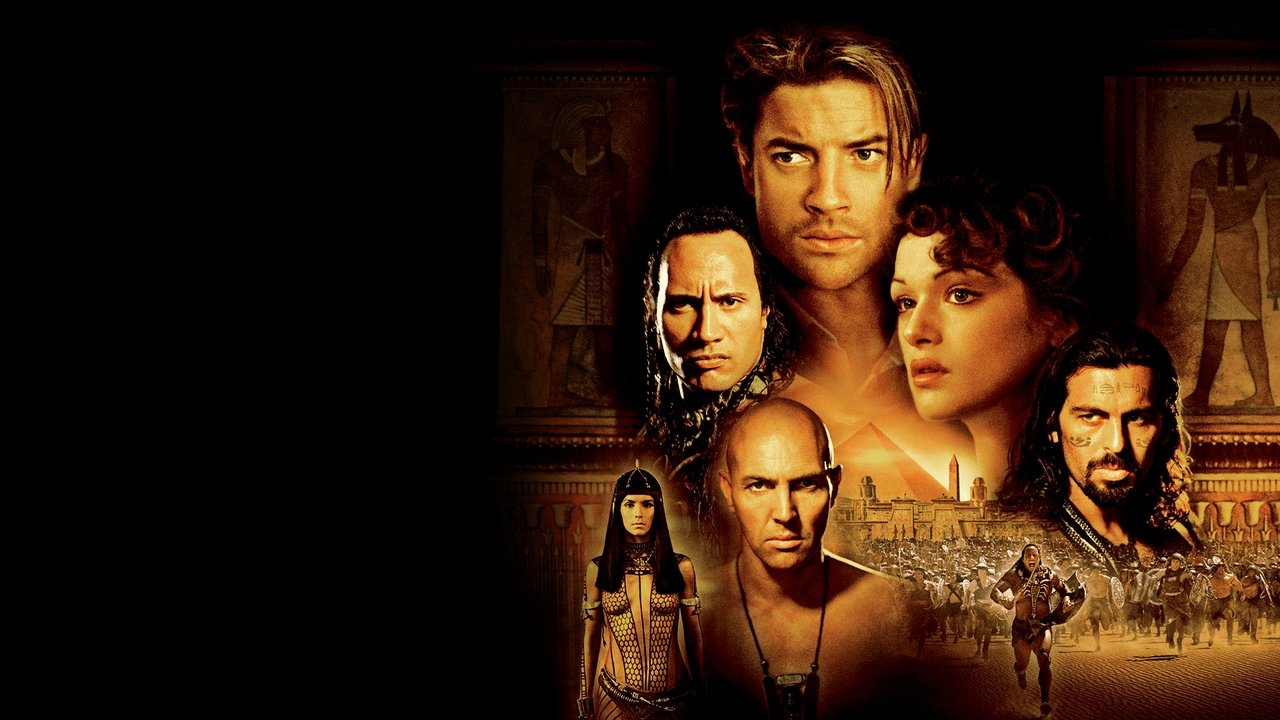
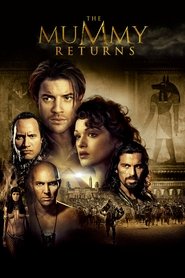
The Mummy Returns (2001)
Release The Mummy Returns Widescreen Collector's Edition DVD (Universal Studios Home Video, 2001)
Stephen Sommers and Bob Ducsay discuss applying lessons from the first film while increasing the sequel's action and effects. They describe locations in England, Morocco, Jordan, and Egypt, intercutting four locations and three periods, and an ILM workload that more than doubled. Technical examples include using World War II flamethrowers to light a soundstage.
- Duration
- 2h 3m
- Talk coverage
- 91%
- Words
- 19,304
- Speakers
- 2
Guided collection
The Mummy trilogy commentaries
Stephen Sommers and Bob Ducsay discuss the first two Mummy films. Rob Cohen describes directing the third film in China and Montreal. Read the tracks in release order to compare changes in story, locations, and effects.
Part 2 of 3
- 01 The Mummy 1999
- 02 The Mummy Returns Now reading
- 03 Tomb of the Dragon Emperor 2008
Commentary density
Highlights
Topics
People mentioned
The film
- Director
- Stephen Sommers
- Cinematographer
- Adrian Biddle
- Writer
- Stephen Sommers
- Editor
- Ray Bushey III , Bob Ducsay
- Runtime
- 130 min
- Also on
- OneSheet ↗ OverBlack ↗
- External
- IMDb ↗ TMDB ↗ Find on Amazon ↗
Transcript
19,304 words · 42 flagged as film dialogue
Hi, I'm Steve Sommers, the writer-director of this thing. And to my left is Bob Ducsay, the executive producer and editor. Hello, everybody. Here we go. Didn't we just finish this movie? So, as we sit here in ADR 6 on the Universal lot a couple months after this movie is open, the picture is closing in on about $200 million at the domestic box office, and steaming toward another $200 million in the foreign box office. And the great thing about that is not the money specifically, but the fact that so many people have seen the movie. And when you make a movie like this, there's really nothing more important than people seeing and enjoying the film. That strange slurping sound you're hearing is not a problem with your sound system. It's just me drinking coffee. Okay, what can we say about this? I feel like I just shot it, like, a month ago. Extras are always a difficult...
thing to work with, a difficult group of people. Sometimes they're great. Sometimes extras can be fantastic, and they always make your movie so much bigger and better. But they can be very difficult, because they always want to laugh when it's quite inappropriate to do so. Now, here we had a really great shot I wanted to use. We were on the Batmobile. It's a traveling camera car going about 30 miles an hour. And we had 300 guys chasing us. And there's this fantastic shot. But unfortunately, when we saw it in dailies, the guy front and center was wearing big purple Calvin Klein underwear under his... Which is not overly appropriate for the period, I don't think. No, unfortunately, no, it didn't quite. Now, those were all multiplication shots. We had, usually in all those shots you just saw, there's 300 to 500 people out in the desert. But, of course, we made it look like 10,000, or ILM did. Buddy's up there. The Rock only shot for a couple of days on this sequence, and...
That, I know, was a very difficult thing to accomplish because you really only had him a few days. And he's doing all this. He not only had food poisoning, he arrived in Morocco and was there for two days when he got extreme food poisoning. And then he got sunstroke, which is rather debilitating. And he still did that whole fight and all of this stuff. It was about 125 to 128 degrees out in the desert. and he would be wrapped in blankets, freezing. But the minute I called him to camera, he'd just get up and do it. So he really gutted it out through that fight sequence. It's always fun to have sand blown on you, too. This was all shot in Morocco. These are called the Merzouga Dunes, some of the most spectacular dunes in the world. We shot a lot of The Mummy.
out here as well. We'd get up usually about 2. 30 in the morning and head out there and start shooting by 4. 30 in the morning because by 8. 30 in the morning you couldn't film anymore. As soon as the sun crests the dunes and these shadows go away, the dunes just look very flat and boring. So that was the time frame from 4. 30 to 8. 30 in the morning. Then we'd go in for closer shots like this sort of stuff and pound some light in there. But dunes are really unbelievably just spectacular until the the sun gets too high and the shadows go away. This oasis forming here is obviously, it's all computer generated by our friends at ILM. The plates are photographed in Morocco with the rock, and then the foliage is added later in post-production. This was shot on the back lot
at Shepperton Studios, or Pinewood Studios, actually, this one. Can you tell about the roller skating guys, Bob? Yeah, if you look deep in the background there, you'll see the guys in the fence just in the back there. They seem to be, I don't know, skating almost. One of the tricks that the visual effects company will be very unhappy that we pointed out to you. So we set this next shot up, and with all the burning flames, and it was... kind of painful setup of about four hours getting the shot together and then of course we warned everybody and said nobody moves it doesn't matter unless the rock himself catches on fire nobody moves and of course the minute the background caught on fire which it was supposed to do a Moroccan fireman with a pith helmet shiny silver pith helmet ran in so we had to remove him in post this sequence here was photographed
on a series of sets at Shepperton Studios in London, designed by Allan Cameron, who's worked with Steve on numerous pictures. Real rats. We picked that particular tape because of the rats. We thought the rats did a great job. I love these couple of shots here because they're such, you know, 30s, 40s, serial-looking, you know, great. You know, it's a great intro to our hero. That must be one hell of a spider, though. You've got to admit. We'll have to show him in the next movie. He could be a creature in the next movie. There's a take where actually Brendan's hair almost caught on fire here. I didn't notice it. I'm looking at the monitor, and the top of his head was just above frame. And he stopped performing and had this strange look on his face. They go, no, no, Brendan, go, keep going, keep going. It's great, it's great. He goes, no, it's not.
And that was when his hair was on fire. If you notice coming up, there's this shot where we introduced the little kid. It was very effective in the theaters. People tended to leap out of their seats. But why is he so high? He's as tall as Brendan almost there. We had to put him up on a couple of apple crates. It's one of the sort of cheats when you're making a movie that if the audience is in the scene, which obviously they were in this particular case, they don't notice. We should start pointing out some of our mistakes, Bob. People like that in The Mummy. When we left this session after doing The Mummy, Bob and I were all depressed. We thought, boy, we're such a bunch of amateurs and dopes. We found out later everybody liked the fact that we showed all of our mistakes and pointed out. See, I was thinking we were just proving that once again doing this one. The amateur part, that is.
I don't know. Surprised me. I told many people that the reason I pit nine years later is because I'd already worked with... I didn't want to work with babies and I'd already worked with five-year-olds. So once I decided there was going to be a kid in the movie, I said, I wouldn't work with anybody under the age of eight or nine. And that's how this movie ended up being nine years later. This sequence here was lampooned on the MTV Movie Awards rather well, with Jimmy Fallon as Rick and Kirsten Dunst as Evie and Oded Fehr as Ardeth Bay. playing himself. They did a great job with the sets and the lighting.
The cake is more and more like you every day.
You know enough people have seen a movie when you can make fun of it and people know what they're talking about. Hammer and chisel. And when they knocked down this door, this is the day I was on edge because we had 300 scorpions and, I don't know, 200... and it was just, you know, everything had to be just, it just drove me nuts. It just took forever because, like, take two was, they had to go in there and pick up each one of these things one by one and put them back in their boxes and then reset them. And so... It's funny because it's such a simple shot that just flows by, seemingly simple shot, and yet, you know, it's something that took, you know, an enormous amount of time and created an enormous amount of frustration. I always liked that. And no scorpions or tarantulas were killed while filming this scene.
Except for these guys.
And they walk right out onto sound stage six, Shepperton Studios. Or D, D stage. Now this shot here, the foreground element was shot in Morocco with the horses coming in there and the background is an ILM matte painting. And a lot of the reasons... Part of the reason we didn't shoot this stuff in Egypt at the real locations is because this is in the 30s when this was supposed to take place. Everything looked different than it does now. Not everything, but now there are skyscrapers and Abu Simbel has been moved completely. They had to brick by brick take it apart and move it across the river. So we wanted it to look authentic. That and the fact that we were banned from Egypt for... That may have been another thing that came into play. I did get to go location scouting there several times, and some of the digital work is right out of Egypt, but we didn't get to spend a lot of time shooting there. This sequence used to go on a little bit longer. The trap that Freddie's character built, one of the three goons gets his hand caught in the trap, and it actually got a good laugh, but we wanted to keep the
the tone of the sequence more serious so that the threat of these three guys coming after the O'Connells was better. That's one of the cheapest effects there. We just shot Rachel one week with this room looking 3,000 years old and pristine. And then three weeks later, we shot it where they'd mucked it all up. And she just, as she swishes the torch, we do a quick dissolve. Cheap effect, but effective. Those two guys are brothers, by the way. I don't know if you knew that. I don't know if it's important, but... I'm thinking they've got a really bad job. It's got to be boring. But have you seen those guys outside of Buckingham Palace? No, it's true, but we also, in another sequence that was cut from the film, we later meet those guys again and realize that they've decomposed and they turn into, well, they're not exactly mummies, but they're decomposed corpses. So they really were in that room for all of eternity. That just slowed things down, so we kept it going. Cut it out.
I just had a vision. It was like my dream, but it was real.
It was like I was actually here in it. One of the things that's really was easier in cutting this movie versus the last one was that we knew going in what the tone of the picture should be. In the first picture, in the first movie, The Mummy, we were struggling a little bit trying to figure out exactly what the balance between comedy and, you know, horror and adventure should be. And with the knowledge of the first film, we went into this film with a much better idea of what that should be. So it made actually cutting the film from a tone standpoint much easier. It was pretty much A to B. Bob just kind of put things together. Yeah, it was really easy. What was really nice just working with all the actors is they also got the tone, they understood. And it's like before I started this movie, I thought, well, if I could go back and change anything on the first one, I wouldn't because it made so much money. But I thought...
If I'm going to do the sequel, I would like to make it a little more scary, a little less broad. And so that's sort of what we went after. And surprisingly enough, I think we did that. But it also gets as many good laughs as the first one, if not more. I'll tell you, the scorpions and tarantulas, they must leap up on that guy's shoes. Yeah, if you notice, we called that, wasn't that the bug magnet shoe? What was the name of that? Bug magnet shoes. He just walks into the room and they cling to it like mad. If you notice little insert shots like that where people are, a hand comes in and brushes stuff away, you'll notice that Evie's got about four different types of hands. It's like second unit will shoot those inserts and they'll use whatever girl happens to be on the set that day, whatever actress or extras around. So her fingers grow and shorten. This shot right here where the rock comes in on Spivey's butt,
That rock is CG. The actual rock, you know, is in there, but you couldn't see it because it came through the frame too quickly, so it was replaced with a computer-generated rock. So there's lots of visual effects in the movie that you would never imagine are visual effects. I always wanted to tighten this little bit here, but it was... You had to show where Brendan found the key and... And he gives it to Rachel, and it worked out. A lot of cobwebs. I like cobwebs. I think they kind of, you know, they're adventure movie stuff, but I don't know. I've never seen a place with that many cobwebs, except in movies. Don't tell anybody, but I may have kept that prop for myself.
shots here where you see the shake that's also done in post-production the actors know that this is going to be done so you see them moving around a bit it allows steve to have more control over the way that it's done versus doing it in camera actors always feel totally ridiculous doing this stuff it's like pure star trek you know it's like shake and pretend we're pretend the room is shaking The shot where Red just ran by and the water burst through, that's also a visual effect. He's not in the same scene when it's photographed. He's not in the same, he's not there at the same time that the water bursting through is photographed. Now this is the sequence coming up where Freddie knocks down all the pillars. You know, it was a wink and a nod to the The Mummy where Evie ends up knocking down all the, you know, in a 360 degree shot, all the bookshelves. And on The Mummy, we knocked down all those bookshelves, 360 degree shot on take one.
It was really spectacular and really jazzist. Unfortunately, I think this is take five. You know, we'd come in, we'd set up, take us a whole morning to shoot it. And then the first time we shot it, there was so much dust and smoke, you couldn't see anything. So we'd go away and shoot something else that afternoon. The next morning, come in again for take two. And take two, one of the third pillar stopped dead and it didn't function. So we'd go away and shoot again something. And that went on for five days. coming back to the set shooting it every morning trying to get this shot until finally they all went and the great thing was steve didn't mind at all he was happy to go back there day after day after day you know his his whole attitude about it was great i actually did freddy's hair myself there i the last second quickly mustered up
The actors did not like shooting this scene. They were really good. Brendan and Rachel are complete troopers, really terrific to work with always. But I don't know, I've done this several times now, trying to put actors underwater with a set that's closing in on them. Even though there's lots of safety, there's scuba divers on either side of them, there's something sort of terrifying about being in a small environment that's closing in on you. They're only five or six feet away from safety. The water's dark. They can't see where they are. It's churning. Something about that. Now, right here, this next shot, they're on skateboards. We jerked them across the floor. You can kind of see, if you look under there, the skateboards. Mom, Dad,
I can explain everything.
I'm sure that water's really tasty. This sequence here was photographed in England. If you can believe that. At a quarry. And in fact, you know, if you were to study it closely, you could probably find a few places where it's raining because it's raining in most of this photography. We were very careful in cutting it to avoid any stuff where you could really see it. And then also on even a couple of effect shots later in the sequence, I'm not sure what ILM did to remove the rain, but they did somehow. It rained the first time on The Mummy we shot in England. We were there for four months. and all my friends on the crew said, you know, this is so strange that it's raining every day. We usually have beautiful summers, and there's mummy returns that I realized they were all lying to me because it rained every day in London while we were shooting this, and we were there for almost five months. So... But this was pretty amazing to find, this big, huge sand quarry. In fact, strangely enough, a lot of the sand gets shipped to Saudi Arabia. It's super fine sand that they use...
For something or other. I don't think it's important. But anyway, this whole sequence was shot about 20 miles outside of London. Maybe you should make something up, you know, as to what this hand's used for. You know what, we'll go back and I'll come up with something. Again, this shake is all added in post. The actors are just pretending to rock. That's somebody's hand jerking that lamp there.
Coming up, my second unit director shot a couple, not these shots, but the overhead shots. There's an overhead shot. And, like, see, I have everybody's backing away. And then my second unit director shot this. And he decided that they all should be coming towards the center. Greg and I, we've been together for 15 years since film school. And I don't know. We keep arguing about this. If that was me, I would back away from this thing. But he decided that his extras would be curious and we would be heading towards it. So, I don't know. What do you think? Would you... Run away or head towards? Well, no matter what, I'm sure that Greg is really happy that you brought that up. This is the shot I was talking about earlier that, you know, there was clearly rain in the background. As these lights pan, you would see the rain being, you know, backlit by the light. I think you're looking at other things at this moment. Yeah, you are. You are, and I think it all works out. If you notice, there's no... You can't see anything in that pit back there on that shot. We still want to spend the money.
What I love about this, and I love this in the screenplay, is these guys came prepared. You know, they knew that the potential was there for these nasty little bugs to show up, and they had a plan. Those giant flamethrowers did the job. I just love this whole set. Something about it was really fun. It's the filmmaking of it, and it's the fact that we weren't out in the middle of Egypt shooting it. Even though we shot this movie in Jordan, Egypt, Morocco, and England, we were all over the place. It's still fun to know that you're shooting this big spectacular sequence. It appears like it's in Egypt, but it's right outside of London. Movie magic. If you go back a few shots, you'll see when the curator comes in there, he pushes by a guy on the right, and that guy is Ardeth Bay. That's not something that many people probably would have noticed, but it is an interesting little detail. These two guys are really, real fun to work with. And Alan. They're just, I really had a great time with this cast. I mean, same with the last one, I've just been really blessed with really fun actors. Not only great actors, I think, but just, they're really fun.
I did not want your past history
Alun Armstrong here, he's been in so many movies, and he's such a chameleon, you never really recognize him, but I just saw him in the last couple weeks, I've seen him, he's in Patriot Games, and he's in Braveheart, and it's just a terrific actor.
In London is where we must go.
There's Ardeth. I love this next shot. This is a totally synthetic painting by ILM. Very, very beautiful shot. This is how I thought London should look. Yeah, it's really hilarious. Roger Ebert, in his review of the movie, he was going on and on about this shot, about this shot being for the geographically impaired or something along those lines. And it's like, you know, we were in London for six months. I think we have a pretty good idea of where St. Paul's is versus Tower Bridge versus Big Ben. And we thought it would be a great idea to combine them all in the same shot. But... I don't think he agreed. But, you know, it's fun. I mean, if I was designing London, I'd have put them all so you could see them all at the same time instead of spreading them all over, because with London traffic, which is miserable. It's a much better design. So some of our... In post-production, we had a... The visual effects editor was a British guy, and he was always appalled by that shot. This sequence here was shot in...
It's actually Ridley and Tony Scott's offices on the Shepperton lot. The two of them are owners or co-owners, I'm not sure, of Shepperton Studios. And they don't allow anybody to shoot in this old house. There's this old house on the lot. But I knew Ridley was doing Gladiator. And we both had the same boss at the time. So I called up our mutual boss and said, could you ask Ridley if he'd mind lending me this building? And of course, what was he going to say? He needs favors also. So that's how we ended up shooting here. And I thought they should have paid Allan Cameron, my production designer, to leave everything because it's actually, doesn't look, they don't have any of these lamps or rugs or it doesn't look anything really like this. It's really beautiful here. And the real thing's a little cold. No offense, guys, but. I think this house was used in The Omen. I think that was about the last time it was used, yeah. Right on the lot, very convenient. Nice try.
These exteriors were shot in a different location, which is typical of many things you do in movies. The interiors and exteriors are often not the same place. Funny thing is, this exterior, the interior of this old house... ... is the British Museum in both movies. And the exterior now is the O'Connell household. Now, by the way, it seems that... Stealing from tombs has worked out very well for the O'Connells because they have a hell of a house. Brendan's going to laugh at this, but when he read, Brendan read the first draft, I think one of the things he said was, you know, I don't think we would spend our money on a, you know, big, beautiful house. Couldn't we just have some sort of, like, eccentric flat of some sort, you know, some apartment? And he was pretty...
He kept pushing that because he didn't want to have the O'Connells make it seem like they'd spent their money on a big house. And so we searched and searched all over London. But, you know, eventually a huge sword fight has to happen here inside this house in two different areas. And so I just, oh, screw it. I just thought, oh, we can't find location. So let's use this because it looks spectacular. Brendan showed up. He kind of just went, oh, well, this looks great. He didn't care. Well, it's a really great movie house because, I mean, it's just so excessive and so much fun. It's interesting, in the development of the script, this fight sequence that you're going to see in a few minutes was originally staged... Jonathan was going to have a casino, and that was one of the few concessions that was made to get the budget down a little bit. It all worked out very well. Also, geographically, it was just very hard to find in London a house and a casino. The whole thing was... It was one of those... As many locations as we had, we had a hard time with that one.
I hate it when you do that. Why?
Makes me feel like agreeing to anything. Anything? This next insert was shot several times because no one ever knew what those were. And finally we had Evie post over the shot say, what did she say, knickers? Yeah, I think
those knickers are not mine. Those knickers are not mine.
So people would know what they had. What's interesting, too, is then Brendan immediately leaps to Jonathan, and I'm wondering what he's thinking there. I mean, is Jonathan suddenly wearing women's underwear? Is that what he means? We straightened it all up momentarily. Oh, yeah. Evie ad-libbed that, and that kind of worked out nice.
He stole his minions and stole his scepter. Oh, you're so brave. And Rich. Did I mention Rich? What do you think I'm doing here? Sorry, we must be in the wrong house.
This was John Hannah's first day of filming. It was real fun to get back together with him.
If you work for Johnny, I was going to pay him back on Tuesday. I don't know any Johnny.
Don't ask me why, but Bob laughed every time he heard that line. It's screamingly funny.
You're looking here for the place that I see? I have no idea what you're talking about.
This is also a set at Shepperton Studios.
You got the wrong man.
Ah, that!
Yes, of course, now I remember. I lost it in a card game. For your sake.
I think Alun Armstrong and John Hannah are really terrific in this scene. You know, Alan playing it so straight and Jonathan going for the last. If you notice out that window, it's just a painting in the background inside a set. We poured rain back there and fogged up the windows a little bit so we didn't have to worry about exteriors. It does look a little bit like the O'Connells have some sort of industry going on in the backyard. I don't know what they painted out there, but it didn't seem to... It's actually a real snake, which, when she throws it, does become a rubber one. Didn't want to hurt the snake.
I told you! And your point is? And your point is? I told you so you wouldn't kill me. When do we make that arrangement?
And then this little insert here coming up is a mechanical snake. Yeah, these are mechanical right here. Uh, hello? Uh,
Jonathan, I thought I said no more wild parties. Well, when you're popular.
Alex,
I'm serious. If you've lost that key, you're grounded. I haven't lost it.
It's funny, see that little handkerchief hanging out of his pocket? That, for some reason, that became a big deal throughout the rest of the movie. Uh... Sylvie, who's also been with me since film school, my script supervisor, she saw that handkerchief hanging there and she's very persnickety about that sort of thing. So for the rest of the movie, you'll notice a handkerchief hanging out of Alex's pocket. Freddie's pocket. Please follow the handkerchief continuity. Now that's convenient. You know, you always want to have a rack of swords in your living room because, man, if somebody like that comes in, you got yourself covered. Ade was terrific. He was a fun guy. Again, I know I sound like I'm blowing smoke, but I don't have to work with any of these actors again, so it's not like I have to, please. Although I'd work with all of them again in a hot second. Notice that guy? There's one of those extras there who's got this huge... See that over to the right? See that guy? Doesn't he look ridiculous? It's like I kept saying I didn't want Caucasian Arab stunt guys in London. That's what I kept getting. So we had to cover some guys up with...
With really great-looking beards, I might add. Oh, God. What you try to do is you try to keep... When you have a little problem like that, you just try to keep things moving. And hopefully you won't... But we had a terrific stunt team. I mean, this whole movie is very multinational. I think the stuntmen came from... I know they came from Morocco, Jordan, Egypt, Czechoslovakia, England, France... And, of course, the cast is from everywhere, so... My co-editor, Kelly Matsumoto, cut all of this fight sequence here and did a fantastic job. There's a ton of footage and fight cutting is always very complicated. I think she really kept things moving here very well. You go back there, there's a good bent... rubber sword there. Always amusing to... Try to cut around. Yeah. Also, when Freddie gets thrown across the room there, he suddenly becomes giant for a shot. That was his double. If you go back, you look at that sword under the... the old sword under the armpit stab. It's funny, though, with the sound effect, it's really effective. The actors here rehearsed and rehearsed, but on the day Ade nailed...
Oded, several times, I thought at one time he broke his nose, but these actors really had to put up with a lot. No, they don't do all their own stunts, but in a movie like this, you get thrown around and beat and punched and kicked and knocked and thrown off of horses and camels. There's no two ways around it.
Originally, he was gonna throw that sword, that knife at the kid, but some sort of child labor law didn't let me do that. Now, John Hannah here, it was his idea. He was just gonna be hiding in this bathroom, and it was his idea to fill the bathtub up with water and suds and be hiding under it. And so when he destroyed his knee on that series of shots trying to get out of the bathtub, because it took us about four takes, five takes, and he could never blame me. I kept saying, John, it was your idea as he limped around the set. It's nice, though, because it sort of illustrates, you know, how fluid things can be on a set where, you know, a nice little gag like that wasn't written and just happens. They all understood their characters. I always think, man, Mila and her gang have the coolest cars. These are right-hand drive Packards and beautiful, beautiful cars. I think it's very cool the bad guys, you know, they have to have the same car, too. They couldn't get two different cars. It's a rule. It's a bad guy car rule.
Who the hell are those guys and where are they taking my wife?
A lot of lightning in this sequence too. If you notice throughout the whole movie, it doesn't matter where we are, I can get lightning into it. If you notice that insert of that photograph there, Alan was just like busting up laughing. He kept saying, what am I pointing at? It's a ridiculous insert, but it really works.
Bad guys are here. Evie's been kidnapped. Let me guess.
This shot always drove me nuts. If you notice the previous shot, they go running off and then we cut to this shot and they stop. And I'm thinking, well, aren't they in a real hurry? Why do they stop? Well, they stop because Ardeth Bay has to give us a lot of exposition right here. It's just one of those filmmaking things. You have to stop the movie every once in a while a little bit and tell the audience some things. But he was totally game, so...
Strange things about the child labor laws. They're very different over in England. They are here, and they allow you to shoot all night. With Freddie, we got to shoot all night, but only every other night, which is kind of insane because, you know, by 3 or 4 in the morning, the poor kid's fried. And then the next night, he doesn't get to turn around. He doesn't shoot again because he has to have the day off. It'd be better over here. You can only shoot with a kid that age until, I think it's midnight. And so many nights in a row, which is much more convenient, as opposed to every other night where the kid is never getting over the problems. This sequence here is the interiors are shot on a soundstage. And there's a... a roller in the background that creates that feeling that they're passing lights and such on the city street. We actually shot this outside of London City College because the real British Museum is having a makeover. They look very similar, actually, the exteriors, but the real one was having a makeover and there's all this really bad mobile homes and dumpsters and stuff like that and scaffolding outside the real one, so we used this.
Now, if you notice, in the previous sequence and this whole sequence, every time our actors are outside, it's not raining. Whenever they're inside, it's raining. And that's mainly because I didn't want to take the time to have to redo everybody's hair and makeup between takes. So when they're inside the house, it's pouring rain. As soon as they come outside, it stops raining. When they're in the car, it's pouring rain. When they get outside, it stops. It just saved us a lot of hair and makeup time.
It's funny, in the first movie, Ardith Bay as a character is very... you know, cool and mysterious. And in this movie, he's just a chatterbox. I mean, every opportunity, blah, blah, blah, you know, this is what's going to happen next. He's Mr. Exposition. You can't have your lead guy giving exposition. It's just a rule. And so Oded, I said, well, it's up to you, Oded. And he was totally game. He knew it. And it was real fun. This set right here, if you'll notice some of the tiling in the background, they shot most of the whole climax of Roger Rabbit. This is an old BBC warehouse, actually, and it was really spectacular. It was this huge, empty warehouse, and we kind of filled it up with some Egyptian memorabilia and played around with it. It was really a fun set to work on. It's a really big set. And we got to blow it up and have a machine gun battle, so there's nothing, you know... The only thing that was missing is racing cars, but we'll have that in the next sequence.
we had to shoot this whole sequence in about an hour because the sun was coming up we were running out of time and and so all these shots and when the mummies come awake i had one hour to shoot this it was just like insane running around trying to get it what's funny is you have this gigantic movie that obviously a lot of money was spent on and yet you still constantly run into things where you don't have enough time or you don't have enough money i'll wait till we get to the uh the tower bridge sequence i'll tell you about shooting that
I had to throw some guys wrapped in bandages in here. In the gag reel, you'll notice that the outtake reel, I guess they're calling it, has a real funny shot. I'm trying to yell directions to the mummies, and one of the mummies holds his hand to his ear, trying to hear the direction. I always wonder what happened to those mummies. See how we wet down those floors? Big shots like that, you don't think about, but not only do they have to be lit and we have to rehearse it and get everything ready, but then we have to light all those flambos and light all the torches and wet down the floor. And sometimes by the time you're done, the floor is dried up or the fires have gone out. It's a funny thing about torches. You see all these people use torches in movies and you think, well, they last forever. Those torches, any kind of torch like that, they'll stay lit maybe three or four minutes, max.
They go out, so I don't know. They must have many, many torch lighters in the ancient days. Just spent their whole day lighting those suckers. This is some really killer work from ILM. Imhotep is a vastly improved creature from the last show. Yeah, we really wanted to improve on... That shot right there of Patricia is from the first movie. And it was quite difficult to actually shoot material that would match with that so that the morph could be done. It was actually done several times. This sequence, I think, is in the making of special effects, so you'll know about that. But we really wanted to go out. This shot right here where he touches her hair, that was a big, big deal. That was like a huge step forward in the CG interaction world.
and you know this movie we just wanted the money had to take a huge leap forward thought island did a great job in the first movie but this movie had to be better and they really did it one of things it's so difficult about doing a shot like this is uh... when the shot was actually photographed uh... patricia who plays uh... milan on tsunami uh... had to perform that without anything there the other difficulty of course is that the camera operator has to operate the shot without emotive being there also so it's a quite a difficult task to choreograph a shot like that for both the actors and the crew. And Dave Worley, a camera operator, drove him nuts because he spent 40 years of his life perfecting camera work. And suddenly we're asking him to do really bad framing. Patricia almost goes out of frame and it just drove Dave a little crazy because he's having to perform really bad framing. But he understood that eventually when we put the creature in there, it'll be perfect framing. Patricia was exceptionally good in working without her co-star next to her. This stuff is a lot harder than it might seem. I asked Alan Armstrong
We were shooting these sequences and I asked him if it was difficult to perform against nothing. And he said, Steven, many times in my career I've performed against nothing. He wasn't talking about special effects shots. We'll have to go through his filmography and see what he's talking about. We had such a nightmare with the sequence with the MPAA. Because we were really... They were really sensitive to the gunfire in the sequence, and the sequence was actually significantly longer at one time. It wasn't blood, there's no blood in the sequence, and really you don't see, there's not much death, it's just the gunfire bothered them. So, we tried to be understanding. What I love about sequences like this and the bus chase that's coming up is the fact that we, you know, we shot a lot of this in multiple countries and multiple locations and you cut it all together and it seems like, you know, fairly seamless. It's all the same general locale. A lot of the gunfire, the actual muzzle flashes that you see in here have been added back in in post-production. The way that the camera shutter synchronizes with the
when it's being photographed means that often those flashes disappear, even though they're actually there if you're watching it on the set. So a lot of that stuff you see there has been added back in. If you notice those two guys who just got blown up by the flame, if you go back and freeze frame through it, you'll notice, hey, they're wearing big-headed plastic masks. It's always hard to ask stuntmen to run naked through flames. They'd rather put on these big masks for some reason. This is one of the areas I actually went over budget. I think I spent an extra $60,000 more in blanks and squib hits. But I just thought, oh, well, this is one of those moments. At the end of the day, we came in just slightly under budget, so it worked out. You just got to know where to push it and when to hold back.
This is a set, an exterior set out at Shepperton Studios. This was photographed very late in the production of the movie. It was about 5 in the morning. We were all exhausted. I said, let's just do this as a one-er. And that's, we had two cameras and just shot it and it worked out quite well. And John Hannah, like I said, he's, you know, look at that, look at that, bus driving. He has a career, you know, when this whole acting thing falls apart. He can always go to bus driving. I'm sure he'll appreciate that. This whole thing, again, this is just like, you know, we're intercutting between Pinewood Studios, Shepperton Studios, the City College, sound stages, Tower Bridge, Streets, Greenwich Village. It's just, we are everywhere. The guys you saw burst out the wall, those were actually guys in suits. These are CG guys. The shot where they burst out the walls was initially meant to be a CG sequence, but for budgetary reasons, we did it practically. Some of these shots, it's guys in suits, and some of them, it's, you know, like, obviously, those are CG guys. I think this is a very strong sequence. The manner in which these guys move and leap is very creepy.
It rhymes a little bit with... There's one shot somewhat like this in the first picture where they crawl on walls. And we thought we could do a lot more with that. Originally, when I started writing this movie, I thought, oh, well, the soldier mummies, people love them so much at the end of The Mummy, I'll bring them back. They'll be the main bad guys throughout Mummy Returns. But I thought, no, I've already done them once, so let's just have them in this sequence. And I think it worked out very well. The other thing that was really, you know, important in the sequence in, you know, writing it, shooting it, cutting it, was we wanted to keep the threat of these creatures real. We wanted to have them... Do damage. Threaten and do damage to our characters, which obviously they do in the sequence. And notice in that previous sequence and in one coming up...
Oded just, you know, there's nothing there. So Oded is throwing himself at windows and over chairs and benches. He and Brendan were rather beaten up in this sequence. It's very hard for... If you're fighting a stuntman or a man in a mummy suit, it's much easier because at least you have some resistance, somebody holding you back from really hurting yourself somehow. But when there's nobody there and you're throwing a punch and there's nothing to connect with, or you're throwing yourself... back over a chair and there's no one to catch you. It's much harder on the actors when there's nothing there than when there's a stuntman in a mummy suit. Brendan is particularly good at that in this sequence. He's a terrific physical actor, and he really sells the fight. Obviously, we're cutting all over the place. Again, these are soundstage shots.
these that you're looking at right now. All these in here. And then we'll jump outside to a city street and that works. Now this sequence coming up, yeah, go Evie. The sequence coming up with Brendan, I just basically told Brendan the setup that he's being strangled by a mummy and we rolled camera and I said action and this is Brendan just playing around. This is just him. There's nothing there. He's just waiting. That's a particularly great invention. That's all Brendan. This was, I have to, kudos to Bob, this whole sequence with the bus going under the bridge, the bus was going maybe three miles an hour. Everything fell apart on that shot. The driver panicked and hit the brakes and all these squibs went to blow the windows went off too early and it slowly cruised under the bridge and Bob threw a Skip framing and multiple other editorial tricks made it look really fun. Now, for those of you keeping track of things, how many mummies were chasing after the bus when it started and how many were eliminated? Well, four were chasing it and only three were eliminated. What happened to the fourth one? Well, there was a fourth one that got eliminated in a tiny little sequence that went right there.
uh... that we cut from the movie uh... we felt that the bus chase was over and we decided to live with the uh... continuity uh... continuity error uh... a fourth mummy grabs jonathan through the uh... through the side of the bus there and strangles him and brendan shows up and and shoots him and he goes flying off of tower bridge and into the water it was actually pretty cool uh... but it seemed better without it this whole sequence everything here on this is all on tower bridge And no one had filmed on this since a John Wayne movie about 20-something years ago. And the city of London decided to let us shoot on Tower Bridge. I don't think they'll do it again. They forgot what... I mean, Tower Bridge, it's like the 405 in L. A. Imagine shutting down the 405 at rush hour. Because what we had to do, they said, okay, you can shut it down for 20 minutes at a time and run out there, you know, because we had to clear the bridge. It couldn't be any...
cars and we the first time we shut down for 20 minutes we backed up all of london and scotland yard honest god scotland yard showed up and threatened to shut us down and arrest us all and finally they said okay okay we took our guys talked him in we said they said okay well you can shut it down for 10 minutes at a time and so that's how we shot this whole sequence we'd stop traffic for 10 minutes run out with our cameras in the cars and the actors and just it was just guerrilla filmmaking i mean even on a huge movie like this you have those problems where you can't shut down london And so we still wanted to be on the real tower bridge. And so that's how we did it. Each of those things, we just rushed out, ten minutes of pop, boom, shot by shot. And there are actually a couple of shots because of the speed in which that had to be photographed, where there are, you know, this crowd watching the movie being photographed, and in those shots they were painted out. You rule, Adam Sher, to do my ought.
Again, I love Patricia's eye. Watch her eyes, her focus. I mean, there's nothing there, and she has to really keep her eyeline straight. This is a really neat painting from ILM. Very evocative and impressive. And Leslie Schatz, who's been our sound designer since, again, film school. We work with the same people over and over again. Because we find good people and stick with them. And I just love the sound effect he put in when her thumb goes into his ear. I thought that was very effective in the theaters. Here, if you notice in the background, we're running out of time. The sky is lighting up. It's 5. 15. I've got five more minutes to get that shot, that side of this scene done. Because see how black the sky is there? See at the top of the frame how blue it is there? We're running out of time, folks. It's Monday morning and the traffic's about to pour in. The sun's going to come up and I'm done.
Now, this stuff was shot in Jordan. And this train is actually the train that they used in Lawrence of Arabia. In fact, that's why we shot all the train stuff, the exterior train stuff in Jordan, because this is like a one-of-a-kind deal in North Africa. And so this is the train in Lawrence of Arabia, and we used it, and it was really great. Now, the interiors here, this is on a flatbed truck. We just built this set, put it on a truck, and we're just driving down the middle of a road in Morocco. But the exteriors were all in Jordan. It's actually a very effective set because one of the things that you get out of that flatbed truck set, in addition to the, you know, obviously the scenery going by, but you also get some shake and movement. And it not only helps the photography, but it also helps the actors because, you know, they're in a real moving set. And when you fake this kind of thing on a soundstage, it just tends to look phonier.
This is... I remember we had to shut down. We got hit by one of our first sandstorms. This is... I think our... I can't remember what day it was. Second day, third day in Morocco. We got shut down from... A sandstorm hit us. We had really... On The Mummy, we had fantastic weather in Morocco. Blue skies every day. We got hit by two sandstorms that shut us down for maybe half a day. No big deal. But on this movie, we were getting hit every afternoon by sandstorms. And... My second unit had to be evac'd out because they got hit by a flash flood in the middle of the dunes. And at one point during the shooting of this sequence, a sandstorm hit us and a thundershower. And so it was raining mud for about an hour. I mean, it's ridiculous. Sometimes we'd be standing outside because some of it that day, there were some X-tiers we shot. And you'd be standing there, and you didn't mind getting slammed by a sandstorm. But then when it started raining and you're just being dumped with, you know, it's like someone standing over you with a bucket of mud.
it gets a little ridiculous. One of the difficulties about making a sequel is that you have to reference the first picture a bit, but at the same time you need to make it a stand-alone movie so people who haven't seen the first movie can still enjoy it. In that last sequence there's all this business with the chest, which specifically relates to the first picture, and it isn't really all that necessary for an audience that's seeing this movie for the first time and not having seen the first picture. So it sort of complicates matters and you'll see that throughout the picture where there are references to the first movie for the enjoyment of audience members that saw the first film. Was that clear? I don't think it was at all. I was trying to follow that. I couldn't even follow. I kind of understand why you...
Basically, what we're saying is that we didn't want to bore – people who had seen the first one know the first one very well. We didn't want to bore them. But people who haven't seen the first one, you have to keep – they have to be informed a little bit. How can I cut movies if that's the sort of clarity that I work with? I'll tell you, just play it back a few times and you'll see. It made sense. I'm sure it did. That's what I say about all my movies. Play it a few times. It'll make sense to you. Actually, we're pretty anal about not having story holes, especially during the script writing phase. Bob goes over and over the script, and I will also, because we hate having holes. And then you get into post, and every once in a while you say, you know what, it's okay to have this little hole because no one really notices or cares. And you do that for pacing. Sometimes you say, you know, here's a story point, but the audience doesn't really care, and it's slowing the movie down, so let's cut it. Yeah, I think pretty much you'll find that any hole that exists...
in this movie, and there are definitely some that do. They're created for pace by cutting material that would explain the question. We're really good on going in with fairly tight scripts. I have to say, one of our bragging points is that these two movies, Mummy and Mummy Returns, are extremely huge and complicated movies. And yet, after the last day of principal photography, we didn't shoot a single frame of film, which is Pretty unbelievable. Most movies of this size would go back and shoot many weeks of pickups and reshoots and that sort of thing. This actually was on a sound stage. We didn't feel that it was as necessary to have movement and light because it's a darker set, so we weren't worried about being exterior. So we shot this on a sound stage at Shepperton. Although you will notice the set is being jostled by grips on the outside.
Doc's hand shakes there. He's afraid. This shot, it's funny because this shot is slightly out of focus at the beginning. And we picked it. It was actually just a... They filmed it, but it wasn't actually supposed to be a take. It was a second unit shot because it was a motion control camera that took a full day. This shot right here took a full day to do. And so second unit got it. And we decided the best take was their rehearsal take. And so even though it was slightly out of focus, it just had all the elements. That was the best. And in fact, the take had Arnold Vosloo in it, and he was painted out. This was when I'd been in Morocco a few weeks shooting. I'd already gone to Jordan and Egypt, and this is when Rachel, John, and Brendan show up for the first. This is their first shot in the movie. One thing you'll notice about that previous shot, that big shot, it was one of those horrible white...
sky blown out days, and we replaced the sky in that. That's another digital trick that you'll, well, you won't necessarily notice, but is used throughout the picture. We like beautiful blue skies, but I don't have the patience to sit around and wait for them. Because if you do, you could be in it there for weeks sometime. So we just paint out the sky now. This is another one of those locations we did, you know, Alan would set design it. But basically, it was just a little village that looked like ruins. Okay, if you're still with us, halfway through this movie, that guy, the guy who's unconscious there, I tipped him big time because we kept having to slam his head. He was just an extra, a real nice guy, a local village guy. I gave him a little extra afterwards. He was very grateful. He was fun. It was a great intro scene for Izzy. He just really does such a great job. Real crowd pleaser. By the way, The name of this character, Izzy, is named after my dog, who was loyal and faithful to my best friend for 12 years and passed away two weeks ago.
The next thing you know, I get shot. I'm lying in the middle of the road with my spleen hanging out.
Here's a very important cameo note. That guy in the tub there that Evie just looked at, listen to the track. That is director Steve Sommers. That's my humming. I saw that toilet sitting there and I said, I got to put somebody in there. They got to be reading a paper. Got to be humming. Just... So, you know, not exactly as showy as Hitchcock, but... Yeah, pretty good. I just thought he made me look more dashing. It was my idea to give the character of Izzy a silver tooth, but Shaun Parkes gave him four. Decided to add a few. He was definitely on board. He got the character. The character and the movie. You know, if one is good and two is over the top, go with four. That's what I do. Isn't that some sort of live long and prosper sign that Brendan gives Oded? I never knew what that meant. See how hard that bird is actually flying. Not only is he on a string, which we had to remove, but this is where we were getting hit. If you notice this side, the winds, we were just about to get hit by a sandstorm.
When we shot this side, it was early in the morning, and the wind wasn't as bad. This was really hard. See the sandstorm kicking up there in the background? Now it's gone. Every shot we would see, here it's coming in behind the camera now. See the actors out there getting blown? The sandstorms would come in, and we would literally throw on our goggles and face masks, and everybody would duck their head, and we would sit there, and it would be a complete brownout for five minutes, ten minutes. You couldn't see anything. six inches in front of your face. And then it would go away and we'd wait a half hour for the dust to settle and we'd start shooting. Now that's a completely synthetic blimp. There's nothing there. We added that. See that rudder in the background? That's fake. That rudder? Fake. We added that in post. It was going to be too expensive and too complicated of a rig to actually have even the boat, much less the entire blimp down in Morocco in the desert. So we just added that in post.
This stuff was photographed the last day of first unit photography in Morocco. And it was a horrible, horrible day. All the skies you see here are replaced. The bird was terrific. Here's a little story for you. We had a falcon trainer who came down to Morocco and started training with Oded with that falcon. And after about two weeks in Morocco, he... He had some... He decided he didn't want to be there anymore for a while. And he just flipped out and left the country. And so Oded ended up, with the help of some other people, training it himself. One of the things that we were always looking for in these visual effects was the idea that you, as an audience member, would want to be there. these shots could be accomplished and made to be more realistic, which would have been less beautiful. But our approach always with the visual effects guys, with all of these sort of shots, was make sure you want to be there. Right. We're not making a documentary. Although the pyramids, those are the pyramids at Giza. Those are the real pyramids. And those are real camels in the bottom of the frame in that earlier shot.
You know, we'd shoot it at the right light, and then we'd have ILM kind of push it, because we want, we're making a, it's a fantasy a bit. We want it to be beautiful. Now, all this stuff was obviously, it was, you know, shot on a soundstage, and we replaced the blue screen in the background with the backgrounds you see here. There's a rather large dirigible set that's on the top of a gimbal that provides this sort of shake and movement that you see.
If you notice that eye on the bow of this boat here, it's also on the side of Winston Havelock's plane in The Mummy. There's all kinds of little stuff like that we threw in here and there. I really love this shot here because it's very beautiful and... And this would be a good opportunity to mention the phenomenal score that Alan Silvestri did. The music here is particularly beautiful. Yeah, it's great. And what happens at a certain point there is the actors turn and the blimp become digital because the camera actually can't get that far off the soundstage. This shot here, that wide shot, was photographed by Greg Michael, the second unit director in Jordan.
The train and part of the sun are real and the rest of the dunes and the sky are synthetic ILM painting. This sequence really worked out well. These two were really on. They had a blast working together. If you look out that window there, it's a blue screen. These are blue screen shots. We ran out of time in Morocco. We were going to actually shoot this scene in Morocco. On the flatbed. On a flatbed thing. But we had to get out. So we shot this on a soundstage with, again, the grips rocking it. And it worked out better because on a gimbal, for this particular shot with Freddie and stuff like that. It really gave the actors time. When we were on the flatbed in Morocco, we really had to be moving because we would run out of road. Whereas on that set, on the soundstage, we really got to rehearse and rehearse, and that scene was all about timing. And so I'm really glad we got to shoot it on a soundstage. Now, my main question here is where did these guys get their outfits? I mean, was it like Evil R Us? I mean, it's incredible.
They've found some place to get these incredible gowns. Those are my hand prints, actually. I don't really want to know about that.
Again, Ade and Freddie had a blast working together. These two, because it's one of their big relationships. It's Ade's main relationship in the movie. And so they really rehearsed hard together and it really worked out well. They really liked each other and had fun. And I think it kind of paid off in the movie big time. Yeah, they have a great relationship that just continues to grow to the end of the film.
It's also a visual effect. The train is real, but the sparks are not. And neither is anything in the background there. This is just a train out in the middle of the desert. Once again in Jordan. Yes, in Jordan. And again, because... When you're writing the script, you just, you know, you need the train to pull up in front of Karnak. And unfortunately, Karnak is now in the middle of a city, and the train does not pull up, and there's no train tracks near it. This sequence actually covers every single location that was photographed in the movie to get through this sequence. Some of it was photographed in Jordan, some of it in Morocco, some of it on a soundstage in England, and some of it in the back lot in England.
This shot always drove me nuts until it was finished, because all you saw out there were English fields. Until ILM finished the pillars.
funny because I always see this shot and I always you can't really see the wires but I always feel the wires lifting the kid up so it's not one of my favorites people seem to like it working with this bird it was very interesting because it actually all cut together wonderfully but working with any animal it's always very difficult to get the timing right but he did it Oded was really good with that bird
if you embrace it if you accept it you can do it
again all the backgrounds obviously these were blue screen shots and we added these uh these backgrounds. Our ILM did, and we kept pushing. Originally, they were going to be daylight shots, and we decided to make them dust shots just to make them look prettier. The backgrounds are actually real backgrounds that were photographed in the Moroccan desert using a helicopter with a Westcam mount. This whole sequence, when I wrote this, I was like, I don't know. I felt like I was sort of on that day. I had already figured out the whole story, but I just thought, oh, when I got to this point in the script, it was all about the two romances starting to come together. Now we find out why Anck and Evie despise each other so much. And this is the whole main setup for the payoff at the end of the movie.
I knew when I was writing it that, you know, the two girls were going to be in, you know, basically Egyptian bikinis, and Rachel and Patricia were totally up for it, and I knew the two of them work out constantly, and they're in great shape, and they really rehearsed to do this sequence. But I also knew we were going to need some stunt people as well, and I thought it was going to be very different. Where am I going to find two stunt girls who are going to have the bodies like that Patricia and Rachel have? And it worked out. We got some gymnasts from France and England, some stunt girl, Nikki, and that... who just, they just did a fantastic job. And this is, I'd say three-fourths of it is actually Rachel and Patricia, if not more, fighting, and then we, some of the specialty shots, our terrific female stunt team came in and pulled off. Everyone involved really kicked ass. I mean, the stunt women and also our actresses, everybody really worked very hard on the sequence. My co-editor Kelly cut the sequence also, and...
did an incredible job. It's almost identical to the way it was when it was first cut. Yeah, this is really... I know if you free... I know there's some guys out there who are going to slowly frame by frame through some of that. There is nothing to see. We've covered up everything. I know you'll, you know... You'll be looking for something, but no. Sorry, guys. Again, when I was talking to Alan Silvestri about this, I just kept saying, you know, I really want it operatic, operatic. I don't know, you know, I just knew I wanted it big, and it just felt like a big opera. It's old-fashioned, so the sequence always felt a little bit Cecil B. DeMille, Michael Curtiz-like, and Alan Silvestri came through with flying colors as he did on basically every cue. Yeah, the girls got really banged up, beat up. They'll never be hand models. Their hands were all chewed up by the end of the sequence because as careful as they were and as much as they rehearsed, they kind of got beat up. Again, that blue sky in the background is just a painting on the interior of a set.
This next shot coming up is pretty neat because it has in-camera speed changes, which you'll see come up here, and kind of puts us in their minds. It's very subjective. And if you listen to the soundtrack, you'll see that the sound design does the same thing. Very effective. I really pushed Leslie on that because if I did a shot like this again, I would have more movement in the background so you could really feel the slowdown and speed up. To me, I think that shot could have even been more effective. But you live and you learn, and it worked. This next sequence coming up is very interesting because it employs some photography from the first picture. This is new photography. When Steve conceived of this sequence, he always wanted to use photography from the original movie so that it would rhyme with it exactly. And you'll see that it does.
The intercutting of this, I mean, I was just, like, blown away. Bob did this whole sequence, and when I saw it, it worked even better than it did in the script, I thought. It's amazing. You can go from four locations, three different time periods, and yet it seemed pretty seamless and flawless, and people just followed the story, and it really... What's great about the sequence is it's something that only cinema can do, that you're traveling across time and space... you know, within the same sequence. And I think that's one of the reasons that it's so effective. It's funny, in the wide shots of Patricia, in the first movie, to paint her body took like 12 to 14 hours. So in this scene, like there, the paint she's wearing, that took 12 to 14 hours, because that's all she's wearing is paint. But in the sequel, we just use the wide shots. We had her put on a body stocking because I didn't want to put her through 12 to 14 hours for a wide shot.
This shot here, there was a bit at the end of the shot that's really very funny. One of the Red Turban guys comes in eating beans just in the background. It's a total throwaway thing, and Imhotep raises his hand and throws him 20 feet in the air, and he goes flying into the background. And it's extremely funny, but once again, that was another thing that was cut for tone to keep things a little bit more serious.
memories from my previous life. Honestly, I'm not losing my mind. It all makes perfect sense now. And that's the reason why we found the bracelet. Exactly.
Here comes a little bit more Ardeth Bay exposition. Go, Oded. What's particularly good about the way he handles the exposition is he fires it out quickly.
And how does the story end? Only the journey is written, not the destination.
Even though it is mainly an expositional scene, I think it's a rather effective scene, and it's interesting how the lives of all these characters are intertwined. This is quite a beautiful shot. This is shot on the side of the road in Morocco, and ILM put in the ruins in the background. So all the foreground tents and guys are real, background is ILM
when the time comes I shall truly enjoy killing you
again it was always fun filming these two they had a good time together
now where's my water
Look like Ade's a slow burn here. No ice? He really feel like if he has the opportunity, he will kill the kid. Look at John Hannah in the blimp. That's a CG John Hannah in the blimp. The only thing real in this shot are the two guys running. The train, the blimp, the temple, that's all computer generated.
They've gone. We've lost them.
Again, this is another one of these sequences where it's intermixed. Some material photographed at Shepperton Studios, some at Jordan. With a real train.
Now, we were a little worried about this shot coming up, and we seem to have gotten away with it, but boy, does that kid make, like, perfect sandcastles or what? And when she touches it, look, it doesn't fall apart. Well, not only does he do such an intricate design, but apparently the scale is exactly right. Now, what did Allan Cameron say about that? I can't remember. He said something like... You said to him, Alan, no kid would make sandcastles like this. I mean, it's too intricate. And he goes, well, I did. So anyway, that's the production designer. And once again, Alex's scale is dead on. Yeah, he really knew how to make it. Now this, part of the reason we didn't shoot this is at the real Abu Simbel is because now this, this is what it looked like in the 1930s. Now it still looks pretty spectacular, but...
It's a little sterile. They've had to move it up onto an island because of the Aswan Dam. These low-angle shots were shot on the backlot at Pinewood. We shot them the first time in Morocco, but the sky was so black with a sandstorm going on in the background, it just looked terrible. So we reshot these low-angle shots behind Pinewood. Now, this, of course, is in Morocco because we're wider. Can't get away with that trick.
Again, Alan Silvestri's score kicks in. Really terrific stuff. This is a classic Steve Sommers shot. The number of horsemen there is so outrageous. Ludicrous, some would say. In fact, there are exactly 10,000 horsemen there. The way that that was done, there were 200 men in a group, and it was photographed 50 times. There's a thing up at ILM called the Stephen Sommers scale. John Berton sent me. And on the far left, it's little panels. On the far left, it says, you know, what the shot needs. And the second shot, it says what the computer can handle. And the third shot, it's like, oh, my God, the computer's about to crash. And then way over to the right, it says what Steve wants. John often talked about any time Steve said that, oh, that's too much, there was much rejoicing at ILM because those instances were so rare and they saw it as some type of minor victory. Far off location, you don't have total control. And in this shot here at the bottom right-hand side of frame, there were hundreds of tourists watching us who we had no control over. And so ILM just...
We painted them out with this wall of water. In the background there, there's all these tourists watching us film. We had no control over this particular set. The sound effects in this sequence are particularly effective. Definitely worth a listen. Still listening to us. Exactly. The power of the water, a lot of detail. It goes from really quiet to really loud. It's a terrific sonic sequence. I was always worried about this sequence starting here. It's actually quite ridiculous if you think about it. But, you know, when I was writing it, even when I was shooting it, I thought, is this going to work? I mean, a blimp, you know. But as Bob always likes to say in John Berton, it's Stephen Sommers physics. Because I think realistically that blimp, the balloon would rip right off the boat. Well, and there is the minor safety issue of having a dirigible filled with flammable material. Explosive gas. Propelled by a rocket. Firing rockets off underneath it. That probably doesn't make a lot of sense, but... It's a mummy movie, Gene. Or Roger. Relax. Again, all the backgrounds were shot at Petra in Jordan. Which is the canyon of the crescent moon in the third indie movie. Yep.
And our actors were on blue screens on the sound stage. This is actually a very complicated sequence to put together because the background plates were actually the first thing that were photographed for the movie. And getting all of that material to work with the first genie of photography, which is all the blue screen material, was a big challenge for both ILM and everyone in editorial. But it all came together pretty well. It's really hard when you have two different pieces of film moving in separate directions to match them up so it looks real and not like some of the stuff you used to have to see in the 30s and 40s.
Here's another area where we have to go with faith a little bit with the audience, that the audience is willing to give us a break and believe that our heroes survived that. I think that everyone pretty much did. In Mummy, when the plane crashed, we had a whole sequence where they crawled out of the plane and the snap, but I didn't want to do that where they have to crawl out of the blimp, so we just went right for their unloading the blimp, and it seemed to work. We were worried about this a little bit. You notice John Hannah there. He's helping out. I don't know if you look at him, but he's... This jungle was also photographed in England. Back lot at Pinewood. We had really terrific light this day. It was just until we got here and then it got a little, started getting a little darker.
All right. What's the plan? Let's find some higher ground.
This is the sort of thing, this next scene, where we're running out of light on the back lot of Pinewood and right here. So we quickly, everybody grabbed bushes, ran across the parking lot, slammed them down, and we put our actors right in the middle of all this. So they're actually standing in a... sort of next to your parking lot with all these bushes, because that's where the good light was. But it's a very compact scene, so it works out. I mean, I think it fits in. Yeah, you couldn't do it on a wide shot. Yeah, it fits in very well, and, you know, you were able to get away with it. Thank you. I think in a scene like that, you really see the camaraderie of the people themselves, not only the actors, the characters, but of the actors. They all really genuinely liked each other, and I think that's
really comes across in both movies. That last effect shot where the bats fly past camera, that shot was done by Matte World Digital to a very pretty painting. And if you know, the bats are the exact same bats. I actually asked Matt World to use the exact same bats that were used in a movie Bob and I did at The Jungle Book. And there was a similar shot, actually, of a wide shot looking down on a jungle. And this was like eight years ago. They threw these bats in for me for free. They were really nice. And eight years later, I asked him if I could have those bats again. I bet they weren't free this time. Probably not. This sequence, because, again, it was at jungle night. When you're writing a script, as a director, I think of this stuff. I think, well, how am I going to shoot this? Where am I going to shoot this? When I shot The Jungle Book, I shot a lot of jungle. And in The Jungle Book, the jungles look gorgeous. They're just really beautiful. It was Allan Cameron fixing it. But we shot them mainly in South Carolina and Tennessee.
It's not because we didn't go to India. We shot in India for two months. But the jungles are either too remote or they're very brown and ugly-looking, actually. And I wanted a lush, romantic jungle. And so when I started writing this script, I thought, well, I set this whole sequence at night mainly because I wanted it for story. I wanted it to be scary. I thought it should be scary. But also, practically, I thought, I don't want to be trying to shoot a nighttime sequence in some real jungle because to light it will be a nightmare and it will take forever. And so we... We shot it in a forest next to Pinewood Studios and it worked out terrific. We just moved all these pine trees and palm fronds around and you get a really beautiful, scary jungle. Not soon enough. But if it had been set during the day, I don't think we could have got away with it. I remember that. I threw those...
shrunken heads. I thought, hey, I'm writing an adventure movie and I can throw everything in the kitchen sink in. As you'll see later on with the log that we've seen in King Kong. And I just thought, oh, well, you know, I'm in the jungle. It's an adventure movie. You've got to have shrunken heads. Again, this is a one-er. We did a couple takes of this real quick. Two shot. No cutting. It's just the actors, you know, Brendan and Rachel got along so well and they just did such a terrific job. I think you can really feel it. that there's really good chemistry between them. Now, this sequence is interesting because this is outside of Pinewood, and then there's going to be other photography here that matches in surprisingly well that's photographed on sound stages in Shepperton. For example, this. This is photographed on a sound stage. This is obviously an effect shot, but...
Some of the difficulties of a film like this are all of the logistics involved and getting things like this to match. All the wide coverage is photographed in a real outside exterior location and the closer coverage in the studio. Again, if it was a daylight scene, you couldn't shoot it on a soundstage because interior day just doesn't work. You can't recreate the sun. It always looks fake. They do it all the time in television. You can always smell it a mile away, but you can never get away with it on a feature film. So this, again, is... real jungle, and then you cut to a sound stage. And we had to replace all the sound and dialogue here replaced because we have these huge fans that are screaming in the background. In fact, in the movie, there's an enormous amount of ADR. It was a huge job for our ADR supervisor, Patrick Dodd. Additional dialogue replacement. We had to lip sync a lot of the dialogue because of all the noise and
Like here, you've got these huge fans blowing everybody's hair. Much of what you actually hear in a movie is produced after the movie is made. And that goes for everything from footsteps to dialogue to the sound effects. In any movie you watch, anywhere from a minimum of 10% to 70% of the dialogue is lip synced in post because of sound, especially in period movies. more and more. Because you have to worry about car sounds and plane sounds. It's very complicated. And action sequences. If you have two people talking by a waterfall, I guarantee you it's been lip synced in post because you can't hear it. Every once in a while, as a screenwriter and as a director, you come upon a scene that you just have so much fun with.
And this whole sequence was one of those sequences I just, like, when I came up with the idea of pygmy mummies, I remember calling up John Berton. I got to the, whatever, when I was figuring out the whole script, and I just, and John picked up the phone. I said, John, pygmy mummies. And he got extremely excited about that. And we started going back and forth over the next couple weeks as I was writing this sequence. And, you know, coming up with all the individual gags and ideas and trying to figure out what we could afford to do and how we could do it. And I just love this whole sequence. It was really fun to write. It was fun to direct. And I can't believe I managed to put a whole jungle sequence in a desert movie. Pretty tricky. I love these little bastards. I mean, look how much he enjoys stabbing that guy. They are very ill-tempered.
wide shots at Black Park. This is Black Park and then some of the tighter stuff, soundstage work. I mean, shrunken heads, pygmy mummies, blow darts, what more do you want in an adventure movie? As originally scripted and originally imagined, this sequence had a fair number more gags and visual effects with the the Pygmies, and it was scaled back a little bit for budgetary reasons, but it worked out really well. It's not that far from how it was originally imagined. And quite often you find, and I think you look back at Jaws, a lot of times when you're forced either through budgetary reasons or mechanical problems on the set, it tends to work out to your advantage. I find that a lot of times when constraints are put on you, you have to rise to the occasion and try to be more creative. Like that shot right there, it's just... It's really scary, creepy, exciting, and yet it didn't cost anything. I mean, there's no CG involved. The other thing that's nice about this sequence is that everyone, all the major characters, are involved in it. And they all have story. It's all about story, story, story, without any... There's no dialogue, and it's all about... You know, it's action, it's adventure, it's story, character.
Very cool work with the gun there. Good job, Brendan. These guys worked really hard for this fight. Yeah. They did a lot of rehearsal. I think it was a very effective sequence. You really believe that they're two warriors fighting to the death. And quicksand. See... Any trick... I did a quicksand scene in The Jungle Book as well. Any... I've watched pretty much every adventure movie ever made, and... You know, it's things like quicksand that you fall in love with, or I do, anyway. Hold this shot here when the lightning strikes Ade's face, that one eye there. There was a line of dialogue here, by Ardeth Bay. When he looks at Lock-Nah, he says, that was for Horace. We cut that. Horace was the bird. That's why we cut it, because a lot of people were saying, who's Horace? That always got a great cheer. I just love that. Ade, don't blink. It's really hard falling with your eyes open and not blinking. It took a couple takes, but he did it.
This is always a great moment in the movie. People like... It's like... When I wrote this, I kind of cracked myself up. I mean, sacrifice yourself for me. Yeah, I'm going to do that. This sequence is recapped in this particular shot right here in the making of from ILM, so you can click over and see that.
Hey, nice suit, Alex. What were those creepy little pygmy things?
There's the local natives. Are you sure? Yes, sir, enough. There's nothing.
Come on, Mom. Come on. Come on, Dad. We have to get to the pyramid. I have to get the bracelet off now. Oh, leave it on, Alex. Looks good on you. No, you guys. You don't understand. He told me the bracelet would kill me if I don't get inside the pyramid before the sun hits it. Today. Oh, my God. Time to go. I thought you said it was nothing.
The creature sounds here for the pygmies are a great piece of work by Leslie. We always felt that they were somewhat comic creatures, but they also had to have some bite to them, which makes it a rather difficult thing to design their voices, and I think he pulled it off.
We debated this a lot in here. We had music in there. We took the music out. We went over and over it in the dub, and then we ended up sort of compromising a little bit. The music stays in and then ends at one point and then comes back in. The music can have a big impact on your perception of the scene, and a lot of time is spent while you're dubbing the movie figuring out just how you use it. If you see Brendan running across that log, he does a really good job, and yet his knee's blown out. This is the second-to-last day of photography, and I'd already... broken one of his ribs and tore a disc in his back and damaged his knee. And so he was really gutting it out there. Here's my favorite movie reference in the movie. The little guy riding it down is obviously a reference to Dr. Strangelove and Slim Pickens riding the nuclear weapon down to his destruction.
again, Steve Sommers's physics. But even John Berton up at ILM agreed with it because he said, you know, this is what they do in every vampire movie. When the sun comes up, it doesn't hit the furthest point. It chases them. And so there you go. Brendan is out racing light. It's very impressive. But just in the nick of time, oh. I mean, what would movies be without the nick of time? Not as exciting, I think. No. But Roger Ebert probably wouldn't approve. Actually, I think he mentioned that also. I think he thought we were making a documentary. Watch it again, Roger.
I always loved this sequence in the script, and I think that,
you know,
it's very effective in the film. Alan Silvestri's music is lying here up until this point. I mean, it's saying everything is all right, and then out of nowhere,
you know,
comes Anck-su-namun. And I think it's such a surprise that the audience really responds to it. This again is, if you notice all the background, you see that beautiful banyan tree and all this... This was all created on the back lot of Pinewood Studios. A beautiful, lush jungle. We had great light. I mean, we were crossing our fingers. I think these are the only two sunny days that we had when we were shooting in London. Thankfully, we were mainly on sound stages or exterior night.
You're real strong. You're gonna make it. You're gonna make it.
These are always very difficult scenes for actors to do. And I think that they pulled it off really well. It's also hard from a cutting standpoint, too, because it's really hard to figure out how much time you want to take for the sequence, for Evie to die. The sequence can be extended because the way these scenes are photographed is there's a certain amount of ad-libbing to it and figuring out exactly what the right tone and length is somewhat challenging. Yeah, because it can go from being dramatic to melodramatic if you're not careful. There's another place that, like so many others, that Sylvester is just kicking ass. When we previewed the movie, one of the cards, we showed it to 500 people and only one person mentioned it, but they said they noticed that there's a... Evie's neck was still moving in that shot because they could see the pulse in her neck. And we always thought, well, I guess we could have killed her for real, but... I think it would have been the only way. Rachel wasn't up for that, I don't think. Now, I have one question. Who lit all those flambos? Actually, in American, we call them torches, but over in good old England, they call them flambos. They're...
It's a great word, actually. Flambeau, plinth. What other favorite Englishisms are there? I think those are the two best ones. Those are the two best ones. For me, personally, it was great working with, it was so much fun on both these movies. I had a fantastic crew and, you know, it was like 99%, except for, you know, obviously the stunt crew and when we were in Morocco, but when we were in England, it was 99, it was basically 100% British crew. And I'm the only nutcase American running around on the set, and I hope they found me amusing. Oh, I think they did. That's what I hear anyway. Yeah, yeah, we had a great time. Literally, the crews from The Mummy to Mummy 2 are almost identical. There were very few changes, and the people who didn't
come back
on Mummy Returns were just because they couldn't. They were on other movies. We had such a good time on the first movie that I just invited everybody to
come back
on the second one, and... We got along great. On the first one, I think that they were hoping I knew what the hell I was doing. And then they saw the finished film and figured, oh, OK, OK. And so when we did the sequel, it was just real fun. They knew that I was going to get them out of the desert without killing them and that the movie would probably turn out OK. Now, I just want to go on record. If I were ever in this situation, I would not put my hand in there. And it ends up not working out very well for him either.
all special effects shadow work and stuff like that. This is another one of these duplication shots. It's photographed out in the desert in Morocco. A lot of the hills that you see in the background have been added in. The horses are shot in multiple passes to make up this giant army. And of course the animation of the scorpion shadow in the foreground.
funny, as Oded will tell you, and The Mummy, he wasn't a real good horse rider. Oded will be the first to admit that. So for this movie, because he had to do so much more riding, he really trained. And so we were able to do so much more because the guy could really ride now. John, come on, come on! Action!
You're too late, O'Connell. I have released the army of Anubis.
Handy axe is always good. I mean, you know, swords in your living room, axes in your belfry. I always loved Brendan's reaction to this. He seems kind of amused.
This is just terrific work by Allan Cameron. I mean, there's so many sets. And this set in particular, later on when the two girls fight, he designed that set. And this used to be, well, first we had this set where you could see all the way down there and they had to go in this. And then we just kept moving things around. Alan's so good at just quickly moving walls and statues. And he could make one set appear to be four. And so as big as the movie was and as many sets as we had, Alan kept improvising and giving me even more sets to play with. on the spur of the moment. Now we're... We go light.
How do you know?
I remember Rachel's makeup person running up and putting lip gloss on. I'm like, she's dead. She's dead. Need that lip gloss. I think it's interesting in a scene like this where John Hannah had to, you know, carry Rachel and take after take. Now, Rachel's obviously very light, but nonetheless, very impressive for John doing that. What do you get? It's either a cut on John being weak or Rachel being heavy. All right, I'll make it a cut on John being weak. I'm certainly not going to pick on Rachel. John will get you for that later. This was a really spectacular shot by ILM. They really did a good job. If you want to learn more, click over to the making of special effects. This gets a really good laugh.
I always thought the scene was a little bit difficult because the tone of the movie here is a little bit more serious than it's been, and yet we still have Jonathan going for laughs, but it worked out pretty well. This sequence of shots right here, I think there was one time my crew actually thought I was nuts. I just asked them to turn off all the lights on the set, and we dollied back. People were almost dying because you see all those holes in the... In the soundstage floor there, we were dollying back, trying not to fall into them as we were following Brendan, but I just thought it'd be really neat. And there's two guys on either side of the camera with flamethrowers lighting Brendan's face. And I thought it was really just kind of a neat shot, spur-of-the-moment idea. Well, it's a really great introduction to him in the scene. And much of the scene, in fact, is lit with flamethrowers. Adrian Biddle, the director of photography, did a really fabulous job on the scene.
using those flamethrowers as light sources. Yeah, the thing is, when we first designed the scene, when I wrote it and then we designed it, it wasn't supposed to have this shooting steam and blasting flame. It was just, you know, it was going to be a set. It was going to be lit by the kettles of fire. But I thought it'd be so much more... There was about three weeks before he started shooting, I thought, I came up to Allan Cameron and said, Alan, wouldn't it be more dramatic if there was blasting flame and steam and everything was moving and rocking? And he got all excited about it, but of course the set hadn't been designed for that. So, well, we had a lot of nervous firemen standing behind Cameron during the shooting of this entire sequence because there was four guys with World War II flamethrowers in the backgrounds of each of these shots, blasting flame all over. And many times the set caught on fire.
You would not believe how hot the set was because of these flamethrowers. I mean, Morocco was 128 degrees, you know, on the average day. And that was hot. But inside this soundstage, I don't know... You just... You were hoping not to catch on fire. You spontaneously combust. That would have been something.
you see how Oded has really learned how to ride the horse. He does a fantastic job in this sequence. And once again, when we get into the battle here, he's fighting things, and all these men are fighting things that aren't really there, which makes it very, very difficult. In this wide shot that's coming up here, if you were to see the original plate, there's all these guys in blue suits that are standing there to represent the Anubis warriors. All of those guys had to be painted out when the CG warriors were put in. Brendan and Arnold did such a great job in this sequence, too. It's very, very physical and... Even though there's not supposed to be any contact, of course, there always is. That's where it's really fun to work with actors who trust each other, because otherwise, if you're doing stuff like this and they're nervous about one another, you have to, you know, it becomes much harder. Hey, see? Rubber swords. The other thing about these interior action sequences,
They have a slightly odd look to them, and that's because they're photographed with a different shutter angle on the camera, which gives it that somewhat strange look. Sometimes we'll cut out every other frame and skip frame, but that gives it even a different look. There's a lot of different techniques involved in the fight between Arnold and Brendan. I don't know if people really notice this. This is an exact rhyme to a moment in The Mummy. There are a lot of those, and that goes back to the thing that I was talking about earlier, that you have to try to please people who've seen the first movie by referencing that picture, and so that happens throughout the movie. Again, the actors are pretending nothing's shaking on the set. They're just... They're star trekking it. This is a very complicated shot called AB9, which the second unit director, Greg Michael, photographed. And it's done in many, many passes. Each one of those elements, each horseman you see in there is photographed separately. And that was done to allow them to integrate the CG characters more easily.
Take Alex. Go and help Rick. But Mom! No buts,
Alex. Come on, Alex. I always think that Rachel looks like, or Evie looks like she didn't quite come back right, you know? Something didn't quite work out there. I didn't mention earlier, but Arnold, you know, this big bald guy banging that gong. That's a real from, I remember, if you remember, watched the opening of Gunga Din. That's how Rank used to open their movies. Big bald guy hitting a gong. There's like tons of movie references in this. If you know your old movies and even some of your newer ones. We go for it. Again, this whole sequence is very complicated. I think that we reference it later on, or in the making of section. But there's nothing there. And for me as a filmmaker, there are sequences like this, same with the entire climax of the first Mummy movie, where it's
At the end of the day, I can shot list and storyboard the hell out of it, which I always do, but it really comes down to myself. I have to remember everything. If I forget one thing, we can really screw ourselves because we'll have to come back and reshoot. It's like we spend many hours lighting one section of the set, and I have to make sure that you can't... Storyboards are great, but they're not everything. No matter how much you storyboard and shot list, you just... In sequences like this, they're so intercut, there's so much going on, you better be on your toes or you're going to get burned. And it really worked out. Both movies, we didn't need anything. The music in this sequence is particularly great. Just so primal. And the girls, you know, that's great. There's no stunt gals going on here. They were going at each other, and again, They just really worked hard together and trusted each other. That's gotta hurt. That's a very satisfying moment, because, you know, Anck-su-namun is... She's a bad girl. She is a bad, bad girl, and, you know... It's time that she gets her due. Hey, he's still alive. But not for long.
I think the animation in this sequence is extremely good. This Scorpion King character is a very, very hard one to do for a lot of reasons, but the animation alone is very difficult because of all of his legs and appendages. Our animation supervisor, Daniel Jeannette, was just incredible. He's such a great collaborator and had so many great ideas. It was really terrific working with him. Yeah, it was very difficult because at the end of the day, I mean, it is a fantastic creature, and if... If no one knew who that guy was, it would even be better, but since everybody knows who the Rock is and what he looks like, you know, that always, that added a bit of fakery, because people know it was. If it was, it would have been an unknown person, you would have maybe assumed that that was a real face, but I think people figured out that it was a CG character because they know that actor, that person so well. We're not quite there yet. Yeah, no, no.
Actors don't have to worry yet. Actually, I don't believe... Real actors never have to... Good actors never have to worry. They're never going to be replaced. Because no matter how great computer generation becomes and how great the animators are, we love actors for that bit of magic they add and for their talent and performance. I don't think you can ever recreate that. Now, if you're a bad actor, you better start worrying now. Because there are great animators up at ILM who will take over. Here's something for you never, ever want to leave a description of how to kill yourself. In your home. In your own home. Like, what was the Scorpion King thinking? Here's this animatic explaining how he can be killed, and he just left it sitting around his house. What was he thinking? That would have been the first thing I would have gone after when I moved in. That's going. New wallpapers coming right in.
This is Brendan's last day of photography, these close shots here. Again, at this point, this is where his knee's been blown out, he's got a broken rib, and a disc is torn in his back. So this is pure pain for him running here. He's hurting. But the guy is such a trooper. Yeah. It was time. We shot for 101 days, and he felt like I did. Let's finish this sucker. Time to finish now. Right on schedule. This is a very heroic moment for Ardeth Bay. This music just knocked my socks off. Do you think we liked the score? Yeah. Do you think we made Oded look heroic enough in this movie? That's a fun shot. Yeah, really great shot. That was really a complex scene. It's a wire gag, and the stunt performer is sort of wrapped in a wire as he's thrown across the room. It unwinds. So imagine being wrapped in piano wire and then being yanked 40 feet through the air. It's not real fun.
This entire third act of this movie was just not only hair-raising to shoot, very complex and difficult. I was going to say painful. It wasn't actually painful. It was just very difficult. But what was scary about it in post-production is that all the special effects didn't come in. They were all on schedule, but they didn't come in until literally six weeks before the movie opened, a lot of it. And so we were really holding our breath and going on faith. And it was really scary, but when it all came together, boy, did it come together. Well, one of the things that makes it particularly difficult to cut a sequence like this is... Nothing's there. ... is nothing is there, and figuring out the length of shots and the beats, and especially with all the intercutting. If you take the intercutting out of it, you know, between Ardeth and the guys inside, it actually is not as big a deal, but as soon as you add this into the mix, it becomes very difficult to put together because... The creatures aren't there. It's funny, in that pit there, for the longest time, we didn't know what was going to be in that pit.
It wasn't until one of the last days of production we decided, hey, let's instead of having it like it was going to be some sort of version of the underworld or hell, you know, volcanoes and burning and flame and stuff like that. And at the end I thought, well, something should be actually pulling these two guys down into the pit. And so that's when I came up with this idea for these creatures. It's basically people sent to hell and now they're trying to drag our hero and Imhotep the mummy. down with them. What was important about those creatures from a practical point is the beat at the end of the picture here is that, you know, Evie decides to go save Rick and Anck-su-namun decides not to save Imhotep. And the point is that those characters needed help. And why did they need help? Well, they needed help because these demon creatures were yanking on their legs.
We're going to pull them off into infinity there. You'd think you'd figure that out during the screenwriting process, but what happens in the script, it basically, the two of the guys had beaten the hell out of each other and gotten beaten up by the Scorpion King. And so when it blew up and they're hanging there, the idea was that they were so exhausted that they couldn't lift themselves up. But when you actually got there, it's read well in the script, but you needed this shot here when they're being jerked down. Because when I got there, I realized, well, Brendan and Arnold are big, strong guys, and no matter how bad they got beat up, I don't believe they'd have that much of a problem crawling up out of this hole. So something had to be dragging them down into it. There had to be a reason for this moment to happen. All these stalactites were done via CG by a company in London called CFC.
And initially the sequence was envisioned to be done with practical effects, and it didn't turn out to be practical to do it that way. No, I was told, I was told sort of at the last moment that, Rachel, that none of the stalactites could get within eight to ten feet of her. And I thought, well, that's not going to be very dramatic or, you know, dangerous. And so we decided to do it CG. We thought it would look better and be scarier. It worked out. So almost everything that you see in this sequence involving the stalactites and debris is computer generated or compositing. There are some small physical effects on the set that were, you know, debris and such were dropped through the frame, but not very much. This shot was always very funny all the way up until ILM finished it because it was basically Arnold fell back into a black velvet mat and squirmed around. It was kind of like, looked like a soft porn sort of shot.
until ILM finished it off. Things don't work out well for Anck. Nope. We played with this. We always wanted to see her eye there until that last moment. And we can't get enough of these pygmies. And also, you know, we needed at least one more climax. You thought the movie was over? No! We've got two more climaxes to go. This sequence is also very scary. Literally, ILM finished this in the last several weeks. I'd say these last shots were finished two weeks before the movie hit theaters. So it was very hair-raising. But it's such a big movie, and we knew we wanted to make that May 4th date. We wanted to be the first big movie out for the summer. It was very difficult for them because going into production, we had a little over 200 shots budgeted for ILM, and it ended up being a bit over 400 shots. So their workload was basically doubled over the course of making the movie. So needless to say,
They had a lot of extra work to do. Yeah, and it's very hard to count people. You'll hear some movies say, oh, we had a thousand special effects shots, but we never count, you know, a wire removal can be a special effects shot, or a sky replacement can be counted as a special effects shot. But Bob and I, when we talk about special effects shots, we only talk about the hard stuff. We only count that. The dirigible here in this, there's a set that has the... the top of the pyramid, and then the dirigible is actually on a crane and lowered in. There is some CG work done on it. The top of the balloon is enhanced there, but parts of this are actual sets. This was always fun. I just love getting actors in positions like that, where you have to put the actor, you know, in the movie. That's why stuntmen are fantastic and you need them quite often, but you've got to get your actors in there. Even if it wrenches their ankle once. This was the last shot finished for the film. And I think that was maybe ten days before the release of the movie.
O'Connell, you almost got me killed! At least you didn't get shot. Izzy, thank you. Thank you.
Yes, yes, yes.
O'Connell, who the hell have you been messing with this time, huh?
Oh,
you know, the usual. Mummies, pygmies, big bugs...
For those of you who are still with us... Um... Obviously, this is shot in a... And Morocco on the blimp, those are CG, that shot was CG Brendan and CG Rachel. Standing on a CG blimp.
I thought I almost lost you there.
For a moment. There's a rhyme here that matches the first picture. Another one, yeah. Oh, please. Yeah. Oh, please. And this last shot is really terrific. The dirigible itself is, again, practical dirigible. The camera is craning back. And they go to CG right there. They turn into computer-generated characters. Which is a neat trick. And I bet really hard to do. We just write it. I just write it down and then ask ILM to finish it off. Terrific. Also, these guys did a great job on the title sequence. It really kind of kept people in their seats because it was so beautiful. This guy, Kyle Cooper, with Imaginary Forces, designed the sequence. And he designed the title sequence in Seven. And The Mummy. And The Mummy. And the first take on this sequence, all of the images were a lot more, I don't know, how would you put it? Twisted? Twisted, twisted, I think is it. Kyle likes twisted and dark. Steve said he never wanted to see really what was going on in Kyle's head, and I think that he's right. But the sequence turned out fantastically, and actually it was also very easy to get to. This is really...
all their work at Imaginary Forces. And just to finish off with one last applaud to Alan Silvestri, the music here is probably the best in the picture. Again, I've got to say thank you to my entire cast and crew. They made me look good. All right. Thanks, Bob. See you next time. Bye.
Keep exploring
Other commentaries on related filmmaking topics
-
8 shared topics
Mission Impossible Dead Reckoning Part One (2023)
Christopher McQuarrie, Eddie Hamilton
-
8 shared topics
The Mummy (1999)
Stephen Sommers, Bob Ducsay
-
7 shared topics
Air Force One (1997)
Wolfgang Petersen, Michael Coleman
-
7 shared topics
The Lord of the Rings The Two Towers (2002)
Peter Jackson, Fran Walsh, Philippa Boyens
-
8 shared topics
The Lord of the Rings The Return of the King (2003)
Peter Jackson, Fran Walsh, Philippa Boyens
-
7 shared topics
The Usual Suspects (1995)
Bryan Singer, Christopher McQuarrie