scholar
Cheeky (2000)
Release Cheeky! 4K UHD + Blu-ray (Cult Epics, 2024)
Eugenio Ercolani and Nathaniel Thompson place Cheeky! between Tinto Brass's larger earlier productions and his later, more episodic work. They connect its lighting, locations, cast, and explicit imagery to changes in the Italian industry and home-video market. They also discuss how audience expectations for Brass's familiar style restricted his choices as that market contracted.
- Duration
- 1h 30m
- Talk coverage
- 98%
- Words
- 13,518
- Speakers
- 2
Commentary density
Highlights
Topics
People mentioned
The film
- Director
- Tinto Brass
- Cinematographer
- Massimo Di Venanzo
- Writer
- Carla Cipriani , Tinto Brass
- Editor
- Tinto Brass
- Runtime
- 90 min
- Also on
- OneSheet ↗
- External
- IMDb ↗ TMDB ↗ Find on Amazon ↗
Transcript
13,518 words
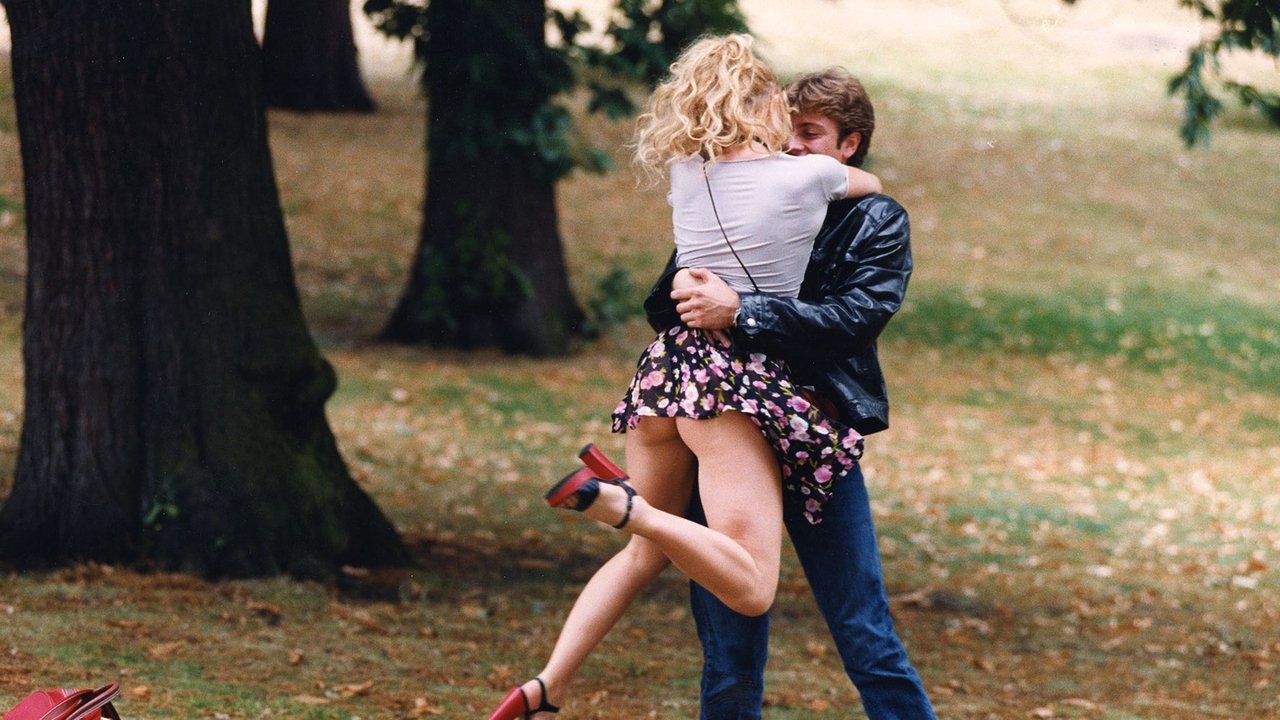
Who is in charge? Who's in charge? Well, for the purposes of this commentary track, we've got two people in charge for Tinto Brass' first film of the current millennium, or at least of the 2000s, whether you consider the year 2000 part of this millennium is still being debated, but it's a new era, it's a new time for Tinto, and we'll be talking about how that is true in very many ways for this film. My name is Nathaniel Thompson from Mondo Digital, and joining me here today is Eugenio Ercolani. Hello. Hello. It's... Good to be here for our second Brass commentary. This is indeed the beginning of a new era for Brass. Cheeky is not quite anything he had done prior. Definitely nothing he had done in the 90s. And I should probably explain the Italian title, Trasgredire, which means to transgress. But it's obviously a play on words and on the poster you can see brackets and it kind of hints to the presence of another word within it, tradire, to cheat. So there we go. Yes, it's one of many brass titles that is impossible to do an accurate translation of into English because he does a lot of this sort of cheeky wordplay, you might say.
The film before this, Monella, of course, was released as Frivolous Lola because the term Monella, it just doesn't really quite have an equivalent in English as we talked about on our commentary for that one as well. But yes, as you said, the word means either to cheat or to betray or to deceive. I think, yeah, to cheat is probably the best way to put it because, again, this is one of his many ruminations on infidelity and the fact that men in his films are much more uncomfortable with that idea than women are. Of course, we are introduced to our woman at the center of all this sexual mayhem, which was a bit of a trope in a lot of his films. In Monella, of course, before this, we also had this sort of setting, this communal public setting where everybody seems a little bit sex-crazed or at least amused at people who are sort of flaunting their sexuality. But previously, of course, that was a town square. This time, of course, it's in a park. And once again, it's pretty much an anything-goes kind of atmosphere coming up. We just have, for example, the two guys making out on the bench, for example.
Yeah, just these little fun little brass touches as well. But you know whose territory we're in as a filmmaker right from the outset here. There's absolutely no question. Yes, it's... Despite the mise-en-scene is definitely typical brass, it's also a different sort of setting. Modern. Although we are in a park, you get a sense that we are in a city. There's a certain... urban vibe in the way people are dressed and in the variety of characters walking around. There is definitely a certain modern quality to the setting, which is very different compared to, say, Brass's previous effort, Monella, Frivolous Lola, or the kind of reality in which most of his films are set. There's quite a shift. um no sort of venetian atmospheres nor north of italy uh territories being shown it's um it it's quite clear that is it's something different yeah it definitely is and um if you're watching the credits here you'll see some names here that are familiar but not always in the ways that they were before this uh for example we had a credit on here for the cinematographer here was uh Massimo Di Venanzo who was the son of uh
frequent Federico Fellini cinematographer Gianni Di Venanzo, but he was a camera operator on Paprika who moved on to becoming the DP on All Ladies Do It, Così fan tutte, which you and Troy did the honors for, as well as The Voyeur, Monella, this film, and after this, Black Angel or Senso 45, which I think is probably one of the more beautifully shot of his later films. But again, as we said, this is sort of a transitional one towards that direction. And then we also had our a camera operator on this film, who is Andrea Doria, who went all the way back to films like Miami Cops, the Bud Spencer, Terence Hill film, and Cross of the Seven Jewels. But he went on to become a full-fledged cinematographer at the very end of his career with Mon Amour and Kick the Cock, which is kind of one that gets overlooked. It's not a feature film, it's kind of a long short, I guess, but it's sort of a little bit of a footnote in his career after he stopped making full-on features. Yes, well, I was...
very happy to have the opportunity to interview Massimo Di Venanzo for this special release. And indeed, he comes from, you know, with a big, big heritage. His father, as you mentioned, Gianni Di Venanzo, was an incredibly influential, important cinematographer. And Di Venanzo started his career really once his father had passed away, began and did the whole, all the pyramid, all the various roles, and got the opportunity after many years, first as an assistant, and then as a camera operator for the likes of Michelangelo Antonioni in identification of a woman, Bernardo Bertolucci, and a number of others, among which Fellini, who had been a close collaborator of his father. In fact, Massimo Di Venanzo was the main camera operator on Amarcord, probably one of Fellini's most famous films, and started working with Brass on Paprika. So one could say at the heart of the golden age of Brass' erotic phase, because obviously as we As we should know, most people will, listening in, Brass began in a completely different world. Very different from what he'll become famous for. One could define him as an avant-garde filmmaker. Although that element is very much present in the way he shot also his most popular films.
Yes, absolutely. I mean, if you look at his earlier films, which, and he also worked with a lot of, you know, stars. He did a lot of films with Vanessa Redgrave and Franco Nero during his experimental phase, which are completely overlooked now. They're almost impossible to see in any sort of decent version. But, yes, he definitely had sort of a surrealist kind of anarchistic streak in his early films, which is something that trickled all the way through to the 70s. Something like Salon Kitty and what he intended to do with Caligula, you know, is still pretty much present then. But, of course, after Caligula, that's when things... The tide turned a bit and he sort of became the erotic maestro that we know today, especially with the success of something like The Key, which is one of his biggest hits. But that really sort of cemented his reputation. But yes, you can still find trickles of it. I know one film that tends to get brought up a lot with this one is, in Italian it's Nerosubianco, which is another...
kind of playful title, which means roughly black on white, sort of, basically. But it's also shown here as attraction, and then re-released for some bizarre reason by Audubon Films as The Artful Penetration of Barbara, which is a title guaranteed to make you very disappointed with the film if you watch it, because it's not porn by any stretch of the imagination. But if you watch Nerosubianco, you can sort of see a few threads of what would turn up in this film as well. You know, sort of the playful look. You've got a woman who's sort of off in London, you know, on her own, and sort of seen through her perspective as she's discovering herself sexually. as well. And the fact that this is sort of a dual city film is something rare in his filmography. This isn't unique, but you don't see it too often. Usually, again, it tends to be around Venice or around another particular Italian town. But this is a little more ambitious than usual, even though, as we can see, the budget may not be as ornate as he had in some previous efforts. No, and speaking of budget...
You know, despite the font is undeniably brass, some of the names, as you mentioned, change radically, among which the producer's name. In fact, from Giovanni Bertolucci, we pass on to Massimo Ferrero. Now, not many people out there, probably in the States, correct me if I'm wrong, will know who Ferrero is. And strangely enough, despite being extremely well known in Italy, He isn't really associated that much to cinema, or at least not as a producer. He's in fact a 360 degrees businessman and mostly known in Italy for having inherited the Cecchi Gori dynasty, really. Cecchi Gori, besides Vittorio Cecchi Gori, of course, Mario Cecchi Gori's son was a prominent producer. He's still alive, but not working. A prominent producer that inherited from his father the Cecchi Gori brand and produced a number of hits throughout the 80s and 90s after his father's death and well was involved in a very public bankruptcy and a number of scandals and owned cinemas. Cinemas, the Cecchi Gori cinemas around Italy, many of which in big cities and Ferrero, Ferrero inherited that after the Cecchi Gori bankruptcy and was himself soon after involved in a number of very, very high profile trials for embezzlement and corruption.
So he's a very controversial figure. I know there are a bunch of trials still active. Others have kind of been dismissed. But you can find in many big Italian cities, definitely in Rome and Milan, especially in Rome, a lot of the ex-Cecchi Gori, now Ferrero cinemas just abandoned there. just cadavers lying there on the sidewalk, one of which not too far from where I live in Rome. So Ferrero is associated to scandal. Not exactly a producer who believed in the seventh art, let's say. As a producer, he's never been particularly prolific. This is the only... film he did with Tinto Brass then his co-producer on this Giuseppe Gargiulo would later on continue producing for Brass but as far as Ferrero was concerned it kind of began and ended with Cheeky but yeah a very different kind of producer more of an entrepreneur than say Bertolucci who instead was a
your old school, very politically conscious producer. Well, since you brought up theaters, there's a lot of documentation. Like, did this play very much in theaters in Italy? Obviously, he was still shooting 35 when this film was made. And by the way, I'm very happy to see that, as far as I know, this is the first home video release I've ever seen where it's actually properly framed. It's 1. 66:1. The other releases cropped off some info off the top and the bottom. So it's actually great to finally have this back the way it was intended to be. But it started hitting DVD around 2001. I think the first time I saw it was, I believe, the German DVD from 2001 that Scott Elite put out. But in Italy, what kind of distribution did this get around 2000? I mean, was there even a theatrical market for films like this? Do you remember at all? Yes. I remember Rome being plastered with posters for this film. It did have a theatrical release, national release. But what was quite noticeable at the time was that it really didn't stir scandal. There was some issues that arose from the poster itself.
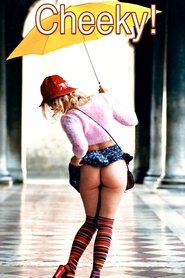
which is the same, I think pretty much the same poster around the world. It sees our female lead in a piazza in an Italian square with her skirt lifted up and you can see her buttocks and that kind of stirred a bit of controversy but nothing really compared to what previous films had generated and He really didn't get the front covers on magazines. Brass, and we mentioned this in other commentaries, Brass really was a phenomenon in the way that every film of his created a mediatic circus around the film, around him. He would be on the cover of every magazine. He would be on television promoting the film. He would put up a big, big show for the media. And you didn't really get that sense with Cheeky. Already with Monella, with Frivolous Lola, maybe a little less compared to the past, but with Monella, you still felt the event because a brass film was an event. And this kind of wasn't.
Yeah, and I know I've seen references that the film after this, Black Angel, was a bit of a box office dud that they were expecting a lot more from because it was kind of a throwback to something like The Key, which didn't really make it. But I think that was pretty much the end of his theatrical sort of clout, I guess, would be right after this. As far as I know, after that, it's pretty much straight to video. Things like Fallo! , for example, and Mon Amour, they weren't really designed much for theatrical audiences, as far as I'm aware. Is that right? Yes, well, it is very true with Mon Amour that that pretty much was conceived for the home video market. Fallo! did have a theatrical release, but nothing really worthy of note. I would say that definitely Black Angel is the last film that really was conceived for the big screen. And that did generate some talk, debate, mainly because it felt like something different. It was definitely a throwback to prior films such as Indeed the Key or Salon Kitty for the 1940s Nazi Germany setting. And for the cast. I mean, Brass has always...
made interesting casting choices. And definitely Black Angel is one of the most bizarre. You have an actress like Anna Galiena, very different from kind of the brass actresses. And then a soap opera actor like Gabriel Garko. So that definitely generated a lot of attention, although it didn't generate significant box office takings. Yeah. Which is too bad, but again, it's quite a legacy that he left us here. But yeah, just thought of going to see this in a theater, a movie like Cheeky. It's sort of mind-boggling today, but you know, that's what it is. I should also mention, since we've been hearing a bit of it here, this was actually the third and final score that was done for Tinto Brass by Pino Donaggio. Obviously he had done All Ladies Do It before this, as well as Monella from Frivolous Lola. And I think this is the most traditional of the three scores. It still has a bit of a pop sensibility, but it sounds very...
Whereas All Ladies Do It was sort of, as I said, sort of the companion to like home movies where he's riffing on classical music. In that case, he's kind of doing this sort of rock version of Mozart in that one. Whereas in Frivolous Lola, it was very much driven by the sound of 50s pop songs. But this is just sort of the typical sort of sweet, string-driven Donaggio sound that we, you know, that his fans have grown to know and love. This was actually the same year as one of his biggest later scores. It was a film called Up at the Villa with Sean Penn and Kristen Scott Thomas. which got a very wide soundtrack release. Strangely enough, this film has never had a soundtrack release of any kind, except there was one track, the main title, there was one track that was released on a very, very rare CAM compilation CD. It's called Da film erotici: il piacere della musica, volume 2. It's a two-volume set that they did of sexy scores.
But apart from that, I don't know why there was never an album released. I mean, there isn't a ton of score in this. I mean, there's also a lot of songs, but there's still about maybe 25 minutes of score. So my hope is someday we'll get a CD release of this or something, because otherwise it's been sitting in a vault. But Pino Donaggio, of course, was no stranger to doing sexy films before he met Tinto Brass. It goes all the way back. I think the earliest one was in 1979. He did kind of a really fun sort of nudist sex comedy. It's called Skin Deep or Senza buccia. which was kind of a home video hit in Europe, kind of on the gray market trading circuit, but it's never been out in the U. S. for some reason on home video. And of course, when Erotic Thrillers took off, he did Never Talk to Strangers with Rebecca De Mornay and Antonio Banderas. But yeah, Donaggio was good at sort of coming up with this sort of musical counterpoint to sexy films where there's kind of a sweetness, kind of a naivete to the quality of his music, which I think you find here as well.
And finally, you might also note that the score has a credit. It was conducted by Andrea Bandel, who was kind of the second big conductor that he used before this. A lot of his scores were done with Natale Massara, who did Dressed to Kill and Blow Out, all those big ones. But Andrea came aboard, and he also worked on Passion, the Brian De Palma film, with Donaggio, as well as Dario Argento's Trauma, and an Italian film called Segreto di Stato. But yeah, I think this is a really nice score. you know, like I said, this was it between Brass and Donaggio, but I think it's not a bad way to close out. It's a really pretty score for what it is. Yes, and Pino Donaggio has gone on the record stating this is his favorite score, apparently, among the ones he composed for Brass. And, yeah, regarding, you know, going back a little bit to what we've seen up till now, besides the lead, and we'll talk about her
throughout this commentary, we've also had a chance to appreciate the presence of Francesca Nunzi. Now, she is somebody who's very striking, very interesting looking. Massimo Di Venanzo, who talked about this film with me, mentions her as being one of the most striking presences of the film. Obviously, Brass, you know, thought thought highly of her. In fact, she had already participated to the previous Frivolous Lola in the role of Wilma, and she's also very memorable in that. And then, yes, this is probably the cue to mention at least something regarding the lead, Yuliya Mayarchuk. I hope I'm pronouncing that well. This So as most of the later brass icons, I'm talking obviously of the leading actresses, she was not a professional actress, or at least a struggling one. In the same way, Anna Ammirati, Lola from Frivolous Lola, was very much chosen by fate. Brass met Yuliya Mayarchuk while she was working in a pizzeria, apparently, and was very struck by her. I think it's quite noticeable that she is very different looking compared to the kind of Brass woman, you know, the prototype of the Tinto Brass female lead.
There have been, obviously, blonde actresses. I mean, the first that comes to mind is Katarina Vasilissa from The Voyeur, L'uomo che guarda. But they usually tend to be very genomic, very pale in skin, but still Mediterranean in their kind of shape and hair color. And yes, very generous in their curves. Whereas Here, Yuliya Mayarchuk has more of a Eastern European sort of presence and something that we'll see later also in Mon Amour. She seems, there seems to be a shift in the kind of female presence Brass was interested in. Yeah, there does. And there was an interview with her where she actually talked about the scene that we just saw, the gondola scene, that that was the one that she was the most nervous about, that she was a bit fretting about the shooting of it. And because she had to handle that prosthetic phallus, as you've already seen here multiple times, starting with that flasher at the beginning. But as usual for Brass, all the erections in here are, with one exception, the erections here are all completely fake. They're very, very stagey phalluses. But apparently she was worried about that scene where she had to pull that phallus out and she had to pretend to sort of sit on it in the gondola.
Unless they shot something that didn't make it into the film. I'm not quite sure why. It's not a particularly shocking scene in this film. It's definitely not the strongest thing in here. But yeah, apparently she was really nervous about the shooting of that particular bit. But otherwise, it seemed like she had a pretty positive experience on this film. But as you said, yes, she is very different. She does have a very different quality than the Brass woman who preceded her. But she still gives it a lot of gusto, and of course went on to act in lots of other films after this, and currently works as a certified fitness trainer. She has her own website, and you can actually book her if you're in Italy. You can actually get a yoga lesson from her if you feel so inclined, and ask her everything you want about Cheeky if you want. Technically, this was her second brass production, you could say. She was in a short called Sogno, which was part of the...
Tinto Brass presents a series of erotic home video releases. He didn't actually direct it, but he was sort of the producer. So when he was really sort of cultivating this kind of dirty Alfred Hitchcock persona that he had, where he was actually introducing these sort of short vignettes, which would later morph into something like Fallo! , which is an anthology film just flat out and kind of an accessor to those. But she was in one called Sogno, which is actually one of the better ones. So I guess he was impressed enough with her that he decided to go ahead and make her star in the film, which was fine. But the other connection here is later on in the film when she's telling the story about the beach with Bernard. But the guy who's in that scene with her running around naked on the beach is Mauro Lorenz, who is also her co-star in Sogno. So this is a bit of a reunion between the two of them. Yeah, another connection between the...
short film, yeah, Sogno, Your Dream. And this is actually the director of that short film presented and in a way produced by Brass. Nicolaj Pennestri is also one of the writers, one of the many writers, it should be noted, of Cheeky. So he obviously managed to slip into the Brass entourage. The other... the other writers that get credit, we have obviously Brass, and then we have Cipriani. Brass's legendary wife and working partner and muse. She is incredibly important and in all, really in all the, in the life of Brass and in his filmography, she is a pivotal figure. Carla Cipriani and we commented obviously on the fact that as most people know she was most often than not this continuity or script supervisor for her husband although we we know that she she was also very much involved in the casting in the pre-production and even in the locations but it is first with the frivolous Lola that she starts writing for her husband, or co-writing, and she will continue writing right up until her death. So for a total of four films directed by her husband, this is the second. Frivolous Lola was probably the most personal. It's partially autobiographical, whereas Cheeky, Cheeky feels like also a different territory. I mean, it's...
It's a comedy, it's light, but it has very different colour scheme compared to previous films. And even the writing is very different. It feels much more like episodes put together. There is something episodic about Cheeky compared to other films where sometimes not exactly narrative heavy, but there is a very precise fil rouge going throughout the film, story-wise, whereas here it feels a bit more, a bit more, yeah, episodic. Would you agree with that observation? Yeah, I would agree with that. Like I said, well, the beach sequence that I mentioned earlier that comes later in the film is obviously, it feels like a little short film unto itself that very much would have fit in with the whole Tinto Brass Presents modus operandi at the time. And I think that series actually marked a bit of a turning point for Brass as well. You could feel it in this film that something had shifted a bit. And in the films after this, I mean, if you look at this, Mon Amour, Fallo! , yeah, something's a little, I mean, still definitely Tinto Brass, but something's a little bit different.
that they aren't as lavish, they aren't as stylized. You'll notice here earlier, for example, that shot, you know, in all Tinto Brass films, usually there's a scene where characters are framed by windows that usually tends to pop up a lot. But in this one, it's much more natural. You sort of have this natural landscape behind them, whereas instead, before, you had these sort of stylized backdrops with sort of the crazy colorful lighting and things like that. You don't get much of that in this film. It's much more kind of very golden, natural sunlight, like you see here in the shower scene, for example. It's not quite as stylized as he would have done in the past. There is one scene coming up later on that's very strong red lighting, It does feel a bit like Old Tinto Brass, but for the most part, yeah, aesthetically, this is a bit of a different animal. Yeah, it's interesting also that one of his subsequent films, Fallo, is actually made out of episodes. It's an anthology film, so that's, you know, and something that he had already done with Fermo posta Tinto Brass, but...
there there was a much stronger wraparound narrative and Brass was in it and he in fact was in many ways the film's lead whereas Fallo is really a collection of short films and don't really interconnect not on any significant level between them between themselves but But there is also another thing that makes Cheeky such a transitional film, which is that it definitely ups the level of gynecological details. There's definitely a porno element to this film, despite we could never define it as a pornographic film, but it definitely is a step in the direction. If we consider that Frivolous Lola was... was much softer compared to what he had done, saying something like, oh, ladies, do it. It's a much tamer film. Whereas here, it really gets quite explicit. He is still using rubber phalluses, but it does feel a lot more explicit. And ironically, in the aforementioned fallo, he will actually lose the prosthetics and go for the real thing. In fact, in that film, we even see an oral sex done for real and the use of actual pornographic performers, both in male and female roles, something that we still don't have here. But you definitely feel that maybe Brass, and this is, I'm thinking out loud here, maybe Brass...
couldn't compete anymore with the, especially now with internet seeping in the social fabric with pornography. Yeah, I mean, with Fallo! , yeah, it's like, well, first of all, it's worth knowing there are two distinct versions that were prepared. There's one that has, like, the hardcore oral sex scene in it, and then one that has some alternate shots. It's a bit shortened down and a bit more tasteful. Personally, I prefer the softcore one. I think it's kind of depressing when you suddenly see this hardcore scene pop up in a brass film. It's just the way it's handled. It feels kind of off, I think.
But, I mean, the movie has other redeeming qualities, I guess, in spots, but that scene I'm not crazy about. But, yeah, in this film, it's... I want to say it's almost like Hustler-esque in a way, a few of the shots. It feels a little different the way they're framed, like what we're seeing right here, for example, in the massage. Yeah, the way it's sort of getting in there. Yeah, a little different. I mean, again, it's still definitely Tinto Brass, but it does feel a bit more... There's a bit of a Guccione kind of touch to it, which is odd, considering that's who threw him off Caligula. And, as you mentioned, if you're opposed to Tinto Brass...
was his first anthology film but um in a way that almost feels like a spoof of say penthouse letters in a way when he made it and the fact that he's the one who's presenting all of these stories i think is what kind of that's what that's why the film still coheres in a way um whereas Fallo! doesn't quite so much it's just a bunch of random episodes kind of stuck together um as you mentioned that's the uh the shot that he's on the poster there with her skirt flying up with the hat and the umbrella um very famous shot um but nowhere near as scandalous i think as the poster for something like all ladies do it you know which had claudia's you know buttocks on full display on some of the posters. Imagine that on a billboard in LA. I don't think that would ever fly. And here, obviously, we have the man himself in a less still playful but more malicious cameo compared to the nuns and kind of cartoonish
characters he's played in his cameos. Here he's definitely more of a slightly more creepy character, let's say. Yeah. And of course, he's one of the many characters in here who does the finger-sniffing thing, which is a bit of an echo of one of the best moments in Monella, where you have the priest kind of sniffing the bicycle seat, but here he kind of really pushes it through the roof. Here you have multiple shots of dealing with the smell of sex and people sort of sniffing and sniffing their fingers and things like that. But yeah, even Tinto gets in on the action here at the end of his little cameo here. So yeah, I guess people responded so well to that bit, he decided he might as well do it over and over again in this one. Yeah. Speaking of Brass's thoughts about pornography, for a long time, definitely throughout the 80s and 90s, he took a very strong stance when it came to hardcore films mention going on the record saying that he was not interested in them, that what he did was obviously very, very, very different, that he would feel offended in being compared to a pornographer and that eroticism and true
Excitement, erotic excitement has nothing to do with pornography. However, his views on the matter did change around this time. And in fact, he, when interviewed, mentioned that he was actually considering making a fully fleshed explicit film, an actual porn film. And he complained about the fact that there were no directors in Italy within the porn industry taking a strong artistic stance and actually doing something interesting within the pornographic medium. So he definitely changed a lot in regards to pornography over the years. And who knows, if he had continued directing, maybe he would have ended up making a porn film. Yeah. Well, of course, around this time, Joe D'Amato was, you know, in full force. He'd gone totally into doing hardcore films, pretty much. So, you know, one can only imagine. Obviously, a very different director from Tinto Brass. But D'Amato, of course, was, you know, pretty ambitious. Unfortunately, they were pretty much all shot on video after a certain point, you know, which kind of gave them more of a caress sort of visual quality. But, you know, at least they were sort of... Oh, sorry. Yeah, but I mean, in this era, I mean, by this point...
No, I mean, by the late 90s, early 2000s, all the D'Amato films that were on home video were mostly porn, whereas he was hitting the market. So he was someone who had sort of already jumped into the porn market ahead of what Tinto Brass was talking about. But what he brought to them, I think, was they weren't terribly artistic, but they were lavish, considering he was doing movies like Robin Hood and Hamlet and things like that, which is certainly ambitious. And whether it's artistic, though, is a matter of interpretation. But they are what they are.
Yeah, well, I mean, inevitably, pornography was changing very much between the, well, let's say early 2000s. Curiously, I don't know if a lot of people out there know this, but according to Italian law and it actually is still the case. It is perfectly obviously and has been for decades legal to distribute, sell and buy pornographic material. However, illegal to shoot it on Italian territory, which is one of the reasons why a lot of Italian companies actually have their administrative offices in Eastern Europe. Budapest, for example, is where a lot of production companies set base. But by this time, things were changing radically within the porn scene, mainly for the reasons we can all imagine. I mean, the rise of internet. Around this time when Cheeky was released, it wasn't quite the Wild West it is now. pornography on the web, but definitely the direction was very clear, you know, and things were changing rapidly, which actually probably makes sense that Brass would kind of start hinting at the fact of wanting to enter the pornographic arena because everybody was really exiting. All the big or biggish production companies, Italian ones, were really
doing other things or downsizing their productions in a very radical way or closing shop directly and declaring bankruptcy. Yeah, well, it's probably a good thing they didn't because obviously the internet pretty much, you know, wrecked the whole market for theatrical feature films eventually anyway, so... Yeah, as we are right now, it's like, obviously there's a huge resurgence in interest in vintage adult films, you know, from both Europe and America. But as far as making new ones go, it's like the market is virtually nil because nobody wants to, you know, watching a whole feature film that's porn now, where would you even release it? It's like, there's really, the DVD market is pretty minimal, for example. So, yeah, we'll see. Although art films are still, you know, in art films, you'll still have explicit sex injected into them, but I wouldn't really call those porn. Yeah, I mean... Probably it's the right time to talk a little bit. There have been quite a few exteriors. There are quite a few exteriors in this film. But the interiors obviously are always very important in Brass' films and really give the brass touch. Now, this is not a period piece. It's kind of set in a...
I would say, in a non-definitive era. There are obviously mobile phones from the time and it's obviously set in, as we said, in an urban context, but always Brass is never really faithful entirely to whatever city or location setting he's placing his stories in. They're always brass films, and brass's films are set in his own time and place. But the production design here is very different, despite being, as we've said, this is kind of the leitmotif of this commentary. It is brass, but different. And in that sense, even the production design, it is brass, but also different. The person responsible for the... Set design is Carlo De Marino. For anybody wondering, nothing to do with director Alberto De Martino. De Martino is a very popular, very common surname in Italy. He had already worked as a production designer on the previous Frivolous Lola. Will continue working with Brass on Fallo and Mon Amour. So he's kind of is an important figure within the last phase of Brass' career and definitely gives the film a colour scheme that isn't typically Italian. Despite Brass has a very Mediterranean touch, there is something more Northern European about the way the
the scenes are staged and the way the sets are designed. What do you think? Yeah, I would agree with that. And interestingly enough, for a film that involves London as part of its plot, it's curious it doesn't go for an English look at all. I mean, normally when you have something like that, you'd go for sort of like a colder kind of grayer look, which doesn't do at all. But yeah, again, this is just Tinto Brass Land where he's shooting it. This shot right here, by the way, looks much more classical brass as well, with that sort of rose-colored light pouring through the window. That's...
a little more like the Tinto we used to know and love as well. But by the way, the scene there with Carla where she's dressing up with a black wig, whatever, it's funny when she's done with her transformation there, but she looks much more like a traditional sort of brass heroine in the old school, you'll notice. In a way, it's his sort of signature of saying, you know, things are changing here, that again, we obviously have the butterfly symbolism running through this film. In fact, it's the very last shot of the movie, the butterfly on pubic hair, but yeah, in a way that she's sort of coming out of her... Her chrysalis, you might say. So in a way, it's the old Tinto Brass Heroine making way for the new, I guess, when she's playing dress up there. Yes. It's definitely... You can definitely feel that the cinematographer is... you know, very much part of the brass world, something you don't really feel in subsequent films. Fallo, for example, doesn't really have that sort of brass light, that sort of very recognizable lighting, despite a very competent cinematographer such as Federico Del Zoppo, who had actually worked back in the 70s with brass as a camera operator,
Here, Di Venanzo manages to still keep the film very coherent with the Brass world, and I think does a good job. Di Venanzo actually mentions his favorite work with Brass is The Voyeur. He considers The Voyeur to be the best lit film out of the ones he made for Brass. But still, this one has a very... striking look, and very coherent, yet different. I think a lot of the value or success of this film, if we will, as a product, really comes down a lot to the Di Venanzo's work. And this scene here is one of the two sequences that I was sort of alluding to earlier when I said that you could say, in a way, this film is a bit of a signpost pointing the way to what would come with Black Angel, but there's a big sort of Nazi debauched party scene
in a house when they're playing around, but it is shot in a way that's sort of similar to what we're seeing here with this house party. Some of the compositions, some of the lighting especially, is very similar to what he would explore later on in Black Angel, although this is a much more benign twist on that idea. But just in purely aesthetic terms, you can see him sort of playing around with some ideas he would go to later. And also, he gets pretty high billing in this film, but this is Max Parodi, who is a bit of a mascot in Tinto Brass's later films. He popped up in Monella before this. We talked about him on that track quite a bit, but always nice to see him turn up in these.
He had actually done, I think he did a total of, what, five films, I believe, for Tinto Brass. So this would be number two, followed by Black Angel and Fallo! and Mon Amour. He's also in the Tinto Brass Presents segment called Quatro, which is probably one of the most explicit of all the Tinto Brass Presents stories, one of the roughest ones. But again, around this time, you always know Max is going to pop up somewhere and good to see him in this one. I think this is also the only one where he stays fully clothed, even though he does have a sex scene in this, but he's mimicking too. but definitely one of his more restrained parts, you know, out of his Tinto brass era. Yeah, Max Parodi is interesting in the sense that he always feels that he incarnates within the brass universe kind of the obtuseness of men, the kind of oblivious nature of men. Even when he plays relatively sympathetic characters, although one could make the case that are there really deeply sympathetic male characters within Brass' erotic cinema? Not that many. Not that many. I mean, in the worst cases, they're absolutely awful, horrible, mean-spirited people. But if not, they're always...
either too weak or too naive or manipulable. And Parodi kind of incarnates the, probably the most kind of, yes, oblivious. He's never the sharpest knife in the drawer. Yeah, no, he's not. But of course, and also in most of Brass's films, the gut men are also very prone to jealousy, often irrationally so, this film being another example of that. where this is very much an anti-jealousy kind of, you know, diatribe in the end when it comes to, of course, that's also what Monella was about when Max Parodi was the lead, you know, where he's obsessed with his wife, you know, her being a virgin, even though she's, you know, flying around town, you know, showing her butt everywhere. But, yeah, but he's, there's something sort of kind of likable about him anyway, even when he's playing absolutely stupid characters, but he's just sort of a warm screen presence all the same, and just, you know, as far as the brass, some male characters go, he's more memorable than most.
You know, it's interesting, he doesn't get the lead role in this one, he doesn't get to play the doofus spouse or the doofus partner. You know, in this case, it actually gets handed over to, I think it's Jarno Berardi, is that how you pronounce it, I think, hopefully, who didn't really have much of a career. Aside from this film, you can kind of see why he's not the most magnetic screen presence. No. He does okay, he doesn't embarrass himself, but there's really nothing terribly remarkable about him. The part doesn't really acquire it anyway. He just kind of plays sort of a jealous, you know, doofus, and that's pretty much it. But, you know, for what it is. But that's normally the part that Max Parodi would have played. But here he gets to be a little more aggressive and savvy, I guess, in the sex party sequence here than he did in Monella. Yeah, Sano, I definitely agree. We mentioned many times the short films, the Tinto Brass short films, which were released in Italy. as an in-home video, obviously, directly numbered in first VHSs, then DVDs. I believe there were six or seven different volumes. And the whole operation was called Corti circuiti erotici, Erotic Short Circuits. And, I mean...
They were everywhere. They were everywhere in supermarkets. And at one point, they were going for very, very, very cheap. You could buy the whole bundle for just a few thousand lira. But they are very significant. And we mentioned this a number of times. He definitely, as you pointed out, he was kind of... playing around with his kind of dirty Hitchcock persona. But it also feels like a way of tapping into the youth, sort of the youth market, or getting a sense of what younger audiences and filmmakers could want, or getting younger audiences to kind of see what he was all about. it has to be said that Brass had become associated to definitely more mature people the sort of audience members that had appreciated such films as All Ladies Do It or Paprika or previously films like Capriccio or The Key they had grown older now they were people in their 40s and 50s if not older, and was a way, I think, of introducing a new generation to brass and try to find a way of distributing his films differently. They were also very much present online, and quite a few events were organized to present this collection of short stories, and he himself
kind of brought on board a lot of people. We mentioned a few, but even the writer, the other two writers we mentioned, obviously Brass and Carla Cipriani, but also Silvia Rossi and the even more relevant Massimiliano Zanin, who co-wrote Cheeky, both came from the world of the short, erotic short circuits Brass had created, and would continue working with Brass. In the case of Zanin, he later on directed a very talked-about documentary, feature-length documentary on Brass that was also presented at the Venice Film Festival, released in 2013, called Istintobrass. We mentioned Joe D'Amato, he would also more recently co-direct with Manlio Gomarasca a documentary on Aristide Massacesi called Inferno Rosso, which was also presented at the Venice Film Festival. So, yeah, this operation, this sort of... which felt more like a marketing tool than anything else for Brass. But this whole idea of these short stories really kind of shapes and reshapes his career and adds a lot of collaborators.
Yeah, it does. You mentioned earlier about the older crowd and the older, but it's interesting that Tinto never really courted a teen audience. I know a lot of teenagers would actually sort of like slip in and watch his movies, but you'll notice even in his earliest films, he never really has teenage characters. They're all sort of working class adults in pretty much all of his films across the board. Even something like Monella, it's like they're a little older. You know, in fact, that's about a baker and his fiancee, for example, but that's even about as young as they get. But yeah, it's interesting that he was sort of
in his lane, you might say, and he always stuck in it. They never felt they were sort of caught like a newer generation with his films, which might be why these were considered out of vogue by a certain point. I think especially by the time he had stuff like Mon Amour and Fallo! was considered, you know, it's still at it again, you know. But yeah, I guess maybe just he felt like the audience wasn't even there for those kind of films. Maybe they were just chasing, again, like I said, the internet was sort of taking off after this. Maybe that's where the market went. I don't know. Yeah, one can't help but wonder if some of the changes and kind of shifts in tone and staging and just generally also casting choices of Cheeky depended also on trying to appeal to a slightly different audience. Because it has to be said, for example, that in Italy around this time, there was also a big... sort of geyser of Eastern European TV presenters and actresses and models, some of which are famous to this day, like Michelle Hunziker, for example. Even when they weren't Eastern European, they were still very different.
compared to sort of classic Mediterranean beauty. So there was definitely an interest, let's say, in the male imagery or gaze to a different kind of woman. So one can't help but wonder if Brass is also attempting to kind of keep up with the times. Yeah, it could be. And I do wonder if the... with Nunzi's predilection for very brightly colored wigs here. It almost feels like, probably maybe not intentional on his part, but for example, you notice in like anime was becoming really huge internationally on home video. I mean, it had been for quite a while, but it was really exploding around this time because of DVD. But yeah, she does feel like a bit like an anime character with these, especially with the blue wig here. You know, but again, I wonder maybe he was hoping these would take off in Japan or something like that, because again, these films were popular there.
um you know in japan and especially in england weirdly enough um i i don't obviously you um seeing the first time being released in italy it was much easier for you to see them but for me it's like i pretty much had to wait for the most part in the early 2000s for them to hit dvd or some sort of home video in the uk because that's where they would be english friendly first where you hear the english dub tracks this one of course and manella were slightly trimmed by the time they hit their English language versions. But at the time, you had to forage around a bit and try to find them. But why they were so popular in the UK and not the US, it's a bit of a mystery. I don't know why it took so long for them to catch on here. Yeah, it's... Cheeky did, it should be said, that despite not having the massive success of...
prior films directed by brass, it did do very well. I mean, at the box office, it did subsequently do very well on home video. Not quite enough to be called a phenomenon. It wasn't a massive hit, but it definitely recouped all its money. Nobody made a loss with cheeky between the box office takings and home video ones. Although it has to be said that one of the sort of things that should be noted that kind of demonstrate that Cheeky was not an event is the subsequent career of Mayarchuk. It's pretty much consistently throughout the 80s and 90s. all the actresses chosen by Brass went on to have a career. Long career, often, but to kind of enter the collective imagery. Claudia Koll, to this day, is a household name. Debora Caprioglio, of course, that, yes, somebody out there might say, yeah, but she had already, you know, there's the whole Kinski collaboration prior to Paprika. Yeah, but... She didn't really get anything from that. A lot of tabloids, but she, as far as film work, that didn't really bring too much. But she continued working and became a big TV personality after the groundbreaking success of Paprika. Serena Grandi, of course, is still to this day very famous. She also appears in a...
Academy Award-winning film like La grande bellezza, and she's still very much present on television, and is probably the actress most associated to Brass in Italy. Even Anna Ammirati, only a year prior to Cheeky, kind of became a name, and she's still working. She is in a highly successful TV series in Italy. Mayarchuk, she continued working, and she does to this day. She divides her time between her personal trainer activity and yoga instructor, and she continues acting in the meantime. Not exactly prolifically, but consistently, always in very small roles, often sort of stereotypical characters. kind of Russian spies and comedies and fleeting beauties and stuff like that. I mean, which is pretty much what she was doing even, you know, in the very few appearances prior to Cheeky, kind of uncredited bit parts. And obviously, you know, she kind of didn't really cash in
to the cash-in with the success of Cheeky. Yeah, by the way, just for some reason, this particular scene, the way she shot there in the door frame always reminds me a bit of Julia Stiles. I don't know why she just looks like her there, the way she's holding her head. But yeah, it is interesting that a lot of the actors that he discovered, again, he said they went on to have long careers, but they didn't really pursue the whole sexy thing. They went on for sort of more quote-unquote... legit roles again you said they would do like comedies or dramas or a lot of italian tv work things like that but they didn't really capitalize on the nature of these roles that made them famous um even someone like serena grande um you know she did a bit but definitely not to the extreme that she did with her work with tinto brass for example um so yeah just a bit of a quirk that um that they did that i mean it's sort of the equivalent would be something like say uh you know when sharon stone exploded in basic instinct that she never went to that level of
explicit as again, even though she did a few erotic thrillers after that, but she, you know, it's just curious that when an actor sort of breaks through in a role like this, that suddenly all of a sudden they don't want to do these sexy roles anymore, just the way that showbiz works, I guess. Yeah, I'd make the case that only really Serena Grandi tried, definitely in television and in comedies she kind of tried to keep alive her sexy persona the kind of sex symbol reputation she had built for herself mainly thanks to Miranda directed by Brass she did go back to she did a few erotic films none of which though had the resonance and success of Brass's one probably the biggest kind of fully-fleshed erotic film, so not a comedy, is La Signora della Notte by Piero Schivazappa, the Lady of the Night, I believe it is known in English, which is a very sort of dramatic, very morbid and sordid sort of erotic film. But...
That's pretty much it. For people from my generation, so people around the age of 40, will still remember her in gas stations sporting on calendars. She was very much present on sort of tantalizing calendars, which went sold out very quickly. And that was still happening in the 90s. But... But besides that, no, really all of them tried to pursue more quote-unquote legitimate acting paths. Yeah, absolutely. I should mention this scene here. This is one of many scenes where our quote-unquote male protagonist, he really unleashes an awful lot of really nasty language against his partner in this film, which makes you wonder why on earth we're supposed to be rooting for him to wind up with her at the end of the movie, because he's a bit of a jerk.
but he's constantly calling her a whore, among other things, in this film. I don't think Tinto is on his side at all. He's sort of making the case that women shouldn't be judged for their activities and the fact that, I mean, yeah, okay, so she posted some naked pictures on the beach with the guy she was with, so what? But he sort of takes it to an extreme where it's very hard to make any case for her to be with him at all. So I do think it's a shame she doesn't just kind of walk away from him at the end of the film. But at least it is giving us this segue into her finding out more about her past, you know, when he...
you know, she's sort of explaining like where this came from, which is probably one of the highlights of the film. I think it's obviously Tinto loves shooting scenes on the beach and, you know, it has sort of a nostalgic kind of out of time quality to it, which you get in this as well. But, you know, the fact she's telling it to this guy who's pretty much probably never going to fully understand her. It's yeah, it's really hard to root for them to be a couple, I think. Yes. Well, yeah, I mean, I feel the same also for the role of Max Parodi has in Frivolous Lola, you kind of, yeah, with a lot of these male characters, you kind of wonder, what does she see in him? It's quite baffling. But at the same time, as you point out, it is very clear that in all of Brass's films, that his sympathies are always on the female side of things. He's always rooting for the independence of his female lead. There's no question about that. Actually, talking a little bit about the kind of technical cast and the credits of this film, it is interesting. Among the special thanks we get Antonio Tintori,
is actually thanked. And seeing we've been talking about the writers for this film, it would be interesting to know if Tentori participated at all in the writing of this film. Tentori is not someone that you'd associate to brass at all. For anybody out there who doesn't know who Tentori is, he is a writer. mostly known for nowadays for participating in very kind of independent grubby horror films of which he you know he participates in a lot of them but going back to the early 90s he had a hand in helping Fulci both as a writer but also as a sort of assistant to the director for a cat in the brain then later on also participated, uncredited, on Frankenstein 2000, Return to Death, and continued working, say, within the horror genre for most of his career and to this day, and working with the survivors of Italian genre cinema, Bruno Mattei, with Gianni Paolucci produced direct-to-video horror films from around this time, around Cheeky.
was made. That's when he began his collaboration with Bruno Mattei and Gianni Paolucci and worked with Sergio Stivaletti and also co-wrote Dracula 3D by Dario Argento, probably the biggest film he's participated in. So it's interesting to see he's thanked at the end of Cheeky and one can't help but wonder why. Yes, indeed. All right. Now, this scene here, as I mentioned, this is the other big call-out to what I said as being a transitional film towards what you would find in Black Angel because, again, he essentially recreates the scene almost verbatim with our two leads in that one, except that he actually takes the camera underwater in that one, which we don't quite get in this one. You don't get the actors lolling around with their legs spread underwater. But other than that, it's pretty much the same scene, so this does feel like a bit of a rough draft as well. But hardly the first time he actually took a scene on the beach. As I said, you have these sort of...
fun frolicky scenes running back through a lot of his previous films. We have a lot of people congregating on the beach and sexy stuff going on. But this is probably one of the strongest though. This gets pretty close to hardcore in a couple of shots here. So I'm actually a bit surprised that our leading lady had no issue shooting this scene because I would have thought this would probably be the most anxiety inducing because it is pretty much the closest thing to a porn scene in the movie as well. But again, if you're an actor, I guess you have your own limits. Yes, the beach is definitely a recurring element. I must say generally in, and it probably makes sense, generally in Italian erotica, it seems to be very much present, especially in the dunes, maybe for the shapes, maybe... I don't know, but definitely Brass and his colleagues active within the genre always seem to take a shine to beaches and dunes. But yes, it definitely feels very different. And I think if one had to kind of find a reason to criticize Cheeky, it's probably in the fact that
this collage sort of effect the film has, this very episodic kind of structure and a lack of a very sort of a strong narrative, you kind of feel it. After a while, around this kind of entering the last act of the film, you kind of feel it's a lack of momentum, which I think comes from a sort of a lack of story, if you will. Yeah, I would agree with that. And also, the moral of this film, as I said, it's also muddled by the fact that, again, you have this very unsympathetic lead male character. But as I said, this is another of his meditations on the theme of jealousy and fidelity in his films. But again, I'm not entirely sure what the message is at the end of the film.
Almost we've gone through all of this stuff and he just sort of shrugs his shoulders and says, whatever, I guess. If people are going to cheat, they're going to cheat. There's not much you can do about it. Don't get too hung up on it. But the fact that they're never really on the same playing field. This scene here where she's talking about, she says, no, no, I didn't sleep with him. I didn't see him. Well, just a little bit. And he's like, what does a little bit mean? Does that mean in the butt? What does that mean? You know, it's this constant sort of the wordplay about, you know, where's the line? Where is it being drawn here? You know, ultimately, it doesn't even really matter. It's like people just do what they want to do because they're all basically pleasure-seeking animals, I guess, you know, in the world of Tinto Brass is where we're left at the end of the movie. But, yeah, again, that's sort of, you know, it's a little different than his previous films, I think, where he has more of a flat-out satirical and kind of lighthearted look at human nature, I guess. And also the fact that he doesn't really have his normal priest comic relief in this film.
I'm actually kind of surprised on that beach scene they didn't have a quick cutaway to a couple of priests walking by and commenting on the action, which he would have done in previous days. But again, that's pretty much gone, I guess, by this point. Yes. Well, that could actually make sense if we kind of gave credit to what we were discussing before on the fact that this film is an effort to... kind of catch up with the times and maybe possibly a younger market because the whole attraction towards kind of scandalous elements tied to priesthood and nuns, mother superiors, men dressed as mother superiors walking around the city, all that sort of stuff. is really tied to a different era by by the late 90s early 2000s it really didn't it didn't even it didn't create any sort of scandal but even humor it wasn't even seen as something particularly irreverent or or you know uh anti-establishment uh it was it was very very um yeah it was it was not something people would have noticed um Speaking of connections to previous brass films, I mean, you mentioned Nerosubianco, which definitely has ties into Cheeky, but this film is the nth time that he demonstrates that he's very much aware of
what the key is in his filmography. Towards the end of the film, you have some of the characters mentioning explicitly the film La Chiave, remembering, reminiscing, having seen it at the cinema. And in the same way, he mentions the key also explicitly in another film, Snack Bar Budapest in 1988, where that film gets explicitly mentioned. So Brass is very, it feels there's a level of awareness in Brass's choices. He knows exactly what he's famous for, where the kind of pivotal turning points can be found in his filmography. There is a very kind of a master of his own persona in action, you know, trying to reshape himself, work upon his physical traits, creating scandal around himself. I mean, he's demonstrated time over time that he is very much aware of where he is grounded within the collective imagery. And The Key is something that he knows is a pivotal moment in his career. It was a great success and a success also that transcends kind of the box office takings. It was a kind of a big revolution in his way of framing the world. So yeah, there is an explicit reference to The Key in Cheeky.
So in Italy, like nowadays, is The Key considered sort of like his biggest film? Is that sort of the classic of the whole output? Or is there another one that you would say rivals it? What are the top brass films in Italy by consensus? The Key is definitely the most famous. There's no question. Even when you talk to somebody maybe younger who is not really aware of brass's reputation and career, Usually, if you mention the key, it will ring a bell. They might not have seen it, but it's that sort of film that has seeped so deeply into Italian pop culture that people will have heard it. It's kind of the Cannibal Holocaust effect. Most younger people have never seen Cannibal Holocaust, have no idea who Ruggero Deodato is, but you'll mention that title and go, oh yeah, I've heard about that. That sort of key as well the key is uh is is the key to brass basically it is the entry point for most people to the brass universe uh the quick follow-ups would be all ladies do it and paprika um i think miranda uh despite being a very big success and launching as we mentioned before serena grandi into um well at least italian stardom
I think it's lost a little bit of its fame over years. But Paprika and All Ladies Do It, no, they're definitely still to this day very, very popular films. Mainly, I think, because in the case of All Ladies Do It, because of all the scandal tied to Claudia Koll. If people don't know, well, Claudia Koll, you know, found God and became a born-again Christian and completely disowns everything she did before, including and mainly referring to Brass's film. And Debora Caprioglio as well. She kind of, to this day, is a very popular actress and a TV personality. And so... Yeah, I'd say those two films, which also are considerably more explicit than, say, Miranda. So that also, I think, makes sense. But yeah, these three films are definitely the most famous. Yeah. And it is funny, there's some films that sort of slip through the cracks, even during the height. I mean, you have something like Capriccio, for example, which you would think would be, would have been part of that, you know, up with the other films in that canon, but that's one that's been almost completely forgotten. It's also impossible to see uncut for some reason.
Just some films of his tend to, I think, are ripe for rediscovery. For example, right before The Key, in the aftermath of the whole Caligula debacle, he made a film called Action that I'm actually quite fond of. But again, it doesn't get talked about a lot, but it's kind of the transition into these erotic films. So if you're a fan of something like The Key, for example, if that was kind of your gateway, I think it's worth going back a little bit, because Action... And even going further back to something like Nerosubianco, it is kind of interesting to sort of see him dabble in these ideas that would lead to the sex comedies that he would become known for, compared to something like Salon Kitty, which is definitely not a sex comedy, as explicit as it is. But yeah, you can sort of see his persona kind of developing over the years into the Tinto that we all know and love today. Absolutely. I mean, Action is a film I would definitely recommend people to go and watch.
And rediscover, now in hindsight, you really do see all the ingredients of the Brass universe kind of coming together. They fit together perfectly in the key, and the key is sort of the vademecum, the mapping of Brass's universe. they're slowly coming together in action. And it's definitely, and not surprisingly, action is another film that arrives at the beginning of the decade, 1980. And it's very much Brass trying to grapple with the whole Caligula fiasco, which to this day still haunts him. It's a wound that has never really closed up for him. To this day, he doesn't want to talk about it. And if he does, it's only to manifest his disappointment and bitterness. And action is really a game changer in his filmography. and a concrete step towards erotic, explicitly sort of erotic cinema. Because I mean, eroticism is something that arguably is present in every single film Brass has ever made, even something like Yankee, which is the biggest anomaly. You can still see that carnal element seeping through, but it's really with action that it all comes, starts coming together.
um so yeah in a way um action and cheeky it's it's interesting to see two films at the beginning of of you know a new era uh also because i mean the passage between the 70s and the 80s is not just simply from one decade decade to another but you know was a different era really in many many respects everything was changing, television, cinema, the Italian film industry. It was a moment of great revolution. In the same way, that passage between the 90s and 2000s with internet, as we mentioned, and pornography changing, and again, the Italian industry going through another kind of sort of Darwinian evolution. So it's sort of interesting to see where all this... began and where all this was about to finish with Cheeky. Because Cheeky is, and I don't mean this in a disparaging way, the beginning of the end, quite literally. I mean, it's the beginning of the last run of Brass films, which are radically, at times radically different from what he had done prior.
Yeah, I mean, there's really no other director you could compare in sort of the erotic film realm who is still doing what he was doing around this time. I mean, as we mentioned, you know, Joe D'Amato had gone into porn. Of course, he passed away before this. But Radley Metzger had long retired. Russ Meyer was just sort of being Russ Meyer. But in a way, he was sort of in a ways like Dario Argento, who after the giallo had long collapsed. But Argento was kind of the one sort of flag bearer, you know, of what he had sort of created. And Brass was sort of like that as well. So yeah, it is curious. But again, like I said, Jess Franco maybe is close, but he was shifting into shooting really cheap sort of stuff for the VHS market. But Brass really hung in there. And yeah, whether there was a decline or not or whether there was a shift, however you feel about some of these later films, you have to take off your hat to him for sort of sticking with it and still being open to sort of playing around with the tropes that had made him famous, whether the audience was still there or not. Yeah.
one can't help but wonder if another uh sort of uh kind of um virus uh that was there dormant within within what brass had started creating from action onwards kind of exploded later on which is his world as it started getting more layered and detailed you know, from all points of view, from the set design and kind of actresses and the way of framing things, he really kind of put himself in a corner. You know, a Brass film had to have such specific elements to be considered by the public an authentic Brass film that there was nowhere really to go. And in a way, every time he did try and step in a different direction or attempted to do so, even timidly, his audience would shut him down quite immediately. I mean, I mentioned Snack Bar Budapest, which, by the way, I highly suggest you seek out. It's a very interesting film starring Giancarlo Giannini, one of the few cases in which we find a superstar, because that is what Giannini was in Italy at the time and still is to this day, in a brass film, because...
Something every single person I've ever interviewed who has worked with Brass has said, Brass is a very generous director and puts his collaborators in the position of doing their job at their best. But everybody has to remember that the only star in a Brass film is Brass. So we don't really find very big names in the cast because he didn't like the competition. And he's been very candid about that as well. I mean, brass comes with a big ego. But every time he's trying to do something different, as I was saying, he's been shut down. Black Angel, Snack Bar Budapest. His audience wanted those elements that weren't only erotic, but they were also in the kind of music and the production design and um the casting it it became so specific that he couldn't really go in any direction he kind of put himself in a corner as i was saying but the problem is the audience was becoming smaller and smaller so he was catering for a increasingly diminishing public audience yeah well yeah i mean that's that's the same problem that uh Russ Meyer and Radley Metzger had but it was much earlier um where just you know it's like just there's there was no place for it anymore um
Whereas with Brass, I think his stamp was just so unmistakable that, you know, there was always going to be a bit of a crowd that wanted to see his films. So, you know, it still kind of worked out. But, yeah. And the irony, of course, being that now I think his films internationally now are more popular than they ever were. Again, because home video has been quite a boon for his films. The fact that we're seeing them in better quality than we were when they were hitting VHS. And some of the early DVDs were just really dire. They were obviously running at the wrong speed. They were mis-framed. The colors were off. That was really common. But now they're actually kind of able to see these films
you know, as good as they could be. I think it's, you know, the audience is, I think it is really huge and people are sort of discovering him later on, which is interesting because obviously the sexual politics of the current era are very different than when they were made, but they still hold up pretty well. I mean, I haven't really seen too many people objecting to the content of his films and part of maybe the fact that, again, they are so female driven, they are very much about you know, empowering his female protagonists and the fact, again, that he sort of works in sort of a lot of gender bending and he throws in various sort of warm-hearted nods to sort of to the gay audience as well, that maybe that's why they held up so well and nobody really tends to find fault with them, you know, again, from a sort of the sexual politic perspective. Yeah, and... Speaking of remaining in the later part of his career, I wanted to circle back a second and talk a little bit more about one of the producers, because besides Massimo Ferrero and his scandals, we find Giuseppe Gargiulo. Now, he's part of kind of a handful of producers, among which we can find...
Gianni Paolucci, for example, that we mentioned before, who's still producing at an incredible rate, that kind of tried to keep this whole genre thing going, desperately trying to continue making genre films. Gargiulo, just as other producers of his generation, started out in the 70s Usually he would be a production manager or an AD, but really starts producing in the late 80s, early 90s, and starts with, you know, kind of really the last kind of shots fired from kind of old school genre productions. directors, we can find films like Black Demons, as one of his very first films as a producer, or Caccia lo Scorpione d'Oro, the penultimate Umberto Lenzi film. So yes, Gargiulo starts his career as a producer in the early 90s, and among other things, produces some of Umberto Lenzi's very last films. So he participates in kind of the very, very last examples of old-school Italian genre filmmaking. And then we'll continue producing within different genres, but always kind of as Paolucci as well, kind of... trying to think of the international market. For example, he participates in Ghost Son, Lamberto Bava's very ambitious international horror film set in South Africa. But with Tinto Brass, he kind of opens a collaboration that is only interrupted
by Black Angel, a film he will not participate in, but if not, he's there for the last run of films, up to Mon Amour, for which he was an executive producer. Mon Amour, which is sort of a bridging film between this, the era it was made in, so it's a film from 2005, but also what Brass was doing in during the second half of the 80s and the 90s. It does feel very much a film that contains elements of something like Cheeky, but also something like Paprika or All Ladies Do It. And there's a certain melancholy to it, which, despite the playfulness, which is present, omnipresent in all of Brass's films, it does feel so there's a certain element of melancholy, which still this Cheeky does not contain. Yeah, no, this is definitely, definitely Tinto at his sunniest, at his most cheerful, like I said, apart from the fact that you have one deeply unsympathetic character here, but yeah, it is very much sort of a feel-good brass film. Although, as we said, this is, in a sense, sort of like the beginning of the twilight of his career. That transition is sort of kicking into effect here. We will see it sort of evolve all the way to the very end.
Um, which I guess sort of kicked the cock being sort of the, uh, the very final sort of salute that he has, um, as of now.
By the way, I love the call-out here. In some of the films, he specifically calls out the way it should be framed, and right there it says, Mask to 1. 66:1. So I'm glad they finally obeyed his orders here, since it's stamped right there in the credits. Yeah, it ends on the golden butterfly. Perfect way to end this film. The furry butterfly. Yeah, I think we can... You know, whatever one might think of Cheeky, it is definitely a noteworthy film within Brass' filmography. It comes at a very delicate time, a time of change, and it's definitely a Brass that is still trying to, you know, find ways of expressing himself, new ways. So it's definitely an interesting film, I think, no doubt. Yeah, it certainly is. And as always, it looks great. It sounds great. Yeah, it's essential Brass. And what can you say? If you're a fan, I think there's a lot here to savor. I want to get high, high, high, high. So will you be my lover? I want to get high, high, high, high. Just never let it down.
Keep exploring
Other commentaries on related filmmaking topics
-
8 shared topics
Alien ³ The Legacy Cut (1992)
Oliver Harper, Rob Hill
-
8 shared topics
Phantasm (1979)
Don Coscarelli, A. Michael Baldwin, Angus Scrimm
-
7 shared topics
The Good, the Bad and the Ugly (1966)
Tim Lucas
-
8 shared topics
The Lord of the Rings The Fellowship of the Ring (2001)
Peter Jackson, Fran Walsh, Philippa Boyens
-
7 shared topics
Goodfellas (1990)
Martin Scorsese, Nicholas Pileggi, Ray Liotta
-
8 shared topics
Aliens (1986)
James Cameron, Gale Anne Hurd, Stan Winston