Topics / Writing & development
True story / real events
124 commentaries in the archive discuss this, with 382 total mentions and 275 sampled passages below.
By decade
-
1930s
1
-
1940s
1
-
1950s
3
-
1960s
3
-
1970s
13
-
1980s
26
-
1990s
22
-
2000s
34
-
2010s
14
-
2020s
7
Across the archive
ranked by mentions · click any passage for the moment in the transcript
-
director · 1h 58m 17 mentions
-
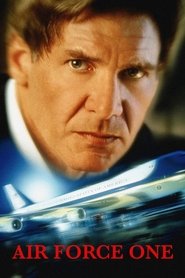
The real question is, does somebody else have a voice in the casting? No, it's all my voice. I mean, I cast the picture, period. And he was your first choice for that part? Yes. I mean, I would, of course, call Harrison Ford and say, Harrison, my idea for that is Gary Oldman. Is that okay with you? And he said right away, absolutely, yes. So, you know, if you have a movie star like Harrison for the main two, three parts, you double-check with him. You don't want to have somebody, when he feels totally uncomfortable, I wouldn't do it.
9:49 · jump to transcript →
-
This is a real plane, right here. This is a real plane, yes. This is the 747 that we rented and painted. And later on, when we come to more to the dramatic stuff, then I will tell you, always when this is the real plane, this is the model, because we had a huge model, but really big, like, I don't know, like 10, 12 meters long or so, really long, big model.
15:45 · jump to transcript →
-
enlarged a little bit because so many scenes laid on so many people there. But it is exactly the same room, just a tiny bit larger. This is a soundproof room also. When we were on the real Air Force One, we closed the door. It was really nice and comfortable there. Because when they have their conferences, they need a little bit quieter there.
19:42 · jump to transcript →
-
-
director · 1h 58m 11 mentions
-
Under the circumstances, I think we'd recommend resetting the sensors to respond to a lighter load. How do you feel about 40 kilos, Miss Hall? Perfect. We want the movie to have the sexy feeling, but it's not necessary to see the real sex. Not because of the rating, because we all want this movie to look a little more elegant in every way. No matter the action, the sex, the love, or the good and evil, the thing.
16:31 · jump to transcript →
-
Is she going to betray Tom or suffering something or whatever, you know, just leave the question mark. And then leading the audience, follow the story, and then when they get into the biopsy scene, and then you will see her art, her change. And then they will give the audience a totally surprise, and then you will know who is the real love for Tandy and who she really loves, you know.
41:11 · jump to transcript →
-
the proper camera angle to bring out the great quality on the screen. And by the meantime, I like them to put the real experience from life, put it into the scene, into the character, and that makes the performance look more real, more touching. I love actors. I love performance. I like to see the great performance on the screen.
58:43 · jump to transcript →
-
-
-
E. Elias Merhige
And a lot of people were maimed and wounded severely on the battlefields of Europe. And after World War I, a lot of those advancements in opiates and drugs made their way onto the streets of Berlin. And the real Murnau was a fighter pilot in World War I. And he had crashed his plane twice and damaged one of his kidneys severely so that he from time to time took painkillers to
10:30 · jump to transcript →
-
E. Elias Merhige
that they're actually going and there's that frustration, that sort of friction between producer and director. Whereas in real life I had absolutely no friction between my producers and myself and I feel that Nicolas Cage and Jeff Levine were absolutely wonderful to work with and I look forward to it taking place again. I look forward to working with them again.
13:48 · jump to transcript →
-
E. Elias Merhige
Han Budala is a Slavic word meaning the inn of the fool, and that corresponds to the tarot card of the fool that Alvin Grau, being the esotericist that he was in real life, was very fond of the tarot and carried a tarot deck with him. Even on the set he had it with him. How long have you been here? Not long.
16:29 · jump to transcript →
-
-
-
So now we're coming upon one of my favorite day players in the movie. Tell me where you found this guy. Well, he actually wasn't one of the real people who worked in the same role that he's playing in the movie. But he was from the area, and I don't know exactly how we discovered him or auditioned him, but he actually gets mentioned as one of the stars of the movie because he comes so early in the credits. So when you see the...
6:25 · jump to transcript →
-
Nowadays, in so many movies, you see boys at the age of 45. I mean, the world has changed. The world of movies has changed anyway. Maybe the real world has changed too. Well, I think about all that these guys have probably been through at this point. Certainly Dennis had been through in his life and his career. I think it's just a different type of character that...
8:47 · jump to transcript →
-
And I don't think I let the actors look at dailies. I didn't think that was a good idea. I'll relieve you in six hours. I feel good. I can take it all the way. That line has become, you know, one of those lines that you kind of like take over and use in real life as a kind of motto. I probably, at least once a week,
39:36 · jump to transcript →
-
-
director · 1h 43m 7 mentions
-
even though it has the feel of a governmental kind of office, not deluxe in any way, it's a workspace. This was a set along with the set they are probably just about to enter, if my memory serves. Now we're going back to the train, but when they come into the TA Command Center, which again, until I saw that it was filmed at a studio at the end, I kind of thought it was the real thing.
13:22 · jump to transcript →
-
But, I mean, it's not so far off. You know, it's okay. Well, sort of caricature. Yeah, a little bit. That's not too far. It doesn't throw anything out of whack, I don't think. And this whole thing about, Al, you've heard the three wise men, and then he's going, what are they going to say, Warren? You know, wondering what the political ramifications are. And what's great is that Doris Roberts, with her ultra-dry, sarcastic delivery, gets the real payoff line.
42:37 · jump to transcript →
-
What happens with the long lens is it compresses reality. And sometimes if you have to cheat, the long lens is a great way to sort of pull that off and maybe fool the audience. But with Pelham, the value of this picture and the value of all movies that are shot on location, but also movies that were shot on location in the 70s where they never cheated the real estate. The real estate was, you know, one of the stars of the movie. And in a sense...
58:53 · jump to transcript →
-
-
director · 2h 17m 7 mentions
-
All of the sequences that were historic in context required a tremendous amount of research because we reenacted these perfectly, which required finding cast members that looked exactly like the people who were in the real live footage and recreating portions of the event so it looked like at one time you could be watching the real event and another one a recreation of it and not be able to tell the difference between the two.
23:32 · jump to transcript →
-
It always makes you feel great when you know that you haven't just created a setting that doesn't look like the real thing. And also in this area here, there were actual water moccasins that had to be cleared out before these guys went in there. Yeah, I think we put some charges in there to wake them up and scare them off, didn't we? The day we shot. That's right. And also some chain link down.
46:23 · jump to transcript →
-
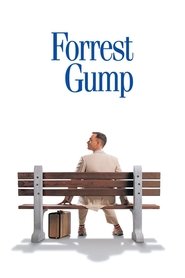
planes had to be shot in two parts. One where we actually had Forrest or Tom Hanks running carrying Michael T. And then we cleared everybody out of the set and set off these explosions here on this island in South Carolina. And then blended the two parts of the shot together to look like he was actually running through the scene with the real explosions. And isn't there a rig also helping him carry Bubba?
55:01 · jump to transcript →
-
-
director · 4h 13m 7 mentions
The Lord of the Rings The Return of the King (2003)
Peter Jackson Fran Walsh Philippa Boyens
-
Peter Jackson Fran Walsh Philippa Boyens
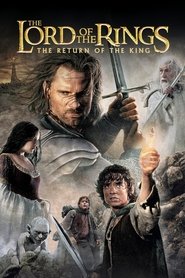
mercenaries from the coast oh who's that handsome fellow in the middle with the rather authoritarian looking corsair it's captain backwards oh that's terrible oh dear oh dear there's no respect however you wait till you see the real scene that's coming up later in this extended edition it's like back to its full glory but we have the white wizard that's got to count for something
54:16 · jump to transcript →
-
Peter Jackson Fran Walsh Philippa Boyens
Faramir's duty, obviously, is to hold Osgiliath, which is really on the outskirts of Minas Tirith, the real target of the orcs. But to get there, they have to take over this ruined city. And Faramir is fighting as desperately as he possibly can. And it was important that there was nothing about what Faramir did that was a failure, that he was ultimately overwhelmed by the numbers of orcs. He just could do nothing about it. The size of his force was dwarfed by the enemy that they were against.
1:11:01 · jump to transcript →
-
Peter Jackson Fran Walsh Philippa Boyens
This was later. A couple of these shots were later, yeah. And that's a transfer from a digital double to Sean Astin, where it's a digital double rolling off the back, and then when he lands, we do a little morph into the real actor.
2:25:05 · jump to transcript →
-
-
-
Or chins, really, I suppose, literally speaking. Very, very sweet, in fact. And such wonderful stories they tell. At any rate, my point was that these technical insights come from the filmmakers themselves, in case you were wondering if I was speaking through the proverbial Khyber Pass. No, no, this is the inside story, the real deal, as the filmmakers so excitedly put it.
7:50 · jump to transcript →
-
How did they do that shot? Car moving, not moving, in front of a blue screen, green screen, front projection, side projection. How? Well, that first shot, case in point, the shot of the character in the parked car, that was done with the car parked. And in fact, it was raining. And it was the real actor. Sometimes even the professional can look and still not know. All right, well, here's more talking, all in order. The characters staged facing each other as they should be in a scene where they converse, but they...
18:30 · jump to transcript →
-
Movie sweat, of course, not the real thing, especially gathered from the flanks of Palomino horses. Can't claim to know the chemistry of the matter, but apparently it reacts better with the light. No, it's not pleasant for the actor, nor cheap, but you see how much it contributes to the mise-en-scene. You could have this scene without the sweat, certainly. You could have it without the fly, for that matter, but if they're not going to do the thing right, well... Well, these are not filmmakers who do things by half measures. Well, here the...
29:19 · jump to transcript →
-
-
director · 1h 34m 6 mentions
-
Was ribbed part of your childhood as well? The actual ribbed event is a totally true story. I wish I could take credit for making that up because it's a good comedy gag. A guy from my high school really did go to a pharmacist before his date. It turned out right around the time the pharmacy closed, that night, after buying the prophylactic, he went home to meet the girl's father on a high school date, and that was the pharmacist he had just bought a prophylactic from. When, when, when? When the timing's right.
4:07 · jump to transcript →
-
Still remarkable to me. Yeah. That was all in camera. That was done today. That's 17 different visual effects plates. Easily. And there's something about the real thing that makes that small stud still. Maybe because I was there and I was on the edge of my damn seat. And the sun was coming up and we gotta go, we gotta go. Worried for everybody. This was, by the way, this was kind of the first film I shot in Hollywood in Griffith Park in the classic A Tree is a Tree shooted in Griffith Park. So all these scenes took place
12:02 · jump to transcript →
-
So this is a slice of... This is the true story, gang. In Park Ridge, Illinois, it really happened to a friend of mine. I'd be proud if it was me, but it was a famous story in our high school that this happened. Whatever happened after that? Could he be in the sequel? The real guy is now, you know... 12 kids later? Exactly. May I say, Ricky Paul Golden, the swagger this kid has is true to him, undirectable.
13:02 · jump to transcript →
-
-
-
English Commentary
each one with seven or eight cannon. And these cannons, in real life, weighed about 20,000 to 30,000 pounds, and they were 32-pounders. And they had a range of about 500 to 600 yards. And there's a specific strategy. These are called gambions, the wicker devices that hold the earthworks.
35:46 · jump to transcript →
-
English Commentary
and built the fort partially out of some of that lumber. So the fort was built as a real place on three sides, interior and exterior. All the work on built the set for something under a million dollars, they had the benefit of being real and practical. So when they enter through a sally port, as they're doing right here, into the interior, we really are walking into the interior of the real fort.
38:10 · jump to transcript →
-
English Commentary
And if you look at the braid on General Montcalm's coat, they have woven in shadow as if the braid, in fact, three-dimensional and cast a shadow on it. This is also highly accurate and elaborate, but it's not the kind of thing you could just rent from a costume house. You have to do it yourself, which we did. And it was, again, one of those fortuitous circumstances, such as the fort, where either the real uniforms didn't exist
1:04:41 · jump to transcript →
-
-
director · 1h 56m 6 mentions
-
And, you know, people say to me, God, it's such a great movie, you know. But honest truth is I have to give the real applause to Quentin Tarantino because he's the guy who put it on the page. And this is the first movie where all I did was to support what was on the page in terms of my casting, in terms of my look, and in terms of my styling and how I shot the movie. But it's a much easier process when you have a blueprint which you're so confident about.
6:43 · jump to transcript →
-
I was originally gonna shoot in the real hotel room, but it was too confined for what we had to do in there, especially with the scene that was about to come up with Patricia and Virgil. And so I photographed the shit out of this hotel room and then said, okay, it needs to be a little bigger here, a little bigger there. And I always try and find some sort of concept or theme. The hotel room that we photographed did not have a Hawaiian sunset on the walls, did not have a four-poster bed, but I kept thinking about elements that I could use
1:02:07 · jump to transcript →
-
except it's more deluded, you know, it's better. Again, I constructed the set. The set was based on that set, the Sahara Motel, which was the real motel down off Van Nuys in the valley. But then I put the Hawaiian motif on the walls and put mirror on the ceiling because I knew that when I was storyboarding the sequence ahead of time, I knew that I wanted Patricia, who'd been badly beaten, to be able to see the elements in the room.
1:19:28 · jump to transcript →
-
-
-
came in television, most notably in the pilot episode of the TV series Lancer, which Quentin Tarantino fictionalized the making of in Once Upon a Time in Hollywood. The TV show within the movie that Leonardo DiCaprio is making is, in fact, the Lancer pilot, and DiCaprio is playing the role that Joe Don Baker played in the real pilot, albeit under a different character name. Baker was a staple of television westerns like Bonanza and Gunsmoke.
9:15 · jump to transcript →
-
Something I didn't know is he was married to Joanna Going and Melora Walters. I didn't know anything about his personal life. But also in that scene, well, here we have James Caron, who is, I know him best as the bad guy in Poltergeist. He's the real estate developer in Poltergeist. He's also in Return of the Living Dead. He's a great horror guy, but in a zillion things. I think he's in all the President's Men, all kinds of stuff. Yeah, I mean, he's been in more things than Stuart Penkin. He's in a lot of stuff. Mulholland Drive. Mulholland Drive. Yeah, and also every TV show, you know.
15:20 · jump to transcript →
-
ton of things. But also, so Dylan Walsh, he's playing a character named Peter Elliott, but the gorilla choreographer on this movie is Peter Elliott. And Crichton kind of cheekily says it was not based on the real guy. I think that's probably true date-wise. But anyway, he's like the guy you call when you need any consulting on apes.
15:48 · jump to transcript →
-
-
director · 1h 59m 6 mentions
-
It was really great. They were all getting on the floor saying, you know, is this what we do? Are we supposed to? This is what they do on television. They were completely frozen. Well, it's sort of become reversed because I think in the beginning, people were, you know, in the 70s, TV shows were sort of writing what was happening in real life. And now people, these things happen in real life and they react to it like it's a TV show. Exactly. They've all seen too many movies. I wanted to say one thing, too. I love how with the face mask and the pantyhose on his head. Yeah. It's...
15:35 · jump to transcript →
-
for any sort of comparison. Or thank you for the compliment. Oh, please. This is an insult. But Jeffrey was so funny in this scene, putting the hand against his head. Did a great job. And it's a good thing that most people don't know straight off the bat that he's really Juliet's father in real life. Yes. No, nobody knows that. Every time I tell people that, they're surprised to hear it. Actually, Juliet was surprised to hear it. We had to do a blood test on the set.
34:27 · jump to transcript →
-
And all these names are mixed up first and last names of guys that I used to work with at a detective agency run by Joe Sarno, the real Joe Sarno. Yeah, I was gonna ask you about Sarno. I guess it's come out that Sarno is also the name of some Joe Sarno, like a pornographer. That was completely coincidental, right? Well, believe me, Joe Sarno was certainly surprised to hear that, and he was reading press on the film. Right. And here I am. I thought you named him after me. Oh, sorry.
34:57 · jump to transcript →
-
-
director · 2h 3m 6 mentions
-
Part of the reason we didn't shoot this stuff in Egypt at the real locations is because this is in the 30s when this was supposed to take place. Everything looked different than it does now. Not everything, but now there are skyscrapers and Abu Simbel has been moved completely. They had to brick by brick take it apart and move it across the river. So we wanted it to look authentic. That and the fact that we were banned from Egypt for...
8:55 · jump to transcript →
-
paid Alan Cameron, my production designer, to leave everything because it's actually, doesn't look, they don't have any of these lamps or rugs or it doesn't look anything really like this. It's really beautiful here. And the real thing's a little cold. No offense, guys, but. I think this house was used in The Omen. I think that was about the last time it was used, yeah. Right on the lot, very convenient. Nice try.
22:52 · jump to transcript →
-
a roller in the background that creates that feeling that they're passing lights and such on the city street. We actually shot this outside of London City College because the real British Museum is having a makeover. They look very similar, actually, the exteriors, but the real one was having a makeover and there's all this really bad mobile homes and dumpsters and stuff like that and scaffolding outside the real one, so we used this.
34:09 · jump to transcript →
-
-
-
Noah Baumbach
These are the Team Zissou interns, who are all typecast. One of them is an actual intern of yours, or was. Yes, Matthew. Matthew Gubler. Cousteau was always an interesting figure to us because as kids, we idolized him and watched his shows. But he was one of those characters that seemed just like a... You know, a star incarnate in some way. You know, it was like Jacques Cousteau, Evel Knievel, and, you know, Bill Murray or something. And I think the... Zissou, what was fun for us writing this was, sort of, Zissou in some ways is like a kid's idea of what an adult is. It's sort of like-- Or what a celebrity is. And then at the same time, we're dealing with a character, Zissou, who is in some ways, you know, has to get in touch with his own humanity, his own past, in some way strip away this identity that he's created for himself. Right, yeah, right. We always liked the idea of starting-- The idea of one of these movies, which I guess you generally associate with a kind of like ABC special, you know, that's where we saw them on television. And you generally associate them with TV or sort of educational films. But we always liked the idea of this playing a world where this kind of movie would play at a major film festival. Yes, yes. It could be-- It's a world where there's such things as hit documentaries. Right. - Although there actually are now. Fahrenheit 9/1 1. - Documentaries-- Remember we called them-- We like the idea that they might be called swimming films, but I don't know that they ever made it into... We never quite got swimming films in there, a genre. The festival director is played by Antonio Monda, a friend of ours in New York, who's a teacher at NYU, a film professor, and who also hosts a kind of a salon where he has people over, all sorts of interesting people over to his house, and a good friend of ours. And we wrote this part for him. Yeah, we always... Somehow it just seemed like Antonio would be this guy, I think, who, you know... He's done it a million times. At the MoMA and the Guggenheim. And he's Roman. Right, so you knew he could speak Italian. And at the premiere of the movie in New York, he introduced the film before the film. In very much the same way. - Yeah. This is the opera house in Naples, the Teatro di San Carlo. It's a great setting for something, and we always liked the idea of the film festival being set in a place that's like an opera house, and in this case it is an opera house. Isabella Blow plays Antonia Cook, the new head of the film commission. I had, I guess, first come in contact with Isabella when I was at Brasserie Lipp in Paris with my girlfriend, and she walked by and looked at us and said, "Très sexy." Beaucoup de sexe. - Beaucoup de sexe. And I came back and told you I'd seen this very interesting woman, and you said, "Would this woman be out of place in a matador's outfit?" Yes, because I had seen her previously in a hotel lobby in Paris where she was dressed as a matador. It was amazing my story was so specific that you knew exactly who it was. And it was her. We're here at a film festival, which can be the most awkward thing. You're in the midst of all these people watching, and in the case of this character, it's exposing all these different problems that he has in his life that are kind of just laid out in front of him over the course of one miserable evening. We'd talked about 8 1/2 as in some ways an inspiration for this, the Guido character that Marcello Mastroianni plays, because he sort of-- That movie opens with a dream, it's different, but at the spa, he's sort of faced with all these people from his life who keep kind of appearing. Here it's less surreal, but it's, you know, Steve is sort of dealing with, in some ways, every aspect of his life. Yeah. It is surreal to go through the experience of presenting a movie in this kind of context. - Right. The one thing I think that-- We often talk about all the-- We're both big movie buffs. We often talk about the movies that have influenced us and the different inspirations, but for this movie, for me, in the end, a lot of it has to do with my own feeling about making films, and just the luck of being able to do it and being in a situation to have been able to make some movies, and how, for me, that's just the central event of my life was, you know, getting to do this. Right. - I feel like that's part of what the movie is about, is somebody who is-- That is, the thing that kind of clicked with him, getting together a group of people to go make these things. Mm-hm. You know, there's something kind of magical about movies to me. And Steve is dealing with, in some ways, the toll that... I mean, he's sort of at a point, you know, unlike you, I guess, where he is not sure what he wants to be doing next. You know, these... You know, at a real sort of crisis in his career and his life, and also dealing with the fact of the toll his career has taken on his life. ...my little nephew, Werner, he wanted to meet you. How you doing, Werner? He brought you a present. A crayon pony fish. Steve Zissou is obviously and clearly partly inspired by Jacques Cousteau, but just as much of an inspiration for him is Bill Murray, who I had gotten to know for a long time and who Noah also knows. And... I remember when we were writing, we were sort of in the middle of this scene. You had actually seen a movie with Bill, I think, at the Sunshine Theater. And you had a... You could tell that story. The guy came up to Bill... Yes, this is interesting. Bill and I had an episode where we went in to see a movie at a theater on Houston Street. And while we were-- You know, we went in, some kid said hello, and then when we came out, there was a gang of kids who were waiting there with things to sign. Rushmore DVDs and Bill Murray paraphernalia. And Bill was signing all the things and we talked to the kids. And then-- Should I tell this? And then at the end of it... It was funny because one of them then came up after we finished and came up and asked Bill for $10. And Bill said... "Get lost. Get out of here." And the guy turned and walked away. And it was funny because there's something about the way Bill handles that situation that is in Zissou, and I remember when we were filming it, I said, "Well, the way you really said it in real life was like this." And then Bill went into some crazy hysterics over the idea that it was something that had happened. He had no memory. - He had no recollection. But I'm not sure if this story should go on there or not. An abridged version of it maybe, or maybe not. Yeah. Don't put this in until Wes has maybe called Bill and asked if it's okay if he puts it in. Well, Bill badmouthed me in Esquire saying he'd kill me if the movie wasn't one of the best films of all time. Oh, really? - Yeah. He didn't run that by me.
2:21 · jump to transcript →
-
Noah Baumbach
This is his ship, the Belafonte. We bought this ship in South Africa and sailed it up to the Mediterranean and renovated it and made it into this research vessel. It never ran that well, but we really did fall in love with this ship. The crew of the film was always very sort of loyal to it. Now, we have Michael Gambon, who plays Oseary Drakoulias, the producer, a sort of Carlo Ponti, Dino De Laurentiis-style mogul, although he does produce these documentaries. He has the longest fingers that I think I've ever seen in real life. He understands. Amin needs to make a projection of the world grosses to see if he can get a tax break and run it through his output deal. I think that Zissou sees himself and wants to be the kind of person who gives kids secret messages in the cereal boxes. Right. That's an inspiration for him. And the movie is about this, theoretically, a real person, but he's inspired by a sort of fantasy version of himself. And there's things sort of peppered throughout the movie, but this whole red caps and the uniforms and the whole thing. And Owen, in some ways, is our stand-in, I mean, of the child who looks up to this person. And I think another layer of that that we were always dealing with was how our cinematic idols in some ways were like surrogate fathers for us. Movies we loved that sort of took the role of things we looked up to, things we sort of wanted to live vicariously through. And I think Owen and Ned's character sort of stands in for that. This is a kind of an unusual role for Owen Wilson, I think. Right. He has a sort of recognizable comic persona that he's developed. And this is, I think, very different from that. I think when we were writing it, we often talked about that even though Ned was, as written, very naïve and kind of an innocent, I think there's always a kind of somewhat devilish nature to Owen. You can see the light is on behind his eyes all the time. There's some Zissou in him. Yeah, that's interesting. And I think also it made us feel more comfortable writing such a naïve character because I think if it was played too much that way, it would kind of wash out. Yes, and I think Owen's concern was, he was like, "What am I gonna do?" Because he felt like the character is so innocent and so sincere that he's not used to playing someone who's that sincere. He usually plays somebody who's a little bit wily on some level, or something like that anyway. And I think for him, when he really became comfortable with it was because we were sitting on the roof of this hotel in Rome, and he told me this funny story about Will Patton on the set of Armageddon, and he did Will Patton's voice, this southern accent. And I asked him, "Do you think you could do this whole movie in that voice?" And what he ended up doing-- He liked it. We read through the whole script reading all his lines with that, and it was funny and it gave him a sort of genteel feeling and something a little bit not quite real. And the accent's certainly not real. The accent hasn't existed certainly since the Civil War. Right. - Even if then.
9:42 · jump to transcript →
-
Noah Baumbach
This to me, this scene where Owen is shining his shoes, was sort of one of the key scenes of the movie of their relationship. He asks him very directly about... why he never sought him out. And there's something in the dynamic between Bill and Owen in real life that's reflected in this. When we were shooting this scene, Owen, who went to military school, he said they had some stuff for him to shine his shoes with, and Owen said, "We always just used a cotton ball." So we said, "Well, get him a cotton ball." And then he sat there, and while we shot this scene for a couple of hours, he shined those shoes the entire time. In between the takes, he was shining the shoes the whole time. He was very carefully shining the shoes, and he was, I feel like, connecting with something from his past. And I love both of them in this scene. This is one scene where I feel like they've really brought more than what was written or anything. And then, of course, we have this correspondence doc which has now arrived. Which, again, I guess it sort of plays into Zissou's need to sort of name things, and classify things, identify things. It's also a correspondence doc, a sort of, you know-- I get fear of intellectualizing too much, but it is sort of almost like a uniform. It's a way to identify yourself in a formal way. Yeah, and in this case, he's renaming him in a way he prefers. Right, it's a way for Zissou to kind of, yeah, exactly, create his idea of Ned. Now, you know, sometimes I feel like maybe we needed to give more time to Jane. There's a backstory for Jane about an editor that she's had an affair with, who's the father of the baby. It's really just barely hinted at. But hopefully it's enough to say, well, here's this mystery of what's going on in her mind.
31:02 · jump to transcript →
-
-
director · 2h 52m 5 mentions
-
He signed a release for a certified check of $1,000. How'd he do that? My father made him an offer he couldn't refuse. What was that? Luca Brazzi held a gun to his head, and my father assured him that either his brains or his signature would be on the contract. That's a true story.
20:08 · jump to transcript →
-
frightened of not getting the scene in time that I focused just on getting the real hardcore scenes, the meat, so to speak, of Al in the corridors. And I didn't shoot any shots of just the empty corridors. And so my friend George Lucas went through the footage and he said, well, you gotta have, to build suspense, you gotta have some empty corridors.
1:02:10 · jump to transcript →
-
He's locked up. What the hell are you doing here? What happened to the men who were guarding my father, Captain? That actor along who has the lines in the background there is Sonny Grasso, who is one of the real fellows from the French Connection that that story is written about. Phil, take him in. The kid's clean, Captain. He's a war hero. God damn it, I said take him in. What's the Turk paying you to set up my father, Captain?
1:08:43 · jump to transcript →
-
-
director · 2h 19m 5 mentions
-
shot purse and a beret and a writing crop. I am the von Stroheim of my book. That's my book. I put the music in if I want music. I cast the book. I describe people I want to do. The movie has nothing to do with the book except it is the basis of the movie. But the vision of it and the mood of it and the color and the real casting for the movie, all of that's the work of the director. What the author of the book has to do
15:05 · jump to transcript →
-
And I think it gets you as close to the real world of living the gangster life as just about anything. It really happened. And people can remember Lufthansa. And they can remember the suite where all these things took place. They actually took place. So, I mean, mob guys all use this to be mob guys. Because that's what a mob guy is. You know, he's Bob De Niro.
1:00:41 · jump to transcript →
-
Joe Pesci and his Frank Vincent, I guess. Saturday night was for wives, but Friday night at the Copa was always for the girlfriends. And last week we saw Sammy Davis Jr. You gotta see this show. What a performer. He does these impersonations. I swear, you would think it was the real people. Oh, it's unbelievable.
1:01:11 · jump to transcript →
-
-
-
Commentary With Author CG Paul M. Sammon
I spent a whole night with the ammunition crew just loading cartridges into clips. And it was hours. The most boring thing I ever did. Really something crazy. Now here we get an idea of kind of like a combination of the real and the unreal. The gun is real.
5:36 · jump to transcript →
-
Commentary With Author CG Paul M. Sammon
And by the way, this is Houston City Hall, the real city hall that they're using for this press conference. And again, you're seeing a bit of the degradation that Peter Koran used by refilming stuff on videotape and slightly treating it to make it look like you're actually watching it during one of the media breaks. This is a complete map painting.
1:30:29 · jump to transcript →
-
Commentary With Author CG Paul M. Sammon
but really it was pulled in real life on location by fishing line. Okay, now begins the giant, giant, incredibly impressive stop motion showdown between Robo 1 and Robo 2. The weapon that Robo was holding there is an actual 50 caliber sniper rifle. There were a number of amazing weapons, amazing being at least in the sense of
1:36:39 · jump to transcript →
-
-
-
Marco Brambilla Daniel Waters
It morphs into the real surveillance camera footage, and then you're able to geolocate the people, which is also, I think, a first in a film, being able to locate people this way and to find they're able to track down the perpetrator remotely. And obviously, they've never seen anything like this, so that's Rob Schneider throwing up, actually.
19:50 · jump to transcript →
-
Marco Brambilla Daniel Waters
making fun of the star spangled banner always always name your villain simon so they can do the simon says runner it's always gold now they've never seen anything like this before he's already figured out how to do this yes sandra bullock has seen this in movies but she's never seen it in real life an actual explosion
28:04 · jump to transcript →
-
Marco Brambilla Daniel Waters
sets everything in motion. Yeah, the original scripts, they just had it, but they didn't play up the real, I tried to play up the contrast really, really a lot. Oh, and I love this. This is the biggest laugh of the movie coming up. With the child. With her going, fuck you, lady. But I told the Warner Brothers wanted to change it to screw you, lady, and we had to fight for it. Is that true? Yeah, absolutely.
31:28 · jump to transcript →
-
-
director · 3h 29m 5 mentions
The Lord of the Rings The Fellowship of the Ring (2001)
Peter Jackson Fran Walsh Philippa Boyens
-
Peter Jackson Fran Walsh Philippa Boyens
guiding the ring on there because obviously this concept that the wraiths know where the ring is once you put it on your finger they can sense it and they can go after you and we thought well the ring is going to want to get on his finger as fast as it possibly can this stuff was pretty tough to visualize wraith world you know the twilight world of the ring the first thought was the real world is that a positive image then wraith world was the negative of it
1:02:09 · jump to transcript →
-
Peter Jackson Fran Walsh Philippa Boyens
Every single ringwraith cry is actually her. Peter? Yes, it was five years of Lord of the Rings. It was all... Peter just told her that he'd bought the rights to the Silmarillion and she just didn't stop screaming for two hours. What really happened was that we didn't really have a cry which had a huge amount of energy behind it. So I knew what was required, but I had a throat infection at the time. So I said, look, I'll just...
1:05:19 · jump to transcript →
-
Peter Jackson Fran Walsh Philippa Boyens
We had a forge and we sort of used to heat the swords up, hand them to the orcs who couldn't see very well. They were sort of waving these red hot bits of metal around and whacking them with hammers. But it's funny because things like that, you ultimately can't really figure out a good way to fake it. And you've got to use the real thing. And they, the foundry guys, were dressed up in orc makeup. That's right, yeah. The orcs themselves were the foundry workers that we dressed up as orcs. That's right. Lurtz is a character that we developed for the movie. He's not in the book. And, you know, the reason...
1:17:02 · jump to transcript →
-
-
director · 1h 31m 5 mentions
-
And it was very fun and it all, sort of, interconnected, which was... Matt knowing the guys from the band made, sort of, I think, his performance more fun for him. The fact that the band that wrote the song was actually playing... Playing the song. It makes the scene look real. I hate these movies where you see four extras who were put there on the day, who can't play their instruments, pretending to play along. These guys were actually playing the real notes. There's Alec's least favorite thing in the movie. That purple toilet paper. The purple toilet paper which only exists in Europe kills me every time I see it. Also, watch this European toilet with the top flush. No toilet in America... - Like they have in Ohio. No toilet in Ohio flushes on top. But on the wall, by the way, were some comic books by some friends of mine, I'll shout out to them. One of the weirdest things about making a movie is everything has to be legally cleared. So if you see a book or a poster ina movie, everything has to be legally cleared, and we spent... Including this commentary, which no doubt will be censored. But everything you're seeing on the walls, toys, things on the table, whatnot, had to be cleared, and we spent more time clearing things and trying to call in favors from people we knew who had posters of things. There are actually... - Is this how real movies work? There were actually pieces of this scene that we had to cut because I remember there was a toy that didn't clear... and I'm probably not legally allowed to say what toy it was... sitting on Scotty's desk and we couldn't use... It was a toy from the movie Out Cold. But, yeah, I mean, we spent a tremendous amount of time trying to clear this, trying to clear college names. Also a special thank-you to my parents who went to the Cleveland Indians store when we had nothing to put on the wall. - And spent like drunks. Yeah, spent like drunks and shipped it all to Prague.
11:53 · jump to transcript →
-
The shot just before this, the one outside, we actually shot at the Prague airport, which is another advantage to shooting in Prague. I don't think there's any way you could get a camera crew right on the departure gate of an American airport anymore because of security. Of course, one of the downsides of shooting at the real airport in Prague is that we had our day curtailed by a bomb threat. Bomb threat, which I still maintain... - Potato, potato. I maintain may have been because of us, and there was no bomb. There was no bomb. - I'm sure some... A grip left a bag of clamps somewhere and... But that was another scene, too, where, when we look at it, there was sort of a way of shooting it, two different ways of... We started shooting them sort of looking out where we were shooting into those boring offices, and obviously the prettier shot... I Know I'm talking backwards... In hindsight, we should've shot the other direction. We should've shot in the other direction, because when they do turn around, you see that background. And again, these are lessons that were sort of both imparted to us as we were going along by our wonderful DP, who we should mention, David Eggby. - David Eggby, who saved us from ourselves every day. And there's a certain amount he can tell us, which he certainly did, and there's a certain number of times where we have to be wrong before you learn and certainly that was an example again, something we did where... The other thing in the deleted... - He warned us and we didn't. In between the courier counter and this scene, there's some fun stuff in the deleted scenes, which is they realize that they're gonna have to take all these courier packages, so they don't know what to do with all their clothes. They have to wear all of them onto the plane and through the airport. There was about 15 minutes of stuff which... Decide for yourself whether it works or not. It didn't work in the movie, but it's fun to look at. And by the way, Jacob's T-shirt says, "I'm rocking on your dime." Travis owned that T-shirt and we thought it was funny, so we put it on Jacob in the movie. These transitions-- That's my dog. These transitions were... That's my queen of England. - That's your beaded London flag. Yeah, it goes on the back of my cab seat. These transitions were also done by Kyle Cooper at Prologue. There's a few more of them coming up. You'll see. And this is our first big visual effects shot. Yeah, this was an amazing debate. That's not the real Jacob Pitts. That's a robot. This was shot in Prague by... There's a big river in Prague and that's all real. That's real. And we put a little British flag there, and basically the background was replaced. Not in these shots. In that shot. - In that shot, the background is replaced because on that side, I think, was... Is that where our hotel was? I don't remember. No, we were further down. - Further down, okay. And I guess we should mention Kevin Blank, who was our visual effects guru supervisor, who we found from the TV show A/as, where each week they do a lot of really amazing things like this. Right. If you look in the background, you see the buses on the bridge. The bridge is real and the buses are real, but the stuff behind that is not real. But the flag, for example, I don't think that's real. They added that. If you look at the clouds move... - There's cars moving on the side. The clouds are moving. They put those clouds in. And what Kevin allowed us to do, besides being a really good guy, as everyone on this movie was, he let us do a lot of big effects like that on sort of a TV budget which allowed... This was a "smaller budgeted movie," and it let us do some special effects without bringing in these, like, big effects companies where it would cost a lot of money. By the way, this is about the time that we should mention the Feisty Goat. This is the Feisty Goat pub. And we saw the sign out in front, which we misspelled. I think this is the right time to say that Alec, David and I went to Harvard and we didn't know how to spell "feisty." We spelled it wrong in the stage directions. Spelled it "fiesty." - The guys who made the sign just took our spelling. We showed up on the day and the crew was laughing and we couldn't figure out what they were laughing at. We shot an entire day without anyone noticing and on day two, people realized. - No, they knew. Did they know? Okay. - Oh, yeah. They were laughing their asses off at us. And then finally, it was like, "Did you guys know?" And they're like, "Yeah." - And this is the incomparable Vinnie Jones who, when we wrote the part of Mad Maynard, the chief hooligan, we hoped that maybe we could get Vinnie Jones. We wrote it with Vinnie Jones or a Vinnie Jones-type in mind, never thinking that we would get the real Vinnie Jones. The dream being Vinnie Jones or someone that would rip Vinnie off. And the pleasure of getting him was just so great. It was amazing. He scared the living daylights out of these two. They're not... This is, again, method acting. We told Vinnie that they were really... that the kids were really scared of him, and he did nothing to make them feel at home for this scene.
18:35 · jump to transcript →
-
And this we shot the same day that we shot Jeffrey... We had Jeffrey Tambor for one day. So we did the high school and then we ran down the street to this... It was about as close as we could find. Looks a little European, but it's okay. We thought that scene was gonna go when Scotty appears at the Vatican. But we ended up moving it... - We moved it up there. And something that makes me laugh for no reason. The mom there is reading this Jackie Collins book, which we cleared. And as the only book we cleared, that book appears a bunch more times. Scott's reading it a little later. It's the one book that's seen in this movie. A couple of these guys are English and a couple of them are Czech. The closer guys are actually English, which helps. And these guys were really good. I mean, the guy on the right there. John Comer. - Wow. That guy, who really makes me laugh. And these guys are really good. They found the camera. This was on this highway... We shot this on a moving bus. We're trailing the bus behind a big camera truck. And when we wrote the movie, we didn't realize how insanely difficult shooting on a moving bus was, so... Don't shoot on a moving bus. - There was a lot more stuff. Originally, the whole hooligan pub scene, when we sold it, was on the bus. They get on the wrong bus and they're trapped on this bus. We realized that that whole hooligan pub scene being shot on this bus would be impossible. It would be 16 days to shoot it. So we moved that to a pub. And shooting on a bus, just dealing with something that's moving, with the lights constantly changing... You'll see there's a lot of hot spots on Jacob there that we... I mean, that's the best that we ever got it. He is pretty overexposed. - Looks like a real bus. That's what makes it kind of look good. That's what is sort of neat about it. But in shooting this... This was one of the real downsides of having three of us doing this job, that one of us fit inside the bus and the other two were clinging to this tow rig. And it had just rained, so there was water all over everything. It was about 18 degrees. - It was like being on a motorboat. Like on a motorboat in the Baltic Sea. - We were under a tarp. In the bus, I was lying on my back on some camera batteries. It wasn't very comfortable. - But you were warm. I was warm. - They were warm batteries. This, again, was the same deserted highway. And Vinnie is just... - We just let Vinnie go. We just said, "Go bananas," and, boy, did he deliver.
25:15 · jump to transcript →
-
-
-
John Cameron Mitchell
So he was the creator of the Real Life Salon. The Real Salon that this was based on, he would show 60mm films. There's Jonathan Couette. Jonathan Couette, who directed Tarnation. He auditioned for Shortbus, and that's how we met him. And he had elements of his film Tarnation in his audition tape for Shortbus, which is how I became aware of it and tried to help him out.
21:27 · jump to transcript →
-
John Cameron Mitchell
And we have a deleted scene that's going to be on the DVD with the two of them. You wonder what happened to them when they go off after this. Jay's not here right now, but he would tell you how much he hates looking at his hair. I love his hair in the film. Now he has very, very short hair. And that little joke he just did with the camera is something that he used to do in real life, and I said that is going in the movie. It's a great moment.
22:40 · jump to transcript →
-
John Cameron Mitchell
just when Alan confesses to his sins. Can you imagine? If a real mayor might have done something like this? Yes, or if the real mayor saw this and thought, wow. I hope he does. They let me off the hook big time with this one. Well, we don't really say it's based on anyone, but we leave that up to the knowledge of many. See, this is an amazing scene in that when she's looking at me,
32:16 · jump to transcript →
-
-
director · 1h 43m 5 mentions
-
The book that's coming up... ...is actually a scroll called The Oracle Bones in the movie. And if you look to the left... ...those bones with the writing on it are the true Oracle Bones. I had to give a form of concentrated knowledge... ...but the real Oracle Bones were discovered... ...in the early to mid 20th century...
6:07 · jump to transcript →
-
And, of course, what's a mummy movie without a few mummies? Here's number one. Anyway, all of these ideas in this tomb are based on the real tomb in Xi'an in terms of its layout and the hypothesis of where the army was and where the emperor was actually buried.
18:15 · jump to transcript →
-
and hope that the mystery would be even greater by not explaining it at this point. Here we have the Beijing Opera doing the Monkey King. We've really staged the opera with the real Chinese opera stars, and it was a fitting.
47:23 · jump to transcript →
-
-
scholar · 1h 32m 4 mentions
The Night of the Hunter (1955)
Second-Unit Terry Sanders, Film Archivist Robert Gitt, F. X. Feeney, Preston Neal Jones + 2
-
My recollection is it was $800,000 back in 1954. Yes. Now Lawton tried to draw parallels between some of the characters and other characters in the story. For instance, note this shot, and then remember that it'll be repeated when the children's father, Peter Graves, is brought before the judge, so that there's a parallel visually between the real father and the phony father. This is the penitentiary in Moundsville.
4:52 · jump to transcript →
-
And those are the real sounds of the crickets, I believe, that you actually heard at that ranch. It's nice to see how, you know, these significant shots of John walking from place to place and how subtly that does allow him to claim the film and own it as the protagonist. You know, it's his viewpoint and his navigating the world.
25:40 · jump to transcript →
-
It's interesting that you mention that because in real life, Sally Jane Bruce grew up to become a teacher. That's right. In Central California, yeah. And on the other side of Billy Chapin is another wonderful child actress. Yes, Cheryl Calloway.
1:11:41 · jump to transcript →
-
-
director · 1h 54m 4 mentions
-
though that fake limp will connect to the real bum leg that Eastwood's character has and a very real limp that pops up later for Bridge's character. The car he's making a beeline for is a 1973 Pontiac Firebird Trans Am, identifiable by the big hood bird and the egg crate grill. As the used car salesman, here we have Gregory Walcott.
4:26 · jump to transcript →
-
and Schickel quotes Fromwood. It is the essentially gentle Lightfoot with his indeterminate sexuality, his freedom from the constraints of normal gender roles, and his air of a pre-socialized child who constitutes the real threat to the culture. Finally, Biskind again. The lament, he says of the film, for an impossible and fugitive homosexual love
1:24:22 · jump to transcript →
-
got through. It is revealed that Thunderbolt, in fact, won the Silver Star in Korea, was all along the real hero, though he tried to deflect the attention. And the false hero, Red, meanwhile, speeds toward his final stand, which, as described, is a particularly gruesome one.
1:38:37 · jump to transcript →
-
-
-
John Mackenzie
great weather that year. Now, here we have the gang. Now, half of these aren't actors. Half of them are the real thing. East End guys who've done a bit of bird, done a bit of robbery, done a bit of this, that, and the other. And they were, apart from being very natural actors, well, they're doing their own thing, aren't they? They're doing what they're used to.
53:40 · jump to transcript →
-
John Mackenzie
doing a scene where a gun comes out and one of them said john can i talk to you can i talk to you yeah yeah yeah he said look john he said uh you know i've been told i've been told he said but they really wouldn't do that they really wouldn't take the gun out like that not in this situation he'd take him around the corner wrap him a couple of times and then only take the gun out then he said you know he said that's the real way they would do it so i've been told
54:26 · jump to transcript →
-
John Mackenzie
Where the yanks gone? I've just bought some more brandies. Go home, Harris, go home. Don't look down your nose at me, Victoria. Makes you go cross-eyed. You can't even see that I'm not the real bastard he is. Aren't you? I'll get you a cab home, counsellor. I'll talk to you later. Okay. Bastard.
1:03:53 · jump to transcript →
-
-
-
There's a Ronnie card. There you go. Do you remember this night? This was one of the great nights. This thing weighs about 200 pounds. It's a magnetic drill. We had all the real guys there.
3:29 · jump to transcript →
-
a good four weeks before we shot. And I hung around with a lot of the thieves, a lot of the guys in Chicago. This, for example, Willie and I are in real life real good friends. I love the guy.
16:39 · jump to transcript →
-
Uh, including interruptions, very careful. Yeah, this lighter just, this happened. Stuff like this happened. That was so, so great. And the story. This is the real, this was the one of the stories that I told you about that Michael had researched and gotten from this guy. This is really a true story. I got into this problem with these two guys. They tried to turn me out. So I picked up, uh, nine more on, on manslaughter beef, some other things.
38:13 · jump to transcript →
-
-
technical · 1h 35m 4 mentions
Steven Lisberger, Donald Kushner, Harrison Ellenshaw, Richard Taylor
-
Computer Simulation Division Richard Taylor
One little thing I noticed... I mean, I didn't catch it when I was directing Jeff with this, is that when he plays Clu, he plays it with this strange computer accent, this mechanical accent. And now, when he's being tortured, he loses that, and I wonder whether he noticed it. We got so caught up in being in the scene that nobody realized that at the time. Clu's torture sequence is a great example of how light is used to create emotion. Lots of different filters were used on him as a part of that torture sequence. There are, basically, ripple glass effects, there's silk screen steel mesh, exposure changes, hand-done animation. When he's energized by the MCP, there are other filters that were used on the camera to give him that multiple-effect look. In this particular case, it was silk screen mesh, steel silk screen mesh that was on the taking camera and was spun around on the lens as a part of that effect. Dillinger's arrival to ENCOM in his personalized chopper was an interesting sequence. I took drawings of the chopper, schematic drawings, and created the design motif that you see on the chopper. And then over a two-day period, I applied these designs to the chopper myself with these varying sized, 3M reflective tapes. So, when we are shooting this sequence, what we are basically doing is flying air-to-air in another chopper parallel to this chopper. And we have a very low-intensity light source right near the lens of the camera, which is shooting across and reflecting directly back at the camera off of this 3M material. And it was a red light source, so it gives you the appearance that the chopper is either backlit or has some kind of neon lighting system on it. Again, there was the attempt to, for the outside, the window, to have the grid type of atmosphere and, kind of, cross-pollinize the electronic world with reality. Oh, I remember this stuff. Nice desktop computer built right into the glass. Touch screen. - Touch screen. I still want this desk. This was done with rear projection under the desk. The whole set had to be built up on the stage so that we could put a giant mirror under the set and project it in the old-fashioned way. There were technicians who were basically controlling light switches to different light boxes underneath this desk to light up different areas. The type itself, when it writes itself on, is actually matted into the scene from a computer graphics created type. And again, the view behind Dillinger is indistinguishable from the electronic world. And whose voice is the MCP? It's David Warner's voice. - Yeah. Yeah. It was just electronicized a little bit. End of line. Someone pointed out that they finally figured out that the reason that Bruce Boxleitner's character was wearing glasses is because he was supposed to be a little bit of a nerd. I think that was the intent. Just the readouts on the computers in the real world had to be pre-programmed ahead of time so that they wouldn't have rolling bars on them when we photographed them. Here you see another attempt to link the electronic world with the real world. The cubicles that the office workers are in are not dissimilar to the cubicles that the game players are in. And the intent was to have them go on forever or almost for infinity. Now, what thematically is happening is that at the time, computer people... Programmers were very concerned that the IBMs were going to take over the world of computers and exclude people. That they were going to be... That the system was going to be tyrannical. And what we're trying to show here is that the... Corporately, they've put a stranglehold on the system, and that the programmers are not being allowed the access that they want. And access for them is vital for their work. This character, Alan/Tron, is still inside the world of ENCOM and is more in balance. He seems... He's one of the people that's going to deal with the system from the inside. He's got a very methodical program in Tron, whereas Flynn is no... He's a renegade now. He just doesn't fit in and he's at war with the Dillinger character. The name Tron is derived from electron. Some programmers think it refers to "trace on, trace off." But that... We learned about that afterwards. There's a program in Japan called TRON, which is an educational school program, which has been running since 1985. And ENCOM was the only name we could find that wasn't already registered as a corporate name. Whereas Alan and Flynn are aligned with their counterpart programs, Dillinger has aligned himself with the tyrannical Master Control Program. So, the MCP is the ultimate controller, the big mainframe, the antithesis of the personal computer. The sequences that take place at the Lawrence Livermore Laboratory were interesting in their concept and in production. It was a very complex place to work. It was a very tight area, and we worked on this film with 65-millimeter equipment. And Bruce Logan, the DP, had his hands full. Sixty-five-millimeter film technology is quite cumbersome compared to Panaflexes and Panavision cameras. The size of the camera body itself, the limitations of the lenses, blimping the cameras... They're huge, so to get them in these cramped quarters was difficult. We were the only ones... Only film company ever allowed access to shoot in there. And nobody's been back since. A lot of this was lit, practically, by the fluorescents that are in there. It almost looks like a set. Yeah. We were very lucky that Lawrence Livermore let us use this facility. Because the cost of building a set this elaborate would have been astronomical. The Lawrence Livermore Lab is where they had the largest laser in the world. I don't know if it still does today. And they did a lot of research for NASA. Lawrence Livermore Lab was very cooperative with us, and allowed us to, really, kind of, run free through this particular area of the laboratory, which was their linear accelerator. So, we went into the one particular area, which we found most interesting for the area where Flynn gets de-rezzed, and where you first see the matter transportation effect, where the orange is digitized and deteriorated and then reassembled. In this particular case, we are seeing an orange, which was created by CGI by Triple-l. Animation that was done by the effects animation department, which was headed up by Lee Dyer and the effects animators, John Van Vliet, and John Norton, Barry Cook and Michael Wolf, Chris Casady. The name of that laser, by the way, Is Shiva, the Hindu goddess of creation and destruction. The 16 billion-year life cycle, she's got the drum of creation in one hand and the fire of destruction in the other. ...femain suspended in the laser beam. Then, when the computer plays out the model, the molecules fall back into place and voila! So simple. Why didn't I think of that? - That's right. Use that on Star Trek all the time. It's funny how they just kind of, just blow it off. Another afternoon's work down in the lab. Exactly. - Teletransportation, okay. Just digitized matter, no problem. Tomorrow we'll do watermelons. In a week, a human being. No, that comes sooner than that. A-ha! Oh, you're giving it away now.
7:08 · jump to transcript →
-
Computer Simulation Division Richard Taylor
When we came to make a decision about what film format to use for Tron, we felt very strongly that we needed to shoot it on a larger negative than traditionally done. And it came down to a choice between 65 millimeter and VistaVision for the whole show. But the availability of 65-millimeter cameras was far better than the availability of VistaVision cameras, so we made the decision to shoot the entire show in 65 millimeter. And to keep a certain consistency, and as long as we had rented the cameras, we felt that we might as well go ahead and shoot the real world in 65 millimeter and not in 35 millimeter. It was kind of one of those nice to have things, and nobody objected strenuously to it, and also it would be the first time since Ryan's Daughter that a film had been shot entirely in 65 millimeter. And I think you can see the results. I mean, it looks wonderful. In the monitors in Lawrence Livermore, one of the things that Triple-/ had to do was create lots of imagery that appeared on monitors, and that imagery had to be shot and created long before we got to production. So, there was a lot of planning in creating all of the monitor imagery, and Triple-I did a great job on that. Spent a Iot of time on this shot. To accomplish the effect, what we did was get a 4-by-5 still camera and photograph Jeff Bridges in his position after he's been zapped, and then immediately moved him out and took another photograph, which was the background by itself. So, as you pull away chunks of Jeff, you see the background behind him, and then to put the laser and the grid and all that on top of him was basically the effects animation of John Van Vliet. When Flynn is de-rezzed and pulled into the computer, we go through one of the most interesting sequences in Tron, which is the real world to electronic world transition. This sequence was created by Robert Abel & Associates, primarily under the direction of Kenny Merman. It was a sequence which I had designed, knowing that the way that Robert Abel & Associates was making these computer graphic images with the Evans & Sutherland computers, and, really, using vector graphics to create this particular look, would give us a look that would be unique just for this transition. The three-space transition, the movement through all these binary bit patterns and this polygonal landscape, was done by making multiple passes through a traditional animation camera that was pointed at a high-resolution, vector graphic, Evans & Sutherland computer screen, and making multiple passes, frame by frame, using different colored filters, coming back, making multiple passes of rewinding other filters, until you finally end up with this, which seems to be solid objects. But it's really made out of lots of tiny, tiny lines put together to make solid blocks of color or objects. Oh, man, this isn't happening. It only thinks it's happening. When Flynn says, "This isn't happening, it just thinks it's happening," it's a key line, because it means that the reality that he finds himself in now, not even he can fully believe exists. And if anyone should appreciate and understand this alternate reality, it's him, and now he finds himself trapped in it. All right, now we see Sark standing on the bridge, and all of a sudden, he is enclosed with these shrouds of light as he begins to have his conversation with the MCP. The database for the MCP was a human figure that we had created at Triple-/ called Adam Powers and was originally on the Information International sample reel. And if you look at that sample reel, you'll see a juggler character who was juggling balls. Well, that face of that character is the face of the MCP. So, the first time that you see him, he is a polygonal drawing of a face. And that's basically the underlying database of the face. So, it's made of polygons. And those polygons, we play them out on the Triple-I computers as the line-drawing polygons, and made 12-and-a-half by 20-inch stills, high-con stills of those. But we created the mouth positions for the vowels and the syllables so that you could take these interchangeable transparencies and lay them down and make him Say, by whatever order you put them in, whatever you wanted him to say. 'Cause he was voicing a lot of different dialogue. Then those were backlit, and then we applied an effect to those line drawings of putting a steel mesh screen over the taking camera, and it made it have that much more, kind of, complex look. And then we also animated the exposure occasionally. Early on in the film when I started working with Steven, we did a lot of experiments to work out how these characters were created. The thing that we finally decided was that the characters needed to have this energy inside themselves. They are obviously in this electronic world. Now, these costumes were unlike any costumes anyone had ever created for a picture before, in that they were costumes designed to have effects treatments done to them. They were white with black drawing or black lines over them. All of the black elements on the costume were turned into circuitry which could be backlit and light could be pushed through there. We originally shot a 65-millimeter image of these people, live-action photography of them on these black sets. Then from that 65-millimeter film, we created some photo-rotoscope machines, which basically could project the 65-millimeter film down to large pieces of film, which were pre-punched with animation punches. This film was created by Kodak for us, and we would project down with these photo-rotoscope machines, which would hold this film into a vacuum frame and make a continuous tone positive print of each frame of the film. Then these continuous tone prints were taken to a light table, it was a vacuum light table, where they were contact printed to high-con film to make a number of high-con positive and negative images. So that you basically have for every character a large cel and you have high-con positives, negatives, and a continuous tone positive. Then these high-con elements were hand-inked and painted to isolate the circuits on the body, the whites of the eyes, the whites of the teeth and any other circuits that we wanted to treat as a separate exposure. The characters are more often than not... The live-action characters are shot on an all black stage. When there is a set, the set is also black, but is measured out to conform with what we're seeing in this artwork. So that if a character appears elevated in a shot, like this shot, there was an elevated platform for him to walk on, but it didn't look at all like the set. Then we would composite these actors over paintings, transparencies, and once that was done, we would add the light and the color separately. And to simplify it, you can describe it as a sort of perfect blend between live action and animation in that we took live-action film, photographed it in a way that we could break it down to individual frames, then blow up those frames into large slides or transparencies. And we had 75,000 of these, which seems like an appallingly large number, but it really isn't if you compare it to an animation film. And because we were at Disney, they were not overly swamped. That's an actual Frisbee, by the way, and those are actual Frisbees on their backs. We had a excellent Frisbee coach, Sam Schaiz. I like the fact that the deadliest weapon in Tron is a Frisbee. A Iot of effects animation in this sequence and in the film. And that is the animation that makes the glows, and as the Frisbee gets brighter, and you see the reflections of it on their costumes, all that has to be done frame by frame. This is hand-drawn animation that, although it is drawn, a negative is made of that, and it is placed over a light source and then re-photographed, and the ability of the effects animators was such that we were never waiting on the effects animation on the show. They always performed very well. It was never a problem. They did very few redos, and that's because they had had experience doing this beforehand, whereas everything else that we were doing, outside of the effects animation, was the first time through. So, that had a much tougher and steeper learning curve. In the holding cells for the game grid, those are backgrounds that are entirely hand-drawn by the background department, again using Rapidographs and line drawing and airbrushing and then turning those into high-cons. But those drawings are all drawn to match the actual physical sets, which were built so that when someone passes behind something, or leans on something, those are actual physical sets that were built. But again, the sets were just black on black. They're as if they were made of black velvet. Part of the interesting thing as a cinemagraphic problem that was presented to Bruce Logan was that he had to shoot, unlike anybody had ever shot before, sets that were entirely black with white line drawings and white characters running around on these sets. Bruce Logan's job in photographing these people was very difficult because, unlike most photography for most films, you try and get as much chiaroscuro in the picture as you can. You let there be a lot of dark and you create shadows and you create this moodiness, which a cinematographer takes great pride in. In this film, during the sequences in the electronic world, basically, he had to light them so that we could see as much of the costume as possible with as little shading as possible because all of the shading and all of that were done by hand by making different masks and airbrush elements that were used under these costumes in post. The ring game was an interesting technical exercise. The set itself, again, was black flock paper with the rings drawn on this paper with tape. The actors had to realize which rings were there and which ones were not as they acted out the sequence, imagining that they were hundreds of feet above the ground. One of the inspirations of Tron is the movie Spartacus. And there's quite a few similarities to the persecuted people who had to fight in the gladiatorial games. This game, of course, was inspired by Pong and jai alai. I think one of the interesting parts of Tron was the synthesis of new games that were created. The design, for example, of the glove that's being worn here, we took a traditional jai alai glove and then rebuilt it and made it out of foam, added other elements to it to give it a more technological quality, and then again, I put the designs over the outside of that to make it blend with the rest of the costumes. Shooting in 65 millimeter, from a director's standpoint, is a lot of trouble. The cameras are huge and bulky. The format requires an enormous amount of light to fill that negative, so if you are shooting Lawrence of Arabia or Doctor Zhivago and you've got lots of snow and big exteriors, it's fine, but in low-light-level situations, it's very troublesome. The depth of field is sometimes as little as a half an inch, and you find your cameraman is asking you, "Now, which part of the eye do you want in focus? "Do you want the front of the eye or the back of the eye in focus?" Or if the head of the actor is not square to the camera, they ask you the really insane question of, "Which eye do you want in focus? "I can give you the front eye in focus or the back, "but the other one's gonna be blurry." Now a lot of these shots where you see actors talking to each other and we're doing over-the-shoulders, the camera couldn't hold focus for the blow-ups to be made, and I had to shoot the actors on separate passes. So, in a shot like this, where you see all three actors talking to each other, it wasnt filmed that way. I filmed them separately and they were composited. And there's quite a few shots like this. Whenever you see them walking around and they're separated by more than a couple feet, those are all separate shots, and then the actors are composited. So, it's very difficult for the actors because not only do they not see the environment they're in when we're filming, all they see is an all black stage, but they don't even see the actor they're talking to. Forming of the Lightcycles, again, is almost entirely done by hand-done animation done by the effects animation department in creating the way that these cycles form around these characters. We built an object that the actor could sit upon, and it was literally a mechanical shape that was the seat and the handlebars, so he could sit down and it would thrust his arms forward and pull him down into that locked position. So that everything that he sits upon and touches, it was, again, drawn by the animation department, and not until you see the final completed cycle, which is actually a CG/ rendering of the cycle, is any of it done by computer. The Lightcycle sequence was done by MAGI. Their way of creating an object were to take basic geometric shapes, cones, cubes, spheres, cylinders, and make an object by collaging those particular pieces together and creating an object. And that's how the Lightcycle was created. All wide shots that you see are computer-simulated. All of the shots, other than the very tight shots of the figures inside the canopies, are computer-simulated. The shots inside the canopies are actually hand-drawn artwork of parts of the Lightcycles, and the animation that's happening over the Lightcycle windshields is hand-done animation to give them a sense of speed. But virtually every scene that you see of the Lightcycles is entirely computer-generated. And there's not even effects animation in those scenes. If there's an explosion when a Lightcycle hits the wall and a tire bounces across, I think those were basically all CGI. Syd Mead worked really hard on designing these motorcycles so that they would incorporate the characters. But if you look closely at them, you'll see that the second half of the bike is flattened and sort of two-dimensional, and that was done because the computers couldn't handle too many compound curved surfaces. So, we restricted those curves to the wheels and the windscreens, and then the rest of the bike was simplified. The ability to move the camera through 3D space with these computer-graphic-looking landscapes is just great. The Recognizers are a sort of King Kong. There's a little head on top of that gate structure... Suggestion of a face, but it, sort of, got lost. The Recognizers were created by MAGI-Synthavision. As I mentioned, there are graphic vector lines, red lines outlining all of these objects, the same way with the tank. The tank was another unique design of Syd Mead, who is a futurist, a fabulous designer. Once Ram, Tron and Flynn have escaped the Lightcycle grid and are off through the canyons being pursued by the tanks, we cut inside the tanks and see another example of a Syd Mead set that was built as a three-dimensional set, again with black background, and all of the elements on there graphically put on so they could later be treated. So the camera, you can see, is moving through scenes in ways that no physical camera or no model shot could possibly do. The animators that I worked with to create the choreography for all of the CG/ sequences were Bill Kroyer and Jerry Rees. But to communicate all this information to the computer technologists, the people that are sitting at monitors at that time, took a new language which we had to create. So, what we did was, first of all, we had to think of each sequence as a real physical reality. Not only would they draw the point of view that they saw as an animator that we would work out together, that was the story point that Steven wanted to make, and also the point of view that we wanted to take. But after we would draw the original storyboards in a traditional, kind of, storyboard manner, we would have to go back and draw a top view, side view and front view of the objects, where they were in time, where the camera was in time, and what the camera's point of view was. So, we really had to define everything to the CG/ technologist in a three-world, three-dimensional space. And that was the first time that that had ever been done. They must've gone right past us. We made it...this far. Now, all of this, this revolt, it's all being led by the user who's gone in the system, Flynn. The Tron character and Ram character, they would have toed the line and gone through the software the way they're supposed to. We'd better, Null Unit. Null Unit. Get the computer dictionary out. Look up "Null Unit." What does that mean? In this sequence, you can really see some of the flaws. I don't really mean the flaws, but the imperfections in the cels, little bits of dirt that pop on and off. Yeah, but they're few and far between considering. Yeah. Come on, you little bugger. Come on. Look at that. A lot of pops and a lot of glitches in there that we would always Say, "Well, that's what happens in an electronic world." When we started there were going to be no differentiations between the flesh tones and the rest of their uniform. But at a certain point they looked, well, not very good. So as a result, that added, approximately, 120,000 extra frames, extra elements to the shot, so it did grow in many aspects. The cave sequence where Flynn, Tron and Ram finally re-energize their selves with this liquid energy was a very interesting technical problem to solve here. In the sequence in the cave when the water is being handled by the actors, literally, frame per frame, rotoscope animation is isolating the water from the body so that it can be treated with a different filter and a different exposure. And again, this is an example of how light is used to portray motion or energy, as Tron drinks and you see his circuits light up and they become energized. The set itself was a complex geometric shape, which was designed by Peter Lloyd, and we built into this set, basically, water channels, and the water itself was reflecting light sources that we put in angle so they would reflect to the camera, and the water was in black tanks so that all we're really seeing are the highlights on the water. Yeah, but the biggest problem at that time was do we fill this with colored water or clear water? Had to do tests, you know. - Right. That was your problem. Do we put milk in there and make it purple? I think that what Flynn is surprised now, ironically, to see that there's parts of this mirror world that are more alive than he anticipated. So, it's not just the harsh computer reality, there's something living about it. It's a very complex shot, again, with all the elements. Probably about 30 different elements, 30 different separate exposures for each frame. Normally in a special effects movie, you get a very bad bottleneck effect in that all these things have to be composited through one or two optical printers. Now we have digital compositing machines. But by putting it into a manufacturing system like this, where it became like an animated film, we could use 14 or 15 animation stands, and we could use a slew of effects animators and ink and paint people to do all of this work simultaneously. As far as I know, we still have more shots with human beings composited into an artificial environment than any other movie. I believe there's 1,100 special effect shots in the film and 900 of which have human beings composited in them. And that number is just very, very large. Just the organizational task alone was monumental, not even considering the creative side of it. For every frame you would have an additional five to 15 cels that isolated the different colors and the different... We had body mattes, we had face masks, continuous tones. You made print backs on top of print backs. So, those 75,000 original cels grew to over half a million. I think we ended up with something like 600,000 cels, all of which had to be kept in order. We had to pull trailers, literally these large house trailers, kind of, industrial trailers onto the lot. We ran out of space and we ended up with 10 trailers that would house all these cels and had to be organized and sent over... 80% of them were sent overseas and had to be numbered and then painted and kept in order. At one point we thought if we had 1,000 scenes, and this was around Christmas time, the film was going to come out later that summer, and we had no idea of how we were going to get it all done in that short a period of time. And we thought, "Well, it's summer vacation. We have two weeks. "We'll get college students, 500 college students in a room." We really believed this might happen. We discussed this for about an hour and we Said, "You'd have 500 students in a room. "We'll teach them how to do inking and painting and rotoscoping, "and they only have to do two scenes each. "And so they do one scene a week. "At the end of that time, we'll be done, "and we'll just go and shoot them on the animation stands." It didn't work out. So, we brought on Arnie Wong, who was an animator. We put him in charge of supervising Cuckoo's Nest, which is a ink and paint service that was in Taiwan. Approximately 80-some employees in a single room. And what we did is we went through and we made a videotape of every situation and what to do in that situation. So that if an inker over there, who didn't even have to understand English to do this, could go to a TV monitor, roll to this particular problem and see exactly what you'd do in that situation. And then he was there to answer questions that were unusual. And the most interesting thing, and one of the things that I'm particularly proud of with this technique is that in spite of what a pyramid it was to build, we managed to get all of this post-production done in six to nine months. And that is using a technology that we had developed. It had never been done before and we developed it and used it on this picture and delivered on time. And that was only possible because of this manufacturing technique. It's interesting the computer animation iS the simpler part of the set. - Yes. Ironically, one of the things that was a creative philosophy that we enjoyed and were proud of was that we were taking computer animation and letting it stand on its own. We weren't trying to make computer animation mimic reality. And the job was then to make reality, the actors and the sets, look like the computer animation. We used to say, "Well, if you've got lemons, make lemonade." Everybody else, and certainly since this point, has been going nuts trying to make computer animation mimic reality perfectly. And I found that the limitations of computer graphics at the time were the most exciting thing. If computer graphics... If computer animation is no longer different from reality, maybe we've lost something in that. Certainly you gain special effects technology and you can do certain things, but it's the limitations, I find, to be the creative challenge. I think at the time we were using four computer animation companies... Yes. -... which were probably the only animation companies that existed in the country at the time. Yeah, I had been visiting some of these companies for two years before we started making the movie. Maybe even longer than that. And I used to show up at their doorstep and Say, "One day I'm gonna make this movie. "You know, we're gonna do this and this is gonna be great." And they'd say, "Yeah, yeah, yeah." I'd come by every six months and say this is really gonna happen, and I think they were more surprised than anybody else when we really did this movie. And they got to show their stuff. The way the de-rezzing effect was created, for example, when Ram passes away and he's in the cabin of the Recognizer, there's a combination of the original photography of the character, and then that is overdrawn with literally hand-done, line-drawing animation done by the animation department. And between that animation and light exposures, you can make it just, basically, run off, dissipate and fade away. Also, upon viewing this again, for so many years, you tend to kind of lump it all together visually in your memory and we forget, I forget, how much detail, how much layering of texture was put into this film. - Mmm-hmm. Ai! these shots are all completely storyboarded. Even the electronic world and all the simulated shots were all on storyboards. There must have been thousands of storyboards. Yeah, it was very detailed. Because rendering times in computer graphic imagery, the time it takes for the computer to draw each frame, are high. They're even high by today's standards. It takes sometimes as long as an hour or more for each frame of film. Probably the most complicated CGI images that were in Tron were done by Information International. The Solar Sailer hangar, the Solar Sailer, its formation, the walls of that environment, that's all CGI. As far as Cindy Morgan's involvement, she was very brave to get involved because a lot of actresses Said, "What am I going to wear? "You're going to put what on my head? "I've got to have a helmet and headgear "and wear all this spandex?" And that scared a lot of actresses away. Yeah, it was very hard to get anyone to take us seriously. You'd call people up, they'd come in for casting sessions, and Steven would do his best to present the film, and they'd look at you askance, think you were crazy. You'd run some video on them, and they just didn't believe it was going to happen. And as a result, it was very, very difficult. And I think that was one of the last major parts that was cast. Yes, it was two or three days before the first shot or something. Yes. - It was very close. And one of the people we tried was Deborah Harry. Right. We screen-tested Deborah Harry. The Bit was created by Digital Effects Incorporated, and we didn't have the time to choreograph a CGI Bit for every scene. So, what we did was created a series of stills that could be cell flopped, and these transparencies were created by Digital Effects so that the Bit could be rotating and have these different pulses in it, and then when it wanted to express itself, we flipped to the next sequence of stills, which would make it become more spiky or change its shape, and literally those were cell flopped and then flown around by moving the animation camera on the object to give it its motion from left to right or up or down or wherever it moved, we got it closer to you. That was all put in by moves on the animation camera, on these stills that were being cell flopped. These characters were very interesting. I especially liked the one that looked like a vacuum tube. Other programs... - Other programs and... ...in the system. The Recognizer sequence is another set that was built based on designs by Syd Mead. The interior of the Recognizer, as the interior of the tanks, was all a physically complex shape that the actors moved around on with white line-drawing vector material over the surface of it, and isolated animation coming back and colorizing and animating those elements. I think one of the most successful pieces of computer choreography in Tron is the whole Recognizer sequence, when the Recognizer hits a bridge and becomes multiple pieces and Flynn pulls them all back together with his energy and the choreography of the way those parts all fall back into place and tumble. The thing that people don't realize about computer simulation, especially at this time, is there were no programs that imitated the effects of nature on choreography. Every piece and every part of every computer-simulated object had to literally be choreographed frame per frame by an animator. When the Recognizer moves along and bounces off the ground floor and the pieces separate and then come closer together and have that real, elastic, rubber-banding kind of quality to them... Simple things in choreography... I mean, when an object goes around a corner, does it just swing around the corner or does it have back animation? Does it weave left and right? Does it back animate before it moves forward? Those are the things that the animators brought to this and that the computer-simulation people did a terrific job of interpreting.
28:30 · jump to transcript →
-
Computer Simulation Division Richard Taylor
Sark's carrier is an interesting object. It was designed also by Syd Mead and rendered by Information International. But because MAGI-Synthavision"s images had a line-drawing quality around the edges of them, which was an intentional design that we created, their software allowed them to do that very easily. So that there was a similar quality to the objects that were created by Information International, all those vector lines, or those little line-drawing edges that are put around the edges of Sark's carrier, for example, were all done by actually going back and beveling off the corners and having to create an actual rastographic type of beveled edge to give it a line-drawing kind of quality. That was the difference in the software between the two companies. When people get mad in the electronic world, they get red. When Sark is being tortured by the MCP, there are mattes that are being cell flopped underneath his costume design to create those moray patterns which move through his body. Then there are exposure changes happening to him and color changes happening to him, again, to create that kind of feeling. The environment here that the Solar Sailer is flying through was... The Sea of Simulation was all created... All these scenes were created by Triple-l. When you see the down views of Flynn and Tron looking down at the landscape below, those are fractal mountains. And that was the first time that Triple-/ had ever tried to do anything like that. And it's one of the few places where more complex CGI was used. There's some texture mapping going on. There are little hidden things, these hills and towers were all, in many cases, a first-time attempt at creating something with CGI that nobody had ever really done before. When you fly over the Sea of Simulation there, there is... At one point, the Solar Sailer flies over a lake that actually has the shape of Mickey Mouse's head. There's giant Mickey. - Giant Mickey. This whole sequence on the Solar Sailer that we did little things to keep it alive, there's a lot of dialogue that was going along here and a lot of standing around on the bridge talking. So, I came up with this idea of these zingers that go wailing by in the background. These electronic comets that blast by just to add the potential for sound to give you a sense that they're moving more, and just to create something interesting in the background, which we've tried to do a Iot. I mean, it was a simplified reality where we were here. It certainly isn't as complex as the real world we're in every day. And to keep it from being just monotonous and boring, you know, we were always trying to come up with little things in the background, things that could help keep it alive. It's interesting how bicycle helmets have evolved. I wish we had those helmets when we were doing the picture. And it's funny, the bicycle world is nothing but helmets and spandex now. Right. - We didn't know it, but we were pioneering Rollerblade and bicycle technology.
1:10:32 · jump to transcript →
-
-
director · 1h 29m 4 mentions
Jeff Kanew, Robert Carradine, Timothy Busfield, Curtis Armstrong
-
Okay, so that's the real off-ramp by the University of Arizona, which we called Adams College. This was a very specially designed shot to take advantage of noses and glasses. And don't look up near the letterbox, because you'll see that we forgot to put the box on top of the car. I told you not to look. 6,127 students at Adams, 58% of which are girls.
3:03 · jump to transcript →
-
We never get to see them tarred and feathered with molasses or whatever they were tarred and feathered with, but we did shoot that. Now, we're all laughing, but imagine how that must have felt if it really happened to you, which it did. I was in a high school fraternity where I did get tarred and feathered like that, and it's a horrible feeling. And you kind of wonder why you're doing it. I mean, why is it worth taking this kind of abuse and humiliation just to be able to do it to some guys next year? Oh, yeah, that's why.
21:31 · jump to transcript →
-
president of Lambda Lambda Lambda, played by Bernie Casey, former pro football player, an excellent actor, and a brilliant painter, actually, in real life. And the first night on the set, we were shooting the bonfire scene. It was four in the morning. It was cold in Tucson. And I heard him whisper to somebody, I'm sick of this fucking movie already. But we actually had fun working together after that. But he did scare me.
33:28 · jump to transcript →
-
-
multi · 2h 34m 4 mentions
James Cameron, Gale Anne Hurd, Stan Winston, Robert Skotak + 8
-
Pat McClung
This scene was shot really quickly. It was pretty much all handheld, 48 or 60 frames a second. I think 48. Then Sigourney had to loop all her lines at slow speed, which is always odd. Our first effect in the movie. It's great, because it's what you expected to happen and then it's not what you expect. She was actually under the bed for that sequence. We built an artificial body from her neck down. Someone is under the bed with her. I can't remember who the lucky guy was that created the illusion of the chestburster. Pushing its way through her. It sets up the character. This is her nightmare. You know that she never wants to have to face it in real life again because she's haunted by it in her dreams and her nightmares. This effect is as if you're outdoors. When the camera dollies over, you see it's just a video projection. The idea was that in outer space there would be places you could go to get a feeling you were in a natural environment. So that plate behind her was shot out in the garden at Pinewood Studios. It was a VistaVision plate. Originally, there was supposed to be a birdhouse in the background in that garden, and she would have Jones on her lap and a bird would fly in and Jones would jump up and hit the screen and that's how the audience would find out that she wasn't actually on the earth. This scene was cut from the release version of the film, which became the source of some controversy with Sigourney. She later said in print that she had based her entire character on this scene, and she was devastated when it was removed. At the time she first screened the film, she told me she didn't like the scene, and then we wound up reading interviews where she had a big problem with that. We didn't have a chance to talk about it because of the postproduction schedule. We were working in England, kind of in isolation.
7:47 · jump to transcript →
-
Bill Paxton
Bill, isn't there dialogue that you have on this that people have used in video games? Yeah, I think so. "Game over, man" and things like that. You get anything for that? - I don't think so. I'm not even getting anything to sit here and do this commentary. They expect us to do it for no money. You got a beer out of it, though. No, it's just fun. I got a beer out of it, so that's cool. This was an amazing set, this concourse A. And it was long. And later on when all hell's breaking loose, Jim had that little video camera. He had everybody on the crew having coffee while we would run at him and do different things. It was SO amazing to see this gigantic set, one of the biggest sets I'd ever seen, and there's Jim by himself with this little camera. When did the bust-out almost happen? He was gonna move the movie. When did that happen? I remember there were some problems. There were some union problems. The crew weren't used to working the same way. With Jim. They weren't used to working. That's unfair. They were craftsmen, but they had an indentured way of doing everything. Jim needs something, he just grabs it. If he needs a light moved, he'll grab it himself. We punched a hole through somewhere cos he needed to run a line. He didn't wanna wait around. He just said "Give me a hammer." But this was an ambitious schedule. Jim was running from stage to stage. I think we had about three big sound stages with giant sets. And then there were two sound stages with miniatures. And then there was a stage with all those tunnels. I remember them putting you in that damn tunnel. That pipe. We had gone to the power station to shoot the atmosphere-processor scenes and come back to the set after it had been wrecked. So we're into Adrian Biddle's photography here. He was the second DP. I encouraged Adrian, to save time, to use as much built-in lighting as possible. This is lit by the fluorescents in the set, with just a little additional lighting. Adrian liked to work on a raw and edgy look and work with the practical lights a lot more. This is another thing that is important. With a lot of science fiction movies that are all interior, you often lose track geographically of where you are and it becomes incredibly confusing and it's hard to build the tension and the suspense. Jim was aware of this from the script stage and made sure that we established through the helmet cams, through the motion trackers, where they are, and then ultimately, later on, where the aliens are. Even in this version, you're left to fill in what happened. We don't see the baittle. We'll see plenty of battles later and this is promising you that. We have a shot coming up here where there were acid holes - acid... holes... eaten into the floor by these so far unseen aliens. And, of course, these sets were not double-deck sets. Jim wanted a scene where a character looks down through one of these holes. I think Bill spits down into it to give some perspective. So this down-view we shot on our miniature stage. We layered the set and photographed that. This is where you spit and they did it in miniature. They even did a miniature spit. - Is that what that is? To get that spitting effect, it was actually not spit. It didn't work very well, so it was a combination of milk... Milk and water in an eyedropper right underneath the lens. The complaint from the studio was that the film went on too long without anything really happening. I was winding the suspense tighter before you actually saw anything. The studio said we were just jerking around. Too many movies that I see now, it's all upfront. You start seeing stuff right away and there's no sense of a build. So this is the miniature APC that was built by Bob and Denny Skotak. Pretty good size. I remember it being five or six feet long. Most people don't twig that as a miniature. That's the real APC pulling in. They matched the lighting pretty nicely. I think Jim did some of his live-action stuff undercranked. He ran the camera slightly slower on the APC so that it felt slightly more as if it were a miniature but you knew it was real because you could see people interacting with it. So if any of the miniature stuff didn't quite work for whatever reason, it took the curse off that cos it felt that the two were blended together. I think he wound up undercranking because the APC, the full-size one, didn't move as fast as he wanted it. I think it could only go eight or ten miles an hour. One difficult thing about making this movie was 7erminator wasn't out in England and the perception of Jim Cameron, who looked about 20 when he directed this movie, and myself as the directing-producing team was met with a great deal of resistance because back then the system in England was that you had to put in years and years to rise up to the level of being a producer or a director. And we were simply not treated with a great deal of respect and it was very hard every day of the shoot. We were being second-guessed and every decision we made was questioned and the tremendous thing, of course, having Stan on the film was that... I was old. - No. ...was that you were a cheerleader for both of us. By demonstrating the respect and enthusiasm that you did, I think other people gradually relented. I knew it was the best thing for me and for everybody on that set. There are people that you know, no matter how they do it, what they're doing is special. This particular directing-producing team had been a win for me in my career and stayed that way. I never thought our facehuggers looked as good as the one in A/en. We had to make lots of 'em and they had to run around and do things, but, texturally, the one in the first film looked great. It really held up. The bits of oysters and stuff inside it looked great. But I did wanna see the disgusting thing that had been down the inside of Kane's throat in the first film. You never see it in the movie, in A/en, so I figured we'd gross everybody out. All of Giger's designs have a real sexual undercurrent to them. And that's what horrified people about the alien as much as anything, is it worked on a kind of Freudian subconscious level. And Ridley and Giger knew that and they went for that. This film was never intended to be as much of a horror film as the first one. It was working on a different thematic level but I still wanted to be true to some of those ideas, some of those design concepts. It would be natural to assume I'd wanna work with Giger, but it just didn't occur to me at the time. Maybe it was because we really only needed to design one new creature and I had already designed her by the time I wrote the script. The alien queen. I guess maybe it was my own ego as an artist. I just felt like he'd made his stamp and I knew from what I'd read that he had to do everything his way and I had a very specific idea for the alien queen to extrapolate beyond what had been done before. I got the impression from what I read that I wasn't gonna get the dynamic character that I wanted. In a funny way, part of what attracted me to doing this film was the opportunity to do cool design stuff. So maybe I was just a little bit too in love with the idea of designing the creatures and the weapons and doing all that stuff.
47:57 · jump to transcript →
-
Bill Paxton
These shots of the aliens hanging from the ceiling are just shot upside down. It's just guys standing there in an alien suit. And we set up some alien puppets made out of foam and filled them with gak and guts and yellow goo, and blew the hell out of them, as I recall. Made a big mess. Miniscule things we had to do, like creating burn appliance make-up for when the acid would hit. Here's a case right here. Alien comes up, splats, and the blood is right here. Quick cut. Quick cut. But prosthetics used. John Richardson was the physical effects supervisor. I was at his shop on the lot, and they were testing one of these flame-throwers and it was a real flame-thrower that they had built. This thing would go about 20 or 30 feet. So every time you see flames coming out, it's the real thing. It was a little scary. When we did the fire in the APC, there was something used to age the set, some kind of wax-based substance that the art department had dabbed on to make the set look more like a used military vehicle. And the heat caused it to vaporize and the actors got this strong sense that they couldn't breathe. It caused their throats to close up. Bill tells the story Jenette is going "Ugh!" And Bill remembers thinking "She's coming up with some great stuff." And she really couldn't breathe. I don't remember what we did. Probably just kept shooting. I think we just kept the fire out of the inside, kept going. Because the full-size APC was incapable of spinning its wheels, all those shots of Ripley when she hits the gas and you see the wheels spin and smoke are all the miniature, because the full-size vehicle again weighed some 20 or 30 tons. We had put A-B smoke... A solution on the wheel and B on the ground. And as the tire turned, it would mix that A and B together and give the smoke. We had somebody holding back the front of the APC for a moment, so that the tire'd spin, then we'd let it go. That A-B smoke is really toxic. We don't like to breathe that stuff.
1:17:31 · jump to transcript →
-
-
director · 1h 39m 4 mentions
-
such a tribute to all of them that what the world has responded to is the real emotional precision of their work, which was so careful. And everyone in the crew would come up to me, which I invited, with ideas about what they thought about the characters or what was happening or who was doing what. And you know that wonderful line in Renoir, in this world there is one thing that is terrible, and that is that everyone has his own good reasons. And I wanted...
1:11:25 · jump to transcript →
-
And now there are Dirty Dancing Weekends at those two hotels that we took in both North Carolina and Virginia. But as I said, the real Kellermans doesn't exist. They were bridges that we built. They were a construct of two states. But people do come, and the mimeographed sheets are given out and guided tours and things. And that's only a pleasure, really. We are going to get to...
1:12:14 · jump to transcript →
-
that you were there with a girl. But lots of people from the Catskills called me. As a matter of fact, Mrs. Grossinger would say, when we saw that, we knew you really had been to the Catskills. Because that's the real sign that anybody but Lisa would know. And there is Miranda, of course. And then I think maybe we did shoot this at night. I think I'm wrong. And then we're going to have the two magic hour scenes, which I will show you. Shut up, show me no. Shut up, show.
1:15:39 · jump to transcript →
-
-
-
Hey, I mean it. You know, I love this part of the movie because there's no silver lining. They're still going to fail. I know. But the point is they worked as hard as they could. And here's a new Bob. Look, I found Bob. It's not the real Bob.
1:19:54 · jump to transcript →
-
He would only fetch the real Bob.
1:20:22 · jump to transcript →
-
I didn't know. I know you came up with it, but it actually happened in real life. Oh, it did, yeah. That's the story I told you, and then you worked it in, yeah. Yeah, oh, yeah. It's the most fitting ending to this movie, and then an extra goody that was accidental. Well, and then you dropped in, like, those little pieces all the way through, just a use of a chapstick. I think we only did it, like, three times, but it planted it. Right.
1:25:10 · jump to transcript →
-
-
-
That battle armor, all that Ripper material that was designed by Stan Winston, I mean, just brilliant. It was funny. I was always in makeup for 900 hours in the morning, and then the Rippers were in makeup in another room for 900 hours in the morning. I never saw Ice-T and all those guys without their costumes on. No, for months, never. But they saw me in real life, right?
39:09 · jump to transcript →
-
But I never saw them in real life, but they didn't know I couldn't see them. Do you know what I mean? Yeah, exactly. But they'd come up to me afterwards and say, like, hey, Lori, you want to go have a drink? And I would have no idea who that was. And, like, you know, he's, you know, Reggie. You know, it's Reggie Cathy. And I'm like, I think I know your voice. He's like, what are you talking about? We've been working all day.
39:38 · jump to transcript →
-
Well, still am, but really as a kid, I just loved musicals. And so I'm like, I'm going to do a Busby Berkeley, and I don't care. I don't need any justification. I'm just going to do it. I love this Cole Porter song. And we made up new lyrics to the Cole Porter song, and nobody ever said anything. Ouch, right there I cut my finger off in real life. Oh, that's right. You were really bleeding. No, really. And then you'll see me hiding my cast. But fortunately, of course...
52:51 · jump to transcript →
-
-
-
Alexander Payne
They're actually windowless in the Midwest, largely to save on heating and cooling costs in the winter and summer, respectively. But it also gives a sense to high school, gives a visual sense of high school being a factory or a prison, which then asks the question, who are the real prisoners? And maybe it's the teachers, not the students. Preparing them for the tough moral and ethical decisions that they'd face as adults.
5:24 · jump to transcript →
-
Alexander Payne
being a little kid still, and especially in this sexual situation, as being largely victimized. Since I grew up without a dad, you might assume psychologically I was looking for a father figure. And this really is the yearbook office in that school in Omaha. And he made me feel so safe and protected. Papillion La Vista High School. When was the first time somebody ever saw the real me?
10:32 · jump to transcript →
-
Alexander Payne
I want to point out that Reese actually fell and did that little stunt very well in one take. She didn't want to rely on a stunt person, and I didn't want to have to do that either. I like seeing the real thing, and we patted her a little bit, but she did it.
46:48 · jump to transcript →
-
-
-
Barry Sonnenfeld
And here comes the toilet-bowl scene. Ever been to a water park? - I don't know. This was a real annoying day to shoot. Tommy doesn't mind getting wet, but Will hates it. I'm sure he bathes or showers, but Will doesn't like this kind of stuff. He's not comfortable around water. This was a big matte painting. And this really happened. This is two tanks with water in Times Square. The only thing we did Is, it looked too bright... ...SO Illusion Arts darkened the sky and added headlights on the cars. But that was not a blue-screen element. We were there at Times Square on that day, shooting that.
34:59 · jump to transcript →
-
Barry Sonnenfeld
Jay! This is a great set designed by Bo Welch. The ceilings are about 5 feet tall... ... forcing any normal human to have to crouch. Some of these shots, the worms are puppets. The puppeteers are underneath the floor. We built the whole stage up about 6 feet. Their close-ups... That really happened. That's a real puppet. That's a real puppet. And they have little worms, or rods, that get removed in postproduction. But when you cut to a close-up of one of the worms... ... that's an oversized 6-foot head. I think we got one of those coming up. That is a puppet shot against blue screen... ...and we added the green bar in the background. But all of these are regular puppets... ...and all the puppeteers are underneath the stage. Watch out, Will. You're gonna get kissed. I think these worms are Jewish. There's a lot of, "Oy." Listen. You're gonna-- In a minute.... You'll hear, "Oy, Neeble" after the guy says, "Your mama." Which one of y'all is Neeble? - Yo, mama! Him, right there. It's fine. At least some of the worm guys are Jewish. Twister!
50:40 · jump to transcript →
-
Barry Sonnenfeld
This is outside the real headquarters in lower Manhattan.
1:03:50 · jump to transcript →
-
-
director · 3h 43m 4 mentions
The Lord of the Rings The Two Towers (2002)
Peter Jackson Fran Walsh Philippa Boyens
-
Peter Jackson Fran Walsh Philippa Boyens
Two minutes, two and a half minutes by 737 is taking off about 50 feet away. It was like roaring. The actors just had to keep on going. And if you listen to the real sound, because obviously this soundtrack has been enhanced and changed and there's additional, you know, there's other dialogue been put over the top and so it's all been cleaned up, but the original location sound is just interrupted by the roar of aeroplanes all the time. They could have been Nazgul. Well, they could have been loud Felbys, couldn't they? Yeah.
51:06 · jump to transcript →
-
Peter Jackson Fran Walsh Philippa Boyens
Now this is an interesting shot because this is basically the set that we built in a quarry filmed with a big crane and half the people again are CG and half are real. The set is being extended with a digital extension blended into the real set. It's a difficult shot but it does really sell the idea of what's happening. You know, again, it was a very important story point to end the battle at that stage with the feeling that everybody was retreating, that the battle was hopelessly...
3:05:27 · jump to transcript →
-
Peter Jackson Fran Walsh Philippa Boyens
Chromedicates the box 101. The shots of them galloping down the shell slide are entirely CG. It's a miniature of Helms Deep that we're using, but it's CG horses, CG Uruk-hai. It's all very artificial, I guess is the word I'm after. Fake is the real word. No, it's all real, and it did happen. But these ants are real.
3:17:07 · jump to transcript →
-
-
director · 2h 10m 4 mentions
Richard Curtis, Hugh Grant, Bill Nighy, Thomas Sangster
-
Richard Curtis
We never decided... Here we go. Stop, Hugh's turned up. Okay, this is the first time they've seen the film. Don't be ridiculous. - No, it's true. I'm just recovering from the sight of myself in that dodgy shirt. Yes, you do, you look terrible. - Yeah, I know. See what I mean. When Hugh first got the film, you were quite cross about Bill's part, weren't you? I'm still quite cross about it. I still think it could be trimmed, to be absolutely honest. You felt that you would take some of the attention. This was a controversial piece of casting. What do you think about this guy, Hugh? Very bad. - Oh, yeah. No, no, no. No, he has been good. - Who is he? He just looks a little long in the fang. I love you. - I Know. SO... - Who's that girl? That's not part of... No, that's Sienna Guillory, who's... -/ think we're watching the wrong film. She's so beautiful it hurts. We in fact shot this scene later. We thought we wanted to know a little bit more about Colin. Oh, good God. Bloody hell. - That was a tough shock. I've never seen this scene. Let's see that... Can we wind back? Right, so... - So what's the idea, that she dumps him? Yeah. That's the girl who, with the brother, dumps... So here we have Liam. It's very odd, just looking at that phone, it was very odd, talking on the phone to Liam Neeson, trying to ask him if he'd do the part. It's such a legendary voice, it strikes you that you're probably talking to an impressionist, not to the real person. Understood. Emma"s very good with vegetables. - Yeah. You used to always have food in your films. Yes, I used to get letters about it from my Japanese fans.
3:45 · jump to transcript →
-
Richard Curtis
This next one is the one I like most. Look at that. - Yeah. Thomas, there you are! What do you think? Pretty good, huh? - Good sad look. Yeah, I know. It's good, isn't it? - Well done. Did you do that trick of staring at a light for a very long time and not blinking? -/t makes your eyes water. - No, I haven't tried that. You see, Hugh's acting is all tricks. That's the tragedy. That's actually none of the real stuff. I do that sometimes to make me smile or sneeze. - Sneeze? Looking at the sun is... Yeah, that's got a million uses. But it also makes you blind. - ls that why you wear such thick glasses? Yes, quite.
16:25 · jump to transcript →
-
Richard Curtis
Come on and let it snow." All the people in the world I most admire are people who are honest, like this. I could never be. But it's the sort of John McEnroe type of John Lennon person who alarmingly manages to tell the truth in public situations. in public situations. I've never been able to pull it off. Yes, yes. I fear this is going to be a difficult one to play. Alex. This is when people start to be chilled by the authority of your performance, Hugh. It's when I'm chilled by the fact that you cut out the first half of the scene. Yeah. There used to be a bit where they discuss which record was gonna be number one at Christmas. Hugh said, "I've got a very, very important thing to discuss." But we cut it because it looked like the prime minister was just a joke. But we wanted to make you more serious. - A joke? This is an exact replica of the cabinet, I think. Yes, with some of the real cabinet members in there. See if you can spot them. See if you can spot the actual minister for transport.
22:16 · jump to transcript →
-
-
director · 1h 45m 4 mentions
-
to me was very important because, I don't know, those scenes were very delicate and it's not like much happening. And to shoot in the real place, the place that you had mentioned, meant a lot to me because there's a way I had nothing to grab on. Right. And for a while there, we didn't know if we were going to even shoot in this country. They were talking about sending it to Canada, which was...
3:54 · jump to transcript →
-
about it but that was really perfect for her character because the way they like making fun of her it's exactly the same way she would react in the story and in real life. I like here how she gets pissed off with the delay she carry on being cuddly and kissing him.
45:04 · jump to transcript →
-
This idea that you can drown into your dream and suffocate in real life is really scary. Because that shows that most people would think anything can happen in your dream and you'll be fine, or your memory in this case. But if you find a limit where there is actually some real danger, it makes you feel really the dangerous situation.
1:09:15 · jump to transcript →
-
-
director · 1h 35m 4 mentions
-
The performance with the contact lenses is, for all the people who worked with this, was very difficult, especially for Robert because he, in this moment, he is showing us, you know, that he's infected, but at the same time he's connected with something from the past, which is this woman, and attacking this woman who has given him a lot of suffering. The connection between the rage and the suffering, it's one of the... one of the big concepts in this moment. I think that the eyes, the idea of the eyes, is not only because of the gore. It's not gratuitous. It's the idea of the guilt, no? He doesn't want to see her eyes because he feels guilty. That was the real... the real reason. We know that's really extreme and... Yeah, and how the guilt is putting you in a difficult situation. And, you know, this guilt becomes a kind of rage and you destroy everything around.
44:52 · jump to transcript →
-
It's driving them crazy, because, you know, it's so difficult to see who is infected and who is not infected. And, again, a character taking a difficult decision, which is one of the leitmotifs in the movies... in the movie. A right decision or a wrong decision? But always it's a decision that implies destruction. Yeah, and all these decisions have been taken from the fear. The fear is... Everything is around the fear here. Everybody takes a decision in this... in the presence of the fear, which is moving everything forward. When you're watching the movie you understand why people take these decisions, because I think when we feel this fear in the real life, you're in trouble. It's not a cold decision, it's not a decision taken from a quiet moment. It's... when you're surrounded by something really powerful as the infection. This tune, this theme, was taken - musically - was taken from the first movie. This is a tune we always loved from the first movie, from John Murphy's soundtrack. And we had no time for John's... He had only two weeks to compose the music of the film. This is absolutely amazing to say that, but it's the truth. And we decided to bring this theme again back here in this sequel, and to work it in different ways. For me, it's hypnotical. I... I like the way we use it here. I like the way that John orchestrated and arranged absolutely in a different... It's different from the first one. We are going to hear this tune four times in the movie, in key moments. This is one of them. And that... this sound, this music, reminds that the infection is a building process. The infection is spreading. That's why the music is building up and, you know, getting this kind of big, intense moment with the guitars, which is the best combination with the infection around. On the other hand, the music has a kind of heart, emotional heart, which is telling that this movie is about character, it's about people... who try to survive. Now there's the moment of Doyle's dilemma. Another decision to take, another difficult decision to take, which is to put out of his misery his colleague.
54:07 · jump to transcript →
-
In the script, this sequence was meant to be during night, night-time. It was so complicated to do it, we decided to choose, on the run, to make it in daytime. It was a critical choice, because, you know, some of this stuff at night-time brings another... another flavour. But we had to make a lot of work with the helicopter and we hadn't had permission to do it at night-time. We had to spend a lot of money in trying to light this place - absolutely impossible. And... We decided to do it at sunrise. I think it brings something absolutely different. It's really dreamy. And again, Chediak's photography is absolutely gorgeous. This sequence is important. In terms of storytelling, we are assisting in the beginning, in a way, of a new family. You know, these kids with these soldiers. They are connected and they are trying to escape and... Now we know the real task of these soldiers, which is to take these kids out because they represent a kind of faith in the new vaccine, or in a new way to... The blood of the kids is the key now to save the world, in a way. So there's a mission now.
1:12:01 · jump to transcript →
-
-
-
James Mangold
is a villain or a bad guy. But the real truth is he's not the antagonist of that film. He's, in a sense, the associate of the protagonist, trying to help them solve the murders. And that if you frame the movie and you look at the film as simply as seeing as Russell as a bad guy, then I think it's really tough to swallow the journey of the film from that moment on. And I think if you view the film
19:08 · jump to transcript →
-
James Mangold
One of the real challenges for Christian Bale in this movie is to find a kind of tone for his performance of Dan Evans, which is neither pitiable nor heroic, but a man riding the fence between those two places. He could go either way and his life could go either way. But what I admire so much about what Christian did is at the same time, he's a guy who hasn't lost his own pride or his own belief
26:25 · jump to transcript →
-
James Mangold
but actually because it's so imaginatively fruitful a place to drop stories into because it's such a moment of transition. And that when you're making a film like this, this landscape has as much in common with science fiction or fantasy epics like The Hobbit or The Lord of the Rings as it does more than it does with aspects of historical filmmaking in which you're telling the true story of, you know, the Battle of the Alamo.
45:42 · jump to transcript →
-
-
director · 1h 52m 4 mentions
-
This is Amari. The whole point about this scene, you're thinking, oh shit, a cop's just broken in and you're just, you know, you need to put what I call a reality figure into this madness of their apartment and their life. And that's what Marcus is. And this is where we see the real Damon. First of all, you know, we see their backstory in the second on the comic book. But secondly, you know, this is, it's very important to put balance in and this is,
49:03 · jump to transcript →
-
I just can't believe he's dead, that's all. Oh, I know. And here, this sequence, we nearly did cut, but without it, the audience, what happened is they were so confused that the next scene, they weren't laughing, enjoying themselves, because they were just trying to put two and two together, going, does that mean he's dead or he's alive? What's going on still? Because, you know, and then some smartass said to me, well, how do they know it's a kick-ass impersonation if it's not the real kick-ass?
54:26 · jump to transcript →
-
That is on location. I think there's one sort of thing where the CG looks fake and it's the real thing. It's like typical. How about both of us being dead? Is that serious enough for you? Dead? I think these two knock it out. I think there's really good acting between them. Look at Chris really... I'm so glad people are responding to Chris in this movie. He deserves it because he has been sort of labelled with the McLovin syndrome.
1:16:33 · jump to transcript →
-
-
director · 2h 32m 4 mentions
-
art-directed barricade standing by in the next-door studio, ready to shift in when we finished that sequence. But Eve and I both looked at this thing that the students had created and said, this is so great, it really looks like the real thing. So rather than getting rid of it and weaning in the one that she'd prepared, we stuck a few nails in the one that the students had created and went with it. I must admit I did a bit of art directing, things like the tusks at the front and the two coffins as sort of teeth.
1:40:23 · jump to transcript →
-
But I felt in the end it was the real story was the two men coming face to face. And here we did everything we could to try to create the momentary illusion that Valjean might be about to do something to Jaber.
1:49:23 · jump to transcript →
-
which is so powerful emotionally. It's the real beginning of that unhinging, which you can see in Russell's eyes so brilliantly. In fact, in one of these all-in-one takes, see that sewer entrance where there's a tube that runs from that, which basically came out where my monitors were. So in the middle of this battle sequence, suddenly, Unity turned up sort of under my monitors covered in mud.
2:03:46 · jump to transcript →
-
-
writer · 1h 35m 4 mentions
Simon Barrett, Adam Wingard, Greg Hale, Timo Tjahjanto + 4
-
Well, in real life, you don't really see your eyeball go up and down, or your eyelids at all. It really is just like a black frame. And I actually went back and watched Enter the Void and realized it looked like that's exactly what he was doing in that film as well. So that actually was like one of those things that kind of helped out.
14:23 · jump to transcript →
-
I want the real Clarissa, and I want her to explain everything to me. So you don't have to worry. This scene was originally, there was a, I wrote a big expository chunk of dialogue here, part of which kind of played into the overall VHS mythology with her talking about how ghosts are just really electromagnetic impressions of people at their most extreme emotions left on their environment, kind of referencing the stone tape a bit.
19:21 · jump to transcript →
-
And I was like, you know, actually, Simon, you did talk about that short now that I think about it. And I was like, that was a reference point for you. And he was like, oh, yeah, yeah, forget everything I just said. When the camera goes into Adam's mouth here, it's actually the real button camera that we bought for the wraparound attached to the end of a pencil. And Adam is with a little light. I'm deep-throating it. And Adam is shoving it in the back of his throat. Yeah, just shove it in. So, yeah, no digital trickery there.
24:52 · jump to transcript →
-
-
-
Francis Lawrence
One of the fun things for me about this whole sequence is the intercut. I just thought that it could be a great introduction to the two characters and to the two worlds. And one of the things that I played with throughout the sequence is screen direction. So if you notice even from the very beginning, I typically have Jennifer facing left to right, and Joel facing right to left, as you can see here. It was a trick that I learned. I remember watching old Hitchcock movies, and watching Strangers on a Train, and there's... In the opening sequence, you see the two men who are moving toward one another, and eventually gonna meet. And it's something that I've employed a lot, I think, that screen direction is actually a huge benefit in storytelling. But especially in a sequence like this where you feel like these two characters are gonna end up on a collision course with one another, that narratively, you know that at some point, that they're gonna come together. American! Most of this ballet sequence here was shot in the Budapest opera house. And we had support of the Budapest opera, and the Budapest ballet company. And most of the other dancers there are all dancers with the Budapest company, and from a variety of places. There's some Americans, actually, and some Hungarians. Great group of people. And there was our nice leg break, one of the first specific, kind of, tonal hits in the movie. It was something I wanted to do with the movie, was to not hold back too much in terms of some of the shock, and audacity of some of the moments that take place within the story. And so to see the real damage done to her leg there... I just remember seeing, you know, there's been sports injuries over the years. And not too long before we shot this, there was a French athlete in some, I want to say some Olympic games or something, who had done some vaulting, and just kind of landed slightly wrong and bent his leg at this really horrible angle. And it was really difficult to look at, but we basically modeled the bend in her leg based on the images of this French Olympian. Word is they were vice cops, looking for Chechen dealers... or some family guy getting a blow job in the bushes. They weren't there for Marble. They just got lucky. Chances are they would have questioned you, and let you go. You can see here, one of our really cool locations. Maria, my production designer, was just really fantastic at looking for locations and scouting. And I think she had gone out to Budapest a few months before me. And we had also hired Klaus, who was our location manager for the Berlin portion of the Hunger Games films, and we liked him a lot. And he was nearby, and so he came down to Budapest and they worked together, and they found these fantastic places. These old abandoned hospitals, where the surgery Is, and where she's about to wake up, was this old, abandoned maternity hospital. And this fantastic space is part of a library in the seventh district of Budapest. Undercover narcotics agents saw what they thought... was a drug deal in process. You can see outside of Jen, too, that we really put together a fantastic cast for this movie. Jeremy Irons, who's an icon and a fantastic guy, and I think one of the best actors to have ever existed, was my first choice to play Korchnoi. And luckily he said yes. And Matthias, we brought in. I'd been a fan of his since seeing him in Bullhead and Rust and Bone and things like that. And he's so versatile. But he became a choice when we actually decided to skew the age of Dominika's uncle down a little bit. I wanted to add a little bit of creepiness to their relationship. And so the idea that, you know, maybe her father had a much younger brother, so that, as she was growing up, there was this, you know, charming, handsome, much younger uncle, you know, somebody that she might have even been attracted to, and he might have been attracted to her, was something that I wanted to play with in the course of this. And I thought he was just perfect for it. He's such a fantastic actor.
6:35 · jump to transcript →
-
Francis Lawrence
Here's a little cameo. This is one of Jen's best friends, Laura, who also acted as her assistant on the movie. What a pleasure. May I join you? There's a fair amount of cameos in this movie, probably more than I've ever done in terms of people who work on the movie. And friends, and things like that. If you notice the policeman in the beginning of the film that's on the subway train with Joel, in the furry hat, is actually Chris Surgent, my first assistant director, who I've worked with since I Am Legend. I actually met him on I Am Legend. He was the first assistant director of the second unit, and did all the big New York City lockdown sequences for us, for the opening, and I was really impressed with him. And we've become good friends, and work together all the time now. Tell me the real reason you are here. This was actually a really, really beautiful location in downtown Budapest. It's the New York Cafe, which is attached to the hotel that we used for the exterior. And it's become a very popular tourist attraction, and a place to go eat because of its opulence. But I just thought it would be a fantastic spot for this character, for Ustinov's character to hang out. One of the things that I wanted to do, and also Maria, the production designer, was to show different facets of Russian architecture, right? The kind of classic, opulent stuff like places like this, or the ballet, the kind of socialist, Brutalist structures like her uncle's office. Some of the government housing-type environments like where she lives with her mother. But one of the things that really excited me that we got into was the idea of color. I think, honestly, people tend to expect in movies like this for it to be very gray, you know, just bleak. And what Maria and I found in our research was that there is plenty of color throughout the environments. And we had decided to really try and utilize that, and she pulled, I don't know, hundreds and hundreds and hundreds of photos that we used, that gave us a real sense of color palette and a sense of mood and a sense of light. And we ended up using that also for Jo, the cinematographer and I, in terms of how the movie kind of looks in terms of lighting styles as well. And that led us into a direction of, you know, post-World War I/ Russian art, and found that a lot of the, kind of, colors that are in that art were also found in a lot of these environments that we were finding in Central and Eastern Europe. And we ended up really trying to utilize those. And it was something really exciting for me, because to discover that this movie could be quite colorful was a lot of fun.
19:29 · jump to transcript →
-
Francis Lawrence
One of the things that Trish and I worked on, Trish Summerville, the costume designer, and I was, the different kinds of looks for Jennifer. Because when you think about a character like this, right, she's actually playing two completely different people, right. You've got Jennifer the dancer in the beginning, right. And so dancers have their own culture and sense of style and how they dress when they're not at work and how they dress in rehearsals or how they dress on stage and things like that. But that's the real Dominika. And then you've got the Sparrow, right, in the uniform, and that's a bit utilitarian. And then you've got the young woman who's sent to Budapest that's playing a part, right. And so she's not supposed to be a dancer, she's actually supposed to be somebody else. So, the decision of how do you dress and how do you present yourself to the world when you're supposed to be a young woman from Moscow who's a translator at the Hungarian embassy. It's really interesting to dive in to doing different kinds of things. And also thinking about the seasons, because, you know, we Started in just before the dead of winter and then Sparrow School! took us through the dead of winter and then we decided that Budapest, it was the end of winter, and into spring. We never really wanted to see leaves on the trees at all, but we wanted to sort of get in at a slightly nicer, I would say maybe sort of damp weather, as opposed to icy weather as the story progressed. He told me about what happened at the park after I established trust. Hmm.
1:11:09 · jump to transcript →
-
-
director · 1h 25m 4 mentions
-
One thing that's nice is all of the different textures that you get to see up close that you would probably pass over or not notice as a person in real life. Yes, totally. It's a nice little extra. I think that's what sold us on the house. It just looked perfectly, beautifully lived in.
3:18 · jump to transcript →
-
I don't like care care about this car because I can't Arthur There's a real Arthur in real life who is a dog And
10:25 · jump to transcript →
-
Well, we tried to get the real Arthur to be in the movie, but... He's bad at acting? No, it's actually his voice. But he's more of a voiceover actor. Yeah, the dog trainer was like, he's not going to cut it. There's another wonderful joke that we just passed by that I want to flag that sometimes is so low in the mix that some people don't hear it, but he's got hair and all the teeth. I know. That is so funny. That was all you, Jenny. It was so funny. I'm glad. You know, I...
10:49 · jump to transcript →
-
-
-
Nia DaCosta
This is also the only 28 film thus far that does not begin with a set piece surrounded by the infected. And for me, that was really important because it shows, you know, we're sort of shifting what we're saying about this world, which is that the infected, at this point, are just part of the flora and fauna. The real danger comes from people who know better, but don't do better, like the Jimmies. And so we start with a really chaotic, disturbing scene with this.
5:26 · jump to transcript →
-
Nia DaCosta
So here you can see a bit, 'cause of the way Jimmima was moving just then in that scene, that the shutter angle is changed. It's not sort of a standard angle. And that's something that Danny did in the first film. Whenever the infected were attacking, the shutter angle would change, the image would appear more choppy to the human eye. And... Sean Bobbitt, my DP, and I, we really wanted to use that, in a way. It was really the only visual reference from the other films that we took. But because, again, we're starting this film with the Jimmies as the real mortal threat, we thought the Jimmies and the infected should have the shutter angle change when violence happens. And this is the first infected of the film coming up, which, again, wasn't written in, but we added, 'cause we were like, "We need infected." And I like infected scenes and things like that, so, yeah.
6:42 · jump to transcript →
-
Nia DaCosta
So, in my film, I really wanted the infected, if they were naked, to actually be naked, because I didn't want to have to shoot around modesty garments or do VFX and... And because Danny and I shot our film so differently, the way the infected look also had to be changed because I couldn't get away with some of the things that he was able to get away with, just because of the style, you know, shooting on iPhones, all that stuff, so... So, in my film, you see infected that are... more of them are clothed. And my reasoning for this basically was that you could say that, one, we're getting closer to civilization maybe, where we are in this part of the film or whatever civilization is left. And two, that one of these towns has just had, like, a big overtaking by the infected. So, you know, a town has fallen essentially and lost a bunch of people, and that was, in my head, why the infected in this movie have more clothes, mixed with some of the ones who are, you know, naked and skinny. Okay, So you just met Samson, who is great, love him, love his whole journey in this film. And then you meet his best friend, Kelson, his soon-to-be best friend, played by Ralph Fiennes, who is an icon of our times and a national treasure. So, that shot before was the real woman, and this is a dummy, obviously, 'cause we can't just be throwing women off of cliffs anymore.
8:57 · jump to transcript →
-
-
-
Eng Commentary
And just as Antoine reads Balzac's search for the absolute, so this scene might be said to represent the moment of absolute purity in the film, children being made happy, the norm that ought to exist in the world. Robert Lacheney confirms the accuracy of the boy's exploit to raise money. The typewriter theft really happened because we had to find money to go to the movies with.
1:06:16 · jump to transcript →
-
Eng Commentary
But after all, there were still times where you had to pay, and so we had to find some money. But the story of the typewriter, that really happened later, when he moved out of his parents' house. He had run away from home and he was living with me. He said to me, you know, I could steal a typewriter that's in my father's office.
1:07:13 · jump to transcript →
-
Eng Commentary
We talk about movies for a while, but a week later, my father, who had discovered the announcement of the Film Addicts Club in L'Ecran Français, got his hands on me and turned me over to the police. The real article, not the juvenile authorities. I was spent two nights in the central police station, as the boy does in my film. Then they locked me up in Villejuif. At that time, 1948, Villejuif was half an insane asylum and half a house of correction.
1:17:24 · jump to transcript →
-
-
-
But I guess in reality, the reality is on the screen. The shadow was in the real life. If that makes any sense to you, I don't know. Yeah, it sounds rather like Verlaine, who said, I write stories and then let them happen to me. Yes, absolutely. The planned accidents of life. I couldn't agree more. Sure. Candy Clark is an amazing actress. I saw American Graffiti, and she was wonderful in Graffiti.
33:06 · jump to transcript →
-
It's a tremendous film in its sense of reality. All those young people were not like actors. They all seemed the real thing. And from a class structure that wasn't unusual, it was not rich, it wasn't desperately put, it was just like a wonderful... I enjoyed it tremendously. As a foreigner, when I was watching it in England, it had a...
33:36 · jump to transcript →
-
This was after publishing a novel or two that were highly thought of, and he was considered to be an up-and-coming major literary figure. And as his schizophrenia took hold of him, he became more and more part of the world he'd constructed, the crazy world, and less and less a part of the real world so that he finally wasn't able to write at all. And when...
1:12:29 · jump to transcript →
-
-
-
Roger Moore
Now, you might look at this and say, "Well, it's a.... Yeah, it's just a set." But it works. And it is the real thing.
22:01 · jump to transcript →
-
Roger Moore
Here's a beautiful set Ken Adam has constructed here. Matching in comple-- Tying in completely with the real exterior.
48:38 · jump to transcript →
-
Roger Moore
Before this film was made... ... nobody had actually ever made a space-shuttle launch. And if you see the real one today... ... you see this was extraordinarily accurate. I don't think by chance it was accurate.
1:45:16 · jump to transcript →
-
-
-
Frank Morriss
Photographing this helicopter at night was a serious challenge. Because the normal way that they had done it... ...was to have another helicopter fly along... ...and spread light all over the chopper. But it looked just terrible, you know. It looked all lit up and phoney. And Alonzo came up with the idea-- He said: "I'm gonna make this helicopter light itself." I said, "What did you mean?" And he said, "I'm gonna put lights all over it that are hidden... ...and wherever it goes, it will have light on it." So he and his electricians built lights that are... ...hidden along the bottom of the skids of the helicopter. They're hidden up in the tail, all over the place. Just little tiny guys spreading light along the body of the helicopter... ...so you could see it against the real night sky. And it took them a long time to develop it. And they would keep coming back with test footage... ...where I'd say, "Oh, this looks very nice. When do we get to see the helicopter?" And they'd say, "Well, it's right in the middle of the frame." But it was so pitch black. Because we had to make a helicopter... ...that was, like, midnight blue. And, of course, that was terrible. The only thing worse than that... ...would have been if it were painted black. Then we never would have seen it at all. Well, we're actually very lucky, because right now... ...we've just been joined in this session... ...by an absolute genius in the area of special effects. Hoyt, would you introduce yourself?
56:36 · jump to transcript →
-
Hoyt Yeatman
I understood you weren't really able to fly the Blue Thunder... ...over populated areas? Is that correct too? Because it wasn't really FAA approved. So you had to clear areas out... ...when you flew. That's why you flew on weekends. Was this a rumour, or was that true? - Well, it's-- That's a partially true story. When you fly below 1000 feet... ...you have to be in an area that is controlled. So the Blue Thunder helicopter flew all over Los Angeles. I mean, everywhere, but above 1000 feet. But when we got to Downtown Los Angeles for later sequences... ...that we'll come up on, we were sometimes only at 50 feet... ...flying around. And so those areas were locked off... ...and we could only shoot in Downtown Los Angeles on Sundays. So Sundays in Downtown Los Angeles, unlike New York-- I mean, the place is deserted, and... You know, nobody is down there. Or at least at the time. So we could clear out eight or 10 blocks... ...and just work in that area... ...and control the pedestrians and the traffic going there. John, when you remix this, do me a favour. What? - Put the finger snaps in. Put the finger snaps in. Oh, yeah, this was a big argument with Columbia, constantly. The crack of the fingers that you just heard: How loud should it be? It seemed no matter how much we turned it down... ...people were still horrified by it if you could hear a little bit. They just go: Because everybody knows what that must feel like... ...even if you've never had it done.
1:07:11 · jump to transcript →
-
Hoyt Yeatman
Now, we're looking at a lot of stunt people running around... ...because they all participated in this sequence that came up... ...as the F-16s lock in on the heat source... ...of our Blue Thunder helicopter. And Scheider gets his plane where it's up against the sun reflection. He's hoping to decoy the helicopter into this. That was the miniature helicopter, too, going across right there. There's the miniature helicopter. Certainly the idea of it going into a building like this... ...was viewed by us as complete fantasy. And it never, ever occurred to us... ...that somebody would actually do something like that, you know. It's just beyond the range of thinking. At the time of 9/11, you couldn't have shown an image like this. Everybody got so sensitive. And then, suddenly, they realised... ...that people weren't as terrified of it... ...as we were saying they were going to be. Remember, people were saying, "We'll have nothing but Doris Day movies." Or, you know, whatever today's version of Doris Day movies is. But then, suddenly, the video stores started telling us... ...that every terrorist movie they had was gone from the shelves... ...that everybody was suddenly fascinated... ...with the very thing we said they wouldn't be... ...which proves William Goldman's old adage of, "Nobody knows anything." And you'll remember, when I talked about the first shot... ...with Malcolm McDowell. Well, here it is. This is the one where he comes... ...and has to jump inside the helicopter and take off. We probably won't be able to get permission... ...to do practical work like was done on Blue Thunder. In other words, I think the laws have changed... ...and people's concern for safety has increased. So we won't be seeing the same kind of amazing, live stunt work... ...which is really, you know, just some of the best ever done. They would depend on visual effects, other methods, to achieve the look... ...but it wouldn't be the real thing, which is what we got here... ...which is a real treat. So he didn't know he had the option of-- No option here. No, no option. But it looks really good. I mean, it looks like he's taking that helicopter off. And the pilot, Karl Wickman, was-- I don't know where Karl was, but I couldn't see him. At that point in Los Angeles, in the early 1980s... ...lots of new, giant structures were being built... ...and here we got to use one where we could shoot through it. And this is where we lost this helicopter... ...this little Hughes 500 helicopter. Its engine blew up. And the helicopter auto-rotated down to the ground... ...onto those parking lots that you see. And only because we had cleared the lots out... ...and had no traffic down there and no cars, no people, was it safe. And we thought we had killed Karl Wickman... ...because the engine blew up. But he was a Vietnam helicopter pilot... ...and he had rehearsed auto-rotating to the ground hundreds of times... ...and he took his helicopter down to the ground... ...and it only bent a couple of skids. And as it hit the ground, he actually was jumping out of it... ...right simultaneously backwards with a fire extinguisher... ...in his hand to put out the flame. But now you can see, we're down 40, 50 feet... ...above the Music Center in Los Angeles. That was not Bill Ryusaki. Good for him.
1:34:03 · jump to transcript →
-
-
director · 1h 28m 3 mentions
-
You know, every shot of Debbie that was included in Universal's official still set was from a scene that had been cut from the picture. It was not her fault. The real problem was that the film had to go before the camera before there was a finished script. And as David and Ron Sanders rewrote the picture in the editing room, Debbie's scenes tended to be those that pointed the way to narrative directions no longer taken. But she figures in a number of Videodrome's most memorable scenes.
22:47 · jump to transcript →
-
would televise torture when it's easier and cheaper to fake it. Masha's lighting of the cigarette brought Max back to his memory of Nicky's challenge, and it should be pointed out that Debbie Harry now disappears from the film for roughly ten minutes. There were reportedly preview screenings where she dropped out of the film for significantly longer. Now that I think of it, isn't it possible that the real Nicky never comes back?
24:33 · jump to transcript →
-
It's a nod to his reputation as what Mark Thomas McGee called the best of the cheap acts. If we think back to the offices of Civic TV with all the Roger Corman posters on the wall, they combine well with Jimmy's proposed ad lib to suggest that Roger Corman and Not City TV's Moses Neimer might be the real role model for Max Ren. When Barry Convex refers to the eyeglasses that Max is wearing as machinery,
48:48 · jump to transcript →
-
-
director · 1h 31m 3 mentions
Alex Cox, Michael Nesmith, Casting Victoria Thomas, Sy Richardson + 2
-
Si's a real cool cat in real life, too. Well, this is my film to try. I had quit acting for two years and did nothing but go to school. So when I came back to this film, it was Si Richardson's doing his thing. I had to find my place in this industry. And my place was supposed to be a black Humphrey Bogart. Oh, yeah. That's the inspiration. So the first thing you do is steal a Camaro. That's what I would do. Yeah.
31:34 · jump to transcript →
-
But you look nothing like Fox Harris. No, I look nothing like Fox Harris at all. It was just so soft, though, you could get away with it. The sheriff hats are hilarious. Well, in fact, they were going to be Dodgers hats originally because they've all gone out with baseball bats. But then the Dodgers wouldn't let us use their hats. I brought the real repo man in to talk to him, Quentin, and he had the sheriff hats and the jackets that he would use when he repo cars. So Quentin Gutierrez loaned us those hats.
1:00:33 · jump to transcript →
-
Well, and I switched bats on him. I gave him a plastic bat when he wasn't looking. Yeah, and he was so mad. He was not happy about that. He was so mad, and it was so hilarious, too, because he wouldn't do it, because you had done that to him, he wouldn't do it again unless he had the real bat. And I remember he even hit the Ford Falcon with the bat. He whacked the Falcon with a big dent in the hood of the Falcon.
1:02:18 · jump to transcript →
-
-
-
I thought very hard about it and sort of figured my job was on the line. I was going to lose in any case, but I had to be honest about it. And I swear to God this is a true story. After Richie made that phone call to me, the next day as I was carrying the weight of this, the actor who was let go was passing underneath my little trailer, and I really... This is a true story. I heard him say...
44:41 · jump to transcript →
-
Once you have two days' work, they can't borrow you. It's my game now. That really happened in time and space. You never told me that. We spent a long time figuring out the right French song.
45:08 · jump to transcript →
-
I think it may be very hard to make out in video how wet he is, but there is the reveal. And this was a much longer scene, as I remember originally, with the sweating developing over a longer period of time. And I think this thing that happened with the map really happened. It was, I believe it was... And then we went back and did... That was a real accident that happened, and then we played with it.
1:25:03 · jump to transcript →
-
-
-
Gary Goddard
This was one of the largest sets built in Hollywood in probably the 10 years or so before that. This throne room set is the real deal. It was so large, we actually used two sound stages. And that hall right there that he's walking by, it connects two sound stages. That's actually outside. That runway you're seeing there is a real runway. Now, of course, we've matted in the upper shots on top. That's a matte painting. But the actual runway and the throne room and the scale of that is all for real.
3:05 · jump to transcript →
-
Gary Goddard
Now we're in that throne room, that throne room that covers two sound stages. I know he's here waiting for us. You're right. This was a pretty elaborate day. We're going to have tons of soldiers. And there again, you look at the depth as they pass this hallway. That's the real thing. That's not a matte painting. That is the real thing. It goes way down there to the big, massive doors. The big, massive doors at the end are actually against the far wall of the second sound stage.
11:35 · jump to transcript →
-
Gary Goddard
except for the shot here where we're going to use miniatures. Not there, of course. He's alive, but there you go. There's your maquette, and this is real, and off he goes. There's the big ship coming down the street. We had the real version of that and then the miniature version, which that is there for this sequence of shots.
1:11:28 · jump to transcript →
-
-
director · 1h 42m 3 mentions
-
It was a big tragedy up in San Francisco. So this was kind of based on that idea. Of course, this has a much more happy ending than the real outcome did. Getting Robo in and out of the car and up the stairs, Paul... Took some time. Well, actually, the truth is, every time he's getting out of the car, he has no pants on. Because he could never get out of the car in the costume. And you could never shoot the costume from behind because the butt wiggled. Right.
38:22 · jump to transcript →
-
Oh, there, that should be me, but it isn't. And the real shot of Paul comes up here on the gong sound. That's me, that's me. I mean, I was trying to make everybody dance in a frenetic way, and basically at the end of the shot, I was just still stimulating the crowd.
58:21 · jump to transcript →
-
What an elegant solution. It's so great. Thank you, John. And then we get to kill the bad guy. Now, I remember some people wanted the... One of the producers said the movie, we had to have the big fight with the robot last because that's what everybody wanted to see with ED-209. And not this scene because who cared about it? My sense was everybody needs to go to the real bad guy and get rid of him. And... Yeah. Then this ends up being the end of the movie. Now, we have some stuff after this that we cut out after this line. What's your name?
1:36:27 · jump to transcript →
-
-
-
Macaulay Culkin
Someone I got to work with, Maureen O'Hara... ...on a picture right after this... - Mm-hm? ...SO... - I did a day on that. Yeah. We cut your big scene with John Candy. You cut all my lines out. - Yeah. It was kind of like we were trying to duplicate Uncle Buck. Yeah, yeah. - I remember that, and it was just kind of... Felt like we had been there, in a sense. Um.... More people saw this picture, so you're Okay. Yeah, no, I'm.... Thanks, Chris. Now, this... - Ha-ha-ha. Thank you. We resorted to stock footage for any shots you'll see of airlines... ...coming up, shots of Paris. We had no money to go shoot those things. And this was a set that already existed... ... that we put back together so we could actually shoot. The, uh-- This is first-class when you could actually have real silverware on the plane. Yeah. - Yeah. Most of our sets, incidentally, were in a... A lot of them were in a high school outside of Chicago. We shot Uncle Buck there too. - New Trier High School. Yeah, yeah. - And, um.... Some of the sets-- I'm trying to remember where the house set was. We were in some warehouse, weren't we? Or was this New Trier as well? It was in the gymnasium. - Yeah. It was all in that school, the interiors. - Gymnasium. We also shot a lot at the house, at the real house. Oh, yeah. - The second one... ...[I think we spent half a day in the real house. Because they... The people who own the real house... ...wanted a little more money in the second one. Everybody wanted more in the second one, and rightly so. Me included.
18:20 · jump to transcript →
-
Macaulay Culkin
There's a Barry Bonds baseball card. - Yep. For those who wanted to see Barry in his younger, thinner days. Um.... Now, this was actually the real house here, which was in Winnetka, Illinois... ...and, um.... It was interesting because we were... We were able to shoot a great deal of the film at this house. None of the interiors that you see in the film were shot here... . UM... ...but this house worked out very well for us. Strangely enough, you know, with today's budgets... ...we would've built the back of that house completely... ...because the fact that we did all of those stunts later in the film... ...on the actual location was just ridiculous. And they were very friendly. - They were great. They had T-shirts made up. - They loved it. They used to have hot chocolate and stuff for us... ...and invite us in. They were great. They were a great family. It's incredible because I see... ...the things people do to people's apartments and houses... ...when they rent them out, like, you Know, for production. I'm like, "I'd never do that." - No, I know. Once you learn... Once you've seen it done, you know... Not to discourage any of you guys out there listening... ...to renting out your houses to future productions. But make sure you're paid very well. - Yes. That voice on the answering machine was Raja Gosnell... ...who was the editor of this picture... ...who's gone on to become a director in his own right. I
37:15 · jump to transcript →
-
Macaulay Culkin
What money? These would sort of be our split days. We'd shoot you in the morning, the first part of this... ...and then later that night, we'd go back to the house and shoot. Plus, am I--? I think this is the real house... ...and then this is the sound stage, isn't it? Yes, exactly. - Yeah, yeah, yeah. So the, um.... But it really... In terms of shooting the film... ... It was possible to shoot it with someone so young... ...because you were separate from.... And that was really helpful. And we used this gag twice too. I Know, and it worked. It seemed to work twice. Although that's because Danny Stern just brought it to another level... ...when he's at the door coming up, SO.... Yeah, we used... Because of budget again, we used a lot of Chicago actors. This guy was one Chicago actor that we found in the city... ...and then later moved to Los Angeles.
48:28 · jump to transcript →
-
-
director · 2h 24m 3 mentions
-
So, yes, this is the footage of Charles Dance's character approaching, finding the Ripley character on the beach. For this scene, we at Amalgamated, with our U.S. and British crew, had to build a replica of Sigourney Weaver. And it was based on a life cast of her, a head cast only. She had just had a baby when we had a chance to do it. That's actually-- I believe that that is an actress, although I can't tell if that's a stand-in or our dummy. But that, of course, is Sigourney Weaver. But she had told us that she would be losing weight, so we had to... She had just had the baby and we had to extrapolate what her body would look like, and so you can see how accurate it looks in these shots. There it is. There. That looks just like Sigourney. It's funny, because we really labor over a lot of these things and that's the real Sigourney. So I think that's about it for the dummy. But it was a beautiful sculpture. Gary Pollard, who is a very talented British sculptor, sculpted that and it was used to save Charles Dance's back. So that he could carry Sigourney. Those are all the little lice. They're actually crickets, I believe, that ended up in Tom's suit. Because the crickets were all over the place and when Tom was wearing the alien suit, he had them crawling down his neck and into his briefs and all that. And in fact, there's a fake ox here, coming up, that was covered with the crickets as well. And even when we shipped all of our stuff back to LA months later, we opened the crate and there were full-grown crickets in the ox's body. So they're very hardy and tenacious little-- Just like the alien, I guess.
5:04 · jump to transcript →
-
The light coming from the top was a /K Zenon lamp, which gives you very straight beams, which I thought would be quite a good idea. I shot it up through a mirror because you can't tilt them down or the condenser burns. But we had a mirror above the set and I shined it from the floor onto the mirror. This autopsy scene was a favorite of Fincher's, too, because we had created a body of Newt that had multiple layers of tissue, skin and musculature that could be cut through, and the bones opened up. It's a lot of graphic coverage that's not in the final movie. The body of Newt was actually based on... Alec and I had done a life cast of Carrie Henn during Aliens, and while we were in London Bob Keen's shop actually had a casting of the head. We were able to get that and remold it, so we were able to duplicate what the actress had looked like some five or six years previously. There is intercutting here with the real girl as well. She has a lot of fuzz on her face. - Yeah. Backlit fuzz.
17:31 · jump to transcript →
-
Will I Be A
And then we had Sigourney on the stage to shoot her in bluescreen, and she signed a picture for me "Help, get me the hell out of this movie!" "Love, Sigourney." - We see bald-cap shots soon, that were shot months later in LA. And Greg Cannom did a beautiful bald cap on her. More than a bald cap - it had to have that stubble. It was much more difficult than a bald cap. You'd think he'd done samurai movies with the quality of the bald cap. This was fun, having Lance back in the role too. And it's so brief, when Lance gets hit with this lead pipe. But we showed his ear had become dislodged, as Fincher wanted to show that this is the real guy, and not a synthetic person. The script had Bishop I and II. And to play the creator of Bishop, who would be this guy, I literally didn't have to do anything, as an actor, because to play the creator of a guy you make Bishop in your own image. You'd build an android in your own image. It's like when you read the Bible - it's God made man in his own image. And I thought the outrageous part was Fincher being... He was a young guy, 27 or something, and when he talked to me about this scene he was so articulate and so supportive, I was shocked, because he was such a young guy. He sort of saw inside you. It was a really amazing thing. For Lance's human character, when it's revealed that he is actually a scientist who the Bishop model was patterned after, Fincher wanted a wound. So we created a torn ear where the whole ear was lifted forward. And Nick Dudman applied that beautiful application on it and some blood tubes and that sort of thing. Obviously I've got flicker boxes working on these lamps, to give the effect of firelight and the hot furnace. You can just see it in the background. You can see the light fluctuating. Just giving the effect. Once again, it's nice to flicker on several sources at the same time, because if you do it just on one lamp, it never looks quite right. It's either too regular or too irregular. But if you use one more than one lamp at a time, it comes across much better.
2:12:22 · jump to transcript →
-
-
director · 1h 31m 3 mentions
David Steinberg, Dave Foley, David Higgins, Jay Kogen
-
Now, you came up with the premise of a guy on the run from no one. Yes. Right? Yes. On the run from no one. Yeah. And that where they know who the real killer is. Know who the killer is and he just runs. Yes. And we did have scenes that had the girlfriend in it. But coming up as, yeah, this is. And we have Mark. Yeah, but I remember giving you a note to.
9:04 · jump to transcript →
-
And we have the killer actually doing open heart surgery. Making an attempt. Yeah. To save the cops. Yeah. And it doesn't work. He's not good at it. He's not really good. He's not a doctor. No, he's a killer. He's an actual killer. He's the opposite. And they're consoling him so he can't escape yet. What's going to happen in this next frame is something that I do in real life.
42:50 · jump to transcript →
-
This is my wife's least favorite line is coming up. Uh-huh. Not from around here, are you? What makes you say that? Is that it? No. I've lived here all my life, and I've never seen you before. Oh, then no, I'm not from around here. Where are you from? Oh, that doesn't matter. The real question is, where am I going? Oh, where are you going? Can't say. Oh. Is that the one she hates? When she says, do you think I'm pretty? Yeah.
47:37 · jump to transcript →
-
-
-
Peter Hyams
We also had a mechanical baby that is in some shots that Stan Winston's people made, which was really quite wonderful. Obviously, all the close-ups on the face of the real baby. I've been accused many times of making things too dark. I personally don't think
6:16 · jump to transcript →
-
Peter Hyams
It took months and months to do. And hopefully it's considered worth it. Again, we had no shortage of actresses who wanted to do this role. And I kept on saying, you understand you're naked. You understand this is, you know, the real stuff. And they all said, it's with Gabriel Byrne. I said, yep. They said, we want to do it. If I had been in high school with Gabriel, I would have been a very, very good friend of his.
40:05 · jump to transcript →
-
Peter Hyams
This is the real thing. This was New Year's Eve. As cold as anything I ever remember. And this was shot in what was the old Herald Examiner building, the Los Angeles Herald Examiner building, which is a now defunct newspaper. Gorgeous, gorgeous old building. This scene obviously scared me.
1:29:38 · jump to transcript →
-
-
-
Danny Boyle and Alex Garland
This is based on... When we first started this, Alex wrote all these images for the beginning, a lot of which were based on Soria Samora's footage from Sierra Leone, and we debated at one point about using the real footage of terrible civil unrest and death and violence, and we decided rightly, I think, that we wouldn't use anything that involved any real deaths, and the footage that is in there...
0:39 · jump to transcript →
-
Danny Boyle and Alex Garland
That's the one we should have kept, but of course they were south of the river. This was filmed actually in Croydon, and then this is back to the Blackwall Tunnel, which is one of the main routes under the river in London. And we were very lucky to get... The actual tunnel itself is not one of the real tunnels, it's a disused tunnel.
43:30 · jump to transcript →
-
Danny Boyle and Alex Garland
the lieutenant of the, the left tenant of the, the left tenant was, he's the representative at this point of. Well, he's the real evil sod, isn't he? Yeah, I guess he is, yeah. So he gets reserved for him as the best death, I suppose. This was all shot in all these houses in Salisbury, although we, there's a number of pickups in it where we went back later to pick them up. I love the way this, this,
1:40:52 · jump to transcript →
-
-
director · 2h 8m 3 mentions
Commentary With Kathryn Bigelow And Jeff Cronenweth
-
Commentary With Kathryn Bigelow And Jeff Cronenweth
Initially, when we started looking at locations in Moscow, I had a lot of reservation about what we'd find there and what the equipment would be like and what situations we'd find ourselves shooting in. And one of the first places we scouted, and it was actually the first shot of the film, the first shot that we shot of the film, was in the real Moscow, an operating subway.
2:30 · jump to transcript →
-
Commentary With Kathryn Bigelow And Jeff Cronenweth
these actors come out of the reactor and they were obviously already in makeup and performing and yet I found myself imagining the real individuals and the real submariners who had volunteered to go into that reactor and try to do what they could to prevent a thermonuclear event and yet to their
36:06 · jump to transcript →
-
Commentary With Kathryn Bigelow And Jeff Cronenweth
you know, quite proficiently. But it wasn't CG. It's real. Exactly. By the time that the Vostokov, the Harrison Ford character, was being interrogated by the tribunal, he had the real man, Nikolai Zateyev,
2:02:32 · jump to transcript →
-
-
director · 1h 42m 3 mentions
Len Wiseman, Brad Tatapolous, Brad Martin, Nicolas De Toth
-
lends itself well to then the CG being applied on top of it, so every frame that you go through and every step of the way, you have a lighting reference, so the CG guys will know exactly what that texture should look like, rather than, say, the whole creature being CG throughout. It's hard to match the lighting of the environment. I think more and more people are aware of that. You always try to bring lighting dummies, if anything. I mean, in this case, it was the actor in the suit, but I think it's a good thing to have the real reference for CG to play with.
30:14 · jump to transcript →
-
That's rich citrone right there that first bit was that I was on See you got a luma CG and the clothes of the real actually is that hurt Carly or is that rich that who is that? That's rich. That's rich to the town. There's another CG guy right here Then we go into practical right there CG knife practical here. Yeah a little wire drag Practical that's an air am right there. This is all practical as well this chain and him swinging him around we actually put a
46:38 · jump to transcript →
-
It's all practical and then CG right there. This move I love in CG. The jump across. The jump, I think that was the best move of the movie. He looks better coming over than he does going, when he goes away. Completely. CG and then the real practical, we just moved the bridge. There's a combination CG and then practical when he lands. All of our miniature there. Miniature and CG.
1:27:38 · jump to transcript →
-
-
director · 1h 36m 3 mentions
-
He hit the line delivery we want. Well, you know, you've got to have the real down-to-earth quality of this guy. I mean, we were up against the fact that he is a pizza delivery boy. And if you're not careful with who you cast in that role, that could come off a little cheesy. And Johnny did a great job. He really pulled it off. You don't think anything against him because of his job, and that can be a tricky line to walk sometimes. Yeah, and the other thing with him, too, was his—
12:19 · jump to transcript →
-
And that's the real address. That's the real address, yeah. We were shooting it. It was the one thing we didn't look at when we were prepping the house. And that door opened, and we're like, oh, that's really long. And then we're thinking about, should we digitally paint that out so it doesn't look so crazy? And we're like, yeah, we'll just better put the money somewhere else. Exactly. Now, this is the part where Brian Tyler called originally. I don't think he made it on the CD with this name, but he called the score in this section...
17:32 · jump to transcript →
-
To have to have the, we had to dress the real one. Well, first of all, it wasn't even a real one. We couldn't get one from the U.S. military. We couldn't get one from the Canadian military, which had a similar type of model. Because they were all busy. They were being sent to Afghanistan, so there weren't any extra ones available. So we found this thing was like some piece of crap. Prototype. Prototype. It barely ran.
1:15:26 · jump to transcript →
-
-
multi · 1h 33m 3 mentions
Wes Anderson, Peter Becker, Roman Coppola, Jake Ryan + 3
-
Wes Anderson
Well, the cameras we had, we used these Aaton cameras, which are Swiss, I think, and one very small camera in particular, the A-Minima, it's called. I mean, these are now all kind of, even now, these are sort of obsolete. But the A-Minimas, I think, were developed with the input of Jean-Luc Godard. And maybe they weren't finished in time for Godard to want to use them anymore. But I believe they come out of a collaborative process that was happening with the guy who owns Aatan. The way these cameras are operated, you don't put them on your shoulder, these little ones, they're underslung. You know, you hold them in your hand like a video camera. You hold them at chest level or even waist level, and you look down through the top of them like a Rolleiflex. Rolodex is another thing. And this was very good because many of the characters in our movie were short. They were 12-year-olds or younger, and it's hard to handhold scenes with someone who's down below you like that. But with this, it was at their eye level. We didn't do the whole movie with these cameras, but we used the Aaton system and it was great. And also, the slow-stock film that we used-- Slow-- The slow-speed Kodak film that we were using, in 16 mm, looks very, very close, almost identical to the fast 35 mm stock. And since we now do the transfers digitally, there's not like a blow-up where you get extra grain. It can look very-- You can get the real feeling of 16 mm, and you don't feel like you're kind of compromising it as you make it into a bigger projection. So anyway-- And that was all part of what went into the-- One aside, when you look at one of the little handheld films I shot on Moonrise, we're about to all get on a boat and go out. There's a moment at which Fran McDormand realizes that the boat is taking on some water, and she starts saying, "We're taking on water, we're taking on water. Does that matter?" And then Nate, our first AD, starts telling people to get out of the boat and try to sort it out. If you watch Wes in that moment, he's not only unconcerned about the safety of the children on the boat or anything like that, he immediately uses it as an opportunity to throw more crew off. As soon as he realizes, you can literally see the moment that a light bulb goes off in his brain and he realizes, "I now have a rationale for getting rid of more people." And he immediately starts saying, "Okay, so who can we lose?"
17:07 · jump to transcript →
-
Wes Anderson
Yes, we had the idea that the real place where they're going was 3.25-- Mile 3.25, tidal inlet, and that they were gonna invent their own name of the place. And Moonrise, I remember, is-- I had seen this movie directed by Frank Borzage called Moonrise, which is a strange word. You don't often hear the word "moonrise." And that was just one little aspect of it we can share with Ryan.
22:05 · jump to transcript →
-
Wes Anderson
I mean, it's quite nice, he does jump from a moving boat here, which is not normally a thing you really do in real life.
1:15:58 · jump to transcript →
-
-
multi · 1h 39m 3 mentions
The Grand Budapest Hotel (2014)
Wes Anderson, Roman Coppola, Jeff Goldblum, Kent Jones
-
Kent Jones
You like to camp out in particular places and build your film out of the real places.
14:06 · jump to transcript →
-
Wes Anderson
Did I say, "Jeff, will you explain to him how actors have to do--? Sometimes you just do a thing you would never do in real life, but you have to do it."
1:06:32 · jump to transcript →
-
Wes Anderson
Which I hope is a good thing, in a way, but I certainly don't know how I would have done it in real life.
1:18:35 · jump to transcript →
-
-
director · 2h 1m 3 mentions
-
stems from the original recording which has got some of the other instrumentation in it and then eventually we go through to the full mix but by that stage we remixed the song really and spread it so that it was in 5-1 so particularly when you're in the cinemas you're absolutely surrounded by this music it was quite a complicated mix I think it's one of the real powers of when
43:53 · jump to transcript →
-
pretty much you know within a week or something like that but we didn't have very much to tell the story with but these stills just going back to that her eyes and her just holding on those shots it felt like you were seeing the real her again at that particular moment there's a sadness in her eyes this is someone who is trying to disappear
1:29:46 · jump to transcript →
-
Nobody wanted to share this material. This is so personal, having his answer messages. It wasn't an easy thing for people to share it, to know that the world would then hear it. And maybe some people would then judge that person for recording it. It was like she left a message for him and he kept it. He's in the music business. And really, I think everybody felt they wanted the world to know the real Amy. I think the reason they did it was because of their love for her and how much they cared about her. And they wanted us to try to get it right as much as we possibly could, which is why they were willing to put themselves on the line in a way by being a part of this film.
1:42:22 · jump to transcript →
-
-
-
Commentary With David Kalat
The new Japanese constitution placed strict limits of what the real life military could do. They could defend the country from invasion and that was about it. If you set your film in World War II, it meant your soldier characters were on the losing side of a conflict that you were now obliged to depict as deeply wrong. So a film like this created a unique opportunity to show the contemporary Japanese military doing heroic and resourceful things now in the present in a way that the audience could cheer for without any lingering traces of guilt.
50:22 · jump to transcript →
-
Commentary With David Kalat
Again, they rebuilt the set, this time reinforcing things to be less fragile. So the cameras roll, Nakajima stomps up to the building, starts to claw at it, but the reinforced, rebuilt set doesn't break. Eventually, he succeeded in destroying the building, but it looked fake, and Tsuburaya threw most of the footage away. Instead, they shot a composite mat with Nakajima, superimposed on actual footage of the real Diet, and inserted what clips of the model they felt okay using.
1:04:35 · jump to transcript →
-
-
director · 3h 16m 2 mentions
-
This is Dominic Genesee playing Johnny Ola, and much of this comes out of research as to what really happened with the various factions who were involved in the mob at that time, and not the least being the man that Johnny Ola refers to as our friend in Miami, who is none other than a kind of version of Meyer Lansky, fictionalized in the form of Hyman Roth.
22:17 · jump to transcript →
-
Of course, Andolini is the real name of Don Corleone. And this action sequence, as they try to beat their escape, indicates how Don Tomasino was first crippled and why you see him in the wheelchair.
2:49:02 · jump to transcript →
-
-
-
I hope this is important, because I could be blowing a big deal. The movie is different from the book. The movie is sort of a fictional adaptation of the book. And the ticket scalper, in fact, did some different things in real life. But basically, Amy came and kind of took the experience of the book and consolidated it.
1:03:18 · jump to transcript →
-
in really beautiful ways and uh... there are little changes but nothing that really rocks the foundation of what the book was like uh... you know in real life it was the rat that ordered that pizza and it was delivered through the window in a science class i believe but for the movie it felt more like that was Spicoli's move and i think it was correct it was
1:03:46 · jump to transcript →
-
-
director · 2h 10m 2 mentions
-
He said, what about if James Bond came in? I said, but I am going to be James Bond. He said, I mean the real one, Sean Connery. My son Jeffrey never grew up. To describe the character of Bond though, he's a super spy.
1:05:06 · jump to transcript →
-
Sorry. This, of course, is the real thing. The interior of the offices we shot in the studio, but this is the real McCoy. We're looking for a low tonight of 57, high tomorrow, 75.
1:12:29 · jump to transcript →
-
-
-
John McTiernan
Jesse Ventura. I had no idea. I mean, I found out that the guy was a lot brighter than he pretended to be. And a lot more of a professional. But I was truly astonished... To find out that, you know, that he'd been nominated for governor of, what is it, Minnesota? Minnesota. I think this was his first feature, maybe his only feature, I don't know. You wanna know how I really got hired? You wanna know the real truth about how this happens? My agent said, "Look, "you want this job. "I think you need to sign up "with this particular lawyer." It's Jake Bloom's law firm. Jake Bloom is a business lawyer, he looks like, he looks like Pancho Villa. He has a wonderfully phlegmatic manner and he looks, he looks like an old hippie. He's very bright. But his law firm also represented Arnold at the time. My agent was very astute. That 5% was what got me the job.
8:43 · jump to transcript →
-
John McTiernan
It was a budget issue but it was also just, it was nearly impossible to get that, the real, heat vision shots.
35:53 · jump to transcript →
-
-
-
Lea Thompson
It's interesting to me how much people still like this movie and remember this movie when I'm wandering around in the real world. Well, part of it is, I think, it seemed like this is a genre which is about the classic conflict of what your parents want you to do with your life and what you wanna do with your life and what would be the right path to take. And this scene is really intended to lay out the truth of that. And I don't think the stakes can be any higher for a kid, because you gotta make those kind of choices at that age. I mean, we're kind of going through it with our own kid right now.
11:40 · jump to transcript →
-
Lea Thompson
I guess what I'm saying is, she seemed like she was the real deal. She was a street kid, had a punk look, skater-punk look, and at the time, that was pretty ahead of its time. I know, but people still dress like that, which is what's crazy. Not like that, with the bow in the hair, but...
33:53 · jump to transcript →
-
-
director · 2h 49m 2 mentions
-
when they kill his girlfriend and he gets revenge is actually something that really happened. The sheriff, Lanark, actually did do away with his spouse. And when he went back in, he didn't just ride in slow and whack people on the head. He just burnt the place at night while they were asleep. He just did it right, you know? And he was very funny. The stories of him was that he always smelled of smoke.
2:20:46 · jump to transcript →
-
These are all the real Klan guys, the real Wallace Klan guys. They look real, except Brendan there. He's one of our guys. His head was set on London Bridge. His arms and legs sent to the four corners of Britain as a warning. It did not have the effect that Longshanks planned. And I, Robert the Bruce,
2:47:10 · jump to transcript →
-
-
director · 1h 57m 2 mentions
-
The thing you're afraid of the most is when you talk to actors about crying scenes and they start to cry. In the real shoot, there's no tears. Right, yeah, exactly. Because they're drained out already. Right, sure. So I was very careful and timing the timing, the shooting timing. And I saved the whole crying sequence after lunch. I did a speaking in the morning. Right. Make sure her energy is well preserved.
1:49:21 · jump to transcript →
-
In some ways, she is the real hero character in the movie. Yeah, absolutely, really. And of course, the other important thing about this final shot was that it kept it open for a sequel. That's what everybody asked. It's like, yeah, I can see that. And you went for the old end credits. Yes.
1:54:30 · jump to transcript →
-
-
-
Jonathan Lynn
As well as keeping obscene language out of the film, we also, although there's some violence in the film, we kept blood out of the film. Most films nowadays, when people are shot, gallons of blood burst out of their chests or out of their backs in a way that doesn't usually happen in real life.
1:11:55 · jump to transcript →
-
Jonathan Lynn
Forensic people and police and... All of those people you saw walking around in that scene... Where is he, Mrs. Azaransky? ...were the real thing. They weren't extras. I think they don't have a terribly high crime rate in Montreal. You can ask me questions until you're blue in the face, but until I speak to my attorney. You spoke to your attorney. He doesn't want to have anything to do with you. Special Agent Hanson, Mrs. Azaransky, what did you do to him? Was it me? We have your voice on tape.
1:22:08 · jump to transcript →
-
-
-
Wes Anderson
But eventually, the Margot character, I decided to have her be adopted because of other things that it would do for her character. And because of, you know, it was sort of inspired-- That detail was inspired by someone in real life. And it seemed like it just filled out the character in a better way. And then maybe it makes this relationship a little more plausible somehow.
1:21:03 · jump to transcript →
-
Wes Anderson
This is sort of the real backyard of the house. The house is... Like, when you look at the people-- When we have a shot of all the people standing there, the house is on the right, the real Tenenbaum house is on the right. The house behind them, which is the house that really lets on to this backyard, is next door to the Tenenbaum house, and that's where we film the kitchen and Etheline's study and the stairs that the priest gets knocked down. So you can knock a hole in the wall and connect the two houses together, so I consider it all one thing. And then they go over the fence and next door seems to be some kind of Zen garden. Which is a part of this-- I think of it as being behind this embassy, or the residence of the ambassador from something or another.
1:33:54 · jump to transcript →
-
-
-
Tom Tykwer
Also the ambience comes back and the noises of the real world come back. But this moment was meant to be something like the decisive situation that for him already sets off this kind of sparkle that makes him so determined to do something about it, to change the situation in a direction that will not leave things the way they are.
21:06 · jump to transcript →
-
Tom Tykwer
Well, six days a week, ten hours a day, ten months. Not a real holiday in between. And Mathilde Bonfoy, the editor who I've been working with since Run, Lola, Run, who for me is one of the real geniuses behind this work, she really made me...
49:56 · jump to transcript →
-
-
director · 1h 55m 2 mentions
-
And potatoes, they seem bizarre, but it's actually based on the real precedent. South Africa, but it's supposed to be in Colombia, of course.
22:59 · jump to transcript →
-
So here it is, New York. And now we're a month later in South Africa. Thank you. Thank you all. This is probably the most elaborate set we built for the film. The apartment's actually far grander than the real apartments in the New York building where we shot the exterior.
33:05 · jump to transcript →
-
-
-
James McTeigue
That speech, because it's such a muscular piece of writing... ... It needs to be attacked with great kind of gusto and flair. And passion and belief. And so, if that's all there, it's a wonderful introduction to the classic masked man. He just appears and you get that persona very, very clearly and very, very quickly. I would say there's not enough talking in films, nowadays. And, you know, there's not enough use of language. I think that introduction, you know, when he first turns up in the Fingerman Alley... ... throws the Shakespeare out to you, then you get the big alliteration speech. I think it's, like, it's nice to use words. And, you know, he uses them beautifully. I thought it was a cool way, also, to preserve from the graphic novel... ... how each chapter has a V word, which I love that. And I was like, I wish we could've kept that in the movie. But that sort of structure... ... 1S sort of condensed into that crazy use of V's in that speech. The important thing about that speech Is you're never gonna understand it. I mean, you know. But you're gonna understand the intent of it. The performance gives you the intent of what that speech Is. And then Natalie's reply is sort of, you know... ... you're the audience, you know, "Yes, what are you, a crazy person?" V does say that he's a humble vaudevillian veteran. He's an actor. I mean, he is an actor. The character is an actor. He's an actor activist. Or something. Who has been picked up and chucked inside... ...and then experimented on and tortured. Hugo's ability to use his physicality and his voice so expressively.... You're so intrigued by what's going on behind that mask... ...as an actor, as a character, as an audience member... ... that you're always going, okay, is he crying now? Is he happy? Is he angry? And because you're so, sort of, entwined in his emotions... ... you become V. And at the end, everyone is V. Because they've been trying to figure out his emotions... ... you know, everyone's trying to play him at the time... ...because they're trying to figure out what's going on under that mask... ...SO it's an amazing, sort of, engagement tool. And afterwards, you'll return home safely. All right. When you go up on the rooftop and you start hearing the music... ...I wanted you to be able to look out over London... ...and have some recognizable landmarks... ...even though it wasn't true to the direction that we were looking. We went up onto a rooftop nearby. We shot stills at night that we bracketed to get the full range of lighting information. Then we removed a few obvious buildings. The St. Paul's Cathedral stands out, there. It's very obvious. And just added a few extra skyscrapers and so on. Painted all the lights out for much lower levels... ...to sort of fit in with a late-night curfew. The Old Bailey Justice Courts itself is always a miniature... ... whenever we see it in this picture. And that's partly because the real building, if you go there at night is not properly lit... in any way that you'd, you know, really want to do it... ... If you were focusing on it like we were. We also made some slight design changes to the Old Bailey miniature. We changed the, flattened the, sort of dome roof, slightly... ...and enlarged the statue that's at the top... ...because she's quite an important part of the story, there. I still went with building miniatures for all of the intricacy and detail that you get... ... IN a very complex pyrotechnic explosion. To do that with a computer, although aspects of that are feasible now... ... the simulations are hugely complicated. And there are always these little happy accidents... ...and things that you get from doing something for real... ... that you're not... Not totally in your control. Which is a big reason why we do it. How beautiful, is it not?
6:41 · jump to transcript →
-
Evey
She was real. - Yes. She's beautiful. Did you know her? - No. She wrote the letter just before she died. And I delivered it to you as it had been delivered to me. Then it really happened, didn't it? Yes. - You were in the cell next to her. And that's what this is all about. You're getting back at them for what they did to her. And to you. - What was done to me created me. It's a basic principle of the universe... ... that every action will create an equal and opposing reaction. Is that how you see it? Like an equation? - What was done to me was monstrous. And they created a monster.
1:27:19 · jump to transcript →
-
-
technical · 1h 22m 2 mentions
Gary Lucchesi, Richard Wright, James McQuaide
-
Richard Wright, producer. Mans, director. Bjorn Stein, director. Gary Lucchesi, producer. James McQuaide, executive producer and visual effects supervisor. What, you get two titles? - Well, you know. Big shot. So here we are... ...at the beginning of the fourth Underworld movie. That's right. Been a lot of them. The first appearance of Len Wiseman's... ...new logo. - New logo. The world premiere. - In 3D, no less. Oh, my God. It's like our life flashing before our eyes. Yeah. We've lived through these. Exactly. I think it's fun to say that... ...I think we cut the... Edited the whole film for eight weeks... ...and then we spent three weeks editing the first three minutes. That's exactly right. - It was crazy how to get it... And it was, "Shall we do a recap or shall we not? Does it feel cheesy with a recap or is it good?" But I think that everybody agreed in the end... ... that we have this wonderful library or cupboard of wonderful images... ...SO let's use it. And it's a wonderful way to get into the mood... ...and this is the world. lt has been a while too, since Underworld 2... ...where this one picks up from. We're reminding ourselves of all the characters. It's not cool, but in the end it... Wow, it really works. Yeah, I had a friend-- We had a premiere yesterday, actually... ...and I had a friend who hasn't seen the prior ones... ...and she said it was helpful... ...to just get into the soul of what this is, so.... And it's so nice to see Michael Sheen... ...and Scott Speedman and Bill Nighy. Yeah. - Losing their heads. killed the elders.... Yeah. One of the things we really liked when we got the script... ...was that number four... That it was the beginning of something new. That it was not just number 17 or something. It was.... The trilogy was done... ...and now we got into something new... ...which is exactly what we're watching right now. And this was a big thing how... That we wanted it to be brutal... ...and hand-held and gritty, using a camera language... ... that hasn't been used in Underworld before. Yeah. To turn everything upside down. This is another part of the film where we did... ...a tremendous amount of work trying to figure out... ... how to frame the fact that we're 15 years in the future... ...and the world has changed... ...and how you do that economically... ...In a different camera style than the rest of the film. Because this is in 2D, not in 3D as the rest of the film is. One of the biggest inspirations for this intro... ...Was actually the Gavras video, the M.I.A. video. What's the name of that? "Born Free." - "Born Free." Oh, that guy. - He's great. This guy, he's just at casting... ...and we realized that we need something... ...and we cut this rollout and then suddenly we needed him... ...SO this is his casting tape. - His audition tape, yeah. Yeah. - Yep. Used it in the film. I love that head shot. James really enhanced this with the visual effects he put into it. These creatures, yeah. The creature shots. Because they weren't shot that way. Yes. They're hard to come by, these creatures. That one was a real one. That's a real one. - Yeah. A real Werewolf. Yeah, we had a few. - Yeah. We can cast them in the forests of Vancouver. What we just saw... That girl on the wall... ...IS Kate's stunt double. - Yeah. She did... - Alicia. Alicia Vela-Bailey, yeah. She took iPhotos of her body for each bruise she got. She was black and blue, this girl... ...and she's the toughest girl I've ever met. Went to the hospital more than once too. Yeah. - Yeah. But as he said, the toughest girl I ever met. Yeah, always with a smile. Always with a smile. And you will see her getting thrown around a lot in this one. All of those flying-into-the-wall sort of things... . It's actually a person, Alicia, getting thrown in. Or Kate sometimes, as well. - Yeah. So we wanted to start off in 2D, gritty... ...and then since this is 3D movie... ...we wanted it to... Really make it big... ...when we see Kate for the first time, and that's when we switch to 3D. This shot was actually planned to start inside the fire... .In the beginning, inside a skull... ...and then going through the flames... ...a Vampire skull, but it became too tedious. That was the four-hour version. Yeah, this... We're very European. European version. Very... It was also a shot that we fought to keep in... ...and there was some obstacle to that... ...but we succeeded in keeping it in. Obstacle being money. - I love the way you say that. We ran out of money. And you see the surroundings here is-- We tried to create... Since this is the first time we introduce a man really... ...In the Underworld franchise... ...we wanted to find architecture... ... for the city that wasn't, you know, just another city. And after a lot of thinking and looking.... You know, we were thinking the first film was shot in Budapest... ...and it had that gothic feel to it and... By the way, great blood splatter there. - I love it. That was beautiful. And then we found something-- If you haven't been to Eastern Europe... ... you see all these beautiful houses... ...but next to them you have these concrete, hard, depressing buildings. And there's something called brutalism. You mean brutalism? - Brutalism, yes. A word we've heard 700,000 times during the making of this film. You were insanely annoying by just trying to put brutalism in... ...brutalism in, put brutalism in... ...to find what we call neo-Goth. Which is a new Goth. - Neo-Goth, yeah. This plate's actually from Underworld 2. This was.... We were doing tests for that boat that exploded... ...and we went back and found the footage... ...and stole that plate and revamped it here for what you see. Yeah. The secret of every great artist is knowing where to steal. Where stuff is hidden, in this case. - Yeah. It was one of the biggest challenges that we didn't have Scott Speedman. So that was a face replacement of a stuntman... ...and I think that was the trickiest part to pull off, I think, in the movie... ...because we're setting up this love story. She's running for her love and we don't have the real guy. Yeah. - But I think because of the recap... ...we do get that.... Do you see that city in--? That city is all CG behind her that's burning. And I remember James had said, "What do you think?" And I remember we asked about that, like, months ago... ...or half a year ago, and I forgot about it... ...and then you just come up with this. It was like a birthday present. I was so happy. All these backgrounds in it... ...makes It so much richer. And remember this next shot coming up too of Kate swimming... ...was really the last footage that we shot on the movie. Yeah. In the tank. We all had this great concern that, you know... ...can Kate swim or not? She ended up being a fantastic swimmer. She was great. She was.... This is more than swimming. It's performing underwater. She held her breath so well. lt was unbelievable. We were.... - Yeah. Well, that's typical Kate, you know. Everything she does, when she does it is, like, perfect. Yeah. - Yeah. But filmmaking's about being afraid... ...things aren't gonna work. - Right. We had anticipated the worst and we were wrong. And this is-- Originally the Underworld title was here. This is our homage to Tree of Life. - Yes. We had the title here at one point... ...and this is a transition... ...which is very abstract and weird, actually. But I'm happy with it. These were the things... ...that I remember it was hard to describe. We were very sure exactly how we wanted it... ...but we couldn't really say "this is how to do it"... ...because we'd never seen it before. But now when I see it... James, who did this? - Celluloid. Fucking great. - It's great. Yeah. It's great too, because we added the spin... ... sort of late in the equation. This may be an intellectual idea. Hopefully it works. To sort of make the audience... ...particularly when you see it in 3D, disoriented. Kind of like Kate was as a result of being underwater... ...being Knocked out and waking up 12 years later. There's something about spinning... ... that sort of makes you visually confused. Also, not only the spinning, but also the kind of... ...stop and motion feel to it, that it's... - Time passing? lt has a time-lapse feel to it... ...which, you know, was a subtle way of saying time has passed... ...actually, 12 years. - It's one of my favorite shots. Yes. - This is beautiful. Another very disorienting shot, though. So this is actually Alicia hanging here... ...and it's Kate's face replacement on her. Yeah. And the ice is CG. - Yeah. Smoke is CG. I am glad that we put the name on the glass there, "Subject 1." Yeah. So nobody would get into the wrong tank. No, but the thing is, I don't think it's just for like: "Oh, it's for the idiots." But I think it looks good. Subject 1 sounds brutal, I think, in a very good way. There's that word again. - Yeah. And remember that set initially... ...when we first saw it, had all these shower curtains in front of it... ...and we asked Claude to remove them. Yeah. - Oh, right, yeah. One thing that we really wanted to do in this movie was that... And we told Brad, who was the excellent second-unit director... ...and stunt coordinator, we said that we very.... We want to hurt Selene a lot. "Could you find somebody we can do that to?" Yeah. Because she wasn't that hurt in the other movies. We said, "We really want to--" Do you think anybody's listening to you right now? The naked girl, I'm watching that instead. Everybody's so nervous when you shoot something like this... ...but Kate was so cool. She was. Yeah. - Yeah. It was nothing. - Here we have Stephen Rea. Yep, there he is. Our Irish. - Yeah. I think, yeah... I really liked working with him. He was... Stephen is a handful, but he's also.... He gives you what you need. Is there anybody in this film that ended up doing their native accent? The North Americans were doing English... Kate. - Yeah, Kate, that's true. Everybody else was doing a different accent. Sandrine Holt there. - Sandrine Holt. Hurry. Releasing... ...maximum dose of fentanyl.
0:10 · jump to transcript →
-
At a certain point, you really can do the entire dialogue. It's not so hard in this one because they don't talk. There's 12 lines in the movie. But we loved shooting this one. When me and Bjérn... We do it, like, every second day. But there's one exception is that if one day goes on until the next day... ...we don't change. And I think this one took two days to shoot this whole thing. And I loved this because If you think about what she's talking about... ... you know, it's hard to do this for real. She's talking about Werewolves and so on. But she does it for real. - She sells it. Yeah. She sells it. Yeah. - She really does. Yeah. And, I mean, every good actor finds truth in anything. They can find truth in anything. And then they get... And it was also-- I remember when... - Hang on. This scene here. This scene is one of the trippiest scenes in any of the Underworld films. And it is real. - Yes. No CG. That's so fun. Because it's an entire thing... ...we built up. - That's CG. That's CG. Other than that. - That's CG. No, but the shot is actually done... It's actually set up so that we could do it live in-camera. Todd Masters and the guys did a great job with his stomach. This is your revenge on Theo. - Bollocks. That's a real stomach. The blood pouring? - Yeah. Well, yeah. But the stomach is real. - Now, now, boys. Boys. The old hand squeezing. The heart-squeezing shot. Well, remember she has the blood of Alexander Corvinus. That's right. That's the old Corvinus injection... ... that he's gotten there. I always call this the Videodrome shot. Yes. - Yep. That of course Is... - "Long live the new flesh." ...a prosthetic chest that's put on top of him. His body is underneath. - No, it was me cutting Theo. We knew you wanted to. The audience was applauding when they saw this scene. They thought it was great. - Yeah. Here is Richard's shot coming up. Thank you. I like that shot. - It's a great shot. You said we needed it so we got it, and I'm happy we got it. It's in every trailer. - Slow-motion too. Yeah. This worked out well too. - Yeah. This, I thought was a waste of money, these two shots. And it's really, really cool in the end result. This was one... My biggest fear actually... ...because Goth people don't look good at daytime. They are born... They are made for the night. They're plain silly in daylight. Exactly. So I was concerned that will she look silly in daylight. Yeah. This is the darkest-looking daytime... ...and maybe that's the Swedish influence. Don't you have half the year where it's dark? This is sun everywhere. It is, but it's inside a dark... - It's not a beach. Scott lit it... - I agree. What else did we shoot this day? That was cool. The old cowboy switch there. Yeah. - Love it. Then we think-- I think we shot the exterior of her coming out... ...of the tunnel or something and the Lycans following her? That's it. Yeah. - There's something called ADR... ...which means additional dialogue recording. It's when you get bad sounds so you re-record the sound. Right. - This scene was ADR"d... ...and you usually hate ADR because you always lose performance. It's not the same when the actor's standing there with... ...a cup Of latte in their hand and everything. Or mocha latte. - Mocha latte. Whatever. In Burbank rather than in the real world. But that scene was so good in ADR. Because she was able to whisper... ...which she couldn't do on the real set. Right. And get the... - Yeah. So she-- It's so much better. It was so noisy, so they wouldn't have heard each other... ...If she whispered. - Yeah. This is one we call the All the President's Men scene. Yep. Our homage to... I loved this ceiling. - ...Investigative reporting movies. Yeah. - And this is the-- What was this? It was the legal library of the university. That was being rebuilt. It was gorgeous. It's not there anymore? It's gone? This is the last thing that happened... ...and then they tore it down and rebuilt it. That's just brutal. - Yeah. That was brutal. To destroy something brutal as that. But you see the squares and the concrete. Yeah. Wow, what a place. We talked for hours what kind of concrete should be used. Some concrete was wrong. And this concrete is right. Michael. Cool guy. - Yep. Loved him. - Yep. First thing that-- The scene we just saw. He walks up to the set. He never worked with Kate. Kate says, "So, Michael, sexiest black guy on the planet." That rocked him on his heels. He should have said: "SO, Kate, sexiest woman on the planet." He could have. And if he was British, probably he would have said that. Who are the two ugly gimps next to them? That's not fair.
50:54 · jump to transcript →
-
-
director · 2h 10m 2 mentions
-
And that was the least of our concerns. The real concerns were debris on the runway. Well, it was a bit of a concern. I didn't say it wasn't a concern. That was just the least of our concerns. There were greater concerns, like a pigeon hitting you in the head. The pigeon, the fumes. Yes, the fumes were not just... From the jet engine. That was horrible. When I came out on the runway to talk to you, and of course he had earplugs in and contact lenses, he couldn't see me, he couldn't hear me, but the...
4:33 · jump to transcript →
-
She was absolutely fabulous, had a great presence. She had a whole beautiful scene with Simon, and unfortunately it didn't make it into the film. Just a story, unfortunately, when you're working on something, story's king. Yes, and Sean Harris lost a big scene, Alec Baldwin lost a big scene. That is not my hand, that's the real Simon Pegg. And again, just a beautiful surprise that the music editors put into the movie, and you just feel so great when you...
25:09 · jump to transcript →
-
-
director · 2h 27m 2 mentions
-
Yes. They're too close. Yes. You know? And the trick of this scene is that while the audience, as you, somebody watching the movie for the first time, you're looking at where is this all headed? You might be figuring it out. You might know that there's a trap. You might know that something is afoot. And we're hiding from you what our real intention is, which is we want you for the first 30 seconds to think that something terrible really happened so that you feel...
14:09 · jump to transcript →
-
And by following Ethan's emotion in these scenes and letting Ethan's emotion dictate the cuts. It pulls you in. Lighting in this is extraordinary. Yeah, lighting is exceptional. It's really great. It's all great cinematography. I loved filming this. We built this roof on a back lot. And this was real. And everybody was saying, you don't need to go on the real thing. We have the back lot shot. I was like, really? Really? Wait till we get there. And you wouldn't have this. And this shot.
1:38:18 · jump to transcript →
-
-
-
Look at this guy. He's not even gonna eat his frigging eggs, he's so frustrated and blue. One of the additions that we wanted in the script is that Hutch doesn't eat until the morning after the fight, when he becomes himself again, the real Hutch. Yeah. Whereas Yulian eats before and doesn' eat after. And we kind of re-cut some of the Yulian stuff, so that doesn't land. But I've always enjoyed the juxtaposition of you chucking the eggs out in the bin here compared to the second act which starts with you biting into a pancake with bacon. That's right. He's got his mojo back. - Which was my everyday breakfast on set. Gotta go. I'm sorry for your loss. Now, who is this neighbor? Paul Essiembre. - Paul Essiembre. Isn't he great? He's a real dick. He's not a dick, but his character is a dick to me. Single guy, no doubt. Maybe divorced. Having a great time in his dad's old speedy car and laughing at the married guy next door who... What was he supposed to do? Take out a gun and shoot the bad guys? Come on. Meanwhile, Hutch has taken the bus to his blasé job.
10:52 · jump to transcript →
-
What is happening is very complex, you know. But this tells you where her head is at, what happens next. This is beautifully done, Ilya. That she just removes that wall of pillows between them and reaches out to him, sort of saying, I think, you know, "Let's try to make this work, you know. "Whatever it is, whatever happened to you, whatever you got involved in." Now, in the mythos of this movie, Now, in the mythos of this movie, the grand mythos from Derek Kolstad's head, there's a bigger bunch of bad guys like Yulian out there in the world who Hutch has interacted with many years before. Some version of these guys, some group of guys, and she knows that, the wife knows that, and she also maybe suspects that he's back in the game, as they Say. And we find out that inadvertently he is back in the game of big, high stakes bad guys, because he went after the wrong Russian on that bus. So here comes Yulian. Tell us about this actor, would you? Because he's great. This is Alexey Serebryakov. - Say that name again. I'm just pronouncing it the Russian way. I think in English it'd be Alexey Serebryakov. Alexey Serebryakov, a great, great actor. Yep. Before we decided we're gonna do the authentic Russian way, there were all these considerations of who can go against Hutch, who can we have that's right. And ultimately, I'm incredibly glad that we have Alexey. He's the real deal. He's a great actor. He's a presence, physically capable. And when I hear my American friends say, "Well, yeah, Russians are scary," that's what I imagine they imagine to be the scary Russian, the guy who you can't really reason with too much and who will do stupid, kind of, unexpected and violent things.
35:07 · jump to transcript →
-
-
director · 2h 19m 2 mentions
-
in this case, and felt like an opening image that was a transition from the nature shots and slowly getting us into battle feeling. But also you realize that you don't hear the real sounds yet. We really only set in with the real sound, with the reality of the sound here. And this was a shot we probably rehearsed. You notice how it's uncut. You know, we run through the,
2:37 · jump to transcript →
-
And that couldn't be the real trench. First of all, it's too dangerous with people underneath. And secondly, our trench would have collapsed. So we needed to build a small section of 15 feet of a fortified trench wall.
1:21:30 · jump to transcript →
-
-
director · 2h 43m 2 mentions
-
And we talked about doing these practically. And I was very pleased with the work that they did. I mean, we did shoot real elements of the bodies floating. Yeah, all the bodies, the real bubbles, the real things like that. And all the ice is taken from elements and things like that. It's an extraordinary job of compositing all of those elements together to create this very real environment of the Arctic. And here's our key.
6:55 · jump to transcript →
-
This person has sacrificed their life for her, and the feeling that it creates, that's gonna resonate all the way into chapter two. But here, we now start playing with, there's gotta be a tonal shift. It's a real challenge. Yeah, we've allowed the audience to have a moment of grief. Yeah, and the story can't stop. That's the real challenge.
1:42:20 · jump to transcript →
-
-
-
director · 1h 59m 1 mention
-
director · 1h 49m 1 mention
-
director · 1h 30m 1 mention
Ed Wood Biographer Rudolph Grey, Exploitation Filmmaker Frank Henenlotter
-
director · 2h 41m 1 mention
-
director · 1h 59m 1 mention
-
director · 1h 29m 1 mention
-
-
cast · 1h 39m 1 mention
The Rocky Horror Picture Show (1975)
Richard O'Brien, Riff Raff, Patricia Quinn
-
-
director · 1h 28m 1 mention
Don Coscarelli, Cast Members Michael Baldwin, Angus Scrimm, Bill Thornbury
-
-
director · 1h 30m 1 mention
A Nightmare on Elm Street (1984)
Wes Craven, Heather Langenkamp, John Saxon, Jacques Haitkin
-
-
cast · 1h 36m 1 mention
The Garbage Pail Kids Movie (1987)
Lead Mackenzie Astin, Katie Barberi, Film Programmer William Morris
-
director · 2h 9m 1 mention
-
director · 1h 24m 1 mention
The Naked Gun From the Files of Police Squad! (1988)
David Zucker, Robert Weiss, Peter Tilden
-
-
-
-
director · 1h 45m 1 mention
-
director · 1h 54m 1 mention
-
director · 2h 12m 1 mention
-
-
director · 1h 56m 1 mention
-
director · 1h 30m 1 mention
-
director · 1h 43m 1 mention
-
-
-
director · 2h 5m 1 mention
-
-
writer · 1h 31m 1 mention
Wes Anderson, Roman Coppola, Jason Schwartzman
-
director · 1h 26m 1 mention
Underworld Rise of the Lycans (2009)
Patrick Tatopoulos, Len Wiseman, James McQuaide, Richard Wright + 1
-
director · 1h 51m 1 mention
-
director · 1h 34m 1 mention
Scott Stewart Jason Blum Brian Kavanaugh-Jones Peter Gvozdas
-
director · 1h 23m 1 mention
-
-
-
Related topics
Other topics that frequently come up in the same commentaries.