director
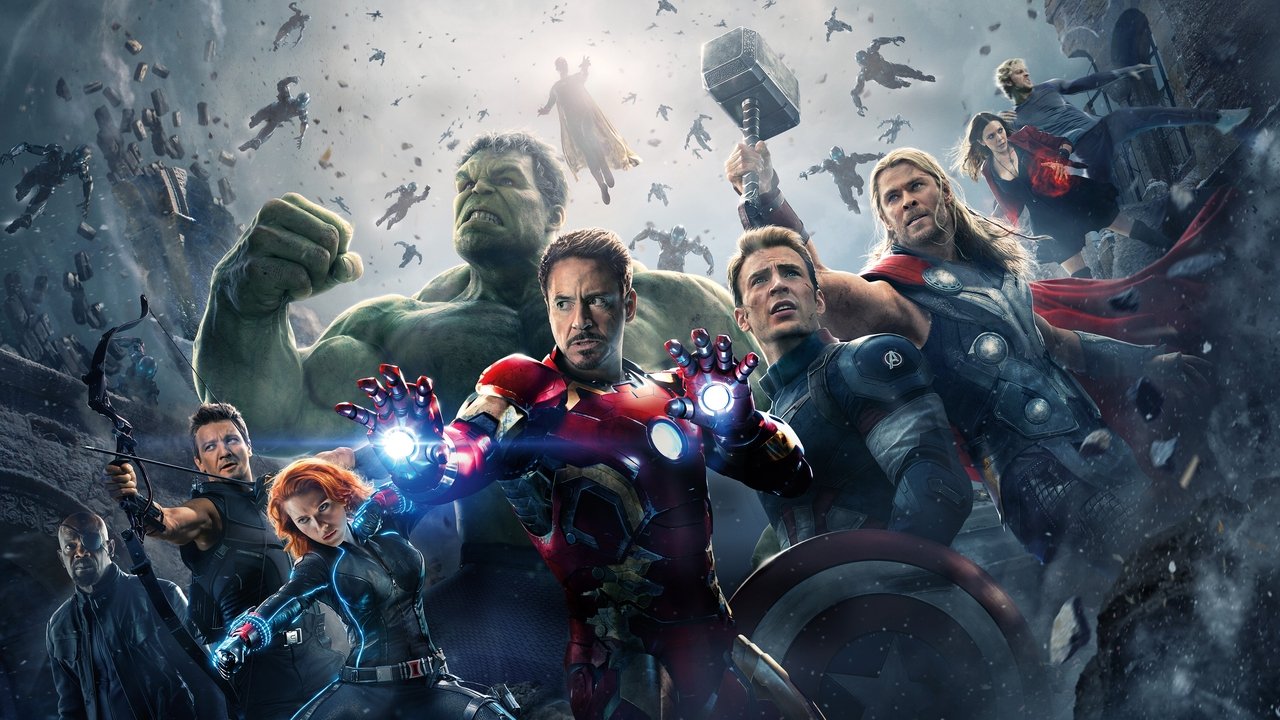
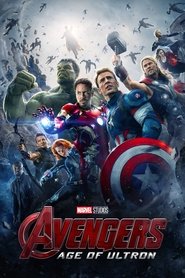
Avengers: Age of Ultron (2015)
Release Cinematic Universe Edition 4K UHD + Blu-ray (Walt Disney Studios Home Entertainment)
Whedon discusses Tony Stark's role in creating the disaster and the questions of responsibility raised by Ultron, Vision, the twins, and Hawkeye's family. He identifies abandoned character material, exposition problems, and compromises in the final battle. He also describes contributions from actors, editors, second unit, music, production design, choreography, and visual-effects teams.
- Duration
- 2h 15m
- Talk coverage
- 93%
- Words
- 18,353
- Speaker
- 1
Commentary density
Highlights
Topics
People mentioned
The film
- Director
- Joss Whedon
- Cinematographer
- Ben Davis
- Writer
- Joss Whedon
- Editor
- Jeffrey Ford , Lisa Lassek
- Runtime
- 141 min
- Also on
- OneSheet ↗
- External
- IMDb ↗ TMDB ↗ Find on Amazon ↗
Transcript
18,353 words · 57 flagged as film dialogue
Hey, this is Joss Whedon, um, doing an unprecedented concept of a director's commentary. Um... I have a lot to say. I have no idea what it's going to be, or what order it's going to come in. But if you like the sound of me babbling, you're in for a treat. Why on earth would I make another Avengers movie? They're really hard. It was... It was ill-advised. I see that now.
But I think the most important thing about the movie is that it's mine. That it's all me, and that really because I'm the director and the writer, I really created it all myself. I think that's important to bear in mind. Especially because, while I've been talking, you've already seen the work of two other directors, not to mention the insanely large village, possibly a metropolitan area, full of people who are working in every frame to fulfil whatever vision it was I thought I had. One thing about this movie that you're gonna hear a lot is how extraordinary the crew, the post, the pre, uh, the production people, how they not just carried or fulfilled, but inspired this movie, which begins with this rather iconic image. Um... A very deliberate decision on my part was to start off with the hardest thing in the movie from the first one, what we refer to as the "tie-in shot." Rather than getting the Avengers back together, I wanted to say right up front, "No, they're in it. "And here's the very climax of the first film. "Here's the very thing you always showed up for, "all of these guys in one enormous shot "with a big slow-mo, kind of, uh, comic book panel moment."
And my original concept had been that the very first frame would be the slow-motion part. Kevin Feige very rightly argued that without some context, people just wouldn't know what they were seeing, um, and wouldn't appreciate it as much as they would at the end of the shot. Which, um, turned out to be very true. When I talk about the other directors... There was a short shot of people running up the stairs that my producer, Jeremy Latcham, went ahead and got with our "C" cameraman, Sam, while we were in Dover Castle, which is right here and played as the interior of the fortress. Um... We were mostly stuck in big, beautiful rooms filled with equipment, and there are so many lovely little spaces. He said, "Shouldn't we go and get soldiers running about, "and show some of the stairwells and the halls, "and all the things that make this space more than just big rooms?" And we ended up using a lot of that footage. It was just grand. And, of course, the other director I'm referring to is John Mahaffie, who is an actual director, um, the second-unit director, who shot so much great footage for this movie. I shot about 100 days, he shot over 50. And some of them are elaborate.
That's another, what I was referring to before. Some of the more elaborate stuff inevitably gets shot by second unit because the characters in it are CG, and requires camera setups that take hours and hours. And so on the one hand, I, being the most important director, the director of the first unit, I'm busy getting really the heart of the piece, and he's getting these secondary shots. Except that the "secondary shots" he was getting, I just used air quotes, you cant tell, but I did, were very much some of the most beautiful footage that was shot in the film. And I started to feel like Reaction-Shot Joe. I would just see these glorious things he'd stitch together, and then I'd... There'd be a close-up of somebody reacting to it. I was like, "That's me! I did that. I'm also a part of the team." Um... Because the team is how this gets done. You're gonna find that's also part of what we have to say in the movie. But in the making of the movie, it's very much the same thing. Both of these guys, Thomas Kretschmann and Henry Goodman, extraordinary thespians, who would come in to do smaller roles. I actually said, "If we made a movie with only the day players..."
They worked more than that, but just literally people who were there for just a day. "we'd have the most star-studded cast you could work with." It's wonderful. It's probably a terrible thing about the industry that you can get amazing actors to play these smaller roles in franchise films, but it works for me.
So I asked the question, "Why would I do this, again?" And the main answer was because I wanted to make a new movie. A different Avengers movie. And while providing the things that people expect from the Avengers movie, i. e. the tie-in shot that you saw before, I also wanted to not just tell a different story, but tell it differently. And a lot of that can be seen in the editing and framing and general style, the lenses. In the first film, I was very slavish to 3D. I was playing it as though anything not in the vernacular of 3D was going to be confusing for the audience. And in the couple of years in-between, it became clear that, that isn't really the case. And, besides, 3D really spoke to the way I was used to shooting. I like wide lenses. I like understanding the space around me very Clearly. I didn't like a lot of heavy cutting. I liked shots that would deliberately go from one place to another, very old-fashioned. For the second film, I wanted to do something unlike anything I had really done. It's a little bit like the film I shot right before, Much Ado About Nothing, which was kind of...
We had a bunch of great actors standing around, speaking Shakespeare, and, as often as possible, three cameras, occasionally four, at least two, getting them. And quick side note, the mercenary who speaks right here... No, it wasn't. That was a bit I added very late in editing. And that's actually Jeffrey Ford, one of the editors, who just, uh, did it on a mic in the room, and we liked it so well, we kept it. You're also gonna hear his name and Lisa Lassek"s name, those editors who... I don't wanna say saved my life, but I just did. They are so much a part of everything that works in this movie. I'm incredibly grateful. Lot of moving parts, partially because of the way, um, I, uh... As I said, I wanted to shoot this differently. Where the first one was very deliberate, this one was deliberately casual. Yay. [hat little "Yay," by the way, for which both Robert and I have been given credit, was actually Jeremy Latcham, again, saying, "He needs to make a noise there," um, in post-production. And I was like, "Oh, no, he doesn't. "We could do it, but no one's gonna hear it." So, he gets all the credit for that.
And we have fo talk about ILM, too, and the extraordinary work they did with the Hulk and with Ultron. I mean, what they did in the first movie was amazing, but this is a completely different level. This is a real performance. And even with all the reference that Mark gave them, it's something that has to be crafted pixel by pixel, and then made human. And I can never stop looking at these guys. Because, again, with all of these cameras and this very different way of shooting, we ended up with something like that, an over, where you see just a blurry shoulder. That blurry shoulder is about as expensive as a face. It's something we could never do in the first movie. But we talked about it specifically as wanting to have the Hulk play a character in the film, not an effect, and to use the same casual vernacular when we were shooting him as we would with any of the other, um, players. And their thing, the idea that Natasha has this power over the Hulk, and obviously this, uh, budding romance with Banner, really came from that scene. That's where it all started.
The idea of the lullaby as how they deal with him spiralled up into the idea that Bruce Banner and Natasha Romanoff are actually very similar. And so the scene always made perfect sense to me, and we had Scarlett's side of it, but we really didn't have the scene until just a few weeks before we delivered the film. And even I was kind of stunned by the physicality, the sensuality, and the emotion of that encounter. And it's one of those things where you all say, "This will work," but then you get to feel it and It's like nobody ever told you about it. It's an extraordinary thing to work on something for two years and not understand it until you see it. Or not understand the power it will have.
It's fun to kill the Avengers. I recommend it. I particularly like the little twitch from the Hulk. I wanted very much the sort of dying bison, kind of little spasmodic thing with the spears sticking out of him. And they gave me that. They gave me this broken shield. Look carefully at the way the shield is broken, because that's actually something that I put in for just a few people. You'll see that shape again at the end of the movie when Wanda tears... With her magic, she tears Ultron's vibranium chest apart. And we very deliberately had her do that, had it come apart in the exact same shape as his vision of disaster. Because we wanted to Say, "She's great, and it's great that she's so powertul, "but what if it wasn't great?" In a way that one-and-a-half people would recognise. I think I said, "Five people in the audience will cheer at this." And Kevin Feige said, "Yes, but I will be one of them."
It was a big decision whether to go off on her smile or this grab. Ultimately, the grab very specifically said, "We have a problem, and the problem is Tony." And, um, one of the things that also sort of hit me late in the game is that you can really look at this film and just straight-up Say, "Tony Stark is the villain." It's not just the beard. He's a good man who is corrupted by his own anxiety, by this vision of a disaster, and makes what is obviously a really bad decision. And I spent so much time in the writing process and during filming trying to protect Tony Stark. Trying to make sure that he was still a heroic figure. And at one point I watched the movie, and I went, "You can just go ahead and lean into this, "that he's now evolved into a villain." Obviously, he's not just that. He's redeemed, and he is a hero in so many ways. But it was very freeing to be able... And I think it's not something you get to do a lot in something like this, narratively. To just go ahead and Say, "Your guy just might not be okay." And again, that's something that, thematically, the entire movie is about.
It's been commented on, and it's not by accident that the word "monster" is used by most of the team about either themselves or each other. Feels good, yeah? I have a "Jarvis is my co-pilot" sticker on my laptop. Because how could you not? That's one of those things that I thought of and asked for while we were shooting. "Can we just throw that in?" And the prop guys just disappeared and came back with the perfect one. And, of course, it comes right after he says, "Jarvis, take the wheel," so clearly we're already leaning into the Jesus thing. And that's, um, again, not by accident. We're not saying anything specific about religion, but we are playing on Christian iconography a great deal, partially because both Tony Stark and Ultron have god complexes, and partially because the Vision himself does represent an ideal. And when he picks up the hammer, it's... I don't want to say a miracle, but it's playing on that idea of... When we think of that kind of religious figure, we are thinking of the best idea of ourselves. Of what we wish we could be. And this play is so much about the best and worst.
This little bit's a bit of embellishment that Robert and I came up with on the day. The two Enhanced? It's always nice to be able to have people who know their character so well that they can give you what you've asked for, but then make it feel lived in. I love this shot. It is very much of the idiom of the first movie, in the sense of, "Look at this big, expensive space. Isn't it grand?"
And I love the two of them. I did at one point realise that I had sort of turned Maria Hill into a girl Friday in this movie, because there were too many heroes for her to do that much. But it makes it all the better, I think, when she shows up in her old gear, firing a gun like she should ought to. This shot was very difficult. Again, one of the last shots we got. Kevin is very leery of shots that feel artificial, and when you are flying with someone and you do a camera move around them, you're in great danger of feeling artificial. And so we worked hard in the colouring and the way New York was and in the textures, to try and mitigate that and keep it real. And then we went right through that glass, which is a beautifully crafted effect. This shot is something slightly similar to what I did in my first film, Serenity, in that every member of the team is in it. Not all of them speak, but they are all visible at some point. And we get, basically, a tour of the place.
Obviously, because they come in through the "A," it has only been referred to as the "A-hole shot," but what it is for me is a very important way to explain the space of Avengers Tower to the audience. There is a bit of showing off. There is a bit of, "Look at all our grandeur." But what I'm really doing is explaining exactly where everything is in relation to everything else, because later on we will need to know. Robots are down here, and party's over here, and Pietro is gonna be standing on that glass later. Charlie Wood designed the set, and it's the biggest and one of the most beautiful things I've ever set foot on. It is glorious. Sometimes it's almost overwhelming. And besides wanting to show the scope of it, to play into the epic nature of the thing, it allowed me to come up with gags like Pietro getting... Like Hawkeye shooting out the glass from under him. And it allowed me to create action, and also to just have an enormous amount of fun. Sometimes the least fun. This particular space is so big and that sort of holo area so empty that it was sometimes difficult to shoot in, to figure out what to do with people.
But every frame is such candy because the work these guys put into it, building it and dressing it, and the depth in frame that you can get in these instances is never not exciting. I literally finished shooting on this set, and on that day walked into a corner I had never been in downstairs, and was like, "Wait a minute, "there's 100 cool ideas I have for this area."
There are two kinds of filming that are really delightful. One is this, kid in a candy store. The other is the opposite, when you have kind of an impossible space. I like that very much because you become more inventive in those instances. You have to think on your feet. You have to let the space dictate the frame to an extent, and that makes it more real, or just possibly more left of centre. But in this instance, I didn't mind the candy store. And the "Science Brothers," as they are affectionately known. Any time these guys get together, it's fun. They're very different in their energy as actors. By the way, give me curved glass and reflections that go on forever, and there is no way I'm not shooting it. I
want to apply this to the Ultron program. But Jarvis can't download a data schematic this dense.
Which, by the way, was another difference in this film than anything else I'd shot. I would stop and say, "Wait a minute, we're gonna get another setup. "We're gonna do something "just because I think we can and should and it looks cool." Generally, because of my background, I have shot exactly what I needed and nothing else. On this film, I shot everything I needed, and then some things I thought I might want. Which during shooting was very liberating and exciting, and because we moved so quickly, was not a problem for the schedule. During editing, interesting side note, it turned out to be the worst idea in the world, and I'm definitely going back to shooting only what I need because that amount of choice can sometimes, like a giant set, be too much. This is one of those cute little ideas. We're on a memory-head track, so that we can do four different setups in the exact same configuration and tell the story quickly. It's one of those cute ideas that takes half a day at least to give you 20 seconds of footage. So I tried to have fewer cute ideas after that. /'// continue to run variations on the interface.
But you should probably prepare for your guests. I'll notify you if there are any developments.
Thanks, buddy. Enjoy yourself, sir. I always do.
Oh, and now we get to Mr Spader. What is this? There's no way I can say enough about pretty much anybody in this cast. But if you have to start somewhere, um, James Spader and Paul Bettany is not a bad place to start. They are so extraordinary together, so much the people they wanted to be. And with James we were creating somebody completely new, and with Paul we ended up doing the same thing with the Vision. Because I originally wrote the Vision as Jarvis, and then went back in and realised, "No, he's much more enigmatic and interesting than that." And what Paul gave me was beyond my best fantasy of the Vision I'd read as a kid. Didn't have a fantasy of the Ultron I'd read as a kid because he was always just kind of mad. So my idea for who he would be was a sort of grand madness, a weirdness. Um... And, uh...
Why do you call him "sir"?
That line, "Why do you call him 'sir'?" has so much menace. But Is also, again, one of the central themes of the movie. So much of this movie is about power and class and privilege. I mean, we looked at this, we were like, "It's literally Upstairs, Downstairs." There's downstairs, the Legion who come in through the back door, upstairs, the heroes. And that scene, by the way, was added in post. I felt that we could very clearly explain the problem that Ultron was having and create a scene that really made you feel for Jarvis. Kevin and Jeremy, who really fought for Jarvis' presence to be increased throughout the movie. I had always intended to make him the Vision. They kept insisting, "We want more. We want a visual. "We want everyone to mourn him. We want him to be treated like a guy." And I didn't really understand the need for that the way they did. And then putting it together, it was Clear, "Oh, yeah, wait a minute, this guy, he was there at the beginning. "He was there in the first few minutes of the first Iron Man." And people have a bond with him that is palpable and very human. There are many versions of this scene, some of them including the actresses.
One of the great things about working with this many stars is you never know who you're gonna get, what schedule is gonna work out, who's suddenly gonna become available. But when it became apparent that neither was going to show up, I thought it was important to plant a flag on that and Say, "Well, that's something that registers with our guys." And the best way to do that was to have them be dicks about it.
I fly it right up to the general's palace, I drop it at his feet. This was, again, something that I thought of on the day after we shot, or while we were shooting the first half. And it's one of those things without which the first half doesn't even work. The payoff of him being all prideful about his successful story is one of the funniest things in the party.
Neither was Omaha Beach, blondie.
Stop trying to scare us. I liked the idea, the texture of the idea that Thor has something that could actually get Captain America drunk, because, as he explained in the first movie... I don't know who that actor was, by the way. He's really good, he's very familiar, uh, the veteran. But we were lucky to get him. I just... The name isn't coming to me. Um... No, it was so much fun to be able to do that. And he used "Excelsior" here as "I'm so wasted," um, since I grew up with that phrase.
Fact is, he's not like anybody I've ever known.
One of the other great things about a movie like this and the opportunities they gave me with the actors, the locations, the scenarios, and the moods, and everything else, was that you feel like you're making 13 different movies. And I'm very much... Apart from actually having ADHD, which I do, I'm very much a fan of things that change it up. And this was one of the instances, because they are both so beautiful and charming, where we all sort of went, "When can we just make this movie?" I actually said to them, to Mark and Scarlett, "You guys should do The Thin Man." And they both asked me what The Thin Man was, which makes me feel that, uh, the Earth is doomed. But their energy there is so great, and to be able to lean into it visually and just go ahead and Say, "Let's pretend we're in the '40s," is a delight. And leads to, um, the after party that's coming up, which is a more well-known bit. And it's interesting because this stuff, particularly with them, is very sort of studied. Again, because I was going into a slightly older visual template, the camerawork is somewhat less frenetic.
Then we got into shooting this next scene, and it was also very elegant, and the camera moves, it went from here to there, and it was bombing. And nobody was enjoying it, the actors didn't feel funny, their lines didn't sound funny, it just didn't work. And to the point where they're all standing there, and I've got all of them for one of the few times... More times in this movie than the first one, but I've got every major actor I've ever admired standing in front of me, and I'm just drawing a blank. And I finally turned to Jamie Christopher, our awesome AD, and said, "Can you help me? Can you make it stop?" And he just turned around and said, "Thank you, everybody, that's a good day. See you all at 8:00."
And then I just kept working, and eventually figured out, "Oh, I'm shooting this in a very... Like it's The Age of Innocence, "and it's a party." And the whole point of this movie is you're at the party. You're invited. And I realised I had literally, with Much Ado, just shot an entire movie where people sit around and drink and talk. And the fact that I couldn't figure out how to shoot the after party scene, in a movie whose code name when we were shooting it was "After Party," very deliberately, was the source of some embarrassment. But we came back in, the cameras got looser, the lines got looser, the cast got happier, and it just started to flow. And they're all so good. And that montage was one of the first things I pitched.
You bet your ass.
It wasn't until, um, much later that I casually, thinking it would not be well-received, pitched the payoff that will come later with the Vision. I said, "You know, you could do this." And it was Kevin who instantly knew how important it would be, and it is in fact the biggest cheer moment in the film.
No. I like robot stories 'cause they're Frankenstein stories. And as you can see, I leaned pretty heavily into that. This guy, I always think of as resembling the very first movie of Frankenstein, which I've only ever seen a Still from. But it's this weird, screaming, almost mummy-like guy with tons of things, of tattered cloth sort of dripping off his arms. And as much as puppet, and as much as scary robot, I wanted to evoke that, the very first Frankenstein film. Frankenstein, robots, it all has to do with the central human question of, "Why am I here? What is this, please?" Because we all have to ask that, and we all have to feel the pain of being brought into a world that was not made to accommodate us.
And the Frankenstein story, and most robot movies where the robot is anything other than a killing machine, deal with that pain. And very baldly. It's one of the things, like superheroes... By the way, that was Mark on the day, that was not me. That was Mark's call. He's a shameless physical comedian. If you look at the DVD extras, you'll see even more of that stuff. God bless him. But that idea of "Why am! here?" The way it gets simplified in the robot story is really fascinating to me. Because we come back to it because we can really ask what it is to be human, when we take away every part of being human but one. Or we take away just one particular aspect. And in this humanity, our foibles and what we are as people, as parents, as powerful, as alliterative, we... All of those questions have to be asked in stories like this.
Come on! That's the one. . 1S unsafe.
The Avengers have so much power at the beginning of this, and one of the things that I knew, and I had this problem in the first one, is nobody roots for the overdog. And so it was very important to me that they be brought down a peg, but not just by circumstance, but because they have... In Tony's case, dramatically, but in every case to an extent, lost some aspect of the mission. Lost some aspect of their humanity, because that's the thing about being a superhero, it's the thing about having power. When your decisions affect more than the people around you, inevitably, you are going to destroy something. You're going to harm someone in a way that removes you from humanity. The more power you have, inevitably, the less a part of the human community you are. And so Ultron himself says that, although he doesnt always realise how much it applies to him. And once again, the Frankenstein. And also the Pinocchio, which was, by the way, an idea I had for the Comic-Con teaser that played so nicely, it got used a whole bunch. And then I ended up saying, "Let's just go ahead and stick it in the film because it is creepy."
She's picking glass out of her feet there, by the way. In the longer version of the fight we had just seen, Maria slid down and jumped in after Rhodey in her bare feet. And the jacket she's wearing, by the way, is Steve Rogers' bomber jacket, which I have yet to hear anybody comment on. But I thought it was an interesting little detail. I wanted to, obviously, make them more casual. And we had to sort of "de-mom" her makeup a little bit when she arrived on set, and kind of make sure she felt as cool as everyone else. I
have more than enough words to describe you, Stark.
Thor. The Legionnaire. This was the scene, as I mentioned, where I, um, really struggled. I struggled because with no central sort of object to build around, 'cause it's an empty space where we were gonna put a Jarvis Iater, and with no intense sort of source of light, I really wasn't sure where to put people and how to get them where they needed to go emotionally. Especially because Robert has a really difficult job in this scene of cracking up in the middle of the worst thing he's ever done. And to me, it was really important, and Robert, too. The moment I pitched it to him, he latched on to it. He's like, "! do that whenever I'm busted. I can't help it. "It's so bad. I get nervous, I giggle." But I also think there's something... I feel like Tony's... There's a little bit of the Asperger's, being on the spectrum with him, where he's just, um... He's not quite... He's just not good at people. And for me, again, that was something to lean into. And ultimately, my whole "Tony is the villain" thesis nicely plays into it as well. And again, "villain" doesnt necessarily mean ""mwah-ha evil," because here you see his pain and the sort of epic nature of his heroism.
Which is contrasted, as usual, with the very simple nature of Steve's.
And Tony is a guy who likes to do the math. And Steve is a guy who understands the situation he's in, and is looking out for the people around him.
In the DVD extras, you'll also be able to see a scene between the two of them that comes before this. Ultimately, it was an attempt to show them in the community, and how they were a bit rebellious, but also very much community-minded.
It became apparent that the two of them walking into a dark room, looking for something, and then talking to someone who had clearly called them there, gave us the information that we needed, and also kept them a little more mysterious. The scene was so mundane, and they were So... Just such normal bickering siblings, that it didn't... Didn't really add to their grandeur. This is the first time we see Ultron. And I look back, and I'm... The fact of him sitting in that chair is very, sort of, based on the great, sort of, John Buscema kind of... "The tortured king and the weight of the throne" kind of thing. But then he stands up, and that's how he's revealed. And I thought, "That's less cinematic than it could have been," after the fact. Children... This little bit that he says here is also really important in the theme. Simply because one of the first things I ever wrote when sort of just freestyling about Ultron in my head, was that children all kill their parents, because once you have them, you no longer care as much about yourself. You accept your place in the cycle of the world, and you know that you'll die, but there's something more important to you than that.
And then, in parenthesis, I wrote, 'cause I was sending this out as a memo, "Don't worry, nothing like that will ever appear in the film." And then it actually did. But I do think that a connection that even I didn't make is because so much of this is about power... Yet also, so much of it is about family, and the responsibility we have not just as leaders or as heroes, but as parents. There is no time when anybody in the world understands what the truly powerful can do and go through, unless they're parents. Until the moment they're parents. And then, suddenly, they have complete mastery over somebody's mind. Not forever. In the case of my kids, not even for that long. But there is the ability to uplift or destroy. It is a perfect connection between what is going on in this movie, politically and thematically, and what is going on personally. This shot here is one of my favourite shots in the film, just the way Ultron listens. Again, ILM, they had James Spader's performance to work off of. They had face-capture on him, so he wore cameras on his face the whole time.
But they really took it and used it, and managed to make a man who's made out of metal not just sound, but move like Spader and give the performance. When James took the gig, he said, "I don't wanna do voiceover work. "I wanna be able to give a performance." And, my God, he did. And they did such an extraordinary job of capturing it, so much so that when he is standing there doing nothing, I cannot stop looking at him. I developed a huge... Not even a man-crush, like a teenage girl-crush on Ultron. Like, I want a picture of him over my bed, and I wanna write about him in my diary, and I wonder if he's thinking about me. He's just gorgeous. 'Course, there's a lot of gorgeous to go around. This bit, there was a lot more of. We played the mystery of "What's up with Barton?" a lot. Is he still possessed? Is he villainous? Is he something terrible? Ultimately, we just kept the fact that he says, "I don't have a girlfriend," and then later says, "Girlfriend." My issue with it was simply... I mean, people felt, "Can we get some time out of here?" My issue was, I've just felt that people would only think that he was talking to Fury.
Since he had been a S. H. I. E. L. D. agent, and we've never seen Fury, and we know that S. H. I. E. L. D. is gone, that they wouldn't think that he was up to something dire. They would just think, "Oh, he's listening to his old boss." And the dancing I would have to have gone through to make that clear that he wasn't just didn't seem worth the effort. So we kept just a little bit of it. I miss it. I miss the idea of, "What's his dark secret? "What's his dark secret?" 'Cause I think it's important. His dark secret is obviously the crux of the film. And, I mean, the fulcrum, the thing upon which the entire film revolves, um, changes.
But I still think it works even without all the buildup. I
don't follow. What comes out of Wakanda? The strongest metal on Earth. Where is this guy now?
This is another one of those shots that I don't get to take the credit for. We had so many extraordinary cameramen, and our pilot was amazing. And Matthew went out to Bangladesh, where these shipyards exist. We had originally been going to Wakanda, but since we weren't using anybody from Black Panther, it became... We kept going less and less to Wakanda, till I referred to it as "Wa-kinda." We're just sort of on the outskirts. And it became a tease, and not worth it. But we wanted the vibranium dealer, and the arms dealer, and all that. So Klaue was the suggestion. It was actually going through... When we thought of it Jeremy went through and looked at images of Klaue online, and some fan had put up Andy Serkis. "What if Andy Serkis played Klaue?" And obviously, we were already working with Andy. He and his Imaginarium were guiding both Mark and James in their movement, since he is the master of mo-cap. But we realised that we wanted him for something else. And when he showed up looking exactly like that on the day, I thought it was mo-cap. I could not believe how different he had become. And he's just the sweetest guy, but also an extraordinary player.
He's not onscreen for that long, but you do not forget him. ... intimidating someone?
I'm afraid I'm not that afraid. Everybody is afraid of something.
Cuttlefish. Some of these things in the film are very autobiographical. I saw a documentary on cuttlefish, and I still cannot deal with it. I don't think it's okay that the Lord made cuttlefish, and I wish that he hadn't. They freak me out. You should check them out. They're unbelievable. ...
and make me see a giant cuttlefish...
At some point, I will also have to talk about the twins. And I only deal... And basically, it'll just be another praise-fest. A lot of people didn't want, uh, necessarily, to have the Scarlet Witch and Quicksilver in the film. They felt with Ultron and the Vision, it was going to be overstuffed. But it was very important for me to have someone for Ultron to talk to, and also someone else whose powers would be different. By the way, this lab here was all created digitally after the fact. Originally, it was just in the barrels. One of the things I discovered in post was that I had shot the least science-fiction-y-looking science-fiction movie ever, which was fine. It was what I had intended. But when the vibranium just looked like gold bars... There was even a bit where they were in a mining car, all stacked up, being carted from one place to another, and we were all like, "Um, this is a little Indiana Jones. "This is a little old-timey." You know? We expected Walter Brennan to show up. So we replaced it after the fact, and made it a little more in the idiom of the science-fiction movie this was Supposed to be. This contains my favourite Spader moment. His addition of the word "oh."
I'm... Oh!
I'm sure that's gonna be okay. I'm sorry.
It's just that I don't understand. I can't say enough about that moment. I was sitting next to Paula, the script supervisor, Paula Casarin, who's the best in the biz, and I looked at her, I was like, "Did he just say 'oh'? "Do you think he'll do that again? "Do you think he'll do it again?" Because James learns everything word-for-word. That's his M. O. , like it's a play. And I was like, "You gotta do the 'oh.' You gotta do the 'oh. And then he did it when we rolled. And I went up to him, and the first thing he said was, "I added an 'oh.' I hope that's okay. "Il can do it again without, if you like." I'm like, "No, I love you." I don't think I said that, but you could see it in my eyes. The idea that Ultron is emotionally so capricious is just something I hadn't really seen in an AI movie, particularly one where the robots are going to decide that all humanity must be killed. For him to be the most human, the most temperamental, was very important. And it's why Spader's the only guy.
Because he can do that sort of classic Keith David, "You want me to do voiceover "because I make the subwoofer explode "with the gravitas of my basso profundo." But then he can become completely goofy.
We shot it two ways with Andy, whether or not the arm came off. Kevin will tell you straight up, he likes a good arm-coming-off. It's like, "If I can cut off somebody's hand, then I'm just fine." His Empire Strikes Back obsession might be even bigger than mine.
That was just one of those sort of signature moments, and one of the reasons why I wanted Quicksilver in the film, to be able to just see things differently than we ever had before. I didn't feel like... With the exception of the one we do, where we go into hyper slo-mo at the beginning, I don't feel comfortable making a sort of hyperbolic, surreal meal out of those moments, unless I have a reason. I'm kind of very pedantic when it comes to filmmaking. And so to have Scarlet Witch and Quicksilver justifying the strange way I wanted to shoot these guys and the new ways I wanted to look at them was enormously useful. Obviously, they're very important as characters, and I can't say enough about the players. But that was one of the main reasons I brought them in. Now, I just explained all this stuff about how I don't like things to be all weird for no reason whatsoever, and I'm about to make myself a big ol' liar.
This is going very well.
The dreams. The dreams were the other reason why I wanted the kids in the movie, because it was going to be a chance to do something that was very out of the Marvel idiom, and something very surreal. Surreal, but emotionally grounded. That is to say that there's a reason for everything we do, but we played... We referred to these as dreams. And right here, for example, they're actually all walking backwards. People moved backwards, or ran things backwards a few times. Not so that you would notice, just so that they would have just enough awkwardness.
Only the breakable ones. You're made of marble. We'll celebrate after the graduation ceremony.
Lisa Lassek cut these, and we've worked together for a long, long time. She was able to create, and Jeff added some notes as well, but just moments that were even more surreal than what I'd shot. But everything is very deliberate in its bizarreness.
Cap is the guy who can't stop seeing war, even at a party for the end of the war. Who, when asked to imagine a life of normalcy, comes up with nothing. Which, by the way, was Drew Goddard's idea. I was asking him about Cap and fretting over the dreams, and... We call them dreams, by the way, simply because we can't call them visions, because it was too confusing with having a character called the Vision. But this moment where he turns around, yeah, Drew pitched it, and it ended up being the central moment. I don't know when I'm gonna get to the part where I start talking about Ben Davis, the DP, because I'm not sure I can ever stop. The work in this movie is the most beautiful that's ever had my name on it. By the way, those three guys in animal masks standing in the arches there, they represent something I have never done before, which is an absolute balls-out Easter egg, which I will discuss later on. And not just a Marvel Easter egg, an actual... Having to do with my work.
The ceremony is necessary...
Yeah, this whole cutting pattern here was created by Lisa. These dreams were obviously much longer, but we got what we needed from them, which was to know what sort of drove everyone, and to reopen old wounds and to make them as vulnerable as possible, obviously. She remembers that she was trained and even abused into being an assassin, and that she has a history of killing and a very dark career. Cap is incapable of being a part of the community he's constantly talking about. And Thor feels that his powers will destroy everything, that he is not on the right path, that he's out of control. I'm not exactly sure what Banner's dreaming right now.
We looked at some point-of-view shots, but nothing we created really sort of did as much as just showing how bonkers the Hulk was being, because, ultimately, it doesn't matter. What I said to the animators and to Mark was, "He feels like the world is attacking him." It's like he's in the middle of a wasp's nest all the time.
One of the most difficult things about animating the Hulk is trying to figure out what he's pissed about now. 'Cause when he's there for a long time, he has to keep this very specific energy. That shot in particular, the doggy cam or dinner tray, where you sort of attach the camera to someone, I first saw it in Mean Streets, when Harvey Keitel's super drunk. And fought very hard to keep that, and they had to create it stitched from bits of what we had from the day. But it really does give you a good sense that the Hulk's not in his right mind, even for the Hulk. And the question of what's making him angry became, um, easier and harder to answer, because, um, the answer is everything. So we knew we had all the energy we needed, but you still have to figure out where he's looking, what he thinks the problem is. Here, for example, he's flailing, but then when he turns around, you can see he actually does get shot in the face. This shot, which is among my favourites, is also among the most difficult, because the Hulkbuster armour is... It's known from the comics, it's actually from after my time, because I'm super old.
But even I knew you absolutely have to have Hulkbuster because nobody is capable of fighting the Hulk except Tony, and the idea that Banner himself had, had a hand in devising this made perfect emotional sense, and also made for what would be an exciting sequence. The reason that, that shot that I mentioned was difficult and not just delightful is that Iron Man is inside the torso of this thing, and that's a very difficult thing to convey, to convey the size. I look back and wonder if I should've had him appear behind the Hulk. I wanted to do the Western standoff, but it's very difficult, even with people around him, to realise this guy's 15-feet tall. He's not quite twice the size of the Hulk, but he's up there, and when they are all completely isolated for most of the fight, it's very difficult to really get the sense of that. We're coming to something that never fails to get a laugh, which for a long time was a real problem for me because I didn't mean it as a joke. I thought it would be cool and obviously comic book-y, but I didn't think of it as a laugh moment. And, by God, it is.
And I look at it now and I'm like, "Well, it has a Warner Bros. cartoon element to it." But I love it when I actually don't get the emotional gauge of what I'm doing, because I feel like if I'm getting more than I expected from something, or even something completely unexpected, it makes it more than just efficient storytelling. It makes it something that's alive. There's the elevator gag. Federico, one of the storyboard guys, had worked that out, and then we changed the space we were in, but we couldn't not have the elevator gag because it felt so good. Now the Hulk is pretty much invulnerable, so having him spit out a tooth was a big deal, and getting the emotional register of that thing was a big deal, too, because the instinct was, for everyone, for him to be twitchy and monstrous and all the things that he had been in the scene, and this was one of those things where, "No, you need to take licence." When he turns around, he needs to be very quietly, like the kind of "calm before the storm" pissed. I was like, "More Robert Mitchum, more Robert Mitchum." That's what I kept saying, and people were like, "We have no idea what you mean by that."
But that kind of cool, which may be a bit of a cheat? Now this was quite a showpiece. Delicate. I know, "delicate" is a weird word to use right now. Delicate for us, um, because even now, many years later, the last thing we wanna do is egregiously evoke the spectre of 9/11.
And being, uh, callous about that is unthinkable. But, at the same time, it was very important to me, because it's part of what this movie is about, that there be a price, that there be real damage, that we say, "You don't just bust up a whole city, and nobody suffers for it." This, it informs the end of the movie, and what the mission is, and what the stakes are. We originally shot it that he changed back to Banner, and was looking around and seeing what he'd done, but I thought, late in the game, that it would be more effective if the Hulk himself was able to register it, and that it became stronger than whatever spell Tony had knocked out of him. The only rule of science I have in Avengers movies is, "If somebody is mind-controlling you, "then you get hit really hard, "then it'll probably end." That's actually all the science that I know in the whole world. ... stay in stealth mode and stay away from here.
So, run and hide? Until we can find Ultron,
I
don't have a lot else to offer.
Neither do we.
Hey, you wanna switch out?
No, I'm good. This contains the last vestige of the "What the hell is Barton up to?" A
safe house.
He originally had a line, "Where are you taking us?" "A place I hoped I'd never take you." But, on the day, all I could think was, Tony would be like, "Uh, I'm definitely driving. I don't know what that means, "but it sounds ominous." And it either sounded ominous or heroical. So, him being all shifty and saying, "
Safe house,"
was just more efficient. This house, these grounds, we're on the Duke of Wellington's land in England, trying to make it, like Springfield in The Simpsons, every state in America, so that they're just in America. "We live in America, USA." I have more to say about the house and grounds, but first, let's talk about the secret weapon.
This is an agent of some kind. Gentlemen, this is Laura.
And she was a secret weapon because we had to keep Linda out of all of the promo stuff, because the one secret I was most anxious to protect was that Hawkeye's dark secret is that he has a family. Chris there, by the way, just killing it. He did four hilarious reactions, which was great because, in our heads, when the Avengers walked in here, it would be the strangest thing in the world, but with only two of them in costume, two or three, and the house being so big and beautiful, they didn't look that out of place. And so for Evans to keep doing very broad bits of, "What's going on here?" was just a lifesaver. Traitor.
There are two of these girls, and if you colour them pink, they play John C. Reilly's daughter in Guardians of the Galaxy, which is not something I knew when I shot this. But I'm sure they can do an entire four-issue limited series as to how this girl's related to somebody on another planet.
This next shot some of you may recognise from The Searchers. I realised I needed that moment from Cap, and it's very central to his whole theme about not being able to be at home, live a normal life. I did mention it to Jeremy Latcham, who then wrote a memo to everyone because I said I need a little bit of the interior of the house in this area. And he's like, "Joss wants to do a shot from The Searchers." I was like, "Don't say it!" But as long as I don't say anything on the DVD commentary, I think I should be fine, and no one will know that I'm just a thief. A thief!
You are so cute.
This is a scene that was in danger of being trimmed for the entire editing process, and ended up with maybe one line pulled out. It's so crucial to see that... What a normal life is, and what a normal perspective is on the Avengers and their life. And, again, Linda is just so earthy and so real, and you buy the two of these guys together so much. She not only represents home and hearth and how he's cool, she's so luminous that she's what the Avengers can never have. And also, her face showed up in the picture on the left, which was a fortuitous thing that we then highlighted even further because it looked so beautiful in that wide shot, right there.
Things are changing for us.
She also just was dialled in to the character from moment one, and she and Jeremy met a couple days before we shot, and yet, the level of intimacy is enormous. His respect for her and for what this life means iS SO Crucial.
This is actually in Seoul, Korea. One of the great things about doing this one and shooting from London meant we could go everywhere. Where, in the first one, we had to create places, in this one we could really go to them, and you find architecture like that, which you would not find, even perhaps in your own imagination. So it's very exciting. ... iS the next me. Most of the stuff in these labs was rewritten many times after the fact, and Claudia came in to re-shoot a bunch of it as it sort of got moved around. There was so much exposition that she and James had to give us, yet keep it dynamic, which they did a good job with. That shot of the house and barn is probably my last opportunity to explain that those places dont exist. They were built for the movie, and we shot them for one day. We shot one day outside there, and then they were gone. They built the interior of the house. The barn was an actual barn in England. And the design is not completely dissimilar to the farm that I spent a lot of my childhood on in Upstate New York. And it's a very comforting space.
If that were real, I would want to live there. But actually what really exists on that field usually is not a house, but very angry cows. Angry, angry, bitter cows. I don't know what it is. They were just... They weren't pleasant. That I was an Avenger. That I was anything more... This scene, you only get the first two-thirds of the scene in the movie. We cut out the end. People thought it would be, and I agree in part, I do, that it would be better to leave the question of whether they were together without answering It. But if you watch the scene in the DVD extras, you see the whole scene, and you see just more of why I'm in love with these two people. And I'm in love with their love, and I'm in love with their pain. And they were so good on this day. And Mark and Scarlett only ever bring goofy, happy energy to the set. But then you Start the cameras, and they go to a place of pain that is just so human and so excruciating. This scene caused my first-ever completely un-ironic group hug because I was so proud of them and what they did. I insisted we have an extra day of shooting for this scene.
We didn't need it. They just came out and nailed it. This moment from her... They sterilise you.
Um... That just kills me. That throwaway, "It's no big deal. "Then why are my eyes welling up?" gesture is just beautiful. I love the very haunting, weird little plaintive melody that Danny Elfman put over this. Their romance was a point of contention for some people. Not for us, while we were making it. In fact, it never occurred to us that there would be any reaction against it. They seemed so much like they belonged, if not together, in the same sort of world that... And the chemistry they had from the first scene they ever played together just felt right. And people who thought she was supposed to be with Clint... Well, obviously, it's very important that he's married, that he's normcore, that his distance from the Avengers is caused by the fact that he actually has a connection to the world and he knows they donte. But, also, I think it's much more interesting for he and Natasha to be two people who would lay down their lives for each other, but aren't interested in sleeping with each other. I think that's a more interesting dynamic, a true one, and better than just the two of them hooking up.
Every time someone tries to win a war before it starts, innocent people die. Every time.
The log rip. We built a lot of logs for him to rip. It's a constant conversation with Chris about Cap's power level.
With Captain America, and particularly with the Hulk, you get this thing of... Okay, Sergio Leone. Sorry. There, I said it. You get this thing of, "One moment, "I'm having a normal fist fight with some guy, "and the next moment, I can jump two storeys." So which is it? I'm embarrassed to say that "Hello, Deere" was Robert's. That's one of those moments where I just kick myself, I'm like, "How did I miss that?"
Was she ever not working for you?
Artificial intelligence.
You never even hesitated.
It's been a really long day,
like Eugene O'Neill long, so how's about we skip to the part where you're useful.
There was a certain level of uncertainty about whether the Eugene O'Neill line would play, and, after the hammer moment, it might be the biggest crowd-pleaser with every audience we've played it for, and I'm not sure why, honestly, but I'm very pleased. I saw it. I
didn't tell the team. How could I?
I saw them all dead, Nick. I felt it.
The whole world, too.
Because of me. [he idea of playing Tony's confessional. Because there was a long period where it was like, "Well, does he tell everyone he had a vision?" And we had lines in it for quite a while that indicated he had said something, or said something off-screen, but you don't bring Nick Fury in without a reason. And although it was important to say that they were flying on their own, we knew we wanted to see Nick, and to have him be the first person that Tony can actually talk to, and for that to become, in a way, the sea change for Tony, even though he's about to do something even more absurd than what he's already done, is important for the whole group.
I like the look. This is actual Royal Holloway, University of London. Again, any time we could go to the place, let it be the place that we said it was,
and that wasn't all the time, but was as much as possible. Obviously, that scene was a little bit longer. All of Stellan's stuff, there was more of. Again, enjoy your DVD extras. The "Thor and Stellan go to a cave together" subplot is one of the more complicated issues in the movie. People either think there's too much of it or not enough, but what we have gets us where we need to go. I contacted our friends at the Nexus about that. Nexus? This scene, difficult, not unlike the scene in the lab, even though we had the table. Just difficult to get the energy. It's a very bucolic kind of setting. It's very deliberately the opposite of the Helicarrier. I mean, he mentions the Helicarrier, Fury does, on purpose, because it's important for him, A, because later on he's gonna show up with it and if you had forgotten it exists, you don't want that moment of like, "What?" But also because this portion of the movie last time, where everybody's sort of searching their soul and wondering what the heck to do and conflicting, came on the Helicarrier last time.
And it was a very kind of science-fiction, kind of comic-book-y space, and the whole point of coming to the Bartons' farm was to do the opposite of that. To bring them, literally, back down to Earth. But having done that, you then have to allow for this moment of respite from the giant action set pieces, two more of which are coming up, and, at the same time, keep some kind of energy and momentum. For some reason, every time we did a shot on Mark, when he got to the line, "Has anybody seen Helen Cho?" he called her Anita. I mean, we came back the next day and did more coverage, and as soon as we were off him, he was fine. And as soon as we came back on him, it was Anita. I have no idea why. Nobody knows why. But, oh, my God, it made us laugh so hard. Poor man. It's so random. "Anita Cho." But when he did nail it, he did nail it. You look at that shot where he says, "
Has anyone been in contact with Helen Cho?"
The camera is moving here, he's looking there. It's very precise. And that's an interesting thing with Mark, because I think he's probably the best actor of his generation. But that precision is not natural to him. I have to sort of go, "I need you to do this thing." And because what makes him so great is he's so honest in his stuff, it doesn't come from, "And we land here," which is a very sort of comic book vernacular and very much the way I've always created that sort of, "Everything is precise and musical and it goes..." And then it goes to the next thing. He's not that, because everything he says sounds like it just came from him. He doesn't play characters. He just becomes them. He just exists. So it was interesting to work that out. We pulled out some of the rail for this shot because I was like, "I'm going Gone with the Wind, guys." I'm going full-out.
I'm going full Western, full melodrama, all of that stuff. And that scene between the two of them was obviously part of my ongoing campaign to ensure the belief that Hawkeye is a dead man. Even to the point where he says that that's his last project at the house. Really meaning, "This is my last mission." I mean, he might as well say, "Dont worry, honey. "It's just one more job. It's perfectly safe." And then walk under a ladder. He's like Dead Meat in Hot Shots! And it's all a ruse.
How do you find it? It's pretty simple. You bring a magnet.
This is not actually in Oslo, okay. That part is a total lie. The idea, though, that Tony is searching his world, the world of science, and Thor is searching the world of magic. Obviously, there was a much longer scene with Thor, but there was also at one point a version where we just intercut the two enormously, the cyber search and the dream search. And in the end, we went with the least amount of stuff to explain what knowledge Thor needs to come back with. Chris is great, and very patient with me, because he's trying hard not to be irrelevant. And it's tough with Thor because he doesn't speak the way people do, he doesnt live the way people do. He can't just sort of be the casual guy, although Chris is hilarious at throwaway jokes. And I kept saying to Chris, "I'm gonna figure this out. "I'm gonna give you something really exciting." And whether or not I succeeded is open to some debate. But, God knows, everything I've thrown at him, he's done so well that it makes you want to protect the character, because he's the only one who's... Well, he ain't from around here.
You said we would destroy the Avengers, make a better world. It will be better.
That fist, curling up in frame on the left there, that's another example of something that could never have been done before with what we could do in the first film. Um... Just these casual frames. They're a little static. Some of Ultron's stuff was devised later, was sort of honed later. And this we actually shot on the day. And the space was a little small and didn't afford a lot of opportunities, but I realised that I was so into the things they were saying that I felt like I dropped the ball a little bit, visually. And that's the case with Ultron. In some cases, because we were building it after the fact, and we had a plate of the background that we were then animating him in front of, so actual camera movement was more difficult to put in late in the game. And sometimes I think I just missed some opportunities. I look at all the opportunities I've missed. I look at this movie as a series of compromises and failures. Just so you know, I'm not actually gonna emphasise that, and I'm talking to my shrink about it.
But the things about it that I love, I love very much. But I always think, "I could've done better there." He's uploading himself into the body. - Where? And this is Claudia, who is SO impressive, doing the hardest thing in the movie, emotional exposition, where we give her a ton of dialogue to say, then we add to it later, and she's still emotional and cool. No manifest. That could be him. There. It's a truck from the lab. Right above you, Cap. On the loop by the bridge. Coming to Seoul was a real opportunity for us. Not a lot of people had shot there. And we had to sit down with one of their ministers of culture, and explain what it was we were trying to do, and make sure that we were gonna show Seoul in a good light. And, in fact, why we liked the city was because we knew we were gonna have a chase throughout the whole city and... Not the whole city, it's one of the most enormous cities in the world. But through some lovely bits of it. And we wanted a place that was very modern and very exciting, and not gritty in the same sense. We wanted every place to register as itself. Johannesburg, Seoul.
And then we wanted to fly under buildings, when clearly he could have flown over them, just because they were there and they were pretty. You know what's in that cradle? I've talked about ILM and the extraordinary work they did, which I can't say enough about. But, as is the case with movies like this, there's hundreds of houses doing various effects and various bits. This whole sequence, the Ultron portion of it, most of the major work in it was done by DNEG. And the houses are really good about helping each other out. Some of these shots were shared by, like, four different houses. Somebody's doing a background, somebody's doing a stunt face replacement, somebody's doing a digital creature. And with the Vision, somebody at one house did body, one did face, one did cape, one did background. It was just... But they're all very cooperative, they're very inventive, and everybody brings that extra quality. A lot of these low-angle shots you see of Cap going over camera, her going through alleys, were shot with a little remote-controlled car, which honestly is my favourite thing. I like the remote-control car way more than the motorcycle because it's just so cool.
This moment here, um, Bryan Andrews, storyboard artist, who has done a lot of great stuff for us, came in after the fact and looked at this. And we had knocked all the cars over. It was Bryan's idea to add Captain America to what we referred to as the "car ballet." And it took something that was pretty, but pointlessly destructive, and turned it into a moment of peril for one of our guys, and made it not just more exciting, but worthy. And that kind of feedback, and having those new eyes iS SO crucial and so exciting, because it just keeps getting better. The thing about a sequence like this is it's always about the connection between the players. The more you can connect them, the more we would add dialogue between them. It wasn't just stunt, stunt, stunt. You felt their humanity. There was an emotional thread going through here for Scarlett when we shot it, that she had been rejected by Banner very brutally. If you see the entire sequence on DVD, it's a rough thing, and it made her have this kind of self-destructive, just brave kind of fatalism.
And then some of this stuff was shot after that had been cut, but most of it beforehand, and so you end up with someone who's playing something that is no longer in the film. And it's just a very delicate process to make sure that you don't have some inexplicable emotional malaise from her. But luckily she's the kind of person who hides that sort of stuff, and as a character, she plays on the surface as very in control. And so we were able to cut it together without it seeming strange. But it also means that one of the emotional arcs of this sequence disappeared, and then you end up relying on spectacle, which is the last thing that you want, even though the spectacle is beautifully put together. And you have the kids going from villain to hero, which is a major plot turn. And you have Ultron disappearing with Widow, so you're servicing the story, but emotionally there's not as much going on as there would have been. And that's complicated because once you start a sequence this massive without that particular emotional hook, it's very easy for people to get pummelled.
But by bringing the kids in, by cutting it down, and just by the beautiful job Jeff did cutting it, I think it sustains. But I'm always gonna look at what's not. Almost all of that was in Korea, or shot with plates from Korea. This is actually in England, in Longcross, a place we used for a few of the sets and exteriors near Shepperton, where we shot most of it, that they dressed up very specifically and brought the trains. I think we brought them from Korea, the two train cars that we had. Dressed them in. One of the things I love about having all these characters is the way their alliances can shift and change, and Captain America's never expressed anything but sympathy for these guys, even while he was fighting them. So for him to suddenly say one mean thing, and then, boom, they're allies. It's exciting, but it also feels emotionally logical, and then it brings us back to the idea that Tony is the villain. One of the true villainous moments he has is telling Hawkeye, "Why don't you disappear?" and I'm gonna make an evil eyebrow face, because I'm about to do something crazy.
And the idea that he's gonna lean into the very thing that is wrong with him is interesting to me, because the idea that the worst thing about us is useful gives this thing texture. Look at the reflection of Jarvis in Bruce's glasses. That's something that... That level of detail is... Because, of course, Jarvis is not there, that was added later. And that level of care and detail is in every frame of this movie. Our VFX head, Chris Townsend, was running 97 different houses. And one of the things I love about Marvel is that good enough is never good enough. And the level of texture and detail and character that they put into VFX doubles, this sort of amorphous character. It's so complicated figuring out, "How do we make him feel like a program that's talking?" Give him personality, but not too much. Make him not cartoony. Make him feel integrated into a universe that is, at its base, very grounded. We're asking that question about every effect, every day. And the stuff they gave me is so human on every level. And ultimately these stories never work. This scene was created in post. There was some amusement at the literal translation of what had been post-viz. On the left the...
I don't want to say phallic, uh, implement of... But if you look carefully at it, oh, yeah. And we sort of laughed about it but then I decided I wanted to keep it, since, as he becomes more aggressive, the idea that his iconography becomes more male. When he's just a program, it's very Georgia O'Keeffe in the lab, and then now he's becoming pure aggression. This is also one of my favourite performances from James and ILM. The love and poignancy of his dream deferred, and how insane it makes him. We had another version of the scene that was just too civilised, something I do a lot, where people are just holding a cup of tea instead of ripping their own faces and guts apart. And Scarlett, with no lines, giving me beautiful stuff, and the idea obviously of somebody doing the infamous and, in fact, somewhat clichéd Nietzsche quote, but then putting a genuine spin on it. A very literal one. It was very exciting and fun. And designing his final armour to be different, it was super tough to find something that worked. It covers his face and some of the greatness of his delivery a little bit, and I think we all regretted that a little bit.
But it also brings him more towards the Ultron that we know from the comics, and gives us that distance that we need to get into the final act. Shut it down! - Nope, not gonna happen. You don't know what you're doing. And you do? She's not in your head? Once again, internal conflict is the thing that makes these things work. And that's fairly badass of Banner. You don't Know what's in there. - This isn't a game!
No, no. Go on. You were saying? As I said, this moment came from just walking the set and saying, "Well, they are talking a lot, and he's very fast. "Why wouldn't he just... Oh, okay." And then, of course, the call back, which I threw in late in the game. It was just very necessary, because you would not remember that phrase from the beginning of the movie to the end. And at the end of the movie, it becomes quite important. Watch her particularly in this moment, when she casts a spell through herself, boom, to him. All of that movement was very specifically choreographed. It's probably the first thing that I worked on. I worked with Jennifer White, a dancer and a choreographer, with Lizzie, and the three of us spent a lot of time with me translating what are very literal moves to create the language of her magic, so that people would understand it and not just think, "Oh, she can do anything she wants." It would be like throwing a magic punch. And besides, it meant choreography, and if you've seen the movie, you know I like a lot of that.
That shot of Scarlet, which is one of my favourites in the film as well, because she's been desperate to keep this from happening more than anyone, because she's seen the apocalyptic vision that it contained, and yet, when she sees the Vision, what's on her face is clearly fear/I am falling in love with you. And as I grew up reading the comics, where they actually fall in love and get married, it's nice to throw to that a little bit without overplaying it. This was another moment that came from just walking the set. And originally, there was a big fight between him and Thor as he was still becoming a conscious guy, and then we pulled that out, but it all led to the moment where he is at the window, 'cause I thought, "First of all, look at this cool window "and I need a reason to shoot outside it." But, more importantly, the stages of his self-awareness involve seeing the world, the outside world, outside of himself, and then seeing himself in reflection. And those feel like two separate stages of any human understanding of existence. And he goes through that, and is complete.
Then why would you bring... - Because Stark is right.
There's a lot of buys in something like this. And to have a purple guy show up in the beginning of the third act, uh, it's a big buy. And so to be able to have these little moments that help explain the story of his rather convenient consciousness, it's both necessary and an exciting piece of texture. I can barely talk about how cool Bettany is, and what great work they did on his face, both in makeup, and then after the fact, because all the rendering of textures on his face made it very easy to give him what we refer to as digital Botox, to take away the expressiveness in his eyes, and so the little wrinkles and things that you wouldn't expect to see on an android, that you need for him to be what Bettany brought, is actually very difficult to render and very beautifully accomplished. This moment when he asks, "
What will you do?"
This was part of my recalibration of the Vision from Jarvis to the Vision, where he basically lays it out, "You can't really stop me."
I wrote him before as, I would say, polite. And here, he has his own thing, his own agenda that goes beyond humanity. And later on has what is, for me, the most important moment in the movie, based on his understanding of life beyond us and our agenda.
I'm not what you are, and not what you intended. So, there may be no way to make you trust me.
And then, of course, there's this.
The great thing is, we set it up for the whole movie without anybody realising we were setting something up. Well done. Chris improv'd that line in the moment, which I love. But it's also not just a trick, it's an important piece of storytelling. Not just because of who the Vision is and what he's going to mean, but because we need to trust him. And there's no better way to Say, categorically, "we can," than that. Now, you'll hear Tony talking about "Someone's gonna die," over a picture of Hawkeye looking at his wife once again, leaning into the... "He's definitely going out."
This speech, which got tweaked somewhat, there was a point at which I almost didn't shoot it because we shot a lot of footage, and I thought, "Well, we know what we're doing here." But it became very, very crucial to me. First of all, I thought Chris killed it, and the footage looked wonderful. But most importantly, the idea that Ultron could be right, that the Avengers could just be a destructive bunch of thugs, is important not only to articulate, but for them to internalise, so that you understand their idea of the stakes of what's coming.
Keep the fight between us.
This, again, is a frame you would never have seen in the first movie. This very tight close-up, long-lens thing is a different vernacular, but I never felt it was more effective than it was there. Natasha! Natasha! Now, this is an interesting piece of footage because I wrote this scene... We had a very different scene with the Hulk and Ultron, and it did not play. It was good, but you just... It didn't fit. And I kept saying, "Well, we've got to do something else." So I wrote this scene, and the scene in between the two of them that comes after, and we did it in reshoots. And what's interesting about it is we never actually got them on the same day. And I'll explain more when we see them again.
These pieces pounce... This is on the outside of London. So is this. A huge complex where we built this church, and where we built that bridge, and basically turned it into our biggest piece of real estate in Eastern Europe. Uh...
Have you been juicing? Little vibranium cocktail?
And then where Hawkeye and the Scarlet Witch are is in northern Italy, very close to where the exterior of the fortress, which is actually Fort Bard in the Italian Alps, is. So that we still had that European flavour, but we got some old world and some more modern. And really give it a realistic feel, 'cause unlike every other place we shot, there is no Sokovia. We didn't feel we could take an actual city and rip it out of the ground. That seemed irresponsible, even by our standards.
Go! Another thing that's... This kind of thing is insanely complex, but made more so by the fact that I was very determined that we would have a passage of time. That there would be a pre-dawn sequence, and then there would be dawn when the sun was just rising, and then there would be morning. So that we would feel the toll of this thing, because I wanted it to feel like it took a Iot.
But inevitably you end up reorganising certain things and repurposing them, so we had to go in and kind of recolour certain things. Make certain things more pre-dawn purple, and then brighten up some other things. Occasionally the seams show, but, in general, they did a really good job of keeping it all together. And the main plot points were all where they were supposed to be, so most of the footage we were able to use intact. And, again, Ben Davis, our DP, who is just a phenomenal master, really leaned into the difficulty of what it was he was going to have to accomplish. And there was so much to get, and so much footage, and so much epic stuff. And then I started putting restrictions of time and when we could shoot, and he just worked it all out. Just one of those guys who does not ever remark upon the fact that his job is impossible, and I'm grateful for it.
The voice in Tony's head was Originally a different actress, but, again, the "girl Friday" thing was something that I liked very much, but... And Friday was one of his HUD personalities from the comics, but when she came on as American, the only way to establish who she was as a sort of different person was to have banter between them, which literally meant establishing an entirely new character after the Vision. So to give her the accent, it sort of made a little piece of shorthand.
When the dust settles, the only thing living in this world
will be metal. This is, again, some of ILM's most beautiful work, and flying around that place. So he's playing the scene with Dominique, one of Scarlett's stand-ins. She is playing the scene, because they shot them on different days, with Sean Maher, my old crony from Firefly and Much Ado. He seemed like he would be a good fit, since we knew we couldn't get them both at the same time. And, oddly enough, from that back angle, his jaw looks exactly like Mark Ruffalo's. So, it's complicated. It's a classic Marvel problem, when you make these giant movies that you can't actually get the actors on the same day, occasionally, for intimate scenes. Frustrating, but you work around it, and luckily Dominique and Mark are both really strong actors and gave their counterparts a lot to work with.
This stuff is always deadly. Creating some kind of sense of scale that is realistic is so difficult. And this work, which is pure digital, is, to me, just really staggering. But to keep the sense, and, I think, in shooting and in editing... Not editing, but in sort of the way we were looking at post-vis and kind of setting these things up, I feel like I could've been clearer about the feeling of that floating city.
Stark, you worry about bringing the city back down safely.
This was all added after the fact, but it's one of my favourite bits, and Evans was more than happy to have that little speech. And this was also added to give a very useful sense of the scale of the thing, and the height of it. That is Dominique, by the way. She had a bigger role in the film. You saw her at the beginning of the film, her and her little brother, and they had a bigger role. Once again, I wanted... When she calls out for him to be saved, I wanted them to be more than just extras, I wanted us to know that Pietro knew them and that it was important to save them. But at the end of the day, as I often find in these movies, people really just wanna see the Avengers. How could I let this happen?
Hey, hey, you okay? This is all our fault. - Hey, look at me. It's your fault, it's everyone's fault. Who cares?
Now, this scene, obviously, is a favourite. We have what I refer to, and I'm not the first person to use the phrase, as inoculation. We're fighting an army of robots, and I have a bow and arrow.
None of this makes sense.
Where he says the thing we're all thinking. And it plays, and It's also his little power talk, his little pep. It's emotional. His whole relationship with these characters... I knew what I wanted to do with Pietro, and I knew that he was gonna have a relationship with them that was incredibly contentious. But part of it came simply from the fact that all of their action together in Italy was because it was the first thing we were shooting, and they were the only actors available. And everybody else was off having babies or doing publicity or making another Marvel movie, or one of the 19 movies they had all made during this. I mean... So they said, "Well, we're gonna start in Italy, "and you've got these three characters." And so what was a sort of matter of convenience became a real arc. I said, "Well, okay, then these guys are really gonna have a relationship "that progresses and means something." And for the guy who likes Pietro the least, who discounts him completely, and who is sort of a father figure to these kids, for Pietro to prove himself the truest hero of the bunch by saving him is, I think, much more interesting and emotional than if it just happened to happen.
This is definitely a point at which, putting things together, it turns into crowd-pleasing gags that are gags. This is a point in the movie where 1... When we were putting it all together, I felt a little bit, "We've lost the mission, we're doing cool gags, "but what we're not doing is setting up moments "so that when something like this happens, "it means everything it could."
The difficulty in taking something like this is not having these moments, it's earning them. It's setting them up, and making sure that when they happen, they mean something. This was another specific piece of magic, the idea that she's actually pulling energy out of the ground. For me, there was the idea, a little bit, of, "She's using Sokovia itself, "again, which she sort of represents, against them." And here, he had a different line, "I hate that kid. I really don't like that kid." And I said, "Well, maybe try 'No one will know, ' "or something, and then just riff." And then all of this is just Jeremy. Which just killed us all on the day, and is one of my favourite things in the film. And, again, plays very heavily into what's to come. Getting to create the look for these two, the look for their magic, was extremely exciting. And whenever we got her red up against his blue, to me, it's very dazzling, and putting, again, that stuff to the movement, it's some of the last stuff to come in, and so you're always going, "Well, I think it looks cool." But then when it finally does come together, it's much more than that.
Obviously, that scene was a little joke moment, but it was also there to show that he can't actually always outrun a bullet.
Keep the atomic action doubling back.
That could vaporise the city.
And everyone on it.
In addition to the passage of time, we also wanted to, obviously, go in and out of the clouds to change the light up that way. And anything I could do to make Ben Davis' life harder, he used to make my movie look better.
Cap, these people are going nowhere. If Stark finds a way to blow this rock... - Not till everyone's safe. Everyone up here versus everyone down there? There's no math there.
Again, there's a little bit of missing context when she talks about she's ready to die up there. Originally, that had been part of a run of she was Still feeling upset about things going south with Banner, but at this point that's a different relationship. But because it's such a soldier thing, it still played. And this, we're actually using the Alan Silvestri cue from the first time the carrier takes off in the first movie. We used some of Alan's stuff throughout the movie because it really connected us to the other movie when we needed to, but never more than here. Nice, right? It really does, when we saw the finished effects, which were so beautiful, I thought, "Oh, yeah, this was a science-fiction movie at one point." And there, Fury's got his mojo back, he's got his coat back, Hill's back at her station. All of this, the set you see, is exactly what we had. We didn't have even any reference of the old set, so we had to build a Iot of it digitally, or take it from tails of shots from the first movie. That shot of the rafts coming out is also one of my favourites. I think it's kind of the mission statement of the movie.
This is not so bad.
And I love Aaron so much in that moment.
Let's load them up.
7o bring the carrier back... So, for example, what's behind her? It's just a shot we took people out of from the first movie because we really couldn't actually build the entire set again. It's way too big.
Getting the two of these guys flying together and bantering together again is just a really nice bit of personal texture, and a way to sort of lead us towards where we're going with the end of the movie in terms of the Avengers lineup.
The reason I had him talking about War Machine in the first place was that, again, like Fury mentioning the Helicarrier, for people who are not familiar with that universe, I needed people to know that he has an Iron Man suit that he flies around in, and is a superhero. So that when he showed up, people wouldn't not know what that was.
Oh, God! Aaron, there, is obviously from Captain America 2. I thought his little sequence in Cap 2 was one of my favourite parts of the movie, and so when Fury had collected a bunch of people to run the carrier, I thought it would be emotionally effective if he was one of them. ...
and as long as there is life in my breast...
lam running out of things to say! Are you ready? If there's one thing Hemsworth is absolutely great at, it's undercutting Thor's pomposity. He can sell the Asgardian thing, but when he gets to do something casual, he's such a delight.
This was obviously, again, one of the most difficult and sort of giant 3D-friendly shots that I insisted, "We need this. "We need the roller-coaster ride. "We need to remember that we're up in the air." And then later on in the process was like, "But I also want him to be doing some math during it." Because the idea that he is in the middle of a firefight, and he's doing calculations, being a scientist in his head, that, for me, it's what makes him cool, and it's what keeps the fighting from, again, just being a punch-a-thon. Romanoff.
You and Banner better not be playing "hide the zucchini."
Relax, shellhead.
Not all of us can fly.
What's the drill? - This is the drill. If Ultron gets a hand on the core, we lose.
So this is where the movie kind of unabashedly turns into Rio Bravo. Little bit of Zulu, Dawn of the Dead. It doesn't matter. If you've read the comic books, there are very famous panels by George Pérez of just a sea of Ultrons attacking the Avengers, and that, to me, was what I wanted to evoke. I also think that the work of Bryan Hitch, who did the Ultimates, which is really in many ways the father of the MCU, particularly the Avengers, that style of very muscular action, is going on here. But most importantly, what's going on here is not a sort of laid out, literal fight. The detail work in the backgrounds of shields and arrows, and the idea of all the teamwork and all of the things that are going on. What specifically is going on is much less important to me in this than the idea of this fight, than the feeling of it. Rather than set up specific stakes beyond "We must protect this" and "Here they all come," what I wanted to do was just show the feeling of an Avenger.
It's the closest I feel like I've ever come to panel art and, to be specific, Thor there has ripped out someone's spine and head and is hitting other people with his head, which means that this movie is, at least on one level, awesome. I feel about the sequence that there are more missed opportunities, that I should have spent months more fine-tuning it, but I also feel that it is as beautiful as anything I've ever put on film. I feel this combination of despair and extraordinary elation when I watch it, I just want... Again, I want to make sure I've earned it, and I want to spend even more time watching Thor hit people with somebody's head. The rhythm of it was done very musically. That big hero theme is another piece by Danny Elfman, and among the most important, if not the most important, in the film. And it came in somewhat late in the process, but then Jeff Ford re-tweaked everything to fit its rhythm. Its rhythms were very close to what we had been using, but then, uh, we had to play to it.
The musicality and the physicality are what interest me there. I wished I could've hurt more people, I wished I could've taken more of a toll on the characters. The complexity of not just how we shot it, but when we had all the people, and what came before and after what, meant that you couldn't be as specific as I would have liked in that sense, but it's still... That sequence is, for me, the reason we show up. And this sequence is, for me, the reason I show up, where two people are in an apocalypse, talking about eating in the dining room. That says more about their relationship than anything else I could've done, and it's something that I always love about Marvel, is that they're not afraid of that conversation. Even at this late and very sort of momentous stage, they're like, "Yeah, you should totally have... "They should talk about re-decorating. "That makes perfect sense." And I don't feel that there are a lot of studios who would've embraced that in the same way. Again, you can hear someone saying, "You're safe now," as he gets on the boat. I couldn't be more shameless about trying to convince everyone that Hawkeye's gonna die.
Oh, no. One more time, back in. Yeah, no. It's over. This also came l/ate. I think it was Jeff Ford's idea that we knew Thor was gonna hit it from up top, but the idea that Iron Man's down below came late. Iron Man's action usually gets enhanced late in the film because, like the Hulk and Ultron, he's not there. He doesn't exist, that's a CGI character, and so you think you know what you want him to do, and then you find, "Wait, there's a way to up the stakes here." This is another thing that I feel like other studios wouldn't let you do, is have him just singing like that, to himself. And then getting genuinely brutal. I wanted this to be unlovely. And when I said to Jeremy, "Just look at it and know that your death is imminent, "and that you're okay with it." The look on his face was, um, priceless. And the cut to Wanda with the sound of what's going on here before anything happens, is revealed, rather, is also great. I almost didn't wanna cut to that overhead shot of him because he did that fall, just face-planted, so beautifully that I wanted people to see.
But then I couldn't resist the hyperbole of being directly above him when he landed on the ground. Emotional hyperbole, let's face it, that's my jam.
We shot that... That's one of the first scenes we shot, and then we re-shot it, where she... They have their last exchange, and then she senses he's dead, and goes down on her knees, and the first time we shot it, she wept. And just an enormous amount of snot came flying, just pouring down. It was very realistic, it was kind of awesome. She was laughing about it afterwards, she's like, "I probably should have warmed you that would happen." So we dialled that back the second time. But she still conveys such extraordinary grief and gravitas, and her bit with Ultron after is one of my favourite things I've ever put on film. As much as this process was difficult, that's something I end up saying a lot in this movie.
Wanda.
If you stay here, you'll die.
He had different lead-ins to her line, "I just did." I liked the idea that what he said was something to try and help her, that he couldn't quite get past the fact that they had a relationship, that she meant something to him. Now, see, there's the shield. The severing of his chest is in the exact shape of the shield.
It's hard to talk over that scene because they're so good in it. But I did, so I guess I must be awesome.
And then, of course, the final problem. And, of course, Iron Man's in the thick of it, in his own literal, when I say literal, sort of visual hell. He's down below, in the inferno, and Thor is up above, and so much of this movie is about that juxtaposition. This part is what I refer to as, "Can you read my mind?" It's a little shamelessly romantic, but then that's not about theme, that's just about the two of them. It's about the mission, which was to save everyone. And obviously it's also a nod to the romance they will later share in the comic book universe. I can't say what's gonna happen in the Marvel Cinematic Universe.
But, emotionally, it takes that big falling rock and turns it into something more.
The job is finished.
Now I need you to turn this bird around, okay?
We can't track you in stealth mode.
So help me out. This is another, um, really beautiful performance. I shot Mark on a mo-cap stage doing this. But, again, ILM has to bring their own integrity to what his face is doing, and what was great was that we kept saying, "Less." And then that shot, Scarlett was doing her ADR, and so for the first time was seeing his side of that, and she looked at it, that beautiful shot from behind him, pulling away, and she just went, "Oh, my God, that's so emotional. "Fat man in a little car." So that sequence is only ever known as "Fat Man in a Little Car." Of you? And then this is the thing. This scene is kind of the reason. I refer to it as "Miller's Crossing." The mob hit, The Godfather, "Can you get me off for old times?" The civilised kill is always a beautiful scene, but this is where I feel you get to know the Vision in a way that you hadn't before. And you get to make a summer tentpole movie where you actually get to say that humanity is doomed. They're doomed. Yes.
But a thing isn't beautiful because it lasts. It's a privilege to be among them.
That was just a nice thing to think, and then to have somebody say. But the first time, because they did these scenes together, so often people don't, but they did all of their scenes together, together, and the first time James ever Said, "They're doomed," and he said, "Yes." And he's established himself as the most noble, worthy of the hammer. And yet, he says "Yes" without pause. Um... That, for me, Is... What few hairs I have left, it raised them right up to hear the sympathy and certitude with which he said that. Just loved it. This, obviously, the "Best Years of Our Lives" moment. The "I'm standing in the kitchen, and I know he's there."
Maria Hill and Cho, back in action. And, of course, our boy Stellan. The idea that everyone we know is in on it, is a part of the new world, and that everybody's moving and shaking except her.
One of our tech boys flagged this.
This whole sequence, we... 'Cause it was a place in London, a convention centre, it's beautiful. And the question of how to dress it, we spent a long while on, and then I suddenly was like, "Wait a minute. Don't dress it. "Don't put anything in it. Don't put anybody in it. "Just have a big, beautiful space with these guys."
Because that's enough. In fact, it expresses her emotional state much better, and it also gives it an epic quality that, despite the hugeness of the place in the wider shots, you don't get in the same way. Nothing lasts forever. Trouble, Ms Romanoff.
No matter who wins or loses, trouble still comes around.
This next bit...
We're dealing with something new. The Vision is artificial intelligence.
We did this in re-shoots, and I had said we really need somebody that expresses the gravitas of what they've been through, and Kevin said, "Or they could make that joke about the hammer that you almost put in." I'm like, "Okay, yeah, let's do that instead." And I think, ultimately, my desire for people to internalise what's happened and pay for it is sometimes not the best instinct for these summer movies. I'm at war with my own intentions when I make these things because I want to make a fantasy, but I'm offended by the irresponsibility of the fantastic. And, uh, so the tone of the thing is something I have to play with very specifically. And there is a moment where I feel that I got it wrong. And putting the score together came late in the process, later than it should've, and there was one cue that we had two versions of, and it's Cap's revelation that he... Or his telling Tony that he's at home here in this place. We had a cue that expressed the kind of doubt and poignancy in that. And I suggested, "Well, what if we tried putting in "a version of the Captain America theme there?" And everyone liked that better. And, I mean, absolutely everyone.
But every time I watch it now, I go, "No. Should've had the doubt," because I don't want him to be saying, "Oh, no, it's great. I found my home." I want him to be saying, "I'm a guy who never will." And, "I'm not satisfied. "I'm not proud of this, that this is what I am. "It's just something I've come to accept," so that music cue will drive me crazy, like many things, until the end of time, possibly because I'm already crazy.
The whole point of this movie, and part of the conflict I described, was the idea of closing, of changing, of something that ends. And yet, something that's just beginning.
And luckily, because the Avengers are defined by the idea that they're always changing, they literally changed their roster in their second issue, it was easy to have my cake and eat it. To say, "We've lost something. Camelot is over," but also to Say, "Exciting adventures yet to come." Some people have complained that Cap left that sentence unfinished. I've never been more certain of anything in my life, that he needed to. It was in the script exactly as that. The first time I ever told Evans how the movie was gonna end, he just lost it because you don't say it, you don't finish the sentence. You let the audience finish the sentence. And you also say, "There is more." This whole sequence is my favourite of these that I've seen. The idea of... The post-credits sequences in Marvel are always really good. This one, I thought, is lovely because it... The idea that they have been immortalised in statue. There's a statue at the beginning you see before Grand Central, which is the heroes of New York, and its cops and first-responders, and we had a whole sequence about the unveiling of that, and then it was taken out, but we made sure we kept the statue in the movie.
So, to put these guys in marble, it elevates them, but, to me, it also grounds them in a way of saying, "Yeah, these guys were veterans of a war "that they fought to the last, "and, in some cases, gave the Iast full measure." And that they should be remembered, and that an era Is over. And as this is my goodbye to the world of Marvel, it seems like a nice one.
But there's still this guy.
This was exactly what I pitched, again, before the movie. Loki failed, Red Skull failed. Ronan failed. So, it's time. Third movie, it's time, which is somebody else's problem. There is one more thing I have to say. I'm not going to speak through 48 minutes of credits, though you should watch them all because every person listed in them did extraordinary work, and I'm enormously grateful. And I apologise to all the people I didn't mention because I should've. But I did promise that I would say something about an Easter egg. I dont... Usually, I try not to be self-indulgent. I just had a feeling there was a connection between the evils of this world and the evils of all worlds. And there is that one shot in Thor's dream of three guys in an archway, wearing three masks, and the masks are very expressionistic, so it might be hard to see exactly what they are, and we only held on them for a moment. And they were originally seen over a line of Thor's that was taken out, where he says, "It's been a long journey, and dark forces followed me."
And the idea that there is something bigger at stake, which we hit in his revelation of the jewels, but "dark forces" was when you cut to those guys. Basically, though expressionistic, they are based on three animals, a wolf, a ram, and a hart. And some of you might know what that means to me. Thank you for listening. We're done.
Keep exploring
Other commentaries on related filmmaking topics
-
8 shared topics
Goodfellas (1990)
Martin Scorsese, Nicholas Pileggi, Ray Liotta
-
7 shared topics
The Lord of the Rings The Two Towers (2002)
Peter Jackson, Fran Walsh, Philippa Boyens
-
7 shared topics
Navy Seals (1990)
Jim Hemphill, Kelly Goodner
-
8 shared topics
Repo Man (1984)
Alex Cox, Michael Nesmith, Victoria Thomas
-
8 shared topics
Red Dragon (2002)
Brett Ratner, Ted Tally
-
8 shared topics
Forrest Gump (1994)
Robert Zemeckis, Steve Starkey, Rick Carter