director
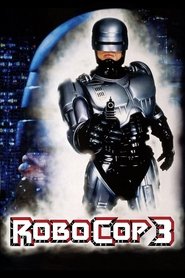
RoboCop 3 (1993)
Release RoboCop 3 Collector's Edition Blu-ray (Scream Factory)
Dekker and Michael Felsher discuss the PG-13 requirement, rewriting Frank Miller, replacing Peter Weller, and the release delay. Dekker identifies missed setups, underdeveloped characters, and action restricted by RoboCop's movement. He also describes Atlanta locations, Hilda Stark's sets, the score, early morphing effects, editing, and the Otomo and flight-pack sequences.
- Duration
- 1h 44m
- Talk coverage
- 96%
- Words
- 18,056
- Speakers
- 2
Guided collection
The RoboCop trilogy commentaries
The original film's director, executive producer, and co-writer discuss RoboCop. Paul Sammon describes the production and effects of RoboCop 2, and Fred Dekker assesses his directing decisions on RoboCop 3. The guide follows the trilogy in release order.
Part 3 of 3
- 01 RoboCop 1987
- 02 RoboCop 2 1990
- 03 RoboCop 3 Now reading
Commentary density
Highlights
Topics
People mentioned
The film
- Director
- Fred Dekker
- Cinematographer
- Gary B. Kibbe
- Writer
- Fred Dekker , Frank Miller
- Editor
- Bert Lovitt
- Runtime
- 105 min
- Also on
- OneSheet ↗
- External
- IMDb ↗ TMDB ↗ Find on Amazon ↗
Transcript
18,056 words
Thank you.
An end to crime. An end to poverty. Hello, ladies and gentlemen, and welcome to this very special audio commentary track for the film Robocop 3. My name is Michael Felsher with Registered Pictures, and I'm here today with the film's director, the one and only Mr. Fred Decker. How are you, sir? I'm good. So here we are with Robocop 3. We've done your other two films together for DVD and Blu-ray releases, Night of the Creeps and, of course, The Monster Squad, and now we've come to Robocop 3. So... What would be your opening statement on the RoboCop 3 experience for you? How did it get started? Well, this is probably the biggest heartbreak for me of the three. None of these pictures did well at the box office. This one actually probably did better than the other two globally, but was so reviled that it kind of killed my directing career. And I have very, very mixed feelings about...
about this film, so I'm going to be as candid as... Well, you, Michael, are used to, but I'm going to be as candid as I can. What was the question? How did I come to make this movie? Yeah, I mean, how did Robocop 3 come up for you? Well, a very dear friend of mine, Michelle Manning, was head of production at Orion, and after the failure of Monster Squad, I... I was thrown a life raft by Robert Zemeckis and Dick Donner and Walter Hill and David Giler to do Tales from the Crypt. So I did that for about a year. I wrote a bunch of them and I directed one. But I really wanted to make a feature. And Michelle had taken over at Orion and she thought that this would be a good fit for me. And she initially asked Shane Black and I to write the screenplay.
By the way, this is a lot of exposition that's happening here right now. If I had it to do over again, I think maybe a little less exposition and a little more cut to the chase here. So Shane was really busy. His star was ascending. I think he was writing Long Kiss Goodnight. And so it sort of fell by the wayside. And then a couple of months later, Michelle called me and said, would you like to direct this movie too? We'd like you to rewrite it and direct it. And I was a huge fan of the Verhoeven film. Huge fan. Not so much the second one. I don't blame anybody involved because the tone of Robocop is so specific and peculiar. Right. Because I think, you know, Verhoeven was, you know, European and he's looking at America and he's making fun of Americans and doing it with a really, you know, biting, savage, satirical wit. And...
It's a tone that's very hard to recapture. I don't think that Frank Miller and Irvin Kershner did it quite in the second one, and I know that I struggled with it a lot, but I couldn't say no to making this movie. So there you go. There's the long answer. And, of course, you're coming in. You're the third entry in a series that's already had two entries in an original film that's already considered a classic by this point, and you have to kind of bring in elements that we've seen in the other movies and sort of this over-the-top element kind of outrageous stuff like, you know, the wrecking ball coming in. And of course the classic, I want to buy that for a dollar. You had to have him back, had to do that. Bixby Snyder is, you know, really the heart and soul of the Robocop. I mean, yeah, I mean, you gotta, it's not a Robocop movie unless you've got that guy in it. He's too priceless. This street, by the way, is in Atlanta. The whole picture was shot in Atlanta, Georgia. And that street was very important in the civil rights era with Martin Luther King.
There was a church there that was real important that he spent some time in. So at that point, was this, I mean, obviously this would have been the largest budget you would have had to work with. And yet, was it a situation where Orion really felt that this was going to be a big step up from the second one? Or were they trying... to sort of change the direction of the franchise at this point? Well, a funny thing happened was that this original film and then the second one were extremely violent and dark and edgy and full of drug-dealing children and just mayhem and mutilation. I mean, as R-rated as you can get, despite the fact that they're comic book movies. But somehow or other, kids were watching the first one on video or cable or whatnot.
And Orion had it in their heads that maybe there was a younger audience for this character. And there was a, I don't know if the animated series had happened yet, but there were toys and there were comic books and it was starting to become one of those things. So their idea was, what if we did this as a PG-13 film where we sort of straddle that line so that not a family audience per se, but the younger kids could come in with their parents. and their guardians. And that was the edict from the get-go. We want a PG-13 RoboCop. And I think one of the reasons they hired me was that the Monster Squad had sort of straddled that line fairly well as far as being edgy enough and scary enough that it wasn't wimpy, but it also didn't go too far. Right, right.
I mean, I would imagine... Back then, I mean, the PG-13 rating was not even 10 years old at that point yet, so I would imagine it's difficult to try to figure out when to pull back and when to, you know, try to push it to as far as you can, certainly in a movie like this. I imagine that's a challenge. This is my Empire of the Sun homage here. This is completely Empire of the Sun. You know, because we want to love this... We'll talk about Remy Lyon's character, Nico. We'll talk about her more, but I really wanted us to love her, and this... This movie really has its heart on its sleeve. This commentary will be a lot of that blows and I screwed that up, but boy, that kind of works. And, you know, is it a Robocop movie? I don't know. But, you know, separating this young girl from her parents in that kind of chaotic, militarized situation, I think that kind of works. Of course, the audience is all going, where's Robo?
Back to the PG-13, looking back at it now, do you feel that that was a major factor in the problems you have with the movie? It was fatal. Having this be a PG-13 movie was absolutely fatal because it needed to be really rethought as opposed to sort of a sequel to the last movie. RoboCop 2 is in some ways even more offensive than the first one. I don't mean that in a pejorative way, but in terms of the violence and the tone of it. Yeah, yeah. It's a very mean movie. It is. It is. And if you know my work, you know, that's one thing I don't think I bring to the table. Coming into this, you know, that's not something I wanted to do. That's not something that the studio wanted to do. So we kind of were screwed from the get-go in a way. And I think we were screwed in another way in the sense that I've come to realize that the character of Murphy...
Robocop, his whole character arc is kind of done in the first movie. Yeah, it's true, yeah. You know, he was a cop and he was murdered and he was resurrected and he solved his murder and then sort of came to grips with what he was now. And there's really not much more to do with him except clonk around and shoot things and blow shit up. In a way, between those two things, this was kind of a suicide mission from the beginning. But looking back on it, there's a lot of things I would do differently that might have affected how it was received. For instance, this whole opening, we're meeting a bunch of characters here who we've never met before. They aren't in the previous films. And I don't feel like, apart from the fact that they're marginalized, that they're
essentially, you know, homeless people and rebelling at the big corporation. We don't really know them, so I don't know that we're invested in them, and I think that's a mistake that I made. Bringing back ED-209 was not a mistake. That was kind of... No, well, yeah. We kind of had to do that. Now, in terms of the script by Frank Miller, had that already been completed before you came on, and how much involvement... did you have with Frank at all during the process here? Well, this has to be said because it really affected what this movie was. I was a huge fan of Frank's work in comics at that time, especially The Dark Knight Returns and Batman Year One and Ronan and Hard Boiled. I was just an enormous fan. So the fact that there was an existing script by Frank Miller, I was just thrilled. A lot of people have problems with the cute little...
computer hacker whiz here thing. And you know what? I don't know that they're wrong. Remind me to get back to this because I think it's really important. But I loved Frank's work and so I said, well, geez, if it's good enough for him, it's good enough for me. So I rewrote what he had done. A lot of this material, including the Nico character, I think came from work he'd done on Robocop 2. Mm-hmm. So there was an existing script, I looked at it, and there were things in it that I really loved. I loved this kind of humanistic story about people who are the victims of the big, bad corporation. And in that regard, I think this movie is kind of ahead of its time. And I really like the Japanese component that we'll get to in a little bit. The notion of business as the code of Bushido. as the notion of the samurai, the code of the samurai as applied to business. I thought that was kind of clever and cool. And it also bought us our ninja villain, who I think is really cool. He is very cool. And it's also, Frank Miller does have a ninja thing. Well, he's got a Japanese thing. He turned me on to all that stuff.
Now, in terms of the people that you've worked with throughout your career, I mean, you've had very interesting and very eclectic casts for all of your movies. And this one's no exception. In fact, re-watching the movie again, I was reminded of the fact that even the small parts, like you've got C. J. H. Pounder and Stephen Root and Daniel Von Barg and a lot of really great character actors in these roles. How much input did you have into casting? I directed the movie. I mean, those were all my choices. And I think this is one of the best casts that I worked with. I mean, in terms of the amount of talent, and I feel like I didn't give them enough to do. But boy, it was an embarrassment of riches, this cast. I wonder if you could talk a little bit about Daniel Von Bargen. He recently passed away not too long ago. And he was one of my favorite characters. I loved him on Malcolm in the Middle and Lord of Illusions for Clive Barker, a whole bunch of different movies. Well, and he's George's boss on Seinfeld. He's the one who renames him T-Bone. T-Bone! Daniel was a very sweet man, amazing actor. I was really affected by his loss.
Now we're hearing here the Rebel theme by Basil Polidorus. One of the several new themes for the film, it was really important to me to bring Basil back to do this film because I think he was missed in Robocop 2, which Leonard Rosenman scored. And Rosenman, who I'm a fan of, I just don't think his approach was quite this material. This is Lee Ehrenberg, who I went to college with. You'll recognize him from the Pirates of the Caribbean films. Oh, yeah, yeah. Also, if you want to scroll back, you'll see Phil's... Yes, I was going to ask about Phil's. This is not the first time Phil's has come up for you. It's been in every film so far. There's Jeff Garlin, who you know from The Goldbergs, which I think he created. And Curb Your Enthusiasm. Yeah, and he has two lines in this movie. This cast is pretty amazing. Yeah, again, that was when I was watching the movie. It's like, oh my God, there's Jeff Garlin there for a couple minutes. You put some really great faces on camera, even for the small roles in this movie.
Now, we're going to be coming up here on Robo's introduction into the movie, and I wondered if you could talk a little bit about... Peter Weller obviously had essayed the role in the first two movies. He didn't come back for the third. Was he ever contacted about coming back for the third? And then how did Robert John Burke end up with the role? There's Nancy. It was actually quite heartening, and one of my favorite memories of making this movie was Peter had... been approached about doing Naked Lunch with David Cronenberg. He loved Burroughs. He loved the material. You know, he was the lead. It was David Cronenberg. I mean, he couldn't say no. And when I found out about that, I said, I wouldn't say no either. But he could have just had his agents call us and say, you know, Peter's got this other movie and he wishes you well. But he actually came to my office. He came in in his, you know, sweatpants and sat down with me.
to explain what the deal was and that he really wished he could do this movie, and that really meant a great deal to me. So we were on the lookout for a new robo, and a lot of this is, by the way, Connie Palmisano, second unit, and I'm really pleased with it. Another little interesting bit of trivia, this chase scene before Basil did the score, You know, you have temp music in movies before you have the final score. And this was scored to Predator, which is ironic since I've just written the new Predator film that Shane Black is directing. And Shane Black is one of the cops in the car you're about to see. So what goes around comes around. It all comes back.
So in terms of Robert John Burke coming up, how did he come into the movie? Well, you know, we got a lot of criticism when this movie came out because people missed Peter. And I don't blame them. He created that role and he did it amazingly. But I saw Robocop as sort of like Batman or James Bond or any number of pulp, you know, action characters who you can recast and not miss a beat. And so it was really about finding a good actor who could do it. And Bob, he had a humanity to him, and that was really what it came down to, is that you need to see the man inside the machine or the movie doesn't work. And did anyone properly prepare him for the rigors of having to work with the suit and the makeup? No. The answer is no.
Yeah, and it's funny. What's great about Bob is he's a New Yorker, and he was just so even-tempered, and he did everything I asked, and he was just wonderful, and I know that the suit chafed him, and I know that there was a lot of... I wish that optical was better, by the way. But he was really game, but every once in a while, you know, I'd say, you know, Bob, we're waiting on you, and he'd kind of convert back to his... real New York voice. It was very funny. I said, oh, he's pissed now because he's doing his New York voice. Well, we have James Lawrence from Street Trash there. Exactly. Wonderful actor. I cast him just based on that. And Frankenhooker, I said, this guy's got to be in the movie. Great choice. So, yeah, if we want to talk a little bit about Remy Ryan there and her character, because I have to admit, when I first saw the movie,
I wasn't crazy about her being in the film either. It felt like it was a deliberate attempt to get kids to relate to somebody in the picture. Well, in fact, that's not true. Really? The original script, her name was Keiko, and she was, I think, full Japanese and should have been younger. I mean, when I was thinking about this character, I was thinking of Frank's drawings. And I was really... kind of enamored of the dynamic that was in Monster Squad, which is this tiny girl and this giant mechanical kind of golem, this resurrected behemoth. I just think that that visually is interesting. I think emotionally it's interesting. So in a way I was kind of replaying that in this one. But the problem was finding an actor who could play this part. And, you know, there aren't a lot of four-year-old Japanese girls who could play this part.
It would have to be drastically rewritten. It might have seemed weird and kind of odd, quirky, odd to have, you know, this tiny girl who could barely speak English doing all this stuff. But in retrospect, it might have been more interesting. And this has nothing to do with Remy, who I think did a wonderful job. She was the best actress for the part at that time. But the part changed because we couldn't find anybody younger and sort of full-blooded. We were trying to show, you know, we didn't want this to be a xenophobic movie. So that's why Nico's mom is Japanese and why she originally was Japanese because the Japanese are the villains to a degree. And I didn't want to say that all Japanese are villains. Right. But we just couldn't find anybody who could do it the way that it needed to be done because she's got a lot of stuff to do. So that's where Remy came from. And I think she does great for what I gave her to do. But there is that kind of element that, oh, she's the spunky brainiac and –
There's a part of me that regrets that I wasn't a little bit more... Actually, all my regrets with this movie were me not being brave enough. Really, how do you feel? What do you mean by that? I really feel like the movies that we remember, the ones that stay with us, are the ones that take the most chances. You know, the ones that are really bold and surprising, and you sort of say, Jesus, did they really do that? And when you think about... In the horror genre, you know, Psycho and the Texas Chainsaw Massacre and The Exorcist and Alien. These are movies that have those big scenes where you go, oh, my God. And a movie like this, which is an action-adventure with special effects, I mean, Jurassic Park came out the year before we released this and Jim Cameron's Terminator 2. Once those two movies had come out, to make that kind of movie again, you can't really beat those. The yardstick has changed. And so that was problematic for me on this movie.
Yeah, because didn't the movie have some issues in terms of coming out because Orion was going bankrupt at the time that this was being released and being made. So was there a long delay between the time that you finished this movie? Because it came out in November of 93. Yes. And I think we'd completed it over a year prior, maybe more. Because, yeah, and I think that it's interesting that you should bring up Jurassic Park because if you had come out the year before... Jurassic Park wouldn't have been a factor. But you're right. I think Jurassic Park, especially that one, changed the game. And T2, I think, completely changed. Yeah, the one-two punch of that, definitely. And that applies to the effects and also action. And, you know, if you look at the world we're in now with, you know, Michael Bay and people like that, action movies just pummel you. They grab you by the cheeks and just smash your head against your chair for two hours and never stop.
And a movie like this, it's a little bit sedate compared to those. And, you know, if this movie had come out in 1983, it would be a completely different situation. Are you comfortable directing action sequences? Is that something that you really enjoy or is it something that you're not necessarily inclined to as a director? I would love to do action. I would love to do something that sort of, you know, breaks the mold. Because that's the stuff that people remember. The William Friedkins and the Jim Camerons and the John Woos and, you know, people like that. And Chewie Hark. I mean, I was really influenced when we were designing this and developing it by... the Hong Kong filmmakers who have a whole different approach to action. They don't have the unions that we have. They have these stylists and these acrobats who are willing to do anything. And there was a part of me that wanted to contact those people and bring them over from Asia. And that's another situation where I felt like I should have really pushed for that because I think the movie would be better if the action was kind of mind blowing and very different than the other two films.
Do you feel that you were feeling more pressure on this film than you had on the previous two? You mentioned that, obviously, neither Creeps and Monster Squad had not done very much when they first came out. Were you feeling... As a director, did you feel differently trying to handle this film than you did? Did you feel less confident in some way, or were you feeling more like, this one has to work, or there could be a real effect on your career at that point? See, the irony is, no. The irony is that that's what I should have been thinking and feeling. But in fact, I felt extremely confident. And making this movie was kind of the most satisfying experience I've had as a filmmaker. I had the most fun with it. I had the most freedom with it. And everything that's wrong with this movie is my fault.
How was Orion to work with in terms of the overall supervision of the movie? You mentioned they pretty much let you make the movie you wanted to make? Yeah, well, like you mentioned earlier, they were filing Chapter 11. I mean, we had plenty of money for this as far as what it was. You know, now looking back on it with the experience that I have now, if I had it to do over again, I probably would have asked for more, mostly in the action scenes and the effects. just because, you know, more bang for your buck in a movie like this is really important. But we really weren't wanting as far as the budget that we had from the get-go. I could have told them, you know, this isn't enough. And directors do that all the time, by the way. No, I need 10 more million. I was just happy to be doing it. And I have to say, in the movie's defense, I think it looks really good. I think it's got a flow to it. And I think...
Let's put it this way. I enjoy looking at it. I enjoy watching it, the way the shots cut together. I mean, look at this. We start with Mako in a big close-up, and then we pivot around, and here's Rip Torn sitting in a chair. I mean, there's a lot of stuff like that in this movie that I'm really proud of. I just wish I had spent the same amount of attention to the screenplay and to some of the performances. Did you have any interaction with Frank Miller at any point? Yes, yes. He knew I was a big fan. I did a rewrite, and I gave it. Here's my James Bond set. I said to Hilda Stark, I said, I want a James Bond set. Right. Watch Dr. No. And she said, okay, okay. There's another one coming up later. There's at least two, maybe three James Bond sets in this movie. Yeah, no, Frank was fantastic. I did a rewrite of his.
first pass and then I gave it back to him and said, here's my rewrite, rewrite me. And it was, I remember it fondly, our relationship, you know, having Mexican food and talking about this movie and talking about comics and all that stuff. I think ultimately though, I don't know that he's a screenwriter. I don't mean that in a disparaging way because he's a great writer. But writing for the screen and writing for movies is two different things. And I found in the script there were a lot of, like, great lines and great sort of, oh, I can see the panel. You know, I can see, like, earlier you had Nico saying, you think it's him? Which I loved. And Frank loved it, too. When I showed him the movie, he was like, oh, that's cool. You think it's him? Because he's a big fan of RoboCop. And, oh, my God, is that him? But it's very much a panel from a comic book as opposed to...
you know, a movie script where you sort of have to lay the groundwork so we know what she's talking about. You know, the fact that she has an action figure of Robocop in her room at the beginning of the movie, and then when she says, you think it's him, unless you make that, you know, draw that connection, it's kind of a non sequitur. And there's a lot of stuff like that in this movie that just needed to be finessed better. So now that we've been introduced to Rip Torn, I wanted to ask about the experience of working with him because at this time, I think right after that, he got Larry Sanders' show, which kicked his career into another phase altogether. Absolutely. What was Rip Torn like? He was great. He was great. I think he was happy to do the work. I don't know that this was – I don't think this is at the top of his resume particularly, but he knew what –
was involved, and I think he had a lot of fun. A lot of the performances in this movie, I think, I wish I had been a little bit more on point. Here comes another James Bond set. That's stock footage, by the way. Oh, okay. Here's Mako, who is in one of my favorite films, Robert Wise's The Sand Pebbles. Right, right. Which I got to talk to him about. And also, this scene is all in Japanese, and Mako helped translate it so that it was correct. Oh, he did? Yes. And then here we go, James Bond set. This movie is full of stuff like this, which is just so frickin' cool. It's like, ooh, where is this going? Right, yeah. And then ultimately, I feel like we just didn't pay it off. But there's lots of promise. I mean, I think that set looks great. Bruce looks great. Mako, and you see he's got the Kanemitsu logo there. branded on his chest. I mean it's a lot of cool stuff like that but ultimately I think it just doesn't deliver at the end of the day.
And you are the latest in a long line of Robocop movies to be set in Detroit and show Detroit for the horrible, vicious wasteland that it is. And yet you didn't film in Detroit. This one was Atlanta this time. You're in Detroit as we speak, aren't you? Yes, I am. And I have a bone to pick. They tried to put a Robocop statue up here not too long ago. And my whole thing was, that's not exactly an inspirational figure. It's not like the Rocky statue in Philadelphia, which is like, yeah, the hard one, you know, from the hard knocks of life and, you know, raised himself on the streets of Philadelphia and really represents the pride of the city. Robocop was brought in because the city was in such a horrible state that they needed to have a cyborg out there to tame the wild, violent elements of the city. So I've always had a little bit of a bone to pick with the fact that they didn't even shoot the movies in Detroit. So, but yeah, you know, at the end of the day, it's, it's, it's,
It's in the past, and I got to let it go. Sorry there, everyone. Rant over. And actually, now we're coming up on a scene that I remember you told me a long time ago that this was one of your favorite scenes that you've ever done. And of course, you've got a wonderful actor here that I'm a big fan of. Bradley Whitford, wonderful actor. We've seen the robo chamber, is what we called this. And then this was one of my proudest moments as a director. It's basically a talking scene. So how do you choreograph that? Well, she comes down here. She was up with Robo. Now she comes down. We push in a little bit. She makes a wisecrack remark. She's our sort of Howard Hawks woman. Walks over here, and then he spins around, and now we're into a new setup. And I was just very pleased. I felt like a real professional director doing this scene. This is one of my favorite scenes in the movie, just in terms of the way that it was choreographed and the way it was shot.
But I do feel like Brad is going to 11, and I wish that I had said, let's do this at 6 instead. He's very similar, actually, to the character he plays on the West Wing, but it can become a little arch, and I should have been awake at the wheel a bit more. He's the evil Josh Lyman in this. See, like that. I linger sometimes. There's stuff that I wish... I wish that maybe I hadn't let them do. But I left it in the movie. And to a degree, you know, you hire great actors. And Bradley Whitford is a great actor. And just let them do what they want to do. I mean, they need your direction. They need to know not to go too far in one direction or the other. But I was very pleased that I got to work with all these wonderful people and just sort of go, the script's done. Do what you want. Mm-hmm.
Now, you were shooting in Atlanta, which was not a big film production city. And I think at that point might have even been in the early stages of getting the 96 Olympics together. The Olympics in Atlanta weren't for another, I think, five years after this. Yeah. So it didn't affect us really at all. Although this town has now become a boom. I mean, it's Marvel's go-to for shooting. The Walking Dead is there. Yeah, that's right. That's right. Yeah. I mean, it's become quite a powerhouse for film and television production in the last 10 years. And at that time, there wasn't that much. But it was ramping up. It was starting. And you have Jill Hennessey here playing Dr. Lazarus. I was curious about how you cast her. Has she done Law & Order at that point? Oh, no, no, no. This is way before that. Yeah, I thought so. She had done a picture called The Paper for Ron Howard with Michael Keaton. Right, right, right. But I think this was her...
This was one of her first leads in a feature. And then she went into television. And now she does mostly music. She's a singer-songwriter. And then you do have the connective thread of Nancy Allen. She's one of two or three characters that appear in all of the Robocop movies. I've read online, and I think I might have seen this somewhere else, but this is so I want to verify this. Was it true that she wanted to come back under the condition that her character was killed off? All I know is that – and I love Nancy and if she were here, I would say this. There was a day that Pat Crowley and I, the producer, took her to lunch at Hugo's in West Hollywood and the agenda was we had to break it to her that we wanted to kill her in this movie for emotional reasons, to give RoboCop a reason to rebel and become part of the resistance.
and she was not happy about that lunch at all. So I don't know where this came from. I think somebody just cribbed it from Leonard Nimoy and Star Trek II because it was not my experience. It was a decision we made, and she was not happy about it. So you're saying that something I read on the Internet isn't entirely true. Yeah, yeah. Hmm. I've never encountered that before. Food for thought. Food for thought. Wow. Okay, well, that clears that up.
And it was interesting in that some of the scenes earlier with some of the homeless people and the rebels reminded me when I was watching it again of some very similar scenes in They Live. And of course, the DP you have on this movie, Gary Kibbe, had been Carpenter's DP. That's right. That's right. And so was that the reason that you wanted him for this? Was there something about something he had done with Carpenter before that had clued you in that he might be good for this? Well, no, I love the look of those films. I think there's a uniformity to the kind of high-key, colorful, widescreen look that all of John's movies have prior to Gary. There was Dean Cundey, of course. And I love They Live and I love Prince of Darkness. And I actually called John to get his blessing on hiring. Gary, and I told him the premise of this movie, and he sort of chuckled. He said, that sounds real, left wing. Homeless people, and they take up arms, that's great. So, yeah, I just, Gary was a wonderful collaborator. I love working with him, and I love the work.
And then, of course, another element coming back is the look of RoboCop himself. And that suit was originally, of course, designed by Rob Bottin. And he came back here to work on this and, of course, the Otomo Ninja. Talk about working with Rob because he's become sort of almost a mythic figure. He's dropped out of the business. He doesn't do interviews anymore. And he's widely revered, obviously, as a genius. So what was your take on working with him? Well, that's not a word that I throw around a lot. And I've been very, very lucky in my small oeuvre to have worked with a lot of really talented, wonderful people. But I have to say Rob is the one of everyone I've worked with that I would actually call a genius. And the reason is that he thinks different. You know, you bring him a problem and his solution is always so inventive and odd. I like this transition quite a bit. Okay, there's the...
micro neuro blocker and slam. There's a lot of stuff like that in this movie. It's like, well, that's pretty cool filmmaking, you know? Again, I just wish I had spent more time on the script. Well, you have a, there's a transition. I'll call it out later that you did that I really, really liked a lot, but I'll call it out later. But yeah, there are some, you have some really nice little storytelling moments abilities and just in very little quick cuts and it also you know again I have a lot of problems with this movie and God knows the paying audience who went to see it had even more problems than me but it has a flow to it I think it cuts together quite well and I'm pleased with that and it looks good I think there's a lot of people who bad mouth this movie who think it looks cheap and I don't think it looks cheap to me
I mean, we're coming up on a set piece here with McDaggett and the rehabs, and, you know, we've got blazing buildings. By the way, I don't know why buildings were on fire in this scene. See, they came in to the church, and there was no blazing buildings. But now everything's on fire, so I don't know what happened. But, see, that's— Well, it's Detroit, you know. I mean, every now and then buildings just burst into flames. Forget it, Jake. It's Detroit. Yeah, you know, what are you going to do?
Was... We were mentioning Rob before. Was he present on set a lot for this, or did he have a crew mostly handling everything? He had his crew, but he was there for... Not for Robo, because that was a well-oiled machine, and Stephan Dupois did the prosthetic makeup on Bob Burke later, when he's got the helmet off. And the Robo team were basically in charge of making sure that that suit always looked good. By the way, I changed the color on Robo in this movie. I... I liked the way he looked in the first movie more than in the second, so I had them repaint him so he's a little more blue in this movie. Right, right. By the way, I have a drinking game for RoboCop 3, which is count the push-ins. If you've got nothing else to do and you just want to play a little game, it's called count the push-ins.
I do like the actor you chose to play your big bad here, John Castle. Oh, I loved John Castle. Where had you seen him before? I hadn't. Oh, you hadn't, really? No. You know, you and I go way back, Michael, and you probably know this story, the Tom Atkins and Night of the Creeps story. But when you're a director, particularly a writer-director, you have in mind an actor... a type of actor or or a voice or a look you have something in your head of what you want your character to be and a bad director will stay so you know hue so close to that there that they can't be that their mind can't be changed by a wonderful uh alternative um whether it's race or sex or you know tall or short or whatever it is but but in two cases in my career i had somebody come in and they were exactly what i saw in my head one was tom atkins on
on Night of the Creeps, although he brought way more than I could ever have imagined. And the other was John Castle. I saw a tape, Steve Jacobs showed me a tape from England because John is a, you know, he's the real deal British actor and he was in Lion in the Winter. He does Shakespeare on stage in England. He's a real English actor, not just sort of the guy who wants to come to America and be the villain in cheesy action movies. So he was a real pleasure to work with. He was great. And very supportive of me, too. I just love Basil's work in this movie. And this is a perfect example. This is really, you know, emotional. So all of you who don't like this movie, you know. Well, this was a good, I mean, I think.
You mentioned that before that the problem with RoboCop is that his story arc really is completed in the first movie. When he says, you know, what's your name? And he says Murphy. Right. It's not that the character is done, but the really important journey that he needed to take has been completed. Right. And I kind of tap that at the end of this movie as a kind of acknowledgement that, you know, we're not really going anywhere, folks. We're going backwards, in fact. Because at the end of this movie, he says, call me RoboCop. Right, right. Okay. What else should we call you? But I like the fact that you now give him a more personal motivation for what's about to come. Yeah. You know, by killing off her character and then also his attachment to the rebels later on. Because that was one issue I had with RoboCop 2 is that, again, you were right. It was just like, well, now they're just sort of treading over the same territory over again. And it's not – as a character, he's a little less interesting as a result. I agree. And one of the kind of thematic threads of this movie was –
And strangely, it's also something that echoes Monster Squad is the dissolution of the family unit and the family unit coming back together. So Remy, Nico has lost her mom and dad, and now she's found a new family. And Robo is now going to join that family. And, you know, like it or not, I think there is something that's solid about that as a theme for a movie. And there's definitely echoes now that you mention it of her relationship with Robo was very similar to Ashley with Frankenstein in Monster Squad. But also remember Murphy had a son who he doesn't see. I think maybe he sees him in Robo 2. But, you know, she is becoming a surrogate child for him. He's becoming a surrogate dad to a degree. There's a scene later on between them that really seals that. And so I... I feel like that's kind of the heart of what the movie is, is the family being torn apart and coming back together in some new form. And that's the same shot from Monster Squad, by the way, in the scary mansion when we go down to the catacombs where Frankenstein's monster is.
Now, you mentioned Hilda Stark before, your production designer. She does some really, truly amazing work in this movie, some really diverse set pieces, some very real, natural, lived-in stuff like the catacomb sequences and very arch-stylized sets like the James Bond set pieces you mentioned before. How did you come to work with Hilda on this, and what was she like? I love Hilda. She just had a wonderful portfolio, very inventive, very humble. She wasn't brassy or, you know, it's got to be this, it's got to be that, just really complicated. collaborative. And she had also done a show for Michael Mann called Crime Story, which I was a big fan of. And so I knew that she could pull off that kind of stylized kind of retro stuff that I gravitate towards. Because I think this was her first feature as a full-fledged production designer. Yeah. She had done work before this, obviously, but this was her first big feature as a production designer.
You would never know it by looking at the movie. No, I know. Now, this set is an existing location. There was a hotel in Atlanta near downtown that had been abandoned. I don't know if they were going to tear it down. I'm pretty sure this had nothing to do with the Olympics, but it was definitely abandoned. And we just sort of took it over. So everything you're seeing there is actually an abandoned hotel. I mean, we dressed it a bit. But back to storytelling and script writing, my problem here is we don't understand the infrastructure of the resistance. We don't know them as people. We don't know. We assume Bertha's in charge because everybody kind of does what she says. But I wish that there was a little bit more narrative, you know, ligature for people to hang on to that they would understand and care about these characters more because the actors are so great.
So you think it would have been a matter of just introducing them differently in the beginning of the movie? Yeah, exactly. And it's interesting watching this movie again. I was reminded of the way the characters interact with each other and how one of them ends up betraying the others. Reminded me very much of the dynamics of the characters in The Matrix, oddly enough. You know, my influences are all much older movies, the ones that I saw when I was a kid. I think that Kuntz here, played by Stephen Root, is essentially Donald Pleasence from Fantastic Voyage. He's the double agent who's infiltrated the good guys but actually is going to sell them out. It was funny, my late uncle came to the premiere of the movie and
As we were leaving, it wasn't like, you know, Fred did a great job, or I love that movie. Oh, geez, you know, there was some stuff in there I wouldn't have done it that way, but, you know, good job. He came out and he goes, boy, that Koontz, when I heard that name, I knew he was a bad guy. That was Frank's character name, by the way. And what had you seen Stephen, because even back then he was already a pretty well-known character actor. I mean, he's obviously gone on to have an amazing career. What had you seen Stephen in at that point? I think most of these people were just people that Stephen Jacobs brought in, and I just loved them and thought they were wonderful. Interestingly enough, yeah, because Stephen, right before this, had worked for Orion on George Romero's Monkey Shines. That's right. That's true. And he does also a lot of animation voices. Oh, sure, yeah. He's worked with the Coen brothers. And right after this, he did news radio. Right.
And I think Office Space is kind of his real claim to fame. But he's in the Finding Nemo movies as well. Oh, yes, yes. And King of the Hill. Oh, right. That's right. Yes, of course. Bill, the next door neighbor. There was a push in there, so take a drink. Oh, right. Time for a shot. A push in for those of you at home is when the camera moves in on something. It's something that I've always enjoyed. It's very old school. But I do it way too much in this movie. What would you say the ultimate push is? Would it be the one on the beach in Jaws? Well, that's actually, you're appealing to the nerd side of me. That was actually a push-in and a zoom at the same time. Right, so you get that weird effect. But that doesn't count. The zoom in, the push-ins in Spielberg would be at the end of Close Encounters. There's about 100 in a row as they marvel at the alien ship.
Lots of Panaglide in this movie, or Steadicam, as it's also known. Well, it must have been fun for you. I mean, like I say, it was the biggest budget film that you had, so you must have had a lot of fun tools to play with to pull off some of these shots. Yeah. I mean, it was a real movie. Yeah. Let's do a crane shot here. Okay. Yeah. Okay. Let's do Panaglide here. Now, we're coming up here on A Missed Opportunity. This is Dick Hancock, who was one of our stuntmen. And... Beautiful backing there, by the way. That's fake. Yeah, that looks as real as anything. Okay, he jumps. Now, we were actually going to do a stunt and put him on a rappel line with a camera and follow him all the way down. Oh. And the night before, I could see Dick just had little beads of sweat on his brow like, okay, this will be great. Yeah, Fred, I'm looking forward to it. And then we just decided, you know what, it's really funnier if we just see him in the background splat to the ground.
A gag, which was a gag that ended up being repeated in The Shadow about a year later. Oh, is that true? Yeah, there's a very similar gag where someone is thrown out a window and then they cut two characters walking out and then you see them in the background falling. Was that Russell Mulcahy? Yeah. Yeah, he stole it. Bastard. Now, we talked about tone earlier and the first Robocop movie, it's a very specific tone and I don't think... Any other movie has it, including these two sequels. So I see—when I watch this, I see—I love the sunglasses. I mean, Han Nguyen, who also is not with us anymore, fantastic costume designer. I mean, look at that. He just cuts such a figure. There's so much in this movie that just promises greatness, and then it doesn't pay off, and we're disappointed. But the humor in the movie is—
really hit and miss for me. I don't think there's anything in it that's supposed to be funny that really is funny. And that's... I have to take the hit for that. Well, Paul Verhoeven's a really hard act to follow. I mean, that first movie has such a pitch-black sense of humor. And, of course, befitting his sensibilities, he had an R rating to work with. He could get more over-the-top and more extreme. But I'm... I'm glad you mentioned that, though, because this scene for me doesn't work at all with Bradley going off to shoot himself. Yeah. But if we had an R rating, he could have just shot himself right then and there in front of them. Right. So that's a perfect example of trying to sort of sneak in something for an older audience that a kid would be shocked by. Right. And I think in many cases when those things happen in this movie, it really hampers the movie.
Well, and it's funny because Verhoeven encountered that in a certain kind of a roundabout way in that having to conform to an R rating made some of his more over-the-top stuff seem much more realistic. You know, when ED-209 goes off on the guy in the boardroom and shoots him in his original cut, he shoots him so many times it's absolutely ridiculous. But when the R rating came along and they had to cut all that back, it suddenly came off as much more brutal. No, that's the irony of the rating system, is they say, you know, less, less, less, because it's offensive. And by cutting stuff out, it's somehow more shocking. Yeah, which you would think would be completely reversed, but they didn't understand what he was going for. And with... RoboCop 3, I mean, you had the PG-13 rating, but in the scene you were coming up, we're getting a much more humanistic approach to this material. So you're taking a different tact on it, and this is a scene we never really would have ever seen, certainly not in this context, in the first RoboCop movie at all. Now this is just pure schmaltz. Okay? This is pure schmaltz. And I gotta be honest, I think it works like gangbusters.
Because, you know, we're dealing with homeless people and here they are. They're all teaming together. Let's find some place where we can go to school and do our stuff. And it's like it's I find it quite moving, particularly in the world we live in now, where every day living in L. A. and I'm sure in Detroit, it's just if not worse. You know, every day you see you see the homeless and you think, what can I do? Well, what if they all teamed up? What if they all got together and said, let's solve this problem ourselves? Well, you're dealing with – I mean this is the 47 percent that Mitt Romney mentioned. We're talking about an entirely different class of people that's being formed in this country. This was back in the early 1990s, but now this is even more prescient I think because, I mean, there's a whole group of people that are being cut off from everything, from being successful. Politics aside though, this really speaks to something that's –
that I've realized now in my advanced years is a recurring theme in the movies that I've made, which is camaraderie and heart. I mean, this movie, for good or ill, has heart. I mean, it really ultimately is about these people surviving and being there for each other and fighting the big bad. And that's not in the other two movies. It's not endemic. It's not a part of the DNA of Ed Neumeier and Michael Miner's creation. And I think that's another reason that people don't maybe respond to this movie as they might because it isn't what they expect. It's very hard on its sleeve. And some of it I think too much so. It's schmaltzy. But some of it I think I'm quite proud of. Well, it was interesting, Fred, re-watching the movie, and I discovered something while watching it. And I don't know if it's a flaw necessarily or if it's something that you just did such a good job with these particular scenes and characters. The character that I'm the least interested in in this movie is Robocop. I'm so glad you said that because half the movie he's on his ass or he's crawling on the floor.
He's just really – we beat the shit out of him, and I think that was a conscious decision because your hero is always at their best when they have to overcome obstacles. So beating the shit out of them is always a good idea. Right. But in this case, I agree with you, and I think subconsciously I wasn't as interested in him as I was in the story. Well, and I think it shows. I think it absolutely shows. I mean you're much more interested in the people, in the actual – the ones that he's fighting for. And it's interesting. I like it when I see movies and I go, I can tell what the director really cared about. The first of the Amazing Spider-Man remakes that came along, the first one with Andrew Garfield. I love the Peter Parker and Gwen stuff so much. It's the romance, yeah.
that when Spider-Man and the Lizard showed up, I was like, you know what, could you guys go away? Well, no, it's 500 Days of Summer with Spider-Man in it. Yeah, and I liked that, and I was just like, what's wrong with me that in a movie about Spider-Man, I'm like, shut up, Spider-Man. Could you take off the mask and be Peter Parker again? And I kind of feel, and I thought of that when I was watching Robocop 3 again. I was just like, you know what, Robocop... Well, again, it's because what do you do with him, really? Now, let's talk about the genius of Roboteam for a second. Oh, this is some disturbing stuff. I mean, this always unnerved the – especially later on. It just unnerved the – It's immaculate. It's just – I mean, no CGI could be better than that. And I'm really – you know, there's a lot of problems I have with the screenplay. I'm really not proud of a lot of the choices. But one of them is we don't know – spoiler alert – we don't know he's a robot yet. No. And when we find out he is, it actually kind of works because of that.
And you've given hints along the way, the little logo on his chest and the way he's been interacting with people, that something's up with the guy. Yeah, why did he have to be in that chamber all by himself in a Zen garden? Yeah. It's like you're planting seeds that are now beginning to pay off with the character. And visually, this is the transition I was talking about. I love the dominoes. I love that bit. I've got to say, I don't mind it. I don't mind it. The transition from the corpses to the dominoes, I remember watching that again going, oh, what a great idea that was. You and me, pal. You and me like it. Damn right. A vehicle is approaching. I should have redone his voice there. A vehicle is approaching. He sounds like he's choking on some phlegm or something. See, here again, he's lying. Our hero, the star of the movie, is lying on a slab. This was a...
a factory of some kind, Rocket Motors here. It's supposed to be a dilapidated car factory because we're in Detroit. But just really cool, really cool place. Lots of shadows and shapes and huge. Now, while shooting in Atlanta, you're obviously in a lot of business districts and a lot of neighborhoods and so forth. Were the locals okay with it? Were most of the homeowners and business owners cool with you being there? Oh, yeah, absolutely. Although it's funny, our sound mixer, Kirk Francis, you know, he's got his headset on all day, so he hears everything. And we had a lot of looky-loos. We had a lot of onlookers, and some of them were sort of inner-city folk, and they would say amusing things at the periphery of the set, and he would write them all down. And I think we actually had a crew T-shirt. I love this shot of Nico when it goes back to her. You know, looking at this again recently, I mean, she's good. Look at her.
She's feeling things. I mean, that's good acting. She was, you know, eight, seven. I don't remember how old she was. Well, I remember at the time when I first saw you, the kid character for me bothered me because it's like, I don't want to see a kid movie, a kid character in a Robocop movie. And she was indicative for me of the sort of kid-friendly approach that the movie had. And at the time, you know, I wanted more of what the first movie brought. But then watching it again recently, she is really very good. And I think now watching it again, I'm like, okay, I really am much more interested in her than I ever was before. I think it's interesting how people's... I think if a lot of people rewatch this movie, they might actually feel the same way. Because she's got a natural empathy about her, which really helps that character along. Exactly. Now, I do enjoy this sequence a lot.
Well, this is just a steal from the first movie. Yeah, but I do like the reactions to, oh, we screwed up here. Oh, sorry about that. Oh, yeah. Don't yell at me. Well, don't do it. They made that up. That's totally ad-libbed. I said, just go. Do it. Whatever. Now, here we haven't talked about Pacific Data Images. Is that it? Pacific Data. Yeah. They did this, PDI. We're also coming up on one of the first uses of the Morph software. They did the Delta City commercial at the very beginning of the film, too. PDI was an effects house, and then they went on to start doing animation, CGI animation, and essentially became DreamWorks animation. And there's the morphing. Yeah, so this was new at the time. Right, right. And now you can do it on your laptop. I think you can do it on your iPhone. It's embarrassing, the dog years of technology, just the amazing things that can happen in just such a short amount of time. You'll notice movies don't get better, though. No, no. That's a question I would have for you. I mean, obviously, if you were to make this movie now, your tool set would be completely different, and you would have the ability to certainly...
take things to a hundred times bigger, larger, louder, more visually styled, over the top. Would that ability for you necessarily help you make a better movie or would it be at the end sort of a hindrance? The first tool that I would use that I did not use in this film is a different screenwriter. And that's as eloquent an answer to your question as I can come up with. But, no, I wasn't kidding about the Jackie Chan stunt school approach and Chewie Hark. And, you know, I wish that when the shit hits the fan in this movie during the action scenes that you saw stuff you had never seen before. But, again, some of that are story choices. Now, we'll get to the ninja fight coming up. And I'm really, really unhappy with the ninja fight. I think it basically kills the movie. But in truth – How do you do that in a way that's – I mean Robo can't move quickly. If I had him move quickly, would people accept him as RoboCop or would they think something weird was going on? So the character hampers us a little. By the way, a little trivia. This scene was written by Larry Lasker and Walter Parks. Oh, really? Yeah.
who were friends of Patrick Crowley. They had done a movie called True Believer with Robert Downey Jr. , and I'm a huge fan of War Games and Sneakers, which Walter and Larry wrote. I love Sneakers. God, that's one of my favorite movies. And at some point or another, the scene, either it wasn't working, or I can't remember how it came about, but anyway, we got Orion to throw them a bunch of money to write this scene, so I'm very pleased to have been able to direct a scene that was written by two of my favorite screenwriters. Too Many Secrets. I wish they'd written the whole movie, actually. I mean, there's a version of this movie where Nancy comes back as a cyborg. There's a version of this movie where the OCP skyscraper is actually a Transformer robot. And McDagget gets into a little...
cubicle that's actually, you know, a flight deck and he's got controls and the thing actually grows arms and starts walking and RoboCop is flying with his flight back and shooting at it. I mean, there is another version of this movie that's crazier. Really? Yeah, I mean, in my head. Right, yeah. So I'm very... I'm torn, I really am. I'm rip-torn. No, I'm torn when I look at this movie because there's so many opportunities that are missed, but yet there is, I mean... You can say this is cheesy, this scene, but, you know, he's dead. Yeah. He's a dead guy who lost his family and his child, and he's been resurrected, and there's this little kid who idolizes him. And there's something really, you know, very primal and touching about it. And this was the coldest night of my life. This one here? Yeah.
So when the movie came out, did you feel that, I mean, because obviously Orion at that point was, you know, on its last legs, it was pretty much on life support. How did you feel about the release? Because my perception of it as a moviegoer at that time was they just kind of threw it out there. Movie marketing is really hard. Yeah. You know, we've talked a lot about the Monster Squad, which has gotten kind of short shrift due to its... original theatrical release because people feel like it was marketed incorrectly. Well, the truth is they did a fine job. I mean, how do you market that movie? Well, I mean, yeah, that's absolutely true. That's a good point because, I mean, at the end of the day, it's all such a crapshoot. I mean, if there was a winning formula, everybody would be doing it. Yeah. Here's bad screenwriting, by the way. Guys, guys, for those of you at home, bad screenwriting. What's that? It's Robo's Flight Pack.
Wow. Oh, and then she designed it, too. No, it's the prototype for Robo's flight pack. The funding ran out before we got a chance to test it. How do you know so much about it? Oh, I designed it. Ha, ha, ha, ha. Well, it looks like the odds on the home team. Yeah, just cut that out. Let's just cut that. Let's do the director's cut, like, verbally. Okay, cut that part out. Here, I'll make notes so that we can go back and... But I mean... Seriously, it's so ham-fisted. There's got to be a better way to set up the flight pack so that when we reveal it at the end, we go, oh, shit, that thing we forgot about. That's one of the tenets of good screenwriting is setups and payoffs. But the setups have to be invisible. Otherwise, we're all just waiting for it. Because I like how they find it. They say, oh, that looks expensive. Yeah. That was really clever. I like that a lot. Yeah, but we also have to let the audience know what it does so that when we reveal it, we go, oh, yeah, he's going to strap that on and fly.
But going back to the release of the film, did you feel that, I mean, at the end of the day, that they did the best they could in marketing it at that time? I suspect that they were hampered a little bit by the amount of money they had to market it. Yeah. But, I mean, I saw TV spots. You know, on Saturday Night Live, I saw, you know, bus stop posters. I saw buses. This was actually one of the first movies that did those complete covering the bus ads. Oh, sure. So they did spend some money. I think there's an argument to be made that the audience just didn't love this character enough to go back and see whatever he was in. Do you think there was still some residual – because RoboCop 2 was not very well received by people. Yeah. Do you think there was still any lingering sort of disenfranchisement with the series at that point that people were just like, I don't know, another RoboCop at this point? Are we really that interested? Hold that thought. This guy there that was talking about, you know, do you have any vampire cops? Do you have any ghost cops? Yeah. He was actually an extra.
And I just found him so personally amusing that I actually came up with that when we were on the set. I said, hey, be up there talking to Sergeant Reed and asking him if you have, you know, vampire cops, ghost cops. What was the question? Oh, I was just curious about, you know, do you feel that it was the lingering, you know, not resentment over RoboCop 2, but the... There may have been some of that, but I also think the fact that... The fact that, you know, it was a PG-13. Now, I don't know if people looked in the newspaper and said, wait, this one's PG-13. Right, right. That means they must be neutering and I'm not going to go see it. I don't know. I mean, the reviews weren't good. I can tell you that. And for people who read reviews to decide whether they're going to see something, that would have an effect.
And something that you mentioned before that I certainly think is true, six months prior to this movie coming out, I had just seen dinosaurs on screen. As far as I was concerned, real dinosaurs on screen. And it completely blown my mind. So I think any film that came out after that, that was kind of more of what we had already seen, was going to be perceived as, oh, well, I've seen that already. I want to see... You know, I just had my mind blown. You're not going to... Exactly. And we talked before about my theory that, you know, the great directors, you know, are bold. And it's showing you something you haven't seen before. And that's why T2, which I maintain is a spectacular remake of The Terminator. I just showed my son The Terminator the other day, and I was like, this is a terrific movie. It cost $6 million. Right. T2 cost $100 million. Yeah. And it's essentially the same story.
With slight alterations. But it showed people something they had never seen before. Jim did that with The Abyss as well. I'm calling him Jim because I've met him a few times. He did it with Avatar. He's done that every time out. Right. And those are the movies that people want. They have to see them. It hasn't come to that yet. And it won't. relax it is difficult for me to continue our business relationship when i do not know your methods you don't need to know my methods i said i'll clear the area and i'll clear it just get the robot cop off my back and here we go with the reveal that kunz has actually Working essentially as a double agent. I wish we didn't know instantly that that was Koontz. I wish I had shot that in a way that was a little more, that was a little smarter, so it was more of a reveal that it's him. Because watch, now he's going to walk into it. Now he walks in, you already know who he is. Get your cocktails and push in. I'll take a drink. See, but see, we know it's him the second he comes in, so that doesn't have any impact. Now this is, okay, PG-13.
Yeah. These are streetwalkers, clearly. Right. You're 12 years old. Do you know what a streetwalker is? Yeah. I mean, I can't remember at 12 years old if I really knew or not, but I'm probably willing to bet I did. I mean, this is a perfect example of that kind of gray area that this movie falls into. Mm-hmm. How far can we go with that? Now, this, by the way, is a cool robo moment. Right. More of this and less lying on the slab, I think. To be fair, all three of the movies have him lying on a slab in pieces at one point or another. Yeah, but this one, he's on his back. He's crawling in the gutter. I mean, he needs to do more of this. Now, I've always wondered, I wish someone could answer this, and maybe it was just completely unintentional, but the girl that we saw them harassing there is dressed almost exactly like...
Donald Wilkes' character from the movie Angel, which had come out in 84. The hooker with, you know, the high school student by day, hooker by night movie. You're referring to Angel 1. There were actually, I believe, four of them. Yeah, there had been four, yeah. And so I always thought it was strange. Like, someone was paying homage to that, I think. Maybe I'm reading too much into it, but I always thought that was like, well, that's interesting. They look exactly the same. See, now, if we did this now... We would have digitally put in the sparks at the bottom of the gun so you knew that the bullets were keeping it aloft. But we did that practically. Everything in this movie is analog. It's all practical. So you weren't utilizing any CGI really at this point? Except for the stuff that... The morph stuff. Yeah. And Delta City at the beginning. This is a terrific stunt coming up. Watch this.
Holy crap. Yeah. And he gets on his feet. Yeah, that was good. Drive! I said drive, goddammit, drive! John Castle is so game. I just really love that about him. I do like this moment. This was a nice little moment here. I'm not going to tell you again. I must commandeer your vehicle for police use. What is your problem, sucker? How can I help you, officer? Who's that man, Mommy? Well, that's a pimp, Janet. What's a pimp, Mommy? This was actually him looking at those dice. I thought that was going to just slay him. I thought that would just, you know, blow the roof off the theater, and it just doesn't. It's a good moment. I like that moment. It just doesn't, and I don't know why.
In terms of the editing of the picture, was there anything that changed dramatically during the post-production that you had shot? Was there anything cut from the movie that was left on? Was it pretty much the movie that you intended? Looking at it now, I'm really pleased with the editing of this movie. Burt Lovett was the editor, and he's a guy. He had worked with Scorsese on New York, New York, and some of the documentaries that Scorsese did years ago. Just a terrific guy and a great editor. Yeah, the answer to your question is we cut a reel out. Really? Yeah, we cut out a reel. And it was, I kind of, it's fuzzy now, it's so long ago, but I realized after we had shot, you know, six minutes, seven minutes, that there was no information, there was no new information in that reel. And once again, script problem. I really think he should be keeping his eye on the road and driving.
the uh the vehicle there because he could we were asking a lot of him i mean he's you know he does have a cyborg after him so but no no no but but watch see he's shooting yeah he's not looking at all drive jeez yeah i'm sorry fred that ruins the whole movie for me now that i know that he's not paying attention i'm just i'm just saying no you're No, if we actually cut to a new shot of him looking forward again and then shooting, that wouldn't have helped. See, it's a cute gag. Yeah, I like that. Driving the car that's been destroyed, but is it, have you seen it before? Is it startling? Is it... Well, it'd be interesting to see what you would do with this movie now. If you were handed the keys to a Robocop movie now... I gotta tell you a story. I gotta tell you a story. Oh, yeah. Um...
It's not a story. It's an anecdote. It's not even an anecdote. It's just, you know how, you know, your whole life, whatever it was, you know, whether it's school where you were the nerd who was bullied or, you know, you remember being, or you dream about being naked in class. You dream about being late for the test. This is the one that stays with me. I have nightmares of still making this movie and still screwing it up. Really? Yeah. So, yeah. Would I love to have another shot at it? You bet. And there has been, of course, a remake since this movie came out a few years ago. There was a remake. I'm just curious, did you see it? What were your thoughts? Did not. You didn't see it? No, I couldn't. It's too close to home. Too close? Yeah. No. Smartass. I know you are, but what am I? Everybody thinks that's Pee Wee. It's not Pee Wee. I actually said that with friends of mine when I was a kid.
I know your Bodo Aime. It actually came from my childhood. It didn't come from Pee Wee Herman. So the inevitable question I would have, and I think I have to kind of ask it, is the movie comes out, doesn't do very well. What was the immediate effect on your career at that point? Because this was the third film you had done, third film that hadn't performed, unfortunately, theatrically. Was it really a big problem for you? Yeah, absolutely. Absolutely. I mean, it's been rough going since then. I'm starting to get my sea legs back now, and that's mostly because of Shane Black. But it's really dispiriting, particularly when you put your heart into something. Although, just talking about craft, just like being a professional director, this scene here, I had no idea how to shoot.
And I went and I drove out to the location the night before. I mean, I had my storyboards and everything, but I didn't know, where's Bertha? Where is everybody standing? There's push-in, by the way. And I went out to the location, and nobody was there. The security guy wasn't there. And it was 2 o'clock in the morning, and we started at 6 the next day, and I was like, oh, my God, I don't know what I'm doing. And I came in, and I said, as long as I don't crack when they look at me and say, you know, Where do you want the camera, boss? Where do you want the actors? And I didn't. And this scene is the result of that. So I can say that I felt like a pro after this day. So you subscribe certainly, I would think, in terms of being a director. Even if you don't necessarily know what the right decision is, the most important thing is to make a decision. Oh, absolutely. I think that's not just for directors. That's for leaders of any kind, whether you're a CEO or a...
military officer, whatever it is. Because you have people looking to you to make decisions. And if you don't make them, whether the right ones or not, they tend to lose faith in you. And that will have a trickle-down effect on how good they are at what they do. I'm also a big fan of being nice to people. I don't think directors who abuse crewmen or actors. I just have never subscribed to that. I think that's a mistake. I wanted to go back to when you work with Basil a little bit. I mean, you would... It's interesting when I've talked to you, you didn't have as much of a relationship with Barry Dvorzen on Night of the Creeps. It was a little more with Bruce Broughton on Monster Squad. But it seems like you and Basil had a little bit more of a relationship on this movie than you did with your composers on the other two. I think it was comparable to Bruce. The difference with Barry on Night of the Creeps was that was an electronic score. Right. So apart from my initial...
notes on an approach to it you know I wanted a theme for the female lead and I wanted this and I wanted that I couldn't sort of be there with him but with with Monster Squad and to this one even to this one more the composers would bring me tapes of ideas for themes and I'm very much of the school the sort of John Williams John Barry school that everyone should have a theme there should be a theme for for for certain characters. There should be a theme for certain motifs, you know, story ideas. And Basil really took to that, and I'm really pleased with the score because it has a lot of colors. It has a lot of stuff from the first score, from the first RoboCop film, but it also has new stuff, the resistance theme and the rehabs theme, and Nico has a theme, and I really like that.
We kind of covered this a little bit, but I'm curious. You're a director stepping into a franchise in which there's been two previous movies made by two different filmmakers and two different production teams and so forth. Was there any pressure on you internally to sort of, well, gee, I can't make this too much my own movie because it has to fit with the other two, but at the same time, you wanted to obviously put your own stamp on it. How much of that battle was going on while you were making this movie?
I think probably the amount you would expect. But it all came from me. I mean, never once did Patrick Crowley, who was my wonderful producer, who's gone on to Jurassic World and the Bourne films, and he's a wonderful guy and a great producer, never once did Pat ever say to me, I don't know if this is the right tone, or I don't know if that works. And no one at the studio level did either.
Now, this is my college chum, David Silverman, who, if you've ever seen Monsters, Inc. or The Simpsons, would know he's one of the directors of those. So he's done okay for himself. But he was kind enough to do this for me when I asked him. And was he one of the Patagise? Yes, he was. He actually lived at the Patagise. Ah. That's a pretty storied group of people that came up from there. Yeah, and if you're watching this movie and you don't know what we're talking about, you have to go and buy The Monster Squad and Night of the Creeps to know what we're talking about. Yeah, otherwise we're not going to tell you. Now, do you make a cameo anywhere in this movie? I do not, but here's some trivia. This is Eva LaRue. Oh, yes, from All My Children. Yeah, All My Children and many, many, many other things. Her sister is the girl that gives...
Detective Cameron, his tropical drink in his dream in Night of the Creeps. Oh, the girl in the bikini on the beach. Yes. Oh, that's interesting. I did not know that. You didn't know that? If you didn't know that, nobody did. I did not know that. I did not know that. Well, this has been totally worth it now. I did not. That's an interesting little bit of trivia there. It all comes around one way or the other.
Again, when you have Verhoeven making this movie that's so unique and strange in tone and shocking in a way, the first Robocop film, you can't replicate it because you don't speak that language. I don't mean Dutch. You don't speak Verhoeven. Only he does. And I think that that has been a... that was a cross to bear for, for Kirsch on the second one. And it was certainly a cross to bear for me too. Cause. Well, I mean, it's, it's, he's such a distinctive filmmaker and he's such, he has his own, it's like any, any filmmaker is going to have trouble following up something that he's done, especially on a film. No one was ready for RoboCop. Everyone was looking at that when it was first coming out as well. What the hell is this? Right. And then they get to see this movie. It's like, Oh, okay. This is completely beyond what I was expecting it to be. Right.
And it's hard to surprise people a second time, and certainly it's hard to surprise people a third time. But by the way, if you look at Verhoeven's subsequent films, I mean, I think even he went too far, you know, tonally. I mean, there are some problems with Starship Troopers. I think, you know... Showgirls. Showgirls speaks for itself. So tone is really tricky, and it's one of those things that I don't think they teach in film school, but they really should. What effect do you want to have on an audience? And if you aren't having it, what can you do to achieve that? The production design, the set dressing on these scenes in particular is really, really great. And this must have been, for you, just a treat to film because you're being able to... just do these really big wide shots and just do this really... This part of the movie feels really expensive. Well, that's very heartening. This was basically just a street in Atlanta. Yeah, and it feels... It's got a nice lived-in quality to it. Now, that tower in the background, that's actually a hotel, but it resembles a tower in downtown Detroit, does it not?
Yeah, it resembles the main GM Tower, actually. Yeah, that was the GM Tower. Okay, because I looked at photos before we started and said, hey, let's use that. Yeah, there's the one big sort of cylindrical tower and a couple on either side. It's part of the Renaissance Center down there. So I will give you credit. I'm going to give you points for including that in there. I appreciate that. That's funny. Like I said, it's a little bit of a monkey on my back, this whole RoboCop Detroit thing. Well, it's funny. Those of you at home may not know this. The first picture was shot in Dallas. The second was in Houston. And this one was Atlanta, Georgia. So they're not even getting closer to Detroit. You're actually going further east. I don't know where they shot the remake, but again, they didn't do that here either.
So finding the map was really just an excuse for him to go down out of frame and then come back up so we can reveal Otomo. Now, did Bruce have any training? No. No? No, I mean, he did train with the stunt team, with Dick Hancock and Connie Palmisano and everybody. But prior to this, no, it wasn't like he was a martial arts guy. I really cast him for that look. He looks like he was sculpted. He looks like an action figure. He looks like a Japanese action figure. He's almost like if you had to build one in a computer, he would end up looking like this guy. You are under arrest for assaulting an officer. So, you know, this should be a big, spectacular set piece. But again, there's Robo on the ground. Yeah.
And that's the problem. I mean, was that an issue for you? I mean, you probably wouldn't have maybe necessarily known it going in, but because of the limitations of the suit and the fact that Robocop is a character who can't bounce around a lot, was that a little disheartening for you that there was really no way to make him more agile? Well, again, that's a choice. That would have been a bold choice because we hadn't seen it in the other films. If I had it to do over again, I probably would. I mean, bullet time... was kind of a reframing of cinematic language in The Matrix. And to take that kind of approach to this probably would have been kind of a cool idea. I mean, he is a machine, and depending on the sophistication of his innards and his hydraulics, there's no reason he couldn't move really fast, and that might have been really cool. I just didn't think of it. And I was wary of changing him too much
Yeah, that's always the battle that, I mean, I imagine you would have had on a situation like this. If you change too much, you alienate the fans. If you not change enough, you alienate the fans. I mean, it's weird. You're kind of screwed no matter what you do to some degree. Now, I have to say, despite my problems with the Otomo-Robo battle here, the fact that it's intercut with the resistance fighting the Splatterpunks who've taken over for... For the rehabs, I think it saves it a little bit. Mm-hmm. And I like that plot twist, that the cops quit because they wouldn't do it. Again, you know, this movie has its heart on its sleeve. And then the fact that McDaggett says, well, let's get the splatterpox. Yeah. That's kind of cool. And again, like I mentioned before, I am less invested in what RoboCop's up to than I am what everybody else is. Right. And which is... It sounds like a backhanded compliment, but I think that actually plays to your strengths as a director and certainly as a writer. I think you do human characters in outrageous situations very, very well.
I think that that's what grounds your films and makes them more interesting than some of the other filmmakers who do this sort of thing is that, oh, there's actual human beings on the screen. I appreciate that. Well, it's because I take it seriously. I think if you have a ridiculous concept for a movie, you have to take it as seriously as possible. Otherwise, it's just camp. We don't fire off police officers. You're out of line, McDaggett. I'm still in charge. I do love Rip Torn. I just like to be that he's just like, you know what? I'm out of here. I'm done with this. Like Felton. And Felton, his character is interesting in that he's been through all three films and he's been sort of on both sides of it. You know, he's been sort of, he's always the guy standing back going, well, maybe you should do this, you know. Well, he's also sort of caught between a rock and a hard place in this one. Yeah. Because he knows that the shit is hitting the fan. We haven't talked about Dan O'Hurley. Oh, yeah. Patrick and I had, Pat Crowley and I had a wonderful lunch at his,
Cliffside Mansion in Malibu. Early he played the old man in the first two films and was completely open and excited about doing this one as well. And we had a lunch which was really just sort of a get to know and can't wait to work with you and he told a story about working with Orson Welles and doing Shakespeare and whatnot and at the end of the day he was on board and then he read the script and opted out. Really? And I said, what was it? And he said, well, he felt that we were depicting the old man as weak. He said, he's a weak man. And I realize now that, you know, what I should have could have. If I knew then what I know now, what I should have done is called him up, said, Dan, I need to have lunch with you. I know you're not doing the movie, but can we please have lunch? And at lunch, I would have told him that I was basing the old man on, you know,
Richard III, Henry IV. I would have picked a Shakespeare character and explained to him that that's what I was going for, and I think he would have done the movie if I'd done that. Because I do miss him. I do miss that character from this movie to some degree. Because he was a very interesting... He evolved very interestingly over the course of the two pictures. And it would have been interesting to see sort of his final downfall in this picture. Well, that's the thing. I should have written it as Shakespearean and I should have convinced him that it was Shakespearean. My God, Romo is on the floor a lot in this movie. I know, I know. He's just crawling around an awful lot. And the reveal there is a little bit ham-fisted.
But the fact that some people have a problem with ninjas in this movie, and I've read reviews, and there's ninjas in it. Yeah. Yeah. Yes, that's true. As though that's, you know, inherently something just stupid and wrong. And the fact that he flies. Well, I mean, it's funny. My best friend from high school, who I saw this movie with back in 93, he hated the line, I thought your ninja was supposed to take care of Robocop for me. He hated that line so much that he was just like, what? I'm out. What the hell am I? What? And he couldn't get past it. He could never get past that line. And I was like, well, all right. And then, yeah. And then it's interesting how many people right here, this is where the movie, they're completely lost with the movie when this happens. And I got to tell you, Fred, the idea of, you know, a crime fighter flying around in a metal suit battling bad guys is,
is an idea whose time I really don't think is ever going to come. You know, I appreciate you giving it a shot, but that's just not something anybody has any interest in seeing. For those of you at home, sarcasm. Yeah. So once again, you are ahead of your time. There you go. And he shoots stuff out of his hands, too, doesn't he? Yeah, if you waited 15 years, this would have been... You know? Now, this was a Phil Tippett idea. I got to work with the great Phil Tippett. Yes, yes. And his idea was the hummingbird. He stops and he shoots them. Oh, yeah. And he just sort of hovers there like a hummingbird. And he's going to do it again here. That's stop motion animation. Hummingbird. That's really cool. I think it's cool, too. I mean, if we made this movie now, there would be
1,800 more effects shots in that sequence, and they wouldn't have looked any better. Well, it's hard to argue that, especially when you've got someone like Phil Tippett on the case, definitely. By the way, this is the first shot we shot in the whole movie. This one right here? Yep, that was it. Why do you think people had such a problem with him flying? Because I just remember there being such a negative reaction to that at the time. Why do you think that was? I think the same reason that they would have... if he moved quickly. Or, for that matter, that he wasn't Peter Weller. I think people were much more beholden to the template, to following the template that they were used to. But now we've had, what, three different Spider-Mans in, you know, ten years? That's true, yeah. Yeah, I think, and again, when you discuss 1993, you know, big-budget action
tentpole cinema, it's not even the same. It's so different now. It's a different world. Yeah. I mean, it's not... Now we don't talk about... We wouldn't be talking about a RoboCop sequel. We'd be talking about the RoboCop universe. And, you know, making eight films based around characters from that universe. And by the way, this is the only kind of movie they make now in mainstream Hollywood. Right. Now, see, that is just... Now, there's the genius of Rob Boutin. I say to him, okay, I want Robo to shoot him in the face. What happens? Is it latex? Is it polyurethane? What is it? And Rob sits and he thinks for a minute, and he says, what if it's like a China doll? Yeah, yeah. And I just, I go, Jesus Christ. Just, Rob, go do whatever you do, because that's amazing. And it is a startling look. I mean, for me, that's more disturbing than anything probably in any of the movies. It's just that look on his face and that shattered visage of him. And now it's frozen that way, so when you see him in close-up, he's still got that weird grin. Yeah, he's broken. He's broken, yeah. You can't fix his face. It's just amazing. And Robo's on his back again.
That's another drinking game. Anytime Robo was on his back or crawling around on the floor, you really do have him on his ass a lot in this movie, Fred. I hadn't really thought of that until just now. Yep. See, now that should have been a gigantic set piece. But this was actually literally towards the end of the shoot. And we kind of had to, it wasn't that we were running out of money, but, you know, there comes a point where you sort of have to call it a day. Yeah. Yeah.
What was the budget on this movie? $24. 5 million. That's not a small amount. That's pretty decent for a film like this. In $91. Yeah, so that would be what? Like $60, $70 now? That sounds right. Yeah. And of course you got the ticking clock. You know what's funny is we didn't build that. That was actually from a prop house. It already existed. Do you have anything like with a countdown? Of course, yeah. Do you have the briefcase with the countdown? Oh, perfect. Do you want a red digital clock or a green digital clock? Stop motion. Yep. I did like him burning his feet. That was pretty, that was good. And this was Burt Lovett's idea. It's like, what do we cut to negative film? I said, works for me. Yeah. Now, but again, what we just saw, that finale, would have been 10 minutes longer and cost $40 million worth of more CGI effects. And there probably would have been about eight or nine robocops flying around somehow. Exactly. But the point is, it's just, I really feel like the script and the story are the problem with this movie. And it makes me sad because I love these actors and I...
have great affection for the whole process of making it. It was my best experience making a movie. But they gave me a whole bunch of rope, and I hung myself. By the way, I'm very proud of the flow of it. I think visually it flows very well. There's those little transitions, and there's a lot of really nice moments in it. Well, I think it's very tight. I mean, I think you cut the movie very, very well. It doesn't have a lot of sequences where you're just like, God, why are we still here? Yeah. No, it moves. It definitely moves. Yeah. So, I mean, you've got that. I mean, it's not a film with a lot of fat on it. And so I think that's something that's very strong about it is that you keep the movie going. And, again, you do find those moments with the characters that I – it's interesting how my perspective on the film has changed over the years and that I'm really relating so much more to the character work you did here, which I don't know why that surprises me because, again, that's really your strong suit. Well, I appreciate that.
And again, it's subconscious. We talked about this a little on the other films. It's not a plan. It's not like, I want to make something that's character-based. I just feel like we have to because the story is fantastical and we want to ground it somehow. And here's the inversion of the line. That's right, from the first film. And the idea there was, there's the new family unit. If this movie was successful... We would see Marie and Moreno and Sgt. Reed and Stanley Anderson's character. Those would be sort of the new recurring characters in the franchise. But it was not to be. So Fred, if there's sort of a post-mortem on this experience for you in terms of, you know, it's been now 20, almost... a couple of years, it'll be 25 years since it came out. So it's been over two decades and your career has gone off in different directions since then. And obviously your perspective on the film has, has it evolved a lot? Is it, is your view on the film now significantly different than it was back right after it came out? That's a terrific question. I don't know that it's, I don't know that the film has, has sort of ripened completely.
into something that I didn't know it was, which sort of did happen with Night of the Creeps. I think the stuff that's bad in Night of the Creeps is still bad, but the stuff that's good is getting better. This one I think is just, I'm still too close to it a little bit. I mean, I got the shit kicked out of me with this movie. I mean, the LA Weekly said this movie couldn't suck worse if it tried. That was the actual review. I mean, how do you sleep at night? How do you get up in the morning And go on with your life when you read stuff like that. And that was not an isolated opinion. Well, no, I do remember the reviews were not kind, no. And I get it. I understand, you know. I can't take it personally because they paid their money and they're, you know, entitled to be entertained. But I think a lot of it has to do with expectation, you know. And I think one of the things that I really admire about Kevin Feige in the Marvel universe now is that he, every time out, says let's
let's deliver and then some. Let's give them what they want, but keep going and surprise them with how much more they get. And I don't know that we had the money to do this, but again, it goes back to the story. I just don't know if this was the best story to tell as a third RoboCop movie, but having chosen this as the story, I am actually quite pleased with With a lot of it. I think it's a professional piece of work. But again, I'm too close to it. I mean, it's certainly in many ways your most polished film. I think so too. I think so, too. I mean, the first one was the sort of was the birth pangs of me sort of not having ever done it before. And the second one, I had a very strong producer on the Monster Squad in Peter Hyams who who influenced kind of the style that I took in some scenes, not in the whole movie. But this one was all me. And I think where I let I think I don't think I let myself down. All right. Where I let the audience down.
was to really stop and take a deep breath and say, what's the movie that people want this to be? And let's make that and then I can put all my own personal stuff in as well. I mean, I think if Nancy came back at the end of the day as a cyborg, I don't know who would have built her. I mean, you know, Lazarus is busy and I don't know who else does that. But if we had written that story, I think it would have been more satisfying. There's a whole lot of stuff that would have been more satisfying, but I'm I have no problems with the ninjas. I think the ninjas are cool. And after the first one gets his head, you know, blown off and then another one shows up and then another one shows up, that's actually pretty cool. Yeah. Oh, yeah. I mean, there's a lot of really interesting ideas that you're exploring in this movie. And I think at the end of the day, I think some marching orders that came in from the beginning sort of curtailed your ability to do a film that would have been more distinctive.
I agree with you. I appreciate your saying that, I think. But I couldn't say no, you know? No, and I, of course, you're handed a, you know, a sandbox like this to play in. Who wouldn't take it? Exactly. You know? Yeah. And I was just wary of, you know, rocking the boat too much. And again, I was a big fan of Frank Miller. I trusted his instincts. Maybe more than I should, but there's a lot of stuff that, you know, the Japanese element and the, you know, the rebels are his. I mean, he created all those characters. The only character I think I came up with in this movie is McDaggett. I think he's the only one that I came up with from whole cloth, but everyone else was a variation of Frank's original characters. Well, Fred, this is kind of bittersweet for me in a way because this is now the third episode
Blu-ray that I've produced of your work following Night of the Creeps and Monster Squad and this sort of completes the Fred Decker the first Fred Decker trilogy and I look forward to the next one which it sounds like you're about to embark on another really exciting phase of your career and I'm looking forward to talking with you about your next directorial effort coming up that means the world to me man that really means the world to me thank you on to the next But seriously, the flying metal man thing, I just, I don't know. I just, I don't see, you know, who cares? I mean, who would, really, I just don't, you know, I don't know. Yeah, well. And if you are going to do the flying metal man, don't have him befriend a kid, because that's stupid. No, and especially doing a flying metal man as a third in a series. Ah, the third one. You know what, no one's made that work either. I mean, come on, Fred, that was just, you know. Yeah, oh well.
Well, you know, what are you going to do? A hindsight, you know. You know, onward and forward. You pick yourself up, as Robo should have many more times in this film. Pick yourself up off the floor. Oh, God. See, that's why he wears the flight pack. That's the way he wears the flight pack, so he won't fall down again. Exactly. That's why you had to have that. Well, thank you everyone for listening, and I hope that you enjoyed this commentary for RoboCop 3, and thank you so much for joining me today, Fred. As usual, it was a blast. My pleasure. You're the best.
Keep exploring
Other commentaries on related filmmaking topics
-
8 shared topics
Alien ³ The Legacy Cut (1992)
Oliver Harper, Rob Hill
-
7 shared topics
An American Werewolf in London (1981)
Paul Davis
-
7 shared topics
Aliens (1986)
James Cameron, Gale Anne Hurd, Stan Winston
-
7 shared topics
Leprechaun (1993)
Mark Jones, Gabe Bartalos
-
7 shared topics
Demolition Man (1993)
Marco Brambilla, Daniel Waters
-
6 shared topics
Crimes of Passion (1984)
Ken Russell, Barry Sandler