Topics / Cinematography & lighting
Composition & framing
133 commentaries in the archive discuss this, with 704 total mentions and 339 sampled passages below.
By decade
-
1930s
1
-
1940s
1
-
1950s
4
-
1960s
4
-
1970s
12
-
1980s
27
-
1990s
25
-
2000s
36
-
2010s
15
-
2020s
8
Across the archive
ranked by mentions · click any passage for the moment in the transcript
-
director · 2h 3m 29 mentions
-
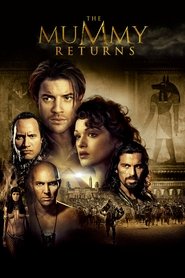
at Shepperton Studios, or Pinewood Studios, actually, this one. Can you tell about the roller skating guys, Bob? Yeah, if you look deep in the background there, you'll see the guys in the fence just in the back there. They seem to be, I don't know, skating almost. One of the tricks that the visual effects company will be very unhappy that we pointed out to you. So we set this next shot up, and with all the burning flames, and it was...
3:53 · jump to transcript →
-
kind of painful setup of about four hours getting the shot together and then of course we warned everybody and said nobody moves it doesn't matter unless the rock himself catches on fire nobody moves and of course the minute the background caught on fire which it was supposed to do a Moroccan fireman with a pith helmet shiny silver pith helmet ran in so we had to remove him in post this sequence here was photographed
4:22 · jump to transcript →
-
And no scorpions or tarantulas were killed while filming this scene. Except for these guys. And they walk right out onto sound stage six, Shepperton Studios. Or D, D stage. Now this shot here, the foreground element was shot in Morocco with the horses coming in there and the background is an ILM matte painting. And a lot of the reasons...
8:25 · jump to transcript →
-
-
director · 2h 43m 21 mentions
-
There's some wind going, but if you had sand going, her eyes would be filled with sand. So we had her acting that she was getting particulates in her eyes. This is a wonderful shot. I absolutely love the composition and the way the camera moves to introduce that character. To introduce this character we refer to as Braid. Yeah. Who's actually played by, I believe, five different women throughout the sequence because of the places where we shot it. Yeah.
14:20 · jump to transcript →
-
assemblage of people. This was a very challenging scene to shoot. It was our first day on stage after coming back from working on location. And it's a very challenging set to shoot in. And all the compositions are more or less the same. I love how you're introducing the geography with a big close-up of Carrie in the foreground. I love the way the camera inches around. Well, and that was the beginning of the visual language of our film. We didn't come to this movie with a specific sense of this is how we want to shoot it.
16:18 · jump to transcript →
-
I think we had 200 extras. So ILM extended all the people in the background, but there were a lot of people there to make it feel as real as possible. Just extraordinary, extraordinary actor. Rob Delaney, Mark Gatiss, Charles Parnell, who came back from Top Gun for us. And here's Marcello, our man of mystery.
17:46 · jump to transcript →
-
-
-
Commentary With Author CG Paul M. Sammon
Now, as this progresses, you'll see Frank Miller kind of making a commentary about the destructiveness and corruption of this particular society. I love those Dayglo graffiti things in the background. I get flashbacks of all that badass that I took in 1973 at all those concerts. All right, now, here we have the Violin Hookers. Anyone who knows anything about Frank Miller's oeuvre
3:54 · jump to transcript →
-
Commentary With Author CG Paul M. Sammon
And that comes across, I think, in some of the effects. Now, this was, again, an empty office building in downtown Houston. And all of these machines you see in the background, this is supposed to be sort of the militarized showroom for all of the product that Omniconsumers are selling to the military. And there's Ed 209 back there.
24:25 · jump to transcript →
-
Commentary With Author CG Paul M. Sammon
which I did on VHS-C cassettes. So every time you're seeing these shots, I'm usually just out of the frame with my little camera shooting the setups, shooting the direction, shooting everything else. And I remember doing this particular scene in the video arcade. It was very late, and Irv Kirshner, who at that time was seven years old, fell asleep in his chair. And I've got a shot of him sleeping and snoring.
31:18 · jump to transcript →
-
-
director · 1h 53m 18 mentions
-
It's sort of rotten, rotten blood inside that. Yeah, and he doesn't clean it very properly either. It's very basic. It's not so hygienical. No, it's not the issue here. In the background, you hear the weather report.
7:31 · jump to transcript →
-
this thing that in this movie horrible things happen, but it's always right in the corner of your eye. Somebody, if they just turned their head in the wrong or the right direction, they would have seen it. Somebody can always see what's happening, but nobody does. Yeah, it's very close. It's always close to others, the violence. And you could see the cars moving in the background too. It's very neat. Lightning here by Hoyta and the lightning crew.
9:25 · jump to transcript →
-
And we started off with a very complicated shot. This is made in one shot where Eli does the entrance in the film here outside frame. She's being helped up on this playground thing outside the frame. And I think this is maybe take 15 or something. Okay.
11:53 · jump to transcript →
-
-
-
Peter Greenaway
And since my background had been very much about documentary filmmaking, where essentially the address is made from the film directly to an audience, that I should consider probably film narrative conventions, and instead of getting people talking to the microphone, get people to talk to one another. So I went away, and after about six or eight weeks, I came up with a script called The Draftsman's Contract.
1:08 · jump to transcript →
-
Peter Greenaway
The background to the draftsman's contract, I suppose, is very much related to my experiences as an art student in London in the early 1960s. I was as much interested in painting theory as I was in painting practice. And amongst many, many subjects of discussion in consideration of Western cultural painting was one particular idea, was does a painter
2:28 · jump to transcript →
-
Peter Greenaway
I eventually reorganized the script to push it back, certainly to 1694. The circumstances of the history of that time, of course, are riddled into the background. But I suppose like all certainly historical novels, although it might be laid over known and authenticated historical periods,
14:09 · jump to transcript →
-
-
-
Barry Sonnenfeld
Although this part of the scene was actually shot in Pasadena... ...but the reverse was shot in New York City. This is a composite of many different buildings along Central Park South. This dust was a dust element shot on a stage... ...and the ship is totally, in these shots... ...computer graphics. We did build a ship, but we only used it as a maquette... ...a model for ILM to scan the ship into their computers. Even this dirt is all electronic elements. The foreground was shot on-stage in L.A... ...and the background was a composite of buildings at Central Park South. This was also shot in Pasadena.
3:51 · jump to transcript →
-
Barry Sonnenfeld
Obviously, this is all computer graphics element... ...done by Industrial Light & Magic. Mary Vogt is a wonderful, sweet costume designer... ...who worked with me on Big Trouble and Men in Black I. Elfman did a fantastic score for this movie. VICTORIA'S SECRET This is probably the longest shot in production. This took over eight months of work in the computer. We kept trying to make the heads better and the eels wetter... ...and figuring out the speed that both the foreground guys should move... ...and how quickly the deep background stuff... ... should look like flesh and underwear... ...as this creature is creating... ...What will become Lara Flynn Boyle. Graham Place, the co-producer, has done about 20 things with me. He's my best friend. Just last night, I bought him dinner at Chinois on Main... ...With his wife and daughters. Hey, pretty lady. We're back in Pasadena. This was done with a series of shots which were seamlessly connected. For instance, that thing where his legs went up. Now, this is a separate shot. We've made a perfect dissolve. Rick Baker designed Lara's stomach here. She realises there's a problem between the picture she wants to look like... ...and what she turned herself into. It's all about Lara's stomach. I love the way Lara walks across there, just kind of trampy. Again, this was another dissolve. She walked across... And this is about an hour later... ...because we had to take her stomach off and add makeup to her. Robert Gordon was the first writer hired. Then Robert and Barry Fanaro, who worked on several movies with me... ...and went to film school with me... ...did a lot of work on the movie as we progressed. Now we're at New York City... ...on Sixth Avenue in the upper 40s, lower 50s. Patrick Warburton, who is Agent Tee, was also The Tick... ... which I directed the pilot for and produced... ...and also had a role in Big Trouble, a movie I really am quite proud of.
4:50 · jump to transcript →
-
Barry Sonnenfeld
Now, that flower is really there... ...but there never was a 600-foot worm. So this is all computer graphics... ...and the background plates were shot on Sixth Avenue.
7:28 · jump to transcript →
-
-
director · 2h 27m 15 mentions
-
Now it is unimaginable to me that it could be anybody else. No, that it could have been anyone else. And also, we were talking about at some point maybe having Benji and Luther there also. Yes, that's right. And it was originally going to be much more long-lensy, esoteric, hard-to-see-the-background white. It was going to be less about the environment, a much more dreamy effect. And the more we refined the situation, the more it really became clear that it had to be. And I can't imagine not doing it without...
0:59 · jump to transcript →
-
It made more of these compositions. Which I love those compositions. And it's very rare that you have a star of the movie come in and say, stop cutting to my close-up. Cut me out. Push me into the background. And see, that's Angela's natural temperature when she's playing a scene like this. And Angela and I were always working together. I was like, hold on to that. You know, just let...
20:29 · jump to transcript →
-
We would not have been with Ethan. And now you're due to spin. Now you're in my face. I'm up on my back. He's going up and around. It really is a dance between the two of us. I had to always make sure that the sunset was on my left shoulder. That's actually a guy there. And Craig is having to keep the frame for all of that storytelling. It's nothing he's ever done before. He hasn't done narrative storytelling. So keeping that frame open. And we're traveling at 200 miles an hour at times toward the ground.
24:47 · jump to transcript →
-
-
scholar · 1h 32m 14 mentions
The Night of the Hunter (1955)
Second-Unit Terry Sanders, Film Archivist Robert Gitt, F. X. Feeney, Preston Neal Jones + 2
-
The nice payoff is that Lillian Gish is actually the avenger of these women. Right. I have to say that in this shot, too, the backgrounds are my shots. And this was processed in Hollywood, yeah? Right. And they blend in very well. They're called background plates.
2:52 · jump to transcript →
-
Actually, in some of the outtakes that we found for the film, in this scene, Mitchum at the end of a take just starts giggling and kind of shakes his head like, God, how can I say these lines? But, of course, he does a beautiful job anyway. And this is all your wonderful footage, Terry, in the background. Right, all the background plates. Of the cemetery. Now what's coming up is the...
3:38 · jump to transcript →
-
Now, this is like a lake or a pond at the Rollinvillee Ranch. And you had footage you had shot. That's the Delta Queen, yeah. Yeah. It was very successfully integrated, so it looks like a river. There's a match shot coming up that combines Bertie's wharf boat with the boat in the background. That's it. There it is. And for the period, it's pretty good, at least briefly. Yeah.
15:47 · jump to transcript →
-
-
director · 1h 45m 13 mentions
-
And that's where the dialogue came from. We shot this restaurant, we built this restaurant out of the lobby of the Harold Examiner building. And it used to be a little longer scene with Edie and Keaton, but we brought it down so I didn't get to see it. It was probably one of the prettiest sets. My folks are in the background. My dad actually and his wife. But you can't see them. You do see them at the end of the movie. They're out of focus.
7:38 · jump to transcript →
-
He had incredible focus that day. Even during the conversations, Kevin was never looking for a joke. It was your mistake, not mine. And of course, here at my hero, Gabriel Byrne, I do everything I can to get in the frame with Gabriel. Yeah, what's that, the restaurant business?
11:06 · jump to transcript →
-
And there's the side of your face, Chris. There we go. Before you had your... The hand with the ring. The hand with the ring. He was... He didn't blink during this, and I couldn't... You can't see my eye out of the frame there. I'm continuously blinking, because I was trying so hard not to blink when I looked at Gabriel, and my eyes were going like... Ow, Gabriel. Yeah.
11:31 · jump to transcript →
-
-
-
Film Stephen Prince
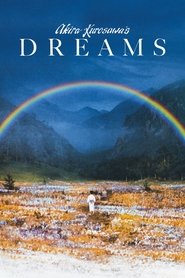
and hold the boy in the foreground. They sense he's there, perhaps they can smell him, but they don't yet know for sure. There's not a lot of camera movement in Dreams, and what there is tends to be fairly subtle, which is consistent with the evolution of Kurosawa's style in his later films.
7:27 · jump to transcript →
-
Film Stephen Prince
As we'll see, many scenes are shot with a camera in a lockdown position, filming from a distance, using long focus lenses, and watching while events pass by. This is very masterful widescreen composition. This is not the anamorphic 2.35 to 1 aspect ratio that Kurosawa used from the late 50s into the middle 60s.
7:54 · jump to transcript →
-
Film Stephen Prince
bringing them back into the frame and giving us another glimpse of them. So he establishes this connection between the peach blossoms and the doll festival in the opening moments. And as the action develops, the dolls themselves will become kami, or divine spirits that live in the peach orchard. The blossoms become the dolls. They are kami, and their energy is associated with an important person from Kurosawa's past. The ceremonial dolls are assembled on a tiered altar covered with scarlet felt.
13:28 · jump to transcript →
-
-
director · 2h 1m 12 mentions
-
Hi, this is Asif Kapadia. I'm the director of Amy. I'm here with two others. I'm James Garrison, the producer of this film. And I'm Chris King, the editor of the film. And we're going to talk our way through the film, give you a bit of a commentary of how the movie was put together and hopefully give you a bit of background. Yeah. Although this is the very beginning of the film, this material was some of the latest that we ever received, wasn't it? And that was mostly down to the efforts that it took you to get in contact with Lauren and Juliet.
0:14 · jump to transcript →
-
In the background there is Ian Barter, who was Amy's first MD, who helped her learn to play the guitar and play instruments, or worked with her on her first album particularly.
10:19 · jump to transcript →
-
We knew we were going to have to explain or go into the background because this song was such a powerful song and it's very autobiographical. It's about her childhood and about her parents and so hence the previous sequence which filled you in on the kind of what she felt, the trauma that she felt from her upbringing and the various separations and the way she grew up.
22:34 · jump to transcript →
-
-
-
Nia DaCosta
And I love this shot, just, like, showing the... the... the overgrowth and the destruction of the world on one part of the frame. And then in the distance, you see the smoke from Kelson's fire. And then this awesome handwritten title by Matt Curtis, who does all of our... well, all of my titles, really. He also did the first and 28 Years Later. So I really wanted to, like, show a change between the craziness and the madness of the world of the Jimmies and this sort of bucolic beauty and steadiness of Kelson's world. Which is why we go from all of that madness to these, those two wide shots, this one being the one that slowly shows us the woods. this one being the one that slowly shows us the woods. And we're like, "Wow, how peaceful." And then, of course, it's about to get not so peaceful.
7:35 · jump to transcript →
-
Nia DaCosta
And I love this scene a lot that's coming up, And I love this scene a lot that's coming up, because we see him in the first movie and he seems like this whimsical sort of kook who's like, "I'm gonna kill your mom." And in this movie, we get more of who he is and what he believes in, which I find really beautiful, and also, like, who he was. Like, in those pictures or the music he listens to. I love this hand-cranked power thing he's jerry-rigged. So, you see, there's, like, poppies... dried poppies in the background, and there are poppies growing outside. So, we kind of were like, "Is that how he's still creating these darts "and being able to sedate the infected when he needs to?"
14:55 · jump to transcript →
-
Nia DaCosta
We're using the Cinefade on this shot, which is why the background looks like it's melting a bit. Basically keeping the frame the same size, we changed, like, the depth of field essentially while the shot goes on.
18:17 · jump to transcript →
-
-
multi · 2h 34m 11 mentions
James Cameron, Gale Anne Hurd, Stan Winston, Robert Skotak + 8
-
Stan Winston
I'm Stan Winston. I created the creature effects and the alien effects for A/ens. I remember Jim trying to figure out how he could make the beginning of this movie impressive. He said he wanted to use a robotic laser. It was an afterthought and it wasn't in the budget and I remember having the gall to say to him "If you wanna use it, you have to pay for it." And he did. - Is that right? This robotic arm and the laser came out of his pocket. I wanted a seamless blend from the end of the first film into the beginning of the second film. I certainly wanted to honor all the things that were good about the first film. So I went to school on Ridley's style of photography, which was quite different from mine, cos he used a lot of long lenses, much more so than I was used to working with. But the smoke, the backlight, the textures, the way he forces the frame by putting a lot of equipment, machinery and foreground pieces, I really studied all that. I wanted there to be a stylistic continuity. I also wanted to have my own style grafted onto that so that I felt enough of a sense of authorship to make it worth doing.
2:51 · jump to transcript →
-
Pat McClung
This scene was shot really quickly. It was pretty much all handheld, 48 or 60 frames a second. I think 48. Then Sigourney had to loop all her lines at slow speed, which is always odd. Our first effect in the movie. It's great, because it's what you expected to happen and then it's not what you expect. She was actually under the bed for that sequence. We built an artificial body from her neck down. Someone is under the bed with her. I can't remember who the lucky guy was that created the illusion of the chestburster. Pushing its way through her. It sets up the character. This is her nightmare. You know that she never wants to have to face it in real life again because she's haunted by it in her dreams and her nightmares. This effect is as if you're outdoors. When the camera dollies over, you see it's just a video projection. The idea was that in outer space there would be places you could go to get a feeling you were in a natural environment. So that plate behind her was shot out in the garden at Pinewood Studios. It was a VistaVision plate. Originally, there was supposed to be a birdhouse in the background in that garden, and she would have Jones on her lap and a bird would fly in and Jones would jump up and hit the screen and that's how the audience would find out that she wasn't actually on the earth. This scene was cut from the release version of the film, which became the source of some controversy with Sigourney. She later said in print that she had based her entire character on this scene, and she was devastated when it was removed. At the time she first screened the film, she told me she didn't like the scene, and then we wound up reading interviews where she had a big problem with that. We didn't have a chance to talk about it because of the postproduction schedule. We were working in England, kind of in isolation.
7:47 · jump to transcript →
-
Pat McClung
Even though I liked the symmetry of the fact that she had had a daughter and lost her - that's Sigourney's mother, so there's an interesting inversion here. She's looking at the face of her mother but playing it as her daughter. As an actor, it allowed her to work the connection. All my movies are love stories. This one is about parental love, protectiveness and a sense of duty, and the ultimate sacrifice that a person would make, given that sense of duty. That was a nice touch. That was Sigourney's idea. This was one of the seminal scenes in the movie and was one of the ones that had to be deleted and omitted from the theatrical version because of length. We didn't have multiplexes, and there were only so many showings a day that you could have of a film, and we had to get it no more than two hours ten minutes in order to get the maximum number of screenings per day. Peter Lamont came up with a simple and austere look for our future sets. I watched this film recently and I was amazed at how little we see of the conventional future world, as opposed to the spacecraft interiors. She's actually on Gateway Station here. She hasn't returned all the way to earth. She never sets foot on earth in the whole series of films, which is interesting. This is as close as she gets until the end of the fourth movie, where she's re-entering the atmosphere. But this is earth for all intents and purposes. This is everyday life circa a couple of hundred years from now. And Peter came up with a very spartan look. It's not overworked at all, which I think was quite clever. We wanted to do it minimalist. We didn't have her walking around corridors. We didn't create a world because we weren't interested. We were interested in the through-line of her story and her character's dilemma and problems, the fact that she's not believed, that she understands there's this great threat. The same applied to the costumes. We didn't wanna suggest a wildly separated future from our present one. This might be one of the first science fiction movies where men still wear coats and ties. The thinking was people will still wear coats and ties. They may not look exactly the same. We turned up the collar on the jackets. It's no big deal but it's a subtle change. We wanted to have a place to go. We wanted the space environment once they get to the colony planet to be exotic and so we didn't wanna overwork earth. We also wanted to understand who these people were, and a Suit Is a suit. These characters are suits and we wanted to reinforce that. If everybody's in Star Wars type costumes, it's harder to relate to them as characters. I was thinking more of a writer than a designer when I was making my picks of what things should look like from amongst the suggestions made by the costume designer. Denny, did they shoot at 25 frames per second for all the video playback stuff? Do you remember? They did. The 24-frame issue was messy. It can be done, but it's such a big procedure. Shooting 25 frames per second on the camera puts the video in sync with the film camera very easily. There's a slight speed differential but it's almost impossible to perceive. In Britain they have a different television system, a 25-frame-per-second system. 625 resolution instead of 525. Later in the film there's some video footage that was used, appearing on video monitors. But the PAL system is better than NTSC, which is our system here in the United States. It almost looked like a slightly too fuzzy version of film, sort of in between. It's not as good as it should be for film, but it wasn't obvious it was video. Jim realized and made the video images noisier or break up more often so it was more obvious. The tag of this scene is gonna be a throw to this big sequence that takes place on the colony which is before the aliens attack. That's cut out of the release version, so coming up Is the biggest single change from the release version of the film. It's an entire reel. I'll never forget Gale Hurd, who was my wife and producer at the time, trying to shorten the film by 20 minutes. I just could not see how it was possible to do a cut here, a cut there, a few seconds, a bit of a scene, the tag of a scene maybe. She said "I've been thinking about this for days." I said "Go ahead." She said "Reel three." Which starts here. "You can take out reel three." I immediately rejected that as completely absurd. Then I thought about it. Reel three ends with Newt's scream when her father has the facehugger on his face. It works flawlessly. It's a brilliant cut and I have to credit Gale with that. I had poured a lot of energy into the design of these scenes and the alien derelict ship. The problem for me was that I couldn't imagine this film without the cognitive tether to the first film of the alien derelict, but it turns out that it works perfectly. A little dialogue bridge and it works fine. I like this tractor a lot, this tractor with this articulated leg design. This is one of my favorite effects. You see the big tractor driving by and in the background you see these people struggling to put a tarp over that tractor. That was done in perspective. There were full-size people back there, and a miniature in the foreground with distance between. It put everything in camera all at one time without any opticals or anything beyond that. The trick was that the actors had to act at double their normal speed of acting, because the camera was running at 48 frames per second. We had a Ritter fan on them to really kick those tarps around in excess of what it would be in real time, but because we were overcranking, that motion would then look normal. The multi-wheeled vehicle at the beginning is a fifth-scale miniature, radio-controlled, that Jim designed. On the airplane coming over from Los Angeles to London he just doodled it. Ron Cobb, I believe, fleshed it out.
10:08 · jump to transcript →
-
-
director · 1h 58m 11 mentions
-
But the background, you just saw that building with the Moskowitz painting. So I think nowadays it's so great. And we come back and talk a little bit later about that because so interesting then you can do that even with moving images now so easy. Not necessarily easy, but you can do it. So the illusion is really perfect. You don't have the static shots anymore for the matte paintings. You can move the camera.
8:54 · jump to transcript →
-
Then you see it's a crane shot, a moving camera, but still the background, the building is painted. Here, you see? The whole, yeah, LAX. But the whole back there, the thing is a painting, the building. It was just nothing there, just dark. So they sent you where, to the end of the runway? It was a special, yeah, a special area of a very more quiet, deserted area of the airport. And we shot it there. Where did the jet come from?
11:43 · jump to transcript →
-
These planes, the F-15s, these are partly computer-generated planes and partly models. If they come very close to the camera, it will be a model. If it's not so close, generally, basically, the first one here, foreground, model. The others, computer-generated. So these elements are then together. In the shot, we just saw our Air Force One as a model, big model, foreground F-15 model, and the other planes are
25:13 · jump to transcript →
-
-
director · 1h 59m 11 mentions
-
You need to be very careful. You need to be very aware. And something that I learned from being at a party where someone had a gun and the gun accidentally went off, I won't go into it. Everyone freezes. Everything stops. It's not like there's a panic and people yell gun and run out. In fact, when all those people are sitting in the background earlier in the scene, that came from a... I was at a grocery store that was being robbed and a guy came in and just...
14:53 · jump to transcript →
-
could very possibly be the person who killed that very attractive woman lying in the foreground. Right. Well, what I love about that scene, there used to be a bit in the script where she said, where as they're talking here with Robin, she says, you know, Megan. And they're like, what? The guys are like, what? And she's like, Megan is the daughter of one of the guys you killed. Right. And instead, it's just we don't hear, we don't see the gunfight. We hear it, like directorially, what you did. We hear the gunfight. We come out, we sort of see the aftermath of it, which I think was cool. Oh, that was that way on the pitch.
18:24 · jump to transcript →
-
In the script, they sort of spoke a lot more of their thoughts than you needed to show in the movie. Well, again, there was a series of scenes. You cut back to this diner. I love this lady. She doesn't care less about getting them coffee. And by the way, to any first-time director, whenever you're directing a scene with extras in the background, after the first rehearsal, or during the first rehearsal, don't even watch the actors. Watch the extras.
50:18 · jump to transcript →
-
-
-
Frank Morriss
Is that right? Warren was so terrific in this scene. Oh, yeah. Warren had a wonderful, dry humour. With the other actor, Jack Murdock, I wanted somebody who sounded like... ...he could piss Jack Daniel's. Like he had had so much... ...go through his system with that gravelly, gravelly voice. Now, at the time that we did this picture... ...computer technology really did not exist. So that almost all the day footage... ...that we see here in the helicopter, was shot up in the sky. And our guys are actually up in the sky... ...as we fly along with them. And we're looking not at a computerised background here... ...but shooting from the little control tower that we had built on top of... ...what's known as the Piper Tech facility in Downtown Los Angeles. And it's where the city of Los Angeles keeps all of its vehicles... ...and including its helicopter that's on-- Helicopters, that is on the top pad.
2:42 · jump to transcript →
-
Frank Morriss
So a couple of things here of interest: This is a set that we built. Philip Harrison, the English designer... ...who did Outland with Peter Hyams... ...and several movies with me afterwards, built this set. And we wanted to see the background of Los Angeles... ...so we shot photographic plates at night... ...and we could project them during the scene. ...
14:26 · jump to transcript →
-
Frank Morriss
Warren Oates said something so interesting to me. As we were doing this scene, we were having trouble... ...with the background plates. And sometimes they would run out, or the film would break... ...so you'd just see a white screen behind him. So that wasn't any good. We have to do it again. So I apologised to him. At one point, I said: "I'm sorry, Warren, that we're having to go through this again." And he said, "Listen, son, I'll do this stuff all day long. I love doing this stuff." And that's the kind of professional actor he was, you know. Just brought all of his energy and all of his enthusiasm. All of these guys did. You know, what real pros are like... ...and how they can keep their enthusiasm take after take... ...and keep it fresh, so it doesn't sound robotic.
15:01 · jump to transcript →
-
-
-
pretty disappointing and so you know going in i think a lot of people knew going in that ripley was going to die yeah i'm trying to remember now i'm trying to see the guy in the background there with these uh with the ox he's the guy from batman beginning he's yeah yeah he's a he's a yeah the the guy yeah batman throws off the top no on top of the building isn't it yeah of course he just goes he goes who are you yeah
24:58 · jump to transcript →
-
knackered and dilapidated and broken and nothing works so there's no technology there's no you know they don't use technology in any kind of clever way to to try and stay alive or to battle the alien so it isn't sci-fi isn't horror it's essentially a character study of a woman in breakdown almost with this yeah with you know with a monster running about in the background yeah yeah yeah
39:05 · jump to transcript →
-
Yeah, it's a different type of emotional connection, I think, with that. And it's also hard to root for prisoners who are rapists. Exactly, especially when they're not really given any kind of redemption. There's no redeeming arc, really, for anyone other than David Webb, who... Yeah, yeah, who basically is a mouthy guy in the background who then becomes more centre stage.
57:51 · jump to transcript →
-
-
director · 1h 56m 9 mentions
-
And this shot here done by ILM, it's a combination of live action and matte painting. The whole background, the moon, the sky, a lot of those statues are visual effects. I love this shot. This will be fun. This is Alan Cameron, my production designer at his finest. Alan also did Jungle Book with me. This sequence was a problematic sequence editorially.
4:00 · jump to transcript →
-
Right as the camera would roll, he'd walk away, and we kept telling him, no, no, stay until you hear background action, background action. And after about take 12, I said, don't move until the stone hits you in the head. See, that's what we're talking about, throwing things at the extras. It doesn't seem like a good idea to me. We actually never threw anything at them. This shot worked out really well, so we wanted to get very close to his tongue before that guy slid in.
5:26 · jump to transcript →
-
somewhere in the south of England. A pond, actually. Frencham Ponds, they called this. And with a little help from ILM, we put the boat and the Americans in the background. The Americans aren't big enough, I think, at the end of the day. You don't really get to see them back there. Also, I had to do a little...
32:48 · jump to transcript →
-
-
director · 3h 43m 9 mentions
The Lord of the Rings The Two Towers (2002)
Peter Jackson Fran Walsh Philippa Boyens
-
Peter Jackson Fran Walsh Philippa Boyens
onto the scene when we realized that the clouds were going to be with us for a few hours. Gollum. It's kind of weird to watch this because when we shot these plates, the background footage, it was about two years before we ever really saw Gollum.
9:00 · jump to transcript →
-
Peter Jackson Fran Walsh Philippa Boyens
grasslands per se but this place I thought was a great stand in for Rohan because it has these interesting rock formations. You know those moving shots where you had both with Aragorn and Legolas, how did you do that? Well that was just a dolly that was trekking along the front of them and even though you're not getting closer to them or you're not getting further away it actually just makes the background roll around the back of them and that was just my obsession with keeping the camera moving as I say I just didn't want to do a static shot.
18:53 · jump to transcript →
-
Peter Jackson Fran Walsh Philippa Boyens
We were keeping our fingers crossed about three years ago that one day there'd be a golem put there that would be looking all right. The Dead Marshes was primarily a set that we built in the parking lot of an old factory right next to a railway station. And a lot of times that we'd be shooting the Dead Marshes and there'd be trains rolling through the background. You'd actually see them in the film, the trains going right past the back of shot. And then later on, we painted it all out and put an extension to the marshes in here.
42:05 · jump to transcript →
-
-
director · 1h 42m 9 mentions
Len Wiseman, Brad Tatapolous, Brad Martin, Nicolas De Toth
-
called action instead of background, and the thing just reared up and actually did the stunt in the wrong place, and everybody was okay, and everybody ran out there, but we ended up using it in the film. And we ate horse meat for, like, what, weeks at craft services. It was really bad. Remember, Patrick, this scene right here, I was actually stressing out quite a bit because we weren't prepared to shoot this wolf yet. Exactly. The wolf was in the radio at the time, and...
6:12 · jump to transcript →
-
um tony in the medieval village right yeah that was the original beginning right and the problem is there there's you know screened it and with uh there's you know a lot of people not knowing who singe was if singe was a lichen and just the a little bit more of the background of of underworld one needed to be stated first the human descendant of corvinus yes all of this was created way after the fact because we shot it i mean you shot it
8:59 · jump to transcript →
-
budget looks better, but somehow you're probably going to end up spending more money on location, like you're saying. Yeah, this next shot coming up here, we built the floor. The background of this is actually from Underworld 1, and we just reused the shot. And so these guys coming in are on green screen just to save a bit of cash. There's a lot of great shots like that. Yeah, and the shot, actually, those guys that came in, originally was a shot with Kate coming in through in the first Underworld. That's right. And we removed her and hit her, and we hit her in the group of people. Yeah, we did. She's actually there, but you can't see it.
12:19 · jump to transcript →
-
-
director · 2h 19m 9 mentions
-
And now we see what he sees, but only on a focus. We're actually on him. You know, in the background, we see this guy with a head wound and his face buried in the mud, which obviously means it's a very strong image for immediately, it means death beside him. And here, the sound, we stayed in Paul Boymer's sort of inner perspective, his breathing, for a very long time and only came out of it quite late.
27:51 · jump to transcript →
-
Guys we hadn't seen that much before. Franz, the guy who runs away, has never been in a movie before, is straight from drama school. I think he was still in drama school. Felix is in the background there, our main actor, is from a theater in Vienna. And my producer's wife, Sabrina, she sent me a picture before. This was actually the first picture I saw.
42:41 · jump to transcript →
-
And here again, a little bit of laughter. And again, we focus on the foreground. We just focus on Paul. Everything is told through his perspective. Everything else is kind of out of focus in the background. We're back to Daniel Bruhl driving through the countryside on the way to the peace negotiations.
51:35 · jump to transcript →
-
-
director · 1h 59m 8 mentions
-
power theme, the motif that runs through the movie. The other thing he did was he showed the audience this sequence we're looking at without sound and then he talked about how music changes your perception of time. If you watch this without sound it seems to go by incredibly slowly but the pace becomes more interesting with the music in the background.
1:30 · jump to transcript →
-
And everybody, again, has to be in exactly the right spot. You see Charles Foster Kane outside the window, trapped almost by the window, and he's yelling, the union forever, the union forever, as inside the union is being dissolved. In the foreground, we've got the extraordinary Agnes Moorhead looking a little like Whistler's mother here, and Harry Shannon as the father in the distance, and George Kalouris here in the middle.
19:47 · jump to transcript →
-
an astonishing moment. She is one of the great actors of all time, in my view. And she's only got a brief role in this film, but she makes a completely indelible impression. Notice how her head towers over the two men in the background. Also, now we're going to go outside, the camera panning. And it's amazing to do that within the same shot. Yeah, yeah, yeah, right. And I've always been struck by the fact that Charles Foster Kane looks like a little brat.
21:11 · jump to transcript →
-
-
director · 1h 34m 8 mentions
-
And the fact that he becomes the major threat in the cold clothes is just such a great way to bring it all in. I would say ironic threat. That's not a bad blob right there. That's a miniature. And that's a mat, right? It's a composite of something. Yeah, it's a composite that worked. So this is a miniature street with him? That's a foreground miniature. Did you have any challenges lighting the blob? You were saying before the fact that it's pink.
47:55 · jump to transcript →
-
with her performance, seeing, oh, shit, that's my friend under that thing. This was pre-Jurassic Park, wasn't it? Oh, yeah. With the shaking water glass, and so this is the telltale, oh, my God, with the giant vibrations. I heard a rumor that Spielberg had a copy of the blob on set when he was coming up with the glass scene for Jurassic Park, just saying. He did. Now, wait, one of my favorite afterthought moments is in this shot coming up, you see in the background the grenades go off.
1:21:04 · jump to transcript →
-
I love that. It's coming up here. There it is. I love it. It's like a wet fart in the background. It's just like, oh, yeah, remember those grenades that almost went off? Yeah, fuck those guys. It's still in my stomach. This is looking old school. This is great. That's very Ray Harryhausen. But it works. Very Ray Harryhausen. It's a twofer because you get the slap and then the peel back where it's like flat man comes up. Gum on the shoe. And what about you, Mark? What do you think was your biggest challenge on this one?
1:21:32 · jump to transcript →
-
-
director · 1h 24m 8 mentions
The Naked Gun From the Files of Police Squad! (1988)
David Zucker, Robert Weiss, Peter Tilden
-
I think we did. Remember when he shot the bullet through the videocassettes? Or was that in... That was in the show, yeah. That was in the show. I think he watched. No, no, the thing where you have something on the big L who's out of the frame. I think the shoe was just for the movie. Swiss Army shoe. Yeah. This is one of my favorite lines where he says, Ted, why?
26:48 · jump to transcript →
-
I think that Vincent Ludwig was involved in a number of... Again, there was some laughter at that point. No, it's a compelling... There you go. That's pretty funny. Big laugh. Isn't this the part in the second act where you can go have a drink or something? This was another concession break. Yeah. I'm sorry. I'm worried about you. I don't trust you. But there was a very good, faint, you know, physical thing coming up. It's coming up right now. We're in the famous pass-out scene that she does not notice at all. Oh, yes. Done in the background.
50:46 · jump to transcript →
-
Now, it's good to put some jokes in the background, because if you draw too much attention to them, you can be held accountable. Or you can be disappointed. Exactly. He's such a gentleman. He's so generous. He just wants to have a talk with you and clear up any doubts that you might have about him. Wham.
51:15 · jump to transcript →
-
-
director · 2h 24m 8 mentions
-
You notice in these sequences, the camera is near the ground so the ceiling becomes more important than the floor and one is shooting up people's nostrils. This was an approach David Fincher wanted, which I think is terribly effective indeed and makes it more distinctive than the other three, rather, in my opinion. I tried to keep it fairly shadowy, so that it looks moody. Where I could, I brought the light from the top because it's unusual for the light to come from the floor, but one had to be careful about it obviously. The difficulty was getting light into the eyes SO we could see what the actors were thinking but not at the expense of the mood. I remember at Pinewood Studios when the sets were going up, Fincher would have us walk through the sets just looking at the scope of them. It was truly amazing to see these things go up. Norman Reynolds is a great production designer. He builds the world. It's very difficult to control him cos George would tell him on Star Wars "Don't build that. We're gonna paint it", and the next day - "It's too late. It's built." When they sent us over, we said "Why are we going to London?" They said "It's the sets, the set design, the artistry and the craftsmanship." And it really was very true. British actors is another good reason to go there. Somehow the British accent does a lot for these movies, I think. Vincent has had a deep, abiding interest in Luddite monks, and had done a great movie called The Navigator, where these monks dig their way through the earth, coming out into the 20th Century. It was a great movie. But, anyway, the original idea was that this was a wooden planet built by the Luddites and in the bottom of the planet, symbolically, the reactor was kind of hell. The technology that kept this thing going was emanating from the bowels of Lucifer. What drew me to the project first was that it wasn't a retread kind of sequel. It was a completely new idea, and some of it survived in the final script. David was entirely in control from the beginning. He put his stamp on it. He was the director and nobody ever questioned it. He was completely in control of the set and everybody hung on his words. He was definitely doing it. There was no weakness in it at alll. He was very, very confident in what he was doing and wouldn't be swayed. He had this vision and that was what he was going to do. He came under quite a lot of pressure from 20th Century Fox to hurry up or do it the quickest way or the most expedient way, but he wouldn't listen. He would do what he wanted to do, quite rightly, in my opinion. As I say, his compositions are marvelous and the use of the frame, and so on. David had been a cinematographer before he became a director, so he knew lighting. He knew what was good and what was bad. That's not to take away from David Worley, the operator. His contribution was enormous as well.
10:16 · jump to transcript →
-
Even for whatever he was, 26, 27, he'd seen a lot of pictures. He was a cineaste. He told me about his background, where he'd come from and how he'd got the gig. His ideas seemed very cinematic. Even then he'd joke and say "This is a Hitchcockian bit." "Here comes John Ford and here comes somebody else", so there are little nods. It was the kind of energy of somebody confident and someone who is a fan. When we'd work he'd say "Remember I told you this was that scene from The Third Man?" And you'd get it, whether it was some shots, some camera angles, some bit of lighting. It was nice. It was a bit of bravado, but he was very confident and decisive. Good to work with, and he also knew and liked actors.
18:54 · jump to transcript →
-
The commissary or canteen, whichever you'd like to call it, is one of the lighter places in this prison complex because it's lit from the top. I purposely tried to keep the fluorescent lights above different colors. I mixed the tubes so that it looked more run-down, less maintained, like they'd just put in any kind of tube that they had handy. I think the use of the frame is marvelous with the close-ups, and the composition's terrific, and this is mainly, well, entirely due to David Fincher. He would position the camera meticulously on each shot. He would position the camera meticulously on each shot. Coming onto the production four days late, most of the questions had been answered, in that I guess that David Fincher spoke to Jordan Cronenweth about how he saw it and also to the production designer, and so on. But that had been done before I got onto the production. They were four days into shooting, so all the decisions had been made. So I was faced with just getting on with it, basically, trying to match to Jordan's first conception of it.
35:13 · jump to transcript →
-
-
-
Darren Aronofsky
One of my favorite things about the sequence is in the background are all those numbers that you see sort of all the way in the background are actually numbers of pi continuously pumping by endlessly. And the sequence ends with a flash of brilliant white, which is how all the headache sequences end. And we begin the film.
1:22 · jump to transcript →
-
Darren Aronofsky
I bought the ants. He still doesn't know what they mean. So this little voiceover segment was written by Sean. Here we have the tree that I was telling you to look out for if you remember what it looked like in the first act. It was a little bit more contrasty. This we wanted to go for a lot more moody, and we also changed the frame rate. He's moving a lot slower, and the tree itself is moving a lot quicker and a lot more manically.
21:16 · jump to transcript →
-
Darren Aronofsky
you know, was just executed really well by the actors. This Archimedes story comes from, I think my dad told it to me first when he was in the bathtub once. I think he sort of told me this whole story about Archimedes and it just sort of stuck with me. My dad's a trained geologist who was a teacher for years and I think that science background is where I got some of my
23:14 · jump to transcript →
-
-
-
E. Elias Merhige
Herr Doctor, I warned you. You should be more concerned about these things. The crosses are not for decoration. We will put them back. They just overwhelm our composition. But not for men of science. The crosses are just merely decoration. We must go. Henrik, what's the scene number? Uh, 23. Quickly. Yes.
21:17 · jump to transcript →
-
E. Elias Merhige
on the production team was nervous and I needed to get this shot. If I didn't have Willem and John and Eddie and everybody so brilliant and so quick, I mean they're like super computers in the way they know their marks and where to stand and where the limits of the frame are. But I'm going to stop talking about that because I really want to talk about this scene for a moment.
40:04 · jump to transcript →
-
E. Elias Merhige
in bed on time and not exhausting everyone because otherwise things get sloppy. This is one of my favorite shots in the film. It's one shot through the back window of a Model T from 1919 and we're looking through the back window and we see Wolf at the right in the foreground out of focus. Now we move around the car and here we see the conversation continue but there are no cuts here and this is the kind of filmmaking that
41:57 · jump to transcript →
-
-
director · 2h 8m 8 mentions
Commentary With Kathryn Bigelow And Jeff Cronenweth
-
Commentary With Kathryn Bigelow And Jeff Cronenweth
My background is in filmmaking and not in nuclear physics. It was a very interesting and illuminating odyssey in order to prepare for this. And then going further and finding out what would happen to skin, what would happen to vital organs when exposed to radiation, and understanding what obviously the visual aspects
35:09 · jump to transcript →
-
Commentary With Kathryn Bigelow And Jeff Cronenweth
Yeah, something that you don't really realize, and it makes it much more adventurous than it normally would be, is that because they're all period vessels, all of them had been mothballed. The destroyer that we had in the background, the K-19 and then the rescue sub, all had no functioning engines, and they all had to be towed and guided by several towboats.
56:30 · jump to transcript →
-
Commentary With Kathryn Bigelow And Jeff Cronenweth
small and large armies and equipment and coordinating in such a way that it's like it's a choreography of impossible precision. Yeah, and to go a step further with that, one of the responsibilities of an AD is to help stage background players.
59:09 · jump to transcript →
-
-
director · 4h 13m 8 mentions
The Lord of the Rings The Return of the King (2003)
Peter Jackson Fran Walsh Philippa Boyens
-
Peter Jackson Fran Walsh Philippa Boyens
I always thought this was a dodgy scene because we shot it in our Fangorn set in the studio, which was a tiny studio and you can basically look at a painted cyclorama in the background. And it's one of the reasons why we shot it so much out of focus is to try to disguise the fact that it was just a painted backdrop. And that shot there in particular.
9:23 · jump to transcript →
-
Peter Jackson Fran Walsh Philippa Boyens
I was always amused at the dog that crossed twice in the background and the wide shots. Well, Rohan have a whole dog trainer programme going on. They're one of the few places in Middle Earth that really have instigated that particular programme. Yeah. An MP from Parliament came on the day we shot this. We built Edoras in conservation land. It was built on a very protected area of New Zealand and we had to be very careful with the impact on the environment and things.
34:44 · jump to transcript →
-
Peter Jackson Fran Walsh Philippa Boyens
That guard that they've rushed past there was Big Paul. I think it's the only time in the movies that Big Paul gets his face actually seen. This shot's a little tricky because you're seeing the small version of Mary running who's the four foot high scale double and then we had Dominic Monaghan on his knees waiting for the scale double to get around the corner and then without cutting the camera we had Dom popping up in the foreground. And this scene was really also about the fact that Mary has always taken responsibility for Pippin.
36:13 · jump to transcript →
-
-
director · 2h 5m 8 mentions
-
No, it's the burial. It's the frame around the grave. I know, but I think it's... There's a dolly right there. No. No, there was no dolly near you. Remember, this was a long lens. Look, there's a... I know. There's no way that you would have seen the camera. I sent you a piece of mail from Berlin and asked us to call you when it arrived. It came this morning.
31:10 · jump to transcript →
-
I know. Now, by the way, this is a shot where one of our crew members, and she will remain nameless, is actually in the background right there, right between you two. Right there. She's running. She realizes you can hardly see it. We actually went back and we did this shot, which is a very tricky shot to get.
32:59 · jump to transcript →
-
And I love this reveal of her. Again, the music, too, I have to say. No, this whole sequence is brilliant. The choreography of this is really... Also, if you watch the guard behind the background, he's facing to the right. And then in this shot, he's facing... Wait, he's facing to the right. Hold on. Now he's facing to the left. You can barely tell. We kept having flopping guard problems in post. We're going to have to move sooner than we thought. Can you identify who made the drop? Negative. Again, just, you know, a testament to ILM. Yeah, this is my favorite cue. I love this cue. I just...
49:11 · jump to transcript →
-
-
director · 1h 49m 7 mentions
-
A little background on actor Timothy Moxon, who plays Strangways. At the time of Dr. No, Moxon was making his living as a charter pilot and crop duster in Jamaica. But before he moved to the Caribbean, he had been an actor in London, where he knew director Terrence Young, which led to Moxon being cast in the role of Strangways. Actor Anthony Dawson plays Professor Dent. Dawson appeared in many films for director Young, beginning with They Were Not Divided in 1950 and continuing with Action of the Tiger in 1957.
2:52 · jump to transcript →
-
Lois Maxwell also worked with Terrence Young on 1949's Corridor of Mirrors. She recalls discussing the role of Miss Moneypenny with the director. I said, Terrence, look, if we can give a background to Miss Moneypenny, and I don't have my long hair in a bun, and I don't have to wear glasses, and I don't have a pencil over my ear, I think I'd be more interested in playing Miss Moneypenny. And he said, good girl.
9:21 · jump to transcript →
-
Sean and I and Terrence decided on the background of the relationship between James Bond and Miss Moneypenny. And that was that when he was a tea boy and she was in the secretarial pool, they had gone off together for a lovely bank holiday weekend to a rose-covered cottage.
9:52 · jump to transcript →
-
-
director · 2h 17m 7 mentions
-
So we actually took colors and in fact the outside of the school scene that's coming up was taken literally from a composition of his. Looking at Sally Field now, I recall that Bob saying that for the first, you know, 20 minutes of the movie or so, the whole movie is
5:11 · jump to transcript →
-
You know, like, for example, when Kennedy's got the football at the very first shot, that was actually in Rose Garden. But we found that image of him and we put him in the Oval Office with our, you know, background plate. Stuff like that. So we just looked at everything. And then when we found the bits of film, we went back, revised the script to try to weave the story into what we had. And I know the joke of, like, when Kennedy says, I believe he said he has to go pee.
30:52 · jump to transcript →
-
Going to Vietnam in the service and not going and fighting the war and what made you a man of that generation? And Forrest just kind of was able to do all the right things. And right here, I mean, you know and you just feel how much he really, really cares. Now, this was on a bridge outside of Savannah, wasn't it? Yeah. Where we shot this? Yeah, and then we put in all the lights in the background.
38:35 · jump to transcript →
-
-
-
Jonathan Lynn
who handles this scene with characteristic skill. People who see the film for the first time just don't realize that she is offering, seriously offering to kill Oz's wife. And yet she does it. So when you look back on it, you can really see that she is a killer, but it nonetheless surprises people when they discover it. Background music here is jazz violin.
5:58 · jump to transcript →
-
Jonathan Lynn
agreed to charge us to such an extent that we couldn't afford to shoot there anymore. And then we found this location, which is just wonderful and shows a panoramic view of Montreal. I was really pleased that, yet again, financial considerations forced us into making a change, which turned out to be for the better. After the ensuing scandal and bankruptcy and embarrassment, my wife and her mother decided it would be best that we move back here. That's the St. Lawrence River in the background, of course.
13:43 · jump to transcript →
-
Jonathan Lynn
No, I live here with my wife. You sure you're a dentist? Yeah, why? Because I've never met a dentist I liked. Well, I try to keep things as painless as possible. Me too. Yet again, you can hear French accordion music in the background of that scene.
14:12 · jump to transcript →
-
-
-
Noah Baumbach
Let me tell you about my boat. This is something when you first brought the idea of the character and the story to me, this was something you always wanted to include. I remember you said, you know, idea of this character, originally named Steve Cousteau. We later made him Steve Zissou. Oceanographer. He has this show. And then you said, "I want to do this--" Visual. - This visual. So this set, this is sort of inspired by, you know, World Book Encyclopedia, and Time-Life books, and, you know... elementary school books with fold-outs. And so that's kind of where it comes from, but making it in three dimensions. And for me, it was just something that I was inspired by. And it was years and years ago that I was planning to do this. And it was very kind of thrilling to be able to build this set because it was such an unusual one. And so many people-- For us, the movie is about all these characters who we made up, but they relate to people we know and they're characters we really love. We don't really have a lot of bad guys or anything. We just have these people we connect with. And the idea of having them all in there at once in this environment, that sort of encapsulates something about the movie. I think it goes back to what you were saying about your-- That this is also about what you love about making movies, and how you feel, you know, sort of lucky and privileged to be able to do it. And here, you know, in a way, this is like your dream of, "If I could make a movie, I want to do this." I mean, you've had this for so long. - Yes. And we shot it... It was like shooting a play. Explorers Club? - Right. You were on the set. - Yeah. This is-- Yeah, I spilled an entire espresso on my shirt. During the filming of this scene? Yeah. I was so jet-lagged. I was listening with a headset and it somehow disconnected from the headphones, the little mic part, and it knocked the espresso out of my hand and all over my shirt. Yes. You know, I always like paintings. - You do have a lot of paintings in your movies. - Yeah. And those tell about the character of his mentor, Lord Mandrake, and then we have Zissou, and then we have... And this story was actually based on something a friend of ours had been talking loudly in L.A... Chris Eigeman. Chris Eigeman had been talking loudly at an Indian restaurant in L.A. He thought that there was somebody who looked like a famous action hero, and he was talking very loudly about what happened to this guy, and it turned out to actually be the guy, and Chris was humiliated. And we lifted it wholesale and dropped it right into the film. And at one point you were going to have Chris play the guy until then you decided to make him Italian. It seemed nice to be able to put it all in subtitles. The Explorers Club is also-- This place is inspired by a club in New York who actually let us use their flag, which you can see in the background. And it's the Explorers Club on 70th Street, a block away from where I used to live.
14:59 · jump to transcript →
-
Noah Baumbach
One thing here, by the way, in the background of Owen's shot, you see this painting here, a nice little landscape, and there it is there in Cate's also. - That's interesting. Part of the magic. Theoretically, it's two of them, but it really isn't.
26:18 · jump to transcript →
-
Noah Baumbach
Bill Murray, one thing about Bill, there's kind of two parts of working with Bill. I feel like the two of us have a very similar understanding of how to approach the scenes in terms of what we each have to do. He's easy for me to communicate with. He's quick to grasp what I'm thinking of. He's quick to come up with his own interpretation that gets at what I'm hoping for, what I might not be able to describe to him in words that made any sense, he can somehow make sense of. There's another part of Bill, which is this sort of wildness that he brings to the set because he's somebody who can walk into a room and immediately command it, and he can always think of something great to say, and he loves being around people and getting them behind him and getting them following him. I've never met anybody else like him that I can absolutely certify. He really has an effect on people, and he has an effect on a group of actors, and he has an effect on a crew of people who will just never forget him. This scene, I really like how they play this. Yeah, this we did with the... Cate brings a lot out of Bill, and I think she has a real effect on him. Bill has a wildness about him. - He's really on the edge here. When he points the gun at her, that was improvised in his off-camera. In one take, I saw something black pop into the bottom of the frame, and the camera bumped, and afterwards I suddenly did a... "Did you just point your gun at the pregnant reporter?" It was a nice touch. Yeah, it was such a nice touch that I think I thought we wrote it.
27:31 · jump to transcript →
-
-
-
Commentary With David Kalat
With his background in engineering, he was given to fashion his own equipment and jerry-rigged devices to achieve special pictorial effects impossible otherwise. His colleagues nicknamed him Smoke. But atmospheric effects were but tools in a wider arsenal, and he aspired to improve upon the still primitive art of special effects when he saw a film that shattered him.
20:14 · jump to transcript →
-
Commentary With David Kalat
although some were at an even smaller scale to create forced perspective effects. So get a load of this. This is an in-camera double exposure in which fleeing extras at the bottom of the frame and the top half is made up of a miniature set and a man in a suit. To get the synchronization between the bits entailed precision timing between two different scenes shot by two completely different production crews months apart. And any mistake would mean starting over from scratch.
45:59 · jump to transcript →
-
Commentary With David Kalat
Haruo Nakajima had been hired to play Godzilla thanks to his martial arts training, his background in stunt work, and his overall strength. You can imagine how being hired to play a monster in a rubber suit might cause you to maybe not take your job all that seriously. But not Nakajima.
56:42 · jump to transcript →
-
-
-
Novelist Tim Lucas
I can't find a distinct identification for the actor playing this ousted hotel guest, addressed as Señor Martinez. Let's appreciate the beautifully layered composition of this shot. For a few dollars more was photographed by Massimo Dallamano, who shot A Fistful of Dollars so brilliantly. He had already photographed close to 40 films, but this was his last major assignment before he graduated to the position of director.
34:15 · jump to transcript →
-
Novelist Tim Lucas
For a few dollars more was the first time that Sergio Leone had Ennio Morricone compose and record the film's music before he began filming. And this, I believe, is the reason behind this film's tremendous leap in musical imagination. Morricone was not tailoring his music to the action on screen. Leone was tailoring his images and indeed his actors' performances to Morricone's music, which the maestro could now approach from the purer vantage point of composition.
1:13:30 · jump to transcript →
-
Novelist Tim Lucas
He read the script and scored what he experienced in his imagination. Of course, Leone had to be agreeable to the directions he was taking first. They had a simple way of synchronizing themselves. Morricone would play for him, very badly, he said, the basic themes that he had in mind on the piano. And if Leone felt moved by them, even in the context of a poor piano performance, he was told to go ahead with the full composition.
1:14:00 · jump to transcript →
-
-
-
oddly enough, in previous years to kind of grow up and more expectations to grow up than kids are now. What can I say? I love this introduction of this character so much. And that the jukebox is in the frame really does it for me. It's a Wurlitzer, too.
9:42 · jump to transcript →
-
As you know, I just love so much how it's shot. I just love the widescreen. I love how actors got a chance in your movie to work against the frame, work with space, and not have to be so confined as we see in so many movies today. How did you work with that?
30:38 · jump to transcript →
-
composition and work with the actors within the space? Well, it was an interesting choice. I think part of it was economic because it was two perfs instead of four, so we were getting twice as much on every roll of film. So, you know, it was cheaper to shoot. But I think, you know, that long, thin...
31:07 · jump to transcript →
-
-
director · 1h 42m 6 mentions
-
Getting ready to pound the nail. I mean, a lot of this, of course, is kind of part of the crucifixion, the passion story of Jesus, you know. And I always felt, for me, it was continuously a situation in the background that Robocop somehow was an American replacement of Jesus. That's why at the end of the movie, as a modern Jesus, an American Jesus,
22:00 · jump to transcript →
-
And probably in death, we all have to assume that happens to us. You can't go back. And in fact, in terms of a classic storytelling, it's like this is the point where he can no longer return to the state he was before. And you really can't. He's dead. So it's really a complete... Yeah, Roboteam built an extra layer here so we can have all this gruesome stuff on the foreground. All right, it's in. No pulse. All right, let's go ahead and shock a flat line and then let's quit.
25:51 · jump to transcript →
-
Anyhow, so what I said that this is what you see burning in the background is still the result, more or less, of the explosion. We had to shoot it very fast after the explosion. I think we rehearsed it even before the explosion so we could rush to this spot with the cameras and shoot it while the building was still burning. And the fire department was trying to get us out of town. Now, this is the CompuLab. And this is a sequence which, you know, normally would be an exposition sequence that would be pretty dull.
52:49 · jump to transcript →
-
-
director · 1h 43m 6 mentions
-
Well, I was going to say psychosexual, but it's not even... The sexuality is actually a camouflage for something else that they're trying to wrestle with. And so even though if you look at the background, you see Chrissy and Francis, played by Bruce...
11:57 · jump to transcript →
-
from high school. We were, she directed my plays in high school, so she had this very strong theatrical background. And so I think a lot of the theatricality and the feel of the place was something that I owe to Linda's imagination. And really, anyway, okay, so here we're seeing physically this theme as it's
35:16 · jump to transcript →
-
all these images of who her mother was. If you look closely, you'll see, you know, it was a much more glamorous place, right? It sort of, I think what you like about it, Michael, is that it's kind of a little seedy, but we're seeing like pictures of young Chloe embraced by her mother in the background. There's the mother behind Mia right now. And so, you know, it's this idea of another life.
46:47 · jump to transcript →
-
-
-
Oh, I wanted to say about Shanley also is that, fun fact, 15 years earlier, he spent a year studying gorillas to write a play called Gorilla. So maybe that was part of how he came to this. I mean, he would obviously be probably Frank Marshall's first choice because they had worked together anyway, but he did have that gorilla background. This is probably a time I should bring up this hippo. The special effects on this movie, they had a physical effects...
1:00:36 · jump to transcript →
-
like he lets the actors improv and kind of find their own character. And that went for the grays also. And they had to kind of figure out what the gray society was like and kind of what the hierarchies were. And, you know, they did all the usual background kind of actor work. And same thing for like the carvings on the walls and how they laid out this.
1:18:12 · jump to transcript →
-
this village this mine or whatever um on the production design side like everyone is doing deep background work even though you can't necessarily you know see it on the script you feel it on the screen even if it's not explained on the screen um but they decided that the grays should be like chimps on steroids which the people who know about uh apes they don't speak very highly of chimps in general like gorillas are definitely preferred um but uh
1:18:33 · jump to transcript →
-
-
director · 1h 31m 6 mentions
-
One other interesting note about this scene, that is a real keg with real beer, and Jacob Pitts, our delightful Cooper, really liked these scenes a lot. It's what we like to call method acting. That's one of the things we learned. Or simply drinking. - Aren't they the same? I guess we should introduce our cast, now that you've been watching for ten minutes. Scotty Mechlowicz as Scott Thomas. - Which is why we cast him. Make it very easy on ourselves. The beautiful and talented Michelle Trachtenberg as Jenny. And Travis Wester is her twin, Jamie. And that's Jacob Pitts going off to take a leak. And this was another one of our delightful cameos that we got because we were in Prague. Yep, that's Matt Damon, which... Everyone in the theater sort of goes, "It can't be. Is it? Is it really?" Why is his head shaved? He was actually in Prague shooting Brothers Grimm for Terry Gilliam at the time. And we actually went to college with Matt years ago. So we've been sort of friendly ever since. And he was in Prague and we asked him to do a day of work for us, and he agreed. The biggest favor ever. - Thank you, thank you, thank you, Matt. Yeah, Matt's just hilarious here. Matt's not watching this DVD. We're going to make him watch it. That'll be another commentary. That would be the biggest favor he's ever done. But the band was actually started by some other friends of ours from college. I guess this is as good a time as any... A couple of them were of Matt Damon's roommates in college. The band Lustra... - One of them. The band Lustra, good guys. And they wrote the song, which is really fun. We've known each other since college. I'm going to just talk now 'cause no one's listening to what I'm saying, because there's a naked girl on the screen. I wasn't listening. What were you talking about? Now this, in the unrated version that we're watching, she started off topless. In the theatrical release, if you saw it, we actually cut a different version where she started off with her top on and Cooper talks her out of her top. - He convinced her to take it off. And it was very strange, sort of, when you get into this whole nudity thing. Obviously, it's a hot tub scene, but somehow when her top was on and he talked her out of it, while it was a very exciting moment that he talked her out of it, it oddly made her dumber, even though she is sort of a stereotypical dumb blonde. - Right. And we always liked it this way, the way you're seeing it. We liked the scene to answer the question, "What is beyond gratuitous?" That's the answer. - There it is. And there they are. The answers. The other stuff we added back into the scene is just more of him screwing around with her. Because, to us, once you're at the nudity, it's how far he goes. This scene... - It's not about nudity. No, this scene was always about the crazy extent to which he got her to play with herself, as opposed to just getting her to take her top off. By the way, the banner in the background originally... This is what happens when you work in Prague. It's a big congratulations banner. The first day when we got there, it just said "congratulation," like one singular congratulation, which is a word we didn't know existed. Sort of a funny story about this scene, which, hopefully, we can tell. We were actually rewriting another movie, which I guess we'll leave nameless, that had a hot tub scene in it and we came up with this idea, which was the fact that a guy saying, "You have a smudge. You've got something on you." And we were really enjoying what we were doing so much that we didn't put it in that script. And we're like, "We'll use it one day." And here it is. Screw it. The movie was called Out Co/d, I think. Yeah, exactly.
7:55 · jump to transcript →
-
Not that cursing. - Still makes me laugh. This kid... I swear, if Nial lived in Los Angeles... - Comedy gold. ...he would be on every sitcom in the world. He's a Star. - Every week, you'd just see him on different sitcoms, playing this exact part. I think he worked, like, six days for us, and I think we probably paid him about $130. It was $166. His character Bert, because we paid him $166, we began to discuss all expenses in terms of Berts as a method of payment. A very expensive dinner might be a Bert. Yeah, or like, "Oh, God, that's going to cost us two Berts." And it was-- One of the great things about shooting in Prague was cheap labor, cheap construction. Later in the movie, we get to the Vatican. Good labor and good construction. Fantastic. - The artisans are unbelievable. Great infrastructure, just great people that make movies. I mean, we put a crew together out of, you know, just really very few people from out of Prague and they were just fantastic. Especially because we'd never done this before. Our background was originally sitcoms. We all worked together on Senfe/d. Also Conan, Saturday Night Live, and so... I'll never forget it. I'm sorry. Bruce, the drummer of the band, has to sit next to Kristin and Matt and they all have to have their shirts off and Bruce says, "I don't know if I want to, because I have a rash." No, he said, "I'm just getting over the shingles." Shingles. That's what he said. He said it in front of Kristin. Kristin was like, "Oh, God, what have I gotten myself into?" I'm like, "He's joking, he's joking. He's a very funny musician." Without shingles, I promise. Actually, I remember we shot Mieke talking in English and in German, and we decided to use the German with the subtitles. We didn't think German would sound sexy or attractive, but she's Jessie. Somehow, when it comes out of Jessica Boehrs's mouth, she sounds sexy. Yeah, she's so warm and charming that even German sounds great. This is Jeff's favorite thing in the entire movie, that stupid jackalope T-shirt, which is not funny, but he swears is a joke. I don't think it's a joke. I just think it brings pleasure to those who see it. To you. - It's really a terrible T-shirt, especially compared to the many good T-shirts. This is actually-- I would almost... This is my favorite scene in the movie. This is the scene where the movie, to me, works the best, where these two guys were just sort of dialed in and their relationship... It helped very much that we shot this scene way toward the back of the shooting schedule. Yeah, if you look at the first bedroom scene where we already were, which is one of my least favorite scenes in the movie... Day three, we did not know where to put the camera. We did not get... We didn't take a wall out that we should have. It would've saved us time. We should've taken a wall out to get a master shot, a shot that allowed everything to happen and the camera to get it. We did not get that shot and got everything in little pieces and just then edited together the little pieces, and it just created... It took the entire day, which it just shouldn't have taken, and in this scene, which is basically a month and a half later, probably, we shot it... - Yeah. ...we knew which wall... We took the front wall out from when Jacob first walks into the room. Got our master shot, a really nice master. I think they were there performance-wise, in terms of their friendship. And, if I may, the jackalope T-shirt... - And the jackalope T-shirt... Also, it's sort of what we learned doing this movie that... The longest we ever shot in one location on this movie was three days, and this was probably the third day we were shooting on this set and we learned how to shoot this set. We definitely learned how to shoot the set. What wall to move and how to shoot it. The larger issue, I think, would be that I think any other... any person who had ever directed would've known, get a master. And so, an excellent lesson learned. - Yeah. I also think the actors were more comfortable with each other, we were a little bit more comfortable, and also we knew the set and we knew how to shoot it a little bit more. And that was one of the hardest things about this movie is, every day, we were shooting one, sometimes two, sometimes three locations, and you didn't have any time to learn each set and learn how to shoot it and what the easiest way to shoot it was, and as soon as you learned, you were done shooting there. - We had a location fall out, a Vatican location sort of fall out, which is how that other bedroom scene got moved up. And the initial schedule was sort of built to accommodate a little bit easier scenes with guest casts, things that maybe weren't as important and then that bedroom scene kind of got moved up and I do think it suffers.
14:17 · jump to transcript →
-
The shot just before this, the one outside, we actually shot at the Prague airport, which is another advantage to shooting in Prague. I don't think there's any way you could get a camera crew right on the departure gate of an American airport anymore because of security. Of course, one of the downsides of shooting at the real airport in Prague is that we had our day curtailed by a bomb threat. Bomb threat, which I still maintain... - Potato, potato. I maintain may have been because of us, and there was no bomb. There was no bomb. - I'm sure some... A grip left a bag of clamps somewhere and... But that was another scene, too, where, when we look at it, there was sort of a way of shooting it, two different ways of... We started shooting them sort of looking out where we were shooting into those boring offices, and obviously the prettier shot... I Know I'm talking backwards... In hindsight, we should've shot the other direction. We should've shot in the other direction, because when they do turn around, you see that background. And again, these are lessons that were sort of both imparted to us as we were going along by our wonderful DP, who we should mention, David Eggby. - David Eggby, who saved us from ourselves every day. And there's a certain amount he can tell us, which he certainly did, and there's a certain number of times where we have to be wrong before you learn and certainly that was an example again, something we did where... The other thing in the deleted... - He warned us and we didn't. In between the courier counter and this scene, there's some fun stuff in the deleted scenes, which is they realize that they're gonna have to take all these courier packages, so they don't know what to do with all their clothes. They have to wear all of them onto the plane and through the airport. There was about 15 minutes of stuff which... Decide for yourself whether it works or not. It didn't work in the movie, but it's fun to look at. And by the way, Jacob's T-shirt says, "I'm rocking on your dime." Travis owned that T-shirt and we thought it was funny, so we put it on Jacob in the movie. These transitions-- That's my dog. These transitions were... That's my queen of England. - That's your beaded London flag. Yeah, it goes on the back of my cab seat. These transitions were also done by Kyle Cooper at Prologue. There's a few more of them coming up. You'll see. And this is our first big visual effects shot. Yeah, this was an amazing debate. That's not the real Jacob Pitts. That's a robot. This was shot in Prague by... There's a big river in Prague and that's all real. That's real. And we put a little British flag there, and basically the background was replaced. Not in these shots. In that shot. - In that shot, the background is replaced because on that side, I think, was... Is that where our hotel was? I don't remember. No, we were further down. - Further down, okay. And I guess we should mention Kevin Blank, who was our visual effects guru supervisor, who we found from the TV show A/as, where each week they do a lot of really amazing things like this. Right. If you look in the background, you see the buses on the bridge. The bridge is real and the buses are real, but the stuff behind that is not real. But the flag, for example, I don't think that's real. They added that. If you look at the clouds move... - There's cars moving on the side. The clouds are moving. They put those clouds in. And what Kevin allowed us to do, besides being a really good guy, as everyone on this movie was, he let us do a lot of big effects like that on sort of a TV budget which allowed... This was a "smaller budgeted movie," and it let us do some special effects without bringing in these, like, big effects companies where it would cost a lot of money. By the way, this is about the time that we should mention the Feisty Goat. This is the Feisty Goat pub. And we saw the sign out in front, which we misspelled. I think this is the right time to say that Alec, David and I went to Harvard and we didn't know how to spell "feisty." We spelled it wrong in the stage directions. Spelled it "fiesty." - The guys who made the sign just took our spelling. We showed up on the day and the crew was laughing and we couldn't figure out what they were laughing at. We shot an entire day without anyone noticing and on day two, people realized. - No, they knew. Did they know? Okay. - Oh, yeah. They were laughing their asses off at us. And then finally, it was like, "Did you guys know?" And they're like, "Yeah." - And this is the incomparable Vinnie Jones who, when we wrote the part of Mad Maynard, the chief hooligan, we hoped that maybe we could get Vinnie Jones. We wrote it with Vinnie Jones or a Vinnie Jones-type in mind, never thinking that we would get the real Vinnie Jones. The dream being Vinnie Jones or someone that would rip Vinnie off. And the pleasure of getting him was just so great. It was amazing. He scared the living daylights out of these two. They're not... This is, again, method acting. We told Vinnie that they were really... that the kids were really scared of him, and he did nothing to make them feel at home for this scene.
18:35 · jump to transcript →
-
-
technical · 1h 22m 6 mentions
Gary Lucchesi, Richard Wright, James McQuaide
-
Oh, we started watching the movie. - Yeah. This is cool. - Will she make it? Got her clothes on. One of the things that we were very keen on... ... that we wanted, was that we wanted.... We had this ambition... ... that the audience should have their first breath... ...after the first 10 minutes... ...when she gets dropped off the truck... ...which we will see. And when I was watching the premiere yesterday with my wife... ...when she get-- She: At exactly that spot and I felt, "Wow... ... this was exactly what we were aiming for." I think the audience was a little surprised too. We had the premiere last night so we got to watch... ... the movie with a big audience. But they were surprised at the level of violence of the movie. This is a tougher movie than the other movies. Selene is a lot more badass in this movie. She kills a lot of people. - Yeah. Went through a lot more buckets of blood too. A sign of the times, I suppose. Yeah, you'll wish you hadn't done that. This was one of the big scenes in the trailer... ... that we had shown Screen Gems right at the beginning. I love the little splat of blood hitting there. That was sweet. I repeat, full containment... No, there was buckets of blood. I mean, it's.... Violence Is an aesthetic I think that, I mean, goes a hundred years back. Yep. Have we actually done a body count in this? It's a lot. You know what? I did once. Did you? What'd it end up being? - I can't remember. Counting Lycans and humans. Yeah, dead-- Corpses. Now, this moment was an additional shoot moment. It was the first thing we sh... - Wes Bentley, yeah. It's the last and first... - The uncredited Wes Bentley. The first and the last... - This jump was the first thing we shot. First day of shooting. - Look at this boom here. There. That hit in that shot, was Alicia... ...our excellent stunt girl, who just smacked... It sounded like the worst sound I ever heard. It's like, "We killed the stunt double on the first shot." And then you said, "Let's go again." The first day of shooting went so well... ... that I walked away thinking, "God, this is gonna be an easy movie." Oh, my God! - You were wrong. I was wrong. It was so difficult. This was the toughest by far we've done. They're not supposed to be easy. No. - There's a direct correlation... ...between the amount of suffering to do a movie... ...and how well it turns out. We never did a film, like, with this big budget kind of thing... ...but I think you always end up in the same position, you know? You don't have enough money. You always... Imagination can always outrun money. Yeah. - Yeah. The 3D made it more complicated too. Yeah, the 3D really-- You know, nobody had really done it. You know, how to plan it and how to shoot it and.... This is where we want people to breathe. Yeah, here. Here's brutalism again. - Yeah. I was talking with the cinematographer... ...ocott Kevan, last night and... Who did a great job. - He did a great job. And the person... I introduced him to my daughter. My daughter said, "Was this your first 3D movie?" He said, "No, my second. I made all my mistakes on the first one... ...So this one I could get right." Yeah, he was the only guy kind of who had done it. Yes. - And he kept telling us: "It'll take a long time." I remember-- Gary, you said: - It did. "If we go down the Amazonas, it'd be nice... ... to have someone who's been there." Done that trip. That was true. Scott was really there. - Yeah. He was great. But it's also-- It has been very... ...weird. - First shot of Kate. This was the first shot of Kate. Yeah. - First night. That terrible night when it would not stop raining. This was one of those.... - There's a gale right now. When the duck flew into the light? - Yeah. It was a duck who came from the sky... ...and landed in the middle of the set. The camera broke down about four times. Yeah. No, just shooting 3D was a weird experience in that sense... ... that we hadn't done it before and all the rules that you get... ... from various people who has done it... ...Just turn out to be not true or.... - Bullshit. Total bullshit. I don't know if the Red Epic that we used, the camera... ... kind of discarded some of them so it actually works now... ...and it's also.... You have to realize you're telling a story... ... you're not doing a 3D ride. Although this movie is like a ride but... No, but I think what.... True, because... .all these people that we talked about, they were technicians... ...and not filmmakers or storytellers. So they speak about the perfection of everything... ...and that's not really interesting, perfection... ...ecause what you go for is emotion, and emotion is not always perfect. It's also... You know, 3D is in its infancy. People really don't know the rules. When we took those classes... ... there'd been like six movies made and so people didn't know. Half of them were not real 3D, either. - Correct. Where you actually were using binocular cameras... ...to shoot the entire movie, which we did. I don't think any... There wasn't a rule they gave us... ...that we didn't break. - No. I mean, it was... - No. Everything. This is that hybrid POV, as we Call it. It's when Kate starts seeing through.... She thinks she sees through Michael's eyes... ...but it's actually India's. Eve, her daughter. This is so hard, I think, to decide as a filmmaker... ...when you do this. What it should look like? - No. Not technically, but I'm saying the suspension of disbelief... ...of is it Michael or not, and.... We didn't know... All the marketing now you've seen... ... you know, It's all out that she has a daughter in this one... ...which, you know, when we were planning this.... Hopefully that would be the secret. It's gonna be a surprise, yeah. - "Wow, she has a daughter." But.... And I think what helps us Is that we... - Michael Ealy, by the way. Michael Ealy. - Appearance of Michael Ealy. What helps us is the pace that we had to this. You just move so fast that, you know... ... you don't leave time for the mind to think that much. But it's.... Yeah, it's interesting. One of the scenes we shot here is outside in Vancouver. Vancouver-- When we heard we're shooting Underworld... ...and we're shooting it in Vancouver... ...we thought that was pretty strange because it's not gothic. But as Bjorn was talking about... ...when we found the neo-Goth and the brutalism... ...Vancouver Is fantastic. - We'll start counting... ...how many times that word comes. - You do that. It might be even more people than die. Yeah. A couple of words about Kate.... She's a movie star and a really, really good actress. Sometimes that's not the same thing. But she is, and she's very fun to work with. And she... You know, she's British, she always... Theo James. - Theo James. Very witty, yeah. - Young English actor making his... Who's also extremely funny. - Those damn Brits. Yeah. He's so funny. And you're around people who are gorgeous and funny... . It takes its toll on you. Yeah, it doesn't go together usually, yeah. No, and you just stand there in the middle and talking really bad English. I love this shot we did with Stephen. I remember we were shooting it, he was really somewhere else. He was... That was a scene we added after we had started shooting. It was Gary's scene. - That was my idea. We initially had a scene outside of here that l.... I remember seeing this location. I thought it was beautiful... ...but I couldn't wrap my head around a desk being in an exterior atrium... ...so I was struggling with that, but I'm sure glad we did it. I think it looks beautiful. I think you said when you saw it, "It's outside?" It started raining. - "It's outside?" And it was freezing cold. You remember how cold it was? Oh, my God, it was freezing. - God. This is the second... - Then we said: "We have all this concrete and it's freezing cold. Let's get water everywhere. That'll make it really comfortable." This is day one. Day zero, we did the jump we saw before. This is day one where it was full-on, all teams... ...SO this is the first scene that we shot of the whole film. And this shot was actually blown up. We had shot it wider, but we were able to push in on it. We did that with an enormous number.... One of the beauties of using the Red Epic camera... ...was the ability to push in and resize afterwards... ...1N postproduction. That's 175 percent. - Yeah. One of the things I believe that Mans and Bjérn should discuss... ...because we experienced it our first day of shooting... .IS that they are slightly unorthodox in terms of a directorial team. Slightly? They alternate the days they're shooting. So the first day, I believe it was Bjérn, right? You were directing the first day... ...and then Mans would direct the second day. And so, you know, you guys may wanna enlighten the audience... ...as to your procedure. - This was Mans. The prior one in the corridor, I did. I can't remember, but we always have the producer flip a coin... I did. I remember I flipped a coin. Yeah, flipped a coin and whoever gets the tails... ...whatever we decide, begins the day. The thing is, when I'm directing, Bjorn's my best buddy... ...as we Call it, and he doesn't do anything... ...except helping me. Nobody's allowed to talk to him. - Wait. We'll miss Wes getting thrown through the window. This is a totally reshot scene. - Yeah. We had another scene that was... - Just not working. No, it was a bit of a disaster. We got the opportunity to reshoot this, and I love this scene. I love it too. - It's great. This whole spider-webbing window thing.... That was actually Len Wiseman's idea of having him... ...be pushed through the window as it spider-webbed behind him. Yeah, we had.... Yeah. Fantastic idea. - Yeah, great shot. In the background, you see he's got little stuffed animals... ...because we wanted him to be a tinker... ...because he's been tinkering with her... What? I never saw those stuffed animals. I love this shot. I love this. It's too short. - Way too short. Yeah. It's way too short. You know, if you're starting to do movies or anything.... Please listen up, because Bjérn is saying something important. If you get into doing green-screen stuff, stay on it longer... ...because the visual effects will come in and you'll go: "Why the hell didn't we stay longer?" You had 36 frames of tail handle that you didn't use. So it's... So there. - Bollocks. I did not see that. - The famous.... Larz. Thank you, Larz. This is a 300-pound dummy in steel. Oh, God. Nothing.... I mean... Larz is the visual effects... - Special effects. Special effects. We thought, "There's no way. That's not gonna smash the car." Larz was like, "It's gonna smash the car." It did. - It smashed it great. Larz was right. It worked. And I love this shot of the camera pulling up... ...and catching Theo there. - Yeah. SO we are boosting up the mystery here. Theo, who is this guy. - The mystery man. And hopefully you don't know that he's a Vampire yet. He could be anyone, probably a human. Yeah, that was one of the challenges, as well, with the introducing. We introduce Michael Ealy, who plays Sebastian... ...and we have introduced David. We had introductions of a character called Quint, which is... Love this knife. - Yeah. The Uber-- Who was a Lycan, but it was taken out. Because there were too-- Yeah. Kris. - Kris Holden. Brilliant. - Brilliant guy, brilliant actor. It was taken out because there were too many people presented... ...and he gets presented after the car chase... ...and we only see him once. I'm not sure if that was perfect. In hindsight, maybe we should have. - But it's tough. That's... This is a movie where there's only one character... ... left over from other films. Every character has to be introduced. At a certain point, it's a struggle... ...trying to figure out ways to do it without overwhelming the audience. So we just caught a glimpse of the lower Lycans. And one of the things that we really loved in this one... ...was that we could expand the mythology and the universe... ...by inventing new creatures. And we liked the idea that they have been living in the sewers. There's one now. Yeah. And, you know, we thought, you know.... Here we thought Gollum. We thought rabid dog. We thought puss-- Run... Is that what you call it? Puss? Pus. - Pus running. Yeah. Saliva. Fucking crazy in the head. Rabid crazy. That... - Syphilitic. We wanted to because there's... One of the most wonderful lines... .In the history of Underworld is: "You're acting like a pack of rabid dogs! And that, gentlemen, simply won't do." That Michael Sheen says in Underworld 7. And we said, well, let's turn them into those rabid dogs now. They-- You know, they have lived here underground for so long... ... that they actually became these rabid dogs. Yeah, we actually don't see these guys as being human anymore. They're just Lycans. - And they... They turned out beautifully, James. Really beautiful. - These are my favorite Lycans. I think if there is a part five, there should be just these guys. I love them, just those.... The horde. - Yes. Really sick. It was the first time we moved away from suits. We always relied on practical prosthetic suits... ...and this was the first. This and the Uber are the two creatures that are purely CG. The Uber was hard to cast, so we had to go CG. This is an important moment. I loved shooting this. - This is where Selene sees... ...this child for the first moment. Without realizing who it is. - Right. She thinks it's Michael. I remember when shooting it... - She expected to find Michael. Right. Exactly. And she was so beautiful, and she looks so scared. Vulnerable. - Yeah. And the whole thing here we set up, you know.... We're gonna reveal later in the van, when she rips the Lycan's head apart. Hopefully that works, because we set up this girl as weak... ...as we see here, and vulnerable and so on... ...but she is the daughter of Selene, which means the girl's got powers. She's got the kick-ass gene. - Her name is Eve... ...which is never pronounced. - No. It isn't? We never say it? - We never say it. She says, "I'm Subject 2. You're Subject 1." So we might give her another name if we want to for the next one. Eve is perfect, I mean. No, but I think Selene is so beautiful... ...because Selene means moon in Greek. Is that right? - Yeah. Selene means moon in Greek? - Don't you know your Greek? Apparently not. Good Lord. Yeah. So here's the car chase, as we Call it. And it is pretty much... ...on the money on every shot that we storyboarded... ...which is extremely rewarding for a director... ...to see that it pulls off. This is also a triumph of visual effects. Probably half of the scene it was pouring down rain... ...and shooting in 3D, which means you can't really shoot. Shooting in 2D. We shot most of it in 2D. Because you can't shoot in 3D, the rain hits the mirror. The half-silvered mirror that you use in a 3D rig. So this whole thing was pieced together... ... from very, very rudimentary pieces.
10:50 · jump to transcript →
-
I think a lot of all these shots of-- Just of India. lt makes me think of Turner. Like old Pre-Raphaelites, and so on. She looks so beautiful. So perfect. Also very fun with Charles Dance that... When we talked to Len... ...and said we would love to have Charles for this... ...e was our first choice... ...and we were very happy that he could do tt. And Len was like, "Oh, great! I wanted him for the other films as well." Because he's always thought of him as a perfect Underworld... ...actor. - Yeah. I think he's perfect. Now we don't have Bill Nighy anymore... ...because he's dead. - Yeah. We chopped his head off rather thoroughly. And even so, he kept coming back. - Yeah. But he can't come back anymore, I think. No. - No. Not at this time frame. - Never say never. So that's Kate's mother in the background there, which is.... I love the shot of this tic she gets in her face. That's me screaming, "Twitch, twitch! Twitch!" - It was great. It gets cut off a little bit by the wipe... ...but it was such a great detail. And then Selene... ...has an emotional moment. - Is crying. Yeah. And here we had.... There was.... Now we have this, but before, I think, until the very end... ...It was flashbacks more of him. Right. - Their history, kissing and so on. Originally, it wasn't supposed to be that underwater sequence. lt was supposed to be him in all his glory and beauty. But it actually works really well... ...because you've seen that piece before... ...and it works better as a memory. - I think so too. This was a wonderful time in the filming... ...because all of a sudden... ...we went from the cold exteriors of Vancouver... ...where it would rain every day. It continued to rain, but at least we were inside a studio. We were there in this set for... - A while. Yeah, two or three weeks. And I remember Mans said to me, and Bjorn, they said: "This is our favorite point in the movie." I think it was. Yeah. - When I think back to it. Every day you'd go to work, and you'd be in this pretty set. We were doing interesting things. It's actually where most of the performance... ...the acting, took place. - Yeah. Here, we have an actual dramatic scene. Yeah, but also, it felt like we actually controlled the 3D beast here. The camera lived on the crane the whole time. Yeah. It didn't control us. We knew it. We understood it. I can give courses. And we weren't standing around at night in the rain. Right. - Exactly. There's that physical comfort part of it. We had a subway train to contend with a little bit. Every fourth minute or something. The elevated train that went by every 15 minutes. But I mean, I just want to say a couple words about Kate. She's so great here and she's so focused. It's crazy. You talk very little to her. I think good direction is more about being than talking. And with her, knowing the role so well... ... you kind of say, "So this is kind of what we need for the scene." She knows exactly, and then it just happens. This is a beautiful shot. I love that shot. If you want to make a small, small change, it's... You can direct her like a surgeon... ...ecause you can do so small changes. And it's exactly what you're looking for. I'm happy actually that that scene stayed in the movie. Because it's not.... - Me too. Me too. Almost came out, but you're right, it is... This scene almost came out too, but I'm glad-- This was a oner that... Everybody thought this scene would go. I liked it. I really fought for it. I really loved it. - It's so creepy too. Yeah, but I think it's important, because this is about the little girl... ... realizing her new identity. And this is a teenage, you know, coming of age, and so on. This is the creepy stepfather. - This is an incredibly creepy scene. It's a beautifully staged shot. You've gotta have a few of those in the movie, right? He wants to kill her, and here he is being nice and.... He wants to absolutely wipe her off the face of the earth. Yeah. He despises her. I think one of the most common words I used, or we used... ...Was "contempt" and "despise" to actors. Those are two great words for actors. - Yeah. And she nails it. She nails it. - Oh, those eyes. It's funny, because she has to do a lot of acting in this film with her face... ...where she doesn't have a lot of lines to really chew on... ...but she really is able to do a tremendous amount... ... Just with facial expression.
34:30 · jump to transcript →
-
We got so much mileage out of that set too. Yeah. - It just looks like it goes on forever. And most of all, it looks really real. Yeah. The texture-- The scenic painting and the texturing is first-rate. Claude, the production designer, said that he took great pride in detail. He said, "That's my middle name." And also in the wood too. The way they sandblasted the wood... ... to make it look ancient, it's just great. Yeah, I remember I talked to Gary, who was the art director. When they presented to Claude... ...Claude just... Like I said, they were working so hard with the detail... ...and Claude had been doing some other stuff, came back... ...and walked around, and then took Gary's head and kissed it. On the forehead. And he said, "Thank you. It's gorgeous." - Sounds like Claude, yeah. And here we are. - This is a fantastic scene. Yeah. There's a shot coming up that is just... ...beautiful, that Brad Martin, the second-unit director, shot. It's just... This oner. This is one of the things we.... This one. This one here. It's fantastic. There was no way we would have staged this shot as we did... -.../f it wasn't a 3D movie. - Yeah. Yeah. We wanted much more, actually, than we... That's all one shot. - Yeah. All with CG. It's... - That was a blend of CG and suits. Here, it's just CG. In the end of that scene, it was suits as well. Yeah, everything mixed. Like every trick we had In one shot. Here's suits and CG mixed. - That's a suit. Suit, suit. Background guy's CG. - Background guys are CG. That's a real one. Yeah. - If they're moving, they're CG. I remember at a certain point too... I remember at a certain point, for budget reasons, we had to cut... ...a lot of the CG shots of this sequence. You look at the sequence now and you can't imagine.... Well, Clint did give us more money. No. But I remember once we got the rule... James just said, "We can only have--" - There she goes. "We can only have 36 Uber shots in the movie." It's more. - Oh, yeah. There are 275 creature shots in this movie. Is that right? - The other thing is... ... for the audience, we keep using this word Uber because... It's not in the movie. - It's not referred to in the movie... ...but this larger than... This five-times-the-size Lycan. We sort of... - Nine foot tall. We... - We called it the Uber-Lycan. The inner circle called it the Uber-Lycan. He's not 9 foot tall. - Twelve feet tall. Fifteen feet tall or something. Theo, extremely... - Nine hundred pounds. Did all the stunts himself. The Necklace. - Yes, the Necklace. We give all these kind of moves aname. That was the Necklace. You threw that in, the head getting blown off. Had to happen. - Yeah. It's an Underworld movie. I love that when she bites him. - What? Where'd that come from? This one's great too. - Yeah. It's great. Oh, I remember... - The blood spray. We had to fight for that ax in the head, which I don't understand... ...because it's kind of given, I think. Always... - Was that a gibe? That was a gibe. No. And always put people in water. - Oh, this too. Yeah. Because they like it. - Yeah. Actors really like being cold and wet. No. It was freezing cold. Theo was extremely cool. Yeah. Not cold. Cool. - I really hate Theo, actually. I sincerely hate him for being gorgeous... ...and he played me the first two days, and I thought: "Oh, is he slow, this guy?" And he was so much smarter than me. And he was pulling my leg and just, you know, he was.... He's a perfect human being and so kind. So, you know.... I hear he's single. - Yeah. I hope he can't draw. He actually had a very nice... He has a very nice girlfriend. Even the sun has spots, I guess. Anyway, he's just one of those perfect human beings... ... that walk around there which makes you feel not perfect. Yeah. - The weaponry here... ... you saw that little glint there, or what do you call it? The: On her gun. I mean, the weaponry Is real important... ... for the Underworld movies. One of the things that we also love. I don't know how many hours or days we actually talked about what kind of... ...guns shall she have and when and where. It's an enormous amount of research. This was inspired, by the way, to shoot... To have the Uber-Lycan appear... ...and to do his first shots where you didn't see him... ...and then have a second reveal. We actually-- This... That came up because of the set. We didn't plan that. Then we saw the set, and I think... . James, it was your idea that we should have... This is the Uber-Lycan. And this is what we talked about. We really wanted to hurt Selene. We really wanted to, yeah. Although she hurt him, didn't she? Yeah. - That'll teach him. That's a setup for later on. You know, look, the fact of the matter is, when we shot this, we had... ...Kate or her stunt double in the foreground doing all the stunts. That's Kate there. - The Uber-Lycan... ...was placed in afterwards and.... - Yeah. Just brilliant. Just brilliant. - Yeah. Remember the giant to-scale Styrofoam gray Uber head? Which we all laughed at on the set. - No, I remember... Kate doesn't like shooting these kinds of things. She's like-- Because she feels like... You know, she does it perfectly, but it's, you know.... It's not her favorite thing to do. - No. It's hard. Because you look at the Styrofoam thing... ...and it's hard. - Yep. But she does it perfectly. - Yep. There's our dam. The Suede pose. - Yeah. This is beautiful in 3D. Yeah. He looks like Brett Anderson in Suede. Beautiful death. Death position. Yeah. Yeah. He died with style. - Like a dying dandy. One of my favorite Swedish paintings, The Dying Dandy. Yes. Wow, you really snuck that one in, didn't you?
43:18 · jump to transcript →
-
-
director · 2h 10m 6 mentions
-
And people keep asking me about the insurance on this. I really don't know how that works. I have no idea. Mechanicals are locked out. What about the electrical system? Oh, that might work. Some great effects work going on in the background here. All of these hangers don't actually exist. And they were all put in digitally by Double Negative, the effects team. This is a hillside right outside the offices at Leavesden Studios. And Tom and I were walking by that hill one day going, how are we going to get...
2:42 · jump to transcript →
-
That's shot in London. There's my brother Doug in the foreground walking towards the camera. Here's your great beard. Yeah. They did a great job. They put that on in the morning. Yeah. It was a lot of fun putting the beard on. That didn't take forever. No. And a strange ad for Nokia in our movie. Thank you, Nokia. And Jeremy is really nice within all of these scenes. Jeremy is the...
21:47 · jump to transcript →
-
working in the background of the sequence because we were determined to shoot it all as a piece. This is a fantastic idea Wade came up with to get you down there. These were all things that we were working out on the location. And then this shot here, this is one of my favorite shots in the entire film. This moment, Eddie Hamilton found this music and dropped it in from the moment you come out the door. And this just happened to line up with the edit.
32:19 · jump to transcript →
-
-
-
The Cheney, although we suspect he gives brilliant pantomime performances, doesn't actually have a role to play. He doesn't have any emotional investment. Critics at the time said this, that it was disappointing because they didn't get to see Cheney. In the way that they liked seeing Clark Gable slap women around or James Cagney with a gun, people liked seeing Lon Cheney suffering in silence in the background as the girl waltzed off with...
12:57 · jump to transcript →
-
That's a story in which the leading woman role is really interesting and really strong. And she did a couple of these things. She was in Mystery of Mr X, which is the policeman murdering film. Then at MGM, she got, I suppose, what British actresses often got, supporting roles to Greta Garbo in Camille and wearing pretty frocks in the background of A Tale of Two Cities. But during the war, she went back to Britain and she's...
26:32 · jump to transcript →
-
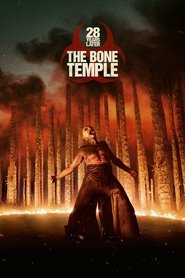
I mean, Carol Borland, who never did anything else except a couple of very minor quickies later in life, sort of made a whole career of giving interviews about being involved with this film and her relationship with Bela Lugosi and her fascination with the genre for basically wandering around in the background in the midst where...
27:39 · jump to transcript →
-
-
-
Robert
So I mean, she comes from the background, of course, with Italian fascism.
10:33 · jump to transcript →
-
Gerhard
In the background there are, again, some scenes that we will certainly talk about, which one day do not work so well.
11:14 · jump to transcript →
-
Gerhard
She comes back to films in the historical background of the 1930s, 1940s, 1950s.
41:11 · jump to transcript →
-
-
director · 1h 43m 5 mentions
-
You know, he's trying to sort of seem enthusiastic about what's going on, and he doesn't know. The great joke is he doesn't know if they speak English. And, you know, again, if you know anything about New York, New Yorkers like to slack if they don't have to. I love the fact the guy's drawing on the cup. And then there's Jerry Stiller in the background as Rico Patron. And so he is, in essence, Garber's partner.
11:56 · jump to transcript →
-
he played fast and loose with the geography. The thing that's so great about this is the frame for all of the geography is laid out in the book, and then it is held sacred by the production and Joseph Sargent, the director. By the way, that is Gracie Mansion, which is actually one of the few freestanding places
31:48 · jump to transcript →
-
The great Kenneth McMillan right in the middle of that maelstrom of people. You know, again, all of these great faces, you know, they're like your pals. And again, with the proper attitude. And I wonder if some of those onlookers in the back are extras or real onlookers. Sadly, there's the World Trade Center in the background there.
40:17 · jump to transcript →
-
-
-
My name is Laurens Straub. I'm sitting here with Werner Herzog, writer, director and producer of the movie "Nosferatu" that you are currently watching. And we now want to talk about that movie. Werner Herzog and I have known each other for about 20 years and have worked together on many different projects. What do we see here? These are actual mummies in the Mexican city of Guanajuato. You have to realize that Guanajuato is located in a gorge. Because of that the cemetery was very narrow and there was no space. So they dug up the bodies every eight years or so, and because of different climatic conditions and the soil, they mummified without human preparation. They leaned them against the walls on both sides in a long underground hall and a hallway. I saw them there many, many years ago in the early 1960s. The story behind this is that I was in the U.S. on a scholarship but I resigned from it a few days in and gave up my legal status in the US because I had to earn some money. Out of desperation I went to Mexico because otherwise they would have returned me to Germany. I went to Central Mexico and Guanajuato and lived there for a while. I did all kinds of crazy things. For example, at rodeos, the so-called charreadas, I rode on wild bulls. Like a complete idiot because I don't even know how to ride a horse, but with the money I could live one week at a time. And there I saw these mummies. Are they similar to the ones at the volcano Vesuvius and formed from lava? No, those are real dried human beings. They barely weigh anything. They were in display cases so we had to take them out and carry them somewhere else. They weigh very little... 10, 12 pounds maybe. Is this something like a culture of death? No, it's completely normal. Isabelle Adjani. She is great at acting scared. That was a real and very large bat we brought in for this. The bat you saw earlier I could not shoot myself. The footage came out of a science documentary because bat's flapping motions are extremely fast, and this was shot with 500 or 800 frames per second. The bats had to be trained with food for that because it took very strong lighting, and normally they would not move under those conditions and not leave their hideout. Here we see Delft. In the Netherlands. That's my city. And I know when Jörg Schmidt-Reitwein teaches students cinematography he first introduces them to Flemish and Dutch painters. Why was Delft chosen as an alternative to Wismar where Murnau shot? Yes, but Wismar was not Murnau's location. I believe that was Lübeck. There is one single shot later in the movie where you see a few buildings that Murnau actually used and that are still standing. I used those as well. We chose Delft because the continuity of the architecture was uninterrupted and we only had to make very few changes in order to shoot there. We took down some antennas and moved a few cars. Other than that it was very easy to shoot there. The concept of "Nosferatu" was definitely to do a variation on Murnau's movie, not a remake in the classical sense. A Biedermeier image like this, for example, is unthinkable in a Murnau film. Moreover, this is in color and the movie's character is completely different. We had to show a very secure bourgeois world. We deliberately planned this, especially the furniture. That was done very thoughtfully by Henning von Gierke who is a painter by trade. With the furniture and the lighting, you can tell that a painter was involved. It reminds me of "Kaspar Hauser" which was done by Henning as well. What era are we in here? That is the Biedermeier era as you can see clearly by the costumes. We researched how to best do the building arrangement and the urban landscapes. Schmidt-Reitwein and I wracked our brains over that. I didn't simply want to recreate paintings. That was never planned. With one exception because we knew we had to work a lot in darkness with nothing but candlelight. Therefore, we studied the painter de La Tour and thought about how to do it if we only had one or a few candles. How do we light that? And Schmidt-Reitwein is exceptionally good at working with light and darkness. This is Roland Topor. - Yes. The famous illustrator, poet, and crazy man. Unfortunately he is already dead, I believe. Yes. - How did you find Roland? I coincidentally saw him in debate on French television. And he laughs in such a mad way. He laughs after every sentence he says. But in such a desperate and strange way that it impressed me deeply. Afterwards I contacted him I told him I was going to shoot a vampire movie and asked if he would play Renfield. Roland Topor immediately agreed. Unfortunately his voice is dubbed in some versions. And it is impossible to fully recreate his laughter. It was his strangest characteristic. What I love about this... I recently saw an exhibition with English surrealistic works from the 19th century. It reminds me of an old office, the cloth, and this blue. It was very carefully lit, and the costumes had to match. Bruno Ganz. And also the faces we chose. Those are not faces that fit into the 20th century. You have to carefully select actors who match. So Bruno Ganz is a great fit for this. The beautiful paper. - Yes. That was so much work, and it was prepared very, very thoughtfully. A beautiful country. Here I see a recurring theme of yours... maps. I already know that from "Aguirre" and other movies. In "Fitzcarraldo" geography is a crucial dramaturgic element. I'm a map fanatic. Oddly, I'm pretty good at determining locations ahead of time, too, because I understand maps. I know which formations you should find in a certain area. I was rarely wrong. It is always about uncharted territory, the Dorado, or doom. Yes, at home I don't have pictures on the wall. A few photographs every now and then, but generally, I can't stand my walls being covered in pictures. If there is anything on my walls of my home it's maps. Oh no. - You will be in danger. This was your first film in English, the first with big stars and a big budget, correct? Well, not really. "Aguirre" is also a big movie with a big star and great effort. But I have to say, we shot "Aguirre" for about 700,000 deutschmark... $360,000. What matters is what you manage to get on screen with the resources you have. To come back to paintings, I like this vase. Yes. Okay. This reminds me of a painting by Seurat. I think the still life-like and emotional atmosphere is phenomenal. But be careful, I always want to show inner landscapes. This was done very quickly, by the way. On that day we happened to have some time and drove to the beach. It was freezing cold, windy. There was foam. We set up the camera in three minutes and sent the two actors, Bruno Ganz and Isabelle Adjani, into the image. We only told them that the music would most likely be slow and solemn. We already had received ideas for the music from Florian Fricke from Popol Vuh. These two, three shots here we did in 15 minutes. We never thought about paintings. It was born out of the situation... - Spontaneously. ...that we found there. Bruno Ganz has tears on his cheek because it was freezing cold. Lotte Eisner came to visit for a few days. We had to wrap her in 20 blankets because it was so cold. I was so proud that she could be there. She was very important for me and maybe for the new German film in general because she bridged the gap to the expressionistic movies back then that she knew very well. She also knew all the representatives of that time. She was friends with Fritz Lang, Murnau, Pabst. She knew them all. For us she was like a bridge to the generation of our grandfathers. We were a generation of orphans who did not have the generation of our fathers. Here I see your wife. Yes, Martje. Martje Herzog on the left. Essentially everyone who was there is in the movie at some point. Later you see the executive producer, the costume designer, the sound technician, and the gaffer. It was also a matter of how quickly can you get something done with very little money. This is the farewell. Bruno Ganz was actually pretty good at riding horses, which was great for me. Now he travels to Transylvania. The choice of the production company... Was this a Century Fox production? No, I produced it myself. Many people believe that 20th Century Fox produced it. But 20th Century Fox only bought an advance guarantee to the U.S. rights for very cheap. They only bought the rights for the U.S. A distribution guarantee. I believe this was... - German Romanticism. Well, you have to be careful. There is a hint of that, but I always try not to be connected with Romanticism because I myself have no real connection with that cultural epoch. Usually I refer to eras before that. The Late Middle Ages speak to me much more. They inspire me. This was shot in Eastern Slovakia. I was not allowed to shoot in Romania where I had scouted locations for months in the Carpathian Mountains. But you also have to see the context. That was when Ceausescu had just been awarded the honorary title of the new Vlad Dracula by the parliament. So he was named the new Count Dracula. That was an honorary title because the historic Count Dracul had been an important figure in the defense against the Turks. This is in the High Tatras, just 1,000 feet to the left was the Polish border. Bohemia? No, Slovakia. - Slovakia? Eastern Slovakia. This is a real group of gypsies that I had brought in from the very East of Slovakia. Among them are a few Czech actors. The gypsies actually speak their own language. Unfortunately I don't remember what it was called. ...my food. I still have to get to Count Dracula's castle today. This is a scene that in a very typical way fulfills all the criteria and conditions of a genre movie. This is one of those traditional scenes. He has to go see Count Dracula, and everyone immediately freezes in fear and the maid drops the dishes. Do you really have to go there? I wanted to integrate certain general rules of the genre into the movie. From there you can go farther and expand. But this right here is a very typical and traditional scene for this genre. The space has this wonderful of depth in the back. And the bed in the background. The set design was by Henning von Gierke who has a spectacular sense for these things. Yes. Spectacular. Parts of this we also built ourselves. The oven and things like that. It was a former hunting lodge of party functionaries. At that point there were only lumberjacks living there. During the day you only found lumberjacks there. ...were already on the other side. Here you have this sense of foreboding and doom. I liked the gypsies so much. They were very good. Watching this reminds me of Degas' "The Execution of Emperor Maximilian" in Mexico. Yes. Careful. Not too many paintings, otherwise... That's just a sign for how interesting and good this is. This is a wonderful face. I also enjoy the way they speak. Yes, definitely. He says you should... They said the dialogue I wanted but in their language, which I believe was not Romani. They translated it themselves and did it very well. You can see this was outdoors and at night which was always a problem for me because I'm not a night person. I had to stay awake until very late, and I've always hated night shoots. I had to force myself to stay up with gallons of coffee. This is also a recurring theme in your films... Native Americans, Mexicans, and Gypsies. Something completely foreign. But also the dignity of these people.
0:04 · jump to transcript →
-
What a great nose this man has. He also did a really good job. Obviously none of these people had ever been in front of a camera before. Casting Bruno and Isabelle...? Because of "The Story of Adele H", Isabelle was already a big star, which wasn't true of Bruno... - No, he was a star of the theatre. ...even though he had just done "The American Friend". There were several films that had made him very well known. He wasn't a big international star, but he was already quite important for the European cinema. Did you choose the cast yourself, or was that...? Yes. I decided that myself. And Kinski as we will see. We always knew we would not make the film without Kinski. That makes sense. For Kinski... The strange thing is that even though we haven't seen him yet, you can already feel his presence. The whole film works towards that. You get closer to him. Right, that is the result of the dialogue, images, and the text. We planned how we would work towards that. In total, I believe that Kinski is in the movie for less than 17 minutes runtime. Nevertheless, he dominates it completely. ...in the graves and the undead. That is great dialogue with the undead and... For this I read a lot of the vampire literature of the 18th and 19th century, and then used parts of it. Neither Bram Stoker nor Murnau have that. You have always been interested in liturgy and things like that, right? Maybe that's the result of a traumatizing religious period when I was younger. When I was 14, I converted to Catholicism. Texts like that, liturgies, or very ritualistic things... The ritual itself. All that resonates somewhere in the background in many of my movies. Along the street... The ritualistic and liturgy necessarily are connected with the film structure and the music. Yes. I also noticed that frequently you use references to the music of the Middle Ages... Yes. Without it being spherical. It confuses me... Then I'll just have to walk. It confuses me that you see yourself in connection with the Middle Ages. I see a lot of Biedermeier here. Laurens, this is not the Middle Ages. That would be mistaken. I am fascinated by the Middle Ages where everything that had been valid for centuries... Knightly life, thinking, and behavior... suddenly fell apart and new ways came about. I'm similarly fascinated with the Migration Period where 1,000 years of antiquity were lost. Afterwards, that knowledge was only preserved in monasteries. It was no longer common knowledge. - Ah, I understand. So here we have a Goethe-like person on his way to the monastery. Here you can associate pretty much anything. It has something very gloomy, and it was shot in fast motion. Here we jump... This was built in the Partnachklamm in Garmisch-Partenkirchen. You enter right behind the ski jumps. I absolutely wanted to shoot there because it is such an impressive location. This is also a theme that already appeared in "Aguirre" or with the waterfalls in "Fitzcarraldo". The interesting ritualistic element reminds me of church choirs. Beautifully done by Florian Fricke. This was a so-called choir organ. It wasn't electronic at all. It sounds as if it was half-natural and half-electronic, but it does sound idiosyncratic and weird. It was not easy to shoot here because it is so very narrow. You can see here that there is barely enough space to let someone pass by. And again Jörg did a great job, I think. Yes. Here we jump to the High Tatras. This is a white water on one of the highest mountains of the High Tatras. These landscapes work seamlessly together. My home, Bavaria, and this landscape have something that makes them look interchangeable. Yes.
17:11 · jump to transcript →
-
All of this was also shot in Delft. You have to know that this was tricky in Delft at that time. They had had a problem with rats for years and had finally gotten it under control. With difficulty, we obtained a permit to release 11,000 rats. Where you see the water were nets. All manholes, entrances, everything was hermetically sealed. In the back of the frame near a small alley was a wooden wall which was carried out when the rats came to close. Nevertheless, we got into trouble with the population, even though we didn't lose a single rat in Delft. Really? - Yes. Unfortunately, that complicated our lives for a while. This is LU beck. Murnau also shot a scene right in front of these buildings. Oh, this is Lübeck? - That is Lübeck. I was confused because the structure does not match Delft. Granaries in Lübeck, I believe. They still stand today. In Murnau's film you see some bushes. To the left or the right you see the large old trees they've become.
1:07:28 · jump to transcript →
-
-
-
John Mackenzie
And as I said to the producer, I said, that's the one thing we shouldn't call it, because I don't want to reveal that this is about Ireland at the moment. I mean, a very discerning guy, if he was looking very closely at this particular bit of film, might notice that it's Fagin's pub in the background. But you'd have to be a fantastic aficionado, and I've seen the film many times, to realise that. So I didn't want to reveal the Irish connection at all, and so we changed the name.
5:01 · jump to transcript →
-
John Mackenzie
What was interesting about that pub, it was so real. We were on Wapping, right next to Wapping Steps, and next to it is quite a well-known warehouse, which is now lots of flats and things. But what was interesting is we built that, even those little pillars are ours, but you see the warehouse in the background, but we built a sort of what was a car park and everything. Well, you know, before we could get in there shooting, cars drew up, MGs, I remember, drove into the car park, they would walk into the pub,
49:25 · jump to transcript →
-
John Mackenzie
The casting of Derek, we had quite a difficult time with that because there were so many different characters, and I wasn't quite sure who to cast. And we didn't have him in the frame until I saw a television player, and he was in it. The thing that struck me was that he did have a very good film technique.
55:41 · jump to transcript →
-
-
-
That's right. ...his background was, which I think is a smart choice. Ultimately, that... Because he's such a bizarre character who has a life of his own. Exactly. Isn't there a porno, a bit of a porno melody? I think... Yes.
37:20 · jump to transcript →
-
I can't think of a better way to start a friendship. We haven't met. I'm Bobby Grady. Joanna Crane. I saw it on the mailbox. What are you, about 30? Still call yourself Bobby? I'll grow up when I'm ready. Oh, I think you're ready. Are you alone? Aren't we all? It's interesting framing of that shot. The two of them from a distance. And they're both going through their own...
1:14:28 · jump to transcript →
-
Again, framing her from a distance. Look, I'm sorry. I know it's late. But remember when you said, if you need me, I'm here? Well, I need you. Come on in. Yes, now she's facing him as Joanna. And it's, we'll see whether or not she can deal with that.
1:28:33 · jump to transcript →
-
-
director · 1h 31m 5 mentions
Alex Cox, Michael Nesmith, Casting Victoria Thomas, Sy Richardson + 2
-
boom that did hurt that hurt that put a bruise on on my ribs even though i was wearing a protective girdle about the size of a cantaloupe well louis told me that he says he wants to be an actor i'm gonna initiate him yeah dick rude dick rude with a sid vicious t-shirt and in the background miguel sandoval prescience and the circle jerks playing and they're listening to the circle jerks later up here
6:07 · jump to transcript →
-
Pretty good. Yeah, yeah. That was nicely directed, too, Alex. You had that floating camera through there. That's right. It was all handheld, wasn't it? Robbie did a lot of handheld. Yeah. A lot of handheld. In that sequence. Check this out. They go to see Mr. Humphreys. Poor guy. And who's that in the background?
54:53 · jump to transcript →
-
Funnily enough, at the same time as we made this film, Penny Spears made Suburbia. And there are lots of little similarities. There's a point at which the executive producer of Suburbia appears on a television within the frame, right about where Michael does in Repo Man. There's a guy who's a murderer. He kills a little kid in the car, and he's wearing a Dodgers baseball cap. And all these little things happen that sort of have something to do with Repo Man.
1:01:02 · jump to transcript →
-
-
director · 1h 29m 5 mentions
Jeff Kanew, Robert Carradine, Timothy Busfield, Curtis Armstrong
-
He developed the honk, and Bobby took it to another level. Yeah. Thanks. This song you're hearing, the Revenge of the Nerds, it's a group called the Rubinoos, but there is a version somewhere where Bobby Carradine and Anthony Edwards are singing the lead on this, but it never got into the movie. However, if you listen to the background track, whenever you hear somebody go, nerds, it's me. Dad, how fast are we going?
2:03 · jump to transcript →
-
When I first cast him, it was off a calendar. The men of USC, that's where I saw him. And he was a model. But he was great and he's still great. He's a great guy and he's funny and much funnier than you'd expect a handsome guy to be. Some of these college kids that we picked up as background players and put them in these scenes, this is a highlight of their life right here. I mean, these kids are... I remember the...
14:09 · jump to transcript →
-
Blonde and who knows what happens to the girl. His first love. Just like this. He's done with her. Use her and throw her away like an old sock. These guys improvised this. Yeah, this was a whole scene that they came up with. I remember they showed it to Jeff while we were there. The framing of this shot I think is classic and I will take credit for it.
44:03 · jump to transcript →
-
-
-
Cheap trick in the background, right? Cheap trick. You want it, you got it. You want it, you got it. And this also follows the great rule of you can repeat something until it's just not funny anymore. And it's still funny. Lily on the guitar is just... Great. I could watch it all day long. Parties are just never like this ever again. There's Spoonie, Greg Spoonie.
28:49 · jump to transcript →
-
Like, I just held them far away from me, so they did the same to me. Nice car he drives, I gotta say, with the... What was that stuff? The thing on the... The bumpers on the... Yeah. What are those called? I don't know. Jack Lord always had them in Hawaii Five-0, so why not Lloyd? We can walk from here. Okay. We did this scene right across the street from where Lloyd holds up the boom box, so right to the right of the frame is where we...
34:13 · jump to transcript →
-
But I came to the set, and I was like, Laszlo, what if we have them like magpies up against the fence, and then they're going to be rapping in the background, and he's, is that cliche? And he's like, no, no, that's good. And this was the scene that the next day Laszlo came to the set and said, I get the movie. Wow. I also remember this was the scene. These guys were great. We were, you know.
1:09:40 · jump to transcript →
-
-
director · 1h 54m 5 mentions
-
My Question Initially To Jean-pierre Was
Dominique Pinon plays in all my films, and for me he is the perfect actor. He's so inventive, so nice, so perfect. It was amazing for me to bring this actor to the States, because Sigourney Weaver and the studio asked me to have Dominique Pinon. I told this story a lot of times, Dominique, but it's true: I didn't hire you, the studio wanted to work with you. I was very happy, obviously, but, I remember, when Sigourney wanted to call you by phone, and we called you in Paris and you didn't believe me. You said... "No. It's a joke." I remember very well that call, actually. The studio were a little bit worried about Ron Perlman. They appreciated the guy, but they weren't sure it was the right guy for the character. By luck, it was the first day of shooting and they saw the dailies. They came to see me on the stage and they told me "You're right. He is perfect." The set is basically what we call the Betty cargo bay, which is just a lovely, beautiful industrial piece of design. All the rust in the back of it. It's hard to convey just how incredible it was in real life, when you walk through it. It was just absolutely staggeringly detailed and gorgeous. Pitof, none of the ships were digital. That's all models? Pitof, none of the ships were digital. That's all models? I would like to make more digital stuff, but Nigel really wanted to have the real texture. I guess he was right because... They're beautiful. They are gorgeous. Is that background digital? Or was that a model also? The background is a mix with the digital and models. We had a model, but the size had been enhanced in postproduction. Also, it's a lot of layers of small things to make the texture real. So it's not just shooting the miniature as it is. There's a lot of work after that - to have the texture, to get the smoke, to give the depth, and all these things. Is shooting miniatures more time-consuming than doing it digitally? It was more efficient to shoot miniatures because the technology of digi was not as flexible as today. The idea about this film is that these guys are a bunch of hoodilums that are smuggling weapons on board a military ship. The thought was: they'll get strip-searched, and they have to have weapons at some point, so Jean-Pierre's take was that the only way you could bring weapons is by hiding them in plain sight. The two places where he thought you could hide them was a Thermos - which somebody is carrying, which turns out to be a gun - and the wheelchair. The thing about the wheelchair was designing it as a breakaway piece of technology, where every piece could reassemble itself into a weapon. Although the idea's really good, at some point the focus on that was a bit lost - you see all the characters breaking out weapons. I'm not sure how clear it is that they're recombining the wheelchair. But that's the way it was designed, as you could actually take pieces of it apart and snap them into weapons when the scene demanded it at some point. That little wheelchair was built on a structure which we called a mule, which is a six-wheeled radio-controlled robot which is a six-wheeled radio-controlled robot that's designed to lift enormous pieces of equipment in industrial settings. That mule was available to us, so Fox said: "If you can design the wheelchair around this, it'll save us money." So that's what we did.
17:58 · jump to transcript →
-
My Question Initially To Jean-pierre Was
Pitof made this shot with the second unit. Pitof was a special effects supervisor for Delicatessen and The City of Lost Children, and now he's a director. At the beginning, he made the shot just for the small things, the creature, and little by little, day by day, he began to make some big scenes. Jean-Pierre said to us that he thought that the eggs in Aliens, I think it was, which we worked on, were lifeless, mechanical. So we said "OK..." So we put all this squirming stuff and bladders in the lips of the petals. So there's lots of organic movement in the lips there, and inflated bladders on the inside. A lot of layers of silicone - especially inside - to you give the feeling of all the gelatinous layers of this inner egg, before we see the facehugger... I was ashamed, Pitof, this day, because I had told you that we'd put a facehugger tail in there. Somehow it didn't get packed with everything. At the last minute I discovered it, and you said "Where's the tail?" And I went "Oh, it's in Chatsworth." Yes, I remember that. You do remember that? I let you down. Sigourney Weaver was so proud to do everything herself. She wanted absolutely to put the ball inside the basketball without special effects. I was very worried, because I thought "We are going to make maybe 200 takes." I said: "Sigourney, we won't use a machine, but please work with your trainer, because I don't want to spend a lot of time." She was so upset about that. She wanted to do so herself, she did that. It was amazing. You will see Ron Perlman... No, you won't see it, because... I had to cut before. The close-up of Ron just after the basket is just incredible. I used it until the last possible frame, because the frame afterwards he was so astonished.
25:26 · jump to transcript →
-
My Question Initially To Jean-pierre Was
I love this shot because it's a simple effect. The ball is on the hand at the beginning of the shot, we do just a pan, and it works. I remember, Sigourney Weaver didn't believe me. She told me "Jean-Pierre, it doesn't work. It's so silly, so weird." I said "Believe me, I am sure." But I was pretty worried about this shot. And it works. There's a shot that you could claim, Pitof, as a digital shot, except it's real. When she throws that ball? It's amazing. This shot was supposed to be digital. What Jean-Pierre wanted is to make an impossible throw. Sigourney did it for real. This shot is real. Look at that. How many takes? I think it was six takes. - Six takes. Yeah. I was here when we shot that, and I feel in her eyes that something was weird. And she made it. Wow. - I had a little problem with Sigourney. The ball is going out of the frame and then back in the frame. I said "Sigourney, I'll fix that and I'll make a perfect path." So you feel the impression that the ball is always in the frame - like this ass - and... That's a silicone butt that we made. That's my favorite shot. I love this part of the film. And... Tell the story of this shot, Hervé. That's one of the famous Jean-Pierre Jeunet's favorite scenes, where somebody's putting polish on his shoes. When I got the rushes, I said to Jean-Pierre: "Well, you remember you did already that scene before." And you just didn't realize it. You didn't remember. The design of the wheels, something Eric Allard had developed way back, right after Short Circuit. Each wheel, instead of treads, they had ball bearings that would roll independently, so it could turn and maneuver. I think he had it patented, and I think NASA was using the design as well. This is a stupid idea. When you arrive in the States the first thing you see is the TV, because you don't sleep. And what do you see on TV? This kind of show. This miniature was not very big. This was pretty small - three meters diameter. That's nine feet to you non-metric folk. And this - you composited Aliens. Exactly. That's miniature and greenscreen. A very composite shot. Was a lot of passes to have the light and the texture and the depth and the atmosphere. For the alien, obviously, it's man in suit. It's very difficult to shoot an alien with a man inside, because it looks like a man inside. You are obliged to shoot very close. Here's Tom Woodruff. - Here's Tom. You were talking about being on the set. Here's the deal for me: being on set in these suits, it's even more claustrophobic than being on set, because I'm literally... I've got some slots for my eyes and breathing, but there's no real interaction between what I'm doing and anybody else on set, in terms of talking or just getting a break. I can interact with the actors and they can respond during the course of the action, but then, once the shot is over, it's like total isolation. But people love you when you're in the suit, Tom. Brad Dourif was great here. It was creepier for me on my side of the glass than it was for him being on his side watching me. I like Brad Dourif in this film. Yeah, he's twisted. Wonderfully imaginative actor. Brad and that creature were dating for a few months right after they completed this scene. I love what Darius did - the slime. He put a lot of care into shooting these and designing the lighting. He, at times, would almost build a cage of fluorescence around the alien, so that you'd get a million little kicks off of the slime. so that you'd get a million little kicks off of the slime. He kept coming back to us and asking for thicker slime, because the stuff in the other movies was too runny. He wanted a quarter-inch build-up, so we went to a slime that was almost like gel. It really had a different look. It was a pleasure to work with Winona Ryder. I remember, sometimes I tried to direct her, and she told me: "Jean-Pierre, take it easy." "I have a lot of imagination. I'm going to give you some improvisation." Remember, at the editing room, everything worked, all the time. In this scene, Winona was feigning drunkenness so she could slip out. Since she's a robot, she can't be drunk. This is a nice shot with the 10mm. It was a very short corridor and it looks so huge. This is a matte painting from a French guy, Jean-Marie Vives. He worked on Delicatessen and City of Lost Children, too. It's fascinating how there's a hint of City of Lost Children in the look of the sets. That's what I love about style, ultimately it just permeates everything that somebody does. That's a clever idea. That's gotta be Jean-Pierre. Very Jean-Pierre. It's great. This set is pretty high, and we used it again at the end of the film in the chapel. The same set but horizontal. - Really? Yeah. - I didn't know. When Jean-Pierre started the movie, he spoke little English - he always had an interpreter with him - and by the end spoke better English than me. Than I. - You see? That's what I'm talking about. It's amazing, because he didn't speak a word of English when he started. Sigourney Weaver loves to have the director very close to her. She hates when the director is very far away behind the video. It was a very good relationship, because, I remember, after a take she looked at me and it was unnecessary to speak. Just one look and we knew if the take was perfect or not. It was unnecessary to speak about the take - just a look. This is a scene that's almost vaguely erotic between Ripley and Call, the two females discovering each other inside of that tube.
27:46 · jump to transcript →
-
-
-
Taylor Hackford
At this point, seeing a guy walk up to him in the bar, Keanu is completely convinced... ...that one of his friends has put this guy up to it. And this actor, who is Ruben Santiago Hudson... ...is a fabulous actor. He won the Tony for an August Wilson play, Seven Guitars. I saw him on stage and just felt, "I want to work with this guy." So when the role of Leamon Heath came up, you know, I had Tony Gilroy... ...kind of tailor the role to fit Ruben, and then convinced Ruben to do the film... ...because he has a very unique quality. He's not your totally assimilated black character. He may have gone to Harvard, he may have gone to Yale... ...but he's maintained a lot of his own roots and integrity, and at the same time... ...he's smart like a whip and he knows he's got Kevin hooked. The next scene that you're about to see hot cut to Kevin's roots: A Southern church, and this congregation is real. Judith Ivey, who is being introduced here as Kevin's mother. You know Kevin was raised in this church, he's coming... ...and taking a look back at his past, was totally fundamentalist... ...and deeply, deeply rooted in Jesus and God. Judith Ivey is part of this group. I had to spend a lot of effort convincing Pastor Lovell and his church... ...in Gainesville, Florida to participate in this film, because I feel that... ...you know, the things that they believe in, the things they're after... ...have everything to do with establishing good and evil in the world... ...and fighting the devil, and that's what this film is about. But they were fabulous, and they really got the spirit of God in them. And I thought it was important to see that Judith Ivey is a believer. She is one with her God, she loves Him. And, you know, she's a formidable presence for good in this film. At the same time, she's a tough mother, and you can see that... ...she has raised him in a certain way and she doesn't particularly approve... ...of what he's done with his life. He's a lawyer, and you establish his wife... ...over at the car, Mary Ann, who obviously is a party girl, a liver, and not... Neither one of them are in church this morning, and Mother is not that happy. This sequence is important to understand that Kevin Lomax understands scripture. He may have made a choice at this point to stay outside the church. If you notice, he's half in, half out of the light. Tony Gilroy wrote this in the script. Kevin Lomax stands outside the congregation. He's half in, half out of the light. He is part of it and at the same time... ...he can't bring himself to walk in. There's a dichotomy in him, which you'll discover later. But in this instance, when his mother calls up and says: "Quote the Bible to me and mention scripture," he can quote it back to her. He knows what he's talking about. He was in that church and a devout member at one point. Now you get a sense of Mary Ann. She is a good person. She's trying to help this character. She doesn't want to get the company to repossess her car. But she's tough, and she's a businesswoman. You also have a sense, right here, of the fun that these two people have. Keanu, you know, biting off her earring and handing it back to her... ...that was totally spontaneous. He came in, did that. It was quite wonderful. Now you have a sense of the married couple. They've got Mother-in-law... ...and Mary Ann's no dummy... ...she knows exactly that she's persona non grata in that household. It isn't that she doesn't like her mother-in-law, but she understands... ...what she needs to do, like have a child. And right now you establish another theme of the film: "Let's give her a grandchild and everything will be all right." Mary Ann is ready. She's working. She's professional. But she's ready to start to have a family. But you hot cut to Kevin Lomax who's taken the deal. He's in New York. At the beginning it's just a vacation. He's going to consult on the selection of a jury. You see Foley Square, the seat of judicial power in New York... ...all the Federal buildings, the State buildings, the local... Everything is right there in one space. It's a very, very sobering look at the power of the legal community in New York City. And at the same time, for a guy from Gainesville, Florida, it's very impressive. Kevin's here. He's excited. He is working as a consultant... ...to one of Manhattan's best and most famous criminal trial attorneys. His name is Meisel, played by George Wyner. And in this moment I wanted people to see that Kevin Lomax truly has a talent. When you talk to criminal attorneys, you realize that they say... ...that between So to 95 percent of winning a case is selecting a jury. This is a scene that I think talks about the inside of lawyering... ...and the reality of how you win. You win by psyching-out everyone that's gonna be on that jury. Those are the people that are gonna make the decision of whether you win or lose. This is where Kevin Lomax shines. He has an intuitive spirit. At the end of the scene, you realize he's got something else. He's got a sixth sense. Now, it's important, when we see this courtroom, to understand... ...that I wanted authenticity in this film. You're in New York. You have some of the best looking courtrooms in, I think, the United States. At the beginning, Warner Bros. wanted me to go to Canada and shoot in Toronto... ...which is an entirely different judicial system and the courtrooms... ...don't look the same at all. I fought to shoot this film in New York... ...not only for the fantastic exteriors, but also for these interiors. This is a film about big-time lawyering, and you want to feel, when you see the sets... ...and these aren't sets, they're locations. You want to feel that this guy is in the big time. He's gone from Gainesville, Florida to the top of the food chain. We shot in probably seven or eight of the best courtrooms... ...you could find anywhere in the world. Look at these paintings up on the wall here in New York. You feel that this is the justice system. Now Kevin is exhilarated. He comes out of his first day... ...in the New York courtroom and he knows he's done well. He didn't know how he would measure up, and how he measures up is... ...he's smarter than they are. I mean, he has to feel great. He's walking down the street. He's saying I'm a guy from the hicks, and someone's watching him. This is the introduction of John Milton, who's played by Al Pacino. It was important to me to establish a very nice introduction to him. One thing that Al did, and you'll start to see into this... ...he chews on licorice all the way through this film. You don't explain it. You know he's doing something. And instead of just walking away, getting in a limousine, he goes downstairs... ...into the subway. Why would he do that? He's well dressed. That's it. But immediately I go into a time lapse sequence... ...and I wanted to see day and night change. I wanted it to also say that this trial's been going on for a long time. When Kevin walks in, Mary Ann says, "You're home early for a change." Time has passed here. You've seen it pass. But more importantly, you see Al Pacino going down into the subway... ...and you see that the next images are not real. There is a certain kind of power that this person... ...we don't even know who he is yet, exudes. I thought that the time lapse would be both unique in terms of time passage... ...and, at the same time, extraordinary in terms of the potential power... ...that this man has. Now you've got Wife and Husband in... Mary Ann's got room service all over the room. Clearly, they've been there for a long time. She's watching TV. She's having a good time. She's been shopping. She's been to a lot of things, but her husband's been gone every day. And now you see the way they play. Kevin looks like he's defeated. It looks like he's lost the case. She feels badly for him. You can really see how she would, you know, how warm and wonderful... ...and sweet she is. But he's kidding her. You can really see the slyness, I think, in Keanu Reeves here. And, at the same time, he killed 'em. He actually chose the jury... ...and won the case, almost an impossible case. It was like a savings-and-loan fraud. This is white-collar crime. The guy sitting there in the trial, with his white hair... ...looks extremely legit. But the fact is that, you know, he's like Charles Keating. You know, he stole not millions, but tens of millions of dollars. And in this instance, the next shot is, they are in John Milton's domain. This is Milton, Chadwick and Waters, and I wanted a location that immediately... ...established the power of this law firm. This is a real building. It's the Continental Plaza in Wall Street, in the financial district, Downtown... ...and you see what New York power is all about. That view is a three-bridge view. You're gonna see all the way up the island of Manhattan. But the important thing here was, this location was used before in other films. I didn't want to use that same look. There's a unique design look here. Bruno Rubeo, who is my production designer and my collaborator... ...on the last three films I've done... ...we spent probably six to eight months before this film began... ...talking about what we wanted from this film and the look. Right now you're looking at Christabella, the first time we see her... ...and if you notice as she walks forward, I slowed down. It goes in real time. There's no cut there. We ramped so she starts in real time... ...she slows down... ...and comes back out in real time. And Kevin Lomax, he doesn't know why he's fascinated by her. We'll find out later. But look at the design in this. It's ultra modern. We used both an Italian architect and a Japanese architect. This is the Italian. He used prefab concrete in the walls. Milton's office. You know, the rest of the building is very impressive... ...but this office is something else again. It's cold, it's austere, and it's incredibly impressive. Look at that fireplace in the background. It's set up off the floor. Bruno had a design in mind. The furniture in this place is... You have a big, massive place. But look at the furniture. That little settee in front of the fire: it's delicate, it's small. This whole room exudes taste and a certain stylistic quotient. John Milton, you know, it's a huge room, devoid of furniture, very minimal... ...this is a man who has real taste and real choices that he's made. At the same time, this whole law firm is very, very modern. For the design quotient of this film, I want you to be able to see this sequence... ...and then later on, when you see where Milton lives, see the dichotomy... ...the difference. This is cutting-edge modern architecture to the nth degree. What Bruno wanted to do, and I wanted to do in this instance... ...is establish Milton's environment. Here it's cold, corporate, but, at the same time, undeniably impressive... ...austere, ultra-designed. Milton is very smooth. You know, Al Pacino always gets this rap: "Oh, gee, he's over the top." He's not. Al Pacino can play everything. And everything he did in this film was calculated. I mean, it was one of the great experiences in my life to work with an actor of... ...his deep, deep ability, his deep, deep talent... ...and his uncompromising attitude towards all his work. At the same time, Keanu, who had this... I'm saying this because here's these... ...two actors meeting for the first time. Keanu, who had done a lot of young-man roles, a lot of teenage slackers... ...in this film is anything but that. Kevin Lomax is precise. He is not a Harvard educated, a Yale educated guy. He came from a small school in Florida, went to a small law school. But all criminal attorneys that are really great usually did that. They come from the street. He's street smart. He thinks on his feet. And he's up against a guy, for the first time, that seems to have a little bit more... ...on the ball than even he does. He's never met anybody before that is his equal. And Milton keeps blowing his mind, like he does right now. You see this office. All of a sudden, he goes and taps on the door... ...opens up, and I wanted this sequence to truly be a moment... ...that would blow everybody's mind, not only Kevin Lomax's. He walks out on a roof terrace and, effectively, I'm using... Again, this is from a Japanese design. Bruno and I saw an architect... ...that had a pond on the roof in Japan, and I said that is a perfect idea... ...for what we want to do here. Here is a man who has such a sense of design and such a sense of grandeur... ...that he has created for himself a balcony, if you will, a terrace, a park on top. But does it have greenery on it? No. It has water. He calls it calming, placid. And at the same time, he's going to take Keanu out there... ...and he's going to talk about his past. He's going to find out a little bit more about him. He asks about his father. Keanu says, "I never had one." He asks about his mother. And in this instance he's, you know, if you look at Al's reactions here... ...this is a long, talky sequence. This is what you do sometimes. By the way, this is real. This is not blue screen. We didn't put the artists in a studio. I fought to get this scene. I fought everyone, including Warner Bros. Nobody wanted me to go up and get this shot. It's on the roof of the Continental Tower. They had re-roofed the place. The building didn't want us up there. I just knew that this sequence was going to define this initial relationship... ...between Kevin Lomax and John Milton. And the two actors are basically 50 stories in the air right now. They're standing on an eight-foot platform. No, it's not right on the edge. It's about eight feet from the edge. But the fact is that they're standing there. We had to get this whole thing in one day, and they have to do... ...a very personal scene while they're perched on the top of this building. You can see Al, at that moment, trying to let us know a little bit how precarious it is. But do you notice any kind of nervousness from Pacino? Not at all. He's easy. And the whole essence here is that Keanu's sitting out there. One, his mind is blown... ...at the beginning, and then somehow he finds himself getting into it. And at the same time, he looks right here and says: "My God, John Milton's standing like a foot from the edge of a 50-story precipice. "What kind of guy is this?" He also wears elevator shoes, which I think is interesting. But the fact is, right here is what the film also is about. It's about pressure. It's about professionalism. And what John Milton has done is taken Keanu Reeves... ...or Kevin Lomax, in this case, up to the precipice. He's showing him: "All this can be yours." And what is it? It's Wall Street. It's the seat of capitalistic power in the world. And he's basically saying, you know, I know you're a hotshot... ...but can you take the pressure? Can you sleep at night? That little speech that Tony Gilroy wrote, I think, fits all professionals in this instance. When you have to deliver on a deadline, you know what he's talking about. Basically, Kevin is there. He's ready. He said, "What about money?" Milton laughs. "Money? That's the easy part." Kevin doesn't have any problem. He can sleep at night. He's a lawyer. He knows how to do it. We cut from that to Carnegie Hill, which is Fifth Avenue in the Nineties in New York. It's probably the most exclusive address in New York. Central Park is on one side. You have these beautiful, beautiful buildings with fantastic apartments inside. And the Heaths. You're meeting Jackie Heath for the first time. I reveal her with that wipe from the elevator, you see her in close-up. Leamon Heath and Jackie Heath, they are absolutely New Yorkers. They've maintained their integrity as black people, but at the same time... ...they are not about to resist the temptations of the city. They want it. They know how to deal with it. They're very sophisticated. Look at the clothes that Jackie's wearing. Leamon makes the money and she knows how to spend it... ...and she doesn't have any qualms about it. This apartment, I wanted to basically establish the sense of awe. You know, John Milton owns this building. He has it for his employees. Although it's usually for partners, and for Kevin Lomax to get an apartment first up... ...shows that he's a little special, and you can feel, right here... ...that they're a little jealous. "Took us six years to get in here." Every New Yorker will understand that when they really want to get into... ...a big building. This is a film about New York. Tony Gilroy, who lives in New York and understands it incredibly well... ...is able to put these nuances in here that are maybe not aimed at everyone. But certainly, you know, you make a film in New York... ...it was important to me that you do something real. Now, you know, Kevin has basically been offered the job. He's got to now sell his wife on it. And this is a big test. If she, you know... He says, "I'll take you home if you want." Of course, if she did, God knows what he'd think. She knows him. She knows what he wants. And at the same time, how could you turn this down? It's very important right now, at this moment... ...to understand that Mary Ann wants this as badly as Kevin does. I mean, who would resist? Come on. They're too big for a small pond. They both want this and, my God, she's looking at this and saying: "Hey, I want to have a family." She says right now, you know, she mentioned kids again. She's mentioned it in the back of the apartment... ...and she mentions it again right now, and she's saying, "I'm in. Let's go for it." And that moment is one of the last moments of true happiness... ...you're going to ever see them have. Now you're at the law firm, and I want to be able to show... ...what big time lawyering is about. These are all partners. It's an international law firm. John Milton has called a meeting. From all over the world, these partners have come. There's Eddie Barzoon, played by Jeffrey Jones, who is Milton's chief lieutenant. He's the managing partner of the firm. There are affiliate offices in major capitals all over the world... ...and you get a sense of what law is all about. It's about copyrights. It's about real estate. It's about EEC and EUC and those kinds of relationships.
11:08 · jump to transcript →
-
Taylor Hackford
...things that we did from research, looking at religions of Dahomey. But as Phillipe Moyez says here, played by Delroy Lindo, this is not voodoo. This is not Candomblé. This is not Santeria. This is his own amalgam of a very old religion. Now, in no way, shape or form was this a desire to put down African religions. More importantly, it's to say that individuals, whoever they might be... ...find ways to establish power, and we certainly know this... ...from preachers of all ilks, whether they be Jim Jones or whoever. The fact is that Phillipe Moyez seems to be in a very weird situation here. He's got body parts in the refrigerator. He is using a lot of superstition here. It looks like a very meager and downtrodden place. You'll find out later that he's quite a rich man. What we wanted is a little bit of a creepy situation here that Keanu is faced with. He's a lawyer. He's representing a client, and that client seems to be... ...completely oblivious to him. But, at the same time, the client was interesting. "I thought I would recognize you, but I do not." It's bizarre. Now meanwhile, Keanu's in this situation and he's now having to confront... ...using his brain, how he's gonna win almost an unwinnable case. They caught him. They caught him dead to rights, sacrificing animals. He's going to have to delve into the health codes. Is he gonna give up or not? You look at this sequence, and what I've done. Mary Ann is redecorating... ...and she's getting one frustration after another, after another. I used digital wipes here to kind of interconnect the two. While she's working and getting more frustrated... ...he's getting deeper and deeper into his research... ...until he finally finds a key that is going to help him in this trial. And Jackie, who is very, very helpful, Miss Helpful, Miss Best Friend... ...and just trying to help. She's very sophisticated. She's trying to help Mary Ann get into what it's like to live in New York... ...and really be a top-rated housewife. But Mary Ann's getting frustrated. Kevin, on the other hand, is getting deeper and deeper into his work. You see him eating hamburgers. She's eating Popeye's Chicken. They're no longer eating together. They're eating separately. They're separate. She's getting more and more frustrated and confused. She needs his help and he's not there. And in this scene that's coming up, you get a sense now of what her life is going to be. This is a scene in which Jackie kind of lays the law down. "You have to understand, it's a bargain. You've got a job. He's got a job." And this is not what Mary Ann bargained for. And I think Charlize and Tamara Tunie, who plays Jackie... ...Tamara is absolutely fabulous in this role, I think. You know, they're girlfriends. They're talking turkey. They're talking plain. Jackie is truly trying to help her. But there's another level going on here. There's a little bit of... ...an animal of prey and the preyed upon going on here. This decor, by the way, you get a sense of Mary Ann's empty apartment... ...and then you can see what Jackie did with hers. This is right across the hallway. It's done to the nth degree. She's paid a lot of money to a lot of decorators. "Look around, honey. "This is why I do what I do. This is what I get paid." And it's kind of establishing here a kind of life of sophistication in New York City... ...which is not exactly what Mary Ann had in mind in a marriage. Now I cut... ...directly to the bacon, as it were. Keanu has developed a defense for Phillipe Moyez, and it's based on religion. It's based on the fact that you couldn't have religious freedom. And I must tell you that this case is absolutely based on fact. There was a Santeria case in Florida in which the neighbors attacked a church... ...sued a church. They were sacrificing animals. And it was won on the basis of the fact that this is ritual and religion has ritual. I mean, religion has circumcision, as Keanu says here. You have kosher butchering... ...which is, of course, how he wins the case. He's got a Jewish judge. And he is defiant here. He is arrogant. He is using a system and pointing out... ...hypocrisies within that system. At the same time with this happening... ...his opposing attorney starts to cough. It might just be a frog in his throat, whatever. But remember, Phillipe Moyez was going to put nails in the tongue of that cow... ...down in his basement, and he basically says, "I have done all I can do for you. "I'm not gonna help you with the case. I'm doing what I can do." And in this moment, where you see a really brilliant piece of lawyering... ...you know, Keanu feels this is below him, but he does do a huge amount of work... ...on health codes and wins the case. He wants to show John Milton: "You may be insulting me with this case, but damn it, I will deliver," and he does. At the same time, his opponent can't talk. Phillipe Moyez, I intercut with Delroy's face, back and forth, and you kind of see... ...there's a moment here in which you start to realize maybe, in fact... ...Phillipe Moyez has more power than we gave him credit for. Maybe there is something else happening here. And these elements of subliminal intrigue, supernatural element, this is... ...in fact it has to have, because it's about the devil, some elements of supernatural. I tried to keep them questionable, are they real, or are they not? Throughout. But they're here. And meanwhile, after they win the case... ...John Milton has been there to watch. He snuck in to kind of watch his new protégé. Look at those frescos in the background. That's a real New York courtroom. You know, just fantastic. Again, another courtroom, a great location. Now I come out and I'm on Canal Street. When you know New York, it's so fantastic. The street life is so incredible. And to me, Chinatown in New York... ...is one of the great places. Canal Street, which is in lower Manhattan, is alive. It's vibrant. It's also a major thoroughfare. You see these huge trucks rumbling along. You see Chinese fish markets and vegetable markets... ...and all those things happening, and that crush of real New York. Now Al Pacino is the kind of actor... I first saw him in Panic in Needle Park. It was his first film. You see him in Serpico. You see him in Dog Day Afternoon. He is uniquely a New York street animal. And what I wanted with John Milton is a man who is incredibly powerful. He's head of an international law firm. He's smart as anyone you've ever met. And at the same time, he was not born with a silver spoon in his mouth. You know he's from the street. And in this scene, he takes... ...his son to the place that he loves. He wants, he feels the vibrancy here. He wants to say, "I saw you work. You're terrific. You're also arrogant. "You've got those good looks. You're tall. You're not short like I am. "You know what I've got are those eyes. What I've got is that ability." Look at those Pacino eyes. "What I've got is that ability to fool people. "I'm charming. I have to sneak up on them." What I wanted from my devil is not the obvious. I didn't want a godlike devil. Pacino said, "Why don't you go to Robert Redford or Sean Connery?" I said, "Well, you know, the devil looked like that before. "What I want is somebody who is bored. He needs a challenge. "He has to overcome obstacles," and in this instance, Pacino liked that. He could have got up and walked out of the room, but he loved it. "Because you never see me comin'." That's the key to this... ...and Tony Gilroy understood it, and we made this uniquely for Al Pacino. Now here's a sequence that I thought was another thing that's important. Pacino is a character you meet. He seems all powerful. He seems like a corporate lawyer. Now he looks, seems like a street guy. He speaks fluent Chinese. Pacino speaks five or six languages in this film... ...and every single one of them is accurate. He is speaking Chinese here. I think what you get out of the character is: here's a man who is all powerful... ...at the same time he says right here, "Stay in the subways. "I only take planes, or the subway. I don't take limousines. That's not me. "That's the only way I travel. Stay in the trenches. Stay close to the people." That's who Pacino is. But you also feel throughout: this is a man who has incredible intelligence. He can learn anything. Cut back to the apartment. There is an evolution happening. Mary Ann is starting to decorate. She's trying to get control of things. She's now become Jackie's friend. She's talking to all the wives in the building. She is building a nursery. That means she's telling him, in no uncertain terms... ...that this is what it's going to be. "I'm staying home.
32:35 · jump to transcript →
-
Taylor Hackford
You know, it's wordplay. It's foreplay. And, as every woman knows, the best foreplay is good words to put somebody... ...in the mood, and in this instance... ...it works with Mary Ann, as you can see. Now we cut and we're on the balcony, outside. There is Manhattan, the reservoir which is right across from Carnegie Hill. You see Downtown Manhattan on one view. You see the George Washington Bridge on the other. And in this instance I must admit to the fact that this is a green-screen sequence... ...because it was freezing cold. Connie's wearing no underwear and a beautiful dress with a lot of skin showing. To be able to get the kind of comfort I needed in this scene, we shot plates of... ...meaning views of this actual location, and then did it on a stage. I think the blue-screen work is very good. But it was important to kind of show... ...the grandeur of New York with these two people out here. Meanwhile, inside the party, you have the motto of the law firm: "Let's ride 'em as long as we can and then eat 'em." You get a sense of the ruthlessness of the law firm... ...and in the background you see the ruthlessness represented by that tapestry. Connie Nielsen is a wonderful actress and, as I said before... ...she speaks five, six languages. She is Danish, but lived in Italy for a long time. She is very sophisticated, and I think what Kevin Lomax is coming up against... ...is Christabella, who calls a spade a spade. She asks him if he's alone. He doesn't, he demurs, he kind of comes up with it and she says: "You're married." She basically is not about to play along. And at the same time she flirts. "You like to be on top," an unquestionably sexual innuendo. And he likes it. He's ready to pop, except Milton interrupts. And Milton has a sense of pride here. He's the head of a law firm. He owns a law firm with two really bright, young lawyers in it, but it's more than that. There's something that you'll discover as the film goes on. There's a relationship between these people he's particularly proud of. And I think, in this instance, you know, Al Pacino's smooth, he's walked around. He's spent about an hour at the party. He's talked to Mary Ann. He's talked to the senator. He's talked to the women. He's in no hurry. But in reality, he's got something else on Kevin's agenda.
46:47 · jump to transcript →
-
-
director · 1h 26m 5 mentions
Underworld Rise of the Lycans (2009)
Patrick Tatopoulos, Len Wiseman, James McQuaide, Richard Wright + 1
-
Patrick Tatopoulos
You know those lenses they're wearing? You have no idea how many shot we have to adjust them later. They keep sliding. Bill actually, he prefers to keep his eyes in at all times, right? I remember talking to him on the first one. It is a little bit strange that he's our only vampire... ... that keeps his eyes glowing the whole time. I think it's... He really loves it, and it helps him with, you know, the... I guess Viktor's just, you know, a little more enraged... .at all times than anybody else. There's only one day when we shot... One or a couple of days? We shot the rain stuff? The fight with Sonja. That was really hard, remember, Richard? The lens just kept falling out. - Because they keep... I mean, the teeth would fall out. It was crazy. He had-- There was something... There was something wrong with Bill's teeth too. His teeth never stayed in. They were always falling out. Nobody's teeth really stay in. No. - There was always the teeth problem. There's probably 50 takes in the movie where Bill's tooth falls out. You had to shoot another take. Just to give credit for the guys. Those teeth are so thin. They're like little veneers so they don't deform the mouth. They, of course, have very little place to be supported. So, yeah, it becomes a bit of a headache, but... I always thought this was a very, very cool scene. You know, it's interesting how an actor like Michael Sheen... ...can absolutely command the screen still being very, very quiet. And he really did... Remember the pain it was to shoot in that dungeon? Yeah, it was tiny. - We basically built a real dungeon. And the walls are covered with concrete and stucco... ...S0 you couldn't take... - It was miserable in there, wasn't it? Oh, God, it was just hot. - It was small. lt was tiny and couldn't turn around. We'd also built it so there was only one or two ways out. So it really was a dungeon. - Yeah. It's a difficult situation where you're limited by what the scene Is. They're across the door. We shot first through the... And then we just, you know, you would just see them through the little... Little scene of eyeballs. - Exactly. It became really unbearable, and we decided, Richard... ...to give this a little time to re-shoot an exterior, because... It was impossible. - Yeah. It is claustrophobic. But it became too much, you saw nothing. It was just like, well... Plus, it's a big scene. It's where they're hatching the plot. The conspiracy. And you were so distracted by the fact that all you saw were eyes... ... through a hole in a grate. Now these were pick-up shots, these were later, right? All of these. This is practical, in front of a green screen. Kind of like the carriage, and this, you know, the background is CGI. And that's, again, Intelligent Creature, James? Yep. - Correct. That's right.
29:02 · jump to transcript →
-
Patrick Tatopoulos
We went for, like, one... One big transformation that I really like is the one where, you know... ...when Lucian regresses. We often see transformation one way, from a man to wolf. This time, it was like from the creature to the man. I was really pleased with that. Michael again gave us the whole choreography there. Beautiful shot. And Dan built us so many corridors. This is all like... I mean, we had a big chunk of corridors. We kept playing, turning around corners. lt was actually quite a big set. It was huge. lt was a three-storey set... ...basically all the way up to the ceiling of the thing. And with short ceiling on the lower floor... ...and then in the dungeon chamber, two storeys. And again, that's the big set. - The courtyard set. And this next action sequence too is an example... ...of just really squeezing everything out of what you've got... ...to make a sequence. I think we had, at the time... ...maybe two practical arrows that came in and maybe two hallways. And one real firing arrow, and just... We were able to be creative and make a whole sequence out of it. Well, this was one of the sequences that benefited the most... ... from Clint coming back with more money. I'm so glad we did that shot of the man in the face too. It was... - Excellent. Again, only one crossbow actually fires. Everything else was, you know, just editorial. You know, there's a huge culture of the weaponry... . like the machine gun in Underworld 7 and 2... ... that when you do a period, you just have bows and thing. lt was important that we have big bad-ass crossbow. They were more like machine guns than anything else. Just because I'm sure the audience liked what you had... ...with the guns, and the rifle and the other one. And that sort of like replaces it in some ways. The very powerful... We played with sound a lot there. So they look like when they shoot, they're really massively powerful. Same arrows. - Same arrows, yup. And who did the CG for the actual men that are getting pierced? We did extensive post vis with a company called Proof. And they had never done final VFX shots. Oh, Proof did that. - They came in and did the finals. They did a great, tremendous job. - Yeah, they're great. No! My lord. I wanted to do that shot so it feels like how big the corridor. I think it's kind of cool to see them walking across. It's a bit of an homage to Jacques Tati. Some things he's done, we see people walking for two hours before they... It's risky, but it sort of worked well with Bill in the foreground.
43:56 · jump to transcript →
-
Patrick Tatopoulos
Now, did his makeup get less? Because when he first appeared, his makeup is quite strong. Kind of white, cakey... - You know what this is? We shot pretty much... - In order? Yeah, in order. Not completely, but not far from that. And there was a sense like it was... Which I like. I like the way it got toned down. It's better. I like Bill's makeup at the end much better as well. lt was a little more theatrical at the beginning. Another scene that changed dramatically... ... from the way that we originally shot it. So here, basically, there is just a little piece of corridor... ...and the green screen at the end. Everything was done by... Duboi did all the cave stuff and the werewolves. This is a gorgeous shot, this one here. All the detail on all the wolves in the background. That's a shot that came first as a very blue shot. You know, It's funny how blue sometimes looks CG. We ended up turning and make it much more brown... ...and I think feels more real suddenly. But I thought it was great to be able to see that many wolves together.
50:55 · jump to transcript →
-
-
writer · 1h 35m 5 mentions
Simon Barrett, Adam Wingard, Greg Hale, Timo Tjahjanto + 4
-
See, so here's when they bring in the comedic beats. And this is actually also Steve, the BP, with just kind of that camera. Right, right. Yeah, it was, I mean, the vast majority of the time it's Jay with the camera really on the helmet. But then sometimes just where the framing was important or the timing.
35:27 · jump to transcript →
-
Epi, actually, a bit of background about him, he was actually more a comedian on TV shows in Indonesia. A very harmless comedian. Yeah, known for doing comedy mostly in Indonesia. And then Timo decided to cast him as a pedophile jerking off in his ABC's of Death short.
46:41 · jump to transcript →
-
He brings so much to the role that probably wasn't there on the page. And what I love most about him is the little things he does outside of the dialogue. Like later on when we see him turn into the aggressor and stuff, I love those little moments. Like the fact that he just hummed that tune that he came up with. And that was completely his own thing. Actually, let's talk a bit about the background of the story. I...
52:16 · jump to transcript →
-
-
-
Joss Whedon
So I asked the question, "Why would I do this, again?" And the main answer was because I wanted to make a new movie. A different Avengers movie. And while providing the things that people expect from the Avengers movie, i.e. the tie-in shot that you saw before, I also wanted to not just tell a different story, but tell it differently. And a lot of that can be seen in the editing and framing and general style, the lenses. In the first film, I was very slavish to 3D. I was playing it as though anything not in the vernacular of 3D was going to be confusing for the audience. And in the couple of years in-between, it became clear that, that isn't really the case. And, besides, 3D really spoke to the way I was used to shooting. I like wide lenses. I like understanding the space around me very Clearly. I didn't like a lot of heavy cutting. I liked shots that would deliberately go from one place to another, very old-fashioned. For the second film, I wanted to do something unlike anything I had really done. It's a little bit like the film I shot right before, Much Ado About Nothing, which was kind of... We had a bunch of great actors standing around, speaking Shakespeare, and, as often as possible, three cameras, occasionally four, at least two, getting them. And quick side note, the mercenary who speaks right here... No, it wasn't. That was a bit I added very late in editing. And that's actually Jeffrey Ford, one of the editors, who just, uh, did it on a mic in the room, and we liked it so well, we kept it. You're also gonna hear his name and Lisa Lassek"s name, those editors who... I don't wanna say saved my life, but I just did. They are so much a part of everything that works in this movie. I'm incredibly grateful. Lot of moving parts, partially because of the way, um, I, uh... As I said, I wanted to shoot this differently. Where the first one was very deliberate, this one was deliberately casual. Yay. [hat little "Yay," by the way, for which both Robert and I have been given credit, was actually Jeremy Latcham, again, saying, "He needs to make a noise there," um, in post-production. And I was like, "Oh, no, he doesn't. "We could do it, but no one's gonna hear it." So, he gets all the credit for that. And we have fo talk about ILM, too, and the extraordinary work they did with the Hulk and with Ultron. I mean, what they did in the first movie was amazing, but this is a completely different level. This is a real performance. And even with all the reference that Mark gave them, it's something that has to be crafted pixel by pixel, and then made human. And I can never stop looking at these guys. Because, again, with all of these cameras and this very different way of shooting, we ended up with something like that, an over, where you see just a blurry shoulder. That blurry shoulder is about as expensive as a face. It's something we could never do in the first movie. But we talked about it specifically as wanting to have the Hulk play a character in the film, not an effect, and to use the same casual vernacular when we were shooting him as we would with any of the other, um, players. And their thing, the idea that Natasha has this power over the Hulk, and obviously this, uh, budding romance with Banner, really came from that scene. That's where it all started. The idea of the lullaby as how they deal with him spiralled up into the idea that Bruce Banner and Natasha Romanoff are actually very similar. And so the scene always made perfect sense to me, and we had Scarlett's side of it, but we really didn't have the scene until just a few weeks before we delivered the film. And even I was kind of stunned by the physicality, the sensuality, and the emotion of that encounter. And it's one of those things where you all say, "This will work," but then you get to feel it and It's like nobody ever told you about it. It's an extraordinary thing to work on something for two years and not understand it until you see it. Or not understand the power it will have.
5:19 · jump to transcript →
-
Joss Whedon
There are two kinds of filming that are really delightful. One is this, kid in a candy store. The other is the opposite, when you have kind of an impossible space. I like that very much because you become more inventive in those instances. You have to think on your feet. You have to let the space dictate the frame to an extent, and that makes it more real, or just possibly more left of centre. But in this instance, I didn't mind the candy store. And the "Science Brothers," as they are affectionately known. Any time these guys get together, it's fun. They're very different in their energy as actors. By the way, give me curved glass and reflections that go on forever, and there is no way I'm not shooting it. I
18:52 · jump to transcript →
-
Joss Whedon
Which, by the way, was another difference in this film than anything else I'd shot. I would stop and say, "Wait a minute, we're gonna get another setup. "We're gonna do something "just because I think we can and should and it looks cool." Generally, because of my background, I have shot exactly what I needed and nothing else. On this film, I shot everything I needed, and then some things I thought I might want. Which during shooting was very liberating and exciting, and because we moved so quickly, was not a problem for the schedule. During editing, interesting side note, it turned out to be the worst idea in the world, and I'm definitely going back to shooting only what I need because that amount of choice can sometimes, like a giant set, be too much. This is one of those cute little ideas. We're on a memory-head track, so that we can do four different setups in the exact same configuration and tell the story quickly. It's one of those cute ideas that takes half a day at least to give you 20 seconds of footage. So I tried to have fewer cute ideas after that. /'// continue to run variations on the interface.
19:50 · jump to transcript →
-
-
director · 2h 9m 5 mentions
-
Again, this is another kind of sequence that would usually be, like, a big montage of a whole lot of quick shots, so it was difficult to, like, not be boring, have a lot of drama, show the storm, have the gimbal not look like a gimbal and really sell that water in the background so that it really feels real, see everybody struggling, but really it's just a shot that's slowly dolling in from wide into Alex's face.
38:17 · jump to transcript →
-
You can kind of see it, Iceland. This, unfortunately, though, is not Iceland. This is Ireland again. Those rock formations that were way on screen left were some rock formations photographed in Iceland and comped in. And then this background, of course, is Iceland that we comped in. And the sand was made black. And this is basically because of COVID.
39:50 · jump to transcript →
-
Our core enslaved people were all really great, great, great, great sports and good. I mean, you know, the extras in this film are good. I am quite lucky. So many things can be, you know, ruined by bad background performers, but we lucked out.
1:25:05 · jump to transcript →
-
-
-
Alan K. Rode
Only this, I went through his clothes while he was showering. I'm quite sure George went there tonight. Kiddo, I think we got something. Nice shot here with a low-key light coming ostensibly from the lamp with both of their faces lit in a dark background. George's cut's going to be peanuts compared to this whole thing. We've got to find out more about the overall plan. You think he'll tell you any more? Not a chance. I could see he was scared stiff because he talked as much as he did.
18:30 · jump to transcript →
-
Alan K. Rode
During shots of other actors, Carey can be seen in the background mugging and making faces. When de Toth was asked about working with Carey, he shook his head and said, what you see is what you get. Early in his career, Carey was reportedly fired off of Ace in the Hole by Billy Wilder for the same type of behavior. Because that's the way he runs. So he goes down, a couple of other horses pile up on top of him. There'd be plenty of confusion, I can guarantee you that.
33:54 · jump to transcript →
-
Alan K. Rode
Today, isn't it? Huh? What makes you think that? Again, Kubrick's composition, the two-shot with both of them at the table, the light coming through the kitchen window that gives you the indication that it's early morning. Even with a limited budget, it's just masterful. I'm in it, Sherry, and I'm getting fed up.
38:21 · jump to transcript →
-
-
director · 1h 28m 4 mentions
Don Coscarelli, Cast Members Michael Baldwin, Angus Scrimm, Bill Thornbury
-
There's a crew guy, and there's my dad in the background, and Reggie's mother. We made this film on a very tight budget, to say the least. And it was very ambitious in a lot of ways. And so there are a few corners that we had to scrimp along the way. Now, right there, that was the first shot of the cuda, wasn't it? Yeah, well, we'll get to that in a second. But I wanted to talk here for a moment about this...
8:17 · jump to transcript →
-
This is a nice bit of acting on Bill's part. The other thing that I found in trying to make a film that had some payoff in it, where you'd have the scares, is that every once in a while you could throw in one of these scenes where there is no payoff, where it's just a suspense wandering around a graveyard, and it would work because the audience knew that since we demonstrated there'd be some payoff and there'd be some more later on. Now, is this a special framing for the Laserdays?
24:15 · jump to transcript →
-
There was a stop sign right in the shot that destroyed the composition, but Roberto Quezada, our visual consultant, got in the van and just happened to accelerate in the wrong direction. And the composition was perfect after that. Creative independent filmmaking. Yes.
31:28 · jump to transcript →
-
-
-
Filmmaker Paul Davis
of something in the darkness. And they put scotch light in the eyes so that you could just see the eyes glowing in the background. But again, for whatever reason, I guess John wanted to conceal the monster as much as possible. And they kept it out of the movie. That guy laying there, right there, he was the former dean of British stuntmen, Paddy Ryan.
16:53 · jump to transcript →
-
Filmmaker Paul Davis
apartment that she's in on her own, so she kind of made up that this character obviously came from a wealthy background. It's one of the greatest scenes in the movie. I remember asking Rick Baker about that makeup, because David Norton has always maintained that it was, you know, out of everything that he endures with the werewolf transformation, he always maintains that that makeup in the woods is
28:35 · jump to transcript →
-
Filmmaker Paul Davis
And the most, you know, the most horrid thing for him is losing loved ones. So it was the combination of those two things, which is why we ended up with these Nazi monsters completely decimating David's family. With the Muppet show in the background as well, which really people did not like.
31:07 · jump to transcript →
-
-
director · 1h 30m 4 mentions
A Nightmare on Elm Street (1984)
Wes Craven, Heather Langenkamp, John Saxon, Jacques Haitkin
-
Ronnie could have ever been married. Well, it was appropriate. But they were divorced. What was some of the background on your relationship? That's what all their friends said. I can't believe those two ever got married in the first place. Oh, and you forgot to mention the fourth character of this film, my hair. I thought your hair was pretty good, actually. It was pretty large.
19:39 · jump to transcript →
-
And the other person that should be mentioned here is Rick Shane, the editor, who did a magnificent job cutting this film. Has there been any background in the text about Freddy Krueger at this point? Uh, no. No. What do you mean, in the text? I mean, who he was and...
27:21 · jump to transcript →
-
talking about it. No, it was... That's a little later. In the film, yeah, it's Ronnie Blakely's... Talks to me about it or something. Well, she tells Nancy what the background was. Oh, yeah. Until this time, we don't even have a name attached to this person. Hmm. You see the beginning of Nancy's ingenuity at this moment. This is kind of her defining brave action, burning herself on this pipe. Right. I love that.
27:48 · jump to transcript →
-
-
-
Plate shots, that is, shots that were filmed as background for titles. Although here, as you see, there are actually no titles, so they aren't in fact plate shots, but simply shots, I suppose you'd call them. Very, very lovely. They do set the mood, I think. Very effective. And now we've cut and we're driving. But are we driving? The picture is...
0:51 · jump to transcript →
-
garden hose piddling down on the windscreen, and so we think we're driving in the rain. Now, these pass-bys had to be precisely timed to the dialogue, so this shot had to be done in reverse. That is, if you were there observing on the set, you would have seen these passing lights being pushed, in fact, away from us into the background, not coming at us, so that their moment of entrance, that is, their apparent moment of exit, as it were, could be precisely timed.
2:06 · jump to transcript →
-
altogether, though, of course, for the sense of the frame, has been composed to exclude the nether regions. Always a sensitive time on the set, of course, the nudity, sometimes an occasion for embarrassment, although this actor, very manly. In fact, I understand that on the set as he stood up, the makeup girl fainted. And now we're in another place, an envelope. We'll get a look at the characters here in a moment. More people, a new place, the plot thickens.
6:00 · jump to transcript →
-
-
-
but he did frequently, and it was always so great when he did. And one of the things that happens when you hold the camera yourself is that you're not just trying to hold the frame. You're not just trying to keep everything. His wife was an actress. Michael's wife was an actress. And so that when a cinematographer with that kind of sophistication, that kind of feeling for actors puts his eye to it, he'll go wherever his instinct takes them because of feeling what they're doing.
1:19:59 · jump to transcript →
-
It's a pleasure to read, really. There's water on the set in case I get an attack of cottonmouth. Yeah, sure. You'll be fine. It's really important for me to use all the research, so a lot of the background conversations you hear is sort of based on an enormous time at research. Best severance pay in the business. He was lecturing me. Finally, I just said, I'm sorry. I refuse to look at it as a negative. I'm young, and my news appeals to people my age. And it isn't as if he just didn't hire a 26-year-old producer himself.
1:21:29 · jump to transcript →
-
I'd like to take everybody out. But I can't tell you how completely I feel as I look at it that in almost every role, the person that we had was indispensable to the picture as it turned out. And when you look at the people in the background, understand that most of them weren't actors and all of them are acting. I don't know how that happened to us. I've tried to repeat that experience since and I haven't been able to, not like this. Bill.
1:41:40 · jump to transcript →
-
-
director · 1h 39m 4 mentions
-
out a message where he was sequestered in his jury saying, please don't choose anybody else until I can talk to you. I'm the best person in the world for this. So unlike Emil to say something like that, that every time I reminded him of it, he blushed. But he was exactly right because he was a brilliant director of dance and just a brilliant and wonderful man. And at first, the studio was not sure that they wanted him because he had this huge ballet background and they wanted
7:39 · jump to transcript →
-
So you see them at various places and sides of the frame practicing it so that when they come down the aisle at the end, it doesn't come out of nowhere if you look very closely. You see that all along they've been practicing it, and that's what at some point Johnny says to Neil, oh, you know, we've been practicing this Cuban rhythm kind of thing, and Neil says, no, do the pachanga. So they really have their own story, their own kind of dancing that they want to do, and at the end they're really totally confirmed with this, and this is the place that starts the...
32:14 · jump to transcript →
-
and you can see life in every corner of the frame here. This will later be where Johnny comes to find Baby. Here we are in the rain. One day the camera crew came to me and said, Eleanor, we see that you have a camera instruction here which says the air is hung with silver. Do you mind telling us how you plan for us to do that? And I said,
40:02 · jump to transcript →
-
-
-
Most of us do. I assume he didn't need background. Like, what's in the actual book? Because we never really get to find out too many of the rules. He just keeps saying, I've got to read that book. Well, that book is blank. Yeah. Not much. It's whatever we made up as we went along. It's a good thing the book doesn't fall into somebody else's hand. That's a dangerous thing to have lying around. Well, I thought about that.
30:08 · jump to transcript →
-
You were talking about character motivation earlier on with David Warner. Did Rene come up with any sort of background? Because he drops these little funny comments about how old he is and all these famous people that he met over the years. Did he ever talk about maybe who his character was, where he came from? No. All those things came from the actual script. And I don't remember having those particular conversations with him.
51:14 · jump to transcript →
-
But I remember it very well because it is a tricky sort of thing to do. But I assume it went off without a hitch, though. Well, it did. And the stuntmen were really good in this. A guy named Spiro Rosatos was in charge of it all. And he brought in good people and they did good things. And I like action. I used to race cars myself. So I have a little background in that sort of thing.
1:13:38 · jump to transcript →
-
-
-
John McTiernan
And a kind of traditional stunt style of shooting is just... Static cameras, you know, like this, what you just saw, you watch the guys get thrown out in the background and you rack focus to Dillon in the foreground, here you... Somebody signals Arnold and the rack focus to Arnold. Now, this is second unit.
23:19 · jump to transcript →
-
John McTiernan
This joke, is Shane's joke. It's entirely Shane's joke. Shane didn't write in an official way but he wrote in an unofficial way like the joke, the pussy joke. He was just there, and he would come up with stuff. Now, the heat vision here, when we first did the heat vision, they had a real heat vision. From the folks in New York City that did the effects stuff. And it was this enormous thing with the umbilical that was six-inches thick and it would, could only get maybe four-feet from the truck. And it really would see someone based on temperature. But there was this little tiny problem, which was the ambient temperature in Mexico was in the 90s. Consequently... People were the same temperatures as the background and they were perfectly camouflaged. So in order to deal with that, the splendid folks in the special effects field said, "Well, it's no problem. "We will put ice water on the jungle. "And we will have the actors stand next to a fire just before their, "the shot," So, they literally were doing that, and they spent about, I don't know, a week getting one shot, maybe two shots. It was just a nightmare, it cost a... Every shot cost a fortune. So, finally, I went off to a video special effects house. They did commercials and things. And I sat down for about three hours, we had to do this in secret. One of the studio...
32:42 · jump to transcript →
-
John McTiernan
these early shots of the predator, I am not sure where we did them, actually I think they were done in Los Angeles. We had, in order to get the predator, we had to, in effect make a hole in the jungle, a hole in the background. And so what they did is they dressed a man in a red suit, and I was desperate to try to get him to swing through the trees or do something that didn't just look like James Arness in The Thing, stalking around, stiff legged. And I got some stuff, I had them build this enormous bungee rig, which actually we got a couple of shots out of. I did some other things to get the guy looking semi-mobile in the trees. What I really wanted was a monkey. So I had them make a red suit for a poor monkey. And the problem was the monkey, once we got the red suit on him, that would separate him from the background and then I could make the effect out of. The problem was, the monkey was so embarrassed by the red suit that he hid! He'd go up in a tree, and he'd cower, and he wouldn't do what monkeys do. He wouldn't go from tree to tree or do anything, 'cause he's too damn embarrassed by the red suit.
42:44 · jump to transcript →
-
-
director · 2h 9m 4 mentions
-
It just seemed to be appropriate, certainly in the shot coming up, as the car has to make the turn and the windmill's in the background. He's going to have to go to Cincinnati. It's always the logistical problems of having to shoot and chasing the sun. That's not necessary. Anything else? No, that's it. Listen, Charlie, if there's anything I can do, just call... Sorry about the weekend, man.
7:18 · jump to transcript →
-
and sort of framing it in some fashion. Because this is really a talking kind of movie, trying to hold on to the visuals where you can find it and frame a certain scene gets to be difficult. You can only sit so long in some of these closer shots. So whenever you can add air to the film, I thought it would be beneficial. Out of curiosity, does he have any special abilities?
1:01:16 · jump to transcript →
-
I like the graphic of that framing of that. It's very simple and straightforward in contrast to where we were just before this. I'm nervous. I know. Listen, I'm glad, happy. I'm happy that you came to Vegas. I know. So, Ray, thank you for the gate and elevator. It was really nice. Yeah. Yeah. Yeah.
1:48:58 · jump to transcript →
-
-
director · 2h 19m 4 mentions
-
He's dead another way, you know. And if you look at the two-camera setup, it was very important that the film was not widescreen, was not 2-3-5 aspect ratio, was not Panavision or anamorphic, I should say. I was still shooting 1-8-5, normal widescreen. But I packed the frame with everybody around Joe and packed the frame with everybody around Ray because there were no close-ups. Because a close-up would isolate them. What's happening in the scene is something that is essential to that way of life.
21:56 · jump to transcript →
-
framing of every shot is so important to him that I remember when he first started using Steadicams, he didn't like it because while it was allowing him to do something remarkable, for example, following Robert De Niro in Raging Bull from down in his dressing room all the way up into a gigantic ring for a championship fight, a very exhilarating shot, he
32:35 · jump to transcript →
-
prefers when he can absolutely control the framing of the shot and he doesn't have to, when the Steadicam operator sometimes is moving, he has to frame, he has to make framing decisions himself. And Marty would prefer to make those decisions. But as he's gone on, he's become more and more friendly to the use of the Steadicam. The famous Koppersad was, it was
32:58 · jump to transcript →
-
-
-
English Commentary
issues in her own life of which she may have felt contradictory on a subconscious level, such as her inner doubt that she can't quite put a name to or get a handle on about Hayward's proposal to her in the earlier scene in the paltrons. In constructing her character and building a background for Madeleine Stowe, the notion was, what was her background? Where was she in 1755? What was her life in London? And we suppose that she lived in an
24:38 · jump to transcript →
-
English Commentary
Right here, there's a father shamelessly putting his daughter, who's in the light blue dress in the background, in the film. She was 12 at the time we made the film and went to work with me every day and worked in wardrobe, getting extras ready with makeup and put in the same 16- and 17-hour days that everybody else did. And then she and many other people became extras.
52:14 · jump to transcript →
-
English Commentary
In the accompanying documentary, you'll see some of the background scenes about the training of Daniel for battles such as these. There was a very interesting puzzle or mystery that we had. These moves in hand-to-hand combat with edged weapons are both elaborately choreographed and very accurate.
1:15:59 · jump to transcript →
-
-
director · 1h 56m 4 mentions
-
I, because my background is painting, spent eight years in art school, do my homework by doing storyboards. So I sit there, and as I'm drawing out each scene for the day, I'm not just thinking about the look of the scene. I'm thinking about who the characters are, how they interact, what the focus of the scene is, what the energy and the drama of the scene is. It's just the way of me exercising and, say, doing my homework. And also, pictures speak much louder than words, because when you get to a set, you give out
7:40 · jump to transcript →
-
we shot all the exterior of the whorehouse in Detroit, on the outskirts of Detroit, with the city in the background, shot at a twilight, which gives me maximum depth in terms of seeing the city. All the interior of the whorehouse we shot actually in Watts in L.A. And this, the actor that brings clowns in the doors, is an actor we found in New York, and it's funny, he was a guy called Paul.
25:07 · jump to transcript →
-
a little bit different, yeah, so the guy in the car is a little harder to move the camera, so the camera's more static, where Christian, we've got a phone box in Six Flags Magic Mountain, so I did a circular track around Christian at the telephone booth, yeah, so the background, the environment's always changing, which is a contrast to Saul Rubinick sitting in the Porsche. But you know, no matter what I do with the camera,
1:08:52 · jump to transcript →
-
-
director · 2h 12m 4 mentions
-
Lynn Bracken's house is going to be Spanish-style, and there's going to be a palm tree in the background. And we had set out by looking at those typical, very well-known, all-in-Hollywood, Spanish-style, beautiful apartment complexes, all of which slammed the door in our faces, sent us away,
1:06:36 · jump to transcript →
-
There was a question actually about the Formosa Cafe over the last 10 years about tearing it down, and thankfully it was preserved. The complexity of this movie with what we talked about is 80 locations shooting in a compressed period of time, most of these scenes at night. Very rarely were all three actors in the frame together, but their characters are all interlocking from each cut to another cut.
1:10:20 · jump to transcript →
-
gets kind of turned on their head one way or the other. I was always more interested in just those guys, especially the Bud character. I mean, it struck a chord with me because he's a guy who thinks he could be a detective, and no one thinks he can be a detective. And I always, as a screenwriter, I come from a blue-collar background and came out to L.A. to work in movies, and I think always felt like no one had too much expectation of me.
1:17:58 · jump to transcript →
-
-
-
Alexander Payne
If you need a reaction shot, you're kind of getting it in the corner of the frame with Tracy reacting.
41:36 · jump to transcript →
-
Alexander Payne
And we have to learn that our actions, all of them, can carry serious consequences. Here I love the glimpse of a tub of, I can't believe it's not butter in the background. I agree. And I also think that certain young and naive people...
55:55 · jump to transcript →
-
Alexander Payne
I mean, there are barely any people of color at all. And typically George Washington Carver is the name of a high school in a black part of town, but not here. And in fact, early in the film when there's a pep rally and Jim McAllister is playing like a cowboy villain, in the background you see a guy dressed up as a peanut.
59:06 · jump to transcript →
-
-
-
Kat Ellinger
But Dupont's cultural background is from a very working class background. It's a background I also really feel kinship to and identification with because it's not dissimilar to my own experience. Dupont, as Gen X came out of the punk scene, she grew up in a working class family. She was raped at 17 and went off to Paris, left home, went off to Paris, became a sex worker for a couple of years.
7:50 · jump to transcript →
-
Kat Ellinger
was really immersed in this scene, this kind of underbelly. And I think if you've experienced that world, you know, my own background is I was in and out of local authority care. And the poem was actually institutionalized as a teen as well by her parents. But I was in and out of local authority care. By the age of 15, I was on the streets. I was living in squat communities. I was sleeping rough.
8:18 · jump to transcript →
-
Kat Ellinger
perhaps from a good background, middle-class background, who is assaulted, raped. It's seen as such a terrible thing, such an awful tragedy. And yet this kind of thing happens in these kinds of communities all the time. And there's almost a sense of the commonplace of normality to it, which is why Manu's reaction...
10:16 · jump to transcript →
-
-
director · 1h 57m 4 mentions
-
It's pretty much up to that, and all Beijing photos, drawings. And the usual lousy background action. Sorry. Some things just will always bug me. Those two guys, like, fighting back there. What is that? What were you thinking? This is good stuff, though. I like this.
22:59 · jump to transcript →
-
That's my idea of a detective story. Like that. Well, it's also she's a great detective because she's empathetic. Because she actually can project her own feelings onto Zhang Ziyi's situation. Cinematic power, photogenic. Both women has that. They carry different things. That actually, I'm sorry to say, has nothing to do with acting. I came from a theatrical background. I used to believe in acting totally. But, no.
26:19 · jump to transcript →
-
This is also another first day of shooting. First day of shooting. We got the dailies back and everybody in the editing room was like, are they on some stage? Is that green screen, Dan? I mean, it looks so fake. Glazier in the background.
1:09:56 · jump to transcript →
-
-
-
Danny Boyle and Alex Garland
Somewhere around here there's one of our deliberate mistakes coming up. I've always imagined that there's a car moving somewhere in the background. It's not here. Where is it? It's along the embankment. Alex is convinced there's a car somewhere there. It was while you were talking. We think he's just trying to undermine the film.
9:37 · jump to transcript →
-
Danny Boyle and Alex Garland
This is a very busy part of London, Tottenham Court Road and Centrepoint, famous empty building, or partially empty now. When we originally, we used, we didn't use music at first in this sequence and that used to, that moment with the alarm going off used to give you a heart attack if you didn't have some kind of background music. So we used this track from Godspeed You Black Emperor, this French-Canadian anarchist who gave us permission to use their music, this driving, apocalyptic music.
11:54 · jump to transcript →
-
Danny Boyle and Alex Garland
I think that's Frosty the Snowman you can hear in the background there on the music. That's the most expensive bit of music in the whole film. It's cost some phenomenal amount of money to pay for that. Really bizarre the way these things trip you up. Later on you suddenly find out something's hugely expensive. And suddenly there's just this big injection of warmth into the film as soon as Brendan Gleeson appears. Big smiling guy.
35:06 · jump to transcript →
-
-
-
Ted Tally
To me, the relationship between these two characters was always the heart of this movie. It was a huge emotional part of the book. It had not been really dramatized to this extent in Manhunter, which had other concerns like the police procedural main plot. It was really Will Graham's Story. I thought, "Well, the book is "almost as much Dolarhyde's story as it is Will Graham's story." I was fascinated by this kind of Beauty and the Beast Iove story and the idea that he feels something very close to a strange love for this woman because she is not judging him, because she can't see the ugliness inside him, that he feels everyone can see. This is kind of the beginning of the relationship between Reba and... This shot coming up is my favorite shot with the people with the umbrellas, kind of silhouette in the background. This is a huge step for this character to take. He's scared she's... She has no reason to be scared, but he's terrified. This is actually the first thing -/ shot with Ralph and Emily. - Really? Yeah.
52:18 · jump to transcript →
-
Ted Tally
Clever work on his note, by the way. This mirror was kind of really disturbing, looking at it. It had this weird distortion. Put me next to him! That was tricky. It's similar to that shot in their first scene together. Where the character in the background is out of focus. Go on, then. I love that one. "Seduce me with your wares." It's not in the book, but it's the kind of thing that you figure out... He never says anything in the most simple and obvious way. There's always some kind of game going on where he's amusing himself with his word choice, too. Bit measly, don't you think? Tony did not change a word of this. I love this. He's an actor who does every line as written.
1:22:41 · jump to transcript →
-
Ted Tally
He's breathing heavy. It's probably the first time he's ever kissed a woman, or a living woman. Now, would you show me where the bathroom is? Then we went back and re-shot this. Why? For this insert. And that's digital blood in the water, believe it or not. It's done by the computer. It's just a wonderful little moment, because she can't see the teeth in the jar, or the shattered mirror. She doesn't realize the increasing danger she is in. Again, you're telling a story with visuals and not with dialogue, that really means very much. I have to do a little work. If I'm keeping you from work... - No. ...I'll go. - I want you to be here. I do. It's just a tape I need to watch. It won't take long. This is similar to my scene in Family Man, where he's watching the videotape. Another family movie, right! - Another family movie. I did the same thing with Danny, where he transitioned the recorded music on the tape into score. So now, this music in the background... - Right. Which is Duke Ellington. - Duke Ellington transitioning into the score. Right. No, it's great.
1:29:23 · jump to transcript →
-
-
director · 1h 55m 4 mentions
-
There are times when people work for nothing on a movie. In this case, people actually paid the production to work on the sequence. The background plates were done in three days without a motion control camera, which is something of a miracle and something none of us want to try again, especially my gifted cinematographer, Amir Mokri, who had to operate himself.
2:08 · jump to transcript →
-
Yuri's journey, Nicolas Cage's character. He also starts life in Ukraine and eventually is responsible for the death of child soldiers. Hopefully this sequence sets the tone for the film. I wanted the film to be subversive. It's the reason this peacenik anthem is playing in the background. It's the same with Yuri's narration in the film. The narration was...
3:06 · jump to transcript →
-
Coming up, this shot of the ship leaving harbor. You can see Cape Town's famous Table Mountain in the background. Again, I was going to remove it digitally, but that budget thing again. One of the greatest heists of the 20th century.
51:41 · jump to transcript →
-
-
-
John Cameron Mitchell
with the short bus going by as we zoomed. It was actually when school was out when we started shooting that. How? Maybe they had a little summer trip. All buses in New York City are short buses, actually. Which means... Except for the one that's just about to pass in the background. Okay, so you see those two Chinese characters behind me? Oh, yeah. They are...
9:59 · jump to transcript →
-
John Cameron Mitchell
you know, trying to teach and learn wherever she can. And so she watches pornos, right? And in the pornos that I watch for, you know, background knowledge for the character. Of course. The straight pornos, people are always slapping their wahoos, you know? Their what? Their what? They're either spitting on their snatches or slapping their...
49:28 · jump to transcript →
-
John Cameron Mitchell
This was a scene that we also went way off script to have fun with and just loosen it up. And remember right after it, I ate pussy for the first time on that same couch. You did. I'm glad you did it after. I'm so anti-woman. I'm telling you, John, we're going to get ourselves some nice girls out of this thing. In the background is Dirty Martini, a Miss Exotic World 2000-something.
56:50 · jump to transcript →
-
-
director · 1h 36m 4 mentions
-
our nickname for the Predalien. And he's establishing his dominance over the little newly shedding warriors. Bitch-smacked the warrior around and then gets to have his way with the homeless lady. And this is one of the homage shots, the original Predator. It's very, you know, the whole layout and composition of the shot was very similar to the opening of the original film. And again, obviously, this is a visual effects. You want to talk about hydraulics a second, guys?
19:22 · jump to transcript →
-
You know, they have the same evil sort of sense of humor as us. We got along with them really well. And they also come from a similar background from us. I mean, they both own the company, like me and Greg own Hydraulics. And they're also both artists, which me and Greg also still are. So it's like everything we do, we're very much in tune with each other. And, you know, it's just in different parts of the same field, basically. So this is the extended scene inside of the Predator crash ship.
20:48 · jump to transcript →
-
And why did you pick the name Hawkins? Well, it's a little throwback to Predator 1. Okay. You know, if you actually read closely, there's actually a couple of the guys from Predator on some of these tombstones here. On the different tombstones. Somehow they all managed to come back to Colorado to be buried. Yeah, I think Jesse Ventura's character was in there as well, but it was in the background. I don't think I ever really see. But we thought the Hawkins thing was kind of just a cool little, you know, a little throw-in for people that noticed it to get a little chuckle out of it. This is also our anti-smoking PSA. Yeah.
57:50 · jump to transcript →
-
-
director · 1h 52m 4 mentions
-
I'm Hit-Girl. And that's Big Daddy. Hopefully you don't notice the visual effects in this film, because this is, um, you know, we didn't shoot it in New York. I mean, these are all sound stages, and we put New York in in the background and stuff, and, you know, DNA did the work, and I think they did a fantastic job. We had hardly any money. I mean, I think we ended up, I think we budgeted for 100 visual effects shots. We ended up doing 820 and, uh, around 820, and, um,
42:21 · jump to transcript →
-
I think it's very important, pacing-wise, just to have a little bit of a calm before the storm, and a huge storm is now coming over the hill. It's pretty obvious what's going on here, why the framing is. And we cut an earlier scene where you see he used to go to the graveyard to read comics at his mother's grave, but Mark Millar was in the shot as well. Trying to do a Stan Lee.
1:09:59 · jump to transcript →
-
back office, which we ran out of money and we couldn't afford to build another set. So we just nicked all the guns from the set we had built and changed the color of the background and put them all up again. So low-budget filmmaking at its best. If you look at the radio, I mean, that really is a crappy little storeroom in Elstree.
1:20:24 · jump to transcript →
-
-
director · 2h 32m 4 mentions
-
periodocs that we needed, but also just the complications of shooting at night and capturing live sound. We thought it'd be better to commit to doing some of these big set pieces in a studio environment where we can control it. And so what we do is we do sky replacements where in shots like these, the foreground separates it off the studio ceiling and we put night skies in.
23:52 · jump to transcript →
-
I was born inside a jail. I was born a scum like you. I am from the gutter too. In the musical construction, Valjean is singing something over the top. So I never really heard those lyrics. And when I was reading the lyrics for the first time, I saw the huge power of this idea that Javert comes from exactly the same background as Valjean. And in fact, in the novel, we learn that his father was a convict and he grew up in a prison. And early on in life, Javert felt he had two choices in life.
44:57 · jump to transcript →
-
And here, another addition in the film is the role of the grandfather that's actually explaining something I thought was very interesting, that Marius is from a wealthy background and has given his wealthy heritage up in order to pursue his political cause and lives in this, you know, shithole of a slum by choice.
1:09:42 · jump to transcript →
-
-
multi · 1h 33m 4 mentions
Wes Anderson, Peter Becker, Roman Coppola, Jake Ryan + 3
-
Wes Anderson
Exactly. The thing I love working with digital effects and things is compositing things. It's the ability we now have to take something and replace it, or reposition it, or change text, or modify things in the frame that are absolutely indistinguishable from if we had filmed it that way. All the time we rewrite text and it disappears. But that's a different kind of effects work, I guess. You know, it's often the signage. Probably, I would say, 80% of the shots in the movie have some kind of visual effect. And that all happened in postproduction.
6:42 · jump to transcript →
-
Roman Coppola
Well, yeah, I wouldn't even-- You know, what could I say? Bob is a very... He wants-- You start. - [Anderson] I have one thing. First of all, over all these years we've done different kinds of movies together, but more and more we've kind of geared ourselves towards being more free and being a little more New Wave with the way we make the movies. Well, this particularly takes advantage of... one of Bob's especially great strengths, which is he's a very, very good camera operator. One of the best. And very dynamic, and he can do things that other people just-- that I've seen other people incapable of doing. And he's-- - [Becker] Camera movements? Keeping the frame you want to see through movements?
59:46 · jump to transcript →
-
Peter Becker
Can we talk a little bit about music for a minute? You know, we move fairly seamlessly, especially in this film. And here I'm hearing in the background...
1:19:44 · jump to transcript →
-
-
director · 1h 29m 3 mentions
-
From this point on, from this point on, we stop looking at him in the same way. Yeah, he also becomes... Yeah, there is... He's also mad. I mean, that's... Yeah. He's right and he's romantic, but he is also insane. Isn't there a touch here of Jack Nicholson in The Shining that really he's pretty much over the edge right from the beginning? Oh, yeah, yeah. There's nowhere for him to go. He's Bruce Stern. In fact, Jack Nicholson wouldn't have done this film because he was a bit... He'd moved on to doing different types of movies. But he would have been in the frame for the casting.
28:04 · jump to transcript →
-
Yeah, I suppose it's sometimes now when we look at visions of the future, what we see are the absences of things like the internet and mobile phones that we absolutely now have as central to our lives, but mysteriously will have disappeared by the time of the Star Trek series. Something we haven't talked about here, as we see the drones on the screen, is that there's currently a furore about actors playing something which is outside their own actual ethnic, whatever, background. Yeah.
35:24 · jump to transcript →
-
the thing that runs throughout his films. And it's odd that we were talking earlier about how the science fiction aspect of this film, the background, the world building, is very poor. But on a micro level, the technology is very good. It's very credible. And it's almost like that was what he was interested in. I mean, the writers of this script, who are a very...
41:23 · jump to transcript →
-
-
director · 2h 52m 3 mentions
-
And so what we did is we looked through all the shots and after I had said cut, there would be maybe a few feet of just empty corridor and we took those. And you'll see later in the sequence when you cut to an empty corridor, those are just the little ends of shots that happened to be after the actor walked out of the frame, there was a little piece. So advice to directors, very often the most important stuff that you get
1:02:33 · jump to transcript →
-
He's locked up. What the hell are you doing here? What happened to the men who were guarding my father, Captain? That actor along who has the lines in the background there is Sonny Grasso, who is one of the real fellows from the French Connection that that story is written about. Phil, take him in. The kid's clean, Captain. He's a war hero. God damn it, I said take him in. What's the Turk paying you to set up my father, Captain?
1:08:43 · jump to transcript →
-
We of course didn't go to Las Vegas for the sequences in Las Vegas. These are second unit shots of signs of the period and we actually shot the scene, the interior in the hotel in New York. This is one of those really cheap second unit shots we did. I was very embarrassed by this because in the background you see there's like hippie looking guys that are not correct for period. Now we're in New York where we shot the Las Vegas sequence.
2:19:19 · jump to transcript →
-
-
-
And I had this really, really bad flu. I could barely stand when we were shooting this. And I was just in the background saying, oh, my God, I wish this day would end. Dual aspect. So with an actor like Stephen Berkoff, who presumably could command a reasonable salary at that point, how many days were you able to book him for across the whole film?
16:11 · jump to transcript →
-
really yeah we only have 30 days to shoot this whole film and uh there's a lot going on frankly uh quite a few locations it must be quite difficult to shoot directly into such a bright light and yet preserve detail around the edge of the frame that's quite a quite an ambitious shot really and comes off perfectly so
52:29 · jump to transcript →
-
questions about how on earth you can make a character who's a pimp with such a questionable background work as a heroic character, he would have found a way and said, yes, I guess you're right, let's see if we can pull him up by his bootstraps a bit and sort that problem out. I think he would probably have gotten in there with a bit more time, solved those problems with and for you. I believe so, yeah. But that's...
1:14:36 · jump to transcript →
-
-
-
Fred Dekker
Beautiful backing there, by the way. That's fake. Yeah, that looks as real as anything. Okay, he jumps. Now, we were actually going to do a stunt and put him on a rappel line with a camera and follow him all the way down. Oh. And the night before, I could see Dick just had little beads of sweat on his brow like, okay, this will be great. Yeah, Fred, I'm looking forward to it. And then we just decided, you know what, it's really funnier if we just see him in the background splat to the ground.
46:57 · jump to transcript →
-
Fred Dekker
A gag, which was a gag that ended up being repeated in The Shadow about a year later. Oh, is that true? Yeah, there's a very similar gag where someone is thrown out a window and then they cut two characters walking out and then you see them in the background falling. Was that Russell Mulcahy? Yeah. Yeah, he stole it. Bastard. Now, we talked about tone earlier and the first Robocop movie, it's a very specific tone and I don't think...
47:30 · jump to transcript →
-
Fred Dekker
just do these really big wide shots and just do this really... This part of the movie feels really expensive. Well, that's very heartening. This was basically just a street in Atlanta. Yeah, and it feels... It's got a nice lived-in quality to it. Now, that tower in the background, that's actually a hotel, but it resembles a tower in downtown Detroit, does it not?
1:22:40 · jump to transcript →
-
-
-
Peter Hyams
And this is all Los Angeles. Air One, make a final sweep. This is Los Angeles and actually the buildings in the background were added in because it was a wide open street.
15:47 · jump to transcript →
-
Peter Hyams
rooms lead into other things. I'm fixated on the depth of a frame. The width of the frame is not as important to me as the depth of the frame, and I like having a fairly dark foreground and having an archway or a doorway that leads into a lighter area. It's not the most unique thing in the world. It's been done by people far greater than I, except I like when the eye is drawn to the depth of the frame.
33:28 · jump to transcript →
-
Peter Hyams
and you didn't want to see him put in this position. You'd be amazed what you agreed to when you're on fire. Don't do it, Bobby. You're better than this. You're better than him. You know, considering how you've lived your life when this is all over... I love long lenses. I guess you could see that because this film was shot with long lenses. It's gonna happen. Why shouldn't you have the best seats? Look what it does, though, when you take a close-up and you push in on somebody and you... Everything in the background is soft and the eyes are pin sharp.
1:36:45 · jump to transcript →
-
-
-
Simon West
Now, the company wouldn't actually lend us one of their cars for the film, so I had to go to a private owner. But unfortunately, the insurance was so steep and expensive to have that car on the set that I could only afford it for one day. So we had to make a polystyrene double for the car. And so all the wide shots in the action sequence in the background, the McLaren is actually just a very crude styrofoam version of the sports car. After a fashion...
31:13 · jump to transcript →
-
Simon West
operator David Emmerichs flying so the shot looking between the guys is all I had of the rocks falling towards us and the frame later all you see is the camera hitting the ground and then clouds and sky so I think David was very upset that he didn't manage to get the great shot from the front and I had one take at it but that's why you have three or four cameras because I had the side angles and they work perfectly as you see so that's what ended up in the film.
42:46 · jump to transcript →
-
Simon West
that I would love to go back and shoot there again. Now, when Lara falls through the hole in the ground and she's tumbling through the earth, I shot this in one of the oldest techniques possible. It's not blue screen or green screen. It's not CGI. It's literally her standing on the ground with a rolling background
44:51 · jump to transcript →
-
-
-
Len Wiseman
Yeah, that could be a real problem. Now that I know you better, as well, how am I ever going to look at you? Here's the scene that was cut... This is something I think... - What's she got on? A flesh-coloured bra? - Right now. When you're watching at home, you're not gonna see.... We're watching something that doesn't have the letterbox. I don't understand. What do you mean? She has pasties. - Yeah. And so they-- You can actually see them in this cut. But once everybody watches at home, like now, they're not gonna see that. What does that mean? You digitally removed pasties? No, no. It means that the letterbox.... The black bars on the top and bottom of the frame... Oh, I see. Right, okay. - It's within that frame... ...So you're not going to see it. It's cut out. But we did. We saw them. - We did. You knew that was going in the trailer as soon you saw my shiny bottom. I told you that day. - Yeah, I was so pleased. I think I even apologised upfront to say... ...that this will be in the trailer. - Why would you apologise? It's an ass shot. - Yeah. It also shows the mansion. It's also a dynamic shot. But if she was wearing a coat, it wouldn't be in there. Okay. Well, all right. If you wanna get all cynical about it.
1:06:42 · jump to transcript →
-
Len Wiseman
Oh, and you weren't here for this whole... Were you very glad, because the other babe was there? Yeah. That helped take some of the pressure off... ...but the-- Well, actually, this whole costume, we had a "wardrobe flaw"... Her whole boob escaping. - ...aS Janet Jackson would say. Poor you. Poor baby. - I rushed in as soon as I heard. Yeah, you're really good like that. How have you done that? That's CG, right? That's CG, which I don't think you've even seen yet. We shot that practically, and it just looked horrendous. It looked like three blind mice kind of popping up. And this was all a reshoot that we did. - Oh, really? Yeah, this was all back in L.A. We had a good time. It was just blood and guts. That's me throwing the paint across the window. Oh, is that you? - Yeah. Can you do a bit, like, when my coat flaps around, you're flapping it? That's the prop guy. - Very hands on. Yeah. What were you thinking right here? - "Is it nearly lunchtime? Should I buff my bottom? Am I gonna worry about my camel toe?" Remember how many people were on camel-toe watch because of that suit? No, it became "CT." I would just yell out, "CT," and, "Okay!" There were four people who made it their mission. This is new. This is a new shot here that's just showing Speedman... ...dreaming about the Olsen twins. And so we had some flashes that were supposed to happen right there. This is in the original. Coming up, there's a section where Viktor takes out some of the implants... ...and you see him unhooking himself from that stuff... ... that we had cut out of the original. This isn't it, right? - Yeah, this is. These shots, though.... These, I did all those in post. None of those shots... We didn't take any of the lights down. lt was something we did as an afterthought... ...and just darkened it to make it look like all the lights went down. It actually worked okay. I was worried I wouldn't catch it. I didn't have my glasses on. I couldn't find the takes to put on the outtake reel, but... There weren't that many, because I'd been practising like crazy. Oh, it didn't show. - Oh, really? Look at that. Yeah, look at that. Look at that now. - I was so proud of that. lf someone throws something at me, I tend to duck and wince. The amount of windowpanes we had to replace in the background.
1:14:38 · jump to transcript →
-
Len Wiseman
I think you arranged that hair yourself, didn't you? Oh, I always arrange the hair. We gotta figure something out for the sequel, some kind of moulded shell... ...some helmet that looks perfect, that doesn't move. I might do that Olsen-twins movie myself. Well, it sucks because there's so many elements in a shot... ...and the fact that the hair makes you do the shot over is really frustrating. But if the hair falls in your actor's face... ... you just can't use it. And it was just an ongoing battle. Did you ever let the art department do this... ...or were you busy all over this thing as well? No, I let them do it. For these shots, I would arrange it... ...and just pick a bunch of stuff off and put it together. They went crazy around the office. Actually, the first attempt to do that bulletin board... ...which I said should look like some really creepy homicide board, was... They went and took a lot of pictures of people in the production office. You actually see people at drafting tables. And other people are kind of looking and smiling into the camera. And I said, "It's supposed to be surveillance photos." It's a little bit too chummy. - Yeah, a little bit too aware. You've got a guy with an illustration of a crypt set in the background.
1:27:19 · jump to transcript →
-
-
-
Francis Lawrence and Akiva Goldsman
We are all used to a lot of, especially in American movies, we're used to a lot of words. And it was really exciting to strip them down in rehearsal, in the making, and even in the editing of the movie, just to let the composition, performance, and story architecture sort of shine through. Yeah, but we had to be very, very specific too in the creation of the scenes and the layout and what kind of information emotionally we're sort of doling out. You know, are we doling out the feeling of family?
10:31 · jump to transcript →
-
Francis Lawrence and Akiva Goldsman
You know, we wanted to shoot this in front of Grand Central. It was one of the trickiest things. The city had never shut this viaduct down before, and we needed it for six days. So they let us do it over three consecutive weekends, six days. So we would actually shoot for two days, go away for a week, shoot for two days. We really lucked out again with weather. You know, there was one moment where you see the mannequin move, and we had actually had a little thing running where we cast people to play our mannequins. And in the background of some shots, you can see they're real people playing the mannequins and not
46:17 · jump to transcript →
-
Francis Lawrence and Akiva Goldsman
This is fine. There's a gas tank. That's an actual practical explosion and things being pulled with wires. And that's not a real person. Yeah. I like that bit there. Yeah. And that's surprisingly, like, stunts usually suck the first time you do them, and that was the first time. That was actually kind of nice, that whole explosion and Will in the foreground. You just said splosion. Explosion? Explosion. Boy, he's fast. Yes.
1:23:31 · jump to transcript →
-
-
director · 1h 43m 3 mentions
-
including sharing proprietary software, passing backgrounds and foregrounds back and forth, depending on who was responsible for what. So there you have a Rhythm and Hues background and a digital domain under mummy, and here we're back to a Rhythm and Hues terracotta mummy. Dad, what are you doing?
1:06:31 · jump to transcript →
-
We built this huge head of jet in the deserts of Tian Mo, a very inaccessible place, way above Beijing. It's a site where the original wall actually still ruins of it. You can still see the northern wall and that wall that you see in the background we built.
1:24:47 · jump to transcript →
-
Oh, that was Mark Petrie dancing by there, my co-producer, right-hand man. Thought I'd give him a plug for all the hard work. That's Derek Spears, the little guy looking down the girl's dress. There to the right are Brendan and Maria. Maria in a beautiful silver lame dress that Sonya designed. Vic Armstrong is dancing with his wife in the background. And if you go back and you see this bald little guy dancing with the tall, beautiful pregnant goddess,
1:40:34 · jump to transcript →
-
-
-
Eng Commentary
Note that the signature shot, that is, where the director places his own name, occurs at the unique moment of perfect framing by the base of the Eiffel Tower. The film on many levels will seek such a balance of the unsteady handheld look of cinéma vérité, the disorderliness of life itself, and yet the perfection of form, the balance that comes only from art. It's one of the light touches of mastery that gives The 400 Blows its charm. As if it were a novel and he its author, Truffaut dedicates his film to his mentor, André Bazin,
2:35 · jump to transcript →
-
Eng Commentary
Without denying the imagination, the artistry, and the great filmmaking craft that have gone into the making of The 400 Blows, such biographical background helps us to understand the ways in which the film's story is so deeply felt and so sincere.
1:22:29 · jump to transcript →
-
-
director · 1h 59m 2 mentions
-
At war's end, he remained in Europe and became a theatrical and vaudeville booker. Director Guy Hamilton recalls Harry Saltzman's reaction to filming on location at Circus Circus. I think Harry was very happy with the Circus Circus, using it as background, because before the war, he'd worked for an agent in France who, amongst other things, handled circuses when they were out on the road.
47:06 · jump to transcript →
-
And I think we had to build it on a platform to accommodate him being shoved overboard. And I think for the background, I put a lot of crinkly material on the backings to give it the sea effect. We didn't use plates or anything like that. And it's a very funny scene. Very, very funny scene. Shashlik. Tidbits.
1:55:22 · jump to transcript →
-
-
director · 3h 16m 2 mentions
-
It's a pretty neat sequence now that I think of it. We resurrected all that machinery to make the fountain work. It was sort of, I believe, a theater that wasn't being used, but it had once been used like this. I've done this in movies since I was a kid, but I remember in the early days when I was doing some nudie film, I had sort of some burlesque dance going on. I had these two actors sitting at the table in the background to see this show going on,
1:35:27 · jump to transcript →
-
fascinated with the use of a camera that ultimately didn't move and actors would walk in and out of the frame and sometimes you'd be looking at nothing or sometimes it would kind of a visual style that I had evolved with Bill Butler a photographer that did the conversation but I I was feeling more
1:47:54 · jump to transcript →
-
-
director · 1h 54m 2 mentions
-
Remember that scene by the riverbank with bridges in the foreground, Clint in the distant background, both perfectly in focus. Characters in foreground and background all sharp and lucid. We are here in Montana in big sky country and Chimino's just going for it, getting that whole overarching bowl of the sky. Also a somewhat suggestive crotch shot if you really want to get into the
33:08 · jump to transcript →
-
but it's not the usual trajectory, particularly into narrative filmmaking. That background will be reflected in a very impactful, graphically bold visual style, and this will also be a point on which some critics will harp over the years. Singling out Cimino is a style over substance filmmaker.
37:32 · jump to transcript →
-
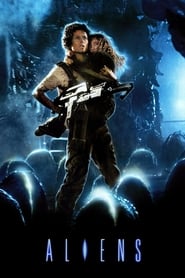
-
technical · 1h 35m 2 mentions
Steven Lisberger, Donald Kushner, Harrison Ellenshaw, Richard Taylor
-
Computer Simulation Division Richard Taylor
When we came to make a decision about what film format to use for Tron, we felt very strongly that we needed to shoot it on a larger negative than traditionally done. And it came down to a choice between 65 millimeter and VistaVision for the whole show. But the availability of 65-millimeter cameras was far better than the availability of VistaVision cameras, so we made the decision to shoot the entire show in 65 millimeter. And to keep a certain consistency, and as long as we had rented the cameras, we felt that we might as well go ahead and shoot the real world in 65 millimeter and not in 35 millimeter. It was kind of one of those nice to have things, and nobody objected strenuously to it, and also it would be the first time since Ryan's Daughter that a film had been shot entirely in 65 millimeter. And I think you can see the results. I mean, it looks wonderful. In the monitors in Lawrence Livermore, one of the things that Triple-/ had to do was create lots of imagery that appeared on monitors, and that imagery had to be shot and created long before we got to production. So, there was a lot of planning in creating all of the monitor imagery, and Triple-I did a great job on that. Spent a Iot of time on this shot. To accomplish the effect, what we did was get a 4-by-5 still camera and photograph Jeff Bridges in his position after he's been zapped, and then immediately moved him out and took another photograph, which was the background by itself. So, as you pull away chunks of Jeff, you see the background behind him, and then to put the laser and the grid and all that on top of him was basically the effects animation of John Van Vliet. When Flynn is de-rezzed and pulled into the computer, we go through one of the most interesting sequences in Tron, which is the real world to electronic world transition. This sequence was created by Robert Abel & Associates, primarily under the direction of Kenny Merman. It was a sequence which I had designed, knowing that the way that Robert Abel & Associates was making these computer graphic images with the Evans & Sutherland computers, and, really, using vector graphics to create this particular look, would give us a look that would be unique just for this transition. The three-space transition, the movement through all these binary bit patterns and this polygonal landscape, was done by making multiple passes through a traditional animation camera that was pointed at a high-resolution, vector graphic, Evans & Sutherland computer screen, and making multiple passes, frame by frame, using different colored filters, coming back, making multiple passes of rewinding other filters, until you finally end up with this, which seems to be solid objects. But it's really made out of lots of tiny, tiny lines put together to make solid blocks of color or objects. Oh, man, this isn't happening. It only thinks it's happening. When Flynn says, "This isn't happening, it just thinks it's happening," it's a key line, because it means that the reality that he finds himself in now, not even he can fully believe exists. And if anyone should appreciate and understand this alternate reality, it's him, and now he finds himself trapped in it. All right, now we see Sark standing on the bridge, and all of a sudden, he is enclosed with these shrouds of light as he begins to have his conversation with the MCP. The database for the MCP was a human figure that we had created at Triple-/ called Adam Powers and was originally on the Information International sample reel. And if you look at that sample reel, you'll see a juggler character who was juggling balls. Well, that face of that character is the face of the MCP. So, the first time that you see him, he is a polygonal drawing of a face. And that's basically the underlying database of the face. So, it's made of polygons. And those polygons, we play them out on the Triple-I computers as the line-drawing polygons, and made 12-and-a-half by 20-inch stills, high-con stills of those. But we created the mouth positions for the vowels and the syllables so that you could take these interchangeable transparencies and lay them down and make him Say, by whatever order you put them in, whatever you wanted him to say. 'Cause he was voicing a lot of different dialogue. Then those were backlit, and then we applied an effect to those line drawings of putting a steel mesh screen over the taking camera, and it made it have that much more, kind of, complex look. And then we also animated the exposure occasionally. Early on in the film when I started working with Steven, we did a lot of experiments to work out how these characters were created. The thing that we finally decided was that the characters needed to have this energy inside themselves. They are obviously in this electronic world. Now, these costumes were unlike any costumes anyone had ever created for a picture before, in that they were costumes designed to have effects treatments done to them. They were white with black drawing or black lines over them. All of the black elements on the costume were turned into circuitry which could be backlit and light could be pushed through there. We originally shot a 65-millimeter image of these people, live-action photography of them on these black sets. Then from that 65-millimeter film, we created some photo-rotoscope machines, which basically could project the 65-millimeter film down to large pieces of film, which were pre-punched with animation punches. This film was created by Kodak for us, and we would project down with these photo-rotoscope machines, which would hold this film into a vacuum frame and make a continuous tone positive print of each frame of the film. Then these continuous tone prints were taken to a light table, it was a vacuum light table, where they were contact printed to high-con film to make a number of high-con positive and negative images. So that you basically have for every character a large cel and you have high-con positives, negatives, and a continuous tone positive. Then these high-con elements were hand-inked and painted to isolate the circuits on the body, the whites of the eyes, the whites of the teeth and any other circuits that we wanted to treat as a separate exposure. The characters are more often than not... The live-action characters are shot on an all black stage. When there is a set, the set is also black, but is measured out to conform with what we're seeing in this artwork. So that if a character appears elevated in a shot, like this shot, there was an elevated platform for him to walk on, but it didn't look at all like the set. Then we would composite these actors over paintings, transparencies, and once that was done, we would add the light and the color separately. And to simplify it, you can describe it as a sort of perfect blend between live action and animation in that we took live-action film, photographed it in a way that we could break it down to individual frames, then blow up those frames into large slides or transparencies. And we had 75,000 of these, which seems like an appallingly large number, but it really isn't if you compare it to an animation film. And because we were at Disney, they were not overly swamped. That's an actual Frisbee, by the way, and those are actual Frisbees on their backs. We had a excellent Frisbee coach, Sam Schaiz. I like the fact that the deadliest weapon in Tron is a Frisbee. A Iot of effects animation in this sequence and in the film. And that is the animation that makes the glows, and as the Frisbee gets brighter, and you see the reflections of it on their costumes, all that has to be done frame by frame. This is hand-drawn animation that, although it is drawn, a negative is made of that, and it is placed over a light source and then re-photographed, and the ability of the effects animators was such that we were never waiting on the effects animation on the show. They always performed very well. It was never a problem. They did very few redos, and that's because they had had experience doing this beforehand, whereas everything else that we were doing, outside of the effects animation, was the first time through. So, that had a much tougher and steeper learning curve. In the holding cells for the game grid, those are backgrounds that are entirely hand-drawn by the background department, again using Rapidographs and line drawing and airbrushing and then turning those into high-cons. But those drawings are all drawn to match the actual physical sets, which were built so that when someone passes behind something, or leans on something, those are actual physical sets that were built. But again, the sets were just black on black. They're as if they were made of black velvet. Part of the interesting thing as a cinemagraphic problem that was presented to Bruce Logan was that he had to shoot, unlike anybody had ever shot before, sets that were entirely black with white line drawings and white characters running around on these sets. Bruce Logan's job in photographing these people was very difficult because, unlike most photography for most films, you try and get as much chiaroscuro in the picture as you can. You let there be a lot of dark and you create shadows and you create this moodiness, which a cinematographer takes great pride in. In this film, during the sequences in the electronic world, basically, he had to light them so that we could see as much of the costume as possible with as little shading as possible because all of the shading and all of that were done by hand by making different masks and airbrush elements that were used under these costumes in post. The ring game was an interesting technical exercise. The set itself, again, was black flock paper with the rings drawn on this paper with tape. The actors had to realize which rings were there and which ones were not as they acted out the sequence, imagining that they were hundreds of feet above the ground. One of the inspirations of Tron is the movie Spartacus. And there's quite a few similarities to the persecuted people who had to fight in the gladiatorial games. This game, of course, was inspired by Pong and jai alai. I think one of the interesting parts of Tron was the synthesis of new games that were created. The design, for example, of the glove that's being worn here, we took a traditional jai alai glove and then rebuilt it and made it out of foam, added other elements to it to give it a more technological quality, and then again, I put the designs over the outside of that to make it blend with the rest of the costumes. Shooting in 65 millimeter, from a director's standpoint, is a lot of trouble. The cameras are huge and bulky. The format requires an enormous amount of light to fill that negative, so if you are shooting Lawrence of Arabia or Doctor Zhivago and you've got lots of snow and big exteriors, it's fine, but in low-light-level situations, it's very troublesome. The depth of field is sometimes as little as a half an inch, and you find your cameraman is asking you, "Now, which part of the eye do you want in focus? "Do you want the front of the eye or the back of the eye in focus?" Or if the head of the actor is not square to the camera, they ask you the really insane question of, "Which eye do you want in focus? "I can give you the front eye in focus or the back, "but the other one's gonna be blurry." Now a lot of these shots where you see actors talking to each other and we're doing over-the-shoulders, the camera couldn't hold focus for the blow-ups to be made, and I had to shoot the actors on separate passes. So, in a shot like this, where you see all three actors talking to each other, it wasnt filmed that way. I filmed them separately and they were composited. And there's quite a few shots like this. Whenever you see them walking around and they're separated by more than a couple feet, those are all separate shots, and then the actors are composited. So, it's very difficult for the actors because not only do they not see the environment they're in when we're filming, all they see is an all black stage, but they don't even see the actor they're talking to. Forming of the Lightcycles, again, is almost entirely done by hand-done animation done by the effects animation department in creating the way that these cycles form around these characters. We built an object that the actor could sit upon, and it was literally a mechanical shape that was the seat and the handlebars, so he could sit down and it would thrust his arms forward and pull him down into that locked position. So that everything that he sits upon and touches, it was, again, drawn by the animation department, and not until you see the final completed cycle, which is actually a CG/ rendering of the cycle, is any of it done by computer. The Lightcycle sequence was done by MAGI. Their way of creating an object were to take basic geometric shapes, cones, cubes, spheres, cylinders, and make an object by collaging those particular pieces together and creating an object. And that's how the Lightcycle was created. All wide shots that you see are computer-simulated. All of the shots, other than the very tight shots of the figures inside the canopies, are computer-simulated. The shots inside the canopies are actually hand-drawn artwork of parts of the Lightcycles, and the animation that's happening over the Lightcycle windshields is hand-done animation to give them a sense of speed. But virtually every scene that you see of the Lightcycles is entirely computer-generated. And there's not even effects animation in those scenes. If there's an explosion when a Lightcycle hits the wall and a tire bounces across, I think those were basically all CGI. Syd Mead worked really hard on designing these motorcycles so that they would incorporate the characters. But if you look closely at them, you'll see that the second half of the bike is flattened and sort of two-dimensional, and that was done because the computers couldn't handle too many compound curved surfaces. So, we restricted those curves to the wheels and the windscreens, and then the rest of the bike was simplified. The ability to move the camera through 3D space with these computer-graphic-looking landscapes is just great. The Recognizers are a sort of King Kong. There's a little head on top of that gate structure... Suggestion of a face, but it, sort of, got lost. The Recognizers were created by MAGI-Synthavision. As I mentioned, there are graphic vector lines, red lines outlining all of these objects, the same way with the tank. The tank was another unique design of Syd Mead, who is a futurist, a fabulous designer. Once Ram, Tron and Flynn have escaped the Lightcycle grid and are off through the canyons being pursued by the tanks, we cut inside the tanks and see another example of a Syd Mead set that was built as a three-dimensional set, again with black background, and all of the elements on there graphically put on so they could later be treated. So the camera, you can see, is moving through scenes in ways that no physical camera or no model shot could possibly do. The animators that I worked with to create the choreography for all of the CG/ sequences were Bill Kroyer and Jerry Rees. But to communicate all this information to the computer technologists, the people that are sitting at monitors at that time, took a new language which we had to create. So, what we did was, first of all, we had to think of each sequence as a real physical reality. Not only would they draw the point of view that they saw as an animator that we would work out together, that was the story point that Steven wanted to make, and also the point of view that we wanted to take. But after we would draw the original storyboards in a traditional, kind of, storyboard manner, we would have to go back and draw a top view, side view and front view of the objects, where they were in time, where the camera was in time, and what the camera's point of view was. So, we really had to define everything to the CG/ technologist in a three-world, three-dimensional space. And that was the first time that that had ever been done. They must've gone right past us. We made it...this far. Now, all of this, this revolt, it's all being led by the user who's gone in the system, Flynn. The Tron character and Ram character, they would have toed the line and gone through the software the way they're supposed to. We'd better, Null Unit. Null Unit. Get the computer dictionary out. Look up "Null Unit." What does that mean? In this sequence, you can really see some of the flaws. I don't really mean the flaws, but the imperfections in the cels, little bits of dirt that pop on and off. Yeah, but they're few and far between considering. Yeah. Come on, you little bugger. Come on. Look at that. A lot of pops and a lot of glitches in there that we would always Say, "Well, that's what happens in an electronic world." When we started there were going to be no differentiations between the flesh tones and the rest of their uniform. But at a certain point they looked, well, not very good. So as a result, that added, approximately, 120,000 extra frames, extra elements to the shot, so it did grow in many aspects. The cave sequence where Flynn, Tron and Ram finally re-energize their selves with this liquid energy was a very interesting technical problem to solve here. In the sequence in the cave when the water is being handled by the actors, literally, frame per frame, rotoscope animation is isolating the water from the body so that it can be treated with a different filter and a different exposure. And again, this is an example of how light is used to portray motion or energy, as Tron drinks and you see his circuits light up and they become energized. The set itself was a complex geometric shape, which was designed by Peter Lloyd, and we built into this set, basically, water channels, and the water itself was reflecting light sources that we put in angle so they would reflect to the camera, and the water was in black tanks so that all we're really seeing are the highlights on the water. Yeah, but the biggest problem at that time was do we fill this with colored water or clear water? Had to do tests, you know. - Right. That was your problem. Do we put milk in there and make it purple? I think that what Flynn is surprised now, ironically, to see that there's parts of this mirror world that are more alive than he anticipated. So, it's not just the harsh computer reality, there's something living about it. It's a very complex shot, again, with all the elements. Probably about 30 different elements, 30 different separate exposures for each frame. Normally in a special effects movie, you get a very bad bottleneck effect in that all these things have to be composited through one or two optical printers. Now we have digital compositing machines. But by putting it into a manufacturing system like this, where it became like an animated film, we could use 14 or 15 animation stands, and we could use a slew of effects animators and ink and paint people to do all of this work simultaneously. As far as I know, we still have more shots with human beings composited into an artificial environment than any other movie. I believe there's 1,100 special effect shots in the film and 900 of which have human beings composited in them. And that number is just very, very large. Just the organizational task alone was monumental, not even considering the creative side of it. For every frame you would have an additional five to 15 cels that isolated the different colors and the different... We had body mattes, we had face masks, continuous tones. You made print backs on top of print backs. So, those 75,000 original cels grew to over half a million. I think we ended up with something like 600,000 cels, all of which had to be kept in order. We had to pull trailers, literally these large house trailers, kind of, industrial trailers onto the lot. We ran out of space and we ended up with 10 trailers that would house all these cels and had to be organized and sent over... 80% of them were sent overseas and had to be numbered and then painted and kept in order. At one point we thought if we had 1,000 scenes, and this was around Christmas time, the film was going to come out later that summer, and we had no idea of how we were going to get it all done in that short a period of time. And we thought, "Well, it's summer vacation. We have two weeks. "We'll get college students, 500 college students in a room." We really believed this might happen. We discussed this for about an hour and we Said, "You'd have 500 students in a room. "We'll teach them how to do inking and painting and rotoscoping, "and they only have to do two scenes each. "And so they do one scene a week. "At the end of that time, we'll be done, "and we'll just go and shoot them on the animation stands." It didn't work out. So, we brought on Arnie Wong, who was an animator. We put him in charge of supervising Cuckoo's Nest, which is a ink and paint service that was in Taiwan. Approximately 80-some employees in a single room. And what we did is we went through and we made a videotape of every situation and what to do in that situation. So that if an inker over there, who didn't even have to understand English to do this, could go to a TV monitor, roll to this particular problem and see exactly what you'd do in that situation. And then he was there to answer questions that were unusual. And the most interesting thing, and one of the things that I'm particularly proud of with this technique is that in spite of what a pyramid it was to build, we managed to get all of this post-production done in six to nine months. And that is using a technology that we had developed. It had never been done before and we developed it and used it on this picture and delivered on time. And that was only possible because of this manufacturing technique. It's interesting the computer animation iS the simpler part of the set. - Yes. Ironically, one of the things that was a creative philosophy that we enjoyed and were proud of was that we were taking computer animation and letting it stand on its own. We weren't trying to make computer animation mimic reality. And the job was then to make reality, the actors and the sets, look like the computer animation. We used to say, "Well, if you've got lemons, make lemonade." Everybody else, and certainly since this point, has been going nuts trying to make computer animation mimic reality perfectly. And I found that the limitations of computer graphics at the time were the most exciting thing. If computer graphics... If computer animation is no longer different from reality, maybe we've lost something in that. Certainly you gain special effects technology and you can do certain things, but it's the limitations, I find, to be the creative challenge. I think at the time we were using four computer animation companies... Yes. -... which were probably the only animation companies that existed in the country at the time. Yeah, I had been visiting some of these companies for two years before we started making the movie. Maybe even longer than that. And I used to show up at their doorstep and Say, "One day I'm gonna make this movie. "You know, we're gonna do this and this is gonna be great." And they'd say, "Yeah, yeah, yeah." I'd come by every six months and say this is really gonna happen, and I think they were more surprised than anybody else when we really did this movie. And they got to show their stuff. The way the de-rezzing effect was created, for example, when Ram passes away and he's in the cabin of the Recognizer, there's a combination of the original photography of the character, and then that is overdrawn with literally hand-done, line-drawing animation done by the animation department. And between that animation and light exposures, you can make it just, basically, run off, dissipate and fade away. Also, upon viewing this again, for so many years, you tend to kind of lump it all together visually in your memory and we forget, I forget, how much detail, how much layering of texture was put into this film. - Mmm-hmm. Ai! these shots are all completely storyboarded. Even the electronic world and all the simulated shots were all on storyboards. There must have been thousands of storyboards. Yeah, it was very detailed. Because rendering times in computer graphic imagery, the time it takes for the computer to draw each frame, are high. They're even high by today's standards. It takes sometimes as long as an hour or more for each frame of film. Probably the most complicated CGI images that were in Tron were done by Information International. The Solar Sailer hangar, the Solar Sailer, its formation, the walls of that environment, that's all CGI. As far as Cindy Morgan's involvement, she was very brave to get involved because a lot of actresses Said, "What am I going to wear? "You're going to put what on my head? "I've got to have a helmet and headgear "and wear all this spandex?" And that scared a lot of actresses away. Yeah, it was very hard to get anyone to take us seriously. You'd call people up, they'd come in for casting sessions, and Steven would do his best to present the film, and they'd look at you askance, think you were crazy. You'd run some video on them, and they just didn't believe it was going to happen. And as a result, it was very, very difficult. And I think that was one of the last major parts that was cast. Yes, it was two or three days before the first shot or something. Yes. - It was very close. And one of the people we tried was Deborah Harry. Right. We screen-tested Deborah Harry. The Bit was created by Digital Effects Incorporated, and we didn't have the time to choreograph a CGI Bit for every scene. So, what we did was created a series of stills that could be cell flopped, and these transparencies were created by Digital Effects so that the Bit could be rotating and have these different pulses in it, and then when it wanted to express itself, we flipped to the next sequence of stills, which would make it become more spiky or change its shape, and literally those were cell flopped and then flown around by moving the animation camera on the object to give it its motion from left to right or up or down or wherever it moved, we got it closer to you. That was all put in by moves on the animation camera, on these stills that were being cell flopped. These characters were very interesting. I especially liked the one that looked like a vacuum tube. Other programs... - Other programs and... ...in the system. The Recognizer sequence is another set that was built based on designs by Syd Mead. The interior of the Recognizer, as the interior of the tanks, was all a physically complex shape that the actors moved around on with white line-drawing vector material over the surface of it, and isolated animation coming back and colorizing and animating those elements. I think one of the most successful pieces of computer choreography in Tron is the whole Recognizer sequence, when the Recognizer hits a bridge and becomes multiple pieces and Flynn pulls them all back together with his energy and the choreography of the way those parts all fall back into place and tumble. The thing that people don't realize about computer simulation, especially at this time, is there were no programs that imitated the effects of nature on choreography. Every piece and every part of every computer-simulated object had to literally be choreographed frame per frame by an animator. When the Recognizer moves along and bounces off the ground floor and the pieces separate and then come closer together and have that real, elastic, rubber-banding kind of quality to them... Simple things in choreography... I mean, when an object goes around a corner, does it just swing around the corner or does it have back animation? Does it weave left and right? Does it back animate before it moves forward? Those are the things that the animators brought to this and that the computer-simulation people did a terrific job of interpreting.
28:30 · jump to transcript →
-
Computer Simulation Division Richard Taylor
Sark's carrier is an interesting object. It was designed also by Syd Mead and rendered by Information International. But because MAGI-Synthavision"s images had a line-drawing quality around the edges of them, which was an intentional design that we created, their software allowed them to do that very easily. So that there was a similar quality to the objects that were created by Information International, all those vector lines, or those little line-drawing edges that are put around the edges of Sark's carrier, for example, were all done by actually going back and beveling off the corners and having to create an actual rastographic type of beveled edge to give it a line-drawing kind of quality. That was the difference in the software between the two companies. When people get mad in the electronic world, they get red. When Sark is being tortured by the MCP, there are mattes that are being cell flopped underneath his costume design to create those moray patterns which move through his body. Then there are exposure changes happening to him and color changes happening to him, again, to create that kind of feeling. The environment here that the Solar Sailer is flying through was... The Sea of Simulation was all created... All these scenes were created by Triple-l. When you see the down views of Flynn and Tron looking down at the landscape below, those are fractal mountains. And that was the first time that Triple-/ had ever tried to do anything like that. And it's one of the few places where more complex CGI was used. There's some texture mapping going on. There are little hidden things, these hills and towers were all, in many cases, a first-time attempt at creating something with CGI that nobody had ever really done before. When you fly over the Sea of Simulation there, there is... At one point, the Solar Sailer flies over a lake that actually has the shape of Mickey Mouse's head. There's giant Mickey. - Giant Mickey. This whole sequence on the Solar Sailer that we did little things to keep it alive, there's a lot of dialogue that was going along here and a lot of standing around on the bridge talking. So, I came up with this idea of these zingers that go wailing by in the background. These electronic comets that blast by just to add the potential for sound to give you a sense that they're moving more, and just to create something interesting in the background, which we've tried to do a Iot. I mean, it was a simplified reality where we were here. It certainly isn't as complex as the real world we're in every day. And to keep it from being just monotonous and boring, you know, we were always trying to come up with little things in the background, things that could help keep it alive. It's interesting how bicycle helmets have evolved. I wish we had those helmets when we were doing the picture. And it's funny, the bicycle world is nothing but helmets and spandex now. Right. - We didn't know it, but we were pioneering Rollerblade and bicycle technology.
1:10:32 · jump to transcript →
-
-
-
had to ship down to London for tons of blacking, black makeup and black wigs. The very few ethnic actors we had, we had to put in the front, and then everybody in the background was just blacked out. Terrible. But the great thing was, it was a beautiful and sunny day the next day, and suddenly it looked a little bit more like Africa.
52:31 · jump to transcript →
-
That's the fastest speed there is, so remember when you're feeling very small and insecure. It's very funny to hear all this scene. I keep watching John. He's very doing nothing, but he's doing everything in the background. Pray that there's intelligent life somewhere up in space because there's bugger all down here on Earth. You have to bring the sound of the fridge closing before the fridge actually closes so that it fits it in with the rhythm of the song. Yeah. Yeah.
1:14:41 · jump to transcript →
-
-
director · 1h 28m 2 mentions
-
These scenes were filmed in the reception studio area at Toronto station CKEY at 1 Yonge Street, slightly redressed by Carol Spears' skilled art department. Debbie Harry enjoyed doing this scene, she told me. It gave her a chance to show something of her chops as a live performer. Born in 1945, Debbie had actually worked at BBC Radio as a secretary in the late 1960s while moonlighting as a background vocalist in a group called The Wind of the Willows.
13:41 · jump to transcript →
-
He had survived a terrible childhood accident in which he'd fallen through a sheet of plate glass and nearly severed his hand at the wrist. So his stand-in, Art Austin, a great guy who also had a background in Toronto radio, elbowed the candy glass in his stead. Donna and I were absolutely charmed by Jimmy Woods, who respected Cinefantastique and went out of his way to be kind to us. He gave us a lift to our hotel one night, I remember.
1:09:22 · jump to transcript →
-
-
director · 1h 54m 2 mentions
-
Hello, this is Bill Friedkin, the director of To Live and Die in L.A., and I'm gonna do this commentary now about the film without referencing the film itself. I'm just gonna give you my impressions, thoughts, and feelings about what went into the making of it, why we made it, what I saw in the material, a little background on the cast, and about some of the things that we were trying to do.
0:22 · jump to transcript →
-
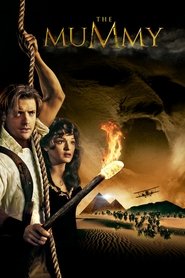
But I met him, just sat in a room with him, and I said, this guy's great. He has extraordinary quality, exactly what I want, a theatrical background. He's been in front of a camera. Nobody really knows who he is. And so I went with him, which is what I tend to do when casting. I'll just go instinctively.
24:33 · jump to transcript →
-
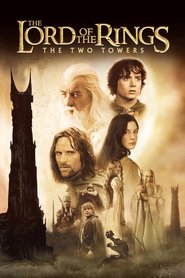
-
-
Lea Thompson
You had that painting, that mural. Yeah, we painted that mural on the back. And we had done something like that in Pretty in Pink, too. But it never really had the significance as the one in Pretty in Pink did, 'cause it just served as a background color here.
18:08 · jump to transcript →
-
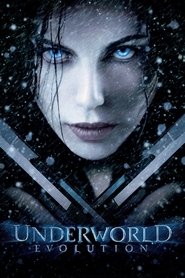
Lea Thompson
It's funny how those diamond earrings are status symbols now. Still, it's a big deal. So there's the refinery in the background for this location, which we see, like, just about that one time or maybe another time, just to get a sense of, you know, the difference in the neighborhood between where Eric lives and the different class of kids that you hang out with.
37:30 · jump to transcript →
-
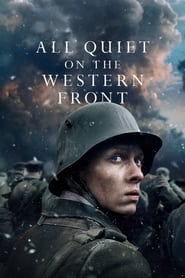
-
-
Macaulay Culkin
And this is another... Yeah, all the Christmas movies in the background. Well, this is at a time... ...before It's a Wonderful Life was purchased by NBC. Now It's a Wonderful Life can only be seen once a year. Back then, It's a Wonderful Life was on every... All the time. - For like two weeks. You had Miracle on in the background earlier... ...which is one of those just... You know, gives it the Christmas feel. But It's a Wonderful Life, people got sick of... ...because you could see it at any time of the day during the Christmas holidays. This was, again, shot on a sound stage somewhere in Chicago. I don't know if we were at New Trier.... We may have actually rented an apartment... ...and put a slide of Paris outside of the window there. I'm trying to remember.
46:19 · jump to transcript →
-
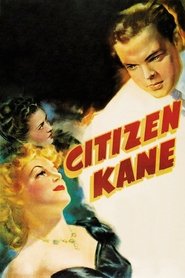
Macaulay Culkin
Marv. The Michael Jordan poster in the background, put back together. He's a crafty little kid. - He is. That Kevin. That was Joe's-- I saw that side of Joe a few times.
1:26:35 · jump to transcript →
-
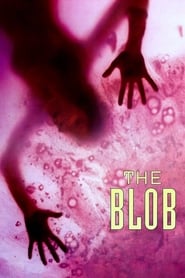
-
-
and a friend who was visiting from England. That's his ponytail in the background. That's right. And actually, the girl who brought the food as the camera followed her was my assistant, Mary Bannon, I believe, who I found her in a restaurant, and she wanted to get into the business, and she wanted to be my assistant. So we put everybody in because I think it was free at the time, but maybe we shouldn't say that if SAG is going to listen to this. There we go. Oh, wow. I forgot about this. Yep. Yep.
38:56 · jump to transcript →
-
It's like from a war film. Yeah, the leprechauns attacking. Now, okay, now here is some interest. There's David Price in the back of the background on the left. Far left, yeah. And that's a PA walking by. Here's David coming up. And, boy, he looks younger, about 20 years younger. No, David still looks good.
53:07 · jump to transcript →
-
-
-
Marco Brambilla Daniel Waters
And I love the Hall of Violence coming up here. I used Robert Longo as a reference here. Oh, no kidding. Robert Longo was a big artist at the time. I got Robert to lend us one of his very early sculptures, which is in the background somewhere. It's like this gargoyle-style sculpture. And then the museum was actually designed around the action sequence that are going to take place there. So there's a glass floor, which becomes...
41:27 · jump to transcript →
-
Marco Brambilla Daniel Waters
Got to give credit to my friend Martin for that one. Oh, geez. Again, just gentle comedy, and then when people get hurt, they get hurt. Yeah, and I think that's the Robert Longo sculpture in the background. Oh, cool. There, the metal one. And this is where it switches gears again, and this is where we go into action territory. And then, you know, we...
44:48 · jump to transcript →
-
-
-
And, but MGM, UA, they didn't care that the plot didn't make sense. All they wanted was, they were just embarrassed by the dildos in the background of the scene. Oh, they should grow up. I know, and I'd just been in England where there was like dildos on network television. Right. So, so we're in the shower scene. I love this. I'm watching the shower scene and this song, this Portishead song, one of my absolute favorites.
23:57 · jump to transcript →
-
First person to admit to failure. And the regular camera operator wasn't with us that day. And we just didn't get in sync. Right. And so it just didn't quite work out. And I feel it, too. I mean, I look at it and, you know... Well, and like you said about the depth, how it usually looks, you know... Yeah. The foreground and background. But... You just...
44:49 · jump to transcript →
-
-
director · 1h 30m 2 mentions
-
And The Key is something that he knows is a pivotal moment in his career. It was a great success and a success also that transcends kind of the box office takings. It was a kind of a big revolution in his way of framing the world. So yeah, there is an explicit reference to The Key in Cheeky.
1:11:36 · jump to transcript →
-
you know, from all points of view, from the set design and kind of actresses and the way of framing things, he really kind of put himself in a corner. You know, a brass film had to have such specific elements to be considered by the public a authentic brass film that there was nowhere really to go. And in a way, every time he did try and step in a different direction or attempted to do so,
1:20:10 · jump to transcript →
-
-
director · 1h 43m 2 mentions
-
inside on a huge sound stage at Universal Studios. But the development of the atmosphere, the skies in the background and so forth, is something that we were able to really use digital technology to enhance, so it looks less theatrical and a little more like a real world, less pure fantasy. But if you check, you know, the clouds are always moving in the background, and you get the feeling of slight light changes, and we were constantly trying to give you the sense that...
35:45 · jump to transcript →
-
One of us would look skyward and say, blast you-whos. That became the, uh, that became sort of the plaintiff call. All crew members. I, for year after year, I've put up with it now. Great mat work, great CG work there in the background, creating the whole valley. I mean, in what way? Well, Christmas is going to the dark
1:00:43 · jump to transcript →
-
-
director · 1h 58m 2 mentions
-
Usually I like to make the movie have a little bit of a European touch, no matter the music or the mood or the camera work or the framing. I want to make it look like a European film, you know, that kind of feeling.
16:04 · jump to transcript →
-
Tom on a cable, so he need to drop from 80 feet and descend into the camera, you know. And then we CG everything, moving background and the city and the helicopter, the all CG. So it means that Tom still need to do the real jump, you know, from the very high place. It's scary also. The original idea was that Tom need to jump from outside the building.
1:08:25 · jump to transcript →
-
-
director · 3h 29m 2 mentions
The Lord of the Rings The Fellowship of the Ring (2001)
Peter Jackson Fran Walsh Philippa Boyens
-
Peter Jackson Fran Walsh Philippa Boyens
that was huge so that Elijah and the other hobbits would look tiny. And then we built the bar normal size so we could film the normal people. Some of these big people that are walking around in the background are actually people on stilts. Like that guy there. See that guy walking past Mary? He's actually a person on stilts. And that one behind there. It's actually a five foot tall gymnast.
59:46 · jump to transcript →
-
Peter Jackson Fran Walsh Philippa Boyens
Pete, when you can flip a shot, why does that matter? Well, sometimes you can flip a shot and get away with it, but often if you flip a shot, people's faces look different because people don't have perfectly balanced faces. And also, often, you know, not so much with this scene perhaps, but often you can tell by things in the background and stuff. The Council of Elrond...
1:38:31 · jump to transcript →
-
-
director · 1h 45m 2 mentions
-
And you used a lot of his things that Paul owned and had in his house, his decoration. Yeah. You used in the movie for Joel. Yeah, it was a great background element. Yeah. Okay.
29:52 · jump to transcript →
-
Well, the voice of Tom Wickinson is really recorded on the tape and it's hardly audible. But I think it was nice that you could just feel he was behind, like in the background. And by now we find out that he's not like this wise man, this wise scientist we thought he was.
1:23:44 · jump to transcript →
-
-
director · 1h 34m 2 mentions
Scott Stewart Jason Blum Brian Kavanaugh-Jones Peter Gvozdas
-
Scott Stewart Jason Blum Brian Kavanaugh-Jones Peter Gvozdas
trying to get a level of naturalism and realism in the performances. And David comes from a documentary background. And so we set up a whole series of cameras and just kind of went in a circle around the table and allowed the actors to improvise as much as they wanted to. And that created a sense of naturalism. And we shot the film in order.
5:29 · jump to transcript →
-
Scott Stewart Jason Blum Brian Kavanaugh-Jones Peter Gvozdas
Yeah, I wanted to play like a homage to Silence of the Lambs. That famous night vision scene. Yeah, yeah. It was so funny too because it's like, you know, the initial idea was she crosses the, you know, we conceived it, she crosses the frame and wipes on the alien and that would be, you'd see it. And we did it take after take after take and focal length changes just to sort of see if we could just vary the timing. And the first version of it that we did,
1:23:26 · jump to transcript →
-
-
-
Jake Szymanski
I'm Jake Szymanski. I had the pleasure of directing this film. And I think I may have just ruined my mic, hold on. Is this... Did I ruin it? - Hey, hi. Is the mic okay? - Yeah, the mic's great. Just don't touch it like that. Okay, /'m sorry. - Yeah, that's okay. I was worried I might have turned it off accidentally. No, no, no, you're fine. Do you need water or coffee or anything like that? No, I'm so good. I've got water right here. - Do you... Okay. - What's your name again? I'm Margie. - Margie, thank you so much. Of course. All right. - Appreciate it. Let me know if you need anything. Okay. Will do. Thank you. Okay, oh, and please don't press any of those buttons. Okay, yeah, yeah, yeah, no, I'm sorry about that. Okay, that's okay. - Okay. Um... As you can hear, we are here on the Fox lot in the ADR room. This is where the magic of DVD commentary happens. So, into the movie. Mike and Dave. They need wedding dates. Here we go. Well, this is a fun little scene. We actually... The whole beginning of the movie takes place in New York City. But we shot all of this in Hawai. Fun fact. Downtown Honolulu. We doubled for New York. Which, I literally didn't think could be done. But, um, there were four angles. There are four angles and two locations that you can shoot in Honolulu and it looks like New York. Um, there's Zac, there's those beautiful, blue eyes just shining through. Um, this is a fun little scene. We got Marc Maron to come out to the island and shoot with us, kind of our intro to the boys here. Adam Devine, Zac Efron, playing Mike and Dave Stangle. And we almost cut this scene. We almost lost this. At some point there was a worry if we needed it, but I think it's really a fun way to set up that these guys, right what Marc says right there, they're funny, they're weird. We give them a win early on. We let them know they think they're awesome. And before their family kind of puts them in their place. Was it the hat? - I just found this over there. And here we go. At the opening credits. This was a fun journey, finding the song for this. We ended up finding this great song that we kind of remixed a little bit and redid some of the lyrics even before this opening montage here. This montage was great. Doing our Fourth of July, a family wedding and a 50th anniversary party here, shooting this. We shot all this, uh... The anniversary party and the outside wedding are the same location, actually. We shot all this down in Hawaii. Got all of our stunt guys in. A little secret about Zac Efron, very good at the trampoline. He did not need a stuntman or wires. He got on that trampoline and started doing flips immediately for camera. And Adam Devine was like, uh, "You need to strap me up "and swing me around with some wires here. "I can't do this." Um... Very uncomfortable, I remember, also, the straps on that trampoline. Um, we shot this right across from the hotel we were shooting at. This is, uh, the fireworks stuff there. Our wonderful crew here. Let's just talk about, uh, the Chernin company real quick. You see our producers here. Produced by Chernin, Peter Chernin. Jenno Topping, David Ready. Our excellent team of producers, who were with us on the whole movie. It was fantastic. Here's downtown Honolulu. We're trying to hide the palm trees. You put some stickers up on light poles, looks like New York. If you wear two, they break. It's an urban legend... - No, it's not. And here we go. Let's meet the family. Putting this together, it... First of all this is actually based on a true story, which is fun. The Stangle brothers are real and they really did get told they had to bring dates to a family wedding. God, look at this, look at this family we got here. Just the best cast we could have asked for. We got Mom and Dad here. We got Stephen Root and Steph Faracy. Stephen Root, man. How lucky are we to get these guys as Mom and Dad here. Stephen Root was, uh... We were already down in Hawaii and we were about to shoot and we still hadn't cast Dad. And we talked with a bunch of great people. And, um, I had to do a little Skype session to meet Stephen Root who I had never met. And, uh, we were just like, "You know what? If you can ever cast someone "who you think is, one day, gonna win an Oscar, cast that guy." And we were lucky enough that Stephen Root said yes to doing it. Here we go. Um, hey, Jake... - Mmm-hmm. I just want to interject here. Um... - Oh, yeah? Be careful of the heavy breathing. - Oh, Yeah, yeah, yeah. Yeah, I just want to make sure. I mean, it's not an issue yet, but... I was gonna Say, is it coming through or... Not really. - Okay. But I can sense that it might. - Okay. So just be careful. - Okay. No, fair... Yeah, okay. No worries. - You're doing great. Should we... So did we cut or how does this... No, we're not cutting, no, no, no. 'Cause we're still... - Oh, okay. Keep going. I can't cut. - Should we go... Oh, so this is a one... Continuous, got it. - This is a one, yeah. Yeah. Okay. Thank you. I'll watch the, uh... Watch the breathing. Um... Where are we here? Oh, well, we're doing our little reveal. Kind of the big idea here of our grandiose opening montage where the guys are kings of the world. We see the reality of those situations. Oh, this poor guy. Our grandpa. When we were shooting this, we were dancing... And I kept thinking that he was acting out the death scene too early. And I kept yelling from behind the camera, "No, no, no, don't stop yet. "You're still having fun, you're still having fun. "You're not dying yet." But he wasn't acting. He was, for real, getting too tired and almost having a heart attack. And I was yelling at this poor man. "No, no, no! Smile, smile! Be happy! Dance, dance!" And everyone was like, "Jake, this is real. He's actually having trouble." And I felt so horrible about that. But he made it. You know what? He made it and I can't wait for him to see the film. You can each talk to one girl. Um, uh-oh, guys. Here's the idea for the movie. Two dates. Um... By the way, we also have not talked about... Look at these two handsome gentlemen who you believe are brothers somehow. Are you insane? - Oh, you're kidding. I love these guys together. Adam and Zac had a really, really fun time. Um, I mean, when we went to Hawaii to film this, we filmed in Hawaii, and they were just... We were trapped on that island together. So even when we shot all day together we just had each other to hang out with at night. And, um, I think Zac and Adam got really, really close. Which helped the chemistry and the brother relationship stuff. Everyone got along really, really well. It was a lot of fun. By the way, let's talk about the wonderful Sugar Lyn Beard playing our sister Jeanie here. And also the equally excellent Sam Richardson playing Eric here. Um, God, she's so great in this. Sugar... First of all, her name's Sugar. And we shouldn't overlook that. That's an important factor when you're casting someone. Look for the most interesting name to be written somewhere. Um, she was one of the last people we saw in auditions. And, um, we weren't sure who we were gonna cast yet for the sister. And we didn't feel like we quite had it yet. And then she, literally, was maybe the last person that came in. And she came in to the casting office and just nailed it. Just... We were all laughing so hard. She completely became the sister. I think we did the audition with the Ecstasy scene and the horses scene. And, uh, she was just so, so funny. She walked out of that room and we immediately went, "Wow, well, that's Jeanie right there." Same thing happened with Sam for Eric, by the way. He was just so, so funny in that role. That's the kind of guy Mike is. So, think on that... This is one of my favorite Zac jokes of the whole movie here. "Think on that, Dad." Having us laugh. You can see Dave's little... Dave's at his little art station there in the apartment. And that's a little thing that comes back Iater that, uh, isn't... We're not really showing you very clearly there. And then here we have the ladies. Tatiana and Alice. Aubrey Plaza and Anna Kendrick. These two, who are actually very good friends in real life and had taken random trips together to islands and to beaches in Mexico, it was really fun to put these two together. And, uh... And have that kind of built-in chemistry going in here. He's already paid. God damn it! But a lot of green screen taxi shoot that we did. You should kick us out! - You should kick us out of this cab. Little bit of a hustle on the cab driver here. Three more blocks up on the right... and then kick us out! The Apple Pay bit I really, really liked. We came up with that on set. I think that was a pitch from Andrew Cohen, one of our writers. Andrew Cohen and Brendan O'Brien... I got a good idea. ...gave us a wonderful script to start with here. The writers of Neighbors, Neighbors 2 and upcoming, The House. Um, very lucky and happy to meet and work with those guys on this. Really funny stuff. And, uh, they would also just send in new jokes every day. That's kind of the way we did things, is we had the script and then me and the writers and other on-set writers would just bring a bunch of new jokes every day to pitch and to try. And so we would always play around a little bit on-set. Jake Johnson. Your little buddy is shit-faced. Jake Johnson, who we said, "Why don't you just come to Hawaii for a couple days? "And to do that you have to be in a scene in the movie." And he said, "That sounds pretty good, man. "That's... All right, yeah. I could do Hawaii." Um, and that's literally how we got him out here. We said, "I know Jake a little bit." I said, "Hey, if I could bring you out to Hawaii for a week "would you shoot for one night?" Boom. Done. Because it's my right. Playing Ronnie the boss here. Look at these, look at these, just New York rat women here that they're playing. The hair, that's a wig we have on Anna, which was really fun. Hey, Jake. - Yeah? Um, I just want to say if you don't have anything to Say... Mmm-hmm. - ...then you don't have to say anything. You... - Does it sound like I'm... Oh, just calling this "rat women" is a little... Oh, I wasn't... Okay. - Just... I didn't think I was stretching... - Yeah, no, it's fine. -/ just want to... I just want... - Are we still recording? You're doing great. What's that? - Are we recording right now? Yeah, yeah, all this is... Yeah. - Okay. Yeah, that's what we're doing. All right. I just... - Right? Yeah, I just didn't... Okay, yeah, I just... Yeah, I'm just... It's very clearly your first time and it's... It is. - /'m just trying to help you out. Okay. No, I appreciate... I definitely want... - Okay. If you have any tips or... - Great. I just feel like I'm not doing the comments here... Okay. Okay, sure. So I should get back to this. - Of course. Yeah, yeah. Just keep breathing, and move through it. Okay, I think... Okay. - Okay. I didn't... 1... Thank you. I appreciate it. Okay. - Thank you. Okay. Um, we're in the apartment. I'm tired of living like this. I don't know if I have anything to say about this. We've got a great little package we're selling here, man. A week in a tropical paradise... with two fun-loving, yet surprisingly well-read bros? I'm just gonna talk. Um... We got the boys here. So the ladies in the apartment, first of all. These were both sets that were built in real locations, downtown Honolulu. Um... We found spaces for the boys' apartment, girls' apartment right around the corner from each other. And then we built these kind of walls up against the real windows and built out our little apartments here. We met this couch on Craigslist. This was actually the scene, this scene right here, was one of the earliest scenes that we had worked with and that we shot for the chemistry read. We did a little chemistry read early on before we ever got into production with Adam Devine and Zac Efron. I think Zac was shooting a movie in Atlanta. We all flew out there and did a chemistry read and this was one of the scenes we did to see the brothers together. And, uh, obviously it was great. And we loved seeing Adam and Zac together. And, uh, so this is one that had kind of... We actually shot this... One of the last things we shot in the movie. Um, but they had had it in their mind for six, seven months by that point. I love the... We got these girls together, really, really fun. This was a last-second shoot we did just to get a little sense of the ad going viral and going around the world. And we got all these great performers, all these great actresses to just come in and do little cameos for that little thing here. You guys want to go to a wedding? Got a little classic date montage here. All the dates here we cast out of Hawai. This was all local casting and we found some great, great people. Those twins are actual professional gymnasts in training. And they're twin gymnasts who are very good. And luckily they were also great at acting. We got them in there. We found all these... Met all these great people. This is my buddy Bob Turton. Um, who, uh... We go way back. And, actually, we did not... Again, we did local Hawaii casting and I said, "Man, I got this bit I really want you to do. "But we're casting locally." And he just hopped on a plane and came on out. And said, "Let's do it." And Bob is one of the funniest, funniest guys. Uh, I went to college with him back in the day. And we've done some videos and shorts together. And I was so glad he could come out and be Lauralie, as I believed, what we named his persona of this guy who's in such a bad period of time in his life. He decides to try to pretend he's a girl to get this date from these boys. What did you say? - Nothing. Sounded like you said... None of this... Do you wanna fuck? None of this was scripted. None of the entire date sequence was scripted. I think the script just said they go on a bunch of dates. So we really had a lot of fun playing with this entire sequence with everyone who came in. I think, in real life the Stangle brothers ended up on... What was it, Ricki Lake? I know they ended up on, uh, the Today show. And maybe also Ricki Lake. And we got... The ad went viral. We wanted to make it a little more current. We got Wendy Williams. We got her to come out to Hawaii. We actually filmed... Even her set, we faked in Hawai. So we really did everything out there. Got to thank the Hawaii Film Board. Getting to shoot out there. It was fun. ...fo go with us to Hawaii for our sister's wedding. And I just want to reiterate... we're footing the bill for this because we're gentlemen. Free trip to Hawaii? I'm awake! Come on. Craigslist. - What's up? That's where you go to buy old patio furniture. Is there any, um... Excuse me. Is there any... ls there any water? - What's that? Is there water in here? -/s there water? - Yeah, there's... Yeah, we have water. - Is there any... Can I get a water? ls there any way to get a water? - OA, sure. /'Il... I asked you at the beginning. You didn't... You said... I know. I didn't realize. I'm sorry. I'm just... Now I'm thinking about whether I'm talking too much, based on what you said earlier, and I'm getting nervous. I think it's just drying my throat out a little bit. Okay, yeah. No, that's fine. I'll go get you water. I don't need you to get it if you can't... /'m the one working here. So... Okay. I... You can tell me where it is, I can get it. No, you have to... You're the director. And you have to do the commentary. Um, okay, I'll be right back. All right. Sorry about that. - It's fine. Thank you. You need to get over that, once and for all. Oh, man, I feel really bad asking for that water now. Oh, there is a water here. Hold on. There's a water on the floor here next to my desk. Okay, here's your... I actually found one. There was a water... There was a water down here by the desk. -/ found... - Yeah. I think I brought this... - Did you not look around you when you... We gonna go to Hawaii! Um, sorry, I just found... I think I brought it in at the... When I first walked in earlier and I forgot. Right. Okay, well, here's another one. We don't look like nice girls. Thank you. Yeah, I guess I haven't showered in a while. Oh, man. Thank you very much. I really do appreciate it. Yeah, of course. - Okay. We're gonna look respectable as fuck. Like nice girls. "Like nice girls. Like nice girls." This was actually, um... It's like that Jesus rag! "Jesus rag," one of my favorite bits. Nice girls was actually, um, an early studio note. I remember the studio coming in and saying like, "We feel like we just need to say, like, 'Let's push the nice girls angle.' "We should have the boys get told they need to bring nice girls. "And the girls need to look like nice girls." And it really worked. We ended up taking that and hitting that. And it's one of those great notes that really helps simplify and clarify a thing and everyone gets exactly what we're doing. So that's why you hear "nice girls" a couple of times. That was actually one of the earlier studio notes that I thought was a great note. That worked out a Iot. Ultimatum. - Well, we gotta figure something out... The old tomato joke is a joke that early on I was told, "You know, you can cut this joke. You don't need that joke." And I said, "No. This joke is what the movie's about." Not really what it's about. But the vibe of the movie. I fell way too in love with the old tomato joke. And I think our first cut of this movie, the editor assembly of this, was about five hours long. Because we had done so many alts and so much improv. And they just put everything in. And, I think, when I showed my producers one of the three-and-a-half-hour cuts that I was like, "You know, this isn't a real cut. "This is just kind of everything we're working with." They were like, "I mean, you can lose so much. "You can lose this. You can lose that. You can lose the old tomato joke." And I was like, "No, no, no, not... All those other things, sure, "but the old tomato joke we keep." So you can imagine that joke in a three-hour thing that's way too long. And, uh, well, it ended up in the movie. As I predicted. Anna had a really fun, uh... We had a lot of fun with this. There's a lot of stuff on the DVD, deleted scenes and bit runs about other lies she does here. This is a really fun reveal. See these girls in these nice dresses here. And coming up, we've got one of our first big stunts of the movie. This was always really fun. We had a great, great stunt coordinator, Gary Hymes, who did all of our stunts on this movie. He did the stunts for Terminator and Terminator 2 and Jurassic Park. And he was great. So any time we had something like this, with getting hit by a car... That's a big stunt, but it's always really fun watching the audience watch this. And this is like one of those moments early on where I think it clicks in like, "We're doing this kind of movie. We're doing, like, a giant car hit. "And she's perfectly okay." It just sucks you right in. This was really fun to shoot. This is, again, downtown Honolulu. Outside of the one bar we could fake as New York. And if you look very closely, I shouldn't even say it, people will hate that I say this, the effects guys, there's a split second shot when Tatiana hits the car from inside the car looking out the windshield at her body. And in that shot, it only lasts a couple frames, and it's a blur, but there is a palm tree. That is the one palm tree that's in our New York footage. Um, but obviously it's so fast no one sees it. Are you okay? I am now. I saved her life! - She's okay! She's okay? - I saved her life! Thank you! I think, I'm pretty sure a lot of this, the just yelling, "I saved her life," and a lot of the yells, that was... Adam can go very hot. And Adam just added a lot of that in and it was so perfect. It's really fun to just tell Adam like, "Hey, go nuts on this one. Get excited." And he will. He can just go at 100% all day long. And it is the most fun thing to watch. So hard! This is always a really fun scene for me. This is like, when we did the editing, it was kind of always like, "Let's get to here faster. How do we get to here faster?" 'Cause it's really just seeing our four leads all together for the first time. And see it play out. See the con of the girls play out. See the boys falling right into it. So this was always kind of like, especially in editing we realized, "This is where it starts to feel so fun. "Let's just get here as fast as we can. "Let's get through all that other stuff." Got two waters now. It's actually quite nice. We can hear all of that. - Hmm? You drinking. Oh, I'm sorry. SO sip quieter? "How's the hedging coming? You been hedging? You hedged much?" Yeah, we're picking that up. - Picking that up still. Corporate greed, bailouts. Should I, should I cover... Does this help? On the floor of the NASDAQ and the U.N. Um... If I cover the microphone with my hand, does this help? That makes it worse. - Okay. Sorry. Um, just try not to drink anything. "But what I do have..." Just my mouth gets a little dry, so... It's not important. Uh, anyway. Um... "Skills that make me a nightmare..." Zac nailing the Liam Neeson impression in this. You may notice Zac Efron throws out a couple great accents in this movie. He's got the Australian at the bar at the top. He's got Liam Neeson here. He's about to have all of this different liquor bottle drawings which all have a different accent. And he added a lot of that in in a great way. He does a little research for each one. And he nails each one of those accents. That's a little post joke we put in. Little post image. Little ADR joke from Zac right there. A lot of dick jokes in this movie. Not gonna say I'm proud of it. Not gonna say I'm ashamed of it. Just gonna say there's a lot of dick jokes in this movie. And it is what it is. Done. Some of them are kind of smart. Maybe a couple smart dick jokes, maybe not. Maybe I just tell myself that to make myself fee! better. I don't know. What's the hardest thing about being a teacher? I don't know. Oh, um... The hardest thing... I think this was the whole... We did a whole run here with Adam and Aubrey that was just kind of, none of that, was not in the script, either. We're just like, "Let's check in with these two." And we Set up two cameras. We did a lot of cross-shooting on this movie. And we just let people go through 10 different ideas. And try a bunch of jokes. God, Anna's so, so funny here. Matt Clark, our wonderful DP on this, who... I know! I said, "I got to warn you, I want to cross-shoot a lot of this movie." And cross-shooting's where you have two cameras pointing opposite directions, so you can capture both people talking to each other at once. And some DPs won't do it 'cause some DPs, they just want to perfect the light facing one direction, 'cause it's the lighting that, really, you have to tweak. And you start worrying about compromises if you cross-shoot. But Matthew Clark took that challenge and ran with it. And we cross-shot so much on this movie. Um, probably even more than I needed to, I had him do. And he just did a great job with it. I love the look of it, that it doesn't look too Photoshop, airbrushed, perfectly shiny and bright on everything. I like that it kind of feels a little real world-y. I think Matt did a great job on that. ... like we're talking it over... like we're not sure if we wanna go or not. Oh, like... So fun to see Anna do these big jokes. I feel like... This was the fun part for me. I feel like I've never got to see Anna Kendrick do this kind of stuff before in a movie, ina hard R movie. Yes! And, God, I just think she really nailed it and knocked it out of the park. I think, Aubrey, who's so great, and you kind of expect that she can do it. And I think it was a little more like, I think, for the audience it's a little more of seeing her in a new kind of movie. Which I think is really, really fun. Here we are, shooting at the wonderful Turtle Bay Resorts. Um, on the north shore of Oahu, Hawaii. We turned into our little fake resort. A funny story about this hotel, this is the exact hotel that they shot Forgetting Sarah Marshall at. And that movie takes place almost, the whole thing in that hotel as well. So, first of all, we did a lot, me and my DP, we did a lot of like, "Let's make sure things look different. "We're not copying the same locations and shots of Forgetting Sarah Marshall." The other funny thing is, in the movie Forgetting Sarah Marshall, I'm pretty sure they call the resort Turtle Bay. Say, "Welcome to Turtle Bay." And it was an advertisement for Turtle Bay in a way. Turtle Bay was like, "Yeah, we'll give you a better rate on the room if you mention our name." So, when we started scouting and decided to shoot the movie in Hawaii, we were like, "We can do it at Turtle Bay. "We'll get a little discount on the locations." And the management for Turtle Bay read our rated R script and they were like, "Absolutely you cannot say this takes place at Turtle Bay. "Please, please don't show any of our Turtle Bay signage. "We don't want any of our guests to think our masseuses would do this at Turtle Bay. "We don't want to think we condone..." And we were like, "Oh, my God, can we shoot it?" They were like, "Yeah, please shoot here. You just have no discount." And, no, I mean, they were a lot of help. But we had to cover every sign that said "Turtle Bay" and make our own. And make our own logos and hotel names. And I always thought that was pretty great. And, you know, there's some stuff in Sarah Marshall, I think that's rated R. I mean, there's a penis flopping around in that movie. Hey, Jake. - Yeah. I just want to say you're doing great. Okay. Just calm down. - Okay. You've said "penis" and "dick..." - And, again, I'm just... About 10 or 15 times... - Yeah, yeah, yeah. In the Iast, like, five minutes, so. I don't think... I think it was just, kind of, the once. Oh, no. It was many, many times. Okay. And just, Margie, I'm sorry, but... And, again, is there any way to go back now to where you cut in and rerecord from there on out? Um, oh, you know, that's a great idea. Why don't I just forget that this is my job and that I know what's going on. And why don't you come in here and you take care of all of that. No, obviously I'm not... I just presumed that if you... Can only I hear you? 'Cause I'm... We're recording right now, right? Yeah, we're recording. But, you know, what you do when you presume, you make a... I think that's the wrong word for that phrase. So anyway, I just want to let you know that you're doing great. And this is really good stuff. Just remember to breathe and relax, and just enjoy it. Okay. I just want to do the commentary. Just kind of run it through and... Sure. - I just feel like I've heard a lot of... I've listened to a lot of commentaries. Have you? - Yeah. I think... Yeah, what do you mean, have I? That surprises me. Why does that surprise you? I mean, it's just, you know, you're doing great. ...With Alice. Well, I just don't think I've ever heard the sound engineers coming in during a DVD commentary. So I'll say that, as well. Well, you know, normally we don't. But if it's someone who's just kind of aimless, we'll try to help out a little bit. Um... So, my commentary has been aimless? It's been... No, it's great. It's so exciting. I mean, I don't even see how... Even if it was aimless, I don't see how telling someone that helps them. 'Cause now all I'm doing is thinking about if this commentary's aimless or not. Okay, so we're in a new scene, so if you want to... I am a teacher, yeah. Uh... The key to teaching children is repetition. Uh, okay. Uh... The meet and greet. Uh... I think I missed talking about the whisper scene. Another good dick joke in there. And, uh, this meet and greet, very colorful, very poppy. This, uh... sorry, I'm just really in my head now about this aimless thing. And I feel like it makes me sound more aimless. No, no, no. You're doing great. That was just constructive criticism, you know. Aimless rambling is what you're doing. And that's constructive, honestly. It doesn't. I'm trying to find the constructive part of that criticism. Um, the part where I said, "Aimless rambling is..." Right. So, okay. Like, build off that. You know, I'm good. I'll take, I'll do... I'm okay if it's aimless. -/'m good from here on out. - Are you sure? Yeah, I'll just be good from here on out, okay? All right. I'll just keep him on a leash. And there's no way we can Start over or go back? Unfortunately there is no way. This is set in stone. Okay, Sure, sure, sure. Uh, all right. So, listen. This was our first day of filming. And, uh, filming this meet and greet here. And, uh, there was a lot of very specific things that happened in this scene. And, uh, uh... God, this is so fucking aimless now. Jesus. Talk about the lady in yellow. If this is bad news, I'm gonna eat your ass. Sorry. - Okay. The bridesmaid, Becky. That was our horrible bridesmaid, Becky, played by the wonderful Mary Holland. Um, yeah, I should talk about everyone in the scene. Mary was great as a bridesmaid. Mary actually... I know Mary from the UCB world out in Los Angeles. And I think I had her come out and audition for, like, five different roles in the movie. I think it was kind of like, "I don't know how, where you're gonna be in this movie. "I just know I want you in the movie." And, um, we were lucky enough to get her. This whole scene, this whole sequence, by the way, of the meet and greet was our first day filming. And if there's any tip I can give to a first-time filmmaker, it is this. This was one of the biggest mistakes I made on the movie. Don't have your first day of shooting on your first studio movie be a giant meet and greet scene with 100 extras and seven main characters all in the same scene. And all of the actors on their first day. And everyone feeling each other out. And also, outdoors in Hawaii, where the weather changes every five minutes. lt was sunny. It was cloudy. The wind's going crazy all day. It was a real trial by fire at the top of this shoot. We spent our first two or three days out in this location with so many people. So, if you're out there making something and you want any tips, ask for the schedule, first day, first day you're shooting, to be indoors, two guys eating pizza. That's really the best you can hope for. Just two people sitting at a table talking back and forth. Maybe one person. If you have any scenes with just one of your actors in there, get going that way. Everyone's getting to know each other. You're feeling each other out. You're figuring out how to work with the crew. The actors are warming up to the characters. You don't need 100... You don't need to figure out where to put 100 people and how to get seven of your leads in there. That's crazy. You can do that week two. You can do that week two on a movie. That was the one crazy thing. But I will say, after we did that day one and two, we were kind of ready for anything for the rest of the shoot. Where are you going? Hi! So you know what? I guess, do it. I guess, do do it. I guess, do shoot with as many people as you can. 'Cause it kind of all felt downhill from here. Um... I'm fine. Yeah! Let's just forget about the past... God, yeah, we were out here for a couple days. This is, again, at the wonderful Turtle Bay, which I highly recommend to go out and stay there with you, your loved ones, your family. Um... I mean, we're drinking 'em like they're shots... but I don't think... But the wind, I mean, I hate to even bring it up, but if you just watch these scenes and watch people's hair or the backgrounds, you will see that the wind was just going crazy. So many takes where just the wind went in front of people's faces that we're trying to cut around here. So many shots, some shots are in the sun, some shots are cloudy, that we've spent days in our color correction, trying to even out. It was great. This is the wonderful Alice Wetterlund who plays cousin Terry here. You may recognize Alice from Girl Code and Silicon Valley. I swear I was watching Season 1 of Silicon Valley right when we were casting this, and saw Alice. And then she came in and read for us for this. And, oh, my God, she's so funny. Her and Adam in the scene, we have... There was just a ton of footage on the floor of these guys playing back and forth here. And she really became cousin Terry a little bit. Anytime the camera was on, she would end up being a very method actress, which I really liked. She really scarily became this crazy, rich asshole of cousin Terry. Very aggressive here. I like this little offensive sex song here. By the way, the real Mike and Dave Stangle right here. This is their cameo. They came in, they came down to visit the set. We wanted to try to work them in. And got one of the better jokes in the movie there. The old chlamydia joke comes out of those guys. And why do you think you're such a hotshot? Um, the real Mike and Dave came to set and you think maybe the antics that these guys are known for in their book or the story of this movie is a little overdone. They, pretty sure, showed up drunk to the set. They had already been drinking that whole morning. And then after we shot a couple takes, I was like, "Hey, you guys, if you could try to stand here more "and look this way more... "Try this." And they were like, "Hey, yeah, sorry if we're screwing this up. "We are just gone right now. "We've been drinking a lot of the wine, too, "In these cups that are being passed around." And that's not real wine. Like, the trays that the waitresses have in the background of that scene are filled with either rancid wine or just dark liquids to look like wine. And the Stangle brothers immediately got on set and started grabbing everything that they thought was a real alcoholic drink and downing it. So, they're the real deal. That is a true story. From the meet and greet. Well, from before that. One second. Um, Tatiana and Alice here kind of letting loose, letting their guard down a little bit after a long day of pretending to be nice girls. And then poor Mike just still trying to push it way too hard here. ...do whatever you wanna do. Being a little bit inappropriate. 'Cause that's what we were doing before. They've got Cockbusters. We had a fun run there of different porn names for Anna to try while we were shooting that scene. Which was very fun. She says the craziest stuff in her sleep. It looks like his dick is gonna pop. It's So veiny and hard. This is also... My student. I'm doing a Skype class session... This is one of the scenes, I think we have an extended version of this scene on the DVD. There's a lot of... He walks, if you notice, Adam walks up to the door with a bucket of ice and we used to have a lot of dialogue about that ice that is no longer in the movie. It's fun when you're shooting, and especially for me, I think, first studio feature, ... you are getting an A plus. I just wanted to make sure I got all the possibilities. Try a bunch of different lines. Try a bunch of jokes. And then you get into that edit room, and you are just lifting as much as you Can away as possible. Just trying to make it go like, find the joke, find the one that works best. Boom, move on. Boom, move on. Keep the story moving. This actually, this whole sequence of the girls here is from a cut scene in the movie. It's from the bocce ball sequence, which they even used in our trailer a little bit. And it's a great sequence that's on the DVD. And this is actually from them walking up to the bocce game. And that sequence is cut. But we still had to somehow capture the vibe that these girls were in their own element. And being themselves a little more and deciding to have fun. And so we ended up using that shot of them walking up the beach and stealing drinks by themselves before they join the group to kind of get that idea across a little bit. But it's part of this whole other sequence that's now just a DVD special feature. Much like this commentary. Jake, this is the DVD. "Welcome..." What? "...to Jurassic Park." Um, you just keep saying "on the DVD." This is a DVD special feature. But you could just say "on here." - Right. On here. Well, yeah, but it's not on here, the commentary track, it's... Do you currently know what this is for? Why do you need to tell me that, though? Why are you even telling me that? l'm sorry, Margie. - You're fine. I just want to make sure you know what's going on. I mean, does it really matter if I say "on the DVD" or "on here"? If people are watching it, the worst that happens is it's a little redundant to say "the DVD." Okay, if you don't care about maintaining any reality or like... What are you talking about, "maintaining reality"? Why are we having this discussion right now? Look, you know what? You're right. I'm just, I'm... What am I talking about? I've just done a million of these and... No, that's not... I know you've done this a lot. That's not what I'm trying to say. Okay. Look. I forgive you. Okay? I forgive you. This is great. I'm having a lot of fun. You're doing so well. This is where the dinos ran in the prairie! Really? Yeah. I'm a T-Rex. I'm coming to get you! Okay, thank you. Are you crying? - No. I'm not crying. What? Just, thank you. Wasn't this where Jurassic Park was filmed? This scene right here? Yeah, this is actually where they shot Jurassic... Yeah, how did you know that? Yeah, this is where they shot Jurassic Park. Yeah, I can tell. This was the real location where... And I think they shot some of Jurassic World here, too. And by the way, so fun to get to go shoot where they shot Jurassic Park. That's like a little kid dream, to go shoot in that location for the joke of ATV-ing where they shot Jurassic Park. This is also, this ranch, by the way, Kualoa, is where they not only shot Jurassic Park and Jurassic World, it's where they shot... They have signs up all over for movie tours. It's where they shot Godzilla. It's where they shot 50 First Dates, part of it. The most excited I was by a sign was there's an area that's apparently where they shot part of the movie You, Me and Dupree. So, we join a pretty special lineage of movies, all the way from Jurassic Park to You, Me and Dupree that have shot in this beautiful location, when shooting in Hawai. I still think we should go around. She just got some serious air, bro! Um, this sequence was a blast to shoot. And, again, the stunts and stunt drivers that we brought in on this were great. And we had to find the smallest, the best smallest ATV stunt riders in the country. Yeah, baby! To match, to body-double match the girls who are the ones who are obviously good at this and doing the tricks. So, that is a male ATV stunt driver. And one of the smallest male stunt drivers we could find to double for Aubrey Plaza. And same goes with Anna Kendrick. Um... And I think there was, we initially had a female ATV stunt rider coming in and I feel like something happened with her schedule. She had a show to do, she had an X-Games-type event to go do. And then, so she dropped out, and so we had to find, um, small men. Small men with... Your turn, Mike! Don't be a pussy! ... with, uh, adrenaline junkies, basically. I'm not gonna do it. Um... Mike, it'll turn me on... I think the only disappointing part of this scene was for Zac. He just wanted to ride that ATV so bad. Zac is a guy who already knows how to ride ATVs. And was so into being on that ATV. Like, every time I said, "Cut," he'd be off zipping around, driving around, going up the mountains on ATVs. And, literally, it's like Aubrey and Anna get to drive this ATV, and look like they're jumping it and have little shots like this. Where they're all actually on it and driving it. Adam and then Aubrey did this. And poor Zac is the only guy, because Dave is the character with enough common sense to not do this jump, that couldn't go zipping around on this while we filmed. And that was, I think, the only, only bummer of shooting this scene, was for him. Oh, boy. Oh, no, God! God, this sequence was originally... A lot of people comment on how long this jump is, how long he's in the air, how long I stretch this sequence out for. And I just want you to know, originally, it was another 25 seconds longer, that Adam was just screaming, floating down on her. We originally had it so long. But this is actually one of the scenes that changed the least from our rough cut of the movie that was three hours long to the final version. That ATV sequence was kind of always in that form. Our little transition here inside, off the blackness, onto Mary's wonderful, horrified face. Your face is making me think it's gonna be bad. This is one of those scenes that where if I'm really analyzing the movie, it doesn't make sense if you think about it. But you're having so much fun after that surprising ATV hit and watching her face and seeing everyone make jokes, that no one thinks about it. But if I actually looked critically at it, I'm going, "So she got hit in the face. She should be dead." Right? She's not dead. She should be dead. And then we cut to the next room and she's just standing up in the middle of a room with an ice bag on her face. She's not sitting down. And I was looking at her. And everyone's standing staring at her to wait to see what the face looks like. I have little rationalities I can tell myself to get around this and how it can work. "Maybe it swelled up. "The bruising got worse under the ice bag." Blah, blah, blah. But if you really think about it, it probably wouldn't go like this. That's what they call suspension of disbelief, guys. Welcome to movie making 107. Enough dancing! You and you... outside, now! God, this was So fun. Just telling, letting Stephen Root get mad at these guys. Calm down. Do you understand they've deformed our little girl... We were really worried this joke wouldn't work. She looks like Seal, for Christ's sake! "Looks like Seal." And we were kind of like, "Is that too dated? Do kids today..." And it kills. Everyone always loved that joke. I always thought... I had like three alts for that joke. I always thought we'd change it. Never had to. This was great, coming up with this on the day. Which actually is based on my own life. If I'm ever too tired and run into one of those doors, I can never figure out how to close them. And I asked Stephen Root if he could try trying to close it with the door that won't go all the way 'cause the other one's open. And, God, he's so funny. He's so great at just boiling over at these guys. There was another door, though. He can just close the other door. What? Well, he didn't see the other door. He just closed the one. But he was trying to close one but it was the other door that was open. Yeah, Margie, that's the joke. That he kept trying to close the door but there was another one to close. But he kept trying to close the other one. Did he not see the other door? I can't, I can't get into this with you right now, Margie. Okay. Everyone gets the joke. And this is not, I don't think this is... I mean, you said you've been doing this for a while. But I cannot believe that you think this is the right time to get into this. When there's a room, and there's usually one door, but sometimes there are two. And if there's two, I don't know why you wouldn't be aware of that. Well, to each his own, I guess. Agree to disagree. - Um... It's all fucked now. It's all fucked. Yeah. Yeah, okay. So, yeah, you agree to disagree. Great. Okay, well, yeah, I agree to disagree. Sounded like you wanted to say no. Sounded like you wanted to say you don't agree to disagree. I don't want to make this any harder than it already is. Do all the booths in the building have the mic inside your room like that? The mic to... - No, it's just this one. Yeah, sure. That's what I thought. Perfect. Um, let's get back to the old movie here. Thanks again for letting me join your spa day, ladies. I'm getting a little feedback in my mic here. Um... This is a fun little run here. Spa day. This is, so Alice now is trying to... Feels really bad about ruining the bride's day here, since she was a bride herself. And understands how big of a deal that would be. She's really trying to make it up to Jeanie. But poor Alice. She just, her heart's in the right place, the right intentions but she's gonna go a little crazy here. I didn't actually end up having one, So... Why? Every bride needs a bachelorette party. I'm sorry... By the way, Anna did great with that run, that giant run about dressing up like a prostitute. I'm pretty sure I threw that on her. She had never seen that written down. lt was maybe the third or fourth take where we tried something new. And I said, "Hey, try this really long run about your..." And just instantly, the next take, had it memorized. Had it better than I told it to her with perfect timing, perfect jokes. She just nailed it. She's awesome. Anna Kendrick might be the most professional person I've ever worked with. Little facts about working with her that you might want to know. She is always, always has her lines ready. Always on set ready to go. When you're filming a movie, you kind of have your actors, they take a break, they sit down between takes. You have, what's called, a second team of stand-ins to come in and adjust the lighting on... And then, when you Say, "Second team out, first team in," that's when your actors come back to set to start filming. Anna was always, you'd Say, "Second team out, first team..." Anna would be there. Waiting for everyone, Anna was always the first person back on set. Another fun thing about Anna, she's a woman of the world. She's a very knowledgeable person. She was always reading when she was in between takes, off set. Which is great. She's always got a book of new subject that she's into. And there was about three weeks on this movie where she was reading a book on the rise of Nazism in 1930s and '40s, Germany. The Rise and Fall of the Third Reich. The Rise and Fall of the Third Reich. How did you know that? It's one of my favorite books. Physically, no penetration. Why? /'m a history buff. All right. All right. Well, I hope so. Anyway, that's what Anna was reading as well on set. But the funny image would be, every now and then between takes, you'd look over at her sitting in her chair and she was just... You just saw her eyes popping over this giant book with a swastika on it. And we were like, "Anna, you got to... Let's put a different cover on that thing. "It just does not look right, that you're reading that book." Poor, sweet little Anna Kendrick with a giant swastika in front of her face. Oh, my God. How have I not Started talking about Kumail yet? When we had to cast this scene for the masseuse, whose name is Keanu, I don't think that's in the movie anymore, but in the script his name is Keanu, I wanted Kumail to do this and he... I think we went out to him and we asked him to do this scene. Said, "Would you come in and do a cameo and be this crazy masseuse?" And immediately he said yes. We got the word, he said, yes, he's in. And then he read the scene. And three hours later it was, "He needs to talk to the director before he'll agree to do this." And we actually... That was our problem with this scene is how do we explain that the scene of two naked people rubbing butts on each other for a happy ending massage, that this will be funny and not crazy and weird and something you'll regret doing. So, I think Kumail was actually in Greece with his wife on a vacation. Like, the first vacation they had had in a couple years. And he took a break from it to Skype-call me. I was in Hawaii, prepping. And he was just like, "Listen, man, I just got to know. "What are we gonna be showing here? And what kind of scene?" Like, "I'd love to do it, but are you gonna screw me on this?" Basically, he was saying, "Are you gonna screw me on this?" And I showed him some storyboards I had made up for this scene that had some of the crazy positions they were in. And I just sent him a picture of one or two of those. Said, "This is what I'm thinking." And he instantly was like, "Oh, I get it. It's a full comedy scene. "It's full weird-position comedy scene. I'm in." And then, also, three weeks later he shows up buff as hell. I did not know he was packing muscles like that. And he said he was worried about doing the nude scene. So he started hitting the weights even more. I mean, we're alone. How's Mike? Um, this scene we shot in an actual sauna. We did almost no set work on this entire movie. Everything was real, which is great for the production value of the background of Hawaii. But, God, this was a tight, this was maybe an 8'x6' sauna that we just actually shot in. So it was real tight to get in here and try to get these shots. And obviously, this scene, even from the early stage of the script, this was kind of the question of like, "And, uh, are we keeping the sauna scene in the movie? "What do you think of the sauna scene?" That was always the biggest question about this movie, is that, "Do you think this is the kind of movie "that keeps the sauna scene or loses it?" And I always thought you kept it. Originally in the script, cousin Terry was a man. It was a man. And we came upon the idea, someone had suggested during the prep of this movie, of, "What if you make it a woman?" And it's kind of a woman who's really forward and kind of almost a predator-ish, just a bisexual. It's not that she's straight, it's not that she's gay. It's just that she is down for anything, is her vibe. And so we decided to... We changed the role maybe a week or two out from production. Changed that role to a woman. Which I think adds a fun layer that you haven't really seen before in a movie. I love these little cut-ins here on Mike's face here and the sound she's making. Mike, I'm coming. - No! Oh, my God! I think that was, we were on set. And besides Adam screaming, we just said, "What's the worst thing that could happen "If you've already walked in and see your sister in the middle of a happy ending? "What's the worst possible thing that the sister could say to you?" And the answer was, just looking you dead in the eyes and saying, "Mike, I'm coming." And that's where that came from on the day, I believe. Terry! Poor Mike, just falling apart here. Shut the fuck up, Mike. Ugh. From one to the next. Cannot handle it. I'm gonna kick your ass. Adam Devine at 100% again, wonderfully. Poor, poor Mike. Mike's... This is where, I think, actually, you go from Mike being like an overly sex-crazed, like, "Who is this guy," to like, "I actually start to feel a little bad for him here." Here and in the next scene in the lobby with Tatiana. Um... God, so funny. And here we go. Back to Kumail again. Kumail is great. Kumail and Sugar were great together here. Just playful. And it was so fun having Kumail in to shoot because we would do the scene and then he would just come over to me and Say, "Hey, what other jokes do you want to try? "What should we... Should we try this, should we try that?" And he was so fun and great about just, "Let's keep thinking. "What else could be fun here? "What other jokes should we try?" And we would just sit on the side of the set for five, 10 minutes before each setup and just come up with more stuff for them to play with. And this is a perfect example of Kumail. You could develop cancer. Going off on his own, "Develop cancer." It's great. Um... Wait, you did that? These two. It's so funny. And that was another thing in the script is that we had to try to balance, and it's interesting. You'll see in the deleted scenes, there's a lot of scenes that got cut. But it was making this a true four-hander and balancing Alice and Tatiana and Mike and Dave throughout this movie, and having four leads is like... We shot a lot of stuff to make sure we could put it together in different ways. 'Cause when you're trying to balance that many people, I just wanted to make sure we didn't get back to the edit room and go like, "Oh, we wish we had this." Or, "We need this moment." And in truth, we had so much. We had too much stuff that we couldn't fit it all. The movie would have been two-and-a-half hours long. And I kind of think you don't want it to go that long if you're doing a comedy. You want to get people in the theater. Make them laugh. Make the story work. Feel for the characters a little bit. Send them on their way. But I think there's a lot of deleted scenes and extra jokes and bits on this that we put on the disc here. God, this, the banyan trees, by the way, so pretty to shoot in. And this is one of those scenes, these emotional connection scenes that I remember shooting and going, "You know what? We'll probably cut this way down in post "because we've got so much crazy, funny stuff going on. "We'll probably want to get back fo it." And the opposite is true. We got into the edit room, and you put this together and it's like, "Yeah." What a great reminder to check back in with the characters and where they are and what they want out of things. And we just were like, "What else do we have? What other lines did we try? "Let's put everything in this scene." Um, and it's so nice to take a break for a second with these two. And just re-establish the stakes and where we are. And I think it helps. I think those scenes with Anna and Zac in the movie help drive the whole movie and help reset for the comedy in the next scenes after that. And that was... Yeah, that was fun to see working as we put it together. Yeah, I'm totally overreacting. God, this is another, one of the ones from the first time I read the script. Tatiana's little run here about what she did and what it's like. lt was one of those things in the script where it was like, "Yeah, we got to do this in the movie. I haven't seen this scene before." It's just like Tinder. We did, we probably tried about 50 different things that we made poor Aubrey do and describe here before we got it down to three things for the movie. ...contracting them. Are you deliberately trying to hurt me? Is that what you're doing? What? No! I was just trying to get RiRi tickets... to make my best friend feel better, okay? We're on vacay. By the way, Adam Devine. Have we talked about him yet? What a great dude. We were lucky on this movie. Literally, everyone we... I'm so happy with our cast. Not only our main cast, our main four, but our secondary cast. I mean, just literally couldn't have asked for a better group of people. Not only with how funny and talented they are, but just great dudes. I didn't really know Adam very much before this movie. We had met a couple times about various things that we never really worked together. And then, I mean, when we first met about this movie, he was like, "I feel like I am Mike. "Like I know how to do this role more than any other role I've read." And I think he was right. He just really put everything into it. And always, he was always the best about, "Do we need another take? "Do you want me to try this?" He'll do it. No complaints. Always full of energy. And so funny, man. God, I just want fo... Hey, Jake. You coughed a second ago. ls there a bug in the room? Not that I know of. Did I cough? So you didn't choke on a bug? Made it up. All of it. No. What do you mean? I don't think I did. Why? Has that happened? You just coughed and it sounded like... I just assumed you choked on a bug. Well, I don't think that's a reasonable assumption, Margie. I mean, unless you know something I don't about the bugs in this room. I don't think I choked on a bug. That's the thing about a sound booth. It's always bugged. Oh, come on, man. Is that a pun? ls that what you're doing? Did you just try to put a joke on the DVD commentary? I don't... That was just a fact. I don't joke. I don't understand humor. Mmm-hmm. - So, I don't... Is that what you do when you work in the booth for this long? Do you just sit on something like that for, like, 10 years and just Say, "One of these days I'm gonna put the bug joke in. "I'm just gonna hit the mic button and pop on in"? Um, I will be telling my family and friends about this commentary and the fact that I'm a part of it, if that's okay. - Oh, my God. Yeah, I guess. I mean, I think that's clearly what's going on here. You lied? By the way, I think there is a way to stop and go back and rerecord sections. I know earlier you told... I mean, it's too late now. We're an hour into the movie. But I think... Yeah, there's no way we can go back now. There was a couple points at the beginning where we could've. We could've, right? I knew it. We're too deep, we're in too deep, as they Say. Well, for the first time, I agree with you. This is just what it is by this point. And I've got way too busy of a day to redo this. So it is what it is. You got any thoughts on this scene here? "Love hurts." How did they get up in that tree? "Love wounds..." We just had... We just stepped them. We had a ladder. They just crawled up in the tree. Climbing trees is dangerous. I don't have children, but if I did, I would say, "Please, avoid climbing trees because when you fall you could hurt yourself." I mean, I guess in a way that's reasonable. But, also, kids love climbing. I mean, you got to climb a tree. Kids love climbing trees. You got to let your kids climb trees. Well, I'll never have children anyway, so it doesn't matter. That's not... I don't want to open that door with you, Margie. I'd actually love to talk about it if you are... Yeah, no, I had a feeling you might. And I don't, let's not make that... Let's do that... That's another disc, okay? I just, I'm not sure if I'm firm on that decision to not have kids, or if I should consider... Should I freeze my eggs? A clear line in the sand. Well, all 1 can say is I would support you if you did. l'm gonna support anyone who wants to take that route. And it's a decision you got to make for you. All right, but let's really not go farther than that into this discussion. If/ freeze my eggs, will you go in on it with me? They're liars! No, I won't go in on it with you. It costs a lot of money to do that. /'m sure it does. But that's not my problem, Margie. I mean, you can decide to freeze those eggs or not, that's up... You said you'd support me, though. You got... I know you work, Margie. I know you work. I'm looking at you do your job right now. If you want to save up... Well, no... I mean, how much do you need? Uh... Tatiana was jerking off our cousin Terry. Are you crying? Cousin Terry has a dick? No. It's hard to see you through the glass. /'m fine. Let's just... - Oh, my God, I'm so sorry. We can talk about it later. Listen, if you need help, let's talk. No, no, no. I'm fine, I'm fine, I'm fine. I can't do that, David. Oh, boy. What? I mean, just... I just had a kid. And I love having a kid. And I get it if you need... I mean... I would love to know what that feels like. She really had to pee? Anyway it's... Let's talk... Let's seriously... Let's, you and me, let's talk afterwards. /... Okay. - Okay. That'd be great. I can't believe what's happening here. I do want to remind you, though, about the heavy breathing. Thank you, thank you. Appreciate that. I'm gonna walk in on Mom... I ama heavy breather. I'm kind of worried about breathing heavily in this thing. Careful, when you scratch your face it brushes the mic and then it fucks me up. But have you seen this Push Pop scene? I forgot to talk about this Push Pop scene. Um, love the... Zac went full Brad Pitt in Se7en here. He did a full what's-in-the-box on what's-the-Push-Pop. Also, a little thank you to my good friend, Lauryn Kahn. A hilarious writer who I know from back when I started at Funny Or Die, and she started at Gary Sanchez Productions, who we're out of the same office. And we've been friends ever since that website launched. And she was one of our on-set writers. She came out for two or three weeks pitching jokes. And, um, she pitched that phrase Push Pop. I think, initially, we had a different phrase in there and she's like, "Let's try 'Push Pop." It was great. You're out of control! By the way, we cut right out of this shot before Tatiana's about to throw a drink in Becky's lap. Which you can see all about it on the deleted scenes. There's a really funny runner of Tatiana continues to throw her champagne glass into Becky's lap and make it seem like she peed her pants. And that was one of the things I hated losing in this movie as we got it down to time. It was a really funny runner throughout the movie. Talk about the centipedes. Oh, there were centipedes that... Yes, I forgot. We shot... We're back at the banyan trees here, shooting at night. We shot for three nights out here. Like The Truman Show. And centipedes were falling from the tree on all the crew and actors. And they were the biggest centipedes you've ever seen. They were six, seven inches long, a centimeter thick. They were nightmare centipedes. And apparently what had happened was, people were so worried about how many bugs there were gonna be in the forest at night that they had sprayed for mosquitos the day before we shooted. And it... "Before we shooted," before we shot. And it got rid of a lot of all the mosquitoes and small bugs. But apparently it just kind of slowly stunned the centipedes 'cause they were so much bigger than the other bugs that it didn't kill them. And so, six hours later after they sprayed as it was shooting, the centipedes finally started dropping from the trees in a daze 'cause they couldn't hold on to the branches anymore. And it was raining centipedes as we shot. That is terrifying and the stuff of nightmares. And it is true. That is absolutely what happened. And then one of the crew guys took one of the centipedes and put it into a cup. And started walking around showing it to everyone while it would crawl in and out of the cup on his hand. Ugh! Did you guys eat them? No, no one ate them. That would be... You could, though. If you were trapped, that's exactly what you would eat for the protein. I would eat them without being trapped. What, why? What? Why on Earth would you do that? Well, if you want... Can we have that conversation about freezing my eggs again? I'd like to... I think we should wait. And honestly, not even for me or the commentary's sake at this point. I think for you we should wait till after this. Well, you're the director. I deserve to have a little fun. What is that? Is that... Are you mad at me? Do you agree with me? I have no idea now, Margie. This is gonna be so much fun! I just... Yeah, this is... It's gotten out of control. I apologize. I feel like I'm... I'm sorry. I feel like this is too much. It's... No, no, no. - It's... You're... You're fine. Please, don't. This is how we do it, baby. Come on. Let's just try to get through this commentary. Absolutely. Let's both do our jobs here. Right? - Absolutely, let's do that. We'll just get this thing done. - Please, Iet's do that. Um, You love that movie. We were shooting on... How's it a bad idea if you love the movie? We were shooting on a prime lens here. Probably about 40 millimeters. Oh, my God, commentaries are So... -... boring. - And we were... It's, like, what is this? - Margie. /'m just... You're talking about... -... hearing him and sitting in here. I'm listening to this guy... - Can she hear me? ...ramble on about things he thinks about. Oh, my... Do you know you put the mic on? - It's just, when... What the fuck are... What... What am I even... What is my life? She doesn't even know she put the mic on. - What is my life? I just can't believe it. I can't believe... It's just a waste of his time and my time and everybody's time. Jesus. This makes me feel really shitty about the commentary. Oh, shit. Yeah, you got the... Your elbow"s on the button! What's that? Your elbow"s on the mic button. - Did you... Hello, everyone. Oh, no, I know, I wanted that. Um, I'm just gonna adjust a couple of levels. And I'll be right back. They're two of the sweetest... Where'd she go? She's running out of the booth. All right. Our first soeaker tonight... Where... Oh, my God. Well, God, I don't know what she's doing or where she went. Fricking Margie. My eyes are dry. Just give it to me. Uh, all right, listen, let's... I'm sorry. Uh, let's get back into this. "...my speech." Doing a little Chris Rock here. God, I'm sorry. I'm just thinking about, I don't know what's going on with her right now. She's talking about these eggs. She's talking about how boring commentaries are. I don't think she's happy. I don't know where she went. I'm starting to get a little scared. I feel like I should try to lock the door to this room. I don't know what's going on. Um... Why aren't you on my side, Dave? All right. Let's talk about, let's talk about this movie again right here. Fucking Zac Efron bringing it strong and hard right here. Boom. We thought this was so funny of Zac being such a good actor and just straight up yelling as seriously as he could, "I'm gonna draw. Like an artist." We even used that phrase. By the way, Lavell, our Keith. I haven't had a chance to talk about Lavell yet. So funny. Such a funny guy. Loved him on Breaking Bad. And we were able to steal him out. And, God, there's another... There's a great whole runner with him that got cut that's on the DVD that in every scene he just talks about how he's on vacation and he still hasn't been in the pool yet. That he's living in paradise and he just wants to get in that pool. But he's been so busy getting the wedding ready. That couldn't make it on. But, man, he was so funny. Um... The mics are on! - You're just fucking pissed off... Here we go, guys. ... because Tatiana finger diddled Terry. There it is! By the way, great pitch coming up here from Mary Holland who a little later here, where I was like, "If you have any ideas for this scene let me know." I told all the actors on this movie, "Anything you want to try or any ideas you have, "or jokes you want to pitch, let me know." I'm always down to try stuff 'cause that's how I run it and I want them to try things I say, so if they got things, let's try it. And that's why Mary's holding that champagne glass there. When she snaps it and breaks it in her hand, that was her pitch. That just, she said, "Can I please, please, have a glass "that I just shatter in shock and ruin my hand with?" And I said, "Absolutely. Call props." Said, "Please get breakable champagne glasses for her." And we did it. There we go. Love it, love it. And we actually had to remove it from her hand, digitally, in the next shot 'cause we're using a take where she hadn't broken it yet behind Eric there. And so, then, uh, we digitally removed it from the shot after she breaks it. They got so... This was one of those nights where it was raining. Kind of every 25 minutes we'd have to break while it rained for five minutes. And it was very hot and very humid. And Zac and Adam doing that fight was really hard on them, actually. And they got so sweaty by the end of it when they were lifting each other up. I think Adam literally almost hyperventilated at one point. When we finally cut for lunch there, um... Adam just stripped off every piece, Stripped all the way down to his underwear. Took the suit off, took the shoes off, took the socks off. He was just so hot and the air was so thick and humid that he was having trouble breathing after that. It's 'cause these guys give it their all. They're pros. By the way, you will notice that we are doing night scenes here. And we shot so many nights. It's actually rare for a comedy. I think we shot three or four weeks of nights on this movie. And it's tough. You do one week in the day then you got to switch your clock and get up where you're shooting from 8:00 p.m. to 8:00 a.m. all day. And we were also shooting in Hawaii in the summer. Which meant the days were really long and the nights were short. And it can really mess with your schedule and the actors' schedule getting used to shooting all through the night for weeks at a time. They usually don't do it that much on a comedy. I think we shot a lot of nights for a comedy. Drama you might see it. People just change their schedules. They're up all night for a month while they're shooting. And I think we started doing, or at least once we did, we had nightcap drinks after shooting.
0:13 · jump to transcript →
-
So It Meant We Had Bloody Marys At 5
By the way, check out those horses. Another big training stunt. We had to ship horses in from the mainland to get the properly-trained horses. 'Cause, again, there's a whole horse sequence of stunts that didn't make it into the movie, but that should be in the cut features here. We did so much work with those horses. And now it just seems like, "They have one scene where they let horses out." We spent, like, a whole week of nights filming horses. And there's so much more footage on the DVD. But that's how it goes. Got to learn to not be precious when you get in that edit room. And just follow... Make the story work. Follow the jokes, follow the story. Clean it up. This is a fun scene to shoot where these two actually connect and get serious here. We shot this over two different nights, I think. Which I was worried about breaking up the flow of the scene, how we had to shoot it. But I think we shot all the wide shots one night. And then we went in for these close-ups another night. And we shot this towards the end of our schedule and towards the end of our stay at Turtle Bay. And I remember the actors, there was a little bit of how, "We've been so goofy and crazy for so many weeks shooting this, "how are we supposed to get a little serious and shoot this scene now?" It was like we all had to take a moment and reset and Say, "Okay, how are we gonna shoot this "like a real connection and still get some jokes in there, "but make sure we don't undersell the connection here?" Can I assuage you a few questions? That's always a little tricky, to switch modes when you're kind of used to doing one thing. Pop into another. You got to make sure everyone's on the same page. ...8O people listen to me. And it's fucked up. Me, too. I'm a natural born leader. Like George Washington. Yeah. Or another leader. Oh, she's back, she's back. - Jake. Oh, yeah, hey. - Hi. Hey, Margie. All right, here's one. I had to go to the bathroom. Okay. You don't have to tell me that. - I had to pee. You don't have to Say... I don't know, why would you tell anybody that? A stranger, me, but definitely at work. Why would you... You don't have to tell me that. I just want you to know. I had to pee, okay. I was not overwhelmed, emotionally. Sure, okay. I'm not gonna press you on that. I'm just gonna let you say that and I'm gonna give that to you. I peed in there if you want fo... - You don't have to keep saying it. The more you Say it, the more it's pretty obvious that you're lying, in fact. So I would just... - Okay, why would I lie about pee? That doesn't make any sense. You were gone a long time. lll say that. I will say that. If you really want to get into it, no, I don't think you left to pee, 'cause you were gone way too Iong. And I heard very heavy breathing and heaving outside the doors. These doors are supposed to be soundproof and I heard you. Okay? So there. I don't... That must have been in your movie or something. It wasn't in the movie. Ooh! My little cameo in the movie. Margie... - Who was that guy? Not important. Listen... Dave! Hi. Now I have to pee. 'Cause you have... All this talk about pee. What's going on? Are you okay? - Me? Um, I should have done this before we started. There's no way to stop the recording? - No. We cantt. Once we start, we can't stop. It's just like a Snickers bar. Okay, I'm just gonna run really... "Just like a..." I'm gonna just run really quick. Will you, um... I know this is crazy and probably something you haven't done before, but would you just mind filling in commentary for me for the next minute here? - OA, uh... Okay. Sure. - Okay, I'm gonna run. Okay? - I've never done the... Okay. Okay, just keep it... I just don't want there to be a blank spot in this. So I'm gonna run to the bathroom. Go for it. Okay. This a really good time. Uh, Jesus. This is a naked woman. There are horses. Um... I'm a woman, Dave. Deal with it. I done... It's vagina, vagina hair. I didn't come from that bush. There's, um... He's in a Suit. This is an attractive woman. Hi, Becky! - God, your bush is huge. And then... Margie, I'm sorry, I actually don't know where... Where's the bathroom? I'm so sorry. I ran down the hall. I went to the... Where... Oh, sure. It's down the hall and it's to the right. Down the hall, to the right. Okay, is it going okay? It's going really, really good. -/ think I'm doing well. - Okay, awesome. I will be right back. Just keep going. Okay. Why the fuck would you do that? I don't think you're supposed to go into the mystery bag... the night before the wedding. This is excruciating. Um... But Mike was right about you two. Uh, different gestures. Dave, I'll be honest with you. This is a scene that was shot at nighttime. There's fire in the background. The wind feels so nice. They... You have to be careful when you shoot with fire 'cause you might get burned. I'm so thirsty! Dave, we should get in the ocean. Um, and there's a bridge. Just be quiet. Oh, my God. What is the point of any of this? /, um, can't swim. That's a fun fact about me. I never learned. Okay, okay, okay. Thank you. - Oh, God. Hey, thank you very much. Did that go okay? Yeah, my pleasure. It went really well. -/ think I got some really good info in there. - Good, good. I'm trying to think of where we're at. Where did I leave? I left in the horses scene. So, I know you didn't know a lot of the same details I know. But, uh, just fun facts about that scene. Got... What... If was shot at night. Jeanie had to be naked. There's a vagina. There was fire. You got to be careful when you shoot with fire. People got to be worried about that. And there's a thing on a bridge. And here... - I covered all of these points. You know, I'm gonna listen to this at some point. I'm amazing. What? Really? You covered all that? Yeah, I got all... I got about how fire is dangerous. Fire is dangerous. You got to have a special fire guy on set when you have any fire. Talked about naked. - They were naked. Really? Did you really talk about that? Yeah, I... Yeah. Wow. But you didn't... I mean, they're real naked... You probably didn't go into the detail of we had to cover the vagina with a merkin and all that. You probably didn't say that word. - No... Yeah, I did. Yeah, I did. It's not important. I don't even know why I'm saying that word. But mostly just sad. Listen, this is a really emotional moment of the movie here. Dad! - Don't! And, gosh, Zac doing that Rastafarian accent will always get me. And you can see behind the parents in that shot a little hint of our deleted scenes. There was an exploded pig in the background of that shot right there that is part of an entire story line about a roasted pig that did not make it into the movie. And, again, is on the deleted scenes. And it's still left over, you can see that. That scene was initially horses running through and destroying the place and digging up a roasted pig that Eric was so excited about doing a traditional pig for his Hawaiian wedding. And it's all gone now. A little 'round-the-horn here of everyone depressed the next morning. This is a real hotel room that we're shooting in here. We changed the walls, changed the furniture a little bit. By the way, have I taken the time to just stop and say how wonderful of a person Zac Efron is, and how fun it was to make an entire movie with him? Zac is one of those guys, just one of the sweetest dudes you'll ever meet. And you're not... You know what I mean? And I think it's good for people to know that he is one of the nicest, nicest guys I've ever worked with. And so good at what he does. And takes it so seriously. And always has thoughts to bring to the scene. And it was a pleasure. When I first... I actually first met Zac years and years ago for a very guerilla-style Funny Or Die video back in the day. I think, around when the 17 Again movie came out. We made a little Funny Or Die video that Zac was in. And when I first met him for this, to talk about doing this movie, which is, you know, six years after that thing. He was like, "Wait, do we know each other?" And I was like, "Yeah, back in the day we did this little Funny Or Die video "for an hour one day. It was real quick," and da, da, da. And he goes, "Yeah, yeah, I remember. We shot that that Funny Or Die video." He goes, "Man, people really thought that video was cool. "I got some, like, good props for doing that video. "Thank you so much for doing it." I was like... That was the first kind of thing after being a Disney star that people are like, "Hey, man, that's really cool that you did that." He was like, "I always loved doing that video." And I was like, "I got him." I was really, really excited and hopeful that we would actually be able to get him in the movie after that. And we did. He was in after our conversation that day. And it was really fun to spend time working on the character and working on the movie with him. It was fun to spend time with all these guys. Aubrey Plaza, I mean, come on. Who else can play the crazy Tatiana? 'Cause Aubrey is so funny and so good. And also a legit weirdo who can be a very weird person in the... And I mean that in the best way. I love Aubrey. And she's Tatiana in a way that, I think, other people, you would have known they were acting to be the crazy girl, a little bit. And I believe Aubrey somehow, a little bit more. Um... But I think occasionally... we should think about how we make... Here we go. We did a lot of work on this scene. This scene is kind of cobbled together from another scene that's not even supposed to go here that we put at the end, put at the end here. I love these girls here, kind of, learning empathy for the first time. Learning to feel for other people. Deciding they have to run off and save the wedding. Poor Mike. He's less special, but I played him so hard. They must be so mad at us! They must hate us. Fuck! I would hate us. I would fucking hate us! I hate us, man. I hate us! Believe it or not, that cut was not planned. Originally, the guy scene and the girl scene was very separate here. And then we decided to put the girl scene in the middle. 'Cause our guy scene was getting a little long. And we found that footage where they both said the same stuff and it seems very planned, and it was not. It was a very happy accident. Don't let your loser older brother... This was actually, this entire ending here was exactly what I mean about how great Zac is and how much thought he puts into it. And when we were about to film this scene, Zac called me into his room before we shot and he said, "You know, I really feel like these are brothers "and this is about them loving each other and trying to build each other up "and they should be talking about stuff from childhood." And Zac was a big part of writing a lot of the options we shot here and that it made it in the movie. Like, the whole Ninja Turtles run to do here was Zac's idea about doing a run about the Ninja Turtles. We had a couple other ones that we cut out. But it's like I can't imagine the movie without it now. And that was all, that was all Zacky. We're not going anywhere... until our little sister, Jeanie Beanie Weanie... The best compliment we got about this movie when people started seeing it is like, "I actually believe these two guys are brothers." I actually, it's not one of those movies where people feel forced together. And I think that speaks to, um, how good they both are and how well they both got along. I love them high-fiving over breaking a TV. We are so stupid. This scene right here actually, end of the movie here, one of my favorite scenes to shoot, and one of the first scenes we shot right after the meet and greet, after we had already made the mistake of starting with everyone in the meet and greet, we went to this location, this is week one of shooting, and shot six characters in a small room together. So it was a real fun first week for me as a director. Just dealing with, figuring out all our characters right away. We want you guys to love each other. Love each other. This is a fun one to shoot. I think, actually, I love this scene. I think the Fox execs saw the dailies from this scene, and they said, "Jake needs to move the camera more. "We're nervous. It's week one. "He's never done a movie before. "Is this going... Is this going okay?" And, I think, in fairness to them, I did a lot of long takes where we did many runs of different takes and it seemed very Static. But I think it turned out okay. I think the scene works. Pacing's in the editing. I hope it does. Maybe I should have moved the camera more. I don't know. ... read this same paragraph for 20 minutes. Another early talk that was fun to have of notes that came in were about the outfits. And I think there were some people who were worried that Mike and Dave were wearing too many crazy floral prints or that seemed too crazy. And I was a big, big believer that that is exactly who those guys should be. And they should be excited about their Hawaiian vacation and wearing big prints. There's something kind of dumb and loveable about the costumes in this movie that our main four wear. That I'm very, very glad we kept in. And that I fought to keep in on these guys. I'm hoping when Halloween comes around I will see two dummies in Hawaiian suits, walking around, pretending to be Mike and Dave. We'll see. If that happens, that is all 1 need. That is my measure of success on making a film. Will anyone, the following Halloween, be dressed as anyone from the movie? We shall see. I was drinking puddle water and I had to go to the hospital... 'cause puddles are really dirty. One time I was on peyote... and I signed up for a T-Mobile plan. One time I got high. Listen, I don't want to be too rough on T-Mobile here. I got a T-Mobile plan on my iPad. And it was just a, maybe it was an easy joke to go for. We went for it, guys. I'm sorry. Damn it! Sixty percent of my investments are in some pretty... It's so satisfying to see Eric here just get mad and blow up. You can hear the whole, when we did our test screenings, you just hear the whole audience kind of open up and love it, and just love to see him get mad after this whole movie of being kind of timid and polite to everyone. And, God, Sam does it so well. This was one of the audition scenes for sure. Bam! Two hot air balloon tickets for our honeymoon. Saving the day. Saving the day with that hot air balloon. Surprise. Aww! Now another thing about shooting this, one of our first days, again, and we were doing really long takes. It was week one on the shoot and I was, again, wanted to make sure we got everything, got all the options we could get to make sure we could cut it together any way we wanted. And we spent the first half of the day shooting Zac and Adam and Anna and Aubrey. And Sug and Sam, Jeanie and Eric were just kind of waiting off-screen, feeding their lines to everyone. Being great, great actors and great partners. And then all this coverage on them we kind of shot in the last 45 minutes of the day. And I felt bad we had to rush through it. But while they were waiting off camera the entire day, they came up with this wonderful hand-clapping to do and pitched it to me to do it. And I think it was literally because they were bored all day just waiting to be on camera, that they started doing this. And, of course, immediately put it in and wanted it in the movie. And it's such a wonderful little accidental by-product of making them wait all day to shoot. Do you have Zac Efron's number? This way! What was that, Margie? Do you have Zac Efron's number? I'm good. So what part you like, brah? We need the whole pig. Mmm. No. But we need to feed 100 people. Could we please, please have the wedding here? Just wondering if he might be interested in going in on freezing my eggs with me. You can't ask Zac to help you freeze your eggs, Margie. You just can't do it. You don't know him. Please? You asked me but you don't really know me. You can't just go asking people to help pay to freeze your eggs. That's not how it works. Start a GoFundMe page or a Kickstarter if you're gonna be asking strangers, but don't just ask for people's numbers in my phone so that you can call them and ask for money. Come on. Okay, /'m sorry. And don't... You got a little nest egg built up, I'm sure, a little savings account. You've been working... How long have you worked here? I have a gambling problem. Oh, Margie, you can't bring a kid into that world. You got to get that straightened up before you're even thinking about the kid thing. I can't swim. What?
1:10:07 · jump to transcript →
-
-
director · 1h 25m 2 mentions
-
being so important to us in the sense that it's going to lead to the Nana Connie reveal that she has memory issues. Like the whole idea with the ginkgo berry was that she was going to need it. That he was collecting them for her to ingest. But then we just didn't pay that off ever, and it's sort of a nice mystery to the action. I think there's so much of that because of the way that we made this movie. That's like... Part of what feels doc about it, in a way I'm proud of, is that it feels like the end of the frame isn't the end of the world.
4:34 · jump to transcript →
-
is faithfully recreated by our animation cinematography team and Eric Adkins, our animation DP, so that, you know, every one of those shadows is timed to a tree passing or whatever, but it's then programmed on the animation stage with a flag or a kookalurus to be, you know, enhanced frame by frame. That is insane. And perfectly matched with the background.
34:54 · jump to transcript →
-
-
-
Thank you. Bob, one of the things you said that I want to bring up... I think one of the earliest phone calls, maybe even the first phone call, you said, "You could end the film "right with him riding the bus, defeated, deflated, "and that could be a great short film about a day where nothing went right." Yeah. And that's the attitude that stayed with me throughout. The idea that this is a godsend. This moment of these guys... I think the original plan was to have Ave Maria playing in the background for this moment 'cause it was literally a godsend. It was amazing. That person yelling "bus," the character's Teddy Kuznetsov, played by... Sasha Pal. - Sasha Pal. And that man right there is Daniel Bernhardt. Daniel Bernhardt is the man who trained me to fight for two years. That guy right there. He's one of the... He's the greatest. He's maybe the best stunt actor working for the last 10 years. Man, he's great. And you might know him from the TV show Barry. And you might know him from the big fight in Atomic Blonde. And you would know him from John Wick movies and Hobbs & Shaw and every other great action movie of the last 20 years, 'cause he's the best, and he's a great actor too. Bringing a lot of character to this whole sequence. But from the moment things got real with the possibility of me doing an action movie, I started to train, 'cause I was a comedy writer for 25 years, and I did a normal workout of any suburban dad. I hope these assholes like hospital food. "That girl's gonna get home safe."
25:14 · jump to transcript →
-
So, Adam Hurtig on the right, he was the casting director's assistant in Winnipeg, and he was helping me out with all the auditions, and as he was playing all these parts, I thought it would be great to get Adam in the movie. Yeah. He's very good. And who's the other detective? It's Kristen Harris. Yes. - Kristen Harris. Both fantastic. And right this way, we've got the beautiful dining room. The walls used to be a lot darker, but it's been recently renovated to have a brighter look. Here's a little addendum. Which is nice to know that they're back together. And they need a new house. We knew that. Seem to be getting along pretty well. And this was... Remember, this was the first shooting day. It's the first scene we ever filmed in this movie. Jeez Louise. Really? - Yep. Now you're reminding me. That's hard to do. Yeah. It felt pretty strange. -/ remember... - Yeah, it just feels strange, right? I was talking to Kelly and David, they were like, "If you're doing more than seven takes, then something's wrong." I was like, "Okay, that makes sense. Fine." I'm used to a lot more back home, but here I was like, "Okay, these are rules of the game." And I remember, at the very end, the final, the basement line, we did that 15, 16 times. But Connie really nailed the... Oh, boy. Yeah. - The step into the frame and just... The very sort of pop aspect of it. Well, I guess he's finding out that they're probably still after him, or they know... He's on somebody's radar. Does this house have a... It's actually the only time in the film where we don't hear the other end of the conversation. We break our own rules and it works. - Yeah.
1:24:52 · jump to transcript →
-
-
director · 1h 30m 1 mention
Ed Wood Biographer Rudolph Grey, Exploitation Filmmaker Frank Henenlotter
-
director · 2h 41m 1 mention
-
cast · 1h 39m 1 mention
The Rocky Horror Picture Show (1975)
Richard O'Brien, Riff Raff, Patricia Quinn
-
-
-
cast · 1h 36m 1 mention
The Garbage Pail Kids Movie (1987)
Lead Mackenzie Astin, Katie Barberi, Film Programmer William Morris
-
director · 1h 31m 1 mention
David Steinberg, Dave Foley, David Higgins, Jay Kogen
-
director · 2h 10m 1 mention
-
-
director · 2h 10m 1 mention
Richard Curtis, Hugh Grant, Bill Nighy, Thomas Sangster
-
-
director · 1h 35m 1 mention
-
-
director · 1h 51m 1 mention
-
multi · 1h 39m 1 mention
The Grand Budapest Hotel (2014)
Wes Anderson, Roman Coppola, Jeff Goldblum, Kent Jones
-
director · 1h 23m 1 mention
-
-
-
Related topics
Other topics that frequently come up in the same commentaries.