director
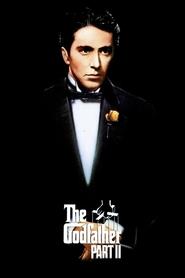
The Godfather Part II (1974)
Release The Godfather DVD Collection (Paramount Home Entertainment, 2001)
Coppola explains comparing Vito and Michael at similar ages and developing their stories in parallel. He recalls negotiating control with Paramount, rewriting for Pacino, and filming across Lake Tahoe, New York, Sicily, the Dominican Republic, and Los Angeles. He discusses music, photography, sets, and improvisation, and connects those choices to Michael's destruction of the family he intends to preserve.
- Duration
- 3h 16m
- Talk coverage
- 72%
- Words
- 22,797
- Speaker
- 1
Guided collection
The Godfather Coppola commentaries
Francis Ford Coppola discusses studio disagreements and production decisions on The Godfather, then the greater control and parallel storylines of Part II. Read his accounts of the two films in release order.
Part 2 of 2
- 01 The Godfather 1972
- 02 Part II Now reading
Commentary density
Highlights
Topics
People mentioned
The film
- Director
- Francis Ford Coppola
- Cinematographer
- Gordon Willis
- Writer
- Mario Puzo , Francis Ford Coppola
- Editor
- Richard Marks , Peter Zinner , Barry Malkin
- Runtime
- 202 min
- Also on
- OneSheet ↗ OverBlack ↗
- External
- IMDb ↗ TMDB ↗ Find on Amazon ↗
Transcript
22,797 words · 128 flagged as film dialogue
This is The Godfather Part II, which is really a film that I never thought that I particularly wanted to do, or in fact it didn't exist in any form for me, just the idea that Paramount was talking about doing a sequel. The head of Paramount, Charlie Bluhdorn, would mention it. He used to say to me, you've got the recipe of Coca-Cola, he said, and you don't want to make any more bottles. You know, I didn't love my experience working on The First Godfather, and I had a lot of bad memories about the picture. You know, the idea of doing it again and being involved with those executives and Bob Evans, it was just like too much to even think of it. So at one point I said to them, listen, I don't want to do another Godfather, but I know a young director. Maybe I'll find one. I'll be the producer. And Charlie said, yeah, do that. And when I went back to actually say, fine, well, I have the director. I'd like to do it. And they said, fine. Who was I? I said, Marty Scorsese. And Bob Evans said, absolutely not. Marty Scorsese will not do the second Godfather.
did the same thing to me, essentially, that they had done to Al Pacino or Marlon Brando. Charlie kept saying, listen, you've got to do it. Give me any terms you want. If you'll do a second Godfather, anything you want. I said, one, no studio involvement, no Bob Evans, nothing to do with it whatsoever, to know what it is or read the script or have any say about anything. Number two, you know, I want a million dollars or whatever the number was. I don't remember now. Whatever was considered a wonderful... fee. And the third was, I don't want to call it any name of a sequel. I want to call it The Godfather Part II. And basically the answer was the first condition was fine. The second condition was fine. But this thing about calling it The Godfather Part II, that Paramount couldn't go for that because they thought people would think, well, this must be the second half of The Godfather. And I've already seen that movie and I had to give it a title. So I said, look, those are my terms. And that's how this film became known as The Godfather Part II. And it's the first
American movie that really used Part II or Rocky VII or that tradition was begun with The Godfather Part II. Now one handle I had on making a second Godfather would be to use the material from the original Godfather book that dealt with the story of Vito Corleone. from his days in Sicily through him coming to America and becoming the character who we remember as Marlon Brando in the first Godfather film. And that was all taken from the book, and I did research looking for photographs of real so-called mafia incidents in Sicily and thought it would be wonderful to go back to those same towns that we had seen in the first Godfather. So we conceived in the script to start in the very old days when there were family feuds and hills and massacres in the land of Sicily. Much of that was based on real stories, and even the death of the boy is from an actual famous photograph of, I think his name was Paolino Riccobono, who was killed and his body was found in exactly that position in a... story very much like this one at the beginning of the picture. The mother of the boy Vito Andolini as he's first known was played by a
a wonderful actress, folk singer, Maria Carta. And, you know, that island quality, it could be Sicily, it could be Corsica, it could be Sardinia. There's a kind of island strength that she had and poetic quality, too. I was always very moved by the thought that they would kill... a boy because he would grow up and become strong and swear to revenge. And so you had to kill him when he was young. And these passions and long held old world customs, you know, really were at the basis of the opera Cavalleria Rusticana, which I saw as a child and that kind of rustic chivalry and the life or death questions between families and revenge, I always felt I first saw as a child in that. And really, in a funny way, The Godfather is very much what I would call a kind of Cavalleria rusticana, rustic chivalry, operatic world.
I remember on... The Godfather Part II, it was a very smooth production. And so unlike the first Godfather, I found that writing the script and producing and then directing a film that was to take place in a Lake Tahoe setting on their estate, LA, Las Vegas, New York, Sicily, Cuba, a tremendous amount of ambitious filmmaking moving and what have you. The film was very pleasurable to me from a standpoint of a well-oiled production, tackling tough things but doing them smoothly.
The score of course was done by Nino Rota and my father had a more elevated position in which he was officially writing all of the source music and dance band music and Italian, what we call source music, the music that's played when you really see the orchestra, the band on screen or it's coming from a radio.
the beginning of the film in the Ellis Island sequence was done in Trieste in a fish market that we were able to with the designer Dean Tavoularis create really what was quite an authentic depiction of Ellis Island at that time and this is before of course Ellis Island was restored and now it's more known but this was really done on this picture I really would look at lots of stills and I mean probably every moment when the boy's eyes are being examined or it was all done to still photographs. The story of the boy getting marked and then having to be on quarantine in Ellis Island was told to me by my Aunt Caroline and this had happened to her when they came over on the original immigrant ship. She was a little girl of nine or so and she had glaucoma or some infection that made them mark her to be quarantined. And she just had to stay on a little room in Ellis Island. And that, of course, gave me the idea to have that happen to the young boy. And he sits out by the room having been quarantined.
What is your name? What is your name? Come on, son. What is your name?
It was hard to find actors in Trieste who would appear to be like the Irish or the American personnel, but Fred Roos would search out the kind of U. S. Navy or other U. S. personnel in Trieste, and all of these people were played. This is really just a total still from that era that I had these men being examined. Interestingly, this set is really a platform up overlooking the window of the fish market, which had the Ellis Island set in. It wasn't even a room out there. Of course, his number is number seven, my lucky number since I was a child. Everything in my movies, I'm sure there will always be a number seven somewhere. The Statue of Liberty was really a reflected photograph. Again, that was really, we were really in Trieste and the Statue of Liberty was just a photograph that we had standing up behind the window that the little boy sang to. And this little song he sings is the Sheku song.
which is a little Sicilian, and that music is used in the first movie. So the Godfather Part II had taken upon itself a very ambitious structure, which was that it was going to tell its story in two entirely different time periods, basically going back and forth in a kind of parallel structure between them. And actually, this was an idea before I knew I was making this Godfather Part II. I wanted to write a screenplay about a man and his son, but both at the same age, let's say 30 years old, and tell this parallel story. Finally, I found myself doing The Godfather Part II. I basically just took that notion and conceived of Part II as having two time periods told against each other.
Here we are in Lake Tahoe. That pavilion was added there. Dean Tavoularis designed it, and it was my dad did all these arrangements of this music that they're dancing to. A lot of it is music he wrote.
And it was just now fun to realize the next generation of Corleones and how they would live given their expanded wealth and more of their legitimization, you know, where they were just out of a little place in New York, and also to show their shift to Las Vegas and to gambling. Obviously, we had to now bring all the characters and show them in their new context. Here you have Connie Corleone. She's clearly after the death of her husband Carlo, the murderer of her husband Carlo. Now she kind of is a wild dame, and she has all these different boyfriends. That young man is Troy Donahue. Interestingly enough, I went to military school with him. His name was Merle Johnson at that time.
A most distinguished guest would like to say a few words. Would you please welcome Senator Pat Geary of the state of Nevada.
And there is Mrs. Geary. It's interesting. Lake Tahoe had a lot to do with finding the key to making this movie. I was traveling and I came upon this big Henry Kaiser estate on Lake Tahoe. the Lake Tahoe, and thought it was such an incredible estate that what if the Corleones had moved west to get into the gambling casino? It translated the compound that they had in Staten Island in the first movie into a totally new world. And here they were in the same way, the same family. The FBI were probably still looking at their car license plates. But they had really tons of money. and they were beginning to drift from those original New York neighborhoods into this kind of affluent lifestyle in Las Vegas and in the West. We introduced some new characters. the corrupt senator who goes head to head with Michael in the tradition of the original wedding scene of the first Godfather, where there was always an occasion, then a wedding, now a christening, in which the various characters and villains were all introduced in contacts of these various requests that are coming in from people who want to get favors from now the new Godfather, Mr. Wonderful.
Michael Corleone. My dad, I remember, made this little arrangement of the boys' choir to sing Mr. Wonderful while all this photo-taking was given. It reminds me of Godfather III with all this check-giving at Corleone celebrations.
These are the actual windows of the Kaiser estate, what was called the Kaiser estate in Lake Tahoe, and it was shot on location in those beautiful buildings. G. D. Spradlin was a tremendously improvising and adding lines and touches of his own. He would basically rewrite his part to make it bigger, but it was always really good, so that was always fun. And definitely he made a contribution not only for the interesting senator, but for some of his own dialogue that he came up with. I think showing your greaseball charm and oozing olive oil was something he threw in. But this is very much in the tradition of the first godfather, this basic pattern or formula, if you like, have a big festivity going outside with entertainment and great food and family, and then in the dark rooms, kind of the Machiavellian deals are being made, and to try to have really the aura of that first godfather, Don Vito Corleone, now kind of alive in his son, who has the position of power in the family.
Plus a monthly payment of 5% of the gross. Of all four hotels, Mr...
I always like to use a lot of improvisation when we rehearse and big, long improvisations. And what we did in this sequence in Lake Tahoe in Godfather Part II is we had the cast there a couple of weeks right on that location. And I went around and said, okay, this is... Sonny's widow and where she lives and she lives in this house and this is Duval and so on and so on. Go around in places where Kay lives and had them spend an entire day, including Michael, basically doing a day's improvisation of like playing scenes about doing business or the kids and then going across the courtyard and then going into one of the other family members house and improvising scenes with them and they did it all day. really helped them find, just as that original dinner in Godfather I, when Marlon Brando and Al and all the family had dinner together to set the tone, I found that that group improvisation was very helpful to get all the characters kind of up to speed and already really living there on those actual sets and taking possession of the estate.
But I want you answering the money by noon tomorrow. And one more thing. Don't you contact me again, ever. From now on, you deal with Turnbull.
Of course, the senator represented, as I imagined the story must be, the next level of villains were not just the local counterpart Sicilian guys or kind of mafioso guys, but now it was starting to get into corrupt senators and... into higher levels of power, of course, until in Godfather Part III, it goes all the way into the Vatican.
Good afternoon, gentlemen.
Always got a kick out of how they had this tough business talk in the private room, and then with the wives, it's all sort of social and baloney.
Now, unfortunately, Richard Castellano, who was so wonderful in the first Godfather, became a little difficult to deal with in negotiating to have him be in the second Godfather. So, you know, it wasn't really an issue of money and it wasn't an issue of anything of those things. It was more about he wanted his close friend to write his dialogue. And I felt, well, gee, you know, of all the things you could ask me, how can I possibly pull something together out of this complicated piece if someone else is going to have to write your dialogue. And so at the last minute, though I never thought it would happen, and negotiations broke down, and I just went back to the typewriter and wrote a new character, Frankie Pentangeli, coming into the party with a black armband on his arm and saying, isn't it sad that Clemenza died? And suddenly, just essentially... converted Clemenza's entire, that whole role of Frankie Pentangeli was written, of course, for Clemenza, and it was a spectacular performance of Michael V. Gazzo, who played him, but it's also sort of heartbreaking that Richie Castellano didn't get to do the logical thing and play that part.
Here we have three great actors, John Cazale, Michael V. Gazzo, and Joe Spinell. Interestingly, Joe was a cab driver when I met him, and he played, as a result of that encounter, he played some small but noticeable character as a button man at the end of The First Godfather, where they take Tessio away. And it was fun to... bring these actors back. Even the ones that had been almost extras in the first film started to have more developed important characters in the second film and then certainly on the third film whenever possible.
Sure. I remember Tom from the old days. Rocco. What's this? It's an orange from Miami. Why don't you take care of Johnny's men? They look like they might be hungry. Johnny?
This is Dominic Chianese playing Johnny Ola, and much of this comes out of research as to what really happened with the various factions who were involved in the mob at that time, and not the least being the man that Johnny Ola refers to as our friend in Miami, who is none other than a kind of version of Meyer Lansky, fictionalized in the form of Hyman Roth.
I just left Mr. Roth in Miami. How's his health? Eh, it's not good. Is there anything I can do? Anything I can send? He appreciates your concern, Michael. And your respect. The casino you're interested in. The registered owners are...
Really, when I think about it now, what with starting in Old Sicily and telling this whole story of a boy who comes to America and becomes a gangster, with this quite complicated modern story of the Corleone family having moved to the West and still involved in a very high-level, Michael being kind of a master, a high-level manipulator of power in this second modern era. It was kind of ambitious to try to pull this off.
Natural or not? Prison. Deported. Hyman Roth is the only one left because he always made money for his partners. I can't believe out of 30 professional musicians, there isn't one Italian in the group here. Come on, let's have a turn and dance. Boom, ba-boom.
I remember this idea was to have them try to do a Tarantella and all the kind of hokey West Coast musicians knew was Pop Goes the Weasel. But once again, to find another way to show how there was an Americanization of their world and the old ways and the old customs were not quite evident in this modern era that this picture is set in.
It was important for me to show how not only was Michael in the center of this business web, but also he was the head of the family, and so technically, you know, people would come to him for permission to be married or to get a bigger allowance.
Al, would you please get him a drink?
There is Al Neri, played by Richard Bright. Again, these characters emerge from... presence in the first godfather becoming more and more evident in each installment of the story really as would be natural as would be in life
the ink on your divorce isn't dry yet and you're getting married you see your children on weekends You know your oldest boy, Victor, was picked up in Reno for some petty theft you don't even know about? Michael! You fly around the world with men who don't care for you and use you like a whore? You're not my father! Then what do you come to me for? I need money.
Well, Connie, we have seen change from the shy and delicate younger sister who has been tortured by a woman's lack of ability to... have any real say in the tragedy of her husband has become hardened and sort of cheap and, you know, like she's been reading too many Jacqueline Susann novels or something. She's got all these diamonds and these fancy boyfriends and you're supposed to sense that that's just the only way she can rebel against this all-powerful brother who's the murderer of her of her husband and who seems to have this power over her. So she rebels by becoming one of those sloppy women of the 50s or drink too much and carry on too much or have a lot of money, smoke too much.
He'll understand, believe me.
If you don't listen to me and marry this man... you'll disappoint me.
I wanted to catch the kind of era of young, waspier people, not Italians, but... sort of wealthy, young, acceptable people go to the best colleges and who one day would be the leaders and the senators and presidents of the country. They're still hanging on to some Italian customs with the toast, cent'anni, trying to sit like a family, but it always is shown through the wives and husbands that come into the Italian family who are not Italian that you see the embarrassment of the old Italians to this new group coming in as expressed by Morgana King, who's the mom and mama and Frankie Pentangeli. They really speak some Sicilian here almost. Frankie Pentangeli's way to kind of pull back to the old loyalties. Of course, Fredo has married some floozy wife who embarrasses him in front of all the guests by drinking too much and flirting with all the men. I mean, the family is really starting to break down in this period. Fredo's wife was played by Marianna Hill and looked beautiful in that extraordinary gown.
These clothes were all designed by Theadora Van Runkle, and I think she really caught a fantastic sense of the story and was a very worthy successor to Anna Hill Johnstone, who had done the first Godfather picture. And that now in the role of Rocco Lampone talking to Fredo is another one of these characters who had come out of the first Godfather played by Tom Rosqui.
Michael V. Gazzo actually was a A playwright, I think he wrote A Hat Full of Rain, and a fabulous improvising actor and just a wonderful character. Well, you know, kind of right up there with the people from the cast of the first film. I believe he had a nomination for this picture. I'm not sure, but I think he did.
Good old man. I like you. And you were loyal to my father.
Because I think Michael now had really... Al had really found the character and, you know, had been partly inspired from, of course, the latter scenes of the first Godfather and somehow also in a way about seeing how Marlon dealt with situations. I remember on the first Godfather when it was Marlon's last day and he was off the set and... I'll sort of take on some of the attributes in terms of, you know, now I'm the main guy and playing it and kind of coming to the set in a way that heralded the importance. But I knew what he was doing was sort of borrowing what he could as Marlon's successor.
Jump! Go! And I leave the gambling to last. I want to run my family without you on my back. And I want those Rosado brothers dead. No. Mort.
Now, I have business that's important with Hyman Roth. I don't want it disturbed.
I was very concerned when I set out to make a second Godfather that, you know, of course, in many ways, it was going to quote the first Godfather and have parallel scenes. You know, if Godfather had a wedding in which it told who all the characters were, then the second Godfather would have... some sort of big celebration, but on a new level. And so, to a degree, you find yourself repeating yourself and repeating what the wonderful original things that the first piece had had. Of course, the more you try to make, the more you are using up the surprise and the freshness of those devices and have to come up with other things, which is very difficult in a way to do.
You want him to leave now? Let him go back to New York. I've already made my plans. The old man had too much wine. It's late.
It seems I'm always doing scenes where Al is dancing, and he really doesn't know how to dance. But he faked it pretty well here. Again, the film was photographed by Gordy Willis, and the art direction was by Dean Tavoularis, and so it had the same vivid beauty image and photography that the first Godfather had. Gordy Willis was very rigid about the structure that he wanted, you know, which I think he was correct in doing, and the second film was made in, you know, really the same philosophy and structure. It's just that the ease between us was much greater and there was room to express ideas. I didn't feel as I did on the first film, up against this, you know, kind of crotchety school norm that just said it had to be this way. And I think I felt more free with the second Godfather. I was running the production. I pretty much had no one to answer to. And as I said, it was an ambitious production attempt to do this whole huge thing to write it all and have all these actors play it in so many different countries. But I was up for trying.
This is a real picture once that my own son gave to me. It wasn't the same car. It was this Mercedes, and he drew a picture of it, and he said on it, do you like it? Yes, no. That's right out of my life, really. Did you see this? Diane Keaton always felt very comfortable with Al, and they really enjoyed each other, and she's such a bright, talented woman, I mean, really brilliant in many ways. And I feel she was a help on the film and was, you know, kind of very much, as I said, created a reality with Al. You know, the Godfather film sort of had to have a balance of intrigue and personal home life and also mystery and violence. And so pretty much right after the big celebration, I thought it would be appropriate to have an attack on, just as it surprised us in the first Godfather when they tried to kill Vito Corleone, played by Marlon Brando. Now there's an attack right in his home, in his guarded estate, you know.
clearly some breach of security. And as you see, there's all kinds of security in men and dogs and other ways to protect the Corleone family in this isolated mall on Lake Tahoe. It's really a fortress within this affluent pleasure dome.
This entire sequence was shot on the Kaiser estate in Lake Tahoe and interior as well as exterior, these were sets in the original Kaiser buildings and the exterior is the beautiful estate, very impressive estate. I like the sense of these powerful wealthy people kind of huddled in their home while possible assassins are ferreted out, you know, and here they are so privileged and so rich. The shot of Michael walking across the courtyard reminds me of when he was in Sicily with his bodyguards or when he was crossing across the courtyard after condemning Carlo. There are many repeated visual sequences between the two pictures.
Robert Duvall's role in this film was so important because in a funny way, he's as the stepson, but he's like the heart of the Corleone family. And it was a profound loss to lose him for the third Godfather picture. It happened. I tried very hard, and I just wasn't able to satisfy him on all the various points, not unlike what happened with Richie Castellano. But it really... is a missing dimension that that film was meant to have.
Fredo, he's got a good heart. But he's weak, and he's stupid. And this is life and death. Tom, you're my brother. I always wanted to be told I was a brother by you. Mikey, a real brother.
All these Godfather films have benefited from just a wonderful group of actors working together, Al Pacino, Robert Duvall, you know, in the peak of their work throughout the various films, or John Cazale, Diane Keaton. I mean, this is what kind of really, in the end, makes a film be memorable.
Fredo and his men, Rocco, Neri, everyone. I'm trusting you with the lives of my wife and my children, the future of this family. And if it gets these guys, do you think we'll be able to find out who's back away then? Unless I'm very wrong, they're dead already.
I guess no matter how powerful people become or how responsible they are on so many levels, it still comes down to... very often a crisis and a scene in your bathrobe with one trusted person. And no matter how high up you go, it always comes down to a human scale.
My loyalty is based on that. One thing I learned from Pop was to try to think as people around you think.
I had a bit of a shock before beginning the picture because I sort of gave the go-ahead to make it just because Paramount wanted to make it so terribly badly. It was so important to Charlie Bluhdorn that we make it. And I just saw this Lake Tahoe place, and I sort of gave the go-ahead to start building scenery. But I didn't really have a script. And I finally had to get a script in shape. And all of a sudden, I got a message from Al Pacino's attorney that Al didn't like the script and he wasn't going to go ahead and make the picture. And I said, well, that's impossible. I've already started building the scenery, and I'm totally... in production and if al were to not be in the film we would have to stop and it would be a disaster and great loss and i said we'll tell you what can al come here to san francisco it's going to be friday and wait and i will rewrite the entire script that weekend on monday i'll give him a new script and then he can decide whether he wants to be in it or not and they got back to me and said yes, Al is willing to do that
And so I started and I rewrote the entire script through the night, that Friday and Saturday, and totally rewrote it. I gave it to Al Pacino on Tuesday, exhausted. And after a day or so of waiting, the word came back that, well, guess Al would do it, and he thought the rewrite was good. So, you know, it takes a leap of faith to make these kinds of movies, and it's very hard to get the script to totally... be imbalanced and just be this crackerjack. Oh, yeah, I see it completely. As I said, with the Godfather, first Godfather, I didn't even use the script. I used this notebook. On this, I had written the script, but Al sort of forced me to really approach it and work hard and tune it up and get it to work on paper. And I guess years later when I said, gee, Al, were you really not going to do the film? He said, no, I was just trying to get you to rewrite the script and work on it. I can't remember.
what i did i don't think it's that old thing of you know character and the same kind of stuff you're always having to hear when you've written a script and you know more character material i'm not involved with the characters and the story isn't interesting and same stuff as always
As I look at the film now, I realize how audacious it was for me to try to do all this. I mean, normally you'd say, well, that story's enough. Why do you have to have the whole world story? And yet somehow I've seen this film once for television. We cut it in straight chronology. And these stories are nowhere near as good alone as when they are told in parallel at the same time. On the version of the Godfather movies all cut as one saga, I still return to the parallel structure for that section.
sequence going back again, of course, I had the wonderful opportunity to include my grandfather's little operetta called Senza Mamma. In those days, in immigrant times, the Italian people used to go and see Italian shows or Italian movies, and my grandfather, Francesco Pennino, the Francesco I'm named after, used to produce those plays and even had movie theaters and would cater to the immigrant people. And I sort of worked it into the story, the little play, Senza Mamma, and the beautiful young girl who was in the play, Vito Corleone's friend, played by Frank Sivero, dragged me. I had to see this beautiful girl. Of course, this girl was a lovely girl named Kathy Beller, whose name is Kathy Beller. and she played this part.
Mama! Mamma mia!
In Senza Mamma, they actually sing the song Senza Mamma, which was my grandfather's really big hit. This was a Neapolitan song all about a man who, like my grandfather, left Italy really without properly saying goodbye to his mother and runs off with a famagnente, a kind of bad woman. And, of course, the woman betrays him, and he's left in America. away from his mother, and then he gets news that his mother has died and he sings this heartbreaking song called Senza Mamma. This, of course, was meant to mix into this little family commercial of my grandfather's Senza Mamma piece to show how Vito first sees the power of the mafia-like mobsters in the form of the arch-villain Fanucci, played by wonderful actor Gastone Moschin. Of course, in my mind, I had no assurance that Robert De Niro was really gonna work out in this audacious casting idea to have some young contemporary actor portray Marlon Brando at an equivalent age, so it's one thing now that the film is
kind of classic and older, to say, oh yeah, Bobby De Niro was fine. But at that time, it was a risky thing. But I was very taken with his bearing, and I thought he had a really, he was very stately and nice-looking, and he brought back little details from Marlon's performances, but not in an obvious way, in a subtle way, as though he really were the man who then grew to that older man.
Carla, what do you have here? Oh, my daughter! What a beauty! What a beauty! Come on in. My only daughter. Leave her alone. Please, leave her alone. Leave her alone. Take all the money. Take all the money you want. No. Beth.
I really enjoyed working with Gaston Moschin, Fanucci. He was a stage actor in Italy, and I had seen him in The Conformist, where, again, I thought he was wonderful. And I wanted very badly to work with him again when I made The Third Godfather, but he was busy doing a play and wasn't able to do it. But he brought a tremendous elegance and proportioned to the figure of a local mafia guy.
shot where he crossed this avenue was of course a big effort to actually do in New York and take all those stores and make them look like the I'm pausing as I watch this because I know there's another big scene that's not cut in this cut which is the knifing of Fanucci where he goes with the boxes and is ultimately stopped by the mafioso Fanucci, and he cuts his throat and scares him, and Fanucci runs off dripping blood in his white hat, which was a very startling image from the Mario Puzo book. Here, again, it was a slow telling of how Vito Corleone, who was Vito Andolini, I should say, which was his original name, who was just a kind of honorable grocer's clerk with a, a wife and then a baby, how he becomes tempted by the gangster way of life when he first receives the stolen guns. I thought it was interesting too that he closes the door on the bathroom where he's going to look at the guns, which seems to be a Corleone family trait of husbands just to close their wives out of anything to do with business.
This was all shot in New York, the grocery store. It was, I believe, a set right on that street that we built. And I think you see that he has a scar on his throat from the scene that was removed. We took the Fanucci scene out because it was too long in the original movie, but we did put it back along with several scenes in a television version that could be longer, and a lot of these scenes are available by looking in your DVD in the special features section. And so the way the mafia works, Fanucci foists this sort of nephew on the grocery store. I think his name was Abbandando. And so Vito loses his job. all the more sees how things work and how the power of the thugs really control life and death in this neighborhood. I enjoyed quite a bit working on Godfather II by big contrast. I had this wonderful team, both of actors and art and photography, and I was able to pretty much make the movie the best way I thought and not have any interference from the studio and have to argue about things.
yet it was an expensive film for its time and a long film, and so I was very concerned. I think we made the film very efficiently, and I think the film was shot, if the first Godfather was shot in 62 days, I think Godfather II was shot in 104 days, but that involved many moves all around the world, Dominican Republic and Sicily. New York, LA, and Las Vegas, so it was a tremendous production challenge.
I confess to have been moved by some of the old photographs you see, like just a man kissing his wife at the table or any number of these settings, and tried to catch that flavor. Here, once again, on this terrific street, this immigrant street, he meets the young Clemenza, played by Bruno Kirby, you know, to grow into the Clemenza we know from Godfather I. Of course, I thought that Bruno Kirby had a good resemblance to Castellano, and also he had the Italian language to his benefit and mannerisms. And so I considered myself very fortunate that he could do Clemenza as a young man. And again, right from Mario's book, Clemenza, who's a little more of a thug and the easy life than Vito, Clemenza takes him on this scam to steal a rug, which is basically makes him an accomplice in his crime. So you begin to see Vito has his first... encounters with the law, the police. Of course, the friend doesn't happen to be home, and Clemenza conveniently has a screwdriver in his pocket and jimmying the door and sort of steals the rug.
I felt when we were shooting that De Niro had that kind of... you know, a man of respect, but also a little bit in a Valentino style. He was very, I thought, very dashing. And even as a young guy working in a grocery store, he had tremendous grace and, you know, like he would be like a king one day.
So the encounter with the police and the idea that if the police officer had stepped in, Clemenza actually would have shot him and young Vito would have been now a party to a murder, that's how kind of his fate was taking him to an area that was definitely on the outer edge of society and to become a gangster meant becoming a killer in a way.
It's the first time he has something to bring home to his wife. I think this is all in the book that, you know, he put the rug down and he had his little boy Santino, who grows up to be sunny,
Already a husky little fella, isn't he?
You know, it's like he goes against the law and is in a position of bringing something home to his family, take care of his family. That's self-satisfaction. With the shot of the train, we are shot forward into modern time. I found with telling the story of this movie that the audience was less with it, with the piece, if the segments were shorter so that originally it would go from one story and then to the modern story and then to the past story. And I found that it was leaving that particular segment too soon, that the audience really felt more comfortable if they could be in a section of the movie for a longer time and so i went through it and i doubled up all the sequences in other words instead of going from a to b to a prime to b prime i just put them together and cut back and forth fewer times and for longer duration
So now in Miami, I was trying to weave the mystery that had been set forth with the character played by Dominic Chianese. There is a mysterious bodyguard with Michael, obviously, some sort of his Luca Brasi, perhaps. And they go to this extremely modest neighborhood in Miami, interestingly enough, which is exactly the kind of house and the kind of neighborhood that Meyer Lansky lived in to meet an important character in the story that is identified as Hyman Roth and played by the legendary Lee Strasberg.
Pacino suggested that we should consider Lee Strasberg for this part, a Jewish mobster somewhat fictionally derived from Meyer Lansky and other mobsters. And I thought, gee, that would be wonderful if he would want to do it. Of course, I was a little intimidated, as you can imagine, that here is this great... teacher of acting and I'm now going to be in the position of having to be useful as a director to him and I must say that it was like one of the great pleasures of my memory the warm and very comfortable relationship with Lee and how how responsive he was to suggestions and how wonderful his ability to do the sense memory of exercises that would put him into a state of being that really made you believe that he was on a plane for 24 hours or whatever was the mood he was supposed to be in.
More than success, more than money, more than power.
It seems that Michael Corleone in this picture is now on an ever-widening array of ever more powerful adversaries, but he's still that killer, don't tangle with him because he'll win in the end, kind of a character that really drives this film. And this was an interesting consideration because in The Third Godfather, I wanted very much him to be a man who realized that he had lost everything, and I wanted him to be kind of contrite and looking for some sort of redemption. And that meant that he couldn't be the lethal, you know, slick Michael Corleone killer, which is the Michael Corleone that the people love. So it was an interesting decision to make at that time. It all seemed to settle down into how long his hair should be. The woman playing Mrs. Roth is a wonderful actress, Fay Spain, who was... All of our teenage crush when we were kids, she was in those movies. We thought she was wonderful.
You're young, I'm old and sick. What we'll do together in the next few months, make history, Michael. History. It's never been done before. Not even your father would dream that such a thing could be possible.
Now this is the actual original location of the first Godfather film, the same... and wall that we were able to duplicate so that we could make the film have that continuity. It's interesting, when you see these button men, they always do the same thing. I don't know where they got it from. I never... Hands in the pocket and they kind of wiggle around, I guess, so that you'd be sure to notice them. But that seems to be the button man dance. This section, Frankie Pentangeli's home, is like real Italian, you know, the kind of gawky teenage daughter and the concerned good wife and the Christmas tree, and you really sense that he lived a life of the old-fashioned Italian.
I wish you would have let me know you were coming. I could have prepared something for you. I didn't want you to know I was coming.
I guess when you come home in the suburb and Michael Corleone is in your den waiting for you, it's a problem.
In my home! In my bedroom where my wife sleeps! Where my children come and play with their toys.
Al is very good at being explosive, and he loves to do it, you know, where he can... almost as much as kind of looking silent and strong, he loves to suddenly shock you with a burst of anger of great intensity. He was very good at handling the dynamics of Michael Corleone in this picture, you know, the control, and then yet the ability to be, you know, really passionately angry.
Mike, I don't understand. Look, I don't have your brain for big deals, but this is a street thing.
I obviously got very lucky with Michael V. Gazzo because he was just a wonderful character and actor with that extraordinary voice, and he was so authentically Italian, you know, like one of your uncles. And to think that was such an important part that ultimately was just cast like a day before it started to shoot really is a wonderful tribute to Michael.
Jesus Christ, Mike. Jesus Christ. Look, let's get them all. Let's hit them all now while we got the muscle. This used to be my father's old study. It's changed. Remember, there used to be a... a big desk, you see?
There was a reference, I felt, to Michael standing as he did by these windows to the windows in the original Don Corleone study at the beginning of the first film and the way Marlon Don Corleone used to look through the windows out at the wedding seemed familiar when I see this scene. I was referencing that, I'm sure.
My father taught me many things here. He taught me in this room.
He taught me, keep your friends close, but your enemies closer. Now, if Hyman Roth sees that I interceded in this thing in the Rosado brothers' favor, he's going to think his relationship with me is still good. That's what I want him to think. I want him completely relaxed and confident in our friendship.
I had to spin the web of mystery and suspicions and who had tried to kill Michael and who was involved and who wasn't I remember I wanted to to make the Michael Corleone story a kind of modern mystery almost you know and have that imagery from Florida and Miami and you know I always advise young directors when they make their movies to always shoot a scene important scene where your character is on the telephone, gets a telephone call or makes a telephone call, especially if you can sort of hide the mouth of him in the darkness or something because you may be able to put in the plot points that you realize you need after the movie's cut and you can put in this scene of Fredo in the bed with his wife is a perfect example of that because I think what they're saying is not at all what we recorded and we sort of had the ability to support the plot a little bit by adding some new lines here.
You guys lied to me. I don't want you to call me anymore.
Mario never felt comfortable about developing the Fredo story to the point where Fredo would be so much a traitor that in any way Michael would... Well, seriously, though, This actor is Carmine Caridi, and in the early casting shuffle of Godfather, he played an interesting role because I was so frustrated at the inability on the first Godfather to get some of the cast that I wanted, including Pacino and stuff. I thought, well, in the role of Sonny, I'd at least get an actor that I felt, you know, was new and that was a certain type of guy. And I was thinking of Carmine to play Sonny. And then, of course, there came a point when Al Pacino was put in the role as Michael and Jimmy Caan became Sonny that Carmine lost the part. And, you know, I never got and Carmine never got the chance really to show what we had in mind, what we could do. Probably as things worked out, Jimmy Caan was, you know, a great Sonny, and Carmine, well, you know, who knows? We'll never know. But he was a wonderful actor and a very sweet guy, and it was a big life's disappointment for him when that happened.
Hey, man!
The modern story pretty much of Godfather II was concocted by me and written by me and of course the old story from the book was pretty much written by Mario and we sort of, I of course worked on the script of both of them and then Mario had the opportunity to rewrite it and it was a wonderful collaboration as usual. A lot of these incidents in the story I had read in newspaper articles or research that i had done to try to figure out what the modern 50s and 60s equivalent of of the old mafia stories would be like as it moved up in the world of government and senators
when i woke up i was in the floor and i don't know how it happened you can't remember
You know, you had to just keep thinking of more bits like the horse's head or horrible, violent things that would be shocking and yet would further the story.
That's certainly a terrible sight to see. I don't even like looking at it. But that's how lethal the Corleones were, that they would send a guy like Neri to hurt a woman like that and kill her just to get this political figure in their pocket.
You don't have to remember. Just do as I say. When they're putting a call into your office, explain that you'll be there tomorrow afternoon. We decided to spend the night at Michael Corleone's house in Tahoe as his guest. I do remember that she was laughing. We'd done it before. And I know that I could not have hurt that girl.
This scene came from just hearing stories about that there were these... various brothels in Nevada that people would fly in, fly-in brothels. I thought that would be a pretty creepy setting. The Lake Tahoe Kaiser estate was really beautiful, especially in the fall, in these scenes where Kay is kind of told that she's like something of a prisoner. Again, the doors with the wives.
Whose orders are these? Mr. Hagen's, man. He's coming over now. All right, well, I'm just going to have to speak to Mr. Hagen.
We actually lived in these houses while we were rehearsing and preparing Godfather II, so these various houses that all the scenes are taking place in were where we slept at night. It was pretty funny. Then, of course, when the movie started, we... We all moved out to, did we ever move out? Maybe I lived in that house the whole time. I remember one frustrating thing is I tried to make a lot of spaghetti for a bunch of people. And being that it's in a very high altitude, the water would never come to a boil. And then when I put all the spaghetti in, it just took forever and never got done. And I was furious and dumping the spaghetti around. It was not a happy domestic period of my life at all.
Now the story takes us to another of our main locations, which of course was the Dominican Republic. And that was very exciting and challenging to recreate these big scenes on the streets of Santo Domingo and take the story further into the exotic. Of course, the Dominican Republic was meant to represent Cuba at a time when U. S. gangsters had a tremendous influence and almost ownership of pre-revolutionary Cuba at a time when the Fulgencio Batista was the dictator. The Fidel Castro rebellion was only in its earlier form, but there was already political unrest and great social polarity. I remember that little boy with the paper. He used to follow us everywhere. That little boy with the paper, he was totally around. Everywhere I would go, he'd always be there.
Most respected gentlemen, allow me to welcome you to the city of Havana. I want to...
Fidel Castro felt that these were, you know, obviously very authentic, but then when he's depicted as coming off as the victor, so what would he like? It is very... I did a lot of research to try to show what it might have been like within the Batista government. This is a famous story that the leaders of many companies came to... do business there, and that the head of IT&T had given him a solid gold telephone, which of course was passed around in one of these scenes and was symbolic of how American capitalism had sort of really zeroed in, including the gangsters on Cuba, and were really sort of owning and operating it.
I would like to take this opportunity to thank United Telephone and Telegraph for their lovely Christmas gift.
This is the solid gold IT&T telephone. I still have that prop. Come to Niebaum-Coppola Winery and see it there, along with the Godfather's desk.
Perhaps you would discuss the status of rebel activity and what this can mean to...
I like the way they pass the phone around. It's like Oscars. They all want to immediately test how heavy it is. The staging of this scene and the way it's shot reminds me of the scene in Godfather I when all the local mafia leaders are... you know, making agreement after the death of Santino. Always took great care to choose the cars the art department did, the different cars. There are wonderful cars in the sequence, these Mercurys, and the sense of capturing that period in Cuba is, I think, authentic, just as the Ellis Island sequence of the immigrants is authentic. Now, it was very, very hot when we attempted to shoot this sequence of the cake and also of the famous frozen daiquiri scene where Michael and John Cazale are in a cafe and the sun was going in and out. Gordy Willis was having a fit because we were all away in Cuba and had a look like incredible sun. Or why the hell were we in Cuba and the sun wasn't out? So we had to make this cake with the map of Cuba on it and we'd sit up there for hours and it was hot but just not sunny.
And then the sun would come out and we'd shoot and shoot, but it took us a week to shoot this scene because of that. And the great trauma I remember is if you look at Lee Strasberg's shirt, the great trauma that since we were shooting it, waiting for the sun and trying to come out, one day his shirt disappeared and no one knew what had happened to it, but it just vanished, the costume, and they didn't have a second one and we were stuck because half the scene was shot in it. And so they got a white sweater like that Alex Tavoularis, Dean Tavoularis' brother, took a Sharpie pen and by hand painted those marks on the sweater so we could shoot the scene. ...
the rub joints we put in Vegas, and we can thank our friends in the Cuban government, which has put up half of the cash with the Teamsters on a dollar-for-dollar basis, has relaxed restrictions on imports. What I'm saying is that we have now what we have always needed, real partnership with the government. Smaller piece. You all know Michael Corleone.
That's my Uncle Louie to Al Pacino's over his right shoulder. If you get a good look at him, you see how he was the guy that I modeled the Marlon Brando character on for the first Godfather. I'll point it out if I see him. And you see him up there in the corner.
Now we'll go to the Lakeville Road Boys. The Capri to the Corleone family. The Sevilla Biltmore also.
Just as they were carving up Cuba, so they were carving up this metaphorical cake. And the cake kept melting because we were out there so long. So finally, we must have had like 16 cakes by the time we tried to shoot this thing. The same thing happened with the daiquiri sequence, where we had to make daiquiris that wouldn't just melt because they were sitting out there waiting for the sun. Enjoy. I saw an interesting thing happen. It was sort of torturous out there on that, now that I think of it, out on that balcony. I started to get pretty antsy by this point, I think, on the show and anxious to get it done. It went on forever, this movie.
Right, Johnny? Maybe so. But it occurred to me.
Of course, one advantage I had was that the studio wasn't seeing any rushes, and so I wasn't getting any comment from them and no involvement from any of the executives that had been involved in the first Godfather. So from that standpoint of view, the relationship with the studio was great. I think this is the shirt that Alex made with his Pentel pen or his magic marker. I think you can see in the close-up that this is a handmade shirt.
As is, I guess, inevitable in this story, the mafia is graduating up to be like corporations, and they're literally influencing and dividing up a whole foreign country, showing how enormously powerful they had become. I originally had thought to cast Elia Kazan for this part. But Mr. Kazan talked to me, and in fact, he was in this little office he had, and he was sitting there looking quite fit, although he was getting on with his shirt off and, you know, the hair on his chest turning white, but deliberately athletic. Ultimately, although I regretted that he didn't choose to play the part, I always carried that image of Mr. Kazan talking to me with his shirt off. And so later, in one of the pivotal scenes with Hyman Roth, I had said to him, take off your shirt. And he looked at me, and of course he just did. And whenever I see that, I think of Elia Kazan as well as Lee Strasberg. But in the Godfather story, at every rung, they're always going up against someone, and it's always bigger each time, and it's always more of them at the same time, which is, you know, Michael kind of versus all the...
power structure on the way up to becoming the big power. I still have this suitcase, the famous suitcase that supposedly has a million dollars in it. One time my son and I said, let's just take all our and put them in the bag, and let's see if we can get a million dollars. I think we got $18,000, which was pretty good. I would, anytime I had that, you know, cash or got a present or something, I would put it in there. So I sent my 16-year-old son to go to the bank, finally, to put it in the bank. And so this 16-year-old kid with a mustache goes into a bank with a suitcase with $18,000. Boy, did alarm bells go off, and I get telephones. But it was in that actual bag that he brought it into the bank. I was fascinated with how small a bag a million dollars can fit in. This man playing the new Luca Brasi, sort of haunting presence back there, is a fellow named Amerigo Tot. He was actually a very fine and famous sculptor. stone sculptor and acclaimed, I believe, and he was a character. Fred Roos had found him in a casting call and thought that this strong stonecutter was a presence that was interesting.
Listen, Mikey, I'm kind of nervous from the trip. Can I get a drink or something? I thought maybe we'd go out together. I know a place we can spend some time together, okay? Sometimes I think I should have married a woman like you did.
This scene was another scene that we had terrible problems with light. I don't even remember what it was, but all I know is we seemed to be shooting it for a week. And it had to do with, again, the light coming out. But if it's the one, I think they were drinking daiquiris. The daiquiris were melting so that when the sun came out and we could shoot, they weren't looking like daiquiris. Maybe this isn't the scene, I don't see the daiquiris. But we had to make millions of daiquiris and finally they're making them up with toothpicks in them and stuff so the daiquiri mound of ice wouldn't melt.
Why didn't we spend time like this before?
Al Pacino and John Cazale really quite liked each other and were friends and, of course, associated on other movies. And I think in plays together, even before they came to work together on The Godfather, John Cazale was a very lovable person and really fun to be with and a good friend and a very sweet person. And thinking back, I recall how close they were.
Senator Geary's flying in from Washington tomorrow night with some people, some government people. I want you to show him a good time in Havana. It's my specialty, right? Can I trust you with something? Of course, Mike.
When you think about it, it was all the second Godfather. I mean, we got lucky, and it's a very well-regarded film, and of course, had wonderful acclaim... But it was a risky proposition now that I look back at it. It was a pretty complicated story and obviously it had these wonderful actors and it had the momentum from the first Godfather. But, you know, so many of my pictures, really these and Apocalypse Now and other films are really on the brink of disaster all the time and it takes a gigantic leap of faith you know, when you really look at the script and stuff, to think that we're going to pull off these projects. And some we do, I suppose, some we don't. But they're all a leap of faith. I think that's the famous fake daiquiri that it was melting resistant because there were just so many melted.
He acts like I'm his son, his successor. But he thinks he's going to live forever. He wants me out.
How can I help? You just go along as though you know nothing. I've already made my move. What move? I'm going to go off and never see the New Year.
If you listen to my thoughts on The Godfather, if I'm saying I was miserable, I was doing this, that it was true. And on this film, I didn't have that problem. And so I was, my problems were all my own personal problems. And, you know, just being on this foreign location in the middle of my marriage at a vulnerable time. I was absolutely pleased with the production. I had no difference of opinion with the studio or anything. They totally kept to their word about the freedoms and the lack of interference. But maybe the demons of my own life were not serving me well. I can remember being in... on some of these locations and really being very conscious of, you know, what was I going to do? You know, I was thinking, waiting for the setups. Maybe I wouldn't make films anymore. I would just start my own little acting company and make little independent films. But I did have a sense that after this movie that I wanted to live my life a different way, get back more to the kinds of films, more personal films,
Although this was, in some ways, like an original screenplay, especially this section, still I was thinking of, you know, being this more kind of auteur film director and just write these little scripts, more like the conversation, really.
There was this kid I grew up with. He was younger than me. Sort of looked up to me, you know. We did our first work together. worked our way out of the street. Things were good. We made the most of it.
This was my little monument to Moe Greene, alias Bugsy Siegel, you know, that ironic that the man who conceived Las Vegas and brought it to life and ultimately died related to it, that there isn't even a little placard to his name in this great economic, money-generating city, and there's not even a little statue to... Yeah, the Bugsy Siegel, it seems wrong, but then again, he was a mobster, so what can you say?
That kid's name was Moe Greene. And the city he invented was Las Vegas. This was a great man. Man of vision and guts. And there isn't even a plaque or a signpost or a statue of him in that town. Someone... put a bullet through his eye. No one knows who gave the order. When I heard it, I wasn't angry. I knew Moe, I knew he was headstrong, talking loud, saying stupid things.
It was, you know, again, I think with these movies, it was the pleasure was from the actors that they were really quite helpful and fun to work with and good, you know, so that... that was very heartening and of course the art department and on this film i got along quite well with gordy willis but better than i had on the first picture although when i showed him the first cut he said it doesn't work and you'll never get it to work
i have two million in a bag in your room i'm going in to take a nap When I wake, if the money's on the table, I'll know I have a partner. If it isn't, I'll know I don't.
This was at the kind of trying to imply the Tropicana in all this music was music my father prepared some of from Cuban operettas and Cuban songs.
It's a pretty neat sequence now that I think of it. We resurrected all that machinery to make the fountain work. It was sort of, I believe, a theater that wasn't being used, but it had once been used like this. I've done this in movies since I was a kid, but I remember in the early days when I was doing some nudie film, I had sort of some burlesque dance going on. I had these two actors sitting at the table in the background to see this show going on, A director friend, older director, Dennis Sanders, came over and he looked at this and he started laughing. He said, well, who's going to be looking at your characters? They're all going to be looking at the girls back there. And I always thought of that when I put this scene in front of the show. But it was fun to stage. In this film, there's any number of musical sequences. And of course, coming from musical theater, I always loved the chance to have musical theater in the film some way or other.
in the Senza Mamma sequence and in this Tropicana show or opera or any time I could put on a musical number, I always liked to. This was a famous story of that period in Cuba that there were these sort of erotic shows of this type. I have no idea what those shows actually looked like. I think our art department got a little carried away here, But the Superman reference was based on a real figure in Cuba at that time. This was shot in the Dominican Republic. And the Dominican Republic is famous among many things for having very beautiful women. And that was indeed the case. The women there were really lovely. And of course, one of my all-time favorites is a Dominicana, Maria Montez, who played those those parts in those kind of Aladdin and Magic Lamp movies.
I don't believe it. That thing's got to be a fake. That ain't no fake. That's real. That's my home Superman. Hey, where did you buy this place? Johnny Ola told me about this place. He brought me here.
Of course, I use this scene as the opportunity where Fredo sort of gives himself away, and we learn that although he denied that he knew Johnny Ola, that in fact they had been to this place, and he sort of inadvertently lets that out, and Michael picks up on it.
In these movies, you're always trying to ask around of some unusual way to kill someone. And I think maybe this was the actor's idea, or that you could assassinate someone with a wooden coat hanger. And so this movie seemed to be killing people every possible way.
So really in the final version of this movie, which we're looking at now, it's interesting to see how long the segments between the old story and the new story really are. So it's almost like an entire short movie that you can become involved in and follow through and then come to a resolution before you interrupt to go to the other level of the story.
Each time we went to a different city like the Dominican Republic, we would shoot everything related to that there, pretty much interior. Very often, the interiors were actual places, real hotels or other. This was the presidential palace of the Dominican Republic and real hospitals and places. Obviously, the sequence is cranking up for the new year social level which turns into a revolution.
Fredo, where are you going? I'm going to get me a real drink because I can.
Again, in the style of the earlier Godfather films, we're trying to wrap up a number of murders and settle certain scores set against history. In this case, the final falling apart of the Batista regime that happened that New Year. So I believe I researched it carefully, and everything happening is quite as it was when President Batista announced that they were going to leave. and that the revolution had prevailed.
What kept Mr. Roth? I understood he was coming. Hey, Reams, what's the protocol? How long should we stay around? Oh, I don't know. I think a half hour.
It was fun staging this with the little signs of soldiers marching through the clock running out in a way for the Batista regime. I remember that we shot this scene where the nurses come for a New Year's toast actually in the hospital. It doesn't say, however, how he knew that those nurses were going to walk away and toast. I guess he just was observant and waited his chance, figuring there'd be a moment. Again, the scene is very reminiscent of the scene of Marlon in the hospital. Most of these scenes came out of previous scenes. This is a terrible moment, beautifully played by Al and John Cazale. I mean, to really think what's really happening relative to these two brothers and what that will bring them to.
I know it was you, Fredo. You broke my heart. You broke my heart.
As I recall, this production in Dominican Republic was ambitious, and we had many, many, many nights, crowds rushing around in the streets and throwing slot machines out of casinos, wrecking them. It was, you know, there was a lot of production we did in the Dominican Republic, a lot of ambitious production. But that part of it, it went smooth. I must, you know, commend, you know, we seem to have the cars, the jeeps, the soldiers, the planes, all the difficult things that move into a sequence to actually stage at this level. And I think, realize what a tremendous costume job that this was. And, you know, to do it out of a number of different countries where the resources, you know, were all these clothes made there, were they shipped there? I don't even know at this time, but I can just see from looking at the movie what a lot of work it was for the people who did it.
Salud! Salud! Salud!
This is, you know, as I imagined and as I'm sure it was, what the panic was after the Batista announced on New Year's Eve that he was leaving and that they were going to turn the city over to Fidel Castro. mass hysterical exodus it must have been.
Come with me. It's the only way out of here tonight. Roth is dead. Fredo.
It was a strange moment with Michael offering to take Fredo out and Fredo being frightened of his own brother running away into the crowd.
Of course, everyone in the situation ran to the docks to try to get a boat storming the United States Embassy any way possible to get out. I remember this plane. I always liked this plane.
It was very important to the people to destroy the slot machines because they were the instrument of these gangsters who had taken over their city.
I remember feeling comfortable with, especially in the latter half of Godfather, with the visualization, the design of the shots, I guess partly because I had this more comfortable relationship with Gordon, but also because I had done the conversation in between and I was... fascinated with the use of a camera that ultimately didn't move and actors would walk in and out of the frame and sometimes you'd be looking at nothing or sometimes it would kind of a visual style that I had evolved with Bill Butler a photographer that did the conversation but I I was feeling more comfortable with the visual part of the film on the second Godfather. I remember after now doing a personal film and then this film, feeling much more comfortable with the filmmaking process, really. It was not quite such a hateful, horrible experience, which I was always in the corner for being over budget or something. I felt much more in control. And I felt also, I feel as though the film was uh, more well-crafted than the first one had been.
I know he's scared. Tell him everything's all right. Tell him, uh, I know Roth misled him, but he didn't know they were gonna try to kill me. Yeah, they can come in now. Well, there was something else. Come on. What? Come on, what?
Inevitably, when I make a movie, I'm not only writing the script or rewriting it a million times, but I'm also rewriting the scenes usually the night before we do them, so very often the scene is only really pinned down that day.
So that was actually quite a long section, dealing with the modern Michael story until now, back to the immigrant time and the difficulties of being a young father without much money and watching your family be at the mercy of things. I think my grandmother told me about how they used to The vacuum glass where they'd make a vacuum on the baby for pneumonia or some simple home remedy. But clearly the motivation of Vito in this film before going on the other side of the law and making a bid for power himself comes out of his feeling about his family and wanting to provide for his family.
What kind of respect do you have for her? Do you know what else she wants to tell me? She's my neighbor. You, the visitor, have no respect for me. You have to take care of me, or I'll take care of you. You have to know that I've been working for the police for six hundred years. I'm only asking for a hundred for the protection of my eyes. And I'm also forgetting the disease.
I very much enjoyed this section of the film, this historical setting, period setting, wonderful actor, great villain like Gastone Moschin. I thought imaginative shots and in terms of these big dolly shots through this wonderful Dean Tavelera set, telling the story in an interesting way, you know, how the neighborhood was owned by a local mafia figure and you had to cut him in or ultimately you couldn't work there and to already see how the godfather his solution to the problem as is his solution and Michael's solution which is just annihilate your enemies don't even give them a chance to struggle with you was born
We had already established the Italian with subtitles in the first Godfather when they went to Sicily, so it seemed appropriate and acceptable to use Italian with subtitles in this old section of the film. This was from the book, and quite interesting, I always thought, you know, ultimately Mario Puzo always presented this problem of why they're in a situation that has no solution, like they were with the captain in the first movie, Captain McCluskey. And he goes on and on and on about why it's impossible, that we can't deal with this, and, you know, we have to pay, and blah, blah, blah. And the solution is always the same, just kill him. You know, so... This is very much a Mario Puzo scene. And that's kind of, I guess, the brilliance of Vito Corleone in this sequence is that whereas everyone is realizing, oh, well, we have to pay this guy, he's watching very carefully and he's noticing that certain people don't pay Fanucci and don't pay these other guys like Maranzala, who is a famous figure in that period of...
kind of warring mafia dons. This was one of Bobby De Niro's first big dialogue scenes. You know, he had worked on it so hard, and he had gotten his Sicilian down so perfectly. We shot these scenes on little sets in LA, as I recall. This was not even in New York. I take care of everything, he says. But this is cold Mario Puzo logic of how you reason with him, what that means, basically. There's a wonderful thing that Mario does in his movies where he has this speech where you give people instructions, like, tomorrow you go to the white building, the doorman will come up to you, He may wink to you. If he does, he is the one that's going to be your enemy. So it kind of predicts what's going to happen. Then you sit there and you get to see whether it happens or not, and that's suspenseful. Of course, in Godfather movies, characters are always astonished at the coldness of the leadership that, of course, is there to show the emerging new powerful person.
This music was all done by my father for this sequence and I thought it was wonderful, really caught the pageantry of this kind of transition that Vito was going through and the use of the festa on the streets of New York. The festa was always something I really loved as a kid. I always loved to go there and eat the, what they called zeppole and the sausage sandwiches. It was one of my favorite most favorite things. There was the big festa up on, called the Festa Madonna of Mount Carmen. It was more uptown, near Lexington Avenue. And of course, the downtown one, I guess this is depicting, was the Festa of San Gennaro. This was a wonderful sequence to work on because it had all of the spectacle of the festa the commune parade and my father's music and rooftops and uh i i very much uh enjoyed this section and of course and and i liked it and i had had fenucci as part of it
I like this scene, this little device. I put it in on the script of that, oh, you know, I have this money under my hat and I was right. And they play this little game with the hat and how much money is under the hat.
I love the way this actor, Fanucci, Gastone Moschin, stirred the coffee and the way he works with props. Everything is so precise. The difference between Italian actors, really from Italy, and American actors, Italian actors come with it all worked out. They have this whole thing they invent and they do it really wonderfully and then they show it to you. And then if you don't like it and say, well, do this or do that, then they'll change it and they'll come back in five minutes with a whole wonderful thing worked out the way you wanted it. Whereas American actors tend to don't do that. They kind of come and present themselves and then attacking the script in one hand, they sort of fall on you to help you help them discover how to do the role. It's a different approach. But you know, American actors, when they get there, And it's probably out of insecurity that they do it that way. When they get there, they're great. But I must say, all the Italian actors, Gastone Moschin and Leopoldo Trieste, and my experience is that they really come and they've got it worked out, and it's good. You know, there is obviously, when you think of these films critically, you see the reference to the American...
capitalist system and how in a sense the story really deals with that and how the family is you know sort of in some way more like the Kennedy family than an Italian mafia family but that ultimately it's all about money in the end and you know that's true and but ultimately so much of America is about money in the end so that That theme of the mafia really finding fertile soil when it came to America, because both the mafia and America have, you know, the earning of money as the main purpose.
I guess we were on a dolly on a building across, you know, either on track. In this case, the camera was on the dolly track. And maybe it was on a dolly track across from the building so we could move with it. Fanucci had a good costume. I like his costume here. These are, of course, the puppets. from Sicily, Orlando, the story of Orlando, and we go into that in greater detail in The Third Godfather with the puppet story of the Baroness Carini. The Baroness Carini story was interesting because it was the story of a girl who falls in love with her own cousin and is killed by her own father for her transgression.
By now we had established this pattern of parallel action of usually some sort of ritual or festivity or celebration or wedding or something. Baptism intercut with a parallel action of some violent somebody about to rub somebody out. This sequence set against the festa with really the advent of the godfather because it's with this murder that he just seizes the notion of a man of respect in a neighborhood where he's the one who ultimately people will come to. This little touch with the bulb is one of those details you try to give it. You know, I thought, gee, if he loosens the bulb and then he's waiting in the corner to kill the guy and the guy sees that the bulb is flickering on and off like someone was there recently, maybe it will all add up to him and there'll be some sort of confrontation.
Also the towel-wrapped gun that burst into flame is another one of those details that, as I said, we're always trying to figure out how to make these violent scenes memorable or interesting or just, you know, if you give it a detail that is just a little different, then it somehow makes what it's really about, which is somebody murdering somebody, just a little more poetic, I guess, or memorable in some way.
you're hoping that the audience is going to say, oh my goodness, he sees the bulb, he realizes it was loose and he's going to catch him and worry about that. I always liked very much how this developed and how he used the towel with the gun and the loose light bulb and all the little details that were involved in the building of this sequence. So just as we had the climax at the New Year's in Cuba, building up to a point, here we have the same thing, this terrible murder juxtaposed against the festa, but terrible murder, but very sensible. when thinking about it in cold reason, a sensible way to deal with the problem he had.
told me that the script's best line was the line when Vito comes back after murdering Fanucci and lifts up his baby and tells his baby, Michael, your father loves you. And I never knew why that was such a good line, or I thought that was overstating it. It was just I just wanted him to express his affection to the kid. you know, remind the audience that he had done it for his family, but Bob Towne thought this was a great moment. I guess when you think that the movie is really the parallel experience of the father and the son, and in the scene you have them both, and he's whispering to his baby that I've done this for you, and then you realize that the son grows up and he's a murderer too, maybe it is a good line, I don't know. There's a... Santino with the flag and little Fredo is crying. And the actress playing the mother is Francesca De Sapio.
Michael, your father loves you so much. So much. He loves you.
And of course, the man with the guitar is playing that song, which is the theme from The Godfather in some Italian folk song way.
So we leave the past again after a long sequence culminating in the murder of Fanucci and chillingly we are in Lake Tahoe with Michael returning from all his Miami and Cuba episodes, coming back to his home where his wife and children are, the land covered in snow. I think we built that gate and we put that gate there rented the gates, then the owner of the property got mad at us and said, well, you said you were going to leave everything, and he wanted the gate, and I said, well, we just rented the gate, we don't own it. I think he made us go and buy it or something. I wanted, you know, Michael to be haunted by the iciness in his own personal life, the reflection about his child, his wife, that oddly enough he was doing all of this to preserve his family and he was destroying his family at the same time and that was the central theme of that character.
The choice of his wife hearing the sewing machine whirring, I don't know how many women really use sewing machines very much now, but it's just an image that, of course, it evokes Penelope in the Odyssey, you know, the wife, the loyal wife at home spinning or working on some needlepoint is really like Greek epic story.
A lot of it, his age and his beginning damnation, he was playing, I think, as an actor. I mean, it's true, he was only a couple of two, three years older by the time we made this. He wasn't really all that more. But he was, you know, Al is a very, very intelligent actor, and he decides what he's going to do.
From the year 1942 to the present time. You were an employee of the Genco olive oil company? That's right. But in actuality, you were a member of the Corleone crime organization.
For the Senate investigations, Fred Roos had a good idea, and we thought, well, gee, you know, instead of getting actors to play these various investigating senators, let's get people we knew, you know, businessmen or friends or lawyers or... people in our lives so that the panel will appear real and convincing. So on that panel, you'll notice next to G. D. Spradlin is Roger Corman, my former boss and producer. And then next to Roger Corman is Mr. Richard Randolph Mathison, who was a writer and a journalist and the father of Melissa Mathison. And I believe on the panel also is Phil Feldman, who was a producer and a lawyer working with Seven Arts and Ray Stark. You see Roger Corman is on the left of frame next to G. D. Also on the panel is a wonderful character, Bill Bowers, who is a screenwriter and of many important movies, Night and Day. And last time I saw Archie in The Sheep Man with Glenn Ford. He was a friend. He was one of the more talkative senators. But the great thing is they were all intelligent men, and they understood how these investigations worked, and they were just naturally good at being believable in that role.
Morgana King was a jazz singer, but she was a wonderful actress, I thought. But more importantly, she really looked to me and had the essence of that Sicilian mother, you know, attractive and yet, you know, kind of really believed that she could go in the kitchen and make the tomato sauce. As they got wealthier, she started to have those fancier hairdos. So at this point already, Michael is concerned about this issue of redemption. He's lost a child. The idea of Michael losing a child and that his wife deliberately aborted it was a suggestion made to me by my sister Talia. And when she first said it, I said, oh, that's too strong and too weird, you know, and stuff. But the more I began to think of it, the more I thought it was a really plausible act that Kay might do, you know, that the women, when he says times are changing, that the women might really revolt and not take the door being closed on them anymore. And with that line and with that sentiment, we had a long...
Dissolve, in which you saw both Al and his father, played by Robert De Niro, on the screen at the same time. And up until the recent movie Heat, I think it was the only time, although they appeared in the same movie, Godfather Part II, that they were in the same frame together.
No, no, it's my pleasure. It's my pleasure. It has. It has. This is very gentle.
It was so wonderful having that authentic street and all those set dressing, and we could do, you know, walking scenes and trucks going by and use it in all these different ways.
I don't know what we can do. What do you want, poor thing? Don't worry about it. The neighbors got angry with Idda's stepfather, Ducane. Idda said he was going to kick him out. Idda likes him. That's why Idda kicked him out. When the stepfather came to know, he got angry and said he was going to resign. Now there's nothing to do. Even if Idda really kicked Ducane out, I'm so ashamed. He told me he wanted to take the money and throw it away. I'm sorry, but... I can give you the money and help you change the house if you want. I don't want to. I want you to be a father to him and tell him I want to stay here.
Here is the enter of a wonderful actor that I really loved working with, who is Leopoldo Trieste. We did many amusing things with him. One incident that was very funny, he was a great improviser again, and in the scene where he goes to see Robert De Niro, who now he knows is a big guy to be respected in the neighborhood. And we had rigged up a lock in the door so that you couldn't open the door if I put this nail in the hole. So I would tell him, I said, Leopoldo, just exit the room. Don't dawdle, you know. So he would go to exit and he couldn't get the door open because I had this special nail that I would put in which would... And then he was like, I don't know what to say. And I said, well, look, it's so simple. Watch, just take the door, open it, and leave. And I would do it. But of course, I didn't have the nail. Then I would put it back in, and he would go and he would open the door. Leaving the door wouldn't open. So it was very amusing to play that trick on him. I finally showed him what we were doing.
No, no, I'm Calabrese here. I don't want my mother to do it for me. I don't want her to do it for me.
Here's where I thought Robert De Niro started to look so, you know, striking and like a young, you know, like a Valentino type of dashing man. And I really, I was sure by this point that the people were going to really like what he was doing in the picture. I was very confident that we were going to get away with this big risk we had taken, which was the only comment i did hear from the studio was when i first proposed the idea of robert de niro playing the young uh with those who said oh it'll never work how are you going to do that marlon brando was so famous of course i had these hopes that marlon brando would maybe work with us for a week or something on this movie and
He didn't get paid very much money, or he felt sort of gypped on the first Godfather film, so I was constantly negotiating with him to try to get him to participate in it. Right up until the last day, I thought he was gonna be in the last scene. The last scene in the movie was written for Marlon to be in the scene. Now, this is the scene of the door that I'm talking about. That door was a trick door. and it would only open if I didn't have this little nail I would put in it. So it gives him trouble even getting in in the first place. Now, having learned of the reputation of this young Don Vito and that he's really a killer, he comes in, you know, totally singing a different tune. You know, the correct expression as is in this scene is to call him Don Vito.
not Don Corleone. You always use the Don with the first name. I would be Don Francis or Don Francesco, and Vito would be Don Vito or Don Vitone or Don Vito, not Don Corleone. But even I now refer to him as Don Corleone, although it's totally incorrect, and I thought so at the time. But the book called him Don Corleone, and the whole world knows him as Don Corleone now, even though he really is Don Vito. Mario didn't really speak Italian, but it's wonderful he made up things that now are remembered as he thought of them. I think now he's going to try to go out the door and it's not going to open. So he's freaking out because I had just said to him, listen, just close, open the door. So now he went and took the nail out and just opened it. I really conceive the...
idea of being able to do the two stories with Bobby De Niro in mind. I knew him and I'd go to the restaurant with him and I'd look at him and I'd say, he could be, he could play that part. And so I only went ahead and, you know, I didn't really, wasn't so nuts to make this movie, but certain things fell in my lap, like the Lake Tahoe setting and Bobby De Niro. So it started to be Exciting to think that I might be able to make the movie and I started to get turned on to it because of those wonderful things, De Niro being one of the main ones.
Yes, I am. And where was he born? Corleone, Sicily. Did he at times use an alias that was known in certain circles as Godfather? Godfather is a term that was used by his friends, one of affection, one of respect.
This is a set, I believe, in Los Angeles that we created, a set very much looking like those hearing rooms. And I've come to know them well.
They have honored me with their support and with their friendship. Indeed, I can proudly say that some of my very best friends are Italian-Americans. However, Mr. Chairman, at this time, unfortunately, I have to leave these proceedings. in order to preside over a very important meeting of my own committee. But before I leave, I do want to say this, that these hearings on the mafia are in no way whatsoever a slur upon the great Italian people, because I can state from my own knowledge and experience that Italian Americans are among the most loyal, most law-abiding, patriotic, hardworking American citizens in this land. And it would be a shame, Mr. Chairman, if we allowed a few rotten apples to give a bad name to the whole barrel. Because from the time of the great Christopher Columbus, up through the time of Enrico Fermi, right up until the present day, Italian Americans have been pioneers in building and defending our great nation. They are the salt of the earth, and they're one of the backbones of this country.
These were really non-actors. Bill Bowers was a right, but they were interesting men. And they understood the whole trial process in the Senate. So they had, I guess, seen hearings on television and knew how to fake them.
and with him a man named Virgil Sollozzo. You deny this? Yes, I do. Is it true that in the year 1950 you devised the murder of the heads of the so-called Five Families in New York to assume and consolidate your nefarious power? It's a complete falsehood, Mr. Questadt. Is it true that you have a controlling interest in three of the major hotels in Las Vegas? No, it is not true. I own some stock in some of the hotels there, but very little. I also have stock in IBM and IT&T. Mr. Corleone, do you have any interests or control over gambling and narcotics in the state of New York? No, I do not. Senator, my client would like to make a statement before this committee. Mr. Chairman, Mr. Chairman, I think this statement... is totally out of order at this time. Sir, my client has answered every question asked by this committee with the utmost sincerity. He has not taken the Fifth Amendment as it was his right to do so. In all fairness, I think the statement should be heard. No, no, I'm going to allow him.
That's Peter Donat, who's been in a number of my films and a wonderful actor from ACT playing... this lawyer affiliated in these hearings. We kind of based them on a Nixon figure, an early Nixon figure. And, you know, I had in the script plans to go higher in the political hierarchy to kind of show how close to the seat of power Michael was really getting. ...
my country faithfully and honorably in World War II and was awarded the Navy Cross for actions in defense of my country, that I have never been arrested or indicted for any crime whatsoever, that no proof linking me to any criminal conspiracy, whether it is called Mafia or Cosa Nostra or whatever other name you wish to give, has ever been made public. I have not taken refuge behind the Fifth Amendment, though it is my right to do so.
I challenge this committee to produce any witness or evidence against me. And if they do not, I hope they will have the decency to clear my name with the same publicity with which they now have besmirched it.
I'm sure we're all quite impressed, Mr. Corley, particularly with your love for our country. These are based on, like, the Valachi hearings, and Pentangeli is like a type of Valachi figure who turns against the mob and is offered all this protection, which is... uh the scene uh with him with uh various fbi agents who dress them up like a general so that there won't be assassination attempt on him that's harry dean stanton and uh i can't see who that other fellow is
i'm gonna shave you myself in the morning and you're gonna look respectable for 50 million of your fellow americans My life won't be worth a nickel after tomorrow. Come on, I saw this. I saw this thing 19 times. You got a great home here, Frankie. The rest of your life, nobody gets near you, you're not going anywhere. Oh, that's great. That's beautiful. Some deal I made. You'll live like a king. You'll be a hero. You'll live better in here than most people on the outside. Some deal.
Pentangeli is alive. How'd they get their hands on him? Roth. He engineered it, Michael. Frankie went to make a deal with the Rosato brothers, and they tried to kill him. He thought you double-crossed him. A lot of people with the New York detectives said he was half-dead, scared stiff, and talking out loud that you'd turned on him. They already had him on possession, bookmaking, murder one, and a lot more. The FBI has him airtight. He's on an Army base.
Here we are back at the actual bar and boathouse of the Kaiser estate where he met those people during the big party on Lake Tahoe.
He says he doesn't know anything, and I believe him. Roth, he played this one beautifully.
I'm going to talk to Fredo.
These were the scenes that I meant when I said I was interested in some of the visuals and kind of influence from the conversation, how the camera sort of sometimes had its own mind as to what it was going to do. And then the beautiful boathouse that where Fredo has his big final scene. I was feeling encouraged by the way I felt it was going in terms of directing and knowing how I wanted it to be staged. You know, so often before this, I worked out of insecurity, of worry, and I was beginning, I remember, in this part of the film to feel more confident. I think a lot of it was because of having made the film The Conversation.
Is there anything you can help me out with? Anything you can tell me now? They've got Pentangeli, that's all I can tell you. I didn't know it was gonna be a hit, Mike. I swear to God, I didn't know it was going to be a hit. Johnny Ola bumped into me in Beverly Hills. And he said that he wanted to talk. He said that you and Roth...
I thought this section of the movie was reaching for a contemporary kind of drama. good acting, strange psychology and situation that was more like I was hoping to do in my personal films. And as you look at it, more related to the conversation, the kind of movie the conversation was, which made sense before Apocalypse Now came along and blew me away and kind of I never recovered from that experience. Oh, well. That's all an adventure.
Taking care of me? You're my kid brother and you take care of me? Did you ever think about that? Did you ever once think about that? Send Fredo off to do this, send Fredo off to do that. Let Fredo take care of some Mickey Mouse nightclub somewhere. Send Fredo to pick somebody up at the airport.
There was something about that chair that worked so great for the scene because... He kept saying, I'm your older brother and stuff like that, and the chair just kind of made him be so limp and springy and kind of just work great. Sometimes you get lucky with a chair, I guess.
Is there anything you can tell me about this investigation? Anything more?
The Senate lawyer, Questadt. He belongs to Roth. You're nothing to me now. You're not a brother, you're not a friend. I don't want to know you or what you do. I don't want to see you at the hotels. I don't want you near my house. When you see our mother, I want to know a day in advance so I won't be there. You understand?
But I think, you know, given the modern story, the Miami story is very... colorful and strange and kind of a wonderful modern kind of point to the old story. But I think these sequences with Al in Tahoe with his brother are probably among the best of the modern story in the movie.
This was, I believe, in the book where there was a sequence, if not the book, into some pages that Mario created, because I know the... idea of the older brother from Sicily being brought in to sit there to discourage the witness from going through with what he had agreed to that was from either the book or from some original pages of Mario.
Mr. Pentangeli, Mr. Pentangeli, were you a member of the Corleone family? Did you serve under caporegime, Peter Clemenza, under Vito Corleone, also known as the godfather? I never knew no godfather. I got my own family, Senator.
I remember one incident about this scene is that we rehearsed it in the morning, and Frankie Pentangeli gave this performance In his testimony part, that was so great. It was so spectacular that I couldn't believe it. It was so good. And then we had a break for lunch. So I said, well, gee, can't we just do it? He's really got it. And now we had a break for lunch. So during lunch, he got totally drunk. And when he came back, he couldn't do it anymore. And I was frantic because, my God, I had this great thing. And, you know, we're walking him up and down and giving him coffee. And he did it very well, but I think that rehearsal was still spectacular. At least I'll always remember it that way.
Look, the FBI guys, they promised me a deal. So I made up a lot of stuff about Michael Corleone, because that's what they wanted. But it was all lies. Everything. And I kept saying, Michael Corleone did this, and Michael Corleone did that. So I said, uh, yes. Mr. Corleone, would you kindly identify for the committee the gentleman sitting to your left? I can answer that. His name is Vincenzo Pentangeli. Is he related to the witness? He is, I believe, his brother. Will he come forward and be sworn, sir? Sir, this man does not understand English. He came at his own expense.
I wasn't so much in that oh, you know, Italian-Americans are unfairly... I feel that there are segments in all ethnic groups and national groups that have their geniuses and their great poets and writers and their gangsters and dictators. So I somehow personally felt more confident about Italians. I said, gee, you know, Italians are among the greatest artists and musicians and thinkers and statesmen and, you know, so many positive things that... The fact that there's some gangsters in there doesn't seem to me all that significant.
Michael, excuse me. The children are outside. We're going.
This is, of course, the scene that was the kernel of which was the idea of my sister Talia, that what if the child that Al had lost, that Michael had lost, really was an abortion, that she had aborted the child. And at the end of this court case, when he beats the system, she tells him just to sort of her way of resisting this abortion. terrible evil which she feels is spreading out from this young man that she once loved who was turning into a monster not even as warm and as kind of somehow lovable as his father who was also a monster. You know so often I shy away from those strong plot issues but you know they're very entertaining and they enable the actors to really go to town and exploding or expressing emotion which of course al did in this with her and she you know fought right back so i i in the end i thought it was a good idea and i made it the basis of the scene and uh it worked much better than i had thought it would when tally first gave me the idea
his brother came helped him i didn't even know he had a brother where is he now he's on a plane back to sicily All he had to do was show his face. It was between the brothers, Kay. I had nothing to do with it.
I liked, you know, this little tableau. I mean, it's like the boy understood that there was something heavy going on with his mother and father, but the girl was too... The little girl was too much a kid to know. She was just running up and down the aisle.
Michael, you say you love me, and then you talk about allowing... The things that have been going on for years between men and women... Michael, you're blind. You've become blind, Michael. Look what's happened to us, Mike. My God, look what's happened to our son, Michael. Nothing's happened to us. Don't tell me nothing's happened to us. I don't want to hear about it! Over!
Obviously one of the few really good explosive scenes between Kay and Michael in the various films.
I can't remember where we shot this. We may have shot this in Washington. I have no idea where this was, or maybe... No, this was... I know that that exterior that showed the hotel and everything was something we had got in second unit, so it probably was shot in a totally different place than this scene was. Maybe the scene was shot in L. A. No, I think it was in an actual hotel. So it may have been... It was the room inside where that corridor where the children were waiting, the same place. I know that.
I know you blame me for losing the baby.
I know what that meant to you. I'll make it up to you, Kay. I swear I'll make it up to you. I'll... I'm gonna change. I'll change. I've learned that I have the strength to change. And you'll forget about this miscarriage. And we'll have another child, and we'll go on. You and I.
I had first seen Diane Keaton in Lovers and Other Strangers, and I thought she was so wonderful and so beautiful and so individual and alive that I thought she would take Kay, who was a pretty straight, waspy schoolteacher in the book, and give her personality and, you know, soul and depth and... humor even, and she did. It was a difficult part, you know, because she's the woman being closed off by the door all the time, but she had her moments, and certainly this was one of the scenes that she was able to stand up to Michael.
I had it killed because this must all end! I know now that it's over. I knew it then. There would be no way, Michael, No way you could ever forgive me. Not with this Sicilian thing that's been going on for 2,000 years! You won't take my children. I will! You won't take them!
Here we had another case of, well, we're in Sicily, so we have to have sunlight. We had this beautiful sunlight for the establishing shot, but then the sun kept going away. And one of the elements of this scene was my son, Roman, who is the little boy playing Sonny with the curly hair. Now Roman's hair is not curly like that. So since we were going to just shoot this in one day, we figured we would take him to the hairdresser and with the hot curling iron they would make curly hair and he could be sunny but Sicily wasn't sunny so the Sun went away and every time we tried to shoot that scene there was no Sun so we came back and back and back then finally we left Sicily all together and took a hiatus because we had to have Sun and Sicily I mean when you see the picture you realize that it's Sicily you see it in the Sun and there was no Sun so poor Roman
had to have his hair curled with that hot curler every morning, thinking we were going to shoot. And then, of course, the sun would never come out, so we wouldn't shoot. So we would just eat these hot lemon ices all the time. And I associate this sequence with going to that station every day. Look at Roman. And him getting his hair curled with the curling iron and eating lemon ice. That's what I really think of this.
That fellow playing the, I forget his character, but his name is Mario Cotone, and he was the production manager, and he looked just like the actor Corrado Gaipa, who was the man in the wheelchair in the first Godfather. So I thought, oh, I could show how he got in the wheelchair. He was in a wheelchair because he truly was, the actor was truly in the wheelchair, but I found this production manager, and I said, gee, you look just like the guy, so I had him play it. This was in a... an olive factory, I think, in Sicily. Or maybe it was really a winery, and we played it as an olive factory. Francesca De Sapio, and I guess he's holding Fredo, and the other baby is Michael, and there's my boy, Roman. Little did I know that I would become a wine mogul myself.
I guess this scene, of course, centers on the resolution of the story of that first Don who had killed his mother. Interesting story here was that big cactus plant, this huge cactus plant was growing. And then, of course, we had to go back to this place in modern time. So the art department cut that cactus and made it small. Every time I see it, I think, oh, my God, what a beautiful cactus plant. how horrible it was that we cut it. But I think we had to show it in the era when the mother was alive and it was very small. And so they shot this first. The actor is, I forget his name now, but there were Sicilian actors from Catania and the region, and he was now aged to look very old because he had played the younger man who condemned the boy, Vito Corleone. As a line in Mario's book reads, revenge is a dish tasted best when cold. The actor who played the old Don Ciccio was Giuseppe Sillato from, I think, Catania. We interviewed a number. Fred Roos did this personally and interviewed a number of Sicilian actors, and they played all these roles.
You got the name of this country, huh? This country? What's it called? It's called Vito Andolini. It's too strong. I don't feel good.
Of course, Andolini is the real name of Don Corleone. And this action sequence, as they try to beat their escape, indicates how Don Tommasino was first crippled and why you see him in the wheelchair. in the first film, in the period after this happened.
This is the same church courtyard with my boy with curly hair over there, in which Vito Andolini supposedly was hidden in the stuff of the mule on his way to New York. And he comes back to that same town. That's that same set.
No, no, no.
Of course, now we are reminded of the fact that by seeing the mother and open casket that really, in a way, Fredo's days are numbered. An interesting thing happened. In this scene, you'll notice Mama Corleone in the casket. She was afraid to get in the casket. It's very bad luck for Sicilian ladies and stuff. And so no one would get in the casket. And so my own mother, Italia, put the wig on. And if you look in the casket, that's my mom. Even poor Talia goes and looks and she sees her mother in the casket. But our mother was the only one who would do it. And she's still alive and kicking, I must say.
Hiya, Al. Can I speak with you for a second, Don? Don, where's Mike? Waiting for you to leave.
This was, you know, for me, Talia should have a beautiful moment, especially after starting out as such a brazen hussy in the earlier part. And so this sequence where she begs for forgiveness for Fredo was, you know, really something that would be worthy of her.
Michael, I'd like to stay close to home now, if it's all right.
The moral dilemma that Michael finds himself in is beginning to tighten and capture him in this tightening net, so obviously it revolves around family issues, his sister, his mother, his son. The greatest fear he had was that by being strong and ruthless as perhaps his father had been in order to protect his family, that in fact he was destroying his family.
And I could hurt you. You were just being strong for all of us the way Papa was. And I forgive you.
I would imagine that every scene in Godfather II has a precedent than a scene in the first Godfather, that in a funny way, the story, to take it further, inevitably repeats it. And that was one of the reasons why I gave it the double structure, the time structure of the past and the present to give it another dimension beyond just sort of making the first Godfather over again, which is partly what I thought I was, you know, doing really. Other than that, I didn't know a way to extend out from the first movie.
Any number of times in the story, Michael walks away, you know, timpani, boom, boom, boom, you know, da-da-da-dee. It was kind of like he was stalked. Michael Corleone was a man that was stalked by his fate. He couldn't escape it.
There's a thing in Godfather films where people are always forgiving other people and then they look up and you realize they haven't forgiven them at all. They're just telling them that they're forgiving them so they'll calm down and not have their defenses up and then they kill them anyway. So watch out when some mafia guy forgives you.
Israel turned down his request to live there as a returned Jew. His passport's been invalidated, except for return to the United States. He landed in Buenos Aires yesterday. He offered a gift of a million dollars if they let him live there. They turned him down. He's gonna try Panama. Panama won't take him. Not for a million, not for ten million. His medical condition is reported as terminal. He's only gonna live another six months anyway.
It's funny the image of the orange without really knowing why. Orange was used, I guess what happens if you use it in a few places, it's associated with, you know, kind of foreboding or death as when the father is shot in a bag of oranges, falls on the street in The First Godfather. The orange then began to emerge as some sort of a symbol. Having actors eating oranges and stuff, we knew the orange was mythic. although it started accidentally, that by this point we understood there was some significance. I guess as the orange, as something from Sicily, as a fruit bringing with it the memories, good and bad, of the old country, the symbol of Sicily, I guess the orange kind of had that significance.
I turned them down. I mean, do I have to tell you about every offer that I turned down?
All right. Just consider this, Michael. That's all. Just consider it.
We based part two on the classical styles of the first Godfather, and it was formal, and it was tableau in nature, and, you know, we shot it with a certain kind of light, a beautifully conceived light that Gordon Willis would do, and it took him a long time to... You know, because he... always worked right on the edge of where the exposure would fall apart. So they used to say that Gordy would skate on the emotion. It was very dangerous what he would do because if the actor was in slightly the wrong place, there wouldn't be any light on where his head was. It was only on where the designated mark was. But that's how he achieved the beautiful look that he did, and it is beautiful.
Why do you hurt me, Michael? I've always been loyal to you. I mean, what is this?
This story I've talked about, but it's true and it is the genesis of this sequence. When I was a little boy, I don't know, maybe seven or eight, I don't think older, but around that age, I very much not only believed, but adored the Virgin Mary. I thought that she was someone who had a special place in her heart for me. As, you know, they said, the Virgin Mary loves children. Moreover, that if I said a prayer, if I said a Hail Mary, that, in fact, I would have my wish come true. And I remember one day we all went on a fishing trip on a big boat, and everybody was trying to fish, and nobody was catching fish except me. And I was saying, Hail Mary, throw my hook at me.
ocean and pull up and I'd have a fish and then I would do it again and I caught like 28 fish and no one else caught any so I was positive that I was like a chosen favorite that I was fortune's favorite and and the Virgin Mary just really liked me and after all she did look just like my mother my mother all her life was a beautiful dark-haired woman you know kind of that snow white look that is also like a Virgin Mary look and so I was very much into the mythology of the Virgin Mary. Therefore, I gave Fredo this story for his own, that he would catch the fish every time he said a prayer and at the end have him say the prayer just before Neri pulls the trigger.
It's old fashioned. He didn't even want to go out to dinner. He just wanted to go straight home. That's my brother. Nothing could get him away from that two-bit town. He could have been big here. He could have had his own family.
this is a mario scene whether it's from the book i don't know if it's from the book i think it's something he wrote for this and and it was you know based on the romans and how they would handle these questions where a man's family would be spared if he would just do the right thing and just kind of take care of it by letting open up a vein and dying this was a beautiful scene for both of these actors it was at a time when the The sun was setting and the light was just perfect and we just had this... We only did a few takes. This was one of the early ones I remember. I think both the actors, both Bobby Duvall and Michael V. Gazzo were right where they should be. We're fortunate in the... That's why I meant to say that at the end of The Godfather II, I was beginning to feel more control over the material, like I really could do a beautiful contemporary story with beautiful acting. It's largely due to the combination of the story and what the script outlines, wonderful actors such as these two, and getting lucky and catching a mood or catching the light right and having the scene come to life.
It's true that this is evocative of the scene with Abe Vigoda when Bobby Duvall has to kill him. It's really, in a sense, the same scene, except much more articulate and talking about things on a more intellectual level. But it really comes down to the same two words, which is, you're out.
Their families were taken care of, Tom. That was a good break. Nice deal. Yeah.
Just the fact that they smoked a cigar and just played. I think they only did one or two takes of the scene because the light was going. And sometimes they had a little party before they did it.
I remember feeling at the end of this film more so even than after the first film that these two films were enough and that these films were the godfather and I totally resisted the thought of there being a third one. I had no idea what it would be about and by my book I had made the two films one too many except that it seemed to catch a greater spirit or dimension or least equal to the first film and due to the people I was working with and how things fell together I think we achieved a movie that was really a worthy successor to the first one but after this for years I couldn't consider there being a third one as I often said I had no idea what it would be about had no intentions of making it and while my life was okay and I was doing alright I didn't make it but it was only after the great
events of buying a studio and having one from the heart be a big financial disaster, which really put us in a tough way financially that I did consider an offer from Paramount. It was a very generous offer, although it was very short in time and we were going to have to come up with a third Godfather, you know, almost from concept to finished movie in a year. It was ironic because when I finally did accept the offer to make a third Godfather and laid out the terms, you know, where I could have the control and it could be on a mature subject, which I had told them was about the kind of King Lear, a man searching to resolve his life, because in these two films, in both films, his personal life is at such a concluding point dire place I mean he's lost everything he's lost his family and his children and his wife has demonstrated in this scene where once again he he closes the door on her I thought I can't see anymore after that this man has damned himself and lost everything that is worthwhile you know he's really someone who started as a good man and ended up as a bad man and he's going to be forever tortured
So when I said I'd like the third film, if there could be one, to be about redemption and he wouldn't be the same cold, murdering, revenge-prone man that we had seen before, Paramount said, well, all right, blah, blah, blah. And I said, but one thing is, I said, I don't want to call it The Godfather Part III. I said, I want to call the movie The Death of Michael Corleone. And they said, what? And I said, well, the first film is called The Godfather. The second film is called The Godfather Part II. And the third film is called The Death of Michael Corleone because it's really about the resolution of Michael Corleone. It's almost like an epilogue more than a sequel. And they said, absolutely, we'll give you all your other things that you're requesting, but you can't call the movie The Death of Michael Corleone. It has to be called.
Godfather Part III, and I thought that was so ironic because it's exactly what they had said on the second film when I said it has to be called The Godfather Part II, and they said, absolutely, it can't be called The Godfather, except what it illustrates is that I had really much less clout at this point because I never was able to prevail, and they called the film The Godfather Part III, and they did release it about six months before it was really finished, and so... I speak of that only at the end of this film because it's really true that when I finished this film and showed Michael in the kind of hell he had created for himself, I really thought I was done with The Godfather.
This is Lee Strasberg with his extraordinary sense memory to make him look as though he's been on a plane 20 hours and has just gotten off of it.
Mr. Roth, you understand I'll have to take you into custody? Yes, I understand. Can you give us your reaction to the High Court of Israel's ruling? I'm a retired investor on a pension. I went to Israel because I wished to live there as a Jew in the twilight of my life.
I came home to vote in the presidential election
because they wouldn't give me an absentee ballot.
Once again, we have the same godfather. You see, this is what I mean about you're using the same tricks over and over again, the notion of centrally putting one series of murders around one principal event, in this case, the most profound sin. that Michael commits, which is the killing of his own brother, which is why I thought the third film, The Death of Michael Corleone, had to really get into that subject of what did he feel about, did he want to ultimately confess and wipe that sin away from him. And since I thought if you keep moving higher in the realm of gangsterism, then you ultimately get to the big sources of power, the governments and the Vatican, which is what I thought might be a subject matter for the third film. It's interesting to talk about the third film at this point because really I did believe that I had finished the Godfather piece and had made one film more than I had expected to. And now we have really the final wrap up for the whole series in my mind. And it's a very interesting story because I had written this scene that we go back
to around the period just before the first Godfather when they were all young. There's Connie meeting her groom in Godfather I, Carlo, played by Gianni Russo. And there's all the characters with their short hair and youth. My idea was that they would come together finally at the end as a family, and the end of the movie would be a big, beautiful scene with Marlon Brando and Al Pacino sort of summing up the whole saga that had gone down. And I was negotiating with Marlon Brando right up to the last minute of saying, Marlon, please, just one day, we'll give you this money. But Marlon was so mad at Paramount that he can be unreasonable. for ultimately not paying him any money on the first picture or whatever, you know, whatever he was mad about. And although I didn't know it until the last day, ultimately, he wasn't gonna be possible to have in the picture. So I went to bed that night really worried. I had lost the end of my movie. I had to shoot it the next day. I had no idea what to do. I was sleeping in the Chateau Marmont Hotel.
I had this scene. I had paid all this money to get Jimmy Caan to come back and some of the other actors to be in the last scene. And in the middle of that, I just had this idea, and I wrote it, which is that they were all gathered for a surprise birthday party for the Don. And so after this scene plays out in which Michael's decision to join the Marines is... kind of examined relative to, you know, really what all we know is going to happen and what this young, beautiful, young collegiate man who's a war hero who goes straight is going to end up to be this man without a heart who's killed his own brother and alienated his wife and rejected his wife, you know. I thought there could be one beautiful scene with he and Don Corleone as we remember him from the first movie, but...
Since Marlon didn't come, I made it the surprise party, and I built it up to the point where they all say, oh, he's here, he's here, and they all run out of the room. And as you're waiting for Marlon to come into the room, you just stay on Al and somehow try to end it that way. And I came up with the solution at, like, as I said, 3 in the morning, and the next day they said, well, Marlon's not coming. And I said, that's all right. I've got a scene we can do without him, and it was this one.
I think one of the great feats of the Godfather films is how we brought back all the people right down to the actors and the supporting actors and the... over so many years. Also, I like that staging kind of especially about families who ultimately dissolve in front of your eyes the idea that you have a table full of people and one by one they someone argues or someone goes off and then you're just left with with none which is what you're left with families so here was the switch and by now hopefully one has satisfied the various points of view about the young Michael and you're left with him alone and everything else now is just sound, that the father comes and you know he's there and you feel he's there, but you're left with Michael alone. And there's that one momentary image of
Michael and his father, like, waving his hand for him, you know, being the puppeteer. And this, to me, really was the end of the Godfather story. You know, he was left having won but having lost everything, started out as a good man. And in the film I'm working on now, I'm going to start out with an evil man who becomes good crossed with a good man who becomes evil.
Keep exploring
Other commentaries on related filmmaking topics
-
8 shared topics
The Lord of the Rings The Two Towers (2002)
Peter Jackson, Fran Walsh, Philippa Boyens
-
8 shared topics
The Lord of the Rings The Fellowship of the Ring (2001)
Peter Jackson, Fran Walsh, Philippa Boyens
-
8 shared topics
The Godfather (1972)
Francis Ford Coppola
-
8 shared topics
Red Dragon (2002)
Brett Ratner, Ted Tally
-
8 shared topics
The Way of the Gun (2000)
Christopher McQuarrie, Joe Kraemer
-
8 shared topics
Les Misérables (2012)
Tom Hooper