director
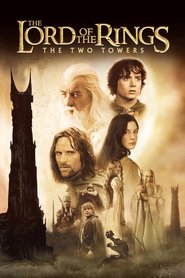
The Lord of the Rings The Two Towers (2002)
The filmmakers discuss editing three separate storylines and revising characters' motives through pickups and the extended cut. They describe developing Gollum, building Edoras, and combining models, walls, rain, stunts, and extensive footage for Helm's Deep. The battle's editing repeatedly returns to the principal characters to help viewers follow the action.
- Duration
- 3h 43m
- Talk coverage
- 97%
- Words
- 42,156
- Speakers
- 3
Guided collection
The Lord of the Rings director commentaries
Peter Jackson, Fran Walsh, and Philippa Boyens discuss adaptation, production, and editing across the trilogy's extended editions. Read the tracks from The Fellowship of the Ring through The Return of the King.
Part 2 of 3
- 01 The Fellowship of the Ring 2001
- 02 The Two Towers Now reading
- 03 The Return of the King 2003
Commentary density
Highlights
Featured in
Topics
People mentioned
The film
- Director
- Peter Jackson
- Cinematographer
- Andrew Lesnie
- Writer
- Fran Walsh , Philippa Boyens , Stephen Sinclair
- Editor
- Michael Horton
- Runtime
- 179 min
- Also on
- OneSheet ↗
- External
- IMDb ↗ TMDB ↗ Find on Amazon ↗
Transcript
42,156 words
Hi everybody and welcome to the continuing epic commentary for the extended cut of the two towers. I'm Peter Jackson. And I'm Fran Walsh. And I'm Philippa Boyens. The first thing we can talk about is the New Line logo because what people won't realise is that the logo that New Line gave us was quite scratched and jumpy and old and so we actually put it through weta, the digital effects facility, and we cleaned it up and stabilised it and sharpened it and gave it back to New Line as a special little present. So I don't know whether they even knew about it. Did we bill them? We should bill them now. It was interesting to figure out how to start this film because the studio were quite insistent for a long time that we have a prologue, the same as the first film. They wanted Cate Blanchett, in actual fact, to give us a sort of a backstory of what's happened so far in this movie, you know, the Fellowship of the Ring, and to set us up. And we resisted doing that, didn't we? Yes, yes.
It was ironic, really, because they didn't like the idea of Cate Blanchett doing the prologue in the first film, in Fellowship. It was something we were keen on, but they weren't. And then it flipped around the other way. Yes, and then in this one, they decided that it was a good device, but we sort of moved on from there and thought, no, we're just going to go straight into this one. Nobody needs more backstory. I kind of think it's just important to be able to join all three movies up. at the end and be able to run them as a film. And I think, you know, Cate Blanchett's great to come on at the beginning of the story and do the prologue, but this is not the beginning of the story. We did have this opening for a very long time, though. This was actually written quite early, in very early drafts. Well, the Balrog scene was. The mountain scene, I remember thinking of that idea when I was in a cutting room cutting it, because I thought, how do we actually open the movie? And we knew we were going to open it with the reprise of the Balrog and the plunge, but...
you know, what's the first shot? And then I thought the mountains. I love the idea of hearing the voices coming from the first movie. It occurred to me, it's reminiscent of what Zemeckis did on the Back to the Future Part II when the characters were sort of, you know, went back to the first film again. And I love the idea of we hear something that's familiar coming from inside the mountain, but it's not really the first film, although it's sort of going back to halfway through the first film, which is kind of neat. The editing of this was identical to what we did in Fellowship, although we switched a couple of Frodo shots around, just changed it slightly, and then the plunge. This came about because we felt it was very important to prefigure in some way Gandalf's reappearance in the story. You know, you just couldn't have him step out of the woods. It kind of replaces the prologue and achieves a similar goal because it reminds people of the first film again. It actually sort of repositions you back in...
to where you were a year ago watching The Fellowship of the Ring... ... and to reorientate you into the world of the movie... ... before you have to start giving new information... ... and having people think about new things. There was also that great John Howe painting that you fell in love with, Peter. Yeah, well, that's true. This entire scene way, way back in our scriptwriting days, years ago... ... was inspired by one single John Howe painting... ... because I would have never, ever thought about showing... ... the fight between Gandalf and the Balrog, but... John had painted an image for a card game, for a board role-playing game, which was Gandalf fighting the Balrog. And as soon as I saw that picture, I said, wow, we've got to do this scene. If that hadn't been for that painting, it wouldn't have happened, I don't think. I would never have thought of it. The scene was drastically shortened before we ever shot anything for budgetary reasons because once Gandalf hit the water, remember we were going to have the Balrog turn to slime? Yes. And he was going to be like a slimy...
balrog creature fighting underwater and then they were going to have a battle up the staircase there's sort of what's called the endless stair and we had storyboards for all that stuff eventually and it was was literally due to budgetary constraints wasn't it really wanting to go there i think at one point we had to cut some cg stuff down and we and the slimy balrog was going to cost 50 grand or something and we decided to do without him i remember that what was he called he wasn't called slimy barrel i think well he was his slime barrel It's great to have a different title shot. It's the same as what we did with the Fellowship special edition. It sort of freshens up. It kind of identifies this as the special edition because the title of the film's in a completely different place in the movie. I remember, Pete, you and I tried...
about a million different ways to get the elvish rope into the... I know. Because it was just such an iconic moment. It's a lovely part of the book, and it was always tough to fit it in. It didn't have a story imperative, unfortunately. Well, you realise it's become a DVD special edition kind of thing now because the giving of the elvish rope to Sam was in the Fellowship extended cut, and then the using of it is in the Two Towers extended cut. If you look at the movie version, it doesn't exist. It's kind of cute. We were first approaching this that you wanted to show Frodo less grim. You didn't want to start on him. Yeah, this was one of the scenes we shot as a pick-up scene with the actors coming back during the course of the editing and doing some extra shooting. And this was one of the scenes we actually shot, although we didn't use it in the movie eventually. But it was done to try to see a little bit more of a lighter side to Frodo and Sam before the story got too grim. It does succeed in that. I'm pleased to have it back because...
The Frodo that we see here at the beginning of the film... ... is more similar to how Frodo ends up at the end of the film... ... after he's travelled the journey that he's about to go on. Fran and I went hunting for something that could remind Frodo of the Shire. Sure enough, there it was in the book... ... and the salt is actually something that Sam does carry all the way. We can't leave this here for someone to follow us down. Who's going to follow us down here, Mr Frodo? The little prefiguring of Gollum is quite nice too... You know, we're aware that Gollum's around after the first movie, and we... Well, there's nothing for it. Certainly in this longer version, we'd shot little bits and pieces that were teasing on him following them. We abandoned all that in the theatrical and just sort of introduced him very quickly. This was shot on a real volcano in New Zealand called Ruapehu.
It's sort of the one place we could find with all these jagged rocks and mountain peaks. Because the Emmen Muell scene is something that I love in the book as well, the idea of just walking around this misshrouded mountainous countryside and getting lost, going around in circles. Let's face it, Mr Frodo, we're lost. And the wider shots were shot about two years earlier, weren't they? Well, the wide shots were done in the original shoot, yeah, the wide location shots and the close-ups that we're looking at now were again part of the pickups that we did. And this sort of shows you what pickups can be like, where you're inserting a couple of new lines of dialogue into a scene you've already shot before. We just did these in the studio. That's a studio shot. That's a studio shot. And now we're back on location again, just... Two years earlier. Yeah, two years ago. Just coming up about...
Now we're back on location shot. Two years apart. What food have we got left? Well, let me see. Oh, yes, lovely. Lambus bread. The lambus bread is a funny little thing, too, because the lambus bread was introduced in the Fellowship extended cut, but it was in a theatrical version of The Two Towers, so unless you knew something of Tolkien or had watched the DVD, you wouldn't have a clue what this stuff was, but, you know, too bad. You can't worry about those sorts of things. What was that lembas bread, by the way? Was it scone? Looks like something I'd make. Well, it was. It was baked in the oven. It was like a sort of a pastry, sort of biscuity shortbread type thing that the art department made them, and they had a big supply of them, and I think people had to nibble on them during the course of the shoot. I love this scene. Another prefiguring of Gollum where we just wanted to build up tension...
before his arrival, all of this stuff was, you know, things that we just did without when we cut the theatrical version, really just to try to get the time down to three hours. And we just felt, you know, we won't have spent so long, you know, prefiguring Gollum. This stuff here was, this was a great day because we were up this mountain and suddenly the clouds descended and it fogged right up. And we just grabbed our cameras. We abandoned what we were supposed to shoot and just said, let's shoot the stuff of them wandering around lost. Quickly, it's foggy, it's misty, it's great, it's cloudy. And all this is natural. None of this is like added artificial fake smoke. It's all real clouds and smoke that suddenly, or mist that was suddenly there on the day. And we shot the stuff very quickly. We sort of jumped in. onto the scene when we realized that the clouds were going to be with us for a few hours. Gollum. It's kind of weird to watch this because when we shot these plates, the background footage, it was about two years before we ever really saw Gollum.
And you're shooting a shot like this, craning down the cliff, and you're just hoping one day that column's going to look good. And you've got no idea. You've got no idea. You're just shooting this rock and praying that one day you're going to have a great-looking creature there. And you did. And we did, yeah. He's fantastic. He's so amazing. I think the weta animators and the CG artists just wanted to do the best work possible and threw their heart and soul into doing this guy. For a very long time, this was actually Andy fighting with him. Yeah, all of the shots in this fight are with Andy Serkis actually physically interacting. Like when Frodo grabs Gollum's hands here, it is Andy's hands he's holding. He's really holding Andy's hands. We put Gollum's hands over the top, so the physical interaction is really quite real and immediate.
That's one of my favourite. Yeah, that's my favourite shot too. It's incredible. When I saw that shot, that was like one of the first times you really felt this guy's going to work. I love the blanket spinning around. Yeah, well that was because Andy spun it around with his feet. We didn't plan on that, we used it. The image of Frodo with the sword at Gollum's throat while Gollum's got Sam is straight out of an Alan Lee painting. We actually had Alan's painting on the set. It was one that he did for the Tolkien books a few years ago, and I always loved that painting, and I just said, I want to recreate this. And Alan was actually there on the day we shot it, and we sort of worked at trying to get the actors to push themselves into the same positions as what was on his painting.
I love the grading in this too, Peter. Great colours. It's hard to make the stuff look real. It's all in a studio and it tends to look like a studio. You've got to be very, very careful. But once we sort of made it go blue and dark, it looked a lot better. But it's really tricky. You're always terrified it's going to look like some cheap, tacky TV thing. And where's that? That's a map painting for the wall. Are you kidding? Yeah, it's a fake shot. You can't go and visit it. Oh, why not? We can if we are on someone's wall. This is pulling Andy along, Andy Serkis, and replacing him with Gollum through a lot of the sequence. This scene actually helps set Gollum's voice, because this was one of the early scenes that you got stuck into, eh, Fran? This was where the voice finally came into being. We had to sign off on it, didn't we? Especially for clarity and how far you could go with some of the noises and
Yes, it was, because in one of the early screenings of the film that we had for some New Line people, they really didn't understand a word of Gollum. They didn't understand anything. He was completely incomprehensible to them. So at that point, we had to really work to bring clarity to Andy's voice without compromising character. It was quite a journey for him. It was sort of a journey for us, because I remember... For a long time, New Line were listening to a voice they couldn't understand, and they were looking at a guy in leotard on a screen instead of the CG creature. And we were just getting strong feedback from them, saying, Les Gollum, this guy's... I remember them saying, you know, this guy's OK in a really small dose, but you wouldn't want too much of him. And it was because they just were not seeing him, they were not hearing what he was going to sound like.
It's tough to deal with that, really, because they don't quite have the imagination or the vision of what's going to be there that we do, and you just have to sort of, well, ignore it, basically. Well, the other side of it is you wouldn't want a key character to be not understood, so it was something that we had to address. It was just that he had such a great voice for the character, we didn't want to lose that either. And separate to that, there were two voices involved. that of Gollum and Schmeichel. So we had to try to keep that differentiation going as well. But Andy really, really was such a trooper. I mean, he worked this stuff over and over. He did so many sessions, didn't he, with us? On this particular scene, I think he recorded this about five times. You will lead us to the Black Gate. The extra footage here
It gives a lot more clarity to the concept of Gollum actually leading them out of these rocks. I kind of like the idea that he's become this really weird guide for them, which was lost a little bit, or certainly more obscure in the theatrical cut. Yeah, he's pretty conflicted about going to Mordor, which was good too. It is the first Gollum-Schmeagol interchange, really, which we're seeing now, but it wasn't in the movie. It sort of starts to establish that dynamic. It was great for reinforcing that he had been there before and for setting up that whole idea when and why and how had he been there before. I know we played around with the idea of having that flashback to him being tortured again that we saw in the fellowship and that scene in Bag End and we tried to actually put it into the two towers. We didn't do it and it's not in the extended cut either but we did play around for a while with just reminding people that he knew about Mordor because he had been a prisoner there for a while.
I guess it was in the Fellowship so hopefully people will remember. This scene with the Ureks was shot in a very remote part of the South Island and this canyon is a canyon that we actually replicated in the parking lot of our studio about two years later because the dialogue scenes that are coming up in here between Mary and Pippin are some shots that we did during the post-production of the film because we felt that at that point in time we felt we wanted to really establish Mary and Pippin with a dialogue scene. and have them talking to each other and have that be their first scene in the film. And so we shot the dialogue and then we felt eventually that we didn't actually need that and we just sort of had the original running. But this stuff here is now shot in a polystyrene replica of the canyon in the Wellington studio. It was also similar to the rope scene, it was being able to get in that great beat in the book where they do
shoved the Orc medicine down Mary's throat, which a lot of people, for some strange reason, remember. Yeah. What was it? Yeah, what is that stuff? I don't know, it looks like Coca-Cola, doesn't it? I think it was peach tea and... Oh, that's right, it was peach tea. No, you're right, it was cold tea with probably something added to thicken it up a bit. Yeah, and Coca-Cola, I think, I know, it was Coke syrup. It was concentrated, you know when you make your own soda? Oh, yum. For cola. Oh, it's... Nasty. Nasty. Poor darling Dom. But it's a nice intimate moment. I do like the fact that these two hobbits are, you know, they're being brave in the midst of this terrifying ordeal, and we sort of see their spirit, and we see a little bit of their humour and camaraderie, and that's the reason why we shot it. It's the reason why we felt we wanted that to be the first time that we see them in this particular movie.
Who's that orc? The one who says man-flesh? Because that's Nat Lees, isn't it? On the left, yeah. The other one was Sala. Sala Baker, who people may know played Sauron under the armour of Sauron in the prologue of the first film. That was Sala as an Uruk-hai. The elven brooches is another little plot thing that is only introduced in the Fellowship extended cut. But obviously people have seen them wearing these Elwynn brochures after Lothlorien, so I guess people realise that they picked them up along the way. The concept that I was doing when I shot the stuff of introducing the boys running was to keep the camera moving as much as possible all the time. So I designed the shots so that the camera very rarely was ever still. It was kind of as they were always moving, so we would always be moving around.
The tremendous irony with this running stuff, which is kind of very iconic from the books, is that after waiting a long time to shoot this, and we were only on those locations for a very few days, and we had no choice but to shoot it because we were never going back there, Viggo had just broken his toe in a scene that's coming up in the movie a bit later on. Brett Beatty, who played the small Gimli, had dislocated his knee, and Orlando Bloom had fallen off a horse and cracked a rib. And so I was shooting the running stuff with these guys like the walking wounded. And there's great dailies where they're limping and they're hobbling and they're groaning. But they were real troopers. They were really great. Another beat from the book we were determined to get in. Yeah, I love the line, the leaves of Lorien. Not idly, the leaves of Lorien. No, that's right. Thank you, good. You know all the best lines. But I love that line from the book and it was nice to put it in the movie, the elven brooch.
And, you know, I'm just trying to keep the camera craning and moving to give a flow to the chase. And this is South New Zealand, Alexandra, where there was a lot of gold mining happening in the 1800s. It's a little bit different to the book because the plains of Rohan in the book, you do feel like they're just grasslands. They're like the prairies of Russia or America, you know, endless grass as far as the eye can see. And we actually don't have a location like that in New Zealand. We have no... grasslands per se but this place I thought was a great stand in for Rohan because it has these interesting rock formations. You know those moving shots where you had both with Aragorn and Legolas, how did you do that? Well that was just a dolly that was trekking along the front of them and even though you're not getting closer to them or you're not getting further away it actually just makes the background roll around the back of them and that was just my obsession with keeping the camera moving as I say I just didn't want to do a static shot.
We used to call this the pizza, didn't we? The pizza place. This was funny. We rewrote this voiceover about 50 million times and the last time was when Pete was about to record with Christopher Lee. I was in Malta actually doing ADR with Gimli and I was out shopping in a gift shop and my phone rang and it was Fran saying, we've got to fix this line, Pete's about to record it. Which was the line? It was the fires of industry line. The old ways of burning in the fires of industry. That's right, we couldn't get it right. It is, it's a Stephen line. This particular script is credited to Philippa Fran and myself, and in addition there's Stephen Sinclair. Stephen was involved back in the Miramax days when it was two scripts. We felt it was obviously fair to credit him, though he wasn't really involved in the screenplays over the last three or four years. This is quite a big miniature, the Baradua Tower. It's something like 20 feet tall, and even just to do a shot where we're rotating and going right up to the summit of it is quite a big move for the miniature team to do.
The tree falling into the pit is a steal from the first movie. We took the same shot we used in the first film and just flipped it around to make it look kind of different. In fact, this whole montage is actually comprised of outtakes from the film one montage, apart from this Uruk birthing stuff, which we never used in the first film. We were going to use it in the first film at some stage, but we only really had Lurtz being born in the first film, and we didn't show many other Uruks being born. And we felt... that we wanted to re-establish the concept that Saruman's army was growing bigger by the day, therefore the threat was growing bigger. This is a woman, this one, isn't it? Yeah, the orc with the long neck. She's fantastic. The orc with the long neck is a great-looking orc, and it's actually a lady inside there, yeah. Quite a few of the orcs are women, you know, they're not all blokes. What are you saying? I don't know what I'm saying. They didn't bring their own costumes. This scene establishes the whole concept of Fangorn.
being the forest on the borders of Isengard and Fangorn is what they're now going to rip into to get more wood and timber to burn in the industry and ultimately obviously Fangorn the forest exacts its revenge and so it's got a quite a nice little place in our story. Another new scene that we felt was important to establish the characters of the wild men. There's a lot of confusion, especially amongst Muline. We thought Orcs were baddies or Uruks were baddies. Who are these guys? It's in the book, and Saruman is gathering the disenfranchised human beings to his cause as well, the rather primitive inbred wild men. You always almost imagine to hear banjos playing in this scene, don't you? Yeah. A bit of inbreeding going on. People think that I did a cameo in this, and I probably should have done a cameo, because I would have loved to have acted with Christopher Lee, if you can call my cameos acting. But you were shooting two scenes that day, weren't you? I was shooting two scenes. I was up the other studio. I remember jumping in the car and driving for about a mile down to that set, shooting a shot with Christopher, driving back up to the other set, shooting something.
I can't even remember what it was. Something completely different. Like something from the third movie, from Return of the King or something. And it was a tough day because there was 200 extras in that tin shed, baking hot, waiting for me. And Christopher was waiting for me and they were waiting for me to finish up the other shots so I could drive down and shoot that. It was on one of those doing two things at once days. This is a sequence that was shot by Geoff Murphy, our second unit director. I think he did a great job. I love the performances of the kids in this scene. It really feels nice and real. This village was built on the side of a really amazing area called Poolburn Lakes in New Zealand. And we built quite a few of the huts. Some of them are computer generated in the wide shot. But most of what you see here we did for real. It was this amazing little Scandinavian style village on the side of the lake. Now it wasn't actually raining on this shot, was it? No, this rain was added later. It was computer generated rain. We did use rain towers for the close-ups, but this is too big and wide to...
be able to be covered by a rain tower. This is real rain, this is just coming off a tower now. The Fords of Isen is quite an evocative scene, which I really wanted to include it in the theatrical version, but I don't think any of it ended up in a theatrical version, did it? And it's establishing the character of Theodred, King Theoden's son. And this is sort of really our first glimpse of the people of Rohan, the soldiers of Rohan, certainly, and Aomea, it introduces Aomea.
It's political intrigue that's in the book, and it's a bit hard to translate it into the movie because nobody knows really at this stage that Saruman's orcs are causing this damage, that they assume that orcs are coming from Mordor, but then the white hand on the helmet is the first clue that Saruman, who has the white hand as his personal symbol, is behind this. It's kind of intrigue and mystery in a way that can easily overcomplicate what is already a complicated story. Miranda Rotto's first scene in the film. I love this dress. It's one of Nyla's great dresses. In the book, Theodred's death happens a little bit before the events of The Two Towers, and it's sort of told in retrospect, and we like the idea of Theod and having a son, you know, a dying son, as part of our screen story, and so we really brought Theodred's death up into the body of The Two Towers, which is not technically...
in the same time frame as it is here, as opposed to the book. Bernard, under hours and hours worth of makeup, I think that was a four or five hour makeup job that he had to go through. Again, a very memorable part of the book, Brad Dourif as Wormtongue is superb. He had to shave his eyebrows off. Not a lot of people really notice it, although it does give him a weird experience. Brad's problem is that he had to come down to New Zealand five different times during the course of two years to shoot his role, and his wife and child would say goodbye to him on each of these five trips with eyebrows, and he'd return home a few days later without any eyebrows. And it happened five times over two years. He's got a false nose in this makeup, hasn't he? He's got a prosthetic nose and some warts, I think. They glued on some warts and some moles on his face.
And there's a patch of hair that's fallen out that they scabbed up. And Brad loved that because he would pick at it as part of his character's performance. And he's got a cataract in one eye. That's right. Cloudy eyes. I love the idea that there's some weird longing, some romantic urge on Wormtongue's part towards Eowyn. Yes. Well, what's weird about Wormtongue is that he's so clearly... identified both through his name and his appearance as an evil character and generally in Tolkien he doesn't do that. Generally there's a bit more complexity in terms of how he how his particular characters are drawn, but in Wormtongue's case, he is much more sort of just archetypally evil. We actually drew on it for the end scene, remember, which is not in this film. Yeah, he did start out as a good man. And Thardin goes there. He actually does tell us a little bit about where Grima came from. There is stuff in the book about him. I mean, he actually reflects Saruman's own fall. Right, okay, so he's like a mini version of Saruman. Yeah, he is. In the Court of Edoras. Mm-hmm.
Your orders mean nothing. A little tag-on bit here that's in the extended edition just to set up the idea of the banishment a little bit clearer. And also we like the idea that Theoden had signed his nephew's death warrant. Barry Osborne, our producer, was actually the second unit director that shot a lot of these chase scenes. He spent a few days with the big Uruk gang down on the South Island in a helicopter doing some of this stuff. And then I did the little inserts like this. So anything we were close on the actors would be me, and then anything wide like this shot here would be the second unit. It's sort of how we broke up the responsibilities in some of these scenes. Yes, good old Orlando. He managed to get that... Terrible line off the page. He did. He crowbarred it up. They ran as if the very whips of their masters were behind them. Or with a broken rib too. And yeah, on the move. It was quite a hard piece of ADR. He's a great actor, that young boy. This scene here is actually an assembly of three different scenes really.
Originally, back in our first shooting, you know, the principal photography, we shot two different scenes because there were going to be two camps at night to show the passing of time, that they were going to, the Yeriks were going to rest up, they were going to have a bit of dialogue, then they were going to run again, and then there'd be another scene at night the following day. And then later, a couple of years later, during our pickup shooting, we shot some additional dialogue that we wanted to add to it, and then eventually we sort of took everything we had and just cut it together in one scene. So the scenes talking about the trees and the forest, which Mary and Pepin are doing, was dialogue that we added during post-production. We shot this, although we'd already shot the scenes of them arriving and being thrown on the ground a couple of years earlier. And in the scene that...
has the attack where the horsemen arrive was yet another scene that was supposed to be a night or two later, but we ended up just incorporating it into this one scene and making it just one particular, one longer section. This is actually Andy Serkis' voice, by the way. He did this hawk, and he actually did the urukai who spoke the other line previously. Was that when you were doing ADR in England with him and you wanted him to do a few extra... Actually, no, it was here in New Zealand, but, yeah, but, no, Friendly suggested Andy have a go at it, and so he did, and he was good. This is a voice by a lovely English actor called Jim Dunk. This whole concept is a little bit obscure for people that don't know Tolkien about the Uruk-hai and the orcs having this rivalry. It's much clearer in the books. We sort of...
have obviously incorporated it into here because it's great, I think, to have these baddies having their own internal kind of arguments. There is a whole story in the book about where these orcs come from and they're actually sent from Mordor, aren't they, in the books? Some of the orcs from Moria who were already in the pack and then there's the ones from Mordor who waylay them. We originally emphasised it a bit more in the very first version of the scene that we shot, didn't we? Yes, it just got too confusing when you had... Essentially, two evil forces having an internal conflict when you had the hobbits also at risk. I felt like it was off the point. It was off the point and a bit confusing to get into that level of detail. Didn't move the story forward at all. No, it just waylaid everything. It does, but on the other hand, it kind of adds authenticity to it. That's the upside of it, is it to have something that feels off the point but does feel kind of real...
It somehow makes an audience buy into it a bit more. But it is true, you don't want to confuse people. That is something to try to avoid at all times. The orc here is played by a great New Zealand actor called Stephen Ewer. And Stephen is such a great... actor at playing orcs that we use in all three movies playing different orcs. So there's often when an orc is delivering dialogue, whether it be in the first, second or third film, it's often Steven under different makeup. So he plays a lot of different orc characters and he looks different in each role because obviously he's wearing the prosthetics.
I love the idea, way back when we were writing the screenplay about, you know, us, the audience, thinking that Mary and Pippin might be dead. I thought that was just really cool. And we wanted to stretch that out a bit and, you know, make people who were unfamiliar with the books, obviously, really wonder and believe that they might be dead. Amazing shot. Yeah, this shot was done by Geoff Murphy, again, down in Alexandra. I love that shot of the horses all turning around it's like one of those flock of birds isn't it that kind of sweep around and come back and then I shot I shot all this other drama in one day which is quite a lot of work to do in a single day of shooting and I knew I had to get through it really quickly so I said to the guys look we're just going to shoot it handheld we're going to not worry about tripods not worry about dollies not do any of that
I only had a day, and I had to get through it really quickly, this entire dialogue scene. So that's kind of why it has a slightly loose, handheld feel, because it was done for speed reasons. I had two cameras rolling at the same time, so one camera would be aiming at Aragorn, one camera would be aiming at Gimli or Legolas, and it was just a way of blasting through the footage. It's good, though. It suits the scene. Yeah. We recolorized Legolas' eyes in this scene. In the computer? Yes. Because his contact lenses were... He wasn't wearing his contacts and he's got brown eyes. His contact lenses, I think we had a problem with them. Well, I know there were some days where he'd actually scratched his eye, wasn't there, and he couldn't wear his contact lenses for a few days. We had to end up changing the colour of his eyes quite a lot in our computer. The introduction of characters has always been... It's always been a challenge and, well, it's a drag, really, to have to do it. because you want to get on with the storytelling and the notion of having to introduce someone before you can actually engage them.
the plot is boring. So you have to attempt to introduce them whilst you're unfolding the plot. We had seven new characters to introduce in the two towers. Yeah, it's kind of like folding in the eggs while you've got the sugar and the milk and you're kind of mixing it all up together and hopefully people haven't really noticed that you've also served up a bunch of introductions while you have also involved them in the premise of some piece of action. The scars of introducing 12 characters in the fellowship had barely healed. I know. And we had a whole lot more to introduce The shots of John Rhys-Davies playing Gimli in this scene were actually done on a completely different day. They were done about six months after the main scene was shot because we didn't have John there at all for the main drama photography when Aamir and Aragorn and Legolas are talking. We had his small double, Brett Beattie, and then a lot later we put John in the make-up and we put a few horses behind him and we just shot some close-ups of him.
hundreds of miles away from where the original location was. I love the Scandinavian kind of design of the Rohan riders. That's something that you get that strong impression from Tolkien's book, that sort of culture. I think Weta did a great job on the armour and the look of all the leather work and the embossing and the helmets. it just makes because i think you know if a culture like this is believable then you somehow it makes the whole film believable it it's it's a case of trying to remove that fantasy science fiction kind of artifice from the movie and give it a grounding in some sort of history and it's so important because you want to make this stuff feel authentic as authentic as possible but do not trust this scene had to do a lot but actually wasn't subjected to a lot of rewrites was it we
No, no, it's similar to this in the book, isn't it? Yeah, it's very similar. It's one of those scenes in the book that you're able to go in and adapt with relative ease by just taking the key moments that Tolkien wrote about and sort of shortening it down and changing the order of a few things, but it's kind of there. I love that shot there of Viggo, his performance, but with that huge crowd of horses galloping down the hill behind him. I love the head in the stake. You know what they've done with this head in the stake? No, what did they do? For TV? They've filmed a helmet and they've got wetter to superimpose a helmet over the severed head because it would be too shocking for American television audiences. The old skewered helmet trick. Yes. Sorry, you have to laugh, don't you? No, you do. Nothing wrong with a good old head on a stick. Head only.
Legolas is actually saying here, may they find peace after death. We were in two minds as to whether or not to subtitle it, and I think in the end it was too intrusive to chuck a subtitle at it. I thought it was in death. May they find peace in death. In death, yes it is. It is in death. The kicking of that helmet was where Vigo broke his toe, and he's falling down screaming like that because he's literally just broken his toe on that helmet kick. That was his real scream. We had to leave it in, in memory. And so from that point on, for the next couple of weeks of shooting, Viggo was incredibly sore. He had his foot bound up in bandages underneath his boot. We had to stop filming that particular day, and the scene that we're now watching, the continuation of the scene where he tracks the markings across the ground, was the following day, and he managed to disguise his limping very, very well. How many books were in the two towers? There was two. There was always just two in each of them. Right. So the first half is Aragorn.
And then halfway through it suddenly switches to Frodo, Sam and Gollum. And then of course it ends with Shelob and the whole thing about Frodo possibly dying. Yeah, it was quite a challenge to try and link those stories because they're not particularly linked in the books and they are told in those two separate pieces. Gandalf was a very useful character in that regard because he was the common link between Frodo's quest, which he after all had sent Frodo off on, and Aragorn's fate. And he was really driving both stories. And so we would take time out, as Tolkien does in the book, really, to speak to that and to speak to the bigger conflict that Gandalf has with Sauron in terms of the struggle for power over Middle-earth. You also artificially link stories together, don't you? Like Aragorn is tracking what happened to Merry and Pippin and you intercut Merry and Pippin running at night, then you go back to Aragorn.
following the footsteps in back to mary and pippin and so suddenly you actually have aragorn mary and pippin in the same scene in the film except they're not in the same scene this was a studio set penguin forest because we we hunted around on location in new zealand to try to find a real forest that could stand in for fangorn but it's sort of so evocative and so atmospheric and the trees have to be big old gnarly twisted trees and we literally just couldn't find a single place in New Zealand that we thought would be a good fangle and so we we decided it should have a slightly heightened you know feel it didn't have to be ultra realistic and so we built all these trees everything that you're seeing here is either a miniature forest or it's a it's a set a studio set and all of the trees are fake they're a wonderful job incredible art department to actually be able to build these things to look real because often fake trees look really like fake trees he's gone
I always felt guilty when we would walk into a Fangorn set because I'd think about the trees that died for the set and how it was so much in conflict with what the story was about. Yeah, most of it was made up of old dead trees, bits and pieces lying on the ground, and the bark was usually rubber. I mean, a lot of the bark on the trees was actually just big sheets of rubber that had been moulded off a real tree. The first time we see Treebeard, Treebeard was a real difficult character. Initially he was. Conceptually he was tough because I always felt that there's no way we could do a walking, talking tree without making him look stupid. And I think I was being really freaked out by the way he looked in the Ralph Bakshi cartoon version of Lord of the Rings. He looked like a walking carrot. And on the very first day at Weta, way back in maybe 1997, you know, I had the designers around and I said, listen, the biggest challenge is going to be to design an ent, to design something that doesn't make us laugh. Daniel Faulkner, one of Richard's great designers, went away, drew a pencil sketch.
showed it to me, and it was Treebeard. It was perfect. It was the first time in my life I'd ever seen an Ent illustrated in a way that looked really great. And it was his very first drawing. And I said, we've got Treebeard. OK, we don't have to do any more work on that. Let's go on to the next thing. It was incredible. It just happened instantaneously. And about four years later, that original pencil sketch was used to design the final creature that we had in the movie. And Daniel loves and knows Tolkien so, so well. I like the pedantic nature of Treebeard. He is probably my favourite character. I mean, Gollum obviously is pretty amazing, but as a sort of a fantasy character, I just like the fact that he's so pedantic and he's rather bureaucratic and he's kind of dull. And his dullness I find very humorous and funny. He's a rather self-important character. And some of that, I think, comes from almost wanting to send Tolkien up, doesn't it? That Tolkien clearly kind of
revered Treebeard to such a degree that you can't help but want to sort of poke fun at that a little bit when you're making the movie. It was difficult to create the face of Treebeard in the sense that because he was supposed to be bark, you know, you don't really want bark to act like rubber and sort of stretch and push and squeeze and yet that's what the skin of a face does. So we somehow had to try to get a balance between being able to have a mobile, flexible face but not betray the fact that it is supposed to be kind of wood. We didn't try too hard to get many expressions into his face because we thought that the more expressions there were, the less he'd actually come across like a tree. In fact, there are times when he lapses into being a tree, doesn't he? Yeah, which is great. I always think if he forgets to move for too long, he's going to sprout roots and kind of find it hard to move again. This shot was about the first Gollum shot we ever did. We didn't have a clue what Gollum was going to really look like when we shot Frodo and Sam walking up this hill.
We were keeping our fingers crossed about three years ago that one day there'd be a golem put there that would be looking all right. The Dead Marshes was primarily a set that we built in the parking lot of an old factory right next to a railway station. And a lot of times that we'd be shooting the Dead Marshes and there'd be trains rolling through the background. You'd actually see them in the film, the trains going right past the back of shot. And then later on, we painted it all out and put an extension to the marshes in here. The big aerial shot is some real marshlands that are down the South Island of New Zealand that I found completely by mistake. I was actually in a helicopter going between two different locations to shoot something for the third movie. We had a camera strapped to the helicopter, not for shooting dead marshes, but for shooting actually the beacons of Minas Tirith in the third film.
We were just flying along soon after dawn and we came across this marshland that I'd never even knew existed. And I said to the guys, God, this looks like the dead marshes. And so we weren't planning on filming anything, but we had film in the camera. So I said to the pilot, let's just circle around here for a while and let's just roll some film. This is one of the extra scenes that we wrote originally to begin a sort of a slightly more meaningful relationship between Gollum and Frodo, didn't we? Yeah, so it's playing to the first beat where you see that there is this connection between them, and that comes, of course, at the end of the scene. I love this moment. I always would. I love the whim. Yeah. It's a great piece from the book, too, when he talks about crunchable birdies and, you know, being famished. Yeah, the fact that he eats the most horrible things. I mean, it's one of the great... He eats everything that's wriggly and squirmy and raw and horrible and nasty. He tries to choke us! Here's Sam's disgust.
is palpable and that's something that plays to the later scene when they have the argument. It was one of those scenes we tried to make it do a few things, didn't we? Yeah, I mean what it kind of does towards the end is, which is probably the most important function of the scene, is to start to mirror that Gollum has shared knowledge with Frodo about what it's like to carry this ring. Information that Sam can never ever know. Yes. It is quite creepy. You know, one of the interesting things with animation that you're seeing in this scene is less is more with Gollum, that we try often to keep his animation very still and not have him move too much. Obviously there's times when he is manic and he's panicking and he's running around, but for the really intense moments, you know, we discovered, didn't we, that just keeping him
as motionless as possible and trying to generate all the feeling out of his eyes. Which is what actors do, obviously. If they don't do that, then they tend to overact. You're the same with Gollum. You could so easily get Gollum overacting, couldn't you? Yes. Well, there seems to be a tradition with animated characters to do a lot of body acting, a lot of physical acting. You both spent a lot of time pulling that stuff back. I remember watching endlessly as they'd bring shots to you both and you'd both be saying, pull it back, bring it back. But also that scene was meant to play very directly to when Frodo rejects Gollum and finds him disgusting. And this is meant to be part of his journey towards actually seeing something else. But at this start, at the very beginning, he finds Gollum disgusting. And it was supposed to play to this moment where he turns the other way and Gollum almost, even though he saves Frodo, rejects him and is quite cold to him when he pulls him out and just says, don't follow the lights.
very evocative spooky dead marsh stuff in the book i love the the corpses lying under the water of course a few people have said that tolkien got the inspiration if you can call it inspiration for this stuff from the first world war when he saw bodies of soldiers lying in the shell holes the flooded shell holes and no one's going to really realize if they haven't read the book but the The bodies under the water here, of course, are supposed to be fallen soldiers from the battle that was in the prologue of the Fellowship of the Ring, isn't it? It's that same period of history that they've been lying there for about 2,000 or 3,000 years. They're actually really creepy. Yeah, these were silicon dummies that Richard Taylor's team made at Weta. Was this guy real? Yeah, the guy that we're seeing now was a real person. Everybody else is a rubber dummy, but this guy's a stuntman that looked the most like an elf.
and just held his breath under the water. But he had normal eyes in actual fact when we shot him, but we painted them out on the computer to give him those white eyes. It was your idea, Fran, wasn't it? To take his eyes, turn them white. This stuff's not really in the book, is it? No. Quite in the way that we did it. I think there's something in the book that you feel that once you get under the surface of the water, these corpses are actually quite creepy and they're ghoulish, and we kind of enhanced it for the movie. I think Gollum definitely hints at that. conceptually in the book. Definitely. And also what I love about that is that you just know he's been down there. Great shot of Gollum pulling Frodo out of the water, which is an example of using Andy Serkis to actually just pull him out. And we painted Andy out and put Gollum over the top, but you get that wonderful feeling of real physical connection between the two characters. This was a scene that we shot as a pickup early in the editing of the two towers.
We felt we didn't have really a strong moment of Frodo and the ring because unlike the Fellowship of the Ring where he actually puts it on two or three times and so you have that real impact of what happens in the Twilight world, in this film he never puts the ring on. So in a way we hardly ever see the ring. The scene develops into a really nice connection between Gollum and Frodo. We thought it would be really creepy actually. I think this was your idea, Fran, that Gollum knows when he's looking at the ring. He's rubbing his hand because he's almost feeling the ring in his hand like Frodo was looking at it in his. We took these lines from a cut. This is an amalgam, the poem that Gollum is saying. Was it from the Barrow Whites? It is. We've used some of that and we wrote some ourselves. A wonderful piece of animation here. I mean, this is such beautiful, subtle animation that we're looking at to make this face of Gollum's feel so emotional like this. Yes. Great work.
What's really interesting about this scene to me is that it starts off with Frodo very much at a disadvantage on the back foot, if you like, and Gollum almost taunting him about his knowledge of the ring and what it's doing to Frodo. And Frodo turns it because he too has knowledge as he starts to reveal what he's learned of Gollum's background and who he used to be and disarms him by the end of the scene. He's disarmed him quite considerably. And really, that's the time when we see this character of Schmiegel. It's kind of bringing him forth. Yeah. Another little secret of that scene, too, is that at the very end, when we go in close to Gollum's face, that was going to be a moment that we were going to go into a flashback of Schmiegel with his cousin, Deagle, and we were going to show a three- or four-minute sequence, which Fran directed, which I know a lot of people have actually seen photos of in books and magazines. And...
When we looked at it in that position, because that's where it was at the end of that scene, it was like it went into a flashback and then it came out of a flashback as the Nazgul scream happened. We decided that the momentum of the film was getting a little bit too slow. And we also felt that we didn't know Gollum that well at this point in time, and to actually then learn a lot about his backstory was maybe slightly too premature. And so the decision was made to take that scene out, not... put it back in the DVD extended version, but to actually put it in the theatrical version of Return of the King. So that's where people will be able to see it. I don't think we ever really got the idea clearly across that the ringwraiths that appear here are the same ringwraiths that pursued them in the first film. I mean, I don't know quite what people who haven't read the book really understand of this, but what did happen is that when the horses and the race were swept away at the Ford of Bruinen,
The horses died, but the wraiths didn't because they can't drown. You can't kill the wraiths that easily. And so this is the return of one of those black riders of the nine that were in the first film, except this time they've obviously given up horses. They think horses aren't too flashy anymore, and they've got these amazing big winged beasts that they're now riding on. Yeah, the Nazgul were in the film and then out of the film and back in the film for a while. We weren't really sure about using them, were we? No, no. One of the things that's hard to do with a Nazgul, I find very hard, is that Tolkien's so great in the books about how they generate fear, that if you're around them, you hear them, just their presence makes you terrified. It's very hard to convey that in a movie. Fangorn that we're seeing in this sequence is a set that we built in an old warehouse right next to the airport. And the days that we were shooting here were interrupted about every...
Two minutes, two and a half minutes by 737 is taking off about 50 feet away. It was like roaring. The actors just had to keep on going. And if you listen to the real sound, because obviously this soundtrack has been enhanced and changed and there's additional, you know, there's other dialogue been put over the top and so it's all been cleaned up, but the original location sound is just interrupted by the roar of aeroplanes all the time. They could have been Nazgul. Well, they could have been loud Felbys, couldn't they? Yeah. Well, if we'd given the Felbys the sound of 737s, it would have saved us a huge amount of bother. Now, didn't you flip a few shots around here so that Legolas' brooch jumps around? Oh, yeah, all over the place. I read that on the net. Did you? Oh, well, we flip shots all the time. All the time. If you look throughout the whole movie, you see the brooches that they're wearing flip backwards and forwards. This scene's mentioned a lot, but I haven't noticed it yet. Well, it happens dozens of times.
It's weird because you shoot a scene a particular way and then when you're cutting it, you suddenly, instead of the actor looking out to the left, you want them looking out to the right. Oh, it's flipped there. Oh, there you go. It's an elvish brooch. It's magic. It is. What do you want? Do you want continuity? Yeah. My God. This scene is lifted pretty much straight out of the book, isn't it? It's a very memorable moment. I mean, it's nice. It's fun to shoot these scenes because... While we adapt the book and we change things and we alter things and we do that quite a lot, occasionally you just hit those moments that are iconic moments that you want to just jump out of the page of the book directly. This is one of them, The Return of Gandalf and Fangorn. I just wanted it to feel very authentic to the book. You did some trickery here. If you look very closely here, there's a visual trick because you see Christopher Lee's eyes
Very briefly here, they're actually glued onto Ian McKellen's face. If you look in these first two or three shots, they are Christopher Lee's eyes. And you also hear Christopher Lee's voice as well that's blended in with Ian's. Because we did want people, the uninitiated, to think that this was possibly Saruman for the first few seconds. Actually, you know what was interesting was Christopher Lee could imitate Ian McKellen better than Ian, I thought, imitated Chris Lee. Because they both tried to sound a little like each other, to blur the things. Chris Lee. He did a marvellous scene. There's one tiny line here that I put back in the DVD that we took out of the theatrical cut because it was too obscure, but when he says, I am Saruman, at least Saruman as he should have been, which I sort of, I kind of understand it, but I love the poetry of it. We thought it was a bit obscure for the theatrical movie, but I put it back in here because I like it. It's one for the fans. Yeah, one for me really. You're a fan.
This was the culmination of the Balrog fight. What actually happens in the book is that they plummet to the bottom of the chasm and then they fight their way back up to the top of the mountain, which is the bit we've obviously skipped out here, but this is the ultimate climax. Killing the Balrog was a difficult thing to visualise because how does a little guy with a sword take out a huge big monster like this? I think with the help of a bit of lightning and flashing lights and stuff, and we sort of soldered, and the big plummeting down and the deathfall and the landing, it really sells his death better than anything that Gandalf can do with a sword, really. Was that a mini? It was a big miniature, yeah, the tower and the snow. Everything's fake in that shot. This sequence was debated a lot amongst ourselves in the studio. You know, you could have done without it, but on the other hand, I thought that just having Gandalf showing up as Gandalf the White needed some form of additional explanation.
We had no idea really how to visualise this moment. In the script it said something like death, birth, cosmic, weird, and that was all that we ever wrote in the screenplay. But rather than have it just dialogue, I thought of some visuals to add support to this transformation. And so you see the death of the balrog and then you see this kind of weird metaphysical kind of transformation that he does. I had a whole other version in my mind of this sequence which I took in a literal way from the book because it talks about him being naked in the snow and then later you realise that he shows up at Lothlorien and Galadriel, I think, gives him his white robes. So I did think about the shot of a nude Gandalf walking through the Lorien woods, asking for directions to Galadriel, and having Cate Blanchett drape his body in these new white robes, but then we thought, no, no. That's more like the Ring of the Lord. This is a scene that was drastically reduced in the theatrical cut.
again for pacing reasons and one of the background kind of themes that we did delete a lot of from the theatrical was the whole story of Fangorn and the trees and this was good stuff for setting up the concept that the forest coming alive and that it'll be dangerous and that the Ents who are basically don't get involved in the affairs of the outside world are going to realise that their strength is actually needed and you know Gandalf refers to all of this in the scene and In a lot of the scenes we've added to the extended cut, a lot of that material is related to Fangorn and the trees coming alive. This was done as a pick-up shoot, wasn't it? It was directed by you, Fan. There was one funny take where Ian whacked his nose with his staff and it wobbled. What, the staff or the nose? His nose. It was rubber. Ian is wearing a rubber nose, if you didn't realise.
It's one of the things that I remember having a bit of an argument with him about at the very beginning when he arrived in New Zealand because you imagine you're an actor, you know, you come to New Zealand to play a character for 15 months over three films and you have this discussion about whether you should wear a rubber nose or not. If you do, you're going to have to get out two hours earlier in the morning every day for 15 months and go have your nose glued on. It wasn't so much a debate whether the nose was a good idea or not because we did do a test and he didn't look good in his nose. but he was very much against the idea of doing it because what it would mean for the next year and a half. But fortunately, Ian, being an incredibly generous actor, put up a spirited argument and then gave up, which I was really thankful for because it does help his appearance as Gandalf, I think. Now this horse is a horse called De Miro, trained by Don Reynolds, an American...
horse trainer that we brought to New Zealand especially to work with Shadowfax and it's called liberty training in which the horse doesn't have any bridles or reins and it responds to voice commands and this is done in one shot there is no visual effects here Shadowfax or Damero was way over the hill and then Don called him and he galloped right up to Ian McKellen here and I couldn't believe it when I saw the cameras rolling on the shot goes right up to Ian in one take it was fantastic Why did he go up to Ian? Because he'd been trained to and there was a little wooden board that he'd been trained to put his front feet on and the little wooden board was on the ground in front of Ian and the mirror just ran up and put his front hooves on that wooden board. Such a beautiful horse.
Now, this scene in the theatrical version was a sort of a slightly different form. It had some of the same content, but it was much shorter. And this is the full-length version of the scene, which we made a lot funnier. And it was the one thing that I wished we could have hung on to, actually, is Treebeard's poetry, because it kind of gives the character an unexpected, humorous slant, which I think the theatrical would have probably benefited from it a bit. But it was slow, and it was... Something that, you know, when we were dealing with a film that we had to get down to three hours was just something we decided that we could do without. I think it's lovely and it's a real nod towards Professor Tolkien's own love of poetry. Yeah. Bad poetry or good poetry? Well... I mean, a lot of people have criticised... We're Mary and Pippin, so that's... A lot of people have criticised Treebeard for being a bit slow. You know how a lot of reviews said that Treebeard was kind of slow and boring?
And what this scene does is it sort of celebrates the fact he's slow and boring and it makes a humorous point of it, which I think actually the film would have benefited from that because then you would have got it. You would have thought, oh, okay, all right, this guy is slow and boring and accepted it more rather than it being sort of an irritant. Who said he was slow and boring? Oh, there's all sorts of reviews that have said that. Some of them. I mean, the bad reviews have said that. The good reviews like him. Yeah. Come back to me. Come back.
I love that shot. So in a shot like this, you see, you've got Dominic and Billy are actually riding on a big prosthetic creature that Richard Taylor's guys made, and we replaced just the head with a computer-generated head. Everything else is rubber. There's a big rubber rig. They were lowered down on wires, and then the wires were painted out, and Treebeard's arms were added in the computer. And this stuff's all about Treebeard and the forest, because I think if you don't know the... The lore of the forest that Tolkien wrote, you know, you get confused with what Treebeard actually is. People obviously think he's a tree. But Ents are not trees. They're sort of like humanoid creatures who obviously look like trees, but they are shepherds of the forest. And the forest is a whole other form of life. The natural trees, which are actually very dangerous, they're called the Huons. In the book they have a name which we never really use in the film.
And the Ents are there to look after the trees and make sure the trees don't get any mischief or they don't have any harm done to them. They're actually there as protectors of the trees. And they're two very different species. This was us thinking that maybe if we gave all the exposition in one great wodge to Ian McKellen, he'd leverage it off the page. And just tell everybody what the film was about. It's one of those scenes where it's like, let's explain what this film's about. And in the end, we didn't use it. No. God, that was pages and pages, and he just did it so brilliantly. He did do it brilliantly. This was filmed in an Apple warehouse in a very tiny New Zealand town. It was raining. We were shooting some scenes outside Dimrul.
Dale, for the Fellowship of the Ring, when they come out the Mines of Mornia, it was absolutely pouring with rain, and so we retreated into this old warehouse. We couldn't build a set, so that's why there's no set there. It's just some smoke behind them, and we shot this scene while the rain was hammering down on the tin roof. But at least we got a few pages shot that day when it was pouring with rain. This scene serves a purpose in the sense that it does really focus Gandalf as the enemy of Sauron, and that He's very much reliant upon Aragorn to help him, to be his ally, and the fact that he's saying to Aragorn, well, you know, Sauron now knows about you, and he's basically going to be coming after you too. You're a marked man, you've got to now fight back. It's time now for war, really. It is, you know, telling Aragorn that now is the hour. Some of the shots in this scene we saw with horror that Ian's rubber nose had gone black. You remember that?
We had to use our computer to recolour his nose because for some reason the lighting that we were using didn't bounce too well off the rubber and it made his nose look black. No, we had nose rot problems. Did you have nose rot? There was a tense week where we were waiting on the verdict from Weta as to whether they could recolourise his nose or we had to reshoot. Right. Now what I remember about this scene in particular is if you've seen the Fellowship of the Ring DVD you would have seen Sean Astin stepping on a broken bottle in that lake and getting his foot pierced and having to have stitches. Well this scene was shot the very next day. We were down the South Island in a very tiny little gymnasium in a local town and we just built this rock summit which was in front of blue screens.
and Sean could not really walk on his foot. He should have been in bed, but he was a great trooper and he didn't want to hold up the filming, so he came in with his foot swollen to all hell, stitched up, and if you look at what he does in this scene, he just kind of gingerly walks his way around the rocks and goes and lies down, and he was in a huge amount of pain the whole day that we were filming this. This was funny. Fran and I, we would often go in and look at models that Weta was doing when we were writing, and This was before even we started filming and one day Richard brought us to this particular miniature that they'd been building and I looked at it and I said, why have you got two gates? And he said, well that's what you'd written and I realised that we'd done a typo in there because of course it's the black gate, not gates, but that's because of a little typo and that's how they became two. I love the idea that these gates are so huge that they get pushed open and they creak and they groan.
And I'm just really pleased with this scene. I'm really pleased with the way it came out. It's just like pure fantasy to me. You know what I mean? It's just like what fantasy should be in the sense of these creatures and these enormous structures. The Black Gate's very much taken out of an illustration that Alan Lee did in the book about 10 years ago. If you look at the illustrated edition of The Lord of the Rings where Alan did 50 watercolour paintings, you very much see the genesis of the design of the film. because those paintings were so inspirational to us and I really just wanted something that looked exactly like the painting. Very early on we realised that this was going to be this incredible moment. We knew Peter was going to make it amazing and we felt that if we were going to have these incredible gates that we had to put someone down there because it was no good just having them at this huge distance staring down at them.
It was partly what the paintings inspired too because I remember looking at Evelyn's painting from the book long before we shot the film and looking at them hiding up there and you imagine what would happen if those soldiers at the march saw them or thought they saw them and you're suddenly creating little sequences in your mind that are inspired from the artwork. This was a use of the elven cloaks. It was something that we found difficult in the film to do in the book The elven cloaks that they were given at Lothlorien have a very magical quality in which they camouflage and blend into anything that they're surrounding. So if they're against rocks, then the cloaks are grey. If they're against trees, then the cloaks are green. And we could never really do that properly in the film. And this is almost like tipping our hat, the only time really that we ever do it, to this special elven cloak. But I remember this...
when Gollum grabbed Frodo and Sam to stop them going. Remember that take that Andy Serkis was there grabbing them and he grabbed Sean's hair and he pulled his wig off? Yes. There's a great blooper where Sam's hair just gets ripped off by Andy Serkis. I don't think Sean was too happy, actually. What was the name of that little haul where you shot the top of them? Because I remember... The top was shot in Manapuri. In Manapuri. And it was like a little community hall, school hall place, yeah. I remember turning up there, and there you were shooting the Black Gates of Mordor, and there was a notice posted on the door, no play centre today, Lord of the Rings shooting. Yes, well, it was just a bigger play centre. Yeah, exactly.
Some of these huge scenes we were able to shoot on tiny places, because most of it's against blue screen. I mean, you literally just have a couple of fiberglass rocks and a blue screen, and that's all that you need. So even though there's a big vista, you can actually shoot this stuff in a very small space. So it's ideal to cart these scenes around the country with you. They're called weather cover scenes, which basically means if you're filming outside and you could be anywhere... and it happens to be a raining day and you can't do what you're supposed to do, you rush to the nearest shed and you kind of spend the day doing one of these scenes. In the last few minutes, we've been to gymnasiums, squash courts, apple storage rooms. I mean, as you can see, we don't really have film studios in New Zealand, but we do have sheds and warehouses. Kind of demystifies Mordor, doesn't it?
This is another beat in the story of the relationship and the way in which the relationship between Frodo, Sam and Gollum changes and evolves. And this is the moment when instead of listening to Sam, Frodo chooses to follow Gollum or Schmeichel. And it's very significant. And these points and the way in which that relationship developed were very carefully plotted out by us. In a film that was, you know, fairly unrelentingly grim, and tents, which the two towers is, we did think that we should lighten it up and we should have some more whimsy. And obviously Mary and Pippin and the forest and tree bed are wonderful material for that. And a lot of this is in the book. And we love the idea of this scene with the Entdraft, which is basically this stream of this magical water that runs through Fangorn. And the hobbits discover that they actually grow an inch or two if they drink it.
I guess it must be all the vitamins and chemicals and the fangs on the soil. He says that. He does in the book. It's in the book. It's about that. It's like the first health mineral water. I mean, you've got to take a bottle of that now. That'd make a fortune, wouldn't it? We also loved the idea of them feeling that 3'8 would actually be quite tall, which was where this came from. The interraft is one of those moments in the book that for some bizarre reason a lot of people remember. They just remember it. They do. It's almost the flip side of the horrible brown liquid that the orcs pour down Mary's throat earlier, isn't it? It's like this is the crystal clear, beautiful, magical... But no, it's green. In the book it is, isn't it? It's glowing green. We didn't do that here. Why didn't we do that? I was going to ask that. Probably due to budgetary constraints. We couldn't afford some food colouring.
I love these two. It's also the relationship between these two as actors and both Dom and Billy know each other so well now and work together so brilliantly and it's neat to be able to see them doing that and this scene shows that. It's a shame that the first thing that gets cut, you know, for length reasons is always comedy, isn't it? Yeah. It's always the light-hearted stuff because you just realise that this is not critical to the plot and... when you're out on an assassination mission to try to get rid of scenes that aren't critical to the plot. This wasn't in the book. This doesn't actually happen in the book, but it is our homage to Old Man Willow. Yes, it is. It's a very, very evocative scene from The Fellowship of the Ring where the hobbits get captured by this tree in a completely different forest. Here we wanted to use it because we wanted to try to establish simply that there are trees and there are ants.
And there's actually a reason why this is here, and it is to show that the forest itself, the trees are coming alive and getting very angry, and the Ents are having to deal with that situation and that building tension. And also that you can talk and talk about the forest as growing dangerous, but it's really great to see it and show it. Yeah, things are always much better in movies when you see them, and you're not just spoken about. For fans of the book who recognise Treebeard's lines as actually being part of another iconic character... This is taken straight from what Tom Bomberill says to send old man Willow to sleep. Tom Bomberill lives. Yes, he does, and we did that quite deliberately. We were accused of killing him. We figured Tom wouldn't mind if Treebeard took his lines.
I do love this scene. I mean, this was another favourite scene. I really did want to try to hang on to this stuff for the theatrical version. I love them talking about the Entwives. It's kind of just, you know, it's a shame. Anyway, it's here. Hey, we shouldn't mourn it too much. We have DVDs. Thank heavens for technology. But I am very happy with the way that the extended cut DVDs are now fleshing out the trilogy. This one was, I think, about 43 minutes longer than the theatrical version. You know, I think the extra material that's in here, particularly things like Marian Pippin and Fangorn and the Ent stuff, it helps ultimately create a trilogy which is much more detailed and has the moments of... It has the pacing that you kind of... You want it to be as a complete story that it can't be when you're sort of facing having to make a theatrical film once a year that...
kind of has a momentum and a pace that attracts people to the cinema. And in terms of character, I think what's great about this scene, and it is really, really funny that he's forgotten and it's been so long, but it is also playing to the fact that the ants have turned away from the rest of the world, which is what we wanted to establish, that they've been in their little forest and have sort of become so isolated from the outside world. Edoras was built in a location in the South Island of New Zealand and we built the buildings at the very top of the hill. The rest of the village is just CG buildings but the mountain is real. The rock that you're seeing standing up out of the countryside is absolutely the way it really is and the buildings on top are completely authentic. It was a very difficult build because the winds in that valley are so high that they can blast building materials off the top of the hill. It's actually quite dangerous. We had to anchor the buildings down deep into concrete, drill into the rock and put huge big concrete piles into the rock. We even just build the set there.
Didn't they paint it and then you came back and all the paint had been stripped because of the wind? Yeah, well, I was shooting the Ediris one day. I mean, what happened to me one day is very high winds and I was walking along to where the crew were and my glasses got blown off my face and I turned and I just saw them sailing and tumbling over the cliff in the wind and I had to spend the rest of the day kind of with blurry vision. It was weird. It was quite a very vicious kind of climate. The audition piece for Irwin was about four pages of almost undiluted text from the book, and it was a very, very difficult read. A lot of people were struggling with it. And we hadn't found Irwin, had we? She was a big, big search. But I remember Fran very, very early on had been tracking Miranda and keeping her in mind and had asked her to come in and read. Miranda was the only person who actually rang and wanted to talk about this character and what the scene actually meant.
She then went in and did it, and I think I remember we were in Queenstown, Mark Odeski, Fran, Peter and myself, and we saw her tape and we knew we'd found her. We'd finally found Ewan. One of the things when Brad came down and we were working through the journey that Wormtongue goes on, Fran had a strong instinct that rather than just be this out-and-out villain, that there is a very genuine need and desire for Eowyn and that he actually in his own way does love her. And that is brought out in this incredible moment at the end of the scene when they look at each other and you can actually see that. That's just one of the great strengths of Brad as an actor. And why we gave him this piece of text, which Tolkien fans will know is actually lines of Gandalf's that come towards the end of the third book, certainly towards the end of her story. The reason he's saying them here is because one of the other things we wanted to do in this scene is show that he actually
has an understanding of her that he does understand a part of her and in this moment where she looks at him there is for one split second a chance where she may actually go there and seek solace and this is part of his power and the other thing in this scene the final words for those who know the book your words are poison is of course a play on the fact that she's a little bit more accurate than even she knows this was one of the blowy Windy days up there. There's no visual effects in this shot. It's exactly what you see from the top of the hill. Everything that you're seeing here is what we built, including the Golden Hall. Normally, we would have had to have done a computer effects shot for when this flag rips away and blows in the wind. We would have had a little CG flag. We just had this incredible luck, and the flag...
ripped off, we made it rip off but then the flag blowing in the wind and going over the rooftops is done for real. It just happened. It was so windy that it did a perfect flight path for what we wanted for the shot. We had a helicopter rig to shoot from up at Ediris but it was so windy when we were there filming that we didn't get many good shots and the one that you're looking at here was actually shot while we were building the set because we had a helicopter with a camera fly nearby and I said to them why don't you just roll a bit of film to show me how the set's coming along
And it was a lovely, smooth, beautiful shot, but the set was unfinished, and so we had to do a lot of CG enhancement to take away construction, cranes, safety fences, and to actually complete the set. So it was ironic that we built the set, but the CG shot had to actually fill in the holes because it was only half finished when we happened to shoot the aerials. I didn't know that. Yeah. Always hard to do peasants in films, isn't it? You always think of Monty Python and the Holy Grail. Bring out your dead! Bring out your dead! it's one of those dodgy things the sort of Monty Python kind of has been a real difficulty with us making this film because you realise just how close the line is between the Holy Grail and the Lord of the Rings really in terms of what we're trying to do and show on screen this is a frivolous scene and we did actually talk about cutting this scene out at one stage you don't need it
It's a bit of business that sort of is not important, but it's quite memorable from the book. I like the idea that Aragorn keeps finding weapons everywhere. One of the problems that we had with visualizing this is that Gandalf asks to keep his staff still, but We didn't want him to walk into the hall with the staff sort of fully obvious because why didn't Wormtongue see it kind of right at the beginning? And so if you look here, Ian very carefully kind of carries his staff in a way that it doesn't draw attention to itself because otherwise why doesn't Wormtongue jump up now and say that with his staff? See the continuity problem? The staff's upright in the back shots and it's down in the front shots. I never noticed that. No, I didn't notice it before now too. Oh God, it's live on DVD. A problem has been spotted.
He's not welcome. How long did that make-up take? That took quite a long time. It was like half a day in the make-up chair. It's not prosthetics, rubber prosthetics. It's actually done in an old-fashioned way, which is called stipple make-up... ... of basically applying, like, tissue paper to your face... ... and putting grease paint over it. This whole aspect of the politics in the Golden Hall... ... I've always found quite difficult, because... What's the attitude of the people of Rohan to Wormtongue to their sick king? Why don't the loyal lieutenants of Theoden actually boot Wormtongue out if he's clearly that poisonous a character? So we created these thuggish characters like these henchmen that you had to somehow believe that Wormtongue plus the henchmen were enough of a force to suppress the Rohan civilians. Obviously not quite enough of a force to suppress our heroes. Remember we had the problem with Gandalf the White
not appearing as Gandalf the White until this moment when he takes his cloak off. And then we think, well, what's he wearing then? Is he back into Gandalf the Grey gear? It was all a bit difficult, this stuff, to pull off. One of the things that's great about Lord of the Rings is Gandalf doesn't get to be a wizard very much, which I actually appreciate because wizards are not that kind of easy. But this is, in a way, just about as most wizardy bit of the whole movie, and maybe of the whole trilogy. This is straight out of a fairy tale, really, the good wizard fighting the bad spell. The book has a rather vague description of exactly what's happening to Thed, and he is some way being heavily influenced by Wim Thang. He's somehow been under some sort of spell, because Gandalf does come in and kind of free him from the spell, but showing it in a movie without being hokey was kind of tough, and we haven't really explained it that much other than
that connection so that when Theoden gets sort of blasted by Gandalf's staff, it's Saruman that we see being rocketed across the floor in Orthanc. So that connection that somehow Saruman was puppeteering Theoden and the use of the voice that we hear, actually Christopher Lee did some ADR, some dialogue recording, so we hear Christopher's voice coming out of Bernard's mouth at one point and that was the way that we kind of tried to address the situation of a spell, an enchantment, because those things are difficult to show visually. Sound design is very important here because all that Bernard's doing is obviously just throwing himself back in his chair, and Ian's just pushing his staff forward. There's no contact between the two of them, but the sound design really gives a feeling of power coming out of the staff. The shot here was done as a very simple morphing. Needed Bernard to go through three different makeups, each of which took half a day, so we basically shot him over the course of two days.
as the old makeup, the intermediate, and then the young. He was sort of sitting being in either the makeup chair or in front of the camera for literally for two days just to do that seven or eight seconds worth of film that we were able to morph with that de-aging. I know your face. Bernard Hill's an actor that made a huge impression on me when I was a lot younger in a British TV series called Boys from the Black Stuff. Since then, he's obviously the captain of the Titanic, so you wouldn't want to put him in charge of a sailing vessel. But for the king of Rohan, I thought he'd be great. He has that wonderful nobility and he's also the type of actor who can take the role of a king and play him without the usual cliches as well. He's a very clever actor and you need somebody who's going to actually give the character that integrity and not just do a king. This is where the Rohan theme comes in again, isn't it? With how it's with the Norwegian fiddle and very memorable. Yes. What I like about Gandalf's
role in the scene is he is a manipulator and that is one of the key character functions is that he manipulates people into doing what he wants them to do the way that he says well you know you may remember your strength better if you grasp your sword because he wants now to deal with Wormtongue it's like Gandalf has it in for Wormtongue but he has to get Theoden there in a way that he suggests and hints and Theoden finally gets the idea himself that holding the sword thinking of why he was subjected to the spell, he goes there, but Gandalf is totally manipulating the situation from the beginning, and that is quite a fun aspect of Gandalf's character. The character of Wormtongue, our take on it came from Theoden's speech at the end of the book Two Towers, where he says, you were a man once. He was not born evil, and he is not wholly evil now, that there is something in him that can be appealed to and possibly redeemed, and in that
he rises above stereotype and becomes a more complex and interesting character. Someone who perhaps has allowed the more weaker and ignoble sides of his character to take free reign, but also someone who can have some hope of change. I certainly saw in Wormtongue this character who was trapped within his own sense of kind of moral turpitude, but who wanted something else. And it wasn't just a venal desire, it was something as sort of unattainable. as Eowyn's, he also wanted Theoden's approval and he wanted and needed to be part of the court. And his expulsion from that compounded a bitter sense of rejection, which in his own mind justified further attacks on the people of Rohan and Helm's Deep. When we originally shot the scene with Theoden, we didn't have any connection with the death of his son. We did have a funeral scene, but there wasn't any link.
And so we had Bernard back out in New Zealand during post-production and we shot this one insert shot of him turning around and saying, where is Theodred? Where is my son? Which was a way of being able to then head towards the funeral scene, which is coming up. We wanted to use something which is echoed in a lot of different cultures, but particularly in Māori culture as well, that the body is taken by the men and handed to the women. which is what we've got here. The women are waiting by the grave to receive the body, and they're the ones who actually put the body of Theodred into the tomb. This big crowd shot is a crowd duplication shot where we had about 100 extras, and we spent four or five hours shifting them around from place to place. We had a motion control camera, so we just repeated the camera moves. So the first...
Part of the shot had the body being carried in the foreground and with about 100 extras nearby. And then we just kept repeating the shot and we had the extras moving around, just moving from one quadrant to the next until we actually shot about eight different passes of them. So we turned 100 extras into 800 extras and we used the computer to composite them all together. The song that Erwin is singing here was written by David Salo. who had primarily acted as a translator into Elvish. Being an expert in Old English, when we came to choosing a language for the Rohirrim, we decided to use Old English. There's very little extant language written for the Rohirrim by Professor Tolkien. And this particular piece was written by David Salo for this burial, using little bits and pieces of Beowulf, actually, the great poem.
I always loved the name Symbol Muna, which is the name that Tolkien gave to those white flowers. And they're flowers that only grow on the graves of the dead. And I kind of always thought that was a pretty amazing thing, which is why I wanted to feature them here. There's no real reason for it, but it's kind of a neat idea. This was an authentic shot. It's no CG involved with that big crane up. It just shows you how remote this location really was, because it is literally that remote. There's no buildings much within about a 30-mile radius of where we are here. We're right in the heart of the mountains of the Southern Alps. The flowers are completely artificial, right? The flowers are artificial. No, don't ruin it. The flowers were just those little bits of white cloth, actually, like white silk. And the other thing that came as a shock was the pronunciation of...
We always thought it was Symbol Moon, didn't we? And then we had to adjust to this late read on it, which we never liked as much. I didn't like it as much, no. That great line, no parent should have to bury their child, came from Bernard, actually. Yeah, he does a great job. He'd spend all day with Gabriel, his son, running around, playing on the side of that set. Gandalf the White, we had to make more vibrant, more sort of energetic. He does get more likeable in the third movie. I mean, he's a bit of a dry character in The Two Towers. He sort of comes back, he's changed, he's not quite the affectionate sort of Gandalf that we like from The Fellowship. And he tends to loosen up a little bit and has definitely some much more humorous, intimate moments in the next movie. But here he's like...
It's almost like a cameo really. Gandalf's appearance in The Two Towers is like an extended cameo to some degree. He doesn't arrive till late and he's about to disappear for a huge part of the film until the very end. I think what I liked about what Ian did was he gave Gandalf the wider sense of urgency and immediacy and he's come back at the turn of the tide and he took that at his cue that he has so very little time to do so very much. in defence of Middle Earth against Sauron. And here's another aspect of Gandalf the manipulator. And what Ian wanted to do was Ian's idea that he'd sit beside the throne and he's basically replaced Wormtongue. And he liked the idea that Gandalf really is just another version of Wormtongue. Oh, no, you can't say that. He's a persuader, not a manipulator. No, well, whatever. One person's persuading, another person's manipulation. Oh, no, I'll never be able to look at Gandalf the same way again.
Bernard was originally an actor we were considering for Gandalf way back at the beginning. And we obviously didn't ultimately choose him for Gandalf, but we wanted to work with him, basically, and thought he'd be great with that. There's a great example of just what John Rhys-Davies brings to these scenes, too, because, you know, Gimli had nothing to do, which is, for an actor, an incredibly difficult thing. I mean, what did Gimli do? Well, he just got to sit there and eat. Except John somehow almost manages to steal the scene. He does steal the scene. Without doing anything. which is kind of a gift for a director. You know, when I'm cutting the scene and I come across something like this, this little burp that he does, it just somehow adds something to the scene which is totally what John's doing. Well, he's a reverend, isn't he? I mean, he undermines the sort of... The pompousness. Yes, he does. By order of the king, the city must empty. We make for the refuge of Helm's Deep. Do not burden yourself with treasures. Take only what provisions you need. Helm's Deep.
This is a pickup where they're walking in the stable doors. We now jump forward two years. They were walking across the courtyard in Edoras on location. Two years later, they walk into the stables in our pickups for a whole scene that we wrote after we edited the film together. And we didn't really have a strong enough reason for Gandalf to suddenly walk out of the story in what we originally wrote and shot. So we sort of designed this scene as a way of trying to explain his departure. trying to give Aragorn a mission, because basically we wanted Aragorn to definitely have a role to play that the audience were very much aware of, so it is protect the people of Rohan. And then we also just snuck in this very nice little...
tease where Gandalf says those lines look for my coming on the fifth day at dawn on the fifth day and it was a sense that Gandalf has an agenda that we don't know about but it's obviously something we use later to pay off unfortunately in the original Japanese translation they actually had Gandalf saying look for me on the fifth day I will return with Ymir oh did they yes they gave it away yeah well I think they just didn't understand what we were trying to do we were too obscure We changed some of the motivations around in this area of the story because Aragorn is very enthusiastic about going to Helm's Deep in the book, except here we made Helm's Deep kind of like a bad strategic move.
Because we did actually write initially a version which was quite close to the book. It was laid out before Gandalf, it was laid out before Aragorn, it was laid out before Theoden. It was all just basically said, right, we're going to go, we're going to hole up in Helm's Deep, and we're going to make our last stand there. And it was laid out for the audience, therefore. And that doesn't play on film, unfortunately. It didn't give us much room for journey and for reversals, especially, I think, for Theoden's reversal. because, of course, his people stay in Edoras in the book, but we felt we had to put people in the most jeopardy we could to give some value and some stake underneath Elm's Deep. The horse that Viggo's trying to calm down here, it's supposed to be the horse that belonged to Thad and son that we saw dying. It's a horse that doesn't really appear in the books at all, but we knew that Viggo had to be picked up by a horse when he was left for dead after the Waag scene, which was coming up, and so...
We wanted to somehow establish a bond between him and this horse which comes to save him. Ultimately, when we did the theatrical cut, that seemed like unnecessary set-up, but it's a nice scene that does show how Aragorn's raising with the elves and his connection with horses as a ranger. He starts off in this scene speaking in Old English and then switches to Elvish halfway through. There's very little time in the way the story is told for connection between Eowyn and Aragorn, and yet somehow this woman who initially starts off as very distant and reserved begins to see something else in this man and begins to see him as something else and somebody she can relate to. She's so closed off from other men, but she begins to be drawn into this man's power. So we were just trying to find moments where we could do this. It's a computer-generated horse and rider riding down a model of Isengard. And this is an extra scene for the DVD that we didn't use it in the theatrical cut, but it's basically giving Saruman the information that Aragorn, the supposed lost king, is out and about. It was ultimately information that we didn't think Saruman needed to know.
We see sort of between Aragorn being Saruman's adversary and Gandalf being Saruman's adversary in terms of the typical antagonist protagonist thing. And that was when we wanted Aragorn to become Saruman's adversary, the guy he's going to take out. But it was premature. It was the first scene we ever shot with Wormtongue. It's weird when you do scenes out of order because you see how he's dabbing his cut lip with a handkerchief. We figured that he'd probably have a cut lip from being thrown down the stairs, even though we hadn't actually filmed that yet. And as it is, when you see him thrown down the stairs, you don't really get the idea that he cuts his lip at all. But here, because we were shooting this first, we just were guessing, really. Sometimes we were doing things like six months ahead of the next scene because we were shooting three films at once. We had no idea what we were doing. What I love in that scene is when he starts picking the scab on his scalp, and that was one of those things where Peter King and Peter Owen had designed this very thin wig...
It's like he had psoriasis on the scalp. And then he started picking at it. It was one of those genius moments. And did he eat it? Because that's what you want to happen. If somebody's picking at the scalp, you want them to sort of like little crunchy chippies or something. Braindead! I don't know who wants to reduce your personal habits. This scene here really shows you the great fashion sense of Rohan. The colour and the variety. Well, Theoden's obviously got the most expensive gloves in the entire kingdom. and gets to show them off. That's why they're in the state they're in. It's the amount of money this guy spent on his clothes that bankrupted the kingdom. They could do with a gap branch opening up in Idris, couldn't they? They sort of need something to get away from the browns and greens. And look what the poor woman is reduced to. This was a quick rewrite, wasn't it? Quick rewrite, get it to the actors, shoot it. Is it one of those slippers under the hotel door 10 o'clock at night before we shoot it?
This was based about wanting to get that great dialogue in of, what is it you fear, my lady? A cage, stay behind bars. But you had that very strong instinct that it had to be more than that. We also loved that line, remember, the women of this country learned long ago, those without swords can still die upon them. I fear neither death nor pain. What do you fear, my lady? I think the scene more than any other captures her spirit. Yeah, it does. It's more true to her. This is, I think, Miranda's favourite. I think he's really spunky in this scene. It's also the scene where you see that she falls in love with him. It's quite a credible moment, really. Is that why I got tossed out of the scene? Any of the spunky Aragorn scenes get directed by Fran, with Philippa hovering in the wings, sort of drooling. And I get to go off and shoot some Gollum stuff or something. Yeah.
I want some guy to say that to me. You're a shield maiden of Rohan. Wouldn't you melt? Do you want us to make you a suit of chain mail? Yes. I am Eowyn, Franz Arwen. All of the extras at Edoras were basically local farmers and their wives. Because this is a very rural part of New Zealand, there's not really any towns or cities close by, and so we... We had all these extras were brought in from the various farming communities within a sort of 50-mile radius of the set. Well, they were amazing. They got up at 2 in the morning to get on a bus in Christchurch to be driven to the set. And that would be two or three hours of travel. And then they would be in wardrobe and makeup at 6 in the morning or something, ready to set by 7. 30. So they really didn't sleep, those extras. No, they were fantastic.
This is a wonderful shot. John Mahaffey shot this. I just thought it was the most beautiful image. All done for real. Are they very high mountain lakes? Well, there's this place in Queenstown in New Zealand, if anyone ever goes there, called Deer Park Heights, which is like a bit of a wildlife sanctuary, and it's just this mountain top. It's a hill right next to Queenstown Airport, and we did a lot of our filming at Deer Park Heights because you drive up there, it's very easy access, only five minutes from town, and you're basically sitting in this rugged, hilly landscape with cliffs and lakes and... 360 degrees around you are snowy mountains, and it's where we shot all of the Waag fight. Shot actually scenes even for Return of the King are shot there. That was Andy Serkis actually going into that mountain river in the middle of winter, freezing cold, freezing cold. It was snow there. It was below zero. This location is a good example of a simple art department that we were filming in this slightly bushy kind of landscape. We just had a truck that used to drive around with pieces of polystyrene ruins.
And it's actually the ruins that we're using in this scene are the weathertop ruins. When we did the weathertop, we sort of saved the set because it had some quite nice polystyrene carved archways. When we wanted to dress up this location, make it look like a little bit ancient with ruins, we just got the old weathertop bits and pieces and just stuck them in the ground. We were shooting this in the North Island of New Zealand on an army artillery range. And we were filming it at the weekend and we thought there wasn't going to be anything there. We obviously had permission to go there. But just at the moment that Sean said the line, it's the ring, this huge artillery shell exploded about 500 yards away. And everybody just thought it was a huge shock.
We were rolling the film and you see Elijah who flinches at the sound of this huge explosion but then just kind of carries on acting like he's a real trooper. It was also kind of nervous because it was right on the edge of an active volcano and when you suddenly have this huge ground-shaking explosion happen, my initial thought was the volcano had just blown up. It shows you how stressed out I was at the time. So this is a scene that Fran directed, so... You should talk about it, Fran. Well, we shot this scene in the pickup shoot a couple of years after the original footage. There wasn't any original footage in this scene. In fact, it was always new. And it was very much a part of the development on the Gollum-Smeagol story. It's where the two personas properly engage. You come to know the level of persecution that Smeagol is the sort of younger, more dependent self, regularly inflicted on him by this rather sadistic...
As a parent, that's how I viewed it. Gollum, in some form, has been both a protector and a tormentor to this other side of his self for hundreds of years. And he's both the reason they survived and also for his current state of misery. He's a repository of rage and hate. And there is something in Sméagol still that lets the audience know, and Frodo that indicates to us he can be still redeemed, that there is something in him likable and is of us. In another way, I saw that Gollum's like the monkey on everybody's shoulders. He's the voice of derision and failure. Self-hatred. He's self-hatred and most people have that contend with him to some degree or other. He's the celebratory. He's the guy who celebrates other people's loss, you know, or your own sense of loss. He's...
It's not really an unfamiliar thing, this division of selves. I think it's, for most people, it's something that's kind of creepily familiar to us. I think that's why we kind of warm to him. That scene actually came out of this whole need for Frodo to be invested in saving Gollum and drawing Smeagol out, having a creature that was worth saving. And this is the payoff, that you actually, for a brief moment, believe that Frodo is going to do it. I remember we realised that we didn't have this and Fran went away and wrote this amazing scene, which was extraordinary because it had levels of humour and it turns. As soon as he says murderer, the laughter kind of stops and people feel real compromised and real sorry for it. Exactly. When Fran shot the scene with Andy, he did all the transitions between the character and he actually did it as a continuous take, if you can believe it. He did it as one continuous piece.
of performance and he was Smeagol Gollum Smeagol Gollum without stopping one to the other and he'd do the transitions in between so that he'd turn his head head Gollum would emerge he'd be Gollum then he'd turn back and become Smeagol again and he put all those transitions into it but when we edited the scene together we found that it got really unnerving if you just edited the transitions out so it became a much tighter conversation between the two characters without seeing the change and then occasionally we'd show it just to remind people what was happening but when you just cut directly from a Gollum Schmeagle and they were in a slightly different position with different expressions it really kind of became a bit unnerving which was a fun scene to cut in actual fact. And it's in moments like the stupid fat hobbit there's an unexpected comedy there because Sam reacts to being called fat which I think kind of shifts it out of being any kind of animated character into just two
People in a scene having an interaction, it kind of takes it right out of any sense of... There's actually something of Andy's performance left in this scene. The one little bit of Andy's circus you see is the spit flying through the air. There's a shot where Gollum spits, and we used Andy's spit that happened on the day, and we just painted him out that gets a spit. We also wanted to show here that there's almost a workable relationship now emerging between Sam and Gollum, and even though they're bickering, there's kind of a level of good humour underneath it all. Yeah, it's a lighter scene. It's a scene that actually has something of the spirit of the relationship in the books, doesn't it? I mean, everybody seems to remember of Herbs and Stewed Rabbit. They do. It's a great, memorable chapter. Yeah. And it was one that we really wanted to put into the movie. Yeah. We met Andy through the Hubbards, who did the casting in England, and they did an initial sweep through the main roles, and they presented Andy on a tape...
First of all, we saw him and then we met him. Looking mainly for the voice of Gollum at that stage. We were, yeah. And I remember the tape was memorable because he was sort of slathering and spitting all over the camera and he went for it in a way that nobody else did. There were kind of radio-type voices there and then there was Andy who was just completely manic. Immediately he had the kind of energy that... you felt the character needed. Well, what was interesting about that performance in the audition is that we were videotaping the audition even though we were just looking for the voice. What was compelling was actually seeing what he was doing. It wasn't just the voice he was using. It was actually seeing the expressions on his face. Because I remember it was a pretty rough, bad quality video that we ended up with. But I remember coming back to New Zealand and having the first kind of Gollum conversations with Weta. This was long before we started shooting. And I remember dragging the Andy Serkis tape in to show them
And it wasn't just like, listen to this, this is the voice that we want to use. It was actually, look at what he's doing, because what he's doing is really interesting. And I remember using Andy's audition tape as an example for Weta of where Gollum might go visually. And so the concept of actually using Andy to be driving the visual performance was something that just naturally evolved simply because he's so good at what he was doing, we wanted to use it. He was doing it. as a way of conjuring up the voice, and what he was doing was so compelling to look at that that's what we wanted to use in the movie. When Uline saw this scene, they didn't know who these people were and what they were doing and why they were doing it. So we wrote some lines for Gollum to say, to explain the plot, basically, at the request of the studio. Very bad men. Very bad men. At that point, Uline nodded and said, oh, OK, we get it, very bad men, right. Servants of Sauron. Servants of Sauron, yes.
Good, but the Mamakil are obviously having a little cameo appearance here. I have to say that the scene that I've been looking forward to doing ever since we began the trilogy is the Pelennor Fields battle in Return of the King where these creatures attack in their full battle mode. We're only seeing them here in a very brief appearance, but in the next movie, Return of the King, they play a great part in one of the... the climaxes of a battle scene, which I'm still looking forward to doing. I haven't really started doing that much yet, but I'm looking forward to it. These are great creatures. This sequence has some new footage that we shot originally as part of the Two Towers shoot, and it's a speech that Sam's actually thinks these thoughts that in the book, and we gave it to Faramir as a speech. I think it does a remarkable job of addressing some of the criticisms of Tolkien because people...
say that he's racist, people say that he's pro-war. And the words that Faramir says here when he sees the body on the ground I think can only have been written by somebody who had first-hand experience of war as Tolkien had and despised it. It's the words of a soldier who does not know why he's killing people, does not know why the enemy are supposed to be different to him. And I can just imagine Tolkien in the First World War in the trenches wondering just how different the Germans are and why they have to kill the Germans and why they deserve to be killed and do they want to be killed and are they really evil. And it is very much the thoughts and emotions that I think could only come from a soldier who did not like what he was doing. Hi, welcome to the second half of the commentary. Hope you've made a cup of tea, gone to the toilet, done whatever you need to do and let's get back into it again.
More location shooting in Deer Park Heights in Queenstown. This speech here, Pint, Fran and I found in the back of the appendices one day and we just were laughing hysterically and then we decided we'd actually chuck it in. It's a bit of actual information which you can find in the appendices about dwarves. We decided to give it to Gimli because John Rhys-Davies is such a wonderful actor at making this sort of thing work. And it was also a moment to see a slightly more light-hearted Eowyn. So she's not all grim and dark and icy maiden the whole time. This piece here of Theoden was really to establish his connection to Eowyn. It has quite a large payoff in film three, of course. We wanted to use this notion that he should have loved her like a father and he wasn't there for her. And it also serves the purpose of not just explaining his character but providing a bit of background information
about where this young girl came from and why she might have this attitude to life, which was pretty grim. This scene was difficult to decide whether we'd done the right thing, which is one of the reasons I think it didn't end up in the, wouldn't you say? Because really this is not correct for Eowyn's character, and dear old Miranda gave it her best shot making it work, but what it was was a wonderful piece of, sort of arcane knowledge about Aragorn that we wanted to get out, or that we thought might be quite fun to get out. And again, it was finding those moments where we could make these two connect before they actually hit Helm's Deep. Because once they hit Helm's Deep, it was all downhill, really. There wasn't much time. I mean, I love finding out that Aragorn's 87 years old. Yeah, that's why we did it. It was confusing. I mean, one of the reasons why it didn't end up in a theatrical version where... is that we follow the scene with a flashback to Rivendell and we build the whole upon relationship between he and...
Arwen and the fact that he's mortal and she's immortal and we felt when we were cutting the film that having a scene where he talks about being 87 years old and then in the very next scene saying that he's actually a mortal man that people will get confused you know does he die does he grow old how old can he get that it is a little bit confusing but I mean obviously he does eventually die he just has a longer lifespan because he's a man of Numenor in the mythology of Tolkien they live to be, what, 150 or something, Numenoreans? You know, they just have a longer lifespan to what we do. So he's still a youngish man, you know, certainly not into middle age yet, and he's already 87. He's been around a long time. I'm sorry. Please eat. Bigger loved doing this, didn't he? He loved the concept of being 87. Yeah, yeah.
The Dunedain Ranger is what he's called, isn't he? There's a soccer team in New Zealand called Dunedin Rangers and we always used to laugh about that when we were cutting it. He must be a center forward for Dunedin Rangers. That little transition into the flashback is a couple of shots that we stole from the scene that we've had earlier where Gandalf and Aragorn are talking on the plains together. And that's where we were originally going to position this flashback, having Aragorn wistfully smoking his pipe, staring at the long grass, remembering Arwen. Except when we came to do the editing, we felt that that was too early, and we wanted to hold this back until later. So fortunately, we still had them walking around long grass. The environment was the same, and so we were able to put those same shots into a completely different scene.
And this is the night before he leaves Rivendell with the fellowship, isn't it? Yeah, I know some people got confused about that. Did they? They didn't know whether he'd psychically travelled back there and she was psychically visiting him. No, I know, but the dialogue's all pointing to the fact that he's just made his decision. He's just volunteered to join the fellowship that we saw at the Council of Elrond and now this is the sort of evening before he's due to leave. I know, it's... It's tricky because our big problem, obviously, with Aragorn Arwen is, well, one, she doesn't appear in the Book of the Two Towers at all, but even keeping her in the story, how do you have the two of them together? Because there's no way that you can actually have them physically together. So the only way we could do it was to have flashbacks to an earlier time period. There is actually footage that we shot
during the shoot that has a young Aragorn and Arwen frolicking together in the woods. No one's ever seen it, and I don't think it's going to make it into any movie, any DVD. Viggo shaved his stubble off, and he's clean-shaven, and he's supposed to be young, and the two of them are bounding around the trees together. Well, it's shooting the moment he first saw her. Yeah, which was something we were going to put in the fellowship. That was in Lothlorien. We were always going to go into Lothlorien before we did the moment with him and Boromir, and we sacrificed... the remembrance of himself and Arwen together for the Boromir scene. That's right. Because we needed to earn that death scene. It's unlikely to find a place, actually, because it's nowhere to put it now, really, even in The Return of the King. So maybe in the 50th anniversary box set, we can put it in somewhere. Wouldn't it be fun to do an edit of all three films in chronological order? Like the Godfather box set?
Oh, is that what happens there? Did they? Oh, cool. You'll put that scene, you know, right after the council meeting. Well, you could, that's right. I mean, well, people can do that with their... I shouldn't suggest this, but people could do this with the sort of editing software available on home computers these days. It's something that any fan could do. Maybe they could do it for us and then we wouldn't have to do it ourselves. But never more than memory. This is, of course, following on from a scene which is in the extended cover of Fellowship of the Ring, which is by the graveside of Gilrae and Aragorn's mother in Rivendell.
Now that's the Fellowship all ready to leave. I regret that I didn't get a better shot of them because it would have really cemented the scene and the time and place that everybody would have understood. You just see them in the background. There's Boromir and Gandalf and they're all waiting by Bill the Pony ready to leave. And I never shot a decent shot of them kind of to open the scene on. This scene of course explains why the look in the extended cut DVD of Fellowship of the Ring, why that look. Oh, it's a complicated cobweb of connections and interconnections and layers. People will be writing books about it, I'm sure. Actually, it is a real fun part of this project is these extended cuts because one extended cut can talk to another extended cut independently of the theatrical version because you're now seeing a scene which sets up a moment in the extended cut of the previous film. Yet theatrically, you know, none of this exists. It's kind of like the people that just go to the movies and watch it.
So it's kind of neat. I think it's kind of a fun way to tell such a complicated, sprawling epic because really there's no definitive Lord of the Rings. You can actually have the shorter version. You can have a longer version. We could shoot for another year and shoot more stuff and have an even longer version. Still, this Tolkien certainly wrote it all. maybe if we can't make sequels that's actually a great idea because we can't make sequels anymore we can only make three maybe we could make three more where we embellish the three we already have and we just sort of fatten them all out and that's the way that New Line could make more money is you just kind of fatten these films out without technically going beyond the Lord of the Rings as the licensed property do New Line need to make more money? no
That whole last scene between Aragorn and Arwen is about setting up his belief that she is going to take the ships, that he's done the right thing and done the noble thing, and that believes that she has left. And this, of course, as you will see, has a huge payoff in film three. The wag scene has an interesting backstory to it, really, because it was a concept that we had from the very beginning, that we had read... a description of these wargs, these giant wolves that are ridden by orcs, and we wanted to put them in the movie somewhere. And for a long, long time, going back several years when it used to be a Miramax project and we had two scripts and then it became fleshed out with New Line, we had different places for these things to be put into the story. It was always like a sort of a scene that was trying to find its true home. And I know for a long time there was going to be a warg attack at Edoras when our characters were at Edoras still.
And the reason that they evacuate Edoras wasn't going to be a decision that they make like it is now. It was going to be a wag attack, that suddenly the city was going to get attacked. The wags would jump over the gate. They'd rampage through the streets of Edoras. It was going to be at night. There were flames and fire. There was a wag that got set on fire, like its fur and its saddle blankets and things were blazing. And Aragorn was fighting this thing that was on fire, and he gets dragged through the streets by this flaming wag. And that was actually going to be how Aragorn ends up being left for dead, is that he gets dragged away.
by this panicked burning wag away from Edoras, and that's where the horse finds him on the riverbed at a later date. But actually it was budgetary reasons why we ultimately didn't do that. I remember the conversation. I remember the flaming wag was a source of contention for so long. Do you remember? Well, everybody thought we couldn't do a flaming wag, which is a bit of a joke now, seeing what has actually been done. I want to see the flaming wag. But no, it was because, I'll tell you why that didn't happen, because it had to be at night. And the concept of lighting the Iterus set for night shooting was just beyond anybody's comprehension of having to drag huge, big dinos and 10K lights and stuff up there to light this thing at night in those strong winds. That's why Iterus is only ever seen in the daytime. We don't have any night scenes there because we just couldn't light it. Now, the shot of Legolas jumping on the horse has obviously become quite a favorite with people. It was a complete accident because Orlando Bloom had fallen
off his horse later on this day and cracked a rib and couldn't get on a horse so we couldn't shoot anything of orlando actually jumping into the saddle which was our original plan then much later on in post-production i realized that we had forgotten to actually shoot anything of orlando jumping up on his horse and so the only way i could figure to get him on his horse was to turn him into a cg guy and actually spring him up on there with this one shot that i had which was you know the only thing i could think of and this was about six months before the release of the film Orlando was shooting Ned Kelly, and he'd grown whiskers for Ned Kelly, and they wouldn't allow us to shave them off, and so we couldn't actually use them for any pickup shooting, and it was all this whole drama that ultimately resulted by total fluke, a shot that actually, I believe, gets rounds of applause in the cinema, which is one of those lucky things. It's weird how these things happen. It was just a total accident.
The wag scene is reasonably successful CG-wise, but it could have been a lot better. It was quite rushed, and I do think, given more time, these things would look a lot better. They look pretty amazing. They're not bad, but they just don't quite sit in the environment as well as what you'd like. It was also shot in a fairly uncoordinated kind of way. We didn't really have definitive storyboards for it, so a lot of loose kind of action was photographed on location, Deer Park Heights, again, in Queenstown. We figured out... in post-production where to put the wags and where we didn't have horses we put CG horses in so we kind of created the scene almost back to front really. There's nothing better when you're shooting this stuff than to have really detailed pre-planned storyboards with a lot of gags thought through and that's not the way the scene was done it was done kind of on the fly. I mean I've seen a criticism from some fans about the fact that we
pretend to kill off Aragorn. One of them especially felt that we'd done that to Frodo, we'd done that to Sam, et cetera, et cetera. But there is actually a very good reason why we do this at the end of this scene. One of the reasons being that it was used as a kind of darkest hour for the characters of Théoden and Éowyn. As you see later on, her belief that Aragorn has died is one way for us to expose her true feelings about him, actually to herself as well as to the audience. But more to the point, it gives us this moment when Aragorn himself has to choose to come back to life and to face what is coming, and it is the moment in which he sees the army. We wanted very much for Aragorn to see and know the true horror of what these people in Helm's Deep will be facing and to bring that news back to Helm's Deep. It was really to give him a bit more status in the story. Mm-hm.
because he is just a reasonably passive character. He's being carried along by the action, isn't he? And we needed for him to become vital and focal, which is what he does as soon as he goes off that cliff. The Orc here is played by Jed Brophy, who, for anyone who's seen Braindead... Jed played a character called Void, who was a punk rocker who ultimately gets chopped in half and walks around like this walking torso kind of guy. He also plays the soldier of Rohan who finds Thadred in the water in the very beginning of this extended cut. He's also played numerous elves. And stunt riders too, actually. Jed's a great rider and he did a lot of the horse kind of stunt work for us as well. And numerous orcs. Well, that's right. He's at the beginning of the movie with Miriam Pippin, isn't he? He's the orc that kind of...
looks and wants to eat Mary and Pippa. Yes, he says, why can't we have some meat? Viggo's supposed death here is just really a way of trying to create that horrific moment in the film where you think that one of your heroes has died. I mean, in The Fellowship of the Ring, we were much more fortunate because we had both Gandalf and Boromir actually dying. which really gave that story a lot of power. Yeah, that was really great. We kind of missed it here. I mean, I certainly felt it, and I think that's one of the reasons why we ended up sending Aragorn over the cliff as well, is we just felt we had to put some sort of weight in the story that it didn't actually have. But the other thing is you have to give...
a point to the wag attack. It actually has to impact on the story. It does. It has to achieve something, otherwise it's just a special effects feast, isn't it? All those people who criticise it should just play it out to its logical conclusion and not have Aragorn go over that cliff and then see what it does to the tension of the story. It has a sort of what's the point kind of moment. This was Miranda's first day on the set. We didn't know what to do with her hair, remember? Yes, complete lack of hair continuity here. But that's all right. They sussed it. Beautiful wig, though. Peter Owen and Peter King, I have to say, made the most beautiful wigs for Gladriel Arwen and Eowyn. This shot is a miniature of Helm's Deep where everybody in it's a computer-generated character. The miniature was very big. This model, which we used extensively for the entire Helm's Deep sequence...
is enormous. It's a one-quarter scale model, but that actually means it's about 25, 30 foot wide. The archway where the front gate is, I could actually walk through that archway without bending down. I mean, that's the sort of size it was. It enabled us to swing the camera around on a crane and get some great aerial-type shots of the castle. A little bit of extended DVD footage here, which is really just showing Owen's role. And what she does at Helm's Deep, I mean, okay, she's led the refugees there, but what does she do when she arrives? Well, she's an organiser. She helps set up the food for them. You know, she plays that sort of part, which we just felt was important to establish a role for her, but obviously it got taken out of the theatrical cut. It also establishes that they ain't in good shape for a long siege. No. We have paid for it with many lives. I love the way that John Rhys-Davies plays this moment.
It's another one of those memories I have of shooting this, of saying that Aragorn fell, and this was literally two and a half years before we did the wag scene, because the wag scene didn't really exist properly until post-production of The Two Towers, and we were talking about this cataclysmic event, and when you're a director, you're filming this, and you're just sitting there watching the actors do this stuff, and you're hoping, God, I hope the wags are good. Oh, God, I hope this scene's going to work okay. because everyone's reacting to something that you still think is a bit of a mystery. All of Helm's Deep is basically polystyrene. Grant Major and Dan Henner developed this great technique that we use for Lord of the Rings, which was just basically making everything out of polystyrene. It's incredible. You bang that with a hammer and it just flakes into that white polystyrene. There's no strength to it at all, but it looks good, it's lightweight, it's cheap, and it's easy to put together. Joe Bleakley was the art director who was really in charge of doing the Helm's Deep set.
And it was done in several pieces. There's the big wall, there's the lower courtyard, there's the upper courtyard. It was all done in different pieces, built on a quarry near Wellington, so a lot of the rock face that you see behind is real because we just stuck it in the middle of this quarry. It does get quite hazardous on windy days. The polystyrene, yeah. Sometimes we have had sets just blow apart, big sheets of polystyrene suddenly come flying through the air. Yeah, Osgiliath was quite dangerous at times. That's right. Flying Osgiliath polystyrene. Flying lumps of large polystyrene. This was a steadicam shot that was done in a studio. There's actually just a blue screen out the door. There's nothing out there. There's a balcony. They walk out and they're just staring at a blue screen, which was against the studio wall. They're staring at a bunch of gaffers, aren't they? Yeah, but we were able to put this Great Vista in, which is largely a miniature.
And during Christopher Lee's speech here, I wanted him to have reactions because those Eureks are cheering at what he's saying. And so we got all the crew together, all the grips and gaffers and everyone we could find in the studio, about 30 people. And I got them to cheer Christopher every time. He said, if you hear this with the original soundtrack, because this is obviously ADR, you get to hear all those guys clapping and cheering. That's Nuremberg, really. That was the obvious influence for this stuff. That sort of imagery is so potent in it. And it's useful to dip into those historical references, just to press buttons on people. I love that performance from Brad Durer, just showing Wormtongue. There's a man once. What has he done? What has he unleashed? Treebeard is very much the voice of Tolkien. I think a lot of Tolkien's character... actually went into the creation of Treebeard. It certainly represents a lot of the viewpoints about nature, doesn't it? Tolkien's kind of obsession with the trees and the forests. A healthy obsession. Yeah, and also his sadness at the passing of the woods. It's a wonderful performance of John Rhys-Davies, really difficult. Conceptually, it's one of those things you read on the page, isn't it?
but to bring it to life conceptually is really, really hard. John has a great resonance to his voice, and we felt that John would make a good tree beard, get that slight Welsh kind of lilt to his voice, and the sound effects guys did a really nice sort of echo chamber thing to make it sound like his voice was coming out of a woody kind of voice box somewhere deep down. The shot of Viggo floating down the river was one in which he nearly drowned. I wasn't there shooting the wide shots of him floating down, and I didn't actually know he'd nearly drowned until I read it in an interview in Premiere magazine. But he said he got sucked under this undertow, and I never actually heard about it while we were shooting for some reason. He told us about it. It sounded terrifying. Fran shot this moment. It was one of the last days of pick-ups, wasn't it, Fran? Last day. Yeah, the last day of pick-ups. One of the things that became apparent with us working with Liv was that we needed to bring...
the character back to the books, that we had to somehow make her bigger than the books and make her more actively involved in the story and in the plot of the story. And the more we did that, the more it moved away from being the true sense of the Lord of the Rings. And so it was Liv that pointed that out to us. In the trilogy, she remains true to her essence and to the world of the elves rather than the world of the Fellowship, if you like, which is all of Middle Earth. So this is Brago, who's actually played by Urias, and it's a horse that Vigo now owns. The horse and Vigo had worked together to work this routine up because, you know, the horse needs a certain amount of training and trust to be able to do this. And so Vigo had, the weekends he'd gone up and worked with the horse in his days off to make sure that we could do that. I know that Vigo, in order to connect with the horse and to get to know the horse and for the horse to get to know him, he actually used to occasionally sleep in the stables with the horse.
so that the horse would come to trust him and come to recognise him and know who he was because, you know, Viggo just didn't want to be on camera with an animal that was completely alienated from him. He wanted to actually have that connection and make it part of the character. I have made my choice. Arwen's storyline was a problem for the obvious reason is that it doesn't exist in the book other than the concept exists that an immortal elf loves a mortal man and we wanted to create a story for Arwen and we make so much of the fact that the elves are leaving Middle-earth, you know, that's referenced several times throughout the movies, and that they're taking the ships to Valinor, which is their paradise over the water. And we just thought, well, you know, why don't we crank up the tension by having Arwen sort of ordered to take the ship as well? There's no way you can create a great conflict between Aragorn and Arwen and have them permanently separated. So that's really the basis of this. And we spend so much time talking about an immortal elf and a mortal man,
one growing old and one staying young, that we thought it was a powerful thing to actually visualise, that you can talk about it all you want, but to see imagery of that actually occurring, which was one of the primary motivations why we created this scene here, which again was directed by Fran. This was about wanting to use some of the most beautiful writing, I think, that Tolkien does in his books, as much as anything. What we discovered in going to the appendices... in developing Elrond's story is that his story is not just a story about a woman kept apart from the man she loves. It is also the story of a daughter confronting the fact that she must choose between her father and the man she loves and her people and the man she loves. This is where this came from. And this is honoring actually the very fact that Elrond, although we've taken it further in the films and him trying to almost get it on the ships, is not happy
about this and does warn in fact warn Aragorn off her in the book in the appendices. This language that we've given to him is actually a description of the moment of Aragorn's death in the appendices and that was a moment that we wanted to honour. But it came about because a man wrote a letter to us who was a big Tolkien fan and he said you know I'm so pleased that these films are being made and then He said, I particularly love the passage, and there he lay, an image of the splendour of the kings of men and glory undimmed until the breaking of the world. And he said, it doesn't get any better than this, or something like that. And I thought, God, that's the most glorious piece of writing. He's so right. It would be fantastic to try and use it in the movie. But before that, actually, Liv herself had foreshadowed this moment as one of her favourite moments and bemoaned the fact that we would never get to see that moment. And as soon as she said that, of course, your brain starts ticking over and thinks, well, maybe...
So those two things came together. What this does is show the truth behind what she will have to face and endure, that it will be better in the end. So just remember, if you were going to put these in chronological order, that would be one of the last things you see, because that is the truth of how the story ends. Yeah, I mean, it does. It's not just a fantasy. That actually happens in the book, doesn't it? Because Aragorn and Arwen... spend the rest of their lives together or the rest of Aragorn's life together until he dies. It's very sad. One of our very early drafts had a Lothlorien sequence didn't it where Arwen and Elrond both went to Galadriel to get some advice and I remember we filmed some shots of Cate Blanchett for that scene and we ended up using them in the scene that comes up next which was the sort of the montage sequence. That was about as much about establishing that the elves are
How they're coming from Lothorian, wasn't it? Yeah. They were also talking about that. But the purpose of this is really to push the Arwen Aragorn story as far and to have a sense of drama and dramatic reversal as we can, because there's nothing stronger, really, than having Arwen leaving Middle-earth and not being with Aragorn anymore. This is like the prologue, really, isn't it? In some respects... This sequence could have functioned as a prologue at the beginning of the film, but we felt we didn't want a prologue at the beginning of the film. But now it felt very important to reorientate audiences to exactly what was happening. We found that people at New Line got very confused between Osgiliath, which is ultimately where Faramir is heading with Frodo, and Helm's Deep. Yeah, fair enough.
There was a sort of a geography problem. And also this reestablishes the ring because we didn't really have a sense of the power of the ring much in this movie because the ring never gets put on by Frodo. It never gets worn. It's always hidden sort of under his shirt. It doesn't really have that much potency in the film so it was a chance to reestablish what the ring actually is and why it might be important to Faramir. It's also his introduction effectively, isn't it? And it sets up the... concept that Faramir's going to take the ring. I mean, the way that Galadriel says, you know, the young captain of Gondor will try to take it. It's just to provide that bit of tension. I like the way those blindfolds cover their entire faces. It's quite helpful with the doubles. Yeah, yeah. That's right. That was Frodo and Dan. It was. Why use narrow blindfolds when great big face-covering ones can do the job? And it was good to get Alan Lee's beautiful painting back in there. It is close now.
Cate Blanchett ends up being in three shots in this movie, I think. I think she's in two shots with her face plus a big close-up of her eyes. It's probably the smallest role that Cate's ever done in her entire career, I guess. But I think it's just great the way a character like that, though, can return from the first film and just play a very minor but significant role in the second. It's one of the great things about having such a big ensemble cast is we can keep the texture of the world going through the three movies.
This is a scene to explain the geography because it's kind of confusing. You know, you have two villains, one from Isengard, one from Mordor, with two different targets, Helmsdeep and Osgiliath, two different sets of people, the Rohan and the Gondorians, and it was kind of a deliberate scene to reorientate ourselves. We actually had shot a sequence where we have these two guys talking, Faramir and Madril, but... they weren't saying much of this dialogue and when we were in london doing the adr recording and the scoring we were doing the final finessing of the edit and we decided that we wanted to expand the scene a lot more so
I drew a map of Middle Earth on a bit of paper and I went into the billiard room of this house that we were at and I got my DV camera and I filmed my finger sort of pointing at the map and then we sent that back to New Zealand because that's where everybody was at that stage. They filmed somebody's hand pointing at the map in the same place that I was and then we were able to get the actors to do ADR to explain the map positions. That's why the shots of the actors which were filmed some time earlier don't actually talk about the map at all. But when we're on the map, that's where we could sneak the dialogue in to explain who was doing what to whom. This scene never changed very much, surprisingly, did it? This is one of the few scenes that... Well, certainly Sam and Frodo stuff never really changed much from the grey pages originally written. It's actually one of the few scenes in the movie where we get to see how big hobbits are, too. There's a lot of things in this film which were a bit different to Fellowship. I mean, Fellowship had all that stuff where you saw that hobbits were small, but because...
Frodo, Sam and Gollum are by themselves most of the time. There's very few opportunities to remind you how big they are. When they're with these guys, obviously we do get that chance. There was no other. We chose David Wenham partly for his resemblance to Sean Bean. We wanted to make sure we had a feeling that they were a family. Obviously David, as well, is a very powerful actor. was what voted the sexiest man in australia yes which is why i suspect he was possibly chosen for the role yes definitely now he's also one of the funniest guys you'll ever meet he's very funny it's always very difficult to have waterfalls in films because from a sound point of view the noise that a waterfall makes is a horrible roaring kind of white noise and when you're mixing the soundtrack you never kind of quite know how much waterfall to have because even though it's right behind them
it's a very irritating sound and so you tend to sort of push the waterfall right down low so you're not distracted from the dialogue that's being spoken. We were obviously just shooting the waterfall in the studio. We had a big fake sort of Disneyland style waterfall going. That whole sequence is of course referring to a beautiful passage from the book where Faramir describes the dream he has to photo of this boat appearing. floating down the river Anduin, and of course discovering that the body of the warrior lying in it is the body of his brother Boromir. The idea that Faramir is Boromir's brother is obviously spoken about, but I always think it's much stronger to have things visual, you know, see them in pictures rather than just hear people discussing it in dialogue. So these scenes were shot as a way of linking the two characters together and
It's supposed to be a dream scene, very, very surreal. That pinkish colour in the water was, in fact, the dye leaking out of Sean Bean's shirt. Right. Oh, was it? It was. Because when it got wet, we suddenly discovered that the dye wasn't holding in there. No, we did a few water changes, but always the pink surfaced. You could say it's some sort of symbolic blood-type effect, couldn't you? Yes. Yes, yes, definitely, yes. When we were cutting the film together, we decided to do this next sequence. It's a big pick-up that we shot earlier last year, and it didn't make the final cut, but I still am very pleased with it because we really like the idea that within the mythology, if you like, within the trilogy, we see the family together, which is basically I'm talking about Boromir and Faramir as brothers and Denethor as their father. And in a sense, this gives you a little preview to...
The Return of the King, because the character of Denethor is a character that features very strongly in that film. But this is effectively the only time that you see the three characters together, which meant that we had to do a flashback, because within the events of The Lord of the Rings, they never are together at the same time. But I somehow, you know, I just like the idea that this creates a... it almost like fills in a missing piece of the puzzle because when you see the Fellowship of the Ring and you see Boromir galloping in to Rivendell and he's there because he's heard that the Ring had been found, you know, you sort of could ask why? I mean, where did this guy come from? What's this all about? And this sequence in a way explains exactly what it's all about whilst also giving us some quite valuable relationship information, particularly between Faramir and Denethor, which is very relevant for The Return of the King. That's definitely, I think, what
the value of this was for us was explaining Faramir a little bit more. This is actually one of those instances where having the two towers extended cut is going to give you a bit of valuable insight to this backstory that people who go and see the return of the king are not going to have this information if they haven't seen the extended cut. They don't need it but it's kind of quite cool though. John Noble's a really interesting actor. He's Australian, and I'd never seen him before. I've never actually seen him in any Australian movies. I'm sure he's done some. But he auditioned for us, and he just has a great Shakespearean quality, which is, we felt the character of Denethor would be really suited to being just slightly heightened, if you like. The shots of Sean Bean were done
after darkness had fallen, because it took us so long to shoot this scene. We did all this in one day, the whole thing, and it was a real rush to get everything shot. Sean actually flew out from England to New Zealand just to shoot this sequence, and he was very gracious to do that, and I felt absolutely terrible when we cut it out of the movie. But, of course, again, you know, with a DVD extended cut, it can live to be seen and enjoyed by people. It's really the sort of sequence that if you did ever do a re-edit on all three movies, that would be an incredibly invaluable piece of story set up that would play early. I'd love to try it. Yeah, we should. This relationship between the father and the two sons is actually great drama and incredibly important in understanding Faramir's character. And the actions, of course, of his father, Denethor. It was also great. Fran and I always wanted to make sense of the line that we use in the caves, a chance for Faramir, captain of Gondor, to show his... Quality. Quality. A chance for Faramir, captain of Gondor, to show his quality. Which was a strange line, and we wanted to...
to find an opportunity to make sense of that because it's also a beautiful line reprised by Sam in this extender cut. Sean Bean's wearing his costume from the Fellowship of the Ring here which is the linking component that I really like that you know the first time we see him in Fellowship is when he gallops in through the Rivendell gates and he's wearing the same outfit and this is him heading off on what would be a five day journey between Osgiliath and Rivendell. We always wanted to have a scene with these two guys, the two brothers, and see how much they cared about each other and loved each other. It was interesting trying to just capture these little pieces of the book that do stand out in your memory, whilst at the same time we did find that the Faramir sequence was kind of problematical to us, and a lot of the changes that we made from the book to the film are actually from this whole sequence where the hobbits are captured by Faramir.
The book is sort of lacking a little bit in dramatic tension, we felt, certainly for what we were trying to do with the movie. So we kind of tended to amp it up a little bit. In the book, Faramir doesn't really feel very conflicted about the ring. He kind of shrugs it off a bit too easily. And so we wanted to, once Faramir knew that the ring was in the position of Frodo, we wanted to make it much harder for him to sort of give it up. weirdly diminishes the ring's power if Faramir can so readily resist its lure. That was one of the strong thoughts we had. Yeah. No, it would have been death to the ring. The ring would have died. There were decisions we made about Faramir that if we'd had more perspective and time, maybe we would have tried different things with his story. But some of those things, they were shot a long time ago and we had to do the very best job we could. We made certain decisions which may be in the light of...
we would have done differently, but we had to live with them. And there's certainly been a degree of comment about some of those choices from some of the fans because they perceive that we've diminished the character by attempting to create more story for him. And that's a valid point of view. The song that Gollum is singing here is actually a bit of ad-libbing that Andy Serkis did. I think the song's in the book, isn't it? Yes. And Andy had read the book when he was coming into the motion capture stage, in fact, and he recorded the song. It was never part of the plan to do it. but he wanted to try it, and it was so gorgeous that we put it into the cut. And when we tried to ADR it, he couldn't sing it off-key. He sung it in key. He couldn't get that great off-key thing. So we've used the mo-cap sound. Yeah, you did, didn't you? Yes, we did. On the mo-cap stage. That's funny. I think this is just about the most successful piece of Gollum. He just looks great here. Gollum, as a CG character, always looked better in moonlight, we found, that when you see him in sunshine, like with the scene with the rabbits...
It's harder to make his skin look real. But when you're dealing with moonlight like this, he just looks fantastic. He looks incredibly real. Because we needed a template for Gollum's moods and his varying emotional state, we went through and found expressions which were universal, whether it was grief, sadness, joy, hate. That would be the basis from which the animators would work. So that would be where you would start. and then of course they would bring a huge amount of their own character if you like to the moment i'm sure by the end of the movie we got to know animators through what the shots were doing you would feel their personal traits even sometimes their physical features coming through in the characterization of a moment the interrogation scene was something that used to be quite violent, and we trimmed it right back for the theatrical release, and the DVD has a little bit more of the violence put back into it. A little? A little, yeah. Oh, gosh. Just a sense that Gollum's being, what's the word? Softened up. Softened up. Is that how you soften up people? Oh, it's pretty nasty. I don't think it really represents the Gondorian Rangers in the best possible light.
It even got worse than that, because remember they used to tread on Gollum's fingers at one stage. To crush his fingers, which is why he sometimes has sore fingers later on towards the end of the film. I quite like the fact that Faramir doesn't use brute force the way that Boromir does. There's some really nice animation here. This was an idea of Randy Cook's, was to basically have Smeagol sobbing, but have Gollum in control of that one hand, and he's comforting Smeagol. which I thought was a really lovely idea. Nice idea to play it all in the back of his head too. Remember this was a scene that was really largely developed in the cutting room. Quite a bit of the dialogue that he sang to himself didn't really exist at it earlier than when we were putting it together in the edit. We knew where we wanted the scene to end, but how he got there...
This scene is one that we shot to address a very simple question that if Frodo has a ring that can make him invisible, why doesn't he put it on and escape? And when we realised that we wanted to make their capture a bit more significant than in the book, that was one of the problems we had. It's like, well, hang on, why doesn't he just put the ring on? He could slip away easily. There's also the important moment where Frodo recognises, too late, he recognises that he's been ensnared by this thing and that Sam was right. It's a junky scene, isn't it? The second film was very much about the power of addiction, as it's manifested in Gollum, who is a more obvious example of what the ring can do to you if you have it for a long period of time, but also in terms of what it's doing to Frodo psychologically and emotionally, and how it's driving wedges in his friendship with Sam, which is something, again, I think anyone understands if you've had anything to do with someone who's
who suffers an addiction, that it destroys family and friendship eventually. And so too with the ring. And it formed, again, a weird basis for a bond between Gollum and Frodo because there was an implicit understanding of that need for it. This is pretty much taken from the book, isn't it? The dialogue from the scene, it's... Yes. I remember it was actually our audition scene for Faramir. Every body that came into... Tess for the role of Faramir had to do this scene for us. The interesting thing with audition scenes, because sometimes you see an audition scene so many times that you don't actually want to watch it in the movie anymore because it's like totally... They get completely worn out. Worn out, doesn't it? And it feels like it's no longer of much use, but this was one that did make it into the film. And again, one of the very few times in the film that the ring kind of features. All the close-ups of the ring, right back to Fellowship, any close-up I wanted to shoot really big so that...
the ring seems huge on screen to give it more weight and strength. The ring was less visible in the second film but its effects were more demonstrable in terms of how it impacted on these different characters. So it was still a strong presence although we didn't see it as much on screen. There was a moment here that we shot where Faramir looks at Frodo and for a split second he has an image of Frodo as Gollum. And I remember we actually made Elijah Wood up to look a bit like Gollum. We had this bald cap on him and a whole number. And it was a concept that we had that we ultimately decided not to use. It was just like Faramir seeing a vision of what the ring was about to do to Frodo. And it was going to help Frodo.
you know, show him the power of the ring, but it just felt like it would confuse people to put it in there. This sequence is the same as the theatrical cut. We actually had a little bit more. It was shot originally where Aragorn's kind of unconscious on the back of the horse and they go past an orc encampment, but we didn't use that in either the theatrical or in the extended cut. A lot of these amazing Galloping shots were shot by Jeff Murphy down in Otago, in the South Island, central Otago. This helicopter shot was actually done just up the valley from where Ediris was. The location for Ediris was about two miles away, just around the corner. And we were always trying to find somewhere that we could put Helms Deep. you know, a particular feature. So even though Helm's Deep here is obviously a model and a map painting, the cleft in the hillside is real. And it was great to finally find a geographical location that we could put Helm's Deep into. And it just happened to be right by the Edoras location, so we were lucky. This was always tricky because
Aragorn's arriving back at Helm's Deep with important news, like critical news that there's a huge army marching towards him. Yet before he can hand that news on to anybody, he has to have a greeting with Gimli, a greeting with Legolas, and then Eowyn has to see that he's alive. And all of this sort of has to happen before he can actually relay his vital bit of information to the king. And we always found that kind of tricky. It's just one of those situations in a movie where you... You can't quite just have him bursting in and saying there's a rick's on the way. You have to acknowledge the fact that his friends thought he was dead and now they see that he's alive and you have to let that moment play itself out before you can get on with the story. Now this was shot a couple of years earlier, wasn't it? It was very near the beginning. And it was shot with Aragorn wearing the even star around his neck. Remember he had an even star but then later on we came up with the idea of
of him having lost the Evenstar and Legolas was going to give it to him here. So we had to go back and use our computers to paint out the Evenstar and all those shots where he's hugging Gimli. I think a lot of the power of battle scenes are to do with the build-up of the battle. I mean, you know, the battle's the battle in a sense, but whether or not you're kind of really at the edge of your seat by the time the battle begins is all to do with the long, slow build towards battles. And when you think of all the great battle movies, They are really great because of the build-up, you know, that you kind of get this sense of tension and this knot on your stomach as you're waiting for the inevitable to begin. And I really wanted to try to give Helms Deep that feeling, which is why we just keep emphasising in different ways how hopeless the situation really is and the characters losing heart and despairing. You know, even though Theoden's full of bluster here, you don't kind of quite believe it. You think it's a bit of bravado, really.
Well, he says that himself anyway. He says as much to Aragon. We wanted to give people a feeling of the geography of Helm's Deep because, you know, we wanted just to make sure that everyone understood that there was like a castle and then there was a big wall. And so some of these shots were done deliberately just to sort of reestablish in people's minds what the layout of the place was. Also to build up tension. I mean, this is the... The classic sort of a Zulu type battle really, isn't it? Which is sort of a small numbers of goodies defending somewhere against overwhelming odds. yeah this was a very very intricate cg shot because about half of the castle you're seeing is real and the other half is done in a computer and it's all just craning in as one shot half the people are cg you're seeing a lot of cg people there but we're also real people because these guys here are obviously real and it's a very intricate shot took a long long time to do
but it really does make you feel like the place is real, it's authentic. We never built Helm's Deep quite to that size. We built some large, significant pieces of it, but we had a piece that was the upper courtyard area and a separate piece which was the gate, and they were in two different places of this big quarry that we built the set in. So some of these shots we had to resort to CG work to combine the two halves together. It's interesting because in the different edits that we tried on this build-up sequence, it showed us that we'd include some scenes and omit others, and it would affect enormously the sense of dramatic tension before the battle started. And some of them were very unsuccessful, weren't they? And by the time the battle started, you were so over it. It was a real lesson in shaping the dramatic ingredients to get there.
Yeah, well it is all to do with the characters and the drama because the battle itself has to have a story and then the build up to the battle does and it's a real, it was a lesson really in just how to shape these things. It was kind of interesting. I always use the movie Zulu as my prototype really because that to me has just about the perfect build up to a battle that any film I've ever seen has and the battle itself, you know, even though it was shot in the 60s and it's obviously a little dated now, it's still pretty cool. And Zulu was always in the back of my mind when I was thinking about Helm's Deep. All of Fangorn Forest in these scenes was a big model that we built, a great big miniature that filled half a studio. It was huge. Like, a human being would be almost the size of a tree bed when standing in the miniature. It was quite big. But it's all just model trees that were built by Weta
photographed and then all of the shots of the hobbits were blue screened and so we could never really find a location fangle and it was always needed to be a twisty gnarly fantasy type forest and we ended up having to build it entirely ourselves. Alan Lee contributed enormously to the look of the different Ents and they're all based on trees you know there's willow trees and oak trees and rowan tree linden tree elm I think I love the characters that the faces of them, like the faces we're seeing here, there. To me, the faces of the Ents almost are the most successful thing of capturing that Alan Lee look that was in his Fairies book. Remember that book, Fairies, that he did? Yes, yeah. And the face of that Ent kind of somehow just manages to capture that whimsical... Otherworldliness. Yeah, yeah. Bit like Alan. That's right, exactly.
I like the idea that Aragorn is just thinking about the defence. Again, it was just building up that tension. And this is a scene that we decided for pacing reasons, really more than anything, not to include in the theatrical version. I guess we felt that it got in the way a little bit of the build-up to the battle, didn't we? Yeah. We didn't really want to also put Eowyn quite in such a definitive place with Aragorn in this movie. It was something that we felt in the end would be better to leave for film three. that she's sort of completely in love with him. You think this scene goes too far to reveal that? Yes, I do, yeah. It doesn't leave us anywhere to go. Well, I hope it does. We've got a whole other film to do yet. Well, exactly. We ultimately didn't feel the need to make it like a soap opera. We just thought, well, it works OK in the book. It's a romantic triangle, but it's not, you know, because at no point really does Aragorn ever commit to Eowyn.
Yeah, and it diminished too the true nature of the love story between Aragorn and Arwen because that's a story of heightened romantic love. This is Elijah Wood's sister that you're seeing on screen here with the blonde hair just walking past the camera. She came to visit the set one day down here in New Zealand and we made sure we got her as a featured Rohan extra. The only shot that we ever see of the glittering caves and their enormity is this one which is a lovely... matte painting that was done by Weta. I love the idea of these incredible caves in Helm's Deep. They weren't just caves but they were like some geological wonder that we never really was able to show much of it in the movie unfortunately. Most of the Glittering Caves is just this relatively small set that we built. This is a piece of
made up stuff that's not in the book but it's again trying to really amp the tension up before the battle because we felt that if there was fractiousness between our heroes then that would just show that the situation is indeed getting very desperate. And I always like the idea that the old men and young boys are being forced to arm themselves because there's simply not enough soldiers to defend this place properly. There's a couple of featured extras in the back of some of these shots, too. There's Dan Henner, our art director, and Alan Lee features in the back of a couple of the shots, too, as one of the Rohan extras. The armory scene was originally a bit longer because Theoden came in and addressed the troops, but in a sense, Bernard's performance was so strong and so compelling that it actually, in a funny way, diffused the tension, because we have this kind of subtle sense of despair
with the fact that Aragorn and Legolas are at each other's throats. We have the scene where Theoden is relaying, is sort of saying that poem, which again has a sense of despair. Aragorn talks to the young boy, and it's just nicely building the tension. And we had Theoden give quite a stirring, rallying speech to the soldiers, but in a funny kind of a way, it was almost so effective that it... It almost made you believe that they were okay. And so for that reason, we decided it undermined what we were attempting to do, which was to build up this sense of dread before the battle. Where did this poem come from? Is it a poem that Aragorn says in the book? Yeah. Isn't it in reference to Boromir's death? No. He says it when he looks on the golden hall of Meduseld. Oh, really? And he reveals that he knows these people quite well. He says it in their own tongue. This is one of my favourite scenes in the movie. We shot it in slow motion, so we filmed it with high-speed cameras and the actors are actually, you know...
We filmed their dialogue slowly, so when you heard the original sound, they were sort of talking like that. And when we did the ADR, of course, we were able to ADR a more natural speaking, but still with the same slow pace. It just gives it a slightly dreamy quality to do that. These Irukai crowd shots were actually done originally as a test shot for one of our very early teaser trailers before The Fellowship of the Ring came out. And we didn't think we'd ever use it in a movie because it was just a Weta test. But when we created this montage for the poem, it was quite late in post-production and Weta didn't really have time to do any new shots. And so we said, well, why don't we use that old test shot that we did like about three years ago? And we sort of got it off the files and dusted it off and put it into the movie. It's been going for hours. They must have decided something by now.
Entmoot always quite tricky because we didn't quite know what Entmoot should sort of look like or sound like and we shot some extra material we ended up kind of putting into the theatrical version a hybrid of two or three of these Entmoot scenes but here on the DVD we've put them back to being how we originally wrote and shot them which is just sort of extending and stretching out the same idea just a little bit longer, but I do think it's very funny when he says we've only just finished saying good morning. This scene is particularly notable because of the two boys. Aragorn looks across and Bego sees his own son, who's standing there on the right-hand side. That's Henry, Bego's son, and this is Callum, who's Philippa's son. Eh, Philippa? Yes. Bit of nepotism. rampant nepotism in the casting. He was quite young then. How old would he be? 12? No, I think he was 13 there, but just 13. And he's coming up 17 now. So when we came to do his ADR, his voice had broken. So he couldn't use his own voice. We found a lovely young actor in England who was able to match his performance pretty well. Probably still sounds a little young, actually.
It was Viggo's idea to do this scene. Yeah. And it was a very good one. Yep. His turning point. Yeah, that's all good. There is always hope. This is a classic arming up moment. I love this stuff. It's the classic strapping on the weapons. You normally see it in science fiction films, don't you, when they put all their armour and their gadgets on, but... They sort of did it in a medieval kind of way. The person at Weta that was joining these chainmail rings did it for like two years, and they wore the fingerprints off their fingers. Yeah, they just spent like two years putting millions of these little links together, and they ended up with no fingerprints on their fingers. Is that true? Yeah, completely true. I find that impossible to believe. No, just worn flat, like shiny, smooth fingers. This is an old gag.
This was around for a while, wasn't it? This was back in the original script, wasn't it? Like way, way back years ago. Of course, the elves don't actually come to Helm's Deep at all in the book, do they? No, they definitely don't. Can you explain yourself here? This was you. Me? No, why did you girls? You wanted it. This was a Peter Jackson idea that we had to make work. He forced us to write all these scenes with elves in them. It was terrible. We said the fans are going to hate it. He said, I don't care about the fans. He did not. This actually was a very good instinct. Because every time I've seen this with an audience, they burst out cheering when the elves turn up. And it really was, you need this at this moment. Well, I tell you what, if for no other reason, it's a kind of a device of a battle build-up. That the heroes are overwhelmingly outnumbered.
And then at the last minute, the small band of additional heroes shows up. You know, they're still outnumbered, but they just have another group of willing kind of supporters. For the purists who felt this was very against the spirit of Tolkien, we just want to remind them that it was very difficult because the elves do actually drop out of the story. In Reported, you find out in the book that they are fighting their own battles and holding the line. against invasions from the north, attacks are being made on Lothlorien, perhaps not quite at this phase. That would be great to show that, wouldn't it? Yeah, I know, but you can't. Maybe we should do it in Return of the King. Do you mean we did this for nothing? Enough battles. Stop him. Stop him now.
Oh, but wouldn't it be cool? Oh, my God. Because it's one of those things that's just hinted at in the books. Yeah. Okay, well, there was a number of reasons. One, we have already spoken about the last alliance and there being an alliance between elves and men. You have this presence of elves in the films. This was a way of reinforcing them and showing them holding the line with the rest of the free peoples of Middle Earth, which they are, in fact, doing in the book. One of my favourite moments is when... Elrond sends his sons to Aragorn. And that was a moment that we were never going to be able to do because it would have meant establishing that Elrond had two sons and introducing two new characters. And so this is in the spirit of Elrond sending his sons to Aragorn. And that happens in Return of the King, doesn't it? It does, yeah, just before the Paths of the Dead, yeah. He sends them with the Dunedain. Yes, yeah. It would have just meant casting two more impossibly beautiful, good-looking men
And Fran and I were just sick and tired of doing that, weren't we? And it was just... No, we'd combed New Zealand. Combed New Zealand for gorgeous... We ran out of gorgeous... Well, there would have been no choice but for me to play one of those characters. I know, well, Pete... Maybe that's what you were trying to avoid. I don't think he's an elf, do you? Son of Elrond. I don't think so. He's a hobbit. You could squeeze me in the computer. You could sort of do some sort of a digital compression. Oh, God. I don't think even Weta has the technology, do they? You shot the guys on the wall, though, didn't you? I shot some of the guys on the wall, yeah. Who's that beautiful child? Extraordinarily gorgeous. Some amazing child that we found somewhere.
A lot of the marching shots that you're seeing now are actually completely CG. There's no real uruks in like the big shot that we're looking at now with the guy on the rock. They're all digital, as they are in this shot here as well. There's no elves, there's no uruks. This is one of my favorite bits. I love what Viggo says here. It's just really cool. Whenever I see this, I just sort of think, okay, now we're in for a battle. Show them no mercy because none will be shown to you. It's like, okay, the rules are established. We know... what's at stake now. The editing of the civilians in the caves was something that we did at the last minute. We actually didn't really have it in our script, for instance. You know, the script didn't say, you know, intercut between Rohan civilians. But when we came to edit it together, it became very apparent to us that the battle was going to gain more power if you really juxtapose the preparations for battle with the frightened
women and children. It sort of gives the battle a purpose really beyond just defending a stone castle you know you're obviously now defending the women and children and in a sense the future of your own race really. The stunt guys were amazing they just you know got drenching soaking wet because all this rain was coming from rain towers
This was an idea of how the battle begins. I just like the idea that the battle starts almost by accident, that there's one guy that lets an arrow go by mistake that causes the Uruks to go crazy. Not that they would have turned around and gone home again, one assumes. They weren't really into that kind of mode.
Another mixture of completely digital Uruk-hai with close-ups for real. We never actually had more than 100 Uruk-hai in any shots. We never built more than 100 costumes for Uruk-hai. And so we were limited in a sense of what we could actually shoot with the extras and the stunt guys. So any time that you're looking at more than 100 in a shot, you are looking at a lot of CG guys. All of the arrows that are flying through the air are all CG arrows. In the old days, you used to have to fire them down wires, but now you can just put them in with a computer. There was a shot there of one of the extras who'd actually lost an eye. He turned up and he had an eye patch on, and we asked him if he'd mind taking his eye patch off, and he said that he'd never, ever done it before, that he felt very self-conscious. But he took it off, and he just had this amazing kind of, you know, socket. Mm-hmm.
And so I shot a big close-up of it, and afterwards he came to me and he said that was really great. He said it made me feel much better, and I sort of don't feel as bad about it now that he actually got to sort of be in the movie. It's a powerful moment, the way you use it. Originally, when we were back in the Miramax days, we built the 35th scale model of Helm's Deep. At that time, we sort of plotted out the basic beats of the battle. John Howe was very instrumental in... coming up with ideas because John's very much into medieval military stuff and so he came up with a lot of the ideas with the ladders, the catapults firing the grappling hook. We shot a version of most of the big shots using these little plastic soldiers and a video camera. A lot of the stuff on top of the wall here we shot in a studio but there's a miniature of Helm's Deep that we made that's a quarter scale and we put the miniature down the end of the wall so occasionally it's very quick and fleeting but
You occasionally see, like behind this shot here, you see that there is actually Helm's Deep at the end of the wall, but it's a quarter-scale miniature that's just sitting at the end of the full-size wall. It's like a forced perspective trick that just meant that we didn't have to blue-screen in the castle because we were shooting the model one for real down the end of the studio. I made a rule when we were editing the battle together that we shouldn't have any more than two or three shots where we didn't see one of our heroes, and our heroes being... Aragorn, Legolas, Gimli, and then occasionally there's Théoden and there's Haldir. The battle just seemed to be so much more interesting if we kept looking at it through the actions of the heroes. Because we had a lot more footage. I mean, we had literally hours of footage of stunt guys fighting. But we just found when you were looking at stunt guys fighting, no matter how good the action was, you were just wondering what was...
Or what was Gimli doing? Or what was Legolas doing? Or what was Aragorn doing? Or what was the point? Yeah, what was the point? And so we kept focusing entirely on what the heroes were doing. This is, of course, a slight departure from the book. We had an understanding that, of course, the Ents come to a decision in the book themselves that they need to fight. But it actually left Merry and Pippin as a piece of luggage being dragged along, which is ironic because that's what they see themselves as. in the book they see themselves as bits of luggage being carted around by various forces and so it was nice we had an understanding that if we were going to see this conflict from the eyes of the two hobbits that they had to be more proactive so that that is why we went for this strategy this was an effort to build the tension here you want these huge extraordinary creatures to
join forces with our heroes this becomes this desperate need of Mary to make them understand and then of course you bring them to the point where you think they're going to do that and you don't which just adds to the tension adds to the tension and works really well I think as a device the other thing is this is part of Pippin's journey part of his story and part of of course Mary's story that Mary immediately has an understanding of what's at stake Pippin doesn't and this is about Pippin beginning to finally get it as we will see when we come to Mary's speech, about what is at stake. In the end, the very existence of the Shire is at stake here. Not just those people in Helm's Deep, but the Shire. I know a few people got irritated by the fact that we interrupted the battle by cutting away to the Entmoot, but in a way that irritation was deliberate because the whole point of it is that there's this desperate fight happening where our heroes are just fighting for their lives.
and some miles away there's this group of trees trying to figure out what to do. And that kind of is deliberately frustrating, and we wanted to actually make audiences feel that in the movie. And actually, having seen both versions, this is the better way to go. Well, you know, yeah, I mean, showing the battle just from one end to the other of just constant fighting in itself gets a bit boring, but the difference of the pacing of the events at Helm's Deep compared to those in the forest is kind of the point, really, to show that there's this really pedantic... decision being made about whether they should fight when this desperate struggle for survival is going on. This is a great moment. The Olympic torchbearer. That's what he kind of looks like, doesn't he? This is one of the Uruk berserkers. We call them berserkers. I don't know whether they're in the book. I can't remember. No, I think that was in your idea. They're like these Uruk-hai stormtroopers who are the nutty suicidal ones that are just trained to do what they're told.
I love the shot of the wall blowing up. That was a miniature castle that we blew up with real explosives. But of course there was nobody there. There was no people there. It was just the model castle with this big bang going off and the dust and the things flying through the air and so we added all the soldiers in later. The brilliant Alex Funke and Marty Walsh shooting at miniatures. I thought it was really important to, in the confusion of the battle, to somehow tell a story of the basic beats of the battle so that people could understand, okay, the wall's blown up, the wall's breached, and now the gate is being attacked, and so they're sort of coming at them from all sides. It was a fairly difficult editing job to basically take all this footage that we had of Helm's Deep and to cut it together in a way that there seemed to be a story within a story, that you could see what was actually going on. We just saw your cameo back there too, Pete. Yeah.
I remember the first time I saw it, I thought, oh, that extra's not too bad. I didn't recognise you. Did you think he was handsome? Did you sort of... Oh, he's a bit of all right. It's just sometimes moments like that, if you're on a close-up with an extra, it doesn't always... It's not always convincing. I turned the tide. You did? No, it wasn't Viggo at all, really. It was my spear that I threw. Oh, it was a spear. It actually killed some very vitally important Uruk-hai commander. And the Irix basically lose their way, and from that point on, there's really no hope that they're going to win. I mean, we just have to edit the film in a way that looks like Viggo's doing it, of course. You know, Aragorn's doing it, but really there's a whole... The truth lies behind the scenes, and it really starts with that spear that I threw. Oh, right. And Barry, of course, is in it. Well, Barry's shot is so brief that you can hardly see it, I guess.
That was a choice you made in the editing room, Pete. No, Barry gets to throw a rock and he gets some extra heat, but he just gets a low-ranking kind of Uruk-hai guy on the head. He's obscured behind his helmet as well. Yes, he is. This is the point at which you think that these two little hobbits are just about to be packed off to home and that the Ents are going to do nothing. The Ents are sort of doing a Switzerland here, really, aren't they? Yeah, they are Switzerland. Yeah, I think maybe this is why some people think the movie's pro-war. What? I know that that's a criticism that's been made of the film. It's not anything we intended. Well, look at it. It's saying, what, if you sit on the sidelines and do nothing, you can't... You're part of this world. Yeah. Yeah. I think it's actually what we're trying to do is address the Ents' point of view, which is that the Ents are saying... We can't hold back that storm. We just must weather these things. And it's about turning your back on great evil.
What Tolkien's point is, is that there are some things that are worth fighting for. That's right, exactly. Tolkien wasn't pro-war, but he is saying that occasionally you do actually have to fight for the things you believe in, particularly freedom, the ants are being destroyed. He's pro-unity, really. I mean, nobody likes war, nobody is pro-war. I don't believe many people in the world are genuinely pro-war, but if you look at something like World War II, was it a war that was worth fighting? I mean, you don't have to be pro-war to say, yes, World War II was a justifiable war. You know, as opposed to World War I, which is a completely unjustifiable war, it was a complete mess and it should never have happened. But occasionally there are those moments in time, moments of history, where you do have to say, this is not acceptable, we have to fight. And I think Tolkien was really... It's in defense of something. Defense of freedom. I mean, Tolkien was all about defending freedom. It's simply to say that this situation has existed throughout humanity. This is not an original, new situation.
It really speaks to history repeating itself, really. Some of these sort of spectacular wide shots we're seeing of Helms Deep were ones that were added at the very last minute. By the time we thought we were done with cutting the battle scene, there were still some what I called the geography shots that I felt were missing, which really showed you where people were and what the situation was within the walls of the castle. I remember I was in London doing the final bit of cutting and doing the scoring, and we had maybe six weeks to go before we had to finish the film completely, and I remember the phone call where I said to Weta, listen, I don't know how you're going to do it, but I need another seven big Helms deep shots, completely CG shots that just allow us to show more of what's happening where, so there's geographical clarity.
And there was just a silence on the phone. I mean, I think they all nearly had heart attacks. Oh, my God. But they went ahead and they did them, and they're, like, perfectly great shots. They're, like, spectacular. And it's a lot of the big wide shots towards the second half of the battle where Aragorn's fighting for his life behind the wall, where the big ladders, those big grappling hook siege ladders are being raised up against the Hornburg. It's key shots which now, I mean, make a huge difference to determine the clarity of what's going on.
There's a beautiful piece of solo singing here from Elizabeth Fraser. As Haldir dies, yeah. Because she did the lament for Gandalf in the Fellowship of the Ring, didn't she? And we felt that that was something that we should repeat that sense of an Elvish lament at that moment, although we wanted to use something different, yeah. The reason Haldir dies, one of the reasons Haldir dies is not just to place Aragorn on that wall so he has to make that incredible escape with the ladder, although that's pretty cool, It's also because we wanted to show the price that the elves had to pay. One of the things that happens, of course, with an elf can be killed in battle, otherwise they're not going to die. So it's a huge cost to them, and that's something we wanted to show. And it's sort of honouring the whole thing of Gil-galad and the Last Alliance dying as well. We wanted that to resonate on that level as well. I think a few people get confused about elves being immortal, but then they can die in battle.
But they are basically living creatures. They just simply don't age. They don't go through an aging process. And I guess they don't have disease in the way that we have disease. But, of course, if you kill them with a sword, they're absolutely as capable of dying as we are, aren't they? We used to have that in the prologue. Some who were not born to die, who may age, nor disease, could touch or slain. I had a lot of fun shooting this gate stuff. I shot quite a bit of this with Bernard. Bernard. And I really enjoyed it, actually. It was great work on the stunt guys. And we did it all handheld to make you try to feel like you were right in amongst it. This is another example of trying to just keep a battle scene kind of based on character and based in a way that you can relate to the people that are involved in it rather than just having endless fighting. So it's always very effective just to take some time out and have a little moment between our guys.
And this was always in our original script. I mean, when we did the dwarf-tossing gag and the Fellowship of the Ring, we knew that this was... I mean, this had already been shot, an actual fact for the two towers, that that was setting up something for the following movie. I love the shot that's coming up now. This is a completely CG shot with a miniature castle, but all those guys are motion-captured. That's motion-capture animation.
Filmmakers are in a great position of being able to really show battle scenes of a size and scale and complexity to what you could never, ever do. You know, even the biggest battle scenes in movies to date have been with 4,000 or 5,000 extras, but because you have these computers and all these little CG soldiers, there's no problem putting 10,000, 20,000 soldiers on screen now. You can finally show the size and scale. Do you think there comes a point when it defeats itself? All these thousands of sort of, you know, little CG people flocking around. Well, so long as it's telling a story, I mean, it's all to do with the story, isn't it, with the narrative? That gag didn't exist until the cutting. Legolas, that was a moment of Legolas firing at that Olympic torch holder guy.
And I came up with the idea that maybe we should involve him in the action more. So I took a shot of him firing his arrow and we just did a little CG fake shot of an arrow severing the rope and then put the shot of the tower falling back in. Orly must have been a bit surprised. Yeah, he didn't even know it was there. He didn't even know he did it. No, he didn't. Kind of like a Douglas Fairbanks moment, isn't it?
Oh, that's a Peter Jackson moment, the old thing going through somebody. Yeah, well, that stuntman actually broke his leg on that. That was one of the few serious accidents that we had on set. In fact, it was just about the only accident we had shooting Helms Deep was the stuntman that got hit with the grappling hook. He had like a jerk wire that pulled him back against the wall and he just landed awkwardly against the wall and broke his leg very badly on that particular shot. Great shot. Now this is an interesting shot because this is basically the set that we built in a quarry filmed with a big crane and half the people again are CG and half are real. The set is being extended with a digital extension blended into the real set. It's a difficult shot but it does really sell the idea of what's happening. You know, again, it was a very important story point to end the battle at that stage with the feeling that everybody was retreating, that the battle was hopelessly...
lost at that point. This scene really is about Pippin's giving Pippin actually something to do in this story more than anything really and that's this sudden mad great idea. Pippin's on a journey towards growing up really which is what we see especially coming true in the third film Return of the King. I love the ants. I could kind of honestly make a whole film about the ants. I think you should. That'd be fabulous. A spin-off TV series. Fangorn Forest. Where nothing happens. Where nothing happens. Well, nothing happens very quickly. It does happen eventually. But maybe Treebeard could be like some sort of crime-fighting tree who solves murders and solves mysteries of what happens in Fangorn. He just does it very slowly. I love that line. That doesn't make any sense to me because it doesn't make any sense to anybody. Hold on, little shireling. Hold on.
I always like going south. Somehow it feels like... The line at the end of the scene was an ad-lib of John's when he says, I always like going down south. It feels like going downhill, which was just something he threw into the end of the recording session that we did. But he often comes up with those really nice little lines that we can always try to find place for them in the film. Now, if you look at the back of the shot that's coming up here, you'll see Minas Tirith. against the mountains. It's hard to see but it's at the very back of the shot and we actually removed that from the theatrical version because people at New Line saw it and thought that Minas Tirith was Helms Deep and thought that these people were approaching Helms Deep and had a whole lot of expectations that obviously weren't going to happen so we actually took Minas Tirith out of this shot and another shot when they enter the city.
just so it wasn't there, but then because we want to re-establish the correct geography for Middle Earth, we've put it back for the extended DVD. This was a miniature hillside that we built again, a very big miniature that filled half a stage. Now this moment does actually happen in the book, it just doesn't happen where we've put it. What, Treebeard seeing the chopped down trees? Yeah, it's quite a moving moment in the book, I think. Creatures I've known since Nut and Acorn. Yeah, from Nut and Acorn. It's really sweet, isn't it? Yeah. And he has names for them. I love the way that it doesn't really come across here so much in the movie, but he has names for every tree. Like every single tree had a name and an identity and a personality, and he's really mourning the fact. And it is what spurs him. Here's another of our library of helicopter shots, shot particularly for this scene but we had this great little library that we could pull upon. The moving forest was always a very difficult concept and we ultimately left it out of the theatrical version but
Anybody who's read the book, it's one of the most key sort of climactic moments of Helm's Deep is when the forest actually arrives at Helm's Deep. And so we did originally plan to put it in the film and as we put it back in here in the extended cut, but we just felt that it was one thing too much for the theatrical version. The Ents marching on Isengard was really, we wanted to simplify it down to that for the theatrical version, but obviously here in the DVD we can sort of expand it out to its proper size and scope. This is kind of a fantasy of Professor Tolkien's, isn't it? This concept that nature would fight back against the machine. Yeah, it's quite potent. Yeah. I didn't really realise how potent it was until I saw it in the movie. Because these shots were done at the very, very end of the post-production. I mean, these ones were coming in in the last few days before we had to deliver the film. They were wet as last shots to do. This is also Burnham Wood, isn't it?
Coming to Dunsinane. It is, because he, Tolkien did say, he was disappointed in Macbeth. As a child, yeah. It was in the end a pretend for us, that why couldn't it have come? Yeah. Why couldn't it have actually happened rather than been in the end a pretence? Which I think really shows, more than anything, the kind of scope of his mind and his imaginative scale, that he wasn't in any way inhabited by... the rules of reality, which was his strength in that sense. We tried very hard to not have people confused by Osgiliath and Helm's Deep, and, you know, it was a tricky situation. My God, we had a map which pointed the two of them. I know, well, that was why that map thing was there. I mean, short of... There's been... Some people have hated that we played Frodo and Sam out to them because, of course, they actually never take into Osgiliath by...
by another slight departure from the book. But we had a very good reason, which is once we knew very early on that we weren't going to be able to fit Shelob into film two, that decision was made very early on. We needed to drive Frodo and Sam's story towards some kind of climax. For all those people that sort of have a problem with this, I think you just need to play out the story in your mind without this sequence for Frodo and Sam, and you'll see how suddenly their story lacked dramatic tension, lacks urgency. Yeah. And it gives Sam this wonderful moment, this wonderful speech here. It gives Sam a few wonderful speeches, actually. I mean, there was never really any possibility that Shelob could go in this story because...
The intercutting of Helm's Deep with Shelob was just never going to work. And I think when people see The Return of the King and see that whole sequence playing itself out up to Shelob, you'll realise why none of that could really fit into the end of The Two Towers. It was just too much. Once we made the decision that Varamyr was going to have a much more difficult decision than he does in the book, this was where we were always going to end up, really. But Frodo's descent into despair and his desire to... present himself, if you like, to the enemy. I mean, that he's drawn to the Witch King when he appears at Minas Morgul, which is in the book. It's just a very small part of the two towers. It's only a small passage, but that's really what inspired the sequence here. And in that sense, it's true to it. It's just being made much larger. It's a slight departure.
There were decisions that we had made with the two towers that we'd made two or three years prior to finishing the film. And some of them were quite radical decisions, like the elves arriving at Helm's Deep. That was not a decision we could reverse. Because we'd shot so much footage. There were too many elves at Helm's Deep. We were locked into it. We were locked into it. There were decisions we made about Faramir that if we'd had more perspective and time, maybe we would have tried different things with his story. process in which we arrived at the final shape of the two towers in a series of stages it would have been preferable to have more time in pre-production to really revise the script two or three more times but as it was we shot a very early version of the script comparatively you know we then looked at what we shot we then decided things were working in some areas not working in others decisions we'd made were either good or bad we then look at the bad decisions and we try to shoot pickups to rectify those but you were sort of building on what you'd already done
and weren't able to clear the slate and start again, or you weren't able to really look at it with a totally fresh point of view. You were having to adapt what you'd already shot. It was always a bit difficult to know the geography between the castle, the Hornburg, and the caves themselves, but figure that the caves are just through the back of the door in a tunnel into the mountains, and they're not that far away. What can man do against such reckless hate? Great lines from the book. I always like this moment. I like the way that Viggo plays this. He just does it brilliantly. The look on his face. It's like he's remembered. And now we're going to get reminded of it here. I like the way that he's totally relied upon Gandalf. That he trusts Gandalf. That if Gandalf says, I will be back.
I will be back then. Aragorn is prepared to put everything on the line because he feels that Gandalf is not going to let him down. I think it's an inspired moment of heroism too, that with or without Gandalf, he will never give up or give in to despair. One last time. Yes! Yeah, he had his darkest hour, and he's through it now. When we draw swords together,
I love this shot. Well, this was another interesting sort of concept of this big horn that's supposed to be in the tower of Helm's Deep. Gimli blows into this thing and the whole tower reverberates with this, the horn of Helm Hammerhand. This was kind of fun because the set was built in a studio we had in Park Road and the horses just galloped straight out of the door of the studio and across the road. to the California Garden Centre. Because they couldn't stop and we had to have, the road had to be cordoned off because they were just like galloping right out the door onto the street. There was no room in the studio to stop them. And the end of the hall just went right out the roller door onto the road. And to the Garden Centre. And to the California Garden Centre. This was a pretty amazing shot. This was a really tricky one to do. This was one of Weta's utter nightmares.
where all the horses were real, except we had to add CG Uruk-hai so the lights feel like they were being trampled underfoot. We also didn't really have adequate close-ups of Aragorn reacting to Gandalf, and so we stole the shots of him from a couple of other places in the film. His turn and his look up was actually a reaction to Haldir's death, and then saying Gandalf was back in the hall when he was looking at the sunlight coming through the window, and we had to take those two shots of Viggo, chop him out, of the background he was originally in and then put him against a background that represented the outside of the Hornburg here. Another slight departure from the book but one which I note was great interest nobody ever worries about.
Because this is really Erkenbrand. Is it a guy called Erkenbrand? You see people that don't never read the book. And Amir is always in Helm's Deep and fighting side by side. And great huge irony that nobody's ever worried about this, but they do worry. It's because we committed much bigger sins. I know. Well, that's the whole plan. You commit a few big crimes and it takes everyone's eye away from the small ones. It's like a clever little detour. We could do courses in criminal screenwriting. Crimes against the book. Chromedicates the box 101. The shots of them galloping down the shell slide are entirely CG. It's a miniature of Helms Deep that we're using, but it's CG horses, CG Uruk-hai. It's all very artificial, I guess is the word I'm after. Fake is the real word. No, it's all real, and it did happen. But these ants are real.
The attack on Isengard by the Ents was actually a scene that we always wanted to do, but it was never really addressed until the last minute. And it was literally in the last, I'd say the last three months of post-production on the two towers that we even started to put our minds to it. And it was, we had to storyboard, do animatics. There were various crude animatics that were very quickly done. And then Weta just had to go for it. It was not really an afterthought because it was something we always wanted to show. In the book, this doesn't happen in the book. What you see is you see Mary and Pippin after a big battle has occurred and they sort of tell the other guys that, you know, oh, it was amazing, you should have seen it. It's reported, yeah. It was reported, but we wanted to make it real time. I love him. This was interesting because we set the ant on fire. Whom we called Moses. Moses. Moses the ant was set on fire and...
And I said to Weta, you know what, we can't really have a burning end. I mean, the kids are going to be really upset at that and it's not good. So we then looked at one of our flooding shots that happens later and we came up with the idea of having him douse himself in the flames. And that idea only really came because of the fact we'd set him on fire in the first place. We felt this sort of degree of guilt. We somehow had to sort of help him. Explaining it to your six-year-old. We had to help him. The dam was a huge miniature that was made and it was really destroyed in the way you're seeing it here. It was a fantastic model that Weta had put together and they dumped these massive tanks of water behind it and just slew it apart. I think they did it two or three times. We didn't actually have any shots of Christopher Lee reacting to the flood because a long, long time earlier when we had filmed Christopher Lee's shots, we didn't know that he was going to be reacting to the flood because we weren't sure that we were going to do the scene. So we took...
Some footage we had of Christopher that's actually going to appear in Return of the King when he's stuck on top of his tower, and we found a bit where he turns towards Wormtongue in actual fact, who's on the tower with him, and that spinning round that he does there was actually spinning round to talk to Wormtongue, except it looked like a great reaction to the water coming down the hill, so we found a bit we could use. It's always hard to do water in movies, but you know, this doesn't look too bad. All of the water here is pretty much real. It's obviously a miniature. It was a huge, big miniature that we made. That's CG water in this particular shot. That's mostly computerised water. In the third film, Frodo's attachment to the ring is less internal. It's more about fighting it now. If his battle in the second film was about not realising its strength or realising it too late, in the third film it's about physically surviving it.
surviving the journey. He's not engaged in an internal sort of fight. He's won that, but it becomes now a test of his physical endurance. This is really inspired by a moment that's in the front of Minas Morgul, as you were saying, Fran. It's like taking a moment from the book and putting it in a slightly different place and expanding it. It's a very, very powerful piece of writing. Internally, what's going on in Frodo is... That's when he says, we will die here. Yeah, we will die. So it's just a slight departure. It qualifies as a slight departure again, which is good. We only ever do slight departures. Some lovely sound design here from Plan 9, isn't there? Yeah, the ring sound. Great animation. I love the animation on the Nazgul. It's really nice. This is how far gone Frodo has... That was deliberately similar to him holding the sword over...
Gollum's throat. Yeah, we deliberately wanted to evoke the moment with Gollum at the beginning of the film and then take it as full 180 degrees round to him threatening Sam. This is how powerful the ring has been. And all through this, Sam has had that horrible experience of a friend. Fran actually always used to use the analogy of the junkie, Frodo being the junkie, and Sam being the friend who's trying to help him kick the habit.
This was actually an attempt to draw all the story threads together in one. It was interesting because when we shot the sequence, we had Sam walking over to the window. We had him saying this first line of dialogue that he's saying now. And then we didn't have any other dialogue. And he just went basically to the end of the scene. He turned around and he picked Frodo up. But when we came to cutting it, we wanted to create a much more emotional ending. And so all of what you're hearing Sam say is something that we had him go into a recording studio and record for us. It was never originally shot. It exists here only as voiceover. Thank God we had him walking over to the window and at least starting to say something. Yeah, you could cut away. Because it enabled us to create this feeling of a resolution. And in a sense, it's tying the separate threads of the story together, isn't it? Yeah. That's why we did it. In the end, you have to think what
What is this movie about? What is it doing and what is it saying? And this was the moment where if ever it was going to crystallise into a theme or a single thought, then we should do it. I felt that it was about storytelling, that it was about the value of stories, why we need them and what we get from them. And I think in the end it's about our need to feel that there are universal values of good, whether or not... That's true in the real world, who can say? But certainly in terms of drama, that's why I think people need it. They need to know that... Well, they need stories. Yeah, within the world of drama, that there are universal values of good, not subject to the vagaries of our own lives. And that we are all part of the same story. That's the other key thing that I think Tolkien says again and again. What was really funny, though, was Fran and I wrote this and...
We wrote ourselves to a standstill when Frodo says, what are we holding on to, Sam? We didn't know, did we? Remember we wrote that line and then we just were like, okay, what are they holding on to? It took us a while. But the other thing... One of Fran's great ideas when we cut it together was to actually show Gollum's reaction to those lines. And that was never planned. And in fact, we didn't have any Gollum animation. And so what we did is we looked back on the Dead Marshes where... Frodo was talking to him and calling him by his real name Schmiegel for the first time and the way that Gollum reacted to that and we pinched the animation from that scene and then we had Weta do a modification to it so that it fitted into here but it it made it much easier because they were last minute shots as well that we were able just to modify existing animation and make it really work well for this but the idea of having Gollum as a third party a silent
observer, but somebody who's also taking on board what's being said was a really great idea. Well, it sets him apart from what's being said, really. Yeah, I mean, when Frodo asks the question, what are we holding on to? It's a question that's also in Gollum Schmeigel's mind, because he too is on the brink of something. When he gets his answer, that there's some good in this world and it's worth fighting for, he understands that he will be forever. outside of Frodo's... He can never be a part of that goodness ever again. Yeah. It's lost to him. It's not lost to Frodo because of Sam's... Well, it was something that, ironically, Smeagol believed in. For a brief window of time, he believed that there was some good in this world and he tried to hold on to it. It ultimately failed him. I love that. So I like that in the end there's some complexity to that thought, that it's not just a simple sort of tub-thumping notion of good versus evil. Yeah.
No, we never wanted that. But it's also that infinite sadness too that you see in the CGI character, to see that level of sadness and kind of internal grief and understanding at the same time that he can never again be part of that world, that moral world is lost to him now. And that the notion of good is entirely subjective. Yes. This scene probably qualifies as just about the most painful deletion from the movie, doesn't it? Everybody wanted this scene to be in the film, except there was just an organic kind of flow of momentum at the end that didn't allow room for this. But it's very, very funny. I love the way that the guys play this moment. And it obviously is the culmination of the whole rivalry between Legolas and Gimli, which we have it in the movie, but we don't have the final beat. But here it is.
I think that would be a great toy. Imagine, you know, you press a little button and Gimli's arm moves and the thing twitches. Oh, that's terrible. I'd buy it. This sequence again with Mary and Pippin was... We just decided... We'd had such a climactic end to the battle that we felt that to have a long extended denouement was just going to be asking for trouble when we did the movie version. But, of course, we were able to put this in the DVD and it does... provide closure too to the little bit of rivalry with their height in the drinking of the Entdraft that we didn't include that in the theatrical version either. That's a little reference to film one. Now this again is of course true to the book because they did actually discover Saruman's storehouse. Well I love the whole pipe smoking backstory in the book. You know how Saruman...
Saruman tells Gandalf off for smoking his pipe, but he's really secretly got a stash of pipe weed himself. It was because Gandalf started smoking pipe weed that Saruman was sort of envious of Gandalf's kind of liberalism, and he got pipe weed to try it out for himself, but kept it secret. He was a secret smoker. He was a secret smoker, and so Isengard's kind of like full of all this pipe weed from the Shire that Saruman has secretly smuggled in there. He probably indulges in pipe smoking in the... And the dead of night. I mean, I always liked that. You can't really put it in the movie or get that much of it in the film. I wonder what people are going to think of this scene. I don't know. It's going to be funny. Go on to the internet tomorrow and you'll find out, Fluffa. Oh, dear. It's also just our two little hobbits, indomitable, good cheer and joy. I love that. That's great.
At the beginning of film three, we find them still enjoying the spoils of battle, as they say. Likewise, this is another scene that was more of a denouement scene that we felt. You can sort of see from what we're looking at now how many kind of denouements we actually had. One of the problems of having multiple storylines is that you sort of tended to want to wrap each of them up. So we... We did film these little conclusions to each of the storylines and felt that we didn't really need any of them in the theatrical version. In fact, this one here sort of serves the main purpose of setting up the threat that they face in film three, doesn't it? Really, the dark terror that dwells above Kirith Ungol. Yeah, that's exactly what this is about. Which is good to put in the DVD, because when you think about it, in the theatrical version, film three was a year away.
So what was the point of sort of talking about something that people weren't going to see for a year? But this DVD is coming out, what, about a month or six weeks before the release of The Return of the King. So it's a great opportunity just to set up where they're going and what that actually means. They're going to a very, very bad place. A very bad place for Frodo and Sam. Stay tuned.
Going in the sewers under the river was a way that we could get them across the river because we had this problem with Osgiliath that the goodies are on the other side of the river and Frodo and Sam need to get across the river to carry their journey on and so we didn't want them to go on boats or anything so we created this concept of a sewer tunnel that sort of goes underneath.
A little moment with Sam and Gollum here. It prefigures the next scene with Gollum in the sense that this shows how he's duplistic. He's pretending that nothing's wrong, but when we see him... In the subsequent scene, which was in the theatrical version, we can see just what a pretense he's putting on here. Well, he's quite wretched in that scene, and I don't think he has come to a decision. No, he works it out on screen, doesn't he, within the course of the scene? It's a little bit of an olive branch, in a way, to make the fact that the one person who's always mistrusted Schmeichel, the last thing you hear in this movie... has been sam saying that's very decent of you very decent indeed which is like no sam don't don't what are you doing you can't trust this guy so pete you've got to tell us who this bloke on the horses yeah at the end he's and why is he there well he's amy is double and i think we were going to put the ame's head on him at some stage and
Never got round to it. But now he just says he's a generic Rohan writer. Right. He's the fourth lieutenant of the second company, B division of the mark. I see. His name's George. George. And there's going to be a TV show. He's going to feature in the Lord of the Rings spin-off TV series that New Line will do once these movies are finished. You see, that was just a shot to really establish him in the movies, and then he'll later get his own TV show. Right. The old head replacement trick. What never got done. Yeah, don't go there. This is a scene that we did as a pick-up. We shot this after we'd cut the two towers together and we did have the scene already shot which we see in a minute where Gollum is plotting to kill them but we felt that we wanted some more affectionate closure on Frodo and Sam especially since we did take their friendship right to the brink with Frodo with the sword at Sam's throat that we wanted to
to bring it back down to something that was much more fond and friendly. It's also about the storytelling that Fran was referencing earlier. Yeah, yeah. The guys play this very well. Samwise the brave. It's actually Samwise the stout-hearted or something, isn't it? The stout-hearted in the book. Yeah, which is just actually a bit of a mouthful when you actually... Say it. Doesn't scan, does it? No. This is probably the longest continuous CG shot ever done for a film, in actual fact. I think it's over two minutes long. And it was a nightmarish shot. It was the very first Gollum shot I ever gave to Weta to do, which I handed it over to them about two weeks after we shot it, which was probably about three years ago.
and it was the last shot that they finished which is kind of the way it was always going to be because it's so difficult we filmed Andy Serkis doing this exact performance and then we had to then film with our steadicam because it wasn't motion controlled it was just shot with the steadicam we then had to have the steadicam operator film an empty version of what Andy had just done trying to remember all the timing and remember exactly where Andy was because he was basically filming Absolutely nothing. He had no reference for where his camera should be. So it took us all day. It was a shot that took all day long to film, right from the morning till the evening. And then much, much later we had Andy reproduce his performance again in a motion capture suit. So we had our motion capture stage laid out with where these pine trees were so he could grab onto a piece of wood that was supposed to represent the pine tree. It was all measured out very carefully and reproduced in the studio.
And it was just a very technically long, but it was all done as one continuous shot with no cuts. It was kind of audacious, but I just thought it would be a nice way to end the film. It certainly helped make him feel more real that you do something like this. Yeah, well, I just think if you're dealing with something artificial like Gollum, if you can do then... on top of that do something weird like do a long continuous two-minute shot with no cuts you're sort of somehow drawing people's attention from the from the fake fakery it's kind of weird because it's not the way that you're used to seeing that kind of thing presented and the final shot of the film which we deliberately wanted to evoke the final shot of film one as well which was basically to show that the journey is continuing just continuing with the crane up
But now they're obviously a lot, lot closer to Mordor than they were at the end of the first film. That end. We originally were going to crane up and they were going to be walking towards the Morgul Vale, the valley. But we never actually did the shot. It was never finished or anything. But it was a piece of artwork that was done that we thought, OK, we'll just go above the trees and we'll look at this big, horrible valley that they're heading into and the sky will be flashing above. but they're basically heading towards Minas Morgul. But then we decided that it wasn't really about going towards Minas Morgul, it was about Mordor. So in order to get to Mordor, we had to just keep the camera moving up and up the mountains to get to the top of the mountain range and see Mount Doom and Barad-dur. So we just decided basically to go from ending on Minas Morgul to ending on Mordor just to ramp it up a little bit, ramp up the tension.
It was interesting, when I did the press junket for Two Towers, one of the most commonly asked questions, you know, why did we not have any recap of part one? Why didn't we explain what had happened so far? And to me, it wasn't that difficult. It was just, you know, assuming that most people had seen The Fellowship. Maybe if The Fellowship had been less successful as a film, you would have felt obliged to have a recap because it was like, oh, hang on, you know, not many people saw the first one, so we've got to make sure everyone gets the story. But because, you know, so many people had seen The Fellowship, I think we felt... that we were able just to jump in. And it was only a year ago. That's what I kept saying to the journalists. Well, it's only a year ago. Surely you haven't forgotten what happened in the movie. Plus you'd just had the extended cut DVD released of Fellowship, which was very clever. The DVD, the video release helped a lot because it was able to put everybody back into a Fellowship of the Ring frame of mind two or three months before the release of Two Towers.
But it would be fair to say that it was given the least amount of thought during the writing because there was so much focus on the beginning of the story of how we introduce everybody. Do we spend too long in Hobbiton before they hit the road? How do we get all this incredibly complicated backstory about Isildur and the ring across? Then on the other side of it, we were focusing on the return of the king of wanting to climax the story in a great way of really trying to shape the end of what happens in the third act, Return of the King. And in some respects, this one slipped through the cracks of it. It was possible for an entire movie to slip through the cracks. No, it did. Because it was the hardest, too. It's the hardest one to put your brain there. I mean, film three is much more filmic. The story plays out, especially Frodo and Sam's one. It lends itself, of any sequence in the book, lends itself to film the best. So that was always easier to do. But I think with the second film, it's what it had to do to bridge these two. To bridge these two great,
Stories, you had a great beginning, you had a great end. And we didn't know until we sat down and looked at it. That was the other thing, after production we had no time. We were straight into fellowship, so we didn't really have any time to sit down and see what we got. We didn't know, did we, what we had. It's also, I think it would be fair to say that it's the slightest of the books too. It has the least dramatic conflict of any of the books. It has the most linear kind of plotting. It certainly suffers from a lack of reversals in the Aragorn, Thad and Gandalf story. Well, and even in the Frodo, Sam, Faramir story as well. Yeah, well, exactly. Yes, yes. I think the irony too is it's one of the most memorable sequences in the Two Towers book is the whole Shelob sequence, which of course we didn't have in the film. So in a way we'd already taken out the most memorable scene. I suppose Helm's Deep is the other...
No, you're right, because you read... Because it ends with a cliffhanger. They use Shelob as an enormous cliffhanger. Tolkien provides you with this great cliffhanger. But as I said earlier, I think that when people see our film version of Return of the King, you'll see immediately why we put Shelob into Return of the King. I don't think there was any doubt about it. Well, as you've actually often pointed out, Pete, in terms of true chronology with the story... Shelob doesn't play out against Helm's Deep. It plays out against the... Siege of Minas Tirith. Yeah, the Siege of Minas Tirith. And, of course, the thing that we should mention here as well is the fact that this is not really where the Two Towers ends from the point of view of Aragorn and Theoden either, because there's a sequence where they return to Isengard and confront Saruman. Now, we shot that, and when we shot it, we originally thought it was going to be in the Two Towers. I mean, it was in the Two Towers script, and we filmed it, but we just felt that...
that we couldn't go through that entire Battle of Helm's Deep and with the climax of Frodo and Sam and then go into what was going to basically be a seven or eight minute sequence of returning to Isengard. And the reason why it's not in either the theatrical version or the extended cut is because it is somewhat anticlimactic. It's a much better beginning for a film than it is a climax for a film. And so therefore we made a decision last year when we were cutting the two towers that that entire sequence of the basically... The Voice of Saruman is the chapter in the book, of course. People remember that got shifted to the beginning of Return of the King. So it's weird, the identity of the two towers, even in the way we've constructed the film, we've shifted its identity around and just used bits and pieces of it, haven't we? All cinema storytelling, to a degree, is shallow. That's the nature of the medium. You've got two or three hours to present a world and...
a dense story with 100 themes and a ton of backstory in this instance and 22 characters. So you can only really have the veneer of depth. You really can't have anything that comes close to the depth of the books or the experience of the books. So I think what we attempted to do was to use the language of the books where we could and to certainly invoke them the iconic images where we could, but to keep the storytelling very much to modernize it if you like in terms of cinema language. So we didn't, for example, use the style of storytelling that was in the books between these different after the fact storytelling of Sam and Frodo and then a chunk of the Aragorn story. We completely intercut it. That was a far more kind of immediate and more engaging way to connect it to the audience.
You can't really hope to satisfy people who adore this book with the movie. You can only ever give them a sense of what might have been. That's all a film can do. I think in that sense, films, I mean, they're entertainments. They're just not going to give you the pleasure that a book can give you. We felt the entire year that we didn't have the time that we should have had and we'd lost so much because of the junkets, you know, for the... academy and gone to the BAFTAs and we'd done all the things that you're supposed to do to support your movie but at the expense of the two towers. We went into the pickups not having written all the stuff we needed. Actors were arriving. I remember actors were actually landing in the country saying can I have a look at what you want to shoot with me and we hadn't even written it yet. I was writing them on set, the pickups. It was just we were sort of four or five weeks late for everything the entire year.
On top of that, it was a tough movie to do. I mean, ultimately, you know, any movie can be fixed and any editing can be refined if you have enough time. But because we always felt like we were four or five weeks late the whole year, we felt an enormous amount of pressure on us. I'm happy with The Two Towers because for a long time, we thought it wasn't going to be as good as the first film. And then... For some reason, I still don't know quite how we ended up with a movie which a lot of people think is better than the first film, which is totally not what we expected. It's obviously a very pleasing result. It's a very satisfying result. We're happy that we ended up somehow making a film that people enjoyed, but it was problematical and continued to be problematical all the way through post-production and right up until the very end. We used every second to tell the story.
right up to Fran in the mix. We used every second of time that we had to tell the story and to fix the story and to make it work. So we hope you've enjoyed this extended cut of The Two Towers, and I hope in seeing it, it's given you, you know, a nice context for things that you're about to see in Return of the King, which is going to be on in the theatres really soon. That's if you're watching this DVD before December. But if you get it for Christmas and you watch it after Christmas, then The Return of the King is in the cinemas right now. Then go and see it. Yeah. Please.
Keep exploring
Other commentaries on related filmmaking topics
-
7 shared topics
The Lord of the Rings The Return of the King (2003)
Peter Jackson, Fran Walsh, Philippa Boyens
-
8 shared topics
The Lord of the Rings The Fellowship of the Ring (2001)
Peter Jackson, Fran Walsh, Philippa Boyens
-
7 shared topics
The Godfather (1972)
Francis Ford Coppola
-
7 shared topics
Alien ³ The Legacy Cut (1992)
Oliver Harper, Rob Hill
-
7 shared topics
Les Misérables (2012)
Tom Hooper
-
6 shared topics
Total Recall (2012)
Len Wiseman