Topics / Production
Production design
134 commentaries in the archive discuss this, with 758 total mentions and 355 sampled passages below.
By decade
-
1930s
1
-
1950s
4
-
1960s
4
-
1970s
12
-
1980s
31
-
1990s
26
-
2000s
35
-
2010s
14
-
2020s
7
Across the archive
ranked by mentions · click any passage for the moment in the transcript
-
director · 1h 28m 17 mentions
-
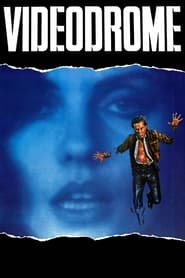
Hello, I'm Tim Lucas, film critic and editor of Video Watchdog magazine. In December 1981 and March 1982, it was my privilege to be the only journalist allowed to visit the set of Videodrome, whose production I covered for Cinefantastique magazine. My research ultimately took the form of a book on the making of David Cronenberg's film, which initiated Millipede Press's studies in the horror film series in 2008. I'm here to share my insights about the film, as well as some memories of the time I spent on set.
0:02 · jump to transcript →
-
Universal probably weren't too happy about getting an un-blonde Blondie, and I believe some test marketing screening cards complained about her hair. Universal ended up soft-peddling Debbie's billing in America, while in the UK, she was pushed as the film's star. Max's apartment was built on an elevated stage in a schoolhouse-type building that stood on the corner of Bathurst and Adelaide streets in Toronto. The elevation of the set was necessary to accommodate the special effects scenes that came later in the production.
14:36 · jump to transcript →
-
But let's take a moment to admire the production design of Carol Speer, who is working here like DP Mark Irwin and editor Ron Sanders on her third Cronenberg picture. The glass blocks suggest television screens and the open slats of the Venetian blinds emitting blue light evoke the resolution lines that were present on all analog TV picture tubes. You may note in this scene that Max's preferred format is Betamax, which video insiders of the day considered a far superior format to VHS.
15:07 · jump to transcript →
-
-
director · 2h 8m 17 mentions
Commentary With Kathryn Bigelow And Jeff Cronenweth
-
Commentary With Kathryn Bigelow And Jeff Cronenweth
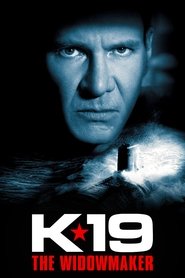
dealt with on a daily basis and it was virtually unimaginable the kind of environment in which they lived in and worked in and fought in and so that really helped me shape the work in the script and then finally the work on the set and so when we were leaving the naval base again back in the
11:49 · jump to transcript →
-
Commentary With Kathryn Bigelow And Jeff Cronenweth
an obvious intention to get, you know, to cross over to the outside of the submarine. So the sets were all built to scale. I think it's good for efficiency. No more passes. All leaves are canceled. We need everyone here to do their jobs. Yes, Captain. Comrade Captain, Lieutenant Vadim Rechenkov reporting for duty. I'm your new reactor officer. Kelly
15:35 · jump to transcript →
-
Commentary With Kathryn Bigelow And Jeff Cronenweth
on multiple occasions, arriving at the set at call time or before call and meeting Jeff there. And we would look at each other and say, how are we going to not repeat ourselves? And I mean, because in some cases, certainly in the command center, there's probably almost three quarters of the script takes place there.
22:08 · jump to transcript →
-
-
director · 2h 3m 16 mentions
-
playing himself. They did a great job with the sets and the lighting. The cake is more and more like you every day. You know enough people have seen a movie when you can make fun of it and people know what they're talking about. Hammer and chisel. And when they knocked down this door, this is the day I was on edge because we had 300 scorpions and, I don't know, 200...
7:25 · jump to transcript →
-
He just walks into the room and they cling to it like mad. If you notice little insert shots like that where people are, a hand comes in and brushes stuff away, you'll notice that Evie's got about four different types of hands. It's like second unit will shoot those inserts and they'll use whatever girl happens to be on the set that day, whatever actress or extras around. So her fingers grow and shorten. This shot right here where the rock comes in on Spivey's butt,
12:52 · jump to transcript →
-
coming back to the set shooting it every morning trying to get this shot until finally they all went and the great thing was steve didn't mind at all he was happy to go back there day after day after day you know his his whole attitude about it was great i actually did freddy's hair myself there i the last second quickly mustered up
15:48 · jump to transcript →
-
-
multi · 2h 34m 15 mentions
James Cameron, Gale Anne Hurd, Stan Winston, Robert Skotak + 8
-
Pat McClung
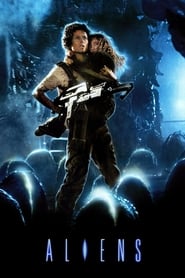
We had a big budget cut, or we had to save money, and the budget for this set got cut. Peter Lamont came up with a great idea. There's a mirror at the end of the set and another mirror behind the camera. I think we only had three of those hypersleep capsules. I think we might have had four. We mirrored them out to make them into 12. If you're clever you can see where the mirror is but I can't see it right now.
27:26 · jump to transcript →
-
Bill Paxton
and the grips shook the set and the set collapsed on us and split open my scalp. So I'll always remember that line. It caught fire and the roof came in all on the same day. And it hit Jim in the head. I saw blood spurting out of his head. It was where Sigourney was supposed to be sitting, so it was good it hit Jim and not her. We'd have gotten a day off. Think they did that on purpose? No. - I'm just asking. At that point, maybe they would've. In the pipe. Five by five." My favorite line. These shots, it's just me shaking the back of the magazine of the camera. The poor camera operator had a bruise around his eye, cos sometimes I'd whack the magazine too, just to give it a sharp jolt. This is all my shake of the camera. The operator can't do it himself. It just gets into this bouncy rhythm if the operator tries to do it. It has to be imposed from the outside and then they fight it, which is the natural reflex. Such a wonderful sound design in this movie. Much of which was generated in our living room in England. At the time, people really weren't using synthesizers in England to create sound effects for films, and we had a Fairlight synthesizer in our living room. A lot of the sound effects were generated by Bob Garret, Randy Frakes and Jim in our living room near Pinewood, including the sound of the alien queen. It really was a home movie.
41:08 · jump to transcript →
-
Bill Paxton
Bill, isn't there dialogue that you have on this that people have used in video games? Yeah, I think so. "Game over, man" and things like that. You get anything for that? - I don't think so. I'm not even getting anything to sit here and do this commentary. They expect us to do it for no money. You got a beer out of it, though. No, it's just fun. I got a beer out of it, so that's cool. This was an amazing set, this concourse A. And it was long. And later on when all hell's breaking loose, Jim had that little video camera. He had everybody on the crew having coffee while we would run at him and do different things. It was SO amazing to see this gigantic set, one of the biggest sets I'd ever seen, and there's Jim by himself with this little camera. When did the bust-out almost happen? He was gonna move the movie. When did that happen? I remember there were some problems. There were some union problems. The crew weren't used to working the same way. With Jim. They weren't used to working. That's unfair. They were craftsmen, but they had an indentured way of doing everything. Jim needs something, he just grabs it. If he needs a light moved, he'll grab it himself. We punched a hole through somewhere cos he needed to run a line. He didn't wanna wait around. He just said "Give me a hammer." But this was an ambitious schedule. Jim was running from stage to stage. I think we had about three big sound stages with giant sets. And then there were two sound stages with miniatures. And then there was a stage with all those tunnels. I remember them putting you in that damn tunnel. That pipe. We had gone to the power station to shoot the atmosphere-processor scenes and come back to the set after it had been wrecked. So we're into Adrian Biddle's photography here. He was the second DP. I encouraged Adrian, to save time, to use as much built-in lighting as possible. This is lit by the fluorescents in the set, with just a little additional lighting. Adrian liked to work on a raw and edgy look and work with the practical lights a lot more. This is another thing that is important. With a lot of science fiction movies that are all interior, you often lose track geographically of where you are and it becomes incredibly confusing and it's hard to build the tension and the suspense. Jim was aware of this from the script stage and made sure that we established through the helmet cams, through the motion trackers, where they are, and then ultimately, later on, where the aliens are. Even in this version, you're left to fill in what happened. We don't see the baittle. We'll see plenty of battles later and this is promising you that. We have a shot coming up here where there were acid holes - acid... holes... eaten into the floor by these so far unseen aliens. And, of course, these sets were not double-deck sets. Jim wanted a scene where a character looks down through one of these holes. I think Bill spits down into it to give some perspective. So this down-view we shot on our miniature stage. We layered the set and photographed that. This is where you spit and they did it in miniature. They even did a miniature spit. - Is that what that is? To get that spitting effect, it was actually not spit. It didn't work very well, so it was a combination of milk... Milk and water in an eyedropper right underneath the lens. The complaint from the studio was that the film went on too long without anything really happening. I was winding the suspense tighter before you actually saw anything. The studio said we were just jerking around. Too many movies that I see now, it's all upfront. You start seeing stuff right away and there's no sense of a build. So this is the miniature APC that was built by Bob and Denny Skotak. Pretty good size. I remember it being five or six feet long. Most people don't twig that as a miniature. That's the real APC pulling in. They matched the lighting pretty nicely. I think Jim did some of his live-action stuff undercranked. He ran the camera slightly slower on the APC so that it felt slightly more as if it were a miniature but you knew it was real because you could see people interacting with it. So if any of the miniature stuff didn't quite work for whatever reason, it took the curse off that cos it felt that the two were blended together. I think he wound up undercranking because the APC, the full-size one, didn't move as fast as he wanted it. I think it could only go eight or ten miles an hour. One difficult thing about making this movie was 7erminator wasn't out in England and the perception of Jim Cameron, who looked about 20 when he directed this movie, and myself as the directing-producing team was met with a great deal of resistance because back then the system in England was that you had to put in years and years to rise up to the level of being a producer or a director. And we were simply not treated with a great deal of respect and it was very hard every day of the shoot. We were being second-guessed and every decision we made was questioned and the tremendous thing, of course, having Stan on the film was that... I was old. - No. ...was that you were a cheerleader for both of us. By demonstrating the respect and enthusiasm that you did, I think other people gradually relented. I knew it was the best thing for me and for everybody on that set. There are people that you know, no matter how they do it, what they're doing is special. This particular directing-producing team had been a win for me in my career and stayed that way. I never thought our facehuggers looked as good as the one in A/en. We had to make lots of 'em and they had to run around and do things, but, texturally, the one in the first film looked great. It really held up. The bits of oysters and stuff inside it looked great. But I did wanna see the disgusting thing that had been down the inside of Kane's throat in the first film. You never see it in the movie, in A/en, so I figured we'd gross everybody out. All of Giger's designs have a real sexual undercurrent to them. And that's what horrified people about the alien as much as anything, is it worked on a kind of Freudian subconscious level. And Ridley and Giger knew that and they went for that. This film was never intended to be as much of a horror film as the first one. It was working on a different thematic level but I still wanted to be true to some of those ideas, some of those design concepts. It would be natural to assume I'd wanna work with Giger, but it just didn't occur to me at the time. Maybe it was because we really only needed to design one new creature and I had already designed her by the time I wrote the script. The alien queen. I guess maybe it was my own ego as an artist. I just felt like he'd made his stamp and I knew from what I'd read that he had to do everything his way and I had a very specific idea for the alien queen to extrapolate beyond what had been done before. I got the impression from what I read that I wasn't gonna get the dynamic character that I wanted. In a funny way, part of what attracted me to doing this film was the opportunity to do cool design stuff. So maybe I was just a little bit too in love with the idea of designing the creatures and the weapons and doing all that stuff.
47:57 · jump to transcript →
-
-
director · 1h 42m 14 mentions
Len Wiseman, Brad Tatapolous, Brad Martin, Nicolas De Toth
-
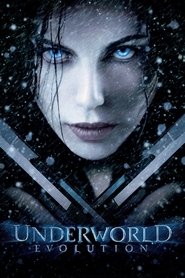
This is Len Wiseman, director of Underworld Evolution. And sitting in here with me today, far too close for my liking, I've got to say, if I can scoot over a bit, is Patrick Tatopoulos, our production designer. Say hello. Hey, how's it going, man? Remember that voice. And Brad Martin, our second unit director and stunt coordinator. Hello. And Nick Tatoth, our editor. Hello. Are you going to do that the whole time? Is that going to be your... Hello.
0:04 · jump to transcript →
-
It had to be built, and we stroked the set just a day before the station opened, and people were starting to ski again. So it's hard to believe it's a ski station, but that's what it is. But when we went there for prep, which was on a Friday, just to go look at the whole set and everything, there was no snow. And we were shooting on Monday, and we had to have snow there. Well, the thing is, we didn't seem to be able to get enough cash to get fake snow. No, we didn't. It's funny, because we didn't have the money to bring in fake snow. But then the thing is, once you're actually shooting in snow,
2:02 · jump to transcript →
-
I mean, at the end of the day, we could have probably built this set. It wasn't that big of a set, right? I mean, that's a hard thing to decide. Once you're in production, you say, okay, let's save money by going to a location instead of building the set. And then once you dress it and build it out on location, sometimes it could have just been a full build. It's more trouble, but very often you throw the number of the set ahead, and there's reactions saying, you know, you need to save some money there, and then you sort of shove it into a location, and the set...
11:49 · jump to transcript →
-
-
director · 1h 59m 13 mentions
-
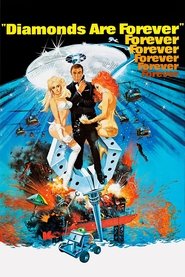
And we caught the plane back the following morning, had Sunday afternoon off, and were back at the set of Pinewood on Monday morning. In this scene, we are introduced to Jill St. John as Tiffany Case. Four years old when she began her career in show business, St. John appeared in more than 1,000 radio broadcasts. When she was 10, she was featured in the first TV movie ever made, an adaptation of A Christmas Carol.
17:34 · jump to transcript →
-
Diamonds of Forever's production designer was Ken Adam. His first film for co-producer Cubby Broccoli was 1960s The Trials of Oscar Wilde. Now back to Tom Mankiewicz. I think Ken was the first production designer on Dr. No, and he had been on most of the pictures. He was a tremendously artistic, finicky fellow. Very charming, or still is. A German who had flown for the RAF during the war in England. And he's a brilliant, brilliant production designer. I don't care much for redheads. Terrible tempers.
19:58 · jump to transcript →
-
but somehow it seems to suit you. It's my home. But it is in need of some soft lighting, and I know a little restaurant quite close. I never mix business with pleasure. Well, neither do I. Good. Then we can start by saving the cute remarks until after you. Between You Only Live Twice and Diamonds Are Forever, Ken Adam served as production designer on Chitty Chitty Bang Bang, Goodbye Mr. Chips, and The Owl and the Pussycat. Here's Ken Adam. But what I always try to do is to do other films differently.
20:28 · jump to transcript →
-
-
director · 1h 42m 13 mentions
-
It was unbelievably hot in that basement is all I remember. Just incredible. Yeah, it was a heat wave that summer. Everybody was sweating and naked. But now here we are on the top of a building in Dallas. This was an empty space we found and built the set in the empty space in the office building. And these trans lights you guys hung out the window are really great.
7:10 · jump to transcript →
-
We shot VistaVision plates for the rear projection. And now you're back to the giant prop, isn't it, here? I always loved that piece of art direction that Bill Sandel, the production designer, I guess, put in there with that kind of crow sculpture behind him. I always thought that was a really neat thing. So, Paul, how did you get involved with this picture?
10:36 · jump to transcript →
-
Well, there's no track. I don't think there's track. The idea that the sound would stop and the theater would really... This was all basically... The scenes were written more or less like you see them. But there was a lot of improvisation on the set for the staging. Joost built his camera in a chair so that we would always have this looking up look. What do you think, Johnson?
27:09 · jump to transcript →
-
-
director · 1h 54m 13 mentions
-
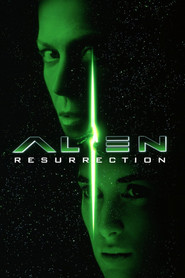
Hello. My name is Jean-Pierre Jeunet. I'm the director of Alien Resurrection. Hi. I'm Dominique Pinon. I played Vriess, the guy on the wheelchair. And I'm Hervé Schneid, the editor. My name is Sylvain. I was a storyboard artist and a concept artist on Alien Resurrection. This was designed, composed, shot almost entirely and never used, because we couldn't complete it for budgetary reasons. But initially, in the first opening of the film, we looked at the mouth. The mouth of an insect. Except we didn't know it was an insect. We mistake it for an alien creature. And the camera backs out and actually reveals a little bug. And in one camera move, as it keeps on backing up, we see a finger crushing that insect and sticking the insect into a straw. And splattering that insect against the glass as we recede... And we go all the way back into outer space and actually reveal a giant spaceship, which is where the story begins. I remember especially about the main credit. When I arrived in LA, I was waiting for an offer from the studio. You can imagine - a poor French guy like me, I was very scared. I was in a hotel, waiting for the answer, and I didn't sleep because of jet lag and because I was scared. I thought "OK. To prove to myself I am able to make this film, I have to find a good idea for the main credit, for the first shot." Immediately, I found the story of the guy alone in a big spaceship, with the milk shake and the pipe. He scratches insects, he puts them in the pipe, he blows the insect on the camera. I was very happy about this idea. I told this idea to the studio and they were happy, too. We began to work on it, but it was very very very expensive. One day, my line producer told me, if you could find another idea, because we have not enough money to finish this idea. This is a secret - I was pretty relieved. In fact, I think it was a little bit too funny for the beginning of Alien. I didn't say anything to the people. I said "You want to cut my idea?!" But, in fact, I was very happy, and I prefer the credit we have now. This is a model, and at this time, we hesitated about to use CGI or models for the spaceships. And Pitof preferred to use models. Maybe it was one of the last films with spaceship in model. That was very impressive. I came once on the set while you shot the models, and it was really big. - Yeah. Not really big. It's never enough big. And Pitof made a lot of parts, and he mixed the different parts.
0:03 · jump to transcript →
-
We had a larger size for this close-up. They ended up making some oversize pinchers to hold it as well. But it gave us the detail we needed to articulate the face and have the head extrude from that silicone sheath. Nigel Phelps the production designer worked with Darius Khondji the DP. They worked during the preparation. It was very important for Darius to have some sets with the light included in the set, because there's some small corridor - it's very very small, very tight - and it was very important to include the light.
5:28 · jump to transcript →
-
Darius came to the set as it was being built, and Nigel would explain some of his intentions. Darius made suggestions and they created opportunities for lighting. They were like two siblings, plotting. It works well.
6:12 · jump to transcript →
-
-
-
Simon West
To move the robot around the set, we had a couple of old rusty G-clamps that we just used to attach to its head and then drag it round. Ironically, the toy makers came to visit us one day to take the design of the robot to make the toys for mass production. And unbeknown to me, they'd taken photographs with these rusty old G-clamps on its head. And when I went...
2:33 · jump to transcript →
-
Simon West
Now, the company wouldn't actually lend us one of their cars for the film, so I had to go to a private owner. But unfortunately, the insurance was so steep and expensive to have that car on the set that I could only afford it for one day. So we had to make a polystyrene double for the car. And so all the wide shots in the action sequence in the background, the McLaren is actually just a very crude styrofoam version of the sports car. After a fashion...
31:13 · jump to transcript →
-
Simon West
This you must prevent at all costs. I'd always been a big fan of John Voight, and so it was great fun for me working with him. Every day I could come in and ask him about films that he'd worked on as I was growing up. And so one day I would get an anecdote about Deliverance, and the next day I'd get an anecdote about Midnight Cowboy. So as a film buff, it was a great piece of casting for me because it kept me entertained every day that he was there on the set. I told you I'd have
39:35 · jump to transcript →
-
-
-
Ted Tally
And I'm Ted Tally, the screenwriter of this motion picture. Thanks for watching our DVD. I got a call from my agent who said Stacey Snider wanted to send me a script. Stacey called me directly. Stacey is the chairman of Universal for those of you who don't know. It said Red Dragon, and I said, "Red Dragon. Is this "the prequel to Silence of the Lambs?" I was familiar with the book but hadn't read it. At first, I was very insecure and said, "Am I like the 'Go-to' guy on sequels? "Why is she sending this to me? 'Cause no one can mess this one up?" And then, I saw Ted's name on it and said, "This is the guy who wrote Silence of the Lambs, "but didn't write Hannibal. "So, this must be special. "Why are they sending this to me? I'm not a dark guy. "I don't make dark movies. I do comedy." -/ think they sent it because you're cheap. - Exactly. So I read it, and I was completely blown away. Not to blow any smoke up anybody's butt in my presence, but the truth is the script was amazing. I called up Stacey and I said, "I want to do this." She said, "Now you get to meet Dino De Laurentiis." And I said, "Dino De Laurentiis "of Fellini fame?" - Scary thought! So I went to his house and first thing he says to me is, "Why do they like you? Who are you? "I never heard of you. What is Family Man, Rush Hour? I don't know these movies." I said, "Dino, I'm a talented guy. Trust me." And thank God, Ted had seen Family Man and Rush Hour, and his kids or someone in his family was a fan. Brett might not have been an obvious choice but Brett is an incredibly talented director and clearly ready to try something new that he'd never done before. He is a great fan of Hitchcock and of thrillers, and brings a tremendous energy and confidence to his work. I was such a big fan of Silence of the Lambs. You know what I was excited about? Most people asked, "Weren't you scared "of following in those footsteps?" First of all, I had three brilliant directors Michael Mann, Jonathan Demme, and Ridley Scott, who made three movies in the exact genre, but completely different. I was excited about it because, by watching those films, I knew what not to do or what I didn't want to do. I was able to decide on the type of movie that I wanted to make. And it helped me choose the tone of the movie. I realized I wanted to make a movie more like Silence of the Lambs. More Hitchcock-inspired. A movie that scared you by what you didn't see more than what you did see. I've read that the most important single decision you make in directing a movie is tone. - Absolutely. Because it's the direction of the film. It helps you with every choice that you make as far as the wardrobe, the production design, the music. The tone, to me, is really everything. Dante calls it, "The language of the film." We have to integrate what we're seeing now, Kristi Zea's set design with its dark, rich color in Dante's cinematography. The choice is even of the props. The integration of all of that, the wardrobe. It's sort of overlooked by people and it should be something that doesn't call attention to itself. But when all of those elements are integrated... Look at this moment here. You get a much more powerful movie if nothing sticks out. If everything is consistent in tone. Special Agent Graham. What an unexpected pleasure. I'm sorry to bother you again... If you see on the left-hand side over there, a little detail, I found this book of Sigmund Freud's office in, was it Vienna? That's where I kind of modeled Hannibal's office. I modeled the tchotchkes, the details.
0:08 · jump to transcript →
-
Ted Tally
I went to New York with Dino, and I was very nervous. This was Tony, Anthony Hopkins. The thing I did know and what I was confident about was the type of movie I wanted to make. Like I said, I went in there knowing the tone of the movie, my approach to the movie, how I wanted to not show any of the gore. I didn't want to make a horror film. I wanted to make a film that was psychological, emotional, and smart. That was what was on the page. And the only scene that Tony had a concern with when I sat with him was this scene right here. Tony was concerned that as originally written, his attack on Graham here was too graphic. By the way, it's an interpretation because 10 directors would direct a scene in 10 different ways and show various degrees of violence. It's about showing the details of the guts falling out of his stomach, or the blood, how much blood to show. And I chose to play it mostly on their faces. Once the attack happens... Here's my little homage to Silence. You see the... - I see the bug. You like that. So I chose to play the violence part of this scene on their faces. I love this book. This is an original. My prop guy, Brad, found this original book from France, Larousse... When I read it, I had no idea what the hell it was. It's the bible of cookbooks. - Yes, I learned that quickly. He found this real old French cookbook. There was a lot of dialogue about how do we sell his moment? It's really just a subliminal thing. It wasn't really supposed to be so pointed where it was like, "Oh, sweetbreads." I thought sweetbreads was brains but it's not. It's actually... Thyroid. -... thymus. I learned so much about anatomy on this film. If you work on a Lecter movie, you learn a lot about cooking. I thought Edward was fantastic. There is a tremendous intensity of performances in this movie. And really a dream cast as Brett already said. If you could have anybody in the world for these parts and be lucky enough to get them. It's pretty much what happened to us. Great actors want to play good characters. They want to play great characters and all of these characters, down to Freddy Lounds, and other smaller roles, were just written so well. They were interesting and dynamic. And these actors were interested in playing this. To convince these actors to do a third in the series, all that went out the window when they read the script. Certainly once they started working. There's our cold opening. I'm very proud of this title sequence because it was actually done two days before we had to lock picture. My editor, Mark Helfrich actually was the brainchild behind this because... You re-shot the journal here in a very interesting way. Initially, this was done in a much more straightforward way with the images very flat against the screen. Yes, a lot of times. Mark is kind of... Everybody on my team, from my AD to my production designer, are filmmakers. Mark is a filmmaker in his own right and he just understands the visuals and storytelling. I love how, you know... But this was written. - Yes, it was. But the way that the camera roams over these pages and when we go in very close and it gets grainy, the camera movement left to right, up and down, is all not scripted, of course. This is something I don't really have the patience for. Mark kind of took this book that he was fascinated by. I think he has a copy of it in his closet at home. He just knew every page, every frame and went with Dante and literally just shot. This is a wonderful opportunity. This kind of title sequence is sort of old-fashioned in a way. But it's a wonderful opportunity for a screenwriter to get information in quickly to cover a lot of ground between the arrest of Lecter and where we are when the movie is going to start. Covering a period of several years, you are doing that without any dialogue just by these images. It's a very useful shorthand. Danny did the same thing that Ted did with the script in this sequence that Mark did with the visuals in this sequence. Danny did the same thing with the music. I think the music here is so fantastic. It's very much like a Bernard Hermann score, which I knew was a big inspiration for Danny. Danny is a big fan of Bernard, and this was his chance. He's done darker scores, but they've had a kind of lightness, or comedic darkness to it. Danny did something here that kind of made people's skin crawl in the theater, like, "You're in for it. "If you're gonna sit through this movie, you'll experience some stuff. "Shit's gonna go down."
6:02 · jump to transcript →
-
Ted Tally
So that sequence, those two minutes of the movie, which could have been a very boring, dull sequence. I had a long conversation with Kristi Zea. It was wonderful. She called me up and said, "This book of Dolarhyde's. "What does it look like? What's in it? "How is the handwriting? What kind of photograph?" We had a long conversation which for a screenwriter... You don't often get a call from the production designer to talk about a prop. It was a wonderful opportunity to be part of the design of the movie in that little section. You've got a beautiful setup here, Will. This was actually in the Florida Keys. You know why I'm here? Was it Marathon? Yeah, I can guess. The location is meant to be Marathon, Florida. Dino wanted us to shoot in North Carolina because he had studios there and a house on the beach or Malibu because it's close to his house in Beverly Hills. But the truth is, I wanted to stay true. When I said I chose the tone, I'd really chosen the tone of the book, going back to the book. Everybody here was honoring the book. We really gave a lot of respect to Thomas' book. Tom Harris is a wonderful writer. When you're doing an adaptation like this, it's a great resource to everybody to be able to pick up the book, as you can go into more details than the screenplay. It's a help to both the production design and the actors, who can go back and find out details of motivation. It's helpful to everybody to have that bible to refer to. So when it said Marathon, Florida, I tried to stay true to that and actually go to the location in Marathon, Florida. It just felt like it was the tone and even the location, like Grandma's house in the same description of the rural area where it was, and the type of house it was. It was an old-age home once, which is really back-story, but Kristi incorporated that into the design. I was so happy that she and Ted really stayed true to the tone of the book visually as well when it described the locations. This was so much fun being down here, by the way. It was the end of the shoot, and we were just down there on the beach. This was probably the hardest scene I shot with these two guys. In what way? Because it's exposition? Anything with exposition... -/s tough. It's tough to make it sound like real conversation. But honestly, there's not a line in this movie that I'm not proud of. I mean I can't say there's a line... It was a tight script. We did cut a few lines and a few parts from scenes but Brett and I actually worked quite a bit on the script before the production started, and we had it pretty tight. And the shooting stayed quite faithful to the script. I have to say that every scene was hard for me because I'm used to scenes with not much dialogue. I, unfortunately, am a very talky screenwriter. So it was a clash of cultures. Coming from being a playwright, I guess. There is a lot of dialogue in this movie, I tell you. And it was not a single-spaced script. It's a long script, and I kept saying, "Make them talk faster. "Don't cut the thing, just make them talk faster." Ted's advice to me was, "Brett, when you're happy, "ask the actors for a take where they talk double speed." And I did that. Probably that's all the takes that Mark ended up using in the editor's room. He kept calling me, saying, "This movie will be four hours long "If you do not get them to speak faster." The thing you run into as a screenwriter, even with the best actors, is that you try to pace a scene to fit within an act structure and fit within the entire screenplay. But then actors wanna take very long, dramatic pauses. Actors want to look down and up, across the room, at each other, and finally say the line. - A lot of pausing. And that's what you're up against when trying to time out the length of the scene or act. I wanna say something about these actors. Once I got Edward Norton, I used Edward to get another actor. Once I got Ralph Fiennes, I used him, I got Emily Watson. - You parlayed them into each other. I said, "Philip Seymour Hoffman, I'm getting Mary-Louise Parker." I knew each one, who they were a fan of. I used them against each other to get them in the movie. I literally thought I'd be able to walk onto the set, and it would be the easiest movie I'd ever made because I had these brilliant actors. I could just say, "Action." I read one article or something about this movie that said this was the most distinguished cast that's been assembled in any movie in the last 20 years. But the truth is, it was probably the hardest movie I'd ever made because the smarter the actor, the more experience they have. It's a myth that these great actors don't need direction. They want direction more than any other actor. They want direction, but they have ideas of their own because in the end, it's up to them. They are the ones whose face is filling that whole screen. And they have to absolutely believe what they are doing, or they can't convince an audience of it. What I'm trying to say is, there was a lot of dialogue going on. A lot of intellectual discussions. And each of these actors are not only smart actors, but they're highly intelligent, all smarter than myself and... A lot of them have also directed or even written as well. They all had an opinion. And my job, I felt like it was my job to save the script. This was a script that worked to me. We had a table reading of it. It was fantastic. And Ted was
11:13 · jump to transcript →
-
-
director · 1h 49m 12 mentions
-
radio transmitter, and all the ancillary equipment. He said, come over and see me. So I went over to see him. And they were actually producing all the equipment for the new Delhi airport. So I said, well, what do you think? He said, yes, he said, providing you guaranteed to pay for the retesting of the equipment. Apart from a couple of very nice lunches, I don't think he charged us anything for it. Production designer Ken Adam worked on seven James Bond films.
6:13 · jump to transcript →
-
the French windows at the back of the set with some drapes and obviously all the gambling tables. I tried to create space. I know to reproduce this rather French Louis XV or XVI type of decor would have been impossible.
7:07 · jump to transcript →
-
I think you would never believe that when this man was on location, away from the set, was a consummate piano player, raconteur, and a person that just took over the room. He was fantastic. Obviously, this side of him never came out in his screen roles. Throwing the gyroscopic controls of a guided missile off balance with a...
11:21 · jump to transcript →
-
-
-
We're coming up on Grant Hesloff, and he considered himself the comedian both on the set and in character, and is the guy he thought everyone in the audience, he's the one they'd relate to because he's the guy who's like, why am I here? How did I end up in this situation? He had to learn sign language to deal with Amy because he's supposed to act like he's done this for years.
10:55 · jump to transcript →
-
I don't even know if you'd call it turnaround, but Frank Yablans still had the rights to it until Jurassic Park. Right. On Jurassic Park, which Kathleen Kennedy produced, she was on the set with Crichton and sort of started out, he started telling her the whole saga and she began to think, oh, well, you know, with technology, like Jurassic Park obviously was a landmark film in terms of special effects technology. And so between the animatronics and the CG dinosaurs and all that, she thought, well, maybe this is the time to do it.
37:27 · jump to transcript →
-
She doesn't think that it would be a good fit for her. I think that's where Marshall ultimately landed as well. He said the only reason he went back to direct on Eight Below was just he couldn't resist the opportunity of having a bunch of dogs every day looking at him adoringly as he directed them. And so he basically, you know, he made that for the dogs. But he really, I think he's kind of the same way. They were very into their golden retrievers. Like they were on the set, right? Yes, their golden retrievers were on the set. And in fact, at one point got terrified by Amy. They thought Amy was real. So, or sort of barking or something. Well, and some, you know, as much as like Peter Elliot
48:34 · jump to transcript →
-
-
director · 1h 45m 12 mentions
-
He did that, and I thought, yeah, this is great. My only thing with Benicio was that I had wanted a much older character to play opposite McManus. Which I like. I actually like that concept. It's just I couldn't find the right person. And then having seen what Benicio did on the set, I realized he was certainly the guy for the job. Benicio is a true artist. Very conservative with that word. Very special actor as well. Very bold.
6:41 · jump to transcript →
-
And then this morning, the day we shot this was the next day, and just the principal actors and myself had sort of a bonding lunch to try to see what, you know, was the difficulty. And we got sort of, it became like a love fest, and we got all giddy, and this giddiness carried over into the scene because none of the actors could stop laughing. That shot really plays it there. You could see that there was a lot of laughing on the set that day. It was hard to get anybody to be serious. I was not able to get one take...
8:43 · jump to transcript →
-
The most effortlessly complex actor. That's probably the most perfect description I've ever heard of Gabriel. Gabriel is also the most popular man on the set whenever Brian would yell cut, hair, makeup, you name any sort of woman on the set that was working in any capacity would flock around Gabriel with Baldwin standing ten feet away going, when you're done with Mr. Byrne, I'm here.
16:00 · jump to transcript →
-
-
director · 3h 43m 12 mentions
The Lord of the Rings The Two Towers (2002)
Peter Jackson Fran Walsh Philippa Boyens
-
Peter Jackson Fran Walsh Philippa Boyens
That's one of my favourite. Yeah, that's my favourite shot too. It's incredible. When I saw that shot, that was like one of the first times you really felt this guy's going to work. I love the blanket spinning around. Yeah, well that was because Andy spun it around with his feet. We didn't plan on that, we used it. The image of Frodo with the sword at Gollum's throat while Gollum's got Sam is straight out of an Alan Lee painting. We actually had Alan's painting on the set.
10:16 · jump to transcript →
-
Peter Jackson Fran Walsh Philippa Boyens
I always felt guilty when we would walk into a Fangorn set because I'd think about the trees that died for the set and how it was so much in conflict with what the story was about. Yeah, most of it was made up of old dead trees, bits and pieces lying on the ground, and the bark was usually rubber. I mean, a lot of the bark on the trees was actually just big sheets of rubber that had been moulded off a real tree. The first time we see Treebeard, Treebeard was a real difficult character.
39:08 · jump to transcript →
-
Peter Jackson Fran Walsh Philippa Boyens
building materials off the top of the hill. It's actually quite dangerous. We had to anchor the buildings down deep into concrete, drill into the rock and put huge big concrete piles into the rock. We even just build the set there.
1:13:11 · jump to transcript →
-
-
director · 4h 13m 12 mentions
The Lord of the Rings The Return of the King (2003)
Peter Jackson Fran Walsh Philippa Boyens
-
Peter Jackson Fran Walsh Philippa Boyens
that we wanted to use the blinking one, so we had Weta, the CG guys at Weta freeze his eyes, so we removed the blink from his eyes. This was a sequence that Freya directed. We built the set very quickly, because it was an idea that you had that wasn't really part of the script to show this deterioration.
4:36 · jump to transcript →
-
Peter Jackson Fran Walsh Philippa Boyens
We put a guerrilla crew together so that you could film it with Andy. We were trying to figure out all the different ways we could use the set, which was really a little gully, a rock gully. So we drowned it in rain, we dried it out and drowned it in light, threw some greenery in. We just tried to give it variation and also to show, obviously, passage of time. That was a huge make-up, wasn't it? It was enormous. He was in there for how long? I couldn't tell you. Hours and hours and hours.
5:06 · jump to transcript →
-
Peter Jackson Fran Walsh Philippa Boyens
Yeah, a long time ago. For some reason I thought we shot it in Queenstown. I thought you shot it in Medfin. I think we built the set for it down south but we never used it because it was a wet weather set so we only went inside if it was raining and it didn't rain. So we ended up shooting it up in Stone Street Studios I remember the day we shot it actually. Kind of an awkward little scene to shoot because the set's kind of small.
30:14 · jump to transcript →
-
-
director · 1h 26m 11 mentions
Underworld Rise of the Lycans (2009)
Patrick Tatopoulos, Len Wiseman, James McQuaide, Richard Wright + 1
-
Patrick Tatopoulos
The fights are really nice in this picture, Patrick. They're really on par with the other two, certainly. Allan Poppleton was our New Zealand stunt coordinator. He did a fantastic job. - He did a great job, yeah. So, what you're seeing here is actually the set... ... you're gonna see later in the movie, an early stage of the castle. We tried to minimalise the dressing so it felt a little different. But it's basically the same space that you'll see later. And this was the first day of shooting. - Yeah, the balcony part. Yup. The big reveal. Wanna tell you a story about the castle. The castle is such a gigantic structure. Of course, there was no way to build this. We ended up building the, what you would call, the courtyard of the castle. How many feet tall, Richard? - About 20 feet. Twenty-five, 30 feet, yeah. Which was a little challenging for the lighting... ...because we were there on top of the set. When we started, it was difficult for CGI guys to kind of extend that. Yeah, it was terrible for Sound too. Every time it rained, we'd stop shooting. The train outside, the train station? - Yeah, the train... Note to self: Do not build set next to railroad tracks next time. We have a few transformation... ...but this one actually is not a transformation. It looks like one, but everything is practical. There's nothing mechanical or anything. I love it. It's a little more American Werewolf in London approach. There is no CG help whatsoever, though. Unlike the others.... This took a while to get right, just this whole prelude... ...and Kate's voiceover, and getting people caught up. There is a lot of history, and to decide, you know, where exactly to start... ...and how much to prep it with. Hopefully, we covered everything we needed to. It looks like we moved really quickly through. I wish we had a little bit more space, a little bit more in the... Yeah. - There's so much story to....
1:59 · jump to transcript →
-
Patrick Tatopoulos
So Dan was the art director on Lord of the Rings... ...and I met through a friend of mine, Gino Acevedo, the makeup artist. And we met and.... Since we already had a sense of what I wanted to see as a castle... ...came with some drawings at the beginning. Dan was perfect for that. Just took the drawing. As an art director, just became clearly someone that expanded the vision. But he's textured the style, you cannot recognise, I mean... Yeah, we were really lucky to get him. He was actually working on a different show when we got to New Zealand. And we thought maybe we wouldn't get him. But that other show had money problems... ...and shut down the production. And we were very lucky that he was able to step right into Underworld. Now, this was a scene that, at least, my recollection... ...when we originally sort of storyboarded it... ...wWe had a lot of werewolves in it, and then we couldn't afford them. So we went back and we begged Clint Culpepper... ...to give us about a hundred more werewolves. And he did. - Which he did. We also had to build this canyon right here. And I do think it makes a difference of just... Before, we were talking about doing a version... ... Which is just all within the trees. And, you know, Patrick, you and I talked a lot about... I liked the idea of you going from... There's a separation. You got the forest, and then this canyon, that then leads into... Leads into the meadow, yeah. Into the castle. Yup, and this castle, obviously, is a location that doesn't exist. So basically... - Neither do the rocks. What we had, it's basically like a golf course-looking... There was no rocks, nothing. It's very flat, very boring. And there was a lot of work to be done later on post and, you know.... The trees and the grass are basically all that were there. Yeah. The big crossbows. We only had one working crossbow, correct? Yes. - We still have it in storage too. We should take it out and play with it. We had a lot of, like, one thing working out of everything. We had one werewolf head mechanical. And we had to make it, you know, out of that stuff. So this wall behind. This is again basically the outside of the set. That set already, basically. - Yup. The whole courtyard and the little bit of the outside was built. We tried that shot right there, where the werewolf comes in. We tried that practically. And it just looked like.... Just dragging in a muppet. - A piece of rubber. Now, this is Rhona. - She is.
4:04 · jump to transcript →
-
Patrick Tatopoulos
It was interesting with Rhona because she had to create... ...a new character, you know, somebody... It's a different time. It's a much more rougher time. I mean, I think the warrior that she created... ...IS, In a sense, quite different from the Kate character. I think she did a fantastic job there. And I think she fits the tone of the movie very well. I was very happy. I mean, she looks great. And she has a very special quality of.... What I like best about Rhona is also the looks, how she looks... ...and tell a love story just by the looks on them. You'll see that through the movie, little moments like this, she really.... Beyond being a great... She works great with swords and things. Look at the shape Michael's in. It's incredible. This was-- He started.... He came off of Frost/Nixon I think in the end of October... ...and started shooting this in January... ...and had three months to go through incredibly intense physical training... ...to get into the shape that he's in in this movie. It was a Startling transformation that he was able to do to himself. It's good to be a Lycan. I'd like to be one. Yeah. That helps. Now, this is one of the great Dan Hennah sets. I remember Len and I came from California... ...in, what was it, for the first day of shooting... ...and we walked through the sets. And not only were they beautiful to look at... ...but the flooring was all corrugated. It looked like natural cement. And apparently, Dan had some sort of formula... ...where he could lay down these floors. And they made them look absolutely... They brought in a cement mixer and dumped it on the floor. And then there's this team of guys with forms and moulds... ... sort of going along with the cement mixer. So the entire floor is actually made... ...of two or three inches of actual concrete. It makes a huge difference. On the first film, we would've liked to, in the crypt, do that. Just didn't have the money for it. It was, you know, any way that you can possibly do it... . like a faux paint job. It just doesn't pick up the light. It doesn't work. The texture, yeah. - Here's a transformation. This was late in the game. This is Michael's suggestion or no? Am I wrong about that? - This was a scene, he was really... We actually tried to cut it. And he was so adamant that we had to shoot it. This one here. This turned out really well. Who did this? A company called Intelligent Creatures. From Toronto. - This one came out really good, yeah.
6:38 · jump to transcript →
-
-
director · 2h 43m 11 mentions
-
This was the very last day of shooting on our movie. This was the last scene we shot. This is Alex James Phelps, and for fans of the Mission Impossible franchise, you'll get a kick out of the fact that his last name is James Phelps, a character in Mission Impossible 1 and, of course, in the TV series. He was cast a week before we shot it, and he came to work that day, the day before, actually, to walk the set.
7:22 · jump to transcript →
-
plant the seed of the oath here and it will it will pay off dramatically well it'll pay off very satisfyingly later on yes and it actually resonates why we do where we don't draw a circle around it it resonates through actions that characters take in this movie into the next movie um the set that they're on right now is a is actually the repurposed and rebuilt venice safe house set we've just taken out certain walls and if you look at some of the
8:21 · jump to transcript →
-
architectural elements in here. You can see the Venice safe houses in there. That's Gary Freeman. He's a brilliant, brilliant production designer. Great working on a budget. And when we said, hey, we need some sort of a safe house for Ethan, that's where we ended up. And yeah, Alex just got a fantastic face. And he tells you an entire story about some kid who's just beginning his life. Yeah.
8:51 · jump to transcript →
-
-
director · 1h 30m 10 mentions
A Nightmare on Elm Street (1984)
Wes Craven, Heather Langenkamp, John Saxon, Jacques Haitkin
-
player and Johnny had such a hard time queuing up the spot and we did a lot of takes of this one. How old was he? About 18? No, he was 21. He was actually a little bit older than the rest, I think. But he had a very young look. But he was at this time, I don't think he had acted at all. He was in a rock band or something. Right. He was a musician. He had an actor friend on the set all the time going over his lines with him continuously because he was terrified he would not be able to say them right.
6:07 · jump to transcript →
-
She was never quite satisfied with her makeup, so she would usually go and fiddle with it after the makeup and hair were done with her, so we never knew quite what she would look like when she got to the set. Did she do anything after this? I know she was in The Driver, which I enjoyed immensely. Yes. It's hard to actually imagine that John and...
19:18 · jump to transcript →
-
I remember in the last days, we were shooting in about five different places in the set at once. We had cameras everywhere shooting inserts and jail scenes. That became the way all those films were done. The last week and a half. I've done a lot of effects films. In the last two weeks, you start pulling out the units. You kind of realize what you need, too. Here's a shot that I find very interesting. I like to think that there was a tip of a hat to it in Terminator 2 where the killer comes through the jail cell.
39:21 · jump to transcript →
-
-
-
garden hose piddling down on the windscreen, and so we think we're driving in the rain. Now, these pass-bys had to be precisely timed to the dialogue, so this shot had to be done in reverse. That is, if you were there observing on the set, you would have seen these passing lights being pushed, in fact, away from us into the background, not coming at us, so that their moment of entrance, that is, their apparent moment of exit, as it were, could be precisely timed.
2:06 · jump to transcript →
-
altogether, though, of course, for the sense of the frame, has been composed to exclude the nether regions. Always a sensitive time on the set, of course, the nudity, sometimes an occasion for embarrassment, although this actor, very manly. In fact, I understand that on the set as he stood up, the makeup girl fainted. And now we're in another place, an envelope. We'll get a look at the characters here in a moment. More people, a new place, the plot thickens.
6:00 · jump to transcript →
-
Now, that's expensive, of course, making the artificial dog, but as compared to the cost of the set time it would have taken to get a real dog to perform all these various tasks precisely where needed, you know, hitting the marks and full crew standing about waiting, well, the cost of fabricating the dog is actually altogether lower. You just create the dog and have done with it. And he's radio-controlled, you see, guided by a technician just out of camera range, so there's no untoward flea scratching or licking the genitals or, well, you know,
12:42 · jump to transcript →
-
-
-
Barry Sonnenfeld
So we're back in Men in Black headquarters. Although Bo Welch, the production designer, and I made some changes... ...we always felt that this side of the room... ... should feel like it was like an airport. That's a real Rick Baker-designed creature. There's no visual effects in this shot at all. And we felt since we were creating an airport... ...we should have a Sprint store, a duty-free shop... ...a Burger King and really make it feel like an airport. There's an "I love New York" store. That's Nick Cannon, a big star of Nickelodeon. Good work in the subway. I remember Jeff when he was yea high. - What you got for me? We didn't change this set from the first movie... ...although I was wondering if we should have removed... ...one of those spaceships behind Zed since at the end of the first movie... ...Edgar flies off in one of those things... ...but we felt they wouldn't change the mural. Here comes Frank the Pug. There was a killing earlier. 177 Spring. Alien-on-alien. If you listen closely, Frank, when he walks into the room... . 1S humming "Hava Nagila." What happened with Tee...
17:23 · jump to transcript →
-
Barry Sonnenfeld
Almost all of Frank's mouth animation was done by Rhythm & Hues... ...who did the animation for Babe. A little bit of it was done by Industrial Light & Magic. But I would say, what you're seeing in the movie... ...IS about 80% Rhythm & Hues and 20% ILM. Jay, wait up. I appreciate the shot, man. The name of this dog is Mushu. Mushu plays Frank the Pug. Mushu loved being in that suit. He just had the best time. He would prance around. I think he really felt, when he was in the suit, that he was a Men in Black. I felt it was really important that Will have a different car... ...that it didn't feel like exactly the same movie over again. Bo Welch and I wanted to upgrade some of the stuff and make it sexier. We love also the fact that a black Mercedes probably fits in better... ...1N New York than a 40-year-old Ford LTD. before I roll it up in there. Got it. This was a last-minute decision to have him sing that song. It actually was a long monologue... ...and on the set on the day, we thought it would be funny. Frank just said, "For
18:51 · jump to transcript →
-
Barry Sonnenfeld
I love these guys. Either he has very strong jaws, or this guy looks like Frank the Pug. Zero percent body fat. Funny. - Witness? Girl. Again, we're back on-stage in Los Angeles shooting this scene. There was no pizza shop that looked like this. That's Bo Welch, by the way, who's playing the astronaut right there. We'll show you in a minute. That's Bo Welch, production designer... ...of Men in Black, Men in Black II, Wild Wild West. Everything is all right. What is she supposed to feel all right about? Another guy with a really strong jaw. I'm Agent Jay.
20:38 · jump to transcript →
-
-
-
Noah Baumbach
This is his ship, the Belafonte. We bought this ship in South Africa and sailed it up to the Mediterranean and renovated it and made it into this research vessel. It never ran that well, but we really did fall in love with this ship. The crew of the film was always very sort of loyal to it. Now, we have Michael Gambon, who plays Oseary Drakoulias, the producer, a sort of Carlo Ponti, Dino De Laurentiis-style mogul, although he does produce these documentaries. He has the longest fingers that I think I've ever seen in real life. He understands. Amin needs to make a projection of the world grosses to see if he can get a tax break and run it through his output deal. I think that Zissou sees himself and wants to be the kind of person who gives kids secret messages in the cereal boxes. Right. That's an inspiration for him. And the movie is about this, theoretically, a real person, but he's inspired by a sort of fantasy version of himself. And there's things sort of peppered throughout the movie, but this whole red caps and the uniforms and the whole thing. And Owen, in some ways, is our stand-in, I mean, of the child who looks up to this person. And I think another layer of that that we were always dealing with was how our cinematic idols in some ways were like surrogate fathers for us. Movies we loved that sort of took the role of things we looked up to, things we sort of wanted to live vicariously through. And I think Owen and Ned's character sort of stands in for that. This is a kind of an unusual role for Owen Wilson, I think. Right. He has a sort of recognizable comic persona that he's developed. And this is, I think, very different from that. I think when we were writing it, we often talked about that even though Ned was, as written, very naïve and kind of an innocent, I think there's always a kind of somewhat devilish nature to Owen. You can see the light is on behind his eyes all the time. There's some Zissou in him. Yeah, that's interesting. And I think also it made us feel more comfortable writing such a naïve character because I think if it was played too much that way, it would kind of wash out. Yes, and I think Owen's concern was, he was like, "What am I gonna do?" Because he felt like the character is so innocent and so sincere that he's not used to playing someone who's that sincere. He usually plays somebody who's a little bit wily on some level, or something like that anyway. And I think for him, when he really became comfortable with it was because we were sitting on the roof of this hotel in Rome, and he told me this funny story about Will Patton on the set of Armageddon, and he did Will Patton's voice, this southern accent. And I asked him, "Do you think you could do this whole movie in that voice?" And what he ended up doing-- He liked it. We read through the whole script reading all his lines with that, and it was funny and it gave him a sort of genteel feeling and something a little bit not quite real. And the accent's certainly not real. The accent hasn't existed certainly since the Civil War. Right. - Even if then.
9:42 · jump to transcript →
-
Noah Baumbach
Let me tell you about my boat. This is something when you first brought the idea of the character and the story to me, this was something you always wanted to include. I remember you said, you know, idea of this character, originally named Steve Cousteau. We later made him Steve Zissou. Oceanographer. He has this show. And then you said, "I want to do this--" Visual. - This visual. So this set, this is sort of inspired by, you know, World Book Encyclopedia, and Time-Life books, and, you know... elementary school books with fold-outs. And so that's kind of where it comes from, but making it in three dimensions. And for me, it was just something that I was inspired by. And it was years and years ago that I was planning to do this. And it was very kind of thrilling to be able to build this set because it was such an unusual one. And so many people-- For us, the movie is about all these characters who we made up, but they relate to people we know and they're characters we really love. We don't really have a lot of bad guys or anything. We just have these people we connect with. And the idea of having them all in there at once in this environment, that sort of encapsulates something about the movie. I think it goes back to what you were saying about your-- That this is also about what you love about making movies, and how you feel, you know, sort of lucky and privileged to be able to do it. And here, you know, in a way, this is like your dream of, "If I could make a movie, I want to do this." I mean, you've had this for so long. - Yes. And we shot it... It was like shooting a play. Explorers Club? - Right. You were on the set. - Yeah. This is-- Yeah, I spilled an entire espresso on my shirt. During the filming of this scene? Yeah. I was so jet-lagged. I was listening with a headset and it somehow disconnected from the headphones, the little mic part, and it knocked the espresso out of my hand and all over my shirt. Yes. You know, I always like paintings. - You do have a lot of paintings in your movies. - Yeah. And those tell about the character of his mentor, Lord Mandrake, and then we have Zissou, and then we have... And this story was actually based on something a friend of ours had been talking loudly in L.A... Chris Eigeman. Chris Eigeman had been talking loudly at an Indian restaurant in L.A. He thought that there was somebody who looked like a famous action hero, and he was talking very loudly about what happened to this guy, and it turned out to actually be the guy, and Chris was humiliated. And we lifted it wholesale and dropped it right into the film. And at one point you were going to have Chris play the guy until then you decided to make him Italian. It seemed nice to be able to put it all in subtitles. The Explorers Club is also-- This place is inspired by a club in New York who actually let us use their flag, which you can see in the background. And it's the Explorers Club on 70th Street, a block away from where I used to live.
14:59 · jump to transcript →
-
Noah Baumbach
This actually was filmed in Rome. You know, the whole film was shot in Italy. The Explorers Club was at a palazzo in Rome, and Zissou has taken to wearing an earring at the beginning of the film. Here's where he decides he's humiliated out of-- He loses his confidence. Did you place a second earring there that Owen knew where it was? I don't quite remember. - Probably. I think it was more Owen just went over and acted like he was picking something up because he could never quite find it. This is revealing some of the secrets of the trade. The deliberately low-tech effects. Yes, yes. Something I was thinking about this ship, which we didn't say in the cross-section area, but I do think is definitely another thing about the film, is the sort of deliberately artificial and sort of the things that are invented, certainly the fish and the cross section of the boat, sort of living in the same world with stuff that's very real. You know what? Okay, so this is one of the big concerns for me. How-- We want to make, you know... Most of our time is spent in how do we bring our characters to life. That's what we're inspired by, that's what we spend all our time with as writers. And then as a director, I'm working with actors, and those are my actors, and then the cinematographer, the production designer... And how can we have them come to life and have a feel for them in an environment that is so strange and unreal? Well, and I think what's sort of interesting about that too is that Zissou is somebody who, you know, makes his living sort of, you know, in some ways... - Making fake documentaries. Making fake documentaries or documentaries that are highly indulged or embellished upon. And, you know, so, you know... Yeah, so the artifice of it, for me, it doesn't actually-- This is like intellectualizing something, but for me, part of the inspiration of the movie is to create this world that's going to be set, and they're gonna wear these crazy outfits, which comes out of his character, and he's going to fly for Air Kentucky, and, you know, we're going to make these animals. But the hope is that through the fact that we've made so much, and invented so much, and through the artificial feeling, that it would make it interesting enough or have enough excitement in just the fact we're trying to create so many things. That's basically what I feel like. We're just trying to try as hard as we can to put as much life into it as we can and as many ideas into it as we can. And there's even something that you were saying, which was that the fact that the animals being this sort of handmade, stop-motion, old-fashioned style, and how it's not very real, is related to the whole concept of a movie being about people who make things and create their own world. That's what the movie's kind of about, some sort of self-invention, and making their own art and all those things. Which in this instance, there's a bunch of plastic domes with light bulbs blinking inside them on a beach in the south of Italy.
18:16 · jump to transcript →
-
-
director · 2h 52m 9 mentions
-
well-known singer of sicilian descent morgana king a well-known jazz singer but when i met her in some audition situation she just made me think of you know the kind of handsome authentically sicilian woman that would be his wife also some of the judges they've all sent gifts there was a lot of tension on the set uh during the sequence this
17:12 · jump to transcript →
-
Take the cannoli. Of course, the cars have that A coupon as the gas rationing from World War II. One of the reasons why I loved so much that it was a period setting in a period is that we could do all of the detail to really try to bring back that period. We did a lot of research, and the film was very authentic from that standpoint. The production designer, Dean Tavallaris, and his team worked very hard.
57:37 · jump to transcript →
-
So I continued talking and arguing, and finally they agreed to let me discuss the idea of Marlon Brando being in the movie if I honored three stipulations. A, he would do a screen test. B, he would do the film for free. And C, he would put up a bond so that if any of his shenanigans or any trouble came from him being on the set, that it would guarantee the losses. So I said, okay. I said, okay, I accept, you know. What could I do?
1:34:23 · jump to transcript →
-
-
-
Gary Goddard
Ann Coates, editor of many films, Lawrence of Arabia among them. Richard Edlund had recently left the Lucas organization. We were able to bring him on to handle the effects. Bill Stout came on board as a production designer and did a fantastic job.
2:12 · jump to transcript →
-
Gary Goddard
Two sound stages combined with the doors open from one to another with the set being built from the edge of one sound stage all the way through outside into the other one to the other end. That's how we got that depth. There's Meg. Her eyes make her a perfect sorceress. He's ours.
3:33 · jump to transcript →
-
Gary Goddard
At that time, there were no digital effects like there are now, so it was a whole different set of rules used. Those days will come back. Oh, yes. This is one of my favorite little bits. You know, after he opens the door with the keys, he's going to bring them inside, and he's going to, you know, this super powerful door you'll see here, and when you watch him, this is a little thing we added that I added on the set that day. He'll put all of his locks in place, and then you'll see the last lock that he uses was...
7:56 · jump to transcript →
-
-
director · 1h 56m 9 mentions
-
And it was funny, I didn't think about that. The taxi driver referenced Robert De Niro's character until the end of that first day of shooting. And that's what put us both on the same page. The next morning came to the set, the second day in the bar and said, I got it. Now I know what you're talking about. So after that, we were in sync and right on track. The scene you're looking at here is the title sequence, which we actually shot in Detroit when we arrived in Detroit.
3:56 · jump to transcript →
-
I'm, you know, some of what I regard as the best actors in the world, and everybody wanted to do it. Everybody wanted to do it. They wanted to come to the set and just do the words that were on the page. Nobody wanted to actually, you know, normally when you do a movie, people come to the set and they want to rethink the characters or rethink the words, but I had such a smorgasbord of brilliant cast, and everybody just wanted to come to the set every day and do the words that were on the page, which I have to applaud Quentin for.
6:14 · jump to transcript →
-
You know, a handwritten page, nobody reads it. It's sticking on the back of the dolly or on their chairs and nobody pays any attention to it. But you give people pictures, you know, you give them a comic strip, you know, and they can digest the day's work in a heartbeat. You know, we're shotless, they've got to think about it. It's a great, great document to have on the set for the whole crew so they know what they're looking at for that particular day. Would you like to get pie after you see a good movie? Yeah, I'd love to get pie after a movie.
8:08 · jump to transcript →
-
-
director · 1h 43m 9 mentions
-
but also the production designer Michael Kornblith made a really interesting observation early in his research. And that is that the Spanish architect Antonio Gaudi actually created works around the late 1800s, early 1900s that looked very Seussian. In fact, they predate Theodore Geisel and Seuss and his work as Dr. Seuss. And doing a little bit more research, we realized that Geisel was a fan of Gaudi's whimsical designs.
2:57 · jump to transcript →
-
we decided to not only tweak the sets, there are no right angles on any of these sets designed by Michael Kornblith, but also to constantly dutch the camera and have it slowly moving. I didn't want it to be disturbing to watch, but if you notice it, none of the angles ever really stay put. There's always motion, and they're always shifting, and again...
9:13 · jump to transcript →
-
countering the angles of the set, so there's never anything that looks flush or that's a right angle. Here's Bill Irwin. He worked this bit out with the ladder himself. I sent him off with some of our stunt guys, and he sorted out this routine. Very creative guy.
9:39 · jump to transcript →
-
-
director · 1h 30m 8 mentions
Ed Wood Biographer Rudolph Grey, Exploitation Filmmaker Frank Henenlotter
-
I mean, you know, I tried to explain to her that if we use suntan lotion, she wouldn't die. She wouldn't suffocate. I don't understand. Okay. But the snake pit, which is what I call the makeup department, was telling her, oh, you're going to die. You better have special insurance. Then her agent called me just as I was ready to shoot the scene and said, Steve, I want you to have a doctor and an ambulance on the set. I said, she's not going to die. Don't be stupid.
30:11 · jump to transcript →
-
uh for that was shot on the set of uh orgy of the dead like tests with that so yeah so that explains that uh you know the other credits of most of these girls you know it's you know they just went oh my god now he's getting now he's getting nasty uh way chriswell looks like he's blasted he does doesn't he was he a drinker
38:25 · jump to transcript →
-
Okay, I have a little bit about... I can mention something interesting. Yeah. Please, somebody needs to. Well, I have a still of Orgy the Dead on the set. And in this still, you can see most of the people. Right, right. But also, Kathy Wood. Oh, really? And I was always thinking, what is she doing there? And then I just thought about the other day. Well, it's got all these, like,
52:16 · jump to transcript →
-
-
director · 1h 28m 8 mentions
Don Coscarelli, Cast Members Michael Baldwin, Angus Scrimm, Bill Thornbury
-
built into the story with the production designer. So this is where you learned how to drive, huh, Mike? I learned how to drive in that car right there. That Cuda. Which reminds me, had you always been in love with the Cuda? Was that a car that you particularly dug and so you thought you'd use it? I mean, everyone always loves this car. It was that stick shift right there. And you don't see them around very often. No, it's true. There was a kid in high school that had one. It was really beautiful, and I always aspired to own one.
11:01 · jump to transcript →
-
Oh, man. Can we fast forward through this section? Derby. What inspired the derby in this scene? Yeah, I don't know. Where did that come up? Not me. Well, that was our Jack of All Trades costume designer, who also happens to be my mother and was also the production designer and makeup. She came up with that, I guess. Very An Souchant. Now, Bill, you wrote this song, didn't you? Yes, Michael, I did. Uh, we, uh...
16:12 · jump to transcript →
-
Actually, Coscarelli kicked me off the set that night because I wouldn't do it. But he got over it and we went to the Dodger game the next week. Yeah, we're still buddies. It wasn't in my job description. I just want to point out, you have those PAs in your mouth, Bill. That was in my job description. If we got this film rated today, you would not be able to get that past the rating board, which I thought is ridiculous.
22:22 · jump to transcript →
-
-
director · 1h 39m 8 mentions
-
brand new track of other music or new music or I think one suggestion might have been the Fine Young Cannibals and so I walked around the set with an apron that had all the cassettes of the original songs and we played all the original songs behind the scenes and as I said to the sound men, play them on another track just to inspire the actors and what we thought this would do finally was just make the dailies sound better but
28:45 · jump to transcript →
-
We didn't have enough rain, and the first days, we had a rain machine, I think something like one day, and so we took every shot we could find in Virginia so that we'd be able to use it. You see there we have what is presumably rain. This is, now again, as I said, we had the most brilliant production designer, David Chapman, who is one of the unsung geniuses of this, who made it look so wonderful.
39:37 · jump to transcript →
-
to come or has come when they have to examine what they've done. We call this the tense family breakfast. And I should say a little word now about the fact that I was down on the set all the time, obviously, and very...
59:17 · jump to transcript →
-
-
director · 2h 24m 8 mentions
-
You notice in these sequences, the camera is near the ground so the ceiling becomes more important than the floor and one is shooting up people's nostrils. This was an approach David Fincher wanted, which I think is terribly effective indeed and makes it more distinctive than the other three, rather, in my opinion. I tried to keep it fairly shadowy, so that it looks moody. Where I could, I brought the light from the top because it's unusual for the light to come from the floor, but one had to be careful about it obviously. The difficulty was getting light into the eyes SO we could see what the actors were thinking but not at the expense of the mood. I remember at Pinewood Studios when the sets were going up, Fincher would have us walk through the sets just looking at the scope of them. It was truly amazing to see these things go up. Norman Reynolds is a great production designer. He builds the world. It's very difficult to control him cos George would tell him on Star Wars "Don't build that. We're gonna paint it", and the next day - "It's too late. It's built." When they sent us over, we said "Why are we going to London?" They said "It's the sets, the set design, the artistry and the craftsmanship." And it really was very true. British actors is another good reason to go there. Somehow the British accent does a lot for these movies, I think. Vincent has had a deep, abiding interest in Luddite monks, and had done a great movie called The Navigator, where these monks dig their way through the earth, coming out into the 20th Century. It was a great movie. But, anyway, the original idea was that this was a wooden planet built by the Luddites and in the bottom of the planet, symbolically, the reactor was kind of hell. The technology that kept this thing going was emanating from the bowels of Lucifer. What drew me to the project first was that it wasn't a retread kind of sequel. It was a completely new idea, and some of it survived in the final script. David was entirely in control from the beginning. He put his stamp on it. He was the director and nobody ever questioned it. He was completely in control of the set and everybody hung on his words. He was definitely doing it. There was no weakness in it at alll. He was very, very confident in what he was doing and wouldn't be swayed. He had this vision and that was what he was going to do. He came under quite a lot of pressure from 20th Century Fox to hurry up or do it the quickest way or the most expedient way, but he wouldn't listen. He would do what he wanted to do, quite rightly, in my opinion. As I say, his compositions are marvelous and the use of the frame, and so on. David had been a cinematographer before he became a director, so he knew lighting. He knew what was good and what was bad. That's not to take away from David Worley, the operator. His contribution was enormous as well.
10:16 · jump to transcript →
-
My name is Paul McGann. I played Golic in Alien Cubed. It's fairly standard practice, particularly on such a big venture, that things are necessarily going to change. Until that point, I'd never worked on anything on that scale. But there seemed to be these characters moving around, particularly when Fincher was there, in unison, watching him or watching us. Any shenanigans or machinations behind the scenes tend to be kept from the actors, but we were well aware of the atmosphere and the changes coming down from on high. That said, the atmosphere was good. If there were changes in the strands of the story, then we'd get decent warning. But it became apparent, even just after two weeks, that there was a chance that that sequence we just shot may not make it, so we're gonna shoot another version of it. It seemed expensive... and just unsure. I remember when I first met Fincher, Fincher was incredibly energetic. It was at the start of this 12-month process. I remember seeing him in LA towards the end of the thing and he was exhausted, naturally. But at that time, meeting him, he was full of beans, full of ideas. Don't forget, Walter Hill, David Giler, these people were very experienced filmmakers. Any of the things that were happening, obviously the advice Fincher was receiving was from highly experienced people. It was a nice idea that Sigourney's wearing a contact lens in the left eye. And the bruising, I think that's a rather nice touch there. Most of the sets had ceilings on because we saw the ceilings so often, so one used to have to hide the light where you could to the best effect. This going in and out of light... I put a cukaloris on the lamp. A cukaloris is a shape - just cutouts on a piece of wood. It creates patches of light that she goes in and out of. Sometimes it doesn't work because the actors are concentrating on what they're saying, and they forget to find a light on their faces. and they forget to find a light on their faces.
13:58 · jump to transcript →
-
The light coming from the top was a /K Zenon lamp, which gives you very straight beams, which I thought would be quite a good idea. I shot it up through a mirror because you can't tilt them down or the condenser burns. But we had a mirror above the set and I shined it from the floor onto the mirror. This autopsy scene was a favorite of Fincher's, too, because we had created a body of Newt that had multiple layers of tissue, skin and musculature that could be cut through, and the bones opened up. It's a lot of graphic coverage that's not in the final movie. The body of Newt was actually based on... Alec and I had done a life cast of Carrie Henn during Aliens, and while we were in London Bob Keen's shop actually had a casting of the head. We were able to get that and remold it, so we were able to duplicate what the actress had looked like some five or six years previously. There is intercutting here with the real girl as well. She has a lot of fuzz on her face. - Yeah. Backlit fuzz.
17:31 · jump to transcript →
-
-
-
over the top. I think it's nice. I think though they're vibrant, the palette is terrific. Yeah, I had a great production designer, Naomi Slotky, who really designed the sets, and she was very good, and I think she was somewhat new. I know she's off doing great things now, but a lot of people have gone on to do better stuff. Not that this wasn't the best, but...
4:30 · jump to transcript →
-
For some reason, this blue dress you're going to see is one of my favorites. She has blue shoes. Holly Davis, who was terrific, was our wardrobe girl. I just think that was a nice outfit for her, and we should have kept her in that dress. She has beautiful legs. Yeah, cute. Notice I put mushrooms there in front, our production design. That's a colorful little mushroom, plastic mushroom. Again, trying to kind of get a...
11:56 · jump to transcript →
-
It was nice. I was actually, after the fact, I was very impressed that I actually got through it, and it actually looked pretty good. There's the shoes. See, again, nice lighting by Levy with the light through the window, and, you know, the set looks good. Yeah, it's a very nice scene to introduce him in contemporary times. Yes. Here you go.
22:29 · jump to transcript →
-
-
director · 1h 56m 8 mentions
-
And this shot here done by ILM, it's a combination of live action and matte painting. The whole background, the moon, the sky, a lot of those statues are visual effects. I love this shot. This will be fun. This is Alan Cameron, my production designer at his finest. Alan also did Jungle Book with me. This sequence was a problematic sequence editorially.
4:00 · jump to transcript →
-
We only shot one take, that's it. Rachel's now crawling in as the stuntwoman is crawling under the camera and I told her to stand up and perfect. Take one, one take only, that's it. 12,000 bucks. Steve called me from the location saying, okay, so what does it look like? Do we need to shoot it again? And I thought, well, I'm not sure what else you'd do to that shot. I think it's about as good as it could be. Yeah, it was a real pain because we arrived on the set
13:29 · jump to transcript →
-
I don't think we have his real voice here. I wish we did. He's Scottish. He has a very thick Scottish accent. I used to tease him on the set all the time, asking for an interpreter. Because literally the second I'd call cut, he'd go right into his thick Scottish accent. And he was nervous about playing this role because he had to play English. And I told him, no worries, he'd do it. He'd have no problem.
17:11 · jump to transcript →
-
-
-
E. Elias Merhige
create anxiety and intrigue on many different levels. When I see Sharon on the side of the train it reminds me of, I have to speak about my production designer Ashton Gordon, what a magnificent man to work with, what an extraordinary person. We had many discussions on esoterics and metaphysics and
12:58 · jump to transcript →
-
E. Elias Merhige
Han Budala is a Slavic word meaning the inn of the fool, and that corresponds to the tarot card of the fool that Alvin Grau, being the esotericist that he was in real life, was very fond of the tarot and carried a tarot deck with him. Even on the set he had it with him. How long have you been here? Not long.
16:29 · jump to transcript →
-
E. Elias Merhige
And when I realized that we were all standing on this steaming horseshit, I was just, at first I was very upset, but then I just had to laugh because this farmer completely misunderstood and the assistant completely misunderstood. There were like six or seven different languages being spoken on the set. And I think it just added to the scene somehow. I just think it,
23:13 · jump to transcript →
-
-
director · 2h 5m 8 mentions
-
The funny thing about the set, by the way, is that I kept talking to Scott Chambliss, our production designer, about what the set should look like, the home. And I kept talking about my house, where Katie, my family, and I live. And so finally he just went to my house, started taking pictures, and the set he built was essentially... I remember walking to the set, and I looked at you. Here's Greg. And I thought, this is... It was so weird being on the set with Greg, because...
4:57 · jump to transcript →
-
I like the ice thing. When you told me about the ice thing, I don't know what it is. That shot, it's so funny. There's things in movies sometimes that people just don't realize, but that you just, you love it. That ice thing for me. Me too, though. What is it about that? It's so funny you say that. There's the shot going in, and how much conversation you have, ridiculous conversation. People go, these people are nuts about putting ice in there. Yes, Sherry. Sherry's there that day. She was so lovely. She came to the set. We were hanging out, and we were shooting that one shot. I remember saying, this is one of my favorite shots, the ice shot.
7:51 · jump to transcript →
-
We could not control any of the crowds there. So what we did is, about a block and a half away from this location, we set up a phony shoot. And we had three girls in bikinis and three old women dressed as nuns. And we had a camera, and we had a tent, and we had a whole thing. We pretended to be shooting something. The interesting thing about shooting on this set was my tendency was to want to shoot the set and make a lot of the set, but I felt
43:18 · jump to transcript →
-
-
director · 2h 10m 8 mentions
-
the course of the entire production. We kept saving this record booth and going back and shooting little pieces. As the story was developing. Yeah. Your mission, should you choose to accept it, is to face your fate. Pursue us, you will be caught. Resist us. And there's, on the phone, that's from... That's from Mina, right? That's from... We needed more pictures of Tom. We just sent it from the set of the film I was shooting after. That shot was the last day. That was the very last shot. The very last day, like...
8:39 · jump to transcript →
-
an obstacle for you. You remember we were struggling with the scene. And then you came in, you said, look, I wanted the gate, and she locks me out and she's forcing him away. Yes. And then we changed the direction. Remember, you guys were coming around the corner. Yep. Instead of coming straight towards the gate. And it was just, it was much more dynamic. So we kind of rebuilt the set on the day a little bit. Where they're running down the hall was, we were never supposed to use that piece of the set. And the world's worst marksman.
17:26 · jump to transcript →
-
All that cast, we just picked up these little shots. And you remember, you came to the set and you were like, what are we doing? And I was like, I just, I've got this idea. I just want to feel like a little bit of a, it's almost like a great escape moment. You know, I want to feel like a buddy moment between the two of you. And as soon as you looked at the shot, you were like. I got it. Yeah, you're like, I know what to do. And you two guys just did it. It was so great. I like this idea of the old IMF.
45:02 · jump to transcript →
-
-
-
Francis Lawrence
Red Sparrow was a novel by Jason Matthews, and it was sent to me by Fox as I was finishing working on the Hunger Games movies. I think we were actually in post-production on the final Mockingjay, and had actually started to promote the final Mockingjay film when the book landed on my desk. I took a look at it and immediately fell in love with it. I've always loved spy movies. And this spy story I thought was quite unique. It's by far I think the most genre-specific story that I've ever done. But I just found the character of Dominika, as you can see here, played by Jen Lawrence, to be quite a unique and unlikely hero, and a really unique way in to a spy Story. It becomes a much more personal spy story with her in the lead. I actually, even while reading the book, Started to think of Jen immediately for the part. You know, she and I had done three Hunger Games films together over the course of five years. I thought she was a fantastic actress, and we had a great time working together. So I thought it would be fun to find something new to do together. And specifically, because we had done this... We'd been working together with the same character over the course of five years it would be really fun to do something totally different, use different muscles. And I thought she could also look Russian, but thought it would be fun for her to look different and speak differently and move differently, and push herself into new territory. So when I had read the book, and I was gonna go pitch the studio, I actually called her first, and said, "Hey, hypothetically, would you be into doing a Story like this?" And she said yes, and, you know, I just pitched it very briefly. And then made my pitch to Fox about my approach in the story, which was to make Dominika the kind of heart and soul of the story, and to follow her story, and I had a couple of tweaks that I wanted to do to the last act of the book. And also spoke a lot about the tone, and the kind of hard-R quality that the movie... I thought the movie was gonna need. And everybody agreed. We got cracking, and I went to work with Justin Haythe, who is a writer that I've known for a long time, and we had developed something together before that had never been made. But we had a great time working together. And he also saw eye to eye with me in terms of the tone and the point of view of the story. And so we got working and it came together really quickly. So that by the time we had finished and released the final Mockingjay film in the Hunger Games series, we were pretty ready to go, and we were almost ready to start prepping this. We ended up bringing a bunch of people from the Hunger Games film with us. Jo Willems, the cinematographer that did my three films came with us, and our camera operator, who's worked with me since I Am Legend, and has also done numerous other films with Jen, 'cause he does the David O. Russell movies, came with us, and Trish Summerville, who did costumes. The new big addition for me, in terms of crew here, is Maria Djurkovic, the production designer. She had done Tinker Tailor and many other great films, and I just really enjoyed her work. And we really bonded over the references that we had found, and the kind of color palette that we both thought that the movie should follow. And she joined us, and we shot the film in Budapest. And primarily all practical locations. Some little set builds within locations, but primarily all practical locations.
0:22 · jump to transcript →
-
Francis Lawrence
One of the fun things for me about this whole sequence is the intercut. I just thought that it could be a great introduction to the two characters and to the two worlds. And one of the things that I played with throughout the sequence is screen direction. So if you notice even from the very beginning, I typically have Jennifer facing left to right, and Joel facing right to left, as you can see here. It was a trick that I learned. I remember watching old Hitchcock movies, and watching Strangers on a Train, and there's... In the opening sequence, you see the two men who are moving toward one another, and eventually gonna meet. And it's something that I've employed a lot, I think, that screen direction is actually a huge benefit in storytelling. But especially in a sequence like this where you feel like these two characters are gonna end up on a collision course with one another, that narratively, you know that at some point, that they're gonna come together. American! Most of this ballet sequence here was shot in the Budapest opera house. And we had support of the Budapest opera, and the Budapest ballet company. And most of the other dancers there are all dancers with the Budapest company, and from a variety of places. There's some Americans, actually, and some Hungarians. Great group of people. And there was our nice leg break, one of the first specific, kind of, tonal hits in the movie. It was something I wanted to do with the movie, was to not hold back too much in terms of some of the shock, and audacity of some of the moments that take place within the story. And so to see the real damage done to her leg there... I just remember seeing, you know, there's been sports injuries over the years. And not too long before we shot this, there was a French athlete in some, I want to say some Olympic games or something, who had done some vaulting, and just kind of landed slightly wrong and bent his leg at this really horrible angle. And it was really difficult to look at, but we basically modeled the bend in her leg based on the images of this French Olympian. Word is they were vice cops, looking for Chechen dealers... or some family guy getting a blow job in the bushes. They weren't there for Marble. They just got lucky. Chances are they would have questioned you, and let you go. You can see here, one of our really cool locations. Maria, my production designer, was just really fantastic at looking for locations and scouting. And I think she had gone out to Budapest a few months before me. And we had also hired Klaus, who was our location manager for the Berlin portion of the Hunger Games films, and we liked him a lot. And he was nearby, and so he came down to Budapest and they worked together, and they found these fantastic places. These old abandoned hospitals, where the surgery Is, and where she's about to wake up, was this old, abandoned maternity hospital. And this fantastic space is part of a library in the seventh district of Budapest. Undercover narcotics agents saw what they thought... was a drug deal in process. You can see outside of Jen, too, that we really put together a fantastic cast for this movie. Jeremy Irons, who's an icon and a fantastic guy, and I think one of the best actors to have ever existed, was my first choice to play Korchnoi. And luckily he said yes. And Matthias, we brought in. I'd been a fan of his since seeing him in Bullhead and Rust and Bone and things like that. And he's so versatile. But he became a choice when we actually decided to skew the age of Dominika's uncle down a little bit. I wanted to add a little bit of creepiness to their relationship. And so the idea that, you know, maybe her father had a much younger brother, so that, as she was growing up, there was this, you know, charming, handsome, much younger uncle, you know, somebody that she might have even been attracted to, and he might have been attracted to her, was something that I wanted to play with in the course of this. And I thought he was just perfect for it. He's such a fantastic actor.
6:35 · jump to transcript →
-
Francis Lawrence
This moment here was also another piece that we kind of debated, this phone call. This is something that's quite easily lifted, and she could just go home after having seen the blood on her hands. But this idea that she could do something so violent in the steam room, but then have this moment of conscience and call the action in was very important. And then we have this moment here of finding her mother, which was the moment where she knows that the ballet company that's been supporting her has kind of pulled the plug on any money and any help for her mother, and she is gonna have to go and find help from her uncle. I'm going to take care of us. So one of the fun things about this job and in terms of the world-building, was finding all the various kinds of architecture that exist in this world. And this place here was actually in Bratislava. So we went on a search. We shot primarily in Budapest, but we also shot in Bratislava, which is in Slovakia, and Vienna, and London. And we went on a big search for buildings and sites that could feel like Moscow or places near Moscow. And Maria, the production designer, had found these great Brutalist buildings in Bratislava, including this one, which we decided would be perfect for Matthias's character's office building. Just a big monolithic, very Stark, stark building. The problem here was actually... We shot this scene very, very quickly, even though there's a lot of dialogue, because it gets front-lit quite quickly after about 7:00, 7:30 in the morning. This is near the end of our schedule on the movie. And so we Set this up at sunrise and dawn, with multiple cameras, and shot the whole scene within about 45 minutes, I think, 'cause otherwise, if the sun came up, it was gonna be really unflattering, and it wasn't gonna feel as bitingly cold as we wanted it to. Do this for your mother, Dominika. He has dinner at the Hotel Andarja every Friday at 9:00. A car will arrive at your apartment to bring you to the hotel. Now, you carry nothing with you. We will arrange a room and something for you to wear. This is back in Budapest, shooting in a hotel in downtown Budapest. We were originally modeling the idea of this hotel in Moscow, with the Metropole. Which is a classic, really upscale hotel that's been around fora really long time in Moscow. And then we, kind of, ended up going in our own direction. We searched, you know, in London for hotels, searched all over Budapest for hotels, and we pieced together various things, and we used the exterior of a hotel in Budapest, and we ended up using a room... This room is part of an abandoned building in Budapest. And Maria built that bathroom attached to the room in that abandoned building, and just did a great job. She brought in these great Italian scenics to create all that fake marble. It's actually just wood that's been painted, but just looks unbelievable.
16:11 · jump to transcript →
-
-
-
Filmmaker Paul Davis
is an actual place that is nearby but then the third one on there is Les Shire which John Landis put on there as a little joke in reference to the production designer or the art director as he was credited on this Les Dilly who was John Barry's protege John Barry was the production designer on Kelly's Heroes who John met when he worked on that and John was talking about it with John Barry saying I'm going to make this movie I'm going to come get you to do it
3:27 · jump to transcript →
-
Filmmaker Paul Davis
And then John Barry would kind of brush John off because he was a kid and say, well, if I'm not available, you should get Les. And that's what happened. And Les was still an art director at that point and was very uncomfortable about working his way up to a production designer because this was going to be his first movie as a production designer. And he didn't want to do it. He felt he'd make mistakes. And Landis said, I'm not going to let you make any mistakes, OK? Just do it. And he did. But he kept the credit of art director.
3:57 · jump to transcript →
-
Filmmaker Paul Davis
And they let them use that clip because it specifically spoke about Punch and Judy and violence. This was one of the last things shot on the movie because they had to destroy the set. And this was all the stunt guys like Vic Armstrong and getting to wear these pullover masks that Rick and his crew made pretty early on. Because there was a Screen Actors Guild strike while they were
32:00 · jump to transcript →
-
-
-
There was the set, the interior, which was on the stage. We spent a lot of time just picking up gags with old Victorian accounting gear. How can you transform that into swords and weapons of, well, not mass destruction, but certainly ugly, nasty little things? And so we had rubber stamps. We had the blades of old fans.
2:20 · jump to transcript →
-
He took all this stuff and turned it into weapons of war. Roger Pratt lit this. Roger had done Brazil with Maine, so this was a second chance to work together. And John Beard, who had been the art director on Brazil, came on as the production designer of this.
2:47 · jump to transcript →
-
That's an 18- or 16-inch model that's chugging away from us there. On the set, of course, we had to keep blowing wind nonstop. We had smoke always. We had pigeons being thrown around. And it went on and on, the shoot on this thing, much longer than I expected. I was looking at it again here. I think there are probably as many shots in this short as there are in the entire rest of the film. And each one is complicated, folks.
8:05 · jump to transcript →
-
-
director · 1h 29m 7 mentions
Jeff Kanew, Robert Carradine, Timothy Busfield, Curtis Armstrong
-
because it was so fake. Yeah. We got Lewis. Besides, we're college men now, right? Right. Good ad lib by Anthony, taking the punch in the arm and reacting with pain. And now the boys are going to take a walk. And I guess we set up most of this. I love that brownie camera. That was our production designer's idea. Bye, Dad.
6:03 · jump to transcript →
-
president of Lambda Lambda Lambda, played by Bernie Casey, former pro football player, an excellent actor, and a brilliant painter, actually, in real life. And the first night on the set, we were shooting the bonfire scene. It was four in the morning. It was cold in Tucson. And I heard him whisper to somebody, I'm sick of this fucking movie already. But we actually had fun working together after that. But he did scare me.
33:28 · jump to transcript →
-
Not gay and not happy. Because they asked him if he would be an extra, and he agreed to it. And then by the time he got out of wardrobe and makeup, they'd made him Larry's. And the crew would not leave him alone. Thanks. Where are all those good-looking sorority girls you're supposed to have dates with? You know women. This was something we came up with right on the set, this song. We did? Yep.
38:01 · jump to transcript →
-
-
cast · 1h 36m 7 mentions
The Garbage Pail Kids Movie (1987)
Lead Mackenzie Astin, Katie Barberi, Film Programmer William Morris
-
The exteriors and then the interiors were the sets. It was really, it was not what our imagination probably took us to in the script, but it was extraordinary what the art department managed to do. It was very impressive. Oh, yeah. Art department is the MVP of this motion picture. Absolutely. For as much guff as people give for how things appeared, there's some sleeper, sneaky, beautiful art department stuff. Yeah.
3:14 · jump to transcript →
-
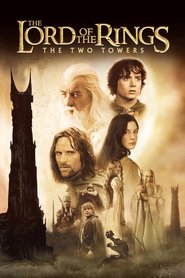
uh antique shop which is again the gorgeous set decoration of this film and anthony here it goes yeah real trouble yep when we found out anthony newly was playing captain manson that was it
9:45 · jump to transcript →
-
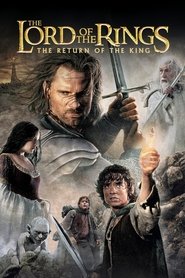
Mac and I thought we were making a film for young adults and for children. You know what I mean? And it kind of wasn't that. From the minute I crossed my heart to, which we'll see in a little bit, I crossed my heart, which was actually much more my breast, in order to seduce this young man. It's not a children's movie anymore. You know what I mean? Well, I mean, that's where kids get their food to start off with. Well, and I believe that's what that was said on the set. But be that as it may.
37:48 · jump to transcript →
-
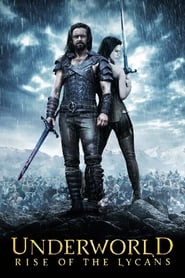
-
director · 2h 19m 7 mentions
-
And then I took the transcripts and re-edited the transcripts to make it the scene, which was then inserted into the script. And that was very carefully worked on on the set at the Hawaii Kai restaurant on 49th Street and Broadway, wherever it is. I don't know if it's still there. It was above the place that we showed Cats. Cats was there for like 100 years. The Winter Garden was above there. And that day we did that. And I remember that it started to go another way. And I kept saying, no, you've got to go back to the script, the script based on
20:27 · jump to transcript →
-
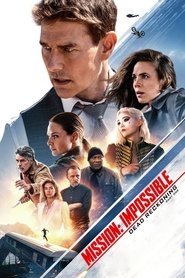
As we're walking off the set, you know, Bobby doesn't talk a lot. He just stands there, and he's a great actor, that's all. So we're walking off the set, and surprisingly, he just turns to me, throws his arms around me, and he says, Paulie, you're great, which was really a wonderful thing to happen. That was a very, just personally, I'm not talking about my acting. I just think he just meant it was great to work with me, but it was a wonderful thing from a man who I esteem greatly as an artist, as a fellow artist. They always wanted to talk to Henry about this or that.
49:36 · jump to transcript →
-
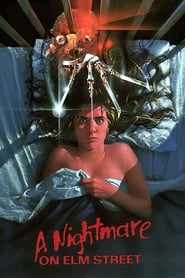
Henry, go open your trunk. Marty's parents don't come to the editing room much... ...but they always are on the set, and they used to work on the set. They used to press the collars of the shirts that the people... ...particularly in the Mafia films, wear... ...because only they, Marty said, knew how to do them properly. But it was great how much they were involved in his filmmaking.
56:58 · jump to transcript →
-
-
-
Marco Brambilla Daniel Waters
section and the cryo prism was interesting because the idea of cryogenic suspension had been done so many times before in films and there are so many flavors of the way the subject would be in suspended animation and in this case i wanted something that would break out of the convention of alien etc etc and i actually designed this set with the production designer to be a fully horizontal
7:12 · jump to transcript →
-
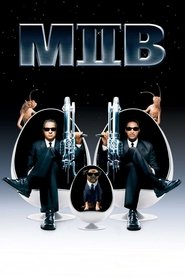
Marco Brambilla Daniel Waters
Are you sure? Joel, absolutely. Joel showed them scenes from this movie and that got her speed. And anytime I run into Sandra Boggs, she acts like we started a career, which I'll take. And this is, again, the set design is, we worked very hard to make everything work practically. Even the...
16:56 · jump to transcript →
-
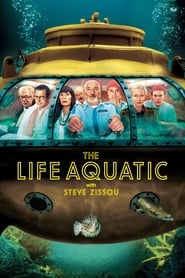
Marco Brambilla Daniel Waters
Sandra Bullock, I remember. Yeah, that dress weighed about 30... Yes. It weighed about 35 pounds. She had a hard time walking around it. I remember visiting... I visited the set that day, and she was... I was complimenting her about her performance, but she was, like, complaining that she's weighing a 900-pound dress. And that was Dan Cortez, who was a MTV personality. Definitely a 1990s icon, singing the Jolly Green Giant song. We should add more...
57:29 · jump to transcript →
-
-
director · 2h 49m 7 mentions
-
really magnificent. I mean, he's able to create like a little city here using what remained of the ruins of castles and building onto them and around them. That was no exception. Speaking of the sets, I mean, he...
20:49 · jump to transcript →
-
He's, uh... He was actually one of the funniest guys on the set. I'm a lassie.
41:49 · jump to transcript →
-
huge pitch battle but I knew that the you know the set piece was yet to come and I didn't want to overdo it here so we found a shortcut we managed to shoot this entire sequence in a day and wherever we got the opportunity to burn a set we simply burnt it whether it was in the script or not
58:20 · jump to transcript →
-
-
director · 1h 58m 7 mentions
-
They actually let you on board Air Force One so you can take a look at the interior? Yes. What we see right now that Gary gets a tour of the plane. I got the same tour together with Harrison Ford and Michael Bauhaus and our production designer. And so we, this, you know, this plane is so protected. Nobody gives you any information about the plane. So when President Clinton invited us to go and see his real plane because he just loves the idea of Air Force One, the movie with Harrison and so on.
12:36 · jump to transcript →
-
You knew what needed to be done and you did it. And you spoke from your heart. And that's what I heard tonight. Well, it felt good. Yeah, I'll bet it did. And so we talked about Wendy. Here's the kiss. And now I tell you a little bit about the set again because we now cut upstairs to the MCC. That's the communication room right here.
17:36 · jump to transcript →
-
Not really, but Harrison was so nice when they had their only scene together over the phone, because Harrison, of course, was on the plane and she was down here. Harrison came to the set and did his lines for real. So he was there on the phone, right a few feet away, and talked to her. I thought it was nice. And same with Gary Oldman, who, for example, for this scene here,
34:54 · jump to transcript →
-
-
director · 1h 58m 7 mentions
-
So we were so lucky to have Tom Sanders as a production designer. He's a great guy. He did Dracula, Braveheart, Saving Private Ryan. He's just incredible. So in this movie, all I want is a
21:33 · jump to transcript →
-
to make it look more warm and passionate. So he came up with the idea of a color. He was suggesting using more of a red, orange, and green as a key color. That will make it totally different from the first one. The first one was a little cold and have a blue lighting, and even though the set is pretty dark, but I want this one a little more charm, more open.
22:03 · jump to transcript →
-
and greeting everyone, and I called him, sir. He said, please call me Tony. It kind of made me so relaxed. And he was so happy to be on the set. He said he's a big fan of It's Impossible. He loved It's Impossible. He loved Tom Cruise, and he liked my movie. And all he wanted, just wanted to be a part of the movie. And he was very happy. And then we talked about the scene, and then
25:27 · jump to transcript →
-
-
-
Len Wiseman
My name is Len Wiseman. I'm the director of the film. I'm sitting here with Kate Beckinsale and Scott Speedman. And Kate plays Selene, obviously. And Speedman, I think you were one of the set PAs. Yeah, set PA. I got promoted. That's Speedman right there. - That's me. That's me. Or Michael. Michael. - Yeah, it's Michael. You've got a lovely young back. - I do, really nice little back. So we're watching... This is an extended cut. This is not a director's cut. What it is, It's a version that's put together... ...to show you what's missing from the original film... ...and what had been cut out and what's been changed. And I'll go into some detail, not too boring... ... about why that happened. I like that type of thing. Do you? - That was Nate, right? That was Nate. That was Nate Robinson.
0:06 · jump to transcript →
-
Len Wiseman
You got off lightly with the costumes. - Me? Yeah, you. - I had one. Well, then I got screwed. Why? - With my second costume. I remember some producer trying to get him into a beige cardigan. What was it? - Yeah. Yeah. That was the first time I ever met you. That's right. Horrifying. - Yeah, I think Richard had brought in.... We were talking about how much rain there was going to be... ...and all of that. And so he comes in with a... I think it was a beige sweater from... I think it was, like, a Gap sweater. I wasn't liking it. No offence to Richard. That was quite funny. We used to have meetings about whether we should shave you or not. We still do. - Oh, we did. What, shaving my face, my head? Do you know we had conversations about that? We did the test. We did a test, you still had the scruff... But it looked stupid. With the lighting, it didn't look right. I agree. No, actually, I remember, because we... - You couldn't decide. You were so damned attractive. Because we went up to my room, and we checked oult.... We checked out that tape. And there was some younger pictures of you. Oh, yeah, those horrifying... - No, you looked nice. I think I didn't decide to actually shave your beard until the day... ...of the first-- The first day. - Pretty much. Who's that? What's going... - That's your best friend. Have you seen this movie, Scott? - Who is that guy? What was his name? - Oh, him. Erwin. Erwin. - Erwin Leder. Loved him. - Erwin, the set poet. How do you pronounce his name? - Leder. Yeah, it is, right? - Yeah, I guess. He wrote, like, three poems a day. He did? - Yeah, he did. Did you read them, ever? Well, a lot of them were in German, so I had a good try.
17:50 · jump to transcript →
-
Len Wiseman
Yeah. Do I confess or not? Go ahead, because it was quite a bit of a problem for me. This actor here. Well, first... - This actor is such a nice actor. This is one of our deleted scenes... ...where Scott goes in to check on the gunshot girl. What's the story? - The story is, this lovely actor... He was such a nice guy. He was there for a short time. - Couple of days. Wentworth Miller. - Wentworth Miller. I happened to have gone to school with a boy called Forrest Wentworth. So I constantly called him Forrest Wentworth when I was referring to him. And it just messed everybody up. She would refer to.... She would talk to me about Forrest... .all the time, to where I would go up to Wentworth, and I swear to God... I may have just, like: "Forrest, can you take two steps?" "What are you talking about?" I don't think he knew that pretty much everyone on the set... ...Was constantly trying not to call him Forrest. Yeah, all your fault. Kevin with his G-string. Where? - He has a G-string... ... Just to hide the package.
20:39 · jump to transcript →
-
-
director · 1h 31m 7 mentions
-
Not that cursing. - Still makes me laugh. This kid... I swear, if Nial lived in Los Angeles... - Comedy gold. ...he would be on every sitcom in the world. He's a Star. - Every week, you'd just see him on different sitcoms, playing this exact part. I think he worked, like, six days for us, and I think we probably paid him about $130. It was $166. His character Bert, because we paid him $166, we began to discuss all expenses in terms of Berts as a method of payment. A very expensive dinner might be a Bert. Yeah, or like, "Oh, God, that's going to cost us two Berts." And it was-- One of the great things about shooting in Prague was cheap labor, cheap construction. Later in the movie, we get to the Vatican. Good labor and good construction. Fantastic. - The artisans are unbelievable. Great infrastructure, just great people that make movies. I mean, we put a crew together out of, you know, just really very few people from out of Prague and they were just fantastic. Especially because we'd never done this before. Our background was originally sitcoms. We all worked together on Senfe/d. Also Conan, Saturday Night Live, and so... I'll never forget it. I'm sorry. Bruce, the drummer of the band, has to sit next to Kristin and Matt and they all have to have their shirts off and Bruce says, "I don't know if I want to, because I have a rash." No, he said, "I'm just getting over the shingles." Shingles. That's what he said. He said it in front of Kristin. Kristin was like, "Oh, God, what have I gotten myself into?" I'm like, "He's joking, he's joking. He's a very funny musician." Without shingles, I promise. Actually, I remember we shot Mieke talking in English and in German, and we decided to use the German with the subtitles. We didn't think German would sound sexy or attractive, but she's Jessie. Somehow, when it comes out of Jessica Boehrs's mouth, she sounds sexy. Yeah, she's so warm and charming that even German sounds great. This is Jeff's favorite thing in the entire movie, that stupid jackalope T-shirt, which is not funny, but he swears is a joke. I don't think it's a joke. I just think it brings pleasure to those who see it. To you. - It's really a terrible T-shirt, especially compared to the many good T-shirts. This is actually-- I would almost... This is my favorite scene in the movie. This is the scene where the movie, to me, works the best, where these two guys were just sort of dialed in and their relationship... It helped very much that we shot this scene way toward the back of the shooting schedule. Yeah, if you look at the first bedroom scene where we already were, which is one of my least favorite scenes in the movie... Day three, we did not know where to put the camera. We did not get... We didn't take a wall out that we should have. It would've saved us time. We should've taken a wall out to get a master shot, a shot that allowed everything to happen and the camera to get it. We did not get that shot and got everything in little pieces and just then edited together the little pieces, and it just created... It took the entire day, which it just shouldn't have taken, and in this scene, which is basically a month and a half later, probably, we shot it... - Yeah. ...we knew which wall... We took the front wall out from when Jacob first walks into the room. Got our master shot, a really nice master. I think they were there performance-wise, in terms of their friendship. And, if I may, the jackalope T-shirt... - And the jackalope T-shirt... Also, it's sort of what we learned doing this movie that... The longest we ever shot in one location on this movie was three days, and this was probably the third day we were shooting on this set and we learned how to shoot this set. We definitely learned how to shoot the set. What wall to move and how to shoot it. The larger issue, I think, would be that I think any other... any person who had ever directed would've known, get a master. And so, an excellent lesson learned. - Yeah. I also think the actors were more comfortable with each other, we were a little bit more comfortable, and also we knew the set and we knew how to shoot it a little bit more. And that was one of the hardest things about this movie is, every day, we were shooting one, sometimes two, sometimes three locations, and you didn't have any time to learn each set and learn how to shoot it and what the easiest way to shoot it was, and as soon as you learned, you were done shooting there. - We had a location fall out, a Vatican location sort of fall out, which is how that other bedroom scene got moved up. And the initial schedule was sort of built to accommodate a little bit easier scenes with guest casts, things that maybe weren't as important and then that bedroom scene kind of got moved up and I do think it suffers.
14:17 · jump to transcript →
-
The hooligan next to Vinnie... - With the "Kill Something" T-shirt. "Kill Something," which you'll see a little bit better later. His name is Paul... - Paul Oldham. Oldham, yeah. Just another good guy who really enjoyed his role as sort of Vinnie's... Vinnie's right hand. - ...assistant hooligan. Exactly. And they fell into that off camera. - Off the set. He's also a real beer-swilling soccer... football-loving man from Manchester. Yeah. I don't think... Was he a Manchester fan? Yeah. I think he was from Manchester. - I didn't remember that. We shot a lot of fun Manchester United songs, which aren't in the movie, but it was fun teaching these hooligans these songs. Many of them did not speak English. Yeah. Try teaching "Morning Train" to 40 Czech people phonetically. And this is Petr Jakl. Who's a local Prague resident who you may recognize from XXX and a few other movies that were shot in Prague. He is about 6'8". - Yeah. We never got the right nerdy glasses on him. No. That was an issue. We thought we had the glasses and then we showed up on the day... They lost them. - ...we said, "Where are the glasses?" They said, "Aren't these them?" We said, "No, we had different ones." We had more of a Clark Kent glass in mind, just the idea that... He'd be a little nerdier. A little nerdier, but clearly not. Clearly a big guy. This is our helicopter shot. This is our big-money-production shot. And this we shot on a highway that was under construction, about an hour outside of Prague. There's a couple of other scenes we shot on the same highway.
23:32 · jump to transcript →
-
The driver is... Now that-- I'm sorry to interrupt. That Eiffel Tower is not actually there. That's Kevin Blank's work again. We're back in Prague. We're still in Prague. But we're on an incredible actual street that looks so much of Prague. That's the Paris... the Hotel Parizska that they're going by. An amazing thing happened when we were putting the movie together, which was we had to interview production designers. And Prague was not bombed during the war, something that they're very proud about. It's a beautiful city and it very much looks like Paris, as do many European cities. We spoke with a French production designer, who when we were talking to him about these scenes was Just like, "There is no way you can shoot Paris in Prague. It's impossible." "You must shoot Paris in Paris. It's the only city that will look like Paris." "The rest of the cities are fine, but not Paris." And, needless to say, I'm not a production designer, but you could've shot Paris on 40 different blocks in Prague. This is all Prague and it looks pretty Parisian. Although, some of... Besides it looking great... This is I guess where we should mention Oscar-winner Allan Starski, who is just... Our production designer. - Our production designer. Just such a great guy. - Who did Schindler's List, The Pianist, and also built the hot tub where we see naked Candy. The career trifecta. So we're hoping-- We have high hopes for another Oscar for him. This, I believe, is where the run of luck with Michelle and the weather started. Every time we tried to do a single on Michelle, it would rain. If I owned a farm, I would get Michelle out there and I would start shooting her close-ups because it would rain all the time. The stuff no one will ever care about, though, is all the little signage in the back and stuff is real Parisian stuff that Allan did up. Attention to detail is amazing. We are not... We never went to the Louvre either. This is... - This is all Kevin Blank. Kevin Blank created this out of nothing. And created the line. Shooting just different sections... This is all cobbled together from 50 different pieces of footage that he shot in different places.
27:34 · jump to transcript →
-
-
director · 1h 52m 7 mentions
-
You can be brave. I think films are better if they start slow and speed up compared to other movies that you start at 10 out of 10 and there's only one way to go from there. So this is a set. We shot this in Pinewood. And about three days before we shot it, it was still pouring with rain and the set was sort of flooded.
5:45 · jump to transcript →
-
had real problems. And when I say a set, we got told it was impossible to create what we created because it was just scaffolding. And Russell Rosario, I'll have to call him the costume designer, the production designer, did a brilliant job. In fact, I think someone should open a comic store like this. The idea of a diner-stroke comic book store would be a place I think my son and I would go to. Here is the kid that does not like to be called McLovin.
6:14 · jump to transcript →
-
And that is the town that used to be the... ...GLC headquarters in London. That's actually the production designer there, the fat guy. He's now thin, so I can say that. He's must have lost 100 pounds. It's like, unreal. Now we're in the art world. I thought it'd be cooler. This is a whole set we built. I thought, wouldn't it be great to have it instead of... You know, you always see the gangsters living in sort of...
19:09 · jump to transcript →
-
-
-
Tim Burton
Coming up with a character, then seeing them all come together on the set in real life, you know, it just gives it something we don't get every day. I'm investigating. Recognize this puss? Never seen that chick before in my life or after life.
20:28 · jump to transcript →
-
Tim Burton
I was respectful to what we did in the first one, but then expanding on it was important. I never, myself included, never wanna feel like I'm copying something or making something exactly the same. So that's why I didn't even watch the first movie before I did this one, because I didn't really know if it, it didn't feel like it was gonna help me. I just wanted to make this movie. So in terms of the set designs, I didn't go back and study everything and do this and do that. It's like the house was the house.
31:41 · jump to transcript →
-
Tim Burton
The only reason I wanted to make this Beetlejuice is because it felt personal. Working again with Michael and Catherine and Winona, I was shocked at how I felt on the set when I saw them together. You know, it was, like, quite emotional. It was like a weird family reunion. And I was surprised by those feelings, and I was surprised at how much fun... I mean, I don't usually say I have fun on a movie, and it's not... Movies aren't fun, but the energy... And again, I think...
41:35 · jump to transcript →
-
-
-
Hi, this is Jim Brooks. And this is Richard Marks. We're sort of dedicating this to Polly Platt, who was, is, you know, just one of the trailblazing women in film, associated, just Google her, with more great films than you can imagine. And she was a producer and also had a role to play because she was, in her past, she was a preeminent production designer.
0:20 · jump to transcript →
-
I mean, that is what everybody hopes for. It's always this thing you say that, you know, I think the big thing is, you know, two actors are going to the set that day, each with an idea of how the scene should work. The director is going there with an idea of how the scene should work. The great day for all of them is when something happens that nobody anticipated. I mean, that's what movies are. I love that there's a little mistake he makes here, which is...
33:05 · jump to transcript →
-
when he expresses opinion like that. And now, of course, it's commonplace. The latest message seems to indicate that the Libyan pilot was acting on his own without authority from anyone else. In other words, I think we're all okay. Okay, Tom, wrap it up. Who the hell cares what you think? Coming up, you'll see Holly Hunter, whose nose... Because of the set, she wasn't able to look towards anybody. Her nose ends up two inches...
51:58 · jump to transcript →
-
-
director · 1h 24m 6 mentions
The Naked Gun From the Files of Police Squad! (1988)
David Zucker, Robert Weiss, Peter Tilden
-
And that's important to future writers? It is. Fluker dialogue? Know your Fluker. How many pages of Fluker dialogue is in a good script? Most of it. That's right, we have the whole glossary of terms. I know. Well, we might talk about some of those. Terms, rules, well, nothing worked. And here comes the joke from the set-up. This actually happened to our rabbi. Was it based on that story or did it happen after the fact? He was with the mayor guarding the queen. Life imitating art.
14:33 · jump to transcript →
-
And hopefully we'll remember some of that and talk about it. We always shoot an elaborate ending to each movie that never makes it. No, that's always rejected. And you never know that it's not going to make it? You never get a sense of it? We always hope for the best and we hope no one will notice, but... It was almost midnight when I got to my door. I just wanted a glass of vodka... Pretty good structure. You talking about the set or...? Do you still see stuff you want to change?
35:28 · jump to transcript →
-
Correct. Was there any kind of sexual tension on the set between any of the actors? No, but between David and myself, there were sparks. I understand. Good thing we're married now. This shirt looks familiar. It's yours. I didn't want to get stained or wrinkled. At least, not yet. Ooh. Do you mind if I slip into something? Was this all at Raleigh? You mean where we shot this? I believe it was.
36:55 · jump to transcript →
-
-
director · 2h 17m 6 mentions
-
You just have to feel it. You're just there on the set. You know, that's not working. It's got to be like this. You're doing that too self-consciously. You've got to do that straighter. The humor comes from the fact that you don't understand you're being funny. It's all inspired by the screenplay, definitely. It's inspired by the screenplay, but then I think what the director does is he has to hold on to it and keep it from falling off. Of course, the movies that are always the
10:21 · jump to transcript →
-
planes had to be shot in two parts. One where we actually had Forrest or Tom Hanks running carrying Michael T. And then we cleared everybody out of the set and set off these explosions here on this island in South Carolina. And then blended the two parts of the shot together to look like he was actually running through the scene with the real explosions. And isn't there a rig also helping him carry Bubba?
55:01 · jump to transcript →
-
My ultimate vision for everything is ultimately compromised. And I think that that's what you have to do as a filmmaker. You have to just turn it over. You have to give up. Because in the morning, you're going to the set, and you've got this long list of 20 setups to do this sequence really great and get all the coverage you need and have everything you need. And then by lunch, you haven't gotten one single shot yet. And you just start crossing them all off. And at the end of the day, you've been able to scramble and get four setups.
1:08:31 · jump to transcript →
-
-
director · 1h 59m 6 mentions
-
for any sort of comparison. Or thank you for the compliment. Oh, please. This is an insult. But Jeffrey was so funny in this scene, putting the hand against his head. Did a great job. And it's a good thing that most people don't know straight off the bat that he's really Juliet's father in real life. Yes. No, nobody knows that. Every time I tell people that, they're surprised to hear it. Actually, Juliet was surprised to hear it. We had to do a blood test on the set.
34:27 · jump to transcript →
-
I offer my humblest apologies to you guys. And Francesca eating the shrimp. Oh, Kristen Leeman is a vegetarian. Oh really? How much did you pay her? Kristen Leeman's a vegetarian and she read the script and never said anything. And we got to the set that day and I could see her having some kind of problem. I said, are you okay? And she said,
53:47 · jump to transcript →
-
But as for costumes and cinematography and production design, it was always about minimizing, just being as real as humanly possible. I think I was the only one in the film allowed to break that rule. Yes, and in the beginning you were not. It was only when we realized that something had to break in order to save the film
1:16:10 · jump to transcript →
-
-
-
And this was the Mexican embassy in Berlin. She disappeared two months ago. Help me, please, miss. She disappeared two months ago. And this is actually a set. Part of it we did film on an actual location in Berlin. And I think it's seamless, the way that it moves from the actual location to the set. Mm-hmm.
5:28 · jump to transcript →
-
I had a family once. I had a life. Now all I have is a mission. Great production designer, Andrew McAlpine. Yes. Did a really incredible job.
11:20 · jump to transcript →
-
He's a New Zealand production designer who did such amazing films as The Piano. And we did have a limited budget, and I don't think that you would guess that, given what he was able to do. And also, I think it's interesting that Stuart Dreiberg, who was our director of photography, and Andrew had worked together before. They're both from New Zealand.
11:53 · jump to transcript →
-
-
director · 1h 51m 6 mentions
-
Please prepare for gravity reversal. You know, once they actually turn around, which is happening now, this whole thing turns. Now, we didn't turn the set, actually. We just turned those big ribs that you see moving right now. Those are the only things that moved. The actors stayed in the same place. So just to give the illusion that it's moving, we set our camera on a rotator that the camera...
11:08 · jump to transcript →
-
And that's one of the reasons, too. Tell me to ask for Mac. It's right inside. Thanks. This was the first scene we actually shot was this set. First actual moment that we shot was that fight that Colin does, because we had to kind of build this massive, like, truss and camera system within the set.
20:20 · jump to transcript →
-
that we had to kind of tear apart. So we started with that fight, and then we tore that down, and then we were able to patch up and build the rest of the set. Welcome. Hey. You're a friend of Merrick's? Yes. Yeah, we, uh, we work together. Is that it? And John Cho was really on board with letting me dye his hair. It feels like real life.
20:47 · jump to transcript →
-
-
-
Commentary With David Kalat
Grant, an A-list star of light comedy and amiable action films whose popularity would keep him a top marquee name for many decades. In contrast to Kochi's insecurity, Takarada swaggered onto the set and introduced himself as the star. The grizzled crew chuckled, Godzilla's the star. And since the monster is the star of the show, to talk about the cast, we really need to talk about the special effects director, Aiji Tsuburaya.
17:56 · jump to transcript →
-
Commentary With David Kalat
But these preoccupations didn't just pop into place on the set of Godzilla. Honda had been ruminating on Japan's post-war zeitgeist for some time. When he served as Kurosawa's assistant director on Stray Dog, Kurosawa tasked Honda with directing the sequence in which the detective, played by Toshiro Mifune, takes his first walk on the wild side, exploring the criminal underbelly of the city, an extended, wordless sequence that stands out as one of the more memorable set pieces in that film.
30:06 · jump to transcript →
-
Commentary With David Kalat
It was, in fact, the very first scene shot by the special effects crew. It was a pretty inauspicious beginning. As they were dressing the set in preparation for the shoot, one of the crew members broke through the floor of the set by accident and fell onto the miniature diet building, which had been pre-stressed to break on cue. Well, sure enough, it shattered. They spent hours putting it back together again and restoring the set. Finally ready to proceed, Nakajima put on the Godzilla suit and took his position, only to crash through the floor himself.
1:04:06 · jump to transcript →
-
-
director · 1h 54m 5 mentions
-
On the set, there'd been chatter about tensions running high between Eastwood and his director, Ted Post, who, as mentioned, had directed Eastwood only five years before on Hang Him High. But those five years, as we've seen, have done a lot for Eastwood's reputation and for his view of himself as the most qualified man on almost any given set.
1:08:49 · jump to transcript →
-
On the set, to a reporter visiting, Post said, he hasn't changed since I first knew him, he being Eastwood. He was just the same in Rawhide days, always supplying imaginative ideas. I'm not no tour director. I'm interested and happy working with someone who collaborates and contributes. But, privately, Post would tell another story.
1:09:41 · jump to transcript →
-
He figures he can go right in and sail through these things. Cimino, who remained ever after extremely grateful to Eastwood for the opportunity to direct his first picture, remembers a very amiable relationship on the set. He remembers asking Eastwood for feedback
1:13:15 · jump to transcript →
-
-
cast · 1h 39m 5 mentions
The Rocky Horror Picture Show (1975)
Richard O'Brien, Riff Raff, Patricia Quinn
-
Do you know that we wanted to use this logo? This is against Richard Hartley's piano playing, I think. Of the 20th Century Fox theme. - Yes, maybe I will... We wanted to use that for the denouement. Ah. - Instead of the RKO sign. So that was interesting. Michael White and Lou Adler's names there, our producers. Yes, that's correct. - Erstwhile people. I'm rather... And now whose mouth do you think this might be? Ooh. M-m-m-mine. Yeah, it is. Now, interesting... - There we go. Course, when we did the stage play, it was you that sang this song. That's right. - And then they offered you the part of Magenta in the movie, and what did you say to them? I said-- well, they told me that I wasn't going to be able to sing the song 'cause they couldn't have an usherette open the film, so I'd lost my song "Science Fiction." And, um, I said, "Well, you can take your movie and shove it up your..." Where the sun don't shine. Yes. - Mm-hmm. And they were very amazed 'cause they'd taken me to a restaurant Yeah, yeah. - Jim Sharman. Always do it after lunch. Always tell them no after lunch. Yeah, after lunch. And I said I'm not interested. Don't want to do it. Then they took me round to John Goldstone, one of the other producers, round to his house to see the sets. They said, "No, please, Pat, come and see. Come and just have a look." And then they showed me the pink room, the laboratory. And then they showed me all the drawings of the costumes and whatever, whatever, whatever, and, um, I said, "I can't wait." "I'll begin tomorrow." I didn't mind about the song. Yeah, well, I didn't know anything about that until this moment in time and, uh... Well, I have blamed you for it ever since. Well, you see, I got along to the studio, and they'd done the backing tracks... Richard Hartley and the crew had done the backing tracks at Olympic Studios. I love my name dripping like that. Oh, yes. And... Sorry. It was a bit of a drip. And... - I said-- They said "We want you to sing the opening title song because you're the author of the show," and I said, "What do you mean, as a backing, guide vocal for Pat?" They went, "No, we want you to sing it." And, um, so I did, but until that moment in time, I had no idea that I was... Well, ladies and gentlemen, or whoever's listening, today is the first time this has been revealed in how many years? Oh, um, 25? So in all these years, I have begrudged you taking my song. And in all these years, I've begrudged you for being you and having that delightful mouth. Thank you. I mean, look, it's a wonderful mouth. One wonders, you know, oh, well, wonders, just wonders, really. Has your dentist seen this movie? Yes, I really wanted to give her a plug today. Veronica Morris. Because, really, she's been keeping my teeth in great order. This is marvelous. And Veronica'll be so pleased. This mouth, of course, is Brian Thomson's idea. It was the Man Ray photograph of the mouth and the sky is where he got that from. Yes, it... Is ita photograph or was it a painting? It's a photograph. - It's a photo. Lios Over Hollywood. Yeah. - Is that what it is? That's what it's called. It's over the Hollywood sign-- a mouth. Man Ray picture. - And this was the first mouth. I mean, I'd never seen a mouth this symbolic before. The Rolling Stones got a mouth after that, didn't they? Yeah, they got a mouth after. Not a mouth before. Bit mouthy. - A bit mouthy. No, no, and it was wonderful when they asked me to do this 'cause they asked me to do this mouth on the very last day of the film. Mm-hmm. Jim Sharman came up to me, it was a wrap, finished. We'd done it, and he came up and said, "We've got an idea about this mouth." Yeah. - "And will you do it?" And they painted all your skin black. Yes, they did, And I went out to Elstree Studios... - But your timing was perfect. I mean, your lip-sync is fantastic. Yes, well, I'm good at that. And I sort of know how you do things. So, uh, so we... We, uh... Ramon Gow. Look, the hairdresser, Ramon Gow. We'll talk about Ramon a little bit later on. Yes, he was wonderful. - Yeah. He kept us happy. Did he keep you happy? And Pierre. Pierre did the makeup, didn't he? Pierre La Roche. Oh, God. He did Bowie's makeup. You know, for what was that Bowie thing? You know, when he had the makeup. - When did Bowie never have makeup? All right, with Bowie. Ziggy Stardust. Yes, and it was fantastic. And I thought Guy La Roche will give me the most fantastic face in the world. And he looked at me, and he said, he gave me no bones... No, Pierre La Roche. - Pierre. Pierre La Roche. Guy de la Roche is... - I beg your pardon. Pierre La Roche. And I was so shocked that he just said, "We're going to totally whiten the face." And what-- here we are. And what-- here we are. And what-- here we are. The fade into the cross there. - Fade into the cross, yeah. And down the old... And now this is interesting 'cause this was just a facade, wasn't it? That little room-- There's a little room on stilts behind that door. Just tiny little room. There's darling Henry Woolf. He's just such a darling friend. A great, um, Pinter. Pierre Bedenes in the front here. Now, Perry was the boyfriend of Brian Thomson at the time. Uh, we should say... that little girl there, where is she? She's gone now, but that was... what's her name? She was the photographer that went out with Prince Andrew for a while. What was the name? - Koo Stark. Koo Stark there, yeah. She's in the back there. She's there. Uh, I was gonna point at the screen as if that made any difference. Yes, -Gaye Brown. There's Pierre. And Henry. - And Henry. Henry was in my house the other evening. He now teaches in Saskatchewan. Yeah. He's been over here doing the Harold Pinter plays, hasn't he? That's right. He was in the first play that Pinter wrote. He made him write it, actually. Well, there they are. - There's our Brad. The two lads-- so very butch. Ouch, that hurt. And there she is, Susan Sarandon. We didn't know either of these people when they arrived, did we? No, we didn't, but they... - Weren't familiar with their background. Although he'd been doing Grease on Broadway. Great dancer, great legs. But it was wonderful. - Wonderful. There's my wife there jumping up and down. My ex-wife. My first wife. Is it Kimi? - Yes, in that little plaid dress there. Yes, and that lovely handbag. - With the bangs. Yes. Gorgeous. And this is Rufus Thomas, I think, driving the car. Rufus was with the-- there he is. He was with The Living Theatre for some years. He choreographed Jesus Christ Superstar in its first British incarnation. Gosh. Such class we had in this. Oh, yeah, we were all, yes, very groovy. - I remember those two. Now there's us in the background being American Gothic. Yes, which was such a surprise to me, and it was freezing cold that day. And I swore I'd never talk about the cold again on this film... We were walking to that set the first day we ever walked to that set, and we'd smoked something rather exotic. And I'd never smoked before. - No, no. Richard really led me into really bad ways. It was a bit difficult clinging on to reality, wasn't it? It was wonderful. I loved it. Ah, there we go. - There's our signs. In the graveyard. - "Denton." "The Home of Happiness." "Dammit Janet." "Dammit Janet." "Dammit Janet." She looked very pretty. Sue Blane did some wonderful costumes, and they've really hung on, even though we do the stage show 20... well, it's longer than 25 years from the movie, the stage show. But we still use Sue's designs. She reinvents them, and it's still the same kind of look. Well, I must say, the thing... she's stunning-- is at the time... I demand that Sue Blane invented punk, and this film invented punk. And down the road was Vivienne Westwood with a shop called Sex, and she thought she'd started it, but no, sorry. She'd copied us from up the road. We were on the stage at the time. I think there's a certain amount of truth in what you say. I think we were a precursor of Malcolm McLaren and Vivienne. That's correct. - But then again, you say, as Coco Chanel said, "Anyone who thinks they're original has got no sense of history." 2 If there's one fool for you Then lamit > Janet 2 I've one thing to say And that's damn it, Janet > Now look at that heart there. I want you to see that heart there, 'cause when we go back and rub it out, I think this is... Maybe it's the same heart. I thought it was a different one. Maybe they got it... There's a boom microphone shadow we'll see, I think, soon. Somewhere out there. - Why do you point out the faults? Well, why not? You know... I mean, that's what the fans do. - Do they? Yes. Oh, look, she dropped it. What a shame. Wasn't she meant to? I have no idea. - Or was she not? Now, this is interesting. This room, we could only afford this end and the other end. The altar end, and we didn't have any sides to the room, so we could only shoot it looking this way or looking the other way. We couldn't pan around 'cause there were no sides to this room. 'Cause we didn't have enough money. So there we go, you see, walking towards camera without background. Good heavens. And walking away from camera to there, but there were no sides. > Oh, Janet 2 For you? 2 I love you too } They were very good, these two, weren't they? When you consider we'd been doing this for the show... We were like a family, and they came in, and they joined in, like, so easily, so quickly. I find them astonishing. This must be... I don't want to go into detail, but it's a very small coffin, isn't it? Oh. - One does wonder. About what? Could have been a rabbit in there probably. Well, every day was a great surprise to me on Rocky Horror. I never knew what was going to happen next. Yeah, me neither. I mean, I didn't know what even American Gothic was. Till I saw the painting in the hall a few days later. I thought, "Why am I dressed like this?" Were you not familiar with that picture? - No. There we are... three good-looking people. And those opticals were rather good I thought. And those opticals were rather good I thought. And those opticals were rather good I thought. They really were mechanically derived by... But, you know, today, of course, you'd have optical wipes and all sorts of things with video. There's dear Charles Gray who's departed from us recently. Yes, Charlie has parted from us. And I loved it when you said to me it'd be wonderful if you and I were Charles Gray and Ava Gardner. We could visit each other often. Yes. - 'Cause they were great friends. They lived next door to each other. And I thought they've both gone. So we've got to now move into the same street. I think they're probably on a similar street in the sky somewhere doing the same things.
0:05 · jump to transcript →
-
And Sinatra phoning every day. Yeah, did Sinatra... - Phone Ava every day? Did he? - Yeah. Heavens to Murgatroyd. There's the lovely Jonathan Adams who was our original narrator. Brilliant. Yes. - Plays Dr. Scott in this movie. And Brian Thomson used to put in hidden detail in those things, so there would be stuff inside that file. There might have even been stuff in those files behind him there. In that it was relative, but nobody was ever going to see. No. Well, to me, Brian Thomson's set was astonishing. It was unbelievable, and I've just been to see he King and /... Mm-hmm. - ...and the set he's just done for that. I adored it. - Yes, good, is it? Mm-hmm. Pity about the... - Sumptuous. Nah, nah, nah. - What? I didn't say anything. Nothing. You didn't say a thing. - Never heard a dicky bird there. Yeah. What a charming person. He'll be remembered in my will, actually.
11:02 · jump to transcript →
-
Weird Fantasy, I think, is the title of that particular magazine. Ah. Of course, all his stuff was shot in a day. Because the marvelous thing about the dining room scene, that I read about in a magazine... I didn't realize why, which we will see when we come to it. I'll talk about the set of the dining room scene. Okay, I'll bear that in mind. - All right, thank you. I'll just write that down. - Write that down. No, I'll remember. Is that what I think it is, is you just rolled up over there, skinned up over there? Sorry? I never really liked the way you took so much pleasure in looking at that. What? - Your voyeuristic sense. Oh. You see that... Making those noises and things, I got rather embarrassed. Oh, really? - Yes. Do you see that thing around the television screen? I still have that. - Where? It's in my shed. I've got it in my shed. In your shed? It's in my wee shed. And what do you do with it? Well, it's at the back of the house. The kids have actually shown interest in it. - I see! Linus wants it. My son would like it. You know, and actually Joshua... - What, with all the thingies? With all the pulls and handles? Just-just the square that goes around the television screen and the handle on it, yeah. - All right. It's lost a couple of its rivets... Hmm. - ...aS one does over the years.
48:30 · jump to transcript →
-
-
director · 1h 31m 5 mentions
Alex Cox, Michael Nesmith, Casting Victoria Thomas, Sy Richardson + 2
-
Except for this one thing. Fox didn't know how to drive. No, that's right. He couldn't drive a car, and he showed up on the set and took off and drove it right into a bridge. He almost showed up at the gas station. He hit a gas pump. Well, subsequently, me and...
1:38 · jump to transcript →
-
It wasn't near as traumatic as when the Malibu got stolen. That was bad. We'll get to that, won't we? Well, this is that car. It is. Because when we started shooting, we only had one of these Chevy Malibus. Yes, and I kept saying, don't rent the picture car. Buy them. Let's buy three. Yeah, but we only ended up getting one. And the Teamsters suggested to me that I should, since I didn't have a car, I should drive that car to the set every day. And this went on for about a day and a half, and then the car vanished.
3:49 · jump to transcript →
-
who, by the way, when I met them on the set, they were totally disinterested in me. I said, hi, I'm Xander. I play Kevin the Nerd. And they said, so? But I later on ended up joining the band and playing with them for about 12 years. There's Jennifer Bogleman. You're still in the Cycle Jacks, aren't you? Well, yeah, you could say so. You know, we keep breaking up and having reunions, and now we're all kind of getting on in years, so...
6:35 · jump to transcript →
-
-
director · 2h 10m 5 mentions
-
of horses that they owned. Cubby was a great gambler. He loved it, he loved Shemmy. But we played, every day we played backgammon on the sets. Cubby Proccoli was married to Dana, and their daughter, Barbara, is now producing the Bond films.
38:25 · jump to transcript →
-
in Udaipur. And Maud would speak to him every day on the phone, and then he finally arrived. And he said my first words to him were, you don't by any chance happen to have a Hershey bar with you? Desperately missing Hershey bars in India. But they were visiting the set, so...
59:53 · jump to transcript →
-
When we were shooting the Sicilian cross, we had a little problem with controlling traffic until we had a little chat with the chief of police who happened to be Italian. And then all of a sudden we had a lot of motorcycle policemen who were all in Italian. They said, come on the set. And the great thing for us shooting in San Francisco
1:03:32 · jump to transcript →
-
-
-
Macaulay Culkin
Hey, that's you. - That's me. So this was, uh-- I guess we... We could start about... Talking about the beginning of how this whole movie came about, really. I was in dire straits at the time, in terms of my career. I had just come off of a complete disaster, a big bomb. I didn't know if I was gonna direct again. I thought I'd have to go back to writing. So I was in Chicago staying at my in-laws' house... ...and my first daughter was just born... ...and John Hughes sent me, out of the kindness of his heart, two scripts. One was called Reach the Rock and the other was called Home Alone. One of them, it was rumored... I think it was this one. was written over a weekend... ...which some critics would probably jump on the bandwagon... ...and say, "Well, we always knew that." - Exactly. Ha, ha. So I read Home Alone and immediately responded to it. I thought it was just a great, great piece of material. And it talked about some of the things that I was interested in making a film about. Now, we had a meeting, I remember, in New York. I just-- It was-- You and my father were talking most of the time... ...and I was just imitating everything you were doing. Everything I was doing. - Yeah. You'd drink your water, I drank my water. Like that. I think I did that... I think I way overdid it. I think I just kept doing it the whole, like, hour. Well, you know, the interesting thing is we... Again, it was the kind of situation where we looked at hundreds of kids, again. And I was like-- Even though I didn't know if I'd ever direct a film again... ...I was like, "Well, you know, Macaulay was in Uncle Buck... ...and I don't wanna just cast him based on John Hughes producing the movie... ...because then it looks like I'm gonna give in to John Hughes and be a wimp." And I met all these... I met hundreds of kids. And when I met Macaulay, there was just no one else who came close... ...to what we needed for this film. I mean, really, in terms of an actor... ...a Child actor, at the time, you were the most unique, original kid I'd ever seen. So that was pretty... - Oh, thank you. I mean, I totally agree with you, but thank you anyway. But it really is-- It's sort of, uh... Because it was the fact that you, um... The camera loved you, obviously. You see the shots from the film. The camera loves you, but at the same time, uh... ... you were relatable to every kid in America... ...because you weren't an idealized version of a kid. Kids are used to-- Accustomed to seeing this ridiculously... Shirley Temple, and the curls and the whole thing, you know. And there was just something enormously real about you. That, and I could remember my lines and I had a lot of energy. That is true. You did have a lot of energy. Almost a sad amount of energy. It was, I mean.... Still do too. Uh, now, do you remem--? Like, this particular scene. We're starting from the beginning of the film. And I'm curious, because there were so many scenes in the film... We were talking before we started. where we would shoot your coverage first and then send you home... ...or I'd still be in jail. - Child labor laws. Yes, I'm still well-versed in the child labor laws. So there are obviously certain elements of the film-- Like this. Do you remember this being shot? - No. Because you weren't here. - I remember we did the whole... There was a whole sequence with, you know... ...people coming up the stairs, down. - Right. He's there, and the pizza guy's there. I remember that, and just like, you know, trying to coordinate that whole thing. But, no, in general, there's a lot of stuff... There's a lot of holes in it... In my memory. And this guy went on to do something on Nickelodeon. My kids know him. Yeah, Pete & Pete. - Yeah, Pete & Pete. Is it still on the air? - No, no. It lasted a couple years. It was actually a really kind of neat show. Yeah, my kids loved that show. But what was interesting about the whole look of this film... I guess we could talk about it a little bit. You'll even notice... Some people will think, "Well, this wasn't intentional." But we intended the film to feel like Christmas sort of. I wanted the house to feel very warm. You look at... - Greens, reds. Macaulay's wearing greens, a green and red shirt. There's a green and red jumper sweater on this guy back here. The wallpaper is all... - That's very clever. All conveying a warmth of Christmas and something that, uh... It just was interesting to us. So it wouldn't be over-the-top, but it'd feel warm. I wanted the house to feel like a warm place. Joe Pesci. What do you remember about Joe Pesci? What is, like, your first--? My first-- Gosh, I don't even... I have-- I still show this. I have a scar on my finger. - Uh-huh. We'll get to that part near the end... - Ha-ha-ha. ...when, you Know, he says, you know: - Okay. "I'm gonna bite each one of your fingers off, one at a time." During rehearsal, he actually bit my finger a little harder than I think he thought. I still have a little scar on my finger. It's my little Joe Pesci tooth mark. I'm telling you something, I believe... And I know Joe would probably get a little upset with me about this... ...but there was a little professional jealousy from a lot of the actors on set... ...because you were the star. There's this little kid who was the star, who we were all paying attention to... ...who was carrying the film. And there was a lot of passive-aggressive stuff going on. And I don't think Joe meant to bite through your finger... But, heck, you know, you never know. He was not particularly happy during the course of making this film. And I don't-- I think he would probably say the same thing. He had just come off of Goodfellas and Raging Bull, and he was... I don't know, did he win the Academy Award? He won for Goodfellas. His acceptance speech was, "Thanks," and that was it. Okay. Well, there you go, so, um.... And when he... I remember I was such a fan of his. Asking him to do the Goodfellas... The clown speech, you know. "Make me laugh," you know? "What do--? Am I funny to you like a clown?" And he would do that every day, and it was great. But at the same time, I could feel it from the actors. Because there's always a sense of rivalry between actors. There was this feeling of, you were the star of this movie, and that was un... That was not really common at the time. - Yeah, yeah. It created an interesting tension on the set, I have to say. Yeah, see, I never really felt that, but I was 9. Everyone around here knows he did it. It'll just be a matter of time... ...before he does it again. What's he doing? He walks up and down the streets every night... ... Salting the sidewalks. Maybe he's just trying to be nice. No way. See that garbage can full of salt? That's where he keeps his victims. The salt turns the bodies... ... Into mummies. Wow. - Mummies!
0:21 · jump to transcript →
-
Macaulay Culkin
That's also the reason I got the part. I'm such a ham. You are such a ham. - I'm such a ham. But what's amazing is, at the time... ...I was only the father of an infant, really. My daughter... - It was Rory's age. They were both born same month. Yeah, and, uh.... So I was, uh.... I thought, "Well, he's-- This kid is really kind of over-the-top... ...In terms of the way he treats his family. He's kind of a brat." Little did I realize then, after four children later, that this is kind of par for the course. This is the way kids just treat their parents. John knew what he was talking about. - Oh, yeah. He had lived through it. John-- The meetings on this film... We would be in preproduction before we'd shoot... ... then I'd have to go to... John was a night owl, so I'd have to go to John with a... John Hughes' house from about 9 at night to 5 in the morning. I would get home and get in a half-hour's sleep and go back to the set. It was just insane, and he liked to work those hours, and we'd... That's how we basically worked on the script... ...and worked on the production design. It was literally a 24-hour-a-day job. Now, oddly enough, you know, which is gonna sound odd to some people... .all of this sort of imagery... ...Was inspired by David Lean's Great Expectations. So I was-- Obviously, we didn't fully get to that point... ...but some of the black-and-white photography in that film... ... really inspired this sequence for me.
11:55 · jump to transcript →
-
Macaulay Culkin
Someone I got to work with, Maureen O'Hara... ...on a picture right after this... - Mm-hm? ...SO... - I did a day on that. Yeah. We cut your big scene with John Candy. You cut all my lines out. - Yeah. It was kind of like we were trying to duplicate Uncle Buck. Yeah, yeah. - I remember that, and it was just kind of... Felt like we had been there, in a sense. Um.... More people saw this picture, so you're Okay. Yeah, no, I'm.... Thanks, Chris. Now, this... - Ha-ha-ha. Thank you. We resorted to stock footage for any shots you'll see of airlines... ...coming up, shots of Paris. We had no money to go shoot those things. And this was a set that already existed... ... that we put back together so we could actually shoot. The, uh-- This is first-class when you could actually have real silverware on the plane. Yeah. - Yeah. Most of our sets, incidentally, were in a... A lot of them were in a high school outside of Chicago. We shot Uncle Buck there too. - New Trier High School. Yeah, yeah. - And, um.... Some of the sets-- I'm trying to remember where the house set was. We were in some warehouse, weren't we? Or was this New Trier as well? It was in the gymnasium. - Yeah. It was all in that school, the interiors. - Gymnasium. We also shot a lot at the house, at the real house. Oh, yeah. - The second one... ...[I think we spent half a day in the real house. Because they... The people who own the real house... ...wanted a little more money in the second one. Everybody wanted more in the second one, and rightly so. Me included.
18:20 · jump to transcript →
-
-
-
Commentary With Author CG Paul M. Sammon
Then I had a three-man team, a guy named Mike Ripple, who was wonderful. He was the artist. I was the supervisor. And then we had another guy on set who would feed the things into the monitor's live time. Basically, we would dump all our computer graphics that we did there in the office, production often in Houston, onto a three-quarter cassette, run down to the set, throw it into the recorder, onto the monitor, and there you go.
17:07 · jump to transcript →
-
Commentary With Author CG Paul M. Sammon
So he told me the day before this was going to shoot, we need mug shots of people. So I ran around the set, and I would literally grab who was ever there, throw them up against a wall, take a Polaroid on full facial, and then turn them on a profile, run that up, scan them in our incredibly primitive scanner, and then have Mike Ribble put a layer of...
44:40 · jump to transcript →
-
Commentary With Author CG Paul M. Sammon
Frank Miller was rewriting the script on a daily basis. And by the way, there is a rumor that he was off the film. He was not. He was there. He was enthusiastic. He was right across from my office. I was right next to John Davison's office, right next to Kirsch's office, right next to Miller's office. Frank was literally writing every single day and running dialogue down and scenes down to the set. So this was a film that was written as it went along, which is never a good idea.
47:29 · jump to transcript →
-
-
-
is his own, but it's like, you can see some of the production design where you've got this kind of religious aspect, the guys are all religious as well, you have, you know, where their clothes, how their clothes are hung is a bit like monks as well, and they'd be getting all the big coats on and the hood, so you kind of, there is that sort of, the building blocks of what he'd wanted is kind of there in structure, but it's, it has become this, just a prison planet, which, you know, I'm not...
7:36 · jump to transcript →
-
But I mean, there's nothing wrong with the way it looks, is there? Clearly, the sets are absolutely fantastic. I didn't realise, again, until digging in research, that they are all sets. I figured that at least some of it must be some horrendous foundry in the north somewhere that they've found that's been abandoned since the... But no, it's all built. It shows you, though, like the first Alien, $8 million it cost. Also, we all know it was like four that doubled due to Ridley Scott's
31:03 · jump to transcript →
-
Fantastic storyboarding. Aliens, what, 16 million maybe? Yeah, something like that. So then it's gone from that to 50 million for Alien 3. And I don't know if that accounts for the reshoots. Well, 20 million of that they'd spent before they even started filming, didn't they? Because they'd spent 7 million on, according to the figures I've come across, they spent 7 million on sets for versions of the movie that were then abandoned. So the sets were just destroyed.
31:33 · jump to transcript →
-
-
-
English Commentary
The most fascinating about this set was that we built it in a place called Sawyer's Cove, and everything you're seeing was real. It's not a set. We built the cabin out of felled logs, all the set dressing, antiques that had been purchased. In deciding to build it, it became both cost-efficient, practical, and aesthetically much more rewarding to just go ahead and build a real cabin. Even the crops...
4:32 · jump to transcript →
-
English Commentary
and built the fort partially out of some of that lumber. So the fort was built as a real place on three sides, interior and exterior. All the work on built the set for something under a million dollars, they had the benefit of being real and practical. So when they enter through a sally port, as they're doing right here, into the interior, we really are walking into the interior of the real fort.
38:10 · jump to transcript →
-
English Commentary
The canoes were built by Wolf Kroger. Wolf did a fantastic job building the fort and every other structure in this piece, as well as constructing the cave behind the waterfall. I mean, he was just a great, great production designer. Nothing is too intimidating for him. He'll take on anything and just relish the challenge. The detail he afforded me at the poltroons was quite amazing.
1:20:33 · jump to transcript →
-
-
-
Fred Dekker
Now, you mentioned Hilda Stark before, your production designer. She does some really, truly amazing work in this movie, some really diverse set pieces, some very real, natural, lived-in stuff like the catacomb sequences and very arch-stylized sets like the James Bond set pieces you mentioned before. How did you come to work with Hilda on this, and what was she like? I love Hilda. She just had a wonderful portfolio, very inventive, very humble. She wasn't brassy or, you know, it's got to be this, it's got to be that, just really complicated.
41:44 · jump to transcript →
-
Fred Dekker
collaborative. And she had also done a show for Michael Mann called Crime Story, which I was a big fan of. And so I knew that she could pull off that kind of stylized kind of retro stuff that I gravitate towards. Because I think this was her first feature as a full-fledged production designer. Yeah. She had done work before this, obviously, but this was her first big feature as a production designer.
42:13 · jump to transcript →
-
Fred Dekker
Although it's funny, our sound mixer, Kirk Francis, you know, he's got his headset on all day, so he hears everything. And we had a lot of looky-loos. We had a lot of onlookers, and some of them were sort of inner-city folk, and they would say amusing things at the periphery of the set, and he would write them all down. And I think we actually had a crew T-shirt. I love this shot of Nico when it goes back to her. You know, looking at this again recently, I mean, she's good. Look at her.
55:50 · jump to transcript →
-
-
director · 1h 30m 5 mentions
-
They're always brass films, and brass's films are set in his own time and place. But the production design here is very different, despite being, as we've said, this is kind of the leitmotif of this commentary. It is brass, but different. And in that sense, even the production design, it is brass, but also different. The person responsible for the...
38:49 · jump to transcript →
-
Set design is Carlo De Martino. For anybody wondering, nothing to do with director Alberto De Martino. De Martino is a very popular, very common surname in Italy. He had already worked as a production designer on the previous Frivolous Lola. Will continue working with Brass on Fallo and Mon Amour. So he's kind of
39:18 · jump to transcript →
-
the scenes are staged and the way the sets are designed. What do you think? Yeah, I would agree with that. And interestingly enough, for a film that involves London as part of its plot, it's curious it doesn't go for an English look at all. I mean, normally when you have something like that, you'd go for sort of like a colder kind of grayer look, which doesn't do at all. But yeah, again, this is just Tinto Brass Land where he's shooting it. This shot right here, by the way, looks much more classical brass as well, with that sort of rose-colored light pouring through the window. That's...
40:16 · jump to transcript →
-
-
director · 3h 29m 5 mentions
The Lord of the Rings The Fellowship of the Ring (2001)
Peter Jackson Fran Walsh Philippa Boyens
-
Peter Jackson Fran Walsh Philippa Boyens
That shot of Mary looking backwards was actually, I remember that night, that was Dominic on his knees in the mud with the scale doubles in front of him, wasn't it? Yeah. And then we're tilting up to see a matte painting of Bree. And the set that we built for Bree, these streets, is actually an old army base, Fort Dorset. It was a military barracks from World War II. And we just nailed all these facades right onto the side of the army barracks.
58:01 · jump to transcript →
-
Peter Jackson Fran Walsh Philippa Boyens
which is basically like a big swimming pool that was outside in Wingate, which was right next to a railway line. If you hear the real sound that we recorded on the day, it's just full of trains rumbling past the set. In fact, I think people could look out of the window of the train and actually see what we were shooting. This little moment here was studio request from Mark Ordesky. Because he was worried about what the audience might think.
2:00:43 · jump to transcript →
-
Peter Jackson Fran Walsh Philippa Boyens
Real fans of the book have loved that scene and not objected to it at all, which is great. It's hard to tell from the pictures, but this was actually shot on a massively hot summer's day. I mean, there were probably 40-degree temperatures, like over 100 degrees Fahrenheit. And we were literally carrying Urukais off the set who had fainted and all that, because you can imagine these poor guys wearing all that rubber and those leather costumes and stuff in the...
3:04:41 · jump to transcript →
-
-
director · 1h 55m 5 mentions
-
This opening shot looks like a production designer's fantasy, but it's inspired by an actual photograph by a photojournalist after a gun battle in Monrovia. There really was a carpet of bullets like this. I suppose it's obvious, but a military consultant pointed out to me that for every bullet that kills or wounds the enemy, thousands of rounds of ammunition are expended.
0:40 · jump to transcript →
-
Again, I didn't dress the rooftop. That old chair Yuri is sitting in was actually there. I gave the production designer the day off. This is the Berlin Arms Show, shot naturally in Cape Town. It's actually an air museum at Cape Town Airport.
12:07 · jump to transcript →
-
This Beirut set was brilliantly constructed by my production designer, Jean-Vincent Pouzos. He made it out of a demolished fertilizer plant at the back of the studio lot in Cape Town. And the way he put together these piles of M16s was also a stroke of genius. There's no back to the piles, so you could halve the number of guns you needed.
14:36 · jump to transcript →
-
-
-
James Mangold
Them beeves of yours, they wouldn't even fed a hungry dog. I tell you what, that should cover it. Watching TV this fall, I realized that the entire town of Bisbee that we shot on in New Mexico has become the set for the reality show Kid Nation, which is slightly alarming to watch all these feuding children.
33:15 · jump to transcript →
-
James Mangold
and the room that they're going to be staying in. And Andrew Menzies, the production designer, and I had many, many discussions about what this room was going to be like and how the view out the windows was going to work in relation to the layout of the town. One of my only regrets in this town was because we got hit with so much snow, it was impossible for me to shoot any kind of geographical shots of the landscape.
1:19:05 · jump to transcript →
-
James Mangold
The day I was shooting this sequence where the marshal walks out, I literally went downstairs and we were shooting their surrender, where they put down their guns, which is going to happen in a moment. And I watched them putting down their guns and stepping outside, and Faden Papamichael turned to me, he's the director of photography, and he said, don't you think this looks stupid? And I said, yeah, it does. They should kill him. And we decided there and then, on the set that day we shot it,
1:31:44 · jump to transcript →
-
-
director · 2h 32m 5 mentions
-
slightly in order to allow this moment of spiritual conversion to land. The interior here we actually found in Paddington in London. It's in the crypt of a beautiful church which Eve Stewart, my brilliant production designer, adapted to be the bishop's lodgings. Here we fleetingly set up Jean Valjean's relationship to God at this point and his lack of connection.
8:30 · jump to transcript →
-
So Anne had her hair cut for real and she was very keen to do that I think because she wanted to go through some of the emotions of what it's like to lose your hair in that way and because she thought she could feed those into her performance and also you know both Hugh and Anne were always looking to make the film as real and ground as possible in terms of what she did with her characters. The set actually stank because we had
24:45 · jump to transcript →
-
an unbelievable amount of fish imported into the set, which then slowly rotted. So when you went onto the set, it really did feel real, and we left the heating off to keep that cold feeling, so it was pretty unpleasant. Join your sisters. Make money in your sleep. That's right, dearie. Show him what you've got. That's right, dearie. Let him have the love.
25:13 · jump to transcript →
-
-
multi · 1h 33m 5 mentions
Wes Anderson, Peter Becker, Roman Coppola, Jake Ryan + 3
-
Wes Anderson
We'll fact-check ourselves on this. It was a very nice small, small island with one house on it. Anyway, the set is a combination of all those things and Naushon.
5:19 · jump to transcript →
-
Wes Anderson
So it was very clear when Roman and I had finished this script that the crucial thing was going to be who plays Sam and who plays Suzy, our two main characters. And that's really-- There's no movie if they aren't great. Well, we got our casting director, Doug Aibel, on very, very early, and we spent, I want to say, six or eight months or something searching for them. And along the way, we picked up all our scouts. There were lots of people auditioning, and we'd say, "Well, this one's still not quite the right one for Sam, but this is a great one. This is a kid at this moment in his life who's gonna be very interesting." And so by the time we did find the two of them, which was quite late in the game, we had all the other kids too. Jared, I remember, in his audition, was just... It wasn't his audition, it was him that really was entertaining. And Kara, in her audition, she played this scene as if she was making it up completely herself and just seemed completely authentic. And they were great to work with. They were very invested in the movie. And sometimes when you work with very young people, they learn the script and they know it better than anybody on the set. And they know everybody's lines. And they brought some special kind of emotion that only they know that has to do with they're really that age. They're really like these people. They understand them in a way we can only try to recall. If the movie works for them, it works because of these guys. Yeah, I remember seeing the tests, and Jared just stood out. I remember thinking, you know, he had such a different energy than I expected in our lead role 'cause we had sort of described him with his corncob pipe and kind of a little bit of a JD, and he had just this other quality, but I couldn't totally see it at first. But then, of course, it just couldn't have been better. It was just so right for it. But it wasn't really written in the way that he portrayed it. At least my mind's eye didn't see someone like Jared, but he's so one of a kind, it's hard to even imagine that till you meet him.
26:35 · jump to transcript →
-
Wes Anderson
Well, I always feel like, you know, we have a sort of plan, and, you know, Edward is interested to see these little storyboard things we make in advance nowadays. Some actors, like Willem likes to watch these, Edward is interested in these. Some people, I think, they feel like, this is gonna-- I don't need to see that. And I don't make them for the cast, really, it's just if anybody wants to see them. More than anybody, it's for the production designer. So we know what we're gonna build. Adam Stockhausen, Bob Yeoman, those are the people who they're really for, and for me, so I don't mess up something. But the thing I feel is, even if you have a very precise plan of how the thing is gonna be, and even if you're not gonna change the dialogue or anything like that, I never know what the actors are gonna do. I never know what they're gonna take with this and how they're gonna bring it to life, and it's always a complete surprise to me. I actually like Wes's line readings in his animatics. So I find myself not infrequently just turning and saying, "Say that again." You know, like--[chuckles] And probably 'cause Wes just has a great feeling for rhythm of the lines he's written, he obviously hears them. And I just like to hit it. And the easiest thing for me is just to have him say it and then replicate it, in many cases. And I am kind of a compulsive mimic, so I get satisfaction out of that. But I don't usually like line readings from directors, but I like them from Wes. A line reading from Alejandro Iñárritu is a disaster. Whereas from Wes, it's actually usually very effective.
51:24 · jump to transcript →
-
-
technical · 1h 22m 5 mentions
Gary Lucchesi, Richard Wright, James McQuaide
-
Oh, we started watching the movie. - Yeah. This is cool. - Will she make it? Got her clothes on. One of the things that we were very keen on... ... that we wanted, was that we wanted.... We had this ambition... ... that the audience should have their first breath... ...after the first 10 minutes... ...when she gets dropped off the truck... ...which we will see. And when I was watching the premiere yesterday with my wife... ...when she get-- She: At exactly that spot and I felt, "Wow... ... this was exactly what we were aiming for." I think the audience was a little surprised too. We had the premiere last night so we got to watch... ... the movie with a big audience. But they were surprised at the level of violence of the movie. This is a tougher movie than the other movies. Selene is a lot more badass in this movie. She kills a lot of people. - Yeah. Went through a lot more buckets of blood too. A sign of the times, I suppose. Yeah, you'll wish you hadn't done that. This was one of the big scenes in the trailer... ... that we had shown Screen Gems right at the beginning. I love the little splat of blood hitting there. That was sweet. I repeat, full containment... No, there was buckets of blood. I mean, it's.... Violence Is an aesthetic I think that, I mean, goes a hundred years back. Yep. Have we actually done a body count in this? It's a lot. You know what? I did once. Did you? What'd it end up being? - I can't remember. Counting Lycans and humans. Yeah, dead-- Corpses. Now, this moment was an additional shoot moment. It was the first thing we sh... - Wes Bentley, yeah. It's the last and first... - The uncredited Wes Bentley. The first and the last... - This jump was the first thing we shot. First day of shooting. - Look at this boom here. There. That hit in that shot, was Alicia... ...our excellent stunt girl, who just smacked... It sounded like the worst sound I ever heard. It's like, "We killed the stunt double on the first shot." And then you said, "Let's go again." The first day of shooting went so well... ... that I walked away thinking, "God, this is gonna be an easy movie." Oh, my God! - You were wrong. I was wrong. It was so difficult. This was the toughest by far we've done. They're not supposed to be easy. No. - There's a direct correlation... ...between the amount of suffering to do a movie... ...and how well it turns out. We never did a film, like, with this big budget kind of thing... ...but I think you always end up in the same position, you know? You don't have enough money. You always... Imagination can always outrun money. Yeah. - Yeah. The 3D made it more complicated too. Yeah, the 3D really-- You know, nobody had really done it. You know, how to plan it and how to shoot it and.... This is where we want people to breathe. Yeah, here. Here's brutalism again. - Yeah. I was talking with the cinematographer... ...ocott Kevan, last night and... Who did a great job. - He did a great job. And the person... I introduced him to my daughter. My daughter said, "Was this your first 3D movie?" He said, "No, my second. I made all my mistakes on the first one... ...So this one I could get right." Yeah, he was the only guy kind of who had done it. Yes. - And he kept telling us: "It'll take a long time." I remember-- Gary, you said: - It did. "If we go down the Amazonas, it'd be nice... ... to have someone who's been there." Done that trip. That was true. Scott was really there. - Yeah. He was great. But it's also-- It has been very... ...weird. - First shot of Kate. This was the first shot of Kate. Yeah. - First night. That terrible night when it would not stop raining. This was one of those.... - There's a gale right now. When the duck flew into the light? - Yeah. It was a duck who came from the sky... ...and landed in the middle of the set. The camera broke down about four times. Yeah. No, just shooting 3D was a weird experience in that sense... ... that we hadn't done it before and all the rules that you get... ... from various people who has done it... ...Just turn out to be not true or.... - Bullshit. Total bullshit. I don't know if the Red Epic that we used, the camera... ... kind of discarded some of them so it actually works now... ...and it's also.... You have to realize you're telling a story... ... you're not doing a 3D ride. Although this movie is like a ride but... No, but I think what.... True, because... .all these people that we talked about, they were technicians... ...and not filmmakers or storytellers. So they speak about the perfection of everything... ...and that's not really interesting, perfection... ...ecause what you go for is emotion, and emotion is not always perfect. It's also... You know, 3D is in its infancy. People really don't know the rules. When we took those classes... ... there'd been like six movies made and so people didn't know. Half of them were not real 3D, either. - Correct. Where you actually were using binocular cameras... ...to shoot the entire movie, which we did. I don't think any... There wasn't a rule they gave us... ...that we didn't break. - No. I mean, it was... - No. Everything. This is that hybrid POV, as we Call it. It's when Kate starts seeing through.... She thinks she sees through Michael's eyes... ...but it's actually India's. Eve, her daughter. This is so hard, I think, to decide as a filmmaker... ...when you do this. What it should look like? - No. Not technically, but I'm saying the suspension of disbelief... ...of is it Michael or not, and.... We didn't know... All the marketing now you've seen... ... you know, It's all out that she has a daughter in this one... ...which, you know, when we were planning this.... Hopefully that would be the secret. It's gonna be a surprise, yeah. - "Wow, she has a daughter." But.... And I think what helps us Is that we... - Michael Ealy, by the way. Michael Ealy. - Appearance of Michael Ealy. What helps us is the pace that we had to this. You just move so fast that, you know... ... you don't leave time for the mind to think that much. But it's.... Yeah, it's interesting. One of the scenes we shot here is outside in Vancouver. Vancouver-- When we heard we're shooting Underworld... ...and we're shooting it in Vancouver... ...we thought that was pretty strange because it's not gothic. But as Bjorn was talking about... ...when we found the neo-Goth and the brutalism... ...Vancouver Is fantastic. - We'll start counting... ...how many times that word comes. - You do that. It might be even more people than die. Yeah. A couple of words about Kate.... She's a movie star and a really, really good actress. Sometimes that's not the same thing. But she is, and she's very fun to work with. And she... You know, she's British, she always... Theo James. - Theo James. Very witty, yeah. - Young English actor making his... Who's also extremely funny. - Those damn Brits. Yeah. He's so funny. And you're around people who are gorgeous and funny... . It takes its toll on you. Yeah, it doesn't go together usually, yeah. No, and you just stand there in the middle and talking really bad English. I love this shot we did with Stephen. I remember we were shooting it, he was really somewhere else. He was... That was a scene we added after we had started shooting. It was Gary's scene. - That was my idea. We initially had a scene outside of here that l.... I remember seeing this location. I thought it was beautiful... ...but I couldn't wrap my head around a desk being in an exterior atrium... ...so I was struggling with that, but I'm sure glad we did it. I think it looks beautiful. I think you said when you saw it, "It's outside?" It started raining. - "It's outside?" And it was freezing cold. You remember how cold it was? Oh, my God, it was freezing. - God. This is the second... - Then we said: "We have all this concrete and it's freezing cold. Let's get water everywhere. That'll make it really comfortable." This is day one. Day zero, we did the jump we saw before. This is day one where it was full-on, all teams... ...SO this is the first scene that we shot of the whole film. And this shot was actually blown up. We had shot it wider, but we were able to push in on it. We did that with an enormous number.... One of the beauties of using the Red Epic camera... ...was the ability to push in and resize afterwards... ...1N postproduction. That's 175 percent. - Yeah. One of the things I believe that Mans and Bjérn should discuss... ...because we experienced it our first day of shooting... .IS that they are slightly unorthodox in terms of a directorial team. Slightly? They alternate the days they're shooting. So the first day, I believe it was Bjérn, right? You were directing the first day... ...and then Mans would direct the second day. And so, you know, you guys may wanna enlighten the audience... ...as to your procedure. - This was Mans. The prior one in the corridor, I did. I can't remember, but we always have the producer flip a coin... I did. I remember I flipped a coin. Yeah, flipped a coin and whoever gets the tails... ...whatever we decide, begins the day. The thing is, when I'm directing, Bjorn's my best buddy... ...as we Call it, and he doesn't do anything... ...except helping me. Nobody's allowed to talk to him. - Wait. We'll miss Wes getting thrown through the window. This is a totally reshot scene. - Yeah. We had another scene that was... - Just not working. No, it was a bit of a disaster. We got the opportunity to reshoot this, and I love this scene. I love it too. - It's great. This whole spider-webbing window thing.... That was actually Len Wiseman's idea of having him... ...be pushed through the window as it spider-webbed behind him. Yeah, we had.... Yeah. Fantastic idea. - Yeah, great shot. In the background, you see he's got little stuffed animals... ...because we wanted him to be a tinker... ...because he's been tinkering with her... What? I never saw those stuffed animals. I love this shot. I love this. It's too short. - Way too short. Yeah. It's way too short. You know, if you're starting to do movies or anything.... Please listen up, because Bjérn is saying something important. If you get into doing green-screen stuff, stay on it longer... ...because the visual effects will come in and you'll go: "Why the hell didn't we stay longer?" You had 36 frames of tail handle that you didn't use. So it's... So there. - Bollocks. I did not see that. - The famous.... Larz. Thank you, Larz. This is a 300-pound dummy in steel. Oh, God. Nothing.... I mean... Larz is the visual effects... - Special effects. Special effects. We thought, "There's no way. That's not gonna smash the car." Larz was like, "It's gonna smash the car." It did. - It smashed it great. Larz was right. It worked. And I love this shot of the camera pulling up... ...and catching Theo there. - Yeah. SO we are boosting up the mystery here. Theo, who is this guy. - The mystery man. And hopefully you don't know that he's a Vampire yet. He could be anyone, probably a human. Yeah, that was one of the challenges, as well, with the introducing. We introduce Michael Ealy, who plays Sebastian... ...and we have introduced David. We had introductions of a character called Quint, which is... Love this knife. - Yeah. The Uber-- Who was a Lycan, but it was taken out. Because there were too-- Yeah. Kris. - Kris Holden. Brilliant. - Brilliant guy, brilliant actor. It was taken out because there were too many people presented... ...and he gets presented after the car chase... ...and we only see him once. I'm not sure if that was perfect. In hindsight, maybe we should have. - But it's tough. That's... This is a movie where there's only one character... ... left over from other films. Every character has to be introduced. At a certain point, it's a struggle... ...trying to figure out ways to do it without overwhelming the audience. So we just caught a glimpse of the lower Lycans. And one of the things that we really loved in this one... ...was that we could expand the mythology and the universe... ...by inventing new creatures. And we liked the idea that they have been living in the sewers. There's one now. Yeah. And, you know, we thought, you know.... Here we thought Gollum. We thought rabid dog. We thought puss-- Run... Is that what you call it? Puss? Pus. - Pus running. Yeah. Saliva. Fucking crazy in the head. Rabid crazy. That... - Syphilitic. We wanted to because there's... One of the most wonderful lines... .In the history of Underworld is: "You're acting like a pack of rabid dogs! And that, gentlemen, simply won't do." That Michael Sheen says in Underworld 7. And we said, well, let's turn them into those rabid dogs now. They-- You know, they have lived here underground for so long... ... that they actually became these rabid dogs. Yeah, we actually don't see these guys as being human anymore. They're just Lycans. - And they... They turned out beautifully, James. Really beautiful. - These are my favorite Lycans. I think if there is a part five, there should be just these guys. I love them, just those.... The horde. - Yes. Really sick. It was the first time we moved away from suits. We always relied on practical prosthetic suits... ...and this was the first. This and the Uber are the two creatures that are purely CG. The Uber was hard to cast, so we had to go CG. This is an important moment. I loved shooting this. - This is where Selene sees... ...this child for the first moment. Without realizing who it is. - Right. She thinks it's Michael. I remember when shooting it... - She expected to find Michael. Right. Exactly. And she was so beautiful, and she looks so scared. Vulnerable. - Yeah. And the whole thing here we set up, you know.... We're gonna reveal later in the van, when she rips the Lycan's head apart. Hopefully that works, because we set up this girl as weak... ...as we see here, and vulnerable and so on... ...but she is the daughter of Selene, which means the girl's got powers. She's got the kick-ass gene. - Her name is Eve... ...which is never pronounced. - No. It isn't? We never say it? - We never say it. She says, "I'm Subject 2. You're Subject 1." So we might give her another name if we want to for the next one. Eve is perfect, I mean. No, but I think Selene is so beautiful... ...because Selene means moon in Greek. Is that right? - Yeah. Selene means moon in Greek? - Don't you know your Greek? Apparently not. Good Lord. Yeah. So here's the car chase, as we Call it. And it is pretty much... ...on the money on every shot that we storyboarded... ...which is extremely rewarding for a director... ...to see that it pulls off. This is also a triumph of visual effects. Probably half of the scene it was pouring down rain... ...and shooting in 3D, which means you can't really shoot. Shooting in 2D. We shot most of it in 2D. Because you can't shoot in 3D, the rain hits the mirror. The half-silvered mirror that you use in a 3D rig. So this whole thing was pieced together... ... from very, very rudimentary pieces.
10:50 · jump to transcript →
-
By the way, there's my daughter, I should say. In the car. Ashley McQuaide, her big cameo. She's great. She's gonna go do good. She's very sought after in Hollywood. The one thing I can say is this. This crash coming up was a bit of a fuckup. The taxi was supposed to fly over the other car. SO we were disappointed... ...but I think that the shot still looks pretty bitchen. It looks fantastic. Your eye is drawn to the Lycan. Which is what it should.... - Could have been better. And here-- You know, Paul Haslinger did the music here. I love this, you know, how we changed into this new... ...Style in the music exactly when we get into close combat here. Paul, being an old hand... ...having done the score for Underworlds 7 and 3. He did an amazing job. - Amazing job. Yeah. - Yeah. Every-- All these Lycans are CG Lycans... ...but they mostly are.... There were guys dressed in blue with funny heads. So they look like really big... - Suits kind of looking like... This was a big moment. - Looks great. And India's face.... We really didn't do anything to it. She was able to scrinch up her face. - Yeah, she's a badass. Well, there's a bit of CG going on. We changed her eye shape and the color of her skin, obviously. But she was good. - This is an old trick, you know. The guy dry his fist across his mouth. I told Theo to do that. But it really always looks good, I think. It's the moment too, where Selene realizes... ...that this creature back there has... ls connected to her. - ls connected to her. She saw a level of power in there she hadn't imagined. Here's the Kris Holden-Ried introduction. Yeah. Here's where he comes in. Might have... And it's not even the last new character. In the script, this is the third time we see Kris... ...or Quint. - Quint. And here, we talked about that scene... In the apartment when she throws the guy out of the window. If you look at the monitor, there's actually a shot from... ...coming out of the club... ...which was Prey. So we used footage for that as well. lt was not a waste of time shooting there. Very expensive stills. - Those two days... ...that we spent shooting there. - That town is all CG, and then we.... Somebody gave us that in the last... There were so many people working so hard... ...for no money for this one. I love it. - Yep. How did you find me? Now we have an actual conversation. An actual dramatic scene. Yeah. - The first of the entire film. There's not a lot of talking. - Yeah. I think Michael Babcock, who did the sound design... Which is so beautiful, I almost cry when I think about it. When we heard about... "What did you do, Michael?" "I did Inception and Dark Knight." We're like, "Okay, good." And I think when he showed us the first reel... ...we had, like, no notes. lt was perfect. Anyway, he said... ... after we'd done this, "I really enjoyed working with this. ll even do a talkie with you guys." That's nice. - Yeah. I remember at the end of this scene, when we did India's side... ... that Kate went up to her and complimented her and said: "You did a really great job." - Yeah. And it was a.... It shows Kate's consideration... ...for other actors, and really the.... The person that Kate is. You know, because here's this young girl... ...who was clearly a little bit nervous acting... ... against a movie star, and an actress of Kate Beckinsale's quality. Yet Kate was very generous with her. The funniest thing-- Not funny, but extraordinary thing about India... .IS that she is like a very old soul in a young body. Oh, my God, yeah. She's 17 when we shot this movie. But she's incredibly mature. - Yeah. Incredibly. And sometimes when I talk to her, I feel very like a kid... ...and she's the old-- Yeah. Yeah. - She's the grownup. But she knew this character. And so many times, "No, let's do it like this." And she always stood her ground, saying, "No, she wouldn't do that." And I love being told that... ...because that means the actor knows. Are your fingers crossed? - No. No. No. Okay. All right. Okay. No, I like it when the actors know their characters, so they... Yeah. This is also our first day shooting. I loved shooting this scene. Oh, God. This scene. "Blight of nature." That's, you know, epic Underworld dialogue. It's one of those scenes that in 2D doesn't look great. In 3D, it looks spectacular. - Yeah. Why is it raining? Because it looks nice. Why is it thunderstorms? - Because it sounds nice. Theo James, stunt driver. - Yes. You can actually see that a bit. Yeah, and if you look at the van, I mean.... All the.... We wanted everything to be low-tech... ...as all the other movies. The low-tech is very important. That combined with the Vampire aesthetics that you see. The Celtic signs of Kate's corset... ... the weaponry and stuff like that. This area here is actually shot in that dam. In the actual hydroelectric dam. What's the name of that dam, Richard? I can't remember. Spencer Dam or something? - I don't know. It's outside... Up above Vancouver. - Up above Vancouver. Nobody shot there. Like, 20 years ago... ...someone shot there. I can't remember what film. It's been closed down, so.... We were the first to... - Part of the water supply. Amazing location. - Yeah. Absolutely beautiful. And brutal. - And remember how it--? Brutal as well? - Brutalism. But it also rained... ...torrentially before we shot. We thought we'd get two streams of water... ...and we got the whole megillah. lt was fantastic. This is one of the things I love about Underworld. These, you know.... The looks. And it feels... It makes me believe that this world exists. Now we're also back in... This is Underworld. We've been in brutalism. - Yeah. Now we're back in-- Oh, yeah. This is a wonderful set that Claude Pare designed. Our production designer. Wonderful production designer. Award-winning production designer, might I point out. And this, actually, was fun... ...ecause I was walking the streets and suddenly: Here in L.A. before we started shooting. I started talking to Kate and Len, and Len... And Kate says-- I don't know how she came up with it... ...but she says, "I know Russian." So I said, "We must get some Russian in, then." So.... Because I think it's so sexy. - Yeah. Of course that means Charles Dance... ...as to Know Russian too. Yes, and Theo James. That's Kate's mother, by the way. The Sony people, when they heard that, were excited. Because internationally, Russia is now a big territory. So.... At a certain point, they said, "Can you have more Russian in the movie?" This, again, being Charles Dance... ...a well-known British actor. Charles Dance is one of those fantastic old-school actors who... ...when you give him direction, he looks at you and he says: "Thank you, sir." Then he does exactly what you asked him to. He does exactly what you ask for... ...and It's such a pleasure to work with him. Listen to me. I start speaking British. And the actress here playing the doctor is... Her character's name is Olivia. Is Catlin Adams... ...who is Kate's.... Acting coach? - Occasionally. Kate recommended her. - Happy family. That's how Underworld is. - Yeah. Or SCars. I've never seen a child... We should have had more Swedish in the film. We have a little. Underworld 5, actually, I've heard that there's a big Swedish subplot. I had Kate say: Which all Swedes will understand, but she said it. It's very cute and.... So she, you know.... Because she's.... The musicality of it here. Her Russian is perfect and it... She speaks, I don't know, how many languages? Five languages. - A lot. Yeah. And she could just start speaking Swedish. That was insanely fun. I love this sequence... ...because it's so many things at the same time. I think it's terrifying, but I also think... ... It's, you know, touching, but also sexy. I think it's one of the most disturbing scenes in the movie though. Where you realize that this girl... ...who you thought was this innocent child... ...now has this voracious taste for blood... ...and has now gone to a different place. She is a creature of the night. - Yep. The blood on her face was great. You added that afterwards, James? - It was all CG, yeah. Good.
25:58 · jump to transcript →
-
We got so much mileage out of that set too. Yeah. - It just looks like it goes on forever. And most of all, it looks really real. Yeah. The texture-- The scenic painting and the texturing is first-rate. Claude, the production designer, said that he took great pride in detail. He said, "That's my middle name." And also in the wood too. The way they sandblasted the wood... ... to make it look ancient, it's just great. Yeah, I remember I talked to Gary, who was the art director. When they presented to Claude... ...Claude just... Like I said, they were working so hard with the detail... ...and Claude had been doing some other stuff, came back... ...and walked around, and then took Gary's head and kissed it. On the forehead. And he said, "Thank you. It's gorgeous." - Sounds like Claude, yeah. And here we are. - This is a fantastic scene. Yeah. There's a shot coming up that is just... ...beautiful, that Brad Martin, the second-unit director, shot. It's just... This oner. This is one of the things we.... This one. This one here. It's fantastic. There was no way we would have staged this shot as we did... -.../f it wasn't a 3D movie. - Yeah. Yeah. We wanted much more, actually, than we... That's all one shot. - Yeah. All with CG. It's... - That was a blend of CG and suits. Here, it's just CG. In the end of that scene, it was suits as well. Yeah, everything mixed. Like every trick we had In one shot. Here's suits and CG mixed. - That's a suit. Suit, suit. Background guy's CG. - Background guys are CG. That's a real one. Yeah. - If they're moving, they're CG. I remember at a certain point too... I remember at a certain point, for budget reasons, we had to cut... ...a lot of the CG shots of this sequence. You look at the sequence now and you can't imagine.... Well, Clint did give us more money. No. But I remember once we got the rule... James just said, "We can only have--" - There she goes. "We can only have 36 Uber shots in the movie." It's more. - Oh, yeah. There are 275 creature shots in this movie. Is that right? - The other thing is... ... for the audience, we keep using this word Uber because... It's not in the movie. - It's not referred to in the movie... ...but this larger than... This five-times-the-size Lycan. We sort of... - Nine foot tall. We... - We called it the Uber-Lycan. The inner circle called it the Uber-Lycan. He's not 9 foot tall. - Twelve feet tall. Fifteen feet tall or something. Theo, extremely... - Nine hundred pounds. Did all the stunts himself. The Necklace. - Yes, the Necklace. We give all these kind of moves aname. That was the Necklace. You threw that in, the head getting blown off. Had to happen. - Yeah. It's an Underworld movie. I love that when she bites him. - What? Where'd that come from? This one's great too. - Yeah. It's great. Oh, I remember... - The blood spray. We had to fight for that ax in the head, which I don't understand... ...because it's kind of given, I think. Always... - Was that a gibe? That was a gibe. No. And always put people in water. - Oh, this too. Yeah. Because they like it. - Yeah. Actors really like being cold and wet. No. It was freezing cold. Theo was extremely cool. Yeah. Not cold. Cool. - I really hate Theo, actually. I sincerely hate him for being gorgeous... ...and he played me the first two days, and I thought: "Oh, is he slow, this guy?" And he was so much smarter than me. And he was pulling my leg and just, you know, he was.... He's a perfect human being and so kind. So, you know.... I hear he's single. - Yeah. I hope he can't draw. He actually had a very nice... He has a very nice girlfriend. Even the sun has spots, I guess. Anyway, he's just one of those perfect human beings... ... that walk around there which makes you feel not perfect. Yeah. - The weaponry here... ... you saw that little glint there, or what do you call it? The: On her gun. I mean, the weaponry Is real important... ... for the Underworld movies. One of the things that we also love. I don't know how many hours or days we actually talked about what kind of... ...guns shall she have and when and where. It's an enormous amount of research. This was inspired, by the way, to shoot... To have the Uber-Lycan appear... ...and to do his first shots where you didn't see him... ...and then have a second reveal. We actually-- This... That came up because of the set. We didn't plan that. Then we saw the set, and I think... . James, it was your idea that we should have... This is the Uber-Lycan. And this is what we talked about. We really wanted to hurt Selene. We really wanted to, yeah. Although she hurt him, didn't she? Yeah. - That'll teach him. That's a setup for later on. You know, look, the fact of the matter is, when we shot this, we had... ...Kate or her stunt double in the foreground doing all the stunts. That's Kate there. - The Uber-Lycan... ...was placed in afterwards and.... - Yeah. Just brilliant. Just brilliant. - Yeah. Remember the giant to-scale Styrofoam gray Uber head? Which we all laughed at on the set. - No, I remember... Kate doesn't like shooting these kinds of things. She's like-- Because she feels like... You know, she does it perfectly, but it's, you know.... It's not her favorite thing to do. - No. It's hard. Because you look at the Styrofoam thing... ...and it's hard. - Yep. But she does it perfectly. - Yep. There's our dam. The Suede pose. - Yeah. This is beautiful in 3D. Yeah. He looks like Brett Anderson in Suede. Beautiful death. Death position. Yeah. Yeah. He died with style. - Like a dying dandy. One of my favorite Swedish paintings, The Dying Dandy. Yes. Wow, you really snuck that one in, didn't you?
43:18 · jump to transcript →
-
-
multi · 1h 39m 5 mentions
The Grand Budapest Hotel (2014)
Wes Anderson, Roman Coppola, Jeff Goldblum, Kent Jones
-
Kent Jones
On The Life Aquatic. - [Anderson] On The Life Aquatic. And we had-- And it was a very exciting-- I mean, you guys can comment on this, but we all had a lot of fun there. But the way it worked when we did that film was we shot at Cinecittà and we shot at sea, and then everyone went to their apartments and hotels, all sorts of different places all around Rome, and went to dinners and did things... And I found that that was not a... That was fun for a week, but then when it came to: "Are we getting our work done?" or "Are we able to be--?" I would prefer to be doing a movie where we live in it. Like, Jeff, for instance, you don't particularly leave the set. Jeff, I know you like to stay in the moment, in the scene, while it's happening, and--
14:21 · jump to transcript →
-
Wes Anderson
I was gonna say, both Jeff and Roman, you-- We-- It had an effect on how we made this movie, Grand Budapest Hotel, because, Jeff, you know, you and Willem both-- I saw that you would stay on the set and you were always watching what's going on. By the time we got to where we're gonna figure out what we're doing next, you already always know everything. You've seen anything that would be happening while other people might be off in a trailer. And on Life Aquatic, there were like 1 1 of them. And starting then, I thought: "I want everybody to stay on the set all the time now as much as we possibly can." And if there's a place to go, it needs to be within range that I can shout to it. If there's some chairs and a thing behind a screen or a greenroom or something, it can't be too far that we can't just shout to it. When we did Darjeeling Limited, as Roman was talking about, Roman in particular had some thoughts such as: "Let's not have... Let's have everyone do their makeup themselves, like a play. Everyone can be responsible for their makeup." In fact, we had then-- We wrote a script where there are different makeups. Owen Wilson's face has been damaged by a motorcycle accident. He's covered with bandages. We needed some makeup. In fact, we have a great makeup artist, Frances Hannon, who was with us. But nevertheless, it was part of our-- Of a new system where we say, "We're gonna keep everything very contained." And especially this thing where we started all living together when we do the movie, and we have-- Someone's gonna cook for us, and when we finish the shooting day, we're all gonna go to the same place. And at the end of the movie, everybody can go off where they would like to go again. But during the movie, let's just stay in this little bubble until we finish the thing. And I have to say, not only has that been wildly more efficient for us in so many different ways, but I find it to be a more fun way to make a movie.
16:30 · jump to transcript →
-
Jeff Goldblum
Michael Chapman, he gave me a copy of Das Kapital on the set of Invasion of the Body Snatchers. I took it home to Pittsburgh. My dad, who was still alive then, went, "What's this? Why do you have this?!"
53:51 · jump to transcript →
-
-
-
Joss Whedon
And I love the two of them. I did at one point realise that I had sort of turned Maria Hill into a girl Friday in this movie, because there were too many heroes for her to do that much. But it makes it all the better, I think, when she shows up in her old gear, firing a gun like she should ought to. This shot was very difficult. Again, one of the last shots we got. Kevin is very leery of shots that feel artificial, and when you are flying with someone and you do a camera move around them, you're in great danger of feeling artificial. And so we worked hard in the colouring and the way New York was and in the textures, to try and mitigate that and keep it real. And then we went right through that glass, which is a beautifully crafted effect. This shot is something slightly similar to what I did in my first film, Serenity, in that every member of the team is in it. Not all of them speak, but they are all visible at some point. And we get, basically, a tour of the place. Obviously, because they come in through the "A," it has only been referred to as the "A-hole shot," but what it is for me is a very important way to explain the space of Avengers Tower to the audience. There is a bit of showing off. There is a bit of, "Look at all our grandeur." But what I'm really doing is explaining exactly where everything is in relation to everything else, because later on we will need to know. Robots are down here, and party's over here, and Pietro is gonna be standing on that glass later. Charlie Wood designed the set, and it's the biggest and one of the most beautiful things I've ever set foot on. It is glorious. Sometimes it's almost overwhelming. And besides wanting to show the scope of it, to play into the epic nature of the thing, it allowed me to come up with gags like Pietro getting... Like Hawkeye shooting out the glass from under him. And it allowed me to create action, and also to just have an enormous amount of fun. Sometimes the least fun. This particular space is so big and that sort of holo area so empty that it was sometimes difficult to shoot in, to figure out what to do with people. But every frame is such candy because the work these guys put into it, building it and dressing it, and the depth in frame that you can get in these instances is never not exciting. I literally finished shooting on this set, and on that day walked into a corner I had never been in downstairs, and was like, "Wait a minute, "there's 100 cool ideas I have for this area."
15:34 · jump to transcript →
-
Joss Whedon
This is actually in Seoul, Korea. One of the great things about doing this one and shooting from London meant we could go everywhere. Where, in the first one, we had to create places, in this one we could really go to them, and you find architecture like that, which you would not find, even perhaps in your own imagination. So it's very exciting. ...iS the next me. Most of the stuff in these labs was rewritten many times after the fact, and Claudia came in to re-shoot a bunch of it as it sort of got moved around. There was so much exposition that she and James had to give us, yet keep it dynamic, which they did a good job with. That shot of the house and barn is probably my last opportunity to explain that those places dont exist. They were built for the movie, and we shot them for one day. We shot one day outside there, and then they were gone. They built the interior of the house. The barn was an actual barn in England. And the design is not completely dissimilar to the farm that I spent a lot of my childhood on in Upstate New York. And it's a very comforting space. If that were real, I would want to live there. But actually what really exists on that field usually is not a house, but very angry cows. Angry, angry, bitter cows. I don't know what it is. They were just... They weren't pleasant. That I was an Avenger. That I was anything more... This scene, you only get the first two-thirds of the scene in the movie. We cut out the end. People thought it would be, and I agree in part, I do, that it would be better to leave the question of whether they were together without answering It. But if you watch the scene in the DVD extras, you see the whole scene, and you see just more of why I'm in love with these two people. And I'm in love with their love, and I'm in love with their pain. And they were so good on this day. And Mark and Scarlett only ever bring goofy, happy energy to the set. But then you Start the cameras, and they go to a place of pain that is just so human and so excruciating. This scene caused my first-ever completely un-ironic group hug because I was so proud of them and what they did. I insisted we have an extra day of shooting for this scene. We didn't need it. They just came out and nailed it. This moment from her... They sterilise you.
1:04:38 · jump to transcript →
-
Joss Whedon
But the things about it that I love, I love very much. But I always think, "I could've done better there." He's uploading himself into the body. - Where? And this is Claudia, who is SO impressive, doing the hardest thing in the movie, emotional exposition, where we give her a ton of dialogue to say, then we add to it later, and she's still emotional and cool. No manifest. That could be him. There. It's a truck from the lab. Right above you, Cap. On the loop by the bridge. Coming to Seoul was a real opportunity for us. Not a lot of people had shot there. And we had to sit down with one of their ministers of culture, and explain what it was we were trying to do, and make sure that we were gonna show Seoul in a good light. And, in fact, why we liked the city was because we knew we were gonna have a chase throughout the whole city and... Not the whole city, it's one of the most enormous cities in the world. But through some lovely bits of it. And we wanted a place that was very modern and very exciting, and not gritty in the same sense. We wanted every place to register as itself. Johannesburg, Seoul. And then we wanted to fly under buildings, when clearly he could have flown over them, just because they were there and they were pretty. You know what's in that cradle? I've talked about ILM and the extraordinary work they did, which I can't say enough about. But, as is the case with movies like this, there's hundreds of houses doing various effects and various bits. This whole sequence, the Ultron portion of it, most of the major work in it was done by Dneg. And the houses are really good about helping each other out. Some of these shots were shared by, like, four different houses. Somebody's doing a background, somebody's doing a stunt face replacement, somebody's doing a digital creature. And with the Vision, somebody at one house did body, one did face, one did cape, one did background. It was just... But they're all very cooperative, they're very inventive, and everybody brings that extra quality. A lot of these low-angle shots you see of Cap going over camera, her going through alleys, were shot with a little remote-controlled car, which honestly is my favourite thing. I like the remote-control! car way more than the motorcycle because it's just so cool. This moment here, um, Bryan Andrews, storyboard artist, who has done a lot of great stuff for us, came in after the fact and looked at this. And we had knocked all the cars over. It was Bryan's idea to add Captain America to what we referred to as the "car ballet." And it took something that was pretty, but pointlessly destructive, and turned it into a moment of peril for one of our guys, and made it not just more exciting, but worthy. And that kind of feedback, and having those new eyes iS SO crucial and so exciting, because it just keeps getting better. The thing about a sequence like this is it's always about the connection between the players. The more you can connect them, the more we would add dialogue between them. It wasn't just stunt, stunt, stunt. You felt their humanity. There was an emotional thread going through here for Scarlett when we shot it, that she had been rejected by Banner very brutally. If you see the entire sequence on DVD, it's a rough thing, and it made her have this kind of self-destructive, just brave kind of fatalism. And then some of this stuff was shot after that had been cut, but most of it beforehand, and so you end up with someone who's playing something that is no longer in the film. And it's just a very delicate process to make sure that you don't have some inexplicable emotional malaise from her. But luckily she's the kind of person who hides that sort of stuff, and as a character, she plays on the surface as very in control. And so we were able to cut it together without it seeming strange. But it also means that one of the emotional arcs of this sequence disappeared, and then you end up relying on spectacle, which is the last thing that you want, even though the spectacle is beautifully put together. And you have the kids going from villain to hero, which is a major plot turn. And you have Ultron disappearing with Widow, so you're servicing the story, but emotionally there's not as much going on as there would have been. And that's complicated because once you start a sequence this massive without that particular emotional hook, it's very easy for people to get pummelled. But by bringing the kids in, by cutting it down, and just by the beautiful job Jeff did cutting it, I think it sustains. But I'm always gonna look at what's not. Almost all of that was in Korea, or shot with plates from Korea. This is actually in England, in Longcross, a place we used for a few of the sets and exteriors near Shepperton, where we shot most of it, that they dressed up very specifically and brought the trains. I think we brought them from Korea, the two train cars that we had. Dressed them in. One of the things I love about having all these characters is the way their alliances can shift and change, and Captain America's never expressed anything but sympathy for these guys, even while he was fighting them. So for him to suddenly say one mean thing, and then, boom, they're allies. It's exciting, but it also feels emotionally logical, and then it brings us back to the idea that Tony is the villain. One of the true villainous moments he has is telling Hawkeye, "Why don't you disappear?" and I'm gonna make an evil eyebrow face, because I'm about to do something crazy. And the idea that he's gonna lean into the very thing that is wrong with him is interesting to me, because the idea that the worst thing about us is useful gives this thing texture. Look at the reflection of Jarvis in Bruce's glasses. That's something that... That level of detail is... Because, of course, Jarvis is not there, that was added later. And that level of care and detail is in every frame of this movie. Our VFX head, Chris Townsend, was running 97 different houses. And one of the things I love about Marvel is that good enough is never good enough. And the level of texture and detail and character that they put into VFX doubles, this sort of amorphous character. It's so complicated figuring out, "How do we make him feel like a program that's talking?" Give him personality, but not too much. Make him not cartoony. Make him feel integrated into a universe that is, at its base, very grounded. We're asking that question about every effect, every day. And the stuff they gave me is so human on every level. And ultimately these stories never work. This scene was created in post. There was some amusement at the literal translation of what had been post-viz. On the left the... I don't want to say phallic, uh, implement of... But if you look carefully at it, oh, yeah. And we sort of laughed about it but then I decided I wanted to keep it, since, as he becomes more aggressive, the idea that his iconography becomes more male. When he's just a program, it's very Georgia O'Keeffe in the lab, and then now he's becoming pure aggression. This is also one of my favourite performances from James and ILM. The love and poignancy of his dream deferred, and how insane it makes him. We had another version of the scene that was just too civilised, something I do a lot, where people are just holding a cup of tea instead of ripping their own faces and guts apart. And Scarlett, with no lines, giving me beautiful stuff, and the idea obviously of somebody doing the infamous and, in fact, somewhat clichéd Nietzsche quote, but then putting a genuine spin on it. A very literal one. It was very exciting and fun. And designing his final armour to be different, it was super tough to find something that worked. It covers his face and some of the greatness of his delivery a little bit, and I think we all regretted that a little bit. But it also brings him more towards the Ultron that we know from the comics, and gives us that distance that we need to get into the final act. Shut it down! - Nope, not gonna happen. You don't know what you're doing. And you do? She's not in your head? Once again, internal conflict is the thing that makes these things work. And that's fairly badass of Banner. You don't Know what's in there. - This isn't a game!
1:19:28 · jump to transcript →
-
-
director · 1h 23m 5 mentions
-
and the dynamics of the whole movie. Yeah, the idea that he really can hear anything. He has a good, well-trained ear. And the detail of the cross in the wall, which is an amazing job of Neiman Marshall, the production designer.
24:06 · jump to transcript →
-
You know what I mean? There's no way to fake that. There's no way to fake that. And me as a director, the last thing I want is to see a lot of that thing be faked too much. And actually, remember that Danny always tells the story that he actually asked you, like, you got to bring it, like, just bring it, like, I'll take it. But then at the end of that day, he was, I remember coming back to me, like, oh, man, he was terrified. But that's a great thing. I think that's something that you really brought to the film and the set that...
30:55 · jump to transcript →
-
Remember that with the context lenses that you were wearing, how much you could see? You couldn't really see a lot, right? So remember that somebody would bring you to the set and you were really becoming that character in so many levels. It's just the fact that you got to know that house pretty well and you really... I don't remember seeing you bumping against anything during the making of the movie. You could barely see with those. Right, right. I mean, you know, the lenses were extremely helpful because there are...
33:24 · jump to transcript →
-
-
director · 2h 27m 5 mentions
-
We're actually going to jump out of the plane, aren't we? We have to do all of this for real. For real, while you're falling. While I'm falling, we're going to have to get and switch the tanks. Yes. This is the Grand Palais in Paris, France, which was kind enough to let us shoot there. Beautiful. DJ Harvey. Great, great choice. Thank you. Thank you. Look at this lighting. Awesome. Now, Peter Wenham, our production designer, was really amazing. We only had a limited amount of time in the Grand Palais, and so I said to Peter, I want you to build a set.
27:22 · jump to transcript →
-
You know, and a classic, gorgeous city. You want a classic car. Yes. The green, you know. The green was, you remember Graham, who does our vehicles. He brought a BMW that's slightly older than this one. And it was that color. Oh, it's fantastic. And Peter Wenham, our production designer, he said, but that's, it's retirement green.
1:03:52 · jump to transcript →
-
The Grand Palais. That was just sitting on the stage. I showed up on the set. I'm like, what the hell are we doing? What are you doing? You guys threw this together in about 20 minutes. Oh, yeah. It was literally 20 minutes. Trust me. It's going to be cool. It's going to be cool. And it is. Oh, it's this whole section. And then to wake up, and it's another rule we've broken in Mission Impossible. We've jumped ahead to another place before we've established it. And you come out of it going, how much of this has been a dream? It was a really impactful cut.
1:16:32 · jump to transcript →
-
-
director · 2h 41m 4 mentions
-
It hasn't any of her former iconography, but it might be her finest screen performance. She was more or less retired from films at this time, her roles in films like Goliath and the Barbarians long behind her, but she was present on the set as the wife of production supervisor Aldo Pomelia, whom she had met on the set of the Steve Reeves film Morgan the Pirate. She told historian Peter J. Hanley that she didn't want to play this part.
8:17 · jump to transcript →
-
Don't you love how this outlaw, commonly known to lawmen as the Rat, prepares his bath with heavy doses of fragrant bath salts? Tuco will probably leave this room smelling sweet enough to stand under that frilly pink parasol of his. The film's production designer, Carlo Simi, assisted by Carlo Leva, created some wonderfully baroque settings for this film, notably this abandoned, bombed-out hotel, the interior of which was filmed at Elio Studios.
1:46:45 · jump to transcript →
-
As was not unusual in Italian cinema, the production designer was also responsible for the film's costumes. In both capacities, Simi specialized in westerns, ranging from that early Franco and Ciccio spoof to Minnesota Clay, Django, the big gun-down face-to-face, Sabata, and Kiyoma, not to mention Once Upon a Time in the West. Was this the first sideways gunshot in film history? You tell me.
1:47:12 · jump to transcript →
-
-
director · 1h 43m 4 mentions
-
even though it has the feel of a governmental kind of office, not deluxe in any way, it's a workspace. This was a set along with the set they are probably just about to enter, if my memory serves. Now we're going back to the train, but when they come into the TA Command Center, which again, until I saw that it was filmed at a studio at the end, I kind of thought it was the real thing.
13:22 · jump to transcript →
-
You know, he did. But generally, no, not with most of his films. He didn't really shoot scope all that much. Yeah, I know Pollock loves scope because he he I remember reading at some point he said, I want to see what's to the left and to the right of the close up. He always wants to get a sense of the set and the people. Again, all of this stuff of Garber in the command center. This is what's happening here.
30:04 · jump to transcript →
-
They tend to get worn down from repeat wearing. Everything that Garber is wearing, that raincoat that he's got on, does not look new. It does not look like it's fresh from the rack. One of the things that American television used to do, again, in the 70s, is they used to have their characters wear new clothes every week. And then these new clothes look like they were literally just brought to the set for the first time. Mm-hmm.
1:26:42 · jump to transcript →
-
-
-
It's not meant to have a mind. That's what makes it perfect for this place, right? I remember one day Rip came onto the set in a particularly stompy mood. I loved Rip, I must point out. I thought he was a wonderful guy. Really sort of Hemingway or Mailer or something about him. So thoroughly American, East Coast. And he said, he headed in for Nick that day for some reason. He said,
23:32 · jump to transcript →
-
You're going to treat me like a dog. I'm going to react like a dog. Nick looked at him and said, we won't be shooting Mr. Torn today. Took the camera off and just left him there on the set, fuming. We were all agape every morning, waiting to hear his last night's exploits. Come through barbed wire fences and be found in ditches. I'll tell you what happened last night. Every day and night was a huge adventure for Rip.
23:59 · jump to transcript →
-
I remember that I came to the set the first time with between three and four hundred books because I didn't have a permanent place because I was on the road such a lot. I used to take my entire, at that time, entire library with me and I remember sitting in a very stone state in the living room in the hotel and Nick and Candy came in to talk with me and I was rushing from one book to another from the complete works of Francis Bacon.
40:25 · jump to transcript →
-
-
-
Roger Moore
Now, this sequence... ...I was called for 8:30 in the morning and this was the back... This was before the Fenice Theater burnt down... ...and this was shooting just across from the back of the theater. In fact, that's the stage door over behind us. And... ...I was ready at 8:30, and came on the set, and we were all standing there... ...feady to go, and there were adjustments being made... ...and, you know, I have a cup of coffee and this went on. And I finally said, "Lewis, why can't we get on with this? You know, we must do this shot." And he said, "Well, it's a little embarrassing." You see, it was the time of the high tide of the equinox... ...and the boat that had all the props on it... ... had been tied up with the tide very high... ...and then when the tide started to drop, one of those numerous poles... ... that are in the water in Venice was underneath the boat. And as the tide went down... ...the pole came up through the bottom of the boat. Then the boat went up again and the water rushed in... ...and the prop boat sank. And on the prop boat, apart from all my wonderful Ferragamo luggage... ... that I was looking forward to stealing... ...Was a prop that was essential in this scene. ...Was a prop that was essential in this scene. And they had to get somebody to dive down and find it. Now, this shot of the Concorde landing... ... has a bit of a story for me. We had been ready to leave Paris to come to Rio... ...to shoot our sequences there. And Lewis Gilbert and Ken Adam and Letitzia... ...and my then wife, Luisa, we were... ...at Charles de Gaulle Airport in Paris, all ready to leave. We got on to the Concorde, and then they said there was a slight problem... ...and we would have to disembark and wait in the lounge. They then said, well, there'd be a little time... ...8O we could go into any one of the five restaurants in the terminal... ...and have lunch. So off we went. We had something. I wasn't feeling that good, and I sort of just picked at something. And then before we finished, I said, "Lewis, I really don't feel good at all. Would you come with me to the pharmacy? I think I'm beginning to have a Renal colic." Meaning that-- Something that had happened to me... ...before with kidney stones. And they're extremely painful when they start on the move. And really pethadin or morphine... ... 1S necessary to stop you falling on the floor... ...with your knees underneath your chin and start screaming. So I went to the pharmacy in the airport, and they said: "No, I'm afraid we can't." And I said... They could tell that I was very ill and in great pain. But they did suggest that there was a doctor in the airport. You know, a surgery. So I went to see him. He took one look at me... ...and pulled a syringe out and started drawing off painkiller. Lewis never liked needles... ...and started shuffling sideways... ...With the "Lewis Gilbert shuffle," I call it. And he said, "Well, I think I'd better tell the others what is going on." And that was the last I saw of Lewis.
54:35 · jump to transcript →
-
Roger Moore
But lunch went on for a long time. And the brothers have wine... ...from the different areas that they come from. And the first assistant was trying to get me back on the set. I was having a very good time.
1:14:50 · jump to transcript →
-
Roger Moore
This, again, is the genius of Ken Adam... ...and all the team that worked with him... ...to get all these things that worked in the set... ...working at the same time. All those television screens.
1:25:28 · jump to transcript →
-
-
technical · 1h 35m 4 mentions
Steven Lisberger, Donald Kushner, Harrison Ellenshaw, Richard Taylor
-
Computer Simulation Division Richard Taylor
One little thing I noticed... I mean, I didn't catch it when I was directing Jeff with this, is that when he plays Clu, he plays it with this strange computer accent, this mechanical accent. And now, when he's being tortured, he loses that, and I wonder whether he noticed it. We got so caught up in being in the scene that nobody realized that at the time. Clu's torture sequence is a great example of how light is used to create emotion. Lots of different filters were used on him as a part of that torture sequence. There are, basically, ripple glass effects, there's silk screen steel mesh, exposure changes, hand-done animation. When he's energized by the MCP, there are other filters that were used on the camera to give him that multiple-effect look. In this particular case, it was silk screen mesh, steel silk screen mesh that was on the taking camera and was spun around on the lens as a part of that effect. Dillinger's arrival to ENCOM in his personalized chopper was an interesting sequence. I took drawings of the chopper, schematic drawings, and created the design motif that you see on the chopper. And then over a two-day period, I applied these designs to the chopper myself with these varying sized, 3M reflective tapes. So, when we are shooting this sequence, what we are basically doing is flying air-to-air in another chopper parallel to this chopper. And we have a very low-intensity light source right near the lens of the camera, which is shooting across and reflecting directly back at the camera off of this 3M material. And it was a red light source, so it gives you the appearance that the chopper is either backlit or has some kind of neon lighting system on it. Again, there was the attempt to, for the outside, the window, to have the grid type of atmosphere and, kind of, cross-pollinize the electronic world with reality. Oh, I remember this stuff. Nice desktop computer built right into the glass. Touch screen. - Touch screen. I still want this desk. This was done with rear projection under the desk. The whole set had to be built up on the stage so that we could put a giant mirror under the set and project it in the old-fashioned way. There were technicians who were basically controlling light switches to different light boxes underneath this desk to light up different areas. The type itself, when it writes itself on, is actually matted into the scene from a computer graphics created type. And again, the view behind Dillinger is indistinguishable from the electronic world. And whose voice is the MCP? It's David Warner's voice. - Yeah. Yeah. It was just electronicized a little bit. End of line. Someone pointed out that they finally figured out that the reason that Bruce Boxleitner's character was wearing glasses is because he was supposed to be a little bit of a nerd. I think that was the intent. Just the readouts on the computers in the real world had to be pre-programmed ahead of time so that they wouldn't have rolling bars on them when we photographed them. Here you see another attempt to link the electronic world with the real world. The cubicles that the office workers are in are not dissimilar to the cubicles that the game players are in. And the intent was to have them go on forever or almost for infinity. Now, what thematically is happening is that at the time, computer people... Programmers were very concerned that the IBMs were going to take over the world of computers and exclude people. That they were going to be... That the system was going to be tyrannical. And what we're trying to show here is that the... Corporately, they've put a stranglehold on the system, and that the programmers are not being allowed the access that they want. And access for them is vital for their work. This character, Alan/Tron, is still inside the world of ENCOM and is more in balance. He seems... He's one of the people that's going to deal with the system from the inside. He's got a very methodical program in Tron, whereas Flynn is no... He's a renegade now. He just doesn't fit in and he's at war with the Dillinger character. The name Tron is derived from electron. Some programmers think it refers to "trace on, trace off." But that... We learned about that afterwards. There's a program in Japan called TRON, which is an educational school program, which has been running since 1985. And ENCOM was the only name we could find that wasn't already registered as a corporate name. Whereas Alan and Flynn are aligned with their counterpart programs, Dillinger has aligned himself with the tyrannical Master Control Program. So, the MCP is the ultimate controller, the big mainframe, the antithesis of the personal computer. The sequences that take place at the Lawrence Livermore Laboratory were interesting in their concept and in production. It was a very complex place to work. It was a very tight area, and we worked on this film with 65-millimeter equipment. And Bruce Logan, the DP, had his hands full. Sixty-five-millimeter film technology is quite cumbersome compared to Panaflexes and Panavision cameras. The size of the camera body itself, the limitations of the lenses, blimping the cameras... They're huge, so to get them in these cramped quarters was difficult. We were the only ones... Only film company ever allowed access to shoot in there. And nobody's been back since. A lot of this was lit, practically, by the fluorescents that are in there. It almost looks like a set. Yeah. We were very lucky that Lawrence Livermore let us use this facility. Because the cost of building a set this elaborate would have been astronomical. The Lawrence Livermore Lab is where they had the largest laser in the world. I don't know if it still does today. And they did a lot of research for NASA. Lawrence Livermore Lab was very cooperative with us, and allowed us to, really, kind of, run free through this particular area of the laboratory, which was their linear accelerator. So, we went into the one particular area, which we found most interesting for the area where Flynn gets de-rezzed, and where you first see the matter transportation effect, where the orange is digitized and deteriorated and then reassembled. In this particular case, we are seeing an orange, which was created by CGI by Triple-l. Animation that was done by the effects animation department, which was headed up by Lee Dyer and the effects animators, John Van Vliet, and John Norton, Barry Cook and Michael Wolf, Chris Casady. The name of that laser, by the way, Is Shiva, the Hindu goddess of creation and destruction. The 16 billion-year life cycle, she's got the drum of creation in one hand and the fire of destruction in the other. ...femain suspended in the laser beam. Then, when the computer plays out the model, the molecules fall back into place and voila! So simple. Why didn't I think of that? - That's right. Use that on Star Trek all the time. It's funny how they just kind of, just blow it off. Another afternoon's work down in the lab. Exactly. - Teletransportation, okay. Just digitized matter, no problem. Tomorrow we'll do watermelons. In a week, a human being. No, that comes sooner than that. A-ha! Oh, you're giving it away now.
7:08 · jump to transcript →
-
Computer Simulation Division Richard Taylor
We just passed a Cray computer, that large, refrigerator-like computer. That was, at the time, the most powerful computer in the world. This Is... - Was this set at Triple-/? Where is this? No, this was picked up at... Wasn't this picked up at Lawrence Livermore? Yes, I think this is right, this is Lawrence Livermore. And again this is another kind of discovery. As we were getting the tour, you said, "Well, we could use this for their transition." This is a Set. So, af this point we've got two hackers, one, in essence, illegal, and the other one legal, both trying to correct the system, get on the network, what we now call the Internet. Bruce Logan, the cinematographer on the film, and Peter Anderson, the cinematographer on the second unit, did a miraculous job of lighting up the set with a lot of light, but taking all the light off of the desk so that you could see the rear projection come up through it. It's pretty clever.
26:45 · jump to transcript →
-
Computer Simulation Division Richard Taylor
When we came to make a decision about what film format to use for Tron, we felt very strongly that we needed to shoot it on a larger negative than traditionally done. And it came down to a choice between 65 millimeter and VistaVision for the whole show. But the availability of 65-millimeter cameras was far better than the availability of VistaVision cameras, so we made the decision to shoot the entire show in 65 millimeter. And to keep a certain consistency, and as long as we had rented the cameras, we felt that we might as well go ahead and shoot the real world in 65 millimeter and not in 35 millimeter. It was kind of one of those nice to have things, and nobody objected strenuously to it, and also it would be the first time since Ryan's Daughter that a film had been shot entirely in 65 millimeter. And I think you can see the results. I mean, it looks wonderful. In the monitors in Lawrence Livermore, one of the things that Triple-/ had to do was create lots of imagery that appeared on monitors, and that imagery had to be shot and created long before we got to production. So, there was a lot of planning in creating all of the monitor imagery, and Triple-I did a great job on that. Spent a Iot of time on this shot. To accomplish the effect, what we did was get a 4-by-5 still camera and photograph Jeff Bridges in his position after he's been zapped, and then immediately moved him out and took another photograph, which was the background by itself. So, as you pull away chunks of Jeff, you see the background behind him, and then to put the laser and the grid and all that on top of him was basically the effects animation of John Van Vliet. When Flynn is de-rezzed and pulled into the computer, we go through one of the most interesting sequences in Tron, which is the real world to electronic world transition. This sequence was created by Robert Abel & Associates, primarily under the direction of Kenny Merman. It was a sequence which I had designed, knowing that the way that Robert Abel & Associates was making these computer graphic images with the Evans & Sutherland computers, and, really, using vector graphics to create this particular look, would give us a look that would be unique just for this transition. The three-space transition, the movement through all these binary bit patterns and this polygonal landscape, was done by making multiple passes through a traditional animation camera that was pointed at a high-resolution, vector graphic, Evans & Sutherland computer screen, and making multiple passes, frame by frame, using different colored filters, coming back, making multiple passes of rewinding other filters, until you finally end up with this, which seems to be solid objects. But it's really made out of lots of tiny, tiny lines put together to make solid blocks of color or objects. Oh, man, this isn't happening. It only thinks it's happening. When Flynn says, "This isn't happening, it just thinks it's happening," it's a key line, because it means that the reality that he finds himself in now, not even he can fully believe exists. And if anyone should appreciate and understand this alternate reality, it's him, and now he finds himself trapped in it. All right, now we see Sark standing on the bridge, and all of a sudden, he is enclosed with these shrouds of light as he begins to have his conversation with the MCP. The database for the MCP was a human figure that we had created at Triple-/ called Adam Powers and was originally on the Information International sample reel. And if you look at that sample reel, you'll see a juggler character who was juggling balls. Well, that face of that character is the face of the MCP. So, the first time that you see him, he is a polygonal drawing of a face. And that's basically the underlying database of the face. So, it's made of polygons. And those polygons, we play them out on the Triple-I computers as the line-drawing polygons, and made 12-and-a-half by 20-inch stills, high-con stills of those. But we created the mouth positions for the vowels and the syllables so that you could take these interchangeable transparencies and lay them down and make him Say, by whatever order you put them in, whatever you wanted him to say. 'Cause he was voicing a lot of different dialogue. Then those were backlit, and then we applied an effect to those line drawings of putting a steel mesh screen over the taking camera, and it made it have that much more, kind of, complex look. And then we also animated the exposure occasionally. Early on in the film when I started working with Steven, we did a lot of experiments to work out how these characters were created. The thing that we finally decided was that the characters needed to have this energy inside themselves. They are obviously in this electronic world. Now, these costumes were unlike any costumes anyone had ever created for a picture before, in that they were costumes designed to have effects treatments done to them. They were white with black drawing or black lines over them. All of the black elements on the costume were turned into circuitry which could be backlit and light could be pushed through there. We originally shot a 65-millimeter image of these people, live-action photography of them on these black sets. Then from that 65-millimeter film, we created some photo-rotoscope machines, which basically could project the 65-millimeter film down to large pieces of film, which were pre-punched with animation punches. This film was created by Kodak for us, and we would project down with these photo-rotoscope machines, which would hold this film into a vacuum frame and make a continuous tone positive print of each frame of the film. Then these continuous tone prints were taken to a light table, it was a vacuum light table, where they were contact printed to high-con film to make a number of high-con positive and negative images. So that you basically have for every character a large cel and you have high-con positives, negatives, and a continuous tone positive. Then these high-con elements were hand-inked and painted to isolate the circuits on the body, the whites of the eyes, the whites of the teeth and any other circuits that we wanted to treat as a separate exposure. The characters are more often than not... The live-action characters are shot on an all black stage. When there is a set, the set is also black, but is measured out to conform with what we're seeing in this artwork. So that if a character appears elevated in a shot, like this shot, there was an elevated platform for him to walk on, but it didn't look at all like the set. Then we would composite these actors over paintings, transparencies, and once that was done, we would add the light and the color separately. And to simplify it, you can describe it as a sort of perfect blend between live action and animation in that we took live-action film, photographed it in a way that we could break it down to individual frames, then blow up those frames into large slides or transparencies. And we had 75,000 of these, which seems like an appallingly large number, but it really isn't if you compare it to an animation film. And because we were at Disney, they were not overly swamped. That's an actual Frisbee, by the way, and those are actual Frisbees on their backs. We had a excellent Frisbee coach, Sam Schaiz. I like the fact that the deadliest weapon in Tron is a Frisbee. A Iot of effects animation in this sequence and in the film. And that is the animation that makes the glows, and as the Frisbee gets brighter, and you see the reflections of it on their costumes, all that has to be done frame by frame. This is hand-drawn animation that, although it is drawn, a negative is made of that, and it is placed over a light source and then re-photographed, and the ability of the effects animators was such that we were never waiting on the effects animation on the show. They always performed very well. It was never a problem. They did very few redos, and that's because they had had experience doing this beforehand, whereas everything else that we were doing, outside of the effects animation, was the first time through. So, that had a much tougher and steeper learning curve. In the holding cells for the game grid, those are backgrounds that are entirely hand-drawn by the background department, again using Rapidographs and line drawing and airbrushing and then turning those into high-cons. But those drawings are all drawn to match the actual physical sets, which were built so that when someone passes behind something, or leans on something, those are actual physical sets that were built. But again, the sets were just black on black. They're as if they were made of black velvet. Part of the interesting thing as a cinemagraphic problem that was presented to Bruce Logan was that he had to shoot, unlike anybody had ever shot before, sets that were entirely black with white line drawings and white characters running around on these sets. Bruce Logan's job in photographing these people was very difficult because, unlike most photography for most films, you try and get as much chiaroscuro in the picture as you can. You let there be a lot of dark and you create shadows and you create this moodiness, which a cinematographer takes great pride in. In this film, during the sequences in the electronic world, basically, he had to light them so that we could see as much of the costume as possible with as little shading as possible because all of the shading and all of that were done by hand by making different masks and airbrush elements that were used under these costumes in post. The ring game was an interesting technical exercise. The set itself, again, was black flock paper with the rings drawn on this paper with tape. The actors had to realize which rings were there and which ones were not as they acted out the sequence, imagining that they were hundreds of feet above the ground. One of the inspirations of Tron is the movie Spartacus. And there's quite a few similarities to the persecuted people who had to fight in the gladiatorial games. This game, of course, was inspired by Pong and jai alai. I think one of the interesting parts of Tron was the synthesis of new games that were created. The design, for example, of the glove that's being worn here, we took a traditional jai alai glove and then rebuilt it and made it out of foam, added other elements to it to give it a more technological quality, and then again, I put the designs over the outside of that to make it blend with the rest of the costumes. Shooting in 65 millimeter, from a director's standpoint, is a lot of trouble. The cameras are huge and bulky. The format requires an enormous amount of light to fill that negative, so if you are shooting Lawrence of Arabia or Doctor Zhivago and you've got lots of snow and big exteriors, it's fine, but in low-light-level situations, it's very troublesome. The depth of field is sometimes as little as a half an inch, and you find your cameraman is asking you, "Now, which part of the eye do you want in focus? "Do you want the front of the eye or the back of the eye in focus?" Or if the head of the actor is not square to the camera, they ask you the really insane question of, "Which eye do you want in focus? "I can give you the front eye in focus or the back, "but the other one's gonna be blurry." Now a lot of these shots where you see actors talking to each other and we're doing over-the-shoulders, the camera couldn't hold focus for the blow-ups to be made, and I had to shoot the actors on separate passes. So, in a shot like this, where you see all three actors talking to each other, it wasnt filmed that way. I filmed them separately and they were composited. And there's quite a few shots like this. Whenever you see them walking around and they're separated by more than a couple feet, those are all separate shots, and then the actors are composited. So, it's very difficult for the actors because not only do they not see the environment they're in when we're filming, all they see is an all black stage, but they don't even see the actor they're talking to. Forming of the Lightcycles, again, is almost entirely done by hand-done animation done by the effects animation department in creating the way that these cycles form around these characters. We built an object that the actor could sit upon, and it was literally a mechanical shape that was the seat and the handlebars, so he could sit down and it would thrust his arms forward and pull him down into that locked position. So that everything that he sits upon and touches, it was, again, drawn by the animation department, and not until you see the final completed cycle, which is actually a CG/ rendering of the cycle, is any of it done by computer. The Lightcycle sequence was done by MAGI. Their way of creating an object were to take basic geometric shapes, cones, cubes, spheres, cylinders, and make an object by collaging those particular pieces together and creating an object. And that's how the Lightcycle was created. All wide shots that you see are computer-simulated. All of the shots, other than the very tight shots of the figures inside the canopies, are computer-simulated. The shots inside the canopies are actually hand-drawn artwork of parts of the Lightcycles, and the animation that's happening over the Lightcycle windshields is hand-done animation to give them a sense of speed. But virtually every scene that you see of the Lightcycles is entirely computer-generated. And there's not even effects animation in those scenes. If there's an explosion when a Lightcycle hits the wall and a tire bounces across, I think those were basically all CGI. Syd Mead worked really hard on designing these motorcycles so that they would incorporate the characters. But if you look closely at them, you'll see that the second half of the bike is flattened and sort of two-dimensional, and that was done because the computers couldn't handle too many compound curved surfaces. So, we restricted those curves to the wheels and the windscreens, and then the rest of the bike was simplified. The ability to move the camera through 3D space with these computer-graphic-looking landscapes is just great. The Recognizers are a sort of King Kong. There's a little head on top of that gate structure... Suggestion of a face, but it, sort of, got lost. The Recognizers were created by MAGI-Synthavision. As I mentioned, there are graphic vector lines, red lines outlining all of these objects, the same way with the tank. The tank was another unique design of Syd Mead, who is a futurist, a fabulous designer. Once Ram, Tron and Flynn have escaped the Lightcycle grid and are off through the canyons being pursued by the tanks, we cut inside the tanks and see another example of a Syd Mead set that was built as a three-dimensional set, again with black background, and all of the elements on there graphically put on so they could later be treated. So the camera, you can see, is moving through scenes in ways that no physical camera or no model shot could possibly do. The animators that I worked with to create the choreography for all of the CG/ sequences were Bill Kroyer and Jerry Rees. But to communicate all this information to the computer technologists, the people that are sitting at monitors at that time, took a new language which we had to create. So, what we did was, first of all, we had to think of each sequence as a real physical reality. Not only would they draw the point of view that they saw as an animator that we would work out together, that was the story point that Steven wanted to make, and also the point of view that we wanted to take. But after we would draw the original storyboards in a traditional, kind of, storyboard manner, we would have to go back and draw a top view, side view and front view of the objects, where they were in time, where the camera was in time, and what the camera's point of view was. So, we really had to define everything to the CG/ technologist in a three-world, three-dimensional space. And that was the first time that that had ever been done. They must've gone right past us. We made it...this far. Now, all of this, this revolt, it's all being led by the user who's gone in the system, Flynn. The Tron character and Ram character, they would have toed the line and gone through the software the way they're supposed to. We'd better, Null Unit. Null Unit. Get the computer dictionary out. Look up "Null Unit." What does that mean? In this sequence, you can really see some of the flaws. I don't really mean the flaws, but the imperfections in the cels, little bits of dirt that pop on and off. Yeah, but they're few and far between considering. Yeah. Come on, you little bugger. Come on. Look at that. A lot of pops and a lot of glitches in there that we would always Say, "Well, that's what happens in an electronic world." When we started there were going to be no differentiations between the flesh tones and the rest of their uniform. But at a certain point they looked, well, not very good. So as a result, that added, approximately, 120,000 extra frames, extra elements to the shot, so it did grow in many aspects. The cave sequence where Flynn, Tron and Ram finally re-energize their selves with this liquid energy was a very interesting technical problem to solve here. In the sequence in the cave when the water is being handled by the actors, literally, frame per frame, rotoscope animation is isolating the water from the body so that it can be treated with a different filter and a different exposure. And again, this is an example of how light is used to portray motion or energy, as Tron drinks and you see his circuits light up and they become energized. The set itself was a complex geometric shape, which was designed by Peter Lloyd, and we built into this set, basically, water channels, and the water itself was reflecting light sources that we put in angle so they would reflect to the camera, and the water was in black tanks so that all we're really seeing are the highlights on the water. Yeah, but the biggest problem at that time was do we fill this with colored water or clear water? Had to do tests, you know. - Right. That was your problem. Do we put milk in there and make it purple? I think that what Flynn is surprised now, ironically, to see that there's parts of this mirror world that are more alive than he anticipated. So, it's not just the harsh computer reality, there's something living about it. It's a very complex shot, again, with all the elements. Probably about 30 different elements, 30 different separate exposures for each frame. Normally in a special effects movie, you get a very bad bottleneck effect in that all these things have to be composited through one or two optical printers. Now we have digital compositing machines. But by putting it into a manufacturing system like this, where it became like an animated film, we could use 14 or 15 animation stands, and we could use a slew of effects animators and ink and paint people to do all of this work simultaneously. As far as I know, we still have more shots with human beings composited into an artificial environment than any other movie. I believe there's 1,100 special effect shots in the film and 900 of which have human beings composited in them. And that number is just very, very large. Just the organizational task alone was monumental, not even considering the creative side of it. For every frame you would have an additional five to 15 cels that isolated the different colors and the different... We had body mattes, we had face masks, continuous tones. You made print backs on top of print backs. So, those 75,000 original cels grew to over half a million. I think we ended up with something like 600,000 cels, all of which had to be kept in order. We had to pull trailers, literally these large house trailers, kind of, industrial trailers onto the lot. We ran out of space and we ended up with 10 trailers that would house all these cels and had to be organized and sent over... 80% of them were sent overseas and had to be numbered and then painted and kept in order. At one point we thought if we had 1,000 scenes, and this was around Christmas time, the film was going to come out later that summer, and we had no idea of how we were going to get it all done in that short a period of time. And we thought, "Well, it's summer vacation. We have two weeks. "We'll get college students, 500 college students in a room." We really believed this might happen. We discussed this for about an hour and we Said, "You'd have 500 students in a room. "We'll teach them how to do inking and painting and rotoscoping, "and they only have to do two scenes each. "And so they do one scene a week. "At the end of that time, we'll be done, "and we'll just go and shoot them on the animation stands." It didn't work out. So, we brought on Arnie Wong, who was an animator. We put him in charge of supervising Cuckoo's Nest, which is a ink and paint service that was in Taiwan. Approximately 80-some employees in a single room. And what we did is we went through and we made a videotape of every situation and what to do in that situation. So that if an inker over there, who didn't even have to understand English to do this, could go to a TV monitor, roll to this particular problem and see exactly what you'd do in that situation. And then he was there to answer questions that were unusual. And the most interesting thing, and one of the things that I'm particularly proud of with this technique is that in spite of what a pyramid it was to build, we managed to get all of this post-production done in six to nine months. And that is using a technology that we had developed. It had never been done before and we developed it and used it on this picture and delivered on time. And that was only possible because of this manufacturing technique. It's interesting the computer animation iS the simpler part of the set. - Yes. Ironically, one of the things that was a creative philosophy that we enjoyed and were proud of was that we were taking computer animation and letting it stand on its own. We weren't trying to make computer animation mimic reality. And the job was then to make reality, the actors and the sets, look like the computer animation. We used to say, "Well, if you've got lemons, make lemonade." Everybody else, and certainly since this point, has been going nuts trying to make computer animation mimic reality perfectly. And I found that the limitations of computer graphics at the time were the most exciting thing. If computer graphics... If computer animation is no longer different from reality, maybe we've lost something in that. Certainly you gain special effects technology and you can do certain things, but it's the limitations, I find, to be the creative challenge. I think at the time we were using four computer animation companies... Yes. -... which were probably the only animation companies that existed in the country at the time. Yeah, I had been visiting some of these companies for two years before we started making the movie. Maybe even longer than that. And I used to show up at their doorstep and Say, "One day I'm gonna make this movie. "You know, we're gonna do this and this is gonna be great." And they'd say, "Yeah, yeah, yeah." I'd come by every six months and say this is really gonna happen, and I think they were more surprised than anybody else when we really did this movie. And they got to show their stuff. The way the de-rezzing effect was created, for example, when Ram passes away and he's in the cabin of the Recognizer, there's a combination of the original photography of the character, and then that is overdrawn with literally hand-done, line-drawing animation done by the animation department. And between that animation and light exposures, you can make it just, basically, run off, dissipate and fade away. Also, upon viewing this again, for so many years, you tend to kind of lump it all together visually in your memory and we forget, I forget, how much detail, how much layering of texture was put into this film. - Mmm-hmm. Ai! these shots are all completely storyboarded. Even the electronic world and all the simulated shots were all on storyboards. There must have been thousands of storyboards. Yeah, it was very detailed. Because rendering times in computer graphic imagery, the time it takes for the computer to draw each frame, are high. They're even high by today's standards. It takes sometimes as long as an hour or more for each frame of film. Probably the most complicated CGI images that were in Tron were done by Information International. The Solar Sailer hangar, the Solar Sailer, its formation, the walls of that environment, that's all CGI. As far as Cindy Morgan's involvement, she was very brave to get involved because a lot of actresses Said, "What am I going to wear? "You're going to put what on my head? "I've got to have a helmet and headgear "and wear all this spandex?" And that scared a lot of actresses away. Yeah, it was very hard to get anyone to take us seriously. You'd call people up, they'd come in for casting sessions, and Steven would do his best to present the film, and they'd look at you askance, think you were crazy. You'd run some video on them, and they just didn't believe it was going to happen. And as a result, it was very, very difficult. And I think that was one of the last major parts that was cast. Yes, it was two or three days before the first shot or something. Yes. - It was very close. And one of the people we tried was Deborah Harry. Right. We screen-tested Deborah Harry. The Bit was created by Digital Effects Incorporated, and we didn't have the time to choreograph a CGI Bit for every scene. So, what we did was created a series of stills that could be cell flopped, and these transparencies were created by Digital Effects so that the Bit could be rotating and have these different pulses in it, and then when it wanted to express itself, we flipped to the next sequence of stills, which would make it become more spiky or change its shape, and literally those were cell flopped and then flown around by moving the animation camera on the object to give it its motion from left to right or up or down or wherever it moved, we got it closer to you. That was all put in by moves on the animation camera, on these stills that were being cell flopped. These characters were very interesting. I especially liked the one that looked like a vacuum tube. Other programs... - Other programs and... ...in the system. The Recognizer sequence is another set that was built based on designs by Syd Mead. The interior of the Recognizer, as the interior of the tanks, was all a physically complex shape that the actors moved around on with white line-drawing vector material over the surface of it, and isolated animation coming back and colorizing and animating those elements. I think one of the most successful pieces of computer choreography in Tron is the whole Recognizer sequence, when the Recognizer hits a bridge and becomes multiple pieces and Flynn pulls them all back together with his energy and the choreography of the way those parts all fall back into place and tumble. The thing that people don't realize about computer simulation, especially at this time, is there were no programs that imitated the effects of nature on choreography. Every piece and every part of every computer-simulated object had to literally be choreographed frame per frame by an animator. When the Recognizer moves along and bounces off the ground floor and the pieces separate and then come closer together and have that real, elastic, rubber-banding kind of quality to them... Simple things in choreography... I mean, when an object goes around a corner, does it just swing around the corner or does it have back animation? Does it weave left and right? Does it back animate before it moves forward? Those are the things that the animators brought to this and that the computer-simulation people did a terrific job of interpreting.
28:30 · jump to transcript →
-
-
-
Was this on Hollywood Boulevard? Yeah, it was down east of Hollywood Boulevard. And then we dressed the set, I remember, too. A good pop. That's what she's about to get. Nicely put.
12:29 · jump to transcript →
-
She's totally unaware. A lot of the shots I notice are almost metaphorical in a way. Yes, they are. The way you've placed these actors in this frame. It's very good dialogue. Forgive me, Lord. I speak not in vain, but this little bitch provokes me so. Oh, Jesus. At least I can stay in character. That's all on the set, isn't it? Yeah. Tell me, what did you...
32:54 · jump to transcript →
-
Ken was very conscious of the color coordination of her apartment. We had to change the set a couple times because he didn't feel the color coordination really reflected the psychology of that character. He was very specific. Well, in most of his films, he's very conscious of the texture and the color schemes and how they reflect the people in the scenes.
1:14:00 · jump to transcript →
-
-
director · 1h 54m 4 mentions
-
And that's finished, and it dries, and then, you know, in a sheet of bills. And then you do the other side, the so-called gray side and the so-called green side. And a lot of bills that we made, we only needed one side for. Somebody on the set had taken some of this money, it was lying all over the floor on the set, one side or even two sides, and took it home.
14:11 · jump to transcript →
-
Every day on the set, he was always ready, always there with good, fresh ideas. He called himself the Funky Man. And I introduced my young son to Steve as the Funky Man. And my son, who was at the time about six years old, he only knew Steve as the Funky Man. Whenever he'd see him, he'd say, hi, Funky Man, how are you? And Steve had a great, great sense of humor and
51:55 · jump to transcript →
-
write down some notes for myself so I don't forget the coverage the next day after I've worked it out the night before or even weeks before. And then I'll come to the set and tell the whole crew what I want to shoot. I'll say we're going to cover the scene this way, this is what's going to happen. I'd like to pick up the following setups and I will encourage the crew and the cast to make suggestions and I'll very often alter my plan
1:28:35 · jump to transcript →
-
-
-
Richard Donner
Look at these sets, folks. Look at these sets. First of all, starting with Santa's workshop and... The office is okay, that's common. But this had great, great, great production designer. I forget his name. No, Michael Riva. This is all a great cast. So, Michael Riva... he was the first son of Bill Riva. Who was married to Maria Riva. Who is the daughter of Marlene Dietrich. And... I don't Know why I'm telling you about this. Except I knew Michael since he was an infant, having worked with his father, Bill. What a great actress too. And then, I was fortunate enough to find out Bill was back designing. He was in designing and... I mean, Mike was. And I grabbed him for this, and we've got a good relationship ever since. He turns me down on everything. But he did a great job on this one.
26:08 · jump to transcript →
-
Richard Donner
Oh, my golly, I forgot. That little commercial with... one of the great clowns of all time, with Emmett Kelly in it, was filmed by me. And production design by Bill Riva, Mike's father. As I said earlier, Mike is doing this. That was-- Oh, well...
39:38 · jump to transcript →
-
Richard Donner
Now, an interesting story... And Mike Riva, my production designer, my little buddy who I knew since he was a little boy.
48:41 · jump to transcript →
-
-
-
Film Stephen Prince
It's really quite a nice set that Kurosawa has achieved with his production designer. It may not be fully convincing as a natural landscape, but that's quite all right. Often in movies where you want to strike a slight tone of fantasy or the unreal, it's best not to emulate photographic realism.
41:58 · jump to transcript →
-
Film Stephen Prince
The I character strolls past it to view Vincent's bedchamber, but then the painting of the bridge pulls him back, and indeed it will pull him in. He stands before it and he puts on the white cap, which is Kurosawa's token, a style of hat that he often wore on the set, and the I character steps into the painting dressed as Kurosawa.
1:04:42 · jump to transcript →
-
Film Stephen Prince
Sets and landscapes are painted to evoke Van Gogh's images of the fields and buildings of Arles, and this use of painted production design is reminiscent of Kurosawa's work in Dodecadene, his first color film. There, buildings and landscapes were painted in vivid, highly saturated colors to create a very stylized world where dreams and fantasies held sway over reality.
1:06:01 · jump to transcript →
-
-
director · 1h 57m 4 mentions
-
as a father figure talking to her about her romance, which 300 years ago, people just don't say that. Yeah, or even two years ago. Yeah, two years ago. This is kind of for the worldwide audience, also to some degree to Chinese audience, the modern audience. In the past, people don't really have conversations like that. Right. This is the big pain shot here, just to show off the set.
7:30 · jump to transcript →
-
It's this cameraman's nightmare. He's probably the only cameraman who also works as almost like an AD, assistant director. He's the guy who runs the set. He's so bossy, you know, whatever. He's not going to put up with any gut from anybody. Not Peter. Yeah, but usually they're enemies. It's like contractor and house designer and interior designer. They should be enemies. One wants more time, the other wants to make it on time, but he's doing this...
48:16 · jump to transcript →
-
scary and our camera equipment just arrived 10 o'clock the previous night so camera crew was checking equipment until like like two o'clock in the morning and leave the set at four leaving the hotel and that was our first day shooting i thought i was gonna die how was the rest of five months and you know the rest of five months it was pretty much the same thing it didn't really change that much
1:11:14 · jump to transcript →
-
-
-
Jonathan Lynn
Initially, the idea came to move to Montreal purely financially. But David Snyder, my production designer, had worked in Montreal before. And he said, it's a really beautiful city. Let's make the movie set in Montreal and show Montreal on screen for the first time in a mainstream American movie. I'm really glad we did that. This film has a different, cool look about it. And it's in a city that...
4:32 · jump to transcript →
-
Jonathan Lynn
Hey, it's been good. I'm glad we got to know each other. This joke was improvised by Matthew and Bruce on the set. Me too. You can go now. Right. I love it. Oz! Yes, dear? Thank God you're home. Thank God I'm home? I had an idea. I figured out a way we can pay off Daddy's debt. Rosanna's Montreal accent is...
14:44 · jump to transcript →
-
Jonathan Lynn
That joke was contributed on the set by David Willis. We had a fairly kind of easygoing, relaxed, improvisational atmosphere. Anyone who came up with a good idea was welcomed. Oz, how you doing? I don't know what to do. I've done something terrible. Oh, come on. Oz, what could be so terrible? You've got to get out of town. Get out of Canada. Just get the hell out. Bruce liked to be seen with a martini in nearly every shot. Yeah, I heard about that. Which I thought made him chic and elegant.
29:19 · jump to transcript →
-
-
director · 1h 43m 4 mentions
-
And now we're at last going down below into the tomb of the dragon emperor. This is a very large set I had built in Montreal. My wonderful production designer, Nigel Phelps, shining in this set and in all the sets in their scale, their beauty, their period correctness, and the way they gave me a setting to
17:19 · jump to transcript →
-
I'm proud of this scene, the scale of the set, which you see here. And it's a hope that you all get to Xi'an, or at least look it up, Google it, so you can see how much verisimilitude is actually in the film. Joseph Campbell, the great mythologist, a guy I actually personally knew in college when my girlfriend was going to Sarah Lawrence,
24:25 · jump to transcript →
-
And again, we're off to Shanghai. Now it's a few months later. It's Chinese New Year, which takes place in February usually. It's a two-week celebration. Here's a set we built and refurbished on the Shanghai studio lot. The set, most of it existed before, but we gave it quite the facelift. And here is a set also right there in Shanghai.
26:24 · jump to transcript →
-
-
director · 2h 19m 4 mentions
-
I told him, I want to destroy the images. I don't want to beautify them. I don't want to sentimentalize. I don't want to make them pretty. I want to destroy it. And this is what he came up with. And the third was, find a sound. You know, this should be a sound that, you know, everything is there to, you know, whatever it is, costume, makeup, production design, camera, VFX, music.
13:36 · jump to transcript →
-
So we try to, as you see here, we try to not show off the production design, the production value. We try to play a lot on this kid's face, his fear. Sometimes we have wide shots like here, but we try to stay on him as here. We're behind him, walking up a hill. Again, all in one shot here. Camera goes around.
15:53 · jump to transcript →
-
And that breaks the period, that doesn't make it like a period movie with beautiful production design. Something that destroys it. And for me, that music was the perfect fit for that. See on Cut's uniform, these little details, he has a...
1:38:07 · jump to transcript →
-
-
scholar · 1h 32m 3 mentions
The Night of the Hunter (1955)
Second-Unit Terry Sanders, Film Archivist Robert Gitt, F. X. Feeney, Preston Neal Jones + 2
-
Now, Terry, were you present for any of the filming of these? I was pretty much back east, and Dennis was the dialogue coach. You know, he would read lines with actors, and so, you know, I heard... Occasionally, when I came back from the second unit, I hung around the set. What kind of stories would Dennis tell you? Were there any that come to mind?
22:32 · jump to transcript →
-
Now, unusual for the time, and really for any time, Lawton had his art director, his editor, and his composer on the set with him, working as part of the creative unit all the time. Lawton didn't want Bob Golden to do any editing until all of the film was shot. This is the one scene in the picture that Bob Golden did start editing ahead of time because they wanted to be sure to clear it with the Breen office. It's a dicey, very dramatic scene.
29:22 · jump to transcript →
-
Stanley Cortez remembered that they had to pack a lot of set onto a very small soundstage, so much so that they didn't even have the legal three or four feet between the edge of the set and the wall that you usually had to have. It was hard to light and shoot, he remembered. I read that Stanley Cortez once referred to light as that incredible thing that can't be described, and he said, of the directors I worked with, only two have understood it, Orson Welles and Charles Lawton.
1:10:46 · jump to transcript →
-
-
-
Alan K. Rode
him to shoot the scene with a certain lens and a certain track and Ballard changed it without telling him. When Kubrick called him on it, Ballard downplayed it saying, hey, don't worry about it. No one will know the difference. Now, Stanley Kubrick was not a screamer or temperamental, but he quietly told Ballard that he would either accept his direction or have to leave the set permanently. Ballard acquiesced and as Kubrick became granularly involved in the staging and lighting of every shot in the movie,
8:18 · jump to transcript →
-
Alan K. Rode
Money to be divided in safety at a later date. After what he had seen and not knowing the cause or the circumstance... Regarding his back injury, Hayden was able to return to the set after a 10-day hiatus that he rested his back for the final scenes that were shot at Burbank Airport. Ten minutes later, he bought the largest suitcase he could find. Hayden buys a suitcase in a pawn shop located at 831 West 3rd Street in downtown L.A.,
1:14:33 · jump to transcript →
-
Alan K. Rode
Two instances of perfect casting, Robert B. Williams and the hulking Charles Kane as the two plainclothes coppers staking out the airport. Back to Colleen on Ruth Sabatka, said that she would leave and then the set decorator would come and straighten the shade and make it horizontal. Then Sabatka would reappear and make it askew. Colleen laughed. This went on and on. I've seen The Killing many times, but until I watched it for this commentary, I didn't recognize the old woman and the dog as actress Cecil Elliott.
1:18:25 · jump to transcript →
-
-
-
My name is Laurens Straub. I'm sitting here with Werner Herzog, writer, director and producer of the movie "Nosferatu" that you are currently watching. And we now want to talk about that movie. Werner Herzog and I have known each other for about 20 years and have worked together on many different projects. What do we see here? These are actual mummies in the Mexican city of Guanajuato. You have to realize that Guanajuato is located in a gorge. Because of that the cemetery was very narrow and there was no space. So they dug up the bodies every eight years or so, and because of different climatic conditions and the soil, they mummified without human preparation. They leaned them against the walls on both sides in a long underground hall and a hallway. I saw them there many, many years ago in the early 1960s. The story behind this is that I was in the U.S. on a scholarship but I resigned from it a few days in and gave up my legal status in the US because I had to earn some money. Out of desperation I went to Mexico because otherwise they would have returned me to Germany. I went to Central Mexico and Guanajuato and lived there for a while. I did all kinds of crazy things. For example, at rodeos, the so-called charreadas, I rode on wild bulls. Like a complete idiot because I don't even know how to ride a horse, but with the money I could live one week at a time. And there I saw these mummies. Are they similar to the ones at the volcano Vesuvius and formed from lava? No, those are real dried human beings. They barely weigh anything. They were in display cases so we had to take them out and carry them somewhere else. They weigh very little... 10, 12 pounds maybe. Is this something like a culture of death? No, it's completely normal. Isabelle Adjani. She is great at acting scared. That was a real and very large bat we brought in for this. The bat you saw earlier I could not shoot myself. The footage came out of a science documentary because bat's flapping motions are extremely fast, and this was shot with 500 or 800 frames per second. The bats had to be trained with food for that because it took very strong lighting, and normally they would not move under those conditions and not leave their hideout. Here we see Delft. In the Netherlands. That's my city. And I know when Jörg Schmidt-Reitwein teaches students cinematography he first introduces them to Flemish and Dutch painters. Why was Delft chosen as an alternative to Wismar where Murnau shot? Yes, but Wismar was not Murnau's location. I believe that was Lübeck. There is one single shot later in the movie where you see a few buildings that Murnau actually used and that are still standing. I used those as well. We chose Delft because the continuity of the architecture was uninterrupted and we only had to make very few changes in order to shoot there. We took down some antennas and moved a few cars. Other than that it was very easy to shoot there. The concept of "Nosferatu" was definitely to do a variation on Murnau's movie, not a remake in the classical sense. A Biedermeier image like this, for example, is unthinkable in a Murnau film. Moreover, this is in color and the movie's character is completely different. We had to show a very secure bourgeois world. We deliberately planned this, especially the furniture. That was done very thoughtfully by Henning von Gierke who is a painter by trade. With the furniture and the lighting, you can tell that a painter was involved. It reminds me of "Kaspar Hauser" which was done by Henning as well. What era are we in here? That is the Biedermeier era as you can see clearly by the costumes. We researched how to best do the building arrangement and the urban landscapes. Schmidt-Reitwein and I wracked our brains over that. I didn't simply want to recreate paintings. That was never planned. With one exception because we knew we had to work a lot in darkness with nothing but candlelight. Therefore, we studied the painter de La Tour and thought about how to do it if we only had one or a few candles. How do we light that? And Schmidt-Reitwein is exceptionally good at working with light and darkness. This is Roland Topor. - Yes. The famous illustrator, poet, and crazy man. Unfortunately he is already dead, I believe. Yes. - How did you find Roland? I coincidentally saw him in debate on French television. And he laughs in such a mad way. He laughs after every sentence he says. But in such a desperate and strange way that it impressed me deeply. Afterwards I contacted him I told him I was going to shoot a vampire movie and asked if he would play Renfield. Roland Topor immediately agreed. Unfortunately his voice is dubbed in some versions. And it is impossible to fully recreate his laughter. It was his strangest characteristic. What I love about this... I recently saw an exhibition with English surrealistic works from the 19th century. It reminds me of an old office, the cloth, and this blue. It was very carefully lit, and the costumes had to match. Bruno Ganz. And also the faces we chose. Those are not faces that fit into the 20th century. You have to carefully select actors who match. So Bruno Ganz is a great fit for this. The beautiful paper. - Yes. That was so much work, and it was prepared very, very thoughtfully. A beautiful country. Here I see a recurring theme of yours... maps. I already know that from "Aguirre" and other movies. In "Fitzcarraldo" geography is a crucial dramaturgic element. I'm a map fanatic. Oddly, I'm pretty good at determining locations ahead of time, too, because I understand maps. I know which formations you should find in a certain area. I was rarely wrong. It is always about uncharted territory, the Dorado, or doom. Yes, at home I don't have pictures on the wall. A few photographs every now and then, but generally, I can't stand my walls being covered in pictures. If there is anything on my walls of my home it's maps. Oh no. - You will be in danger. This was your first film in English, the first with big stars and a big budget, correct? Well, not really. "Aguirre" is also a big movie with a big star and great effort. But I have to say, we shot "Aguirre" for about 700,000 deutschmark... $360,000. What matters is what you manage to get on screen with the resources you have. To come back to paintings, I like this vase. Yes. Okay. This reminds me of a painting by Seurat. I think the still life-like and emotional atmosphere is phenomenal. But be careful, I always want to show inner landscapes. This was done very quickly, by the way. On that day we happened to have some time and drove to the beach. It was freezing cold, windy. There was foam. We set up the camera in three minutes and sent the two actors, Bruno Ganz and Isabelle Adjani, into the image. We only told them that the music would most likely be slow and solemn. We already had received ideas for the music from Florian Fricke from Popol Vuh. These two, three shots here we did in 15 minutes. We never thought about paintings. It was born out of the situation... - Spontaneously. ...that we found there. Bruno Ganz has tears on his cheek because it was freezing cold. Lotte Eisner came to visit for a few days. We had to wrap her in 20 blankets because it was so cold. I was so proud that she could be there. She was very important for me and maybe for the new German film in general because she bridged the gap to the expressionistic movies back then that she knew very well. She also knew all the representatives of that time. She was friends with Fritz Lang, Murnau, Pabst. She knew them all. For us she was like a bridge to the generation of our grandfathers. We were a generation of orphans who did not have the generation of our fathers. Here I see your wife. Yes, Martje. Martje Herzog on the left. Essentially everyone who was there is in the movie at some point. Later you see the executive producer, the costume designer, the sound technician, and the gaffer. It was also a matter of how quickly can you get something done with very little money. This is the farewell. Bruno Ganz was actually pretty good at riding horses, which was great for me. Now he travels to Transylvania. The choice of the production company... Was this a Century Fox production? No, I produced it myself. Many people believe that 20th Century Fox produced it. But 20th Century Fox only bought an advance guarantee to the U.S. rights for very cheap. They only bought the rights for the U.S. A distribution guarantee. I believe this was... - German Romanticism. Well, you have to be careful. There is a hint of that, but I always try not to be connected with Romanticism because I myself have no real connection with that cultural epoch. Usually I refer to eras before that. The Late Middle Ages speak to me much more. They inspire me. This was shot in Eastern Slovakia. I was not allowed to shoot in Romania where I had scouted locations for months in the Carpathian Mountains. But you also have to see the context. That was when Ceausescu had just been awarded the honorary title of the new Vlad Dracula by the parliament. So he was named the new Count Dracula. That was an honorary title because the historic Count Dracul had been an important figure in the defense against the Turks. This is in the High Tatras, just 1,000 feet to the left was the Polish border. Bohemia? No, Slovakia. - Slovakia? Eastern Slovakia. This is a real group of gypsies that I had brought in from the very East of Slovakia. Among them are a few Czech actors. The gypsies actually speak their own language. Unfortunately I don't remember what it was called. ...my food. I still have to get to Count Dracula's castle today. This is a scene that in a very typical way fulfills all the criteria and conditions of a genre movie. This is one of those traditional scenes. He has to go see Count Dracula, and everyone immediately freezes in fear and the maid drops the dishes. Do you really have to go there? I wanted to integrate certain general rules of the genre into the movie. From there you can go farther and expand. But this right here is a very typical and traditional scene for this genre. The space has this wonderful of depth in the back. And the bed in the background. The set design was by Henning von Gierke who has a spectacular sense for these things. Yes. Spectacular. Parts of this we also built ourselves. The oven and things like that. It was a former hunting lodge of party functionaries. At that point there were only lumberjacks living there. During the day you only found lumberjacks there. ...were already on the other side. Here you have this sense of foreboding and doom. I liked the gypsies so much. They were very good. Watching this reminds me of Degas' "The Execution of Emperor Maximilian" in Mexico. Yes. Careful. Not too many paintings, otherwise... That's just a sign for how interesting and good this is. This is a wonderful face. I also enjoy the way they speak. Yes, definitely. He says you should... They said the dialogue I wanted but in their language, which I believe was not Romani. They translated it themselves and did it very well. You can see this was outdoors and at night which was always a problem for me because I'm not a night person. I had to stay awake until very late, and I've always hated night shoots. I had to force myself to stay up with gallons of coffee. This is also a recurring theme in your films... Native Americans, Mexicans, and Gypsies. Something completely foreign. But also the dignity of these people.
0:04 · jump to transcript →
-
It is unusual that he has fangs like a viper. You only see that in Murnau's vampire movie, and he developed that. All the others have canine teeth. Here, Bruno Ganz. Isabelle Adjani. The way she does this is also very beautiful. Wonderful. Yes, an exceptional woman. This was a huge animal. It weighed almost four pounds. A really big and unpleasant animal. A so-called megabat because normal bats are much smaller. Feeding it and having it on the set was always a problem. Again, a first rate still life. Henning von Gierke, yes. Some of these foods he even cooked himself. He always liked to cook for the crew. It also represents the wealth. Things like the monkey or the fireplace. Or the chicken. They were done relatively quickly and with very little money.
33:15 · jump to transcript →
-
Here the ship lands with the dead captain. How was this movie interpreted back then? Or what did the press write? The press reacted well overall. For movies like "Aguirre" and "Kaspar Hauser", they beat me up badly. But those always had elements... Or "Even Dwarfs Started Small". That had to do with the trend at the time. "This is not a movie that postulates world revolution, so he has to be a fascist." That was the perception back then. Meanwhile this has been completely forgotten. The guy on the left who unties him is Uli Bergfelder. He often worked with Henning von Gierke, and he was the set designer in my last movies. Everybody who was part of the crew can be seen in the movie at some point. It was a relatively small crew, too. Don't forget that "Aguirre" was shot with eight people. That was the entire crew. And films like this one we shot with 16 people behind the camera or so. ...rats everywhere, but we have the logbook. Only 16 people? Yes, "Fitzcarraldo" was shot with 16 people. Imagine. Or movies like "Even Dwarfs Started Small" were always less than 10 people. But they require enormous logistics with the costumes and makeup... Right. Which we will see when the rats are in action. We had 11,000 rats from Hungary that had to cross all the borders that still existed in Europe. That was an awful ordeal. This theme I also know quite well from Bruges and Geneva when the scientists there... With the early anatomical studies and the human... I love this. The knowledge about science and Enlightenment in this movie and the perplexity at the phenomenon that is the human being, I do think that is a typical theme for you. Yes, and for vampire movies, too. There is always the dichotomy of Enlightenment and the inexplicable and sinister that resides somewhere within us. The genre has played with that since it first appeared in the literature. Since "Frankenstein." Especially since the English Romanticism, Bram Stoker, Murnau, and whoever else. "...14 knots." "It is getting scarier and scarier on board." "Only the First Maat and I are still alive." "There is something on board." "There are
1:04:09 · jump to transcript →
-
-
-
We had to shoot it during the daytime, but we had to shoot the mall overnight, so we had, like, about ten minutes where the mall was still closed, but the kids were allowed to work. You remember this? I do. And the reason I do is because you said, I want the writer on the set, and he should be able to be on the set as much as he wants, so I took you up on that. I was around all the time. You were. We didn't know that writers could sometimes disappear, but...
3:04 · jump to transcript →
-
now my parents were dying to come to the set and amy you had invited them and all that which was really cool the one day that they could make it was this day oh we were just in a little piece of wood on the stage and sean was not he was not a fan of having people on the stage that weren't part of our world and i snuck him in
1:15:48 · jump to transcript →
-
Doug, you're the one being childish. She pulled that off really well. She did. Now, on this day, John Landis came down to the set because the studio was feeling like I had screwed up. And they said, she's supposed to be making a comedy. Find out what's going on. And John came and was watching. And I thought, I met him once and I was a big fan, but I didn't know why he was hanging around. I thought, oh, all right.
1:19:40 · jump to transcript →
-
-
cast · 1h 36m 3 mentions
Anthony Michael Hall, Judd Nelson, Jason Hillhouse
-
Judd Nelson
I have a lot of gray now. Giving me everything inside and out and Love's strange So real in the dark Think of the tender things that we were working on Slow change may pull us apart When the light gets into your heart... Now there's a person... This is a woman I have to tip my hat to, Dede Allen. Incredible. - Before I knew what editing was about, this woman was really an interesting presence. And it was cool, too, how she would come to the set. Remember? She would really work closely with John, which was really cool to see. And also, that's the first time I'd ever been looping where she made me feel that the worst I could do would be the production draft. That it's possible, in looping, to improve a performance. Right. - So, from that moment on, it's like, now I don't get all like, "Why didn't we get that on the set?" And also, at the time, I think the studio, as well as John, I mean, I was too young to appreciate it, but I think everybody was thrilled that this woman who had cut all these classic movies, like Reds and Dog Day Afternoon... - Bonnie and Clyde. Yeah, it was a great choice to arm John with. She was a real ally for him. And also, there were a lot of overlaps which they, as a rule, don't like, which is when one character in the close-up is talking... And then somebody talks over like this. Yeah. - And somebody talks over... Sorry. Sorry. Judd and I both need a shave, and here we are. You wanna explain for the people at home that don't know what looping is? Looping is a slang term for post-sync dubbing, which is when, on a movie set, you've shot something, but a plane went overhead. Then, you have to redo that in the studio, and you have to get the picture synched up with the sound. The technical term is ADR, which stands for "Automated Dialogue Replacement," but in the industry we call it "looping." As Judd was telling that story before, it is a cool thing to learn. It's part of our craft that you can often make a performance better, and you can come back in and add some element or dimension to it, which helps. If you can help. And it's hard to take stuff that's off camera that overlaps on camera and keep it in the movie. If you're not on camera, and you talk over the guy on camera, they can't use either piece. She was able to save a lot of it, and that was very important to a lot of those high-octane scenes. Definitely.
1:11 · jump to transcript →
-
Judd Nelson
See, this is where it was cool where we had John. He was definitely a collaborative director and sought to get the best out of us all, and was looking for behavior, you know. So, I think, the wisdom of he and Dede Allen and their choices in making this all work, 'cause we had so much footage, it was great to see. All these years later, we take it for granted, what we see the final cut to be. But the truth is that, like we were talking about, Dede would come to the set and she would closely work with John. And also, he gave us the freedom to play and just have fun. And certain things, like the stuff you're seeing with Judd spinning around. I'm sticking a pen in my mouth, stupid stuff. We had no idea whether it would arrive in the film or be a part of it. I didn't. We were just having fun. But once we knew what the space was, we had the parameters. Rehearsal was key. - Yeah, it was like shooting a play. That's how I recollect and look back at it. We shot this play for 35 days and we were... Mostly in sequence. - Yeah. Yeah, we were fortunate to be extracted from Hollywood, and all of a sudden in this suburban gym of Illinois, not far from where John had grown up. So, it was a fortunate thing that we felt like we were shooting a play, 'cause we also had a week of rehearsal, which was... No, we had more than a week. - Was it more? We had more than a week. In fact, we weren't done with our rehearsal time when Hughes went, "We're ready. Let's go." All the work we've done keeping our faces in the industry since and maintaining our careers, it's still... To this day, I don't think I've ever had that since. So, it was a real... A real rehearsal. - Yeah, it was a real luxury. It was also a lot of fun, 'cause it really bonded us and gave us a chance to get a sense of where we were all at, and also made the work better, yeah. And we built real history, as opposed to that you believe you've made up a history. We actually had real experiences. Even if it's something as simple as dinner four nights in a row, you at least have some real past and things will reveal themselves to you further along in the work. And Hughes really wanted it to sound authentic. So, he never limited us. If you came up with something, you never felt like, "Oh, wow, "we took it beyond the text." Big deal. And he was always looking for it to get to that point, anyway. The freedom that he gave us, the idea that he would trust us like that, which is the point of the film. Just because they are 17 years old doesn't mean they are 17 years dumb. There's a weird thing, though, about rehearsals and stuff like that, where you think... You even said, "I've never done that before or since." It always seems to work out when actors and stuff get those chances. You hear those stories over and over. But, for the most part, people, they just don't do it. Yeah, in terms of genre, too, this is something that broke a mold, in a way, 'cause it was, in the industry talk, a talking heads film. It's really about a bunch of people sitting around, talking. So again, the play analogy comes into play. We really felt like... I remember rehearsing, and we were in these positions. I remember walking into that space, and John going, "Okay, you sit over here." We would rehearse these scenes. So, by the time we shot them, we all had a good sense of each other. We were a solid group, and we also knew where we were going with it. Now it looks like a luxury, but to this day, I've often looked back and thought about that, that it was great intelligence in just doing that, putting us in together. We sat in a room... - I thought they were all gonna be like that. I really did. I look back on that and that is a high-water mark in terms of the importance of having everyone being on the same page. Right. If you get rehearsal time and if you shoot in sequence, it's not like you are trusting the other actor to know that in the scene before this they actually threatened to kill me. So, it's a little bit heavier. You don't have to do that because before we shot this scene, we shot the scene where he threatened to kill me, so we know that. It's a great collaboration. You don't realize it till you're blessed enough to work in the business. When you're on the set, you see that there's... You know, sometimes the best idea will come from the script supervisor, or sometimes it's the guy at the crafts service table. It's a great collaboration, even though it's a director's medium. I think that sense of support was instilled in us with John, 'cause he gave us these roles and we all knew what we were doing, but he always was collaborative that way. I think that was his intelligence, too, that he allowed his scripts to transcend even the beauty that they had, because he hired people that he believed in. But there's a great collaboration, always. When you're talking about rehearsal, you're talking about the five of you guys. Were Paul and Kapelos kept away a little bit, to let you guys have your thing, a little "us vs. them" a little bit for that? Well, that was happening right away. Also, 'cause Paul wanted to hang with us, so that was perfect, 'cause it gave us the power to say, "No." So, we could. But you guys rehearsed those scenes, right, with you and Paul? But he wouldn't necessarily be sitting there on a day when... Just the five of us. - ...it was the five of us in that rehearsal, if we were gonna get to that stuff. We wouldn't do necessarily whole read-through of it. We would be taking it from the first scene and rehearsing it till it made some sense to us, and John knew, basically, how he wanted to see it and how he wanted to shoot it. It's a business, at the end of the day, like anything else, so there's always such a sense of the clock and rushing, so, as Judd said, a high water mark in our careers to start with this great project, and we had these great roles and a well-developed script. But he was smart enough to sit us all down and get our input and let us work through it. So, once we got on our feet with this and we were shooting the scenes, we had a closeness and a vibe already flowing between us. But it's funny you said that, 'cause I thought the same, too. I thought it would be like this after, and usually the director is the most stressed-out, doesn't know what the next shot is. It's like the world changed after this. But part of it was the good fortune we had to be in Chicago and do this. It was at the beginning of his career, after Sixteen Candles did pretty well, even though it was a small film. I think I remember him telling us that his intent was to do this first. I think the studio was gonna make this film first and they flipped them. So, we were fortunate to be away from everything and... Flipped it and Sixteen Candles, you mean? Yeah, exactly, in terms of the making of the films. So then we did this project second, and then we were, again, just in Chicago, and that sort of remote quality helps it, too. It's a lot of the fun of it. 'Cause then you came back here to do Weird Science, right? Yeah, that was fun. There is something about that, pulling it out of Hollywood. That's clichéd, "Hollywood's bad and you can't get anything done." But there is something to be said about that. Well, the story takes place there, and that's where he lives. Why not put it there? It's easier, it makes the most sense, and for the actors, it's one less thing you have to imagine, and hope everyone else is imagining the same thing. In fact, it is the same room where we're gonna go every day. It's a school. - Right. I remember, I went to some local schools, too, in that area at the time. It was fun just to get a sense of what... 'Cause I hadn't had that kind of upbringing. I grew up in New York City at a liberal arts high school. It was a different experience. It was a boys' reformatory, wasn't it? I was away a lot and... Very religious, wasn't it? - That's part of the fun, actually, just to get out of the mix, to be somewhere else. As an actor, the gift is getting the job, and then the sense of exploration is enhanced, I think, by being somewhere on location. It's fun. Makes it part of joining the circus, I guess. So, what, you guys went to an actual school, went in, mixed with the kids, did that whole... Yeah. Yeah. - I did some of that, yeah. Yeah, Hughes arranged it for us to go. I know that Ally, Emilio and I went to this high school, and the principal knew, but most of the teachers didn't, and it worked out perfectly. It was a school that had two halls, one called Jock Hall and one called Freak Hall. And I was like, "Are you kidding me? That's perfect." I just waved to Emilio, "See you at the end of the day," and then went over to the other side. It's great 'cause I was over 18, so I met some guys and I could buy them beer. I was like, "Yeah, I got an ID that'll work. Come on, let's go get some beer." Just treating it so poorly, it was perfect. You didn't get put in detention at that school, did you? No, but I did get sent to the principal's office, the one guy who knew that it was okay for me to be there, so it was perfect. I hadn't found my classroom yet, out of Freak Hall, and I didn't have a classroom, so I was always going to be found out there. Bender, that's school property there, and it doesn't belong to us. It's something not to be toyed with. That's very funny. Fix it. You should really fix that. - Am I a genius? No, you're an asshole. - What a funny guy. Fix the door, Bender. Everyone, just... I've been here before. I know what I'm doing. No. Fix the door! - Shut up! God damn it!
8:42 · jump to transcript →
-
Judd Nelson
Hughes was so ahead of the curve on music. Yeah. He would work with it, he would bring in tapes, he would be doing compilation CDs and tapes on the weekend. Yeah, and he would bring them to us on the set. When there were tapes. Those of you younger... Cassette tapes, yeah. - Don't remember tapes. He had cool-looking ones, even, those metal-looking ones and clear. Very cool. - We're old now. We're past CDs, it's MP3s and stuff now, right? Remember when they invented the wheel? That was incredible. People banged rocks together, and we sang. We made this sometime after World War II, I think. The Great War. - Yeah. But he used to take you guys to concerts and stuff, right, Mike? Yeah, he was cool. Like Judd said, he was really ahead of the curve on music. He was into it. He was aware of Art of Noise, which was this Trevor Horn project. People know their stuff now. So, even with that piece of music, I'm sure he was probably trying to go for that kind of thing. How about the fact that in Sixteen Candles, Molly's got a notebook that says "Psychedelic Furs" on it, and I don't think they had an album out yet. Hughes knew. Well, and Pretty in Pink comes out however long after that. But, yeah. And he wrote to music a lot, too, so a lot of times these sequences, I'm sure he knew that there would be a certain piece of music playing through it. Nowadays, it's funny, you watch shows that are network shows, like Grey's Anatomy, it's so much a part of the formula, where they have these musical interludes that tie things up or bring the audience into the third act. It's interesting, there's a psychology to that, just like editing. It's interesting to see it work. It was cool. I like that. I like that the music stops right on that, too. And now we're done. Here's the bit where you're nice to Carl. Group therapy is done. Right, there's that moment, yeah. Tie it all up. It's great. And that pose right there is now a classic janitor pose. There's the guy on Scrubs. That's Hughes right there. That's great. - There is Mr. Hitchcock. There he is, baby! "Mr. Hitchcock." Mr. Hughes. I like that Ally shows inhuman strength pulling this off.
1:30:47 · jump to transcript →
-
-
-
come what may, and he was frantically rewriting on the set whilst they were shooting it. And that was for tax reasons as well, that the film had to be shot within a certain window of opportunity, otherwise the money wasn't going to be there. Yeah, and even James Caplan, you know, he didn't have time to develop the screenplay as it should be either. And, you know, it's a very complex storyline, you know. It's film noir. It's investigative, you know, plot.
41:20 · jump to transcript →
-
but we didn't show Red Dog himself. We just ran out of time. And we were running out of time constantly. So I think we're extraordinarily lucky with the crew that I had to get the set-ups that we managed to get. Yeah, well, the interesting thing about this film, I think, is that it's narratively ambitious, conceptually ambitious, visually ambitious. So, you know, and all on a...
53:19 · jump to transcript →
-
So we're down here in the sets that were built by Len Huntingford and designed by Len Huntingford. Can you tell me a little about him? Yeah, Len, he was an art director on other movies. I think he did Chariots of Fire, was one of them. This was his first job as a production designer. It's extraordinary what he managed to achieve on the budget we had. I don't...
1:01:11 · jump to transcript →
-
-
-
I love that. It's funny how a line like that captures the whole character. You know, I remember, Carl, that you spent a lot of time rehearsing. You gave us an opportunity to take the set and rehearse. Well, there's no... Funny how that makes sense, doesn't it? Yeah, it does. I think in life. It was really a little bit like doing a play. Yeah, well, you can only get better by trying to discover what's in each scene.
15:07 · jump to transcript →
-
For people who didn't see the movie, what would you guess is making that guy sleepy? You're going to find out. You know, these kids, they weren't kids when they did the movie. They were all in their mid-20s and stuff, and they all worked so well together. They were there every day, this entire group, every day was on the set. The only one that didn't look like he belonged in high school was the man who went to the toilet.
21:08 · jump to transcript →
-
Good luck, gang. Ready? Begin. How many shirts did you wear? You know, I don't recall, Carl. I know that at the very last day of production, I was sitting there on the set next to you, and you had the wardrobe mistress roll up all the shirts on a rack, and she was closely followed behind by the UPM who was screaming at her, and...
1:23:17 · jump to transcript →
-
-
director · 1h 34m 3 mentions
-
And that's stuff being shoved up his nose while it's being pulled back. He was such a good sport. We had an air tank in there for him, and he was game for all of it. There were safeties, but it's still a little bit probably like being waterboarded. It's a waterboarding visual effect. But it did elicit the shot that's in the movie, in the trailer, of Shawnee seeing him for the first time and being affected by that, right? And I also kept her off the set until that moment. So that's...
23:24 · jump to transcript →
-
When I was a kid, I was running coffee for Stunts Unlimited and learned that craft. So, water, late nights. The elements. Yeah. People can get hurt. So, from my point of view, it was Blob and the scale of some of these things. Like, the sets you're looking at now were pretty large-scale sets to light. Yeah. Come on. Let's hurry out of here.
1:10:23 · jump to transcript →
-
clearly not testing, or when we're on the set and it's just not going to happen, that's when you get to have the fun of some quick inspiration that works out well, too. Was there any gag in particular that just didn't work out? Some of the large-scale blobs I'm still uncomfortable with, when I say they didn't work out, they got the story told. But there's 25% of these big men, they're supposed to be full-scale blob.
1:16:04 · jump to transcript →
-
-
-
It's so cool, our different worlds. The sets are really amazing. Yeah. They really are. Polly definitely kept an eye on that stuff. Jim Brooks, too. He would look at dailies and sometimes have comments like, you know, the house is too clean. Why don't you have her put something on the floor and pick it up like real people do?
17:20 · jump to transcript →
-
And by this time, you and I had the unspoken thing. Where I did a take and I just looked at you and I went, yep. And you were just like, yeah, daddy. That's the one. Or I'd be like, ah! And you'd go, got it, watch, I'll do it. This was a big scene because this was sort of like, staging always was a nerve-wracking thing for me. And one day I came to the set with Laszlo. So funny. I know, that's totally Gerald. And this dude. Bitches, man. Bitches, man.
1:09:11 · jump to transcript →
-
But I came to the set, and I was like, Laszlo, what if we have them like magpies up against the fence, and then they're going to be rapping in the background, and he's, is that cliche? And he's like, no, no, that's good. And this was the scene that the next day Laszlo came to the set and said, I get the movie. Wow. I also remember this was the scene. These guys were great. We were, you know.
1:09:40 · jump to transcript →
-
-
director · 1h 43m 3 mentions
-
was able to create. And you're right, they actually are the best part of the score. So actually, in some ways, maybe we should stop this and bring Steve in. Parrot. That's right. You know, here is a very good example coming up of something which is sort of ominous and mysterious, I mean, in terms of the set. I mean, you can sort of see this, you know, it's very unattended to. It's like, you know, he's obviously this pet store, which is something he's inherited from his parents, something that he...
22:58 · jump to transcript →
-
So this particular song is in Calendar, and then we imported it here. I just love this club. I remember coming to the set, and it was incredibly hot, and there was no air conditioning. Oh, it was terrible. It was hell. And the thing, sweaty to the extreme. Well, listen, I'll tell you the story about this club. I really liked it. Look, we had no money, so how did we get all these...
33:59 · jump to transcript →
-
very threatening. He's saying, if you don't do this, you're going to go to jail. And this now leads us into this other section of the film, one piece of music. It's the snake dance music. But what's happening here is so, in terms of the set, you have three different levels of observation. You have Francis outside.
1:08:41 · jump to transcript →
-
-
-
And seeing Stan Winston's credit and all the things that he did for us, which when we get to some shots of the Rippers, we can talk about. But how much I learned from that man. Ariana Phillips, one of the greatest costume designers. And Catherine Hardwicke, a production designer who has gone on and become quite the amazing director. She twilighted the world. Yes, exactly.
1:56 · jump to transcript →
-
Because I remember just sweating, and I remember watching the crew just sort of back up, like, okay, this is the testing point. I loved working with him. You know what? I love professionalism. I love people that are, you know, 20 minutes early and stay 20 minutes late. I mean, that's what I got from him. He was always prepared, always fresh. You know, just loved him. I just loved him, too. And every single woman and girl on the set had a crush on him. It was great to watch. Well, those sparkly blue eyes you got.
8:50 · jump to transcript →
-
I know, to die for. And, of course, I'm this massive fan of Clockwork Orange. So a lot of our inspiration came out of, a lot of the additional production design inspiration came out of Clockwork Orange. Right. You want to talk about being ahead of your time, you can look at Malcolm McDowell. Yeah. I mean, his early films and that in particular. And I watch it every year and I'm blown away.
9:20 · jump to transcript →
-
-
-
Peter Hyams
So the more fertile the actor, the more surprises you get. When I designed this sequence and this set, I thought it was very important to lower the ceilings. We used the set again, and I thought the claustrophobia of it and the idea that you almost had a duck and that wherever you are, the ceiling is directly over your head had an impact on it.
37:24 · jump to transcript →
-
Peter Hyams
People weren't that quick to start eating apples on the set for a while after that. It's not difficult to take close-ups of Arnold Schwarzenegger or Robin Tunney. When you have wonderful faces and there's something going on in the face, it's really not that difficult. And you'd be amazed at the amount of time you're in an editing room and you're not crazy about the course of a scene. And when you have an actor like Gabriel or Arnold or Robin, cut to close-ups. There's something interesting going on.
57:00 · jump to transcript →
-
Peter Hyams
Right here, where Gabriel comes through the door, the set caught fire. The whole thing almost went. Luckily, we put it out in time, and we could then shoot just parts of it. Except it got hairy for a second. This film is filled with effects that you frankly couldn't have done 10 years ago. It takes digital effects
59:57 · jump to transcript →
-
-
director · 2h 10m 3 mentions
Richard Curtis, Hugh Grant, Bill Nighy, Thomas Sangster
-
Richard Curtis
Jim Clay, a very wonderful production designer. He is wonderful. - He did About a Boy of course. Yeah, fantastic film. Available on DVD? Yes, with a commentary. That's a very good joke. Brilliant. Where is that building? It was a set, it was a set. Really early on, I have to say now, that there's been a few misunderstandings. These people are stand-ins for what I hoped was going to be a very sexy mainstream film, that was the idea. Something like Don't Look Now. That's why it's set in Venice. A mainstream film with lots of sex. -/s that your mobile? - His phone has gone off. Who is it? - It's Hugh, my golf coach. I'd better talk. Hang on a sec. Hugh, hi. That is true. Oh, dear. Okay, and here we go. We've got Andrew and Chiwe in another church. I know. Now this is my favorite shot of the film. Wow. Great. I should say so. Artistic as well. Directorial flair. - And now it gets a bit disappointing here. That's what you call an entrance. Here we are, outside cardboard Downing Street. Cardboard Downing Street, but... -/f you pushed hard on that... -/t would just tip over. ...the whole of Downing Street would fall over backwards. But this was us trying to show off about our set, that we had the one shot and then headed on in. So we did this how many times? Like 30 times. The whole thing. - Yeah. Ad nauseam. I must work on my wave. Yeah, that's true, it wasn't just a facade. You remind me now. It actually went straight into the... The whole of Downing Street was built together. Now this is one of our favorite things in the whole film, you and your tie. Do you want to talk about that? I don't remember there being anything amusing about my tie. Remind me. You went to sleep between this shot and the close-ups. And when you woke up... I put on the wrong tie. - You put on the wrong tie. So this tile changes now? - Yeah. This tie changes. Oh, get out. - When we go to a close-up, you'll notice. That"s my mother-in-law. - ls it? That's Emma Freud's mum Jill. - Oh, God, yeah. And the funny thing was her line consisted on saying, "Hello, sir." But Emma rewrote it so she now says, "Hello, sir. I'm Pat, the housekeeper." She doubled the size of her part. - She got a name. I'm just so excited for my tie change. Any minute now. Any minute now, the magic tie change is going to happen. There it is. - Yes! No spots. Well, no, there are spots, but they're just much, much, much smaller. And the guy who was in charge of Hugh's dress, called Martin, was forced, in a sort of medieval manner, to wear the tie around his neck for the next few days. Now this is Martine McCutcheon. And when I wrote the part, I actually called the character Martine 'cause I so wanted Martine to play it. But when we sent it to her we called it Natalie, so she wouldn't get cocky. But then she turned up for the read-through and did it so brilliantly. - She was pretty cocky anyway. That's Jill, trying to get some extra lines. The girl on the right here is my favorite. She was very cross for some reason. Just look at her. - What, the dark girl? Totally furious. She voted for the other side. Oh, no.
6:24 · jump to transcript →
-
Richard Curtis
I have. - Let Mommy go first. I'll get it. I'll get it. Is this the scene where Emma suggested it should be more Christmassy? You then spent the rest of the day... The only directorial note you gave was, "Do it again but do it more Christmassy." It's so true. She said there wasn't enough of a family atmosphere, and then every time I said, "Can we have more family atmosphere," everyone on the set just said, "He didn't even realize that. "That's pathetic. He's only doing it 'cause Emma told him." This is... This is a version of Both Sides Now that Joni Mitchell recorded I think 30 years after she originally wrote it. It's a CD. Joni Mitchell. I can't remember what came first, but I think when I heard the song I thought it was so powerful that it was the thing that made me write this plot, really. My brilliant wife. - Yes. Actually, do you mind if I just absent myself for a second? All that ice cream. God, she's good. Darling, could you just make sure the kids are ready to go? I'll be back in a minute. - All right, all right, let's take it easy. So Classy.
1:27:27 · jump to transcript →
-
Richard Curtis
She's a wonderful actress, this girl. Her name's Carla. Wait. Wait. And this set was what we spent half our budget on. This isn't Heathrow airport, it's Shepperton. lt was very good, actually. - The set? I know. Except I notice when I go to Heathrow, it's a bit clean. Very hot, as well. -[t doesn't really look as nice as that. Very hot. I love this guy's performance. No. Did you direct him? No. No, he just spontaneously... - He was great. Here we go. This was the return of the angel. And we actually did a scene after this where Rowan disappeared as he walked across, but it all went. Thank you. Hold those. Okay. - Yes! No, I must have left them where I was having... Thomas, this is where all your gymnastics disappeared. Yeah. - All that gymnastics you did. Originally, he was... - I was amazing. I did a back-flip over all these people. Did you? - Wasn't really you, was it? No, I know, but... Has it gone, then? It's gone because we never could establish it properly at the front of the movie, and therefore felt very odd. -/ do a little thing. Look at that! That's pretty impressive. This was Heathrow. - That was Heathrow, yeah, late at night. At 2:00 in the morning. - Pretty exciting. It's a stirring theme, this, don't you think? This could be in a war film. That looks good. - It's great. And I liked it first time around in Shakespeare In Love as well. Shut up! That's a great shot, Tom. What about that? We had to work through the night at Heathrow, didn't we? This was all real Heathrow here. Just running. Did you sleep all the next day? Yeah. Quite easily, actually. And then this is Shepperton. This next shot, rather annoyingly, was directed by Duncan Kenworthy, 'cause I was somewhere else. Very weak. -[t's a parody of The Graduate. Do you remember, when he shouts through that glass thing? Homage. - Homage, that's right, sorry. That's good. That's very good. - Cool. Yeah, very good. Brilliant. There's me. - Bill, watch out. Oh, no. I'd forgotten about this. - Watch out. Here it comes. I may have to turn away. No, look. It's important. That"s your bottom. - It's not actually me, it's Christina Aguilera. Oh, my God. You missed it. - Thank God. No, no, no. You're a very, very attractive man. - Tom, don't look, Tom. You'll have dreams about it that'll keep you awake. Joanna. sam?
1:59:14 · jump to transcript →
-
-
director · 1h 45m 3 mentions
-
Mark is very, it's funny, my son who was 12 visited the set and he was obviously very impressed by Elijah and Jim because he knew them from movies and he didn't know Mark. But Mark totally captivated him. I remember they were sitting at the table for lunch and Paul was eating with his finger and Mark took to him very seriously saying, would you do that in front of a lady? And Paul was like tetanized and stopped eating with his finger
1:04:19 · jump to transcript →
-
And when he saw it on the set, he was really delighted. I should have put some sound of honk for truck. So that was your game you were playing, Charlie. Yeah, it's a game that I've played.
1:13:49 · jump to transcript →
-
In France, we had this TV show in the 70s by Bernard Pivot, you know, Mark Linton, I always refer to him. On the set was a book painted in white. So I don't know if I got the idea from that. Yeah, this scene to me is like the saddest scene of the film, when they're trying to have a second chance.
1:23:02 · jump to transcript →
-
-
writer · 1h 35m 3 mentions
Simon Barrett, Adam Wingard, Greg Hale, Timo Tjahjanto + 4
-
that he was a video game designer and so we wanted him to just play in a video game here and fortunately my brother is a video game designer at EA Games so we just use his real game and by the way like all this is actually like it doesn't look like it but this this film has been decorated it looks just like a messy house all this stuff is put here and I told the production designer Tom I was like I brought him over to my apartment and I said like
11:31 · jump to transcript →
-
we came to it. Yeah, I mean, it was literally like two days after Simon had delivered the script, and Tom, the production designer, and myself had read it, and we were actually going to just be planning on talking about it while we were at this party, and as soon as we walked into the place, Tom was like,
12:18 · jump to transcript →
-
The guy who does that band, it's a side project of his. His name's Steve Moore, and he's a great composer. He's actually going to be doing our next film we're doing. Yeah, The Guest, which we start shooting in a month. Yeah, I don't know if people pick up on it, but she is supposed to have recently tried to kill herself, which is what's going on with that bandage and the blood on there. You can't really see it that well. I keep going past it really fast, but Tom, the production designer, is really proud of the photograph to the left.
20:52 · jump to transcript →
-
-
-
Eng Commentary
So it wasn't very complicated for him to ask her to come to the set one evening, just for an hour in fact, and do a little number. That happened a lot, people volunteering to lend a hand on each other's projects. That was really an integral part of the spirit of the New Wave, helping your buddies out. That was what it was about. Friendship meant a lot in those days, and camaraderie. It was like the gang of 13 in Balzac, and maybe the idea even came from there.
41:00 · jump to transcript →
-
Eng Commentary
a group that moves up together, each one with his own special expertise. And we were constantly improvising, particularly since we weren't shooting on the set where the scenery has been designed to match your plans. We changed everything around as needed, but that contributed a distinctive flavor of life to the film. The actual locations determined the mise-en-scene.
41:28 · jump to transcript →
-
-
director · 3h 16m 2 mentions
-
Good old man. I like you. And you were loyal to my father. Because I think Michael now had really... Al had really found the character and, you know, had been partly inspired from, of course, the latter scenes of the first Godfather and somehow also in a way about seeing how Marlon dealt with situations. I remember on the first Godfather when it was Marlon's last day and he was off the set and...
30:34 · jump to transcript →
-
I'll sort of take on some of the attributes in terms of, you know, now I'm the main guy and playing it and kind of coming to the set in a way that heralded the importance. But I knew what he was doing was sort of borrowing what he could as Marlon's successor. Jump! Go! And I leave the gambling to last. I want to earn my family without you on my back. And I want those Rosado brothers dead. No. Mort.
31:04 · jump to transcript →
-
-
-
This was Jim Belucci's first movie as well, wasn't it? Yeah. And John, who had shot the Blues Brothers in Chicago, was around the set quite a bit, and...
7:31 · jump to transcript →
-
I just came on the set and was frank, you know? Which is a reason I should always do that kind of work, but I don't. This was truly a labor of love, I think. I don't think, I know. We worked real hard, but... Yeah, by the time we started shooting, you were frank.
27:42 · jump to transcript →
-
-
-
John McTiernan
This is Shane Black, he is a writer. I cast him because I wanted a writer on the set. And I just, I loved his work. And he's got a great wise-ass manner.
8:20 · jump to transcript →
-
John McTiernan
The production designer hadn't done any research about, had no idea that the trees lost their leaves, that the west coast of Central America's deciduous. And I didn't know at the time to check stuff like that. And then I since learned a whole lot about how much research we got to do on the location and weather and that sort of thing. But he didn't know anything about it, so. Two weeks in or something, the leaves started dropping off the trees and he stood there like wondering, "What the hell happened."
12:52 · jump to transcript →
-
-
director · 2h 12m 2 mentions
-
There were five or six locations that I thought were going to be very problematic to find because the action that the story described was very specific. So I ended up making little post-its. I wrote six little post-its on my dashboard in my car. The name of the set, the action required, and any little descriptive elements from either the story or the novel or the script.
1:05:36 · jump to transcript →
-
Dante had studied the era and was very excited with whatever newest technologies in film that could be done today to make it look that way and have it all that more real for the era. His work speaks for himself. I mean, he shot a brilliant movie. Knowing Dante, his appreciation for life and his ability to work with people made the atmosphere on the set all that much more pleasant.
1:18:53 · jump to transcript →
-
-
-
Taylor Hackford
At this point, seeing a guy walk up to him in the bar, Keanu is completely convinced... ...that one of his friends has put this guy up to it. And this actor, who is Ruben Santiago Hudson... ...is a fabulous actor. He won the Tony for an August Wilson play, Seven Guitars. I saw him on stage and just felt, "I want to work with this guy." So when the role of Leamon Heath came up, you know, I had Tony Gilroy... ...kind of tailor the role to fit Ruben, and then convinced Ruben to do the film... ...because he has a very unique quality. He's not your totally assimilated black character. He may have gone to Harvard, he may have gone to Yale... ...but he's maintained a lot of his own roots and integrity, and at the same time... ...he's smart like a whip and he knows he's got Kevin hooked. The next scene that you're about to see hot cut to Kevin's roots: A Southern church, and this congregation is real. Judith Ivey, who is being introduced here as Kevin's mother. You know Kevin was raised in this church, he's coming... ...and taking a look back at his past, was totally fundamentalist... ...and deeply, deeply rooted in Jesus and God. Judith Ivey is part of this group. I had to spend a lot of effort convincing Pastor Lovell and his church... ...in Gainesville, Florida to participate in this film, because I feel that... ...you know, the things that they believe in, the things they're after... ...have everything to do with establishing good and evil in the world... ...and fighting the devil, and that's what this film is about. But they were fabulous, and they really got the spirit of God in them. And I thought it was important to see that Judith Ivey is a believer. She is one with her God, she loves Him. And, you know, she's a formidable presence for good in this film. At the same time, she's a tough mother, and you can see that... ...she has raised him in a certain way and she doesn't particularly approve... ...of what he's done with his life. He's a lawyer, and you establish his wife... ...over at the car, Mary Ann, who obviously is a party girl, a liver, and not... Neither one of them are in church this morning, and Mother is not that happy. This sequence is important to understand that Kevin Lomax understands scripture. He may have made a choice at this point to stay outside the church. If you notice, he's half in, half out of the light. Tony Gilroy wrote this in the script. Kevin Lomax stands outside the congregation. He's half in, half out of the light. He is part of it and at the same time... ...he can't bring himself to walk in. There's a dichotomy in him, which you'll discover later. But in this instance, when his mother calls up and says: "Quote the Bible to me and mention scripture," he can quote it back to her. He knows what he's talking about. He was in that church and a devout member at one point. Now you get a sense of Mary Ann. She is a good person. She's trying to help this character. She doesn't want to get the company to repossess her car. But she's tough, and she's a businesswoman. You also have a sense, right here, of the fun that these two people have. Keanu, you know, biting off her earring and handing it back to her... ...that was totally spontaneous. He came in, did that. It was quite wonderful. Now you have a sense of the married couple. They've got Mother-in-law... ...and Mary Ann's no dummy... ...she knows exactly that she's persona non grata in that household. It isn't that she doesn't like her mother-in-law, but she understands... ...what she needs to do, like have a child. And right now you establish another theme of the film: "Let's give her a grandchild and everything will be all right." Mary Ann is ready. She's working. She's professional. But she's ready to start to have a family. But you hot cut to Kevin Lomax who's taken the deal. He's in New York. At the beginning it's just a vacation. He's going to consult on the selection of a jury. You see Foley Square, the seat of judicial power in New York... ...all the Federal buildings, the State buildings, the local... Everything is right there in one space. It's a very, very sobering look at the power of the legal community in New York City. And at the same time, for a guy from Gainesville, Florida, it's very impressive. Kevin's here. He's excited. He is working as a consultant... ...to one of Manhattan's best and most famous criminal trial attorneys. His name is Meisel, played by George Wyner. And in this moment I wanted people to see that Kevin Lomax truly has a talent. When you talk to criminal attorneys, you realize that they say... ...that between So to 95 percent of winning a case is selecting a jury. This is a scene that I think talks about the inside of lawyering... ...and the reality of how you win. You win by psyching-out everyone that's gonna be on that jury. Those are the people that are gonna make the decision of whether you win or lose. This is where Kevin Lomax shines. He has an intuitive spirit. At the end of the scene, you realize he's got something else. He's got a sixth sense. Now, it's important, when we see this courtroom, to understand... ...that I wanted authenticity in this film. You're in New York. You have some of the best looking courtrooms in, I think, the United States. At the beginning, Warner Bros. wanted me to go to Canada and shoot in Toronto... ...which is an entirely different judicial system and the courtrooms... ...don't look the same at all. I fought to shoot this film in New York... ...not only for the fantastic exteriors, but also for these interiors. This is a film about big-time lawyering, and you want to feel, when you see the sets... ...and these aren't sets, they're locations. You want to feel that this guy is in the big time. He's gone from Gainesville, Florida to the top of the food chain. We shot in probably seven or eight of the best courtrooms... ...you could find anywhere in the world. Look at these paintings up on the wall here in New York. You feel that this is the justice system. Now Kevin is exhilarated. He comes out of his first day... ...in the New York courtroom and he knows he's done well. He didn't know how he would measure up, and how he measures up is... ...he's smarter than they are. I mean, he has to feel great. He's walking down the street. He's saying I'm a guy from the hicks, and someone's watching him. This is the introduction of John Milton, who's played by Al Pacino. It was important to me to establish a very nice introduction to him. One thing that Al did, and you'll start to see into this... ...he chews on licorice all the way through this film. You don't explain it. You know he's doing something. And instead of just walking away, getting in a limousine, he goes downstairs... ...into the subway. Why would he do that? He's well dressed. That's it. But immediately I go into a time lapse sequence... ...and I wanted to see day and night change. I wanted it to also say that this trial's been going on for a long time. When Kevin walks in, Mary Ann says, "You're home early for a change." Time has passed here. You've seen it pass. But more importantly, you see Al Pacino going down into the subway... ...and you see that the next images are not real. There is a certain kind of power that this person... ...we don't even know who he is yet, exudes. I thought that the time lapse would be both unique in terms of time passage... ...and, at the same time, extraordinary in terms of the potential power... ...that this man has. Now you've got Wife and Husband in... Mary Ann's got room service all over the room. Clearly, they've been there for a long time. She's watching TV. She's having a good time. She's been shopping. She's been to a lot of things, but her husband's been gone every day. And now you see the way they play. Kevin looks like he's defeated. It looks like he's lost the case. She feels badly for him. You can really see how she would, you know, how warm and wonderful... ...and sweet she is. But he's kidding her. You can really see the slyness, I think, in Keanu Reeves here. And, at the same time, he killed 'em. He actually chose the jury... ...and won the case, almost an impossible case. It was like a savings-and-loan fraud. This is white-collar crime. The guy sitting there in the trial, with his white hair... ...looks extremely legit. But the fact is that, you know, he's like Charles Keating. You know, he stole not millions, but tens of millions of dollars. And in this instance, the next shot is, they are in John Milton's domain. This is Milton, Chadwick and Waters, and I wanted a location that immediately... ...established the power of this law firm. This is a real building. It's the Continental Plaza in Wall Street, in the financial district, Downtown... ...and you see what New York power is all about. That view is a three-bridge view. You're gonna see all the way up the island of Manhattan. But the important thing here was, this location was used before in other films. I didn't want to use that same look. There's a unique design look here. Bruno Rubeo, who is my production designer and my collaborator... ...on the last three films I've done... ...we spent probably six to eight months before this film began... ...talking about what we wanted from this film and the look. Right now you're looking at Christabella, the first time we see her... ...and if you notice as she walks forward, I slowed down. It goes in real time. There's no cut there. We ramped so she starts in real time... ...she slows down... ...and comes back out in real time. And Kevin Lomax, he doesn't know why he's fascinated by her. We'll find out later. But look at the design in this. It's ultra modern. We used both an Italian architect and a Japanese architect. This is the Italian. He used prefab concrete in the walls. Milton's office. You know, the rest of the building is very impressive... ...but this office is something else again. It's cold, it's austere, and it's incredibly impressive. Look at that fireplace in the background. It's set up off the floor. Bruno had a design in mind. The furniture in this place is... You have a big, massive place. But look at the furniture. That little settee in front of the fire: it's delicate, it's small. This whole room exudes taste and a certain stylistic quotient. John Milton, you know, it's a huge room, devoid of furniture, very minimal... ...this is a man who has real taste and real choices that he's made. At the same time, this whole law firm is very, very modern. For the design quotient of this film, I want you to be able to see this sequence... ...and then later on, when you see where Milton lives, see the dichotomy... ...the difference. This is cutting-edge modern architecture to the nth degree. What Bruno wanted to do, and I wanted to do in this instance... ...is establish Milton's environment. Here it's cold, corporate, but, at the same time, undeniably impressive... ...austere, ultra-designed. Milton is very smooth. You know, Al Pacino always gets this rap: "Oh, gee, he's over the top." He's not. Al Pacino can play everything. And everything he did in this film was calculated. I mean, it was one of the great experiences in my life to work with an actor of... ...his deep, deep ability, his deep, deep talent... ...and his uncompromising attitude towards all his work. At the same time, Keanu, who had this... I'm saying this because here's these... ...two actors meeting for the first time. Keanu, who had done a lot of young-man roles, a lot of teenage slackers... ...in this film is anything but that. Kevin Lomax is precise. He is not a Harvard educated, a Yale educated guy. He came from a small school in Florida, went to a small law school. But all criminal attorneys that are really great usually did that. They come from the street. He's street smart. He thinks on his feet. And he's up against a guy, for the first time, that seems to have a little bit more... ...on the ball than even he does. He's never met anybody before that is his equal. And Milton keeps blowing his mind, like he does right now. You see this office. All of a sudden, he goes and taps on the door... ...opens up, and I wanted this sequence to truly be a moment... ...that would blow everybody's mind, not only Kevin Lomax's. He walks out on a roof terrace and, effectively, I'm using... Again, this is from a Japanese design. Bruno and I saw an architect... ...that had a pond on the roof in Japan, and I said that is a perfect idea... ...for what we want to do here. Here is a man who has such a sense of design and such a sense of grandeur... ...that he has created for himself a balcony, if you will, a terrace, a park on top. But does it have greenery on it? No. It has water. He calls it calming, placid. And at the same time, he's going to take Keanu out there... ...and he's going to talk about his past. He's going to find out a little bit more about him. He asks about his father. Keanu says, "I never had one." He asks about his mother. And in this instance he's, you know, if you look at Al's reactions here... ...this is a long, talky sequence. This is what you do sometimes. By the way, this is real. This is not blue screen. We didn't put the artists in a studio. I fought to get this scene. I fought everyone, including Warner Bros. Nobody wanted me to go up and get this shot. It's on the roof of the Continental Tower. They had re-roofed the place. The building didn't want us up there. I just knew that this sequence was going to define this initial relationship... ...between Kevin Lomax and John Milton. And the two actors are basically 50 stories in the air right now. They're standing on an eight-foot platform. No, it's not right on the edge. It's about eight feet from the edge. But the fact is that they're standing there. We had to get this whole thing in one day, and they have to do... ...a very personal scene while they're perched on the top of this building. You can see Al, at that moment, trying to let us know a little bit how precarious it is. But do you notice any kind of nervousness from Pacino? Not at all. He's easy. And the whole essence here is that Keanu's sitting out there. One, his mind is blown... ...at the beginning, and then somehow he finds himself getting into it. And at the same time, he looks right here and says: "My God, John Milton's standing like a foot from the edge of a 50-story precipice. "What kind of guy is this?" He also wears elevator shoes, which I think is interesting. But the fact is, right here is what the film also is about. It's about pressure. It's about professionalism. And what John Milton has done is taken Keanu Reeves... ...or Kevin Lomax, in this case, up to the precipice. He's showing him: "All this can be yours." And what is it? It's Wall Street. It's the seat of capitalistic power in the world. And he's basically saying, you know, I know you're a hotshot... ...but can you take the pressure? Can you sleep at night? That little speech that Tony Gilroy wrote, I think, fits all professionals in this instance. When you have to deliver on a deadline, you know what he's talking about. Basically, Kevin is there. He's ready. He said, "What about money?" Milton laughs. "Money? That's the easy part." Kevin doesn't have any problem. He can sleep at night. He's a lawyer. He knows how to do it. We cut from that to Carnegie Hill, which is Fifth Avenue in the Nineties in New York. It's probably the most exclusive address in New York. Central Park is on one side. You have these beautiful, beautiful buildings with fantastic apartments inside. And the Heaths. You're meeting Jackie Heath for the first time. I reveal her with that wipe from the elevator, you see her in close-up. Leamon Heath and Jackie Heath, they are absolutely New Yorkers. They've maintained their integrity as black people, but at the same time... ...they are not about to resist the temptations of the city. They want it. They know how to deal with it. They're very sophisticated. Look at the clothes that Jackie's wearing. Leamon makes the money and she knows how to spend it... ...and she doesn't have any qualms about it. This apartment, I wanted to basically establish the sense of awe. You know, John Milton owns this building. He has it for his employees. Although it's usually for partners, and for Kevin Lomax to get an apartment first up... ...shows that he's a little special, and you can feel, right here... ...that they're a little jealous. "Took us six years to get in here." Every New Yorker will understand that when they really want to get into... ...a big building. This is a film about New York. Tony Gilroy, who lives in New York and understands it incredibly well... ...is able to put these nuances in here that are maybe not aimed at everyone. But certainly, you know, you make a film in New York... ...it was important to me that you do something real. Now, you know, Kevin has basically been offered the job. He's got to now sell his wife on it. And this is a big test. If she, you know... He says, "I'll take you home if you want." Of course, if she did, God knows what he'd think. She knows him. She knows what he wants. And at the same time, how could you turn this down? It's very important right now, at this moment... ...to understand that Mary Ann wants this as badly as Kevin does. I mean, who would resist? Come on. They're too big for a small pond. They both want this and, my God, she's looking at this and saying: "Hey, I want to have a family." She says right now, you know, she mentioned kids again. She's mentioned it in the back of the apartment... ...and she mentions it again right now, and she's saying, "I'm in. Let's go for it." And that moment is one of the last moments of true happiness... ...you're going to ever see them have. Now you're at the law firm, and I want to be able to show... ...what big time lawyering is about. These are all partners. It's an international law firm. John Milton has called a meeting. From all over the world, these partners have come. There's Eddie Barzoon, played by Jeffrey Jones, who is Milton's chief lieutenant. He's the managing partner of the firm. There are affiliate offices in major capitals all over the world... ...and you get a sense of what law is all about. It's about copyrights. It's about real estate. It's about EEC and EUC and those kinds of relationships.
11:08 · jump to transcript →
-
Taylor Hackford
We rehearsed this scene for about a week. It was the one, I must say... ...for Warner Bros., a great thing they did for me. And although we had our differences, I was able to get my vision on the screen. I have no excuses. So, I do thank them. There was a great thing here in that Warner Bros. allowed us... ...to come back from New York. We built this set in Los Angeles. I had a week to prepare the set, to light it and to rehearse with the actors. Al, Keanu and Connie and myself, worked there alone... ...and really kind of built this scene. Tony Gilroy was there also, pardon me. It is not an easy scene to do when you realize it's basically a monologue. How do you keep it moving? How do you keep it visual? And it's basically a confrontation. And again, as I said... ...I want the devil to be confronting us. We all take credit for the things that we do in life that are good. When it's a good decision, "I made that decision. I'll take credit for that." But when they're wrong, we look for people to blame. That's exactly what Keanu is doing here, and Al won't have any of it. Milton is basically saying to him, "Hey. You made every decision yourself. "In fact, I told you not to. I said take care of your wife." I mean, I love the argument. And this is what we were trying to do. I give a lot of credit to my collaborative partner, Tony Gilroy, on this project... ...because this piece was a script that existed with a lot of special effects... ...and not many ideas, and it wasn't worth making. And every Hollywood star turned it down. Al Pacino turned it down five times. What we did with this script, from a page one rewrite... ...is try to give it some ideas, try to make it about free will. Not make it a special effects piece, a ghoul piece, a monster piece... ...but make it about something. Not just about lawyers... ...because lawyers are convenient and they happen to be a major target... ...and I think are the most pragmatic of all professions. However, all professionals find themselves in a position to blame... ...or be able to use their corporate entity, their boss, their organization... ...their professional oath as a screen against having to confront... ...moral realities, personal choices. If you can say "My personal, professional oath," pardon me, not my... "My professional oath says that I'm absolved from responsibility... "...because I have to represent my client to the best of my ability." Or, "My corporation says I need to do this, pollute this lake, and I'm doing it." It absolves you of your personal, moral responsibility. What this whole scene is about is confronting your own hypocrisy... ...and saying your ambition, your own vanity, in a world that's fiber-optically... ...interconnected to satisfy our every eager impulse, "You," meaning, "You humans"... ...as Milton says, "are exactly... "I've succeeded beyond my wildest dreams just by letting you do what you want. "You're so selfish. You're so self-involved." So that's what this scene is about. Kevin realizes that it's true... ...he was responsible for Mary Ann's demise... ...and when he does, he falls apart. Now watch Milton. He starts picking him up. He starts trying to say: "Hey, you know, think of it in a positive way. You have to think of yourself. "She wasn't up to you. Here's a woman who is. She's fantastic. "She happens to be your sister, but so what? She's beautiful. "She's smart. She's intelligent. You know, there's something more for you." And I think at this point, when confronted with the fact that he knows it's the devil... ...and now what Milton is gonna do, is talk about... You know, remember, Keanu is half and half. He's half Judy Ivey. He's half Al Pacino. He's half Alice Lomax. He's half John Milton. He's half God and half the devil, and this is relating to a lot of us. We all have our good side, our bad side. In this particular instance, this next sequence is, I think, really interesting... ...because Al Pacino is basically talking about his father. He's talking about his former boss. He's his own boss now. But if you think of Lucifer, the fallen angel... ...the brightest, the most honored and the most... ...you know, he was God's favorite... ...being thrown out of heaven because of ego, because he didn't want to take orders. That's what Pacino's doing here. Look. He's angry. He's losing control.
2:00:18 · jump to transcript →
-
-
director · 1h 31m 2 mentions
David Steinberg, Dave Foley, David Higgins, Jay Kogen
-
I don't know how many thousands of dollars to digitally remove the bald spot from your head. It was amazing. What? It was there? No. I think most of the budget went into the bald spot removal. And whenever I came to the set, Dave Higgins would say, out of his way, out of his way. Like I'm sensitive to being touched. Do not look at him. Yeah, don't look at him. No eye contact. The audience won't know and maybe probably doesn't care about, but during the filming of this movie,
15:53 · jump to transcript →
-
Quite often. Oh, yes. Jay always liked to do this. I like to exit a place where there's a big picture window and then be seen running through the big picture window in the background. There. Yes. That's how you would leave the set every day. Yes. Well, when I first met Jay, I think he did that, where it was that gag. And he would continue. Again, we have another really good, fine actor here, Enrique... Enrico Colantoni. Yes.
43:19 · jump to transcript →
-
-
-
Darren Aronofsky
rediscovered the balance perfect me shot that shot right there was grabbed last minute maddie just wouldn't let the set go we were just about ready to destroy uglies like no we got to grab some more shots we got to grab some more shots let's get some silhouettes and so we grabbed some final last quick shots which made the film pythagoras loved this shape for he found it everywhere in nature the nautilus shell ram's horns whirlpools tornadoes originally i wanted here to have sort of a montage of all the different uh
45:02 · jump to transcript →
-
Darren Aronofsky
along the Brooklyn Bridge to get the set and he's like, you can't do that. And I was like, why? And he's like, because if you could have, I would have done it last week. So I just got back on set and started working again. You just got to get through it. If you look closely, you could see the shadow of the camera rig. But don't tell anyone.
53:15 · jump to transcript →
-
-
director · 2h 10m 2 mentions
-
It's a set, it's not a location. I chose it underneath the freeway, which was a kind of nice place to be. It was a big empty ground, which was normally a parking lot. And my production designer, Norris Spencer, and his team moved in. And of course, we needed to create somewhere which wasn't used every day, because otherwise it would be impossible. Because we were in here to shoot this sequence. I think we were in here for about four or five days. And we need to be in total control.
9:02 · jump to transcript →
-
So this was created by the art department and my production designer, Norris Spencer. I was using my special effects, floor effects, every kind of effect. A person that I'd used on Gladiator called Neil Corbolt and his team, his formidable team. And he's...
9:31 · jump to transcript →
-
-
-
Tom Tykwer
photographed all the films that I've directed, and Uli Hanisch, the art director and production designer, and I mean all those heads of productions who are responsible for the language of a film, and to be as prepared as possible in advance, and then be ready for a movie that's so much obviously driven by the acting and by emotional impact.
29:17 · jump to transcript →
-
Tom Tykwer
this idea of a fable or a dream or even something like a dark fairy tale. Just to add this idea of those helping hands and minds, even the construction of this room was like a long way to go. Uli Hanisch, the production designer and I, we sat together and we tried to create something that was as
42:21 · jump to transcript →
-
-
-
John Cameron Mitchell
How to make a movie when you have financial constraints. Borrow your friend's place. This set was built for the film. It's like in some ways our greatest accomplishment of Jodi Asness, our production designer, and the people who worked with her to make an actual sensory deprivation tank.
45:23 · jump to transcript →
-
John Cameron Mitchell
Shift. That could only be done by somebody who has a white noise machine. People have asked. I do have one. Oh, there's a Va Va Sisters. There they are. They were fun on the set. People have asked if there is such a thing as the Realm of the Senses egg. We should possibly copyright that. Well, you know, in the Realm of the Senses refers to the famous Japanese film of the 70s. It was highly explicit and had common hard-ons and sexual obsession going on that was banned by the U.S. Customs.
53:05 · jump to transcript →
-
-
director · 1h 36m 2 mentions
-
But calling it in over the radio can be tough. But in this situation, we had no choice. And then our production designer, Andrew, he kicked ass on this movie for having so little money to start with. Like, I think he literally had, like, what, a thousand bucks to do the inside of this tank. It was pathetic. But he made the tank look fucking cool. And, you know, it's like... And then, like, those lights on the top, this lighting company had these new fiber optic light things. So we put those actually in there and...
1:16:46 · jump to transcript →
-
Obviously, all of our cast, John, Reiko, Steven, Ricky, Ariel, and Johnny Lewis. Everyone else, there's not enough time to go through all the names, and our great crew up in Vancouver. Yeah, I want to really thank Lars. I mean, like I said, Lars and Paul Deason, and then Andrew, our production designer, who really... And I forget, Daniel Pearl. Yes, and the man, Mr. Pearl. Fantastic.
1:36:04 · jump to transcript →
-
-
director · 1h 53m 2 mentions
-
Tell us about the frame, the playground thing that she's standing on. Yes, that is designed by Eva Norén, who is the set designer. And she has made a wonderful job to recreate the early 80s. And she designed this playground thing to match the format. It's made in CinemaScope, this film.
12:49 · jump to transcript →
-
The fantastic things with Eva Noreen, the set designer, she suddenly comes when we were to take this scene, when he's looking out of the window, and she has found this little plastic toy, and she says, put this in, have him to play with this, and it's beautiful. It's very, very typical for a child in his...
42:27 · jump to transcript →
-
-
director · 1h 34m 2 mentions
Scott Stewart Jason Blum Brian Kavanaugh-Jones Peter Gvozdas
-
Scott Stewart Jason Blum Brian Kavanaugh-Jones Peter Gvozdas
David Schott, he's very well known for having done the pilots of Friday Night Lights, The Walking Dead, Deadwood, and also movies. I think right now he's shooting the pilot of the new Joss Whedon S.H.I.E.L.D. pilot. He's just a legend in television and a great shooter and a great presence to have on the set.
31:32 · jump to transcript →
-
Scott Stewart Jason Blum Brian Kavanaugh-Jones Peter Gvozdas
And I should not click on every link that I find on the internet because it's going to lead me to a crazy place. And another thing that we do in our, you know, we try to get out of the house as much as possible. And I think, you know, our locations folks and our production design team led by Jeff Higginbotham just did a great job. You know, the location you just saw with Trevor St. John, who was the second interviewer,
45:57 · jump to transcript →
-
-
director · 2h 9m 2 mentions
-
Nicole is doing a kind of weaving called tablet weaving. All of the kind of trim on their clothes is this kind of fine weaving called tablet weaving. Craig Lathrop, the production designer, and his team created these beautiful murals in this room, which sadly you don't see them all that clearly, but they were quite beautiful to see. Watch this innocence tonight. He must be awoken to what awaits him.
7:12 · jump to transcript →
-
of the temple, and we're saying they sort of keep track of everything. And these wooden idols, I'm very pleased with, of the pantheon of Nordic gods and Odin on a large stone, which Neil Price, one of our historians, feels pretty confident it would not have been stone, but Craig, the production designer, wanted to have some different textures. But another one of our historians thought it would be fine, so there you go.
9:38 · jump to transcript →
-
-
-
-
-
director · 1h 29m 1 mention
-
-
-
-
director · 2h 9m 1 mention
-
-
director · 1h 35m 1 mention
-
-
writer · 1h 31m 1 mention
Wes Anderson, Roman Coppola, Jason Schwartzman
-
-
-
-
Related topics
Other topics that frequently come up in the same commentaries.