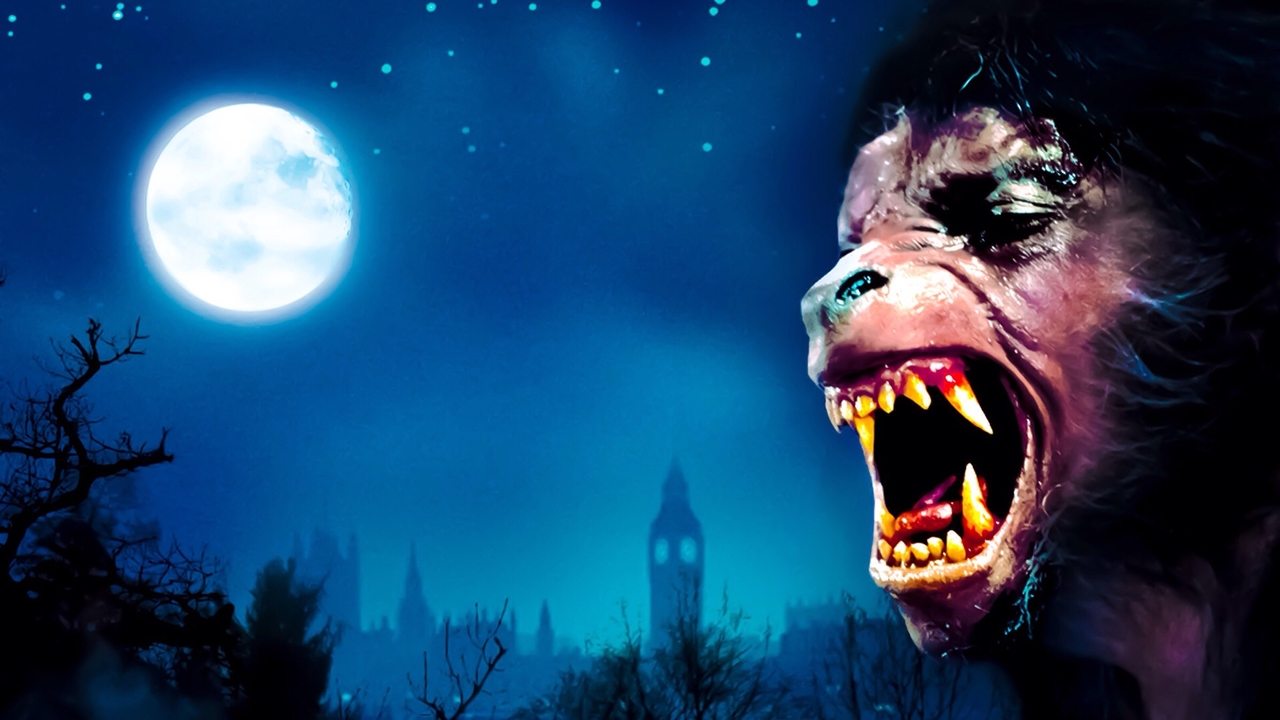
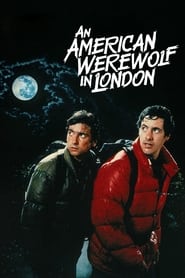
scholar
An American Werewolf in London (1981)
Release An American Werewolf in London Limited Edition 4K UHD (Arrow Video)
Paul Davis draws on interviews, call sheets, scripts, and his Beware the Moon documentary and book to describe the film's production. He covers Landis's early idea, rejected pitches, financing, London locations, casting, and Rick Baker's effects team. Specific examples include the use of Sam Cooke during the transformation and the short traffic closures and partial set replica used for Piccadilly Circus.
- Duration
- 1h 37m
- Talk coverage
- 94%
- Words
- 13,569
- Speaker
- 1
Commentary density
Highlights
Topics
People mentioned
The film
- Director
- John Landis
- Cinematographer
- Robert Paynter
- Writer
- John Landis
- Editor
- Malcolm Campbell
- Runtime
- 97 min
- Also on
- OneSheet ↗ OverBlack ↗
- External
- IMDb ↗ TMDB ↗ Find on Amazon ↗
Transcript
13,569 words
Hi there, I'm Paul Davis, and I'm the director, producer, and writer of the Beware the Moon documentary, which is also on the Blu-ray release, and the author of the book of the same title, which followed a few years later, which was a limited edition, so if you managed to get one, I hope you enjoyed it. If you didn't, sorry, they're about 800 quid on eBay now. Um, so one of the two questions I'm always asked about this movie, um, first of all, who was Jim O'Rourke? And the second is, is this a British movie? Well, I'll come back to the second one a bit later, but Jim O'Rourke was, um, one of John Landis' dear friends who he met, um, when John was 18 years old. He went to Yugoslavia, um, to work on the Brian Hutton-directed movie Kelly's Heroes with Clint Eastwood, Telly Savalas, Don Rickles, Donald Sutherland. And Jim O'Rourke was Clint Eastwood's stuntman. And when they finished on the movie, they traveled around Spain together, working as stuntmen and English coaches for various spaghetti westerns around that kind of boom that was going on. They worked on Spanish movies, Italian movies, British movies.
And then when they came back to the States, Jim actually produced John's first movie, Schlock. And they stayed great friends. And Jim was a great champion for John and for An American Werewolf in London because John had already written the script at that point. He wrote it when he was 18 years old while they were making Kelly's Heroes. And sadly, Jim passed away from lung cancer right before An American Werewolf in London came out. started shooting. So that's what the little dedication for Jimmy O'Rourke is all about. And now you know. Interestingly enough, this opening montage, which is the Brecon Beacons in Wales, the Black Mountains, it was originally cut to Cat Stevens' Moonshadow. And if you actually take the sound, if you take Bobby Vinton out and actually play moon shadow to it it is it fits perfectly the they actually cut the opening montage to that song before they had permission to use it and um i'm not sure exactly what happened but cat stevens was born again and uh felt it was in inappropriate for the use of that song on a movie about werewolves and the supernatural so
They ended up with Bobby Vinton's Blue Moon, which again wasn't the version of Blue Moon they wanted. It was going to be the Elvis Presley version, but there was a big lawsuit going on with Sun Records. So they couldn't get that version either. So this is the version that we ended up with in the movie. And it's great. I love it. I couldn't imagine any other song to open this film. But here we are. We're being introduced to David Kessler and Jack Goodman, played by David Naughton and Griffin Dunne. And this was the first day of shooting on an American Werewolf in London on the 2nd of February in 1981. This was in Hay Bluff, which is kind of on the border of Hereford and Wales. And that little sign there in the middle of the street had a little Easter egg on it. So they had East Proctor, which of course is the fictional village that they are about to walk to.
is an actual place that is nearby but then the third one on there is Les Shire which John Landis put on there as a little joke in reference to the production designer or the art director as he was credited on this Les Dilley who was John Barry's protege John Barry was the production designer on Kelly's Heroes who John met when he worked on that and John was talking about it with John Barry saying I'm going to make this movie I'm going to come get you to do it And then John Barry would kind of brush John off because he was a kid and say, well, if I'm not available, you should get Les. And that's what happened. And Les was still an art director at that point and was very uncomfortable about working his way up to a production designer because this was going to be his first movie as a production designer. And he didn't want to do it. He felt he'd make mistakes. And Landis said, I'm not going to let you make any mistakes, OK? Just do it. And he did. But he kept the credit of art director.
He did a tremendous job. So this shot was originally conceived to be a Steadicam shot but for some reason they couldn't get the Steadicam so they opted to do a soft dolly with a Citroen Jeep of some kind that was owned by the brother-in-law of the first assistant director, David Tringham. And the brother-in-law, because it was like a Hollywood movie, was like, yeah, of course, I'll bring my G-pop to do this. And as soon as they got it up onto this track, the Grips got hold of it and smashed out the windscreen and just tore it apart. And David, the first assistant director, was like, what the hell have you done? And the Grips just looked at him and was like, can't get the shot without you, mate. But it worked, you know. It has a nice tracking flow to it. This part, this knock-knock part, was apparently improv'd by the two guys. They did multiple, multiple takes of this, and they kept getting punchier the more they did it. They were getting a little bit more confident, and they added in this little knock-knock thing, which if you were a kid in the playground in the 1980s after this was on TV, you kept replicating this moment, so it's kind of iconic.
It's a beautiful score of Elmer Bernstein. There's very little music, scored music, in an American Werewolf in London, because it's probably most notable for the use of songs that all have moon in the title. Not something that was anything significant on John Landis' part. He just says that it was a stupid thing that an 18-year-old writing a screenplay does.
This is in the strange little village of Crickadarn in Wales. And it really is a bizarre little place because it's literally three cottages, two churches, and a red phone box in the middle of nowhere, and a roundabout. And when they found this place... John said, what the hell is a red phone booth doing in the middle of Wales? So they cover it up with the tree stump, which you see later when they leave. And of course, here's the slaughtered lamb. Half of the actors in this scene were cast from the Royal Shakespeare Company. John and Deborah Landis went to see Nicholas Nickleby, which played over Christmas. It was over two nights. It was like six hours long. They went to see it over Christmas Eve and Boxing Day in 1980. And John was so taken by it that he hired Lila Kay, the barmaid here. John Woodvine was in the lead role. David Schofield came from it.
um he literally tried to cast every there's a young Rik Mayall there um and he was into john landis was introduced to Rik Mayall and adrian edmondson via frank oz who was in london making the muppet show and frank had seen their double act and took john to see it and john just fell in love with the two guys and offered them both roles in the pub um and of course rick said yes he was just joking joking i remember the alamo I saw it once in London, in Leicester Square. She means in the cinema. The formidable Brian Glover. Oh, yeah, of course. Checkmate. Right, with Laurence Harvey, and everybody dies in it. Very bloody. Bloody awful, if you ask me. So this scene, this was shot in an actual biker's bar in Cobham in Surrey.
It was actually a lot bigger. The actual pub is a lot bigger and it's still there. It's called the Black Swan. So if you ever find yourself in Cobb, I'm sorry. If you go through the main entrance, you are unmistakably standing in the Slaughtered Lamb. It's quite striking. And they've still got a dartboard up in there, which is a really neat touch. No five-pointed star, though. over the Atlantic on its way to New York. And it was full of men from the United Nations. So one of the things that's quite remarkable about John Landis' movies is that there are several in which he has characters telling jokes in the movie. And he admittedly, it's something that he enjoys. And as he explains in the Beware the Moon documentary, you know, a joke is, you know, it's never the joke, it's how the joke is told. And Brian Glover is, you know, he's such a big personality. And while they were filming this, he gave it the same energy, take after take after take. And take after take after take, everybody would laugh, even the crew. And John had to ask Rik Mayall to do the spit take, and Rick had no idea what he was talking about.
So John had to take a swig of the beer and demonstrate, which must have been a great sight for the rest of the crew. Uh-oh. It's David Schofield, who at the time, or right before this, played the Elephant Man on stage and was supposed to be in the David Lynch movie, but David Lynch went on to cast John Hurt.
This is one of David's early movies. Now he's all over the place. He was in Valkyrie with Tom Cruise. He was in The Wolfman with Benicio Del Toro. John Landis brought him back for Burke and Hare. One of the things I love about this sequence that really kind of sets these two characters apart from everybody else is that they look, especially for 1981, they look unmistakably American. you know, amongst all these, you know, local British country folk. And, you know, that's the brilliance of the costume designer, Deborah Nadolman, because her approach was to almost make them look as if they were men on the moon. And it works for the terrain because, you know, when these guys are on the moors in pitch darkness, they do look like men on the moon.
And there's the tree stump that's covering the phone box. But back to the costumes, you know, it was, you couldn't find like North Face Parkers in London, Levi jeans or anything like that, Timberland boots. So Deborah had to get all of the costumes. She had to buy multiples of their costumes in the United States and then bring them back. and David had the red because he was the star, and obviously they knew that Jack was going to have all blood and viscera over his jacket, so he had the more beige, green, neutral color. But, you know, it still stands up. It still looks great, and you can still tell that these are strangers in a strange land, which is, you know, what makes this movie so special. Oh, David. Yes, I'm well aware about... Pleasant the weather is in Rome at the present time, thank you. So this sequence, this wasn't Wales. This was shot in Windsor Great Park. And it was actually quite late in the shoot. It was the 28th of February this scene was shot. It was all shot in one night. And by all accounts, if you ask anybody who worked on the movie, every single one of you would tell you that the night they shot the wolf attack,
was the coldest night that any of them had ever experienced. To the point that when they brought the rain trees in, the ice would just formulate around their jackets and you could just crack the ice off of it. You could break ice out of their hair. It was one of the bitterest... I think, if I remember correctly, when I was researching... the book and the documentary, I found out that it was actually minus, it was recorded as minus 11 degrees on the 28th of February in London, where they filmed that night. So it was cold. And those poor guys, they were the only two that had to get wet under those, under the rain trees. And the scene was lit by the DP Bob Paynter, with just one giant cherry picker light that acted as the full moon. And what was funny is as soon as it got dark, all of the local chicken populations thought that it was dawn and woke up and the sound crew were going nuts because all these cockerels were going crazy. And the farmers weren't too fond of it either. And they had to send people down to...
pay them money for the inconvenience. That wolf howl. I think another question that I get asked a lot is how they did the wolf howl. And that was the genius of... You had two remarkable sound guys on this. John Poyner and Don Sharp. Um... who conceived and created a lot of the sounds that you hear in this film. And then Jerry Humphries, who was a legendary sound recording editor. They took an elephant trump and played it backwards and added reverb. That sound that you hear right there is pigs from a distance. But the main howl was an elephant. trumpet that was played backwards and they added reverb but the sound on this is is remarkable and and of course john was so enamored with it that he reused it in michael jackson's thriller along with some of the makeup appliances actually so can you see anything no Sounds far away. Not far enough. Come on. Jack. What? Where are we going? I don't know. I'll tell you when we get there. So what we're about to see was the first thing they shot this night. And originally, I guess they didn't use it because it probably didn't look that great or it...
It took you out of the moment, but they did shoot the reverse point of view shot of Jack on the floor looking up at the wolf as it was kind of tearing him apart, but they didn't use it for some reason because they had the entire wolf costume there that night. And I remember being told that they did shoot a sequence where the two boys look straight into camera and they say that it's in front of us. We were supposed to cut to their reverse angle and you just saw this huge outline. of something in the darkness. And they put scotch light in the eyes so that you could just see the eyes glowing in the background. But again, for whatever reason, I guess John wanted to conceal the monster as much as possible. And they kept it out of the movie. That guy laying there, right there, he was the former dean of British stuntmen, Paddy Ryan.
And everybody was super worried about him laying there. As I said, it was minus 11 degrees and he had to lay there naked, but it didn't faze him at all. I just remember George Folsey, the producer, saying he had to keep checking on him to make sure he was still alive. And here's our introduction to the lovely Jenny Agutter. Is he alright? Yes, I should think. John was friends with Jenny for a long time. In fact, when she first moved to Los Angeles, I think around the time right after Logan's run, they became friends. And even back then in 76, 77, he mentioned... American wealth in London to Jenny Agutter saying that he wanted her to play Nurse Alex Price. But he didn't actually give her the script until he had the money to make it. So I think it was probably around November 1980 that she finally got the script. And she is admittedly not a huge horror fan. And had the script come from somebody else, she would have thought twice about it. Can I be of service, Nurse Price? Dr. Hush? Go about your duties.
Yes, Doctor. No surprise. The brilliant John Woodvine. What exactly did he call out? He said, Jack. That would be Jack Goodman, the boy who was killed. What happened to them? The police report said they were attacked by an escaped lunatic. One of the things John Woodvine was very quick to tell me while we were making the documentary was that John Landis' directing methods were unlike anything that he'd... experience before um and he'd be very stiff during like a first take and landis would just go in and shake him it's like loosen up loosen up be demonstrative these little dream sequences were shot at burnham beaches just behind pinewood studios
Now, you know when you're about to be delivered news by Fozzie Bear that it's not going to be good. You're in a hospital in London. London? Where's Jack? Frank Oz, he's appeared in the Blues Brothers, Trading Places, and of course this. And it's funny because he always refers to it as whenever John needs someone to play a prick in one of his movies, he brings him in to do it. But I do know that Frank Oz was always very grateful that John would kind of bring him in for a day to play these little roles because... As a director, and I can understand it, it's a stern reminder of how vulnerable actors are in front of camera, you know, which only makes you more forgiving as a filmmaker. Try not to excite yourself. I shall come back and check on your progress and send a report to your parents. The police have requested to interview you, and I have given them permission to do so. Thank you very much, Mr. Collins. He'll rest now.
I'm sure everything will be fine once he's adjusted. He's had quite a shock. These dumbass kids, they never appreciate anything you do for them. Oh, Frank. How long have I been here? You've been unconscious since you were brought in three weeks ago. They use two hospitals for all these sequences. I believe this was Chiswick Maternity Hospital, which I don't think is there anymore. And then all of the scenes where it's more kind of hustle and bustle and you see more of the hospital, I believe that was Putney General Hospital. Beg your pardon? It's an animal. What? A wolf. Did he say a wolf? Yes, I believe he did. Oh, yeah, I'm sure I shall. If I survive Rommel, I'm sure... I mean, one of the things that's remarkable about this movie as well is that, you know, after the success of Kentucky Fried Movie, Animal House and the Blues Brothers, you know, that was really the catalyst for John being able to make this movie because, as I mentioned before, he wrote it when he was 18 years old when he was behind the Iron Curtain on Kelly's Heroes after a...
a bizarre funeral that he experienced. And he was enamored with the idea that there were these gypsies burying a guy in this particular ceremony, and the reason they were doing this is because they didn't want him to get back up and cause mischief. So what John was taken with was the idea of what would happen if he did get up and cause trouble. You know, what do you do when something that doesn't exist is standing in front of you? And that was essentially the seed from which An American Werewolf in London grew from. And he always wanted to make it. He was always trying to get people to make it. It got him a lot of jobs as a writer. He was one of the 120-something writers on The Spy Who Loved Me because Cubby Broccoli loved the script for An American Werewolf in London. And John even asked him to make it. And Cubby's like, are you crazy?
I always loved Paul Kember in this scene. So great. And these guys were clearly modeled after Laurel and Hardy. John's a huge Laurel and Hardy fan. I'd heard a rumor that Ronnie Barker was actually offered the role of one of these two, but he wouldn't do it. I know that John offered Ronnie the role of Coleman in Trading Places that was eventually played by Denholm Elliott. But I'd heard also that he was approached for this, which would have been interesting. John was a big fan of the two Ronnies from his time that he spent in London. It's coming from someone who's gone through a terrible shock. Inspector, the boy seems all right to me and... Damn what, Sergeant? And I don't rightly know, sir. Going back to what I was talking about, how John had to essentially get this movie made off of his own back...
After the success of The Blues Brothers and Animal House, he had a first-look deal with Universal, and Sid Sheinberg, who was the head of Universal, read the script and just completely didn't get it. So it was like going back to square one. Because nobody understood that you could make a movie that was both funny and scary. And John will always maintain that this is a horror film. It's not a horror comedy. It's scary and it's funny. There's no two ways about it. But no one would make it. And it was very close to getting made a Paramount at one point. Don Simpson, when he was an exec there, saw the script and really liked it. But then when it went up the ladder to Barry Diller, he said, hell no. So John then went out and said that it was a $10 million negative pickup, which means that a financier, a negative pickup, they really don't happen a lot anymore, is when a financier gives you a contract
guaranteeing you the the money for the movie once it's delivered with specific requirements so for this it was that it had to be an r rating um and PolyGram pictures it was Jon Peters and Peter Guber who who were big fans of john after the the blues brothers and an animal house uh they understood it and had faith in john and they gave him the contract which he then takes to the bank to get the money to make the movie and then once the movie is delivered PolyGram then pay back the money to to pay off the to pay off the bank and that's how this movie was made and it's a really smart way to do it because it leaves the filmmaker completely financially responsible for the film you know you're signing the checks and And that's how this movie was made. So that comes back to what I said at the beginning. Is this a British film? Yes, it is, because it was made with British money. You know, it was the last Eady Plan picture made in the UK before Margaret Thatcher drove a stake through the heart of the British film industry. And for those of you who aren't familiar, the Eady Plan was a tax incentive in which...
A producer, a distributor got a share of the box office in the UK. A little moment earlier where a little kid came up and slapped Jenny on the bum. That was something that John used to do a lot. He used to drive the continuity guys nuts because he would just tell actors to do something different. without telling the other actors what was going on. So in that particular moment, he told that little kid to just go up and smack her on the bum and she didn't know it was coming. Jenny's preparation for this role was interesting. Like I said, she's not really a big horror person, but she went and shadowed some nurses on a couple of shifts, and there was one particular time where she was asked to come in and help redress a wound that some unfortunate woman had. And when they took off the bandage, Jenny was very taken aback by what she saw, and she couldn't react, otherwise the woman who had the wound would have thought that it was a lot worse than it was. So she had to sit down and...
kind of regain composure and hold her head to make it look as though she was concentrating. But what was actually going on, she was trying not to pass out. So she was great in this role. And she always kind of, she created her own kind of backstory for the character of Alex, who, you know, because a lot of nurses, you know, especially in these kind of city hospitals, you know, they have flat shares and all that kind of stuff. But then Jenny's got this really luxurious character apartment that she's in on her own, so she kind of made up that this character obviously came from a wealthy background. It's one of the greatest scenes in the movie. I remember asking Rick Baker about that makeup, because David Naughton has always maintained that it was, you know, out of everything that he endures with the werewolf transformation, he always maintains that that makeup in the woods is
was the most painful. And Rick never really understood that because it's literally like opera pancake makeup with dark circles around the eyes, contact lenses and dentures. And it turns out that it was actually the dentures and the contact lenses that were the most painful for David because he doesn't really wear contacts during the transformation. That's all him. Did you talk to the police? And Rick never really understood, you know, what the significance behind that makeup and why everybody's so interested in it. And the point is, you know, it's because John Landis knew how to shoot it, and it's a very scary sequence. I'm certain if there were a monster roaming around northern England, we'd have seen it on the telly. Now, you'll be leaving this hospital in three or four days. Please. The whole dream sequence element, John has always said that he ripped off... Luis Buñuel's The Discreet Charm of the Bourgeoisie. I mean, especially the double dream sequence that's coming up with the Nazi demons. And this sequence, Nurse Price is reading A Connecticut Yankee in King Arthur's Court, which for a long time John was trying to get made as a movie.
very beautiful girl I thought you were asleep I was again the sequence that's coming up with the with the Nazi demons John was frantically trying to come up with things that really scared him for the for the dream sequences and and being a Jewish kid growing up with images of the Holocaust you know and And the most, you know, the most horrid thing for him is losing loved ones. So it was the combination of those two things, which is why we ended up with these Nazi monsters completely decimating David's family. With the Muppet show in the background as well, which really people did not like. And John, for the longest time, thought that this clip was something that Frank Oz and Jim Henson made specifically for John for the movie, and that it was a commentary on violence and all this kind of stuff. But it turns out, after 20-something years, I asked Frank Oz about it, and he said, no, that was actually from a 1980 episode in which the special guest was the prolific puppeteer Señor Wences.
And they let them use that clip because it specifically spoke about Punch and Judy and violence. This was one of the last things shot on the movie because they had to destroy the set. And this was all the stunt guys like Vic Armstrong and getting to wear these pullover masks that Rick and his crew made pretty early on. Because there was a Screen Actors Guild strike while they were getting ready to cast the movie so with the six months that john gave rick baker and his crew to do the makeup appliances the nazi demon heads were among the first things that they did because they didn't need any actors to to make those and this is uh vic armstrong he pops out and stabs jenny
And there was another moment that was supposed to go on to the end of that, that they didn't actually end up shooting, but it was in the script and it was on the schedule and it was tailed on to be at the very end of the transformation sequence. Another demon was actually going to be standing in the corner with the submachine gun and just completely blow David to pieces. But I think what had happened, Malcolm Campbell had already cut that sequence together by the time they got to the end of the movie, and John was happy with it, so they ended up scrapping it. Can I have a piece of toast? It's the makeup wizardry of Rick Baker. Get the fuck out of here, Jack. Thanks a lot.
Can't take this. See, this is the scene for me when people talk about the tone of a horror film and whether or not it can be scary and funny. This is the scene that really exemplifies the balance because on the one hand, you've got the character of David who's absolutely terrified, he's confused, doesn't know what's going on. And then you've got Jack who's... being very laissez-faire and as being the exact same guy that he was before he got mauled to death by a monster. And I remember David Naughton saying to me that it was a very confusing scene for him to do as an actor because he didn't know how he was supposed to react because Jack's just being Jack, so what am I supposed to do? And He would ask John, you know, what should I do? And John would defer him. He'd make a comment to try and make him laugh or something like that. And he kind of believes, and so do I, that he was doing that on purpose because I think the less David kind of knows about what's going on, the better it is for his character. Because his character is extremely confused, doesn't know what's going on, so...
Why not leave the actor in that state of mind as well? It's such a wonderful scene. It's such a beautifully written scene. The performances by David Naughton and Griffin Dunne are spectacular. I mean, especially when Griffin turns it on and gets all serious. It's just not as though he's the voice of doom. He's just, you know... He's his concerned best friend. The supernatural. The power of darkness. It's all true. The undead surround me. Have you ever talked to a corpse? It's boring. And everybody always talks about that flappy little bit of skin on Jack's neck. Look at it wiggle. That was something that wasn't intended either. That was, um... right before they would roll film rick baker would be in there with a water bottle and they'd spray it down to get it glistening and then the weight of the water on that little piece was you know a little too much so every time you speak it would wiggle there was some there was supposedly a moment that was cut by the sensors um in that scene that they deemed a little too much um
in which Jack is eating a piece of toast and they shot a little insert of the piece of toast falling through his throat and then it fell on his jacket and he just brushed it off. Which, again, is just perfect horror comedy right there. But the problem that John had with the censors on this was mostly due to the nudity and the sex. I will become a monster in two days. What do you think? What do I think? About the possibility of you becoming a monster in two days, or about visits from dead friends? I think the dialogue in this movie is so endearing and is one of its charms, but John will always say that a lot of these scenes between David and Jenny, he says they were clearly written by an 18-year-old, but I think that's what makes it so charming. makes it an American Werewolf in London. This was all shot around Earls Court, which is where the exterior location was for Jenny's flat. Look at those prices.
Yeah, wait until 2019, mate. So these guys, this was great. The punks were not in the script. There was no mention of any punks in the script. Essentially what happened, John was walking down the King's Road and he saw them all hanging out and he thought they just looked so wonderful and colorful and tremendous that he He went up and asked them to be in the movie. So that's why they're huddled on the tube. And this is over by Earl's Court. Coleherne Road, I believe it is. And it still looks exactly the same. But if you're going to go and seek it out, be respectful of those that live there. And that was a fake wall that was built by Les Dilley. because the interior is actually on a sound stage at twickenham studios and for you know for a budget pictures coming from the us um to film in england twickenham was actually pretty low on the pecking order in terms of uh movie studios you know pinewood would would be your first choice um elstree um
But Twickenham was more of a resourceful studio because, you know, that's the smart thing about John and George Folsey who were acting as the producers. They knew that the money had to go elsewhere because they had this huge $300,000 werewolf transformation sequence. And they knew that the big Piccadilly Circus chariot race finale was not going to be cheap either. And again, that's one of the reasons why John mostly cast unknowns in the film. Because originally, PolyGram wanted Laurence Olivier to play Dr. Hirsch because he'd just come off of John Badham's Dracula as Van Helsing. And the names that were being batted around for David and Jack It was John Belushi, Dan Aykroyd, Chevy Chase. And John knew that he only had a finite amount of money to make the movie. And the songs as well. That was another expense. All this needle drop in here. So this was the scene that the censors were not happy with. It was cut down quite considerably. I mean, in mentioning earlier that the violence wasn't really a problem with the censors on this,
When John showed the film to the exec producers, Peters and Guber for the first time at PolyGram, they were very shocked by the violence in the film and the gore. And I've heard a story in which a chair was thrown out of a hotel window by one of the producers in response. I won't name names. think it was one or the other. But they were very distressed, very angry, felt that John had betrayed them on the requirements for the film, but the film hadn't been rated yet, so there was no telling that it wouldn't get an R rating as opposed to an NC-17, which was PolyGram's proviso. And John said to them, give us 10 days to address the notes, come back, watch the movie. They did, and he showed them the exact same cut of the movie, and they were thrilled with it. And they really thought that he made all the changes, and he didn't touch it. So... I have since done that on one of my own movies.
here we're gonna have one of the uh one of the it's now become a huge horror trope i mean john took this from repulsion but i think everybody who who does this little trick now with the mirror does it as an homage to an american wolf in london
So the stage two makeup, we didn't really talk about the Jack makeup for the stage one. The stage one, Griffin would be in makeup for about four hours and it was two pieces. It was a large piece for the neck and then a large piece for the face that was a really thick foam rubber appliance so that Rick could get as much depth out of it and show all the... the viscera and the cartilage under there. By the time it came to this second stage makeup, Griffin was practically covered in prosthetics at this point. And you'll actually see there's a moment here where you see his hand, he's actually got a fake thumb. Which I didn't realize for the longest time, but you can kind of see like the bone where it's been completely worn down.
But there's one appliance that you never actually see. He was wearing a little, because there's a rip in the side of the jacket, he was wearing a little exposed piece which showed some wear and tear around his ribcage with a bunch of blood and gore around that. And Kevin Brennan, who was on Rick's crew, there's the fake thumb, there you go, Kevin Brennan, who was on Rick's crew, sculpted the piece that went on the side of the body. And because he knew that it was going to be under the jacket, he actually sculpted, between the rib cages, he actually sculpted a little monkey face poking out. And because it was so subtle, Rick let him keep it in there. And he went to lunch and came back and Kevin had sculpted an elephant in there next to it. And he was like, nope, take it out.
And Griffin did not have a nice time in that makeup. I mean, you've probably heard the stories, but yeah, he increasingly got depressed the more he had to wear it. And it wasn't just the fact that he was a very fidgety guy and actually described the makeup process, especially this stage of the makeup, as being eaten alive by ants because the glue would just constrict. And there was one time where... on this second stage makeup where they wrapped for the day and Griffin literally ripped the appliance off of his face, which really concerned Rick because the glue and the prosthetics that they used back then could really damage your skin. I remember Rick telling me, we should have just let Griffin do that after the first time and it would have looked more real.
But I remember when Griffin said, yeah, I just tore this appliance off and Rick was just looking at me as though I'd torn through the Mona Lisa. He said that tomorrow I'll turn into a monster. Do you believe him? Do you believe me? So there's a little moment here which, you know, I guess after Scream is considered postmodern, you know, where he's this guy who's going through this trauma after losing his best friend and the only thing that he can relate to is a universal horror movie from the 1940s which again is is one of the charms of this movie and makes it feel real because david as a character understands how absurd it is and the only thing that he can compare it to is a movie
And that's when references are done right, I believe. I'm torn between feeling very sorry for you and finding you terribly attractive. So this is back to day one of filming when they were up on Hay Bluff. Dr. Hirsch is going to do some investigating into what happened to the two boys.
Again, beautiful score by Elmer Bernstein, which was recorded at, I believe it's Olympic Studios in Barnes, which is, you know, the Beatles recorded there, the Stones. And Elmer Bernstein really wanted to write the music for David's transformation. And John knew... from the moment he wrote the script that he was going to use Sam Cooke's Blue Moon because he didn't want the transformation to be a scary moment. He wanted it to be painful and sad and melancholic. And if you watch the scene, that's exactly what it is. You know, I didn't mean to call you a meatloaf Jack. You know, he's pleading at that point that he thinks that it's Jack that's doing this to him and maybe Jack can stop it.
And when we did Beware the Moon, we found the film elements of the transformation sequence without Sam Cooke on it, and we had the metamorphosis music that Elmer Bernstein had written for the scene, and we overlaid it, and we hoped that it was gonna be used on that Blu-ray release, but for some reason it wasn't, but it really changes the scene. It does make it a horror scene. And again, much like a few of the other things that I mentioned earlier, where John Landis reused things in Thriller, there are pieces of that motif that Elmer Bernstein had written for The Metamorphosis that was then used in the scary music, as it's credited on Thriller, that Elmer wrote for Thriller. Oh, yeah.
I've always said there are only two things that really age this movie, but not in a negative way. The hairstyles and the fact that John Woodvine asked for a Campari and soda. It's really sad to me that we never got John Landis' sequel for An American Werewolf in London. which he did write a first draft screenplay when PolyGram was sold by Peter Guber and Jon Peters in the early 90s. I can't remember the name of the guy who took over, but he came to John and asked him to write a sequel. And John deliberated about it. He thought about it for a long time, didn't really have anything that was significant to him to revisit it but then he had this idea of Debbie Klein who is the character that the two boys are talking about at the beginning of the movie she was now a literal agent and comes to London to work but on the side she's investigating what actually happened to Jack and David and she tracks down Alex who is now a recluse and lives with Dr. Hirsch who
is the one who's been tasked with maintaining the fact that she is now the werewolf and every full moon he chains her up so that she can't get out and wreak havoc. But one of the things I loved about it is that everybody was in it, including Brian Glover and Lila Kay, the slaughtered lamb, came back and there was a picture of Charles and Di where the five-pointed star used to be and all that kind of fun stuff. There was like an electronic darts game as opposed to a dartboard. but jack and david were back in it as corpses which i thought was genius and there was this whole scene about uh debbie klein leaving an answer phone message um trying to get hold of alex and it was a close-up shot on the answer phone and then just this decayed skeletal finger would come in and and stop the uh stop the tape and then it would pan up and it's like this
skeleton of jack and he turns and says hey was that debbie klein and there's david skeletal on the couch watching tv yeah it sounded like her um so that would have been that would have been great you know but we got an American Werewolf in Paris instead and nobody's releasing any blu-rays of that remember david schofield telling me when they shot this scene They could the the rain machine that they had wasn't powerful enough and they couldn't see the rain on camera So they just got a guy to come and stand with an industrial fire hose To stand next to them firing it up into the air in an arc so that it dropped down and he was wearing a waterproof jacket and his Pockets were absolutely filled with water throughout the entire thing his hands just froze And because it was his first film he didn't didn't understand that he had to go and do ADR for
to loop all the dialogue because all they heard when they printed it was the sound of the rain hitting the umbrella. And that church was so old, so, so old that John was worried when they turned on the rain machines that the tombstones would just stop breaking apart. If you get too anxious, call me at the hospital, okay? Okay. I've left those pills for you. A dope or a werewolf? I'm off. But anyway, going back to the sequel thing, the reason that we never got that version is because when John handed in the screenplay, the guy who ran PolyGram was pretty much offended by what he read and said that there was absolutely no way they were going to make it. And he asked for a bunch of changes and John said no. So that's what happened. I love that those two little girls are credited as Creepy Little Girl 1 and Creepy Little Girl 2.
uh if you ever wonder what happened to the shining twins there we go that's the fun of john as a director i mean you know speaking to everybody who worked on this i mean i think i interviewed maybe 30 between 30 and 35 people and they always said they had so much fun with him um he because of what happened with jim o'rourke passing away of lung cancer shortly before the movie, he actually imposed a smoking ban on the set. Much to the behest of a lot of the British crew, because a lot of them were chain smokers, especially Bob Paynter, who was the DP. He was a big smoker, and John would not let any of them smoke. And Bob actually confided. He said he actually quit smoking on this movie. So, you know, all worked out. But everybody has such a great time with him. And, you know, if you've ever been around him, you know, he's just a hurricane of a human being. And that kind of translates to the set. You know, he never lets the energy drop on a movie set, which happens very, very easily. I think this is the scene that every Brit who watches it is just utterly enamored with. Especially with the color bars, darts.
And then, no, we're going to get some naughty Nina from News of the World. And John has always said that people think that he actually filmed this for the movie. He's like, no, it's a real thing! Although the one thing they did shoot for the movie was the, of course, the infamous See You Next Wednesday porn sequence. which plays in the porno theatre a bit later on. That was the first thing they filmed at Twickenham Studio. First time working with the British crew. And it was this porno sequence that they shot for a day. Unbelievable use of the brilliant Creedence Clearwater Revival Bad Moon Rising.
I mean, I think before Tarantino kind of made it a staple to have unbelievable needle-dropping movies, I would put this in the same bracket as The Graduate and Mean Streets for songs used right. They were actually under a lot of pressure to use Warren Zevon's Werewolves of London. But, um... It's a bit on the nose, and I think that they, uh, got that. Now, another question people ask me, how does the wolf get out of the apartment once it's transformed? He's just left all the bloody doors open, that's how it gets out. How do people miss that? The front door is open, and the apartment door is open. Look, it's right there, the edge of the screen, it's open!
I love the fact that there's so much memorabilia in this apartment that obviously didn't get cleared by legal departments. I mean, just the fact that there's three Disney characters right there. That would not happen today. There's a Gone With The Wind poster on the wall as well.
Now this kid was called Colin Fernandes. I did actually find him. It was one of the creepier reveals while making the... I think it was when I got to the book. I found him on Facebook and I sent him a message, but he never read it. This moment's wonderful. That is a full moon that Les Dilley and Bob Paynter actually built. They essentially built a light box and Les created a full moon on tracing paper. And here is that scene. Dear Mr. Baker, we're just going to create an Academy Award category just for you. So a lot of this, this sequence was actually treated as a post-production deal. They actually had the wrap party the night before the first day of the transformation sequence. And Rick told me that the entire crew just walking around hungover during this. And this actually, this sequence, it was six days of filming.
David and the makeup crew they would have a full 12 hour day because David would be brought in at 5 in the morning to start the makeup process and then they wouldn't start shooting until about 2 in the afternoon they'd do about 3 or 4 shots and then it would be another 3 hours taking the makeup off doing that for 6 days and um The reason they did it as a post-production thing, it's actually very smart, you know, so that they could then whittle the crew down to the bare minimum, because this was on the sound stage at Twickenham, which was built about four and a half feet off the ground so that they could manipulate the floor, they could puppeteer the floor, and of course David is in the floor in this shot with a fake body.
but yeah they shot it in in reverse order because david wasn't a hairy guy so they they reverse engineered they put all the they shot all the stuff where he's hairiest first and then just kind of trimmed it away and shot it that way but um this is one of the most famous cutaways in cinema history which they needed and john two of the things that were that were key to john with this sequence is that he wanted to shoot it in bright light with no cutaways but They were kind of stuck and they needed that cutaway and Mickey is one of the most iconic edits in cinema. Rick always says, suspiciously the room gets darker for this shot. And that was because originally they weren't going to show the full werewolf, but they wanted something there. So Tom Hester, who was one of the young guys on Rick's crew, they had an alternative cast of the fake body that was built for the shot where David is in the floor.
And he kind of put it into a crouching position and built a fake back and shoulders. And they had an additional mold of the head. And that was just a little thing that was rod puppeted from underneath. But that transformation sequence, for me, that and Rob Bottin's work on the thing are still completely untouched in terms of practical effects.
And I remember when this was first mastered in HD, John was incredibly worried how the high-definition master of 2K, I think it was a 2K scan that they did, and they recently did a 4K. He was worried how Rick's work would look. And I'll never forget, 2009, we screened it at Fright Fest along with the documentary, and when that transformation sequence came on, It looked just as good then as it did in 1981. That line always gets a laugh whenever you watch it with an audience. Those hooligans are in the park again. That death scene was actually supposed to be a lot longer as well. It was another one of those cold nights and Brenda Cavendish, who played Judith Browns, her death scene was supposed to be a lot more... gorier and significant but she couldn't stop shivering and they did about 30 takes and they had to dump it at the end but this was all shot on Hampstead Heath so if you ever go jogging around the Heath it was the scene of a crime sit down Alex I was in East Proctor today I'm concerned about David yes sir
There's a full moon. Where is he? I think, again, one of the wonderful things about the movie is that it's very much shot almost like a tourist movie. John wanted it to be unmistakably London, and that's why there are so many landmarks in there. He said it's like whenever a tourist whips out a camera, that's what he wanted to capture. He never wanted the audience to think that we were anywhere else in the world. Always love that moment. In the original script, that transition, that cut from the severed hand to the telephone is actually written as big close-up on telephone and then in all capitals, this is a jump scare. Which I'm not going to lie, I have used in several scripts since.
when producers say to you we need a scare every 10 pages so big bold letters this is a jump scare before he arrived here yet supposedly no other doctor examined him before i did the goodman boy's in the ground already he's no use to us so i went to the parvenis proctor today where i was convinced of two things they were lying One of the things... I keep saying one of the things that's remarkable about this. There are a lot of things remarkable about this movie. But one of the things that was never really spoken about in the Beware the Moon documentary, which I think is very, very interesting, is the fact that Rick Baker didn't really have a crew before working on this movie. He essentially did what Dick Smith did to Rick when he came to make The Exorcist. I mean, The Exorcist was essentially Dick Smith...
working out of his house in New York, and Rick was a fan who used to write him letters. So Dick got in touch with Rick and said, do you want to come and work on this movie with me? Rick did the same thing for this movie because he knew it was going to be a huge task. So all of Rick's crew, Steve Johnson, who had a huge career in his own right after this, Kevin Brennan, Tom Hester, Doug Beswick... who was a mechanical genius who actually worked with Rick on Star Wars when Rick did the Cantina Aliens. Who am I missing? Sean McEnrow. You know, these were all fans of Rick's who would write him letters and they would come to see him at conventions with their portfolios and Rick remembered them and when it came to crew up on Werewolf, you know, he brought them all in and he would say that
you know, the early months of working on the movie was like makeup school because he would just have them doing makeup tests on each other and sculpts. I just want to interrupt myself because there is a legendary deleted scene or a deleted moment that is tagged onto this sequence in which the wolf clamps down on one of the bums and pulls him out of the shot and his body then returns into the shot completely torn to pieces. And in the first two previews of the movie, which were in New York and Chicago, that sequence was in there. And people were so stunned by it that during this moment with Michael Carter, who went on to play Bib Fortuna in Return of the Jedi, people were talking through it. And John got angry and was like, shut up, you're missing all this exposition. So he cut it from the movie. And he often referred to it as his, you're going to need a bigger boat moment from Jaws.
But he said it was just so shocking that, you know, he felt like he needed to take it out and now feels like he should have left it in. But what's funny is that nobody else other than John remembers that being shot. So I had to do some investigating and I found the original call sheet for that night. So those of you that are unfamiliar, a call sheet is what the crew and cast get day before every shooting day. And it tells you exactly what you're doing. And because that... sequence which was in brick lane which is now like luxury flats you know overlooking tower bridge that was um that was just one day that was one day of shooting so john said okay well we've got if we've got time let's do a little bit more with it and right there at the bottom of the call sheet is standby wolf costume and john was telling me about it that he had alf joint who was the stunt rigger on this uh create like a bungee device which is what they use to pull the the
The tramp out of the shot. So it was filmed. And it's just one of those legendary things that we're just going to hear about but unfortunately probably never see. But anyway, back to the scene at hand. I will get back to Rick Baker and his guys in a second. But Michael Carter, who plays Gerald Bringsley here, he was deathly ill while they were filming this. Because you can see he looks... Pretty gaunt. His doctor, who diagnosed him with this flu that he had, actually lost two of his patients to the very same flu right before they'd filmed this. So he wasn't in great shape when they were doing this, and they were constantly running up and down these hallways at Tottenham Court Road tube station. This is John Landis' favourite shot of the wolf. There he is. God. They did film a lot more with the wolf in the tube, in the hallways. They wanted to shoot like the reverse POVs of Ringsley seeing it, but it just works so much scarier where you're just, you know, it's Jaws essentially in an underground station. But...
Yeah, I think, from what I remember, the part of Tottenham Court Road tube station was being refurbished, so they had, like, three corridors and the platform that they could use at that time, and that was all one night. They shut all that stuff. This is London Zoo. So, anyway, going back to Rick and his crew, when they started pre-production on American Werewolf in London, Rick got... another job offer for a big movie that Spielberg was going to make called Night Skies, which was a pseudo-sequel to Close Encounters. And Columbia Pictures actually rented out a huge warehouse for Rick to kind of work on these Night Skies aliens, which were going to be these really elaborate animatronic... um, puppeteered, uh, creatures that could move, breathe, you know, they were supposed to skitter along the ceiling and all this kind of stuff. Um, and because that was, because he was working on Werewolf at the same time, um, he had all of his kids who were non-union working on American Werewolf in one room. And then him, and then Rick and another guy who was in the union were working on Night Skies. So they were, he was, they were literally juggling the two.
But they had a little desk out the front, and whenever a reunion rep would stop by, this person would ring a little bell, and the werewolf room would be shut down and locked and hidden away so that nobody got in trouble over it. But what happened is they were working on Night Skies for quite a long time, and then Spielberg went away to do Raiders of the Lost Ark, and then when he came back, he came to Rick and said, well, I'm going to do this... this movie about a friendly alien now. We're not going to do Night Skies. And, of course, that became E. T. And so at that point, everything then went gung-ho on American Werewolf in London. But this was October 1980, and they were going to start shooting in February. So that's always astounded me, the fact that they got all this stuff together so, so quickly, despite the fact that Rick...
said to john that he needed six months to to you know research and develop all of these these mechanics and these transformation appliances which you know was essentially left to a group of kids that had no experience on on these kind of movies so that just i think goes to show the genius of rick baker and and the fact that he could spot talent and these you know these kids could do that and he obviously saw that you know This was all shot at like 6 in the morning at London Zoo before any customers were allowed to come in because of course David was running around naked. Every time I drive past Putney Bridge I think of a newspaper stand saying man or monster.
It's funny, Rufus Deakin, who played the little boy with the balloons, he was one person that I did manage to track down for the book of an American werewolf in London. And it turned out that the reason, the way he got the role is that his mother was best friends with Debbie McWilliams, who was the casting director on this. And Debbie has gone on to, you know, she cast all the James Bond movies. So she's had a very prolific career, post-American werewolf. But yeah, Rufus met John backstage at a pantomime. And John just asked him a couple of questions about himself, like when his birthday was. And then the next thing Rufus knew, he was being chaperoned to London Zoo at 4. 30 in the morning. Doing a funny little scene with a naked man hiding in a bush. The guy at the front of the bus queue back there was Dennis Fraser, who was the key grip on the movie.
And apparently because he never really showed any emotion or any kind of, he wasn't very demonstrative with his face, all of the electricians lined up while they were doing the shot and mooned him just to try and get a smile out of him. The zoo. What did I do last night? You don't remember? Well, I remember seeing you to the door and then saying goodbye, getting locked out of the flat. Then I came in through the front window. I started to read and then I woke up naked at the zoo. One thing that was completely different to now, I mean, if anybody who's listened to this has tried to film in London, you know, you have to go through all these procedures and get all these permits and literally do somersaults just to film anything. I mean, I remember when we were doing the documentary, I wanted to film in Trafalgar Square and we were told that we couldn't because there were so many government buildings around and it was just a big to-do. But back then, when they were filming An American Werewolf in London, it was down to the...
the Bobby on the beat. He had all the power. If he was in a bad mood that day and he told you to piss off, that was it. You're done for the day. I think one of the things that definitely helped Landis in that respect is obviously they had this big sequence that they needed to do in Piccadilly Circus. And in fact, the reason that David Tringham, who was the first assistant director, got the job It's because every time he interviewed a first AD and mentioned Piccadilly Circus, they would say, oh, well, you can't do that, mate. No way, governor. No, it's not going to happen. And then when he interviewed David and he said, how do I shoot in Piccadilly Circus? And he said, well, you know, it's imperative to the script. You know, it's part of the story. It's crucial. We'll make it happen. And John just stood up and shouted to Joyce Hurley, who was the production manager. It's like, fix this guy's contract. And I was like, why? What happened? And he said, because everybody else said that we can't shoot in Piccadilly Circus. But you're positive, so you've got the job. But obviously he'd done so much, you know, extensive urban shooting on the Blues Brothers. Alan Ford!
Do you know what nemesis means? That's when you know you're in the right cab. But yeah, John did so much urban shooting on the Blues Brothers. I mean, you look at the work that they did there. It's either going to go one of two ways. They're either going to say, no, thank you. Or, yeah, you know what you're doing. Go for it. And thankfully, you know, John being the amazing salesman that he is. You know, the Metropolitan Police essentially said, yeah, have at it. Our streets are your streets. See, this again is one of the prime examples of this movie being a tourist shoot because they were literally in a cab outside Earl's Court two seconds ago and now they're in Trafalgar Square.
A little trivia for you. The young lady in the background with the two kids, that's George Folsey's wife and kids. And George Folsey was the producer on the movie. Who John met as an editor. He met him when he was making Schlock. He was introduced to him by a publicist called Sol Kahn, who worked on Kelly's Heroes. And John came back to the U. S. , after hanging out in Spain, making all the spaghetti westerns with Jim O'Rourke to come back and make his own first movie. Well, he'd been offered another movie that Brian Hutton was going to direct in the UK, but John had to join the director's guild, and because he didn't have a high school diploma, they wouldn't let him join. So he was like, fuck you, I'll make my own movie. And that's how Schlock was made, and he was introduced to George Folsey. And they became longtime friends after that. George edited The Blues Brothers, and it was while they were working on that that he asked him if he would produce An American Werewolf in London with him. That scene in Trafalgar Square apparently was one of the longest dolly shots that had ever been shot in London at the time.
It's wonderful. Some of the actors' recollections on this movie, I mean, especially the British actors who, you know, the majority of whom were members of the Royal Shakespeare Company, they were talking about how, specifically David Schofield was talking about how he'd worked with John Woodvine previously. And there had always seemed to be this hierarchy of the actors, of the younger actors and the older actors. But when it came to working on this with John Landis and... you know, there was this trepidation of working with this big star Hollywood director. There was no hierarchy. John Landis wouldn't let it get to that point. And David Schofield said that this movie actually kind of helped break the barrier with a lot of those guys. I mean, especially in the slaughtered lamb scenes, you know, the intimidation factor that was kind of set by this old-school mentality was completely decimated by this loud, eccentric Hollywood director. It's so odd, you know, every time I go through Leicester Square, I think of this movie. And I look over to the gap and...
Just remember what it used to be. One of the interesting things is when John was scouting the movie, actually going further back, when John was 18 and he was heading to Yugoslavia to work on Kelly's Heroes, he stopped in London for two weeks. And that's when he discovered the cartoon cinemas that were all over London, where parents used to leave their kids where they went shopping. Can you imagine that now? Yikes. And when John came back to scout the movie, they become porno cinemas. So if you track down an original version of the script, it's not a porno. It's not a porno they're watching. It's like a Wile E. Coyote cartoon, you know, with Roadrunner. And it's more cartoon violence more than anything else. And if you think about that, that means that the cinema is full of kids.
Which just completely changes the scene. But that's originally what it was. And it was storyboarded as that. The storyboards are in the documentary. So I swear to God, I'm not lying. Originally, the werewolf was going to maul a bunch of kids. But yeah, John came back in the early 80s. And they were now porno cinemas. Which I think makes the scene incredibly funny. Because I think that the sequence in the porno theater is...
It's the best thing that John Landis has ever written. I just love that these victims from the night before have come back and convinced him to kill himself. And again, just being very matter-of-fact about it. But then that caused a problem for John because they now had to... a porno film to play in the movie. And I don't think John really understood at that point that a lot of the British porn industry was run by the mafia. So you weren't just paying for the license to have something shown. You were... running the risk of a horse's head in your bed the next morning if you didn't do what they came and asked you to do at a later date. So, as I mentioned earlier, this porno was actually the first thing they shot at Twickenham Studio. It was about three weeks before principal photography began. And... It was Gypsy Dave Cooper, who was...
He was a male stripper, I believe, at the time. And was trying to break into acting. And I remember David Tringham, who was the first AD who was friends with Gypsy Dave, was the one that recommended him for the film. And apparently he turned up for his interview with Dave Cooper, actor, written across the side of his car. And of course that was the unmistakable Linzi Drew. who went on to become the editor of UK Penthouse magazine. And has a very successful actor in her own family, her son, Tyger Drew-Honey, from Outnumbered. The genius of this sequence is the fact that you can hear her having an orgasm throughout the entire scene. One of the things that's really personal to me about this sequence in particular is when I discovered all of the original call sheets for the movie. And because this is not one of my favorite scenes in the movie, this is my favorite scene in the movie. I discovered that this scene in particular was actually shot on the day I was born. So that was a fun little tidbit that I came across. Griffin was not happy with the fact that they were using a puppet for this sequence. Because it was literally like a third of his part.
And it was his first movie. But they, as a compromise, they let him actually control the puppet from behind. So that partition that they're sitting at, the puppeteers with Griffin and Rick and all those guys are actually sitting directly behind it. And Griffin's reading the lines and maneuvering the puppet with a monitor in front of him.
Brenda Cavendish, she plays Judith, she was telling me a fun story about how all the grips and crew would try and get them to go over to a pub across the street from Twickenham during lunch in full makeup and full blood and all this kind of stuff. And in fact, the guys who played the tramps did go over there every day in full makeup. But the other guys, Geoffrey Burridge, who played Harry, Brenda and Michael Carter, they would stay in the Pinewood Canteen. And as soon as they sat down with their trays of food, people would just get up and leave. And as they were eating lunch, bits of blood were falling into their meals.
So when they arrived in Piccadilly to shoot this sequence, as soon as they started rolling, all the power went off. So they had to go and reroute all the power to get all of the neon signs back on. See, now imagine this sequence in a cinema full of kids. You can't. It's just, no. I always like John's mentality of like, yeah, we just went through an entire transformation, so we'll just have him scream a couple of times and then, yeah, he'll just be naked. That hand appliance was reused in Michael Jackson's Thriller.
check on the house one of my favorite stories so obviously this is the first time that we're about to see the uh the full wolf uh creature there's john landis's can of tab on the side there um they uh so again the wolf um because i mentioned earlier there was a screen actors guild strike the the finnish wolf creature that rick designed was again something that they could work on without the requirement of an actor being cast so they built the original werewolf suit to fit Kevin Brennan who was on Rick's crew and then when they came to London because of the requirements with equity they then hired a trained dancer named Brendan Hughes who had been in a scene in Outland the year before and so he was he was in the wolf it was like kind of like a tag team thing between him and kevin but on that shot where the wolf looks up and it's over the guy's guts they had to get in like real pig offal to do it and it was kevin's day to go in the suit and because kevin had been there earlier to set the scene up he smelt the set
and saw how bad it was going to smell. So when Brendan came in, he was like, oh, it's your day today. And Kevin was like, why don't you take this one? And then they put him in the suit and his face was hovering right over the pig offal. He's like, Kevin, I'm going to kill you. And another really funny story about that moment is the guy who played the usher, when he was laying there and they got all the pig offal in place. So whenever you roll film, It's more of a British thing, but when you roll film, you say, turn over. He didn't know that that meant the camera. So when they yelled, turn over, he turned over and all the pig offal went all over the floor. And here is this scene. It was amazing. Still amazing. When they shot the inspector's head getting bitten off, someone actually forgot to bring it to the set.
And so Malcolm Campbell, who was the only person, he was cutting the movie over at Pinewood, he had to get the head in a bag and jump on the underground with a severed head in a plastic bag, and he could see that people were staring at it, and he thought it was hilarious, so he'd, like, slip the bag down, just reveal the head very, very slowly. But that sequence, man, Piccadilly, they shot that over two nights. Well, the main stuff at the location, they shot over two nights. This is all in the documentary, but I'll give you the abridged version. On location, it was two nights. It was a Saturday into Sunday, Sunday into Monday. And they essentially had to do the stunt in two minutes. They would do the stunt, clear the street. And the whole thing had to be done in two minutes because they weren't allowed to stop traffic. All they could do was slow down traffic. And it's just unbelievable the amount that they got done. They'd have extras and production assistants to keep extras at bay so that nobody got hurt. And then the rest of it, all the close-ups and all the Blues Brothers, Redux, car crashes were all done at an ex-airport in Weybridge.
And Les Dilley did a remarkable job of replicating the corner of Shaftesbury and Piccadilly, but only like a story high. And, you know, it works a treat. I mean, like I said, every time I go through Leicester Square, Piccadilly Circus, I can't... I cannot help but think of this movie. And again, through remarkable movie geography, we've... just turned around a corner and gone from Piccadilly Circus to Clink Street, which is down by Borough Market. And this street looks completely different now, but it's still there. You can still go down and pay homage to the final resting place of David Kessler. There was a moment here that was actually cut, where one of the police officers actually chases the wolf first. So it's supposed to be... At this point, Jenny's already run past, but there was a cop that got shot. And shot in the back by one of his own guys. Because they were aiming at the wolf and missed. But John ended up cutting it. David. They're going to kill you.
This is such a wonderful moment as well. When John was directing Jenny... Jenny had... She had the understanding that she was this character that fell in love with this conflicted, confused guy who thought he was a werewolf. But when it actually came to saying I love you to a werewolf, she didn't actually... She couldn't get to that point emotionally. So John... would say to her you know no it's David you see David down there because they shot him separately and she didn't do her lines off camera so she didn't actually know that she was saying that to the wolf until she saw the finished picture but it's a very moving scene and it completely sells it I mean you know the voices of sanity in the film are Jenny and John Woodvine because as soon as they believe it you believe it and that's what makes the movie work and that's why it's
classic and why we're still here and yeah so that's an American werewolf in London and one of the things I said it again one of the things that's remarkable about this film the ending of this movie always upset a lot of people the fact that it just ends and you know there's no closure of course there's closure David was the werewolf he's dead end of story And I remember Eddie Murphy telling a story about how he, Eddie actually told John Landis this on Trading Places. He said he took a girl on a date to go and see an American Werewolf in London. And she was very, very upset, like on the verge of tears at the end of the movie. And she was like, what does it mean? What does it mean? Why is it like so abrupt? And now it's all doo-wop music. What does it mean? And Eddie just turned to her and said, it means it's time to go home.
But yeah, that's an American Werewolf in London and you know, here we are 38 years later and it still holds up. And you know, I don't think that we'll ever have a movie with practical effects quite like this. It's still the benchmark when people talk about horror and comedy being fused as one and what can I say you know it's a movie that will outlive all of us I think you know John Landis definitely hit a home run and hey if we didn't have this we wouldn't have got Michael Jackson's Thriller so there we go I do hope you've enjoyed the commentary I ramble So I apologize. But again, I hope you got some cool little tidbits out of it. So Paul Davis signing off.
Dang-a-dang-a-ding-a-dong-a-ding-a-ding-a-ding.
Keep exploring
Other commentaries on related filmmaking topics
-
8 shared topics
The Lord of the Rings The Return of the King (2003)
Peter Jackson, Fran Walsh, Philippa Boyens
-
7 shared topics
Leprechaun (1993)
Mark Jones, Gabe Bartalos
-
8 shared topics
The Garbage Pail Kids Movie (1987)
Mackenzie Astin, Katie Barberi, William Morris
-
8 shared topics
The Lord of the Rings The Fellowship of the Ring (2001)
Peter Jackson, Fran Walsh, Philippa Boyens
-
8 shared topics
Alien ³ The Legacy Cut (1992)
Oliver Harper, Rob Hill
-
8 shared topics
The Mummy Returns (2001)
Stephen Sommers, Bob Ducsay