director
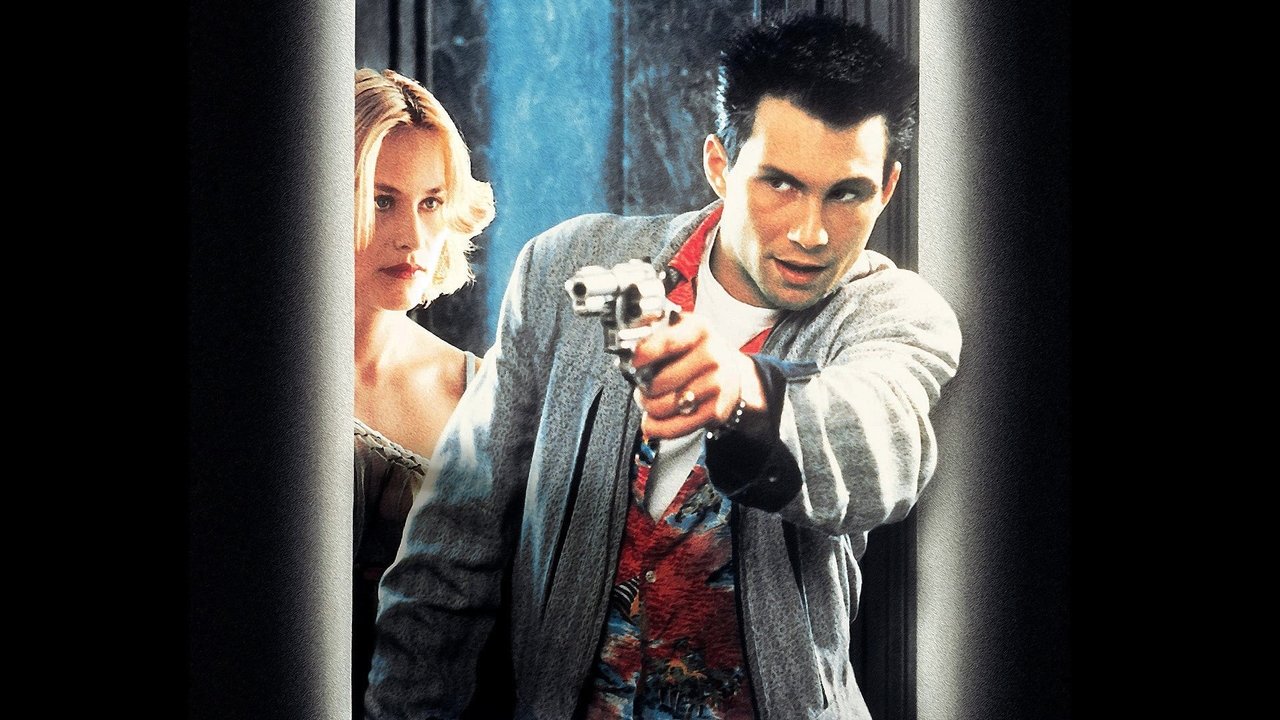
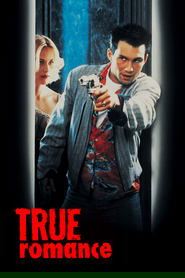
True Romance (1993)
Scott discusses directing Tarantino's script, including the Taxi Driver reference he gave Christian Slater after the first day. He explains storyboarding, revising Detroit coverage around a single day of snow, and using Walken and Hopper's laughter in a tense scene. He also describes changing the ending because he wanted Clarence and Alabama to survive.
- Duration
- 1h 56m
- Talk coverage
- 95%
- Words
- 18,177
- Speaker
- 1
Commentary density
Highlights
Featured in
Topics
People mentioned
The film
- Director
- Tony Scott
- Cinematographer
- Jeffrey L. Kimball
- Writer
- Quentin Tarantino
- Editor
- Michael Tronick , Christian Wagner
- Runtime
- 121 min
- Also on
- OneSheet ↗ OverBlack ↗
- External
- IMDb ↗ TMDB ↗ Find on Amazon ↗
Transcript
18,177 words
Hi, I'm Tony Scott. You're listening to the director's commentary of True Romance.
This is one of those rare experiences for me. I'm a slow reader. And I was actually given True Romance and Reservoir Dogs to take on a plane with me after I'd finished shooting Last Boy Scout. And I was going on a holiday and arrived in Italy and read both of them in one sitting. And I called Quentin up at 4 o'clock in the morning Italian time and said, I want to do both. And he said, nope. You can do one and you can do True Romance and I'm going to do Reservoir Dogs. So that was the beginning of my journey. True Romance for me was one of the fullest and most accomplished scripts that I'd ever read. It was so well crafted in terms of character, dialogue. You know, Quentin is a unique writer in terms of he has a vision about... how people communicate a vision which is very fresh and very different to any other writers I've ever worked with. In this first scene at the bar, where we introduce Christian, that was the beginning of our troubles. The beginning of our troubles being that I wanted to get a real Elvis song to be playing on the jukebox, and the Elvis estate would not give us the song that I wanted.
I went to Charlie Sexton, who recorded this particular track for us. At the time, I thought, God, nothing can ever be as good as Elvis. But in the end, I think it served his purpose, and it's a great track. And Charlie has a great voice. This first scene was the first scene I shot in the movie. It was my first day of shooting. Um, and, uh, it was my first day with Christian, you know? And Christian and I had been talking about the characters and who his character was, and I felt, you know, we're never quite in sync with what we were both thinking, who this character was, yeah? And, um, you know, you never really truly get an understanding of where the actors, or what the actors, where his head's at until you start to do the scene, yeah? And, um...
Anyhow, after my first day of shooting, I realized that Christian was off to the right and I was off to the left. And I said at the end of the first day of shooting, you know, I want you to take a look at Taxi Driver. And I wanted Christian to take a look at Taxi Driver in terms of the darkness of the character because I felt his character in this first scene in the bar, he was pushing it a little too light. And I wanted a much darker soul. And... And it was funny, I didn't think about that. The taxi driver referenced Robert De Niro's character until the end of that first day of shooting. And that's what put us both on the same page. The next morning came to the set, the second day in the bar and said, I got it. Now I know what you're talking about. So after that, we were in sync and right on track. The scene you're looking at here is the title sequence, which we actually shot in Detroit when we arrived in Detroit.
The weather was warm, actually. The day we arrived, we did our location scout. The weather was unusually mild for January. And anyhow, we did our location scout, selected locations, and the night before we started shooting, it started to snow. And as we went into dark, it started to snow heavy. I thought, oh, this is going to screw us up. But I woke up the next morning in the dark and looked out and could see the... The city had a whole different feel, and I thought, wow, this can work for us, not against us. So I redesigned that morning, I did my storyboards, and I redesigned the boards based upon shooting that day with Snow, and I think we captured something which was unique and very much in character with the rest of the movie, which was this opening title sequence in Snow. I think what also is a big part of the opening title sequence is the music, and the music was inspired by...
The music that was used in a movie called Badlands, which was a composer called Karl Orff. And when I met with Hans Zimmer and talked to Hans about the music for the movie, I said, I want to pay homage to Badlands. Badlands is one of my top five favorite movies. And so therefore, I didn't have any qualms about wanting to pay homage to that particular film. So that's why we took Karl Orff as a basic idea for our music. My last note on the music, I think, more than anything, perfectly captures Patricia's character, Alabama, because she's got this childish innocence. And really, the movie is the movie seen from her point of view as we open with her voiceover. It is Patricia's movie. You know, what was unique for this script with me was that I went out to...
I'm, you know, some of what I regard as the best actors in the world, and everybody wanted to do it. Everybody wanted to do it. They wanted to come to the set and just do the words that were on the page. Nobody wanted to actually, you know, normally when you do a movie, people come to the set and they want to rethink the characters or rethink the words, but I had such a smorgasbord of brilliant cast, and everybody just wanted to come to the set every day and do the words that were on the page, which I have to applaud Quentin for. And, you know, people say to me, God, it's such a great movie, you know. But honest truth is I have to give the real applause to Quentin Tarantino because he's the guy who put it on the page. And this is the first movie where all I did was to support what was on the page in terms of my casting, in terms of my look, and in terms of my styling and how I shot the movie. But it's a much easier process when you have a blueprint which you're so confident about.
My process is that every day I get up at 4 a. m. , I do my storyboards for the day's shooting. Other than when you've got a major action sequence, like the sequence between Patricia and Drexel, where I have to storyboard ahead of time because it involves building of sets and bigger production problems. But every morning I'll sit for two hours and do my homework. Most directors do their homework, I think, by doing shot lists. I, because my background is painting, spent eight years in art school, do my homework by doing storyboards. So I sit there, and as I'm drawing out each scene for the day, I'm not just thinking about the look of the scene. I'm thinking about who the characters are, how they interact, what the focus of the scene is, what the energy and the drama of the scene is. It's just the way of me exercising and, say, doing my homework. And also, pictures speak much louder than words, because when you get to a set, you give out
You know, a handwritten page, nobody reads it. It's sticking on the back of the dolly or on their chairs and nobody pays any attention to it. But you give people pictures, you know, you give them a comic strip, you know, and they can digest the day's work in a heartbeat. You know, we're shotless, they've got to think about it. It's a great, great document to have on the set for the whole crew so they know what they're looking at for that particular day. Would you like to get pie after you see a good movie? Yeah, I'd love to get pie after a movie. Would you like to go get some pie with me? I'd love some pie. The scene in the cafe where... ... Christian takes Patricia after the movie theater... ... is a cafe in Santa Monica. You know, I searched L. A. , looked at all the different cafes. There's very few what I call... ... old world cafes left, but this one's...
in Santa Monica, and you don't see that much of it, but the little bits that you do, it serves the scene well. You know, in the end, you know, 90% of the scene is about, you know, a two-shot and two singles, yeah? So what you're doing, you're really looking for a situation in which you can light your actors and service their performance rather than, you know, them servicing the look of a location or a set. In the end, this particular scene... serves that story very well, because you see everything other than the opening and the very end is all in tight singles and a two-shot, because it's all about performance. And for me, a movie is about character, story, and performance. And characters are those actors that you decide to put into these roles. And they are the people that actually engage you and engage you in the story. God, Patricia's so beautiful. So beautiful and so... ... and so sweet and so childlike. But on the other hand, she's such an odd, strange little bird. I think she was so great for the show. I didn't think of Patricia when I was first starting to cast the movie. I was looking at other people in other areas and then I saw...
This thing she did for HBO. It was about a deaf and dumb girl. I remember it was called Wounded Flower. And in that, she gave a great performance. I think she was nominated for an Emmy. And she had this childish innocence, yeah, that I thought was perfect for Alabama. This is a classic scene in the comic book store, classic in Quentin's terms, because that is his forte, video and comic books, and that was his life that brought him to movies, yeah. You get paid a lot? No, that's where the trouble comes in, apparently. But the boss, he's a pretty nice guy. He lets you borrow money from time to time if you need it. Wanna see what Spider-Man number one looks like? You bet. There's great stories, great characters, beautiful artwork. See, in this one here, Nick, he's got this ring for his sweetheart, and he wears it around his neck on a chain. And then, uh, later on in the story, he gets in this fight with this Nazi bastard in the crowd. He grabs ahold of the chain, and then the ring goes overboard. Nick, he dives into the ocean again.
This is the the obligatory love scene Yeah, and it was so hard to do they're hard to do because love scenes have been done to death a Million and a zillion different ways and so it's always so hard trying to get your it's all about concept and idea It's not about how beautifully you can shoot it. It's how? How can I? conceptually capture this moment between these two individuals. And, you know, it's about two kids falling in love... ... and two kids being passionate about each other, so... But that tends, if you stick just with that side of it... ... tends to get a little saccharine and a little sweet... ... where I was like a little bit of a stranger in there as well, yeah. So Patricia sucking and licking Christian's stomach... ... I thought was a good start.
But what it does, it's a non-linear love scene. The true moments in the love scene are the very beginning... ... when Patricia looks into Christian's eyes in the comic book store... ... and the very end of the scene where the two of them are sitting on the bed naked... ... and holding hands as this sort of childish innocence to both moments... ... even though the actual scene itself had some nastiness... ... and some sort of darker sexual sides to it. But that's what I was trying to flip-flop between the two, between tenderness... and sex, and I think it came off well. The scene you're looking at now is a scene which is up on the billboard. This is, again, which can be a dangerous scene. It's the obligatory scene where our heroine is saying, I think I'm falling in love with you, and this is all a setup. And I was trying to think, where can I do this which is fresh?
has a little bit of freshness, a little bit of difference. Everything has been done before. Everything has been... Nothing's original. You know, everything has been... All you can actually do is freshen up concepts by nature of not doing things in a different way, but of juxtaposing things in a different way. And I was thinking, where can I do this scene other than just sitting around the kitchen table in Christian's apartment as Christian wakes up in bed and Patricia's gone? And he sees his window open, and his window leads out onto this billboard, which overlooks the city. So that billboard was never there. This was an idea. I thought, where can I do this scene, which is sort of refreshingly different? And to be honest, I'd just been shooting a Marlborough commercial, and we'd been looking at this billboard that we were using for the Marlborough spot. And that sort of flashed in my mind. I said, you know what? Let's do it against the billboard. Let's put a billboard on the outside of the building,
outside Christian's apartment, and let's play the scene on the catwalk underneath the billboard, and I think it just again gave it just a fresh twist. This scene was a particularly tough scene because it was night shooting in, I think, in February in L. A. , and it's not as cold as Detroit, but it's still pretty cold, and night shoots are miserable anyhow, and it was a tough emotional scene for Patricia to get into. You know, she... I wanted her to peek here. This is one of her... At the end of the movie, one of her really tough emotional scenes... ... where I wanted her to, you know, denounce her love for Christian. And, you know, she was tired and she'd had a long day... ... and then she went into a 24-hour day by doing the night shoot. And emotionally, she wasn't getting where I wanted to get her. And actually, this scene was not shot in continuity. This was shot towards the end of the movie.
I came up with a device, and the device was called a persuader. So when Patricia couldn't find the emotional reach that she wanted... ... I used to have to slap her really hard. And that would produce... Slap her hard enough to produce tears, yeah. And the first time I did it... ... she didn't expect it, and I thought, this is the only way I'm gonna get it. And it worked perfectly, yeah. So this time, which was two-thirds of the way through the movie... ... she said, I'm not getting there, so bring on the persuader. So she sat on the catwalk in front of the billboard, pulled the blanket back up her head, closed her eyes, and had to give a real hard right slap. And she got there. So the Persuader worked. But it's called English School of Directing. But she's such a good egg. That's whatever it took to get there.
Before we started shooting the movie, Patricia went off to Florida and actually lived with and spent time with these girls who were hookers. And she spent three weeks doing her homework on how these girls, you know, functioned and lived and what their lives are like inside the job and outside the job. And by the time she came to the set and we started shooting, she wasn't. Patricia Arquette anymore, she was in Alabama, and she stayed totally in character for the duration, for the duration of the shoot. And I love it, I love when actors have the dedication to do that amount of homework. Lots of actors actually talk about doing the homework, but never do. But Patricia is the exception, one of the exceptions to the rule. She's great. Well, hello, Miss Whirly. This is a scene in the tattoo parlor. And to be honest, this was the one sheet or the poster that I wanted for the movie.
What I wanted was, you know, perfect porcelain skin. I wanted to do a very tiny little tattoo, so when I blew it up, you understood that the tattoo was on skin, wasn't just on paper, yeah? So I put an ad in LA Weekly for... I thought the best way to get white was on someone's butt, yeah? So I put an ad in LA Weekly, and all these girls turned up that wanted Clarence in Alabama tattooed on their ass, yeah? Anyhow, the one we ended up with was this woman who was... A banker from Orange County, she came in and she had absolutely perfect skin. And it was so weird because these girls were coming in and standing in her office and pulling their skirts up and dropping their pantyhose and showing me their skin. Anyhow, so I knew of this famous tattoo artist called Mark Mahoney who had a shop on Beverly. And I took this lady down and he did this tattoo on her ass. But then two years later I heard from her and she was saying she wanted to get rid of it because...
She had a boyfriend who didn't like it, anyhow. She was what we call in England a good egg. Big Don, which was Samuel L. Jackson, the Samuel L. Jackson. Sam was relatively unknown then, yeah, and this is just the beginning, it's just the start of his career, but I thought he was great for this role and had a great handle on who this character was. Drexel Spivey, I looked at several actors before I ended up with Gary Oldman, yeah, and... And I couldn't, in the end, I couldn't understand why I was looking elsewhere, because Guy was so perfect for the role. He was actually, when I talked to him about the role of Drexel and he read the script, he said, fuck, this character's great. And he was actually in the middle of shooting Romeo's Bleeding, which is a very different character to the Drexel character. So I said, Guy, you know, I've got some ideas about Drexel, and he said, okay.
feed me those ideas. So an individual I knew in L. A. who was very different to the way Drexler is now, and I sent Gary pictures of this guy saying, this is the guy who I think Drexler is. And he called me back a week late and he said, no, he's not. He said, I know who the guy is. He said, it's a guy who hangs out with me when I'm doing Romeo's Bleeding. He's a white Jamaican and he's lived in New York for 15 years and he's got this odd, strange accent. He's got a raster hairdo, he's got silver teeth, he's got one eye missing, and somebody bottled his face, so how about that for the character?" I said, yeah, a little bit out there, but sounds interesting, Gary. So I was trying to placate him over the phone. Anyhow, then I got pictures of the guy, I said, and I started to slowly piece together who this character was in terms of what Gary would do as Drexel.
Anyhow, so a guy appeared on the set. He finished shooting Romeo's Bleeding at 1 o'clock in the morning. On a Sunday morning, he appeared on set at 6 a. m. on True Romance. And he's trying to do a totally different character. And his mom came to the set with him, yeah? And his mom used to sit... She's this little English charlady who'd sit next to me watching the monitor. So we spent the first day with a guy who's struggling with his Drexel Spivey character. because his head was in a different place, and we ended up by going back and re-shooting the first day, the second day. And the second day, he kicked right in. He really had a handle on who Drexel was. He managed to get the voice of the character he was referencing in New York, and his mum at the end of each take would applaud. His mum was in her 80s. She was this little darling English lady. So it was a strange set, Gary storming around with that makeup and that hairdo and a shotgun in his hand, and...
blowing guys away. So it was funny that he exposed his mum to that part of his life and that sort of world, but he did. He loved his mum. Fuck don't deserve to live. Look, you just haunt me, you know? I mean, I do want to kill him, but I don't want to spend the rest of my life in jail. Hey, man, I don't blame you. I thought I'd get away with it. Get away with it? Killing's a hard part. So this sequence here, which is... Elvis coming to Clarence. To be honest, the other actor that desperately wanted to do Clarence was Val Kilmer. And I talked to Val, and he actually sent me a tape where he recorded this tape on his own back from his house in New Mexico playing Clarence. And he was brilliant. But the true strength of casting is a gut reaction.
And Val, for whatever reason, I love Val because this is my second movie with Val, first one being Top Gun. And somehow I couldn't find a place in my mind of Val playing Clarence. So I said, Val, what about Elvis? He said, okay, I'll do it. And then he spent the next three months when I talked to him up to the point where we shot the scene where Val Kilmer did become Elvis. He could never get off the Elvis kick. Whenever he'd call me up on the phone, he was Elvis. He was... He did a Patricia on me. He looked at every Elvis movie. He listened to every Elvis song. And he would just leave me tapes. He'd leave me a message on my message machine at 3, 4 o'clock in the morning where he was just singing Elvis. And he did become Elvis. But when I shot the scene in the bathroom...
And Val looked just like Elvis. He, you know, he put on a little bit of weight. We had the hair right, the wardrobe right. But in the end, nobody can play Elvis other than Elvis. So the first morning, it was a two-day shoot in the bathroom. Actually, it was a three-day shoot in the bathroom overall. And at the end of the first morning at lunchtime, I said to Val, I said, Val, come on my trail. We should talk. And I said, listen, you're great. You know, you are Elvis, but... But you're not Elvis. Nobody can play Elvis other than Elvis, you know. And so I said, you know, I think what we're going to do is I'm going to do everything other than see your face. Or if I do see your face, it's in a reflection in the mirror and it's self-focus. And he said, I get it. And I'm on board. He was brilliant. And he still gave everything. He didn't back off in terms of his performance or what he was giving for that character, for the Elvis character in that scene.
So Christian discovers that Drexel is Alabama's pimp, and he heads off over to the address that Alabama gives him. And again, this is another one of those driving in the snow scenes. This is this one day in Detroit that we had in the snow. The snow only survived one day, is the honest truth, so we had to move quickly. I was scared that I'd got through everything I had to get through, and the one day was going to be gone by the following morning. So... we shot all the exterior of the whorehouse in Detroit, on the outskirts of Detroit, with the city in the background, shot at a twilight, which gives me maximum depth in terms of seeing the city. All the interior of the whorehouse we shot actually in Watts in L. A. And this, the actor that brings clowns in the doors, is an actor we found in New York, and it's funny, he was a guy called Paul.
And you think, God, it's such a simple line to give at the door. You know, I should be able to find someone who could give me those few lines, but he just had something, he captured something, a color and a quality and a tone that was perfect for that character. So Clance comes in to face off the Drexel. And here we had Gary Oldman performing at his best, eating Chinese food. and being the most outrageous. Well, that makes us practically related. You have a seat, boy. You have yourself an egg roll. We got everything here from a little-eyed Joe to damned Ivano. No, thanks. No thanks? What that mean? I think you're too scared to be eating. Let's see. We're sitting down here, ready to negotiate. You've already given up your shit. I'm still a mystery to you, but I know exactly where your white ass is coming from. Say if I asked if you want some dinner?
And you ready everyone to start a try-down? I said to myself, this motherfucker, he's carrying on like he ain't got a care in the world, and who knows? We went backwards and forwards on, you know, on source music for this particular scene, and I started off thinking, well, Gary saw it, right? Just maybe I should have flipped the coin and do a 180 and go the other way and do Frank Sinatra. But in the end, it was too intellectual and too up itself, yeah? And I was chasing, you know, because Gary gives so much danger and so much momentum in his performance, I thought, well, I don't have to, maybe I don't have to work as hard
with the music, but in the end we ended up with this acid house music... ... with this rage music, yeah? And I thought it was so great and so fitting in terms of the scene... ...' cause it gets you all jacked up and puts you in a place... ... puts you right into Christian's shoes. And that's why I thought this music was so perfect for this particular scene... ...' cause this is a real face-off. This is face-off. And a real dangerous one. Here's Christian, you know, in the middle of the hornet's nest, yeah? And, uh... he's in trouble but the scene i think with that music guy's personality and and it was actually cut from christian's point of view really puts you around the edge of your seat and i think it's a really that's a really it's a powerful sequence young guy's wardrobe i struggled with guy's wardrobe i thought wow guy's so wiped out and so outrageous so can i
to continue to support that outrageous captain we did in the end with his leopard skin robe and this leather hat and the shark's teeth around his neck. And the fight is self-explanatory. It's a brutal fight. And it's a fight which comes from personal experience, because I grew up in the north of England. in a mining town, a mining and steel town, depressed mining and depressed shipbuilding. And this is how they fought there. They fought using their forehead, what they call nut ear. And it was a very tough and brutal way of fighting. Very few people had their front teeth when I was brought up because they got lost at an early age, as I did. In terms of violence, that was the main criticism of the movie. It was too dark, it was too violent, but it felt like it was integral to the story, integral to the characters, and it's a way... It's like Taxi Driver. I caught a Taxi Driver early in the movie, you know? And Taxi Driver was a very strong, very powerful statement, a very powerful movie, and I thought that here I had the idea and the story and the characters to support the violence that I put on screen.
And it never felt it was gratuitous. It felt it was part and parcel of the idea, part and parcel of the story and the characters. You know, when you're shooting scenes like this, you have to be careful when you're shooting club scenes or moody scenes. And you've got to be careful in terms of how you design and structure your set in terms of where your light is coming from. And I had a perfect excuse here with this swinging lampshade because I... It was an excuse for me where to aim the light and where to put it. And I could also use it as an energy pill whenever needed by swinging it around and moving it as we saw in the fight and we saw earlier when Gary was actually swinging it at Christian to tantalize and tantalize him. You must have thought it was white boy day. Great line Gary says is this white boy day. Just before he kicks the shit out of Christian.
The music continues the whole time. This is what I call acid house rave music. You feel like everybody's on crystal meth. Christian looks like he's on crystal meth. He's so whacked out and so wild, but that was driven by... ... the anxiety and the fear of the situation that he was in. But after Christian looked at Taxi Driver... And I made sure he looked at Taxi Driver yet again before we did this scene in the whorehouse with Drexel. And it put him right in the right place. But it is a brutal, tough scene to watch. And the fact that Christian shoots Drexel right on the balls and then at point blank range shoots him in the head is a tough scene to stomach, a tough scene to watch, but it feels as though it is part of the character.
and part of the story. And, you know, Taxi Driver is again... Taxi Driver and Badlands are two of my all-time favorite movies... ... and they're both very one, strange... ... has a bittersweet quality and a violent quality... ... and Taxi Driver is very dark and very violent and very unforgiving. And I think that's what I was wanting to do here... ... and I think, you know, that's what Quentin had in mind... ... when he wrote the script. I said, open your fucking eyes! You thought I was pretty fucking funny, didn't you, huh? Oh, fuck you! Fuck you, you piece of shit! Don't fucking move! I was selfish. I know I was selfish. I was, but... The movie is such a strange mixture. It's a black comedy for me. And this particular scene where Christian comes back after killing Drax and he comes back with his...
with his hamburgers and Patricia starts to get romantic. It's the contrast of Clowns just having killed Draxl and then coming, walking into the scene saying, this is the goddamn best hamburgers I've ever had. And Patricia's saying, you know, you know, and she's trying to blurt out something romantic. And she says, it's the most romantic thing you ever did. It's such, it is so outrageous juxtaposed with what we just came from and just saw, which is the Drexel killing, that it makes you laugh, makes me laugh. Maybe I'm perverse, maybe I'm weird, but that's what I think is the power and the strength of true romance is that it contrasts and pushes and pulls from sweet situations like this to just having come from the violence of the Drexel killing to this sort of naive, sweet, romantic sequence between the two kids here. Yeah, and it is... The juxtaposition is so outrageous, it becomes funny. And that's what, for me, is the power and strength of this movie. This black... True Romance is a black comedy. I love you. I love you. There's a god. You know, it's funny that the story of True Romance is a story we've seen a thousand times before in terms of
in terms of movie movies and TV movies. Um, um, but we've, but you know, that's, that's, you know, Quentin's strength is in terms of, um, how he drives his movies are pure character driven movies and, um, outrageous situations. But if you examine the story and look at the story, this is a story about, you know, two kids on the road on the run with a, uh, a suitcase full of cocaine. Um, but, It's not the story that really draws the piece, it's the characters. And everybody talks about doing this with movies, but very few movies actually do it. Spoiling my actor's smile. Problem of work. Come here. Come on, boy. Get in here. You get in here now. Get in here. Go on. You said you were leaving tomorrow That today was our last day I said there'd be no sorrow This location was in Detroit, down on the river, and I kept looking again for something fresh and different, so I thought it was very suiting that Clarence's father, being Dennis Hopper, lived in a trailer park on the edge of the river in Detroit. Yeah, he was a night security guard. Dennis Hopper's named Clifford Worley.
Only Quentin could come up with names for characters like he comes up with. Dennis again, I thought, was really great casting. It's not me, you know. Patting my own back, it's... You know, I've always wanted to work with Dennis Hopper. He's always been one of my gods, one of my stars, because, again, he's got such a sweetness and such a charm. but there's a real darkness to Dennis and a real strangeness, you know? And you look at the three characters in this scene together here, you've got Patricia and Christian and Dennis, and they all have their own very sweet side and very dark side. This particular scene in the trailer was actually done on a soundstage. You know, 90% of the movie was actually done on location, but this particular scene... It was done in a trailer, and a trailer is too tight and too tough to shoot in a real trailer because it's too confined a space. So this is one of the rare scenes that we did in the soundstage. And obviously, well, not obviously, but this scene and the next scene in the trailer, which was Dennis Hopper and Christopher Walken, they were two major scenes in the movie, so...
I say, we built this trailer on a stage and it enables you to take the ends off, take the walls off and push the light from above or through the windows, wherever you want to do it. If you want something, it'll be here, all right? Where is there a liquor store? There's a party store down 54th Street. All right. We'll get a six-pack of something imported. Hard to tell you what to get, because different places have different things. Here, you should cover it, okie-dokie. Okie-dokie-dokie, Daddy.
You know, it's funny that the script is almost verbatim, word for word, from the original script that I read in Italy, you know, after I finished Last Boy Scout. Other than the very end of the movie, the end of the movie, I'm a romantic, I think, in the end of the movie. I struggle with, because in Quentin's end, Christian dies, or the clown's character dies, and... and Patricia escapes with the money. But after spending my time, I shot the end of the movie. Chronologically, I actually shot the last scene in the movie at the end of production. And I fell in love with these kids. And I'm a romantic, as I was saying. I wanted to see these kids actually survive and pull through, so I think Quentin felt that I was actually selling out a little bit in terms of wanting to do a more commercial end, but I wasn't. My heart was dictating. My heart was dictating that I wanted to see these kids survive and live, and that felt, for me, felt honest and true to the story and to the movie. All right? Now... When did you get married?
Eddie, I'm in big fucking trouble. I just, I really need your help. No, no, no, stop talking. This is a tough scene between Christie and Daz Hopper on the riverbank there, because this was like 15 below when we shot this scene. It was cold. It was miserable. But the two guys, they came through and they performed. In terms of locations, you know, what I always do when I'm prepping a movie, I always say to the location people, I say, I'm going to build this, like, for instance, the trailer. I'm going to build this trailer. I'm going to build it on stage because I need to production-wise to give me the flexibility that I need. But let's go out and photograph real trailers. Or like the hotel room that we end up with. I said, we're going to have real hotel rooms and I reproduce them on stage because you can never, no matter how imaginative or good a production designer you've got, you can never imagine the eccentricities and the details in these more odd locations like the interior of a trailer or that hotel room.
with the Virgil Hill teller and that you get on a real live location. And then we just reproduce them on stage. And we not only reproduce the actual set, we reproduce the dressing. And I will go in... Actually, what I do on Location Scouts is like... ... there were trailers on this particular location. When I came to them and I got inside one of the trailers... ... and I covered it inside out and upside down with my stills camera... ... and I gave all those pictures to my production people and said... ..." Copy this. Do whatever you've got here." and just, you know, inject Dennis Hopper's character into this trailer. And that's what they did. Dick Ritchie. Dick Ritchie! The Dick Ritchie character, again, I looked and looked. Because this is, you know... It's a difficult character to cast... ... because the danger is you can make him too broad. You know, the Dick Ritchie character on the page...
was a little broad, and I kept looking for the right feel and right tone for this character, and I'd seen a movie called... It's a lie, I hadn't. My casting directors had this movie called Zebra, and they said, look at this kid called Michael Rapaport. So we needed a guy who was a little bit of a klutz, and I saw Rapaport and Zebra, and he was great, perfect. So... He came in, I met, and I gave him the pot on the spot. Yeah. OK. Where the fuck did he come from? I don't know. He just appeared like magic. Well, don't just sit there. Shoot him. Get him. Thank you, Mr. Ritchie. I'm very impressed. You're a very fine actor. Thank you. Thank you. We'll let you know. OK. Okay, one hand. One hand. Here we go. Cars and movies mean a lot to me because they mean a lot to me. So often in movies, what you get, you get the transport manager who says, who says, I can get a regular Cadillac and we can doctor it and make it look old, but nothing. You know, cars are very tough and very hard to actually age and give that feel that you only get
with time and with age. Wardrobe is easier to do. Sets are easier to do. But cars are particularly hard to do. So I ended up, I saw a real pink Cadillac driving around. Actually, it was in Hollywood. And I got the number and got the guys to track it down. We bought it. And we found a second one of the same age and painted it the same color. So that was our backup. And we transported that Cadillac to Detroit and then brought it back to LA again. So the cops, they don't think they're not after us? Nah. Until they hear something better, they'll just assume Drexel had a falling out with Blue Lou. It was also interesting about this location here on the river in Detroit. Actually, it only had two trailers on it, and the rest were just trucks parked there. So we pulled all the trucks out and rebuilt our own trailer park in there. But it was great with a railway line next to it. Just the train running that close to these trailers just gave it an ominous...
and give it an ominous sense, just that sound effect of a train running that close to you. And you see how you use that sound effect of that train in different places to create a more dangerous and dramatic effect. Well, now, you stay out of trouble. Remember, you got a wife to think about now. Quit fucking around. Son. I love you. These moments between Dennis and Christian are particularly diff... You know, father-son moments are, again, always particularly difficult... ...' cause you're seeing that they're being done to death. But this one, the two guys pulled off very simply... ... and it was just... And the true strength of the emotion of the scene... ... was in the eyes of both Dennis and Christian. And it ends up with that obligatory train blasting through and giving you that dangerous sort of sound effect which sort of ended their little moment. But you go, uh-uh, it sets you up. I think the sound effect of that train, I felt, was a good way of setting up the ominous quality of what was about to take place in this location. And we're about to come to that.
God, Patricia's so sweet and so angelic and so beautiful yet so strange. Dennis is so weird. It's weird and funny. This music, I think, which is our theme music when they drive off in that pink Cadillac, it's great.
The music here, the Big Bopper. Christian's singing along to the Big Bopper while talking to Dick Ritchie. While Alabama's trying on her new clothes and Christian's in a telephone booth, Dick's sitting on the toilet, looking for toilet paper. And the Big Bopper's singing along, I thought, was such a great mixture of elements and gave me a real smile. We shot this particular sequence out of Palmdale. With Christian in the telephone booth, we shot Dick Ritchie, Michael Rapaport sitting on the toilet. Actually, it's one of the studio toilets that we use as a real toilet on the studio lot where we're shooting our inserts. Has he looked through it? Have you looked through it? No. Well, tell him to go look through it. Go and go look through it. Quentin, in his classic way, turned the whole scene around, so... ... Christian and Patricia start fucking in the telephone booth with, um... ... with that odd juxtaposition of another character sitting, you know... ... on a toilet somewhere in L. A. and wondering what's going on, yeah, so... ... and the combination of... ... sex, toilet humor, and music, I think, really...
gives the scene a different twist and a different feel. There's the big bopper driving away. Floyd! Floyd, you used up the last piece of toilet paper! Oh, baby, that's what I like!
So here's the infamous scene between Chris Walken and Dennis Hopper. And again, I can only applaud Quentin here because this scene was totally on the page. We did a half day of rehearsals for the scene. And the actors, what Chris and Dennis brought to the scene was... this laughter, which gave the scene, and I never, when I read the scene on the page, I never saw the tone of the scene being as frivolous as the guys made it, yeah? But that, for me, what gave that added color and gave that added edge, because the scene itself is so dark and you know exactly where it's going, but at the same time, the guys do it through a smile or a laugh for 90% of the scene, and it just heightened the drama of the scene.
And there's a funny story here, because we rehearsed the scene, and when you're shooting on a set like this, you've got a choice. You say, okay, I'm going to shoot the left end of the trailer first, or the right end, because it took us four hours to take the end of the trailer off, redress it, and then put it back on again. And at the end of the rehearsal, we decided we were going to shoot Chris first, shoot the left end of the trailer first, and Chris Walken and Dennis disappeared to their trailers, and I went to my trailer to do my preparation, and Chris Walken came to my trailer, and he said, tapped on the door, and I said, come on, and he came, and he stood there, and he said, in a very sort of old English way, he said, I implore you, can we shoot Dennis' part of the scene first? And I said, sure, sure, Chris, let me talk to Dennis, yeah.
and uh and i went and talked to nice he said yeah sure what the do i care so you shoot me first so we what we did we shot any kind of fun dennis's half of the scene the first day and chris walken's the second day and what it was and i watched chris through that first day when i was with dennis i watched chris work out his character in that scene and what you think is improvised and little moments that we see here where chris walken is tying his shoelace um or little smiles or little paws he puts in they were not seen they were i watched him build and construct his character through that scene whilst he's playing off camera to dennis the day before yeah and what i always i always thought with chris so much was improvised and shooting from the hip i realized it was
It was very cleverly, very controlled, and very tight homework. Anyhow, so we shot all Dennis' side of the scene first on the first day, and then we turned around, we put the other end of the trailer back on, and shot all Chris' side the second day. Talking about a massacre. They snatched my narcotics. Hightailed it out of there. Would have got away with it, but your son, fuckhead that he is, left here. his driver's license and a dead guy's hand. You know, I don't believe you. So many people have said this is one of the most memorable scenes in cinema history. And I keep giving all the credit to Quentin because the boys, they stuck religiously to the words on the page, but they are two great actors at the peak of their careers.
And they brought everything that great actors do to the quality of scene that this was when it was on the page. And all I did was support what Quentin had done and what these actors were giving. You know, I'm not trying to undermine what I, as a director, give to a scene like this. But, you know, whether it's that hard light down on Dennis's head, there's almost this Jesus light, or God light, as I call it, coming down Dennis's head. versus the soft light where I've got Chris standing. Just a mixture of the two. You know, that's my way of actually creating my opera. You know, the scene itself is, when I say very dramatic and very operatic. This is the first time we see James Gandolfini in the movie. I think this was James' first role in a... in a major movie. You know, Sicilians are great liars. Best.
I'm Sicilian. My father was the world heavyweight champion of Sicilian liars. From growing up with him, I learned the pantomime. There are 17 different things a guy can do when he lies to give himself away. Guy's got 17 pantomimes. Woman's got 20. Guy's got 17. But if you know them like you know your own face, they'd be lie detectors all to hell. Now, what we got here... It's a little game of show and tell. You don't want to show me nothing, but you tell me everything. I know you know where they are, so tell me. Before I do some damage you won't walk away from. Could I have one of those Chesterfields now? Sure. You got a... The moment that Dennis asks for a Chesterfield... ... we go, uh-uh, this is where he's about to seal his own death warrant. You know, and again, you know, music plays such an important part... ... in creating the drama or the mood or the tone of the scene. And I struggled with a variety of different pieces of music for this scene.
And to be honest, the scene played great without music, but once that turn happened, the turn happened when Dennis says, I'll have one of those Chesterfields now, you saw a switch in his character and you saw that this guy had signed his own death warrant and was gonna go out with some dignity. And I felt I needed music. So I can't remember the other tracks that I tried, but I went through, they're all classical. I went through a whole variety of different pieces of classical music. which is to support the dignity of the Dennis Hopper character. And in the end, I ended up with a track... ... that I had used in a previous movie, I hate to say it... ... but it so well suited the mood and tone of this scene... ... that it was Lakme by Dalib, which was a... ... which I'd used in The Hunger, my very first movie. They all had blonde hair and blue eyes.
But, well, then the Moors moved in there and, well, they changed the whole country. They did so much fucking with Sicilian women. But the true strength of what the two actors brought to this scene was a sense of humor. And it's the sense of humor just in the tone, just in the tone of this, that little twinkle in Dennis's eye, this turn that Walken does to his guys, that little smirk. That wasn't on the page. That came out of rehearsals. When we were doing rehearsals, the guys were laughing so hard that we never got through one rehearsal in one pass because they thought the tone that they were giving in the scene was so good and so outrageous and so funny that they broke out laughing every time. And see, it's amazing. You look at Chris Walken's side of the scene, and this is the second day of shooting.
But the guys never lost sight of the true strength of what they found in the rehearsals, which was this laughter. And Chris's laughter is honest laughter. There's nothing worse than an actor actually laughing when he doesn't believe it. But look at Dennis and look at Chris. That smile and that laugh was so honest. Truth in terms of performance is all you can ever ask of an actor. Truth and honesty. And in this scene, I think, I don't think I had one dishonest moment from either of my actors. I never had to search or look. You know, I think I only did three takes with Chris all the way through. It was a master shot, and I think I did three for the first part of Dennis' scene and five for the second part, and that was it. Because you can only really get that honesty performance as something as subtle as what these guys were doing. You can't repeat it again and again. You've really got to capture your moment when you can capture it. And that normally comes down to less takes. Getting the guys feeling comfortable with who they are and what they're doing and then... And doing it in a lesser number of takes. The scene when Chris turns around and...
and executes Dennis and puts the gun to Dennis's head. Dennis didn't like the idea of anybody putting a gun against his forehead. Obviously, it wasn't loaded and firing it. He just said it just made him, you know, it made him squeamish, didn't like it. And I said, come on, you wimp, I'll show you. Look, so I said to the prop man, you're in front of Dennis, and Chris said, rehearse on me, show me. You know, Dennis, the chamber's empty. It's not going to, what's it going to do to you? You know, I need that gun right up against your forehead, though, you know? So the prop man put the gun against my forehead, pulled the trigger, but we didn't realize the barrel came out of the gun about almost a third of an inch here and put a perfect hole in my forehead. So I rolled back. I didn't roll back. I was punched back on the floor, laying on the floor with a dream of blood coming from my forehead down into my eyes. And Dennis Hopper said, I fucking told you. So there's no way I'm fucking doing that scene.
We have Christian arriving at Dick Ritchie's apartment in L. A. And Dick Ritchie's roommate is Brad Pitt, i. e. Floyd. And Brad called me up and said, listen, I love the part of Floyd, so how about me playing Floyd? And I said, you sure you want to play Floyd? It's a tiny role. He said, yeah, I know who Floyd is. And so I said, cool. You can't buy a date. Huh? I knew it! I knew it!
You look good. This is a great place. This is nice. You look good. Come on, let's start. Yeah, I'm not dressed. Who's this? It's Floyd. All right, let's go. Come on. Wait, let me look. It's okay, Floyd. Watch yourself. Be careful. Hey.
When we shot the sequence of the three of them driving around in the car, I gave Patricia a disposable camera, and she kept shooting shots of the top of Christian's bald spot on his head, which pissed him off. Shots of Dick Richie's big nose. And I don't know what actually happened to those stills that she took, but I remember I kept them, and I wanted to do some sort of animated sequence. with those stills, but it, for whatever reason, didn't work out. And, you know what, I think that the true strength of casting in this movie, and I think the strength of casting in most of my movies is that what I like to do is to get actors, I like to find actors who, you know, Michael Rapaport, at that point in his life, was Dick Ritchie. Alabama was Patricia Arquette, Christian Slater,
was Clance, you know, and I think if you look at all my movies, especially if you look at the leads in my movies, Gene Ackman was the commander of that submarine, and Denzel Washington, you know, was his lieutenant commander. And I always like to try and get people who they are at home to be on screen who they are, not be an actor and play somebody who's a 180 to their, and contradictory to what their real character is. how much fucking coke you have here? Tell me. I don't know, but it's a fucking lot. This is Drexel's coke? No, Drexel's dead, shit. It's Clarence's coke. And Clarence, he can do whatever he wants with it. What Clarence wants to do...
We're gonna jump on a jet plane and spend the rest of our lives spending. She got my letter. You lined up buyers for me? Listen, Clarence, I'm not Joe Cocaine, okay? But you're an actor. I mean, I hear these Hollywood guys, they get it delivered to the set all the time. Yeah, well, they do, all right? They do. And maybe one day when I start being a successful actor, I'll be like one of those guys. This hotel that we found, it was, again, a real location that we found in the valley off Van Nuys. Um, and, uh... I was originally gonna shoot in the real hotel room, but it was too confined for what we had to do in there, especially with the scene that was about to come up with Patricia and Virgil. And so I photographed the shit out of this hotel room and then said, okay, it needs to be a little bigger here, a little bigger there. And I always try and find some sort of concept or theme. The hotel room that we photographed did not have a Hawaiian sunset on the walls, did not have a four-poster bed, but I kept thinking about elements that I could use
in this particular scene, so it was like the honeymoon suite in this seedy motel. And then also elements that I could use in the scene, which the next major scene to take place near is the scene with Alabama and Virgil, who's the James Gandolfini character. But I was trying to find a concept or a theme around a location, so I thought this was great. This is the Hawaiian honeymoon suite in this seedy motel. So, therefore, let's put this sort of Hawaiian motif inside the room. And it sort of gives you a smile when you see this motif on the walls here, but also played right into her hands as a contrast to the violence of the next scene that Patricia has in there with the James Gandolfini character, Virgil. I mean, I didn't know what the hell was bullshit and what wasn't. And besides, Floyd smoked the second page of the letter, okay? What's this acting class guy's name? Elliot. Elliot what? Elliot Blitzer. Okay, so we'll get him on the phone. We'll arrange a meeting so we can get through all this getting to know you stuff, all right? Where? Where should we meet? Rollercoaster. Rollercoasters. The Dick Ritchie character.
Has a contact in Hollywood who was a Hollywood producer called Lee Donowitz. Yeah played by Saul Rubinick Rubinick Saul Rubinick's assistant was a guy called Elliot Blitzer Who was played by Bronson Pinchot and I've always been a huge fan of Bronson's, you know since Beverly Hills cop 1 I should be shot cop 2 but cop 1 was it was I hate to say was a better movie and and Elliot does this sort of strange accent, this accent, which I think it was some sort of weird Israeli accent. He played this weird Israeli gay guy in the art gallery. Anyhow, we were looking for a location where they would meet Elliot Blitzer to do the coke deal. And the location Quentin had was a zoo where they were actually walking around and looking into a cage full of gorillas. And
We had problems physically shooting at the zoo because they didn't want us there, is the honest truth, or didn't want us near the, or close enough to the animals where I could make it work for me. So I kept thinking, where can I, what location can I put these guys in to do this coke deal? So again, you sort of rack your brain and think and come up with all the obvious places, you know, dark restaurants or nightclubs or racetracks or, and when I was I was thinking about what location I could do this in. I saw a commercial on TV for Six Flags Magic Mountain. I thought, cool. So the cool being the fact I was going to use Bronson Pinscher, who always looks a bit of a wimp, and putting him, and I'm sure Bronson is the sort of character who wouldn't like roller coasters, as he didn't. He hated them. So I thought, here's the opportunity to do a drug deal in an odd environment, balancing...
the wimpiness of the Bronson character with a roller coaster ride. Actually, the guy who wimped out the most, though, was Michael Rapoport. Michael, even though he's a big, burly character, hated roller coasters, so I think Michael took a fistful of lewds before we did his scene on the roller coaster, but in the few lines he had to do when he was going round and round, he couldn't do, because his mouth was rubberized, yeah, so we had to take him back up a second. which he hated. He was absolutely terrified. Oh, yeah, we got this, puppy! This is a good idea! And Bronson, I think, is a perfect bit of casting... ... for the assistant to a tough, mean-spirited Hollywood producer. And Bronson was role modeled on many assistants that I've seen... who've been brow-beaten into submission by many tough Hollywood producers. No ice cream. No? No. Okay, then why are you telling me all this bullshit, huh? What, you want to fuck me? Clarence, you're sick. Let me handle this, all right? Look, you know what? Just get it straight. Lee is not into taking risks, okay? He's got a couple of guys. He's been dealing with them for years. They're reliable.
They're dependable, and they're safe. Well, riddle me this, Batman. I mean, if you're all so much in love with each other, what the hell are you doing here? I'm sure you've got better things to do with your time than hanging around upside down on a roller coaster all day. Your guy is interested because with that much shit at his fingertips, he can play Joe fucking Hollywood till the wheels come off, you know? He can sell it. He can snort it. He can play Santa Claus with it, as far as I'm concerned. I mean, at the price he's paying, he's going to be able to afford to just throw it around. He's going to be everybody's best friend, all right? I mean, I'm not putting him down here. It's his money. Let him do whatever the hell he wants, but don't expect me and my friends to hang around forever waiting for you guys to grow some guts, all right? Jesus. First time we see, like, Lee Donowitz is in his Porsche giving Bronson a hard time. You know, Saul Rubinick was, again, you know, I searched and looked for an actor, and I found Saul, and I said, looking at Saul and thinking, this is a match made in heaven.
You talked to me on my phone about that. Well, because I'm standing with the guy, and he insists on talking to you. Are you out of your fucking mind? He said that if I didn't get you on the phone that he... And here again is the obligatory phone call, you know, which you try to find a fresh way of doing. You've got the guy on the phone in the Porsche or in the car. You've got the other guy on the other end of the phone. You think, well, how can I do this a little bit fresher? a little bit different, yeah, so the guy in the car is a little harder to move the camera, so the camera's more static, where Christian, we've got a phone box in Six Flags Magic Mountain, so I did a circular track around Christian at the telephone booth, yeah, so the background, the environment's always changing, which is a contrast to Saul Rubinick sitting in the Porsche. But you know, no matter what I do with the camera,
The dialogue and the characters are so powerful and so strong... ... and so well constructed by Quentin... ... that all I can do is, you know... To be honest, I could almost shot this movie like a theater piece... ... because the script was so strong, the characters were so strong... ... but that's not my way. My way is to actually try and support... Maybe sometimes I over-support... overproduce what I do with the camera in terms of supporting dialogue and characters and moments and scenes. But I suppose that's who I am. I've got a short attention span and I love momentum, I love energy. And even if it's just talking heads, I want to give those talking heads, no matter how good the actors are, I want to try and let the camera help support what they're doing and what they're saying with odd angles, with movement.
with light, and that is, I think, part of what I'm known for or infamous or notorious for and more often criticized for than actually applauded for by the critics. Criticized for my frenetic energy, which they feel sometimes takes away from idea and performance, but that's what I do and who I am. Oh, who the fuck is Dick? Oh, Dick is my, he's my friend. He's in my acting class. You told him you're an actor. Is he any good? Is he talented? Really? And how does Dick know this guy? They grew up together. You know, this movie was made for 13 and a half million. That's one, three and a half million, which is a lot of money, but in... In terms of me and the movies that I'd done over the last few years, that's a relatively small budget. My first film cost $11 million, which is The Hunger. And this many years later, it cost $13. 5 million. So that's a relatively small budget, but I managed to do it at that price because I shot it in a relatively... I shot it in 65 days.
I persuaded my crew that I've worked with for over ten years... ... to do me favors and to do things at cost. I got all the actors at scale other than Christine and Patricia... ... because they're there for the duration of the movie. Got a little bit more. But that's how I managed to do it at this price. This was really James Gandolfini's introduction to the movie... ... when he comes to Dick Ritchie's apartment... ... and there we find Brad stoned out of his skull. I'm watching cartoons with his bong on the table in front of him. The bong, which was a honey bear, I actually role-modeled after a guy that I climb with who smokes a bong called Russell. And you can get Russell at any 7-Eleven store with honey inside it. So when we're out on the road and we're climbing or up in some weird part of the world, this guy that I climb with is an infamous rock climber and one of those guys who...
Consolo, El Capitan in a day, and Half Dome, yeah? So that Honey Bear, I think, became famous after True Romance. And they did porcelain versions and were selling them on the sidewalk in Little Venice. No, no, thank you. Thank you. OK. All right, you take care. I might be back. And Brad was proud of my ingenuity with the Honey Bear. and converting it into a bong. He thought it was great. I'm so proud of you. Did I do my part okay? You were perfect. Like a ninja? Like a ninja. I'm going to grab you something to eat. I'm going to go jump in the tub and get all wet and slippery and soapy and then hop in that waterbed and... Watch X-rated movies till you get your ass back in my lovin' arms. Hurry back now. Now return the bullet on him in progress.
This scene here is what I think is one of the great scenes in true romance and it's great in that It has got a sense of humor. It's got real danger. So you know when Patricia walks through that door and you see James Gandolfini. You know, when James came in and I cast him for this role, I thought, you know, I keep saying the same thing, but everybody so far, every cast member of this movie has got a real sweetness, a real charm, and yet a real danger. And Gandolfini is loaded on the dangerous side, yeah? James is the dangerous motherfucker on two legs. But he's charming and he's funny, and I thought, God, he came in and read for me, and after the first reading, I just turned to my casting director and said, it's his, he's got it, this guy's great. But he's got that impish little leprechaun smile, but at the same time, and he's got those sweet eyes, but very dangerous eyes at the same time.
And the combination of this guy in this scene, his size and his bulk with Patricia's petite little angelic quality, I think is so great. And this is James' idea. This wasn't on the page when he says, come on, let me take a look at you. And he reaches out, takes hold of her hand, and then turns her around. And then he turns her back the other way to sort of disorient her. And as he's turning, as she's coming back around, he smacks her. But he's regretful to hit her because she's sweet and she's beautiful and she's got this innocence, you know. This sweetness at the beginning of the scene, it's so sweet and so dangerous. You go, oh, no. Because you know the path it's taking you on. Fuck you. This is a particularly... tough scene, I think, for women to watch, because it is so brutal, and it is, the outcome seems like it is carved in stone. And Patricia, but Patricia is so great in the scene in terms of, in terms of her strength, and even after Virgil giving her a good hammy, she still comes back with, fuck you.
and two large diet cokes. Anything else? But the violence in the scene is tough to watch. It's tough to watch, but it's meant to be tough to watch, because you're meant to think that this girl, the Patricia Alabamas, is going to die. And, you know, when we shot the scene again, Patricia was saying, you know, get James ready to, you know, bash me around, get James to do his thing. And James is... He's so into... He was so into his character. What he actually did, he lived in a shitty motel off Highland... ... whilst he was playing this character in the movie. We couldn't find him because he was living in this hotel. He didn't have a phone in his room. But he wanted to... He didn't wash his hair, he didn't change his underwear... ... in order to stay in character.
Again, that was another one of those actors from the Patricia Syndrome... ... where they do, you know, all this enormous amount of homework... ... to find the characters and who become who they are on the screen. He tries to pin down what the attraction is after all these years. It covers a whole spectrum. Talks to the fans, people who grew up with him, people who love his music. God, it's amazing the number of actors I look at in this movie. You know, we're looking at the hamburger stand here. And Gregory Sporletta is now one of the leads in my brother's movie, Black Hawk Down. That's an amazing number of actors who've actually moved on from this movie and become stars, as did James Gandolfini. James obviously is now a huge star. And Sopranos is a thing that really...
put him on the map, but I think this character... ... this Virgil character in this movie was... ... what captured every heart about James, you know? Because he is so perfect for this Virgil character... ... in terms of the sweetness and the darkness... ... of who this character is and was. And every love's Patricia in this scene... ... because, you know, she fights to the death. ... but it's better than the first one... ... because you still feel the same thing, you know? except it's more deluded, you know, it's better. Again, I constructed the set. The set was based on that set, the Sahara Motel, which was the real motel down off Van Nuys in the valley. But then I put the Hawaiian motif on the walls and put mirror on the ceiling because I knew that when I was storyboarding the sequence ahead of time, I knew that I wanted Patricia, who'd been badly beaten, to be able to see the elements in the room.
that having the with from lying on her back so she could look up in the mirrored ceiling and see the different stuff lying around and in particular the corkscrew which is lying right next to her head um she was looking for a weapon to actually go back and and defend herself from from Gandolfini but um and this again this was Quentin this is on the page you know she's defending herself with a corkscrew against this big six foot four brute of a man you know carrying a shotgun and uh And the handgun. Yeah. And Patricia again has got this sweetness but sexiness. And this particular scene was such a combination of sweet and dangerous and sexy. And here she is in her turquoise bra covered in blood clutching this corkscrew to defend herself. And here's the guy with a . 45 aimed at her. He wants to tantalize and play. It's a sort of cat and mouse game. He wants to play with her. Never realizing how dangerous she is or can become. Is that what you want? You want to play with Daddy? Come on. I'll give you one shot because I like you sticky. And again, this scene when Patricia puts the corkscrew...
into the top of Gandolfini's foot. He actually wanted Patricia to drive a real corkscrew into the top of his foot. That's how much he was getting into the character and into the role. And Patricia said, I'm not doing it. This guy's fucking off his head. I'm not going to put a fucking corkscrew. He said, get her to drive that pencil into the top of her foot. He wanted the real thing to... to happen to him, to motivate him to give the right response. She said, I'm going to drive the pencil at the top of his foot. So I think it was one of the second ADs got a compass and slammed it down at the top of his foot. You know, that was just the reaction on his face. What do you think of that, baby? What do you think about that, baby? What do you think about that? And again, the scene in the shower, this is all on the page. You know, Patricia, after...
After Virgil throws Patricia through the plate glass shower door, she starts laughing at him. And it is so incongruous and so strange that Quentin comes up with these ideas that right in the middle of all this madness, there's this girl who's within an inch of losing her life. And she, through laughter, manages to turn the whole process around. and stops him from killing her to check himself out in the mirror, which gives her a moment to get her jump on him. The actual killing of Virgil was something that in my cut, the director's cut, is a little longer, a little more violent. I just, I felt justified in giving this end of the scene this amount of violence and passion because It felt justified in Alabama's terms, in terms of what this guy had actually put her through and her passion and determination to actually kill him. In Japan, of course, the one sheet that they used, the poster that they used for the movie was that shot of Patricia where she's in her bra, turquoise bra covered in blood.
blasting the shotgun towards camera. And that was the one sheet for True Romance in Japan. Christian driving through Hollywood with Patricia on his arm was a tough scene to shoot. Tough scene to shoot because I wanted to shoot it with a lot of traffic in Hollywood on Sunset Boulevard. And so I set it up. We did two setups there. One setup being long lenders, seeing the picture car driving at us, swerving and weaving around. And what we did, we did it. We stole it. We used the Cadillac weaving in and out of real traffic. And then I put the Cadillac onto a low loader. And we drove the low loader at full speed through traffic in Hollywood during a rush hour. It's funny, when you do this stuff, you capture the danger in the moment of what you're actually doing. It helps the actors find themselves within that scene, and I think that's what we got out of Christian in that particular scene. Candy, Candy, you've got to help me. What can I do? The scene with Elliot Blitzer and Lee Donowitz's Porsche, it's not almost slapstick, it is slapstick in terms of when the girlfriend bangs him in the coke.
explodes all over his face with a cop standing there. But very few actors can actually support this moment, but Bronson can. You know, Bronson has that ability with comedy to support that moment. He makes it big, but it works. It always works. He's great. Hi. Hey, look, Dickhead. It's your bad luck that we caught you speeding, and it's your bad luck that you had a bag of uncut cocaine in your... Again, here's another actor, Tom Sizemore, who played one of the cops with Chris Penn. Tom, who you've watched has grown as an actor. He's one of the leads in Black Hawk Down. You're gonna be playing your one-man show nightly for the next two fucking years for a captive audience. Listen to this. You get out in a few years, you meet some old lady, you'll get married, and you'll be so understanding to your wife's needs because you'll know what it feels like to be a woman. Of course, you only want to fuck her in the ass because that pussy just won't be tight enough for you anymore. Good point, detective. Right? Fucking faggot. Crickle, this is it. We got it, man, and it's all ours. This location here was not a real police station. It was a set, again, that we actually...
I took pictures of a real police station that we couldn't obviously shoot in, and then we reconstructed this set. And this is in a derelict building downtown. This guy's fucking stupid, and he's got a big bag of coke, and it's uncut. Man, you ain't gonna fucking believe what he's got to say. Seen the cop from some department. We don't know which one. He stole half a million dollars of coke from the property cage. He's been sitting on this shit for a year and a half. Okay? Now, the cop's got this weirdo. Suspect's words. Who's a front for him, all right? So our guy, Elliot Blitzer, he's making a deal between them and his boss, big-time fucking movie producer named Lee Donowitz. He did the movie Coming Home in a Body Bag. A Vietnam movie? Yeah. Good fucking movie. Fucking hell movie. Great fucking movie. So you believe him? I believe he believes me.
This guy's too fucking rattled to be lying. I'm telling you, he'd roll over on his mommies, daddies, two panty granny and the fucking king of Siam if he had anything on him. I mean, this guy was a sissy. I mean, he really was. This rabbit will do anything not to do any time. You know what he'll do? He'll wear a wire. We talked to him. Dirty cops. Well, we got to get internal affairs on this. I don't give a shit who you're bringing, Captain. You can bring in a state militia, L. A. Thunderbirds, a ghost of Steve fucking McQueen, ten fucking Roman gladiators. I don't give a shit. As long as me and Tynes, we get credit for the bust. Hey, listen, we found him. We just want the fucking collar. That's it. End of story. You got it. The scene at the airport here, I was always trying to get a handle on how...
Even though Quentin had written the scene with the airport in the background, because it was a place where clients like to come, because you like to fantasize, romanticize about where people are going on those planes. You know, you always think, I've got to have a hook, I've got to have a handle on the scene. And what I liked was the incongruous fact that I... Actually, when I scouted locations, I saw this sofa lying on this rubbish tip here, and I thought, that's it. So I will play it like a front room scene. you know, sitting on the edge of a runway, yeah. And sure enough, that's what I came up with. And to be honest, the sofa we actually got Christian and Patricia sitting on is the real sofa that was sitting on the trash dump, yeah, because the one that the art department provided me was too clean and too outworked and didn't look right, yeah. You know, when you're shooting scenes like this, you're looking for the hook, and the hook was, how can I make it almost like happy families?
and happy families is the sofa. The sofa is what tied the scene and gave me my hook... ... and gave me the tone of the scene. And there's Patricia relaxing on Christian's shoulder sitting on the sofa. It was funny. My relatives came to the set and I was shooting this scene... ... and Patricia had all this prosthetic makeup on her face... ... where she'd taken this beating from Virgil here. And my sister-in-law came to me quietly... ... about an hour after they came to the set and said... My God, what happened to Patricia? She looks terrible. Yeah, so obviously the makeup guy had done a good job. Floyd, you sure that's how you get to the Beverly? Yeah, man, I'm positive. Yeah, well, let me just tell you, if we get lost, that's your end. Hey, Floyd, why don't you get out of my beer, all right, and get a fucking job? This is a real live location, which is Dick Ritchie's apartment, which is a tiny location up in Hollywood Hills. Everybody thought I was mad. You know, I said, why can't you? You know, we couldn't afford to build it, is the honest truth. And they thought the location was too tiny and too small.
But it's funny, it was location that, for me, I was trying to find locations that have got depth. You've got hallways and corridors. So when you're shooting on this format, you know, my format being anamorphic, being letterboxed, being widescreen, I love to get this wide frame, this wide format. And I use that format because I think it just creatively... the most pleasing, you know, a box, a square box like television is for me not a very pleasing format. And even as a painter, I worked on canvases which were rectangular or this letterbox shape, yeah. But anyhow, it comes back to locations. I've always liked to try and find locations that have got texture and depth, most of all depth. It's just something that I like and there's no way of articulating why you like it. You know, it's a gut response.
Nothing. Forget it. And here we have Brad doing his classic stoner, watching Super Trucks on TV and asking Dick Ritchie when he comes back to bring some cleaning products. That was an improvised line. That was Brad's line. Yeah, so when you bring some cleaning products. That was out of Brad's brain, that line, and it was brilliant. When he said it, I thought, that's great, because that is the character. This is a real hotel room, all the guys preparing. Again, it's the obligatory setup for the big shootout, you know, seeing the guns all being packed. It's, how the fuck do I do this in a fresh and different way? I don't think this is particularly fresh or particularly different what I did there, but I think the combination of all those really big close-ups on guns being loaded and dropped into bags with those great faces that I managed to populate that hotel room with made this scene work.
The scene here with Elliot Blitzner being wired before they send him up to meet with his boss, Lee Donowitz. Here we got Chris Penn and Tom Sizemore playing the two cops. And again, when we rehearsed the scene, the scene didn't have that, when I say that amount of laughter, it was about a sense of humor. is the humor is in the situation and not in the writing, you know, but the guys themselves brought this laughter to the scene, which just makes the scene, gives that scene that little bit more edge. We're selling uncut cocaine to get to the tambourine. Just talk regular. What Quentin does, he writes very strange, odd, outrageous characters in outrageous situations. But those situations are real. But the humor is in the fact those situations are so outrageous. So he never tries to write comedy on the page. The comedy is in the concept. You got to remember something. You don't want to go to jail, right? Do you want to go to jail? No, I don't want to go to jail. So what do we got to do?
We've got to put your boss in jail, OK? And to do that, we've got to show in court, beyond a reasonable doubt, that this man, a very respectable man in the Hollywood community, is also dealing cocaine. We've got to prove it in court. And you've got to do it. That's what we're doing here, OK? You're going to be OK. You're not going to get hurt, OK? So what you've got to do, so you've got to get him to admit on tape, all right? Uh-huh. But he's buying this coke. OK, champ? Get a hold of yourself. OK. You OK, champ? I'm going to get some coffee. Ma'am, you really got that playing basketball? Yep, I got elbow right in the eye, Dan, as if that's not enough. I got hurled the ball right when I'm not looking. Wham! Right in my face. You should be careful. I should. The exterior of the hotel we actually shot in Pasadena, which is in Caltech, and the interior of the hotel we shot in Mid-Wiltshire here, yeah.
And it was at the Hotel Midwich, which was a semi-derelict hotel, which we re-art directed, yeah. You know what the hell you want me to say? Look, Clarence, Lee Donowitz is not a pimp. I know that, Richard, but one thing this last week has taught me, it's better to have a gun and not need it than a needed gun and not have it. There was a whole scene here with Bronson's pin show, with Bronson's prepping when he sees Christian come. There's a whole scene, there's additional material on Bronson whilst he's waiting and prepping for Clowns in Alabama to arrive. Which is brilliant. It's very, very funny. It just, when my final cut, it felt a little bit too long. So that's why I took it out. But if you've got the DVD, you can see it. The scene in the elevator, I think, is also... ... one of the great scenes in the movie. And really the tone of the scene...
for me was driven by Deer Hunter, that one scene in Deer Hunter where Robert De Niro is playing Russian roulette with Chris Walken in front of the Viet Cong. So that, the danger and the violence of that particular moment and that scene is what I gave to Christian as a note. I said, that's the movie you should be thinking about when you're actually playing this scene with Bronson. And I love the fact that you go from the insanity and the darkness and the threat. I think Bronson's going to get his head blown off at any moment. By this time in this movie, in true romance, you think anything could happen here. Christian could go mad and blow Bronson's head off because we've seen so much outrageous behavior and violence. So that's what's great about it. You think, oh, my God, it is going to happen. And I made Christian play that scene so every thought he was going to pull the trigger.
And we cross-cut that violent insanity with Tom Sizemore on the other end of the listening device, yeah, playing the funny side of the scene, yeah. And it all ends with Sizemore saying, God, I like this guy. But again, the scene is dangerous and funny, and it's dangerous and... I think the humor comes out of the contrast of the guy sitting in the hotel room listening to The insanity of this character we think is capable of pulling the trigger and blowing Elliot Blitzer's head off. Just take me away! Hang in there, Elliot! God damn it! I can't take this! I'm sorry, but I just can't! I didn't know it was somebody who would just come to my rescue and everything would be alright! Elliot. Elliot. What? I'm sorry, alright? I'm sorry. I'm sorry. Prince, I'm sorry. What's with this guy? Why are you playing around? I just had to be sure. That's all. That's all. I'm sure now, okay? I'm sorry, man. I didn't mean to scare you. Oh, man. I like this Clarence kid. This fucking guy's crazy. And then you cut from that right to Brad with his honey bag with Russ bonging away. So you're on a roll. You're on a roll in terms of...
the insanity and the ridiculousness of quality of life of these characters. And then all these guys, all the heavies that come through the door, and Brad, for him, after just having a huge hit on his bong, you can't work out whether it's reality or it's the dope talking. But with Brad, Brad did improvise all these little moments here, improvised which, you know, pieces which weren't on the page. Um, and he says, want to smoke a bowl? Um, that was never on the page. That was something that Brad grabbed and dropped in and I thought it was great. Where's that? Well, you go. No. Yeah, go down. Go down beach. You guys want to smoke a bowl or? But, you know, I loved all the cast again here, all the guys that I brought in from New York. And you think, you can get these. You've got to be able to get these guys in L. A.
This is the center of the movie industry, you know? But it's hard to find. These guys are so... You know, New York is like another planet when you're looking at faces, you know? And that's why I brought all these guys from New York, because I couldn't find these particular faces living here in Los Angeles. You could say that. Everybody, this is Monty. Hi. Come on in. Lee's in the can. He'll be out in a quick. Oh, shit. Look at this. There's a helicopter. Sorry. Nothing personal. Clarence. There ain't gonna be a need to search me, Daredevil. All you're gonna find is this right here. Now, what compelled you to bring that along? I guess the same thing that compelled you guys to bring heavy artillery to this. Here we have the big meeting with the Hollywood producer, Lee Donowitz. This is a live location.
Actually, the honest truth, it wasn't because of money. It was more to do with the fact I wanted to use, as you see halfway through the scene, I use an interior-exterior idea. So Lee Donowitz goes out onto the terrace and Clarence goes out with him. So I was able to use the exterior as well as the interior. And to build that on stage was becoming very costly. So rather than me doing a smaller set on stage, I went for a real live location. and it enabled me to use an interior-exterior section to the sequence. But what I did do here, we took this hotel, which was actually a semi-dialect hotel, but I knocked three rooms into one. I put French doors from this one big main room into, which was supposedly Lee Donowitz's bedroom, and then I knocked, so I knocked the walls through there, and then I knocked a door through the far wall beyond, which took us through
into Lee's bathroom. So, again, it gave me, you know, what I was saying earlier about liking depth, but we'll see how these three locations, all these three rooms, how I needed them for what's about to come up, which is the end shootout, you know, which is... But what I liked about doing this end face-off, this Mexican stand-off in this confined, restricted space, it was... I thought it was interesting and funnier. I thought it was more outrageous, more funny... ... to have, in the end, 12 guys all facing off with guns... ... in this confined space where they could almost all touch each other. I thought it made the scene more dangerous and more funny. And again, I always try to layer my scenes in my movies... ... layer my scenes with texture and detail. What I did in this particular one, Lee Donowitz was a movie producer, so I actually had his dailies playing on the wall behind Clance in Alabama. And they were dailies from, it was a Vietnam movie that he was doing at the time. I mean, that wasn't in the script, but this is just the added texture and color that I like to bring to characters and to scenes. And to be honest, it wasn't.
I don't know how you actually... You couldn't have actually played projected film onto that wall... ... with a regular movie projector. This was all film tricks, but nobody ever questioned the tricks. I don't believe you. Would you like a little coffee with your sugar or what? Saul Rubinac is great in this scene. Until the spoon stands straight up. Give me a coffee, will you? Ellie, my uncle Roger, and my uncle Jerry, both of whom were in NAMM, saw it coming home in a body bag. They said to me, Clarence, that is the most accurate Vietnam film they'd ever seen. I tell you something, Clarence, when veterans of that bullshit war say that about my project, it makes the whole thing worthwhile. Here's to you. My friend, I'm calling you my friend, I just met you. You know why? I think because we've got the same interests. You know what I'd like to do right now? I'd like to see Dr. Zhivago. Where is it? Is there a fucking doctor in the house or what? Hang on a second. Lee, when you see this, you are going to shit on me. Bingo. What's the guy's name? Donowitz. I think the audience at this point, you're seeing...
Three different three different groups setting him up for the bust. Yeah, we've got Lee Donowitz, you know with clans with the bag of cocaine. We got the cops all loading their guns and prepping and shooting and listening to the The drug exchange going down We've got the bad guys the hoods, you know out in the hallway so everybody's going oh my god, and they're all waiting for it all to explode, and sure enough, it does. If you don't bite, we ain't got shit except possession. Boris, we got all kinds of sandwich shit back there. Make something for somebody, all right? We got lean pastrami, nice rye. Anybody want anything? You got any aspirin? Yeah, sure. Get them there. Well, uh, Lee, it's like this. So you're getting the bargain of a lifetime... ... because I don't know what the fuck I'm doing. And then, of course, Bronson Pinchot's got his wire, his bug... ... stuffed up his scrotum, so...
In the middle of all this darkness and this danger and this insanity... ... there's Bronson Pinchot scratching his balls... ... because the wire's scuffing him. I'm not saying that you're a drug dealer, but you're a fucking movie producer. You've got access to all kinds of money and shit like that. Oh, Joe, you're fucking killing me. Joe, wait. I cannot get a million for it, but you can. So I'll sell it to you for 200,000. You go make a million with it. Shit, it's all found money to me anyway, you know? There he is. Me and my wife, we're, uh... And back in the hotel room, amid all this chaos, Alabama picks up the napkin and writes, You're so cool. and gives it to Christine later. And just the idea of doing that in amongst all of this... ... everything that was going on, all of this insanity... ... that touch of sweetness and strangeness... ... just played so well into this scene. And here, this is where I utilized the interior-exterior part of this location... ... which was this courtyard out the back of the real hotel room... ... for this one particular scene. I just felt like we had a lot of time, a lot of dialogue, a lot of pages...
inside this hotel room if I wanted to alleviate... ... just alleviate the pressure of this room... ... just for a breath before the final face-off happens... ... and the final explosion and everything goes insane. Come on in. Get the money. Touch it, fellas. Let's get these sons of bitches. Now, wait, wait. I completely forgot. Excuse me. What is your partners again? I'm his wife. Oh, you're the wife! Right. Clarence, Clarence, what did you beat her or something? No, no, she got that playing basketball. What's the matter with you? I'm sorry. Why are you here? I'm an actor. Dick, if you were just a fucking actor, you never would have got in the room. I'm friends with Elliot. He's your friend? You got problems? Right, right, sorry. And Elliot knows me. Elliot, here. Call Joe. Tell that cocksucker that the production manager he forced on me... ... is taking 30 cents of every dollar and putting it in his own pocket. Don't you want to count your money? No, that's all right. She can count it. I'm gonna go to the bathroom. Give it to her. Scene where Christian goes into the bathroom... ... and there's his mentor, Elvis, again. This is Val doing his Elvis number, yeah?
where Christian's taking a pee. And that scene, I never actually, I never covered it, just seeing Val's face, because by which time we'd actually come to terms with the fact that we weren't gonna show Elvis' face on camera, we were just gonna see his hands, his body, and hear his voice and hear him singing.
You know, what's so great about this scene here... ... is in terms of the casting, I was able to mix and match so many... ... and cross-collateralize so many different faces... ... which represent different cultures, different backgrounds... ... in terms of you've got Lee Donowitz... ... who's the full-on Hollywood producer. You've got the blue-collar cops. You've got the New York thugs. They're all got... And the casting, I think, is brilliant, because they're all so very different. They all look like they come from different planets, which is so great, because that's what the concept of the scene is. It's, here's all these guys who are all from different environments, and right in the middle of it all whirlwinding is Christian, Patricia, and Michael Rapaport.
It is a classic in Mexican standoff, and I say I was inspired by a lot of John Woo's movies. I looked at Better Tomorrow Part II, I think, was the one that inspired me the most. It was actually Quentin who said, you got to look at a lot of John's movies, yeah. So we cut from the insanity of all the guys screaming to the bathroom with Elvis. And this is the first real look we got at Elvis, or the closest we got to seeing Elvis, is a very soft focus shot of Val Kilmer in the bathroom mirror looking like Elvis, but it's so soft that... I think you get away with it. And I struggled with it. I said, well, in reality, Christian's just in the bathroom, which is the other end of the room. He'd hear all these guys screaming, yelling at each other. But I think you have to take artistic license, you say. So will the audience start to think it's silly he can't hear all these guys screaming, yelling at each other. But in the end, you make your choice. And your gut is to say, I'll take the license that he can't actually hear these guys screaming at each other.
Officer Dimes? Officer Dimes? What? This has nothing to do with me anymore, right? You know, for me, one of the most difficult moments... ... in terms of choreographing and structuring this scene was... ... what was the one thing that made the first guy fire the first shot... ... that made the whole standoff go apeshit, you know? And I rehearsed with all my guys and all the guys in the room... ... and I kept looking for some moment that I felt... was honest and real, yeah? And in terms of the first guy to pull the trigger and what prompted and motivated it all was Saul throwing the pot of hot coffee over Bronson Pinchot. And in the end, that didn't really satisfy me, you know, when I was actually...
even though I made that decision to go with that and I did it with such confidence that it worked, but, um, you know, cause that's what then made Tom Sizemore fire the first bullet, but that didn't really like seem like enough motivation, but it worked. And then after that, everything just goes apeshit and it's a 15, it's 15 seconds of, of gunfire and feathers. Yeah. And, uh, feathers is something else you've seen in many movies in terms of, you know, guys getting shot on a sofa or on a bed. And, um, but I made it almost like snow. I made this whole scene for me, this whole shootout was very operatic in terms of the feathers, the slow motion. You know, I stole from many movies in terms of the colorization that I did with all these little things, with the visuals, yeah?
but I suppose I stole a lot in terms of the shootings from Sam Peckinpah and that ultra-slow motion for the hits, but the ultra-slow motion in terms of the shootout, I think it's a total of about 15 seconds, but it's a very operatic, sort of in a way it's a very beautiful and strange and odd shootout, but it's fast and furious, and then it's all capped by... the bag of coke going up in the air, which we simulated with smoke, so the combination of feathers falling, smoke, and then there's like a First World War standoff between the Americans behind one side of the line and the Italians behind the other, which is the last remaining mafia character stuck behind the sofa. And then I rounded that all off and paid that off with one of the cops
Michael Beach, who played Wurlitzer. And to be honest, this particular piece wasn't in the script either. The cop gets shot, but I was talking to a cop who's a tech advisor, and he said, it's funny, you know, when he gets shot, it's very sort of, there's no pain at the beginning, everything just feels a little warm, yeah? And I took a leaf out of his book after he told me I'd witnessed one of his buddies being killed, and that's what I did with Michael Beach's death. You know, I did it as a very operatic death in terms of falling feathers and a sort of non-eventful sitting down and almost like he's going to sleep. And that's how Michael Beach passed away. But it felt right, right to play that moment in that way in this section of the movie. And then Chris Penn takes revenge on the guy that shot Michael Beach, which is a very bloodthirsty point-blank range shooting. And...
And then Chris Penn gets his comeuppance from Patricia... ... who takes revenge on Chris. And this is where, in Quentin's version of the script, Clarence dies. And I really wanted to take the audience down that road. I wanted them to believe and think that Clarence had actually died. And this is yet another moment when Patricia, after having a long, hard... long, hard day with little sleep. She was reaching, trying to reach emotionally for her moment and couldn't quite get it. And she appealed to the Persuader to step in, the Persuader being my right hand. And the Persuader stepped in. I pulled her little blue hood back and gave her a huge crack across her right cheek. And emotionally, next take, she was there. She kicked right in, yeah. So again, British school directing, good slap around the old... And the old chops. A way of actually coaxing a performance out of your starlet. Hear the music, I think, in contrast to the actual Mexican standoff, the shootout.
And what's actually going on now has got a sweetness and an operatic and a beautiful quality to it. And it's so romantic, you know, it's romantic. So that's what's mad and insane about this movie. There is this whole romantic notion, romantic aspect to the movie set amongst this dark, dark, violent, strange world of strange characters in a strange land. And it's a land that they create for themselves.
There's Patricia driving off in the Cadillac... ... looking like Grace Jones with that blue hood up over her. This is my version of the end of the movie. Why I wanted to see the two, my romantic version... ...' cause I believed that the kids should survive no matter, you know... I believe they'd been through such a tough, hard road that I wanted to see them survive, and I wanted to see them go on to another life, yeah? So we do a time cut, a dissolve from Patricia driving down the road towards Mexico to four years later where we see Clarence and Alabama on the beach with their little baby, Elvis, and the name of the baby after Elvis, yeah? Which was always Quentin's idea, but this end was my idea. And the little baby is actually Patricia's own little boy called Enzo. And we shot this at Leo Carrillo. It was an uplifting end to the movie. And I was criticized for making it such a sweet and romantic end. But honestly, in my heart of hearts, I did this for...
creative reasons and not for commercial reasons, and I wasn't a sellout. That's how I believed the movie should end. I wanted to see my characters survive and live happily ever after, because for me, the movie's a strange nursery rhyme, and I want my characters to continue on to live happily ever after. Thanks for watching the director commentary on the DVD for True Romance. Thank you very much. Bye-bye.
Keep exploring
Other commentaries on related filmmaking topics
-
7 shared topics
The Lord of the Rings The Two Towers (2002)
Peter Jackson, Fran Walsh, Philippa Boyens
-
7 shared topics
Diamonds Are Forever (1971)
David Naylor, Guy Hamilton, Tom Mankiewicz
-
7 shared topics
Red Sparrow (2018)
Francis Lawrence
-
8 shared topics
Demolition Man (1993)
Marco Brambilla, Daniel Waters
-
8 shared topics
The Lord of the Rings The Fellowship of the Ring (2001)
Peter Jackson, Fran Walsh, Philippa Boyens
-
7 shared topics
The Mummy Returns (2001)
Stephen Sommers, Bob Ducsay