Topics / Creative decisions
Happy accidents
124 commentaries in the archive discuss this, with 443 total mentions and 301 sampled passages below.
By decade
-
1950s
4
-
1960s
4
-
1970s
12
-
1980s
29
-
1990s
21
-
2000s
33
-
2010s
14
-
2020s
7
Across the archive
ranked by mentions · click any passage for the moment in the transcript
-
director · 1h 24m 11 mentions
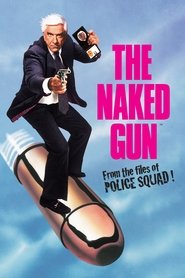
The Naked Gun From the Files of Police Squad! (1988)
David Zucker, Robert Weiss, Peter Tilden
-
That guy happened to have that birthmark. That's how you cast him? Yeah, he had the birthmark. It was going to save time. Did anybody ever notice it's in the shape of North Vietnam? No, no one commented. A wasted joke. Well, there was going to be a contest, you remember, like a geography thing. We never did it. I meant Gorbachev's real birthmark. It's actually in the shape of Vietnam. Do you remember our worries when we released the picture? We were concerned that the Ayatollah would kick off before the picture came out ruining this joke.
1:21 · jump to transcript →
-
That's a snot. Now what did you use for the snot? It was actually snot. Bob had a cold at the time. So it was real snot. It happened to be convenient. They didn't have the technology. Leslie's kind of a method guy and insisted on it. Yeah, there's only three channels and no snot. Today, of course, there's digital mucosas. You don't have to. CGI. Exactly, whatever that means. But I think that's only common sense.
12:03 · jump to transcript →
-
And that's important to future writers? It is. Fluker dialogue? Know your Fluker. How many pages of Fluker dialogue is in a good script? Most of it. That's right, we have the whole glossary of terms. I know. Well, we might talk about some of those. Terms, rules, well, nothing worked. And here comes the joke from the set-up. This actually happened to our rabbi. Was it based on that story or did it happen after the fact? He was with the mayor guarding the queen. Life imitating art.
14:33 · jump to transcript →
-
-
-
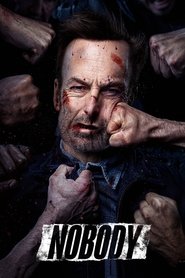
Here it comes, everybody. Get out of the way. A big, big movie with a lot of action and a lot of heart and a lot of recognizable family feelings. And trauma. And blood, blood. Hi, everyone. Bob Odenkirk here. - And Ilya Naishuller. And we are two of the people who helped to make the movie Nobody happen. We're gonna talk about all the people who helped make this movie happen, a lot of people. There I am. Jesus. What happened to that guy? Not good day. Ouch.
0:10 · jump to transcript →
-
So, I have to do a report on a veteran for history class. Maybe I could just interview you? Yeah, sure, son. You know, I was an auditor, so, kind of a nobody. That makes for a pretty dry story. Yeah, I really don't care. I just want to finish up the project and call it a day. And this kid's a good actor, man. Gage Munroe. He delivers. Look at this. He's just suffering his fucking father, which, yeah, a boy that age often is doing. And also he's mad at him for what happened last night. And, boy, is Connie Nielsen great in this movie, and are we lucky to have her playing Becca, the wife of Hutch Mansell. And these two have a Iot of feeling between them, a deep well, and an estrangement that is unexplained. And yet I think anybody who's been married for more than 10, 15 years, somewhere in there, can Start to feel these complex feelings and kind of a strange feeling of, you know, warmth and obviously acceptance after all those years, and love, but also not real sure if the spark is all there, and if you can bring it back and if you're looking for a new spark...
9:21 · jump to transcript →
-
What is happening is very complex, you know. But this tells you where her head is at, what happens next. This is beautifully done, Ilya. That she just removes that wall of pillows between them and reaches out to him, sort of saying, I think, you know, "Let's try to make this work, you know. "Whatever it is, whatever happened to you, whatever you got involved in." Now, in the mythos of this movie, Now, in the mythos of this movie, the grand mythos from Derek Kolstad's head, there's a bigger bunch of bad guys like Yulian out there in the world who Hutch has interacted with many years before. Some version of these guys, some group of guys, and she knows that, the wife knows that, and she also maybe suspects that he's back in the game, as they Say. And we find out that inadvertently he is back in the game of big, high stakes bad guys, because he went after the wrong Russian on that bus. So here comes Yulian. Tell us about this actor, would you? Because he's great. This is Alexey Serebryakov. - Say that name again. I'm just pronouncing it the Russian way. I think in English it'd be Alexey Serebryakov. Alexey Serebryakov, a great, great actor. Yep. Before we decided we're gonna do the authentic Russian way, there were all these considerations of who can go against Hutch, who can we have that's right. And ultimately, I'm incredibly glad that we have Alexey. He's the real deal. He's a great actor. He's a presence, physically capable. And when I hear my American friends say, "Well, yeah, Russians are scary," that's what I imagine they imagine to be the scary Russian, the guy who you can't really reason with too much and who will do stupid, kind of, unexpected and violent things.
35:07 · jump to transcript →
-
-
-
Commentary With David Kalat
The crew of the Daigo Fukuro Maru, that's lucky dragon number five to you, figured that they were being extra clever. By heading out to trawl for tuna, there's no competition, they congratulated each other. Then there was a flash in the sky like a second sun. The light was so bright, it could be seen as far away as Okinawa.
2:12 · jump to transcript →
-
Commentary With David Kalat
The lucky dragon was so far from the blast, they didn't hear its accompanying thunder for another eight minutes. It was clear to them that they'd made a mistake, but the consequences were now impossible to outrun. They pulled in their nets, stowed their catch, and returned to the mainland as quickly as possible. They were sick. The radio operator, a fellow named Aikichi Kubayama, would die from radiation sickness. And let's be clear.
2:36 · jump to transcript →
-
Commentary With David Kalat
I started out with that story about the Lucky Dragon as a way of demonstrating that this movie had an urgency and a relevance to current events for Japanese audiences. I'm going to talk more about this. I'm going to talk about the atomic bombings of Hiroshima and Nagasaki, about Robert Oppenheimer and the nuclear arms race. All kinds of big historical issues which have been deftly folded into the fabric of what has at times been misapprehended as just another monster movie.
5:23 · jump to transcript →
-
-
director · 2h 19m 9 mentions
-
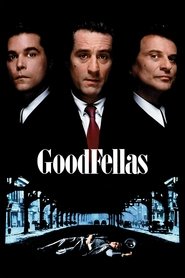
He told me that, yes, they were interested in selling it. And he also happened to casually mention that Marty Scorsese, who was in Chicago shooting The Color of Money, was interested in the story as well. So I proceeded to negotiate. Regardless of Marty's interest, I thought the story was good. So I started negotiating with the
4:55 · jump to transcript →
-
provoking Henry, saying, Do you think I'm funny? Why do you think I'm funny? Ray Liotta. It was in rehearsal. We were talking, and Joe was telling a story about he was with somebody, and the guy was saying something funny, and it's just something that happened to him. It supposedly is a true situation. I know that, to a certain extent, I mean, just the way he moves and what he says, I know it's true. So Pesci has too much of a familiarity with what happens in that scene. It's too real.
19:56 · jump to transcript →
-
And we all wanted Joe from the very beginning. And we were very lucky to get the Bob, who we didn't think would want to do that character, because he's not the most... Well, he doesn't have that... He doesn't have as much to do as either Joe or Ray did, but Bob is not that kind of actor. He liked the part and wanted to work again with Marty, and he accepted it, and then everybody fell into place after that. Writer Nicholas Pelleggi.
38:56 · jump to transcript →
-
-
-
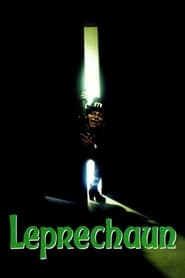
Warwick was so good and just he never complained and he had to go in three hours in makeup or whatever hours it took and so I was very lucky to get him. It's great I remember once he was cast about almost a week later he came to the States and we did the head mold hand mold measurements and then he went
28:03 · jump to transcript →
-
Right, Samantha's in the booth to the left. Okay, this is a very interesting thing that there's a rumor on the internet that we had to reshoot this because he came in and takes a box of Lucky Charms and spits them out. And then we showed it. There it is, Lucky Clovers. This is the only thing we ever shot. This was always shot this way, but there's a rumor that somehow Kellogg or whoever does Lucky Charms saw
45:55 · jump to transcript →
-
him take a bite and spit it out and said, we don't like that. And we don't like the movie, so you have to reshoot it and put a different cereal. And at the end of the movie, when the kid says, fuck you, Lucky Charms, and gets him with a slingshot, that was my way of getting back at the cereal company. And none of that is true. We always had Lucky Clovers for copyright problems. And we always shot this. And this is the only thing we shot.
46:24 · jump to transcript →
-
-
director · 3h 16m 8 mentions
-
boy's eyes are being examined or it was all done to still photographs. The story of the boy getting marked and then having to be on quarantine in Ellis Island was told to me by my Aunt Caroline and this had happened to her when they came over on the original immigrant ship. She was a little girl of nine or so and she had glaucoma or some
8:20 · jump to transcript →
-
Interestingly, this set is really a platform up overlooking the window of the fish market, which had the Ellis Island set in. It wasn't even a room out there. Of course, his number is number seven, my lucky number since I was a child. Everything in my movies, I'm sure there will always be a number seven somewhere.
9:45 · jump to transcript →
-
Look, I don't have your brain for big deals, but this is a street thing. I obviously got very lucky with Michael Bigazzo because he was just a wonderful character and actor with that extraordinary voice, and he was so authentically Italian, you know, like one of your uncles. And to think that was such an important part that ultimately was just cast like a day before it started to shoot really is a wonderful tribute to Michael.
1:07:06 · jump to transcript →
-
-
-
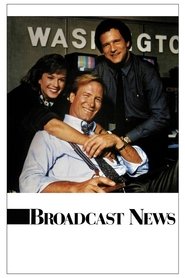
And one of the things we came up with for this was Joel Meyerowitz, who was great at photographing cities, and this took place in Washington, D.C. He gave us this whole notion of red, which you're gonna see again and again in the film. This is the young Bill Hurt we're looking at right now. I think one of the things that happened to us that I was...
0:49 · jump to transcript →
-
And there I started to hang around with some news people, and that's basically what this came out of. You know, I felt the pressure because I had a friend, my late friend Jerry Belson, who used to heap the pressure on me every day that you're not going to be able to follow it up, and that was an adaptation. You haven't done an original. He used to just do this to me every morning. But it was just... Because of what happened to me on the first movie I directed, it was surreal. I mean, there's no way that you...
2:17 · jump to transcript →
-
wore it as something that happened to you. It was always a little beyond belief, so it didn't impact me as if I had done five pictures and this happened. It was just weird, but I felt... So doing broadcast news was sort of, not that you don't go crazy and not that you don't always have the pressure and not that you don't go to bed sometimes hating the pages you've written, but the research was great. I was fascinated by the subject.
2:47 · jump to transcript →
-
-
-
And he tries to hug her and then pushes away. It's really, really brilliant. I don't know if you remember, because do you remember that we were filming in a home for people with Down syndrome? And they asked us to come for an assembly. One of the most surreal things that ever happened to me in my life. So you and John Mahoney and I said, sure. They said, will you come and say something? They're all gathered in this assembly.
15:12 · jump to transcript →
-
To me, it seemed like all of them stood up and booed me. Oh, man. And I just, like, time stopped, and I started laughing and, like, crying at the same time. And we all just sort of, like, walked down and then shut the door to the auditorium, and it was just, like, quiet. Isn't that surreal? That's surreal. And we never mentioned it. Don't go in there! That was one of the most surreal things that ever happened to me.
16:00 · jump to transcript →
-
They're so in love with the drama, it's so great. It's so amazing. That's like, they so believed in these characters. He hugs her, have sex with me. Yeah, it's true. It's such a unique feeling. That's why people love that. If you're lucky enough to have written it. Then he just goes for the beer after that. So great, yeah, I love this. Lloyd now needs a beer. Here's the keys, give me a beer. Why am I yelling? I don't know. But when you get Lily and Lauren Dean
30:20 · jump to transcript →
-
-
director · 1h 58m 7 mentions
-
which was a pretty good idea. And then we do some animation on the sunglass and also make the sunglass more computerized. We almost lose the scene because of the budget time concern. We did try to shoot it in a simple way, but we were so lucky and never give it up. So I'm so glad that we got a scene and also got a pretty good impact about the sunglass. We had decided this is the love story.
10:32 · jump to transcript →
-
So we were so lucky to have Tom Sanders as a production designer. He's a great guy. He did Dracula, Braveheart, Saving Private Ryan. He's just incredible. So in this movie, all I want is a
21:33 · jump to transcript →
-
It's the romance with the evil, with the devil, you know, so it's a totally different feeling. Computer's up. You got him. By the other hand, I must say that we were so lucky to have Douglas Scott. He's a wonderful actor. The thing we like about him is he had a great feature, and his face was so much of a character. He looked evil, but by the meantime,
36:12 · jump to transcript →
-
-
director · 3h 43m 7 mentions
The Lord of the Rings The Two Towers (2002)
Peter Jackson Fran Walsh Philippa Boyens
-
Peter Jackson Fran Walsh Philippa Boyens
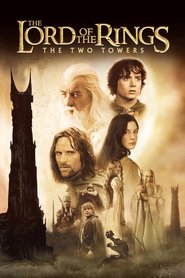
That's one of my favourite. Yeah, that's my favourite shot too. It's incredible. When I saw that shot, that was like one of the first times you really felt this guy's going to work. I love the blanket spinning around. Yeah, well that was because Andy spun it around with his feet. We didn't plan on that, we used it. The image of Frodo with the sword at Gollum's throat while Gollum's got Sam is straight out of an Alan Lee painting. We actually had Alan's painting on the set.
10:16 · jump to transcript →
-
Peter Jackson Fran Walsh Philippa Boyens
And he was really driving both stories. And so we would take time out, as Tolkien does in the book, really, to speak to that and to speak to the bigger conflict that Gandalf has with Sauron in terms of the struggle for power over Middle-earth. You also artificially link stories together, don't you? Like Aragorn is tracking what happened to Merry and Pippin and you intercut Merry and Pippin running at night, then you go back to Aragorn.
37:44 · jump to transcript →
-
Peter Jackson Fran Walsh Philippa Boyens
Didn't they paint it and then you came back and all the paint had been stripped because of the wind? Yeah, well, I was shooting the Ediris one day. I mean, what happened to me one day is very high winds and I was walking along to where the crew were and my glasses got blown off my face and I turned and I just saw them sailing and tumbling over the cliff in the wind and I had to spend the rest of the day kind of with blurry vision. It was weird. It was quite a very vicious kind of climate.
1:13:24 · jump to transcript →
-
-
-
John Cameron Mitchell
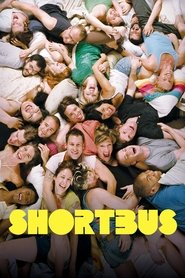
It's like a gay rumble. Oh. We should get back to short bus. Okay. This is a great moment. That short bus was totally random. It just happened by accident. And we did that shot three times. It just went by. Oh, and the yoga ball. Hilarious. We did that shot three times that zoom in on the character of Caleb the stalker. It happened three times.
9:29 · jump to transcript →
-
John Cameron Mitchell
They're so beautiful. There's so many great bodies of all shapes and sizes. Well, this place, Dumba, a queer arts collective, would have parties like this. Those women up on the bomb live there. That's true. That was Sienna and Pamela. Everyone's having a lot of fun in this room. They were so lucky. So fun. I was kind of a little mad that I wasn't a Sextra. I was a Sextra, but I couldn't relax. There he is. Johnny. And that's Brent.
20:32 · jump to transcript →
-
John Cameron Mitchell
And we have a deleted scene that's going to be on the DVD with the two of them. You wonder what happened to them when they go off after this. Jay's not here right now, but he would tell you how much he hates looking at his hair. I love his hair in the film. Now he has very, very short hair. And that little joke he just did with the camera is something that he used to do in real life, and I said that is going in the movie. It's a great moment.
22:40 · jump to transcript →
-
-
-
My name is Laurens Straub. I'm sitting here with Werner Herzog, writer, director and producer of the movie "Nosferatu" that you are currently watching. And we now want to talk about that movie. Werner Herzog and I have known each other for about 20 years and have worked together on many different projects. What do we see here? These are actual mummies in the Mexican city of Guanajuato. You have to realize that Guanajuato is located in a gorge. Because of that the cemetery was very narrow and there was no space. So they dug up the bodies every eight years or so, and because of different climatic conditions and the soil, they mummified without human preparation. They leaned them against the walls on both sides in a long underground hall and a hallway. I saw them there many, many years ago in the early 1960s. The story behind this is that I was in the U.S. on a scholarship but I resigned from it a few days in and gave up my legal status in the US because I had to earn some money. Out of desperation I went to Mexico because otherwise they would have returned me to Germany. I went to Central Mexico and Guanajuato and lived there for a while. I did all kinds of crazy things. For example, at rodeos, the so-called charreadas, I rode on wild bulls. Like a complete idiot because I don't even know how to ride a horse, but with the money I could live one week at a time. And there I saw these mummies. Are they similar to the ones at the volcano Vesuvius and formed from lava? No, those are real dried human beings. They barely weigh anything. They were in display cases so we had to take them out and carry them somewhere else. They weigh very little... 10, 12 pounds maybe. Is this something like a culture of death? No, it's completely normal. Isabelle Adjani. She is great at acting scared. That was a real and very large bat we brought in for this. The bat you saw earlier I could not shoot myself. The footage came out of a science documentary because bat's flapping motions are extremely fast, and this was shot with 500 or 800 frames per second. The bats had to be trained with food for that because it took very strong lighting, and normally they would not move under those conditions and not leave their hideout. Here we see Delft. In the Netherlands. That's my city. And I know when Jörg Schmidt-Reitwein teaches students cinematography he first introduces them to Flemish and Dutch painters. Why was Delft chosen as an alternative to Wismar where Murnau shot? Yes, but Wismar was not Murnau's location. I believe that was Lübeck. There is one single shot later in the movie where you see a few buildings that Murnau actually used and that are still standing. I used those as well. We chose Delft because the continuity of the architecture was uninterrupted and we only had to make very few changes in order to shoot there. We took down some antennas and moved a few cars. Other than that it was very easy to shoot there. The concept of "Nosferatu" was definitely to do a variation on Murnau's movie, not a remake in the classical sense. A Biedermeier image like this, for example, is unthinkable in a Murnau film. Moreover, this is in color and the movie's character is completely different. We had to show a very secure bourgeois world. We deliberately planned this, especially the furniture. That was done very thoughtfully by Henning von Gierke who is a painter by trade. With the furniture and the lighting, you can tell that a painter was involved. It reminds me of "Kaspar Hauser" which was done by Henning as well. What era are we in here? That is the Biedermeier era as you can see clearly by the costumes. We researched how to best do the building arrangement and the urban landscapes. Schmidt-Reitwein and I wracked our brains over that. I didn't simply want to recreate paintings. That was never planned. With one exception because we knew we had to work a lot in darkness with nothing but candlelight. Therefore, we studied the painter de La Tour and thought about how to do it if we only had one or a few candles. How do we light that? And Schmidt-Reitwein is exceptionally good at working with light and darkness. This is Roland Topor. - Yes. The famous illustrator, poet, and crazy man. Unfortunately he is already dead, I believe. Yes. - How did you find Roland? I coincidentally saw him in debate on French television. And he laughs in such a mad way. He laughs after every sentence he says. But in such a desperate and strange way that it impressed me deeply. Afterwards I contacted him I told him I was going to shoot a vampire movie and asked if he would play Renfield. Roland Topor immediately agreed. Unfortunately his voice is dubbed in some versions. And it is impossible to fully recreate his laughter. It was his strangest characteristic. What I love about this... I recently saw an exhibition with English surrealistic works from the 19th century. It reminds me of an old office, the cloth, and this blue. It was very carefully lit, and the costumes had to match. Bruno Ganz. And also the faces we chose. Those are not faces that fit into the 20th century. You have to carefully select actors who match. So Bruno Ganz is a great fit for this. The beautiful paper. - Yes. That was so much work, and it was prepared very, very thoughtfully. A beautiful country. Here I see a recurring theme of yours... maps. I already know that from "Aguirre" and other movies. In "Fitzcarraldo" geography is a crucial dramaturgic element. I'm a map fanatic. Oddly, I'm pretty good at determining locations ahead of time, too, because I understand maps. I know which formations you should find in a certain area. I was rarely wrong. It is always about uncharted territory, the Dorado, or doom. Yes, at home I don't have pictures on the wall. A few photographs every now and then, but generally, I can't stand my walls being covered in pictures. If there is anything on my walls of my home it's maps. Oh no. - You will be in danger. This was your first film in English, the first with big stars and a big budget, correct? Well, not really. "Aguirre" is also a big movie with a big star and great effort. But I have to say, we shot "Aguirre" for about 700,000 deutschmark... $360,000. What matters is what you manage to get on screen with the resources you have. To come back to paintings, I like this vase. Yes. Okay. This reminds me of a painting by Seurat. I think the still life-like and emotional atmosphere is phenomenal. But be careful, I always want to show inner landscapes. This was done very quickly, by the way. On that day we happened to have some time and drove to the beach. It was freezing cold, windy. There was foam. We set up the camera in three minutes and sent the two actors, Bruno Ganz and Isabelle Adjani, into the image. We only told them that the music would most likely be slow and solemn. We already had received ideas for the music from Florian Fricke from Popol Vuh. These two, three shots here we did in 15 minutes. We never thought about paintings. It was born out of the situation... - Spontaneously. ...that we found there. Bruno Ganz has tears on his cheek because it was freezing cold. Lotte Eisner came to visit for a few days. We had to wrap her in 20 blankets because it was so cold. I was so proud that she could be there. She was very important for me and maybe for the new German film in general because she bridged the gap to the expressionistic movies back then that she knew very well. She also knew all the representatives of that time. She was friends with Fritz Lang, Murnau, Pabst. She knew them all. For us she was like a bridge to the generation of our grandfathers. We were a generation of orphans who did not have the generation of our fathers. Here I see your wife. Yes, Martje. Martje Herzog on the left. Essentially everyone who was there is in the movie at some point. Later you see the executive producer, the costume designer, the sound technician, and the gaffer. It was also a matter of how quickly can you get something done with very little money. This is the farewell. Bruno Ganz was actually pretty good at riding horses, which was great for me. Now he travels to Transylvania. The choice of the production company... Was this a Century Fox production? No, I produced it myself. Many people believe that 20th Century Fox produced it. But 20th Century Fox only bought an advance guarantee to the U.S. rights for very cheap. They only bought the rights for the U.S. A distribution guarantee. I believe this was... - German Romanticism. Well, you have to be careful. There is a hint of that, but I always try not to be connected with Romanticism because I myself have no real connection with that cultural epoch. Usually I refer to eras before that. The Late Middle Ages speak to me much more. They inspire me. This was shot in Eastern Slovakia. I was not allowed to shoot in Romania where I had scouted locations for months in the Carpathian Mountains. But you also have to see the context. That was when Ceausescu had just been awarded the honorary title of the new Vlad Dracula by the parliament. So he was named the new Count Dracula. That was an honorary title because the historic Count Dracul had been an important figure in the defense against the Turks. This is in the High Tatras, just 1,000 feet to the left was the Polish border. Bohemia? No, Slovakia. - Slovakia? Eastern Slovakia. This is a real group of gypsies that I had brought in from the very East of Slovakia. Among them are a few Czech actors. The gypsies actually speak their own language. Unfortunately I don't remember what it was called. ...my food. I still have to get to Count Dracula's castle today. This is a scene that in a very typical way fulfills all the criteria and conditions of a genre movie. This is one of those traditional scenes. He has to go see Count Dracula, and everyone immediately freezes in fear and the maid drops the dishes. Do you really have to go there? I wanted to integrate certain general rules of the genre into the movie. From there you can go farther and expand. But this right here is a very typical and traditional scene for this genre. The space has this wonderful of depth in the back. And the bed in the background. The set design was by Henning von Gierke who has a spectacular sense for these things. Yes. Spectacular. Parts of this we also built ourselves. The oven and things like that. It was a former hunting lodge of party functionaries. At that point there were only lumberjacks living there. During the day you only found lumberjacks there. ...were already on the other side. Here you have this sense of foreboding and doom. I liked the gypsies so much. They were very good. Watching this reminds me of Degas' "The Execution of Emperor Maximilian" in Mexico. Yes. Careful. Not too many paintings, otherwise... That's just a sign for how interesting and good this is. This is a wonderful face. I also enjoy the way they speak. Yes, definitely. He says you should... They said the dialogue I wanted but in their language, which I believe was not Romani. They translated it themselves and did it very well. You can see this was outdoors and at night which was always a problem for me because I'm not a night person. I had to stay awake until very late, and I've always hated night shoots. I had to force myself to stay up with gallons of coffee. This is also a recurring theme in your films... Native Americans, Mexicans, and Gypsies. Something completely foreign. But also the dignity of these people.
0:04 · jump to transcript →
-
The sound and the music are used very sparingly here. These sounds are so strange to create a certain atmosphere. Even though this is very carefully designed, you are an opponent of overly designed sets... It does look overly designed, but... No, I don't think so, but I think a normal studio production would have to work on this for weeks. No, it was a great find, and I was quite lucky. You don't find locations like this easily. For example, the hallway in the back. And the wood. The light here is beautiful, too.
36:03 · jump to transcript →
-
This was a gypsy boy who could barely play the violin, but sometimes I... A well-known Herzog theme, exactly. In "Fitzcarraldo", there is a similar boy. He plays in front of the prison. The prison guard feels sorry and lets "Fitzcarraldo" go because you just can't resist something like that. You already have the theme of madness in "Signs of Life", if I'm not mistaken. Yes, that's right. There is a situation where four German soldiers are imprisoned as convalescents on a Greek... In a Venetian fort at the end of the World War. Also the sense of confinement and breaking free from it... ...play a big role. That is one of the central themes. Obviously, this was shot in fast motion. But on film with single-frame exposure over a long period of time. In your movies, what makes them go insane? Something inside of them or other occurrences? I don't think that they are really insane. They are the core of what makes us human. I believe it's more that everything around them is insane. But there is always this slight hallucinatory... That's possible, yes. With this image we were also lucky because it was so foggy and strange. We took advantage of that situation. I always had the impression of an inner landscape. In my work, landscapes are never merely a beautiful and scenic backdrop, like in commercials or many Hollywood movies. This is different. The whole time I've wanted to ask what the importance of this movie for you is. Seeing Bruno here... For Wim "The American Friend" was something like the qualifying exam for the international film culture, to be accepted as a legitimate European filmmaker. You are talking about legitimacy or legitimization of German culture after the war. That took a long time. There was a gap of 25 or 30 years. The connection was lost. What was very important to us, which may be difficult to understand for people outside of Germany or Europe, was to rebuild a legitimate cinematic culture. Lotte Eisner was the person who reconnected us with our grandfathers, Expressionism, and these films. After finishing this movie, I felt that I had rebuilt the connection and reestablished the continuity of the German cinema. Only a few years earlier, Lotte Eisner had been on her death bed. I walked to Paris on foot in the winter to forbid her to die. And she actually did survive. She lived for another eight or nine years, and was very important for us. What we had created was still too fragile, too feeble, and too sensitive. Lotte Eisner had experienced the entire film culture, beginning with the Lumiere brothers, Méliès, Eisenstein, Pudovkin, Kurosawa. Everybody knew and respected her. It was her who said, "Now we have a legitimate German cinema again." That helped so much and was enormously important. In contrary to the films of the 1920's and 30's, which were quite crude, this is much more delicate. It also already has a universal atmosphere, I think. Possibly, but if you watch Kinski especially in this movie I have to say that he was the last expressionistic movie actor over all.
38:13 · jump to transcript →
-
-
director · 1h 42m 6 mentions
-
What's fascinating to me about the two versions, if you are lucky enough to see them both, is that in one version, the MPAA unapproved version, there's a huge laugh when Johnson says, someone call a paramedic. But because they cut out the overhead shot where the guy is just made into a hamburger, that you don't get a laugh anymore.
12:25 · jump to transcript →
-
and then develop it. So it's not an optical printer technique. So you develop after the painting is added. Yes. So you're guessing to a large degree, isn't it? Yep. Especially as a director, of course. You have no idea. Anyhow, I had no idea about special effects when I started to do this movie, which was the first one I did, a special effects movie. And I was very lucky to fall in the hands of John Davidson, who knew all these people, like Rob Boutin and Phil Tippett and Greg. And Pete Coran. And Pete Coran.
14:42 · jump to transcript →
-
Well, he signed the release forms when he joined the force. Now, again, the other thing that was fun for me as a writer on this show was this scene and a scene coming up where they're celebrating were scenes we just made up based on props that showed up that day. And I remember, you know, I literally, this was Mary Kay Cosmetics. I ran down the hall. I wrote a scene on a selector typewriter in somebody's office, brought it back, and they shot it. It was the most satisfying thing that's ever happened to me as a writer. Come here, Arthur.
27:34 · jump to transcript →
-
-
director · 2h 49m 6 mentions
-
She can't go with you? No. Oh. Not now, anyway. Not now. Not now. We'll see you later. Oh, the weather's just fine. It's hardly raining. Did you not hear what I said? Warren! Warren! It's you she takes after. See, it's just built for that anamorphic frame. The whole landscape. Got lucky with some birds.
29:22 · jump to transcript →
-
I mean, I was lucky, yes, but, and fortunate, but to have an editor as good as Steve Rosenblum was to really bring his own thing to it. I mean, he took what I gave him and he managed to sort of make it better, you know, which is, when it comes right down to it, the edit's just the final rewrite. And he's a master of it.
2:03:35 · jump to transcript →
-
I saw him copy this bit on pizza commercials and stuff, you know. The monk running up the top of the mountain. But it's phenomenally beautiful, Scotland. You get lucky with the patchy sunlight. And initially this whole montage, you know, with those people talking about Moses and the Red Sea and all that, that was much earlier in the film. It was like in the first act or the beginning of the second act.
2:17:51 · jump to transcript →
-
-
director · 4h 13m 6 mentions
The Lord of the Rings The Return of the King (2003)
Peter Jackson Fran Walsh Philippa Boyens
-
Peter Jackson Fran Walsh Philippa Boyens
We were lucky here because this landscape on the slopes of Ruapehu actually had a fire, a forest fire. About six months before we were due to shoot there, it had all been burnt through with a blaze. And so we had this great landscape that was sort of ashy and volcanic looking, but it was actually the result of a fire had swept through and killed all the undergrowth. It's a great location for a World War I film, burnt trees and scorched land and yeah.
8:53 · jump to transcript →
-
Peter Jackson Fran Walsh Philippa Boyens
All shot in a tiny little studio and we used a blue screen behind Billy and Dom but we just had this little bit of trees and a piece of the wall and it was very cramped and very claustrophobic and you're sort of lucky that in the movie people don't think about that too much. That's why we use those big miniature shots to try to bust it open a bit to give a sense of scale when no scale actually exists.
10:34 · jump to transcript →
-
Peter Jackson Fran Walsh Philippa Boyens
just in case. We didn't throw it away, which was lucky because three years later we kind of came up with the idea of this banquet and we were able to drag this bloody big set out and stick it in the warehouse again and we had it back for filming. The drinking game was meant to be a bit of leaven really, wasn't it? Just to lighten the front of this film that it's not all doom and gloom.
19:11 · jump to transcript →
-
-
-
James Mangold
What I like to believe makes this sequence stand out is that these men look so completely comfortable with the weapons, on their horses, et cetera. And one of the ways I was really lucky in putting this film together with Kathy Conrad, my producer and partner, was that when we cast the film with Russell and Christian, what we got were more than just two of the best
9:32 · jump to transcript →
-
James Mangold
You got green eyes. I always loved the scene. The actress here is Vanessa Shaw. Again, a director is really lucky when wonderful actors come in. You know, Vanessa worked all of a week on this movie, but... That's all right. She does remarkable work, and it's a very, very small role, and that reality sometimes will scare a really good actor away because they don't want to play a, quote, small role. What I found over and over again, though,
25:24 · jump to transcript →
-
James Mangold
but at the same time had a dream for their families to start something clean and new. And that their views and fears, some of them racist about what had happened to New York City, were not dissimilar to the way I thought frontier men might have looked at the Native Americans in their own quest to find a safe place to raise their children, free from quote, savagery. I hope you're proud of yourself
41:02 · jump to transcript →
-
-
director · 1h 36m 6 mentions
-
in a forest we found outside of Vancouver that just happened to be almost the shape of a ship impact. And they let us go in there with big bulldozers and cranes and stuff and actually smash trees and kind of art direct the whole thing to look like where the crash site was. And then the ship was put in all digitally in post. As a producer, this was literally the first day of shooting some of this. And I was really heartened to see these dailies because the bros...
4:41 · jump to transcript →
-
Yeah, we were lucky, right? We actually really lucked out on this. That was one of the weird things. We pretty much assumed, you know, when we had our first meetings with the studio, everyone was like, look, we've got to try to keep the movie a little bit more upbeat at the beginning if it's going to be so gloom and doom at the end with the rain. So then we were like, oh, man, it's going to be overcast every day. It's probably going to be raining every day. And I think literally we had only one day of exterior shoots where we didn't want it to rain, and it did. This day we had the worst process trailer rig ever.
8:03 · jump to transcript →
-
it kind of almost looks like the skin guy's penis is hanging there. And it just happened to be that when they were doing one of the resets on that shot, part of the intestine got put down there. And then we noticed after we put in the cut, we're like, oh, God, there's a skin junk just right there. So that's something funny, I think, when people watch the movie. That wasn't intentional. Yeah, it's like once you see that, that's all I see now. Every time I watch that scene, I'm like, ah, there's the skin penis scene.
36:24 · jump to transcript →
-
-
director · 1h 53m 6 mentions
-
a very hard surface, like if it was marble or a very stiff table, that mixture. And this snowfall wasn't planned to be included in the movie in the beginning, but you just saw this beautiful snowfall, filmed it and decided to include it. Yeah, yeah, yeah. And that is the...
1:53 · jump to transcript →
-
You probably do it all over the world with people like Oscar. That was one of the things that actually did happen to me. This story is quite autobiographical, but just things of a similar significance happened to me, not the actual things, but this thing I remember, yeah.
49:21 · jump to transcript →
-
This was expensive, a very expensive camera crane here. And here's the thing that you added, which is not in the script, this suitcase that Lucky is carrying around all the time. It is explained eventually what's inside it, but it's not in the script. I thought that
1:10:41 · jump to transcript →
-
-
director · 2h 1m 6 mentions
-
her family and to people who obviously, the whole process became quite difficult but also in the end quite therapeutic I think to pretty much everyone I'd spoken to because it was the first time they'd spoken about Amy and about their feelings and about everything that had happened to an outsider. When I met with a lot of the people that I interviewed, they all, they looked to me like they were quite troubled, like they had been quite shocked by and traumatised by the whole experience of seeing what had happened to Amy
19:57 · jump to transcript →
-
And so many of them he didn't keep or he lost, but that was one particular one that he did still have. And obviously when you realise what happened to their friendship and their relationship, it became more and more powerful for him to have this memento of Amy. It took a lot for both him and Salaam to share that with us, I think. Salaam has never shown his pictures to anyone. He took a long time to get him on board. I flew out to meet him in his house in Miami, met him in that very room where Amy recorded these songs. Unbelievable.
42:07 · jump to transcript →
-
astonishingly intimate, close. I think she bought him this camera and he was testing it out. I think that's what we found out. It was a new video camera that she bought for him and he was making sure that it works and checking all the levels. Blake shot quite a lot of footage. It was one of the parts of this movie of trying to find what happened to all of the footage that Blake shot and then the challenges. A lot of it seemed to have gone missing. Yeah, I think this is obviously some of it.
1:08:33 · jump to transcript →
-
-
director · 2h 10m 6 mentions
-
We were lucky this one floor was empty. It's a great sort of graphic glass building with the busiest elevators in the entire world. In every shot, there's an elevator flying by. Don't even worry about matching it. No, don't even worry. Tell me what you make of him. I don't know. He's taking up scrapbooking. Look at the photographs done. Here we're going through, we're still... We were working out the story. Kind of had an idea, but the way we work, it's...
23:43 · jump to transcript →
-
working in the background of the sequence because we were determined to shoot it all as a piece. This is a fantastic idea Wade came up with to get you down there. These were all things that we were working out on the location. And then this shot here, this is one of my favorite shots in the entire film. This moment, Eddie Hamilton found this music and dropped it in from the moment you come out the door. And this just happened to line up with the edit.
32:19 · jump to transcript →
-
Oh, purely by accident. We drive to set in the mornings together. Oh, yes. A lot of mornings going through, and it was such a pleasure. Such a pleasure. Oh, thank you. I really... I feel the same way. Oy. Oh, my God, the mask. Let's talk for a moment about the mask. The amount of time that goes into designing. You can't buy that mask at your local scuba store. And getting that mask to not leak was... Here we go.
1:03:43 · jump to transcript →
-
-
-
Tim Burton
you know, as a teenager. And so I just thought, well, what happened to her like 35 years later? You know, it's kind of like that 35 up. You're kind of interested to see somebody that you thought was cool or interesting. What happened to them? Where are they now? So that got me into the feeling. And then seeing like the three, you know, what happens to a person? And, you know, what are your relationships? Do you have kids? And so the idea of seeing three generations of Dietz women, you know, mother, daughter, granddaughter,
2:18 · jump to transcript →
-
Tim Burton
What the hell happened to me? What am I? You know, and so sometimes in life, you need to kind of reboot and reconnect yourself to yourself. And so the ghost house to me was just a good sort of symbol for who she was and where she is now. Filming the little ghost house sequences, I mean, yeah, it's just, I think it was our first day of shooting and I always wanted to do a cheesy cable show. I feel a dark presence.
4:05 · jump to transcript →
-
Tim Burton
and they don't even have to say anything. And you can't say to them, act this sort of way. You kind of have to have it in your soul. And so, you know, I've been lucky to meet a few people over the years that have these sort of vibes. Is that mine? Who's texting me? Stupid stepmother. She's got texting diarrhea. I have to go. Lydia.
7:09 · jump to transcript →
-
-
scholar · 1h 32m 5 mentions
The Night of the Hunter (1955)
Second-Unit Terry Sanders, Film Archivist Robert Gitt, F. X. Feeney, Preston Neal Jones + 2
-
Yeah, Mitchum was the idol of Elvis Presley, and you can really see why. Oh, yes. It's the way he moves with his whole body. It's interesting that Lawton originally wanted Gary Cooper for the part. He had worked with Cooper in the 30s. I don't see that at all. No, I don't. He was very lucky that it worked out with Mitchum. But the point is that he was always thinking in terms of a handsome leading man for this villainous part. He explained it to Davis Grubb. As Davis Grubb remembered it, Lawton told him, Davis, people who...
21:26 · jump to transcript →
-
Also, Gary Cooper moved beautifully, and that's what you need for the part. It's understandable that Lawton was thinking in those terms, you know. But wouldn't he have been too old at this point? Wouldn't Cooper have been too old at this stage of his career? Maybe the young Gary Cooper. He was still playing leading man. Well, he was. And the cragginess of his age might have actually fit Preacher. It's the high noon Gary Cooper period, but how lucky we are that it worked out how it did. Yes, Cooper didn't want to do it. He was scared off by it, and the rest is history.
22:01 · jump to transcript →
-
Now this, the close shot here of Mitchum, it's going to be wonderful. When the game begins, by a lucky accident, he does something with his eyes that is just able to catch the highlight. It's coming up here. See, this is where the game begins. Now watch this evil glint in Mitchum's eye. There you go. So that's the moment that was delayed from the ice cream parlor scene. One characteristic of the...
26:58 · jump to transcript →
-
-
director · 1h 59m 5 mentions
-
as good as they would, and we were able to shoot a sequence in downtown Vegas, which I don't think you could do now. In the Las Vegas chase scene, the sheriff is played by Leroy Hollis, who just happened to be the production's Teamster captain. Hollis again worked for the Bond producers when they filmed Live and Let Die in New Orleans.
1:04:08 · jump to transcript →
-
which wasn't very difficult to do because we got one of the jackpot mechanics to come and fix the machine, and sure enough, the jackpot comes up every time. The mechanic is quite interested because he works very hard. On weekends, he has to tighten them all up, and on Mondays, which is the slack day, the ones outside by the door loosen them up so that people pull and say, oh, this is my lucky place, and come inside.
1:31:02 · jump to transcript →
-
But the oil industry was going down a little bit, and oil rigs were quite cheap to hire. So we plonked our own oil rig off San Diego, which is a convenient place, and the unit ran out in little boats every day, or if you were lucky, you got a ride on the helicopter.
1:41:22 · jump to transcript →
-
-
director · 1h 29m 5 mentions
Jeff Kanew, Robert Carradine, Timothy Busfield, Curtis Armstrong
-
And if you just listen to this next scene, you'll see why Bobby's character has such a positive attitude and such a geeky laugh. This is one of my favorite scenes. You're going to do fantastic here. Try not to break too many hearts, I'll lose. That hasn't been a real problem yet, Dad. Oh, come on. You're going to make some lucky girl very happy. You're smart, easygoing.
5:04 · jump to transcript →
-
We never get to see them tarred and feathered with molasses or whatever they were tarred and feathered with, but we did shoot that. Now, we're all laughing, but imagine how that must have felt if it really happened to you, which it did. I was in a high school fraternity where I did get tarred and feathered like that, and it's a horrible feeling. And you kind of wonder why you're doing it. I mean, why is it worth taking this kind of abuse and humiliation just to be able to do it to some guys next year? Oh, yeah, that's why.
21:31 · jump to transcript →
-
I love the music. This piece of music, which is a bicycle built for two in Japanese, was just a lucky find and fits the scene beautifully, as some people have pointed out. Poindexter's wearing garters. A nice touch. Times are changing, Betty.
1:01:00 · jump to transcript →
-
-
director · 2h 10m 5 mentions
-
This is a lovely Swedish lady who was... I think she was Miss World. Yeah. Yeah, Bond was a lucky fella. Got to work with all these nice ladies. Vodka, rather shaken, and one microchip. Good. I'll make a signal to M. Be a good girl, would you, and put her on an automatic?
5:17 · jump to transcript →
-
I was very lucky when I did a television series, Ivanhoe, and I had a wonderful 17-hand grey called Shane. He was a bit of a camera hog. He'd be galloping across screen and he would go sideways when he saw the camera. But he would always hit his mark. I could always rely on being centre screen because Shane would get me there.
48:22 · jump to transcript →
-
When we were shooting the Sicilian cross, we had a little problem with controlling traffic until we had a little chat with the chief of police who happened to be Italian. And then all of a sudden we had a lot of motorcycle policemen who were all in Italian. They said, come on the set. And the great thing for us shooting in San Francisco
1:03:32 · jump to transcript →
-
-
-
He was great. He was quite the gentleman about everything. He was a very elegant and wonderful man and a very serious actor. I used to joke that in order to get him to cross the room, I had to tell him a story about when his character was a child. Something had happened to him that now, these years later, he needed to cross the room.
24:56 · jump to transcript →
-
But we had some luck with Oingo Boingo and some of the other groups. Yeah, it's like you were lucky because some other films have had a pretty hellish time with some of the songs they try to get in their movies and always cause problems later on. But yeah, this one kind of lucked out. By the way, I love seeing one of the original Whole Foods shops in here. It's a little... Compared to what it turned into, it's kind of fun.
47:31 · jump to transcript →
-
Yeah, unfortunately, Renee and David are no longer with us, but, yeah, I think everybody else is. Yeah, no, they were both great gentlemen and very special talents that I was lucky to work with them. I had watched them for a long time. And, I mean, they really are just a huge advantage to this film. They just bring so much, like, I don't want to use the word gravitas, but they kind of just give it this sort of, like,
52:09 · jump to transcript →
-
-
-
Well, you know what's nice about it is it happens rarely, but you meet someone that you play opposite and you like them as a person, really honestly like them. And if you're lucky, you get that on camera, which I think we did here. You sure got it with her. That's why everybody asked me. There's Pat Labberto. You're good at names, boy. I know Pat, and I've worked with him before and since, so he's one of the ones I do run into.
9:57 · jump to transcript →
-
You actually used judgment. My God, do you realize that if anything had happened to these kids, the lawsuits, you could have bankrupt the entire district. And messed up your chances of being elected to the state assembly. Yes! Now watch your pants. And you did it, too. One shot. I remember that. See, that's having a quarterback in the part. You and I.
26:58 · jump to transcript →
-
to tell the people that the goldfish that were in that tank, we bought dead. That was a dead goldfish. I remember there was talk about that, that dead goldfish just happened to show up like that. We told people, don't throw your dead goldfish away. We're going to use them. So we called every store in the area and said, save your dead goldfish.
43:49 · jump to transcript →
-
-
director · 2h 12m 5 mentions
-
Funnily enough, ironically, just as I got cast, just as I was told that I got the role in the film, I came back to Australia and Elroy happened to be doing a world tour and he happened to be coming to Melbourne. And he was doing one of his sort of one-man, you know, he does like a one-man show where he reads from some of his books and there's actually a band and he performs stuff. It's a really interesting show. So he was at a theatre in St Kilda and I went along and I'm sort of sitting at the back and at the end of his show,
18:35 · jump to transcript →
-
um, formidable. You know, the character was, uh, his person was, his presence was very, um, you know, large. It was something to, you know, make your knees buckle, yeah. Fine, Philip, thank you. What happened to the other guy? Buzz. Buzz Meeks no longer works for me. Lefferts looked beat up Christmas Eve, but didn't act it. How come? I think she'd been hit in the face with a tennis racket. She is... was...
38:54 · jump to transcript →
-
We found it, and we were very lucky. We managed to find it. This election is about the future of law enforcement in Los Angeles. City Councilman Rogers represents that future. Everybody was integrated. It was the department heads. I was aware that everybody took an extra bit of time and effort and care for everything.
1:07:31 · jump to transcript →
-
-
-
Alexander Payne
need to thank their lucky stars and be very, very grateful that the entire school didn't find out about certain indiscretions that could have ruined their reputations and their chances to win certain elections. And I think certain older people, like you and your colleague, shouldn't be leching after their students, especially when some of them can't even get their own wives pregnant.
56:18 · jump to transcript →
-
Alexander Payne
Looks like today's your lucky day. You're off the hook. Tammy here has confessed. I told you. We like the irony, we meaning Jim Taylor and I, my co-writer, we like the irony that this is set at George Washington Carver High School, but it's a completely white school.
58:38 · jump to transcript →
-
Alexander Payne
set painters. I happened to notice that she made them or they were pointed out to me somehow and I said, oh darn, let's use those in the film. Sora. That's her name. Dear God, thank you for all your blessings. You've given me so many things like good health, nice parents, a nice truck, and what I'm told is a large penis and I'm very grateful.
1:07:32 · jump to transcript →
-
-
-
Danny Boyle and Alex Garland
There's a lot of blood around and there's a kind of madness around as well because she says, did any of it get in your mouth? And it's a warning about how infectious it is. And yet there's a kind of abandonment on her part in terms of, you know, she doesn't try and shield herself from blood the whole time. And I always thought she had that kind of, that had been a decision she'd come to. If she got, if it happened to her, it happened to her. But she wasn't going to, the only way that she could protect her life was being as...
29:46 · jump to transcript →
-
Danny Boyle and Alex Garland
before it started pouring rain, and we would have been forced inside then, in some way. We'd have had to invent a reason to go inside. Something might have happened to me. I had to be alarmed. I couldn't risk it. But with other people... If it's a recording, for all we know, the soldiers who made it a day... But they are beginning to kind of bicker and bind together as a unit, really, in a way, before they know it, because they don't really have a choice. They've got to sort of stick together, really, or they're going to.
42:04 · jump to transcript →
-
Danny Boyle and Alex Garland
That's the one we should have kept, but of course they were south of the river. This was filmed actually in Croydon, and then this is back to the Blackwall Tunnel, which is one of the main routes under the river in London. And we were very lucky to get... The actual tunnel itself is not one of the real tunnels, it's a disused tunnel.
43:30 · jump to transcript →
-
-
-
Ted Tally
If you had to design the office of Hannibal Lecter, V.D., what kinds of things were on his desk and on his bookshelf? What curios does he collect? The script suggested some of them. But a great designer like Kristi Zea has a field day with this kind of opportunity. I was very lucky. Once I got the movie officially and I started going after the people who created Silence, I went after Kristi who I'd worked with in Family Man, so I had a prior relationship. I felt I was born to make this movie because ironically, I'd worked with Dante before. Even though he'd done Manhunter, I said, "I'm gonna send you the script. "I know you'll not wanna do it because you've done it before." Dante read it and said, "I want to do this." I said, "Come on, you've done this movie before." He said, "Monet painted the cathedral 13 times, what's the difference? "And this is a totally different movie." I also wanted to help myself with some of the credibility. Get some Academy Award-winning or nominated people aside from Ted who can be a part of this. The script to me, honestly, I'm not saying this 'cause Ted's here, but the script is everything. It allowed me to get the crew that I wanted because of the material, and especially the actors. I basically went after all the actors that everybody said I couldn't get. The first actor I had to get was Anthony Hopkins, and I didn't know this. I thought I was signing on to a Ted Tally script with Anthony Hopkins as Hannibal Lecter. But Dino, after he says, "You got the job, Brett," he said, "Go to New York and convince Anthony Hopkins to do the movie." After having already played the part twice, Tony needed a little bit of coaxing to do it the third time. He wanted to be convinced that he could find something new and different in this.
4:10 · jump to transcript →
-
Ted Tally
I went to New York with Dino, and I was very nervous. This was Tony, Anthony Hopkins. The thing I did know and what I was confident about was the type of movie I wanted to make. Like I said, I went in there knowing the tone of the movie, my approach to the movie, how I wanted to not show any of the gore. I didn't want to make a horror film. I wanted to make a film that was psychological, emotional, and smart. That was what was on the page. And the only scene that Tony had a concern with when I sat with him was this scene right here. Tony was concerned that as originally written, his attack on Graham here was too graphic. By the way, it's an interpretation because 10 directors would direct a scene in 10 different ways and show various degrees of violence. It's about showing the details of the guts falling out of his stomach, or the blood, how much blood to show. And I chose to play it mostly on their faces. Once the attack happens... Here's my little homage to Silence. You see the... - I see the bug. You like that. So I chose to play the violence part of this scene on their faces. I love this book. This is an original. My prop guy, Brad, found this original book from France, Larousse... When I read it, I had no idea what the hell it was. It's the bible of cookbooks. - Yes, I learned that quickly. He found this real old French cookbook. There was a lot of dialogue about how do we sell his moment? It's really just a subliminal thing. It wasn't really supposed to be so pointed where it was like, "Oh, sweetbreads." I thought sweetbreads was brains but it's not. It's actually... Thyroid. -... thymus. I learned so much about anatomy on this film. If you work on a Lecter movie, you learn a lot about cooking. I thought Edward was fantastic. There is a tremendous intensity of performances in this movie. And really a dream cast as Brett already said. If you could have anybody in the world for these parts and be lucky enough to get them. It's pretty much what happened to us. Great actors want to play good characters. They want to play great characters and all of these characters, down to Freddy Lounds, and other smaller roles, were just written so well. They were interesting and dynamic. And these actors were interested in playing this. To convince these actors to do a third in the series, all that went out the window when they read the script. Certainly once they started working. There's our cold opening. I'm very proud of this title sequence because it was actually done two days before we had to lock picture. My editor, Mark Helfrich actually was the brainchild behind this because... You re-shot the journal here in a very interesting way. Initially, this was done in a much more straightforward way with the images very flat against the screen. Yes, a lot of times. Mark is kind of... Everybody on my team, from my AD to my production designer, are filmmakers. Mark is a filmmaker in his own right and he just understands the visuals and storytelling. I love how, you know... But this was written. - Yes, it was. But the way that the camera roams over these pages and when we go in very close and it gets grainy, the camera movement left to right, up and down, is all not scripted, of course. This is something I don't really have the patience for. Mark kind of took this book that he was fascinated by. I think he has a copy of it in his closet at home. He just knew every page, every frame and went with Dante and literally just shot. This is a wonderful opportunity. This kind of title sequence is sort of old-fashioned in a way. But it's a wonderful opportunity for a screenwriter to get information in quickly to cover a lot of ground between the arrest of Lecter and where we are when the movie is going to start. Covering a period of several years, you are doing that without any dialogue just by these images. It's a very useful shorthand. Danny did the same thing that Ted did with the script in this sequence that Mark did with the visuals in this sequence. Danny did the same thing with the music. I think the music here is so fantastic. It's very much like a Bernard Hermann score, which I knew was a big inspiration for Danny. Danny is a big fan of Bernard, and this was his chance. He's done darker scores, but they've had a kind of lightness, or comedic darkness to it. Danny did something here that kind of made people's skin crawl in the theater, like, "You're in for it. "If you're gonna sit through this movie, you'll experience some stuff. "Shit's gonna go down."
6:02 · jump to transcript →
-
Ted Tally
It's hard to pull off this stunt with rising excitement, meanwhile. I'm amazed by him in this scene. It is a very hard thing to pull off. This is an example of a scene that my editor, Mark, was particular about, collaborating with me and telling me, "Brett, how are you gonna pull this off?" I said, "I don't know, I'll just shoot it." He had me bring Edward to the edit room and took a video camera and shot the scene for me, before showing the way it might intercut since there are devices in here which are the flashes, and you've seen it in hundreds of films and I didn't want it to be false. He said, "I have an idea of how to do this." He shot the scene for me before I shot it. It was a great reference. We adjusted and tweaked things, but this is all protecting the cliché. You can see the power that editing brings to a sequence like this. It startles you and moves the story forward in a way that the story is always a leap or two ahead of the audience. And pulling them along behind it. That's a function of great editing. It is important here because once the audience is ahead of you, you're in trouble, they are sleeping. It's the same thing on The Silence of the Lambs, I used to worry that we were cutting so many tiny beats that the audience would be confused. And Jonathan Demme said, "Better if they're confused "for five minutes than bored for five seconds." And this film is very tightly edited. Gentlemen. Ladies. This is what the subject's teeth look like. The impressions came from bite marks on Mrs. Leeds. This degree of crookedness... Here we... Where was this? - This was shot in LA. This is shot in LA in a government building that the city gave us. Here's Bill Duke. - He's one of my favorite actors. Again, an example of the meticulousness that Brett brings to casting. These wonderful actors who could be the stars of their own movies, who are playing supporting parts in this. I literally called them and begged them to be in the movie. I love actors. I love great actors. I spend as much time on the smaller roles as I do on the bigger roles. It's important because an actor who has one line can take you out of the movie and hurt it in my opinion. It goes back to the whole question of tone. A single wrong note will make an audience self-conscious, and pull them out of the movie. This film is the opposite of any of the films I've ever done. Family Man, that had dramatic moments, was still a comedy. So you can go farther with realism, but this especially, when it's dealing with the FBI, forensics, and scientific... -[t has to be grounded in reality. - Very grounded. In order for the audience to accept the extravagant parts of the movie, the more baroque characters in the movie like Dolarhyde and Lecter, scenes like this have to be very credibly rooted in police reality, in procedural reality. Would you give that up? The other thing also is, when we're talking about the tone, the choice... I was thinking about It, why I really chose not to show, not only because of Silence, because even Silence might've shown more violence than this film. Really, because the only scene we have is the biting of the lips. We certainly tried to hold it down. But I think the reason was because when I went to the FBI at Quantico and started looking at all these visuals of serial killers' work, it was so disturbing to me. It really bothered me. I said, "Why do I want to do this to audiences? "It'll completely turn them off." As with Silence, what you really want to do with this movie is a detective story. You really want to do a psychological thriller, a detective story. You're not trying to make a horror movie at all. Sometimes they're referred to as horror movies. I've never understood that. To me, these are thrillers, detective movies. In this scene, Harvey's Jewishness really comes out. "You're the light of my life." He sounds like my grandmother. I love that line. I can't answer more questions. Here's Philip Seymour Hoffman, a great actor. Who we should not have been lucky enough to get for this small part. Yeah. He actually wanted to play Dolarhyde, and I wanted Ralph to do it. I had dinner with him, and then called them back a week later. He wanted to play Dolarhyde, and his schedule wouldn't let him do a bigger part anyway. And then I called him and said, "I think you should do Freddy Lounds." He said, "Let me read it again." Then he called and said, "I'll do it." He would've been good as Dolarhyde, in a different way. He would've been amazing. - I mean, a great actor is a chameleon. Remember? With the tubes hanging out of me? Forget that prick. This was a very difficult scene, too. This was difficult because... And this was a scene where Edward had a Iot of input as we were revising the script before we shot. Edward said, "This is a difficult transition for this character to make." Here he's out of the loop, he doesn't want to be involved in the investigation. He's sort of done a favor for his friend and mentor, Jack Crawford, but he doesn't want to get deeper into this 'cause of psychological and physical scars. Because of his commitment to his family, he doesn't want to do this. Now he has to do the most difficult thing he could possibly do, which is to confront Lecter again. There was a lot of back-and-forth and a lot of revision, and a lot of talk about how we might credibly motivate this transition in the story. Edward was actually very helpful here with his thoughts. I think it works. Because it's not the cliché of the guy jumping back... Getting back on the horse and showing off. I'm proud of how it turned out. Again, it was really Mark's editing of the scene. It's also Harvey's matter-of-fact performance here. It could, potentially, have been a real glitch in the story. Where the audience says, "He wouldn't go back to see Lecter again. "He's scared to death of Lecter."
21:36 · jump to transcript →
-
-
-
Not because of some big stunt or anything. No, I was just walking down some steps with some heels on. And with Stuart watching. Yes, and with Stuart watching. This was an interesting scene because when it was scripted, we never knew we were talking about shooting it or going in with special effects to kind of see the tongue taking the pill. And then we never did anything digital because I was lucky enough to get my real boy there.
4:02 · jump to transcript →
-
and Bauhaus and that sensibility in terms of architecture. Mm-hmm. We did get really lucky with our locations, really incredible locations where we got to shoot. And that's one of the interesting things, I think, about Berlin is that in Peter Chung's animated series, it's a divided city. And, of course, the recent heritage of Berlin as a divided city really worked. Yeah, definitely. For this film.
10:41 · jump to transcript →
-
That would have been suicide. Not for me. Patience, Ian. It has taken a year to get the information we need. She was so game. She's always so game. I was lucky to do another film right after this with her. And it doesn't matter if she's showing up for three days of work or three months. I mean, just such a great attitude, this woman. And she's so committed. So committed. She became creatively involved as, of course, Charlize is.
13:19 · jump to transcript →
-
-
director · 2h 41m 4 mentions
-
may have been inspired by Mario Monticelli's 1959 film The Great War, which also happened to be a United Artists release. In brief, The Great War is a film starring Alberto Sordi and Vittorio Gassman as two rogues conscripted into the Italian army in 1916 at the height of the Austrian-Italian conflict of the First World War.
1:01:50 · jump to transcript →
-
as well as Sergio Solima's The Big Gun Down. Carboni subsequently became Fellini's make-up supervisor, working on all of his films from Satyricon onwards. He also contributed to Louis Malle's Black Moon and Volker Schlondorff's The Tin Drum. You're very lucky to have me so close. When it happened, think if you've been on your own. Look, I mean when one is...
1:06:46 · jump to transcript →
-
Unfortunately, while standing nearby and giving some last-minute instructions to a member of the Spanish camera unit, Di Giacomo happened to use the word VI in another context, and this captain overheard him, and then this happened. Fortunately, a couple or a few of the other camera units happened to be already rolling.
2:12:31 · jump to transcript →
-
-
director · 2h 52m 4 mentions
-
And so what we did is we looked through all the shots and after I had said cut, there would be maybe a few feet of just empty corridor and we took those. And you'll see later in the sequence when you cut to an empty corridor, those are just the little ends of shots that happened to be after the actor walked out of the frame, there was a little piece. So advice to directors, very often the most important stuff that you get
1:02:33 · jump to transcript →
-
He's locked up. What the hell are you doing here? What happened to the men who were guarding my father, Captain? That actor along who has the lines in the background there is Sonny Grasso, who is one of the real fellows from the French Connection that that story is written about. Phil, take him in. The kid's clean, Captain. He's a war hero. God damn it, I said take him in. What's the Turk paying you to set up my father, Captain?
1:08:43 · jump to transcript →
-
As I said, we had two cameras doing this. We did one take. And when the take was over, I had not barely said cut and when this guy said, lunch, you know, and everyone went off to lunch. And I often think how easy it would have been for this scene not to exist because they didn't want it. And we just got lucky, really, that we got it.
2:31:36 · jump to transcript →
-
-
director · 1h 54m 4 mentions
-
Sidekick to Bill Elliott's character Wild Bill Saunders, later Hickok through 13 film westerns. Then in the same role, sidekick to Tex Ritter, Russell Lucky Hayden, Charles Starts, the Durango Kid, and Jimmy Wakely. More recently, he'd shown up as a member of the Sam Peckinpah Stock Company.
14:16 · jump to transcript →
-
Fox Farm Road, Great Falls, Montana. What the hell happened to it? Lightfoot asks of the one-room schoolhouse with the fortune stashed inside, and Thunderbolt's response, given with a detectable sneer, is progress.
43:18 · jump to transcript →
-
but about 60 pages in got a piece of news that he was going to get his first opportunity to direct his own script for the film that would be 1973's Dillinger, starring Warren Oates, released through American International Pictures. So Milius was off, and Eastwood needed someone to finish the job on Magnum Force, and who happened to be hanging around at the moment but Michael Cimino. And so Cimino...
47:08 · jump to transcript →
-
-
director · 1h 28m 4 mentions
Don Coscarelli, Cast Members Michael Baldwin, Angus Scrimm, Bill Thornbury
-
Sort of worked it into the film. What happened to this car? This car, that's a good question. Didn't you own it for, you had it for a while and drove it around, didn't you? Yeah, then Dave had it for, Dave Brown, the art director, wound up with it. And then, you know, there were some articles in the newspaper, I mean, in the car magazines about this car. And, you know, there have been numerous sightings around the country, supposedly, of this car. Occasionally, I'd say every...
11:31 · jump to transcript →
-
There was a stop sign right in the shot that destroyed the composition, but Roberto Quezada, our visual consultant, got in the van and just happened to accelerate in the wrong direction. And the composition was perfect after that. Creative independent filmmaking. Yes.
31:28 · jump to transcript →
-
almost a student type production I got my father to be the sole investor in the film but we were lucky enough to get Universal Pictures to pick that up. Based on that success he was actually able to get a couple of his friends interested in investing in another film and this one was called Kenny and Company which 20th Century Fox released in 1976. Mike Baldwin was the star of that film.
41:04 · jump to transcript →
-
-
-
Filmmaker Paul Davis
Yes, Doctor. No surprise. The brilliant John Woodwine. What exactly did he call out? He said, Jack. That would be Jack Goodman, the boy who was killed. What happened to them? The police report said they were attacked by an escaped lunatic. One of the things John Woodwine was very quick to tell me while we were making the documentary was that John Landis' directing methods were unlike anything that he'd...
18:38 · jump to transcript →
-
Filmmaker Paul Davis
And that's when references are done right, I believe. I'm torn between feeling very sorry for you and finding you terribly attractive. So this is back to day one of filming when they were up on Hay Bluff. Dr. Hirsch is going to do some investigating into what happened to the two boys.
47:19 · jump to transcript →
-
Filmmaker Paul Davis
to him to revisit it but then he had this idea of Debbie Klein who is the character that the two boys are talking about at the beginning of the movie she was now a literal agent and comes to London to work but on the side she's investigating what actually happened to Jack and David and she tracks down Alex who is now a recluse and lives with Dr. Hirsch who
50:58 · jump to transcript →
-
-
-
The only thing he can see for himself to do is to rid himself of everything he cares about so that he's reduced to that nihilistic state in which there is no meaning in his life. And then he's that dangerous guy. Which is what he was when we meet him in the very beginning. Right. And which is what he was in prison. It was made him dangerous in prison. He didn't give a shit about what happened to himself. Well, that's... He didn't have anybody else. That would be coming up and is made, I think, hopefully very clear in that scene in the diner with Tuesday. Here's Tuesday.
31:44 · jump to transcript →
-
right dead in the center would, if you drilled it, that would be. And the reason that Richmond and Lockett's were so valuable is that they would hand make them and they would place these drops or fences, whatever you want to call them. They'd place a lockbox in a different place and each individual safe. So you couldn't just, you'd be there all day, you didn't have to make 3,000 holes to get lucky. So that's what this scene is about, getting a tool to cut a door and walk in.
50:50 · jump to transcript →
-
You're lucky you got such a nice baby, huh? Thank you. Thank you very much. Can you warm this up? No problem. What is his name, huh? No name. Not yet. So, here we are. Are you okay?
1:10:18 · jump to transcript →
-
-
-
Peter Greenaway
The front of the house that faces west... We were very lucky to find a Jacobean country house, which already would have been at least 60 or 70 years old in 1694, at a place called Groombridge in Kent. The layout of the house, the original fabric, probably made in the 1650s, maybe even earlier, certainly still exists right at the time of filming in the early 1980s.
16:46 · jump to transcript →
-
Peter Greenaway
on a contract exactly like her mother's, so that another 12 drawings are now ordered to be manufactured for the house, but this time it's the woman who demands sexual satisfaction from the man. The man himself, of course, could consider himself lucky. He now has 24 sexual liaisons with these two interesting women of the house in order for him to complete his job as a draftsman.
52:42 · jump to transcript →
-
Peter Greenaway
to provide either the old woman or the younger woman with an heir who will be completely in their control so that they can continue to live and prosper in the same estate. The draftsman now finds himself to be either in the lucky or the unlucky position.
53:41 · jump to transcript →
-
-
-
Frank Morriss
I'm Frank Morriss. I'm the editor. Lucky enough to be the editor of this movie. It's a very interesting picture because though a lot of people... ...thought it was science fiction... ...we always looked at it as science fact. And so the message here is mostly true. And many of the things that are not quite true... ...were not quite true at the time... ...such things that we'll run into as "whisper mode" and so on. And yet, a lot of these innovative things... ...weren't actually happening at the time. Reiss. Maloney. The Los Angeles helicopter squad... ...is one of the best in the country... ...and it's the only way that they're able to cover this huge area of Los Angeles. They're up in the air almost 20 hours a day. Where we're shooting right here is a brand-new facility... ...that they had not moved into, and they let us use it.
0:11 · jump to transcript →
-
Frank Morriss
We were very lucky to have what was the last performance... ...from Warren Oates, who's on the right of Roy Scheider. And then a very young Daniel Stern here, who's, you know... ...a wonderful comic influence.
2:05 · jump to transcript →
-
Frank Morriss
Photographing this helicopter at night was a serious challenge. Because the normal way that they had done it... ...was to have another helicopter fly along... ...and spread light all over the chopper. But it looked just terrible, you know. It looked all lit up and phoney. And Alonzo came up with the idea-- He said: "I'm gonna make this helicopter light itself." I said, "What did you mean?" And he said, "I'm gonna put lights all over it that are hidden... ...and wherever it goes, it will have light on it." So he and his electricians built lights that are... ...hidden along the bottom of the skids of the helicopter. They're hidden up in the tail, all over the place. Just little tiny guys spreading light along the body of the helicopter... ...so you could see it against the real night sky. And it took them a long time to develop it. And they would keep coming back with test footage... ...where I'd say, "Oh, this looks very nice. When do we get to see the helicopter?" And they'd say, "Well, it's right in the middle of the frame." But it was so pitch black. Because we had to make a helicopter... ...that was, like, midnight blue. And, of course, that was terrible. The only thing worse than that... ...would have been if it were painted black. Then we never would have seen it at all. Well, we're actually very lucky, because right now... ...we've just been joined in this session... ...by an absolute genius in the area of special effects. Hoyt, would you introduce yourself?
56:36 · jump to transcript →
-
-
director · 1h 31m 4 mentions
Alex Cox, Michael Nesmith, Casting Victoria Thomas, Sy Richardson + 2
-
That's happened to me like I can't remember how many times. I didn't know there were that many kings of Sweden. Well, you should never insult anybody unintentionally. Who's this woman? She's an English lady. Well, yes. Her name is Helen. Helen Markham? No, no, no, no, no, no. No? She's great. She's also, you can see she's impromptu here. She's totally ad-libbing. You might be right. She might be, huh?
27:06 · jump to transcript →
-
And if you look real closely, there I am over to the side, bawling to Vicki about... It was actually that night. But you know, that's a really nice shot too, just that nice two shot there, and the wide shot also when it goes wide is really nice. We were very lucky, we were extremely lucky that we got Robbie Muller, because at that time he hadn't shot, I think he'd shot one other American film, hadn't he? If that, that was it. And we were shocked when he called. He said he'd do it, yeah.
34:01 · jump to transcript →
-
You're awful, Del. This is all before Arnold Schwarzenegger, Hasta La Vista, and that kind of stuff. Another first. So what I want to know is what's happened to Kevin? Well, I believe what you told me, Al, was that...
1:19:24 · jump to transcript →
-
-
-
English Commentary
The way they may approach a woman has to do with something that happened to them when they were 16 or is a function of a particularly adverse environment they may have lived in in their early 20s or some bad prehistory as a child. The way all these things are to connect inside all of us is of course true playing a Hawkeye. So it's only an artist like Daniel who immerses that totally in it that makes Hawkeye
20:00 · jump to transcript →
-
English Commentary
in a way that has the potential of being mythic and enduring and standing the test of time. And I think Daniel's work as Hawkeye does stand the test of time, and it's not by accident. We became lifelong friends during the making of this picture and still are. He is one of the most pleasant and unique people and of a very high standard and a very high personal caliber and high integrity around.
20:28 · jump to transcript →
-
English Commentary
I thought all our colonial scouts were in the militia. The militia is fighting the French in the north. I ain't your scout. You sure ain't in no damn militia. Going back to Cora, the frontier is going to present itself to her in circumstances such as this massacre that happened to the Camerons. And doing that is going to cause her to confront
24:09 · jump to transcript →
-
-
director · 1h 56m 4 mentions
-
hand too much, show our hand too much here. Do you tip a hand or show a hand? I'm not sure what you do. I think you tip hats. Step over the threshold. Welcome to Cairo Prison, my humble home. You told me that you got it on a dick down in here. This, we'd already picked a courtyard in Marrakesh for the jail scene. And on our way back to the hotel, we pulled up to somebody who needed to buy some stamps or something. I happened to look down an alley and saw this thing. So that's how we found this courtyard.
19:02 · jump to transcript →
-
It turned out well. It rained the entire summer in London. Every single day we were there, except this day. This is incredibly lucky. Although in Brendan's close-ups, you can actually see the sky clouding up a little bit. All the rest of this is in fairly good light, and his close-ups are a little bit overcast. Complete scoundrel. Nothing to like there at all. Bright good morning to all. Oh, no. What are you doing here?
24:15 · jump to transcript →
-
The part where the mummy comes back to life, that's based on a true story, right? That happened to me when I was younger, yes. I love the photography in this scene. You really, well, you feel like you're there. Torch lit. Creepy. Although, before we added sound effects, it sounded like they were walking on...
41:51 · jump to transcript →
-
-
director · 2h 10m 4 mentions
Richard Curtis, Hugh Grant, Bill Nighy, Thomas Sangster
-
Richard Curtis
It was one of those lucky moments where an actor didn't absolutely stick to their guns and finally she just did it. Now, Hugh, this was... This was a... This is the scene I look forward to more than any. We had some fights over this. Hugh wouldn't rehearse, wanted not to do it. I thought it was funny on paper but un-actable. I don't know. Take a look. Wow. Did you think about doing it in time, or did you think, "No, why?" - I say I did do it in time and you edited it wrong. - We moved the music. Yes. Oh, it's brilliant. - l'm in time there. Yeah. Yeah, yeah, yeah! Oh, no. - This is in time. This is brilliant! Well done. That bit's not, I grant you. And the disaster here was that you mimed, "I'll take you down." So we've had to totally cut a minute and a half out of the song in order to get there. It was a disaster on the day. Oh, God. - Was there supposed to be more? Well, no, we just let the song run, but we then had no choice how long the song had to be. - It's brilliant. This is almost my favorite scene just in terms of how pretty it is.
45:31 · jump to transcript →
-
Richard Curtis
I'm very lucky I've got one of those constitutions where I never put on weight. Hello. This scene, which isn't in the extras in the DVD, originally, when he answered the phone, he spoke to Heike, who was his ex-girlfriend. But we cut that whole thing and then we gave him the different girlfriend at the beginning. Really? - Yeah. It just shows you that movies are just... Why is Heike no longer his ex-girlfriend? - ...things in shots and patches. I think because it actually made this next scene, when he gets a crush on Lucia, made it like he was damaged rather than actually falling in love. It made it seem more compensatory. There was such a huge wind machine behind them. The sound here was So... All these lines had to be dubbed. Stop! Stop.
47:00 · jump to transcript →
-
Richard Curtis
This is a good bit, I grant you. A happy accident. Happy accident or directed? I think happy accident. Thomas, if you have to grow up to be one of those actors, Hugh or Colin, whose career do you think you'd prefer to pursue? -/ don't know. - Just say Hugh, Thomas. Just say it. Just say it. "He's bad," and we can all move on.
51:18 · jump to transcript →
-
-
director · 1h 31m 4 mentions
-
Hey, there's our writing credit. Look at that. I'm first. And here we've got a little extra bit of nudity, courtesy of Kyle Cooper and Prologue. That was not in the theatrical release. I guess we should talk about the directing credit. Sure. Why don't we talk about the directing credit? It says that Jeff Schaffer is the director, and I guess there's a little history behind this. The three of us wrote the movie and we wanted to have a three-person directing credit. So we went to the Directors Guild of America and we asked if we could have a three-man directing credit, and they have a lot of reasons why they said no. So ultimately we had to pick one of us who would receive that directing credit. And actually, on this DVD, there's a special feature called "How to Pick a Director" that shows exactly how we decided to choose who... A historical video document, if you will. No one should be listening right now because everyone is looking at the wonderful and talented Kristin Kreuk who did us an enormous favor and flew out for a part in the movie, and she was excellent and just the sweetest woman. She flew out to Prague where this was filmed, and actually, as we go through the movie, only two days of the entire filming schedule... we shot 54 days... only two days were shot outside of Prague and its surrounding areas. This was shot at the international school, which is, I guess, a bunch of foreign diplomats' kids going to school outside of Prague. And that's our friend Jeffrey Tambor, who we worked with on 7he Grinch who, lucky enough, was in town shooting He//boy and we were able to steal him for a day to be Scotty's dad. Yeah, we were actually... we were location-scouting at a hotel and he was staying there. - That's right. He was staying at the hotel and just came out of the elevator. Sort of, "What are you doing here?" "What are you doing here?" "Will you be in our movie?" "Yes." And so that's how we... A lot of the familiar faces that you see were either in Prague or on their way from somewhere that they could sort of be taken out of the sky and put in Prague. It was not easy. Kristin did us a giant favor, Kristin Kreuk, by flying... I think she was shooting Sma//ville in Vancouver and we flew her from Vancouver to Prague. It was hard to get people to fly because SARS was sort of at its peak. It was an amazing time. The Iraqi war had started and then SARS was going on. So it was very tough to convince people, "Hey, come to Europe where they're protesting and fly on a 14-hour flight with people coughing." On a plane that just turned around in Hong Kong.
2:46 · jump to transcript →
-
The other thing I was gonna mention... We're constantly behind in the mentioning. Part of the reason we ended up in Prague and actually ended up with Allan was because of Neno. - Yeah. Neno Pecur, who was Croatian. We hired him as an art director to scout Prague and to scout the real European locales before we knew we were going to Prague. Basically, he would go to Paris and go, "This is what it really does look like." Then he went to Prague and said, "We could do something like this here." And from his pictures, we used some of his actual locations that he took photos of and made the decision to go to Prague. And then Neno has worked with Allan for many years as his art director, and he helped us get Allan. The two of them, their team... They brought Bill... Cimino. Our set decorator. - Cimino. That's right. Just fantastic and along with the guys from Prague. I think it's now time to mention, though, at the robot scene, which was the first time... We've been writers for a long time and you sort of go, "Look, I think we know what this is gonna be. This is gonna be really funny. It's gonna be a slow-motion kung fu fight scene between two people being robots." You write it and it seems funny. There's the old joke about the writer writes "Rome burns," and the director has to realize that. We were on the spot here because it was easy when we wrote it to just hand it off, but now we handed it off to ourselves. Actually, this is one of the things... - At one point, we cut this, actually. At one point... - We cut it from the script. We talked about cutting it. We were afraid we didn't know how to realize it. We just were like, "What is this? This could be bad." Left it in for a table read. - We left it in for the table read. And it got such huge laughs at the table read that we realized, "We gotta at least try and shoot it." We then initiated a worldwide search for a robot man. This is J.P. Manoux, who's an incredibly talented actor. We found him here in Los Angeles. Yeah. We looked at all these mimes... We looked at real French guys. - ...weird acrobats, and French guys whatever, and, of course, a guy from LA who was actually a friend of a friend and was in the Groundlings, of course, ended up being a really good guy. He is just outstanding. - And he came in with this ability... I mean, a lot of what you're seeing, like him laughing and just his attitude as a French guy, was in his audition. We were also very lucky that Scott... - Scott, exactly. ...knew how to robot. I guess Scott grew up watching Shields and Yarnell... No, no. J.P. - Was that J.P.? Scott had an acting teacher... - Who was in the Barney costume. Yeah. - Okay. And we went there on a Saturday to basically work it out. And we had blocked off an entire Saturday. We choreographed the fight with little bits of Enter the Dragon and some Matrix in about... Twenty minutes. - Yeah, like, 20 minutes. And the first time we did it in Our crazy wide shot... because we knew to get a master... the crew laughed, and we were like, "Oh, okay." It was also-- This was pretty early in the schedule. And I think it was maybe the first time the crew thought, "Okay, these guys actually know what they're doing." Like, "This is something we haven't seen." Wrongly, but they thought that. - But they assumed it.
29:59 · jump to transcript →
-
We're in the French restaurant. You cannot tell by looking at everybody, but it is over 100 degrees in there. They turned off the air conditioning at this restaurant. No one told them to, but they thought they would help us by turning off the air conditioning. And the kids are just sweating. I mean, you can't even... If a take went wrong, we'd have to stop. You couldn't just keep rolling because they're dripping. And we actually had a guy, this poor English actor that we cast, who was actually really funny, who came in and was so hot and sweating so badly that he just couldn't focus. It's in the deleted scenes. You'll see some very funny scenes with a French waiter and some funny French waiter flashbacks. We just had to cut it, 'cause it wasn't... Featuring Jim Morrison and General Patton. The other thing... It'll come up again later, but them putting the food down leads to the food map joke, which will be coming. I'll tell that story later. It's good to-- We'll earmark it. - A little preview. This is the main Prague train station. And our production... - Again Allan and... Allan and Neno dressed it, so that people actually got off the train, a couple of people, and thought they were in Paris 'cause they saw the signs and they were very weirded out 'cause they had gotten on a train in, like, Hungary somewhere and they thought they were in Paris mistakenly. Michelle being a fantastic sport. The first of many indignities that she was forced to suffer. And Coca-Cola being a great sport. This is what shooting in a train station is about. Another one of these, "We are idiots, we don't know, so we'll set a scene in a train station." If you notice in the background... This is a game Alec likes to play: train, no train. Okay. This is my little game in this scene. Behind him, green train. That train is gone in the next shot. - Okay. No train. But who cares about the train, I mean... Train. - Again, the lesson learned... It's my game, I'll play it. - I know, but look at these backgrounds. No train. - These great, deep backgrounds. We are in a train station in Europe. We are not in Vancouver. No train. Train. - Michelle's scream turn is one that... She's just... - She did it fantastically. Different train. - We caught that attitude a little bit from our own little Se/nfe/d experience. It's what we like to call a Julia Louis-Dreyfus, Elaine move. The sort of being sweet, screaming and then going back to sweet. And Buffy was a hilarious show. - Can't say enough about Michelle. And I don't know if Michelle always got a chance... You know, she was sort of a supporting character on that show. And on this, she got to really shine with her comedy. Anyway, here's the maps. What I wanted to say is this is a Raiders of the Lost Ark map parody, which is a joke that is about, I don't know, ten years old. It's something we wanted to do a million years ago and again something we saved. There's the Jackie Collins book again. And the headline, "Merde Alors! L'Hooligan! I actually-- I don't know if I even told you guys this, but I was at an Iron Maiden concert about six months ago and I saw a guy wearing that Deep South Monster Truck 1987 shirt. Was that guy you? - Or whatever it is-- Rally '79. No, it wasn't me, but I envied him. Fred Armisen. - As what we... In the script, he's called the Creepy Italian Guy. Not, as some people wrote down in the test screenings, the Train Homo. We actually call him Creepy Italian Guy. And, again, just production-wise, we're shooting on a moving train here, which is yet another of our naive mistakes. - Do not shoot on a moving train. We thought, "Just put them on a train. It'll be easy." Just the most cramped quarters, limited angles. We actually shot this one scene in three different compartments. We had a compartment where we could look one way, a compartment where we could look another way... We pulled out walls so we could shoot different ways. And then we had one compartment where we were shooting in, one that we were shooting out. It was madness. - Plus... Fred, by the way, is just so funny in this. We, last minute... - We also... I'm sorry. I do wanna say that we also then shot it both moving and then did other shots not moving so that we could do the light effects of the tunnel. Which is a poor man's process, because there's no tunnel. This is obviously on a moving train. - 'Cause you can see the window. And then when we do the shots where it goes from light to dark or from dark to light, we pulled the train inside a barn and blacked it all out and then did the lighting effect by hand. So, the Creepy Italian Guy, Fred Armisen from Saturday Night Live... This was another thing where we originally went into this thinking we will find a genuine Italian guy. And, again, we searched the world for a real Italian guy. A lot of Europeans are not funny. They just didn't get the joke. - It's a language problem. They were simply performing the words of the script, but didn't necessarily have any idea what they actually meant. And Fred is someone who's just fantastic on SNL. That little shrug is awesome. So, that shot, for instance, is inside. I think we hired him... - And that's inside. We hired him on a Sunday and he was out there on Tuesday. Yeah. - So, really amazing. And, again, these are all these little touches that he added. I think Travis, who plays Jamie, is fantastic with him. They were a great pair. This was something we never landed on. - I don't think we ever got this right. We had a bunch of different things we shot for this darkness sequence. We had a lot of flashing lights and weird little things of Fred in various stages of undress. - What was going on in the dark. In the end, it was just undercutting... - This end reveal. Which, again... - And, I think, for the unrated version, we put this back. For the theatrical release, we kind of cut right here somewhere. No, exactly. - And then, for this one, we decided to let it roll. - This is something we just enjoyed. It's just that a guy with no pants sees more people and goes in. Actually, that's where we're sitting. That's the compartment where we are sitting with the monitor. To do it all over again, one thing that might've been enjoyable was had we come running out of the compartment. Just, the idea that the man with no pants... This is the very first thing we shot. - First shot ever. It's actually an interesting way to see our cast. The train revealing our cast and us seeing them for the first time. It was a neat experience. - A horrible-looking little train station. The first time we visited it was in winter and just looked awful. And, again, Allan and his guys just came in there... And I think, actually, the manager of the train station asked them to leave everything. Left it all, those flower boxes and the shutters, and just turning it into this beautiful, little French countryside place. That was always a fun shot, where he lays down and jumps back into it. You know, and again, day one, we must've done 30 takes on everything on day one. One of the things about comedy... - We also shot close-ups of everything. Every angle. Everything. - This is more toward the end. This is one of the two days we shot outside of Prague. This is not a great example, because this is more towards the end, but I also think we screwed up here. That's the thing, you look back... - We did it all in one shot. Which I think is the way to do this. We did do it all in one shot, but... One of the things, I think... When I look back at the movie, a lot of our starts of scenes, I find we... Definitely something we were never thinking enough about. So that you're kind of going, "We're going to this beach." And then they're just sort of walking. And maybe had we come off a sign... - That was one of my favorite things. Definitely a fun joke. - Also, it was freezing. You can see Scott... - It's freezing. The gray sky. Wish we'd gone in and maybe colored the sky blue a little more. 'Cause the sun does come out. But just something that maybe... If the camera had moved or something to kind of say "beach," as opposed to that weird stock shot of nothing and then this. And this scene seems to get a lot of people in an uproar. Everyone sort of sees it-- and people... There we are. - Right. This is one of the two days we shot outside of Prague. This is in Rostock, in former East Germany. This was apparently one of Hitler's favorite beach resorts. It's very close to where Wernher von Braun used to develop the V-2 rocket. Wall of cock. - Speaking of V-2 rockets... Everyone seems to laugh at this scene and also go... It is everyone's favorite and least favorite. In all the test screenings we did, it was the most favorite scene and also the least favorite scene. And I think a lot of it had to do with... There were a lot of, like, 18, 19-year-old guys who felt obliged to put it down because they needed to state that they weren't gay. We originally started off shooting it with sort of an idea towards an Austin Powers kind of a thing. You know, you could even see a couple of guys with ridiculously long cameras and stuff trying to cover penises. - Kind of strategically... And once we were there, it just looked dumb and we realized, to some extent... I mean, to us, the only rule is ever: "What's the funniest thing?" And, ultimately, 50 penises was the funniest thing. Everyone goes, "How did you get those guys to take their clothes off?" It's like, "This is Germany. We showed up with a camera. They were already naked." The most surprised people on the set were those 50 naked German guys when they found out they got paid. It was really weird. Like, we'd take a ten-minute break and usually if there's any nudity on an American set, people dive into their robes. These guys were just letting it hang out. If these guys could've taken more clothing off, they would've. We had this amazing German AD that day. Andreas. - Andreas. Who just yelled at them and yelled at their penises. By the way, Michelle, who was very nervous about the bikini scene, couldn't look more beautiful. She was, you know, "The bikini scene, the bikini scene." And it was sort of this big thing in her mind, which... She was nervous about it for no reason 'cause she... But I think also David went out of his way to make her feel comfortable, and also to light her beautifully. Also, again, this was very near the end of the shoot. And I think there was more of a comfort level with the crew, too, and the main camera team. The comfort level was bothered a lot by the fact that Jacob, once he took his pants off for that first naked shot, wouldn't put them back on 'cause he knew it bothered everybody. I think he really enjoyed how nervous he made everyone. And poor Eggby. Poor Eggby had to go up there with the light meter. That guy-- There was a lot of protest, a lot of discussion about the old man yelling, "Chica, chica." Which... For whatever reason, it's one of our favorite things. You get a shot of him. There he is again. "Chica, chica." Which always gets a nice rise out of the crowd. This is the most beautiful shot in the movie. Not shot by us. Shot by... - Gary Wordham. ...Gary Wordham and his unit, his second unit. And it's just absolutely beautiful. And here we are on another train. But, again, we are... Because it's a night shot, we are faking this. It's a poor man's process. Occasional lights moving on the side. Because we could not do a moving train at night. So, we are inside for all of this. SO, this is, like, our fourth version of a train car. And, originally, there was... You'll see in the original script. There was another train in the deleted scene. There was another train scene of them running onto a train. This had happened earlier. It was just too many train scenes and the movie just not moving. That, again, was another one of the lessons we learned. As a writer and then a director, there are lots of things on the page that are really funny, but sometimes, when you're actually then watching the movie, "Why are they still in Paris? Why is it taking so long? Why have they not gotten to the next place?" There were too many train scenes. That one flew out, this one was in. Even if the individual scenes are funny, sometimes the cumulative effect of all these funny things makes it worse. - That's exactly it. This is a joke we created after we had shot what we did. Thanks to our music supervisors extraordinaire, John and Patrick Houlihan, who found this amazing music that was playing under this fantasy. They found this piece of music and said, "What do you think of this?" We thought it was hilarious. We said, "What is it?" And they said, "Well, it's David Hasselhoff." We thought it was so much funnier if you knew that it was David Hasselhoff. So we were like, "Is there a video?" "Yes, there is." And not only is there a video, but this is the video. And it looks something like this. Which is incredible. - That is a real David Hasselhoff video. We're still not sure whether David Hasselhoff knows that his likeness appears in this movie. I think we licensed this... - David Hasselhoff, if you're watching this with Matt Damon, thank you. Thank you both. If the two of you are just hanging out and watching this, you were fantastic. But, yeah, the German company licensed it to us and he may or may not know. And Fred back again. Which makes everybody very happy. When we were cutting the TV spots and stuff, we tried to use this lick. It's one of the things that people felt we couldn't put in television spots. We had a really hard time cutting spots that... Even though it's an R movie, I guess spots for TV need to meet both... They have to be G. - They have to be G. 'Cause trailers need to be G. You can't have anything in the commercial that isn't in the trailer. Plus, you also have to meet network standards. So, we had a really hard time putting things in the commercial. - Showing people what's in the movie. Yeah, telling people this is a good movie. Now we're in Amsterdam. This is interesting... Except we are in Prague. - We're still in Prague. This is... Yeah, it's the Kampa section of Prague. Again, one of these early locations, they found this little canal from the original scouting photos. "My God, we can even do Amsterdam there." This is also-- In Prague, there's a very famous bridge called the Charles Bridge, which is basically right above the kids. There are just hordes and hordes of tourists lined up watching this. Yeah, it was like shooting with bleachers there. This was spring, when it was packed with tourists. And this is an example where on the deleted scenes, originally when they arrive, they go to a youth hostel for a very funny scene that we ended up cutting out because, basically, there was too much Amsterdam. They had an adventure and then they had these separate adventures. It's another one of these tough things, where the scene itself was funny, but its overall effect on the movie was negative. And then actually, oddly, if you go back, originally, Amsterdam was actually very different. Originally, in the script we sold, there was a scene where, instead of going to this sex club... - With Cooper. Instead of going to the sex club with Cooper, there was this whole nother scene. Actually, everything was completely different. The original spec script we sold is on the DVD, so you have to go back and check that out. Definitely worth checking out. - By the way, we should mention her. Lucy Lawless. - Lucy Lawless. Just funny, just hilarious, obviously, and gorgeous. The entire crew was just in love with her. So we shot long on these two days. By the way, when we were shooting on these days, you've never seen more grips and crew members holding lights that used to be held by stands and holding fans that used to be hung. Everyone needed to be in this room at this time for some reason. And she also-- She, being from New Zealand, knew our A camera operator, who we should also mention. - Peter McCaffrey. Peter McCaffrey, who is absolutely fantastic. The whole A camera team, our main guys, were just incredible. Just never a problem, and just really patient and wonderful with us. The brownies. I remember these brownies... Michal, our Czech prop man, would always come in and say, "I've got more brownies for you." He'd show up with these piles of different kinds of brownies from every bakery in Prague. Which, oddly, social decorum dictated that we eat. We didn't want to be rude. So we'd start these meetings looking at all these props with all these brownies and by the end, you had chosen a brownie and also eaten it. You weren't sure which one you actually liked. You were sick to your stomach because of the meeting and how badly it went and also because we'd eaten 50 pounds of Czech brownies. This is the lovely and talented Jana Pallaske who we found in Germany. We did casting in... - London. Here. We started in LA. We did casting in New York. We did casting in Chicago, Vancouver, Atlanta, I believe, Miami, and then we went to London, Munich, Berlin, Prague. We had people in Paris. We had people in Italy. - Rome, Paris. She came out of this, and again, this was another area where things moved around in the script. Originally, this was in London. - In the original script, this was Cooper... This was Cooper in London before they met the hooligans. When Scott and Cooper first got to London, they went to a pub and they met these girls, and this was a Cooper scene. Cooper went out in the alley and was getting blown and got robbed. Which happened to a friend of ours, by the way. And we just decided that there was... - Named Out Cold. There was too much... There was too much stuff going on in London, so we moved it to... You wanted to get to the hooligans. And originally in our script, Jamie was with Scott and Jenny at the brownie bar. While Jacob was at the Anne Frank House. We just decided that they should all split up and have their own stories here. And also, what if Jamie has all their money and all their stuff and he's the one who gets robbed... - It seemed like a good plot point. I mean, it is sort of traditional, but with Jamie playing... I'm sorry, with Travis playing Jamie as sort of the somewhat traditional, you know, stick-in-the-mud, him having a little bit of a sexual escapade as opposed to Cooper, who's more lascivious, it became a funnier scene. It also helped Cooper out because Cooper wants sex and he keeps getting... He gets a version of it in this scene, but not what he wanted. Not quite the version that he wanted. - Not what he was expecting. As opposed to going to London immediately, hooking up with a girl. It oddly felt a little strange that we were going to get him together with Jenny at the end of the movie after he had gotten blown in an alley. Also, he's looking for crazy European sex and he got it right off the boat. That is a crazy outfit. - Yeah, that's the sex superhero. She is the sex superhero. As are these guys. - One of these guys is a Czech policeman. Vilem. Guy on the left. - I can't remember what the other guy does. The other guy is a large Czech clown. They were just sweaty and having a ball. Their names are Hans and Gruber, which is a small inside joke, the name of Alan Rickman's character in Die Hard. Hans Gruber. And this is a very odd scene. Anytime you're not actually seeing our two main actors, a lot of this was done second unit. - Like the shot of his ass, the shot of him with the clamps was second unit. We had a limited amount of time with Lucy. We had two days. - That's second unit, not Jacob's hand. So everything that we had to get done with her and him, we did, and then what was really helpful was we edited it... Not we, our editor edited it. - Roger. Oh, yeah, mention him. The whole editing staff, actually. We had them over in Prague with us for reasons like this. Roger Bondelli and his assistant. Marty Heselov. - Marty Heselov and Davis. Davis Reynolds. And basically, he edited what we shot and it allowed us to go... "We need this, we need that." This is things we're missing which we could instruct the second unit to get, such as guy wheeling in cart, close-up of guy doing the shocking. And it did help having the editor there, which was something originally... The editor was not going to be with us in Prague. Very helpful to have the editor there to be able to look at scenes to know what we wanted to change. That-- We're a little behind. That was Diedrich Bader from The Drew Carey Show, who was hilarious. Really funny in Office Space and in 7he Drew Carey Show. And flew all the way out to Prague to help us out and did a day of work. He said the last time he was there, he'd actually been here in '89. He'd gotten drunk, climbed up a statue, fallen down and broken his arm, so he was happy to come back. The pot brownie scene-- It's so funny. When you show them in front of an audience, all the sort of younger kids, just the very fact... The mention of Amsterdam got people to go... And then the fact that they're actually doing pot makes them laugh. This, we were writing on the fly. We realized the scene needed something. He needed to say something embarrassing. So he came up with the gay porno stuff. But we tried, like, three or four things. When he was a little kid, he ate dog poo. "They told me it was a candy bar!" - Really high-class stuff. But this guy, who plays the Rasta guy... - Go Go Jean Michel. ...I think we did probably ten takes with him and he got each line right one time and we ended up using it. But he cuts together great. I'm not sure, when we were doing it, I ever actually thought the microphone was picking up a word he said. Yet, oddly, it was there when we got to the edit room. Helder with his walk-off home run right there. "These are not hash branches." Because I think he had been eating hash branches earlier. Yeah, he was not an actor as much as a man who had smoked a lot of pot. And again, ultimately, this was a longer scene. There was more to do about not being able to name the safe word and the monkey was originally brought out and you just start trimming 'cause, again, you're just in Amsterdam too long. We went into this scene... There was another beat where she brought out golf shoes with big spikes and was hitting him in the ass. - We cut that almost immediately. That we cut on the day we never filmed, because we were way over time. And we ended up shooting... - This actually cuts together great. These few moments. It's a huge charge to see this thing. That is a huge charge. - Then to the f#ugelkenhaimler. The flugelkenhaimler. Gotta mention Jeff Jingle real quick. Jeff created that. - Jeff designed and built that and then came over to Prague with it, traveled with it. How he was not arrested and thrown into jail by the customs people, I don't know. - Just did an amazing job on that. There you can see the Charles Bridge. - Yeah, the Charles Bridge is behind him. We lost out. We should be making these Vandersexxx T-shirts. Someone is selling them on eBay, but they're one color. They're wrong. If you're the person who's making them on eBay, just make them the same way. But it's a fun shirt. You can see all the bugs that are flying around there. We did it as a crew shirt, actually. We gave it out to the crew. Well, this is dawn. We shot all night. This is dawn for dawn. No, no. We shot this... This is dusk for dawn? - This is dusk for dawn. This is the first shot. We were shooting nights on the bridge, and that was the first thing we did, because we were shooting that Jamie thing and we ran out of time 'cause It was getting too dark. If you go to your deleted scenes, you will see a scene that sort of happens right about now, which is Jenny... Michelle Trachtenberg-- saying, "Look, boys, I'll take care of it," and she tries to sort of strip to get them to hitchhike on the autobahn, which is impossible. Again, we were out here on this highway way too long. This is the same deserted highway where we shot the bus driving around. Also, it was freezing. - We were here way too long. It was 30 degrees and drizzling. - This was, again, continuing the rule of every time we tried to do a close-up on Michelle, it rained or hailed. She was such a trouper. Cooper's shirt, by the way, says, "I Love Ping-Pong." This phone joke was interesting. We originally had the first one which took place on the bridge in London, and that always got a good laugh. And this one never really gets that good a laugh. But there's a third one later, the comedy rule of threes, that only really works as good as it does because the second one sort of exists. And so we left it in, even though we never loved it. This is Dominic Raacke, who is basically like the Dennis Franz of Germany. He's a big cop show star in Germany. Our casting woman-- What was her name? Risa Kes found him. And actually, there's another... We were talking about the clearance stuff earlier. God, yeah. - We shot about eight takes of this guy and you can see that thing hanging from his rearview mirror. Originally there was a Tweety Bird, a Warner Brothers property, hanging from that thing and we shot about eight takes and we moved on to a different shot and somebody was looking at playback and said, "Is that Tweety?" And we looked at the playback. "We'll never clear that." - And we just decided we'll never clear. So we had to go back and reshoot everything we had done. And the camera guys thought it was so funny that we had screwed up that it became a running joke. They kept the Tweety Bird and they began adding it. Every time we would set up to do a shot, they would roll a little film before we ended up doing the shot and they would put the Tweety Bird in front of the camera, so we have a reel somewhere of that Tweety Bird in every location that we shot. - And it's fantastic. He's wearing a pope hat. He's in the hot tub. We'd love to show it to you, but Tweety doesn't clear, so we can't. So just imagine every shot in the movie with a Tweety in it.
33:13 · jump to transcript →
-
-
-
James McTeigue
Gotcha. What I wanted to do there... ...was make everyone inside the TV station feel a little trapped. I guess. So, I said it was important, uh... ...to make it like a classic TV station... ...but to make it very.... You know, there's a little element of green in the paint... ...which sort of gives you that, sort of, sickly, kind of, neon-y feel. And then, I wanted not only for V to feel like there was no way out... ...but, sort of no way out for Evey... ...and the other characters that come into the TV station. You know, the Deitrich character's in there, the Finch character. Dominic. You know, Dascomb. You would get the overall feel that... ... everybody couldn't get out of the TV station once V laid siege to it. Including V himself. This looks serious. Her parents were political activists. They were detained when she was 12. - What happened to her? Juvenile Reclamation Project... ...for five years. - Shit. We're gonna need backup, but keep it minimal. You sure about that, sir? I want a chance to talk to her... ... before she disappears into one of Creedy's black bags.
15:14 · jump to transcript →
-
James McTeigue
V, yesterday I couldn't find my ID. You didn't take it, did you? Would you prefer a lie or the truth? Did you have anything to do with that? Yes, I killed him. - YOu.... Oh, God. - You're upset. I'm upset? You just said you killed Lewis Prothero. I might have killed the Fingermen that attacked you. I heard no objection. What? - Violence can be used for good. What are you talking about? - Justice. Oh, I see. There's no court in this country for men like Prothero. And are you going to kill more people? Yes. Take a look at this. Prothero's military record. What do you see? lraq, Kurdistan, Syria, before and after, Sudan. Busy boy. - But after all that... ... they put him in charge of a detention facility at Larkhill. Well, no good deed goes unpunished. You think there's a connection between our boy and Larkhill? It might explain the connection between him and the Hammond girl. Problem is, I can't find any other record of it. Larkhill? Larkhill? I cannot recall that particular facility, inspector. You're welcome to review our records. - We've been through your records. All it says is that there was a detention facility at Larkhill... ... approximately 10 miles north of Salisbury. Well, there you have it. This is a matter of some urgency, major. We need to know if there was anything different about this facility. I'm sorry, inspector, I simply cannot recall. Was there a specific profile for those being sent there? Usual undesirables, I should think. - But do you know? Of course not. I wasn't stationed there. - Do you know who was? I cannot recall specific names, but if you look through our records... Your records are either deleted, omitted or missing. As head of the Detention Program at that... Before you go further, let me remind you things were very chaotic back then. Now we don't have the problems we had back then. We all did what we had to do. And in those circumstances, we did the best we could. That's all I have to say about that. I think there is a lot of fear-based politic now. And not that there hasn't always been, you know, because tt's, like, the good tool... ... that you can use to really, you know, keep the population under wraps. The Evey character becomes, like... ... you know, becomes encased in that sort of subtle fear, I guess I would call it. I also think that fear is at the heart of the film. In a totalitarian state... ... fear is the major weapon that's used. And fear is the state in which everybody in that state lives. Not just your average person in the street... ...In fact, even the top echelons of government. They're living in fear. And it's true in the film. - Also, the other extreme... ... fearlessness, which, obviously we deal with too... ... 1S also equally dangerous. I mean, fear is a socially necessary... It's how you save your life. - It's-- Yeah. It's how you learn from your past experiences... ...and protect yourself in the future from further pain... ... that you've experienced in the past or you've heard about from other people. And obviously it is exploited by governments, by media... ...to control people. But fearlessness is another extreme of a dangerous position to be in... ...where people are willing to do things that do put themselves or others at risk. The character of Evey in the graphic novel is a... ...well, let's call her, like, a very unconscious, you know... ... young girl. Almost like a, you know, a caricature of a blond, young, kid. And she becomes, in the graphic novel like a piece of clay that, you know, V molds... ...and sort of pushes this way and pushes that way. We thought it'd be better to make her a little politically aware... ... you know, like, through her parents. But not, you know, super conscious. It's like she tried to push that back because of what happened to her parents... ...and how her life as a child was and how it had been affected by her parents. And on that point as well... ...by giving her certain strengths that she may not have in the graphic novel... . it actually humanizes V as well... ...because it forces him to change and it forces him to be... ...more than just this all-powerful figure who kind of is a step away from that... ...a step removed from humanity. And it actually gives him, forces feelings upon him... ... that he may not necessarily feel otherwise. In the graphic novel it really feels like... ...V can almost, like, do anything he wants to her... ...and I think when you give the Evey character... ... you make her a little stronger... ... it makes her push up against V a little bit... ...and makes the conflict a little more interesting, I thought. One thing is true of all governments: The most reliable records are tax records.
38:13 · jump to transcript →
-
James McTeigue
I know there's no way I can convince you... ... this is not one of their tricks, but I don't care. lam me. My name is Valerie. I don't think I'll lve much longer. I wanted to tell someone about my life. This is the only autobiography that I will ever write and, God... .../'m writing it on toilet paper. There is always that great history of the first people... ...picked on or imprisoned are minorities. And it was important to, you know, show the Valerie character... ...and where she starts off with... ...and where, you know, where her life leads her... ...and then, you know, how the government come in... ...and they sweep up all those people... ...and then... ...and then how it affects Evey... ...and how Evey comes to, like, understand what has happened to those people... ...and how it, I guess it really sparks her political consciousness after her parents. Natasha, who plays Valerie is really, really lovely. And she, I mean, incredible actress. And James had her on set so that when I was reading the letter... ... that she would be reading it live for me... ...Which made it so much more human, instead of... I mean, not to disparage script Supervisors in any way... ...but a lot of times when there's voiceovers that you hear... ...the script supervisor will just read it from the script. And obviously they shouldn't be trying to act it out or anything... ...but that can be a very cold feeling. When you have the actual actor there, that's pretty amazing. For me, it's a point in the film where you're both propelled on... ...and also you're propelled backwards. And so you're going down this fantastic rabbit hole... ...at a point in the film where it expands the film... ...and it expands your mind. And you have to stay on the train you're on, but also at the same time... ...get onto another train. And I love it when films do that. So It's a fantastic thing to do at that point in time. It also is a very important back-story for V as well. Because it's to that note... ...1S something that links all three characters. And, you know, I love that all that... The thing that changes them... ... IS written on a piece of toilet paper. I think that is, like, totally fantastic. You would. I'd always known what I wanted to do with my life... ...and in 2015 I starred in my first film, The Salt Flats. lt was the most important role of my life. Not because of my career... ... but because that was how I met Ruth. The first time we kissed... ...I knew I never wanted to kiss any other lips but hers again.
1:12:51 · jump to transcript →
-
-
director · 1h 26m 4 mentions
Underworld Rise of the Lycans (2009)
Patrick Tatopoulos, Len Wiseman, James McQuaide, Richard Wright + 1
-
Patrick Tatopoulos
So Dan was the art director on Lord of the Rings... ...and I met through a friend of mine, Gino Acevedo, the makeup artist. And we met and.... Since we already had a sense of what I wanted to see as a castle... ...came with some drawings at the beginning. Dan was perfect for that. Just took the drawing. As an art director, just became clearly someone that expanded the vision. But he's textured the style, you cannot recognise, I mean... Yeah, we were really lucky to get him. He was actually working on a different show when we got to New Zealand. And we thought maybe we wouldn't get him. But that other show had money problems... ...and shut down the production. And we were very lucky that he was able to step right into Underworld. Now, this was a scene that, at least, my recollection... ...when we originally sort of storyboarded it... ...wWe had a lot of werewolves in it, and then we couldn't afford them. So we went back and we begged Clint Culpepper... ...to give us about a hundred more werewolves. And he did. - Which he did. We also had to build this canyon right here. And I do think it makes a difference of just... Before, we were talking about doing a version... ... Which is just all within the trees. And, you know, Patrick, you and I talked a lot about... I liked the idea of you going from... There's a separation. You got the forest, and then this canyon, that then leads into... Leads into the meadow, yeah. Into the castle. Yup, and this castle, obviously, is a location that doesn't exist. So basically... - Neither do the rocks. What we had, it's basically like a golf course-looking... There was no rocks, nothing. It's very flat, very boring. And there was a lot of work to be done later on post and, you know.... The trees and the grass are basically all that were there. Yeah. The big crossbows. We only had one working crossbow, correct? Yes. - We still have it in storage too. We should take it out and play with it. We had a lot of, like, one thing working out of everything. We had one werewolf head mechanical. And we had to make it, you know, out of that stuff. So this wall behind. This is again basically the outside of the set. That set already, basically. - Yup. The whole courtyard and the little bit of the outside was built. We tried that shot right there, where the werewolf comes in. We tried that practically. And it just looked like.... Just dragging in a muppet. - A piece of rubber. Now, this is Rhona. - She is.
4:04 · jump to transcript →
-
Patrick Tatopoulos
This was part of what we described as our Spartacus sequence... ...where we wanted to have the slaves working on the rocks. Yep. This again, Dan Hennah and his.... It's an astonishing scale that we were able to get for the limited budget. Look at Larry. Larry's got the cruellest villain face. Ever. - Yeah, he was. I mean, Larry Rew's fantastic. He's just great, great expressions. And he was a local New Zealand actor, right? We found good actors in New Zealand. He was from there, and when we started to consider him... ... he actually decided to move to England. He came back from... What's the deal? - Yeah, that was weird. You will not always be his favourite, and when you fall... ...I will be there. I gotta say about Michael, really, because I was talking about Rhona. We just went through this. Michael... The first thing when I did the movie, I thought this is a bit of a fun little ride. He took the character and the part so... You guys saw that. He was so into it. And he was a real, real strong.... He was very big part of actually the way the character developed. He was very professional. Completely professional. And brings so much to the-- Yeah. I think you have to, you know, for these, it's.... You know, It's a different kind of film, but, you know, people that are... You know, If you were really into this kind of genre... ... you'd take it as seriously as anything else. And he is, actually. When you ask him what he likes, he likes Stephen King. He like that kind of stuff. - Oh, yeah, oh, yeah. These two actors are actually very well-known New Zealand actors... ...normally doing theatre and considerably more high-brow stuff. But they had a great time playing these roles. Orsova and Coloman. - Yeah, he's great. I remember seeing him early on... - David Ashton, yeah. David Ashton, yeah. Yeah, when we were going through all the casting and everything. He popped out. He was great. They're very solid actors. They're fantastic people. We're very lucky to have them onboard. And Elizabeth as well. - Yeah. This is so different from the type of roles... ... that she normally gets to play. They had such a good time, though. And who was the--? I Know we had a couple of different... . like, arrangements for their costume design. Who was doing for this stuff here? Who did these--? - Because I know that... Beanie did all the costume except for Rhona. Except for Rhona, right. Wendy Partridge did Rhona. Jane Holland, New Zealand? - Yeah. She did absolutely every costume in the movie. The only thing she didn't touch was basically Rhona's wardrobe. I remember when I showed up on set telling Gary that, you know... ...producing this one rather than, you know, directing... ... that I was jealous of the detail that you guys got out of it. It's like, in the costumes, in the sets, everything. I wanted to make you jealous about some things. I heard that, and you did, and you did. I'm already terribly, over the accent itself.
9:10 · jump to transcript →
-
Patrick Tatopoulos
So this is work... I mean, we had two companies doing the CGI werewolf on this movie. I need to mention that. The very first section of the movie, Sonja attacked... ...coming to the castle we saw before and this... ...was done by a French company called Duboi. And later on, the other part of the movie... ... you'll see werewolves again, the same one... ...done by another company called Luma. I need to say something about those guys. When the French started to do the first werewolf... ... they had a way of making those guys look quite elegant and sexy... ...but they were lacking a bit of weight, we felt. So we talked about that. The opposite came from Luma, giving them a lot of weight... ...but they were a little bit too brutal in some ways. And that's a typical example. When we met those guys, we had them looking at each other's work. And at the end, it sort of, like, you know, got better by looking at... Each other's work. - Yeah, covertly, and that really helped. There's a lot of practical wolf there as well, like, this is practical stuff. But there are probably 35 CG wolves in this sequence. Yeah. How many CG shots were in the whole movie, James? About 400. - Four hundred. But not just for the wolf. Everything. There's, like, 80 CG wolves. But this scene in particular, it's mixed from shot to shot to shot. And you really have to look closely now to tell the difference. Yeah, - Even in here, these three, four shots... ... they're back and forth, back and forth. That's a suit. And.... That one's CG. - Yeah. Sonja! Remember it took us, like, three different days to shoot that tunnel? That was such a nuisance, that thing. It was incredible. We really tried to prep ourselves, like great storyboard laid out. It was still a difficult scene to shoot. We're also talking over the appearance of Kevin Grevioux, and.... Fire. Who was obviously Raze in the first film... ...and, you know, a big part of the creation... ...of the writing of the first script. That's a Luma transformation. It was a great transformation. - It looks really good. And Luma's the only visual effects company that has worked in all three. That right? - True. How many visual effects companies ended up on Underworld? Is that 11, was it? Ten. - Ten. There's tons of them. This is one of the latest... - This is Kevin, guys. additions in the script of having Michael... ... actually do this roar that has the others back off. And it kind of.... It really opened up his character, and.... Yeah. Michael was really specific at the beginning. He asked if he could actually be doing the entire transformation... ...and being shot all the way to the end to bring his language. And I thought that helped everybody. CGI looking at him. He basically kept screaming almost like at the end of the transformation. And then he was replaced, but they got a good guideline. I wished we could have done a transformation back-to-human shot. Am I not master of this house? There's another shackle add-on right here. you are forbidden to remove your shackle. lt was added in later. you break my law after I gave you your life. Your days of plush living are over... We were lucky to have Bill Nighy on this movie. I mean, he's just a wonderful actor. He really is. He's fanta... And just a really, really great guy as well. He's always fun to work with and have on set. You couldn't have an Underworld without Viktor, Bill? I doubt it. - God, I don't know. It's tough because, like, you know, you kill these people off. And, you know, we'd always intended to do, you know, kind of a... In hopes and fantasize about doing a trilogy... ...which we've been able to be very lucky to do so now. And then you kill a lot of these great actors off. And, you know, I don't know. Don't know if it would feel the same without him. I mean, he wasn't... You know, it was great that we had him start in Underworld 2. You know, he wasn't in Underworld 2 for the beginning part of the film. Okay, that of... This is the best shot in the movie to see the size of the set. So now, we're in CG world. And we're entering now the practical set. So that's actually the set that Dan Hennah built for us... ...the last 20 feet of that, if you may. And there was this wall across to try to separate.... ...on the different flavours on both side. Yeah, this is one of my favourite shots. When I saw this, I was just... - Gorgeous. That's beautiful. - Thrilled. It looks fantastic. I was worried about that too. When we showed up... ...the sets were amazing, but they weren't very tall... in terms of how grand the space is. You know, to actually capture that on film... ... you're gonna have to see that it stops pretty short. Shoot off the edge. - And so it just meant... Every time you see that, it's a visual effects shot. It was basically the choice for that. Either wide or a little taller. But I felt the wise choice was to be wider for what we... The only other way to build it taller would've been to build it outside. Which would have been a disaster.
20:49 · jump to transcript →
-
-
director · 2h 32m 4 mentions
-
At the end of the day you get nothing for nothing. Sitting flat on your bum doesn't buy any bread. There are children back at home. And the children have got to be fed. And you're lucky to be in a job. And in a bed. And we're counting our blessings. We shot the film as much as possible chronologically. One of the reasons was to do with the look of the actors.
15:50 · jump to transcript →
-
but we were very lucky to shoot in it. My location manager, Camilla, tracked it down. I didn't even know it existed. It's an entire building built as a sort of mini recreation of Versailles in the English countryside. So this is our big investment, the street set that we built on the Richard Attenborough stage. It took a vast army of people to create this, and it was an amazing set because I could put
1:10:38 · jump to transcript →
-
captivating enough, Maris and Cosette, you could lead the audience to this broadening out of the story's focus. And in Eddie Redmayne and Amanda Seyfried, I was so lucky to find two actors who really make this broadening of the story very exciting. What is this? Are you mad? No, monsieur, you don't know what you say. You know me, I know you. Can you pay what with you? And you'd better dig deep. Girl, she doesn't come cheap. Close up.
1:12:01 · jump to transcript →
-
-
writer · 1h 35m 4 mentions
Simon Barrett, Adam Wingard, Greg Hale, Timo Tjahjanto + 4
-
This little girl ghost, by the way, Corey Fitzpatrick, this 12-year-old actress, was also in the first VHS. She plays one of the alien girls in the segment that we did with Joe. So actually, she and I are the only actors that are repeating from the first VHS, actually. Well, I guess I am, too. When are you in the first one? I'm in the parking garage. Oh, that's right. You're the guy who gets attacked. So we're the only returning people. But yeah, she was an alien in the sick thing that happened to Emily when she
14:40 · jump to transcript →
-
I love this. We got really lucky here because the blood streaked across the lens of the GoPro. So there, when Epi kind of stretches out, it stretches his body. It kind of distorts his body. It makes him look fucking muscular. It makes him look like he's completely in control of this and that he's the fucking king. But he's actually such a small little character. Yeah. He was actually in great pain there, man. Because the blood actually went into his fucking eyes. And, you know, the blood is so sticky and concentrated. It all sort of...
1:00:01 · jump to transcript →
-
And we got very lucky with like a cross dissolve where we got to kind of switch from one location to the next and then making it feel quite seamless into the basement of this building. And throughout this section here, later on, once we sort of run up the stairs, there's a quick turnaround of the camera. That's already in another location. No, this is the same location. Now we're in the new location right here. And now we're running out to the door of the house that we used for the exterior and then going into the car.
1:09:14 · jump to transcript →
-
-
director · 2h 27m 4 mentions
-
And the interesting thing about this, all of which, there's something that Tom has said more than once, which is, I'd rather be lucky than good. She's wearing green, you're wearing green. We have all this beautiful green. None of this was planned before we shot it. She chose that outfit, and you chose that suit, separate of each other, when you did the white widow scene, which was...
1:13:37 · jump to transcript →
-
on top of this location. Everything had to be brought out by helicopter. A whole camp had to be built up there. It's a very, very, very challenging shoot. Very challenging. And we got lucky with the weather. With the weather. Because my broken ankle, I still have a broken ankle here. Oh, this was your first day back. Yeah, this is actually... After breaking your ankle. All the climbing, everything. My ankle's broken here. I'm wearing a brace. If you can see, my right foot is much bigger because I'm wearing a little brace. I can't tell. I know. And I...
2:10:53 · jump to transcript →
-
Yeah. They're so good. And this moment of, what do we do? McHugh, elegant. Thank you. Elegant. Necessity. This is in the script, but it's elegant. But it's necessity. You don't need to see me take the thing. It's cut to the white. Yeah. Well, there was no dramatic way to do it. There wasn't a cliffhanger way of you pulling that out with your teeth. Now, here's where we got lucky. We knew all of this in the script. One of the few things we did know in the script.
2:13:52 · jump to transcript →
-
-
-
Francis Lawrence
We also got very lucky too, to bring in Sergei, who was introduced just a moment earlier. Sergei Polunin, who's probably one of the best male ballet dancers of all time. And he's also just gotten into acting recently. He was just in Murder on the Orient Express, and I think doing various other things. And he still dances and models. He was fantastic to work with, great to work with Jen, and really supportive. And really just looked perfect.
5:59 · jump to transcript →
-
Francis Lawrence
One of the fun things for me about this whole sequence is the intercut. I just thought that it could be a great introduction to the two characters and to the two worlds. And one of the things that I played with throughout the sequence is screen direction. So if you notice even from the very beginning, I typically have Jennifer facing left to right, and Joel facing right to left, as you can see here. It was a trick that I learned. I remember watching old Hitchcock movies, and watching Strangers on a Train, and there's... In the opening sequence, you see the two men who are moving toward one another, and eventually gonna meet. And it's something that I've employed a lot, I think, that screen direction is actually a huge benefit in storytelling. But especially in a sequence like this where you feel like these two characters are gonna end up on a collision course with one another, that narratively, you know that at some point, that they're gonna come together. American! Most of this ballet sequence here was shot in the Budapest opera house. And we had support of the Budapest opera, and the Budapest ballet company. And most of the other dancers there are all dancers with the Budapest company, and from a variety of places. There's some Americans, actually, and some Hungarians. Great group of people. And there was our nice leg break, one of the first specific, kind of, tonal hits in the movie. It was something I wanted to do with the movie, was to not hold back too much in terms of some of the shock, and audacity of some of the moments that take place within the story. And so to see the real damage done to her leg there... I just remember seeing, you know, there's been sports injuries over the years. And not too long before we shot this, there was a French athlete in some, I want to say some Olympic games or something, who had done some vaulting, and just kind of landed slightly wrong and bent his leg at this really horrible angle. And it was really difficult to look at, but we basically modeled the bend in her leg based on the images of this French Olympian. Word is they were vice cops, looking for Chechen dealers... or some family guy getting a blow job in the bushes. They weren't there for Marble. They just got lucky. Chances are they would have questioned you, and let you go. You can see here, one of our really cool locations. Maria, my production designer, was just really fantastic at looking for locations and scouting. And I think she had gone out to Budapest a few months before me. And we had also hired Klaus, who was our location manager for the Berlin portion of the Hunger Games films, and we liked him a lot. And he was nearby, and so he came down to Budapest and they worked together, and they found these fantastic places. These old abandoned hospitals, where the surgery Is, and where she's about to wake up, was this old, abandoned maternity hospital. And this fantastic space is part of a library in the seventh district of Budapest. Undercover narcotics agents saw what they thought... was a drug deal in process. You can see outside of Jen, too, that we really put together a fantastic cast for this movie. Jeremy Irons, who's an icon and a fantastic guy, and I think one of the best actors to have ever existed, was my first choice to play Korchnoi. And luckily he said yes. And Matthias, we brought in. I'd been a fan of his since seeing him in Bullhead and Rust and Bone and things like that. And he's so versatile. But he became a choice when we actually decided to skew the age of Dominika's uncle down a little bit. I wanted to add a little bit of creepiness to their relationship. And so the idea that, you know, maybe her father had a much younger brother, so that, as she was growing up, there was this, you know, charming, handsome, much younger uncle, you know, somebody that she might have even been attracted to, and he might have been attracted to her, was something that I wanted to play with in the course of this. And I thought he was just perfect for it. He's such a fantastic actor.
6:35 · jump to transcript →
-
Francis Lawrence
And off to the side, in some side room, was this broken down bathroom that had this really strange tile. And you can see the tile here. We duplicated it. But it's based on a tile that was actually used in a bathroom. And it was this green, splotchy tile. And if you were to see the detail of it it actually looks wet, which I thought was really strange, because it basically makes it look like the bathroom is wet and moldy. And Maria and I really fell in love with it. And she did a mock-up of it. And at first, this is the only set that she and I went back and forth on a little bit. The rest we were in complete agreement right away. But this one, for a while, I was worried was too striped. It wasn't the color that bothered me, and it wasn't the tile specifically, but it was once you put all the tile together, it felt a little too designed for me. And what we ended up doing, and Maria ended up doing, was working on the contrast between the dark green stripes and the lighter stripes in the middle, so that it didn't become sort of too hypnotizing. It was almost gonna be too distracting before. I'll be able to take care of us now. You don't have to do this. Sparrow School. It was so well-described in Jason's book as being this place out in the middle of nowhere. And I think in the book, you actually have to take a hydrofoil over some sort of water to get there. But here we didn't do that. We just had that big snowy landscape with that drone shot of the car driving. But we found this place about an hour and a half away from central Budapest called Castle Dég that was a private estate at one point. And then I think, post-war, it became an orphanage. And oddly, I think an orphanage for Greek boys or something, which was really strange. But now it's, kind of, a museum and empty, and they really let us use it a bunch. And this was toward the beginning of our schedule. It was quite cold, and everybody was really sick. Pretty much people were sick from the first day we started shooting, but by the time we got here, which was about three weeks in, it had really spread like wildfire, and everybody was really sick. Which of course had to marry up with primarily shooting outside in sub-zero temperatures, which was pretty brutal. But I loved this location. And of course, this was the beginning of our work with Charlotte. I'm a huge fan of Charlotte's work, always have been. Loved her movies, think she's a fantastic actress. But the idea to cast her as Matron came when Justin Haythe and I were working on the script, and he had seen 45 Years, which had come out recently, and suggested I see it. And I did, and just fell in love with it, and just started to think about her. I mean, it's completely a different character, but just started to think about her for this role. And so we sent her the script, and at first she was interested and she was intrigued, but she thought that her character was a little thin. And Justin and I had some ideas, and so we ended up flying out to Paris where she lives and meeting her in an apartment that she uses to paint in. And we had a great little meeting. And I think sat with her for maybe an hour, hour and a half, and pitched her the take that we had on her, and some of the secrets that I have about her. So that if we get to make another one of these, that we can carry on into new stories. And then she said yes. And we got very lucky. And it ended up being really good for Jen, because she was there for one of Jen's, probably Jen's hardest scene to shoot in this movie, which was something that's coming up in, I don't know, 15 minutes or so. But it was great for Charlotte to be there for Jen.
28:11 · jump to transcript →
-
-
-
Eng Commentary
Balzac wrote of Parisian life largely, and particularly of what happened to the ideals of ambitious young men who came to Paris from the provinces. In a sense, Balzac's own ambitions as a writer were on the epic scale, as he sought in the 20 novels of what he called his human comedy to paint a broad canvas of every stratum of society. Truffaut works on a much smaller, more intimate scale that would seem to rule out any strict comparison.
49:53 · jump to transcript →
-
Eng Commentary
I went to live in a hotel just opposite to the shop. I spied on her every night. But after a while, I got tired of seeing her go to the movies with other guys, so I enlisted in the army. After six months in the army, they gave me a leave before going to Indochina. But I had enough of the army and didn't go back. The trouble was, though, that I didn't have a penny to my name, no civilian clothes, and didn't dare let Bazin know where I was. One night, I happened to meet Chris Marker in a cafe. He was very surprised and said to me,
1:19:19 · jump to transcript →
-
Eng Commentary
That's exactly what happened to me. I only went that once, though, because on top of the ordinary rules, his father had given specific instructions that if Lacheney comes, be sure you don't let him in. He thought I was a bad influence, evidently. My parents were the same way about Francois. They called him Truffaut, the evil genius. What did they know?
1:33:05 · jump to transcript →
-
-
director · 1h 49m 3 mentions
-
I was just standing there and doing that thing just by the sea and I couldn't believe that it appealed so much. I really sincerely couldn't believe it. I was really lucky that they liked it so much because I don't, you know, here I stand there with a shell and that's it. That's the fantastic opening. I was only lucky.
1:02:18 · jump to transcript →
-
I was lucky. Ursula Andrus recalls how she and Dr. No's costume designer, Tessa Pendergast, created the now famous white bikini. When I got there, we had no wardrobe. So we had to get right away the bikini, right away the little dress for the Chinese dress. And it was so strange. There was a girl who had a boutique, and she was also making dresses.
1:02:49 · jump to transcript →
-
It was pretty good, but I never had any idea at that time that they would either be making them into films or that I would ever be working on them. Dana Brockley remembers the day that her husband, legendary producer Cubby Brockley, and his new partner, Harry Saltzman, sealed their deal for the Bond films with United Artists. It happened to come on our second anniversary.
1:22:07 · jump to transcript →
-
-
-
Novelist Tim Lucas
It was this crazy idea. And it stayed. And it stayed. To put his hands on the money inside. Get in there and grab all the money. Sure? You think that carpenter was lucky the way things work out. That he was lucky to go and joust that bank. It wasn't true. His good fortune stopped that day. Because later...
39:05 · jump to transcript →
-
Novelist Tim Lucas
Kinski, also a renowned stage actor, had no respect for that trash, as he called it, and likely thought of himself as a failure at this point in his career. Yet this film turned things around for him forevermore. This was the first film he made that was literally shown everywhere around the world to great success. It was followed by David Lean's Dr. Zhivago, which I believe he actually shot first, but it happened to be released later.
44:12 · jump to transcript →
-
Novelist Tim Lucas
He made some good movies after working with Leone, but there's no question he was never better than he was in Leone's hands. Thanks to this film in particular, he made such a global impression that echoes of his character not only continued to resonate through his own later work, but he also became the model for the wonderful character Elliot Belt in the French Lucky Luke comic strips by René Gauchini and Morris. It's available in English now. Look for Lucky Luke, Volume 26, The Bounty Hunter.
1:45:24 · jump to transcript →
-
-
-
It reminded me, you know, Marianne Moore was talking about flying and why she didn't fly. And she says, you can get on a plane in New York, and five hours later, you're in San Francisco. And you don't know any more when you get there than when you left. And that's the difference. I mean, I feel so lucky to have grown up in a time when you didn't...
47:48 · jump to transcript →
-
I also think that it's when the trouble begins, when everyone's too conscious. Now, you see the car up on the lift? I think right now there's a license plate on there. Well, that license plate disappears in a little while. I love having little... We didn't plan this, but...
57:40 · jump to transcript →
-
You know, it's like I'll take any risk as long as the story's going to be pretty good, you know. And I can, you know, make it even better, of course. But I still do it today. But if I'm telling an anecdote, something that happened to somebody, I'll embellish it. I'll make it a little bit better than it was. Yeah, it's, you have to. It's a gift to the person that's listening. Exactly. Oh, God. Come down the hall, will you? You know the way?
1:20:02 · jump to transcript →
-
-
-
The operator was a wonderful man, Gordon Heyman. There's an extraordinary relationship between director and the operator. He is the eye, he's your eye, and I was very lucky. I've enjoyed working with him many, many times. He's an extraordinary operator, but on many occasions, even he couldn't get into the room with me at the same time and the actors. I had to operate myself on a lot of that handheld stuff.
43:45 · jump to transcript →
-
Quite private, secret people. It was an experience that had changed their lives. It's quite interesting to find the history of the astronauts, what happened to them all. The early ones, from Gagarin, who apparently ended up in an asylum. The experience was totally extraordinary to look down on the world. There's been conjecture about Gagarin having been put away because at the time it was the height of the Cold War to look down on...
1:38:03 · jump to transcript →
-
I think they weren't looking at the subject. They weren't looking at the people involved. They were looking at, oh, that's a movie with David Bowie. They looked at record sales and they looked at everything except, probably has David except the script. They looked at everything, which was very lucky. I think this script was the casualty of this movie. Which was very lucky that it got made as a lot of things to really by accident.
2:14:43 · jump to transcript →
-
-
-
Roger Moore
Now, this sequence... ...I was called for 8:30 in the morning and this was the back... This was before the Fenice Theater burnt down... ...and this was shooting just across from the back of the theater. In fact, that's the stage door over behind us. And... ...I was ready at 8:30, and came on the set, and we were all standing there... ...feady to go, and there were adjustments being made... ...and, you know, I have a cup of coffee and this went on. And I finally said, "Lewis, why can't we get on with this? You know, we must do this shot." And he said, "Well, it's a little embarrassing." You see, it was the time of the high tide of the equinox... ...and the boat that had all the props on it... ... had been tied up with the tide very high... ...and then when the tide started to drop, one of those numerous poles... ... that are in the water in Venice was underneath the boat. And as the tide went down... ...the pole came up through the bottom of the boat. Then the boat went up again and the water rushed in... ...and the prop boat sank. And on the prop boat, apart from all my wonderful Ferragamo luggage... ... that I was looking forward to stealing... ...Was a prop that was essential in this scene. ...Was a prop that was essential in this scene. And they had to get somebody to dive down and find it. Now, this shot of the Concorde landing... ... has a bit of a story for me. We had been ready to leave Paris to come to Rio... ...to shoot our sequences there. And Lewis Gilbert and Ken Adam and Letitzia... ...and my then wife, Luisa, we were... ...at Charles de Gaulle Airport in Paris, all ready to leave. We got on to the Concorde, and then they said there was a slight problem... ...and we would have to disembark and wait in the lounge. They then said, well, there'd be a little time... ...8O we could go into any one of the five restaurants in the terminal... ...and have lunch. So off we went. We had something. I wasn't feeling that good, and I sort of just picked at something. And then before we finished, I said, "Lewis, I really don't feel good at all. Would you come with me to the pharmacy? I think I'm beginning to have a Renal colic." Meaning that-- Something that had happened to me... ...before with kidney stones. And they're extremely painful when they start on the move. And really pethadin or morphine... ... 1S necessary to stop you falling on the floor... ...with your knees underneath your chin and start screaming. So I went to the pharmacy in the airport, and they said: "No, I'm afraid we can't." And I said... They could tell that I was very ill and in great pain. But they did suggest that there was a doctor in the airport. You know, a surgery. So I went to see him. He took one look at me... ...and pulled a syringe out and started drawing off painkiller. Lewis never liked needles... ...and started shuffling sideways... ...With the "Lewis Gilbert shuffle," I call it. And he said, "Well, I think I'd better tell the others what is going on." And that was the last I saw of Lewis.
54:35 · jump to transcript →
-
Roger Moore
As on most locations, you only ever... ...If you're lucky, get one day off in a week. And I don't remember too much what I did with my leisure time. I know at one point we went with Ken and Letitzia on a boat. But otherwise, there wasn't much spare time.
1:05:01 · jump to transcript →
-
Roger Moore
I'm looking at this and I'm thinking: "I wonder where that actor or that actress is today... ...and how are they." I remember a line of David Niven's when we were... ...1 think, making a film in Goa. And he said, "You know... ...making a movie is like going on a cruise for a month... ... two months. You have the same people at breakfast... ...at lunch and at dinner. You see them all through the day. And then when the ship docks, you might never see them again. Unless you get on another cruise that they happen to be on." And it's true. You know, I made a few films with Niv... ...and So we were very lucky, or I was very lucky. I got to get on the right cruises.
2:01:00 · jump to transcript →
-
-
-
Now, the ping here, we spend ages, Andre and I spend ages trying to find the right ping. I don't know, I quite felt we got quite the right one. Thank you, thank you. We tried to do our best. Well, do carry on. I think this says so much about what's happened to medicine, what's happened to broadcasting. The accountancy has taken over and the management has taken over.
23:26 · jump to transcript →
-
We were just so lucky that the sky was blue today. Sorry about the mess, sir. We'll try and get it cleared up by the time you get back. We'll show them, don't we, sir? Yeah. Yeah, we've got a search party. Leave that alone. This is fun, sir, isn't it? All this killing, bloodshed. Bloody good fun, sir, isn't it? Yeah, it's very good. Morning, sir. Plastic wounded out there, Potter. Thank you very much, sir. Come on, Private. Making up a search party.
56:56 · jump to transcript →
-
Whatever happened to all these Python performers? They were so good. They're really brilliant. They've gone on to what? I guess fame and fortune, but they've never been as good as they are here.
1:06:30 · jump to transcript →
-
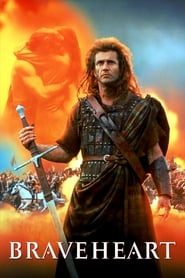
-
multi · 2h 34m 3 mentions
James Cameron, Gale Anne Hurd, Stan Winston, Robert Skotak + 8
-
Pat McClung
This scene was shot really quickly. It was pretty much all handheld, 48 or 60 frames a second. I think 48. Then Sigourney had to loop all her lines at slow speed, which is always odd. Our first effect in the movie. It's great, because it's what you expected to happen and then it's not what you expect. She was actually under the bed for that sequence. We built an artificial body from her neck down. Someone is under the bed with her. I can't remember who the lucky guy was that created the illusion of the chestburster. Pushing its way through her. It sets up the character. This is her nightmare. You know that she never wants to have to face it in real life again because she's haunted by it in her dreams and her nightmares. This effect is as if you're outdoors. When the camera dollies over, you see it's just a video projection. The idea was that in outer space there would be places you could go to get a feeling you were in a natural environment. So that plate behind her was shot out in the garden at Pinewood Studios. It was a VistaVision plate. Originally, there was supposed to be a birdhouse in the background in that garden, and she would have Jones on her lap and a bird would fly in and Jones would jump up and hit the screen and that's how the audience would find out that she wasn't actually on the earth. This scene was cut from the release version of the film, which became the source of some controversy with Sigourney. She later said in print that she had based her entire character on this scene, and she was devastated when it was removed. At the time she first screened the film, she told me she didn't like the scene, and then we wound up reading interviews where she had a big problem with that. We didn't have a chance to talk about it because of the postproduction schedule. We were working in England, kind of in isolation.
7:47 · jump to transcript →
-
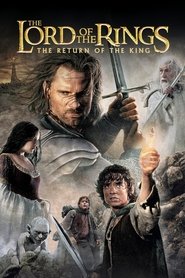
Pat McClung
Obviously, this is the heart and soul of the movie, which is Ripley's internal demon. I think Sigourney's just great in these scenes. Interestingly, Sigourney herself had an issue with my take on her character. She didn't think that Ripley hated the alien. We had a long creative dialogue and I said "No, she hates him." She hates the alien that killed her crew members and put her through the most traumatic event of her life, and wants to see them destroyed. But I think the way I finally sold it to her was - because Sigourney's very liberal - that Ripley would want to prevent the trauma she went through happening to anybody else, and she knows there are colonists on that planet. So I displaced it outside of her, when in reality I saw it as a very straightforward revenge story. But I think that was beneficial, because that creative tug of war between us actually caused me to think outside of my limited box as a writer at that time, and see that her motivation was on a higher plane as well, she was acting out of a sense of duty. That spoke to some of the themes I already had in the story with respect to her relationship with Newt. Once she finds out that the colony is lost and that battle is lost, she really only has one thing to fight for, and that's the little girl, the one survivor. Her mission has been to help these people avoid what happened to her and her crew.
24:19 · jump to transcript →
-
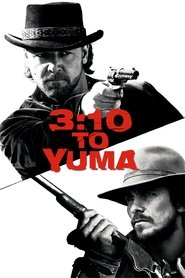
Bill Paxton
Spunkmeyer. In the pipe. Five by five." I always liked the way she said that. Actually, those are the hard ones. What did Mark have on there? I don't remember him wearing all those... Scars and bones. I think Jim had put the chin-up bar up there to make the line "Anyone ever mistaken you for a man?" work, cos in the T-shirt no one would have mistaken me for a man. He said "How can we make this line work?" So he said "Can you do behind-the-neck chins?" I said "Yeah." Is this the scene where you guys do the thing with the knife? I remember saying at the time "Jim, what about...?" "Shut up, Michael." Why did he put your hand on top of his? What happened was that Jim had wanted me to do it like a demonstration. And we got right to the moment and I said "Jim, this is really gonna be boring." I said "What if I put my hand on Billy's hand?" And since I won't hurt anybody, I would never hurt him, it would make it more interesting. I never understood what Bill was so scared of, because his hand was underneath. After the movie was done, we all went out and partied and drank a lot of beer, and I remember a voice in the middle of the night saying "You gotta come back because when they sped up the film it looked phony." Remember? We had to come back. And that's when I caught your pinky by accident. Just barely touched it and he almost died. I had to have reconstructive cuticle surgery. But, anyway, it was more interesting on his hand. This effect was one of the first uses of this camera with a variable speed. Magic Cam? - Yeah. Which is used a lot now, but it was a first here. What's great about it is that you could start out at 24 frames per second and then the camera, without having to cut and set up a separate camera, would automatically adjust for a faster or slower frame rate and then go back. Change the aperture while it was changing its speed. Do you remember Lance brought over his knives? No. I met Lance Henriksen at the airport when he was coming over from the US. They have much stricter weapons laws in England. He'd packed the knives that he'd been practicing that effect with in his suitcase. He said "I'm always the one that they check to do the luggage search." Going through customs he said "Stick with me." It was the first time he hadn't had his luggage searched. I thought "That's great. An actor coming over here with concealed weapons."
29:38 · jump to transcript →
-
-
director · 1h 39m 3 mentions
-
So I wasn't until the movie became this great hit. And then Emile swore that he went into theater after theater shouting, who is that woman? Let's see more of her. And when we were in Deauville, I was sitting between Patrick and Emile at the Deauville Film Festival. He had not seen the final cut. And when this part came up, he said in this loud voice, Eleanor, what happened to our turn? What happened to our dip down to the floor? So small as it is, we do feel that it is probably one of the reasons the movie has been a hit.
26:13 · jump to transcript →
-

oh my god and i still think this is one of the most extraordinary and sexual scenes in the movie i love this i love this this trio and so we set that up but we just came upon it by accident and we just thought oh it's just wonderful now this this was shot very very late at night and we were trying to pick up some stuff
36:53 · jump to transcript →
-
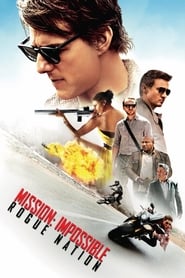
I'm So Sick of the Rain has to stand for all the days that we couldn't have a rain machine and all the shots of the rain that we wanted to have. So, of course, Jane went right back to it. Oh, Johnny's Cabin, which was something that we found by accident that we loved. Now, here, song, let me explain what I mean by spin. This is a little girl's song with a woman's question. And this song, again, was expensive, and it was taken away up until the last minute. And Emil finally said, as we tried many, many songs, he finally said...
1:03:33 · jump to transcript →
-
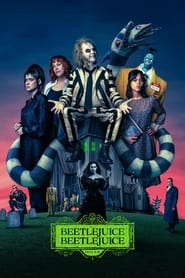
-
-
Richard Donner
This is amazing. You know, we happened to be out there doing a documentary, and these guys... We actually were filming this, and then these guys showed up, and the attack started and we were lucky. Bob Goulet. Did I really make this movie? Robert Goulet in the Everglades. Cajun Christmas. Great man. Well, it's a great cast. Great names, great people. All a lot of fun.
2:19 · jump to transcript →
-
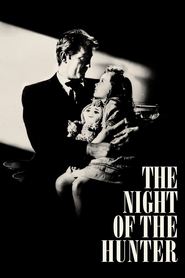
Richard Donner
He is cheap. Look at that. Were we lucky? Bob Mitchum. You all better know who Bob Mitchum is, or else go do your homework.
10:54 · jump to transcript →
-
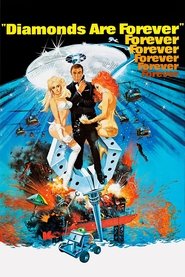
Richard Donner
Look at the famous Karen Allen eyes. Is that not the happiest, sweetest face you ever wanna know in your life? Look at that, Karen Allen. Very special. Very special. As I keep repeating, it was a great cast. Makes the director real lucky.
27:15 · jump to transcript →
-
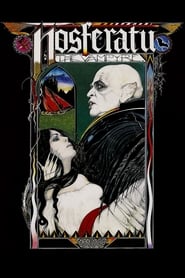
-
director · 1h 34m 3 mentions
-
So this is a slice of... This is the true story, gang. In Park Ridge, Illinois, it really happened to a friend of mine. I'd be proud if it was me, but it was a famous story in our high school that this happened. Whatever happened after that? Could he be in the sequel? The real guy is now, you know... 12 kids later? Exactly. May I say, Ricky Paul Golden, the swagger this kid has is true to him, undirectable.
13:02 · jump to transcript →
-
We're lucky the actors were good sports. It's putting them in uncomfortable situations. But you're doing something beyond what they're... They're in their comfort zone and it legitimately... They sign up for something and it's like, oh, and then we're going to shove a bunch of methicill up your nose and do all this stuff. I don't remember that in my contract. And we had people that were really up for experimenting with us to figure it out and they really made it part of a collaborative process. So it was really easy...
1:20:10 · jump to transcript →
-
I would not be here today, for better or for worse, who knows, without the collective work that you guys put into this film. And knowing that you make movies, you do affect people around the world. Maybe you knew that when you were making The Blob, maybe you didn't. We're lucky we get to make movies. At all. Can I just say one thing? Please. I love the remixes I'm seeing on YouTube, especially whoever did something called, I think it's called Blob Meat Harvest. It's like amazing recuts.
1:32:38 · jump to transcript →
-
-
-
Macaulay Culkin
A, I'm not that lucky. Two, we have smoke detectors.... One of John's funnier lines. "A, two." "D"? Is it "A, two, D"? I think so, yeah. - Yeah. There it goes again. This guy went on to... This guy who played the pizza guy moved to L.A. and had a couple of roles... ...but I haven't heard from him since I think we shot this. I've seen him in a couple things, yeah. But watching this movie again today, I thought to myself, "This was really--" You know, you think about how fun it was to shoot the movie... ...and I think that fun translates to the screen because we did laugh a lot. There was a lot of laughter, a lot of good times. Okay.
47:41 · jump to transcript →
-
Macaulay Culkin
I have to say, you know, sometimes you get... Critics complain about certain things, but Dan Stern in this scene... IS SO funny because of his body language. He's like a combination of a giant bird and a human being. And just the way he reacts in this scene... ... Just, again, was one of those situations that brought the house down. And the audience was So.... You wouldn't have thought that it would... Like you said earlier, that this would work twice, this gag, but... He sells it. - He sells it. All right, Johnny. I'm sorry. I'm going. One, two...70. Another improv... Improvised moment, again, from you here. I remember asking you to just say the line... ...and kept in the movie, and the audience roared. Keep the change, you filthy animal. See, you're just about ready to laugh there. You can see it cut right before I start giggling. I don't know who, but somebody got blown away. Huh? - Somebody beat us. They're in there. Two of them. There was arguing. One blew the other one away. Who? - I don't know. I thought I recognized one of their... Dan is so wonderfully stupid in this scene that it makes it... It makes it work. Sometimes Pesci becomes De Niro. Did you notice that? Yeah. "I don't know no Snakes." - He just became De Niro for a second there. I think they spent quite some time together. Yeah. - Suppose the cops finger us on a job.... I don't know. I read this article, I think in Premiere, saying: "What ever happened to Joe Pesci?" And I have no idea. He is now... - He came out with an album, I think. I think he came out with a singing album. Seriously? - I-- Like, year... Like 1998, '99 or something like that. He had some tasteless record in the '60s, like the early '60s... ...called Something the Stuttering Donkey or something. Some ridiculous novelty record, so he's got... And supposedly he's in Jersey Boys as a character. The play Jersey Boys, yeah. He's at the beginning. He hangs out with the Four Seasons or something. Now, this is-- This, to me, is amazing. This happened three weeks ago. I get a call from a guy doing a documentary on Elvis Presley. The guys says to me, "We've heard--" This guy's convinced Elvis is alive. He's doing a legitimate documentary. He goes, "Elvis supposedly was an extra in Home Alone." I'm like, "What?" - Awesome. He sends me this thing that is a huge... See the guy--? The bearded guy behind the woman in white. They are convinced, these people, that this is Elvis Presley. He's come back. He's faked his death, and he was now... Because he still loves show business, is now an extra in Home Alone. So they've got stills. This guy sent me all these stills of this guy with El... Compared to Elvis in this movie Charro! where they look... Look at this guy. He's not Elvis Presley. I remember talking to the guy. But these people are convinced that that is Elvis Presley, so it's now... It may appear in this documentary, so... - And this is recent? This is--? This is-- It's a couple-- Yeah. Few weeks ago. But more importantly... Forget about Elvis Presley. Yeah, look over the other shoulder. Look over her other shoulder. There we go. John Candy, who was at the time friends with John Hughes, who later... John and I became very close. He was, I have to say... ...one of the sweetest guys in the world to work with, and one of the... And probably the funniest man I'd ever met. There's no question about that. He loved improvising, he loved trying anything... ...and his entire supporting role in Home Alone was shot in one day. Yeah. I actually-- I came in. It was my day off. I actually came in to go see him again. And we started at 7 in the morning, and we finished at 6 a.m... ...SO It was a 23-hour day. And I don't know, uh.... I don't know if I've ever seen that kind of energy from a guy who was big... John's a big guy. That kind of energy was remarkable. He liked being on set. - He loved working. Loved working.
55:40 · jump to transcript →
-
Macaulay Culkin
That's another thing John Hughes would be very helpful for. I don't know if Gus Polinski was a polka king, if he was in the original script. I can't remember how she got home, but I don't remember it being a polka band. So it'd be interesting to go back there and look at those early.... Those early drafts? - Although... ...I don't know if I ever have that kind of time unless... I've gotta go see those old Home Alone scripts. I do it every day. This is all I think about, is this movie. Consumes my being. It's always interesting, because I wonder: "How do you really feel about the movie?" Because it's the thing that... Like you said, it's like a blessing and a curse. It's the thing that propelled you to international superstardom in one sense... ...and then in the other sense... . it's this thing-- It's all... Not that it's an albatross, but it exist... It's part of your career forever. Personally, I don't think about it. - That's a good thing. Ha-ha-ha. - Yeah, right. You know, it's just something I did, you know? It was just something I've always done. It just happened to be on a bigger scale, really. Right, exactly. - But, you know.... It's just the way... You know, just the way the... The way the whole thing worked out. - The way of the business. Yeah. Now, there was a certain critic in Chicago-- This movie... When Home Alone was released... .It was not favorably review... It was-- It got some good reviews... ...but some people really didn't like the movie. Two people who didn't like the movie, Siskel and Ebert, gave it two thumbs down. In your face. - But what was amazing about that... .IS I had to sit there and watch that, watch the show. And then three weeks later... ...after the film was this runaway success that couldn't be stopped... I think it was number one at the box office for 16 weeks, maybe? A couple months. - Some insane amount of time. So then they take... The late, great Gene Siskel. I met him. Nice guy. But then he was forced to go back to the house... ...and report on where Home Alone was shot. So after slamming us... ...he appeared in that window where Joe Pesci was... Pesci poked his head in. --and said, "This is where the scene was shot." And I thought to myself, "Well, this is sweet revenge in one sense." Had to go all the way out to Winnetka. Mom, where are you?
1:00:32 · jump to transcript →
-
-
director · 2h 24m 3 mentions
-
I liked Sigourney Weaver. She was clever, charming, intelligent. She seemed, um... I even liked the impression that she was, in fact, rather more for theater in New York and literature, than this particular lark. She never said as much, but I always got the impression it was all, not beneath her, but, you know... Movies are OK, but theater's where it's at. I liked that. We had some good conversations and she gave as good as she got, as is well known. She palpably had power, control, but never wielded it or made you feel uncomfortable. No, she seemed charming and good to work with. A fine actor. If she didn't like you, you'd soon find out about it, but then this is a professional scene, a professional outfit. I liked her. She demanded respect, and she got it. And these changes'd come by, these script changes, and we'd hear news from the front, and you'd take it in your stride. Where my character was concerned, Golic, there was this whole other subplot of the story for people who may not have seen it. When we shot the footage, Golic escapes from the sanatorium, from the hospital wing. He kills somebody, breaks out of there and he goes to where the monster is incarcerated and manages to free the monster in order to appeal to the monster, to join forces. A "You and me, monster, can go and kill them all, they all deserve to die" kind of scene. We shot this scene. Again, this is nothing unusual for a picture of this scale. We shot two or three different endings. If you were undecided, you would decide later. This is fairly standard, but it kept you on your toes. And also you could run a sweep as to which ending they were going to use. If you were lucky, it might be yours! It was like a multiple-choice thing. I worked on a Spielberg picture once, and it was exactly the same circumstance. Spielberg is good enough to call on the telephone and say "You know I told you I shoot three pictures at once? You ain't in the final picture." But what can you say? You enjoy the experience. You put it down to experience.
42:46 · jump to transcript →
-
Will I Be A
The Sulaco was left from the last movie. We had one shot of it to remember it. It had to be modernized and tricked out for this show, and there it is. You borrowed that back from Bob Burns, who had been given it? You borrowed that back from Bob Burns, who had been given it? I think you're right. - Burns really helped this series out cos on Resurrection we also got the queen-alien head that Jim Cameron gave him, and refurbished that. Thank God he's around. He saved Fox a lot of money. That was nice of him. At Fox there's some wonderful people, and good that they saved a few bucks. When you're setting up a shot, sometimes you get an accident. Somebody wrecks something and you think "Oh, let's do that." That's a lovely thing about filmmaking - you have the ability to change your mind. And there's certain things that happen by accident that are just magic. I'll always remember Conrad Hall talking about putting a light through a window, and this guy's in a room, and it's raining outside and it created tears, shadows of the rain dripping like tears on the man's face. Purely by accident. There were elements here that were shot months and months apart. She sees, or she thinks she sees, the alien tucked up here among the ductwork and pipes. It was a miserable sequence. I had to be in this suit, completely still, while David shot her POV. But, again, we had dumped these crickets all over the suit. This is the scene I remember most vividly. The crickets had crawled down through the neck in the suit and I could feel them. It's like they were moving between my skin and the suit. I know these things weren't biting me, but you could feel their little claws digging. Their evil intent. - I knew they were after me. There was some oxygen deprivation too, cos he couldn't really breathe as well as he should have. He was all crammed up... All this stuff of Sigourney, shot in London, I'm up on top of that ledge overhead, waiting for this moment to crawl out and fall on her. This is the cricket shot. So this is a mislead here, right? I was crying, I was weeping inside that suit. These lines, I remember hearing them over and over during each take, and I was wedged up in this ledge. And Alec was behind me, giving me something to push off against so I could crawl down and drop off in front of her. Yeah, but the cue came, right? And you, Tom, I couldn't believe it, you were asleep, weren't you? It wasn't sleep as much as I had gone unconscious from the lack of oxygen. t was oxygen-deprivation apoplexy. It was amazing because... - He was asleep back there. Look how motionless I am. The only reason he gets up to make his cue is that I pounded him on the foot. His foot was hanging over. I'd hear "Action", and Sigourney, and I would just pass out, take after take. Well, that's what good dialogue does, Tom. There a masochistic aspect to this. But it's so worth it when you sit in the theater and see the audience crawl. You make them squirm like the crickets did you. I am the cricket on their skin. Wasn't that the song from Beaches? But it is amazing how much stuff goes on behind the scenes, that nobody's aware of at all, that's required to get all this stuff to happen. And it just fleets by, but sticks in the mind. Sometimes. It's good that people aren't aware of it. Oh, no. Of course not. But that's what we're talking about today. All the nightmares that we... - Yeah, right.
1:42:29 · jump to transcript →
-
Will I Be A
If you line up all of Fincher's movies, you can see that it's a Fincher movie. I still think he did a great job with this. Not a lot of people could have really pulled it off, given the obstacles that he was facing. I think he did a great job with it. He did have a great team, from production designer, camera, you guys... And you. Don't forget that, Richard. I Know you can't say it yourself, but we can. Well, I can say you guys. And the track is good too. You know, Goldenthal. Elliot Goldenthal. You know, the creature work that you guys are doing now is better than this work, because you've just been able to play the violin for longer. If you could start again, you'd have done it differently. Cos that's the interesting thing about this kind of work - you figure a way to do something, and later you figure, I could have done it this way, and it would have been better. And even within the context of when this was done, I think had we finished this movie, and then started immediately right after, and done it all again, even without any advances in materials or technology, we so would have done things differently. It's like anything: the more often you do it, the better you get at it. What draws me to this business is that it's always prototypical. Everything you do, you haven't done. So it's always interesting and new. You build off your experiences, but you look for ways to put a different spin on it. And you're working with a different psychology of people too. Every director's different... It's like a family. It's interesting how movies create a family of people, all these crew members, and they all come together and become this interwoven, well-knit group. And then at the end of the production, they explode. Then you work together again, but never in that combination. But it is fun. When we see you here in the hallway, it's like, "Hey, there's Richard." And you recall those experiences. It's almost like being war vets or something. And you say "What happened to...? Where's this guy? He still alive?" It is like going to war, except your enemy is time and money. I'll bet you don't hear this kind of warmth and love on the other audio tracks.
2:20:17 · jump to transcript →
-
-
-
Marco Brambilla Daniel Waters
I went to CityWalk and I thought, what if all of Los Angeles was CityWalk? And this also predicts a couple of technologies. So this is kind of a precursor to the iPad. And obviously you saw a self-driving car earlier. And we were very lucky because one of the biggest costs on the production like this is the vehicles itself. So to make vehicles for science fiction movies is incredibly complicated.
12:48 · jump to transcript →
-
Marco Brambilla Daniel Waters
I got very lucky finding a lot of corporate architecture that we didn't have to do very much, uh, to, to make it futuristic. And this is the jingles coming up now. Well, I had a, I had a CD of jingles and like, I just remember we'd play them one after the other and go, who, who would, why did I buy this CD? The CD is so grating. And like, I'm like, oh, wait, wait a second. And then when I got hired to do this movie, I'm like, wait a second. What if this is the music of the future?
42:55 · jump to transcript →
-
Marco Brambilla Daniel Waters
I mean, we were so lucky. I was so lucky to get Sandra Bullock because we started the film with a different actor, actress. And the scene you just saw in The Habitation was shot originally with Laurie Petty. And there was no chemistry between the two of them. And we had really unfortunate, one of those terrible things that happened.
1:15:42 · jump to transcript →
-
-
-
So I couldn't believe how lucky we were. And he has been a huge support and fan of it. And the hardest thing was just everybody being so hot 24-7 on the show. I remember being comfortable one day of 92 when we were in Liquid Silver. One day. Oh, that's right. Oh, Liquid Silver. I can't wait until we get to that part. Yeah.
9:44 · jump to transcript →
-
And then we did all this stuff where we didn't show Malcolm Tesley's face because we didn't want to give away what had happened to him for all this time. After he got his head cut off. So you don't know what's trying not to give stuff away. I remember this shot of you guys going down in the filthy, dirty pit. Oh, yeah. And...
56:54 · jump to transcript →
-
just looking over the top of those. And when we first arrived and just looking at it, then you get there and you think, are we ever going to be able to light this and shoot this? And then there you are, and it's, oh, wow. How lucky am I to get to make this movie on every level? It took me a year, though, to option the project initially. I spent a year convincing them that I would be respectful to the project. Wow. And that I was the right person to get the option. And when I'd finally given up,
1:28:51 · jump to transcript →
-
-
-
Kat Ellinger
in the process of looking at Bez Mott, because I think the film exposes a lot of that on this very subtextual, subtle level that's almost undetectable unless you know it, unless you've been there. But as soon as you've been raped and you say, I've been raped, all of a sudden you are a victim and these judgments are made about you and what happened to you.
5:30 · jump to transcript →
-
Kat Ellinger
what had happened to me back in on myself because I had nowhere else to express it. I know a lot of people have problems with the rape-revenge genre as a genre, and I've certainly got into these conversations over the years. How can you watch that? This assumption that I wouldn't understand, like this assumption that...
22:52 · jump to transcript →
-
Kat Ellinger
Dupont has her own sort of grammatical way. She doesn't... And she was and still is like a huge lover of fiction. I mean, when she's raped, she says in King Kong theory, the first thing she does is go to literature for some identification, for something to make sense of what's happened to her. But she breaks the literary mould and she just writes this really incredibly angry...
27:38 · jump to transcript →
-
-
-
Jonathan Lynn
We got really lucky. Feeling better? Yes, thank you. Okay. Let's go for a drive. A drive? Yeah, a drive. Well, I don't know anyone else in town. This was a slightly complex, difficult crane shot. It doesn't look difficult when you watch it.
11:20 · jump to transcript →
-
Jonathan Lynn
expect. For me, some of the comedy of the scene lies in the fact that it's not lit in a kind of spooky way, but the fact that these macabre happenings are all taking place in ordinary light as if it's ordinary daily activity. That's what Harry Lefkowitz thought. What happened to Harry Lefkowitz? I don't want to know what happened to Harry Lefkowitz.
1:09:27 · jump to transcript →
-
Jonathan Lynn
But that's what they've always been called. I use them just to create a sense of unsettlement, as it were. A sense that things are not quite right. Audiences don't generally notice them. There's a great many. Some are really almost too subtle to notice. You're a lucky guy. This scene on the boat was shot in one day. You're about to find out if the woman you love really loves you. And...
1:27:31 · jump to transcript →
-
-
-
Noah Baumbach
Let me tell you about my boat. This is something when you first brought the idea of the character and the story to me, this was something you always wanted to include. I remember you said, you know, idea of this character, originally named Steve Cousteau. We later made him Steve Zissou. Oceanographer. He has this show. And then you said, "I want to do this--" Visual. - This visual. So this set, this is sort of inspired by, you know, World Book Encyclopedia, and Time-Life books, and, you know... elementary school books with fold-outs. And so that's kind of where it comes from, but making it in three dimensions. And for me, it was just something that I was inspired by. And it was years and years ago that I was planning to do this. And it was very kind of thrilling to be able to build this set because it was such an unusual one. And so many people-- For us, the movie is about all these characters who we made up, but they relate to people we know and they're characters we really love. We don't really have a lot of bad guys or anything. We just have these people we connect with. And the idea of having them all in there at once in this environment, that sort of encapsulates something about the movie. I think it goes back to what you were saying about your-- That this is also about what you love about making movies, and how you feel, you know, sort of lucky and privileged to be able to do it. And here, you know, in a way, this is like your dream of, "If I could make a movie, I want to do this." I mean, you've had this for so long. - Yes. And we shot it... It was like shooting a play. Explorers Club? - Right. You were on the set. - Yeah. This is-- Yeah, I spilled an entire espresso on my shirt. During the filming of this scene? Yeah. I was so jet-lagged. I was listening with a headset and it somehow disconnected from the headphones, the little mic part, and it knocked the espresso out of my hand and all over my shirt. Yes. You know, I always like paintings. - You do have a lot of paintings in your movies. - Yeah. And those tell about the character of his mentor, Lord Mandrake, and then we have Zissou, and then we have... And this story was actually based on something a friend of ours had been talking loudly in L.A... Chris Eigeman. Chris Eigeman had been talking loudly at an Indian restaurant in L.A. He thought that there was somebody who looked like a famous action hero, and he was talking very loudly about what happened to this guy, and it turned out to actually be the guy, and Chris was humiliated. And we lifted it wholesale and dropped it right into the film. And at one point you were going to have Chris play the guy until then you decided to make him Italian. It seemed nice to be able to put it all in subtitles. The Explorers Club is also-- This place is inspired by a club in New York who actually let us use their flag, which you can see in the background. And it's the Explorers Club on 70th Street, a block away from where I used to live.
14:59 · jump to transcript →
-
Noah Baumbach
Was there a picture of Antonioni also? Yes, Antonioni and some Avedon photographs that were taken in Italy. I'm just gonna comment further on Roman. Roman Coppola, who then-- Roman kept saying he would help us with the second unit of the movie, which I'd never had second unit before and I never knew what to ask him to do. And finally, Roman just showed up and started shooting things, and ended up shooting all kinds of shots. Shots of the boats at sea, from the helicopter, and things that were difficult to get, and things that we couldn't do, and Roman made a great contribution to the movie with a variety of shots, and did it with a lot of enthusiasm. That's true. What happened to me? Did I lose my talent? Am I ever gonna be good again? This sequence is set in Ravello, above the Amalfi Coast. It's supposed to be Alistair Hennessey's villa. Villa Hennessey. - In West Port-au-Patois. West Port-au-Patois, maybe kind of like Haiti or something. In the background, down below here, when Zissou and Eleanor are on the balcony at Hennessey's place. There's a guy who she calls Javier, her research assistant. His name is Muzius, and he lives there. He was the guy who showed us the place. So we cast him in the scene because he sort of comes with the house. I was thinking, like, "What perfect casting." But he actually came with the house. - He was local. That was also based on a photo. There's two cigarettes kissing. Yeah, it was.
1:15:53 · jump to transcript →
-
Noah Baumbach
At the bottom of the ocean, he cries about Ned's death and everything else. Esteban, and finding this shark, and that it actually does exist, and whatever this thing is he actually did accomplish, and all the things he didn't. And the day we shot it, Bill, you couldn't even speak to him that day. I mean, he's locked in a submarine with 12 actors, and he doesn't say a word to them the whole time, and he's reading a book. And he just... I felt like he put everything of himself into it. And then afterwards, it was like a weight was lifted off for the rest of the movie. It was like he'd finished the movie at that point. I don't know if that really sounds like anything, but it's something about what happened to him during this scene... Someone in an interview asked me about, you know, what the shark means, and I didn't have a good answer because I think, as we've talked about, we don't really know. But I do think it's significant that it takes a kind of something that is... You know, in some ways, looks very deliberately artificial. I mean, I think it's beautiful, but it's very artificial-looking. And something that maybe comes out of Zissou's mind. It's almost like something he would have invented. It takes something like that for him to become emotional and to cry, you know, in a way that he hasn't been able to the entire movie with all the kind of complications of real life that happened to him. And I think that's... It is beautiful, Steve. ...probably significant. Yeah, it's pretty good, isn't it?
1:47:13 · jump to transcript →
-
-
director · 1h 52m 3 mentions
-
a really fun sequence of him, straight from the comic, of him hallucinating and having sex with spiders and stuff, but A, we couldn't afford it, but B, we just wanted to keep the pace up. Now we'll meet my lucky talisman, Jason Fleming. He's the actor on the right. I only made one movie without him and that was swept away, so he's gonna be in them all, hopefully.
18:41 · jump to transcript →
-
We suddenly see the vulnerability of Nick Cage, or Damon, and also the madness. I think it's the scene where you suddenly realize it was sort of fun crazy before, here it's sad crazy. I think it's important, again, it's sort of another trick you do to make you really just feel sorry for him and think, you know what? Get revenge for the horrible things that have happened to you. Get rid of these bad guys. You keep carrying on like you've been carrying on. It's only a matter of time before Gigante's looking for you.
51:27 · jump to transcript →
-
I think he enjoyed himself, Nick, in this movie. I know he liked putting on the costume, that's for sure. Still wish we got to see the Nick Cage and Tim Burton's Superman. See, what we're doing now is probably what they would have done. Maybe I was lucky that they didn't do it, because they left a hole in the market, which they might have claimed.
1:07:55 · jump to transcript →
-
-
multi · 1h 33m 3 mentions
Wes Anderson, Peter Becker, Roman Coppola, Jake Ryan + 3
-
Wes Anderson
Well, in the case of this one, sometimes the beginning isn't the thing you're coming up with first, in my experience. But with this movie, it was. With this, I had an idea that I wanted to do a movie about young people, an island like this, and this opening scene, which is the children in their house during a rainstorm where they're stuck inside, and listening to this record that I happened to know that was a record I liked, Benjamin Britten.
3:02 · jump to transcript →
-
Peter Becker
That actually opens up the question that I was gonna ask. You know, Wes, you're obviously known for having a very controlled aesthetic approach that nothing is on-screen by accident. And you can feel it. When you're in a Wes Anderson film, you can feel it. You can stop your frame. And there's some filmmakers you can stop on a frame, you go, "I know who made that." And Edward, as an actor, what is it like to come into that space? Is there freedom in that? I would call it freedom in bondage. No, I think it's great. I actually really like it. Look, there's experiences you have that are very much about discovery. Sometimes people paint very real armatures of scenes, and as actors you try to discover something, and that's a very difficult kind of work in its own right and it's something different. I find whether it's Wes or someone like Fincher, or people who have very specific visions, I find it very comforting because you move into a different gear where you're fulfilling, like, an incarnation of a very specific character idea. There's a lot less uncertainty and you're able to-- Just sort of use the instrument and trust that what you're doing is bringing the instrument of your ability to manifest a character into the service of something very specific. And that specificity is great. It's like having a lot of your work done for you. And I find that very relaxing, ironically.
14:51 · jump to transcript →
-
Wes Anderson
We had a great time working with him. And I did have this idea. I would love to have someone who was-- This is a lonely, solitary policeman. And maybe one inspiration is Roy Scheider's character in Jaws on this island. But I had this thought, "I would love to have somebody who you really believe 100% is the police." And there's nobody who you believe more is the police than Bruce Willis. I particularly loved him in Pulp Fiction, and obviously so many other things. So we were lucky enough to lure him into this one.
39:10 · jump to transcript →
-
-
director · 1h 34m 3 mentions
Scott Stewart Jason Blum Brian Kavanaugh-Jones Peter Gvozdas
-
Scott Stewart Jason Blum Brian Kavanaugh-Jones Peter Gvozdas
And I think also we haven't talked about it yet, but Carrie is a big part of what makes that work, too. We were really lucky to get her in the movie. She was the first one in, right? Yep. This is a good place to talk about all things Carrie because she's just spectacular. And she really sells this, which is really hard to do, and a lot of actors aren't able to do it. And I think Carrie and Josh and Carrie...
14:36 · jump to transcript →
-
Scott Stewart Jason Blum Brian Kavanaugh-Jones Peter Gvozdas
And then, look, we've got really lucky in getting fantastic actors who are also meaningful, but I think that it's really wonderful to be able to give you guys that level of creative autonomy built around just the idea, the concept, and you guys. Well, it's interesting because it's sort of like it's... There's certainly been plenty of examples of scary movies with very famous people, but there's been probably no other genre has more examples of...
17:55 · jump to transcript →
-
Scott Stewart Jason Blum Brian Kavanaugh-Jones Peter Gvozdas
You know, you're still the last one to keep holding the candle. And so he sort of committed his life to this cause. And he's not selling it. I think that's, I mean, that has to do with obviously how you directed it. But the minute he tries to sell, this whole scene falls apart. And he's not, he's just not selling. He's just saying, this is my experience. You can either take it or leave it. But this is what happened to me. And that tone makes what he's saying, even though it's outlandish, it makes it land.
1:09:04 · jump to transcript →
-
-
-
Joss Whedon
It was a big decision whether to go off on her smile or this grab. Ultimately, the grab very specifically said, "We have a problem, and the problem is Tony." And, um, one of the things that also sort of hit me late in the game is that you can really look at this film and just straight-up Say, "Tony Stark is the villain." It's not just the beard. He's a good man who is corrupted by his own anxiety, by this vision of a disaster, and makes what is obviously a really bad decision. And I spent so much time in the writing process and during filming trying to protect Tony Stark. Trying to make sure that he was still a heroic figure. And at one point I watched the movie, and I went, "You can just go ahead and lean into this, "that he's now evolved into a villain." Obviously, he's not just that. He's redeemed, and he is a hero in so many ways. But it was very freeing to be able... And I think it's not something you get to do a lot in something like this, narratively. To just go ahead and Say, "Your guy just might not be okay." And again, that's something that, thematically, the entire movie is about. It's been commented on, and it's not by accident that the word "monster" is used by most of the team about either themselves or each other. Feels good, yeah? I have a "Jarvis is my co-pilot" sticker on my laptop. Because how could you not? That's one of those things that I thought of and asked for while we were shooting. "Can we just throw that in?" And the prop guys just disappeared and came back with the perfect one. And, of course, it comes right after he says, "Jarvis, take the wheel," so clearly we're already leaning into the Jesus thing. And that's, um, again, not by accident. We're not saying anything specific about religion, but we are playing on Christian iconography a great deal, partially because both Tony Stark and Ultron have god complexes, and partially because the Vision himself does represent an ideal. And when he picks up the hammer, it's... I don't want to say a miracle, but it's playing on that idea of... When we think of that kind of religious figure, we are thinking of the best idea of ourselves. Of what we wish we could be. And this play is so much about the best and worst. This little bit's a bit of embellishment that Robert and I came up with on the day. The two Enhanced? It's always nice to be able to have people who know their character so well that they can give you what you've asked for, but then make it feel lived in. I love this shot. It is very much of the idiom of the first movie, in the sense of, "Look at this big, expensive space. Isn't it grand?"
12:11 · jump to transcript →
-
Joss Whedon
Stop trying to scare us. I liked the idea, the texture of the idea that Thor has something that could actually get Captain America drunk, because, as he explained in the first movie... I don't know who that actor was, by the way. He's really good, he's very familiar, uh, the veteran. But we were lucky to get him. I just... The name isn't coming to me. Um... No, it was so much fun to be able to do that. And he used "Excelsior" here as "I'm so wasted," um, since I grew up with that phrase.
25:20 · jump to transcript →
-
Joss Whedon
Where he says the thing we're all thinking. And it plays, and It's also his little power talk, his little pep. It's emotional. His whole relationship with these characters... I knew what I wanted to do with Pietro, and I knew that he was gonna have a relationship with them that was incredibly contentious. But part of it came simply from the fact that all of their action together in Italy was because it was the first thing we were shooting, and they were the only actors available. And everybody else was off having babies or doing publicity or making another Marvel movie, or one of the 19 movies they had all made during this. I mean... So they said, "Well, we're gonna start in Italy, "and you've got these three characters." And so what was a sort of matter of convenience became a real arc. I said, "Well, okay, then these guys are really gonna have a relationship "that progresses and means something." And for the guy who likes Pietro the least, who discounts him completely, and who is sort of a father figure to these kids, for Pietro to prove himself the truest hero of the bunch by saving him is, I think, much more interesting and emotional than if it just happened to happen.
1:46:20 · jump to transcript →
-
-
director · 1h 23m 3 mentions
-
he doesn't have, he doesn't need to talk with her. He's past all that, like he explained himself or like, I think part of him wants to feel human and less evil about what he's doing, that deep inside he knows that is a bad thing, but he's trying to be, he's just, of course, turning a blind eye on what he's doing. And that's why I think he explained himself a little bit, like, hey, I'm not a monster. If you could see the ways, the things that happened to me, like you'll understand, right?
1:05:40 · jump to transcript →
-
We came up with turkey baster and the sperm. It's actually the way you do it. It's actually medically accurate. If a single mom was to have kids at home and we go to the sperm bank... It's still pretty twisted. It is, but at home insemination is the way you do it. You take a turkey baster and that's the way you do it. It was a twisted idea, very twisted. But it happened to be that...
1:09:51 · jump to transcript →
-
And this is definitely one of those moments that we got so lucky on the shooting. Like again, very hot day, the wrangler showed up and he had just one ladybug, just literally one ladybug. And I'm completely determined to not do a CG ladybug because I didn't do it at the beginning, I wasn't gonna do it now. And he puts the ladybug on her hand and does the perfect thing that spread the wings.
1:18:42 · jump to transcript →
-
-
-
Nia DaCosta
So I love the scene for Jimmima as well, 'cause she really gets to shine. And I think kind of all these scenes with these characters, you get, like, this... you can really project what their life was and how they ended up in this space. And I think this scene, when it ends, you kind of hear Jimmima and the way she treats him at the end. Like, you're kind of like, "I think I know what happened to you."
44:34 · jump to transcript →
-
Nia DaCosta
To be fair, I don't Know what I would do either if I were Cathy. Like, how am I gonna fight them all? Yeah, so this whole thing where she's, like, grinding on him basically, and then she's like, "You thought, you know, you think... "thought I was weaker?" Clearly, something happened to her.
46:07 · jump to transcript →
-
Nia DaCosta
So in the background, you can hear, like, the rope loosening the hook. And I love this shot. It's a bit longer than in reality, anyone would need to realize what's happened to her. But I just love this progression so much. My cat... Like the blood seeping into her eyes, blood coming out of her nose. Sometimes in film, it's nice to just have these moments outside of time. Cloud space! Cloud... Cloud...
46:46 · jump to transcript →
-
-
-
Alan K. Rode
Of course, Hayden doesn't buy Marie's transparent lying. Sterling Hayden was a fascinating man, a handsome fisherman, a man of the sea, who happened to be good-looking enough as a young man to stumble into a Hollywood career that alternately shamed and enriched him. I have a 40-year-old paperback edition of The Killer Inside Me that includes a back-cover blurb from Stanley Kubrick that reads, quote,
25:45 · jump to transcript →
-
Alan K. Rode
And there's one more thing. Suppose by accident you do get picked up. What have you done? You shot a horse. It isn't first-degree murder. In fact, it isn't even murder. In fact, I don't know what it is. But the chances are the best they could get you on would be inciting a riot or shooting horses out of season. Killing horses out of season.
34:20 · jump to transcript →
-
-
director · 1h 30m 2 mentions
Ed Wood Biographer Rudolph Grey, Exploitation Filmmaker Frank Henenlotter
-
you know, people in the adult film business, softcore, hardcore, anything, they did a fabulous, lengthy interview about whatever happened to Pat Barrington. And it was pretty good and pretty sad. And then a couple of weeks later, it was gone from the site. I didn't read an explanation. I mean, maybe they did, but I don't know whether... So I don't want to quote from anything, really, because I don't know what's really true and what isn't, okay? But apparently...
26:19 · jump to transcript →
-
Now, Paslov says this is a real skeleton. That's what he told me. Yeah. He's got some nice camera work on this. Well, I think... I think Karamiko knew his stuff. You know, what's interesting about Karamiko, he did all these number of low-budget films. Guess what happened to Count Dracula? Stuff on that level. And then, years later, he's shooting Dallas. He became a big TV DP. You know? He's passed away now, but...
1:08:27 · jump to transcript →
-
-
director · 1h 29m 2 mentions
-
Maybe experts are not the best viewers for any kind of thing. But one thing in this film that has kind of come into its own in the 21st century, it's a film about the depletion of resources. Yes. Now we have what's happened to the rainforests. This is about the preservation of forests. Yeah, but it's interesting. It's about the preservation of forests, but it's not considered what a world without rainforests would actually be. Here, it's almost as if...
16:02 · jump to transcript →
-
over a project. And you feel that he probably would not have been a great actor's director. It's the nuts and bolts that appeal to him. He is very lucky to have Bruce Dern in this film. My memory is that in Brainstorm, Louise Fletcher is brilliant.
39:08 · jump to transcript →
-
-
-
That having been said, welcome the entrance of Mr. Jeff Spicoli. Yay. Hey, you guys had shirts on when you came in here. Something happened to them. And just for the record, I'd like to point out that he's wearing half of wigs. That was like his taps hair on the top and a wig on the bottom and fake braces and red
5:27 · jump to transcript →
-
And the shot of the light, so it's what she sees and not the idealized version. It's so cool. Well, the graffiti, that was in the book. It was like that was the thing that she was reading, Surf Nazis, as she was losing her virginity. So we were on the same wavelength. Yeah, but you wrote it. Well, I got lucky. Well, we both agreed. This is good. Well, it's powerful. That sort of starts to really send a message, I think.
19:50 · jump to transcript →
-
-
technical · 1h 35m 2 mentions
Steven Lisberger, Donald Kushner, Harrison Ellenshaw, Richard Taylor
-
Computer Simulation Division Richard Taylor
One little thing I noticed... I mean, I didn't catch it when I was directing Jeff with this, is that when he plays Clu, he plays it with this strange computer accent, this mechanical accent. And now, when he's being tortured, he loses that, and I wonder whether he noticed it. We got so caught up in being in the scene that nobody realized that at the time. Clu's torture sequence is a great example of how light is used to create emotion. Lots of different filters were used on him as a part of that torture sequence. There are, basically, ripple glass effects, there's silk screen steel mesh, exposure changes, hand-done animation. When he's energized by the MCP, there are other filters that were used on the camera to give him that multiple-effect look. In this particular case, it was silk screen mesh, steel silk screen mesh that was on the taking camera and was spun around on the lens as a part of that effect. Dillinger's arrival to ENCOM in his personalized chopper was an interesting sequence. I took drawings of the chopper, schematic drawings, and created the design motif that you see on the chopper. And then over a two-day period, I applied these designs to the chopper myself with these varying sized, 3M reflective tapes. So, when we are shooting this sequence, what we are basically doing is flying air-to-air in another chopper parallel to this chopper. And we have a very low-intensity light source right near the lens of the camera, which is shooting across and reflecting directly back at the camera off of this 3M material. And it was a red light source, so it gives you the appearance that the chopper is either backlit or has some kind of neon lighting system on it. Again, there was the attempt to, for the outside, the window, to have the grid type of atmosphere and, kind of, cross-pollinize the electronic world with reality. Oh, I remember this stuff. Nice desktop computer built right into the glass. Touch screen. - Touch screen. I still want this desk. This was done with rear projection under the desk. The whole set had to be built up on the stage so that we could put a giant mirror under the set and project it in the old-fashioned way. There were technicians who were basically controlling light switches to different light boxes underneath this desk to light up different areas. The type itself, when it writes itself on, is actually matted into the scene from a computer graphics created type. And again, the view behind Dillinger is indistinguishable from the electronic world. And whose voice is the MCP? It's David Warner's voice. - Yeah. Yeah. It was just electronicized a little bit. End of line. Someone pointed out that they finally figured out that the reason that Bruce Boxleitner's character was wearing glasses is because he was supposed to be a little bit of a nerd. I think that was the intent. Just the readouts on the computers in the real world had to be pre-programmed ahead of time so that they wouldn't have rolling bars on them when we photographed them. Here you see another attempt to link the electronic world with the real world. The cubicles that the office workers are in are not dissimilar to the cubicles that the game players are in. And the intent was to have them go on forever or almost for infinity. Now, what thematically is happening is that at the time, computer people... Programmers were very concerned that the IBMs were going to take over the world of computers and exclude people. That they were going to be... That the system was going to be tyrannical. And what we're trying to show here is that the... Corporately, they've put a stranglehold on the system, and that the programmers are not being allowed the access that they want. And access for them is vital for their work. This character, Alan/Tron, is still inside the world of ENCOM and is more in balance. He seems... He's one of the people that's going to deal with the system from the inside. He's got a very methodical program in Tron, whereas Flynn is no... He's a renegade now. He just doesn't fit in and he's at war with the Dillinger character. The name Tron is derived from electron. Some programmers think it refers to "trace on, trace off." But that... We learned about that afterwards. There's a program in Japan called TRON, which is an educational school program, which has been running since 1985. And ENCOM was the only name we could find that wasn't already registered as a corporate name. Whereas Alan and Flynn are aligned with their counterpart programs, Dillinger has aligned himself with the tyrannical Master Control Program. So, the MCP is the ultimate controller, the big mainframe, the antithesis of the personal computer. The sequences that take place at the Lawrence Livermore Laboratory were interesting in their concept and in production. It was a very complex place to work. It was a very tight area, and we worked on this film with 65-millimeter equipment. And Bruce Logan, the DP, had his hands full. Sixty-five-millimeter film technology is quite cumbersome compared to Panaflexes and Panavision cameras. The size of the camera body itself, the limitations of the lenses, blimping the cameras... They're huge, so to get them in these cramped quarters was difficult. We were the only ones... Only film company ever allowed access to shoot in there. And nobody's been back since. A lot of this was lit, practically, by the fluorescents that are in there. It almost looks like a set. Yeah. We were very lucky that Lawrence Livermore let us use this facility. Because the cost of building a set this elaborate would have been astronomical. The Lawrence Livermore Lab is where they had the largest laser in the world. I don't know if it still does today. And they did a lot of research for NASA. Lawrence Livermore Lab was very cooperative with us, and allowed us to, really, kind of, run free through this particular area of the laboratory, which was their linear accelerator. So, we went into the one particular area, which we found most interesting for the area where Flynn gets de-rezzed, and where you first see the matter transportation effect, where the orange is digitized and deteriorated and then reassembled. In this particular case, we are seeing an orange, which was created by CGI by Triple-l. Animation that was done by the effects animation department, which was headed up by Lee Dyer and the effects animators, John Van Vliet, and John Norton, Barry Cook and Michael Wolf, Chris Casady. The name of that laser, by the way, Is Shiva, the Hindu goddess of creation and destruction. The 16 billion-year life cycle, she's got the drum of creation in one hand and the fire of destruction in the other. ...femain suspended in the laser beam. Then, when the computer plays out the model, the molecules fall back into place and voila! So simple. Why didn't I think of that? - That's right. Use that on Star Trek all the time. It's funny how they just kind of, just blow it off. Another afternoon's work down in the lab. Exactly. - Teletransportation, okay. Just digitized matter, no problem. Tomorrow we'll do watermelons. In a week, a human being. No, that comes sooner than that. A-ha! Oh, you're giving it away now.
7:08 · jump to transcript →
-
Computer Simulation Division Richard Taylor
So, the maligned Flynn, the persecuted Flynn, has completed his journey. Right. He has returned with the information. Look at that printer. - Yeah. That looks pretty funky. - I know. Lucky it's not a Teletype. Yeah, I was just going to say that's what it reminded me of.
1:29:02 · jump to transcript →
-
-
director · 1h 54m 2 mentions
-
extras, our own extras. But I wound up shooting a lot of people who just happened to be there. And one of the other restrictions that they put on us was under no circumstances could Peterson get up on those rails and run along the rails, largely for his own safety. They felt that their insurance wouldn't cover it if he got hurt. But Bill assured me that he could run those rails with immunity. And Bill had been an ex-college football player, very athletic.
26:04 · jump to transcript →
-
What happened to your daughter? I don't know. She was in a park in those little monkey bars. You do see in the scene where Turturro leads Chance astray, ostensibly to a hospital, which was the Queen of Angels Hospital in Los Angeles, to visit his daughter, who's supposedly sick in the hospital. It's all a ruse. And you see Chance let his guard down there.
1:03:49 · jump to transcript →
-
-
-
Gary Goddard
I was able to pull a shot out where he happened to snap his head in a direction, and you'll see how we were able to do that after the fact and make it appear as though he was in the area, and therefore no one any longer questioned the fact that he was in the area close enough to help save her. So just put that in the back of your mind. That'll come up later. Now they're investigating the key, having no idea that they are, of course, sending signals back to the attorney every time they turn it on.
27:49 · jump to transcript →
-
Gary Goddard
set up the fact that there's a conflict between good and evil. You'll see the soldiers swarming over the rooftops here in a minute. Those are the rooftops that were gone in the earthquake, so I always thought back, I thought, you know, we were really lucky the earthquake didn't hit while we were shooting. Because we were on every one of those roofs. And the roofs that the actors weren't on,
1:12:51 · jump to transcript →
-
-
cast · 1h 36m 2 mentions
The Garbage Pail Kids Movie (1987)
Lead Mackenzie Astin, Katie Barberi, Film Programmer William Morris
-
Lucky or not, we were the ones that were chosen. Once again, how many golden raspberries was the film nominated for? Three. And how many golden raspberries did the film win? We didn't win any, but that's OK. We can enter again and see if we have a shot. They got to make Leonard part eight.
7:04 · jump to transcript →
-
with everything that had happened to them throughout the film. But in the editing, they decided to put these little pranks in the middle because they felt like the kids might get bored. And to this day, kids, I mean, child viewing audience. To this day, it concerns me when studios come in and the editing department or the marketing department says, no, the original story isn't going to fly. Well, we don't know that. You know, it's narrative. And when we sign on to a project...
30:25 · jump to transcript →
-
-
director · 2h 9m 2 mentions
-
He doesn't understand the concept of money. He's just inherited $3 million. He doesn't understand the concept of money. That's fucking poetic. Don't you think? Good old dad. The who's on first routine actually happened by accident. Dustin originally has written in the script there was...
22:03 · jump to transcript →
-
Run, Ray. Of course, there's a long way to California, and I'm definitely not supposed to be off the grounds for more than two hours. Definitely have to be back in two hours. Well, wait till you get there. The people, the crowds cheering. I have to be back in two hours. This sequence, we got lucky in that when we went back to Cincinnati to shoot the scene when they were walking around the Buick, the light was so...
26:52 · jump to transcript →
-
-
-
He's so, and I didn't realise he was in this. I was like, I recognise that guy. But obviously, I picture him much older and kind of- He's very thin. Sturdier, shall we say. Yeah, yeah, yeah. But you've got Clive Mantle in this, you know, who, famous of Casualty, but was, you know, to me, he was in Superman IV, the first nuclear man. But I spoke to Clive over 20 years ago, and I said to him, what happened to you in Alien 3? You don't see him get killed.
26:45 · jump to transcript →
-
You only find out what really kind of happened to her through a little tiny flashback in the film, but also just as a prologue trailer they put out that was directed by Ridley Scott's son, where they're on board the ship and they're trying to fix things. She's fixing David. And what else was there? Some other little tidbits before they arrive on the engineer's planet. So that was just released as a trailer. It wasn't part of the movie.
1:14:46 · jump to transcript →
-
-
director · 1h 56m 2 mentions
-
When we shot the sequence of the three of them driving around in the car, I gave Patricia a disposable camera, and she kept shooting shots of the top of Christian's bald spot on his head, which pissed him off. Shots of Dick Richie's big nose. And I don't know what actually happened to those stills that she took, but I remember I kept them, and I wanted to do some sort of animated sequence.
59:54 · jump to transcript →
-
My God, what happened to Patricia? She looks terrible. Yeah, so obviously the makeup guy had done a good job. Floyd, you sure that's how you get to the Beverly? Yeah, man, I'm positive.
1:29:23 · jump to transcript →
-
-
director · 1h 43m 2 mentions
-
explain it rationally, but that's why I think the film does have this psychoanalytic sort of structure, right? It is about revealing these layers and being able to strip them away so that the characters themselves are able to come to terms with what they've experienced. They know what has happened to them, but they haven't fully absorbed the levels at which that's affected them.
25:13 · jump to transcript →
-
that she can actually tell this story for the first time in terms of what's happened to a complete stranger. But that stranger has actually been designed and planted there. You've been there? Yeah. I was there a couple of years ago with my debating team. Debating team? Mm-hmm. I admire someone who can debate well. I mean, who can debate instead of just argue. Anyone can argue, but...
1:10:22 · jump to transcript →
-
-
director · 2h 17m 2 mentions
-
I understand. I mean, even while we were making it, I knew I loved it because I was recreating sections of my own life. And I really thought when it was done that all of my friends were going to love it, too, for the same reasons. But I had no idea that somebody who didn't live through these times was going to find this so fascinating. But obviously, the character transcended the time. And it became, in a sense, a period movie that happened to be our period. Mm-hmm.
25:54 · jump to transcript →
-
and his mouth like open a lot like that, you know? So that was his, I can't take credit for that. Lieutenant Dan sure knew his stuff. I felt real lucky he was my lieutenant. He was from a long, great military tradition. Somebody in his family had fought and died in every battle.
43:02 · jump to transcript →
-
-
director · 1h 58m 2 mentions
-
we see that my character is losing it. All of a sudden, he gets totally freaked out after what happened to Melanie. And he thinks he's the next. And he wrote it down and came and showed it to me. And I liked it. So let's do it. Let's shoot the scene. It's a powerful scene. It's very good. So when you asked before about, do we change sometimes things with the script, you change all the time. I think it's always a constant work in progress.
1:08:21 · jump to transcript →
-
Iraqis. It was more like they, more or less by accident, now run into Iraqis because they go just over the border to Iraq, and now the Iraqis come and fight Air Force One. And it was a first try to do something like a dogfight, but I think it didn't really work that well, because we were then thinking, what can we do to connect it more to the story, and to say, well, why not just
1:43:25 · jump to transcript →
-
-
director · 1h 54m 2 mentions
-
My Question Initially To Jean-pierre Was
This one I love. With the hair on the shoulders - it's great. I asked him to take his T-shirt off, but he didn't want. Another scene from Pitof. In fact, he made everything. He made one scene with me. - Exactly. Later on. This guy was great - a flash-frozen soldier. We were lucky this guy was so big. We could hide his arm behind his back when we added the artificial extensions to his limb so his hand could break off. This was breakaway pieces. Garth Winkless did a lot of design work on this. I think, Steve Kuzela as well. I remember, I asked the studio about the violence. They told me no problem with the violence, because for this kind of movie... the teenager wants violence. They want to have gore, gory shots, and this kind of stuff.
41:30 · jump to transcript →
-
My Question Initially To Jean-pierre Was
Can you imagine? This is almost 20 years later. She's still playing Ripley. Yeah, and you have to understand, this is take after take, after day after day with this emotional commitment. Very, very heavy. All the permutations from where that character started in the Ridley movie to where she sort of journeys, leading... This is, like, the culmination of it all. The future and the present and the past all sort of melding together. And you're right, she really... You see sequels, you see people kind of walk through them. She's... you know... She has a notebook filled with... She keeps herself up to the moment, connected with her character, for every take, every scene, every day of shooting. It's an amazing thing, especially in a genre like this, in sci-fi. It's not like Terms of Endearment here. But just as an acting exercise to play the same character for almost 20 years, as you grow as an individual and you see that character in so many different situations and grappling with technologies and the relationship of where she finds herself with regard to her humanity. It's fascinating and she is in this film. Her commitment to it is off the chart. These were the victims of the chestbursters. We had to come up with a very simple way to do this because of the numbers of them. We sort of took our cue from those T-shirts that came out after Alien and Aliens that just had these rubber bones applied to them and we made these slip-on appliances that had the broken-out ribcage and all the guts. We made a male and a female version and I think there were a couple of guys that ended up getting women's torsos on them. They were lucky. There he is, ladies and gentlemen. The beautiful and talented Mr Leland Orser. My friend and, if you knew him, yours. This is Leland Orser. I love this actor. I saw him in a very small character in Se7en of David Fincher. For this scene I used maybe four cameras because I had just one day to shoot this. I remember. I hate that because I prefer to shoot with a short lens very close to the character but I had no choice for this scene. I had quite a lot of material for this one. This is pretty rare I use many cameras, because I prefer to make a storyboard to be very precise, and usually for all my films I put maybe at the end one minute and a half in the garbage, especially with Amélie, the last. But I remember at the editing room you didn't have a lot of material. I prefer to shoot exactly what I need and it's better for everybody. You save money. You save time. You save energy. I don't understand a director - they make some film with three hours and you have to cut one hour at the end. It's so silly. I prefer to think before. That's the reason I like to make a storyboard, because it's a pretext to find ideas when you have the time to think. Because when you are on the set it's too late. You have to run. The master is the clock. It's too late to find ideas.
1:01:40 · jump to transcript →
-
-
director · 1h 57m 2 mentions
-
start to get nervous. Yeah, the film was bonded. That means there's an insurance company that ensured that we could actually finish it, which was idiotic on their part, but lucky that we actually did. You shot for, what, five and a half months? Yes. In China? In every part of China. This sequence, like this fighting, little supporting role fighting, sidekick, like, have to...
34:40 · jump to transcript →
-
This is actually the first mean role that Chen Peipei has ever done, isn't it? Or is she? Yes, she never played a mean role. Yeah, so this is really like Henry Fonda and... That western. Yeah. What's the point? What's the point? Yeah, that western. What was the point of that western? That one. That's terrible. Where have our minds gone after a year and a half working on this movie? We're lucky to still be talking even semi-coherently.
1:40:39 · jump to transcript →
-
-
director · 1h 59m 2 mentions
-
It always sounds like he's saying, get me Macquarie when he walks around the corner. Where is that bastard? What happened to my performance? I was in the first act of the script. Put the cantina scene back in the movie. Hey, drunk. Yeah, this was great. I always timed it so that when he turned off the cell phone there, it cut out the music. Did you really? I left the note going until he goes, beep. Very well done, Joe.
1:05:27 · jump to transcript →
-
and I'm not gonna cut into it. And I just, I love him here. And I love that his jacket, his skin, the wallpaper, everything in that one shot, it looks as though he's just blending right into the wall. It's a beautiful little happy accident. Yeah. Well, I love that this movie takes time to do those things. It's all the things that we get mad at other movies for not doing. Sure. Well, make the movie you wanna see, even if no one else in the world wants to. And to me, the irony is that
1:42:50 · jump to transcript →
-
-
director · 2h 10m 2 mentions
-
What's interesting about him is that I always figured he was a good, honest cop. I think he was very much in love with his wife, Francesca Neri, who was very beautiful. And I figured he always felt himself to be a lucky man, having such a beautiful woman as a wife. And he was concerned about the fact he never seemed to have enough money for her. In the book, she's a little bit more...
49:17 · jump to transcript →
-
I want to say something. I think I'm entitled. Go ahead. I think Mr. Mason Verger is trying to capture Dr. Lecter for the purposes of personal revenge. I think Mr. Krendler is in collusion with him and wants the FBI's efforts against Dr. Lecter to work for Mr. Verger. I think Mr. Krendler is being paid to do this. You're lucky you're not sworn here today, Starling. Swear on me! You swear, too! Clarice, if the evidence is lacking, you'll be entitled to full reinstatement without prejudice. If.
1:26:04 · jump to transcript →
-
-
director · 3h 29m 2 mentions
The Lord of the Rings The Fellowship of the Ring (2001)
Peter Jackson Fran Walsh Philippa Boyens
-
Peter Jackson Fran Walsh Philippa Boyens
And here, of course, is Thorin Oakenshield's map from The Hobbit, the map used by Bilbo and the Company of Dwarves and Gandalf to find the secret door into the Lonely Mountain. There was a little bit of a confusion as to what happened to Thorin's map. We had it written in there, and we had a note to check factually what happened to Thorin's map. And the person we sent on to that was Henry Mortenson. Viggo Mortenson's son was our researcher on that. And he went in there and double-checked what happened to Thorin's map and said, yes, no, it survived.
17:11 · jump to transcript →
-
Peter Jackson Fran Walsh Philippa Boyens
We had very few injuries. We were very, very lucky. And obviously we planned things as well as we could. But one of the more serious injuries we had was this moment here that when those guys fall, one of the stuntmen actually dislocated his shoulder on set and had to be carted away to hospital. It was like one of those very simple things that shouldn't have gone wrong. And, you know, you would never have thought it would have led to an injury, but it was just a freaky accident. This was the first day, wasn't it? The first day of shooting, yeah.
52:46 · jump to transcript →
-
-
director · 2h 3m 2 mentions
-
I had to throw some guys wrapped in bandages in here. In the gag reel, you'll notice that the outtake reel, I guess they're calling it, has a real funny shot. I'm trying to yell directions to the mummies, and one of the mummies holds his hand to his ear, trying to hear the direction. I always wonder what happened to those mummies. See how we wet down those floors?
37:01 · jump to transcript →
-
Skip framing and multiple other editorial tricks made it look really fun. Now, for those of you keeping track of things, how many mummies were chasing after the bus when it started and how many were eliminated? Well, four were chasing it and only three were eliminated. What happened to the fourth one? Well, there was a fourth one that got eliminated in a tiny little sequence that went right there.
46:51 · jump to transcript →
-
-
-
Tom Tykwer
that at least staying here will not allow them to have enough time to really understand what has happened to both of them and what's their future option. So this would finally lead them to leave this place and will make them understand that if they want to stay in this kind of strange bubble, which is probably also a chance and an opportunity for them,
59:47 · jump to transcript →
-
Tom Tykwer
appearance. You will only find out when you shoot it. Which is kind of amazing because that is something that very much represents anyhow the acting process but to a degree that is a little bit unknown because in the acting of course you wait for the unseen or unexpected moments but still you know you always have the chance if it doesn't work or it doesn't happen you can do it again. This we couldn't do again and we were so lucky that it's
1:13:12 · jump to transcript →
-
-
-
Len Wiseman
Yeah. Do I confess or not? Go ahead, because it was quite a bit of a problem for me. This actor here. Well, first... - This actor is such a nice actor. This is one of our deleted scenes... ...where Scott goes in to check on the gunshot girl. What's the story? - The story is, this lovely actor... He was such a nice guy. He was there for a short time. - Couple of days. Wentworth Miller. - Wentworth Miller. I happened to have gone to school with a boy called Forrest Wentworth. So I constantly called him Forrest Wentworth when I was referring to him. And it just messed everybody up. She would refer to.... She would talk to me about Forrest... .all the time, to where I would go up to Wentworth, and I swear to God... I may have just, like: "Forrest, can you take two steps?" "What are you talking about?" I don't think he knew that pretty much everyone on the set... ...Was constantly trying not to call him Forrest. Yeah, all your fault. Kevin with his G-string. Where? - He has a G-string... ... Just to hide the package.
20:39 · jump to transcript →
-
Len Wiseman
I mean, he will not die, this dude, huh? - No. This is my absolutely one favourite thing I did. This was great. I do wish we had more of this. I do too. I really do. Because that was something I had never done before, ever. One of the reasons you wanted to do something like this, right? Beat up some boys? No, I... Because I heard a lot of fight sequences got cut out of Serendipity. Yeah. - And.... I noticed I never got over that. No, this was my greatest achievement, the fight thing... ...because that was what I sucked at most when we started training. Like, I happened to be really good with guns right from the beginning... ...but I remember Brad's face when: "Okay, throw a couple punches. Let's see what we can do." He's going like, "Oh, Lord. Okay, don't tuck your thumb inside your hand like a girl." No, but they were quite impressed, and they were honest with me. They've been my friends for a while, so they would actually... They would give me their honest opinion. They were very happy with both you and Scott.
2:01:08 · jump to transcript →
-
-
director · 1h 43m 2 mentions
-
with an idea, as you'll see. But these horses and chariots you see in the back of each frame, these are these magnificent things that you can see in Xi'an at the tomb site at the museum there. If you are so lucky as to be able to go to China and see this, it's something you will never, never, never forget.
21:32 · jump to transcript →
-
we're so lucky as to be a big hit and they want to do a fourth mummy movie. I think Jonathan is on his way to Peru with the diamond and the diamond has more power than we've revealed in this version, this chapter of the mummy. Again, the actors being pulled up out of a membrane of Epsom salt and other snow material by the Yeti, but of course it was by
1:09:59 · jump to transcript →
-
-
-
Jake Szymanski
I'm Jake Szymanski. I had the pleasure of directing this film. And I think I may have just ruined my mic, hold on. Is this... Did I ruin it? - Hey, hi. Is the mic okay? - Yeah, the mic's great. Just don't touch it like that. Okay, /'m sorry. - Yeah, that's okay. I was worried I might have turned it off accidentally. No, no, no, you're fine. Do you need water or coffee or anything like that? No, I'm so good. I've got water right here. - Do you... Okay. - What's your name again? I'm Margie. - Margie, thank you so much. Of course. All right. - Appreciate it. Let me know if you need anything. Okay. Will do. Thank you. Okay, oh, and please don't press any of those buttons. Okay, yeah, yeah, yeah, no, I'm sorry about that. Okay, that's okay. - Okay. Um... As you can hear, we are here on the Fox lot in the ADR room. This is where the magic of DVD commentary happens. So, into the movie. Mike and Dave. They need wedding dates. Here we go. Well, this is a fun little scene. We actually... The whole beginning of the movie takes place in New York City. But we shot all of this in Hawai. Fun fact. Downtown Honolulu. We doubled for New York. Which, I literally didn't think could be done. But, um, there were four angles. There are four angles and two locations that you can shoot in Honolulu and it looks like New York. Um, there's Zac, there's those beautiful, blue eyes just shining through. Um, this is a fun little scene. We got Marc Maron to come out to the island and shoot with us, kind of our intro to the boys here. Adam Devine, Zac Efron, playing Mike and Dave Stangle. And we almost cut this scene. We almost lost this. At some point there was a worry if we needed it, but I think it's really a fun way to set up that these guys, right what Marc says right there, they're funny, they're weird. We give them a win early on. We let them know they think they're awesome. And before their family kind of puts them in their place. Was it the hat? - I just found this over there. And here we go. At the opening credits. This was a fun journey, finding the song for this. We ended up finding this great song that we kind of remixed a little bit and redid some of the lyrics even before this opening montage here. This montage was great. Doing our Fourth of July, a family wedding and a 50th anniversary party here, shooting this. We shot all this, uh... The anniversary party and the outside wedding are the same location, actually. We shot all this down in Hawaii. Got all of our stunt guys in. A little secret about Zac Efron, very good at the trampoline. He did not need a stuntman or wires. He got on that trampoline and started doing flips immediately for camera. And Adam Devine was like, uh, "You need to strap me up "and swing me around with some wires here. "I can't do this." Um... Very uncomfortable, I remember, also, the straps on that trampoline. Um, we shot this right across from the hotel we were shooting at. This is, uh, the fireworks stuff there. Our wonderful crew here. Let's just talk about, uh, the Chernin company real quick. You see our producers here. Produced by Chernin, Peter Chernin. Jenno Topping, David Ready. Our excellent team of producers, who were with us on the whole movie. It was fantastic. Here's downtown Honolulu. We're trying to hide the palm trees. You put some stickers up on light poles, looks like New York. If you wear two, they break. It's an urban legend... - No, it's not. And here we go. Let's meet the family. Putting this together, it... First of all this is actually based on a true story, which is fun. The Stangle brothers are real and they really did get told they had to bring dates to a family wedding. God, look at this, look at this family we got here. Just the best cast we could have asked for. We got Mom and Dad here. We got Stephen Root and Steph Faracy. Stephen Root, man. How lucky are we to get these guys as Mom and Dad here. Stephen Root was, uh... We were already down in Hawaii and we were about to shoot and we still hadn't cast Dad. And we talked with a bunch of great people. And, um, I had to do a little Skype session to meet Stephen Root who I had never met. And, uh, we were just like, "You know what? If you can ever cast someone "who you think is, one day, gonna win an Oscar, cast that guy." And we were lucky enough that Stephen Root said yes to doing it. Here we go. Um, hey, Jake... - Mmm-hmm. I just want to interject here. Um... - Oh, yeah? Be careful of the heavy breathing. - Oh, Yeah, yeah, yeah. Yeah, I just want to make sure. I mean, it's not an issue yet, but... I was gonna Say, is it coming through or... Not really. - Okay. But I can sense that it might. - Okay. So just be careful. - Okay. No, fair... Yeah, okay. No worries. - You're doing great. Should we... So did we cut or how does this... No, we're not cutting, no, no, no. 'Cause we're still... - Oh, okay. Keep going. I can't cut. - Should we go... Oh, so this is a one... Continuous, got it. - This is a one, yeah. Yeah. Okay. Thank you. I'll watch the, uh... Watch the breathing. Um... Where are we here? Oh, well, we're doing our little reveal. Kind of the big idea here of our grandiose opening montage where the guys are kings of the world. We see the reality of those situations. Oh, this poor guy. Our grandpa. When we were shooting this, we were dancing... And I kept thinking that he was acting out the death scene too early. And I kept yelling from behind the camera, "No, no, no, don't stop yet. "You're still having fun, you're still having fun. "You're not dying yet." But he wasn't acting. He was, for real, getting too tired and almost having a heart attack. And I was yelling at this poor man. "No, no, no! Smile, smile! Be happy! Dance, dance!" And everyone was like, "Jake, this is real. He's actually having trouble." And I felt so horrible about that. But he made it. You know what? He made it and I can't wait for him to see the film. You can each talk to one girl. Um, uh-oh, guys. Here's the idea for the movie. Two dates. Um... By the way, we also have not talked about... Look at these two handsome gentlemen who you believe are brothers somehow. Are you insane? - Oh, you're kidding. I love these guys together. Adam and Zac had a really, really fun time. Um, I mean, when we went to Hawaii to film this, we filmed in Hawaii, and they were just... We were trapped on that island together. So even when we shot all day together we just had each other to hang out with at night. And, um, I think Zac and Adam got really, really close. Which helped the chemistry and the brother relationship stuff. Everyone got along really, really well. It was a lot of fun. By the way, let's talk about the wonderful Sugar Lyn Beard playing our sister Jeanie here. And also the equally excellent Sam Richardson playing Eric here. Um, God, she's so great in this. Sugar... First of all, her name's Sugar. And we shouldn't overlook that. That's an important factor when you're casting someone. Look for the most interesting name to be written somewhere. Um, she was one of the last people we saw in auditions. And, um, we weren't sure who we were gonna cast yet for the sister. And we didn't feel like we quite had it yet. And then she, literally, was maybe the last person that came in. And she came in to the casting office and just nailed it. Just... We were all laughing so hard. She completely became the sister. I think we did the audition with the Ecstasy scene and the horses scene. And, uh, she was just so, so funny. She walked out of that room and we immediately went, "Wow, well, that's Jeanie right there." Same thing happened with Sam for Eric, by the way. He was just so, so funny in that role. That's the kind of guy Mike is. So, think on that... This is one of my favorite Zac jokes of the whole movie here. "Think on that, Dad." Having us laugh. You can see Dave's little... Dave's at his little art station there in the apartment. And that's a little thing that comes back Iater that, uh, isn't... We're not really showing you very clearly there. And then here we have the ladies. Tatiana and Alice. Aubrey Plaza and Anna Kendrick. These two, who are actually very good friends in real life and had taken random trips together to islands and to beaches in Mexico, it was really fun to put these two together. And, uh... And have that kind of built-in chemistry going in here. He's already paid. God damn it! But a lot of green screen taxi shoot that we did. You should kick us out! - You should kick us out of this cab. Little bit of a hustle on the cab driver here. Three more blocks up on the right... and then kick us out! The Apple Pay bit I really, really liked. We came up with that on set. I think that was a pitch from Andrew Cohen, one of our writers. Andrew Cohen and Brendan O'Brien... I got a good idea. ...gave us a wonderful script to start with here. The writers of Neighbors, Neighbors 2 and upcoming, The House. Um, very lucky and happy to meet and work with those guys on this. Really funny stuff. And, uh, they would also just send in new jokes every day. That's kind of the way we did things, is we had the script and then me and the writers and other on-set writers would just bring a bunch of new jokes every day to pitch and to try. And so we would always play around a little bit on-set. Jake Johnson. Your little buddy is shit-faced. Jake Johnson, who we said, "Why don't you just come to Hawaii for a couple days? "And to do that you have to be in a scene in the movie." And he said, "That sounds pretty good, man. "That's... All right, yeah. I could do Hawaii." Um, and that's literally how we got him out here. We said, "I know Jake a little bit." I said, "Hey, if I could bring you out to Hawaii for a week "would you shoot for one night?" Boom. Done. Because it's my right. Playing Ronnie the boss here. Look at these, look at these, just New York rat women here that they're playing. The hair, that's a wig we have on Anna, which was really fun. Hey, Jake. - Yeah? Um, I just want to say if you don't have anything to Say... Mmm-hmm. - ...then you don't have to say anything. You... - Does it sound like I'm... Oh, just calling this "rat women" is a little... Oh, I wasn't... Okay. - Just... I didn't think I was stretching... - Yeah, no, it's fine. -/ just want to... I just want... - Are we still recording? You're doing great. What's that? - Are we recording right now? Yeah, yeah, all this is... Yeah. - Okay. Yeah, that's what we're doing. All right. I just... - Right? Yeah, I just didn't... Okay, yeah, I just... Yeah, I'm just... It's very clearly your first time and it's... It is. - /'m just trying to help you out. Okay. No, I appreciate... I definitely want... - Okay. If you have any tips or... - Great. I just feel like I'm not doing the comments here... Okay. Okay, sure. So I should get back to this. - Of course. Yeah, yeah. Just keep breathing, and move through it. Okay, I think... Okay. - Okay. I didn't... 1... Thank you. I appreciate it. Okay. - Thank you. Okay. Um, we're in the apartment. I'm tired of living like this. I don't know if I have anything to say about this. We've got a great little package we're selling here, man. A week in a tropical paradise... with two fun-loving, yet surprisingly well-read bros? I'm just gonna talk. Um... We got the boys here. So the ladies in the apartment, first of all. These were both sets that were built in real locations, downtown Honolulu. Um... We found spaces for the boys' apartment, girls' apartment right around the corner from each other. And then we built these kind of walls up against the real windows and built out our little apartments here. We met this couch on Craigslist. This was actually the scene, this scene right here, was one of the earliest scenes that we had worked with and that we shot for the chemistry read. We did a little chemistry read early on before we ever got into production with Adam Devine and Zac Efron. I think Zac was shooting a movie in Atlanta. We all flew out there and did a chemistry read and this was one of the scenes we did to see the brothers together. And, uh, obviously it was great. And we loved seeing Adam and Zac together. And, uh, so this is one that had kind of... We actually shot this... One of the last things we shot in the movie. Um, but they had had it in their mind for six, seven months by that point. I love the... We got these girls together, really, really fun. This was a last-second shoot we did just to get a little sense of the ad going viral and going around the world. And we got all these great performers, all these great actresses to just come in and do little cameos for that little thing here. You guys want to go to a wedding? Got a little classic date montage here. All the dates here we cast out of Hawai. This was all local casting and we found some great, great people. Those twins are actual professional gymnasts in training. And they're twin gymnasts who are very good. And luckily they were also great at acting. We got them in there. We found all these... Met all these great people. This is my buddy Bob Turton. Um, who, uh... We go way back. And, actually, we did not... Again, we did local Hawaii casting and I said, "Man, I got this bit I really want you to do. "But we're casting locally." And he just hopped on a plane and came on out. And said, "Let's do it." And Bob is one of the funniest, funniest guys. Uh, I went to college with him back in the day. And we've done some videos and shorts together. And I was so glad he could come out and be Lauralie, as I believed, what we named his persona of this guy who's in such a bad period of time in his life. He decides to try to pretend he's a girl to get this date from these boys. What did you say? - Nothing. Sounded like you said... None of this... Do you wanna fuck? None of this was scripted. None of the entire date sequence was scripted. I think the script just said they go on a bunch of dates. So we really had a lot of fun playing with this entire sequence with everyone who came in. I think, in real life the Stangle brothers ended up on... What was it, Ricki Lake? I know they ended up on, uh, the Today show. And maybe also Ricki Lake. And we got... The ad went viral. We wanted to make it a little more current. We got Wendy Williams. We got her to come out to Hawaii. We actually filmed... Even her set, we faked in Hawai. So we really did everything out there. Got to thank the Hawaii Film Board. Getting to shoot out there. It was fun. ...fo go with us to Hawaii for our sister's wedding. And I just want to reiterate... we're footing the bill for this because we're gentlemen. Free trip to Hawaii? I'm awake! Come on. Craigslist. - What's up? That's where you go to buy old patio furniture. Is there any, um... Excuse me. Is there any... ls there any water? - What's that? Is there water in here? -/s there water? - Yeah, there's... Yeah, we have water. - Is there any... Can I get a water? ls there any way to get a water? - OA, sure. /'Il... I asked you at the beginning. You didn't... You said... I know. I didn't realize. I'm sorry. I'm just... Now I'm thinking about whether I'm talking too much, based on what you said earlier, and I'm getting nervous. I think it's just drying my throat out a little bit. Okay, yeah. No, that's fine. I'll go get you water. I don't need you to get it if you can't... /'m the one working here. So... Okay. I... You can tell me where it is, I can get it. No, you have to... You're the director. And you have to do the commentary. Um, okay, I'll be right back. All right. Sorry about that. - It's fine. Thank you. You need to get over that, once and for all. Oh, man, I feel really bad asking for that water now. Oh, there is a water here. Hold on. There's a water on the floor here next to my desk. Okay, here's your... I actually found one. There was a water... There was a water down here by the desk. -/ found... - Yeah. I think I brought this... - Did you not look around you when you... We gonna go to Hawaii! Um, sorry, I just found... I think I brought it in at the... When I first walked in earlier and I forgot. Right. Okay, well, here's another one. We don't look like nice girls. Thank you. Yeah, I guess I haven't showered in a while. Oh, man. Thank you very much. I really do appreciate it. Yeah, of course. - Okay. We're gonna look respectable as fuck. Like nice girls. "Like nice girls. Like nice girls." This was actually, um... It's like that Jesus rag! "Jesus rag," one of my favorite bits. Nice girls was actually, um, an early studio note. I remember the studio coming in and saying like, "We feel like we just need to say, like, 'Let's push the nice girls angle.' "We should have the boys get told they need to bring nice girls. "And the girls need to look like nice girls." And it really worked. We ended up taking that and hitting that. And it's one of those great notes that really helps simplify and clarify a thing and everyone gets exactly what we're doing. So that's why you hear "nice girls" a couple of times. That was actually one of the earlier studio notes that I thought was a great note. That worked out a Iot. Ultimatum. - Well, we gotta figure something out... The old tomato joke is a joke that early on I was told, "You know, you can cut this joke. You don't need that joke." And I said, "No. This joke is what the movie's about." Not really what it's about. But the vibe of the movie. I fell way too in love with the old tomato joke. And I think our first cut of this movie, the editor assembly of this, was about five hours long. Because we had done so many alts and so much improv. And they just put everything in. And, I think, when I showed my producers one of the three-and-a-half-hour cuts that I was like, "You know, this isn't a real cut. "This is just kind of everything we're working with." They were like, "I mean, you can lose so much. "You can lose this. You can lose that. You can lose the old tomato joke." And I was like, "No, no, no, not... All those other things, sure, "but the old tomato joke we keep." So you can imagine that joke in a three-hour thing that's way too long. And, uh, well, it ended up in the movie. As I predicted. Anna had a really fun, uh... We had a lot of fun with this. There's a lot of stuff on the DVD, deleted scenes and bit runs about other lies she does here. This is a really fun reveal. See these girls in these nice dresses here. And coming up, we've got one of our first big stunts of the movie. This was always really fun. We had a great, great stunt coordinator, Gary Hymes, who did all of our stunts on this movie. He did the stunts for Terminator and Terminator 2 and Jurassic Park. And he was great. So any time we had something like this, with getting hit by a car... That's a big stunt, but it's always really fun watching the audience watch this. And this is like one of those moments early on where I think it clicks in like, "We're doing this kind of movie. We're doing, like, a giant car hit. "And she's perfectly okay." It just sucks you right in. This was really fun to shoot. This is, again, downtown Honolulu. Outside of the one bar we could fake as New York. And if you look very closely, I shouldn't even say it, people will hate that I say this, the effects guys, there's a split second shot when Tatiana hits the car from inside the car looking out the windshield at her body. And in that shot, it only lasts a couple frames, and it's a blur, but there is a palm tree. That is the one palm tree that's in our New York footage. Um, but obviously it's so fast no one sees it. Are you okay? I am now. I saved her life! - She's okay! She's okay? - I saved her life! Thank you! I think, I'm pretty sure a lot of this, the just yelling, "I saved her life," and a lot of the yells, that was... Adam can go very hot. And Adam just added a lot of that in and it was so perfect. It's really fun to just tell Adam like, "Hey, go nuts on this one. Get excited." And he will. He can just go at 100% all day long. And it is the most fun thing to watch. So hard! This is always a really fun scene for me. This is like, when we did the editing, it was kind of always like, "Let's get to here faster. How do we get to here faster?" 'Cause it's really just seeing our four leads all together for the first time. And see it play out. See the con of the girls play out. See the boys falling right into it. So this was always kind of like, especially in editing we realized, "This is where it starts to feel so fun. "Let's just get here as fast as we can. "Let's get through all that other stuff." Got two waters now. It's actually quite nice. We can hear all of that. - Hmm? You drinking. Oh, I'm sorry. SO sip quieter? "How's the hedging coming? You been hedging? You hedged much?" Yeah, we're picking that up. - Picking that up still. Corporate greed, bailouts. Should I, should I cover... Does this help? On the floor of the NASDAQ and the U.N. Um... If I cover the microphone with my hand, does this help? That makes it worse. - Okay. Sorry. Um, just try not to drink anything. "But what I do have..." Just my mouth gets a little dry, so... It's not important. Uh, anyway. Um... "Skills that make me a nightmare..." Zac nailing the Liam Neeson impression in this. You may notice Zac Efron throws out a couple great accents in this movie. He's got the Australian at the bar at the top. He's got Liam Neeson here. He's about to have all of this different liquor bottle drawings which all have a different accent. And he added a lot of that in in a great way. He does a little research for each one. And he nails each one of those accents. That's a little post joke we put in. Little post image. Little ADR joke from Zac right there. A lot of dick jokes in this movie. Not gonna say I'm proud of it. Not gonna say I'm ashamed of it. Just gonna say there's a lot of dick jokes in this movie. And it is what it is. Done. Some of them are kind of smart. Maybe a couple smart dick jokes, maybe not. Maybe I just tell myself that to make myself fee! better. I don't know. What's the hardest thing about being a teacher? I don't know. Oh, um... The hardest thing... I think this was the whole... We did a whole run here with Adam and Aubrey that was just kind of, none of that, was not in the script, either. We're just like, "Let's check in with these two." And we Set up two cameras. We did a lot of cross-shooting on this movie. And we just let people go through 10 different ideas. And try a bunch of jokes. God, Anna's so, so funny here. Matt Clark, our wonderful DP on this, who... I know! I said, "I got to warn you, I want to cross-shoot a lot of this movie." And cross-shooting's where you have two cameras pointing opposite directions, so you can capture both people talking to each other at once. And some DPs won't do it 'cause some DPs, they just want to perfect the light facing one direction, 'cause it's the lighting that, really, you have to tweak. And you start worrying about compromises if you cross-shoot. But Matthew Clark took that challenge and ran with it. And we cross-shot so much on this movie. Um, probably even more than I needed to, I had him do. And he just did a great job with it. I love the look of it, that it doesn't look too Photoshop, airbrushed, perfectly shiny and bright on everything. I like that it kind of feels a little real world-y. I think Matt did a great job on that. ... like we're talking it over... like we're not sure if we wanna go or not. Oh, like... So fun to see Anna do these big jokes. I feel like... This was the fun part for me. I feel like I've never got to see Anna Kendrick do this kind of stuff before in a movie, ina hard R movie. Yes! And, God, I just think she really nailed it and knocked it out of the park. I think, Aubrey, who's so great, and you kind of expect that she can do it. And I think it was a little more like, I think, for the audience it's a little more of seeing her in a new kind of movie. Which I think is really, really fun. Here we are, shooting at the wonderful Turtle Bay Resorts. Um, on the north shore of Oahu, Hawaii. We turned into our little fake resort. A funny story about this hotel, this is the exact hotel that they shot Forgetting Sarah Marshall at. And that movie takes place almost, the whole thing in that hotel as well. So, first of all, we did a lot, me and my DP, we did a lot of like, "Let's make sure things look different. "We're not copying the same locations and shots of Forgetting Sarah Marshall." The other funny thing is, in the movie Forgetting Sarah Marshall, I'm pretty sure they call the resort Turtle Bay. Say, "Welcome to Turtle Bay." And it was an advertisement for Turtle Bay in a way. Turtle Bay was like, "Yeah, we'll give you a better rate on the room if you mention our name." So, when we started scouting and decided to shoot the movie in Hawaii, we were like, "We can do it at Turtle Bay. "We'll get a little discount on the locations." And the management for Turtle Bay read our rated R script and they were like, "Absolutely you cannot say this takes place at Turtle Bay. "Please, please don't show any of our Turtle Bay signage. "We don't want any of our guests to think our masseuses would do this at Turtle Bay. "We don't want to think we condone..." And we were like, "Oh, my God, can we shoot it?" They were like, "Yeah, please shoot here. You just have no discount." And, no, I mean, they were a lot of help. But we had to cover every sign that said "Turtle Bay" and make our own. And make our own logos and hotel names. And I always thought that was pretty great. And, you know, there's some stuff in Sarah Marshall, I think that's rated R. I mean, there's a penis flopping around in that movie. Hey, Jake. - Yeah. I just want to say you're doing great. Okay. Just calm down. - Okay. You've said "penis" and "dick..." - And, again, I'm just... About 10 or 15 times... - Yeah, yeah, yeah. In the Iast, like, five minutes, so. I don't think... I think it was just, kind of, the once. Oh, no. It was many, many times. Okay. And just, Margie, I'm sorry, but... And, again, is there any way to go back now to where you cut in and rerecord from there on out? Um, oh, you know, that's a great idea. Why don't I just forget that this is my job and that I know what's going on. And why don't you come in here and you take care of all of that. No, obviously I'm not... I just presumed that if you... Can only I hear you? 'Cause I'm... We're recording right now, right? Yeah, we're recording. But, you know, what you do when you presume, you make a... I think that's the wrong word for that phrase. So anyway, I just want to let you know that you're doing great. And this is really good stuff. Just remember to breathe and relax, and just enjoy it. Okay. I just want to do the commentary. Just kind of run it through and... Sure. - I just feel like I've heard a lot of... I've listened to a lot of commentaries. Have you? - Yeah. I think... Yeah, what do you mean, have I? That surprises me. Why does that surprise you? I mean, it's just, you know, you're doing great. ...With Alice. Well, I just don't think I've ever heard the sound engineers coming in during a DVD commentary. So I'll say that, as well. Well, you know, normally we don't. But if it's someone who's just kind of aimless, we'll try to help out a little bit. Um... So, my commentary has been aimless? It's been... No, it's great. It's so exciting. I mean, I don't even see how... Even if it was aimless, I don't see how telling someone that helps them. 'Cause now all I'm doing is thinking about if this commentary's aimless or not. Okay, so we're in a new scene, so if you want to... I am a teacher, yeah. Uh... The key to teaching children is repetition. Uh, okay. Uh... The meet and greet. Uh... I think I missed talking about the whisper scene. Another good dick joke in there. And, uh, this meet and greet, very colorful, very poppy. This, uh... sorry, I'm just really in my head now about this aimless thing. And I feel like it makes me sound more aimless. No, no, no. You're doing great. That was just constructive criticism, you know. Aimless rambling is what you're doing. And that's constructive, honestly. It doesn't. I'm trying to find the constructive part of that criticism. Um, the part where I said, "Aimless rambling is..." Right. So, okay. Like, build off that. You know, I'm good. I'll take, I'll do... I'm okay if it's aimless. -/'m good from here on out. - Are you sure? Yeah, I'll just be good from here on out, okay? All right. I'll just keep him on a leash. And there's no way we can Start over or go back? Unfortunately there is no way. This is set in stone. Okay, Sure, sure, sure. Uh, all right. So, listen. This was our first day of filming. And, uh, filming this meet and greet here. And, uh, there was a lot of very specific things that happened in this scene. And, uh, uh... God, this is so fucking aimless now. Jesus. Talk about the lady in yellow. If this is bad news, I'm gonna eat your ass. Sorry. - Okay. The bridesmaid, Becky. That was our horrible bridesmaid, Becky, played by the wonderful Mary Holland. Um, yeah, I should talk about everyone in the scene. Mary was great as a bridesmaid. Mary actually... I know Mary from the UCB world out in Los Angeles. And I think I had her come out and audition for, like, five different roles in the movie. I think it was kind of like, "I don't know how, where you're gonna be in this movie. "I just know I want you in the movie." And, um, we were lucky enough to get her. This whole scene, this whole sequence, by the way, of the meet and greet was our first day filming. And if there's any tip I can give to a first-time filmmaker, it is this. This was one of the biggest mistakes I made on the movie. Don't have your first day of shooting on your first studio movie be a giant meet and greet scene with 100 extras and seven main characters all in the same scene. And all of the actors on their first day. And everyone feeling each other out. And also, outdoors in Hawaii, where the weather changes every five minutes. lt was sunny. It was cloudy. The wind's going crazy all day. It was a real trial by fire at the top of this shoot. We spent our first two or three days out in this location with so many people. So, if you're out there making something and you want any tips, ask for the schedule, first day, first day you're shooting, to be indoors, two guys eating pizza. That's really the best you can hope for. Just two people sitting at a table talking back and forth. Maybe one person. If you have any scenes with just one of your actors in there, get going that way. Everyone's getting to know each other. You're feeling each other out. You're figuring out how to work with the crew. The actors are warming up to the characters. You don't need 100... You don't need to figure out where to put 100 people and how to get seven of your leads in there. That's crazy. You can do that week two. You can do that week two on a movie. That was the one crazy thing. But I will say, after we did that day one and two, we were kind of ready for anything for the rest of the shoot. Where are you going? Hi! So you know what? I guess, do it. I guess, do do it. I guess, do shoot with as many people as you can. 'Cause it kind of all felt downhill from here. Um... I'm fine. Yeah! Let's just forget about the past... God, yeah, we were out here for a couple days. This is, again, at the wonderful Turtle Bay, which I highly recommend to go out and stay there with you, your loved ones, your family. Um... I mean, we're drinking 'em like they're shots... but I don't think... But the wind, I mean, I hate to even bring it up, but if you just watch these scenes and watch people's hair or the backgrounds, you will see that the wind was just going crazy. So many takes where just the wind went in front of people's faces that we're trying to cut around here. So many shots, some shots are in the sun, some shots are cloudy, that we've spent days in our color correction, trying to even out. It was great. This is the wonderful Alice Wetterlund who plays cousin Terry here. You may recognize Alice from Girl Code and Silicon Valley. I swear I was watching Season 1 of Silicon Valley right when we were casting this, and saw Alice. And then she came in and read for us for this. And, oh, my God, she's so funny. Her and Adam in the scene, we have... There was just a ton of footage on the floor of these guys playing back and forth here. And she really became cousin Terry a little bit. Anytime the camera was on, she would end up being a very method actress, which I really liked. She really scarily became this crazy, rich asshole of cousin Terry. Very aggressive here. I like this little offensive sex song here. By the way, the real Mike and Dave Stangle right here. This is their cameo. They came in, they came down to visit the set. We wanted to try to work them in. And got one of the better jokes in the movie there. The old chlamydia joke comes out of those guys. And why do you think you're such a hotshot? Um, the real Mike and Dave came to set and you think maybe the antics that these guys are known for in their book or the story of this movie is a little overdone. They, pretty sure, showed up drunk to the set. They had already been drinking that whole morning. And then after we shot a couple takes, I was like, "Hey, you guys, if you could try to stand here more "and look this way more... "Try this." And they were like, "Hey, yeah, sorry if we're screwing this up. "We are just gone right now. "We've been drinking a lot of the wine, too, "In these cups that are being passed around." And that's not real wine. Like, the trays that the waitresses have in the background of that scene are filled with either rancid wine or just dark liquids to look like wine. And the Stangle brothers immediately got on set and started grabbing everything that they thought was a real alcoholic drink and downing it. So, they're the real deal. That is a true story. From the meet and greet. Well, from before that. One second. Um, Tatiana and Alice here kind of letting loose, letting their guard down a little bit after a long day of pretending to be nice girls. And then poor Mike just still trying to push it way too hard here. ...do whatever you wanna do. Being a little bit inappropriate. 'Cause that's what we were doing before. They've got Cockbusters. We had a fun run there of different porn names for Anna to try while we were shooting that scene. Which was very fun. She says the craziest stuff in her sleep. It looks like his dick is gonna pop. It's So veiny and hard. This is also... My student. I'm doing a Skype class session... This is one of the scenes, I think we have an extended version of this scene on the DVD. There's a lot of... He walks, if you notice, Adam walks up to the door with a bucket of ice and we used to have a lot of dialogue about that ice that is no longer in the movie. It's fun when you're shooting, and especially for me, I think, first studio feature, ... you are getting an A plus. I just wanted to make sure I got all the possibilities. Try a bunch of different lines. Try a bunch of jokes. And then you get into that edit room, and you are just lifting as much as you Can away as possible. Just trying to make it go like, find the joke, find the one that works best. Boom, move on. Boom, move on. Keep the story moving. This actually, this whole sequence of the girls here is from a cut scene in the movie. It's from the bocce ball sequence, which they even used in our trailer a little bit. And it's a great sequence that's on the DVD. And this is actually from them walking up to the bocce game. And that sequence is cut. But we still had to somehow capture the vibe that these girls were in their own element. And being themselves a little more and deciding to have fun. And so we ended up using that shot of them walking up the beach and stealing drinks by themselves before they join the group to kind of get that idea across a little bit. But it's part of this whole other sequence that's now just a DVD special feature. Much like this commentary. Jake, this is the DVD. "Welcome..." What? "...to Jurassic Park." Um, you just keep saying "on the DVD." This is a DVD special feature. But you could just say "on here." - Right. On here. Well, yeah, but it's not on here, the commentary track, it's... Do you currently know what this is for? Why do you need to tell me that, though? Why are you even telling me that? l'm sorry, Margie. - You're fine. I just want to make sure you know what's going on. I mean, does it really matter if I say "on the DVD" or "on here"? If people are watching it, the worst that happens is it's a little redundant to say "the DVD." Okay, if you don't care about maintaining any reality or like... What are you talking about, "maintaining reality"? Why are we having this discussion right now? Look, you know what? You're right. I'm just, I'm... What am I talking about? I've just done a million of these and... No, that's not... I know you've done this a lot. That's not what I'm trying to say. Okay. Look. I forgive you. Okay? I forgive you. This is great. I'm having a lot of fun. You're doing so well. This is where the dinos ran in the prairie! Really? Yeah. I'm a T-Rex. I'm coming to get you! Okay, thank you. Are you crying? - No. I'm not crying. What? Just, thank you. Wasn't this where Jurassic Park was filmed? This scene right here? Yeah, this is actually where they shot Jurassic... Yeah, how did you know that? Yeah, this is where they shot Jurassic Park. Yeah, I can tell. This was the real location where... And I think they shot some of Jurassic World here, too. And by the way, so fun to get to go shoot where they shot Jurassic Park. That's like a little kid dream, to go shoot in that location for the joke of ATV-ing where they shot Jurassic Park. This is also, this ranch, by the way, Kualoa, is where they not only shot Jurassic Park and Jurassic World, it's where they shot... They have signs up all over for movie tours. It's where they shot Godzilla. It's where they shot 50 First Dates, part of it. The most excited I was by a sign was there's an area that's apparently where they shot part of the movie You, Me and Dupree. So, we join a pretty special lineage of movies, all the way from Jurassic Park to You, Me and Dupree that have shot in this beautiful location, when shooting in Hawai. I still think we should go around. She just got some serious air, bro! Um, this sequence was a blast to shoot. And, again, the stunts and stunt drivers that we brought in on this were great. And we had to find the smallest, the best smallest ATV stunt riders in the country. Yeah, baby! To match, to body-double match the girls who are the ones who are obviously good at this and doing the tricks. So, that is a male ATV stunt driver. And one of the smallest male stunt drivers we could find to double for Aubrey Plaza. And same goes with Anna Kendrick. Um... And I think there was, we initially had a female ATV stunt rider coming in and I feel like something happened with her schedule. She had a show to do, she had an X-Games-type event to go do. And then, so she dropped out, and so we had to find, um, small men. Small men with... Your turn, Mike! Don't be a pussy! ... with, uh, adrenaline junkies, basically. I'm not gonna do it. Um... Mike, it'll turn me on... I think the only disappointing part of this scene was for Zac. He just wanted to ride that ATV so bad. Zac is a guy who already knows how to ride ATVs. And was so into being on that ATV. Like, every time I said, "Cut," he'd be off zipping around, driving around, going up the mountains on ATVs. And, literally, it's like Aubrey and Anna get to drive this ATV, and look like they're jumping it and have little shots like this. Where they're all actually on it and driving it. Adam and then Aubrey did this. And poor Zac is the only guy, because Dave is the character with enough common sense to not do this jump, that couldn't go zipping around on this while we filmed. And that was, I think, the only, only bummer of shooting this scene, was for him. Oh, boy. Oh, no, God! God, this sequence was originally... A lot of people comment on how long this jump is, how long he's in the air, how long I stretch this sequence out for. And I just want you to know, originally, it was another 25 seconds longer, that Adam was just screaming, floating down on her. We originally had it so long. But this is actually one of the scenes that changed the least from our rough cut of the movie that was three hours long to the final version. That ATV sequence was kind of always in that form. Our little transition here inside, off the blackness, onto Mary's wonderful, horrified face. Your face is making me think it's gonna be bad. This is one of those scenes that where if I'm really analyzing the movie, it doesn't make sense if you think about it. But you're having so much fun after that surprising ATV hit and watching her face and seeing everyone make jokes, that no one thinks about it. But if I actually looked critically at it, I'm going, "So she got hit in the face. She should be dead." Right? She's not dead. She should be dead. And then we cut to the next room and she's just standing up in the middle of a room with an ice bag on her face. She's not sitting down. And I was looking at her. And everyone's standing staring at her to wait to see what the face looks like. I have little rationalities I can tell myself to get around this and how it can work. "Maybe it swelled up. "The bruising got worse under the ice bag." Blah, blah, blah. But if you really think about it, it probably wouldn't go like this. That's what they call suspension of disbelief, guys. Welcome to movie making 107. Enough dancing! You and you... outside, now! God, this was So fun. Just telling, letting Stephen Root get mad at these guys. Calm down. Do you understand they've deformed our little girl... We were really worried this joke wouldn't work. She looks like Seal, for Christ's sake! "Looks like Seal." And we were kind of like, "Is that too dated? Do kids today..." And it kills. Everyone always loved that joke. I always thought... I had like three alts for that joke. I always thought we'd change it. Never had to. This was great, coming up with this on the day. Which actually is based on my own life. If I'm ever too tired and run into one of those doors, I can never figure out how to close them. And I asked Stephen Root if he could try trying to close it with the door that won't go all the way 'cause the other one's open. And, God, he's so funny. He's so great at just boiling over at these guys. There was another door, though. He can just close the other door. What? Well, he didn't see the other door. He just closed the one. But he was trying to close one but it was the other door that was open. Yeah, Margie, that's the joke. That he kept trying to close the door but there was another one to close. But he kept trying to close the other one. Did he not see the other door? I can't, I can't get into this with you right now, Margie. Okay. Everyone gets the joke. And this is not, I don't think this is... I mean, you said you've been doing this for a while. But I cannot believe that you think this is the right time to get into this. When there's a room, and there's usually one door, but sometimes there are two. And if there's two, I don't know why you wouldn't be aware of that. Well, to each his own, I guess. Agree to disagree. - Um... It's all fucked now. It's all fucked. Yeah. Yeah, okay. So, yeah, you agree to disagree. Great. Okay, well, yeah, I agree to disagree. Sounded like you wanted to say no. Sounded like you wanted to say you don't agree to disagree. I don't want to make this any harder than it already is. Do all the booths in the building have the mic inside your room like that? The mic to... - No, it's just this one. Yeah, sure. That's what I thought. Perfect. Um, let's get back to the old movie here. Thanks again for letting me join your spa day, ladies. I'm getting a little feedback in my mic here. Um... This is a fun little run here. Spa day. This is, so Alice now is trying to... Feels really bad about ruining the bride's day here, since she was a bride herself. And understands how big of a deal that would be. She's really trying to make it up to Jeanie. But poor Alice. She just, her heart's in the right place, the right intentions but she's gonna go a little crazy here. I didn't actually end up having one, So... Why? Every bride needs a bachelorette party. I'm sorry... By the way, Anna did great with that run, that giant run about dressing up like a prostitute. I'm pretty sure I threw that on her. She had never seen that written down. lt was maybe the third or fourth take where we tried something new. And I said, "Hey, try this really long run about your..." And just instantly, the next take, had it memorized. Had it better than I told it to her with perfect timing, perfect jokes. She just nailed it. She's awesome. Anna Kendrick might be the most professional person I've ever worked with. Little facts about working with her that you might want to know. She is always, always has her lines ready. Always on set ready to go. When you're filming a movie, you kind of have your actors, they take a break, they sit down between takes. You have, what's called, a second team of stand-ins to come in and adjust the lighting on... And then, when you Say, "Second team out, first team in," that's when your actors come back to set to start filming. Anna was always, you'd Say, "Second team out, first team..." Anna would be there. Waiting for everyone, Anna was always the first person back on set. Another fun thing about Anna, she's a woman of the world. She's a very knowledgeable person. She was always reading when she was in between takes, off set. Which is great. She's always got a book of new subject that she's into. And there was about three weeks on this movie where she was reading a book on the rise of Nazism in 1930s and '40s, Germany. The Rise and Fall of the Third Reich. The Rise and Fall of the Third Reich. How did you know that? It's one of my favorite books. Physically, no penetration. Why? /'m a history buff. All right. All right. Well, I hope so. Anyway, that's what Anna was reading as well on set. But the funny image would be, every now and then between takes, you'd look over at her sitting in her chair and she was just... You just saw her eyes popping over this giant book with a swastika on it. And we were like, "Anna, you got to... Let's put a different cover on that thing. "It just does not look right, that you're reading that book." Poor, sweet little Anna Kendrick with a giant swastika in front of her face. Oh, my God. How have I not Started talking about Kumail yet? When we had to cast this scene for the masseuse, whose name is Keanu, I don't think that's in the movie anymore, but in the script his name is Keanu, I wanted Kumail to do this and he... I think we went out to him and we asked him to do this scene. Said, "Would you come in and do a cameo and be this crazy masseuse?" And immediately he said yes. We got the word, he said, yes, he's in. And then he read the scene. And three hours later it was, "He needs to talk to the director before he'll agree to do this." And we actually... That was our problem with this scene is how do we explain that the scene of two naked people rubbing butts on each other for a happy ending massage, that this will be funny and not crazy and weird and something you'll regret doing. So, I think Kumail was actually in Greece with his wife on a vacation. Like, the first vacation they had had in a couple years. And he took a break from it to Skype-call me. I was in Hawaii, prepping. And he was just like, "Listen, man, I just got to know. "What are we gonna be showing here? And what kind of scene?" Like, "I'd love to do it, but are you gonna screw me on this?" Basically, he was saying, "Are you gonna screw me on this?" And I showed him some storyboards I had made up for this scene that had some of the crazy positions they were in. And I just sent him a picture of one or two of those. Said, "This is what I'm thinking." And he instantly was like, "Oh, I get it. It's a full comedy scene. "It's full weird-position comedy scene. I'm in." And then, also, three weeks later he shows up buff as hell. I did not know he was packing muscles like that. And he said he was worried about doing the nude scene. So he started hitting the weights even more. I mean, we're alone. How's Mike? Um, this scene we shot in an actual sauna. We did almost no set work on this entire movie. Everything was real, which is great for the production value of the background of Hawaii. But, God, this was a tight, this was maybe an 8'x6' sauna that we just actually shot in. So it was real tight to get in here and try to get these shots. And obviously, this scene, even from the early stage of the script, this was kind of the question of like, "And, uh, are we keeping the sauna scene in the movie? "What do you think of the sauna scene?" That was always the biggest question about this movie, is that, "Do you think this is the kind of movie "that keeps the sauna scene or loses it?" And I always thought you kept it. Originally in the script, cousin Terry was a man. It was a man. And we came upon the idea, someone had suggested during the prep of this movie, of, "What if you make it a woman?" And it's kind of a woman who's really forward and kind of almost a predator-ish, just a bisexual. It's not that she's straight, it's not that she's gay. It's just that she is down for anything, is her vibe. And so we decided to... We changed the role maybe a week or two out from production. Changed that role to a woman. Which I think adds a fun layer that you haven't really seen before in a movie. I love these little cut-ins here on Mike's face here and the sound she's making. Mike, I'm coming. - No! Oh, my God! I think that was, we were on set. And besides Adam screaming, we just said, "What's the worst thing that could happen "If you've already walked in and see your sister in the middle of a happy ending? "What's the worst possible thing that the sister could say to you?" And the answer was, just looking you dead in the eyes and saying, "Mike, I'm coming." And that's where that came from on the day, I believe. Terry! Poor Mike, just falling apart here. Shut the fuck up, Mike. Ugh. From one to the next. Cannot handle it. I'm gonna kick your ass. Adam Devine at 100% again, wonderfully. Poor, poor Mike. Mike's... This is where, I think, actually, you go from Mike being like an overly sex-crazed, like, "Who is this guy," to like, "I actually start to feel a little bad for him here." Here and in the next scene in the lobby with Tatiana. Um... God, so funny. And here we go. Back to Kumail again. Kumail is great. Kumail and Sugar were great together here. Just playful. And it was so fun having Kumail in to shoot because we would do the scene and then he would just come over to me and Say, "Hey, what other jokes do you want to try? "What should we... Should we try this, should we try that?" And he was so fun and great about just, "Let's keep thinking. "What else could be fun here? "What other jokes should we try?" And we would just sit on the side of the set for five, 10 minutes before each setup and just come up with more stuff for them to play with. And this is a perfect example of Kumail. You could develop cancer. Going off on his own, "Develop cancer." It's great. Um... Wait, you did that? These two. It's so funny. And that was another thing in the script is that we had to try to balance, and it's interesting. You'll see in the deleted scenes, there's a lot of scenes that got cut. But it was making this a true four-hander and balancing Alice and Tatiana and Mike and Dave throughout this movie, and having four leads is like... We shot a lot of stuff to make sure we could put it together in different ways. 'Cause when you're trying to balance that many people, I just wanted to make sure we didn't get back to the edit room and go like, "Oh, we wish we had this." Or, "We need this moment." And in truth, we had so much. We had too much stuff that we couldn't fit it all. The movie would have been two-and-a-half hours long. And I kind of think you don't want it to go that long if you're doing a comedy. You want to get people in the theater. Make them laugh. Make the story work. Feel for the characters a little bit. Send them on their way. But I think there's a lot of deleted scenes and extra jokes and bits on this that we put on the disc here. God, this, the banyan trees, by the way, so pretty to shoot in. And this is one of those scenes, these emotional connection scenes that I remember shooting and going, "You know what? We'll probably cut this way down in post "because we've got so much crazy, funny stuff going on. "We'll probably want to get back fo it." And the opposite is true. We got into the edit room, and you put this together and it's like, "Yeah." What a great reminder to check back in with the characters and where they are and what they want out of things. And we just were like, "What else do we have? What other lines did we try? "Let's put everything in this scene." Um, and it's so nice to take a break for a second with these two. And just re-establish the stakes and where we are. And I think it helps. I think those scenes with Anna and Zac in the movie help drive the whole movie and help reset for the comedy in the next scenes after that. And that was... Yeah, that was fun to see working as we put it together. Yeah, I'm totally overreacting. God, this is another, one of the ones from the first time I read the script. Tatiana's little run here about what she did and what it's like. lt was one of those things in the script where it was like, "Yeah, we got to do this in the movie. I haven't seen this scene before." It's just like Tinder. We did, we probably tried about 50 different things that we made poor Aubrey do and describe here before we got it down to three things for the movie. ...contracting them. Are you deliberately trying to hurt me? Is that what you're doing? What? No! I was just trying to get RiRi tickets... to make my best friend feel better, okay? We're on vacay. By the way, Adam Devine. Have we talked about him yet? What a great dude. We were lucky on this movie. Literally, everyone we... I'm so happy with our cast. Not only our main cast, our main four, but our secondary cast. I mean, just literally couldn't have asked for a better group of people. Not only with how funny and talented they are, but just great dudes. I didn't really know Adam very much before this movie. We had met a couple times about various things that we never really worked together. And then, I mean, when we first met about this movie, he was like, "I feel like I am Mike. "Like I know how to do this role more than any other role I've read." And I think he was right. He just really put everything into it. And always, he was always the best about, "Do we need another take? "Do you want me to try this?" He'll do it. No complaints. Always full of energy. And so funny, man. God, I just want fo... Hey, Jake. You coughed a second ago. ls there a bug in the room? Not that I know of. Did I cough? So you didn't choke on a bug? Made it up. All of it. No. What do you mean? I don't think I did. Why? Has that happened? You just coughed and it sounded like... I just assumed you choked on a bug. Well, I don't think that's a reasonable assumption, Margie. I mean, unless you know something I don't about the bugs in this room. I don't think I choked on a bug. That's the thing about a sound booth. It's always bugged. Oh, come on, man. Is that a pun? ls that what you're doing? Did you just try to put a joke on the DVD commentary? I don't... That was just a fact. I don't joke. I don't understand humor. Mmm-hmm. - So, I don't... Is that what you do when you work in the booth for this long? Do you just sit on something like that for, like, 10 years and just Say, "One of these days I'm gonna put the bug joke in. "I'm just gonna hit the mic button and pop on in"? Um, I will be telling my family and friends about this commentary and the fact that I'm a part of it, if that's okay. - Oh, my God. Yeah, I guess. I mean, I think that's clearly what's going on here. You lied? By the way, I think there is a way to stop and go back and rerecord sections. I know earlier you told... I mean, it's too late now. We're an hour into the movie. But I think... Yeah, there's no way we can go back now. There was a couple points at the beginning where we could've. We could've, right? I knew it. We're too deep, we're in too deep, as they Say. Well, for the first time, I agree with you. This is just what it is by this point. And I've got way too busy of a day to redo this. So it is what it is. You got any thoughts on this scene here? "Love hurts." How did they get up in that tree? "Love wounds..." We just had... We just stepped them. We had a ladder. They just crawled up in the tree. Climbing trees is dangerous. I don't have children, but if I did, I would say, "Please, avoid climbing trees because when you fall you could hurt yourself." I mean, I guess in a way that's reasonable. But, also, kids love climbing. I mean, you got to climb a tree. Kids love climbing trees. You got to let your kids climb trees. Well, I'll never have children anyway, so it doesn't matter. That's not... I don't want to open that door with you, Margie. I'd actually love to talk about it if you are... Yeah, no, I had a feeling you might. And I don't, let's not make that... Let's do that... That's another disc, okay? I just, I'm not sure if I'm firm on that decision to not have kids, or if I should consider... Should I freeze my eggs? A clear line in the sand. Well, all 1 can say is I would support you if you did. l'm gonna support anyone who wants to take that route. And it's a decision you got to make for you. All right, but let's really not go farther than that into this discussion. If/ freeze my eggs, will you go in on it with me? They're liars! No, I won't go in on it with you. It costs a lot of money to do that. /'m sure it does. But that's not my problem, Margie. I mean, you can decide to freeze those eggs or not, that's up... You said you'd support me, though. You got... I know you work, Margie. I know you work. I'm looking at you do your job right now. If you want to save up... Well, no... I mean, how much do you need? Uh... Tatiana was jerking off our cousin Terry. Are you crying? Cousin Terry has a dick? No. It's hard to see you through the glass. /'m fine. Let's just... - Oh, my God, I'm so sorry. We can talk about it later. Listen, if you need help, let's talk. No, no, no. I'm fine, I'm fine, I'm fine. I can't do that, David. Oh, boy. What? I mean, just... I just had a kid. And I love having a kid. And I get it if you need... I mean... I would love to know what that feels like. She really had to pee? Anyway it's... Let's talk... Let's seriously... Let's, you and me, let's talk afterwards. /... Okay. - Okay. That'd be great. I can't believe what's happening here. I do want to remind you, though, about the heavy breathing. Thank you, thank you. Appreciate that. I'm gonna walk in on Mom... I ama heavy breather. I'm kind of worried about breathing heavily in this thing. Careful, when you scratch your face it brushes the mic and then it fucks me up. But have you seen this Push Pop scene? I forgot to talk about this Push Pop scene. Um, love the... Zac went full Brad Pitt in Se7en here. He did a full what's-in-the-box on what's-the-Push-Pop. Also, a little thank you to my good friend, Lauryn Kahn. A hilarious writer who I know from back when I started at Funny Or Die, and she started at Gary Sanchez Productions, who we're out of the same office. And we've been friends ever since that website launched. And she was one of our on-set writers. She came out for two or three weeks pitching jokes. And, um, she pitched that phrase Push Pop. I think, initially, we had a different phrase in there and she's like, "Let's try 'Push Pop." It was great. You're out of control! By the way, we cut right out of this shot before Tatiana's about to throw a drink in Becky's lap. Which you can see all about it on the deleted scenes. There's a really funny runner of Tatiana continues to throw her champagne glass into Becky's lap and make it seem like she peed her pants. And that was one of the things I hated losing in this movie as we got it down to time. It was a really funny runner throughout the movie. Talk about the centipedes. Oh, there were centipedes that... Yes, I forgot. We shot... We're back at the banyan trees here, shooting at night. We shot for three nights out here. Like The Truman Show. And centipedes were falling from the tree on all the crew and actors. And they were the biggest centipedes you've ever seen. They were six, seven inches long, a centimeter thick. They were nightmare centipedes. And apparently what had happened was, people were so worried about how many bugs there were gonna be in the forest at night that they had sprayed for mosquitos the day before we shooted. And it... "Before we shooted," before we shot. And it got rid of a lot of all the mosquitoes and small bugs. But apparently it just kind of slowly stunned the centipedes 'cause they were so much bigger than the other bugs that it didn't kill them. And so, six hours later after they sprayed as it was shooting, the centipedes finally started dropping from the trees in a daze 'cause they couldn't hold on to the branches anymore. And it was raining centipedes as we shot. That is terrifying and the stuff of nightmares. And it is true. That is absolutely what happened. And then one of the crew guys took one of the centipedes and put it into a cup. And started walking around showing it to everyone while it would crawl in and out of the cup on his hand. Ugh! Did you guys eat them? No, no one ate them. That would be... You could, though. If you were trapped, that's exactly what you would eat for the protein. I would eat them without being trapped. What, why? What? Why on Earth would you do that? Well, if you want... Can we have that conversation about freezing my eggs again? I'd like to... I think we should wait. And honestly, not even for me or the commentary's sake at this point. I think for you we should wait till after this. Well, you're the director. I deserve to have a little fun. What is that? Is that... Are you mad at me? Do you agree with me? I have no idea now, Margie. This is gonna be so much fun! I just... Yeah, this is... It's gotten out of control. I apologize. I feel like I'm... I'm sorry. I feel like this is too much. It's... No, no, no. - It's... You're... You're fine. Please, don't. This is how we do it, baby. Come on. Let's just try to get through this commentary. Absolutely. Let's both do our jobs here. Right? - Absolutely, let's do that. We'll just get this thing done. - Please, Iet's do that. Um, You love that movie. We were shooting on... How's it a bad idea if you love the movie? We were shooting on a prime lens here. Probably about 40 millimeters. Oh, my God, commentaries are So... -... boring. - And we were... It's, like, what is this? - Margie. /'m just... You're talking about... -... hearing him and sitting in here. I'm listening to this guy... - Can she hear me? ...ramble on about things he thinks about. Oh, my... Do you know you put the mic on? - It's just, when... What the fuck are... What... What am I even... What is my life? She doesn't even know she put the mic on. - What is my life? I just can't believe it. I can't believe... It's just a waste of his time and my time and everybody's time. Jesus. This makes me feel really shitty about the commentary. Oh, shit. Yeah, you got the... Your elbow"s on the button! What's that? Your elbow"s on the mic button. - Did you... Hello, everyone. Oh, no, I know, I wanted that. Um, I'm just gonna adjust a couple of levels. And I'll be right back. They're two of the sweetest... Where'd she go? She's running out of the booth. All right. Our first soeaker tonight... Where... Oh, my God. Well, God, I don't know what she's doing or where she went. Fricking Margie. My eyes are dry. Just give it to me. Uh, all right, listen, let's... I'm sorry. Uh, let's get back into this. "...my speech." Doing a little Chris Rock here. God, I'm sorry. I'm just thinking about, I don't know what's going on with her right now. She's talking about these eggs. She's talking about how boring commentaries are. I don't think she's happy. I don't know where she went. I'm starting to get a little scared. I feel like I should try to lock the door to this room. I don't know what's going on. Um... Why aren't you on my side, Dave? All right. Let's talk about, let's talk about this movie again right here. Fucking Zac Efron bringing it strong and hard right here. Boom. We thought this was so funny of Zac being such a good actor and just straight up yelling as seriously as he could, "I'm gonna draw. Like an artist." We even used that phrase. By the way, Lavell, our Keith. I haven't had a chance to talk about Lavell yet. So funny. Such a funny guy. Loved him on Breaking Bad. And we were able to steal him out. And, God, there's another... There's a great whole runner with him that got cut that's on the DVD that in every scene he just talks about how he's on vacation and he still hasn't been in the pool yet. That he's living in paradise and he just wants to get in that pool. But he's been so busy getting the wedding ready. That couldn't make it on. But, man, he was so funny. Um... The mics are on! - You're just fucking pissed off... Here we go, guys. ... because Tatiana finger diddled Terry. There it is! By the way, great pitch coming up here from Mary Holland who a little later here, where I was like, "If you have any ideas for this scene let me know." I told all the actors on this movie, "Anything you want to try or any ideas you have, "or jokes you want to pitch, let me know." I'm always down to try stuff 'cause that's how I run it and I want them to try things I say, so if they got things, let's try it. And that's why Mary's holding that champagne glass there. When she snaps it and breaks it in her hand, that was her pitch. That just, she said, "Can I please, please, have a glass "that I just shatter in shock and ruin my hand with?" And I said, "Absolutely. Call props." Said, "Please get breakable champagne glasses for her." And we did it. There we go. Love it, love it. And we actually had to remove it from her hand, digitally, in the next shot 'cause we're using a take where she hadn't broken it yet behind Eric there. And so, then, uh, we digitally removed it from the shot after she breaks it. They got so... This was one of those nights where it was raining. Kind of every 25 minutes we'd have to break while it rained for five minutes. And it was very hot and very humid. And Zac and Adam doing that fight was really hard on them, actually. And they got so sweaty by the end of it when they were lifting each other up. I think Adam literally almost hyperventilated at one point. When we finally cut for lunch there, um... Adam just stripped off every piece, Stripped all the way down to his underwear. Took the suit off, took the shoes off, took the socks off. He was just so hot and the air was so thick and humid that he was having trouble breathing after that. It's 'cause these guys give it their all. They're pros. By the way, you will notice that we are doing night scenes here. And we shot so many nights. It's actually rare for a comedy. I think we shot three or four weeks of nights on this movie. And it's tough. You do one week in the day then you got to switch your clock and get up where you're shooting from 8:00 p.m. to 8:00 a.m. all day. And we were also shooting in Hawaii in the summer. Which meant the days were really long and the nights were short. And it can really mess with your schedule and the actors' schedule getting used to shooting all through the night for weeks at a time. They usually don't do it that much on a comedy. I think we shot a lot of nights for a comedy. Drama you might see it. People just change their schedules. They're up all night for a month while they're shooting. And I think we started doing, or at least once we did, we had nightcap drinks after shooting.
0:13 · jump to transcript →
-
So It Meant We Had Bloody Marys At 5
By the way, check out those horses. Another big training stunt. We had to ship horses in from the mainland to get the properly-trained horses. 'Cause, again, there's a whole horse sequence of stunts that didn't make it into the movie, but that should be in the cut features here. We did so much work with those horses. And now it just seems like, "They have one scene where they let horses out." We spent, like, a whole week of nights filming horses. And there's so much more footage on the DVD. But that's how it goes. Got to learn to not be precious when you get in that edit room. And just follow... Make the story work. Follow the jokes, follow the story. Clean it up. This is a fun scene to shoot where these two actually connect and get serious here. We shot this over two different nights, I think. Which I was worried about breaking up the flow of the scene, how we had to shoot it. But I think we shot all the wide shots one night. And then we went in for these close-ups another night. And we shot this towards the end of our schedule and towards the end of our stay at Turtle Bay. And I remember the actors, there was a little bit of how, "We've been so goofy and crazy for so many weeks shooting this, "how are we supposed to get a little serious and shoot this scene now?" It was like we all had to take a moment and reset and Say, "Okay, how are we gonna shoot this "like a real connection and still get some jokes in there, "but make sure we don't undersell the connection here?" Can I assuage you a few questions? That's always a little tricky, to switch modes when you're kind of used to doing one thing. Pop into another. You got to make sure everyone's on the same page. ...8O people listen to me. And it's fucked up. Me, too. I'm a natural born leader. Like George Washington. Yeah. Or another leader. Oh, she's back, she's back. - Jake. Oh, yeah, hey. - Hi. Hey, Margie. All right, here's one. I had to go to the bathroom. Okay. You don't have to tell me that. - I had to pee. You don't have to Say... I don't know, why would you tell anybody that? A stranger, me, but definitely at work. Why would you... You don't have to tell me that. I just want you to know. I had to pee, okay. I was not overwhelmed, emotionally. Sure, okay. I'm not gonna press you on that. I'm just gonna let you say that and I'm gonna give that to you. I peed in there if you want fo... - You don't have to keep saying it. The more you Say it, the more it's pretty obvious that you're lying, in fact. So I would just... - Okay, why would I lie about pee? That doesn't make any sense. You were gone a long time. lll say that. I will say that. If you really want to get into it, no, I don't think you left to pee, 'cause you were gone way too Iong. And I heard very heavy breathing and heaving outside the doors. These doors are supposed to be soundproof and I heard you. Okay? So there. I don't... That must have been in your movie or something. It wasn't in the movie. Ooh! My little cameo in the movie. Margie... - Who was that guy? Not important. Listen... Dave! Hi. Now I have to pee. 'Cause you have... All this talk about pee. What's going on? Are you okay? - Me? Um, I should have done this before we started. There's no way to stop the recording? - No. We cantt. Once we start, we can't stop. It's just like a Snickers bar. Okay, I'm just gonna run really... "Just like a..." I'm gonna just run really quick. Will you, um... I know this is crazy and probably something you haven't done before, but would you just mind filling in commentary for me for the next minute here? - OA, uh... Okay. Sure. - Okay, I'm gonna run. Okay? - I've never done the... Okay. Okay, just keep it... I just don't want there to be a blank spot in this. So I'm gonna run to the bathroom. Go for it. Okay. This a really good time. Uh, Jesus. This is a naked woman. There are horses. Um... I'm a woman, Dave. Deal with it. I done... It's vagina, vagina hair. I didn't come from that bush. There's, um... He's in a Suit. This is an attractive woman. Hi, Becky! - God, your bush is huge. And then... Margie, I'm sorry, I actually don't know where... Where's the bathroom? I'm so sorry. I ran down the hall. I went to the... Where... Oh, sure. It's down the hall and it's to the right. Down the hall, to the right. Okay, is it going okay? It's going really, really good. -/ think I'm doing well. - Okay, awesome. I will be right back. Just keep going. Okay. Why the fuck would you do that? I don't think you're supposed to go into the mystery bag... the night before the wedding. This is excruciating. Um... But Mike was right about you two. Uh, different gestures. Dave, I'll be honest with you. This is a scene that was shot at nighttime. There's fire in the background. The wind feels so nice. They... You have to be careful when you shoot with fire 'cause you might get burned. I'm so thirsty! Dave, we should get in the ocean. Um, and there's a bridge. Just be quiet. Oh, my God. What is the point of any of this? /, um, can't swim. That's a fun fact about me. I never learned. Okay, okay, okay. Thank you. - Oh, God. Hey, thank you very much. Did that go okay? Yeah, my pleasure. It went really well. -/ think I got some really good info in there. - Good, good. I'm trying to think of where we're at. Where did I leave? I left in the horses scene. So, I know you didn't know a lot of the same details I know. But, uh, just fun facts about that scene. Got... What... If was shot at night. Jeanie had to be naked. There's a vagina. There was fire. You got to be careful when you shoot with fire. People got to be worried about that. And there's a thing on a bridge. And here... - I covered all of these points. You know, I'm gonna listen to this at some point. I'm amazing. What? Really? You covered all that? Yeah, I got all... I got about how fire is dangerous. Fire is dangerous. You got to have a special fire guy on set when you have any fire. Talked about naked. - They were naked. Really? Did you really talk about that? Yeah, I... Yeah. Wow. But you didn't... I mean, they're real naked... You probably didn't go into the detail of we had to cover the vagina with a merkin and all that. You probably didn't say that word. - No... Yeah, I did. Yeah, I did. It's not important. I don't even know why I'm saying that word. But mostly just sad. Listen, this is a really emotional moment of the movie here. Dad! - Don't! And, gosh, Zac doing that Rastafarian accent will always get me. And you can see behind the parents in that shot a little hint of our deleted scenes. There was an exploded pig in the background of that shot right there that is part of an entire story line about a roasted pig that did not make it into the movie. And, again, is on the deleted scenes. And it's still left over, you can see that. That scene was initially horses running through and destroying the place and digging up a roasted pig that Eric was so excited about doing a traditional pig for his Hawaiian wedding. And it's all gone now. A little 'round-the-horn here of everyone depressed the next morning. This is a real hotel room that we're shooting in here. We changed the walls, changed the furniture a little bit. By the way, have I taken the time to just stop and say how wonderful of a person Zac Efron is, and how fun it was to make an entire movie with him? Zac is one of those guys, just one of the sweetest dudes you'll ever meet. And you're not... You know what I mean? And I think it's good for people to know that he is one of the nicest, nicest guys I've ever worked with. And so good at what he does. And takes it so seriously. And always has thoughts to bring to the scene. And it was a pleasure. When I first... I actually first met Zac years and years ago for a very guerilla-style Funny Or Die video back in the day. I think, around when the 17 Again movie came out. We made a little Funny Or Die video that Zac was in. And when I first met him for this, to talk about doing this movie, which is, you know, six years after that thing. He was like, "Wait, do we know each other?" And I was like, "Yeah, back in the day we did this little Funny Or Die video "for an hour one day. It was real quick," and da, da, da. And he goes, "Yeah, yeah, I remember. We shot that that Funny Or Die video." He goes, "Man, people really thought that video was cool. "I got some, like, good props for doing that video. "Thank you so much for doing it." I was like... That was the first kind of thing after being a Disney star that people are like, "Hey, man, that's really cool that you did that." He was like, "I always loved doing that video." And I was like, "I got him." I was really, really excited and hopeful that we would actually be able to get him in the movie after that. And we did. He was in after our conversation that day. And it was really fun to spend time working on the character and working on the movie with him. It was fun to spend time with all these guys. Aubrey Plaza, I mean, come on. Who else can play the crazy Tatiana? 'Cause Aubrey is so funny and so good. And also a legit weirdo who can be a very weird person in the... And I mean that in the best way. I love Aubrey. And she's Tatiana in a way that, I think, other people, you would have known they were acting to be the crazy girl, a little bit. And I believe Aubrey somehow, a little bit more. Um... But I think occasionally... we should think about how we make... Here we go. We did a lot of work on this scene. This scene is kind of cobbled together from another scene that's not even supposed to go here that we put at the end, put at the end here. I love these girls here, kind of, learning empathy for the first time. Learning to feel for other people. Deciding they have to run off and save the wedding. Poor Mike. He's less special, but I played him so hard. They must be so mad at us! They must hate us. Fuck! I would hate us. I would fucking hate us! I hate us, man. I hate us! Believe it or not, that cut was not planned. Originally, the guy scene and the girl scene was very separate here. And then we decided to put the girl scene in the middle. 'Cause our guy scene was getting a little long. And we found that footage where they both said the same stuff and it seems very planned, and it was not. It was a very happy accident. Don't let your loser older brother... This was actually, this entire ending here was exactly what I mean about how great Zac is and how much thought he puts into it. And when we were about to film this scene, Zac called me into his room before we shot and he said, "You know, I really feel like these are brothers "and this is about them loving each other and trying to build each other up "and they should be talking about stuff from childhood." And Zac was a big part of writing a lot of the options we shot here and that it made it in the movie. Like, the whole Ninja Turtles run to do here was Zac's idea about doing a run about the Ninja Turtles. We had a couple other ones that we cut out. But it's like I can't imagine the movie without it now. And that was all, that was all Zacky. We're not going anywhere... until our little sister, Jeanie Beanie Weanie... The best compliment we got about this movie when people started seeing it is like, "I actually believe these two guys are brothers." I actually, it's not one of those movies where people feel forced together. And I think that speaks to, um, how good they both are and how well they both got along. I love them high-fiving over breaking a TV. We are so stupid. This scene right here actually, end of the movie here, one of my favorite scenes to shoot, and one of the first scenes we shot right after the meet and greet, after we had already made the mistake of starting with everyone in the meet and greet, we went to this location, this is week one of shooting, and shot six characters in a small room together. So it was a real fun first week for me as a director. Just dealing with, figuring out all our characters right away. We want you guys to love each other. Love each other. This is a fun one to shoot. I think, actually, I love this scene. I think the Fox execs saw the dailies from this scene, and they said, "Jake needs to move the camera more. "We're nervous. It's week one. "He's never done a movie before. "Is this going... Is this going okay?" And, I think, in fairness to them, I did a lot of long takes where we did many runs of different takes and it seemed very Static. But I think it turned out okay. I think the scene works. Pacing's in the editing. I hope it does. Maybe I should have moved the camera more. I don't know. ... read this same paragraph for 20 minutes. Another early talk that was fun to have of notes that came in were about the outfits. And I think there were some people who were worried that Mike and Dave were wearing too many crazy floral prints or that seemed too crazy. And I was a big, big believer that that is exactly who those guys should be. And they should be excited about their Hawaiian vacation and wearing big prints. There's something kind of dumb and loveable about the costumes in this movie that our main four wear. That I'm very, very glad we kept in. And that I fought to keep in on these guys. I'm hoping when Halloween comes around I will see two dummies in Hawaiian suits, walking around, pretending to be Mike and Dave. We'll see. If that happens, that is all 1 need. That is my measure of success on making a film. Will anyone, the following Halloween, be dressed as anyone from the movie? We shall see. I was drinking puddle water and I had to go to the hospital... 'cause puddles are really dirty. One time I was on peyote... and I signed up for a T-Mobile plan. One time I got high. Listen, I don't want to be too rough on T-Mobile here. I got a T-Mobile plan on my iPad. And it was just a, maybe it was an easy joke to go for. We went for it, guys. I'm sorry. Damn it! Sixty percent of my investments are in some pretty... It's so satisfying to see Eric here just get mad and blow up. You can hear the whole, when we did our test screenings, you just hear the whole audience kind of open up and love it, and just love to see him get mad after this whole movie of being kind of timid and polite to everyone. And, God, Sam does it so well. This was one of the audition scenes for sure. Bam! Two hot air balloon tickets for our honeymoon. Saving the day. Saving the day with that hot air balloon. Surprise. Aww! Now another thing about shooting this, one of our first days, again, and we were doing really long takes. It was week one on the shoot and I was, again, wanted to make sure we got everything, got all the options we could get to make sure we could cut it together any way we wanted. And we spent the first half of the day shooting Zac and Adam and Anna and Aubrey. And Sug and Sam, Jeanie and Eric were just kind of waiting off-screen, feeding their lines to everyone. Being great, great actors and great partners. And then all this coverage on them we kind of shot in the last 45 minutes of the day. And I felt bad we had to rush through it. But while they were waiting off camera the entire day, they came up with this wonderful hand-clapping to do and pitched it to me to do it. And I think it was literally because they were bored all day just waiting to be on camera, that they started doing this. And, of course, immediately put it in and wanted it in the movie. And it's such a wonderful little accidental by-product of making them wait all day to shoot. Do you have Zac Efron's number? This way! What was that, Margie? Do you have Zac Efron's number? I'm good. So what part you like, brah? We need the whole pig. Mmm. No. But we need to feed 100 people. Could we please, please have the wedding here? Just wondering if he might be interested in going in on freezing my eggs with me. You can't ask Zac to help you freeze your eggs, Margie. You just can't do it. You don't know him. Please? You asked me but you don't really know me. You can't just go asking people to help pay to freeze your eggs. That's not how it works. Start a GoFundMe page or a Kickstarter if you're gonna be asking strangers, but don't just ask for people's numbers in my phone so that you can call them and ask for money. Come on. Okay, /'m sorry. And don't... You got a little nest egg built up, I'm sure, a little savings account. You've been working... How long have you worked here? I have a gambling problem. Oh, Margie, you can't bring a kid into that world. You got to get that straightened up before you're even thinking about the kid thing. I can't swim. What?
1:10:07 · jump to transcript →
-
-
director · 1h 25m 2 mentions
-
like it's not breaking the world but it's like it's like defining a new dimension where almost everything is the same as this dimension but there are these like differences for example that Marcel even exists but it's so weird how if you can if you're lucky you can know the rules like I feel that way also about Catherine that we made which I really hope that after this movie a lot of people will go back and watch Catherine but that that also had a really specific game in a way like that
46:13 · jump to transcript →
-
Yeah, Isabella was so game. Yeah. We got very lucky. I think that she's just a true artist who wants to do art projects that she's never done or work in different ways she hasn't worked on before. Yeah, do you remember during the shoot she was like, do you know anybody who can make me a circus outfit? We were like, what? She really wanted a circus outfit, remember? It was for her one-woman show. Yeah.
55:05 · jump to transcript →
-
-
director · 2h 9m 2 mentions
-
showed up with an incredible professional positive attitude and of course she's an incredible actress and a perfectionist and we're lucky to have her but it was also you know aldar was new to the ensemble and he was often you know when we had these scenes with a lot of extras like what are we doing here and and was very helpful to me in kind of like rallying the troops so to speak
51:43 · jump to transcript →
-
Our core enslaved people were all really great, great, great, great sports and good. I mean, you know, the extras in this film are good. I am quite lucky. So many things can be, you know, ruined by bad background performers, but we lucked out.
1:25:05 · jump to transcript →
-
-
director · 2h 43m 2 mentions
-
And as a result, that's why we chose some of those takes. But in many cases, the best take happened to have the right vibe going on behind it. There was something ethereal happening in this scene beyond anything we had really anticipated. When you're an editor and you read the pages for a scene like this, you are so anxious about how
1:25:50 · jump to transcript →
-
of this movie and in Fallout. Fallout is backlight-a-palooza. But all of these, you know, where they're going right through the sun. A lot of these shots, you can see how foggy and misty it is in Norway. The weather was very temperamental. And when you got the sun, you were very, very lucky to get it. And we were. You did shoot a version of this scene where Ethan and Grace both went through the luggage car.
2:16:20 · jump to transcript →
-
-
director · 1h 43m 1 mention
-
cast · 1h 39m 1 mention
The Rocky Horror Picture Show (1975)
Richard O'Brien, Riff Raff, Patricia Quinn
-
-
-
-
-
-
-
-
-
-
director · 1h 43m 1 mention
-
-
director · 2h 8m 1 mention
Commentary With Kathryn Bigelow And Jeff Cronenweth
-
-
director · 1h 45m 1 mention
-
director · 1h 55m 1 mention
-
director · 1h 35m 1 mention
-
-
technical · 1h 22m 1 mention
Gary Lucchesi, Richard Wright, James McQuaide
-
multi · 1h 39m 1 mention
The Grand Budapest Hotel (2014)
Wes Anderson, Roman Coppola, Jeff Goldblum, Kent Jones
-
Related topics
Other topics that frequently come up in the same commentaries.