Topics / Performance
Casting
128 commentaries in the archive discuss this, with 465 total mentions and 72 sampled passages on this page.
Filter commentaries
Filter this topic by the film's decade or the type of commentary.
By decade
Across the archive
ranked by mentions · click any passage for the moment in the transcript
-
director · 1h 31m 12 mentions
Alex Cox, Michael Nesmith, Victoria Thomas, Sy Richardson + 2
-
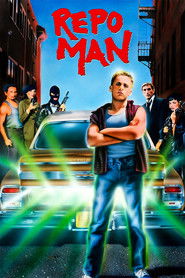
My name is Alex Cox, and I am the director and writer of Repo Man. And my name is Vicki Thomas. I'm the casting director. And I'm Michael Nesmith. I was the executive producer. My name is Sy Richardson. I was Lite and the guy who did Bad Man. It's Juicy Bananas. My name is Zander Schloss. I am a PA and the late Fox Harris' driver-turned-actor. I play Kevin. I'm Del Zamora, and I played Lagarto Rodriguez, the older...
0:16 · jump to transcript →
-
And the actors really didn't like us, and they would eat our food, and we'd put a padlock on the refrigerator, and they broke the padlock to steal our food. And the only actor who would speak to either of us was Fox Harris. And so before Repo Man was even conceived, I'd formed this very, very favorable opinion of this guy Fox. He seemed really nice. And then when we were casting the film, Harry Dean Stanton said, there's an actor that you need to meet, because the only guy who can play this role is a guy called Fox.
1:10 · jump to transcript →
-
We used my car initially to cast this movie at UCLA Film School. That's right. I auditioned in that car at UCLA. My Chevy Impala was on a soundstage at UCLA Film School, and Biff Yeager was the very first actor. We read for the film. And I came with my girlfriend in separate cars, and she thought Alex was the strangest guy she'd ever met, and she left. Well, Alex had orange hair at the time, didn't he?
8:50 · jump to transcript →
-
-
multi · 2h 12m 11 mentions
Andrew Sarris, James Ellroy, Brian Helgeland, Michael Nathanson + 10
-
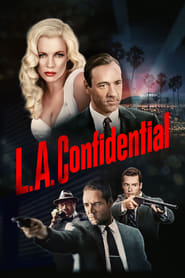
The audition process in the States is very different than it is in Australia because obviously in the States there are a far greater amount of actors and there's a lot more to wade through. In Australia you go in and you do your audition and you get the job or you don't get the job. In America you have a meeting and then you go and do a reading on tape where they don't even expect you to know your lines, which is kind of weird to me. And then you might go and do a bit of a test on tape
6:49 · jump to transcript →
-
in that none of the main players were, at this time, particularly big stars, although Spacey has a great many theatrical credits and is considered a very accomplished actor. And this is what makes this film less of a studio picture and more of an independent picture than would normally be the case, simply because of the casting. Certainly the filmmaking is as classical and yet as...
10:10 · jump to transcript →
-
Stensland? My partner stopped it. I said to him, all right, if it was really the 1950s and you were really directing this movie, who would you cast as Jack Vincennes? And I kind of expected he would have said, like, William Holden, you know, that. But he didn't. He said, Dean Martin. I thought, Dean Martin? And he said, well, watch Some Came Running. Watch Rio Bravo again.
12:58 · jump to transcript →
-
-
-
Tony Scott
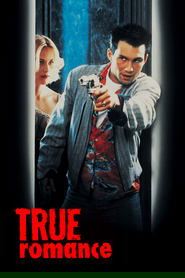
And, you know, people say to me, God, it's such a great movie, you know. But honest truth is I have to give the real applause to Quentin Tarantino because he's the guy who put it on the page. And this is the first movie where all I did was to support what was on the page in terms of my casting, in terms of my look, and in terms of my styling and how I shot the movie. But it's a much easier process when you have a blueprint which you're so confident about.
6:43 · jump to transcript →
-
Tony Scott
Elvis coming to Clarence. To be honest, the other actor that desperately wanted to do Clarence was Val Kilmer. And I talked to Val, and he actually sent me a tape where he recorded this tape on his own back from his house in New Mexico playing Clarence. And he was brilliant. But the true strength of casting is a gut reaction.
22:21 · jump to transcript →
-
Tony Scott
Only Quentin could come up with names for characters like he comes up with. Dennis again, I thought, was really great casting. It's not me, you know. Patting my own back, it's... You know, I've always wanted to work with Dennis Hopper. He's always been one of my gods, one of my stars, because, again, he's got such a sweetness and such a charm.
35:26 · jump to transcript →
-
-
director · 1h 36m 10 mentions
Aliens vs. Predator - Requiem (2007)
Colin Strause, Greg Strause, John Davis
-
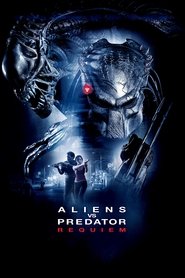
Yeah, you weren't working on the chopper that morning, John, were you? No, I was actually watching the chopper go up with you in it. So, again, the casting on the movie was a really fun but also at times difficult process because a lot of the bit parts had to come from the Vancouver actor pool. Yeah, and at the time Vancouver was really busy, so the pool was smaller than it normally would be. Fan 4-2 was up there shooting.
10:28 · jump to transcript →
-
They got up there and got started before we did. So a lot of the good local talent up there got sort of sucked up by the bigger movies. But we were fortunate. The young girl, who I think is both very pretty and very good, who you're going to see at the door in a second, we found her in Toronto. Yes, Kristen Hager. She's great. And this is Johnny Lewis here. Yes. Mindy Marin was our casting director.
10:58 · jump to transcript →
-
We needed to find people in the casting process who were really kind of people you would believe were in this town. We didn't want to break the wall of reality here by having really familiar faces. And so we were able to find really very, very accomplished actors who hopefully you haven't seen in a lot of movies before. And it was also the cool thing, too, a lot of our main leads were all stage actors from
11:25 · jump to transcript →
-
-
-
Tom Hooper
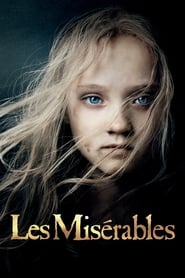
Isabelle Allen, what an extraordinary actress she is. I mean, I'm not aware she's acted in any professional acting before Nina Gold, my wonderful casting director, found her, but she's singing this live like all the other actors. And, you know, I think that song is incredibly important in terms of creating a connection between the audience and this character. But it does need to be sung well, and I think she sings it beautifully.
46:06 · jump to transcript →
-
Tom Hooper
In fact, Sacha used If I Was a Rich Man as his audition piece in Los Angeles.
51:10 · jump to transcript →
-
Tom Hooper
And Russell had a great insight about this song when he first came in for audition, which is that he was going to sing it as a prayer to God, and I found that an incredibly inspiring notion, because in some ways it gave me ideas. Almost all the soliloquies, you could almost say, are being sung in relation to God or are being sung in the tradition of the prayer, where we're used to the idea of people alone talking out loud or talking in their head to a higher power or something outside themselves.
1:06:19 · jump to transcript →
-
-
-
done a movie with her. I can't remember the name of the movie. She was in a film called Dreamchild, wasn't she? That's right, Dreamchild. Thank you for reminding me. It was 40 years ago. My memory's gone. Yes, so Nicola, he recommended Nicola and we liked her so we cast her as Nicola. Did you view the film to sort of get a sense of what she was like or was it a casting?
6:19 · jump to transcript →
-
Yes, it was a cast meeting. I can't remember if I saw the film or not. I mean, in terms of casting the actors in this film, some of that must have come through connections with the producers or perhaps through you. But did you, as a director, see people in other things and think, I want to work with them and let's see if we can reach their agent or let's see if they're interested?
6:44 · jump to transcript →
-
Well, the casting director was Gail Stevens. She was actually married to... ...Danny Boyle at the time. And Danny wasn't famous, actually, when we were doing this... ...but why he became so famous after that. But Gail was doing the casting and...
7:13 · jump to transcript →
-
-
-
Alexander Payne
Dave was one of those guys who taught because they never wanted to leave high school in the first place. But basically, he was a good guy. I'd always liked Matthew Broderick a lot. I was so happy to be able to cast him in a movie, and I'm sure by the time you hear this on your DVD at home, I will have seen the film, but today when I'm recording this commentary, I still have never seen Ferris Bueller's Day Off.
8:41 · jump to transcript →
-
Alexander Payne
I was actually given the tape recently, so I have to see it soon. His casting has, for a lot of people, played with his image, almost his iconography as Ferris Bueller. But not for me, because as I said, I haven't seen the film. I just had always admired his acting, and I was happy to have actually something, an actor kind of approaching
9:05 · jump to transcript →
-
Alexander Payne
This guy... He wasn't... I didn't audition him or anything. Just on that day, I said, just go up to Mr. McAllister, up to Matthew Broderick, and tell him that...
14:51 · jump to transcript →
-
-
director · 3h 43m 9 mentions
The Lord of the Rings The Two Towers (2002)
Peter Jackson, Fran Walsh, Philippa Boyens
-
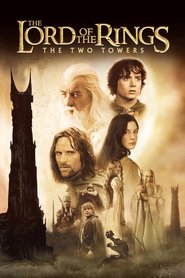
The audition piece for Irwin was about four pages of almost undiluted text from the book, and it was a very, very difficult read. A lot of people were struggling with it. And we hadn't found Irwin, had we? She was a big, big search. But I remember Fran very, very early on had been tracking Miranda and keeping her in mind and had asked her to come in and read. Miranda was the only person who actually rang and wanted to talk about this character and what the scene actually meant.
1:13:49 · jump to transcript →
-
Yeah, it's a lighter scene. It's a scene that actually has something of the spirit of the relationship in the books, doesn't it? I mean, everybody seems to remember of Herbs and Stewed Rabbit. They do. It's a great, memorable chapter. Yeah. And it was one that we really wanted to put into the movie. Yeah. We met Andy through the Hubbards, who did the casting in England, and they did an initial sweep through the main roles, and they presented Andy on a tape...
1:42:41 · jump to transcript →
-
you felt the character needed. Well, what was interesting about that performance in the audition is that we were videotaping the audition even though we were just looking for the voice. What was compelling was actually seeing what he was doing. It wasn't just the voice he was using. It was actually seeing the expressions on his face. Because I remember it was a pretty rough, bad quality video that we ended up with. But I remember coming back to New Zealand and having the first kind of Gollum conversations with Weta. This was long before we started shooting. And I remember dragging the Andy Serkis tape in to show them
1:43:31 · jump to transcript →
-
-
multi · 1h 59m 8 mentions
David Naylor, Guy Hamilton, Tom Mankiewicz, John Barry + 14
-
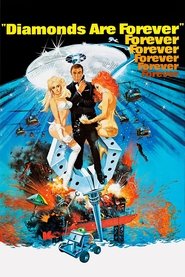
He loves it. Roger, who I wrote for and I love dearly, Roger would fight on screen like a man fighting. Sean fights, fought like a man who really enjoyed it and enjoyed getting his licks in. He has that wonderful grin when he's fighting as if he already knows he's going to win. Joe Robinson, an actor and stuntman, had been Sean Connery's judo instructor before being cast as diamond smuggler Peter Franks. Robinson recalls his reaction to filming the elevator fight.
24:10 · jump to transcript →
-
met and worked with this man and have been the beneficiary of his fine direction. In the novels of Ian Fleming, Bond's CIA friend Felix Leiter was a Texan. Tom Mankiewicz recalls the approach to casting Norman Burton as Leiter in Diamonds Are Forever. Now, here we meet Felix Leiter. There had been several Felix Leiters. Guy tried in the whole style of this movie, when he had a fussier Blofeld, less of a thuggish Blofeld, he tried to find a Felix Leiter.
26:41 · jump to transcript →
-
was the fellow who found King Khan in the, that's how far back Bruce Cabot goes. He'd been in 150 movies, Bruce Cabot. Actress Lana Wood, who plays Plenty O'Toole, made her film debut in the classic 1956 John Wayne Western, The Searchers, when she was just nine years old. She got the role after her sister, Natalie Wood, was cast in the film, when the filmmakers needed an actress who could play the character at a younger age. Lana Wood remembers shooting in Las Vegas.
38:38 · jump to transcript →
-
-
-
So now we're coming upon one of my favorite day players in the movie. Tell me where you found this guy. Well, he actually wasn't one of the real people who worked in the same role that he's playing in the movie. But he was from the area, and I don't know exactly how we discovered him or auditioned him, but he actually gets mentioned as one of the stars of the movie because he comes so early in the credits. So when you see the...
6:25 · jump to transcript →
-
scrunched up on the floor between the two people in the front so that I could judge the take. And if I wasn't there, then I was riding on the running board with the camera and nearly got killed one time by an overhanging pole or something that could have just lopped my head off. Oh, my God. Well, let's talk about the casting.
18:28 · jump to transcript →
-
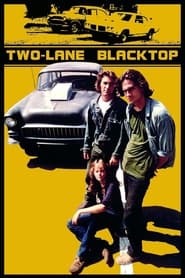
This is so, so amazing. I remember when I talked to Chris Hillman of the Byrds, he said, yeah, I think I went and auditioned for that. I'm sure he did. Yeah, I think that all the musicians at the time were really, really into trying to get into Two-Lane Blacktop. So tell me how this came about that you decided to go with non-actors. Well, I didn't. I never made the decision to go with non-actors. Every role was cast independently.
18:57 · jump to transcript →
-
-
-
Francis Ford Coppola
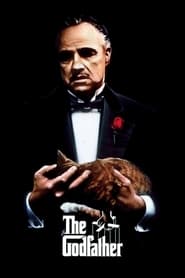
instruments and don't really play but i find as a technique that having a real band enables you to kind of control the crowd and get them in the mood and and the fact that the band actually plays this is another expense so it was another one of my requests that to the producers i was just kind of spending money for nothing the casting of the mom uh she of course is uh
16:42 · jump to transcript →
-
Francis Ford Coppola
well-known singer of sicilian descent morgana king a well-known jazz singer but when i met her in some audition situation she just made me think of you know the kind of handsome authentically sicilian woman that would be his wife also some of the judges they've all sent gifts there was a lot of tension on the set uh during the sequence this
17:12 · jump to transcript →
-
Francis Ford Coppola
And the casting period went on and on and on, and they kept asking me to test new people. I've never shot so many screen tests. We screen tested everybody. And I remember the head of Gulf and Western, which owned Paramount at this time, once said, and he had this incredible accent, he said, we have all these tests and they're all terrible. Now, all those actors cannot be terrible. We have one director. It's the director who's terrible.
31:20 · jump to transcript →
-
-
-
Did you have anything to do with the casting of the film at all? Because the cast is very interesting for this kind of film. Yeah, I did with some of it, and some of it happened when I was out scouting for locations and things and doing pre-production. But, yeah, a number of people I had interviewed or cast, and Bobby Leonard may be the most interesting of those because he had...
1:35 · jump to transcript →
-
been flown out. We'd been struggling to find somebody for this role. And he'd been flown out to Los Angeles from New York by Steven Spielberg for an audition for one of his movies. And by the time we heard about Bobby and that he was here, he was packing to leave. And we were in Century City. And so the producer and I grabbed a couple of scripts and raced over to Universal where he was.
2:05 · jump to transcript →
-
And the limo was waiting to take him to the airport as we rushed into his hotel room. And we did a very, very quick audition in which it turned out the two scripts that we had didn't match. They were different versions. And so as the producer was reading, was feeding lines to Bobby, Bobby had to figure out how to adjust them for the script that he had on the run. And it was pretty impressive how effortlessly he did it.
2:34 · jump to transcript →
-
-
-
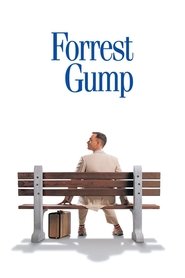
But that's not what it really is. She ages with makeup. And so she read the script, and she was signed on in a second. She just completely got it. Now, it's interesting that the character of young Forrest came to us very serendipitously in that this young boy saw an open casting call.
6:35 · jump to transcript →
-
that was taking place i believe in memphis tennessee and he lived in northern mississippi and uh... his mom encouraged him to go ahead up and and try out for the film ellen lewis our casting director brought this tape out to us in los angeles and we were all i mean you had a big smile on your face because you had just seen this unique character that so far you hadn't seen anywhere and so we invited a number of boys out for uh... uh...
7:02 · jump to transcript →
-
They're goddamn snipers. Michael T. Williamson was the actor. He came in at an audition, and he read with Tom. And both Michael T., when they came in and when Gary came in, they both auditioned for the part. As soon as I saw them, I knew they were the guys. And Michael T. came up with the lip.
42:04 · jump to transcript →
-
-
director · 2h 10m 8 mentions
Richard Curtis, Hugh Grant, Bill Nighy, Thomas Sangster
-
We never decided... Here we go. Stop, Hugh's turned up. Okay, this is the first time they've seen the film. Don't be ridiculous. - No, it's true. I'm just recovering from the sight of myself in that dodgy shirt. Yes, you do, you look terrible. - Yeah, I know. See what I mean. When Hugh first got the film, you were quite cross about Bill's part, weren't you? I'm still quite cross about it. I still think it could be trimmed, to be absolutely honest. You felt that you would take some of the attention. This was a controversial piece of casting. What do you think about this guy, Hugh? Very bad. - Oh, yeah. No, no, no. No, he has been good. - Who is he? He just looks a little long in the fang. I love you. - I Know. SO... - Who's that girl? That's not part of... No, that's Sienna Guillory, who's... -/ think we're watching the wrong film. She's so beautiful it hurts. We in fact shot this scene later. We thought we wanted to know a little bit more about Colin. Oh, good God. Bloody hell. - That was a tough shock. I've never seen this scene. Let's see that... Can we wind back? Right, so... - So what's the idea, that she dumps him? Yeah. That's the girl who, with the brother, dumps... So here we have Liam. It's very odd, just looking at that phone, it was very odd, talking on the phone to Liam Neeson, trying to ask him if he'd do the part. It's such a legendary voice, it strikes you that you're probably talking to an impressionist, not to the real person. Understood. Emma"s very good with vegetables. - Yeah. You used to always have food in your films. Yes, I used to get letters about it from my Japanese fans.
3:45 · jump to transcript →
-
love I've never seen any of this. This is looking very good, this scene. Very good, this film. - This is terrific. Look, it's Pikey. Who's that, with the guitar? Is that... He's a friend of our friend, Adams, and is an exceptionally good guitarist. - Oh, God, we're back to the boring bit. What the hell are you doing here? I just popped over to borrow some old CDs. The lady of the house let you in, did she? - Yeah. Lovely, obliging girl. - Yeah. This is Dan, who was one of our favorite actors, who came in for... To audition for some part, ended up with this one, and the next time I saw him, he was actually in Claudia Schiffer's house. So he's rather well-connected in a slightly annoying way. Blimey. - So he's the evil... Do you hang out with supermodels, Bill? - Not... No. Thomas? - No. But you, Hugh...
11:13 · jump to transcript →
-
Okay, this was all shot by the river. What's going on? Oh, yeah, he's a caterer. - Yeah, that's right. How much will you pay me not to reveal the secret of this scene? Taste explosion? No, you can reveal the secret of this scene. Okay, so this highly amusing scene coming up now about catering, with this girl, is a reworking of a highly amusing scene about catering which bore a remarkable resemblance, down to the last line, which was originally in Four Weddings and a Funeral, and which was one of my audition scenes, but which got cut from the final film. But waste not, want not. - Do you know what's most shaming about it is that when I put it in the film, I forgot to change the name on one of the lines. So it said, "Colin says this, Colin says this," and then, "Charles says this," for some reason. So this woman is the most extraordinary actress. I think you'll get to know her very well in the future. I've just worked out why I can never find true love. Why is that? - English girls. Now, this was Abdul's first film, I think, and I have never known a man be happier on a set. Yeah. He was lovely. I really liked him. - He had no nerve. Just always completely perky. Unlike some people. Hugh, over to you. What was my cousin like on the film set? Deep. - Was he? Yeah. Completely unflustered. We're talking about Thomas here, who is related to Hugh. Did you know that? Is that something you'd been talking about at school or were you shocked and ashamed when you found out? -/ think he's played it down. - Did you know? Did you know? I knew, yeah. - Yeah, okay. No, I mean, I wouldn't talk about it if it was me. His great-grandmother... - Yeah. ... Aunt Bala... Bala? -... yes, is my grandmother's sister. There you are. - Nice. And I used to play cricket with his Uncle George. Now these two... This was a very, very brave part to accept. Martin is a star of The Office, and the first time I saw The Office, I just thought, "He just has to be in the next film we do." - Crikey! Yeah. - And I mean he is the most wonderful actor. And Joanna here is so divine. She's marvelous. - And so guilelessly sweet. Yeah. - Nice face, too. She's getting married in a few weeks' time, and I spoke to her about her wedding and she said that her best friend wasn't going to be the bridesmaid because she'd had a breast job and she wasn't having a woman with enormous breasts walking behind her down the aisle. down the aisle. And then I said, "Well, who's taking her place?" And she said, "The dog." She's actually going to have a dog dressed in white. And I said, "If you thought that the people in the audience were going to be distracted "by a large-breasted woman, I promise you, a dog's gonna be worse." Now, this is clearly a sad scene. And the girl in the pictures is a girl that I've been in love with a long time called Rebecca Frayn. Yeah. - She's a director and a writer and her dad's Michael Frayn and her husband is Andy Harris. I managed to get her to agree that we could have all the prettiest pictures of her from her whole life. ls that... I see, in the photographs. - Yeah. Get out. Get out. - Yeah. No, I meant get out. So there we go, that's actually Rebecca as a baby and there's this wonderful... Oh, God, she's lovely.
12:16 · jump to transcript →
-
-
multi · 1h 43m 7 mentions
The Taking of Pelham One Two Three (1974)
Nathaniel Thompson, Steve Mitchell
-
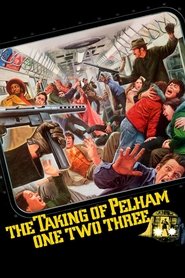
especially the geography above ground, is all completely accurate. And I'll talk a little bit more about that later on when we get to it. Again, this is a set. And one of the things that's so amazing about this picture, well, there's so many things amazing about it, starting with the casting. That guy who's at the board is a guy named Robert Weil.
16:05 · jump to transcript →
-
And I think it just, the casting of Shaw and bringing that aspect of the character to a mercenary soldier, I thought was a just nice little choice. Somebody once said to me, a successful movie is all or are all the little things you do right. Well, you know, in casting somebody like Shaw and then Matthau and Hector Elizondo and Martin Balsam, et cetera, et cetera, these actors bring a lot of the character's life
22:39 · jump to transcript →
-
and um the buck stops the unit goes oh shit um but the character is playing in the movie is named warren lasalle which is a far more waspy version than the name of the character in the book which was murray lasalle um and you know at the time especially if you were casting out of new york if you were casting wasps you would cast tony roberts or william devane uh again uh guys who um
38:00 · jump to transcript →
-
-
director · 1h 29m 7 mentions
Jeff Kanew, Robert Carradine, Timothy Busfield, Curtis Armstrong
-
Get your father's good looks. OK, profiles, profiles. They have the same nose. And that was kind of a gift in the casting process. We didn't cast based on the nose, but it was a plus. Little sound effect coming up here. Not believable, but got a laugh. I remember I didn't like that sound effect.
5:34 · jump to transcript →
-
Boy, talk about your great introduction to an evil character. Yeah. And he's not even the evilest of the evil characters. He's the sidekick. It's just... And he's 50. I know. Well, he got held back, you know? He was actually a stunt person who came in to audition as Ogre. He was way too old. He had a beard. I told him, you look too old and you have a beard.
8:06 · jump to transcript →
-
When I first cast him, it was off a calendar. The men of USC, that's where I saw him. And he was a model. But he was great and he's still great. He's a great guy and he's funny and much funnier than you'd expect a handsome guy to be. Some of these college kids that we picked up as background players and put them in these scenes, this is a highlight of their life right here. I mean, these kids are... I remember the...
14:09 · jump to transcript →
-
-
-
That's Cole, our stunt supervisor, right? That was. That was Cole McKay, who was our stunt coordinator. Sneaking a cameo in as the limo driver. Yes, yes. He made him buy me a drink for this. Yeah, Shea Duffin. What's going on here is we're rich. Did you have fun during the casting process for all these characters? Yeah, I tell you, I...
2:49 · jump to transcript →
-
Lisa London and Catherine Stroud were my casting ladies and they brought me great people and I sort of wanted to cast this thing and sort of get different looks and especially when the kids who are painting and Jennifer, I think they all sort of have a unique look. I like everybody to be ID'd immediately when you see them. I don't like three people with dark hair or three people with blonde.
3:15 · jump to transcript →
-
And that was dry ice. And it really, it kind of works. Everybody has to forgive me. It's been a while since I've seen this. There was our casting, Lisa London. These are fun shots how the characters introduced. You're getting glimpses and silhouettes and wise ass. Yes.
6:31 · jump to transcript →
-
-
-
an episode of Law and Order. Mostly a lot of theater, though. And she came to the project because that pilot that I mentioned, Class of 61, was an Amblin project. Which was the company that Spielberg formed with Kathleen Kennedy and Frank Marshall back in the early 80s. So they were all kind of aware of her, fans of her. So she was always in the casting pool for their movies and had been for a while. And this was the first one where it got this far.
7:54 · jump to transcript →
-
And he got small film roles in movies like Cool Hand Luke and Blake Edwards' western The Wild Rovers. But he didn't really get noticed until Sam Peckinpah cast him as Steve McQueen's brother in Junior Bonner. That came out in 1972. And the following year, Baker had his sort of star-making role in the revenge picture Walking Tall. That same year, 1973, he appeared in two other great movies, Charlie Varick and The Outfit. And then after that, he was in a pretty eclectic role.
9:40 · jump to transcript →
-
Trainor studied broadcast journalism at San Diego State University, where Kathleen Kennedy was majoring in film. And she worked in radio and TV news for a while, as did Kathleen Kennedy, before landing a job as a producer's assistant on 1941, which is the Steven Spielberg movie written by Robert Zemeckis and Bob Gale that came out in 1979. Trainor married Zemeckis in 1980, and she appeared in her first movie when he cast her in Romancing the Stone in 1984.
13:11 · jump to transcript →
-
-
-
Francis Lawrence
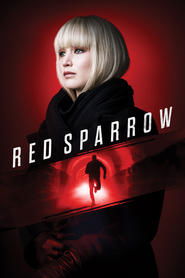
This is actually something that Justin and I, Justin, the writer, Justin Haythe and I debated quite a bit. We spent a lot of time thinking about Dominika"s living conditions. And part of it was from research that even though it seems like quite a glamorous job to be a principal ballerina with, you know, a real high-end ballet company in Moscow, that the living conditions would be quite modest. And I also thought it was important that they remain modest, because as she's fighting for survival, when she needs help from her uncle to survive, it's not about material things. It's not about getting a nicer place to live in, or keeping a nice place to live in, or keeping a nice car or anything like that. It's just keeping things as they are, in terms of the simple life that she actually has with her mother. And her mother is played by the great Joely Richardson, who was I think one of the last people we cast for no real reason. I think it was the last role that we got to. But she came in, and it was a bit tricky for her, and she was a trooper, because I think we cast her maybe 10 days or so before she started shooting, and she had a lot to do, you know? We had decided that her character, although you never hear it, had MS, and so we wanted her to meet with experts about MS, so she would know how to move, and how to make it look like she had trouble using her hands and trouble getting up. And she had to learn the subtle Russian accent that everybody had been training for, and she also had to learn how to play the violin. It's now a scene. I'm sure she's not happy about it, but we ended up cutting it 'cause she spent a bunch of time learning a song on the violin while giving a speech to Dominika. But she was a real trooper. She also did something interesting that I had never seen an actor do before, which was that she was really curious about the tone of the movie as she came in, and wanted to immerse herself in it. And so she came to Budapest a few weeks early, and she would come to set on days we were shooting other things, and she would just, kind of, watch and see what other people were doing, and see what I was doing, to get into the tone of the world a little bit. And I think it's honestly gonna be something that I carry into other movies that I do now, and inviting actors as they come in, so that nobody really starts completely cold again. Sonya? Hey. How are you? What is it? /'m scared. I went to see her at the hospital. The way she looked at me, she knows. She doesn't know. What we have done is a sin. They've always favored her. No one else ever got a chance. Is that fair? This was a fun sequence. This is another one of the dynamic sequences in the movie that really sets up the tone, and really specifically sets up how Dominika is truly an unlikely hero. I think without this, and this is something that we, you know, the producers and the studio and the writer and I debated about a fair amount, just in terms of how violent this sequence gets. Really sets up what Dominika's capable of. We shot this in a basement of an art school in Budapest, and Maria brilliantly changed this empty basement room, series of rooms, into a steam room, and locker room, as if it was at the bottom of a ballet company. And I think it looks really beautiful.
11:19 · jump to transcript →
-
Francis Lawrence
And off to the side, in some side room, was this broken down bathroom that had this really strange tile. And you can see the tile here. We duplicated it. But it's based on a tile that was actually used in a bathroom. And it was this green, splotchy tile. And if you were to see the detail of it it actually looks wet, which I thought was really strange, because it basically makes it look like the bathroom is wet and moldy. And Maria and I really fell in love with it. And she did a mock-up of it. And at first, this is the only set that she and I went back and forth on a little bit. The rest we were in complete agreement right away. But this one, for a while, I was worried was too striped. It wasn't the color that bothered me, and it wasn't the tile specifically, but it was once you put all the tile together, it felt a little too designed for me. And what we ended up doing, and Maria ended up doing, was working on the contrast between the dark green stripes and the lighter stripes in the middle, so that it didn't become sort of too hypnotizing. It was almost gonna be too distracting before. I'll be able to take care of us now. You don't have to do this. Sparrow School. It was so well-described in Jason's book as being this place out in the middle of nowhere. And I think in the book, you actually have to take a hydrofoil over some sort of water to get there. But here we didn't do that. We just had that big snowy landscape with that drone shot of the car driving. But we found this place about an hour and a half away from central Budapest called Castle Dég that was a private estate at one point. And then I think, post-war, it became an orphanage. And oddly, I think an orphanage for Greek boys or something, which was really strange. But now it's, kind of, a museum and empty, and they really let us use it a bunch. And this was toward the beginning of our schedule. It was quite cold, and everybody was really sick. Pretty much people were sick from the first day we started shooting, but by the time we got here, which was about three weeks in, it had really spread like wildfire, and everybody was really sick. Which of course had to marry up with primarily shooting outside in sub-zero temperatures, which was pretty brutal. But I loved this location. And of course, this was the beginning of our work with Charlotte. I'm a huge fan of Charlotte's work, always have been. Loved her movies, think she's a fantastic actress. But the idea to cast her as Matron came when Justin Haythe and I were working on the script, and he had seen 45 Years, which had come out recently, and suggested I see it. And I did, and just fell in love with it, and just started to think about her. I mean, it's completely a different character, but just started to think about her for this role. And so we sent her the script, and at first she was interested and she was intrigued, but she thought that her character was a little thin. And Justin and I had some ideas, and so we ended up flying out to Paris where she lives and meeting her in an apartment that she uses to paint in. And we had a great little meeting. And I think sat with her for maybe an hour, hour and a half, and pitched her the take that we had on her, and some of the secrets that I have about her. So that if we get to make another one of these, that we can carry on into new stories. And then she said yes. And we got very lucky. And it ended up being really good for Jen, because she was there for one of Jen's, probably Jen's hardest scene to shoot in this movie, which was something that's coming up in, I don't know, 15 minutes or so. But it was great for Charlotte to be there for Jen.
28:11 · jump to transcript →
-
Francis Lawrence
One of the things that I wanted to do... There used to be a little more footage of Joel, kind of back home when he got suspended, and you can see compared to the, kind of, the color and the textures and things in the environments we have here, it's actually quite bland. We shot everything in pretty much white environments, made it as bland as possible, so that you get this feeling that it's just not the kind of life that he wants. That he likes living internationally, and he likes working, and he likes the mystery, and he likes the intrigue, and he likes the work. The last thing he wants to do is be at home and be in an office. And so we made it as drab, and as lonely as possible. He wants a daughter... someone to take care of, and he'll pay for it. So here you see some of the work I was talking about in terms of the development of Sparrow School. This idea of figuring out what people need. But you can see in a moment here, it's actually gonna lead into a bit of a harsh lesson from Matron about having to get over what disgusts you. To make people believe that you're attracted to them, or that you're willing to do specific things for them. Yes. - Correct. Though, we mustn't be so judgmental. We all have our passions. His happen to be rather young. Anya, come here for a moment. This is Sasha Frolova. She was actually one of the first people other than Jen that we cast in the movie. It was something. Denise Chamian, my casting director, instantly sent her over for the role of Anya, which was actually expanded a little bit originally in the script. Give him what he wants. And I liked the idea of seeing what a school like this could do to somebody that's fragile. And so, she slowly falls apart. You used to see in some of the scenes that I think we have in deleted scenes, you used to see Dominika helping her out, and seeing some of Dominika's humanity in helping Anya out. Part of what I really like about this sequence here is that Matron knows that Anya's never going to be able to do this. Really, what the whole point of this is for her to crumble so she can make a point to the class about how part of the training here at Sparrow School is to get over the things that might disgust you, and that you're gonna have to learn the tricks of the trade to be able to do the horrible things you're gonna have to do in this job. And that also thematically was important for me because it needed to be horrible. This is not a glamorous world. I didn't want it to be a glamorous world, and I didn't want Dominika to think it was a glamorous world. I wanted Dominika to hate it and to hate her uncle for dragging her into this world, so that she would want nothing more than to get out of the world. ...brings blood to the groin. Manipulation of the nipple... I remember on the day watching this sequence and I still do, and I just think it's a real original. I've just never seen anything like it. With Charlotte and weeping Sasha. Yeah, I'm really proud of the sequences that we did here, at Sparrow School. You must learn to love on command.
34:19 · jump to transcript →
-
-
-
Alan K. Rode
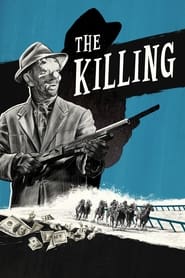
There were no film schools back when Kubrick began. He was a movie savant. He watched literally every movie made in Hollywood and also internationally. He went through the Metropolitan Museum of Art's entire film collection twice. Kubrick knew every actor and knew exactly whom he wanted to cast in every role in The Killing.
2:24 · jump to transcript →
-
Alan K. Rode
In the book, the guy that Sherry's involved with is also manipulating her and won't have much to do with her until she leaves her husband George, at least initially. Vincenzo Eduardo Zoino, i.e. Vince Edwards, was cast by James Harris, who knew him from New York. Edwards came out of the tough neighborhood of Brownsville, Brooklyn, and had that dark ambience so suited for playing gangsters as he does here.
15:21 · jump to transcript →
-
Alan K. Rode
In 1961, Edwards hit a home run with an improbable bit of casting as a surgeon in the title role of Ben Casey, a hit TV show that ran for five years during the 1960s. For a time, seemingly everyone in America watched Ben Casey, and Vince Edwards became a household name across the country, similar to what Sea Hunt did for Lloyd Bridges. I'm sorry, baby, but don't bug me. I can live my life a certain way. I can't stand it when the walls start closing in.
15:57 · jump to transcript →
-
-
-
William Friedkin
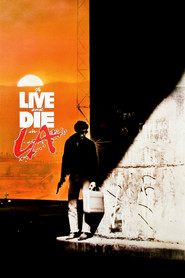
The casting director was a guy named Bob Weiner, who's since passed away. He was a brilliant young guy who was not really a casting director. He was a writer for The Village Voice, which is a counterculture newspaper in New York, still going. And he would see every play and every unusual or foreign film. So he had a wide range of knowledge about actors around the world.
19:10 · jump to transcript →
-
William Friedkin
But I met him, just sat in a room with him, and I said, this guy's great. He has extraordinary quality, exactly what I want, a theatrical background. He's been in front of a camera. Nobody really knows who he is. And so I went with him, which is what I tend to do when casting. I'll just go instinctively.
24:33 · jump to transcript →
-
William Friedkin
We actually shot the prison scene at San Luis Obispo State Prison. And that's where, by the way, some of the Manson family are being held. And we shot with actual inmates in the yard, no actors, just our principals, John Turturro and a couple of other guys that were cast in that scene. One thing I remember about being there is that William Petersen and I
52:53 · jump to transcript →
-
-
-
It's really what I call action horror, adventure horror. Oh, absolutely. It's definitely adventure horror. It's save the girl, save the city. And honestly, Shawnee saves Kevin as much as he saves her, which is a little progressive for the 80s. You were working with casting director Johanna Ray. Correct. Who does all of David Lynch's movies and everything. I mean, her eye for talent, especially young talent.
6:57 · jump to transcript →
-
is second to none, especially back then. She's great. When you were casting the film, you were saying before how Donovan was such a great archetype for the hero, only to subvert that later on, kill him off, and then now we're left with... It's the old Psycho. ...Mullet-tron 2000 with Kevin Dillon. It was very purposeful on my part trying to emulate what Hitchcock did in Psycho, which is Janet Leigh's dead at the end of the first act. How did that go over with the studio, though? We were very... This was...
7:18 · jump to transcript →
-
I heard a story about how he became involved. Do you remember at all? Tell me. Well, he was unavailable originally. And then it was like a commercial or something like that fell through. And then all of a sudden it was like, oh, shit, I actually need a gig. And then that's how we show up. When you were casting with Joanna, was it something that she offered? Who came up with the idea? I don't know who, but the two people I loved were him and...
14:18 · jump to transcript →
-
-
-
has a little Tank Girl debt to pay. Oh, absolutely, absolutely. Which is fine. No, I'm not mad about it. You know what I mean? I'm not mad about it at all. No, it's cool. It's totally cool. But people call me and they think it's like I'm in a video. I'm like, no, that's Madonna being Tank Girl. No, that's Gwen Stefani being Tank Girl. Exactly. No, that's... And, you know, we're responsible for creating the Spice Girls as well. Because when we did these open casting calls... I remember that. ...which...
11:45 · jump to transcript →
-
three of the Spice Girls got tired of waiting in line to be part of the open casting call and said, screw this, we're going to start a band. And they always talk about it. They always credit it as how they got together because three of them met just waiting in line for the open casting call. Oh, there's our homage to Clockwork Orange right there. Yep. You mean the bowler hat? Yeah, the bowler.
12:14 · jump to transcript →
-
Richard Schiff. So, Lori, did you ever audition? Oh, yeah. Oh, I have a really good, I have a really great audition story. Because I read the script and I, you've probably heard this story before. I read the script and I said, oh no, I'm Tank Girl, that's it.
15:47 · jump to transcript →
-
-
-
My favorite of the arrests, Benicio del Toro. Yeah, with the little steel drum in there. I was actually adamantly against the casting of Benicio in this film. And if you ever read the script and see the changes that we made because of the character that he created completely from thin air, you'll see that I was totally wrong in my instincts. No, but, uh...
5:53 · jump to transcript →
-
This was... The shot, almost exactly the way I envisioned it when I wrote it. Now, to the left is... To the left is you, and to the right is David Duncan, who's a dear friend of ours from New Jersey. Who was cast five minutes before the scene. Before the scene, and he's the one speaking. He's actually doing the talking. Yeah. And it was interesting, because I said, are you nervous? Because he knew all the actors from their work, and all of a sudden they parade in front of him, and I said, are you nervous? And he said...
8:01 · jump to transcript →
-
Finally finished and away on vacation, Bryan called me and said, we've got to cut out 12 more pages. And this was the scene that basically amalgamated two characters into one. That's right. There was a Captain Leo character as well as the Rabin character. And we ended up fusing those characters into the one Rabin character. Dan was originally cast as Captain Leo, and we hadn't cast Rabin yet.
18:37 · jump to transcript →
-







Related topics
Other topics that frequently come up in the same commentaries.