Topics / Editing & post
The editor
96 commentaries in the archive discuss this, with 231 total mentions and 72 sampled passages on this page.
Filter commentaries
Filter this topic by the film's decade or the type of commentary.
By decade
Across the archive
ranked by mentions · click any passage for the moment in the transcript
-
multi · 1h 49m 20 mentions
John Cork, Ursula Andress, Eunice Gayson, Margaret LeWars + 20
-
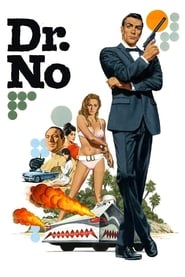
Of course, when it came out and he had that wonderful shot of Sean shooting down the gun barrel and all the dots coming down and all those things, I went up to him and I apologized because I thought whatever he did to the number only enhanced it and of course made the titles absolutely fabulous. Editor Peter Hunt recalls Maurice Bender. Marvelous man. Very inventive.
1:25 · jump to transcript →
-
The Bond films introduced a new and innovative style of film editing. Editor Peter Hunt explains his approach. It's all done for the drama of the scene. It made it more exciting. If I'd have done it as it was in single shots or in any other simple way of editing, it wouldn't have been as exciting. It was also able to exaggerate the sound noises.
4:44 · jump to transcript →
-
The window breaking is very exaggerated. All of that was exaggerated, but it made it exciting. It made it tension. Sound editor Norman Wanstall recalls Hunt's editing. When Peter started to see the rushes of Dr. No and had read the script, he began to get an immediate picture of the sort of film we were making. And I remember him saying, if this film's going to work, we've got to move it along very, very quickly so that people don't analyze things. Production buyer Ron Quelch.
5:14 · jump to transcript →
-
-
-
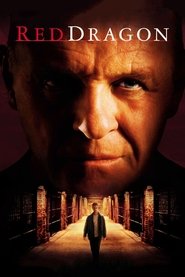
I went to New York with Dino, and I was very nervous. This was Tony, Anthony Hopkins. The thing I did know and what I was confident about was the type of movie I wanted to make. Like I said, I went in there knowing the tone of the movie, my approach to the movie, how I wanted to not show any of the gore. I didn't want to make a horror film. I wanted to make a film that was psychological, emotional, and smart. That was what was on the page. And the only scene that Tony had a concern with when I sat with him was this scene right here. Tony was concerned that as originally written, his attack on Graham here was too graphic. By the way, it's an interpretation because 10 directors would direct a scene in 10 different ways and show various degrees of violence. It's about showing the details of the guts falling out of his stomach, or the blood, how much blood to show. And I chose to play it mostly on their faces. Once the attack happens... Here's my little homage to Silence. You see the... - I see the bug. You like that. So I chose to play the violence part of this scene on their faces. I love this book. This is an original. My prop guy, Brad, found this original book from France, Larousse... When I read it, I had no idea what the hell it was. It's the bible of cookbooks. - Yes, I learned that quickly. He found this real old French cookbook. There was a lot of dialogue about how do we sell his moment? It's really just a subliminal thing. It wasn't really supposed to be so pointed where it was like, "Oh, sweetbreads." I thought sweetbreads was brains but it's not. It's actually... Thyroid. -... thymus. I learned so much about anatomy on this film. If you work on a Lecter movie, you learn a lot about cooking. I thought Edward was fantastic. There is a tremendous intensity of performances in this movie. And really a dream cast as Brett already said. If you could have anybody in the world for these parts and be lucky enough to get them. It's pretty much what happened to us. Great actors want to play good characters. They want to play great characters and all of these characters, down to Freddy Lounds, and other smaller roles, were just written so well. They were interesting and dynamic. And these actors were interested in playing this. To convince these actors to do a third in the series, all that went out the window when they read the script. Certainly once they started working. There's our cold opening. I'm very proud of this title sequence because it was actually done two days before we had to lock picture. My editor, Mark Helfrich actually was the brainchild behind this because... You re-shot the journal here in a very interesting way. Initially, this was done in a much more straightforward way with the images very flat against the screen. Yes, a lot of times. Mark is kind of... Everybody on my team, from my AD to my production designer, are filmmakers. Mark is a filmmaker in his own right and he just understands the visuals and storytelling. I love how, you know... But this was written. - Yes, it was. But the way that the camera roams over these pages and when we go in very close and it gets grainy, the camera movement left to right, up and down, is all not scripted, of course. This is something I don't really have the patience for. Mark kind of took this book that he was fascinated by. I think he has a copy of it in his closet at home. He just knew every page, every frame and went with Dante and literally just shot. This is a wonderful opportunity. This kind of title sequence is sort of old-fashioned in a way. But it's a wonderful opportunity for a screenwriter to get information in quickly to cover a lot of ground between the arrest of Lecter and where we are when the movie is going to start. Covering a period of several years, you are doing that without any dialogue just by these images. It's a very useful shorthand. Danny did the same thing that Ted did with the script in this sequence that Mark did with the visuals in this sequence. Danny did the same thing with the music. I think the music here is so fantastic. It's very much like a Bernard Hermann score, which I knew was a big inspiration for Danny. Danny is a big fan of Bernard, and this was his chance. He's done darker scores, but they've had a kind of lightness, or comedic darkness to it. Danny did something here that kind of made people's skin crawl in the theater, like, "You're in for it. "If you're gonna sit through this movie, you'll experience some stuff. "Shit's gonna go down."
6:02 · jump to transcript →
-
So that sequence, those two minutes of the movie, which could have been a very boring, dull sequence. I had a long conversation with Kristi Zea. It was wonderful. She called me up and said, "This book of Dolarhyde's. "What does it look like? What's in it? "How is the handwriting? What kind of photograph?" We had a long conversation which for a screenwriter... You don't often get a call from the production designer to talk about a prop. It was a wonderful opportunity to be part of the design of the movie in that little section. You've got a beautiful setup here, Will. This was actually in the Florida Keys. You know why I'm here? Was it Marathon? Yeah, I can guess. The location is meant to be Marathon, Florida. Dino wanted us to shoot in North Carolina because he had studios there and a house on the beach or Malibu because it's close to his house in Beverly Hills. But the truth is, I wanted to stay true. When I said I chose the tone, I'd really chosen the tone of the book, going back to the book. Everybody here was honoring the book. We really gave a lot of respect to Thomas' book. Tom Harris is a wonderful writer. When you're doing an adaptation like this, it's a great resource to everybody to be able to pick up the book, as you can go into more details than the screenplay. It's a help to both the production design and the actors, who can go back and find out details of motivation. It's helpful to everybody to have that bible to refer to. So when it said Marathon, Florida, I tried to stay true to that and actually go to the location in Marathon, Florida. It just felt like it was the tone and even the location, like Grandma's house in the same description of the rural area where it was, and the type of house it was. It was an old-age home once, which is really back-story, but Kristi incorporated that into the design. I was so happy that she and Ted really stayed true to the tone of the book visually as well when it described the locations. This was so much fun being down here, by the way. It was the end of the shoot, and we were just down there on the beach. This was probably the hardest scene I shot with these two guys. In what way? Because it's exposition? Anything with exposition... -/s tough. It's tough to make it sound like real conversation. But honestly, there's not a line in this movie that I'm not proud of. I mean I can't say there's a line... It was a tight script. We did cut a few lines and a few parts from scenes but Brett and I actually worked quite a bit on the script before the production started, and we had it pretty tight. And the shooting stayed quite faithful to the script. I have to say that every scene was hard for me because I'm used to scenes with not much dialogue. I, unfortunately, am a very talky screenwriter. So it was a clash of cultures. Coming from being a playwright, I guess. There is a lot of dialogue in this movie, I tell you. And it was not a single-spaced script. It's a long script, and I kept saying, "Make them talk faster. "Don't cut the thing, just make them talk faster." Ted's advice to me was, "Brett, when you're happy, "ask the actors for a take where they talk double speed." And I did that. Probably that's all the takes that Mark ended up using in the editor's room. He kept calling me, saying, "This movie will be four hours long "If you do not get them to speak faster." The thing you run into as a screenwriter, even with the best actors, is that you try to pace a scene to fit within an act structure and fit within the entire screenplay. But then actors wanna take very long, dramatic pauses. Actors want to look down and up, across the room, at each other, and finally say the line. - A lot of pausing. And that's what you're up against when trying to time out the length of the scene or act. I wanna say something about these actors. Once I got Edward Norton, I used Edward to get another actor. Once I got Ralph Fiennes, I used him, I got Emily Watson. - You parlayed them into each other. I said, "Philip Seymour Hoffman, I'm getting Mary-Louise Parker." I knew each one, who they were a fan of. I used them against each other to get them in the movie. I literally thought I'd be able to walk onto the set, and it would be the easiest movie I'd ever made because I had these brilliant actors. I could just say, "Action." I read one article or something about this movie that said this was the most distinguished cast that's been assembled in any movie in the last 20 years. But the truth is, it was probably the hardest movie I'd ever made because the smarter the actor, the more experience they have. It's a myth that these great actors don't need direction. They want direction more than any other actor. They want direction, but they have ideas of their own because in the end, it's up to them. They are the ones whose face is filling that whole screen. And they have to absolutely believe what they are doing, or they can't convince an audience of it. What I'm trying to say is, there was a lot of dialogue going on. A lot of intellectual discussions. And each of these actors are not only smart actors, but they're highly intelligent, all smarter than myself and... A lot of them have also directed or even written as well. They all had an opinion. And my job, I felt like it was my job to save the script. This was a script that worked to me. We had a table reading of it. It was fantastic. And Ted was
11:13 · jump to transcript →
-
It's hard to pull off this stunt with rising excitement, meanwhile. I'm amazed by him in this scene. It is a very hard thing to pull off. This is an example of a scene that my editor, Mark, was particular about, collaborating with me and telling me, "Brett, how are you gonna pull this off?" I said, "I don't know, I'll just shoot it." He had me bring Edward to the edit room and took a video camera and shot the scene for me, before showing the way it might intercut since there are devices in here which are the flashes, and you've seen it in hundreds of films and I didn't want it to be false. He said, "I have an idea of how to do this." He shot the scene for me before I shot it. It was a great reference. We adjusted and tweaked things, but this is all protecting the cliché. You can see the power that editing brings to a sequence like this. It startles you and moves the story forward in a way that the story is always a leap or two ahead of the audience. And pulling them along behind it. That's a function of great editing. It is important here because once the audience is ahead of you, you're in trouble, they are sleeping. It's the same thing on The Silence of the Lambs, I used to worry that we were cutting so many tiny beats that the audience would be confused. And Jonathan Demme said, "Better if they're confused "for five minutes than bored for five seconds." And this film is very tightly edited. Gentlemen. Ladies. This is what the subject's teeth look like. The impressions came from bite marks on Mrs. Leeds. This degree of crookedness... Here we... Where was this? - This was shot in LA. This is shot in LA in a government building that the city gave us. Here's Bill Duke. - He's one of my favorite actors. Again, an example of the meticulousness that Brett brings to casting. These wonderful actors who could be the stars of their own movies, who are playing supporting parts in this. I literally called them and begged them to be in the movie. I love actors. I love great actors. I spend as much time on the smaller roles as I do on the bigger roles. It's important because an actor who has one line can take you out of the movie and hurt it in my opinion. It goes back to the whole question of tone. A single wrong note will make an audience self-conscious, and pull them out of the movie. This film is the opposite of any of the films I've ever done. Family Man, that had dramatic moments, was still a comedy. So you can go farther with realism, but this especially, when it's dealing with the FBI, forensics, and scientific... -[t has to be grounded in reality. - Very grounded. In order for the audience to accept the extravagant parts of the movie, the more baroque characters in the movie like Dolarhyde and Lecter, scenes like this have to be very credibly rooted in police reality, in procedural reality. Would you give that up? The other thing also is, when we're talking about the tone, the choice... I was thinking about It, why I really chose not to show, not only because of Silence, because even Silence might've shown more violence than this film. Really, because the only scene we have is the biting of the lips. We certainly tried to hold it down. But I think the reason was because when I went to the FBI at Quantico and started looking at all these visuals of serial killers' work, it was so disturbing to me. It really bothered me. I said, "Why do I want to do this to audiences? "It'll completely turn them off." As with Silence, what you really want to do with this movie is a detective story. You really want to do a psychological thriller, a detective story. You're not trying to make a horror movie at all. Sometimes they're referred to as horror movies. I've never understood that. To me, these are thrillers, detective movies. In this scene, Harvey's Jewishness really comes out. "You're the light of my life." He sounds like my grandmother. I love that line. I can't answer more questions. Here's Philip Seymour Hoffman, a great actor. Who we should not have been lucky enough to get for this small part. Yeah. He actually wanted to play Dolarhyde, and I wanted Ralph to do it. I had dinner with him, and then called them back a week later. He wanted to play Dolarhyde, and his schedule wouldn't let him do a bigger part anyway. And then I called him and said, "I think you should do Freddy Lounds." He said, "Let me read it again." Then he called and said, "I'll do it." He would've been good as Dolarhyde, in a different way. He would've been amazing. - I mean, a great actor is a chameleon. Remember? With the tubes hanging out of me? Forget that prick. This was a very difficult scene, too. This was difficult because... And this was a scene where Edward had a Iot of input as we were revising the script before we shot. Edward said, "This is a difficult transition for this character to make." Here he's out of the loop, he doesn't want to be involved in the investigation. He's sort of done a favor for his friend and mentor, Jack Crawford, but he doesn't want to get deeper into this 'cause of psychological and physical scars. Because of his commitment to his family, he doesn't want to do this. Now he has to do the most difficult thing he could possibly do, which is to confront Lecter again. There was a lot of back-and-forth and a lot of revision, and a lot of talk about how we might credibly motivate this transition in the story. Edward was actually very helpful here with his thoughts. I think it works. Because it's not the cliché of the guy jumping back... Getting back on the horse and showing off. I'm proud of how it turned out. Again, it was really Mark's editing of the scene. It's also Harvey's matter-of-fact performance here. It could, potentially, have been a real glitch in the story. Where the audience says, "He wouldn't go back to see Lecter again. "He's scared to death of Lecter."
21:36 · jump to transcript →
-
-
-
William Friedkin
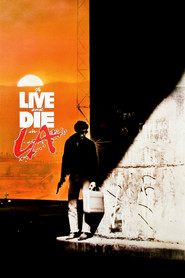
that I didn't have the first part. I never bothered to shoot the detail that was protecting the President of the United States. I sort of took that for granted in my own mind and then realized in the cutting room that we didn't have it, so we went out and shot it as a kind of aftermath, but a prologue to the film. I also remember saying to Jack Hues and Nick Feldman, who are the group Wang Chung,
2:48 · jump to transcript →
-
William Friedkin
when the cut is going to come and often where it's going to be. You often know what the next shot is because the editor and the director have established a cutting pattern that becomes boring and predictable. And I perceived a long time ago that a director whose work I really admired, the Italian neorealist, I guess you'd call him, Michelangelo Antonioni, his films used to
1:31:28 · jump to transcript →
-
William Friedkin
a scene and then move on. Now, it's impossible not to repeat a shot occasionally, often not by design, often because something didn't work. You get in the cutting room and you find, well, I've got to repeat a shot. But in the films of like Antonioni and in films that I've made, there might be 60 or 70 shots without a repeat.
1:32:57 · jump to transcript →
-
-
-
I think here's where the score by Alan starts to bring us into a level that just becomes more and more throughout the movie from here on out. The first time I ever watched the movie from beginning to end, I had Alan there. I had Alan there, I had my editor there, I had my assistants there, and I had...
51:17 · jump to transcript →
-
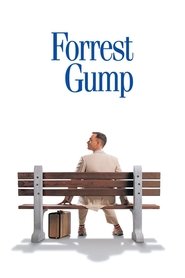
And the big controversy that we had at the beginning of the movie is when I announced that I thought the movie should be made in widescreen. And everyone said, everyone, meaning my producers, my cameraman, and my editor, said, widescreen? This isn't Spartacus. This is a story about this guy with a low IQ. And this is when I started talking about it with Don.
56:24 · jump to transcript →
-
me not fun the fun part for me is in the editing room because that's where i have the most fun because it's just me and my film and my editor and you know all the you know the actual shooting of a movie is always just surviving just getting getting through the day and getting enough in the can so you can make it work somehow
1:09:30 · jump to transcript →
-
-
-
was the personal life stuff. Because he was really interested in that wedding scene, which I guess was there before him. But he liked that stuff and showing how grueling the job is and the toll it takes on the personal lives. But I think ultimately, probably in the edit at some point, they were like, it's about action. It's not about the serious drama of this job. It's kind of a little more Top Gun. Well, as you've pointed out, the...
21:05 · jump to transcript →
-
But it did begin that same year in 1974 when he hooked up with Roger Corman to work as an editor. I'm sure, you know, as probably a lot of people listening to this commentary know, I mean, Roger Corman in the 70s, you know, had this company, New World, that was just a, you know, I was saying that the Alfred Hitchcock show was a hotbed of talent. Corman...
37:19 · jump to transcript →
-
possibly through Woodstock, because Marty was an editor on Woodstock, one of many editors on that movie. So he may have known him from that, or he may have even known him from NYU, because they were both at NYU at around the same time in the early 60s. In any case, Marty recommended Louis Teague to Corman, and Teague's main gig there for a while was he edited a bunch of movies for Roger Corman, including Monty Hellman's Cockfighter and Jonathan Demme's Crazy Mama, which is a great movie.
38:59 · jump to transcript →
-
-
director · 1h 34m 6 mentions
Scott Stewart, Jason Blum, Brian Kavanaugh-Jones, Peter Gvozdas
-
Hi, I'm Scott Stewart. I'm the writer and director of Dark Skies. I'm Jason Blum. I'm the producer. I'm Brian Cavanaugh-Jones. I'm the executive producer. And I'm Peter Gavazdis, the picture editor. You know, I came to Jason and Brian with this idea of a story. I knew that they were making these films, these scary movies where they were letting directors, you know, kind of make some scary movies outside of the studio system
0:03 · jump to transcript →
-
there's going to be a little non sequitur here we're going to get back to talking about the actors but it's important to say that this is our editor uh pete here who is doing the voice of uh he's doing his best david he shows up in a lot of our movies shows up in a lot of our movies which is great but but this is um you know in in keeping with what you were saying jason i mean what's one of the other things that's so great about about this model of making these movies is is that
16:35 · jump to transcript →
-
And we just, it always made audiences jump, even just in the cutting room. And we liked it so much that even Fuse, which did, our visual effects vendor, did great work in the movie. But for some reason, that was one that we just really liked it. So we ended up keeping the temp in the movie. And your temp is actually a 2D bird. It's not three-dimensional. No, it's not. It's a 2D bird. That's great.
26:42 · jump to transcript →
-
-
scholar · 1h 32m 5 mentions
The Night of the Hunter (1955)
Terry Sanders, Robert Gitt, F. X. Feeney, Preston Neal Jones
-
Robert Golden, the editor, felt that Walter Schumann was next to Lawton, the most important person on the film. And I'll try to say some more things about the score later. Lawton perhaps felt that the most important person was Lillian Gish, who's the first person we'll see after the credits. Lawton was trying to recreate the power of the silent era, especially D.W. Griffith, and he loved Lillian Gish. Now, Terry, the
1:02 · jump to transcript →
-
book very much are in keeping with the book and some of them made their way into the final script you know isn't it true that lawton kept a lot of ag's lines and the lines from exactly he was an editor really exactly what i mean and the documentation that has turned up at the paul koner archive indicates that you know contrary to the accounts that ag was fired after 10 weeks he actually was hired for the final five weeks and so he under lawton's close direction cut the script
10:48 · jump to transcript →
-
Now, unusual for the time, and really for any time, Lawton had his art director, his editor, and his composer on the set with him, working as part of the creative unit all the time. Lawton didn't want Bob Golden to do any editing until all of the film was shot. This is the one scene in the picture that Bob Golden did start editing ahead of time because they wanted to be sure to clear it with the Breen office. It's a dicey, very dramatic scene.
29:22 · jump to transcript →
-
-
multi · 2h 19m 5 mentions
Martin Scorsese, Nicholas Pileggi, Ray Liotta, Lorraine Bracco + 9
-
And it was exciting what developed in this scene. All of a sudden, the tension that developed, it was scary, really. And that was shot very quickly. About five, maybe eight takes, but hard to cut because we had to keep hitting those levels. And every now and then it'd go off to another level and it didn't quite hit right. It's just not natural in different takes, things would happen. And so we had to keep constructing back to the way it was written. Editor, Thelma Schoonmaker.
23:15 · jump to transcript →
-
There's a tremendous amount of improvisation because he knows the parameters of what he wants to say and do. So that allows him to change things as people come up with ideas. Whether it's a cameraman or a prop man, a set designer, he'll take all this and very often put it on film and then decide later on what he wants to do. Don't forget, Marty was originally an editor. So that's the process he likes to go through.
27:24 · jump to transcript →
-
Editor, Thelma Schoonmaker. When Ray Liotta's on his way to pick up his brother at the hospital, and he almost has an accident, and there's some very quick cutting of his feet flying around, and the car stops just before hitting the car in front of him, Marty had designed that all to be edited to The Who's Live at Leeds. And so we wove a little texture of all those pieces together, just exactly the way he had conceived of it, and it worked like crazy.
1:54:53 · jump to transcript →
-
-
-
Like Frank Marshall, she's a California native. She was born in Berkeley. And she began her career in San Diego working at a local TV station as a camera operator and editor and whatever else needed doing. She ended up producing a local talk show for four years in San Diego before moving to Los Angeles in the late 70s to work in film production.
45:23 · jump to transcript →
-
Anyway, I guess once it was done or in the edit, at some point he decided, you know, let's make it taller or deeper. They also, you'll see a geode room at some point here too that was like an intricate set that in the publicity materials they talk about a lot, but in the movie you only see about one shot of it. And I can see why they wouldn't want to cut it because it looks pretty cool and it sounds like a lot went into making it, but it wasn't really necessary because it's happening...
1:21:39 · jump to transcript →
-
Yes, we definitely should talk about it. I mean, you know, again, as we've touched on throughout this commentary... Because this is probably the hardest part for her, I imagine, the climax with all of these different locations. Yeah, well, as we've talked throughout this commentary about, you know, just the sort of top level of talent involved across the board. I mean, the actors, the production designer, obviously Kennedy Marshall. You know, you get... This is a movie that represents, like, Hollywood craftsmanship at its peak, and the editor...
1:29:55 · jump to transcript →
-
-
-
Francis Lawrence
This was one of the tougher sequences to shoot. You know, leading up to this movie, quite honestly, I was afraid, even though I wanted Jen to do it, I was really afraid she wasn't going to want to do it. Because she really just had never done anything that had this kind of content before. So, before she had read the script, I started... We were going on a lot of press tours, and spending a fair amount of time together, promoting the Hunger Games, the last Hunger Games film. And so I would dole out information bit by bit. But really, she didn't know the full extent of what was gonna be in the movie, content-wise, until she read the script. And she read the script, and she thought about it for a little while, and then she said that she was ready to do it, and she wanted to do it. And we Started to have really lengthy conversations because I wanted to make sure that we got all these moments really tonally correct. And that she was prepared for what it was gonna be like to shoot these kinds of days. And I would talk a lot about how we would handle the days, and handle the content, both practically on the day, but also in the movie. I wanted to make sure that it was always really narratively important. The idea was never for the movie to be erotic in any way. But that it would become part of her survival story, and that there was always something tough about it. There was always a very specific emotional value to it. The scenes were always moving the story forward, and it was part of her struggle to survive. This idea of getting pulled into this horrible world of espionage from her uncle, and she was gonna have to do things that she didn't want to do to survive. One of the things that she and I spoke about was that I promised her that she would be the first person to see the movie. That Alan Bell, the editor, and I, and I think two of his assistants that were obviously gonna have to handle the footage and help organize things were gonna be the only ones to see all of the footage. So, you know, dailies like this scene were always held back from the producers and even from the studio, so that when we came up with our cut, which I think was about six weeks after we had wrapped production, I went to New York and I showed Jen the movie first, so that she had the first chance to Say, "Yes, this can be in," or "No, I want that to be out." So that she had the power to make those decisions before anybody saw anything. And she saw the movie, and she loved the movie. I think it was a fair amount longer than it is now. I think it was two hours and 35 minutes or something. But that's kind of the way we worked.
22:28 · jump to transcript →
-
Francis Lawrence
For any of you that have read the book, this sequence used to have them swimming next to each other, and even starting to race and things like that. But the sort of last remnant of that is this, where he says something to her in Russian, which is that you're a good swimmer. But there used to be a race, and then I realized it would be a lot of shooting time, using underwater cameras and things like that, for something that would probably end up getting cut from the movie. Do you miss it? You know, food, people. So what do you do in Budapest? In terms of the development of the screenplay, there are always these kind of tent pole moments. And the tent pole moments in the relationship between Dominika and Nate here, this is one of the first big, big moments because he's initiating contact, right? She's made the pass-by. So she was just, in the most subtle of ways, starting to bait him at the pool, but he's clearly already onto her and sort of insinuating that he knows that she's followed. Would you like to get something to eat with me? I know a Turkish place at the station. What's always been really interesting to me is this idea of, is she really bad at it because she's new, and he's really good at it? Or is she purposely allowing him to know that she's following him? So, we would actually shoot various things so that we could modulate how strong those feelings might be. So you can see this close-up here. You can see here she's actually sort of excited by the moment between the two of them, and she smiles a little bit. But we had one where we shot more concern. So if we ever felt in the edit that it was leaning too much toward the kind of obvious sense that she was purposely letting him know, we could then use a moment there where she seemed a little more nervous. Your ID is missing. But you can see here that her plan is starting to work, right? That she's swapped the name. She's not using her fake name or her alias, and instead has used her real name on the card. Take your time. She came in under the name Katerina Zubkova. Registered as a translator for the Embassy. This location here, I think we were shooting in another one of these universities. It was kind of interesting that Budapest has these various buildings around town that are very specific kinds of universities. And I don't remember what kind this was, but this was one of the universities that we shot in and we used as the U.S. Embassy, CIA headquarters within the embassy for this scene. And, again, you get these great wood walls, and this socialist architecture, and odd green marble everywhere. So just another wonderful find from Maria. Deputy director of the SVR? I have nieces. And fun stuff here. There's not much levity in this movie, but some of it, almost all of it in fact, brought by Bill Camp's character. So, some fun moments and some good laughs in this scene. Okay. See what you can find out. Thanks. - Just go slow, all right? All right. Nate? - Mmm-hmm? If she does let you fuck her, she's definitely SVR... because she's way out of your league.
55:16 · jump to transcript →
-
Francis Lawrence
One of the things that we did a Iot, which is kind of interesting, and this is something that Alan Bell, my editor, is really good at, is he does a lot of tricks often in scenes like this where, you know, to maybe speed things up or pace things up he might do split screens and speed ramp either side, SO you can speed conversations up and things like that. What we ended up doing a lot here that he's also very good at is makeup augmentation. So, Jen's makeup artist did a great job, but we had decided sort of after the fact when you see the cut come together that she should have a little more bruising and a little more damage to her lip than she had on the day. And so we did a lot of digital wound work. And even this, that vomit there, that vomit is actually digital as well. That she kind of dry-heaved. But we decided that because she dry-heaved in the beginning in the movie that maybe she should actually vomit here. But we added that all in later. This now becomes another one of the tent pole moments in terms of Dominika's trajectory and what her objectives are. When the uncle comes in, and she corners the uncle in a way. And it's one of those moments where you really wonder what side she's working on. Jen just did a great job in this scene.
1:45:16 · jump to transcript →
-
-
multi · 1h 25m 5 mentions
Marcel the Shell with Shoes On (2021)
Dean Fleischer Camp, Jenny Slate, Nick Paley
-
Hi there. I'm Dean Fleischer Camp, writer, director, editor of the film with the people sitting beside me. Hi, I'm Jenny Slate. I play Marcel the Shell, and I'm also a writer on this movie. And I guess I'm a producer too, huh? Oh, yeah. Yeah. Yeah, you are. I was in there. Oh, there's my beautiful little girl. Oh, that's gorgeous. Thank you.
0:03 · jump to transcript →
-
And my name's Nick Paley. I'm a writer on the film and also an editor. And here's our beautiful sunbeam. It's so nice. It is really nice. I love it. This is the first shot of the film. We're supposed to say it at each shot? This is shot number one. Shot number one. Shot number two is coming up next. All right.
0:31 · jump to transcript →
-
aesthetic of it where because it gives you a freedom to detach the image from what you're hearing yes yeah and then and then you can kind of be more dreamlike and you know uh looser or something yeah yeah it was a editor's paradise but also nightmare because there was so much control i think i'm gonna cry
33:29 · jump to transcript →
-
-
director · 2h 43m 5 mentions
Mission Impossible Dead Reckoning Part One (2023)
Christopher McQuarrie, Eddie Hamilton
-
I am writer, producer, director Christopher McQuarrie. Hi, my name is Eddie Hamilton. I'm the film editor on Mission Impossible Dead Reckoning Part 1. The extraordinary editor on Mission Impossible Dead Reckoning Part 1. Chris hates it. Chris knows that I'm very embarrassed when he says things like that. Eddie doesn't like compliments. Yeah, exactly. That's not the reason why I do it, but it's the reason why I enjoy doing it. Yeah. This sequence...
0:02 · jump to transcript →
-
of the subway and takes us all the way through to Venice. It's one of the places where people might feel that they can take a break. That's right. But the way that you developed the music cue with Lorne and Cecile Tornesac, our music editor, meant that we just keep our foot on the gas here so that you...
1:10:55 · jump to transcript →
-
Yes. And it stayed on the movie for two years. Yes. Longer even. And then right at the end, the Paramount Music Department helped us find around 200 different dance tracks. Yes. And Cecile Tornesac, our music editor, worked with Chris to identify three and then spent a couple of days cutting all these tracks with stems so that every piece, every transition and every character...
1:19:33 · jump to transcript →
-
-
-
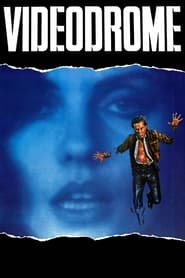
Tim Lucas
Hello, I'm Tim Lucas, film critic and editor of Video Watchdog magazine. In December 1981 and March 1982, it was my privilege to be the only journalist allowed to visit the set of Videodrome, whose production I covered for Cinefantastique magazine. My research ultimately took the form of a book on the making of David Cronenberg's film, which initiated Centipede Press's studies in the horror film series in 2008. I'm here to share my insights about the film, as well as some memories of the time I spent on set.
0:02 · jump to transcript →
-
Tim Lucas
But let's take a moment to admire the production design of Carol Spier, who is working here like DP Mark Irwin and editor Ron Sanders on her third Cronenberg picture. The glass blocks suggest television screens and the open slats of the Venetian blinds emitting blue light evoke the resolution lines that were present on all analog TV picture tubes. You may note in this scene that Max's preferred format is Betamax, which video insiders of the day considered a far superior format to VHS.
15:07 · jump to transcript →
-
Tim Lucas
To abbreviate the shot to a length the MPAA considered acceptable, Cronenberg and editor Ron Sanders inserted a dissolve that allowed the shot to get to the point prematurely.
17:55 · jump to transcript →
-
-
-
We had filmed a scene in the jacuzzi of the record plant, and we came back. We didn't use the jacuzzi, but we used this office because it had a lot of gold records. Tony Hendra went back to the lampoon, and he's written a number of books, and then briefly was the editor of Spy magazine. I had a one-man show at Lincoln Center for which he took out an ad in the New York Times that said he was the creator of Spinal Tap. It was an oversight. It was strictly an oversight. No, it wasn't a one-man show. It was a Ronald Reagan operetta. A one-man lawsuit.
27:10 · jump to transcript →
-
Robert Leighton was the editor who's obviously gone on to do a lot of pictures. The final version, the film veered back and forth before it got to this point. And following this scene, there was another scene that took place just between David and Nigel after the smoke had cleared. And it's the two of them kind of like talking about old times and talking about what's the problem in here and everything. It was just, it was too much. But I think out of that...
1:03:45 · jump to transcript →
-
We wanted to avoid that Bob Hope movie thing where Reynolds... These aren't outtakes. These are all interviews, as you notice. It was a thing in the 70s that was happening in the mid-70s with Burt Reynolds movies where it was just him and Dom DeLuise making each other laugh. We tried to avoid that. Yeah, the end of Hardly Working had that, too. Kent Beyda, the assistant film editor, is a big film editor now as well. Kent Beyda. Cary Gleiberman, the Gleib. That's right. That's the man you shot in Roma 79. Don Newman and Erwin Mucas, as you called him.
1:19:38 · jump to transcript →
-
-
-
Hi, I'm Steve Sommers, the writer-director of this thing. And to my left is Bob Ducsay, the executive producer and editor. Hello, everybody. Here we go. Didn't we just finish this movie? So, as we sit here in ADR 6 on the Universal lot a couple months after this movie is open, the picture is closing in on about $200 million at the domestic box office, and
0:01 · jump to transcript →
-
I don't think he agreed. But, you know, it's fun. I mean, if I was designing London, I'd have put them all so you could see them all at the same time instead of spreading them all over, because with London traffic, which is miserable. It's a much better design. So some of our... In post-production, we had a... The visual effects editor was a British guy, and he was always appalled by that shot. This sequence here was shot in...
21:55 · jump to transcript →
-
And, of course, the cast is from everywhere, so... My co-editor, Kelly Matsumoto, cut all of this fight sequence here and did a fantastic job. There's a ton of footage and fight cutting is always very complicated. I think she really kept things moving here very well. You go back there, there's a good bent...
30:00 · jump to transcript →
-
-
-
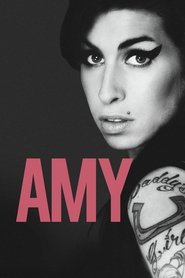
Hi, this is Asif Kapadia. I'm the director of Amy. I'm here with two others. I'm James Gay-Rees, the producer of this film. And I'm Chris King, the editor of the film. And we're going to talk our way through the film, give you a bit of a commentary of how the movie was put together and hopefully give you a bit of background. Yeah. Although this is the very beginning of the film, this material was some of the latest that we ever received, wasn't it? And that was mostly down to the efforts that it took you to get in contact with Lauren and Juliette.
0:14 · jump to transcript →
-
Did we de-interlace this footage, Chris? Oh, honestly, this, Jamie Leonard, the online editor, took this away and worked on it for weeks and came up with various different ways. It was torn to pieces. I mean, actually, the image fell to bits and it got worse when we projected it on a big screen. It almost couldn't work out. So it's a miracle that we can see what we can see with this. I think he blended various different versions of it
1:15:58 · jump to transcript →
-
It was definitely a question of just keeping in the moment and playing what was actually happening. He came with cameras and audio guys. But she worshipped the ground he walked on. And these slow-mos caused our online editor the most trouble, I think, of anything. They came up again in the game. It's sort of pitch-shifting on a lot of footage.
1:38:46 · jump to transcript →
-
-
-
Paul Davis
who conceived and created a lot of the sounds that you hear in this film. And then Jerry Humphries, who was a legendary sound recording editor. They took an elephant trump and played it backwards and added reverb. That sound that you hear right there is pigs from a distance. But the main howl was an elephant.
15:08 · jump to transcript →
-
Paul Davis
A little trivia for you. The young lady in the background with the two kids, that's George Folsey's wife and kids. And George Folsey was the producer on the movie. Who John met as an editor. He met him when he was making Schlock. He was introduced to him by a publicist called Sol Kahn, who worked on Kelly's Heroes. And John came back to the U.S.,
1:17:02 · jump to transcript →
-
Paul Davis
who went on to become the editor of UK Penthouse magazine. And has a very successful actor in her own family, her son, Tyger Drew-Honey, from Outnumbered. The genius of this sequence is the fact that
1:23:28 · jump to transcript →
-
-
-
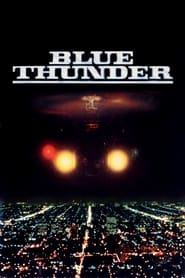
I'm Frank Morriss. I'm the editor. Lucky enough to be the editor of this movie. It's a very interesting picture because though a lot of people... ...thought it was science fiction... ...we always looked at it as science fact. And so the message here is mostly true. And many of the things that are not quite true... ...were not quite true at the time... ...such things that we'll run into as "whisper mode" and so on. And yet, a lot of these innovative things... ...weren't actually happening at the time. Reiss. Maloney. The Los Angeles helicopter squad... ...is one of the best in the country... ...and it's the only way that they're able to cover this huge area of Los Angeles. They're up in the air almost 20 hours a day. Where we're shooting right here is a brand-new facility... ...that they had not moved into, and they let us use it.
0:11 · jump to transcript →
-
And actually, when we did mix the sound... ...I was working on another film called WarGames at the time... ...and had to be shooting on that film. So I would come by late at night to the mixing stage... ...and Frank was working there. Frank had his own opinions about this music. Do you remember? - Oh, yeah. It wasn't something that I think you were crazy about. It was not your favourite-- Well, Frank has been a music editor for a lot of his life... ...before he became a film editor. So he has very strong... ...powerful opinions on music. Well, I think Arthur did a terrific job on this... ...but we lost a lot of it due to the fact that it didn't quite work... ...with the action, or whatever and... Or it just didn't fit the character of the movie. Two or three cues is all it was. - Yeah.
27:31 · jump to transcript →
-
Let's see what's on HBO tonight. Now, this movie is filmed in widescreen. Sometimes that's called Cinemascope, or anamorphic. And 35 mm film is not wide enough to contain this frame. It wouldn't fit. So Panavision and some other people... ...invented lenses that actually take this image that you're looking at... ...and squeeze it to the width of a 35 mm frame... ...which is almost half as wide as what you're looking at. If you hold up a piece of anamorphic film to the light and look at it... ...all of these guys would be tall... ...and skinny and mushed together. The whole image would suddenly get all squinched. When you project the image, then you have to have a similar lens... ...that unsqueezes the image. But this was an effort to make big, widescreen movies that-- Not necessarily in Cinerama or techniques like that... ...but that you could make on ordinary film, and have an experience that was... ...different from what you're seeing on television. It had a different aspect ratio, real wide screen. And the challenges of shooting it are quite interesting... ...because those lenses require a lot more light... ...and give you a lot less depth of focus. So you're always kind of struggling with it. It's a very special kind of look that I actually prefer. And it gives you some real challenges in composition and so on. But you don't see too many pictures shot in anamorphic nowadays. They have another process called Super 35... ...that isn't quite so difficult to shoot. I think, Frank, we did Bird on a Wire in Super 35. Right. Well, from the standpoint of coverage in this movie... ...it was an editor's tour de force almost. It was covered so well. You mean, in terms of you having the footage that you needed. Yeah. We had very, very, very few problems. Well, thank goodness we had enough time to shoot this movie... ...so that we could get the coverage that we needed... ...because it was so tricky to tell this story along the way.
51:44 · jump to transcript →
-
-
-
Jim Piddock
You may feel that, to your taste, the mood has already been sufficiently set, but, of course, it is a matter of taste, and the editor of the picture apparently thought that we could use a little more mood-setting, and, well, he's the professional, so let us defer. Let's appreciate his art. Every cut, I think, well judged, a frame earlier or later, here or there, and quite a different mood, but this is the mood, so let's revel in his art.
20:29 · jump to transcript →
-
Jim Piddock
Nope, no, we've got some warm light, which I think for a nighttime scene is rather the better choice. Oh, and we're back to cold again, back to cold light. So mixing again, mixing and matching. Oh, yes, I'm not sure I like that jump in, but that's the editor's art, isn't it? And we are not he. No, nor he.
21:28 · jump to transcript →
-
Jim Piddock
This doorway here is not actually at the same location as the bar with the cash register. Through the magic of the editor's art, we think the two are in the same place, one just by the other. But in fact, this door was in an econo lodge right across town, but it has a nice dusty rug in front of it that the filmmakers simply fell in love with. So they shot that bit at the econo lodge, and then through the magic of editing, they implied that the doorway was part of our bar, and they got that lovely dust effect. And who would know?
44:23 · jump to transcript →
-
-
director · 1h 24m 3 mentions
The Naked Gun: From the Files of Police Squad! (1988)
David Zucker, Robert K. Weiss, Peter Tilden
-
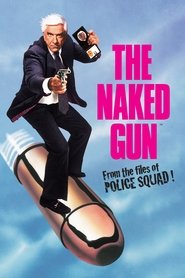
You should have somebody write it down, you know. We found out about halfway into this picture that that was somebody's job. Because somebody can't tell you. I think three was good. You know what they do? They put like a circle around the number. Amazing. And then you go back. You know, because we found out in the cutting room that the ones with the circles were pretty good. I heard Coppola did that on Ghostbusters. It worked great. And he did a good job. Was that the second one? Two and a half went much faster after we knew what those damn circles were. I know. There's something I ought to tell you. No. No need to tell me anything. What's in the past...
39:50 · jump to transcript →
-
Remember they tried to build some baseball launcher thing? The ex-German rocket scientists we had in the effects department. That thing never worked. Probably just threw them up in the air. Is that the one we labeled the pigeon shooter? The pigeon shooter, yeah. That scared some people. They thought we were actually going to shoot pigeons with it. Those were the days, huh? Oh, you remember this? We rehearsed this. Well, do you remember we came in with all the dailies for this and the editor said, what's a rundown? Oh, yeah. It's like, uh-oh.
1:12:55 · jump to transcript →
-
I like that editor. Yeah. I know this is hard to believe, but apparently the umpires have got Crescione in a rundown. Who's Crescione? Is that another one of your high school people? No, I think that was... I don't know who that was. Your name's all friends? One of the wardrobe people's friends. Or was it the accountant or somebody? Yeah, Tony Crescione. No, this is...
1:13:26 · jump to transcript →
-
-
-
So I just kind of recut it. I remember when Susan Shipton, my editor, came in in the morning. This is the last film I edited on film, actually. So she came in the morning, and there was this mess of film on the floor. Because I was just madly trying to kind of put all these scenes together and overlap and kind of create this feeling, knowing that I could then hand it to you, Mychael, and that it would all...
44:52 · jump to transcript →
-
How did the composing community allow that appropriation of their own responsibility as artists? I don't quite get... Well, I think it goes even earlier in the process than that. It's very... In the typical process, the picture editor, as soon as assembly, you know, while the footage is being shot and assembled, the picture editor nowadays absolutely...
1:28:06 · jump to transcript →
-
universally will start putting in temporary score music from other films and therefore making huge decisions without really very much thought and and not from a knowledge of being a composer from being a picture editor and they cut to this music so that if you take this temporary music out the film isn't even cut to its true self it's being cut to music that is not even
1:28:34 · jump to transcript →
-
-
-
Steve Kemper is an editor I've worked with in the past four films. He is a truly gifted editor. A lot of this is editing. I thought what would be interesting when I designed the sequence was to have three different vantage points, three different series of
48:10 · jump to transcript →
-
A good film editor can make a director look a lot better than he or she really is. I got complaints when I was shooting the film, specifically in this scene, that things were too dark. I must say, when people saw it together, they didn't feel that way. So quite often, when you're taking chances photographically, people will complain when they see dailies.
1:24:30 · jump to transcript →
-
This is about, you want to scare people, don't show everything. So to me, not to know where the hand was going to come from and not to telegraph where the hand was going to come from. And then I was trying to make you look down. That shot there I thought was a very clever touch by the editor, to make you look down before the hand comes to the roof.
1:41:17 · jump to transcript →
-
-
-
They're not going to say, oh, it's a British film, we won't mind if the explosions aren't very good. They want it to be as good as a Mel Gibson film, as whatever's out there, really, that you're competing with in the multiplex. So I think it's money well spent and it's the end of our first reel. So you have this extraordinary sequence which starts with London empty and builds eventually to this incredible explosion across it. We used many, many cameras. It's brilliantly cut, I think, by our editor, Chris Gill, who did some wonderful...
16:46 · jump to transcript →
-
watching this editing process and seeing just exactly how much one can change the thread of the story in the edit suite. And they weren't in the same room. They weren't, in fact. When we put them in the same room together, we kind of... As you often do, concertina things that you keep separate. It's often better to, especially once the film...
1:09:11 · jump to transcript →
-
These scenes are always a nightmare for when you film them. Dinner party scenes, because it's all about left to right, right to left. Who's he looking at when he's looking that way? And you end up, basically, the truth is, no matter who you are, you end up going round the table, shooting everybody, and you double up sometimes because you want to make sure the editor's got enough in editing where the editor can control the pace of the scene and shape it a bit, you know? But it's basically...
1:14:58 · jump to transcript →
-
-
director · 1h 42m 3 mentions
Len Wiseman, Patrick Tatopoulos, Brad Martin, Nicolas de Toth
-
This is Len Wiseman, director of Underworld Evolution. And sitting in here with me today, far too close for my liking, I've got to say, if I can scoot over a bit, is Patrick Tatopoulos, our production designer. Say hello. Hey, how's it going, man? Remember that voice. And Brad Martin, our second unit director and stunt coordinator. Hello. And Nick Tatoth, our editor. Hello. Are you going to do that the whole time? Is that going to be your... Hello.
0:04 · jump to transcript →
-
He affected all the flashbacks. It actually takes a very long time to do all that. It does. It goes by really fast, but it's a lot of tweaking in the edit. Right, yeah. Actually, that chopping off of the head right there, and then also the chopping off of the head at the village right there, I know that you and Gary, the visual effects on-set supervisor, were at odds for a while saying that, well, he was thinking that it's not going to look good in 2D, and you're saying, well, no, it's going to look fine. And it ends up looking great in both shots where it takes his head right off.
15:29 · jump to transcript →
-
I was like, can I take off my shirt in this scene? I'm like, Scott, you're not even in this scene. He's like, no, no, I know. The thing is, because he has a thing about it, he's actually tortured over any time he has to do a torso shot. He kind of begs me if there's a way to get around not doing it. You know, it's really weird because he'd always show up in the cutting room with his shirt off.
49:44 · jump to transcript →
-

Related topics
Other topics that frequently come up in the same commentaries.