Topics / Studio & business
Budget
112 commentaries in the archive discuss this, with 435 total mentions and 258 sampled passages below.
By decade
-
1930s
1
-
1940s
1
-
1950s
4
-
1960s
4
-
1970s
13
-
1980s
30
-
1990s
20
-
2000s
26
-
2010s
10
-
2020s
3
Across the archive
ranked by mentions · click any passage for the moment in the transcript
-
director · 1h 49m 12 mentions
-
We had no money. I mean, it was the first one. We had a very limited budget. And I got a bit desperate. I came up with a firm over at Farnham, I believe, who were rake on me. And I got in touch with a gentleman there. And he said, well, what do you want to do? I said, well, I've got, I think it was 12 stations, 12 operators. And each man has to have his own.
5:43 · jump to transcript →
-
Well, I held it about as long as I thought we could, you see. And now when it's run, a few of the conoscente, I mean, there are still, there are some people who begin to giggle, and this pleases me very much because it was meant as a faintly comic effect. If you remember, you first see his hand, then all the props, the gunmetal case, the little lighter, the woman shoveling the money across, and finally she says, and this is a very, very interesting point, she says, and to whom do I make out the check?
8:01 · jump to transcript →
-
Ken Adam remembers the challenge of preparing the set for M's office on a limited budget. I tried to give M a traditional background of a good taste English paneled office with, since he had been ex-navy with ship models and naval pictures.
11:45 · jump to transcript →
-
-
-
come what may, and he was frantically rewriting on the set whilst they were shooting it. And that was for tax reasons as well, that the film had to be shot within a certain window of opportunity, otherwise the money wasn't going to be there. Yeah, and even James Caplan, you know, he didn't have time to develop the screenplay as it should be either. And, you know, it's a very complex storyline, you know. It's film noir. It's investigative, you know, plot.
41:20 · jump to transcript →
-
on a small budget and a fast shooting schedule. So you've really sort of set the bar high for what you're trying to achieve in such a short space of time. Well, it was budgeted by Graham Ford, who had just come off Brazil, as the line producer on Brazil. And Graham did a budget, and it was way, way over a million. And the producer said, well, we can't go ahead.
53:47 · jump to transcript →
-
it wasn't going to happen right so uh i went over to don hawkins uh apartment and i said don you know let's look at the budget and see what we can do um but but don didn't really know anything about budgeting i had some experience because i did some production managing on some other stuff so i sat down and i went through the budget and i started making cuts um all over the place basically until i got it down to somewhere between five and six hundred thousand
54:10 · jump to transcript →
-
-
director · 1h 55m 12 mentions
-
four months after the main unit was completed, and after we'd already cut the film together. It was always in the script, but I'd run out of money, and I couldn't afford to do it with the main unit. I had to beg my French producer to let me go back to South Africa and do it. To his credit, he eventually agreed. It still had to be done very cheaply, and I had to call in a lot of favors.
1:39 · jump to transcript →
-
I mean, one thing is getting the idea, but executing it's another. Shot required placing a 100-foot crane on a very rickety wooden pier. In the original script, we got to see Yuri's childhood in Ukraine. Ten-year-old Yuri comes up with the idea to pretend to be Jewish to escape the Soviet Union. But that part of the story had to be cut for budget reasons.
4:37 · jump to transcript →
-
We intentionally try to change the characters too much over the 20 years the film takes place. Those fashion changes often look very contrived and financially we just couldn't afford to. My schedule was actually so tight that I could be shooting a scene in the early 80s and an hour later a scene in the late 90s.
7:33 · jump to transcript →
-
-
director · 1h 31m 11 mentions
David Steinberg, Dave Foley, David Higgins, Jay Kogen
-
But the idea was we were already behind budget before we started. Correct. We wrote too big a movie. But they bought it already. Now, this scene, we shot everything that we shot. We shot in Toronto. Yep. Right. And is your nephew in the elevator on this one or your assistant at the time, David? My nephew. Right, right? Very good, David. In this elevator? Yes. This is the one where he's in the... Yeah. If you look closely, I was also on that elevator. Oh, right. Yeah. Right. Right.
1:46 · jump to transcript →
-
Really? You said we couldn't be here? Yeah. Don't go up there. Oh, the production. They didn't want to pay for it. Yeah, yeah, yeah. The city of Toronto didn't say don't come here. Our budget was already blown before we started production. But then we were also in profit partway through the shoot. That's true, yeah. Because we assumed foreign sales. Foreign sales to Germany. But they were all contingent on a U.S. release. Right. Which didn't happen. So at this point we were going, ah, we're...
13:28 · jump to transcript →
-
What's he going to do? Charlie, my son, brought up, how did he pay for the hotel room? I said, I had no money. No, I had money. No, no, we figured what happened is we lost that scene where he earned the money doing the fence. I mean, the painting the house. We lost that. The hotel room, I think, was before the fence. No, you'll see. No, no, no, before the fence, but after what would have been the painting the house and fed the rats.
14:59 · jump to transcript →
-
-
director · 1h 23m 11 mentions
-
Yeah, which is the thing with TV, you know, the difference between TV and films, and TV you have a lot of time to develop these things, and this kind of movie you really have to hit it hard, and the audience to get it right away, and you have those few minutes to get a point across. I think it helped, I mean, at least then from that point on, and the audience hopefully would understand that it's very unlikely that she's going to back away from her goal, which is obviously take the money.
10:31 · jump to transcript →
-
that he maintains in his life. Yeah. That was CGI, right? That was CG, yeah. That was the only, well, not the only, I think there's a couple of CG moments in the movie and that was, that's probably the fanciest CG effect in the whole movie, ironically, is the piece of treat of hot dog that is thrown to the dog that had to fly over the fence and land. All that was done actually in Uruguay, in our country. Because the money's in there and the paranoid fuck doesn't trust nobody.
15:08 · jump to transcript →
-
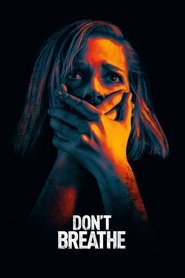
These are all pieces that are going to come back, right? The bell that is going to be, that is the alarm system that the blind man has for what's happening on the cellar. We're still in one shot here, aren't we? Yeah, it's one single shot that starts at the door and ends up upstairs. Of course, we'll know that the money is right somewhere there. Closet. And the door to the cellar.
21:15 · jump to transcript →
-
-
scholar · 1h 32m 10 mentions
The Night of the Hunter (1955)
Second-Unit Terry Sanders, Film Archivist Robert Gitt, F. X. Feeney, Preston Neal Jones + 2
-
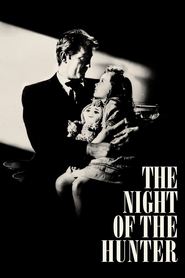
Well, they had a very low budget, really, I think. They had a low budget, and the low budget and Lawton's intentions sort of coincided because he wanted a not quite real dreamlike fairy tale atmosphere to a lot of this. He told the people that he was working with that he wanted the whole thing to be, from the boy's point of view, almost as if it was a nightmare that he was having. What was the budget, Terry, do you recall?
4:22 · jump to transcript →
-
Fortunately found, unfortunately, after I'd already published my book. But, you know, it's fun. Now that Agee, 2009, next year it'll be his centenary, and they'll be able to republish it. And basically what it is is it's an extended version of the film, beat for beat, including something that was not in Grubb's novel, which is to hint strongly that he's hiding the money. That's him.
5:55 · jump to transcript →
-
There is one funny outtake in this scene of Mitchum looking a little bit alarmed by one of the torches getting a little close to his head. And, of course, there's this wonderful moment of revelation coming up where she's talking about the money, and we're finally going to find out what she doesn't know and what Mitchum doesn't know, but the kids know. And you throw it in the river! In the river!
32:40 · jump to transcript →
-
-
director · 1h 28m 10 mentions
Don Coscarelli, Cast Members Michael Baldwin, Angus Scrimm, Bill Thornbury
-
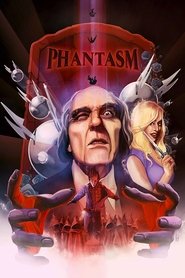
built our mausoleum set in this small warehouse. And this warehouse had just gorgeous cement floors. They were brand new. And for a low budget picture like ours, it was really great because we were able to use our dolly. And you can see the floor there was so flat without laying any track. We were able to get a lot of movement in the picture moving around, something that's difficult for independent films on a budget.
3:13 · jump to transcript →
-
There's a crew guy, and there's my dad in the background, and Reggie's mother. We made this film on a very tight budget, to say the least. And it was very ambitious in a lot of ways. And so there are a few corners that we had to scrimp along the way. Now, right there, that was the first shot of the cuda, wasn't it? Yeah, well, we'll get to that in a second. But I wanted to talk here for a moment about this...
8:17 · jump to transcript →
-
You know, the one thing that we really attempted in the photography of this film is we really tried to get motivated natural sources as much as possible. And even on a low-budget picture, we were always trying to work the lighting into how the film was made from the design point of view, even though the design was primitive in a lot of ways. And so fire came into a lot. You know, we tried to light a lot of the sequences, either with candles in that particular scene. We have a couple of scenes by firelight.
10:31 · jump to transcript →
-
-
-
Gary Goddard
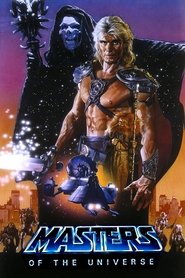
I'm the director of the movie, Gary Goddard, and I've been asked to give some commentary about the making of Masters of the Universe, which I will be doing here as we watch the movie. Over the credits here, I'll just say that Masters of the Universe came my way because it was a very popular toy at the time, an animated cartoon show. Ed Pressman was looking for someone to be able to adapt this into a story that could be done for a budget that the studio would accept, that would also be able to bring the story to life as a live-action picture.
0:17 · jump to transcript →
-
Gary Goddard
and to meet the budget and schedule and get it out for summer, but we did do that. I like this shot also, this shot where you have Skeletor overpowering on an epic scale, dominating the screen, and you introduce your hero here against him as he turns in camera. It was very deliberate, pitting him, hero, who is watching the devastation of his world, Eternia, and the overpowering presence of Skeletor.
5:16 · jump to transcript →
-
Gary Goddard
at the last two days of shooting. Last two days of shooting, everything you see here in Vasquez Rocks were shot in two days at the very tail end of the shoot when I was being pressured for budget and pressured for schedule. You've got to get this done. But there's a certain energy that comes from all that, I suppose, that you have to move things along and keep things rolling. So here we introduce our principal characters. And in this initial encounter, again, we meet...
6:36 · jump to transcript →
-
-
director · 2h 19m 9 mentions
-
big cinema guy. His stuff was so riveting to me. So I couldn't believe this call was perfect. So he said, I want to do it. I said, well, I can't think of anybody who could do it better than you, thinking Mean Streets in my head, because it's the next step for Mean Streets. It's so clear to me. And he said, unfortunately, he said, because the damn book is a bestseller. And lots of people wanted to do it. And my agent, Sterling Lord, and all of these people were just sort of trying to divide the money.
3:00 · jump to transcript →
-
You know the look of the movie. You know the rhythm of it. And that's something very interesting and very good for a director of photography to know. Without using a gun, and we did the right thing. We gave Paulie his tribute. Actor Paul Cervino. In the scene where we're looking at the spoils of the robbery when the money is there, and we have to all be laughing, we did about eight takes. And before each take, I told a joke. I just told a joke.
35:08 · jump to transcript →
-
They must really feed each other to the lions down there because the guy gave the money right up. We got to spend the rest of the weekend at the track. Then I couldn't believe what happened. When we got home, we were all over the newspaper. At first...
1:18:20 · jump to transcript →
-
-
-
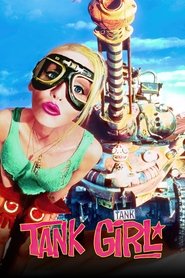
One of the reasons we added the comic book panels was entirely just to add some extra action in that we couldn't afford to do. Because I think one of the biggest limitations was what we could actually afford in terms of now digitally you would do so much, it would be so much easier to do it. But because the combination of the fact that the tank...
19:59 · jump to transcript →
-
And again, you never know whether you're gonna be able to afford these things. You never know what's gonna be acceptable. And so every time, everything is a little victory when you get to, when things like that end up actually in the film. What was your budget on this? It was about 25 million. Wow.
26:51 · jump to transcript →
-
16 guys running their faces and their ears. And it's brilliant because every ear expression and every eyebrow expression is what makes it work. And every piece of the nose, just incredible work from Stan's point of view. And we couldn't afford Stan Winston. He did it because he wanted to do it. He invested a lot.
1:00:20 · jump to transcript →
-
-
director · 1h 59m 9 mentions
-
put his gun to the head of the cashier and was screaming to this guy to give him the money. And everyone in the store just was looking at each other and very slowly getting on the floor as if they were saying, oh, there's Nicky.
15:23 · jump to transcript →
-
Jefferson Obecks have done such a good job of watching her. This is literally the first time she's been alone. And when we found this location, that elevator we built. Oh, cool. Door and everything? Elevator, door, everything. We built it there. I walked into this location. How did you make it go up the floors? I'm kidding. Stop it. No, we built everything. In fact, half of our budget went into remodeling this entire location. This is your loft from downtown, right? It looks a lot like it.
16:47 · jump to transcript →
-
Hollywood. This film is an allegory from my experience in independent film with Ken. And Parker and Longbow end up at the end of the first scene and the end of the film bloody and beaten and completely savaged for being who they are. Right. And the money drives away with somebody else. And that the scene in the birthing room towards the end of the film...
39:47 · jump to transcript →
-
-
-
producer who also acted in his movies and he did sort of low budget production he created a studio there and did a whole series of films and I did I did a few there and then it was great fun it was sort of go out and do the best you can with what you got do you remember any films you worked on with him
12:06 · jump to transcript →
-
budget reasons or whatever. So there are always changes. But I don't remember his reaction in particular. Yeah, the way the sort of the gay subplot comes up is interesting because especially in the 80s films, it was usually handled...
34:17 · jump to transcript →
-
the chases don't compare to what they can do today in terms of scale and budget and special effects, where these are all practical things that we actually did there in the city. But we were told that they had complained all the way to the chief of police, and he got right in his car and came down right to where we were so he could watch.
37:34 · jump to transcript →
-
-
director · 1h 26m 8 mentions
Underworld Rise of the Lycans (2009)
Patrick Tatopoulos, Len Wiseman, James McQuaide, Richard Wright + 1
-
Patrick Tatopoulos
So Dan was the art director on Lord of the Rings... ...and I met through a friend of mine, Gino Acevedo, the makeup artist. And we met and.... Since we already had a sense of what I wanted to see as a castle... ...came with some drawings at the beginning. Dan was perfect for that. Just took the drawing. As an art director, just became clearly someone that expanded the vision. But he's textured the style, you cannot recognise, I mean... Yeah, we were really lucky to get him. He was actually working on a different show when we got to New Zealand. And we thought maybe we wouldn't get him. But that other show had money problems... ...and shut down the production. And we were very lucky that he was able to step right into Underworld. Now, this was a scene that, at least, my recollection... ...when we originally sort of storyboarded it... ...wWe had a lot of werewolves in it, and then we couldn't afford them. So we went back and we begged Clint Culpepper... ...to give us about a hundred more werewolves. And he did. - Which he did. We also had to build this canyon right here. And I do think it makes a difference of just... Before, we were talking about doing a version... ... Which is just all within the trees. And, you know, Patrick, you and I talked a lot about... I liked the idea of you going from... There's a separation. You got the forest, and then this canyon, that then leads into... Leads into the meadow, yeah. Into the castle. Yup, and this castle, obviously, is a location that doesn't exist. So basically... - Neither do the rocks. What we had, it's basically like a golf course-looking... There was no rocks, nothing. It's very flat, very boring. And there was a lot of work to be done later on post and, you know.... The trees and the grass are basically all that were there. Yeah. The big crossbows. We only had one working crossbow, correct? Yes. - We still have it in storage too. We should take it out and play with it. We had a lot of, like, one thing working out of everything. We had one werewolf head mechanical. And we had to make it, you know, out of that stuff. So this wall behind. This is again basically the outside of the set. That set already, basically. - Yup. The whole courtyard and the little bit of the outside was built. We tried that shot right there, where the werewolf comes in. We tried that practically. And it just looked like.... Just dragging in a muppet. - A piece of rubber. Now, this is Rhona. - She is.
4:04 · jump to transcript →
-
Patrick Tatopoulos
It was interesting with Rhona because she had to create... ...a new character, you know, somebody... It's a different time. It's a much more rougher time. I mean, I think the warrior that she created... ...IS, In a sense, quite different from the Kate character. I think she did a fantastic job there. And I think she fits the tone of the movie very well. I was very happy. I mean, she looks great. And she has a very special quality of.... What I like best about Rhona is also the looks, how she looks... ...and tell a love story just by the looks on them. You'll see that through the movie, little moments like this, she really.... Beyond being a great... She works great with swords and things. Look at the shape Michael's in. It's incredible. This was-- He started.... He came off of Frost/Nixon I think in the end of October... ...and started shooting this in January... ...and had three months to go through incredibly intense physical training... ...to get into the shape that he's in in this movie. It was a Startling transformation that he was able to do to himself. It's good to be a Lycan. I'd like to be one. Yeah. That helps. Now, this is one of the great Dan Hennah sets. I remember Len and I came from California... ...in, what was it, for the first day of shooting... ...and we walked through the sets. And not only were they beautiful to look at... ...but the flooring was all corrugated. It looked like natural cement. And apparently, Dan had some sort of formula... ...where he could lay down these floors. And they made them look absolutely... They brought in a cement mixer and dumped it on the floor. And then there's this team of guys with forms and moulds... ... sort of going along with the cement mixer. So the entire floor is actually made... ...of two or three inches of actual concrete. It makes a huge difference. On the first film, we would've liked to, in the crypt, do that. Just didn't have the money for it. It was, you know, any way that you can possibly do it... . like a faux paint job. It just doesn't pick up the light. It doesn't work. The texture, yeah. - Here's a transformation. This was late in the game. This is Michael's suggestion or no? Am I wrong about that? - This was a scene, he was really... We actually tried to cut it. And he was so adamant that we had to shoot it. This one here. This turned out really well. Who did this? A company called Intelligent Creatures. From Toronto. - This one came out really good, yeah.
6:38 · jump to transcript →
-
Patrick Tatopoulos
This was part of what we described as our Spartacus sequence... ...where we wanted to have the slaves working on the rocks. Yep. This again, Dan Hennah and his.... It's an astonishing scale that we were able to get for the limited budget. Look at Larry. Larry's got the cruellest villain face. Ever. - Yeah, he was. I mean, Larry Rew's fantastic. He's just great, great expressions. And he was a local New Zealand actor, right? We found good actors in New Zealand. He was from there, and when we started to consider him... ... he actually decided to move to England. He came back from... What's the deal? - Yeah, that was weird. You will not always be his favourite, and when you fall... ...I will be there. I gotta say about Michael, really, because I was talking about Rhona. We just went through this. Michael... The first thing when I did the movie, I thought this is a bit of a fun little ride. He took the character and the part so... You guys saw that. He was so into it. And he was a real, real strong.... He was very big part of actually the way the character developed. He was very professional. Completely professional. And brings so much to the-- Yeah. I think you have to, you know, for these, it's.... You know, It's a different kind of film, but, you know, people that are... You know, If you were really into this kind of genre... ... you'd take it as seriously as anything else. And he is, actually. When you ask him what he likes, he likes Stephen King. He like that kind of stuff. - Oh, yeah, oh, yeah. These two actors are actually very well-known New Zealand actors... ...normally doing theatre and considerably more high-brow stuff. But they had a great time playing these roles. Orsova and Coloman. - Yeah, he's great. I remember seeing him early on... - David Ashton, yeah. David Ashton, yeah. Yeah, when we were going through all the casting and everything. He popped out. He was great. They're very solid actors. They're fantastic people. We're very lucky to have them onboard. And Elizabeth as well. - Yeah. This is so different from the type of roles... ... that she normally gets to play. They had such a good time, though. And who was the--? I Know we had a couple of different... . like, arrangements for their costume design. Who was doing for this stuff here? Who did these--? - Because I know that... Beanie did all the costume except for Rhona. Except for Rhona, right. Wendy Partridge did Rhona. Jane Holland, New Zealand? - Yeah. She did absolutely every costume in the movie. The only thing she didn't touch was basically Rhona's wardrobe. I remember when I showed up on set telling Gary that, you know... ...producing this one rather than, you know, directing... ... that I was jealous of the detail that you guys got out of it. It's like, in the costumes, in the sets, everything. I wanted to make you jealous about some things. I heard that, and you did, and you did. I'm already terribly, over the accent itself.
9:10 · jump to transcript →
-
-
director · 1h 52m 8 mentions
-
I thought this was like the Rocky training montage. So this was co-written by Marius and Elan. And I said, look, start classically and then build it and get a bit more funky. But they did a good job. And I tried to... We didn't have the money to do it how I wanted to shoot this, but we got as damn near as I could with the equipment we had. I wanted to...
14:50 · jump to transcript →
-
from here on up here, go shot for shot like Spider-Man. So some of these shots you will recognize, but the last one, I couldn't do the camera following him from the back and then swooping up when he jumps, because we didn't have the equipment or the money. But independent filmmaking, there's not much I can do about that. Fuck!
15:19 · jump to transcript →
-
a really fun sequence of him, straight from the comic, of him hallucinating and having sex with spiders and stuff, but A, we couldn't afford it, but B, we just wanted to keep the pace up. Now we'll meet my lucky talisman, Jason Fleming. He's the actor on the right. I only made one movie without him and that was swept away, so he's gonna be in them all, hopefully.
18:41 · jump to transcript →
-
-
director · 1h 30m 7 mentions
Ed Wood Biographer Rudolph Grey, Exploitation Filmmaker Frank Henenlotter
-
She's basically a dancer. She's not an actress, as I'm sure you were watching this. And I was always fascinated with her. She did another really excellent film after this called Agony of Love. It's probably one of the only good films that Harry Novak ever produced. William Wadsley? William Wadsley, yes. And it's really good. And she plays a somewhat psychotic housewife who's almost compelled to sell herself as a hooker. She doesn't care. I mean, she really doesn't even need the money. It's just...
25:20 · jump to transcript →
-
According to Steve, he was like an ex-FBI guy who put in $15,000. Yeah, and according to Steve, in an interview with him, he said, I matched it, and we were in business, so apparently the budget of this was $30,000. And that kind of makes sense. Yeah, so you want to mention her name too? Stephanie Jones. Oh, Stephanie, you're great in this. All right. Go on, she got some credit. Once, yeah.
48:27 · jump to transcript →
-
The guy who distributed Orgy was Fred O. Gephardt. May he rest in peace. So his initials were F-O-G, Fog. I should have known something. So Freddy gave me three checks for $5,000 each in advance. And what do I do when I have the money? I make a picture. So I had Eddie Wood write a script about a transvestite detective. Transvestite detective. Now, who else, right? Who else? About a transvestite detective in Paris called Seven...
1:00:20 · jump to transcript →
-
-
director · 1h 43m 7 mentions
-
And there was this sort of cynicism and this concern about what people think, you know, how it's going to play politically. And then, of course, there's the bottom line is where are we going to get the money? Because New York City was broke for the most part. New York City didn't have any money. It's hard to believe, but it's true. And it's interesting to sort of go back and see that.
33:37 · jump to transcript →
-
You know, it's the craft service budget on a Tom Cruise movie or something like that or a major studio picture. But, again, Warren LaSalle basically is the deputy mayor. You never see the deputy mayor, you know, at press conferences. You never hear about the deputy mayor in New York City. But clearly he's the guy who's running the city. Mm-hmm.
43:36 · jump to transcript →
-
It's interesting that that was validated, not with this movie, but the movie The Money Train, which was in 1995, which had Woody Harrelson in it. And who am I forgetting, Nathaniel? Well, Robert Blake was in it. And Wesley Snipes, of course. And wasn't Jennifer Lopez in that too, I think? Yes. Apparently, somebody did try and rob a subway train or the money train. And by the way,
50:38 · jump to transcript →
-
-
multi · 2h 34m 7 mentions
James Cameron, Gale Anne Hurd, Stan Winston, Robert Skotak + 8
-
Stan Winston
I'm Stan Winston. I created the creature effects and the alien effects for A/ens. I remember Jim trying to figure out how he could make the beginning of this movie impressive. He said he wanted to use a robotic laser. It was an afterthought and it wasn't in the budget and I remember having the gall to say to him "If you wanna use it, you have to pay for it." And he did. - Is that right? This robotic arm and the laser came out of his pocket. I wanted a seamless blend from the end of the first film into the beginning of the second film. I certainly wanted to honor all the things that were good about the first film. So I went to school on Ridley's style of photography, which was quite different from mine, cos he used a lot of long lenses, much more so than I was used to working with. But the smoke, the backlight, the textures, the way he forces the frame by putting a lot of equipment, machinery and foreground pieces, I really studied all that. I wanted there to be a stylistic continuity. I also wanted to have my own style grafted onto that so that I felt enough of a sense of authorship to make it worth doing.
2:51 · jump to transcript →
-
Pat McClung
We had a big budget cut, or we had to save money, and the budget for this set got cut. Peter Lamont came up with a great idea. There's a mirror at the end of the set and another mirror behind the camera. I think we only had three of those hypersleep capsules. I think we might have had four. We mirrored them out to make them into 12. If you're clever you can see where the mirror is but I can't see it right now.
27:26 · jump to transcript →
-
Bill Paxton
I heard that some of the studio execs were screening footage back in the States, and they were a little perturbed and asking "Where's the effects shot?" Gale Hurd said "You just saw an effects shot." She was referring to that perspective shot. They were completely fooled by it. They thought nothing had been shot. They thought they were spending huge amounts of money on these sets. They said "You spent so much and there's no miniature." She said "No, that is the miniature." It was a smart move on Cameron's part, to do it that way very quickly in the film, so the studio wasn't worried quite as much about what was going on 5,000 miles away in London. It does make it a bit tricky to shoot, though. If anything goes wrong, you're stuck with it or you have to fix it later but with a reshoot. You can't really fix it later. So that worked out quite well, but with actors and everything there's a lot on the line. Something we've lost sight of over the years is that with this era of filmmaking, not only for live-action but for miniatures, there wasn't much ability to go back and fix something. Now, digitally, you can change an actor's face, you can get rid of wires, do all kinds of tricks, split-screen, take elements and change shots. But at that time you had to plan these things and make it work within a narrow tolerance, otherwise that was it, that's what wound up in the film. IIt reminds me of a stage play. You're doing it live, in a sense. What was on film was it. There was no going back. You could only do it so many times. There was a limited budget to work with and it had to work on film, no matter what.
1:08:47 · jump to transcript →
-
-
-
Yeah, we had, I mean, I'll give Trimark credit because they did give us, you know, they gave us enough to make a pretty good movie with a 24-day schedule, which is a good schedule for these low-budget direct-to-video movies. And, you know, I think as we went along, they started to get somewhat happy with the picture. I don't think...
20:25 · jump to transcript →
-
when it first came out, because I think, you know, people were expecting, you know, went theatrical, and they're saying, well, this is just kind of a low-budget horror movie. But I think later on, people kind of get it. And I did hear that Ron Howard's daughter and her boyfriend, it was one of their favorite movies. They loved Leprechaun.
51:30 · jump to transcript →
-
But I think that's when the crew started to have fun, you know, that kind of stuff. They got it. I mean, I think the crew really, you know, they worked on a lot of low budget movies, a lot of horror movies, and this sort of was a hybrid. Yeah, very much so. It's a great word for it. And it's funny, even when the character is doing these slightly lighthearted things, I think it adds to the dementia of it. It's crazy. Yeah. Now there they think he's gone.
1:09:50 · jump to transcript →
-
-
director · 1h 42m 7 mentions
Len Wiseman, Brad Tatapolous, Brad Martin, Nicolas De Toth
-
It had to be built, and we stroked the set just a day before the station opened, and people were starting to ski again. So it's hard to believe it's a ski station, but that's what it is. But when we went there for prep, which was on a Friday, just to go look at the whole set and everything, there was no snow. And we were shooting on Monday, and we had to have snow there. Well, the thing is, we didn't seem to be able to get enough cash to get fake snow. No, we didn't. It's funny, because we didn't have the money to bring in fake snow. But then the thing is, once you're actually shooting in snow,
2:02 · jump to transcript →
-
budget looks better, but somehow you're probably going to end up spending more money on location, like you're saying. Yeah, this next shot coming up here, we built the floor. The background of this is actually from Underworld 1, and we just reused the shot. And so these guys coming in are on green screen just to save a bit of cash. There's a lot of great shots like that. Yeah, and the shot, actually, those guys that came in, originally was a shot with Kate coming in through in the first Underworld. That's right. And we removed her and hit her, and we hit her in the group of people. Yeah, we did. She's actually there, but you can't see it.
12:19 · jump to transcript →
-
This is a lot from Underworld 1 as well, just taking pieces. And when the coffin rises, that's all from the first one. I forgot about all that. Yeah. So that's new, huh? That's new. That's old. But what we did is we just... We didn't... This was a scene that we were possibly... I think we didn't have the money to do it. And so I was trying to set up how we could do it with a lot of the footage from Underworld 1 and not have to build so much. And...
13:17 · jump to transcript →
-
-
-
Alan K. Rode
My good friend, the late actor Richard Erdman, who worked with Jay in Cry Danger and Saddle the Wind, told me Adler confided to him that he ran away from the school after setting it on fire. Jay's screen career is filled with these great little character vignettes, of which the killing is certainly one. Maybe even less than that. You know I wouldn't pull a thing like this. I knew I couldn't afford to. I'm glad you said that, Randy. I was going to point out as much myself.
5:49 · jump to transcript →
-
Alan K. Rode
Sawyer's character was another Kubrick modification from Clean Break. Lionel White characterized the bartender as a childhood friend of Johnny Clay who was stuck in a poor neighborhood with a trampy daughter. Instead, we get Joe Sawyer as an otherwise honest Irish-American bartender who lacks the money to take care of his sick wife. And we see right here, we feel his impotent frustration of being unable to provide for his wife. That angst by Sawyer is one of the more touching moments in the film.
9:42 · jump to transcript →
-
Alan K. Rode
Today, isn't it? Huh? What makes you think that? Again, Kubrick's composition, the two-shot with both of them at the table, the light coming through the kitchen window that gives you the indication that it's early morning. Even with a limited budget, it's just masterful. I'm in it, Sherry, and I'm getting fed up.
38:21 · jump to transcript →
-
-
-
John Mackenzie
The opening of the film, which is this cottage emerging from the dark, was not how it was originally intended. I did shoot a very much more elaborate opening, which went on and on and on, and it showed the origin of a suitcase which is about to be delivered to these men full of money. Well, before that, there were scenes where the money was hijacked.
1:27 · jump to transcript →
-
John Mackenzie
from a van in the hills of some distant country, and you see the money being transported across Europe and eventually arriving here in England. But it seemed to me, as it was pointed out, that this was rather an elaborate opening, and really it was complicated enough without introducing all this other stuff, and it would leave the audience a bit mystified. So I eventually cut all that and started with the cottage, and then took up the suitcase theme from here on.
1:56 · jump to transcript →
-
John Mackenzie
find down and bring out. And I concentrated on this at the beginning of the opening of the film with the money and the scene with the guy in the pub who turns out to be Harold Shan's right-hand man. We don't realise that the setting is in Ireland. That is revealed much later. And when we keep going to this cottage, which is also an island, I may say, we're not sure whether they're...
3:51 · jump to transcript →
-
-
director · 2h 9m 6 mentions
-
Kind of an energy. They're talking over one another, introducing his girlfriend right off the top here. Just kind of move it along as quickly as possible. Charlie, it's Wyatt. Wyatt? Yeah. About the swing loan. He doesn't get the money by 5.30. He's going to come and seize all the cars. I'm going to have to call you back. I really think you should talk to Mr. Babbitt on this. Tell him that you don't understand. I signed a check on Tuesday. You personally watched me sign it, and then you gave it to the mail girl. Come on, come on. I need this. Come on.
3:57 · jump to transcript →
-
As for my home and all other property, real and personal, these shall be placed in trust in accordance with the terms of that certain instrument executed concurrently herewith. What does that mean, the last part? What does that mean? It means that the estate, in excess of $3 million after expenses and taxes, will go into a trust fund for a beneficiary to be named in this document. Who is that? I'm afraid I can't tell you that. Who controls the money? You control the money? No, it's called a trustee. What is that? How does that work?
13:25 · jump to transcript →
-
Raymond, am I using you? Am I using you, Raymond? Yeah. Shut up! He is answering a question from a half hour ago. What good is $3 million to him? That money is only just gonna sit there for the rest of his life, and I need that money. You know I need that money. Yeah, you need them, so it's hardly like stealing, no? And when it's over, what happens to Raymond? He'll go back to Walbrook or a better place. No, with the money, I will put him in a better place. What difference does it make? He is gonna be just the same. Only you have his money. His money, his money. That man was my father, too. What about my fucking half? Where is my fucking half? I'm entitled to that money, goddamn it.
36:21 · jump to transcript →
-
-
-
Fred Dekker
There was a church there that was real important that he spent some time in. So at that point, was this, I mean, obviously this would have been the largest budget you would have had to work with. And yet, was it a situation where Orion really felt that this was going to be a big step up from the second one? Or were they trying...
4:11 · jump to transcript →
-
Fred Dekker
just because, you know, more bang for your buck in a movie like this is really important. But we really weren't wanting as far as the budget that we had from the get-go. I could have told them, you know, this isn't enough. And directors do that all the time, by the way. No, I need 10 more million. I was just happy to be doing it. And I have to say, in the movie's defense, I think it looks really good. I think it's got a flow to it. And I think...
23:44 · jump to transcript →
-
Fred Dekker
Lots of Panaglide in this movie, or Steadicam, as it's also known. Well, it must have been fun for you. I mean, like I say, it was the biggest budget film that you had, so you must have had a lot of fun tools to play with to pull off some of these shots. Yeah. I mean, it was a real movie. Yeah. Let's do a crane shot here. Okay. Yeah. Okay. Let's do Panaglide here. Now, we're coming up here on A Missed Opportunity. This is Dick Hancock, who was one of our stuntmen. And...
46:30 · jump to transcript →
-
-
director · 1h 43m 6 mentions
-
trading a lot of stories as we're watching this film that we both love so much. Yes, it's... considering that the entire music budget back then, I spent pretty much all of it on my plane fare to India to record this instrument. But I felt it was really important, the concept of Exotica,
1:17 · jump to transcript →
-
I had in mind from the very beginning, Leonard Cohen's Everybody Knows, it was really difficult to get access to this piece of music with the very limited budget we had. This whole film was shot for less than $2 million. Actually, it's like 1.5 or something like that. It was insane. So how do you get a big song like this? And so how you get it is you approach the company, they say no.
8:22 · jump to transcript →
-
because it's the best thing for the film, is something that's very difficult to do now. But also, I look at this scene, I look at the performances, I look at the actors, how committed they are, but they're also framed in this... This was a set. This was not a location. So here's the amazing thing, is that you could theoretically have that freedom in a digital world, like ultra-low budget, but then you don't get to make sets like this. You don't get to kind of create this...
53:22 · jump to transcript →
-
-
-
Die Hard with a Vengeance, Crimson Tide, Species, Tommy Boy Clueless, Friday, While You Were Sleeping, some indies like Living in Oblivion, Party Girl, The Underneath, The Usual Suspects. And this movie was a $50 million budget. It made about $152 million, and its opening weekend was $26 million.
1:11 · jump to transcript →
-
bunch of stuff ranging from glossy studio fare like The Natural and the low-budget teen sex comedy Joysticks to the James Bond movie The Living Daylights and Michael Ritchie's Chevy Chase vehicle Fletch. He was on a roll here in the 1990s. He started the decade with a juicy part in Martin Scorsese's Cape Fear, a movie we both love, and he also appeared in Reality Bites, Steven Soderbergh's The Underneath, Panther.
10:04 · jump to transcript →
-
So Marshall went and worked for Bogdanovich as an unpaid production assistant and kind of all-around gopher on Targets, Bogdanovich's first feature film as a director. And he got a real crash course in low-budget filmmaking as Bogdanovich called on him to fill a variety of different roles throughout production. But he actually didn't work on a film again until a couple years later. He was sort of kicking around working as a waiter and a musician. Wow.
43:14 · jump to transcript →
-
-
-
Jonathan Lynn
So you just gas me, pull the tooth out, and we'll still be friends, okay? Good. This dentist's office was a location, actually. There are very few built sets in the film. Partly for financial reasons, the film was made for a fairly low budget. And here we are in one of the most famous squares in the old town of Montreal, and this is Amanda Peet.
5:29 · jump to transcript →
-
Jonathan Lynn
And the jokes with the tulip here I asked Mitchell to put in on the very first rewrite as part of several places where I wanted to boost Bruce's character and give him some more laughs. This scene was originally going to be shot in a little cobbled street in the old town. We couldn't afford to go there because all the shop owners got together and...
13:15 · jump to transcript →
-
Jonathan Lynn
agreed to charge us to such an extent that we couldn't afford to shoot there anymore. And then we found this location, which is just wonderful and shows a panoramic view of Montreal. I was really pleased that, yet again, financial considerations forced us into making a change, which turned out to be for the better. After the ensuing scandal and bankruptcy and embarrassment, my wife and her mother decided it would be best that we move back here. That's the St. Lawrence River in the background, of course.
13:43 · jump to transcript →
-
-
-
Eng Commentary
And the more you know the facts of Truffaut's life, the closer to reality the film may be understood to come. Truffaut's own best friend in boyhood was named Robert Lacheney, and it would be Lacheney who would one day provide Truffaut with the money to make Les Mistons, one of Truffaut's first short 16mm films. Lacheney worked as production supervisor on The 400 Blows as well, and he would remain Truffaut's closest friend throughout the director's life.
11:26 · jump to transcript →
-
Eng Commentary
The money being used in 1959 in France, by the way, is the old franc, that is to say, two decimal places more inflated than the current French currency. In giving Antoine 100 francs, Monsieur Douanel is giving him approximately 20 cents. So the 500 francs Antoine finally gets would be worth about a dollar. Robert Lacheney had this to say.
16:05 · jump to transcript →
-
Eng Commentary
I did my best even if it was already 1958. I'd never thought of keeping a diary of the time, which is a pity now. He also asked me for whatever snapshot I had, but since we were so poor then for a time, cameras were a luxury we couldn't afford either. We didn't have many documents really, but fortunately I always kept all of his letters. I kept every one of them, thinking that someday when we were 70, he'd come to my house and one evening by the fire,
43:52 · jump to transcript →
-
-
director · 2h 52m 5 mentions
-
The Hollywood scene with Jack Waltz was pretty much shot as second unit. As I said, this was very low-budget production. That fellow walking is not... I hate to say this and ruin the illusion, but that was not Bobby Duvall. It was just some fellow we had walking in a couple of L.A. sets, and it wasn't really Gordy Willis or Dean Tavallaris working on it. It was just some cheap second unit. Now, the scene inside the stage is, in fact...
27:11 · jump to transcript →
-
I'm looking at the shot laughing to myself because I'm sure Gordy Willis was annoyed that I had that camera so high and I'm sure that I had the camera so high to see the floor because we had stripped the floor. Dean Tavallaris wanted to show that original floor and there was some linoleum over it so we spent the money to take the linoleum off of it and show that.
1:25:44 · jump to transcript →
-
of the 40s. The 40s represented for me a kind of growth of America and our system, our business system, and to a post-war position of importance that sort of paralleled the Corleone family. So I was very anxious to shoot it in period. Now this meant, of course, that the film was going to be more expensive in this little $2.5 million budget that they had allocated.
2:07:19 · jump to transcript →
-
-
director · 3h 16m 5 mentions
-
But I want you answering the money by noon tomorrow. And one more thing. Don't you contact me again, ever. From now on, you deal with Turnbull. Of course, the senator represented, as I imagined the story must be, the next level of villains were not just the local counterpart Sicilian guys or kind of mafioso guys, but now it was starting to get into corrupt senators and...
18:56 · jump to transcript →
-
Carla, what do you have here? Oh, my daughter! What a beauty! What a beauty! Come on in. My only daughter. Leave her alone. Please, leave her alone. Leave her alone. Take all the money. Take all the money you want. No. Beth.
48:08 · jump to transcript →
-
When I wake, if the money's on the table, I'll know I have a partner. If it isn't, I'll know I don't.
1:34:30 · jump to transcript →
-
-
-
Filmmaker Paul Davis
American wealth in London to Jenny Agata saying that he wanted her to play Nurse Alex Price. But he didn't actually give her the script until he had the money to make it. So I think it was probably around November 1980 that she finally got the script. And she is admittedly not a huge horror fan. And had the script come from somebody else, she would have thought twice about it. Can I be of service, Nurse Price? Dr. Hush? Go about your duties.
18:08 · jump to transcript →
-
Filmmaker Paul Davis
guaranteeing you the the money for the movie once it's delivered with specific requirements so for this it was that it had to be an r rating um and polygram pictures it was john john peters and peter guber who who were big fans of john after the the blues brothers and an animal house uh
25:22 · jump to transcript →
-
Filmmaker Paul Davis
they understood it and had faith in john and they gave him the contract which he then takes to the bank to get the money to make the movie and then once the movie is delivered polygram then pay back the money to to pay off the to pay off the bank and that's how this movie was made and it's a really smart way to do it because it leaves the filmmaker completely financially responsible for the film you know you're signing the checks and
25:44 · jump to transcript →
-
-
-
Did you find that we had any problems working on a limited budget? Well, I remember on the first day, this was the first day, I think, we fired the continuity girl because the clock was at different times. I can't even see a blinking clock there now. So that didn't get off to a very good start. But it was a very low-budget film. We couldn't afford the best, could we? No. So working under sort of pressure and...
16:59 · jump to transcript →
-
A warm mellow sort of, instead of the harsh reality of whoredom. Is the offer still good? No problem. I could use the money. You do? Terrific. No, no, that's great. You didn't think I had the nerve, did you? Neither did I. I guess it just comes with poverty.
21:23 · jump to transcript →
-
But the movie is basically an exploration of the psychology of sexuality. And I love how you just framed these two characters in terms of their beds, with her lying in this big bed, totally isolated. And it's cold. It's a blue light. It's lonely. Having just come from Grady, who has been spurned by his wife. Exactly. Why didn't you come to me, Phil? I would have loaned you the money.
40:25 · jump to transcript →
-
-
director · 1h 54m 5 mentions
-
which you and I might take no notice of. The main title sequence tries to give a flavor of the world that the audience is about to experience. It shows several of the characters without any explanation of who they are or what they're doing. And it also shows the act of counterfeiting and the act of passing the money. The money is counterfeited
5:35 · jump to transcript →
-
somewhere in an area where you'd need a police escort to get to most of the time today. And we met this counterfeiter and he took us through the process. And he had the paper, you know, which we paid for. It's a certain kind of, it's called rag. The paper's a certain number of rag, it's called. And certain kinds of inks and the money that he was making, these $20 bills,
13:13 · jump to transcript →
-
you know, to accuse me of a crime or to question me about a crime. They just tried to browbeat me a little bit. There was no crimes committed. We made this money for a movie and then basically destroyed it all. We weren't counterfeiters. But the guy who made the money had been convicted of counterfeiting and did serve time. So the money in that film and the process is totally authentic.
17:59 · jump to transcript →
-
-
director · 1h 39m 5 mentions
-
So at the end of that night, I said to Emil, we don't have it. It's not shocking and specific enough. It's just like a bunch of kids bopping around. And we had no time or money to go back. We were on such a low budget. And he said, are you sure? And I was sure. And as I said, it was nobody's fault. Sometimes these things just happen. And I remember calling my husband and telling him, he remembers this very vividly because I thought it was all lost. And I stayed up all night crying. And Lisa, my assistant, bathed my eyes with
15:22 · jump to transcript →
-
someone who is really a decent, rather touching guy. He's just not Johnny for baby, but he's not a fool, and he's not a buffoon, and he's going to Freedom March, and he's afraid that people like him only for the fact that he owns two hotels. He plays him as a full character, and I have always loved his performance. I think it's just wonderful. Now, originally, we had to cut down on things because of the budget,
24:21 · jump to transcript →
-
And we had had a long search in the woods for Penny. Oh, it had been a long thing, and Baby used her Girl Scout training. We couldn't do it, so we cut it down to Penny hiding in the kitchen because I've always loved hotel kitchens. I have a real softness for them. And I must confess, we didn't need the search in the woods. Now I'm embarrassed to think of how long it took me to cut it out. It's just fine to find her in the kitchen. It's, if anything, better. And I think sometimes when you have those budget constraints, sometimes it's really just hard.
24:50 · jump to transcript →
-
-
-
Macaulay Culkin
So this, uh.... What's interesting about a lot of this movie is we would always put fake snow down. The foam and stuff. - The foam, and that's really... We had a Wisconsin ski... A bunch of guys who worked for this ski resort in Wisconsin put down snow. But... - That poor statue. Yeah, the statue was a running gag, and this guy... A lot of this movie was made on an extremely small budget. At the time, the picture was at one studio... ...and that studio didn't wanna make the movie, because of a $2-million difference... ...and it went over to Twentieth Century Fox. And we still were... We still made the film for a little above $18 million... ...which at the time was still a small budget. So we had to make things stretch, which we'll talk about through the picture. One of the great things about working with Pesci, I have to say... .IS his improvisational skills were terrific. And it was because of his training with Scorsese that... ...even on a picture like Home Alone, really comes in handy. He's a very funny guy, Joe. - Yeah. And his comedic instincts were really something I'd never seen before. Little snippets in pictures like Raging Bull and Goodfellas. But his ability to improvise was just phenomenal. And then John Heard. I cast John Heard because John Heard was someone I was always a big fan of. He was in this picture... It was called Cutter and Bone. Now it's called Cutter's Way. And his performance should've gotten an Academy Award. I've never seen it. It's Jeff Bridges and John Heard, and he is just amazing in that film. I was a huge fan, and it was always a dream to work with him. He also did this old film called Head Over Heels. And he was kind of a leading man back in his day. He's just a wonderful actor... ...and another guy who didn't really know why he was in this movie. At the time, he was sort of like, "Why am I doing this?" I remember feeling a certain amount of discomfort from him. He was like, "Why do I have to do this? Why am I in this kids' movie?" You know? "I'm a good a--" Understandable. No one really knew what this movie had the potential of becoming. We had always hoped it would be successful, but we never knew. Um.... Pfft. I always knew. You always had an idea. - I always knew. Now, this scene. Do you remember coming in on a Saturday to rehearse this scene? Yeah. - We had to rehearse this because it was so... Which was so chaotic with everybody. We ate so much pizza. I didn't wanna eat lunch. And this is something that was interesting. We... You'll notice that there's a rare shot in the film where... There's your brother. - Yeah, there he is. How are you guys--? He's working now, right? He's doing very well. Oh, yeah. He's doing very good, very well for himself. Un, this is typical of the style of this movie. Not the vomiting, obviously... ...but the separation of actors in certain scenes. Because Macaulay's time was so valuable... ...we needed to shoot Macaulay separately... ...and sometimes other kids as well. So you'll always see... I tried to block sequences where I could sort of keep Macaulay off by himself... ...and keep the other actors in another space... ...so I could shoot people separately. Child labor laws again. - Child labor laws. And we're-- And Kiery had to reshoot the chair in the face, I remember. Oh, yeah. - Like, he had to come back later. He was upset he had to get his hair cut like Fuller again. Oh, he was? - Ha-ha-ha. Well, he-- We made a special, very light rubber chair... ...so when it... - Yeah, that's... Yeah. That's-- I remember that. Catherine O'Hara was someone who I had, uh... ...Just loved her work on Second City TV. - Yeah. I mean, I was, uh... Aside from Saturday Night Live at the time in the '70Os... ...9econd City TV was the-- Sort of the place where you learned about comedy. And for me it was... I was just such a huge fan... ...SO It was, again, a real honor... ...to be able to work with her on both of these films. Yeah, no, she's incredible. Even just the stuff she's doing now. She's still--? Oh, it's great. It's great stuff. Both of his kids are still going to school here. I guess he missed the family.... You got a pretty good cast. Yeah, it's kind of interesting for a film that... But we treated it... The weird thing about this film... ...and the reason I think the film has kind of stood the test of time for a lot of kids... ... IS because we always treated it with respect. We never felt that we were making a movie for kids. We were making a movie for the parents as well. It had a lot of appeal. And you never-- You wanted to... You wanted the photography to have a certain elegance about it... ...and the camera to be moving. And it was really never... So many times today, people try to make kids' movies... ...and they always cheapen them. And we never-- I mean, certainly we got cheap with our jokes. Let's not pretend that we didn't. - Ha-ha-ha. Oh, yeah. No, I mean, it's Three Stooges, you know? - Anything for a laugh. I
7:04 · jump to transcript →
-
Macaulay Culkin
We shot a lot of this film on location in Chicago. This was shot at O'Hare Airport, actually. That was just chaos because it was still a functioning airport... ...while we were running through it. And the key is, here, is we were shooting... When we were shooting this first picture... ...N0 one knew who Macaulay was. In contrast with shooting Home Alone 2... ...where there were busloads of people following you around. That was crazy. - You suddenly became... ...one of the Beatles, um... ...which was a whole different vibe in terms of... We wouldn't have been able to shoot the way, you know... The way-- On this budget, the way we did. Duck into any airport and, you know.... I
16:25 · jump to transcript →
-
Macaulay Culkin
Again, l've-- Because of this film, I... - There was a whole speech there. Yeah, I think that's in the... We've got outtakes on this DVD... ...SO I think that'll probably be there, but the... I've not let my children ever buy a BB gun because of this movie. I had one. It got taken away. Did you? - Oh, yeah. Was it an airsoft gun or a...? It was a-- You know, you pumped it... But, you know, you could shoot pellets out of that thing. Yeah, I don't have that anymore. - No. Well, that's good. There's a reason why. When we shot-- John had written this movie within a movie... ...called Angels With Filthy Souls. And we actually had to shoot a film that resembled a film from the '30s... ...which unfortunately, you don't see on TV anymore. And there's not a kid in America... ...who would pop in an old black-and-white movie in 2007. Yeah. Just-- You know, Macaulay was a pretty sophisticated guy. He's watching old movies back then. - I was very worldly. But kids would do it back then. And the interesting thing is we got two Chicago actors to do this film... ...and we just studied our old '30s and '40s film-noir gangster pictures... ...and re-created them. And, you know, on this budget, it actually worked... ...because they were basically cardboard sets... ...and a few lights creating that old film-noir style. This is great. This stuff is classic. - Yeah.
23:25 · jump to transcript →
-
-
-
that's just not how studios work is and there's an extra problem here because it's obviously it's alien so it's a cash cow there's a lot of people and a lot of money involved but there's also a three-way dynamic because you've got brandy wine which is the production company which is david guyler and walter hill two men who do not take at all and then you've got fox who's putting up all the money and obviously it's their baby too they want and then you've got david fincher and
17:40 · jump to transcript →
-
Fox are idiots and things like that. It's amazing. It's great. He doesn't give a shit. But David Fincher was already a wealthy guy before he made the film. He had a production company making music videos. He was like loaded. So he didn't, I don't know. He didn't need the money to make this, you know, to be, you know, he didn't need it as a payday. He was just like, he loved alien. I'm sure he had his sort of misgivings of aliens and how it kind of changed things perhaps, or maybe set up these, you know, this family setting.
19:29 · jump to transcript →
-
sort of modern considering it was only i mean what was it six years after aliens came out yes you're correct yeah it does feel like a lot longer somehow when you look at it the aesthetic the i don't know that the finish the the look of every everything feels maybe because aliens is kind of a secret low budget movie it's i'm only slowly getting my head around because in my memory in my mind aliens is this huge extravaganza
40:31 · jump to transcript →
-
-
director · 2h 3m 5 mentions
-
steaming toward another $200 million in the foreign box office. And the great thing about that is not the money specifically, but the fact that so many people have seen the movie. And when you make a movie like this, there's really nothing more important than people seeing and enjoying the film. That strange slurping sound you're hearing is not a problem with your sound system. It's just me drinking coffee. Okay, what can we say about this? I feel like I just shot it, like, a month ago. Extras are always a difficult...
0:26 · jump to transcript →
-
Run away or head towards? Well, no matter what, I'm sure that Greg is really happy that you brought that up. This is the shot I was talking about earlier that, you know, there was clearly rain in the background. As these lights pan, you would see the rain being, you know, backlit by the light. I think you're looking at other things at this moment. Yeah, you are. You are, and I think it all works out. If you notice, there's no... You can't see anything in that pit back there on that shot. We still want to spend the money.
19:07 · jump to transcript →
-
Well, it's a really great movie house because, I mean, it's just so excessive and so much fun. It's interesting, in the development of the script, this fight sequence that you're going to see in a few minutes was originally staged... Jonathan was going to have a casino, and that was one of the few concessions that was made to get the budget down a little bit.
24:39 · jump to transcript →
-
-
-
James Mangold
We begged and borrowed the entire way to get the pictures made. In Walk the Line's case, that was with Reese Witherspoon and Joaquin Phoenix both working for relative pittance and a budget of $25 million. And there wasn't a single studio except 20th Century Fox willing to make it. And the materials went to every single financing entity in Hollywood. Same, of course, as I said, is true here.
58:29 · jump to transcript →
-
James Mangold
Those tracks you see in the distance extending out of the town are nothing more than two by fours stacked one after another in a row. All that cutting off in the distance onto the hills. We literally just took black two by fours and put them crossways and painted silver two by fours and made them the other way. We couldn't afford to build any more than about a half, not even a half mile, a quarter mile I guess of track, actual track, which we built for the steam train to run on. Just enough for it to pull into town and just enough to pull out of town.
1:27:20 · jump to transcript →
-
James Mangold
That's about the fourth time he's gotten shot in the film. He's one of our band of stuntmen who we carry with us to every town, and he's literally been shot three previous times, and he'll get killed one more time in sequence shortly, as I'll point it out. When you're a low-budget film, you can't carry so many stuntmen and fly them in that you can each afford to kill them once and then bring a new guy in.
1:42:04 · jump to transcript →
-
-
-
Novelist Tim Lucas
like it's there for no better reason than to be droll, but it's actually quite significant, as we will soon see. Sergio Leone was a master raconteur, and it was in this film, made in the wake of the immense European commercial success of Per un pugno di dollari, A Fistful of Dollars, that he could first afford to indulge himself as a storyteller. For this film, the budget jumped from $200,000 to $600,000.
1:59 · jump to transcript →
-
Novelist Tim Lucas
It was this crazy idea. And it stayed. And it stayed. To put his hands on the money inside. Get in there and grab all the money. Sure? You think that carpenter was lucky the way things work out. That he was lucky to go and joust that bank. It wasn't true. His good fortune stopped that day. Because later...
39:05 · jump to transcript →
-
Novelist Tim Lucas
When I first screened this film in preparation for this commentary, I looked at this explosion and immediately told myself it had to be a scale model special effects shot. And then Sancho himself appeared in the hole blown into the side of the building, which means this jail was actually built and blown up so that Sancho Perez could leap into freedom. Here you see the difference made possible by Leone's leap in budget.
1:04:57 · jump to transcript →
-
-
director · 1h 30m 4 mentions
A Nightmare on Elm Street (1984)
Wes Craven, Heather Langenkamp, John Saxon, Jacques Haitkin
-
But, Heather, I don't think you fit in tonight. Well, I think the wardrobe kept mixing up Johnny's jeans and my jeans, so some days when my jeans look particularly tight, I think I'm wearing Johnny's leg right here. The day we did jean splitting, I think. I think it was one size fits all. I think the wardrobe budget was probably about 10 cents. Everything was from Kmart. Nike.
9:57 · jump to transcript →
-
We had a time when, I mean, the budget was, gosh, so small compared to these days. Right. We did it on the sushi budget of a real feature. But didn't Greg Fonseca really make fine sense? Greg Fonseca did incredible artwork. I thought he did, yeah. He just died last year, unfortunately. Went on to do Honey, I Shrunk the Kids and huge features after this.
12:54 · jump to transcript →
-
Was our steadicam operator a woman? Yeah, Liz Ziegler. Right. She's done a lot of big shows. And the whole budget for the whole film was a million... Seven? A million eight, I think. That's what I thought. And look at these beautiful outdoor shots you got, Jacques. I just think it's remarkable what you pulled off in the budget that we had or didn't have. Totally agree. I'm still doing it. That's the problem. If you do it once, they make you do it again. Good Jacques Haidtken.
37:24 · jump to transcript →
-
-
director · 2h 10m 4 mentions
-
You certainly don't feel as if you're making a television series when you're making a big feature film. The big difference with television, because you film for television and you film for the cinema. The difference is budget and time. So with an episode of The Saint, we'd have eight or nine days shooting, and the same with The Persuaders.
1:01:18 · jump to transcript →
-
Bonds have gone on for so many years, and I think the answer is that the producers never cheat the audience. They spend the money and they put it up on the screen. You see it. Great sets, great locations. I'll send the large bag. OK. Bring out those pigeons!
1:44:45 · jump to transcript →
-
and their million dollar budget. Amazing. You too, that way. As part of my career, the 14 years I spent doing Bond, making seven movies, of course it's very, very important.
1:48:23 · jump to transcript →
-
-
-
John McTiernan
Carl Weathers got involved. I went looking for somebody to work with Arnold, to have an actor for him to work with because he... Particularly for an actor who's starting, the way Arnold was at that time. What... The best thing you can get him, is a good actor to work against. It will improve their performance enormously. So right from the beginning, I was campaigning to get, to get a real pro, in this, in Carl Weathers part. I finally, talked him into Carl, it was a budget consideration, they didn't really wanna do it, but I pushed.
4:41 · jump to transcript →
-
John McTiernan
I suppose it was also budget consideration, I think, they were quite happy when I said, "Well, all right, let's do away with that dozen opticals." I mean, it was a consideration all the way through this movie about how we do the optical effects.
7:42 · jump to transcript →
-
John McTiernan
It was a budget issue but it was also just, it was nearly impossible to get that, the real, heat vision shots.
35:53 · jump to transcript →
-
-
cast · 1h 36m 4 mentions
The Garbage Pail Kids Movie (1987)
Lead Mackenzie Astin, Katie Barberi, Film Programmer William Morris
-
There it is. That's the money right there. Back left pocket, which is where I still keep all my folded signals. I remember this. It's so sad, but you love doing this. You love doing this. Are you kidding? I thought I was Harrison Ford. You did. You were all over this. I thought I was one of the Duke boys. He was doing stunts. Mac was doing stunts. He was very into this. That's the thing that's funny.
6:06 · jump to transcript →
-
This was done on quite a two-string budget. I mean, we really, and we were tight at 90 days. Yeah, and it's all on the screen, ladies and gentlemen. There it is. That real dearth of capital behind the film is right there in the picture. We can see it all. No, but so with the thing that I was saying in mind about this being kind of a reverse mirror image of the anti-consumer message inherent to the cards themselves to begin with,
41:26 · jump to transcript →
-
That's him. This scene, honestly, though, Mackenzie, I won't lie, I watched this three more times again ahead of this just to, you know, reacquaint. And I got very emotional during this scene. Are you going to tell us about that? I just need to know because I'm already dealing with a budget on this. Just let us know. And if you're going to split the bill, absolutely 100%. You know...
1:30:06 · jump to transcript →
-
-
director · 1h 34m 4 mentions
-
Ghost Town USA to having a huge football event, like, that was designed in the script? Oh yeah, that's from the script. The whole town is at the game. It didn't, it helped the extras budget though. I didn't have to populate the town at that point. This is a lot, this is really inspired by my life in Park Ridge, Illinois and some of my crazy friends. Honestly, some of these stories are true. Some of the interactions with the kids and all this.
3:43 · jump to transcript →
-
was ruined in Fango, but it didn't matter because it's the smoke that makes it. It's that steam that rises up. What was ruined about it in Fango? That was the shot, and you're sitting there going, like, I want to, it gave it away. But in Fango, that was the money shot. That ruined me from eating macaroni and cheese for two years. I'm not lying. It looks like mac and cheese with a little ketchup on it. Nope, no thanks. Oh, God, this moment is so great. So this is the same office that the doctor was in, and I was trying to make it moodier, even though it's a hospital.
25:32 · jump to transcript →
-
technical challenge or was there a thematic challenge possibly with the characters like balancing heroes? There were traditional challenges getting performances at 3 a.m. when everyone's freezing. What was unique about the film was the blob itself. I at least knew there was a risk every day of not getting the day, which you can't have on this. This was not a big budget film. And safety, just safety, water work, people slipping. I'm very, very safety conscious.
1:09:55 · jump to transcript →
-
-
-
Marco Brambilla Daniel Waters
on the budget so we were able to work with General Motors who donated a lot of concept cars straight from car shows and also we designed a car with General Motors as the police car so we built about 12 of these cars which ran on a go-kart engine so they were very noisy but they looked very futuristic and this is also the first introduction here that there's
13:16 · jump to transcript →
-
Marco Brambilla Daniel Waters
Again, looking for locations anywhere I could find them because the budget on the film was approved originally at about $48 million. And then it, you know, it went up to $70 million. So we had to cut back on a lot of location shooting. I had locations scouted in different parts of the country where I would shoot plate shots, et cetera, et cetera. But we were...
55:46 · jump to transcript →
-
Marco Brambilla Daniel Waters
We had to shoot everything in California, basically. So we were able to find some very futuristic locations. That's something people don't understand is when the budget balloons and we think we have all the money in the world, you never have all the money in the world. I wrote Batman Returns. It was basically a $100 million budget. And we're still acting like we're shooting a Roger Corman movie because we're scraping. Well, Batman Returns was, if I'm not mistaken, that was all built.
56:10 · jump to transcript →
-
-
director · 1h 56m 4 mentions
-
and Patricia escapes with the money. But after spending my time, I shot the end of the movie. Chronologically, I actually shot the last scene in the movie at the end of production. And I fell in love with these kids. And I'm a romantic, as I was saying. I wanted to see these kids actually
37:43 · jump to transcript →
-
In terms of me and the movies that I'd done over the last few years, that's a relatively small budget. My first film cost $11 million, which is The Hunger. And this many years later, it cost $13.5 million. So that's a relatively small budget, but I managed to do it at that price because I shot it in a relatively... I shot it in 65 days.
1:11:11 · jump to transcript →
-
Yeah, well, let me just tell you, if we get lost, that's your end. Hey, Floyd, why don't you get out of my beer, all right, and get a fucking job? This is a real live location, which is Dick Ritchie's apartment, which is a tiny location up in Hollywood Hills. Everybody thought I was mad. You know, I said, why can't you? You know, we couldn't afford to build it, is the honest truth. And they thought the location was too tiny and too small.
1:29:41 · jump to transcript →
-
-
director · 1h 57m 4 mentions
-
It takes a long time to do human sound. Yeah, exactly. The Chops Aki movies I've seen before have had a lot more... They spend like three hours doing it. So this is new, I think, for the Chinese sound men and also for the sound crew here. The density and the variation is a lot higher than the big-budget film they did here. They all say that it's the most difficult film they've ever done. In terms of sound, I agree with that. Yeah, the sound.
20:04 · jump to transcript →
-
Give me the money. Take it! Stop!
1:34:26 · jump to transcript →
-
Sony Pictures Asia, Barbara Robinson, right, in Hong Kong. And then Tom Bernard and Michael Barker and Marcy Bloom here also got other, convinced the rest of the Sony empire, I think, to take on more. So. This all happened in pre-production, right? It all happened while you were in Beijing, while Bill was in Hong Kong, while Xu Ligong, the other producer, was in Taiwan. Presuming we will have the money someday. Yeah, you guys were. Doing this craziest Chinese film ever made.
1:42:36 · jump to transcript →
-
-
director · 2h 10m 4 mentions
-
You know, rather than getting into tremendous detail, that's exactly what they would do. Human body would disappear overnight with those many pigs. Now he's fully in. The full balance of the money is payable upon receipt of the doctor. He's beyond the point of no return. Of course, you won't have to seize him yourself. Rather, just point him out. I really like this actor who played the Swiss banker, who was...
1:01:45 · jump to transcript →
-
He's in. Now he's in. But I think he's very insecure about what he's done. I don't think he's happy, even though he has the money. Very thoughtful. But he loves his wife.
1:02:45 · jump to transcript →
-
I think you'd have been better off if you never got her out of trouble in the first place. What do you think about the money? Five. What I like about Mr. Verger is it doesn't matter what his condition, he's always ready to go. He's always on everything. Oddly enough, he's a character who's kind of quite evil, but is very much alive. It'll work. Won't be pretty. Whatever is.
1:24:22 · jump to transcript →
-
-
-
Simon West
course the gag with the sequence is that you're supposed to think she's out on a mission and maybe even in somewhere like Egypt or some ancient temple but of course it's really just in her house in a training area this set was actually tiny originally I planned this to be a gigantic ballroom in the house with all these effigies and statues in but when we were cutting back the budget I had to reduce this set and it's actually
4:11 · jump to transcript →
-
Simon West
Whereas I'm in it for the money. Fortunately, into the belly of the beast. And out of the demon's ass. This was actually what the locals called the funeral gate of the temple, and it's where all the dead bodies were taken out of originally when it was a temple. And so before any of them would work there, we had to have the place exercised, really, by a local priest to say that it was safe to walk in and out of the tomb entrance.
43:53 · jump to transcript →
-
Simon West
Well, one Tomb Raider is good, two, better. I couldn't afford to take the helicopters to Iceland, so when you see them taking off after they've dropped off their passengers, that shot is actually taken in England on Salisbury Plain, and then the opposing shot, when they're walking away from camera,
1:10:34 · jump to transcript →
-
-
director · 1h 59m 3 mentions
-
I didn't ask you how much it costs. He's the writer of the movie, Get Him a Suite. A company who just never stopped doing favors for everybody on the picture. And he always had a little bit in his budget for what he used to call morale. A native of New Brunswick, Canada, Harry Saltzman, the co-producer of Diamonds Are Forever, traveled to Paris at a young age and became manager of a circus. During World War II, by some accounts, he was an interpreter for Allied commanders.
46:37 · jump to transcript →
-
james bond sean connery would drive that red mustang they would give us all the cars as many cars as we wanted to for the demolition derby so ford supplied all the police cars all the smashed cars all the villains cars every car and there must be 80 cars that get it in this movie between all the chases they're all ford it was just a huge budget item
53:22 · jump to transcript →
-
I remember Cubby intentionally making sure that Bruce got a shot in every location that we were at so that they could extend his deal by six weeks so that he'd get paid for six more weeks. And he would say, for what we're paying him, what's the difference on this budget? And it means a lot to him. And unless you scheduled him an old pro like Bruce would know you were giving him charity and would have resented it.
1:30:06 · jump to transcript →
-
-
-
Roger Moore
I believe that after The Spy Who Loved Me... ... which had been a big success at the box office... ...the budget was increased for this film. Which it had to be because it was... It really was larger. We moved from Pinewood to make Moonraker... ...and set up our headquarters in Paris.
2:03 · jump to transcript →
-
Roger Moore
Which I suppose was why he did this. It's sort of confessions of an English secret agent. Where we're shooting is Chateau Vaux de Vicomte... ...which is one of the most beautiful chateaus in France. And the man who built it... ...Was actually... ...[ think, minister of finance in France. And he was so pleased with this magnificent chateau... ...he'd built for himself... ...he invited the king amongst all the other dignitaries... ...for the opening party. And the king said, "Where did he get the money for this?" And he slapped him and his wife in jail for the rest of their lives.
13:17 · jump to transcript →
-
Roger Moore
When I think-- Looking at this, and think back to the years before... ...when I did a television series... ...we'd had technical things like this... ... how amateur were the ones we had as compared to what Bond had. But, of course, there again, a lot of money was spent on Bond. And the one thing that I always say about the success of Bond is that... ... they never cheated the audience. When it came to spending the money... ... they put it up on the screen.
43:38 · jump to transcript →
-
-
-
Oh, who was the karate kid but we couldn't afford him because we didn't have enough money? Ralph Macchio. Ralph Macchio. Matthew Broderick. Matthew... Did we see Matthew Broderick? I seem to remember that. There he is. There's that guy from the stereo store. Don't you think he looks like Richard Gere? Did you see his cute little butt? Okay, you guys. Let's talk about that fox that just walked in. We already were.
2:18 · jump to transcript →
-
That means one team has to win by more than 14 points to win the money. This dude was interesting. That was, yeah, an actual punk named Walter. I just liked his look, so we put him all over the place. Yeah. Here's where I really screwed up. Why? Well, okay, we went to the high school during a game and we shot all this game footage.
46:55 · jump to transcript →
-
That's good. I remember doing the research for the book. I was really struck at how everybody had jobs in the three years that I had been out of high school, or I think it was longer, four years or something. I noticed that everybody had jobs now, and there was this quest to get the money for records, clothes, and all that stuff, and it changed all their lives. Thank you.
1:06:04 · jump to transcript →
-
-
director · 1h 31m 3 mentions
Alex Cox, Michael Nesmith, Casting Victoria Thomas, Sy Richardson + 2
-
the little dangly pine tree, which was the only sponsor that you got for the film, besides Ralph's Markets. Ralph's Supermarkets donated some generic goods, including beer, and the Car Freshener Corporation donated about a hundred of these little Christmas trees without scent, so that we wouldn't have to smell them. That was our special effects, right? That was our entire special effects budget.
11:08 · jump to transcript →
-
I love this. They love this. They get run over and they, oh! My nephew got in a fight in Chicago in the movies about that. Why? Because they said I was stupid for throwing the money out the car. Oh, that's too much.
32:52 · jump to transcript →
-
See, it's a generic fetal nitrate. A metal hand. Can we feel it? You see, she's supposed to have a robot hand, you know, and that's not quite a robot hand. The budget didn't quite allow for that.
57:10 · jump to transcript →
-
-
-
This is so great, the way this woman plays the scene with John Mahoney. What hurts most is not that she declines the card or even that their flirtation ends. What hurts most is the pity. The pity! The pity is so brutal. It's like, take everything, take all the money, just please no pity. And she... Oh, this is a guy...
1:14:09 · jump to transcript →
-
Sweetheart, no. Don't be ridiculous. I need to know the truth. Honey. I swear to God. I swear to God. Oh, my God. I found the money. Oh, baby. It just drains out of him. Look at that. Ooh, I was a lucky guy that day. What am I supposed to think?
1:22:21 · jump to transcript →
-
In the kind of terror that happens in a studio before they put a movie out and spend all the money to promote it, there was a real feeling at the studio at the time, like, who's gonna go see this movie? Is it for the family or is it for kids? There was a screening, and someone invited a writer who brought his daughter, and they just kind of quizzed them after the screening, and some people decided that it was gonna only appeal to kids. So the movie was never really... Kids? Kids? What do you mean, kids?
1:35:58 · jump to transcript →
-
-
director · 1h 58m 3 mentions
-
You know, we did not have to pay for this just for the pilots, you know, sleeping in core hotels and so on. And per diems, that's all. So that's really enormous help. Otherwise, the budget would go crazy with all these planes. And the next shot, again, is an effect shot. And this would be the model again. And then there's the capsule going out. And these clouds you see there, we shot these clouds, or I'd say boss films, shot these clouds.
24:14 · jump to transcript →
-
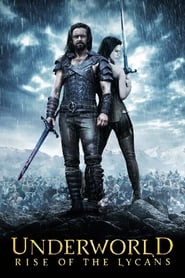
One of the dangers would have been, for me, dangerous to drop the dogfight. I was fighting hard to keep the dogfight in. And finally, they went back to the partners also, to Columbia and to Disney, because Disney, you know, is the film for international. And they all decided to spend the money for the dogfight. So I could do it. And this is a result now. And I think it's a pretty spectacular sequence. It's very, you know, it's not very long. It's, I don't know, like maybe two minutes or something like that, two, three minutes.
1:44:44 · jump to transcript →
-
where a guy honestly tells him why he was doing what he was doing. There's no time to say all that. So finally, we said, let's go just with the drama, with the incredible speed here and the pacing and the tempo and the time clock that the plane would crash any second that people can think about. He did it for the money or he did it for politics, whatever. Whatever the reason was, he just did it. And I think most of the people accepted that. Isn't this spectacular?
1:55:29 · jump to transcript →
-
-
-
Darren Aronofsky
hallucination part of the sequence. The whole score changes, as well as the sound design, as well as the camera work. This was all shot MOS. We couldn't afford to bring a sound rig down into the depths of New York City, and so we shot a lot of this with a Bolex, which is a very, very simple 16mm camera.
34:38 · jump to transcript →
-
Darren Aronofsky
um, spirals that he, um, sort of talks about, but we didn't have the budget to research and get any sort of spirals, and I tried going to the library and finding stuff. But even the internet didn't give me any help. So if you notice now, his POV has gone from like 18 frames per second to 12 frames per second. We just sped up, um, the speed of...
45:28 · jump to transcript →
-
Darren Aronofsky
And I was hoping that audiences, because they were sort of used to seeing the sort of continued hit montage, would have a larger sort of emotional reaction to the fact that it was broken. When you're shooting on a low-budget film, you get one chance to do this. The great destruction of Euclid. You've got to nail it. You've got to pray, especially when you're shooting such a tricky stock as Reversal, that the image is going to come out. And, you know, it's really, you know, faith and...
1:15:21 · jump to transcript →
-
-
-
Kat Ellinger
And as much as baisement can be considered a statement in feminist terms and a statement about rape and a statement about female anger, for example, it wasn't part of any kind of intellectual movement. Some of these choices were made aesthetically and some were made because they were working on a very, very small budget of less than two million francs.
40:34 · jump to transcript →
-
Kat Ellinger
the mode of production was no longer limited to distribution via studios or these kind of established routes. You had a sense of anarchy come out. And so in America, for example, throughout the mid-'80s, you had the SOV movement, the shot-on-video movement, which, again, wasn't really a coherent movement, but very transgressive, very low-budget, very gory horror coming out of America.
45:58 · jump to transcript →
-
Kat Ellinger
in the original novel and it is the sister character who tells them to go I think she's cleaning for him sort of tells them that the money's there but the way he says to Nadine you must have really suffered and he tries to be sympathetic to her now this scene is incredibly powerful because at first glance you think this guy
1:02:17 · jump to transcript →
-
-
-
Danny Boyle and Alex Garland
All the people lying down, all those corpses that you see in the church are actually volunteers who turned up for us and I think we gave them a free cup of tea or something, some huge generous offering to ask them to turn up for a couple of hours. They were students because we couldn't afford to hire extras in a conventional way. We didn't have the kind of money to do that. There were people who just turned up and helped us. The man who played the priest was an enormous help to us. He did lots of workshops with us early on about movement. He's a brilliant kind of movement artist.
15:18 · jump to transcript →
-
Danny Boyle and Alex Garland
people pushing the car with her a hold of it, you know, and all that kind of stuff really. It's also the thing that led to a lot of these multiple endings because Jim has been shot and that was the key point. It was what happens from that moment in a way. Yeah. This was as far as we got with our first budget. In fact, this next shot was our last.
1:43:50 · jump to transcript →
-
Danny Boyle and Alex Garland
Waking up. And Fox gave us the money to go to the Lake District and actually shoot this ending and another ending that you'll see on the deleted scenes, really. But to be fair, this was always, this scene, although in a slightly different way, was always in the original script, the idea of going to the Lake District. In the shooting script, it was there, yeah. But the film changed so much during the filming. I mean, quarantine and...
1:45:19 · jump to transcript →
-
-
director · 1h 45m 3 mentions
-
But they said if you spend more than 5,000 feet tomorrow, you're sacked. It was really funny. Was that them talking or was that from the studio? Well, it's more from the Bond company. You know, they see the Bond company is a company who makes sure you don't go over budget. And they charge a lot, in fact. But there are people who like movies. Not all of them, but the ones we work with, they like movies. You know, we can talk with them. So...
46:59 · jump to transcript →
-
But it's the expense. If you spend the money for one week after one day of shooting, they talk to you and make sure you stop doing that. This is horrible, this image.
47:24 · jump to transcript →
-
So initially, this sequence was much more effective, the way it was written and the way we thought we would do it. And when we decided to go for New York and no Canada, we have to limit the budget and special effects. And I think it turned out to be more touching. It's less technical. Look, our files are confidential.
54:57 · jump to transcript →
-
-
director · 1h 34m 3 mentions
Scott Stewart Jason Blum Brian Kavanaugh-Jones Peter Gvozdas
-
Scott Stewart Jason Blum Brian Kavanaugh-Jones Peter Gvozdas
someone actually on the other end of that phone, and they're really having that conversation with him. And it really helped a lot. It created a real sense of immediacy and reality for the actors on set. Another interesting thing, the mother of invention phrase, which is when we're making movies at this budget level, you have to get really creative with how to make these things
19:51 · jump to transcript →
-
Scott Stewart Jason Blum Brian Kavanaugh-Jones Peter Gvozdas
look good and seem like bigger movies and without a lot of resources. One of the big resources in the cinematography department are big lights. When you shoot a lot of a movie at night, if you're lighting up outside, you need big lights. Big lights are very expensive and we couldn't afford them. Boyd was very clever and what he did is he used the sun as a big light.
20:20 · jump to transcript →
-
Scott Stewart Jason Blum Brian Kavanaugh-Jones Peter Gvozdas
We're making a very low budget movie version, which involved showing Sam and kind of paying off the idea of the Sandman Sam, the doppelganger Sam that has light for eyes. And you'll see that in the deleted scenes. And it's a very cool image, but it's pretty darn abstract. And so that's always the thing.
1:29:16 · jump to transcript →
-
-
director · 1h 59m 2 mentions
-
But it seems to me that that was something that, you know, you could relate to Welles' theater work only in the way of reusing sets in very imaginative ways. Sure, sure, exactly. Yeah, this was not a big-budget film. He had gotten into trouble with Heart of Darkness because the budget estimates kept coming in so high. And he was careful about this one. He didn't waste any studio money. But one of the things that's, I think...
1:13:33 · jump to transcript →
-
He really didn't do that. Many other more successful directors wasted money. Howard Hawks went way over budget in several of his films. Hitchcock did. But Wells stayed within the financial parameters that were set for him. By the way, there's a point in which he...
1:14:27 · jump to transcript →
-
-
-
Commentary With David Kalat
He complained that he had to make do with a smaller orchestra than he was used to in his classical works. And to show how chintzy the whole thing was, he directed the musicians while the Foley artists recorded the film's sound effects simultaneously on the same track. The movie studios pinched pennies like nobody's business, even on a project as unprecedentedly expensive as this. The final budget is said to have been 62 million yen.
1:22:13 · jump to transcript →
-
Commentary With David Kalat
Let's say for argument's sake that Iwayo Mori had never returned to Toho and that some other studio executive greenlit this with the giant monster Tsuburaya's octopus and with little overt Atomic Age subtext. What if Tsuburaya had been given the money to animate his octopus Harryhausen style? Would that version of Godzilla have been half as meaningful? You wouldn't have had to change much in the past to significantly alter the way this came out, but little changes could have had an enormous impact.
1:33:26 · jump to transcript →
-
-
director · 2h 41m 2 mentions
-
But Sergio Leone was probably the first Italian director to be indulged with a budget of more than $1 million. You might see crowds like this assembled for the Hollywood on the Tiber spectacles of the 1950s, but those were Hollywood films using Italy and its environs as a location.
1:20:10 · jump to transcript →
-
War is a poor alternative to self-centered profiteering, end quote. I have a feeling it's really going to be a good long battle. Blondie? Huh? The money's on the other side of the river. Well, where? Maybe I said the other side, if that's enough.
2:05:12 · jump to transcript →
-
-
director · 1h 29m 2 mentions
-
became very unfashionable for a long time, wasn't it? It was like most science... And obviously it's cheaper to make a Mad Max-type movie than it is to make a 2001-type movie. So if you're envisioning the future... Well, you mentioned budgets. Now, one has to say, and I agree entirely, the special effects in this are still terrific. They're not as good as 2001 because he didn't have Kubrick's level of control, he didn't have Kubrick's budget...
34:02 · jump to transcript →
-
Considering that this whole thing is all to do with the fact that the company would rather return their spaceships to commercial use, presumably Neil is spending a huge budget just to save this one guy who, A, doesn't want to be saved, and B, is a murderer. And I like the fact that this film has a sense that there is a larger story going on out there
53:05 · jump to transcript →
-
-
director · 1h 54m 2 mentions
-
We have also that massive success in the form of Dirty Harry, which made $36 million on a $4 million budget. Two years later, a sequel in which he would reprise the role of San Francisco cop Harry Callahan makes even more. And this puts him well on his way to being one of the most bankable actors going. So there we are. Another one of these deep-focus, short-lens shots.
32:41 · jump to transcript →
-
He did what he was allowed to do. I suppose if they'd said make it for $80 million, he'd have done it for $80 instead of $40. What I wonder is what would have happened in a case like that in the old days. What would Jack L. Warner or Harry Cohn have done? They would have been down there when the guy was $100,000 over budget saying, take a hike, kid. When I read that they wanted to go back and re-edit Heaven's Gate with the same care it took to make the movie...
1:33:08 · jump to transcript →
-
-
-
mystical sense to it which i wasn't aware of i must say at the time it was inevitable because the the space launch program was there also wasn't aware of the times when it came out it was probably for pragmatic reasons and then it was the film commissioner was one of the main reasons probably in the budget but but i guess it was really always going to be made there
1:13:24 · jump to transcript →
-
A director like Nick, I think, tries to open as much space as possible between the planned and the unplanned. Most directors don't do that. They don't like to for very good reasons. They have complicated time and budget scimitars hanging over their heads and a very specific story to be told in a specific amount of time.
1:40:26 · jump to transcript →
-
-
-
What is it? This is Joe Gaggs. $185,000 of my money. We have this problem. What problem? What are you talking about? He was moving my merchandise. So the money in his pocket when he went out the window is my money. This is a plating company. What are you telling me to shit? Shit? I want my money. Hey, I don't know what you're talking about, Mr. Frank Lala. Whatever.
19:58 · jump to transcript →
-
remodeled most of the character, but she was really upset that he had gone out, and they had all the money they needed, apparently, and this and that. And I told her to take it easy, and I spoke to John. I said, why, John? And he said to me, some guys like broads. And God, that was really, I mean, what an insight. I mean, he just had to do it. He had to do it, yeah.
2:02:28 · jump to transcript →
-
-
-
Peter Greenaway
So we could see here all the foreign influences on the English aristocracy. The import of Indian tea, but served in Delftware, produced in Holland. It has to be said, the budget for this film, way back in the early 80s,
1:28:58 · jump to transcript →
-
Peter Greenaway
For a film of this complexity and this density and these production values, extremely small, and these objects on the table were the real items belonging to the house we used, and it was estimated that Christie's had insured those four items of ceramic on that table as ten times the total budget of our film. So we were very much indebted to the owners of the house to be allowed to use these real antique artifacts.
1:29:20 · jump to transcript →
-
-
-
Frank Morriss
So this is a terrific set. This is the one I pointed out to you earlier that we built-- Philip built right on the site of Piper Tech, up on the roof. And it looks-- It's totally believable, and yet, very flexible for filming. They actually didn't have anything like this that we could use... ...and we needed more space than what they had... ...so they let us use it. And then when the filming was done-- There's the building, right there, that we made. --We had to take the building away... ...because it really wasn't built up to code. Yet, we could give them all the aeronautics equipment-- The helicopter police-- --Give them all the aeronautics equipment that we had had to buy... ...for the movie. And they were delighted to have that... ...because the city budget wasn't so great. And a lot of their equipment was kind of out-of-date... ...and they couldn't afford it.
37:30 · jump to transcript →
-
Hoyt Yeatman
Here's another almost-- Antiquity. You have to really go a long ways to find drive-in movie theatres. And I think Frank and I laughed a lot... ...about the idea of burying a tape inside a dumpster. You know, this-- - This is stretching it a bit. We're really, really stretching it... ...that Lymangood would put this stupid thing inside the dumpster. I mean, it was a lot of fun because, here, look what-- Candy Clark getting to flip upside down and so on. But it was not the smartest place in the world to do this. When Columbia later decided to make a Blue Thunder television series... ...this truck is the very one that they decided to use... ...because they couldn't afford to fly the helicopter... ...so they had to do it all on the ground, which was another brilliant decision.
1:18:45 · jump to transcript →
-
-
-
are actors and filmmakers who do like their hand properties. And why not? You pay the rental, you want to see the money on the screen, as they say. Zivkov pockets the lucre. We'll maybe see that lighter again as he dons his hat, yes. He's forgetting the lighter and one wants to cry out, Zivkov, the lighter! Perhaps one imagines Fred Astaire and weeps for what might have been. And yet, this actor leaves us not
41:53 · jump to transcript →
-
We serve a rather different audience. I like to think it's a connoisseur audience, interested in the more artfully done sort of thing. And, of course, we couldn't compete in acquiring the Rambos anyway. We just don't have the budget. So we ferret out those movies that have fallen into the public domain, the older movies, sometimes movies from countries not on board with the International Copyright Convention. It doesn't mean they make bad films.
1:06:16 · jump to transcript →
-
-
director · 1h 29m 2 mentions
Jeff Kanew, Robert Carradine, Timothy Busfield, Curtis Armstrong
-
This little camera slide, though, that's a directing thing, which hopefully is good. And here come the flying basketballs to interrupt the dean's speech. And that's what would happen if you lived in a gym. Not a lot of guys left because a lot of people have found homes. And also because we couldn't afford to have that many extras every day.
16:37 · jump to transcript →
-
Here's a local guy that, we shot this in a Masonic hall, and this was the caretaker. So we put a jacket on him. Or maybe it was his own jacket. I don't think we had budget for extra jackets. Neil, gentlemen. We're trying everything. I think you can tell right there, but I've...
31:37 · jump to transcript →
-
-
-
Richard Donner
My name is Dick Donner, and I directed this wonderful film Scrooged. And Danny Elfman did the music. Paramount put up the money. A lot of great actors, a lot of great fun. And Scrooged was supposed to be advertised as, "You've been Scrooged." But, you know, people are chicken, and they were worried about the, you know, the right. You know which right I'm talking about. And, so we never said, "Scrooge," but I'm saying it now. And if you guys don't want to buy it, then go Scrooged yourself. How's that? Now, okay, this is a great little set. A wonderful little set. I have a lot of this at home. I know I shouldn't, but... And these are all the little people. We got little people from all over to come, and some of them turned out to really be Santa's helper. We didn't realize it and... But they showed up, because they heard about the casting and figured it would work. That... Last time a star appeared like that, it was Joel Silver. You should pardon the expression.
0:21 · jump to transcript →
-
Richard Donner
Now, this was tough. 'Cause how long could he hold it, without smiling or breathing or breaking it? So we were forced to cut away, as you see. We didn't have the money to make an artificial face.
1:09:32 · jump to transcript →
-
-
director · 1h 24m 2 mentions
The Naked Gun From the Files of Police Squad! (1988)
David Zucker, Robert Weiss, Peter Tilden
-
Mel Allen, his last movie. Yeah, that was a big... Another one. Wasn't that a big budget for one joke? Also buried in a dress. Big budget for one joke, correct? You had to get all those people? Well, some jokes are worth the bucks. Yeah. You have to have the courage to spend. Complete bullshit. Now, some of these scenes of Leslie and George we did on the Paramount lot later. With people just... People behind him. A section behind him and a section... You'll see that some of them were pretty close on...
1:00:14 · jump to transcript →
-
If you went over budget, if the movie is a hit, or I don't know. Probably not the same. Let me tell you, that's not true. Yeah, Bob didn't work for years after this. Yeah, exactly. After which? Yeah, the movie's a hit. Ah, another semaphore joke. Never miss with those. Yeah. Another night shot. This is what I'd call off-message to Dave. Oh, a corking the bat reference for your true love. Yeah, nobody got this.
1:10:40 · jump to transcript →
-
-
-
Commentary With Author CG Paul M. Sammon
Peter was a very great choice to play Robocop in the first two films, as was, you know, Mr. Burke in Robo 3, who's also a fine actor. And talk about sentimental. I mean, oy. Oh, well, I would have taken the money, but that's just me. Robo Thief.
1:29:44 · jump to transcript →
-
Commentary With Author CG Paul M. Sammon
Well, there was. The computers we gave the local company that I got the computer material from a credit as part of the deal. So in any event, here we go. Tobor picture, by the way. Tobor is robot spelled backwards. And, of course, Tobor the Great was a very low-budget film in the 1950s that John Davison loved and has upgraded with Robo and RoboCop 2. This is Paul Salmon signing out.
1:56:02 · jump to transcript →
-
-
director · 2h 17m 2 mentions
-
And probably somebody with the money somewhere is going to do it, and it's going to be a big scandal. And then everyone will say, oh, just because I saw that on the TV news doesn't mean he really said that. I had a couple of guys come up to me while we were filming this scene here at the Lincoln Memorial.
1:04:43 · jump to transcript →
-
Now here's a good example of saving a lot of money because that's stock footage. And now this is back into what we created. And in fact, there was a hurricane that blew through there and there were still minor remnants of that hurricane that we used as a backdrop to shoot that scene. That's right. Only one shrimping boat actually survived the storm. And this digital thing is going to happen once it becomes cheaper and once you can move faster because, you know, time is money. So it's all about the money.
1:35:52 · jump to transcript →
-
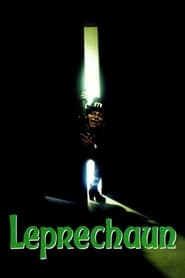
-
director · 1h 45m 2 mentions
-
A lot of people appreciate that. Or when they see him get into a $150,000 Mercedes. I remember it was the first time, you know, Gabriel put a gun on top of the Mercedes and I went up and I said, could you take that off? And he's like, what? I'm like, the car is a significant amount of our budget. Gabriel also hated wearing that mask, didn't he? Yes, he didn't like the mask idea, but yeah. Now here's my favorite. Carl Bressler drops a Sig Sauer 228 on the ground and gets...
46:46 · jump to transcript →
-
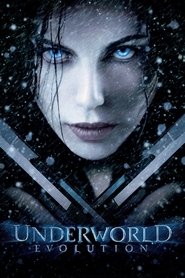
That's a $4,000 dummy. It is one shot. It is one shot. Why did he give you the money to run? He could have used you on the boat. He wanted me to live. A one-time dirty cop without a loyalty in the world who fights it in his heart to save a worthless rat crippled. And now he's holding a cigarette in a completely different way. I don't buy that reformed story for a minute. Even if I did,
1:33:29 · jump to transcript →
-
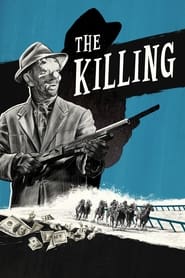
-
director · 1h 54m 2 mentions
-
My Question Initially To Jean-pierre Was
I remember, I had to fight against the studio to get the smoke on the knife, because it wasn't on the budget. Here, same thing, it's for real. Sigourney gets it through the hand. No. Of course it's a cheat. On one side it's a retractable blade and on the other side it's a real one. A CG blade. So we CG-ed the second part of the blade. And the smoke is CGI? - The smoke is CGI, too. Lot of times, those little effects - like that - are the ones that have the most effect. Yeah, because it seems to be normal. It would be possible to have a fake hand... They talked to us about that, and it was impractical and too costly, because to give the hand enough life so it didn't look artificial was a lot of work. And to make it move, then stop... Too limiting in your shot. That was a great approach. On the shooting, it didn't take a longer time than just to play it. So it was very cost-effective. Tom, didn't you get together with Sigourney about the style of her movements? Yeah, right, because of her alien heritage now as a clone. We talked a little bit about movements that she saw me doing in the alien suit. We tried to find a way to integrate some of those into her performance. There's some later where she's swimming, there were some movements we worked out. Also when she escapes from her cell, there's an element where we were figuring out: "What is it about the alien when it's retreating that's the most noticeable feature?" The tail. And without a tail, we ended up doing something where she kicks her leg out as she's moving into the chamber and escaping from her cell. In the preproduction, I did some research for Jean-Pierre on animals, to find out the way for the alien to move, to find a halfway between feline and insects. So we did a lot of research on footage, to have an idea of this hybrid between feline and insect. It was cool. I met Ron Perlman in The City of Lost Children - he played One. I love him. I can't wait to work with him again. This isn't a modest thing to say, but I like the way the guns look in the film. Jean-Pierre's idea was: he'd seen the guns get bigger - especially in the second film - and he thought it can get quite absurd if we go too far, so it'd be a nice idea to shrink the sizes again and have guns that are more about efficiency. He wanted guns that snapped when they fired. He wanted to feel and hear every bullet as it ricocheted and hit the floor. He wanted something that was a bit more credible than the giant "Rambo" guns. So we designed with that in mind. It was something that felt very basic.
35:17 · jump to transcript →
-
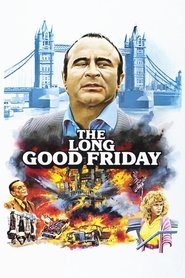
My Question Initially To Jean-pierre Was
We built a miniature version of the newborn as well that we never photographed. We didn't have the time or the money, I think. There was a lot of hard choices being made. Jean-Pierre's idea for the newborn was that he wanted it to be like a toddler that was curious and prone to tantrums and completely unaware of its own strength. And, like toddlers, eat people's heads. I remember at the beginning we thought about Sigourney inside a cocoon, but when we arrived on set in the morning, she told me "No, it's a mistake. I can't stay in a cocoon. It's a mistake." We had to improvise something. We had to improvise something. It's not easy for a director to change their mind when you have a lot of special effects and these kind of sets. It's pretty difficult. But she was right. We had all these technical words to say in English, which is very difficult for a French actor.
1:38:13 · jump to transcript →
-
-
director · 1h 58m 2 mentions
-
which was a pretty good idea. And then we do some animation on the sunglass and also make the sunglass more computerized. We almost lose the scene because of the budget time concern. We did try to shoot it in a simple way, but we were so lucky and never give it up. So I'm so glad that we got a scene and also got a pretty good impact about the sunglass. We had decided this is the love story.
10:32 · jump to transcript →
-
Sign effect is very important. Sign effect, sometimes you make the scenes look so much different. And on the set, you could never get a perfect shot. You could never get a perfect scene. Sometimes because of the time or because of the budget, you only could get the major shot done. And then you have to put everything together very cleverly. Time, Mr. McCloy.
1:34:35 · jump to transcript →
-
-
director · 4h 13m 2 mentions
The Lord of the Rings The Return of the King (2003)
Peter Jackson Fran Walsh Philippa Boyens
-
Peter Jackson Fran Walsh Philippa Boyens
you use for beer because obviously you can't use real beer because otherwise you'd have actors rolling around on the floor. And sometimes you do have actors rolling around on the floor anyway. In the movies we use a low alcohol beer. It's real beer, it's brewed with hops and it tastes pretty much like beer but it's very low alcoholic. We had a brewery in Nelson actually create a special low alcohol Hobbit beer for us to use in the film. Well that's why our budget went through the roof. So where did that drinking song come from? Phil wrote it.
21:44 · jump to transcript →
-
Peter Jackson Fran Walsh Philippa Boyens
In terms of the narrative momentum, it sort of slowed things down at a time when we couldn't afford to have it in the theatrical. No. It's really nice. Yeah, it was great. And it was written again to get that bond between her and Mary. Yeah. It's also when she says, courage, Mary, for our friends before she rides into battle, she's actually referencing this moment.
2:18:23 · jump to transcript →
-
-
director · 1h 31m 2 mentions
-
The shot just before this, the one outside, we actually shot at the Prague airport, which is another advantage to shooting in Prague. I don't think there's any way you could get a camera crew right on the departure gate of an American airport anymore because of security. Of course, one of the downsides of shooting at the real airport in Prague is that we had our day curtailed by a bomb threat. Bomb threat, which I still maintain... - Potato, potato. I maintain may have been because of us, and there was no bomb. There was no bomb. - I'm sure some... A grip left a bag of clamps somewhere and... But that was another scene, too, where, when we look at it, there was sort of a way of shooting it, two different ways of... We started shooting them sort of looking out where we were shooting into those boring offices, and obviously the prettier shot... I Know I'm talking backwards... In hindsight, we should've shot the other direction. We should've shot in the other direction, because when they do turn around, you see that background. And again, these are lessons that were sort of both imparted to us as we were going along by our wonderful DP, who we should mention, David Eggby. - David Eggby, who saved us from ourselves every day. And there's a certain amount he can tell us, which he certainly did, and there's a certain number of times where we have to be wrong before you learn and certainly that was an example again, something we did where... The other thing in the deleted... - He warned us and we didn't. In between the courier counter and this scene, there's some fun stuff in the deleted scenes, which is they realize that they're gonna have to take all these courier packages, so they don't know what to do with all their clothes. They have to wear all of them onto the plane and through the airport. There was about 15 minutes of stuff which... Decide for yourself whether it works or not. It didn't work in the movie, but it's fun to look at. And by the way, Jacob's T-shirt says, "I'm rocking on your dime." Travis owned that T-shirt and we thought it was funny, so we put it on Jacob in the movie. These transitions-- That's my dog. These transitions were... That's my queen of England. - That's your beaded London flag. Yeah, it goes on the back of my cab seat. These transitions were also done by Kyle Cooper at Prologue. There's a few more of them coming up. You'll see. And this is our first big visual effects shot. Yeah, this was an amazing debate. That's not the real Jacob Pitts. That's a robot. This was shot in Prague by... There's a big river in Prague and that's all real. That's real. And we put a little British flag there, and basically the background was replaced. Not in these shots. In that shot. - In that shot, the background is replaced because on that side, I think, was... Is that where our hotel was? I don't remember. No, we were further down. - Further down, okay. And I guess we should mention Kevin Blank, who was our visual effects guru supervisor, who we found from the TV show A/as, where each week they do a lot of really amazing things like this. Right. If you look in the background, you see the buses on the bridge. The bridge is real and the buses are real, but the stuff behind that is not real. But the flag, for example, I don't think that's real. They added that. If you look at the clouds move... - There's cars moving on the side. The clouds are moving. They put those clouds in. And what Kevin allowed us to do, besides being a really good guy, as everyone on this movie was, he let us do a lot of big effects like that on sort of a TV budget which allowed... This was a "smaller budgeted movie," and it let us do some special effects without bringing in these, like, big effects companies where it would cost a lot of money. By the way, this is about the time that we should mention the Feisty Goat. This is the Feisty Goat pub. And we saw the sign out in front, which we misspelled. I think this is the right time to say that Alec, David and I went to Harvard and we didn't know how to spell "feisty." We spelled it wrong in the stage directions. Spelled it "fiesty." - The guys who made the sign just took our spelling. We showed up on the day and the crew was laughing and we couldn't figure out what they were laughing at. We shot an entire day without anyone noticing and on day two, people realized. - No, they knew. Did they know? Okay. - Oh, yeah. They were laughing their asses off at us. And then finally, it was like, "Did you guys know?" And they're like, "Yeah." - And this is the incomparable Vinnie Jones who, when we wrote the part of Mad Maynard, the chief hooligan, we hoped that maybe we could get Vinnie Jones. We wrote it with Vinnie Jones or a Vinnie Jones-type in mind, never thinking that we would get the real Vinnie Jones. The dream being Vinnie Jones or someone that would rip Vinnie off. And the pleasure of getting him was just so great. It was amazing. He scared the living daylights out of these two. They're not... This is, again, method acting. We told Vinnie that they were really... that the kids were really scared of him, and he did nothing to make them feel at home for this scene.
18:35 · jump to transcript →
-
This, by the way, we did not build, we did not dress. I mean, we put some clothes in. There's a little bit we did, but when we showed up, we showed up in winter to scout this location and the trees were all barren and there was dirt and stuff everywhere. Basically looked exactly like this and we said, "This is absolutely perfect." I do think Allan added some of the garbage and some of the cool graffiti. - Yeah, garbage, trees and stuff. But what's funny is our location people didn't quite understand what we were going for, and at one point they cleaned the whole place up. It was like, "No, no, no." They told us, "It's clean." We said, "No, put it back." So they had to spend the money to put all the dirt back. Also, the trees were growing leaves and we had to kill the trees. We basically paid some sort of fee to the government to kill the trees. The dog with the hand we should throw in there. Yeah, that's a highfalutin allusion to Akira Kurosawa's Yojimbo. For those of you who have seen Yojimbo and this movie, all six of you. And there was also another shot that showed the desolation of Eastern Europe. As they're walking, they see the dog. They see the guy bathing. - Horrified. And there was a girl, a little girl who they smile at and wave to who then basically cops a squat and starts peeing, which is in the end credits of the movie, as sort of a little joke, and basically people were just sort of... I don't know. It's one of these things where in the movie... You love it or you hate it. - Yeah. We love it. And apparently more powerful people than us hated it. We wanted it to be in the body of the movie, especially in this unrated cut, and it is not. And I guess we'll just leave it there. I guess we should mention, also, Tibor who you just saw. - Yeah, Rade Sherbedgia. All of our casting in this movie is based on the works of Guy Ritchie, so having cast Vinnie and then needing someone to play Tibor... By the way, that money, $1.83, we actually didn't have... We forgot. - ...61.83 in American money on the day. We had to scrounge up... It ended up being $1.46. I think I had a quarter in my backpack. Just what people had. We didn't have the money. We'd been in Prague for so long. - This, I think, was our second day. Yeah. - No, this was our first day. We shot the train station in the morning. - This was day one. Or at least bits and pieces of it. - And this... This was actually the first thing we ever, ever shot, which we've now added back. - Yeah. Originally, when they're on the side of the road and Michelle is trying to get the cars to stop, Scott mentions that you can't... No one's pulling over 'cause she's showing her bra. - He says, "This is Europe. They have orange juice ads with lesbians and dildos. You gotta give them something they haven't seen before." Then later in Eastern Europe... You see the orange juice ad with lesbians and dildos. And in the theatrical version, we actually cut the orange juice ad completely because it just felt like the joke of the opulent hotel was better if it was just shorter. So we got to this stuff quicker. The guy who just ran out, the waiter, is like... Dustin Hoffman. - ...Jim Carrey. Miroslav Taborsky. - He's like the Jim Carrey of Prague, and he's really funny. I'm not sure he ever... He never trusted us. No. We had to explain. He didn't want to slap with the backhand and we had to explain that in America... - We had to lie to him... "In America, it's called a bitch slap, the most degrading thing you can do." - We made up this crazy excuse to get him to do what we wanted to do. He just didn't trust us. Nothing you can do about that. That was something we wanted designed, which was the keyboard in the radioactive box played with gloves. Didn't quite work. - No, I'm not sure anyone cares. But we know it's there. This was a factory... It's a high-voltage testing facility. It's a real, working, high-voltage testing facility. And they have it in the movie XXX, but we shot it very differently. And David really went all out here. I mean, especially those sort of finger lights that you see, he put into the background of every shot and Allan gave a lot of neon. And this is some of the best-looking stuff in the entire film. Michelle does look beautiful. - Michelle looks incredible. Of course, the only problem is this place has a horrible, cavernous echo, and there are things in here we just had to sort of loop. We had no choice. The stuff in that bottle, by the way, is SO toxic... Poisonous chemical. ...that when they were dancing with the bottles later and two bottles met and broke, they literally had to clear the floor, scrub it down, decontaminate before we could go again. Anyway, our actors are hovering over the fumes right now. It's fine. Again, look at the lights in the back of all this. That big piece of equipment, that's really there. Michelle's close-up here... That is such a gorgeous shot. - That's incredible. That stupid VIP sign behind him was awful. That was there for all day and we never saw it until too late. Well, you can't, you know... You look at a tiny monitor on the set and you can't see everything that the camera picks up. And then you get in the editing room, you go, "Oh, my God, you can see all that stuff." But also, I don't know if it was us being first-time directors or what. On any given day, there are two or three things you're really obsessing on because you feel that those are the most important things, and you solve those only to realize later that there was one minor thing, like that stupid VIP sign, and there's one of those in every scene where you just go, "What was I thinking?" - Sometimes you're obsessing on something that ultimately turns out to be insanely unimportant, and the massively important thing is sitting right in front of you and you screw it up. - In that scene, we were obsessing on a line when they were flirting. That we ended up just cutting. Yeah, he said he was the black sheep of the family and then she was trying to be witty and she was sort of saying, "That's okay. I have an uncle who 'blank. And we must have done take after take after take. "You think you're the black sheep of the family. My aunt's a female bodybuilder." Just take after take after take of stuff, nothing that was ever used, and it makes the VIP sign all the more, sort of, laughing at us. By the way, the Green Fairy is played by Steve Hytner... So great. - ...who played Bania on Seinfe/d. We worked with him also. - A real good friend too. He really did us a huge favor. - Yeah. He was going to a wedding in Italy, I think, and he stopped into Prague on his way to... Here's a little added extra. Yeah, this was just a little something we cooked up. Jacob was really funny doing this. In the theatrical version, we cut it. There's no time for this in the theatrical version, but we felt we'd subject you to it. And he just... He got it, you know, that he was... Again, we're into the production at this point, and his Cooper had become a character. - He was dialed in. Exactly. And here we go. - On the day this happened, Travis comes up to me and says, "I have a cold." I say, "You're not going to tell Michelle you have a cold because your tongue is going to be down her throat." Also on that day, Michelle's mother, sister, and sister's boyfriend... Decided to show up. - ...came to visit. And it was just like, "Oh, God." But ultimately, they went for it. They went for it, and it's all about the tongue. Yeah.
58:03 · jump to transcript →
-
-
-
Noah Baumbach
One of the main things we were kind of wanting to write about was about a guy whose family is really his collaborators. So I feel like for Zissou and for all these guys, they were people who were looking for something to plug into in their lives, and they found this. They found somebody who wanted to lead them and who was excited to do that. And I think Zissou, he just needs that in his life. And I think anybody who makes movies is kind of familiar with that because you end up becoming very intimate and close with a group of people for this short period of time that you're working with them, and then you go away. But it sort of heightens the awareness of how connected you get with them. Yeah. Is this actual rain or fake rain? That's fake rain that's made by Renato and Daniel, the effects guys at Cinecittà. Two great guys who did all our explosions and guns and fire and rain and snow, and everything else. And Renato is Italian, and his brother-in-law, Tonino, took us on a lot of scouts, when we went out in boats and scouted on ships and things, and he would make what I called spaghetti al Tonino, which is spaghetti with a can of tuna fish and tomato sauce. We'd make it on the boat and we'd eat that. And Daniel is American. He's an Italian-American from Brooklyn, and they work together. Daniel translates for Renato, and Renato's kind of a great sort of... prince at Cinecittà. They're going together in the revolving door. The "I'm a Pepper" T-shirt, whose idea was that? That was, when we made our Bottle Rocket short, a 16 mm thing we'd made years and years ago, there was a man who was a security guard that we had gotten to know, that really Owen somehow managed to entangle us with. And then we put him in the movie, and Temple had taken us out to shoot pistols. None of us were real hunters. But Temple, the security guard we met, took us out to shoot these guns. And Temple had this shirt, "I'm a Pepper" shirt, that he would wear. And when we made our short, we put him in the movie in his "I'm a Pepper" shirt, and they talked to him, and he takes them shooting. In fact, when we filmed the scene, Bob Musgrave shot-- One of the actors, his gun went off pointed at his foot, and the bullet grazed his shoe. He almost shot off his foot. Because, of course, in most movies, we use blanks. When we were making our short, we used live rounds because we didn't have any blanks. - It's just easier to get real. We would've had to buy blanks, and we really had no budget. But Temple had a lot of bullets in his trunk. But so then we then worked that into the script for the feature film. When they do this big robbery, Bob's character kind of almost shoots himself in the foot in the middle of the robbery, which actually... It seems to cause another one of the characters to have a heart attack and the whole thing begins to go wrong. But back to The Life Aquatic. And so the "I'm a Pepper" shirt, you hadn't used since Temple. We didn't get to use it in the real movie of Bottle Rocket because we couldn't get it cleared. We managed to get it cleared. - Now you had the muscle. Yes, now we can get an "I'm a Pepper" shirt at will.
1:30:18 · jump to transcript →
-
Noah Baumbach
So now they're on their way out of Ping Island. Bill Murray's running to the safe, this yellow safe with Ned's inheritance in it. I always wonder if we're clear about things like the issues with Ned's money and all that kind of stuff, but I guess it's all in there. Yeah. I always like what Scott Rudin, the producer, does. Scott said about... I remember when he read the draft of the script, where we had come up with that idea of the hole in the back of the safe, and he said, "Well, he's looking for the money, but he finds Ned." And I always thought, wasn't that a touching idea, you know? I hadn't consciously thought of it. - He had a real way with words. Cody is left behind. I think you came up with the name Cody. Cody was... Well, there's some debate about who came up with the name Cody, but as we alluded to and as, I guess, basically suggested by the fact we're doing this commentary at the restaurant that we wrote it in, Cody's a regular here who we run into, and so... And at one point, I think it was literally like, I said to Noah, "What's your dog's name?" Doing Jeff's dialogue, and Noah thought for a moment and responded, "Cody." Cody. As he stared at Cody through the front window. It was the summer. I feel like I've said enough... What's that stand for over there? That's Esteban. It was working okay until late last night, but now the whole tracking system's gone completely on the fritz. Screw it. We'll sell it for scrap, along with the boat and the submarines. I'm going home. One thing about Willem is, Willem was always on the set. You know, he was there for the whole movie, and he doesn't like to hang around in his trailers. So he weaves himself into scenes, such as this one, where Owen says, "Ho," and Willem is standing in the background there. And you'll see, when they do the Team Zissou "ho" with the hands thing, Willem does it out of focus deep in the background. Did he do it in rehearsal then you included it? I don't remember. You know what? I think he was back there and I may have mentioned one thing to him. Well, it adds this whole other thing. And it's also, we know that Klaus feels left out, so at this point, though, it's almost a little bit of menace in the background, even though he's... This, again, also is something you do a lot, which I like, is this-- But he's also been touched by Ned, including him already. That's true. He hasn't saluted him yet. - He hasn't acknowledged it. I was gonna say, the thing I like that you do a lot, that I mentioned earlier, but this very deliberate cut to an insert of a written note, which it sort of has a... It has a kind of energy. It sort of brings energy to something that would be normally just static and feel like just, you know, information. Well, you know, one thing I always think of is, I remember reading Pauline Kael somewhere, Kael who really brought me into a certain kind of movie watching. You, your parents were well-versed in films and introduced you to all kinds of films, and your mother was a critic, and your father had done some film criticism as well, right? But I kind of got that stuff from reading Pauline Kael, some of the same kind of, you know, somebody's gotta tell you about it. Right. - And I got so many things from her. And I remember, you know, she certainly made me interested in Godard. We seemed to keep talking about him. And she talks about how Godard's movies are filled with... They're literary. They're filled with words. There's titles on the screen and there's letters and there's writing everywhere. And there's people quoting, people just reciting from books. And, you know, this movie here, now we're looking at another letter. It's filled with writing, something... And I like the-- I mean, it's sort of, again, something maybe, you know, he might do, but is... I mean, we see Ned reading a crumpled-up letter that's obviously been around for a long time, but then when we go to the insert, we go to the original letter in a very formal way, with the pencil above it and-- In fact, I think... One of the letters is situated in the environment where Zissou would have written it, and Ned's is situated in this place where Ned would have written it. Like his desk when he was 11 and a half. And it brings-- I mean, it's something that we've talked about, I mean, sort of how you use words and letter writing, and, you know, we were talking about, how in Adele H, when people write letters, they actually speak to the camera and they're often superimposed over other images. We should probably be talking about this scene. Well, actually, that shot of the feet falling was something I had thought of a long time ago, and Roman shot it for me. It was shot a couple of times by different people, and then when Roman got there, we talked about it, and Roman went out and shot it perfectly. And then we do this odd effect of, you know, the red and the thing-- I don't know what I was really thinking of, but something going into silence and, you know, trying to prepare the audience for the fact that we're gonna kill him, which is hard to do, actually. For me, I mean, I feel like I get so attached to these characters, and, you know, we're not really working from something that begins with a plot. It's more like, you know, trying to bring these people together, and I may be, you know what, probably overly sentimental about it, and probably indulgent about it, but it's hard for me to get to separate-- I feel like they're real people to me. So it's hard to kill them. But it was one of the ideas. We talked about people who read the script. Peter Bogdanovich, our friend, he was upset that we killed Ned. I think my brother Nico, who the intern is named after, also felt sort of... Was unsure about it, and I think, you know, it is a choice. That scene where he's in the water was crazy because the sea was rough, and we had this fire in the water, and we're all standing out there, and underwater are all these tubes with gas to make these fires and things, with hunks of cement and wire. But it was fun, and it brought this crazy energy to it.
1:33:50 · jump to transcript →
-
-
-
He's a New Zealand production designer who did such amazing films as The Piano. And we did have a limited budget, and I don't think that you would guess that, given what he was able to do. And also, I think it's interesting that Stuart Dreiberg, who was our director of photography, and Andrew had worked together before. They're both from New Zealand.
11:53 · jump to transcript →
-
Which is fine when you're dealing with an animated character, but a little less comfortable if you're... See, I said let's go for it, but then Gail was like, no. We just didn't have enough of a body makeup budget to cover the bruises. Yeah, no, that would have just been really impossible. Good child. We've intercepted information that will allow us to penetrate his security. Of course, right here, the incredible, incredible Fran McDormand.
12:48 · jump to transcript →
-
-
director · 1h 36m 2 mentions
-
And that's the real address. That's the real address, yeah. We were shooting it. It was the one thing we didn't look at when we were prepping the house. And that door opened, and we're like, oh, that's really long. And then we're thinking about, should we digitally paint that out so it doesn't look so crazy? And we're like, yeah, we'll just better put the money somewhere else. Exactly. Now, this is the part where Brian Tyler called originally. I don't think he made it on the CD with this name, but he called the score in this section...
17:32 · jump to transcript →
-
Again, I felt really lucky that we ended up with the young girl that we did because I think she really pulled it off for us. She did a good job. And we knew that we had to find her in Canada because of our budget parameters and shooting in Canada and the actors we could take and not. But there was a nice pool of actors for us. It's the first time we see a Claymore mine deployed. Basically, he sets these things in a passive mode and then...
39:52 · jump to transcript →
-
-
technical · 1h 22m 2 mentions
Gary Lucchesi, Richard Wright, James McQuaide
-
Oh, we started watching the movie. - Yeah. This is cool. - Will she make it? Got her clothes on. One of the things that we were very keen on... ... that we wanted, was that we wanted.... We had this ambition... ... that the audience should have their first breath... ...after the first 10 minutes... ...when she gets dropped off the truck... ...which we will see. And when I was watching the premiere yesterday with my wife... ...when she get-- She: At exactly that spot and I felt, "Wow... ... this was exactly what we were aiming for." I think the audience was a little surprised too. We had the premiere last night so we got to watch... ... the movie with a big audience. But they were surprised at the level of violence of the movie. This is a tougher movie than the other movies. Selene is a lot more badass in this movie. She kills a lot of people. - Yeah. Went through a lot more buckets of blood too. A sign of the times, I suppose. Yeah, you'll wish you hadn't done that. This was one of the big scenes in the trailer... ... that we had shown Screen Gems right at the beginning. I love the little splat of blood hitting there. That was sweet. I repeat, full containment... No, there was buckets of blood. I mean, it's.... Violence Is an aesthetic I think that, I mean, goes a hundred years back. Yep. Have we actually done a body count in this? It's a lot. You know what? I did once. Did you? What'd it end up being? - I can't remember. Counting Lycans and humans. Yeah, dead-- Corpses. Now, this moment was an additional shoot moment. It was the first thing we sh... - Wes Bentley, yeah. It's the last and first... - The uncredited Wes Bentley. The first and the last... - This jump was the first thing we shot. First day of shooting. - Look at this boom here. There. That hit in that shot, was Alicia... ...our excellent stunt girl, who just smacked... It sounded like the worst sound I ever heard. It's like, "We killed the stunt double on the first shot." And then you said, "Let's go again." The first day of shooting went so well... ... that I walked away thinking, "God, this is gonna be an easy movie." Oh, my God! - You were wrong. I was wrong. It was so difficult. This was the toughest by far we've done. They're not supposed to be easy. No. - There's a direct correlation... ...between the amount of suffering to do a movie... ...and how well it turns out. We never did a film, like, with this big budget kind of thing... ...but I think you always end up in the same position, you know? You don't have enough money. You always... Imagination can always outrun money. Yeah. - Yeah. The 3D made it more complicated too. Yeah, the 3D really-- You know, nobody had really done it. You know, how to plan it and how to shoot it and.... This is where we want people to breathe. Yeah, here. Here's brutalism again. - Yeah. I was talking with the cinematographer... ...ocott Kevan, last night and... Who did a great job. - He did a great job. And the person... I introduced him to my daughter. My daughter said, "Was this your first 3D movie?" He said, "No, my second. I made all my mistakes on the first one... ...So this one I could get right." Yeah, he was the only guy kind of who had done it. Yes. - And he kept telling us: "It'll take a long time." I remember-- Gary, you said: - It did. "If we go down the Amazonas, it'd be nice... ... to have someone who's been there." Done that trip. That was true. Scott was really there. - Yeah. He was great. But it's also-- It has been very... ...weird. - First shot of Kate. This was the first shot of Kate. Yeah. - First night. That terrible night when it would not stop raining. This was one of those.... - There's a gale right now. When the duck flew into the light? - Yeah. It was a duck who came from the sky... ...and landed in the middle of the set. The camera broke down about four times. Yeah. No, just shooting 3D was a weird experience in that sense... ... that we hadn't done it before and all the rules that you get... ... from various people who has done it... ...Just turn out to be not true or.... - Bullshit. Total bullshit. I don't know if the Red Epic that we used, the camera... ... kind of discarded some of them so it actually works now... ...and it's also.... You have to realize you're telling a story... ... you're not doing a 3D ride. Although this movie is like a ride but... No, but I think what.... True, because... .all these people that we talked about, they were technicians... ...and not filmmakers or storytellers. So they speak about the perfection of everything... ...and that's not really interesting, perfection... ...ecause what you go for is emotion, and emotion is not always perfect. It's also... You know, 3D is in its infancy. People really don't know the rules. When we took those classes... ... there'd been like six movies made and so people didn't know. Half of them were not real 3D, either. - Correct. Where you actually were using binocular cameras... ...to shoot the entire movie, which we did. I don't think any... There wasn't a rule they gave us... ...that we didn't break. - No. I mean, it was... - No. Everything. This is that hybrid POV, as we Call it. It's when Kate starts seeing through.... She thinks she sees through Michael's eyes... ...but it's actually India's. Eve, her daughter. This is so hard, I think, to decide as a filmmaker... ...when you do this. What it should look like? - No. Not technically, but I'm saying the suspension of disbelief... ...of is it Michael or not, and.... We didn't know... All the marketing now you've seen... ... you know, It's all out that she has a daughter in this one... ...which, you know, when we were planning this.... Hopefully that would be the secret. It's gonna be a surprise, yeah. - "Wow, she has a daughter." But.... And I think what helps us Is that we... - Michael Ealy, by the way. Michael Ealy. - Appearance of Michael Ealy. What helps us is the pace that we had to this. You just move so fast that, you know... ... you don't leave time for the mind to think that much. But it's.... Yeah, it's interesting. One of the scenes we shot here is outside in Vancouver. Vancouver-- When we heard we're shooting Underworld... ...and we're shooting it in Vancouver... ...we thought that was pretty strange because it's not gothic. But as Bjorn was talking about... ...when we found the neo-Goth and the brutalism... ...Vancouver Is fantastic. - We'll start counting... ...how many times that word comes. - You do that. It might be even more people than die. Yeah. A couple of words about Kate.... She's a movie star and a really, really good actress. Sometimes that's not the same thing. But she is, and she's very fun to work with. And she... You know, she's British, she always... Theo James. - Theo James. Very witty, yeah. - Young English actor making his... Who's also extremely funny. - Those damn Brits. Yeah. He's so funny. And you're around people who are gorgeous and funny... . It takes its toll on you. Yeah, it doesn't go together usually, yeah. No, and you just stand there in the middle and talking really bad English. I love this shot we did with Stephen. I remember we were shooting it, he was really somewhere else. He was... That was a scene we added after we had started shooting. It was Gary's scene. - That was my idea. We initially had a scene outside of here that l.... I remember seeing this location. I thought it was beautiful... ...but I couldn't wrap my head around a desk being in an exterior atrium... ...so I was struggling with that, but I'm sure glad we did it. I think it looks beautiful. I think you said when you saw it, "It's outside?" It started raining. - "It's outside?" And it was freezing cold. You remember how cold it was? Oh, my God, it was freezing. - God. This is the second... - Then we said: "We have all this concrete and it's freezing cold. Let's get water everywhere. That'll make it really comfortable." This is day one. Day zero, we did the jump we saw before. This is day one where it was full-on, all teams... ...SO this is the first scene that we shot of the whole film. And this shot was actually blown up. We had shot it wider, but we were able to push in on it. We did that with an enormous number.... One of the beauties of using the Red Epic camera... ...was the ability to push in and resize afterwards... ...1N postproduction. That's 175 percent. - Yeah. One of the things I believe that Mans and Bjérn should discuss... ...because we experienced it our first day of shooting... .IS that they are slightly unorthodox in terms of a directorial team. Slightly? They alternate the days they're shooting. So the first day, I believe it was Bjérn, right? You were directing the first day... ...and then Mans would direct the second day. And so, you know, you guys may wanna enlighten the audience... ...as to your procedure. - This was Mans. The prior one in the corridor, I did. I can't remember, but we always have the producer flip a coin... I did. I remember I flipped a coin. Yeah, flipped a coin and whoever gets the tails... ...whatever we decide, begins the day. The thing is, when I'm directing, Bjorn's my best buddy... ...as we Call it, and he doesn't do anything... ...except helping me. Nobody's allowed to talk to him. - Wait. We'll miss Wes getting thrown through the window. This is a totally reshot scene. - Yeah. We had another scene that was... - Just not working. No, it was a bit of a disaster. We got the opportunity to reshoot this, and I love this scene. I love it too. - It's great. This whole spider-webbing window thing.... That was actually Len Wiseman's idea of having him... ...be pushed through the window as it spider-webbed behind him. Yeah, we had.... Yeah. Fantastic idea. - Yeah, great shot. In the background, you see he's got little stuffed animals... ...because we wanted him to be a tinker... ...because he's been tinkering with her... What? I never saw those stuffed animals. I love this shot. I love this. It's too short. - Way too short. Yeah. It's way too short. You know, if you're starting to do movies or anything.... Please listen up, because Bjérn is saying something important. If you get into doing green-screen stuff, stay on it longer... ...because the visual effects will come in and you'll go: "Why the hell didn't we stay longer?" You had 36 frames of tail handle that you didn't use. So it's... So there. - Bollocks. I did not see that. - The famous.... Larz. Thank you, Larz. This is a 300-pound dummy in steel. Oh, God. Nothing.... I mean... Larz is the visual effects... - Special effects. Special effects. We thought, "There's no way. That's not gonna smash the car." Larz was like, "It's gonna smash the car." It did. - It smashed it great. Larz was right. It worked. And I love this shot of the camera pulling up... ...and catching Theo there. - Yeah. SO we are boosting up the mystery here. Theo, who is this guy. - The mystery man. And hopefully you don't know that he's a Vampire yet. He could be anyone, probably a human. Yeah, that was one of the challenges, as well, with the introducing. We introduce Michael Ealy, who plays Sebastian... ...and we have introduced David. We had introductions of a character called Quint, which is... Love this knife. - Yeah. The Uber-- Who was a Lycan, but it was taken out. Because there were too-- Yeah. Kris. - Kris Holden. Brilliant. - Brilliant guy, brilliant actor. It was taken out because there were too many people presented... ...and he gets presented after the car chase... ...and we only see him once. I'm not sure if that was perfect. In hindsight, maybe we should have. - But it's tough. That's... This is a movie where there's only one character... ... left over from other films. Every character has to be introduced. At a certain point, it's a struggle... ...trying to figure out ways to do it without overwhelming the audience. So we just caught a glimpse of the lower Lycans. And one of the things that we really loved in this one... ...was that we could expand the mythology and the universe... ...by inventing new creatures. And we liked the idea that they have been living in the sewers. There's one now. Yeah. And, you know, we thought, you know.... Here we thought Gollum. We thought rabid dog. We thought puss-- Run... Is that what you call it? Puss? Pus. - Pus running. Yeah. Saliva. Fucking crazy in the head. Rabid crazy. That... - Syphilitic. We wanted to because there's... One of the most wonderful lines... .In the history of Underworld is: "You're acting like a pack of rabid dogs! And that, gentlemen, simply won't do." That Michael Sheen says in Underworld 7. And we said, well, let's turn them into those rabid dogs now. They-- You know, they have lived here underground for so long... ... that they actually became these rabid dogs. Yeah, we actually don't see these guys as being human anymore. They're just Lycans. - And they... They turned out beautifully, James. Really beautiful. - These are my favorite Lycans. I think if there is a part five, there should be just these guys. I love them, just those.... The horde. - Yes. Really sick. It was the first time we moved away from suits. We always relied on practical prosthetic suits... ...and this was the first. This and the Uber are the two creatures that are purely CG. The Uber was hard to cast, so we had to go CG. This is an important moment. I loved shooting this. - This is where Selene sees... ...this child for the first moment. Without realizing who it is. - Right. She thinks it's Michael. I remember when shooting it... - She expected to find Michael. Right. Exactly. And she was so beautiful, and she looks so scared. Vulnerable. - Yeah. And the whole thing here we set up, you know.... We're gonna reveal later in the van, when she rips the Lycan's head apart. Hopefully that works, because we set up this girl as weak... ...as we see here, and vulnerable and so on... ...but she is the daughter of Selene, which means the girl's got powers. She's got the kick-ass gene. - Her name is Eve... ...which is never pronounced. - No. It isn't? We never say it? - We never say it. She says, "I'm Subject 2. You're Subject 1." So we might give her another name if we want to for the next one. Eve is perfect, I mean. No, but I think Selene is so beautiful... ...because Selene means moon in Greek. Is that right? - Yeah. Selene means moon in Greek? - Don't you know your Greek? Apparently not. Good Lord. Yeah. So here's the car chase, as we Call it. And it is pretty much... ...on the money on every shot that we storyboarded... ...which is extremely rewarding for a director... ...to see that it pulls off. This is also a triumph of visual effects. Probably half of the scene it was pouring down rain... ...and shooting in 3D, which means you can't really shoot. Shooting in 2D. We shot most of it in 2D. Because you can't shoot in 3D, the rain hits the mirror. The half-silvered mirror that you use in a 3D rig. So this whole thing was pieced together... ... from very, very rudimentary pieces.
10:50 · jump to transcript →
-
We got so much mileage out of that set too. Yeah. - It just looks like it goes on forever. And most of all, it looks really real. Yeah. The texture-- The scenic painting and the texturing is first-rate. Claude, the production designer, said that he took great pride in detail. He said, "That's my middle name." And also in the wood too. The way they sandblasted the wood... ... to make it look ancient, it's just great. Yeah, I remember I talked to Gary, who was the art director. When they presented to Claude... ...Claude just... Like I said, they were working so hard with the detail... ...and Claude had been doing some other stuff, came back... ...and walked around, and then took Gary's head and kissed it. On the forehead. And he said, "Thank you. It's gorgeous." - Sounds like Claude, yeah. And here we are. - This is a fantastic scene. Yeah. There's a shot coming up that is just... ...beautiful, that Brad Martin, the second-unit director, shot. It's just... This oner. This is one of the things we.... This one. This one here. It's fantastic. There was no way we would have staged this shot as we did... -.../f it wasn't a 3D movie. - Yeah. Yeah. We wanted much more, actually, than we... That's all one shot. - Yeah. All with CG. It's... - That was a blend of CG and suits. Here, it's just CG. In the end of that scene, it was suits as well. Yeah, everything mixed. Like every trick we had In one shot. Here's suits and CG mixed. - That's a suit. Suit, suit. Background guy's CG. - Background guys are CG. That's a real one. Yeah. - If they're moving, they're CG. I remember at a certain point too... I remember at a certain point, for budget reasons, we had to cut... ...a lot of the CG shots of this sequence. You look at the sequence now and you can't imagine.... Well, Clint did give us more money. No. But I remember once we got the rule... James just said, "We can only have--" - There she goes. "We can only have 36 Uber shots in the movie." It's more. - Oh, yeah. There are 275 creature shots in this movie. Is that right? - The other thing is... ... for the audience, we keep using this word Uber because... It's not in the movie. - It's not referred to in the movie... ...but this larger than... This five-times-the-size Lycan. We sort of... - Nine foot tall. We... - We called it the Uber-Lycan. The inner circle called it the Uber-Lycan. He's not 9 foot tall. - Twelve feet tall. Fifteen feet tall or something. Theo, extremely... - Nine hundred pounds. Did all the stunts himself. The Necklace. - Yes, the Necklace. We give all these kind of moves aname. That was the Necklace. You threw that in, the head getting blown off. Had to happen. - Yeah. It's an Underworld movie. I love that when she bites him. - What? Where'd that come from? This one's great too. - Yeah. It's great. Oh, I remember... - The blood spray. We had to fight for that ax in the head, which I don't understand... ...because it's kind of given, I think. Always... - Was that a gibe? That was a gibe. No. And always put people in water. - Oh, this too. Yeah. Because they like it. - Yeah. Actors really like being cold and wet. No. It was freezing cold. Theo was extremely cool. Yeah. Not cold. Cool. - I really hate Theo, actually. I sincerely hate him for being gorgeous... ...and he played me the first two days, and I thought: "Oh, is he slow, this guy?" And he was so much smarter than me. And he was pulling my leg and just, you know, he was.... He's a perfect human being and so kind. So, you know.... I hear he's single. - Yeah. I hope he can't draw. He actually had a very nice... He has a very nice girlfriend. Even the sun has spots, I guess. Anyway, he's just one of those perfect human beings... ... that walk around there which makes you feel not perfect. Yeah. - The weaponry here... ... you saw that little glint there, or what do you call it? The: On her gun. I mean, the weaponry Is real important... ... for the Underworld movies. One of the things that we also love. I don't know how many hours or days we actually talked about what kind of... ...guns shall she have and when and where. It's an enormous amount of research. This was inspired, by the way, to shoot... To have the Uber-Lycan appear... ...and to do his first shots where you didn't see him... ...and then have a second reveal. We actually-- This... That came up because of the set. We didn't plan that. Then we saw the set, and I think... . James, it was your idea that we should have... This is the Uber-Lycan. And this is what we talked about. We really wanted to hurt Selene. We really wanted to, yeah. Although she hurt him, didn't she? Yeah. - That'll teach him. That's a setup for later on. You know, look, the fact of the matter is, when we shot this, we had... ...Kate or her stunt double in the foreground doing all the stunts. That's Kate there. - The Uber-Lycan... ...was placed in afterwards and.... - Yeah. Just brilliant. Just brilliant. - Yeah. Remember the giant to-scale Styrofoam gray Uber head? Which we all laughed at on the set. - No, I remember... Kate doesn't like shooting these kinds of things. She's like-- Because she feels like... You know, she does it perfectly, but it's, you know.... It's not her favorite thing to do. - No. It's hard. Because you look at the Styrofoam thing... ...and it's hard. - Yep. But she does it perfectly. - Yep. There's our dam. The Suede pose. - Yeah. This is beautiful in 3D. Yeah. He looks like Brett Anderson in Suede. Beautiful death. Death position. Yeah. Yeah. He died with style. - Like a dying dandy. One of my favorite Swedish paintings, The Dying Dandy. Yes. Wow, you really snuck that one in, didn't you?
43:18 · jump to transcript →
-
-
writer · 1h 35m 2 mentions
Simon Barrett, Adam Wingard, Greg Hale, Timo Tjahjanto + 4
-
practices lines well it was a crazy shoot though and we were we were up against him this was a very very low budget film i mean we were doing this uh... a lot of stuff here on a small budget in about eight days and we had eight days of shooting for the entire thing and we were just supposed to be seven days supposed to be seven yeah but we we were running around just grabbing shots all over the place uh... but yeah epi was great i mean
51:53 · jump to transcript →
-
Okay, so let's talk about our cast, like our main cast actually, our journalists. So this is Hanna and obviously she's talking to Fahri. When we approached Fahri, Hanna, Oka and Andrew, playing the four journalists, we told them like, guys, this is going to be something that is very low budget and most likely you guys won't get paid. But through some miracle, of course, we managed to convince them that this is going to be something fun.
55:02 · jump to transcript →
-
-
director · 2h 27m 2 mentions
-
At all. And as soon as you said it, then everybody we showed it to was, without being able to articulate it, was feeling the same thing. We just weren't in it, and we were able to go back. Look at these guys. Yes. I mean, great actors. And you remember, one of the last cuts we made to the movie, we moved that moment to after the guy pointing the gun at you. That was awesome what you did. Showing the money, doing it. So now we know...
6:10 · jump to transcript →
-
before wrap on the last day. 15 minutes to midnight. That was it. And I put three cameras. I put a camera between their feet and I put a camera pointed at each of them. And all the energy you're feeling in this scene is the actors knowing that if we go one minute over, it'll cost us hundreds of thousands of dollars that we don't have in the budget. We can't go one more day. We pushed it to the absolute limit. And the crew was amazing by, you know,
2:09:26 · jump to transcript →
-
-
-
Tim Burton
old and new quality to it that made it kind of feel very interesting. And, you know, we just shot it very simply. Certain small camera mounts in the bars and next to the bike. You know, because we shot this thing, again, very quickly. So everything we did, we tried to do kind of like a low-budget movie in a way. It wasn't low-budget, but it felt like one. And I was shocked when we went back there
23:32 · jump to transcript →
-
Tim Burton
talking horse films and things like that but then i got beetlejuice and it just it just hit me as a strange project for a studio you want to do and so you know it was kind of low budget under the radar and uh it was it felt kind of experimental in in a sense and i was lucky enough to work with people who are really good at improv like catherine o'hara and michael keaton and so there was a real kind of
40:09 · jump to transcript →
-
-
-
SFX Maestro Christien Tinsley
And again, it's a very tight schedule with a lot of work having to be crammed into every day. On a somewhat limited crew, it's still a low-budget movie. Damien does a very good job of making it not feel that way, but very low-budget movie. So you have limited staff, limited crew, really tight time frames, getting actors in and out of there. And then you'd be inspired, and he'd want adjustments made on the day, so...
32:24 · jump to transcript →
-
SFX Maestro Christien Tinsley
put this sequence together with a couple of his students out in New York and did a fantastic, really cool job with those two characters, the Mother Mary statue and the demon there. When we originally broke down the budget and talked with Damien about all the effects in the movie, you know, it's huge if you really think about
1:35:01 · jump to transcript →
-
-
-
-
-
cast · 1h 39m 1 mention
The Rocky Horror Picture Show (1975)
Richard O'Brien, Riff Raff, Patricia Quinn
-
-
-
director · 1h 28m 1 mention
-
director · 1h 42m 1 mention
-
-
-
director · 2h 12m 1 mention
-
-
director · 1h 56m 1 mention
-
director · 1h 30m 1 mention
-
director · 3h 29m 1 mention
The Lord of the Rings The Fellowship of the Ring (2001)
Peter Jackson Fran Walsh Philippa Boyens
-
-
director · 3h 43m 1 mention
The Lord of the Rings The Two Towers (2002)
Peter Jackson Fran Walsh Philippa Boyens
-
director · 2h 10m 1 mention
Richard Curtis, Hugh Grant, Bill Nighy, Thomas Sangster
-
-
-
director · 2h 32m 1 mention
-
director · 2h 1m 1 mention
-
director · 2h 10m 1 mention
-
-
director · 2h 43m 1 mention
Related topics
Other topics that frequently come up in the same commentaries.