Topics / Creative decisions
First feature
99 commentaries in the archive discuss this, with 256 total mentions and 72 sampled passages on this page.
Filter commentaries
Filter this topic by the film's decade or the type of commentary.
By decade
Across the archive
ranked by mentions · click any passage for the moment in the transcript
-
multi · 2h 34m 19 mentions
James Cameron, Gale Anne Hurd, Stan Winston, Robert Skotak + 8
-
James Cameron
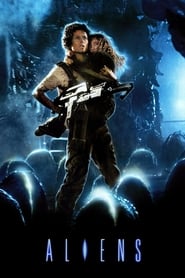
This is Jim Cameron. I wrote and directed this film back in '83, and directed it in '85 through '86. It was released in the summer of '86. July 17th, if I'm not mistaken. It started as a treatment. I was having a meeting with David Giler and Walter Hill, talking about another project, and that pitch was not going very well. I could tell by their sagging expressions that they didn't like any of my ideas. But they had read my 7erminator script and wanted to work with me on something. I was getting up and making my way toward the door and David Giler, one of the producers of the first film, said "We do have this other thing", and I said "What's that?" He said "Alien 2." And all the pinball machine lights and bells went off inside my head but I maintained a straight face and said "That could be interesting." And I suggested that I write a quick treatment, a quick outline, just to give them an idea of what I might do with it. So I raced home and stayed up for three days straight, drank about eight pots of coffee and wrote a 40- or 50-page treatment. Really what I did was I adapted a story I had already written, which was called Mother, which was an "alien on a space station" kind of story. It had the power loader machine in it. I had written this treatment a few months earlier. So I adapted it, dropped Sigourney's character and a bunch of marines into it, and in that one quick stroke created all the character names - Gorman and Hicks and Vasquez and all those folks - and dropped it on them a couple of days later. I think they felt like they'd hit the jackpot. That was the film they wanted to make. So they authorized me to go ahead and start writing the script. The problem was, that day I landed the job to write the script for the second Rambo film. So I called them up and asked David Giler what I should do. And he said "Don't be stupid. Take both jobs." So I took both jobs. I also had to do a rewrite of my 7erminator script to start production in February, so I had a three-month period where I had to write three scripts. So I decided that each script was gonna be two hours long, so it'd be 120 pages. So I figured out the total page count, whatever that is - I guess 360 pages. I divided the total number of waking hours I had during that three-month period by 360 and figured out how many pages per hour I had to write, and then I just wrote that many pages per hour.
0:04 · jump to transcript →
-
Stan Winston
I'm Stan Winston. I created the creature effects and the alien effects for A/ens. I remember Jim trying to figure out how he could make the beginning of this movie impressive. He said he wanted to use a robotic laser. It was an afterthought and it wasn't in the budget and I remember having the gall to say to him "If you wanna use it, you have to pay for it." And he did. - Is that right? This robotic arm and the laser came out of his pocket. I wanted a seamless blend from the end of the first film into the beginning of the second film. I certainly wanted to honor all the things that were good about the first film. So I went to school on Ridley's style of photography, which was quite different from mine, cos he used a lot of long lenses, much more so than I was used to working with. But the smoke, the backlight, the textures, the way he forces the frame by putting a lot of equipment, machinery and foreground pieces, I really studied all that. I wanted there to be a stylistic continuity. I also wanted to have my own style grafted onto that so that I felt enough of a sense of authorship to make it worth doing.
2:51 · jump to transcript →
-
Pat McClung
This is Pat McClung. I was the model-shop supervisor on the film. They're wearing modified costumes from Outland, or the basic suit is from Outland and it's been redesigned and they put some stencils on it. This is microglitter and fuller's earth blown on there. I remember in this scene the batteries in the flashlights kept going out. You would think this would be an easy scene to do, but, as with everything in this movie, it was harder than it looked. There are no easy scenes with Jim. There's that nice dissolve, the contour of the earth matching her face. When we shot this, a matte painting combined with miniature and perspective, there are some perspective gags going on there. We used a clip of Sigourney's face in the viewfinder to line up the curvature of the earth, so we had a nice match. I wrote the piece obviously with Sigourney in mind for the character. I was told she was on board and I should just toddle off and write the film when in fact no deal had been made with her whatsoever. So here was a script that was written that everybody wanted to make, in which she was in every scene, and they hadn't made a deal with her yet. That's why she got her first big payday of her acting career. She got a million bucks, which was a big deal. She might have been the first actress to get a million dollars for a movie in movie history. It was all because it was mishandled by the producers. She was the main character and they hadn't made the deal. She was worth every penny of it and more. When people saw the film, they realized that. I Knew what a phenomenal actress she was. I'd never met her. I had her picture up while I was writing the script. I went off the character that had been created in the first film, took her much further. Of course, this is Paul Reiser. I certainly had no idea what a great comic actor he would prove to be, and certainly that's how people think of him, not as a dramatic actor. I just read him in a lineup of actors in the normal casting methodology, and I thought he was really interesting, that he could play this really sincere but slightly smarmy guy who could then turn evil. This is a dream sequence, but you don't know that yet. I remember from the premiere screening of the film that the incomplete chestburster scene here really got people cranked up and on edge, set the tone for the whole movie, that you were here to be messed with, which is a good way to start off, I think. The way you get a cat to hiss like that is you put another cat close to it. I had no idea. I didn't know what you did to make a cat do that. But that's standard procedure. Bring a cat it doesn't know close to it and it'll do that.
4:32 · jump to transcript →
-
-
director · 3h 43m 12 mentions
The Lord of the Rings The Two Towers (2002)
Peter Jackson, Fran Walsh, Philippa Boyens
-
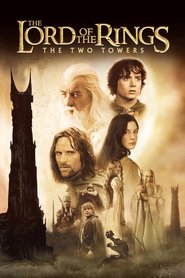
So I don't know whether they even knew about it. Did we bill them? We should bill them now. It was interesting to figure out how to start this film because the studio were quite insistent for a long time that we have a prologue, the same as the first film. They wanted Cate Blanchett, in actual fact, to give us a sort of a backstory of what's happened so far in this movie, you know, the Fellowship of the Ring, and to set us up. And we resisted doing that, didn't we? Yes, yes.
0:33 · jump to transcript →
-
It was ironic, really, because they didn't like the idea of Cate Blanchett doing the prologue in the first film, in Fellowship. It was something we were keen on, but they weren't. And then it flipped around the other way. Yes, and then in this one, they decided that it was a good device, but we sort of moved on from there and thought, no, we're just going to go straight into this one. Nobody needs more backstory. I kind of think it's just important to be able to join all three movies up.
1:01 · jump to transcript →
-
you know, what's the first shot? And then I thought the mountains. I love the idea of hearing the voices coming from the first movie. It occurred to me, it's reminiscent of what Zemeckis did on the Back to the Future Part II when the characters were sort of, you know, went back to the first film again. And I love the idea of we hear something that's familiar coming from inside the mountain, but it's not really the first film, although it's sort of going back to halfway through the first film, which is kind of neat.
1:52 · jump to transcript →
-
-
-
Paul M. Sammon
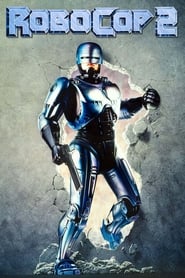
Hi everybody, this is Paul M. Salmon, author of Future Noir, the making of Blade Runner, and a person who has worked on many motion pictures, including this one for Orion in 1989-1990 called Robocop 2, for which I was the computer graphics supervisor, the publicist, and a lot of other jobs. Just like the first film, we open up with a commercial that is satirizing the future that Robocop takes place in. This is called the Magnavolt commercial.
0:26 · jump to transcript →
-
Paul M. Sammon
And here we have John Glover, a wonderful character actor, who throughout the 80s had just a really great run. One of my favorite pictures that he did was a thing called 52 Pickup for John Frankenheimer, when he plays one of the sleaziest criminals you could ever think of. And now we have a media break. Now, media breaks carry over from the first film. And, of course, this is supposed to be essentially the news, the Twinkies, the happy news that comes in
1:20 · jump to transcript →
-
Paul M. Sammon
talking about what's going on in OCP. Here we have Ed 209 from the first film, the guy who's actually backing up the truck there and putting his arms up. That's a guest appearance by Phil Tippett. Phil Tippett was the stop-motion supervisor who did the puppet animation on the first film and did the stop-motion animation on the second.
1:47 · jump to transcript →
-
-
-
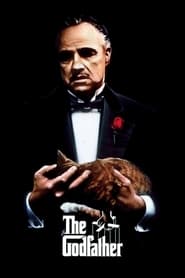
Francis Ford Coppola
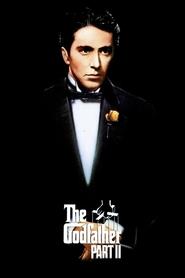
bring these actors back. Even the ones that had been almost extras in the first film started to have more developed important characters in the second film and then certainly on the third film whenever possible.
21:46 · jump to transcript →
-
Francis Ford Coppola
A playwright, I think he wrote A Hat Full of Rain, and a fabulous improvising actor and just a wonderful character. Well, you know, kind of right up there with the people from the cast of the first film. I believe he had a nomination for this picture. I'm not sure, but I think he did.
30:01 · jump to transcript →
-
Francis Ford Coppola
really the same philosophy and structure. It's just that the ease between us was much greater and there was room to express ideas. I didn't feel as I did on the first film, up against this, you know, kind of crotchety school norm that just said it had to be this way. And I think I felt more free with the second Godfather. I was running the production. I pretty much had no one to answer to.
33:36 · jump to transcript →
-
-
-
different jobs all around the film industry. And then in 1974, so like 10 years after he did the Alfred Hitchcock episode, he made his feature film directorial debut with an exploitation movie called Dirty O'Neill, which he co-directed. But really, I think, you know, the path of his career as we know it really began in earnest, not even so much with that movie.
36:55 · jump to transcript →
-
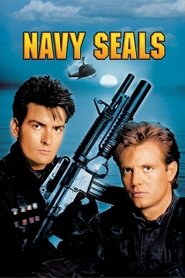
then I guess I should maybe talk about some of these other Navy SEALs that we've got, which my first thought when I rewatched this movie was...
1:08:22 · jump to transcript →
-
He made his directorial debut in 1978 with a comedy I'm a really huge fan of, FM, which is set in a radio station and has this great rock and roll soundtrack. It's often wrongly attributed with inspiring the TV series WKRP in Cincinnati. But in fact, I learned while researching Alonzo for this that that TV show, which was created by the guy who directed, Hugh Wilson, the guy who directed Police Academy and a bunch of other movies. Oh, wow.
1:24:47 · jump to transcript →
-
-
-
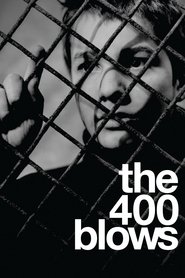
Truffaut, who was 27 years old when he directed this, his first feature-length film, takes credit for the original story of The 400 Blows, and fairly enough since it retells in fictional form the story of his own childhood. But then he gives an adaptation and dialogue credit to Marcel Moussy.
1:53 · jump to transcript →
-
As far as experience goes, I was a few years older than Truffaut and had started working in television on a series that was called It Could Happen to You. We dramatized contemporary social cases a little bit like what Paddy Chayefsky was doing in American TV at the time. Truffaut's friend, Andre Bazin, had advised him to watch some of the broadcasts. Having watched those programs, he got in touch with me. Concerning my experience with children, Truffaut had read my first novel.
9:06 · jump to transcript →
-
because it really struck me at the time, an interior traveling shot in the classroom where the grips pulled the desks out of the way one by one as the camera went forward. So you'd see the desk that had been thrown from the patch on both sides and the cameraman threading his way between them. Nothing could have been more different from the heaviness of shooting on TV. When I eventually came to direct my own first film, Saint-Tropez Blues, that was the only style of shooting that made sense to me. Deux. Jean.
34:46 · jump to transcript →
-
-
-
Nick Pinkerton
This is the first feature for Cimino, who by the end of the 1970s would have a massive critical and popular success with The Deer Hunter, and who by the beginning of the 1980s would be persona non grata in Hollywood due to the massive losses incurred by his 1980 film Heaven's Gate, whose failure would essentially sink United Artists, the studio that underwrote Thunderbolt and Lightfoot.
0:32 · jump to transcript →
-
Nick Pinkerton
Eastwood's character asks Bridges, you Indian, on hearing the name Lightfoot. Bridges responds, nope, just American. For good or ill, Michael Cimino is a filmmaker who conceived of himself specifically as an American artist, and that's already very much evident in this, his first feature. The song we're hearing is by Paul Williams, titled Where Do I Go From Here, written expressly for the film.
9:50 · jump to transcript →
-
Nick Pinkerton
in the relationship between Eastwood and Bridges, also perhaps Eastwood and Cimino, the first-time director. Eastwood himself was fairly new to the director's chair, having started out in 1971 with his directorial debut, Play Misty for Me, released when he was 41 years old. It had been a very long trip from the days of Francis in the Navy and TV westerns to A-list status.
11:54 · jump to transcript →
-
-
-
Tim Lucas
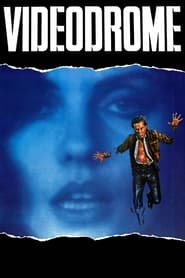
Harlan Ellison was Michael's favorite writer, and when Michael passed away in November 2014, Harlan spoke at his memorial service the way Brian O'Blivion would have done, by Skype. Harlan is played by Peter Dvorsky. He had made some TV movies prior to this, but Videodrome was his first feature. He went from this to a less conspicuous role in Cronenberg's The Dead Zone, and his career since has mostly been in Canadian TV movies and live theater.
7:08 · jump to transcript →
-
Tim Lucas
Its cover art by H.R. Giger may have influenced some of this film's ideas. This was practically Lally Cadeau's first feature film, but she became a major Canadian television star in such shows as Hangin' In, Road to Avonlea, which won her the Genie Award for Best Actress in a Continuing Leading Dramatic Role, and Five Years of X-Men, episodes before the feature franchise was launched. Her character of Rena King is said to have been inspired by Dini Petty,
9:17 · jump to transcript →
-
Tim Lucas
who had a talk show on Toronto's City TV. Videodrome was the first film that David Cronenberg made after going on his first press junket in the United States to promote scanners for Avco Embassy. David told me that this scene was written directly out of this new experience of appearing for short bursts of publicity on local talk shows, where he often had to field aggressive questions about whether his gory movies might be contributing to a climate of social malaise.
9:45 · jump to transcript →
-
-
-
Tim Lucas
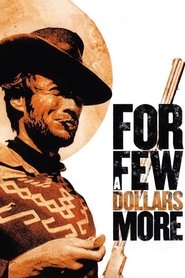
With a series of minimal but effective touches, Colonel Mortimer has already defined himself as a man who lives according to his own rules, rather than the laws laid down by weak and corruptible men. The second appearance of those snake eyes, you will find it's something of a motif. The Tucumcari station clerk is played by Roberto Carmeldil. He played the role of Cersei in Leone's first feature, The Colossus of Rhodes, but you may remember him better as the sheriff from The Big Gun Down.
6:20 · jump to transcript →
-
Tim Lucas
exhilarating, such a daring stylistic advance over anything in the first film, and thrilling not only for Morricone's inspired frissons of sound, but in part because it confirms something that we won't actually learn for another couple of hours. Leone shows Mortimer and Manco occupying the same or at least similar space, and then he proceeds to contrast the laughing eyes of El Indio on the poster with Mortimer's pleasured bloodthirst as he identifies his next quarry.
24:25 · jump to transcript →
-
Tim Lucas
Kinski, also a renowned stage actor, had no respect for that trash, as he called it, and likely thought of himself as a failure at this point in his career. Yet this film turned things around for him forevermore. This was the first film he made that was literally shown everywhere around the world to great success. It was followed by David Lean's Dr. Zhivago, which I believe he actually shot first, but it happened to be released later.
44:12 · jump to transcript →
-
-
-
Francis Ford Coppola
Partly because Al had twisted his ankle jumping on a running board of a car in the scene in the hospital. And so he had to go off to the hospital and I didn't get to finish it because I lost the actor. And they made a big stink of how my first week was embarrassing and stuff. But the first week, if the records be checked, the first day was in Best Company, Polk's Toy Store. And I have to remember what the second day was. But the third and fourth day was the Sollozzo murder in the restaurant.
41:14 · jump to transcript →
-
Francis Ford Coppola
firm ideas about structure and how things should be done. And on the second picture, the second Godfather picture, I think it was much more mutually harmonious and respectful. But, you know, on the first film, I was, like, not really... The crew didn't kind of understand what I was doing there, why I was chosen to be the director. And, you know, the crew, you know, these kind of New York...
1:14:05 · jump to transcript →
-
Francis Ford Coppola
So this Sollozzo murder, I've heard it said, you know, years after the fact, people talk about how the godfather got made, and Paramount never denied that I was on the outs with them, they were going to fire me, but they said that it was sort of justified because my first week, you know, wasn't as strong as it should be.
1:24:15 · jump to transcript →
-
-
-
Hello, my name is Stephen Thrower. I'm a film writer and journalist. And I'm here with George Pavlou, the director of Underworld. Hello, George. Hello, Steve. Nice to do this again with you. So we're going to be talking about your first feature film, Underworld. So I guess maybe we should start off by just...
0:05 · jump to transcript →
-
the second ever episode of Doctor Who when he was a child as well. Playing a caveman's child, I believe. He was also in Black Joy. Yes, that's right. Anthony Simmons' movie. And Anthony, in fact, was going to give me my first break in movies, but I was still in college. And I decided it was a bit too early for me to try and...
8:28 · jump to transcript →
-
We'd have to stay out there all day. We couldn't come back to shore. And it was just a horrible experience, they said, being stuck on this. And they're small boats. They weren't very large boats. Ships, I should say. But yeah, it was quite an ordeal, apparently. So tell me, as a director, making your first feature film, under a lot of pressure, time pressure, money pressure, how did you find...
32:21 · jump to transcript →
-
-
-
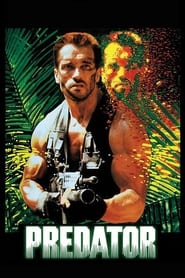
John McTiernan
This film was, was quite a long time... It was the beginning of my career. It's my first studio film.
2:20 · jump to transcript →
-
John McTiernan
Jesse Ventura. I had no idea. I mean, I found out that the guy was a lot brighter than he pretended to be. And a lot more of a professional. But I was truly astonished... To find out that, you know, that he'd been nominated for governor of, what is it, Minnesota? Minnesota. I think this was his first feature, maybe his only feature, I don't know. You wanna know how I really got hired? You wanna know the real truth about how this happens? My agent said, "Look, "you want this job. "I think you need to sign up "with this particular lawyer." It's Jake Bloom's law firm. Jake Bloom is a business lawyer, he looks like, he looks like Pancho Villa. He has a wonderfully phlegmatic manner and he looks, he looks like an old hippie. He's very bright. But his law firm also represented Arnold at the time. My agent was very astute. That 5% was what got me the job.
8:43 · jump to transcript →
-
John McTiernan
And because it was my first feature, I didn't have credibility enough to say...
12:24 · jump to transcript →
-
-
-
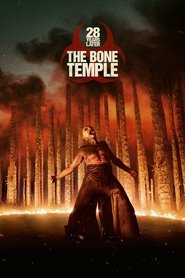
Nia DaCosta
So here you can see a bit, 'cause of the way Jimmima was moving just then in that scene, that the shutter angle is changed. It's not sort of a standard angle. And that's something that Danny did in the first film. Whenever the infected were attacking, the shutter angle would change, the image would appear more choppy to the human eye. And... Sean Bobbitt, my DP, and I, we really wanted to use that, in a way. It was really the only visual reference from the other films that we took. But because, again, we're starting this film with the Jimmies as the real mortal threat, we thought the Jimmies and the infected should have the shutter angle change when violence happens. And this is the first infected of the film coming up, which, again, wasn't written in, but we added, 'cause we were like, "We need infected." And I like infected scenes and things like that, so, yeah.
6:42 · jump to transcript →
-
Nia DaCosta
And what I love about the way this is written versus what we see in 28 Years Later, the first film, is that you're seeing how he remembers what happened, how he has come to understand and what his memory has done over the past 28 years, with the memory of seeing his... his family murdered, his father turned. And you can see, "This is where "his belief system and his dogma came from."
1:09:07 · jump to transcript →
-
Nia DaCosta
I love how his hair just seems like it has muscles of its own. It's just, like, flying all over the place. This is sad, you know, killing her friends. But, you know, they would have killed her, so... It's like there's a balance of, like, obviously, they do terrible things, but also, they're people. So... And then, you know, Spike's story through this film and the first film is really this coming-of-age. Not that coming-of-age has to end when you murder or stab someone, but I think it is interesting. The journey he goes on in the first film, like where he ends up, he's like, "I'm leaving home." Like, "I don't like what's going on there." Like, "I can make this on my own." And then this film, he's like, "I definitely can't. "I need people, but not these people." And he starts to find his own sense of community. But to me, it's very much like prodigal son. Prodigal son goes out, sees the world, but eventually, the prodigal son will return. So maybe we'll see some of that in the third film.
1:34:12 · jump to transcript →
-
-
multi · 1h 59m 5 mentions
David Naylor, Guy Hamilton, Tom Mankiewicz, John Barry + 14
-
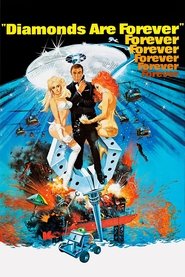
Diamonds of Forever's production designer was Ken Adam. His first film for co-producer Cubby Broccoli was 1960s The Trials of Oscar Wilde. Now back to Tom Mankiewicz. I think Ken was the first production designer on Dr. No, and he had been on most of the pictures. He was a tremendously artistic, finicky fellow. Very charming, or still is. A German who had flown for the RAF during the war in England. And he's a brilliant, brilliant production designer.
19:58 · jump to transcript →
-
who was more a button-down sort of fellow. Now here, the diamonds are hidden in the quartz. That was my first fight with Cubby. Felix says, I give up the diamonds. I know the diamonds are in there, but where are they? And Bond says, alimentary, my dear lighter. And Cubby said to me, and what the hell does that mean? I said, Cubby, it's the alimentary canal.
27:10 · jump to transcript →
-
Look carefully at Shady Tree's acorns, and you'll see that the one on the left is actress Valerie Perrine in one of her very first film appearances. Perrine went on to star opposite Dustin Hoffman in Lenny, for which she was nominated for an Academy Award, and made a memorable impression in Superman the movie. Jill St. John recalls shooting in Las Vegas. Because wherever we went, it was comped. You know, those are the days in Las Vegas where everything was free.
35:45 · jump to transcript →
-
-
writer · 1h 35m 5 mentions
Simon Barrett, Adam Wingard, Greg Hale, Eduardo Sánchez + 5
-
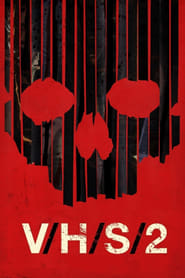
implanted breasts back to back. You know, we're basically saying, hey, you saw the first film? Okay, great, we're moving on. You know, we did that with the first film. We're not apologizing for it, but we're also not exploiting anyone more than ourselves. So, by the way, I was a licensed crime investigator. I still am a licensed crime investigator in the state of California. That was my day job while Adam and I were making movies like the first VHS and A Horrible Way to Die because we were
2:30 · jump to transcript →
-
Tape 49 is a prequel, correct? That's correct. But we saw footage from the first film, but this is still a prequel. So it's not really a prequel. It takes place in the middle of the first movie. Well, it takes place at the very beginning of the first movie. The idea is Tape 56 takes place over several months. So you see them attack the people in the parking garage, and you see them watching that, and then they go to the house. Whereas Tape 49 is just a couple nights. So it actually takes place after...
5:52 · jump to transcript →
-
That was like Tom's thing. Anyways, but this actress is Hannah Hughes and I've known her for a long time. She was in one of my first films, Pop Skull, back when she was still only 16 when we did that. So I've known her.
17:16 · jump to transcript →
-
-
-
Joss Whedon
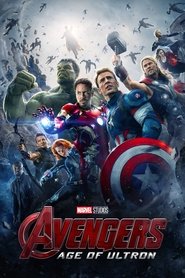
But I think the most important thing about the movie is that it's mine. That it's all me, and that really because I'm the director and the writer, I really created it all myself. I think that's important to bear in mind. Especially because, while I've been talking, you've already seen the work of two other directors, not to mention the insanely large village, possibly a metropolitan area, full of people who are working in every frame to fulfil whatever vision it was I thought I had. One thing about this movie that you're gonna hear a lot is how extraordinary the crew, the post, the pre, uh, the production people, how they not just carried or fulfilled, but inspired this movie, which begins with this rather iconic image. Um... A very deliberate decision on my part was to start off with the hardest thing in the movie from the first one, what we refer to as the "tie-in shot." Rather than getting the Avengers back together, I wanted to say right up front, "No, they're in it. "And here's the very climax of the first film. "Here's the very thing you always showed up for, "all of these guys in one enormous shot "with a big slow-mo, kind of, uh, comic book panel moment." And my original concept had been that the very first frame would be the slow-motion part. Kevin Feige very rightly argued that without some context, people just wouldn't know what they were seeing, um, and wouldn't appreciate it as much as they would at the end of the shot. Which, um, turned out to be very true. When I talk about the other directors... There was a short shot of people running up the stairs that my producer, Jeremy Latcham, went ahead and got with our "C" cameraman, Sam, while we were in Dover Castle, which is right here and played as the interior of the fortress. Um... We were mostly stuck in big, beautiful rooms filled with equipment, and there are so many lovely little spaces. He said, "Shouldn't we go and get soldiers running about, "and show some of the stairwells and the halls, "and all the things that make this space more than just big rooms?" And we ended up using a lot of that footage. It was just grand. And, of course, the other director I'm referring to is John Mahaffie, who is an actual director, um, the second-unit director, who shot so much great footage for this movie. I shot about 100 days, he shot over 50. And some of them are elaborate. That's another, what I was referring to before. Some of the more elaborate stuff inevitably gets shot by second unit because the characters in it are CG, and requires camera setups that take hours and hours. And so on the one hand, I, being the most important director, the director of the first unit, I'm busy getting really the heart of the piece, and he's getting these secondary shots. Except that the "secondary shots" he was getting, I just used air quotes, you cant tell, but I did, were very much some of the most beautiful footage that was shot in the film. And I started to feel like Reaction-Shot Joe. I would just see these glorious things he'd stitch together, and then I'd... There'd be a close-up of somebody reacting to it. I was like, "That's me! I did that. I'm also a part of the team." Um... Because the team is how this gets done. You're gonna find that's also part of what we have to say in the movie. But in the making of the movie, it's very much the same thing. Both of these guys, Thomas Kretschmann and Henry Goodman, extraordinary thespians, who would come in to do smaller roles. I actually said, "If we made a movie with only the day players..." They worked more than that, but just literally people who were there for just a day. "we'd have the most star-studded cast you could work with." It's wonderful. It's probably a terrible thing about the industry that you can get amazing actors to play these smaller roles in franchise films, but it works for me.
0:42 · jump to transcript →
-
Joss Whedon
So I asked the question, "Why would I do this, again?" And the main answer was because I wanted to make a new movie. A different Avengers movie. And while providing the things that people expect from the Avengers movie, i.e. the tie-in shot that you saw before, I also wanted to not just tell a different story, but tell it differently. And a lot of that can be seen in the editing and framing and general style, the lenses. In the first film, I was very slavish to 3D. I was playing it as though anything not in the vernacular of 3D was going to be confusing for the audience. And in the couple of years in-between, it became clear that, that isn't really the case. And, besides, 3D really spoke to the way I was used to shooting. I like wide lenses. I like understanding the space around me very Clearly. I didn't like a lot of heavy cutting. I liked shots that would deliberately go from one place to another, very old-fashioned. For the second film, I wanted to do something unlike anything I had really done. It's a little bit like the film I shot right before, Much Ado About Nothing, which was kind of... We had a bunch of great actors standing around, speaking Shakespeare, and, as often as possible, three cameras, occasionally four, at least two, getting them. And quick side note, the mercenary who speaks right here... No, it wasn't. That was a bit I added very late in editing. And that's actually Jeffrey Ford, one of the editors, who just, uh, did it on a mic in the room, and we liked it so well, we kept it. You're also gonna hear his name and Lisa Lassek"s name, those editors who... I don't wanna say saved my life, but I just did. They are so much a part of everything that works in this movie. I'm incredibly grateful. Lot of moving parts, partially because of the way, um, I, uh... As I said, I wanted to shoot this differently. Where the first one was very deliberate, this one was deliberately casual. Yay. [hat little "Yay," by the way, for which both Robert and I have been given credit, was actually Jeremy Latcham, again, saying, "He needs to make a noise there," um, in post-production. And I was like, "Oh, no, he doesn't. "We could do it, but no one's gonna hear it." So, he gets all the credit for that. And we have fo talk about ILM, too, and the extraordinary work they did with the Hulk and with Ultron. I mean, what they did in the first movie was amazing, but this is a completely different level. This is a real performance. And even with all the reference that Mark gave them, it's something that has to be crafted pixel by pixel, and then made human. And I can never stop looking at these guys. Because, again, with all of these cameras and this very different way of shooting, we ended up with something like that, an over, where you see just a blurry shoulder. That blurry shoulder is about as expensive as a face. It's something we could never do in the first movie. But we talked about it specifically as wanting to have the Hulk play a character in the film, not an effect, and to use the same casual vernacular when we were shooting him as we would with any of the other, um, players. And their thing, the idea that Natasha has this power over the Hulk, and obviously this, uh, budding romance with Banner, really came from that scene. That's where it all started. The idea of the lullaby as how they deal with him spiralled up into the idea that Bruce Banner and Natasha Romanoff are actually very similar. And so the scene always made perfect sense to me, and we had Scarlett's side of it, but we really didn't have the scene until just a few weeks before we delivered the film. And even I was kind of stunned by the physicality, the sensuality, and the emotion of that encounter. And it's one of those things where you all say, "This will work," but then you get to feel it and It's like nobody ever told you about it. It's an extraordinary thing to work on something for two years and not understand it until you see it. Or not understand the power it will have.
5:19 · jump to transcript →
-
Joss Whedon
And I love the two of them. I did at one point realise that I had sort of turned Maria Hill into a girl Friday in this movie, because there were too many heroes for her to do that much. But it makes it all the better, I think, when she shows up in her old gear, firing a gun like she should ought to. This shot was very difficult. Again, one of the last shots we got. Kevin is very leery of shots that feel artificial, and when you are flying with someone and you do a camera move around them, you're in great danger of feeling artificial. And so we worked hard in the colouring and the way New York was and in the textures, to try and mitigate that and keep it real. And then we went right through that glass, which is a beautifully crafted effect. This shot is something slightly similar to what I did in my first film, Serenity, in that every member of the team is in it. Not all of them speak, but they are all visible at some point. And we get, basically, a tour of the place. Obviously, because they come in through the "A," it has only been referred to as the "A-hole shot," but what it is for me is a very important way to explain the space of Avengers Tower to the audience. There is a bit of showing off. There is a bit of, "Look at all our grandeur." But what I'm really doing is explaining exactly where everything is in relation to everything else, because later on we will need to know. Robots are down here, and party's over here, and Pietro is gonna be standing on that glass later. Charlie Wood designed the set, and it's the biggest and one of the most beautiful things I've ever set foot on. It is glorious. Sometimes it's almost overwhelming. And besides wanting to show the scope of it, to play into the epic nature of the thing, it allowed me to come up with gags like Pietro getting... Like Hawkeye shooting out the glass from under him. And it allowed me to create action, and also to just have an enormous amount of fun. Sometimes the least fun. This particular space is so big and that sort of holo area so empty that it was sometimes difficult to shoot in, to figure out what to do with people. But every frame is such candy because the work these guys put into it, building it and dressing it, and the depth in frame that you can get in these instances is never not exciting. I literally finished shooting on this set, and on that day walked into a corner I had never been in downstairs, and was like, "Wait a minute, "there's 100 cool ideas I have for this area."
15:34 · jump to transcript →
-
-
-
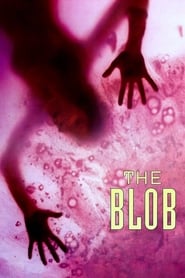
And this was intended to be my first directing contest. I remember hearing that, because you did a Q&A at the New Beverly years ago, and that was the first time that I had ever heard that. Hey! The maestro himself. Yes. And Lyle Conway, the blob maestro as well. The blobinator. The blobinator. Oh, goddammit, that's good. This is going to be a good commentary, everybody. Hoyt Yeatman, visual effects maestro as well. Dream Quest.
2:24 · jump to transcript →
-
But this was designed to be your first film, Chuck. I was looking to get that directing break, and Mark Irwin, sitting right beside us, had done The Fly with Cronenberg and proved that a really kitschy film about a human fly could become a great classic. And I'd already learned at that point in my career how commercial Hollywood, so my more original ideas, I was having a hard time breaking. I thought, let me take the blob to its furthest extent.
2:49 · jump to transcript →
-
And Jack Harris was nice enough to give me the opportunity to go out and put it together. Hey, I know those guys. There he is. Shout out to Frank. Yes. So you and Frank supposedly went off after the success of Nightmare 3. That being your first film with New Line, you had taken the Blob remake to New Line and they passed, correct? New Line passed. By the way, what an amazing misdirect here from going from
3:17 · jump to transcript →
-
-
-
And it's funny, I look at, there's Levi, Levi Isaacs, who really, this is my first directing ever. I had written and produced a lot of television, but this is my, you know, my intro into directing, and Levi was terrific because your DP, as everyone knows, is your right-hand person. And he was, he taught me a lot, actually. Ah, that was our...
5:01 · jump to transcript →
-
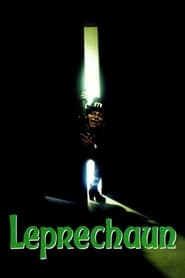
And as you can see, I really didn't want to take ourselves too serious. I really wanted to have not a straight-ahead horror movie, which my first draft of the script that Trimark bought, that was very horrific and no personality in a leprechaun. He was just kind of a killing... There's Gabe's credit. He was just a killing machine that became a monster, and then through rewrites and prepping this thing,
6:54 · jump to transcript →
-
But again, this was Simi Valley, Little House on the Prairie sets. We had a crane. I remember this was a beautiful intro shot. I remember Isaac up there on the crane. It was excellent. And there's Jennifer, who's adorable and was wonderful to work with. And again, I always have to apologize for putting her in this movie. I'm sorry, Jennifer. Forgive me. But it was her first movie, my first movie, and we had a lot of fun. Yeah, she's great.
11:27 · jump to transcript →
-
-
-
Tony Scott
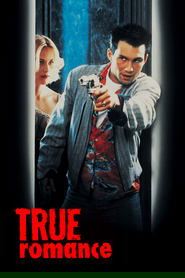
I went to Charlie Sexton, who recorded this particular track for us. At the time, I thought, God, nothing can ever be as good as Elvis. But in the end, I think it served his purpose, and it's a great track. And Charlie has a great voice. This first scene was the first scene I shot in the movie. It was my first day of shooting.
2:32 · jump to transcript →
-
Tony Scott
Um, and, uh, it was my first day with Christian, you know? And Christian and I had been talking about the characters and who his character was, and I felt, you know, we're never quite in sync with what we were both thinking, who this character was, yeah? And, um, you know, you never really truly get an understanding of where the actors, or what the actors, where his head's at until you start to do the scene, yeah? And, um...
2:56 · jump to transcript →
-
Tony Scott
Anyhow, after my first day of shooting, I realized that Christian was off to the right and I was off to the left. And I said at the end of the first day of shooting, you know, I want you to take a look at Taxi Driver. And I wanted Christian to take a look at Taxi Driver in terms of the darkness of the character because I felt his character in this first scene in the bar, he was pushing it a little too light. And I wanted a much darker soul. And...
3:26 · jump to transcript →
-
-
director · 1h 26m 4 mentions
Underworld Rise of the Lycans (2009)
Patrick Tatopoulos, Len Wiseman, James McQuaide, Richard Wright + 1
-
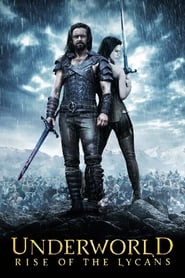
It was interesting with Rhona because she had to create... ...a new character, you know, somebody... It's a different time. It's a much more rougher time. I mean, I think the warrior that she created... ...IS, In a sense, quite different from the Kate character. I think she did a fantastic job there. And I think she fits the tone of the movie very well. I was very happy. I mean, she looks great. And she has a very special quality of.... What I like best about Rhona is also the looks, how she looks... ...and tell a love story just by the looks on them. You'll see that through the movie, little moments like this, she really.... Beyond being a great... She works great with swords and things. Look at the shape Michael's in. It's incredible. This was-- He started.... He came off of Frost/Nixon I think in the end of October... ...and started shooting this in January... ...and had three months to go through incredibly intense physical training... ...to get into the shape that he's in in this movie. It was a Startling transformation that he was able to do to himself. It's good to be a Lycan. I'd like to be one. Yeah. That helps. Now, this is one of the great Dan Hennah sets. I remember Len and I came from California... ...in, what was it, for the first day of shooting... ...and we walked through the sets. And not only were they beautiful to look at... ...but the flooring was all corrugated. It looked like natural cement. And apparently, Dan had some sort of formula... ...where he could lay down these floors. And they made them look absolutely... They brought in a cement mixer and dumped it on the floor. And then there's this team of guys with forms and moulds... ... sort of going along with the cement mixer. So the entire floor is actually made... ...of two or three inches of actual concrete. It makes a huge difference. On the first film, we would've liked to, in the crypt, do that. Just didn't have the money for it. It was, you know, any way that you can possibly do it... . like a faux paint job. It just doesn't pick up the light. It doesn't work. The texture, yeah. - Here's a transformation. This was late in the game. This is Michael's suggestion or no? Am I wrong about that? - This was a scene, he was really... We actually tried to cut it. And he was so adamant that we had to shoot it. This one here. This turned out really well. Who did this? A company called Intelligent Creatures. From Toronto. - This one came out really good, yeah.
6:38 · jump to transcript →
-
So this is work... I mean, we had two companies doing the CGI werewolf on this movie. I need to mention that. The very first section of the movie, Sonja attacked... ...coming to the castle we saw before and this... ...was done by a French company called Duboi. And later on, the other part of the movie... ... you'll see werewolves again, the same one... ...done by another company called Luma. I need to say something about those guys. When the French started to do the first werewolf... ... they had a way of making those guys look quite elegant and sexy... ...but they were lacking a bit of weight, we felt. So we talked about that. The opposite came from Luma, giving them a lot of weight... ...but they were a little bit too brutal in some ways. And that's a typical example. When we met those guys, we had them looking at each other's work. And at the end, it sort of, like, you know, got better by looking at... Each other's work. - Yeah, covertly, and that really helped. There's a lot of practical wolf there as well, like, this is practical stuff. But there are probably 35 CG wolves in this sequence. Yeah. How many CG shots were in the whole movie, James? About 400. - Four hundred. But not just for the wolf. Everything. There's, like, 80 CG wolves. But this scene in particular, it's mixed from shot to shot to shot. And you really have to look closely now to tell the difference. Yeah, - Even in here, these three, four shots... ... they're back and forth, back and forth. That's a suit. And.... That one's CG. - Yeah. Sonja! Remember it took us, like, three different days to shoot that tunnel? That was such a nuisance, that thing. It was incredible. We really tried to prep ourselves, like great storyboard laid out. It was still a difficult scene to shoot. We're also talking over the appearance of Kevin Grevioux, and.... Fire. Who was obviously Raze in the first film... ...and, you know, a big part of the creation... ...of the writing of the first script. That's a Luma transformation. It was a great transformation. - It looks really good. And Luma's the only visual effects company that has worked in all three. That right? - True. How many visual effects companies ended up on Underworld? Is that 11, was it? Ten. - Ten. There's tons of them. This is one of the latest... - This is Kevin, guys. additions in the script of having Michael... ... actually do this roar that has the others back off. And it kind of.... It really opened up his character, and.... Yeah. Michael was really specific at the beginning. He asked if he could actually be doing the entire transformation... ...and being shot all the way to the end to bring his language. And I thought that helped everybody. CGI looking at him. He basically kept screaming almost like at the end of the transformation. And then he was replaced, but they got a good guideline. I wished we could have done a transformation back-to-human shot. Am I not master of this house? There's another shackle add-on right here. you are forbidden to remove your shackle. lt was added in later. you break my law after I gave you your life. Your days of plush living are over... We were lucky to have Bill Nighy on this movie. I mean, he's just a wonderful actor. He really is. He's fanta... And just a really, really great guy as well. He's always fun to work with and have on set. You couldn't have an Underworld without Viktor, Bill? I doubt it. - God, I don't know. It's tough because, like, you know, you kill these people off. And, you know, we'd always intended to do, you know, kind of a... In hopes and fantasize about doing a trilogy... ...which we've been able to be very lucky to do so now. And then you kill a lot of these great actors off. And, you know, I don't know. Don't know if it would feel the same without him. I mean, he wasn't... You know, it was great that we had him start in Underworld 2. You know, he wasn't in Underworld 2 for the beginning part of the film. Okay, that of... This is the best shot in the movie to see the size of the set. So now, we're in CG world. And we're entering now the practical set. So that's actually the set that Dan Hennah built for us... ...the last 20 feet of that, if you may. And there was this wall across to try to separate.... ...on the different flavours on both side. Yeah, this is one of my favourite shots. When I saw this, I was just... - Gorgeous. That's beautiful. - Thrilled. It looks fantastic. I was worried about that too. When we showed up... ...the sets were amazing, but they weren't very tall... in terms of how grand the space is. You know, to actually capture that on film... ... you're gonna have to see that it stops pretty short. Shoot off the edge. - And so it just meant... Every time you see that, it's a visual effects shot. It was basically the choice for that. Either wide or a little taller. But I felt the wise choice was to be wider for what we... The only other way to build it taller would've been to build it outside. Which would have been a disaster.
20:49 · jump to transcript →
-
Now, there's a very Underworld prop. Yeah, it shows up all over the place. - You know, this was something that.... There's many things to.... Actually, that I can actually address now. I'm hearing questions that are asked, and I don't really get to answer them. The.... The Sonja back-story... You know, Sonja was always the one that.... Well, Selene reminded Viktor of his daughter... ...and there was a similarity between them. And when we actually shot the death scene of Sonja... ... ln Underworld 1, we actually... People talking about, "Why is she blond?" "And now you've got Rhona Mitra, and she's got dark hair." "And couldn't the filmmakers just go back and watch the first film?" Of course we watched the first film. And it really just came down to a budget in the first one. And, Richard, you'd probably remember... ... that we literally, we had... We were given the okay to actually shoot that. One day. We got one day. - That back-story. One day, and no money, and one actress... ... that even remotely had an interesting look, but had blond hair. And at the time... Then we had, like, a day to find her too. And it bugged me at the time, I'm thinking: But it's supposed to be Sonja who reminded... Viktor. - Viktor. And so she has to have dark hair. And we asked the actress to dye her hair... ...she wanted more money. It was one of those things that you just think... And it just couldn't happen. We literally did not have the money to pay to dye her hair... ...and then have it coloured back again. And we didn't have time to build a wig that looked appropriate in one day. And so there we have it. And Sonja was more of a blond girl. And so that's.... I would actually now love to, in some version... ...take the death scene that we have now... ...and put it in Underworld 7. Funny you should say that. That's what I was doing all day today. - What do you mean? Recutting the genetic memories using footage from 3... For fun? - Yeah. For who? For a future... Exactly, just to have it in the bank. Cool. - Yeah. You know, there's a.... You know, I'd love to see this whole series all put together... ...because I think, unlike a lot of series... ... this actually does tie in fairly well, hopefully, to the other films... ...and actually arrange them in a proper timeline. With this one first. - Yeah, it really does. And therefore, kind of swap out... And also, just money-wise, we didn't have the ability... ...to do the kind of set and setting for her death scene in the original one. We had to revamp the crypt, which I never think really sold... There was an interesting thing when I watched it again... ...While we're doing this one, that there was actually Lycans... ...people standing around the room. Yeah. It was interesting. Actually, when you first talked to me about directing this one... ...I was thinking she was gonna be blond... ...because of that, because you had established that. I was not thinking. When I was starting to think about casting... ... I was like, "Oh, so she's Eastern European blond. That's what she's gonna be." - No, not at all. I was actually.... I was amazed at how many people actually, for a scene... ...that shows up for, you know, maybe 30 seconds... ...1n the original film, how much everybody really remembered... ... that she had, you know, blond hair, and.... I guess of course they're going to. For me, it's just... To do an entire film where the whole basis... ...of Viktor saving Selene is that there was such a parallel... ...to his own daughter that she had to be dark hair.
36:47 · jump to transcript →
-
-
-
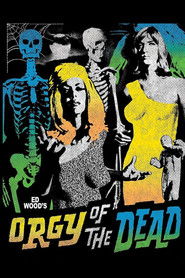
Well, this is, wait a minute, let me interrupt this for a minute. This is Pat Barrington now here. Yeah, okay. Doing the Golden Girls sequence, which Apostolof said was done, you know, obviously based on Goldfinger. I'll get back to what he was talking about. With John Andrews as one of the giants, and I think John Bealey is the other guy. Yeah, and let me just... Well, you mentioned that John Andrews, of course, plays the wolf man. Yeah. Yeah, now Pat, I think this is her first film.
24:50 · jump to transcript →
-
Motel Confidential was his first film after this one. And what's so surprising about Apostolof's other films, which we should get into, especially the ones with Ed, was they were contemporary. You know, suddenly they were dealing with, you know, contemporary subjects, the black and whites. I mean, College Girls, the name of the sorority is LSD, isn't it? I mean, it's... He didn't write College Girls. Well, I said he made it. Well, he claims he wrote all those. Apostolof.
37:04 · jump to transcript →
-
was a big shot motion picture attorney. So I'm at her cocktail party and I see a person who she introduced as her father. Now here comes the one-two pitch. I could swear I had met him before, but I couldn't remember where. We started talking and both of us brought up a lot of mutual acquaintances and, stupid me, I suddenly realized her father, who was a rich industrialist, bought out Republic Pictures. Now, Apostolof's first film was that journey to freedom was released by Republic Pictures.
57:33 · jump to transcript →
-
-
-
Tim Lucas
The graying beard is the same, but it's mostly that soulful, hangdog look about the eyes that they share. Antonio Casas might have made a good Cheyenne. Casas' association with Leone went back as far as Mario Bonnard's The Last Days of Pompeii in 1959, which Leone had assistant-directed, and also his 1961 directorial debut, The Colossus of Rhodes. His other films prior to this included Juan Antonio Bardem's Death of a Cyclist,
9:38 · jump to transcript →
-
Tim Lucas
This film was shot in 1966, but its U.S. release was withheld until Christmas Day, 1967. When I first accepted this assignment, I was a little annoyed that my first commentary had to be for the last film in this trilogy. I prefer to approach these things chronologically. However, the events in this film appear to precede those in the two films that come before, so in a strange way, this film is the first of the three. Bastards! Come here!
27:47 · jump to transcript →
-
Tim Lucas
It was this opportunity that led to his casting in his first film, the Western classic High Noon. In this film, he played Jack Colby, one of the three desperados seen waiting at the train station for the arrival of Frank Miller, the scene that inspired the pre-credits sequence of Once Upon a Time in the West. So he was central to Leone's American Western DNA. This debut was quickly followed by two other Westerns, Raoul Walsh's The Lawless Breed and Hugo Fregonesi's Untamed Frontier.
1:26:40 · jump to transcript →
-
-
director · 1h 31m 3 mentions
Alex Cox, Michael Nesmith, Victoria Thomas, Sy Richardson + 2
-
Designed by J. Rae Fox and Lynda Burbank. Those are the aliens. That's another memorable line. Laugh away, fuck face. That's another line that people quoted. This is like the first film about Roswell, New Mexico, isn't it?
28:30 · jump to transcript →
-
I mean, there must have been about 50. Alex, it's the first film about anything. Just about anything! All this was taboo. Nobody was dealing with any of this stuff. It scared me to death. I'd gone to Roswell, New Mexico. I was so interested in the idea that there'd been these aliens there on this Air Force base and stuff. And I went there, and Waddell was from Roswell, New Mexico. I'm born in Roswell, so it was really funny that I ended up in this movie. We actually put in, I had lived in Roswell, New Mexico in another scene, actually.
28:57 · jump to transcript →
-
I like the fact that the Slim Jim makes the car alarm go off inside. It doesn't make them bat an eye. I know. I know. Yeah, you're wonderful on this side. Beautiful. That was my first scene. My very first day. This is the first thing you did? Yeah, first thing I did. That's great. So calm. Because you have to break the steering wheel column, don't you? Yeah. Yeah. But, like, it's very methodical.
31:08 · jump to transcript →
-
-
-
Making the film, I think, was a real attract to that complexity. I'm just looking at Laszlo Kovacs. Laszlo Kovacs did an amazing job. I'll never forget the day he got into it. John Mahoney. I had a lot of... Polly Platt. Polly Platt. A lot of talent helping me out on my first time here. She did art direction on Paper Moon.
3:30 · jump to transcript →
-
He pays her the ultimate tribute. He's going to keep it because he might be able to sell it someday. Oh, my God. I thought he was so funny. That's my hand changing cassettes. Thank you. I didn't get it right. You never do. I mean, Joe was my first love. He was my first sex, and the whole time he was going out with Mimi.
27:48 · jump to transcript →
-
Lloyd had, because there was just one shot that you had just like so much that they just thought it was a sick character. Well, that probably happened because I don't know how much I was ever looking at the sweat. I was probably just looking at how amazing you are in the scene, Ione. This is like kind of a... This was my first real kind of love scene, and I just thought you guys made it so... real. And you both look great.
51:48 · jump to transcript →
-

Related topics
Other topics that frequently come up in the same commentaries.