Topics / Production
Costume & wardrobe
107 commentaries in the archive discuss this, with 312 total mentions and 231 sampled passages below.
By decade
-
1950s
3
-
1960s
4
-
1970s
10
-
1980s
23
-
1990s
22
-
2000s
29
-
2010s
11
-
2020s
5
Across the archive
ranked by mentions · click any passage for the moment in the transcript
-
director · 1h 52m 14 mentions
-
had real problems. And when I say a set, we got told it was impossible to create what we created because it was just scaffolding. And Russell Rosario, I'll have to call him the costume designer, the production designer, did a brilliant job. In fact, I think someone should open a comic store like this. The idea of a diner-stroke comic book store would be a place I think my son and I would go to. Here is the kid that does not like to be called McLovin.
6:14 · jump to transcript →
-
Here we created this scene from another scene. Everyone was saying, where did he get the costume from when it arrived? So that's actually a shot of him wanking, believe it or not. But we decided to make it look like he was buying. That's why we didn't use shock. We had to cut to that, because before the camera was floating across New York and then came down to this shot. But anyway, people haven't seemed to complain so far. Kicks our asses. It steals all the coke. This would be the guy that looks like Batman.
8:44 · jump to transcript →
-
chased on that famous day. I was just gonna sit in there quietly. I mean, I should probably start learning this stuff anyway, right? Hey, go finish your oatmeal. God damn it! I'm gonna be 18 in eight months, for Christ's sakes! Basically, I'm colorblind, and I saw Orange one day, and I just thought, like... I thought he needed something which would just make it more, you know... I think Mark came in the costume fitting and he had an orange shirt on. I went, hold on, let's make you obsessed with Orange, so therefore he has the orange desk.
20:10 · jump to transcript →
-
-
-
And seeing Stan Winston's credit and all the things that he did for us, which when we get to some shots of the Rippers, we can talk about. But how much I learned from that man. Ariana Phillips, one of the greatest costume designers. And Catherine Hardwicke, a production designer who has gone on and become quite the amazing director. She twilighted the world. Yes, exactly.
1:56 · jump to transcript →
-
And same thing with, because Jamie was very involved in costumes as well. So the collaboration with Ariane Phillips was also very, very strong. Ariane's been nominated several times, I believe. Besides creating Madonna's 10 billion looks. Yes. I think the biggest battle for me was hair.
5:46 · jump to transcript →
-
But then you build them and you're like, wow, they work and that's incredible. I know that Malcolm kept all his wardrobe. He did? He kept all his costumes? Yeah, he loved what Ariane designed for him. And he just kept it all, which is pretty complimentary.
10:44 · jump to transcript →
-
-
director · 1h 43m 7 mentions
-
The dressing of these sets. Now, that's not actually not a set because that's a real train going by, but that's probably shot in Brooklyn in and around, you know, what is now known as the Transit Museum. But again, all of the textures, all of the props, even the wardrobe, everything seems old and used, which...
20:28 · jump to transcript →
-
happens in the book. But again, Stone making the decision to be kind of the conduit to Robert Shaw, it's great because you have these great opponents. That's Dick O'Neill, who I think is referred to as the Lord Byron of the subway system. Dick O'Neill is another great New York face. I mean, look at that sweater. That is a lived in sweater. In fact, all the wardrobe in this picture
30:31 · jump to transcript →
-
you go back and you look at these films and you think of a different city in a sense than it was. And then Pelham is much more accurate to that. Now, Nathan George is playing the transit cop who's following down there. And transit cops always wore leather jackets. Not every New York City police officer wore those leather jackets. It seemed to be a trope that a wardrobe choice
34:34 · jump to transcript →
-
-
-
It was cold and misty wept, and honestly, the Camps of Hells didn't look like South Africa. It looked like the Camps of Hells. And then about sort of 10 o'clock, we got word up that there'd been a revolt, and they refused to put on the costumes. They said they were too flimsy. So we had to abandon the shoot that day and reschedule it for the next day. And we couldn't get any black actors. We had to get white actors.
52:02 · jump to transcript →
-
And one of the reasons why they're so good is because of the costumes. They're so meticulously researched and done by Jim Acheson, who's won three Oscars for costumes. But just look at Eric's shirt there. It's so correctly tailored for the period. And Graham's costume and makeup, it makes him into a period character. It's meticulous costuming, brilliant stuff. Any other problems I can reassure you about?
54:38 · jump to transcript →
-
And it's really hard to deal with criticism. It's, you know, one's being very defensive, protective, critical of everything. And to be able to then step back years later and look at it and just see how good the work is here, it just knocks me out. I think it's really nicely done. Again, the costumes with the helmet all hacked to pieces. It's sort of a lot of thought. Jim pays such attention to detail, and he's full of ideas. It just makes a little difference, you know.
56:00 · jump to transcript →
-
-
director · 2h 12m 7 mentions
-
You're kidding. Well, just don't shoot me. Sometimes things happen when you actually put a costume on. Something changes. And I suspect that I began to discover, you know, as you do, when suddenly you have a prop or you have another actor or you have a set where it's no longer a concept. It's now flesh and blood and you've got to deal with the environment. So all kinds of things just occur. And very often my favorite...
47:59 · jump to transcript →
-
that can be very helpful, very informative. Curtis had this traveling bag of 10 to a dozen period photographs that he had found, some of which, as I recall, were places and some of which were people in costumes and just general sort of dog and pony show photographs that he showed everyone when he was selling the movie.
1:04:40 · jump to transcript →
-
brought the film to life. I think everybody got their element right. I really do in the film. The cinematography, the acting, the costumes, the design. I think that's what's great about the film as well is that everyone got their elements right. To create that tone that is not only appropriate for the film but is such a cliche to say but it's almost a character within itself to establish that world is so important and it's amazing. I mean aside from the
1:19:49 · jump to transcript →
-
-
-
James Mangold
And I think what you see here among these men is a tremendous sense of confidence and comfort in this wardrobe and in this world. The other thing that I think is important with actors is that, and this stems from what I was talking about a moment ago, good guys and bad guys, villains and heroes, no one, no person in the world, including Hitler or Osama bin Laden, walks around believing they're a bad guy.
21:27 · jump to transcript →
-
James Mangold
Who's that? That's him. I think this scene is as good as any to talk about the contributions of our costume designer, Arianne Phillips, who I think has been someone who's worked with Kathy and myself since Girl Interrupted, which is in 1998.
1:13:31 · jump to transcript →
-
James Mangold
does amazing work, and I think part of what makes her work so amazing is it's not selfish, meaning it's not show-offy only for herself, but that she has a real partnership with the actors and myself and Kathy, finding answers that work for the actors. I think that very often people don't understand what an incredibly critical role costume design is in the development of character for actors. Part of it has to do with the chronology of how a movie happens.
1:13:51 · jump to transcript →
-
-
-
Tim Burton
Colleen Atwood, I worked with many times, of course. And, you know, with that kind of work and the costumes, it's such an important thing because it's like a character in the movie. The costumes are the character. I mean, if you look at each one of them, Rory, Dolores, all of them, every character, it's important to me because what they come dressed in is who they are, you know? And so, you know, and again, this is what's the joy of making a movie, working with creative people. And photography, costumes, sets, you know,
32:41 · jump to transcript →
-
Tim Burton
I'm co-chaperoning Lillard Jane's Girl Scout troop. We spent weeks coming up with a group costume theme. We agreed nothing Disney. The closest we ever got to Disney was when Astor dressed as Cinderella's dead mom. You'll never guess what the girls came up with. Fruit salad. Isn't that genius? It's healthy and non-triggering. I'm going as... Reverse mortgage. Which is...
1:01:05 · jump to transcript →
-
Tim Burton
that felt sort of right. So it wasn't just deadhead slight undulating quality to it. It's just so that there's a weird kind of a hypnotic rhythm to the whole thing. So it's like with costumes, sets, cinematography, we discussed all of this in terms of creating what it ultimately is. You are no more my king, but with the blessing of the angels of undying love.
1:05:14 · jump to transcript →
-
-
director · 1h 39m 6 mentions
-
This is a man who has a post office named after him, who is a king in his world, because I had based him in some way on these kings I had met, like Paul Grossinger and Murray Posner from Brickmans. And Jack listened to me very carefully. And you had a postage stamp, really, that would say Kellermans or Grossingers, as it were. And he said, I wouldn't wear this tie. And he pulled off the bow tie he was wearing and raced to wardrobe. And he came back.
4:16 · jump to transcript →
-
They're the dance people. They're here to keep the guests happy. Costume designer took my memories from the Catskills, and I had described seeing when I was a little girl a woman in a pink backless dress. So she made this and called this Eleanor's dress. And every time I look at this, I think of it as Eleanor's dress. You see how brilliantly they're dancing and how they absolutely look like the kings of their domain. And then you will see how...
10:36 · jump to transcript →
-
Cynthia having understood that her character needed it, and David coming up with this wonderful scene, and Hilary making this charming costume which showed process. I guess you've probably figured by now that the thing that interests me the most, and that was one of the places also that Emil and I joined so sweetly, is process interests me much more than performance. What you need to do to get there is so fascinating, and that's why I loved He Makes Me Feel Like Dancing, Emil's...
45:44 · jump to transcript →
-
-
-
Gary Goddard
building the props, building the costumes, while we were shooting these things. This is pretty funny. Gwildor's the first one to discover food. He's got that little grappler hook that he used before, and he smells something. An interesting thing is we had no second unit on this. I had to shoot every frame of the film. I requested a second unit, but Canon was very tight on money.
23:13 · jump to transcript →
-
Gary Goddard
This would be a good time to talk about the costume design. Julie Weiss was involved in manufacturing the costumes based upon designs that Bill Stout did. They worked collaboratively. The tribute to the costumes here is that, you know, everyone just accepts it. This is kind of interesting.
27:05 · jump to transcript →
-
Gary Goddard
All of these guys are in costumes. All of these guys are... You cannot believe what goes through in these scenes because things fall off and things fall apart. And you have to go back and do it again and again until you get it right.
35:52 · jump to transcript →
-
-
director · 1h 43m 6 mentions
-
When we were first staging these scenes in Whoville, we had 11 sound stages at Universal Studios to produce this movie. It was really like old Hollywood. You know, all the extras wandering around between takes in their Who costumes, you know, eating lunch. I was wandering from one stage to another because we constantly had two or three units in production, and riding around on my bicycle or scooting around on a golf cart.
2:00 · jump to transcript →
-
It's important to mention that Jim Carrey was absolutely miserable every moment that he had to be in the Grinch costume. And yet he loved what Rick Baker had designed and loved being the Grinch. But everything about it was literally painful for Jim. The contact lenses that he had to wear, the bodysuit, the hours and hours it took to put on the makeup. And yet he never once said, let's simplify the look.
23:14 · jump to transcript →
-
Don't forget, tomorrow's our big Christmas gift exchange. Everyone bring a special gift for a special someone. Also have to talk about Rita Ryack and her costuming. She was nominated for an Academy Award. Rita and I have done a number of films together. What I didn't know about Rita is that she had been an animator at one time in her life. Her designs for these costumes are, you know, they're little treasures. They're hilarious, they're ingenious,
26:38 · jump to transcript →
-
-
director · 3h 29m 6 mentions
The Lord of the Rings The Fellowship of the Ring (2001)
Peter Jackson Fran Walsh Philippa Boyens
-
Peter Jackson Fran Walsh Philippa Boyens
of Gil-galad. In fact, even naming Gil-galad himself, it just was too much information and it wasn't really until Pete got in there in post that you could feel the weight of just excessive information. Nida Dixon, our costume designer, worked very hard. Wherever there were descriptions of clothing,
6:36 · jump to transcript →
-
Peter Jackson Fran Walsh Philippa Boyens
Just this moment of Frodo reading a book under a tree would be a really great way to introduce his character. It was funny seeing him standing there after four months or so. And he was standing there with his feet on, in costume, with the hair on, just laughing and laughing that he was back being Frodo again. This was a very important scene because it's the first time we see the size of hobbits compared to a human, or in this case, a wizard, Gandalf. And we used very simple techniques
10:55 · jump to transcript →
-
Peter Jackson Fran Walsh Philippa Boyens
Now, the city of Minas Tirith that we're looking at here plays a big role in The Return of the King, another third of the movies. And you'll be seeing a lot more of the city. About half the movie, I guess, probably takes place there. It was interesting for Sir Ian McKellen in this shot when he's walking through the streets of Gondor. He hadn't put that costume on for probably about six months. He'd been Gandalf the White for a very long time. Hopefully they'd washed it.
32:49 · jump to transcript →
-
-
director · 2h 10m 6 mentions
Richard Curtis, Hugh Grant, Bill Nighy, Thomas Sangster
-
Richard Curtis
Right, okay, let's go. Who do you think the costume is tougher on? Which one, mine or... Yours or Gregor's? -/ see. Yours makes you look as though you don't exist and Gregor's looks as though he's a wrestler. Yeah. Love is all... Fuck, wank, bugger, shitting ass head and hole. I'm sorry about that. You're a Shakespearean actor, basically. Yeah, I know. I never... I know. Shakespeare would have written those words if they'd existed in his day. So this is singing... Love Is All Around was... Everyone in England knows, but it was number one here for 15 weeks after the release of Four Weddings and a Funeral. Bloody hell. And I couldn't think of a funnier way to start the film than actually making them listen to the same song again. Very good. Now, that's kind of good. Take a look, Tom. This must be excruciating for you, isn't it, watching middle-aged men doing hip-grinding.
2:30 · jump to transcript →
-
Richard Curtis
Now, for our foreign viewers, Ant and Dec here are the two hugest television stars in the United Kingdom. They are so overwhelmingly popular. They're definitely the most famous people in the film, aren't they? Yeah, absolutely. - Might not realize that if you live abroad. And in England, that line, "Ant or Dec," that's the funniest line in the whole film, and in Los Angeles, it goes by without... With ne'er so much as a crisp packet. And we're very pro-Blue because they let us do this. Yeah. Which shows they must be very confident that what Bill's about to write isn't true. They've now got a new Christmas single with Stevie Wonder. Do they? Oh, my God, which one? - Stevie Wonder's on it. I don't know what the song is. So, you know, God help us. That's my favorite costume. I love that suit. Now, Bill, you're good here. Watch.
34:00 · jump to transcript →
-
Richard Curtis
Come on through. I'm sorry your wife couldn't make it, by the way. Billy took the part based on the letter that we sent him. He thought we sounded like a nice bunch of guys. Well... - And he fancied a trip to England. So... And I love him for that. Yeah, well, the difference is you're still sickeningly handsome, Did you feel... - But he does have particular demands. He's a wonderful actor with particular demands. Like the one that he can't be around antique furniture. This scene must have been torture to him. There. - And there on the wall, incredibly, is a picture of Benjamin Disraeli and his biggest phobia of all in life is Benjamin Disraeli, so he's actually being very brave. - It's true. Very sensitive about this. - I know. And I said to him, "You're frightened of Benjamin Disraeli?" He said, "Don't be ridiculous. Who would be frightened of Benjamin Disraeli? "But, on the other hand, his facial hair, terrifying." ls it particularly Benjamin Disraeli? - Yes. Yes, it is. Before he came here to make this film and saw Ben... Absolutely. - He walks around... And in this scene here, just when he's about to do an important close-up, I slipped that picture of Benjamin Disraeli in front of him. And that's why he's looking so distressed. Well, it worked. Wow. Golly. Now he hates you. Yeah. Now he's gonna punish you. There's no point in tiptoeing around today. Glamour. Look at that tie. It's actually made of sheer gold. The costumes were done by Joanna Johnston, and I won't talk about her for 40 minutes, but she was fantastic and did this great thing of always trying to push me a bit further than I wanted to be pushed, particularly with your clothes, Bill. - Well, quite. Yeah. Bit further than I wanted to. -[t made it so much more interesting. She always wanted that third button undone. She also followed the golden rule, which is to spend much more on my suits than Colin Firth. Which is very good. - Yeah.
40:08 · jump to transcript →
-
-
director · 4h 13m 6 mentions
The Lord of the Rings The Return of the King (2003)
Peter Jackson Fran Walsh Philippa Boyens
-
Peter Jackson Fran Walsh Philippa Boyens
Not in the way that the Uruk-hai were. The Uruk-hai, we managed to get a lot of menace out of them in the Helm's Deep scenes and stuff, but we actually set aside some time during pickups, and we had Richard Taylor and his guys redesign the prosthetics of the orcs, redesign the costumes, and what you see in the finished Return of the King now is a combination of some of our old orcs, but a lot of the close-ups and featured characters are the new orcs that we reshot on pickups just to make them look a little bit more scary.
59:43 · jump to transcript →
-
Peter Jackson Fran Walsh Philippa Boyens
which I think he did a really good job. I remember we had to reshoot some of this because I wanted the horse charge to be just with the armour plated Gondorians and that word hadn't got through to second unit so they shot, they mixed it up with some rangers like Faramir's rangers in the green and brown costumes and it just didn't look so I actually had them.
1:30:58 · jump to transcript →
-
Peter Jackson Fran Walsh Philippa Boyens
at the time that we shot Elijah on a forest. That's a real forest in the South Island, and we did it as a pickup. So we used one of our focus pullers, Jack Fitzgerald, to put on Galadriel's costume, and it's her that's standing here. And this is obviously a shot of Cate Blanchett we did a long time earlier, but we used Jack for the person who actually reaches down and offers her hand.
2:16:52 · jump to transcript →
-
-
director · 2h 19m 6 mentions
-
I told him, I want to destroy the images. I don't want to beautify them. I don't want to sentimentalize. I don't want to make them pretty. I want to destroy it. And this is what he came up with. And the third was, find a sound. You know, this should be a sound that, you know, everything is there to, you know, whatever it is, costume, makeup, production design, camera, VFX, music.
13:36 · jump to transcript →
-
We had a wonderful costume designer. If you look a little bit at the costumes in the movie, they're really worth a look. You might think, well, they're uniforms. They're not. They're really... Lizzie Crystal is her name. Wonderful, beautiful costume designer from Bavaria in Germany. And every character wears their uniform differently. Felix, first of all...
56:08 · jump to transcript →
-
the costume designer, I wanted to explain the buttons. So she is so thoughtful. She thinks like, all right, he's gonna have to cut off these buttons. They're sitting in a crater for 10 hours a day, four days in a row.
1:27:40 · jump to transcript →
-
-
director · 2h 52m 5 mentions
-
The costumes in this film are done really well. They're not like pushy where they're out with flashy stuff, but every actor's wardrobe expresses their character in some way, in some subtle way or not subtle way, but really Johnny Johnson caught the character with the clothes and brought the character out.
1:48:38 · jump to transcript →
-
So much is in the role itself. If you give a great actor the role that can really utilize what they have, that's half of it. And if you give them a little bit of preparation, give them the opportunity to get comfortable with what they're doing, let them be comfortable with their wardrobe and set the stage, so to speak, then really they're most capable of realizing the characters. With the director offering...
2:00:13 · jump to transcript →
-
contemporary, it should not have hippies in it, and it should not be shot in St. Louis, but rather it should be shot in New York where it was set, and it ought to be set in the post-war years so that the whole giant theme of America as it emerged from World War II could be part of it in not only in theme, but in terms of the wardrobe and the cars and just the feeling of
2:06:52 · jump to transcript →
-
-
-
For one, you get all PMS'd out, there's no room in your purse for no hairbrush. Robin put a lot of thought into his wardrobe for this. I recall him being specific on the jackets and stuff. He did? Yeah. Completely works. The hair, everything. This is our new foreign exchange student, Anna Maria Mazzarelli. Anna Maria is from Milan, Italy. She's about to brush up on her English skills before the fall semester begins. Well, I guess...
17:33 · jump to transcript →
-
People have asked Carl about these shirts that Shoup wore in this movie and they were the old style Hawaiian shirts and the wardrobe mistress went out and found them from collectors everywhere in big sizes. But I remember thinking that Shoup would have worn them.
18:57 · jump to transcript →
-
Wardrobe ministers found all these T-shirts and stuff. I remember this is, I don't know, Diablo Valley College or something, and amazing the amount of mail I would get from people who went there. No kidding. Yeah. Remember she chased a guy down the Venice boardwalk who had a Wheaties T-shirt on one day to try to buy it from him to use in the movie. But she was terrific. Got a radio, blanket, beach chair, dark glasses, dog. Why would I want to go back to you guys?
1:16:34 · jump to transcript →
-
-
-
For some reason, this blue dress you're going to see is one of my favorites. She has blue shoes. Holly Davis, who was terrific, was our wardrobe girl. I just think that was a nice outfit for her, and we should have kept her in that dress. She has beautiful legs. Yeah, cute. Notice I put mushrooms there in front, our production design. That's a colorful little mushroom, plastic mushroom. Again, trying to kind of get a...
11:56 · jump to transcript →
-
You see the paintbrushes on Ozzy's shirt, which was made, I think, again, our wardrobe, Holly Davis. And they were specially made. Hi, I'm Alex. Nice to meet you. This is my friend Ozzy. How you doing, Ozzy? Hi. So, you boys need any help out here? I remember Mark would, every now and then, when we were on the sound stages, much to the horror of production, when he was bored, he would just yell out, cut!
17:20 · jump to transcript →
-
You put the cast in all over the place. The wardrobe ladies were serving and to the table to the left I'm wearing the baseball cap and Warwick is there with his wife Samantha.
38:44 · jump to transcript →
-
-
-
E. Elias Merhige
Now you have to remember also that Willem spent a good three, three and a half hours in getting into makeup every day and all of that makeup is very cumbersome and very, you know, it's not easy to walk around with both a corset on and platform shoes and, you know, the full costume and regalia and then have your head and face completely submerged in all this prosthetics.
34:34 · jump to transcript →
-
E. Elias Merhige
of days and memories that have been lost in the past. And I just love the looks and glances that she gives everyone. And, you know, the costumes that Caroline de Vivet's are quite obviously gorgeous, and the colors just really stand out magnificently. When Carrie Elwes says, hello, Greta, and she says, where did we meet?
59:43 · jump to transcript →
-
E. Elias Merhige
new technology, this new form of expression in cinema. Here we use the hat. This is something that I talked to my costume designer about. He's wearing very much the clothing that we would see a young Orson Welles wearing. And I feel that there's this uncanny connection between Orson Welles' work and F.W. Murnau's work. I think that if F.W. Murnau had not made
1:02:05 · jump to transcript →
-
-
-
My name is Laurens Straub. I'm sitting here with Werner Herzog, writer, director and producer of the movie "Nosferatu" that you are currently watching. And we now want to talk about that movie. Werner Herzog and I have known each other for about 20 years and have worked together on many different projects. What do we see here? These are actual mummies in the Mexican city of Guanajuato. You have to realize that Guanajuato is located in a gorge. Because of that the cemetery was very narrow and there was no space. So they dug up the bodies every eight years or so, and because of different climatic conditions and the soil, they mummified without human preparation. They leaned them against the walls on both sides in a long underground hall and a hallway. I saw them there many, many years ago in the early 1960s. The story behind this is that I was in the U.S. on a scholarship but I resigned from it a few days in and gave up my legal status in the US because I had to earn some money. Out of desperation I went to Mexico because otherwise they would have returned me to Germany. I went to Central Mexico and Guanajuato and lived there for a while. I did all kinds of crazy things. For example, at rodeos, the so-called charreadas, I rode on wild bulls. Like a complete idiot because I don't even know how to ride a horse, but with the money I could live one week at a time. And there I saw these mummies. Are they similar to the ones at the volcano Vesuvius and formed from lava? No, those are real dried human beings. They barely weigh anything. They were in display cases so we had to take them out and carry them somewhere else. They weigh very little... 10, 12 pounds maybe. Is this something like a culture of death? No, it's completely normal. Isabelle Adjani. She is great at acting scared. That was a real and very large bat we brought in for this. The bat you saw earlier I could not shoot myself. The footage came out of a science documentary because bat's flapping motions are extremely fast, and this was shot with 500 or 800 frames per second. The bats had to be trained with food for that because it took very strong lighting, and normally they would not move under those conditions and not leave their hideout. Here we see Delft. In the Netherlands. That's my city. And I know when Jörg Schmidt-Reitwein teaches students cinematography he first introduces them to Flemish and Dutch painters. Why was Delft chosen as an alternative to Wismar where Murnau shot? Yes, but Wismar was not Murnau's location. I believe that was Lübeck. There is one single shot later in the movie where you see a few buildings that Murnau actually used and that are still standing. I used those as well. We chose Delft because the continuity of the architecture was uninterrupted and we only had to make very few changes in order to shoot there. We took down some antennas and moved a few cars. Other than that it was very easy to shoot there. The concept of "Nosferatu" was definitely to do a variation on Murnau's movie, not a remake in the classical sense. A Biedermeier image like this, for example, is unthinkable in a Murnau film. Moreover, this is in color and the movie's character is completely different. We had to show a very secure bourgeois world. We deliberately planned this, especially the furniture. That was done very thoughtfully by Henning von Gierke who is a painter by trade. With the furniture and the lighting, you can tell that a painter was involved. It reminds me of "Kaspar Hauser" which was done by Henning as well. What era are we in here? That is the Biedermeier era as you can see clearly by the costumes. We researched how to best do the building arrangement and the urban landscapes. Schmidt-Reitwein and I wracked our brains over that. I didn't simply want to recreate paintings. That was never planned. With one exception because we knew we had to work a lot in darkness with nothing but candlelight. Therefore, we studied the painter de La Tour and thought about how to do it if we only had one or a few candles. How do we light that? And Schmidt-Reitwein is exceptionally good at working with light and darkness. This is Roland Topor. - Yes. The famous illustrator, poet, and crazy man. Unfortunately he is already dead, I believe. Yes. - How did you find Roland? I coincidentally saw him in debate on French television. And he laughs in such a mad way. He laughs after every sentence he says. But in such a desperate and strange way that it impressed me deeply. Afterwards I contacted him I told him I was going to shoot a vampire movie and asked if he would play Renfield. Roland Topor immediately agreed. Unfortunately his voice is dubbed in some versions. And it is impossible to fully recreate his laughter. It was his strangest characteristic. What I love about this... I recently saw an exhibition with English surrealistic works from the 19th century. It reminds me of an old office, the cloth, and this blue. It was very carefully lit, and the costumes had to match. Bruno Ganz. And also the faces we chose. Those are not faces that fit into the 20th century. You have to carefully select actors who match. So Bruno Ganz is a great fit for this. The beautiful paper. - Yes. That was so much work, and it was prepared very, very thoughtfully. A beautiful country. Here I see a recurring theme of yours... maps. I already know that from "Aguirre" and other movies. In "Fitzcarraldo" geography is a crucial dramaturgic element. I'm a map fanatic. Oddly, I'm pretty good at determining locations ahead of time, too, because I understand maps. I know which formations you should find in a certain area. I was rarely wrong. It is always about uncharted territory, the Dorado, or doom. Yes, at home I don't have pictures on the wall. A few photographs every now and then, but generally, I can't stand my walls being covered in pictures. If there is anything on my walls of my home it's maps. Oh no. - You will be in danger. This was your first film in English, the first with big stars and a big budget, correct? Well, not really. "Aguirre" is also a big movie with a big star and great effort. But I have to say, we shot "Aguirre" for about 700,000 deutschmark... $360,000. What matters is what you manage to get on screen with the resources you have. To come back to paintings, I like this vase. Yes. Okay. This reminds me of a painting by Seurat. I think the still life-like and emotional atmosphere is phenomenal. But be careful, I always want to show inner landscapes. This was done very quickly, by the way. On that day we happened to have some time and drove to the beach. It was freezing cold, windy. There was foam. We set up the camera in three minutes and sent the two actors, Bruno Ganz and Isabelle Adjani, into the image. We only told them that the music would most likely be slow and solemn. We already had received ideas for the music from Florian Fricke from Popol Vuh. These two, three shots here we did in 15 minutes. We never thought about paintings. It was born out of the situation... - Spontaneously. ...that we found there. Bruno Ganz has tears on his cheek because it was freezing cold. Lotte Eisner came to visit for a few days. We had to wrap her in 20 blankets because it was so cold. I was so proud that she could be there. She was very important for me and maybe for the new German film in general because she bridged the gap to the expressionistic movies back then that she knew very well. She also knew all the representatives of that time. She was friends with Fritz Lang, Murnau, Pabst. She knew them all. For us she was like a bridge to the generation of our grandfathers. We were a generation of orphans who did not have the generation of our fathers. Here I see your wife. Yes, Martje. Martje Herzog on the left. Essentially everyone who was there is in the movie at some point. Later you see the executive producer, the costume designer, the sound technician, and the gaffer. It was also a matter of how quickly can you get something done with very little money. This is the farewell. Bruno Ganz was actually pretty good at riding horses, which was great for me. Now he travels to Transylvania. The choice of the production company... Was this a Century Fox production? No, I produced it myself. Many people believe that 20th Century Fox produced it. But 20th Century Fox only bought an advance guarantee to the U.S. rights for very cheap. They only bought the rights for the U.S. A distribution guarantee. I believe this was... - German Romanticism. Well, you have to be careful. There is a hint of that, but I always try not to be connected with Romanticism because I myself have no real connection with that cultural epoch. Usually I refer to eras before that. The Late Middle Ages speak to me much more. They inspire me. This was shot in Eastern Slovakia. I was not allowed to shoot in Romania where I had scouted locations for months in the Carpathian Mountains. But you also have to see the context. That was when Ceausescu had just been awarded the honorary title of the new Vlad Dracula by the parliament. So he was named the new Count Dracula. That was an honorary title because the historic Count Dracul had been an important figure in the defense against the Turks. This is in the High Tatras, just 1,000 feet to the left was the Polish border. Bohemia? No, Slovakia. - Slovakia? Eastern Slovakia. This is a real group of gypsies that I had brought in from the very East of Slovakia. Among them are a few Czech actors. The gypsies actually speak their own language. Unfortunately I don't remember what it was called. ...my food. I still have to get to Count Dracula's castle today. This is a scene that in a very typical way fulfills all the criteria and conditions of a genre movie. This is one of those traditional scenes. He has to go see Count Dracula, and everyone immediately freezes in fear and the maid drops the dishes. Do you really have to go there? I wanted to integrate certain general rules of the genre into the movie. From there you can go farther and expand. But this right here is a very typical and traditional scene for this genre. The space has this wonderful of depth in the back. And the bed in the background. The set design was by Henning von Gierke who has a spectacular sense for these things. Yes. Spectacular. Parts of this we also built ourselves. The oven and things like that. It was a former hunting lodge of party functionaries. At that point there were only lumberjacks living there. During the day you only found lumberjacks there. ...were already on the other side. Here you have this sense of foreboding and doom. I liked the gypsies so much. They were very good. Watching this reminds me of Degas' "The Execution of Emperor Maximilian" in Mexico. Yes. Careful. Not too many paintings, otherwise... That's just a sign for how interesting and good this is. This is a wonderful face. I also enjoy the way they speak. Yes, definitely. He says you should... They said the dialogue I wanted but in their language, which I believe was not Romani. They translated it themselves and did it very well. You can see this was outdoors and at night which was always a problem for me because I'm not a night person. I had to stay awake until very late, and I've always hated night shoots. I had to force myself to stay up with gallons of coffee. This is also a recurring theme in your films... Native Americans, Mexicans, and Gypsies. Something completely foreign. But also the dignity of these people.
0:04 · jump to transcript →
-
Here the ship lands with the dead captain. How was this movie interpreted back then? Or what did the press write? The press reacted well overall. For movies like "Aguirre" and "Kaspar Hauser", they beat me up badly. But those always had elements... Or "Even Dwarfs Started Small". That had to do with the trend at the time. "This is not a movie that postulates world revolution, so he has to be a fascist." That was the perception back then. Meanwhile this has been completely forgotten. The guy on the left who unties him is Uli Bergfelder. He often worked with Henning von Gierke, and he was the set designer in my last movies. Everybody who was part of the crew can be seen in the movie at some point. It was a relatively small crew, too. Don't forget that "Aguirre" was shot with eight people. That was the entire crew. And films like this one we shot with 16 people behind the camera or so. ...rats everywhere, but we have the logbook. Only 16 people? Yes, "Fitzcarraldo" was shot with 16 people. Imagine. Or movies like "Even Dwarfs Started Small" were always less than 10 people. But they require enormous logistics with the costumes and makeup... Right. Which we will see when the rats are in action. We had 11,000 rats from Hungary that had to cross all the borders that still existed in Europe. That was an awful ordeal. This theme I also know quite well from Bruges and Geneva when the scientists there... With the early anatomical studies and the human... I love this. The knowledge about science and Enlightenment in this movie and the perplexity at the phenomenon that is the human being, I do think that is a typical theme for you. Yes, and for vampire movies, too. There is always the dichotomy of Enlightenment and the inexplicable and sinister that resides somewhere within us. The genre has played with that since it first appeared in the literature. Since "Frankenstein." Especially since the English Romanticism, Bram Stoker, Murnau, and whoever else. "...14 knots." "It is getting scarier and scarier on board." "Only the First Maat and I are still alive." "There is something on board." "There are
1:04:09 · jump to transcript →
-
He has learned how to use the camera. He knows how to use his tools. Sometimes I wonder who expresses whom. Do you express Kinski or does Kinski express you? I do have the impression that it is almost symbiotic, complex, and sometimes unsteady. We complemented each other. Some things he did, I could have somehow done, too. "Fitzcarraldo", after everything went down the drain and we lost our first cast because the lead actor, Jason Robards, fell severely ill. I had to ask myself who would play the part. I saw two options. Either Kinski does it, but if he doesn't want to or can't do it because he is booked for two years, then I can only do it myself. You actually considered...? I would have also done it. But I thank God from the bottom of my heart that he came in and did it. We often almost switched person, part, and existence. Together we were a volatile combination. We were always a critical mass. With Kinski there were constantly screaming tantrums and other crazy stuff. But I was able to compensate for that, to discipline him, and make him productive for the camera. "Nosferatu, the undead." "He drinks the blood of his victims..." "...and turns them into phantoms of the night." This is also a beautiful piece of work by Henning and Jörg. The green and the blue. - Yes. And the costumes. It is always the combination of many different things. For example, the type of flower bouquet on the table hit the mark exactly. Topor always reminds me a little of Lorre. Yes, if you put it like that, he also reminds me of him. But he was far more eccentric and convoluted. "...an unnatural creature. He has to obey laws of nature. The sign of the cross compels him." Yes, this is again completely typical for the genre. "The sacrament can make it impossible for him..." "...to return to his lair." "If he misses the cock crow because of a woman of pure heart," "...daylight will kill him." The idea of a woman with a pure heart has played a role in literature for centuries. Yes, his is also such a beautiful scene. Yes, it's wonderful. Almost tableau-like. The way how he pushes him away. What does my master command? You can't copy that. I said earlier... - That's the expressionistic... There can also not be any eye contact between them. Almost like Munch. Great. ...the Black Death are with you. People also laugh during this scene. They don't laugh at the movie, but they recognize that inside of us there is something stylized and weird. It's difficult to pinpoint what exactly that is.
1:17:59 · jump to transcript →
-
-
-
Filmmaker Paul Davis
you know, amongst all these, you know, local British country folk. And, you know, that's the brilliance of the costume designer, Deborah Nadolman, because her approach was to almost make them look as if they were men on the moon. And it works for the terrain because, you know, when these guys are on the moors in pitch darkness, they do look like men on the moon.
11:11 · jump to transcript →
-
Filmmaker Paul Davis
And there's the tree stump that's covering the phone box. But back to the costumes, you know, it was, you couldn't find like North Face Parkers in London, Levi jeans or anything like that, Timberland boots. So Deborah had to get all of the costumes. She had to buy multiples of their costumes in the United States and then bring them back.
11:42 · jump to transcript →
-
Filmmaker Paul Davis
It took you out of the moment, but they did shoot the reverse point of view shot of Jack on the floor looking up at the wolf as it was kind of tearing him apart, but they didn't use it for some reason because they had the entire wolf costume there that night. And I remember being told that they did shoot a sequence where the two boys look straight into camera and they say that it's in front of us. We were supposed to cut to their reverse angle and you just saw this huge outline.
16:25 · jump to transcript →
-
-
-
Peter Greenaway
by certainly taking our knowledge of, for example, the costumes of the period, but extending them and exaggerating them. So a lot of the characters have, the male characters, really excessive wigs, which completely cover and disguise their features. The circumstances of the actual wig manufacture, for example, is not entirely fictional.
9:17 · jump to transcript →
-
Peter Greenaway
always somehow gets it wrong, so when all the members of the aristocracy are dressed in white, he always comes in black. And then halfway through the film, after the essential pivotal plot change, the reverse of costume and colour coding changes completely, so the draftsman turns up in white when everybody else is in black. Like a classic outsider, he always gets it wrong.
11:49 · jump to transcript →
-
Peter Greenaway
But there's a deliberate use of the actual costumes to indicate showmanship, to indicate egotism. The costumes are very, very multi-layered. Everybody's wearing a huge amount of petticoats and overcoats and undercoats and waistcoats so that they all strut about the house and gardens of this estate like peacocks.
12:13 · jump to transcript →
-
-
director · 1h 30m 4 mentions
A Nightmare on Elm Street (1984)
Wes Craven, Heather Langenkamp, John Saxon, Jacques Haitkin
-
Now this is the boiler room at Boyle Heights Jail. Lincoln Heights. Lincoln Heights. I've actually shot there quite a bit recently, but not in this space. This space is condemned now. Right. And I think a wardrobe note, the nightgown had to have a certain see-through quality, as I remember, when we all... Yeah, I tried on many nightgowns before we found the right one. But this was the boiler room of the jail.
2:19 · jump to transcript →
-
garden tool in my garage. Wes's whole garage is filled with bizarre paraphernalia. Don't try to take it away either. I kept the wardrobe from this film for 10 years because they were going to throw it away. And we used a lot of it in the new Nightmare, Nightmare 7. I think I'm...
9:36 · jump to transcript →
-
But, Heather, I don't think you fit in tonight. Well, I think the wardrobe kept mixing up Johnny's jeans and my jeans, so some days when my jeans look particularly tight, I think I'm wearing Johnny's leg right here. The day we did jean splitting, I think. I think it was one size fits all. I think the wardrobe budget was probably about 10 cents. Everything was from Kmart. Nike.
9:57 · jump to transcript →
-
-
multi · 2h 34m 4 mentions
James Cameron, Gale Anne Hurd, Stan Winston, Robert Skotak + 8
-
Pat McClung
This is Pat McClung. I was the model-shop supervisor on the film. They're wearing modified costumes from Outland, or the basic suit is from Outland and it's been redesigned and they put some stencils on it. This is microglitter and fuller's earth blown on there. I remember in this scene the batteries in the flashlights kept going out. You would think this would be an easy scene to do, but, as with everything in this movie, it was harder than it looked. There are no easy scenes with Jim. There's that nice dissolve, the contour of the earth matching her face. When we shot this, a matte painting combined with miniature and perspective, there are some perspective gags going on there. We used a clip of Sigourney's face in the viewfinder to line up the curvature of the earth, so we had a nice match. I wrote the piece obviously with Sigourney in mind for the character. I was told she was on board and I should just toddle off and write the film when in fact no deal had been made with her whatsoever. So here was a script that was written that everybody wanted to make, in which she was in every scene, and they hadn't made a deal with her yet. That's why she got her first big payday of her acting career. She got a million bucks, which was a big deal. She might have been the first actress to get a million dollars for a movie in movie history. It was all because it was mishandled by the producers. She was the main character and they hadn't made the deal. She was worth every penny of it and more. When people saw the film, they realized that. I Knew what a phenomenal actress she was. I'd never met her. I had her picture up while I was writing the script. I went off the character that had been created in the first film, took her much further. Of course, this is Paul Reiser. I certainly had no idea what a great comic actor he would prove to be, and certainly that's how people think of him, not as a dramatic actor. I just read him in a lineup of actors in the normal casting methodology, and I thought he was really interesting, that he could play this really sincere but slightly smarmy guy who could then turn evil. This is a dream sequence, but you don't know that yet. I remember from the premiere screening of the film that the incomplete chestburster scene here really got people cranked up and on edge, set the tone for the whole movie, that you were here to be messed with, which is a good way to start off, I think. The way you get a cat to hiss like that is you put another cat close to it. I had no idea. I didn't know what you did to make a cat do that. But that's standard procedure. Bring a cat it doesn't know close to it and it'll do that.
4:32 · jump to transcript →
-
Pat McClung
Even though I liked the symmetry of the fact that she had had a daughter and lost her - that's Sigourney's mother, so there's an interesting inversion here. She's looking at the face of her mother but playing it as her daughter. As an actor, it allowed her to work the connection. All my movies are love stories. This one is about parental love, protectiveness and a sense of duty, and the ultimate sacrifice that a person would make, given that sense of duty. That was a nice touch. That was Sigourney's idea. This was one of the seminal scenes in the movie and was one of the ones that had to be deleted and omitted from the theatrical version because of length. We didn't have multiplexes, and there were only so many showings a day that you could have of a film, and we had to get it no more than two hours ten minutes in order to get the maximum number of screenings per day. Peter Lamont came up with a simple and austere look for our future sets. I watched this film recently and I was amazed at how little we see of the conventional future world, as opposed to the spacecraft interiors. She's actually on Gateway Station here. She hasn't returned all the way to earth. She never sets foot on earth in the whole series of films, which is interesting. This is as close as she gets until the end of the fourth movie, where she's re-entering the atmosphere. But this is earth for all intents and purposes. This is everyday life circa a couple of hundred years from now. And Peter came up with a very spartan look. It's not overworked at all, which I think was quite clever. We wanted to do it minimalist. We didn't have her walking around corridors. We didn't create a world because we weren't interested. We were interested in the through-line of her story and her character's dilemma and problems, the fact that she's not believed, that she understands there's this great threat. The same applied to the costumes. We didn't wanna suggest a wildly separated future from our present one. This might be one of the first science fiction movies where men still wear coats and ties. The thinking was people will still wear coats and ties. They may not look exactly the same. We turned up the collar on the jackets. It's no big deal but it's a subtle change. We wanted to have a place to go. We wanted the space environment once they get to the colony planet to be exotic and so we didn't wanna overwork earth. We also wanted to understand who these people were, and a Suit Is a suit. These characters are suits and we wanted to reinforce that. If everybody's in Star Wars type costumes, it's harder to relate to them as characters. I was thinking more of a writer than a designer when I was making my picks of what things should look like from amongst the suggestions made by the costume designer. Denny, did they shoot at 25 frames per second for all the video playback stuff? Do you remember? They did. The 24-frame issue was messy. It can be done, but it's such a big procedure. Shooting 25 frames per second on the camera puts the video in sync with the film camera very easily. There's a slight speed differential but it's almost impossible to perceive. In Britain they have a different television system, a 25-frame-per-second system. 625 resolution instead of 525. Later in the film there's some video footage that was used, appearing on video monitors. But the PAL system is better than NTSC, which is our system here in the United States. It almost looked like a slightly too fuzzy version of film, sort of in between. It's not as good as it should be for film, but it wasn't obvious it was video. Jim realized and made the video images noisier or break up more often so it was more obvious. The tag of this scene is gonna be a throw to this big sequence that takes place on the colony which is before the aliens attack. That's cut out of the release version, so coming up Is the biggest single change from the release version of the film. It's an entire reel. I'll never forget Gale Hurd, who was my wife and producer at the time, trying to shorten the film by 20 minutes. I just could not see how it was possible to do a cut here, a cut there, a few seconds, a bit of a scene, the tag of a scene maybe. She said "I've been thinking about this for days." I said "Go ahead." She said "Reel three." Which starts here. "You can take out reel three." I immediately rejected that as completely absurd. Then I thought about it. Reel three ends with Newt's scream when her father has the facehugger on his face. It works flawlessly. It's a brilliant cut and I have to credit Gale with that. I had poured a lot of energy into the design of these scenes and the alien derelict ship. The problem for me was that I couldn't imagine this film without the cognitive tether to the first film of the alien derelict, but it turns out that it works perfectly. A little dialogue bridge and it works fine. I like this tractor a lot, this tractor with this articulated leg design. This is one of my favorite effects. You see the big tractor driving by and in the background you see these people struggling to put a tarp over that tractor. That was done in perspective. There were full-size people back there, and a miniature in the foreground with distance between. It put everything in camera all at one time without any opticals or anything beyond that. The trick was that the actors had to act at double their normal speed of acting, because the camera was running at 48 frames per second. We had a Ritter fan on them to really kick those tarps around in excess of what it would be in real time, but because we were overcranking, that motion would then look normal. The multi-wheeled vehicle at the beginning is a fifth-scale miniature, radio-controlled, that Jim designed. On the airplane coming over from Los Angeles to London he just doodled it. Ron Cobb, I believe, fleshed it out.
10:08 · jump to transcript →
-
Bill Paxton
I encouraged the actors to customize their own costumes and armor, to give the impression they had been out a lot, that they were seasoned, that they had been away from command authority on their own a lot and were good enough at their jobs that they were allowed these kind of latitudes. This is a continuation of the motif from the first film, where they're wearing Hawaiian shirts and all kinds of strange stuff, all of which was a new idea in science fiction. People always wore uniforms on spaceships. That's how it worked from Star Trek on. Every science fiction film ever made, there was the general-issue uniform. Alen broke that mold and it just seemed so right to people. They recognized the archetype instantly. "Oh, these guys are truck drivers." "They dress however they want. There's nobody to tell them not to." And so the idea here was extrapolated to a military unit that's worked at the extreme fringes of human civilization. The power loader was not designed by anybody in drawings per se. I had done some preliminary drawings, but it evolved basically from trying to figure out how to make it work. We built full-size mock-ups of the arms and legs in foam core. There's a guy inside that thing, a big, strong English stunt man moving it. It's supported by cables. It's completely an on-set gag. The English visual effects guys thought we were crazy the way we wanted to do it. I said "It's the gag where the dad lets the daughter walk on his feet, his three-year-old." So standing behind Sigourney right now is this big 270-pound body-building English stunt man. He's raising the arms himself and he has in his hands a control that allows him to raise the forearm of the power loader. And then when they walk, they have to walk together. The weight of the machine is held by a crane which is off-camera, or some kind of overhead track rig - we had two versions of it. If we didn't need the machine to turn, we mounted it on a pylon, a boom-arm thing, and if we needed it to pivot we hung it on wires.
35:31 · jump to transcript →
-
-
-
English Commentary
Right here, there's a father shamelessly putting his daughter, who's in the light blue dress in the background, in the film. She was 12 at the time we made the film and went to work with me every day and worked in wardrobe, getting extras ready with makeup and put in the same 16- and 17-hour days that everybody else did. And then she and many other people became extras.
52:14 · jump to transcript →
-
English Commentary
was determined by what kind of bow was in vogue. And the kinds of bows that aristocrats did changed every couple of years. And they would redesign the coats and put weights in the hems so that the sides of the coat would furl out in certain ways as to amplify the bow. This is quite specific. There's also a brilliant piece of costume design here.
1:04:12 · jump to transcript →
-
English Commentary
And if you look at the braid on General Montcalm's coat, they have woven in shadow as if the braid, in fact, three-dimensional and cast a shadow on it. This is also highly accurate and elaborate, but it's not the kind of thing you could just rent from a costume house. You have to do it yourself, which we did. And it was, again, one of those fortuitous circumstances, such as the fort, where either the real uniforms didn't exist
1:04:41 · jump to transcript →
-
-
-
Ted Tally
And I'm Ted Tally, the screenwriter of this motion picture. Thanks for watching our DVD. I got a call from my agent who said Stacey Snider wanted to send me a script. Stacey called me directly. Stacey is the chairman of Universal for those of you who don't know. It said Red Dragon, and I said, "Red Dragon. Is this "the prequel to Silence of the Lambs?" I was familiar with the book but hadn't read it. At first, I was very insecure and said, "Am I like the 'Go-to' guy on sequels? "Why is she sending this to me? 'Cause no one can mess this one up?" And then, I saw Ted's name on it and said, "This is the guy who wrote Silence of the Lambs, "but didn't write Hannibal. "So, this must be special. "Why are they sending this to me? I'm not a dark guy. "I don't make dark movies. I do comedy." -/ think they sent it because you're cheap. - Exactly. So I read it, and I was completely blown away. Not to blow any smoke up anybody's butt in my presence, but the truth is the script was amazing. I called up Stacey and I said, "I want to do this." She said, "Now you get to meet Dino De Laurentiis." And I said, "Dino De Laurentiis "of Fellini fame?" - Scary thought! So I went to his house and first thing he says to me is, "Why do they like you? Who are you? "I never heard of you. What is Family Man, Rush Hour? I don't know these movies." I said, "Dino, I'm a talented guy. Trust me." And thank God, Ted had seen Family Man and Rush Hour, and his kids or someone in his family was a fan. Brett might not have been an obvious choice but Brett is an incredibly talented director and clearly ready to try something new that he'd never done before. He is a great fan of Hitchcock and of thrillers, and brings a tremendous energy and confidence to his work. I was such a big fan of Silence of the Lambs. You know what I was excited about? Most people asked, "Weren't you scared "of following in those footsteps?" First of all, I had three brilliant directors Michael Mann, Jonathan Demme, and Ridley Scott, who made three movies in the exact genre, but completely different. I was excited about it because, by watching those films, I knew what not to do or what I didn't want to do. I was able to decide on the type of movie that I wanted to make. And it helped me choose the tone of the movie. I realized I wanted to make a movie more like Silence of the Lambs. More Hitchcock-inspired. A movie that scared you by what you didn't see more than what you did see. I've read that the most important single decision you make in directing a movie is tone. - Absolutely. Because it's the direction of the film. It helps you with every choice that you make as far as the wardrobe, the production design, the music. The tone, to me, is really everything. Dante calls it, "The language of the film." We have to integrate what we're seeing now, Kristi Zea's set design with its dark, rich color in Dante's cinematography. The choice is even of the props. The integration of all of that, the wardrobe. It's sort of overlooked by people and it should be something that doesn't call attention to itself. But when all of those elements are integrated... Look at this moment here. You get a much more powerful movie if nothing sticks out. If everything is consistent in tone. Special Agent Graham. What an unexpected pleasure. I'm sorry to bother you again... If you see on the left-hand side over there, a little detail, I found this book of Sigmund Freud's office in, was it Vienna? That's where I kind of modeled Hannibal's office. I modeled the tchotchkes, the details.
0:08 · jump to transcript →
-
Ted Tally
But I think the actors and Brett were able to sell that scene. Everyone asks me about this shot, 'cause it's in the credits that we used this shot from Silence. That's literally the shot. - Because when we went back to shoot it, that building wasn't there. Half of it was gone. Torn down? - Yeah, half of it. And people are confused as to why there's a mention. Here is Anthony Heald, everybody's favorite slimeball in this movie. He's a wonderful man. - Wonderful guy. He's a great actor. I wanted to make his hair match like it did in Silence, so I put him in a wig. Writing this stuff was a lot of fun for me, because it was revisiting a character I'd already killed off in the other movie. He's someone the audience loves to hate and an actor who's just funny to me. Kristi kind of duplicated... For example, starting from this cell block. See, I had to duplicate Lecter's asylum and the cell block. She no longer had her original design. She had to get the plans from MGM, which is why MGM's name is on the movie. Not only MGM, she had to go to the American Museum of the Moving Image. To get the plans. Because her plan for Lecter's cell is already part of film history. She had already done what was asked for. And there's Frankie Faison... - Playing Barney again. It was so nice of him to do this for us. The only actor who's been in all of them. - Including Manhunter. He's the only actor to be in all of the Hannibal Lecter movies. I didn't realize Frankie'd be in this movie, or I'd have made Barney a bigger part. Last minute I called up Ted... - We only got him at the last minute. I felt terrible when I knew Frankie was to be in this movie, because I would've given him two or three real scenes if I had known it. This was interesting. This was the thing I was most scared of, because this to me was the most powerful part of Silence. These scenes with Tony Hopkins. Well, and you've got to work on this tiny little set. There's not a lot of options as far as angles go. As far as the body movement of the actors and the angles, it's a very difficult thing to shoot multiple scenes. Pretty straightforward. Behind Edward there's light on the wall, that was Dante. I was very resistant to it because I said, "This is, like, underground." And I do want to make it look just like Silence. But there's a stairwell there or something. - There's a stairwell. There is some daylight coming in, but I said, "You've got to justify it for me." He goes, "Brett, there's these little slits on top of..." The bars, the gratings. And the daylight is kind of seeping in. It looks really beautiful. I like the way you've staged Tony Hopkins' re-entrance into the story here. Of course, in the book, this is the first time we meet the character. There has been no preliminary scene and this is his first meeting. This is the first appearance of Hannibal Lecter in literature or in film. This moment. And we did a Iot of tests with his wardrobe because... This is actually, I think it's a green jumpsuit but it photographs blue. I wanted all the elements to stay true to Silence as far as the set, the art on the wall, which we couldn't get all of it, but we got most of it back. It was also before, so he could have had other drawings up. All the details here are very... You know, that sink. Like I said, the art and the wardrobe. lt was a strange feeling to see this set. - It was like déja vu. It was déja vu for me and I wasn't even there. The last time I saw this set had been 12 years ago in Pittsburgh. And now it's actually in a Hollywood museum. The whole set. What Hollywood museum? - Isn't it in... Mark, isn't it in the Hollywood museum? We can go down and check it out. We should go see it. They have pictures from Silence. This stuff... Tony did a great job here. When I met with him, he said something great to me. He said, "I've done this shock already." I said, "Your relationship with Edward's character "is much different with Will Graham than it is with Clarice Starling "because this is the guy that put you away, that captured you. "And you can't be your old, charming, regular self here." It's strange to play a monster that the world has fallen in love with. And one of the challenges in this movie for Tony and for us was to sort of put the teeth back into this character. It's easy to make this character baroque because this character's so loved. Tony does incredibly well in this scene. If you watch the close-up here, on the big screen, he's literally tearing here, he's so angry. The fire's coming out of his eyes. He's really... There's tears in his eyes, his anger's so intense here. And Edward, I got to be honest, I was a little nervous, I had a lot of discussions with him, I said,
28:30 · jump to transcript →
-
Ted Tally
This is one of my favorites. This was, like you said, is it easier to do the visuals? Not a word in this scene. Originally, there was dialogue. I said, "Let's just try to sell it in their faces." Now she's having to defend herself. He's brought this horror into his family. - And she totally sold it. Atlanta P.D. nailed him. Phil Seymour Hoffman has nothing to do. He's just being slimy. He's just dropping cigarette ashes everywhere and slumped in the chair and... I'd like nothing better than to see the dirt sandwich pulling five at Leavenworth. But maybe there's a better way to handle this. Yeah? What's that? I think we ought to give him a story. The Tooth Fairy's ugly, and he's impotent with members of the opposite sex. This guy on the left is Alex Berliner. He's a real paparazzi from all the premieres, everyone recognizes... This is the one guy that takes everyone in Hollywood out of the movie when they see him. He's a real paparazzi who harasses them at every premiere. That's a tip we got from Dr. Lecter, by the way. So it's true that Lecter's helping with your investigation? Anthony Hopkins actually came down to the set on this day. I'm like, "What are you doing here today?" He's like, "I just wanted to see Philip Seymour Hoffman work." He's such a big fan of Philip Seymour Hoffman's, that Tony came down just to watch him work. Actually, Philip reminds me of a young Tony. Same kind of discipline, same kind of focus, same kind of preparation. I found out later that Tony reads the script like 250 times before he shoots. I feel like Philip does the same thing. I didn't ask him, but it seems that way. He's so prepared. He comes knowing... He comes with his character kind of in his bones. If my story draws the Fairy in an attack on Graham and you nail the scumbag, I get an exclusive. Fuck you, Lounds. I think that's Philip's own wardrobe. It's very distinctive. All right, it was a pleasure doing business with you, chumps.
1:08:08 · jump to transcript →
-
-
director · 3h 43m 4 mentions
The Lord of the Rings The Two Towers (2002)
Peter Jackson Fran Walsh Philippa Boyens
-
Peter Jackson Fran Walsh Philippa Boyens
that we wanted to re-establish the concept that Saruman's army was growing bigger by the day, therefore the threat was growing bigger. This is a woman, this one, isn't it? Yeah, the orc with the long neck. She's fantastic. The orc with the long neck is a great-looking orc, and it's actually a lady inside there, yeah. Quite a few of the orcs are women, you know, they're not all blokes. What are you saying? I don't know what I'm saying. They didn't bring their own costumes. This scene establishes the whole concept of Fangorn.
20:41 · jump to transcript →
-
Peter Jackson Fran Walsh Philippa Boyens
We had all these extras were brought in from the various farming communities within a sort of 50-mile radius of the set. Well, they were amazing. They got up at 2 in the morning to get on a bus in Christchurch to be driven to the set. And that would be two or three hours of travel. And then they would be in wardrobe and makeup at 6 in the morning or something, ready to set by 7.30. So they really didn't sleep, those extras. No, they were fantastic.
1:36:09 · jump to transcript →
-
Peter Jackson Fran Walsh Philippa Boyens
to find an opportunity to make sense of that because it's also a beautiful line reprised by Sam in this extender cut. Sean Bean's wearing his costume from the Fellowship of the Ring here which is the linking component that I really like that you know the first time we see him in Fellowship is when he gallops in through the Rivendell gates and he's wearing the same outfit and this is him heading off on what would be a five day journey between Osgiliath and Rivendell. We always wanted to have a scene
2:22:21 · jump to transcript →
-
-
-
Len Wiseman
You got off lightly with the costumes. - Me? Yeah, you. - I had one. Well, then I got screwed. Why? - With my second costume. I remember some producer trying to get him into a beige cardigan. What was it? - Yeah. Yeah. That was the first time I ever met you. That's right. Horrifying. - Yeah, I think Richard had brought in.... We were talking about how much rain there was going to be... ...and all of that. And so he comes in with a... I think it was a beige sweater from... I think it was, like, a Gap sweater. I wasn't liking it. No offence to Richard. That was quite funny. We used to have meetings about whether we should shave you or not. We still do. - Oh, we did. What, shaving my face, my head? Do you know we had conversations about that? We did the test. We did a test, you still had the scruff... But it looked stupid. With the lighting, it didn't look right. I agree. No, actually, I remember, because we... - You couldn't decide. You were so damned attractive. Because we went up to my room, and we checked oult.... We checked out that tape. And there was some younger pictures of you. Oh, yeah, those horrifying... - No, you looked nice. I think I didn't decide to actually shave your beard until the day... ...of the first-- The first day. - Pretty much. Who's that? What's going... - That's your best friend. Have you seen this movie, Scott? - Who is that guy? What was his name? - Oh, him. Erwin. Erwin. - Erwin Leder. Loved him. - Erwin, the set poet. How do you pronounce his name? - Leder. Yeah, it is, right? - Yeah, I guess. He wrote, like, three poems a day. He did? - Yeah, he did. Did you read them, ever? Well, a lot of them were in German, so I had a good try.
17:50 · jump to transcript →
-
Len Wiseman
Oh, and you weren't here for this whole... Were you very glad, because the other babe was there? Yeah. That helped take some of the pressure off... ...but the-- Well, actually, this whole costume, we had a "wardrobe flaw"... Her whole boob escaping. - ...aS Janet Jackson would say. Poor you. Poor baby. - I rushed in as soon as I heard. Yeah, you're really good like that. How have you done that? That's CG, right? That's CG, which I don't think you've even seen yet. We shot that practically, and it just looked horrendous. It looked like three blind mice kind of popping up. And this was all a reshoot that we did. - Oh, really? Yeah, this was all back in L.A. We had a good time. It was just blood and guts. That's me throwing the paint across the window. Oh, is that you? - Yeah. Can you do a bit, like, when my coat flaps around, you're flapping it? That's the prop guy. - Very hands on. Yeah. What were you thinking right here? - "Is it nearly lunchtime? Should I buff my bottom? Am I gonna worry about my camel toe?" Remember how many people were on camel-toe watch because of that suit? No, it became "CT." I would just yell out, "CT," and, "Okay!" There were four people who made it their mission. This is new. This is a new shot here that's just showing Speedman... ...dreaming about the Olsen twins. And so we had some flashes that were supposed to happen right there. This is in the original. Coming up, there's a section where Viktor takes out some of the implants... ...and you see him unhooking himself from that stuff... ... that we had cut out of the original. This isn't it, right? - Yeah, this is. These shots, though.... These, I did all those in post. None of those shots... We didn't take any of the lights down. lt was something we did as an afterthought... ...and just darkened it to make it look like all the lights went down. It actually worked okay. I was worried I wouldn't catch it. I didn't have my glasses on. I couldn't find the takes to put on the outtake reel, but... There weren't that many, because I'd been practising like crazy. Oh, it didn't show. - Oh, really? Look at that. Yeah, look at that. Look at that now. - I was so proud of that. lf someone throws something at me, I tend to duck and wince. The amount of windowpanes we had to replace in the background.
1:14:38 · jump to transcript →
-
Len Wiseman
He'd try that, though. He'd try to get the scarf and maybe a little piece... ...of jewellery or whatever. - He'd come out... ...of the wardrobe trailer, "And what do you think about these bracelets... ...and these earrings?" I was like, "I don't think it fits with your character." He liked that pink spectrum and the fuchsia. Remember when he kept coming out... He wanted to wear the eyeliner... ...and with the eye shadow... - Which would've looked so dumb. No. Like, "Scotty, nobody else is wearing lip gloss." So.... And also, remember, he wanted, like, the really blown-out hair, like...? You know, he wanted his hair longer. Yeah. He had this obsession with the whole Dukes of Hazzard... ...and getting that very.... Maybe we shouldn't out him like that. - Of course I should. His own daughter. He was a chick in the movie, and he didn't get any of the cool chick stuff. I can understand him being upset. - No, I can too. He'll have a pocketbook next time. He'll come into his own in the sequel. He's gonna have Hello Kitty accessories head to toe. Nice pink boots. Great hair, though, right? - Yeah. It was worth fighting with him on that one.
1:36:54 · jump to transcript →
-
-
-
And they also worked very well with Beatrice Aruna Pastor, our costume designer. And this is the one scene in the film that I think is a nod to the costumes from Peter Chung's animated series. Yeah. Because in the animated series, Eon Flux wears very little and bears quite a lot of skin.
12:23 · jump to transcript →
-
in the look of her character, in the costumes, in the hair. And I think it's also interesting to be able to see the post-production process of being able to work with digital color timers at E! Film to create this interesting enhancement of the character so that you're always wondering, is she real or is she
13:49 · jump to transcript →
-
I also just want to kind of just point out the team who came up with, you know, again, like Gail said, in the animated world, it's so different. And Beatrix, you know, did such a great job with the costumes, but also the hair that was created for Eon Flex. Absolutely. You know, the animated series.
40:02 · jump to transcript →
-
-
-
Francis Lawrence and Akiva Goldsman
just because when you spend that much time on something, you start to amuse yourself. And that mannequin, that girl that we focused on, became a big thing. I remember in pre-production, our costume designer, you know, we knew we were looking for mannequins, and he was walking by some clothing store on Broadway and saw her and thought, she's the one. We've got to have her as the mannequin. And I remember it became this big ordeal because there was this shop owned by this Italian family, and Akiva, your assistant, spoke Italian, and so she went down there to go speak Italian and say that their mannequin could be in this big movie.
20:44 · jump to transcript →
-
Francis Lawrence and Akiva Goldsman
went out and spent a day. Some very cool stuff. There is some really cool stuff in there. And interesting, good scene work, too. And nobody notices the wardrobe jump. On Elisi, right. Because of time passage. Yes, exactly. Although, God, I seem to remember we were concerned about it. Yeah.
1:13:07 · jump to transcript →
-
Francis Lawrence and Akiva Goldsman
then Akiva, you wrote the speech, which was great, and then we decided to name Willow's character Marley, and we started to use the songs, and I'm just so excited that we got to use, nobody uses Bob Marley songs in movies. And it's unbelievable, and especially Redemption Song, we get Redemption Song in there as... There's a little costume gap there, that's actually the, he's wearing the shirt from the first day, but we decided to... Tweaked it in the DI. Yeah, a little bit.
1:17:22 · jump to transcript →
-
-
director · 2h 32m 4 mentions
-
There we go, a reminder of where Bajon came from. And Paco Delgado, our wonderful costume designer, was brilliant at capturing the look of the convicts with their sort of faded, distressed clothes that really felt they'd been worked in for years, not just made yesterday. He had a whole aging department to make that possible.
40:11 · jump to transcript →
-
As for the rest, all of them crooks, rookings the guests and cookings the books. And we took inspiration from the tradition in the show of Tenardier having an old military costume. In the book, he actually makes an appearance at the Battle of Waterloo where he steals stuff from dead soldiers.
48:54 · jump to transcript →
-
in the Richard Attenborough stage. And I basically said to the students and the extras, you know, build a barricade action. And they ransacked this set for every bit of furniture, every table. There was furniture being thrown from the windows, which they were ducking. It was kind of mayhem. And the camera operators were basically disguised as citizens and peasants and with their cameras wrapped up in bits of old cloth. And the focus putters were also dressed in costumes so that they could be immersed in the action.
1:39:23 · jump to transcript →
-
-
director · 2h 9m 4 mentions
-
These ancestors and their costumes. Oh, by the way, there's a werewolf back there. Maybe you can see. There's a nice little Easter egg. But because in many of the sagas, Vikings who are berserkers have some werewolf blood in the family. But in any case, the Osseberg Tapestry is, you know, one of the few stories that's actually from the Viking Age, not a story in the sagas that has...
15:24 · jump to transcript →
-
her costume, which is probably the most theoretical costume in the movie. This headdress is based on bridal headdresses from a later period in Ukraine, but we tried to do our own spin on it and make it more primitive. And these cowrie shells
32:01 · jump to transcript →
-
you know, mild insecurity is nowhere to be seen here. And so I hope that you feel that Amleth has a formidable foe. The Valkyrie costume,
1:46:10 · jump to transcript →
-
-
-
Commentary With David Kalat
It's a wonder he even made it that long. Playing Godzilla was no easy gig. At the end of each shoot, he would drain a cup's worth of his own sweat out of the costume. During the course of production, he lost 20 pounds. Both he and Tezuka suffered heat exhaustion, experienced blackouts, and that was on a good day.
57:43 · jump to transcript →
-
Commentary With David Kalat
The costume was built by the Yogi brothers, who erected a frame of bamboo and wire mesh and then proceeded to layer latex rubber onto that frame until they built up the creature to match Taizu Toshimitsu's model. They called in Haruo Nakajima to do a fitting and a trial run. He came to the workshop and crawled into the costume through a slit along those famous dorsal plates. The instant he was inside, he started to stifle.
58:03 · jump to transcript →
-
Commentary With David Kalat
He could barely move at all and began to panic involuntarily. He managed to take just a couple of steps before he fell over and had to be extracted from the costume by anxious special effects guys. That first suit was just impractical. It weighed over 220 pounds, for Christ's sakes. Not willing to throw it out, Tsuburaya had it sliced in half. Top half used for scenes in the bay as Godzilla swims around, and the bottom half was fitted to a pair of suspenders that Nakajima could wear like a pair of giant clown pants as he trampled the streets.
58:27 · jump to transcript →
-
-
-
Alan K. Rode
She then became a presence in Republic westerns like Hellfire, but as she told Eddie Muller, Republic muggle Herbert Yates was, quote, too busy chasing communists to promote his films, unquote. Marie played a lot of bad girls, but her turn as Sherry in The Killing was something special. She invited Kubrick and the cast over to her house for dinner and noted, as many people did, that Stanley's limited wardrobe was worn everywhere he went. Clothes and his own appearance didn't matter.
11:34 · jump to transcript →
-
Alan K. Rode
but wardrobe for his actors did.
12:01 · jump to transcript →
-
Alan K. Rode
And here we come to the abrupt end of a very bad marriage. And Marie looks stunning in that black negligee. She's just a delicious package of sociopathic desire. Her wardrobe makes me recall Eddie Muller's line about Marie's superstructure, quote, statuesque with a balcony that could support a double run of pinochle. Indeed. We had to be stupid.
1:16:09 · jump to transcript →
-
-
director · 3h 16m 3 mentions
-
And then the sun would come out and we'd shoot and shoot, but it took us a week to shoot this scene because of that. And the great trauma I remember is if you look at Lee Strasberg's shirt, the great trauma that since we were shooting it, waiting for the sun and trying to come out, one day his shirt disappeared and no one knew what had happened to it, but it just vanished, the costume, and they didn't have a second one and we were stuck because half the scene was shot in it. And so they got a white sweater like that
1:21:39 · jump to transcript →
-
And I think, realize what a tremendous costume job that this was. And, you know, to do it out of a number of different countries where the resources, you know, were all these clothes made there, were they shipped there? I don't even know at this time, but I can just see from looking at the movie what a lot of work it was for the people who did it.
1:44:28 · jump to transcript →
-
I guess we were on a dolly on a building across, you know, either on track. In this case, the camera was on the dolly track. And maybe it was on a dolly track across from the building so we could move with it. Panucci had a good costume. I like his costume here. These are, of course, the puppets.
2:00:17 · jump to transcript →
-
-
-
the human face. And this fellow in the interesting wardrobe is on his way, leaving us with the sad man, leaving him to his thoughts. Some more chortling as he goes from the first fellow, and rather a lot of chairs piled up there. Tables and chairs, which I suppose will do for set dressing in a pinch, but then why wouldn't there be tables and chairs? So very commonly used as furnishings, aren't they? And now let's pay very close attention, because here, here is a...
9:16 · jump to transcript →
-
might have been. And yet, this actor, so strong. No complaints from the filmmakers. You get the actor you can afford and get on with it. Marvellous actor. At any rate, the wardrobe would have hung off a stair like a gunny sack. And so, no looking back. And here we are again, a new day, and again the actor playing the unpleasant fellow is squatting just out of camera range with his Dixie cup. A familiar drill at this point. The rim of the cup possibly somewhat worn at this point, or...
36:12 · jump to transcript →
-
Thank you, brave actors, for showing us ourselves. No blame attaches to you if that story which lent meaning to your pantomime has been butchered and violated and mocked. You donned your wardrobe and wielded your guns, your cigarette lighters, your money wads and walruses and all the rest of Thalia's arms. Soldiers in a cause the surrender to which ennobles us all. And in return you ask but for your modest pay and modest place in the credit crawls.
1:31:35 · jump to transcript →
-
-
director · 1h 29m 3 mentions
Jeff Kanew, Robert Carradine, Timothy Busfield, Curtis Armstrong
-
into the frat house. Bobby still has the original pen holder that he swiped from the costume department. Hi, girls. Bobby has got the full nerd pack, which if you look in the nerd manual, he's got a slide rule. He's got the pen holder. He's got the belt installed, calculator, everything a nerd would need.
18:00 · jump to transcript →
-
Ted McGinley suggested the do you know karate thing. You know karate? No. Good. Okay, I programmed him with all the rental units in the area. To achieve optimum efficiency, I've assigned each of you a different... We had a great costume designer on this movie, a guy named Eddie Marks, who's done a lot of great work. And a lot of the stuff that you're looking at is his ideas. And now you're going to see a montage of
24:48 · jump to transcript →
-
Not gay and not happy. Because they asked him if he would be an extra, and he agreed to it. And then by the time he got out of wardrobe and makeup, they'd made him Larry's. And the crew would not leave him alone. Thanks. Where are all those good-looking sorority girls you're supposed to have dates with? You know women. This was something we came up with right on the set, this song. We did? Yep.
38:01 · jump to transcript →
-
-
-
And it's got that Dashiell Hammett feel about it. So the reason for the look, the costumes, you know, it's got that 40s, 50s flavour. And that's what we were going for. So all this nonsense about MTV, frankly, is quite irritating. And I hope people take that on board.
13:41 · jump to transcript →
-
I quite honestly don't know how he achieved it. He did the same on Rawhead, you know, a very underfunded art department, and creating miracles as far as I could see. Even Jeff, Jeff Sharp, the costume designer, I mean, most of these clothes were specially made in a 40s, 50s noir style, you know, based on the old...
1:01:40 · jump to transcript →
-
detective stories of that period, the noir detective stories. So the art department, incredible how they managed to achieve what they achieved for the money that we had. Did you work closely with them in terms of devising things like, you know, for instance, Nicole wearing this kind of sort of semi-bridal veil sort of appearance? Or was that something that the costume department said, how about if we try this? And you were just there to say...
1:02:08 · jump to transcript →
-
-
director · 1h 42m 3 mentions
-
They say, oh, from the back. But it's still, let's say, showing as little as possible and slowly making the audience aware of what the costume will look like. Of course, remember that in the scenes when he is, the subjective scenes that are before the scene.
30:28 · jump to transcript →
-
The first thing we shot with RoboCop was that scene in the police station. Yeah, that's right, grabbing the keys. It took 11 hours to get Peter Weller into the costume. And then, of course, because of the rubber glove, the keys just bounced right out.
33:52 · jump to transcript →
-
It was a big tragedy up in San Francisco. So this was kind of based on that idea. Of course, this has a much more happy ending than the real outcome did. Getting Robo in and out of the car and up the stairs, Paul... Took some time. Well, actually, the truth is, every time he's getting out of the car, he has no pants on. Because he could never get out of the car in the costume. And you could never shoot the costume from behind because the butt wiggled. Right.
38:22 · jump to transcript →
-
-
director · 1h 34m 3 mentions
-
The worst misogynistic character you could have come up with, but he still made it lovable. That's what's so interesting. And plus the Van Halen guitar glasses was a nice touch, I must say, by the costume department. And then, of course, Del Close, the formidable Del Close, who was, I didn't know this until recently, I forgot he was in Beware the Blob. How are you? He was. Yeah. I still don't know it. Yeah.
13:27 · jump to transcript →
-
The brake light that's now above the truck. Oh, okay. In the 80s, that was like a new thing. So these guys are all carrying utility belts, which are actually batteries. They're carrying their own batteries for the movies. And they're lighting their own faces, because it's a giant plastic plexi screen. Do you guys know that these costumes are still being used today at Universal? Yeah. I was there last year shooting a show, and when you walk through that costume department in Universal, it's just like walking through time. There's a whole department...
52:39 · jump to transcript →
-
with these costumes. Do they acknowledge the blob or no? I asked the lady, I'm like, do you know these are from the blob? She's like, actually, they've been from this movie, that movie, this movie. They've been in so many movies. This is like the first time. Joseph Poro did this. He should be getting residuals for about 100 movies. This was, again, a team effort. Because one of the big problems was, done wrong, they're constantly would foam up, smoke up there, mist up the inside. So Joe had to work out the science with us and mark the lighting. You can see that.
53:09 · jump to transcript →
-
-
director · 2h 24m 3 mentions
-
Yeah, there's that... There's all those cuts now. So now we're back into footage that was shot with the creature in LA. And this was actually... We built what we called a teenage alien and retrofitted it to use in this scene. Originally we built what we call a "Bambi-burster." That's the teenage alien which spits acid at one of the guys in the vent shaft and served us double duty here. And we built a little rod-puppeted version. This is a CGI version, which we had the benefit of the CGI in the 21st century here, which we didn't really. We built a rod-puppeted version, and we also tried a little dog in a costume. We tried a whippet in a costume. And he did pretty good at the audition. Then once you got him in front of the camera with all the rubber on, he kind of froze up a little bit. It was pretty funny. He was a nervous little doggy. And once we got him in situ, with all those frightening chickens around him in their cages, he kind of seized up and couldn't perform. But we built a Bambi-burster rod puppet, which was a one-to-one scale rod puppet, which had some mechanical stuff in it. I think we may have shot some elements with it. But it was never comped, it was never completed. The decision came down that they were going to go... Use the Rottweiler instead. And then when we got back to LA, we started building Rottweilers and mechanical dog parts and stuff like that for the scene.
29:33 · jump to transcript →
-
Will I Be A
We had the one on the ceiling? - Yeah. Tom could actually run through shots in his suit. I remember you standing there with your Adidas shoes on, other than the alien suit. They were Nikes. I still get sponsorship money from Nike. But we built at one-third scale. There it is. That's the suit still. This was a fun shot where you can see the alien up on top tearing into this guy. We were up there for a good part of the day because I had to have leg extensions on because there's one leg hanging over the wall. We got to a lunch break, and I stayed up there in costume during lunch. And this is the mechanical Bishop. This is one we built animatronically. We talked with Fincher and decided to go animatronic on this, as opposed to makeup, so that we could really crush the head in. The idea was that she jump-starts him by hooking him up to some battery devices. Parts of this are... That's our gelatin guy again, a dummy guy. That's my hand, right there. We built one in London for these connecting shots, but we didn't feel that we would have the opportunity, the resources to build it quite the way it needed to be to do lip-synch and this kind of facial emotion, so when we got back to LA we built one. Dave Nelson was the mechanical designer. David Anderson did a sculpture of the Bishop character, basically working from reference from an old head cast, but it's got about, I think, 25 servo motors in it. Fincher really wanted you to feel real pathos for him, he kept saying like Robert Kennedy when he was shot. We had all the white blood pumping out. It was a great sequence, guys. - Real hand in the foreground, um... Again, translucent skin materials. This was urethane. This was before silicones. We really started using silicones with animatronic skins on Death Becomes Her, which was about six months after this. So this was urethane. It was stiffer, but still had some translucence. There was a beautiful profile shot of this that Fincher opted not to cut into the film, but it really showed the translucence of the skin. There's a scene in here where the Bishop doll is all trashed up. I did that voice for the doll. I was quite pleased with this practical lamp, which is creating the source of light on Sigourney's face, as you Can see by the moving shadow on her forehead, created by the practical lamp. I'm pleased because normally you'd like to film a scene with the lamp itself but the source becomes so bright it flares out the lens and doesn't give you the effect required, so you have to augment it with another kind of lamp. But you really get the feeling that she's lit by this lamp. The separation between the shadow side of her head is created by just lighting a bit on the wall behind her, so that you see the shape of the head. I think it's quite an effective shot. Not on this particular picture, but when you have actors with false hairpieces, often you can see the join. You have to help it with the lighting by just shading it a bit or changing the angle of the light so that you can't see the neck join, in a wig for example. And quite often contact lenses are quite noticeable. If the light's at an acute angle, you see the edges of the contact lens, so you've got to help that as well. Those little things, you know. You have to keep your eye on the actors all the time because they're not aware of how they look, and also they get so absorbed in playing the part that they forget quite often their instructions about lighting. You can only suggest it, you can't tell them what to do because you're there to help them.
55:01 · jump to transcript →
-
Will I Be A
Was Fincher on set when you puppeteered those shots? For some of it, not all of it. But Laine Liska and his four cronies, Bill Hedge and... Forgotten the other guys' names now. Rick Fichter was my cosupervisor on the show. Did real good work. There's another good shot comin' up here where it runs across the railroad tracks. For some of these, you had plates shot, where I would run through the scene in the alien suit, for lighting reference. And I remember this one, running through, and I had to... I was almost blind in the costume, looking out through holes in the neck. And I had to run over the tracks, and also make it through the doorway, and there was at least one take, where I slammed into the side of the door. I was bruised for weeks. My whole shoulder. Slammed into it at full speed. In the take I bounce back, take a couple steps, and then run through the door. Here he comes. This shot is over in about... It's comin' up. I was disappointed you didn't have the model alien bounce off the wall. There he goes. 20 frames. - If that, huh? The very warm light at the far end of the set, I had red filters on the lamps to try and suggest heat cos they're trying to induce the alien into that pit so they can destroy it with the molten lead. So I was trying to give the feeling of terrific heat in there.
2:00:16 · jump to transcript →
-
-
director · 1h 21m 3 mentions
-
Look, here. Do you see where my hand is? That high. What else? Okay, the lab did a study of the Mardi Gras costumes. They contain fibers with five wholly unknown polymer strands. Nothing like it anywhere. So what are they saying? They're from another planet? That theory's been advanced, yes, sir. This is big. This is really big. Uh, permit me, sir, should they in fact be creatures from another planet? Isn't that Air Force responsibility?
24:48 · jump to transcript →
-
You just stay on your game. You could win that trophy this year. Eh, a meaningless piece of metal and wood. I compete only with myself. I appreciate the game for its physics, its high level of skill, its self-control, and, of course, spirituality. You're full of it, Conehead. The only reason you're coming to the costume ball is because you think you got a shot at winning that trophy. Negative. Of course, if I should win the trophy, I would accept it with limited enthusiasm.
53:50 · jump to transcript →
-
Ron? Harp? Well, uh, what's happening? Hey, Coonhead, what kind of costume are you wearing to the Halloween dance? I am not about to tell you, Harp.
54:26 · jump to transcript →
-
-
director · 1h 56m 3 mentions
-
And Val looked just like Elvis. He, you know, he put on a little bit of weight. We had the hair right, the wardrobe right. But in the end, nobody can play Elvis other than Elvis. So the first morning, it was a two-day shoot in the bathroom. Actually, it was a three-day shoot in the bathroom overall. And at the end of the first morning at lunchtime, I said to Val, I said, Val, come on my trail. We should talk. And I said, listen, you're great. You know, you are Elvis, but...
23:41 · jump to transcript →
-
he's in trouble but the scene i think with that music guy's personality and and it was actually cut from christian's point of view really puts you around the edge of your seat and i think it's a really that's a really it's a powerful sequence young guy's wardrobe i struggled with guy's wardrobe i thought wow guy's so wiped out and so outrageous so can i
27:58 · jump to transcript →
-
with time and with age. Wardrobe is easier to do. Sets are easier to do. But cars are particularly hard to do. So I ended up, I saw a real pink Cadillac driving around. Actually, it was in Hollywood. And I got the number and got the guys to track it down. We bought it. And we found a second one of the same age and painted it the same color. So that was our backup. And we transported that Cadillac to Detroit and then brought it back to LA again.
42:11 · jump to transcript →
-
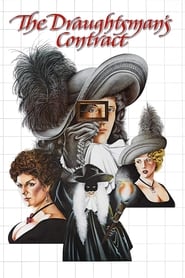
-
director · 2h 49m 3 mentions
-
I'm glad we remembered it. I have to say a word about costume here. It was by a gentleman called Charles Node, who, what a find. I mean, he was able to put all this together at a reasonable rate, believe it or not, and have it look good in interviewing costumers.
1:14:04 · jump to transcript →
-
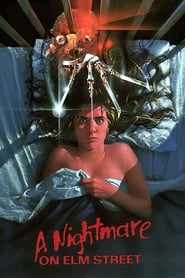
We shot one shot in Arizona. It was the frontal shot where the horses really hit the spears in the front, where you see spears breaking off on them and stuff. We couldn't get these horses to come close enough to the camera, so we got them to come close enough in Arizona. We put the costumes on some Western-type wranglers, and they got right in there. They boogied in, and we were able to digitally manufacture the spears, impaling them and so forth.
1:28:17 · jump to transcript →
-
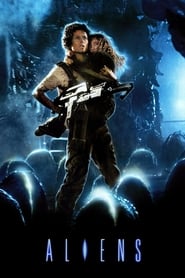
and all have their place. That took a tremendous amount of organizational skill. Again, you know, ten points for David Tama, you know. He's got the Guinness World Book of Records for having the most people ever in a crowd scene. He did 300,000 people in Gandhi by simply throwing a camera out there on a holy day when the people of India went to the Ganges, and essentially the wardrobe hadn't changed for 30 years, so he was in safe territory there. But he's a smart guy, and he...
1:53:36 · jump to transcript →
-
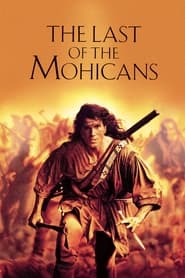
-
director · 1h 54m 3 mentions
-
My Question Initially To Jean-pierre Was
There is a funny story. You will see Kim Flowers, the woman. She dives after the other character. I had to find an idea because the first day of shooting Sigourney wasn't happy about her costume. She saw the costume of Kim Flowers and she said "But that's exactly what I wanted." I said "But Sigourney, we show you the sketches and you refused this costume." She said "I didn't understand. I want this." In one day we had to build another costume for Sigourney. But this day we had to shoot with Kim Flowers. She had no costume at this time. We had to invent another costume for her. I had to find another idea to justify she was late because she is not on the next shot because we had to build a costume this day. You know this kind of story? The water was very warm. I remember when we first got into the water it was too transparent. They had to pour in milk and garbage in order for the camera to pick up the actual substance of water for the light to hit it and give it texture. We were virtually blind under here. You would swim towards a light. That was it. You could not identify a single object underwater. You couldn't see your hand in front of your face. No. I think they put flares down on the ground for us to see. You'll never get a shot of them but...
1:09:16 · jump to transcript →
-
My Question Initially To Jean-pierre Was
Has anyone other than me broached the idea of... of peeing when we were stuck in that pool for two weeks? Did you pee in the water, Leland? - It was kind of an honor system. I never broke it. - It's five years later. On the record, I never peed in the pool. I'm never gonna speak to any of these people again. Did you pee? I never peed. There were times when we were in there for an hour and a half, two hours. Under our costumes were wet suits. - I didn't pee. It wasn't that I was uncomfortable peeing in the pool, but in my own wet suit. So you did pee? - No. Not for the sake of the pool. For the sake of the suit. That's a little makeup where we had to put Gary into an appliance to show his face all eaten away by acid.
1:15:55 · jump to transcript →
-
My Question Initially To Jean-pierre Was
There's what Jean-Pierre called "the vipers' nest" - a seething mass of alien texture. We built a 20 by 40 set piece that had articulated pieces worked into it. Tails and I think we had... I don't know if it was Tom. Was that you in an alien suit? Yeah, we had me and Mark Viniello in costume. Empty heads lying there. Sigourney was lowered down through a diaphragm and she disappeared. We've had people ask "What exactly is that?" and we said "I don't know." It's kind of like a nest, kind of like a... I don't know, a Spawning ground. Who knows what it is? I love this shot. Sigourney too. I remember the studio wanted to - do you remember? - cut one or two of them. These shots? - Yeah. I called Sigourney and she said "If they want to cut this scene I won't make the promotion." And we kept it. With the music it's pretty nice. Kind of romantic, though, isn't it? - Yeah. I made that instead of another action scene. I prefer this kind of poetry. It's pretty weird, pretty strange.
1:30:17 · jump to transcript →
-
-
director · 1h 59m 3 mentions
-
But Ryan here, I'm almost sorry that I had to cut into what he did for reactions. I also shot from inside the van. Oh, really? And got this great shot of him looking through this murky, milky window talking about his past. Really? Do you have that on tape? I'd like to see that. Oh, sure. I'll send that to you. Okay. I'll call your agent. Okay. Call my peeps. And again, Ryan had a great deal more going on in this scene. It was overwritten. He did all of this straight through. Exactly. Hey, now let's talk about costumes for a second.
1:14:22 · jump to transcript →
-
Yes. Before we get to the gunfight, talk about costumes a little bit. Because your wife did the costumes. She did. And she did a great job. She did a phenomenal job. How much design, I guess, did you conceive for the costumes, and how much of it was like, let the people do their jobs and just comment on it? The basic order of the day for every single department was, if I see what you're doing, you're not doing a good job. Right. And everything was about extracting...
1:14:50 · jump to transcript →
-
But as for costumes and cinematography and production design, it was always about minimizing, just being as real as humanly possible. I think I was the only one in the film allowed to break that rule. Yes, and in the beginning you were not. It was only when we realized that something had to break in order to save the film
1:16:10 · jump to transcript →
-
-
-
Jonathan Lynn
so that it would look different from other gangster films. Unfortunately, on the day we came to shoot, it was raining heavily, and we weren't sure that we'd be able to get away with it. But in the way that David Franco exposed the film, he was able to sort of blow out the light outside the windows, and so you can't really tell that it's pouring out there. It did mean we changed a costume. Natasha was going to originally enter
24:44 · jump to transcript →
-
Jonathan Lynn
Sensuous. I think she managed to do all of those things superbly. And of course, you know, look at her. She won the Jean Poole lottery. The costume designer, Edie Jaeger, helped, of course, by dressing her in a sexy but elegant style throughout the picture. Kevin makes a huge impression in this scene. He's only got a couple of scenes in the film.
26:42 · jump to transcript →
-
Jonathan Lynn
Otto was sort of a genius with his own costume. And I like the idea that as a Hungarian or Polish gangster, he has a crucifix around his neck. I'll explain everything to you when you get back, okay? In the meantime... He is, after all, a gangster with morals. Although his job is to kill, he certainly doesn't believe in divorce.
29:48 · jump to transcript →
-
-
-
Noah Baumbach
I always feel very uncomfortable talking about people's costumes and wallpaper and things because I feel like the thing I get accused of is putting too much into those things and somehow it distracts and takes away from the rest of the movie. But I think, for me, I mean, obviously I'm an interested party now because I collaborate with you, but before I did that, I always felt that that's an extra-- That is an extra texture. It's about people's, you know, ideas of who they are, and you kind of represent it in very striking ways by, you know, making uniforms a big part of how people do that. And in the case of Cate Blanchett's character, her whole sort of look comes from Jane Goodall in her chimpanzee documentaries, and I think that relates to this thing that doesn't really exist anymore, which is these wildlife documentarian-scientist stars, which are rare now, but there was a time when there were a number of them, Marlin Perkins, and Goodall, and also people like Carl Sagan. That's right. And shows like Nova that were sort of, you know, more commonplace on... It was PBS but still on regular TV. - Right. That was something I think we talked about when we were, well, how are we going to deal with the science and the fish in the movie? I mean, part of it is we don't really know anything about that stuff so we were making it up, you know, because we were working in an Italian restaurant with no research materials. But I think the other part of it is that the Discovery Channel and things like that have made, you know... Seen it all a million times. - It's so amazing, that stuff. Yeah, you can't compete with it. So I think it became, you know, a good reason to fake it. Yes. - And make it deliberately fake. We're better at faking it than we'd have been at reporting the truth. Definitely. I'm intellectualizing it now, but it was more just playing to our strengths. Yeah, hopefully. You know, this-- Zissou's compound, which we call Pesecespada Island, probably inspired by a special the day we were naming his compound. Pescespada, I think, was on the menu. Means swordfish, right? - It's a swordfish. But this was filmed at a place called Torre Astura on a military base between Naples and Rome. And what exists here is a medieval castle that is built on the ruins of a Roman fish farm, essentially. They raised, you know, it was a place they raised fish to eat. And then there's a villa, the house that's painted partly aquamarine, which was built around the turn of the century, I think. And then we built, for instance, the bunkhouse where Owen and Cate are playing this scene.
23:37 · jump to transcript →
-
Noah Baumbach
Is that him? Maybe we should talk briefly about Milena Canonero, the costume designer, who... I feel like I have-- Tend to have a lot of details and concepts about the costumes because I feel like there are elements of the character in it, and then elements of making a world that the characters live in that's not quite reality. That goes into the design of the movie and the music and the costumes, and... But Milena, what I liked about Milena was Milena brought a kind of-- Brought some reality and some variation to it that I don't think I would have instinctively had. She brought her own set of details to it, and there are many of them, and she also accomplished a lot in getting the things done, because it's a big movie that took a lot of-- It's a big movie, although it's an intimate and strange movie. There's a lot to, you know, making silver wetsuits and all these uniforms, and working with an unbelievably large amount of polyester. She managed to get all this done. She'd also worked with Kubrick. She started with Kubrick in A Clockwork Orange, Barry Lyndon. She'd done Chariots of Fire and all kinds of interesting films.
57:41 · jump to transcript →
-
Noah Baumbach
Well, I hope we don't sound phony and pretentious on this thing. I hope not. We talk a lot about ourselves. - Yeah. And about work. And some intellectualizing that we never would have... - Done in any other circumstances? Nor stuff did we think about when we were writing it because we tried to write it just more as honestly as we could without really overthinking anything. We're trying to make it something funny and entertaining. But you can't say that for two hours, so you keep trying to say-- And then you talk about wallpaper and costumes. Then you start saying things like, "Well, he's an invention of a child's imagination, trying to connect to..." But I don't know if that's true. We just thought he was a funny character. You know, I'll say one thing here. This thing they're walking on, we were out, and this is in Naples, where they're walking along this and the credits are going. We're driving along and we see this breakwater thing with rats on it. I asked if we could get off there, and the guy didn't want us to. He said the cops were gonna come, and then I said... Anyway, he let us get off. And this is the most strange, bizarre thing. It doesn't connect to any land. It's just a cement thing in the middle of the water. I said we have to shoot something here. This is what I came up with, which is a, you know... It's almost, you know... You would say it's inspired by, if not stolen, from the end of Buckaroo Banzai, which is why I said Jeff Goldblum was in it too because he's in that as well. We probably talked about Buckaroo Banzai, you know, and using this kind of idea before we knew Jeff was gonna play Hennessey. That's true. - So in some ways, Jeff playing it makes it seem less of a steal and more of an homage, but it's pretty much just a steal. I wonder if we'll ever get to see this ship again. Where is the ship now? - It's in Malta, in drydock, and Ian, the marine coordinator, theoretically owns it now. But it was such a beautiful ship. It was such an amazing thing to be able to go on. This must be totally boring for people to hear me say this. And then there's Ned smoking the pipe, up at the top. Yeah. There he is at the top. In whatever dream this is. This is something that Bogdanovich had talked about. He used it in The Last Picture Show, which I feel like you do in a lot of your movies. But it is that idea of a curtain call, of like, you know... Someone might argue that, you know, when you finish a movie, you wanna sort of throw people into the credits and their own lives. And for different movies, then there's this idea of, you know, letting people ease their way out of the movie by giving a kind of, you know, whatever a film version of a curtain call. Yeah, and also, you know, with Ned, because he dies and everything, it's kind of nice to bring him back at the very end. Yeah. And nice to see that Werner joins the team. And the intern becomes official. And he didn't get an incomplete. Who cares what he got because he's dropping out. And going full-time. And this is Seu Jorge playing in the opera house in Naples. We didn't have a real plan for exactly how all these Seu Jorge performances were gonna work in there. I was shooting them wondering, "Am I really gonna make this work?" But somehow, his energy and this thing of it... For some people, it's probably, "Oh, no, we're gonna cut back to the guy playing these songs again? They don't have enough story to tell?" But I think for a lot of people, he works. He weaves something together in the movie, and for me, anyway, he brings something special to it. That makes me wanna go back to him over and over. It's funny, what you were also saying about Roman's second unit stuff, it's funny how when you're filming a movie, sometimes, you know, you shoot some stuff on a whim, and then it ends up becoming a huge part of, you know... A whole other texture to the movie. Yes, it was only because of Roman's second-unit work that made it possible for us to do this thing day one. You know, setting at sea, and day 14, you know, the Belafonte, et cetera. Roman collected a lot of these shots, and the movie needed that sort of simulation of structure that it kind of provides. Instead of it seeming like a basic stream of consciousness, which is closer to what it was. Makes it seem like it's not stream of consciousness. Although we do think structurally, but it's a different structure. Yeah, it's our structure. - Yeah. What we see as structure instead of what Eric Rohmer might refer to as structure.
1:52:47 · jump to transcript →
-
-
director · 1h 43m 3 mentions
-
So with the magic of movies, we basically made three locations into one. And again, here's Rick about to get a blast from the past and look at this costume of his from the French Foreign Legion, which is the actual costume he wore in the first Mummy, and to long for the days
11:00 · jump to transcript →
-
give you the feeling of life and people on the streets. But the costumes that Sonya Hayes did for the whole movie are, I think, rich and textured and befitting and becoming to the actors, as well as descriptive of who the actors are. And the 500 costumes, the nightclubs, the armor, the tunics, the entire
46:27 · jump to transcript →
-
a good example of costume designer working together with director and D.D. Jett's fight choreographer working all of us together to make something balletic and pretty or, you know, beautiful to watch at the same time, hopefully gripping. Michelle Yeoh sacrificing herself to get the dagger, the only weapon.
1:30:08 · jump to transcript →
-
-
-
Francis Lawrence
Red Sparrow was a novel by Jason Matthews, and it was sent to me by Fox as I was finishing working on the Hunger Games movies. I think we were actually in post-production on the final Mockingjay, and had actually started to promote the final Mockingjay film when the book landed on my desk. I took a look at it and immediately fell in love with it. I've always loved spy movies. And this spy story I thought was quite unique. It's by far I think the most genre-specific story that I've ever done. But I just found the character of Dominika, as you can see here, played by Jen Lawrence, to be quite a unique and unlikely hero, and a really unique way in to a spy Story. It becomes a much more personal spy story with her in the lead. I actually, even while reading the book, Started to think of Jen immediately for the part. You know, she and I had done three Hunger Games films together over the course of five years. I thought she was a fantastic actress, and we had a great time working together. So I thought it would be fun to find something new to do together. And specifically, because we had done this... We'd been working together with the same character over the course of five years it would be really fun to do something totally different, use different muscles. And I thought she could also look Russian, but thought it would be fun for her to look different and speak differently and move differently, and push herself into new territory. So when I had read the book, and I was gonna go pitch the studio, I actually called her first, and said, "Hey, hypothetically, would you be into doing a Story like this?" And she said yes, and, you know, I just pitched it very briefly. And then made my pitch to Fox about my approach in the story, which was to make Dominika the kind of heart and soul of the story, and to follow her story, and I had a couple of tweaks that I wanted to do to the last act of the book. And also spoke a lot about the tone, and the kind of hard-R quality that the movie... I thought the movie was gonna need. And everybody agreed. We got cracking, and I went to work with Justin Haythe, who is a writer that I've known for a long time, and we had developed something together before that had never been made. But we had a great time working together. And he also saw eye to eye with me in terms of the tone and the point of view of the story. And so we got working and it came together really quickly. So that by the time we had finished and released the final Mockingjay film in the Hunger Games series, we were pretty ready to go, and we were almost ready to start prepping this. We ended up bringing a bunch of people from the Hunger Games film with us. Jo Willems, the cinematographer that did my three films came with us, and our camera operator, who's worked with me since I Am Legend, and has also done numerous other films with Jen, 'cause he does the David O. Russell movies, came with us, and Trish Summerville, who did costumes. The new big addition for me, in terms of crew here, is Maria Djurkovic, the production designer. She had done Tinker Tailor and many other great films, and I just really enjoyed her work. And we really bonded over the references that we had found, and the kind of color palette that we both thought that the movie should follow. And she joined us, and we shot the film in Budapest. And primarily all practical locations. Some little set builds within locations, but primarily all practical locations.
0:22 · jump to transcript →
-
Francis Lawrence
One of the things that Trish and I worked on, Trish Summerville, the costume designer, and I was, the different kinds of looks for Jennifer. Because when you think about a character like this, right, she's actually playing two completely different people, right. You've got Jennifer the dancer in the beginning, right. And so dancers have their own culture and sense of style and how they dress when they're not at work and how they dress in rehearsals or how they dress on stage and things like that. But that's the real Dominika. And then you've got the Sparrow, right, in the uniform, and that's a bit utilitarian. And then you've got the young woman who's sent to Budapest that's playing a part, right. And so she's not supposed to be a dancer, she's actually supposed to be somebody else. So, the decision of how do you dress and how do you present yourself to the world when you're supposed to be a young woman from Moscow who's a translator at the Hungarian embassy. It's really interesting to dive in to doing different kinds of things. And also thinking about the seasons, because, you know, we Started in just before the dead of winter and then Sparrow School! took us through the dead of winter and then we decided that Budapest, it was the end of winter, and into spring. We never really wanted to see leaves on the trees at all, but we wanted to sort of get in at a slightly nicer, I would say maybe sort of damp weather, as opposed to icy weather as the story progressed. He told me about what happened at the park after I established trust. Hmm.
1:11:09 · jump to transcript →
-
Francis Lawrence
This was a nice little gag piece of furniture that Maria and her propmaker made. It's a little tough to light to see the black discs in the black drawer underneath. So, they gave Jo Willems quite a challenge. But worked out really well. You know, Jo and I have worked together for a really long time as well. I mean, we go back to the music video days, I think, you know, pre-2000, doing music videos and commercials. And then I went off to do movies, and he went off to do some movies, and so we went kinda separate ways for a while. And then started working together again on a couple of pilots. We did a couple of pilots together, and then I brought him in for the Hunger Games movies, and we really haven't stopped working together since. But we decided to do, really, a completely different approach to the movie, visually, this time. Again, we had done three Hunger Games movies over the course of five years, and there was sort of a similar feel to all of that. I mean, one of the things that I wanted to do was handheld, to sort of maintain some of the naturalism that was in the first one, but sort of more along the kind of style that I had done in something like I Am Legend where there's a hint of immediacy and naturalism, but it was actually still rather formal in terms of shot selection. The other thing that we did was use a lot of kind of medium-wide lenses up close on people, so we felt very intimate with people, but still maintained a little sense of geography in those movies. But a lot of those movies played in medium and close-up shots, or very wide, but a lot up close. And we wanted to be completely different with this movie. I mean, I wanted, quite honestly, for it to have a bit of a colder approach, a much more formal approach. I mean, the color palette was certainly gonna be different. The landscapes, and costumes, and characters were all gonna be completely different and much more grounded. But I wanted the cameras to be much more formal, too. So, locked down. So, either on dollies or Steadicam, or cranes, or Sticks. No handheld. But also to let things play a lot wider. I went in close much more rarely and let things play in wider shots for a lot longer. It was something that I'd wanted to do for a long time, but it was not an aesthetic that I had kicked off on the Hunger Games, and so I didn't want to kind of change that partway through. But it was an opportunity that I wanted to take advantage of here, and I'm really happy about it. You see it quite a lot in places like Sparrow School, and at the ballet, and things like that, that I really stay back and let things kind of play out in a much wider way. And also try not to cut quite as quickly as we may have. I wanted there to be, you know, an aspect of a slow burn to this movie. I wanted it to take its time a little bit, and not play just to the people who have attention deficit disorder.
1:34:37 · jump to transcript →
-
-
director · 2h 43m 3 mentions
-
Hair and makeup are done with Hayley, all of which is very subtle. And the wardrobe on Hayley. The wardrobe is sensational. And all of it is just playing to her strengths. And it wasn't until much, much, much later that we found the music. Do you remember? Oh, my word. The music in the nightclub. Yeah. We originally had a track which the dancers had choreographed their movements to.
1:19:10 · jump to transcript →
-
they all subtly kind of bring in that sense of adventure. Even Hayley's costume, the wardrobe she's wearing, has a slightly pirate feel to it. Same with Rebecca. God, I remember when you were shooting this and how dynamic all these different moves were and these moments with Pom. And the intercutting that we then had to do. And also, I feel for Hayley, because the fight with Gabriel was originally quite a bit longer.
1:36:58 · jump to transcript →
-
Great cinematography is relying on great production design, and great production design is relying on great locations. And costume design, hair and makeup, it's all working together to make the image you see. And it's a really important thing to remember that when you're looking at the work of one sensational person, one sensational performance, one sensational credit,
2:37:32 · jump to transcript →
-
-
-
Nia DaCosta
Yeah, developing this with the prosthetics was super fun. But the first time I saw... The first person they showed me was LA, who plays Jane Ji. And Gareth and Carson, who are the amazing production designer and costume designers, they also were super inside of, like, those sorts of looks, like anything that was full-body like that in terms of prosthetics, they were really inside of that process creatively. And they called me in to see LA in her skinned look, and LA was, like, had tears in her eyes and she was performing, basically. And I was like, "Oh, my God." It was so disturbing. I was like, "This is very distressing," and I'm looking at it and I know it's not real, but it just felt so real. And that's just like a testament to the amazing work that the prosthetics team, John Nolan and his team, do on this film. That's real. Well, not... Obviously, it's not his skin, but that's, like, prosthetics. That's all in-camera. With a little bit of help from VFX to clean up anything.
35:03 · jump to transcript →
-
Nia DaCosta
This was so fun to shoot. This... Our amazing stunt performer, who we lit on fire, I think, three times. And the crazy thing about this, which I didn't know, is basically he gets covered... His body... Like, underneath the costume, he gets covered in something that protects him from fire. And then he gets... puts on the costume, puts on a gel that was supposed to light up. And then he wears a mask over his face so that he doesn't, you know, his face doesn't burn off, obviously, and... But he has to hold his breath for the entire time that he's on fire, which I didn't think about. But obviously, you wouldn't want to be inhaling and burning your lungs to shit. So I was so impressed. And I always am with everyone I work with, but especially him being lit on fire three times, I think, on that night, and then three times on this night, to do the shot that's about to come.
48:04 · jump to transcript →
-
Nia DaCosta
So, yeah, pretty much all of this is practical. Like, we... A couple of the candles went out, so we added them in VFX. But just... Again, Gareth and Carson, our production designers and costume designers, did an amazing job with this set and also with saving some of... some things to discover for me so that in this film, the audience wouldn't just be like, "Okay, been there, done that," but would really feel like, "This feels like a new place," or, "I'm seeing more of this place," which is really great.
1:23:18 · jump to transcript →
-
-
-
Novelist Tim Lucas
He's played by Jose Marco, who you may have seen in the Richard Harrison costume pictures, The Invincible Gladiator, Gladiator 7, and The Secret 7, all pretty good pictures. He also played the role of Paris in Ricardo Freyda's now rarely seen 1964 adaptation of Romeo and Juliet. In later years, you could find him in Compañeros, The Horrible Sexy Vampire, several Paul Nash-y werewolf films, and toward the end of his career, Women on the Verge of a Nervous Breakdown.
15:02 · jump to transcript →
-
Novelist Tim Lucas
Indio gives us a great deal of verbiage to prepare us for a single, simple visual, proving that a picture is literally worth a thousand words. And there is a bit of Alfred Hitchcock in this moment as well, because Leone cuts from the maquette in Indio's hand to the disguised safe as it presently appears in the office of the El Paso bank manager, who is played in a winking cameo by the film's production and costume designer, Carlos Simi.
40:00 · jump to transcript →
-
-
director · 2h 41m 2 mentions
-
and that he died wearing his Once Upon a Time in the West costume. He had only one shot that remained to be filmed, but evidently he couldn't wait. Sergio Leone never forgave him. He reportedly stepped over Mulock's dead body, telling the wardrobe man to take off his costume, which was then handed to a stand-in who took his place in that last shot, viewed only from behind. There is some masterly interplay with props here on the part of Mr. Wallach.
1:46:19 · jump to transcript →
-
As was not unusual in Italian cinema, the production designer was also responsible for the film's costumes. In both capacities, Simi specialized in westerns, ranging from that early Franco and Ciccio spoof to Minnesota Clay, Django, the big gun-down face-to-face, Sabata, and Kiyoma, not to mention Once Upon a Time in the West. Was this the first sideways gunshot in film history? You tell me.
1:47:12 · jump to transcript →
-
-
director · 1h 59m 2 mentions
-
Lois Maxwell's agent negotiated a perk for her in Diamonds Are Forever, that she would be able to keep her wardrobe. Unfortunately for Maxwell, the only time she's seen it's in a customs uniform. Now back to director Guy Hamilton. I wanted to get Moneypenny back into the story, get her out of the office so that I could see her in a uniform. Tom Mankiewicz recalled shooting the hovercraft on location.
15:38 · jump to transcript →
-
They used to do wonderful decorative pieces, and they had this huge iron-bound kind of chest. It was more of a kind of semi-wardrobe. It was so big, but it was tremendously heavy. And we rented it. Ronnie, again, has got very good kind of liaison with this fellow in German Street.
1:17:40 · jump to transcript →
-
-
director · 1h 28m 2 mentions
Don Coscarelli, Cast Members Michael Baldwin, Angus Scrimm, Bill Thornbury
-
Oh, man. Can we fast forward through this section? Derby. What inspired the derby in this scene? Yeah, I don't know. Where did that come up? Not me. Well, that was our Jack of All Trades costume designer, who also happens to be my mother and was also the production designer and makeup. She came up with that, I guess. Very An Souchant. Now, Bill, you wrote this song, didn't you? Yes, Michael, I did. Uh, we, uh...
16:12 · jump to transcript →
-
one day for filming. We actually filmed it in the front of the mausoleum at Oakland. And it was just this gorgeous piece with horses and everything. And our costume designer had found this top hat, a beautiful outfit for Angus to wear. And we shot it in black and white and wanted to try to mix it. And it was an attempt to bring his character to life.
55:15 · jump to transcript →
-
-
-
He would write me these little notes that was like, you know, aim, you know, costumes went very. Wow. And then when we were going to rehearse, and I had never rehearsed before, so I didn't know what you were supposed to do. And I thought, okay, let's just all go to high school and we'll have a pretend class. Oh, wow. I didn't call it rehearsing, I called it pretending.
28:03 · jump to transcript →
-
Okay, these were your buddies, right? The Martin brothers? Yeah, Doug and Steve Martin. And they're just two six-foot-tall, red-headed, identical twins. And they got a big laugh just on sight. It was a little lesson. I love his outfit. The pirate outfits, our costume designer, Marilyn.
48:44 · jump to transcript →
-
-
technical · 1h 35m 2 mentions
Steven Lisberger, Donald Kushner, Harrison Ellenshaw, Richard Taylor
-
Computer Simulation Division Richard Taylor
When we came to make a decision about what film format to use for Tron, we felt very strongly that we needed to shoot it on a larger negative than traditionally done. And it came down to a choice between 65 millimeter and VistaVision for the whole show. But the availability of 65-millimeter cameras was far better than the availability of VistaVision cameras, so we made the decision to shoot the entire show in 65 millimeter. And to keep a certain consistency, and as long as we had rented the cameras, we felt that we might as well go ahead and shoot the real world in 65 millimeter and not in 35 millimeter. It was kind of one of those nice to have things, and nobody objected strenuously to it, and also it would be the first time since Ryan's Daughter that a film had been shot entirely in 65 millimeter. And I think you can see the results. I mean, it looks wonderful. In the monitors in Lawrence Livermore, one of the things that Triple-/ had to do was create lots of imagery that appeared on monitors, and that imagery had to be shot and created long before we got to production. So, there was a lot of planning in creating all of the monitor imagery, and Triple-I did a great job on that. Spent a Iot of time on this shot. To accomplish the effect, what we did was get a 4-by-5 still camera and photograph Jeff Bridges in his position after he's been zapped, and then immediately moved him out and took another photograph, which was the background by itself. So, as you pull away chunks of Jeff, you see the background behind him, and then to put the laser and the grid and all that on top of him was basically the effects animation of John Van Vliet. When Flynn is de-rezzed and pulled into the computer, we go through one of the most interesting sequences in Tron, which is the real world to electronic world transition. This sequence was created by Robert Abel & Associates, primarily under the direction of Kenny Merman. It was a sequence which I had designed, knowing that the way that Robert Abel & Associates was making these computer graphic images with the Evans & Sutherland computers, and, really, using vector graphics to create this particular look, would give us a look that would be unique just for this transition. The three-space transition, the movement through all these binary bit patterns and this polygonal landscape, was done by making multiple passes through a traditional animation camera that was pointed at a high-resolution, vector graphic, Evans & Sutherland computer screen, and making multiple passes, frame by frame, using different colored filters, coming back, making multiple passes of rewinding other filters, until you finally end up with this, which seems to be solid objects. But it's really made out of lots of tiny, tiny lines put together to make solid blocks of color or objects. Oh, man, this isn't happening. It only thinks it's happening. When Flynn says, "This isn't happening, it just thinks it's happening," it's a key line, because it means that the reality that he finds himself in now, not even he can fully believe exists. And if anyone should appreciate and understand this alternate reality, it's him, and now he finds himself trapped in it. All right, now we see Sark standing on the bridge, and all of a sudden, he is enclosed with these shrouds of light as he begins to have his conversation with the MCP. The database for the MCP was a human figure that we had created at Triple-/ called Adam Powers and was originally on the Information International sample reel. And if you look at that sample reel, you'll see a juggler character who was juggling balls. Well, that face of that character is the face of the MCP. So, the first time that you see him, he is a polygonal drawing of a face. And that's basically the underlying database of the face. So, it's made of polygons. And those polygons, we play them out on the Triple-I computers as the line-drawing polygons, and made 12-and-a-half by 20-inch stills, high-con stills of those. But we created the mouth positions for the vowels and the syllables so that you could take these interchangeable transparencies and lay them down and make him Say, by whatever order you put them in, whatever you wanted him to say. 'Cause he was voicing a lot of different dialogue. Then those were backlit, and then we applied an effect to those line drawings of putting a steel mesh screen over the taking camera, and it made it have that much more, kind of, complex look. And then we also animated the exposure occasionally. Early on in the film when I started working with Steven, we did a lot of experiments to work out how these characters were created. The thing that we finally decided was that the characters needed to have this energy inside themselves. They are obviously in this electronic world. Now, these costumes were unlike any costumes anyone had ever created for a picture before, in that they were costumes designed to have effects treatments done to them. They were white with black drawing or black lines over them. All of the black elements on the costume were turned into circuitry which could be backlit and light could be pushed through there. We originally shot a 65-millimeter image of these people, live-action photography of them on these black sets. Then from that 65-millimeter film, we created some photo-rotoscope machines, which basically could project the 65-millimeter film down to large pieces of film, which were pre-punched with animation punches. This film was created by Kodak for us, and we would project down with these photo-rotoscope machines, which would hold this film into a vacuum frame and make a continuous tone positive print of each frame of the film. Then these continuous tone prints were taken to a light table, it was a vacuum light table, where they were contact printed to high-con film to make a number of high-con positive and negative images. So that you basically have for every character a large cel and you have high-con positives, negatives, and a continuous tone positive. Then these high-con elements were hand-inked and painted to isolate the circuits on the body, the whites of the eyes, the whites of the teeth and any other circuits that we wanted to treat as a separate exposure. The characters are more often than not... The live-action characters are shot on an all black stage. When there is a set, the set is also black, but is measured out to conform with what we're seeing in this artwork. So that if a character appears elevated in a shot, like this shot, there was an elevated platform for him to walk on, but it didn't look at all like the set. Then we would composite these actors over paintings, transparencies, and once that was done, we would add the light and the color separately. And to simplify it, you can describe it as a sort of perfect blend between live action and animation in that we took live-action film, photographed it in a way that we could break it down to individual frames, then blow up those frames into large slides or transparencies. And we had 75,000 of these, which seems like an appallingly large number, but it really isn't if you compare it to an animation film. And because we were at Disney, they were not overly swamped. That's an actual Frisbee, by the way, and those are actual Frisbees on their backs. We had a excellent Frisbee coach, Sam Schaiz. I like the fact that the deadliest weapon in Tron is a Frisbee. A Iot of effects animation in this sequence and in the film. And that is the animation that makes the glows, and as the Frisbee gets brighter, and you see the reflections of it on their costumes, all that has to be done frame by frame. This is hand-drawn animation that, although it is drawn, a negative is made of that, and it is placed over a light source and then re-photographed, and the ability of the effects animators was such that we were never waiting on the effects animation on the show. They always performed very well. It was never a problem. They did very few redos, and that's because they had had experience doing this beforehand, whereas everything else that we were doing, outside of the effects animation, was the first time through. So, that had a much tougher and steeper learning curve. In the holding cells for the game grid, those are backgrounds that are entirely hand-drawn by the background department, again using Rapidographs and line drawing and airbrushing and then turning those into high-cons. But those drawings are all drawn to match the actual physical sets, which were built so that when someone passes behind something, or leans on something, those are actual physical sets that were built. But again, the sets were just black on black. They're as if they were made of black velvet. Part of the interesting thing as a cinemagraphic problem that was presented to Bruce Logan was that he had to shoot, unlike anybody had ever shot before, sets that were entirely black with white line drawings and white characters running around on these sets. Bruce Logan's job in photographing these people was very difficult because, unlike most photography for most films, you try and get as much chiaroscuro in the picture as you can. You let there be a lot of dark and you create shadows and you create this moodiness, which a cinematographer takes great pride in. In this film, during the sequences in the electronic world, basically, he had to light them so that we could see as much of the costume as possible with as little shading as possible because all of the shading and all of that were done by hand by making different masks and airbrush elements that were used under these costumes in post. The ring game was an interesting technical exercise. The set itself, again, was black flock paper with the rings drawn on this paper with tape. The actors had to realize which rings were there and which ones were not as they acted out the sequence, imagining that they were hundreds of feet above the ground. One of the inspirations of Tron is the movie Spartacus. And there's quite a few similarities to the persecuted people who had to fight in the gladiatorial games. This game, of course, was inspired by Pong and jai alai. I think one of the interesting parts of Tron was the synthesis of new games that were created. The design, for example, of the glove that's being worn here, we took a traditional jai alai glove and then rebuilt it and made it out of foam, added other elements to it to give it a more technological quality, and then again, I put the designs over the outside of that to make it blend with the rest of the costumes. Shooting in 65 millimeter, from a director's standpoint, is a lot of trouble. The cameras are huge and bulky. The format requires an enormous amount of light to fill that negative, so if you are shooting Lawrence of Arabia or Doctor Zhivago and you've got lots of snow and big exteriors, it's fine, but in low-light-level situations, it's very troublesome. The depth of field is sometimes as little as a half an inch, and you find your cameraman is asking you, "Now, which part of the eye do you want in focus? "Do you want the front of the eye or the back of the eye in focus?" Or if the head of the actor is not square to the camera, they ask you the really insane question of, "Which eye do you want in focus? "I can give you the front eye in focus or the back, "but the other one's gonna be blurry." Now a lot of these shots where you see actors talking to each other and we're doing over-the-shoulders, the camera couldn't hold focus for the blow-ups to be made, and I had to shoot the actors on separate passes. So, in a shot like this, where you see all three actors talking to each other, it wasnt filmed that way. I filmed them separately and they were composited. And there's quite a few shots like this. Whenever you see them walking around and they're separated by more than a couple feet, those are all separate shots, and then the actors are composited. So, it's very difficult for the actors because not only do they not see the environment they're in when we're filming, all they see is an all black stage, but they don't even see the actor they're talking to. Forming of the Lightcycles, again, is almost entirely done by hand-done animation done by the effects animation department in creating the way that these cycles form around these characters. We built an object that the actor could sit upon, and it was literally a mechanical shape that was the seat and the handlebars, so he could sit down and it would thrust his arms forward and pull him down into that locked position. So that everything that he sits upon and touches, it was, again, drawn by the animation department, and not until you see the final completed cycle, which is actually a CG/ rendering of the cycle, is any of it done by computer. The Lightcycle sequence was done by MAGI. Their way of creating an object were to take basic geometric shapes, cones, cubes, spheres, cylinders, and make an object by collaging those particular pieces together and creating an object. And that's how the Lightcycle was created. All wide shots that you see are computer-simulated. All of the shots, other than the very tight shots of the figures inside the canopies, are computer-simulated. The shots inside the canopies are actually hand-drawn artwork of parts of the Lightcycles, and the animation that's happening over the Lightcycle windshields is hand-done animation to give them a sense of speed. But virtually every scene that you see of the Lightcycles is entirely computer-generated. And there's not even effects animation in those scenes. If there's an explosion when a Lightcycle hits the wall and a tire bounces across, I think those were basically all CGI. Syd Mead worked really hard on designing these motorcycles so that they would incorporate the characters. But if you look closely at them, you'll see that the second half of the bike is flattened and sort of two-dimensional, and that was done because the computers couldn't handle too many compound curved surfaces. So, we restricted those curves to the wheels and the windscreens, and then the rest of the bike was simplified. The ability to move the camera through 3D space with these computer-graphic-looking landscapes is just great. The Recognizers are a sort of King Kong. There's a little head on top of that gate structure... Suggestion of a face, but it, sort of, got lost. The Recognizers were created by MAGI-Synthavision. As I mentioned, there are graphic vector lines, red lines outlining all of these objects, the same way with the tank. The tank was another unique design of Syd Mead, who is a futurist, a fabulous designer. Once Ram, Tron and Flynn have escaped the Lightcycle grid and are off through the canyons being pursued by the tanks, we cut inside the tanks and see another example of a Syd Mead set that was built as a three-dimensional set, again with black background, and all of the elements on there graphically put on so they could later be treated. So the camera, you can see, is moving through scenes in ways that no physical camera or no model shot could possibly do. The animators that I worked with to create the choreography for all of the CG/ sequences were Bill Kroyer and Jerry Rees. But to communicate all this information to the computer technologists, the people that are sitting at monitors at that time, took a new language which we had to create. So, what we did was, first of all, we had to think of each sequence as a real physical reality. Not only would they draw the point of view that they saw as an animator that we would work out together, that was the story point that Steven wanted to make, and also the point of view that we wanted to take. But after we would draw the original storyboards in a traditional, kind of, storyboard manner, we would have to go back and draw a top view, side view and front view of the objects, where they were in time, where the camera was in time, and what the camera's point of view was. So, we really had to define everything to the CG/ technologist in a three-world, three-dimensional space. And that was the first time that that had ever been done. They must've gone right past us. We made it...this far. Now, all of this, this revolt, it's all being led by the user who's gone in the system, Flynn. The Tron character and Ram character, they would have toed the line and gone through the software the way they're supposed to. We'd better, Null Unit. Null Unit. Get the computer dictionary out. Look up "Null Unit." What does that mean? In this sequence, you can really see some of the flaws. I don't really mean the flaws, but the imperfections in the cels, little bits of dirt that pop on and off. Yeah, but they're few and far between considering. Yeah. Come on, you little bugger. Come on. Look at that. A lot of pops and a lot of glitches in there that we would always Say, "Well, that's what happens in an electronic world." When we started there were going to be no differentiations between the flesh tones and the rest of their uniform. But at a certain point they looked, well, not very good. So as a result, that added, approximately, 120,000 extra frames, extra elements to the shot, so it did grow in many aspects. The cave sequence where Flynn, Tron and Ram finally re-energize their selves with this liquid energy was a very interesting technical problem to solve here. In the sequence in the cave when the water is being handled by the actors, literally, frame per frame, rotoscope animation is isolating the water from the body so that it can be treated with a different filter and a different exposure. And again, this is an example of how light is used to portray motion or energy, as Tron drinks and you see his circuits light up and they become energized. The set itself was a complex geometric shape, which was designed by Peter Lloyd, and we built into this set, basically, water channels, and the water itself was reflecting light sources that we put in angle so they would reflect to the camera, and the water was in black tanks so that all we're really seeing are the highlights on the water. Yeah, but the biggest problem at that time was do we fill this with colored water or clear water? Had to do tests, you know. - Right. That was your problem. Do we put milk in there and make it purple? I think that what Flynn is surprised now, ironically, to see that there's parts of this mirror world that are more alive than he anticipated. So, it's not just the harsh computer reality, there's something living about it. It's a very complex shot, again, with all the elements. Probably about 30 different elements, 30 different separate exposures for each frame. Normally in a special effects movie, you get a very bad bottleneck effect in that all these things have to be composited through one or two optical printers. Now we have digital compositing machines. But by putting it into a manufacturing system like this, where it became like an animated film, we could use 14 or 15 animation stands, and we could use a slew of effects animators and ink and paint people to do all of this work simultaneously. As far as I know, we still have more shots with human beings composited into an artificial environment than any other movie. I believe there's 1,100 special effect shots in the film and 900 of which have human beings composited in them. And that number is just very, very large. Just the organizational task alone was monumental, not even considering the creative side of it. For every frame you would have an additional five to 15 cels that isolated the different colors and the different... We had body mattes, we had face masks, continuous tones. You made print backs on top of print backs. So, those 75,000 original cels grew to over half a million. I think we ended up with something like 600,000 cels, all of which had to be kept in order. We had to pull trailers, literally these large house trailers, kind of, industrial trailers onto the lot. We ran out of space and we ended up with 10 trailers that would house all these cels and had to be organized and sent over... 80% of them were sent overseas and had to be numbered and then painted and kept in order. At one point we thought if we had 1,000 scenes, and this was around Christmas time, the film was going to come out later that summer, and we had no idea of how we were going to get it all done in that short a period of time. And we thought, "Well, it's summer vacation. We have two weeks. "We'll get college students, 500 college students in a room." We really believed this might happen. We discussed this for about an hour and we Said, "You'd have 500 students in a room. "We'll teach them how to do inking and painting and rotoscoping, "and they only have to do two scenes each. "And so they do one scene a week. "At the end of that time, we'll be done, "and we'll just go and shoot them on the animation stands." It didn't work out. So, we brought on Arnie Wong, who was an animator. We put him in charge of supervising Cuckoo's Nest, which is a ink and paint service that was in Taiwan. Approximately 80-some employees in a single room. And what we did is we went through and we made a videotape of every situation and what to do in that situation. So that if an inker over there, who didn't even have to understand English to do this, could go to a TV monitor, roll to this particular problem and see exactly what you'd do in that situation. And then he was there to answer questions that were unusual. And the most interesting thing, and one of the things that I'm particularly proud of with this technique is that in spite of what a pyramid it was to build, we managed to get all of this post-production done in six to nine months. And that is using a technology that we had developed. It had never been done before and we developed it and used it on this picture and delivered on time. And that was only possible because of this manufacturing technique. It's interesting the computer animation iS the simpler part of the set. - Yes. Ironically, one of the things that was a creative philosophy that we enjoyed and were proud of was that we were taking computer animation and letting it stand on its own. We weren't trying to make computer animation mimic reality. And the job was then to make reality, the actors and the sets, look like the computer animation. We used to say, "Well, if you've got lemons, make lemonade." Everybody else, and certainly since this point, has been going nuts trying to make computer animation mimic reality perfectly. And I found that the limitations of computer graphics at the time were the most exciting thing. If computer graphics... If computer animation is no longer different from reality, maybe we've lost something in that. Certainly you gain special effects technology and you can do certain things, but it's the limitations, I find, to be the creative challenge. I think at the time we were using four computer animation companies... Yes. -... which were probably the only animation companies that existed in the country at the time. Yeah, I had been visiting some of these companies for two years before we started making the movie. Maybe even longer than that. And I used to show up at their doorstep and Say, "One day I'm gonna make this movie. "You know, we're gonna do this and this is gonna be great." And they'd say, "Yeah, yeah, yeah." I'd come by every six months and say this is really gonna happen, and I think they were more surprised than anybody else when we really did this movie. And they got to show their stuff. The way the de-rezzing effect was created, for example, when Ram passes away and he's in the cabin of the Recognizer, there's a combination of the original photography of the character, and then that is overdrawn with literally hand-done, line-drawing animation done by the animation department. And between that animation and light exposures, you can make it just, basically, run off, dissipate and fade away. Also, upon viewing this again, for so many years, you tend to kind of lump it all together visually in your memory and we forget, I forget, how much detail, how much layering of texture was put into this film. - Mmm-hmm. Ai! these shots are all completely storyboarded. Even the electronic world and all the simulated shots were all on storyboards. There must have been thousands of storyboards. Yeah, it was very detailed. Because rendering times in computer graphic imagery, the time it takes for the computer to draw each frame, are high. They're even high by today's standards. It takes sometimes as long as an hour or more for each frame of film. Probably the most complicated CGI images that were in Tron were done by Information International. The Solar Sailer hangar, the Solar Sailer, its formation, the walls of that environment, that's all CGI. As far as Cindy Morgan's involvement, she was very brave to get involved because a lot of actresses Said, "What am I going to wear? "You're going to put what on my head? "I've got to have a helmet and headgear "and wear all this spandex?" And that scared a lot of actresses away. Yeah, it was very hard to get anyone to take us seriously. You'd call people up, they'd come in for casting sessions, and Steven would do his best to present the film, and they'd look at you askance, think you were crazy. You'd run some video on them, and they just didn't believe it was going to happen. And as a result, it was very, very difficult. And I think that was one of the last major parts that was cast. Yes, it was two or three days before the first shot or something. Yes. - It was very close. And one of the people we tried was Deborah Harry. Right. We screen-tested Deborah Harry. The Bit was created by Digital Effects Incorporated, and we didn't have the time to choreograph a CGI Bit for every scene. So, what we did was created a series of stills that could be cell flopped, and these transparencies were created by Digital Effects so that the Bit could be rotating and have these different pulses in it, and then when it wanted to express itself, we flipped to the next sequence of stills, which would make it become more spiky or change its shape, and literally those were cell flopped and then flown around by moving the animation camera on the object to give it its motion from left to right or up or down or wherever it moved, we got it closer to you. That was all put in by moves on the animation camera, on these stills that were being cell flopped. These characters were very interesting. I especially liked the one that looked like a vacuum tube. Other programs... - Other programs and... ...in the system. The Recognizer sequence is another set that was built based on designs by Syd Mead. The interior of the Recognizer, as the interior of the tanks, was all a physically complex shape that the actors moved around on with white line-drawing vector material over the surface of it, and isolated animation coming back and colorizing and animating those elements. I think one of the most successful pieces of computer choreography in Tron is the whole Recognizer sequence, when the Recognizer hits a bridge and becomes multiple pieces and Flynn pulls them all back together with his energy and the choreography of the way those parts all fall back into place and tumble. The thing that people don't realize about computer simulation, especially at this time, is there were no programs that imitated the effects of nature on choreography. Every piece and every part of every computer-simulated object had to literally be choreographed frame per frame by an animator. When the Recognizer moves along and bounces off the ground floor and the pieces separate and then come closer together and have that real, elastic, rubber-banding kind of quality to them... Simple things in choreography... I mean, when an object goes around a corner, does it just swing around the corner or does it have back animation? Does it weave left and right? Does it back animate before it moves forward? Those are the things that the animators brought to this and that the computer-simulation people did a terrific job of interpreting.
28:30 · jump to transcript →
-
Computer Simulation Division Richard Taylor
Sark's carrier is an interesting object. It was designed also by Syd Mead and rendered by Information International. But because MAGI-Synthavision"s images had a line-drawing quality around the edges of them, which was an intentional design that we created, their software allowed them to do that very easily. So that there was a similar quality to the objects that were created by Information International, all those vector lines, or those little line-drawing edges that are put around the edges of Sark's carrier, for example, were all done by actually going back and beveling off the corners and having to create an actual rastographic type of beveled edge to give it a line-drawing kind of quality. That was the difference in the software between the two companies. When people get mad in the electronic world, they get red. When Sark is being tortured by the MCP, there are mattes that are being cell flopped underneath his costume design to create those moray patterns which move through his body. Then there are exposure changes happening to him and color changes happening to him, again, to create that kind of feeling. The environment here that the Solar Sailer is flying through was... The Sea of Simulation was all created... All these scenes were created by Triple-l. When you see the down views of Flynn and Tron looking down at the landscape below, those are fractal mountains. And that was the first time that Triple-/ had ever tried to do anything like that. And it's one of the few places where more complex CGI was used. There's some texture mapping going on. There are little hidden things, these hills and towers were all, in many cases, a first-time attempt at creating something with CGI that nobody had ever really done before. When you fly over the Sea of Simulation there, there is... At one point, the Solar Sailer flies over a lake that actually has the shape of Mickey Mouse's head. There's giant Mickey. - Giant Mickey. This whole sequence on the Solar Sailer that we did little things to keep it alive, there's a lot of dialogue that was going along here and a lot of standing around on the bridge talking. So, I came up with this idea of these zingers that go wailing by in the background. These electronic comets that blast by just to add the potential for sound to give you a sense that they're moving more, and just to create something interesting in the background, which we've tried to do a Iot. I mean, it was a simplified reality where we were here. It certainly isn't as complex as the real world we're in every day. And to keep it from being just monotonous and boring, you know, we were always trying to come up with little things in the background, things that could help keep it alive. It's interesting how bicycle helmets have evolved. I wish we had those helmets when we were doing the picture. And it's funny, the bicycle world is nothing but helmets and spandex now. Right. - We didn't know it, but we were pioneering Rollerblade and bicycle technology.
1:10:32 · jump to transcript →
-
-
cast · 1h 36m 2 mentions
The Garbage Pail Kids Movie (1987)
Lead Mackenzie Astin, Katie Barberi, Film Programmer William Morris
-
Kevin Thompson. Kevin Thompson. Now, we should mention, we should mention, some of these guys, they were all hired to be inside these costumes, but they were not hired to have their voices on the film. And Kevin Thompson was one of the actors who was so great at creating this character, Alligator, that he did his own dubbing, his own shooting, I'm sorry, his own sound. Yeah. For Alligator. Yeah, Kevin...
20:38 · jump to transcript →
-
And that's what I'm talking about. Like they were very, they were very well organized. Phil was at the head of that. Everybody, all of the, all CG, I mean, I'm sorry, all animatronics, all art, all makeup, all wardrobe, they all kicked ass. They were all very good at their jobs. They all worked very hard on a very small budget. Everybody did their very, very level best on this project.
1:34:25 · jump to transcript →
-
-
-
Commentary With Author CG Paul M. Sammon
Now, Tommy Noonan goes through a lot of changes in this film's costumes, and interestingly enough, they didn't develop this in the final shooting script, but the idea was that he was not only a very powerful drug dealer, but he was a religious figure. In fact, that first shot you saw him sitting in the dark surrounded by the wall, the actual scripted version had him in a priest costume in an auditorium with 2,000 followers who were on their knees singing hallelujah.
11:30 · jump to transcript →
-
Commentary With Author CG Paul M. Sammon
anti-smoking campaign. So I guess this is one way of doing it. Whenever you see the, this is one of the one that says avoid Orion meetings. Whenever you see a close-up of Robo putting his gun back in his leg, that is a separate construct of cable control that is not connected to any part of the Robo costume. That's why you always see it in close-up.
56:37 · jump to transcript →
-
-
director · 2h 17m 2 mentions
-
No particular reason, I just kept on going. The running sequence was really the most complicated sequence to incorporate to shooting this movie because we had to create a timeline for Forrest taking this extraordinary run, crisscrossing the country a number of times. And he went through a whole evolution of his hair and makeup and wardrobe and found characters along the way that followed him.
1:53:11 · jump to transcript →
-
opening a new set every day because that meant you had to go into something new. You had to light it. You were, you know, you had a whole new group of atmosphere people. You had a whole new group of costumes. We had so many different periods of time that the movie wove through. That was hard. And the other thing that was hard was designing the run at the end in terms of beard continuity and
1:54:12 · jump to transcript →
-
-
-
But there's also a woman in that Amy costume. So basically, when they're all talking to her, like there's an actual woman in there. Actually, there are two actresses who alternate playing her. So they had two Amy suits because they were an inch or two apart. But they were like 4'9", 4'10". Little, you know, smaller women. And they wanted Amy to be smaller and cuter in general and wanted a woman to play her. So they were...
18:26 · jump to transcript →
-
paid homage to that by giving them sort of club hands and they into the costume built these kind of they almost look like a stamp but or a stilt like connected to their fist the actors to make their arms like longer and more like clubs but they are humans in there um and uh they also did you know extreme workouts for the greys to make certain muscles big like
1:19:27 · jump to transcript →
-
-
director · 1h 56m 2 mentions
-
The paintwork on Evie's costume there was a little bit too sheer. That shows my professionalism. I was so concentrating on her performance and her face that we didn't realize until we got the dailies that basically it looked like she was completely naked because, well, the white little gauze thing she's wearing, when wet, it's completely see-through. So we had to do a paint job, which many of my assistant editors were not happy with.
33:12 · jump to transcript →
-
And actually, it kind of worked well for the scene. Afterwards, they all told me they were just wondering if they should continue on or what they should do. And their lack of reaction actually makes it more humorous. Now, this next scene coming up with the warden, as we mentioned earlier, he was supposed to, as he was coming around one of the corners, he was supposed to moon us, meaning, you know, that his underwear and pants were pulled down. For some reason, the costume department thought that maybe it would be better that if he wasn't wearing any underwear at all. And so, which turned out to be
45:55 · jump to transcript →
-
-
-
Danny Boyle and Alex Garland
That point where the soldiers shoot him is actually an end point where a different version of the film, which we hope to be able to show you on the extras, storyboarded, kicks in before the soldiers shoot him. But I won't say any more about that. Hopefully that will appear on the DVD extras. Those costumes that the soldiers were wearing are actually done by...
1:06:25 · jump to transcript →
-
Danny Boyle and Alex Garland
Rachel Fleming, our costume designer. I remember when she first showed me them, I thought, oh, wow, these are way too extreme and it won't get away with this because they're totally in total bio gear, you know, to protect themselves. But actually, of course, she was right. When you get the energy of the scene up and they actually come into the scene, it's exactly that kind of alien thing that you want. You know, their first sight of other survivors is almost like they come from a different planet, you know, to begin with, before they begin to kind of get to know them as they do here.
1:06:48 · jump to transcript →
-
-
-
Barry Sonnenfeld
Hi. I'm Barry Sonnenfeld, the director of Men in Black II. And I'm gonna talk you through this movie from my perspective. First of all, I thought it would be fun to make the Statue of Liberty's torch... ...because I view her, the Statue of Liberty, to have its own neuralyzer. It's actually the Columbia logo, but you'll see... ...at the end of the movie how that comes back around in a circle for us. This is the second time I've used Peter Graves in a movie... ...to play the same exact role. He was in Addams Family Values... ...and was also the host of a strange reality television show. I love this thing we did here, this Steve Martin bow-and-arrow thing. And I love that the cuts are purposefully missed. They're not really smooth cuts. in order to escape the clutches of the evil Kylothian, Serleena. Mary Vogt, the costume designer, created that really cheesy Serleena... ...out of a bunch of tubes. This was all shot in Van Nuys, and we built this corn... ...not knowing that the corn would rise to 18 feet high... ...SO all that corn is higher than any corn you've seen in your entire life. I love-- We call him Link, and he looks like Gary Martin... ...Who's a head of Sony production. And Gary Martin is one of my many idols at Sony. We left all the strings in on the spaceship, so we... Here's a Jump cut here. We wanted it to look as cheesy as possible... ...so that you would feel you were watching an old TV show.
0:03 · jump to transcript →
-
Barry Sonnenfeld
Obviously, this is all computer graphics element... ...done by Industrial Light & Magic. Mary Vogt is a wonderful, sweet costume designer... ...who worked with me on Big Trouble and Men in Black I. Elfman did a fantastic score for this movie. VICTORIA'S SECRET This is probably the longest shot in production. This took over eight months of work in the computer. We kept trying to make the heads better and the eels wetter... ...and figuring out the speed that both the foreground guys should move... ...and how quickly the deep background stuff... ... should look like flesh and underwear... ...as this creature is creating... ...What will become Lara Flynn Boyle. Graham Place, the co-producer, has done about 20 things with me. He's my best friend. Just last night, I bought him dinner at Chinois on Main... ...With his wife and daughters. Hey, pretty lady. We're back in Pasadena. This was done with a series of shots which were seamlessly connected. For instance, that thing where his legs went up. Now, this is a separate shot. We've made a perfect dissolve. Rick Baker designed Lara's stomach here. She realises there's a problem between the picture she wants to look like... ...and what she turned herself into. It's all about Lara's stomach. I love the way Lara walks across there, just kind of trampy. Again, this was another dissolve. She walked across... And this is about an hour later... ...because we had to take her stomach off and add makeup to her. Robert Gordon was the first writer hired. Then Robert and Barry Fanaro, who worked on several movies with me... ...and went to film school with me... ...did a lot of work on the movie as we progressed. Now we're at New York City... ...on Sixth Avenue in the upper 40s, lower 50s. Patrick Warburton, who is Agent Tee, was also The Tick... ... which I directed the pilot for and produced... ...and also had a role in Big Trouble, a movie I really am quite proud of.
4:50 · jump to transcript →
-
-
director · 1h 45m 2 mentions
-
I like how she's a little more like of a rock chic now. Melissa told the costume designer has a great way to describe the character without making a statement. She's wearing this kind of velvety jacket with a lace in the back and it's a nice contrast with her at the office.
43:37 · jump to transcript →
-
It was even longer in reality, wasn't it? Yeah, we cut some of it. He changed his costume more times. Yeah, from here, this is one cut, but from here, it's all done in one shot. So... Here, Jim would go behind the camera, change his clothes and sit there. And it's amazing, it's there already. And then he would come back behind the camera, put his clothes on and be here.
55:53 · jump to transcript →
-
-
director · 2h 5m 2 mentions
-
The character, the idea that I got to work with Carrie and have her kick ass and have a gun. Look at how tough she is. She worked for three months. She really did an amazing job. Now, there's Buster. There's Buster. Buster trained me into fighting. Yeah, he trained you and he made a number of appearances in the movie later on, you know, in different costumes. I love this moment.
19:53 · jump to transcript →
-
The way you see this piece, the UAV coming. Just watch the water in this shot. The way they had the smoke move. I love the music also. Okay, now this shot coming up, I love this shot coming up. And it was this one right here. This was on a separate piece of the bridge. That was the elevated piece, yeah. With these guys the first day. Look at the costumes also. Looking...
1:04:11 · jump to transcript →
-
-
-
John Cameron Mitchell
was perfect. You're doing an homage there. That was a filmic reference. I didn't want to tell you because I didn't want to make you self-conscious about laying, but it happened anyway. Remember, it just fell out of your panties. Look at how gorgeous Justin looks. This is not a shot of Justin. That's Justin. That's Kurt and Bart. I have to say, yes, thank you, Kurt and Bart. They did a good job on making me these fantastic costumes. I was so jet-lagged and tired and
54:03 · jump to transcript →
-
John Cameron Mitchell
We were in rehearsal and you had something sort of like that. I walked down, I walked into one of our early rehearsals. I had gone to Girl Props in Soho. I bought a big freaking flower and then it started to become part of our improvisation and we ended up incorporating it within Sophia's ensemble. Kurt and Bart are costume designers who were known for their rock and roll stylist's work and videos from Britney Spears, etc. This was their first film.
55:22 · jump to transcript →
-
-
director · 1h 42m 2 mentions
Len Wiseman, Brad Tatapolous, Brad Martin, Nicolas De Toth
-
A lot of these blood hits are CG that are put in just so you don't tear up the suit and go through numerous different costumes just by putting a squib blood hit in them. So that was Scott. Yeah. And through a lot of the sets on the location, you'll notice there's a lot of rocks that we actually brought in. I wanted a bit more of a claustrophobic, narrow, dangerous-looking...
30:50 · jump to transcript →
-
you know, that I possibly needed, and just a great guy as well. There's Simon, Soft-Hand Simon. Soft-Hand Simon, very good. And who's that guy? Craig Patrick. I'm worried that we can't distinguish my voice from your voice. Who's that guy? I'm worried about that. Wendy, the costume designer. Yes, very good. So we're just going to do this for every single time. Oh, Margo. Oh, Margo. Fantastico. Yes. Margo. Patrick. Hey.
1:39:01 · jump to transcript →
-
-
director · 1h 26m 2 mentions
Underworld Rise of the Lycans (2009)
Patrick Tatopoulos, Len Wiseman, James McQuaide, Richard Wright + 1
-
Patrick Tatopoulos
This was part of what we described as our Spartacus sequence... ...where we wanted to have the slaves working on the rocks. Yep. This again, Dan Hennah and his.... It's an astonishing scale that we were able to get for the limited budget. Look at Larry. Larry's got the cruellest villain face. Ever. - Yeah, he was. I mean, Larry Rew's fantastic. He's just great, great expressions. And he was a local New Zealand actor, right? We found good actors in New Zealand. He was from there, and when we started to consider him... ... he actually decided to move to England. He came back from... What's the deal? - Yeah, that was weird. You will not always be his favourite, and when you fall... ...I will be there. I gotta say about Michael, really, because I was talking about Rhona. We just went through this. Michael... The first thing when I did the movie, I thought this is a bit of a fun little ride. He took the character and the part so... You guys saw that. He was so into it. And he was a real, real strong.... He was very big part of actually the way the character developed. He was very professional. Completely professional. And brings so much to the-- Yeah. I think you have to, you know, for these, it's.... You know, It's a different kind of film, but, you know, people that are... You know, If you were really into this kind of genre... ... you'd take it as seriously as anything else. And he is, actually. When you ask him what he likes, he likes Stephen King. He like that kind of stuff. - Oh, yeah, oh, yeah. These two actors are actually very well-known New Zealand actors... ...normally doing theatre and considerably more high-brow stuff. But they had a great time playing these roles. Orsova and Coloman. - Yeah, he's great. I remember seeing him early on... - David Ashton, yeah. David Ashton, yeah. Yeah, when we were going through all the casting and everything. He popped out. He was great. They're very solid actors. They're fantastic people. We're very lucky to have them onboard. And Elizabeth as well. - Yeah. This is so different from the type of roles... ... that she normally gets to play. They had such a good time, though. And who was the--? I Know we had a couple of different... . like, arrangements for their costume design. Who was doing for this stuff here? Who did these--? - Because I know that... Beanie did all the costume except for Rhona. Except for Rhona, right. Wendy Partridge did Rhona. Jane Holland, New Zealand? - Yeah. She did absolutely every costume in the movie. The only thing she didn't touch was basically Rhona's wardrobe. I remember when I showed up on set telling Gary that, you know... ...producing this one rather than, you know, directing... ... that I was jealous of the detail that you guys got out of it. It's like, in the costumes, in the sets, everything. I wanted to make you jealous about some things. I heard that, and you did, and you did. I'm already terribly, over the accent itself.
9:10 · jump to transcript →
-
Patrick Tatopoulos
That, if anybody is interested... I called that on the day when I saw that bloody scar. That was actually the same one that Guy used for Singe. For Singe. When he gets busted by... - Exactly. When Viktor punches him in the crypt in number one. You see, if you never said that, nobody would have known. Now they... Hey, cost-effective. - That's right. There's a lot of recycling like this in makeup effect. If you're clever, you know... - Of course. I love this scene between them. - Yeah. And just the tension and, you know. And the next time you see them together... ...when they go in that room is one of my favourite moments. That one was like the little homage I wanted to make... ...at Murnau's Nosferatu. You know that creature that comes into that room. It feels like you don't know if he's gonna strike at him or stuff. And then we were really worried about this whole daylight. Forest daylight. Not Knowing what colour to get. We'd never gone outside before in the Underworld series at all. It just popped out and felt kind of, we had our... ...Xena conversations and worries. You know, with the combination of just... The costumes could only be but so different, you know. These guys are supposed to break out of prison and grab what they can... ...from the other soldiers. And then putting them in the forest. You know, Lucy Lawless comes in and it's all over. So we finally got, like a... Went with a bit more of a green stylized than normal daylight. That's the shot. What's funny is that Steven and Bill were actually very, very close friends. And they had dinner every night together... ...and in between takes they'd be sitting there talking to each other. And then get time to get back on the set. And then Bill would be bullying... I need to make a-- Oh, yeah, here. Just to make a little note, we haven't talked about the music here. Paul Haslinger was just... That was a challenging one. You don't wanna be too over-the-top with the music. Yet you wanna create a little suspense. And I think... He did the first Underworld as well. He did the first one as well. - Yeah. I love that. That was a... It's a perfect display of what Viktor is about and what he's like. And then Tannis' reaction to that I really loved. This was another shot that was vastly improved... ... after Clint fattened the visual-effects budget. Before it was like three guys standing around. It was seven guys. Don't be... - There was smoke, no flame. And no fire. It was nothing. The whole mountain behind Michael was CG.
47:34 · jump to transcript →
-
-
technical · 1h 22m 2 mentions
Gary Lucchesi, Richard Wright, James McQuaide
-
I think in the very early draft... ...we actually started cutting her up. Yeah. And then we realized, but she's healing instantly... ...SO actually that will just be a problem. It'd be kind of comical. Cut, cut, cut. - "She's healing!" Also here we.... I remember we just had scrubs on them, but Monique... ...who did the costume, she made this Antigen Labs.... The scrubs. Yeah. - Yeah. They were special. Michael Ealy's big moment. The blooper gun. This is the first time that this gun is used on film actually. Is it? - Yeah. We're trendsetters. Yep. Yep. This big black one. - Yep. Parking Level 3. Doesn't sound menacing, though. Blooper gun. No. It sounds like a joke. - Yeah. But the gun guys, who are really cool guys in Vancouver... ...when they were talking about... ... there had been this convention in Las Vegas. A gun convention in Vegas, and I said, "I actually wanna go there." God bless America. Yeah. God bless America. Here's a shot while we're in... While editing... - Great shot. While editing, everybody hated this because it looked so silly. And James, when you came in, "I think it looks pretty bitchen." And it does. - I know. It's funny when you go through all editorial with gray-scale animation... ... approximating what people are gonna look like... ...and then you finally see it done... ... it transforms the movie. It goes from being really bad to go to very exciting. It's... Yeah. - That's a huge step. That's a nice step, though. I like it when that happens. I remember shooting this. Kate was like, "Where's the camera?" "It's right behind here." "Naughty. Naughty." And also, you know, seeing all the gray scale and stuff... That's why we didn't test the film because it's pointless. You can't see what it looks like. It does look silly and just like a bad cartoon... ...So there's no point in testing it. Because, you know, even we, who are supposed to be really good at this... ...when you see it all together... ... you know, the final product, so much happens... -.,.be@Cause... - Let's be honest. And James can speak to this better than anybody... ...but my recollection was that in the last week prior to delivery... ... there were still 200 shots you hadn't received. Easily. - Yeah. I'd walk into his office every morning and it was like... These are things... - "How is it?" What's it like?" "A hundred and forty shots left." It was Wednesday and we had to deliver it Friday. The studio was saying, "You have to deliver the film three weeks earlier... ...than you thought you had." - That was a blow. There are versions of the visual effects that are different in the IMAX version... ...to the theatrical 2D to theatrical 3D, the video master. It was all depending on what the schedule would allow for. We kept working until... ...we couldn't do any more. I'm very happy here. We never shot the reverse of the guy getting shot. And people were angry at me because I was directing this day. But it's because the effect is there. When the effect wasn't there, it didn't work. I Know. But I think that's cool. Because I think it looks very '70Os. - It's like, "Shut up. Just get out of my way." - Yeah. Yeah. Yeah. Shaft kind of cool. Then this is one of my favorite blood splatters. That one. - That's real, actually. That was beautiful. Real? Did we shoot those guys? - Yes. Yeah. I love them. I will now resign. Did we kill people? - They meant they had squibs. Selene has to make the choice, does she go back to her husband or lover? Or does she go after her daughter? - Yep. Or does she try to have both? - The dilemma. One of the things that we were struggling with... ...In this script was that we thought, "Can we have a good third act?" Because the second movie, it's... The setting is so beautiful... ... with its old castle and underwater and so on. And, I mean, we scouted so many parking lots, it was obscene. Yep. Another example of how we wanted to hurt her so much. Yeah, that was Alicia, our stunt double, taking that hit. She landed on it. She's insane. - Yeah, well... Here's a shot that we don't think Is silly. No. No. It works. - Works. At least we think so. I hope you guys watching this think so as well. But it was always like: "Oh, so only his hand will grow very, very large and hairy. This will look so extremely silly." But it actually worked. This is when I think homage is really in a good way. Yeah. - It's not a fucking steal. It's you take something from 7... ...and you do it... - Underworld 7. The drop through the floor, right? - Yeah. And you update it. - Invert it. It's inverted. So I think that that's... That works really good. Len's-- That was Len's idea. The whole-- It's very scripted... ...how he shoots it.
1:04:06 · jump to transcript →
-
Now you got it, right? - This is what I love. Once the gre... That's it going off. Okay. - Yeah. Well, I didn't know. Last night was the first time I had seen this shot finished. The MPAA, remember, was really worried... ...we were gonna put a giant set of genitalia on him. Oh, they did. - Oh, they did. Yeah, that's the director's cut version. This was hard, I think. Because we had just been in this violent extravaganza. And now for emotions. But I think it works. - It works great. Because Kate is good and India is good. "You came back for me." - Yeah. And I remem-- This-- All... The tears and so on on Kate is completely real. Yeah. - But this is why she is, you know... This is why Kate is a movie star. She times it so the tear comes exactly where you want it. And I remember.... You only get that from professional actors. They know their body like, you know, true musicians. Go. I'll send them... ...on a different path, buy you some time. This is a part of the movie where we struggled... ...tried to figure out what to do now. How do we end the movie? - Yeah. We went through so many different permutations. We did film Michael watching them. - Yep. From the roof. - Yep. This scene was always in the film. - Yeah. That she comes back and finds the.... There was a period where we weren't. No. This was actually decided... It was not in the script. This was halfway through the shoot, we realized we needed this scene. We didn't wanna end on a rooftop... ...because it's kind of cliché a little bit. We did it in our Swedish film, Storm, actually... So then we ended it on a rooftop. - So-- But, you Know.... Sometimes cliches work. - Yeah. I think it's better than a forest. lt worked for the voiceover. Yeah, it was in a forest. Yeah. That was-- Yeah. But you want a nice wide shot. - Right. You see the city, see the world. And.... - The close-ups. I remember waiting for Len to write this voiceover, it took forever. But then he got it, and it was great. - Then he delivers. Because you get this "fuck, yeah" feeling. I've always thought that it's Kate that writes them... ...but Len actually does write them. Well, we'll never know, will we? I like those guys. That's those Swedish guys, isn't it? Yeah, yeah. Wonderful writers, John Hlavin... ...Michael Straczynski, Allison Burnett. Yep. There's Len again. - Len and John Hlavin. Kevin Grevioux, shout-out to Kevin. - That's right. Anyone fancy a pint? - We have to trash everyone. We have to trash those guys for sure. - Producers. David Kern, there he is. - And David Coatsworth. Good on you, mate. Yeah, that's it. - That's it. Scott Kevan, DP. Excellent. Yep. - In the house. Claude Pare. - Yes. Award-winning production designer. Jeff McEvoy, the gentleman. - Yes. He was there the whole time. - Monique Prudhomme, costumes. Paul Haslinger, Underworld veteran. Are you gonna go through all of these? I'm just reading. It's not that hard. Tricia and Deb did all of the Underworlds too. Couple of small words here. - Needs no introduction. India, she was the third girl or second girl in the room. Remember that? - Yes, absolutely. And we just looked at each other. "This is the girl." "This is the girl." In, like, five seconds. Me and Bjérn never did big Hollywood movies. But you sure as hell had before. - Yes. "Does it work like this? Can we say yes?" You were like, "Yeah, yeah. I think we should go." That was amazing. That'll be the last time that ever happens in your career. When we saw Theo, we all liked him... ...from the very beginning too. - Yeah. But India was... She was the first day of casting. But Theo we cast in London, though. Yeah, but the moment we saw the tape, it was done. But that was after going through a lot of people in L.A. Yeah. A lot. - Yeah. Richard Wright. - Yeah, how about that? Yeah. Love that guy. Yeah. - Yeah. Paul Barry. I Know it sounds funny but... We forgot to shout-out to Paul Barry. Paul and Nee Nee. - Best first AD ever. And here it says.... - Brad Martin. Gets his own card, damn it. - Yes. As he should. You should work with him if you wanna do good action. Oh, you know-- I actually am right now. How about that? Good for you. I thought this Evanescence song worked too, quite frankly. Yep. America's biggest Goth band. They're Americans? Yeah. - Yeah. Dude. - Yeah. "Dude." - What? But there's-- It's... When you sit here... ...and look at the names of all the people that worked on the movie... ... you realize what a collaborative effort these things always are. The fact that the five of us can sit in a room... ...and talk about it is one thing... ...but the filmmakers are really everybody on this list. Well, but the other.... I agree, but at the same time l.... After we finished shooting the film, which was a very difficult shoot... ...we came back to Los Angeles and we cut at the Lakeshore offices... ...and Mans and Bjérn were there religiously every day... ...putting their heart and soul into the movie. And I think they were... They put their heart and soul into the movie... ...from the moment we met them to the moment the movie was finished. So as producers, I think we have to really thank them. Thank you very much. - Yeah. That was very nice words, Gary. Thank you. - You're welcome. We are as tall as we are... ...because we stand on the shoulders of giants. Yeah. - And I kept saying to myself... And this is the part where everybody turns this stuff off. Nobody's listening right now. - We worked our asses off. But James McQuaide delivered on those visual effects. I Know. I gotta tell you, man.... It only took five years off the end of his life. Oh, jeez. The best he's ever done. lt was fantastic. It is very therapeutic to watch this. It is, isn't it? Yeah. - Now it is done. We can move on. - It's done. Yep. And it's Friday night at 6:20 p.m. And.... Film's opening tonight. - Yeah. Have we got numbers back? Have we got numbers about how it's doing? Yeah, very good so far. The advance New York early-screening report... Excellent. Didn't you say that it did great in Thailand? Taiwan. - Taiwan. Thank you, people of Taiwan. - Yeah, thank you, Taiwan. Shout-out to Taiwan. All right, so this is pretty much it. Thanks, everybody, for listening to our babbling. And have a good night or a good day or whatever. Are you gonna say something in Swedish?
1:16:16 · jump to transcript →
-
-
multi · 1h 39m 2 mentions
The Grand Budapest Hotel (2014)
Wes Anderson, Roman Coppola, Jeff Goldblum, Kent Jones
-
Wes Anderson
But he has such an interesting voice as a painter that this painting, it has a-- There's an aspect to it where you know it's not exactly a period painting, but he brought so much detail that is like Holbein, and the way he did the furs and the velvet. And he actually-- We cast a boy-- His name is Ed Munro. --who sat for him. And the whole painting was done-- Milena Canonero made a costume for him, and the boy sat for him. And anyway, he's a wonderful painter.
33:14 · jump to transcript →
-
Wes Anderson
Here's Willem. He has a very good costume, I have to say.
39:15 · jump to transcript →
-
-
-
So It Meant We Had Bloody Marys At 5
By the way, check out those horses. Another big training stunt. We had to ship horses in from the mainland to get the properly-trained horses. 'Cause, again, there's a whole horse sequence of stunts that didn't make it into the movie, but that should be in the cut features here. We did so much work with those horses. And now it just seems like, "They have one scene where they let horses out." We spent, like, a whole week of nights filming horses. And there's so much more footage on the DVD. But that's how it goes. Got to learn to not be precious when you get in that edit room. And just follow... Make the story work. Follow the jokes, follow the story. Clean it up. This is a fun scene to shoot where these two actually connect and get serious here. We shot this over two different nights, I think. Which I was worried about breaking up the flow of the scene, how we had to shoot it. But I think we shot all the wide shots one night. And then we went in for these close-ups another night. And we shot this towards the end of our schedule and towards the end of our stay at Turtle Bay. And I remember the actors, there was a little bit of how, "We've been so goofy and crazy for so many weeks shooting this, "how are we supposed to get a little serious and shoot this scene now?" It was like we all had to take a moment and reset and Say, "Okay, how are we gonna shoot this "like a real connection and still get some jokes in there, "but make sure we don't undersell the connection here?" Can I assuage you a few questions? That's always a little tricky, to switch modes when you're kind of used to doing one thing. Pop into another. You got to make sure everyone's on the same page. ...8O people listen to me. And it's fucked up. Me, too. I'm a natural born leader. Like George Washington. Yeah. Or another leader. Oh, she's back, she's back. - Jake. Oh, yeah, hey. - Hi. Hey, Margie. All right, here's one. I had to go to the bathroom. Okay. You don't have to tell me that. - I had to pee. You don't have to Say... I don't know, why would you tell anybody that? A stranger, me, but definitely at work. Why would you... You don't have to tell me that. I just want you to know. I had to pee, okay. I was not overwhelmed, emotionally. Sure, okay. I'm not gonna press you on that. I'm just gonna let you say that and I'm gonna give that to you. I peed in there if you want fo... - You don't have to keep saying it. The more you Say it, the more it's pretty obvious that you're lying, in fact. So I would just... - Okay, why would I lie about pee? That doesn't make any sense. You were gone a long time. lll say that. I will say that. If you really want to get into it, no, I don't think you left to pee, 'cause you were gone way too Iong. And I heard very heavy breathing and heaving outside the doors. These doors are supposed to be soundproof and I heard you. Okay? So there. I don't... That must have been in your movie or something. It wasn't in the movie. Ooh! My little cameo in the movie. Margie... - Who was that guy? Not important. Listen... Dave! Hi. Now I have to pee. 'Cause you have... All this talk about pee. What's going on? Are you okay? - Me? Um, I should have done this before we started. There's no way to stop the recording? - No. We cantt. Once we start, we can't stop. It's just like a Snickers bar. Okay, I'm just gonna run really... "Just like a..." I'm gonna just run really quick. Will you, um... I know this is crazy and probably something you haven't done before, but would you just mind filling in commentary for me for the next minute here? - OA, uh... Okay. Sure. - Okay, I'm gonna run. Okay? - I've never done the... Okay. Okay, just keep it... I just don't want there to be a blank spot in this. So I'm gonna run to the bathroom. Go for it. Okay. This a really good time. Uh, Jesus. This is a naked woman. There are horses. Um... I'm a woman, Dave. Deal with it. I done... It's vagina, vagina hair. I didn't come from that bush. There's, um... He's in a Suit. This is an attractive woman. Hi, Becky! - God, your bush is huge. And then... Margie, I'm sorry, I actually don't know where... Where's the bathroom? I'm so sorry. I ran down the hall. I went to the... Where... Oh, sure. It's down the hall and it's to the right. Down the hall, to the right. Okay, is it going okay? It's going really, really good. -/ think I'm doing well. - Okay, awesome. I will be right back. Just keep going. Okay. Why the fuck would you do that? I don't think you're supposed to go into the mystery bag... the night before the wedding. This is excruciating. Um... But Mike was right about you two. Uh, different gestures. Dave, I'll be honest with you. This is a scene that was shot at nighttime. There's fire in the background. The wind feels so nice. They... You have to be careful when you shoot with fire 'cause you might get burned. I'm so thirsty! Dave, we should get in the ocean. Um, and there's a bridge. Just be quiet. Oh, my God. What is the point of any of this? /, um, can't swim. That's a fun fact about me. I never learned. Okay, okay, okay. Thank you. - Oh, God. Hey, thank you very much. Did that go okay? Yeah, my pleasure. It went really well. -/ think I got some really good info in there. - Good, good. I'm trying to think of where we're at. Where did I leave? I left in the horses scene. So, I know you didn't know a lot of the same details I know. But, uh, just fun facts about that scene. Got... What... If was shot at night. Jeanie had to be naked. There's a vagina. There was fire. You got to be careful when you shoot with fire. People got to be worried about that. And there's a thing on a bridge. And here... - I covered all of these points. You know, I'm gonna listen to this at some point. I'm amazing. What? Really? You covered all that? Yeah, I got all... I got about how fire is dangerous. Fire is dangerous. You got to have a special fire guy on set when you have any fire. Talked about naked. - They were naked. Really? Did you really talk about that? Yeah, I... Yeah. Wow. But you didn't... I mean, they're real naked... You probably didn't go into the detail of we had to cover the vagina with a merkin and all that. You probably didn't say that word. - No... Yeah, I did. Yeah, I did. It's not important. I don't even know why I'm saying that word. But mostly just sad. Listen, this is a really emotional moment of the movie here. Dad! - Don't! And, gosh, Zac doing that Rastafarian accent will always get me. And you can see behind the parents in that shot a little hint of our deleted scenes. There was an exploded pig in the background of that shot right there that is part of an entire story line about a roasted pig that did not make it into the movie. And, again, is on the deleted scenes. And it's still left over, you can see that. That scene was initially horses running through and destroying the place and digging up a roasted pig that Eric was so excited about doing a traditional pig for his Hawaiian wedding. And it's all gone now. A little 'round-the-horn here of everyone depressed the next morning. This is a real hotel room that we're shooting in here. We changed the walls, changed the furniture a little bit. By the way, have I taken the time to just stop and say how wonderful of a person Zac Efron is, and how fun it was to make an entire movie with him? Zac is one of those guys, just one of the sweetest dudes you'll ever meet. And you're not... You know what I mean? And I think it's good for people to know that he is one of the nicest, nicest guys I've ever worked with. And so good at what he does. And takes it so seriously. And always has thoughts to bring to the scene. And it was a pleasure. When I first... I actually first met Zac years and years ago for a very guerilla-style Funny Or Die video back in the day. I think, around when the 17 Again movie came out. We made a little Funny Or Die video that Zac was in. And when I first met him for this, to talk about doing this movie, which is, you know, six years after that thing. He was like, "Wait, do we know each other?" And I was like, "Yeah, back in the day we did this little Funny Or Die video "for an hour one day. It was real quick," and da, da, da. And he goes, "Yeah, yeah, I remember. We shot that that Funny Or Die video." He goes, "Man, people really thought that video was cool. "I got some, like, good props for doing that video. "Thank you so much for doing it." I was like... That was the first kind of thing after being a Disney star that people are like, "Hey, man, that's really cool that you did that." He was like, "I always loved doing that video." And I was like, "I got him." I was really, really excited and hopeful that we would actually be able to get him in the movie after that. And we did. He was in after our conversation that day. And it was really fun to spend time working on the character and working on the movie with him. It was fun to spend time with all these guys. Aubrey Plaza, I mean, come on. Who else can play the crazy Tatiana? 'Cause Aubrey is so funny and so good. And also a legit weirdo who can be a very weird person in the... And I mean that in the best way. I love Aubrey. And she's Tatiana in a way that, I think, other people, you would have known they were acting to be the crazy girl, a little bit. And I believe Aubrey somehow, a little bit more. Um... But I think occasionally... we should think about how we make... Here we go. We did a lot of work on this scene. This scene is kind of cobbled together from another scene that's not even supposed to go here that we put at the end, put at the end here. I love these girls here, kind of, learning empathy for the first time. Learning to feel for other people. Deciding they have to run off and save the wedding. Poor Mike. He's less special, but I played him so hard. They must be so mad at us! They must hate us. Fuck! I would hate us. I would fucking hate us! I hate us, man. I hate us! Believe it or not, that cut was not planned. Originally, the guy scene and the girl scene was very separate here. And then we decided to put the girl scene in the middle. 'Cause our guy scene was getting a little long. And we found that footage where they both said the same stuff and it seems very planned, and it was not. It was a very happy accident. Don't let your loser older brother... This was actually, this entire ending here was exactly what I mean about how great Zac is and how much thought he puts into it. And when we were about to film this scene, Zac called me into his room before we shot and he said, "You know, I really feel like these are brothers "and this is about them loving each other and trying to build each other up "and they should be talking about stuff from childhood." And Zac was a big part of writing a lot of the options we shot here and that it made it in the movie. Like, the whole Ninja Turtles run to do here was Zac's idea about doing a run about the Ninja Turtles. We had a couple other ones that we cut out. But it's like I can't imagine the movie without it now. And that was all, that was all Zacky. We're not going anywhere... until our little sister, Jeanie Beanie Weanie... The best compliment we got about this movie when people started seeing it is like, "I actually believe these two guys are brothers." I actually, it's not one of those movies where people feel forced together. And I think that speaks to, um, how good they both are and how well they both got along. I love them high-fiving over breaking a TV. We are so stupid. This scene right here actually, end of the movie here, one of my favorite scenes to shoot, and one of the first scenes we shot right after the meet and greet, after we had already made the mistake of starting with everyone in the meet and greet, we went to this location, this is week one of shooting, and shot six characters in a small room together. So it was a real fun first week for me as a director. Just dealing with, figuring out all our characters right away. We want you guys to love each other. Love each other. This is a fun one to shoot. I think, actually, I love this scene. I think the Fox execs saw the dailies from this scene, and they said, "Jake needs to move the camera more. "We're nervous. It's week one. "He's never done a movie before. "Is this going... Is this going okay?" And, I think, in fairness to them, I did a lot of long takes where we did many runs of different takes and it seemed very Static. But I think it turned out okay. I think the scene works. Pacing's in the editing. I hope it does. Maybe I should have moved the camera more. I don't know. ... read this same paragraph for 20 minutes. Another early talk that was fun to have of notes that came in were about the outfits. And I think there were some people who were worried that Mike and Dave were wearing too many crazy floral prints or that seemed too crazy. And I was a big, big believer that that is exactly who those guys should be. And they should be excited about their Hawaiian vacation and wearing big prints. There's something kind of dumb and loveable about the costumes in this movie that our main four wear. That I'm very, very glad we kept in. And that I fought to keep in on these guys. I'm hoping when Halloween comes around I will see two dummies in Hawaiian suits, walking around, pretending to be Mike and Dave. We'll see. If that happens, that is all 1 need. That is my measure of success on making a film. Will anyone, the following Halloween, be dressed as anyone from the movie? We shall see. I was drinking puddle water and I had to go to the hospital... 'cause puddles are really dirty. One time I was on peyote... and I signed up for a T-Mobile plan. One time I got high. Listen, I don't want to be too rough on T-Mobile here. I got a T-Mobile plan on my iPad. And it was just a, maybe it was an easy joke to go for. We went for it, guys. I'm sorry. Damn it! Sixty percent of my investments are in some pretty... It's so satisfying to see Eric here just get mad and blow up. You can hear the whole, when we did our test screenings, you just hear the whole audience kind of open up and love it, and just love to see him get mad after this whole movie of being kind of timid and polite to everyone. And, God, Sam does it so well. This was one of the audition scenes for sure. Bam! Two hot air balloon tickets for our honeymoon. Saving the day. Saving the day with that hot air balloon. Surprise. Aww! Now another thing about shooting this, one of our first days, again, and we were doing really long takes. It was week one on the shoot and I was, again, wanted to make sure we got everything, got all the options we could get to make sure we could cut it together any way we wanted. And we spent the first half of the day shooting Zac and Adam and Anna and Aubrey. And Sug and Sam, Jeanie and Eric were just kind of waiting off-screen, feeding their lines to everyone. Being great, great actors and great partners. And then all this coverage on them we kind of shot in the last 45 minutes of the day. And I felt bad we had to rush through it. But while they were waiting off camera the entire day, they came up with this wonderful hand-clapping to do and pitched it to me to do it. And I think it was literally because they were bored all day just waiting to be on camera, that they started doing this. And, of course, immediately put it in and wanted it in the movie. And it's such a wonderful little accidental by-product of making them wait all day to shoot. Do you have Zac Efron's number? This way! What was that, Margie? Do you have Zac Efron's number? I'm good. So what part you like, brah? We need the whole pig. Mmm. No. But we need to feed 100 people. Could we please, please have the wedding here? Just wondering if he might be interested in going in on freezing my eggs with me. You can't ask Zac to help you freeze your eggs, Margie. You just can't do it. You don't know him. Please? You asked me but you don't really know me. You can't just go asking people to help pay to freeze your eggs. That's not how it works. Start a GoFundMe page or a Kickstarter if you're gonna be asking strangers, but don't just ask for people's numbers in my phone so that you can call them and ask for money. Come on. Okay, /'m sorry. And don't... You got a little nest egg built up, I'm sure, a little savings account. You've been working... How long have you worked here? I have a gambling problem. Oh, Margie, you can't bring a kid into that world. You got to get that straightened up before you're even thinking about the kid thing. I can't swim. What?
1:10:07 · jump to transcript →
-
So It Meant We Had Bloody Marys At 5
And I think I like that we did this a lot. And I'm thinking a lot of other movies we may have... They may have celebrated this a little more. And I kind of love that the audience is not into this song. And they are going way too far. Didn't Aubrey have an ear infection during this? Yeah, that's weird that you know that, Margie. But she did. She actually showed up very sick. It was very hard for her to physically hold that pose. And she was miserable between takes. And then just putting on that smile. Ooh, here we go. Real fireworks, by the way. We got to go out there and shoot and film, which was great. You know, there's also a great deleted scene I recommend looking at before the fireworks go wrong here of our masseuse Keanu and our bridesmaid Becky having a little moment in the crowd there. That's very funny, that didn't make it in the movie. And then, of course... And this whole, this entire ending was not the original ending. We actually... This was like an alt that, halfway through filming the scene, I was like, "Wait a minute. What if the fireworks go wrong?" And it's kind of crazy 'cause it feels like such the end of the movie to me, and it was something we just tried on the day, and so then we had to do all the fireworks in post. We didn't have any of it ready to go wrong. I didn't know you could do it this way. And then, of course, the reversal here, which I really wanted to see. Felt like I had never seen this joke in a movie before. I'm sure, immediately, now that I've said that, people will tell me it's been done a thousand times. But I really was excited about trying it here. And, guys, that's it. That's Mike and Dave Need Wedding Dates. We got some bloops. We got some fun bloops here at the end. And I really don't know where the time went on this. Um... Okay. Well he's dead, and so is Jon Snow. I think Margie ate up a lot of it, frankly. Um, and I'm just gonna Say it, Margie. Yeah. I take back the nice things I said at the... A moment ago. You kind of ruined my first DVD commentary. Oh, Interesting. - So, thanks for that. Um, but you know what? This is... By the time you are done making a movie and going through the editing process, you've probably seen the movie about 200 times. So when I watch this now, I'm so used to everything in the movie. It's... It can be... It just flies right by. It's hard to remember what to talk about. I hope there was one shred of something that was interesting to someone in this. And I want to thank my editors very quick. Jon and Lee, and Jon who did great work dealing with all the footage I gave them. I think they counted it, they said... We shot digitally on this movie, but they said we had shot the equivalent of 1.4 million feet of film on this movie. Which they said was more than Apocalypse Now. And I don't know how we did that for a 90-minute comedy. But thank you, guys, for going through that. I think you're forgetting to thank someone. What are we doing? Oh, yeah, well, our costume designer, Deb McGuire, who's great with all that. I mean, there's so many people to thank. I mean, really everyone on the crew was fantastic. Nan, my first AD, Lisa. I mean, we really had a really, really good strong crew. Someone in the... Someone who is here right now, talking right now. Well, Zac and Adam are on there right now and I... Maybe I didn't thank them immediately. But, obviously, our whole cast's... No, I mean, Margie. Oh, yeah. Well, first of all, again, I feel like you're faking an accent, randomly, Margie. And you don't need to. You've got enough going on with you. I'm Margie from Ohio. I can't swim and I need my eggs frozen. Zac Efron, call me. Margie, what is going on? You know what? I will thank you, Margie. By the way, got this little gem in here. Which I do want everyone to know, Zac Efron freestyled this rap. This was after we recorded, this was after we recorded them doing tracks for the songs at the end of the movie, at the wedding. Doing This Is How We Do It and You Are So Beautiful. And Zac was just in the booth and he was like, "Yeah, you know, I'd kind of like to try to freestyle." And we were like, "Let's hear it." And we just gave him a beat and this is what he did. And it's amazing. He did a little freestyling and I said, "Let's try it as Dave. "Let's freestyle in character." And then he started doing this. And we mixed it into a song and put it at the end of the movie. I can do that, too. - I done... Hey, ya'll, ['m Margie I'm real tall I like monkeys and I like the... And I like books It's not even hard to rhyme "tall," Margie. All, mall, fall. But it's... You went with "books"? My name is Margie and I am a mall Oh, my God. It's like, if I weren't in this situation, if I were watching from the outside, I'd be fascinated. I'd love what's happening here. But because I'm one of the people involved, it just, it's too much. My name is Margie and I play basketball I like it a lot because it's fun The worst, maybe the worst freestyle rapping I've ever heard. And you've had, you've given yourself three... I see you writing on paper. So it's not even freestyle, first of all. I know you're trying to come up with rhymes. And then they're not rhymes! But you know what? We came back from that... Anyway, Zac is very good at it and I was very happy he let us put this at the end of the movie ina... I like to say, it's, this is the Wild Wild West of our movie. This, the Wild Wild West song of our movie. Which I'm very happy to have. By the way, Snappers Bar & Grill in the special thanks. It was right across from our, where we stayed in the hotel. And they were a Packers bar that I found in Honolulu and they served cheese curds. And I was in. We had a lot of meetings there. Thanks, guys. All right, thanks, and, Margie, thank you. My pleasure, thank you.
1:32:15 · jump to transcript →
-
-
director · 2h 27m 2 mentions
-
Yes, and remember, I didn't like the suit at the beginning. And then you're like, we went the day before. I said, keep it. Keep tailoring the suit. I was like, Jeffrey, thank you very much. Jeffrey Curlin, our costume designer. Fantastic, fantastic guy. And then look at that. Thank you, Jeffrey. It all looks like design. Yes. And it's actually the movie gods smiling on us, right down to Rebecca's eyes, your eyes. Look at that, the lighting. Yeah. And by the way, some of that is natural light.
1:13:59 · jump to transcript →
-
you know, going all the way back to our amazing sound department, James Mather and all of his mixers, the stunt team, the art department, the costume department, Wade and Jake, all of you guys. Thank you. Tommy Gormley, assistant director. Thank you so much. It really is a team effort. And this movie, more than any other movie I've worked on, either one that I've directed or worked on with other people,
2:24:06 · jump to transcript →
-
-
scholar · 1h 32m 1 mention
The Night of the Hunter (1955)
Second-Unit Terry Sanders, Film Archivist Robert Gitt, F. X. Feeney, Preston Neal Jones + 2
-
director · 1h 49m 1 mention
-
director · 1h 30m 1 mention
Ed Wood Biographer Rudolph Grey, Exploitation Filmmaker Frank Henenlotter
-
-
director · 1h 54m 1 mention
-
cast · 1h 39m 1 mention
The Rocky Horror Picture Show (1975)
Richard O'Brien, Riff Raff, Patricia Quinn
-
-
-
director · 1h 28m 1 mention
-
director · 1h 31m 1 mention
Alex Cox, Michael Nesmith, Casting Victoria Thomas, Sy Richardson + 2
-
director · 2h 10m 1 mention
-
director · 1h 54m 1 mention
-
-
director · 1h 24m 1 mention
The Naked Gun From the Files of Police Squad! (1988)
David Zucker, Robert Weiss, Peter Tilden
-
-
-
-
-
director · 1h 43m 1 mention
-
director · 1h 45m 1 mention
-
director · 1h 58m 1 mention
-
-
-
director · 2h 10m 1 mention
-
director · 2h 8m 1 mention
Commentary With Kathryn Bigelow And Jeff Cronenweth
-
director · 1h 31m 1 mention
-
director · 1h 55m 1 mention
-
-
director · 1h 35m 1 mention
-
director · 1h 36m 1 mention
-
multi · 1h 33m 1 mention
Wes Anderson, Peter Becker, Roman Coppola, Jake Ryan + 3
-
writer · 1h 35m 1 mention
Simon Barrett, Adam Wingard, Greg Hale, Timo Tjahjanto + 4
-
-
director · 2h 10m 1 mention
Related topics
Other topics that frequently come up in the same commentaries.