Topics / Cinematography & lighting
Camera movement
100 commentaries in the archive discuss this, with 289 total mentions and 210 sampled passages below.
By decade
-
1930s
1
-
1940s
1
-
1950s
3
-
1960s
3
-
1970s
8
-
1980s
22
-
1990s
20
-
2000s
27
-
2010s
10
-
2020s
5
Across the archive
ranked by mentions · click any passage for the moment in the transcript
-
director · 2h 43m 13 mentions
-
And here, we had a different line originally, when we were still finding Hayley's character. That's right. And it was just too frivolous, and so we slipped this other line in, basically turned the sound off, read her lips, and said, what other words can I slip in there? This is getting exciting, is what you put in there. This is, now what you're gonna see here, the camera that we're using, we're using a combination of, that's a Rialto, it's a small handheld camera.
39:18 · jump to transcript →
-
There's Steadicam, and then there's a camera called a Stableye. We're gonna get real nerdy. We're talking about editorial. Exactly. Everyone loves this stuff, Chris. Stableye is like a handheld remote head. So you have somebody sitting at wheels operating the camera, and you have a camera operator who's carrying it, and the person operating the wheels, Chunky, is talking to Ross, the operator, who's moving the camera around while Chunky is panning and tilting the head.
39:47 · jump to transcript →
-
And you'll see there's some extraordinary camera work that you can't do with a Steadicam. Graphics on the bomb, again, very specific graphics that are exhaustive and really, you have so few frames to communicate so much information and you always want it to be fluid. And here comes one hell of a shot. This is done with a stable eye. Couldn't do that with a Steadicam. Yeah, going all the way down to the floor. To be able to jib down like that.
40:14 · jump to transcript →
-
-
director · 3h 43m 11 mentions
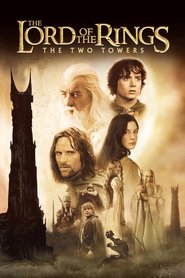
The Lord of the Rings The Two Towers (2002)
Peter Jackson Fran Walsh Philippa Boyens
-
Peter Jackson Fran Walsh Philippa Boyens
grasslands per se but this place I thought was a great stand in for Rohan because it has these interesting rock formations. You know those moving shots where you had both with Aragorn and Legolas, how did you do that? Well that was just a dolly that was trekking along the front of them and even though you're not getting closer to them or you're not getting further away it actually just makes the background roll around the back of them and that was just my obsession with keeping the camera moving as I say I just didn't want to do a static shot.
18:53 · jump to transcript →
-
Peter Jackson Fran Walsh Philippa Boyens
I love that shot of the horses all turning around it's like one of those flock of birds isn't it that kind of sweep around and come back and then I shot I shot all this other drama in one day which is quite a lot of work to do in a single day of shooting and I knew I had to get through it really quickly so I said to the guys look we're just going to shoot it handheld we're going to not worry about tripods not worry about dollies not do any of that
32:01 · jump to transcript →
-
Peter Jackson Fran Walsh Philippa Boyens
I only had a day, and I had to get through it really quickly, this entire dialogue scene. So that's kind of why it has a slightly loose, handheld feel, because it was done for speed reasons. I had two cameras rolling at the same time, so one camera would be aiming at Aragorn, one camera would be aiming at Gimli or Legolas, and it was just a way of blasting through the footage. It's good, though. It suits the scene. Yeah. We recolorized Legolas' eyes in this scene. In the computer? Yes.
32:31 · jump to transcript →
-
-
director · 2h 32m 10 mentions
-
help build up the stamina he'd need to sing day in day out on a shoot. And this was our master close-up that Zach Nicholson shot on the Steadicam. And apart from one cut to a wide shot, it's all the same take, take 16. One of the challenges of shooting live music with live accompaniment is that
12:25 · jump to transcript →
-
a platform on a crane which then whizzed him about 70 foot into the air so it was quite precarious for Zak because he had to climb onto a platform which immediately lifted off so the timing had to be perfect. The end of that shot is then embedded into a visual effects shot which is based on a helicopter plate of Gordons, the French town and this Oxfordshire church is inserted onto this mountaintop but the mountain is created in CGI and we re-project photos
14:49 · jump to transcript →
-
I mean, I have three cameras running on the song. The original master I planned was a slow track in from a medium shot to a close-up over the length of the song. And for a long time in the edit, we kept this tracking shot in. And I remember one day Eddie Redmayne came in, who's been a friend ever since Elizabeth I, when we worked together, and I showed him Dream to Dream, and he was knocked out, but he said, why aren't we using the big close-up that he'd seen in the teaser trailer? And Melanie, my editor, tried the big close-up in, and...
28:52 · jump to transcript →
-
-
director · 2h 5m 9 mentions
-
No, it's the burial. It's the frame around the grave. I know, but I think it's... There's a dolly right there. No. No, there was no dolly near you. Remember, this was a long lens. Look, there's a... I know. There's no way that you would have seen the camera. I sent you a piece of mail from Berlin and asked us to call you when it arrived. It came this morning.
31:10 · jump to transcript →
-
I started a hallway. Come on, I love Get Smart. But that hallway, this is back on set in L.A., but that hallway was, I just remember, you know, walking down a hallway and seeing a place and thinking, oh, my God. That's Caserta in Italy. Caserta, yeah. The Steadicam in low mode. Here we go. I love this. That's another camera there.
44:46 · jump to transcript →
-
This was on the Paramount lot. This is on the stage above that basement where we shot earlier. This is one of the shots that I love as well. There were, I think, eight people in the camera crew, the dolly grips, the operator focus. You'll see in the shot as the bodyguard walks past, the camera just misses itself in the mirror. I love that. I love that. Look at that. And from that close up to her looking, look at this.
51:51 · jump to transcript →
-
-
-
Stunt girl going down the stairs. I think it's always good when you kill a sweet old lady in the first three minutes. Exactly, yes. There's Naomi. And there's our crane. They gave me a crane that day. This is all a set in a soundstage. And they let me go right up. And if you notice, his ears move mechanically, I guess. Right, right. We had a rig that we would bring out sometimes that was attached to a skull cap and two servos.
5:31 · jump to transcript →
-
I'm sure everybody was going, that's kind of dangerous next to that actress. Like how he's torturing him. Yes. Now that actually was a pull back that we reverse printed to get a push in. Because you never know when you get into editing, we wanted to push in and all we had is camera pulling back, so.
9:07 · jump to transcript →
-
But again, this was Simi Valley, Little House on the Prairie sets. We had a crane. I remember this was a beautiful intro shot. I remember Isaac up there on the crane. It was excellent. And there's Jennifer, who's adorable and was wonderful to work with. And again, I always have to apologize for putting her in this movie. I'm sorry, Jennifer. Forgive me. But it was her first movie, my first movie, and we had a lot of fun. Yeah, she's great.
11:27 · jump to transcript →
-
-
director · 1h 45m 8 mentions
-
This scene was written about a year before there was even an idea. That's right. You wrote this scene for another movie idea. It was just a cool opening scene. I wrote this and sort of lost it in the computer. We switched the dialogue a bit, I remember, because in the initial... Gabriel was hit by a swinging crane in the earlier draft, and we changed the line, and it was, I think, my spine is...
3:04 · jump to transcript →
-
the foreboding porthole music, is, okay, this was shot in my backyard, not this. This, that's John Ottman's hand and my foot. And we built that little bit in my backyard. Not the ropes, but those two shots. Yeah, and Verbal's supposed to be hiding behind the ropes. That's the idea of the ropes. Some people seem to be confused by that. These ropes are to replace the base of the crane, which is cut out of the script.
4:23 · jump to transcript →
-
Originally, the crane was sort of a central piece to this whole thing. And the notion of ropes entangled, we thought, very interesting for the story. And this was sort of a... This was supposed to be done over black, but we thought this would be more interesting. Well, we removed the scene. Chris wrote a fantastic deposition piece, which it was a bit too long for, but that sort of encapsulated the idea.
4:52 · jump to transcript →
-
-
director · 2h 8m 8 mentions
Commentary With Kathryn Bigelow And Jeff Cronenweth
-
Commentary With Kathryn Bigelow And Jeff Cronenweth
We used quite a bit of Steadicam. We had these slider rigs that we would slide into position and use remote head cameras and whatnot. But it's great to be able to tell a story and block sequences where you can actually have characters play into different shots in a compartment that's that small and not have locked off cameras. And the thing that I remember,
21:38 · jump to transcript →
-
Commentary With Kathryn Bigelow And Jeff Cronenweth
If the camera's going with it, sometimes you would appreciate the motion and sometimes you wouldn't. So we had to be, you know, we used a learning curve and developed, you know, through a series of different things like crane arms and Steadicam and locked-off cameras that you would appreciate the submarine diving and surfacing and actually feel the bodies, you know, the pull that they actually felt when they had that.
25:31 · jump to transcript →
-
Commentary With Kathryn Bigelow And Jeff Cronenweth
I think in those cases we oftentimes would open up the side of the submarine and work off a crane arm. And even though the gimbal was moving the submarine or moving the compartment itself, the camera was working independent of that movement. And so that was the only way we were able to convey that kind of extremity. Otherwise, if the camera was attached to the compartment itself,
26:03 · jump to transcript →
-
-
-
Fred Dekker
I mean, I would imagine... Back then, I mean, the PG-13 rating was not even 10 years old at that point yet, so I would imagine it's difficult to try to figure out when to pull back and when to, you know, try to push it to as far as you can, certainly in a movie like this. I imagine that's a challenge. This is my Empire of the Sun homage here. This is completely Empire of the Sun. You know, because we want to love this... We'll talk about Remy Lyon's character, Nico. We'll talk about her more, but I really wanted us to love her, and this...
5:57 · jump to transcript →
-
Fred Dekker
So how do you choreograph that? Well, she comes down here. She was up with Robo. Now she comes down. We push in a little bit. She makes a wisecrack remark. She's our sort of Howard Hawks woman. Walks over here, and then he spins around, and now we're into a new setup. And I was just very pleased. I felt like a real professional director doing this scene. This is one of my favorite scenes in the movie, just in terms of the way that it was choreographed and the way it was shot.
29:22 · jump to transcript →
-
Fred Dekker
And I think Office Space is kind of his real claim to fame. But he's in the Finding Nemo movies as well. Oh, yes, yes. And King of the Hill. Oh, right. That's right. Yes, of course. Bill, the next door neighbor. There was a push in there, so take a drink. Oh, right. Time for a shot. A push in for those of you at home is when the camera moves in on something. It's something that I've always enjoyed. It's very old school.
45:29 · jump to transcript →
-
-
director · 2h 19m 7 mentions
-
how we did it, we put the camera, we had this device called a stable eye that we carried, that we hooked the camera up to and two grips carried it and then eventually to get it out of the trench we had to hook it on a techno crane who then lifted it out of the trench and then we created this diversion because it takes a bit of time for the camera to come off this
3:34 · jump to transcript →
-
come off this crane, this techno crane. So we hooked it up. So we created this diversion, this explosion. And in order to gain three, four seconds in the time Heinrich Gerber could in the time sort of duck and be afraid of the explosion. And that was the time that the grips needed to get the camera out of the techno crane hookup and then carry it with this kit.
4:03 · jump to transcript →
-
our actor and pan down at the right time. There's someone, the operator sits at a wheel and operates it from the wheel. Again, I think you can probably see it in the making of footage, how it works. And if not, Google a YouTube video of Stable Eye. They also used it on 1917. And that's where we actually sort of had the idea from to use this piece of equipment to be able to follow our actors in this mud. It's not a Steadicam territory.
30:48 · jump to transcript →
-
-
director · 1h 28m 6 mentions
Don Coscarelli, Cast Members Michael Baldwin, Angus Scrimm, Bill Thornbury
-
built our mausoleum set in this small warehouse. And this warehouse had just gorgeous cement floors. They were brand new. And for a low budget picture like ours, it was really great because we were able to use our dolly. And you can see the floor there was so flat without laying any track. We were able to get a lot of movement in the picture moving around, something that's difficult for independent films on a budget.
3:13 · jump to transcript →
-
Trying to sort of distort reality and having this kid having these nightmares, you know, waking up in the middle of a graveyard and really deluding the audience and thinking they're still in his bedroom. And you pull back and you find out Rory has great pains to try to match everything. There's a couple of crew members of them. And there's Rory's posture from the poster. That's right. Yeah, they used that for the original key art in the domestic release.
25:12 · jump to transcript →
-
It was always a struggle to try to get some camera movement, because we couldn't afford to set up dolly track. And so consequently, a lot of this film, when you're outdoors, you'll find that we're handheld. And this is a shot which I'm particularly proud of. We shot it a number of times, just a handheld little shot, keeping some suspense, but not having to just be riveted down all the time. We were able to keep some movement. And you operated camera on this whole film, did you not? Yeah, absolutely. And at my own risk in a lot of spots.
48:32 · jump to transcript →
-
-
multi · 2h 34m 6 mentions
James Cameron, Gale Anne Hurd, Stan Winston, Robert Skotak + 8
-
Pat McClung
This scene was shot really quickly. It was pretty much all handheld, 48 or 60 frames a second. I think 48. Then Sigourney had to loop all her lines at slow speed, which is always odd. Our first effect in the movie. It's great, because it's what you expected to happen and then it's not what you expect. She was actually under the bed for that sequence. We built an artificial body from her neck down. Someone is under the bed with her. I can't remember who the lucky guy was that created the illusion of the chestburster. Pushing its way through her. It sets up the character. This is her nightmare. You know that she never wants to have to face it in real life again because she's haunted by it in her dreams and her nightmares. This effect is as if you're outdoors. When the camera dollies over, you see it's just a video projection. The idea was that in outer space there would be places you could go to get a feeling you were in a natural environment. So that plate behind her was shot out in the garden at Pinewood Studios. It was a VistaVision plate. Originally, there was supposed to be a birdhouse in the background in that garden, and she would have Jones on her lap and a bird would fly in and Jones would jump up and hit the screen and that's how the audience would find out that she wasn't actually on the earth. This scene was cut from the release version of the film, which became the source of some controversy with Sigourney. She later said in print that she had based her entire character on this scene, and she was devastated when it was removed. At the time she first screened the film, she told me she didn't like the scene, and then we wound up reading interviews where she had a big problem with that. We didn't have a chance to talk about it because of the postproduction schedule. We were working in England, kind of in isolation.
7:47 · jump to transcript →
-
Bill Paxton
I encouraged the actors to customize their own costumes and armor, to give the impression they had been out a lot, that they were seasoned, that they had been away from command authority on their own a lot and were good enough at their jobs that they were allowed these kind of latitudes. This is a continuation of the motif from the first film, where they're wearing Hawaiian shirts and all kinds of strange stuff, all of which was a new idea in science fiction. People always wore uniforms on spaceships. That's how it worked from Star Trek on. Every science fiction film ever made, there was the general-issue uniform. Alen broke that mold and it just seemed so right to people. They recognized the archetype instantly. "Oh, these guys are truck drivers." "They dress however they want. There's nobody to tell them not to." And so the idea here was extrapolated to a military unit that's worked at the extreme fringes of human civilization. The power loader was not designed by anybody in drawings per se. I had done some preliminary drawings, but it evolved basically from trying to figure out how to make it work. We built full-size mock-ups of the arms and legs in foam core. There's a guy inside that thing, a big, strong English stunt man moving it. It's supported by cables. It's completely an on-set gag. The English visual effects guys thought we were crazy the way we wanted to do it. I said "It's the gag where the dad lets the daughter walk on his feet, his three-year-old." So standing behind Sigourney right now is this big 270-pound body-building English stunt man. He's raising the arms himself and he has in his hands a control that allows him to raise the forearm of the power loader. And then when they walk, they have to walk together. The weight of the machine is held by a crane which is off-camera, or some kind of overhead track rig - we had two versions of it. If we didn't need the machine to turn, we mounted it on a pylon, a boom-arm thing, and if we needed it to pivot we hung it on wires.
35:31 · jump to transcript →
-
Bill Paxton
My kids remember all the dialogue and one thing they did was "Bay 12, please." And Newt's line: "They're dead, all right? Can I go now?" How about "Get away from her, you bitch"? The most classic line in the movie. And obviously this was another interesting idea that Jim had, which was to use a Steadicam harness that's normally used for holding a camera to make a futuristic weapon out of. Everyone said it couldn't be done, which is at least at the beginning of Jim's career typical of the response to Jim's ideas, and then, of course, it worked beautifully.
38:03 · jump to transcript →
-
-
director · 2h 10m 6 mentions
-
And this was actually, again, this is a set built by Jim Bissell. This was all on a stage at Leavesden Studios. And I think we only had four days to shoot this entire sequence. And that's where the decision to go handheld played into it. Usually I like to shoot in a pretty formal style, but handheld was the one way we could move with real speed to shoot the sequence. And one of the things that's very important to me about handheld is that you don't try to emphasize the...
13:27 · jump to transcript →
-
the use of handheld. It's kind of minimizing the shakiness of the camera. But most of the shots within the sequence are handheld. And that character, Venter, is an actor who came in. There's only going to be one scene. Yeah, he was supposed to die after he hit his head on that pipe. And he did that fantastically. He sent a video.
13:56 · jump to transcript →
-
And we scrambled and... Yes. And I had... You did a great job. Simon did a great job with this stuff. Oh, he was just one of... The timing of this was doing all this with a steadicam on an active train platform. Because when we went back, we couldn't have the same control of the platform. And this was the very first shot on the movie that I designed. And they're very helpful to just give it to us, like, within hours. City of Vienna was incredible. I tolerated a lot. Look at this shot. That was the first shot of the film I designed. It was standing on there and said...
26:51 · jump to transcript →
-
-
-
John McTiernan
Ah, there is Painless! One of the trips at the beginning of this, when they hired me they sent me to the armorer, and I was looking around, and like, "How can I find some toys that are neat?" And I saw this thing, this gun that was supposed to be mounted on helicopters... In order to make that thing move, work in the movie, we had to slow it down, because the barrel went so fast, you couldn't even see it. You couldn't photograph it as it spun. What we didn't know was there was 100 pounds of battery standing behind the man when he ran and all the ammunition he could carry amounted to six seconds worth of firing, even at quarter speed shots. It would bury you up to your ankles in copper shells or brass shells, in the five-second burst that a man could carry enough ammunition for. 'Cause that was the whole issue about how much ammunition can the man carry on his back. How many bullets can he carry? And it turned out, it was really only a five-second burst, which is ludicrous. What the fuck would he carry anything like that for? It's nonsense. But it's a movie, who knows. Who knows, that he got reloaded. It was just the practical part was that, I am not sure how we mounted it the first time. 'Cause we were afraid that, they would buck loose on him. And I think we mounted it, hung it overhead, from a chain. With some safety lines on it. 'Cause what we were afraid of, was that it would spin back at him. And it could blind him easily. I mean, even with safety glasses and everything, it just cut the hell out of him. And then like, you know, who was it, who just got killed just from a single blank going off. Well, this thing, if you got too close to the front of it, 'cause they were big shells, they were 30-odd thick shells or whatever that is, or whatever that size Is, it's bigger than a .22. I got in a lot of trouble for this shot. And it was with a crane and a remote camera.
18:22 · jump to transcript →
-
John McTiernan
with static cameras, yeah, this is that same shot set up with setting up with the crane. This stuff is all, the second unit, I don't know, work maybe, two-three weeks.
21:52 · jump to transcript →
-
John McTiernan
That shot was a dolly with 180 degree pan in it, which you couldn't at the time get an American cameraman to do. And it's just terrible trouble. Because Don McAlpine was Australian and they had a much looser style. I could get him to do a Iot. And he loved doing it. You know, like, this is another dolly move, watch this one.
31:28 · jump to transcript →
-
-
director · 2h 19m 5 mentions
-
But it was another Steadicam shot. You know, after a couple of takes, we figured out when they had to say their lines, and they said it all to the camera, so they know when the camera was on them. So it wasn't easy, because all these shots are not easy to do. But we always got it, and not in a tremendous amount of time.
16:57 · jump to transcript →
-
prefers when he can absolutely control the framing of the shot and he doesn't have to, when the Steadicam operator sometimes is moving, he has to frame, he has to make framing decisions himself. And Marty would prefer to make those decisions. But as he's gone on, he's become more and more friendly to the use of the Steadicam. The famous Koppersad was, it was
32:58 · jump to transcript →
-
and he gave me some Christmas money. From then on, I kept my mouth shut. I knew Jimmy. Director of Photography, Michael Ballhaus. This, again, was a fairly complicated shot because it was a mixture of a crane shot and a Steadicam shot. So what happened is that we had Larry McConkie, who was the Steadicam operator on this movie, who was brilliant, he was the best in those days.
1:48:08 · jump to transcript →
-
-
-
Simon West
but we did actually build a full-size working maquette of the robot that was eight foot tall, weighed 500 pounds, and this was built by my special effects supervisor, Chris Cobalt. It had to be moved around on a crane, of course, because it was so heavy, and it was really only used for close-ups of bullet hits and when it was looking right into her face, eyeball to eyeball.
2:04 · jump to transcript →
-
Simon West
My stunt coordinator and second unit director, Simon Crane, and I went to see a dance group called De La Garda, who specialize in bungee work and running around walls. And it was such a great high energy performance that I thought I'd like to do something like that in the film. So between Simon Crane and I, we devised this whole action sequence that is the next two minutes of the film.
27:41 · jump to transcript →
-
Simon West
And we attached the ropes to it and then got 200 or 300 local Cambodian extras to tug on those ropes. And it was going to be a one-take thing. It took days to put those blocks in. And I was leaving the following day. So we had one chance to pull this thing down. And we rehearsed them and rehearsed them. And I had four or five cameras on it and one Steadicam.
41:53 · jump to transcript →
-
-
scholar · 1h 32m 4 mentions
The Night of the Hunter (1955)
Second-Unit Terry Sanders, Film Archivist Robert Gitt, F. X. Feeney, Preston Neal Jones + 2
-
It's interesting to notice, too, how the camera is very light, almost like handheld in certain places, like when Peter Graves stood up and so forth, and the camera moves with the characters, which I think was fairly new to movies. Getting away from the static shots of the 40s here in the 50s is lighter equipment, I'm thinking. That's what I mean. It's a different lens, but it's the exact same angle. And again, very simple set. You've got a flag, the wooden...
7:22 · jump to transcript →
-
Now, it was Cortez's idea that they pull back here at this point. Originally, they were going to zero in from back and go into a close-up, but he had the idea of reversing it, and Lawton immediately said, oh, that's much better. I think that's the first time we've heard this. That's the Dixie Queen, yeah. Or the Delta Queen, excuse me. Delta Queen, probably, yeah.
15:24 · jump to transcript →
-
Now, these days, at least, I don't know about 55, that shot gets a laugh in theaters these days. Does it? Because it's so clear, I think. If they had murked it up a little bit, it would... But, of course, nobody could argue with this last shot there. It's like Dolly somehow. Yes.
44:22 · jump to transcript →
-
-
director · 1h 30m 4 mentions
A Nightmare on Elm Street (1984)
Wes Craven, Heather Langenkamp, John Saxon, Jacques Haitkin
-
She was on a treadmill. She was on a treadmill attached to the dolly. This is even early days of Steadicam to a certain extent. Steadicam was not as extensively used as it is today. I'm scared. That's the 14.
3:14 · jump to transcript →
-
It's funny when you start to learn what you can do without. Here's the famous scene of you hear a noise outside and of course somebody has to go outside and investigate. Just this shot is so nice where we walk them without a cut, the three of them. That's nice. I think you had a big dolly track set up here, didn't you, from the porch? I'm serious. Yes, there is. That went out into the yard. That's right, all the way across the yard.
8:15 · jump to transcript →
-
Those pajamas, I still have those. I was able to wrangle them away from Wes before he put them in his garage. I still have the alarm clock and I have that telephone, too. Do you really? The tongue phone? Not the tongue phone. I have just the actual telephone. I think Jim Doyle got the tongue. Then I've entered my dream. Now, this was a very long Steadicam shot, if I'm not mistaken. And at the time, it was very, very new, the use of that kind of equipment. I remember.
36:54 · jump to transcript →
-
-
-
didn't like the ox scene either, apparently. He preferred the dog scene, but they've taken the dog scene out and put the ox scene into the cut that isn't the director's cut, but that everyone tries to make out is the director's cut. Yes, but then that keeps the continuity of the opening with the ox pulling the ship. In the theatrical, it's a big crane lifting it with a dog on board, and then you see shades of it. But earlier on, we got to see the ginormous facehugger, which is the super facehugger, which lays queen eggs.
45:19 · jump to transcript →
-
wheat field or something like the high sort of grass and you can see him coming in and that would do that with the alien we can see it from above shooting down with these guys getting chased i mean that was a great kind of setup where what we're about to see now is um the chase through the corridors um and alex thompson the dp said you know it all it's all great when they you know the steadicam operator flips the camera which you've never seen before but
1:53:04 · jump to transcript →
-
I remember this being a big deal. I can't remember if it was the trailers or TV spots or something, but I remember there being a lot of shots of this, the Steadicam charging down the corridors, which was really striking at the time. You'd never seen a Steadicam do that before. It's like now when you see an incredible CG monster and it just doesn't touch the sides, you don't notice it. But there was a time when that would have been really impressive.
1:56:12 · jump to transcript →
-
-
director · 2h 49m 4 mentions
-
The stunt guys were fantastic on this. There was a fella called Mick Rogers and Simon Crane. I had to have two of them because it was such a huge job. Overall, I had a good team of guys.
51:00 · jump to transcript →
-
and Simon Crane, the stunt coordinators, and David Tomlin, the first AD, were, and myself, in fact, was just always pounding the S word, safety, you know? Every chance we could with the troops, with everybody, safety. And not only that, but the people who participated in the battles, we had the luxury of having them for, well, three weeks to train them in how to miss and how to make it look like a hit.
1:51:21 · jump to transcript →
-
But for time, we'd just do handheld stuff, you know, like this. And we were running out of day this day, and we just had a lot to do. John Toll is the master at handheld. He's able to anticipate stuff before it happens. He did a lot of it in the actual battle. And kind of knows, has a sixth sense about where something is going to happen next so that his movements are coordinated with the movements of everyone else, and it's not planned.
2:09:23 · jump to transcript →
-
-
director · 1h 59m 4 mentions
-
By the way, the car, in order to get rid of the engine noise, we had to pull it up the driveway with a rope. Wow. And the crane crashed into the car and there was all kinds of disasters. So the money, Benicio. The money, Benicio came to me and he said, how much does $15 million weigh? And my immediate response was, who cares? And he said, look, I want to know if I'm going to be carrying this bag. I went to the prop guy, Ian, and I said, all right, figure this out. How much does it weigh in thousands?
1:18:24 · jump to transcript →
-
I didn't even watch Tay when he, I was sitting on the other side of that bureau and I watched the expressions of the crew as they watched him die. Do you watch the monitor when you're directing or do you sit by the director? I try to stay away from it as much as possible. Like sort of Lumet style, watch the acting? I try to stand as close to the camera and I got burned as a result a couple of times. That opening shot, the opening crane shot of the movie,
1:40:37 · jump to transcript →
-
And Benicio, in his reference to Papillon, I'm still here. Yeah, nice work with you and Dick on this shot. That shot, by the way, I swore I would do this. I didn't design it. Bill Clark, my AD, I had a completely different shot designed. The long dolly you're talking about. Yeah, yeah, because it works on so many levels.
1:48:06 · jump to transcript →
-
-
-
Jonathan Lynn
We got really lucky. Feeling better? Yes, thank you. Okay. Let's go for a drive. A drive? Yeah, a drive. Well, I don't know anyone else in town. This was a slightly complex, difficult crane shot. It doesn't look difficult when you watch it.
11:20 · jump to transcript →
-
Jonathan Lynn
Because there are no laughs in this scene, I was able to shoot it in a sort of a long, lingering crane shot. I didn't have to do any coverage because I didn't have to risk... I didn't have to, you know, envisage the possibility that something might be unfunny and have to come out.
1:14:21 · jump to transcript →
-
Jonathan Lynn
We didn't have any real backup. The camera was not on another boat We had with us apart from the actors we had the camera Handheld because there wasn't room for all the equipment to support the camera and dollies and things he had a light we had a piece of polystyrene to bounce light off and we had the sound mixer and the boom man and that for me and the ad that was it and
1:27:58 · jump to transcript →
-
-
director · 1h 35m 4 mentions
-
OK, first, I think when we were thinking about the concept in this beginning, Enrique and I, we discussed a lot about the way that we should shoot that, and the main concept in this sequence was bringing realism to these survivors in this house. That's why we used a handheld camera... shooting the whole time, you know, really close to the actors to convey to the audience that these survivors are isolated in this house.
0:56 · jump to transcript →
-
This sequence was one of the ones we loved the most during the writing process. The first moment that the father confesses, in a way, his betrayal. But we see this in two different angles because we know the truth. We assist, in the first sequence, to the truth. In a way, in terms of the story, we put the finger on the big issue for this character, for Don, which is when he abandoned his wife in the cottage. Now he's with their kids and he needs to tell them what happened in the cottage, which is something really hard for him. And this is one of the moments, in terms of visuals, that the style of the movie, again, is changed because it's a confession. And I thought it's good to change from the handheld stuff to something static, which delivers, you know, the importance of the moment.
21:26 · jump to transcript →
-
Here, again, the challenge was to bring the realism of these extreme moments. The use of the handheld camera and documentary style in the editing is very important to feel the panic, and to see how everything is about to start again.
49:28 · jump to transcript →
-
-
director · 1h 36m 4 mentions
-
Exactly. Here's actually a lead into one of our favorite parts of the new, the sort of new tone of this film versus the last one, which is we get to have an eight-year-old boy here that soon... Yeah, I don't like killing a kid in the beginning of the movie. ...soon bites the dust. And this is actually kind of a fun scene to shoot, too, because we actually had a helicopter in the techno crane for shooting where this crash site was. It was basically like a clear-cut...
4:13 · jump to transcript →
-
I don't know. This is very good work. Again, another night. Another cold night. Yeah, luckily we weren't in the rain yet. But once the rain started, you know, once you're just out there in the cold nights, it's fine. But the rain, I mean, even with the best rain gear, that stuff gets in and your hands turn numb after 10 minutes. I don't even know. We had some great camera assistants. And these guys, a lot of the camera work's handheld. I don't know how they got two. We had these great operators.
31:47 · jump to transcript →
-
And it's colder water. So it would have been better if it was like real rain actually hitting these people instead of this misery that we unleashed upon them from a giant crane. Yeah, on some of these scenes, it doesn't look cold because we had little fans hanging off just off the side of frame to blow their breath out of frame quickly so you didn't see it. But a lot of these, it's a lot colder than it appears. It's not always so glamorous making a movie, is it? No.
1:00:07 · jump to transcript →
-
-
director · 1h 34m 4 mentions
Scott Stewart Jason Blum Brian Kavanaugh-Jones Peter Gvozdas
-
Scott Stewart Jason Blum Brian Kavanaugh-Jones Peter Gvozdas
So here's an example of what we call the gray point of view, this drift through the house that had these nodal pans, you know, which were floaty but somehow precise. And I stabilized all of these shots because, you know, when you shoot with a Steadicam, you get a natural, you do get a bit of shake. And so we try to make them even more perfect by stabilizing them in post. And we did have earlier sequences that had versions of that kind of moving through the house.
38:46 · jump to transcript →
-
Scott Stewart Jason Blum Brian Kavanaugh-Jones Peter Gvozdas
You know, cinematically, it's interesting when you try to do these slow creeping shots versus handheld shots and what those feel like and how those mean. And this was, you know, it was always sort of choosing your time to which one was most appropriate to use and what it would mean. And once again, a live conversation, both actors were present that are talking to her on the phone. And then we get into this montage here, this sort of, you know, it's the obligatory, you know, web search.
43:43 · jump to transcript →
-
Scott Stewart Jason Blum Brian Kavanaugh-Jones Peter Gvozdas
but still do it on this very, very rapid schedule. So here, once again, you know, very first person point of view and this, you know, all handheld camera all the way through this. And, you know, part of the idea was, you know, the dogs, the progression of dogs barking in the neighborhood. You know, as we learned from JK that, you know, the dogs keep them up at night, you know, when they, the greys come around. And so here we are, we have our first jump scare of the sequence.
47:21 · jump to transcript →
-
-
director · 2h 9m 4 mentions
-
It was raining while we were shooting it. The snow is artificial, but you can't see the rain. But we were pushing the dolly down the hill, and then we had to then, at the very bottom of the hill, push it forward. And it took a whole lot of muscle to make that work. And then this camera move here...
19:38 · jump to transcript →
-
This was also a very difficult shot to achieve, and putting a dolly on a Viking longship is not easy. And the guys behind Alex had to, like, duck and throw his oar out of the boat in order to achieve this shot.
22:57 · jump to transcript →
-
worked so hard with me and Jaron Blaschke, the DP, on being able to articulate our vision. And with the horse falls and all this stuff, I mean, it was a nightmare. And we spent, I don't know how many times we visited this location with a viewfinder, restaking all these buildings so that they would all be built in such a way that we could achieve this shot and move the dolly through it and have enough room for the horses and see down the different alleyways to get enough depth.
26:53 · jump to transcript →
-
-
-
Eng Commentary
Note that the signature shot, that is, where the director places his own name, occurs at the unique moment of perfect framing by the base of the Eiffel Tower. The film on many levels will seek such a balance of the unsteady handheld look of cinéma vérité, the disorderliness of life itself, and yet the perfection of form, the balance that comes only from art. It's one of the light touches of mastery that gives The 400 Blows its charm. As if it were a novel and he its author, Truffaut dedicates his film to his mentor, André Bazin,
2:35 · jump to transcript →
-
Eng Commentary
Many of the director's choices in this film were dictated by budgetary constraints, for the film was produced independently. Thus, the choice of black and white film stock, which came to be associated with new wave films, was essentially a matter of economy. Similarly, the handheld camera, which permitted shooting in narrow locations and made the quick pans back and forth in this classroom scene feel natural, was less costly to operate than the bulky camera setups of studio filming.
4:44 · jump to transcript →
-
Eng Commentary
I discovered with a sense of wonder that very lightweight technique of filming. The camera was handheld, three quarters of the time. Until then, my experiences had been with what we called heavy video on TV. In other words, those enormous cameras that you needed three or four people to move left and right. I found the freedom of this new way of shooting terrific. I remember vividly...
34:24 · jump to transcript →
-
-
director · 2h 41m 3 mentions
-
It's at this point that two continuous scenes were cut from the U.S. version. In the first, Angel Eye's pursuit of Bill Carson leads him to the ruins of a raided fort. This scene contains some of the most beautiful cinematography in the picture, notably a camera move around Angel Eye's head that seems to use the brim of his black hat as a dolly track. In this ruin, he meets a wild-eyed drunken Confederate sergeant played by the wonderful Spanish character actor Victor Israel.
45:45 · jump to transcript →
-
Essentially, Blondie has been rearmed, but his gun is at rest. He's been given a reprieve of sorts, and he now has the luxury of time in which to think of a way out of his predicament. This shot is the film's equivalent of the inexpressibly moving crane shot that introduces the town of Flagstone in Once Upon a Time in the West. We open with this vignette of the Matthew Brady-like Civil War photographer.
1:35:43 · jump to transcript →
-
What we see is already invested with depth of focus and breadth of composition. It feels quite complete. We need nothing else. And then the camera crane rises to reveal an unexpected extension of depth and composition that is absolutely majestic. This railroad station sequence was filmed at the La Calahorra station between Granada and Almeria.
1:36:07 · jump to transcript →
-
-
director · 3h 16m 3 mentions
-
way to kind of pull back to the old loyalties. Of course, Fredo has married some floozy wife who embarrasses him in front of all the guests by drinking too much and flirting with all the men. I mean, the family is really starting to break down in this period. Fredo's wife was played by Marianna Hill and looked beautiful in that extraordinary gown.
28:23 · jump to transcript →
-
I very much enjoyed this section of the film, this historical setting, period setting, wonderful actor, great villain like Gaston Mosquin. I thought imaginative shots and in terms of these big dolly shots through this wonderful Dean Tavelera set, telling the story in an interesting way, you know, how the neighborhood was owned by a local
1:51:20 · jump to transcript →
-
I guess we were on a dolly on a building across, you know, either on track. In this case, the camera was on the dolly track. And maybe it was on a dolly track across from the building so we could move with it. Panucci had a good costume. I like his costume here. These are, of course, the puppets.
2:00:17 · jump to transcript →
-
-
-
John Mackenzie
This has been all smoothed out, but it was a nightmare to do. And the mounting of the camera, you maybe see sometimes when you do the long shot, I had to mount the camera in such a way that it was separate from the car. You've got to be careful you don't get a slightly seasick effect. This was quite an interesting effect. Yeah, we did that about three times. He nearly hit us the first time. We're on a low crane arm and he comes straight at us. And the timing of taking the camera up so the car can drive underneath,
34:49 · jump to transcript →
-
John Mackenzie
This is all done on one camera. And you see it's gone up and over and behind. Now it comes around again. If it's on a crane, it can't go to the left there because we've seen that there's no rails there. This is Phil Mayhew again, who was operating while adding cameraman. But what is quite interesting, now we're starting to go to the left. So it's sort of really doing the impossible. And it goes on and on and on. It's all one shot. But what in fact happened
1:36:49 · jump to transcript →
-
John Mackenzie
is that he was on a crane, but he was sitting on the front of the crane, holding the camera handheld. So the camera would go up and over and back. And then when it went sideways, he stepped off the platform of the camera on his feet and moved sideways with it. You can see how steady the shot is. It's quite amazing. So what looks extremely simple is very complex.
1:37:19 · jump to transcript →
-
-
-
You know, this is... She realizes now she's been exposed, that he knows the truth of both her identities now. I don't want to make any trouble. I promise. I have to go to work. It won't take long. Please. Thank you. See, I think the beauty of her performance is that we see so much tension beneath the surface whenever she's Joanna Crane.
1:13:01 · jump to transcript →
-
I can't think of a better way to start a friendship. We haven't met. I'm Bobby Grady. Joanna Crane. I saw it on the mailbox. What are you, about 30? Still call yourself Bobby? I'll grow up when I'm ready. Oh, I think you're ready. Are you alone? Aren't we all? It's interesting framing of that shot. The two of them from a distance. And they're both going through their own...
1:14:28 · jump to transcript →
-
I'm sorry for busting in on you like this. I really appreciate you listening, and I won't bother you again. Uh, Bobby, if you, um, if you ever really need me, talk whenever I'm here. I know. Answering the phone to Anna Crane speaks to her, um, the, uh, her very constrained, very businesslike approach to, uh, to her life, again, as an avoidance of intimacy.
1:15:25 · jump to transcript →
-
-
director · 1h 54m 3 mentions
-
off the Vincent Thomas Bridge that's made by Richard Chance on a dare. The beginning of that shot is, of course, Bill Peterson standing on top of that bridge waiting to dive, sort of getting a sense of how he's gonna do it. And that shot was achieved with a fairly new piece of equipment at that time that's now in wide usage. It's a Luma Crane, it's called. It's much more portable and lightweight and easier
8:57 · jump to transcript →
-
to set up and manipulate on location than the original cranes were. A studio crane is too bulky and too unwieldy to take to a place like a bridge. It was only possible to do a shot like that because of this portable, lightweight crane that was originated in France and that they had a very few copies of
9:27 · jump to transcript →
-
in this country and I remember seeing a demonstration of that crane at the place where the equipment rental house where we were able to rent it and I thought my god I've got to find a lot of usage for this and so there's a few shots of it in To Live and Die in LA a few shots using that Luma crane or variations of it once we use that piece of equipment it suggested other kinds of equipment that
9:57 · jump to transcript →
-
-
director · 1h 39m 3 mentions
-
And considering what they've seen and where they've been, there was no other song that could work for this. So no matter how many songs people tried to convince me to use because they didn't think Cry To Me was well enough known, I just couldn't do it without this. And there's this lovely Traveling Dolly shot. And it wasn't on the first record, though it was on the second record that RCA put out, and people went into the...
56:58 · jump to transcript →
-
And they started crawling around, and we did this wonderful scene. Now, I don't know how film-aware the people are who are listening to this, but there's something called video taps. And that is something that shows you what's going on by your camera, what's going on in a room. There's a Steadicam here, which is a man with a camera strapped to his shoulders. So he is the camera.
1:06:47 · jump to transcript →
-
So I followed the man with the Steadicam, which is a man. As I said, it's a man who is a camera. And I followed him around and reported back to Emil. And when it was all over, I looked back and realized it was an entire mirrored room. So my tarot was that when the dailies came, which would be two days later and there was no way to go back to this scene, that you would see the little picture of me huddled behind the camera and it would ruin the set. So I remember when we saw the dailies...
1:07:37 · jump to transcript →
-
-
director · 1h 42m 3 mentions
-
of course, was situated in the interior, isn't it? Right. It's when we saw this big pit later that we realized, looking there, that it was so sensational and so beautiful that you had to find something. We found this crane above, isn't it, that would drop the steel stuff on Robocop. But... Here's the Rob Bottin third act face. And we should mention it here because this is a pretty cool thing. Watch. And watch, again, the way it's revealed. First time you see it, it's distorted, which I think is beautiful. And now look at the full work of it.
1:21:23 · jump to transcript →
-
You mean the more of a kind of a Leone feeling of the guys coming at each other down the street? Of course you couldn't because it was not the style of the movie. You know, you couldn't slow it down. You had to go for the story continuously. And also, yeah, you really feel like this thing wants to wrap up now pretty quickly. This is a great location. Yeah. Now, you know, we had all this wonderful plan for when the crane cab blows up.
1:31:40 · jump to transcript →
-
that you would see, you would hear the bullet coming through. He would go, where is it coming from? Where is it coming from? And then you would have an outside shot of the windows where they all went red as it blew up inside him, and then it would explode. Well, look what you get. But that's pretty cool that we got that. Well, we invented that basically when we came there, isn't it? They had a crane, didn't they? Something like that, yeah. But the idea of using it, and look at this shot here. This is really a great shot where you really think, my God, Jesus, look what happened to him.
1:32:04 · jump to transcript →
-
-
director · 2h 24m 3 mentions
-
Will I Be A
There's a miniature shot of the alien running up, then it cuts to a close-up of Tom. We did do a fake head of Charles Dance - it's coming up here in a minute - where the creature punches a hole in his head. And we had to do a head cast of Charles in an extreme expression. And as I recall, he was great about it. He's actually, for as serious as this character is, he was a very jovial guy. Yeah, I guess it was like an animatronic head, dripping. In order to do this movie, we built a complete silent motion-control dolly that could go at running speed, which we wound up never needing to use. You could actually run with it at high speed and it would repeat, and it was quiet enough to shoot sound. Of course, when we got to England to set it up for the first shot, nothing worked. We were tearing our hair out and found out the system wasn't grounded because they had run an extension cord into the hallway. But then, once we found that, we didn't have any problems. But that was in order to enable us to shoot scenes with pans and tilts, and then scale those moves to shoot the scenes back at the studio with a rod-puppet alien one-third scale... with a moving camera, so it wouldn't skate around in the scene. I think this rod-puppet technique is very interesting. I think it still has some validity now, even in the digital era. Yeah. - And probably now, I don't know... Well, I guess you'd still have to do the motion-control stuff to match moves. Or track it now. If you're gonna do a CG character, you can track it. But you wouldn't be able to track like that with a miniature puppet, would you? You'd have to use motion control. It's a real mechanical lollapalooza. But there is a nice presence to it that really looks like a physical thing. It gets around some of the difficult issues of CGI, in that the lighting is playing on it. And the director can direct it. Fincher could come by and direct the puppet. Five guys, you know, operating this character against bluescreen, there were some pretty bizarre mountains of equipment to get these shots working. And flags, and stands, and wires everywhere. And flags, and stands, and wires everywhere.
1:04:35 · jump to transcript →
-
Will I Be A
I loved that Steadicam stuff down the tunnels, and the points of view of the actual creature. And the way they worked it so they could switch from 24 frames to three, just like that. Incredible. Yeah, and it'd spin round.
1:58:38 · jump to transcript →
-
Will I Be A
Claustrophobic shooting, in all those tunnels for weeks. This alien point of view was shot with a prime 10-millimeter lens, which is distorting, and we did a bit of Steadicam. The Steadicam operator was running down the corridors to get a sense of speed. He did a marvelous thing, which I thought was very clever, that he flipped the camera over whilst he was running, which I had never seen before. A very effective move, and, of course, with the running, sometimes the lamps were kicked by the actors or by the crew running. It was quite a difficult operation. Blood spattering, here. Fast and furious. I think we had a dummy for this. All you see is his legs, but... That's good there. Another matte shot. Many elements for that shot.
2:03:48 · jump to transcript →
-
-
director · 1h 58m 3 mentions
-
Then you see it's a crane shot, a moving camera, but still the background, the building is painted. Here, you see? The whole, yeah, LAX. But the whole back there, the thing is a painting, the building. It was just nothing there, just dark. So they sent you where, to the end of the runway? It was a special, yeah, a special area of a very more quiet, deserted area of the airport. And we shot it there. Where did the jet come from?
11:43 · jump to transcript →
-
I've ever done in a film. And he has done quite a bit. And here you see the president is a little bit shocked about what he just did. He shot somebody. He shot somebody, but out of a reflex, out of a situation where he just had to react. And he's really kind of shocked about that himself. But what could he do? Here's a nice steadicam shot.
45:19 · jump to transcript →
-
And in the next shot, it's an amazing shot, one of my favorite shots. It's a Steadicam shot in that whole prison here. And it goes wider and wider and wider. And the sound is building. This is a hellhole of a prison. And you think stuff like that you can only find maybe really deep, deep in Russia. You find it in Ohio. Is that a prison they use now? It is closed since, I think, five years or six years.
1:33:23 · jump to transcript →
-
-
director · 1h 54m 3 mentions
-
My Question Initially To Jean-pierre Was
Sylvain Despretz, he works a lot with Ridley Scott's design, this chair. I love the idea with the weapons hidden on the char. These were tough shots - to show enough of the alien, but not give it away. The problem with the alien suit is that if you show too much of it, it's very clearly a guy in a rubber suit, but for wider shots, it was done effectively. Where you see the shadow, it was a matter of lighting so it wasn't revealing the body, but only the shadow across the grid. As an actor, I haven't seen often the monster on set. Remember, Jean-Pierre? As an actor, I haven't seen often the monster on set. Remember, Jean-Pierre? I remember, we changed the sense of the scene during the editing. He was supposed to listen, or to see an alien, and we put some different sound to explain the aliens are escaping from the cell. That's true. I don't like to do that, because an actor plays something, and if you change the sense it's not good. But that was good, because it added to the pressure he had to face, knowing that the complete ship was coming under the aliens' control. Another stupid idea. I love that shot, the Steadicam, where we speed the picture. Pitof put some flames from the guns, because the guns didn't work. Never. The actors had to pretend to shoot. It was a bit breakable as well.
43:33 · jump to transcript →
-
My Question Initially To Jean-pierre Was
You are going to see in a couple of minutes the nest. It was a kind of homage to Giger because in the script it was an action scene and I didn't like it. I prefer to imagine this disgusting nest with tails and parts of alien. It was really disgusting with lots of slime and Sigourney loved that, to jump on this very disgusting nest. I love this idea when she catches the tongue. It hasn't happened yet, but this whole business about getting Ripley away from the rest of the pack... She falls into this ocean of alien... alienness which I quite like, actually. And she's supposed to sink into this like into an ocean, which was a precursor to this bit at the end of the film where they were floating in alien goo and the aliens swam in it like crocodiles. This shot seems very easy. It was a nightmare because it's a Steadicam. You can't see the crew, you can't see cables. You can imagine the nightmare because we turn around Sigourney and Winona.
1:28:42 · jump to transcript →
-
My Question Initially To Jean-pierre Was
The eyes of the newborn slid in and out. And now the love scene. On this shot you can see all the newborn. It's the only shot because we erased in postproduction the crane. Here he is taking a couple steps. He was supported by a boom and rod-operated. Dave Penikas was the mechanical supervisor on this, and Yuri Everson supervised a lot of the construction steps of it as well. It's difficult because of all the hydraulics involved in making it move, and having it move so closely to the actress, both Winona and Sigourney. We had a lot of safety concerns in building this thing mechanically, and also in the operation of it. We ended up with two computers to operate this creature, one at the puppeteering end and one on the puppet, to continually make sure the data being fed to the puppet was not able to be misinterpreted and have something move in a completely opposite direction. Jean-Pierre really wanted to convey a confusion and sadness from the creature, where he doesn't understand why he's being sacrificed like this. We had a variety of puppets ranging from our hydraulic character to rod-operated puppets. I think there was maybe three different phases of puppet here. So now this is the ending I found at the end. You can understand it was the ending for the General Perez, for Dan Hedaya. During the shooting I wasn't sure it was working. Now when I see it I think it's good. Because Tom and Alec had to find some new technology very quickly because we found this idea very late. And all the stuff coming out of the newborn have been shot in liquid to have this zero-gravity impression and a lot of different things. I thought that that was all digital, those shots right there. No, that's photographed and it's digitally... It was mixed digitally but all the elements are elements I shot... You need a tank for this zero-gravity feeling. Right. But it had a lot of layers together to have the amount of stuff.
1:44:06 · jump to transcript →
-
-
-
Peter Hyams
What we're putting shot here is a very complicated visual effect. We had a track in from a still photograph, the comet and the moon, and then add that to a very complicated crane shot so there would be no movement. I thought it was very important photographically in this film
3:10 · jump to transcript →
-
Peter Hyams
This is Arnold, and this is Arnold being hoisted up 50 feet in the air with all these rain machines going on. This was done with a large crane called a techno crane, which was on top of another crane called a Titan crane, which allowed us literally to go from the ground to over 50 feet in the air.
1:27:02 · jump to transcript →
-
Peter Hyams
and you didn't want to see him put in this position. You'd be amazed what you agreed to when you're on fire. Don't do it, Bobby. You're better than this. You're better than him. You know, considering how you've lived your life when this is all over... I love long lenses. I guess you could see that because this film was shot with long lenses. It's gonna happen. Why shouldn't you have the best seats? Look what it does, though, when you take a close-up and you push in on somebody and you... Everything in the background is soft and the eyes are pin sharp.
1:36:45 · jump to transcript →
-
-
director · 1h 56m 3 mentions
-
You'd see that a lot on Entertainment Tonight. Yeah, yeah, yeah. It was fun. Actually, that shot's coming up. I think it's the next shot. Yeah, this shot right here. Great hanging rig there that Simon Crane, our stunt coordinator, he'd just come off of Titanic and Saving Private Ryan, and it really looks like someone got hung. Brendan was just about to pass out there. Interesting, geeky, technical note here. Most of the scene is looped,
22:21 · jump to transcript →
-
It's always good to go dragging cranes around in the desert. Yeah, I had a world-class crew, just fantastic crew. Didn't matter what I asked them to do, it would always be done within 15 minutes. I'd say, oh, I want to dolly up this sand dune. I want to crane over that mountain there. And everything was rigged so quickly. It was just fantastic. And this was, we got up at 2.30 in the morning to shoot a lot of these shots because the desert photographs beautifully from about 4.30 in the morning till 8.30. But at 8.35, as soon as the sun crests,
34:43 · jump to transcript →
-
You did not see much of this. Winston! Hey, Winston! Poor Winston. Bernard was quite a trooper. We had to actually kind of crane him into that cockpit, and he actually stayed in there as we sunk it. And he trusted us not to kill him, which I thought was rather nice of him.
1:35:01 · jump to transcript →
-
-
director · 3h 29m 3 mentions
The Lord of the Rings The Fellowship of the Ring (2001)
Peter Jackson Fran Walsh Philippa Boyens
-
Peter Jackson Fran Walsh Philippa Boyens
Probably due to budgetary cuts. Budgetary cuts? Not enough. Not enough. Low left. The intention with the fighting was to make you feel like you were part of it. I wanted to really get in there with the camera. It was all shot handheld. I often used to shoot this fight on Saturdays
2:14:35 · jump to transcript →
-
Peter Jackson Fran Walsh Philippa Boyens
He is quite empathetic when he drives. Yeah, yeah. Which is, I think... It is in the book. It's a testament to Randy Cook, is it not? Yes. Did Randy drive like this? Well, Randy, who's our animation supervisor, I mean, he and I are big Ray Harryhausen fans, and we always regarded this as being our Harryhausen scene, that the one thing we're doing differently is we're using handheld cameras, whereas the old Harryhausen movies, like Jason and the Argonauts and Sinbad, the cameras were always locked off, completely static.
2:16:55 · jump to transcript →
-
Peter Jackson Fran Walsh Philippa Boyens
because it was the only way that those effects could be achieved in those days. But we thought it would be great to do what's essentially a wonderful Harryhausen monster fight, but do it with handheld cameras, so you get much more of that documentary sort of feel. So if you look at the troll fight, every single shot, the camera's handheld, and it gives it that little bit of life and energy. But, you know, the gags are all Harryhausen gags, really. You know, throwing stones at monsters, he did that. You know, throwing spears, jumping on their backs.
2:17:23 · jump to transcript →
-
-
-
Danny Boyle and Alex Garland
If you can convey information through something as simple as that, that's the best way to do it. It gets a lot across very quickly. The audience fills in all the gaps around that quite quickly. And I think it's something to do with confidence, really. Knowing how much and how little you can put in. And this is that, what do you call this? It's not a tracking shot, is it? What do you call this? You know what I mean? You left me lots of space to sort of piss around. It's just a pan. It's an interminable pan.
19:12 · jump to transcript →
-
Danny Boyle and Alex Garland
And Anthony's kind of following this cab in another cab. And Andrew's up on a crane, I think, getting a wide shot. So you can give... This is actually picked up later. We did this somewhere else later. But it does affect the actors to see something for real rather than just paint it all out afterwards. You do see it affect them. It helps them enter the world of it. This was very tricky, this, because how do you show it?
1:01:03 · jump to transcript →
-
Danny Boyle and Alex Garland
city burning from a huge distance and still make it look dramatic still justify the long uh pan yeah tails actually love it long tilt the long tracking shot upwards yeah so um
1:01:33 · jump to transcript →
-
-
director · 4h 13m 3 mentions
The Lord of the Rings The Return of the King (2003)
Peter Jackson Fran Walsh Philippa Boyens
-
Peter Jackson Fran Walsh Philippa Boyens
But when we put it in the movie where it was, we thought it had to push in, otherwise it wasn't really working properly. To take you into the hall. She was watching them leave in one and then watching them arrive in this film. This was actually a rebuilt Edoras because this entire party, or the banquet scene as we call it, didn't actually exist in our original script and we'd never shot it. And we had this giant big set of this golden hall that we'd built. Fortunately, when we were done with shooting, we put it in storage.
18:43 · jump to transcript →
-
Peter Jackson Fran Walsh Philippa Boyens
This is one of my favorite shots, the creeping down one, which was an idea that we had on the set. We were playing around with the wide-angle lens and the camera on a crane, and we were just looking for interesting angles. And we came up with this angle, and then we decided to make it to really feature it as a shot. This is an image that's off one of Alan Lee's paintings, isn't it, on the Two Towers cover, looking up the staircase. I like the fact that the spider's being really creepy and sneaky.
2:23:14 · jump to transcript →
-
Peter Jackson Fran Walsh Philippa Boyens
We're moving on to our next film. And you literally, the other films do fade away eventually. You know, especially some of the other early films we've made. And you literally, you know, hardly ever hear of them again. But this one isn't going to be like that. This one is going to be their big front and centre forevermore. Absolutely. So you're going to lose the footage where you push in through the door and you go through and you follow Sam.
4:12:35 · jump to transcript →
-
-
writer · 1h 31m 3 mentions
Wes Anderson, Roman Coppola, Jason Schwartzman
-
Roman Coppola
In this moment, we used something that our key grip, Sanjay Sami, called a "rickshaw dolly," but Bill Murray's character-- We turned the camera around backwards so the dolly grip and the actor are the same person. So Bill Murray's just running freely with his-- With the dolly, which is made to look like suitcase handles. Yeah, that was very clever, that his arms reaching down, that appear to be holding the handles of the suitcase, are in fact the arms of the dolly itself. Yeah. That's one of those things where we are just spoiling the illusion for people.
1:29 · jump to transcript →
-
Roman Coppola
So this scene is a... Here the conflict is brewing among the brothers, the suspicions and the questioning. And I remember we decided that-- I thought there was something nice about working in the compartment and not having cuts. And sort of-- You know it's a real space, and we'd also get this building kind of tension that's happening here. So anyway, to shoot this, I remember we built a mock-up of this compartment on the... At our art department, which was actually at the-- Which was actually, like, on train tracks. It was some kind of train-- At the train station. Yeah, it was like a train station. We built a train station in it, in fact. And I remember we rehearsed that shot-- It's one of the few times I remember actually rehearsing an entire shot with a dolly and the camera and everything on a completely different location. You know, in a-- You rarely rehearse with a crew present before you start a movie. But that one, we wanted to make sure we'd be able to do it, because the space was so compact, just because it's a real train rolling along.
16:18 · jump to transcript →
-
Roman Coppola
And that goes straight into this scene with-- This scene where we visit all our characters in the story while we're on this moving train, which, we built this set on the train. That's a door, actually, that you can see out. So this is actually where you are now, Jason. This is based on my apartment in New York. And, anyway, these-- - Yeah. All these rooms are built on this train with this dolly track in it.
1:18:31 · jump to transcript →
-
-
director · 2h 27m 3 mentions
-
Let's not do it as something that's just going to get cut out on a DVD. And that dictated the entire emotional arc of the story. It really allowed that emotional arc that we were always talking about, which was how do we get, without compromising what mission is, build in more emotion. Emotion. You know, how do we take them and pull back who Ethan is, where he's at,
1:59 · jump to transcript →
-
And we were originally gonna have a crane that you were gonna get on and swing over. And when I was scouting that roof, I went, wait a minute, this looks like it's 10 feet away. Of course, everybody in London knows how ridiculous that is. And again, 360 degree geography. We started on that roof, this roof right here. This is where it happens. This is part two of a two-part shot that we stitched together. And Tom's ankle is broken. This is shot five months after. Here it is, this. This is the start. And here's where it happens.
1:34:06 · jump to transcript →
-
and what needed to be made clear. And also, we'd spent a couple of weeks in the editing room during the break. That's right, during the break. We had a hiatus. To go through how... We had a hiatus when Tom broke his ankle and it allowed us to cut... Time to cut working. Yeah. But what I love about a mission movie also is you could go cashmere, push in the computer screen, and then cut to these beautiful shots. This is actually, we're shooting in New Zealand for cashmere. There was a whole great scene that you wrote and shot
1:43:24 · jump to transcript →
-
-
-
Nia DaCosta
So, there are a bunch of whip pans in this movie, which I don't usually do. But we have this rig, basically like a modified Trinity, that was really fun. And Simon Wood, our Trinity operator, who's amazing, he also does Steadicam, he does B-camera sometimes. But he basically changed the rig up because I'd asked for some different specifications and we ended up being able to do this really cool whip pan that sort of slams to a stop really directly on either side of the whip. So we thought, "Let's use that for the Jimmies," 'cause that's very much their vibe. Just madness and whip pans.
3:29 · jump to transcript →
-
Nia DaCosta
Cause the crowd all love Pulling Dolly
11:02 · jump to transcript →
-
Nia DaCosta
So, Jem Morton, my amazing key grip, he figured out how we could shoot, 'cause I wanted to shoot in front of them, but we were literally off of a cliff. So there was no way to, like, stand someone up in front of them to get a shot. So what he did was he built this amazing deck and he got the crane out there, like, as you can see, it's a drop-off there. So he got the crane out and had the arm out, and he gave us just a lot of flexibility here, which was great. So we're shooting a lot of these frontal shots off the crane. But that's like the least of what Jem Morton can do. He's just phenomenal. So I think this is our third film together, which is great. Aye, it
57:33 · jump to transcript →
-
-
-
Leila Barnett, who plays the comedy maid, was also the comedy maid in Doctor X. And I think her best performance was as Daft Dolly in a version of A Study in Scarlet, which came out about this time.
15:50 · jump to transcript →
-
stuck with a stiff he just let them go yeah but that's the great thing about this film is that he's now backed up with the mgm set department so these sets look lavish they look they look a picture's quality and the photography the cinematography the camera moves around the actors yeah and you suspect that you know all he was interested in was getting this you know these performances out of these guys in front of the camera but look you know a lovely tracking shot bring him across the room but i mean
22:13 · jump to transcript →
-
-
director · 1h 59m 2 mentions
-
And this is one of the few scenes in the movie that it was shown twice from two different vantage points. Now, one thing that was very interesting, you were talking about the optical printer before. This is one good example of it. Because somewhere in the middle of this upward crane,
1:16:56 · jump to transcript →
-
is using an optical printer and then going back to the original crane shot. Right. It's changing into several upward crane shots and making them look like one. Yeah, you know when Wells...
1:17:19 · jump to transcript →
-
-
-
Alan K. Rode
And as Sterling Hayden grabs a bottle of suds, check out this tracking shot following him through the apartment. The design of this shot, using the lens and other aspects of the photography, created tension between Kubrick and his DOP, Lucien Ballard. Second build, Colleen Gray, is getting dressed. Since the production code couldn't show them in bed together, this shot of her finishing dressing with an assist from Hayden establishes the intimacy of their relationship.
6:44 · jump to transcript →
-
Alan K. Rode
Kubrick didn't attribute his directorial skills and style to many others, but he was profoundly impressed by the director Max Ophuls. In an interview after he filmed Paths of Glory, Kubrick said Ophuls was his favorite director and he had watched Ophuls' La Placeur countless times. Ophuls was renowned for his supple camera movement and we see that influence in Kubrick, particularly in his early films like the dolly shot following Hayden through Unger's apartment.
48:41 · jump to transcript →
-
-
director · 1h 59m 2 mentions
-
They had these great pieces, and we had it down in the studios. I remember we had to get the damn thing into the set with a crane. You know, it was one of those things you'd never, ever move. The word lobby begins with L.
1:18:05 · jump to transcript →
-
proved a challenge for Elaine Shrake as she remembers here. We used to go out each day either by helicopter or I have been out by sea and then got lifted up on that crane thing and dumped on the oil rig. It was fascinating. I had to sort of keep out of the way but the thing was that every time they were on the oil rig it was there but every time they went through a door it was going to be at Pinewood. So of course I was making them quite mad. Obviously I would see the film when I got back to England
1:44:34 · jump to transcript →
-
-
director · 1h 54m 2 mentions
-
brought home the half-completed screenplay for Magnum Force to be eventually directed by Ted Post. We've got Thunderbolt and Red mixing it up on screen with some nice handheld work here.
47:34 · jump to transcript →
-
Next day, they went straight through from 7.30 a.m. to 7.30 p.m. Cimino says, all day long, all you heard was cut, print, next setup, cut, print, next setup. The minute the camera was on the head, on the floor, on the dolly, wherever the hell it was, we would do the shot. So, able to bang it out when called on. And now we've just cut from a bit of ribbing of Lightfoot to Mr. Warmth himself, Don Rickles, the ne plus ultra of insult comics.
1:14:53 · jump to transcript →
-
-
-
in a different form, but it is all happening at once. You can come in, Tommy. Don't be embarrassed. We did a lot of handheld work. We were shooting in natural locations, and they were virtually motel. A lot of them were just motel rooms. And the question of fitting people in, we just had no space for dollies. It was before the Steadicam.
43:17 · jump to transcript →
-
The operator was a wonderful man, Gordon Heyman. There's an extraordinary relationship between director and the operator. He is the eye, he's your eye, and I was very lucky. I've enjoyed working with him many, many times. He's an extraordinary operator, but on many occasions, even he couldn't get into the room with me at the same time and the actors. I had to operate myself on a lot of that handheld stuff.
43:45 · jump to transcript →
-
-
-
Filmmaker Paul Davis
He did a tremendous job. So this shot was originally conceived to be a Steadicam shot but for some reason they couldn't get the Steadicam so they opted to do a soft dolly with a Citroen Jeep of some kind that
4:28 · jump to transcript →
-
Filmmaker Paul Davis
And they became longtime friends after that. George edited The Blues Brothers, and it was while they were working on that that he asked him if he would produce An American Wolf in London with him. That scene in Trafalgar Square apparently was one of the longest dolly shots that had ever been shot in London at the time.
1:18:03 · jump to transcript →
-
-
-
Frank Morriss
Terrific shooting, colonel. It was beautiful. Beautiful, was it? Goddamn it! I had another stoppage. Interesting that... This is in the early days of Steadicam, which was being used a lot. But John Alonzo felt that he could operate hand-held... ...better than any Steadicam. And so what we're watching here, for the next several minutes... ...is all completely hand-held by John Alonzo, out in the desert. It no more looks like hand-held than something on a dolly... ...but he always felt that he had a flexibility to it... ...and he was able to manoeuvre quickly. So I would just turn him loose on these scenes. Stage the scene and say, "John, you shoot it." And he would go along and shoot the scene beautifully... ...get all the coverage. I almost could've gone home or taken a nap... ...while he was doing this. John said he was built for hand-held. Because he was not very tall... ...and he said his centre of gravity is low to the ground. And a taller person has real trouble staying as steady and stable... ...as he could do. But this is-- It's just wonderful, as I'm watching here... ...how steady the hand-held is and how manoeuvrable it is. We're on a rough desert floor... ...and no special kind of plywood floor laid down for him... Twelve sharp. On a hard surface, he had his little apple-box dolly too... ...that he would scoot around like a monkey with. Yes, apple boxes are kind of hard wooden boxes... ...that we'll use on a movie set for all kinds of things: For people to sit up higher or prop something up. And they're used all the time. And John attached casters to an apple box... ...and he would sit-- if it was on a concrete floor or a hard surface... ...he would sit on what he called his "silly dolly"... ...and push himself around with his feet. And it was another kind of wonderful operating trick that he had.
35:07 · jump to transcript →
-
Hoyt Yeatman
But getting these helicopters down in the streets-- It's so exciting. Now, those are all our cars, our traffic. And we've got at least eight cameras up in the air... ...photographing these as they go by... ...and do these various tricky, tricky manoeuvres. And nobody had ever tried anything this dangerous. It's amazing. And I don't think they'd let us do it nowadays... ...because of the accident that happened on the Twilight Zone movie. You had to cut down wires, too, didn't you, to clear areas to fly? Yes, absolutely. Because wires are the enemy of a helicopter. I mean, that will ruin a helicopter quicker than anything. I wanted to have a big camera crane inside this parking lot... ...but Jim Gavin would not let me bring one in... ...because he said if I hit the building with these rotor blades... ...you'll kill everybody on the camera crane. So we had to back off down the street, and... While they're doing these tricky manoeuvres... ...you know, we're blowing up the building across the way.
1:39:01 · jump to transcript →
-
-
-
And so we were impressed. We cast him, and it was a really good decision. He had a lot of, for somebody his age, he had a lot of just understanding of how to be practical about stepping through dolly tracks and hitting his marks in front of the lights while still trying to carry the scene.
3:05 · jump to transcript →
-
And I remember at one point sitting on the dolly and just this madness going on and thinking, what am I doing? Why am I here? Do I really want to be doing this? It was a grueling day.
1:04:06 · jump to transcript →
-
-
-
Lea Thompson
Marilyn Vance did a great job on Mary Stuart's look with those red fringe gloves, which John wrote. But, I mean, it all came together when she executed that look. She put me in miniskirts and cowboy boots, which is now back in. Look at the clothes. Now this shot, by the way, if you watch, for that time, starting now is a pretty elaborate dolly shot. At least, it was for this location. We're not on a Steadicam. We just have track going for about a half a mile. Did they even have Steadicam back then? Yeah.
7:27 · jump to transcript →
-
Lea Thompson
So, here, yeah, this push-in on Mary Stuart was... Always got me.
1:17:02 · jump to transcript →
-
-
director · 1h 34m 2 mentions
-
Some great work by Tony. That's the real guy's head. No, no, it's real, but it's still all the additions, the pumping and the gooey. Was that a Steadicam shot of that spinning around? Because I don't remember there being a lot of Steadicam shots in the film. It does have a very particular style to it. I'm not a Steadicam guy. This was one of the reasons I... Really? Well, because it's a lot of swim. You can see the horizon. I love it. I love what happened here. A hand injury? So this reveal...
25:03 · jump to transcript →
-
Shots, not with elegant, long, three-minute steadicam. You're not covering it. You're getting these guys. You're shooting the boards. Building a brick wall. It'll fall down if you don't have all the pieces. Was there ever a board that felt unachievable? There were boards that became unachievable. So, yeah. I'm sure everyone felt unachievable at one point in the day. No, no, no. I was, again, probably overconfident, but I know when to quit. You know, when something's...
1:15:35 · jump to transcript →
-
-
director · 1h 31m 2 mentions
David Steinberg, Dave Foley, David Higgins, Jay Kogen
-
Nice little push in there, David.
9:59 · jump to transcript →
-
With Kevin. Oh, I didn't know that. Yeah. I did not know that. Life was real. You know, I felt for the first time that I belonged somewhere. This was the reshoot? No, not yet, because I'm still there. Only on the high angle shot. We do this high angle crane shot that we couldn't afford on the first run. Cleveland sounds good to me. But we get married. Right. This is the reshoot. Yeah. This was reshoot. Oh, right, because Dave, the first time he kissed her...
1:27:48 · jump to transcript →
-
-
-
Darren Aronofsky
Mark and Sean would begin ready, and Sean would be quiet and meditating on it, and Mark would just sort of mumble underneath his breath all these sort of curse words that would sort of motivate him to sort of get into the scene. I'm sick of you following me. I'm not interested in your money. I'm looking for a way to understand our world. So this scene was a very, very difficult day to shoot. It was the one day I got a Steadicam to shoot, and it was actually one of the first times I've worked with a Steadicam.
32:43 · jump to transcript →
-
Darren Aronofsky
Now this shot that starts right there is handheld by Matty Libetique, one of the great operators and DPs on the planet. But this is literally handheld. He's on a apple box, on a half apple to get as tall. He's a little bit shorter than Sean. So he's standing on a half apple to give him a little bit height. He's actually spinning around in turns. We wrap the cables around him the opposite direction.
50:48 · jump to transcript →
-
-
director · 1h 57m 2 mentions
-
Yeah, I like this shot. Yeah, when did you get into that whole reverse dolly thing? Just kind of Hong Kong, my take on the Hong Kong kind of. I think in a tranquil scene like this, a day scene like this, you give a little twist on the temple. A little camera work. It's exciting. I would almost call it cinematic. I think by doing that, it shows the opposite side of repression, I think.
41:38 · jump to transcript →
-
That's a typical Yuan He Ping shot. Dolly. Yeah, Dolly. You really hate to be like a waiter who pissed off Michelle at a restaurant. You can imagine getting that look with the bill. I think avoiding hitting, you've got a couple shots like that and you have to...
1:30:06 · jump to transcript →
-
-
-
Barry Sonnenfeld
There was no coma. It was a cover. Who are you? - Who are you? I had this set built with a big, fake wall coming up... ...so the camera could dolly straight through... ...and go from one side of the set to the other. Full perimeter wipe-down, right here, right now. Get a mop and escort all civilian personnel from this site immediately. Will has a lot of energy on the set. I used to listen to Will... ...when he had nothing to do, make these weird sounds.
27:53 · jump to transcript →
-
Barry Sonnenfeld
He calls it a human beatbox. And his buddy Biz Markie is one of the best at it. We did not treat his voice... ...nor did we change the sync of Biz Markie's sound. I love the push-in off of Will onto Tommy's reaction. Watch his mouth and listen to the sound. That's totally done by Biz Markie. Danny's score here is just beautiful. That guy looks like Howard Stern or Joey Ramone. I don't know which.
28:32 · jump to transcript →
-
-
-
Ted Tally
And here we had sort of a challenge as we were working over the script and getting ready to make the movie, because we're going here to a second house of murder victims. You don't want it to be repetitive, and you've got to find a way to make it quite different and move more quickly. Mark Helfrich, the editor, had some wonderful ideas for increasing the pace of this, which was a little bit longer. In the script, initially, I believe Graham goes into the house and has a few moments in it. Anything repetitive will never be in the film with Mark's editing. So we eliminated a couple of brief moments of him going into the house because it was too much like the other house he went into. And you try to move ahead to what's really new, dramatically, in the story. I love this shot. Jimmy Muro, my Steadicam and first camera operator, did this as one. A lot of good shots in this movie are in one, which I love, you feel like you're with him. And this was built. It's like the most incredible tree house in the world. It took about a week to build it. -/t looks pretty real. The tree is real, but we built the tree house. A platform, so that we didn't have to have Edward climbing up there. And it was awesome. It was so much fun that it was scary. Now he's looking from the killer's point of view at the murder victims' house and figuring out that the killer must have sat in the same place. But you cut the shot where he imagines the killer's point of view here. Yes. - Why was that? I cut it because I didn't want people to think he was psychic. I was worried that the audience... No. It was scripted that he would see in a sort of flashback what the killer saw, which was the woman walking past the window. I was really worried about it. I mean, it worked. I was worried that some people might be confused about his visions. I only wanted the visions when he was drinking in his hotel room alone. Where people sometimes have visions, you know? This was a great location. There was a real house here that was from 1770, that was the home of two congressmen. This is outside Baltimore, I guess. - Yeah. And here's the house that we built that we transitioned here... To a house built. ... that was inspired by the house from 1770 that they wouldn't let us use because... This entire house was built just for the movie outside of Los Angeles. - On the Disney Ranch. And here we have Kristi Zea in full-blown design glory. This is the voice of Ellen Burstyn, believe it or not, uncredited. That's interesting. You didn't know that? -/ did know that. I had Kristi do the still photographs because she's so great. In every single shot here, you see hundreds of separate decisions made by Kristi Zea and her team. Take off your nightshirt, and wipe yourself... I love this upstairs kind of lair of Dolarhyde. This was a big debate about the voice and... Now! - Please! Yeah. Should we... What are these voices? ls it Grandma's voice that has been transitioned into the Dragon's... Is it the imaginary voice of the Red Dragon? Originally, it was scripted that we heard the Red Dragon's voice in Dolarhyde's head. I got great actors reading the Dragon's voice, but I just could never make it work. I just felt it became hokey. It was a potential for people laughing where you didn't want them to. This is a CGI shot where we erased his teeth. So that you just see gums. - Yes, you just see gums.
39:12 · jump to transcript →
-
Ted Tally
I love this. Breast shots in movies are just... This is just the most bizarre seduction scene. That's what we liked about it. - This is the editor's daughter, by the way. Really? That's Mark's daughter? - She's so cute. Here we are with another family movie. You shot hundreds of feet of family videos. And this is the girl from Family Man, who played the neighbor. Oh, I didn't remember. - Yeah. Very talented and sexy woman, who I knew would help in arousing Ralph Fiennes. Lisa Thornhill. She's a great actress. I just love how many different things are going on here. He's aroused by seeing his next set of victims, as well as by the proximity of Reba. What's it about? She assumes he's watching some kind of business promotional video or something. She has no idea what he's watching. She's excited because she's rarely dated in recent years. And they're both so unsure of themselves. Emily is really a sexy woman. - Yeah, she is. Tremendous amount of sex appeal. It's homework. Yeah. There's nothing like this in any of Thomas Harris' other books. There's nothing quite so strange and wonderful as this kind of scene. It's so bold. - Yes, it's very bold. It was always one of the most powerful scenes in the book, to me. Francis Dolarhyde is so scared that he will hurt this woman, that he is falling in love with. And she is still unaware of how dangerous he is. See how the music transitions with the score. I'm good at shooting monitors, TV sets. Yes, I think you should only shoot TV sets and family videos. Will there be family videos in your next film? Absolutely. I love this shot. I like a lot of my shots, huh? This is... - A lot of great camera work. It lasts for about one second. It's already over. That's Francis Dolarhyde"s happiest moment of his life. Then immediately... - Paranoia sets in. Paranoia sets in, the fear, the anger... But notice the camera hasn't cut and it's going to go with him. This is Jimmy Muro, our Steadicam operator. He's unbelievably talented. It's very hard to operate because of the sheer weight and bulkiness of it, right? Also the distance showing, and then going in... The camera movement is also to hide his private parts. Well, of course. But it's very hard to hold this huge camera and move behind the actor. I love this with the blown-out windows.
1:30:49 · jump to transcript →
-
-
-
Len Wiseman
That's-- I believe that's... - Cranberry. IIdiko. It might be. Or it's the other stand-in. What's he doing there? - Who is that? He just showed up to visit one day. But he's checking you out. - Who is that? Is that Scott McElroy? - Yeah. I always want to call him a friend from Toronto, Scott McCord. It's McElroy. Scott McElroy. - He goes by Forrest too. Forrest McElroy. I still don't believe I actually broke his nose. You did. - You did, actually. Did I really? - Yes, you did. The first week of training. He didn't tell you in case itt made you gun-shy. You broke his nose, and then you.... - Really upset me. You kept hitting... - What? I did not. No, you didn't. - You kept hitting... Yeah. I did hit those guys. - Gunther. But those guys are... lt wasn't Gunther. Irritating? - No, they're not irritating. Asking for it? - It was like, they never said... They're so great, they just don't ask you to pull back a bit. So I'm not good at that, pulling back. We're cold. - What the hell is going on? It's so cold, and my hair is wet again. - And the scary dogs. This is a new shot. - It is? Yeah. - Shiny, shiny, shiny bottom. That was a new shot, but this is all... - This is the same movie. It's the same one, called Underworld. - I know what movie it is. This has been rearranged just a little bit. There's a few more shots of Erika here. Kind of building up that she's a part of putting this whole... ...you know, this... - You look like one of the Monkees. I really do. It's a little... Just kind of a scary shot. You loved this shot, right? Who? - Kate did. No, because of the Butterfield 8 hair again, right? Yeah, we had that whole hair thing.
51:17 · jump to transcript →
-
Len Wiseman
I did think I was gonna die that day. This day? The jump? The flip, yeah, because you left it to the second-to-last week of shooting. I thought that you'd done it on purpose in case I did die. Remember how close the camera actually was to me... ...and that doodad, what do you call it? And I had no idea that you were nearly as nervous as you were. I don't think I would have been if I hadn't felt it was purposely left... ...because I'd shot most of my stuff, and it didn't matter if I dropped dead. You always do that. As a safety, you put all your risky stuff at the end... ...IN case your actors die, of course. - I know. I'm on to you. I think you all learned that lesson. I practised that thing for so many months, and then what? Did we have four takes, that was it? It was a huge anticlimax. You were like, "I'm good." But it was great. I mean, you did it perfectly. Yeah, it was shocking. I expect you liked me whizzing about all day. Little things like this... - Hang on. Wasn't this when I shot the camera guy? Yes. - It was, right? You shot the matte box off the camera. - Yeah, oh, God. You said, "Don't fire," and I go, "Okay." But I was so used to the fact that I had been, I forgot. And you freaked them out from that point on. I was actually... Then, remember, the next day, the Steadicam operator and everybody... ...came in, like, full-blown, you know, hockey gear. He was very pink in the face after I did that. He was very... He got practically British about it. After that, he'd wear that welding mask. That was all because of you. That is actually true, isn't it?
1:46:32 · jump to transcript →
-
-
-
John Cameron Mitchell
Oh, Jay Brennan. How cute is he? So adorable. The Yenta was something that was based on something in reality. I'd heard about a handheld device to help you date. I think it was called Gaydar originally in the U.S., but it sort of collapsed. But I thought it was a great idea.
21:53 · jump to transcript →
-
John Cameron Mitchell
in this film. That's Staten Island. And the lamppost, John, where did that, like, come from? It came out of desperation. Remember Howard? We didn't have it, like, six hours before we were shooting. Oh, this was a difficult day, too, because we wanted that to be a crane shot, and the crane operator got wind of what the film was about and didn't show up because he was a Christian fundamentalist and took exception to what we were doing. We had to get another...
1:21:27 · jump to transcript →
-
-
director · 1h 42m 2 mentions
Len Wiseman, Brad Tatapolous, Brad Martin, Nicolas De Toth
-
this is and this is practical this is practical yeah this is actually with with a stunt player um being suspended by a crane that's actually attached to the back of this of the stake bed of the truck props out to my boy joel wist yeah the man yeah that was i was we we actually we use that rig quite a bit and it makes the sequence it really does joel did a fantastic job with that because the guy could just right right here flying right alongside the truck
32:19 · jump to transcript →
-
And we had a lot of mobility with him. Yeah, I got worried. I didn't want people to lose the fact that all this was done practically and the only thing CG in this is the wire removal and the wings. That's it. So the actual crane has been removed. And the crane removed. We haven't even mentioned Pyme and the guys at Luma who did the bulk of all the visual effects on this film and all the CG wings and the CG werewolves and everything.
32:48 · jump to transcript →
-
-
-
James Mangold
And that was something we were very, very conscious about. Also, we were very conscious about using handheld camera, keeping the thing alive, and also trying to lose some of that musty, kind of formalized feeling that recent westerns had. Very often you'll think about sequences like that opening stagecoach as the toughest that a director will face, and certainly that's a real challenge. But I'll tell you, a scene like this with this many characters,
35:38 · jump to transcript →
-
James Mangold
Three quarters of this film is handheld, and it's very hard to hold a widescreen frame, especially as close as we are sometimes, and keep these compositions with the kind of integrity that they have. Also, the kind of handheld work that I prefer isn't so shaky that it's kind of in your face or reminding you all the time that it's handheld. It just has a kind of intimacy to it. You feel the camera is right in there with the actors instead of locked down on something.
1:38:40 · jump to transcript →
-
-
multi · 1h 33m 2 mentions
Wes Anderson, Peter Becker, Roman Coppola, Jake Ryan + 3
-
Wes Anderson
Well, the cameras we had, we used these Aaton cameras, which are Swiss, I think, and one very small camera in particular, the A-Minima, it's called. I mean, these are now all kind of, even now, these are sort of obsolete. But the A-Minimas, I think, were developed with the input of Jean-Luc Godard. And maybe they weren't finished in time for Godard to want to use them anymore. But I believe they come out of a collaborative process that was happening with the guy who owns Aatan. The way these cameras are operated, you don't put them on your shoulder, these little ones, they're underslung. You know, you hold them in your hand like a video camera. You hold them at chest level or even waist level, and you look down through the top of them like a Rolleiflex. Rolodex is another thing. And this was very good because many of the characters in our movie were short. They were 12-year-olds or younger, and it's hard to handhold scenes with someone who's down below you like that. But with this, it was at their eye level. We didn't do the whole movie with these cameras, but we used the Aaton system and it was great. And also, the slow-stock film that we used-- Slow-- The slow-speed Kodak film that we were using, in 16 mm, looks very, very close, almost identical to the fast 35 mm stock. And since we now do the transfers digitally, there's not like a blow-up where you get extra grain. It can look very-- You can get the real feeling of 16 mm, and you don't feel like you're kind of compromising it as you make it into a bigger projection. So anyway-- And that was all part of what went into the-- One aside, when you look at one of the little handheld films I shot on Moonrise, we're about to all get on a boat and go out. There's a moment at which Fran McDormand realizes that the boat is taking on some water, and she starts saying, "We're taking on water, we're taking on water. Does that matter?" And then Nate, our first AD, starts telling people to get out of the boat and try to sort it out. If you watch Wes in that moment, he's not only unconcerned about the safety of the children on the boat or anything like that, he immediately uses it as an opportunity to throw more crew off. As soon as he realizes, you can literally see the moment that a light bulb goes off in his brain and he realizes, "I now have a rationale for getting rid of more people." And he immediately starts saying, "Okay, so who can we lose?"
17:07 · jump to transcript →
-
Wes Anderson
Well, we're talking about doing something hard. Doing something like a 180-degree whip pan on a moving dolly, for instance, is a hard thing. - Bob's specialty. Operating is a complicated and performative kind of action. You take it for granted. That, you know, after a few years, you don't even realize how hard some of the things that I'm asking him to do might be. But sometimes when you operate a shot, you suddenly become aware that if I mess this up, I've messed up all these different people's work all at once. There's so many people doing things at once. But, you know, most of Bob's job is about lighting. It's the balance of making a circumstance where you can get everything to happen together. And he's in tune with all of that. One big thing about the photography you probably talked about already is the choice to shoot it in 16 mm, which had a lot of effect on the look in terms of the weight of the cameras, the portability, and so on.
1:00:42 · jump to transcript →
-
-
technical · 1h 22m 2 mentions
Gary Lucchesi, Richard Wright, James McQuaide
-
Oh, we started watching the movie. - Yeah. This is cool. - Will she make it? Got her clothes on. One of the things that we were very keen on... ... that we wanted, was that we wanted.... We had this ambition... ... that the audience should have their first breath... ...after the first 10 minutes... ...when she gets dropped off the truck... ...which we will see. And when I was watching the premiere yesterday with my wife... ...when she get-- She: At exactly that spot and I felt, "Wow... ... this was exactly what we were aiming for." I think the audience was a little surprised too. We had the premiere last night so we got to watch... ... the movie with a big audience. But they were surprised at the level of violence of the movie. This is a tougher movie than the other movies. Selene is a lot more badass in this movie. She kills a lot of people. - Yeah. Went through a lot more buckets of blood too. A sign of the times, I suppose. Yeah, you'll wish you hadn't done that. This was one of the big scenes in the trailer... ... that we had shown Screen Gems right at the beginning. I love the little splat of blood hitting there. That was sweet. I repeat, full containment... No, there was buckets of blood. I mean, it's.... Violence Is an aesthetic I think that, I mean, goes a hundred years back. Yep. Have we actually done a body count in this? It's a lot. You know what? I did once. Did you? What'd it end up being? - I can't remember. Counting Lycans and humans. Yeah, dead-- Corpses. Now, this moment was an additional shoot moment. It was the first thing we sh... - Wes Bentley, yeah. It's the last and first... - The uncredited Wes Bentley. The first and the last... - This jump was the first thing we shot. First day of shooting. - Look at this boom here. There. That hit in that shot, was Alicia... ...our excellent stunt girl, who just smacked... It sounded like the worst sound I ever heard. It's like, "We killed the stunt double on the first shot." And then you said, "Let's go again." The first day of shooting went so well... ... that I walked away thinking, "God, this is gonna be an easy movie." Oh, my God! - You were wrong. I was wrong. It was so difficult. This was the toughest by far we've done. They're not supposed to be easy. No. - There's a direct correlation... ...between the amount of suffering to do a movie... ...and how well it turns out. We never did a film, like, with this big budget kind of thing... ...but I think you always end up in the same position, you know? You don't have enough money. You always... Imagination can always outrun money. Yeah. - Yeah. The 3D made it more complicated too. Yeah, the 3D really-- You know, nobody had really done it. You know, how to plan it and how to shoot it and.... This is where we want people to breathe. Yeah, here. Here's brutalism again. - Yeah. I was talking with the cinematographer... ...ocott Kevan, last night and... Who did a great job. - He did a great job. And the person... I introduced him to my daughter. My daughter said, "Was this your first 3D movie?" He said, "No, my second. I made all my mistakes on the first one... ...So this one I could get right." Yeah, he was the only guy kind of who had done it. Yes. - And he kept telling us: "It'll take a long time." I remember-- Gary, you said: - It did. "If we go down the Amazonas, it'd be nice... ... to have someone who's been there." Done that trip. That was true. Scott was really there. - Yeah. He was great. But it's also-- It has been very... ...weird. - First shot of Kate. This was the first shot of Kate. Yeah. - First night. That terrible night when it would not stop raining. This was one of those.... - There's a gale right now. When the duck flew into the light? - Yeah. It was a duck who came from the sky... ...and landed in the middle of the set. The camera broke down about four times. Yeah. No, just shooting 3D was a weird experience in that sense... ... that we hadn't done it before and all the rules that you get... ... from various people who has done it... ...Just turn out to be not true or.... - Bullshit. Total bullshit. I don't know if the Red Epic that we used, the camera... ... kind of discarded some of them so it actually works now... ...and it's also.... You have to realize you're telling a story... ... you're not doing a 3D ride. Although this movie is like a ride but... No, but I think what.... True, because... .all these people that we talked about, they were technicians... ...and not filmmakers or storytellers. So they speak about the perfection of everything... ...and that's not really interesting, perfection... ...ecause what you go for is emotion, and emotion is not always perfect. It's also... You know, 3D is in its infancy. People really don't know the rules. When we took those classes... ... there'd been like six movies made and so people didn't know. Half of them were not real 3D, either. - Correct. Where you actually were using binocular cameras... ...to shoot the entire movie, which we did. I don't think any... There wasn't a rule they gave us... ...that we didn't break. - No. I mean, it was... - No. Everything. This is that hybrid POV, as we Call it. It's when Kate starts seeing through.... She thinks she sees through Michael's eyes... ...but it's actually India's. Eve, her daughter. This is so hard, I think, to decide as a filmmaker... ...when you do this. What it should look like? - No. Not technically, but I'm saying the suspension of disbelief... ...of is it Michael or not, and.... We didn't know... All the marketing now you've seen... ... you know, It's all out that she has a daughter in this one... ...which, you know, when we were planning this.... Hopefully that would be the secret. It's gonna be a surprise, yeah. - "Wow, she has a daughter." But.... And I think what helps us Is that we... - Michael Ealy, by the way. Michael Ealy. - Appearance of Michael Ealy. What helps us is the pace that we had to this. You just move so fast that, you know... ... you don't leave time for the mind to think that much. But it's.... Yeah, it's interesting. One of the scenes we shot here is outside in Vancouver. Vancouver-- When we heard we're shooting Underworld... ...and we're shooting it in Vancouver... ...we thought that was pretty strange because it's not gothic. But as Bjorn was talking about... ...when we found the neo-Goth and the brutalism... ...Vancouver Is fantastic. - We'll start counting... ...how many times that word comes. - You do that. It might be even more people than die. Yeah. A couple of words about Kate.... She's a movie star and a really, really good actress. Sometimes that's not the same thing. But she is, and she's very fun to work with. And she... You know, she's British, she always... Theo James. - Theo James. Very witty, yeah. - Young English actor making his... Who's also extremely funny. - Those damn Brits. Yeah. He's so funny. And you're around people who are gorgeous and funny... . It takes its toll on you. Yeah, it doesn't go together usually, yeah. No, and you just stand there in the middle and talking really bad English. I love this shot we did with Stephen. I remember we were shooting it, he was really somewhere else. He was... That was a scene we added after we had started shooting. It was Gary's scene. - That was my idea. We initially had a scene outside of here that l.... I remember seeing this location. I thought it was beautiful... ...but I couldn't wrap my head around a desk being in an exterior atrium... ...so I was struggling with that, but I'm sure glad we did it. I think it looks beautiful. I think you said when you saw it, "It's outside?" It started raining. - "It's outside?" And it was freezing cold. You remember how cold it was? Oh, my God, it was freezing. - God. This is the second... - Then we said: "We have all this concrete and it's freezing cold. Let's get water everywhere. That'll make it really comfortable." This is day one. Day zero, we did the jump we saw before. This is day one where it was full-on, all teams... ...SO this is the first scene that we shot of the whole film. And this shot was actually blown up. We had shot it wider, but we were able to push in on it. We did that with an enormous number.... One of the beauties of using the Red Epic camera... ...was the ability to push in and resize afterwards... ...1N postproduction. That's 175 percent. - Yeah. One of the things I believe that Mans and Bjérn should discuss... ...because we experienced it our first day of shooting... .IS that they are slightly unorthodox in terms of a directorial team. Slightly? They alternate the days they're shooting. So the first day, I believe it was Bjérn, right? You were directing the first day... ...and then Mans would direct the second day. And so, you know, you guys may wanna enlighten the audience... ...as to your procedure. - This was Mans. The prior one in the corridor, I did. I can't remember, but we always have the producer flip a coin... I did. I remember I flipped a coin. Yeah, flipped a coin and whoever gets the tails... ...whatever we decide, begins the day. The thing is, when I'm directing, Bjorn's my best buddy... ...as we Call it, and he doesn't do anything... ...except helping me. Nobody's allowed to talk to him. - Wait. We'll miss Wes getting thrown through the window. This is a totally reshot scene. - Yeah. We had another scene that was... - Just not working. No, it was a bit of a disaster. We got the opportunity to reshoot this, and I love this scene. I love it too. - It's great. This whole spider-webbing window thing.... That was actually Len Wiseman's idea of having him... ...be pushed through the window as it spider-webbed behind him. Yeah, we had.... Yeah. Fantastic idea. - Yeah, great shot. In the background, you see he's got little stuffed animals... ...because we wanted him to be a tinker... ...because he's been tinkering with her... What? I never saw those stuffed animals. I love this shot. I love this. It's too short. - Way too short. Yeah. It's way too short. You know, if you're starting to do movies or anything.... Please listen up, because Bjérn is saying something important. If you get into doing green-screen stuff, stay on it longer... ...because the visual effects will come in and you'll go: "Why the hell didn't we stay longer?" You had 36 frames of tail handle that you didn't use. So it's... So there. - Bollocks. I did not see that. - The famous.... Larz. Thank you, Larz. This is a 300-pound dummy in steel. Oh, God. Nothing.... I mean... Larz is the visual effects... - Special effects. Special effects. We thought, "There's no way. That's not gonna smash the car." Larz was like, "It's gonna smash the car." It did. - It smashed it great. Larz was right. It worked. And I love this shot of the camera pulling up... ...and catching Theo there. - Yeah. SO we are boosting up the mystery here. Theo, who is this guy. - The mystery man. And hopefully you don't know that he's a Vampire yet. He could be anyone, probably a human. Yeah, that was one of the challenges, as well, with the introducing. We introduce Michael Ealy, who plays Sebastian... ...and we have introduced David. We had introductions of a character called Quint, which is... Love this knife. - Yeah. The Uber-- Who was a Lycan, but it was taken out. Because there were too-- Yeah. Kris. - Kris Holden. Brilliant. - Brilliant guy, brilliant actor. It was taken out because there were too many people presented... ...and he gets presented after the car chase... ...and we only see him once. I'm not sure if that was perfect. In hindsight, maybe we should have. - But it's tough. That's... This is a movie where there's only one character... ... left over from other films. Every character has to be introduced. At a certain point, it's a struggle... ...trying to figure out ways to do it without overwhelming the audience. So we just caught a glimpse of the lower Lycans. And one of the things that we really loved in this one... ...was that we could expand the mythology and the universe... ...by inventing new creatures. And we liked the idea that they have been living in the sewers. There's one now. Yeah. And, you know, we thought, you know.... Here we thought Gollum. We thought rabid dog. We thought puss-- Run... Is that what you call it? Puss? Pus. - Pus running. Yeah. Saliva. Fucking crazy in the head. Rabid crazy. That... - Syphilitic. We wanted to because there's... One of the most wonderful lines... .In the history of Underworld is: "You're acting like a pack of rabid dogs! And that, gentlemen, simply won't do." That Michael Sheen says in Underworld 7. And we said, well, let's turn them into those rabid dogs now. They-- You know, they have lived here underground for so long... ... that they actually became these rabid dogs. Yeah, we actually don't see these guys as being human anymore. They're just Lycans. - And they... They turned out beautifully, James. Really beautiful. - These are my favorite Lycans. I think if there is a part five, there should be just these guys. I love them, just those.... The horde. - Yes. Really sick. It was the first time we moved away from suits. We always relied on practical prosthetic suits... ...and this was the first. This and the Uber are the two creatures that are purely CG. The Uber was hard to cast, so we had to go CG. This is an important moment. I loved shooting this. - This is where Selene sees... ...this child for the first moment. Without realizing who it is. - Right. She thinks it's Michael. I remember when shooting it... - She expected to find Michael. Right. Exactly. And she was so beautiful, and she looks so scared. Vulnerable. - Yeah. And the whole thing here we set up, you know.... We're gonna reveal later in the van, when she rips the Lycan's head apart. Hopefully that works, because we set up this girl as weak... ...as we see here, and vulnerable and so on... ...but she is the daughter of Selene, which means the girl's got powers. She's got the kick-ass gene. - Her name is Eve... ...which is never pronounced. - No. It isn't? We never say it? - We never say it. She says, "I'm Subject 2. You're Subject 1." So we might give her another name if we want to for the next one. Eve is perfect, I mean. No, but I think Selene is so beautiful... ...because Selene means moon in Greek. Is that right? - Yeah. Selene means moon in Greek? - Don't you know your Greek? Apparently not. Good Lord. Yeah. So here's the car chase, as we Call it. And it is pretty much... ...on the money on every shot that we storyboarded... ...which is extremely rewarding for a director... ...to see that it pulls off. This is also a triumph of visual effects. Probably half of the scene it was pouring down rain... ...and shooting in 3D, which means you can't really shoot. Shooting in 2D. We shot most of it in 2D. Because you can't shoot in 3D, the rain hits the mirror. The half-silvered mirror that you use in a 3D rig. So this whole thing was pieced together... ... from very, very rudimentary pieces.
10:50 · jump to transcript →
-
I think a lot of all these shots of-- Just of India. lt makes me think of Turner. Like old Pre-Raphaelites, and so on. She looks so beautiful. So perfect. Also very fun with Charles Dance that... When we talked to Len... ...and said we would love to have Charles for this... ...e was our first choice... ...and we were very happy that he could do tt. And Len was like, "Oh, great! I wanted him for the other films as well." Because he's always thought of him as a perfect Underworld... ...actor. - Yeah. I think he's perfect. Now we don't have Bill Nighy anymore... ...because he's dead. - Yeah. We chopped his head off rather thoroughly. And even so, he kept coming back. - Yeah. But he can't come back anymore, I think. No. - No. Not at this time frame. - Never say never. So that's Kate's mother in the background there, which is.... I love the shot of this tic she gets in her face. That's me screaming, "Twitch, twitch! Twitch!" - It was great. It gets cut off a little bit by the wipe... ...but it was such a great detail. And then Selene... ...has an emotional moment. - Is crying. Yeah. And here we had.... There was.... Now we have this, but before, I think, until the very end... ...It was flashbacks more of him. Right. - Their history, kissing and so on. Originally, it wasn't supposed to be that underwater sequence. lt was supposed to be him in all his glory and beauty. But it actually works really well... ...because you've seen that piece before... ...and it works better as a memory. - I think so too. This was a wonderful time in the filming... ...because all of a sudden... ...we went from the cold exteriors of Vancouver... ...where it would rain every day. It continued to rain, but at least we were inside a studio. We were there in this set for... - A while. Yeah, two or three weeks. And I remember Mans said to me, and Bjorn, they said: "This is our favorite point in the movie." I think it was. Yeah. - When I think back to it. Every day you'd go to work, and you'd be in this pretty set. We were doing interesting things. It's actually where most of the performance... ...the acting, took place. - Yeah. Here, we have an actual dramatic scene. Yeah, but also, it felt like we actually controlled the 3D beast here. The camera lived on the crane the whole time. Yeah. It didn't control us. We knew it. We understood it. I can give courses. And we weren't standing around at night in the rain. Right. - Exactly. There's that physical comfort part of it. We had a subway train to contend with a little bit. Every fourth minute or something. The elevated train that went by every 15 minutes. But I mean, I just want to say a couple words about Kate. She's so great here and she's so focused. It's crazy. You talk very little to her. I think good direction is more about being than talking. And with her, knowing the role so well... ... you kind of say, "So this is kind of what we need for the scene." She knows exactly, and then it just happens. This is a beautiful shot. I love that shot. If you want to make a small, small change, it's... You can direct her like a surgeon... ...ecause you can do so small changes. And it's exactly what you're looking for. I'm happy actually that that scene stayed in the movie. Because it's not.... - Me too. Me too. Almost came out, but you're right, it is... This scene almost came out too, but I'm glad-- This was a oner that... Everybody thought this scene would go. I liked it. I really fought for it. I really loved it. - It's so creepy too. Yeah, but I think it's important, because this is about the little girl... ... realizing her new identity. And this is a teenage, you know, coming of age, and so on. This is the creepy stepfather. - This is an incredibly creepy scene. It's a beautifully staged shot. You've gotta have a few of those in the movie, right? He wants to kill her, and here he is being nice and.... He wants to absolutely wipe her off the face of the earth. Yeah. He despises her. I think one of the most common words I used, or we used... ...Was "contempt" and "despise" to actors. Those are two great words for actors. - Yeah. And she nails it. She nails it. - Oh, those eyes. It's funny, because she has to do a lot of acting in this film with her face... ...where she doesn't have a lot of lines to really chew on... ...but she really is able to do a tremendous amount... ... Just with facial expression.
34:30 · jump to transcript →
-
-
-
director · 1h 30m 1 mention
Ed Wood Biographer Rudolph Grey, Exploitation Filmmaker Frank Henenlotter
-
director · 2h 52m 1 mention
-
-
director · 1h 43m 1 mention
-
-
technical · 1h 35m 1 mention
Steven Lisberger, Donald Kushner, Harrison Ellenshaw, Richard Taylor
-
-
director · 1h 31m 1 mention
Alex Cox, Michael Nesmith, Casting Victoria Thomas, Sy Richardson + 2
-
director · 1h 29m 1 mention
Jeff Kanew, Robert Carradine, Timothy Busfield, Curtis Armstrong
-
-
-
director · 2h 9m 1 mention
-
-
-
-
-
director · 1h 56m 1 mention
-
director · 2h 17m 1 mention
-
-
-
director · 2h 10m 1 mention
-
director · 2h 3m 1 mention
-
-
director · 1h 31m 1 mention
-
-
director · 1h 55m 1 mention
-
-
director · 1h 53m 1 mention
-
director · 1h 52m 1 mention
-
multi · 1h 39m 1 mention
The Grand Budapest Hotel (2014)
Wes Anderson, Roman Coppola, Jeff Goldblum, Kent Jones
-
director · 1h 23m 1 mention
-
-
Related topics
Other topics that frequently come up in the same commentaries.