Topics / Creative decisions
Influence & homage
102 commentaries in the archive discuss this, with 264 total mentions and 72 sampled passages on this page.
Filter commentaries
Filter this topic by the film's decade or the type of commentary.
By decade
Across the archive
ranked by mentions · click any passage for the moment in the transcript
-
-
Noah Baumbach
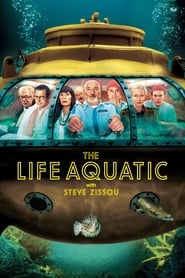
And I'm Noah Baumbach. We're the co-writers, and I'm the director of The Life Aquatic. This is the Criterion Collection edition of the movie, which I think is the only one. Right. And we are at Bar Pitti in New York, sitting at a table where we wrote the film. Right, we actually came here every day from-- Usually for lunchtime around 1:00, sometimes 1:30, sometimes 2, depending what-- It was later. When we got up or when we went to bed the night before, and we would write together all day and into the evening. And have two meals. - Yeah. The films within the film, maybe we could say something about... Right. - Steve Zissou, his documentaries are sort of inspired by... Jacques Cousteau's films, and are more than a little... And we shot these on Ektachrome stock, a reversal stock, to get this highly saturated, dated feeling. To feel like a 16 millimeter. A number of the parts were written for the people who play them. Bill Murray's role and Owen Wilson's... Anjelica Huston's, Bud Cort... - Right. The Bond Company stooge was always Bud. - Yes, the Bond Company stooge. And then also on Team Zissou we have a favorite actor of ours, Noah Taylor, who plays Wolodarsky. Robyn Cohen, came out of Jeff Goldblum's acting class. Right. - She plays Anne-Marie Sakowitz, the topless script girl. It's not all science.
0:35 · jump to transcript →
-
Noah Baumbach
These are the Team Zissou interns, who are all typecast. One of them is an actual intern of yours, or was. Yes, Matthew. Matthew Gubler. Cousteau was always an interesting figure to us because as kids, we idolized him and watched his shows. But he was one of those characters that seemed just like a... You know, a star incarnate in some way. You know, it was like Jacques Cousteau, Evel Knievel, and, you know, Bill Murray or something. And I think the... Zissou, what was fun for us writing this was, sort of, Zissou in some ways is like a kid's idea of what an adult is. It's sort of like-- Or what a celebrity is. And then at the same time, we're dealing with a character, Zissou, who is in some ways, you know, has to get in touch with his own humanity, his own past, in some way strip away this identity that he's created for himself. Right, yeah, right. We always liked the idea of starting-- The idea of one of these movies, which I guess you generally associate with a kind of like ABC special, you know, that's where we saw them on television. And you generally associate them with TV or sort of educational films. But we always liked the idea of this playing a world where this kind of movie would play at a major film festival. Yes, yes. It could be-- It's a world where there's such things as hit documentaries. Right. - Although there actually are now. Fahrenheit 9/1 1. - Documentaries-- Remember we called them-- We like the idea that they might be called swimming films, but I don't know that they ever made it into... We never quite got swimming films in there, a genre. The festival director is played by Antonio Monda, a friend of ours in New York, who's a teacher at NYU, a film professor, and who also hosts a kind of a salon where he has people over, all sorts of interesting people over to his house, and a good friend of ours. And we wrote this part for him. Yeah, we always... Somehow it just seemed like Antonio would be this guy, I think, who, you know... He's done it a million times. At the MoMA and the Guggenheim. And he's Roman. Right, so you knew he could speak Italian. And at the premiere of the movie in New York, he introduced the film before the film. In very much the same way. - Yeah. This is the opera house in Naples, the Teatro di San Carlo. It's a great setting for something, and we always liked the idea of the film festival being set in a place that's like an opera house, and in this case it is an opera house. Isabella Blow plays Antonia Cook, the new head of the film commission. I had, I guess, first come in contact with Isabella when I was at Brasserie Lipp in Paris with my girlfriend, and she walked by and looked at us and said, "Très sexy." Beaucoup de sexe. - Beaucoup de sexe. And I came back and told you I'd seen this very interesting woman, and you said, "Would this woman be out of place in a matador's outfit?" Yes, because I had seen her previously in a hotel lobby in Paris where she was dressed as a matador. It was amazing my story was so specific that you knew exactly who it was. And it was her. We're here at a film festival, which can be the most awkward thing. You're in the midst of all these people watching, and in the case of this character, it's exposing all these different problems that he has in his life that are kind of just laid out in front of him over the course of one miserable evening. We'd talked about 8 1/2 as in some ways an inspiration for this, the Guido character that Marcello Mastroianni plays, because he sort of-- That movie opens with a dream, it's different, but at the spa, he's sort of faced with all these people from his life who keep kind of appearing. Here it's less surreal, but it's, you know, Steve is sort of dealing with, in some ways, every aspect of his life. Yeah. It is surreal to go through the experience of presenting a movie in this kind of context. - Right. The one thing I think that-- We often talk about all the-- We're both big movie buffs. We often talk about the movies that have influenced us and the different inspirations, but for this movie, for me, in the end, a lot of it has to do with my own feeling about making films, and just the luck of being able to do it and being in a situation to have been able to make some movies, and how, for me, that's just the central event of my life was, you know, getting to do this. Right. - I feel like that's part of what the movie is about, is somebody who is-- That is, the thing that kind of clicked with him, getting together a group of people to go make these things. Mm-hm. You know, there's something kind of magical about movies to me. And Steve is dealing with, in some ways, the toll that... I mean, he's sort of at a point, you know, unlike you, I guess, where he is not sure what he wants to be doing next. You know, these... You know, at a real sort of crisis in his career and his life, and also dealing with the fact of the toll his career has taken on his life. ...my little nephew, Werner, he wanted to meet you. How you doing, Werner? He brought you a present. A crayon pony fish. Steve Zissou is obviously and clearly partly inspired by Jacques Cousteau, but just as much of an inspiration for him is Bill Murray, who I had gotten to know for a long time and who Noah also knows. And... I remember when we were writing, we were sort of in the middle of this scene. You had actually seen a movie with Bill, I think, at the Sunshine Theater. And you had a... You could tell that story. The guy came up to Bill... Yes, this is interesting. Bill and I had an episode where we went in to see a movie at a theater on Houston Street. And while we were-- You know, we went in, some kid said hello, and then when we came out, there was a gang of kids who were waiting there with things to sign. Rushmore DVDs and Bill Murray paraphernalia. And Bill was signing all the things and we talked to the kids. And then-- Should I tell this? And then at the end of it... It was funny because one of them then came up after we finished and came up and asked Bill for $10. And Bill said... "Get lost. Get out of here." And the guy turned and walked away. And it was funny because there's something about the way Bill handles that situation that is in Zissou, and I remember when we were filming it, I said, "Well, the way you really said it in real life was like this." And then Bill went into some crazy hysterics over the idea that it was something that had happened. He had no memory. - He had no recollection. But I'm not sure if this story should go on there or not. An abridged version of it maybe, or maybe not. Yeah. Don't put this in until Wes has maybe called Bill and asked if it's okay if he puts it in. Well, Bill badmouthed me in Esquire saying he'd kill me if the movie wasn't one of the best films of all time. Oh, really? - Yeah. He didn't run that by me.
2:21 · jump to transcript →
-
Noah Baumbach
This is his ship, the Belafonte. We bought this ship in South Africa and sailed it up to the Mediterranean and renovated it and made it into this research vessel. It never ran that well, but we really did fall in love with this ship. The crew of the film was always very sort of loyal to it. Now, we have Michael Gambon, who plays Oseary Drakoulias, the producer, a sort of Carlo Ponti, Dino De Laurentiis-style mogul, although he does produce these documentaries. He has the longest fingers that I think I've ever seen in real life. He understands. Amin needs to make a projection of the world grosses to see if he can get a tax break and run it through his output deal. I think that Zissou sees himself and wants to be the kind of person who gives kids secret messages in the cereal boxes. Right. That's an inspiration for him. And the movie is about this, theoretically, a real person, but he's inspired by a sort of fantasy version of himself. And there's things sort of peppered throughout the movie, but this whole red caps and the uniforms and the whole thing. And Owen, in some ways, is our stand-in, I mean, of the child who looks up to this person. And I think another layer of that that we were always dealing with was how our cinematic idols in some ways were like surrogate fathers for us. Movies we loved that sort of took the role of things we looked up to, things we sort of wanted to live vicariously through. And I think Owen and Ned's character sort of stands in for that. This is a kind of an unusual role for Owen Wilson, I think. Right. He has a sort of recognizable comic persona that he's developed. And this is, I think, very different from that. I think when we were writing it, we often talked about that even though Ned was, as written, very naïve and kind of an innocent, I think there's always a kind of somewhat devilish nature to Owen. You can see the light is on behind his eyes all the time. There's some Zissou in him. Yeah, that's interesting. And I think also it made us feel more comfortable writing such a naïve character because I think if it was played too much that way, it would kind of wash out. Yes, and I think Owen's concern was, he was like, "What am I gonna do?" Because he felt like the character is so innocent and so sincere that he's not used to playing someone who's that sincere. He usually plays somebody who's a little bit wily on some level, or something like that anyway. And I think for him, when he really became comfortable with it was because we were sitting on the roof of this hotel in Rome, and he told me this funny story about Will Patton on the set of Armageddon, and he did Will Patton's voice, this southern accent. And I asked him, "Do you think you could do this whole movie in that voice?" And what he ended up doing-- He liked it. We read through the whole script reading all his lines with that, and it was funny and it gave him a sort of genteel feeling and something a little bit not quite real. And the accent's certainly not real. The accent hasn't existed certainly since the Civil War. Right. - Even if then.
9:42 · jump to transcript →
-
-
multi · 1h 39m 11 mentions
The Grand Budapest Hotel (2014)
Wes Anderson, Roman Coppola, Jeff Goldblum, Kent Jones
-
Kent Jones
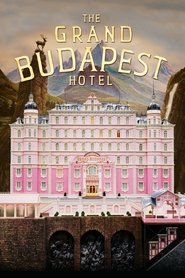
And the film is inspired by the writings of Stefan Zweig.
1:52 · jump to transcript →
-
Wes Anderson
Exactly. The film is inspired by the writings of Stefan Zweig. I mean, maybe it's inspired by the movies of Ernst Lubitsch more than the writings of Stefan Zweig, but somehow, to me, it starts with Stefan Zweig.
1:56 · jump to transcript →
-
Kent Jones
A Klubeck. [laughs] - [Anderson] It's inspired by a Klubeck.
5:08 · jump to transcript →
-
-
-
Tom Hooper
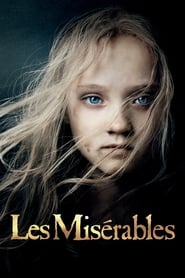
The whole opening was, I suppose, really inspired by the book. There's a wonderful description of how the convicts in this era were used to refit, build, maintain the warships in Toulon. And so they were kind of used as slave labor. And so this idea of the convicts effectively doing a chain-gang song, pulling in this wounded warship, I found very interesting because the warship is both an image, a symbol of state power,
1:08 · jump to transcript →
-
Tom Hooper
That's pretty much it for the film. At this moment, I was originally inspired by this first draft of the screenplay that William Nicholson wrote, where he immediately saw...
3:21 · jump to transcript →
-
Tom Hooper
But the process of creating this scene went from Bill Nicholson, who wrote a dialogue version for me. Claude-Michel then came up with a melody. Alain Boublil then wrote lyrics in French inspired by Bill Nicholson's English dialogue. And then Herbie Kretzmer did his version of English lyrics based both on Alain's French lyrics and Bill's original dialogue, all fitting the number of lines that Claude-Michel's melody allowed. So I had the actual experience of
20:47 · jump to transcript →
-
-
-
Stephen Prince
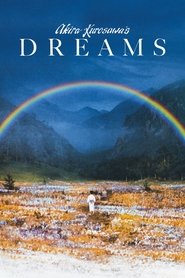
He moved away from the kind of suggestion and indirection that irony makes possible. There's very little of that in these last three films. In them, Kurosawa speaks directly with viewers, speaks openly and with sincerity, rather than through the masks that a dramatist wears. Dreams is nonlinear. It's not a narrative. We have eight episodes that Kurosawa tells us are inspired by dreams that he has had since childhood.
1:52 · jump to transcript →
-
Stephen Prince
and Kurosawa's visual treatment presents them as if they were an ensemble in a play wearing masks. So the episode then is a kind of warrior ghost play, not done in the style of Noh, but influenced by its general template. He salutes their passage and the music score provides some martial notes on the trumpet.
1:01:44 · jump to transcript →
-
Stephen Prince
So the eye character in this episode is the incarnation of Kurosawa's youthful dream. And the episode is an homage to Van Gogh, as well as an account of why Kurosawa did not follow his original plan in life. This is the Langlois Bridge at Arles with women washing, one of the early masterworks done at Arles in 1888.
1:04:16 · jump to transcript →
-
-
director · 3h 43m 7 mentions
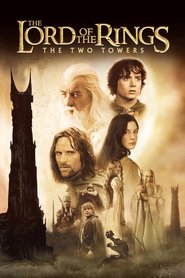
The Lord of the Rings The Two Towers (2002)
Peter Jackson, Fran Walsh, Philippa Boyens
-
...to where you were a year ago watching The Fellowship of the Ring... ...and to reorientate you into the world of the movie... ...before you have to start giving new information... ...and having people think about new things. There was also that great John Howe painting that you fell in love with, Peter. Yeah, well, that's true. This entire scene way, way back in our scriptwriting days, years ago... ...was inspired by one single John Howe painting... ...because I would have never, ever thought about showing... ...the fight between Gandalf and the Balrog, but...
2:45 · jump to transcript →
-
very evocative spooky dead marsh stuff in the book i love the the corpses lying under the water of course a few people have said that tolkien got the inspiration if you can call it inspiration for this stuff from the first world war when he saw bodies of soldiers lying in the shell holes the flooded shell holes and no one's going to really realize if they haven't read the book but the
45:37 · jump to transcript →
-
The elven cloaks that they were given at Lothlorien have a very magical quality in which they camouflage and blend into anything that they're surrounding. So if they're against rocks, then the cloaks are grey. If they're against trees, then the cloaks are green. And we could never really do that properly in the film. And this is almost like tipping our hat, the only time really that we ever do it, to this special elven cloak. But I remember this...
1:05:34 · jump to transcript →
-
-
-
Tim Lucas
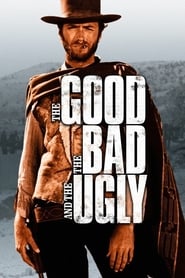
Fistful of Dollars had been inspired by a visit to a Japanese movie, namely Kurosawa's Yojimbo. The Good, the Bad, and the Ugly was inspired by a visit to a Leone movie, end quote. Screenwriter Luciano Vincenzoni, who was additionally involved in that first sequel's overseas sales through United Artists, had attended a packed house screening with some colleagues, including Arnold and David Picker of United Artists, who were bowled over by it.
1:00:53 · jump to transcript →
-
Tim Lucas
may have been inspired by Mario Monicelli's 1959 film The Great War, which also happened to be a United Artists release. In brief, The Great War is a film starring Alberto Sordi and Vittorio Gassman as two rogues conscripted into the Italian army in 1916 at the height of the Austrian-Italian conflict of the First World War.
1:01:50 · jump to transcript →
-
Tim Lucas
a film that had taken its template from a samurai film by Akira Kurosawa, namely The Seven Samurai, much as he, Leone, had done with A Fistful of Dollars, which had been inspired by Yojimbo. According to interviews with Wallach by Christopher Frayling, the actor was approached by Leone at a time when he was not too pleased with the roles that had been coming his way in films, which had been anything but heroic.
1:08:43 · jump to transcript →
-
-
director · 1h 31m 6 mentions
Alex Cox, Michael Nesmith, Victoria Thomas, Sy Richardson + 2
-
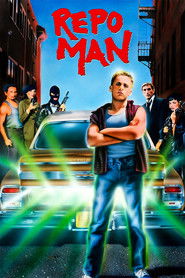
Si's a real cool cat in real life, too. Well, this is my film to try. I had quit acting for two years and did nothing but go to school. So when I came back to this film, it was Si Richardson's doing his thing. I had to find my place in this industry. And my place was supposed to be a black Humphrey Bogart. Oh, yeah. That's the inspiration. So the first thing you do is steal a Camaro. That's what I would do. Yeah.
31:34 · jump to transcript →
-
Oh, here comes a great line. And there they go. And how long did that take? 60 seconds. Wow, that's beautiful. This is my favorite scene. Yeah, it's one of the best scenes. We've got a little homage to Robby Müller here in Kings of the Road, the glasses. The glasses, yeah. I love this, the tape.
32:02 · jump to transcript →
-
Fox and McTaggart Pharmaceutical Company. Because J. Rae Fox was J. Rae Fox and Lynda Burbank's previous name was McTaggart. What are they humming there? Valkyrie. Right, right, right, I forgot. And that was meant as a little homage to Clockwork Orange to show you that they're not really as bad as... No, I mean, it's really hot. Very nice of you, Al. Yeah, it's kind of like a mix between Apocalypse Now and Clockwork Orange. Exactly. Exactly.
47:27 · jump to transcript →
-
-
-
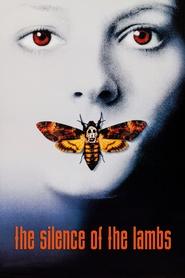
sort of recent conversation Foster and Hopkins had in the last couple of years regarding this film is he actually mentioned how he was more inspired by Hal 9000 the computer character so to speak in Stanley Kubrick's 2001 A Space Odyssey and he wasn't really
15:16 · jump to transcript →
-
Um, to the extent that there isn't really draft of Ted Talley's screenplay where they were unsure if they were going to be able to get the rights to the characters from Dino De Laurentiis. Hannibal Lecter almost became Abel Gideon, which if you've seen the TV show Hannibal, you'll know is a separate unrelated character who was created for that show played by Eddie Izzard, who is very heavily inspired by the novels version of Hannibal.
18:59 · jump to transcript →
-
Yeah, obviously, Buffalo Bill, James Dunn, was inspired by the serial killer Ed Gein, who basically skinned his victims and basically used it as furniture, I believe even costumes. And yeah, the public fascination with that has its own very strong cinematic legacy.
27:33 · jump to transcript →
-
-
director · 3h 29m 6 mentions
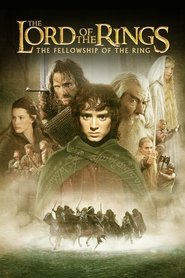
The Lord of the Rings The Fellowship of the Ring (2001)
Peter Jackson, Fran Walsh, Philippa Boyens
-
And even though our movie obviously is stylistically very different and the design is different, there is one shot which I regard as my homage to the cartoon, because it did inspire me to want to read the book, and that's the shot of Proudfoot shouting Proudfeet, where I deliberately copied the angle that Ralph Bakshi used, which I thought was brilliant. If you look very closely in the wide shots, you'll actually see that the cake is on fire.
24:08 · jump to transcript →
-
And that was done with a rubber puppet that we morphed a rubber puppet into Ian's face for a few frames. So it's half Ian, half rubber puppet. It's like a combination of the two. It's absolutely a moment from the book, though, that. Yes, it is. It is, where it says a shadow passes across Bilbo's face and suddenly Frodo sees something horrible and grasping and groping. Yeah, yeah, yeah. No, definitely inspired by the book.
1:47:57 · jump to transcript →
-
informed Tolkien's view of life, his Catholic faith. The sequence in the Dwyerdale Hall was inspired by a painting that Alan Lee did for the centenary edition of The Lord of the Rings. Wonderful watercolour painting of these huge towering columns that seem to go on and on forever with these tiny little group of people
2:09:46 · jump to transcript →
-
-
multi · 1h 25m 6 mentions
Marcel the Shell with Shoes On (2021)
Dean Fleischer Camp, Jenny Slate, Nick Paley
-
and stay alive. Marcel's waddle is, I think, one of my favorite things about how he's different from the shorts. Because the shorts, he was one chunk. Right. He's such a cute little git now. Yeah, it's really nice. Here's our risky business. Risky business homage with the blowing leaves. But...
2:33 · jump to transcript →
-
of what I remember of Dean, your grandmother, Dina. Mm-hmm. You know. I was going to say, you said your grandmother's never gardened or never farmed or gardened, but... Well, Rochelle did. That's right. And she has an accent because she's from the garage was definitely about my grandmother. That was definitely inspired by Rochelle, yeah. But that's right. My grandmother Rochelle, when they were in hiding during the Holocaust...
13:29 · jump to transcript →
-
I think these spiders were inspired by the crabs in The Red Turtle. Oh, yeah, they were. Which came out in 2016. The Red Turtle is this animated movie. I forget what it's about, honestly. I just remember the crabs. I always thought they were like the Spirited Away... Is that? Yeah, the dust mites. I think the crabs are descended from the Spirited Away dust mites, and then our spiders are descended from the crabs, but they definitely are, yeah.
24:23 · jump to transcript →
-
-
director · 2h 10m 5 mentions
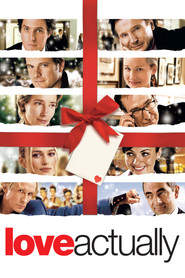
Richard Curtis, Hugh Grant, Bill Nighy, Thomas Sangster
-
Bad hair for the prime minister, wasnt it, really? I think I was still shooting another film and I couldn't change it. That's such a pretty shot. This guy is a real vicar. Now if I can just say a little bit about this scene here. This was in fact inspired by Jim Henson's funeral, which was the most moving thing I've ever been fo, and at the end of it Frank Oz was talking and he suddenly lifted up Kermit's puppet and started to sing this song called One Voice. And it turned out that all the guys in the memorial service had brought their puppets with them and they lifted them up, and when you turned around and looked backwards, there were 50 puppets, all singing. And Big Bird walked down the aisle of St. Paul's Cathedral and they all came forward and just this massive chorus of puppets, all singing. It was an extraordinary thing. So this was our little stab at that. ... that can't be done It... Nothing you can sing... This is David Lynden Hall, who is such an adorable man. When he came in to talk to us in the offices, he sat there with his guitar and charmed the girls more than I think was necessary.
9:56 · jump to transcript →
-
This is not quite so influenced by Sergio's work.
42:51 · jump to transcript →
-
This next scene is inspired by
52:24 · jump to transcript →
-
-
director · 2h 10m 5 mentions
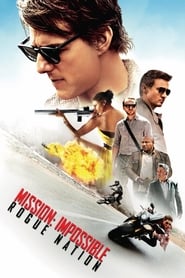
Mission: Impossible - Rogue Nation (2015)
Tom Cruise, Christopher McQuarrie
-
I think the stunt team, they did a great job, and we figured out that I'm wearing lenses. I wanted to wear a suit, kind of our homage to North by Northwest. But it was freezing cold. We did it eight times. We were worried about bird strikes. We were worried about... Yes, that's the thing that's fascinating about these things, is you're looking at a perceived danger of Tom falling off the plane...
4:10 · jump to transcript →
-
And that whole sequence, by the way, before we move on to the title sequence now, we shot in a total of four days, short winter days. So we really had 24 hours to accomplish all that A400 material, which is pretty great work by the team. This title sequence, these guys who designed the sequence did an absolutely bang-up job. Thank you, guys. Beautiful bit of foreshadowing throughout the entire sequence, and also the Mission: Impossible folder from the original TV series. Bit of an homage.
5:26 · jump to transcript →
-
Yes, and the homage, my credit over the shot of me once again doing something horrible to you. Yes, doing something horrible to me. I love that. I love it. The many ways I could... Between Edge of Tomorrow and Valkyrie, the number of times I've killed you, and I kill you in this movie, actually. Yes, it's nothing personal. I know, I don't take it personal. Okay, good. Great friends. Love working with you. All of these little asides are...
9:51 · jump to transcript →
-
-
-
Peter Greenaway
a long way back to be influenced by classical Roman drama, but of course very much organized around contemporary subject matters. But there was a way in which the actors on stage presented themselves very formally and very frontally. You must remember that the theatrical apparatus of that time would not have allowed for very many great theatrical effects. Notions of artificial light would be very limited.
18:37 · jump to transcript →
-
Peter Greenaway
sheer use of color. I can think of a number of films which would relate directly, in a sense, to be a homage to painting. I can think of films based upon the paintings of Renoir, for example, or even Luce Lautrec, which would deliberately pastiche and borrow the coloring. But apart from one or two films, maybe like Godard's Pierre Le Fou, who uses primary colors in a very, very self-conscious way.
1:02:30 · jump to transcript →
-
Peter Greenaway
was a whole new phenomenon again influenced by a frenchified italian painting i've mentioned the names claude lorraine and poussin whose influence was now pervading uh france and traveling across the continent to england and very shortly a few years after this period
1:23:44 · jump to transcript →
-
-
-
Tim Lucas
Civic TV was inspired by Toronto City TV, launched there in 1971 on UHF Channel 79, very much a progressive maverick station. One of their early distinctions was a Friday night broadcast called Baby Blue Movies, which ran softcore erotic features after midnight. Because of the City TV connection, it's often said that Max Renn was based on its founder, Moses Znaimer, but that's not really true. Max's partners, Moses and Raphael, are played by Reiner Schwarz and David Bolt.
4:48 · jump to transcript →
-
Tim Lucas
Its cover art by H.R. Giger may have influenced some of this film's ideas. This was practically Lally Cadeau's first feature film, but she became a major Canadian television star in such shows as Hangin' In, Road to Avonlea, which won her the Genie Award for Best Actress in a Continuing Leading Dramatic Role, and Five Years of X-Men, episodes before the feature franchise was launched. Her character of Rena King is said to have been inspired by Dini Petty,
9:17 · jump to transcript →
-
Tim Lucas
My wife Donna reminded me that there was a payphone on this set, and that during the scene blocking, Jimmy asked David if he might go over to the payphone and fish around inside it for loose change. David vetoed this idea, but as I look back, I think Jimmy must have been inspired by Roger Corman's cameo in Joe Dante's The Howling, which was in theaters around this time. Roger is briefly seen in the film, waiting to make a call in a telephone booth, and when he gets inside, he fishes around in it for loose change.
48:19 · jump to transcript →
-
-
-
the man who just dropped two and a half hours of an interview that will probably be cut down to 11 minutes. I couldn't stop talking about myself. They had a million questions. And also the blob itself, co-writer and director Chuck Russell. Thank you. Welcome. Thank you all for joining us. Guys, this is a commentary. 31 years in the making for me, even before there were commentaries, I was hoping to get you guys in the room because this film is the film that made me want to be a filmmaker. I was so influenced by this film.
1:08 · jump to transcript →
-
Ghost Town USA to having a huge football event, like, that was designed in the script? Oh yeah, that's from the script. The whole town is at the game. It didn't, it helped the extras budget though. I didn't have to populate the town at that point. This is a lot, this is really inspired by my life in Park Ridge, Illinois and some of my crazy friends. Honestly, some of these stories are true. Some of the interactions with the kids and all this.
3:43 · jump to transcript →
-
It's not like a third party, you know. These are all inspired by things that were going on in high school. Yeah, but like you were just saying, like there's four to five different uses. By the way, you're right. The tentacles were very good right there. Yeah. Those were great. So now you're looking at a sideways car in a gravity gag. What do you mean by gravity gag? When the blob comes up over him a couple of shots ago.
31:52 · jump to transcript →
-
-
director · 1h 24m 4 mentions
The Naked Gun: From the Files of Police Squad! (1988)
David Zucker, Robert K. Weiss, Peter Tilden
-
He did all this. There he goes. He wiped that guy's forehead himself. Here's our homage to the Three Stooges. Not many people realize this movie's based on Shakespeare's The Tempest. Yeah. Which started the same way.
2:20 · jump to transcript →
-
A lot of stuff was cut out of this scene. After testing? Yeah. Actually, we discovered that stuff that took a long time to shoot, was enormously expensive, was not as funny as Nice Beaver, so... Out it went. The cheapest stuff got the biggest laughs. Now, this started off as an homage to Jacques Tati. Jacques Tati, yeah, we had them. And ended up as a critical care patient in the Joe Clinic. This is, yeah, we had to apply the paddles to this scene. Yeah, got to defibrillate this.
44:16 · jump to transcript →
-
Cut to the statue's smile. See, he's a little dazed, and that's how we... That's almost a Clockwork Orange homage. It is. It is very good. Thank you. This is Mayor Bradley's office again. This is Nancy Marchand. This is the real Mayor Bradley. This is the real Mayor's office, because we were so cheap.
47:56 · jump to transcript →
-
-
-
Hey, Robert, maybe I'll just take this opportunity to ask you where you came up with the inspiration for Osiris and for the characterization. I don't remember. Hide at home. All I remember is that I was going to do a movie with Ben Stiller and Jack Black, and I thought, fuck, man, I don't have a clue in my head what I'm going to do with this dude. I also said, I don't want to get in trouble now. So the voice came...
7:02 · jump to transcript →
-
This is our, yeah, the reveal of them. So originally, actually the way we shot it was he took his hook and he scraped it across the window. Quint style. Very Quint style. That didn't work. It was a little too Quint style. The Robert Shaw character. Oh, yeah, totally. Yeah, and it just was a little bit too much of an homage. It felt like, I think, a little too self-conscious.
19:36 · jump to transcript →
-
So obviously here's our little homage, our apocalypse homage that was too homagey. That water was most filthy. But Ben did not give a rat fuck. I come all with respect. Hold your cock! So there you go. Now, Jack, you didn't love being on the back of the water buffalo. I feel like Robert had a better connection with the water buffalo than you did.
1:18:22 · jump to transcript →
-
-
technical · 1h 22m 4 mentions
Måns Mårlind, Björn Stein, Gary Lucchesi, Richard Wright + 1
-
Richard Wright, producer. Mans, director. Bjorn Stein, director. Gary Lucchesi, producer. James McQuaide, executive producer and visual effects supervisor. What, you get two titles? - Well, you know. Big shot. So here we are... ...at the beginning of the fourth Underworld movie. That's right. Been a lot of them. The first appearance of Len Wiseman's... ...new logo. - New logo. The world premiere. - In 3D, no less. Oh, my God. It's like our life flashing before our eyes. Yeah. We've lived through these. Exactly. I think it's fun to say that... ...I think we cut the... Edited the whole film for eight weeks... ...and then we spent three weeks editing the first three minutes. That's exactly right. - It was crazy how to get it... And it was, "Shall we do a recap or shall we not? Does it feel cheesy with a recap or is it good?" But I think that everybody agreed in the end... ... that we have this wonderful library or cupboard of wonderful images... ...SO let's use it. And it's a wonderful way to get into the mood... ...and this is the world. lt has been a while too, since Underworld 2... ...where this one picks up from. We're reminding ourselves of all the characters. It's not cool, but in the end it... Wow, it really works. Yeah, I had a friend-- We had a premiere yesterday, actually... ...and I had a friend who hasn't seen the prior ones... ...and she said it was helpful... ...to just get into the soul of what this is, so.... And it's so nice to see Michael Sheen... ...and Scott Speedman and Bill Nighy. Yeah. - Losing their heads. killed the elders.... Yeah. One of the things we really liked when we got the script... ...was that number four... That it was the beginning of something new. That it was not just number 17 or something. It was.... The trilogy was done... ...and now we got into something new... ...which is exactly what we're watching right now. And this was a big thing how... That we wanted it to be brutal... ...and hand-held and gritty, using a camera language... ... that hasn't been used in Underworld before. Yeah. To turn everything upside down. This is another part of the film where we did... ...a tremendous amount of work trying to figure out... ... how to frame the fact that we're 15 years in the future... ...and the world has changed... ...and how you do that economically... ...In a different camera style than the rest of the film. Because this is in 2D, not in 3D as the rest of the film is. One of the biggest inspirations for this intro... ...Was actually the Gavras video, the M.I.A. video. What's the name of that? "Born Free." - "Born Free." Oh, that guy. - He's great. This guy, he's just at casting... ...and we realized that we need something... ...and we cut this rollout and then suddenly we needed him... ...SO this is his casting tape. - His audition tape, yeah. Yeah. - Yep. Used it in the film. I love that head shot. James really enhanced this with the visual effects he put into it. These creatures, yeah. The creature shots. Because they weren't shot that way. Yes. They're hard to come by, these creatures. That one was a real one. That's a real one. - Yeah. A real Werewolf. Yeah, we had a few. - Yeah. We can cast them in the forests of Vancouver. What we just saw... That girl on the wall... ...IS Kate's stunt double. - Yeah. She did... - Alicia. Alicia Vela-Bailey, yeah. She took iPhotos of her body for each bruise she got. She was black and blue, this girl... ...and she's the toughest girl I've ever met. Went to the hospital more than once too. Yeah. - Yeah. But as he said, the toughest girl I ever met. Yeah, always with a smile. Always with a smile. And you will see her getting thrown around a lot in this one. All of those flying-into-the-wall sort of things... . It's actually a person, Alicia, getting thrown in. Or Kate sometimes, as well. - Yeah. So we wanted to start off in 2D, gritty... ...and then since this is 3D movie... ...we wanted it to... Really make it big... ...when we see Kate for the first time, and that's when we switch to 3D. This shot was actually planned to start inside the fire... .In the beginning, inside a skull... ...and then going through the flames... ...a Vampire skull, but it became too tedious. That was the four-hour version. Yeah, this... We're very European. European version. Very... It was also a shot that we fought to keep in... ...and there was some obstacle to that... ...but we succeeded in keeping it in. Obstacle being money. - I love the way you say that. We ran out of money. And you see the surroundings here is-- We tried to create... Since this is the first time we introduce a man really... ...In the Underworld franchise... ...we wanted to find architecture... ... for the city that wasn't, you know, just another city. And after a lot of thinking and looking.... You know, we were thinking the first film was shot in Budapest... ...and it had that gothic feel to it and... By the way, great blood splatter there. - I love it. That was beautiful. And then we found something-- If you haven't been to Eastern Europe... ... you see all these beautiful houses... ...but next to them you have these concrete, hard, depressing buildings. And there's something called brutalism. You mean brutalism? - Brutalism, yes. A word we've heard 700,000 times during the making of this film. You were insanely annoying by just trying to put brutalism in... ...brutalism in, put brutalism in... ...to find what we call neo-Goth. Which is a new Goth. - Neo-Goth, yeah. This plate's actually from Underworld 2. This was.... We were doing tests for that boat that exploded... ...and we went back and found the footage... ...and stole that plate and revamped it here for what you see. Yeah. The secret of every great artist is knowing where to steal. Where stuff is hidden, in this case. - Yeah. It was one of the biggest challenges that we didn't have Scott Speedman. So that was a face replacement of a stuntman... ...and I think that was the trickiest part to pull off, I think, in the movie... ...because we're setting up this love story. She's running for her love and we don't have the real guy. Yeah. - But I think because of the recap... ...we do get that.... Do you see that city in--? That city is all CG behind her that's burning. And I remember James had said, "What do you think?" And I remember we asked about that, like, months ago... ...or half a year ago, and I forgot about it... ...and then you just come up with this. It was like a birthday present. I was so happy. All these backgrounds in it... ...makes It so much richer. And remember this next shot coming up too of Kate swimming... ...was really the last footage that we shot on the movie. Yeah. In the tank. We all had this great concern that, you know... ...can Kate swim or not? She ended up being a fantastic swimmer. She was great. She was.... This is more than swimming. It's performing underwater. She held her breath so well. lt was unbelievable. We were.... - Yeah. Well, that's typical Kate, you know. Everything she does, when she does it is, like, perfect. Yeah. - Yeah. But filmmaking's about being afraid... ...things aren't gonna work. - Right. We had anticipated the worst and we were wrong. And this is-- Originally the Underworld title was here. This is our homage to Tree of Life. - Yes. We had the title here at one point... ...and this is a transition... ...which is very abstract and weird, actually. But I'm happy with it. These were the things... ...that I remember it was hard to describe. We were very sure exactly how we wanted it... ...but we couldn't really say "this is how to do it"... ...because we'd never seen it before. But now when I see it... James, who did this? - Celluloid. Fucking great. - It's great. Yeah. It's great too, because we added the spin... ... sort of late in the equation. This may be an intellectual idea. Hopefully it works. To sort of make the audience... ...particularly when you see it in 3D, disoriented. Kind of like Kate was as a result of being underwater... ...being Knocked out and waking up 12 years later. There's something about spinning... ... that sort of makes you visually confused. Also, not only the spinning, but also the kind of... ...stop and motion feel to it, that it's... - Time passing? lt has a time-lapse feel to it... ...which, you know, was a subtle way of saying time has passed... ...actually, 12 years. - It's one of my favorite shots. Yes. - This is beautiful. Another very disorienting shot, though. So this is actually Alicia hanging here... ...and it's Kate's face replacement on her. Yeah. And the ice is CG. - Yeah. Smoke is CG. I am glad that we put the name on the glass there, "Subject 1." Yeah. So nobody would get into the wrong tank. No, but the thing is, I don't think it's just for like: "Oh, it's for the idiots." But I think it looks good. Subject 1 sounds brutal, I think, in a very good way. There's that word again. - Yeah. And remember that set initially... ...when we first saw it, had all these shower curtains in front of it... ...and we asked Claude to remove them. Yeah. - Oh, right, yeah. One thing that we really wanted to do in this movie was that... And we told Brad, who was the excellent second-unit director... ...and stunt coordinator, we said that we very.... We want to hurt Selene a lot. "Could you find somebody we can do that to?" Yeah. Because she wasn't that hurt in the other movies. We said, "We really want to--" Do you think anybody's listening to you right now? The naked girl, I'm watching that instead. Everybody's so nervous when you shoot something like this... ...but Kate was so cool. She was. Yeah. - Yeah. It was nothing. - Here we have Stephen Rea. Yep, there he is. Our Irish. - Yeah. I think, yeah... I really liked working with him. He was... Stephen is a handful, but he's also.... He gives you what you need. Is there anybody in this film that ended up doing their native accent? The North Americans were doing English... Kate. - Yeah, Kate, that's true. Everybody else was doing a different accent. Sandrine Holt there. - Sandrine Holt. Hurry. Releasing... ...maximum dose of fentanyl.
0:10 · jump to transcript →
-
We got so much mileage out of that set too. Yeah. - It just looks like it goes on forever. And most of all, it looks really real. Yeah. The texture-- The scenic painting and the texturing is first-rate. Claude, the production designer, said that he took great pride in detail. He said, "That's my middle name." And also in the wood too. The way they sandblasted the wood... ... to make it look ancient, it's just great. Yeah, I remember I talked to Gary, who was the art director. When they presented to Claude... ...Claude just... Like I said, they were working so hard with the detail... ...and Claude had been doing some other stuff, came back... ...and walked around, and then took Gary's head and kissed it. On the forehead. And he said, "Thank you. It's gorgeous." - Sounds like Claude, yeah. And here we are. - This is a fantastic scene. Yeah. There's a shot coming up that is just... ...beautiful, that Brad Martin, the second-unit director, shot. It's just... This oner. This is one of the things we.... This one. This one here. It's fantastic. There was no way we would have staged this shot as we did... -.../f it wasn't a 3D movie. - Yeah. Yeah. We wanted much more, actually, than we... That's all one shot. - Yeah. All with CG. It's... - That was a blend of CG and suits. Here, it's just CG. In the end of that scene, it was suits as well. Yeah, everything mixed. Like every trick we had In one shot. Here's suits and CG mixed. - That's a suit. Suit, suit. Background guy's CG. - Background guys are CG. That's a real one. Yeah. - If they're moving, they're CG. I remember at a certain point too... I remember at a certain point, for budget reasons, we had to cut... ...a lot of the CG shots of this sequence. You look at the sequence now and you can't imagine.... Well, Clint did give us more money. No. But I remember once we got the rule... James just said, "We can only have--" - There she goes. "We can only have 36 Uber shots in the movie." It's more. - Oh, yeah. There are 275 creature shots in this movie. Is that right? - The other thing is... ... for the audience, we keep using this word Uber because... It's not in the movie. - It's not referred to in the movie... ...but this larger than... This five-times-the-size Lycan. We sort of... - Nine foot tall. We... - We called it the Uber-Lycan. The inner circle called it the Uber-Lycan. He's not 9 foot tall. - Twelve feet tall. Fifteen feet tall or something. Theo, extremely... - Nine hundred pounds. Did all the stunts himself. The Necklace. - Yes, the Necklace. We give all these kind of moves aname. That was the Necklace. You threw that in, the head getting blown off. Had to happen. - Yeah. It's an Underworld movie. I love that when she bites him. - What? Where'd that come from? This one's great too. - Yeah. It's great. Oh, I remember... - The blood spray. We had to fight for that ax in the head, which I don't understand... ...because it's kind of given, I think. Always... - Was that a gibe? That was a gibe. No. And always put people in water. - Oh, this too. Yeah. Because they like it. - Yeah. Actors really like being cold and wet. No. It was freezing cold. Theo was extremely cool. Yeah. Not cold. Cool. - I really hate Theo, actually. I sincerely hate him for being gorgeous... ...and he played me the first two days, and I thought: "Oh, is he slow, this guy?" And he was so much smarter than me. And he was pulling my leg and just, you know, he was.... He's a perfect human being and so kind. So, you know.... I hear he's single. - Yeah. I hope he can't draw. He actually had a very nice... He has a very nice girlfriend. Even the sun has spots, I guess. Anyway, he's just one of those perfect human beings... ... that walk around there which makes you feel not perfect. Yeah. - The weaponry here... ... you saw that little glint there, or what do you call it? The: On her gun. I mean, the weaponry Is real important... ... for the Underworld movies. One of the things that we also love. I don't know how many hours or days we actually talked about what kind of... ...guns shall she have and when and where. It's an enormous amount of research. This was inspired, by the way, to shoot... To have the Uber-Lycan appear... ...and to do his first shots where you didn't see him... ...and then have a second reveal. We actually-- This... That came up because of the set. We didn't plan that. Then we saw the set, and I think... . James, it was your idea that we should have... This is the Uber-Lycan. And this is what we talked about. We really wanted to hurt Selene. We really wanted to, yeah. Although she hurt him, didn't she? Yeah. - That'll teach him. That's a setup for later on. You know, look, the fact of the matter is, when we shot this, we had... ...Kate or her stunt double in the foreground doing all the stunts. That's Kate there. - The Uber-Lycan... ...was placed in afterwards and.... - Yeah. Just brilliant. Just brilliant. - Yeah. Remember the giant to-scale Styrofoam gray Uber head? Which we all laughed at on the set. - No, I remember... Kate doesn't like shooting these kinds of things. She's like-- Because she feels like... You know, she does it perfectly, but it's, you know.... It's not her favorite thing to do. - No. It's hard. Because you look at the Styrofoam thing... ...and it's hard. - Yep. But she does it perfectly. - Yep. There's our dam. The Suede pose. - Yeah. This is beautiful in 3D. Yeah. He looks like Brett Anderson in Suede. Beautiful death. Death position. Yeah. Yeah. He died with style. - Like a dying dandy. One of my favorite Swedish paintings, The Dying Dandy. Yes. Wow, you really snuck that one in, didn't you?
43:18 · jump to transcript →
-
At a certain point, you really can do the entire dialogue. It's not so hard in this one because they don't talk. There's 12 lines in the movie. But we loved shooting this one. When me and Bjérn... We do it, like, every second day. But there's one exception is that if one day goes on until the next day... ...we don't change. And I think this one took two days to shoot this whole thing. And I loved this because If you think about what she's talking about... ... you know, it's hard to do this for real. She's talking about Werewolves and so on. But she does it for real. - She sells it. Yeah. She sells it. Yeah. - She really does. Yeah. And, I mean, every good actor finds truth in anything. They can find truth in anything. And then they get... And it was also-- I remember when... - Hang on. This scene here. This scene is one of the trippiest scenes in any of the Underworld films. And it is real. - Yes. No CG. That's so fun. Because it's an entire thing... ...we built up. - That's CG. That's CG. Other than that. - That's CG. No, but the shot is actually done... It's actually set up so that we could do it live in-camera. Todd Masters and the guys did a great job with his stomach. This is your revenge on Theo. - Bollocks. That's a real stomach. The blood pouring? - Yeah. Well, yeah. But the stomach is real. - Now, now, boys. Boys. The old hand squeezing. The heart-squeezing shot. Well, remember she has the blood of Alexander Corvinus. That's right. That's the old Corvinus injection... ... that he's gotten there. I always call this the Videodrome shot. Yes. - Yep. That of course Is... - "Long live the new flesh." ...a prosthetic chest that's put on top of him. His body is underneath. - No, it was me cutting Theo. We knew you wanted to. The audience was applauding when they saw this scene. They thought it was great. - Yeah. Here is Richard's shot coming up. Thank you. I like that shot. - It's a great shot. You said we needed it so we got it, and I'm happy we got it. It's in every trailer. - Slow-motion too. Yeah. This worked out well too. - Yeah. This, I thought was a waste of money, these two shots. And it's really, really cool in the end result. This was one... My biggest fear actually... ...because Goth people don't look good at daytime. They are born... They are made for the night. They're plain silly in daylight. Exactly. So I was concerned that will she look silly in daylight. Yeah. This is the darkest-looking daytime... ...and maybe that's the Swedish influence. Don't you have half the year where it's dark? This is sun everywhere. It is, but it's inside a dark... - It's not a beach. Scott lit it... - I agree. What else did we shoot this day? That was cool. The old cowboy switch there. Yeah. - Love it. Then we think-- I think we shot the exterior of her coming out... ...of the tunnel or something and the Lycans following her? That's it. Yeah. - There's something called ADR... ...which means additional dialogue recording. It's when you get bad sounds so you re-record the sound. Right. - This scene was ADR"d... ...and you usually hate ADR because you always lose performance. It's not the same when the actor's standing there with... ...a cup Of latte in their hand and everything. Or mocha latte. - Mocha latte. Whatever. In Burbank rather than in the real world. But that scene was so good in ADR. Because she was able to whisper... ...which she couldn't do on the real set. Right. And get the... - Yeah. So she-- It's so much better. It was so noisy, so they wouldn't have heard each other... ...If she whispered. - Yeah. This is one we call the All the President's Men scene. Yep. Our homage to... I loved this ceiling. - ...Investigative reporting movies. Yeah. - And this is the-- What was this? It was the legal library of the university. That was being rebuilt. It was gorgeous. It's not there anymore? It's gone? This is the last thing that happened... ...and then they tore it down and rebuilt it. That's just brutal. - Yeah. That was brutal. To destroy something brutal as that. But you see the squares and the concrete. Yeah. Wow, what a place. We talked for hours what kind of concrete should be used. Some concrete was wrong. And this concrete is right. Michael. Cool guy. - Yep. Loved him. - Yep. First thing that-- The scene we just saw. He walks up to the set. He never worked with Kate. Kate says, "So, Michael, sexiest black guy on the planet." That rocked him on his heels. He should have said: "SO, Kate, sexiest woman on the planet." He could have. And if he was British, probably he would have said that. Who are the two ugly gimps next to them? That's not fair.
50:54 · jump to transcript →
-
-
writer · 1h 35m 4 mentions
Simon Barrett, Adam Wingard, Greg Hale, Eduardo Sánchez + 5
-
but, you know, whatever. That father ghost is Brian Udovich, producer of All the Boys Love Mandy Lane and The Wackness and a bunch of other films. Oh, yeah, and I should real quick mention also that I had Owen, the sound designer, who worked on both VHS films, to steal a bunch of sound effects from Radio Silence, just short for this section right here as an homage, and to kind of just subtly tie in the two movies together. So those are literally...
23:32 · jump to transcript →
-
inspired by this whole Kubrickian sort of madness. Yeah, it was kind of like we wanted this kind of carnival atmosphere for this part. You know, this whole idea. I mean, it is kind of borderline Wicker Man almost as well. Yeah, it is. In terms of like the... You can totally imagine if they're fucking British. Yeah. Epi is basically the Christopher Lee of Indonesia. Exactly. But yeah, I mean, for me, it was this thing of like, we wanted this kind of sense of just chaos and, you know, this horrible...
1:04:06 · jump to transcript →
-
This segment and the next few segments were really inspired by a lot of the antics me and Jason did growing up. Remember we used to just go to his house after school and anybody was free and just go to his shed and take out whatever crazy water guns and water balloons and we'd just rampage whoever. We'd throw them up in the backyard, throw them at his cousins who lived next door.
1:15:10 · jump to transcript →
-
-
-
Edward Berger
So this is a little homage to him for having the courage to make this movie first. But look at how long the shot goes. And look at Kat's face, how he listens to the letter and how Felix reads it kind of off the cuff. And Kat gets tears in his eyes when they talk about the dead son. And such a beautiful long shot. I love holding on it and just letting these actors play it out.
47:57 · jump to transcript →
-
Edward Berger
and then the factory where they get to. And so this 10-minute sequence was actually just one sentence in the book, but sometimes it tells you how you get inspired by small things in books. And since we had the rights to the book, it's a gift to use a book like that with great imagery to get inspired from turnip, by the way, turnip bread.
53:00 · jump to transcript →
-
Edward Berger
And to be honest, I was inspired of this editing sequence by a sequence in Luca Guadagnino's A Bigger Splash, when Matthias Schoenaerts, I loved getting inspired by the filmmakers, by good movies, by great filmmakers like Guadagnini is. And he has a sequence
1:57:12 · jump to transcript →
-
-
-
This scene was much talked about as some kind of technical innovation. Actually, it isn't one, although it's better used than most. It was one sequence that Welles wrote himself. Yeah, right. What we're going to have is time passing with little vignettes and what they called flash pans that take us to a later stage in the marriage. And he drew a lot of the inspiration for it from a one-act play by Thornton Wilder with a family seated around a dinner table, I believe.
52:01 · jump to transcript →
-
Yeah, but I don't think he wrote that song. No, I don't think he wrote it. I can't remember. He was inspired by something that Welles saw. One of the things I really regret is that I at one time had the names of all these black musicians that are in the film. They aren't credited. And I've looked everywhere for it and I can't find it. But I'm not sure anybody has it. Where did you get that from? Ron Gottesman dug it up and found it for me. Ron Gottesman was a Welles scholar.
1:42:06 · jump to transcript →
-
This is sort of like was inspired by him throwing the sterno in the direction of House. I suspect it was already written, yeah. Welles himself, I gather, said after the shot of him destroying the room was over, he said, I really felt that. I think it's a scene in Hollywood that's not like Hollywood at all because of its intensity. It makes you feel uncomfortable. In the same way as Agnes Moorehead's...
1:45:01 · jump to transcript →
-
-
-
Once again and somewhat paradoxically, the limited means of the New Wave directors helped to create a new dimension of realism in the movies by leaving the artifices of the studio behind. These scenes of the family coming back home from the movies are the first scenes of family joy and mirth that we've seen. It's hard not to be aware that it's a film, a movie, that has put them in this good mood. If Marcel Carnet's 1945 classic Children of Paradise had been cinema's homage to the theater, with the New Wave we begin to get cinema's homage to the cinema,
52:34 · jump to transcript →
-
Antoine protests his innocence, and in a way we know he is right, for the passage he copied was in his memory, and his act of plagiarism was more of an homage and an act of expression of admiration than it was the lazy dependence of a cheat. But the schoolroom rules leave no room for emulation, the beginnings of a real love of literature.
53:59 · jump to transcript →
-
The 400 Blows is not an autobiographical film, but I was inspired by certain circumstances in my life. I could have chosen another subject and used my memories or thoughts in the same way. I wanted most of all to paint a portrait, the most accurate portrait possible, of a particular time during adolescence. That is to say, a moment teachers and sociologists are quite familiar with, but which parents generally don't know about, and the existence of which they apparently don't even suspect.
1:21:08 · jump to transcript →
-
-
multi · 1h 59m 3 mentions
David Naylor, Guy Hamilton, Tom Mankiewicz, John Barry + 14
-
In the Richard Maibaum script, the primary villain was to be Goldfinger's twin brother, back for revenge. When Tom Mankiewicz came on board, the storyline changed, influenced by a dream of Cubby Broccoli's. Broccoli dreamt that he'd gone to visit his old friend Howard Hughes, but when he called out Hughes's name, the man who turned around was a total stranger. Using that idea as a launching point, the producers decided to bring back Bond's arch-nemesis, Ernst Stavro Blofeld, who is impersonating a Howard Hughes-type industrialist.
35:15 · jump to transcript →
-
This was with kind of the ambient lighting. He said, you know, we don't really need any. And of course, when you look around down in that place when they were doing the car chase, there's still crowds of people watching. There's nothing you could really do about it. The part of the chase scene that takes place in the parking lot was filmed at Universal Studios in Hollywood. Director Guy Hamilton remembers the inspiration for the parking lot sequence.
1:05:35 · jump to transcript →
-
The tunnel which Wint and Kidd drive through was inspired by a real location, as Guy Hamilton recalls. Yes, Hoover Dam. It was a tunnel at Hoover Dam which I had a look at. Obviously, that was a possible Bondian set that we never found anything interesting to do with Hoover Dam, but we used that, then built a little bit of set here just to release them back into the desert.
1:19:16 · jump to transcript →
-
-
multi · 2h 34m 3 mentions
James Cameron, Gale Anne Hurd, Stan Winston, Robert Skotak + 8
-
Pat McClung
The Sulaco. This was a Syd Mead design that was fiberglass body. Some of the detailing was based on that Syd Mead sketch and then Pat and Dennis and myself did a lot of the fine detailing for the front, the side, the top, all the microscopic detailing. This was not a particularly large model. It was about five or six feet long. The detailing we would do after hours because we had to be on the stage to shoot all this stuff, get everything organized, and once everybody went home, we'd go up to our little effects office and start another shift of microdetailing. It was so cold, we were wearing our winter coats. It was hard to move around and use these tiny little Exacto knives, and these pieces of plastic that were maybe half the size of acomma on a textbook, sticking them on meticulously, one after the other. So this was our biggest set, I guess. Or the biggest volume, I guess. The hanging chains, these little widgets and things, this was all inspired by the tone and feel of the opening scenes of Ridley's film. We were trying to create that same sense of the ship having its own life and being an eerie, interesting place.
25:57 · jump to transcript →
-
Bill Paxton
My crew actually helped dress this whole set because it had to be cocooned bodies, and so we created all these bodies and all the dressing over it, to help out the art department. I remember being terrified that the set wouldn't be ready in time. Because it was very complicated. Everybody had to pitch in and make the movie work. It was a lot to do in a short period of time. No one else would have really been able to do it, even this stuff. I even doubled for Vasquez. Did you? Do you remember the shot? Of course I remember the shot. I'll show you later on. Our homage to what everyone needs to see in this movie is about to come up. This was a very tough scene to create, which was the chestburster scene. Again, a duplication of head and entire body and then we built an entire puppet of her for the chestburster and the burn sequence.
1:10:46 · jump to transcript →
-
Bill Paxton
James Horner came up with this music sting here and I always thought it was totally over the top. When I saw the whole film put together with the score, I thought "No, that's what we need." I thought "How can you sting somebody opening their eyes?" But it works. Oh! Mm-hm. She shouldn't have had the bangers and mash. Kill it. Fry it. Come on. What are you doing, Hicks? Bad-ass nasty shot. That's a nasty shot of that thing. That's a good shot of it there getting fried. Gosh. Here they come. I think our chestburster looks a little cooler than the one in the first film. Stan Winston's guys really did a good job on it. John Rosengrant and Shane Mahan. Look who's back. Another one of our problems to solve for this movie was creating the whole army of warrior aliens and being legitimate to the original movie but having to improve on it for movement and for the look of being able to study them. In the original A/ien they were rubber suits and very difficult for the actor to move around in. And yet he was very tall and very skinny. And Jim wanted to do a lot of very interesting moves with the warrior aliens, so we came up with a technique to create the suit that really involved a lot of spandex and pieces on it. And then we designed the set pieces for the aliens to fit into the walls, like the one that is behind him there, so that the camouflage would work. An enormous amount of wirework for all of these stunt alien performers, which required that the alien costumes be extremely user-friendly. This was inspired by the scene in the first film where Dallas is in the air vents and they see the signal moving and get a little freaked, and Veronica Cartwright says "Get outta there" and he makes the wrong move and gets killed. That's one of the most suspenseful scenes in the first film. I took that idea that they're getting these readings that are getting them spooked and then they make some bad moves. Form follows function. This is a perfect example of it. You start with what it is you wanna achieve, and once you have that, you can design it, so the actions and the performance is consistent with what you want in the finished film. Believe it or not, very few people work that way. They just wanna come up with something that's cool, and then you spend hours and hours trying to get it to work for the ultimate film. I happen to agree with Gale. My background is as an actor. I really come from a place where the creatures and the characters are wonderful to look at, but it's always about their performance. We have to figure out how they're gonna be able to act, and create a good performance, or it's a waste. And so that's really always at the top of the priority list when we're creating any creature - what is it gonna do and how is it gonna do it? What he does is create a character, and that's why I think his work is So unique. When you look at a film, you can always tell who's done the creatures, if they actually have a character. Because he creates a character that can act and perform. The whole film builds to this moment, where the power transfers from the authoritarian structure to the individual who takes action. Ripley's not supposed to do anything. She's just there as an observer. We're coming up to a sequence where Sigourney takes control of the APC and this sequence is comprised of live-action shots, but as it comes down this hallway and is banging into pipes and walls and sparking, that's all done in miniature. In some cases, the cameraman - cos the set was mounted at an angle - was on a cart, a wheeled cart, and was rolling backwards as the radio-controlled APC was coming at camera. There was a point when he was just put into free fall, rolling backwards downhill, photographing what was in front of him as he went backwards. Here we go. - This is the shot. This is also miniatures. There was a shot with the full-size when the brakes didn't work, and took out the camera, and luckily it was a remote-operated camera. It was the shot where we were actually crushing an alien warrior, when it broke through. This is the shot, actually, when it took the camera out. Then there's another shot where it takes down an alien.
1:12:00 · jump to transcript →
-

Related topics
Other topics that frequently come up in the same commentaries.