Topics / Writing & development
The screenplay
147 commentaries in the archive discuss this, with 1,188 total mentions and 72 sampled passages on this page.
Filter commentaries
Filter this topic by the film's decade or the type of commentary.
Showing 28 of 147 commentaries
Clear filtersBy decade
Across the archive
ranked by mentions · click any passage for the moment in the transcript
-
-
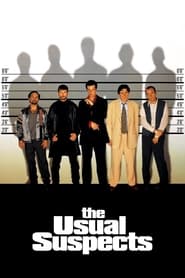
My name is Bryan Singer. And I'm Christopher McQuarrie, the writer. I'm the director. And this is the usual suspects. These are the credits. That's my production company, Bad Hat Harry, named after a line in Jaws.
0:04 · jump to transcript →
-
the foreboding porthole music, is, okay, this was shot in my backyard, not this. This, that's John Ottman's hand and my foot. And we built that little bit in my backyard. Not the ropes, but those two shots. Yeah, and Verbal's supposed to be hiding behind the ropes. That's the idea of the ropes. Some people seem to be confused by that. These ropes are to replace the base of the crane, which is cut out of the script.
4:23 · jump to transcript →
-
My favorite of the arrests, Benicio del Toro. Yeah, with the little steel drum in there. I was actually adamantly against the casting of Benicio in this film. And if you ever read the script and see the changes that we made because of the character that he created completely from thin air, you'll see that I was totally wrong in my instincts. No, but, uh...
5:53 · jump to transcript →
-
-
-
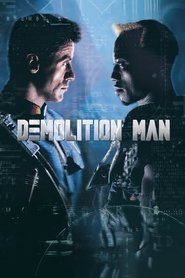
My name is Mark Obrambila, the director of Demolition Man, and welcome to the 4K restoration of the film originally made in 1993. And hey, I'm Daniel Waters, one of the writers, the writer who took an action movie and made it into a silly movie. But I think me and Mark are the people that upheaved the Joe Silver boilerplate. We made it into something very unusual and bizarre, but... With a lot of resistance, actually, as I recall.
0:03 · jump to transcript →
-
which was in the future, obviously, and it's in San Angeles. So San Diego and Los Angeles merged into one giant metropolis. And Sylvester Stallone is the old school police officer who's in charge of taking down the crime lord, Simon Phoenix, played by Wesley Snipes. Yeah, I think it was the original script was by Peter Lenkoff and it was definitely a solid.
0:59 · jump to transcript →
-
action futuristic thriller, and this opening scene is definitely of the mold that the original screenplay was in. As you'll see, I kind of came in like green pepper, only three weeks of work, but I made it into something else that I think people enjoy, but this is the pure action part of the movie.
1:28 · jump to transcript →
-
-
-
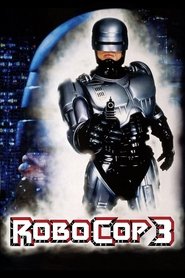
I was thrown a life raft by Robert Zemeckis and Dick Donner and Walter Hill and David Giler to do Tales from the Crypt. So I did that for about a year. I wrote a bunch of them and I directed one. But I really wanted to make a feature. And Michelle had taken over at Orion and she thought that this would be a good fit for me. And she initially asked Shane Black and I to write the screenplay.
1:59 · jump to transcript →
-
essentially, you know, homeless people and rebelling at the big corporation. We don't really know them, so I don't know that we're invested in them, and I think that's a mistake that I made. Bringing back ED-209 was not a mistake. That was kind of... No, well, yeah. We kind of had to do that. Now, in terms of the script by Frank Miller, had that already been completed before you came on, and how much involvement...
8:45 · jump to transcript →
-
did you have with Frank at all during the process here? Well, this has to be said because it really affected what this movie was. I was a huge fan of Frank's work in comics at that time, especially The Dark Knight Returns and Batman Year One and Ronan and Hard Boiled. I was just an enormous fan. So the fact that there was an existing script by Frank Miller, I was just thrilled. A lot of people have problems with the cute little...
9:13 · jump to transcript →
-
-
multi · 2h 19m 14 mentions
Martin Scorsese, Nicholas Pileggi, Ray Liotta, Lorraine Bracco + 9
-
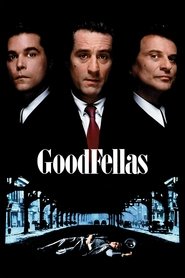
The big daddy, he had all the pieces. He put all the pieces together. And so, you know, he made it whole. And without Erwin, I don't know, you know, well, Marty and I would have done it, but eventually, but who knows. But Erwin really made it comfortable and easy for everybody to do. And as soon as Marty finished The Color of Money, he and I started writing the script. In March, you think this is fun?
5:51 · jump to transcript →
-
Right around that time, I think it was, 86, all the way through 86 and 87, Nick and I were working on the script. And basically I went through the book, along with Nick, but primarily I started choosing sections. I mean, the book was the book, but now the movie was an entirely different thing, and you have to begin to cull the book for the structure that would make a movie, which is what we did. We both took the book, and he said, come back with a structure of the movie. What's the structure of the movie?
12:19 · jump to transcript →
-
getting coffee from Marty. They just wanted to be in that world. But I didn't know enough. I just didn't know enough. I didn't know anything. Executive producer, Barbara De Fina. I think the writing of Goodfellas came at a time when he felt that he was going to make a huge contribution and wanted to finally be credited for his work. And in fact, Nick and Marty did write together and would share pages and basically they were a team on that one.
14:08 · jump to transcript →
-
-
-
Paul M. Sammon
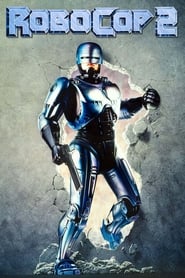
And as you'll see, in this futuristic Detroit, it's not a good idea to jack a car. RoboCop 2 was written by Frank Miller. It was his first produced script. And here we have a little taste of the ultraviolence that Frank had done in his very famous mid-'80s comic book, Batman, The Dark Knight Returns.
0:56 · jump to transcript →
-
Paul M. Sammon
As is the violence. Now, what I find a little disturbing about RoboCop 2 is that Robo 1, with Paul Verhoeven and Ed Neumeier and Michael Miner, who wrote the script, and John Davison, who was the producer of both Robo 1 and Robo 2, had a much sharper take on their satire of then-contemporary society. Robo 2 is a little sloppier in that respect, but again, it was a rushed production. Now, this is an actual Taurus cruiser that...
5:59 · jump to transcript →
-
Paul M. Sammon
Now, Tommy Noonan goes through a lot of changes in this film's costumes, and interestingly enough, they didn't develop this in the final shooting script, but the idea was that he was not only a very powerful drug dealer, but he was a religious figure. In fact, that first shot you saw him sitting in the dark surrounded by the wall, the actual scripted version had him in a priest costume in an auditorium with 2,000 followers who were on their knees singing hallelujah.
11:30 · jump to transcript →
-
-
-
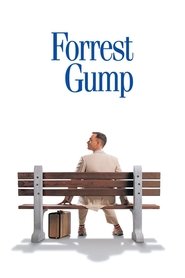
when I read the screenplay, the very first draft of the screenplay, and this is the Eric Roth screenplay, because there were many screenplays prior to that that were done over many years. I just kept turning the page to see what was gonna happen next. I mean, I had no real desire or compulsion to make a movie about a guy with a low IQ. It seemed to be the right character, and I kept wanting to know what was gonna happen to this character.
0:28 · jump to transcript →
-
And this strange story, you know, just kept wanting to know what was going to happen. How's this going to end? What was going to happen? And whenever you get a screenplay and that happens, as crippled as it was very early on, you know, that's always a good sign. The Feather always started the movie in the screenplay. It wasn't at the end, though. That we put in later. I mean, in later drafts of the script.
0:58 · jump to transcript →
-
I always saw Sally in this part. I don't know why. You know, Wendy Finerman, the producer, suggested her in, like, the first day or first week that I, you know, signed on to do the movie. And it's just like, wow, yeah, Sally. And I sent Sally the script, and I was very worried about it because, you know, she has to play, you know, ultimately Tom. I mean, when you say it, it's not really that way. Say, Sally, why don't you play Tom Hanks' mother?
6:05 · jump to transcript →
-
-
-
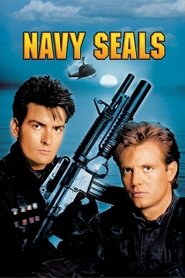
title card that popped up for this movie, I think, was a Brenda Feigen production. So Brenda Feigen was one of the two producers of this movie and really is the person who kind of made it happen. She was really instrumental and it was her idea to make the film because the writer of this movie, Chuck Farr, was her client. She was an agent at William Morris and she's the one who encouraged him to write it. But it's funny, her reputation, she's not really that well known these days as a producer. This was
1:14 · jump to transcript →
-
what he was doing. And, you know, Feigen would get kind of annoyed with him as his agent that he was missing these meetings. But then he started to tell her these stories about the Navy SEALs. Like, he was kind of quiet and secretive at first, but ultimately she got him to open up a little bit and she just thought these stories he told her were great. And so she really encouraged him to write a script about it. Write what you know. Exactly. And she said...
8:29 · jump to transcript →
-
If you write this script, like she thought it was such a great idea for a movie, you know, and this was, of course... Top Gun era. It was like when Die Hard was made and everyone wanted the next Die Hard. After Top Gun, everyone wanted the next Top Gun. Exactly. And this made perfect sense. Exactly. So she thought it was such a great idea. She said to Farr, you know, if you write this, I will basically leave being an agent to produce it and we will get this movie made. And that is essentially...
8:57 · jump to transcript →
-
-
-
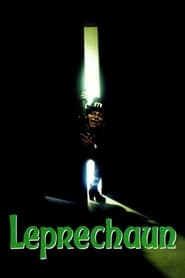
This is the Lionsgate logo. I was waiting for the Trimark logo. This is Mark Jones. I'm the writer-director of the first Leprechaun, which I think we're watching. And next to me is... Gabe Barteles. I did the special makeup effects on Leprechaun. And he did a great job, and you're going to see his work, or at least part of his work, through the shadows. Do you remember where this...
0:07 · jump to transcript →
-
And as you can see, I really didn't want to take ourselves too serious. I really wanted to have not a straight-ahead horror movie, which my first draft of the script that Trimark bought, that was very horrific and no personality in a leprechaun. He was just kind of a killing... There's Gabe's credit. He was just a killing machine that became a monster, and then through rewrites and prepping this thing,
6:54 · jump to transcript →
-
At a party, after a few drinks, I told him I'm gonna direct a movie and you're gonna do the music and he said, sure, how many times have I heard that? And by next year, I made the movie and I called Kevin and I think his music is terrific and he still works and does great stuff. And those gunshots were not CGI as we do now. Well, there's Michael Prescott, my producing partner who came with me with the script and David Price.
7:46 · jump to transcript →
-
-
multi · 2h 12m 13 mentions
Andrew Sarris, James Ellroy, Brian Helgeland, Michael Nathanson + 10
-
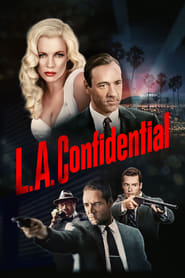
I really believe the best way to get the movie greenlit was not to have Arnon read the script. The best way was for us to describe this movie, and most important was to have Curtis describe it, because Curtis was the movie, the movie was Curtis. ...
1:05 · jump to transcript →
-
original and independent as you could want. I didn't think he wanted an imbalance. For instance, if one of the detectives was George Clooney, the writing would be tilted toward the George Clooney character. But by using these three virtually anonymous actors, he was free.
10:40 · jump to transcript →
-
that he plays, his persona, really well. So he sort of upped it a little, to my mind. He sort of blew it up a little, but it was right for the guy, you know? It was, hey, here's one of these kind of guys, you know what I mean? Like this. So. The movie premier, Pat Busk. Take care of them right down at Hollywood Station. I'll get the evidence. I first heard about L.A. Confidential through Curtis Hanson, the director. I read the script.
11:58 · jump to transcript →
-
-
-
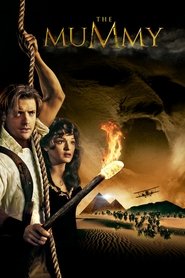
Hi, this is Stephen Sommers, the writer-director of The Mummy. Actually, Steve Sommers, but my mother makes me use Stephen professionally. And with me is Bob Ducsay, who's been editing every one of my movies since we were in film school. We've been together for 12 years. 12 long years. Don't make it sound that long, Bob. It's mainly been enjoyable. Mainly. So what do you think of this logo? We're not big fans of the new logo. We like the old logos, but maybe we shouldn't say that here. Anyway, this shot...
0:03 · jump to transcript →
-
Her petting the cat was my idea, I have to say. That was a nice touch. She was good. By the way, all the ancient Egyptian spoken is as close as we could get to ancient Egyptian. The language hasn't been spoken in over 3,000 years or 2,000 years, but we had a professor of Egyptology go over the script and phonetically write out how he thought the ancient Egyptian would sound, and then he put it on cassette tapes for all the actors so that it wouldn't just be...
2:37 · jump to transcript →
-
it's very well executed too it's interesting because i mean it's it's one of the the cheapest gags in the right in the book i mean it's it's a really it's it's shameless in fact but but it works it's it's fun to be in a preview audience or or even better with a paying audience and sitting there watching them all jump when he uh pushes that mummy out now i shot this scene in this in the script i told john hannah that he was going to be drunk
16:20 · jump to transcript →
-
-
-
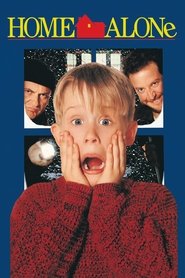
That's also the reason I got the part. I'm such a ham. You are such a ham. - I'm such a ham. But what's amazing is, at the time... ...I was only the father of an infant, really. My daughter... - It was Rory's age. They were both born same month. Yeah, and, uh.... So I was, uh.... I thought, "Well, he's-- This kid is really kind of over-the-top... ...In terms of the way he treats his family. He's kind of a brat." Little did I realize then, after four children later, that this is kind of par for the course. This is the way kids just treat their parents. John knew what he was talking about. - Oh, yeah. He had lived through it. John-- The meetings on this film... We would be in preproduction before we'd shoot... ... then I'd have to go to... John was a night owl, so I'd have to go to John with a... John Hughes' house from about 9 at night to 5 in the morning. I would get home and get in a half-hour's sleep and go back to the set. It was just insane, and he liked to work those hours, and we'd... That's how we basically worked on the script... ...and worked on the production design. It was literally a 24-hour-a-day job. Now, oddly enough, you know, which is gonna sound odd to some people... .all of this sort of imagery... ...Was inspired by David Lean's Great Expectations. So I was-- Obviously, we didn't fully get to that point... ...but some of the black-and-white photography in that film... ... really inspired this sequence for me.
11:55 · jump to transcript →
-
This is a good place to bring up the score. John Williams was not the original composer. If you have one of the early posters of Home Alone in your attic somewhere... ...It says "Composer Bruce Broughton." And Bruce Broughton was the original composer... ...on a film that I wrote called Young Sherlock Holmes. And I loved his score for that film, so I met with him and hired him for this. He was not available to do this... ...and he essentially was doing The Rescuers Down Under. I think that's what it was. So we lost him. So we had no composer while we were shooting... ...the second half of this film. And we went to John Williams thinking, "He'll never do a film like this." But he saw the film, loved it and decided... Amazing what he did. - His score is unbelievable. The score is beautiful. No. - He doesn't miss. Well, the thing is, comedy's very difficult to score... ...because it can always sound stupid or goofy. And John never really let that happen. I think one of the great things about John Hughes' screenplay here... .IS that John really filled in every possible... ...logic hole here. - Yeah. Little loophole. Any-- You know, in other words, by putting this kid into the back of the van... ...he took care of the fact that you would be counted... The head count worked. Also adding Buzz here, confusing her... ... Just added to the... I don't wanna say the reality... ...because the film has a heightened reality, but the reality of what's going on. Yeah, and how it all happened. - And the audience always bought it. They bought the fact-- Particularly, we were concerned about mothers... ...because mothers would say, "How can you leave your kid alone?"
14:15 · jump to transcript →
-
Didn't you shoot at Midway? Yeah, we shot at Mid-- I think we shot... There is my daughter, Eleanor. And my mother-in-law, right there. Eleanor just started high school today, so there you go. Oh, wow. - Yeah, so.... I'm getting old. - Time has passed. And there's my wife, Monica, as the stewardess, so it's a family affair. You're in the second one with your daughter. I'm in the second one. - In the toy shop. Yes, having looked as if I'd eaten most of New York City at the time. Yeah, yeah. - I was enjoying myself. Uh.... - Welcome to my world. Uh, this was one of the funniest shots, I remember. When people first saw you open that door, and your hair was all sort of... Because usually in movies people don't think: "We're gonna mess up his hair to look like he had a night's sleep." People wake up and they look like... - The Lindas. Hair and Makeup. Scratch my butt. - That was in the script, actually. That was a John Hughes-ism. That was very-- John was very perceptive, and the script read wonderfully, you know? It was like... It was a movie on paper, essentially... ...and you realized that this had a lot of potential.
17:07 · jump to transcript →
-
-
-
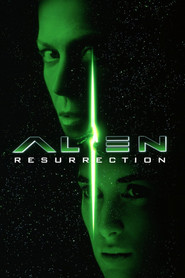
on his prison were going to be chased by this alien and killed. And yeah, I didn't have that much of an issue with it. It was only kind of later on you kind of see the sort of the failings of the studio manipulating the film and changing it and not knowing what they wanted. David Fincher making a movie without a finished script.
1:20 · jump to transcript →
-
which is one of the most ridiculous movies you will ever see. John Fasano wrote that script. I mean, my God, he must have had a brief moment where people were taking him seriously and they jumped on him, but that didn't last long. But you can see, like, during the course of this movie, where Vincent Ward's ideas are still kind of embedded in the film, because he's still credited as, you know, the story...
7:10 · jump to transcript →
-
explored in the first two. William Gibson's script, which was then turned into a radio drama a couple of years ago, which people seem to gush over. I think it was a terrible script. Well, terrible is a harsh word, but it just didn't do anything really exciting for me. And it does bring over, obviously, Newt and Hicks stay alive, but Ripley's in a coma for most of it. So she's out of the movie and you've got like...
12:13 · jump to transcript →
-
-
-
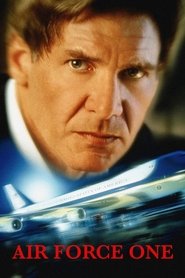
they did it originally for Kevin Costner. And then it happened that Kevin was not available when the script was ready to go, and he was, I think, gentleman enough to say, okay, I know you want to go forward. Why don't you go with Harrison Ford instead of myself? And that's how it happened. And here we are already. So you see, this is... I'm pretty proud of this because we... First of all, I must confess, you know, the whole thing, the beginning here, it's all...
2:17 · jump to transcript →
-
Did you work with the writer on the script of this? Yes, I mean, Andrew Marlowe is the writer, and we worked a lot in this month before we started shooting. And even into the production, we constantly, we always do it like that. It's never really like that. You have a script, and then you shoot it, and that's it. You constantly, film is always sort of things in development to the very end. And so we work, yes, on a daily basis with the writer. And then we had also Paul Attanasio,
7:30 · jump to transcript →
-
another writer who helped us with some dialogue work, especially in all these political scenes with the White House and for Gary Oldman, some scenes and so. So, yeah, it was constant work with the script. And again, here Harrison Ford with a great speech. And I think it's a great introduction here for a movie star. Don't you think when you say he is my friend, the President of the United States, and then
7:59 · jump to transcript →
-
-
-
Tony Scott
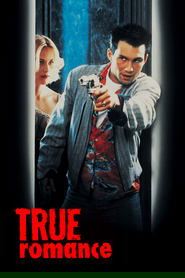
My last note on the music, I think, more than anything, perfectly captures Patricia's character, Alabama, because she's got this childish innocence. And really, the movie is the movie seen from her point of view as we open with her voiceover. It is Patricia's movie. You know, what was unique for this script with me was that I went out to...
5:50 · jump to transcript →
-
Tony Scott
And I couldn't, in the end, I couldn't understand why I was looking elsewhere, because Guy was so perfect for the role. He was actually, when I talked to him about the role of Drexel and he read the script, he said, fuck, this character's great. And he was actually in the middle of shooting Romeo's Bleeding, which is a very different character to the Drexel character. So I said, Guy, you know, I've got some ideas about Drexel, and he said, okay.
19:39 · jump to transcript →
-
Tony Scott
...and part of the story. And, you know, Taxi Driver is again... Taxi Driver and Badlands are two of my all-time favorite movies... ...and they're both very one, strange... ...has a bittersweet quality and a violent quality... ...and Taxi Driver is very dark and very violent and very unforgiving. And I think that's what I was wanting to do here... ...and I think, you know, that's what Quentin had in mind... ...when he wrote the script.
31:39 · jump to transcript →
-
-
-
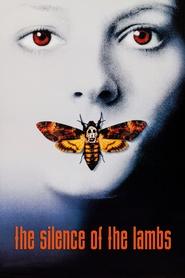
Um, to the extent that there isn't really draft of Ted Talley's screenplay where they were unsure if they were going to be able to get the rights to the characters from Dino De Laurentiis. Hannibal Lecter almost became Abel Gideon, which if you've seen the TV show Hannibal, you'll know is a separate unrelated character who was created for that show played by Eddie Izzard, who is very heavily inspired by the novels version of Hannibal.
18:59 · jump to transcript →
-
But Thomas Talley's screenplay never really describes this character as anything other than quote-unquote Mr. Gum or quote, a man. Yeah, basically, to use the terms that the dolls are using, a very clocky trans woman, essentially. Like, Thomas Harris is trying to make the call here, and it's like, sit down, sir, at certain points. But, yeah.
32:44 · jump to transcript →
-
Taking these hormones and even just the sort of case description that Crawford and Clarice have in the book goes a lot more into detail of sort of criminal records, of talking about gender identity problem. That gender identity is never even uttered once in this screenplay or in the movie as filmed. And it's fascinating to sort of see the sort of distancing.
33:12 · jump to transcript →
-
-
-
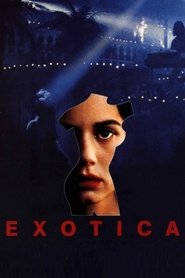
this young woman that has a very, very significant place in his past and certainly he does in her past as well. And the two of them form this very odd relationship that's quite toxic and which is going to extend their respective grief. So it's a very complex idea. And from the very beginning, I knew that the script was sparse, that there were going to be these very strong images, these very strong...
5:59 · jump to transcript →
-
visual motifs, but we needed an amazing score. And what was so beautiful about this is that Mychael and I had been working already together for 10 years, really, since Family Viewing. And from that very first film, we developed this language, this ability for me to write a certain type of script, knowing that Mychael's collaboration and artistic understanding
6:28 · jump to transcript →
-
You are drawn to certain characters and moments. I mean, you know, things develop unexpectedly. I mean, in this case, obviously, you know, Arsinée Khanjian got pregnant with our son, Arshil. So the whole notion of pregnancy became something that I had to work into the script, you know, very quickly as I realized that, you know, a few months after the shoot, we'd be giving birth to our son. And so there are a lot of things that are just quite intuitive and are dealing with
18:30 · jump to transcript →
-
-
-
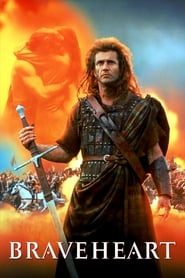
The good thing about Randall Wallace's script is he had scenes like this in it that were kind of fun, and they actually made a point about the difference between strength and brains and were entertaining at the same time. See, he had a lot of whimsy in the writing of this, although it's a pretty hard story. It needed that kind of levity from time to time. Welcome home.
25:18 · jump to transcript →
-
huge pitch battle but I knew that the you know the set piece was yet to come and I didn't want to overdo it here so we found a shortcut we managed to shoot this entire sequence in a day and wherever we got the opportunity to burn a set we simply burnt it whether it was in the script or not
58:20 · jump to transcript →
-
Really good actor, great guy. And this character in particular really tickles me. Randall brought him into the script at this point, I think, really well, to sort of add levity and like a new face and kind of keep things moving along. Insane Irish.
1:09:03 · jump to transcript →
-
-
-
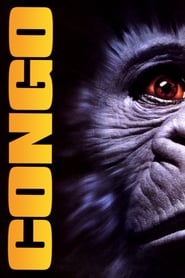
Hi, my name's Jim Hemphill. I am a filmmaker and film historian, and I'm here with... Screenwriter and author Kelly Goodner. And we're here to talk you through Congo, which Paramount released in 1995. It was directed by Frank Marshall, produced by Kathleen Kennedy and Sam Mercer, from a screenplay by John Patrick Shanley, based on a novel by Michael Crichton, all of whom we will talk about in great detail, I'm sure, as this movie progresses. Um...
0:17 · jump to transcript →
-
for a while. And anyway, so he got back to Michael Crichton in a couple of weeks and said, hey, I sold it. And here's a million and a half dollar advance. And Crichton was like, you sold what? You know, I don't have an idea. And he's like, well, I sold it. So that was all he had. And Michael Crichton, he said he had never done a deal like that before. He had always written the book or the script or whatever and then sold it. He had never written for hire before. And it completely froze him up. He
35:04 · jump to transcript →
-
the screenplay and directing the movie got it so it was a love story right it was a whole big um thing but it didn't end up happening because well initially they offered the role um of amy to coco the gorilla that had inspired the whole idea the gorilla who spoke sign language and um her trainer was like she can't be in a movie you know like gorillas don't
36:26 · jump to transcript →
-
-
multi · 1h 54m 7 mentions
Jean-Pierre Jeunet, Hervé Schneid, Alec Gillis, Tom Woodruff Jr. + 5
-
This is an idea of myself. A stupid idea, you know, to open the door. But I am pretty proud about this stupid humor. Jean-Pierre loves little gags and tidbits of funny ideas. I think he dropped quite a lot of them. This was definitely one of his. We will discover the queen. For the queen, I remember, we didn't build the queen. We used the old queen from the second film, and we had to find it. A fan kept it - the queen - in a garage, and we had to bring it to use it. We had borrowed it from Bob Burns. Jim Cameron had given it to Bob Burns - a famous movie memorabilia collector - and Bob was gracious enough to loan it back to Fox. We repainted it, put some iridescence and interesting colors going on in it, and rebuilt it and refurbished it for him. But thank God for Bob Burns. It really saved the day. I love this shot. I love the sound. The sound effects are amazing. Leslie Shatz made the sound of the aliens with sounds of monkeys and lions and something like this. And pigs? - Maybe, yeah. All the crew were French, almost. It is a French film. - It was. Made with American money, but French. - Absolutely. Everybody spoke English except me. Your main worry on the film was not to understand every word that the actor was saying. You were very preoccupied by that. To be sure that... You were happy when you saw the film with subtitles. When I saw it on DVD, at the end, I understood the story. I thought "Oh, it's pretty good." It's a joke but - you remember, Herve - sometimes I asked you: "What does he say?" in the editing. I think that whole kitchen set, if I'm not mistaken, at some point doubles as a basketball court. So in the tradition of good English movies, basically, a lot of stuff is being reutilized. Which is a terrific way to expand your sets. I used, like all my films, very short lens. I love the short lens. And I love to put the camera very close to the floor. Sigourney is a great actress. I remember, when I met her for the first time, I did a stupid suggestion: "Maybe you could act like this." She looked at me and she said "No, Jean-Pierre, I'm going to act like this." She showed me, and I thought "OK. I have to follow her." And all the time I modified the script to help her. It was a good relationship. She helped me all along the shooting. Obviously, she knows Alien by heart, she knows Ripley by heart, because she made the four. I saw JE Freeman, this guy, in a Coen brothers movie, too. I think he was in Miller's Crossing. Before the shooting, we made together a reading, and it was the best lesson in my life. He was so professional. I would like to have a tape today of the reading. He was perfect. The thing about this film, which I found staggering, is the premise - I'm not sure what the point is - the premise is that this is 200 years after we last saw Ripley.
10:53 · jump to transcript →
-
Funny thing about Jean-Pierre is - a lot of directors storyboard - but what struck me about the way he approaches filmmaking, and this was set up right from the beginning, is he storyboards absolutely everything. At the end of the storyboard, Jean-Pierre binds the script into a comic book, where all of the dialogue from the script is lined up with every frame. The storyboard becomes drawings and text, and that's what he gives everybody. Everybody on the set had this document, and that was the script. In the beginning, Jean-Pierre said: "This storyboard is everything that I need to shoot in order to know that I have my film." "If I can't get anything else, these shots are what I must have in order to cut my film." This is with the understanding that on top of that are "B" cameras and pick-ups, little details of... The cameraman basically picking up whatever he can as a scene is being shot. I find that unique, because a lot of directors don't like to be bound by the storyboard. They do it to think about what they'll do, and then on the day they do something entirely or somewhat different. Whereas, I think, Jean-Pierre is very religious about first boarding and then filming. And it's that simple. He would come to meetings with very very crude little sketches and say: "This is how I see it. This is how I want it broken down." As storyboard artists, we took his thumbnails and turned them into more solid drawings, so that the crew would have no trouble seeing what was going on. But, basically, he was very determined. He knew pretty much how the scene unfolded, and there were few corrections. Once he'd decided "This is how I'm gonna do the scene", he just did it, and that was it. So, shot by shot, if you take the storyboard of Alien Resurrection, every take is something that Jean-Pierre intended to direct from the beginning. I don't remember him doing a scene that was storyboarded and saying "Do it differently." We are going to arrive to the clones scene. I remember, Sigourney told me: "I accepted this film because of this scene when she looks at the clones." Tom and Alec made a lot of sketches for these clones, and they built it. You can see on the eyes of Sigourney Weaver some small light points on the eyes. In fact, it was a ringlight we used for the beauty of the skin for Sigourney. That was beautiful, the effect in the eye. It's like a special effect. Some people asked me: "Is it because she is an alien? Is it because she is a little bit like a robot?" No. It was just for the beauty of the skin.
54:27 · jump to transcript →
-
Almost everything was designed to be four, five times bigger than what it ends up being in the film. As budgetary bad news came in everything shrank. Pretty much every set invented in the script is in, with the exception of one or two. But everything is a lot smaller than was intended. What's in-fucking-side me?! A parasite! I love this sentence. It was in the trailer. I worked with Darius on City Of Lost Children. Then he went and did Se7en, which was just spectacular from a cinematographic... How would you say that? - I'd say, uh... "A good picture". Yeah, it was nice to look at. Beautiful film. And then he came and did this with Jean-Pierre again. You were in Alien because you did City of the Lost Children with Jean-Pierre. Correct? - Yeah, probably. I worked with Darius on Se7en. - You worked on Se/7en. You were spectacular in that film. - Thank you.
1:05:40 · jump to transcript →
-
-
director · 1h 31m 7 mentions
David Steinberg, Dave Foley, David Higgins, Jay Kogen
-
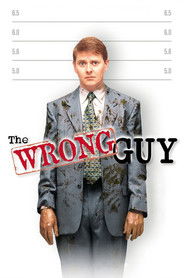
Hello, and welcome to... Oh, this is the Hollywood Pictures. Yes. Hollywood Pictures. Hello, and welcome to the Wrong Guy Commentary. Oh, yes. 20th anniversary edition. Yes. You're sitting here with Dave Higgins. Hi. One of the stars and one of the writers. Yeah, that's me. David Steinberg.
0:01 · jump to transcript →
-
The director. Dave Foley, one of the stars and one of the writers, and Jay Kogen, one of the writers. And a big player. And he does play a very important role in the film. And so does David, by the way. I do. No spoilers. Oh, that's Dave's name. That's your name, Dave. Can we get any of the sound in the headsets? Softly. Do you want it brought up a little bit? This is our Lawrence Shragge. Right, Lawrence Shragge's soundtrack and the great sort of...
0:21 · jump to transcript →
-
Now, the level of blood that you have there, quite a reasonable little bit level of blood. Not that bad. Not Hitchcockian by any stretch of the imagination. But much later somehow it becomes much more bloody. Well, it's quite possible. Look how strong he was. He could pull himself up. Well, that becomes a point in the script as well. But even when we were writing it, you and I were saying, like, we couldn't pull ourselves up in this thing.
10:20 · jump to transcript →
-
-
multi · 2h 24m 4 mentions
Alex Thomson, Terry Rawlings, Alec Gillis, Tom Woodruff Jr. + 3
-
You notice in these sequences, the camera is near the ground so the ceiling becomes more important than the floor and one is shooting up people's nostrils. This was an approach David Fincher wanted, which I think is terribly effective indeed and makes it more distinctive than the other three, rather, in my opinion. I tried to keep it fairly shadowy, so that it looks moody. Where I could, I brought the light from the top because it's unusual for the light to come from the floor, but one had to be careful about it obviously. The difficulty was getting light into the eyes so we could see what the actors were thinking but not at the expense of the mood. I remember at Pinewood Studios when the sets were going up, Fincher would have us walk through the sets just looking at the scope of them. It was truly amazing to see these things go up. Norman Reynolds is a great production designer. He builds the world. It's very difficult to control him cos George would tell him on Star Wars "Don't build that. We're gonna paint it", and the next day - "It's too late. It's built." When they sent us over, we said "Why are we going to London?" They said "It's the sets, the set design, the artistry and the craftsmanship." And it really was very true. British actors is another good reason to go there. Somehow the British accent does a lot for these movies, I think. Vincent has had a deep, abiding interest in Luddite monks, and had done a great movie called The Navigator, where these monks dig their way through the earth, coming out into the 20th Century. It was a great movie. But, anyway, the original idea was that this was a wooden planet built by the Luddites and in the bottom of the planet, symbolically, the reactor was kind of hell. The technology that kept this thing going was emanating from the bowels of Lucifer. What drew me to the project first was that it wasn't a retread kind of sequel. It was a completely new idea, and some of it survived in the final script. David was entirely in control from the beginning. He put his stamp on it. He was the director and nobody ever questioned it. He was completely in control of the set and everybody hung on his words. He was definitely doing it. There was no weakness in it at all. He was very, very confident in what he was doing and wouldn't be swayed. He had this vision and that was what he was going to do. He came under quite a lot of pressure from 20th Century Fox to hurry up or do it the quickest way or the most expedient way, but he wouldn't listen. He would do what he wanted to do, quite rightly, in my opinion. As I say, his compositions are marvelous and the use of the frame, and so on. David had been a cinematographer before he became a director, so he knew lighting. He knew what was good and what was bad. That's not to take away from David Worley, the operator. His contribution was enormous as well.
10:16 · jump to transcript →
-
And the warden - was that Brian Glover? Is that who that is? - was a wrestler or something? Cos I know all the British guys on the crew were very excited to see him. They loved him cos he was a wrestler. And everybody was excited from him being in American Werewolf in London, and doing his lines over and over. That's right. - "That's enough." "That's enuff." I think by this time I'd said "Why can't we see the lamp, guys?" And we pulled it into the shot. It had a sort of curious bluey-green feel to it, which I kind of re-echoed in the close shots. This is Lance Henriksen. I bought the big winding staircase from this movie. I had it shipped home and I put it in my house. That big cast-iron staircase. That big cast-iron staircase. The decision to go away from the ox as a vehicle for the birth of the alien was, as I recall, in our postproduction phase, because generally it was felt that an ox is sort of a cumbersome, slow, non-threatening animal. And that a faster-moving four-legged animal, more aggressive animal would be a more interesting host for the alien and that if it had picked up any of its host's characteristics it would be better if it came, for instance, from a Rottweiler than from a beast of burden, which was probably a good move. Although all of this stuff with the ox has much more scope to it, which I love. And there's always something about the... When you go back in and retroactively change a script, it's like a house of cards. If you can keep the whole thing from collapsing that's great. But somehow, sometimes little changes make it a difference. And not always for the better. But it's understandable. I think that the creature... You know, an ox... An ox alien... Eh, you know. Not very interesting. But it's actually quite a nice thing and it was weighted very... We built it so that it had an armature in it that we could just add more weight to it. Sandbags and what have you. It really was weighing at probably about 300 pounds for this scene, because it had to... This actor's kicking it. It can't just bounce around like a foam teddy bear.
23:29 · jump to transcript →
-
I liked Sigourney Weaver. She was clever, charming, intelligent. She seemed, um... I even liked the impression that she was, in fact, rather more for theater in New York and literature, than this particular lark. She never said as much, but I always got the impression it was all, not beneath her, but, you know... Movies are OK, but theater's where it's at. I liked that. We had some good conversations and she gave as good as she got, as is well known. She palpably had power, control, but never wielded it or made you feel uncomfortable. No, she seemed charming and good to work with. A fine actor. If she didn't like you, you'd soon find out about it, but then this is a professional scene, a professional outfit. I liked her. She demanded respect, and she got it. And these changes'd come by, these script changes, and we'd hear news from the front, and you'd take it in your stride. Where my character was concerned, Golic, there was this whole other subplot of the story for people who may not have seen it. When we shot the footage, Golic escapes from the sanatorium, from the hospital wing. He kills somebody, breaks out of there and he goes to where the monster is incarcerated and manages to free the monster in order to appeal to the monster, to join forces. A "You and me, monster, can go and kill them all, they all deserve to die" kind of scene. We shot this scene. Again, this is nothing unusual for a picture of this scale. We shot two or three different endings. If you were undecided, you would decide later. This is fairly standard, but it kept you on your toes. And also you could run a sweep as to which ending they were going to use. If you were lucky, it might be yours! It was like a multiple-choice thing. I worked on a Spielberg picture once, and it was exactly the same circumstance. Spielberg is good enough to call on the telephone and say "You know I told you I shoot three pictures at once? You ain't in the final picture." But what can you say? You enjoy the experience. You put it down to experience.
42:46 · jump to transcript →
-
-
-
Richard Schiff. So, Lori, did you ever audition? Oh, yeah. Oh, I have a really good, I have a really great audition story. Because I read the script and I, you've probably heard this story before. I read the script and I said, oh no, I'm Tank Girl, that's it.
15:47 · jump to transcript →
-
And this was actually written in the script that she scrubs her body and it was very abrasive and very hard. And we went against, you and I decided to go against type and make it actually quite romantic and sensual that she could handle this abrasive material and actually turn it into something. And it turned out to me to be one of my favorite scenes as well that managed to make this awful situation into something.
24:27 · jump to transcript →
-
This was everybody's favorite scene before you cut it back. And I put it back, and they said no. So it's one of those lost scenes that I'm sad about. Because there's a lot of really great jokes in it. It's an okay scene now, but it could have been great. That's so sad. When you've got the writers and directors and producers and actors...
32:52 · jump to transcript →
-
-
-
Taylor Hackford
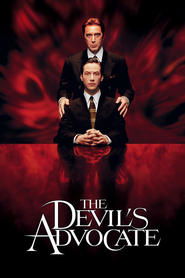
Hello. My name is Taylor Hackford. I'm the director of Devil's Advocate. And. I thought that you might find it interesting for me to give you a little... ...commentary about what went into making this film. The opening credits were particularly important to me... ...because I was not going to have a normal credit sequence... ...meaning two minutes of listing everybody who worked on the film. I wanted to get right into the action, and I asked Richard Greenberg... ...and Lauren Schluter, who are fabulous title designers... ...to come up with something very unique that could speak to the fact that... ...this film is a little extraordinary. It's going to have a little something... ...let's call "supernatural" to it, because we immediately go right into the film... ...which is extremely realistic. It's a courtroom scene. The actress you see in full close-up... ...is named Heather Matarazzo. She is probably known to a general audience as the star of... ...Welcome to the Doll's House. You now see Kevin Lomax, who is the star of the movie played by Keanu Reeves. But you see his boots. I wanted to say, this guy dressed in a wash-and-wear Southern suit... ...has something a little bit wild about him. Tony Gilroy, who is the writer with... ...my collaborator on this piece, we wanted to basically say this guy... ...may look straight on the upper half of his body. But look at those boots! They're $500 boots. They show that he's got a little flair... ...a little wildness to him, and those are little characteristics that one wants to use. You see him just basically doing his job, supporting his client... ...and then, all of a sudden, you want to feel that this man believes in his client. He's there. He's confident. He's about to take this girl apart. And then he discovers something that completely changes the course... ...of one, this trial and two, his life. He realizes that the man next to him, who he thought was innocent is guilty. That revelation, right now, and this moment of decision... ...is what the film is all about, because this is a moral tale. One has to make these choices, professional choices, in your life... ...where you realize your job says: "I must go forward. In this instance, as a lawyer, I have a professional oath." But on the other hand, you have a personal code of morals and ethics. What the entire film is about is this moment of decision, right now... ...where Kevin Lomax has to decide: "Do I go forward? "Do I take this girl apart on the stand, and do I win the case for my client... "...or do I do the right thing?" And he takes a break, and he takes a moment to think. At this point, we go into what the film is truly about... ...which is moral choices. Kevin's client, Lloyd Gettys, is a math teacher at the local high school. He's played by Chris Bauer, who's a fabulous, young actor... ...I discovered in New York. I didn't discover him... ...but I found him in the casting process. He had gone to Yale. He doesn't look like this. It just shows the chameleon quality... ...of what an actor can do. But at this point, you can really see the passion and the anger in Keanu here. I wanted to establish: here is a guy who thought he was on top of the world... ...who had it all basically lined up. He sat there calm and collected at the table. You can tell he's not at all upset. Everyone in the room thinks: "Oh my God, this girl is gonna take him apart." But right here, he's got to look at himself in the mirror... ...and realize, "My God, what do I do? "I've never had to make this choice before." I think that maybe some lawyers never have to make it. But I think this is a moment of truth, where you realize: "What do I do, my professional ethics or my personal ethics?" At this moment of choice, in the bathroom enters a character... ...that you will see later in the film. He's the Southern reporter, newspaper reporter... ...a friend of Kevin Lomax's, a drinking buddy. He's played by Neal Jones... ...who's a wonderful New York actor. You want to feel a sense of familiarity here. These are a couple of cynics who like to get together and drink... ...and laugh about life in the courthouse. But basically, right now, he's setting up the fact that this character, Kevin Lomax... ...is unbeaten, he's a hotshot, he doesn't really take anything too seriously... ...because he's got great confidence. But right now, he's about to lose his first case. While looking in the mirror... ...Keanu has to decide, "What am I gonna do?" I thought particularly interesting, and it was an actor's choice... ...Keanu goes through that whole thing. He has his moment of seriousness. He's looking at himself. And then he checked his teeth. It looks like a smile. It's not a smile. It's a smirk. It basically is saying, and is in the best kind of cynical sense: "Hey, I'm going to do my job. I'm a tough son of a bitch. "And I'm gonna go in that courtroom and I'm gonna take this little girl apart. "Because that's what I do. I'm a lawyer and I'm a winner. "And I'm not about to become a loser here." And I think that choice that Keanu made, it was the only time he did it in a take... ...and I included it in the film. He comes in this courtroom and he starts very nice, very sweet to her... ...and appears to be... You know, she's been warned by the opposition that he's a killer, so be careful. You can tell that Heather is being very wary of him. But she's a little arrogant herself. She tends to feel that she's pretty confident. She's supposed to play a character who's very bright... ...and kind of the leader of her group. I think she feels that she's righteous... ...and in a good position right now. So she challenges him a little bit... ...and then Kevin springs a trap. He has this piece of evidence... ...which is a piece of her homework... ...where she's doodled and made a derogatory comment about Mr. Gettys. The fact is, however, that this is an unscrupulous bit of professional behavior. If you notice at the beginning of the scene, Kevin Lomax goes over. He doesn't know whether the judge will admit this or not. He turns his back to the jury, holds the piece up so that they can see it. If the judge doesn't admit it as evidence, he's already shown it to the jury. And this, actually, is a lawyer's trick. It is a bit of an unscrupulous trick... ...but it shows how far Kevin Lomax will go and how tricky he is... ...in terms of getting what he wants. He does, at the same time, get it in place, because he is also a very good lawyer. He's able to, as you see, he starts very nice and then he gets progressively tougher... ...and he's nice, kind of nice to her for a while. When the attorney objects, immediately you could see... ...Keanu Reeves jump like a cat... ...in terms of qualifying why he wants the objection sustained... ...and why he wants to win over the objection. Pardon me. And in this instance, he starts getting tougher and tougher and tougher... ...with Heather. Barbara is the character's name. He is going to take her apart, and slowly the opposition and everyone... ...in the courtroom starts to realize that this guy is not gonna be Mr. Nice Guy. He is perfectly capable of destroying a 13, 14-year old girl.
0:04 · jump to transcript →
-
Taylor Hackford
At this point, seeing a guy walk up to him in the bar, Keanu is completely convinced... ...that one of his friends has put this guy up to it. And this actor, who is Ruben Santiago Hudson... ...is a fabulous actor. He won the Tony for an August Wilson play, Seven Guitars. I saw him on stage and just felt, "I want to work with this guy." So when the role of Leamon Heath came up, you know, I had Tony Gilroy... ...kind of tailor the role to fit Ruben, and then convinced Ruben to do the film... ...because he has a very unique quality. He's not your totally assimilated black character. He may have gone to Harvard, he may have gone to Yale... ...but he's maintained a lot of his own roots and integrity, and at the same time... ...he's smart like a whip and he knows he's got Kevin hooked. The next scene that you're about to see hot cut to Kevin's roots: A Southern church, and this congregation is real. Judith Ivey, who is being introduced here as Kevin's mother. You know Kevin was raised in this church, he's coming... ...and taking a look back at his past, was totally fundamentalist... ...and deeply, deeply rooted in Jesus and God. Judith Ivey is part of this group. I had to spend a lot of effort convincing Pastor Lovell and his church... ...in Gainesville, Florida to participate in this film, because I feel that... ...you know, the things that they believe in, the things they're after... ...have everything to do with establishing good and evil in the world... ...and fighting the devil, and that's what this film is about. But they were fabulous, and they really got the spirit of God in them. And I thought it was important to see that Judith Ivey is a believer. She is one with her God, she loves Him. And, you know, she's a formidable presence for good in this film. At the same time, she's a tough mother, and you can see that... ...she has raised him in a certain way and she doesn't particularly approve... ...of what he's done with his life. He's a lawyer, and you establish his wife... ...over at the car, Mary Ann, who obviously is a party girl, a liver, and not... Neither one of them are in church this morning, and Mother is not that happy. This sequence is important to understand that Kevin Lomax understands scripture. He may have made a choice at this point to stay outside the church. If you notice, he's half in, half out of the light. Tony Gilroy wrote this in the script. Kevin Lomax stands outside the congregation. He's half in, half out of the light. He is part of it and at the same time... ...he can't bring himself to walk in. There's a dichotomy in him, which you'll discover later. But in this instance, when his mother calls up and says: "Quote the Bible to me and mention scripture," he can quote it back to her. He knows what he's talking about. He was in that church and a devout member at one point. Now you get a sense of Mary Ann. She is a good person. She's trying to help this character. She doesn't want to get the company to repossess her car. But she's tough, and she's a businesswoman. You also have a sense, right here, of the fun that these two people have. Keanu, you know, biting off her earring and handing it back to her... ...that was totally spontaneous. He came in, did that. It was quite wonderful. Now you have a sense of the married couple. They've got Mother-in-law... ...and Mary Ann's no dummy... ...she knows exactly that she's persona non grata in that household. It isn't that she doesn't like her mother-in-law, but she understands... ...what she needs to do, like have a child. And right now you establish another theme of the film: "Let's give her a grandchild and everything will be all right." Mary Ann is ready. She's working. She's professional. But she's ready to start to have a family. But you hot cut to Kevin Lomax who's taken the deal. He's in New York. At the beginning it's just a vacation. He's going to consult on the selection of a jury. You see Foley Square, the seat of judicial power in New York... ...all the Federal buildings, the State buildings, the local... Everything is right there in one space. It's a very, very sobering look at the power of the legal community in New York City. And at the same time, for a guy from Gainesville, Florida, it's very impressive. Kevin's here. He's excited. He is working as a consultant... ...to one of Manhattan's best and most famous criminal trial attorneys. His name is Meisel, played by George Wyner. And in this moment I wanted people to see that Kevin Lomax truly has a talent. When you talk to criminal attorneys, you realize that they say... ...that between So to 95 percent of winning a case is selecting a jury. This is a scene that I think talks about the inside of lawyering... ...and the reality of how you win. You win by psyching-out everyone that's gonna be on that jury. Those are the people that are gonna make the decision of whether you win or lose. This is where Kevin Lomax shines. He has an intuitive spirit. At the end of the scene, you realize he's got something else. He's got a sixth sense. Now, it's important, when we see this courtroom, to understand... ...that I wanted authenticity in this film. You're in New York. You have some of the best looking courtrooms in, I think, the United States. At the beginning, Warner Bros. wanted me to go to Canada and shoot in Toronto... ...which is an entirely different judicial system and the courtrooms... ...don't look the same at all. I fought to shoot this film in New York... ...not only for the fantastic exteriors, but also for these interiors. This is a film about big-time lawyering, and you want to feel, when you see the sets... ...and these aren't sets, they're locations. You want to feel that this guy is in the big time. He's gone from Gainesville, Florida to the top of the food chain. We shot in probably seven or eight of the best courtrooms... ...you could find anywhere in the world. Look at these paintings up on the wall here in New York. You feel that this is the justice system. Now Kevin is exhilarated. He comes out of his first day... ...in the New York courtroom and he knows he's done well. He didn't know how he would measure up, and how he measures up is... ...he's smarter than they are. I mean, he has to feel great. He's walking down the street. He's saying I'm a guy from the hicks, and someone's watching him. This is the introduction of John Milton, who's played by Al Pacino. It was important to me to establish a very nice introduction to him. One thing that Al did, and you'll start to see into this... ...he chews on licorice all the way through this film. You don't explain it. You know he's doing something. And instead of just walking away, getting in a limousine, he goes downstairs... ...into the subway. Why would he do that? He's well dressed. That's it. But immediately I go into a time lapse sequence... ...and I wanted to see day and night change. I wanted it to also say that this trial's been going on for a long time. When Kevin walks in, Mary Ann says, "You're home early for a change." Time has passed here. You've seen it pass. But more importantly, you see Al Pacino going down into the subway... ...and you see that the next images are not real. There is a certain kind of power that this person... ...we don't even know who he is yet, exudes. I thought that the time lapse would be both unique in terms of time passage... ...and, at the same time, extraordinary in terms of the potential power... ...that this man has. Now you've got Wife and Husband in... Mary Ann's got room service all over the room. Clearly, they've been there for a long time. She's watching TV. She's having a good time. She's been shopping. She's been to a lot of things, but her husband's been gone every day. And now you see the way they play. Kevin looks like he's defeated. It looks like he's lost the case. She feels badly for him. You can really see how she would, you know, how warm and wonderful... ...and sweet she is. But he's kidding her. You can really see the slyness, I think, in Keanu Reeves here. And, at the same time, he killed 'em. He actually chose the jury... ...and won the case, almost an impossible case. It was like a savings-and-loan fraud. This is white-collar crime. The guy sitting there in the trial, with his white hair... ...looks extremely legit. But the fact is that, you know, he's like Charles Keating. You know, he stole not millions, but tens of millions of dollars. And in this instance, the next shot is, they are in John Milton's domain. This is Milton, Chadwick and Waters, and I wanted a location that immediately... ...established the power of this law firm. This is a real building. It's the Continental Plaza in Wall Street, in the financial district, Downtown... ...and you see what New York power is all about. That view is a three-bridge view. You're gonna see all the way up the island of Manhattan. But the important thing here was, this location was used before in other films. I didn't want to use that same look. There's a unique design look here. Bruno Rubeo, who is my production designer and my collaborator... ...on the last three films I've done... ...we spent probably six to eight months before this film began... ...talking about what we wanted from this film and the look. Right now you're looking at Christabella, the first time we see her... ...and if you notice as she walks forward, I slowed down. It goes in real time. There's no cut there. We ramped so she starts in real time... ...she slows down... ...and comes back out in real time. And Kevin Lomax, he doesn't know why he's fascinated by her. We'll find out later. But look at the design in this. It's ultra modern. We used both an Italian architect and a Japanese architect. This is the Italian. He used prefab concrete in the walls. Milton's office. You know, the rest of the building is very impressive... ...but this office is something else again. It's cold, it's austere, and it's incredibly impressive. Look at that fireplace in the background. It's set up off the floor. Bruno had a design in mind. The furniture in this place is... You have a big, massive place. But look at the furniture. That little settee in front of the fire: it's delicate, it's small. This whole room exudes taste and a certain stylistic quotient. John Milton, you know, it's a huge room, devoid of furniture, very minimal... ...this is a man who has real taste and real choices that he's made. At the same time, this whole law firm is very, very modern. For the design quotient of this film, I want you to be able to see this sequence... ...and then later on, when you see where Milton lives, see the dichotomy... ...the difference. This is cutting-edge modern architecture to the nth degree. What Bruno wanted to do, and I wanted to do in this instance... ...is establish Milton's environment. Here it's cold, corporate, but, at the same time, undeniably impressive... ...austere, ultra-designed. Milton is very smooth. You know, Al Pacino always gets this rap: "Oh, gee, he's over the top." He's not. Al Pacino can play everything. And everything he did in this film was calculated. I mean, it was one of the great experiences in my life to work with an actor of... ...his deep, deep ability, his deep, deep talent... ...and his uncompromising attitude towards all his work. At the same time, Keanu, who had this... I'm saying this because here's these... ...two actors meeting for the first time. Keanu, who had done a lot of young-man roles, a lot of teenage slackers... ...in this film is anything but that. Kevin Lomax is precise. He is not a Harvard educated, a Yale educated guy. He came from a small school in Florida, went to a small law school. But all criminal attorneys that are really great usually did that. They come from the street. He's street smart. He thinks on his feet. And he's up against a guy, for the first time, that seems to have a little bit more... ...on the ball than even he does. He's never met anybody before that is his equal. And Milton keeps blowing his mind, like he does right now. You see this office. All of a sudden, he goes and taps on the door... ...opens up, and I wanted this sequence to truly be a moment... ...that would blow everybody's mind, not only Kevin Lomax's. He walks out on a roof terrace and, effectively, I'm using... Again, this is from a Japanese design. Bruno and I saw an architect... ...that had a pond on the roof in Japan, and I said that is a perfect idea... ...for what we want to do here. Here is a man who has such a sense of design and such a sense of grandeur... ...that he has created for himself a balcony, if you will, a terrace, a park on top. But does it have greenery on it? No. It has water. He calls it calming, placid. And at the same time, he's going to take Keanu out there... ...and he's going to talk about his past. He's going to find out a little bit more about him. He asks about his father. Keanu says, "I never had one." He asks about his mother. And in this instance he's, you know, if you look at Al's reactions here... ...this is a long, talky sequence. This is what you do sometimes. By the way, this is real. This is not blue screen. We didn't put the artists in a studio. I fought to get this scene. I fought everyone, including Warner Bros. Nobody wanted me to go up and get this shot. It's on the roof of the Continental Tower. They had re-roofed the place. The building didn't want us up there. I just knew that this sequence was going to define this initial relationship... ...between Kevin Lomax and John Milton. And the two actors are basically 50 stories in the air right now. They're standing on an eight-foot platform. No, it's not right on the edge. It's about eight feet from the edge. But the fact is that they're standing there. We had to get this whole thing in one day, and they have to do... ...a very personal scene while they're perched on the top of this building. You can see Al, at that moment, trying to let us know a little bit how precarious it is. But do you notice any kind of nervousness from Pacino? Not at all. He's easy. And the whole essence here is that Keanu's sitting out there. One, his mind is blown... ...at the beginning, and then somehow he finds himself getting into it. And at the same time, he looks right here and says: "My God, John Milton's standing like a foot from the edge of a 50-story precipice. "What kind of guy is this?" He also wears elevator shoes, which I think is interesting. But the fact is, right here is what the film also is about. It's about pressure. It's about professionalism. And what John Milton has done is taken Keanu Reeves... ...or Kevin Lomax, in this case, up to the precipice. He's showing him: "All this can be yours." And what is it? It's Wall Street. It's the seat of capitalistic power in the world. And he's basically saying, you know, I know you're a hotshot... ...but can you take the pressure? Can you sleep at night? That little speech that Tony Gilroy wrote, I think, fits all professionals in this instance. When you have to deliver on a deadline, you know what he's talking about. Basically, Kevin is there. He's ready. He said, "What about money?" Milton laughs. "Money? That's the easy part." Kevin doesn't have any problem. He can sleep at night. He's a lawyer. He knows how to do it. We cut from that to Carnegie Hill, which is Fifth Avenue in the Nineties in New York. It's probably the most exclusive address in New York. Central Park is on one side. You have these beautiful, beautiful buildings with fantastic apartments inside. And the Heaths. You're meeting Jackie Heath for the first time. I reveal her with that wipe from the elevator, you see her in close-up. Leamon Heath and Jackie Heath, they are absolutely New Yorkers. They've maintained their integrity as black people, but at the same time... ...they are not about to resist the temptations of the city. They want it. They know how to deal with it. They're very sophisticated. Look at the clothes that Jackie's wearing. Leamon makes the money and she knows how to spend it... ...and she doesn't have any qualms about it. This apartment, I wanted to basically establish the sense of awe. You know, John Milton owns this building. He has it for his employees. Although it's usually for partners, and for Kevin Lomax to get an apartment first up... ...shows that he's a little special, and you can feel, right here... ...that they're a little jealous. "Took us six years to get in here." Every New Yorker will understand that when they really want to get into... ...a big building. This is a film about New York. Tony Gilroy, who lives in New York and understands it incredibly well... ...is able to put these nuances in here that are maybe not aimed at everyone. But certainly, you know, you make a film in New York... ...it was important to me that you do something real. Now, you know, Kevin has basically been offered the job. He's got to now sell his wife on it. And this is a big test. If she, you know... He says, "I'll take you home if you want." Of course, if she did, God knows what he'd think. She knows him. She knows what he wants. And at the same time, how could you turn this down? It's very important right now, at this moment... ...to understand that Mary Ann wants this as badly as Kevin does. I mean, who would resist? Come on. They're too big for a small pond. They both want this and, my God, she's looking at this and saying: "Hey, I want to have a family." She says right now, you know, she mentioned kids again. She's mentioned it in the back of the apartment... ...and she mentions it again right now, and she's saying, "I'm in. Let's go for it." And that moment is one of the last moments of true happiness... ...you're going to ever see them have. Now you're at the law firm, and I want to be able to show... ...what big time lawyering is about. These are all partners. It's an international law firm. John Milton has called a meeting. From all over the world, these partners have come. There's Eddie Barzoon, played by Jeffrey Jones, who is Milton's chief lieutenant. He's the managing partner of the firm. There are affiliate offices in major capitals all over the world... ...and you get a sense of what law is all about. It's about copyrights. It's about real estate. It's about EEC and EUC and those kinds of relationships.
11:08 · jump to transcript →
-
Taylor Hackford
We rehearsed this scene for about a week. It was the one, I must say... ...for Warner Bros., a great thing they did for me. And although we had our differences, I was able to get my vision on the screen. I have no excuses. So, I do thank them. There was a great thing here in that Warner Bros. allowed us... ...to come back from New York. We built this set in Los Angeles. I had a week to prepare the set, to light it and to rehearse with the actors. Al, Keanu and Connie and myself, worked there alone... ...and really kind of built this scene. Tony Gilroy was there also, pardon me. It is not an easy scene to do when you realize it's basically a monologue. How do you keep it moving? How do you keep it visual? And it's basically a confrontation. And again, as I said... ...I want the devil to be confronting us. We all take credit for the things that we do in life that are good. When it's a good decision, "I made that decision. I'll take credit for that." But when they're wrong, we look for people to blame. That's exactly what Keanu is doing here, and Al won't have any of it. Milton is basically saying to him, "Hey. You made every decision yourself. "In fact, I told you not to. I said take care of your wife." I mean, I love the argument. And this is what we were trying to do. I give a lot of credit to my collaborative partner, Tony Gilroy, on this project... ...because this piece was a script that existed with a lot of special effects... ...and not many ideas, and it wasn't worth making. And every Hollywood star turned it down. Al Pacino turned it down five times. What we did with this script, from a page one rewrite... ...is try to give it some ideas, try to make it about free will. Not make it a special effects piece, a ghoul piece, a monster piece... ...but make it about something. Not just about lawyers... ...because lawyers are convenient and they happen to be a major target... ...and I think are the most pragmatic of all professions. However, all professionals find themselves in a position to blame... ...or be able to use their corporate entity, their boss, their organization... ...their professional oath as a screen against having to confront... ...moral realities, personal choices. If you can say "My personal, professional oath," pardon me, not my... "My professional oath says that I'm absolved from responsibility... "...because I have to represent my client to the best of my ability." Or, "My corporation says I need to do this, pollute this lake, and I'm doing it." It absolves you of your personal, moral responsibility. What this whole scene is about is confronting your own hypocrisy... ...and saying your ambition, your own vanity, in a world that's fiber-optically... ...interconnected to satisfy our every eager impulse, "You," meaning, "You humans"... ...as Milton says, "are exactly... "I've succeeded beyond my wildest dreams just by letting you do what you want. "You're so selfish. You're so self-involved." So that's what this scene is about. Kevin realizes that it's true... ...he was responsible for Mary Ann's demise... ...and when he does, he falls apart. Now watch Milton. He starts picking him up. He starts trying to say: "Hey, you know, think of it in a positive way. You have to think of yourself. "She wasn't up to you. Here's a woman who is. She's fantastic. "She happens to be your sister, but so what? She's beautiful. "She's smart. She's intelligent. You know, there's something more for you." And I think at this point, when confronted with the fact that he knows it's the devil... ...and now what Milton is gonna do, is talk about... You know, remember, Keanu is half and half. He's half Judy Ivey. He's half Al Pacino. He's half Alice Lomax. He's half John Milton. He's half God and half the devil, and this is relating to a lot of us. We all have our good side, our bad side. In this particular instance, this next sequence is, I think, really interesting... ...because Al Pacino is basically talking about his father. He's talking about his former boss. He's his own boss now. But if you think of Lucifer, the fallen angel... ...the brightest, the most honored and the most... ...you know, he was God's favorite... ...being thrown out of heaven because of ego, because he didn't want to take orders. That's what Pacino's doing here. Look. He's angry. He's losing control.
2:00:18 · jump to transcript →
-
-
-
Darren Aronofsky
Hi, my name is Darren Aronofsky and I'm the writer and director of this film. These titles were created by one of my really good friends from undergraduate college, Jeremy Dawson. He did them for about $2,000 on his Macintosh with some simple software.
0:21 · jump to transcript →
-
Darren Aronofsky
We called him the mustache-less man. In fact, I think in the script it was the mustache man, but then I cast Stanley Herman and made it into the mustache-less man. He's always singing in my films also, so. This scene is supposed to be funny, but I think most people just get creeped out.
13:39 · jump to transcript →
-
Darren Aronofsky
remember the ants were one of the last sort of contributions to the script and I think I don't know where the idea came from I was just thinking and one day I walked into the office and I was like Eric Eric he's the producer I was like Eric we need ants we need ants and he was like what are you talking about I was like ants there has to be ants all over Max's apartment he was like well if you deal with it you can have the ants so I went and
20:47 · jump to transcript →
-


Related topics
Other topics that frequently come up in the same commentaries.