Topics / Writing & development
The screenplay
147 commentaries in the archive discuss this, with 1,188 total mentions and 72 sampled passages on this page.
Filter commentaries
Filter this topic by the film's decade or the type of commentary.
Showing 36 of 147 commentaries
Clear filtersBy decade
Across the archive
ranked by mentions · click any passage for the moment in the transcript
-
-
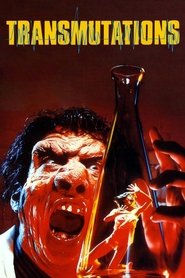
working out how you came to work with the group of people that this film involves, particularly with Clive Barker, the writer of the film. Yes, so I met Clive in around 1981, 82. A friend of his that had been to university introduced me to him. And we both had a keen interest in films. He was a writer. His books hadn't been published at that time.
0:24 · jump to transcript →
-
decided, let's work together. And he wrote Underworld, 10 pages. I understand that when you read the Books of Blood, you saw them in galleys before they were even published. Correct. But Underworld isn't actually a story from the Books of Blood, is it? This is an original screenplay. So how did that decision to go with a new original screenplay come about? Well, I guess the reason for that was, you know, he wanted to write something new, but also maybe those stories had already been
1:24 · jump to transcript →
-
know committed for publishing to a publisher and um i guess it would have been more difficult to uh extract one of those stories with the rights issues and all that oh i see yes so having an original uh screenplay was was a clearer path to production than having to get the rights to one of the stories at the time i think so yeah i think so
1:54 · jump to transcript →
-
-
director · 1h 29m 16 mentions
Jeff Kanew, Robert Carradine, Timothy Busfield, Curtis Armstrong
-
It gets a laugh. Oh, I never thought it was that funny. I kind of resisted that. I thought it was kind of stupid, but it was in the script, so I shot it. What was great about this movie is that a lot of what you see is the contribution of a lot of different people, not just the screenplay, not just the director, but the actors were instrumental in the way they looked and the way they laughed. Bobby's honking laugh, I believe, started with James Cromwell, who plays his dad.
1:34 · jump to transcript →
-
Stair diving. It was in the script, but nobody really knew what it was, so we kind of made it up as we went along, and now I feel like it's something that's always existed. And I wonder if in any real college context they do this or have done this ever since, but it looks like fun. What's missing from this scene is when Gable gets a phone call from his secret nerd brother. Well, Gilbert, here's our new home. Can't believe we finally made it.
9:03 · jump to transcript →
-
and things. Are you kidding, Gilbert? We can put a fridge and a microwave right there. I never noticed Gilbert actually has one of the Skolnick pocket protectors. Well, yeah, because, you know, we both work for my dad. Ah, yeah. Many people don't know this, but Gilbert's original name was Pinsky in the screenplay, but it was changed because there were too many Jewish nerds. The women, too.
10:12 · jump to transcript →
-
-
-
Paul Davis
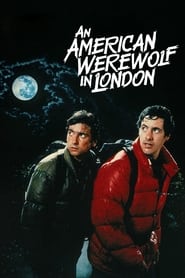
And then when they came back to the States, Jim actually produced John's first movie, Schlock. And they stayed great friends. And Jim was a great champion for John and for An American Werewolf in London because John had already written the script at that point. He wrote it when he was 18 years old while they were making Kelly's Heroes. And sadly, Jim passed away from lung cancer right before An American Werewolf in London came out.
1:18 · jump to transcript →
-
Paul Davis
It's a beautiful score of Elmer Bernstein. There's very little music, scored music, in an American Werewolf in London, because it's probably most notable for the use of songs that all have moon in the title. Not something that was anything significant on John Landis' part. He just says that it was a stupid thing that an 18-year-old writing a screenplay does.
5:56 · jump to transcript →
-
Paul Davis
American wealth in London to Jenny Agutter saying that he wanted her to play Nurse Alex Price. But he didn't actually give her the script until he had the money to make it. So I think it was probably around November 1980 that she finally got the script. And she is admittedly not a huge horror fan. And had the script come from somebody else, she would have thought twice about it. Can I be of service, Nurse Price? Dr. Hush? Go about your duties.
18:08 · jump to transcript →
-
-
-
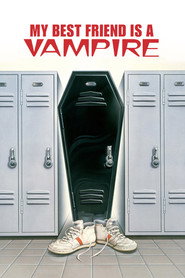
So it was a cross-pollination between the two companies. Now, do you remember how the film was pitched? Because at the time this came out, there were a lot of sort of teen-oriented kind of supernatural movies. You had things like Teen Wolf and My Demon Lover and Teen Witch. Do you remember what the concept was when you came on? It was just a script was just handed to me. There was no pitch. So I read it and liked it.
1:06 · jump to transcript →
-
And the limo was waiting to take him to the airport as we rushed into his hotel room. And we did a very, very quick audition in which it turned out the two scripts that we had didn't match. They were different versions. And so as the producer was reading, was feeding lines to Bobby, Bobby had to figure out how to adjust them for the script that he had on the run. And it was pretty impressive how effortlessly he did it.
2:34 · jump to transcript →
-
Now, one of the more interesting things about this cast, not at the time it came out, but later, is the fact the two moms in this movie have a really great connection together. You've got Fannie Flagg, who wrote the novel Fried Green Tomatoes at the Whistle Stop Cafe, and then you've got Kathy Bates, who starred in the movie version of it. And, of course, Fanny was also one of the people who adapted the screenplay. So just kind of a funny coincidence that they had a huge hit after this together. Yeah, well, oddly enough, Kathy had been our original choice.
5:26 · jump to transcript →
-
-
-
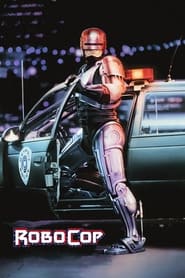
This is RoboCop. I'm the director, Paul Verhoeven. This is a stock shot, and I'm the producer, Jon Davison. And I didn't write anything on this. My name's Ed Neumeier. I'm the writer, along with Michael Miner, who isn't here, so I'll try to represent him. This shot was asked for by Mike Medavoy because he felt that the film needed a little bit establishing in the beginning, so that we added that shot very, very late. It's not in the script, but Medavoy insisted that there had to be something like that.
0:32 · jump to transcript →
-
although seriously wounded. This whole situation that you see now was based originally, and Ed can tell something about that, about the scene, a massacre that happened in a donut shop, but that we never shot, that we took out of the script, in fact, at a certain moment. Yeah, in the 80s, you had to start action movies with action scenes, so we wanted to shock everybody and have a really awful scene of terror and viciousness, but in the end, we decided to start on a joke.
2:35 · jump to transcript →
-
I mean, we have to thank really my wife, Martine, who picked up the script from the floor and started to read it and then told me that I was a fucking idiot not to see what was hidden under the surface and what kind of layers were all there that we could use. Actually, I think what she said was, you know, there's a scene where they shoot the guy's arm off and they blow his hand up and Paul immediately got really excited and read the script.
11:46 · jump to transcript →
-
-
cast · 1h 36m 13 mentions
The Garbage Pail Kids Movie (1987)
Mackenzie Astin, Katie Barberi, William Morris
-
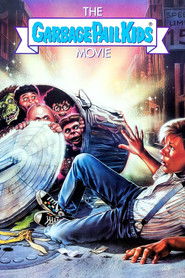
Buckle aboard, everyone. Buckle up. Spark them up. Drain the glass. Buckle in. Here we go. There are cards. Mm-hmm. On the way. Oh, go ahead. Katie, do you... Go ahead. Katie, do you remember the spaceship in the script?
0:53 · jump to transcript →
-
Cause I feel like when the movie came out, like suddenly there was a spaceship, a Garbage Pail spaceship. And I was like, what is that? I actually don't remember. I'm gonna have a lot to say about the script versus what came on the screen throughout this process. Like I feel kind of bad for Will because I feel like we're just gonna like take off and he's gonna be trying to get a word in edgewise. But I do not remember a spaceship. And that is not how the script, the script was written by Melinda Palmer.
1:12 · jump to transcript →
-
And the script was actually, yes, it was about the Garbage Pail Kids and these very, very famous Topps chewing gum cards that just became like this phenomenon. But it was a very sweet story, actually. And that is what we both signed on to. And there are some parts of that script that unfortunately didn't make it into the final edit, but also didn't make it into the filming process. And I remember that that was a big concern for us at the time.
1:40 · jump to transcript →
-
-
-
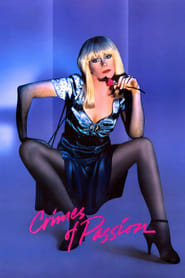
My name is Barry Sandler. I am sitting here with Ken Russell, the director of Crimes of Passion. I wrote the screenplay, and we were here to discuss the genesis of the film and how Ken perceived many of the scenes and how we worked together. And we're just going to take a look at the movie now. We started out with a group therapy session in which the hero of the movie, Bobby Grady,
0:11 · jump to transcript →
-
It's all part of her fantasy now. We worked on the script for some time, and as new ideas came, we fed them into the... Yeah. And, uh... Barry's found a computer brain.
14:44 · jump to transcript →
-
Yeah, and it was a great experience. Directors don't respect the written word as much as you do, most directors. Yeah, but most writers don't write the written word as well. The dialogue's brilliant in this. I think it's some of the most brilliant dialogue of any film of its type. It's absolutely fabulous. And the actors were pretty good about keeping to the script. They did. I don't think there was any ad-libbing at all.
15:13 · jump to transcript →
-
-
-
William Friedkin
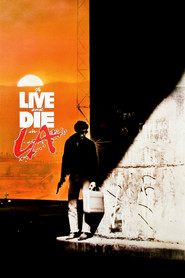
According to him, a number of the incidents in the book were based on his experiences which he had fictionalized. And I acquired the rights to the book myself. And I wrote the screenplay. I wrote a draft of the screenplay myself. And then I found myself calling Jerry from time to time.
10:57 · jump to transcript →
-
William Friedkin
This is a new scene. It's not in the book. I have an idea for something else. Why don't you write it and send it back to me and I'll change it or maybe it'll be fine. So I initiated a collaboration with him. And when it was finished, I decided to put his name on the screenplay because I thought it was a genuine collaboration. Although it didn't set out to be that way.
11:49 · jump to transcript →
-
William Friedkin
My feeling at the time was I was going to buy the rights to this book and then do the screenplay alone and that would have been that. Now I felt that it would be good to show the audience how counterfeit money is actually made. And so Jerry Petievich
12:17 · jump to transcript →
-
-
-
When you read the script? Or did you... What was your... Um... No, it's just... I mean, it's heartbreaking to find out what he's like, but... And then everything looking back becomes so dark all of a sudden, because you think of how involved he got with my relationship. It just... Then it becomes just sick. Mm-hmm. And gross. There's always that great undercurrent in the film. And everybody you... Everybody that was...
3:00 · jump to transcript →
-
which was very important to the finished movie. But in the script, I saw him a little more as a blatant optimist. And I remember talking to Johnny on this day and saying, can you smile more? And it was the beginning of a conversation that became very important to me, where you basically said, I can do that. But I also can play that in a different way.
8:49 · jump to transcript →
-
Just great little notes like that. Look, Dan, I'm sorry, but I can't allow you to leave the country without attending the leader's graduation event. This gentleman is 22. I love the way... This gentleman is 22. Now, that's collaboration. That's Johnny bringing that. This gentleman is 22. No, that was in the script, wasn't it? No, it's... You know, and you're not in England yet. You know that, of course. But by the way, I wanted to just tell you that I lived... Gentleman is you. ...in England. And Jeremy and I can give you an enormous amount of tips. English tips.
17:46 · jump to transcript →
-
-
-
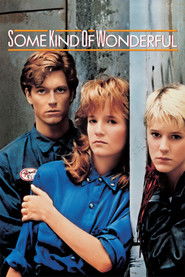
Was this in the script like this? - Yes. It was designed like this in the script? I don't remember. Yes. This is called Do Anything. - The music? Do Anything.
1:24 · jump to transcript →
-
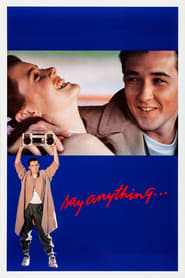
It was an amazing thing the way John took teenagers' lives so seriously, you know. It's an amazing thing. And that's why these... I think his stories hold up and endure over time because these characters are real personal to him and they're real. They are not characters he wrote for business, to make a script and make money. He did it because he needs to write them. They live for him. When he writes them, I watched him. He would laugh and cry as he wrote.
14:50 · jump to transcript →
-
This script went through big changes, too. Yeah. From the first time you offered it to me. I remember there were planes, and it was a completely different movie. Remember? There was the planes flying over the restaurant. I mean, the idea was kind of the same about a perfect date. And that love triangle, but... - I always loved this line, by the way. "
15:21 · jump to transcript →
-
-
-
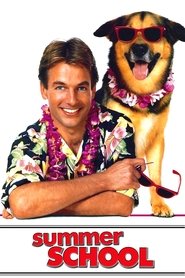
Originally, the script had us chasing a Cabbage Patch doll. And then the Cabbage Patch people thought this was a dumb idea, and so they took the Cabbage Patch away. But in the meantime, they had trained this dog to chase a Cabbage Patch. Oh, I didn't know that. Yeah, and so we decided to call the little figure he's chasing Bob. So Bob became what this movie was about, and that's what Wondermutt chased. Thank you, Principal Kelban.
2:25 · jump to transcript →
-
You're good, Carl. Yes. Yeah, I used to be an actor. Still are. That guy's in Ocean's Twelve and Ocean's Thirteen. Now, Jeff Franklin wrote a really wonderful screenplay. When a director gets a screenplay that good, it's so easy to make a picture funny. You just stay with the script, and then whatever additions the actors bring is gold.
3:52 · jump to transcript →
-
Well, I thought you made it better than the script was, Carl. I really did. Well, I think you're supposed to if you're directing. If you make it worse, you shouldn't be there. I can name a lot of them who do. I love the little kick you do on the way out the door.
4:24 · jump to transcript →
-
-
-
Tim Lucas
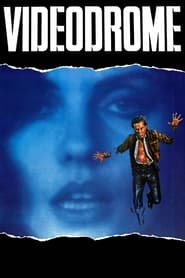
It's also the red of the Videodrome set on the television screen, so they are literally being bathed in the signal. Just before this film was cast in July 1981, Debbie Harry released her first solo album, Cuckoo, whose cover, designed by the Swiss artist H.R. Giger, showed her face being horizontally penetrated by four skewers. That cover may well have influenced Debbie's casting and the directions taken by Cronenberg's screenplay.
16:31 · jump to transcript →
-
Tim Lucas
You know, every shot of Debbie that was included in Universal's official still set was from a scene that had been cut from the picture. It was not her fault. The real problem was that the film had to go before the camera before there was a finished script. And as David and Ron Sanders rewrote the picture in the editing room, Debbie's scenes tended to be those that pointed the way to narrative directions no longer taken. But she figures in a number of Videodrome's most memorable scenes.
22:47 · jump to transcript →
-
Tim Lucas
He was actually nominated for a Genie Award for Best Actor in a Supporting Role for Videodrome, as was his partner in crime, Peter Dvorsky, but they both lost out to Michael Zelnicker in that cult film to end all cult films, The Terry Fox Story. The Accumicon helmet was described in Cronenberg's script as being bizarrely beautiful, like a modern techno-interpretation of a medieval piece of armor.
51:59 · jump to transcript →
-
-
-
Richard Donner
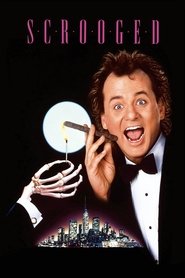
Is she a beautiful woman or is she a beautiful woman? What a wonderful actress too. That was a funny story. I read the script and... My agent sent it to me and...
10:33 · jump to transcript →
-
Richard Donner
My agent sent me the script, and I liked it a lot, and I didn't Know who was gonna be in it.
11:20 · jump to transcript →
-
Richard Donner
Anyway, six o'clock, Bill didn't show up. Seven o'clock, Bill didn't show up. Eight o'clock, Bill didn't show up. Nine o'clock, Bill didn't show up. Ten o'clock, my wonderful wife, producer Lauren Shuler Donner, who you all know and respect and love her work... We got in bed. The doorbell rings. It's Bill Murray, twelve o'clock. I said, "Bill, I'm going to bed." He said, "I just gotta come in and talk to you a minute." I said, "But..." I said, "Okay." So I went downstairs... and charming Bill came in, and I mean charming. And we had this really funny conversation, had a couple of belts, had a couple of more belts. Feeling no pain whatsoever. It's one o'clock in the morning, and Bill said, "Where's your wife?" I said, "She's asleep." He said, "I gotta tell her about this script." And at one o'clock in the morning, he walked upstairs to our bedroom, woke Lauren, said, "Talk this guy into it," which she just said, "Go do it so I can sleep." And I ended up making the movie, and dear Bill became a good friend. Don't see much of him anymore, because he became a big star. But, that's Hollywood.
12:24 · jump to transcript →
-
-
-
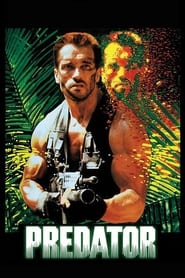
John McTiernan
John Davis had developed this script,
0:22 · jump to transcript →
-
John McTiernan
They shot in the, in the front... The spaceship arriving wasn't post-production but it was just one of those things that's always in the script but never showed up until about an hour before the movie was opened. All right, here we are. This is a sort of credit sequence that we made up in Puerto Vallarta.
1:22 · jump to transcript →
-
John McTiernan
I made up this thing about the generator going across... You should be careful, I am sure loads of people will claim they did it. But in order to break up... It used to be... In the script, it was, I don't know, they just charge in and attack, or something like that.
24:05 · jump to transcript →
-
-
-
landed gentry, but had to live in the Hollywood Hills for some tax reason. And Rob was living at the L'Hermitage Hotel in Beverly Hills, and we gathered at his hotel room. He'd gotten a deal from Marble Arch Productions, which is Lew Grade's company. He had $50,000 to write a first draft screenplay of the movie, and we gathered in his hotel room for about three days trying to write a screenplay. And just at the end of the...
4:25 · jump to transcript →
-
Actors came in, and since there was no script, we couldn't ask them to read, so we'd talk to them. We couldn't teach them to read. We'd ask them why Johnny couldn't read, but that was merely a conversational tool. And then basically just, you know, saw what kind of ad-libbing or improvisational facility they had in a situation with the four of us. That's not until April. Great! We'll do it! Oh, fucking great, we're...
28:10 · jump to transcript →
-
Because it was in documentary form, if you have a written script, there's no way to really make that seem spontaneous. There's just no way to act that. And we just knew that that was not going to work. And we knew enough people that could improvise convincingly to portray this as a real life experience that we felt confident that this would work. I did go to one screening where they showed the four and a half hour version. There's a bootleg copy of the demo that's around.
32:12 · jump to transcript →
-
-
-
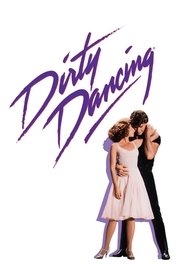
Eleanor Bergstein
Hi, I'm Eleanor Bergstein, and I'm the writer and co-producer of Dirty Dancing. I'm making the assumption that everybody listening to this has seen the movie probably at least a few times. So if I just refer to scenes, I assume that you'll be able to flesh out what they are. We're starting with Be My Baby, and the music is actually what I started with before I wrote. I went to my old 33s and 45s, and I
0:19 · jump to transcript →
-
Eleanor Bergstein
put together the track of old songs, which is pretty well the track that exists now, and dreamed my way through it and wrote the story against it. And one of the little-known stories is that I sent, it took about 10 years to get the film made, and I would send these cassettes around with the script, and people would say, nobody likes this music, nobody will want to make this, in addition to turning down the film. But then executives would call me years later and say, you know,
0:49 · jump to transcript →
-
Eleanor Bergstein
very sadly dead, my beloved friend and collaborator, and when we finally found somebody to make the film at very little money, years and years and years after I had been taking it around with no success at all, we had been taking it around with no success, I saw He Makes Me Feel Like Dancing, which was Emile's Oscar-winning short, and it was so wonderful, and we met Emile, actually we didn't meet Emile, Emile was on jury duty, and we sent him the script, and he sent
7:09 · jump to transcript →
-
-
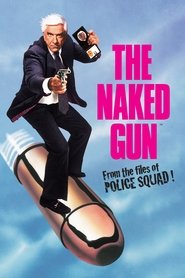
director · 1h 24m 7 mentions
The Naked Gun: From the Files of Police Squad! (1988)
David Zucker, Robert K. Weiss, Peter Tilden
-
And that's important to future writers? It is. Fluker dialogue? Know your Fluker. How many pages of Fluker dialogue is in a good script? Most of it. That's right, we have the whole glossary of terms. I know. Well, we might talk about some of those. Terms, rules, well, nothing worked. And here comes the joke from the set-up. This actually happened to our rabbi. Was it based on that story or did it happen after the fact? He was with the mayor guarding the queen. Life imitating art.
14:33 · jump to transcript →
-
You know, it's a nice script, but no matter which way you slice it, you got a dead guy at the end. I believe your words were you're walking into an ambush. Yeah, you're walking into an ambush. So we... How many times after that? ...equally dissuaded us from doing our most successful project. Well, yeah, thereafter, anything David hated was immediately put into production. Did Peter call you on this? Oh, this is way before Peter.
19:55 · jump to transcript →
-
There was that possibility. There was that distinct possibility. When there's a huge pause after something I say, I kind of know. No. Didn't he have a bad back, too? Isn't he in pain? On painkillers because of his back? It was the script that put him on painkillers. He had a bad back that day, yes. So you see when he's walking, he's... Ah, Priscilla Presley.
21:10 · jump to transcript →
-
-
-
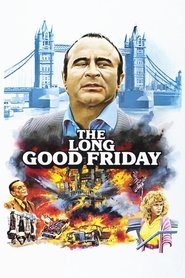
John Mackenzie
Incidentally, talking about the gangster, one of the other great reasons, main reason why I wanted to make this film was that central character. The way it was written, the way it was eventually played was magnificent by Bob Hoskins, and he was the one person I always saw should play the part. But it was the way that character was constructed was the great central bit of the original script. Although we changed many, many things, but that was the core.
3:03 · jump to transcript →
-
John Mackenzie
this character who was leapt from the page. Barry Kiefernau, who was the writer, we worked through many drafts of this film. In fact, we did eight drafts before we even started filming. There was a lot of stuff there that I wanted to
3:30 · jump to transcript →
-
John Mackenzie
knew how to deal with all these situations. I think I've said, I'll probably say again, you know, Bob was central to this film. He was the only guy I ever saw as Harold Shand. I mean, from the moment I read the script, I said, that's Bob. That must be Bob Hoskinson. He wasn't very well known, but I knew him quite well. And he had done a great Dennis Potter thing on television. He'd done quite a lot of stuff, but he had never done a major movie. But it was like...
38:05 · jump to transcript →
-
-
-
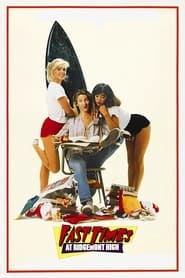
when she read the book and the script of Fast Times that we should consolidate the action in the mall and that the mall should be the centerpiece of the movie. And I have to say thank you, Amy. You're welcome, Cam. Actually, I'm an agoraphobic. I don't like going outside. So the idea of a bunch of fast food places on a strip outside in fresh air was frightening to me. I was just waiting for malls to be invented.
0:48 · jump to transcript →
-
We had to shoot it during the daytime, but we had to shoot the mall overnight, so we had, like, about ten minutes where the mall was still closed, but the kids were allowed to work. You remember this? I do. And the reason I do is because you said, I want the writer on the set, and he should be able to be on the set as much as he wants, so I took you up on that. I was around all the time. You were. We didn't know that writers could sometimes disappear, but...
3:04 · jump to transcript →
-
just like you wouldn't want me to come to your house some evening and discuss U.S. history on your time, understand? Yes, sir. You originally wanted Fred Gwynne, didn't you, for the part of Mr. Hand, and he didn't want to do the script because there was too much nasty stuff? Well, I forgot all about that, but as it was in the book, he was a big, heavy guy, sort of like the Hawaii Five-0 character. And then when we all met Ray Walston, who everybody loves from something, and...
10:37 · jump to transcript →
-
-
-
Peter Greenaway
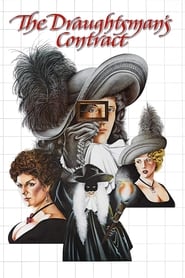
And since my background had been very much about documentary filmmaking, where essentially the address is made from the film directly to an audience, that I should consider probably film narrative conventions, and instead of getting people talking to the microphone, get people to talk to one another. So I went away, and after about six or eight weeks, I came up with a script called The Draftsman's Contract.
1:08 · jump to transcript →
-
Peter Greenaway
since I have lots and lots of, I suppose, ethical problems about the notion of the document or the documentary, that I wanted to put these ideas into a feature film. And I came up and developed the script about a draftsman, and we're talking about the late 17th century, so this would have been possible, who was employed by country house owners in England to draw or paint
3:54 · jump to transcript →
-
Peter Greenaway
Originally, the script was to take place in a completely different milieu and in different circumstances to where it's ended up in southern England in 1694. It actually began because of my enthusiasms for a small village called Wardour, which wasn't very far away from a big...
12:37 · jump to transcript →
-
-
multi · 2h 34m 6 mentions
James Cameron, Gale Anne Hurd, Stan Winston, Robert Skotak + 8
-
James Cameron
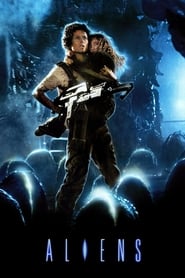
This is Jim Cameron. I wrote and directed this film back in '83, and directed it in '85 through '86. It was released in the summer of '86. July 17th, if I'm not mistaken. It started as a treatment. I was having a meeting with David Giler and Walter Hill, talking about another project, and that pitch was not going very well. I could tell by their sagging expressions that they didn't like any of my ideas. But they had read my 7erminator script and wanted to work with me on something. I was getting up and making my way toward the door and David Giler, one of the producers of the first film, said "We do have this other thing", and I said "What's that?" He said "Alien 2." And all the pinball machine lights and bells went off inside my head but I maintained a straight face and said "That could be interesting." And I suggested that I write a quick treatment, a quick outline, just to give them an idea of what I might do with it. So I raced home and stayed up for three days straight, drank about eight pots of coffee and wrote a 40- or 50-page treatment. Really what I did was I adapted a story I had already written, which was called Mother, which was an "alien on a space station" kind of story. It had the power loader machine in it. I had written this treatment a few months earlier. So I adapted it, dropped Sigourney's character and a bunch of marines into it, and in that one quick stroke created all the character names - Gorman and Hicks and Vasquez and all those folks - and dropped it on them a couple of days later. I think they felt like they'd hit the jackpot. That was the film they wanted to make. So they authorized me to go ahead and start writing the script. The problem was, that day I landed the job to write the script for the second Rambo film. So I called them up and asked David Giler what I should do. And he said "Don't be stupid. Take both jobs." So I took both jobs. I also had to do a rewrite of my 7erminator script to start production in February, so I had a three-month period where I had to write three scripts. So I decided that each script was gonna be two hours long, so it'd be 120 pages. So I figured out the total page count, whatever that is - I guess 360 pages. I divided the total number of waking hours I had during that three-month period by 360 and figured out how many pages per hour I had to write, and then I just wrote that many pages per hour.
0:04 · jump to transcript →
-
Pat McClung
This is Pat McClung. I was the model-shop supervisor on the film. They're wearing modified costumes from Outland, or the basic suit is from Outland and it's been redesigned and they put some stencils on it. This is microglitter and fuller's earth blown on there. I remember in this scene the batteries in the flashlights kept going out. You would think this would be an easy scene to do, but, as with everything in this movie, it was harder than it looked. There are no easy scenes with Jim. There's that nice dissolve, the contour of the earth matching her face. When we shot this, a matte painting combined with miniature and perspective, there are some perspective gags going on there. We used a clip of Sigourney's face in the viewfinder to line up the curvature of the earth, so we had a nice match. I wrote the piece obviously with Sigourney in mind for the character. I was told she was on board and I should just toddle off and write the film when in fact no deal had been made with her whatsoever. So here was a script that was written that everybody wanted to make, in which she was in every scene, and they hadn't made a deal with her yet. That's why she got her first big payday of her acting career. She got a million bucks, which was a big deal. She might have been the first actress to get a million dollars for a movie in movie history. It was all because it was mishandled by the producers. She was the main character and they hadn't made the deal. She was worth every penny of it and more. When people saw the film, they realized that. I Knew what a phenomenal actress she was. I'd never met her. I had her picture up while I was writing the script. I went off the character that had been created in the first film, took her much further. Of course, this is Paul Reiser. I certainly had no idea what a great comic actor he would prove to be, and certainly that's how people think of him, not as a dramatic actor. I just read him in a lineup of actors in the normal casting methodology, and I thought he was really interesting, that he could play this really sincere but slightly smarmy guy who could then turn evil. This is a dream sequence, but you don't know that yet. I remember from the premiere screening of the film that the incomplete chestburster scene here really got people cranked up and on edge, set the tone for the whole movie, that you were here to be messed with, which is a good way to start off, I think. The way you get a cat to hiss like that is you put another cat close to it. I had no idea. I didn't know what you did to make a cat do that. But that's standard procedure. Bring a cat it doesn't know close to it and it'll do that.
4:32 · jump to transcript →
-
Bill Paxton
Bill, isn't there dialogue that you have on this that people have used in video games? Yeah, I think so. "Game over, man" and things like that. You get anything for that? - I don't think so. I'm not even getting anything to sit here and do this commentary. They expect us to do it for no money. You got a beer out of it, though. No, it's just fun. I got a beer out of it, so that's cool. This was an amazing set, this concourse A. And it was long. And later on when all hell's breaking loose, Jim had that little video camera. He had everybody on the crew having coffee while we would run at him and do different things. It was SO amazing to see this gigantic set, one of the biggest sets I'd ever seen, and there's Jim by himself with this little camera. When did the bust-out almost happen? He was gonna move the movie. When did that happen? I remember there were some problems. There were some union problems. The crew weren't used to working the same way. With Jim. They weren't used to working. That's unfair. They were craftsmen, but they had an indentured way of doing everything. Jim needs something, he just grabs it. If he needs a light moved, he'll grab it himself. We punched a hole through somewhere cos he needed to run a line. He didn't wanna wait around. He just said "Give me a hammer." But this was an ambitious schedule. Jim was running from stage to stage. I think we had about three big sound stages with giant sets. And then there were two sound stages with miniatures. And then there was a stage with all those tunnels. I remember them putting you in that damn tunnel. That pipe. We had gone to the power station to shoot the atmosphere-processor scenes and come back to the set after it had been wrecked. So we're into Adrian Biddle's photography here. He was the second DP. I encouraged Adrian, to save time, to use as much built-in lighting as possible. This is lit by the fluorescents in the set, with just a little additional lighting. Adrian liked to work on a raw and edgy look and work with the practical lights a lot more. This is another thing that is important. With a lot of science fiction movies that are all interior, you often lose track geographically of where you are and it becomes incredibly confusing and it's hard to build the tension and the suspense. Jim was aware of this from the script stage and made sure that we established through the helmet cams, through the motion trackers, where they are, and then ultimately, later on, where the aliens are. Even in this version, you're left to fill in what happened. We don't see the baittle. We'll see plenty of battles later and this is promising you that. We have a shot coming up here where there were acid holes - acid... holes... eaten into the floor by these so far unseen aliens. And, of course, these sets were not double-deck sets. Jim wanted a scene where a character looks down through one of these holes. I think Bill spits down into it to give some perspective. So this down-view we shot on our miniature stage. We layered the set and photographed that. This is where you spit and they did it in miniature. They even did a miniature spit. - Is that what that is? To get that spitting effect, it was actually not spit. It didn't work very well, so it was a combination of milk... Milk and water in an eyedropper right underneath the lens. The complaint from the studio was that the film went on too long without anything really happening. I was winding the suspense tighter before you actually saw anything. The studio said we were just jerking around. Too many movies that I see now, it's all upfront. You start seeing stuff right away and there's no sense of a build. So this is the miniature APC that was built by Bob and Denny Skotak. Pretty good size. I remember it being five or six feet long. Most people don't twig that as a miniature. That's the real APC pulling in. They matched the lighting pretty nicely. I think Jim did some of his live-action stuff undercranked. He ran the camera slightly slower on the APC so that it felt slightly more as if it were a miniature but you knew it was real because you could see people interacting with it. So if any of the miniature stuff didn't quite work for whatever reason, it took the curse off that cos it felt that the two were blended together. I think he wound up undercranking because the APC, the full-size one, didn't move as fast as he wanted it. I think it could only go eight or ten miles an hour. One difficult thing about making this movie was 7erminator wasn't out in England and the perception of Jim Cameron, who looked about 20 when he directed this movie, and myself as the directing-producing team was met with a great deal of resistance because back then the system in England was that you had to put in years and years to rise up to the level of being a producer or a director. And we were simply not treated with a great deal of respect and it was very hard every day of the shoot. We were being second-guessed and every decision we made was questioned and the tremendous thing, of course, having Stan on the film was that... I was old. - No. ...was that you were a cheerleader for both of us. By demonstrating the respect and enthusiasm that you did, I think other people gradually relented. I knew it was the best thing for me and for everybody on that set. There are people that you know, no matter how they do it, what they're doing is special. This particular directing-producing team had been a win for me in my career and stayed that way. I never thought our facehuggers looked as good as the one in A/en. We had to make lots of 'em and they had to run around and do things, but, texturally, the one in the first film looked great. It really held up. The bits of oysters and stuff inside it looked great. But I did wanna see the disgusting thing that had been down the inside of Kane's throat in the first film. You never see it in the movie, in A/en, so I figured we'd gross everybody out. All of Giger's designs have a real sexual undercurrent to them. And that's what horrified people about the alien as much as anything, is it worked on a kind of Freudian subconscious level. And Ridley and Giger knew that and they went for that. This film was never intended to be as much of a horror film as the first one. It was working on a different thematic level but I still wanted to be true to some of those ideas, some of those design concepts. It would be natural to assume I'd wanna work with Giger, but it just didn't occur to me at the time. Maybe it was because we really only needed to design one new creature and I had already designed her by the time I wrote the script. The alien queen. I guess maybe it was my own ego as an artist. I just felt like he'd made his stamp and I knew from what I'd read that he had to do everything his way and I had a very specific idea for the alien queen to extrapolate beyond what had been done before. I got the impression from what I read that I wasn't gonna get the dynamic character that I wanted. In a funny way, part of what attracted me to doing this film was the opportunity to do cool design stuff. So maybe I was just a little bit too in love with the idea of designing the creatures and the weapons and doing all that stuff.
47:57 · jump to transcript →
-
-
-
But basically my approach to editing is always to try and interpret the film as the script directs me to. And certainly that's how I approach this. I actually don't like going to set because I sort of don't want to see what's going on. I kind of like the idea of seeing dailies fresh and not having...
40:18 · jump to transcript →
-
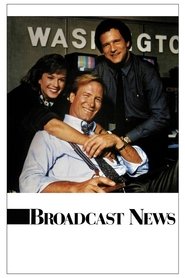
in the writing process or in the beginning of the film when you're laying out the film for shooting, if you can anticipate what you're gonna lose, I think that's really not true. Network news, Washington. I love it. What do you do when your real life exceeds your dreams? Keep it to yourself. I think these guys were so amazing in producing a relationship not unlike friendship.
1:03:36 · jump to transcript →
-
about it in a magazine. That's how you can make sure you don't put on too much perfume. You know what's great? One of the best things when you're working on a screenplay, there's no such thing as an empty fact. No matter what you read, automatically it's like you're supposed to have read it because of the movie you're working on. And it was that way with that perfume piece. I hate missing it. I wish I could be there. Me too.
1:19:08 · jump to transcript →
-
-
-
Ghost Town USA to having a huge football event, like, that was designed in the script? Oh yeah, that's from the script. The whole town is at the game. It didn't, it helped the extras budget though. I didn't have to populate the town at that point. This is a lot, this is really inspired by my life in Park Ridge, Illinois and some of my crazy friends. Honestly, some of these stories are true. Some of the interactions with the kids and all this.
3:43 · jump to transcript →
-
You've already set up that there's a small town, the inhabitants of the small town are all gathered together. Then we're intercutting between that and Brian Flagg, who's gonna be jumping this bridge, which is a nice setup for later on. Was that also installed in the script, that there would be this intercutting back and forth? There's a number of structural things I'd already learned at this point that Frank and I were able to incorporate and have fun with it at the same time. You know, it's a horror film
6:28 · jump to transcript →
-
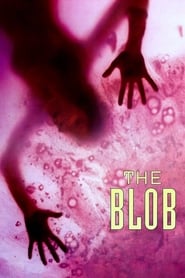
Chuck, when you and Frank and possibly the rest of the team were coming up with the kind of dynamics of the blob and the rules of the blob, who came up with those? Like the acid for whatever was dripping off of it. I think we all kind of riffed off the script. The script had many of these details. The ones that didn't work, we didn't do. And the ones that did work, we played into.
28:03 · jump to transcript →
-
-
director · 1h 30m 5 mentions
A Nightmare on Elm Street (1984)
Wes Craven, Heather Langenkamp, John Saxon, Jacques Haitkin
-
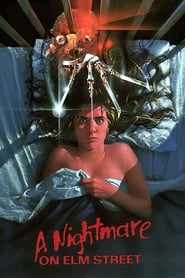
especially kids that have come out of relocation camps in the wars. Yeah, I guess it worked, huh? You know, the script itself, the other interesting sidelight is that it went around Hollywood for three years and nobody thought it was scary or worth doing. And Bob Shaye and New Line Cinema were the only ones that really thought that it had something.
21:10 · jump to transcript →
-
she could bring something out. Then she could bring him out before she had to sleep. This scene was, I looked at my script and it was very tightly choreographed. Wes and Ronnie and I really had to work out the movements here. And Ronnie kept slapping me with a ringed finger. How many times? I don't know, 25. It's because you paid me a lot of money to allow that. You'd gotten on her nerves by that time.
51:51 · jump to transcript →
-
famous line right there. There it is, right there. When you write lines like that, Wes, do you even, like, think to yourself, oh, that's a defining line of the script? Yeah, it is. It is the defining line of the script, don't fall asleep. Whatever you do, don't fall asleep. You know, you can take it politically, you can take it philosophically, spiritually, you can take it, you know, just very locally or simply, too.
1:00:51 · jump to transcript →
-


Related topics
Other topics that frequently come up in the same commentaries.