Topics / Writing & development
The screenplay
147 commentaries in the archive discuss this, with 1,188 total mentions and 21 sampled passages on this page.
Filter commentaries
Filter this topic by the film's decade or the type of commentary.
Showing 8 of 147 commentaries
Clear filtersBy decade
Across the archive
ranked by mentions · click any passage for the moment in the transcript
-
-
Nia DaCosta
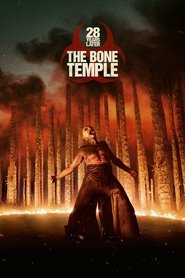
So, starting out, we did this sort of soundscape over the credits or over the main titles because we wanted to have a reason for the 28 Years Later chyron to pop up. In every other film, you see a scene from a point in time, and then you have the chyron, whether it's 28 Days Later or Weeks Later or Years Later. And it wasn't built into the script that that would exist, so instead of shooting a scene that was sort of in the past, we decided to do... Hello? ... that. And have Jim's voice, and then, 28 Years Later. And that's Jim's voice from 28 Days Later, when he's holding his little plastic bag, looking for people on the streets of London. Now this... So this sign did not originally say "no children beyond this point." It was something else, like, "no floaties or something beyond this point." But we thought it would be funny, at the top of this film, just to let maybe parents know, and children, you know, it's not for you.
0:45 · jump to transcript →
-
Nia DaCosta
This is why Kelson wanted a friend. He was like, "I want to get high and dance and sing at you." Which I guess is all of us, isn't it? We all just want an audience for whatever we're doing. I loved reading this scene in the script. I was just like, "Alex, what are you talking about, babe?" But this is what he was talking about, and it's really fun to see in a movie like this, something so strange happening that has nothing to do with violence. It's just like this is the other side of the human experience. It's like this is how far we're gonna go on this side, just... loopy and dancing. And then what we're doing with the sound here is, like, the ghost of the actual song with the beat and everything kind of comes into it. And does that belong to Kelson? Or is that also Samson having moments of memory from his own past? So, this bit where Kelson and Samson start literally dancing together and Kelson is like, "What's going on?" was another great ad-lib from Ralph and Chi that I think is so important to kind of connect where we end up going, not just with how the Jimmies and... Jimmy Ink in this moment sees them, but also where Kelson goes as a character.
31:52 · jump to transcript →
-
Nia DaCosta
So, look how long this child's legs are in this scene. Like, the way that Alfie Williams, who plays Spike, was growing throughout Danny's film and this film is so funny. And there's so many ways in which I was like, "We have to make him feel smaller because he's supposed to be." I mean, in the script, he was 10. And then aged him up because Alfie was the right person, and I think he's meant to be 12, but when we shot this, he went from ages 13 to 14. And his dad is, like, 1,000 feet tall, and he's gonna be 1,000 feet tall. So it was just a really funny problem to have, trying to figure out how to make this teenager look two years younger and sort of pre-puberty. So now we're going back to the peace of the Bone Temple. The theme comes back in.
36:23 · jump to transcript →
-
-
-
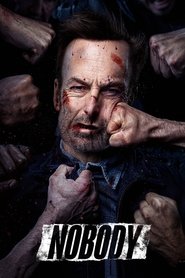
Now, speaking of best idea wins, this little montage that you just saw was completely packaged, not written into the script. We did want a character who was a bit numb from suburban life, from being a dad, and working a steady and difficult job, kind of hiding out in the suburbs, this fellow. So we wanted to start there. But we really just wanted to start with this sequence where there's a break-in in his suburban house, which is the part of this story, one part of this story, that comes from my real life. I have had two break-ins in my house, with people in my house, one of which, I won't go into the details, but was extremely traumatic for my family, and remains that way and will for the rest of our lives. So I had that inside me, and the feelings of... The complicated and difficult feelings that it conjured up inside me are still with me, and were some of the inspiration for even creating this story in the first place. Although, again, I have to give credit for the story to Derek Kolstad. I did share with Derek when we met that I wanted to do an action movie, and I shared that I felt that my time on Better Call Saul, a TV show, had set me up for a potential audience around the world who understood me as an earnest character who was a Striver, maybe willing to reach above his talents and able to get knocked down and get back up. And so this starts with a simple home break-in, and we can see these two criminals are very nervous and seem to be out of their element as well, but also can't quite tell what they're up to. But this character says no to them taking the wedding ring. So there's something more to him. Do you remember the wedding, if I may interject? Yes. - That it was only the watch... I think it was on set that once we put a light, the flashlight onto the ring, it was kind of like, "Wait a minute." Yes. They were just gonna take the watch, which he says "means something to me." But then I think it was Kelly who said, "What about the ring?" I mean, it's gold and it's gleaming in the flashlight. You have to say something about it. And then for the character to push back on that while he's got a gun in his face tells you there's maybe more to this guy besides for the fact that he wants his marriage to work and has committed his full life to being honest and stay married. It tells you maybe there's more to him than he looks like.
3:18 · jump to transcript →
-
Look at this guy. He's not even gonna eat his frigging eggs, he's so frustrated and blue. One of the additions that we wanted in the script is that Hutch doesn't eat until the morning after the fight, when he becomes himself again, the real Hutch. Yeah. Whereas Yulian eats before and doesn' eat after. And we kind of re-cut some of the Yulian stuff, so that doesn't land. But I've always enjoyed the juxtaposition of you chucking the eggs out in the bin here compared to the second act which starts with you biting into a pancake with bacon. That's right. He's got his mojo back. - Which was my everyday breakfast on set.
10:52 · jump to transcript →
-
This is a matter of need, principle of need." Tough guy. And I don't think the slap was written. I think he came up to me between the takes, said, "Ilya, what do you think of... "It feels like Charlie should be more of an asshole and buddy slap on..." Such a condescending slap. But he was so afraid to suggest it to you. And now you look at him and you go, "This guy's messed with guns before, "and he's not sure he wants one in his life again." But look out. Well, hide it in the fridge. That's always a good place for your extra guns. It's almost like he knew it might come in handy in act three. Yeah. - It's Chekhov's fridge, pretty much. What's that? - Chekhov's fridge. You know, the Chekhov's rifle? Chekhov's gun? If you see it on the wall in the first act, and it fires in the third, well, that's our fridge. Yes, that's right. Michael Ironside. - Yay, Michael Ironside. A great, great actor. - The man, the legend. And he's really good in this role. Kind of supportive, kind of friendly, but also hard on Hutch. Everybody's hard on Hutch. Bunch of hard-ons around him. If I'm gonna sell it, I want it to be... But he's a great actor and he delivers here, big time. Ilya, you put together a hell of a cast around me. Boy, the best. The best. I do. Well, it's pretty easy to get a great cast when you say that Bob is the lead. SO... You know, one thing that was concerning to me, and I love seeing Charlie and I love seeing the father-in-law here, is my character is so down for such a huge chunk of this movie. There's a... I mean, he starts to smile when he starts to cut loose and let out all his rage and frustration. But that's a long time in, and we talked a lot about this. This movie has always been... Has an offbeat construction with this long prelude, longer than most, with a lot of hard feeling and kind of... This guy's got an internal struggle that takes over this whole first 40 minutes, half-hour, 40 minutes. I think in the script, the bus fight used to happen around page 30. And I remember we saying, "Whenever... We'll get to it quicker. "It'll be like minute 25 at most." 'Cause I remember looking at several films as examples, and I think my favorite example was Oldboy, where the first real fight happens on minute 41. But there is a little pre-fight around 27. But it's also a much longer film than this was ever intended to be. Right. So it was that balance of, "Yeah, we want to set up the pins "before we shoot the ball," but at the same time, you're also releasing a film in 2020. Well, now it's 2027. But there's a certain expectation, a certain pace that you can't really rely on as a comfortable pace for a bigger audience. Hopefully, we'll have a bigger audience when it does come out. We are recording this six months before the film hits theaters, which is a little early. But you're absolutely right. There was a lot of discussions on how long and what we should spend time on before we hit what everybody paid to see. It's a different kind of action movie. It's trying to be... Just have more story, more character, more complexity, and I think a more delicate kind of complexity to these family relationships. The son's annoyed with the dad, the wife and the husband love each other but are estranged, but in the house, you know, together, they have a past. We don't quite know what it is. The little girl's oblivious and bringing nothing but sunshine into their lives. And then there's a feeling that this guy just has his own issues, his own challenge of being who he is. And all that turns out to be true and comes clearer as the story goes.
13:26 · jump to transcript →
-
-
-
Edward Berger
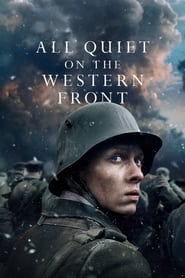
Hi, I'm Edward Berger, the writer, director and producer with my friend Malte Grunert on this movie, All Quiet on the Western Front. I'm so happy that you decided to listen to my commentary of this DVD. I've never done it before, so this is my first DVD commentary, so please bear with me if I make some mistakes or I correct myself.
0:14 · jump to transcript →
-
Edward Berger
give themselves courage, but I'm sure they froze. And Aaron here hurt his finger on the left and really had a hard time, you know, bailing water out of the trench because of his hurt finger. And I love this, by the way. This was in the script. They put their hands down their trousers to keep their hands warm. And you'll notice later, I'll tell you about it, Kat, the actor, Albrecht Schuch, the oldest guy,
20:43 · jump to transcript →
-
Edward Berger
he invented something that I'll show you later that wasn't in the script, but that gave a perfect closure to this, to this theme of keeping your hands warm. This was another miserable night.
21:13 · jump to transcript →
-
-
-
breaks into the burial mound to get his weapon, like immediately they're affected by the smell. And it's in the script and I totally forgot to mention it. And it really bugs me that I omitted that moment. And it would have been very easy to play physically in that wide shot. This was the first action sequence that we shot in the movie and was good to start with just this duet.
58:34 · jump to transcript →
-
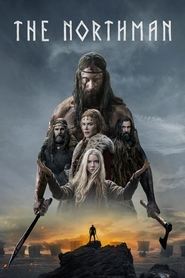
None but me knows who you are. Because a lot of this kind of blocking, like her going on her knees, I think that's probably in the script. And if it wasn't in the script, it was something that I certainly had in my mind. But this stuff was all Nicole. And really, I mean, the strangling him while she's saying this stuff is really smart. She's incredibly smart, I gotta say. Someone tamed us to kill Molly Garner. You would be my new kingdom.
1:32:52 · jump to transcript →
-
That loom gets a lot of play. There is actually a scene that was cut from the movie with a different weaving on there. And, yeah, it was written into the script that, you know, that Fjölnir carries the bodies of Gudrún and Gunnar out.
1:59:16 · jump to transcript →
-
-
-
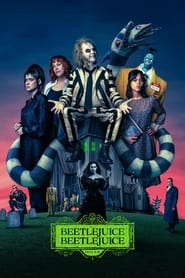
Tim Burton
The Wolf Jackson character, you know, was written in the script as sort of, you know, because everybody that dies, they become something else in the afterlife. So, you know, he's a cop, but, you know, he used to be an actor or TV show or movie, whatever. So it was just great to work with Willem. I always admired, I always wanted to work with him, but this was a strange one. And I think it was interesting for him to kind of come into this work because it's like...
20:53 · jump to transcript →
-
Tim Burton
Actually, there wasn't that much of him in the original script, but having certain religious experiences growing up in certain types of people is just something I could recognize in a certain kind of talking about something, but not really understanding what they're talking about. But it sounds all very good and spiritual. But then when you analyze it, it's like, what the are you talking about?
22:37 · jump to transcript →
-
Tim Burton
We cannot sincerely celebrate all that was good about our dearly departed, not until we release the horror that they inflicted upon us. When I made Beetlejuice, it was my second film after Pee-Wee's Big Adventure. And I recall it being very special because I remember when I read the script, I thought, well, this is a strange project for a studio to want to make because I'd gotten a lot of scripts for after Pee-Wee's Big Adventure, comedies and...
39:44 · jump to transcript →
-
-
-
every little gag and her scars every day that she's working and the Arthclown and the Victorias and their evolutions and all the effects and all the kills. And, you know, look, we still got another 30 minutes in this movie or something. So it's not over yet. When I got the official final script from Damien, I read about that sequence in Hell, that vision there. And I said, well, what about these two characters?
1:35:30 · jump to transcript →
-
Like, where'd this come from? He was like, yeah, yeah, yeah. Well, you know, I might just end up dividing the work thing because you already got a lot on your plate. And I go, yeah, I do. And of course, it's described, you know, whenever you read the script, this is where conversations have to take place because what I imagine and what he imagines and what other people imagine are all going to be different. And so, you know, I'm imagining this. Oh, yeah, there she is.
1:36:00 · jump to transcript →
-
Terrifier 3 Christmas Topper. Now this entire sequence, nobody's going to know this, but I'm going to rat it out anyways. No pun intended there, but it was entirely different in the original script that Damien and I spoke about. The uncle's head, who is the Christmas tree topper, and his body there,
1:40:31 · jump to transcript →
-
-
director · 2h 43m 2 mentions
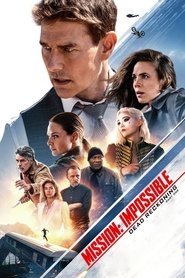
Mission Impossible Dead Reckoning Part One (2023)
Christopher McQuarrie, Eddie Hamilton
-
All the faces are great. And I remember what Chris likes to do when he's editing is work on a scene almost completely silent. And when I sketched out an assembly of this scene, I remember we used to watch it silent just to enjoy the feeling of pressure that we were getting from the cast. You should talk about the sweat con levels as well. Yeah, talk about the sweat con levels. So throughout the script of this scene,
4:14 · jump to transcript →
-
Is overlooked for her sensational performance. Exactly. Because you're thinking about another actor the entire time you're doing it. Exactly, you think it's Hayatwal in there. It's very, very generous. This is always a great payoff. I remember reading this in the script and thinking this was a terrific. This was really fun the first time the audience saw it. Yeah. And again, you've managed to transition past an emotion, but Tom hangs on to it. Yeah. The whole idea is that Ethan is hanging on to that emotion because again, we don't,
1:45:03 · jump to transcript →
-
-
multi · 1h 25m 1 mention
Marcel the Shell with Shoes On (2021)
Dean Fleischer Camp, Jenny Slate, Nick Paley


Related topics
Other topics that frequently come up in the same commentaries.