Topics / Writing & development
The screenplay
147 commentaries in the archive discuss this, with 1,188 total mentions and 72 sampled passages on this page.
Filter commentaries
Filter this topic by the film's decade or the type of commentary.
Showing 39 of 147 commentaries
Clear filtersBy decade
Across the archive
ranked by mentions · click any passage for the moment in the transcript
-
-
run into the crowd as they're coming towards us and start punching the women as hard as you can. And he said, well, they'll kill us if we do that. And I said, well, they're going to kill us anyway, but they're going to have to go home with the women and we're just going to have to go to the hospital. And at least you'll steal their victory. You're going to lose, but you can take away their victory. Right. Let me ask you, with the first draft of the script, where the whole thing had that other, the meaning of the scene is different.
1:47 · jump to transcript →
-
I mean, part of it is that she's sort of hinting. I'm going to assume that people who are listening to this have seen the movie already. And she's sort of hinting at her pregnancy much earlier and much more blatantly than ended up in the film. Yes. And she sort of comes off more, I think, more sort of in a Hollywood way twisted. And I wondered, did that change in the writing or when you started working with Francesca? It changed. Well, it was there in the writing sort of to convey to the reader that she was a horrible woman.
9:25 · jump to transcript →
-
Mother. Candidate for motherhood. Yeah, that when she says the last line in the film, I want the audience to feel like, oh, that's a happy, oh, that's horrible. And I knew that once a character or an actor came to give that character life, that those things would become unnecessary. She was also much older in the script and the notion of a much younger wife and this sort of strange distance between the two characters started to...
9:54 · jump to transcript →
-
-
-
Tom Tykwer
Hello, my name is Tom Tykwer. I'm the director of Heaven, the movie you're about to see. And I will try to guide or lead you a little bit through the making of this film, which has become quite an adventure in my filmmaking career. The screenplay of Heaven reached
0:39 · jump to transcript →
-
Tom Tykwer
X Filme, the production company that I'm part of in Berlin, in the year 2000, in early 2000. And it was offered to us as a co-production offer by Miramax, who had obtained the rights, I guess, a couple of years earlier. It was a Polish screenplay written by the late filmmaker, famous filmmaker, Krzysztof
1:06 · jump to transcript →
-
Tom Tykwer
I had been a great fan of Kieślowski's film work for, let's say, half of my life. And I was really surprised to be connected in this way with a project that still was there, although he wasn't among us anymore because he died surprisingly in 1996, aged only 54. And the screenplay, Heaven, was something like
2:04 · jump to transcript →
-
-
-
And I'm Ted Tally, the screenwriter of this motion picture. Thanks for watching our DVD. I got a call from my agent who said Stacey Snider wanted to send me a script. Stacey called me directly. Stacey is the chairman of Universal for those of you who don't know. It said Red Dragon, and I said, "Red Dragon. Is this "the prequel to Silence of the Lambs?" I was familiar with the book but hadn't read it. At first, I was very insecure and said, "Am I like the 'Go-to' guy on sequels? "Why is she sending this to me? 'Cause no one can mess this one up?" And then, I saw Ted's name on it and said, "This is the guy who wrote Silence of the Lambs, "but didn't write Hannibal. "So, this must be special. "Why are they sending this to me? I'm not a dark guy. "I don't make dark movies. I do comedy." -/ think they sent it because you're cheap. - Exactly. So I read it, and I was completely blown away. Not to blow any smoke up anybody's butt in my presence, but the truth is the script was amazing. I called up Stacey and I said, "I want to do this." She said, "Now you get to meet Dino De Laurentiis." And I said, "Dino De Laurentiis "of Fellini fame?" - Scary thought! So I went to his house and first thing he says to me is, "Why do they like you? Who are you? "I never heard of you. What is Family Man, Rush Hour? I don't know these movies." I said, "Dino, I'm a talented guy. Trust me." And thank God, Ted had seen Family Man and Rush Hour, and his kids or someone in his family was a fan. Brett might not have been an obvious choice but Brett is an incredibly talented director and clearly ready to try something new that he'd never done before. He is a great fan of Hitchcock and of thrillers, and brings a tremendous energy and confidence to his work. I was such a big fan of Silence of the Lambs. You know what I was excited about? Most people asked, "Weren't you scared "of following in those footsteps?" First of all, I had three brilliant directors Michael Mann, Jonathan Demme, and Ridley Scott, who made three movies in the exact genre, but completely different. I was excited about it because, by watching those films, I knew what not to do or what I didn't want to do. I was able to decide on the type of movie that I wanted to make. And it helped me choose the tone of the movie. I realized I wanted to make a movie more like Silence of the Lambs. More Hitchcock-inspired. A movie that scared you by what you didn't see more than what you did see. I've read that the most important single decision you make in directing a movie is tone. - Absolutely. Because it's the direction of the film. It helps you with every choice that you make as far as the wardrobe, the production design, the music. The tone, to me, is really everything. Dante calls it, "The language of the film." We have to integrate what we're seeing now, Kristi Zea's set design with its dark, rich color in Dante's cinematography. The choice is even of the props. The integration of all of that, the wardrobe. It's sort of overlooked by people and it should be something that doesn't call attention to itself. But when all of those elements are integrated... Look at this moment here. You get a much more powerful movie if nothing sticks out. If everything is consistent in tone. Special Agent Graham. What an unexpected pleasure. I'm sorry to bother you again... If you see on the left-hand side over there, a little detail, I found this book of Sigmund Freud's office in, was it Vienna? That's where I kind of modeled Hannibal's office. I modeled the tchotchkes, the details.
0:08 · jump to transcript →
-
If you had to design the office of Hannibal Lecter, V.D., what kinds of things were on his desk and on his bookshelf? What curios does he collect? The script suggested some of them. But a great designer like Kristi Zea has a field day with this kind of opportunity. I was very lucky. Once I got the movie officially and I started going after the people who created Silence, I went after Kristi who I'd worked with in Family Man, so I had a prior relationship. I felt I was born to make this movie because ironically, I'd worked with Dante before. Even though he'd done Manhunter, I said, "I'm gonna send you the script. "I know you'll not wanna do it because you've done it before." Dante read it and said, "I want to do this." I said, "Come on, you've done this movie before." He said, "Monet painted the cathedral 13 times, what's the difference? "And this is a totally different movie." I also wanted to help myself with some of the credibility. Get some Academy Award-winning or nominated people aside from Ted who can be a part of this. The script to me, honestly, I'm not saying this 'cause Ted's here, but the script is everything. It allowed me to get the crew that I wanted because of the material, and especially the actors. I basically went after all the actors that everybody said I couldn't get. The first actor I had to get was Anthony Hopkins, and I didn't know this. I thought I was signing on to a Ted Tally script with Anthony Hopkins as Hannibal Lecter. But Dino, after he says, "You got the job, Brett," he said, "Go to New York and convince Anthony Hopkins to do the movie." After having already played the part twice, Tony needed a little bit of coaxing to do it the third time. He wanted to be convinced that he could find something new and different in this.
4:10 · jump to transcript →
-
I went to New York with Dino, and I was very nervous. This was Tony, Anthony Hopkins. The thing I did know and what I was confident about was the type of movie I wanted to make. Like I said, I went in there knowing the tone of the movie, my approach to the movie, how I wanted to not show any of the gore. I didn't want to make a horror film. I wanted to make a film that was psychological, emotional, and smart. That was what was on the page. And the only scene that Tony had a concern with when I sat with him was this scene right here. Tony was concerned that as originally written, his attack on Graham here was too graphic. By the way, it's an interpretation because 10 directors would direct a scene in 10 different ways and show various degrees of violence. It's about showing the details of the guts falling out of his stomach, or the blood, how much blood to show. And I chose to play it mostly on their faces. Once the attack happens... Here's my little homage to Silence. You see the... - I see the bug. You like that. So I chose to play the violence part of this scene on their faces. I love this book. This is an original. My prop guy, Brad, found this original book from France, Larousse... When I read it, I had no idea what the hell it was. It's the bible of cookbooks. - Yes, I learned that quickly. He found this real old French cookbook. There was a lot of dialogue about how do we sell his moment? It's really just a subliminal thing. It wasn't really supposed to be so pointed where it was like, "Oh, sweetbreads." I thought sweetbreads was brains but it's not. It's actually... Thyroid. -... thymus. I learned so much about anatomy on this film. If you work on a Lecter movie, you learn a lot about cooking. I thought Edward was fantastic. There is a tremendous intensity of performances in this movie. And really a dream cast as Brett already said. If you could have anybody in the world for these parts and be lucky enough to get them. It's pretty much what happened to us. Great actors want to play good characters. They want to play great characters and all of these characters, down to Freddy Lounds, and other smaller roles, were just written so well. They were interesting and dynamic. And these actors were interested in playing this. To convince these actors to do a third in the series, all that went out the window when they read the script. Certainly once they started working. There's our cold opening. I'm very proud of this title sequence because it was actually done two days before we had to lock picture. My editor, Mark Helfrich actually was the brainchild behind this because... You re-shot the journal here in a very interesting way. Initially, this was done in a much more straightforward way with the images very flat against the screen. Yes, a lot of times. Mark is kind of... Everybody on my team, from my AD to my production designer, are filmmakers. Mark is a filmmaker in his own right and he just understands the visuals and storytelling. I love how, you know... But this was written. - Yes, it was. But the way that the camera roams over these pages and when we go in very close and it gets grainy, the camera movement left to right, up and down, is all not scripted, of course. This is something I don't really have the patience for. Mark kind of took this book that he was fascinated by. I think he has a copy of it in his closet at home. He just knew every page, every frame and went with Dante and literally just shot. This is a wonderful opportunity. This kind of title sequence is sort of old-fashioned in a way. But it's a wonderful opportunity for a screenwriter to get information in quickly to cover a lot of ground between the arrest of Lecter and where we are when the movie is going to start. Covering a period of several years, you are doing that without any dialogue just by these images. It's a very useful shorthand. Danny did the same thing that Ted did with the script in this sequence that Mark did with the visuals in this sequence. Danny did the same thing with the music. I think the music here is so fantastic. It's very much like a Bernard Hermann score, which I knew was a big inspiration for Danny. Danny is a big fan of Bernard, and this was his chance. He's done darker scores, but they've had a kind of lightness, or comedic darkness to it. Danny did something here that kind of made people's skin crawl in the theater, like, "You're in for it. "If you're gonna sit through this movie, you'll experience some stuff. "Shit's gonna go down."
6:02 · jump to transcript →
-
-
director · 3h 29m 17 mentions
The Lord of the Rings The Fellowship of the Ring (2001)
Peter Jackson, Fran Walsh, Philippa Boyens
-
I think the beginning of the movie was probably the hardest thing, both in terms of conceiving it and writing it, and then when we edited the film, it was really difficult. But everything else seemed simple in comparison. Very early on, though, you knew you wanted something quite lyrical as the very, very opening thing, and you knew very early on that you wanted to open in black. When we did early drafts of the script, we attempted to write the prologue.
0:29 · jump to transcript →
-
One of the most significant changes from the theatrical version into this extended cut is the way that we introduced the Hobbits and particularly Bilbo Baggins. At the time that we thought, we didn't think we were going to have a prologue and we were going to open the movie with the writing of Bilbo's book and hearing his voice describing Hobbits. Once we decided to go back to the concept of including the prologue and the prologue became seven minutes long,
8:32 · jump to transcript →
-
It was just a situation where if we did a few of these complicated shots, time-consuming, difficult shots, I thought it would sell the concept of scale for the rest of the film. Now, when Gandalf bangs his head here, that was actually a mistake, that Ian didn't intend to do that. It wasn't in our script. It was something that he did accidentally, and we decided to keep it in the film. Fortunately, he kept acting. He didn't stop. He sold it really well. He never stops. He always keeps going.
16:43 · jump to transcript →
-
-
-
re-edited the sequence because in the original in the book and in the script the tormentors come into the to the toilet and they bully him in there but we thought that when we had edited the film too much violence came too early so it sort of punctured the pressure so we wanted to wait a little
15:19 · jump to transcript →
-
Yeah. When I wrote the book, this is the starting scene of the book. I'm more like, when I wrote the book, I wanted to kickstart the violence, the violent part of it. So that's actually the first scene in the book. And one of the things we discussed very early on and decided upon as transferring the book into a script was that we would concentrate completely on the love story between Oskar and Eli, and everything that didn't have anything to do with that story would go. And also...
15:48 · jump to transcript →
-
I could say that. And also, I really love this shot, what happens in the end when Eli sinks down onto his back. It comes later anyway. But because Eli, in my original story, Eli doesn't really feel that kind of remorse. Eli is a more, not evil, but less light character in the written story. But still, when I saw this, because this isn't in the script, Eli sinking down afterwards, I really, really liked it, the way it was portrayed.
24:40 · jump to transcript →
-
-
-
Hi, I'm Steve Sommers, the writer-director of this thing. And to my left is Bob Ducsay, the executive producer and editor. Hello, everybody. Here we go. Didn't we just finish this movie? So, as we sit here in ADR 6 on the Universal lot a couple months after this movie is open, the picture is closing in on about $200 million at the domestic box office, and
0:01 · jump to transcript →
-
What I love about this, and I love this in the screenplay, is these guys came prepared. You know, they knew that the potential was there for these nasty little bugs to show up, and they had a plan. Those giant flamethrowers did the job. I just love this whole set.
19:36 · jump to transcript →
-
Well, it's a really great movie house because, I mean, it's just so excessive and so much fun. It's interesting, in the development of the script, this fight sequence that you're going to see in a few minutes was originally staged... Jonathan was going to have a casino, and that was one of the few concessions that was made to get the budget down a little bit.
24:39 · jump to transcript →
-
-
-
head writer or whatever hold on me like the writer you show up here tardy and now you talking about another fucking commentary you're not even listening to the end of my story though all right bring it forget it you're right
23:29 · jump to transcript →
-
Yeah. I got a bad feeling. This was all... I love that part, man, where you're trying to tell him to get back in the scene. He doesn't know. Yeah. This scene to me was when we were writing the script just to have the chance to do some sort of bad, over-the-top Vietnam movie dialogue. And this character you created, Jack. Give us a little of that. Well, yeah, no, I saw a guy in platoon who had a voice like that.
30:32 · jump to transcript →
-
This is like the show within the show inside another show. There you go. It's crazy. Clever, right? Real clever. Fuck, man. So, yeah, that was... So you thought of the head coming off and licking the blood from the head? Like... We did a writer's room. But just like a week before we started shooting? It was like the last thing? Not a week before. Like a week before we went off to location. So, you know, we just do a punch-up. You go through the script. So you had been writing this thing for 20 years, right?
31:57 · jump to transcript →
-
-
-
James Mangold
One of the first tasks in terms of adapting and updating this story by Elmore Leonard was figuring out what we wanted and what we didn't in terms of how we were going to attack it and what story elements we were going to emphasize differently than the original film and what we thought they really got 100% right in the original film. One of the reasons that Halstead Wells is the first credited writer on the screenplay of this film
2:46 · jump to transcript →
-
James Mangold
is because we felt an awful lot that Halstead did in his screenplay in 1957 for the original 310 in Yuma was really right, was dead on right, and there's some great writing in that film that, out of ego, I wasn't gonna just dispose with. I thought these actors, Russell, Christian, Ben Foster, Gretchen Moll, et cetera, would have a great time doing this stuff and playing these words anew.
3:13 · jump to transcript →
-
James Mangold
The very act of marching him to that train was a struggle. Boys, we're going to round up the herd, and then I'm going into town. What are you going to do in town? The other aspect that I think we really wanted to accentuate in our script for this film was Dan's relationship with his children. Maybe we should just shoot him like Will says. One of the things that I felt would motivate any man to do almost the irrational and the impossible is sensing that his own family has stopped believing in him.
5:07 · jump to transcript →
-
-
-
Jonathan Lynn
And I also had talked to Randy Edelman a lot about Charlie Mingus's band Blues and Roots. We use a bit of their music later. Mitchell Capner, the writer, had suggested this in an early draft of the script. And we talked a lot about Gerry Mulligan and the baritone saxophone and all of those things come up in the score later. Thousand? For what? You know what your father would be proud?
1:59 · jump to transcript →
-
Jonathan Lynn
the outburst here with the wheel in his car, banging on the wheel and the mirror and everything. This was in the script. But what gets a bigger laugh with the audience is when he starts up the car, drives away, stops and does it again, which was a wonderful idea that Matthew brought in that morning. Here we go.
2:56 · jump to transcript →
-
Jonathan Lynn
In this scene, the dog belongs actually to our hairdresser, Peggy Semtop. The dog was not in the script, but Rosanna saw the dog in the makeup trailer of her day and thought it would be just the kind of dog that her character would have. I thought it was a very welcome addition to the scene. And he acted pretty well.
9:50 · jump to transcript →
-
-
-
We always had in mind, uh... we are huge fans of submarine films. You know these films where everybody is locked in a very small, tiny place? And we love the idea to start a film doing something... trying to keep the detail of everything. People is... Watching, it's very interesting watching. Where are these people? This scene wasn't in the original script by Rowan Joffe. It's a very strange sequence about surviving. Critics and audience love these scenes. We also love these scenes. In the process of writing, we always thought that was... We wanted to make the film... all the film about this scene. And, uh... it was really a real challenge to... to make the rest of the film better than this. It was, from the very beginning, a real challenge. Especially because, I think, in this moment, we build the movie from probably, to me, the heart of the story which is the family. And how this family, how this husband and wife, are talking naturally about their children, and then we, as we see, we introduce other characters in this house. The story begins with them talking about their children and then we see how now they are not alone, they are living with more people in the house. And these characters now are introduced step by step. We are adding these elements of weirdness and strangeness. We think, at the very beginning, that this couple is alone, then we are introducing all the characters around the table. It's very... We love, Juan Carlos and l, we love, particularly, Luis Buñuel and his sense of humour and surrealism. Obviously, that wasn't about that, but we tried to bring to the horror movie some kind of weirdness in this moment. For example, in the moment when Shahid is reading the newspaper, it would be very, very easy to put a close shot of the windows locked. We prefer the audience notice this naturally, instead of working with them in this... in the sense of trying to give them the elements directly. Especially in this sequence, we can feel somebody who is not in the cottage - the boyfriend of Karen. And then through this conflict about if he's coming or not to the cottage, we see how now somebody is knocking at the door, it's a kid, and then we realise that there is something, something in the exterior, which is a kind of menace.
1:38 · jump to transcript →
-
This sequence was one of the ones we loved the most during the writing process. The first moment that the father confesses, in a way, his betrayal. But we see this in two different angles because we know the truth. We assist, in the first sequence, to the truth. In a way, in terms of the story, we put the finger on the big issue for this character, for Don, which is when he abandoned his wife in the cottage. Now he's with their kids and he needs to tell them what happened in the cottage, which is something really hard for him. And this is one of the moments, in terms of visuals, that the style of the movie, again, is changed because it's a confession. And I thought it's good to change from the handheld stuff to something static, which delivers, you know, the importance of the moment.
21:26 · jump to transcript →
-
To me, it's the best way to penetrate in the mind of this character, to feel and to notice what a difficulty it is to tell the truth. Robert Carlyle is amazing in this sequence and the whole film. He made something very difficult easy - to believe that the infected is a human being. But, precisely in this sequence, all his character is built from the ambiguity. And this guy is something... You sympathise with him, even if he made his surviving act, which is to escape from the house leaving his wife there. I think you really... It's sympathetic to you. - Yeah. And I think it's funny, but I remember we shot four takes for this moment and the take that we used in this editing is the first one, because from the first moment, I think Robert understood very well the essence of the character, which is a kind of mix between weakness and survivor feeling, as well. In a way, the dilemma of the character, which is in that terrible moment he decided to follow his survivor instinct, I think everybody could do the same. That's why I think we feel this sympathy that we are talking about. It's an immediate identification with the character. I think that's also the reason he decided to do this movie, which is a genre movie. It's not the kind of films he made, but he decided to accept this as a challenge. And this sequence was, in the script, one of the ones he likes the most. On the other hand, this shows one of the concepts we developed, which is from something really microscopic, which is the guilt, we build something bigger later on. And, in a way, it's a kind of metaphor between the infection and then the human feelings in this movie. The infection, as well, is a microscopic thing who can destroy your world, and, in this sequence particularly, we see how the guilt of this character is something destructive and dark that can destroy this family, as well.
22:30 · jump to transcript →
-
-
director · 3h 43m 9 mentions
The Lord of the Rings The Two Towers (2002)
Peter Jackson, Fran Walsh, Philippa Boyens
-
This particular script is credited to Philippa Fran and myself, and in addition there's Stephen Sinclair. Stephen was involved back in the Miramax days when it was two scripts. We felt it was obviously fair to credit him, though he wasn't really involved in the screenplays over the last three or four years. This is quite a big miniature, the Baradua Tower. It's something like 20 feet tall, and even just to do a shot where we're rotating and going right up to the summit of it is quite a big move for the miniature team to do.
19:47 · jump to transcript →
-
I love the idea, way back when we were writing the screenplay about, you know, us, the audience, thinking that Mary and Pippin might be dead. I thought that was just really cool. And we wanted to stretch that out a bit and, you know, make people who were unfamiliar with the books, obviously, really wonder and believe that they might be dead. Amazing shot. Yeah, this shot was done by Geoff Murphy, again, down in Alexandra.
31:30 · jump to transcript →
-
We had no idea really how to visualise this moment. In the script it said something like death, birth, cosmic, weird, and that was all that we ever wrote in the screenplay. But rather than have it just dialogue, I thought of some visuals to add support to this transformation. And so you see the death of the balrog and then you see this kind of weird metaphysical kind of transformation that he does. I had a whole other version in my mind of this sequence which I took in a literal way from the book because it talks about him being naked in the snow
54:46 · jump to transcript →
-
-
director · 1h 45m 9 mentions
Eternal Sunshine of the Spotless Mind (2004)
Michel Gondry, Charlie Kaufman
-
so we should introduce ourselves, Charlie. Okay. You want to go first? Okay. The person with the French accent, it's me. I'm Michel Gondry, the director of the movie. And I'm Charlie Kaufman, the writer of the movie.
0:24 · jump to transcript →
-
And that's all the job I did. The pitch was pretty short, though. It was like five minutes. It went surprisingly well. Yeah, it was great. Maybe we can talk about the image. We wanted to have snow. You had written a lot of snow in the script. I wrote snow many, many times. But we found out really quick that we could never afford it. So you wrote again without the snow. I just...
1:58 · jump to transcript →
-
It's so great to watch actors make the characters come alive and to see all these new things that you didn't anticipate when you're writing it. I wrote a script I'm going to direct and I cannot believe how painful it is when you give the paper to somebody and they just cross his line and stuff. I started to realize how
10:14 · jump to transcript →
-
-
director · 1h 37m 9 mentions
John Cameron Mitchell, Justin Vivian Bond, Sook-Yin Lee, Paul Dawson + 1
-
It's a secret. Or oysters, which is a natural source of both. PJ, coming in, wondering why his four orgasms that were in the original script were completely eradicated throughout time, and now I'm forever blue-balled. Is that a Neil Diamond song? That's a blue-ball face right there. Aww. This is my favorite moment of Raf's right here, is when he...
7:34 · jump to transcript →
-
Seeing the chip wagon annoying, uh-oh, here it goes. There's the long bus. Yeah. But remember, we shot so much footage because we were just learning how to work in this improvisational way where the script was set, but I encourage you to paraphrase. Is that Central Park West? Yes, that's around 110th Street. Okay. I love your reaction there, Suki. I want to see when it goes monogamy is for straight people.
10:53 · jump to transcript →
-
going underwater. There's no stuntmen there. Covered in red makeup. There he is. Okay, he's not even, there's not even a trouble. He's dead. And in the script I said he has to be benignly and benevolently dead. And look at that. He had that beautiful expression on his face that helps James go where he wants to go or he thinks he should go. This was a, remember every time we had to do the flicker of the light was always a problem and we'd lose power and everything would fall apart. Yeah.
13:11 · jump to transcript →
-
-
-
Hi, I'm Ang Lee. I'm the director of this crazy film. And my name is James Schamus. I served as executive producer and as one of the writers on this movie. Which one is this? Crouching Tiger, Hidden Dragon. That's a lot of music for one little title there. I tend to like to make music, the modern music, that shock people. Bang! I like to do those bangs.
0:21 · jump to transcript →
-
was the layering after layering of wuxiapian tradition, the kind of generic tradition. They don't say things like that. They don't talk like this. So it was, I remember after the first draft. I don't know why they don't talk like that, or the writer never wrote it. But when you're facing not only Western audience, but the modern Chinese audience, that's not sufficient, what it used to be. But it's hard. I remember after the first draft, and people would say things like, well, this is great, except he just wouldn't
32:16 · jump to transcript →
-
But here's an introduction of a theme that was nowhere near the first draft of the script, which is so central to the movie and obviously to the tradition, which is, of course, the question he's just about to ask her. Which is coming up.
37:29 · jump to transcript →
-
-
-
And Tom, he likes the idea, and he totally agreed with me. And then he and the writers and Robert Towne came up with a triangle love story, which really interests me. You can carry them together? Safely? Yes. And so that's why I accept this project.
2:33 · jump to transcript →
-
For the traditional Mission: Impossible, Ethan Hunt usually gets the message from the tape recorder. And then for the tape recorder, it seems to be so old and it's not interesting. And then also, I must say, I don't remember if it was the writer's idea or Tom's idea, they were suggesting using a sunglass. You know, that makes it feel a little more high-tech and more modern, you know.
10:09 · jump to transcript →
-
During concerts, we also using the flamenco dance, guitar music, and the sound of a footstep. And the footstep, and getting stronger and stronger, and the concerts are getting much more crazier, and it feels so much of an energy and romantic, you know? And then I came up with the ideas, you know, of the flamenco dance, and also to make Thandie's character as a thief. In the original script, she was one of the spies or something like that. I think a spy is not interesting.
12:51 · jump to transcript →
-
-
-
dealt with on a daily basis and it was virtually unimaginable the kind of environment in which they lived in and worked in and fought in and so that really helped me shape the work in the script and then finally the work on the set and so when we were leaving the naval base again back in the
11:49 · jump to transcript →
-
on multiple occasions, arriving at the set at call time or before call and meeting Jeff there. And we would look at each other and say, how are we going to not repeat ourselves? And I mean, because in some cases, certainly in the command center, there's probably almost three quarters of the script takes place there.
22:08 · jump to transcript →
-
I was out in the galley capturing one. Initially, when I was invited to read the script and met with Catherine and Stephen Jaffe, one of the producers of the picture, it was a wonderful, wonderful script. And instantly, I became enthralled with it. And the opportunities to do a period movie and to do a period movie on the submarine
27:31 · jump to transcript →
-
-
director · 4h 13m 8 mentions
The Lord of the Rings The Return of the King (2003)
Peter Jackson, Fran Walsh, Philippa Boyens
-
that we wanted to use the blinking one, so we had Weta, the CG guys at Weta freeze his eyes, so we removed the blink from his eyes. This was a sequence that Freya directed. We built the set very quickly, because it was an idea that you had that wasn't really part of the script to show this deterioration.
4:36 · jump to transcript →
-
But when we put it in the movie where it was, we thought it had to push in, otherwise it wasn't really working properly. To take you into the hall. She was watching them leave in one and then watching them arrive in this film. This was actually a rebuilt Edoras because this entire party, or the banquet scene as we call it, didn't actually exist in our original script and we'd never shot it. And we had this giant big set of this golden hall that we'd built. Fortunately, when we were done with shooting, we put it in storage.
18:43 · jump to transcript →
-
It was these little obstacles that Tolkien's book kind of presented in terms of, as you say, if you were doing this as an original screenplay, some of these things you would actually not do. You'd change the storyline. But Dunharrow was something that we needed because it's the entrance to the Path of the Dead and that's ultimately why we had to go there.
1:08:36 · jump to transcript →
-
-
-
Noah Baumbach
And I'm Noah Baumbach. We're the co-writers, and I'm the director of The Life Aquatic. This is the Criterion Collection edition of the movie, which I think is the only one. Right. And we are at Bar Pitti in New York, sitting at a table where we wrote the film. Right, we actually came here every day from-- Usually for lunchtime around 1:00, sometimes 1:30, sometimes 2, depending what-- It was later. When we got up or when we went to bed the night before, and we would write together all day and into the evening. And have two meals. - Yeah. The films within the film, maybe we could say something about... Right. - Steve Zissou, his documentaries are sort of inspired by... Jacques Cousteau's films, and are more than a little... And we shot these on Ektachrome stock, a reversal stock, to get this highly saturated, dated feeling. To feel like a 16 millimeter. A number of the parts were written for the people who play them. Bill Murray's role and Owen Wilson's... Anjelica Huston's, Bud Cort... - Right. The Bond Company stooge was always Bud. - Yes, the Bond Company stooge. And then also on Team Zissou we have a favorite actor of ours, Noah Taylor, who plays Wolodarsky. Robyn Cohen, came out of Jeff Goldblum's acting class. Right. - She plays Anne-Marie Sakowitz, the topless script girl. It's not all science.
0:35 · jump to transcript →
-
Noah Baumbach
This is his ship, the Belafonte. We bought this ship in South Africa and sailed it up to the Mediterranean and renovated it and made it into this research vessel. It never ran that well, but we really did fall in love with this ship. The crew of the film was always very sort of loyal to it. Now, we have Michael Gambon, who plays Oseary Drakoulias, the producer, a sort of Carlo Ponti, Dino De Laurentiis-style mogul, although he does produce these documentaries. He has the longest fingers that I think I've ever seen in real life. He understands. Amin needs to make a projection of the world grosses to see if he can get a tax break and run it through his output deal. I think that Zissou sees himself and wants to be the kind of person who gives kids secret messages in the cereal boxes. Right. That's an inspiration for him. And the movie is about this, theoretically, a real person, but he's inspired by a sort of fantasy version of himself. And there's things sort of peppered throughout the movie, but this whole red caps and the uniforms and the whole thing. And Owen, in some ways, is our stand-in, I mean, of the child who looks up to this person. And I think another layer of that that we were always dealing with was how our cinematic idols in some ways were like surrogate fathers for us. Movies we loved that sort of took the role of things we looked up to, things we sort of wanted to live vicariously through. And I think Owen and Ned's character sort of stands in for that. This is a kind of an unusual role for Owen Wilson, I think. Right. He has a sort of recognizable comic persona that he's developed. And this is, I think, very different from that. I think when we were writing it, we often talked about that even though Ned was, as written, very naïve and kind of an innocent, I think there's always a kind of somewhat devilish nature to Owen. You can see the light is on behind his eyes all the time. There's some Zissou in him. Yeah, that's interesting. And I think also it made us feel more comfortable writing such a naïve character because I think if it was played too much that way, it would kind of wash out. Yes, and I think Owen's concern was, he was like, "What am I gonna do?" Because he felt like the character is so innocent and so sincere that he's not used to playing someone who's that sincere. He usually plays somebody who's a little bit wily on some level, or something like that anyway. And I think for him, when he really became comfortable with it was because we were sitting on the roof of this hotel in Rome, and he told me this funny story about Will Patton on the set of Armageddon, and he did Will Patton's voice, this southern accent. And I asked him, "Do you think you could do this whole movie in that voice?" And what he ended up doing-- He liked it. We read through the whole script reading all his lines with that, and it was funny and it gave him a sort of genteel feeling and something a little bit not quite real. And the accent's certainly not real. The accent hasn't existed certainly since the Civil War. Right. - Even if then.
9:42 · jump to transcript →
-
Noah Baumbach
Script girl uses these for continuity. Here. Oh, no, no, no. - No exceptions. Everyone gets one. Anne-Marie, do the interns get Glocks? Glocks. Glocks were inspired by Anjelica's husband who had... Anjelica's husband's a sculptor. I relate him to-- Ciao, Simone. I relate him to Zissou somewhat. Yeah, when we first started writing, you were telling me about the Glocks and, you know, didn't they fry a turkey? Yes, in a vat of boiling oil. And there's something-- He's drawn to making something in a very dangerous circumstance, and he has some of the sort of size of Zissou's personality, and he's a great guy. He appears in the film very briefly. He's the Venezuelan general near the beginning of the film who's standing on the deck of the ship. I don't know, but I just inherited $275,000. Would that amount make any difference? What sort of expression is the lad wearing on his face? Can you fly a chopper? Now, we had-- We crashed one of these helicopters. Later, you see-- I'll point it out. There's a place where we see a little tag on this. These helicopters had a thing on them that said, "This is a home-built helicopter, not approved for any official kind of navigability," something like that. Basically, it just said that don't count on this helicopter. And in fact, one of them crashed, and we had to get another one just like it.
32:54 · jump to transcript →
-
-
director · 1h 36m 8 mentions
Aliens vs. Predator - Requiem (2007)
Colin Strause, Greg Strause, John Davis
-
extensive cost to do a feature film, but to be able to actually do the sequel to Alien vs. Predator and to have the writer from the first Alien vs. Predator join us, one of the writers, which was Shane Salerno. Unfortunately, Shane can't be here today. He was going to join the commentary, but the writer's strike in Hollywood has prevented him from coming in and actually doing video commentary, so we're going to have to thank him for his script and all of his hard work without him being here. He's here in spirit, I guess.
3:42 · jump to transcript →
-
You know, it could have been easily interpreted in the first runs of the script that he was a little bit more of the dorkier kid getting kind of picked on, and we wanted him to be a little bit more kind of a... not a jerk himself, but he's basically trying to be what his older brother is, which is a little bit of a kind of a fuck-up. So, you know, we wanted to make sure the kid had enough of an edge to himself that, you know, it's like when you see him, even though he's getting kind of roughed up by three guys here, he also will, you know, he doesn't have a problem talking shit back to these guys or...
12:42 · jump to transcript →
-
look into the chest cavities of people before he implanted the embryos. And it was something that was originally in the script, and then, you know, as we started designing out in the movie, we were just, you know, I don't know, we didn't want to... It became too much of a demystifying thing, so we decided just to, you know, we wanted all those out of the movie to keep it more mysterious. Yeah, but we had that slime dripping down on her in no takes without it, so in order to get the dialogue line, there was no way to cut around that. So, uh...
43:03 · jump to transcript →
-
-
-
Ridley Scott
immediately presents one of the decisions we made later rather than in the screenplay and that Pietro Scalia, my editor, was actually rethinking certain order of things when he was editing and suggested that it actually might be a perfect way to begin the movie was to show
0:47 · jump to transcript →
-
Ridley Scott
The fish market sequence, whilst it reads great in the book... ...and finally reads well in the screenplay... ...and I think comes off very well in the film... ...is kind of really a part of the film that's... I kept asking myself, is it necessary to have this? Why do we have to have a shootout? It doesn't matter how good it is, albeit it's conventional.
6:38 · jump to transcript →
-
Ridley Scott
to have these big shootouts today, which are much overused, much overexposed and essentially become less interesting. But I try to work out in the screenplay form, how could we actually begin the film without having to do this? And we couldn't, we really needed, first of all, it was a great opportunity to see where she is now. She's on the street, she's functioning on the street instead of now after 10 years working
7:07 · jump to transcript →
-
-
-
The other thing I remember, it's always useful to remember the very first time you ever read a script, because that's the last time you're as close to it, you have as close an experience as the audience are going to have, seeing it fresh. And this was the thing that stuck in my mind, the use of the title as a subtitle. There was no title, if you like, I thought was brilliant. I loved that. And so we were determined not to have any names up front or things like that. It's also that that's our Tootsie cut, where I think in Tootsie,
5:25 · jump to transcript →
-
The prosthetics, those two bodies are prosthetics, which are just dazzling. The prosthetic guys, what they're capable of now is incredible, really. They're very unnerving things to be with when you're in the same room as them. They're so real. This was something we invented later. This wasn't in the original script, and Alex wrote this when we inserted it. We wanted to kind of connect with him more emotionally at that point, to feel his loss more, really, so that you're more...
23:56 · jump to transcript →
-
But you just kind of carry on really, you'd never know would you look at them as actors for you. The world was turned upside down but you kind of get on and do the script really. So this is life without water really.
36:32 · jump to transcript →
-
-
-
Andrew Niccol
four months after the main unit was completed, and after we'd already cut the film together. It was always in the script, but I'd run out of money, and I couldn't afford to do it with the main unit. I had to beg my French producer to let me go back to South Africa and do it. To his credit, he eventually agreed. It still had to be done very cheaply, and I had to call in a lot of favors.
1:39 · jump to transcript →
-
Andrew Niccol
I mean, one thing is getting the idea, but executing it's another. Shot required placing a 100-foot crane on a very rickety wooden pier. In the original script, we got to see Yuri's childhood in Ukraine. Ten-year-old Yuri comes up with the idea to pretend to be Jewish to escape the Soviet Union. But that part of the story had to be cut for budget reasons.
4:37 · jump to transcript →
-
Andrew Niccol
The unifying element is actually Donald Sutherland, who provides the Colonel's voice. Originally, I hoped to get Donald to play a role on screen, but the shooting schedule just didn't work out. However, he liked the script, so he wanted to participate in some way, and he generously agreed to lend his voice.
15:35 · jump to transcript →
-
-
director · 1h 26m 7 mentions
Underworld Rise of the Lycans (2009)
Patrick Tatopoulos, Len Wiseman, James McQuaide, Richard Wright + 1
-
That's one of my favourite shots of the film right there. Really beautiful. Steven Mackintosh was in the second film as well... ...playing Tannis, so he reprised his role. I Keep saying I wish Steven had more, more... There was more of him in the movie. Such an incre... I mean, really, I felt that every day. I totally agree with you. I was saying the same thing on Underworld 2. That I didn't have him in enough. And we had a pretty long scene with him on 2, remember? The scene was like.... - Yeah, I Know he's got... And a lot of people don't recognise he's the same character... ...because his look was so different. - True. That's a shot that came at the end, last minute. It would be nice to see the presence of the wolf... ...outside the castle so it's not always disconnected. Thank you, Clint, for coughing up that extra dough for us. And this is one shot, I gotta say, you know... ...when you have, like, a big bad-ass day, and you can't... You just-- One camera and you ba... You know, this is really.... When you feel a little cornered sometime... ...and you're like, "Okay, guys, we have to shoot this." You know, I remember this. This one, and then the scene against the fire... ... Where Rhona's talking to Bill. At the end, there's no time... ...had to kind of stack them up soap-opera style. And actually, it's great. - It worked very well. That scene is great. I love how she never really turns around to see him. That's cool. - Sometimes that works out. I gotta say that people are gonna think this is a set a la Sleepy Hollow thing. This is actually a real forest there. And really weird. The trees look like they're dead. All the foliage is really high in the tree. And we're, like, 200 feet from the water, from the sea. Yeah, there's people surfing 200 yards from... Incredible-looking forest. - Where we're shooting. And that was one of our key locations. All the forest scenes were shot there. I really love that place. It was very cool. lt was strange when we walked in there for the first time, remember? We all sort of looked at each other like, "Whoa, do we have to shoot here?" We're walking there with Richard. And we're looking at the trees, and then we started losing our minds. And we Say, "What if we use the tree?" We will make little miniature... We shoot them green screen people. Horses running through the trees, but the trees would be 50... Giant trees. Because that forest got a weird quality... ... almost like a gigantic forest. lf you're shooting miniature stuff in there.... We were losing-- We were a little... Well, it got to the point about New Zealand too... ...because when we first got the script... ...We Initially thought we were gonna shoot the movie in Romania. And then the idea of shooting a winter film in Romania... ...1S a little bit... - Exteriors. Exteriors was a little daunting. And one day, I had actually seen the making of The Lord of the Rings... ...and I said to Richard, "What about New Zealand?" And he kind of looked at me. "New Zealand?" And then we met this woman, Beth DePatie, who had worked... ... for us before, and she worked on Narnia. She came back with a budget that showed that New Zealand... ...WaS as inexpensive, if not less expensive... ...than Romania. And everybody wanted to go to New Zealand. We were on the plane two days later. I remember calling up Len. I said, "Is there a chance that--?" "What are the chances of you getting to Romania?" A pause. "But what are the chances of you going to New Zealand?" It was a big yes, So.... Have you been to Romania? - Yeah, I have. There was always the Romania discussion... ...and we've gone out there, and.... For the first one, we were almost set on shooting there, weren't we? We were very close, yeah. - Well, there were castles, and.... Transylvania and that. Hungary was a little bit more expensive. You were in love with how Budapest looked that we said the hell with it. We'll figure out some other way to save that money. We shot in Hungary instead. I was the only one that really wanted Romania in the first place on this... ...because I was worried New Zealand would be too pretty for us. I remember... - That was very... I was thinking... - Too green. Yeah, it's too green, it's too beautiful, and then we went there in the forest. But the other key thing was that we had to shoot... .1n January, February and March. And in Romania, that would have been minus 20 degrees. And we thought at that time we'd have to build the castle outside. So 40 pages of the script would have been outside... ...at night, in Romania, freezing to death.
16:25 · jump to transcript →
-
So this is work... I mean, we had two companies doing the CGI werewolf on this movie. I need to mention that. The very first section of the movie, Sonja attacked... ...coming to the castle we saw before and this... ...was done by a French company called Duboi. And later on, the other part of the movie... ... you'll see werewolves again, the same one... ...done by another company called Luma. I need to say something about those guys. When the French started to do the first werewolf... ... they had a way of making those guys look quite elegant and sexy... ...but they were lacking a bit of weight, we felt. So we talked about that. The opposite came from Luma, giving them a lot of weight... ...but they were a little bit too brutal in some ways. And that's a typical example. When we met those guys, we had them looking at each other's work. And at the end, it sort of, like, you know, got better by looking at... Each other's work. - Yeah, covertly, and that really helped. There's a lot of practical wolf there as well, like, this is practical stuff. But there are probably 35 CG wolves in this sequence. Yeah. How many CG shots were in the whole movie, James? About 400. - Four hundred. But not just for the wolf. Everything. There's, like, 80 CG wolves. But this scene in particular, it's mixed from shot to shot to shot. And you really have to look closely now to tell the difference. Yeah, - Even in here, these three, four shots... ... they're back and forth, back and forth. That's a suit. And.... That one's CG. - Yeah. Sonja! Remember it took us, like, three different days to shoot that tunnel? That was such a nuisance, that thing. It was incredible. We really tried to prep ourselves, like great storyboard laid out. It was still a difficult scene to shoot. We're also talking over the appearance of Kevin Grevioux, and.... Fire. Who was obviously Raze in the first film... ...and, you know, a big part of the creation... ...of the writing of the first script. That's a Luma transformation. It was a great transformation. - It looks really good. And Luma's the only visual effects company that has worked in all three. That right? - True. How many visual effects companies ended up on Underworld? Is that 11, was it? Ten. - Ten. There's tons of them. This is one of the latest... - This is Kevin, guys. additions in the script of having Michael... ... actually do this roar that has the others back off. And it kind of.... It really opened up his character, and.... Yeah. Michael was really specific at the beginning. He asked if he could actually be doing the entire transformation... ...and being shot all the way to the end to bring his language. And I thought that helped everybody. CGI looking at him. He basically kept screaming almost like at the end of the transformation. And then he was replaced, but they got a good guideline. I wished we could have done a transformation back-to-human shot. Am I not master of this house? There's another shackle add-on right here. you are forbidden to remove your shackle. lt was added in later. you break my law after I gave you your life. Your days of plush living are over... We were lucky to have Bill Nighy on this movie. I mean, he's just a wonderful actor. He really is. He's fanta... And just a really, really great guy as well. He's always fun to work with and have on set. You couldn't have an Underworld without Viktor, Bill? I doubt it. - God, I don't know. It's tough because, like, you know, you kill these people off. And, you know, we'd always intended to do, you know, kind of a... In hopes and fantasize about doing a trilogy... ...which we've been able to be very lucky to do so now. And then you kill a lot of these great actors off. And, you know, I don't know. Don't know if it would feel the same without him. I mean, he wasn't... You know, it was great that we had him start in Underworld 2. You know, he wasn't in Underworld 2 for the beginning part of the film. Okay, that of... This is the best shot in the movie to see the size of the set. So now, we're in CG world. And we're entering now the practical set. So that's actually the set that Dan Hennah built for us... ...the last 20 feet of that, if you may. And there was this wall across to try to separate.... ...on the different flavours on both side. Yeah, this is one of my favourite shots. When I saw this, I was just... - Gorgeous. That's beautiful. - Thrilled. It looks fantastic. I was worried about that too. When we showed up... ...the sets were amazing, but they weren't very tall... in terms of how grand the space is. You know, to actually capture that on film... ... you're gonna have to see that it stops pretty short. Shoot off the edge. - And so it just meant... Every time you see that, it's a visual effects shot. It was basically the choice for that. Either wide or a little taller. But I felt the wise choice was to be wider for what we... The only other way to build it taller would've been to build it outside. Which would have been a disaster.
20:49 · jump to transcript →
-
In the original draft for this thing, the script... ...Kevin wasn't been bitten in this scene. That's right. Yeah. And would turn into werewolf much later. I mean, would be bitten much later in the movie. So this part of the what you do with ADR... ...changing the moment of camera having him saying... ...basically changing his word and saying: "What happened to them?" to, "What happened to us?" And just realise it would help because people had a hard time... ...understanding when... It just didn't quite work, and if that scene just seems a little odd... . It's because it is. It just a little bit of patchwork to mend something... ... that just wasn't working. This one's gonna be pretty clear scene, though.
42:15 · jump to transcript →
-
-
director · 2h 10m 6 mentions
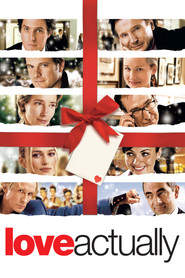
Richard Curtis, Hugh Grant, Bill Nighy, Thomas Sangster
-
In your head as the writer, who do you think she really prefers? Her husband or this bloke, now? No, she's got no time at all. I mean, she likes this guy as a friend. But when she runs out later and kisses him. - That's just being nice. That's my favorite bit of acting. - Well, that's interesting. That wasn't my reading. I thought, "Dirty bitch, she wants them both." Keira looks like to me like a girl who's done that, who's just found a way of being kind to men like Bill who, you know, want more to do with her than that. - But she kisses him on the lips. I never kiss anyone anywhere else except the lips. God. I think Andrew cannot believe this was the take we used. This was like a joke take. I couldn't believe he was gonna go for it the third time. No! Yep, he's done it. Good heavens. - More times than... He Zips... This is the fantastic Dido. She sent us her new aloum and there was one so beautiful, sort of hidden track on it that we wanted to put in the movie. But it's weird how a movie will demand its own songs and you cant just put stuff you adore on it. There was a song by Ron Sexsmith, Gold in Them Hills, I just spent days trying to fit into the film. Just couldn't. Wow. - That's great. He's doing a very good job of walking. Bill, do you find walking very difficult on camera? -/ do. Yeah. - Particularly if you haven't got a prop? Something to do with your hands? - Yeah. Well, that's why he did that thing of scraping along the wall. Yeah, I could see all the tricks. Hands in pockets. She had a little problem there, walking across the room. Colin's a very good walker. Yeah. She was so good. She didn't make a single mistake. Sweet girl. - Attractive, too.
55:33 · jump to transcript →
-
There we go. There's the Four Tops again. The original scene that we did here had those guys the other way round So you could see their penises. - I remember from the script. The head of Universal said she found it distracting in the preview and couldn't concentrate on the scene.
1:04:30 · jump to transcript →
-
Right. So that's the bit where we were So... The audience were so unhappy. People were? - When that happened. Well, I'm not surprised. - High hopes. We had a really strange thing with this, which is that, when we tested the film... I'm a great believer in testing. I come from normal comedy tradition and when you did a sitcom you performed it live, and bits the audience didn't laugh at you cut out. It's the same on stage, you just change things around. But the audience so wanted this to turn out well and kept saying on the cards, "Can't you please write an extra scene "where everything goes okay?" And, "It's not clear what happens." They were saying, "It's not clear what happens" because they wanted something different to happen. So we in fact wrote another scene where it became perfectly clear that it didn't turn out okay. It was one of those "be careful what you wish for 'cause you might get it" ones. But I think it's down to Rodrigo, who's so touching that you instantly want it to go well for the pair of them. It's a case where the acting's better than the writing.
1:11:23 · jump to transcript →
-



Related topics
Other topics that frequently come up in the same commentaries.