Topics / Writing & development
The screenplay
147 commentaries in the archive discuss this, with 1,188 total mentions and 12 sampled passages on this page.
Filter commentaries
Filter this topic by the film's decade or the type of commentary.
Showing 4 of 147 commentaries
Clear filtersBy decade
Across the archive
ranked by mentions · click any passage for the moment in the transcript
-
scholar · 1h 32m 14 mentions
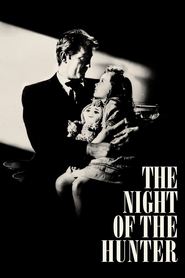
The Night of the Hunter (1955)
Terry Sanders, Robert Gitt, F. X. Feeney, Preston Neal Jones
-
I remember Lawton sent a memo to Agee during the script writing stage saying, I know that Mitchum's uneasy about talking to God there in the car, but frankly, I don't know how else to really introduce the character cinematically. Because there never had been a character quite like this in movies. Yeah. And Mitchum's low-key delivery is so perfect because you could read the words as very overheated on the page and he just delivers them cold.
3:09 · jump to transcript →
-
Now, there's been a lot of controversy about the screenplay, you know, that James Agee, a legend grew, you know, that Agee had turned in a screenplay that was about 400 pages and that it was full of all kinds of incoherent rambles. But fortunately, in recent years, the Agee family has found the actual first draft, which was 293 pages, exactly twice the number of pages of the shooting script, which was 148. Oh, yes.
5:31 · jump to transcript →
-
Well, before we get away from what you started to say about Agee's script, I wanted to say that we've talked about this, and I think you agree with me. On the one hand, the legend is true that the script was incredibly overlong at 293 pages, but it turns out that it is faithful in spirit and letter to Grubb's novel. It's as if he was writing the world's first miniseries before there was such a thing. Because even the things that he added that weren't in the
10:18 · jump to transcript →
-
-
-
Alan K. Rode
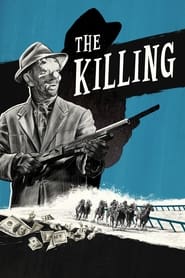
One of the many character alterations made in The Killing Script from White's novel was Jay C. Flippen's Marvin Unger. Lionel White's Unger was kind of a dyspeptic nebbish who hoarded his money and is alternately suspicious and resentful. Instead, Kubrick and Thompson turn Unger into a gentle, sad, lonely old man whose affection for Johnny Clay, as played by Sterling Hayden, has an interesting gay subtext to it.
3:34 · jump to transcript →
-
Alan K. Rode
Problem-solving stimulated him. Particularly in his later post-Spartacus films, when he had total control, Kubrick spared no one in his quest for perfection, least of all himself. Novelist Terry Southern, who worked on the Dr. Strangelove script with Kubrick, said the director, quote, "...scarcely let as much as a trouser pleat go unsupervised. No detail was too mundane, all the way down to stationery and paperclips."
21:36 · jump to transcript →
-
Alan K. Rode
Jim Thompson's angst over being denied a shared writing credit with Kubrick for the killing became a grudge he nursed with great care for the rest of his life. For his part, the director never promised any such thing, so it was not an instance of him reneging. An apology or even an acknowledgement of Thompson's gripe was not forthcoming from Stanley Kubrick. Thompson's wife claimed her husband filed a grievance over the matter with the Writers Guild and won the arbitration.
26:58 · jump to transcript →
-
-
-
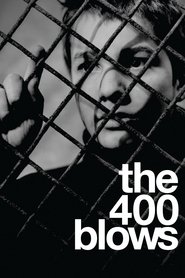
is a theme that echoes not only throughout this film, but throughout Truffaut's career as well. The camera, by tracking the girly picture's course, lets us in on the secret, so that when young Antoine Douanel is caught red-handed, we are, in a sense, caught with him. From this moment on, Truffaut's script, Henri Deca's camerawork, Marie-Joseph Yoyot's editing, and Jean-Pierre Léo's performance will all encourage us to identify with the feelings and the experiences of Antoine.
3:31 · jump to transcript →
-
As a passionate moviegoer all his life, Truffaut is more saturated than most directors with the films that preceded him. We are not far removed in this scene, for instance, from the classroom scenes in Josef von Sternberg's classic film The Blue Angel, where a girly postcard gets some other boys in trouble with the teacher. This teacher, called Little Quiz in the script, humiliates Antoine publicly by assigning the class a sentence to conjugate based on Antoine's clumsy graffiti.
6:48 · jump to transcript →
-
After reading Hot Blood and your TV script, I'm convinced that you can be of immense help to this film which I'm confident I'm going to shoot in September. I know that you are a fast worker and that you have a sense of construction which I sorely like. On the other hand, I think I really know the universe of 12-year-old kids that I want to film.
26:04 · jump to transcript →
-
-
-
David Kalat
Tsuburaya's monster movie proposal involved a giant octopus, which, of course, he planned to animate with King Kong-style stop motion. Tanaka wasn't so sure and felt it was a better idea to let a professional writer like Shigeru Kayama cook up the script, so Tsuburaya's octopus idea was shelved.
11:42 · jump to transcript →
-
David Kalat
This sequence is as fabulous as it is because Honda and Murata worked so closely with Tsuburaya during the initial planning stages of the project, running script ideas by the special effects team so that they could weed out anything that would have been impossible or just too expensive. Honda and Murata only put in the script things Tsuburaya said he could pull off. Well, in the very earliest stages of that collaboration, when Tsuburaya was first brought on board, before Honda was even a part of this,
44:46 · jump to transcript →
-
David Kalat
Japanese is written using a script of characters that represent phonetic chunks. The problem is those phonetic chunks in Japanese involve sounds so unfamiliar in English they don't have obvious, unambiguous Roman letter equivalents. The process of converting Japanese characters into Roman letters is called transliteration. And there are a number...
1:06:17 · jump to transcript →
-

Related topics
Other topics that frequently come up in the same commentaries.