Topics / Writing & development
The screenplay
147 commentaries in the archive discuss this, with 1,188 total mentions and 34 sampled passages on this page.
Filter commentaries
Filter this topic by the film's decade or the type of commentary.
Showing 12 of 147 commentaries
Clear filtersBy decade
Across the archive
ranked by mentions · click any passage for the moment in the transcript
-
-
films? One of them was Beast from Haunted Cave that I had made. And one was the picture that was shot back to back with that that Roger had directed called Ski Troop Attack. And then two films that he had done in Puerto Rico, Creature from the Haunted Sea, which was a remake of Beast from Haunted Cave, and The Last Woman on Earth, which was Robert Towne's first screenplay. And also he starred in it.
5:25 · jump to transcript →
-
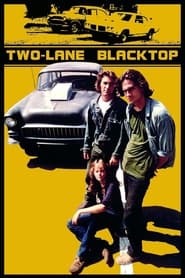
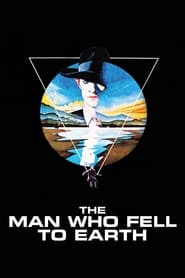
I'm thinking about you taking the script to the studio with so little dialogue. How did that whole process happen? Well, there was another script by Will Corry, which they bought. Not Universal, by the way. We were at another studio before. And then I was permitted to, quote, hire somebody to do...
14:48 · jump to transcript →
-
a slight rewrite, and we wound up writing a new script. Rudy Wurlitzer wrote a completely new script. And so, you know, the gears were in motion, and the thing kept moving on and moving on, and got to the point where we did screen tests and cast actors.
15:18 · jump to transcript →
-
-
-
Francis Ford Coppola
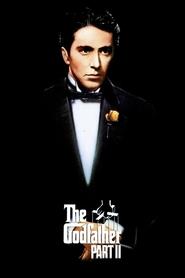
did the same thing to me, essentially, that they had done to Al Pacino or Marlon Brando. Charlie kept saying, listen, you've got to do it. Give me any terms you want. If you'll do a second Godfather, anything you want. I said, one, no studio involvement, no Bob Evans, nothing to do with it whatsoever, to know what it is or read the script or have any say about anything. Number two, you know, I want a million dollars or whatever the number was. I don't remember now. Whatever was considered a wonderful...
1:08 · jump to transcript →
-
Francis Ford Coppola
So we conceived in the script to start in the very old days when there were family feuds and hills and massacres in the land of Sicily. Much of that was based on real stories, and even the death of the boy is from an actual famous photograph of, I think his name was Paolino Riccobono, who was killed and his body was found in exactly that position in a...
2:54 · jump to transcript →
-
Francis Ford Coppola
The Godfather Part II, it was a very smooth production. And so unlike the first Godfather, I found that writing the script and producing and then directing a film that was to take place in a Lake Tahoe setting on their estate, LA, Las Vegas, New York, Sicily, Cuba, a tremendous amount of ambitious filmmaking moving and what have you.
5:46 · jump to transcript →
-
-
-
Francis Ford Coppola
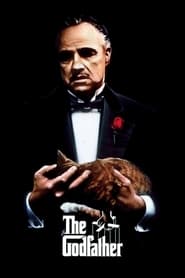
The Godfather opening is an interesting situation. I had, of course, written the screenplay of Patton before this movie. And Patton had a very famous, striking opening.
1:05 · jump to transcript →
-
Francis Ford Coppola
I was once out in a little cottage I had in Mill Valley writing the opening of The Godfather, working on the script just in the earliest phases. And I wrote maybe three or four pages. And a friend of mine came by, and I asked him to read them. And they started with the wedding and introducing all the characters. And he said to me, gee, Francis, you had such a terrific beginning.
1:20 · jump to transcript →
-
Francis Ford Coppola
In contrast to the darkness of the private office was the exterior of the wedding and of course this exterior is where my script originally had begun with a big high shot of the people dancing and coming to the party so really this would have been
6:50 · jump to transcript →
-
-
multi · 1h 59m 11 mentions
David Naylor, Guy Hamilton, Tom Mankiewicz, John Barry + 14
-
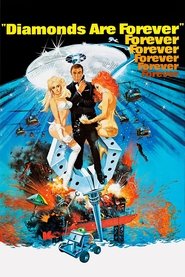
Mankiewicz was hired after Richard Maibaum had completed a first draft script. Director Guy Hamilton remembers working with the writer. Tom Mankiewicz came out to Universal, and we sat down and we started to write the script, and we had a lot of fun writing it. Here's Tom Mankiewicz's memories of writing the script. When I was hired to rewrite Diamonds Are Forever,
5:15 · jump to transcript →
-
And I think Guy really helped to set that up, that irritated relationship. Stuntman Joe Robinson, who portrays Peter Franks, made his film debut as Sam in 1955's A Kid for Two Farthings, which was directed by Carol Reid from a screenplay by Wolf Mankiewicz. It was Wolf Mankiewicz, no relation to Tom Mankiewicz, who introduced Cubby Broccoli to Harry Saltzman.
21:27 · jump to transcript →
-
In the Richard Maibaum script, the primary villain was to be Goldfinger's twin brother, back for revenge. When Tom Mankiewicz came on board, the storyline changed, influenced by a dream of Cubby Broccoli's. Broccoli dreamt that he'd gone to visit his old friend Howard Hughes, but when he called out Hughes's name, the man who turned around was a total stranger. Using that idea as a launching point, the producers decided to bring back Bond's arch-nemesis, Ernst Stavro Blofeld, who is impersonating a Howard Hughes-type industrialist.
35:15 · jump to transcript →
-
-
-
Nick Pinkerton
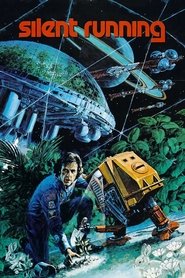
Cimino had contributed to the script for 1971's Silent Running, the directorial debut of special effects maestro Douglas Trumbull, and there he had his first feature credit. Let's take a moment just to appreciate this very lovely scene, strolling along the riverfront, cracking open a sixer of Olympia beers as we look out at the water. We are now in Fort Benton, Montana,
39:52 · jump to transcript →
-
Nick Pinkerton
and also stage productions at the Bowery Theater and National Theater. So at the heart of this very 20th century script, a 19th century romanticization of the criminal life, a capital R 19th century romanticism that in Cimino's film is placed against the very quotidian and unromantic backdrop of the contemporary West. We are now at Meadowlark Elementary School 2204,
42:50 · jump to transcript →
-
Nick Pinkerton
This particular package began with Stan Kamen at William Morris Agency, head of the motion picture department, whose client, Cimino, had written a script with Eastwood in mind, written it in six weeks to be polished over the next couple of months. Eastwood was always the intended Thunderbolt, but the other role, that of Lightfoot, wasn't custom-built for anyone.
44:58 · jump to transcript →
-
-
-
Logan's Run from the George Clayton Johnson, William Nolan novel. Even a little later, there was a TV miniseries of The Martian Chronicles from Ray Bradbury. Not a very good series. And these are all around this time. What's the thing that's different about this film from those movies? Go ahead. I've just told you, this isn't based on a novel. It's an original screenplay. And the thing about those other films is...
11:42 · jump to transcript →
-
the thing that runs throughout his films. And it's odd that we were talking earlier about how the science fiction aspect of this film, the background, the world building, is very poor. But on a micro level, the technology is very good. It's very credible. And it's almost like that was what he was interested in. I mean, the writers of this script, who are a very...
41:23 · jump to transcript →
-
mixed bag isn't it it's a technique it's Deric Washburn ampersand Michael Cimino so the team of Deric Washburn who is obviously the least known of the writers of this film but he co-wrote The Deer Hunter with Cimino or in Mike Cimino he's built as he is but then
41:49 · jump to transcript →
-
-
multi · 1h 43m 7 mentions
The Taking of Pelham One Two Three (1974)
Nathaniel Thompson, Steve Mitchell
-
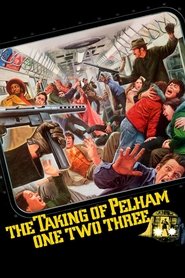
Part of the narrative doesn't quite get the play in the film. One of the things that's so nice about this screenplay is Peter Stone wound up taking a book that was a natural for a feature film. And then ultimately what he did was just say, all right, I got to stay with the good parts and stay with the part of the story that propels.
5:34 · jump to transcript →
-
And I just told him, I said, listen, Mr. Stone, I'm a big fan of yours. He had also written charade. I think he got nominated or won an Oscar for father goose. And he was like a major screenwriter in the sixties. And, but I said to him, I said, but Mr. Stone, I just loved your screenplay for the taking of Pelham one, two, three, you took a great book and you turned it into an even better movie. And he thought about, he smiled. He said, thank you. And he said, well,
6:21 · jump to transcript →
-
I added a little humor to it. And one of the things that this movie has is it has a lot of humor, but it's all character based. And, you know, again, I've watched this movie a gazillion times and I never get tired of the quality of the writing and the screenplay. That's James Broderick, who is not a real motorman, but they're letting him drive a subway train, which I thought was kind of cool.
6:47 · jump to transcript →
-
-
-
Roger Moore
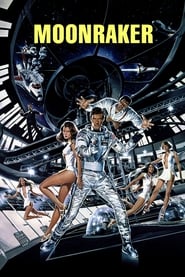
This script was written by Christopher Wood. It wasn't the first time he had been associated with Bond. He had also co-written the script for The Spy Who Loved Me. He was a good friend of Lewis. He had.... Of Lewis Gilbert, the director, and he had... ...made his-- Sort of first name was with Confessions of a Window Cleaner.
12:45 · jump to transcript →
-
Roger Moore
And Kenneth More wanted to make The Admirable Crichton. But the rights belonged to Korda. And so Korda was approached. Korda said, yes, he would produce the film with Kenny... ...and that Lewis would direct it. Well, one day he said to Lewis, rather as I had: "How did you start?" And Lewis said, "Well, I was a child actor." He said, "You were that boy?" And Lewis said, "Yes, and I'd like to say thank you." Two days later, Lewis had an appointment... ...a script conference, with Sir Alexander Korda. And he called the secretary just to confirm the time. He said, "I'd like to speak to Sir Alex." And she said, "I'm afraid you can't." He said, "But I'm supposed to be meeting him this morning." She said, "I'm afraid you won't be. He died last night." You know, "I was always glad that I could say thank you."
29:23 · jump to transcript →
-
Roger Moore
This was not the first time I had been in Venice. I remember distinctly the first time I was in Venice... ...Was in 1961. And I had been offered by Lew Grade a series called The Saint... ...and had read the script out there. My agent came out to talk to me about it. And I said that I thought it was just a little long... ...for a half-hour series. I said, "It is a half-hour series?" He said, "Oh, yes." I said, "Well, let's find out." He checked back with an assistant... ...who no longer.... Who shortly after that was not an assistant. Because when it came to... All my contract was built on... Based on it being... ...a 30-minute series. And, in fact, it was an hour. Then I came out of the press conference... ...We did a little readjustment, Lew Grade and I. I remember Venice very well for that. But it is the most beautiful city. It has this extraordinary history. It's a wonderful place to work if you like boats. Not if you like swimming. And I went in the canal a couple of times... ...Which is not quite as bad as falling in the klongs in Bangkok.
34:00 · jump to transcript →
-
-
director · 1h 28m 6 mentions
Don Coscarelli, A. Michael Baldwin, Angus Scrimm, Bill Thornbury
-
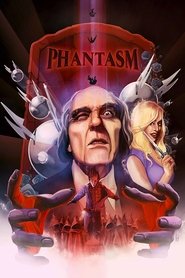
Welcome to our commentary track. I'm Don Coscarelli. I'm the writer-director of Phantasm. And we'll be together for the next 90 minutes. Now, I'd like to welcome a few of my other collaborators and friends in the making of this picture. Michael Baldwin. Hiya, Don. And Angus Scrimm. Hello, Don. Now, let's be quiet. I think it's rude to talk when people are trying to watch a movie. And Bill Thornbury, who played Jody. Hi, Don. How you doing? Well, anyway,
0:46 · jump to transcript →
-
Sphere sequence. I've never spoken with him since. This was a moment that was a little more expanded than the original screenplay about Mike chasing after his brother. It was kind of a subplot, which a lot of people really responded to about these brothers living alone. Well, that's what I meant before when I said that that's the subplot that I always really liked. About the two brothers. When Mike goes to the fortune teller, he goes there to talk to her about his brother leaving. I just always thought that was a pretty interesting...
12:50 · jump to transcript →
-
Here we've got our crew led by Paul Pepperman and S. Tyer, our production designer, and they're actually puppeting those fingers from below the landing. Here's another set of warped creatures. And this was another motion just from the outset that I had in writing the script, because I wanted Mike to go up there and have all these adventures and really escape
38:46 · jump to transcript →
-
-
-
as a writer, I just work for the director. And if the director really wants me to say that, unless it is hopelessly ungrammatical or lacking in any form of coherent syntax, and the character I'm playing seems possibly to have gone to college, I won't argue about it. But there are a few places where I or Nick and I played around with some words. But for the most part, I think it's all from the script.
37:01 · jump to transcript →
-
I think there's very little in this that's startling in its material sense. I remember when Paul Mylesburg and I were working on the script, we thought he would be dealing in software to keep undercover, not come up with laser beam eyeballs or some extraordinary way of converting grass into gold, but something that was only a little bit ahead of its time. I remember when they talked about the camera,
1:10:08 · jump to transcript →
-
a period where commercials in England used to be two minutes and a minute and a half. The idea of a 30-second commercial, a tension span in time, has changed. But it's still very much in our life. We have our human clock. So in talking to the artists when Paul and I were working on the script, with that in mind, it was astounding how often mentioning time came up, and I wanted to eliminate that.
1:52:41 · jump to transcript →
-
-
-
Dr. Gerd Naumann
And she became aware of him and said to him, come here, I want to write a screenplay.
48:01 · jump to transcript →
-
Dr. Gerd Naumann
And the screenplay for it, so there must have been some kind of script, both worked together.
48:48 · jump to transcript →
-
Robert Sommer
So to speak, from the script to the direction, so basically everything she did.
49:06 · jump to transcript →
-
-

Related topics
Other topics that frequently come up in the same commentaries.