Topics / Writing & development
The screenplay
147 commentaries in the archive discuss this, with 1,188 total mentions and 12 sampled passages on this page.
Filter commentaries
Filter this topic by the film's decade or the type of commentary.
Showing 4 of 147 commentaries
Clear filtersBy decade
Across the archive
ranked by mentions · click any passage for the moment in the transcript
-
-
Tim Lucas
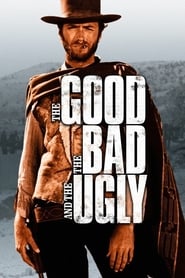
and its guitar soloist is Bruno Battisti D'Amario. The character of Angel Eyes, played by Lee Van Cleef, is introduced with a long ride into close-up, much like Omar Sharif in David Lean's Lawrence of Arabia, a film that, like The Good, the Bad, and the Ugly, was largely shot in Almeria, Spain. In the original script by Luciano Vincenzoni, Angel Eyes is referred to as Banjo, possibly in response to the popularity of the baleful Italian western hero Django, introduced in 1965.
6:34 · jump to transcript →
-
Tim Lucas
Topkeeper, who in the original script is named Mr. Jackson, is played by Enzo Petito, born Vincenzo Squitieri in Naples in June 1897. His other films include Dino Risi's Il Vidovo, The Widower, 1959, and Il mattatore, Love and Larceny, 1960, Sergio Corbucci's Totò Comedy, Chi si ferma è perduto, 1960, and Vittorio De Sica's Il giudizio universale, The Last Judgment, 1961.
32:40 · jump to transcript →
-
Tim Lucas
It's an interesting recurring feature of this script's construction that we are presented with one interesting scene only to discover that it is wrapped inside another, so to speak. Another interesting story or a breathtaking vista that is unfolding just off to the side of a scene we initially consider to be enclosed and finite. That's very good.
43:48 · jump to transcript →
-
-
multi · 1h 49m 10 mentions
John Cork, Ursula Andress, Eunice Gayson, Margaret LeWars + 20
-
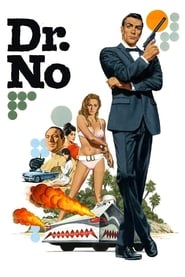
The window breaking is very exaggerated. All of that was exaggerated, but it made it exciting. It made it tension. Sound editor Norman Wanstall recalls Hunt's editing. When Peter started to see the rushes of Dr. No and had read the script, he began to get an immediate picture of the sort of film we were making. And I remember him saying, if this film's going to work, we've got to move it along very, very quickly so that people don't analyze things. Production buyer Ron Quelch.
5:14 · jump to transcript →
-
My sets on that picture came to just over 20,000 pounds, 21,000 pounds. To convert Ian Fleming's novel into a workable screenplay, Cubby Broccoli hired a writer he'd worked with often before, Richard Maybaum. Jerry Durow remembers this remarkable writer.
14:11 · jump to transcript →
-
in the Cold War drama, Action of the Tiger, as Terrence Young's daughter, Juliet Neeson, recalls. He'd worked with Sean before, Action of the Tiger, and Sean played a tiny little part in that. And apparently he came to him and said, you know, I think he'd read the script of Terrence's next film, which I can't remember what it was going to be in. Sean said, you know, can I be in it now?
23:42 · jump to transcript →
-
-
-
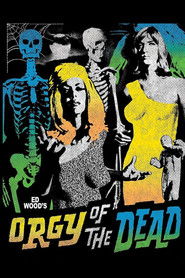
It was filmed using a widescreen process and exciting color. I love that word, exciting color. It could well become a classic in its field. As well as enjoying the film, you might like to read my novel from which the screenplay was written. It too is entitled Orgy of the Dead. And, you know, he said it's a classic and he's kind of right about that because this film was really, really, really out of step.
7:01 · jump to transcript →
-
sexy side to it. And he mentioned a screenplay he'd already written called Nudie Ghoulies. And he gave me a very, very brief synopsis of what was eventually became Orgy of the Dead. And I said, that sounds good. Now you, you brought the, you have the script here. Yeah. I got it. Yeah. And is there anything more than, I mean, how many pages is it? Well, it's obviously, you know, the first incarnation of the film.
21:05 · jump to transcript →
-
The guy who distributed Orgy was Fred O. Gephardt. May he rest in peace. So his initials were F-O-G, Fog. I should have known something. So Freddy gave me three checks for $5,000 each in advance. And what do I do when I have the money? I make a picture. So I had Eddie Wood write a script about a transvestite detective. Transvestite detective. Now, who else, right? Who else? About a transvestite detective in Paris called Seven...
1:00:20 · jump to transcript →
-
-
-
Tim Lucas
Just stop and listen. Those sounds that we hear are not being made by the writer in the distance. The whistle, the striking of a match, the sounds of something being assembled. That whistle, by the way, was provided by Sergio Leone himself. But these collective sounds amount to a personal portrait and trumpet the arrival of new technology in the Old West.
0:31 · jump to transcript →
-
Tim Lucas
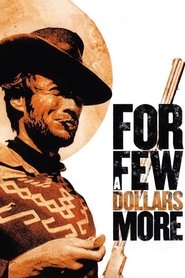
Whereas the previous film told a story cribbed from Akira Kurosawa's Yojimbo, which required at least as much fidelity to Kurosawa as to Leone, this was an original script by Luciano Vincenzoni, which he boasted of writing in only nine days, but further embellished by several different hands, notably those of Sergio Donati, the later author of Once Upon a Time in the West, The Big Gundown, and Duck You Sucker. This is an Italian Western at its most Italian.
2:24 · jump to transcript →
-
Tim Lucas
so changes were made to make him an arguably different character. The cigar-smoking man in this poker game is screenwriter and future film director Fernando de Leo, who worked on the script, uncredited, and wrote dozens of well-known Italian westerns before the times demanded he modernize his stories, which then became classics of the contemporary urban crime genre known as Polizioteschi. It should come as no surprise to us that Baby Red Kavanaugh looks nothing like his wanted poster either.
14:32 · jump to transcript →
-
Related topics
Other topics that frequently come up in the same commentaries.