Topics / Cinematography & lighting
The cinematographer
95 commentaries in the archive discuss this, with 192 total mentions and 72 sampled passages on this page.
Filter commentaries
Filter this topic by the film's decade or the type of commentary.
By decade
Across the archive
ranked by mentions · click any passage for the moment in the transcript
-
-
loved Godard and, you know, people like that. He worked as a production manager on the classic rock documentary Woodstock in 1970. Can you imagine being production manager? Yeah, I cannot. It's quite a tough job, I would imagine. And that same year, he was a production assistant on Irvin Kershner's Loving and a cinematographer on a movie called Bongo Wolf's Revenge, which I have never been able to see. But so he was, you know, doing all these kind of...
36:26 · jump to transcript →
-
you know, as a kid, that it was clear he was the standout. And Charlie viewed himself as more the DP. You know, he still was like, I'm not the actor, I'm the behind-the-scenes guy. But apparently Terrence Malick saw these movies, some of them, and he thought they were amazing. So, I mean, if you make 200 of them, and, you know, the Penns have Leo Penn as their father, who's a director, you know, they know a bit. So I would love to see those films. I wish they would...
48:19 · jump to transcript →
-
But there were creative differences, I guess, and Medak left Cujo two days into shooting, taking his cinematographer, Anthony Richman, with him. So Teague stepped in, along with cinematographer Jan de Bont, who at that point was very early in his American... I didn't realize he did Cujo. Yeah, it was very early in his American career. It was kind of after he had done this series of Dutch films with Paul Verhoeven. And so de Bont and Teague did Cujo together, made a really terrific horror movie. It's, you know...
1:02:55 · jump to transcript →
-
-
multi · 2h 19m 7 mentions
Martin Scorsese, Nicholas Pileggi, Ray Liotta, Lorraine Bracco + 9
-
Come on. Yeah. You know, take a chance. What's the worst they could do? If he's going to try to kill you, you could maybe duck, you could punch him. Some guys would separate. There are a lot of guys there. They'll probably separate him. You know what I'm saying? But he doesn't do that. He doesn't have the balls to do it. He's a dead man in that group, in a sense, socially. He won't be invited to the next dinner party, you know? Director of Photography, Michael Ballhaus. We had, like, two cameras rolling.
22:48 · jump to transcript →
-
You know the look of the movie. You know the rhythm of it. And that's something very interesting and very good for a director of photography to know. Without using a gun,
35:08 · jump to transcript →
-
In the scene when you see Karen on top of Henry, I remember it being very difficult to shoot, especially since when you learn filmmaking with Marty Scorsese. I really did that to the camera, not so much to Ray. Michael Ballhaus, who was our director of photography,
1:13:20 · jump to transcript →
-
-
-
Gary Goddard
some theatrical lighting. I kept pushing with the cinematographer, saying, look, this is kind of a hyper-reality. We want this to, when we're shooting these characters, it's a fantasy adventure story. It should not be like a documentary. It should be rich, and let's find ways. There's that sign I was telling you about. That sign is strictly there to let us, you have a source to throw on them. This is Gwildor.
41:31 · jump to transcript →
-
Gary Goddard
And notice the lighting in these first scenes, the theatrical lighting I'm talking about is not in these first scenes, and that was discussions that I had with the cinematographer at the time. I was not happy with this look. I said, this is too flat. This is too much like a documentary. That's not what we're doing. We need a little more theatrical. So this was a result of that first week. You'll notice everything from the first week has a bit of a flatter look, and I was not happy with it. And I think you see...
48:20 · jump to transcript →
-
Gary Goddard
that plays in contrast to the other scenes. But that part of it wasn't by design. That was a learning curve of me saying to the DP, look, we must have a more theatrical look to this. We must have some fantasy element. We must have what I kept calling a hyper-reality, not just real, but a hyper-real. If there's a red light, let's use the blue light. Let's use that to key. Let's try and create some texture to this. But as I said, it worked out okay because there is a contrast now to this
49:11 · jump to transcript →
-
-
-
um no sort of venetian atmospheres nor north of italy uh territories being shown it's um it it's quite clear that is it's something different yeah it definitely is and um if you're watching the credits here you'll see some names here that are familiar but not always in the ways that they were before this uh for example we had a credit on here for the cinematographer here was uh Massimo Di Venanzo who was the son of uh
3:11 · jump to transcript →
-
frequent Federico Fellini cinematographer Gianni Di Venanzo, but he was a camera operator on Paprika who moved on to becoming the DP on All Ladies Do It, Così fan tutte, which you and Troy did the honors for, as well as The Voyeur, Monella, this film, and after this, Black Angel or Senso 45, which I think is probably one of the more beautifully shot of his later films. But again, as we said, this is sort of a transitional one towards that direction. And then we also had our
3:37 · jump to transcript →
-
a camera operator on this film, who is Andrea Doria, who went all the way back to films like Miami Cops, the Bud Spencer, Terence Hill film, and Cross of the Seven Jewels. But he went on to become a full-fledged cinematographer at the very end of his career with Mon Amour and Kick the Cock, which is kind of one that gets overlooked. It's not a feature film, it's kind of a long short, I guess, but it's sort of a little bit of a footnote in his career after he stopped making full-on features. Yes, well, I was...
4:01 · jump to transcript →
-
-
writer · 1h 35m 6 mentions
Simon Barrett, Adam Wingard, Greg Hale, Eduardo Sánchez + 5
-
weren't making any money off those films. So I actually did, I wore a button cam on certain cases in New York and stuff. And so when it was suggested, I think by Roxanne, that the wraparound could be the eyes, I leapt for that right away. So even though when you see shots from the perspective of the button cam, what it is is generally my cinematographer, Taryn Anderson, who's like a tiny woman, like 5'3", is wearing this weird rig with a 5D strapped to her chest.
2:56 · jump to transcript →
-
Kelsey Abbott, the redhead in these scenes, is basically addressing her lines to Larry, looking at my cinematographer's forehead. This is where you can see Larry's not wearing any underwear. See that whole, oh, there we went. Larry is an indie film actor through and through. He was like, Simon, do you want me to have underwear? And I was like, I feel like your character would have underwear. He's like, well, I don't.
3:25 · jump to transcript →
-
We were just thinking that. But you know, the shitty thing about that is now everybody's gonna know what a retinal implant looks like and they're gonna look at my footage and be like, that just looks like he's got a fucking red epic attached to him. Oh, yes. I'm a fucking asshole. So to film this stuff, Adam is wearing this giant rig similar to what... Actually, it's the same rig that my cinematographer is wearing for the wraparound, but he has a giant red epic on his shoulder.
10:45 · jump to transcript →
-
-
-
I mean, a lot of these shots, basically, where Jost Vacano, my German cameraman that was the DP on this movie, found some really good angles by putting the camera in an extremely low position, so that you get enormous distortion. And here, there is the multiple image stuff here going on, when two things happen at the same time, the playback and what's happening in reality.
31:38 · jump to transcript →
-
And here, of course, comes the... The very simple trick stuff there is just shooting it twice and by a little glitching, try to go from one shot to the other, isn't it? Oh, I thought you were talking about TJ Laser, the stuff that I shot. Oh, that's great. Oh, yeah, thank you. Very important, too. Yeah, now watch the gun stuff there, because that's really great. Michael Miner shot that, actually, DP, for me.
55:58 · jump to transcript →
-
I see a lot of names there. Anette Haellmigk, who was the fiancée of Jost Vacano at that time. And later married Rob Bottin. Married Rob Bottin and worked on a lot of my movies, her second unit. She did the second unit on Starship Troopers. And again, she did all the second units as a DP and partially operating on Hollow Man.
1:39:11 · jump to transcript →
-
-
-
One of the things that they did is they worked with Casey Cannon and Van Ling, who are the people who actually did these screens. And they worked to develop screens that were bright orange, or that read orange, you know, where computer screens always read blue. Because Alan Davia, the DP, it drove him crazy how he would have to light a scene basically for the computer monitors instead of...
3:46 · jump to transcript →
-
interact with but it was also rigged to fall down at the end so it's meant to kind of crumble and um be destroyed so they they crawled around on it for months and then like over the course of three weeks they destroyed it all would this be a good time for me to talk about alan daviau at all yeah sure um the cinematographer you've mentioned him uh earlier in terms of the monitors and stuff but he's definitely somebody
1:13:38 · jump to transcript →
-
amassing whatever knowledge he could. And at one point, he crashed the set of Marlon Brando's One-Eyed Jacks and watched cinematographer Charles Lang creating the gorgeous VistaVision images of that film. And that's what really hooked him on the idea of becoming a DP. When he graduated from high school, he bought a 16mm camera and started shooting everything he could, you know, student films.
1:14:22 · jump to transcript →
-
-
director · 3h 29m 4 mentions
The Lord of the Rings The Fellowship of the Ring (2001)
Peter Jackson, Fran Walsh, Philippa Boyens
-
This is day one. He'd just come off X-Men, flown to New Zealand January 2000, and this was the very first scene that we shot. He really hadn't quite figured out Gandalf, but he was doing a pretty good job for his first day. The Ian Holm shots were actually done inside a studio from the location of Matamata, that's Ian McKellen, and then when you cut to Ian Holm, we're inside a studio. Andrew Lesney, our cinematographer, did a brilliant job of matching the indoors and outdoors. Now, some of the scale things
15:50 · jump to transcript →
-
that represents that sort of foggy area at the beginning of the shoot. Another brilliant shot coming up. I think this is one of the best moments in the film, actually. Why they're going on like this is that some of this was directed by Philippa and Fran. The shots of the Witch King, the stuff of the Witch King coming towards camera were particularly their shots. That moment there, I got called by Pete saying, watch the sharps on the blade, and I turned to Alan Guilford, our DOP, and said, Pete wants the blade sharpened.
1:12:52 · jump to transcript →
-
The model of the caverns below Isengard had already been packed away, so I got them to drag the model out and set it up again just to do this shot. And we did the blue screen with Christopher Lee very late as well. He flew back out to New Zealand to do that. These are all miniatures? All miniatures, yep. This was a huge big model that Alex Funke, our miniature DP, shot. One of the very first miniatures ever to be shot for the film. Yes. This was a hellish...
1:54:38 · jump to transcript →
-
-
-
Edward Berger
and to create this feeling of that we are there with them. And then James gave me the wonderful, James the cinematographer gave me the wonderful tip to let's just concentrate on one shot at a time, because otherwise we're gonna go insane. And that really helped me to not get bugged down with the whole of it, just to say, all right, this is the shot, we'll do this, and once we have it, we take it off the list, we'll do the next.
1:14:40 · jump to transcript →
-
Edward Berger
the cinematographer, the wonderful cinematographer. So Tribe7 lenses, and we had another set, I think another set of Panavision lenses. So there's a lot of mixing going on, but each had its purpose. This is a scene that very much symbolizes the Prussian sort of war ethos, the Prussian soldiers.
1:31:38 · jump to transcript →
-
Edward Berger
after we had done a tech recce or after we'd done some tech checks there, I wanted to drive home and I couldn't find my cinematographer. He wouldn't show up in the car. And so I get out of the car and suddenly it's getting dark. Suddenly hear this voice going, help, help, help. And we go to the field, we go to this battlefield and oh, I love this shot. This is some VFX.
2:14:15 · jump to transcript →
-
-
-
Alan K. Rode
Another main attribute of The Killing is a cast of legendary character actors that I'll be discussing as the movie proceeds. The great Lucien Ballard was the director of photography, but it was Kubrick who chose every lens, arranged every setup, and every shot. More about that later. The art director was Ruth Sobotka, who was married to Kubrick during the production of The Killing, and more about that later as well.
0:32 · jump to transcript →
-
Alan K. Rode
And as Sterling Hayden grabs a bottle of suds, check out this tracking shot following him through the apartment. The design of this shot, using the lens and other aspects of the photography, created tension between Kubrick and his DOP, Lucien Ballard. Second build, Coleen Gray, is getting dressed. Since the production code couldn't show them in bed together, this shot of her finishing dressing with an assist from Hayden establishes the intimacy of their relationship.
6:44 · jump to transcript →
-
Alan K. Rode
Lucien Ballard was a legendary Hollywood cameraman who began with Joseph von Sternberg, who was probably the only director before Kubrick who could light a set by himself. Kubrick himself literally knew everything about lighting and photography, beginning with working as a photographer for Look magazine for four years before he embarked on a career as a filmmaker. British cinematographer Jeffrey Unsworth, who shot 2001,
7:13 · jump to transcript →
-
-
-
Nick Pinkerton
The DP on the film is Frank Stanley, on the third of four Eastwood-starring films that he'd shoot, the others being 1973's Breezy, the aforementioned Magnum Force, and The Eiger Sanction the following year, the shoot of which comes with a story that we'll get to in due time. A few cracks to the head and an asthma attack are enough to put red on his ass and also to...
47:47 · jump to transcript →
-
Nick Pinkerton
And that hastiness is something that would make Eastwood some enemies along the way. You may recall earlier I mentioned the cinematographer of this film, Frank Stanley. It's worth saying that his collaboration with Eastwood ended rather acrimoniously when...
1:12:23 · jump to transcript →
-
Nick Pinkerton
And this is how you keep a career going for as long as Eastwood has, by rolling with the punches, adapting to exigencies, keeping to a schedule. This is also how you wind up occasionally accidentally dropping your cinematographer off of a cliff. There's a paradox in that Eastwood-Cimino comparison that I find troubling but fascinating, because on the evidence of Thunderbolt, on some levels I think Cimino may have...
1:41:28 · jump to transcript →
-
-
technical · 1h 35m 3 mentions
Steven Lisberger, Donald Kushner, Harrison Ellenshaw, Richard Taylor
-
One little thing I noticed... I mean, I didn't catch it when I was directing Jeff with this, is that when he plays Clu, he plays it with this strange computer accent, this mechanical accent. And now, when he's being tortured, he loses that, and I wonder whether he noticed it. We got so caught up in being in the scene that nobody realized that at the time. Clu's torture sequence is a great example of how light is used to create emotion. Lots of different filters were used on him as a part of that torture sequence. There are, basically, ripple glass effects, there's silk screen steel mesh, exposure changes, hand-done animation. When he's energized by the MCP, there are other filters that were used on the camera to give him that multiple-effect look. In this particular case, it was silk screen mesh, steel silk screen mesh that was on the taking camera and was spun around on the lens as a part of that effect. Dillinger's arrival to ENCOM in his personalized chopper was an interesting sequence. I took drawings of the chopper, schematic drawings, and created the design motif that you see on the chopper. And then over a two-day period, I applied these designs to the chopper myself with these varying sized, 3M reflective tapes. So, when we are shooting this sequence, what we are basically doing is flying air-to-air in another chopper parallel to this chopper. And we have a very low-intensity light source right near the lens of the camera, which is shooting across and reflecting directly back at the camera off of this 3M material. And it was a red light source, so it gives you the appearance that the chopper is either backlit or has some kind of neon lighting system on it. Again, there was the attempt to, for the outside, the window, to have the grid type of atmosphere and, kind of, cross-pollinize the electronic world with reality. Oh, I remember this stuff. Nice desktop computer built right into the glass. Touch screen. - Touch screen. I still want this desk. This was done with rear projection under the desk. The whole set had to be built up on the stage so that we could put a giant mirror under the set and project it in the old-fashioned way. There were technicians who were basically controlling light switches to different light boxes underneath this desk to light up different areas. The type itself, when it writes itself on, is actually matted into the scene from a computer graphics created type. And again, the view behind Dillinger is indistinguishable from the electronic world. And whose voice is the MCP? It's David Warner's voice. - Yeah. Yeah. It was just electronicized a little bit. End of line. Someone pointed out that they finally figured out that the reason that Bruce Boxleitner's character was wearing glasses is because he was supposed to be a little bit of a nerd. I think that was the intent. Just the readouts on the computers in the real world had to be pre-programmed ahead of time so that they wouldn't have rolling bars on them when we photographed them. Here you see another attempt to link the electronic world with the real world. The cubicles that the office workers are in are not dissimilar to the cubicles that the game players are in. And the intent was to have them go on forever or almost for infinity. Now, what thematically is happening is that at the time, computer people... Programmers were very concerned that the IBMs were going to take over the world of computers and exclude people. That they were going to be... That the system was going to be tyrannical. And what we're trying to show here is that the... Corporately, they've put a stranglehold on the system, and that the programmers are not being allowed the access that they want. And access for them is vital for their work. This character, Alan/Tron, is still inside the world of ENCOM and is more in balance. He seems... He's one of the people that's going to deal with the system from the inside. He's got a very methodical program in Tron, whereas Flynn is no... He's a renegade now. He just doesn't fit in and he's at war with the Dillinger character. The name Tron is derived from electron. Some programmers think it refers to "trace on, trace off." But that... We learned about that afterwards. There's a program in Japan called TRON, which is an educational school program, which has been running since 1985. And ENCOM was the only name we could find that wasn't already registered as a corporate name. Whereas Alan and Flynn are aligned with their counterpart programs, Dillinger has aligned himself with the tyrannical Master Control Program. So, the MCP is the ultimate controller, the big mainframe, the antithesis of the personal computer. The sequences that take place at the Lawrence Livermore Laboratory were interesting in their concept and in production. It was a very complex place to work. It was a very tight area, and we worked on this film with 65-millimeter equipment. And Bruce Logan, the DP, had his hands full. Sixty-five-millimeter film technology is quite cumbersome compared to Panaflexes and Panavision cameras. The size of the camera body itself, the limitations of the lenses, blimping the cameras... They're huge, so to get them in these cramped quarters was difficult. We were the only ones... Only film company ever allowed access to shoot in there. And nobody's been back since. A lot of this was lit, practically, by the fluorescents that are in there. It almost looks like a set. Yeah. We were very lucky that Lawrence Livermore let us use this facility. Because the cost of building a set this elaborate would have been astronomical. The Lawrence Livermore Lab is where they had the largest laser in the world. I don't know if it still does today. And they did a lot of research for NASA. Lawrence Livermore Lab was very cooperative with us, and allowed us to, really, kind of, run free through this particular area of the laboratory, which was their linear accelerator. So, we went into the one particular area, which we found most interesting for the area where Flynn gets de-rezzed, and where you first see the matter transportation effect, where the orange is digitized and deteriorated and then reassembled. In this particular case, we are seeing an orange, which was created by CGI by Triple-l. Animation that was done by the effects animation department, which was headed up by Lee Dyer and the effects animators, John Van Vliet, and John Norton, Barry Cook and Michael Wolf, Chris Casady. The name of that laser, by the way, Is Shiva, the Hindu goddess of creation and destruction. The 16 billion-year life cycle, she's got the drum of creation in one hand and the fire of destruction in the other. ...femain suspended in the laser beam. Then, when the computer plays out the model, the molecules fall back into place and voila! So simple. Why didn't I think of that? - That's right. Use that on Star Trek all the time. It's funny how they just kind of, just blow it off. Another afternoon's work down in the lab. Exactly. - Teletransportation, okay. Just digitized matter, no problem. Tomorrow we'll do watermelons. In a week, a human being. No, that comes sooner than that. A-ha! Oh, you're giving it away now.
7:08 · jump to transcript →
-
We just passed a Cray computer, that large, refrigerator-like computer. That was, at the time, the most powerful computer in the world. This Is... - Was this set at Triple-/? Where is this? No, this was picked up at... Wasn't this picked up at Lawrence Livermore? Yes, I think this is right, this is Lawrence Livermore. And again this is another kind of discovery. As we were getting the tour, you said, "Well, we could use this for their transition." This is a Set. So, af this point we've got two hackers, one, in essence, illegal, and the other one legal, both trying to correct the system, get on the network, what we now call the Internet. Bruce Logan, the cinematographer on the film, and Peter Anderson, the cinematographer on the second unit, did a miraculous job of lighting up the set with a lot of light, but taking all the light off of the desk so that you could see the rear projection come up through it. It's pretty clever.
26:45 · jump to transcript →
-
When we came to make a decision about what film format to use for Tron, we felt very strongly that we needed to shoot it on a larger negative than traditionally done. And it came down to a choice between 65 millimeter and VistaVision for the whole show. But the availability of 65-millimeter cameras was far better than the availability of VistaVision cameras, so we made the decision to shoot the entire show in 65 millimeter. And to keep a certain consistency, and as long as we had rented the cameras, we felt that we might as well go ahead and shoot the real world in 65 millimeter and not in 35 millimeter. It was kind of one of those nice to have things, and nobody objected strenuously to it, and also it would be the first time since Ryan's Daughter that a film had been shot entirely in 65 millimeter. And I think you can see the results. I mean, it looks wonderful. In the monitors in Lawrence Livermore, one of the things that Triple-/ had to do was create lots of imagery that appeared on monitors, and that imagery had to be shot and created long before we got to production. So, there was a lot of planning in creating all of the monitor imagery, and Triple-I did a great job on that. Spent a Iot of time on this shot. To accomplish the effect, what we did was get a 4-by-5 still camera and photograph Jeff Bridges in his position after he's been zapped, and then immediately moved him out and took another photograph, which was the background by itself. So, as you pull away chunks of Jeff, you see the background behind him, and then to put the laser and the grid and all that on top of him was basically the effects animation of John Van Vliet. When Flynn is de-rezzed and pulled into the computer, we go through one of the most interesting sequences in Tron, which is the real world to electronic world transition. This sequence was created by Robert Abel & Associates, primarily under the direction of Kenny Merman. It was a sequence which I had designed, knowing that the way that Robert Abel & Associates was making these computer graphic images with the Evans & Sutherland computers, and, really, using vector graphics to create this particular look, would give us a look that would be unique just for this transition. The three-space transition, the movement through all these binary bit patterns and this polygonal landscape, was done by making multiple passes through a traditional animation camera that was pointed at a high-resolution, vector graphic, Evans & Sutherland computer screen, and making multiple passes, frame by frame, using different colored filters, coming back, making multiple passes of rewinding other filters, until you finally end up with this, which seems to be solid objects. But it's really made out of lots of tiny, tiny lines put together to make solid blocks of color or objects. Oh, man, this isn't happening. It only thinks it's happening. When Flynn says, "This isn't happening, it just thinks it's happening," it's a key line, because it means that the reality that he finds himself in now, not even he can fully believe exists. And if anyone should appreciate and understand this alternate reality, it's him, and now he finds himself trapped in it. All right, now we see Sark standing on the bridge, and all of a sudden, he is enclosed with these shrouds of light as he begins to have his conversation with the MCP. The database for the MCP was a human figure that we had created at Triple-/ called Adam Powers and was originally on the Information International sample reel. And if you look at that sample reel, you'll see a juggler character who was juggling balls. Well, that face of that character is the face of the MCP. So, the first time that you see him, he is a polygonal drawing of a face. And that's basically the underlying database of the face. So, it's made of polygons. And those polygons, we play them out on the Triple-I computers as the line-drawing polygons, and made 12-and-a-half by 20-inch stills, high-con stills of those. But we created the mouth positions for the vowels and the syllables so that you could take these interchangeable transparencies and lay them down and make him Say, by whatever order you put them in, whatever you wanted him to say. 'Cause he was voicing a lot of different dialogue. Then those were backlit, and then we applied an effect to those line drawings of putting a steel mesh screen over the taking camera, and it made it have that much more, kind of, complex look. And then we also animated the exposure occasionally. Early on in the film when I started working with Steven, we did a lot of experiments to work out how these characters were created. The thing that we finally decided was that the characters needed to have this energy inside themselves. They are obviously in this electronic world. Now, these costumes were unlike any costumes anyone had ever created for a picture before, in that they were costumes designed to have effects treatments done to them. They were white with black drawing or black lines over them. All of the black elements on the costume were turned into circuitry which could be backlit and light could be pushed through there. We originally shot a 65-millimeter image of these people, live-action photography of them on these black sets. Then from that 65-millimeter film, we created some photo-rotoscope machines, which basically could project the 65-millimeter film down to large pieces of film, which were pre-punched with animation punches. This film was created by Kodak for us, and we would project down with these photo-rotoscope machines, which would hold this film into a vacuum frame and make a continuous tone positive print of each frame of the film. Then these continuous tone prints were taken to a light table, it was a vacuum light table, where they were contact printed to high-con film to make a number of high-con positive and negative images. So that you basically have for every character a large cel and you have high-con positives, negatives, and a continuous tone positive. Then these high-con elements were hand-inked and painted to isolate the circuits on the body, the whites of the eyes, the whites of the teeth and any other circuits that we wanted to treat as a separate exposure. The characters are more often than not... The live-action characters are shot on an all black stage. When there is a set, the set is also black, but is measured out to conform with what we're seeing in this artwork. So that if a character appears elevated in a shot, like this shot, there was an elevated platform for him to walk on, but it didn't look at all like the set. Then we would composite these actors over paintings, transparencies, and once that was done, we would add the light and the color separately. And to simplify it, you can describe it as a sort of perfect blend between live action and animation in that we took live-action film, photographed it in a way that we could break it down to individual frames, then blow up those frames into large slides or transparencies. And we had 75,000 of these, which seems like an appallingly large number, but it really isn't if you compare it to an animation film. And because we were at Disney, they were not overly swamped. That's an actual Frisbee, by the way, and those are actual Frisbees on their backs. We had a excellent Frisbee coach, Sam Schaiz. I like the fact that the deadliest weapon in Tron is a Frisbee. A Iot of effects animation in this sequence and in the film. And that is the animation that makes the glows, and as the Frisbee gets brighter, and you see the reflections of it on their costumes, all that has to be done frame by frame. This is hand-drawn animation that, although it is drawn, a negative is made of that, and it is placed over a light source and then re-photographed, and the ability of the effects animators was such that we were never waiting on the effects animation on the show. They always performed very well. It was never a problem. They did very few redos, and that's because they had had experience doing this beforehand, whereas everything else that we were doing, outside of the effects animation, was the first time through. So, that had a much tougher and steeper learning curve. In the holding cells for the game grid, those are backgrounds that are entirely hand-drawn by the background department, again using Rapidographs and line drawing and airbrushing and then turning those into high-cons. But those drawings are all drawn to match the actual physical sets, which were built so that when someone passes behind something, or leans on something, those are actual physical sets that were built. But again, the sets were just black on black. They're as if they were made of black velvet. Part of the interesting thing as a cinemagraphic problem that was presented to Bruce Logan was that he had to shoot, unlike anybody had ever shot before, sets that were entirely black with white line drawings and white characters running around on these sets. Bruce Logan's job in photographing these people was very difficult because, unlike most photography for most films, you try and get as much chiaroscuro in the picture as you can. You let there be a lot of dark and you create shadows and you create this moodiness, which a cinematographer takes great pride in. In this film, during the sequences in the electronic world, basically, he had to light them so that we could see as much of the costume as possible with as little shading as possible because all of the shading and all of that were done by hand by making different masks and airbrush elements that were used under these costumes in post. The ring game was an interesting technical exercise. The set itself, again, was black flock paper with the rings drawn on this paper with tape. The actors had to realize which rings were there and which ones were not as they acted out the sequence, imagining that they were hundreds of feet above the ground. One of the inspirations of Tron is the movie Spartacus. And there's quite a few similarities to the persecuted people who had to fight in the gladiatorial games. This game, of course, was inspired by Pong and jai alai. I think one of the interesting parts of Tron was the synthesis of new games that were created. The design, for example, of the glove that's being worn here, we took a traditional jai alai glove and then rebuilt it and made it out of foam, added other elements to it to give it a more technological quality, and then again, I put the designs over the outside of that to make it blend with the rest of the costumes. Shooting in 65 millimeter, from a director's standpoint, is a lot of trouble. The cameras are huge and bulky. The format requires an enormous amount of light to fill that negative, so if you are shooting Lawrence of Arabia or Doctor Zhivago and you've got lots of snow and big exteriors, it's fine, but in low-light-level situations, it's very troublesome. The depth of field is sometimes as little as a half an inch, and you find your cameraman is asking you, "Now, which part of the eye do you want in focus? "Do you want the front of the eye or the back of the eye in focus?" Or if the head of the actor is not square to the camera, they ask you the really insane question of, "Which eye do you want in focus? "I can give you the front eye in focus or the back, "but the other one's gonna be blurry." Now a lot of these shots where you see actors talking to each other and we're doing over-the-shoulders, the camera couldn't hold focus for the blow-ups to be made, and I had to shoot the actors on separate passes. So, in a shot like this, where you see all three actors talking to each other, it wasnt filmed that way. I filmed them separately and they were composited. And there's quite a few shots like this. Whenever you see them walking around and they're separated by more than a couple feet, those are all separate shots, and then the actors are composited. So, it's very difficult for the actors because not only do they not see the environment they're in when we're filming, all they see is an all black stage, but they don't even see the actor they're talking to. Forming of the Lightcycles, again, is almost entirely done by hand-done animation done by the effects animation department in creating the way that these cycles form around these characters. We built an object that the actor could sit upon, and it was literally a mechanical shape that was the seat and the handlebars, so he could sit down and it would thrust his arms forward and pull him down into that locked position. So that everything that he sits upon and touches, it was, again, drawn by the animation department, and not until you see the final completed cycle, which is actually a CG/ rendering of the cycle, is any of it done by computer. The Lightcycle sequence was done by MAGI. Their way of creating an object were to take basic geometric shapes, cones, cubes, spheres, cylinders, and make an object by collaging those particular pieces together and creating an object. And that's how the Lightcycle was created. All wide shots that you see are computer-simulated. All of the shots, other than the very tight shots of the figures inside the canopies, are computer-simulated. The shots inside the canopies are actually hand-drawn artwork of parts of the Lightcycles, and the animation that's happening over the Lightcycle windshields is hand-done animation to give them a sense of speed. But virtually every scene that you see of the Lightcycles is entirely computer-generated. And there's not even effects animation in those scenes. If there's an explosion when a Lightcycle hits the wall and a tire bounces across, I think those were basically all CGI. Syd Mead worked really hard on designing these motorcycles so that they would incorporate the characters. But if you look closely at them, you'll see that the second half of the bike is flattened and sort of two-dimensional, and that was done because the computers couldn't handle too many compound curved surfaces. So, we restricted those curves to the wheels and the windscreens, and then the rest of the bike was simplified. The ability to move the camera through 3D space with these computer-graphic-looking landscapes is just great. The Recognizers are a sort of King Kong. There's a little head on top of that gate structure... Suggestion of a face, but it, sort of, got lost. The Recognizers were created by MAGI-Synthavision. As I mentioned, there are graphic vector lines, red lines outlining all of these objects, the same way with the tank. The tank was another unique design of Syd Mead, who is a futurist, a fabulous designer. Once Ram, Tron and Flynn have escaped the Lightcycle grid and are off through the canyons being pursued by the tanks, we cut inside the tanks and see another example of a Syd Mead set that was built as a three-dimensional set, again with black background, and all of the elements on there graphically put on so they could later be treated. So the camera, you can see, is moving through scenes in ways that no physical camera or no model shot could possibly do. The animators that I worked with to create the choreography for all of the CG/ sequences were Bill Kroyer and Jerry Rees. But to communicate all this information to the computer technologists, the people that are sitting at monitors at that time, took a new language which we had to create. So, what we did was, first of all, we had to think of each sequence as a real physical reality. Not only would they draw the point of view that they saw as an animator that we would work out together, that was the story point that Steven wanted to make, and also the point of view that we wanted to take. But after we would draw the original storyboards in a traditional, kind of, storyboard manner, we would have to go back and draw a top view, side view and front view of the objects, where they were in time, where the camera was in time, and what the camera's point of view was. So, we really had to define everything to the CG/ technologist in a three-world, three-dimensional space. And that was the first time that that had ever been done. They must've gone right past us. We made it...this far. Now, all of this, this revolt, it's all being led by the user who's gone in the system, Flynn. The Tron character and Ram character, they would have toed the line and gone through the software the way they're supposed to. We'd better, Null Unit. Null Unit. Get the computer dictionary out. Look up "Null Unit." What does that mean? In this sequence, you can really see some of the flaws. I don't really mean the flaws, but the imperfections in the cels, little bits of dirt that pop on and off. Yeah, but they're few and far between considering. Yeah. Come on, you little bugger. Come on. Look at that. A lot of pops and a lot of glitches in there that we would always Say, "Well, that's what happens in an electronic world." When we started there were going to be no differentiations between the flesh tones and the rest of their uniform. But at a certain point they looked, well, not very good. So as a result, that added, approximately, 120,000 extra frames, extra elements to the shot, so it did grow in many aspects. The cave sequence where Flynn, Tron and Ram finally re-energize their selves with this liquid energy was a very interesting technical problem to solve here. In the sequence in the cave when the water is being handled by the actors, literally, frame per frame, rotoscope animation is isolating the water from the body so that it can be treated with a different filter and a different exposure. And again, this is an example of how light is used to portray motion or energy, as Tron drinks and you see his circuits light up and they become energized. The set itself was a complex geometric shape, which was designed by Peter Lloyd, and we built into this set, basically, water channels, and the water itself was reflecting light sources that we put in angle so they would reflect to the camera, and the water was in black tanks so that all we're really seeing are the highlights on the water. Yeah, but the biggest problem at that time was do we fill this with colored water or clear water? Had to do tests, you know. - Right. That was your problem. Do we put milk in there and make it purple? I think that what Flynn is surprised now, ironically, to see that there's parts of this mirror world that are more alive than he anticipated. So, it's not just the harsh computer reality, there's something living about it. It's a very complex shot, again, with all the elements. Probably about 30 different elements, 30 different separate exposures for each frame. Normally in a special effects movie, you get a very bad bottleneck effect in that all these things have to be composited through one or two optical printers. Now we have digital compositing machines. But by putting it into a manufacturing system like this, where it became like an animated film, we could use 14 or 15 animation stands, and we could use a slew of effects animators and ink and paint people to do all of this work simultaneously. As far as I know, we still have more shots with human beings composited into an artificial environment than any other movie. I believe there's 1,100 special effect shots in the film and 900 of which have human beings composited in them. And that number is just very, very large. Just the organizational task alone was monumental, not even considering the creative side of it. For every frame you would have an additional five to 15 cels that isolated the different colors and the different... We had body mattes, we had face masks, continuous tones. You made print backs on top of print backs. So, those 75,000 original cels grew to over half a million. I think we ended up with something like 600,000 cels, all of which had to be kept in order. We had to pull trailers, literally these large house trailers, kind of, industrial trailers onto the lot. We ran out of space and we ended up with 10 trailers that would house all these cels and had to be organized and sent over... 80% of them were sent overseas and had to be numbered and then painted and kept in order. At one point we thought if we had 1,000 scenes, and this was around Christmas time, the film was going to come out later that summer, and we had no idea of how we were going to get it all done in that short a period of time. And we thought, "Well, it's summer vacation. We have two weeks. "We'll get college students, 500 college students in a room." We really believed this might happen. We discussed this for about an hour and we Said, "You'd have 500 students in a room. "We'll teach them how to do inking and painting and rotoscoping, "and they only have to do two scenes each. "And so they do one scene a week. "At the end of that time, we'll be done, "and we'll just go and shoot them on the animation stands." It didn't work out. So, we brought on Arnie Wong, who was an animator. We put him in charge of supervising Cuckoo's Nest, which is a ink and paint service that was in Taiwan. Approximately 80-some employees in a single room. And what we did is we went through and we made a videotape of every situation and what to do in that situation. So that if an inker over there, who didn't even have to understand English to do this, could go to a TV monitor, roll to this particular problem and see exactly what you'd do in that situation. And then he was there to answer questions that were unusual. And the most interesting thing, and one of the things that I'm particularly proud of with this technique is that in spite of what a pyramid it was to build, we managed to get all of this post-production done in six to nine months. And that is using a technology that we had developed. It had never been done before and we developed it and used it on this picture and delivered on time. And that was only possible because of this manufacturing technique. It's interesting the computer animation iS the simpler part of the set. - Yes. Ironically, one of the things that was a creative philosophy that we enjoyed and were proud of was that we were taking computer animation and letting it stand on its own. We weren't trying to make computer animation mimic reality. And the job was then to make reality, the actors and the sets, look like the computer animation. We used to say, "Well, if you've got lemons, make lemonade." Everybody else, and certainly since this point, has been going nuts trying to make computer animation mimic reality perfectly. And I found that the limitations of computer graphics at the time were the most exciting thing. If computer graphics... If computer animation is no longer different from reality, maybe we've lost something in that. Certainly you gain special effects technology and you can do certain things, but it's the limitations, I find, to be the creative challenge. I think at the time we were using four computer animation companies... Yes. -... which were probably the only animation companies that existed in the country at the time. Yeah, I had been visiting some of these companies for two years before we started making the movie. Maybe even longer than that. And I used to show up at their doorstep and Say, "One day I'm gonna make this movie. "You know, we're gonna do this and this is gonna be great." And they'd say, "Yeah, yeah, yeah." I'd come by every six months and say this is really gonna happen, and I think they were more surprised than anybody else when we really did this movie. And they got to show their stuff. The way the de-rezzing effect was created, for example, when Ram passes away and he's in the cabin of the Recognizer, there's a combination of the original photography of the character, and then that is overdrawn with literally hand-done, line-drawing animation done by the animation department. And between that animation and light exposures, you can make it just, basically, run off, dissipate and fade away. Also, upon viewing this again, for so many years, you tend to kind of lump it all together visually in your memory and we forget, I forget, how much detail, how much layering of texture was put into this film. - Mmm-hmm. Ai! these shots are all completely storyboarded. Even the electronic world and all the simulated shots were all on storyboards. There must have been thousands of storyboards. Yeah, it was very detailed. Because rendering times in computer graphic imagery, the time it takes for the computer to draw each frame, are high. They're even high by today's standards. It takes sometimes as long as an hour or more for each frame of film. Probably the most complicated CGI images that were in Tron were done by Information International. The Solar Sailer hangar, the Solar Sailer, its formation, the walls of that environment, that's all CGI. As far as Cindy Morgan's involvement, she was very brave to get involved because a lot of actresses Said, "What am I going to wear? "You're going to put what on my head? "I've got to have a helmet and headgear "and wear all this spandex?" And that scared a lot of actresses away. Yeah, it was very hard to get anyone to take us seriously. You'd call people up, they'd come in for casting sessions, and Steven would do his best to present the film, and they'd look at you askance, think you were crazy. You'd run some video on them, and they just didn't believe it was going to happen. And as a result, it was very, very difficult. And I think that was one of the last major parts that was cast. Yes, it was two or three days before the first shot or something. Yes. - It was very close. And one of the people we tried was Deborah Harry. Right. We screen-tested Deborah Harry. The Bit was created by Digital Effects Incorporated, and we didn't have the time to choreograph a CGI Bit for every scene. So, what we did was created a series of stills that could be cell flopped, and these transparencies were created by Digital Effects so that the Bit could be rotating and have these different pulses in it, and then when it wanted to express itself, we flipped to the next sequence of stills, which would make it become more spiky or change its shape, and literally those were cell flopped and then flown around by moving the animation camera on the object to give it its motion from left to right or up or down or wherever it moved, we got it closer to you. That was all put in by moves on the animation camera, on these stills that were being cell flopped. These characters were very interesting. I especially liked the one that looked like a vacuum tube. Other programs... - Other programs and... ...in the system. The Recognizer sequence is another set that was built based on designs by Syd Mead. The interior of the Recognizer, as the interior of the tanks, was all a physically complex shape that the actors moved around on with white line-drawing vector material over the surface of it, and isolated animation coming back and colorizing and animating those elements. I think one of the most successful pieces of computer choreography in Tron is the whole Recognizer sequence, when the Recognizer hits a bridge and becomes multiple pieces and Flynn pulls them all back together with his energy and the choreography of the way those parts all fall back into place and tumble. The thing that people don't realize about computer simulation, especially at this time, is there were no programs that imitated the effects of nature on choreography. Every piece and every part of every computer-simulated object had to literally be choreographed frame per frame by an animator. When the Recognizer moves along and bounces off the ground floor and the pieces separate and then come closer together and have that real, elastic, rubber-banding kind of quality to them... Simple things in choreography... I mean, when an object goes around a corner, does it just swing around the corner or does it have back animation? Does it weave left and right? Does it back animate before it moves forward? Those are the things that the animators brought to this and that the computer-simulation people did a terrific job of interpreting.
28:30 · jump to transcript →
-
-
-
William Friedkin
It was very small, very hands-on by everyone. No one had a lot of assistance. The sound person was a one or two man band. The camera operator and the focus puller and the director of photography, that was it on the camera. And just a few key grips, just a few guys to do lights.
1:11:53 · jump to transcript →
-
William Friedkin
He actually did not shoot any of the chase scene. Robby Müller didn't feel too comfortable filming a chase. That was the director of photography and operator on the chase was a guy named Robert D. Yeoman. But I loved Robby Müller's sensibility and I liked the idea of not doing a lot of cutting in this film as I had in previous and subsequent films.
1:13:47 · jump to transcript →
-
William Friedkin
if I get what I think are better suggestions, you know, especially from the director of photography or the camera operator or somebody. And so it's very much a collaborative effort, but I come in with a total plan. I don't show them drawings of, you know, I say, we're going to come in here and do a shot, you know, this big on Petersen, and that's all. May not even shoot the other side.
1:29:05 · jump to transcript →
-
-
multi · 2h 34m 3 mentions
James Cameron, Gale Anne Hurd, Stan Winston, Robert Skotak + 8
-
Dennis Skotak
My name is Dennis Skotak. I was supervising director of photography on this project.
4:27 · jump to transcript →
-
Bill Paxton
Bill, isn't there dialogue that you have on this that people have used in video games? Yeah, I think so. "Game over, man" and things like that. You get anything for that? - I don't think so. I'm not even getting anything to sit here and do this commentary. They expect us to do it for no money. You got a beer out of it, though. No, it's just fun. I got a beer out of it, so that's cool. This was an amazing set, this concourse A. And it was long. And later on when all hell's breaking loose, Jim had that little video camera. He had everybody on the crew having coffee while we would run at him and do different things. It was SO amazing to see this gigantic set, one of the biggest sets I'd ever seen, and there's Jim by himself with this little camera. When did the bust-out almost happen? He was gonna move the movie. When did that happen? I remember there were some problems. There were some union problems. The crew weren't used to working the same way. With Jim. They weren't used to working. That's unfair. They were craftsmen, but they had an indentured way of doing everything. Jim needs something, he just grabs it. If he needs a light moved, he'll grab it himself. We punched a hole through somewhere cos he needed to run a line. He didn't wanna wait around. He just said "Give me a hammer." But this was an ambitious schedule. Jim was running from stage to stage. I think we had about three big sound stages with giant sets. And then there were two sound stages with miniatures. And then there was a stage with all those tunnels. I remember them putting you in that damn tunnel. That pipe. We had gone to the power station to shoot the atmosphere-processor scenes and come back to the set after it had been wrecked. So we're into Adrian Biddle's photography here. He was the second DP. I encouraged Adrian, to save time, to use as much built-in lighting as possible. This is lit by the fluorescents in the set, with just a little additional lighting. Adrian liked to work on a raw and edgy look and work with the practical lights a lot more. This is another thing that is important. With a lot of science fiction movies that are all interior, you often lose track geographically of where you are and it becomes incredibly confusing and it's hard to build the tension and the suspense. Jim was aware of this from the script stage and made sure that we established through the helmet cams, through the motion trackers, where they are, and then ultimately, later on, where the aliens are. Even in this version, you're left to fill in what happened. We don't see the baittle. We'll see plenty of battles later and this is promising you that. We have a shot coming up here where there were acid holes - acid... holes... eaten into the floor by these so far unseen aliens. And, of course, these sets were not double-deck sets. Jim wanted a scene where a character looks down through one of these holes. I think Bill spits down into it to give some perspective. So this down-view we shot on our miniature stage. We layered the set and photographed that. This is where you spit and they did it in miniature. They even did a miniature spit. - Is that what that is? To get that spitting effect, it was actually not spit. It didn't work very well, so it was a combination of milk... Milk and water in an eyedropper right underneath the lens. The complaint from the studio was that the film went on too long without anything really happening. I was winding the suspense tighter before you actually saw anything. The studio said we were just jerking around. Too many movies that I see now, it's all upfront. You start seeing stuff right away and there's no sense of a build. So this is the miniature APC that was built by Bob and Denny Skotak. Pretty good size. I remember it being five or six feet long. Most people don't twig that as a miniature. That's the real APC pulling in. They matched the lighting pretty nicely. I think Jim did some of his live-action stuff undercranked. He ran the camera slightly slower on the APC so that it felt slightly more as if it were a miniature but you knew it was real because you could see people interacting with it. So if any of the miniature stuff didn't quite work for whatever reason, it took the curse off that cos it felt that the two were blended together. I think he wound up undercranking because the APC, the full-size one, didn't move as fast as he wanted it. I think it could only go eight or ten miles an hour. One difficult thing about making this movie was 7erminator wasn't out in England and the perception of Jim Cameron, who looked about 20 when he directed this movie, and myself as the directing-producing team was met with a great deal of resistance because back then the system in England was that you had to put in years and years to rise up to the level of being a producer or a director. And we were simply not treated with a great deal of respect and it was very hard every day of the shoot. We were being second-guessed and every decision we made was questioned and the tremendous thing, of course, having Stan on the film was that... I was old. - No. ...was that you were a cheerleader for both of us. By demonstrating the respect and enthusiasm that you did, I think other people gradually relented. I knew it was the best thing for me and for everybody on that set. There are people that you know, no matter how they do it, what they're doing is special. This particular directing-producing team had been a win for me in my career and stayed that way. I never thought our facehuggers looked as good as the one in A/en. We had to make lots of 'em and they had to run around and do things, but, texturally, the one in the first film looked great. It really held up. The bits of oysters and stuff inside it looked great. But I did wanna see the disgusting thing that had been down the inside of Kane's throat in the first film. You never see it in the movie, in A/en, so I figured we'd gross everybody out. All of Giger's designs have a real sexual undercurrent to them. And that's what horrified people about the alien as much as anything, is it worked on a kind of Freudian subconscious level. And Ridley and Giger knew that and they went for that. This film was never intended to be as much of a horror film as the first one. It was working on a different thematic level but I still wanted to be true to some of those ideas, some of those design concepts. It would be natural to assume I'd wanna work with Giger, but it just didn't occur to me at the time. Maybe it was because we really only needed to design one new creature and I had already designed her by the time I wrote the script. The alien queen. I guess maybe it was my own ego as an artist. I just felt like he'd made his stamp and I knew from what I'd read that he had to do everything his way and I had a very specific idea for the alien queen to extrapolate beyond what had been done before. I got the impression from what I read that I wasn't gonna get the dynamic character that I wanted. In a funny way, part of what attracted me to doing this film was the opportunity to do cool design stuff. So maybe I was just a little bit too in love with the idea of designing the creatures and the weapons and doing all that stuff.
47:57 · jump to transcript →
-
Bill Paxton
Another technique that's not used any more to create the size of that set. A hanging miniature that was the previous shot, where you saw the expanse of the inside of this alien virtual universe, which is what you're seeing here, setwise, the cocoon aspect of what these aliens do. A hanging miniature, which is a technique, is a small set piece that hangs in front of the camera and then the full-size set is behind it and the actors are behind it. The illusion is that the set is huge and expanding up and over everyone, when, in fact, the foreground of the set piece is a miniature, the background of the set piece and all the actors is normal size. It's basically a forced-perspective shot. This is my first on-camera line coming up. This was the first day. We started at Acton. We started here. I thought you guys had already been shooting. They had to reshoot. We went back and picked up here. I see. And Dick Bush, the cinematographer, was replaced by Adrian Biddle somewhere in this area at the same time. A few changes were made in the lineup about two weeks in.
1:07:05 · jump to transcript →
-
-
-
But he does come across as quite level-headed and quite fair with his kind of putting his foot down with Fincher. But it's interesting that all the cast and a lot of the technical guys really liked Fincher. Obviously, Alex Thompson, you know, the DP had come in to replace the guy who had photographed Blade Runner, who clearly had Parkinson's. But he said, you know, David was a little bit kind of short with him and
15:26 · jump to transcript →
-
But I think he had Parkinson's for a long time, but Ezra, the executive producer, turned up and goes, yeah, he's got Parkinson's. He has energy, he says, but he couldn't do certain things where a guy has to crawl into certain bits and measure the light and stuff. He just couldn't do that. You can't put a cinematographer with Parkinson's at the top of a ladder to check the light levels, can you? No, no.
30:05 · jump to transcript →
-
wheat field or something like the high sort of grass and you can see him coming in and that would do that with the alien we can see it from above shooting down with these guys getting chased i mean that was a great kind of setup where what we're about to see now is um the chase through the corridors um and alex thompson the dp said you know it all it's all great when they you know the steadicam operator flips the camera which you've never seen before but
1:53:04 · jump to transcript →
-
-
multi · 2h 24m 3 mentions
Alex Thomson, Terry Rawlings, Alec Gillis, Tom Woodruff Jr. + 3
-
My name is Alec Gillis. I am the co-designer of the creature effects for Alien³ of Amalgamated Dynamics Incorporated. I'm Tom Woodruff, Jr. I'm Alec's partner in Amalgamated Dynamics, co-creator of the Alien effects, and I was in the rubber monster suit. I'm Richard Edlund. I was the visual-effects supervisor on the show. It's the last movie we ever did totally photochemically, actually. Right. This was on the cusp of the digital age. We did have some digital elements. When the alien's head cracks at the end it was a digital shot. That was the only one. Styrofoam floor. - Yes. We had a better Styrofoam floor for that where we'd covered it with metallic dust. It made a more interesting effect. I've always been a little self-conscious of those Styrofoam floors. Plus, that alien juice is pretty mean stuff. I think it's interesting that you can fly through space in a Styrofoam ship! Hey, there's a glimpse... Was that it? That scan, that was a fun scan. There it is - the multilayered sculpture. Are those your star fields too, Richard? - Yeah. I'm Alex Thomson. I was the director of photography on this movie, Alien³. I actually got involved because the original cameraman was Jordan Cronenweth, who did Blade Runner for Ridley Scott, beautifully in my opinion. But Jordan became ill in the first four days of shooting and had to leave the production. I was asked to take over, and I was honored to be able to try and match to his lighting. All I heard, and I wouldn't know if there was any other reason whatsoever, was the fact that Jordan wasn't well. We knew he had got Parkinson's. We knew he had that. You could see he wasn't a fit man obviously when I used to go and talk to him. He was a great character. I liked him very much. I knew him from Blade Runner. I'd met him on Altered States, too, cos Stuart cut that, didn't he? But I'm convinced it was the fact that he wasn't well enough to continue. I know it was a sad loss, but at the same time, I love Alex's work. I did Legend with him. I did Legend with him. Yeah, and I love him anyway. And I did The Saint with him. I love this shot, and I love the fact that it's a model. I just still feel that these miniatures have a quality that CGI spaceships just don't have. Do you think that, Richard, or is that just me? Am I being old-fashioned? Well, it can and it can't. I mean, it depends. On Air Force One I would never have made any models now. It depends on the kind of stuff. This is obviously special effects. These are models shot by the second unit, by Tony Spratling, up in the north of England.
0:59 · jump to transcript →
-
You notice in these sequences, the camera is near the ground so the ceiling becomes more important than the floor and one is shooting up people's nostrils. This was an approach David Fincher wanted, which I think is terribly effective indeed and makes it more distinctive than the other three, rather, in my opinion. I tried to keep it fairly shadowy, so that it looks moody. Where I could, I brought the light from the top because it's unusual for the light to come from the floor, but one had to be careful about it obviously. The difficulty was getting light into the eyes so we could see what the actors were thinking but not at the expense of the mood. I remember at Pinewood Studios when the sets were going up, Fincher would have us walk through the sets just looking at the scope of them. It was truly amazing to see these things go up. Norman Reynolds is a great production designer. He builds the world. It's very difficult to control him cos George would tell him on Star Wars "Don't build that. We're gonna paint it", and the next day - "It's too late. It's built." When they sent us over, we said "Why are we going to London?" They said "It's the sets, the set design, the artistry and the craftsmanship." And it really was very true. British actors is another good reason to go there. Somehow the British accent does a lot for these movies, I think. Vincent has had a deep, abiding interest in Luddite monks, and had done a great movie called The Navigator, where these monks dig their way through the earth, coming out into the 20th Century. It was a great movie. But, anyway, the original idea was that this was a wooden planet built by the Luddites and in the bottom of the planet, symbolically, the reactor was kind of hell. The technology that kept this thing going was emanating from the bowels of Lucifer. What drew me to the project first was that it wasn't a retread kind of sequel. It was a completely new idea, and some of it survived in the final script. David was entirely in control from the beginning. He put his stamp on it. He was the director and nobody ever questioned it. He was completely in control of the set and everybody hung on his words. He was definitely doing it. There was no weakness in it at all. He was very, very confident in what he was doing and wouldn't be swayed. He had this vision and that was what he was going to do. He came under quite a lot of pressure from 20th Century Fox to hurry up or do it the quickest way or the most expedient way, but he wouldn't listen. He would do what he wanted to do, quite rightly, in my opinion. As I say, his compositions are marvelous and the use of the frame, and so on. David had been a cinematographer before he became a director, so he knew lighting. He knew what was good and what was bad. That's not to take away from David Worley, the operator. His contribution was enormous as well.
10:16 · jump to transcript →
-
It's part of the artistry of a cinematographer, if you have a leading lady who's probably getting on in years, you have to put the light where they'd look their best, unless, of course, they are playing a part where they have to look bad, but that's rare. You have to kind of iron out the wrinkles if you can, make them look their best. This is not confined, of course, to female actors, but male actors as well cos they get old in the same way that anybody else does.
1:00:06 · jump to transcript →
-
-
multi · 2h 12m 3 mentions
Andrew Sarris, James Ellroy, Brian Helgeland, Michael Nathanson + 10
-
as if he was saying to you, listen, this is a reality which I take away, and I'm giving you my reality, so look at the elements that I'm telling you to look at. You know, I remember translating for my Italian colleagues back in the days a book written by John Alton, who was the head of school cinematographer in the time of the film noir.
1:22:13 · jump to transcript →
-
The scene between Guy and myself was a very long scene, and it went all night. It was a very powerful scene. There was a lot to be said, a lot of dialogue. I just remember cinematographer. I mean, the light that you walk into, and that's a lot 40s lighting and your beauty light and the way a lot of things are not done anymore. So that's so specific and so...
1:34:28 · jump to transcript →
-
You're so enveloped in this aweness, you know, from a cinematographer. And you don't ever really, you don't have those many moments in film the way it's really done today, you know? So that was spectacular in itself. I see Bud because I want to.
1:34:57 · jump to transcript →
-
-
-
E. Elias Merhige
In here, Wolf, the first cinematographer, he says, more light. As if this illness, this kind of hallucination that he's having, this fever that he's in, has sort of taken the light away from him. And as a cinematographer, he needs more light.
17:57 · jump to transcript →
-
E. Elias Merhige
The cinematographer who wanted more light is now in the deep cavern inside the tunnel. I also remember at the end of that night's shoot
26:58 · jump to transcript →
-
E. Elias Merhige
60 or 70 feet onto this landing pad that was inflated from below. So now it's out with the old and in with the new. The old cinematographer has been replaced with the new enthusiastic one who brings new techniques, new ideas, new energy into the film.
54:38 · jump to transcript →
-
-
-
This is Catherine Bigelow. I'm the director of K-19. Jeff Kronoweth, the cinematographer on K-19. Jeff and I went to Russia about four months before we started shooting in the fall of 2000.
0:35 · jump to transcript →
-
the control and we had a very gifted second unit director DP named Gary Capo who came in and helped complete some of the sequences that we weren't able to finish or pick up some of the pieces that we had missed along the way and without all the subtle details and inserts and the movie wouldn't have
1:29:00 · jump to transcript →
-
He did them so flawlessly, marrying stuff that we shot live action to the CG work, to the models and anything else that was involved. For me as a cinematographer,
1:33:28 · jump to transcript →
-
-
director · 1h 45m 3 mentions
Eternal Sunshine of the Spotless Mind (2004)
Michel Gondry, Charlie Kaufman
-
The interior at night was done on stage. And I made sure that the ceiling was sealed. Because if you don't do that, the DP and the gaffer, they open the ceiling and they put big lights because they want to make sure there is enough depth of field to have a sharp focus and it looks theatrical. What was the reason to have the actual apartment and then have a mock-up of it?
13:40 · jump to transcript →
-
And that's it, he doesn't need anymore. He never looks at the dailies or anything. He's just there doing his job. I'd like to mention Hélène, the DP, the director of photography. She always wanted to put smoke in the scene, which sometimes I would argue, but I have to say there is a sensation of being real. That's exactly what we wanted.
27:29 · jump to transcript →
-
That was one of those days when they, despite my recommendation, they open the ceiling and put a strong light. And there is some of the shots where when we look at them with Hélène, the DP, she goes, I should not have done that. And it's fine, nobody notices. You can tell it's a little more theatrical.
51:35 · jump to transcript →
-
-
-
Andrew Niccol
There are times when people work for nothing on a movie. In this case, people actually paid the production to work on the sequence. The background plates were done in three days without a motion control camera, which is something of a miracle and something none of us want to try again, especially my gifted cinematographer, Amir Mokri, who had to operate himself.
2:08 · jump to transcript →
-
Andrew Niccol
The cinematographer Amir Mokri can't actually even watch this scene because the weather kept changing as it does in South Africa or in Cape Town. And the skies don't match, but of course only Amir is looking at the sky. This scene has an actual precedent.
19:29 · jump to transcript →
-
Andrew Niccol
Amir Mokri, the cinematographer, and I have a lot of experience making commercials, which probably helped in the making of this scene.
45:20 · jump to transcript →
-
-
-
James Mangold
about Christian's character if Christian wasn't offering something magnetic and interesting to a man as bored and disinterested as Wade that he might lock onto. This is my third film with director of photography Faden Papamichael. And he's a great friend of mine and we really enjoy making movies together. And I think he did incredible work here. And one of the things that I think is most important
34:40 · jump to transcript →
-
James Mangold
when working with a director of photography is that you are on the same page about how the film's going to look. And it doesn't mean that every shot is planned or storyboarded. Much more importantly, it means that you both understand what you're doing with the camera and the actors in this film. And we thought a lot about the Spaghetti Westerns, which featured many close-ups and did not emphasize the landscape as much as they did the eyes.
35:08 · jump to transcript →
-
James Mangold
The day I was shooting this sequence where the marshal walks out, I literally went downstairs and we were shooting their surrender, where they put down their guns, which is going to happen in a moment. And I watched them putting down their guns and stepping outside, and Faden Papamichael turned to me, he's the director of photography, and he said, don't you think this looks stupid? And I said, yeah, it does. They should kill him. And we decided there and then, on the set that day we shot it,
1:31:44 · jump to transcript →
-
-
director · 1h 36m 3 mentions
Aliens vs. Predator - Requiem (2007)
Colin Strause, Greg Strause, John Davis
-
really understood the genre well. They were unbelievably prepared to do this movie, but until they rolled a foot of film, we actually had no idea what we were gonna get. And literally seeing the first day and these dailies and how they shot it and the DP they picked was great and his visual style and the way they boarded and shot this scene, it was the first beginning of a sense of, oh my God, this could be and will be a great film. These guys really not only know this,
5:10 · jump to transcript →
-
not only great visual effects artists, but they're actually going to be able to direct a film that's going to be really awesome. And this scene in particular I really like with what Daniel Pearl, who's our cinematographer, brought. His whole big thing is getting shafts of light and making the forest look like that. It was just such an amazing thing. Guys, how long did it take to do a lot of these visual effects? What's the process?
5:39 · jump to transcript →
-
Yeah, well, there was a scene that got cut out. Here's the really uncomfortably long other butt shot. That was actually a funny thing was because editorially we had a blocking issue where Ricky was standing and we actually couldn't cut to a different angle to get around it. So we're like, I guess we're holding on her butt for a little bit longer. And yeah, so we just kind of had to deal with that. Yeah, here again, it seems like this where I'm really grateful for our DP because I thought a lot of this stuff he lit and shot so beautifully.
48:32 · jump to transcript →
-
-
-
- Don't know. I hope you'll notice... I hope everyone noticed that the employee of the month mostly is Charlie, played by Billy MacLellan. But go ahead. Sharon is the... Go ahead, Ilya. So the cat lady, the receptionist, that was Sharon. We had a bit of a faux pas where we were supposed to shoot her scene right here in this reception where Charlie is standing. And we arrived and we painted it the wrong color. And it's the only time during the production where Pawel, the DP, and I were like, "Nope, can't shoot it here. "We gotta repaint these walls. Let's go..." We found that spot, and while we were shooting, Bob, remember, on one of the takes, she hit... She was so into beating the crap out of the ceiling, the tile fellon you guys as you walked past. Yeah.
12:11 · jump to transcript →
-
He's off singing and I'm burning down his whole fucking everything that he has. I love the final look that you give as you walk away. That was a late find. We had to really dig deep in the dailies to find this moment. That's, for me, the best part of the montage. That one look, perfect. Well, you made me look great. And so did Pawel Pogorzelski. Pawel. - We were very lucky to have Pawel Pogorzelski, who was our DP on this film. Great man. Sweet man. - Great talent. Brilliant, brilliant artist. And super fun to work with. Like, just honestly, one of the most fun DPs I've ever had the pleasure of working. I wanna say that Pawel... The great DPs don't need a lot of lights to work. I've had some of them on Breaking Bad and Better Call Saul, but Pawel, I think, wins the award for working with minimal equipment.
1:08:29 · jump to transcript →
-
And props to Greg Rementer and Larry who was... I forgot Larry's last name, but Larry who was a DP, who did second unit on films like Top Gun, so he's got quite an experience. And they had to shoot... So we shot all the stuff with you, and then we went off to do more dialogue scenes. And quite a bit of this was done by Greg on the coldest possible Winnipeg night. Brutal. Yeah. The second unit was shooting at night, we were shooting day, so I went over after... I think it was one of the kitchen scenes that we shot. I went over afterwards and it was just... You know, I had two jackets on, three pairs of pants, snowboarding pants... it just... It was so cold that you really felt it in your bones. Not just the saying. It really was that bad. So the fact that they were able to pull all this off and, you know, Stick to the storyboards when needed to, and step away and do slightly their own thing... - I'm super excited by how great they did. - Yeah. Yeah. As a director, you're like, "I don't wanna have second unit," but you have to. There's no other way we can get this filming done in days. Very important that he pulls into the owner's spot 'cause he bought the place. I think it's very important. It's... It matters to him. Jesus. That car is a wreck now. His neighbor's not gonna like that. Here they come.
1:14:20 · jump to transcript →
-
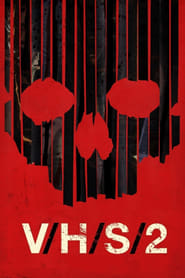
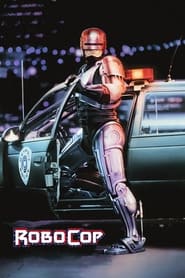
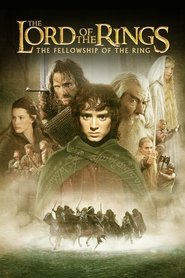
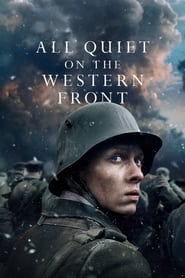
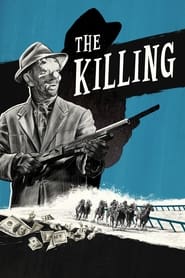

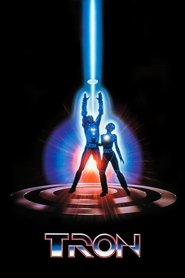
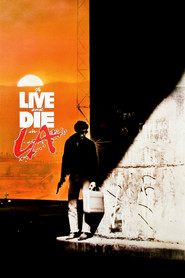
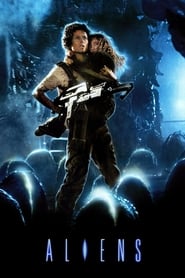

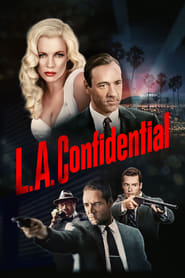
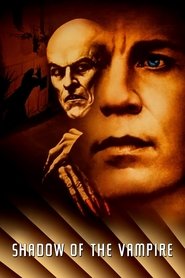
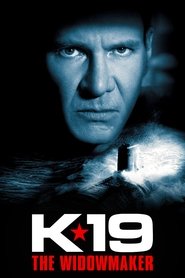
Related topics
Other topics that frequently come up in the same commentaries.