Topics / Production
Props
80 commentaries in the archive discuss this, with 172 total mentions and 67 sampled passages on this page.
Filter commentaries
Filter this topic by the film's decade or the type of commentary.
By decade
Across the archive
ranked by mentions · click any passage for the moment in the transcript
-
-
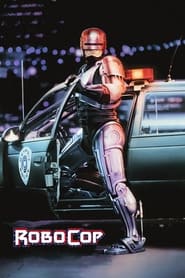
And so this is really about the kind of the buildup of the military industrial complex. And in fact, coming up here, we're going to have Dr. McNamara, who is based on Robert McNamara, the Secretary of Defense during Vietnam era. And ED-209 coming up here is based on kind of a Huey gunship idea, although obviously Phil Tippett and Craig Hayes, who designed it, actually made it work. This is still a big prop.
9:41 · jump to transcript →
-
So when it moves, it's a Phil Tippett miniature, but when it stands there, we just built it as a big robot that's... So from here on, it's Phil Tippett. Stop motion. Well, actually, Craig Hayes and Paula Lucchesi built the big prop, too, so... But this is pre-CGI. It's real-deal stop-motion, guys, just like King Kong. In front of a rear projection screen, a stop-motion miniature.
10:04 · jump to transcript →
-
We shot VistaVision plates for the rear projection. And now you're back to the giant prop, isn't it, here? I always loved that piece of art direction that William Sandell, the production designer, I guess, put in there with that kind of crow sculpture behind him. I always thought that was a really neat thing. So, Paul, how did you get involved with this picture?
10:36 · jump to transcript →
-
-
director · 1h 42m 8 mentions
Len Wiseman, Patrick Tatopoulos, Brad Martin, Nicolas de Toth
-
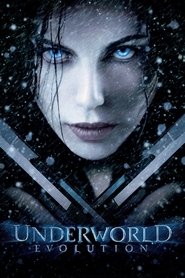
Now, I really did like the way the set looks. That's cool. That's footage from the first movie. Like the names on the monitors, they're all names of people who worked on the crew. Len picked them. Notice that Nate Robinson, who did those shots, gave himself the absolute longest shot with his name on it. You'll see there's the one that's like... Well, I used to do that. I was a prop guy for quite a while, and so it was my job to...
18:45 · jump to transcript →
-
Never get squared. You always have to work out the budget thing. This way, a lot of conversation about how gory to go with this. I like the idea of the whole design behind this and having it inside the rib cage. You got to just show it to see it. Who made that piece? This? I don't remember. The prop guys were doing the middle piece. Because that looks great.
21:50 · jump to transcript →
-
this is and this is practical this is practical yeah this is actually with with a stunt player um being suspended by a crane that's actually attached to the back of this of the stake bed of the truck props out to my boy joel wist yeah the man yeah that was i was we we actually we use that rig quite a bit and it makes the sequence it really does joel did a fantastic job with that because the guy could just right right here flying right alongside the truck
32:19 · jump to transcript →
-
-
-
Paul M. Sammon
These nuke containers are very funny. Actually, what they really were were 1980s versions of contact lens fluid holders. And they were converted by the prop department and then just filled with little plastic tubes filled with colored water. But they were actually off-the-shelf contact lens holders. That...
2:08 · jump to transcript →
-
Paul M. Sammon
like a portable stereo, but it converted it into a nine millimeter automatic weapon, and it is a real weapon. That was not a prop. Okay, and now we have the fight, the obligatory fight, which incidentally, again, I find a little bit of fault with. I think the choreography of it is just a bit weak. Normally, you know, fight scenes are fight scenes, but I just, this one is a little...
29:55 · jump to transcript →
-
Paul M. Sammon
And, of course, all of the machinery we're seeing here is, at that time, state-of-the-art. Now, this is a prop, and it's an interesting one because anyone who has seen aliens will remember the facehuggers that were in the glass containers. I can't help but to think that this was something that was influenced by that. However, this was done by Rob Oteen's crew.
1:12:04 · jump to transcript →
-
-
-
Oh, he's gonna die. You're gonna get it. I'm gonna suck the water out of you. These were some great props that we had designed and built that came both from Catherine and Simon Murton and Jamie and Teddy's imagination.
10:14 · jump to transcript →
-
and all of Jamie's design props. That little kangaroo. I'm like, that's a real bear. Ew. And you have to remember that when we made this, it was...
12:47 · jump to transcript →
-
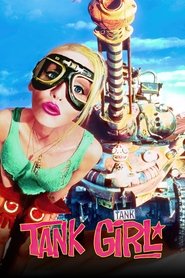
There's a guy in Pennsylvania who bought all the props that were available. And he has like a museum of... He bought the flyer. He couldn't buy the tank because they stripped the tank down. But he bought the flyer. He bought basically all the props that weren't either stolen or Catherine doesn't have or Ari doesn't have or I don't have because I still have a few things. And he has this massive museum of...
30:08 · jump to transcript →
-
-
-
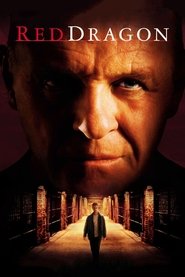
And I'm Ted Tally, the screenwriter of this motion picture. Thanks for watching our DVD. I got a call from my agent who said Stacey Snider wanted to send me a script. Stacey called me directly. Stacey is the chairman of Universal for those of you who don't know. It said Red Dragon, and I said, "Red Dragon. Is this "the prequel to Silence of the Lambs?" I was familiar with the book but hadn't read it. At first, I was very insecure and said, "Am I like the 'Go-to' guy on sequels? "Why is she sending this to me? 'Cause no one can mess this one up?" And then, I saw Ted's name on it and said, "This is the guy who wrote Silence of the Lambs, "but didn't write Hannibal. "So, this must be special. "Why are they sending this to me? I'm not a dark guy. "I don't make dark movies. I do comedy." -/ think they sent it because you're cheap. - Exactly. So I read it, and I was completely blown away. Not to blow any smoke up anybody's butt in my presence, but the truth is the script was amazing. I called up Stacey and I said, "I want to do this." She said, "Now you get to meet Dino De Laurentiis." And I said, "Dino De Laurentiis "of Fellini fame?" - Scary thought! So I went to his house and first thing he says to me is, "Why do they like you? Who are you? "I never heard of you. What is Family Man, Rush Hour? I don't know these movies." I said, "Dino, I'm a talented guy. Trust me." And thank God, Ted had seen Family Man and Rush Hour, and his kids or someone in his family was a fan. Brett might not have been an obvious choice but Brett is an incredibly talented director and clearly ready to try something new that he'd never done before. He is a great fan of Hitchcock and of thrillers, and brings a tremendous energy and confidence to his work. I was such a big fan of Silence of the Lambs. You know what I was excited about? Most people asked, "Weren't you scared "of following in those footsteps?" First of all, I had three brilliant directors Michael Mann, Jonathan Demme, and Ridley Scott, who made three movies in the exact genre, but completely different. I was excited about it because, by watching those films, I knew what not to do or what I didn't want to do. I was able to decide on the type of movie that I wanted to make. And it helped me choose the tone of the movie. I realized I wanted to make a movie more like Silence of the Lambs. More Hitchcock-inspired. A movie that scared you by what you didn't see more than what you did see. I've read that the most important single decision you make in directing a movie is tone. - Absolutely. Because it's the direction of the film. It helps you with every choice that you make as far as the wardrobe, the production design, the music. The tone, to me, is really everything. Dante calls it, "The language of the film." We have to integrate what we're seeing now, Kristi Zea's set design with its dark, rich color in Dante's cinematography. The choice is even of the props. The integration of all of that, the wardrobe. It's sort of overlooked by people and it should be something that doesn't call attention to itself. But when all of those elements are integrated... Look at this moment here. You get a much more powerful movie if nothing sticks out. If everything is consistent in tone. Special Agent Graham. What an unexpected pleasure. I'm sorry to bother you again... If you see on the left-hand side over there, a little detail, I found this book of Sigmund Freud's office in, was it Vienna? That's where I kind of modeled Hannibal's office. I modeled the tchotchkes, the details.
0:08 · jump to transcript →
-
I went to New York with Dino, and I was very nervous. This was Tony, Anthony Hopkins. The thing I did know and what I was confident about was the type of movie I wanted to make. Like I said, I went in there knowing the tone of the movie, my approach to the movie, how I wanted to not show any of the gore. I didn't want to make a horror film. I wanted to make a film that was psychological, emotional, and smart. That was what was on the page. And the only scene that Tony had a concern with when I sat with him was this scene right here. Tony was concerned that as originally written, his attack on Graham here was too graphic. By the way, it's an interpretation because 10 directors would direct a scene in 10 different ways and show various degrees of violence. It's about showing the details of the guts falling out of his stomach, or the blood, how much blood to show. And I chose to play it mostly on their faces. Once the attack happens... Here's my little homage to Silence. You see the... - I see the bug. You like that. So I chose to play the violence part of this scene on their faces. I love this book. This is an original. My prop guy, Brad, found this original book from France, Larousse... When I read it, I had no idea what the hell it was. It's the bible of cookbooks. - Yes, I learned that quickly. He found this real old French cookbook. There was a lot of dialogue about how do we sell his moment? It's really just a subliminal thing. It wasn't really supposed to be so pointed where it was like, "Oh, sweetbreads." I thought sweetbreads was brains but it's not. It's actually... Thyroid. -... thymus. I learned so much about anatomy on this film. If you work on a Lecter movie, you learn a lot about cooking. I thought Edward was fantastic. There is a tremendous intensity of performances in this movie. And really a dream cast as Brett already said. If you could have anybody in the world for these parts and be lucky enough to get them. It's pretty much what happened to us. Great actors want to play good characters. They want to play great characters and all of these characters, down to Freddy Lounds, and other smaller roles, were just written so well. They were interesting and dynamic. And these actors were interested in playing this. To convince these actors to do a third in the series, all that went out the window when they read the script. Certainly once they started working. There's our cold opening. I'm very proud of this title sequence because it was actually done two days before we had to lock picture. My editor, Mark Helfrich actually was the brainchild behind this because... You re-shot the journal here in a very interesting way. Initially, this was done in a much more straightforward way with the images very flat against the screen. Yes, a lot of times. Mark is kind of... Everybody on my team, from my AD to my production designer, are filmmakers. Mark is a filmmaker in his own right and he just understands the visuals and storytelling. I love how, you know... But this was written. - Yes, it was. But the way that the camera roams over these pages and when we go in very close and it gets grainy, the camera movement left to right, up and down, is all not scripted, of course. This is something I don't really have the patience for. Mark kind of took this book that he was fascinated by. I think he has a copy of it in his closet at home. He just knew every page, every frame and went with Dante and literally just shot. This is a wonderful opportunity. This kind of title sequence is sort of old-fashioned in a way. But it's a wonderful opportunity for a screenwriter to get information in quickly to cover a lot of ground between the arrest of Lecter and where we are when the movie is going to start. Covering a period of several years, you are doing that without any dialogue just by these images. It's a very useful shorthand. Danny did the same thing that Ted did with the script in this sequence that Mark did with the visuals in this sequence. Danny did the same thing with the music. I think the music here is so fantastic. It's very much like a Bernard Hermann score, which I knew was a big inspiration for Danny. Danny is a big fan of Bernard, and this was his chance. He's done darker scores, but they've had a kind of lightness, or comedic darkness to it. Danny did something here that kind of made people's skin crawl in the theater, like, "You're in for it. "If you're gonna sit through this movie, you'll experience some stuff. "Shit's gonna go down."
6:02 · jump to transcript →
-
So that sequence, those two minutes of the movie, which could have been a very boring, dull sequence. I had a long conversation with Kristi Zea. It was wonderful. She called me up and said, "This book of Dolarhyde's. "What does it look like? What's in it? "How is the handwriting? What kind of photograph?" We had a long conversation which for a screenwriter... You don't often get a call from the production designer to talk about a prop. It was a wonderful opportunity to be part of the design of the movie in that little section. You've got a beautiful setup here, Will. This was actually in the Florida Keys. You know why I'm here? Was it Marathon? Yeah, I can guess. The location is meant to be Marathon, Florida. Dino wanted us to shoot in North Carolina because he had studios there and a house on the beach or Malibu because it's close to his house in Beverly Hills. But the truth is, I wanted to stay true. When I said I chose the tone, I'd really chosen the tone of the book, going back to the book. Everybody here was honoring the book. We really gave a lot of respect to Thomas' book. Tom Harris is a wonderful writer. When you're doing an adaptation like this, it's a great resource to everybody to be able to pick up the book, as you can go into more details than the screenplay. It's a help to both the production design and the actors, who can go back and find out details of motivation. It's helpful to everybody to have that bible to refer to. So when it said Marathon, Florida, I tried to stay true to that and actually go to the location in Marathon, Florida. It just felt like it was the tone and even the location, like Grandma's house in the same description of the rural area where it was, and the type of house it was. It was an old-age home once, which is really back-story, but Kristi incorporated that into the design. I was so happy that she and Ted really stayed true to the tone of the book visually as well when it described the locations. This was so much fun being down here, by the way. It was the end of the shoot, and we were just down there on the beach. This was probably the hardest scene I shot with these two guys. In what way? Because it's exposition? Anything with exposition... -/s tough. It's tough to make it sound like real conversation. But honestly, there's not a line in this movie that I'm not proud of. I mean I can't say there's a line... It was a tight script. We did cut a few lines and a few parts from scenes but Brett and I actually worked quite a bit on the script before the production started, and we had it pretty tight. And the shooting stayed quite faithful to the script. I have to say that every scene was hard for me because I'm used to scenes with not much dialogue. I, unfortunately, am a very talky screenwriter. So it was a clash of cultures. Coming from being a playwright, I guess. There is a lot of dialogue in this movie, I tell you. And it was not a single-spaced script. It's a long script, and I kept saying, "Make them talk faster. "Don't cut the thing, just make them talk faster." Ted's advice to me was, "Brett, when you're happy, "ask the actors for a take where they talk double speed." And I did that. Probably that's all the takes that Mark ended up using in the editor's room. He kept calling me, saying, "This movie will be four hours long "If you do not get them to speak faster." The thing you run into as a screenwriter, even with the best actors, is that you try to pace a scene to fit within an act structure and fit within the entire screenplay. But then actors wanna take very long, dramatic pauses. Actors want to look down and up, across the room, at each other, and finally say the line. - A lot of pausing. And that's what you're up against when trying to time out the length of the scene or act. I wanna say something about these actors. Once I got Edward Norton, I used Edward to get another actor. Once I got Ralph Fiennes, I used him, I got Emily Watson. - You parlayed them into each other. I said, "Philip Seymour Hoffman, I'm getting Mary-Louise Parker." I knew each one, who they were a fan of. I used them against each other to get them in the movie. I literally thought I'd be able to walk onto the set, and it would be the easiest movie I'd ever made because I had these brilliant actors. I could just say, "Action." I read one article or something about this movie that said this was the most distinguished cast that's been assembled in any movie in the last 20 years. But the truth is, it was probably the hardest movie I'd ever made because the smarter the actor, the more experience they have. It's a myth that these great actors don't need direction. They want direction more than any other actor. They want direction, but they have ideas of their own because in the end, it's up to them. They are the ones whose face is filling that whole screen. And they have to absolutely believe what they are doing, or they can't convince an audience of it. What I'm trying to say is, there was a lot of dialogue going on. A lot of intellectual discussions. And each of these actors are not only smart actors, but they're highly intelligent, all smarter than myself and... A lot of them have also directed or even written as well. They all had an opinion. And my job, I felt like it was my job to save the script. This was a script that worked to me. We had a table reading of it. It was fantastic. And Ted was
11:13 · jump to transcript →
-
-
-
Barry Sonnenfeld
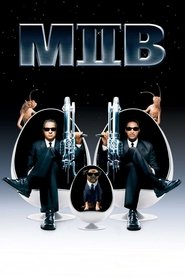
Right, then! Smoke 'em if you got 'em. Again, Bo just designed, along with Doug Harlocker, the prop guy... ...and Cheryl, the set dresser, just a wonderful bunch of dumb things. As high-tech as a deneuralyzer was at headquarters... ... that's how low-tech this thing was.
39:52 · jump to transcript →
-
Barry Sonnenfeld
Notice the little flying-saucer motif stuff? That's Cheryl. That's her ideas. She's brilliant. She puts all the little props and stuff on the set. The tables, the lights. We gotta figure out where it goes. - I know where. No. Not yet. - MiB code 773 clearly says... I
50:02 · jump to transcript →
-
Barry Sonnenfeld
You'll discover why Jarra has this long coat in about 10 minutes. I'll give you whatever you want. We were running out of money and needed one more alien. On the set, I said to Doug Harlocker, the prop guy: "How hard would it be to make this trash can get pulled invisibly?" Which he did. There's a little wire we had removed... ...but basically, that became Gatbot.
56:00 · jump to transcript →
-
-
-
Jim Piddock
Well, apparently simple, I should have said, because here in a minute... Well, let's first just have a look at the props, all present and accounted for. Silly to have them in the purse if we're not going to take them out and display them every now and again. Quite a wide lens they're using there, isn't it? Not so flattering on the ladies. Well, this is a little bit better. Just off centre there. Oh, and here we...
22:29 · jump to transcript →
-
Jim Piddock
Seems to have entered a house that obviously doesn't belong to him. I'm thinking as I watch that this is not a man to be trusted, whether or not he has Slavic roots. The acting's so strong here, isn't it? The face, so strong. But this is evidently a man without a change of clothes. And once again we're being offered a display of all the props. The gun, which we've seen before. Always a smoking or
34:19 · jump to transcript →
-
Jim Piddock
It's our imagination. How strongly cued, though. I mean, how marvellously suggested. And under the fish, of course, the cigarette lighter, which the studio would have us believe is engraved Lauren, when in fact it says Todor. Now, sadly, no way to tell. And on this fact, the whole story hinges, as we shall come to see. So now we have a bit more fussing about with props. These, um...
41:26 · jump to transcript →
-
-
-
ostensibly was playing the song we'd written called rock and roll nightmare and the last shot or one of the last shots in the in the piece was we're on the floor cameras over our heads were doing like June Taylor dancers stuff with our legs as part of the finale of the song and they're supposed to be smoke billowing around us but the prop guy the hot oil which is supposed to generate smoke instead was as we're lying on the floor just generating droplets of hot oil on our faces and we had a choice between killing the prop man or
3:05 · jump to transcript →
-
talking to amuse ourselves while he worked out this problem and we started talking as these guys that later on fed our desire to do more with these people. Not the prop guy, but the characters. If the prop guy fed your desire, Harry, we have to talk. Anybody remember where this is? Pasadena? Is it the Pasadena Club? Perkins Palace. Perkins Palace, I think you're right.
3:34 · jump to transcript →
-
Angelica Huston. She wasn't a known actress at the time. She was a known daughter. And girlfriend. And girlfriend. This is also the Bonaventure Hotel, I believe. We had a problem with this prop, didn't we? No, this was good. Oh, okay. This was the embassy, I believe. We did a stonehenge that was too large for the room. At the Albert Hall. We went the other way. And you see this prop being just... Trying to jam it through the door. Trying to jam it through the door. It can't even get in the building.
54:04 · jump to transcript →
-
-
-
Props department doing a brilliant job.
26:24 · jump to transcript →
-
hole. So that's why we keep such good track of that key and the two books and all the other really important props. And then in post-production we realize the audience doesn't really care. Right, exactly. In post-production then we blow huge holes in the movie just to make it faster. So all those things that you think are story holes, those were all taken care of in the script and were all photographed but just unceremoniously ripped out of the picture.
48:13 · jump to transcript →
-
It was funny, this prop, this big stone prop, it used to be a small stone tablet. We suddenly realized right a couple days before we got to this location, we said, well, if it was a little stone tablet, and you've got a thousand guys pounding on the door trying to get in, wouldn't they just lift it up and run out to their car? And so we quickly made it into a big, huge stone tablet so they couldn't pick it up and run with it. She had to translate it right here and now.
1:24:01 · jump to transcript →
-
-
-
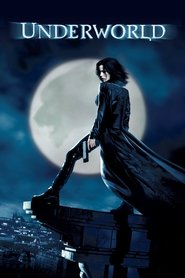
There was discussion about adding a scene where... ...Kate's in front of a mirror with just a razor blade... -... just shaving her head. - Wow. The hair was becoming a problem. - That'd be cool. I think it'd be good, do the Sigourney Weaver... SO people can say you're ripping off Alien as well Matrix. That'd be great. - Brilliant. Do people say that? - Yeah. Oh, far too many, because it's a black suit. You know, what are we gonna put a vampire in, like, fuchsia? You know what? - Number two.... It'll all be pastels. Look, I warned her. I warned her, but she didn't listen. I should've told you sooner. - Told me what? Her human, Michael... ...he's not a human at all. He's Canadian. - I'm Canadian. What? Canadian? - No, not another Canadian! Jesus! - Get them out of the industry. Stunned. They'll kill you. That was the one I was terrified was gonna be in the preview. Was it ever in the preview? - The, "Who are you people?" Yeah. And it was. We knew it was. There's certain lines, when you're shooting, you know... ... they're gonna be used in the trailer. I Knew that when Kate was saying, "The war between Vampires and Lycans." That's right. And that was. - Yep. This looks complicated. This was a nightmare. - Walking with those things. Walking, there's guys on top that are.... The prop guys are trying to move that thing around on top to mimic him. He was so great. - He was so cool, man. Yeah, he was. - He was such a cool guy. Is. I guess he had the toughest makeup, right? He had six hours every morning. Leave us. But he was great. He was like the visiting rock star. He's so cool, man. We love you, Bill. - Bill, we love you. I wanted him to come to the premiere, but he didn't come. We wanted him to sleep over, and he wasn't interested. I was interested either. Werewolves. There we go, right in the trailer. I'm glad we did those flashes. It's always really difficult to have that scene where it's... "These are aliens," or "These are"-- - It's a tough scene. It's tough for the normal person. So you just kept that bewildered look... ...and I threw in some inserts there and really helped you out. Thanks, man. - You're welcome.
53:17 · jump to transcript →
-
Oh, and you weren't here for this whole... Were you very glad, because the other babe was there? Yeah. That helped take some of the pressure off... ...but the-- Well, actually, this whole costume, we had a "wardrobe flaw"... Her whole boob escaping. - ...aS Janet Jackson would say. Poor you. Poor baby. - I rushed in as soon as I heard. Yeah, you're really good like that. How have you done that? That's CG, right? That's CG, which I don't think you've even seen yet. We shot that practically, and it just looked horrendous. It looked like three blind mice kind of popping up. And this was all a reshoot that we did. - Oh, really? Yeah, this was all back in L.A. We had a good time. It was just blood and guts. That's me throwing the paint across the window. Oh, is that you? - Yeah. Can you do a bit, like, when my coat flaps around, you're flapping it? That's the prop guy. - Very hands on. Yeah. What were you thinking right here? - "Is it nearly lunchtime? Should I buff my bottom? Am I gonna worry about my camel toe?" Remember how many people were on camel-toe watch because of that suit? No, it became "CT." I would just yell out, "CT," and, "Okay!" There were four people who made it their mission. This is new. This is a new shot here that's just showing Speedman... ...dreaming about the Olsen twins. And so we had some flashes that were supposed to happen right there. This is in the original. Coming up, there's a section where Viktor takes out some of the implants... ...and you see him unhooking himself from that stuff... ... that we had cut out of the original. This isn't it, right? - Yeah, this is. These shots, though.... These, I did all those in post. None of those shots... We didn't take any of the lights down. lt was something we did as an afterthought... ...and just darkened it to make it look like all the lights went down. It actually worked okay. I was worried I wouldn't catch it. I didn't have my glasses on. I couldn't find the takes to put on the outtake reel, but... There weren't that many, because I'd been practising like crazy. Oh, it didn't show. - Oh, really? Look at that. Yeah, look at that. Look at that now. - I was so proud of that. lf someone throws something at me, I tend to duck and wince. The amount of windowpanes we had to replace in the background.
1:14:38 · jump to transcript →
-
So this is new as well. And I kind of abandoned this scene... ...early on, and I put it in now just to show that... ... he does unhook himself and gets out... ...and so it kind of makes a bit more sense. But.... He hasn't gone Hollywood. He doesn't have an assistant. That's why it's not in, right? Doesn't have somebody to help him out. I would've actually shot it a bit different. I had different little props at the....
1:18:03 · jump to transcript →
-
-
director · 2h 43m 4 mentions
Mission Impossible Dead Reckoning Part One (2023)
Christopher McQuarrie, Eddie Hamilton
-
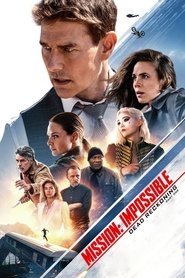
We're introducing the characters and we're also taking into account that people don't absorb the very important information. There's so much going on visually. There's so many things happening in the scene that if you're perceiving repetition, it's because you're way ahead on the bell curve. And here's another example of one of your wides, which hinges around an object so that you get like common geography, but it's always based around an important prop or object.
30:49 · jump to transcript →
-
But I love how these characters play. I love the air we left in this scene. And here's a move motivated by? By this prop in the foreground. It's motivated by a prop, but it's also motivated by a turn. Oh, a turn emotionally. She has just made a choice. Exactly. And these movies are obviously, these two chapters are about choice and acceptance. In that moment, she's made a choice and her life has changed. She's simply not aware of it. Yeah.
37:57 · jump to transcript →
-
Eric Jenderson's choice of the Zippo, that was his. So good. When they presented me with the possible props that could be a Geiger counter, he looked at it first and said, slip a Zippo in there. And without my knowing it, when I walked up to the table, of course, it's right where my eye went. It was a great choice on Eric's part. All of this stuff with being around... I will say that the amount of CCTV footage that you shot, like every single setup, they had four little tiny cameras filming.
38:24 · jump to transcript →
-
-
-
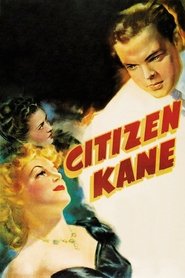
John Berry, who actually worked on Native Son and was part of the Mercury team, he had wonderful stories about working for Welles. He was someone who basically was holding up props when they were shooting that film for one of the stage plays.
1:19:07 · jump to transcript →
-
It's worth pointing out in terms of Welles' own biography that Welles himself was a musician and his mother was a musician who entertained other musicians. Yes, and he knew a lot about the Chicago Opera. In fact, I think his first theatrical appearance was as a baby in the Chicago Opera, a prop almost. My understanding is that he was quite talented as a musician, as a young man.
1:26:57 · jump to transcript →
-
11.30. New York? This is a good instance of the way the film appears to be very elaborate and expensive and isn't really. Part of this is just a soundstage with a few key props, that wonderful fireplace. There's always a joke about it where Kane goes and stands in it. You know, our home is here, like that's home.
1:38:55 · jump to transcript →
-
-
-
Tim Lucas
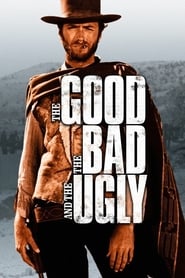
It's in moments like this that Leone's masterful eye for detail and stage props comes to the fore. When Tuco asks for ammunition, Leone begins to tease us. He lets us imagine we know where this scene is headed. We don't, but that's all part of the fun, having Leone engage us in a bit of cat and mouse. Leone loved leading people around by the nose. The actors who worked with him remember that he always invited them aboard his various projects by relating their stories.
34:56 · jump to transcript →
-
Tim Lucas
Leone does not tip his hand with this shot. This seashell compact turns out to be one of the film's most important props. He could have chosen to show us the cushioned inlay embroidered with the name Bill Carson, but that would be revealing everything much too soon. Instead, he introduces the character who turns out to be Bill Carson, which adds a bit more to the running time and makes the whole a somewhat grander proposition.
58:13 · jump to transcript →
-
Tim Lucas
and that he died wearing his Once Upon a Time in the West costume. He had only one shot that remained to be filmed, but evidently he couldn't wait. Sergio Leone never forgave him. He reportedly stepped over Mulock's dead body, telling the wardrobe man to take off his costume, which was then handed to a stand-in who took his place in that last shot, viewed only from behind. There is some masterly interplay with props here on the part of Mr. Wallach.
1:46:19 · jump to transcript →
-
-
-
Roger Moore
The idea that I would be passing... That I would be getting into a gondola at that point... ...and be going down this particular canal... ...and the funeral... ... the hearse, the floating hearse, would come by.... Well, it is Bond. And it is ridiculous. Actually, when we were setting it up... ...and they had one area in front of the church where all the flowers were... ...and Props were busy picking up flowers, and a priest came up... ...and went absolutely berserk because he was taking real... The Props were taking a real funeral's flowers.
38:05 · jump to transcript →
-
Roger Moore
Now, this sequence... ...I was called for 8:30 in the morning and this was the back... This was before the La Fenice theater burnt down... ...and this was shooting just across from the back of the theater. In fact, that's the stage door over behind us. And... ...I was ready at 8:30, and came on the set, and we were all standing there... ...ready to go, and there were adjustments being made... ...and, you know, I have a cup of coffee and this went on. And I finally said, "Lewis, why can't we get on with this? You know, we must do this shot." And he said, "Well, it's a little embarrassing." You see, it was the time of the high tide of the equinox... ...and the boat that had all the props on it... ... had been tied up with the tide very high... ...and then when the tide started to drop, one of those numerous poles... ... that are in the water in Venice was underneath the boat. And as the tide went down... ...the pole came up through the bottom of the boat. Then the boat went up again and the water rushed in... ...and the prop boat sank. And on the prop boat, apart from all my wonderful Ferragamo luggage... ... that I was looking forward to stealing... ...Was a prop that was essential in this scene. ...Was a prop that was essential in this scene. And they had to get somebody to dive down and find it. Now, this shot of the Concorde landing... ... has a bit of a story for me. We had been ready to leave Paris to come to Rio... ...to shoot our sequences there. And Lewis Gilbert and Ken Adam and Letizia... ...and my then wife, Luisa, we were... ...at Charles de Gaulle Airport in Paris, all ready to leave. We got on to the Concorde, and then they said there was a slight problem... ...and we would have to disembark and wait in the lounge. They then said, well, there'd be a little time... ...so we could go into any one of the five restaurants in the terminal... ...and have lunch. So off we went. We had something. I wasn't feeling that good, and I sort of just picked at something. And then before we finished, I said, "Lewis, I really don't feel good at all. Would you come with me to the pharmacy? I think I'm beginning to have a Renal colic." Meaning that-- Something that had happened to me... ...before with kidney stones. And they're extremely painful when they start on the move. And really pethidine or morphine... ... is necessary to stop you falling on the floor... ...with your knees underneath your chin and start screaming. So I went to the pharmacy in the airport, and they said: "No, I'm afraid we can't." And I said... They could tell that I was very ill and in great pain. But they did suggest that there was a doctor in the airport. You know, a surgery. So I went to see him. He took one look at me... ...and pulled a syringe out and started drawing off painkiller. Lewis never liked needles... ...and started shuffling sideways... ...With the "Lewis Gilbert shuffle," I call it. And he said, "Well, I think I'd better tell the others what is going on." And that was the last I saw of Lewis.
54:35 · jump to transcript →
-
Roger Moore
And he said, while in between takes one day: "You know, my mother likes you." I said, "Well, that's really nice." This fellow. He said, "My mother likes you." I said, "Well..." You know, I tried to be... Because a lot of people told me their mothers and grandmothers liked me... ...and their aunts and.... I said, "Why, thank you. That's very nice of you." He said, "She'd like you to have dinner one night." And I-- "Oh, dear." And the next day he said, "I don't think you know who my mother is. It's Michele Morgan." Wonderful, wonderful, beautiful, beauteous French actress. And I did have dinner with her. Most beautiful eyes. Colonel Scott is the character he played. His name is Michael Marshall. Father was George Marshall, a very well-known director. I think when we were shooting one of these sequences up the corridor... ...our prop man got dressed up as a creature from space... ...with antennae on his head, and came up outside the window. I think there's an outtake of it somewhere. In fact, in the documentary... ...that accompanies this DVD, there is that outtake.
1:43:43 · jump to transcript →
-
-
-
Tim Lucas
I was told the reason at the time, but I can't remember now if it was claustrophobia or something about the weight of the prop putting too much pressure on an old neck injury, but he wanted no part of it, so David Cronenberg sat in for him in the shop with the camera pulling away for Max on the chair.
52:41 · jump to transcript →
-
Tim Lucas
I think that even... These shots of James Woods approaching the stage were shot in December. The reverse angle of Les Carlson recognizing and backing away and getting shot were filmed in March on the stage rebuilt inside the Bathurst location. Then, in an elaborate effect supervised by Steve Johnson, cables were run through the holes in the stage to a prop head articulated with push-pull cables...
1:19:52 · jump to transcript →
-
Tim Lucas
Costume designer Delphine White, who I remember removing her pullover sweater to reveal a t-shirt that said, Courage, my love. Video effects team Michael Lennick and Lee Wilson. Gaffer Jock Brandes, who held the coveted eye-popping syringe. Wardrobe master Arthur Rowsell. Set dresser Angelo Stea. Prop master Peter Lauterman. And me. I was the stiff's upper lip. Four Paniflex cameras were trained on the effect.
1:20:41 · jump to transcript →
-
-
-
And you broke one of those at least. I remember killing any dogs. I didn't kill any dogs. Not in this one. But still, when you're watching a movie as you're a 12-year-old kid, kids were a safe space. And between the blob and Maximum Overdrive, killing kids off. Here it goes sometime. Oh, it's great. That was terrifying. So having that representation and setting those kids up back then was a perfect way to pull the rug out from under you. Can we just give props to Kevin Dillon for a second?
19:46 · jump to transcript →
-
We can give props to him all day long. He did a fantastic job. He was perfect casting. Was he offer only or did he come in and read? Oh, gosh, I don't remember. I think he did read for me. I don't remember. Was there something about... Because I don't remember him... He's truly not the typical even anti-hero. No. He was legitimately reminding me of a kid in my high school who was always in trouble. Very much so. So between him and Shawnee being such a great cheerleader type and Donovan being the classic...
20:14 · jump to transcript →
-
So it was a warehouse, but it was all right. So watch this now, folks. This is just so interesting. I have to narrate this a little bit. So full scale set. Right. But when Jeffrey DeMunn and one of Tony's better moments with the makeup prop effects comes floating up, it's well set up in that you want these two to get together, but not this way. We anticipated. She's trying to call the guy to save her. And he ends up as blob bait on her phone booth. Then Eric Allard.
44:43 · jump to transcript →
-
-
-
Alexander Payne
This card was produced by Jeff O'Brien, the prop master, who was also the prop master on Citizen Ruth. Tracy's mom very much has a great sense of humor and one that goes well with these two films, with Citizen Ruth and Election. I want to say, too, that...
13:27 · jump to transcript →
-
Alexander Payne
I used many, many, many of the same people between Citizen Ruth and Election. The production designer, Jane Stewart, and the DP, Jim Glennon, and the editor, Kevin Tent, and the composer, Rolf Kent, and even the same assistant cameraman, and the same prop master, and a lot of the same grips and electricians, and Omaha crew people, a lot of the same actors. In a way, Citizen Ruth was something of a dry run for Election.
13:48 · jump to transcript →
-
Alexander Payne
choreography, not a complete circle, but again, trying always to associate Jim with circles and a guy who's going around in circles. Circles on his pajamas too. This is the actual basement of that house where we were shooting and this is all their crap, actually. All we did was remove some of it so we could get a camera and our props in there and our furniture, but their basement really has this wonderful
19:26 · jump to transcript →
-
-
director · 2h 10m 3 mentions
Richard Curtis, Hugh Grant, Bill Nighy, Thomas Sangster
-
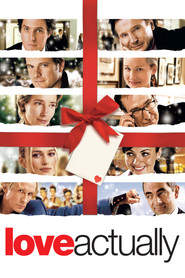
All right. Yes, I'm very busy and important. How can I help you? Don't laugh. That line was improvised. That's the first time you guys have laughed. -/ didn't write that line. - No, it's not the first time we've laughed. It's Hugh's line. - You're just oversensitive. You used to know that Em was Hugh's sister earlier in the film and you used to know that Alan and Emma were married earlier in the film. This is better though. - Clever, much cleverer. The idea was that you should be thinking about the Heike-Alan story, "A fun story, funny, let's see what happens." And then you suddenly realize the flip side of it's not so good. I've always wanted a shot like that where one side of your face is dark and the other side is moody. I can't begin to tell you how critical Emma was of these two dolls. And she said, "I can't lift these up "because they're clearly just Ken dressed up." And I'd told the prop department, "Just dress up Ken." And it's a brilliant idea.
44:16 · jump to transcript →
-
In your head as the writer, who do you think she really prefers? Her husband or this bloke, now? No, she's got no time at all. I mean, she likes this guy as a friend. But when she runs out later and kisses him. - That's just being nice. That's my favorite bit of acting. - Well, that's interesting. That wasn't my reading. I thought, "Dirty bitch, she wants them both." Keira looks like to me like a girl who's done that, who's just found a way of being kind to men like Bill who, you know, want more to do with her than that. - But she kisses him on the lips. I never kiss anyone anywhere else except the lips. God. I think Andrew cannot believe this was the take we used. This was like a joke take. I couldn't believe he was gonna go for it the third time. No! Yep, he's done it. Good heavens. - More times than... He Zips... This is the fantastic Dido. She sent us her new aloum and there was one so beautiful, sort of hidden track on it that we wanted to put in the movie. But it's weird how a movie will demand its own songs and you cant just put stuff you adore on it. There was a song by Ron Sexsmith, Gold in Them Hills, I just spent days trying to fit into the film. Just couldn't. Wow. - That's great. He's doing a very good job of walking. Bill, do you find walking very difficult on camera? -/ do. Yeah. - Particularly if you haven't got a prop? Something to do with your hands? - Yeah. Well, that's why he did that thing of scraping along the wall. Yeah, I could see all the tricks. Hands in pockets. She had a little problem there, walking across the room. Colin's a very good walker. Yeah. She was so good. She didn't make a single mistake. Sweet girl. - Attractive, too.
55:33 · jump to transcript →
-
That's a heck of a mustache. Do you know, that's not a prop mustache? That's fantastic. We paid him 100 quid for the night's work. And the mustache 250 quid. I love this. She looks so fantastic in this scene. This is a restaurant in Marseilles. - Poor Colin. Poor Colin, did you say? Acted off the screen? Just sort of outshone. You can see him trying his little heart out here. Come on, Col. He learned Portuguese and everything. It wasn't my idea, this. You've even had to cut away from him to these people. This Romeo and Juliet thing was the luck of the find of the place, that we found a place with two levels. I hadn't written this.
2:03:14 · jump to transcript →
-
-
-
Coogan handles it again. Yeah, he really does. Man, he was all over him with the prop test and when he's got to get this up. Yeah, he had a lot of stuff. You shouldn't have to be, man. He knows it's all got to time out. Yeah, no, he had to. He was just so spun at that point he couldn't hit his ass with both hands. No, he didn't. You broke him down. You broke that motherfucker down. He's one of the best actors I've ever experienced, worked with. That's seen a lot, Ben. Yeah. That's true. You worked with Robert De Niro. Yeah, Robert De Niro, Robert De Noni.
25:11 · jump to transcript →
-
You know, he had his monologue, and he just had to do this monologue a lot, and he really brought so much to it. And he's such a good classical actor, too. He's got that, you know, he was really creating a real guy here. And I love that the whole movie's sort of about his character up until this point. He had a lot to deal with. A lot of bags, a lot of props, a lot of maps and things. I just love how cocky he is right now. He's going a little crazy. Look at that. Look at Ben glaring at him.
25:41 · jump to transcript →
-
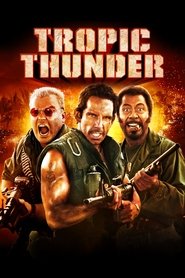
Thunder chips. Did Jay Baruchel get a nomination for supporting actor in Million Dollar Baby? I don't believe so. And there you go eating the bat. Why the hell, man? That was a crazy old prop. Now, why do you throw it twice? I like that you throw it twice. Oh, because I wanted it to really go far. And I didn't...
41:18 · jump to transcript →
-
-
-
Francis Ford Coppola
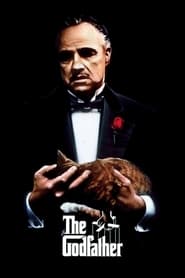
and shoot this supposed screen test, which was, in Marlon's mind, a little makeup test. I said, let's just go, and no one talk ever. We'll just kind of make gestures. And we got to his house very early, and we set up our little lights. And I had brought a bunch of provolone cheese and little Italian cigars and little, like, props, and just to kind of put around. So I set up, and we were very quiet.
1:35:21 · jump to transcript →
-
Francis Ford Coppola
He walked out, and he put on a jacket, and he started mumbling, you know. Remember, he went through great effort to bend the tip of his collar, and he said, so, like, oh, does Italian guys always have the collar bent like that? And he picked up a cigar, and he started to gesture with it and use it as a prop, and he nibbled on a little bit of provolone cheese, and he just started to gesture, and he rolled up the ponytail, and he kind of pinned it up, and he...
1:36:10 · jump to transcript →
-
-
-
Francis Ford Coppola
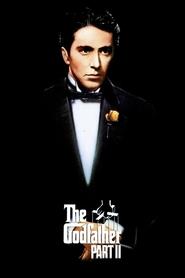
This is the solid gold IT&T telephone. I still have that prop. Come to Niebaum-Coppola Winery and see it there, along with the Godfather's desk.
1:19:31 · jump to transcript →
-
Francis Ford Coppola
I love the way this actor, Fanucci, Gastone Moschin, stirred the coffee and the way he works with props. Everything is so precise. The difference between Italian actors, really from Italy, and American actors, Italian actors come with it all worked out. They have this whole thing they invent and they do it
1:57:52 · jump to transcript →
-
-
multi · 1h 43m 2 mentions
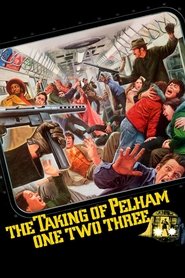
The Taking of Pelham One Two Three (1974)
Nathaniel Thompson, Steve Mitchell
-
The dressing of these sets. Now, that's not actually not a set because that's a real train going by, but that's probably shot in Brooklyn in and around, you know, what is now known as the Transit Museum. But again, all of the textures, all of the props, even the wardrobe, everything seems old and used, which...
20:28 · jump to transcript →
-
I guess when they were rehearsing the scene beforehand, I guess Shaw accidentally banged his toe, kind of stubbed it, and the spark shot out of it. Apparently it just scared the crap out of him. So it's funny to imagine Robert Shaw being terrified by one of his props is an amusing idea. But yeah, apparently he didn't realize exactly what that shoe was going to do. Oh, sure. Yeah, but it's still a funny story. This got a huge laugh. And then...
1:35:49 · jump to transcript →
-
-
-
Terrific shooting, colonel. It was beautiful. Beautiful, was it? Goddamn it! I had another stoppage. Interesting that... This is in the early days of Steadicam, which was being used a lot. But John Alonzo felt that he could operate hand-held... ...better than any Steadicam. And so what we're watching here, for the next several minutes... ...is all completely hand-held by John Alonzo, out in the desert. It no more looks like hand-held than something on a dolly... ...but he always felt that he had a flexibility to it... ...and he was able to manoeuvre quickly. So I would just turn him loose on these scenes. Stage the scene and say, "John, you shoot it." And he would go along and shoot the scene beautifully... ...get all the coverage. I almost could've gone home or taken a nap... ...while he was doing this. John said he was built for hand-held. Because he was not very tall... ...and he said his centre of gravity is low to the ground. And a taller person has real trouble staying as steady and stable... ...as he could do. But this is-- It's just wonderful, as I'm watching here... ...how steady the hand-held is and how manoeuvrable it is. We're on a rough desert floor... ...and no special kind of plywood floor laid down for him... Twelve sharp. On a hard surface, he had his little apple-box dolly too... ...that he would scoot around like a monkey with. Yes, apple boxes are kind of hard wooden boxes... ...that we'll use on a movie set for all kinds of things: For people to sit up higher or prop something up. And they're used all the time. And John attached casters to an apple box... ...and he would sit-- if it was on a concrete floor or a hard surface... ...he would sit on what he called his "silly dolly"... ...and push himself around with his feet. And it was another kind of wonderful operating trick that he had.
35:07 · jump to transcript →
-
This helicopter, as you've seen-- I mean, it actually flew. And we had two of them as backup in case one was not working... ...because with movie props, you have to always be prepared... ...for them to break down. Things are happening all the time to them... ...and they're not coming from Toyota or Honda or General Motors... ...with 100,000-mile guarantees on them. They're fantasy things... ...so our job is to try to make them look real.
48:17 · jump to transcript →
-
-
director · 1h 29m 2 mentions
Jeff Kanew, Robert Carradine, Timothy Busfield, Curtis Armstrong
-
This was our first moment on camera, right? I mean, for the rest of us. Yeah. I remember the, thank God, the prop, Art Lipschultz, the prop guy, got me that luggage cart. And we got it in about seven minutes before we went. And I said, wait a minute. What if I bring my, what if I have a rack, a clothing rack? Can I bring that out? You will be provided with the best possible food, shelter, and accommodations. Ted McGinley.
13:38 · jump to transcript →
-
Look at that, production value. We had a scene that became a black and white still, and we didn't use any computer graphics for that. We actually had a still and shot the two scenes on two separate days so that we could do that. I'm impressed. I requested the Beatle poster. You did? Yes. Remember they did that when we were setting up the Nerd House? Art came to us, the prop guy came to us and said, you know, whatever you want, what do you want?
56:33 · jump to transcript →
-


Related topics
Other topics that frequently come up in the same commentaries.