Topics / Production
Location & scouting
131 commentaries in the archive discuss this, with 816 total mentions and 59 sampled passages on this page.
Filter commentaries
Filter this topic by the film's decade or the type of commentary.
Showing 22 of 131 commentaries
Clear filtersBy decade
Across the archive
ranked by mentions · click any passage for the moment in the transcript
-
-
Tony Scott
The weather was warm, actually. The day we arrived, we did our location scout. The weather was unusually mild for January. And anyhow, we did our location scout, selected locations, and the night before we started shooting, it started to snow. And as we went into dark, it started to snow heavy. I thought, oh, this is going to screw us up. But I woke up the next morning in the dark and looked out and could see the...
4:23 · jump to transcript →
-
Tony Scott
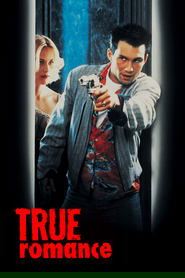
in Santa Monica, and you don't see that much of it, but the little bits that you do, it serves the scene well. You know, in the end, you know, 90% of the scene is about, you know, a two-shot and two singles, yeah? So what you're doing, you're really looking for a situation in which you can light your actors and service their performance rather than, you know, them servicing the look of a location or a set. In the end, this particular scene...
9:07 · jump to transcript →
-
Tony Scott
outside Christian's apartment, and let's play the scene on the catwalk underneath the billboard, and I think it just again gave it just a fresh twist. This scene was a particularly tough scene because it was night shooting in, I think, in February in L.A., and it's not as cold as Detroit, but it's still pretty cold, and night shoots are miserable anyhow, and it was a tough emotional scene for Patricia to get into. You know, she... I wanted her to peek here. This is one of her...
14:54 · jump to transcript →
-
-
-
Yeah, and the stunt here is interesting because the stunt coordinator, whose name is Charles Petroni, and this was the first time anyone had used this kind of technology, this repeller technology to come out of a helicopter. And Ken Bates actually won an Academy Award for using this. And the building we scouted in downtown LA was an old school, I believe. And it was the first time
1:48 · jump to transcript →
-
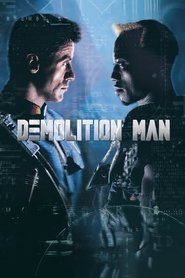
uh the film kind of chronologically and then we moved into stats so this was all on location and uh yeah i was there on on top of a building nearby watching waiting for the explosion wesley snipes was there his posse was there it was it was a long wait but it was worth it i can still remember have a sense memory of the heat the heat against my face it was a real explosion yeah i was too close i think i had 13
2:44 · jump to transcript →
-
a film actor at the time. And here, this is Rob Schneider, who I cast from Saturday Night Live. And this is one of the few actual practical locations in the film. So we found a kind of office campus in San Diego where we shot the police headquarters and built in a lot of the technology. I love the use of character actors delivering very silly dialogue, but they make it seem real.
14:37 · jump to transcript →
-
-
-
Paul M. Sammon
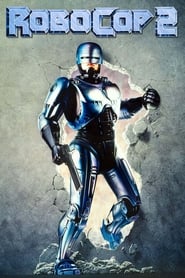
Those are the contribution of one of the special effects guys on this film named Peter Curran. And basically those are hand-drawn acetate plates with India ink that were composited over the footage and then degraded. People always wonder, why is Robocop purple? I asked the same question when I first came down on location. I was in location on this film for at least nine months down in Houston with a wonderful crew.
7:45 · jump to transcript →
-
Paul M. Sammon
and a fake arm. And here we go into the new facility. This was an actual location. A lot of places in Houston we used real places. There was a studio, Houston Studios, where we built sets. But this was a, if I recall, it was an abandoned chemical plant. And here, of course, you see all of the Asians working there. And this is sort of a...
9:38 · jump to transcript →
-
Paul M. Sammon
And the robo team were a group of people who were on location the entire time who would suit up Peter Weller. Peter would lean in a leotard up against a slant board, and they would just pull on his pants, his robo pants, put on the center part, put on his shoulders, the back, the head, and you were done. This is my least favorite of the commercials. It is a little techno retro. Look at all these old phones.
19:58 · jump to transcript →
-
-
-
And this is the scene we had shot the day before. That was a very tough scene because we shot the scene actually in the medical ward of a wayside prison. And when you go in and you go out and you're surrounded by this prison environment and the prisoners are really everywhere, especially when I scouted the location. It was very creepy. And I think that whole notion of this... And it's a transitionary prison, so there's no clicks, there's no energy. This is all...
11:58 · jump to transcript →
-
Actually, that's why the Korean Friendship Bell here and also a lot of the other odd locations were meant to be very real locations, but also a little fantastical, sort of like a fantastical romp through L.A. People ask me, like, what do you compare the movie to, like other movies, and I would say The Wizard of Oz. That's my favorite because New York is like Kansas, and L.A. is sort of like the land of Oz, very colorful, even in this...
45:48 · jump to transcript →
-
And then Stephen Baldwin picks up, what, a Browning high-five? A Browning high-power. And this whole scene, we shot this entire thing one night, which was a very bad night. I remember we shot this until it was a 19-hour day. Our location manager quit. It was a very rough night.
47:14 · jump to transcript →
-
-
-
And that was the reason, by the way, that we shot so much of the exterior stuff in Ohio, because first it started with where do we find an air base that could play Rammstein in Germany. And with the support of the Air Force, you know, we got a lot of support from the Air Force, we found Rickenbacker in Ohio. And then we said, okay, then let's try if we can do other locations, you know, for logistical purposes also there. And what we did.
23:17 · jump to transcript →
-
No, sun is going, we have to speed up, all that kind of thing. And it's, you know, it's... After all that exterior shooting in Ohio, it was just great to be on stage. Is this like the Situation Room in Washington? No. If you see the real Situation Room in the White House, it's so boring. It's just a room with a big table and not much more than that. And it's really, it's not good enough. So sometimes we just, you know...
30:50 · jump to transcript →
-
use a building where these rooms are there and you just decorate them. Who finds those buildings for you? That is a location manager called location manager. These people are very important people because they have to go out and look at hundreds of buildings everywhere in town and find you for example at the beginning for the big banquet where Harrison Ford has the speech to find that location and then they come back and they show you photographs and all detailed photographs and then
48:11 · jump to transcript →
-
-
-
Stephen Prince
And so if you build your environment rather than going on some location and shooting, you can often get results that are stylistically very close to hyper-reality. One of these other characters is played by the actor Masayuki Yui, who played Tango, the loyal retainer in Ron. But it's really impossible to pick him out because you just can't tell based on the costuming.
42:19 · jump to transcript →
-
Stephen Prince
These fanfares announce the passage of the storm and offer a promise of hope to the weary characters. These cutaways to snowy vistas obviously are real locations that are intercut with the soundstage sets, and they open things up a bit. After three of the cutaways, another sound appears, a flapping noise that captures the eye character's attention.
42:51 · jump to transcript →
-
Stephen Prince
The trumpet was recorded in pre-production in early December 1988, but Kurosawa felt it would sound better if it were recorded on location inside the tunnel when they were filming in February of 1989. This gives the sound a reverberant quality that is ghostly and suited to the action. The tunnel is a real location in Kanagawa Prefecture, southwest of Tokyo.
1:02:11 · jump to transcript →
-
-
-
And he said that the two new things about this movie to him were shooting part of a scene in one country and part of the same scene like three months later in another country, which usually you have a location here, a location there, but it's by scene. You're not usually chopping up the same scene, except in huge movies like this. And also he said there were days with no dialogue where they were just filmed walking, kind of Lord of the Rings style scenes.
11:20 · jump to transcript →
-
I guess, well, maybe I'll finish up with Dylan Walsh for a second. He actually, until he was 10 years old, he grew up in places like Africa, India, Pakistan, because his parents were in the U.S. Foreign Service. So this is not his first time. Well, I guess he didn't even go to Africa in this movie, but we'll get to locations later. Yeah.
15:01 · jump to transcript →
-
He had also been location manager on Witches of Eastwick, Peggy Sue Got Married, Pee Wee's Big Adventure, Vacation, Stripes, and then was a production exec at Disney overseeing Good Morning Vietnam and Dead Poets Society, and then was VP of production at Hollywood Pictures from 89 to 94. And he oversaw arachnophobia, which is kind of how he got involved in this. And then he, in 2015, became the head of ILM until he passed away this February, so just not that many months ago.
42:05 · jump to transcript →
-
-
-
We shot all this in White Sands, New Mexico, where it was at least 104 the whole time. Yes, I do remember that. It was an incredibly beautiful location, but you couldn't have one iota of your skin exposed or you would burn. I remember going to set every day and seeing the government airplanes that would disappear and reappear and disappear and reappear. That was pretty interesting that they even let us out there.
4:23 · jump to transcript →
-
Look at your eyes. One green, one blue. I know. That was fun. That was gutsy. That was fun. Well, we almost shot this in a missile, in a real missile silo. But then we couldn't get permission to use it. But that was really an awesome location. They were the most incredible locations around there. Yeah, this is me freaking out. Yeah.
34:13 · jump to transcript →
-
I love the girl who played Sam because she was real. They all come in and audition like they're going to be in a Disney film. And they're all like, Broadway, babies, shows up. And you're like, no, I just want somebody who can actually care and act. I always thought this was hot. I always liked this location.
34:42 · jump to transcript →
-
-
multi · 2h 12m 8 mentions
Andrew Sarris, James Ellroy, Brian Helgeland, Michael Nathanson + 10
-
So we talked about the photographs that he'd been collecting and what inspiration he saw in those particular photographs. And then essentially after that, I climbed in the car with the location manager and scout, and I don't think I climbed out of the car for another six or eight weeks. And also because I drove around myself on weekends, I decided
1:05:07 · jump to transcript →
-
There were five or six locations that I thought were going to be very problematic to find because the action that the story described was very specific. So I ended up making little post-its. I wrote six little post-its on my dashboard in my car. The name of the set, the action required, and any little descriptive elements from either the story or the novel or the script.
1:05:36 · jump to transcript →
-
yelled that they had been burnt out by television and they never wanted to see another filmmaker as long as they lived. And having exhausted all of those options, then we went to looking for something that would feel that way but wasn't one of those places. So we essentially had one location scout who, for the better part of three months, did nothing but look for those houses, those apartments.
1:07:01 · jump to transcript →
-
-
-
Taylor Hackford
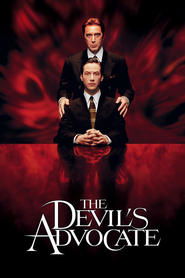
At this point, seeing a guy walk up to him in the bar, Keanu is completely convinced... ...that one of his friends has put this guy up to it. And this actor, who is Ruben Santiago Hudson... ...is a fabulous actor. He won the Tony for an August Wilson play, Seven Guitars. I saw him on stage and just felt, "I want to work with this guy." So when the role of Leamon Heath came up, you know, I had Tony Gilroy... ...kind of tailor the role to fit Ruben, and then convinced Ruben to do the film... ...because he has a very unique quality. He's not your totally assimilated black character. He may have gone to Harvard, he may have gone to Yale... ...but he's maintained a lot of his own roots and integrity, and at the same time... ...he's smart like a whip and he knows he's got Kevin hooked. The next scene that you're about to see hot cut to Kevin's roots: A Southern church, and this congregation is real. Judith Ivey, who is being introduced here as Kevin's mother. You know Kevin was raised in this church, he's coming... ...and taking a look back at his past, was totally fundamentalist... ...and deeply, deeply rooted in Jesus and God. Judith Ivey is part of this group. I had to spend a lot of effort convincing Pastor Lovell and his church... ...in Gainesville, Florida to participate in this film, because I feel that... ...you know, the things that they believe in, the things they're after... ...have everything to do with establishing good and evil in the world... ...and fighting the devil, and that's what this film is about. But they were fabulous, and they really got the spirit of God in them. And I thought it was important to see that Judith Ivey is a believer. She is one with her God, she loves Him. And, you know, she's a formidable presence for good in this film. At the same time, she's a tough mother, and you can see that... ...she has raised him in a certain way and she doesn't particularly approve... ...of what he's done with his life. He's a lawyer, and you establish his wife... ...over at the car, Mary Ann, who obviously is a party girl, a liver, and not... Neither one of them are in church this morning, and Mother is not that happy. This sequence is important to understand that Kevin Lomax understands scripture. He may have made a choice at this point to stay outside the church. If you notice, he's half in, half out of the light. Tony Gilroy wrote this in the script. Kevin Lomax stands outside the congregation. He's half in, half out of the light. He is part of it and at the same time... ...he can't bring himself to walk in. There's a dichotomy in him, which you'll discover later. But in this instance, when his mother calls up and says: "Quote the Bible to me and mention scripture," he can quote it back to her. He knows what he's talking about. He was in that church and a devout member at one point. Now you get a sense of Mary Ann. She is a good person. She's trying to help this character. She doesn't want to get the company to repossess her car. But she's tough, and she's a businesswoman. You also have a sense, right here, of the fun that these two people have. Keanu, you know, biting off her earring and handing it back to her... ...that was totally spontaneous. He came in, did that. It was quite wonderful. Now you have a sense of the married couple. They've got Mother-in-law... ...and Mary Ann's no dummy... ...she knows exactly that she's persona non grata in that household. It isn't that she doesn't like her mother-in-law, but she understands... ...what she needs to do, like have a child. And right now you establish another theme of the film: "Let's give her a grandchild and everything will be all right." Mary Ann is ready. She's working. She's professional. But she's ready to start to have a family. But you hot cut to Kevin Lomax who's taken the deal. He's in New York. At the beginning it's just a vacation. He's going to consult on the selection of a jury. You see Foley Square, the seat of judicial power in New York... ...all the Federal buildings, the State buildings, the local... Everything is right there in one space. It's a very, very sobering look at the power of the legal community in New York City. And at the same time, for a guy from Gainesville, Florida, it's very impressive. Kevin's here. He's excited. He is working as a consultant... ...to one of Manhattan's best and most famous criminal trial attorneys. His name is Meisel, played by George Wyner. And in this moment I wanted people to see that Kevin Lomax truly has a talent. When you talk to criminal attorneys, you realize that they say... ...that between So to 95 percent of winning a case is selecting a jury. This is a scene that I think talks about the inside of lawyering... ...and the reality of how you win. You win by psyching-out everyone that's gonna be on that jury. Those are the people that are gonna make the decision of whether you win or lose. This is where Kevin Lomax shines. He has an intuitive spirit. At the end of the scene, you realize he's got something else. He's got a sixth sense. Now, it's important, when we see this courtroom, to understand... ...that I wanted authenticity in this film. You're in New York. You have some of the best looking courtrooms in, I think, the United States. At the beginning, Warner Bros. wanted me to go to Canada and shoot in Toronto... ...which is an entirely different judicial system and the courtrooms... ...don't look the same at all. I fought to shoot this film in New York... ...not only for the fantastic exteriors, but also for these interiors. This is a film about big-time lawyering, and you want to feel, when you see the sets... ...and these aren't sets, they're locations. You want to feel that this guy is in the big time. He's gone from Gainesville, Florida to the top of the food chain. We shot in probably seven or eight of the best courtrooms... ...you could find anywhere in the world. Look at these paintings up on the wall here in New York. You feel that this is the justice system. Now Kevin is exhilarated. He comes out of his first day... ...in the New York courtroom and he knows he's done well. He didn't know how he would measure up, and how he measures up is... ...he's smarter than they are. I mean, he has to feel great. He's walking down the street. He's saying I'm a guy from the hicks, and someone's watching him. This is the introduction of John Milton, who's played by Al Pacino. It was important to me to establish a very nice introduction to him. One thing that Al did, and you'll start to see into this... ...he chews on licorice all the way through this film. You don't explain it. You know he's doing something. And instead of just walking away, getting in a limousine, he goes downstairs... ...into the subway. Why would he do that? He's well dressed. That's it. But immediately I go into a time lapse sequence... ...and I wanted to see day and night change. I wanted it to also say that this trial's been going on for a long time. When Kevin walks in, Mary Ann says, "You're home early for a change." Time has passed here. You've seen it pass. But more importantly, you see Al Pacino going down into the subway... ...and you see that the next images are not real. There is a certain kind of power that this person... ...we don't even know who he is yet, exudes. I thought that the time lapse would be both unique in terms of time passage... ...and, at the same time, extraordinary in terms of the potential power... ...that this man has. Now you've got Wife and Husband in... Mary Ann's got room service all over the room. Clearly, they've been there for a long time. She's watching TV. She's having a good time. She's been shopping. She's been to a lot of things, but her husband's been gone every day. And now you see the way they play. Kevin looks like he's defeated. It looks like he's lost the case. She feels badly for him. You can really see how she would, you know, how warm and wonderful... ...and sweet she is. But he's kidding her. You can really see the slyness, I think, in Keanu Reeves here. And, at the same time, he killed 'em. He actually chose the jury... ...and won the case, almost an impossible case. It was like a savings-and-loan fraud. This is white-collar crime. The guy sitting there in the trial, with his white hair... ...looks extremely legit. But the fact is that, you know, he's like Charles Keating. You know, he stole not millions, but tens of millions of dollars. And in this instance, the next shot is, they are in John Milton's domain. This is Milton, Chadwick and Waters, and I wanted a location that immediately... ...established the power of this law firm. This is a real building. It's the Continental Plaza in Wall Street, in the financial district, Downtown... ...and you see what New York power is all about. That view is a three-bridge view. You're gonna see all the way up the island of Manhattan. But the important thing here was, this location was used before in other films. I didn't want to use that same look. There's a unique design look here. Bruno Rubeo, who is my production designer and my collaborator... ...on the last three films I've done... ...we spent probably six to eight months before this film began... ...talking about what we wanted from this film and the look. Right now you're looking at Christabella, the first time we see her... ...and if you notice as she walks forward, I slowed down. It goes in real time. There's no cut there. We ramped so she starts in real time... ...she slows down... ...and comes back out in real time. And Kevin Lomax, he doesn't know why he's fascinated by her. We'll find out later. But look at the design in this. It's ultra modern. We used both an Italian architect and a Japanese architect. This is the Italian. He used prefab concrete in the walls. Milton's office. You know, the rest of the building is very impressive... ...but this office is something else again. It's cold, it's austere, and it's incredibly impressive. Look at that fireplace in the background. It's set up off the floor. Bruno had a design in mind. The furniture in this place is... You have a big, massive place. But look at the furniture. That little settee in front of the fire: it's delicate, it's small. This whole room exudes taste and a certain stylistic quotient. John Milton, you know, it's a huge room, devoid of furniture, very minimal... ...this is a man who has real taste and real choices that he's made. At the same time, this whole law firm is very, very modern. For the design quotient of this film, I want you to be able to see this sequence... ...and then later on, when you see where Milton lives, see the dichotomy... ...the difference. This is cutting-edge modern architecture to the nth degree. What Bruno wanted to do, and I wanted to do in this instance... ...is establish Milton's environment. Here it's cold, corporate, but, at the same time, undeniably impressive... ...austere, ultra-designed. Milton is very smooth. You know, Al Pacino always gets this rap: "Oh, gee, he's over the top." He's not. Al Pacino can play everything. And everything he did in this film was calculated. I mean, it was one of the great experiences in my life to work with an actor of... ...his deep, deep ability, his deep, deep talent... ...and his uncompromising attitude towards all his work. At the same time, Keanu, who had this... I'm saying this because here's these... ...two actors meeting for the first time. Keanu, who had done a lot of young-man roles, a lot of teenage slackers... ...in this film is anything but that. Kevin Lomax is precise. He is not a Harvard educated, a Yale educated guy. He came from a small school in Florida, went to a small law school. But all criminal attorneys that are really great usually did that. They come from the street. He's street smart. He thinks on his feet. And he's up against a guy, for the first time, that seems to have a little bit more... ...on the ball than even he does. He's never met anybody before that is his equal. And Milton keeps blowing his mind, like he does right now. You see this office. All of a sudden, he goes and taps on the door... ...opens up, and I wanted this sequence to truly be a moment... ...that would blow everybody's mind, not only Kevin Lomax's. He walks out on a roof terrace and, effectively, I'm using... Again, this is from a Japanese design. Bruno and I saw an architect... ...that had a pond on the roof in Japan, and I said that is a perfect idea... ...for what we want to do here. Here is a man who has such a sense of design and such a sense of grandeur... ...that he has created for himself a balcony, if you will, a terrace, a park on top. But does it have greenery on it? No. It has water. He calls it calming, placid. And at the same time, he's going to take Keanu out there... ...and he's going to talk about his past. He's going to find out a little bit more about him. He asks about his father. Keanu says, "I never had one." He asks about his mother. And in this instance he's, you know, if you look at Al's reactions here... ...this is a long, talky sequence. This is what you do sometimes. By the way, this is real. This is not blue screen. We didn't put the artists in a studio. I fought to get this scene. I fought everyone, including Warner Bros. Nobody wanted me to go up and get this shot. It's on the roof of the Continental Tower. They had re-roofed the place. The building didn't want us up there. I just knew that this sequence was going to define this initial relationship... ...between Kevin Lomax and John Milton. And the two actors are basically 50 stories in the air right now. They're standing on an eight-foot platform. No, it's not right on the edge. It's about eight feet from the edge. But the fact is that they're standing there. We had to get this whole thing in one day, and they have to do... ...a very personal scene while they're perched on the top of this building. You can see Al, at that moment, trying to let us know a little bit how precarious it is. But do you notice any kind of nervousness from Pacino? Not at all. He's easy. And the whole essence here is that Keanu's sitting out there. One, his mind is blown... ...at the beginning, and then somehow he finds himself getting into it. And at the same time, he looks right here and says: "My God, John Milton's standing like a foot from the edge of a 50-story precipice. "What kind of guy is this?" He also wears elevator shoes, which I think is interesting. But the fact is, right here is what the film also is about. It's about pressure. It's about professionalism. And what John Milton has done is taken Keanu Reeves... ...or Kevin Lomax, in this case, up to the precipice. He's showing him: "All this can be yours." And what is it? It's Wall Street. It's the seat of capitalistic power in the world. And he's basically saying, you know, I know you're a hotshot... ...but can you take the pressure? Can you sleep at night? That little speech that Tony Gilroy wrote, I think, fits all professionals in this instance. When you have to deliver on a deadline, you know what he's talking about. Basically, Kevin is there. He's ready. He said, "What about money?" Milton laughs. "Money? That's the easy part." Kevin doesn't have any problem. He can sleep at night. He's a lawyer. He knows how to do it. We cut from that to Carnegie Hill, which is Fifth Avenue in the Nineties in New York. It's probably the most exclusive address in New York. Central Park is on one side. You have these beautiful, beautiful buildings with fantastic apartments inside. And the Heaths. You're meeting Jackie Heath for the first time. I reveal her with that wipe from the elevator, you see her in close-up. Leamon Heath and Jackie Heath, they are absolutely New Yorkers. They've maintained their integrity as black people, but at the same time... ...they are not about to resist the temptations of the city. They want it. They know how to deal with it. They're very sophisticated. Look at the clothes that Jackie's wearing. Leamon makes the money and she knows how to spend it... ...and she doesn't have any qualms about it. This apartment, I wanted to basically establish the sense of awe. You know, John Milton owns this building. He has it for his employees. Although it's usually for partners, and for Kevin Lomax to get an apartment first up... ...shows that he's a little special, and you can feel, right here... ...that they're a little jealous. "Took us six years to get in here." Every New Yorker will understand that when they really want to get into... ...a big building. This is a film about New York. Tony Gilroy, who lives in New York and understands it incredibly well... ...is able to put these nuances in here that are maybe not aimed at everyone. But certainly, you know, you make a film in New York... ...it was important to me that you do something real. Now, you know, Kevin has basically been offered the job. He's got to now sell his wife on it. And this is a big test. If she, you know... He says, "I'll take you home if you want." Of course, if she did, God knows what he'd think. She knows him. She knows what he wants. And at the same time, how could you turn this down? It's very important right now, at this moment... ...to understand that Mary Ann wants this as badly as Kevin does. I mean, who would resist? Come on. They're too big for a small pond. They both want this and, my God, she's looking at this and saying: "Hey, I want to have a family." She says right now, you know, she mentioned kids again. She's mentioned it in the back of the apartment... ...and she mentions it again right now, and she's saying, "I'm in. Let's go for it." And that moment is one of the last moments of true happiness... ...you're going to ever see them have. Now you're at the law firm, and I want to be able to show... ...what big time lawyering is about. These are all partners. It's an international law firm. John Milton has called a meeting. From all over the world, these partners have come. There's Eddie Barzoon, played by Jeffrey Jones, who is Milton's chief lieutenant. He's the managing partner of the firm. There are affiliate offices in major capitals all over the world... ...and you get a sense of what law is all about. It's about copyrights. It's about real estate. It's about EEC and EUC and those kinds of relationships.
11:08 · jump to transcript →
-
Taylor Hackford
You're looking at their first case. It's a videotape of a raid... ...a health code raid on a religious sect in Harlem. Delroy Lindo, I think people will recognize there. And at this point, this is the first case. Kevin Lomax realizes that, you know... ...he came all the way from Florida, what, to get a health code case? It's an insult, and Pam Garrety is saying, hey, you know, everything's a test. Now we cut, simultaneously you see Mary Ann's life. She's starting to decorate the apartment. She's in with some heavy sharks here. She's a little bit over her head. This isn't Gainesville. It's New York City. You know, I think she, at this point, is intimidated, but Kevin shows up. He was pissed that his first case was such a trivial thing, like a health-code case... ...and he came out to help her. And it actually shows. This still is a nice scene. As I said before, it was the last good scene. But it's a moment where he has actually, as busy as he is... ...shown her that he is still in the marriage, he's still there. Cut from that to Harlem, and that is Harlem that you're looking at. We shot it there on location. And in this instance he's entering the world of Phillipe Moyez... ...which is a very strange, mysterious and undeniably powerful world. It may be in Harlem, but Phillipe Moyez seems to have... ...some kind of strange power here, and the people around him also. Kevin Lomax, is taken into something very bizarre. He's coming here to see a client... ...and immediately, what he's faced with is the most bizarre of situations. But, at the same time, he's in New York now. I cut to those boots again, saying, well, he's changed his suit. He'd better change those boots soon. They're becoming a point of ridicule. And if you see, slowly over the course of the film, Kevin's outfits... ...and his entire attire change. Downstairs he is in a ceremonial area. These are basically real African icons...
30:23 · jump to transcript →
-
Taylor Hackford
...things that we did from research, looking at religions of Dahomey. But as Phillipe Moyez says here, played by Delroy Lindo, this is not voodoo. This is not Candomblé. This is not Santeria. This is his own amalgam of a very old religion. Now, in no way, shape or form was this a desire to put down African religions. More importantly, it's to say that individuals, whoever they might be... ...find ways to establish power, and we certainly know this... ...from preachers of all ilks, whether they be Jim Jones or whoever. The fact is that Phillipe Moyez seems to be in a very weird situation here. He's got body parts in the refrigerator. He is using a lot of superstition here. It looks like a very meager and downtrodden place. You'll find out later that he's quite a rich man. What we wanted is a little bit of a creepy situation here that Keanu is faced with. He's a lawyer. He's representing a client, and that client seems to be... ...completely oblivious to him. But, at the same time, the client was interesting. "I thought I would recognize you, but I do not." It's bizarre. Now meanwhile, Keanu's in this situation and he's now having to confront... ...using his brain, how he's gonna win almost an unwinnable case. They caught him. They caught him dead to rights, sacrificing animals. He's going to have to delve into the health codes. Is he gonna give up or not? You look at this sequence, and what I've done. Mary Ann is redecorating... ...and she's getting one frustration after another, after another. I used digital wipes here to kind of interconnect the two. While she's working and getting more frustrated... ...he's getting deeper and deeper into his research... ...until he finally finds a key that is going to help him in this trial. And Jackie, who is very, very helpful, Miss Helpful, Miss Best Friend... ...and just trying to help. She's very sophisticated. She's trying to help Mary Ann get into what it's like to live in New York... ...and really be a top-rated housewife. But Mary Ann's getting frustrated. Kevin, on the other hand, is getting deeper and deeper into his work. You see him eating hamburgers. She's eating Popeye's Chicken. They're no longer eating together. They're eating separately. They're separate. She's getting more and more frustrated and confused. She needs his help and he's not there. And in this scene that's coming up, you get a sense now of what her life is going to be. This is a scene in which Jackie kind of lays the law down. "You have to understand, it's a bargain. You've got a job. He's got a job." And this is not what Mary Ann bargained for. And I think Charlize and Tamara Tunie, who plays Jackie... ...Tamara is absolutely fabulous in this role, I think. You know, they're girlfriends. They're talking turkey. They're talking plain. Jackie is truly trying to help her. But there's another level going on here. There's a little bit of... ...an animal of prey and the preyed upon going on here. This decor, by the way, you get a sense of Mary Ann's empty apartment... ...and then you can see what Jackie did with hers. This is right across the hallway. It's done to the nth degree. She's paid a lot of money to a lot of decorators. "Look around, honey. "This is why I do what I do. This is what I get paid." And it's kind of establishing here a kind of life of sophistication in New York City... ...which is not exactly what Mary Ann had in mind in a marriage. Now I cut... ...directly to the bacon, as it were. Keanu has developed a defense for Phillipe Moyez, and it's based on religion. It's based on the fact that you couldn't have religious freedom. And I must tell you that this case is absolutely based on fact. There was a Santeria case in Florida in which the neighbors attacked a church... ...sued a church. They were sacrificing animals. And it was won on the basis of the fact that this is ritual and religion has ritual. I mean, religion has circumcision, as Keanu says here. You have kosher butchering... ...which is, of course, how he wins the case. He's got a Jewish judge. And he is defiant here. He is arrogant. He is using a system and pointing out... ...hypocrisies within that system. At the same time with this happening... ...his opposing attorney starts to cough. It might just be a frog in his throat, whatever. But remember, Phillipe Moyez was going to put nails in the tongue of that cow... ...down in his basement, and he basically says, "I have done all I can do for you. "I'm not gonna help you with the case. I'm doing what I can do." And in this moment, where you see a really brilliant piece of lawyering... ...you know, Keanu feels this is below him, but he does do a huge amount of work... ...on health codes and wins the case. He wants to show John Milton: "You may be insulting me with this case, but damn it, I will deliver," and he does. At the same time, his opponent can't talk. Phillipe Moyez, I intercut with Delroy's face, back and forth, and you kind of see... ...there's a moment here in which you start to realize maybe, in fact... ...Phillipe Moyez has more power than we gave him credit for. Maybe there is something else happening here. And these elements of subliminal intrigue, supernatural element, this is... ...in fact it has to have, because it's about the devil, some elements of supernatural. I tried to keep them questionable, are they real, or are they not? Throughout. But they're here. And meanwhile, after they win the case... ...John Milton has been there to watch. He snuck in to kind of watch his new protégé. Look at those frescos in the background. That's a real New York courtroom. You know, just fantastic. Again, another courtroom, a great location. Now I come out and I'm on Canal Street. When you know New York, it's so fantastic. The street life is so incredible. And to me, Chinatown in New York... ...is one of the great places. Canal Street, which is in lower Manhattan, is alive. It's vibrant. It's also a major thoroughfare. You see these huge trucks rumbling along. You see Chinese fish markets and vegetable markets... ...and all those things happening, and that crush of real New York. Now Al Pacino is the kind of actor... I first saw him in Panic in Needle Park. It was his first film. You see him in Serpico. You see him in Dog Day Afternoon. He is uniquely a New York street animal. And what I wanted with John Milton is a man who is incredibly powerful. He's head of an international law firm. He's smart as anyone you've ever met. And at the same time, he was not born with a silver spoon in his mouth. You know he's from the street. And in this scene, he takes... ...his son to the place that he loves. He wants, he feels the vibrancy here. He wants to say, "I saw you work. You're terrific. You're also arrogant. "You've got those good looks. You're tall. You're not short like I am. "You know what I've got are those eyes. What I've got is that ability." Look at those Pacino eyes. "What I've got is that ability to fool people. "I'm charming. I have to sneak up on them." What I wanted from my devil is not the obvious. I didn't want a godlike devil. Pacino said, "Why don't you go to Robert Redford or Sean Connery?" I said, "Well, you know, the devil looked like that before. "What I want is somebody who is bored. He needs a challenge. "He has to overcome obstacles," and in this instance, Pacino liked that. He could have got up and walked out of the room, but he loved it. "Because you never see me comin'." That's the key to this... ...and Tony Gilroy understood it, and we made this uniquely for Al Pacino. Now here's a sequence that I thought was another thing that's important. Pacino is a character you meet. He seems all powerful. He seems like a corporate lawyer. Now he looks, seems like a street guy. He speaks fluent Chinese. Pacino speaks five or six languages in this film... ...and every single one of them is accurate. He is speaking Chinese here. I think what you get out of the character is: here's a man who is all powerful... ...at the same time he says right here, "Stay in the subways. "I only take planes, or the subway. I don't take limousines. That's not me. "That's the only way I travel. Stay in the trenches. Stay close to the people." That's who Pacino is. But you also feel throughout: this is a man who has incredible intelligence. He can learn anything. Cut back to the apartment. There is an evolution happening. Mary Ann is starting to decorate. She's trying to get control of things. She's now become Jackie's friend. She's talking to all the wives in the building. She is building a nursery. That means she's telling him, in no uncertain terms... ...that this is what it's going to be. "I'm staying home.
32:35 · jump to transcript →
-
-
-
Alexander Payne
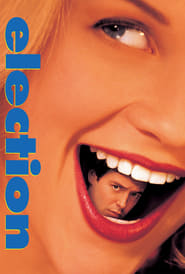
in Omaha, actually just outside of Omaha in a suburb. It's technically a different county from Omaha's, Sarpy County. I very much wanted a sense of a typical sprawling public high, public high school. And I had visited a lot and scouted a lot and saw a lot of foundation blocks and a lot of windowless buildings.
4:56 · jump to transcript →
-
Alexander Payne
Okay. Then that's what I thought. I was just checking. Yeah. Good luck there, Tracy. Okay. This is the corner of 50th and Underwood in Omaha, and I grew up very close to there. That's in the Dundee area. And many scenes from Citizen Ruth were shot at that, in this area, at that corner. In fact, catty corner to this location here is the
17:57 · jump to transcript →
-
Alexander Payne
I like this shot a lot and I like that we hang on it for quite a while because it gives you a chance to look around that gymnasium and see those graphics. Sometimes when you hang on a shot long enough, it just gives you time to breathe and look around and feel the location a little bit more. I want our school to reach its true potential. That's why I'm running for president.
39:14 · jump to transcript →
-
-
-
before they were known. Well, so Michael Biehn, I wanted to get into a little bit, too. And he is speaking of being spotted early. He was sort of scouted by the drama, the dean of the drama department at the University of Arizona, who just saw him in a speech tournament and gave him like a scholarship.
32:44 · jump to transcript →
-
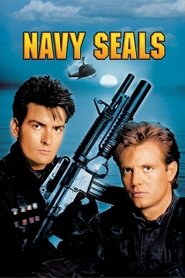
to learn like where he came from, how he got into the industry. Cause it was a little surprising actually. I just figured, well, your dad's big movie star. Yeah. You'll be a movie star too, you know? And, um, actually, so Martin Sheen, Charlie Sheen decided he decidedly did not want to be a movie star when he was a kid because, um, Martin Sheen would take the family on all the location shoots that he was on. Like there's such a close family, super close family. And, um,
46:45 · jump to transcript →
-
That kind of makes me think of the producer, the other producer, Bernard Williams, who he's kind of like a Teague who did a bunch of different jobs before he fell into being a producer. He started in the film industry at age 15 in England as a production assistant, then advanced to assistant director, to location manager, to production manager by age 27.
1:27:06 · jump to transcript →
-
-
-
it would sound more read than performed. It would sound narrated. So he performed every line of narration. And then after that, we just, you know, completely powered through Forrest. He just had it down for the rest of the movie. And then, of course, those were all the heavy scenes we had to do came after we were done. When we were on the stages here, we were done with On Location. I think the other thing that happened on this movie as a process was...
3:45 · jump to transcript →
-
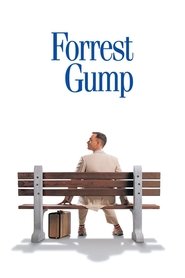
whenever we would try to force something, it would never actually work out. And we always had to allow the gump part of it to come through. And that even happened in the picking of locations, because this location, for instance, takes up two-thirds of the movie, and it just...
4:14 · jump to transcript →
-
One of the things that you begin to notice here, actually, I think it's subconscious, but Bob's choice to not ever show the enemy. Something I've been thinking about. Yeah, I remember when we scouted the location where the big battle was going to take place. I thought, what a brilliant idea to never actually see the enemy there. Got it all figured out, too. So many pounds of shrimp to pay off the boat.
47:19 · jump to transcript →
-
-
-
We only shot one take, that's it. Rachel's now crawling in as the stuntwoman is crawling under the camera and I told her to stand up and perfect. Take one, one take only, that's it. 12,000 bucks. Steve called me from the location saying, okay, so what does it look like? Do we need to shoot it again? And I thought, well, I'm not sure what else you'd do to that shot. I think it's about as good as it could be. Yeah, it was a real pain because we arrived on the set
13:29 · jump to transcript →
-
A lot of people ask me if I hated shooting in the desert because of the heat and the bugs and the scorpions and the snakes and sandstorms. But actually, I loved it as a director. It's the perfect place to shoot a movie because cell phones don't work. No one's worried about getting back to their, you know, boyfriends or girlfriends or getting home for dinner, taking the kids to the ballgame. Everybody's focused on making the movie and working as hard as they can, as fast as they can to get the hell out of the desert. So as a director, it's...
57:47 · jump to transcript →
-
Speaking of tone, this shot of Burns coming up here is a very difficult shot because the movie was always intended to be a PG-13 film. It was very important that there be little to no blood in the picture and unfortunately it made it difficult to show things like his eyes being pulled out. So that shot was digitally enhanced in post-production to make you see it a little bit better than what was done in location.
1:03:56 · jump to transcript →
-
-
-
Michael Mann
Our name for this location was Massacre Valley, and we call it that for obvious reasons. And it was on the Marion Good Farm on Woodlawn, North Carolina. And it was a hollow that was fairly flat. It was also flooded and filled with snakes. And so we had to drain the fields, plant some of this grass, and have a constant vigil.
1:14:06 · jump to transcript →
-
Michael Mann
It's a fantastic sight during the location scouting for this picture. It was like the whole entire crew had gone to Marine Corps boot camp or something. We were on this rock ledge for I think about three weeks.
1:40:33 · jump to transcript →
-
Michael Mann
where all conflicts are resolved, is the sense of distant wilderness. And that's what I particularly loved about this location when we found it.
1:41:35 · jump to transcript →
-
-
-
on some of the later leprechauns. But yeah, I have a thing about shoes, obviously. And there you go. That was a nice location and it was actually fun to shoot. There's our colors again. This location where when we get to the night shoots was really amazing how when it was lit up, it was pretty spectacular.
20:01 · jump to transcript →
-
One of these days, talking about the van, I remember we were shuttled from where we parked down to location, and while we were driving, we got the sad news that Klaus Kinski had died. It was during the making of this film. Oh, really? Yep. Wow. But what if that thing is still out there? No way. I shot it. I put six rounds into that thing. Now, I think there's a scene coming up where Tori...
55:19 · jump to transcript →
-
I think this is a creepy shot of the leprechaun laying down here. Something strange about it, their point of view. Right there. Yes, yes. I always liked it. Just the way the head was cocked and the eyes opened. Yeah. It's almost like he's crucified or something. Yes. And see, a little scope there. I mean, that was a big location that we were able to...
1:21:59 · jump to transcript →
-
-
-
Now, you were shooting in Atlanta, which was not a big film production city. And I think at that point might have even been in the early stages of getting the 96 Olympics together. The Olympics in Atlanta weren't for another, I think, five years after this. Yeah. So it didn't affect us really at all. Although this town has now become a boom. I mean, it's Marvel's go-to for shooting. The Walking Dead is there. Yeah, that's right. That's right.
30:35 · jump to transcript →
-
You would never know it by looking at the movie. No, I know. Now, this set is an existing location. There was a hotel in Atlanta near downtown that had been abandoned. I don't know if they were going to tear it down. I'm pretty sure this had nothing to do with the Olympics, but it was definitely abandoned. And we just sort of took it over. So everything you're seeing there is actually an abandoned hotel.
42:46 · jump to transcript →
-
a factory of some kind, Rocket Motors here. It's supposed to be a dilapidated car factory because we're in Detroit. But just really cool, really cool place. Lots of shadows and shapes and huge. Now, while shooting in Atlanta, you're obviously in a lot of business districts and a lot of neighborhoods and so forth. Were the locals okay with it? Were most of the homeowners and business owners cool with you being there? Oh, yeah, absolutely.
55:20 · jump to transcript →
-
-
-
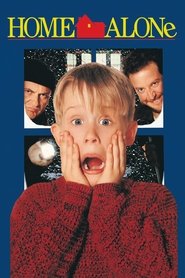
We shot a lot of this film on location in Chicago. This was shot at O'Hare Airport, actually. That was just chaos because it was still a functioning airport... ...while we were running through it. And the key is, here, is we were shooting... When we were shooting this first picture... ...N0 one knew who Macaulay was. In contrast with shooting Home Alone 2... ...where there were busloads of people following you around. That was crazy. - You suddenly became... ...one of the Beatles, um... ...which was a whole different vibe in terms of... We wouldn't have been able to shoot the way, you know... The way-- On this budget, the way we did. Duck into any airport and, you know.... I
16:25 · jump to transcript →
-
There's a Barry Bonds baseball card. - Yep. For those who wanted to see Barry in his younger, thinner days. Um.... Now, this was actually the real house here, which was in Winnetka, Illinois... ...and, um.... It was interesting because we were... We were able to shoot a great deal of the film at this house. None of the interiors that you see in the film were shot here... . UM... ...but this house worked out very well for us. Strangely enough, you know, with today's budgets... ...we would've built the back of that house completely... ...because the fact that we did all of those stunts later in the film... ...on the actual location was just ridiculous. And they were very friendly. - They were great. They had T-shirts made up. - They loved it. They used to have hot chocolate and stuff for us... ...and invite us in. They were great. They were a great family. It's incredible because I see... ...the things people do to people's apartments and houses... ...when they rent them out, like, you Know, for production. I'm like, "I'd never do that." - No, I know. Once you learn... Once you've seen it done, you know... Not to discourage any of you guys out there listening... ...to renting out your houses to future productions. But make sure you're paid very well. - Yes. That voice on the answering machine was Raja Gosnell... ...who was the editor of this picture... ...who's gone on to become a director in his own right. I
37:15 · jump to transcript →
-
Old Man Marley. Roberts Blossom... - Mm-hm. ...who, uh, was in several horror films in the '70s, I remember. I worked with him again later on, on some... It was some commercial. Something to do with Ellis Island. - Really? Yeah, yeah, I worked with him pretty much right after this. Like about a month after we wrapped up. Did you guys do something together? - We didn't speak or anything. But it was, like, a part-- Like, he played my grandfather and it was a... It was something to do-- I think when they reopened Ellis Island after... As a tourist thing or whatever. But, yeah, worked with him right after. This was all shot in the neighborhood of Winnetka, Illinois, on location. That was one of our lead stuntmen... ...who got his daily workout here. Another scene that was shot in a ridiculous amount of time. Again, we had no time to really shoot anything... ...and no time to do more than one or two takes.
39:31 · jump to transcript →
-
-
multi · 2h 19m 2 mentions
Martin Scorsese, Nicholas Pileggi, Ray Liotta, Lorraine Bracco + 9
-
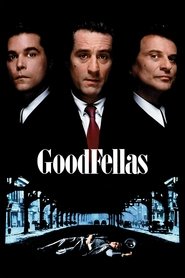
I think that is one of the geniuses of any director in making their actors feel safe and loved. We rehearsed in the location before we started to film. So that gave us an incredible leeway to know the environment
1:44:20 · jump to transcript →
-
shows how a guy in his young age could slip into that group of people and become one of the low guys. I thought it was very important to show that. I wasn't planning to do a pretty-looking movie. It should have more like a dirty look. What we tried is when you walk into a location, like in a bar or a restaurant, I looked at it and said,
1:47:04 · jump to transcript →
-
-
-
multi · 2h 24m 1 mention
Alex Thomson, Terry Rawlings, Alec Gillis, Tom Woodruff Jr. + 3
-


Related topics
Other topics that frequently come up in the same commentaries.