Topics / Production
Location & scouting
131 commentaries in the archive discuss this, with 816 total mentions and 33 sampled passages on this page.
Filter commentaries
Filter this topic by the film's decade or the type of commentary.
Showing 13 of 131 commentaries
Clear filtersBy decade
Across the archive
ranked by mentions · click any passage for the moment in the transcript
-
multi · 1h 59m 25 mentions
David Naylor, Guy Hamilton, Tom Mankiewicz, John Barry + 14
-
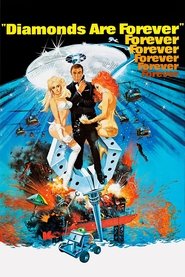
The whole process, from start to finish, operates under an airtight security system, is used twice, first when we see the workers drilling in the mine, and again when the first patient leaves the dentist's office. Though they take place in South Africa, these scenes of the dentist's office and the following scene in the desert were among the first filmed on location in Nevada. Finding the proper villains to oppose Bond is always a challenge,
10:15 · jump to transcript →
-
Co-screenwriter Tom Mankiewicz recalls being on location with Putter Smith.
11:48 · jump to transcript →
-
Coincidentally, Guy Hamilton also worked on the third man as an assistant director. For the climactic chase through the sewers, Hamilton doubled Orson Welles. When the actor's shadow appears on the walls, it is really Guy Hamilton. Now Tom Mankiewicz recalls this scene which was shot on location in Dover. This fellow here, Mr. Franks, is a stuntman, a British stuntman with whom Sean's going to have a terrific fight. And since we didn't have a scene in M's office,
14:42 · jump to transcript →
-
-
-
Roger Moore
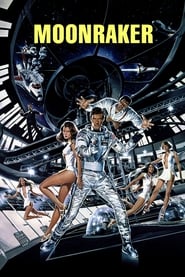
I've been back to this location many, many times. So as I think back to... ... this sequence.... To drive across the Piazza San Marco, which was full of tourists... They weren't paid extras... ...and I said, "I have no way of letting them know I'm coming. You've got to put a horn in this car." I think it was a Ford car... ...underneath this construction. Well, a Ford engine. I said, "I must have a horn to let people move out of the way to turn. They've gotta hear some noise of the approach."
41:25 · jump to transcript →
-
Roger Moore
This was shot for real, on location... ...in a room of the Danieli Excelsior. Beautiful hotel. It was the first hotel I ever stayed when I went to Venice.
49:57 · jump to transcript →
-
Roger Moore
Bernie was a very multitalented actor. You know, musically as well. He was great fun to be with. He did like to drink. It made him laugh a lot and made him slur a little. But he was a wonderful, wonderful character to work with. And it seemed that it was always Geoffrey Keen's job... ...on location to keep an eye on him.
53:10 · jump to transcript →
-
-
-
Francis Ford Coppola
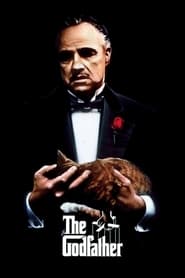
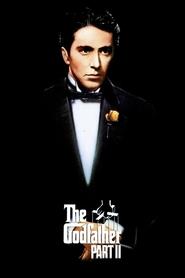
If you look very carefully here, you'll see that it's neither Bobby Duvall nor Jack Waltz, but two of my friends dressed up and walking around in this. We barely had a crew. We were a camera, and we went to some L.A. location, put a wig on one of my friends and a hat on the other. Now here in this scene, in the stable, this was shot in New York, so really the movie
29:31 · jump to transcript →
-
Francis Ford Coppola
The scene of the meeting at the olive oil factory was shot on a real location in Little Italy, really right what is now Chinatown. And if you look up on that street, you can still see the painting. It says Genco Olive Oil.
34:52 · jump to transcript →
-
Francis Ford Coppola
uh... decor as you see here we did very little to it uh... we we shot the godfather in a combination of sets inside the studio as well as some real locations different uh... businesses in little italy or or hotels hotel edison i remember
42:14 · jump to transcript →
-
-
multi · 1h 43m 10 mentions
The Taking of Pelham One Two Three (1974)
Nathaniel Thompson, Steve Mitchell
-
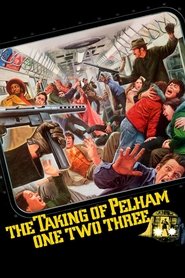
Nothing gets the blood pumping quite like that David Shire music. Welcome to The Taking of Pelham 1, 2, 3 from 1974. My name is Nathaniel Thompson from Mondo Digital. Joining me today is my frequent fellow commentator and much more importantly, extreme New York City locations junkie, Steve Mitchell. Hi, Steve. Nathaniel. Yeah, this is one of those movies where my being from New York and having grown up in New York
0:13 · jump to transcript →
-
But as far as I can tell, I think this plays it pretty realistically location-wise. Would that be correct? Yeah, it's completely correct. Basically, the movie starts on Lexington Avenue at 59th Street when Martin Balsam is going into the station. And the famous department store Bloomingdale's is right across the way. And then as the train progresses downtown, they're dealing with the stations. And the stations themselves, again, are in Brooklyn. But the geography of the picture...
15:36 · jump to transcript →
-
making it impossible to shoot until it had settled. And you don't have to be in the tunnels to know that there is this sort of crazy, greasy sort of dirt dust that lies across the floor. While I love watching this movie and I love every moment, I love every location, I have to believe that it wasn't terribly easy working in those tunnels. And Walter Matthau, who only had one scene in the tunnel said,
36:32 · jump to transcript →
-
-
-
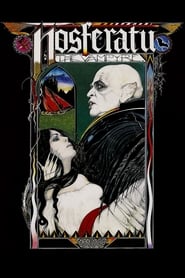
My name is Laurens Straub. I'm sitting here with Werner Herzog, writer, director and producer of the movie "Nosferatu" that you are currently watching. And we now want to talk about that movie. Werner Herzog and I have known each other for about 20 years and have worked together on many different projects. What do we see here? These are actual mummies in the Mexican city of Guanajuato. You have to realize that Guanajuato is located in a gorge. Because of that the cemetery was very narrow and there was no space. So they dug up the bodies every eight years or so, and because of different climatic conditions and the soil, they mummified without human preparation. They leaned them against the walls on both sides in a long underground hall and a hallway. I saw them there many, many years ago in the early 1960s. The story behind this is that I was in the U.S. on a scholarship but I resigned from it a few days in and gave up my legal status in the US because I had to earn some money. Out of desperation I went to Mexico because otherwise they would have returned me to Germany. I went to Central Mexico and Guanajuato and lived there for a while. I did all kinds of crazy things. For example, at rodeos, the so-called charreadas, I rode on wild bulls. Like a complete idiot because I don't even know how to ride a horse, but with the money I could live one week at a time. And there I saw these mummies. Are they similar to the ones at the volcano Vesuvius and formed from lava? No, those are real dried human beings. They barely weigh anything. They were in display cases so we had to take them out and carry them somewhere else. They weigh very little... 10, 12 pounds maybe. Is this something like a culture of death? No, it's completely normal. Isabelle Adjani. She is great at acting scared. That was a real and very large bat we brought in for this. The bat you saw earlier I could not shoot myself. The footage came out of a science documentary because bat's flapping motions are extremely fast, and this was shot with 500 or 800 frames per second. The bats had to be trained with food for that because it took very strong lighting, and normally they would not move under those conditions and not leave their hideout. Here we see Delft. In the Netherlands. That's my city. And I know when Jörg Schmidt-Reitwein teaches students cinematography he first introduces them to Flemish and Dutch painters. Why was Delft chosen as an alternative to Wismar where Murnau shot? Yes, but Wismar was not Murnau's location. I believe that was Lübeck. There is one single shot later in the movie where you see a few buildings that Murnau actually used and that are still standing. I used those as well. We chose Delft because the continuity of the architecture was uninterrupted and we only had to make very few changes in order to shoot there. We took down some antennas and moved a few cars. Other than that it was very easy to shoot there. The concept of "Nosferatu" was definitely to do a variation on Murnau's movie, not a remake in the classical sense. A Biedermeier image like this, for example, is unthinkable in a Murnau film. Moreover, this is in color and the movie's character is completely different. We had to show a very secure bourgeois world. We deliberately planned this, especially the furniture. That was done very thoughtfully by Henning von Gierke who is a painter by trade. With the furniture and the lighting, you can tell that a painter was involved. It reminds me of "Kaspar Hauser" which was done by Henning as well. What era are we in here? That is the Biedermeier era as you can see clearly by the costumes. We researched how to best do the building arrangement and the urban landscapes. Schmidt-Reitwein and I wracked our brains over that. I didn't simply want to recreate paintings. That was never planned. With one exception because we knew we had to work a lot in darkness with nothing but candlelight. Therefore, we studied the painter de La Tour and thought about how to do it if we only had one or a few candles. How do we light that? And Schmidt-Reitwein is exceptionally good at working with light and darkness. This is Roland Topor. - Yes. The famous illustrator, poet, and crazy man. Unfortunately he is already dead, I believe. Yes. - How did you find Roland? I coincidentally saw him in debate on French television. And he laughs in such a mad way. He laughs after every sentence he says. But in such a desperate and strange way that it impressed me deeply. Afterwards I contacted him I told him I was going to shoot a vampire movie and asked if he would play Renfield. Roland Topor immediately agreed. Unfortunately his voice is dubbed in some versions. And it is impossible to fully recreate his laughter. It was his strangest characteristic. What I love about this... I recently saw an exhibition with English surrealistic works from the 19th century. It reminds me of an old office, the cloth, and this blue. It was very carefully lit, and the costumes had to match. Bruno Ganz. And also the faces we chose. Those are not faces that fit into the 20th century. You have to carefully select actors who match. So Bruno Ganz is a great fit for this. The beautiful paper. - Yes. That was so much work, and it was prepared very, very thoughtfully. A beautiful country. Here I see a recurring theme of yours... maps. I already know that from "Aguirre" and other movies. In "Fitzcarraldo" geography is a crucial dramaturgic element. I'm a map fanatic. Oddly, I'm pretty good at determining locations ahead of time, too, because I understand maps. I know which formations you should find in a certain area. I was rarely wrong. It is always about uncharted territory, the Dorado, or doom. Yes, at home I don't have pictures on the wall. A few photographs every now and then, but generally, I can't stand my walls being covered in pictures. If there is anything on my walls of my home it's maps.
0:04 · jump to transcript →
-
This was your first film in English, the first with big stars and a big budget, correct? Well, not really. "Aguirre" is also a big movie with a big star and great effort. But I have to say, we shot "Aguirre" for about 700,000 deutschmark... $360,000. What matters is what you manage to get on screen with the resources you have. To come back to paintings, I like this vase. Yes. Okay. This reminds me of a painting by Seurat. I think the still life-like and emotional atmosphere is phenomenal. But be careful, I always want to show inner landscapes. This was done very quickly, by the way. On that day we happened to have some time and drove to the beach. It was freezing cold, windy. There was foam. We set up the camera in three minutes and sent the two actors, Bruno Ganz and Isabelle Adjani, into the image. We only told them that the music would most likely be slow and solemn. We already had received ideas for the music from Florian Fricke from Popol Vuh. These two, three shots here we did in 15 minutes. We never thought about paintings. It was born out of the situation... - Spontaneously. ...that we found there. Bruno Ganz has tears on his cheek because it was freezing cold. Lotte Eisner came to visit for a few days. We had to wrap her in 20 blankets because it was so cold. I was so proud that she could be there. She was very important for me and maybe for the new German film in general because she bridged the gap to the expressionistic movies back then that she knew very well. She also knew all the representatives of that time. She was friends with Fritz Lang, Murnau, Pabst. She knew them all. For us she was like a bridge to the generation of our grandfathers. We were a generation of orphans who did not have the generation of our fathers. Here I see your wife. Yes, Martje. Martje Herzog on the left. Essentially everyone who was there is in the movie at some point. Later you see the executive producer, the costume designer, the sound technician, and the gaffer. It was also a matter of how quickly can you get something done with very little money. This is the farewell. Bruno Ganz was actually pretty good at riding horses, which was great for me. Now he travels to Transylvania. The choice of the production company... Was this a Century Fox production? No, I produced it myself. Many people believe that 20th Century Fox produced it. But 20th Century Fox only bought an advance guarantee to the U.S. rights for very cheap. They only bought the rights for the U.S. A distribution guarantee. I believe this was... - German Romanticism. Well, you have to be careful. There is a hint of that, but I always try not to be connected with Romanticism because I myself have no real connection with that cultural epoch. Usually I refer to eras before that. The Late Middle Ages speak to me much more. They inspire me. This was shot in Eastern Slovakia. I was not allowed to shoot in Romania where I had scouted locations for months in the Carpathian Mountains. But you also have to see the context. That was when Ceausescu had just been awarded the honorary title of the new Vlad Dracula by the parliament. So he was named the new Count Dracula. That was an honorary title because the historic Count Dracul had been an important figure in the defense against the Turks. This is in the High Tatras, just 1,000 feet to the left was the Polish border. Bohemia? No, Slovakia. - Slovakia? Eastern Slovakia. This is a real group of gypsies that I had brought in from the very East of Slovakia. Among them are a few Czech actors. The gypsies actually speak their own language. Unfortunately I don't remember what it was called. ...my food.
8:53 · jump to transcript →
-
It confuses me that you see yourself in connection with the Middle Ages. I see a lot of Biedermeier here. Laurens, this is not the Middle Ages. That would be mistaken. I am fascinated by the Middle Ages where everything that had been valid for centuries... Knightly life, thinking, and behavior... suddenly fell apart and new ways came about. I'm similarly fascinated with the Migration Period where 1,000 years of antiquity were lost. Afterwards, that knowledge was only preserved in monasteries. It was no longer common knowledge. - Ah, I understand. So here we have a Goethe-like person on his way to the monastery. Here you can associate pretty much anything. It has something very gloomy, and it was shot in fast motion. Here we jump... This was built in the Partnachklamm in Garmisch-Partenkirchen. You enter right behind the ski jumps. I absolutely wanted to shoot there because it is such an impressive location. This is also a theme that already appeared in "Aguirre" or with the waterfalls in "Fitzcarraldo". The interesting ritualistic element reminds me of church choirs. Beautifully done by Florian Fricke. This was a so-called choir organ. It wasn't electronic at all. It sounds as if it was half-natural and half-electronic, but it does sound idiosyncratic and weird. It was not easy to shoot here because it is so very narrow. You can see here that there is barely enough space to let someone pass by. And again Jörg did a great job, I think. Yes. Here we jump to the High Tatras. This is a white water on one of the highest mountains of the High Tatras. These landscapes work seamlessly together. My home, Bavaria, and this landscape have something that makes them look interchangeable. Yes.
20:00 · jump to transcript →
-
-
-
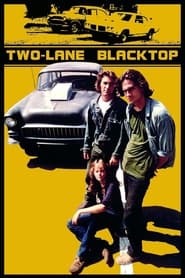
I hired the crews. I directed everything. And it was amazing. It was truly amazing. I mean, I was producing because, I mean, we'd have a day where we had to get an enormous amount of material shot, and we'd get on the location and find out that nobody, that I hadn't bothered to get a police permit. And so they shut us down at 8 o'clock in the morning.
4:00 · jump to transcript →
-
This shot itself was shot about 1,000 miles away from the actual location because the original shot was damaged and we had to do it again. And this is the moment where James... Oh, okay. Now, his reaction was at the original location, so that's cutting back to Flagstaff.
10:24 · jump to transcript →
-
You shot as you went along, I guess, huh? You were actually traveling. Many days we would actually drive three hours, stop and shoot for three hours, and then drive to the next location. There were very few days when we were able to just shoot the whole day long. Overall, I think we had a 49-day schedule of which about seven days was travel.
11:41 · jump to transcript →
-
-
-
Francis Ford Coppola
These are the actual windows of the Kaiser estate, what was called the Kaiser estate in Lake Tahoe, and it was shot on location in those beautiful buildings. G.D. Spradlin was a tremendously
15:58 · jump to transcript →
-
Francis Ford Coppola
I always like to use a lot of improvisation when we rehearse and big, long improvisations. And what we did in this sequence in Lake Tahoe in Godfather Part II is we had the cast there a couple of weeks right on that location. And I went around and said, okay, this is...
17:37 · jump to transcript →
-
Francis Ford Coppola
Now this is the actual original location of the first Godfather film, the same...
1:04:52 · jump to transcript →
-
-
-
Nick Pinkerton
strapping handsome lad of 6'4 that he was. He was scouted out and given a $100 a week contract under Arthur Lubin, creator of the TV series Mr. Ed, who put the raw, untrained kid right into some drama classes. There were, through the mid-1950s, a few undistinguished roles for Clint, a sequel to Creature from the Black Lagoon and Francis in the Navy, directed by Lubin.
30:06 · jump to transcript →
-
Nick Pinkerton
Cimino and Robert Daley hit the road on a very extensive location scout. Per the production notes, they covered an incredible amount of ground in the so-called Big Sky country of Montana, eventually centering in on an area around Great Falls, Montana, near the Missouri River Basin in Cascade County.
48:40 · jump to transcript →
-
Nick Pinkerton
though working in widescreen, which was very much not Ford's preferred format. Cimino would find locations in Hobson, in Ulm, population 738, in Choteau, named for a French fur trapper and explorer, located in nearby Teton County, and in Fort Benton, the county seat of Chouteau County.
49:29 · jump to transcript →
-
-
director · 1h 28m 5 mentions
Don Coscarelli, A. Michael Baldwin, Angus Scrimm, Bill Thornbury
-
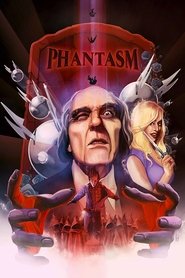
Man, Bill, you are a handsome young fellow in that, I must say. We shot this up in Oakland. It was a real major distant location. It took place at this... It's called the Dunsmuir Mansion outside of Oakland. And they gave us the run of the property for a couple... Actually, two days we went up there and shot all of these sequences in order. Now we cut back to Los Angeles. Actually, Chatsworth, where we...
2:42 · jump to transcript →
-
And whenever we're shooting in the mausoleum, you see a lot of camera movement because it was easy. This set was built by our construction team, which was actually a couple of film students who had worked in summers in construction. And they really knew nothing about building for movies. So consequently, they went out to Chatsworth, and we just kept sending them money and more money.
3:40 · jump to transcript →
-
a year period where we just go out on a weekend usually and shoot for three intense days or nights and then continue on and you know we just went up there to this location and actually i think there was a some guy who just let us tap into his house and get the power and no permits or anything
23:46 · jump to transcript →
-
-
-
and he named one or two others, and this person said, well, that's not a cast, that's a dinner party. A point well taken, and why wouldn't somebody want to be with the dinner party rather than just a cast? They were all either friends of mine or people I had admired. The location was interesting, which is always of some importance to me. It's nice to work outside of Los Angeles and in a place as...
11:46 · jump to transcript →
-
in a different form, but it is all happening at once. You can come in, Tommy. Don't be embarrassed. We did a lot of handheld work. We were shooting in natural locations, and they were virtually motel. A lot of them were just motel rooms. And the question of fitting people in, we just had no space for dollies. It was before the Steadicam.
43:17 · jump to transcript →
-
thought about in a different way. It was all shot on location, the whole film was shot on location, except for a tiny bit in the special effects studio. A couple of days at all. We were there in New Mexico, eight weeks, nine weeks maybe. I think five days in Los Angeles. The distances were the main thing. Pretty big area.
50:47 · jump to transcript →
-
-
-
-

Related topics
Other topics that frequently come up in the same commentaries.