Topics / Production
Location & scouting
131 commentaries in the archive discuss this, with 816 total mentions and 10 sampled passages on this page.
Filter commentaries
Filter this topic by the film's decade or the type of commentary.
Showing 4 of 131 commentaries
Clear filtersBy decade
Across the archive
ranked by mentions · click any passage for the moment in the transcript
-
-
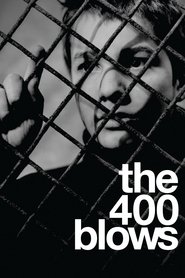
the Eiffel Tower clearly anchors Paris as the location. François Truffaut, his friends will tell us, was an avid collector of miniature Eiffel Towers and kept them all over his apartment. This sequence was actually shot for a scene in the film where Antoine and René take a Parisian taxi cab and go in search of the Eiffel Tower, a trip that takes them a ridiculously long time. Truffaut decided to cut that scene from the film, but to use some of the footage from it for the title sequence.
0:56 · jump to transcript →
-
Many of the director's choices in this film were dictated by budgetary constraints, for the film was produced independently. Thus, the choice of black and white film stock, which came to be associated with new wave films, was essentially a matter of economy. Similarly, the handheld camera, which permitted shooting in narrow locations and made the quick pans back and forth in this classroom scene feel natural, was less costly to operate than the bulky camera setups of studio filming.
4:44 · jump to transcript →
-
We're familiar with such overlapping of image and sound now, more than 30 years after the release of this film. But in 1959, such a move was innovative and helped to define an important aspect of the new wave. One aspect of that movement was, as we've noted, the refusal to shoot films in a studio or on a soundstage, but to take the camera out into the streets and the locations themselves. Another new wave innovation was to trust the viewer to be able to look at one thing, yet hear another, and not be confused.
6:00 · jump to transcript →
-
-
scholar · 1h 32m 3 mentions
The Night of the Hunter (1955)
Terry Sanders, Robert Gitt, F. X. Feeney, Preston Neal Jones
-
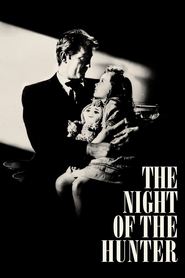
Now, was this all shot on Back Lot, Terry, or did they have locations near L.A. that served? I think it was the Columbia Ranch, was it? It was the Rollin' V. Lee Ranch in Chatsworth. Okay, in Chatsworth. It was all... But then they... But the studio was... Yeah, I think it was in Culver City. Oh, Culver City, yeah. This is a stock shot, actually from an old Fox picture made during World War II, interestingly enough, that Stanley Cortez had remembered and mentioned it to Lawton, and Lawton found it and used it.
13:29 · jump to transcript →
-
And it was beautiful, too, the way they were both facing in the same direction, you know, to show the inner divorce. Now, this is an interesting scene, I think, from a rear projection point of view, because originally a lot of this was shot with Emmett Lynn and then thrown away. Instead of going back to the lake again, this is done with rear projection, and it's extremely well lit by Stanley Cortez. You wouldn't really know it, I think, that it wasn't made on location. Absolutely right. You mind my cussing, boy? No.
31:10 · jump to transcript →
-
And not since Cortez had used it for Wells in Magnificent Ambersons. True. And this is not an optical. This is done live right there on the location. Yeah, they're doing it with the camera lens and the device on the camera. Focusing on the children. Anyhow, just to finish the thought. And great on the cutaway there, too. Schumann didn't want to dignify Mitchum's murderous madness by taking a real hymn and using that as a theme.
45:01 · jump to transcript →
-
-
-
David Kalat
Then it was Godzilla. Now the mantle had returned to Kurosawa once again for Kagemusha, which would find Tomoyuki Tanaka overseeing things, Ishira Honda credited as creative consultant. Honda co-wrote all five of Kurosawa's last films, that's Kagemusha through Matadeo, directed most or all of the location footage, and co-directed in the studio. Another commingling of monster movies and Kurosawa art films.
24:56 · jump to transcript →
-
David Kalat
Tsuburaya split his team into three units. The location photography, shooting things like the glass paintings on Odo Island. The second unit did the miniatures. The third handled optical effects, like this blast of Godzilla's atomic breath. That involved hand-painted cell animation in the grand Disney tradition, composited onto footage of the Godzilla suit in action.
59:19 · jump to transcript →
-
-
-
Alan K. Rode
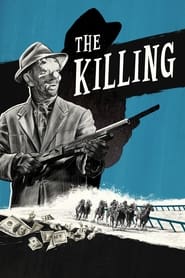
This Bunker Hill location is Mission Apartments at 504 West 2nd Street in Los Angeles, even though the address provided was 504 West Olive, as written on the match cover by Jay C. Flippen at the beginning of the film. Bunker Hill was the location for so many movies in the late 40s and 50s as the neighborhood deteriorated into rooming houses and once grand Victorian homes. It became an area synonymous with film noir.
23:47 · jump to transcript →
-
Alan K. Rode
This location was in Culver City as identified by Ted Evans' motorcycle shop across the street at West Washington Boulevard at Walgrove Avenue, kind of where Culver City, Marina del Rey, and Venice all meet up. The motorcycle shop was run by son Doug Evans until it closed up in the 1960s, and James Dean bought a 1955 TR5 Triumph at this shop. Would it be a film noir without Tito Vuolo, another unique character player cast by Kubrick?
35:05 · jump to transcript →
-

Related topics
Other topics that frequently come up in the same commentaries.