Topics / Cinematography & lighting
Camera movement
102 commentaries in the archive discuss this, with 295 total mentions and 44 sampled passages on this page.
Filter commentaries
Filter this topic by the film's decade or the type of commentary.
Showing 20 of 102 commentaries
Clear filtersBy decade
Across the archive
ranked by mentions · click any passage for the moment in the transcript
-
-
Stunt girl going down the stairs. I think it's always good when you kill a sweet old lady in the first three minutes. Exactly, yes. There's Naomi. And there's our crane. They gave me a crane that day. This is all a set in a soundstage. And they let me go right up. And if you notice, his ears move mechanically, I guess. Right, right. We had a rig that we would bring out sometimes that was attached to a skull cap and two servos.
5:31 · jump to transcript →
-
I'm sure everybody was going, that's kind of dangerous next to that actress. Like how he's torturing him. Yes. Now that actually was a pull back that we reverse printed to get a push in. Because you never know when you get into editing, we wanted to push in and all we had is camera pulling back, so.
9:07 · jump to transcript →
-
But again, this was Simi Valley, Little House on the Prairie sets. We had a crane. I remember this was a beautiful intro shot. I remember Isaac up there on the crane. It was excellent. And there's Jennifer, who's adorable and was wonderful to work with. And again, I always have to apologize for putting her in this movie. I'm sorry, Jennifer. Forgive me. But it was her first movie, my first movie, and we had a lot of fun. Yeah, she's great.
11:27 · jump to transcript →
-
-
-
This scene was written about a year before there was even an idea. That's right. You wrote this scene for another movie idea. It was just a cool opening scene. I wrote this and sort of lost it in the computer. We switched the dialogue a bit, I remember, because in the initial... Gabriel was hit by a swinging crane in the earlier draft, and we changed the line, and it was, I think, my spine is...
3:04 · jump to transcript →
-
the foreboding porthole music, is, okay, this was shot in my backyard, not this. This, that's John Ottman's hand and my foot. And we built that little bit in my backyard. Not the ropes, but those two shots. Yeah, and Verbal's supposed to be hiding behind the ropes. That's the idea of the ropes. Some people seem to be confused by that. These ropes are to replace the base of the crane, which is cut out of the script.
4:23 · jump to transcript →
-
Originally, the crane was sort of a central piece to this whole thing. And the notion of ropes entangled, we thought, very interesting for the story. And this was sort of a... This was supposed to be done over black, but we thought this would be more interesting. Well, we removed the scene. Chris wrote a fantastic deposition piece, which it was a bit too long for, but that sort of encapsulated the idea.
4:52 · jump to transcript →
-
-
-
I mean, I would imagine... Back then, I mean, the PG-13 rating was not even 10 years old at that point yet, so I would imagine it's difficult to try to figure out when to pull back and when to, you know, try to push it to as far as you can, certainly in a movie like this. I imagine that's a challenge. This is my Empire of the Sun homage here. This is completely Empire of the Sun. You know, because we want to love this... We'll talk about Remy Lyon's character, Nico. We'll talk about her more, but I really wanted us to love her, and this...
5:57 · jump to transcript →
-
So how do you choreograph that? Well, she comes down here. She was up with Robo. Now she comes down. We push in a little bit. She makes a wisecrack remark. She's our sort of Howard Hawks woman. Walks over here, and then he spins around, and now we're into a new setup. And I was just very pleased. I felt like a real professional director doing this scene. This is one of my favorite scenes in the movie, just in terms of the way that it was choreographed and the way it was shot.
29:22 · jump to transcript →
-
And I think Office Space is kind of his real claim to fame. But he's in the Finding Nemo movies as well. Oh, yes, yes. And King of the Hill. Oh, right. That's right. Yes, of course. Bill, the next door neighbor. There was a push in there, so take a drink. Oh, right. Time for a shot. A push in for those of you at home is when the camera moves in on something. It's something that I've always enjoyed. It's very old school.
45:29 · jump to transcript →
-
-
multi · 2h 19m 5 mentions
Martin Scorsese, Nicholas Pileggi, Ray Liotta, Lorraine Bracco + 9
-
But it was another Steadicam shot. You know, after a couple of takes, we figured out when they had to say their lines, and they said it all to the camera, so they know when the camera was on them. So it wasn't easy, because all these shots are not easy to do. But we always got it, and not in a tremendous amount of time.
16:57 · jump to transcript →
-
prefers when he can absolutely control the framing of the shot and he doesn't have to, when the Steadicam operator sometimes is moving, he has to frame, he has to make framing decisions himself. And Marty would prefer to make those decisions. But as he's gone on, he's become more and more friendly to the use of the Steadicam. The famous Koppersad was, it was
32:58 · jump to transcript →
-
I knew Jimmy. Director of Photography, Michael Ballhaus. This, again, was a fairly complicated shot because it was a mixture of a crane shot and a Steadicam shot. So what happened is that we had Larry McConkey, who was the Steadicam operator on this movie, who was brilliant, he was the best in those days.
1:48:14 · jump to transcript →
-
-
-
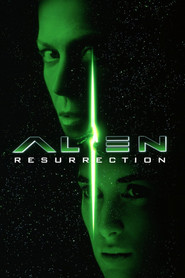
didn't like the ox scene either, apparently. He preferred the dog scene, but they've taken the dog scene out and put the ox scene into the cut that isn't the director's cut, but that everyone tries to make out is the director's cut. Yes, but then that keeps the continuity of the opening with the ox pulling the ship. In the theatrical, it's a big crane lifting it with a dog on board, and then you see shades of it. But earlier on, we got to see the ginormous facehugger, which is the super facehugger, which lays queen eggs.
45:19 · jump to transcript →
-
wheat field or something like the high sort of grass and you can see him coming in and that would do that with the alien we can see it from above shooting down with these guys getting chased i mean that was a great kind of setup where what we're about to see now is um the chase through the corridors um and alex thompson the dp said you know it all it's all great when they you know the steadicam operator flips the camera which you've never seen before but
1:53:04 · jump to transcript →
-
I remember this being a big deal. I can't remember if it was the trailers or TV spots or something, but I remember there being a lot of shots of this, the Steadicam charging down the corridors, which was really striking at the time. You'd never seen a Steadicam do that before. It's like now when you see an incredible CG monster and it just doesn't touch the sides, you don't notice it. But there was a time when that would have been really impressive.
1:56:12 · jump to transcript →
-
-
-
The stunt guys were fantastic on this. There was a fella called Mic Rodgers and Simon Crane. I had to have two of them because it was such a huge job. Overall, I had a good team of guys.
51:00 · jump to transcript →
-
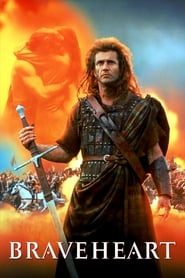
and Simon Crane, the stunt coordinators, and David Tomblin, the first AD, were, and myself, in fact, was just always pounding the S word, safety, you know? Every chance we could with the troops, with everybody, safety. And not only that, but the people who participated in the battles, we had the luxury of having them for, well, three weeks to train them in how to miss and how to make it look like a hit.
1:51:21 · jump to transcript →
-
But for time, we'd just do handheld stuff, you know, like this. And we were running out of day this day, and we just had a lot to do. John Toll is the master at handheld. He's able to anticipate stuff before it happens. He did a lot of it in the actual battle. And kind of knows, has a sixth sense about where something is going to happen next so that his movements are coordinated with the movements of everyone else, and it's not planned.
2:09:23 · jump to transcript →
-
-
multi · 2h 24m 3 mentions
Alex Thomson, Terry Rawlings, Alec Gillis, Tom Woodruff Jr. + 3
-
There's a miniature shot of the alien running up, then it cuts to a close-up of Tom. We did do a fake head of Charles Dance - it's coming up here in a minute - where the creature punches a hole in his head. And we had to do a head cast of Charles in an extreme expression. And as I recall, he was great about it. He's actually, for as serious as this character is, he was a very jovial guy. Yeah, I guess it was like an animatronic head, dripping. In order to do this movie, we built a complete silent motion-control dolly that could go at running speed, which we wound up never needing to use. You could actually run with it at high speed and it would repeat, and it was quiet enough to shoot sound. Of course, when we got to England to set it up for the first shot, nothing worked. We were tearing our hair out and found out the system wasn't grounded because they had run an extension cord into the hallway. But then, once we found that, we didn't have any problems. But that was in order to enable us to shoot scenes with pans and tilts, and then scale those moves to shoot the scenes back at the studio with a rod-puppet alien one-third scale... with a moving camera, so it wouldn't skate around in the scene. I think this rod-puppet technique is very interesting. I think it still has some validity now, even in the digital era. Yeah. - And probably now, I don't know... Well, I guess you'd still have to do the motion-control stuff to match moves. Or track it now. If you're gonna do a CG character, you can track it. But you wouldn't be able to track like that with a miniature puppet, would you? You'd have to use motion control. It's a real mechanical lollapalooza. But there is a nice presence to it that really looks like a physical thing. It gets around some of the difficult issues of CGI, in that the lighting is playing on it. And the director can direct it. Fincher could come by and direct the puppet. Five guys, you know, operating this character against bluescreen, there were some pretty bizarre mountains of equipment to get these shots working. And flags, and stands, and wires everywhere. And flags, and stands, and wires everywhere.
1:04:35 · jump to transcript →
-
I loved that Steadicam stuff down the tunnels, and the points of view of the actual creature. And the way they worked it so they could switch from 24 frames to three, just like that. Incredible. Yeah, and it'd spin round.
1:58:38 · jump to transcript →
-
Claustrophobic shooting, in all those tunnels for weeks. This alien point of view was shot with a prime 10-millimeter lens, which is distorting, and we did a bit of Steadicam. The Steadicam operator was running down the corridors to get a sense of speed. He did a marvelous thing, which I thought was very clever, that he flipped the camera over whilst he was running, which I had never seen before. A very effective move, and, of course, with the running, sometimes the lamps were kicked by the actors or by the crew running. It was quite a difficult operation. Blood spattering, here. Fast and furious. I think we had a dummy for this. All you see is his legs, but... That's good there. Another matte shot. Many elements for that shot.
2:03:48 · jump to transcript →
-
-
-
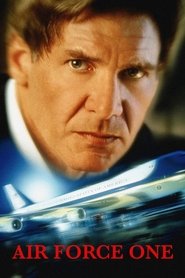
Then you see it's a crane shot, a moving camera, but still the background, the building is painted. Here, you see? The whole, yeah, LAX. But the whole back there, the thing is a painting, the building. It was just nothing there, just dark. So they sent you where, to the end of the runway? It was a special, yeah, a special area of a very more quiet, deserted area of the airport. And we shot it there. Where did the jet come from?
11:43 · jump to transcript →
-
I've ever done in a film. And he has done quite a bit. And here you see the president is a little bit shocked about what he just did. He shot somebody. He shot somebody, but out of a reflex, out of a situation where he just had to react. And he's really kind of shocked about that himself. But what could he do? Here's a nice steadicam shot.
45:19 · jump to transcript →
-
And in the next shot, it's an amazing shot, one of my favorite shots. It's a Steadicam shot in that whole prison here. And it goes wider and wider and wider. And the sound is building. This is a hellhole of a prison. And you think stuff like that you can only find maybe really deep, deep in Russia. You find it in Ohio. Is that a prison they use now? It is closed since, I think, five years or six years.
1:33:23 · jump to transcript →
-
-
multi · 1h 54m 3 mentions
Jean-Pierre Jeunet, Hervé Schneid, Alec Gillis, Tom Woodruff Jr. + 5
-
Sylvain Despretz, he works a lot with Ridley Scott's design, this chair. I love the idea with the weapons hidden on the char. These were tough shots - to show enough of the alien, but not give it away. The problem with the alien suit is that if you show too much of it, it's very clearly a guy in a rubber suit, but for wider shots, it was done effectively. Where you see the shadow, it was a matter of lighting so it wasn't revealing the body, but only the shadow across the grid. As an actor, I haven't seen often the monster on set. Remember, Jean-Pierre? As an actor, I haven't seen often the monster on set. Remember, Jean-Pierre? I remember, we changed the sense of the scene during the editing. He was supposed to listen, or to see an alien, and we put some different sound to explain the aliens are escaping from the cell. That's true. I don't like to do that, because an actor plays something, and if you change the sense it's not good. But that was good, because it added to the pressure he had to face, knowing that the complete ship was coming under the aliens' control. Another stupid idea. I love that shot, the Steadicam, where we speed the picture. Pitof put some flames from the guns, because the guns didn't work. Never. The actors had to pretend to shoot. It was a bit breakable as well.
43:33 · jump to transcript →
-
You are going to see in a couple of minutes the nest. It was a kind of homage to Giger because in the script it was an action scene and I didn't like it. I prefer to imagine this disgusting nest with tails and parts of alien. It was really disgusting with lots of slime and Sigourney loved that, to jump on this very disgusting nest. I love this idea when she catches the tongue. It hasn't happened yet, but this whole business about getting Ripley away from the rest of the pack... She falls into this ocean of alien... alienness which I quite like, actually. And she's supposed to sink into this like into an ocean, which was a precursor to this bit at the end of the film where they were floating in alien goo and the aliens swam in it like crocodiles. This shot seems very easy. It was a nightmare because it's a Steadicam. You can't see the crew, you can't see cables. You can imagine the nightmare because we turn around Sigourney and Winona.
1:28:42 · jump to transcript →
-
The eyes of the newborn slid in and out. And now the love scene. On this shot you can see all the newborn. It's the only shot because we erased in postproduction the crane. Here he is taking a couple steps. He was supported by a boom and rod-operated. Dave Penikas was the mechanical supervisor on this, and Yuri Everson supervised a lot of the construction steps of it as well. It's difficult because of all the hydraulics involved in making it move, and having it move so closely to the actress, both Winona and Sigourney. We had a lot of safety concerns in building this thing mechanically, and also in the operation of it. We ended up with two computers to operate this creature, one at the puppeteering end and one on the puppet, to continually make sure the data being fed to the puppet was not able to be misinterpreted and have something move in a completely opposite direction. Jean-Pierre really wanted to convey a confusion and sadness from the creature, where he doesn't understand why he's being sacrificed like this. We had a variety of puppets ranging from our hydraulic character to rod-operated puppets. I think there was maybe three different phases of puppet here. So now this is the ending I found at the end. You can understand it was the ending for the General Perez, for Dan Hedaya. During the shooting I wasn't sure it was working. Now when I see it I think it's good. Because Tom and Alec had to find some new technology very quickly because we found this idea very late. And all the stuff coming out of the newborn have been shot in liquid to have this zero-gravity impression and a lot of different things. I thought that that was all digital, those shots right there. No, that's photographed and it's digitally... It was mixed digitally but all the elements are elements I shot... You need a tank for this zero-gravity feeling. Right. But it had a lot of layers together to have the amount of stuff.
1:44:06 · jump to transcript →
-
-
-
What we're putting shot here is a very complicated visual effect. We had a track in from a still photograph, the comet and the moon, and then add that to a very complicated crane shot so there would be no movement. I thought it was very important photographically in this film
3:10 · jump to transcript →
-
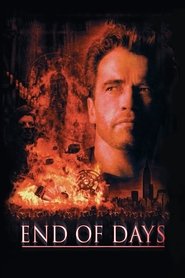
This is Arnold, and this is Arnold being hoisted up 50 feet in the air with all these rain machines going on. This was done with a large crane called a techno crane, which was on top of another crane called a Titan crane, which allowed us literally to go from the ground to over 50 feet in the air.
1:27:02 · jump to transcript →
-
and you didn't want to see him put in this position. You'd be amazed what you agreed to when you're on fire. Don't do it, Bobby. You're better than this. You're better than him. You know, considering how you've lived your life when this is all over... I love long lenses. I guess you could see that because this film was shot with long lenses. It's gonna happen. Why shouldn't you have the best seats? Look what it does, though, when you take a close-up and you push in on somebody and you... Everything in the background is soft and the eyes are pin sharp.
1:36:45 · jump to transcript →
-
-
-
You'd see that a lot on Entertainment Tonight. Yeah, yeah, yeah. It was fun. Actually, that shot's coming up. I think it's the next shot. Yeah, this shot right here. Great hanging rig there that Simon Crane, our stunt coordinator, he'd just come off of Titanic and Saving Private Ryan, and it really looks like someone got hung. Brendan was just about to pass out there. Interesting, geeky, technical note here. Most of the scene is looped,
22:21 · jump to transcript →
-
It's always good to go dragging cranes around in the desert. Yeah, I had a world-class crew, just fantastic crew. Didn't matter what I asked them to do, it would always be done within 15 minutes. I'd say, oh, I want to dolly up this sand dune. I want to crane over that mountain there. And everything was rigged so quickly. It was just fantastic. And this was, we got up at 2.30 in the morning to shoot a lot of these shots because the desert photographs beautifully from about 4.30 in the morning till 8.30. But at 8.35, as soon as the sun crests,
34:43 · jump to transcript →
-
You did not see much of this. Winston! Hey, Winston! Poor Winston. Bernard was quite a trooper. We had to actually kind of crane him into that cockpit, and he actually stayed in there as we sunk it. And he trusted us not to kill him, which I thought was rather nice of him.
1:35:01 · jump to transcript →
-
-
director · 1h 31m 2 mentions
David Steinberg, Dave Foley, David Higgins, Jay Kogen
-
Nice little push in there, David.
9:59 · jump to transcript →
-
With Kevin. Oh, I didn't know that. Yeah. I did not know that. Life was real. You know, I felt for the first time that I belonged somewhere. This was the reshoot? No, not yet, because I'm still there. Only on the high angle shot. We do this high angle crane shot that we couldn't afford on the first run. Cleveland sounds good to me. But we get married. Right. This is the reshoot. Yeah. This was reshoot. Oh, right, because Dave, the first time he kissed her...
1:27:48 · jump to transcript →
-
-
-
Darren Aronofsky
Mark and Sean would begin ready, and Sean would be quiet and meditating on it, and Mark would just sort of mumble underneath his breath all these sort of curse words that would sort of motivate him to sort of get into the scene. I'm sick of you following me. I'm not interested in your money. I'm looking for a way to understand our world. So this scene was a very, very difficult day to shoot. It was the one day I got a Steadicam to shoot, and it was actually one of the first times I've worked with a Steadicam.
32:43 · jump to transcript →
-
Darren Aronofsky
Now this shot that starts right there is handheld by Matty Libetique, one of the great operators and DPs on the planet. But this is literally handheld. He's on a apple box, on a half apple to get as tall. He's a little bit shorter than Sean. So he's standing on a half apple to give him a little bit height. He's actually spinning around in turns. We wrap the cables around him the opposite direction.
50:48 · jump to transcript →
-
-
-
-
-
-
-
-

Related topics
Other topics that frequently come up in the same commentaries.