Topics / Cinematography & lighting
Camera movement
102 commentaries in the archive discuss this, with 295 total mentions and 15 sampled passages on this page.
Filter commentaries
Filter this topic by the film's decade or the type of commentary.
Showing 8 of 102 commentaries
Clear filtersBy decade
Across the archive
ranked by mentions · click any passage for the moment in the transcript
-
director · 1h 28m 6 mentions
Don Coscarelli, A. Michael Baldwin, Angus Scrimm, Bill Thornbury
-
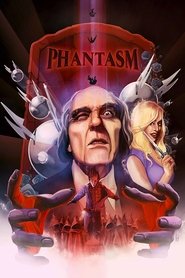
built our mausoleum set in this small warehouse. And this warehouse had just gorgeous cement floors. They were brand new. And for a low budget picture like ours, it was really great because we were able to use our dolly. And you can see the floor there was so flat without laying any track. We were able to get a lot of movement in the picture moving around, something that's difficult for independent films on a budget.
3:13 · jump to transcript →
-
Trying to sort of distort reality and having this kid having these nightmares, you know, waking up in the middle of a graveyard and really deluding the audience and thinking they're still in his bedroom. And you pull back and you find out Rory has great pains to try to match everything. There's a couple of crew members of them. And there's Rory's posture from the poster. That's right. Yeah, they used that for the original key art in the domestic release.
25:12 · jump to transcript →
-
It was always a struggle to try to get some camera movement, because we couldn't afford to set up dolly track. And so consequently, a lot of this film, when you're outdoors, you'll find that we're handheld. And this is a shot which I'm particularly proud of. We shot it a number of times, just a handheld little shot, keeping some suspense, but not having to just be riveted down all the time. We were able to keep some movement. And you operated camera on this whole film, did you not? Yeah, absolutely. And at my own risk in a lot of spots.
48:32 · jump to transcript →
-
-
-
Francis Ford Coppola
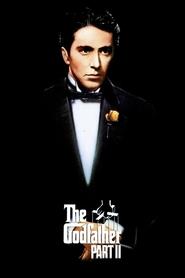
way to kind of pull back to the old loyalties. Of course, Fredo has married some floozy wife who embarrasses him in front of all the guests by drinking too much and flirting with all the men. I mean, the family is really starting to break down in this period. Fredo's wife was played by Marianna Hill and looked beautiful in that extraordinary gown.
28:23 · jump to transcript →
-
Francis Ford Coppola
I very much enjoyed this section of the film, this historical setting, period setting, wonderful actor, great villain like Gastone Moschin. I thought imaginative shots and in terms of these big dolly shots through this wonderful Dean Tavelera set, telling the story in an interesting way, you know, how the neighborhood was owned by a local
1:51:20 · jump to transcript →
-
Francis Ford Coppola
I guess we were on a dolly on a building across, you know, either on track. In this case, the camera was on the dolly track. And maybe it was on a dolly track across from the building so we could move with it. Fanucci had a good costume. I like his costume here. These are, of course, the puppets.
2:00:17 · jump to transcript →
-
-
multi · 1h 59m 2 mentions
David Naylor, Guy Hamilton, Tom Mankiewicz, John Barry + 14
-
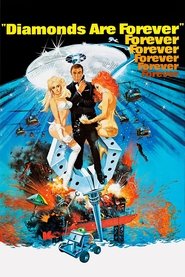
They had these great pieces, and we had it down in the studios. I remember we had to get the damn thing into the set with a crane. You know, it was one of those things you'd never, ever move.
1:18:05 · jump to transcript →
-
proved a challenge for Elaine Schreyeck as she remembers here. We used to go out each day either by helicopter or I have been out by sea and then got lifted up on that crane thing and dumped on the oil rig. It was fascinating. I had to sort of keep out of the way but the thing was that every time they were on the oil rig it was there but every time they went through a door it was going to be at Pinewood. So of course I was making them quite mad. Obviously I would see the film when I got back to England
1:44:34 · jump to transcript →
-
-
-
Nick Pinkerton
brought home the half-completed screenplay for Magnum Force to be eventually directed by Ted Post. We've got Thunderbolt and Red mixing it up on screen with some nice handheld work here.
47:34 · jump to transcript →
-
Nick Pinkerton
Next day, they went straight through from 7.30 a.m. to 7.30 p.m. Cimino says, all day long, all you heard was cut, print, next setup, cut, print, next setup. The minute the camera was on the head, on the floor, on the dolly, wherever the hell it was, we would do the shot. So, able to bang it out when called on. And now we've just cut from a bit of ribbing of Lightfoot to Mr. Warmth himself, Don Rickles, the ne plus ultra of insult comics.
1:14:53 · jump to transcript →
-
-
-
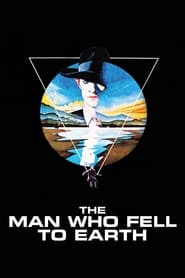
in a different form, but it is all happening at once. You can come in, Tommy. Don't be embarrassed. We did a lot of handheld work. We were shooting in natural locations, and they were virtually motel. A lot of them were just motel rooms. And the question of fitting people in, we just had no space for dollies. It was before the Steadicam.
43:17 · jump to transcript →
-
The operator was a wonderful man, Gordon Heyman. There's an extraordinary relationship between director and the operator. He is the eye, he's your eye, and I was very lucky. I've enjoyed working with him many, many times. He's an extraordinary operator, but on many occasions, even he couldn't get into the room with me at the same time and the actors. I had to operate myself on a lot of that handheld stuff.
43:45 · jump to transcript →
-
-
-
-
multi · 1h 43m 1 mention
The Taking of Pelham One Two Three (1974)
Nathaniel Thompson, Steve Mitchell

Related topics
Other topics that frequently come up in the same commentaries.