Topics / Cinematography & lighting
Camera movement
102 commentaries in the archive discuss this, with 295 total mentions and 46 sampled passages on this page.
Filter commentaries
Filter this topic by the film's decade or the type of commentary.
Showing 23 of 102 commentaries
Clear filtersBy decade
Across the archive
ranked by mentions · click any passage for the moment in the transcript
-
multi · 2h 34m 6 mentions
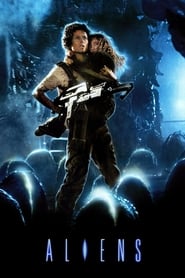
James Cameron, Gale Anne Hurd, Stan Winston, Robert Skotak + 8
-
Pat McClung
This scene was shot really quickly. It was pretty much all handheld, 48 or 60 frames a second. I think 48. Then Sigourney had to loop all her lines at slow speed, which is always odd. Our first effect in the movie. It's great, because it's what you expected to happen and then it's not what you expect. She was actually under the bed for that sequence. We built an artificial body from her neck down. Someone is under the bed with her. I can't remember who the lucky guy was that created the illusion of the chestburster. Pushing its way through her. It sets up the character. This is her nightmare. You know that she never wants to have to face it in real life again because she's haunted by it in her dreams and her nightmares. This effect is as if you're outdoors. When the camera dollies over, you see it's just a video projection. The idea was that in outer space there would be places you could go to get a feeling you were in a natural environment. So that plate behind her was shot out in the garden at Pinewood Studios. It was a VistaVision plate. Originally, there was supposed to be a birdhouse in the background in that garden, and she would have Jones on her lap and a bird would fly in and Jones would jump up and hit the screen and that's how the audience would find out that she wasn't actually on the earth. This scene was cut from the release version of the film, which became the source of some controversy with Sigourney. She later said in print that she had based her entire character on this scene, and she was devastated when it was removed. At the time she first screened the film, she told me she didn't like the scene, and then we wound up reading interviews where she had a big problem with that. We didn't have a chance to talk about it because of the postproduction schedule. We were working in England, kind of in isolation.
7:47 · jump to transcript →
-
Bill Paxton
I encouraged the actors to customize their own costumes and armor, to give the impression they had been out a lot, that they were seasoned, that they had been away from command authority on their own a lot and were good enough at their jobs that they were allowed these kind of latitudes. This is a continuation of the motif from the first film, where they're wearing Hawaiian shirts and all kinds of strange stuff, all of which was a new idea in science fiction. People always wore uniforms on spaceships. That's how it worked from Star Trek on. Every science fiction film ever made, there was the general-issue uniform. Alen broke that mold and it just seemed so right to people. They recognized the archetype instantly. "Oh, these guys are truck drivers." "They dress however they want. There's nobody to tell them not to." And so the idea here was extrapolated to a military unit that's worked at the extreme fringes of human civilization. The power loader was not designed by anybody in drawings per se. I had done some preliminary drawings, but it evolved basically from trying to figure out how to make it work. We built full-size mock-ups of the arms and legs in foam core. There's a guy inside that thing, a big, strong English stunt man moving it. It's supported by cables. It's completely an on-set gag. The English visual effects guys thought we were crazy the way we wanted to do it. I said "It's the gag where the dad lets the daughter walk on his feet, his three-year-old." So standing behind Sigourney right now is this big 270-pound body-building English stunt man. He's raising the arms himself and he has in his hands a control that allows him to raise the forearm of the power loader. And then when they walk, they have to walk together. The weight of the machine is held by a crane which is off-camera, or some kind of overhead track rig - we had two versions of it. If we didn't need the machine to turn, we mounted it on a pylon, a boom-arm thing, and if we needed it to pivot we hung it on wires.
35:31 · jump to transcript →
-
Bill Paxton
My kids remember all the dialogue and one thing they did was "Bay 12, please." And Newt's line: "They're dead, all right? Can I go now?" How about "Get away from her, you bitch"? The most classic line in the movie. And obviously this was another interesting idea that Jim had, which was to use a Steadicam harness that's normally used for holding a camera to make a futuristic weapon out of. Everyone said it couldn't be done, which is at least at the beginning of Jim's career typical of the response to Jim's ideas, and then, of course, it worked beautifully.
38:03 · jump to transcript →
-
-
-
John McTiernan
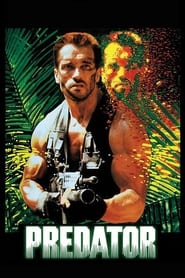
Ah, there is Painless! One of the trips at the beginning of this, when they hired me they sent me to the armorer, and I was looking around, and like, "How can I find some toys that are neat?" And I saw this thing, this gun that was supposed to be mounted on helicopters... In order to make that thing move, work in the movie, we had to slow it down, because the barrel went so fast, you couldn't even see it. You couldn't photograph it as it spun. What we didn't know was there was 100 pounds of battery standing behind the man when he ran and all the ammunition he could carry amounted to six seconds worth of firing, even at quarter speed shots. It would bury you up to your ankles in copper shells or brass shells, in the five-second burst that a man could carry enough ammunition for. 'Cause that was the whole issue about how much ammunition can the man carry on his back. How many bullets can he carry? And it turned out, it was really only a five-second burst, which is ludicrous. What the fuck would he carry anything like that for? It's nonsense. But it's a movie, who knows. Who knows, that he got reloaded. It was just the practical part was that, I am not sure how we mounted it the first time. 'Cause we were afraid that, they would buck loose on him. And I think we mounted it, hung it overhead, from a chain. With some safety lines on it. 'Cause what we were afraid of, was that it would spin back at him. And it could blind him easily. I mean, even with safety glasses and everything, it just cut the hell out of him. And then like, you know, who was it, who just got killed just from a single blank going off. Well, this thing, if you got too close to the front of it, 'cause they were big shells, they were 30-odd thick shells or whatever that is, or whatever that size Is, it's bigger than a .22. I got in a lot of trouble for this shot. And it was with a crane and a remote camera.
18:22 · jump to transcript →
-
John McTiernan
with static cameras, yeah, this is that same shot set up with setting up with the crane. This stuff is all, the second unit, I don't know, work maybe, two-three weeks.
21:52 · jump to transcript →
-
John McTiernan
That shot was a dolly with 180 degree pan in it, which you couldn't at the time get an American cameraman to do. And it's just terrible trouble. Because Don McAlpine was Australian and they had a much looser style. I could get him to do a Iot. And he loved doing it. You know, like, this is another dolly move, watch this one.
31:28 · jump to transcript →
-
-
director · 1h 30m 4 mentions
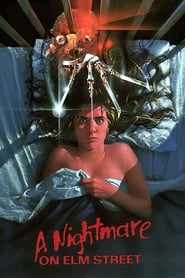
A Nightmare on Elm Street (1984)
Wes Craven, Heather Langenkamp, John Saxon, Jacques Haitkin
-
She was on a treadmill. She was on a treadmill attached to the dolly. This is even early days of Steadicam to a certain extent. Steadicam was not as extensively used as it is today. I'm scared. That's the 14.
3:14 · jump to transcript →
-
It's funny when you start to learn what you can do without. Here's the famous scene of you hear a noise outside and of course somebody has to go outside and investigate. Just this shot is so nice where we walk them without a cut, the three of them. That's nice. I think you had a big dolly track set up here, didn't you, from the porch? I'm serious. Yes, there is. That went out into the yard. That's right, all the way across the yard.
8:15 · jump to transcript →
-
Those pajamas, I still have those. I was able to wrangle them away from Wes before he put them in his garage. I still have the alarm clock and I have that telephone, too. Do you really? The tongue phone? Not the tongue phone. I have just the actual telephone. I think Jim Doyle got the tongue. Then I've entered my dream. Now, this was a very long Steadicam shot, if I'm not mistaken. And at the time, it was very, very new, the use of that kind of equipment. I remember.
36:54 · jump to transcript →
-
-
-
William Friedkin
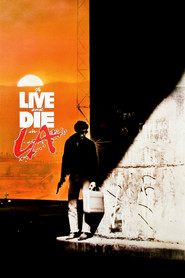
off the Vincent Thomas Bridge that's made by Richard Chance on a dare. The beginning of that shot is, of course, William Petersen standing on top of that bridge waiting to dive, sort of getting a sense of how he's gonna do it. And that shot was achieved with a fairly new piece of equipment at that time that's now in wide usage. It's a Louma Crane, it's called. It's much more portable and lightweight and easier
8:57 · jump to transcript →
-
William Friedkin
to set up and manipulate on location than the original cranes were. A studio crane is too bulky and too unwieldy to take to a place like a bridge. It was only possible to do a shot like that because of this portable, lightweight crane that was originated in France and that they had a very few copies of
9:27 · jump to transcript →
-
William Friedkin
in this country and I remember seeing a demonstration of that crane at the place where the equipment rental house where we were able to rent it and I thought my god I've got to find a lot of usage for this and so there's a few shots of it in To Live and Die in LA a few shots using that Louma crane or variations of it once we use that piece of equipment it suggested other kinds of equipment that
9:57 · jump to transcript →
-
-
-
Oliver Stone
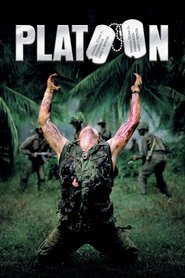
No. They move faster alone. You can get stuck up there for two or three hours sometimes. They just wait and they'll bait you. You tell everybody to pull back to the church. We link up with third platoon. You got that? What about alliance? We can pull back if we cut off. You just haul ass too, lieutenant.
1:11:48 · jump to transcript →
-
Oliver Stone
kung fu ninja film shooting next door so occasionally we look over and we see a chinese guy flying through the air in a black pajama off a trampoline we built a uh one of these you know some of these shots we look closely we built a dolly here in the jungle that was about 90 feet long 120 feet long and we just whipped it through there i mean it's hard dolly because this jungle is not even layered so we had to
1:13:48 · jump to transcript →
-
Oliver Stone
He's got a defiant new graffiti on his helmet, if you notice. And that's Forrest Whitaker there. He's happy. He's getting out. Big job. He's getting out of the field. Now, this is a tough shot. Look at how close we are to the chopper on that one. You're right on top. I know we're nailing around. We're coming around on a dolly, picking this up. That's pretty dangerous.
1:18:34 · jump to transcript →
-
-
-
John Mackenzie
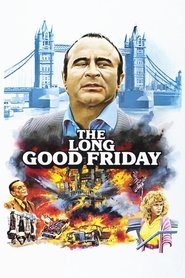
This has been all smoothed out, but it was a nightmare to do. And the mounting of the camera, you maybe see sometimes when you do the long shot, I had to mount the camera in such a way that it was separate from the car. You've got to be careful you don't get a slightly seasick effect. This was quite an interesting effect. Yeah, we did that about three times. He nearly hit us the first time. We're on a low crane arm and he comes straight at us. And the timing of taking the camera up so the car can drive underneath,
34:49 · jump to transcript →
-
John Mackenzie
This is all done on one camera. And you see it's gone up and over and behind. Now it comes around again. If it's on a crane, it can't go to the left there because we've seen that there's no rails there. This is Phil Mayhew again, who was operating while adding cameraman. But what is quite interesting, now we're starting to go to the left. So it's sort of really doing the impossible. And it goes on and on and on. It's all one shot. But what in fact happened
1:36:49 · jump to transcript →
-
John Mackenzie
is that he was on a crane, but he was sitting on the front of the crane, holding the camera handheld. So the camera would go up and over and back. And then when it went sideways, he stepped off the platform of the camera on his feet and moved sideways with it. You can see how steady the shot is. It's quite amazing. So what looks extremely simple is very complex.
1:37:19 · jump to transcript →
-
-
-
You know, this is... She realizes now she's been exposed, that he knows the truth of both her identities now. I don't want to make any trouble. I promise. I have to go to work. It won't take long. Please. Thank you. See, I think the beauty of her performance is that we see so much tension beneath the surface whenever she's Joanna Crane.
1:13:01 · jump to transcript →
-
I can't think of a better way to start a friendship. We haven't met. I'm Bobby Grady. Joanna Crane. I saw it on the mailbox. What are you, about 30? Still call yourself Bobby? I'll grow up when I'm ready. Oh, I think you're ready. Are you alone? Aren't we all? It's interesting framing of that shot. The two of them from a distance. And they're both going through their own...
1:14:28 · jump to transcript →
-
I'm sorry for busting in on you like this. I really appreciate you listening, and I won't bother you again. Uh, Bobby, if you, um, if you ever really need me, talk whenever I'm here. I know. Answering the phone to Anna Crane speaks to her, um, the, uh, her very constrained, very businesslike approach to, uh, to her life, again, as an avoidance of intimacy.
1:15:25 · jump to transcript →
-
-
-
Eleanor Bergstein
And considering what they've seen and where they've been, there was no other song that could work for this. So no matter how many songs people tried to convince me to use because they didn't think Cry To Me was well enough known, I just couldn't do it without this. And there's this lovely Traveling Dolly shot. And it wasn't on the first record, though it was on the second record that RCA put out, and people went into the...
56:58 · jump to transcript →
-
Eleanor Bergstein
And they started crawling around, and we did this wonderful scene. Now, I don't know how film-aware the people are who are listening to this, but there's something called video taps. And that is something that shows you what's going on by your camera, what's going on in a room. There's a Steadicam here, which is a man with a camera strapped to his shoulders. So he is the camera.
1:06:47 · jump to transcript →
-
Eleanor Bergstein
So I followed the man with the Steadicam, which is a man. As I said, it's a man who is a camera. And I followed him around and reported back to Emile. And when it was all over, I looked back and realized it was an entire mirrored room. So my terror was that when the dailies came, which would be two days later and there was no way to go back to this scene, that you would see the little picture of me huddled behind the camera and it would ruin the set. So I remember when we saw the dailies...
1:07:37 · jump to transcript →
-
-
-
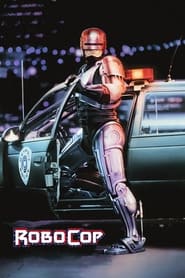
of course, was situated in the interior, isn't it? Right. It's when we saw this big pit later that we realized, looking there, that it was so sensational and so beautiful that you had to find something. We found this crane above, isn't it, that would drop the steel stuff on RoboCop. But... Here's the Rob Bottin third act face. And we should mention it here because this is a pretty cool thing. Watch. And watch, again, the way it's revealed. First time you see it, it's distorted, which I think is beautiful. And now look at the full work of it.
1:21:23 · jump to transcript →
-
You mean the more of a kind of a Leone feeling of the guys coming at each other down the street? Of course you couldn't because it was not the style of the movie. You know, you couldn't slow it down. You had to go for the story continuously. And also, yeah, you really feel like this thing wants to wrap up now pretty quickly. This is a great location. Yeah. Now, you know, we had all this wonderful plan for when the crane cab blows up.
1:31:40 · jump to transcript →
-
that you would see, you would hear the bullet coming through. He would go, where is it coming from? Where is it coming from? And then you would have an outside shot of the windows where they all went red as it blew up inside him, and then it would explode. Well, look what you get. But that's pretty cool that we got that. Well, we invented that basically when we came there, isn't it? They had a crane, didn't they? Something like that, yeah. But the idea of using it, and look at this shot here. This is really a great shot where you really think, my God, Jesus, look what happened to him.
1:32:04 · jump to transcript →
-
-
-
Paul Davis
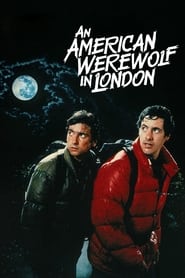
He did a tremendous job. So this shot was originally conceived to be a Steadicam shot but for some reason they couldn't get the Steadicam so they opted to do a soft dolly with a Citroen Jeep of some kind that
4:28 · jump to transcript →
-
Paul Davis
And they became longtime friends after that. George edited The Blues Brothers, and it was while they were working on that that he asked him if he would produce An American Werewolf in London with him. That scene in Trafalgar Square apparently was one of the longest dolly shots that had ever been shot in London at the time.
1:18:03 · jump to transcript →
-
-
-
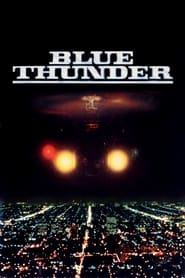
Terrific shooting, colonel. It was beautiful. Beautiful, was it? Goddamn it! I had another stoppage. Interesting that... This is in the early days of Steadicam, which was being used a lot. But John Alonzo felt that he could operate hand-held... ...better than any Steadicam. And so what we're watching here, for the next several minutes... ...is all completely hand-held by John Alonzo, out in the desert. It no more looks like hand-held than something on a dolly... ...but he always felt that he had a flexibility to it... ...and he was able to manoeuvre quickly. So I would just turn him loose on these scenes. Stage the scene and say, "John, you shoot it." And he would go along and shoot the scene beautifully... ...get all the coverage. I almost could've gone home or taken a nap... ...while he was doing this. John said he was built for hand-held. Because he was not very tall... ...and he said his centre of gravity is low to the ground. And a taller person has real trouble staying as steady and stable... ...as he could do. But this is-- It's just wonderful, as I'm watching here... ...how steady the hand-held is and how manoeuvrable it is. We're on a rough desert floor... ...and no special kind of plywood floor laid down for him... Twelve sharp. On a hard surface, he had his little apple-box dolly too... ...that he would scoot around like a monkey with. Yes, apple boxes are kind of hard wooden boxes... ...that we'll use on a movie set for all kinds of things: For people to sit up higher or prop something up. And they're used all the time. And John attached casters to an apple box... ...and he would sit-- if it was on a concrete floor or a hard surface... ...he would sit on what he called his "silly dolly"... ...and push himself around with his feet. And it was another kind of wonderful operating trick that he had.
35:07 · jump to transcript →
-
But getting these helicopters down in the streets-- It's so exciting. Now, those are all our cars, our traffic. And we've got at least eight cameras up in the air... ...photographing these as they go by... ...and do these various tricky, tricky manoeuvres. And nobody had ever tried anything this dangerous. It's amazing. And I don't think they'd let us do it nowadays... ...because of the accident that happened on the Twilight Zone movie. You had to cut down wires, too, didn't you, to clear areas to fly? Yes, absolutely. Because wires are the enemy of a helicopter. I mean, that will ruin a helicopter quicker than anything. I wanted to have a big camera crane inside this parking lot... ...but Jim Gavin would not let me bring one in... ...because he said if I hit the building with these rotor blades... ...you'll kill everybody on the camera crane. So we had to back off down the street, and... While they're doing these tricky manoeuvres... ...you know, we're blowing up the building across the way.
1:39:01 · jump to transcript →
-
-
-
And so we were impressed. We cast him, and it was a really good decision. He had a lot of, for somebody his age, he had a lot of just understanding of how to be practical about stepping through dolly tracks and hitting his marks in front of the lights while still trying to carry the scene.
3:05 · jump to transcript →
-
And I remember at one point sitting on the dolly and just this madness going on and thinking, what am I doing? Why am I here? Do I really want to be doing this? It was a grueling day.
1:04:06 · jump to transcript →
-
-
-
Marilyn Vance did a great job on Mary Stuart's look with those red fringe gloves, which John wrote. But, I mean, it all came together when she executed that look. She put me in miniskirts and cowboy boots, which is now back in. Look at the clothes. Now this shot, by the way, if you watch, for that time, starting now is a pretty elaborate dolly shot. At least, it was for this location. We're not on a Steadicam. We just have track going for about a half a mile. Did they even have Steadicam back then? Yeah.
7:27 · jump to transcript →
-
So, here, yeah, this push-in on Mary Stuart was... Always got me.
1:17:02 · jump to transcript →
-
-
-
Some great work by Tony. That's the real guy's head. No, no, it's real, but it's still all the additions, the pumping and the gooey. Was that a Steadicam shot of that spinning around? Because I don't remember there being a lot of Steadicam shots in the film. It does have a very particular style to it. I'm not a Steadicam guy. This was one of the reasons I... Really? Well, because it's a lot of swim. You can see the horizon. I love it. I love what happened here. A hand injury? So this reveal...
25:03 · jump to transcript →
-
Shots, not with elegant, long, three-minute steadicam. You're not covering it. You're getting these guys. You're shooting the boards. Building a brick wall. It'll fall down if you don't have all the pieces. Was there ever a board that felt unachievable? There were boards that became unachievable. So, yeah. I'm sure everyone felt unachievable at one point in the day. No, no, no. I was, again, probably overconfident, but I know when to quit. You know, when something's...
1:15:35 · jump to transcript →
-
-
-
technical · 1h 35m 1 mention
Steven Lisberger, Donald Kushner, Harrison Ellenshaw, Richard Taylor
-
-
director · 1h 31m 1 mention
Alex Cox, Michael Nesmith, Victoria Thomas, Sy Richardson + 2
-
director · 1h 29m 1 mention
Jeff Kanew, Robert Carradine, Timothy Busfield, Curtis Armstrong
-
-
-
-


Related topics
Other topics that frequently come up in the same commentaries.