Topics / Cinematography & lighting
Camera movement
102 commentaries in the archive discuss this, with 295 total mentions and 55 sampled passages on this page.
Filter commentaries
Filter this topic by the film's decade or the type of commentary.
Showing 28 of 102 commentaries
Clear filtersBy decade
Across the archive
ranked by mentions · click any passage for the moment in the transcript
-
director · 3h 43m 11 mentions
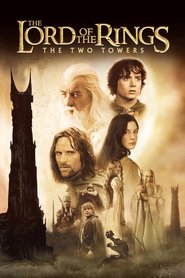
The Lord of the Rings The Two Towers (2002)
Peter Jackson, Fran Walsh, Philippa Boyens
-
grasslands per se but this place I thought was a great stand in for Rohan because it has these interesting rock formations. You know those moving shots where you had both with Aragorn and Legolas, how did you do that? Well that was just a dolly that was trekking along the front of them and even though you're not getting closer to them or you're not getting further away it actually just makes the background roll around the back of them and that was just my obsession with keeping the camera moving as I say I just didn't want to do a static shot.
18:53 · jump to transcript →
-
I love that shot of the horses all turning around it's like one of those flock of birds isn't it that kind of sweep around and come back and then I shot I shot all this other drama in one day which is quite a lot of work to do in a single day of shooting and I knew I had to get through it really quickly so I said to the guys look we're just going to shoot it handheld we're going to not worry about tripods not worry about dollies not do any of that
32:01 · jump to transcript →
-
I only had a day, and I had to get through it really quickly, this entire dialogue scene. So that's kind of why it has a slightly loose, handheld feel, because it was done for speed reasons. I had two cameras rolling at the same time, so one camera would be aiming at Aragorn, one camera would be aiming at Gimli or Legolas, and it was just a way of blasting through the footage. It's good, though. It suits the scene. Yeah. We recolorized Legolas' eyes in this scene. In the computer? Yes.
32:31 · jump to transcript →
-
-
-
No, it's the burial. It's the frame around the grave. I know, but I think it's... There's a dolly right there. No. No, there was no dolly near you. Remember, this was a long lens. Look, there's a... I know. There's no way that you would have seen the camera. I sent you a piece of mail from Berlin and asked us to call you when it arrived. It came this morning.
31:10 · jump to transcript →
-
I started a hallway. Come on, I love Get Smart. But that hallway, this is back on set in L.A., but that hallway was, I just remember, you know, walking down a hallway and seeing a place and thinking, oh, my God. That's Caserta in Italy. Caserta, yeah. The Steadicam in low mode. Here we go. I love this. That's another camera there.
44:46 · jump to transcript →
-
This was on the Paramount lot. This is on the stage above that basement where we shot earlier. This is one of the shots that I love as well. There were, I think, eight people in the camera crew, the dolly grips, the operator focus. You'll see in the shot as the bodyguard walks past, the camera just misses itself in the mirror. I love that. I love that. Look at that. And from that close up to her looking, look at this.
51:51 · jump to transcript →
-
-
-
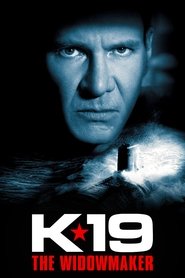
We used quite a bit of Steadicam. We had these slider rigs that we would slide into position and use remote head cameras and whatnot. But it's great to be able to tell a story and block sequences where you can actually have characters play into different shots in a compartment that's that small and not have locked off cameras. And the thing that I remember,
21:38 · jump to transcript →
-
If the camera's going with it, sometimes you would appreciate the motion and sometimes you wouldn't. So we had to be, you know, we used a learning curve and developed, you know, through a series of different things like crane arms and Steadicam and locked-off cameras that you would appreciate the submarine diving and surfacing and actually feel the bodies, you know, the pull that they actually felt when they had that.
25:31 · jump to transcript →
-
I think in those cases we oftentimes would open up the side of the submarine and work off a crane arm. And even though the gimbal was moving the submarine or moving the compartment itself, the camera was working independent of that movement. And so that was the only way we were able to convey that kind of extremity. Otherwise, if the camera was attached to the compartment itself,
26:03 · jump to transcript →
-
-
-
Simon West
but we did actually build a full-size working maquette of the robot that was eight foot tall, weighed 500 pounds, and this was built by my special effects supervisor, Chris Corbould. It had to be moved around on a crane, of course, because it was so heavy, and it was really only used for close-ups of bullet hits and when it was looking right into her face, eyeball to eyeball.
2:04 · jump to transcript →
-
Simon West
My stunt coordinator and second unit director, Simon Crane, and I went to see a dance group called De La Guarda, who specialize in bungee work and running around walls. And it was such a great high energy performance that I thought I'd like to do something like that in the film. So between Simon Crane and I, we devised this whole action sequence that is the next two minutes of the film.
27:41 · jump to transcript →
-
Simon West
And we attached the ropes to it and then got 200 or 300 local Cambodian extras to tug on those ropes. And it was going to be a one-take thing. It took days to put those blocks in. And I was leaving the following day. So we had one chance to pull this thing down. And we rehearsed them and rehearsed them. And I had four or five cameras on it and one Steadicam.
41:53 · jump to transcript →
-
-
-
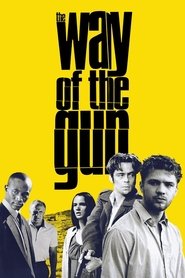
By the way, the car, in order to get rid of the engine noise, we had to pull it up the driveway with a rope. Wow. And the crane crashed into the car and there was all kinds of disasters. So the money, Benicio. The money, Benicio came to me and he said, how much does $15 million weigh? And my immediate response was, who cares? And he said, look, I want to know if I'm going to be carrying this bag. I went to the prop guy, Ian, and I said, all right, figure this out. How much does it weigh in thousands?
1:18:24 · jump to transcript →
-
I didn't even watch Taye when he, I was sitting on the other side of that bureau and I watched the expressions of the crew as they watched him die. Do you watch the monitor when you're directing or do you sit by the director? I try to stay away from it as much as possible. Like sort of Lumet style, watch the acting? I try to stand as close to the camera and I got burned as a result a couple of times. That opening shot, the opening crane shot of the movie,
1:40:37 · jump to transcript →
-
And Benicio, in his reference to Papillon, I'm still here. Yeah, nice work with you and Dick on this shot. That shot, by the way, I swore I would do this. I didn't design it. Bill Clark, my AD, I had a completely different shot designed. The long dolly you're talking about. Yeah, yeah, because it works on so many levels.
1:48:06 · jump to transcript →
-
-
-
Jonathan Lynn
We got really lucky. Feeling better? Yes, thank you. Okay. Let's go for a drive. A drive? Yeah, a drive. Well, I don't know anyone else in town. This was a slightly complex, difficult crane shot. It doesn't look difficult when you watch it.
11:20 · jump to transcript →
-
Jonathan Lynn
Because there are no laughs in this scene, I was able to shoot it in a sort of a long, lingering crane shot. I didn't have to do any coverage because I didn't have to risk... I didn't have to, you know, envisage the possibility that something might be unfunny and have to come out.
1:14:21 · jump to transcript →
-
Jonathan Lynn
We didn't have any real backup. The camera was not on another boat We had with us apart from the actors we had the camera Handheld because there wasn't room for all the equipment to support the camera and dollies and things he had a light we had a piece of polystyrene to bounce light off and we had the sound mixer and the boom man and that for me and the ad that was it and
1:27:58 · jump to transcript →
-
-
-
OK, first, I think when we were thinking about the concept in this beginning, Enrique and I, we discussed a lot about the way that we should shoot that, and the main concept in this sequence was bringing realism to these survivors in this house. That's why we used a handheld camera... shooting the whole time, you know, really close to the actors to convey to the audience that these survivors are isolated in this house.
0:56 · jump to transcript →
-
This sequence was one of the ones we loved the most during the writing process. The first moment that the father confesses, in a way, his betrayal. But we see this in two different angles because we know the truth. We assist, in the first sequence, to the truth. In a way, in terms of the story, we put the finger on the big issue for this character, for Don, which is when he abandoned his wife in the cottage. Now he's with their kids and he needs to tell them what happened in the cottage, which is something really hard for him. And this is one of the moments, in terms of visuals, that the style of the movie, again, is changed because it's a confession. And I thought it's good to change from the handheld stuff to something static, which delivers, you know, the importance of the moment.
21:26 · jump to transcript →
-
Here, again, the challenge was to bring the realism of these extreme moments. The use of the handheld camera and documentary style in the editing is very important to feel the panic, and to see how everything is about to start again.
49:28 · jump to transcript →
-
-
director · 1h 36m 4 mentions
Aliens vs. Predator - Requiem (2007)
Colin Strause, Greg Strause, John Davis
-
Exactly. Here's actually a lead into one of our favorite parts of the new, the sort of new tone of this film versus the last one, which is we get to have an eight-year-old boy here that soon... Yeah, I don't like killing a kid in the beginning of the movie. ...soon bites the dust. And this is actually kind of a fun scene to shoot, too, because we actually had a helicopter in the techno crane for shooting where this crash site was. It was basically like a clear-cut...
4:13 · jump to transcript →
-
I don't know. This is very good work. Again, another night. Another cold night. Yeah, luckily we weren't in the rain yet. But once the rain started, you know, once you're just out there in the cold nights, it's fine. But the rain, I mean, even with the best rain gear, that stuff gets in and your hands turn numb after 10 minutes. I don't even know. We had some great camera assistants. And these guys, a lot of the camera work's handheld. I don't know how they got two. We had these great operators.
31:47 · jump to transcript →
-
And it's colder water. So it would have been better if it was like real rain actually hitting these people instead of this misery that we unleashed upon them from a giant crane. Yeah, on some of these scenes, it doesn't look cold because we had little fans hanging off just off the side of frame to blow their breath out of frame quickly so you didn't see it. But a lot of these, it's a lot colder than it appears. It's not always so glamorous making a movie, is it? No.
1:00:07 · jump to transcript →
-
-
director · 3h 29m 3 mentions
The Lord of the Rings The Fellowship of the Ring (2001)
Peter Jackson, Fran Walsh, Philippa Boyens
-
Probably due to budgetary cuts. Budgetary cuts? Not enough. Not enough. Low left. The intention with the fighting was to make you feel like you were part of it. I wanted to really get in there with the camera. It was all shot handheld. I often used to shoot this fight on Saturdays
2:14:35 · jump to transcript →
-
He is quite empathetic when he drives. Yeah, yeah. Which is, I think... It is in the book. It's a testament to Randy Cook, is it not? Yes. Did Randy drive like this? Well, Randy, who's our animation supervisor, I mean, he and I are big Ray Harryhausen fans, and we always regarded this as being our Harryhausen scene, that the one thing we're doing differently is we're using handheld cameras, whereas the old Harryhausen movies, like Jason and the Argonauts and Sinbad, the cameras were always locked off, completely static.
2:16:55 · jump to transcript →
-
because it was the only way that those effects could be achieved in those days. But we thought it would be great to do what's essentially a wonderful Harryhausen monster fight, but do it with handheld cameras, so you get much more of that documentary sort of feel. So if you look at the troll fight, every single shot, the camera's handheld, and it gives it that little bit of life and energy. But, you know, the gags are all Harryhausen gags, really. You know, throwing stones at monsters, he did that. You know, throwing spears, jumping on their backs.
2:17:23 · jump to transcript →
-
-
-
If you can convey information through something as simple as that, that's the best way to do it. It gets a lot across very quickly. The audience fills in all the gaps around that quite quickly. And I think it's something to do with confidence, really. Knowing how much and how little you can put in. And this is that, what do you call this? It's not a tracking shot, is it? What do you call this? You know what I mean? You left me lots of space to sort of piss around. It's just a pan. It's an interminable pan.
19:12 · jump to transcript →
-
And Anthony's kind of following this cab in another cab. And Andrew's up on a crane, I think, getting a wide shot. So you can give... This is actually picked up later. We did this somewhere else later. But it does affect the actors to see something for real rather than just paint it all out afterwards. You do see it affect them. It helps them enter the world of it. This was very tricky, this, because how do you show it?
1:01:03 · jump to transcript →
-
city burning from a huge distance and still make it look dramatic still justify the long uh pan yeah tails actually love it long tilt the long tracking shot upwards yeah so um
1:01:33 · jump to transcript →
-
-
director · 4h 13m 3 mentions
The Lord of the Rings The Return of the King (2003)
Peter Jackson, Fran Walsh, Philippa Boyens
-
But when we put it in the movie where it was, we thought it had to push in, otherwise it wasn't really working properly. To take you into the hall. She was watching them leave in one and then watching them arrive in this film. This was actually a rebuilt Edoras because this entire party, or the banquet scene as we call it, didn't actually exist in our original script and we'd never shot it. And we had this giant big set of this golden hall that we'd built. Fortunately, when we were done with shooting, we put it in storage.
18:43 · jump to transcript →
-
This is one of my favorite shots, the creeping down one, which was an idea that we had on the set. We were playing around with the wide-angle lens and the camera on a crane, and we were just looking for interesting angles. And we came up with this angle, and then we decided to make it to really feature it as a shot. This is an image that's off one of Alan Lee's paintings, isn't it, on the Two Towers cover, looking up the staircase. I like the fact that the spider's being really creepy and sneaky.
2:23:14 · jump to transcript →
-
We're moving on to our next film. And you literally, the other films do fade away eventually. You know, especially some of the other early films we've made. And you literally, you know, hardly ever hear of them again. But this one isn't going to be like that. This one is going to be their big front and centre forevermore. Absolutely. So you're going to lose the footage where you push in through the door and you go through and you follow Sam.
4:12:35 · jump to transcript →
-
-
writer · 1h 31m 3 mentions
Wes Anderson, Roman Coppola, Jason Schwartzman
-
Roman Coppola
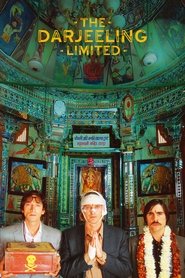
In this moment, we used something that our key grip, Sanjay Sami, called a "rickshaw dolly," but Bill Murray's character-- We turned the camera around backwards so the dolly grip and the actor are the same person. So Bill Murray's just running freely with his-- With the dolly, which is made to look like suitcase handles. Yeah, that was very clever, that his arms reaching down, that appear to be holding the handles of the suitcase, are in fact the arms of the dolly itself. Yeah. That's one of those things where we are just spoiling the illusion for people.
1:29 · jump to transcript →
-
Roman Coppola
So this scene is a... Here the conflict is brewing among the brothers, the suspicions and the questioning. And I remember we decided that-- I thought there was something nice about working in the compartment and not having cuts. And sort of-- You know it's a real space, and we'd also get this building kind of tension that's happening here. So anyway, to shoot this, I remember we built a mock-up of this compartment on the... At our art department, which was actually at the-- Which was actually, like, on train tracks. It was some kind of train-- At the train station. Yeah, it was like a train station. We built a train station in it, in fact. And I remember we rehearsed that shot-- It's one of the few times I remember actually rehearsing an entire shot with a dolly and the camera and everything on a completely different location. You know, in a-- You rarely rehearse with a crew present before you start a movie. But that one, we wanted to make sure we'd be able to do it, because the space was so compact, just because it's a real train rolling along.
16:18 · jump to transcript →
-
Roman Coppola
And that goes straight into this scene with-- This scene where we visit all our characters in the story while we're on this moving train, which, we built this set on the train. That's a door, actually, that you can see out. So this is actually where you are now, Jason. This is based on my apartment in New York. And, anyway, these-- - Yeah. All these rooms are built on this train with this dolly track in it.
1:18:31 · jump to transcript →
-
-
-
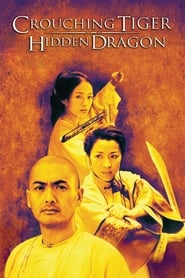
Yeah, I like this shot. Yeah, when did you get into that whole reverse dolly thing? Just kind of Hong Kong, my take on the Hong Kong kind of. I think in a tranquil scene like this, a day scene like this, you give a little twist on the temple. A little camera work. It's exciting. I would almost call it cinematic. I think by doing that, it shows the opposite side of repression, I think.
41:38 · jump to transcript →
-
That's a typical Yuen Woo-ping shot. Dolly. Yeah, Dolly. You really hate to be like a waiter who pissed off Michelle at a restaurant. You can imagine getting that look with the bill. I think avoiding hitting, you've got a couple shots like that and you have to...
1:30:06 · jump to transcript →
-
-
-
Barry Sonnenfeld
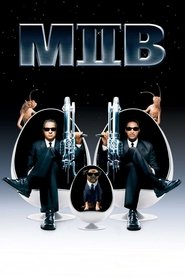
There was no coma. It was a cover. Who are you? - Who are you? I had this set built with a big, fake wall coming up... ...so the camera could dolly straight through... ...and go from one side of the set to the other. Full perimeter wipe-down, right here, right now. Get a mop and escort all civilian personnel from this site immediately. Will has a lot of energy on the set. I used to listen to Will... ...when he had nothing to do, make these weird sounds.
27:53 · jump to transcript →
-
Barry Sonnenfeld
He calls it a human beatbox. And his buddy Biz Markie is one of the best at it. We did not treat his voice... ...nor did we change the sync of Biz Markie's sound. I love the push-in off of Will onto Tommy's reaction. Watch his mouth and listen to the sound. That's totally done by Biz Markie. Danny's score here is just beautiful. That guy looks like Howard Stern or Joey Ramone. I don't know which.
28:32 · jump to transcript →
-
-
-
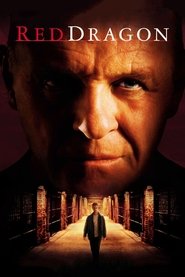
And here we had sort of a challenge as we were working over the script and getting ready to make the movie, because we're going here to a second house of murder victims. You don't want it to be repetitive, and you've got to find a way to make it quite different and move more quickly. Mark Helfrich, the editor, had some wonderful ideas for increasing the pace of this, which was a little bit longer. In the script, initially, I believe Graham goes into the house and has a few moments in it. Anything repetitive will never be in the film with Mark's editing. So we eliminated a couple of brief moments of him going into the house because it was too much like the other house he went into. And you try to move ahead to what's really new, dramatically, in the story. I love this shot. Jimmy Muro, my Steadicam and first camera operator, did this as one. A lot of good shots in this movie are in one, which I love, you feel like you're with him. And this was built. It's like the most incredible tree house in the world. It took about a week to build it. -/t looks pretty real. The tree is real, but we built the tree house. A platform, so that we didn't have to have Edward climbing up there. And it was awesome. It was so much fun that it was scary. Now he's looking from the killer's point of view at the murder victims' house and figuring out that the killer must have sat in the same place. But you cut the shot where he imagines the killer's point of view here. Yes. - Why was that? I cut it because I didn't want people to think he was psychic. I was worried that the audience... No. It was scripted that he would see in a sort of flashback what the killer saw, which was the woman walking past the window. I was really worried about it. I mean, it worked. I was worried that some people might be confused about his visions. I only wanted the visions when he was drinking in his hotel room alone. Where people sometimes have visions, you know? This was a great location. There was a real house here that was from 1770, that was the home of two congressmen. This is outside Baltimore, I guess. - Yeah. And here's the house that we built that we transitioned here... To a house built. ... that was inspired by the house from 1770 that they wouldn't let us use because... This entire house was built just for the movie outside of Los Angeles. - On the Disney Ranch. And here we have Kristi Zea in full-blown design glory. This is the voice of Ellen Burstyn, believe it or not, uncredited. That's interesting. You didn't know that? -/ did know that. I had Kristi do the still photographs because she's so great. In every single shot here, you see hundreds of separate decisions made by Kristi Zea and her team. Take off your nightshirt, and wipe yourself... I love this upstairs kind of lair of Dolarhyde. This was a big debate about the voice and... Now! - Please! Yeah. Should we... What are these voices? ls it Grandma's voice that has been transitioned into the Dragon's... Is it the imaginary voice of the Red Dragon? Originally, it was scripted that we heard the Red Dragon's voice in Dolarhyde's head. I got great actors reading the Dragon's voice, but I just could never make it work. I just felt it became hokey. It was a potential for people laughing where you didn't want them to. This is a CGI shot where we erased his teeth. So that you just see gums. - Yes, you just see gums.
39:12 · jump to transcript →
-
I love this. Breast shots in movies are just... This is just the most bizarre seduction scene. That's what we liked about it. - This is the editor's daughter, by the way. Really? That's Mark's daughter? - She's so cute. Here we are with another family movie. You shot hundreds of feet of family videos. And this is the girl from Family Man, who played the neighbor. Oh, I didn't remember. - Yeah. Very talented and sexy woman, who I knew would help in arousing Ralph Fiennes. Lisa Thornhill. She's a great actress. I just love how many different things are going on here. He's aroused by seeing his next set of victims, as well as by the proximity of Reba. What's it about? She assumes he's watching some kind of business promotional video or something. She has no idea what he's watching. She's excited because she's rarely dated in recent years. And they're both so unsure of themselves. Emily is really a sexy woman. - Yeah, she is. Tremendous amount of sex appeal. It's homework. Yeah. There's nothing like this in any of Thomas Harris' other books. There's nothing quite so strange and wonderful as this kind of scene. It's so bold. - Yes, it's very bold. It was always one of the most powerful scenes in the book, to me. Francis Dolarhyde is so scared that he will hurt this woman, that he is falling in love with. And she is still unaware of how dangerous he is. See how the music transitions with the score. I'm good at shooting monitors, TV sets. Yes, I think you should only shoot TV sets and family videos. Will there be family videos in your next film? Absolutely. I love this shot. I like a lot of my shots, huh? This is... - A lot of great camera work. It lasts for about one second. It's already over. That's Francis Dolarhyde"s happiest moment of his life. Then immediately... - Paranoia sets in. Paranoia sets in, the fear, the anger... But notice the camera hasn't cut and it's going to go with him. This is Jimmy Muro, our Steadicam operator. He's unbelievably talented. It's very hard to operate because of the sheer weight and bulkiness of it, right? Also the distance showing, and then going in... The camera movement is also to hide his private parts. Well, of course. But it's very hard to hold this huge camera and move behind the actor. I love this with the blown-out windows.
1:30:49 · jump to transcript →
-
-
-
That's-- I believe that's... - Cranberry. IIdiko. It might be. Or it's the other stand-in. What's he doing there? - Who is that? He just showed up to visit one day. But he's checking you out. - Who is that? Is that Scott McElroy? - Yeah. I always want to call him a friend from Toronto, Scott McCord. It's McElroy. Scott McElroy. - He goes by Forrest too. Forrest McElroy. I still don't believe I actually broke his nose. You did. - You did, actually. Did I really? - Yes, you did. The first week of training. He didn't tell you in case itt made you gun-shy. You broke his nose, and then you.... - Really upset me. You kept hitting... - What? I did not. No, you didn't. - You kept hitting... Yeah. I did hit those guys. - Gunther. But those guys are... lt wasn't Gunther. Irritating? - No, they're not irritating. Asking for it? - It was like, they never said... They're so great, they just don't ask you to pull back a bit. So I'm not good at that, pulling back. We're cold. - What the hell is going on? It's so cold, and my hair is wet again. - And the scary dogs. This is a new shot. - It is? Yeah. - Shiny, shiny, shiny bottom. That was a new shot, but this is all... - This is the same movie. It's the same one, called Underworld. - I know what movie it is. This has been rearranged just a little bit. There's a few more shots of Erika here. Kind of building up that she's a part of putting this whole... ...you know, this... - You look like one of the Monkees. I really do. It's a little... Just kind of a scary shot. You loved this shot, right? Who? - Kate did. No, because of the Butterfield 8 hair again, right? Yeah, we had that whole hair thing.
51:17 · jump to transcript →
-
I did think I was gonna die that day. This day? The jump? The flip, yeah, because you left it to the second-to-last week of shooting. I thought that you'd done it on purpose in case I did die. Remember how close the camera actually was to me... ...and that doodad, what do you call it? And I had no idea that you were nearly as nervous as you were. I don't think I would have been if I hadn't felt it was purposely left... ...because I'd shot most of my stuff, and it didn't matter if I dropped dead. You always do that. As a safety, you put all your risky stuff at the end... ...IN case your actors die, of course. - I know. I'm on to you. I think you all learned that lesson. I practised that thing for so many months, and then what? Did we have four takes, that was it? It was a huge anticlimax. You were like, "I'm good." But it was great. I mean, you did it perfectly. Yeah, it was shocking. I expect you liked me whizzing about all day. Little things like this... - Hang on. Wasn't this when I shot the camera guy? Yes. - It was, right? You shot the matte box off the camera. - Yeah, oh, God. You said, "Don't fire," and I go, "Okay." But I was so used to the fact that I had been, I forgot. And you freaked them out from that point on. I was actually... Then, remember, the next day, the Steadicam operator and everybody... ...came in, like, full-blown, you know, hockey gear. He was very pink in the face after I did that. He was very... He got practically British about it. After that, he'd wear that welding mask. That was all because of you. That is actually true, isn't it?
1:46:32 · jump to transcript →
-
-
director · 1h 37m 2 mentions
John Cameron Mitchell, Justin Vivian Bond, Sook-Yin Lee, Paul Dawson + 1
-
Oh, Jay Brennan. How cute is he? So adorable. The Yenta was something that was based on something in reality. I'd heard about a handheld device to help you date. I think it was called Gaydar originally in the U.S., but it sort of collapsed. But I thought it was a great idea.
21:53 · jump to transcript →
-
in this film. That's Staten Island. And the lamppost, John, where did that, like, come from? It came out of desperation. Remember Howard? We didn't have it, like, six hours before we were shooting. Oh, this was a difficult day, too, because we wanted that to be a crane shot, and the crane operator got wind of what the film was about and didn't show up because he was a Christian fundamentalist and took exception to what we were doing. We had to get another...
1:21:27 · jump to transcript →
-
-
director · 1h 42m 2 mentions
Len Wiseman, Patrick Tatopoulos, Brad Martin, Nicolas de Toth
-
this is and this is practical this is practical yeah this is actually with with a stunt player um being suspended by a crane that's actually attached to the back of this of the stake bed of the truck props out to my boy joel wist yeah the man yeah that was i was we we actually we use that rig quite a bit and it makes the sequence it really does joel did a fantastic job with that because the guy could just right right here flying right alongside the truck
32:19 · jump to transcript →
-
And we had a lot of mobility with him. Yeah, I got worried. I didn't want people to lose the fact that all this was done practically and the only thing CG in this is the wire removal and the wings. That's it. So the actual crane has been removed. And the crane removed. We haven't even mentioned Pyme and the guys at Luma who did the bulk of all the visual effects on this film and all the CG wings and the CG werewolves and everything.
32:48 · jump to transcript →
-
-
-
James Mangold
And that was something we were very, very conscious about. Also, we were very conscious about using handheld camera, keeping the thing alive, and also trying to lose some of that musty, kind of formalized feeling that recent westerns had. Very often you'll think about sequences like that opening stagecoach as the toughest that a director will face, and certainly that's a real challenge. But I'll tell you, a scene like this with this many characters,
35:38 · jump to transcript →
-
James Mangold
Three quarters of this film is handheld, and it's very hard to hold a widescreen frame, especially as close as we are sometimes, and keep these compositions with the kind of integrity that they have. Also, the kind of handheld work that I prefer isn't so shaky that it's kind of in your face or reminding you all the time that it's handheld. It just has a kind of intimacy to it. You feel the camera is right in there with the actors instead of locked down on something.
1:38:40 · jump to transcript →
-
-
-
-
-
-



Related topics
Other topics that frequently come up in the same commentaries.