Topics / Writing & development
Adaptation & source material
141 commentaries in the archive discuss this, with 1,321 total mentions and 65 sampled passages on this page.
Filter commentaries
Filter this topic by the film's decade or the type of commentary.
Showing 26 of 141 commentaries
Clear filtersBy decade
Across the archive
ranked by mentions · click any passage for the moment in the transcript
-
-
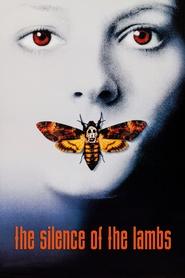
came out that like i convinced my parents to let me rent this from the library and i don't know i i got hooked somehow and that led me to reading thomas harris's books uh the sounds of the lambs hannibal red dragon and um i have distinct memories of freshman year of high school reading the novel silence of the lambs and my biology teacher being so fascinated by the fact that this weird precocious film kid was reading this like very adult novel
2:59 · jump to transcript →
-
trans media or trans images are often received and put out in the mainstream i wouldn't necessarily say this film has faltered in any sense i would say if anything it's going as strong as ever i think people really appreciate uh this type of movie and this sort of novelty of this r-rated uh movie based on a mass market paperback thriller uh
5:19 · jump to transcript →
-
like descent into hell that Clarice has to undergo in order to, you know, meet Hannibal Lecter for the first time where Jonathan Demme and his cinematographer, Tak Fujimoto and, um, the rest of the crew are just using every trick in the book to kind of create this atmosphere and this mood and this ominous feeling, uh, including like the submarine sound effects and the red gel lighting. And, um, what is really the defining, um,
12:27 · jump to transcript →
-
-
-
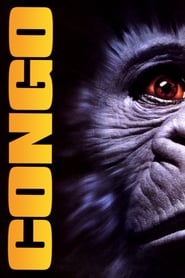
Hi, my name's Jim Hemphill. I am a filmmaker and film historian, and I'm here with... Screenwriter and author Kelly Goodner. And we're here to talk you through Congo, which Paramount released in 1995. It was directed by Frank Marshall, produced by Kathleen Kennedy and Sam Mercer, from a screenplay by John Patrick Shanley, based on a novel by Michael Crichton, all of whom we will talk about in great detail, I'm sure, as this movie progresses. Um...
0:17 · jump to transcript →
-
We're about to get here also into Laura Linney. We've seen her previously. But this whole thing between her and Bruce Campbell was actually added. It's not in the book. It's one of the main changes. I think it works really well. I like the ending where she blows up the satellite and everything. Anyway, in the...
6:36 · jump to transcript →
-
In the book, she was much more mercenary and she wanted the diamonds. And it was purely like to get ahead, to show she was ruthless, like I'll take the expedition. And there was no kind of human element to her at all, like what she does in her free time. There's no love interest whatsoever. But they, you know, it's a movie and you have to kind of identify with somebody. So they created that for her.
6:59 · jump to transcript →
-
-
multi · 2h 19m 18 mentions
Martin Scorsese, Nicholas Pileggi, Ray Liotta, Lorraine Bracco + 9
-
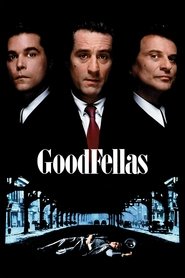
But when I saw the review of the book that Nick Pileggi did, it was interesting to me because the character of Henry Hill was, very simply, he was a foot soldier, and therefore he was privy to the nature of his character, the nature of his character, the kind of person he is, or was at the time, made him trustworthy to many different people on different levels. So he was privy then to all sort of a cross-section of that whole world.
1:10 · jump to transcript →
-
from the very minuscule to the top of the line in that world. I mean, later in Casino, we explored it even further, where it went bigger. I'm Nicholas Pileggi. I wrote the book Wiseguy, and I also wrote the movie with Martin Scorsese, Goodfellas. When the book came out, it was successful. It was a bestseller. And the Times was very good and generous, and there was a review of it in the Times, and Marty called.
1:39 · jump to transcript →
-
So I got as much of it in the book as possible. That, of course, was exactly what Marty was looking for for a film. Because that particular book, you can go and you can make about an infinite number of films because there are many other stories in the book and that sort of thing. But I chose it to go a certain way. And it was all based on the rhythm of Henry Hill's language. That is a part of the whole mob world, the way these guys tell stories about themselves.
6:50 · jump to transcript →
-
-
-
that upset about if you look at the original concept and to this but i think it does kind of reek of let's play a bit safe let's kind of keep it i suppose continuity wise with aliens because once you see like um the mess hall or whatever the kitchen whatever it is you've got that kind of similar sort of hadley's hope design to some of the rooms um so they are carrying over some sort of elements of production look to this film um
8:00 · jump to transcript →
-
relating to the movie, and I made a Withnail and I 2 poster, which is some artwork of Withnail and I with the alien attacking them. Because it turns out that that really is what David Fincher was going for as well, because he's a massive Withnail and I fan. Now, this shot here, when she wipes off the moisture, the condensation, sorry, of the... Oh, that's the original photographer's work. Is it Jordan Cronenworth? Yeah, yeah. I'm getting names wrong today. Yeah, Jordan's something unpronounceable. I've always thought of him as...
29:36 · jump to transcript →
-
in the later part of the 90s, in terms of progression of photography and style. And he's already doing it in 91. So he's like, that's what I've got him. Because this is what the 90s is in terms of filmmaking. That's it, isn't it? Yeah. I often find myself thinking, why hire a director based on their visuals alone? Hire someone who can actually direct actors and...
41:25 · jump to transcript →
-
-
-
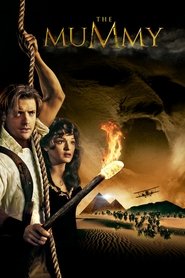
It really grosses the audience out, which I think is interesting. Yeah, they actually think they see his tongue being cut off. They don't see a thing. Now this, Arnold really, he was such a trooper, but it's really creepy being mummified like this because you can't move very much, you can't really breathe. It kind of freaked him out a bit. Here we have a little ILM work here, CG scarabs. If you see the original plate for this shot, the guy who walks in there dumps out about half a dozen plastic...
5:53 · jump to transcript →
-
scarabs just as place markers. ILM did a great job on that shot. Now this next shot's a combination of every trick in the book, first unit photography, second unit photography, ILM, so you went from here to miniatures, models, matte paintings, the whole thing. And then a main title by Kyle Cooper,
6:23 · jump to transcript →
-
it's very well executed too it's interesting because i mean it's it's one of the the cheapest gags in the right in the book i mean it's it's a really it's it's shameless in fact but but it works it's it's fun to be in a preview audience or or even better with a paying audience and sitting there watching them all jump when he uh pushes that mummy out now i shot this scene in this in the script i told john hannah that he was going to be drunk
16:20 · jump to transcript →
-
-
-
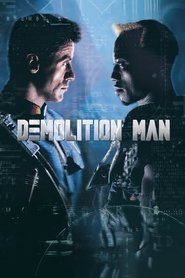
Now they're not resisting. No. When I'm drunk, I like to Google Demolition Man underrated and all these great things happen because I think the movie is getting more appreciated now than it ever was. Absolutely. It's become something of a cult film, especially in the UK. So the opening was actually based on this kind of post-riot apocalyptic present day.
0:33 · jump to transcript →
-
which was in the future, obviously, and it's in San Angeles. So San Diego and Los Angeles merged into one giant metropolis. And Sylvester Stallone is the old school police officer who's in charge of taking down the crime lord, Simon Phoenix, played by Wesley Snipes. Yeah, I think it was the original script was by Peter Lenkoff and it was definitely a solid.
0:59 · jump to transcript →
-
action futuristic thriller, and this opening scene is definitely of the mold that the original screenplay was in. As you'll see, I kind of came in like green pepper, only three weeks of work, but I made it into something else that I think people enjoy, but this is the pure action part of the movie.
1:28 · jump to transcript →
-
-
-
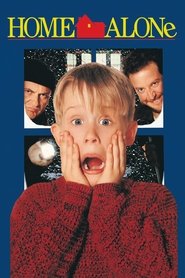
Hey, that's you. - That's me. So this was, uh-- I guess we... We could start about... Talking about the beginning of how this whole movie came about, really. I was in dire straits at the time, in terms of my career. I had just come off of a complete disaster, a big bomb. I didn't know if I was gonna direct again. I thought I'd have to go back to writing. So I was in Chicago staying at my in-laws' house... ...and my first daughter was just born... ...and John Hughes sent me, out of the kindness of his heart, two scripts. One was called Reach the Rock and the other was called Home Alone. One of them, it was rumored... I think it was this one. was written over a weekend... ...which some critics would probably jump on the bandwagon... ...and say, "Well, we always knew that." - Exactly. Ha, ha. So I read Home Alone and immediately responded to it. I thought it was just a great, great piece of material. And it talked about some of the things that I was interested in making a film about. Now, we had a meeting, I remember, in New York. I just-- It was-- You and my father were talking most of the time... ...and I was just imitating everything you were doing. Everything I was doing. - Yeah. You'd drink your water, I drank my water. Like that. I think I did that... I think I way overdid it. I think I just kept doing it the whole, like, hour. Well, you know, the interesting thing is we... Again, it was the kind of situation where we looked at hundreds of kids, again. And I was like-- Even though I didn't know if I'd ever direct a film again... ...I was like, "Well, you know, Macaulay was in Uncle Buck... ...and I don't wanna just cast him based on John Hughes producing the movie... ...because then it looks like I'm gonna give in to John Hughes and be a wimp." And I met all these... I met hundreds of kids. And when I met Macaulay, there was just no one else who came close... ...to what we needed for this film. I mean, really, in terms of an actor... ...a Child actor, at the time, you were the most unique, original kid I'd ever seen. So that was pretty... - Oh, thank you. I mean, I totally agree with you, but thank you anyway. But it really is-- It's sort of, uh... Because it was the fact that you, um... The camera loved you, obviously. You see the shots from the film. The camera loves you, but at the same time, uh... ... you were relatable to every kid in America... ...because you weren't an idealized version of a kid. Kids are used to-- Accustomed to seeing this ridiculously... Shirley Temple, and the curls and the whole thing, you know. And there was just something enormously real about you. That, and I could remember my lines and I had a lot of energy. That is true. You did have a lot of energy. Almost a sad amount of energy. It was, I mean.... Still do too. Uh, now, do you remem--? Like, this particular scene. We're starting from the beginning of the film. And I'm curious, because there were so many scenes in the film... We were talking before we started. where we would shoot your coverage first and then send you home... ...or I'd still be in jail. - Child labor laws. Yes, I'm still well-versed in the child labor laws. So there are obviously certain elements of the film-- Like this. Do you remember this being shot? - No. Because you weren't here. - I remember we did the whole... There was a whole sequence with, you know... ...people coming up the stairs, down. - Right. He's there, and the pizza guy's there. I remember that, and just like, you know, trying to coordinate that whole thing. But, no, in general, there's a lot of stuff... There's a lot of holes in it... In my memory. And this guy went on to do something on Nickelodeon. My kids know him. Yeah, Pete & Pete. - Yeah, Pete & Pete. Is it still on the air? - No, no. It lasted a couple years. It was actually a really kind of neat show. Yeah, my kids loved that show. But what was interesting about the whole look of this film... I guess we could talk about it a little bit. You'll even notice... Some people will think, "Well, this wasn't intentional." But we intended the film to feel like Christmas sort of. I wanted the house to feel very warm. You look at... - Greens, reds. Macaulay's wearing greens, a green and red shirt. There's a green and red jumper sweater on this guy back here. The wallpaper is all... - That's very clever. All conveying a warmth of Christmas and something that, uh... It just was interesting to us. So it wouldn't be over-the-top, but it'd feel warm. I wanted the house to feel like a warm place. Joe Pesci. What do you remember about Joe Pesci? What is, like, your first--? My first-- Gosh, I don't even... I have-- I still show this. I have a scar on my finger. - Uh-huh. We'll get to that part near the end... - Ha-ha-ha. ...when, you Know, he says, you know: - Okay. "I'm gonna bite each one of your fingers off, one at a time." During rehearsal, he actually bit my finger a little harder than I think he thought. I still have a little scar on my finger. It's my little Joe Pesci tooth mark. I'm telling you something, I believe... And I know Joe would probably get a little upset with me about this... ...but there was a little professional jealousy from a lot of the actors on set... ...because you were the star. There's this little kid who was the star, who we were all paying attention to... ...who was carrying the film. And there was a lot of passive-aggressive stuff going on. And I don't think Joe meant to bite through your finger... But, heck, you know, you never know. He was not particularly happy during the course of making this film. And I don't-- I think he would probably say the same thing. He had just come off of Goodfellas and Raging Bull, and he was... I don't know, did he win the Academy Award? He won for Goodfellas. His acceptance speech was, "Thanks," and that was it. Okay. Well, there you go, so, um.... And when he... I remember I was such a fan of his. Asking him to do the Goodfellas... The clown speech, you know. "Make me laugh," you know? "What do--? Am I funny to you like a clown?" And he would do that every day, and it was great. But at the same time, I could feel it from the actors. Because there's always a sense of rivalry between actors. There was this feeling of, you were the star of this movie, and that was un... That was not really common at the time. - Yeah, yeah. It created an interesting tension on the set, I have to say. Yeah, see, I never really felt that, but I was 9. Everyone around here knows he did it. It'll just be a matter of time... ...before he does it again. What's he doing? He walks up and down the streets every night... ... Salting the sidewalks. Maybe he's just trying to be nice. No way. See that garbage can full of salt? That's where he keeps his victims. The salt turns the bodies... ... Into mummies. Wow. - Mummies!
0:21 · jump to transcript →
-
This is a good place to bring up the score. John Williams was not the original composer. If you have one of the early posters of Home Alone in your attic somewhere... ...It says "Composer Bruce Broughton." And Bruce Broughton was the original composer... ...on a film that I wrote called Young Sherlock Holmes. And I loved his score for that film, so I met with him and hired him for this. He was not available to do this... ...and he essentially was doing The Rescuers Down Under. I think that's what it was. So we lost him. So we had no composer while we were shooting... ...the second half of this film. And we went to John Williams thinking, "He'll never do a film like this." But he saw the film, loved it and decided... Amazing what he did. - His score is unbelievable. The score is beautiful. No. - He doesn't miss. Well, the thing is, comedy's very difficult to score... ...because it can always sound stupid or goofy. And John never really let that happen. I think one of the great things about John Hughes' screenplay here... .IS that John really filled in every possible... ...logic hole here. - Yeah. Little loophole. Any-- You know, in other words, by putting this kid into the back of the van... ...he took care of the fact that you would be counted... The head count worked. Also adding Buzz here, confusing her... ... Just added to the... I don't wanna say the reality... ...because the film has a heightened reality, but the reality of what's going on. Yeah, and how it all happened. - And the audience always bought it. They bought the fact-- Particularly, we were concerned about mothers... ...because mothers would say, "How can you leave your kid alone?"
14:15 · jump to transcript →
-
Now, this is the situation, John Heard was reading this book... ...and he said, "I'd like to be reading on-screen." We had no rights for the book, and we were... Of course, I got a call from Legal at Twentieth Century Fox the next day. We didn't clear the book, but luckily it was... It was okay. - It was all right.
25:19 · jump to transcript →
-
-
multi · 2h 24m 8 mentions
Alex Thomson, Terry Rawlings, Alec Gillis, Tom Woodruff Jr. + 3
-
My name is Alec Gillis. I am the co-designer of the creature effects for Alien³ of Amalgamated Dynamics Incorporated. I'm Tom Woodruff, Jr. I'm Alec's partner in Amalgamated Dynamics, co-creator of the Alien effects, and I was in the rubber monster suit. I'm Richard Edlund. I was the visual-effects supervisor on the show. It's the last movie we ever did totally photochemically, actually. Right. This was on the cusp of the digital age. We did have some digital elements. When the alien's head cracks at the end it was a digital shot. That was the only one. Styrofoam floor. - Yes. We had a better Styrofoam floor for that where we'd covered it with metallic dust. It made a more interesting effect. I've always been a little self-conscious of those Styrofoam floors. Plus, that alien juice is pretty mean stuff. I think it's interesting that you can fly through space in a Styrofoam ship! Hey, there's a glimpse... Was that it? That scan, that was a fun scan. There it is - the multilayered sculpture. Are those your star fields too, Richard? - Yeah. I'm Alex Thomson. I was the director of photography on this movie, Alien³. I actually got involved because the original cameraman was Jordan Cronenweth, who did Blade Runner for Ridley Scott, beautifully in my opinion. But Jordan became ill in the first four days of shooting and had to leave the production. I was asked to take over, and I was honored to be able to try and match to his lighting. All I heard, and I wouldn't know if there was any other reason whatsoever, was the fact that Jordan wasn't well. We knew he had got Parkinson's. We knew he had that. You could see he wasn't a fit man obviously when I used to go and talk to him. He was a great character. I liked him very much. I knew him from Blade Runner. I'd met him on Altered States, too, cos Stuart cut that, didn't he? But I'm convinced it was the fact that he wasn't well enough to continue. I know it was a sad loss, but at the same time, I love Alex's work. I did Legend with him. I did Legend with him. Yeah, and I love him anyway. And I did The Saint with him. I love this shot, and I love the fact that it's a model. I just still feel that these miniatures have a quality that CGI spaceships just don't have. Do you think that, Richard, or is that just me? Am I being old-fashioned? Well, it can and it can't. I mean, it depends. On Air Force One I would never have made any models now. It depends on the kind of stuff. This is obviously special effects. These are models shot by the second unit, by Tony Spratling, up in the north of England.
0:59 · jump to transcript →
-
So, yes, this is the footage of Charles Dance's character approaching, finding the Ripley character on the beach. For this scene, we at Amalgamated, with our U.S. and British crew, had to build a replica of Sigourney Weaver. And it was based on a life cast of her, a head cast only. She had just had a baby when we had a chance to do it. That's actually-- I believe that that is an actress, although I can't tell if that's a stand-in or our dummy. But that, of course, is Sigourney Weaver. But she had told us that she would be losing weight, so we had to... She had just had the baby and we had to extrapolate what her body would look like, and so you can see how accurate it looks in these shots. There it is. There. That looks just like Sigourney. It's funny, because we really labor over a lot of these things and that's the real Sigourney. So I think that's about it for the dummy. But it was a beautiful sculpture. Gary Pollard, who is a very talented British sculptor, sculpted that and it was used to save Charles Dance's back. So that he could carry Sigourney. Those are all the little lice. They're actually crickets, I believe, that ended up in Tom's suit. Because the crickets were all over the place and when Tom was wearing the alien suit, he had them crawling down his neck and into his briefs and all that. And in fact, there's a fake ox here, coming up, that was covered with the crickets as well. And even when we shipped all of our stuff back to LA months later, we opened the crate and there were full-grown crickets in the ox's body. So they're very hardy and tenacious little-- Just like the alien, I guess.
5:04 · jump to transcript →
-
You notice in these sequences, the camera is near the ground so the ceiling becomes more important than the floor and one is shooting up people's nostrils. This was an approach David Fincher wanted, which I think is terribly effective indeed and makes it more distinctive than the other three, rather, in my opinion. I tried to keep it fairly shadowy, so that it looks moody. Where I could, I brought the light from the top because it's unusual for the light to come from the floor, but one had to be careful about it obviously. The difficulty was getting light into the eyes so we could see what the actors were thinking but not at the expense of the mood. I remember at Pinewood Studios when the sets were going up, Fincher would have us walk through the sets just looking at the scope of them. It was truly amazing to see these things go up. Norman Reynolds is a great production designer. He builds the world. It's very difficult to control him cos George would tell him on Star Wars "Don't build that. We're gonna paint it", and the next day - "It's too late. It's built." When they sent us over, we said "Why are we going to London?" They said "It's the sets, the set design, the artistry and the craftsmanship." And it really was very true. British actors is another good reason to go there. Somehow the British accent does a lot for these movies, I think. Vincent has had a deep, abiding interest in Luddite monks, and had done a great movie called The Navigator, where these monks dig their way through the earth, coming out into the 20th Century. It was a great movie. But, anyway, the original idea was that this was a wooden planet built by the Luddites and in the bottom of the planet, symbolically, the reactor was kind of hell. The technology that kept this thing going was emanating from the bowels of Lucifer. What drew me to the project first was that it wasn't a retread kind of sequel. It was a completely new idea, and some of it survived in the final script. David was entirely in control from the beginning. He put his stamp on it. He was the director and nobody ever questioned it. He was completely in control of the set and everybody hung on his words. He was definitely doing it. There was no weakness in it at all. He was very, very confident in what he was doing and wouldn't be swayed. He had this vision and that was what he was going to do. He came under quite a lot of pressure from 20th Century Fox to hurry up or do it the quickest way or the most expedient way, but he wouldn't listen. He would do what he wanted to do, quite rightly, in my opinion. As I say, his compositions are marvelous and the use of the frame, and so on. David had been a cinematographer before he became a director, so he knew lighting. He knew what was good and what was bad. That's not to take away from David Worley, the operator. His contribution was enormous as well.
10:16 · jump to transcript →
-
-
-
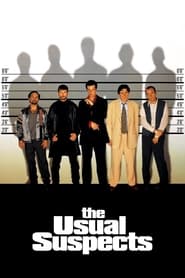
And this is Bryan Singer's film, as you might have noticed there. That was Chris's idea. The impetus of this film, the original idea behind The Usual Suspects, came from a discussion with a friend of mine, an actor named Dylan Kussman, in the lobby of a movie theater. And he asked me what our next film was after our first film. And I said that I had read an article... Our first film being Public Access. Probably not seen.
0:23 · jump to transcript →
-
Yes. And he asked me what the next film was going to be, and I said that I had been reading a magazine, and the title of the article in this magazine was called The Usual Suspects, and I thought that would be an interesting title for a movie. And from there, it became sort of the natural progression. When he asked me what the film would be about, I said, well, naturally, I assume it's about five criminals who are usually arrested for the same crime, and they're put in a lineup together. And...
0:52 · jump to transcript →
-
Gave you an image to go back to with him making his statement. There's my voice. That's Chris's voice as the arresting officer. The tattoos are here. And a paint can, one of the few shots from the original visual concept. A beloved paint can. Yeah. And this is Kevin Pollak. In his very pink garage. Yes. Which I tried to time as much pink out of as I could, but it was... And, uh...
5:17 · jump to transcript →
-
-
multi · 2h 12m 8 mentions
Andrew Sarris, James Ellroy, Brian Helgeland, Michael Nathanson + 10
-
I read the book shortly after I saw the movie. I marveled at the astuteness of the adaptation. I liked the book. The book was a real page-turner. It dealt with a world that I had only experienced secondhand, and I felt the book captured a great deal of this psychological complexity. It dealt very much with the choices
6:04 · jump to transcript →
-
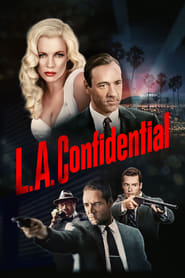
and then we met at the Formosa Cafe. I found it such an extraordinary screenplay. I hadn't read the novel yet, but I would later read the novel and actually be quite amazed at what they had done structurally to it and how many storylines they had cut out of the book and still made it retain its heart and that incredible noir, complicated storylines, you know, characters coming in and out. Yeah, subtle.
12:27 · jump to transcript →
-
and the whole scandal. James Ellroy wrote the book on which this is based. He doesn't pretend that he's exaggerating for effect. He says this is...
14:50 · jump to transcript →
-
-
-
Michael Mann
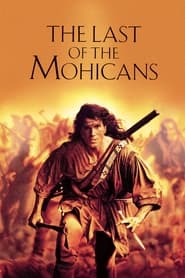
and one of the films that I saw at a very early and highly impressionable age was the original The Last of the Mohicans from 1936. When I think back on it, it was a black and white print, probably 16 millimeter, and it made a lasting impression on me and kind of occupied some space in very early memories about movement, certain kinds of images, things almost like dreams.
0:43 · jump to transcript →
-
Michael Mann
the British imposed compulsory militias among the colonials to fight in their war against the French. Hawkeye and Shingusko Kononkas are heading to a place called Kentucky, which is the original Indian pronunciation for Kentucky. The colonials, prior to the Revolution, such as the Cameron family here, are living on the frontier. The frontier is the equivalent of the Lower East Side of New York within the 1920s.
5:29 · jump to transcript →
-
Michael Mann
The reason the Iroquois are important is because much of the culture that Hawkeye was raised in, that then created the man he is as we encounter him, is based on Iroquois culture, not Mohican culture. Mohicans lived just east of the Housatonic River and were an Algonquin-speaking people, and there's almost nothing known about them. So we borrowed the forms of the Iroquois. By the forms, I mean the value system, their mores.
16:42 · jump to transcript →
-
-
-
the book, the Bible of the film. He's got all the scoring notes. He's got a lot of information. So I'm a little daunted by that. Yeah, it's kind of fun. I keep a binder of every project with everything to do with it, and I throw it in. And I've got my bill from Digital Domain Studios in Bombay here, which looks like it costs 600 rupees per hour.
13:46 · jump to transcript →
-
is based on a response to what you're seeing visually. And it's very specific what you're doing at this point. Parrot. A parrot. That is a parrot, right? Okay, I'll tell you what the parrot is. Is that a budgie? Okay, do you want to know what the parrot idea is? Yeah, can you tell me? Okay, I'll tell you very soon. It's this idea of an animal.
20:28 · jump to transcript →
-
So here, Thomas' world is falling apart. Suddenly, the... And this is... What I really like about this scene is that it's just a comic little piece of misunderstanding. Look what happens with the coffee. He's brought something to be generous. Oh, I fell down the stairs. It's very Egoyan dialogue. It's just so funny. Like, I just love the play here, where...
1:01:41 · jump to transcript →
-
-
-
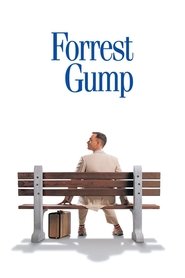
The way this movie came about was Wendy Finerman saw an idea in this book that she bought back in the 80s. And whatever that was, that I don't know, but when Eric Roth took the assignment to adapt the book, and he was like the last one in a string of writers, and I don't even know how many went before him who weren't able to crack it, he saw that the glue to the story was this
9:24 · jump to transcript →
-
The glue to the movie was this love story. So basically, it's Eric Roth's adaption of the book is what made this movie what it is. That's like the tone. And of course, tone is the key thing. And that's what you do as the director. I don't know. There's no way that you can explain it other than you just know it. It's like the famous definition of pornography. I know it when I see it.
9:53 · jump to transcript →
-
The ceremony was kicked off with... Tinkering with historical footage is just an extension of, you know, tinkering with history, whether it's written or recorded or whatever. I mean, we didn't suggest that the original footage that we used is no longer intact. But, you know, I made a feature movie, which is...
1:02:49 · jump to transcript →
-
-
-
Alexander Payne
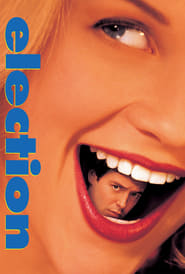
So, hi, this is Alexander Payne. I co-wrote and directed this film, and I'm here to talk to you a little bit about it. I had finished making Citizen Ruth and was sent the novel of this book, Election, by two of the producers, Albert Berger and Ron Yerxa. And I actually didn't read it for a while because it was set in a high school. I wasn't too interested in high school stories.
0:45 · jump to transcript →
-
Alexander Payne
who's so sweet in this scene, it's funny, people have seen the film and say, oh, you just, she's the actress you love to hate, and Tracy Flick, oh, she just is so irritating and wonderful as an actress, but irritating as a character. You see a scene like this, and she's just so sweet and innocent. She's much more sexual in the novel, actually. I thought that would not be an interesting choice for the film. I thought it would be more interesting to emphasize her youth and her
10:03 · jump to transcript →
-
Alexander Payne
We put it in as what we thought would be just as a temporary thing, but nothing ever came close, and audiences liked it so much that we just bought it. It's funny what things come from the novel. The fact that she stars her eye with a star instead of a dot comes from the novel. I had to work a little harder, that's all. You see, I believe in the voters. They understand that elections aren't just popularity contests.
24:48 · jump to transcript →
-
-
-
And he was right, too. Oh, no, it was perfect. He designed his character. It was interesting, though, because as we were designing the Rippers, I mean, you know, they designed all their look based on the looks of the actors, obviously. So they weren't just, I mean, it was not Teenage Mutant Ninja Turtles where you only couldn't tell the difference and all they had, you know, except for what color they're... Right. Oh, yeah. Yeah.
40:54 · jump to transcript →
-
The awesomely famous, amazing Adam Shankman, who directed The New Hairspray, which comes around in my whole world since I produced the original. And he used, the interesting thing about the Liquid Silver dancers is he used two men among the women. And Sharon Stone, who was visiting because she was going out with one of the crew members, came up to me and said...
49:30 · jump to transcript →
-
Yeah. It's huge. It's from one of the parties. I have it in storage somewhere. Wow. So you've got stuff that I haven't seen in 18 years. Catherine, though, showed me, she showed me some of the, I sent over some of the original designs she did for some of the stuff, and stuff that ended up cutting out. I remember that in Liquid Silver she designed this see-through waterbed which had breasts inside, totally clockwork orange.
1:21:17 · jump to transcript →
-
-
-
He's very complimentary about this movie and about Chuck Farr. And he said that actually all of these guys were based on real guys initially, were inspired by real guys that Chuck Farr knew. And he actually got to meet them and hang out with them at least one night. But something that happened with all the guys in this movie is they were hanging out with Navy SEALs all the time. So whether it was those original guys
14:27 · jump to transcript →
-
That is not the last Carlitos Way reference you'll hear in this commentary, by the way. The original, I mean, you're going to hear more about Fly Robin Fly here than you ever wanted to know, but the original working title of the song I find interesting was Run Rabbit Run. I don't know if that was some kind of John Updike reference or what, but they changed it. Anyway, in the 80s, Sylvester LaVey moved from Europe to Hollywood to focus on film composing.
28:05 · jump to transcript →
-
And one day when they needed an extra body one day, he jumped in and did a stunt. And then he just kept on doing it after that. He did stunts on some great cult movies in the 70s, like Race with the Devil and Hollywood Man. And he was the stunt coordinator on the original Town that Dreaded Sundown, which he also played the killer in. Oh, wow. Some of his major credits... He's the guy with the sack on his head? He's the guy with the sack on his head in Town that Dreaded Sundown. And...
1:29:24 · jump to transcript →
-
-
-
Paul M. Sammon
Now watch the film. You never actually see him get in or out of a car. He's always halfway through. The reason why, it was too complicated. Here comes the RoboGun, which was based on a Beretta. I think it's an A93R. And what was interesting about it was it had a three shot capability and a one shot capability. Now RoboVision here, when you see those lines,
7:21 · jump to transcript →
-
Paul M. Sammon
It went through various changes in the original scripts. Let me give you quickly an idea of what happened with the evolution of Robo. As I said earlier, it started with Paul Verhoeven, Michael Miner, Ed Neumeier. Orion was in trouble. It wanted to film out quickly. They didn't feel that Neumeier and Paul Verhoeven were working quickly enough. So Neumeier and Miner bailed to do the project. And then there was a writer's strike.
38:23 · jump to transcript →
-
Paul M. Sammon
And then they digitized that and put it into a computer and then started to manipulate it. And that was one of the very first what we would now call motion capture type of moments in cinema. And it really was cutting edge. The cartoonish look, by the way, was intentional with all the different colored lights. And incidentally, in the original script of RoboCop 2, there was a character very similar to Dr. Fax called Love.
1:17:15 · jump to transcript →
-
-
-
Stephen Prince
And so if you build your environment rather than going on some location and shooting, you can often get results that are stylistically very close to hyper-reality. One of these other characters is played by the actor Masayuki Yui, who played Tango, the loyal retainer in Ron. But it's really impossible to pick him out because you just can't tell based on the costuming.
42:19 · jump to transcript →
-
Stephen Prince
Based on what he wrote in his autobiography, he seems not to have had strong feelings about the war or the nation's long slide into it. He described it as a dark time, and for a brief period he affiliated with a left-wing group and its illegal anti-government activities. But his motivations seem not to have been strongly ideological. In comparison, the director Masaaki Kobayashi, who made trenchant anti-war films that included The Human Condition,
55:27 · jump to transcript →
-
Stephen Prince
Streams has been a very personal work throughout, and this last episode is no exception. The village and its stream are based on memories Kurosawa held from a period when he was in middle school and visited the village where his father grew up. Toyokawa Village was in Akita Prefecture, and as Kurosawa describes it, it was rural and remote and had a simple beauty to it. A brook flowed through the center of the village, as we have in this episode.
1:52:12 · jump to transcript →
-
-
multi · 1h 54m 3 mentions
Jean-Pierre Jeunet, Hervé Schneid, Alec Gillis, Tom Woodruff Jr. + 5
-
Pitof, was that making fun of Americans, the way those soldiers are chewing gum? Yes, sort of. It's very Jeunet. And they're chewing in sync. And it's... Yes, it's... - Making fun of Americans. Tom Woodruff and Alec Gillis made this fake Sigourney. It was a real pleasure to work with this guy. Here's our first shot. The body of this little girl was based on photographs of Sigourney as a child. Then we worked them into a sculpture based on a life cast of an actress that the casting agent got for us. Look at this beautiful morph. Oh, yes, indeed. We morphed to Sigourney as an adult. That face looks an awful lot like the way she looked in Alien 3, when we took a life cast of her. That's right. And we used a body double to cast the body, didn't we? That's right. And we used a body double to cast the body, didn't we? This is the surgery scene. That was a nice little mechanical chest I made with some digital help there. The laser beam is digital. So it's part of my stuff as a second unit director. That's right. This was a fun little surgery scene, with some of the interactive tissue. Silicone chest that was laid on top of Sigourney. I love the look of this. Darius Khondji did a great job. The way the slime looks is almost metallic-looking. It's got such a beautiful reflectivity. Isn't that great? I love this. It's really disgusting. How it's... Then pop! The head pops.
3:31 · jump to transcript →
-
This idea about the bullet on the roof - it's a little bit later - it was an idea from the first version of The City of Lost Children. We didn't use it. I don't remember. In fact, it was a very good pool player, and he used a gun to kill the people, shooting on the roof exactly like this. I used this idea on this film. Yeah, but you didn't shoot it. No. It was in the first draft. Suddenly I thought I was going crazy. The weapons were based on existing ones. I remember leafing through encyclopedias of guns, which were given to me by Steve Cooper, art director. I guess somebody thought "We'll get around to the weapons." Actually, I jumped off the storyboard on to the weapons because panic was setting in. People were saying we needed to get them going. So Steve Cooper brought in all these volumes of books on handguns, rifles, whatnot. I started doing little sketches one afternoon. I think I did one page with eight or nine guns, and out of that one page almost everything came out. We showed them to Nigel and he said "Why don't you expand that one?" Then we started detailing them, and then finding ways to stick them into the wheelchair wherever possible. This was great, cos Tom would always play the hero alien. We had Mark Viniello in one of the other suits, and David Prior was in another one, but Jean-Pierre wanted to keep Tom as the main performer. That was that torso we made with all the guts and the... That's self-explanatory, isn't it? This was a neat effect. This was a prerigged floor with an elevator that would lower all the guts and so on. It would appear as if the thing was melting, but it was a simple little rig. See? They never learn in these movies, do they?
38:37 · jump to transcript →
-
I was thrilled when I watched this scene, because Ripley was carrying my gun. I can't tell you what a charge that was. It was great. I was, one night, looking at Sigourney Weaver and she was harnessing this gun, and I thought "I designed this." I was back to being a kid watching the first Alien movie, and thinking about Ripley running down the corridors, dreaming about what that meant. Many years later, here I was in Los Angeles, and Sigourney Weaver was playing Ripley, and she was harnessing my gun. It's hard to explain, but it's such a high. This is like traveling through time and grabbing the kid inside of you and saying: "Here's what you've been missing." "Here's something for you and for years of frustration - wishing to make something out of your life that's very specific, and the obstacles." And suddenly there's this woman - she doesn't know I exist and couldn't care less - but she's got a prop, and it can mean the world to somebody. Nigel Phelps, the production designer, designed chunks of corridors, and this was really the essence of what the set of The Auriga was about. Some chunks of it were actually reusable. The whole idea about this set was that you can make it go on endlessly - there's different layers and levels. One of the original design ideas that Nigel had, which he explored with Darius Khondji, was that as the story progresses and as the characters go through the ship the walls change colors and become more and more ominous. Since Darius uses a very specific lighting and processing technique for his film - by which he extracts the blacks and reprints them later to get that very very crisp, sharp contrast - the idea was that the walls would be painted and the paint change as the film progressed. They actually tested this and Darius shot plates, and we experimented with the exposure, etc. They collaborated closely. Ideas that one had were integrated by the other. Frequently, Darius would come down to the set as it was being built, and Nigel would explain some of his intentions. Darius would make suggestions and they would create opportunities for lighting. It works extremely well, actually. You could walk through that set and it was prelit. You could have taken a home movie and it would look like a million dollars. It was unbelievable. I remember, Sigourney laughed at this time because I misspelled a word. Instead of saying "Easter bunny", I said, for two or three takes, "Eastern bunny".
51:13 · jump to transcript →
-
-
-
real New York voice. It was very funny. I said, oh, he's pissed now because he's doing his New York voice. Well, we have James Lawrence from Street Trash there. Exactly. Wonderful actor. I cast him just based on that. And Frankenhooker, I said, this guy's got to be in the movie. Great choice. So, yeah, if we want to talk a little bit about Remy Ryan there and her character, because I have to admit, when I first saw the movie,
16:26 · jump to transcript →
-
I wasn't crazy about her being in the film either. It felt like it was a deliberate attempt to get kids to relate to somebody in the picture. Well, in fact, that's not true. Really? The original script, her name was Keiko, and she was, I think, full Japanese and should have been younger. I mean, when I was thinking about this character, I was thinking of Frank's drawings. And I was really...
16:54 · jump to transcript →
-
-
-
Tony Scott
You know, it's funny that the script is almost verbatim, word for word, from the original script that I read in Italy, you know, after I finished Last Boy Scout. Other than the very end of the movie, the end of the movie, I'm a romantic, I think, in the end of the movie. I struggle with, because in Quentin's end, Christian dies, or the clown's character dies, and...
37:15 · jump to transcript →
-
Tony Scott
except it's more deluded, you know, it's better. Again, I constructed the set. The set was based on that set, the Sahara Motel, which was the real motel down off Van Nuys in the valley. But then I put the Hawaiian motif on the walls and put mirror on the ceiling because I knew that when I was storyboarding the sequence ahead of time, I knew that I wanted Patricia, who'd been badly beaten, to be able to see the elements in the room.
1:19:28 · jump to transcript →
-
-
director · 1h 31m 2 mentions
David Steinberg, Dave Foley, David Higgins, Jay Kogen
-
I always like that line. And there's the other album. Right. Well, I believe... Does this take place in Texas? Is that what's the idea at this point, right? Yeah. So we're almost in Mexico. There's a tunnel. Right. Well, this was the idea in the original as well that we'd make our way to Mexico. It was also funny because you're on the Canadian border and then he makes his way to Mexico. Yeah. Which we thought was...
1:19:38 · jump to transcript →
-
We did a sketch where we copied Reservoir Dogs, and I had dinner with him once, and he was very excited that that was based on it. The Fell on My Keys, of course, was an homage to the producers. Sure. Just doing my job. I do, however, have a few questions. Gene Wilder falls, and then I fell on my keys. Spent some time in New York City. Yes. Well, Bob and I are going up there next week, and I was wondering if you could suggest a show. Of course. Moby the Musical, a must-see.
1:26:19 · jump to transcript →
-
-
-

Related topics
Other topics that frequently come up in the same commentaries.