Topics / Writing & development
Adaptation & source material
141 commentaries in the archive discuss this, with 1,321 total mentions and 71 sampled passages on this page.
Filter commentaries
Filter this topic by the film's decade or the type of commentary.
Showing 32 of 141 commentaries
Clear filtersBy decade
Across the archive
ranked by mentions · click any passage for the moment in the transcript
-
-
and how I relate to the film, I thought it'd be interesting to discuss with Bill the whole subject of UFOs and alien abductions and how it relates to Communion. Communion was shot in 1988. That's 12 years ago. It's now February 2000. So a lot's happened since the book and the movie of Communion came out. And that's something that I think Bill can talk about.
0:50 · jump to transcript →
-
Hi, Philippe. I'm happy to be here. I am, as you said, the publisher of UFO Magazine, and I also wrote a book in 1997, which was published by Simon & Schuster and Pocket Books called The Day After Roswell with Lieutenant Colonel Phil Corso, who has since deceased. And it was one of these eye-opening experiences because the book and the process of writing the book, as I'm sure the process of making this movie
1:18 · jump to transcript →
-
was an entree into a kind of community that was always there but was off your radar. And once a door opens and you see what's going on inside the community, you realize that there is a whole other world of experience that unless you're tuned into it, you don't know about. Bill, just broadly, what effect do you think the book and the movie specifically of Communion had in
1:48 · jump to transcript →
-
-
-
when she read the book and the script of Fast Times that we should consolidate the action in the mall and that the mall should be the centerpiece of the movie. And I have to say thank you, Amy. You're welcome, Cam. Actually, I'm an agoraphobic. I don't like going outside. So the idea of a bunch of fast food places on a strip outside in fresh air was frightening to me. I was just waiting for malls to be invented.
0:48 · jump to transcript →
-
just like you wouldn't want me to come to your house some evening and discuss U.S. history on your time, understand? Yes, sir. You originally wanted Fred Gwynne, didn't you, for the part of Mr. Hand, and he didn't want to do the script because there was too much nasty stuff? Well, I forgot all about that, but as it was in the book, he was a big, heavy guy, sort of like the Hawaii Five-0 character. And then when we all met Ray Walston, who everybody loves from something, and...
10:37 · jump to transcript →
-
I just thought it was kind of matter of fact for these girls. It's fantastic. And it's so real. Which was the point of the book and what you were a real cop about on the movie. Well, the book was... The whole thing was like fast times. It's like too fast. They're too young for all of this. They have to look like little kids. Right. Real. Because all the teenagers on TV looked like 40. Yeah, and Grease, where they were...
13:35 · jump to transcript →
-
-
-
And so this is really about the kind of the buildup of the military industrial complex. And in fact, coming up here, we're going to have Dr. McNamara, who is based on Robert McNamara, the Secretary of Defense during Vietnam era. And ED-209 coming up here is based on kind of a Huey gunship idea, although obviously Phil Tippett and Craig Hayes, who designed it, actually made it work. This is still a big prop.
9:41 · jump to transcript →
-
Well, you get the laugh, but less so than when we saw it the first time in the preview, when it was still the original version. And I realized that without, I mean, without taking a backseat here, me, that really the gruesome, bloody scene where the guy on the table is killed by a 209 was mostly directed by Jon Davison, who added so much blood to that scene that it is merely disgusting.
12:47 · jump to transcript →
-
Mostly based on the fact that the Brazilian steel got so cheap, isn't it? Yep. So that the Americans couldn't compete anymore. Well, of course, you know, we have a labor force by now that won't do things for nothing. Right. You know, we have entitlements and everything. Now, this is an interesting thing here. This is Pittsburgh. But by the time they go downstairs to that bottom area there, we will be in Long Beach in another industrial space where we shot the special effects sequences involving Peter or Murphy's death.
17:47 · jump to transcript →
-
-
-
William Friedkin
the Iranian terrorist on the roof at the beginning of the film, that's something that I don't recall being in the book at all. It was something that came out of my discussions with Jerry Petievich, who was a Secret Service agent and did write the book. I remember asking Jerry what were sort of the typical
4:10 · jump to transcript →
-
William Friedkin
Obviously, the Secret Service doesn't want to give people any ideas. But this was based on a threat to the president, one of many that occur every time the president goes out and makes a speech somewhere. And the Secret Service is alert to these guys, and they're very good at spotting things that seem to be out of kilter in what would otherwise look like a normal operation, say, of a hotel.
5:06 · jump to transcript →
-
William Friedkin
to set up and manipulate on location than the original cranes were. A studio crane is too bulky and too unwieldy to take to a place like a bridge. It was only possible to do a shot like that because of this portable, lightweight crane that was originated in France and that they had a very few copies of
9:27 · jump to transcript →
-
-
-
I assume he was auditioning for Empire of the Sun before this. I don't know what it was. And, of course, this is before he really hit it big with Dead Poets Society, so it must have been cool to see him make it, you know, suddenly have a big hit not too long after this came out. Right. And he really carries this whole film. I mean, he's in virtually every scene in the movie, you know, so it's kind of a make or break based on his performance. Well, yes, and that became a problem because during the movie he came down with mononucleosis. Oh. And...
3:32 · jump to transcript →
-
Now, one of the more interesting things about this cast, not at the time it came out, but later, is the fact the two moms in this movie have a really great connection together. You've got Fannie Flagg, who wrote the novel Fried Green Tomatoes at the Whistle Stop Cafe, and then you've got Kathy Bates, who starred in the movie version of it. And, of course, Fanny was also one of the people who adapted the screenplay. So just kind of a funny coincidence that they had a huge hit after this together. Yeah, well, oddly enough, Kathy had been our original choice.
5:26 · jump to transcript →
-
to see her and she was quite a talent and she was actually writing um her book on while we were doing well she's written a series of books uh but fried green tomatoes she was writing uh while she was doing this and there's actually a story that i had told her that she included in the book which i thought was kind of fun really yeah and uh
7:22 · jump to transcript →
-
-
director · 1h 24m 11 mentions
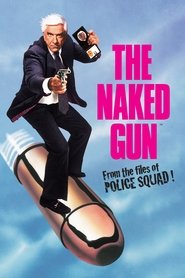
The Naked Gun: From the Files of Police Squad! (1988)
David Zucker, Robert K. Weiss, Peter Tilden
-
He did all this. There he goes. He wiped that guy's forehead himself. Here's our homage to the Three Stooges. Not many people realize this movie's based on Shakespeare's The Tempest. Yeah. Which started the same way.
2:20 · jump to transcript →
-
Can we cut that answer out? I'm not at liberty to say it. Actually, Leslie was in the television show that these movies are based on. I believe there may be a couple people who don't know that Naked Gun is based on the failed TV series Police Squad, of which six... Now, I love this joke. Is it safe to say I filmed that part? Did you go out and do that second unit? That was second unit. Bob directed that part. I couldn't convince you to do that. You know how long that was? 45-minute trip. I know. Bob did all the breast jokes.
9:11 · jump to transcript →
-
And that's important to future writers? It is. Fluker dialogue? Know your Fluker. How many pages of Fluker dialogue is in a good script? Most of it. That's right, we have the whole glossary of terms. I know. Well, we might talk about some of those. Terms, rules, well, nothing worked. And here comes the joke from the set-up. This actually happened to our rabbi. Was it based on that story or did it happen after the fact? He was with the mayor guarding the queen. Life imitating art.
14:33 · jump to transcript →
-
-
cast · 1h 36m 9 mentions
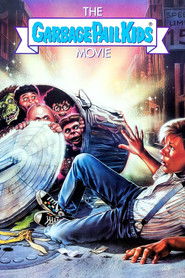
The Garbage Pail Kids Movie (1987)
Mackenzie Astin, Katie Barberi, William Morris
-
So, you know how the book is always better than the movie? Yeah. My contention is that that's because the human imagination is the most powerful supercomputer that exists. And...
2:10 · jump to transcript →
-
They were so supportive of us, I think, because the whole cast, I think, just really felt very supportive of the young actors. You know, that was Mac and myself. Just like to point out, I think that's the first act of overt violence, the Garbage Pail Kids. Okay, now it's important to say this, and I'm going to say it. In the original script, all of this stuff that they do,
29:39 · jump to transcript →
-
with everything that had happened to them throughout the film. But in the editing, they decided to put these little pranks in the middle because they felt like the kids might get bored. And to this day, kids, I mean, child viewing audience. To this day, it concerns me when studios come in and the editing department or the marketing department says, no, the original story isn't going to fly. Well, we don't know that. You know, it's narrative. And when we sign on to a project...
30:25 · jump to transcript →
-
-
-
Paul Davis
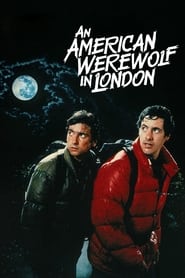
Hi there, I'm Paul Davis, and I'm the director, producer, and writer of the Beware the Moon documentary, which is also on the Blu-ray release, and the author of the book of the same title, which followed a few years later, which was a limited edition, so if you managed to get one, I hope you enjoyed it. If you didn't, sorry, they're about 800 quid on eBay now.
0:03 · jump to transcript →
-
Paul Davis
the book and the documentary, I found out that it was actually minus, it was recorded as minus 11 degrees on the 28th of February in London, where they filmed that night. So it was cold. And those poor guys, they were the only two that had to get wet under those, under the rain trees. And the scene was lit by the DP Bob Paynter,
13:38 · jump to transcript →
-
Paul Davis
Now this kid was called Colin Fernandes. I did actually find him. It was one of the creepier reveals while making the... I think it was when I got to the book. I found him on Facebook and I sent him a message, but he never read it. This moment's wonderful.
58:20 · jump to transcript →
-
-
director · 1h 30m 8 mentions
A Nightmare on Elm Street (1984)
Wes Craven, Heather Langenkamp, John Saxon, Jacques Haitkin
-
Um, it probably looked really cheesy and stiff. No sugar coating. I'd never really done an on-screen kiss with Johnny Depp before and probably never will. Oh, that's right. You tore your clothes off or something like that? That's right. This is based on a real incident in my life when I just, uh, the first time I ever sort of was away from home, I slept in an artist's studio in Chicago, and I heard...
10:58 · jump to transcript →
-
the couple who were in my house making love nicely in the next room when I was a complete virgin. It was like the most miserable night of my life. This sequence is, of course, one of the scariest, I think, that had been... A lot of people told me that they either were not able to stay in the theater for this or they just haunted them for a long, long time. And it was based on the theory that
11:26 · jump to transcript →
-
Oh, the close-ups, yeah. Yeah, the close-ups. That's right. Because we didn't have time to get the close-ups back. In Venice on the... This is an actual Army manual, too. Here we go. What are you reading that for? I'm into survival. I guess it was cut out, but it was in the original. I found it at this great survivalist bookstore. Booby traps and anti-personnel devices.
55:24 · jump to transcript →
-
-
-
Jim Piddock
And the interplay of light and shadow, the play betwixt them here, as you see only in movies photographed with distinction. This is the cinematographer's art. Cold light and then warm light. We don't usually mix them, not to this extent, but I don't think we want to quibble, do we? We seem to have settled, I think, here on darkness.
20:59 · jump to transcript →
-
Jim Piddock
replaced the original shot where the engraved lighter had said Todor. So it begins, you see, to make some sense. It's the father's lighter. It's dad's lighter. A family heirloom, presumably. Todor Zhivkov, of course, being the name of the post-war Bulgarian strongman. Not circus strongman, the Bulgarian dictator. Todor Zhivkov. Well, so the plot thickened then. I mean, one was thinking, who is this character, this gruff...
31:44 · jump to transcript →
-
Jim Piddock
Sticking gun, as they say, when you see a gun. And there's the lighter, which, as you know, is engraved Todor, his father's lighter. So in the original version at this point, once again, we're thinking, why is this Bulgarian here in Texas flicking on and off his father's cigarette lighter? And do watch these footsteps, because these are not the actor's feet, if you'll permit me a technical aside about the filming. Oh, rather, excuse me.
34:50 · jump to transcript →
-
-
-
Oliver Stone
Hey, Taylor. Hey, cheese dick, you're up. What? You're up. Keith David is the... Yeah, I'm sure. ...is a king. He was also a fairly new actor. It's just a great Shakespearean baritone voice. He resembled so many guys that I knew that were strong and helpful to me in the field, helped keep me alive. This guy was based on a guy I knew from Texas, was a real badass.
16:57 · jump to transcript →
-
Oliver Stone
That is a point still in debate in the historical texts right up to today, but I think Junior fell asleep. How long? Charlie thinks he's dying, but he's not really. And the other guy, the guy who's really dying is his buddy Gardner, right here. My Gardner is based on a guy who was given me, not quite like this, but the guy that I knew, Gardner, was from the South, and he was smiling as we put him on the chopper.
23:54 · jump to transcript →
-
Oliver Stone
Overt, nothing is easy to see. It's always hard to pick up. We went with that look in the daytime. Nighttime, I think Bob was struggling more with it. I think we have, you know, I think sometimes it was too clear. And, you know, you find that hard, you have that difficulty at night. Sometimes you see too little or do you see too much, you know, and it's a hard margin to work. This is based on the outhouse details I worked on.
27:27 · jump to transcript →
-
-
-
Now we're getting into some of Tony's favorite moments of the movie, or possibly least favorite moments if you're having any knee-jerk reactions off of set. Now, the blob was, at least by this point, I remember when Fango started doing like, what, seven or eight articles about this movie, getting people excited about the film, which I was definitely one of them. You know, one of the common jokes about the original blob was, oh, here comes the grape jelly coming out of the strawberry jam. Here it comes after us. That's pretty grody looking right there. How did you guys come up with...
15:37 · jump to transcript →
-
between me and anybody doing marketing. Yeah, the advertising department doesn't listen to filmmakers. They just get some juicy shots, cut them together. And what follows later, well, that's not up to them. Another fun anecdote that no one but my mom will enjoy. I made my mom... I agreed to go see Chorus Line, the Chorus Line, the play in Broadway around this time, right before the movie came out. Because if you remember, or they still do it in L.A., you know, they put...
39:43 · jump to transcript →
-
That's kind of a callback to the original blob where it was massive in scale. Then the tentacles were just that much better. The matte paintings, the fast blob when it's large scale like this, didn't look at that. This is one of those films that you wish that we had all the elements of it so that you could do a true fix-up because...
43:55 · jump to transcript →
-
-
-
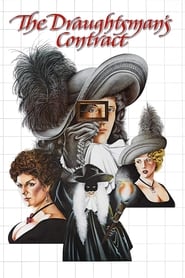
Peter Greenaway
with enthusiasms for the French Revolution in France's greatest enemy, which had been Great Britain. And William Beckford created this large estate called Fonthill Abbey, which on the opening night he invited Lord Nelson and his mistress Emma Hamilton to come and be the master and mistress of ceremonies. And the original intention was to create a scenario which was very much related to this place,
13:24 · jump to transcript →
-
Peter Greenaway
The front of the house that faces west... We were very lucky to find a Jacobean country house, which already would have been at least 60 or 70 years old in 1694, at a place called Groombridge in Kent. The layout of the house, the original fabric, probably made in the 1650s, maybe even earlier, certainly still exists right at the time of filming in the early 1980s.
16:46 · jump to transcript →
-
Peter Greenaway
creation of picture and creation of music should work together as a very happy balance. And the original proposition was simply rather like the draftsman himself was commissioned to make 12 drawings, so Michael Nyman was commissioned to make 12 pieces of music. The actual correspondence that would exist between each site of the garden and each piece of music was always left a little fluid so that we could manipulate.
42:37 · jump to transcript →
-
-
technical · 1h 35m 5 mentions
Steven Lisberger, Donald Kushner, Harrison Ellenshaw, Richard Taylor
-
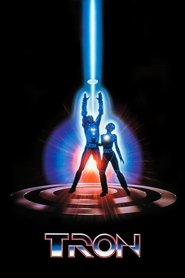
This is Richard Taylor, I was one of the special effects directors on Tron, and I was the director of the computer simulation division on Tron. And we're here to provide you with some audio commentary on Tron. The origin of Tron dates back to early work we did in animation experimenting with characters, animated characters who would be made out of light, who would be not rendered in ink and paint and put on cels, but actually only exist as light imagery. And we were looking for a place where characters like that could be part of a Story. And I saw a Pong game, and it reminded me of gladiatorial games. And at the time, I had been trying to keep up to date on what was happening with early computer graphics, 'cause it was part of animation. And so, all of those things came together very nicely, the Pong game, the characters made of light, and the computer animation was the environment. And through computer animation, we got to know computer people and programmers and computer technicians. And the more I got to know them, the more the story accommodated their personas in the electronic world. I think one of the original guys was one of the guys who created... Or one of the creators of the PowerBook, that was... Yeah. - Yeah, Alan Kay. And Alan, the alter ego for the Tron character was called Alan, named after Alan Kay. And what impressed me about these guys was that they were pioneering this new reality. And that with pioneering that world, certain frustrations had taken them over. They felt that they were fighting a losing battle in certain areas. Alan Kay was trying to convince the world that people were going to have small, portable computers that they were going to carry around, and no one would believe him. Other computer programmers I worked with were doing computer graphics, and they thought that their stuff was going to be in movies one day and hold up, and nobody would believe them either. So, I looked upon them as a group of warriors and believers in their own abilities, and fighting and... Characters who were fighting a good fight, and... It's a little difficult for the audience because I think the audience doesn't necessarily relate, didn't relate then, it relates a little more now, to a group of people who speak computer talk, who are interested in computers, and who are fighting to make cyberspace, or the electronic world as we called it, a good place. Basically, Steve and I had worked in developing it for over a year. We had developed the script, and we had done a promo reel for the film of certain computer effects and certain kinds of digitized effects of what the electronic world would look like. And we put together a little booklet, I think, of storyboards, and also photographs, and then went to see Tom Wilhite, who was head of the studio at the time. And in our first pitch meeting, he really got it. You know, say that... When we first pitched it to him, he got the idea right away. We developed this movie before he went to Disney. I think in the back of our minds, we always Said to ourselves, "This would be the perfect Disney movie, "so, therefore, they won't buy it." But I think they got it right away. Yeah, originally it was our dream to try to make this film as our independent film. But it got too big for us and... I think at that time we invested every nickel we had developing the script, the effects techniques... And a couple nickels we borrowed, too. Don't remind me of that. You have in... If I may, a commentary about Donald's influence on the film was that as producer, he and Steven came to the studio. I was brought onto the show because I had been at the studio at Disney before and was, kind of, to be the connection between... To help be the connection between the studio and this new type of filmmaking that was going to take place. And so, a great deal of Donald's input was bridging the gap, and the gap was quite large between a traditional studio used to making either pure animation or live-action films, and doing this film that was... You couldn't describe. It was not a typical film by any means. And everything from the hiring of the people and moving them through a traditional studio system became something that Donald had to deal with on a daily basis. And the producer is as much an enabler as anything. I can remember... I can remember Tom Wilhite calling me into his office and describing this project, this was before I met Steven and Donald, and said that he was going ahead with a film about a video game, about players in the video game, and I thought, "Well, that's going to be great, but how are you going to do it?" And he said, "/ don't know, "I thought you were going to tell me how we were going to do it." And it went from there. And I... You know, we had an idea, and Steven brought the concept of how it would be done, how it would be inked and painted. But we really never sat down and faced the reality of it. And I think if we had, we never would have started it. Now, here we're really getting into the mind of a hacker, of a computer type in the early '80s. He's communicating with the computer, which in this case is anthropomorphisized as an alter ego. What's happened here is that he has an agent program, and agent programs are a technology that's only now really being discussed about, in terms of whether it's going to be used in a mainstream way. And he sent his program in to get information to prove that Dillinger has been stealing things from him through the computer system. So, as a hacker, he's breaking in and trying to prove this in the computer world. And he got caught. The Recognizers are the cops.
0:16 · jump to transcript →
-
When we came to make a decision about what film format to use for Tron, we felt very strongly that we needed to shoot it on a larger negative than traditionally done. And it came down to a choice between 65 millimeter and VistaVision for the whole show. But the availability of 65-millimeter cameras was far better than the availability of VistaVision cameras, so we made the decision to shoot the entire show in 65 millimeter. And to keep a certain consistency, and as long as we had rented the cameras, we felt that we might as well go ahead and shoot the real world in 65 millimeter and not in 35 millimeter. It was kind of one of those nice to have things, and nobody objected strenuously to it, and also it would be the first time since Ryan's Daughter that a film had been shot entirely in 65 millimeter. And I think you can see the results. I mean, it looks wonderful. In the monitors in Lawrence Livermore, one of the things that Triple-/ had to do was create lots of imagery that appeared on monitors, and that imagery had to be shot and created long before we got to production. So, there was a lot of planning in creating all of the monitor imagery, and Triple-I did a great job on that. Spent a Iot of time on this shot. To accomplish the effect, what we did was get a 4-by-5 still camera and photograph Jeff Bridges in his position after he's been zapped, and then immediately moved him out and took another photograph, which was the background by itself. So, as you pull away chunks of Jeff, you see the background behind him, and then to put the laser and the grid and all that on top of him was basically the effects animation of John Van Vliet. When Flynn is de-rezzed and pulled into the computer, we go through one of the most interesting sequences in Tron, which is the real world to electronic world transition. This sequence was created by Robert Abel & Associates, primarily under the direction of Kenny Merman. It was a sequence which I had designed, knowing that the way that Robert Abel & Associates was making these computer graphic images with the Evans & Sutherland computers, and, really, using vector graphics to create this particular look, would give us a look that would be unique just for this transition. The three-space transition, the movement through all these binary bit patterns and this polygonal landscape, was done by making multiple passes through a traditional animation camera that was pointed at a high-resolution, vector graphic, Evans & Sutherland computer screen, and making multiple passes, frame by frame, using different colored filters, coming back, making multiple passes of rewinding other filters, until you finally end up with this, which seems to be solid objects. But it's really made out of lots of tiny, tiny lines put together to make solid blocks of color or objects. Oh, man, this isn't happening. It only thinks it's happening. When Flynn says, "This isn't happening, it just thinks it's happening," it's a key line, because it means that the reality that he finds himself in now, not even he can fully believe exists. And if anyone should appreciate and understand this alternate reality, it's him, and now he finds himself trapped in it. All right, now we see Sark standing on the bridge, and all of a sudden, he is enclosed with these shrouds of light as he begins to have his conversation with the MCP. The database for the MCP was a human figure that we had created at Triple-/ called Adam Powers and was originally on the Information International sample reel. And if you look at that sample reel, you'll see a juggler character who was juggling balls. Well, that face of that character is the face of the MCP. So, the first time that you see him, he is a polygonal drawing of a face. And that's basically the underlying database of the face. So, it's made of polygons. And those polygons, we play them out on the Triple-I computers as the line-drawing polygons, and made 12-and-a-half by 20-inch stills, high-con stills of those. But we created the mouth positions for the vowels and the syllables so that you could take these interchangeable transparencies and lay them down and make him Say, by whatever order you put them in, whatever you wanted him to say. 'Cause he was voicing a lot of different dialogue. Then those were backlit, and then we applied an effect to those line drawings of putting a steel mesh screen over the taking camera, and it made it have that much more, kind of, complex look. And then we also animated the exposure occasionally. Early on in the film when I started working with Steven, we did a lot of experiments to work out how these characters were created. The thing that we finally decided was that the characters needed to have this energy inside themselves. They are obviously in this electronic world. Now, these costumes were unlike any costumes anyone had ever created for a picture before, in that they were costumes designed to have effects treatments done to them. They were white with black drawing or black lines over them. All of the black elements on the costume were turned into circuitry which could be backlit and light could be pushed through there. We originally shot a 65-millimeter image of these people, live-action photography of them on these black sets. Then from that 65-millimeter film, we created some photo-rotoscope machines, which basically could project the 65-millimeter film down to large pieces of film, which were pre-punched with animation punches. This film was created by Kodak for us, and we would project down with these photo-rotoscope machines, which would hold this film into a vacuum frame and make a continuous tone positive print of each frame of the film. Then these continuous tone prints were taken to a light table, it was a vacuum light table, where they were contact printed to high-con film to make a number of high-con positive and negative images. So that you basically have for every character a large cel and you have high-con positives, negatives, and a continuous tone positive. Then these high-con elements were hand-inked and painted to isolate the circuits on the body, the whites of the eyes, the whites of the teeth and any other circuits that we wanted to treat as a separate exposure. The characters are more often than not... The live-action characters are shot on an all black stage. When there is a set, the set is also black, but is measured out to conform with what we're seeing in this artwork. So that if a character appears elevated in a shot, like this shot, there was an elevated platform for him to walk on, but it didn't look at all like the set. Then we would composite these actors over paintings, transparencies, and once that was done, we would add the light and the color separately. And to simplify it, you can describe it as a sort of perfect blend between live action and animation in that we took live-action film, photographed it in a way that we could break it down to individual frames, then blow up those frames into large slides or transparencies. And we had 75,000 of these, which seems like an appallingly large number, but it really isn't if you compare it to an animation film. And because we were at Disney, they were not overly swamped. That's an actual Frisbee, by the way, and those are actual Frisbees on their backs. We had a excellent Frisbee coach, Sam Schaiz. I like the fact that the deadliest weapon in Tron is a Frisbee. A Iot of effects animation in this sequence and in the film. And that is the animation that makes the glows, and as the Frisbee gets brighter, and you see the reflections of it on their costumes, all that has to be done frame by frame. This is hand-drawn animation that, although it is drawn, a negative is made of that, and it is placed over a light source and then re-photographed, and the ability of the effects animators was such that we were never waiting on the effects animation on the show. They always performed very well. It was never a problem. They did very few redos, and that's because they had had experience doing this beforehand, whereas everything else that we were doing, outside of the effects animation, was the first time through. So, that had a much tougher and steeper learning curve. In the holding cells for the game grid, those are backgrounds that are entirely hand-drawn by the background department, again using Rapidographs and line drawing and airbrushing and then turning those into high-cons. But those drawings are all drawn to match the actual physical sets, which were built so that when someone passes behind something, or leans on something, those are actual physical sets that were built. But again, the sets were just black on black. They're as if they were made of black velvet. Part of the interesting thing as a cinemagraphic problem that was presented to Bruce Logan was that he had to shoot, unlike anybody had ever shot before, sets that were entirely black with white line drawings and white characters running around on these sets. Bruce Logan's job in photographing these people was very difficult because, unlike most photography for most films, you try and get as much chiaroscuro in the picture as you can. You let there be a lot of dark and you create shadows and you create this moodiness, which a cinematographer takes great pride in. In this film, during the sequences in the electronic world, basically, he had to light them so that we could see as much of the costume as possible with as little shading as possible because all of the shading and all of that were done by hand by making different masks and airbrush elements that were used under these costumes in post. The ring game was an interesting technical exercise. The set itself, again, was black flock paper with the rings drawn on this paper with tape. The actors had to realize which rings were there and which ones were not as they acted out the sequence, imagining that they were hundreds of feet above the ground. One of the inspirations of Tron is the movie Spartacus. And there's quite a few similarities to the persecuted people who had to fight in the gladiatorial games. This game, of course, was inspired by Pong and jai alai. I think one of the interesting parts of Tron was the synthesis of new games that were created. The design, for example, of the glove that's being worn here, we took a traditional jai alai glove and then rebuilt it and made it out of foam, added other elements to it to give it a more technological quality, and then again, I put the designs over the outside of that to make it blend with the rest of the costumes. Shooting in 65 millimeter, from a director's standpoint, is a lot of trouble. The cameras are huge and bulky. The format requires an enormous amount of light to fill that negative, so if you are shooting Lawrence of Arabia or Doctor Zhivago and you've got lots of snow and big exteriors, it's fine, but in low-light-level situations, it's very troublesome. The depth of field is sometimes as little as a half an inch, and you find your cameraman is asking you, "Now, which part of the eye do you want in focus? "Do you want the front of the eye or the back of the eye in focus?" Or if the head of the actor is not square to the camera, they ask you the really insane question of, "Which eye do you want in focus? "I can give you the front eye in focus or the back, "but the other one's gonna be blurry." Now a lot of these shots where you see actors talking to each other and we're doing over-the-shoulders, the camera couldn't hold focus for the blow-ups to be made, and I had to shoot the actors on separate passes. So, in a shot like this, where you see all three actors talking to each other, it wasnt filmed that way. I filmed them separately and they were composited. And there's quite a few shots like this. Whenever you see them walking around and they're separated by more than a couple feet, those are all separate shots, and then the actors are composited. So, it's very difficult for the actors because not only do they not see the environment they're in when we're filming, all they see is an all black stage, but they don't even see the actor they're talking to. Forming of the Lightcycles, again, is almost entirely done by hand-done animation done by the effects animation department in creating the way that these cycles form around these characters. We built an object that the actor could sit upon, and it was literally a mechanical shape that was the seat and the handlebars, so he could sit down and it would thrust his arms forward and pull him down into that locked position. So that everything that he sits upon and touches, it was, again, drawn by the animation department, and not until you see the final completed cycle, which is actually a CG/ rendering of the cycle, is any of it done by computer. The Lightcycle sequence was done by MAGI. Their way of creating an object were to take basic geometric shapes, cones, cubes, spheres, cylinders, and make an object by collaging those particular pieces together and creating an object. And that's how the Lightcycle was created. All wide shots that you see are computer-simulated. All of the shots, other than the very tight shots of the figures inside the canopies, are computer-simulated. The shots inside the canopies are actually hand-drawn artwork of parts of the Lightcycles, and the animation that's happening over the Lightcycle windshields is hand-done animation to give them a sense of speed. But virtually every scene that you see of the Lightcycles is entirely computer-generated. And there's not even effects animation in those scenes. If there's an explosion when a Lightcycle hits the wall and a tire bounces across, I think those were basically all CGI. Syd Mead worked really hard on designing these motorcycles so that they would incorporate the characters. But if you look closely at them, you'll see that the second half of the bike is flattened and sort of two-dimensional, and that was done because the computers couldn't handle too many compound curved surfaces. So, we restricted those curves to the wheels and the windscreens, and then the rest of the bike was simplified. The ability to move the camera through 3D space with these computer-graphic-looking landscapes is just great. The Recognizers are a sort of King Kong. There's a little head on top of that gate structure... Suggestion of a face, but it, sort of, got lost. The Recognizers were created by MAGI-Synthavision. As I mentioned, there are graphic vector lines, red lines outlining all of these objects, the same way with the tank. The tank was another unique design of Syd Mead, who is a futurist, a fabulous designer. Once Ram, Tron and Flynn have escaped the Lightcycle grid and are off through the canyons being pursued by the tanks, we cut inside the tanks and see another example of a Syd Mead set that was built as a three-dimensional set, again with black background, and all of the elements on there graphically put on so they could later be treated. So the camera, you can see, is moving through scenes in ways that no physical camera or no model shot could possibly do. The animators that I worked with to create the choreography for all of the CG/ sequences were Bill Kroyer and Jerry Rees. But to communicate all this information to the computer technologists, the people that are sitting at monitors at that time, took a new language which we had to create. So, what we did was, first of all, we had to think of each sequence as a real physical reality. Not only would they draw the point of view that they saw as an animator that we would work out together, that was the story point that Steven wanted to make, and also the point of view that we wanted to take. But after we would draw the original storyboards in a traditional, kind of, storyboard manner, we would have to go back and draw a top view, side view and front view of the objects, where they were in time, where the camera was in time, and what the camera's point of view was. So, we really had to define everything to the CG/ technologist in a three-world, three-dimensional space. And that was the first time that that had ever been done. They must've gone right past us. We made it...this far. Now, all of this, this revolt, it's all being led by the user who's gone in the system, Flynn. The Tron character and Ram character, they would have toed the line and gone through the software the way they're supposed to. We'd better, Null Unit. Null Unit. Get the computer dictionary out. Look up "Null Unit." What does that mean? In this sequence, you can really see some of the flaws. I don't really mean the flaws, but the imperfections in the cels, little bits of dirt that pop on and off. Yeah, but they're few and far between considering. Yeah. Come on, you little bugger. Come on. Look at that. A lot of pops and a lot of glitches in there that we would always Say, "Well, that's what happens in an electronic world." When we started there were going to be no differentiations between the flesh tones and the rest of their uniform. But at a certain point they looked, well, not very good. So as a result, that added, approximately, 120,000 extra frames, extra elements to the shot, so it did grow in many aspects. The cave sequence where Flynn, Tron and Ram finally re-energize their selves with this liquid energy was a very interesting technical problem to solve here. In the sequence in the cave when the water is being handled by the actors, literally, frame per frame, rotoscope animation is isolating the water from the body so that it can be treated with a different filter and a different exposure. And again, this is an example of how light is used to portray motion or energy, as Tron drinks and you see his circuits light up and they become energized. The set itself was a complex geometric shape, which was designed by Peter Lloyd, and we built into this set, basically, water channels, and the water itself was reflecting light sources that we put in angle so they would reflect to the camera, and the water was in black tanks so that all we're really seeing are the highlights on the water. Yeah, but the biggest problem at that time was do we fill this with colored water or clear water? Had to do tests, you know. - Right. That was your problem. Do we put milk in there and make it purple? I think that what Flynn is surprised now, ironically, to see that there's parts of this mirror world that are more alive than he anticipated. So, it's not just the harsh computer reality, there's something living about it. It's a very complex shot, again, with all the elements. Probably about 30 different elements, 30 different separate exposures for each frame. Normally in a special effects movie, you get a very bad bottleneck effect in that all these things have to be composited through one or two optical printers. Now we have digital compositing machines. But by putting it into a manufacturing system like this, where it became like an animated film, we could use 14 or 15 animation stands, and we could use a slew of effects animators and ink and paint people to do all of this work simultaneously. As far as I know, we still have more shots with human beings composited into an artificial environment than any other movie. I believe there's 1,100 special effect shots in the film and 900 of which have human beings composited in them. And that number is just very, very large. Just the organizational task alone was monumental, not even considering the creative side of it. For every frame you would have an additional five to 15 cels that isolated the different colors and the different... We had body mattes, we had face masks, continuous tones. You made print backs on top of print backs. So, those 75,000 original cels grew to over half a million. I think we ended up with something like 600,000 cels, all of which had to be kept in order. We had to pull trailers, literally these large house trailers, kind of, industrial trailers onto the lot. We ran out of space and we ended up with 10 trailers that would house all these cels and had to be organized and sent over... 80% of them were sent overseas and had to be numbered and then painted and kept in order. At one point we thought if we had 1,000 scenes, and this was around Christmas time, the film was going to come out later that summer, and we had no idea of how we were going to get it all done in that short a period of time. And we thought, "Well, it's summer vacation. We have two weeks. "We'll get college students, 500 college students in a room." We really believed this might happen. We discussed this for about an hour and we Said, "You'd have 500 students in a room. "We'll teach them how to do inking and painting and rotoscoping, "and they only have to do two scenes each. "And so they do one scene a week. "At the end of that time, we'll be done, "and we'll just go and shoot them on the animation stands." It didn't work out. So, we brought on Arnie Wong, who was an animator. We put him in charge of supervising Cuckoo's Nest, which is a ink and paint service that was in Taiwan. Approximately 80-some employees in a single room. And what we did is we went through and we made a videotape of every situation and what to do in that situation. So that if an inker over there, who didn't even have to understand English to do this, could go to a TV monitor, roll to this particular problem and see exactly what you'd do in that situation. And then he was there to answer questions that were unusual. And the most interesting thing, and one of the things that I'm particularly proud of with this technique is that in spite of what a pyramid it was to build, we managed to get all of this post-production done in six to nine months. And that is using a technology that we had developed. It had never been done before and we developed it and used it on this picture and delivered on time. And that was only possible because of this manufacturing technique. It's interesting the computer animation iS the simpler part of the set. - Yes. Ironically, one of the things that was a creative philosophy that we enjoyed and were proud of was that we were taking computer animation and letting it stand on its own. We weren't trying to make computer animation mimic reality. And the job was then to make reality, the actors and the sets, look like the computer animation. We used to say, "Well, if you've got lemons, make lemonade." Everybody else, and certainly since this point, has been going nuts trying to make computer animation mimic reality perfectly. And I found that the limitations of computer graphics at the time were the most exciting thing. If computer graphics... If computer animation is no longer different from reality, maybe we've lost something in that. Certainly you gain special effects technology and you can do certain things, but it's the limitations, I find, to be the creative challenge. I think at the time we were using four computer animation companies... Yes. -... which were probably the only animation companies that existed in the country at the time. Yeah, I had been visiting some of these companies for two years before we started making the movie. Maybe even longer than that. And I used to show up at their doorstep and Say, "One day I'm gonna make this movie. "You know, we're gonna do this and this is gonna be great." And they'd say, "Yeah, yeah, yeah." I'd come by every six months and say this is really gonna happen, and I think they were more surprised than anybody else when we really did this movie. And they got to show their stuff. The way the de-rezzing effect was created, for example, when Ram passes away and he's in the cabin of the Recognizer, there's a combination of the original photography of the character, and then that is overdrawn with literally hand-done, line-drawing animation done by the animation department. And between that animation and light exposures, you can make it just, basically, run off, dissipate and fade away. Also, upon viewing this again, for so many years, you tend to kind of lump it all together visually in your memory and we forget, I forget, how much detail, how much layering of texture was put into this film. - Mmm-hmm. Ai! these shots are all completely storyboarded. Even the electronic world and all the simulated shots were all on storyboards. There must have been thousands of storyboards. Yeah, it was very detailed. Because rendering times in computer graphic imagery, the time it takes for the computer to draw each frame, are high. They're even high by today's standards. It takes sometimes as long as an hour or more for each frame of film. Probably the most complicated CGI images that were in Tron were done by Information International. The Solar Sailer hangar, the Solar Sailer, its formation, the walls of that environment, that's all CGI. As far as Cindy Morgan's involvement, she was very brave to get involved because a lot of actresses Said, "What am I going to wear? "You're going to put what on my head? "I've got to have a helmet and headgear "and wear all this spandex?" And that scared a lot of actresses away. Yeah, it was very hard to get anyone to take us seriously. You'd call people up, they'd come in for casting sessions, and Steven would do his best to present the film, and they'd look at you askance, think you were crazy. You'd run some video on them, and they just didn't believe it was going to happen. And as a result, it was very, very difficult. And I think that was one of the last major parts that was cast. Yes, it was two or three days before the first shot or something. Yes. - It was very close. And one of the people we tried was Deborah Harry. Right. We screen-tested Deborah Harry. The Bit was created by Digital Effects Incorporated, and we didn't have the time to choreograph a CGI Bit for every scene. So, what we did was created a series of stills that could be cell flopped, and these transparencies were created by Digital Effects so that the Bit could be rotating and have these different pulses in it, and then when it wanted to express itself, we flipped to the next sequence of stills, which would make it become more spiky or change its shape, and literally those were cell flopped and then flown around by moving the animation camera on the object to give it its motion from left to right or up or down or wherever it moved, we got it closer to you. That was all put in by moves on the animation camera, on these stills that were being cell flopped. These characters were very interesting. I especially liked the one that looked like a vacuum tube. Other programs... - Other programs and... ...in the system. The Recognizer sequence is another set that was built based on designs by Syd Mead. The interior of the Recognizer, as the interior of the tanks, was all a physically complex shape that the actors moved around on with white line-drawing vector material over the surface of it, and isolated animation coming back and colorizing and animating those elements. I think one of the most successful pieces of computer choreography in Tron is the whole Recognizer sequence, when the Recognizer hits a bridge and becomes multiple pieces and Flynn pulls them all back together with his energy and the choreography of the way those parts all fall back into place and tumble. The thing that people don't realize about computer simulation, especially at this time, is there were no programs that imitated the effects of nature on choreography. Every piece and every part of every computer-simulated object had to literally be choreographed frame per frame by an animator. When the Recognizer moves along and bounces off the ground floor and the pieces separate and then come closer together and have that real, elastic, rubber-banding kind of quality to them... Simple things in choreography... I mean, when an object goes around a corner, does it just swing around the corner or does it have back animation? Does it weave left and right? Does it back animate before it moves forward? Those are the things that the animators brought to this and that the computer-simulation people did a terrific job of interpreting.
28:30 · jump to transcript →
-
Then the transfer from beam to beam, that's straight CGI, and then we go back to Flynn, who's matted into a CGI transparency. All these pictures of the Solar Sailer you're seeing here were created by the computer as large stills and then augmented with effects animation. The interactive light in this scene is really terrific. The beam itself has that pulse in it. And the beam is not just a single pass to make it one particular color. There's probably four exposures creating that beam. Now, when we go into this rainbow tunnel, that was a idea I had based on some tests we had done at Information International for a commercial we had done years before where we had color fringing radiating through an object. And we thought that would be a really neat transition through that tunnel to create that rainbow effect rolling down the walls. I was very fortunate in that the people that we admired and dreamed of working with wanted to work on the picture. And it was a coup to have, particularly, the juxtaposition of Syd Mead's powerful technical work in opposition to Moebius' soulful, lyrical design work. And Peter Lloyd had worked with Richard and was very familiar with the neon look and the electronic look. He specialized in that. So, I find that what excites artists is the ability to get into an arena that hasn't been handled yet. I think the most complex bit of choreography and animation done by Information International is the whole collision between the Solar Sailer and Sark's carrier. The camera dynamics, moves here, and then just coming up with choreography that really worked, and the way that the Solar Sailer is broken into pieces, sucked down through the carrier, and the scale differences, the camera moves swinging totally around as these two things collide was really unique. This was a tricky one because when he falls, he's hard to see. Right. And, again, this was one of the last sequences that was done.
1:15:57 · jump to transcript →
-
-
multi · 2h 34m 5 mentions
James Cameron, Gale Anne Hurd, Stan Winston, Robert Skotak + 8
-
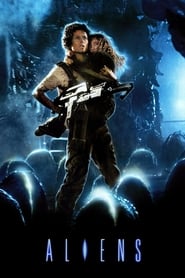
Pat McClung
This derelict ship had been in Bob Burns' driveway. He'd been given it by Fox and it was starting to fall apart. We had to put it back together and fix it up. Fortunately, though, it existed, so it saved us a lot of model work because it was there and mostly intact, rather than building from scratch. My name's Carrie Henn and I was Newt. My name's Chris Henn and I was Tim Jordan. It's cool to see what James Cameron had in mind, cos at the time we didn't really know what was going on. Little did we know at this time that our life would change when they came back from inside. That was the first time we saw the facehugger, when we opened the door and we saw it on Jay's - who played our dad - neck. I was really sad for my brother that this got cut out, and for everyone watching it, because it shows everyone why I can't stand the aliens, pretty obvious anyway, but you find out that my dad was the one who brought it back to the colony. It shows how Sigourney and Newt get the connection, too, as mother-daughter, and they have the same enemy. This was interesting, cos it wasn't something we saw filmed. When it happened, they just got out of the car and that was it. It ties it to the first one. It's the same place they went in the first movie. We have another one of our first creature effects that is like the introduction of the facehugger. All of these things were so daunting to me psychologically, because these had now become iconic characters, the facehugger and the chestburster and the warrior aliens. Of course, the queen was brand-new, but we also wanted each of these to have their own life in this movie and at the same time be legitimate to the original. So, to the very discerning eye, if you look at the facehugger from the original, from A/en, and you look at the facehugger in Aliens, there are subtle differences in the detail, more attention to detail as far as the creature itself.
18:16 · jump to transcript →
-
Pat McClung
The Sulaco. This was a Syd Mead design that was fiberglass body. Some of the detailing was based on that Syd Mead sketch and then Pat and Dennis and myself did a lot of the fine detailing for the front, the side, the top, all the microscopic detailing. This was not a particularly large model. It was about five or six feet long. The detailing we would do after hours because we had to be on the stage to shoot all this stuff, get everything organized, and once everybody went home, we'd go up to our little effects office and start another shift of microdetailing. It was so cold, we were wearing our winter coats. It was hard to move around and use these tiny little Exacto knives, and these pieces of plastic that were maybe half the size of acomma on a textbook, sticking them on meticulously, one after the other. So this was our biggest set, I guess. Or the biggest volume, I guess. The hanging chains, these little widgets and things, this was all inspired by the tone and feel of the opening scenes of Ridley's film. We were trying to create that same sense of the ship having its own life and being an eerie, interesting place.
25:57 · jump to transcript →
-
Bill Paxton
James Horner came up with this music sting here and I always thought it was totally over the top. When I saw the whole film put together with the score, I thought "No, that's what we need." I thought "How can you sting somebody opening their eyes?" But it works. Oh! Mm-hm. She shouldn't have had the bangers and mash. Kill it. Fry it. Come on. What are you doing, Hicks? Bad-ass nasty shot. That's a nasty shot of that thing. That's a good shot of it there getting fried. Gosh. Here they come. I think our chestburster looks a little cooler than the one in the first film. Stan Winston's guys really did a good job on it. John Rosengrant and Shane Mahan. Look who's back. Another one of our problems to solve for this movie was creating the whole army of warrior aliens and being legitimate to the original movie but having to improve on it for movement and for the look of being able to study them. In the original A/ien they were rubber suits and very difficult for the actor to move around in. And yet he was very tall and very skinny. And Jim wanted to do a lot of very interesting moves with the warrior aliens, so we came up with a technique to create the suit that really involved a lot of spandex and pieces on it. And then we designed the set pieces for the aliens to fit into the walls, like the one that is behind him there, so that the camouflage would work. An enormous amount of wirework for all of these stunt alien performers, which required that the alien costumes be extremely user-friendly. This was inspired by the scene in the first film where Dallas is in the air vents and they see the signal moving and get a little freaked, and Veronica Cartwright says "Get outta there" and he makes the wrong move and gets killed. That's one of the most suspenseful scenes in the first film. I took that idea that they're getting these readings that are getting them spooked and then they make some bad moves. Form follows function. This is a perfect example of it. You start with what it is you wanna achieve, and once you have that, you can design it, so the actions and the performance is consistent with what you want in the finished film. Believe it or not, very few people work that way. They just wanna come up with something that's cool, and then you spend hours and hours trying to get it to work for the ultimate film. I happen to agree with Gale. My background is as an actor. I really come from a place where the creatures and the characters are wonderful to look at, but it's always about their performance. We have to figure out how they're gonna be able to act, and create a good performance, or it's a waste. And so that's really always at the top of the priority list when we're creating any creature - what is it gonna do and how is it gonna do it? What he does is create a character, and that's why I think his work is So unique. When you look at a film, you can always tell who's done the creatures, if they actually have a character. Because he creates a character that can act and perform. The whole film builds to this moment, where the power transfers from the authoritarian structure to the individual who takes action. Ripley's not supposed to do anything. She's just there as an observer. We're coming up to a sequence where Sigourney takes control of the APC and this sequence is comprised of live-action shots, but as it comes down this hallway and is banging into pipes and walls and sparking, that's all done in miniature. In some cases, the cameraman - cos the set was mounted at an angle - was on a cart, a wheeled cart, and was rolling backwards as the radio-controlled APC was coming at camera. There was a point when he was just put into free fall, rolling backwards downhill, photographing what was in front of him as he went backwards. Here we go. - This is the shot. This is also miniatures. There was a shot with the full-size when the brakes didn't work, and took out the camera, and luckily it was a remote-operated camera. It was the shot where we were actually crushing an alien warrior, when it broke through. This is the shot, actually, when it took the camera out. Then there's another shot where it takes down an alien.
1:12:00 · jump to transcript →
-
-
-
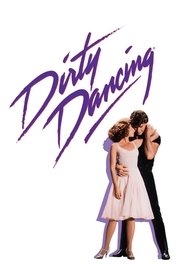
Eleanor Bergstein
and now we're going to see it right now, this set of shots. This, as you will see, is a sequence built from our Dirty Dancers, from our people who we took from place to place, who play chambermaids, who are always there, who play pool boys. We see them every place, so they become people we're used to. That's Heather, that's Amar. And so this opening sequence of what she sees is actually, that's Dorian and Amar, who I love, is based on those people.
14:53 · jump to transcript →
-
Eleanor Bergstein
ice so that in the morning I wouldn't have red eyes and upset everybody and I came out in the morning to meet Emile as I did and the first thing he said to me is your eyes are all red but it's okay I can fix it and we dropped some scenes and he said I'll build a sequence and I didn't know what that meant because I was not experienced in dance shooting the way Emile was and so what we did was is we spent all day shooting our eight couples and we built the sequence based on them
15:52 · jump to transcript →
-
Eleanor Bergstein
why this happened, and that's a scene that we'll be coming up with. And so we wrote a new scene for her, which I think was very important and had not been in the original script. And here is Baby, and this is when they wanted to lose the sweater, which, again, I can understand, though I thought it was a good point. And I think Neal Jones, who plays Billy, does such a good job here. We gave him, I'm afraid, so many expositional lines, I really had to apologize to him. He was always moving the plot forward for scenes that we had to cut.
27:15 · jump to transcript →
-
-
-
It was a surprise, and so we at Embassy... You want copy? Yes, all 15. Everybody you see in the newsroom now was carefully cast. Dissolve to the rifle. Now, should I... Just a two-second dissolve! During the research, I was at the NBC station, and I actually saw somebody run, and I said, thank God, they're still running against deadline. And that's what this was based on. ...well's enduring portrait.
22:10 · jump to transcript →
-
And, you know, we're friends, and we're just thinking about how we're going. By the way, I mean, okay, this is a comic genius of sorts, but look at the actor he is. So this amazing thing happened. I think Sean Connery was picked as the sexiest man of the year by People magazine that year. And in the article, he referred in sort of a positive way to occasionally hitting a woman.
56:11 · jump to transcript →
-
It's a pleasure to read, really. There's water on the set in case I get an attack of cottonmouth. Yeah, sure. You'll be fine. It's really important for me to use all the research, so a lot of the background conversations you hear is sort of based on an enormous time at research. Best severance pay in the business. He was lecturing me. Finally, I just said, I'm sorry. I refuse to look at it as a negative. I'm young, and my news appeals to people my age. And it isn't as if he just didn't hire a 26-year-old producer himself.
1:21:29 · jump to transcript →
-
-
-
John McTiernan
This joke, is Shane's joke. It's entirely Shane's joke. Shane didn't write in an official way but he wrote in an unofficial way like the joke, the pussy joke. He was just there, and he would come up with stuff. Now, the heat vision here, when we first did the heat vision, they had a real heat vision. From the folks in New York City that did the effects stuff. And it was this enormous thing with the umbilical that was six-inches thick and it would, could only get maybe four-feet from the truck. And it really would see someone based on temperature. But there was this little tiny problem, which was the ambient temperature in Mexico was in the 90s. Consequently... People were the same temperatures as the background and they were perfectly camouflaged. So in order to deal with that, the splendid folks in the special effects field said, "Well, it's no problem. "We will put ice water on the jungle. "And we will have the actors stand next to a fire just before their, "the shot," So, they literally were doing that, and they spent about, I don't know, a week getting one shot, maybe two shots. It was just a nightmare, it cost a... Every shot cost a fortune. So, finally, I went off to a video special effects house. They did commercials and things. And I sat down for about three hours, we had to do this in secret. One of the studio...
32:42 · jump to transcript →
-
John McTiernan
We knew we had to rework things the moment the original predator came out of the box. It was clearly ridiculous.
1:16:17 · jump to transcript →
-
John McTiernan
Now this sequence was not in the original script.
1:21:53 · jump to transcript →
-
-
-
John Mackenzie
Incidentally, talking about the gangster, one of the other great reasons, main reason why I wanted to make this film was that central character. The way it was written, the way it was eventually played was magnificent by Bob Hoskins, and he was the one person I always saw should play the part. But it was the way that character was constructed was the great central bit of the original script. Although we changed many, many things, but that was the core.
3:03 · jump to transcript →
-
John Mackenzie
brought out more than was in the original script. The original script, the IRA were there, but they were sort of in the background.
1:19:18 · jump to transcript →
-
John Mackenzie
Here we are back in Canary Wharf without the skyscraper, just with our little boat. At this point in the original script, there was a very short scene between Bob and Jeff on the boat where he got the information out of Jeff very quickly. And they went to try and search for an IRA guy who had been a contact. This was all written out. And then proceeded with a car chase, the inevitable car chase, which is in every film at that time.
1:26:02 · jump to transcript →
-
-
-
How many times did you have to recut the film to get it down to an hour? Like about five or six times? Yeah, and then it was taken away finally and cut by the projectionist and the company lawyer, as far as I remember. It looked like it, too. So this is the original? This is the original. This is your cut. Gosh, that lighting is good. I'd forgotten how good it was.
14:16 · jump to transcript →
-
The original script, I remember they try to get it on here, and it doesn't work. She just can't bring herself to do it. And then they split up, and they come back, and then the next time they try it. But Ken felt, and I think correctly, that this is where they needed... He just felt instinctively that this is where they...
1:30:43 · jump to transcript →
-
his attitude and his action. Closing the book on the past. Ah, and about to have the final confrontation where these characters rip their souls wide open
1:40:14 · jump to transcript →
-
-
-
was also done in the demo version of the movie, and the girl with the book in the demo was Nina Blackwood, one of the first MTV VJs, who still lists that scene on her resume. Yes, I can. Frank Sinatra says it's okay. This is, of course, Bruno Kirby Jr. In the demo version, yes. In the outline that was written, what was important was the arc of the scene, what was going to happen in the scene, so we all know
8:31 · jump to transcript →
-
What record store is this? It's in the Valley. The original Moby Discs. Long gone. On Ventura. Now called Colors. What are you doing to me here? Chuck? Levine. Chuck Levin. Wonderful actor. He was in a play with you, wasn't he, Harry? Yeah. He was in... Beyond Therapy, I believe. No. This scene is a virtually literal recapitulation of an experience that Michael and I had with the credibility gap in Tucson in front of a convention of audio tape wholesalers, Larry Finley's International Tape Something,
46:43 · jump to transcript →
-
the original songs because we'd written a whole bunch of new songs we said well listen why don't you give us a piece of of these songs it'll be kind of an incentive for us to perform them on the tour their response was we are in the business of acquiring things not giving them away the fact is that we could have probably done all this without them ever knowing that they even owned it because it was just buried you know people buy up
58:56 · jump to transcript →
-
-
-
Now here in this scene, Bain is brandishing the drug to Motherskille. I think in the original drafts, and I think even into the Caplin draft, there was more emphasis placed on the hypodermic, and that was going to pay off later on, wasn't it? That's correct, yeah. So in Clive's screenplay, which we'll come to later at the end,
44:57 · jump to transcript →
-
the mutational effects of the drug and helping us to put together some of the pieces of what we've learned so far. There was a change in the script, which in the original, in Clive's draft, used a phrase called plastic dreaming, a very interesting phrase, plastic dreaming, which I think seems to have disappeared from the screen version. Do you remember anything about that? I think it was Clive's term for...
49:12 · jump to transcript →
-
I quite honestly don't know how he achieved it. He did the same on Rawhead, you know, a very underfunded art department, and creating miracles as far as I could see. Even Jeff, Jeff Sharp, the costume designer, I mean, most of these clothes were specially made in a 40s, 50s noir style, you know, based on the old...
1:01:40 · jump to transcript →
-
-
-
Gary Goddard
And the role of Gwildor was one of the original characters we created for this. To some degree, Gwildor was created to replace the character of Orko. And if I took any heat as a director from die-hard animation fans, it was like, where's Orko? Where's Orko? Orko is an animated character, floated around, was very comical, and would have been hard to adapt into live action at the time, and also would have been prohibitively expensive on our budget because essentially every time you appear, you have to fly around. And on top of that...
7:27 · jump to transcript →
-
Gary Goddard
the tail end of the schedule, we didn't get everything we wanted, but we did get a lot of use out of it, not as much as I'd wanted, but that's why you see so many levels there. They were designed for what the final battle would be. The eye in the back also, that was a last add in the original script that David O'Dell wrote. There really wasn't a ticking clock. I felt a need to put a ticking clock on this, and we came up with this kind of eye, this door on the universe. The eye opens on the universe. They're coming. Get back there. Keep working.
12:27 · jump to transcript →
-
Gary Goddard
So I'd like to thank everyone for watching this and for listening to me as I reminisce. One thing the movie was always known for is at the very end, as you're going to see here in a little bit, there was, if you stuck around until after the credits, there was one final moment. And it really worked because everyone always said, stay for the movie. There's my original band, the original Illusions. That was my band in high school. Anyway, here it comes.
1:44:47 · jump to transcript →
-
-
-
It's actually based on a friend I grew up with, my friend's grandfather, who was in the scrap business, who said exactly those lines. And he was able to just pick the stuff up and smell it and taste it and tell you what the metal was composed of.
49:36 · jump to transcript →
-
By the way, Leo's character is based on two Chicago organized crime figures who are now dead who were fences and ran crews of thieves and were certainly no less vicious than Leo's characterized here. They're Milwaukee Phil Alderisio and Leo Rugendorf. Milwaukee Phil.
1:51:11 · jump to transcript →
-

Related topics
Other topics that frequently come up in the same commentaries.