Topics / Writing & development
Adaptation & source material
141 commentaries in the archive discuss this, with 1,321 total mentions and 23 sampled passages on this page.
Filter commentaries
Filter this topic by the film's decade or the type of commentary.
Showing 8 of 141 commentaries
Clear filtersBy decade
Across the archive
ranked by mentions · click any passage for the moment in the transcript
-
-
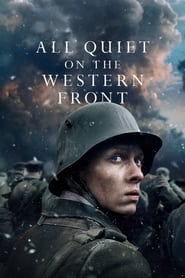
Edward Berger
and the uniforms become actually more important, a more important resource than the kids. And we wanted to, what the book is really about for me is there are a bunch of kids who go to the front, you know, are basically lied to by demagogues and populists, and they go with enthusiasm and youth, and very quickly they realize that
5:50 · jump to transcript →
-
Edward Berger
and so that's the montage we came up with and that became sort of uh we did it was it was basically an idea the idea was to create uh to a sequence that encompasses that capsulates the meaning of the book for us very subjective interpretation you know everyone probably has a different one but for us this was the interpretation of the book and we wanted to create a sequence that encapsulates that
6:49 · jump to transcript →
-
Edward Berger
and as a childhood memory also because that's the time when I read the book first, when I was 15, 16 in high school and my friend lived around the corner from us. So the sequence comes to an end with the uniforms, you know, the war machine, the recycled uniforms and here you see the end of that and the name tag
12:14 · jump to transcript →
-
-
-
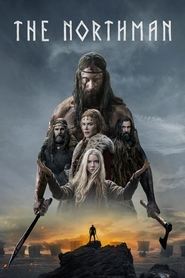
His outfit and his red leather phallus is very much based on the work of Terry Gunnell, who is interested in mumming and fools and sort of theater in the Viking Age. Performance is maybe a better word. I keep him as a deep sworn friend. Come, brother.
6:15 · jump to transcript →
-
And this underground ritual chamber is actually based on a burial chamber in Orkney that's from a much earlier period than the Viking Age. The idea being that this was a place of religious importance to people who were here before the Vikings. And so they felt its significance and built a temple on top of it. But then underground, they're doing some more secretive rituals.
10:53 · jump to transcript →
-
So this, which we're about to see, which Ethan calls the Tree of Kings, is based on a tree from the Oseberg Tapestry, which is...
14:37 · jump to transcript →
-
-
-
delivered to New York, brought to set, you know, Damien making adjustments. So for example, even that head being torn apart, Damien and I had discussed many times how we, you know, were planning on seeing it happen and what she was doing. And when the original head showed up, you know, he wanted some adjustments. He wanted it to be bigger. He wanted it to be, you know,
17:33 · jump to transcript →
-
Again, a new prosthetic, because it hadn't been done in the first two films. You know, another thing we had to do in this new one was sort of recreate all the molds and the tools for Art and Victoria and everybody, because Damien, God bless him, made the original molds five years earlier.
18:55 · jump to transcript →
-
something like that, and had used them for both movies time and time again, obviously hundreds of times, and running them for conventions and everything else that they do. And so by the time we got to this movie, I had asked him for the original molds, and he sent them along. And I said, yeah, I don't think we're going to make it through a third movie. So we re-sculpted.
19:21 · jump to transcript →
-
-
director · 2h 43m 5 mentions
Mission Impossible Dead Reckoning Part One (2023)
Christopher McQuarrie, Eddie Hamilton
-
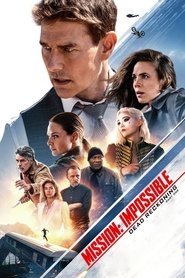
was done in the air in Abu Dhabi. So everything you're looking at is, that's all practical. This is like one of the best speeches. It's a classic Macquarie speech. You know, do not consider him secure until you have driven a wooden stake through his open heart. And Shea Whigham delivered it. Oh, it's so good. And here's our introduction to Benji, Simon Pegg, which we did try a version of this scene where we started with Ethan literally holding the key up and getting straight. So what's the play? So what's the play? And it dramatically affected...
29:53 · jump to transcript →
-
was actually not in the original assembly of the film. That was added later. Correct. It was another line. There were a couple of moments in the scene that were off-putting. How I had written Simon, they were lines that were humorous, but they had a negative connotation. Yes. And it was very interesting, the balance of humor, and something I see in a lot of movies, is humor presented in a...
42:38 · jump to transcript →
-
that the actors, that the characters were making it about them and not the mission. Yeah, and the audience is going, the key. Yeah, exactly. You could only spend so much time there before you felt yourself losing the audience. This was a reshoot for Geography. Yeah, we had to explain that. The original was so great, I didn't want to reshoot it. And then we reshot it, and it was so much better. I continually ribbed Tom and said, thank God I had the idea to reshoot this.
2:14:52 · jump to transcript →
-
-
-
Tim Burton
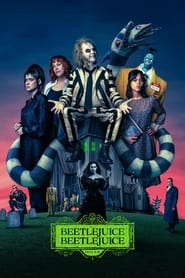
Hello, everybody. I'm Tim Burton, the director of Beetlejuice Beetlejuice. There was a lot of talk about what to call Beetlejuice, and one idea was Beetlejuice Rises Again. That was based on Dr. Phibes Rises Again. And then I thought of Beetlejuice A.D., which is a reference to Dracula 72 A.D., which I love, which is in there a little bit. But then so the thought of just Beetlejuice Beetlejuice sounded just sort of mirror-like and simple. So I thought,
0:21 · jump to transcript →
-
Tim Burton
in stop motion on and off over the years. It's a format I always love. So anytime, you know, if it makes sense to do it in stop motion, that's what we do. So it just felt like that that was the right way to go. And, you know, like I said, going back into the original, where the effects are a bit more handmade, including the stop motion, it's just, again, part of the DNA of the project. So...
9:10 · jump to transcript →
-
Tim Burton
I know I usually find it funny and only fair after the way she treated me when she was your age. The sculptures were a lot based on the ones that we had in the first one. So those were Delia's original sculptures, which were designed by, I don't know what ever happened, a friend of mine, Ed Nunnery, who designed these sculptures, and I designed a couple. So we kind of coexisted that, but those were based on her early work. I can't believe Grandpa is dead.
16:07 · jump to transcript →
-
-
multi · 1h 25m 3 mentions
Marcel the Shell with Shoes On (2021)
Dean Fleischer Camp, Jenny Slate, Nick Paley
-
Nothing was gross. It just was textured. Wow. I love these spiders. I do, too. Yeah. They're great. I remember getting a photo from you, like, four years ago of a jumping spider and being like, this is so cute. Yeah. That being the origin of that. Yeah, totally. I think that was, like, six years ago now. Okay. These are all, these little tree houses, or many of them, are either built by or based on the art of an artist named Jed Volz. Jedediah Volz.
3:39 · jump to transcript →
-
Yeah, I know. One of my favorite things about the process is that I don't think any of us could possibly tell you, well, not with any reliability, what parts were fully written, what was improv, what was written based on improv. And, you know, it's cool. I think we did a great job of blending that.
18:24 · jump to transcript →
-
This is in Liz's apartment, but I think it was based on a whiff we'd done earlier. Because I remember Caroline congratulating me, being like, wow, you know it's really hard to sing flat. And I was like, that's the best I can do. Well, you're really not singing a note at all. You can't sing any notes. I can hear myself trying not to laugh. Is this song from Summer Camp? Yeah. Yeah.
1:06:17 · jump to transcript →
-
-
-
Thank you. Bob, one of the things you said that I want to bring up... I think one of the earliest phone calls, maybe even the first phone call, you said, "You could end the film "right with him riding the bus, defeated, deflated, "and that could be a great short film about a day where nothing went right." Yeah. And that's the attitude that stayed with me throughout. The idea that this is a godsend. This moment of these guys... I think the original plan was to have Ave Maria playing in the background for this moment 'cause it was literally a godsend. It was amazing. That person yelling "bus," the character's Teddy Kuznetsov, played by... Aleksandr Pal. - Aleksandr Pal. And that man right there is Daniel Bernhardt. Daniel Bernhardt is the man who trained me to fight for two years. That guy right there. He's one of the... He's the greatest. He's maybe the best stunt actor working for the last 10 years. Man, he's great. And you might know him from the TV show Barry. And you might know him from the big fight in Atomic Blonde. And you would know him from John Wick movies and Hobbs & Shaw and every other great action movie of the last 20 years, 'cause he's the best, and he's a great actor too. Bringing a lot of character to this whole sequence. But from the moment things got real with the possibility of me doing an action movie, I started to train, 'cause I was a comedy writer for 25 years, and I did a normal workout of any suburban dad.
25:14 · jump to transcript →
-
Hutch here. Last night, that was you, huh? And then here, we got a great phone call with RZA calling his brother from who knows where and... I think, originally, he was supposed to be on an island. That's what we had in one of the lines. But then we kind of thought, "Well, how does he get there from an island so quick?" So it was changed to a nondescript location. I always like how you step into the shadow when you take this call. Yeah. - Hopefully it's not too on the nose, but I kind of like that the family's light in the back, and then here you are in a little bit of darkness. And he mentions The Barber. - The Barber. And that was not what he said in the original script. No. This is where... So this is act two and act two was very, very different. And I don't know how much in detail we should go, 'cause there's a lot of them. But the idea is that now Hutch gets the call, gets the message to go see The Barber, he gets the phone message, a text message, he goes, and basically what we used to have Is... What we have now is a compact montage of a much bigger act two than we originally had shot and envisioned, which makes the film much, much better. And that was something that David Leitch set down with Evan Schiff, our second editor. I finished... This is right as Corona was hitting the US, and we all had to go home, and I flew home. And David spent time working with Evan over Zoom to put the sequence together. By the way, if you pay close attention to the clothes on Hutch's character, you'll see that it's very lucky that he's always wearing blue. And may I say the reason why you're wearing blue, Bob? Yeah. So, early in preproduction Bob said that, "Guys, I think we should get some blue stuff on me." I'm like, "Why?" He's like, "Well..." I think you said your mother saw you wearing blue... - In the Spielberg film The Post. She saw The Post, she liked it. And she goes, "Your eyes aren't that blue." And I go, "Actually, yes, they are. They pop blue more if I wear blue." You see the blue in my eyes if I wear blue. They're kind of a blue-green, I think. SO anyway... So your mother... We have to thank your mother for putting us in this direction because it saved us in the cut. She will not be seeing this movie. Really? - No. Can we do a cut-down version without... She's 84 and does not watch violent films at all. ...
42:46 · jump to transcript →
-
Can we just talk for one second about our black Russian? Araya. Araya is a great actor, Araya Mengesha. Yep. And he has a great part in here, and he plays it so well. Now, is he a stuntman? - No. He is an actor from Toronto. Yeah. - A great guy. And I give him a lot of credit because he... When I talked to him, I said, "Look, I want him to be... "I want Pavel, the black Russian, to be speaking Russian "and to sound as Russian as possible." Yeah. - 'Cause he's based on... I don't know how to pronounce it. "Amalgamation"? Yeah. - Of a few Russian black guys that I know. 'Cause, obviously, we don't... You know, we're mostly predominantly a white nation. Right. But the story that Pavel, or Araya, the character talks about how he's the son of an Ethiopian Olympian from the Moscow Olympics. That's all... There's a certain group of people in Moscow or in Russia who were the result of the Olympics. Just people came over, had sex and left. And so these hyper-athletic kids from Olympian fathers or mothers, fathers, they grew up with a very different skin color in a country which... People were not used to that in the slightest. So they had a very, sort of, in a way, great experience 'cause they were getting the right kind of attention. But obviously, with the right kind of attention also comes, usually, the wrong kind of attention. So he is based on a real concept. Yeah, yeah, yeah. So I said, "Araya, it'd be great if you can, you know, spend some time "and I'll coach you a little bit and let's get the Russian right." And he did. Like, we spent, before recording, you know... Yeah. Twenty minutes a day just going over... - He's fantastic in this. Such a great guy. A joy to work with too. As were all these guys, but... This is a team of people, mostly Canadian stunt people, but overseen by Greg Rementer and Daniel Bernhardt, who did some of the fight choreography, all the fight choreography. Well... - It was Daniel and Kirk together. Yep. - Well, together. I mean, Greg Rementer is this... What is his title here? - I think he's both... He's the stunt choreographer and the second unit director. Yes. Anyway, it was a team effort.
48:18 · jump to transcript →
-
-
-
um we couldn't get hold of the original uh footage so we needed to recreate it and we shot uh were you one of these guys that was yeah so so we shot with a drone um so you see real people because digi doubles uh that is say digital doubles uh still never look quite right people's
1:04:47 · jump to transcript →
-
that creates another big tonal change. And it's also structurally, this is me talking as a sort of film person. Normally beginning of a film, you will show a few characters and the audience knows we are going to stay with those people through this film and track them. But actually, because this is based on reality, some of the people who, you know, people would make an assumption that is the lead of the film or this is the second lead or whatever. It's not really true because
1:08:30 · jump to transcript →
-



Related topics
Other topics that frequently come up in the same commentaries.