Topics / Writing & development
Adaptation & source material
141 commentaries in the archive discuss this, with 1,321 total mentions and 37 sampled passages on this page.
Filter commentaries
Filter this topic by the film's decade or the type of commentary.
Showing 13 of 141 commentaries
Clear filtersBy decade
Across the archive
ranked by mentions · click any passage for the moment in the transcript
-
multi · 1h 43m 46 mentions
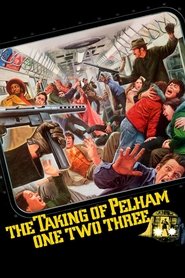
The Taking of Pelham One Two Three (1974)
Nathaniel Thompson, Steve Mitchell
-
You know, New York's the all-pissed-off city. And I said, yeah, watch The Taking of Pelham 1, 2, 3. It's probably the most accurate movie about what people are like in New York City. And, you know, when you see Pelham, you know what New Yorkers are like. And you get a sense of the rest of the city, of course. But this movie is based on a novel by a guy named John Godey. His real name is Morton Freedgood.
1:02 · jump to transcript →
-
and uh it was a great device because it pays off towards the end and it was not in the book one of the things that's interesting about having revisited the book is that John Godey or Morton Freedgood uh wrote a novel that you you know was destined to be a movie it's so uh crisp and cinematic in fact it's written in an interesting style where the narrative propels forward but
2:46 · jump to transcript →
-
as the motorman or the conductor. In the book, Joe Welcome is also as interested in the opposite sex, and they make a whole lot more about that. In fact, there is a hooker character in the car, the hostage car, which has more page time, let's say, in the book. But since it's a character that's more textural and not
5:07 · jump to transcript →
-
-
-
Francis Ford Coppola
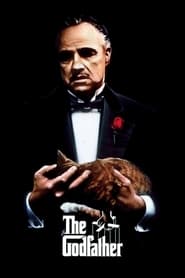
It's funny, I was always proud of the fact that on my films I always asked that the author's name be put ahead of the title. This started way back on the first Godfather movie. Mario Puzo, who wrote the novel, did not have that right, but I insisted on it. And then that went on with other projects, Bram Stoker's Dracula or John Grisham's The Rainmaker. I've always been proud of the fact that I always gave the author the premier position in the credits.
0:21 · jump to transcript →
-
Francis Ford Coppola
Patton, why can't you come up with something a little unusual for the godfather, something other than just cutting right to the wedding? And when he left, I thought about it and thought about it. And in the book, the part that was the most significant to me, I thought, was the notion that, of course, on the wedding day of the Don, the different people come
1:45 · jump to transcript →
-
Francis Ford Coppola
shot in new york in the stage where we worked an empty stage where we had our sets the don's office and stuff and we shot the party where bobby duvall actually meets jack waltz there and just shot that second unit leading up to it before this was sort of the first test of power uh in the book you you learned that uh
27:40 · jump to transcript →
-
-
-
Francis Ford Coppola
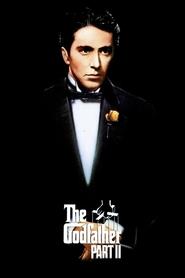
American movie that really used Part II or Rocky VII or that tradition was begun with The Godfather Part II. Now one handle I had on making a second Godfather would be to use the material from the original Godfather book that dealt with the story of Vito Corleone.
2:06 · jump to transcript →
-
Francis Ford Coppola
from his days in Sicily through him coming to America and becoming the character who we remember as Marlon Brando in the first Godfather film. And that was all taken from the book, and I did research looking for photographs of real so-called mafia incidents in Sicily and thought it would be wonderful to go back to those same towns that we had seen in the first Godfather.
2:26 · jump to transcript →
-
Francis Ford Coppola
So we conceived in the script to start in the very old days when there were family feuds and hills and massacres in the land of Sicily. Much of that was based on real stories, and even the death of the boy is from an actual famous photograph of, I think his name was Paolino Riccobono, who was killed and his body was found in exactly that position in a...
2:54 · jump to transcript →
-
-
-
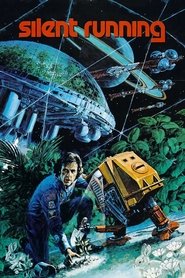
No, I always think that this is almost a film that people who saw at a very young age, my good friend Mark Kermode, who literally wrote the book about silent running, saw this when he was like 10 or 11, and to this day it's like his favourite science fiction film. And I think it's a film that...
2:49 · jump to transcript →
-
Logan's Run from the George Clayton Johnson, William Nolan novel. Even a little later, there was a TV miniseries of The Martian Chronicles from Ray Bradbury. Not a very good series. And these are all around this time. What's the thing that's different about this film from those movies? Go ahead. I've just told you, this isn't based on a novel. It's an original screenplay. And the thing about those other films is...
11:42 · jump to transcript →
-
Some of them are kind of what you might say dumbed down in the adaptation. We knew Harry Harrison, and he would always sort of complain about the Soylent Green is people and the murder mystery stuff. He said that that wasn't the point of the book. But in fact, the point of the book is to show overpopulation, which Soylent Green, the film, does absolutely brilliantly. The thing is, all those films, because they have this kind of...
12:12 · jump to transcript →
-
-
multi · 1h 59m 9 mentions
David Naylor, Guy Hamilton, Tom Mankiewicz, John Barry + 14
-
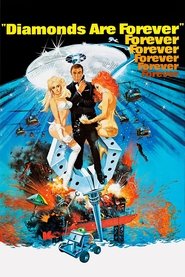
So we started this, to lay this in for later on in the picture. As Tom Mankiewicz explains, plastic surgery was a topical subject. Everybody was into plastic surgery then. It was really starting to become a huge deal. Most of what's here is not in the book, Diamonds Are Forever. By this point, Cubby and Harry had already started the tradition of taking the title and maybe the spine of the story or the setting
3:47 · jump to transcript →
-
They wanted a young writer. I was only 27 years old. And I had written the book for a Broadway musical of Georgie Girl. And they wanted someone who was American, who could write in the British idiom. And I was signed on a two-week guarantee. And it worked out. So I was thrilled.
5:42 · jump to transcript →
-
And Sean says, I was referring to the original vintage on which the sherry was based, sir. 1853, unmistakable. Lots of people in Bond trivia books and so on have pointed this scene out and given me tremendous credit for one of the great little sort of sophisticated Bond touches, which really only came about because I was totally unaware that there wasn't a year on a sherry bottle. And if it hadn't been for Cubby's lawyer, I never would have.
9:17 · jump to transcript →
-
-
director · 1h 28m 9 mentions
Don Coscarelli, A. Michael Baldwin, Angus Scrimm, Bill Thornbury
-
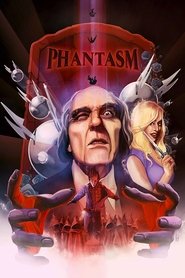
Sphere sequence. I've never spoken with him since. This was a moment that was a little more expanded than the original screenplay about Mike chasing after his brother. It was kind of a subplot, which a lot of people really responded to about these brothers living alone. Well, that's what I meant before when I said that that's the subplot that I always really liked. About the two brothers. When Mike goes to the fortune teller, he goes there to talk to her about his brother leaving. I just always thought that was a pretty interesting...
12:50 · jump to transcript →
-
Trying to sort of distort reality and having this kid having these nightmares, you know, waking up in the middle of a graveyard and really deluding the audience and thinking they're still in his bedroom. And you pull back and you find out Rory has great pains to try to match everything. There's a couple of crew members of them. And there's Rory's posture from the poster. That's right. Yeah, they used that for the original key art in the domestic release.
25:12 · jump to transcript →
-
A lot of bell bottoms in this film. A lot of bell bottoms, yeah. Now we're coming up on another sequence, which is, in my mind, one of my favorites. And it was also one from the original conception, was of this kid wandering down Main Street. You know, and I really got to compliment Mike on his acting, because just the little
25:45 · jump to transcript →
-
-
-
This shot itself was shot about 1,000 miles away from the actual location because the original shot was damaged and we had to do it again. And this is the moment where James... Oh, okay. Now, his reaction was at the original location, so that's cutting back to Flagstaff.
10:24 · jump to transcript →
-
I've tried to do as much as possible ever since. Here it was necessary because we had overlapping dialogue. Oh, yeah. So that's Alan Vint. Yes, yeah. That's the best poor state I've ever seen. Sir, I work for these boys. I'm their manager. So the original script was...
1:09:48 · jump to transcript →
-
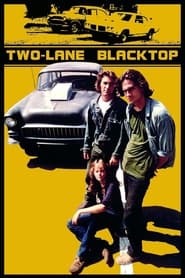
was taken from a short story. Is that correct? No, it was taken from a screenplay. Oh, it was taken from a screenplay. There was a screenplay by Will Corry, and we got Rudy Wurlitzer to rewrite it, but in essence, he never even read the screenplay. He wrote a new screenplay just based on the concept of a cross-country race. How did you get inside how this would go down in a town?
1:10:12 · jump to transcript →
-
-
-
Dr. Gerd Naumann
In my opinion, this is based on a biography.
8:01 · jump to transcript →
-
Robert Sommer
I mean, there are films, which are based on books and screenplays.
47:34 · jump to transcript →
-
Dr. Gerd Naumann
In my opinion, it would be enough to let the original Sophie Scholl come to the fore in words and pictures, with original quotes.
1:05:04 · jump to transcript →
-
-
-
Nick Pinkerton
It's based on an essay by Tom Wolfe, originally published in 1965 in Esquire magazine. Earlier, when Clint tells him, Lightfoot, that he's got the makings of a great race car driver, you might even say there's a bit of a nudge nudge there. At any rate, he looks pretty good taking the curves here.
26:40 · jump to transcript →
-
Nick Pinkerton
homage, Douglas Sirk's 1955 film Captain Lightfoot, an adventure movie concerning early 19th century highwaymen in the foothills near Dublin, Ireland, starring Rock Hudson as Michael Martin, a.k.a. Lightfoot, and Jeff Morrow as John Doherty, same name as the Eastwood character here, a.k.a. Captain Thunderbolt. The source material was a book by W.R. Burnett, though Martin lore had a real historical basis. Michael Martin
41:12 · jump to transcript →
-
Nick Pinkerton
is merged with a tearful tribute to lost innocence and youth. The three older men live in the shadow of the past of meaningful actions, the Korean War, the first Montana armored job, which occurred years ago. Thunderbolt tells Lightfoot he appeared 10 years too late. The second Montana armored robbery is a pale copy of the first one. Two of the original gang members have been killed.
1:24:50 · jump to transcript →
-
-
-
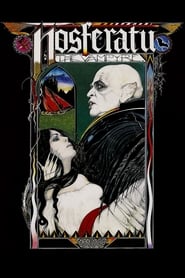
If you pay attention, you notice that the film gives this shot a lot of time. Normally you would cut away from this much sooner. Especially nowadays. Especially nowadays. But even back then it was unusual. I always thought that it had to grow out of the music and a certain type of gloominess. This is also the point where the movie changes. One could say this is the mountain pass. A very popular image. - Yes. This is at the height of the mountain pass, the Bârgau Pass. I think now we will hear Wagner. This will continue for a long time, and the way we use time is extraordinary. The passing of time is very atypical here. Our sense of time is rearticulated. This is important for the movie. It is very difficult for me to express why that is the case. But nevertheless, this is a crucial moment. This is the tipping point of the movie, and we enter a new sphere. The land of dreams and the castle. Somewhere completely different. This is one of the very long shots. A question about the historical context. When did Stoker write the novel? Shortly before the turn of the century... To the 20th century? Yes, sorry, to the 20th century. What is also important is that in his book Bram Stoker often wrote about technical progress. Telephones, the first records... No, not records, but they used cylinders to record messages and send telegrams. He anticipated an era of communication. This is Wagner. When did Wagner write this piece? 1790? No, no, that was approximately in 1860. Yes, of course.
22:34 · jump to transcript →
-
This only works because it was done with extreme focus and calmness. Did the audience react differently in different countries? Yes, that is always the case. The DVD we are watching was released in the U.S. three years ago, and it was a huge success. I think 300,000 were sold within a few weeks. It was a surprise that a foreign film which usually doesn't stand a chance in the U.S. was suddenly accepted by the audience, by very young people, too. That was a huge surprise for me. Now we see... Wonderful. - This is the clock. All of this is a mechanism built by Cornelius Siegel. What you hear is the original sound. Now a Grim Reaper comes out, moves the scythe, and disappears again. Well, you can't really see how he moves the scythe. On the right hangs a live bat. The movie was shown in relatively large theaters on big screens? This is a large format, correct? I have to interrupt. This is a vampire movie without blood. This is the only drop of blood in the entire movie. The vampire can't take it. Now you have to watch what Kinski does, how he approaches him. He wants to drink the blood but manages to control himself. Here comes his outburst.
30:03 · jump to transcript →
-
Here the foreshadowing, of course. Everybody knows what will happen and where he has to go next. I think... - Many people laugh at this point. What I find interesting is the connection between Mephisto/Faust that also plays some role in a strange way. Not for me. I ask myself how the kids in the U.S. saw this when it was re-released there three years ago. They laughed during this scene. They recognized the genre and the rules it follows which makes them laugh. We were so successful with this movie that we won out over the two week number one, "Armageddon". We actually made it to the number one in the U.S. charts. That never happened to me again, and to this day, I can hardly believe it. It doesn't surprise me because in contrary to the setting, this is a serious attempt at authenticity... It is based on culture. Yes, and it is also more full of life, if you like, than many things that were produced during that time. This movie was made in 1978. At that point, the German and the European cinema in general was still reminiscent of 1968. They wanted to make message movies. I stuck out like a sore thumb. This was different. Surprisingly, in hindsight, that's recognized today. Did the kids get this Bresson-like pace? I hardly know Bresson. So I don't know whether this is a Bresson-like pace. I believe in this specific movie, it results from a necessary type of storytelling. D'accord, yes.
43:01 · jump to transcript →
-
-
-
Yes, quite, quite, absolutely. Oh, yes, I can see that. And so I'm bluffing my way through. But it was probably the best decision based on absolutely nothing other than a man's previous work that I've probably ever made. It's a wonderful experience. I'm very, very proud of that film.
6:18 · jump to transcript →
-
juvenile to say that, but people do confuse the idea because it's a drama. They have similarities. In fact, they have emotionally completely different effects, basically, because the theater is a state where you have a fixed audience, and the artist and the play is unfolding in front of his fixed audience, and in the cinema, it's a movable audience. You rush the audience outside.
2:04:32 · jump to transcript →
-
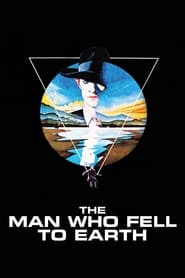
I think Paul and I were working on something else at the time when I read the book, and it wasn't as though reading a book and thinking, oh, this is a great job. It touched off, and it seemed to me a great shell for thoughts or attitudes that I held at the time towards so many aspects of life in this film about being, as I say, not necessarily only science fiction, but he's a man away from his family. I mean, there are many things that...
2:05:31 · jump to transcript →
-
-
-
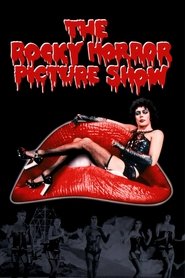
Oh, look. Nice car, that, that woodie. Yes, and what was the tape playing? Was it Nixon? Nixon's-- which I... I don't like that speech being played, actually because it locks the movie into a time frame. I thought it was terribly clever. And that late November evening wasn't in time with Nixon's speech. Speech. And, you know, there's lots of things. Now we see this motorcyclist here. Those people who played Transylvanians were on the back of those motorbikes. They would have to go to the studio this very night, dress up, put all their Transylvanian gear on, and then put motorbike leathers on as well. Yeah. - And then go out on these motorbikes. They didn't drive them themselves. No, no. They had motorcyclists. They paid pillion passengers. Yeah. And, as Ramon Gow said, you know, I said, "Why are they coming in to do this? It could be anybody wet in the dark. And he said, "Could be a gorilla with a pipe, luv." Gorilla with a pipe? But I'll never forget the first day I saw the Transylvanians, 'cause they were rehearsing in a room in the house. And we didn't have Transylvanians in the play, and suddenly this door was open, and I don't want politically noncorrect, but it was so freaky because they were freaks. Sorry. - As indeed we all are. No, speak for yourself. And in the amazement of tall, small, fat, thin, you Know... You lost a sense of norms, you do. Sense of center. Yes, and I saw all these people dancing doing the "Time Warp," and I almost collapsed. I couldn't believe it. I thought... Because I didn't know they were going to be in this. I didn't know there was a cast of Transylvanians. No. - No. Well, when I went into the room and David Toguri was rehearsing them, Well, when I went into the room and David Toguri was rehearsing them, Well, when I went into the room and David Toguri was rehearsing them, and Barry Bostwick and Susan Sarandon was standing amongst these people, with hugely different, physically, SO very... I'll never work again for using the word "freak." It seemed to me that Susan and Barry, who most people would say are relatively good-looking human beings, seemed just as freakish. There was no standard. The standards had disappeared. Yes, that's what freakish-- yes, right. And that was interesting.
12:03 · jump to transcript →
-
And this was cut from a lot of the original versions. This song was cult. 2 Toftind the truth ? And we cut straight to the narrator's verse. He says to tell the truth and never lied. We cut Brad and Janet's verses in this song and went straight to the narrator's verse on the original movie. And it made no sense whatsoever. - I see. 'Cause we needed this. There was a very long intro that Richard Hartley had devised for this song. And I suggested they cut straight to Brad's verse. And they cut straight to the narrator's verse, which was cutting both Brad and Janet's verse, which was rather stupid because it's kind of nice to have these two verses. Make the whole thing tie up, the whole song tie up.
1:34:35 · jump to transcript →
-
-
-
Roger Moore
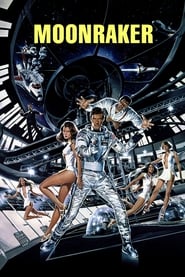
This was not the first time I had been in Venice. I remember distinctly the first time I was in Venice... ...Was in 1961. And I had been offered by Lew Grade a series called The Saint... ...and had read the script out there. My agent came out to talk to me about it. And I said that I thought it was just a little long... ...for a half-hour series. I said, "It is a half-hour series?" He said, "Oh, yes." I said, "Well, let's find out." He checked back with an assistant... ...who no longer.... Who shortly after that was not an assistant. Because when it came to... All my contract was built on... Based on it being... ...a 30-minute series. And, in fact, it was an hour. Then I came out of the press conference... ...We did a little readjustment, Lew Grade and I. I remember Venice very well for that. But it is the most beautiful city. It has this extraordinary history. It's a wonderful place to work if you like boats. Not if you like swimming. And I went in the canal a couple of times... ...Which is not quite as bad as falling in the klongs in Bangkok.
34:00 · jump to transcript →
-
Roger Moore
In 1950, we were in a production of Mister Roberts... ...with Tyrone Power and Jackie Cooper... ...at the Coliseum theater in London. People who know the play, they probably know the film. Mister Roberts was wonderful with Henry Fonda and James Cagney... ...and Jack Lemmon.
1:41:20 · jump to transcript →
-

Related topics
Other topics that frequently come up in the same commentaries.