Topics / Writing & development
Adaptation & source material
141 commentaries in the archive discuss this, with 1,321 total mentions and 11 sampled passages on this page.
Filter commentaries
Filter this topic by the film's decade or the type of commentary.
Showing 4 of 141 commentaries
Clear filtersBy decade
Across the archive
ranked by mentions · click any passage for the moment in the transcript
-
-
Tim Lucas
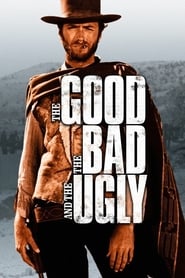
and its guitar soloist is Bruno Battisti D'Amario. The character of Angel Eyes, played by Lee Van Cleef, is introduced with a long ride into close-up, much like Omar Sharif in David Lean's Lawrence of Arabia, a film that, like The Good, the Bad, and the Ugly, was largely shot in Almeria, Spain. In the original script by Luciano Vincenzoni, Angel Eyes is referred to as Banjo, possibly in response to the popularity of the baleful Italian western hero Django, introduced in 1965.
6:34 · jump to transcript →
-
Tim Lucas
and he went on to make A Pistol for Ringo, The Return of Ringo, Left-Handed Fate, and The Big Gundown, to name a few. Like Saturno Cerra, he was later featured in Luis Buñuel's Tristana. He died at age 70 in 1982. In the original trailers for this film, it was Angel Eyes rather than Tuco who was designated as the ugly, perhaps because Lee Van Cleef was the third name down on the billing. But is Angel Eyes really ugly?
10:28 · jump to transcript →
-
Tim Lucas
This dialogue doesn't exactly jibe with what is heard on screen, but it comes directly from the original dubbing continuity sheets, scripted by Mickey Knox. That one's pretty good, but wait till you hear the second one.
22:21 · jump to transcript →
-
-
-
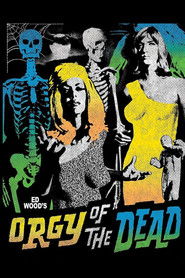
Hi, everybody. This is Frank Henenlotter, director of Brain Damage and Frankenhooker. And we're here watching Orgy of the Dead with the man who wrote the book on Ed Wood. And here we are with the star of the film, so to speak. He gets top billing. And it is Criswell. Now, I guess most of you people watching this probably only know Criswell from Plan 9 from Outer Space.
0:12 · jump to transcript →
-
Well, this is, wait a minute, let me interrupt this for a minute. This is Pat Barrington now here. Yeah, okay. Doing the Golden Girls sequence, which Apostolof said was done, you know, obviously based on Goldfinger. I'll get back to what he was talking about. With John Andrews as one of the giants, and I think John Bealey is the other guy. Yeah, and let me just... Well, you mentioned that John Andrews, of course, plays the wolf man. Yeah. Yeah, now Pat, I think this is her first film.
24:50 · jump to transcript →
-
This is Apostolof saying from Vraney's interview. He said, on the last day I shot the scene with the Golden Girl, which of course was based on the scene in Goldfinger. Somebody, I don't remember who the son of a bitch was, but somebody said that if you paint a body with gold paint, the person will suffocate because their skin can't breathe. He calls her Barrington. Let me change it to Barrington. He said, Pat Barrington, who played the Golden Girl, started getting real nervous. Well, yeah.
29:45 · jump to transcript →
-
-
multi · 1h 49m 5 mentions
John Cork, Ursula Andress, Eunice Gayson, Margaret LeWars + 20
-
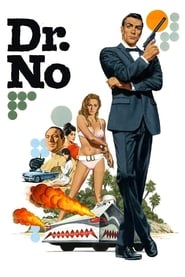
It was only at actor Kirk Douglas' urging that she accepted the role of Honey Rider in Dr. No. It was Ursula's first major film role, and she proved to be perfect for the part. In the novel, Honey Rider's emergence from the sea, nude save for a belt and sheathed knife, is compared to Botticelli's Venus. Ursula Andress was able to create an equally memorable image as she walked onto the beach. Even clothed in a white bikini,
1:01:21 · jump to transcript →
-
fairly affluent past. And as James Bond, as Dr. No was obviously the very first one, and he was the first director, we felt the whole thing was falling into place, quite frankly. The image of James Bond, as in the book, seemed to fit Terrence. And he was fairly cavalier, too. He didn't seem to get uptight. He didn't seem a very intense gentleman. He shot the film, simple as that.
1:30:23 · jump to transcript →
-
When I say rough, I mean he hadn't got the polish that he had now. And it was Terrence Young who spotted his potential. And without Terrence Young spotting that potential and basically giving it to Sean, I don't think there would have been the success of all the Bond films which have followed. So I do think the two people who set it alight were Terrence Young, the original director, and Sean Connery, the original Bond. Spectre?
1:31:20 · jump to transcript →
-
-
-
Tim Lucas
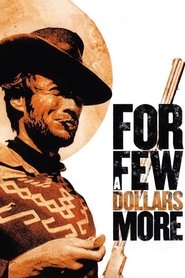
$50,000, a pay increase of $35,000. In today's money, that's roughly half a million dollars, making the title of this film fairly literal. It was at this point that the original Italian version placed its intermission between the two halves of the film, identified as primo tempo and secondo tempo.
1:08:04 · jump to transcript →
-
Tim Lucas
Bianco's challenge starts out looking like pretty even odds, but the odds change as he advances. Strangely enough, of all the possible images that could have been used from this film, the original Italian poster art by Franco Fiorenzi, arguably the most beautiful issued on this film, pictured these three men in the distance behind a foregrounded portrait of Eastwood.
1:28:18 · jump to transcript →
-
Related topics
Other topics that frequently come up in the same commentaries.