Topics / Writing & development
Adaptation & source material
141 commentaries in the archive discuss this, with 1,321 total mentions and 12 sampled passages on this page.
Filter commentaries
Filter this topic by the film's decade or the type of commentary.
Showing 4 of 141 commentaries
Clear filtersBy decade
Across the archive
ranked by mentions · click any passage for the moment in the transcript
-
scholar · 1h 32m 23 mentions
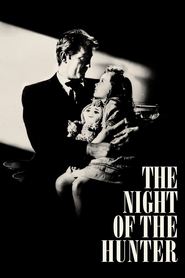
The Night of the Hunter (1955)
Terry Sanders, Robert Gitt, F. X. Feeney, Preston Neal Jones
-
book very much are in keeping with the book and some of them made their way into the final script you know isn't it true that lawton kept a lot of ag's lines and the lines from exactly he was an editor really exactly what i mean and the documentation that has turned up at the paul koner archive indicates that you know contrary to the accounts that ag was fired after 10 weeks he actually was hired for the final five weeks and so he under lawton's close direction cut the script
10:48 · jump to transcript →
-
Somewhere in the papers that I saw on this film, Lawton was quoted as saying he didn't want to be thought of as a credit hog and so forth, and that's why he didn't want to do that. And he did acknowledge, he said, sometimes I think you should get all the credit, but Lawton didn't want any of the credit. And Lawton remembered Orson Welles and how he was treated by everybody when he took all the credit for everything on Citizen Kane. Excuse me just a second. This gentleman uncredited is Paul Breyer, and this whole business with the hangman is one of the important elements that Lawton zeroed in on in the book that was emphasized. And again, there's a duality.
11:50 · jump to transcript →
-
The story of good and evil. H-A-T-E. The first time Lawton met with Mitchum after Mitchum read the book, Mitchum immediately started demonstrating what his ideas were for doing this love-hate business. Mitchum caught fire from the book as soon as he read it. And when I interviewed him in the 70s, he still remembered tiny details from the novel, even though he hadn't probably read it since 54. Now watch him.
18:51 · jump to transcript →
-
-
-
Alan K. Rode
Cook remembered Barbara Stanwyck in a scene from the play Noose in 1926, where the governor was going to electrocute her husband. Cook said Stanwyck was so good, quote, I went down to the bathroom and vomited. She was just so great in this scene. I'll never forget it. If anyone influenced me, she did. Marie plays Cook like the proverbial violin. Of course, Cook was nothing like his Casper Milquetoast screen image.
13:30 · jump to transcript →
-
Alan K. Rode
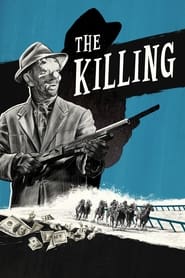
In the book, the guy that Sherry's involved with is also manipulating her and won't have much to do with her until she leaves her husband George, at least initially. Vincenzo Eduardo Zoino, i.e. Vince Edwards, was cast by James Harris, who knew him from New York. Edwards came out of the tough neighborhood of Brownsville, Brooklyn, and had that dark ambience so suited for playing gangsters as he does here.
15:21 · jump to transcript →
-
Alan K. Rode
In the book, Johnny Clay questions Sherry and she seduces him into some hurried sex. Lionel White felt that Johnny's fidelity to Fay had been apparently weakened after all the years behind bars. A piece of fudge, I love it. Jim Thompson had an unusual career in that his best work, his greatest books, for the most part,
24:52 · jump to transcript →
-
-
-
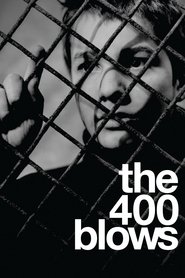
Truffaut, who was 27 years old when he directed this, his first feature-length film, takes credit for the original story of The 400 Blows, and fairly enough since it retells in fictional form the story of his own childhood. But then he gives an adaptation and dialogue credit to Marcel Moussy.
1:53 · jump to transcript →
-
As a passionate moviegoer all his life, Truffaut is more saturated than most directors with the films that preceded him. We are not far removed in this scene, for instance, from the classroom scenes in Josef von Sternberg's classic film The Blue Angel, where a girly postcard gets some other boys in trouble with the teacher. This teacher, called Little Quiz in the script, humiliates Antoine publicly by assigning the class a sentence to conjugate based on Antoine's clumsy graffiti.
6:48 · jump to transcript →
-
In the summer of 1992, we located Robert Lacheney at his country house in the Oise district of France and talked at length with him about the origins of this film. You can hear translated portions of that interview later in this commentary, as well as in the original French elsewhere on this disc. After stoking the coal fire, central heating is still a thing of the future in post-war France, Antoine gives a comic demonstration of bad manners in wiping his hands on the curtains.
11:53 · jump to transcript →
-
-
-
David Kalat
grow up, learn their craft, and eventually settle into the film business where they could be exploited to make Kong-alikes a generation later. So you would expect to see Kong knockoff starting to show up in the early 1950s, which is indeed what we find. In 1952, the original King Kong was re-released in the United States. This was back before anything like home video, so all the people who'd thrilled to Kong in 1933
8:04 · jump to transcript →
-
David Kalat
they hadn't had another chance to see the movie for 20 years. That's 20 years of pent-up nostalgia and accumulated word of mouth. An entire generation of kids had arrived and grown accustomed to hearing their parents rave about this awesome movie they'd seen in their youth. So the re-released Kong went absolute gangbusters. It beat the original release's box office figures and finished as one of the top grossing films of 1952. If it had been hard for producers to pass
8:32 · jump to transcript →
-
David Kalat
He was the sole survivor of the second fishing boat destroyed by Godzilla. It's more than a mere ironic death. It's a sign that once you've come into contact with Godzilla, you're doomed. Just like people exposed to radiation, the death sentence follows you even if you appear to survive the original incident. It's akin to Japanese ghost stories where a person becomes cursed by a supernatural contact and can't outrun the avenging spirit.
13:42 · jump to transcript →
-

Related topics
Other topics that frequently come up in the same commentaries.