Topics / Writing & development
Structure
92 commentaries in the archive discuss this, with 205 total mentions and 31 sampled passages on this page.
Filter commentaries
Filter this topic by the film's decade or the type of commentary.
Showing 20 of 92 commentaries
Clear filtersBy decade
Across the archive
ranked by mentions · click any passage for the moment in the transcript
-
-
Darren Aronofsky
Um, and although we're not talking about spirals here, um, we didn't really want to mention it right now to be right in people's faces. We wanted, uh, people just sort of to put it together themselves of what was going on. Then we would start talking about the golden spiral, um, later in the second act. This is the last scene of the first act. Um...
17:52 · jump to transcript →
-
Darren Aronofsky
the world, the earth. And she's trying to pull him back and pull him in. But he turns away from it and presses return. And immediately he notices that those picks are wrong. And then suddenly Euclid starts to fall apart on him. Blackout. End of the first act.
18:49 · jump to transcript →
-
Darren Aronofsky
of Euclid. We've been hiding it from the audience and so we wanted to create a little suspense that there was something new going on. It's also our introduction of the drill. The drill sort of, I wanted to sort of place it throughout the film just so the audience would be prepared for the big climax in the third act. So what you're looking at is a very, very simple aluminum frame
19:49 · jump to transcript →
-
-
-
explain it rationally, but that's why I think the film does have this psychoanalytic sort of structure, right? It is about revealing these layers and being able to strip them away so that the characters themselves are able to come to terms with what they've experienced. They know what has happened to them, but they haven't fully absorbed the levels at which that's affected them.
25:13 · jump to transcript →
-
And so the film does have this structure, which is very unusual, where it's peeling away. And that's where the music is essential, because music, like in this theme, which is in a very nascent sort of form, is gradually going to become more explored, right? It's going to go further. And go to the darker places that aren't really suggested here. Right. But I think that that's a really, you know, I mean, if you look at the films...
25:36 · jump to transcript →
-
before this films like The Adjuster you know again someone who has access to other people's lives someone who's able to kind of make these inventories of what it is they've lost someone who has this at least superficial sort of sense of being able to understand things structure them in that case actually put things back together again but you know is dealing with such inexplicable kind of confusion in his own life
26:04 · jump to transcript →
-
-
-
head that was Michael Lantieri and he is in charge of the hippo so ILM had him doing that and then they also have Scott Farrar doing the computer part and that comes in mostly in the climax and then Stan Winston did the apes so that was kind of the delineation of duties um but Michael Lantieri he had done like you know Jurassic Park kind of things um dinosaurs won an Oscar for it um
1:01:06 · jump to transcript →
-
in the climax and it's kind of fast and you know you don't have too much time to spend there um but some of the crystals that they put into the the ceiling and the walls were hundreds of dollars a piece so it was it was quite a an endeavor this so all the amy stuff here really gets me yeah no she's really adorable
1:22:08 · jump to transcript →
-
lava from methylcellulose, which I guess is in tons of things, like even milkshakes. I don't know anything about methylcellulose. But that and plastic beads, which I guess kind of gave a bubbly structure to it. And the beads would go wherever the flow went. And it was actually white. So then they controlled the color and made it glow and made it red and different colors in the post-production process.
1:25:18 · jump to transcript →
-
-
-
Stephen Prince
Although other characters appear in the dreams, what we mostly have is a dyadic structure involving the encounter between I and the other principal character or groupings of characters like the foxes in this dream or the Hina dolls in the next one. The interesting thing about all of this is its bearing on drama in the Noh theater. Noh plays work in this way. The main characters are a traveler known as the Waki,
4:01 · jump to transcript →
-
Stephen Prince
and the warrior, ghost, or demon that the Waki encounters, who has a story to tell and is known as the Shde. Kurosawa has fashioned his dreams to approximate this structure. The I character is a kind of Waki, and those that he meets are the film's Shde. And like Noh plays, many of these dreams have a lesson or a virtue that they are presenting. Kurosawa has always loved the Noh theater, and it's not surprising that it found its way indirectly into this film.
4:27 · jump to transcript →
-
Stephen Prince
He's already there when we meet him, as a full participant in the action. He is one of the characters who inhabit the strange landscape of this segment, not a visitor to it. This dream then has a different structure than the others, which tend to borrow the dyad of Wacky and Stay from the Noh theater. There's no dyad here, no passages of declamatory dialogue that present a lesson or a moral to the audience.
27:23 · jump to transcript →
-
-
multi · 2h 19m 3 mentions
Martin Scorsese, Nicholas Pileggi, Ray Liotta, Lorraine Bracco + 9
-
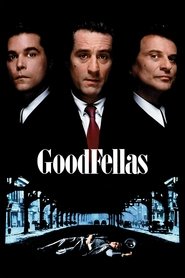
Right around that time, I think it was, 86, all the way through 86 and 87, Nick and I were working on the script. And basically I went through the book, along with Nick, but primarily I started choosing sections. I mean, the book was the book, but now the movie was an entirely different thing, and you have to begin to cull the book for the structure that would make a movie, which is what we did. We both took the book, and he said, come back with a structure of the movie. What's the structure of the movie?
12:19 · jump to transcript →
-
And, you know, you had to get rid of a lot of stuff. The book is the book, but a movie is a movie. And so we got rid of all that Army stuff and a whole lot of Henry stuff that was irrelevant. And oddly enough, we both came back with a structure that was so similar that we said, well, this is a structure. We just began blending the scenes, and we locked in each scene structurally to see how it would work. He and I sat in a room in his old office with his...
12:49 · jump to transcript →
-
What's interesting about that is that there's no climactic scene in the film. That's the climax of the movie. The climax of the movie is stirring the sauce and watching out for a helicopter and going to pick up his brother and Jimmy with his blue terrycloth robe with a cigarette in his mouth saying, those drugs are making your mind into mush. When we closed the door, he started laughing. De Niro and Ray Liotta started laughing because of the way he said it, the way he had that, he just threw in there with the cigarette in his mouth and he looked like some
1:53:53 · jump to transcript →
-
-
-
Alexander Payne
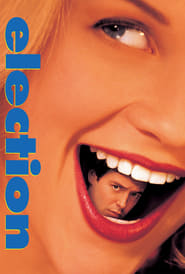
Another visual theme that's in the script and that I wanted to bring out a lot in directing is trash and throwing things away, since that's, in fact, later in the film, the climax of the film or the big turning point. So we establish it early on. And if you watch the film, there's kind of an obsessive use of garbage cans and the theme of people throwing things away. This guy, the janitor, actually was the janitor at our offices in Omaha.
3:06 · jump to transcript →
-
Alexander Payne
I have special affection for this scene, I guess because I still wash my car this way. Now, the thing about circles and straight lines here, just before the climax of the film, Jim McAllister makes the largest circle. Jim? Jim? Yeah. Walt wants to see you. Okay, thanks.
1:27:17 · jump to transcript →
-
-
-
-
-
-
multi · 2h 24m 1 mention
Alex Thomson, Terry Rawlings, Alec Gillis, Tom Woodruff Jr. + 3
-
-
-
-
-
-
-
-
multi · 1h 54m 1 mention
Jean-Pierre Jeunet, Hervé Schneid, Alec Gillis, Tom Woodruff Jr. + 5
-
multi · 2h 12m 1 mention
Andrew Sarris, James Ellroy, Brian Helgeland, Michael Nathanson + 10

Related topics
Other topics that frequently come up in the same commentaries.