Topics / Writing & development
Structure
92 commentaries in the archive discuss this, with 205 total mentions and 15 sampled passages on this page.
Filter commentaries
Filter this topic by the film's decade or the type of commentary.
Showing 8 of 92 commentaries
Clear filtersBy decade
Across the archive
ranked by mentions · click any passage for the moment in the transcript
-
-
Tom Hooper
...more convincing just to really commit to the sung-through form... ...and not keep reminding people of naturalistic dialogue. But in doing that, you know, I've relied myself... There were very few films that did that. I mean, I think Tommy, Evita, Umbrellas of Cherbourg... ...there are very few examples of films that have been through sung. Most films stick with this dialogue interspersed with song structure.
22:58 · jump to transcript →
-
Tom Hooper
...then that it would have a completely different meaning in the film structure. And she applied a kind of raw devastation to the song... ...that revolutionized her take on it. But it's very much a response to where it's placed in the story... ...and the brutality of what it's a response to.
32:03 · jump to transcript →
-
Tom Hooper
The effect it did have on the structure, though, was the scene with Bamatabois, which is more involved in the musical, and actually we shot a longer version of it. It became...
32:45 · jump to transcript →
-
-
-
In real geography. And he is in that helicopter. Yes. That was shot in the helicopter. Those are real French Special Forces who come with the helicopter. Incredible, incredible guys. It's a great box set. You get the helicopter, the French Special Forces. I know, and the helicopter, he couldn't bring all the weight on it because the structure, so he had to keep it just a little off. Yeah, it was weighted for four tons, and I think that helicopter was 14. Yes. And no helicopter had ever landed on that helipad.
50:33 · jump to transcript →
-
I don't care how many rubber boots you're wearing. And the other thing about the scene that we just went through, it's the exposition that's setting you up for the third act of the movie. We're introducing new stakes yet again. And these scenes are always a challenge. And normally we tend to shoot these scenes in as confined an environment as possible so we can go back and reshoot them and retweak them.
1:42:30 · jump to transcript →
-
We cut to that shot sooner to show your face. And it was Eddie Hamilton who was like, no, no, no, stay with the helicopter. And that was not our instinct. Our instinct was, boom, how do you get to the shot sooner? And it actually had real impact. And this is one of the lovely discoveries that the teams that begin forming in this third act all came from the necessity of who's where and doing what. And the whole design of the bomb and the doomsday scenario all...
1:52:36 · jump to transcript →
-
-
multi · 1h 33m 2 mentions
Wes Anderson, Peter Becker, Roman Coppola, Jake Ryan + 3
-
Wes Anderson
In this movie, there are two of your costars-- You play an attorney. You're married to Frances McDormand. That was my first casting thought of this movie was, "Boy, I would like to have Bill and Fran together, to have them married in this story." And the other interesting relationship I liked was Bill and Bruce Willis, who plays Captain Sharp. Maybe, Bill, you could talk about these two collaborators. Well, the scenes with Frances were... that was like dancing. That was like dancing at night after a few glasses of champagne. It was really-- We were pleasing each other and moving together and doing things effortlessly and exchanging, matching each other's energy and progressions. I think the scene I did, the bed scene I did with Frances, where we're in separate single beds, was one of my favorite scenes I've ever done in the movies. I really enjoyed it. I could have done it all day long. So we just kept doing it. I don't think anyone wanted it to stop. It was really, really a delight. She's really, really talented. Now, with Bruce, that was my first time working with Bruce, although I have some history with Bruce, knowing him. And the first timers in all of Wes's movies have a difficulty with the sort of precision, the insistence on a very specific script, you know. And it's a hard thing to wrap your head around. And Bruce is a kind of a natural, he doesn't necessarily, in most of his movies, he just sort of lets it go, he feels a certain way and he lets it go. Precision dialogue was never something that was too demanded because it wasn't his natural way, and he was able to do it in his own words most of the time. So it was a little different for Bruce doing that in Wes's because it's sort of-- It's very mathematical. It doesn't bounce the same way. So he needs it to be a certain way, and you have to really get on yourself to get the lines right. And there are tongue twisters. There's lots and lots of tongue twisters that are hard to say. I just remember being in a car and doing some car scenes, and just enjoying the heck out of it and saying, "Let's do some more of this." We did many, many scenes of it. Many, many takes. And it was always interesting. I think we were both enjoying it. I really enjoyed being on the other side, you know, just hearing him go. And he has his own funny timing that's, you know, unique. And it was fun to play. "Okay, let's see." And we did just wonderful stuff. He's really wonderful. But I really had fun with it. I really enjoyed it. And when people are giving, you're just like, "Okay, I like that. Try this one." And we just kept throwing them at each other and really having a good time. I've worked with him again since. We really had a wonderful time working on Moonrise Kingdom. And I think I told him when I saw the film that when I saw the ending shot, the climax shot on the bell tower, I laughed. That was the biggest, hardest laugh I've had in movie history. That's the biggest one I've ever seen. It made me laugh so hard when I saw that. Bruce holding on to the kid. It really killed me.
35:14 · jump to transcript →
-
Well, it's one of my favorites, if not my favorite. It's just a spectacular film. And it's sort of what I would aspire to make if I could make a movie like that. I can't remember at this second what the heck I was thinking about in relation to Red Beard. And this-- Oh, we were talking about emotional things that were-- The thing about Red Beard that's so wonderful is the plot is very straightforward. But along the way, these sort of... These sort of little, you know, rabbit snares are set along, these little things are set along the side of the road. And there's a kind of a rhythm to the plot where your internal clock, you know, goes off and says, "Well, it's time for the climax of the movie now." But that's not what happens in this film. What happens instead are that all these sort of subplots, these little sort of traps, these little tricks that are set up along the way, they all go off at once. They all burst into flower at once, one after another, I should say. And there is this emotional, I mean, just a drubbing that you get. You just get just punched in the solar plexus, just repeatedly for several minutes, for like a whole reel that you're not-- You didn't see it coming. You sort of didn't see it coming. And it pounds you because the plot has been so straightforward and clean that your intelligence is elevated and you're available for this emotion that comes all at once, and I think that... That that movie Rushmore had a similar kind of construct, in that it seems like, "Okay, now we're gonna do this stuff." A lot of action has happened, you know, there's been this struggle between the man and the young man and the girl, and you think it's all gonna go off, and then a whole bunch of other things happened.
42:34 · jump to transcript →
-
-
director · 1h 34m 2 mentions
Scott Stewart, Jason Blum, Brian Kavanaugh-Jones, Peter Gvozdas
-
And with Josh Hamilton, the qualities that I was looking for in a Daniel was somebody who, in the third act of the movie, when he buys a gun to protect his family, that this is not something that would be comfortable for him. My father didn't look like an action star, and a lot of people's fathers don't. And so it was kind of about trying to keep true to that idea.
23:29 · jump to transcript →
-
10, 15 years ago, he was like them. Maybe he was like Josh Hamilton's character and had a wife, like Keri Russell, and maybe lost a child. And his whole life went off the rails, but he became committed because he, you know, any parent that loses a child in an abduction situation, we'll talk about this more at the very, you know, as the climax of the film, the end of the film,
1:08:39 · jump to transcript →
-
-
director · 2h 10m 2 mentions
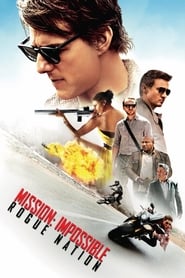
Mission: Impossible - Rogue Nation (2015)
Tom Cruise, Christopher McQuarrie
-
Seat of the pants, I would say. Seat of the pants, but also just being honest with each other. Things that don't work and really trying to keep each other true. Yes. The story, the structure. And when you're not feeling it, it's just... But we had this thing where it was really interesting. For example, Alec is throwing a stack of papers on the table. There's actually just random things stuffed in those plastic sleeves. We didn't shoot the inserts until later. We knew...
24:10 · jump to transcript →
-
Didn't we? Oh, my God. We were talking about that a year ago. We talked thematically, and it all kind of found its way in different ways. Yes. Tonally, the relationship. You spoke about also what you wanted to do with the female character right from the beginning. Yes. You know, we were going over that. It was your idea right from the beginning. She's an outsider, and she's keeping you off balance, and we don't know if she's good or bad. She tempts you to come away. But remember, it was originally a thing where she had all this money in the second act of the movie and was like,
1:02:16 · jump to transcript →
-
-
-
technical · 1h 22m 1 mention
Måns Mårlind, Björn Stein, Gary Lucchesi, Richard Wright + 1
-
Related topics
Other topics that frequently come up in the same commentaries.