Topics / Writing & development
Structure
92 commentaries in the archive discuss this, with 205 total mentions and 45 sampled passages on this page.
Filter commentaries
Filter this topic by the film's decade or the type of commentary.
Showing 29 of 92 commentaries
Clear filtersBy decade
Across the archive
ranked by mentions · click any passage for the moment in the transcript
-
-
James Mangold
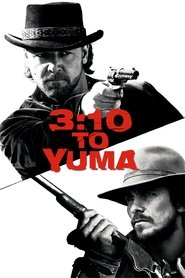
Aristotelian terms, and there's an antagonist, and the antagonist opposes the efforts and forward motion of the protagonist. Russell is not the antagonist of this film. In that sense, it's kind of, if you took away all the Western attributes and looked at its structure, it's kind of a buddy film with a struggling rancher and a super criminal somehow tied together on a journey.
18:11 · jump to transcript →
-
James Mangold
is that he seems to me to be someone with a kind of admirable and unique value structure. Everywhere you turn in the world that we created for the movie is compromise and evil in more masked forms. The railroad, the men who hold the lien on the Evans Ranch, the people enslaving the Chinese to build the tunnels.
22:56 · jump to transcript →
-
James Mangold
Also with action, it allows you to tie things together, the shooter and what they're firing at. One thing I tend to take a lot of time with in all my films is what you'd call the first act or the introduction of all the characters. And by structural definitions, we're pretty far in the movie, but in a way, it's only really just beginning. And while that might be perhaps for some viewers a struggle, I think the effort we go to to set everyone up in this first act
37:07 · jump to transcript →
-
-
director · 3h 29m 6 mentions
The Lord of the Rings The Fellowship of the Ring (2001)
Peter Jackson, Fran Walsh, Philippa Boyens
-
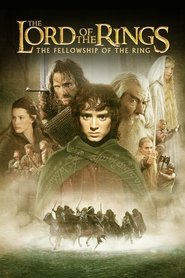
We really wanted to create a nice story between Boromir and Aragorn because really from this point on until the end of the film, the relationship between Boromir and Aragorn becomes one of our central pieces of dramatic structure, really. Ironically, one of the first scenes you shot with them together was the last scene that they had together. And the connection was so great and they worked so brilliantly together that we tried...
1:34:41 · jump to transcript →
-
All who look upon her fall under her spell. Introducing Galadriel and the concept of Lothorian was difficult. It was also difficult in terms of the story of the film because it's one of those situations where if you were writing an original screenplay, Lothorian probably wouldn't exist because you'd be wanting to keep the momentum up straight through to the climax. We always regarded Lothorian as being potentially problematical because of the...
2:30:20 · jump to transcript →
-
The Lothlorien sequence was always very difficult for us in the movie because it's a point in the film where you naturally would be wanting to increase the pace and be building up a sense of momentum to head towards the climax of the movie. But obviously the sequence in Lothlorien is very, very significant in the book. It's significant in the movie as well because it's the point that Frodo has to decide whether or not he really is best staying with the Fellowship or leaving, and Galadriel obviously gives him advice.
2:33:53 · jump to transcript →
-
-
-
He should have a drink with the kid. That's your little Kubrickian. Also, on the sonogram machine, which you'll never see, it says Robin Sarno is the patient's name. Maybe when High Def comes out. I love that the OBGYN chills out in the stirrups after hours. That was my nice little touch, my little point of having a movie filled with prostitutes, you know, the third act filled with prostitutes, and you only see a naked man. Dirty dancing? Oh, this was just...
25:18 · jump to transcript →
-
is the beginning. This is where we're really entering the second act. And the second act is the theater of imagination. And if you're not willing to participate in the little clues that I'm giving you, the second act is fairly uninvolving because I'm not giving you anything. It's a really strong rewatch in that way because once you get through the film and you understand where it's going and what the film
44:49 · jump to transcript →
-
that I actually painted myself into some pretty ugly corners in the second act of the film. So there's a lot of essential information that you want to convey, but there's no way to cut to it any quicker. You painted me in a corner. Yeah, I certainly did. And I guess if you're going to, Neil Pollack, who's a director friend of mine. And the interview guy in the beginning. Right, the interview guy at the beginning of the film. Neil spoke to me the day before I
51:55 · jump to transcript →
-
-
director · 4h 13m 4 mentions
The Lord of the Rings The Return of the King (2003)
Peter Jackson, Fran Walsh, Philippa Boyens
-
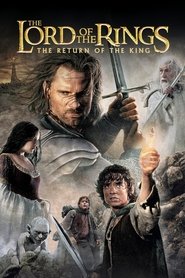
Actually, the other thing that this scene does, ironically, is it shocks all the fans of the book. All the people who know the end of this story are now on the edge of the seat, because if we can do that, what the hell else are we about to do? This was originally edited to be continuous after Faramir leaves the hall. So he talks to Denethor, and then we go straight into this. But in rearranging the structure, we put a little bit of a time gap and went to Frodo and Sam on the ledge.
1:28:57 · jump to transcript →
-
how the film was gonna play, and we just wanted to push forward to the climax of the movie on Mount Doom as quickly as we possibly could. The one thing that these wonderful scenes, these beautiful scenes did was emotionally drain you so that by the time you got to the end, you kind of were all emotioned out, weren't you? And the weight of the front of the movie started to crush the end. Well, hopefully, most people that are watching this extended cut will be watching it over two nights, I would hope, and this is like the second night. Yeah.
2:55:24 · jump to transcript →
-
just exclude other plot lines because we felt we wanted to concentrate and tighten up the climax. But this is nice, and this does certainly earn you the moment of them being together at the coronation. It is in the book that their hands meet and hold like that. I think it's fantastic. I think it's really great that Erwin and Faramir, who are two troubled men,
3:07:58 · jump to transcript →
-
-
-
It's something that's in the movie but never actually mentioned in the movie anymore. But we liked it. So we like there sort of being architecture even if you didn't really understand it. We also like the idea of juxtaposing that time cover with who he is now. These scenes are what would in another movie typically be your first act, get to know your characters by hearing them talk to other characters' scenes. And here instead, it's all behavior and performance.
9:05 · jump to transcript →
-
What am I doing? I'm not gonna let this happen. Let? This isn't up to you. You can't... There's our next scare. And, you know, the scares are built sort of sequentially. And, you know, we're already a ways into the first act, and clearly there have been no monsters. So even though you know you've come to a monster movie,
15:05 · jump to transcript →
-
knowing that a lot of this movie was performance. And so Will and Akiva and I really would workshop, and with Alice too, workshop a lot of this. So it had a structure to it, and Akiva had written it very specifically. And then we went way off track in terms of workshopping and coming up with ideas and different things for people to say and not to say, and who are you looking at and who are you paying attention to, and what are you thinking about, and is it your family, and are you disappointed, and...
1:06:50 · jump to transcript →
-
-
-
Rob Cohen
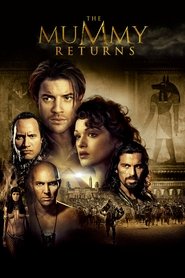
since they're both, he's Kyle 6'1", Luke 6'3", but Kyle's a Krav Maga guy, which is how I got to Krav Maga for Brendan in this film. Krav Maga is an Israeli martial arts system of great brutality and directness, which is what we train Brendan in to fight Jet Li in the third act in the mano a mano sequence.
29:13 · jump to transcript →
-
Rob Cohen
break and reform, and this was all very complex algorithms that we did at the Rhythm and Hues, the visual effects company that did all the horses and this chase through Shanghai. The other company was Digital Domain, who did the conversion to Terracotta when the emperor is cursed, and as you'll see, the entire battle sequence in the third act.
42:35 · jump to transcript →
-
Rob Cohen
But again, little moments of levity and fun as we're getting all of the loose ends wrapped up from the previous first act of the film and the second act rules being laid out, the goals. This was a good scene.
49:46 · jump to transcript →
-
-
-
Tom Tykwer
The strange effect that reading the screenplay on me had was that I completely got lost in it immediately and that I so quickly identified with not only the characters but also its structure and the way it was conceived that I suddenly forgot about everything that I had thought before that this would be something I could never connect with because it was Kieślowski's work and all that.
4:27 · jump to transcript →
-
Tom Tykwer
It is something like a prison, a prison's iron that comes out of the structure, that geometric structure that is very much in right angles. And if you look at the city map of Turin, you could think for a first split second that this is something like New York. And have these people in the beginning being somehow in this very beautiful town, but somehow locked in, in a...
1:08:06 · jump to transcript →
-
Tom Tykwer
geographic and topographic structure that is totally over-organized and have them, when they open up and when they start to discover what's deeply and in fact riding them, have them change into a landscape that is much more fluid and much more open, much more inviting to open your mind and the way you look at things. Then to change to Tuscany, which is only like a couple of
1:08:34 · jump to transcript →
-
-
-
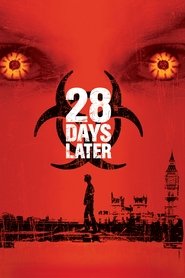
The idea to choose District One, Isle of Dogs, as the main place for the new life in the city, is because the vertical structure of that place allows to bring a lot of people and at the same time you can control them, which is, in this process, in this new beginning of the city, is crucial for the militaries to have an area that they can control and they can... they can help these people. It's also the idea that we want to improve something new from the first movie, 28 Days Later, which is a film, well, it's a masterpiece. It's a classic now, and it's really difficult to add and to add new things from this first movie. Our idea was to work in the contrast, no? Because this city is very close to other modern cities in the world, but it is very far from the idea we have of the iconic London. What we like to do in the beginning is to... to bring this city as a character in the first half of the movie, and the second half to work with this iconical and gothic London - Danny Boyle's work in the previous film.
16:46 · jump to transcript →
-
Again, the work of Chris Gill, the editor, is really, really amazing. We found together all these great ideas, because that wasn't exactly in the structure of the original script. Yeah. The parallel editing is improving a lot the tension of this sequence. And... This sequence was really difficult to shoot. It was made in one day. That was the first day of the premiere of Catherine's play.
42:06 · jump to transcript →
-
Jane Petrie was the designer... and that was really difficult for her to work in day-for-night. You have to think about the colours, about the luminosity, the brightness of these... of these shots, no? When you shoot in day-for-night, you need to pay attention to costumes, because the technique implies that you need to reduce the light later on, so that's why you can't use, you know, specific colours, and you need to... you need to control these things. And makeup is very important. - Makeup is very important. Here, for example, we don't see Robert Carlyle's eyes, which is really nice. This first appearance of Carlyle, I think is really cool. It... This movie, in this sense, is a kind of chase. These kids are chased by their father now. And, you know, the run away, in terms of the structure, is clear now, because apart from the fact that the soldiers, the militaries, are trying to kill everybody, the infection and the infected are chasing them. Clearly, with the figure of this father infected, now the moment's more difficult in terms of emotion as well.
1:03:43 · jump to transcript →
-
-
-
over my shoulder, and behind me a gravestone caught my eye. And it was a metallic structure in the form of a kind of ribbon, which is meant to be the honor of the red banner, which is quite a high honor. And on it was written in Russian, but it was translated for me, was three words, wife, mother, soldier.
38:47 · jump to transcript →
-
around at its base, and you see how it's like how ant-like their size is in relation to this giant metallic structure, the submarine. And it really does introduce how formidable a character it is. I mean, most people never have the opportunity to see a submarine out of the water, and it's
44:35 · jump to transcript →
-
-
director · 3h 43m 2 mentions
The Lord of the Rings The Two Towers (2002)
Peter Jackson, Fran Walsh, Philippa Boyens
-
But it would be fair to say that it was given the least amount of thought during the writing because there was so much focus on the beginning of the story of how we introduce everybody. Do we spend too long in Hobbiton before they hit the road? How do we get all this incredibly complicated backstory about Isildur and the ring across? Then on the other side of it, we were focusing on the return of the king of wanting to climax the story in a great way of really trying to shape the end of what happens in the third act, Return of the King. And in some respects, this one slipped through the cracks of it.
3:36:27 · jump to transcript →
-
that we couldn't go through that entire Battle of Helm's Deep and with the climax of Frodo and Sam and then go into what was going to basically be a seven or eight minute sequence of returning to Isengard. And the reason why it's not in either the theatrical version or the extended cut is because it is somewhat anticlimactic. It's a much better beginning for a film than it is a climax for a film. And so therefore we made a decision last year when we were cutting the two towers that that entire sequence of the basically...
3:39:16 · jump to transcript →
-
-
-
James McTeigue
That speech, because it's such a muscular piece of writing... ... It needs to be attacked with great kind of gusto and flair. And passion and belief. And so, if that's all there, it's a wonderful introduction to the classic masked man. He just appears and you get that persona very, very clearly and very, very quickly. I would say there's not enough talking in films, nowadays. And, you know, there's not enough use of language. I think that introduction, you know, when he first turns up in the Fingerman Alley... ... throws the Shakespeare out to you, then you get the big alliteration speech. I think it's, like, it's nice to use words. And, you know, he uses them beautifully. I thought it was a cool way, also, to preserve from the graphic novel... ... how each chapter has a V word, which I love that. And I was like, I wish we could've kept that in the movie. But that sort of structure... ... 1S sort of condensed into that crazy use of V's in that speech. The important thing about that speech Is you're never gonna understand it. I mean, you know. But you're gonna understand the intent of it. The performance gives you the intent of what that speech Is. And then Natalie's reply is sort of, you know... ... you're the audience, you know, "Yes, what are you, a crazy person?" V does say that he's a humble vaudevillian veteran. He's an actor. I mean, he is an actor. The character is an actor. He's an actor activist. Or something. Who has been picked up and chucked inside... ...and then experimented on and tortured. Hugo's ability to use his physicality and his voice so expressively.... You're so intrigued by what's going on behind that mask... ...as an actor, as a character, as an audience member... ... that you're always going, okay, is he crying now? Is he happy? Is he angry? And because you're so, sort of, entwined in his emotions... ... you become V. And at the end, everyone is V. Because they've been trying to figure out his emotions... ... you know, everyone's trying to play him at the time... ...because they're trying to figure out what's going on under that mask... ...SO it's an amazing, sort of, engagement tool. And afterwards, you'll return home safely. All right. When you go up on the rooftop and you start hearing the music... ...I wanted you to be able to look out over London... ...and have some recognizable landmarks... ...even though it wasn't true to the direction that we were looking. We went up onto a rooftop nearby. We shot stills at night that we bracketed to get the full range of lighting information. Then we removed a few obvious buildings. The St. Paul's Cathedral stands out, there. It's very obvious. And just added a few extra skyscrapers and so on. Painted all the lights out for much lower levels... ...to sort of fit in with a late-night curfew. The Old Bailey Justice Courts itself is always a miniature... ... whenever we see it in this picture. And that's partly because the real building, if you go there at night is not properly lit... in any way that you'd, you know, really want to do it... ... If you were focusing on it like we were. We also made some slight design changes to the Old Bailey miniature. We changed the, flattened the, sort of dome roof, slightly... ...and enlarged the statue that's at the top... ...because she's quite an important part of the story, there. I still went with building miniatures for all of the intricacy and detail that you get... ... IN a very complex pyrotechnic explosion. To do that with a computer, although aspects of that are feasible now... ... the simulations are hugely complicated. And there are always these little happy accidents... ...and things that you get from doing something for real... ... that you're not... Not totally in your control. Which is a big reason why we do it. How beautiful, is it not?
6:41 · jump to transcript →
-
Shit. He must have had a hidden trip on his file at the Finger. But how'd he know it was you? What do we do? I'm a cop. I have to know. I think it was a good choice just to have him sitting there. There's no movement. You're forced to listen to what he's saying. And, you know, he knows that Finch is on the cusp of putting it all together... ...but he needs to, like, tip him over the edge. He just needs to go, "Okay, here's all the chess pieces. Here's how it all fits together and, you know, I needed you, inspector." I really love that writing. I mean, it's exposition. But it's really, really important to know it. And you're also finding out a lot of information about... ...particular members of the government... ...and how they got to where they are now... ...and how corrupt the whole government structure Is. From the point of view of the disguise, I'm in that kind of.... It was like dress-ups, you know? This kind of crazy false nose... ... false beard, you know. All sorts of-- A ridiculous wig. - Hat, fat suit. Fat suit, hat, cane. I was like, "Hey, give me a parrot," you know? "Give me an eye patch." I don't quite have enough here to disguise myself. And also, it was relatively gloomy in that particular space. And so, even with all that on... ... you don't really see the face that much. The only time he's on camera you can't see him. And Rokewood, of course, is a name of one of the group.... One of the conspirators from the original gunpowder plot. You know, when they're looking at the computer screen... ...and they're going ""Rokewood" and "Catesby"... ... they're giving you some of the other conspirators of the gunpowder plot. and then imagine that you and you alone have the cure. But if your ultimate goal is power, how best to use such a weapon? Well, it's at this point in our story that along comes a spider. Here's a man seemingly without a conscience... ... for whom the ends always justify the means. He suggests that their target should not be an enemy of the country... ...but rather, the country itself. Three targets are chosen to maximize the effect of the attack: A school, a tube station and a water-treatment plant. Several hundred die within the first few weeks. Three Waters has, in fact, been contaminated. Authorities are attempting to control its deadly spread. sent destruction through the Underground. Fueled by the media, fear and panic spread quickly... ... fracturing and dividing the country until, at last... ... the true goal comes into view. Before the St. Mary's crises... ...10 one would've predicted the results of the election that year. No one. And then not long after the election, lo and behold, a miracle. Some believed it was the work of God himself. But it was a pharmaceutical company controlled by certain party members... ... that made them all obscenely rich. A year later, several extremists are tried, found guilty and executed... ...While a memorial is built to canonize their victims. But the end result, the true genius of the plan, was the fear. Fear became the ultimate tool of this government. Through it, our politician was ultimately appointed... ...to the newly created position of high chancellor. The rest, as they say, is history. Can you prove any of this? - Why do you think I'm still alive? All right. We'd like to take you into protective custody, Mr. Rookwood. I'm sure you would. But if you want that recording, you'll do what I tell you to do. Put Creedy under 24-hour surveillance. When I feel safe he can't pick his nose without you knowing... . I'll contact you again. Till then, cheerio. Rookwood... ...Why didn't you come forward before? What were you waiting for? Well, for you, inspector. I needed you.
1:31:55 · jump to transcript →
-
-
-
So the story is still unfolding as you're watching this. You know, that whole structure is that wooden structure there that we built. So there's... This was used to sort of get rid of the rest of the team so that Ethan could sort of have the stage in a way. There's the shot where you know where you are. Yeah, you just give a little geography there. Boom. That was fun sliding. That was good. That was fun. And then all of a sudden you see the chopper there. Boom.
1:05:10 · jump to transcript →
-
Yeah, with that helicopter that he's got. Isn't that nice? Ethan, get in. We don't want to use force here. You know we will. Ethan, get in. Tell me you came here. I just like how your structure, you know. Just when this thing is happening, it's like, you know. And reading the script, it was a real page turner. That's where it is. Again, I love your running here. It became this sort of theme in the movie, inadvertently, that Ethan, you know...
1:12:37 · jump to transcript →
-
-
-
Yeah, this is a good... It's a very Hitchcockian way to design the structure of the scene. Now let's see.
1:34:43 · jump to transcript →
-
Since you talked about a lot of people who worked with you in the movie and Dennis Magnusson was the one who helped me out in the final versions of the script with the structure and so on and did that very well. So, Dennis Magnusson. He's not mentioned very often. Here is an idea we tried to... That's really one thing I'm not so happy about. The background turning red and then black again. I think it's too...
1:51:26 · jump to transcript →
-
-
-
-
-
-
-
-
-
-
-
-
director · 1h 37m 1 mention
John Cameron Mitchell, Justin Vivian Bond, Sook-Yin Lee, Paul Dawson + 1



Related topics
Other topics that frequently come up in the same commentaries.