Topics / Writing & development
Structure
92 commentaries in the archive discuss this, with 205 total mentions and 34 sampled passages on this page.
Filter commentaries
Filter this topic by the film's decade or the type of commentary.
Showing 18 of 92 commentaries
Clear filtersBy decade
Across the archive
ranked by mentions · click any passage for the moment in the transcript
-
-
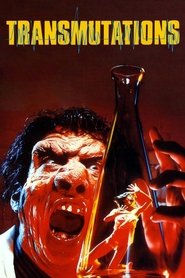
He's the one that breaks out in hypodermic needles from Nicole's powers, let's say. How would you describe the situation in a film like this where you have two, in a sense you have two villains, don't you? Because you have Savary and Motherskille and they're kind of sort of in cahoots with each other to a degree. Did you feel that that was a strength or a problem in how you deployed the climax of the film? Because you've got two...
45:28 · jump to transcript →
-
So what kinds of things... I know that we'll talk about the climax when we get to it because I know that was affected by financial and time constraints. But what other kinds of things did you have to drop as a result of the sudden slashing of the budget or your more realistic budget? Well, just a lot of scenes, really. And the way it's shot, I would have liked far more set-ups. Yeah. Yeah.
55:34 · jump to transcript →
-
ropes in terms of how you would structure a movie narrative i think it was all to do with with him wanting to create a character who's lost and unconnected with the world um and his love for nicole um gives him that connection again yeah well something i noticed in in clive's draft uh reading through it was that um he's afraid a lot of the time as well
1:12:41 · jump to transcript →
-
-
-
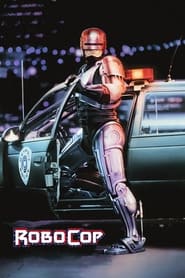
And the shot in on Robo's eye. It's such a neat moment. Because I think Paul was trying to get the eye. He was trying to find his humanity before we revealed the third act's face. And watch this right here. It's so fucking cool. I think I also have to credit Jost Vacano there in making the shot really work, you know, because...
1:11:53 · jump to transcript →
-
I mean, otherwise it would have been... It would have been fucked. It would have been a good move. And I think it's a nice move that you finally see in this scene these two people coming together, isn't it? Well, it's a third act scene. Actually, this scene violates a little bit the idea of third act exposition. But, you know, you don't mind it so much. And you really do... I didn't know it then because I was a younger writer. You really do want to see the forces against the hero coming together. Well, I guess we're going to be friends after all.
1:18:51 · jump to transcript →
-
Richard. Now this is a oblique joke about Richard Nixon, the poor guy. He gets to be the butt of every joke. But here we go. Now here we go. There's some third act exposition. You're going to need some major firepower.
1:19:22 · jump to transcript →
-
-
director · 1h 24m 4 mentions
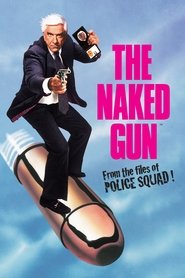
The Naked Gun: From the Files of Police Squad! (1988)
David Zucker, Robert K. Weiss, Peter Tilden
-
And hopefully we'll remember some of that and talk about it. We always shoot an elaborate ending to each movie that never makes it. No, that's always rejected. And you never know that it's not going to make it? You never get a sense of it? We always hope for the best and we hope no one will notice, but... It was almost midnight when I got to my door. I just wanted a glass of vodka... Pretty good structure. You talking about the set or...? Do you still see stuff you want to change?
35:28 · jump to transcript →
-
I think that Vincent Ludwig was involved in a number of... Again, there was some laughter at that point. No, it's a compelling... There you go. That's pretty funny. Big laugh. Isn't this the part in the second act where you can go have a drink or something? This was another concession break. Yeah. I'm sorry. I'm worried about you. I don't trust you. But there was a very good, faint, you know, physical thing coming up. It's coming up right now. We're in the famous pass-out scene that she does not notice at all. Oh, yes. Done in the background.
50:46 · jump to transcript →
-
Where were you? Without walking. Oh, so this marks, this scene marks the end of the second act. How do you know that? Because... The small sign on the set that says it. How do you know that, David? How do you know that? This is where she says they're going to be at the baseball game, and then that marks the start of the third act. Launches them into the third act, which is the baseball game? Yeah. And that's the whole third act, the baseball game to the end? Yeah. What have you got? I overheard Ludwig. I couldn't think of anything else. Ludwig is planning to have someone assassinate the queen. Where?
58:26 · jump to transcript →
-
-
director · 1h 29m 3 mentions
Jeff Kanew, Robert Carradine, Timothy Busfield, Curtis Armstrong
-
You know, the simple structure of the movie, it just worked for me. The second I read it, I remember saying when I said, I don't know what to do, there's a movie, Revenge of the Nerds. It's going to make $100 million, but it's Revenge of the Nerds. I mean, you could see at the time. You could if you weren't a Fox distribution executive. Right.
1:16:32 · jump to transcript →
-
I thought it's there. I mean, the structure of just the classic structure of they win, we win, they win, we win. The way that lays out and the introducing of Betty's turn, especially when you added that giving her head is what makes her life turn towards, you know, I mean, the the the nerds. Better way to a woman's heart. You know, it amazes me that you think that.
1:16:59 · jump to transcript →
-
Tim that you because I wouldn't well it's just the way my mind works I would never have seen a hundred million dollars when I read that script I remember saying those words I said this movie is going to make a hundred million it's going to work and if I can find I don't know if I want to be in it because it's Revenge of the Nerds but the script works I can see that this from first read that the structure of the script worked I mean we made it much better I believe with a lot of the stuff that we came up with through Jeff's supervision thanks
1:17:25 · jump to transcript →
-
-
-
William Friedkin
I like to have events just unfold without the audience's expectation of what's coming or what it's leading to. That's what I prefer in all of the arts that I care about, whether it's music. I love, for example, the compositions of Stravinsky, where they're completely unpredictable as to where the rhythms are taking off, the melodic structure, the films that I most
37:33 · jump to transcript →
-
William Friedkin
value. Films like Citizen Kane and All About Eve and The Treasure of Sierra Madre and Paths of Glory and any number of others are films that are unpredictable in their structure. You have no idea where this story is going. You have no idea, for example, in Citizen Kane that the meaning of Rosebud will ever be determined for the audience but not to the characters in the films.
38:03 · jump to transcript →
-
William Friedkin
You want the photography to almost be caught by surprise by what the characters are doing. And so I let that attitude follow me into the cutting room, where I'm improvising not only the structure of scenes, but the order of scenes. I'll very often change the order of one scene or another while the film is telling me what it wants to be in the cutting room.
1:35:53 · jump to transcript →
-
-
director · 1h 30m 2 mentions
A Nightmare on Elm Street (1984)
Wes Craven, Heather Langenkamp, John Saxon, Jacques Haitkin
-
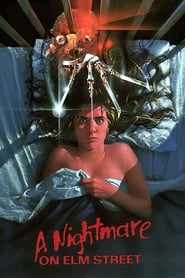
And this, of course, is later what the character uses to realize that she can bring Freddy himself back if she holds on to him at the exact moment when she's being awakened. I know. The structure is really impressive. It's great the way it all is plotted out. And it was the key point. It was the story breaker. It was the thing that I could not figure out how to... You know, once you have a guy this powerful who is able to be your killer in a dream, how can you not sooner or later sleep and be at his mercy? And it finally occurred to me...
51:21 · jump to transcript →
-
See, even a scene like this, to me, shows good structure. You set up the thing of the mother coming in, you reestablish her character, because later you're setting up for her entrance later. Instead of it just her coming in at that time, that's important. That's what makes it weave nicely. I actually ran into this actress in Oregon at a film festival last year. She's not in the business anymore. Do you remember me? I was Johnny Depp's mother.
1:01:45 · jump to transcript →
-
-
cast · 1h 36m 2 mentions
Anthony Michael Hall, Judd Nelson, Jason Hillhouse
-
Judd Nelson
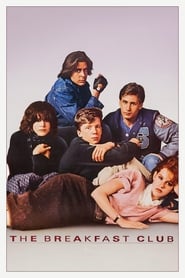
I never did it, either. At this point, too, just where the industry was, there was no video village, so one of my best memories is of John being there. He would just sit behind the camera. He would be sitting on the floor with us, just like the camera operator would be on the floor to get these low angles. He was really there, part of it all. It was great. Was he a good audience? - He definitely was. Yeah. And he was a real audience. He wanted to be moved. In fact, that was a great lesson, to see a director lens his project like that, to be that invested in it. It was cool. It's a tricky thing where you have a director and sometimes it can be, everything you do is great. Like they want you to feel comfortable and they want you to feel like, "Everything you do is great!" But there's a bullshit meter that I think you get as an actor, where you go, "No, it wasn't." And you gotta get that level of trust, where if John says it's good, it's good. Yeah. - That kind of thing. Was he pretty good about that, too? Without telling you, you suck or something. No, that's the thing, you have to be very pragmatic as a director, always aware of the clock, so in lieu of all that, I never felt like he was rushing us. It was just the opposite. I think he would work on your performance with you. It was cool. And he would give us the freedom to try things. He would allow us to know that we maybe tried something that was no good, too. If you did something that was no good, he wouldn't say, "That's not very good." He would look at us and be like, "Yeah, I guess that one wasn't so good." You know what I mean? He would let us find it for ourselves. There's a paternal instinct, I think, that directors need to have. But with him, he felt more like a big brother. He wanted us to shine. He wanted to see us get the best out of it. So, he was never really precious about his words or anything, which I found to be really cool. - It was cool that even after all that rehearsal, even once you get on set, the crew's around, the pressure is on a little bit, like you said, time is a factor, trying to get the day. And he still gave you time, even after all that. You know that classic image of... It was a saying of, I guess, Jack Lemmon's, where he talked about "magic time." John was a director that appreciated that. When the camera's rolling, he was the first audience. He was the guy right there with you, watching as if it was one of your parents in the bleachers or something. So, that was a really cool thing because he was the writer, and, of course, in that sort of paternal spirit, we wanted to impress him, him to be happy with what we were doing. At the same time, it was never any finger pointing. He just guided you through the performance. And he had a great way of, I think, empowering all of us to put our best foot forward. It was cool. His scripts have a lot of heart, and Hughes has a lot of heart. He can hear the truth, I think, and if we did something that had strayed that sounded like that color of truth that he wanted, then it would stay. He also was... I just found him very encouraging. Yeah. - As a person and as a director. And that's like a captain. If the director is the captain of the ship, I would like the captain to be encouraging if we're gonna come upon some high seas or dangerous times. Crunch time, you want the captain to not be treating you like you're something he wants rubbed off the bottom of your shoe. Because I think we would have done anything for him. I think we probably still would. It's interesting, too, because in the structure of the film, it all leads back to these scenes. I guess for everybody it becomes therapy at the end here, where we're all sitting around literally like a group therapy, as is the image of the wide shot. - Yeah, that trust is important. You want your other actors to be alive in the scene. And because this, in real time, came later for us, as it does in the movie, shooting in sequence, you don't have to earn the respect from the people around you. Right. - It's already done. Suddenly, the only redemption that we can find is with each other, and that's the surprise, I think, at this point. Where everyone is peeling away, becoming naked to each other. I think that's part of the reason why it's so important, too, the way they cut this. Emilio is doing the thing, and the camera pans around him, right? And then we go and we get everybody's reaction shot while he's still talking because you guys are going through it, too. - Yeah. He's like this... He's like this mindless machine that I can't even relate to anymore. "Andrew! You've got to be number one! "I won't tolerate any losers in this family. "Your intensity is for shit! Win! Win! Win!" You son of a bitch.
1:10:08 · jump to transcript →
-
Judd Nelson
Hughes was so ahead of the curve on music. Yeah. He would work with it, he would bring in tapes, he would be doing compilation CDs and tapes on the weekend. Yeah, and he would bring them to us on the set. When there were tapes. Those of you younger... Cassette tapes, yeah. - Don't remember tapes. He had cool-looking ones, even, those metal-looking ones and clear. Very cool. - We're old now. We're past CDs, it's MP3s and stuff now, right? Remember when they invented the wheel? That was incredible. People banged rocks together, and we sang. We made this sometime after World War II, I think. The Great War. - Yeah. But he used to take you guys to concerts and stuff, right, Mike? Yeah, he was cool. Like Judd said, he was really ahead of the curve on music. He was into it. He was aware of Art of Noise, which was this Trevor Horn project. People know their stuff now. So, even with that piece of music, I'm sure he was probably trying to go for that kind of thing. How about the fact that in Sixteen Candles, Molly's got a notebook that says "Psychedelic Furs" on it, and I don't think they had an album out yet. Hughes knew. Well, and Pretty in Pink comes out however long after that. But, yeah. And he wrote to music a lot, too, so a lot of times these sequences, I'm sure he knew that there would be a certain piece of music playing through it. Nowadays, it's funny, you watch shows that are network shows, like Grey's Anatomy, it's so much a part of the formula, where they have these musical interludes that tie things up or bring the audience into the third act. It's interesting, there's a psychology to that, just like editing. It's interesting to see it work. It was cool. I like that. I like that the music stops right on that, too. And now we're done. Here's the bit where you're nice to Carl. Group therapy is done. Right, there's that moment, yeah. Tie it all up. It's great. And that pose right there is now a classic janitor pose. There's the guy on Scrubs. That's Hughes right there. That's great. - There is Mr. Hitchcock. There he is, baby! "Mr. Hitchcock." Mr. Hughes. I like that Ally shows inhuman strength pulling this off.
1:30:47 · jump to transcript →
-
-
multi · 2h 34m 2 mentions
James Cameron, Gale Anne Hurd, Stan Winston, Robert Skotak + 8
-
Bill Paxton
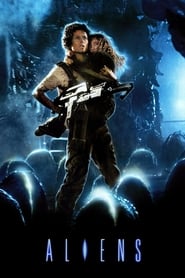
James Horner came up with this music sting here and I always thought it was totally over the top. When I saw the whole film put together with the score, I thought "No, that's what we need." I thought "How can you sting somebody opening their eyes?" But it works. Oh! Mm-hm. She shouldn't have had the bangers and mash. Kill it. Fry it. Come on. What are you doing, Hicks? Bad-ass nasty shot. That's a nasty shot of that thing. That's a good shot of it there getting fried. Gosh. Here they come. I think our chestburster looks a little cooler than the one in the first film. Stan Winston's guys really did a good job on it. John Rosengrant and Shane Mahan. Look who's back. Another one of our problems to solve for this movie was creating the whole army of warrior aliens and being legitimate to the original movie but having to improve on it for movement and for the look of being able to study them. In the original A/ien they were rubber suits and very difficult for the actor to move around in. And yet he was very tall and very skinny. And Jim wanted to do a lot of very interesting moves with the warrior aliens, so we came up with a technique to create the suit that really involved a lot of spandex and pieces on it. And then we designed the set pieces for the aliens to fit into the walls, like the one that is behind him there, so that the camouflage would work. An enormous amount of wirework for all of these stunt alien performers, which required that the alien costumes be extremely user-friendly. This was inspired by the scene in the first film where Dallas is in the air vents and they see the signal moving and get a little freaked, and Veronica Cartwright says "Get outta there" and he makes the wrong move and gets killed. That's one of the most suspenseful scenes in the first film. I took that idea that they're getting these readings that are getting them spooked and then they make some bad moves. Form follows function. This is a perfect example of it. You start with what it is you wanna achieve, and once you have that, you can design it, so the actions and the performance is consistent with what you want in the finished film. Believe it or not, very few people work that way. They just wanna come up with something that's cool, and then you spend hours and hours trying to get it to work for the ultimate film. I happen to agree with Gale. My background is as an actor. I really come from a place where the creatures and the characters are wonderful to look at, but it's always about their performance. We have to figure out how they're gonna be able to act, and create a good performance, or it's a waste. And so that's really always at the top of the priority list when we're creating any creature - what is it gonna do and how is it gonna do it? What he does is create a character, and that's why I think his work is So unique. When you look at a film, you can always tell who's done the creatures, if they actually have a character. Because he creates a character that can act and perform. The whole film builds to this moment, where the power transfers from the authoritarian structure to the individual who takes action. Ripley's not supposed to do anything. She's just there as an observer. We're coming up to a sequence where Sigourney takes control of the APC and this sequence is comprised of live-action shots, but as it comes down this hallway and is banging into pipes and walls and sparking, that's all done in miniature. In some cases, the cameraman - cos the set was mounted at an angle - was on a cart, a wheeled cart, and was rolling backwards as the radio-controlled APC was coming at camera. There was a point when he was just put into free fall, rolling backwards downhill, photographing what was in front of him as he went backwards. Here we go. - This is the shot. This is also miniatures. There was a shot with the full-size when the brakes didn't work, and took out the camera, and luckily it was a remote-operated camera. It was the shot where we were actually crushing an alien warrior, when it broke through. This is the shot, actually, when it took the camera out. Then there's another shot where it takes down an alien.
1:12:00 · jump to transcript →
-
Bill Paxton
A Iot of the shots of it scuttling along the floor were done on our miniature stage. That shot where it just scuttled by was done right next to the twelfth-scale cargo lock. At the base of the twelfth-scale cargo lock there was a little set there. So Jim would have five or six or seven little setups poked in between our miniatures. We'd fog up the stage and get ready to shoot, but he needed to shoot with no fog, so we'd clear the stage, he'd shoot his thing and then we would continue on. So it was like one giant filmmaking unit but we were doing two or three miniature shots simultaneously and he was doing four or five live-action inserts. A concentrated dose of Aliens filming. It's very hard to see Paul Reiser as such an evil guy, after so many years of his TV series. He used to hate to ride to work with me. I used ride to work with him. And he didn't like it? - Hated it. I was like a real primitive. He's a sophisticated comic. - What were you doing? I was always grunting and groaning. Smoking, burping. - He hated everything about me. What a boring ride that was. You've been carrying this baggage a while. This is a good forum. - Let it rip, baby. It was because of the character he was playing. He's such a prissy, corporate guy in this. It's tough in these kind of movies. Especially when you're young, if you're playing a good guy, you're always hanging with the good guys. You don't trust yourself as an actor to be friendly with the bad guys. "One of the bad guys might wreck my big scene." We were too serious as actors to be able to hang with Paul. He was reading the paper the whole time. It was like I was interrupting if I talked to him. You didn't wanna ride to work with me? I was in a different area. You were right round the corner. You didn't want me with you. - Bullshit. We're yanking these facehuggers around. I called them rubber-chicken facehuggers cos they were these floppy ones. The crawling one had a mechanism inside it. That was shot backwards. We pulled the tail off and shot it backwards. There was a pretty good mechanism built into the ones that are really articulated, but a lot of the time we were just yanking them around on fishing line and doing it in cuts. People probably wonder why I had him shoot the window before he jumped through it. The idea was it's tempered glass. You have to get the crystal structure of the glass to shatter before you can go through it. So this is a bunch of grown people fighting a rubber chicken, basically. But, of course, it's the actors that make the effects real in our minds. Great sequence. I love the red light that he uses in this too. The warning light. That happens in the other sequence too when the aliens are coming through the roof. Look. This is another scene that James Cameron sets up as the family scene. There's just the three of us there as a family, ready for Aven 3. David Fincher did a really good job photographically and so on. I think it's really a well-made film, visually. It's just kind of a slap in the face of the fans who invested in Newt and Hicks and all of those character relationships. I understand the instinct, of course, which is you have to make it your own. I just don't think you should make it your own at the expense of what people like, personally. But everybody's gonna make their own decisions. But I had to change some things and make it my own on my film. And I know that Ridley probably watched it and wasn't pleased with a lot of things. He probably wasn't pleased with the fact that he hadn't made it. But I think it's tough. It's tough to see somebody continue on something that you've started. But then you learn to just get over it because that's the nature of this business. I think the trick to this type of film is you just take it utterly seriously. You don't step outside yourself and try to have fun with it and wink at the audience. You take it absolutely seriously and you don't give the audience a chance to question it. And if the actors can sell it, then it works. This is a distinction. I never got the sense in the first film that the alien had an intelligence that allowed it to manipulate their technology, but I didn't see that necessarily as a barrier here because certainly these creatures have been around longer. The alien in the first film had only been alive for 24 hours. It was still an infant, even though it had grown full size. These aliens have had weeks or months to figure things out. There's no reason why they couldn't figure out the electrical system. Not that they're technological, but the rudimentary stuff. The implication is that they're pretty clever. It's clear by the end of the film that the alien queen knows how to operate an elevator. It's amazing how such a low-tech little device that Jim sets up early on really builds the tension. You don't have to see them. You just see that locator and you realize they're getting closer with a little sound effect. This is one of the first films we worked on that we worked with a video to look at our effects. Prior to that you would shoot a shot and go by your perception at the moment as to whether it worked or not and looking at dailies the next day. You didn't see an instant replay. But on this film we used a video tap and offside video camera on some of the shots to analyze what worked and what didn't. It was fairly expensive to have a video tap camera. In most effects stuff, the cameras used were... These old Mitchell cameras were great but they didn't have video tap. It was an expense a lot of times you couldn't afford. More welding. - Just don't look at it. Look away or you'll be blinded. Weld it but don't look at it. Put your hand there. Don't look at it. Is this where you bite it? - Yeah. Well, pretty soon. I'm gonna keep talking, even if I'm dead.
1:48:04 · jump to transcript →
-
-
cast · 1h 36m 2 mentions
The Garbage Pail Kids Movie (1987)
Mackenzie Astin, Katie Barberi, William Morris
-
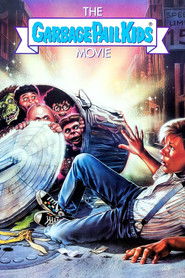
They were so supportive of us, I think, because the whole cast, I think, just really felt very supportive of the young actors. You know, that was Mac and myself. Just like to point out, I think that's the first act of overt violence, the Garbage Pail Kids. Okay, now it's important to say this, and I'm going to say it. In the original script, all of this stuff that they do,
29:39 · jump to transcript →
-
So also, we're kid actors. And so the structure of the screenplay is the Bible for us. And our job is to go know your lines, say them correctly, say them on time, be there on time, hit your mark, and provide the emotion that is called for by the screenplay. So the idea of improv, I think, gosh, in some ways, probably still to me, is something that you don't necessarily do because you stick to the script.
1:03:19 · jump to transcript →
-
-
-
is second to none, especially back then. She's great. When you were casting the film, you were saying before how Donovan was such a great archetype for the hero, only to subvert that later on, kill him off, and then now we're left with... It's the old Psycho. ...Mullet-tron 2000 with Kevin Dillon. It was very purposeful on my part trying to emulate what Hitchcock did in Psycho, which is Janet Leigh's dead at the end of the first act. How did that go over with the studio, though? We were very... This was...
7:18 · jump to transcript →
-
The audience sees everything in the first act. And not to make it dark and moody and creepy and scary. Because people can see in the dark. You can't scare them from that point on. If you show where everything is and then turn off the lights, then you can scare the audience as well. So you're doing aesthetic exposition. Yeah, exactly. Especially, we just established the bridge in daytime. And here's the tree, here's the thing, and here's the gully. And the can man. And now we're going to see him again at night. And now, oh, we know who this is.
10:55 · jump to transcript →
-
-
-
Setting it into the context of the structure. Maybe in your mind's eye, you think it's all going to play on one close-up, and that's the only thing. So your mind starts to say, oh, they cut away on this line, and that was the important line. I think you just start to be basically neurotic. So if I came in and said I didn't like it, because I think that seems...
42:26 · jump to transcript →
-
What is it like to act with Mahoney, you guys? I've done two. I keep thinking of, you know, jazz music with everybody in the movie and the whole relationship. But no matter what you throw, you know, you're going to get it back. You still come in on time, on beat. I mean, the scene has got a progression. It's got a structure. But within that, you know, there's nothing I ever did that threw John or Ione. I mean, and actually the...
1:01:05 · jump to transcript →
-
-
-
-
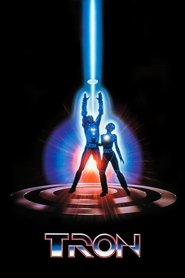
technical · 1h 35m 1 mention
Steven Lisberger, Donald Kushner, Harrison Ellenshaw, Richard Taylor
-
-
-
-

Related topics
Other topics that frequently come up in the same commentaries.