Topics / Writing & development
Structure
92 commentaries in the archive discuss this, with 205 total mentions and 16 sampled passages on this page.
Filter commentaries
Filter this topic by the film's decade or the type of commentary.
Showing 7 of 92 commentaries
Clear filtersBy decade
Across the archive
ranked by mentions · click any passage for the moment in the transcript
-
-
Francis Ford Coppola
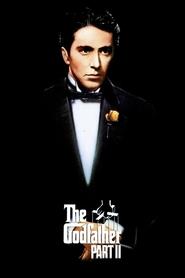
which is a little Sicilian, and that music is used in the first movie. So the Godfather Part II had taken upon itself a very ambitious structure, which was that it was going to tell its story in two entirely different time periods, basically going back and forth in a kind of parallel structure between them. And actually, this was an idea before I knew I was making this Godfather Part II.
10:44 · jump to transcript →
-
Francis Ford Coppola
Again, the film was photographed by Gordy Willis, and the art direction was by Dean Tavoularis, and so it had the same vivid beauty image and photography that the first Godfather had. Gordy Willis was very rigid about the structure that he wanted, you know, which I think he was correct in doing, and the second film was made in, you know,
33:06 · jump to transcript →
-
Francis Ford Coppola
really the same philosophy and structure. It's just that the ease between us was much greater and there was room to express ideas. I didn't feel as I did on the first film, up against this, you know, kind of crotchety school norm that just said it had to be this way. And I think I felt more free with the second Godfather. I was running the production. I pretty much had no one to answer to.
33:36 · jump to transcript →
-
-
multi · 1h 59m 5 mentions
David Naylor, Guy Hamilton, Tom Mankiewicz, John Barry + 14
-
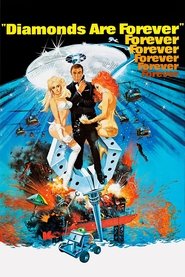
These scenes at Los Angeles International Airport were filmed after shooting was completed in Las Vegas. The film unit then shot the climax on an oil rig off the coast of California before returning to Pinewood, where the scene of Bond confronting Blofeld inside Willard Whyte's penthouse was first on the schedule. The attendants who take Bond for a ride are played by Marc Lawrence, about whom we'll hear more later, Sid Haig, and Mike Valenti. The scenes were shot on a single day.
28:07 · jump to transcript →
-
That's rather than just racing up streets, which is so ordinary, that the only way you can do a car chase is this is something fresh and new. So let's try one in a car park. And we had little models, little dinky toy cars, and laid out what the chase would look like. And off we went from there, and knowing that the climax, what the climax would be.
1:06:31 · jump to transcript →
-
We couldn't get one of those at Vegas, so we had to make do with some smaller machinery. The scenes of Bond inside the pipe were completed back at Pinewood Studios. After seven weeks of filming exterior scenes and location shots, the crew returned to Pinewood to film interiors on Ken Adam' sets. These shots of Bond inside the pipe are reminiscent of the climax of Connery's first James Bond film, Doctor No,
1:21:11 · jump to transcript →
-
-
-
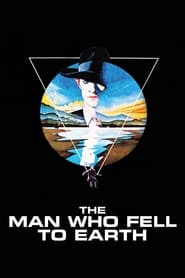
Science fiction, of course, already sets up a kind of sensibility of its own. It frees the poetic sensibility to a certain extent because you can play with ideas, some of them completely loony and some of them very reasonable. You know, the metaphorical structure is already built in and the audience will allow things to happen that they'd never allow to happen if they're watching what they consider to be real people doing real things in real time.
13:13 · jump to transcript →
-
It's a tremendous film in its sense of reality. All those young people were not like actors. They all seemed the real thing. And from a class structure that wasn't unusual, it was not rich, it wasn't desperately put, it was just like a wonderful... I enjoyed it tremendously. As a foreigner, when I was watching it in England, it had a...
33:36 · jump to transcript →
-
The painter is never finding, oh, that's my masterpiece. That's it, isn't it? Only nature has masterpieces. The rest is, never quite made it. Otherwise it would be complete. Now they had a similar physicality, the fine skin, the bone structure, very fine, very slim.
58:34 · jump to transcript →
-
-
-
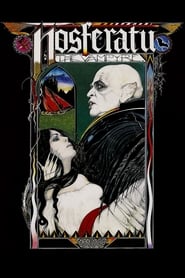
What a great nose this man has. He also did a really good job. Obviously none of these people had ever been in front of a camera before. Casting Bruno and Isabelle...? Because of "The Story of Adele H", Isabelle was already a big star, which wasn't true of Bruno... - No, he was a star of the theatre. ...even though he had just done "The American Friend". There were several films that had made him very well known. He wasn't a big international star, but he was already quite important for the European cinema. Did you choose the cast yourself, or was that...? Yes. I decided that myself. And Kinski as we will see. We always knew we would not make the film without Kinski. That makes sense. For Kinski... The strange thing is that even though we haven't seen him yet, you can already feel his presence. The whole film works towards that. You get closer to him. Right, that is the result of the dialogue, images, and the text. We planned how we would work towards that. In total, I believe that Kinski is in the movie for less than 17 minutes runtime. Nevertheless, he dominates it completely. ...in the graves and the undead. That is great dialogue with the undead and... For this I read a lot of the vampire literature of the 18th and 19th century, and then used parts of it. Neither Bram Stoker nor Murnau have that. You have always been interested in liturgy and things like that, right? Maybe that's the result of a traumatizing religious period when I was younger. When I was 14, I converted to Catholicism. Texts like that, liturgies, or very ritualistic things... The ritual itself. All that resonates somewhere in the background in many of my movies. Along the street... The ritualistic and liturgy necessarily are connected with the film structure and the music. Yes. I also noticed that frequently you use references to the music of the Middle Ages... Yes. Without it being spherical. It confuses me...
17:11 · jump to transcript →
-
Completely unthinkable. Everything is perfect here, the structure, the furniture, the candles. The fireplace we built. The monkey columns were made by Henning von Gierke. Have you ever seen the movie in a sold out theater in Mexico? Was there a murmur when he appears? Yes, there was. - Cries of fear? No, no cries of fear, but silence, absolute silence. Just like us, we also went silent. It makes you be quiet.
32:36 · jump to transcript →
-
All of this was also shot in Delft. You have to know that this was tricky in Delft at that time. They had had a problem with rats for years and had finally gotten it under control. With difficulty, we obtained a permit to release 11,000 rats. Where you see the water were nets. All manholes, entrances, everything was hermetically sealed. In the back of the frame near a small alley was a wooden wall which was carried out when the rats came to close. Nevertheless, we got into trouble with the population, even though we didn't lose a single rat in Delft. Really? - Yes. Unfortunately, that complicated our lives for a while. This is Lübeck. Murnau also shot a scene right in front of these buildings. Oh, this is Lübeck? - That is Lübeck. I was confused because the structure does not match Delft. Granaries in Lübeck, I believe. They still stand today. In Murnau's film you see some bushes. To the left or the right you see the large old trees they've become.
1:07:28 · jump to transcript →
-
-
-
Francis Ford Coppola
spill out better that way. And he's, well, whose point of view is it? Gordon was a real purist. I said, well, I don't know. It's my point of view. It's Orson Welles' point of view. You know, you can have camera angles like that. I learned a lot from Gordon. Gordon's concept of structure was, you know, very disciplined. And I learned that from him. And I'll always be grateful. I mention the shot of the oranges because whenever I see it, I always think of Gordon. I'm a little embarrassed. I cut that sequence myself, too. And I deliberately...
44:38 · jump to transcript →
-
Francis Ford Coppola
firm ideas about structure and how things should be done. And on the second picture, the second Godfather picture, I think it was much more mutually harmonious and respectful. But, you know, on the first film, I was, like, not really... The crew didn't kind of understand what I was doing there, why I was chosen to be the director. And, you know, the crew, you know, these kind of New York...
1:14:05 · jump to transcript →
-
-
-
multi · 1h 43m 1 mention
The Taking of Pelham One Two Three (1974)
Nathaniel Thompson, Steve Mitchell
Related topics
Other topics that frequently come up in the same commentaries.