Topics / Cinematography & lighting
Lens choice
52 commentaries in the archive discuss this, with 82 total mentions and 51 sampled passages on this page.
Filter commentaries
Filter this topic by the film's decade or the type of commentary.
By decade
Across the archive
ranked by mentions · click any passage for the moment in the transcript
-
multi · 1h 43m 6 mentions
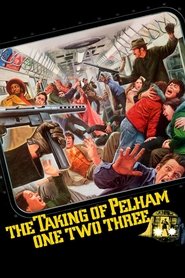
The Taking of Pelham One Two Three (1974)
Nathaniel Thompson, Steve Mitchell
-
at figuring that the height of the ceilings and the tunnels and stuff like that was the way to go. But Roizman had an idea. So what he did is he took two movie cameras to a train station, put them next to one another, and one had a non-anamorphic lens, which is a widescreen lens. And then he had another camera with an anamorphic widescreen lens, and he shot...
27:33 · jump to transcript →
-
Just footage of people going about their day in the New York City subway and then screen them the next day for everybody and everybody saw them and they all agreed that the widescreen anamorphic look was much, much more impressive and they all went with it without any discussion at all. And, you know, I...
28:00 · jump to transcript →
-
That is so prototypically New York. Everybody's pissed because they've been inconvenienced. Now, I should also mention, Roizman wasn't really known for shooting anamorphic at the time, so this is kind of a new thing for him, but he actually returned to it with another film that I think would actually lump in with these, which is Three Days of the Condor, right after this.
29:19 · jump to transcript →
-
-
-
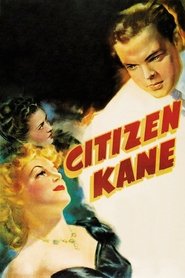
I want you to stop all this nonsense. It's deep focus, but I think what people don't realize about this style, they talk about deep focus a lot. Toland was also using a wide-angle lens at Welles' instruction. And we don't notice it so much today, but at the time this was very unusual in Hollywood. It gives the movie a slightly haunted, hallucinatory effect. The slight fisheye.
20:16 · jump to transcript →
-
Here's a good example of that wide-angle lens I was speaking of. You see how you can almost see every pore of the face nearest. But it's not just the depth. It's the strangeness of the exaggeration of that lens. I think going back to the doubleness issue, part of the thing about our attitude toward Kane is that Welles, and this dates back to the time when he was doing the Mercury Theater in New York,
27:52 · jump to transcript →
-
That is a great example of the optical printer there, that exit, that little slight zoom. And this, I think, is an important scene. She is the person who has most directly suffered from Kane. And yet he says, I feel a little sorry for him. She says,
1:46:26 · jump to transcript →
-
-
-
Stephen Prince
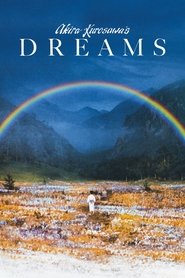
Actually, this first episode, Sunshine Through the Rain, is based not so much on a dream as on a tale that his mother used to tell him about fox weddings held in the rain. We see the familiar Kurosawa telephoto perspective here, which creates a foreshortened, flattened perspective. This rain is the sort that Kurosawa liked, heavy and steady.
2:19 · jump to transcript →
-
Stephen Prince
As we'll see, many scenes are shot with a camera in a lockdown position, filming from a distance, using long focus lenses, and watching while events pass by. This is very masterful widescreen composition. This is not the anamorphic 2.35 to 1 aspect ratio that Kurosawa used from the late 50s into the middle 60s.
7:54 · jump to transcript →
-
Stephen Prince
a change that was accelerated when he moved to anamorphic widescreen with The Hidden Fortress in 1958. The expansion in widescreen of a horizontal axis for composition pushed Kurosawa toward an intensified, two-dimensional presentation of action. And as the films after Redbeard in 1965 became more contemplative and their scenes more static, with fixed frames filmed by stationary cameras,
1:32:25 · jump to transcript →
-
-
-
He's looking at his life. Amazing. This geography here is just beautiful. Anywhere you could throw the camera on the ground, it would look fantastic. And if you got someone like John Toll throwing the camera on the ground, it looks more fantastic because it lends itself to that anamorphic frame.
15:55 · jump to transcript →
-
See, it's just built for that anamorphic frame. The whole landscape. Got lucky with some birds.
29:41 · jump to transcript →
-
horse floating on top of the water there. That tower was only about 30 feet high. And it was only a facade. We just made it look a lot higher up with cutting slow motion and wide angle lenses, you know, above and below. So it looked like he's falling about 200 feet almost, or at least 100. But at least we sort of tripled the height.
2:16:18 · jump to transcript →
-
-
-
We had to go another way because of some technical problems, but one of which arrived out of the original format we decided to shoot on. Going into the movie, we had always planned on doing it anamorphic, and although we weren't going to be the first submarine movie to be shot anamorphically, certainly I think Crimson Tide was shot anamorphically, which is a format.
1:21:25 · jump to transcript →
-
We realized that with the size of our submarine and the minimum amount of focus, the amount of distance that someone can come close to the lens in an anamorphic format is much farther away than a normal spherical format that it would have been impossible for us to shoot in these small sets. Also, going into the picture, we were going to do a good part of it handheld.
1:21:51 · jump to transcript →
-
And the anamorphic glass is much heavier. And lastly, you find when you're shooting in these small compartments, you know, inherently you're forced to use a lot of practical lamps or lamps that are built into the set. And you take the risk shooting in an anamorphic lens of a flare, an unseen flare coming across an actor's face or in an inappropriate area. So we chose at the last minute not to go anamorphic and we shot Super 35, which is a
1:22:19 · jump to transcript →
-
-
-
I have a screenwriter friend who said, "What has become of this prop?" I think the editor has it. I'm sure Dino has one. This book? - Yeah, there are two of them. Universal maybe has one. I should have one. - Yeah, and I should have one. You and I should have one. Why don't we have one? We could auction it in 20 years. Anyway, talk a little bit about how you got Ralph Fiennes into this cast. Like I said, I went after the actors that everyone told me I couldn't get. "Ralph's never going to do a movie like this, he's a Shakespearean actor." Basically, I sent him the script. And he loved it so much he agreed to fly in and meet with me. I gave him my vision of it. I told him he was not going to live in a haunted house. He told me he was very attracted to the idea of playing a monster who had a soul. That he had some kind of inner life and was not just a bogeyman. He loved the relationship between him and Reba, Emily Watson's character. He loved that there was humanity in this horrible person doing horrible things, but there was humanity in him. Here's a great sequence. We should talk about the way you staged it. This was originally written, if you remember, as an outdoor exercise scene. I said to Ted, "I can't see Hannibal Lecter "even if there were guards all around and they cleared the whole yard, "I can't see him in an exterior location, out of prison." The scene was originally through a fence. A sort of dog run or something, or a big mesh fence. And the dialogue between Will Graham and Hannibal was through a fence. It was an electrified fence. But I said, "Then there's no threat." There's no real threat. And I said, "Why don't we put him on a dog leash?" And I found this location, which is in an actual location for the mentally disturbed. There are mental patients all over this building. This was another case where Kristi would talk to Brett, and then she would send me drawings for the design for this knowing that it might help me as I thought about the scene and wrote it. Kristi had a lot of fun with the look of this scene and so did Dante. Dante did an amazing job because his interpretation put a lot of smoke in here so that the white lights would... Dante liked the way Lecter goes in and out of the brightness so that he almost seems to be a ghost. Which is like evil light as well. He said, "Evil light doesn't only have to be dark. It can be white as well." This leash thing, I love. He meant to use the bolt cutter to enter the house, but he didn't. That shot I did earlier, where you see the line saying, "Do not cross." It was the last shot of the night, and I almost forgot it, but I said, "In this whole scene, when I shot it, I don't remember seeing the floor. "I have to establish it so that the audience knows there's a do-not-cross line." Why is he standing there? The original idea for the scene was that you'd think it was a dream sequence. If you look, it's shot very close. The way you shot Edward's entrance into the room, we don't know at first where he is or whether it's a dream. And here comes Lecter walking towards him with no bars between them. Then we pop out and reveal that he's on a leash. It's a great moment in the film. When I was working on the first draft, I just thought, "This is a scene that's not in the book." Most of these Lecter scenes are not. I thought, "If I were directing this movie, I'd like to get away from that cell for once. "And give the actor a chance to use his whole body. "And have nothing between the two actors." To me, it was really the parallel of the scene with Jodie and Tony at the museum in Memphis, in that big cell that Kristi designed, which was amazing. I needed a set piece as magnificent as that, 'cause that really opened up the movie. I thought you'd be very grateful not to have the Plexiglass between them for once. And to have them be able to move together, walk together. Sometimes just the technical challenges you face force more creativity. It was only his first time. Already in Atlanta he did much better. Rest assured, my dear Will, this one will give you plenty of exercise. I love Will's reaction to that line. Edward's great when he's not saying lines, actually. You know, the mark of great acting is: How interesting is an actor when he's only listening? He's a very good listener. - Jodie Foster is a great listener. She listens with such intelligence and such engagement, and Edward can do the same thing, and so can Tony. It really is a hallmark of great acting. You see that a lot with Ralph Fiennes here. He doesnt have a lot of dialogue. He's listening, thinking and reacting. It's a very poignant performance by Ralph. It's easy to play the monster. It's hard to be the guy who's a horrible monster... It's hard to make the audience care about the character instead of just dismissing them. This is Azura Skye who is one of my favorite young actresses, who was in 28 Days. She had a small part in Bandits and she was awesome. Again, the importance that Brett gives to casting every part, even if it's an actor who only has a one-page scene. You want somebody who looks like they could star in their own movie. If this movie suddenly became about this bookstore, it would be interesting for the next 90 minutes. Even the voice of the girl on the phone, I cast the voice very specifically. Did you drive the studio crazy by waiting to cast some of these parts for so long? Till the last minute, yeah. ...darn it, she never did. I'm just a temp. Linda will be in on Monday. I have to catch FedEx in about five minutes. I hate to bother Dr. Bloom about it because he told Linda to send it and I don't want to get her into trouble. This was hard for timing because it's one shot and it's a lot of dialogue, and I wanted the camera to land at the right place. The camera and the lens that you pick help with the emotion, intensity, and realness of the scene. Is it hard to move in like this without changing lenses and keep the focus? Yeah. Especially anamorphic. The focus on this move is impossible. Mike Weldon was the AC on this movie. He's a genius. Anamorphic is the wide screen? Anamorphic is wide screen, but there's not a lot of depth of field at all. So it's impossible to focus when you're moving into a subject. It's just the hardest thing ever.
43:19 · jump to transcript →
-
This is an example of great operating. You go from his face down to that anamorphic... Camera operation? - Camera operation, yeah. We were back and forth about this, remember? My editor fought me on this. I thought, "Let the glove be hanging out of his pocket." When Lecter sees it, then perhaps Lecter starts to think, "Something's up." It doesn't really pay off. It doesn't pay off, but I just thought it would be intriguing. It does in a subtle way. He says, "Nice..." "Nice work with that blackout." So that's what you think tips it off. I think that's what Mark wanted. I'll have to say this. This next cut is my favorite cut in the movie. Not my favorite shot, but my favorite cut. - Going from this scene? Going from this shot, once the camera lands to when he hands him the paper. It's just my favorite edit. It's the most seamless edit in the film. Watch this. It's very subtle, but you might catch it. "_...Luke 1:7." - Code. Watch this. I love that. Only a director could get excited about that. I have to tell you... It's exciting. - lt is a great passing of a piece of paper. It's just cut beautifully. I'm thinking it's a book code. - Code? I like the pace of this. It reminds me of old films with Sterling Hayden in it. Lot of quick talking here. You need to go quickly through this. People do normally talk over each other, like we're doing now... But in a movie it's confusing, unless it's an Altman movie. But in the movies in the '40s, they would have... His Girl Friday. That movie, the script was probably 300 pages long. They got it all in in an hour-and-a-half because they were talking so quickly. Shakespeare, this is a lot like Shakespeare, you have to race through it. If we sweat him, we lose the connection. If the Tooth Fairy picked the book, he knew Lecter would have it in his cell. Can we get a list of his books? - From Chilton, maybe. No! Wait! Rankin and Willingham, when they tossed his cell took Polaroids so they could put everything back in place. Ask them to meet me with pictures of his bookshelves! Where? - The Library!
1:01:58 · jump to transcript →
-
My dear Will: You must be healed by now. The movie could've ended here, which would've been bold. You didn't know if he was dead or alive. It could've ended here, but then... The movie could've ended in two or three places. In the end, we decided it would end three times. The audience loves this stuff, and they love Chilton. That ending you came up with was amazing. You couldn't go out of this movie without letting Hannibal Lecter have the last word. He always gets the last word in these movies. The problem we faced was, we couldn't have him get away as he did at the end of Silence of the Lambs. We couldn't have him running all over the world like in Hannibal. By the way, what Danny did was, he gave it a Silence of the Lambs ending, where this music here Is saying, Hannibal won. It's not like they'll live happily ever after. This is the natural ending of the movie. This is the sort of poetic or clichéd final shot of the movie, The boat sailing into the sunset. But the music is saying Hannibal's won. But I always wanted there to be one more little beat, so it wasn't quite such a tidy ending, so that it linked up with Silence. A young woman. Says she's from the FBI. This, for me, is such an audience pleaser. It makes me smile every time it comes on, because it's such a great call-back. The only mistake is the wardrobe isn't the same for him. that it is in Silence. I wish I would've got that same wardrobe. It's the only mistake I made. And this music is just like... This family is going to need a lot of therapy. What you don't see after this movie, is the years and years of therapy that the whole family goes through. Danny Elfman is just an amazing composer. I love how the music really becomes more and more assertive. And by two-thirds of the way through the movie, it feels like it's driving the movie to its conclusion. I just want to give some special thanks to Andy Davis... Who was there from the beginning and through every moment through all the shooting, through all the editing. And James Freitag, my associate producer and assistant director. Without these two guys, I don't think I would have been able to make this film, because Andy is not only a great producer but is a creative thinker when it comes to line producing a movie and shooting things, and organizing and hiring the best people that money can buy as far as crews. My special thanks to Dino and Martha who set the tone for the entire production and took a little bit of a gamble on Brett, which paid off brilliantly. And also Mark Helfrich, the editor, because the last draft of any screenplay is written in the editing room. I've not very often been as lucky as I was this time to have an editor who is so sensitive to the script as well as to the performances. And Landaker and Maslow, my sound mixers, who I thought did an amazing job. Hearing this movie and seeing the movie in New York City for the premiere at the Ziegfeld Theater with that sound mix was just a great experience. That's why I dreamed about making movies. Seeing it in a theater like that, in a wide-screen format, anamorphic, it's like a dream come true for me. That, for me, is a defining moment. Seeing my work. That's the best I'll ever see my work. Yeah, with a giant screen. - A giant, giant screen. With a big audience. - 1,500, 1,600 people. I don't know how many seats, but a huge theater with the score and the mix, and the quality and the energy, especially with a New York crowd, you know. - Right. When they're laughing in the right places, they're scared in the right places, screaming in the right places. It was a very exciting project. It was a good experience. Somehow the darkest subjects sometimes turn out to be the most fun to work on. If you have the right kind of atmosphere on the set. I know you, Ted. You and I worked together for about a year. You are not a dark person. You do some decadent stuff occasionally. I don't think either one of us are, but somehow, maybe that's the only way you can get through making a movie like this. A dark director or a dark writer would've gone too far with this movie and made something that was maybe hard for an audience to bear. 'Cause the scary thing about this is that, there really are people out there like this, and there's a lot of... I wanted to tell a story. I wanted to make a film about a guy who... The films I want to make really are about that I enjoy making... Because my favorite director is Hal Ashby... His movies had great relationships. Harold and Maude, Being There, and those movies... This movie has fantastic relationships. And a tremendous amount of heart and emotion. Even though it is a psychological thriller, the relationships in this film are why I'm so attracted to it, why I felt like I had to make it. I think it is unexpectedly moving for a thriller. It's really not just a scare machine. It actually is a movie about characters and relationships and it's moving in a surprising way to me.
1:58:44 · jump to transcript →
-
-
director · 1h 42m 3 mentions
Len Wiseman, Patrick Tatopoulos, Brad Martin, Nicolas de Toth
-
really small you make it look really big though this is a 14 mil lens yeah and whenever you whenever you put on a wide lens on that but it was really really i i loved how the satellite it was it was kind of for us it was sort of a nothing yeah it was the last we didn't we didn't really give it that much um and he comes he comes out i think the lighting looks great in there yeah i agree yeah another compliment
20:56 · jump to transcript →
-
which help that out but I gotta say I do think that it comes you know it does come across much larger than it was yes yes Patrick your set looks very very large he was very tall though it was Tom so 14 mil is a very very wide lens yes 14 I kind of just if I could if I could have surgery and have my eyes turned to a 14 it's about what I would probably travel around and I start with the 14 first I just really like how it looks and
1:22:17 · jump to transcript →
-
But we used quite a few 12s and 10s on this, which 10 is pretty rare sometimes. It's quite wide. It starts distorting a little bit. Yeah, a little bit. And I shoot close-ups as well. I shoot a lot of close-ups in a 21, which I don't think is common, just because it is fairly a wide lens for a close-up. I just think it...
1:22:47 · jump to transcript →
-
-
-
Oh, dude, okay. And we started playing with lenses. And that's where we put this big, long lens on it and designed that shot. An intimate shot between the two of you, separate from everything else. That was a shot that you, me, and Rob all worked together from lenses to lines to camera. To figure that out. Now, I love this where the audience is like, you think she is a maiden in distress. Do you know what I mean? The first close-up, here she is. You're just thinking like, okay. Oh, he's holding her and keeping her away. He's holding her and keeping her. Now you go...
39:27 · jump to transcript →
-
I love your performance in this, and Alec, too. Rob Hardy, who loves to shoot in wide lenses. For people who don't understand focal length, a wide lens is like the human eye, and a long lens has a much softer background. And Rob...
1:21:37 · jump to transcript →
-
had started to get more comfortable with long lenses. And he shot this entire scene on one long lens, even the wide shots. It's what gives it this unique look. And when I came to the location, I said, we're going to have all these pages of dialogue here. When the gunfight starts, the environment needs to change because we've had this motif of evolving, but we can't leave the space. So let's turn off all the lights. And Rob and Martin Smith, the gaffer, were absolutely horrified because they said, well,
1:22:01 · jump to transcript →
-
-
director · 2h 43m 3 mentions
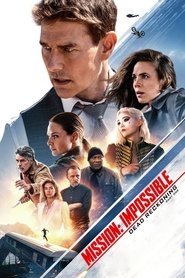
Mission Impossible Dead Reckoning Part One (2023)
Christopher McQuarrie, Eddie Hamilton
-
Again, coming from a character who's- Totally unafraid to play as well and just- All the, from broad comedy to dark and sinister. Exactly. She did it all and was really never, never had an issue. Very, very fearless. Just gave us lots and lots of options. Did you direct this on Zoom? I was directing this on Zoom. Oh my word. I had my contact traced. Yeah. And had to direct all, everything in this car had to be directed on Zoom. Very, very frustrating.
2:00:41 · jump to transcript →
-
another scene I directed over Zoom. Yeah, another scene, though, which even in its earliest iterations was just absolutely firing. One of my favorite shots. I love this shot. And the connection between these two characters. Another thing I really like about working with this cast is just momentary connections between characters who don't otherwise really interact with one another. They all have a feeling to them. And this...
2:29:17 · jump to transcript →
-
because I was directing over Zoom and in low resolution, I didn't see Palm's tears. And I was really taken with her performance, not seeing so much of the subtlety of it. Yeah, look at it, that tear. It's months later. It's amazing. It's sensational. It's really, and that, of course, came later when I realized I should...
2:29:47 · jump to transcript →
-
-
-
Working with models, we'd done some of that on Brazil, and I was gonna be doing a lot more on Munchausen later, and so it was a chance to try out lots of ideas. The extraordinary thing about building this great glass city was, again, we were on a very small stage, and we had to shoot with wide-angle lenses.
7:18 · jump to transcript →
-
to get it far enough away. The problem with that is that wide angle lenses distort things and you don't get true verticals. So every one of those buildings is carefully placed at a slightly different angle to end up with proper verticals. That was a dangerous moment. Sliding down the pole was our first and only injury on the thing. The landing wasn't good and I think he broke his ankle or certainly strained it.
7:36 · jump to transcript →
-
-
-
Oliver Stone
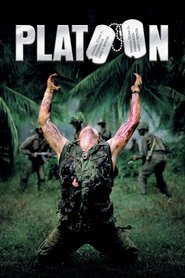
He looks at his claymore and he can't reach it because he thinks that if he reaches for it, it's going to make noise and they will hear it and kill him. He's terrified. He's looking at his grenades because he had told him to throw the grenades too. Don't fire. Blow your claymore, throw your grenades and shoot your rifle in that order. That's the standard policy. He can't do any of it. He can't call for his other men. He put a wide angle lens on the camera. It looks like they're further away from him. The enemy is getting closer.
20:32 · jump to transcript →
-
Oliver Stone
What the hell, it's only a movie. This is interesting, we have the NVA shooting at the, keeping the air support from getting too close and they're getting blown to smithereens. Squibs in the ground, that's tough, complicated. Great shot though, long lens, seeing them in the background.
1:19:54 · jump to transcript →
-
-
-
which I remember reading about years ago and obviously doing the research, gone back into that and the feud he had with the studio over that. And I just can't, I can't see Richard E. Grant in that role. Can you? I love Richard E. Grant, but... Well, if we had him and Paul McGann, it would be with Dale and I too. And Ralph Brown. Yeah, yeah, exactly, yeah. This is it. I mean, this is... When Ollie and I record these commentaries, we generally put a little poster behind us on Zoom
29:07 · jump to transcript →
-
Every time it leaves the ground to bound, it's going to fall down. It's going to need constant bits to grip onto, which you frequently see there aren't. And then when the camera switches back to the right way up, it's clearly exactly how you would rotate a camera and nothing like what an alien would do as it leapt from the ceiling down to the ground and flipped around. It would be much faster. It would zoom down and then...
1:57:10 · jump to transcript →
-
-
multi · 2h 24m 2 mentions
Alex Thomson, Terry Rawlings, Alec Gillis, Tom Woodruff Jr. + 3
-
And then, of course, the scene with the ox bursting... I think that for the burst through, I believe we did 70 takes where we had a section of ox ribcage that was rigged to burst open in a very specific way, and I think that was the most takes that we did, our unit did - it was second unit - on Alien³ to get it right. And it's a very quick cut. You're trying to tell a story in the briefest possible time and six frames becomes very important. You can't just put anything on-screen. I think that was one of the lessons from Ridley Scott on the first Alien is that those quick cuts are almost subliminal, but they're so important. We used anamorphic lenses and the Cinemascope proportion 2.35:1, which is a constant decision on the part of 20th Century Fox. I like it because one can compose very well with the wide screen. I love the actual format. I think the images are quite nice. Also, when the curtain goes back in the theater and you see a wide screen, it means an event picture. It's not an ordinary picture. But it's tricky with the alien cos you can't show too much of it, otherwise if you see exactly what it is, it loses its shock value really. Although towards the end of the film we see the shape more, but they did a marvelous job with all that mucus and stuff.
27:48 · jump to transcript →
-
This stuff is pretty effective. Fincher just puts the anamorphic lens on sideways on the camera and you get that strange wide-angle look.
2:02:43 · jump to transcript →
-
-
-
Now, this is a matte painting. Craig Pangrazio made a series of matte paintings for the White Shots in Futuristic LA. Is it the LA Convention Center? That was the LA Convention Center, but with all these extensions. Oh, great. And I'm very proud of this scene because this kind of predates Zoom and teleconferencing. So I designed this so that...
28:38 · jump to transcript →
-
people in boardroom would actually be virtually, only virtually present. And all the stands and TV screens were on motion control motors, which you usually use for special effects to track the motion of Cocteau here. It's amazing. It's definitely outzooms a Zoom conference. Absolutely. And it makes it very theatrical. I was going after a very theatrical look for all the technology. If we have another play, I'm sure these things will be built.
29:04 · jump to transcript →
-
-
-
I'm not a big fan of Steadicam, and I use it very, very rarely, especially in place of a dolly, but sometimes it's to weave in certain areas in certain locations and to create certain effects you need to, but I usually have a zoom on all the time because I'm always switching lenses. That was a little... There's another scene where Stephen leapt across the room, beamed from one side of the room to the other. Now, if you look, the building...
1:09:26 · jump to transcript →
-
And the music takes an odd turn. I like these. Sean did these. These sort of whale song. This is what I did by sticking a light underneath Gabriel, sort of. And then I had my left hand on the fader of the light and my right hand on the zoom. And poor Tom Sigel trying to zoom in on a window and focus on an object that he couldn't see until the end of the shot. Actually, he has a focus puller and a big piece of tape. Sorry.
1:12:37 · jump to transcript →
-
-
-
Jonathan Lynn
and desperately seeking Susan. I've normally seen her in much more sympathetic roles. She really wanted to play this and I was just thrilled. 9 a.m., you better stop pecking. Zoom. Okay, well, when are you coming back? Because I have to reschedule all your appointments. It should be more than a couple of days.
17:11 · jump to transcript →
-
Jonathan Lynn
A sports utility vehicle is going very close to the exploding car when it explodes, but it wasn't all that close. It's the effect of a long lens which foreshortens the distance. It's one of the ways you can make actions look closer to each other than they really are. Doctor, these men need to see you.
1:18:28 · jump to transcript →
-
-
-
Noah Baumbach
I had another thought, which I lost. Then somebody else might just say, "Well, they built the set. Of course they had to use it twice." For that set, you basically had to move the camera outside Cinecittà to film it? We had to move the camera outside of the stage because we couldn't get far enough back earlier, to see the whole ship. We had to open up the wall and get it very-- I found this 28 mm anamorphic lens. I'd never seen one that wide, the angle of the lens. But then once we had that lens, we used it for the entire Ping Island raid, which comes later. It's a very wide-angle lens. You can't get very close to the people, even. I mean, you can't get a close-up with it, but... Anjelica has such amazing style, the way she even just lifts her hand there. She knows how to move. - She really does. I feel Anjelica's absolutely perfect in the way she-- I mean, anything that's not there for her character is not there because we didn't put it there. Everything we did, she realized. And she also always has good ideas on how to get her character better. And in the case of this, I think we were inspired by her to bring her back, to have her come back in in this way and sort of motivate everybody, and get everybody and rescue them, sort of. This is an odd thing, this shot where they're all lined up. In the earlier part-- Now they have to move. We've zoomed in, they have to move to line up in this row. They had to move while we were on Anjelica. Yeah, exactly. That's a very weird shot. This is too. Here, maybe you can see Anjelica's green contact lenses. You can't really. They're painted by hand. I like the set of the hold, or whatever it is, the engine room. And one thing Mark Friedberg, and especially Stefano Ortolani, our art director, and the whole gang of art department people at Cinecittà, they have a great knack for bringing age, and the details of age, and the Belafonte is such a beat-up kind of rust bucket. They really brought it to it in a very real way where it never felt fake, and it just feels like-- Right, which is a big deal. And again, it's nice, because, like, everyone's outfits look so clean and colorful and saturated, and then they're sort of operating in this, you know, beaten-down jalopy. Right, beat-up jalopy. Yeah, beat-up jalopy.
1:20:46 · jump to transcript →
-
Noah Baumbach
Reminding you that they're tracking a shark. Something you can probably lose sight of. We didn't exactly keep it front and center. No. But it's also, you know, some metaphor for whatever it is, it's also not what the movie's about for us in a way. I mean, it represents things that the movie becomes about because of what's happening between the people, among the people. Which is what any good metaphor does. I will say one thing. People always say, "Well, is he the father? Doesn't he shoot blanks?" One thing I would just say, we never felt like we knew. I mean, even after this scene where she says Zissou shoots blanks, that's now. And, you know, she didn't... Ned predates Eleanor. And who knows whether he's his father or not? And I think it just-- There's doubt that he's his father. We certainly don't feel like we know the answer to that within the story. And it's kind of, either way it's good, and there's a connection between them no matter what, and a need for each other. It's something we've talked about also, about sort of surrogates, and that in some ways it's about-- It sounds funny to say, "Well, it's about father figures and not fathers," but I think, in a way, that's true. We all have our relationships with our actual father, but then we also, you know, at least you and I do, tend to recreate these things with other, you know, people in our lives. I mean, yes, it's about fathers and sons, but it is also about, you know, how they both sort of... Both deliberately and unconsciously seek each other out and recreate something that they need at this point in their lives. Or create something they never had. Right. - Yeah. Yeah, fathers and father figures. That's definitely... It seems to always come up. That'll be... You'll find yourself titling a movie that in about 25 years. And somebody will say, "Wes Anderson..." "Losing all subtlety." "In 2004, Anderson never would have called a movie this." That's how people begin to slip. And here's that very wide lens. The music here, we had this electronic piece of music that he plays in his helmet earlier and that plays from time to time. Mark Mothersbaugh I had worked that up a couple of years before the movie, and Mark is, I think, the perfect person to be making electronic music like that, having been one of the founders of Devo. But then when this scene comes up, we decided to do a symphonic version of that electronic, you know, beatbox Casio thing.
1:23:23 · jump to transcript →
-
-
-
No, it's the burial. It's the frame around the grave. I know, but I think it's... There's a dolly right there. No. No, there was no dolly near you. Remember, this was a long lens. Look, there's a... I know. There's no way that you would have seen the camera. I sent you a piece of mail from Berlin and asked us to call you when it arrived. It came this morning.
31:10 · jump to transcript →
-
That's the Mission: Impossible theme. Michael Giacchino, I was watching the sequence played fast, and played fast, you can hear the Mission: Impossible theme. He's playing it really slowly. Giacchino's a genius. I love this. You kind of realize, oh, my God, he's given me a tool to help me. I love the wide lens.
1:15:31 · jump to transcript →
-
-
-
-
-
-
director · 1h 30m 1 mention
A Nightmare on Elm Street (1984)
Wes Craven, Heather Langenkamp, John Saxon, Jacques Haitkin
-


Related topics
Other topics that frequently come up in the same commentaries.